50 Winter Entryway Decor Ideas

This post may contain affiliate links: full affiliate disclosure.
Winter entryway decor should feel welcoming after the holiday decorations come down, not empty or unfinished. The best updates combine natural texture, softer light, and calm color with a clear route through the door.
These 50 ideas cover consoles, benches, runners, storage, stairs, apartment entries, and working mudrooms. Every arrangement keeps daily coats, wet shoes, keys, pets, and heating clearances in the plan.
Start by opening the door fully and walking the arrival path with a bag in each hand. Protect that function first, then add one focal point and repeat its material or color once elsewhere.
Start With Warm, Practical Winter Layers
Begin with the pieces that make arrivals easier: a console, bench, rug, basket, or boot tray. Then add one natural winter note while protecting the door swing and walking path.
1. Style a Slim Console With Bare Birch Branches
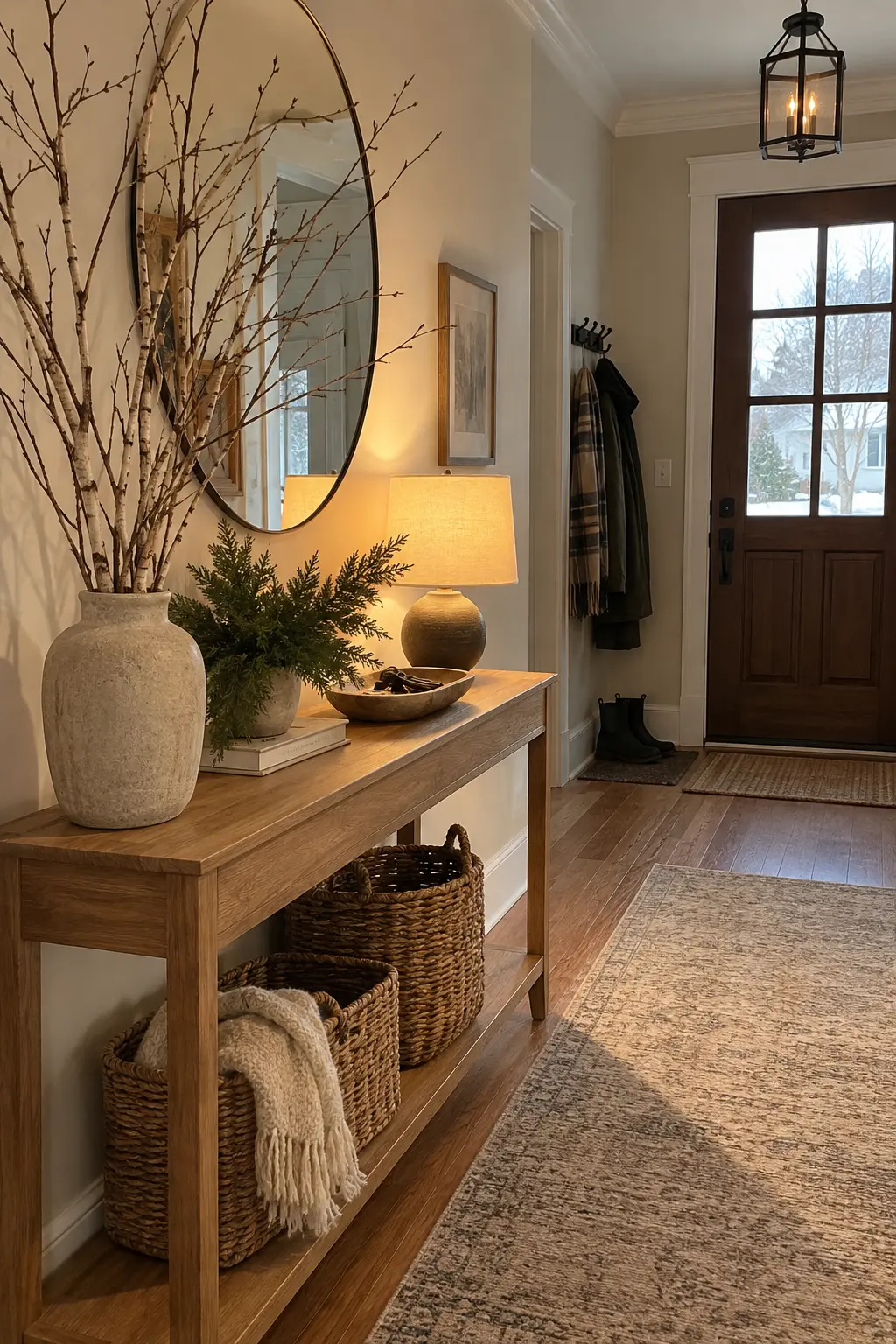
A tall vase of bare birch branches gives a narrow console enough height to feel intentional after the holiday decorations come down. One evergreen cutting softens the branches without turning the arrangement back into Christmas.
Push the vase toward the wall and keep the key bowl within easy reach. A heavy stoneware vessel is steadier than thin glass where coats and bags pass, while baskets below hide the daily clutter.
2. Layer a Bench With Wool and Charcoal Plaid
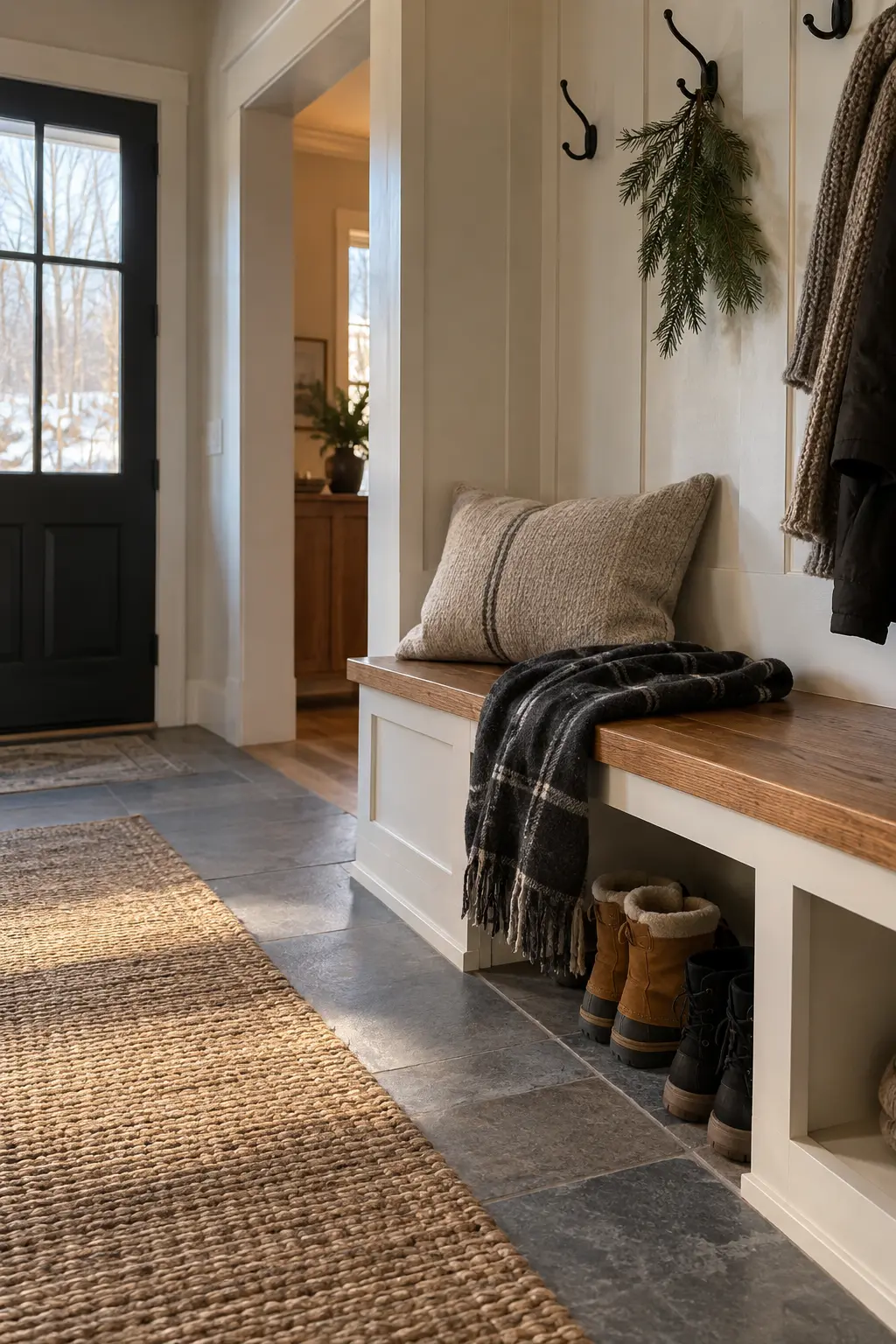
Give an everyday bench a winter reset with one oatmeal cushion and a neatly folded charcoal plaid throw. The contrast feels cozy, but the limited palette keeps the seat from reading like leftover holiday decor.
Leave most of the bench open for changing shoes. Tuck only the current pair of boots below, hang bulky coats toward one end, and fold the throw tightly enough that it will not slide onto the floor.
3. Keep an Undecorated Evergreen Wreath
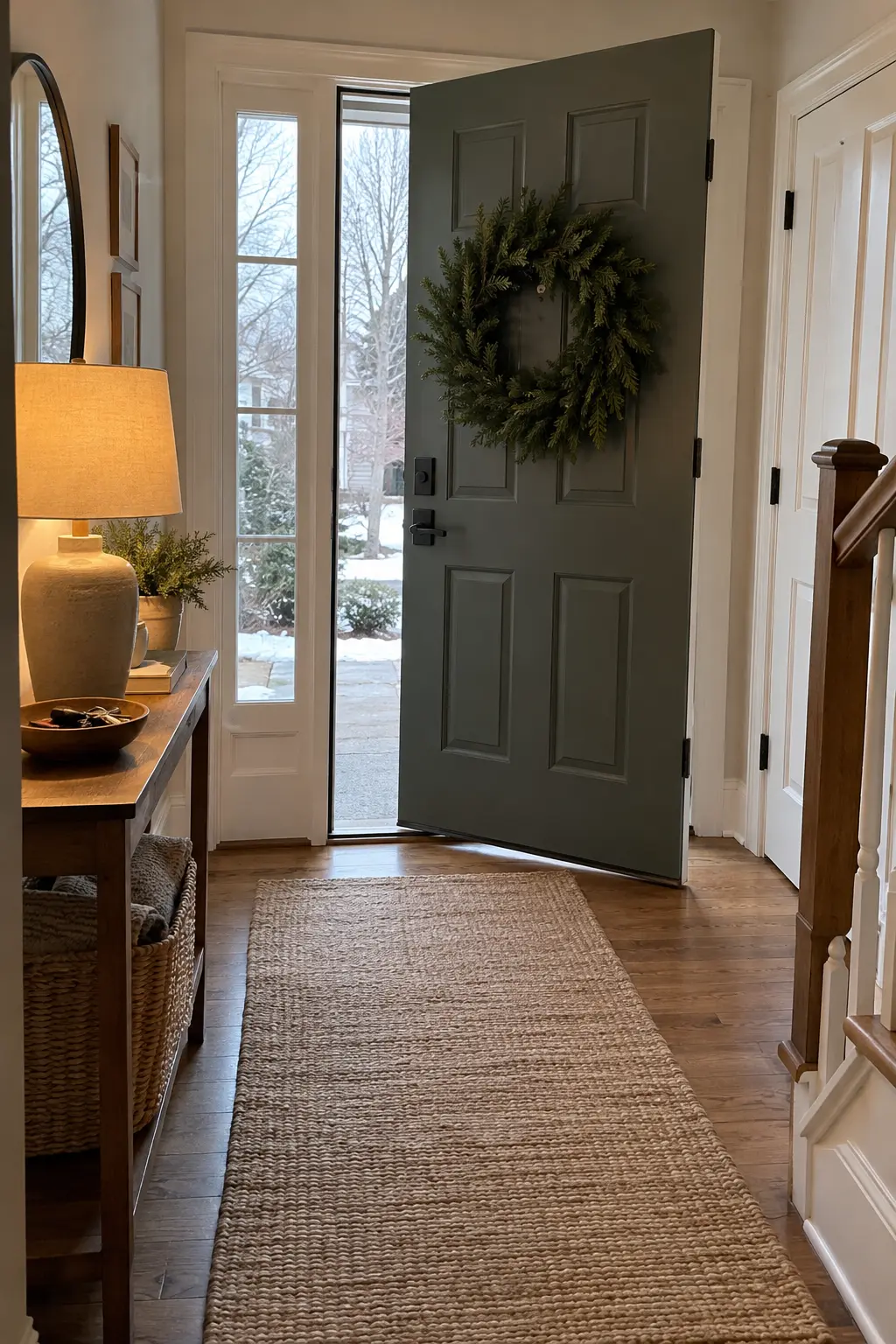
A plain evergreen wreath can stay after Christmas once ribbons, bells, ornaments, and bright berries are removed. Its simple green texture still suits January and gives a dark front door a clear focal point.
Choose a wreath that does not cover the lock, peephole, or door hardware. Open the door fully after hanging it, then move nearby decor until the hinge side and main walking path are completely clear.
4. Ground the Hall With an Indigo Runner
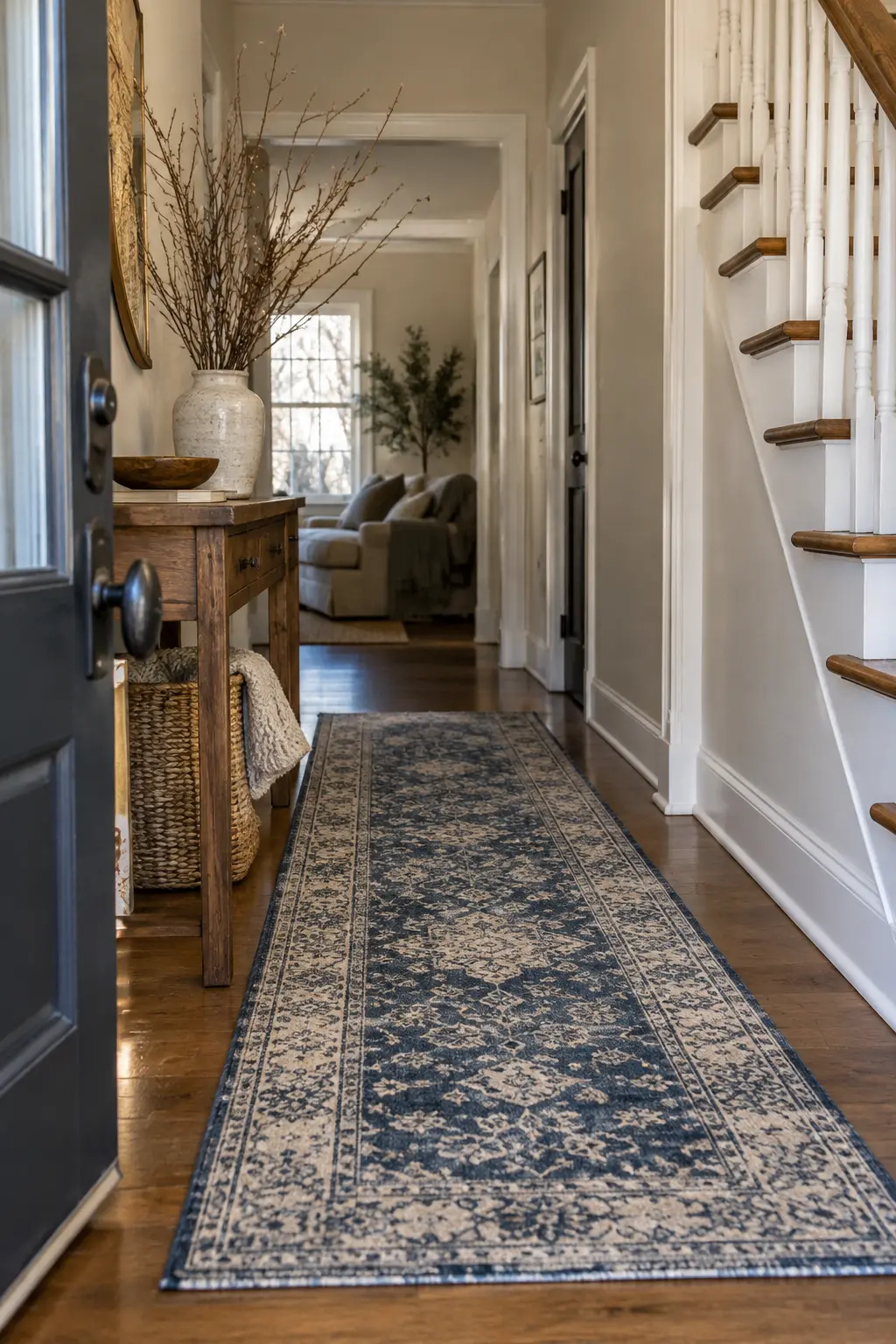
A faded indigo runner adds winter color without relying on themed accessories. Blue and cream also bridge warm wood floors with black or navy doors, so the whole hallway looks calmer and more connected.
Use a washable, low-pile rug and add a nonslip pad cut slightly smaller on every side. The rug should lie flat at the threshold and stop short of any door that sweeps across it.
5. Hide Cold-Weather Gear in Lidded Baskets
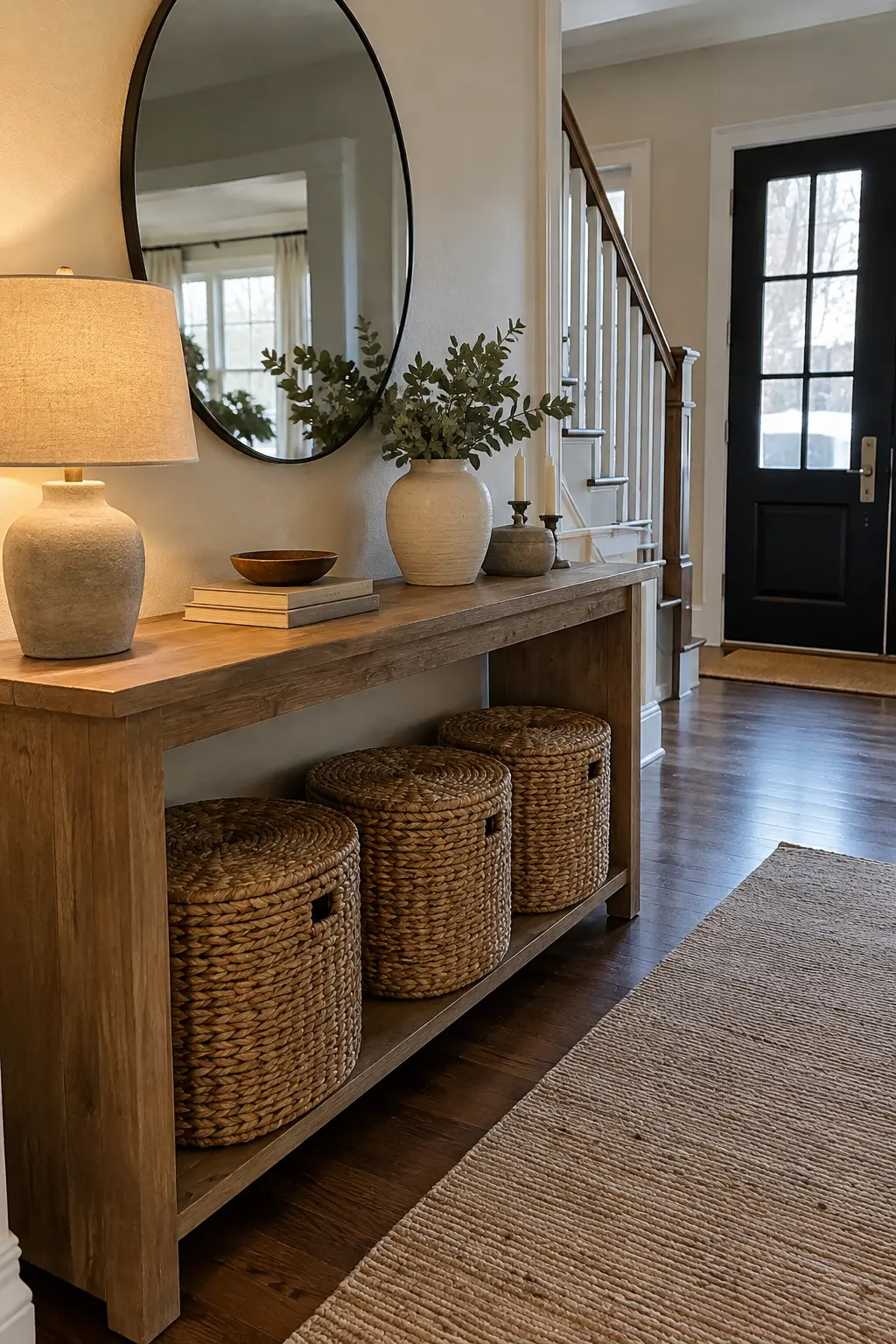
Lidded baskets under a console make hats, gloves, and scarves disappear without moving them away from the door. Repeating the same basket shape also gives a busy family entry a cleaner visual rhythm.
Assign one basket by person or gear type, then limit each to what fits comfortably. A breathable natural weave helps damp items dry, but anything truly wet should hang first instead of being sealed inside.
6. Build a Boot-Tray Landing Zone
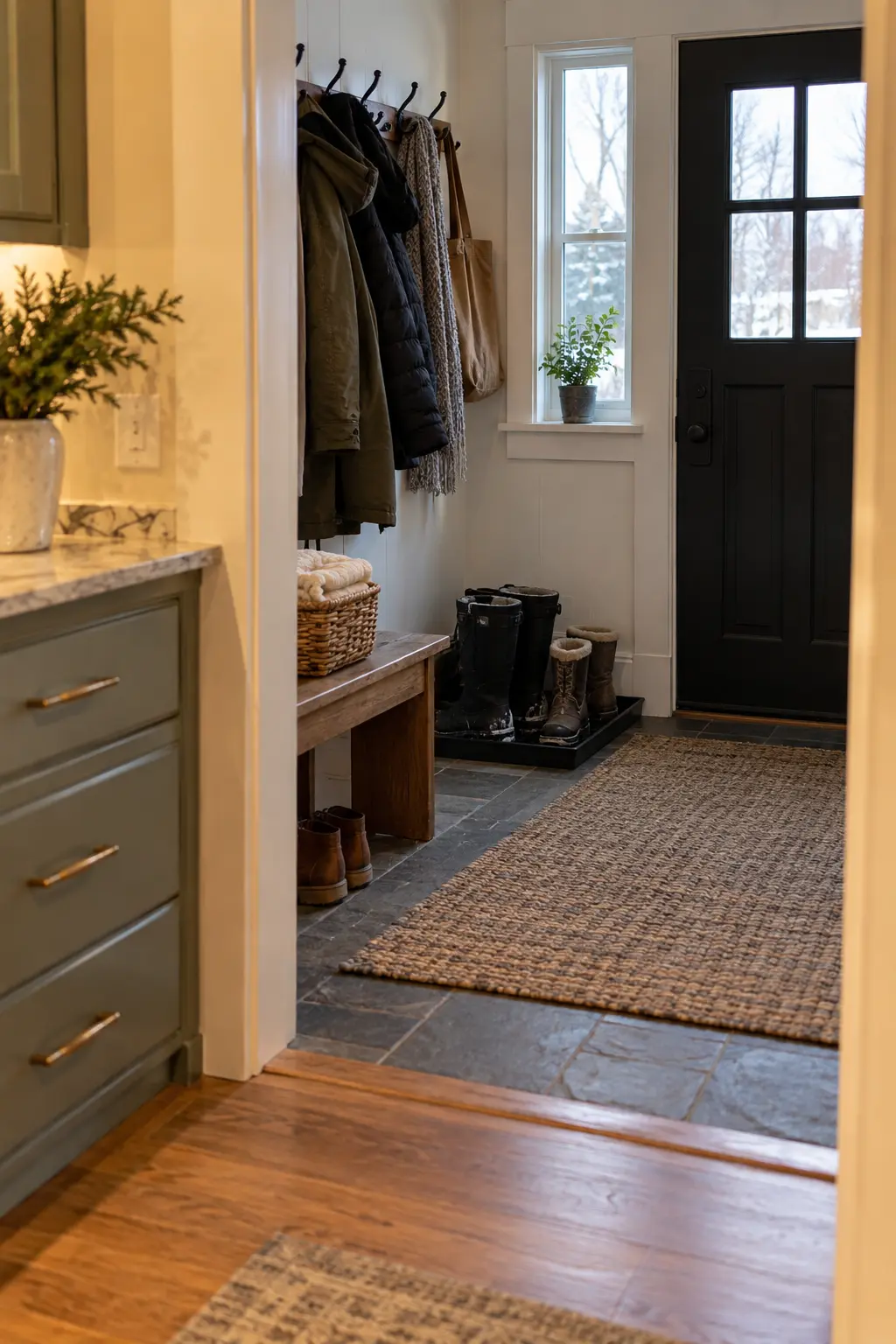
A raised-edge boot tray creates one obvious landing place for wet winter shoes. Position it beside the bench rather than in front of the door, so slush stays contained without becoming an obstacle.
Add a washable towel basket and a stiff boot brush within arm's reach. Empty water promptly, wipe the tray weekly, and leave enough air around leather footwear so it can dry instead of developing odors.
Shop the rubber boot tray set on Amazon
7. Use a Peg Rail for Everyday Winter Layers
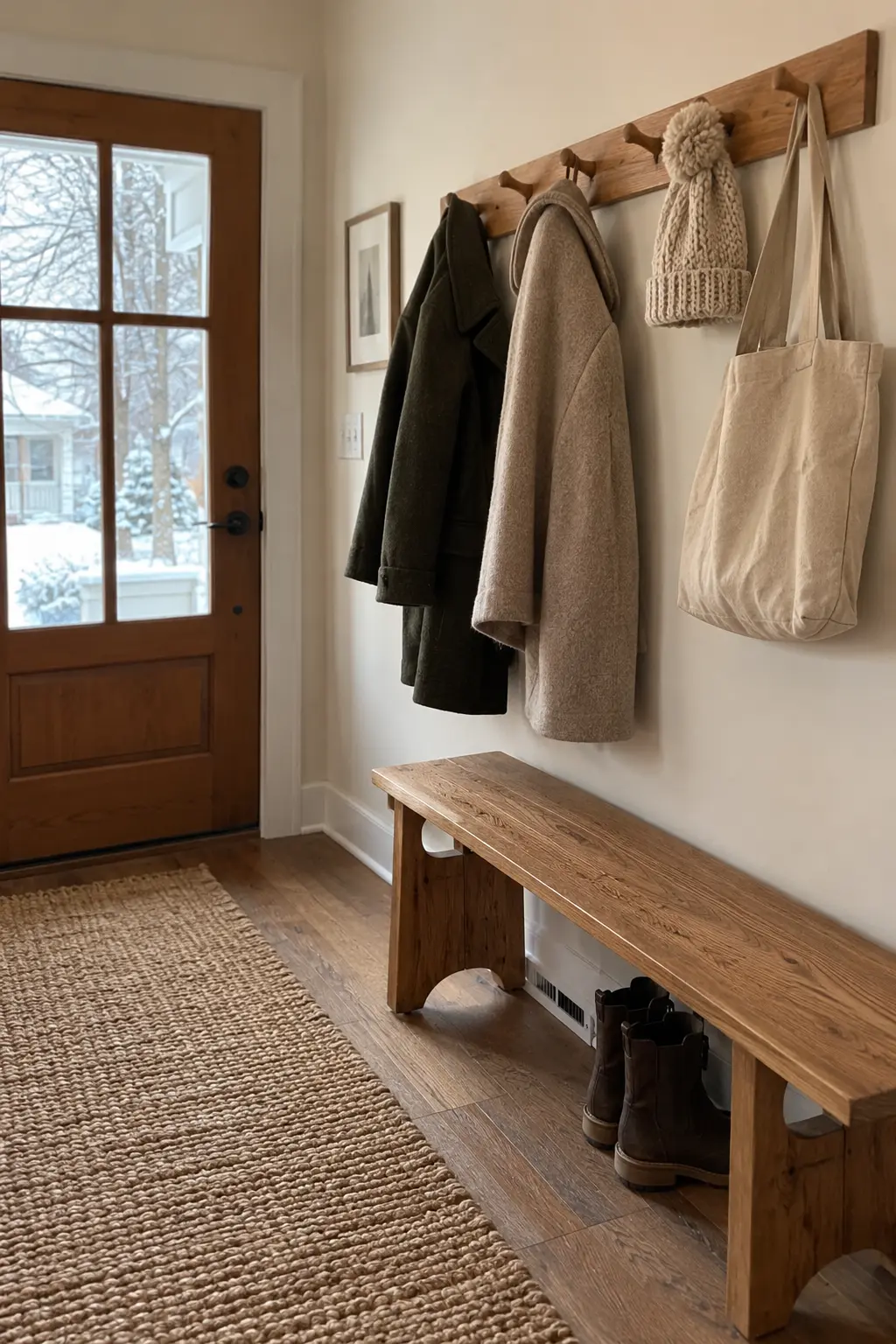
A Shaker-style peg rail turns an empty wall into flexible winter storage. Space the daily coats, hat, and tote instead of packing every peg; a little breathing room makes useful storage look thoughtfully styled.
Mount the rail into studs or suitable anchors and keep heavier bags toward the ends. For more ways to organize small essentials, these entryway key holder ideas add a useful next layer.
8. Corral Scarves in a Low Woven Basket
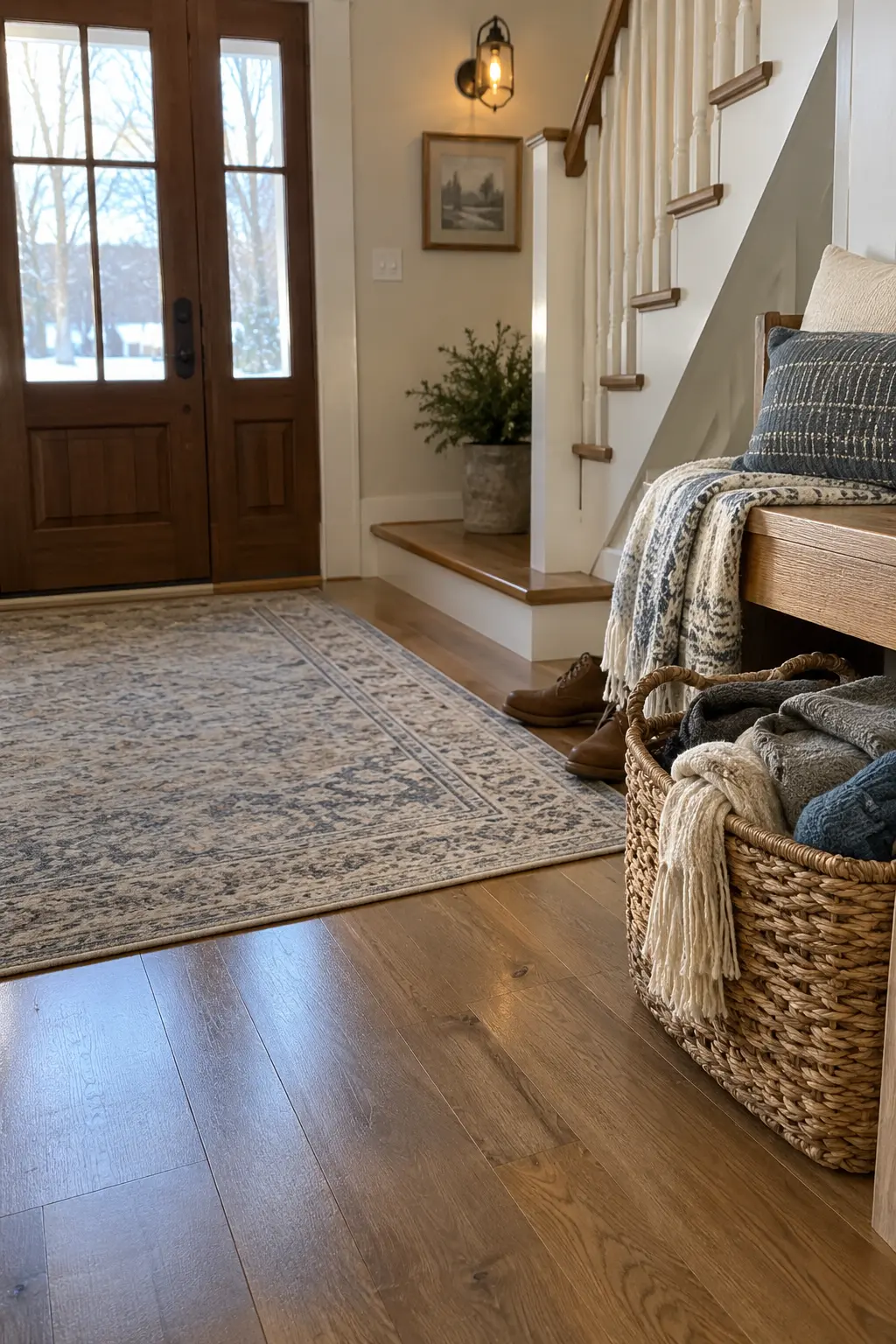
A wide, low basket lets scarves and mittens become soft texture without spilling across the bench. Keep the colors close to the room's rug and upholstery so the basket reads as part of the design.
Roll bulky scarves loosely and stand mittens in a small inner bin so pairs stay together. Place the basket where the door cannot hit it, and leave a hand-width of space beside nearby heat vents.
9. Add a Tall, Stable Umbrella Stand
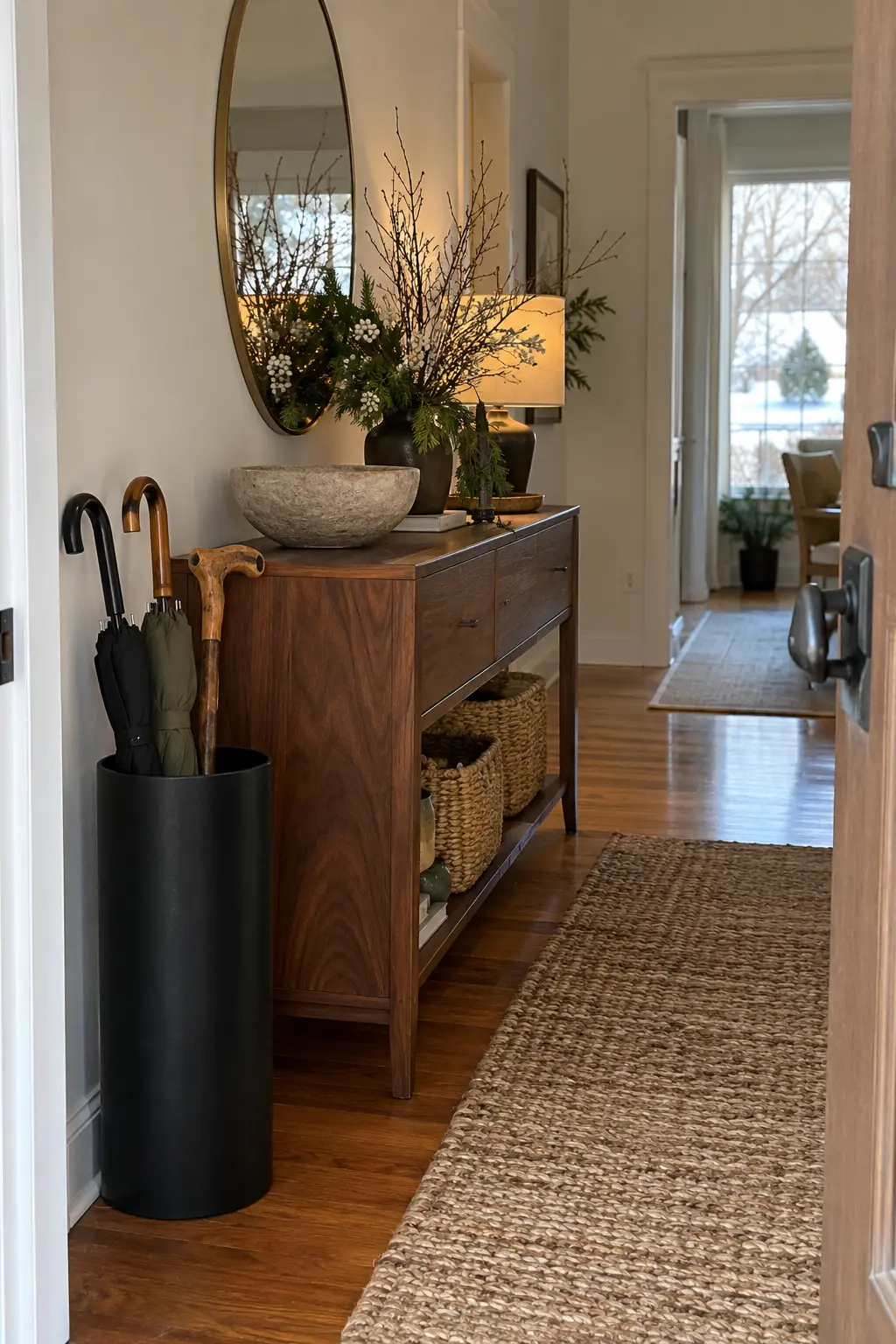
A slim matte-black umbrella stand adds a crisp vertical line beside a wood console while solving a real winter problem. The dark finish quietly repeats black hooks, door hardware, or a mirror frame.
Pick a weighted stand with a removable drip insert. Set it against the wall but outside the door swing, and let wet umbrellas open to dry elsewhere before returning them to a crowded container.
10. Create a Ski-Lodge Mood With Enclosed Lanterns
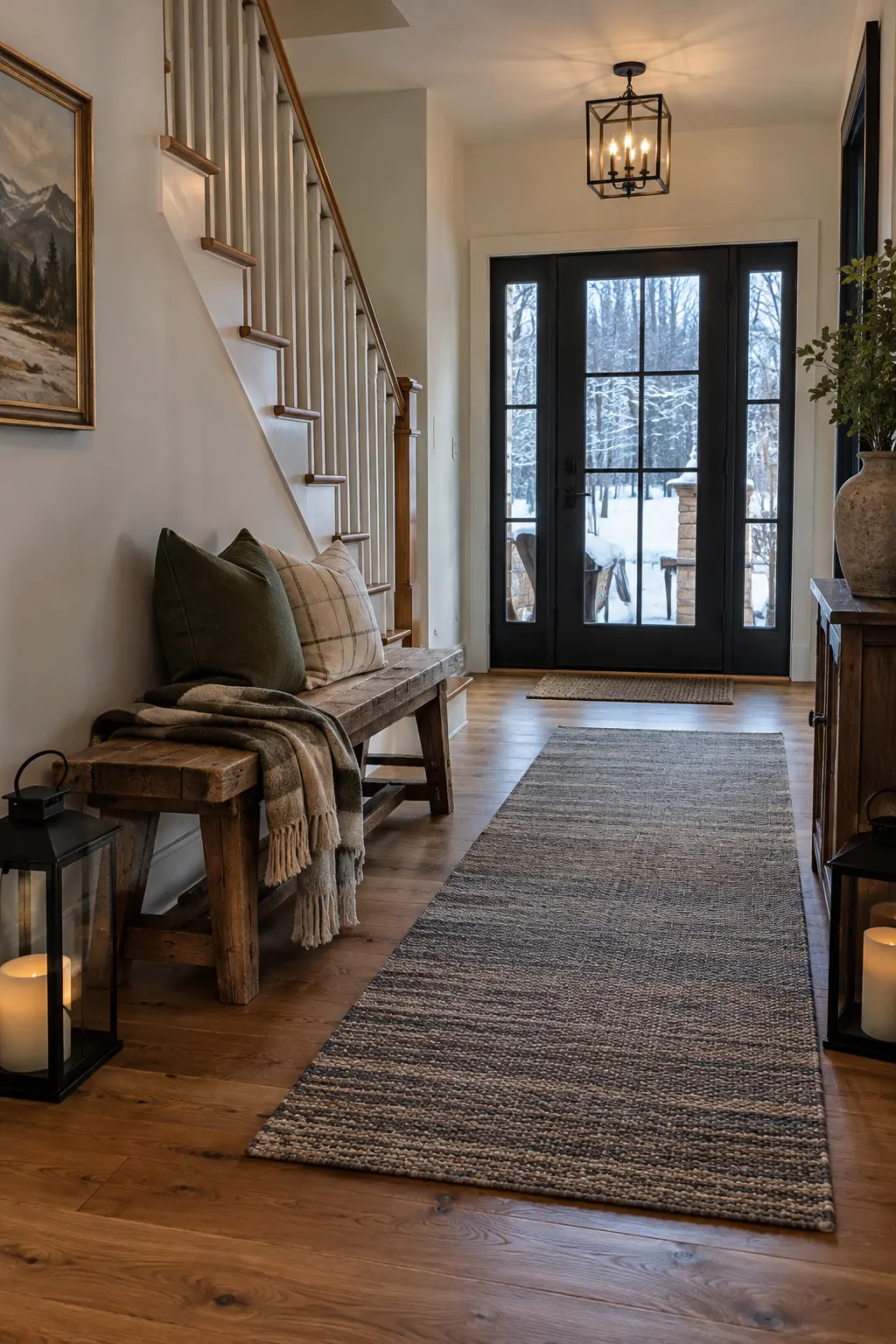
Two enclosed lanterns can suggest a cozy lodge without adding skis, signs, or novelty decor. Use different heights near a sturdy bench so the grouping feels collected rather than perfectly matched.
Choose flameless candles around wool, dried greenery, and busy doorways. Keep lantern doors easy to open for battery changes, use timers for evening light, and never narrow the route guests take through the foyer.
Shape the Mood With Light, Walls, and Furniture
Once the basics work, use lighting, wall texture, art, and one strong furniture choice to make the entry feel intentional through the darker months.
11. Light the Console With a Small Cordless Lamp
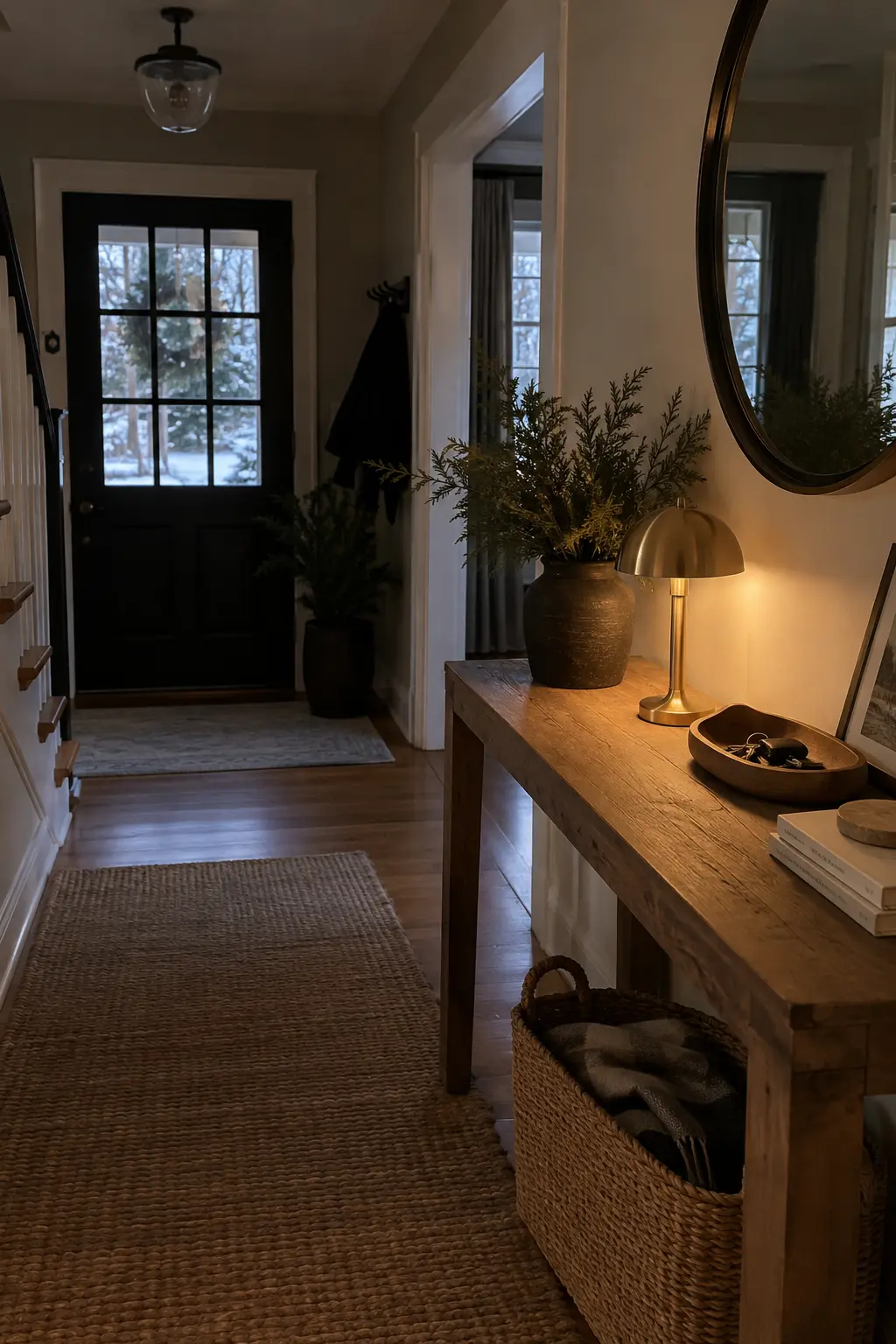
A compact cordless lamp adds glow where an outlet is missing and makes a narrow entry feel welcoming on dark afternoons. A low mushroom shade spreads light across the key tray without blocking the mirror.
Keep the lamp well inside the console edge and recharge it on a predictable schedule. Warm white light feels softer than a cool bulb, but the fixture should still be bright enough to find keys safely.
12. Group Pillar Candles Inside Glass Hurricanes
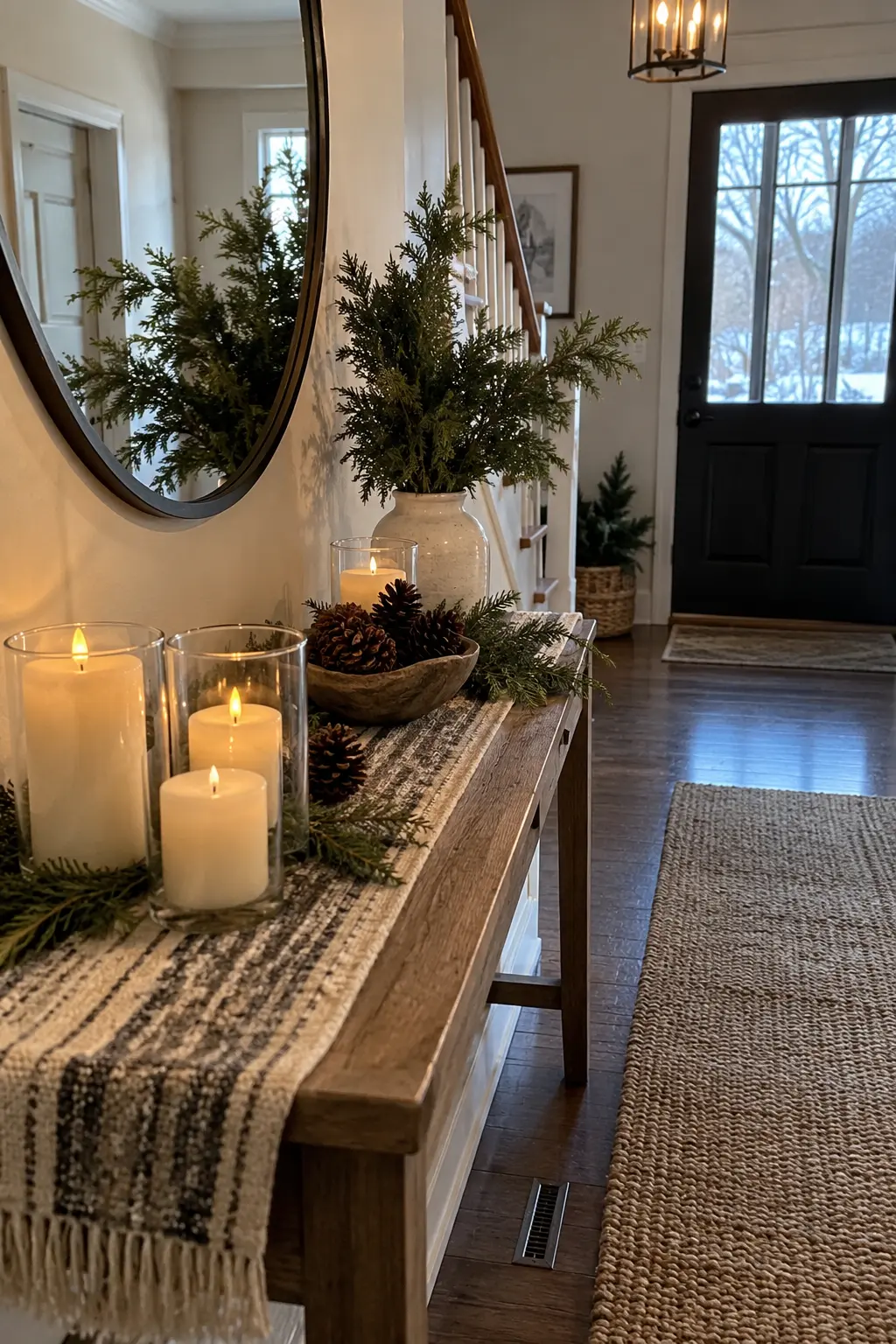
Clear hurricanes give a group of ivory pillar candles visual weight while containing the arrangement. Their simple cylinders work with traditional or modern entries, and the glass reflects light without introducing a holiday color.
Use flameless pillars near branches, textiles, or children. Vary the candle heights but keep every vessel below eye level at the mirror, then cluster them on one tray so the rest of the console remains useful.
13. Hang a Few Paper Snowflakes in the Window
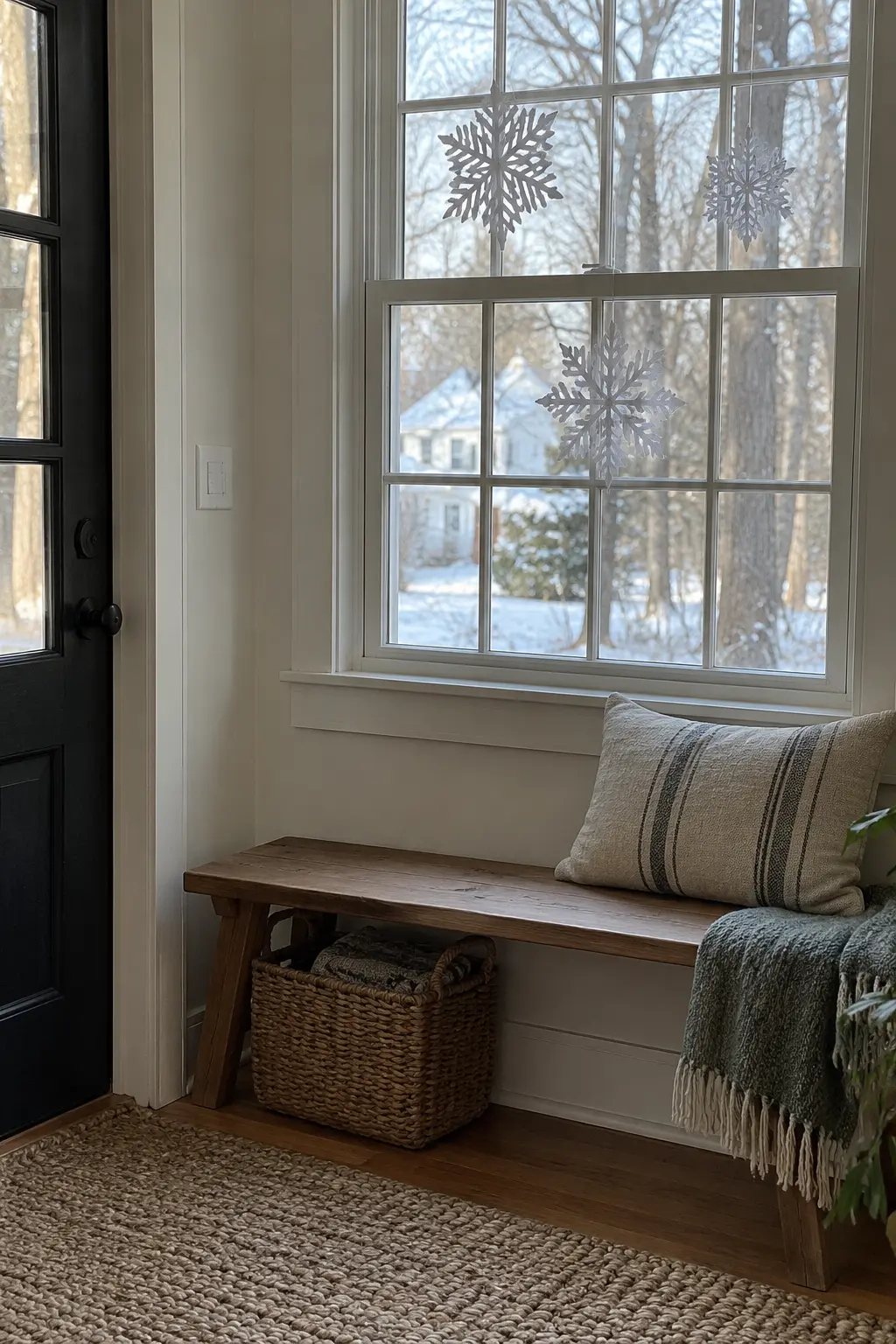
Three handmade white paper snowflakes can bring a light winter note to an entry window without looking like a full holiday display. Different sizes feel more natural than a row of identical shapes.
Hang them with clear removable line and keep the window latch accessible. Limit the display to one pane, leave generous empty glass around each piece, and remove any curling or dusty snowflakes as the season progresses.
14. Swap Holiday Art for a Snowy Landscape
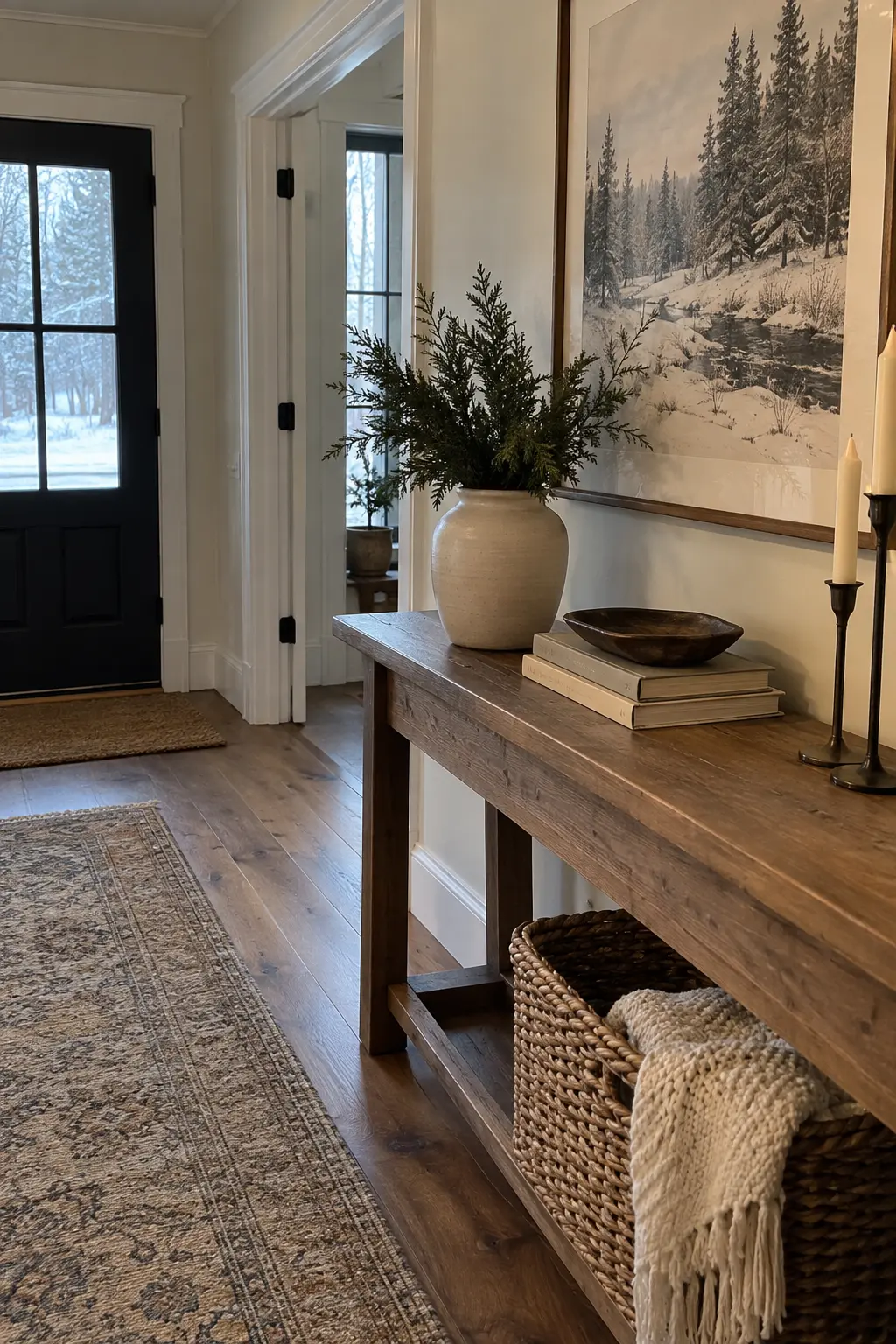
A single snowy landscape gives the entry a winter identity without adding objects to every surface. Choose a quiet scene with muted trees, fields, or hills so the artwork supports the room instead of dominating it.
Reuse an existing frame and lean it securely behind a low vase or lamp. Browse these broader entryway decor ideas if you want to balance the art with year-round furniture and storage.
15. Paint One Wall a Moody Winter Blue
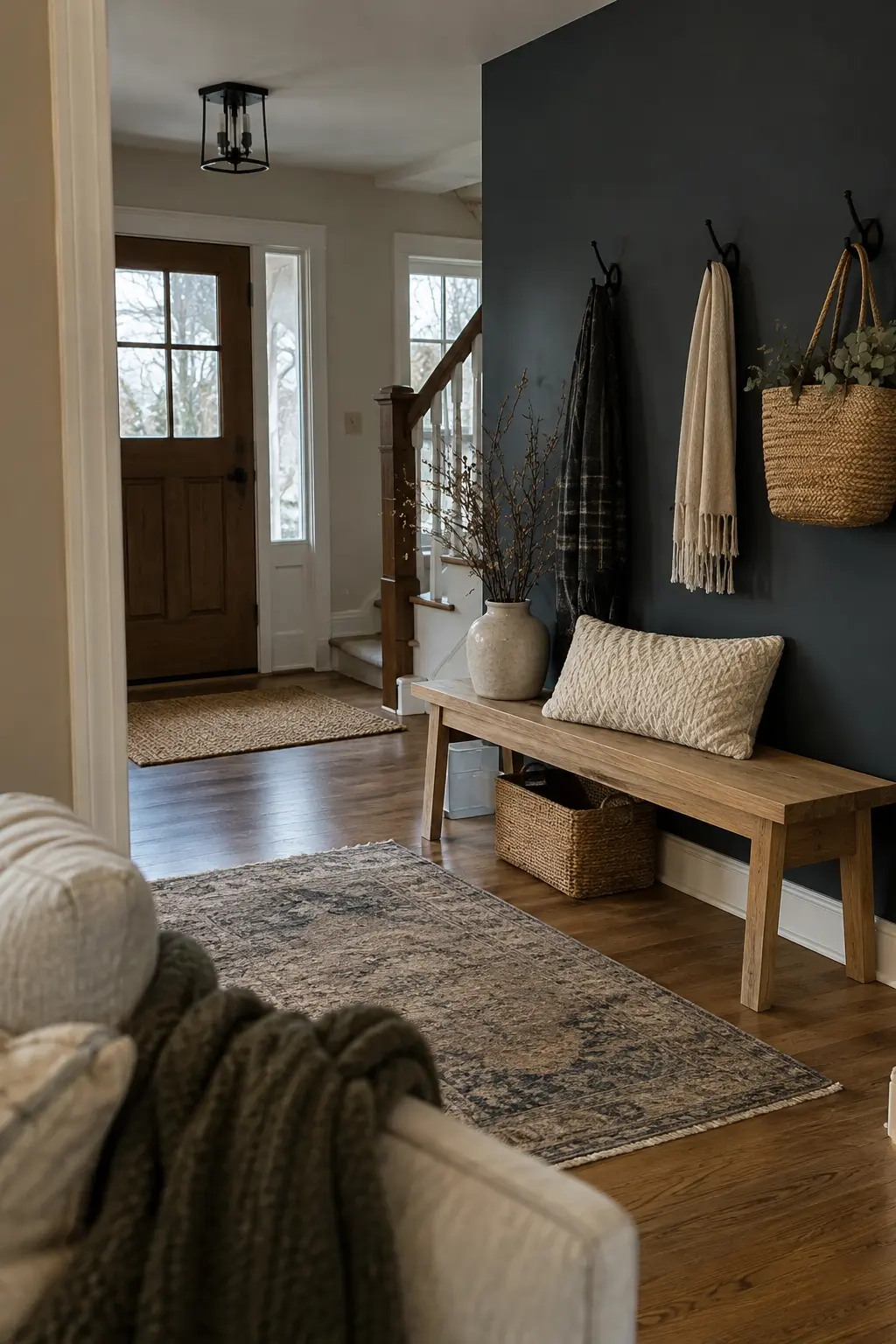
Charcoal blue makes pale wood, cream textiles, and winter branches look richer without filling the entry with accessories. It works especially well on the wall behind a bench or a compact drop zone.
Test a large paint sample beside the front door at morning and evening. Keep the remaining walls light, repeat the dark tone once in the runner or hooks, and protect high-touch corners with a washable finish.
16. Warm the Entry With Beadboard and Brass Hooks
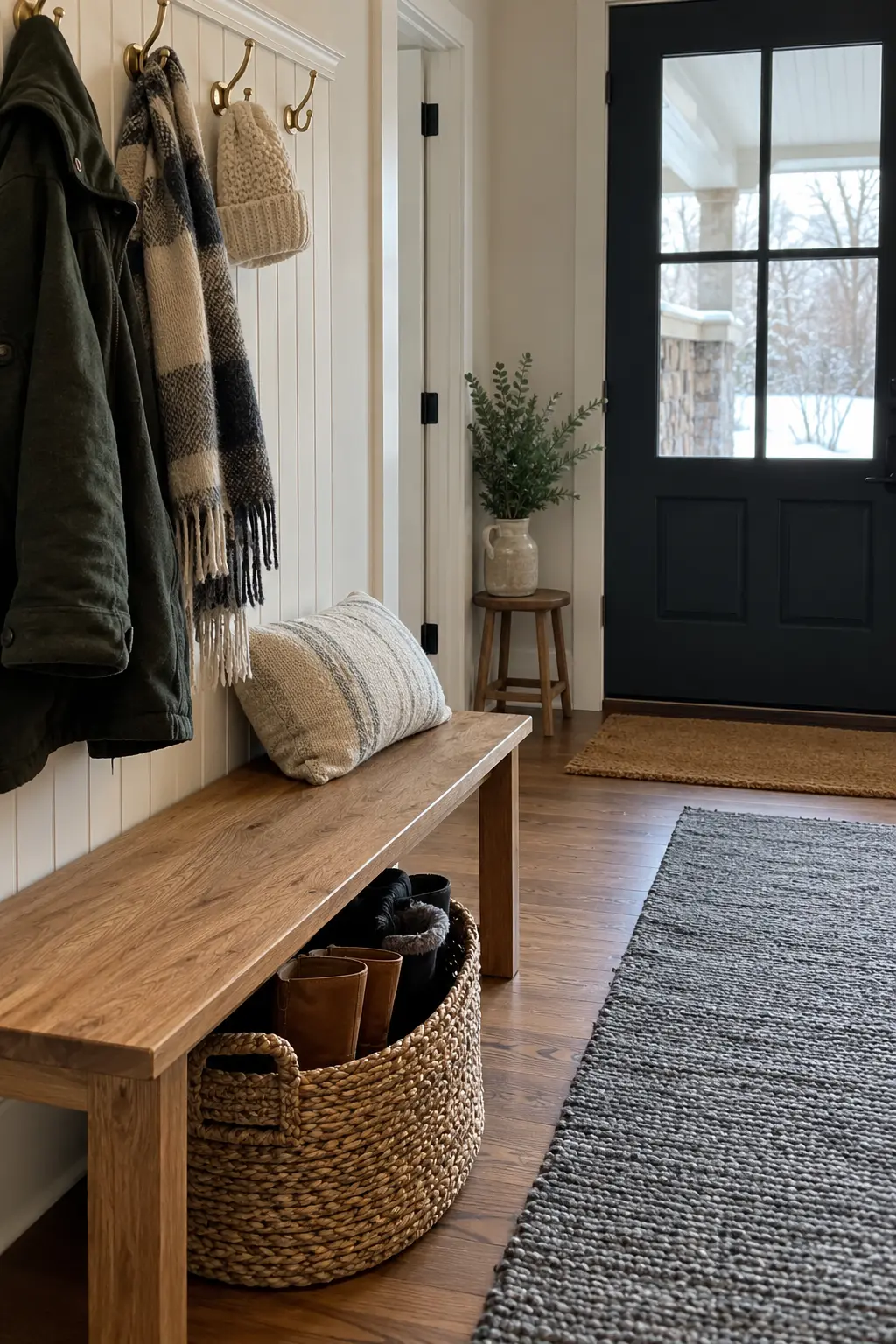
Warm-white beadboard adds shadow and texture to a plain entry while brass hooks bring a small glow to gray winter light. The wall treatment makes simple coats and baskets feel more intentional.
Keep the top rail level and choose hook spacing based on actual coat width. These beadboard entry wall ideas show other practical ways to combine paneling, benches, and storage.
17. Try a Fluted Walnut Console
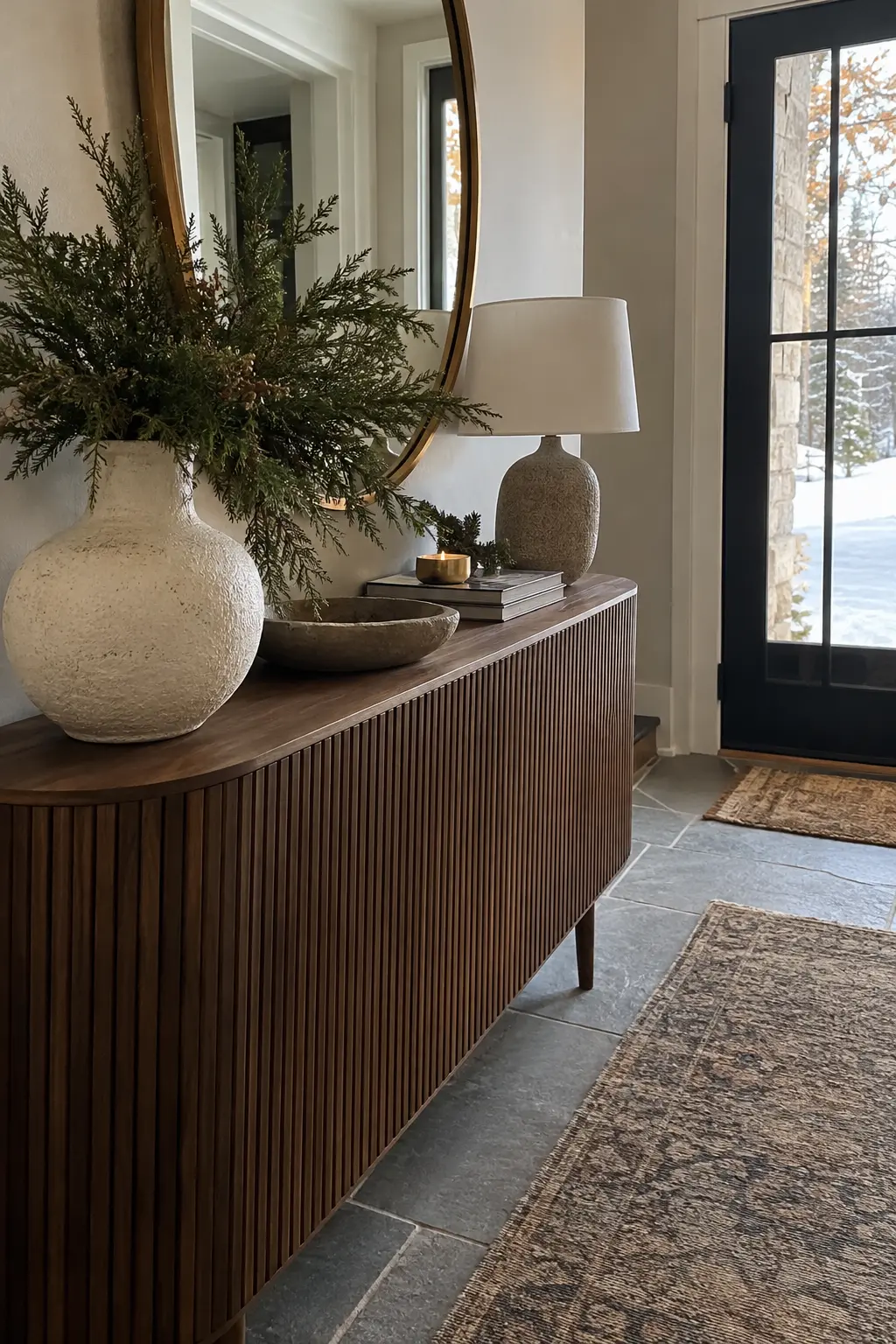
A fluted walnut console supplies enough pattern that the winter styling can stay restrained. One oval mirror, a sculptural vessel, and a small evergreen cutting are all the surface needs.
Dust grooves with a soft brush and avoid setting wet gloves directly on the wood. Keep decor grouped toward one end, leaving a clear landing strip for mail, keys, and anything carried through the door.
18. Pair an Antique Mirror With Bare Branches
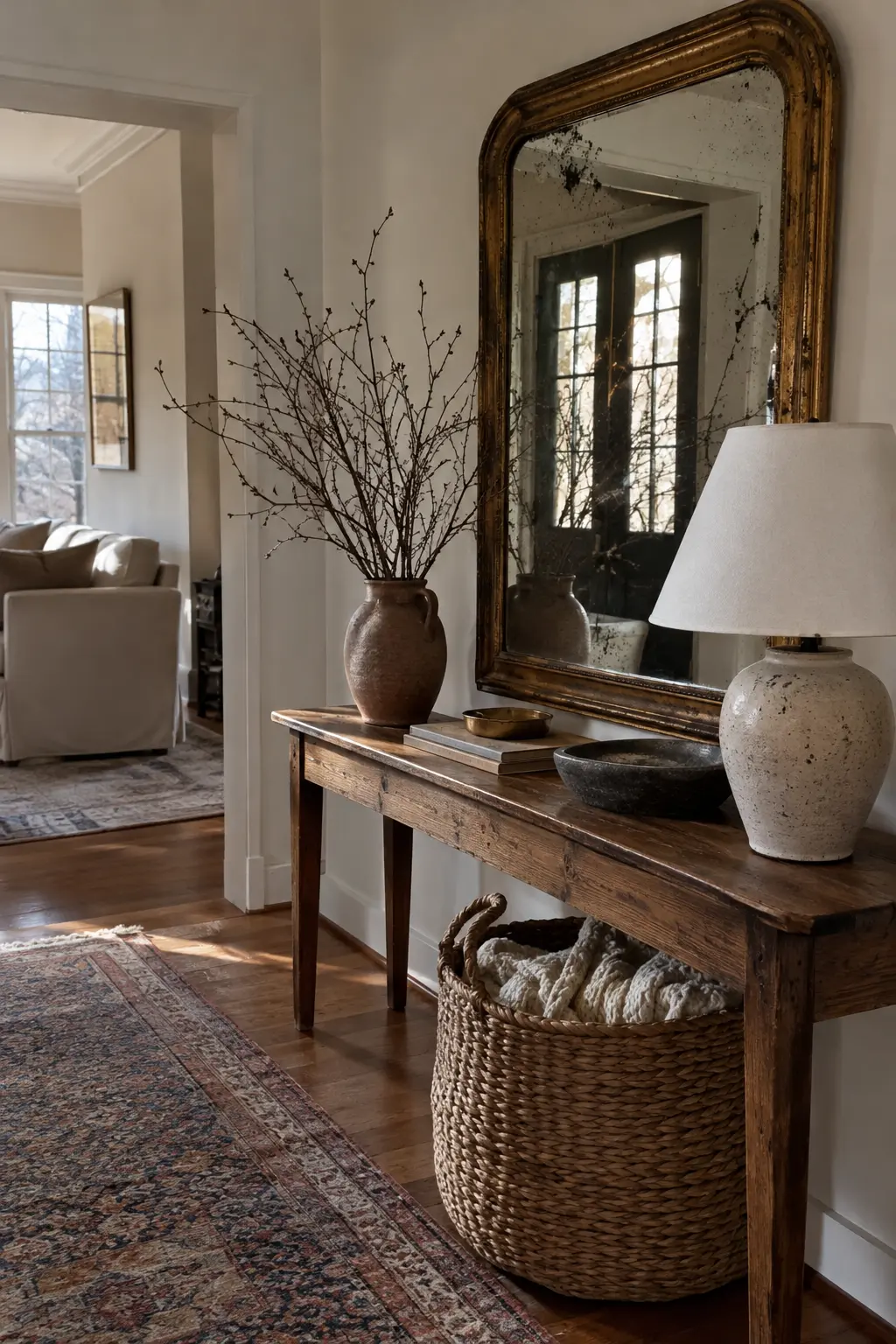
The softened shine of an antique mirror pairs naturally with bare branches and old wood. Slightly mottled glass also makes the entry feel collected, not as though every piece arrived in one matching set.
Anchor a heavy mirror correctly rather than leaning it in a busy passage. Place the branch vase off-center so it does not obscure the best reflection, and trim any stems that reach toward faces or coats.
19. Use a Slim Black Metal Console
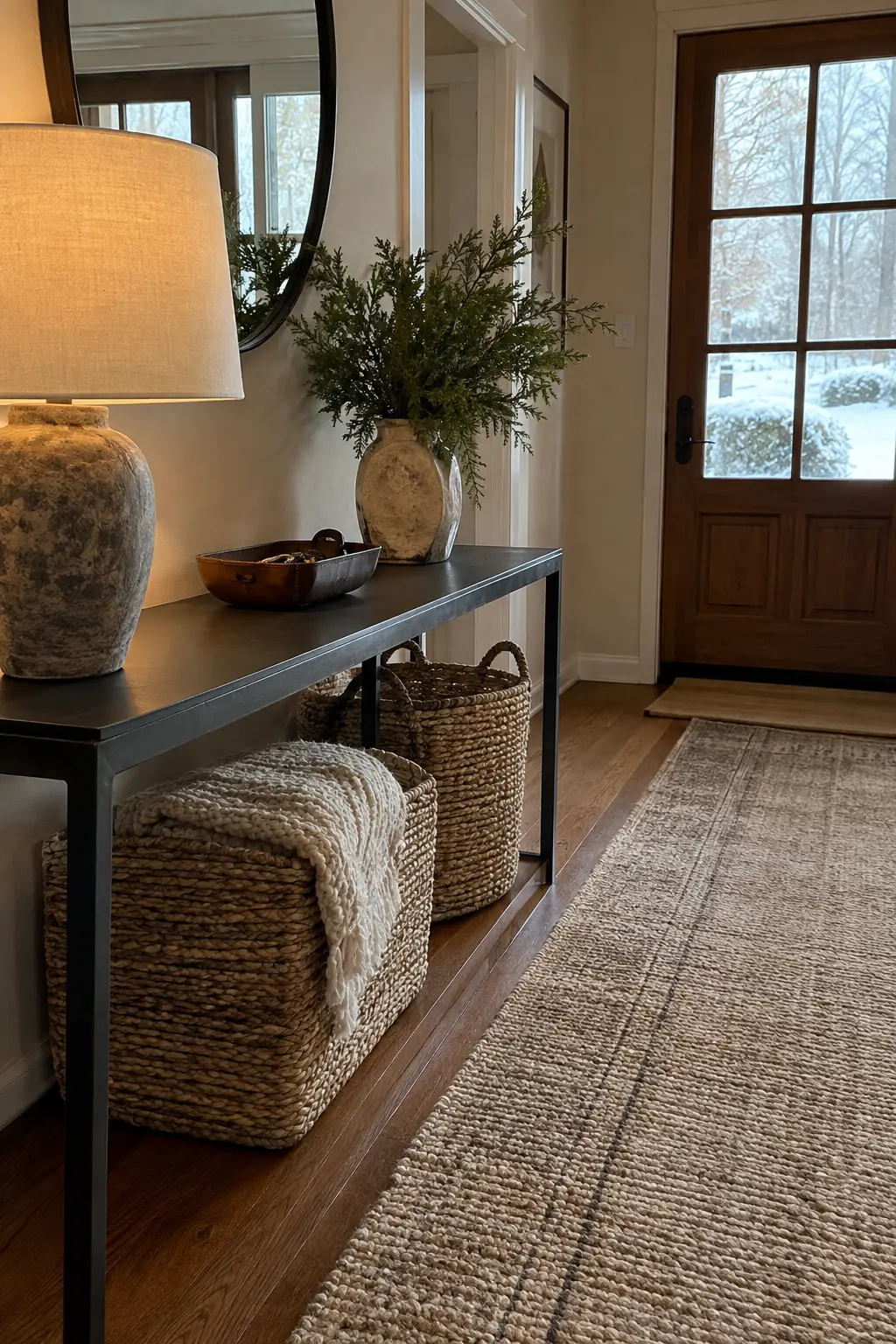
A black metal console gives a small entry structure without the visual weight of a solid cabinet. Warm it with a stone lamp, a brown leather catchall, and woven baskets instead of adding more cold metal.
Choose a depth that preserves at least 36 inches of passage where possible. Add felt pads under the feet, anchor a top-heavy frame, and keep the open lower shelf edited so the airy effect remains.
20. Center a Round Table in a Spacious Foyer
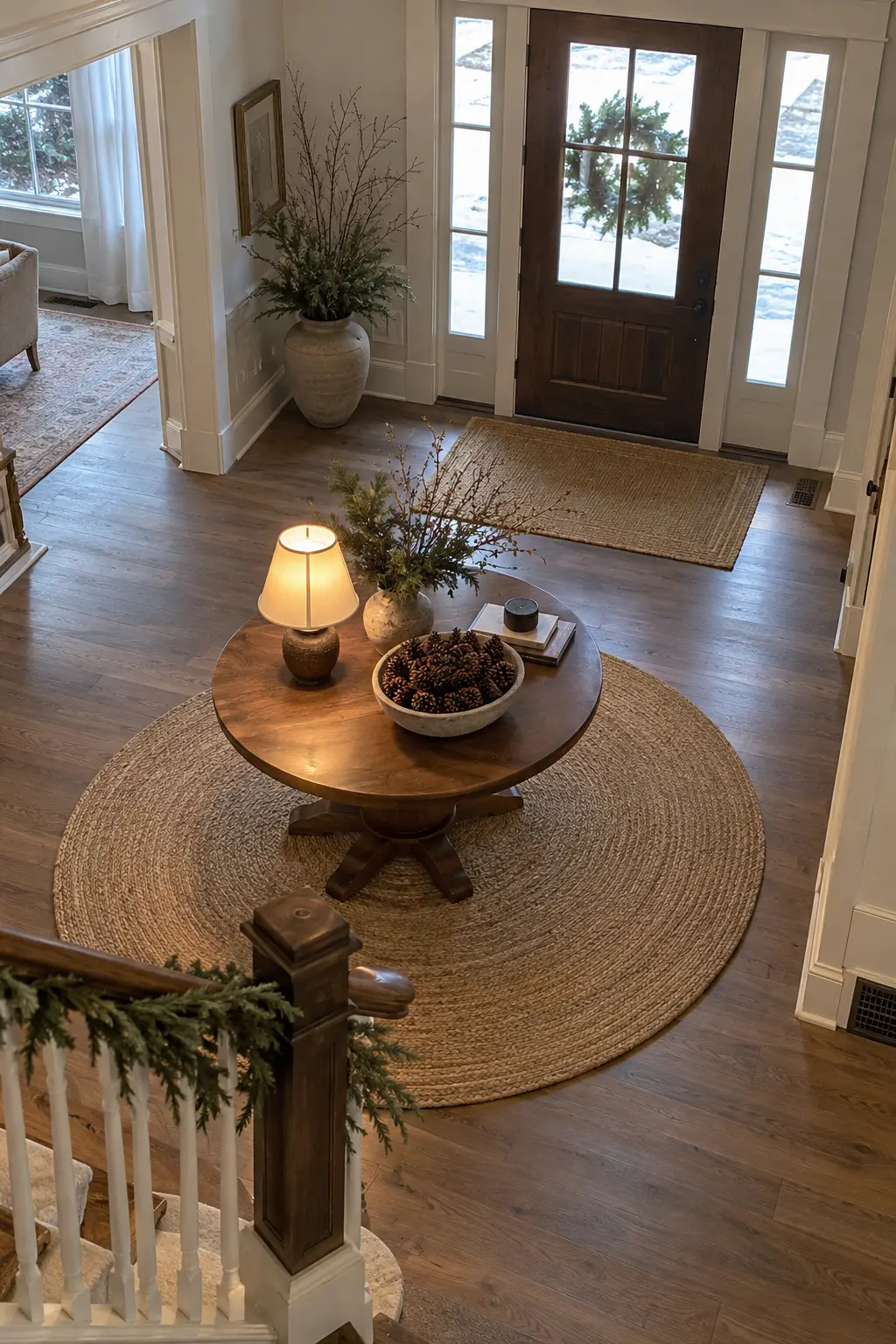
In a generous foyer, a round pedestal table can make the center feel purposeful and soften a boxy floor plan. A low pinecone bowl, compact lamp, and branches create height without crowding the tabletop.
Mark the proposed table footprint with painter's tape before buying. People should be able to walk around it comfortably while carrying bags, and the arrangement must not interrupt the fastest route to the stairs.
Make Small and Awkward Entryways Work Harder
Stairs, narrow halls, apartment walls, and family mudrooms need decor that earns its footprint. These ideas combine winter character with clear, reachable storage.
21. Drape Plain Cedar Along the Stair Rail
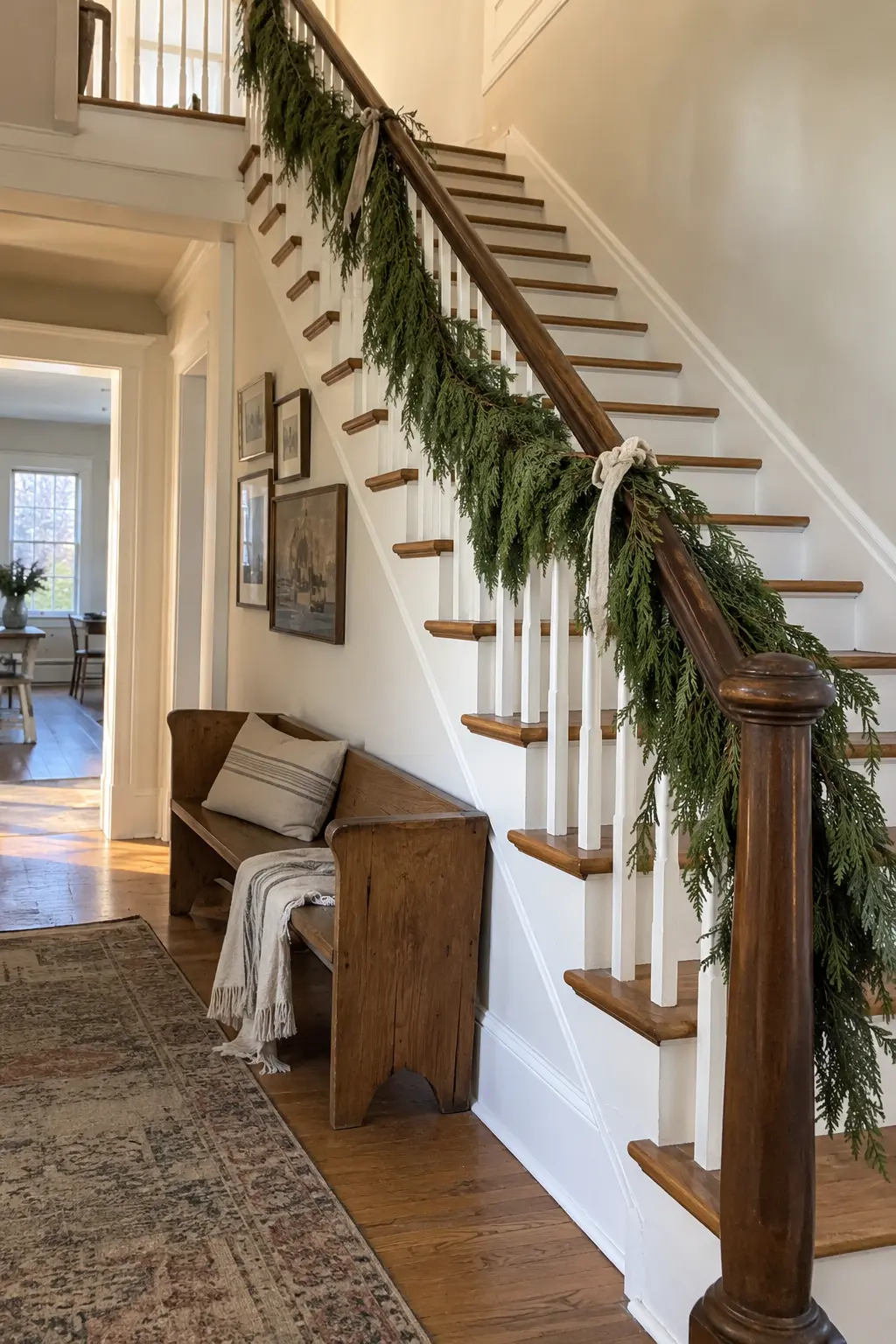
A loose cedar garland can remain after Christmas when the ornaments, lights, and ribbon are gone. Natural linen ties keep the greenery understated and help it feel like a simple winter layer.
Secure the garland to the outside of the rail so hands can still grip it continuously. Keep branches away from the first and last steps, collect dropped needles often, and never cover stair lighting.
22. Turn a Stair Landing Into a Quiet Pause
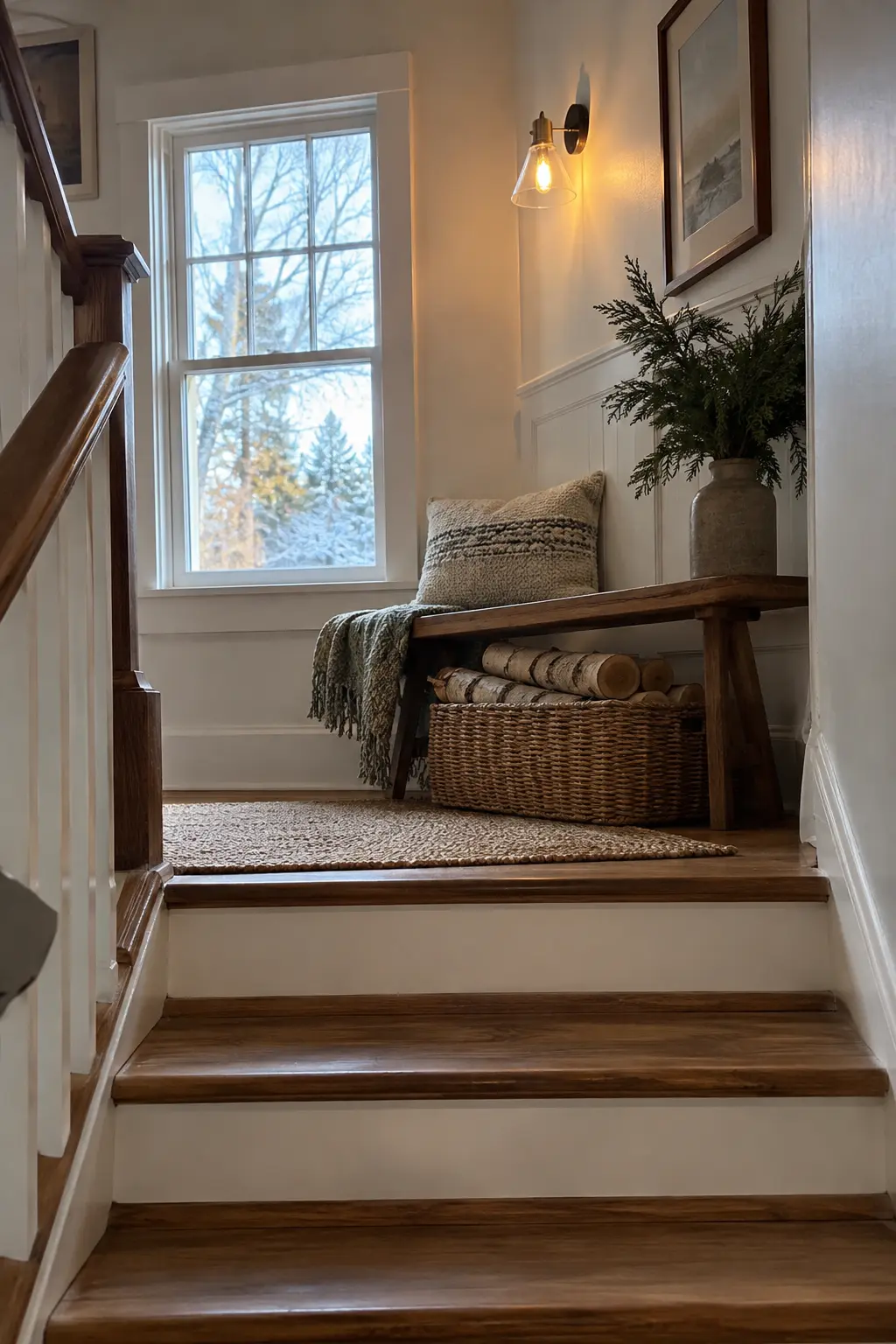
A compact bench and a basket of clean birch logs give a stair landing winter texture without using valuable floor space below. One wool cushion makes the small spot feel finished.
Confirm the bench does not narrow the required stair or landing clearance. Stabilize decorative logs inside a deep basket, keep everything below the handrail, and use a wall sconce rather than a cord across the floor.
23. Build Storage Into the Under-Stairs Nook
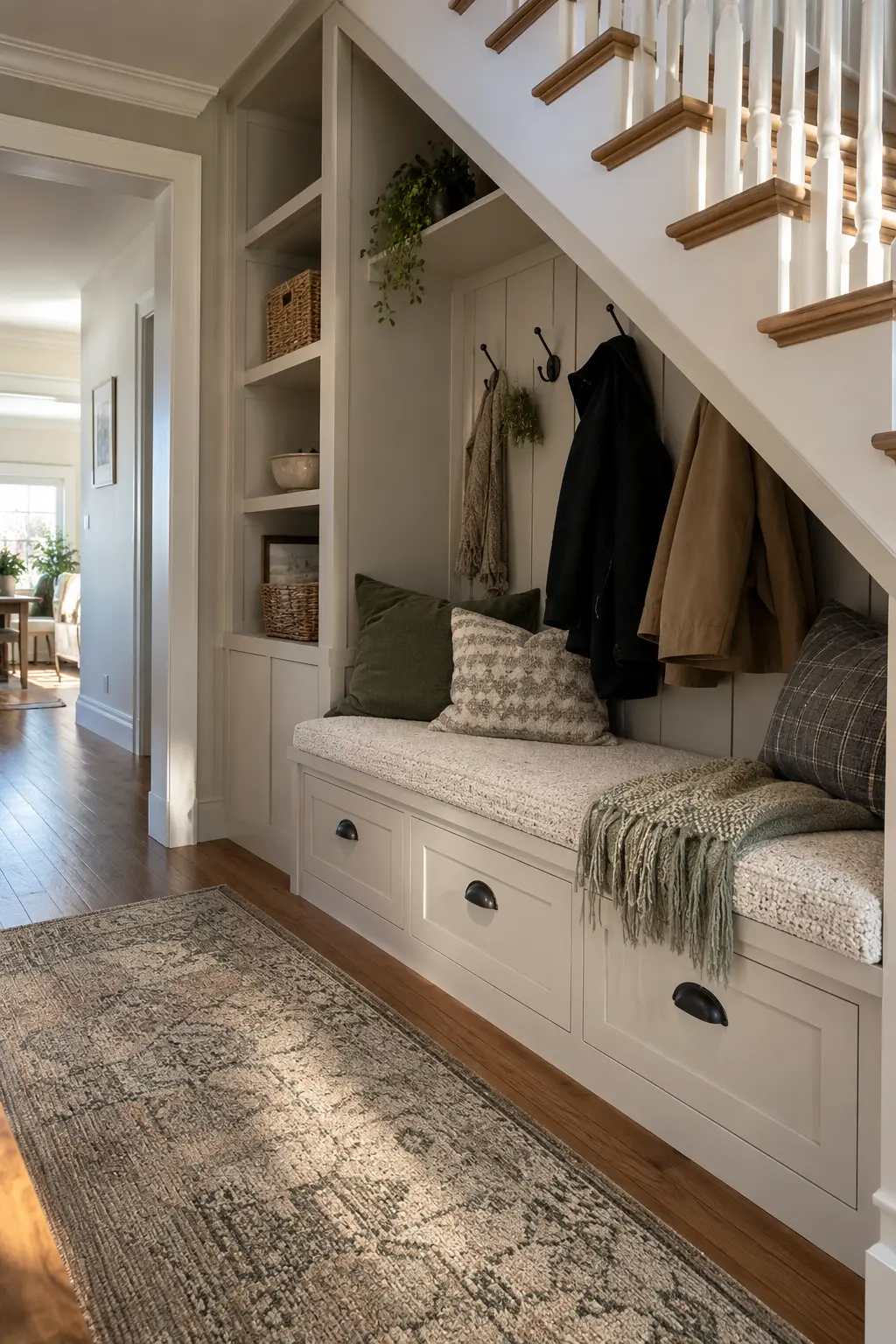
The triangular space beneath a staircase can hold a complete winter drop zone: bench seating, deep drawers, cubbies, and hooks. Closed storage handles visual clutter while one open area keeps daily coats accessible.
Plan drawers around the stair slope and leave room to sit without hitting the ceiling. See these under-stairs mudroom ideas for layouts that make the awkward geometry work harder.
24. Float a Shallow Shelf in a Narrow Hall
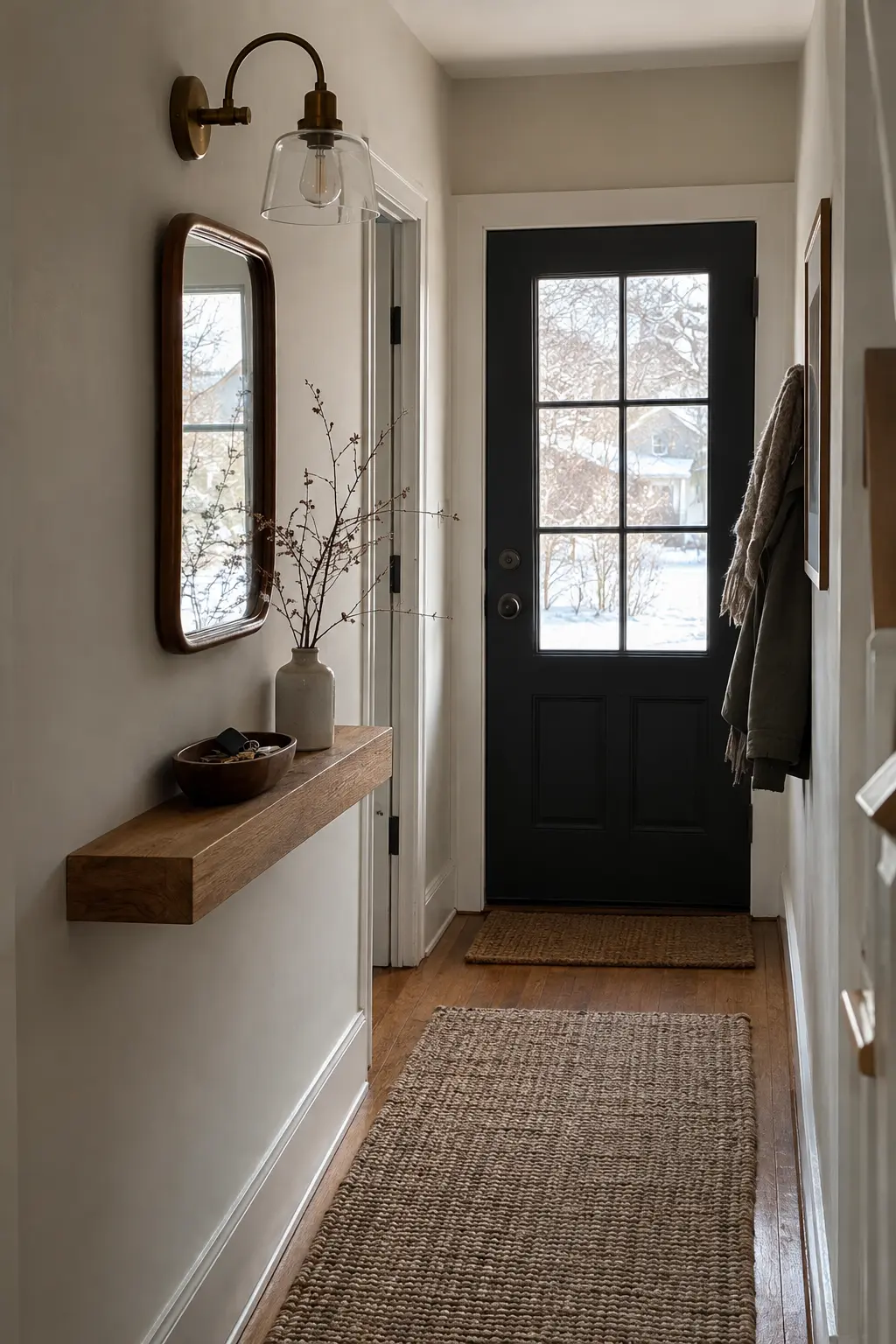
A shallow floating shelf supplies a landing place where a standard console would block circulation. Pair it with a small mirror, one bud vase, and a tray no deeper than the shelf.
Mount the shelf into solid framing and round or soften any exposed corners. Keep the lowest edge above hip height, test the hallway while carrying groceries, and remove decor that catches sleeves or bags.
25. Hang the Wreath Without Damaging Rental Walls
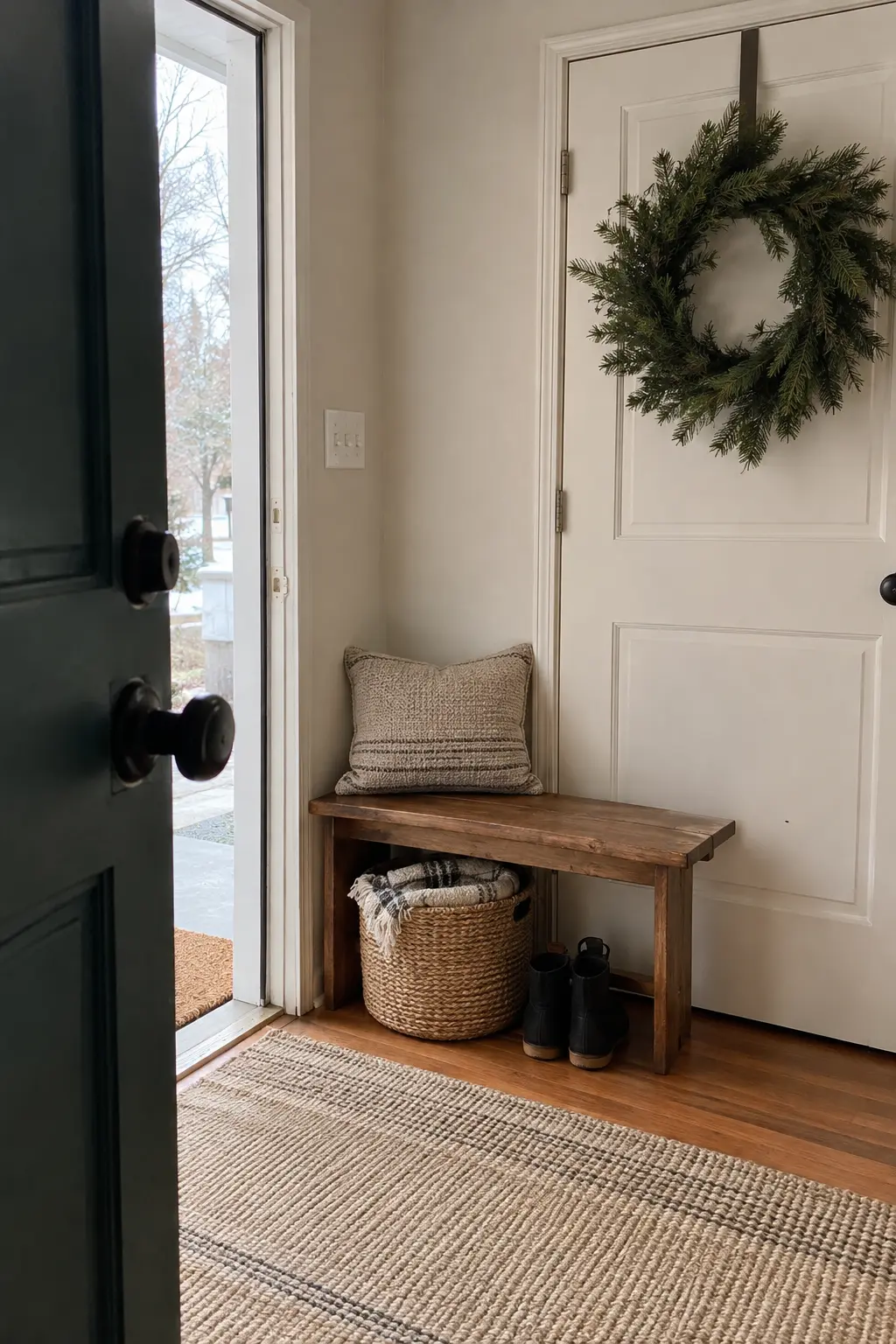
An over-door hook lets renters use a lightweight evergreen wreath without drilling. Choose a thin hanger that allows the door to close smoothly and a wreath with no loose wire ends.
Add felt where metal touches paint, then test the lock and weather seal. These small apartment entryway ideas offer more ways to add storage and personality without permanent changes.
26. Combine a Wall Shelf, Hooks, and Mirror
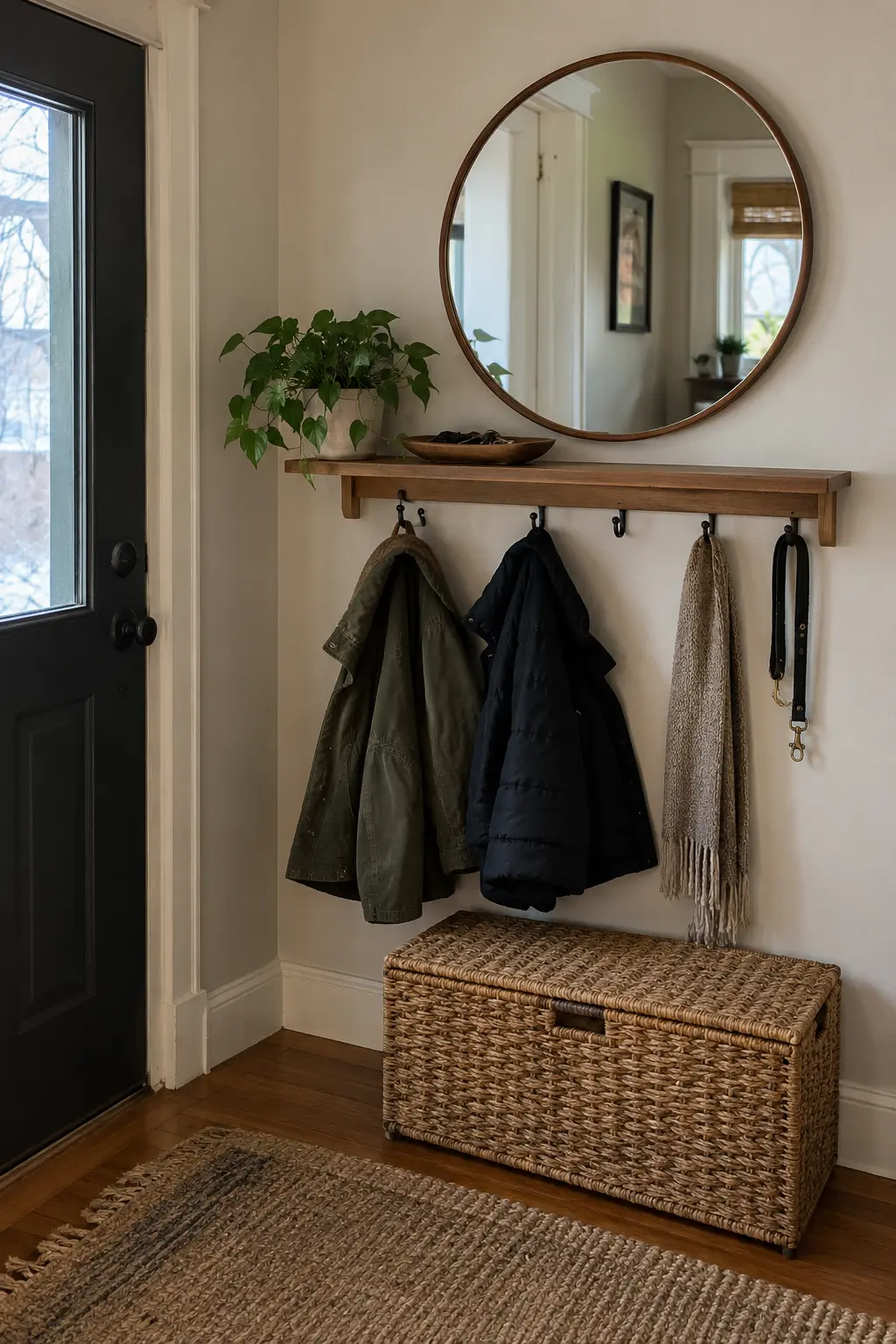
A single wall-mounted unit can handle keys, two coats, and a quick mirror check without taking up floor space. Keeping every function on one wall makes a tiny entry feel less scattered.
Install the mirror high enough to clear the shelf and reserve hooks for current outerwear only. A closed basket below catches shoes, while an empty strip of floor makes cleaning and daily arrivals easier.
27. Use a Stool in an Awkward Corner
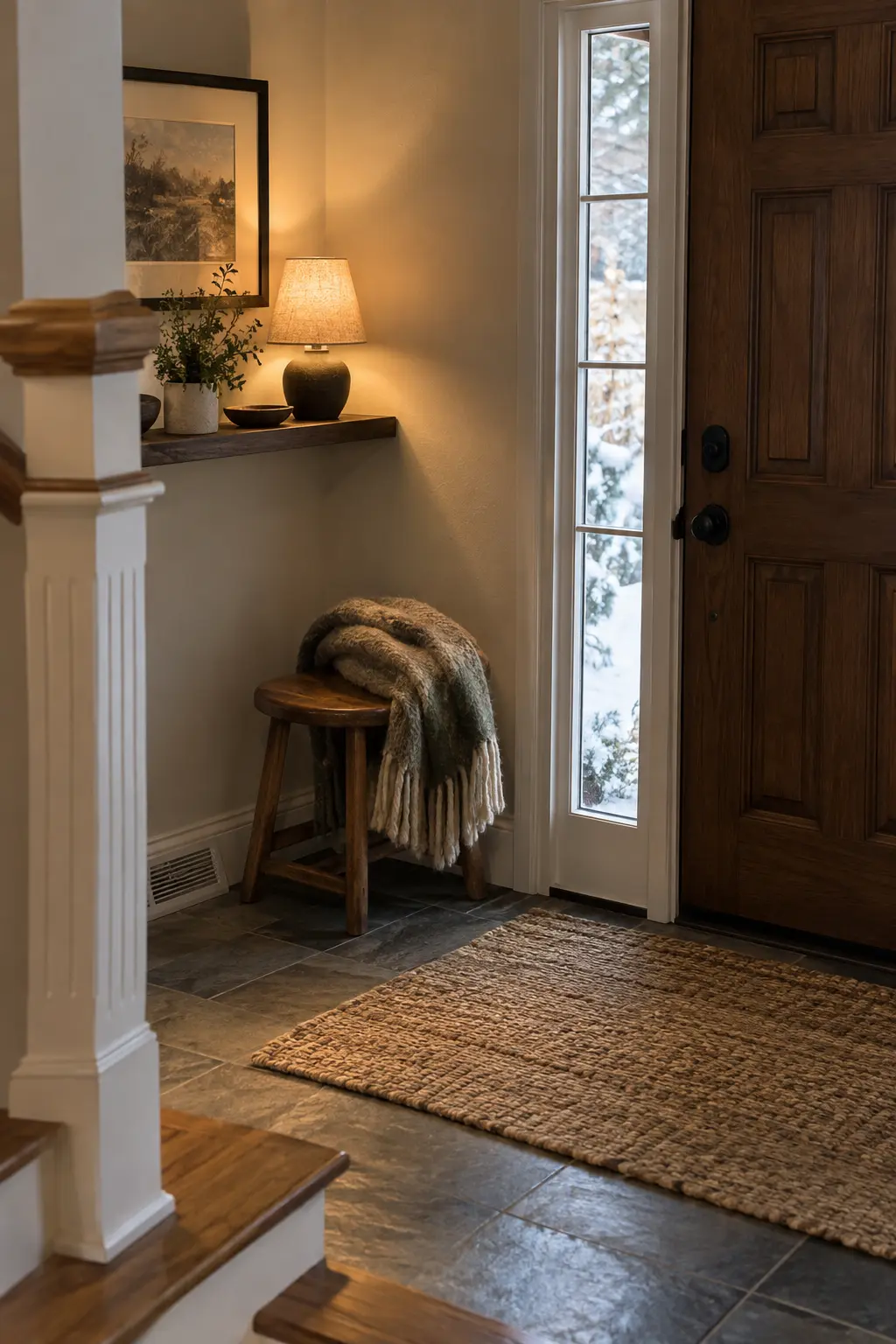
A small wooden stool can turn an unused corner into a place to set a bag or pull on boots. A shaded light above gives the nook purpose without requiring a full bench.
Choose a sturdy seat with a footprint that stays inside the corner. Keep the throw folded rather than trailing, mount the lamp cord securely, and make sure no one must step around the stool to reach the door.
28. Create a Tiny Mirror-and-Ledge Drop Zone
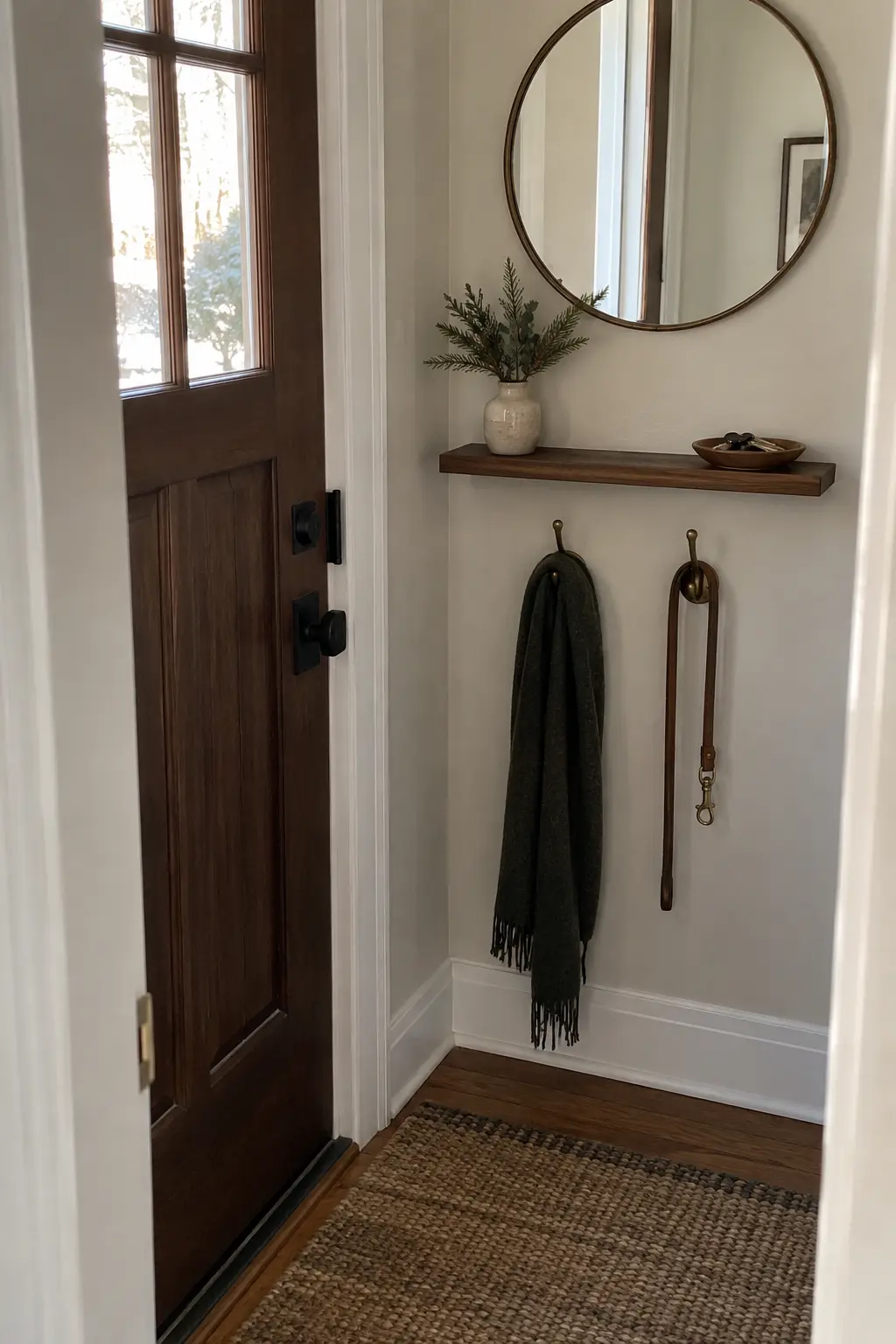
A picture ledge beneath a small round mirror is enough for a key dish and one tiny vase. The combination gives a micro-entry a finished focal point while leaving the floor completely open.
Use a ledge with a raised lip, secure the mirror independently, and keep breakables away from the outer edge. Limit hooks to light accessories so the narrow wall does not become a crowded coat closet.
29. Style the Top of Family Mudroom Cubbies
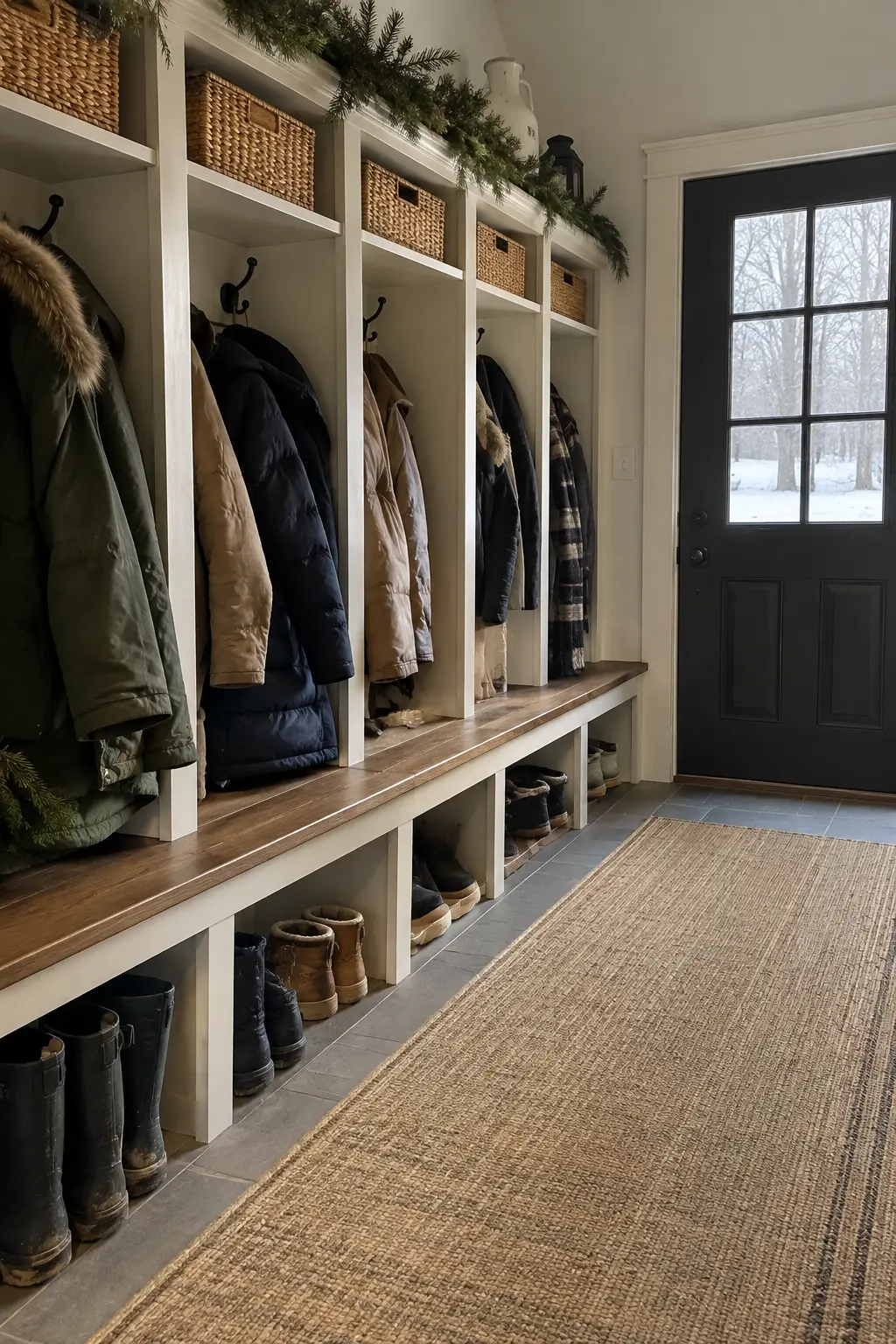
In a working mudroom, decorate the upper ledge rather than the valuable cubbies. A loose row of plain evergreen cuttings brings winter texture while coats, boots, and baskets continue doing the real work.
Leave one hook and one basket free for visitors, and edit outgrown gear before adding decor. Keep branches away from ceiling lights, and use washable liners where wet boots or salty gloves collect.
30. Hide Boots Behind Ventilated Cabinet Doors
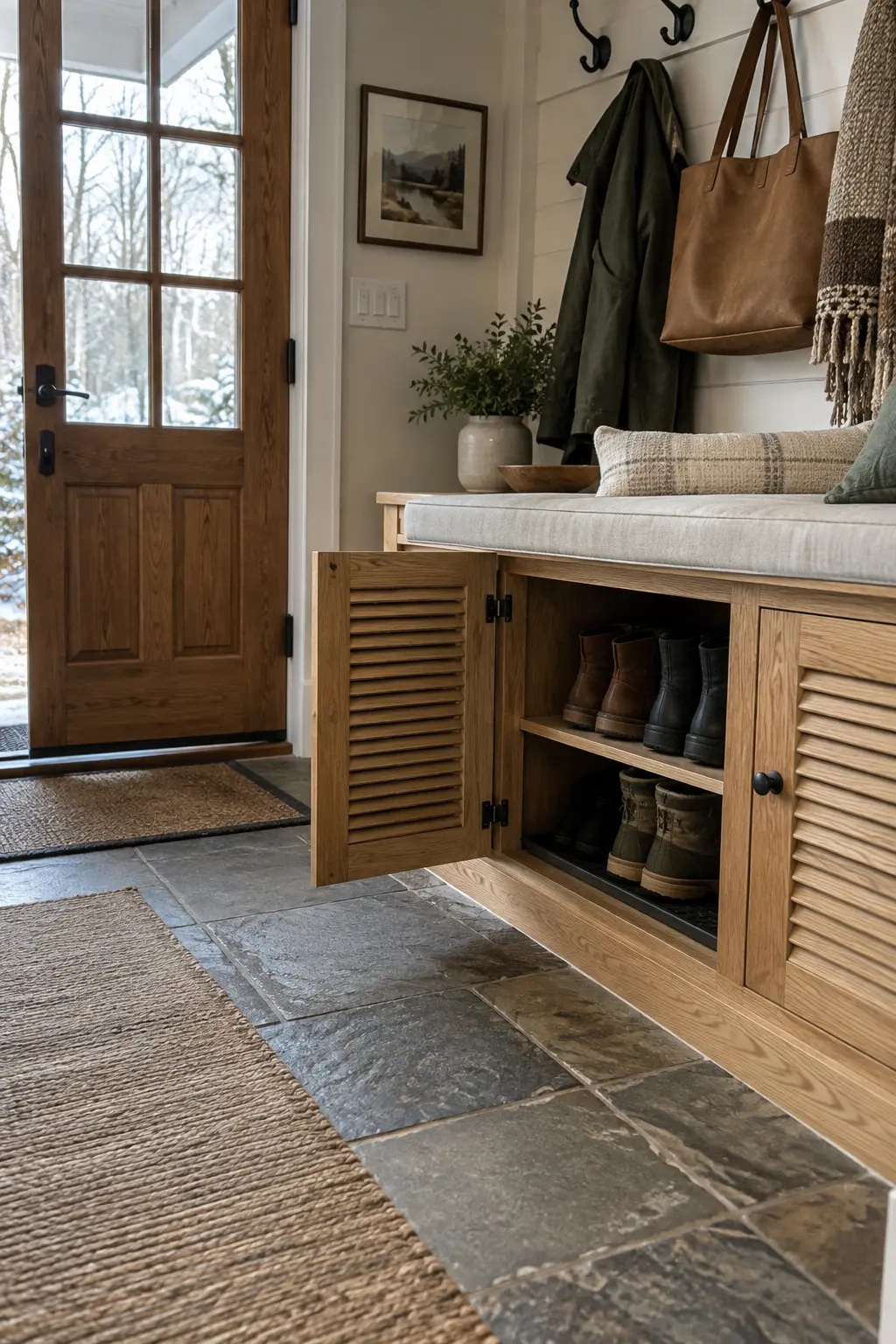
A closed boot cabinet quiets the visual noise of winter footwear while ventilated doors help damp pairs breathe. Pair it with a simple bench so shoes are removed before they travel farther into the house.
Measure tall boots as well as everyday shoes before choosing shelf heights. Browse these entry way shoe storage ideas for more bench, cabinet, and cubby configurations.
Add Natural Texture and Useful Winter Details
Pinecones, branches, dried flowers, warm metals, and carefully placed utility pieces can carry the season without relying on obvious holiday symbols.
31. Organize a Compact Dog-Walk Station
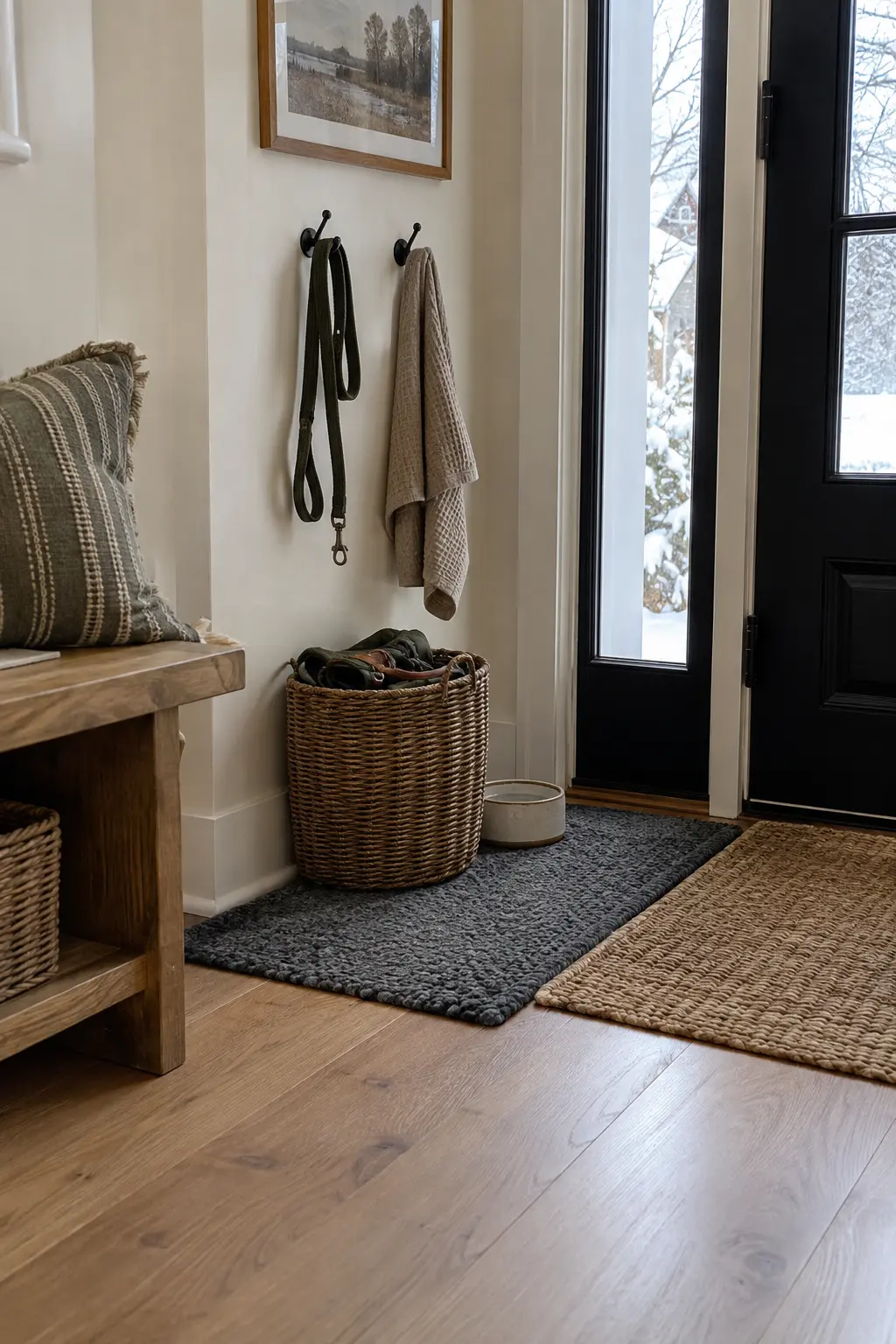
A small basket for leashes, one towel hook, and a washable mat keep winter dog walks from taking over the entry. Repeating the room's wood and black finishes makes the station blend in.
Place the water bowl outside the main shoe path and store treats in a closed container. Hang only the current leash and towel, wash the mat frequently, and keep cleaning products out of a pet's reach.
32. Choose a Slim Tilt-Out Shoe Cabinet
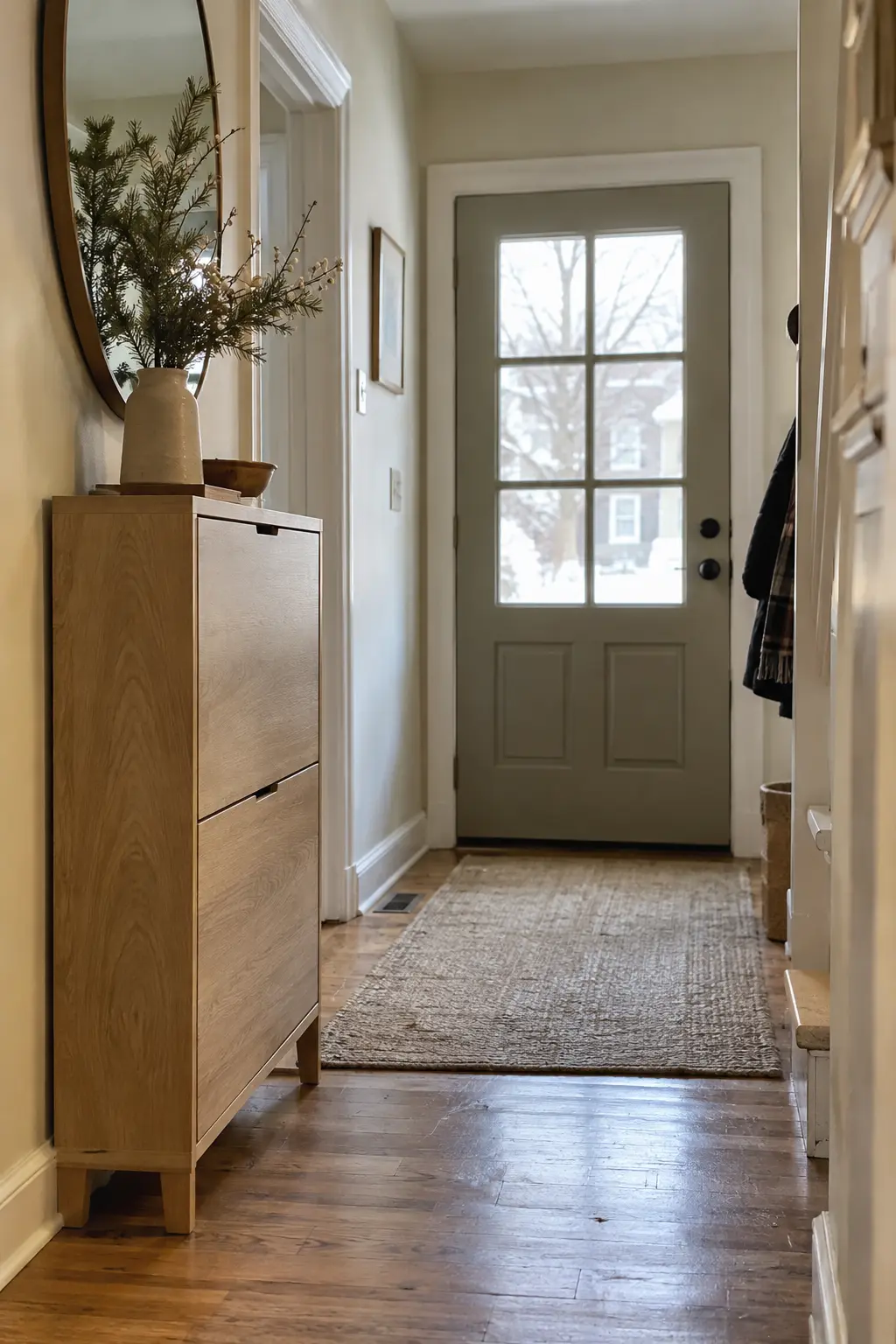
A shallow tilt-out cabinet keeps shoes behind a clean front in a narrow hall. Pale oak reflects winter daylight, while an oval mirror and one branch vase stop the cabinet from looking purely utilitarian.
Anchor the unit to the wall before loading it, especially in homes with children. Check shoe length against the internal compartments and keep the top almost empty so the narrow passage stays visually calm.
33. Store Salt and a Boot Brush on One Tray
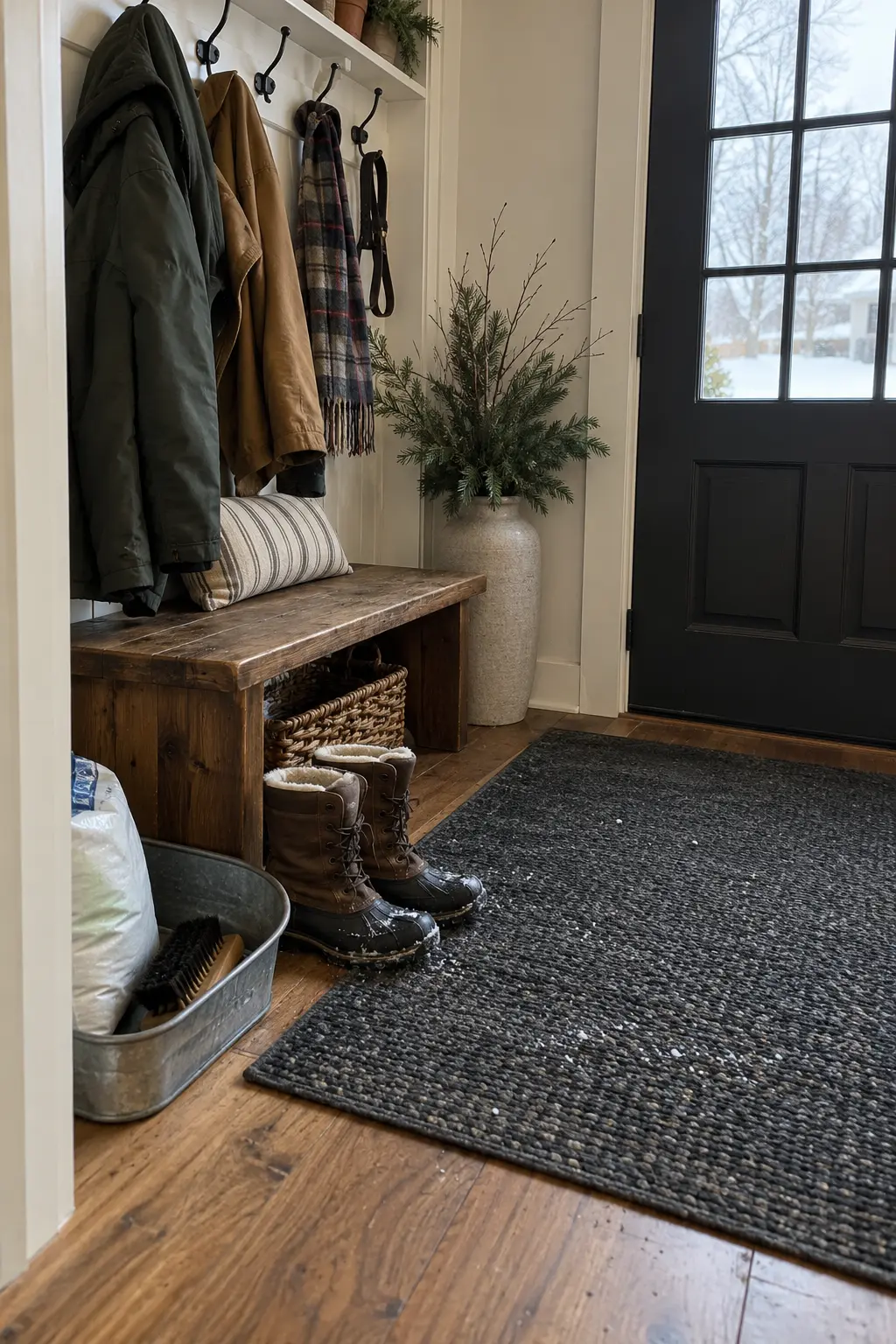
A galvanized tray can hold a small salt container, boot brush, and folded cleaning cloth in one washable zone. Its dull finish feels appropriate for winter without becoming another decorative theme.
Use a lidded container for ice melt and follow its safety label around pets and children. Keep the tray under the bench or against the wall, then sweep gritty residue before it scratches wood or stone floors.
34. Give the Radiator Breathing Room
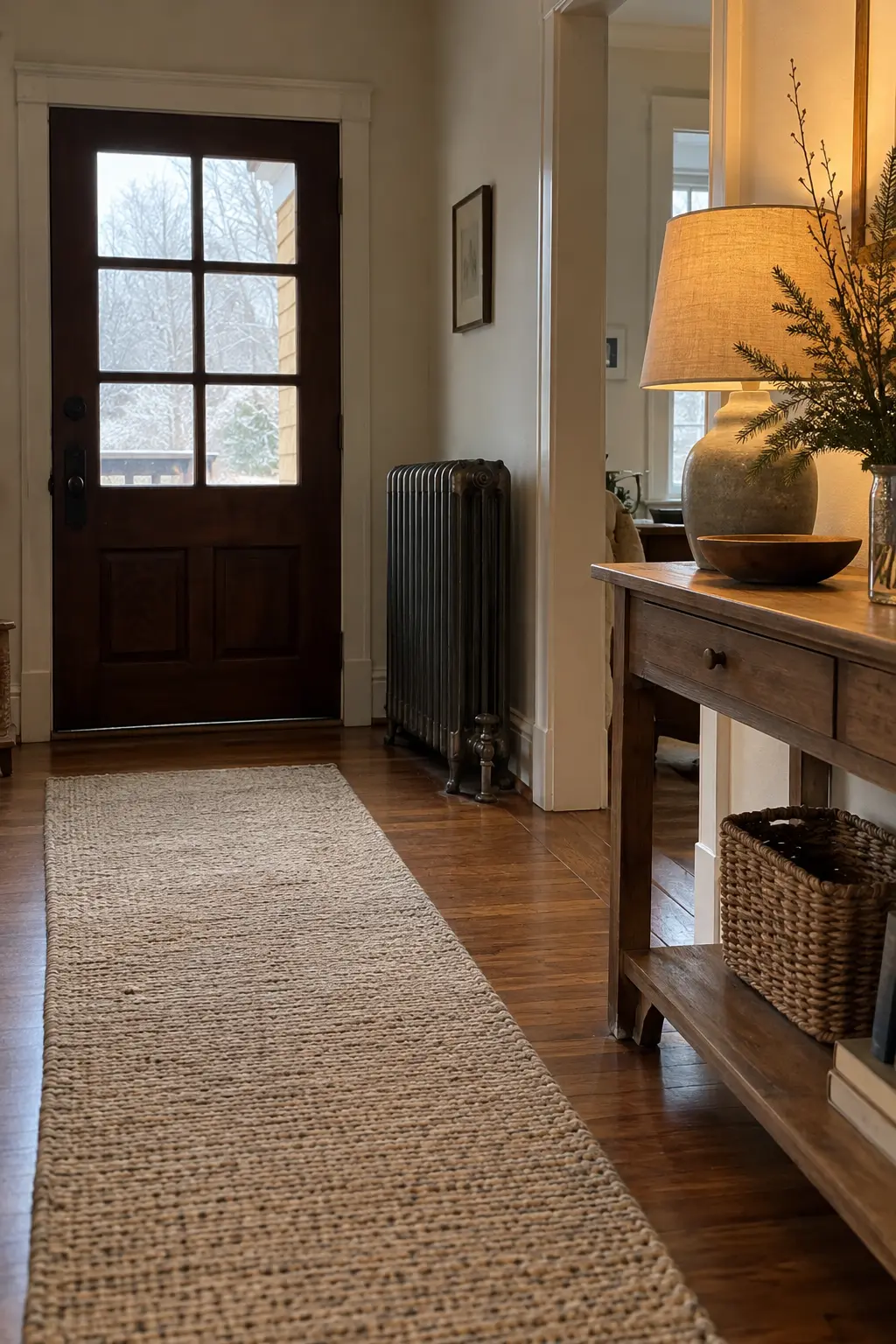
An old radiator already adds strong shape to a winter entry, so it does not need garland or baskets around it. Place the decorative focal point on a nearby wall and let the heater remain visually quiet.
Follow the manufacturer's clearance guidance and keep textiles, branches, wood furniture, and wet gear away from heat. End the runner before the radiator and choose a freestanding console that does not block airflow.
35. Keep Floor Vents Completely Uncovered
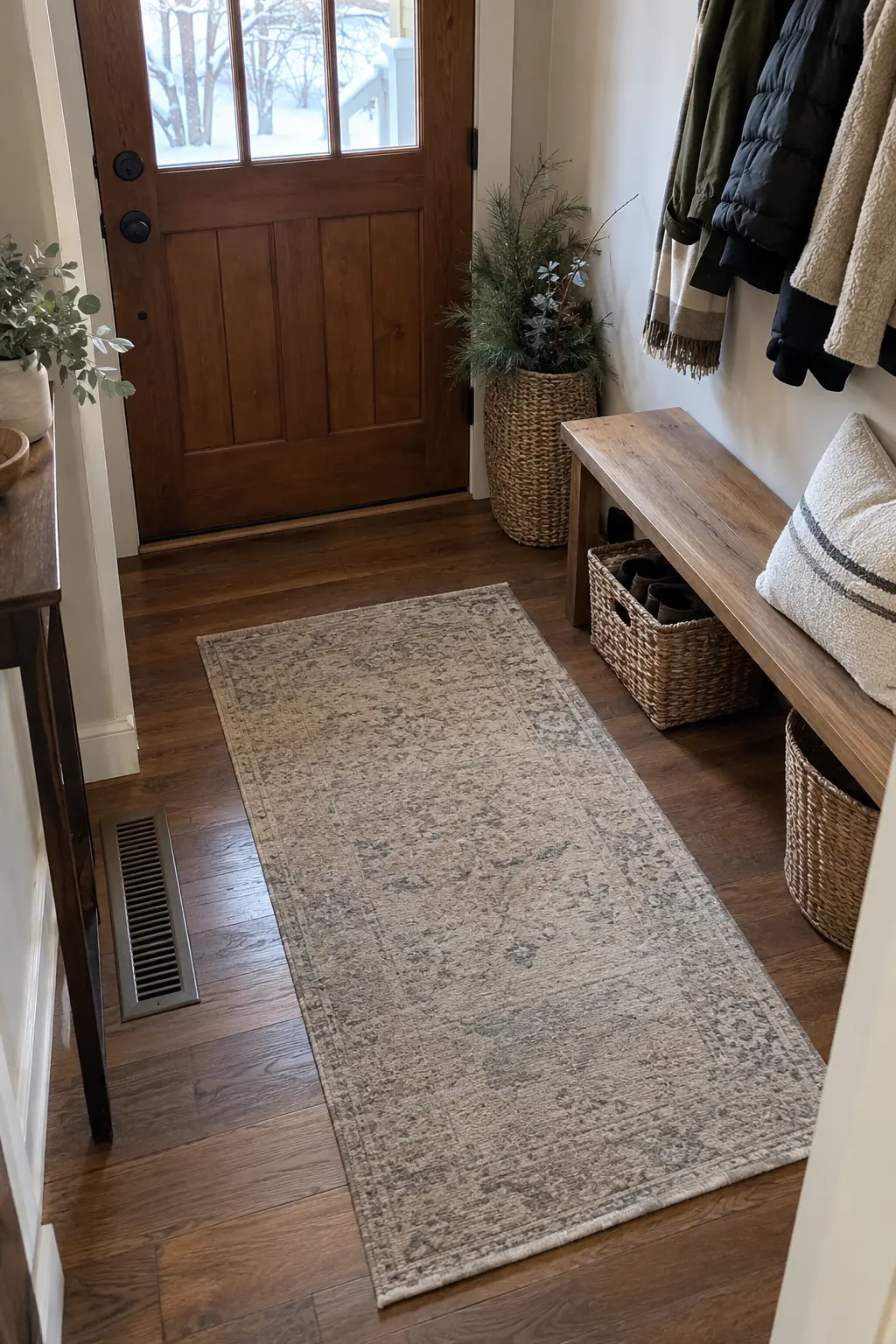
A visible floor vent is easier to respect when the rug, basket, and bench are arranged around it intentionally. The open rectangle becomes part of the plan instead of an inconvenient afterthought.
Run the heating system and check that curtains or coats do not blow across the grille. Trim the rug pad to match the runner, leave space for vacuuming, and never place damp boots over warm airflow.
36. Fill a Handmade Bowl With Pinecones
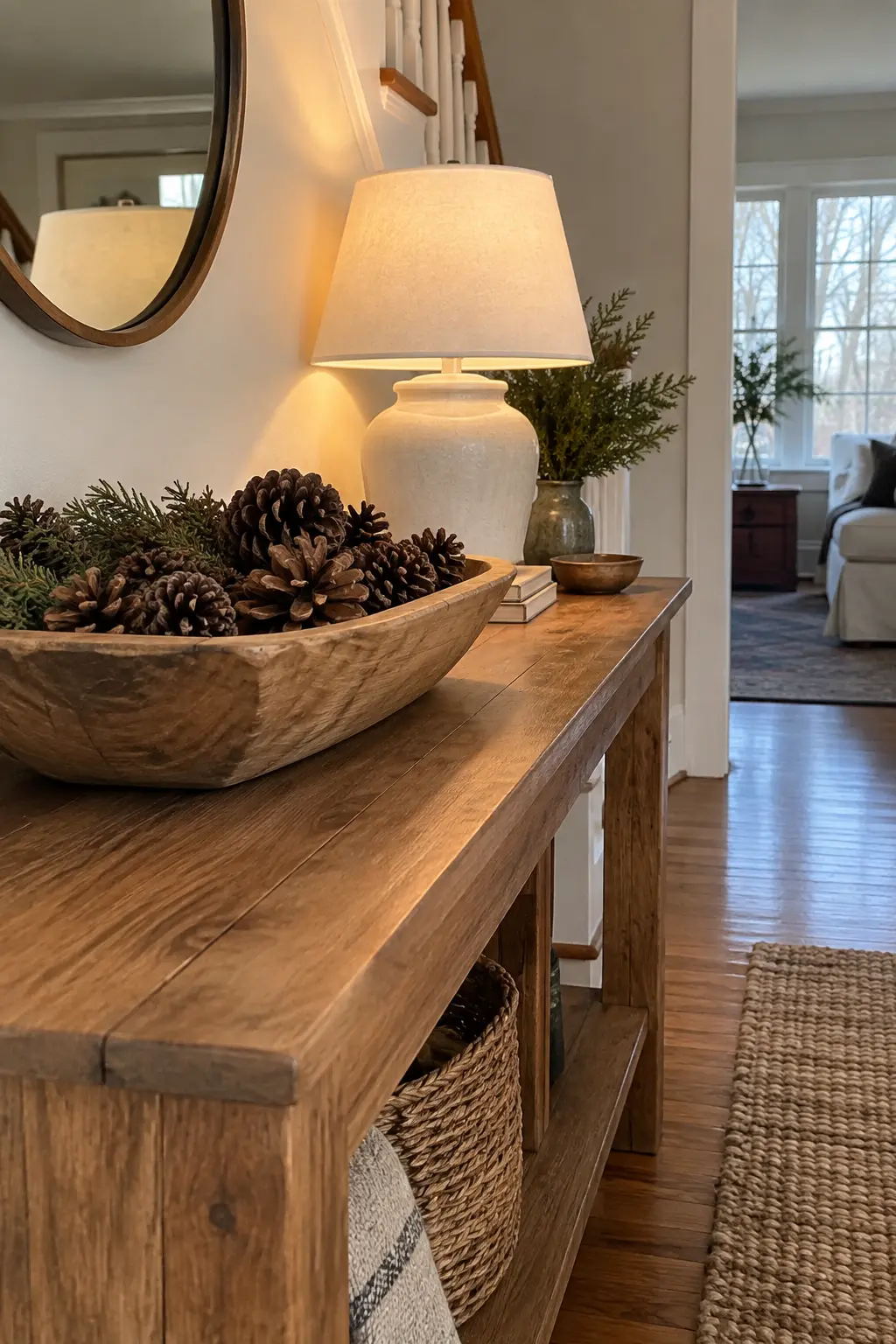
A shallow handmade bowl filled with natural pinecones adds winter texture at almost no height. The rough cones contrast nicely with smooth pottery and keep a console arrangement grounded.
Bake or clean foraged cones appropriately before bringing them indoors, or use clean purchased ones. Keep the bowl away from the key landing area, skip scented coatings, and remove loose scales during weekly dusting.
37. Arrange Eucalyptus in Recycled Glass
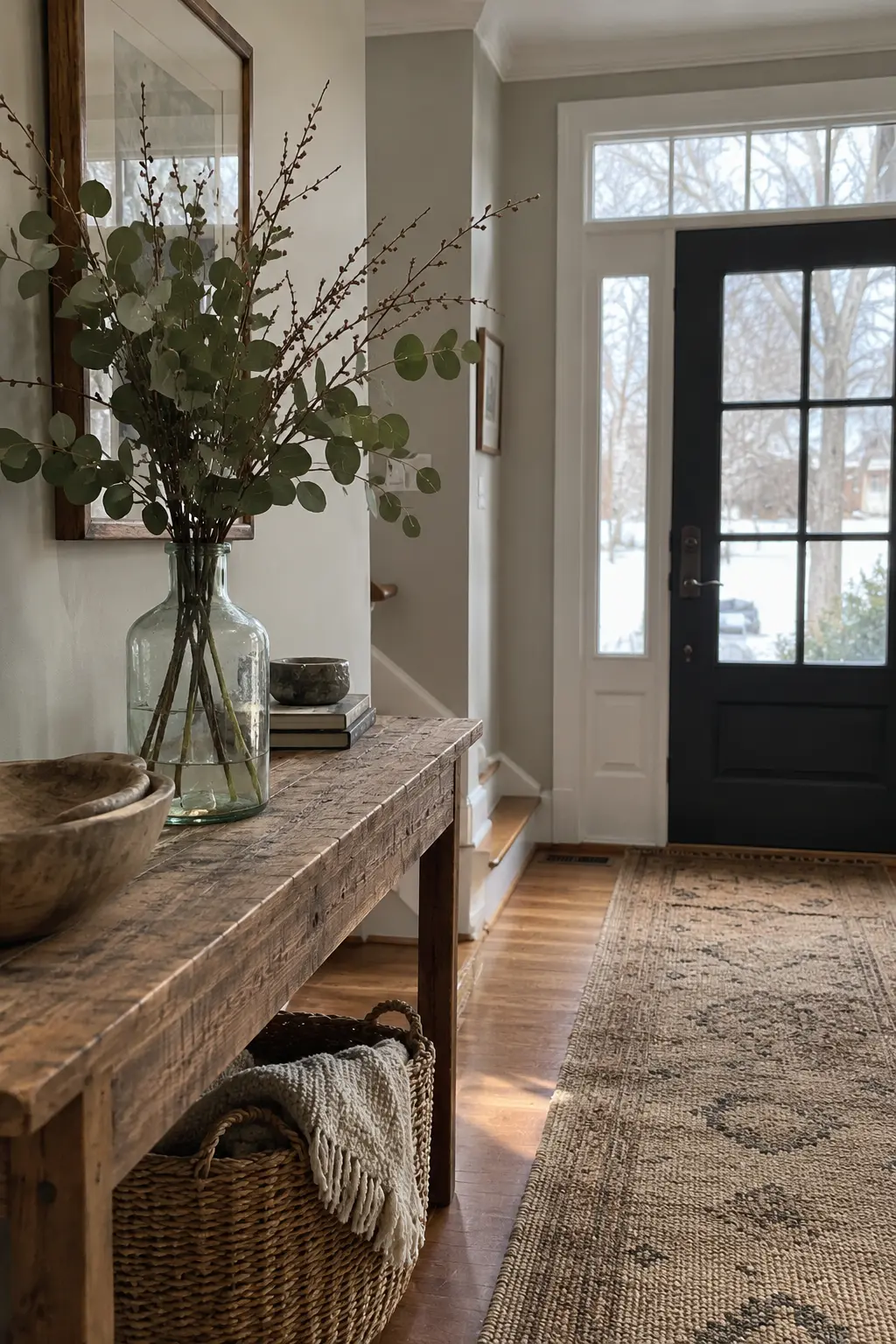
A recycled-glass bottle vase gives eucalyptus and bare twigs a lighter look than heavy pottery. The faint green tint works especially well with reclaimed wood, gray walls, and woven storage.
Use a narrow neck so the stems stand without a dense bouquet. Refresh water for live branches, protect the tabletop with a coaster, and trim the arrangement below any light switch or mirror edge.
38. Use Dried White Hydrangeas for Softness
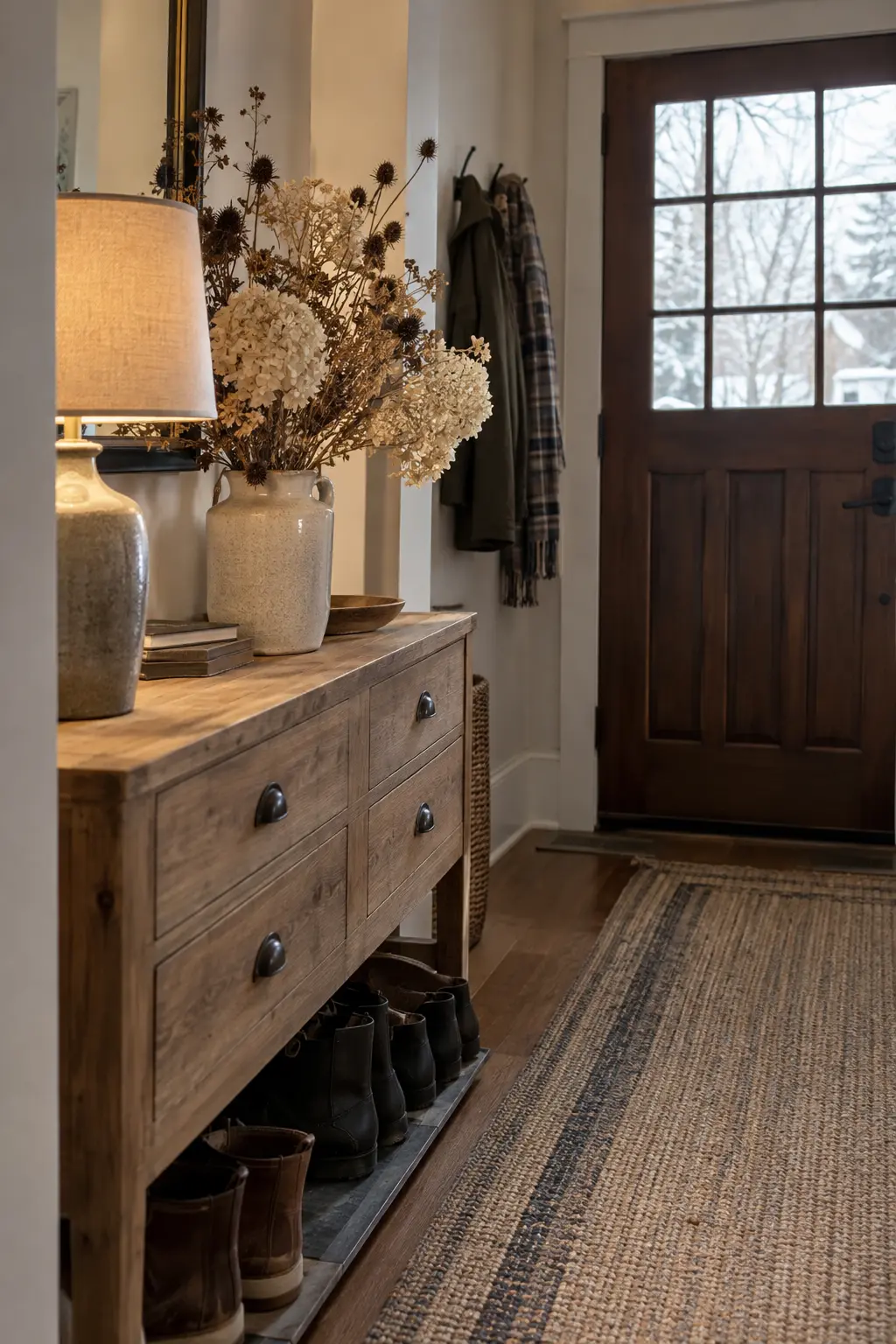
Dried white hydrangeas bring cloudlike softness to a winter entry without adding bright seasonal color. Mix them with a few brown seed heads so the arrangement feels loose and natural rather than bridal.
Choose a heavy vase, keep brittle stems away from coat sleeves, and lift the arrangement to dust beneath it. If the flowers shed heavily, shorten the bouquet or display it behind the lamp for protection.
39. Display a Few Matte Ceramic Houses
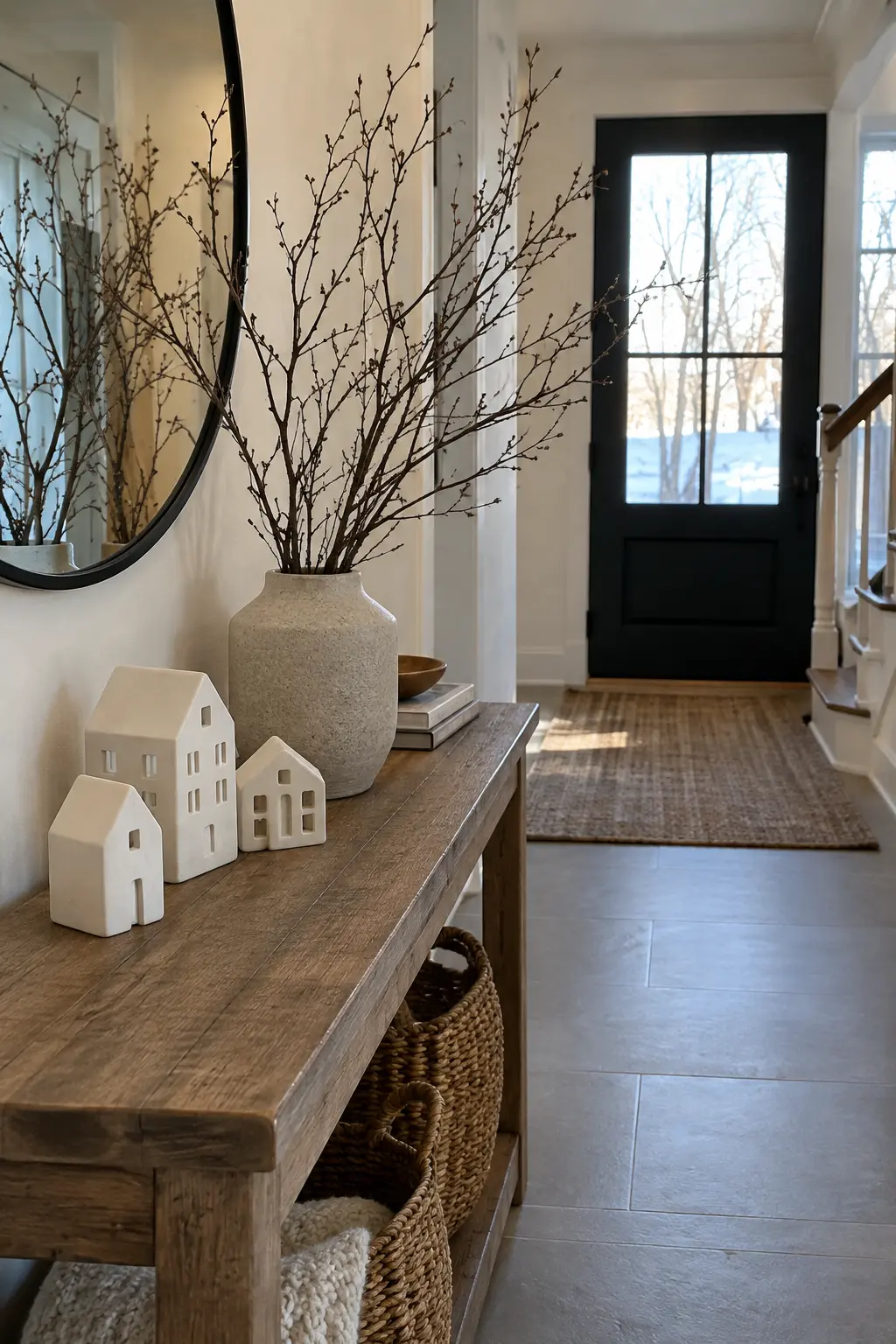
Three matte white ceramic houses can suggest shelter and winter quiet without lights, glitter, or Christmas details. Group different heights together and leave the rest of the console relatively empty.
Keep the smallest piece out of a child's reach and place felt underneath rough bases. An odd-numbered cluster looks relaxed, but it should stay to one side so keys and mail still have room.
40. Repeat Aged Brass in Three Small Places
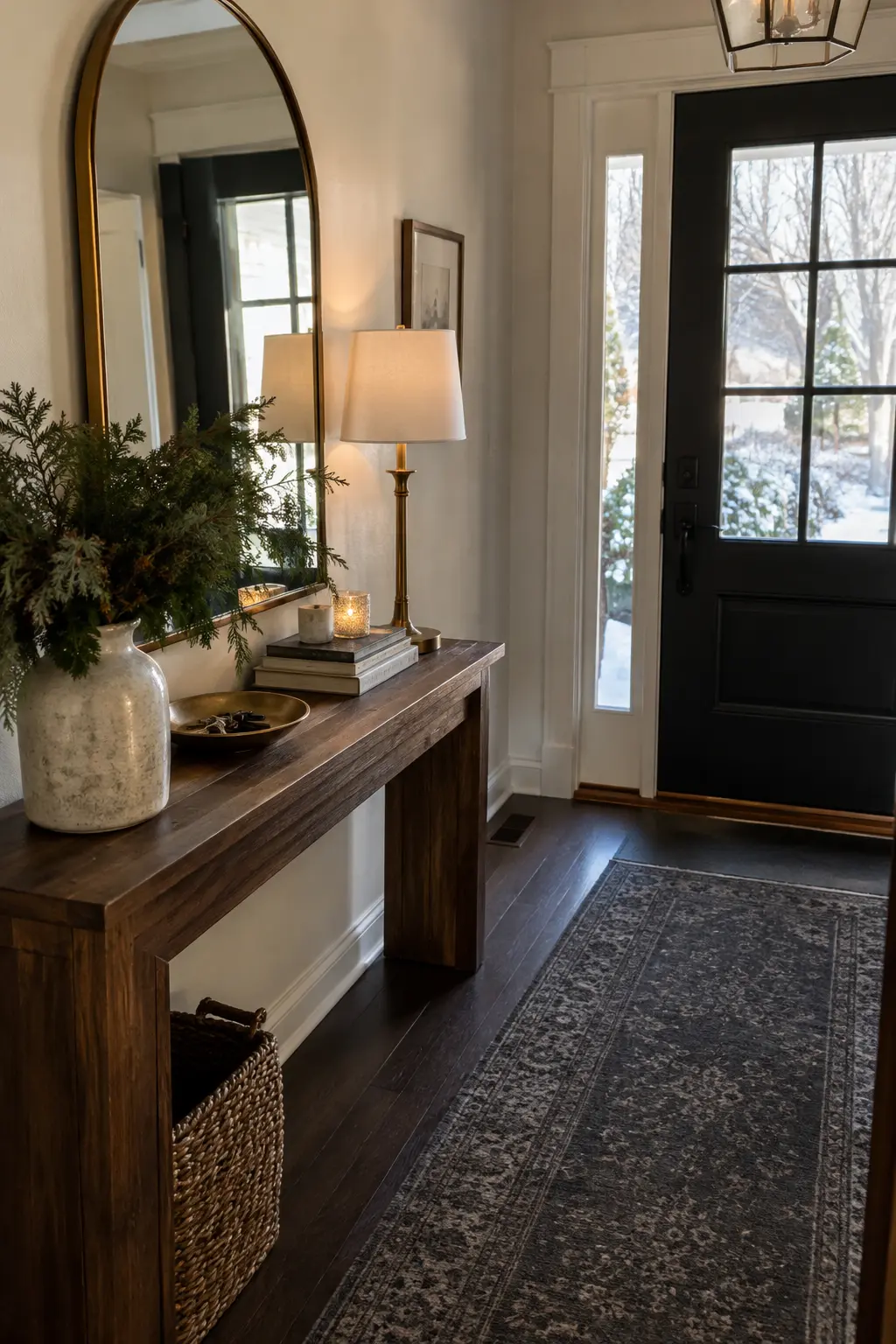
A thin mirror frame, lamp base, and catchall tray are enough to carry aged brass through a winter entry. Repeating the finish three times creates warmth without turning every fitting metallic.
Let the patina vary slightly so the pieces feel collected. Keep polished gold and yellow-brass accents to a minimum, and wipe the tray regularly because wet keys can leave marks on unsealed metal.
Finish With a Distinct Winter Color Story
Choose one clear direction for the final layer, from navy and oatmeal to forest green, Scandinavian pale wood, cabin antiques, or modern organic stone.
41. Build a Navy-and-Oatmeal Palette
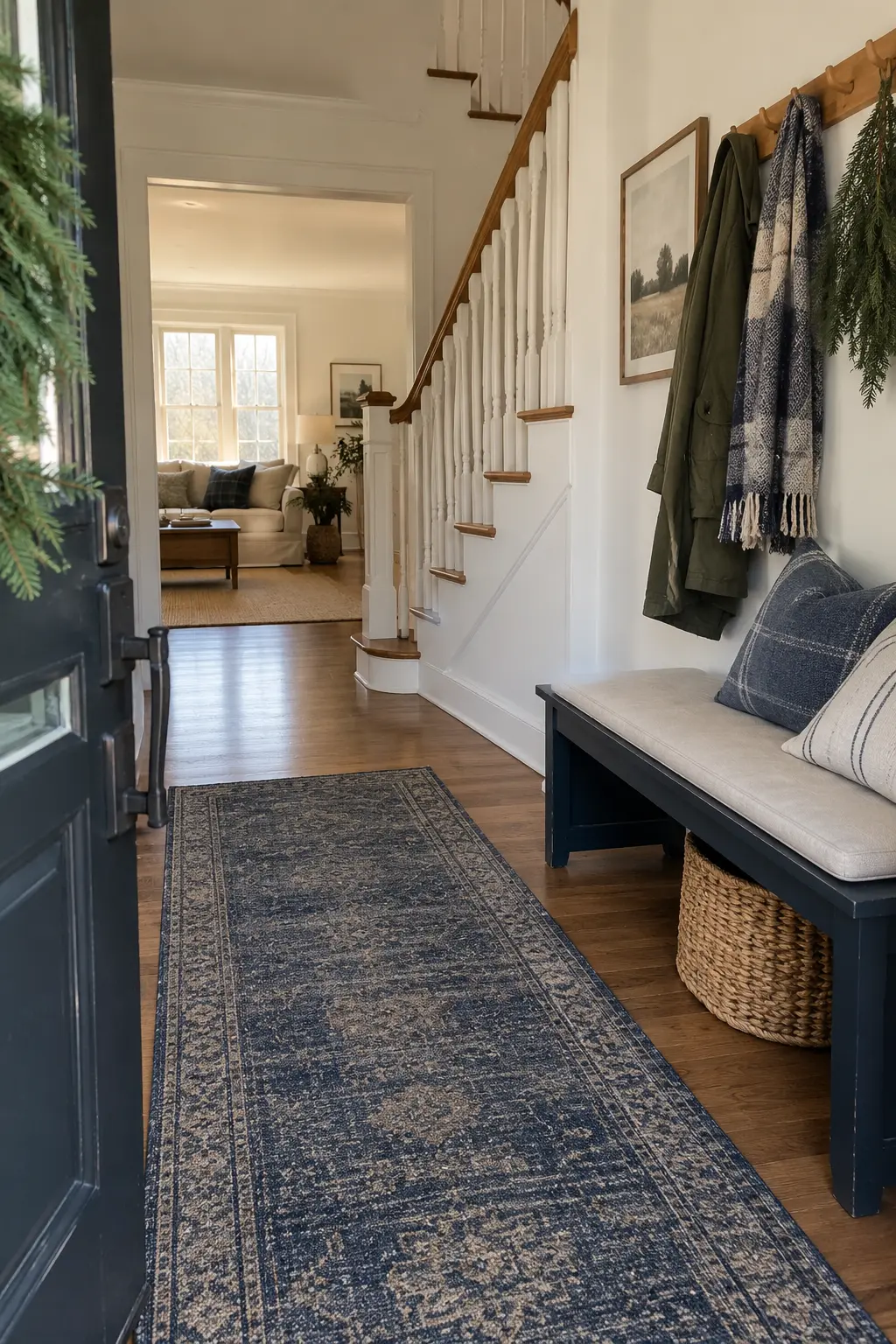
Muted navy and oatmeal create a winter palette that feels deep but not gloomy. Use navy on one substantial piece, then soften it with an oatmeal cushion, pale wood, and warm white walls.
Repeat the blue once in the runner rather than on every accessory. Natural daylight can make navy look nearly black, so compare fabric and paint samples in the actual entry before committing.
42. Try Crisp Black and Ivory
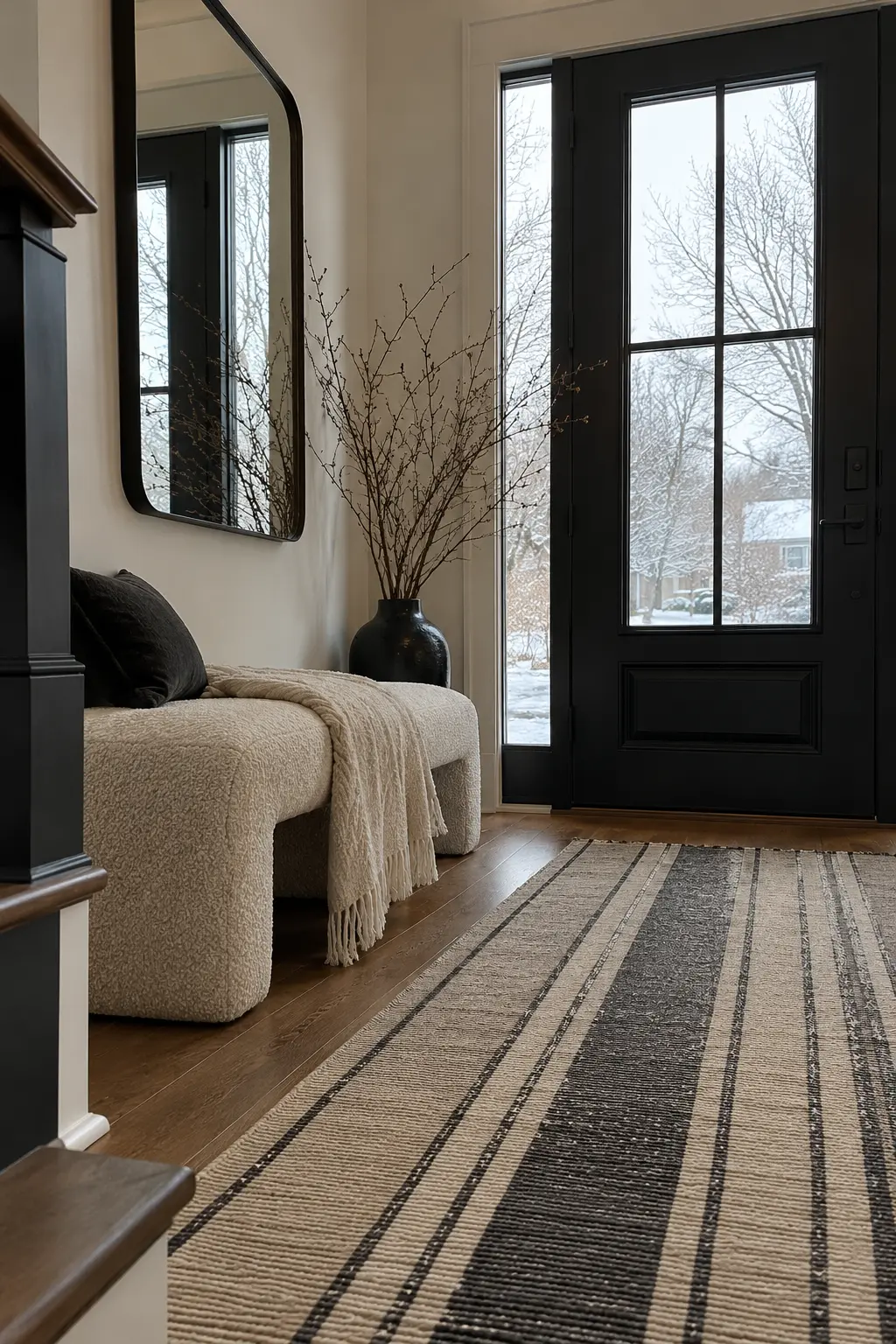
Black and ivory give a winter entry clear contrast even when the styling is minimal. A black door and mirror frame outline the space, while an ivory bench and pale walls keep it from feeling severe.
Soften the scheme with wool, wood, and a woven basket. Use the striped runner as the only strong pattern, and keep branches sparse so the graphic shapes remain easy to read from the doorway.
43. Paint a Vintage Console Forest Green
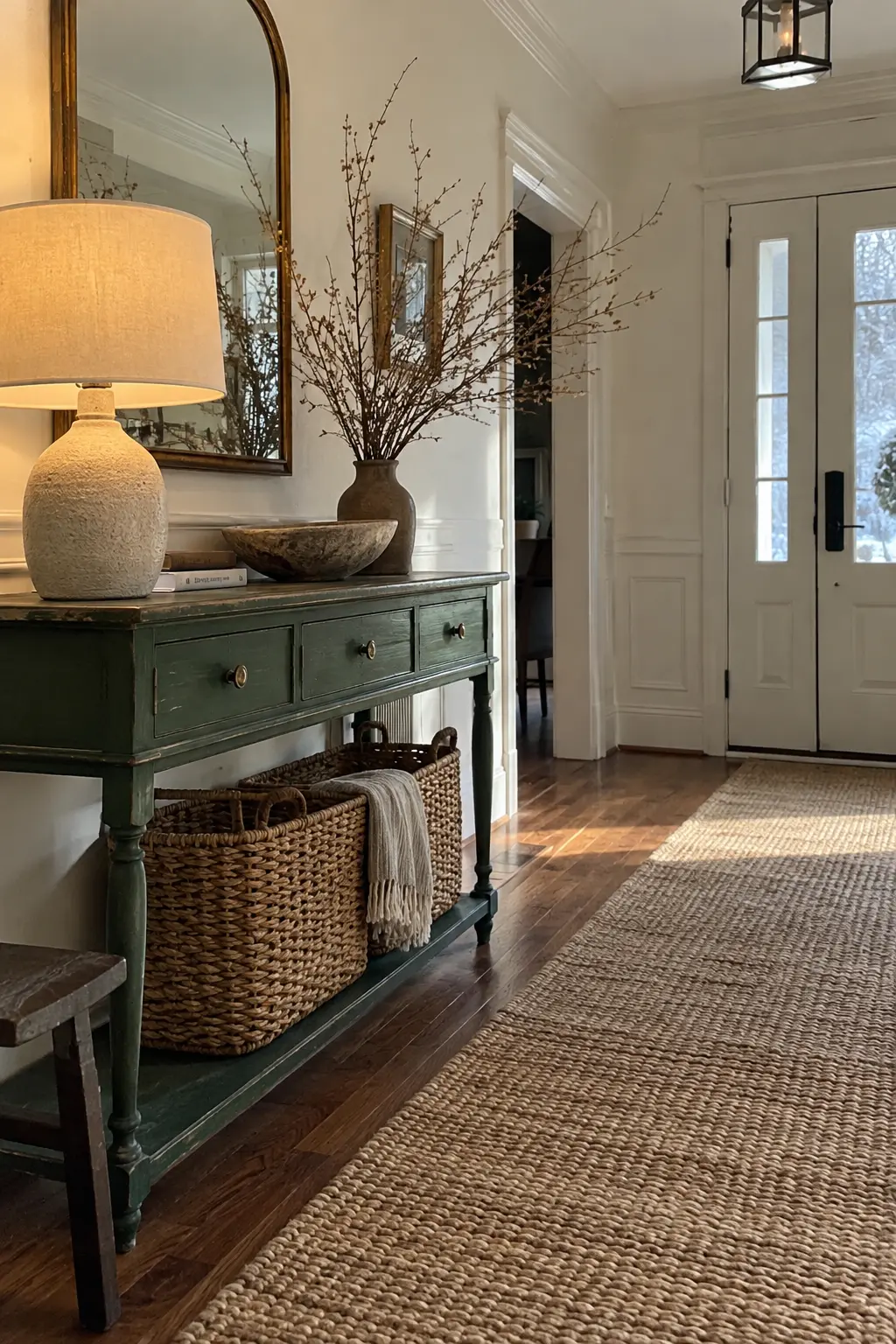
Forest green gives a vintage console year-round depth while naturally complementing bare branches and winter evergreens. Cream pottery and a stone bowl keep the surface brighter than the painted base.
Use a durable furniture finish and let it cure fully before styling. Repeat green only once in a small cutting, then rely on jute, oak, and warm ivory to prevent the entry from becoming too dark.
44. Soften Built-Ins With Pale Sage
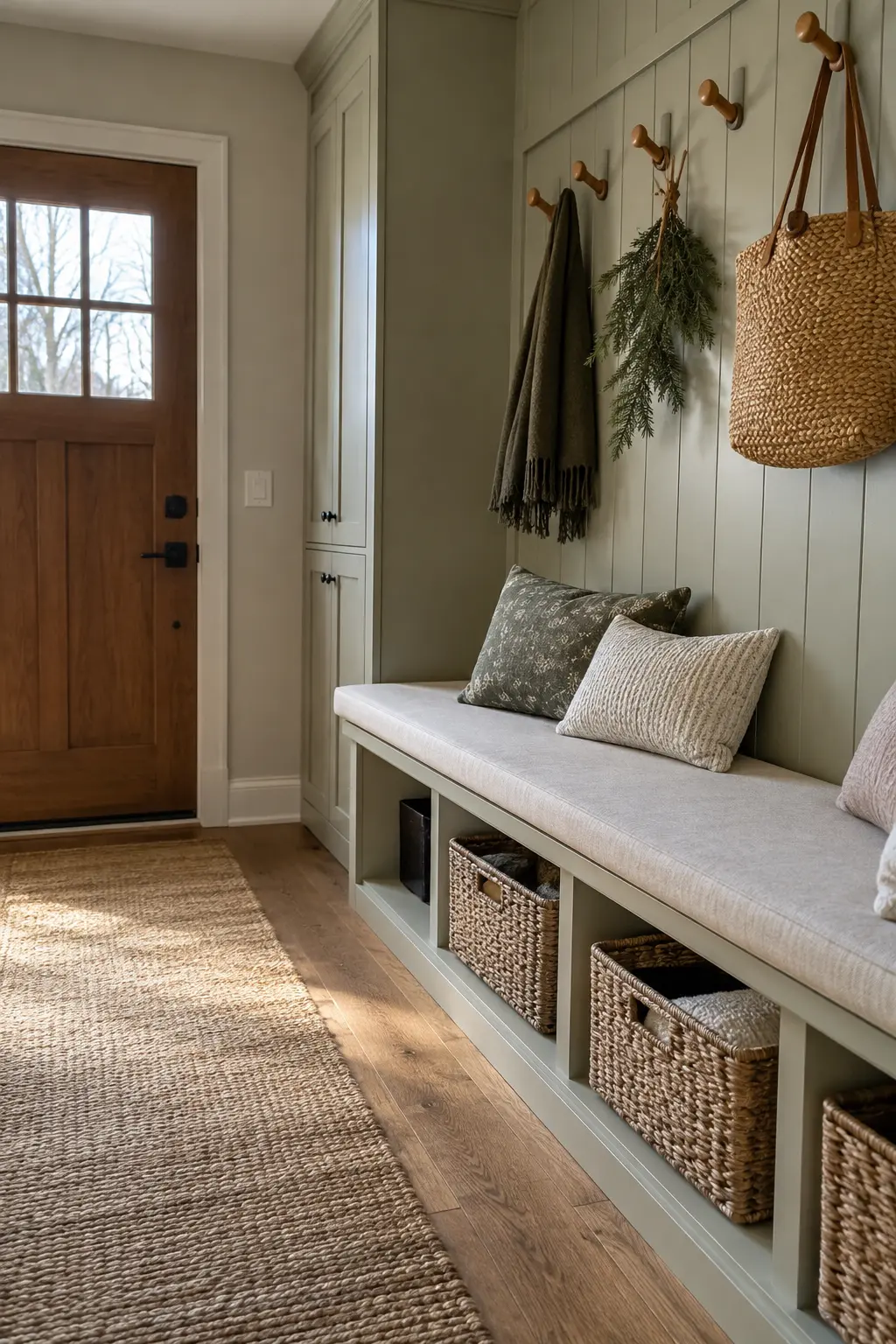
Pale sage makes built-in storage feel gentle in low winter light. Warm oak hooks, an oatmeal cushion, and woven bins prevent the color from looking cold or clinical.
Paint doors and trim in the same washable sheen for a seamless result. Keep the seat cushion removable for cleaning, and choose baskets that slide freely without scraping the newly painted cubbies.
45. Mount Vintage Sleds and Skates Safely
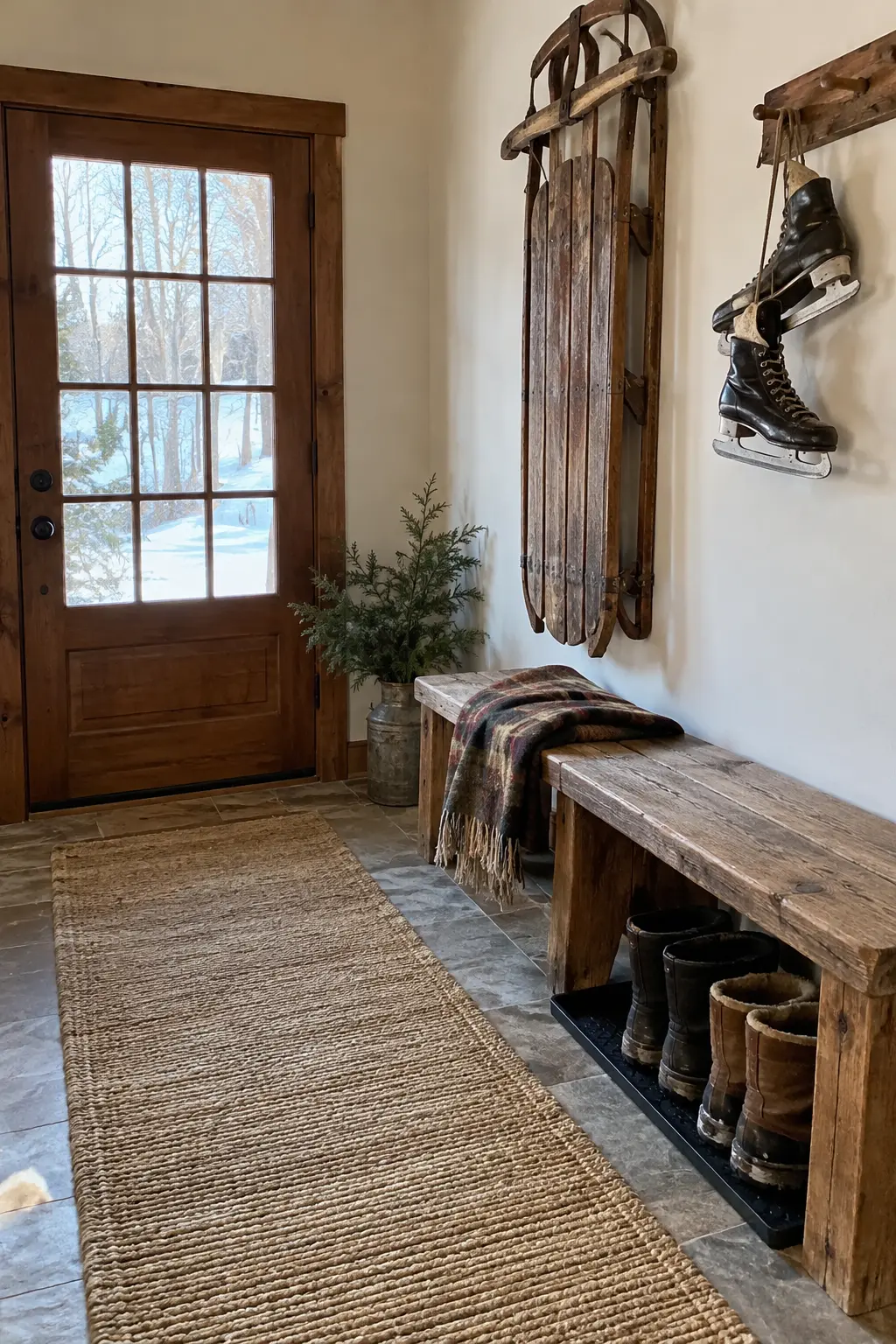
One antique sled and a secured pair of vintage skates bring genuine winter character to a cabin-style entry. The display works best when the rest of the wall stays simple and the floor remains practical.
Fasten every piece with hardware rated for its weight and cover sharp skate blades. Mount the collection above shoulder level, check it seasonally, and never lean heavy equipment where it can fall into the walkway.
46. Keep the Look Scandinavian and Spare
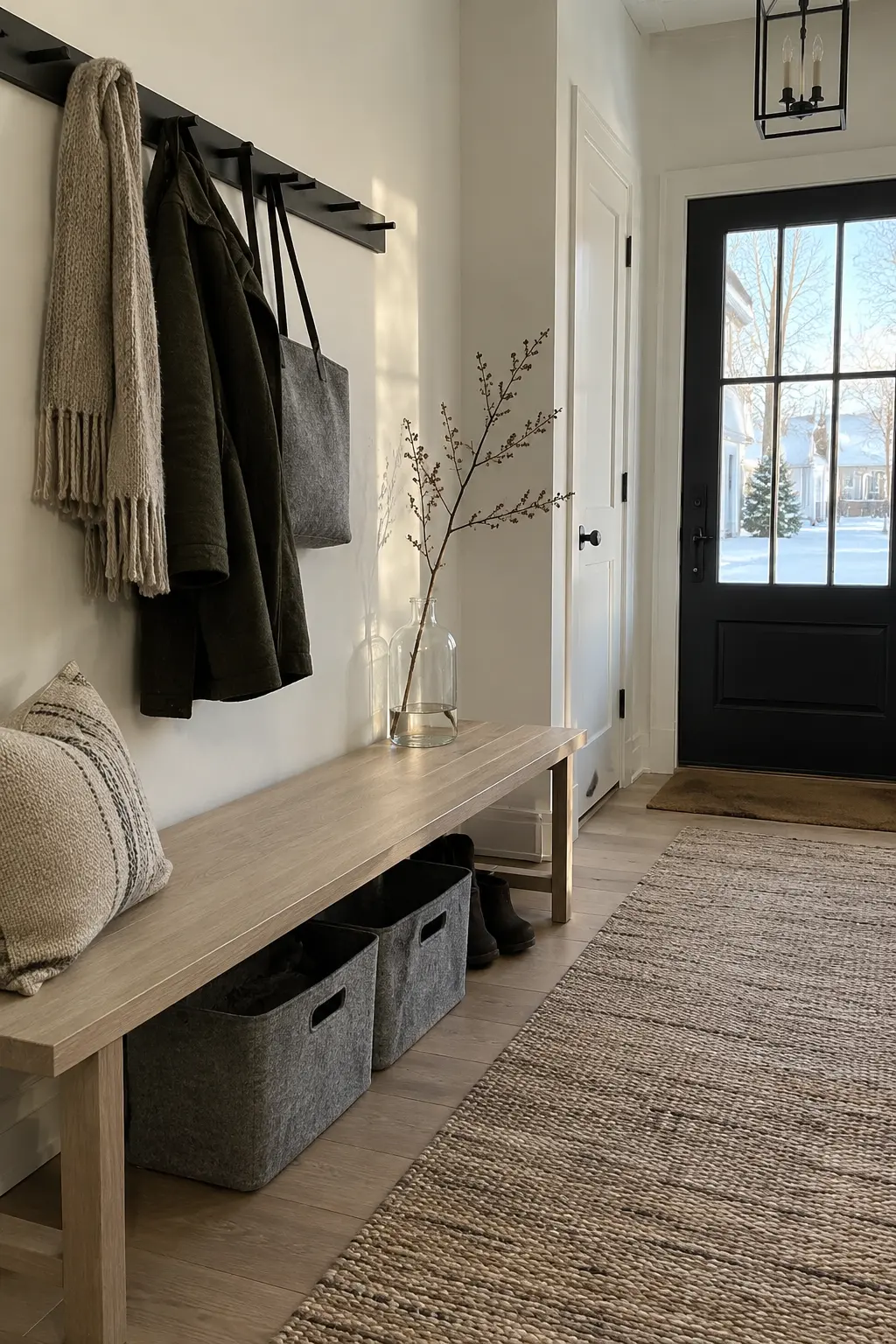
A pale ash bench, white walls, and a simple black peg rail create a quiet Scandinavian base. Gray felt baskets and one bare branch add softness without undoing the clean, useful layout.
Edit the hooks at the end of each week and store backup gear elsewhere. Choose washable felt or lined bins, leave the bench mostly open, and let natural materials provide the decoration.
47. Mix Travertine With Warm Plaster
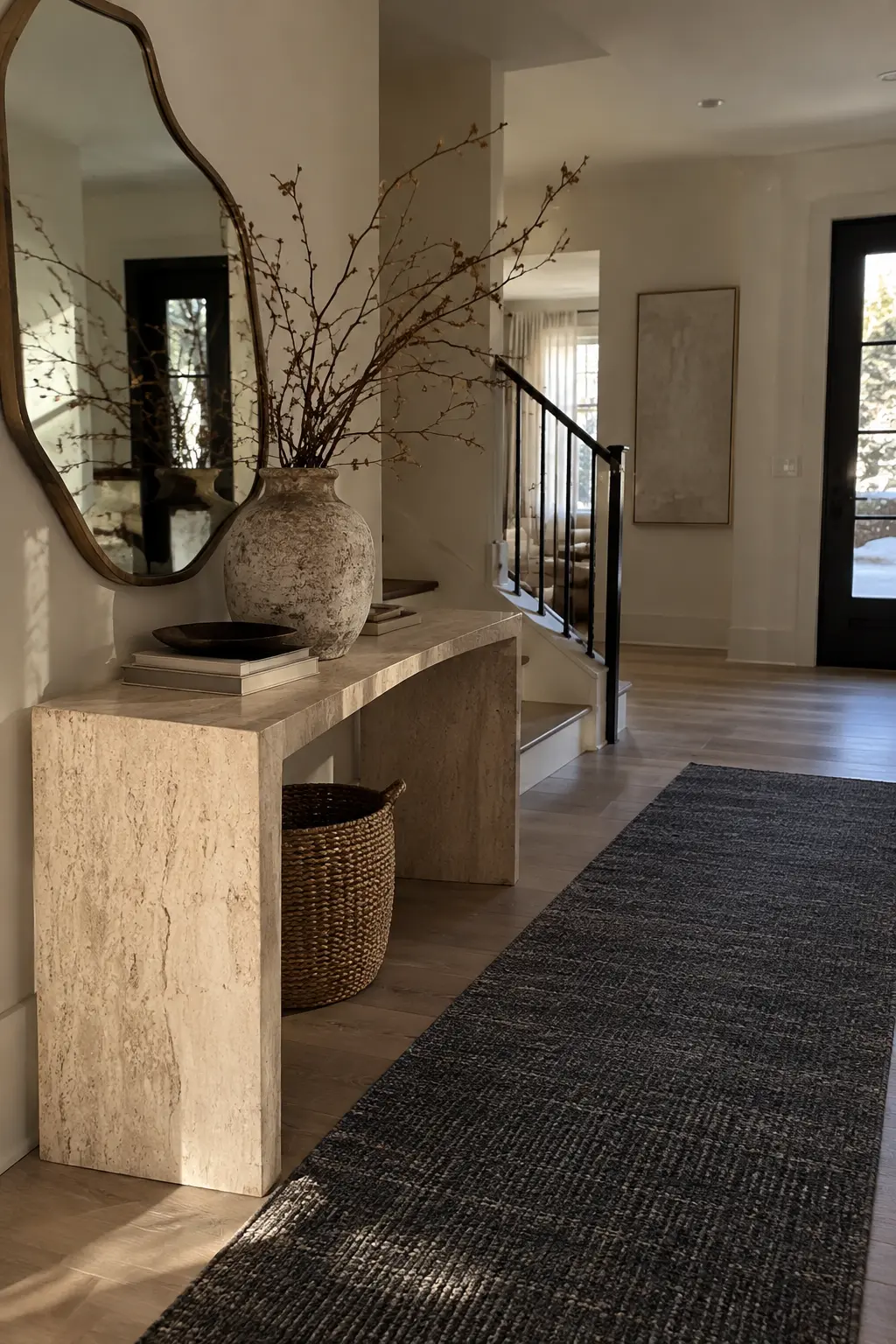
Travertine, warm plaster, and a textured ceramic vessel make a modern entry feel grounded in winter. Rounded shapes soften the stone, while a charcoal wool runner keeps the pale materials from floating.
Seal porous stone appropriately and use a tray beneath wet keys or gloves. Balance the heavy console with one large branch arrangement rather than many small objects, and keep the mirror securely anchored.
48. Use Blue-Hour Light as Part of the Mood
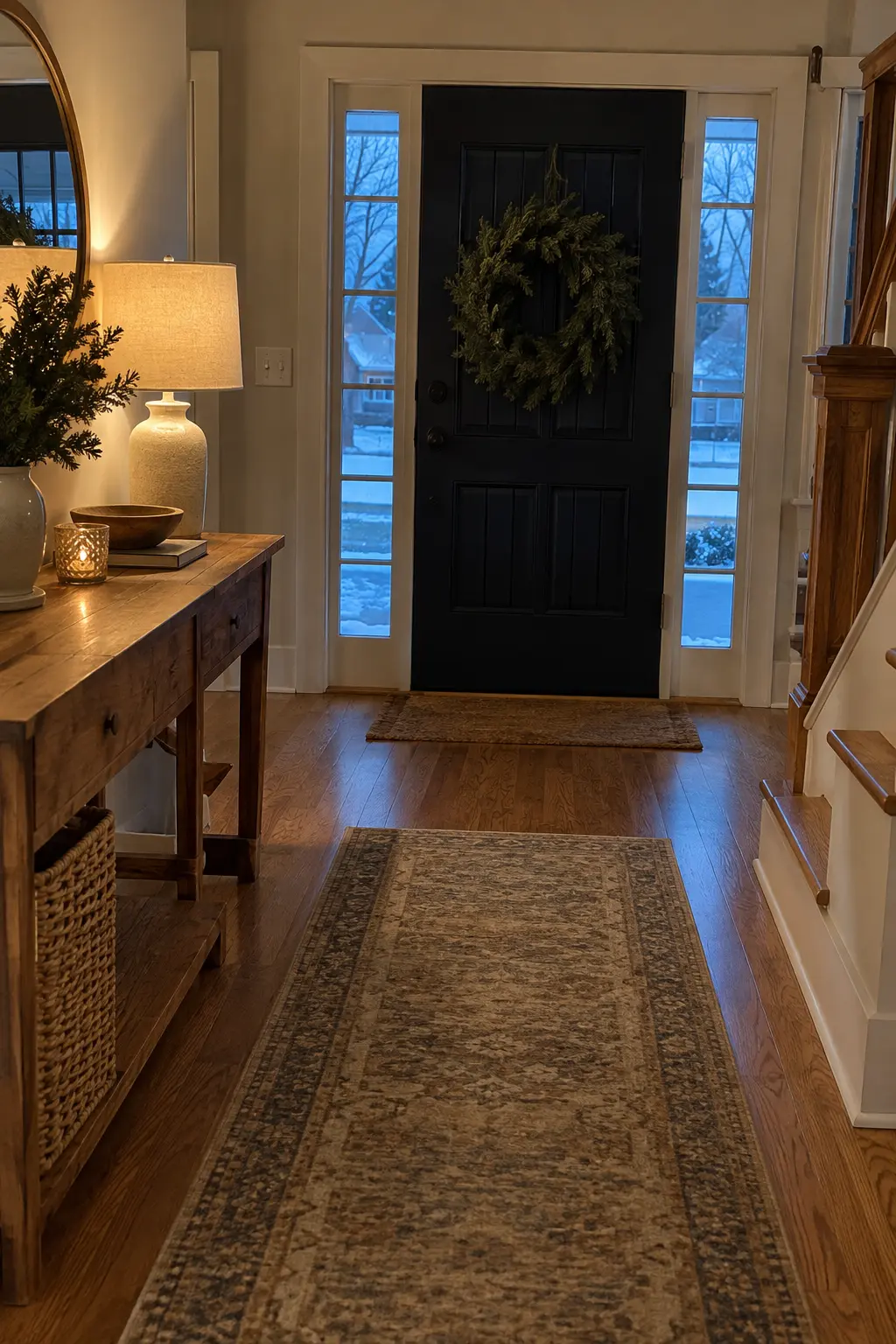
At blue hour, a warm console lamp against the cool window light makes an entry feel especially inviting. A navy door, plain wreath, and muted runner are enough to support the contrast.
Use a lamp timer so the light comes on before sunset and choose a warm bulb with comfortable brightness. Keep the glass sidelights unobstructed, and avoid extra string lights that push the scene back toward Christmas.
49. Reset the Entry After the Holidays
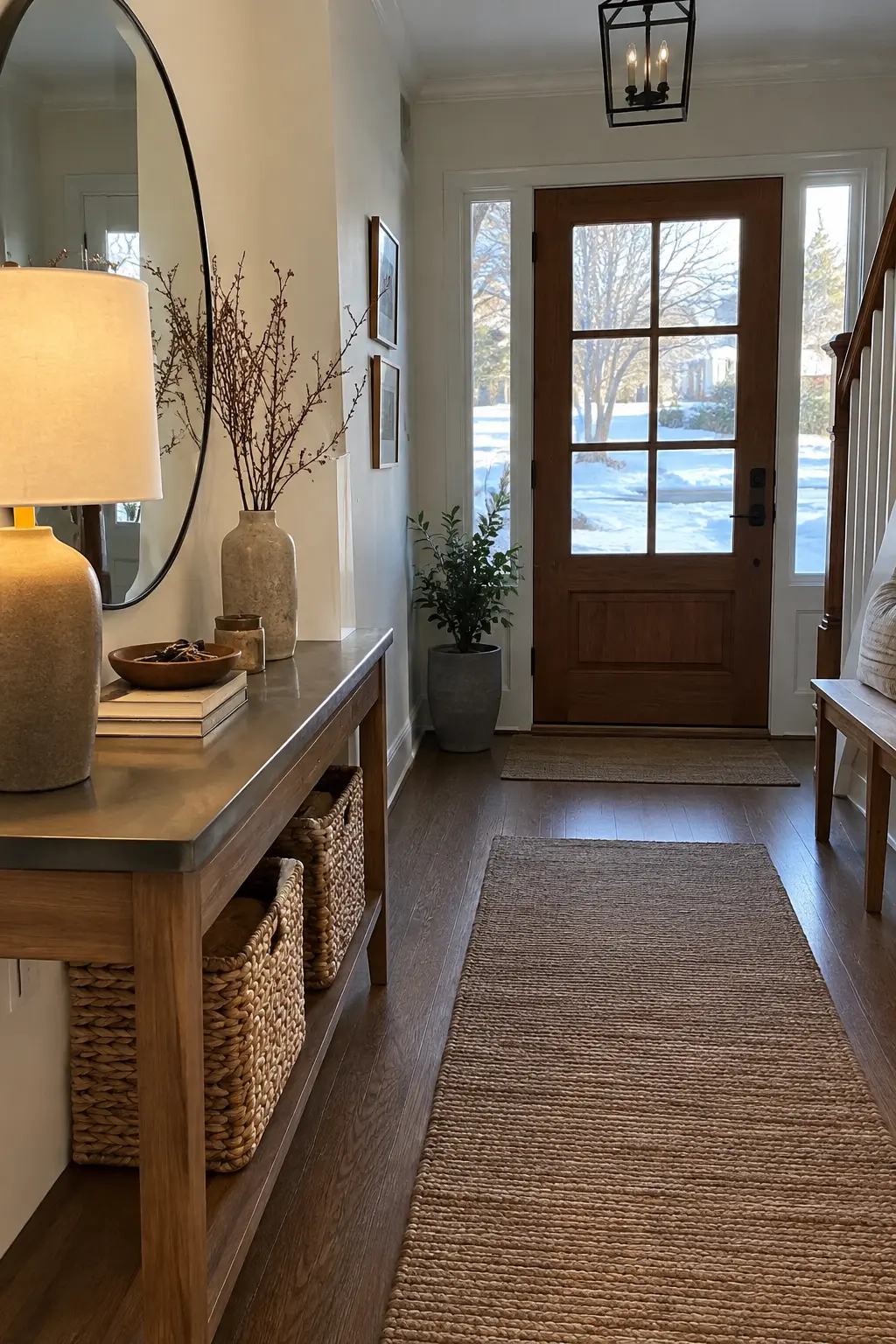
The most effective January update may be subtraction. Pack obvious holiday pieces together, wipe every surface, and return only a lamp, key bowl, branch vase, and the baskets that solve daily problems.
Give each returning object a job or a clear visual purpose. These entryway storage ideas can help you rebuild the drop zone before decorative clutter slowly returns.
50. Frame the Hall With Cedar and Eucalyptus
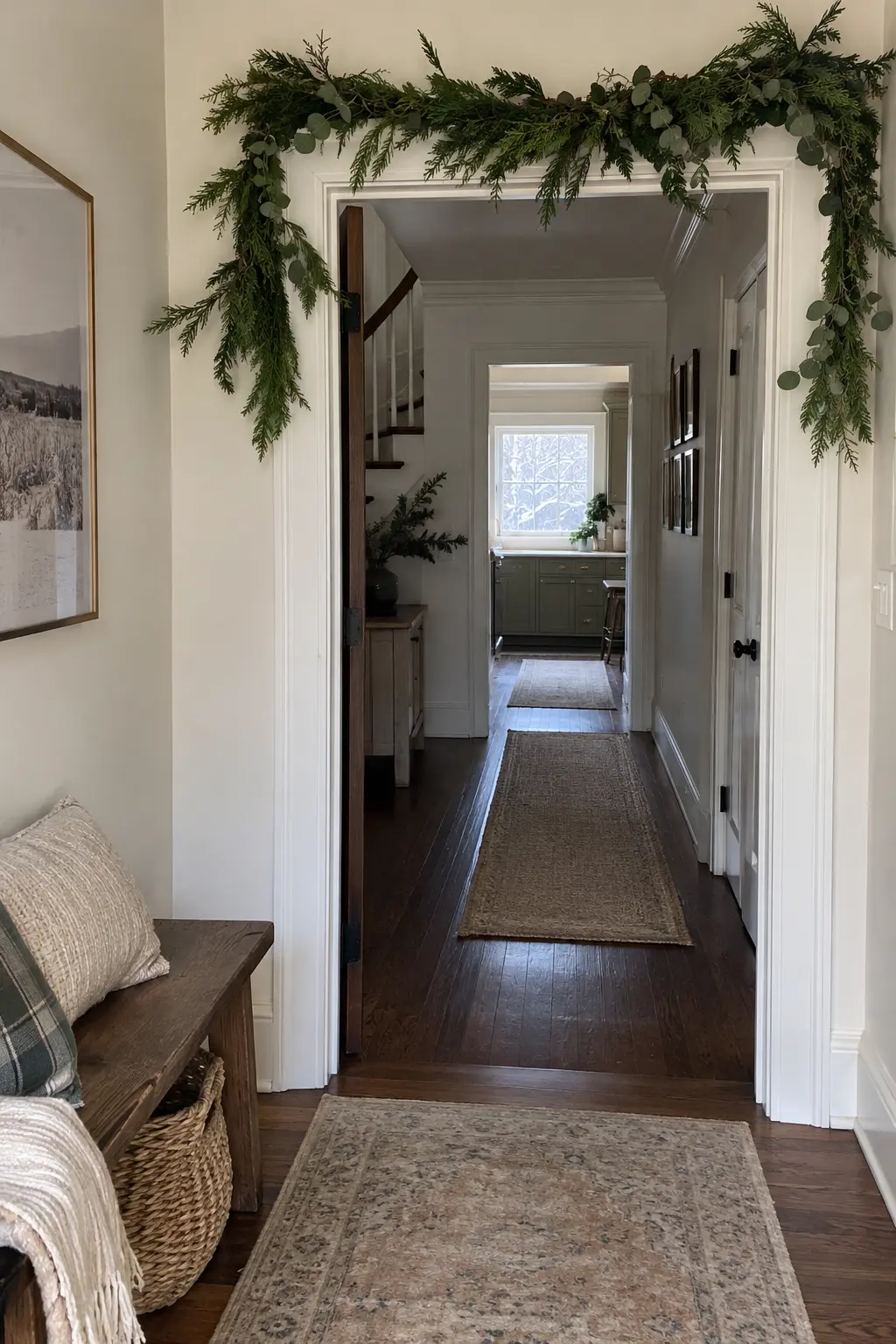
A sparse cedar-and-eucalyptus garland can frame the opening from foyer to hall without feeling festive. The asymmetrical line draws the eye inward and connects the entry greenery to the rest of the house.
Mount it above head height with properly rated hooks and keep foliage away from hinges, latches, and lights. Use a few secure attachment points, check for dropped leaves, and leave the center visually open.
A Welcoming Winter Finish for Your Entryway
A successful winter entry feels warm because it works well. Keep the walkway open, give wet gear a dependable landing place, and let one natural arrangement or color story carry the season.
Step back at morning and evening, then remove anything that blocks light, heat, storage, or movement. The result will welcome people comfortably through winter without holding on to the holidays.