40 January Decorating Ideas After Christmas

This post may contain affiliate links: full affiliate disclosure.
Once the tree, ornaments, and red ribbon are packed away, a home can feel strangely empty. January decorating is the bridge between Christmas and spring: quieter than December, warmer than a full reset, and still suited to short days and cold weather.
These ideas reuse plain greenery, branches, textiles, lamps, baskets, and everyday pieces without leaving the house stuck in Christmas. The goal is not to refill every cleared surface, but to make the rooms feel settled, useful, and intentionally winter-ready.
Start with a Calm Post-Christmas Reset
Remove obvious holiday symbols first, then decide what the room actually misses. Often the answer is better lighting, useful texture, or a stronger everyday focal point—not another box of seasonal objects.
1. Sort Decor into Holiday, Winter, and Everyday
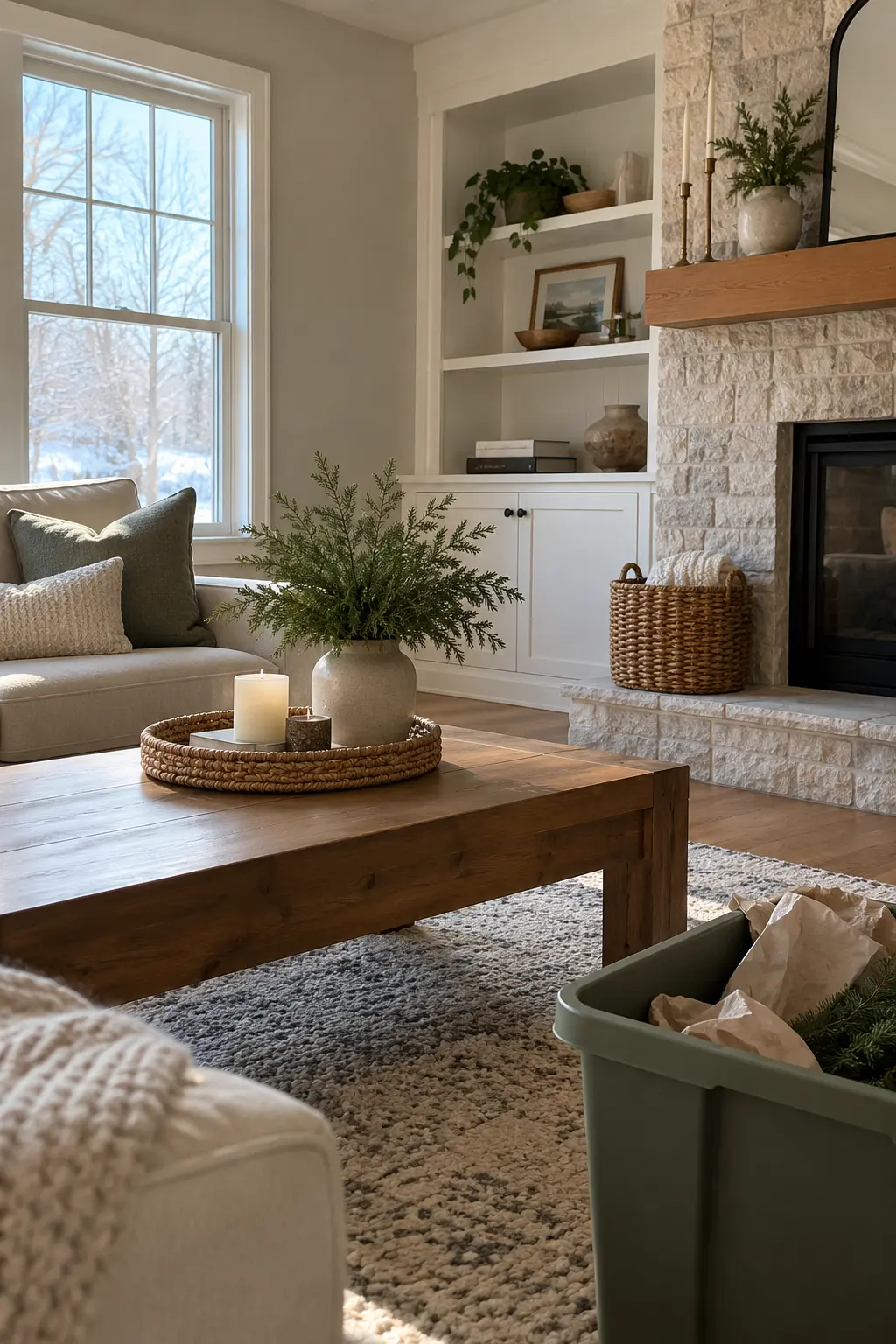
Pack ornaments, stockings, Santa figures, gift wrap, and holiday signs. Keep unadorned greenery, plain lanterns, neutral candles, baskets, and winter textiles if they still suit the room.
This quick three-group edit prevents January decor from looking like Christmas with a few pieces missing.
2. Rebalance the Empty Tree Corner
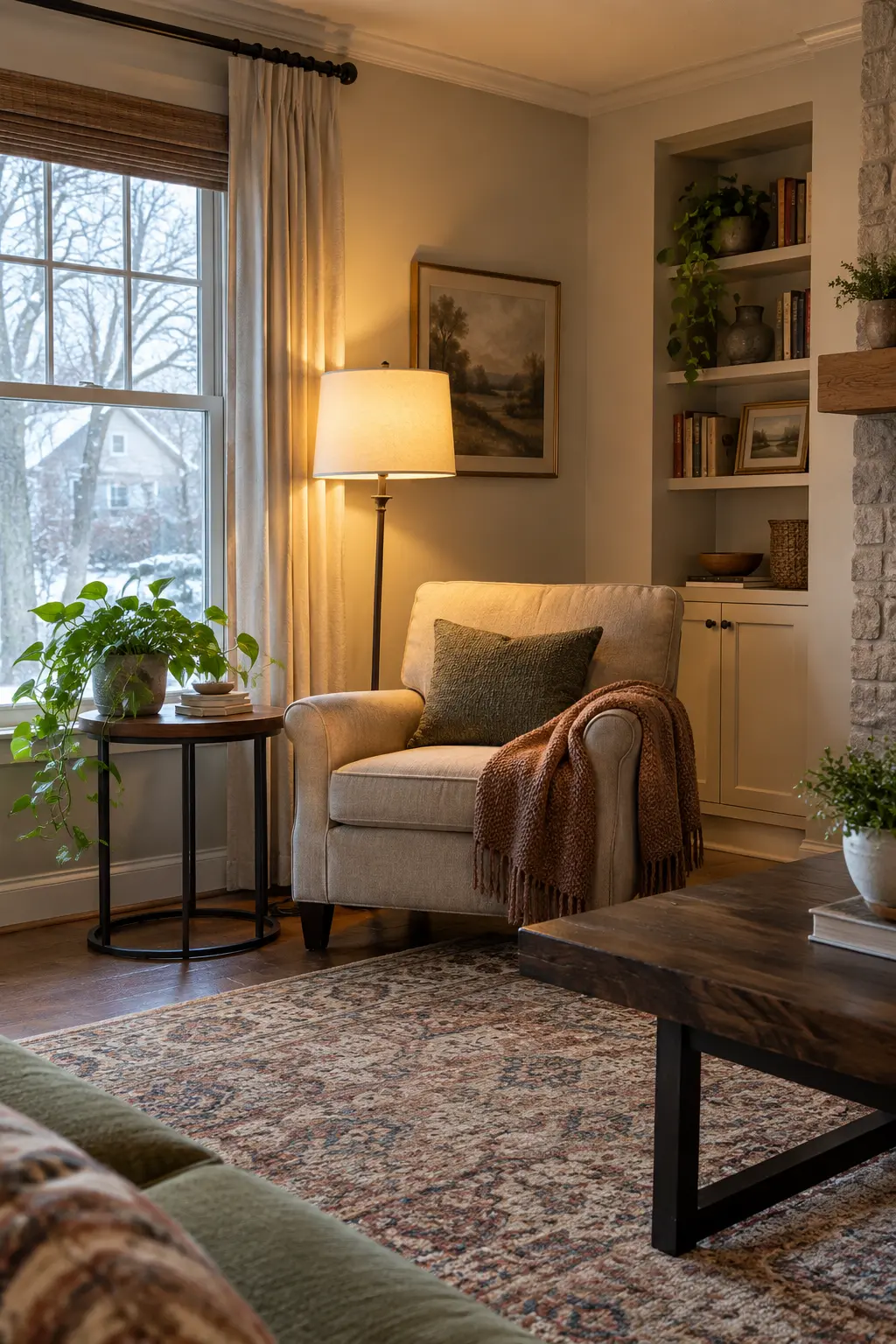
Do not replace the tree with another tall seasonal display. Move a reading chair, floor lamp, plant, or small table into the gap so the room's layout feels complete again.
Use the opportunity to improve how people move through the room rather than recreating December's visual weight.
3. Let One Surface Stay Nearly Empty
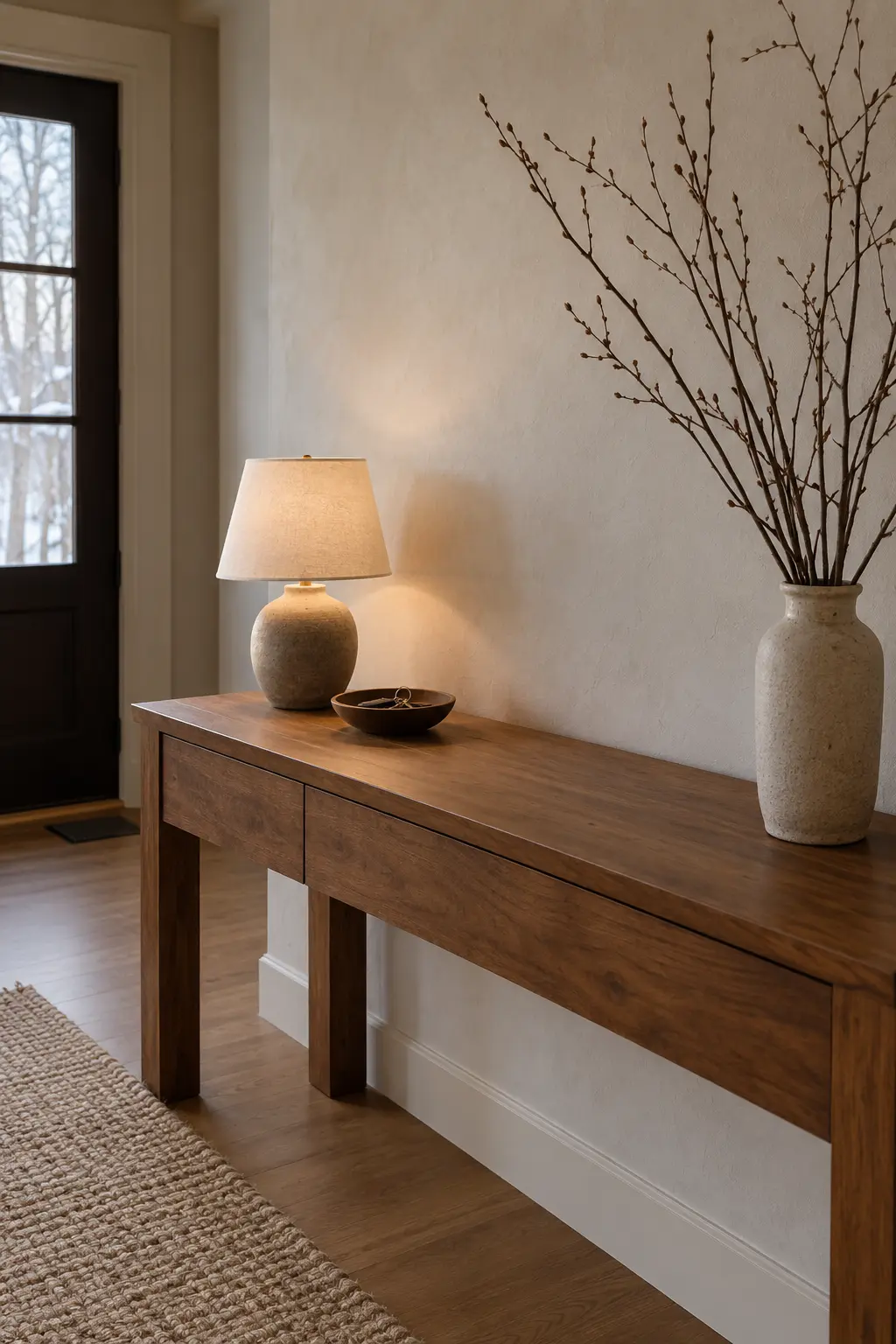
A console cleared after Christmas may need only a lamp, a bowl for daily items, and one branch arrangement. The open space can feel refreshing after weeks of layered decorations.
Choose objects with different heights so the surface looks intentional, not forgotten.
4. Switch Red Accents to Deep Blue

Deep blue keeps winter depth without carrying Christmas associations. Try two pillow covers, a folded throw, or one piece of artwork against cream, tan, gray, or warm wood.
Avoid replacing every red object. A small, repeated color is enough to reset the palette.
5. Use Plum as a Rich January Accent

Plum, aubergine, and muted berry feel substantial in low winter light without reading as holiday red. Pair one of these tones with walnut, oatmeal, olive, or dusty pink.
Keep the color to washable textiles and small ceramics if you want an easy spring transition.
6. Bring Houseplants Back into Focus

Holiday displays often push houseplants aside. Return them to suitable light, remove tired leaves, and group a few at varied heights so living greenery replaces decorated greenery.
Choose placement according to each plant's needs rather than treating every window as interchangeable.
7. Use the Reset to Finish One Small Repair

Bare post-holiday surfaces reveal chipped trim, an unfinished shelf, or a wall that needs touch-up paint. Complete one manageable repair before adding decor back.
The room will feel refreshed because the background improved, not because more objects were purchased.
Warm Up the Living Room and Mantel
January living rooms need comfort without December's spectacle. Build warmth through layered light, useful textiles, natural shapes, and a few objects with enough scale to hold the room.
8. Keep Plain Evergreen, Remove the Christmas Trim
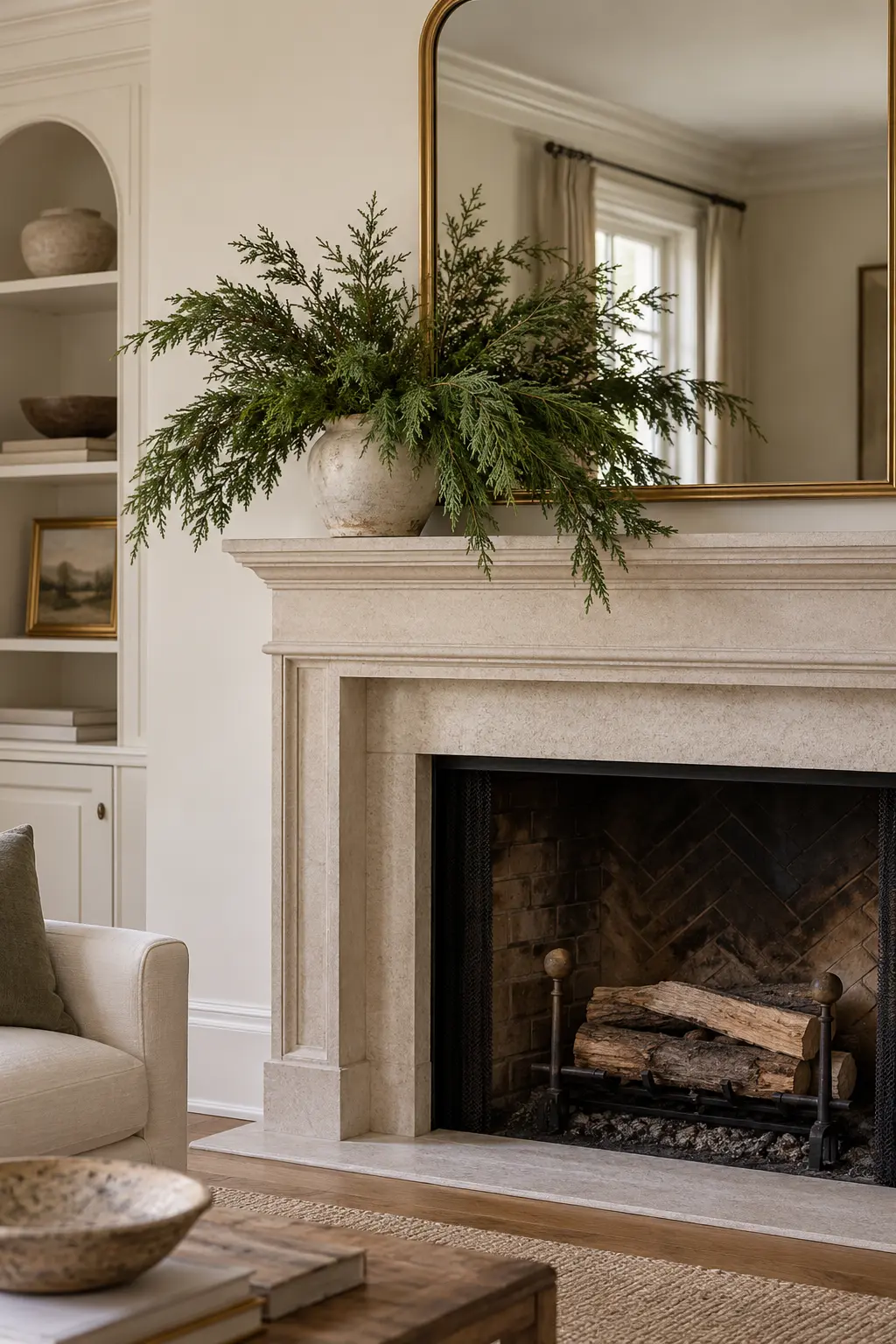
Strip bells, bows, berries, ornaments, and lights from reusable greenery. A loose cedar or pine arrangement in a plain vessel can still read as winter when nothing around it signals Christmas.
If artificial garland remains, shorten and reshape it instead of leaving the full holiday swag in place.
9. Style the Mantel with Bare Branches
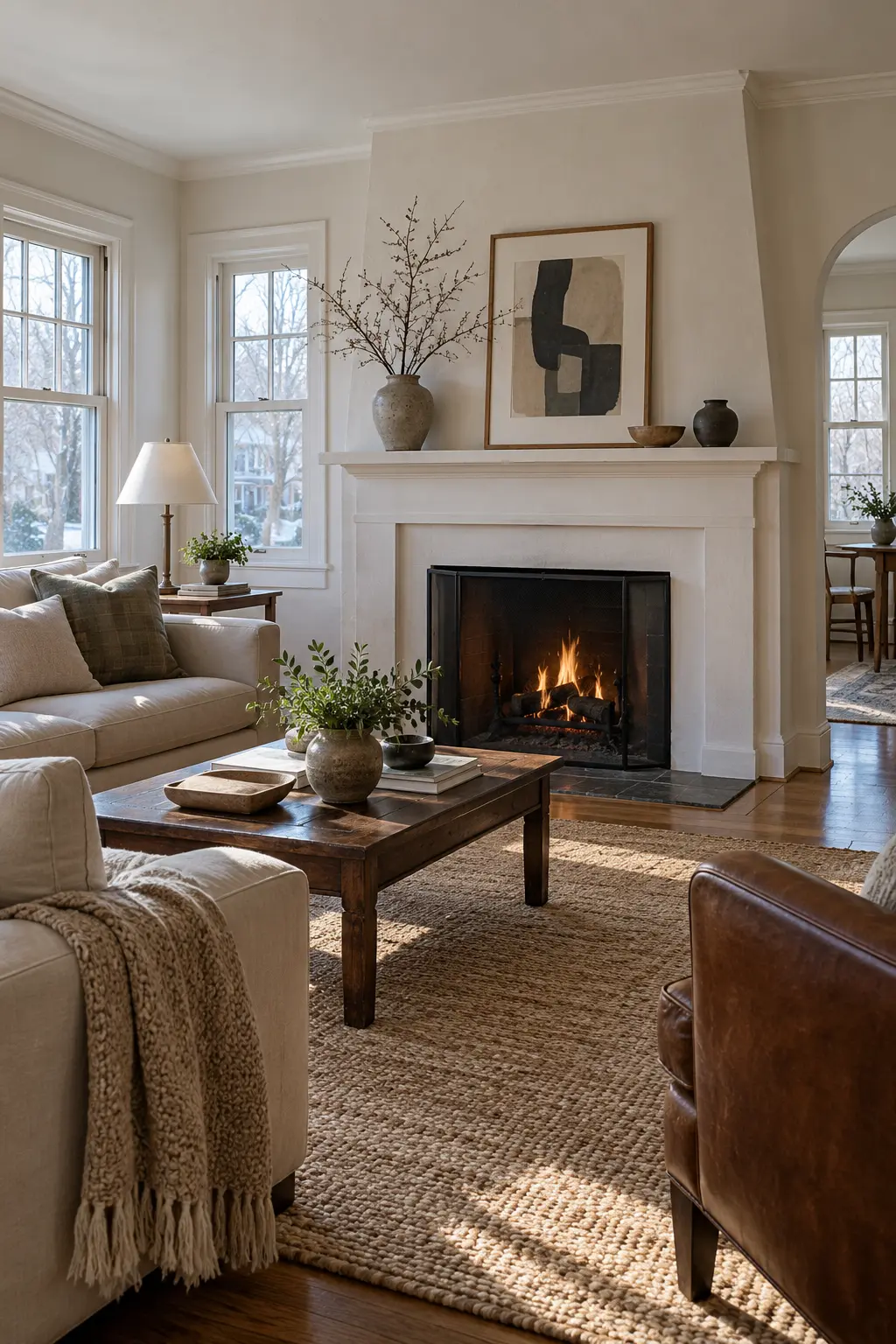
Bare branches add height and a clear winter silhouette without relying on faux snow. Set one asymmetrical arrangement beside a mirror or artwork, then balance it with low ceramics or books.
Keep branches safely away from heat, flame, and the fireplace opening.
10. Trade Stockings for a Low Ceramic Group

After stockings come down, a row of three related ceramic forms can occupy the lower visual zone without crowding the mantel. Vary their height and finish rather than buying a matching set.
Leave enough empty surface for the arrangement to breathe.
11. Layer Lamp Light Instead of String Lights
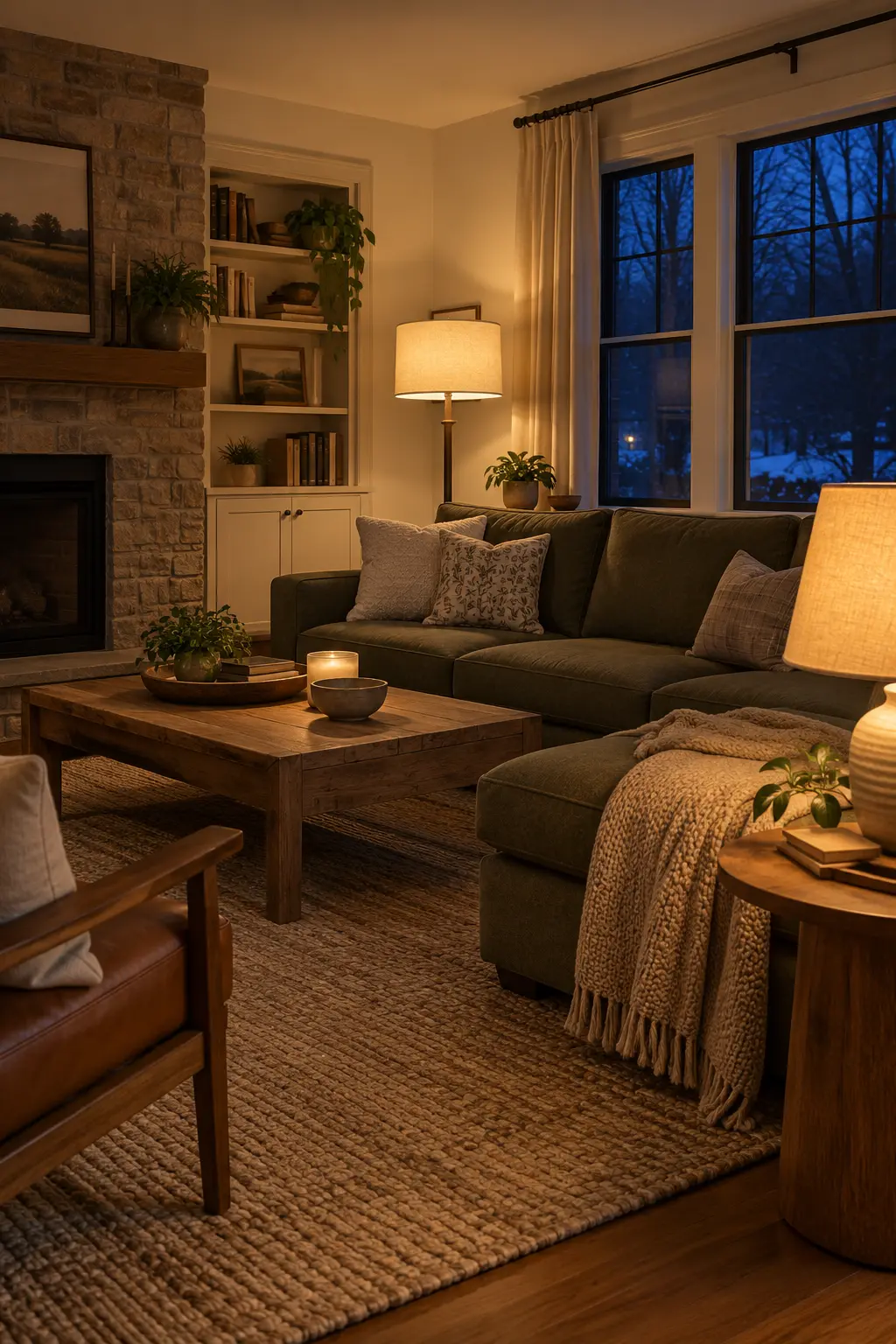
Replace holiday string lights with light from a floor lamp and two smaller table lamps. Separate pools of warm illumination make winter evenings comfortable while returning the room to everyday use.
Place lamps where people read, talk, and walk instead of lighting empty corners for decoration alone.
12. Use Candleholders Without a Holiday Centerpiece
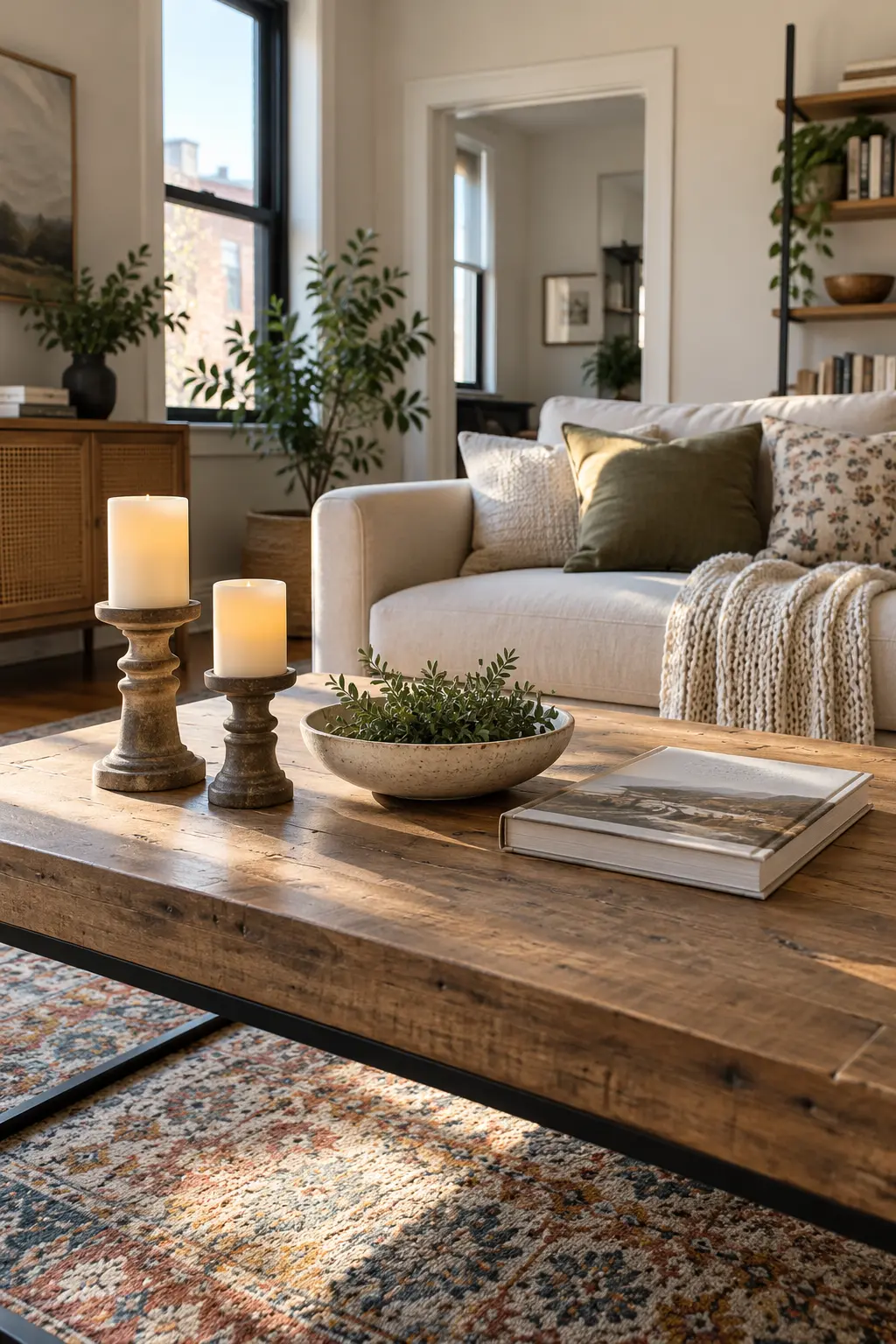
A pair of substantial candleholders can remain after a holiday centerpiece is removed. Combine them with a low bowl or stack of books rather than pinecones, ornaments, and ribbon.
Use flameless candles where pets, children, drafts, or nearby textiles make open flame impractical.
13. Mix Wool, Velvet, and Linen

Winter texture does not require an all-beige room. Combine a wool throw, one velvet pillow, and linen upholstery in related blues, greens, rusts, or neutrals.
Different surfaces give the sofa depth while keeping the number of pillows manageable for daily seating.
14. Use a Basket for the Throws People Actually Use
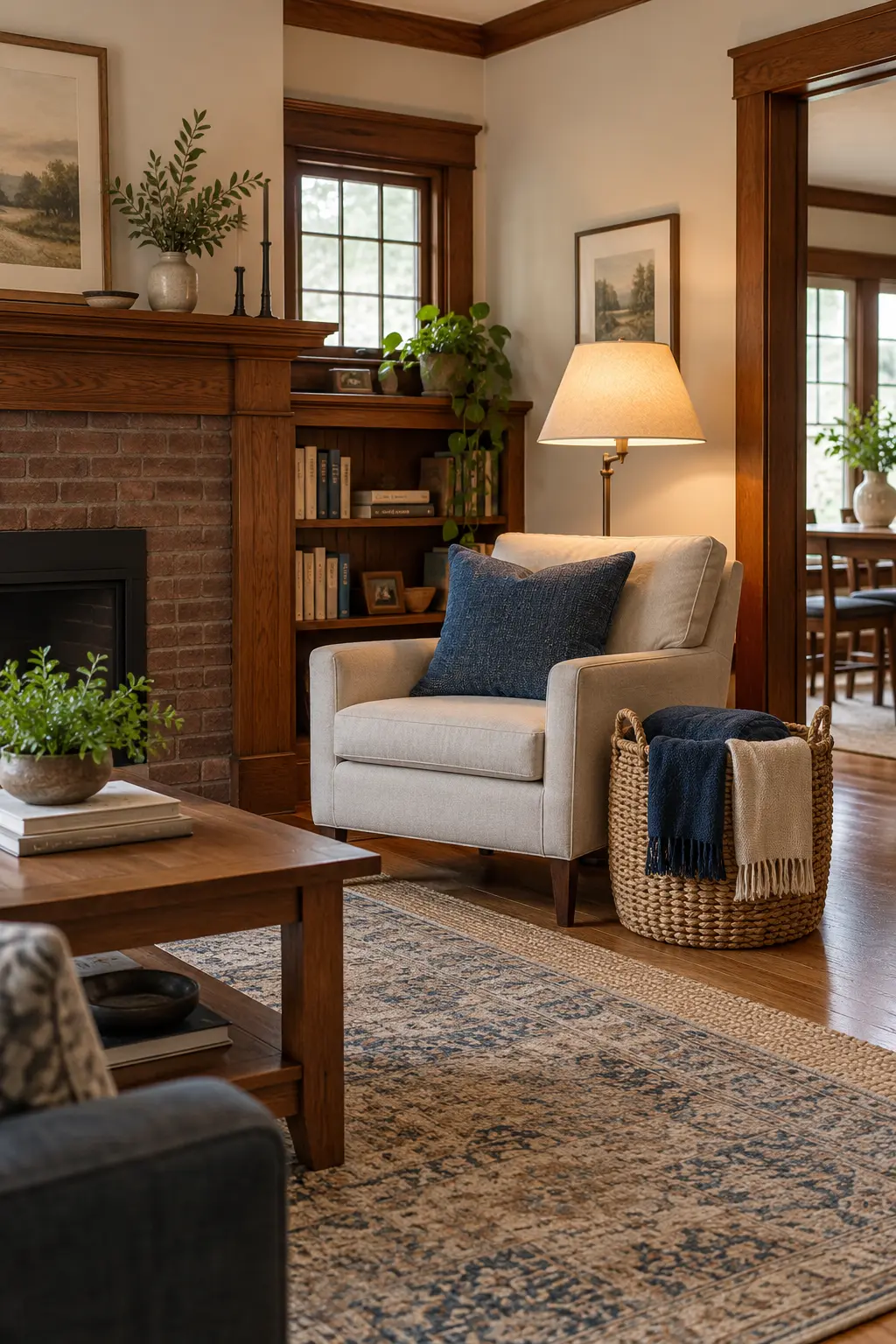
Place a sturdy basket beside the main seating area for the blankets that are used every evening. Fold or roll them loosely so they are easy to return.
A functional basket brings texture to the room without becoming another decorative container full of filler.
15. Hang One Quiet Winter Landscape
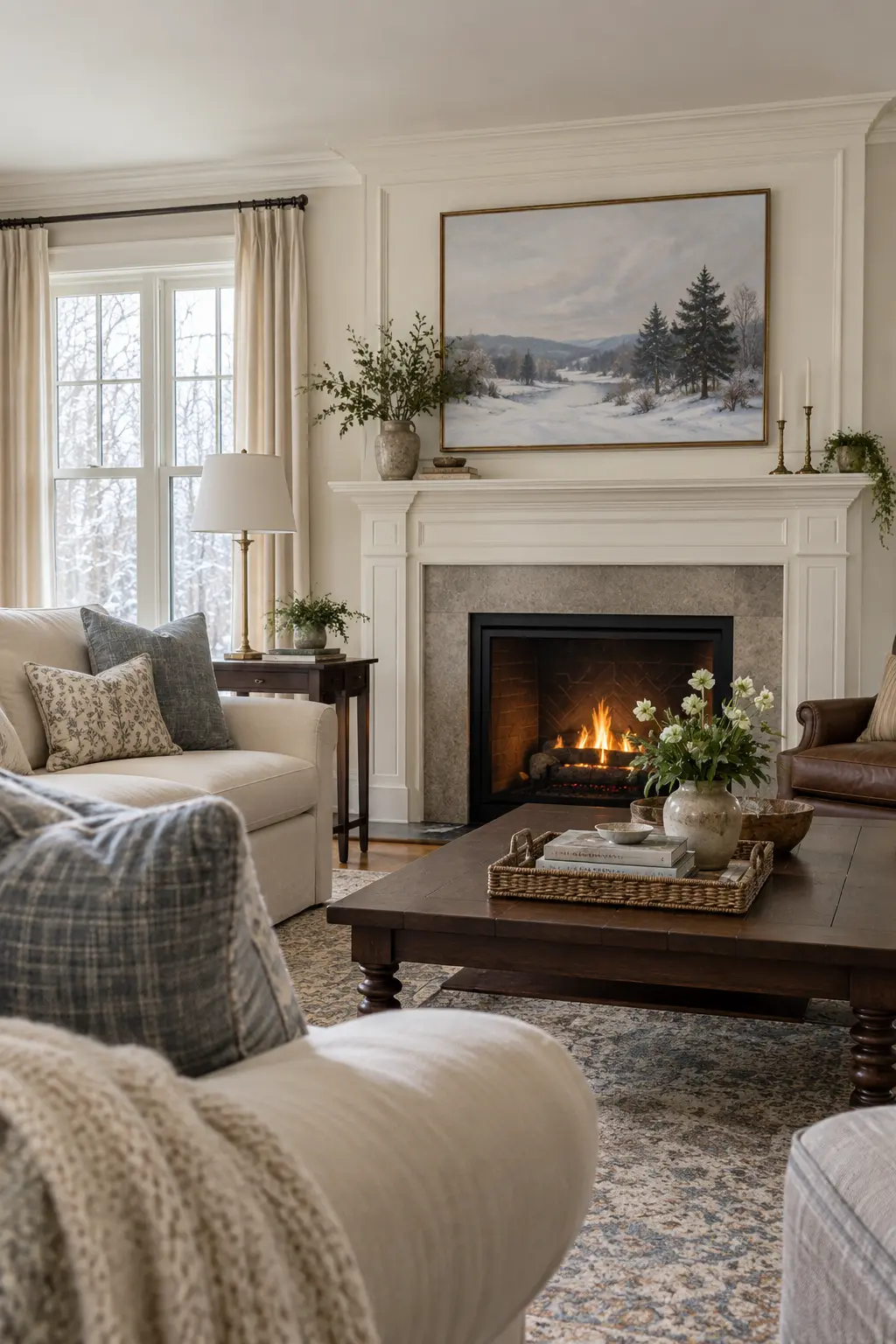
One landscape with snowy fields, bare trees, gray water, or an overcast sky can establish a January mood without themed wording. Look for art that still makes sense outside a single month.
Let the artwork lead the palette instead of surrounding it with miniature winter props.
Refresh the Entryway and Porch for Real Winter Weather
The entry should welcome people and handle wet shoes, coats, and short daylight hours. Outdoor pieces need to remain safe, stable, and appropriate for local weather.
16. Replace the Holiday Doormat with a Plain Layer

Swap the Christmas mat for plain coir over a charcoal, navy, or subtle striped outdoor rug. The layered look keeps definition at the door without a seasonal message.
Keep both mats flat and clear of the door swing to reduce catching and tripping.
17. Simplify Porch Planters to Branches and Greenery

Remove bows, ornaments, and red picks from porch planters, leaving evergreen boughs, bare stems, and seed heads. The arrangement will feel wintry rather than leftover.
Use weather-stable materials and secure tall branches where wind is a concern.
18. Use a Grapevine Wreath with Winter Texture
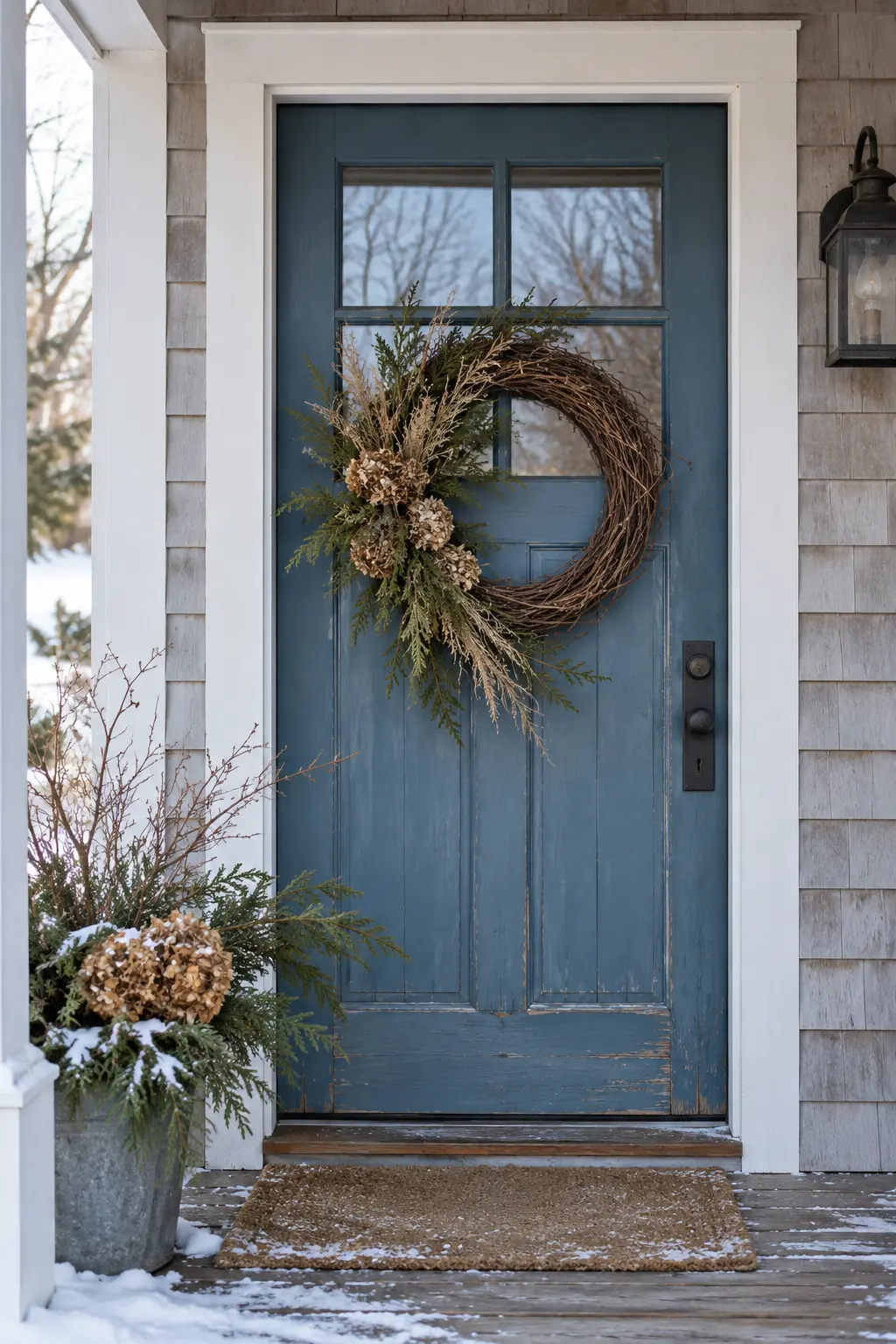
A visible grapevine base keeps a wreath lighter than a full Christmas evergreen. Add a small cluster of cedar, dried grass, or seed pods and skip ribbon entirely.
This works especially well on a painted door where the natural shape has enough contrast.
19. Set Up a Winter Drop Zone
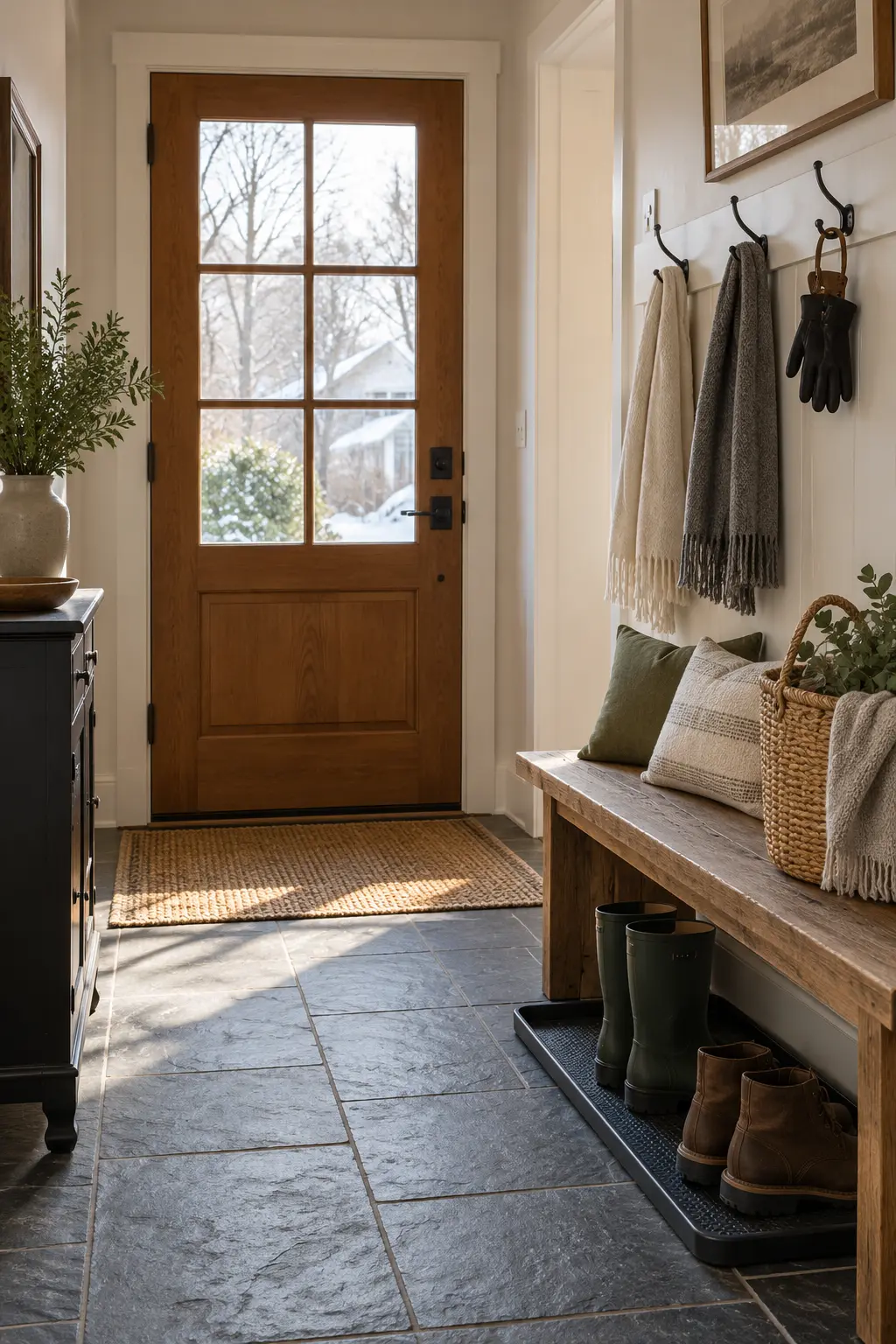
Give damp boots a tray, gloves a washable basket, and scarves a reachable hook. These practical winter items can supply color and texture when the entry is otherwise simple.
Leave part of the bench open so someone can actually sit down.
20. Light the Entry Console for Dark Afternoons
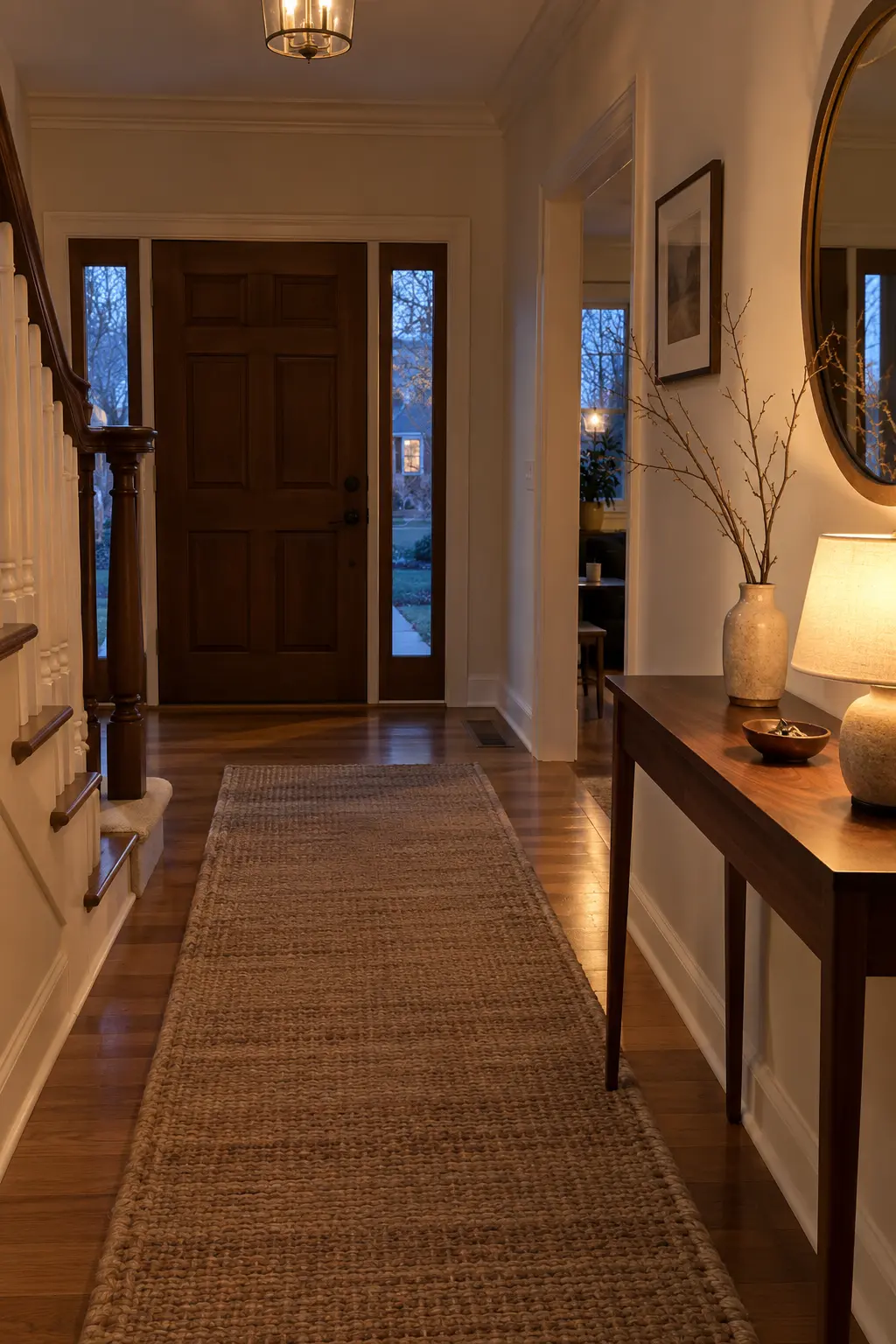
A small lamp makes the entry feel settled when daylight fades early. Pair it with a key bowl and one branch or houseplant instead of rebuilding a seasonal vignette.
Keep cords and objects away from the daily drop zone.
21. Use Lanterns Without Holiday Filler

Empty lanterns or lanterns with simple battery candles can stay after Christmas. Remove miniature trees, baubles, bows, and faux snow so the shapes read as useful winter lighting.
Place them where they cannot block steps, door swing, or snow removal.
Reset the Dining Room and Kitchen
Post-holiday kitchens benefit from clear work surfaces and dining tables that can handle ordinary meals. January styling should support that reset rather than compete with it.
22. Use a Bowl of Citrus as January Color
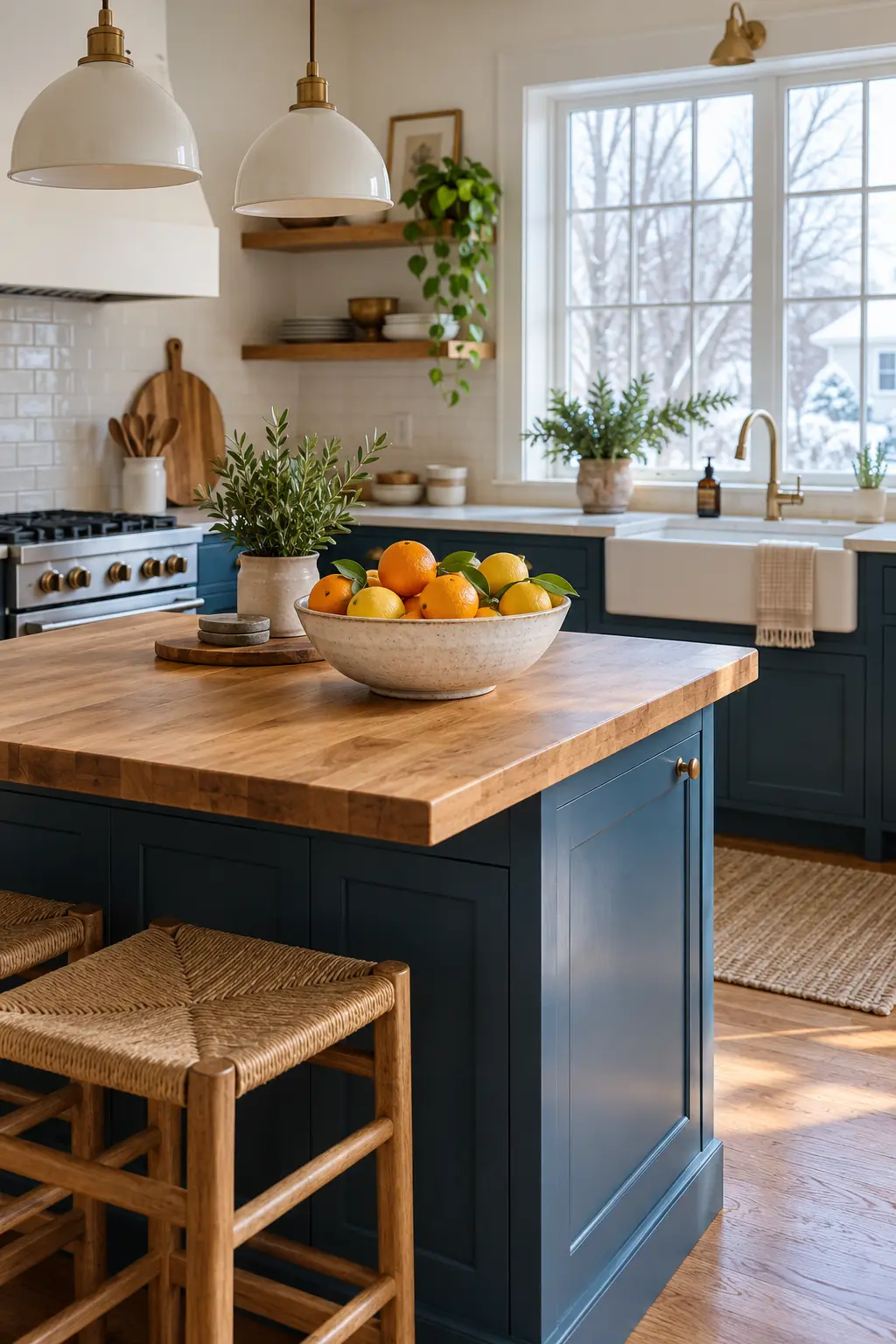
Oranges, lemons, or grapefruit bring saturated color to a kitchen after red holiday accents disappear. One broad bowl on the island or table is useful, affordable, and easy to clear when the surface is needed.
Choose fruit your household will actually eat so the display does not become waste.
23. Make a Branch Centerpiece Low Enough for Dinner
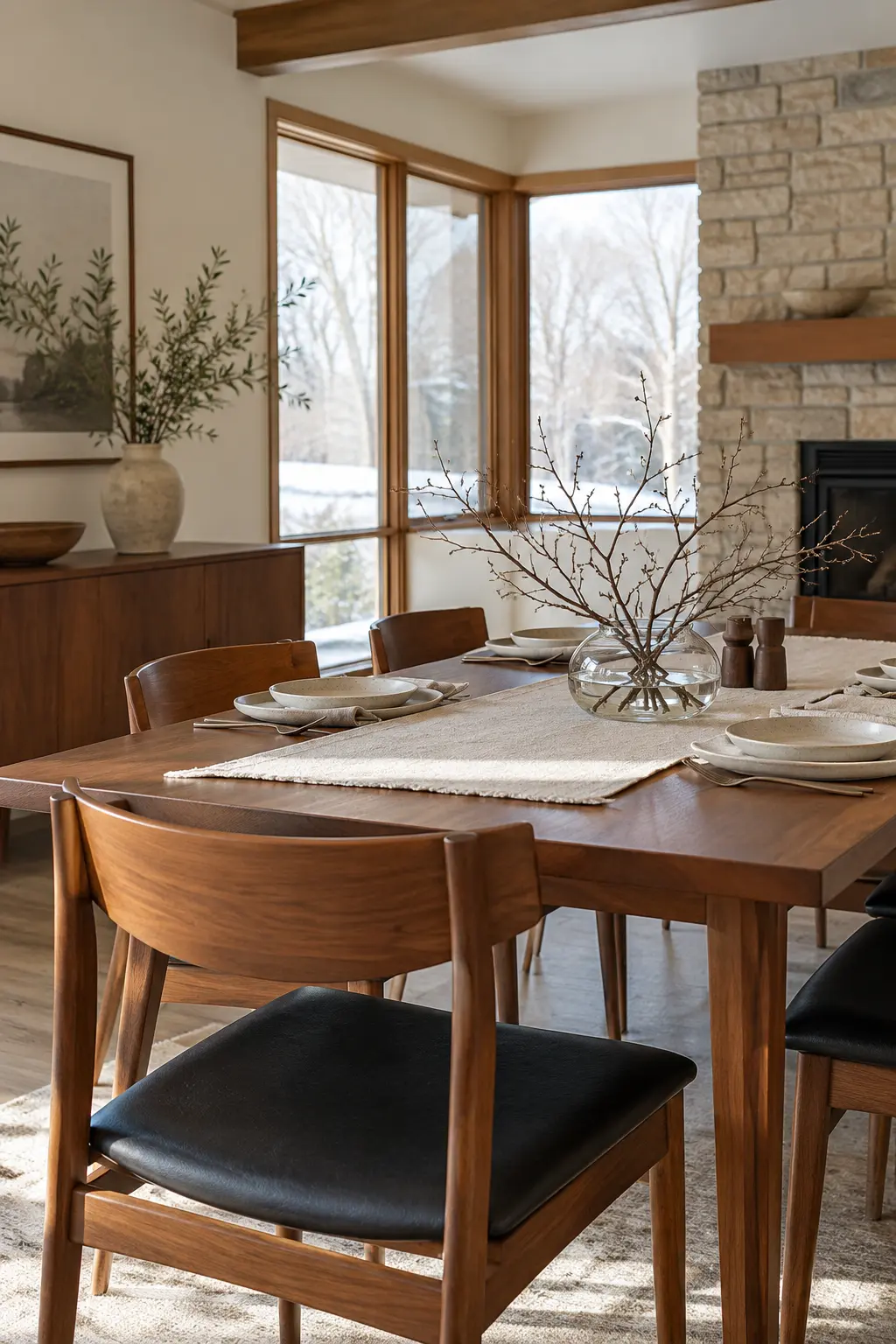
Short clipped branches in a low, wide vessel can mark the season without blocking conversation. Use one type of branch and leave the rest of the table mostly open.
Protect the surface from water and choose stable proportions around children or pets.
24. Replace the Holiday Runner with Textured Linen
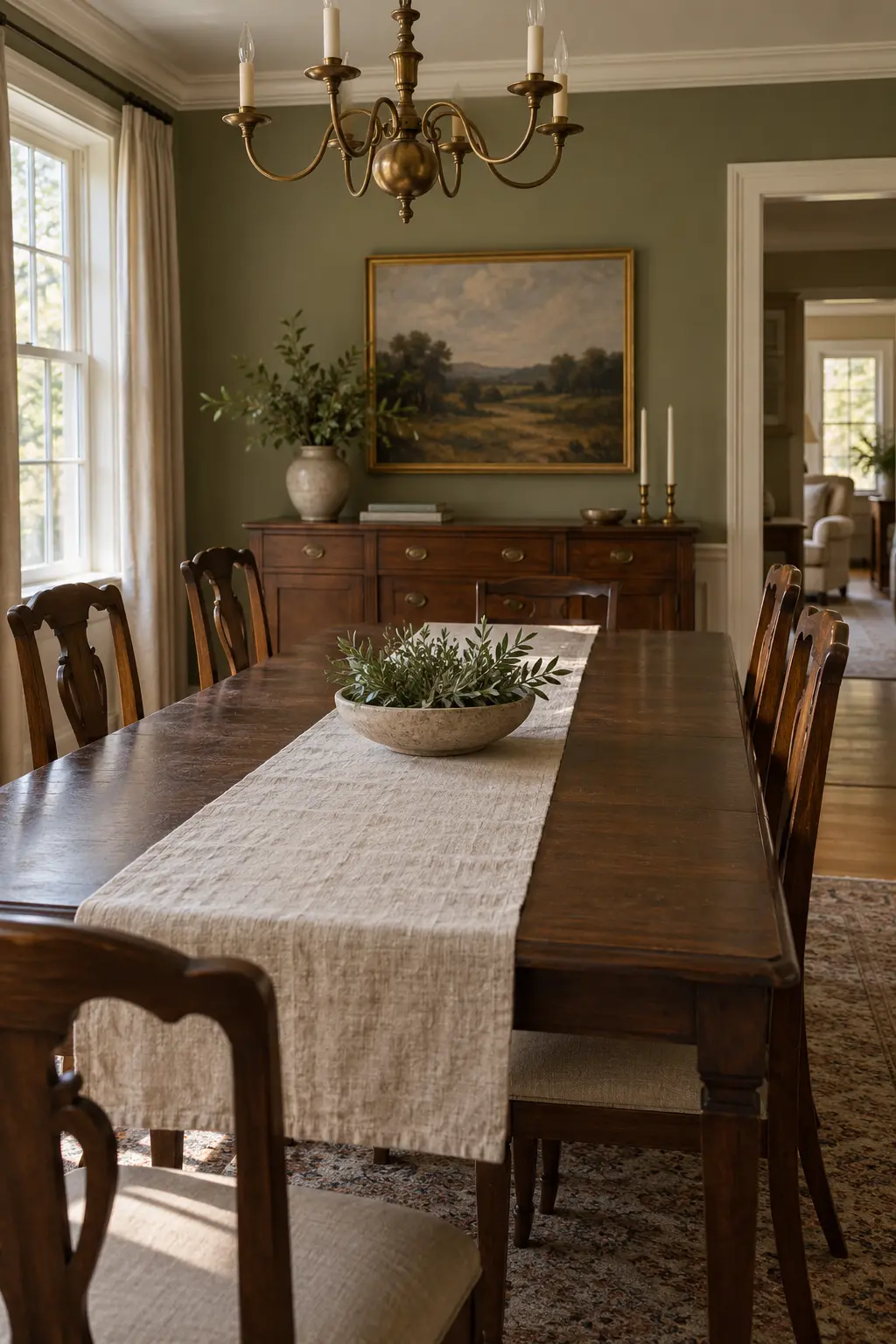
A washed linen runner in flax, slate blue, olive, or muted clay keeps the table soft without retaining a Christmas pattern. Add everyday dishes and one simple centerpiece.
Let wrinkles and natural texture provide movement instead of filling the table with accessories.
25. Use Colored Glass for a Clear Winter Table
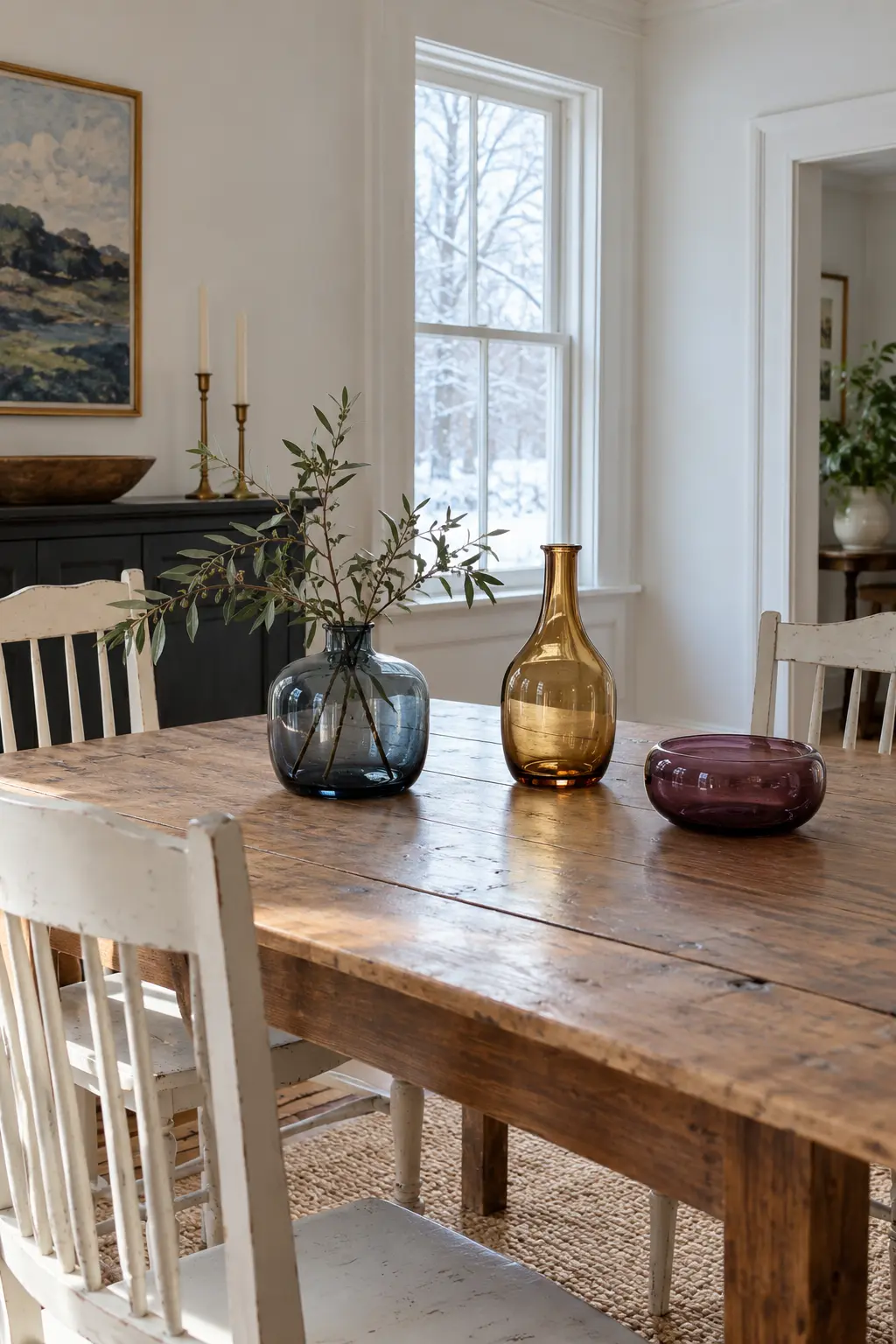
Blue, smoke, amber, or plum glass can give a January table depth while the linens remain plain. Use a few repeated pieces rather than mixing every color available.
Keep the arrangement compatible with regular meals, not staged only for a photograph.
26. Turn the Coffee Station Back into a Daily Zone
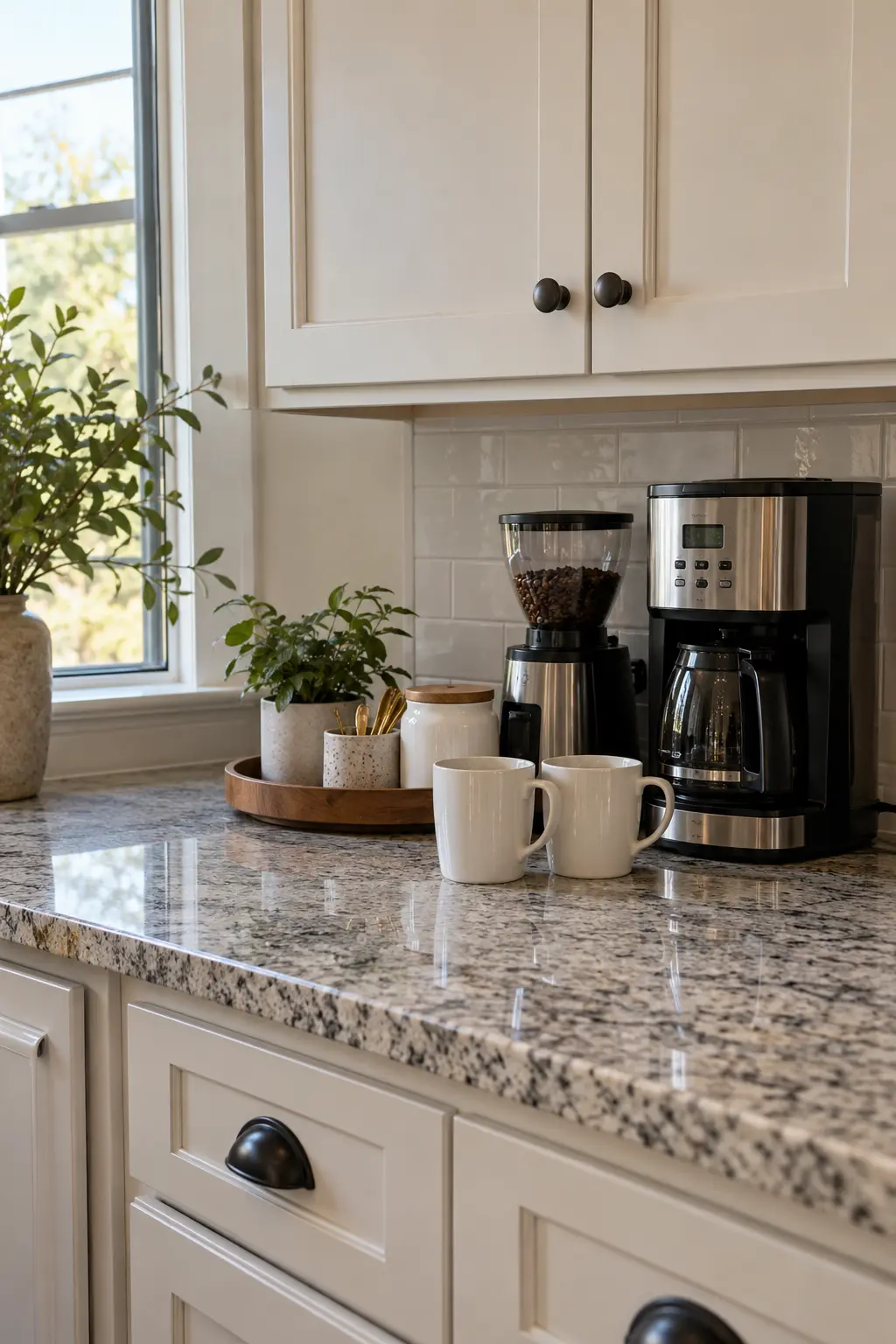
Remove holiday mugs, cocoa signs, and miniature trees, then group the coffee maker, daily cups, and supplies on one washable tray. A small lamp or plant can add warmth without stealing prep space.
Store seldom-used seasonal items instead of letting them crowd the counter until spring.
27. Plant Paperwhite or Amaryllis Bulbs
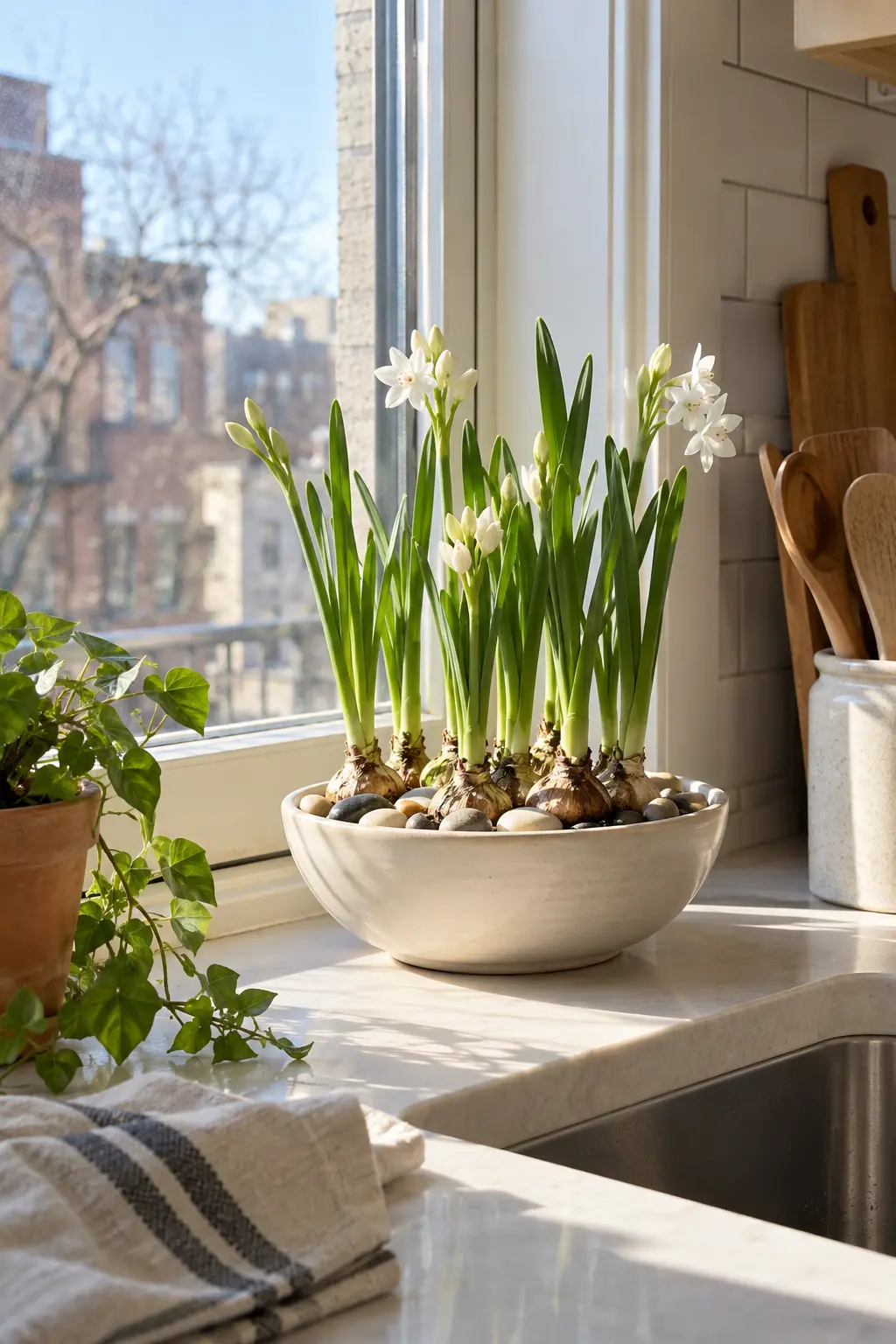
Indoor bulbs provide something living to watch during the slow weeks after Christmas. A plain bowl, pot, or glass vessel keeps the arrangement botanical rather than holiday-themed.
Follow the bulb's planting and light requirements, and protect furniture from moisture.
28. Give Open Shelves More Breathing Room
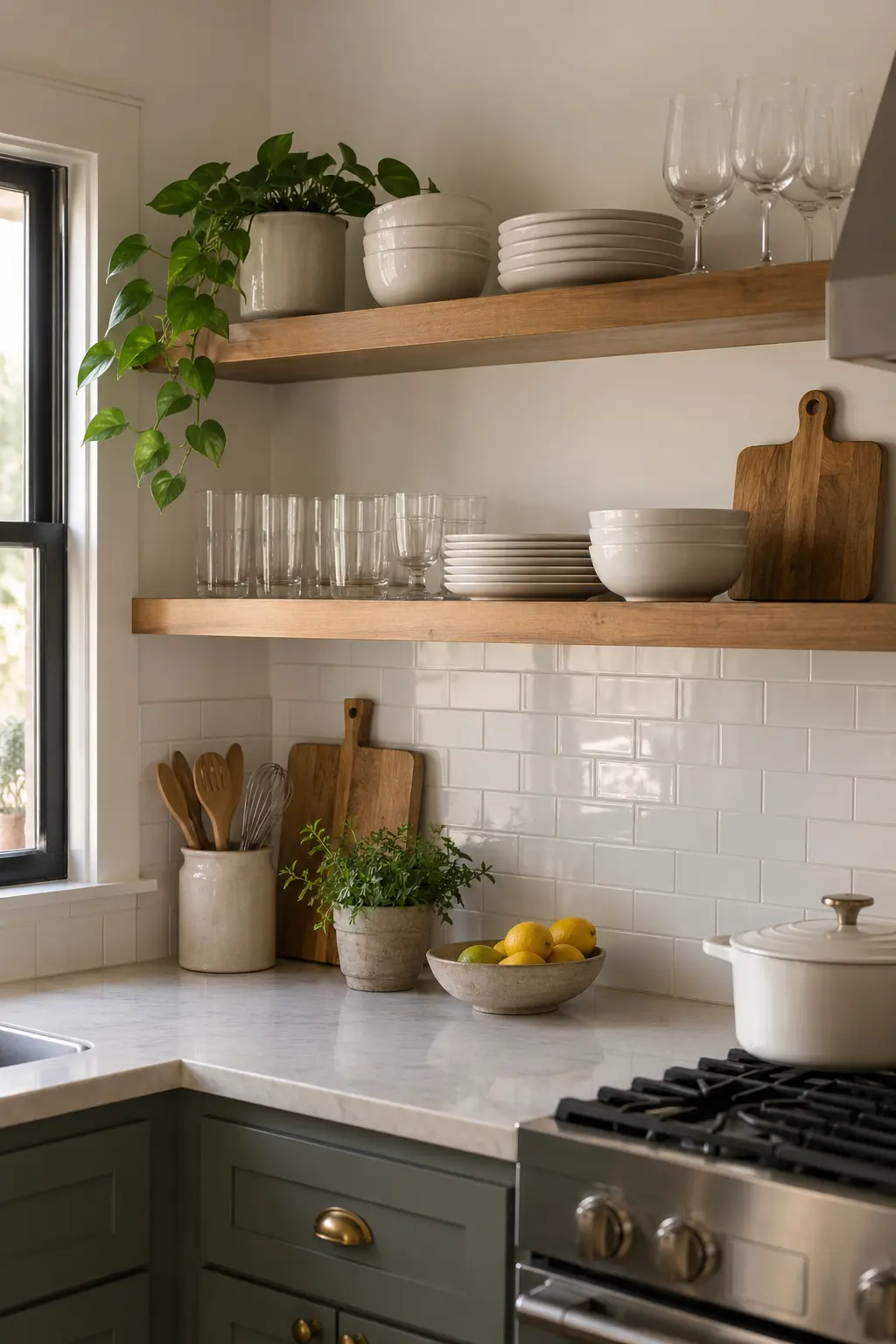
After removing holiday dishes, resist filling every gap. Group everyday bowls, glassware, and one plant or pitcher, leaving visible space between clusters.
The shelves will look cleaner and remain easier to use.
Make Bedrooms and Bathrooms Feel Warm but Uncluttered
Private rooms need comfort more than seasonal displays. Focus on bedding, towels, light, and one natural element that will not interfere with daily routines.
29. Layer the Bed in Two Winter Colors
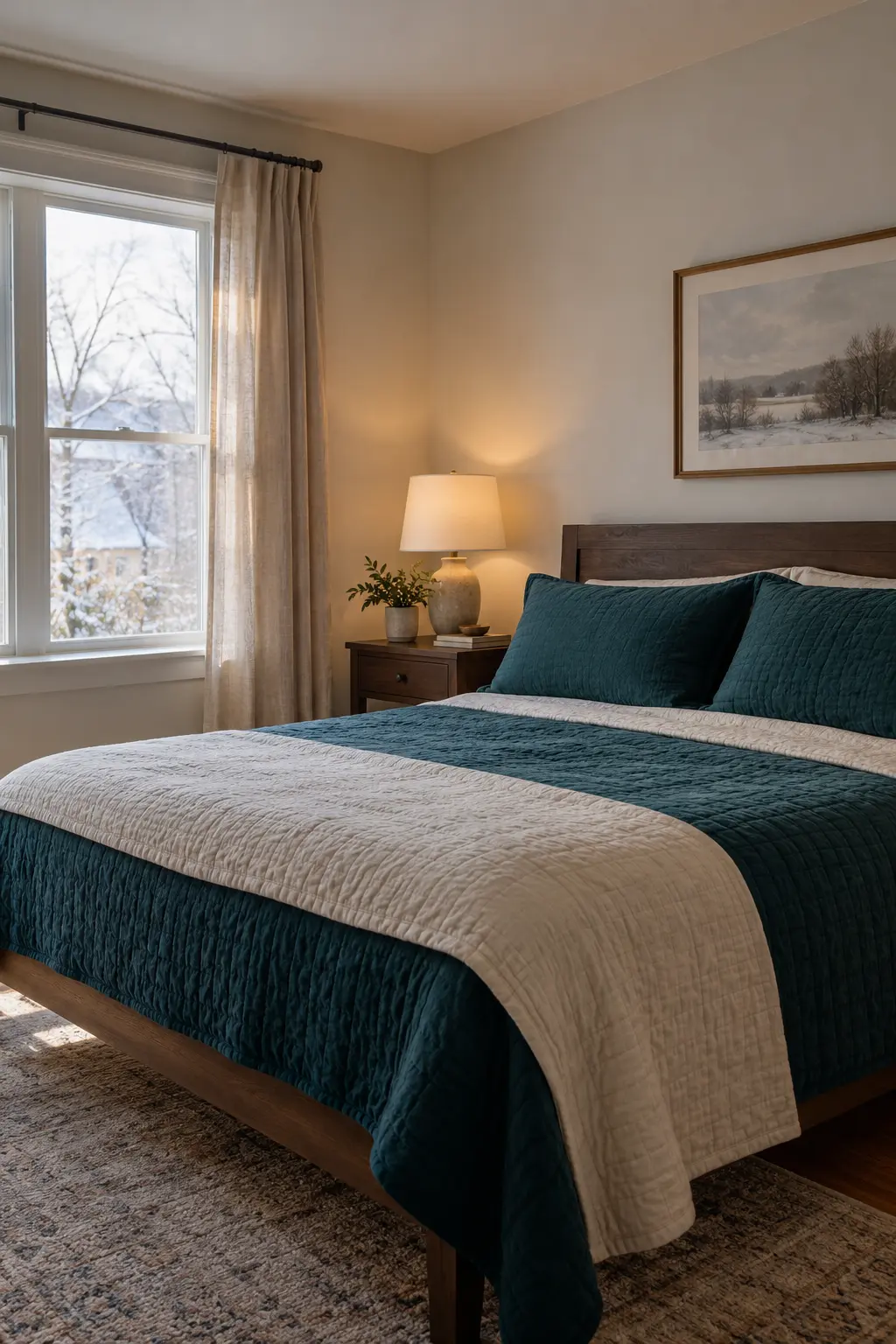
Choose one deep color and one light neutral for sheets, coverlet, and throw. Teal with oatmeal, plum with blush, or olive with cream feels wintry without repeating a red-and-green holiday scheme.
Limit decorative pillows so making the bed remains realistic.
30. Add a Washable Throw at the Foot of the Bed
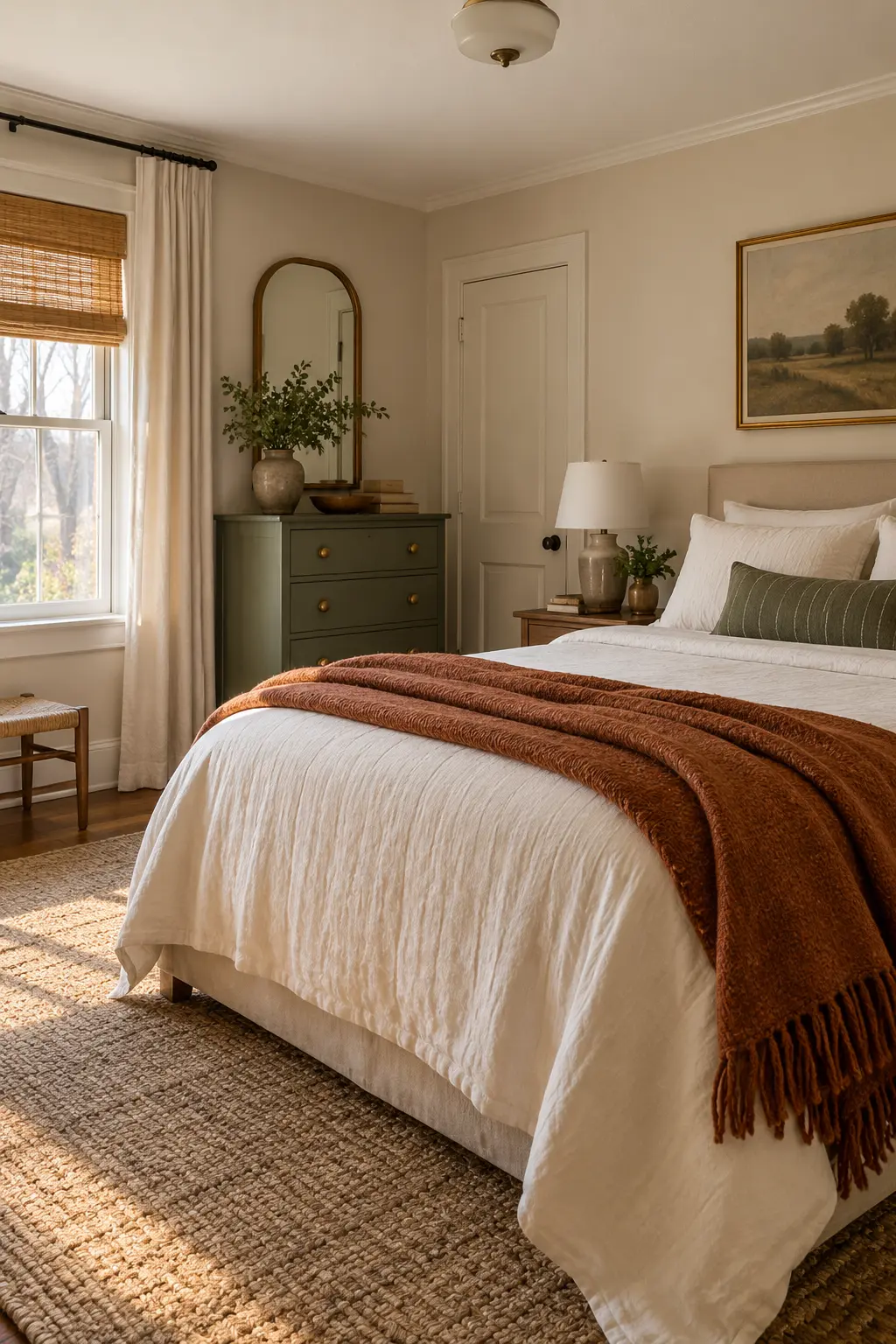
A substantial throw at the foot of the bed provides visible texture and is useful on colder nights. Choose a washable option if pets share the room or the blanket will see daily use.
Fold it loosely rather than arranging a perfect showroom drape.
31. Use a Small Bedside Branch Arrangement
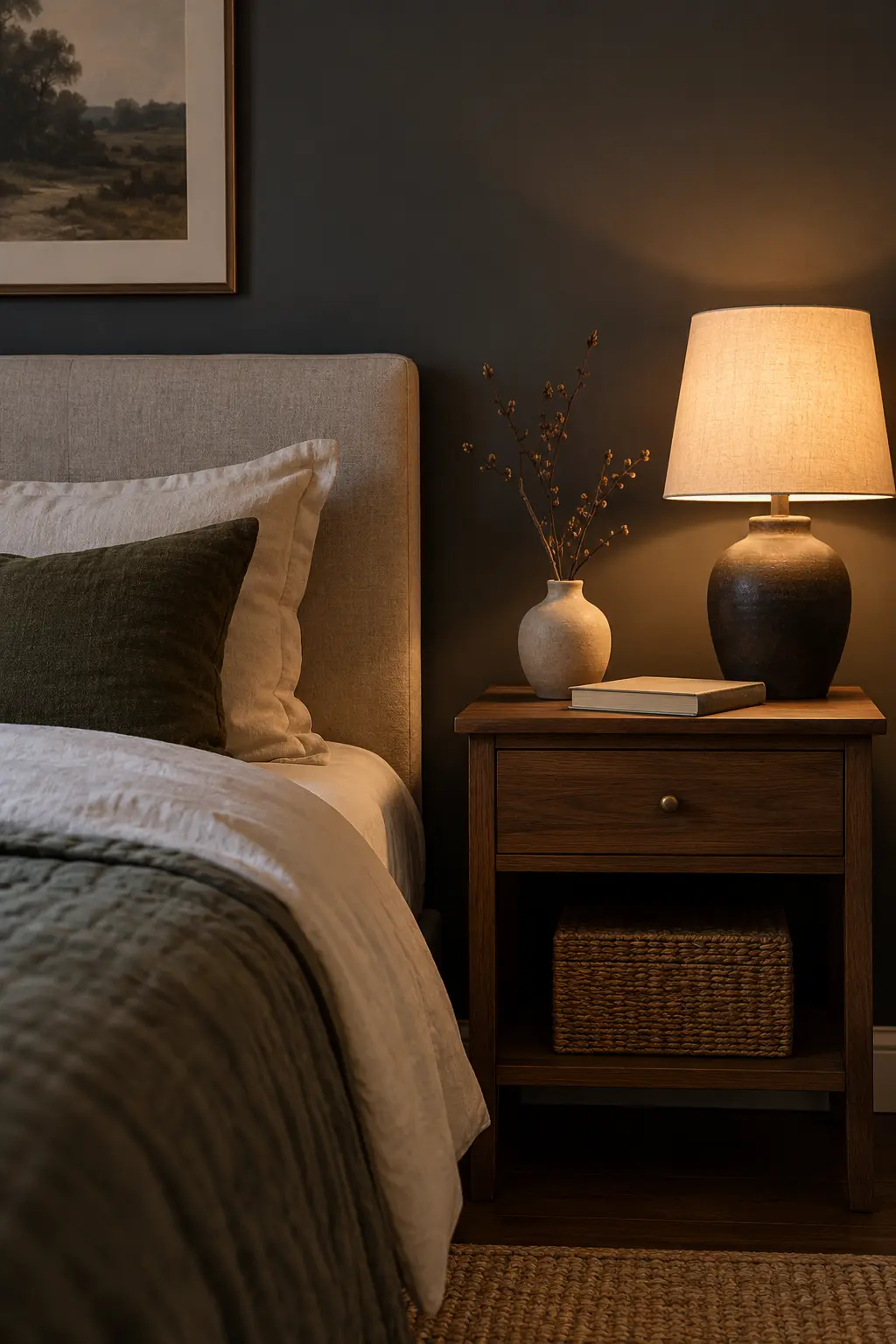
A few bare twigs or eucalyptus stems bring winter shape to a bedside table without scent-heavy florals. Keep the vessel short enough that it does not compete with the reading lamp.
Leave clear space for a book, glasses, and water.
32. Warm the Bathroom with Towel Color
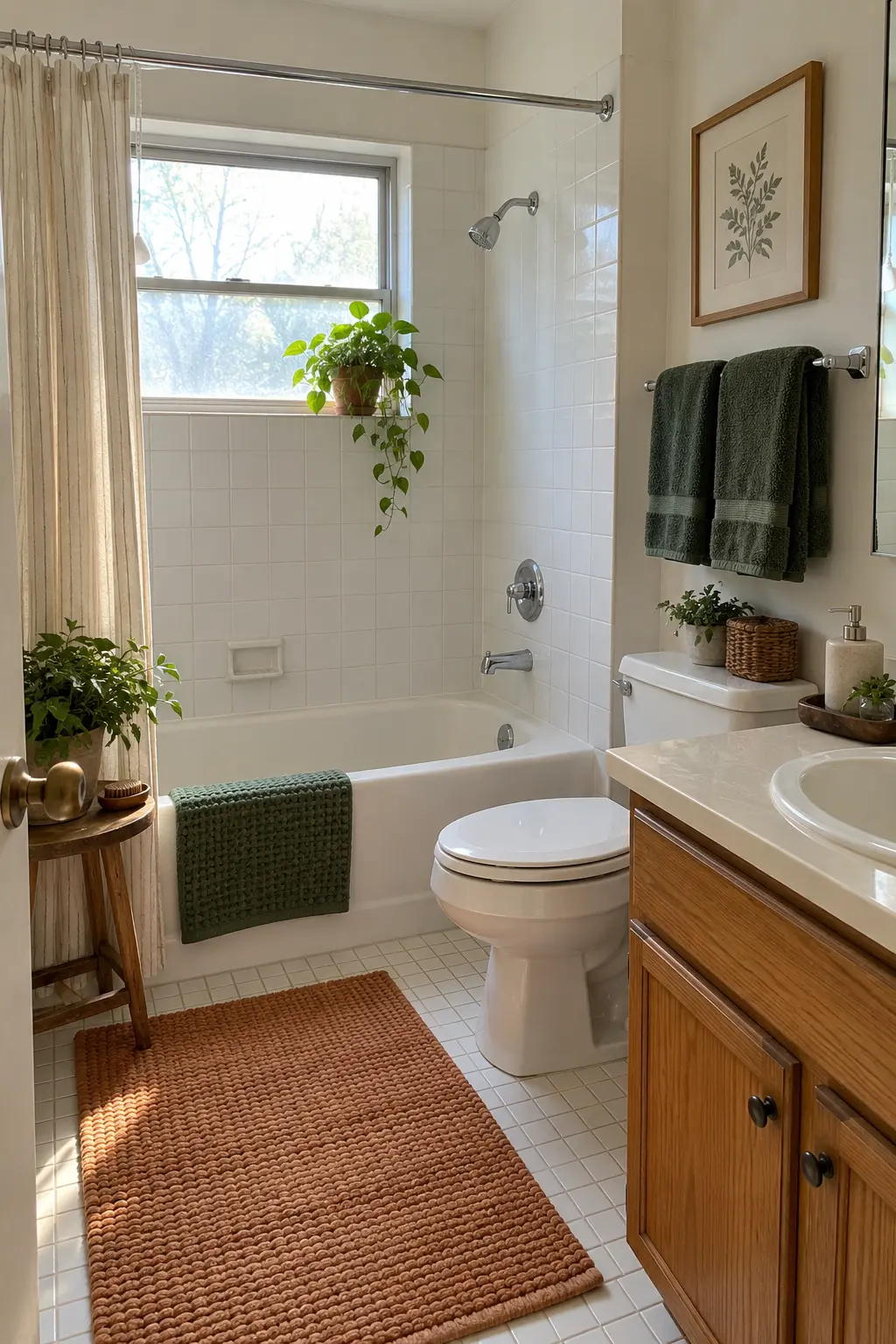
Deep green, navy, clay, or aubergine towels can change a pale bathroom without adding themed accessories. Repeat the color once in a bath mat or small piece of art.
Keep counters clear so the color reads as intentional rather than part of a crowded display.
33. Use Cedar Sparingly in the Bathroom
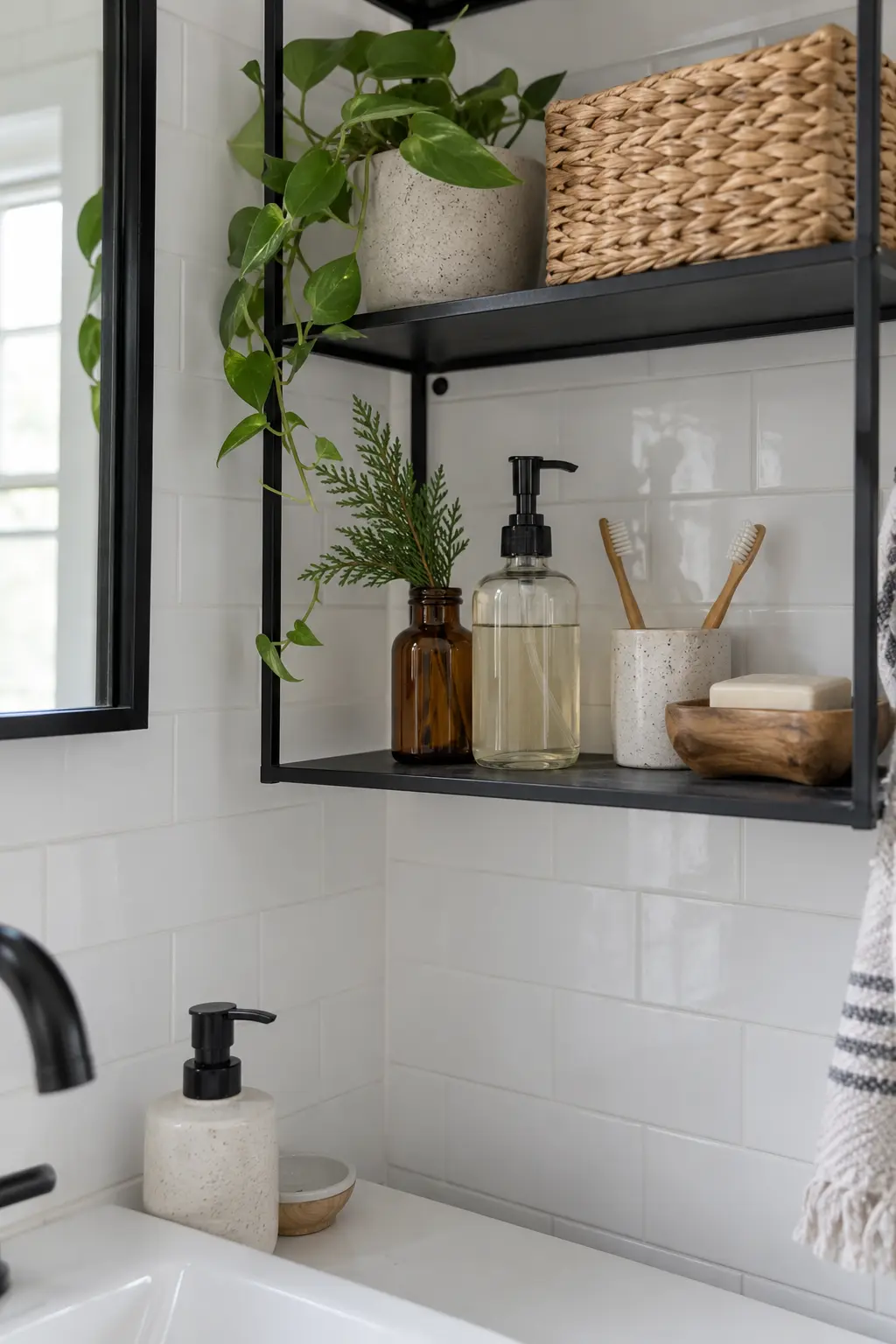
One small cedar or juniper sprig can suggest winter after holiday decor is removed. Place it in a simple ceramic vase away from splashing and skip red berries, ribbon, or miniature ornaments.
Artificial greenery may be more practical in a windowless room.
34. Create a January Reading Corner
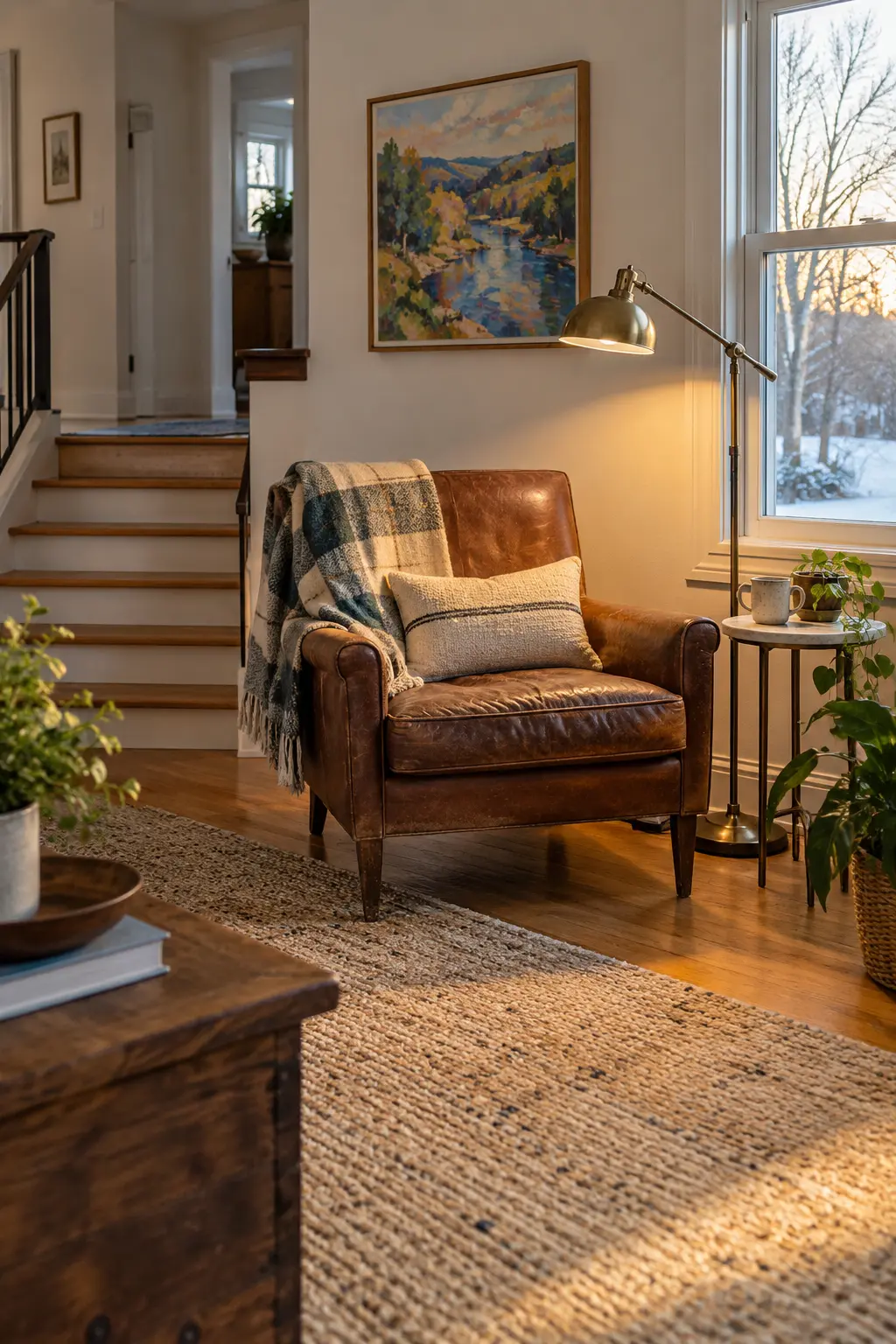
A chair, directional lamp, small table, and warm throw can turn an underused bedroom corner into a winter routine. This is especially useful if the Christmas tree previously occupied the home's best reading spot.
Choose a layout that leaves doors, drawers, and walkways clear.
Bring January Character to Small Homes and Apartments
Small spaces cannot absorb a second wave of seasonal clutter. Use vertical surfaces, useful objects, and limited color so winter character does not reduce storage or circulation.
35. Use One Winter Shelf Instead of a Whole Room Theme
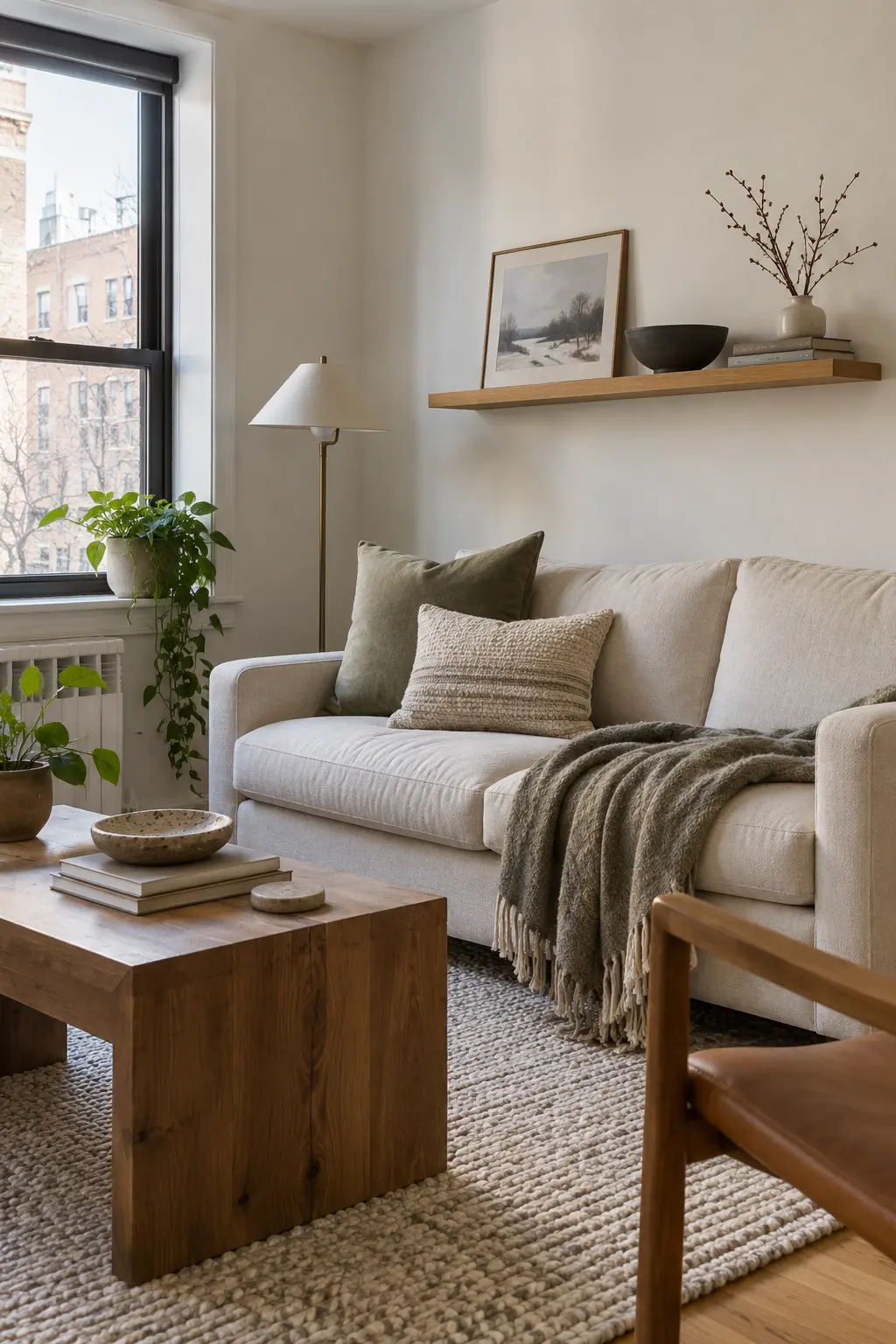
Choose one shelf for a small winter landscape, a ceramic piece, and a branch in a narrow vase. Keep nearby surfaces in their everyday arrangement.
A contained display gives the season a place without spreading decor through the entire apartment.
36. Hang a Textile for Softness Without Floor Clutter
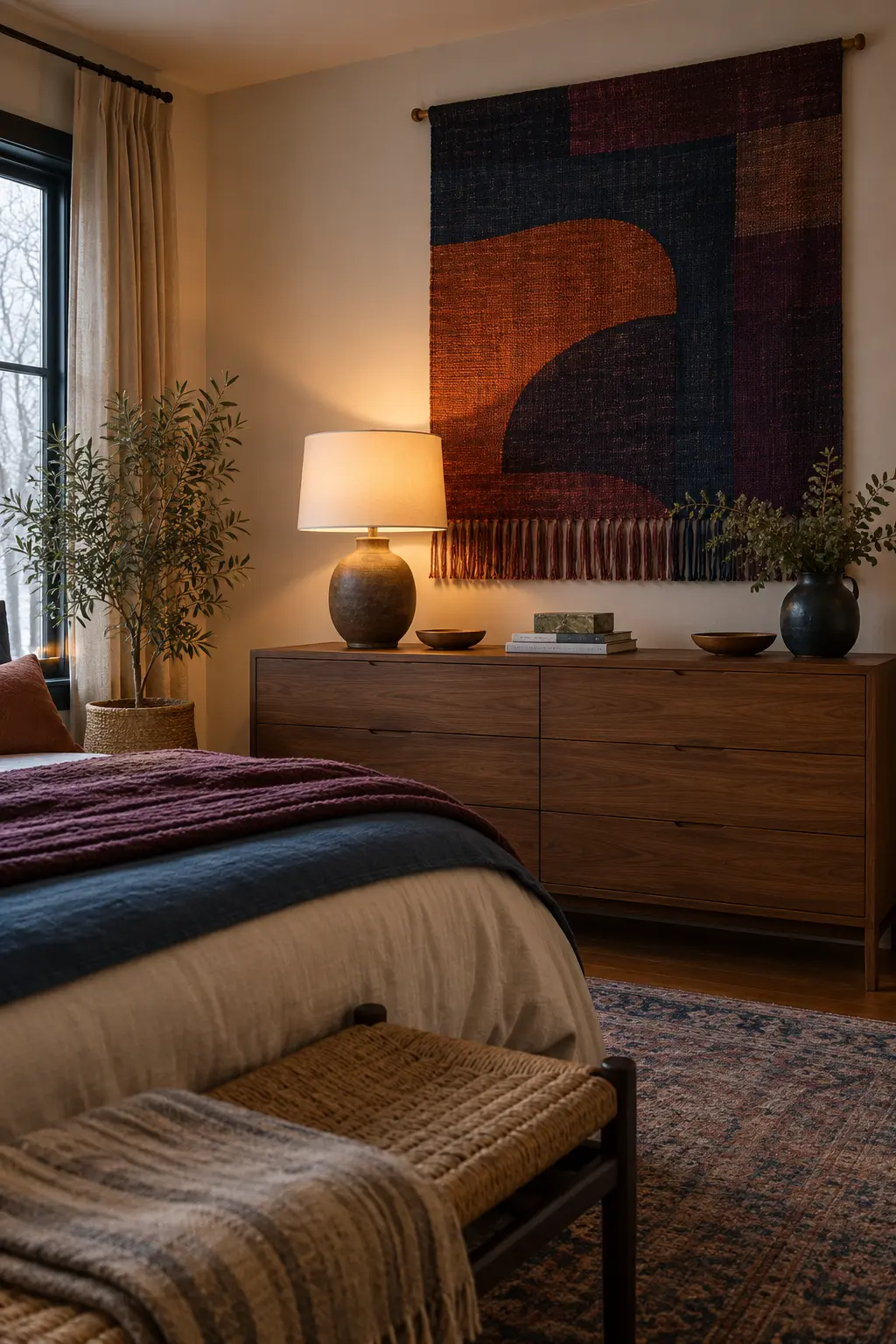
A woven wall hanging or small quilt introduces warmth without using a table or basket footprint. Look for deep blue, rust, plum, or soft neutral fibers rather than a literal snowflake motif.
Use renter-appropriate hanging methods and keep the textile away from heat sources.
37. Use Mirrors to Share Winter Light
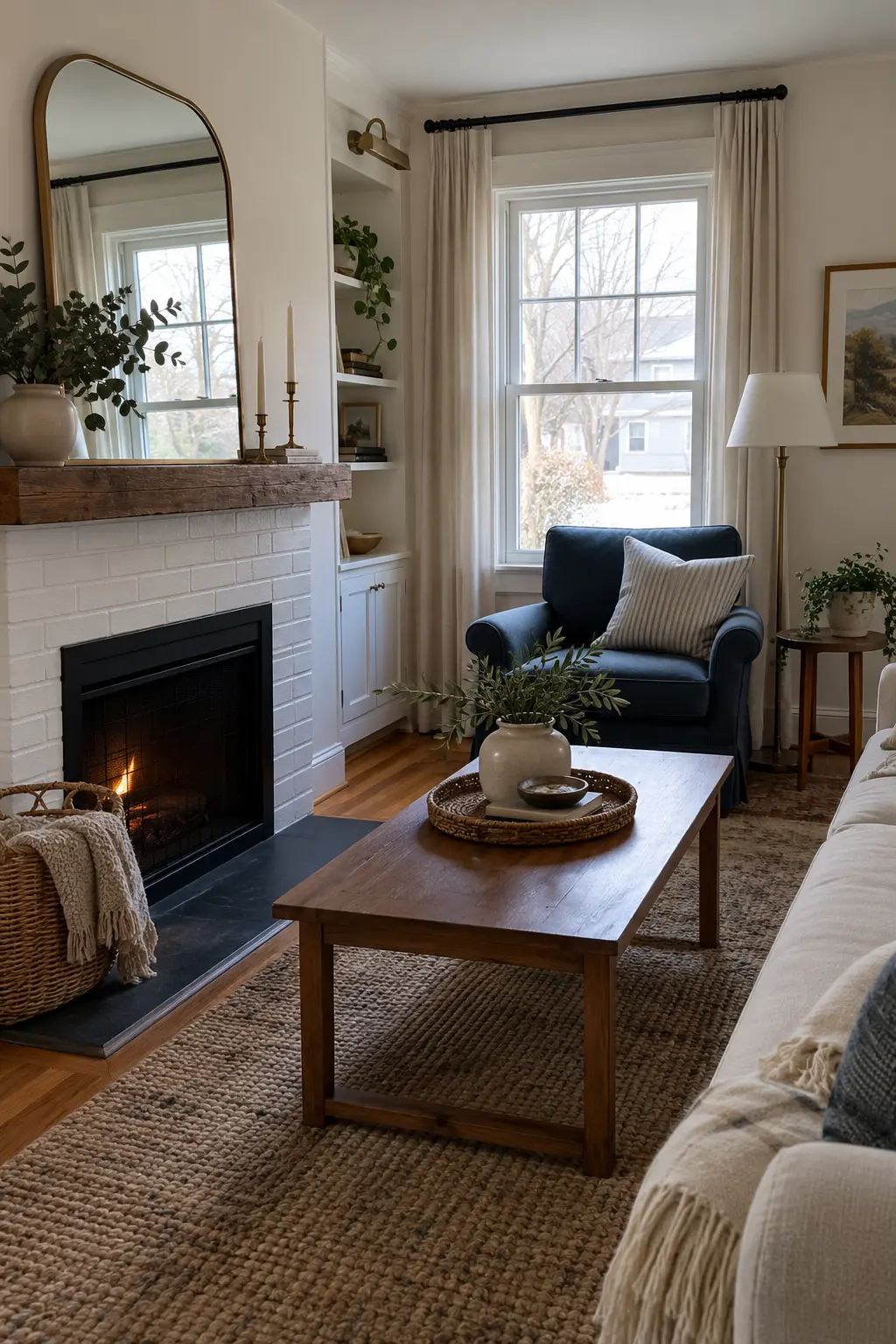
Place a mirror where it reflects a window or lamp rather than a cluttered storage area. The extra light can matter more in January than adding another decorative object.
Secure heavy mirrors appropriately and avoid positions that create harsh glare.
38. Try an Icy Blue and Terracotta Pairing

Icy blue references winter skies, while terracotta prevents the palette from becoming cold. Use the combination in a pillow, throw, pottery, or art instead of repainting the entire room.
Warm wood and off-white provide an easy bridge between the two colors.
39. Make a Small Home Feel Collected, Not Rustic
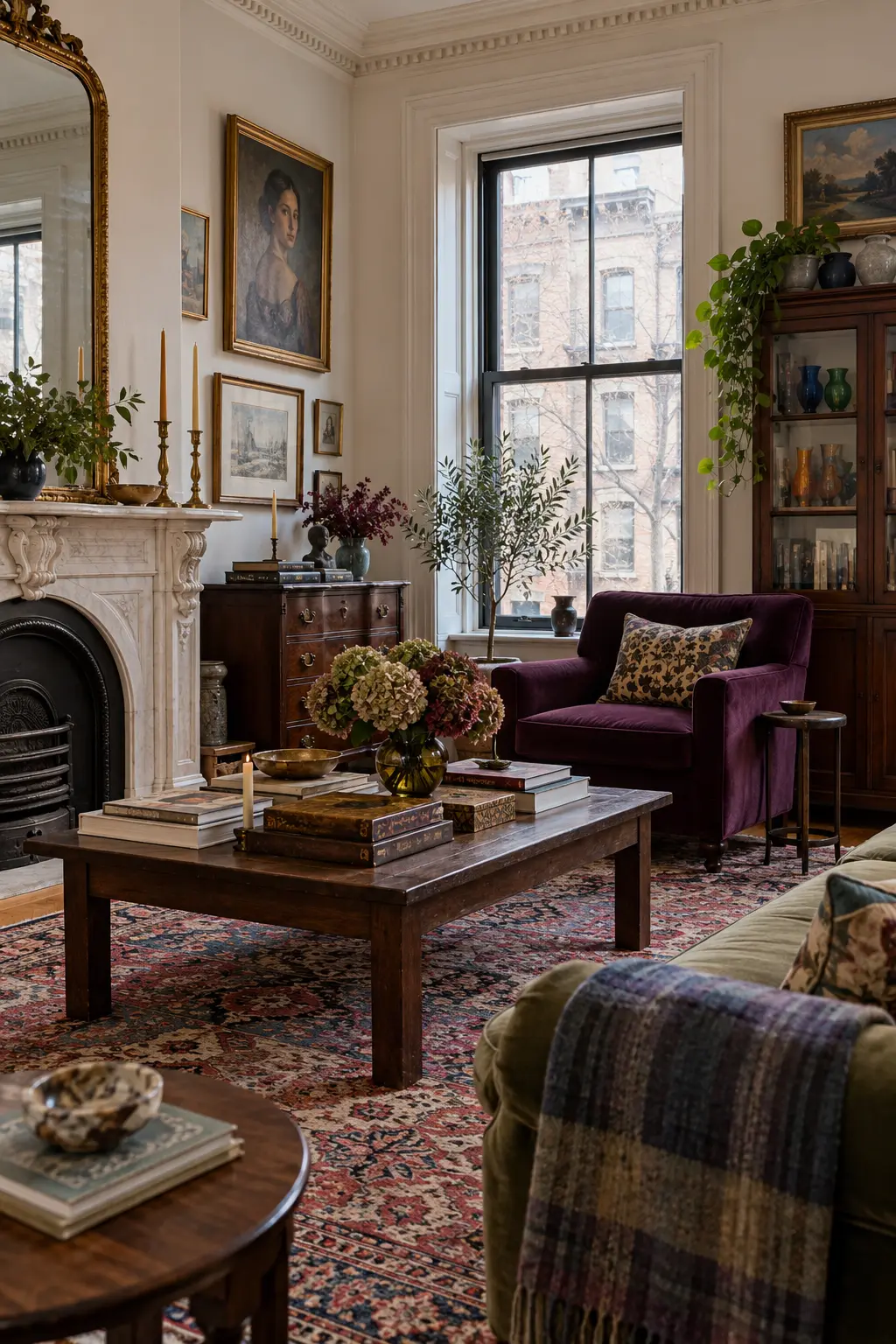
Winter texture can come from vintage frames, patterned wool, colored glass, and dark wood—not only burlap, whitewash, and farmhouse signs. Select pieces that already fit the home's personality.
Limit the seasonal layer so the room still looks collected in February.
40. Create a February-Ready January Base

Use neutral large pieces and two winter accents that can change easily: a throw and a branch arrangement, for example. When February arrives, replace only one detail with early bulbs, pink, green, or a softer textile.
This prevents another full decorating reset a few weeks later.
Let January Feel Like Its Own Season
The easiest post-Christmas rooms are edited, not empty. Keep what still reads as winter, return useful everyday pieces, and add warmth through light, texture, plants, and one or two intentional colors.
Give cleared surfaces and open corners time before filling them. A quieter home can still feel comfortable, colorful, and finished while leaving an easy path toward spring.