50 Window Treatment Ideas for Kitchens

This post may contain affiliate links: full affiliate disclosure.
Kitchen windows face unique challenges like steam, grease, and the need for natural light. Short curtains offer a practical way to gain privacy at the sink without blocking the sun.
These solutions focus on styles that are easy to clean and look great in any home.
Café Curtains and Short Kitchen Curtains
1. Classic White Café Curtains
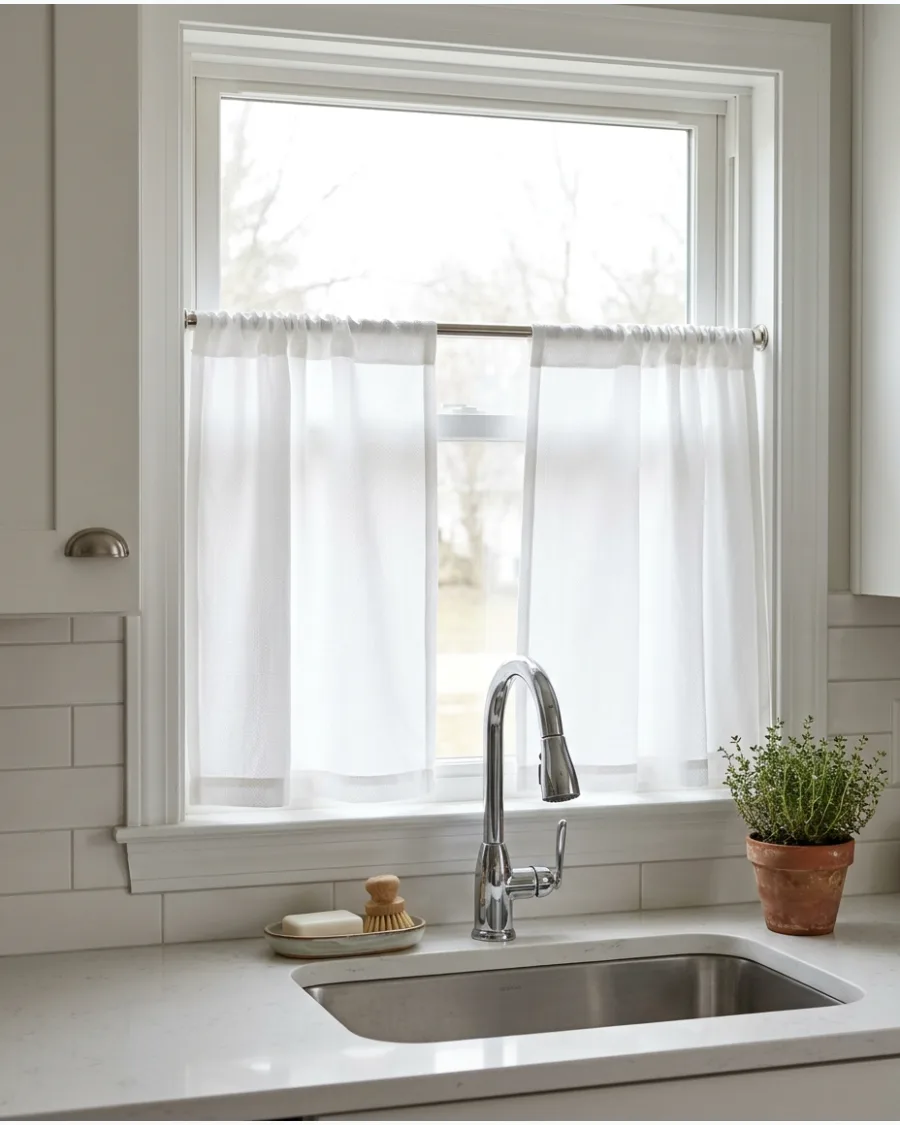
Hang crisp white café curtains across the lower half of the kitchen window. They provide privacy at eye level while keeping the upper glass open to natural light.
Install the rod exactly at the halfway point or slightly lower to keep the view clear. White cotton is easy to bleach if it picks up cooking smells.
- Cotton fabric, $15-$30, 20-minute install.
- Mount on a tension rod inside the window frame.
- Use white sheets to DIY these on a budget.
Quick win: Use a tension rod for a no-drill installation that won't damage the window frame.
2. Relaxed Linen Café Curtains
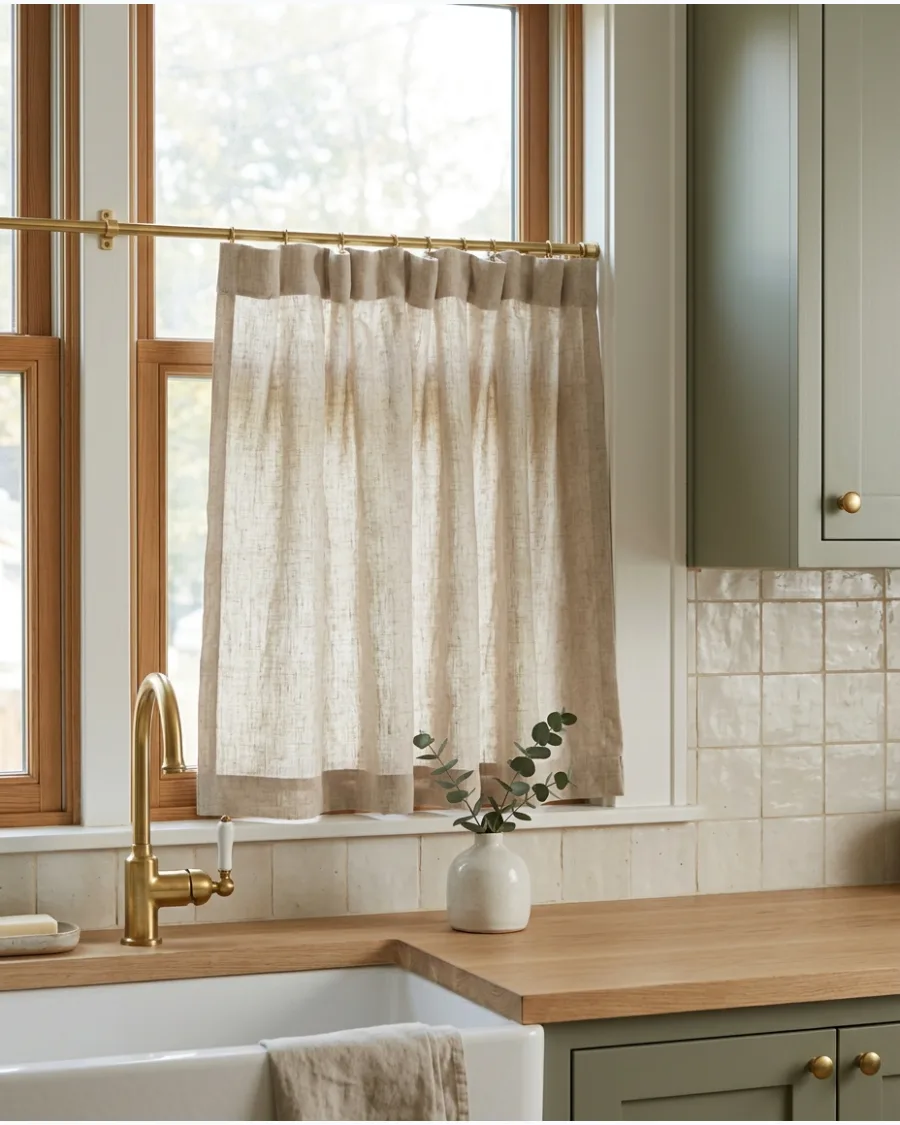
Choose softly gathered linen café curtains for an effortless, lived-in look. Natural flax, oatmeal, and warm white fabrics work beautifully with wood cabinets and stone countertops.
Opt for a medium-weight linen that drapes well without becoming too stiff. Linen naturally resists bacteria, making it a smart choice for humid kitchen environments.
- Linen fabric, $40-$60, high durability.
- Gather panels to 2x the window width for fullness.
- Swap for heavier velvet in winter to block drafts.
Best shortcut: Skip the ironing and embrace the natural wrinkles for a truly relaxed feel.
3. Striped Café Curtains
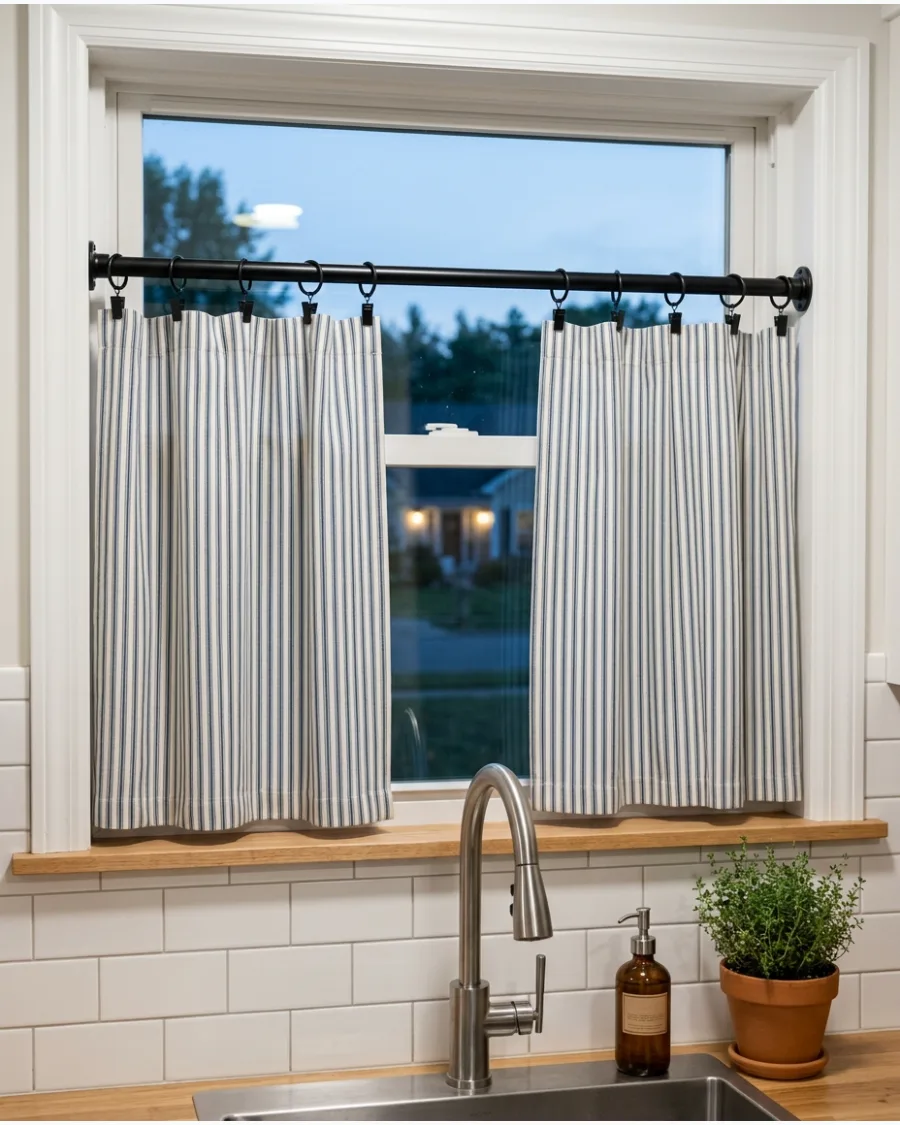
Use narrow blue, green, beige, or black stripes to add pattern without overwhelming the kitchen. Vertical stripes can also help a small window appear taller.
Match the stripe color to your cabinet hardware or tile grout for a cohesive look. Thin ticking stripes are classic and hide small splatters better than solid colors.
- Ticking stripe cotton, $20-$40, classic style.
- Use metal clip rings for smooth sliding on the rod.
- Choose black stripes for a modern, high-contrast kitchen.
Most people skip this: Align the stripes vertically to draw the eye up and make the ceiling feel higher.
4. Gingham Kitchen Curtains
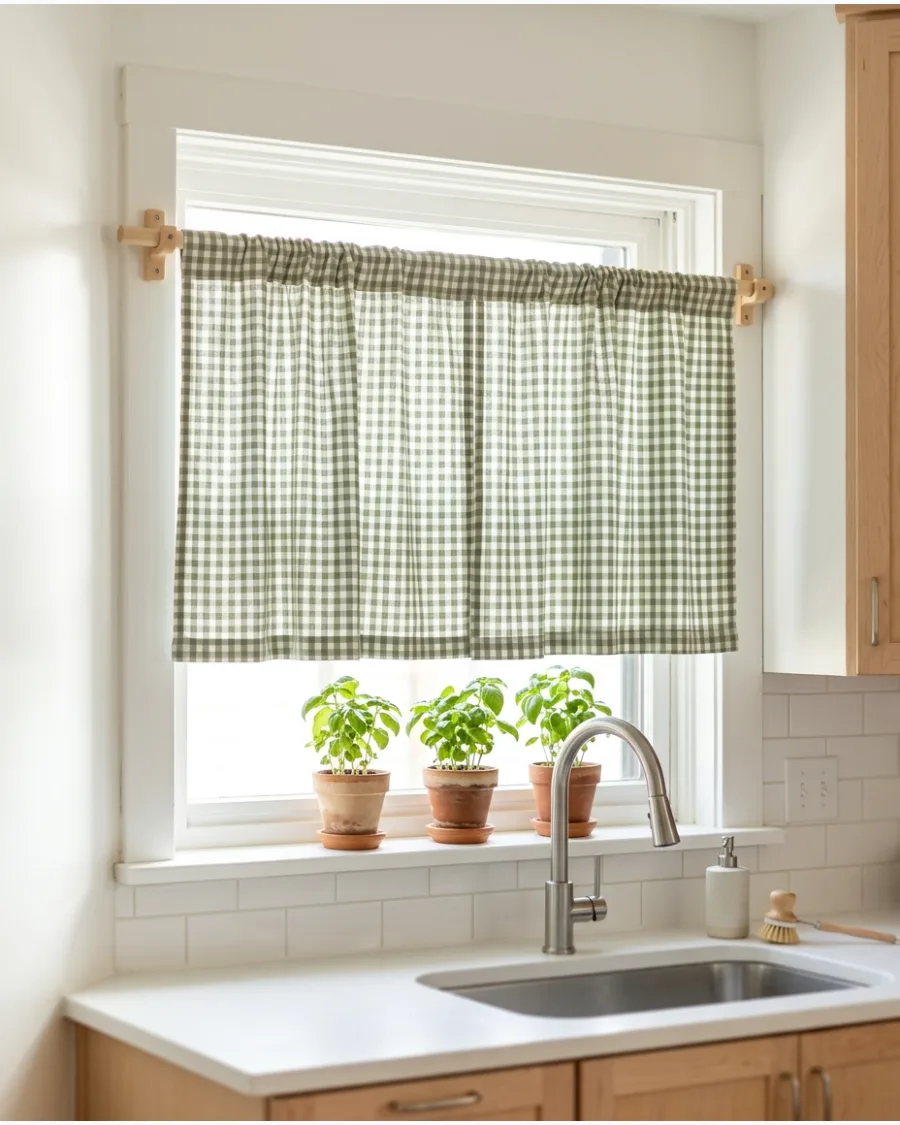
Introduce cottage charm with small-scale gingham café curtains. Muted sage, dusty blue, brown, or beige checks feel especially fresh and easy to coordinate.
Keep the scale of the check small so it doesn't compete with other patterns in the room. These curtains bring a cozy, welcoming energy to a breakfast nook or prep area.
- Gingham cotton, $15-$25, machine washable.
- Center the rod at the meeting rail of the window.
- Go with large-scale checks for a bold farmhouse feel.
Quick win: Pick a color from your favorite dish towels to make the gingham feel intentional.
5. Scalloped Café Curtains
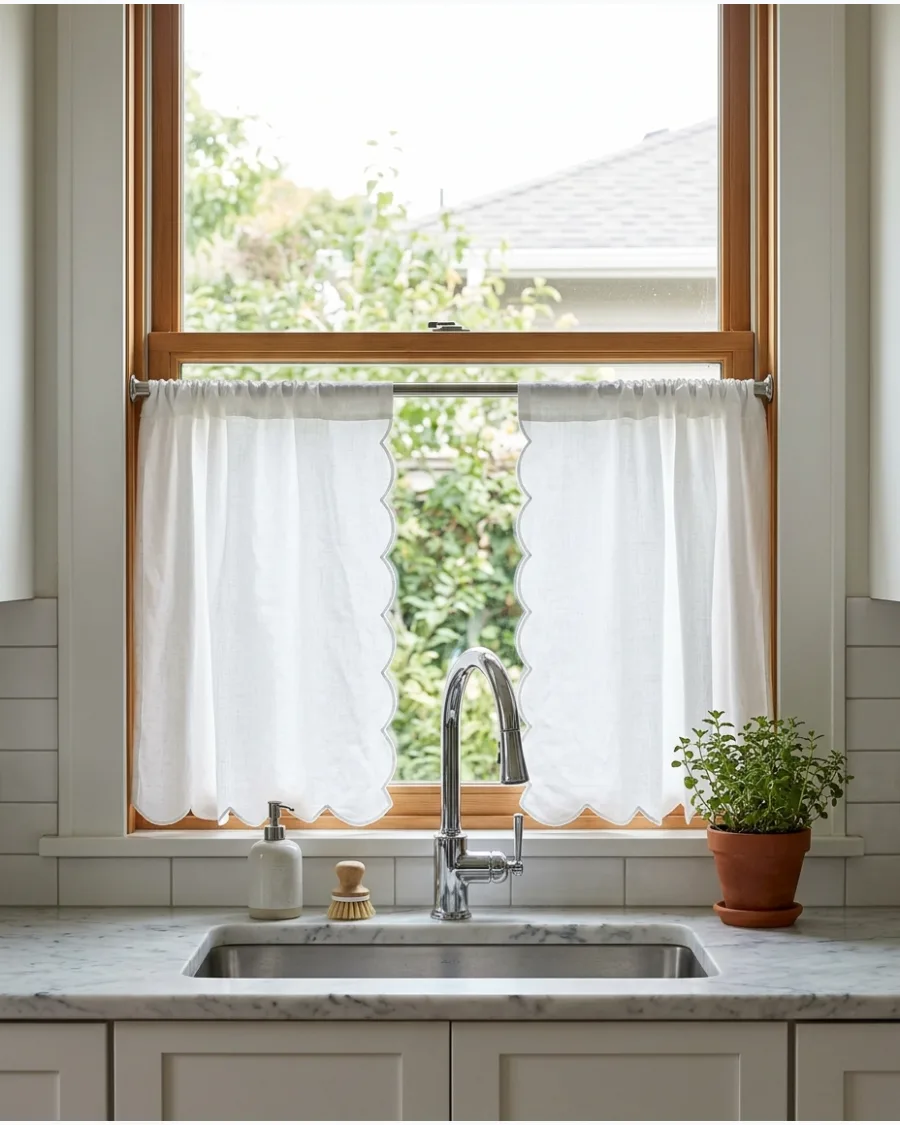
Finish simple half curtains with a curved or scalloped hem. The decorative edge adds personality while keeping the overall window treatment light and practical.
Ensure the lowest point of the scallop clears the sink faucet to avoid water damage. This shape softens the hard lines of cabinets and appliances.
- Scalloped cotton, $25-$45, decorative hem.
- Ensure the hem sits 1 inch above the countertop.
- Trim existing curtains with scalloped lace for an update.
Best shortcut: Look for laser-cut edges that won't fray in the wash.
6. Pinch-Pleat Café Curtains
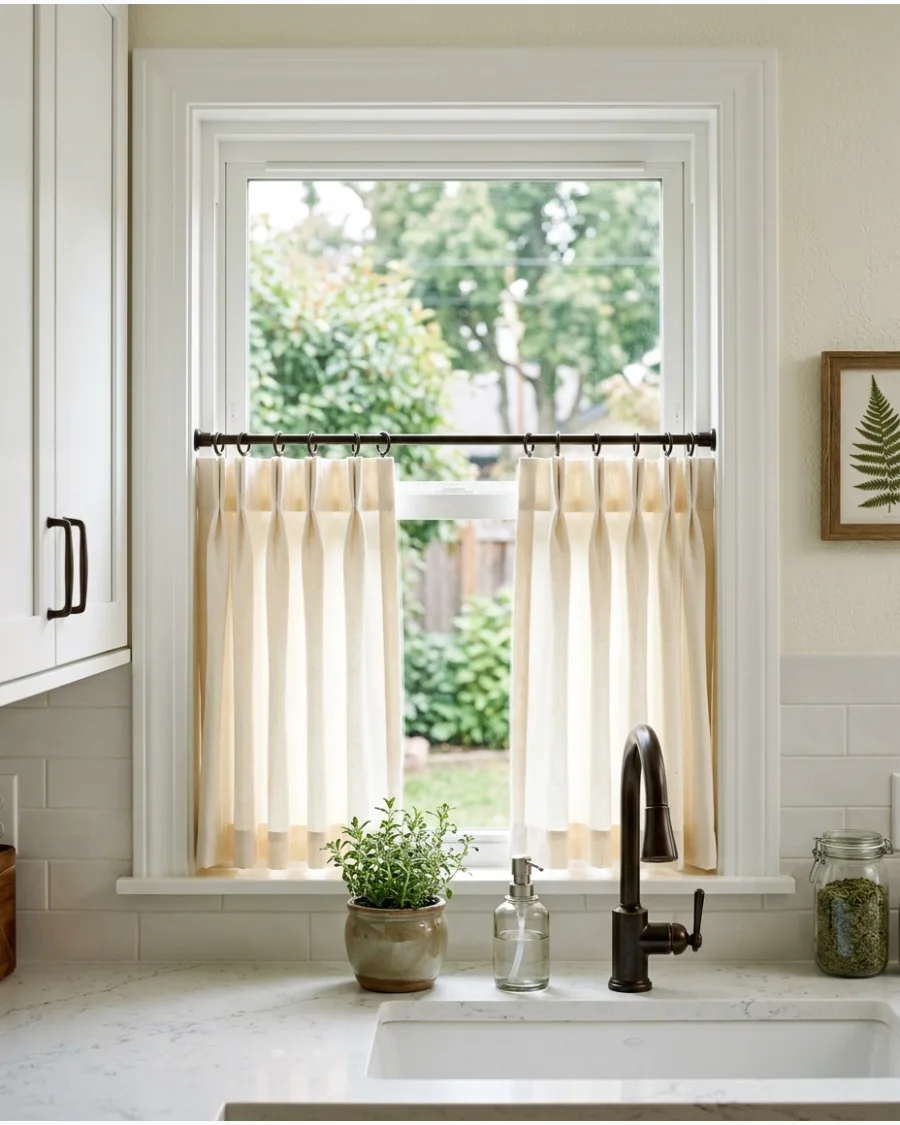
Give short kitchen curtains a tailored appearance with neatly formed pinch pleats. This structured style works well in traditional and transitional kitchens.
Use high-quality drapery hooks to keep the pleats standing tall and even. The extra fabric in the pleats provides better light filtration than flat panels.
- Tailored poly-blend, $35-$70, structured look.
- Space pleats 4 inches apart for a consistent drape.
- Add a blackout lining if the window faces a street lamp.
Most people skip this: Measure carefully for 2x fullness so the pleats look rich, not skimpy.
7. Sheer Café Curtains
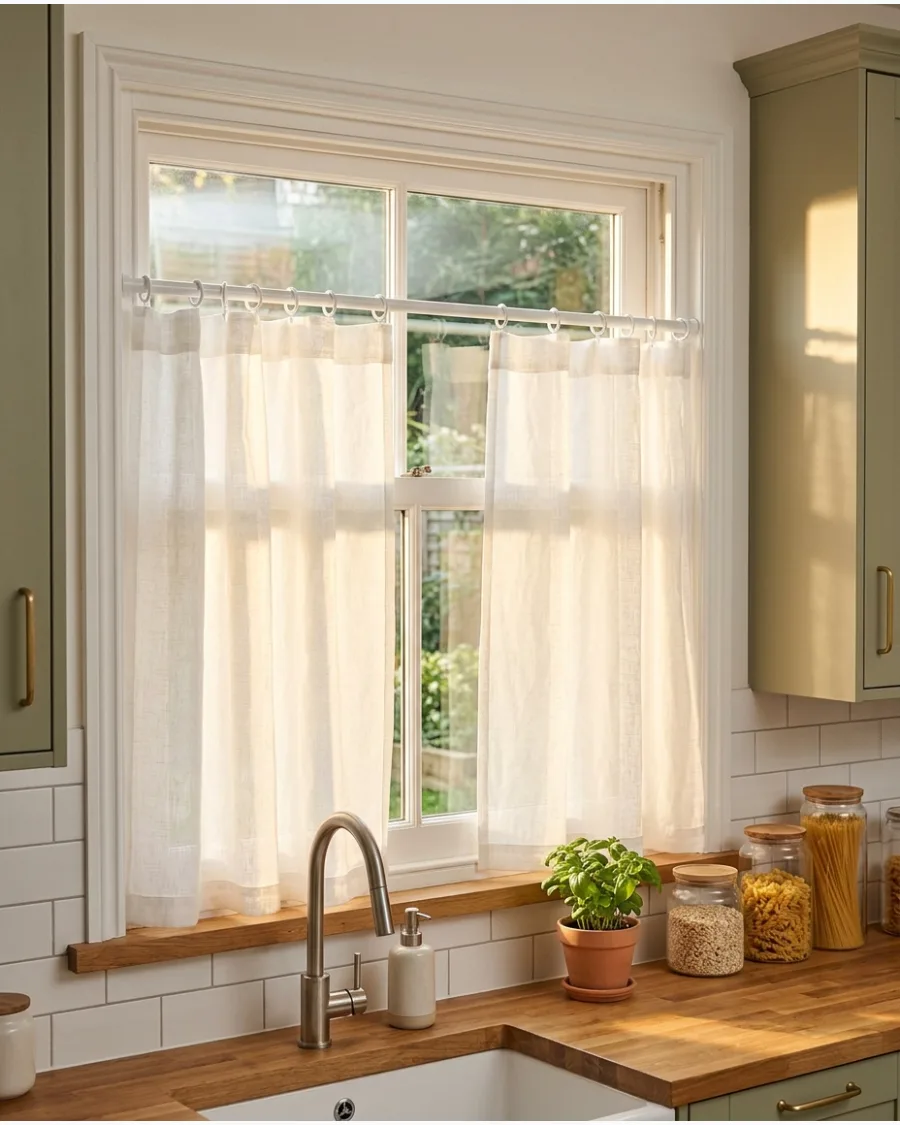
Use semi-sheer café curtains when privacy is needed without making the kitchen feel dark. A textured weave will softly diffuse sunlight and maintain an airy look.
Select a synthetic sheer fabric if your window is close to the stove for easier cleaning. These are perfect for north-facing kitchens that need every bit of available light.
- Voile or faux-linen, $10-$20, light filtering.
- Hang on a slim rod to minimize visual bulk.
- Use two layers for more privacy without losing light.
Quick win: Layer sheers with a heavier roman shade for total privacy at night.
8. Embroidered Café Curtains
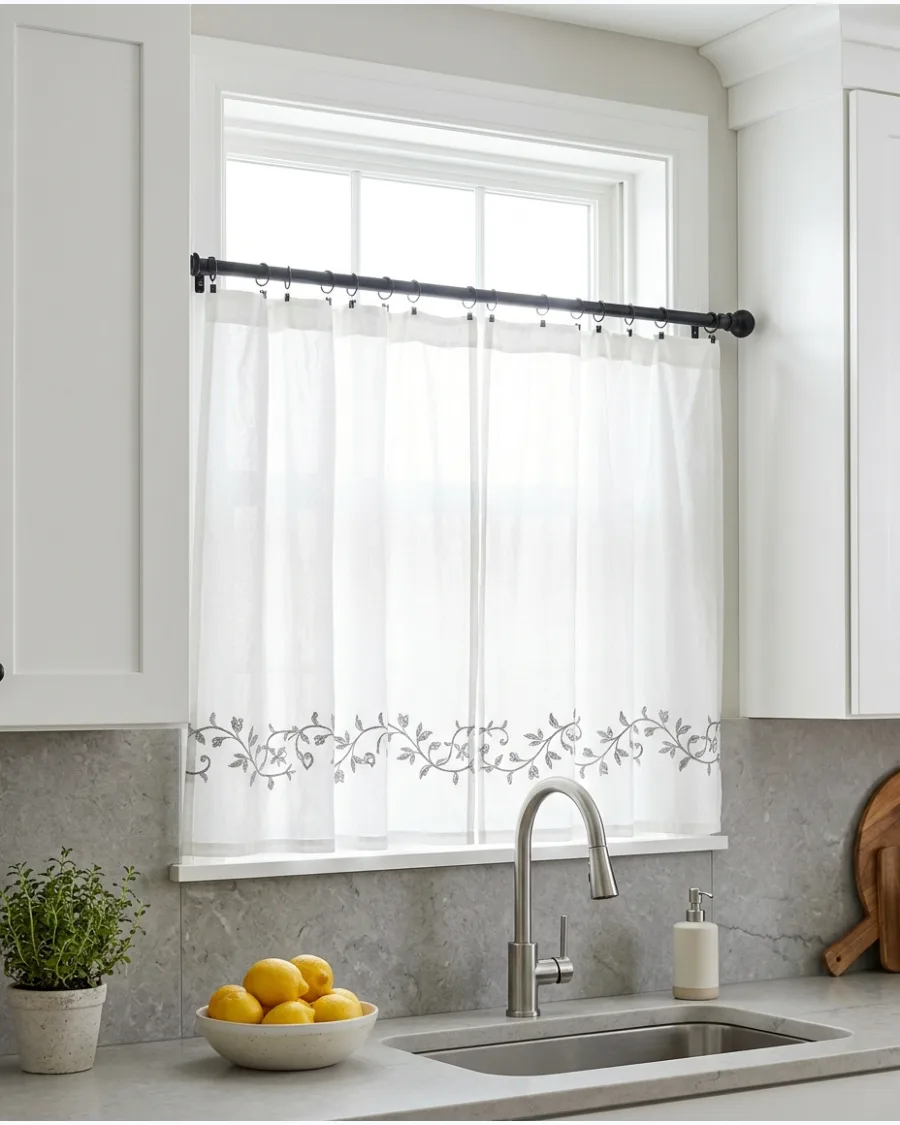
Select white or neutral curtains with a delicate embroidered border. The subtle detail adds craftsmanship without competing with colorful tile or cabinetry.
Position the embroidery at the bottom edge so it remains visible even when the curtains are pushed aside. This look adds a vintage touch that feels timeless rather than dated.
- Embroidered cotton, $30-$55, detailed border.
- Iron on the reverse side to protect the stitching.
- Choose colorful thread to match a specific accent color.
Best shortcut: Choose machine-embroidered options for durability in a high-traffic kitchen.
9. Tie-Top Kitchen Curtains
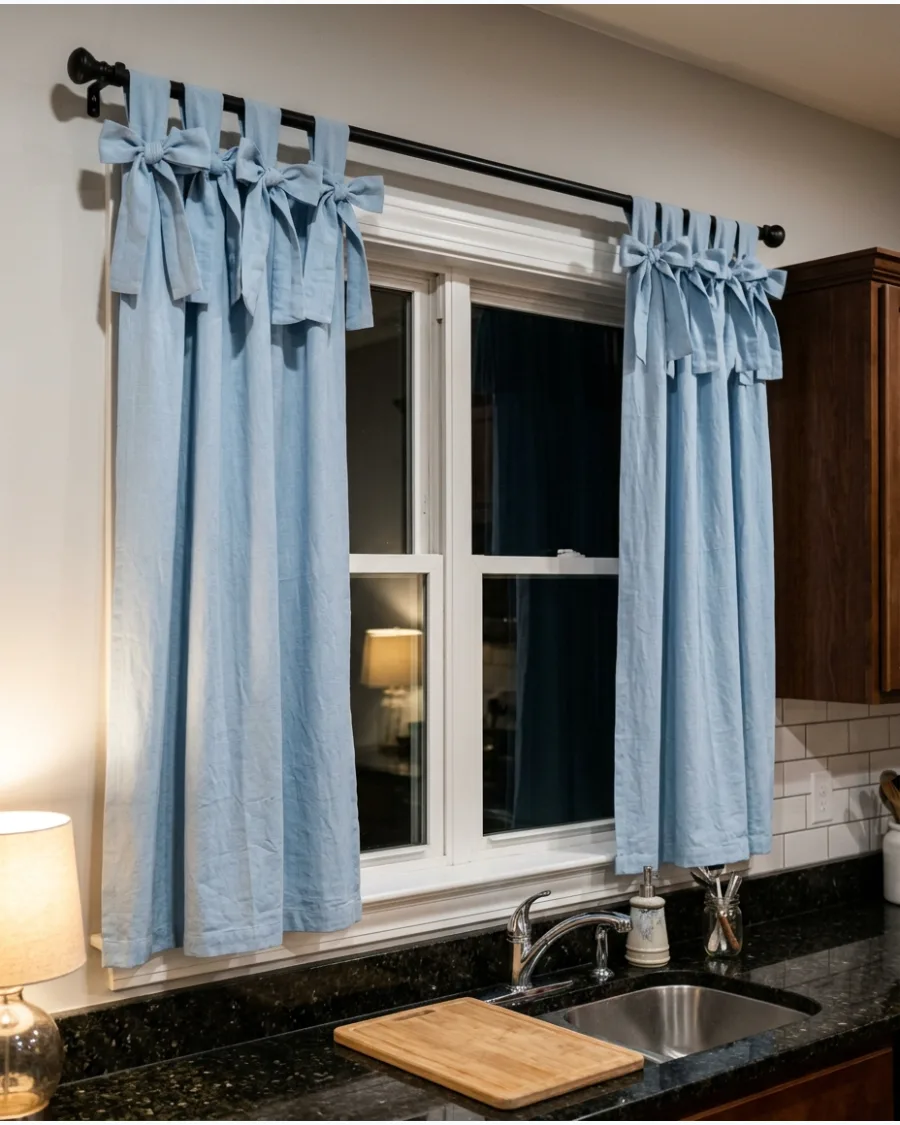
Hang casual tie-top curtains from a slim café rod. This relaxed design is easy to remove and works particularly well in farmhouse and cottage kitchens.
Tie the knots loosely to allow the fabric to drape naturally and move easily along the rod. Since there are no rings, this is a very budget-friendly way to update a window.
- Cotton or linen, $20-$40, no rings required.
- Tie bows at equal heights for a balanced appearance.
- Use ribbon instead of fabric ties for a formal touch.
Most people skip this: Double-knot the ties so they don't slip or come undone when you open the window.
10. Color-Blocked Café Curtains
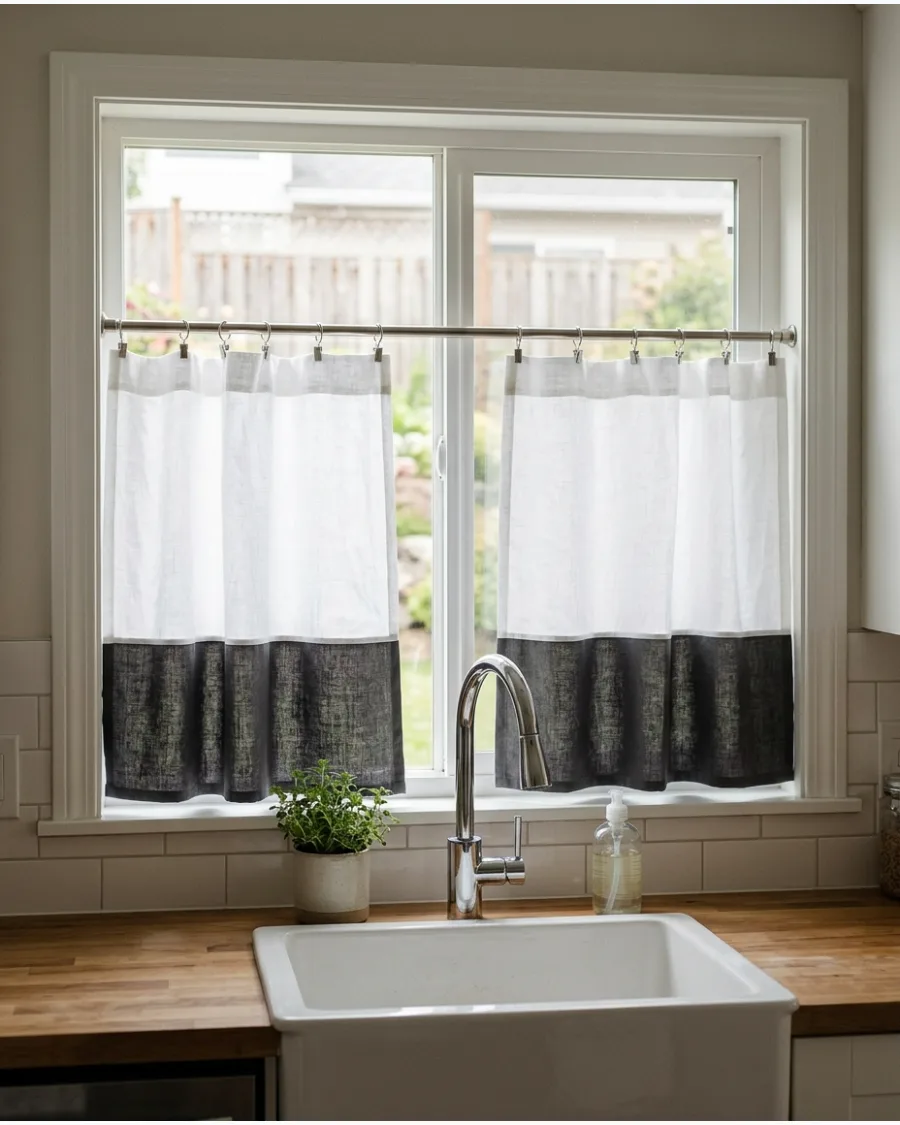
Combine two coordinating colors in one short curtain panel. Use a pale neutral across most of the fabric with a darker border along the bottom.
Place the color transition about one-third of the way up from the bottom for the best proportions. The darker bottom section is great for hiding the occasional splash from the sink.
- Heavy cotton, $25-$50, custom-look colors.
- Align the color seam with the window's middle bar.
- Rotate colors seasonally to refresh the kitchen's look.
Quick win: Use a color from your floor tiles for the bottom band to ground the design.
Roman Shade Ideas for Kitchen Windows
11. Tailored White Roman Shade
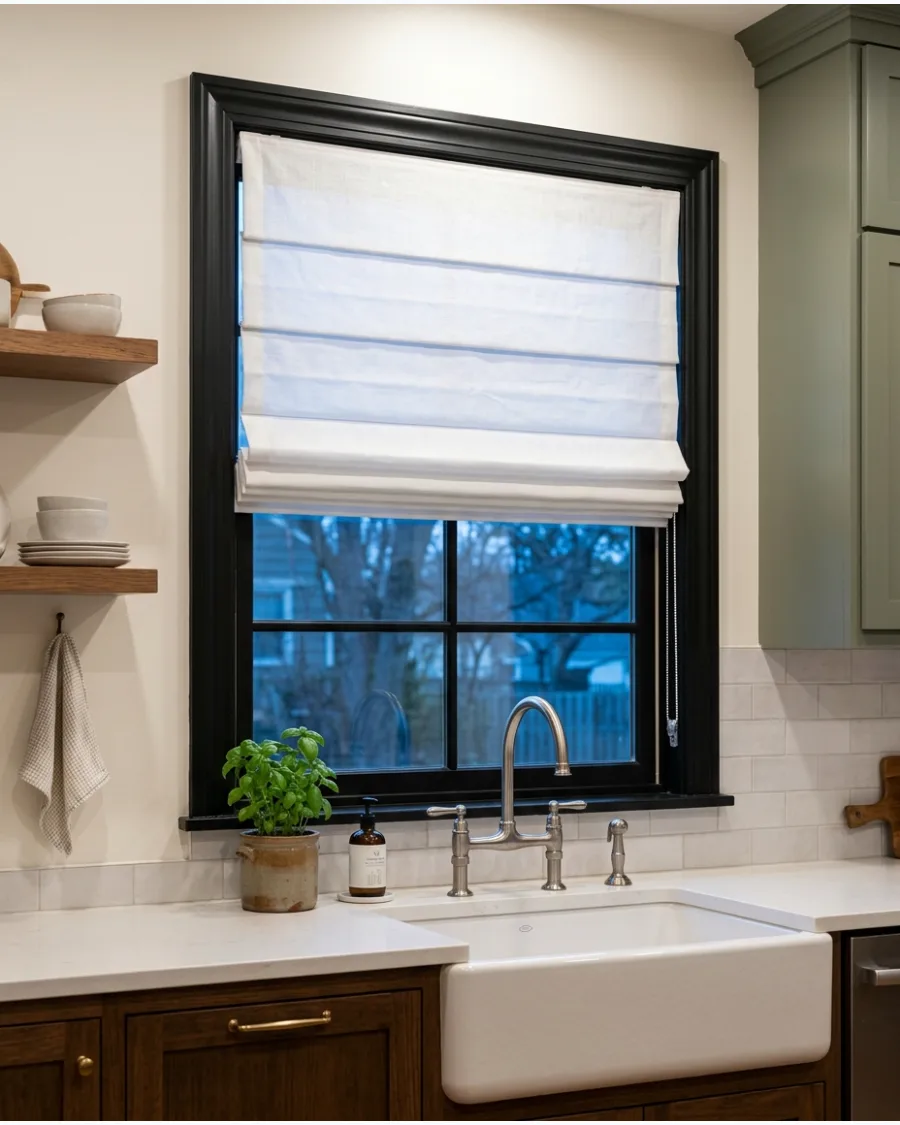
A crisp white Roman shade offers a clean, finished look that brightens a kitchen. It sits flat against the window frame and works perfectly in white or colorful kitchens alike.
Mount the shade inside the window frame to keep the lines sharp and save counter space. A white shade reflects light back into the room even when the fabric is partially closed.
- Budget: $50 to $150 depending on window size.
- Installation: Roughly 20 minutes with a drill and level.
- Maintenance: Wipe with a damp cloth to remove cooking splatters.
Quick win: Use a polyester-cotton blend for better stain resistance near the stove area.
12. Relaxed Linen Roman Shade
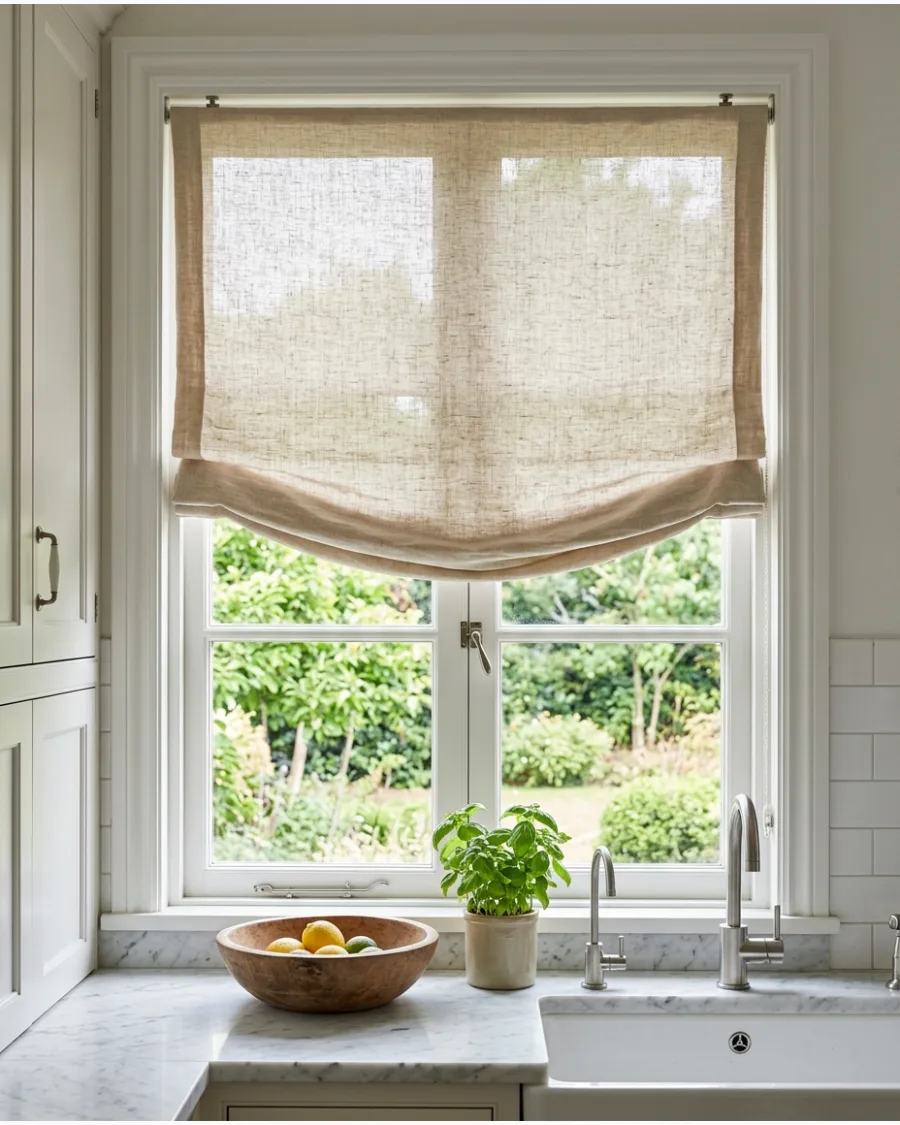
Relaxed shades have a soft curve at the bottom that breaks up the hard lines of kitchen cabinets. The linen texture adds a natural, organic feel that makes a cooking space feel more lived-in and comfortable.
Opt for a light oatmeal or flax color to hide the occasional splash from the sink better than pure white. This style works best when the shade is kept at least halfway up to maintain the decorative curve.
- Budget: $60 to $200 for high-quality linen.
- Setup: Available in tension rod or screw-in mounting options.
- Care: Steam lightly after hanging to remove shipping wrinkles.
Most people skip this: Check the fabric weight to ensure the bottom curve holds its shape without looking floppy.
13. Flat Roman Shade
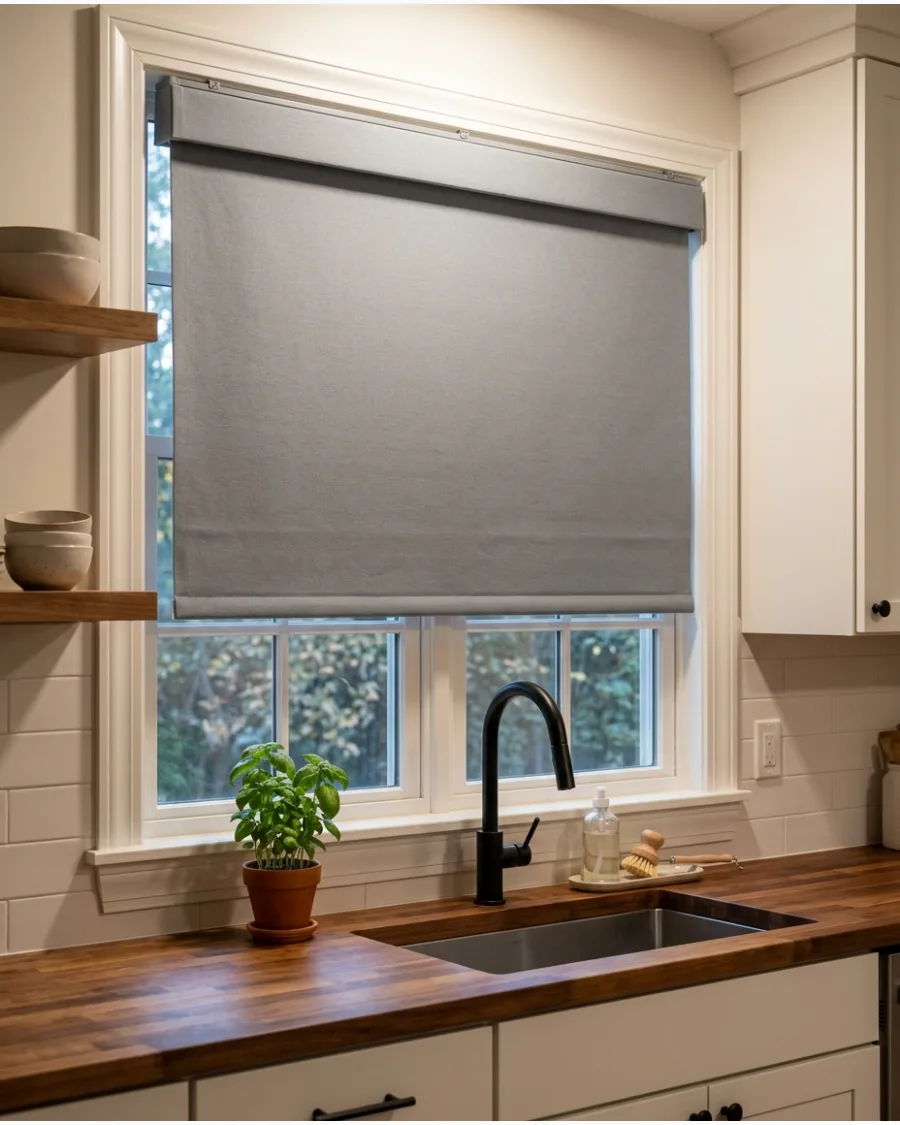
A flat Roman shade acts like a piece of art because the fabric stays smooth when lowered. It is the best choice for showing off a bold pattern or a beautiful weave without any distracting folds.
Choose a medium-weight cotton to ensure the shade hangs perfectly straight and does not curl at the edges. This streamlined look is perfect for small kitchens where every inch of visual space matters.
- Budget: $40 to $120 for standard sizes.
- Placement: Fits best with outside mounts to cover the entire window frame.
- Cleaning: Vacuum once a month with a soft brush attachment.
Best shortcut: Use an outside mount to make a small kitchen window appear taller and wider.
14. Striped Roman Shade
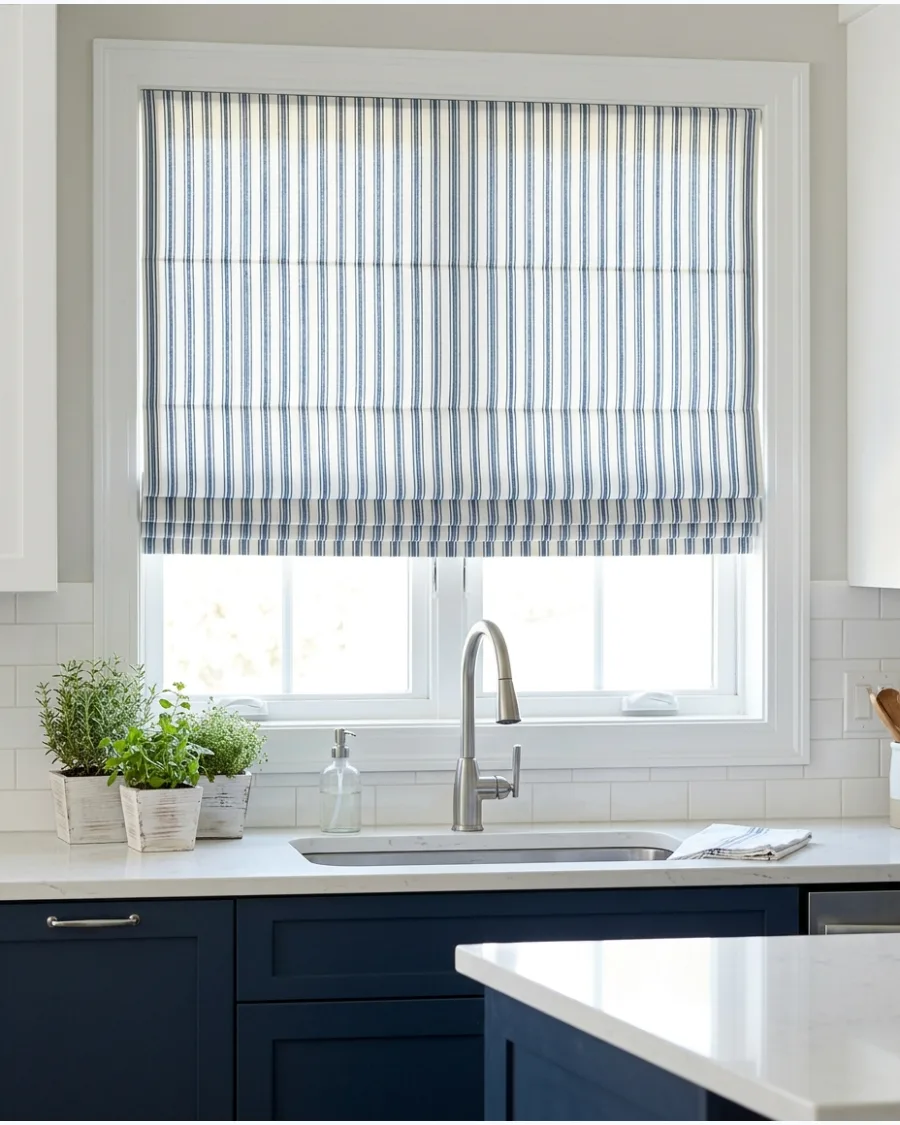
Vertical stripes can make a low kitchen ceiling feel taller, while horizontal stripes make a narrow window feel wider. Ticking stripes or classic cabana stripes bring a classic, coastal, or farmhouse vibe to the room.
Match the stripe color to the kitchen island paint or hardware to pull the whole design together. These shades are great for adding pattern without making the window area look cluttered.
- Budget: $55 to $180 for custom-look patterns.
- Assembly: Standard 30-minute installation with included brackets.
- Longevity: Spot clean with mild soap to keep colors bright.
Quick win: Narrow stripes hide dust and small kitchen splatters better than solid-colored fabrics.
15. Roman Shade With Contrast Trim
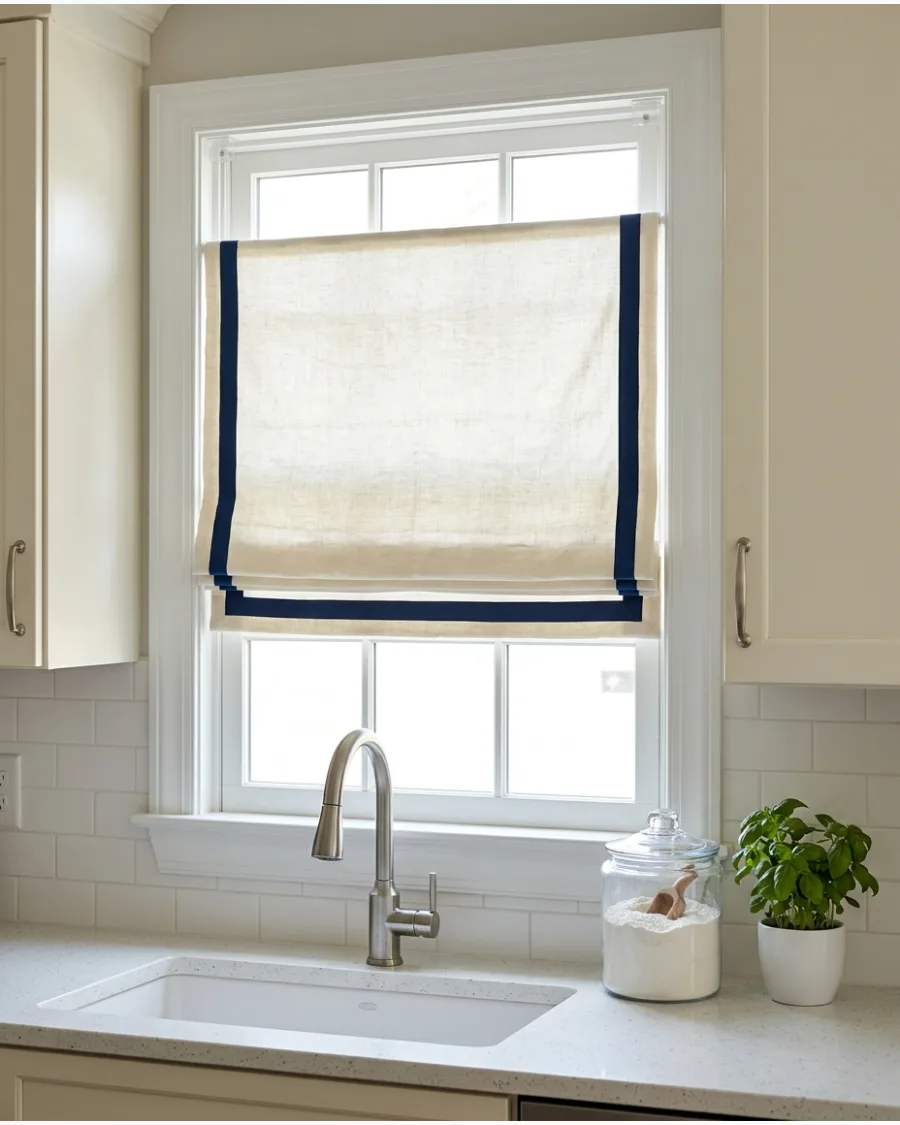
Adding a ribbon or fabric border to a plain shade gives it a custom, high-end look. A black or navy border creates a frame that draws the eye toward the window and adds architectural interest to the wall.
Align the trim color with the lighting fixtures or cabinet pulls for a cohesive look. It is an easy way to add a pop of color without committing to a full-patterned shade.
- Budget: $70 to $250 for designer-style trim.
- Logistics: Requires precise measuring to ensure the trim aligns with the window edges.
- Adaptation: Works well in both traditional and modern kitchen styles.
Most people skip this: Make sure the trim is sewn on, not glued, to prevent peeling from kitchen steam.
16. Botanical-Print Roman Shade
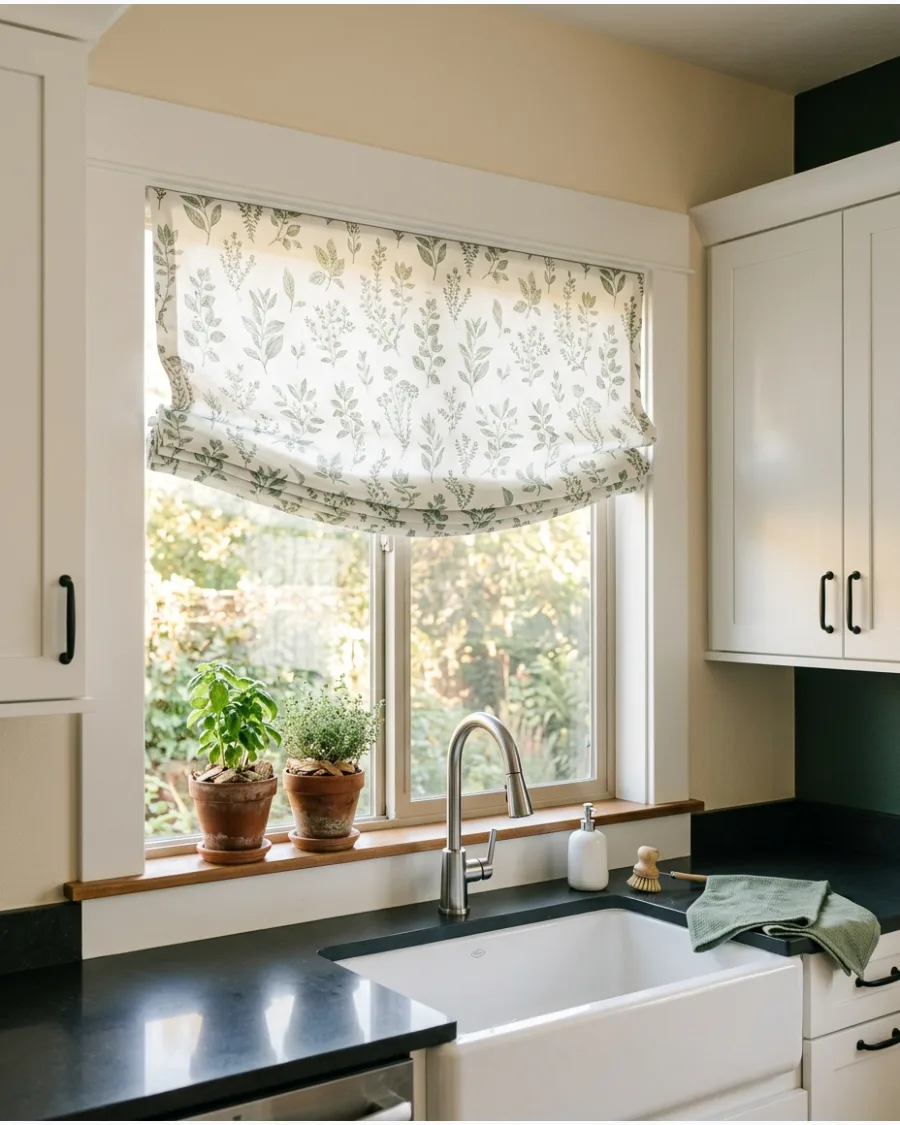
A leafy or floral print brings the feeling of a garden inside, even if the window does not have a great view. Choose a print with a light background to keep the kitchen feeling airy and bright during the day.
Pick a pattern that features at least one of your existing kitchen accent colors to make the window a focal point. Botanical prints are excellent at masking the inevitable grease and steam that happen in a busy kitchen.
- Budget: $65 to $220 depending on fabric quality.
- Options: Available in various fabric weights from light filtering to room darkening.
- Maintenance: Iron on low heat if the fabric develops wrinkles over time.
Best shortcut: Choose a large-scale print for big windows and a small-scale print for tiny windows over the sink.
17. Block-Print Roman Shade
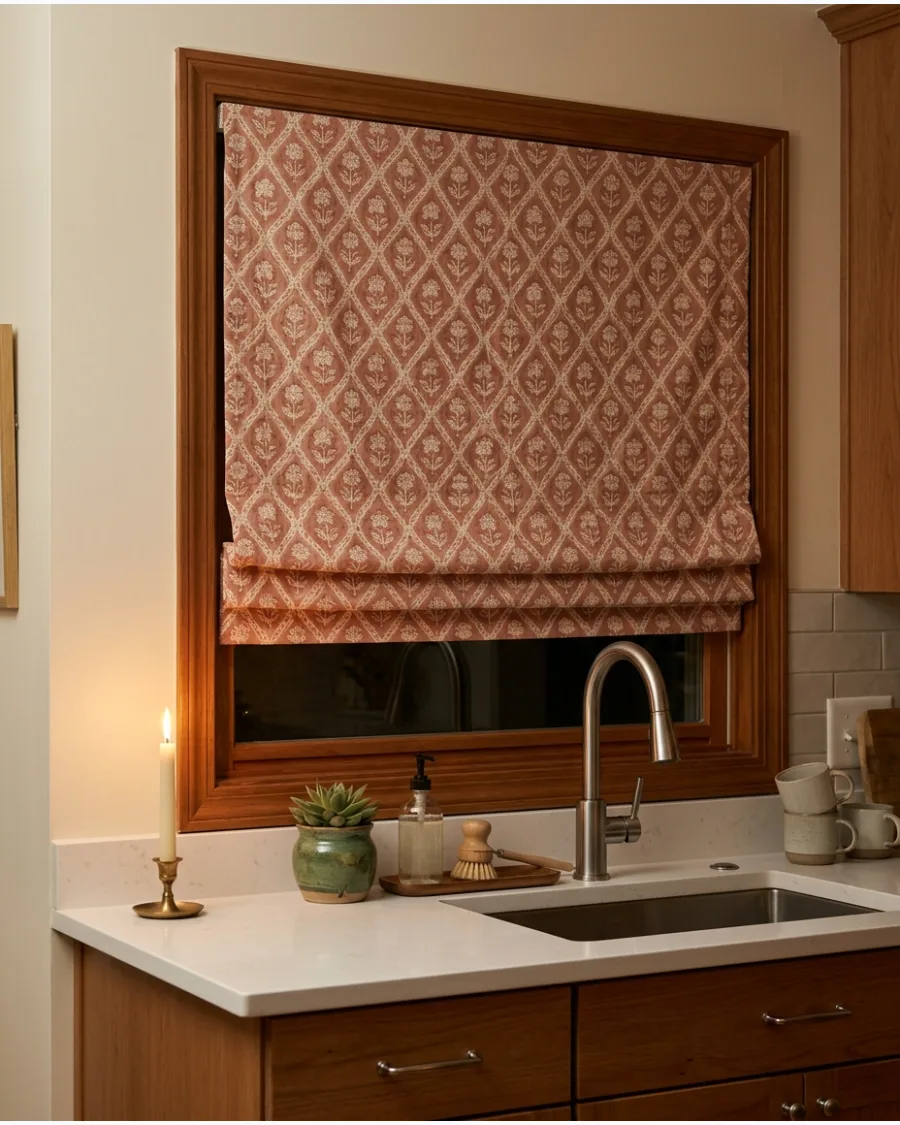
Block prints offer a handmade, artisan look with slightly irregular patterns that feel warm and inviting. The earthy tones typically found in these prints, like terracotta or olive, ground a bright white kitchen.
Select a geometric or floral block print to add texture and depth to a flat kitchen wall. This style is perfect for those who want a collected look rather than something that feels mass-produced.
- Budget: $80 to $280 for authentic-looking prints.
- Style: Pairs beautifully with brass or antique bronze cabinet hardware.
- Care: Dry clean only for most hand-stamped or printed fabrics.
Quick win: Pair block prints with natural wood accents to lean into a warm, rustic kitchen aesthetic.
18. Blackout-Lined Roman Shade
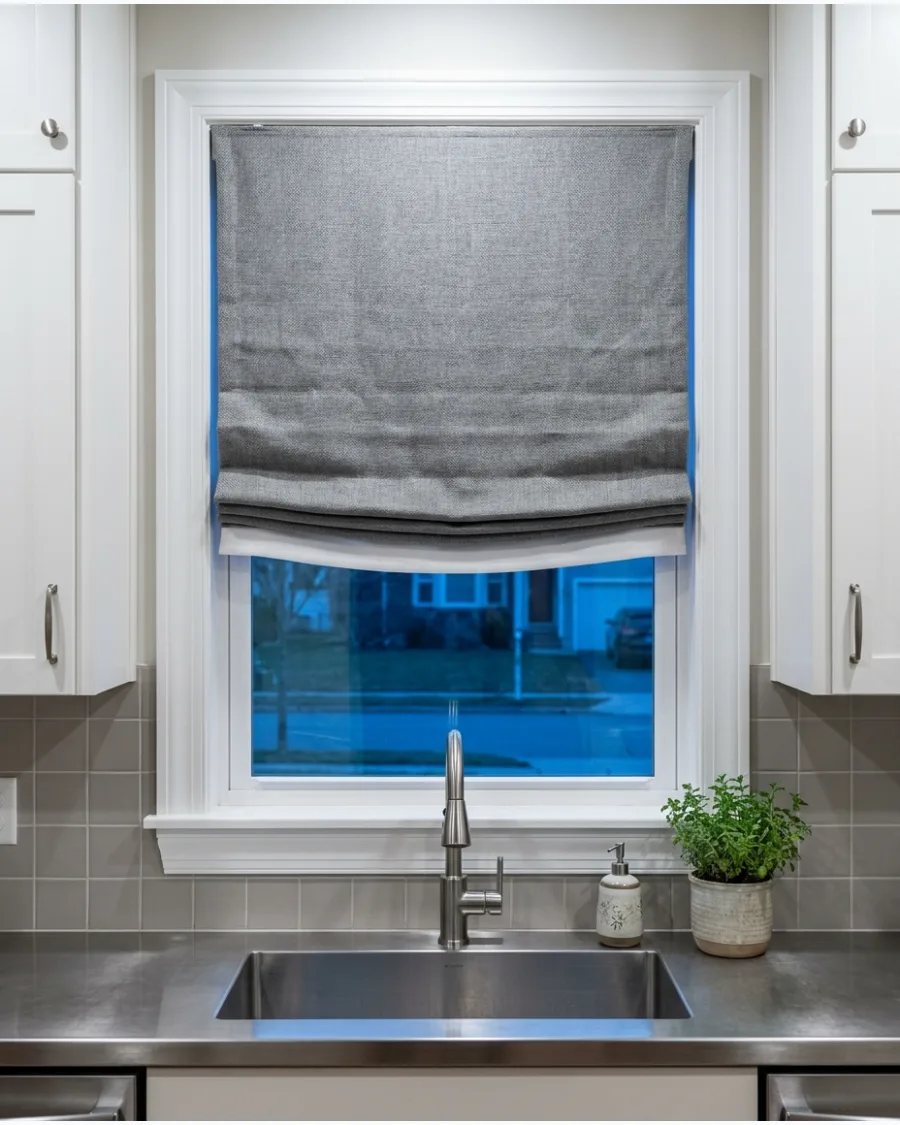
If the sun hits the kitchen sink directly during meal prep, a blackout lining is a lifesaver. It blocks heat and glare, keeping the kitchen cooler and making it easier to see what is on the cutting board.
Choose a light-colored face fabric so the window does not look like a dark hole when the shade is closed. The lining also adds weight, which helps the shade hang more neatly and stay in place.
- Budget: $75 to $200 for thermal-lined options.
- Installation: Requires sturdy wall anchors as the lining adds extra weight.
- Benefit: Provides excellent privacy at night if the kitchen faces a busy street.
Most people skip this: Blackout shades also help insulate windows, keeping the kitchen warmer in winter and cooler in summer.
19. Cordless Roman Shade
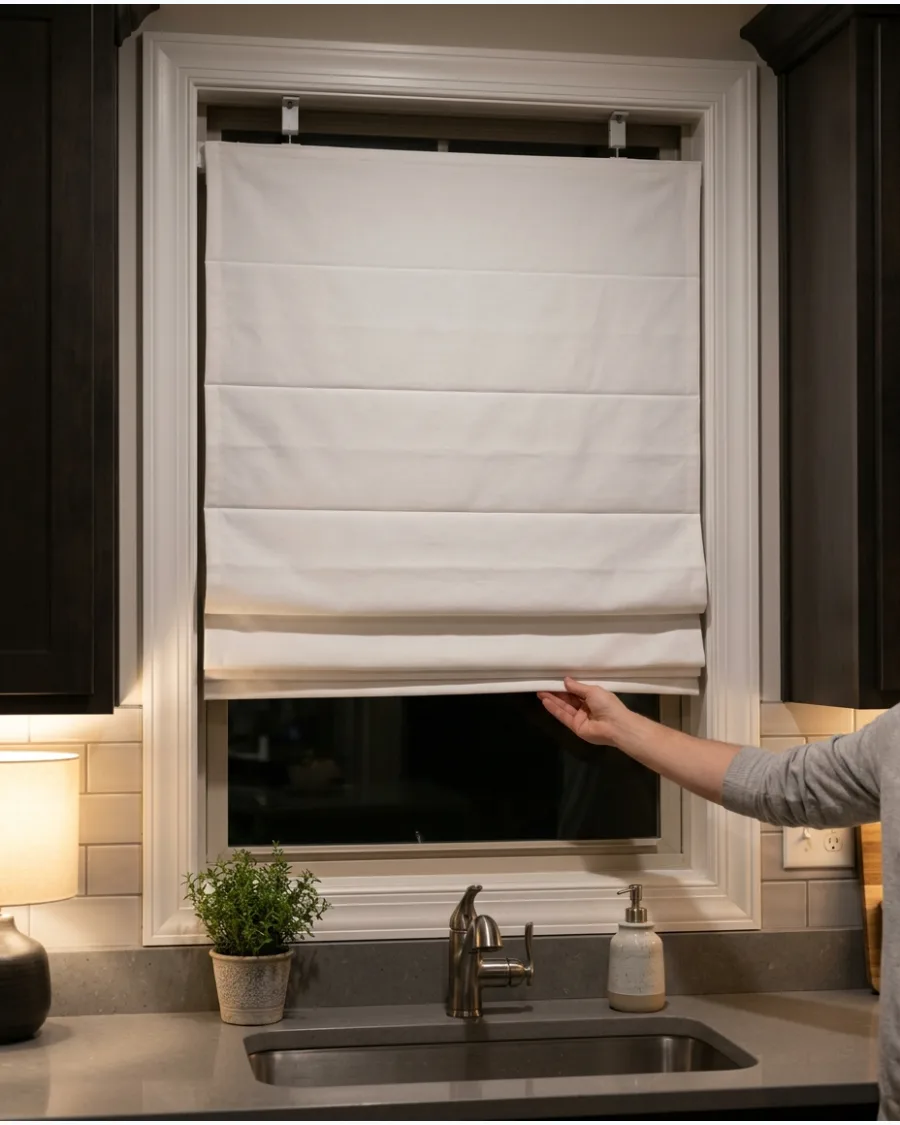
Cordless shades offer a clean look and are much safer for homes with pets or children. They operate with a simple tug or push on the bottom rail, which is easier than fumbling with strings behind a faucet.
Ensure the shade is mounted at a height where everyone in the house can reach the bottom rail easily. This design eliminates the messy look of tangled cords resting on the countertop.
- Budget: $50 to $160 for spring-loaded mechanisms.
- Renter Tip: Look for no-drill cordless versions for a temporary solution.
- Safety: Eliminates strangulation hazards and keeps the sink area tidy.
Best shortcut: If the sink is extra deep, a cordless shade is much easier to operate than reaching for a cord at the back of the window.
20. Motorized Roman Shade
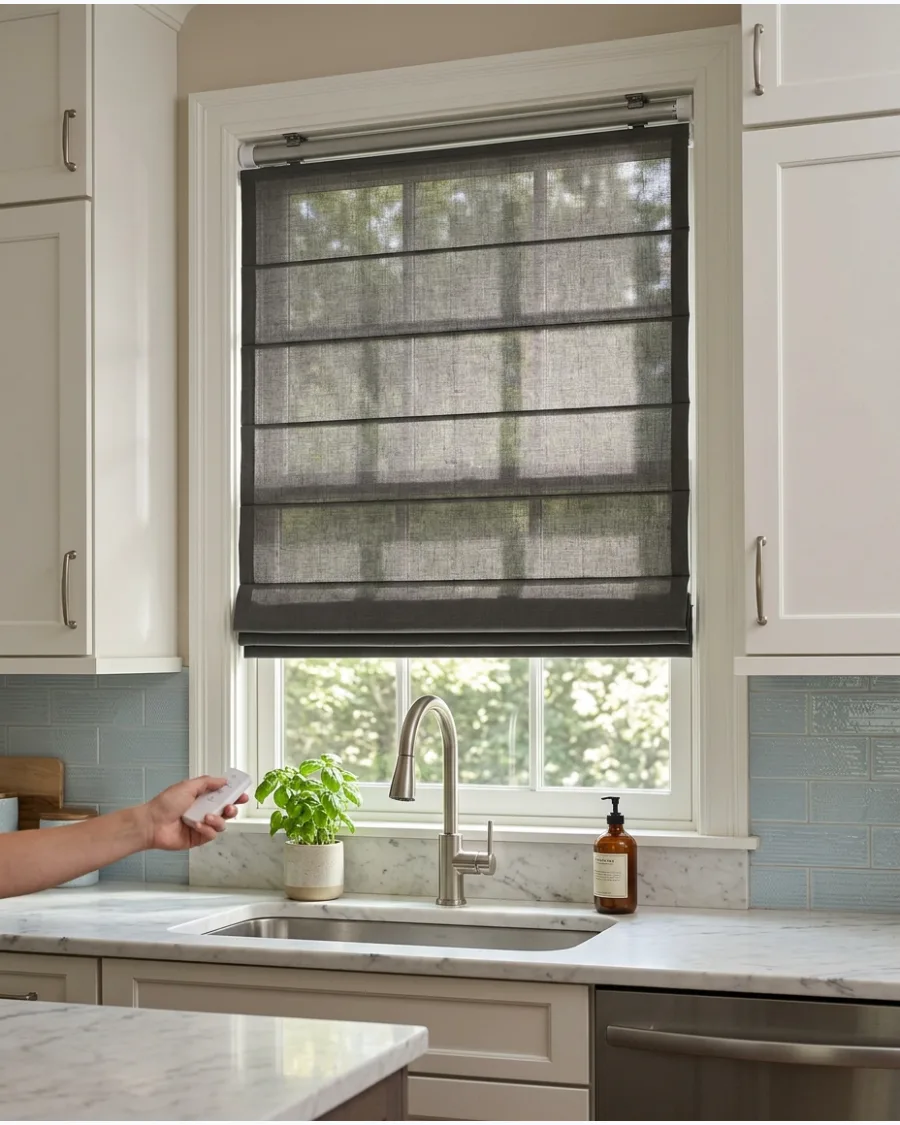
Motorized shades are the ultimate solution for windows that are located behind wide islands or high above the sink. You can open or close them with a remote or a phone app without having to lean over the counter.
Set a schedule for the shades to close during the hottest part of the day to save on cooling costs. This high-tech option keeps the fabric cleaner since you are not touching it with wet or messy hands.
- Budget: $150 to $500 for motorized hardware and fabric.
- Power: Available in battery-powered or plug-in versions.
- Technology: Most models sync with smart home systems like Alexa or Google Home.
Quick win: Choose a battery-powered motor to avoid the cost and mess of hiring an electrician to run wires through the wall.
Woven and Natural Kitchen Window Treatments
21. Bamboo Kitchen Shade
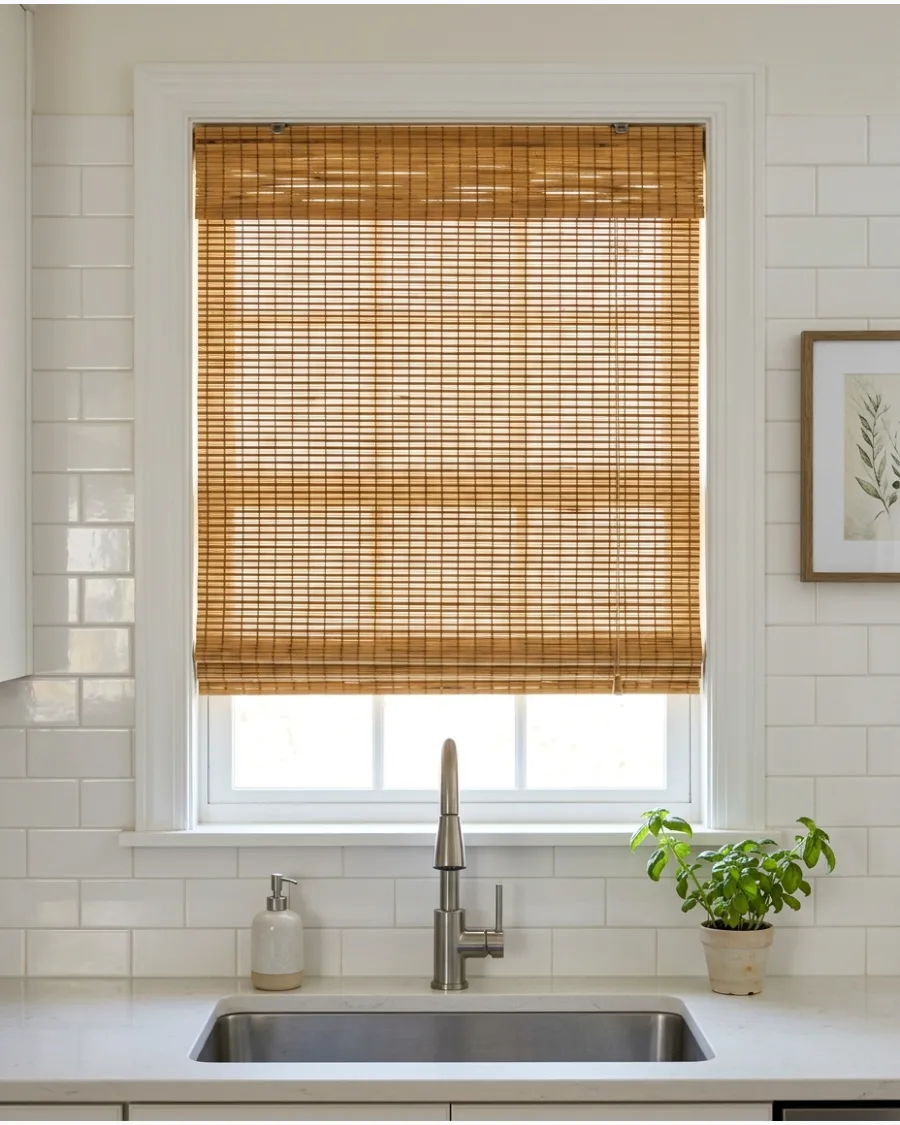
Bamboo shades bring an organic feel to a room filled with hard surfaces like tile and stone. They work well for blocking heat while letting tiny flecks of light pass through the natural weave.
Mount the shade inside the window frame to keep the look clean and flush with the wall. Bamboo is naturally moisture-resistant which makes it a smart choice for humid kitchen environments.
- Typically costs $40 to $100 per window depending on size.
- Installs in roughly 15 minutes with a standard power drill.
- Clean by wiping with a dry microfiber cloth or a brush vacuum attachment.
Quick win: Check the depth of your window casing before ordering to ensure the hardware fits inside for a flush mount.
22. Light Woven-Wood Shade
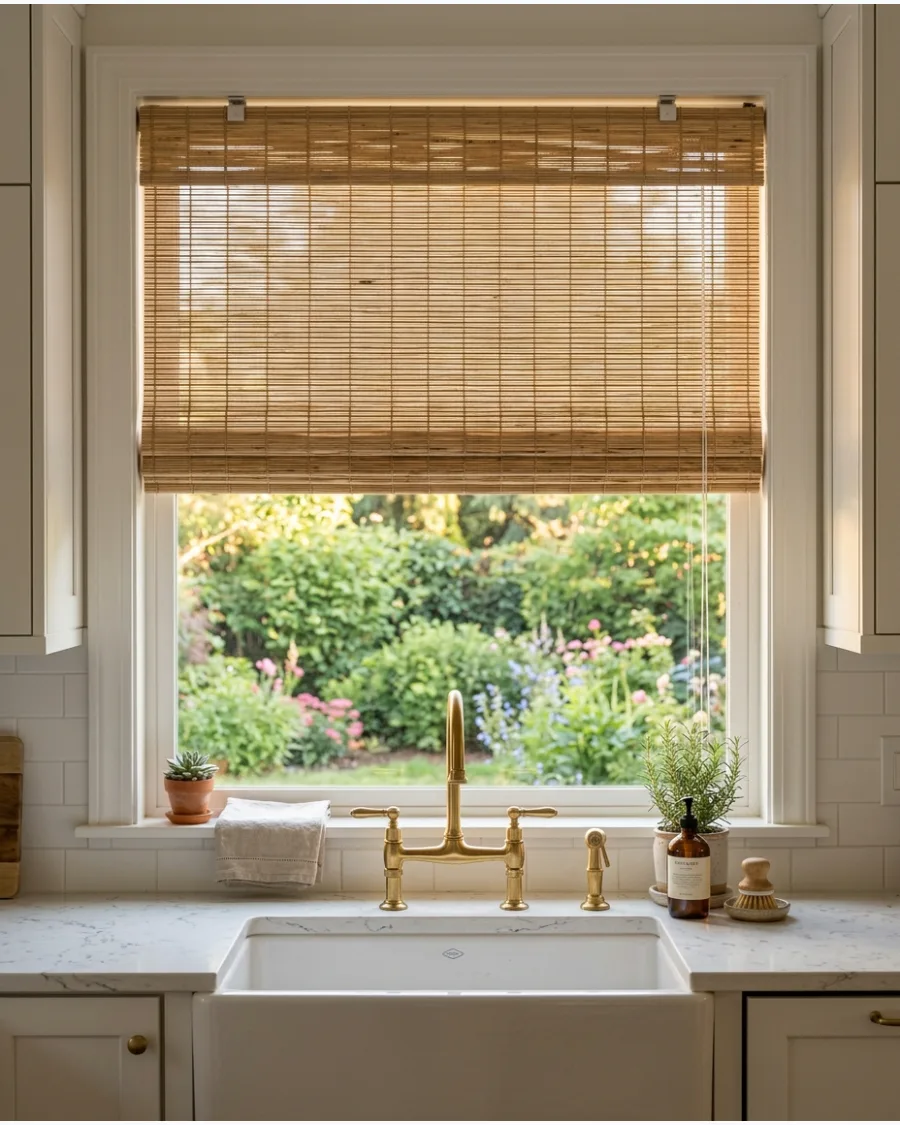
A pale wood shade in a wheat or oak tone keeps the kitchen feeling airy and spacious. This light finish provides texture without the heavy visual weight of darker materials.
Pick a shade that matches the undertone of your wood floors to create a cohesive flow through the space. These shades look especially high-end when paired with white cabinetry and light countertops.
- Expect to pay $60 to $150 for mid-range quality.
- Available in top-down or bottom-up styles for flexible light control.
- Pairs best with neutral wall colors and light wood accents.
Best shortcut: Choose a cordless version to avoid messy strings dangling over your sink or food prep area.
23. Dark Woven Shade
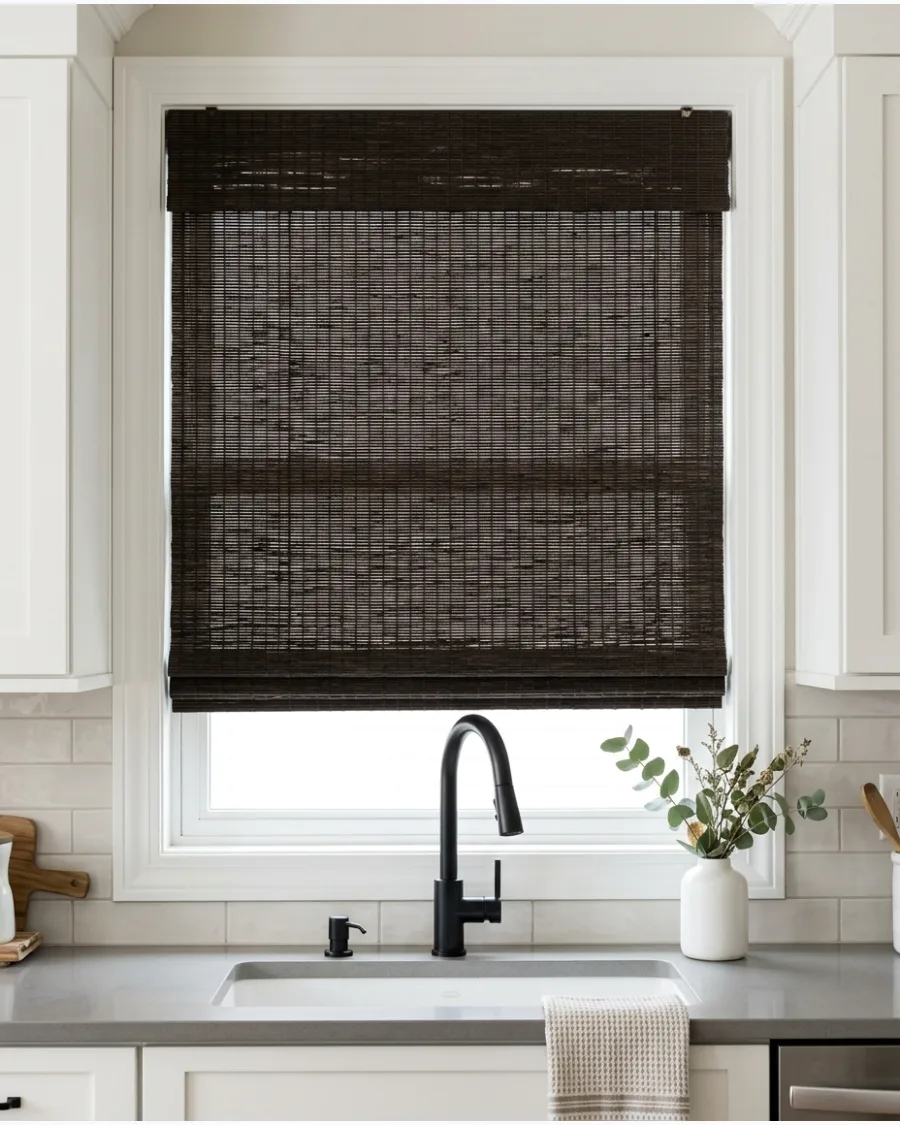
Darker shades add a sophisticated contrast to a light-colored kitchen. They help anchor the window area and can tie in with black cabinet pulls or dark grout lines.
Use a dark chocolate or espresso shade to draw the eye toward the window and make it a focal point. The darker weave is excellent for reducing glare on shiny countertops during the brightest part of the day.
- Prices usually range from $50 to $120.
- Coordinates perfectly with black or oil-rubbed bronze hardware.
- Provides excellent glare reduction for south-facing windows.
Most people skip this: If your kitchen feels too white or sterile, a dark shade provides the necessary visual weight to ground the room.
24. Woven Shade With Privacy Lining
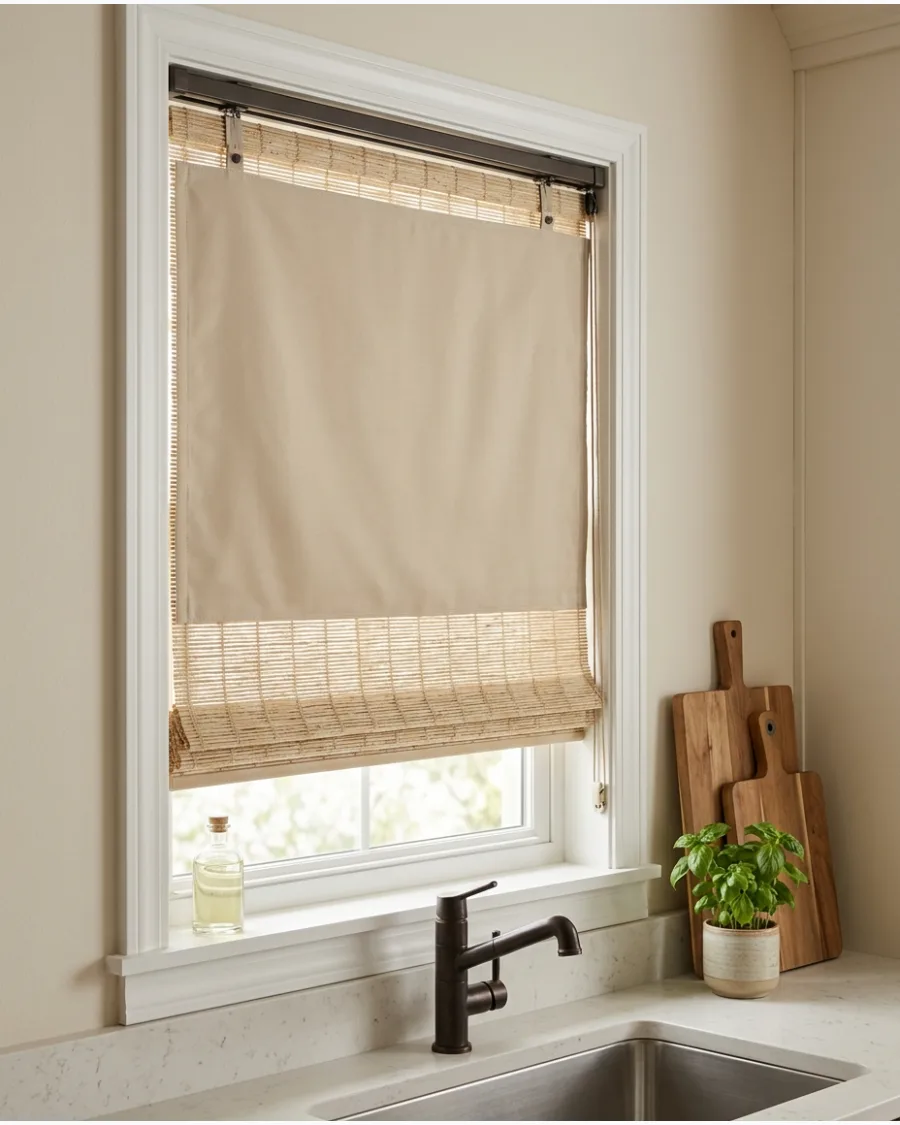
A privacy lining turns a semi-sheer woven shade into a solid barrier against outside eyes. This is the best way to get the natural look of wood without giving up total privacy.
Select a white or beige lining to ensure the window looks uniform from the outside of the house. The lining also adds an extra layer of insulation to keep the kitchen cooler in the summer.
- Linings usually cost an extra $20 to $50 as an upgrade.
- Increases energy efficiency by blocking more heat transfer through the glass.
- Prevents people from seeing silhouettes through the shade at night.
Quick win: Privacy linings are essential if your kitchen window faces a busy sidewalk or a neighbor's driveway.
25. Woven Shade With Black Trim
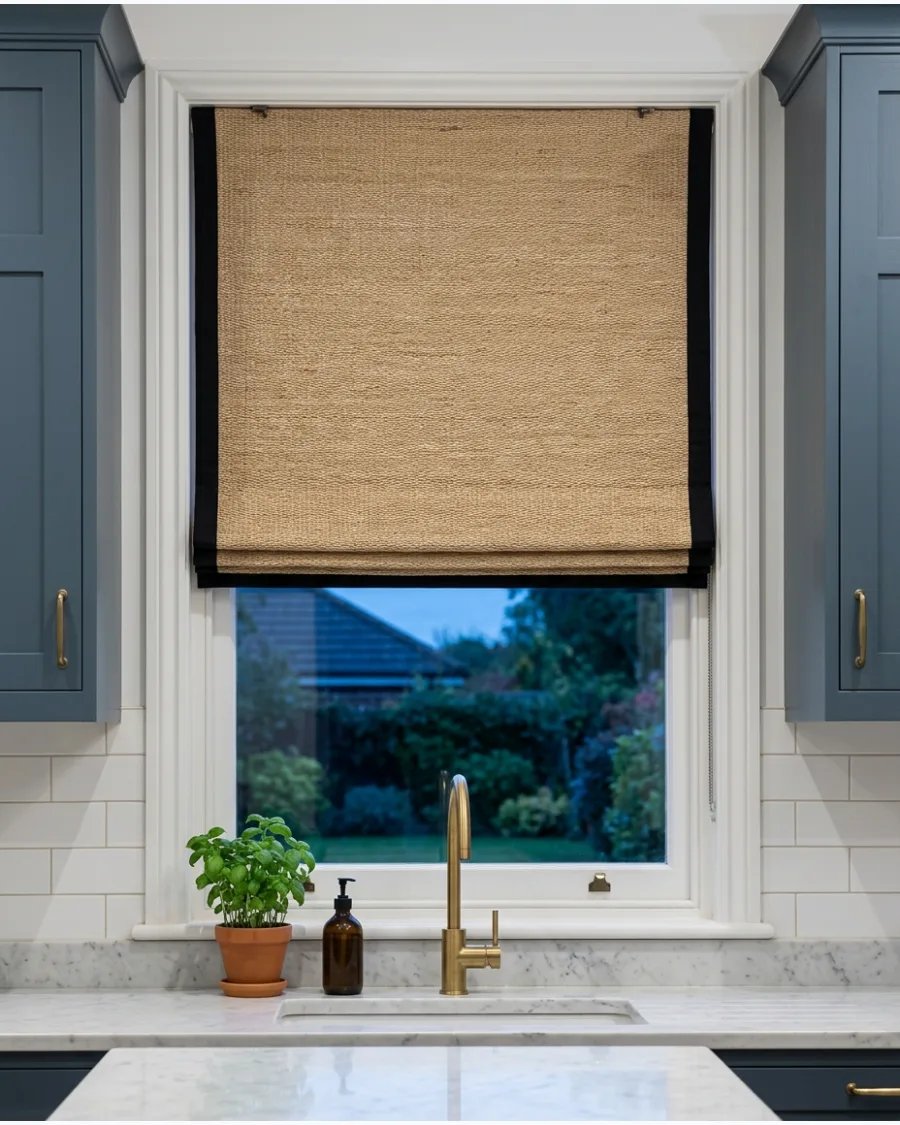
Adding a fabric border to a woven shade gives it a custom, high-end look. The black trim acts like a frame, highlighting the texture of the natural material inside.
Match the trim width to your window muntins for a perfectly balanced architectural look. This style bridges the gap between traditional organic materials and modern design elements.
- Budget $80 to $200 for shades with decorative fabric borders.
- Adds a graphic, sharp element to a neutral or beige room.
- Works best with modern, industrial, or transitional kitchen styles.
Best shortcut: If you cannot find a pre-made shade with trim, use fabric glue to add a velvet or grosgrain ribbon to the edges of a standard shade.
26. Matchstick Blind
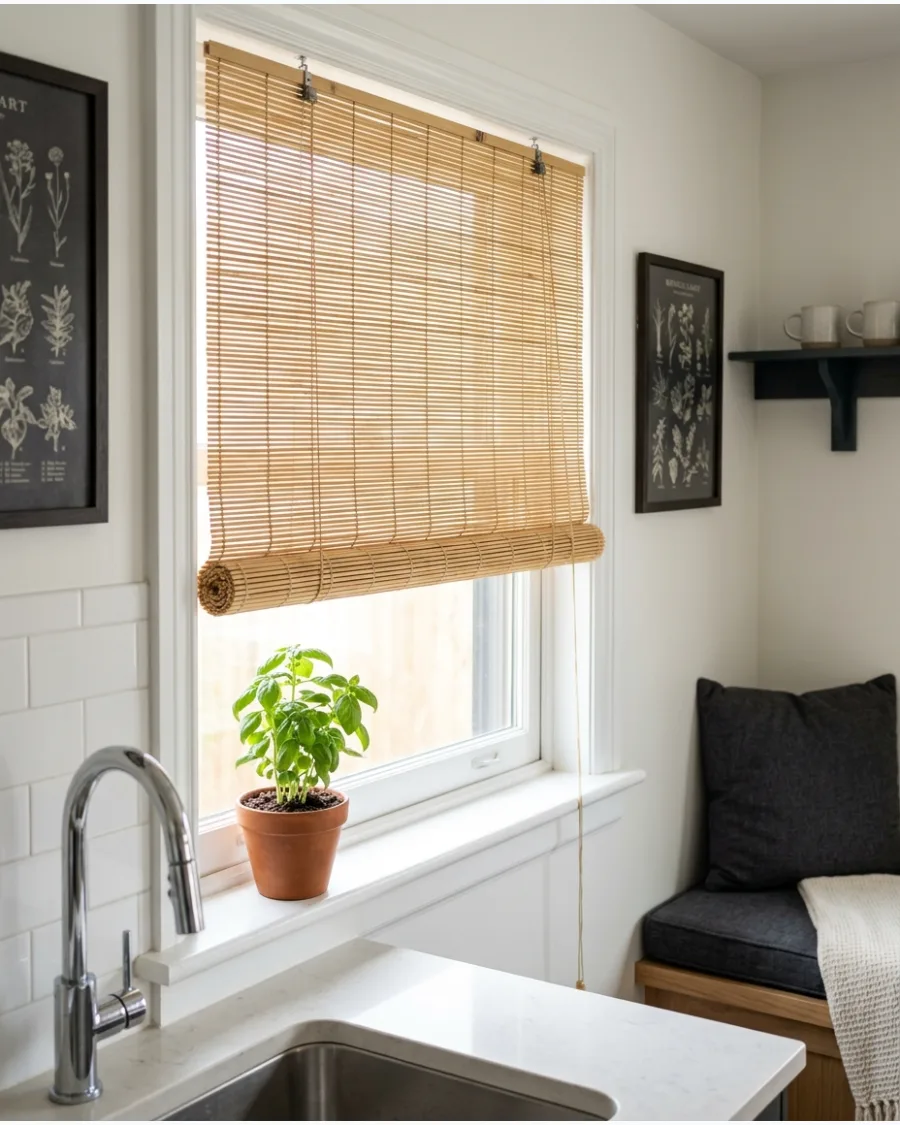
Matchstick blinds are made of very thin wood slats that provide a casual and breezy vibe. They allow a lot of light to filter through, keeping the kitchen bright even when the blinds are down.
Hang matchstick blinds slightly higher than the window glass to make the ceiling feel taller. These are lightweight and easy to operate with a simple pull cord or cordless mechanism.
- The most budget-friendly woven option, often under $40.
- Very lightweight and easy to mount on thin or narrow window trim.
- Provides a relaxed look suitable for coastal or bohemian kitchens.
Most people skip this: Roll the blind all the way up occasionally to prevent dust from settling deep into the thin slats.
27. Woven Roman Shade
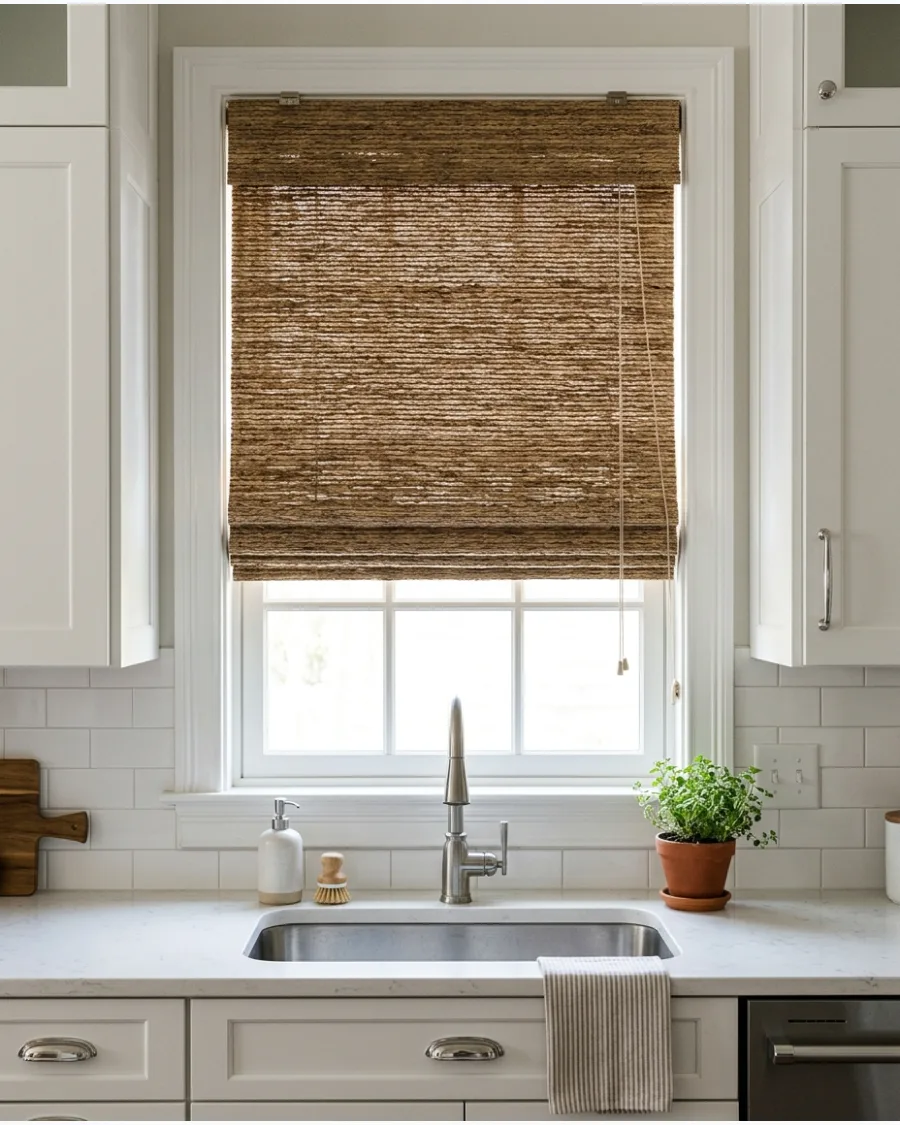
This style uses woven wood material but folds up into clean, horizontal sections.
It offers a more structured and formal look than a standard roll-up blind. Opt for a flat-fold style to keep the stack of material small when the shade is fully raised. It provides the perfect mix of organic warmth and tailored design for a polished kitchen.
- Prices typically range from $90 to $220 per window.
- Offers a more formal appearance than casual roll-up styles.
- Best for windows where you want a thick decorative stack of material at the top.
Quick win: Ensure the folds are even after installation by raising and lowering the shade a few times to set the material memory.
28. Layered Woven Shade and Curtains
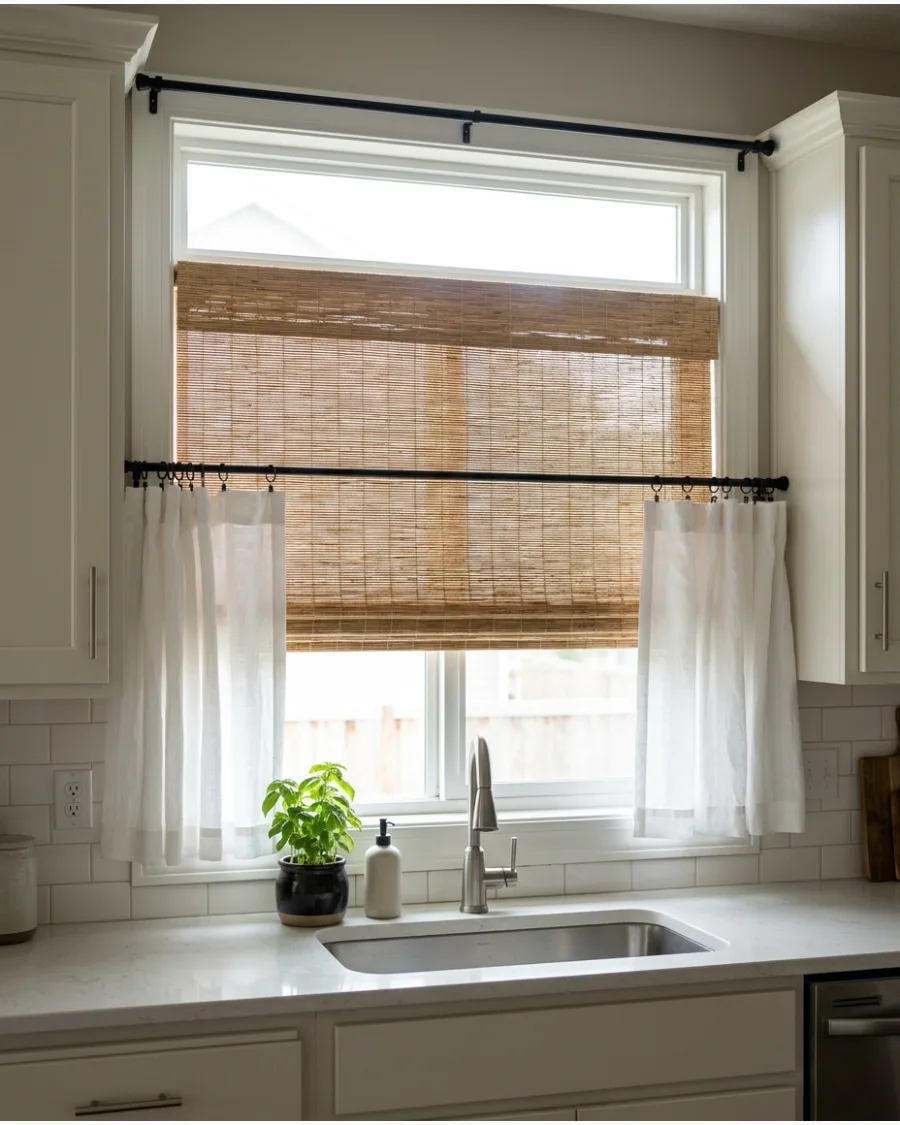
Pairing a textured shade with fabric panels adds depth and softness to a large kitchen window. The woven shade handles the daily light control while the curtains provide a decorative frame.
Install the curtain rod several inches wider than the window so the fabric does not block the light when open. This combination makes a large breakfast nook or kitchen window feel much cozier.
- Total cost for shades and curtains ranges from $100 to $300.
- Requires two sets of hardware including brackets and a curtain rod.
- Ideal for large windows or dining areas located within the kitchen.
Best shortcut: Use café-length side panels instead of full-length curtains to keep the fabric away from the floor and kitchen spills.
Modern Blinds and Practical Shades
29. Minimal Roller Shade
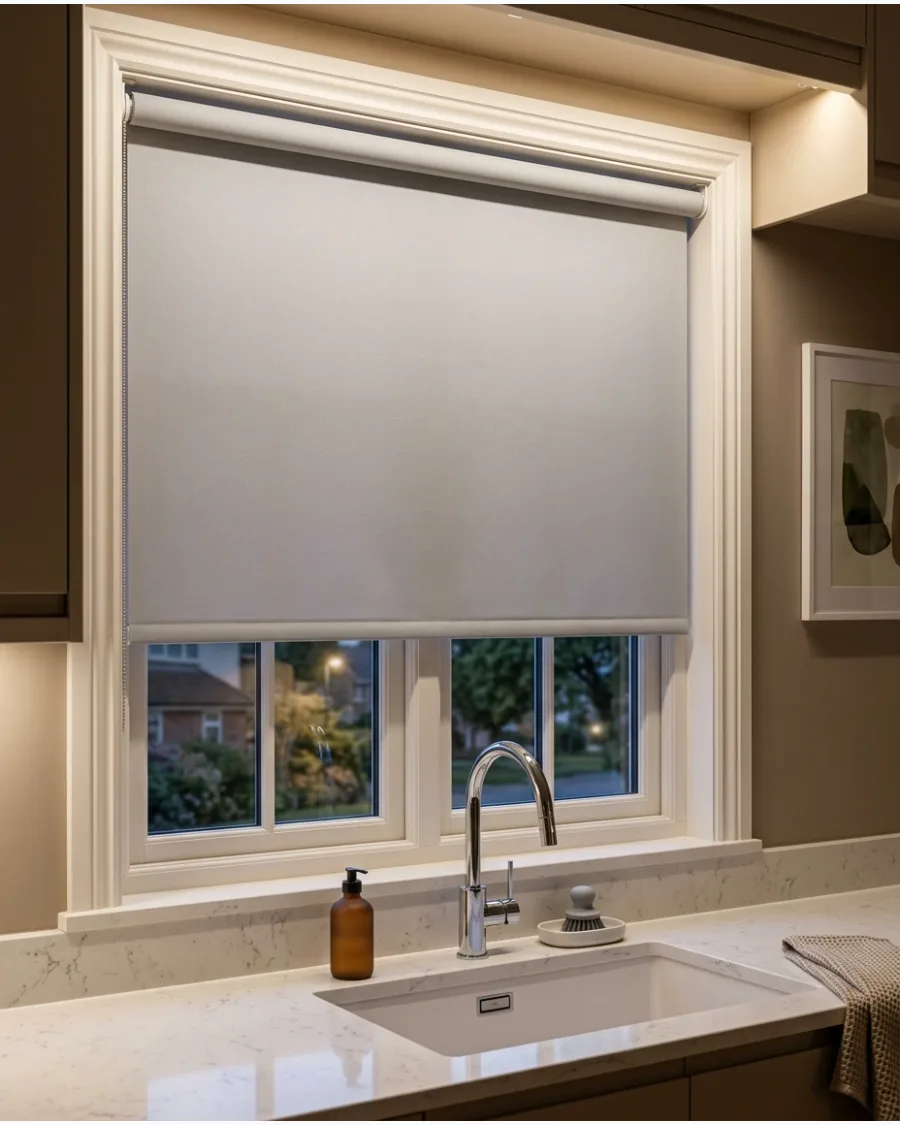
Roller shades are the ultimate choice for a clean, minimalist kitchen. They disappear almost completely when raised, leaving the window view unobstructed.
Choose a shade color that is one shade lighter than your wall paint for a seamless and integrated look. These are incredibly easy to clean with a damp cloth, making them perfect for zones near the stove.
- Affordable prices ranging from $30 to $90.
- Choose wipeable vinyl or polyester materials for easy maintenance.
- Can be mounted inside the frame for a flush look or outside for more coverage.
Most people skip this: A cassette or matching valance at the top hides the roller mechanism for an even cleaner appearance.
30. Light-Filtering Roller Shade
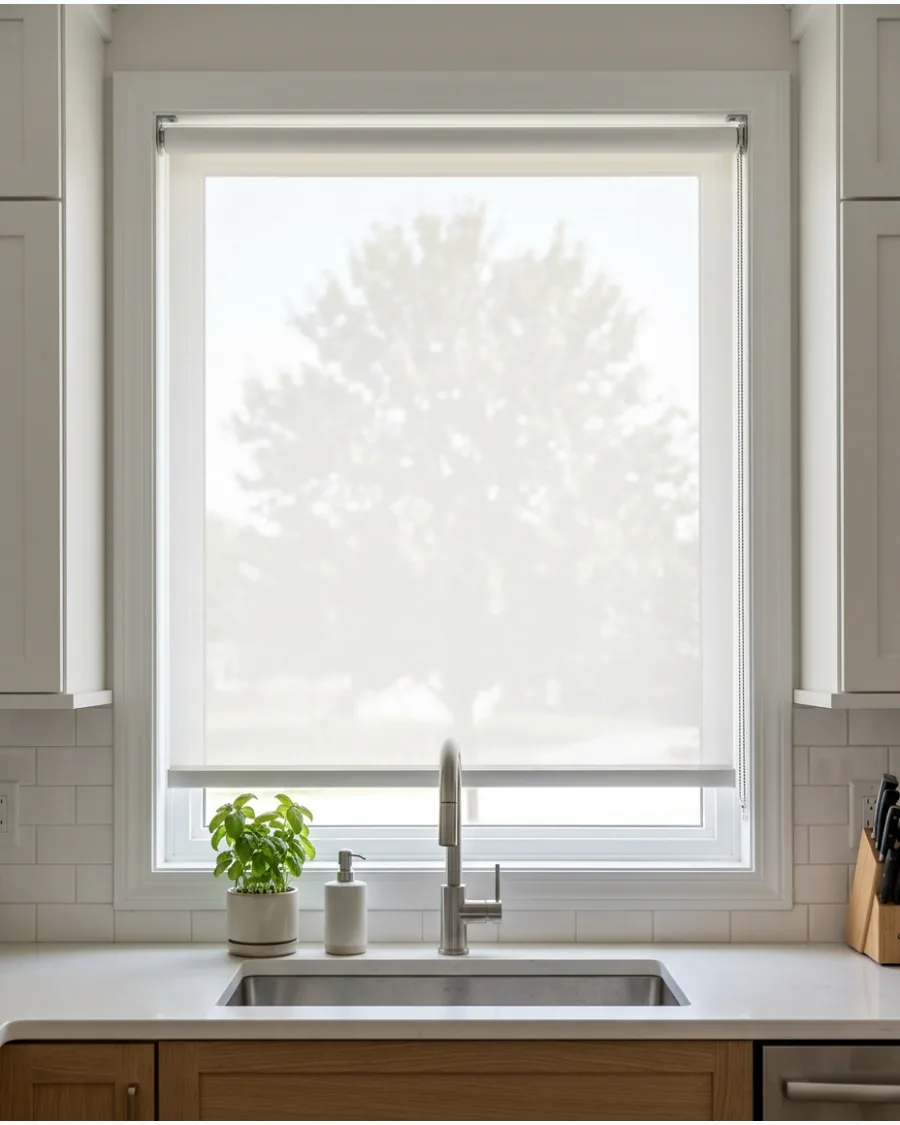
Light-filtering shades glow when the sun hits them, providing a soft ambient light in the kitchen. They block the glare on your phone or tablet screen while you follow a recipe.
Pick a white or cream shade to maximize the brightness of the room without the heat of the sun. The low profile is perfect for windows located directly behind a faucet where space is tight.
- Prices range from $40 to $110 depending on the fabric quality.
- Reduces UV rays to protect wood cabinets and floors from fading.
- Maintains daytime privacy while allowing natural light to fill the room.
Quick win: Test the transparency at night with the kitchen lights on to see how much privacy the shade actually provides from the street.
31. Patterned Roller Shade
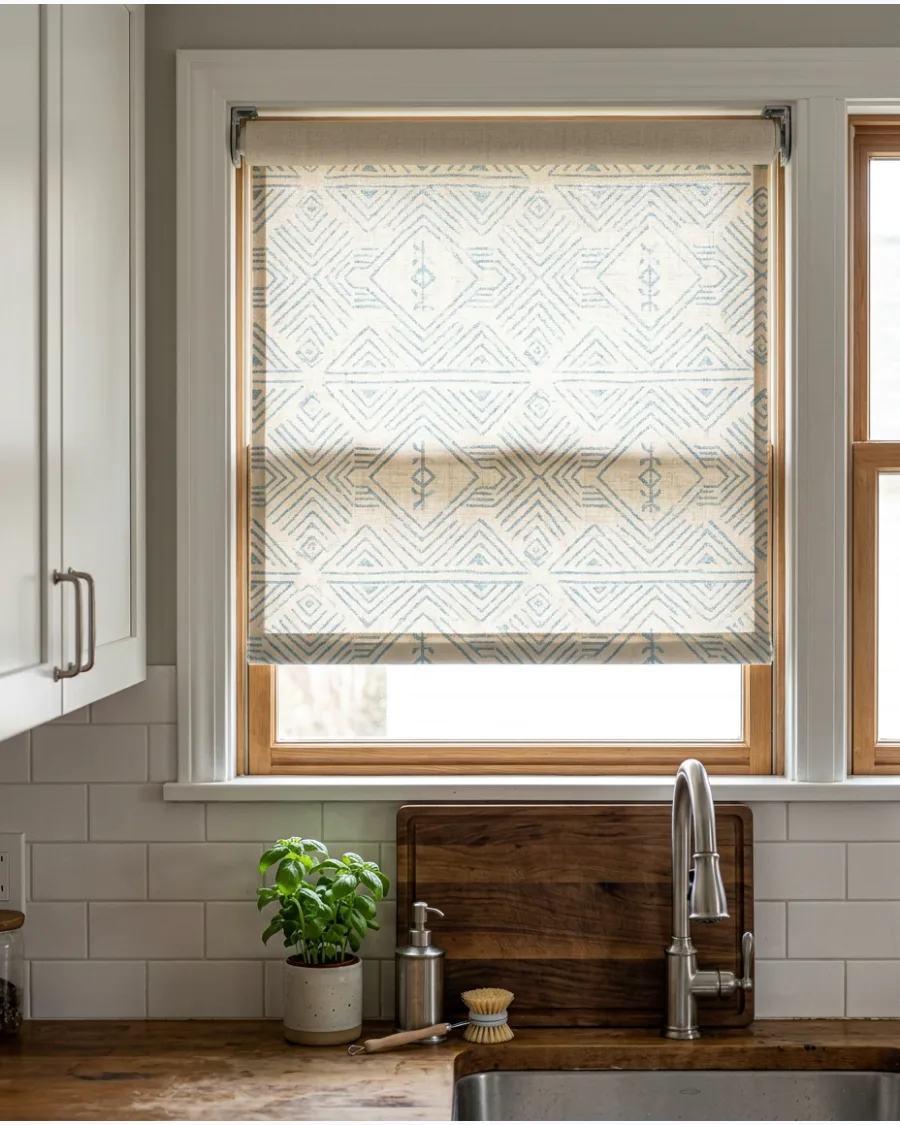
Turn a functional roller shade into a decorative feature with a subtle pattern. Small stripes, botanical motifs, and simple geometric designs are easier to coordinate than oversized prints.
Mount the shade inside the frame to keep the pattern from overwhelming the wall space. A repeating pattern hides small splatters much better than a solid white shade.
- Custom order or DIY fabric kit ranging from $50 to $150.
- Measure the window width at the top, middle, and bottom for a perfect fit.
- Choose a moisture-resistant fabric if the window is directly behind the stove.
Quick win: Pick a pattern that shares a color with your cabinet hardware or floor tile.
32. Solar Kitchen Shade
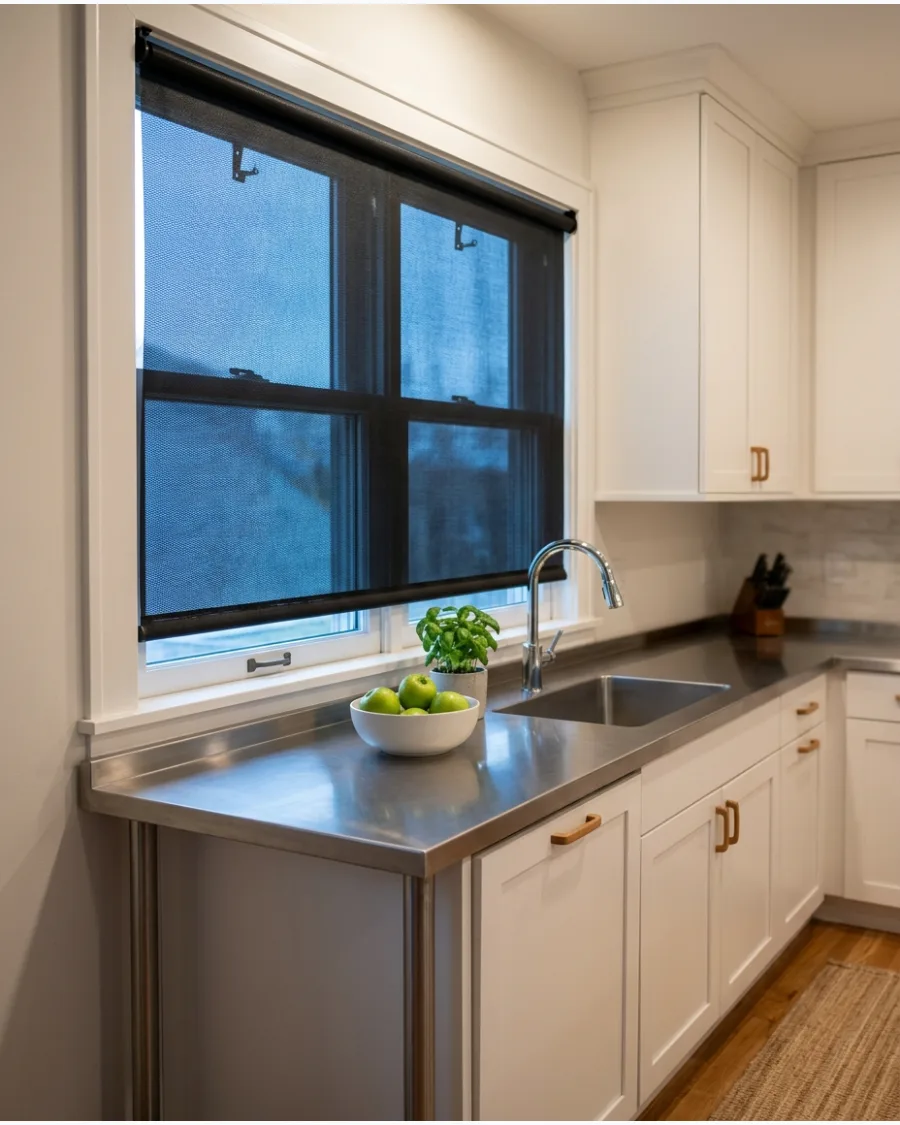
Choose a solar-style shade for a window that receives strong sunlight or creates glare. The sleek material fits naturally into contemporary and minimalist kitchens.
Wipe the screen down with a damp cloth once a month to prevent kitchen grease from building up. These shades protect your cabinets and floors from UV damage without blocking the view.
- Available at modern home stores for $40 to $100 per window.
- Screw the mounting brackets directly into the top of the window casing.
- Use a 3% or 5% openness factor to balance visibility with heat protection.
Best shortcut: Darker solar shades actually provide better glare reduction and a clearer view outside than light colors.
33. Faux-Wood Blinds
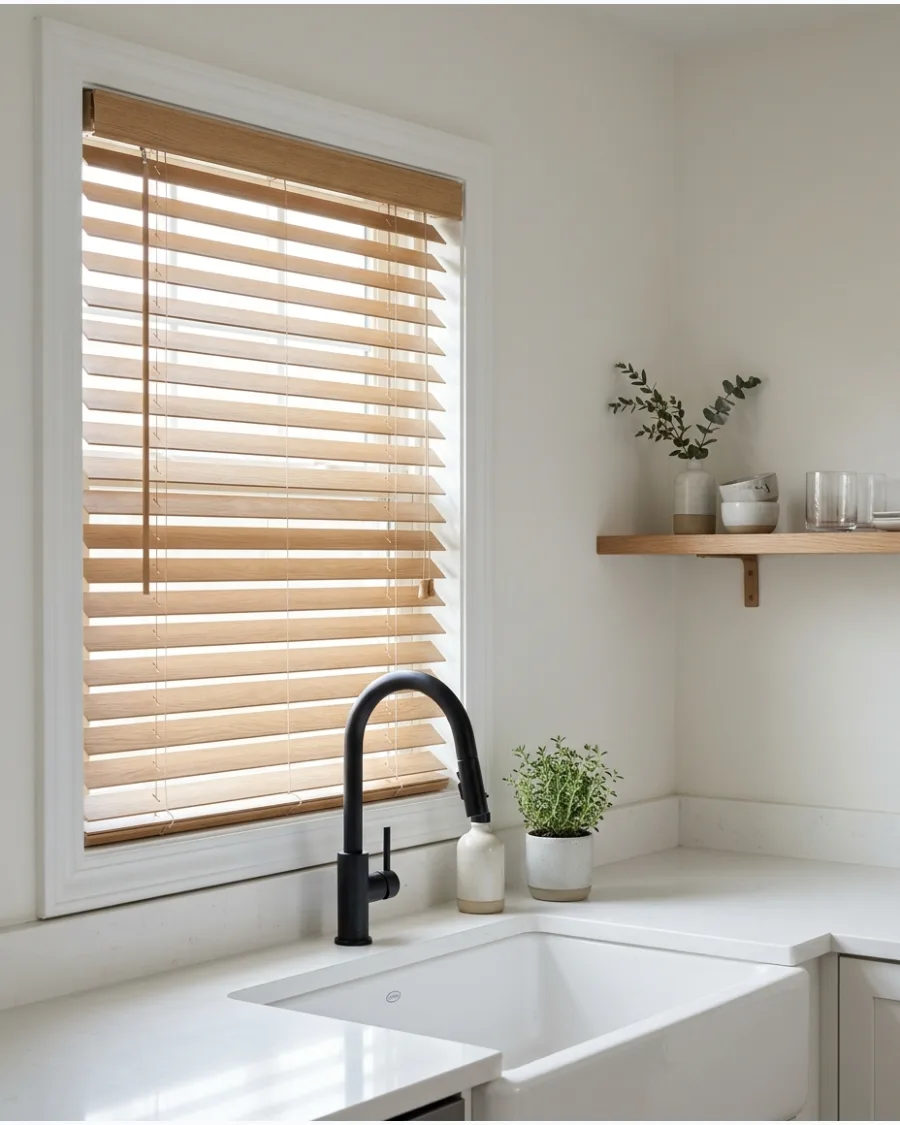
Use faux-wood blinds to achieve a warm wood appearance with an easy-to-maintain surface. Select a finish that coordinates with the cabinets, flooring, or open shelving.
Opt for 2-inch slats to give the window a high-end look that mimics real shutters. These are the best choice for windows near the sink because the PVC material won't warp from steam.
- Found at home improvement centers for $30 to $80.
- Use a cordless lift system for a cleaner look and improved child safety.
- Dust the slats weekly with a microfiber cloth or a dedicated blind duster.
Most people skip this: Check the weight of the blinds; faux wood is heavier than real wood, so ensure the mounting surface is sturdy.
34. White Slatted Blinds
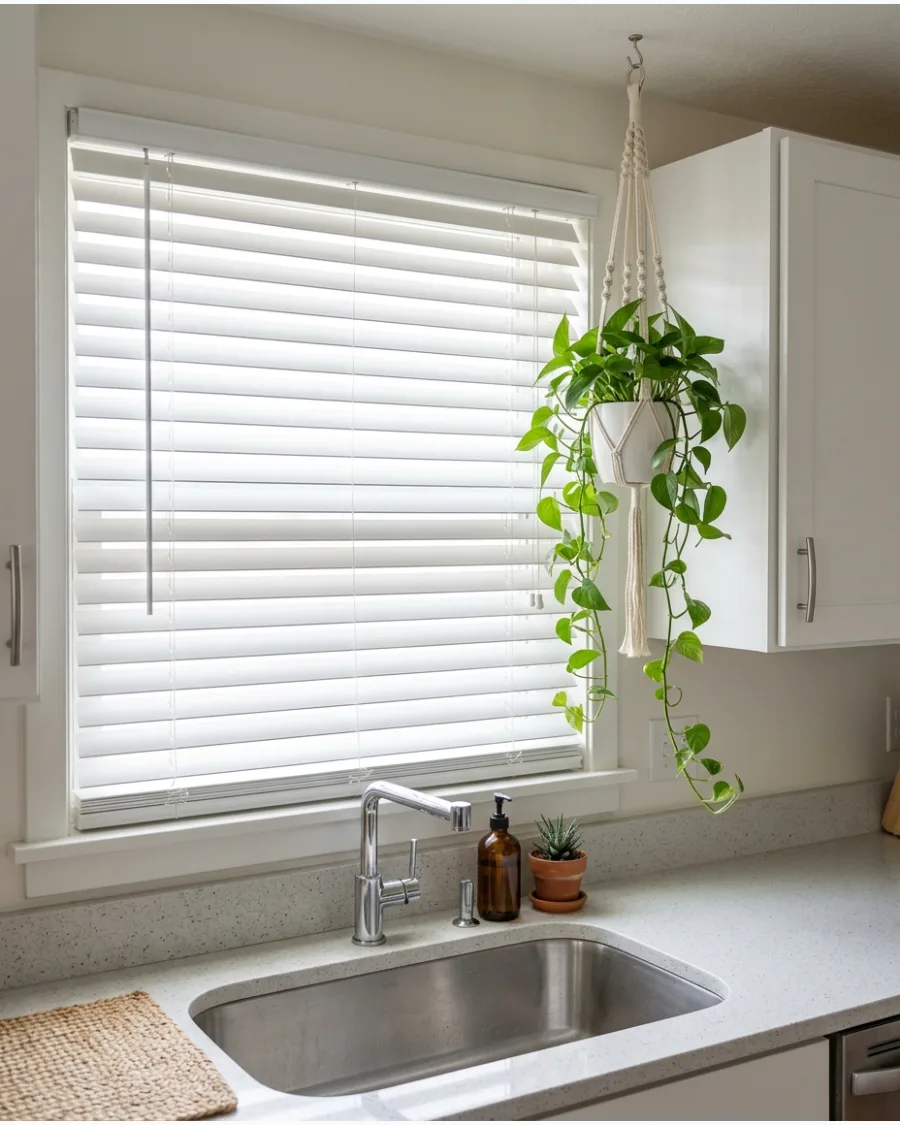
Install white horizontal blinds for flexible control over light and privacy. The neutral finish blends easily with white trim and keeps a small kitchen feeling bright.
Angle the slats upward to bounce sunlight off the ceiling and illuminate the entire room. This classic style works in almost any kitchen layout without clashing with existing decor.
- Widely available at big box retailers for $20 to $60.
- Snap the headrail into the brackets until you hear a clear click.
- Wipe with a mixture of warm water and a drop of dish soap for deep cleaning.
Quick win: Choose a no-holes or privacy version where the cord holes are hidden when the slats are closed.
35. Wood Blinds
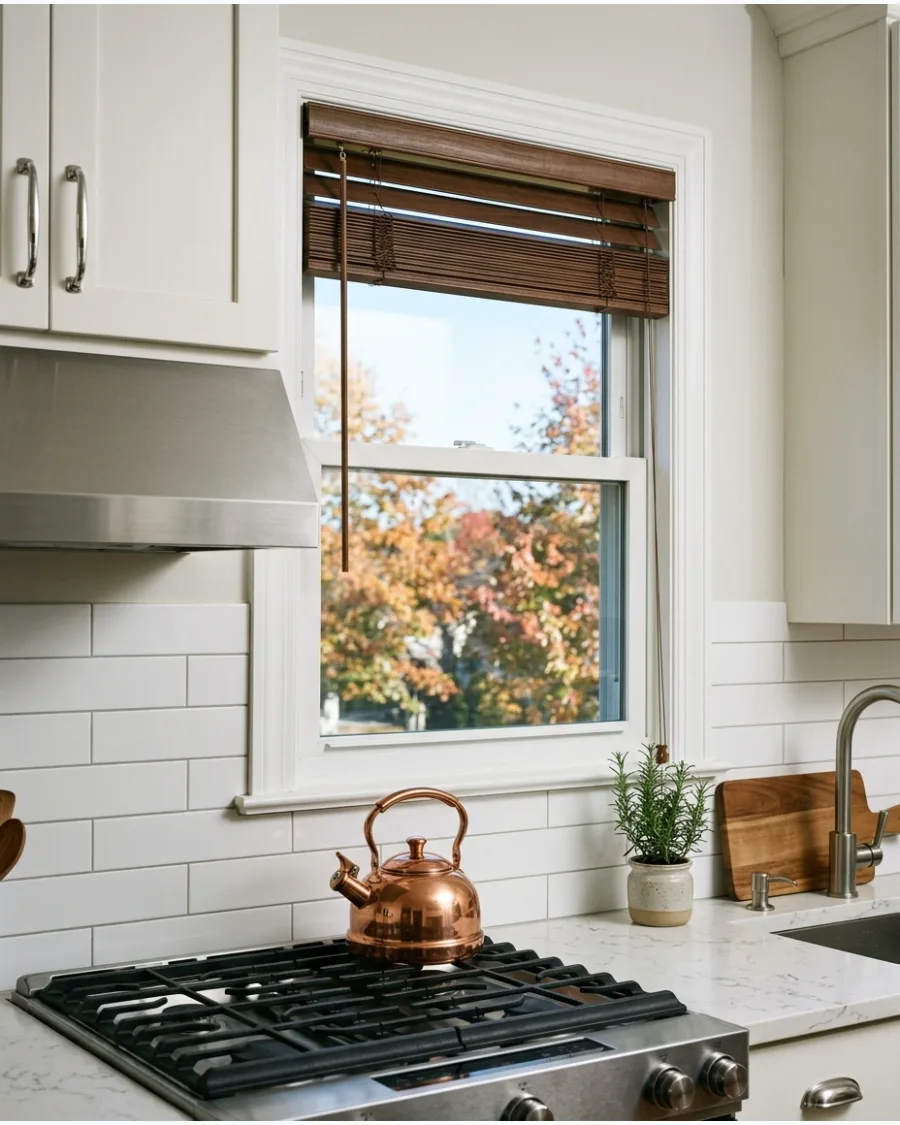
Add genuine wood blinds to a traditional or craftsman-style kitchen. A medium wood tone can create a visual connection between the window and surrounding cabinetry.
Match the wood stain to your island or dining table to ground the room's color palette. Real wood is lighter than faux wood, making it easier to raise and lower on larger windows.
- Order from specialty window treatment shops for $100 to $300.
- Avoid installing these directly over a high-moisture area like a boiling stove.
- Use wood conditioner once a year to keep the slats from drying out.
Best shortcut: Order a valance that matches the wood stain to hide the metal headrail and mounting hardware.
36. Top-Down, Bottom-Up Shade
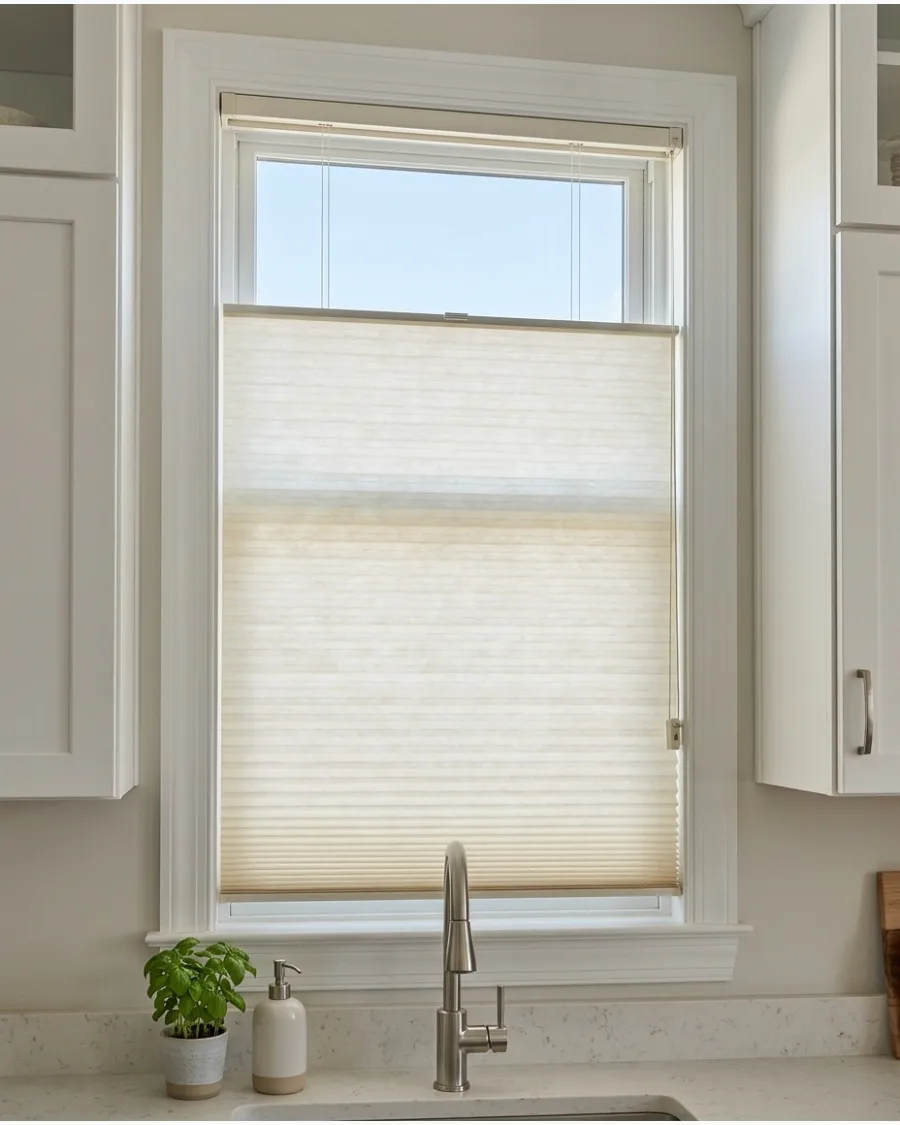
Use a shade that can open from the top or bottom. This allows privacy across the lower portion while letting daylight enter through the top of the window.
Lower the top section halfway to see the sky while keeping the sink area hidden from the street. This is the ultimate solution for kitchens that face a busy sidewalk or neighbor.
- Available from online custom blind retailers for $70 to $150.
- Pull the center handle slowly to keep the shade level during adjustment.
- Vacuum the top rail periodically to keep dust from falling into the honeycomb cells.
Most people skip this: Make sure the window is tall enough to justify the extra hardware; these look best on windows at least 36 inches high.
37. Cellular Kitchen Shade
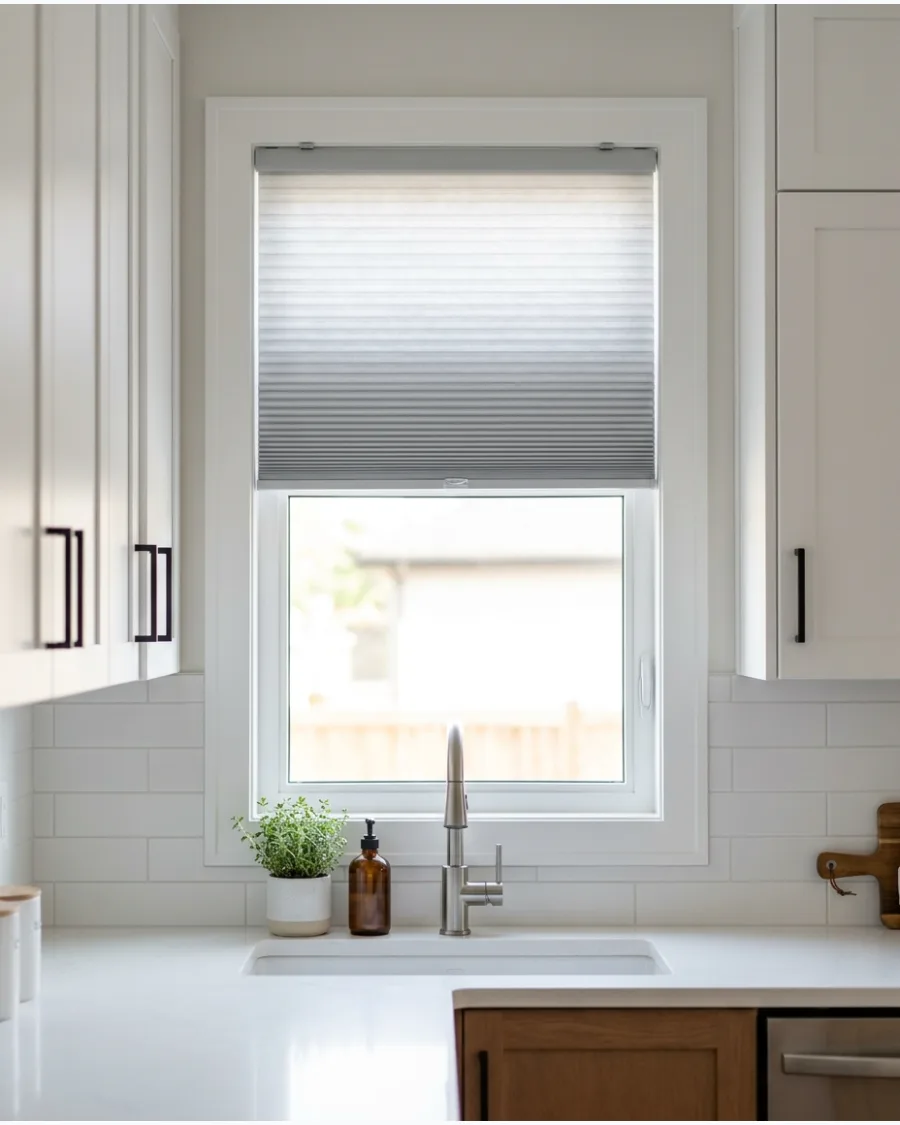
Install a slim cellular shade for a soft, simple window covering. A light neutral shade disappears neatly into the frame when fully raised.
Pick a single-cell design to keep the profile thin and unobtrusive in a compact kitchen. The honeycomb structure provides a layer of insulation that keeps the kitchen cooler in the summer.
- Sold at department stores or online for $40 to $120.
- Use the included plastic clips to secure the bottom rail if the window is on a door.
- Blot stains immediately with a clean, white cloth rather than rubbing the fabric.
Quick win: Choose a light filtering rather than blackout fabric to maintain a bright, airy kitchen feel.
38. Inside-Mounted Blind
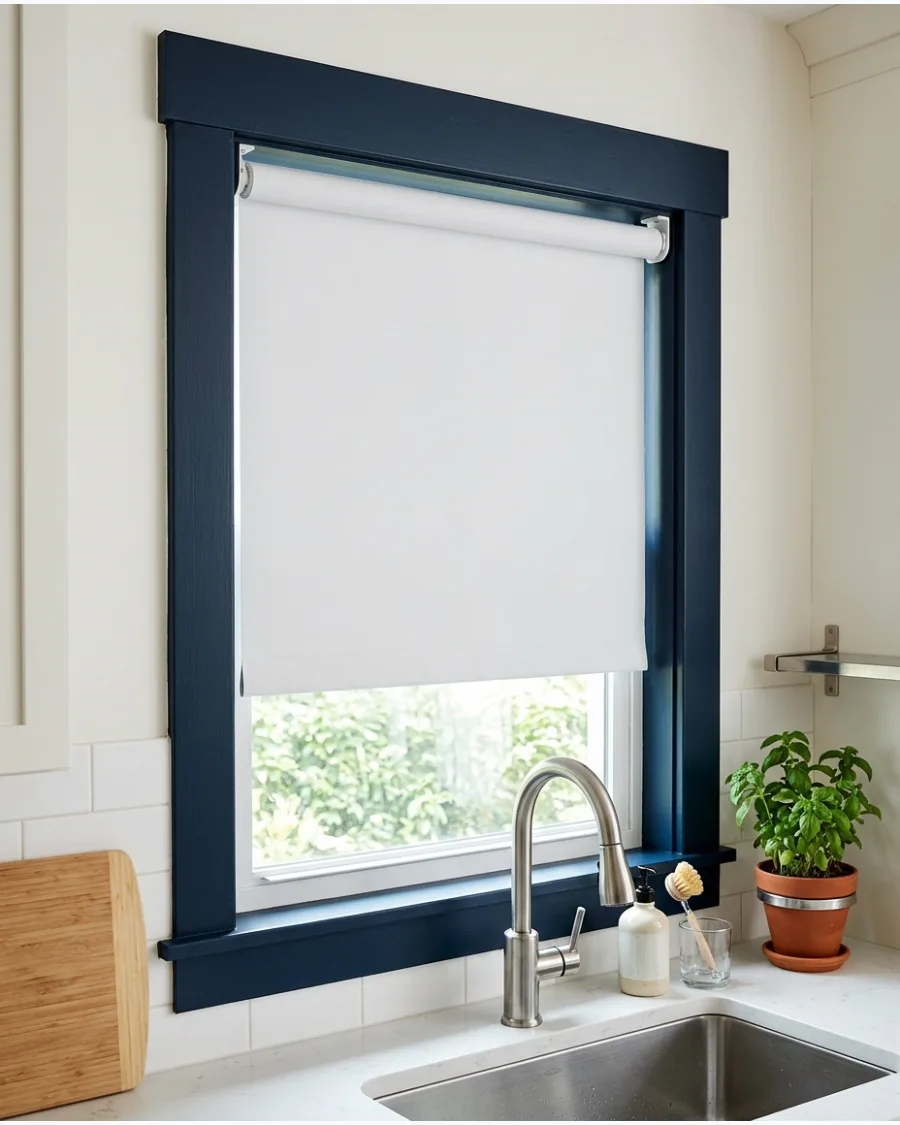
Fit a blind or shade inside the window frame for a clean, built-in appearance. This option leaves decorative trim visible and avoids taking up wall space.
Verify that your window casing is at least two inches deep to ensure the blind doesn't stick out. This style is ideal if you have beautiful window molding that you don't want to hide.
- Standard sizing or custom options range from $30 to $200.
- Use a metal measuring tape for accuracy within one-eighth of an inch.
- Drill pilot holes into the side or top of the window jamb for the mounting screws.
Best shortcut: If your window is slightly out of square, an inside mount might show gaps; use a shade with a small light gap buffer.
39. Outside-Mounted Shade
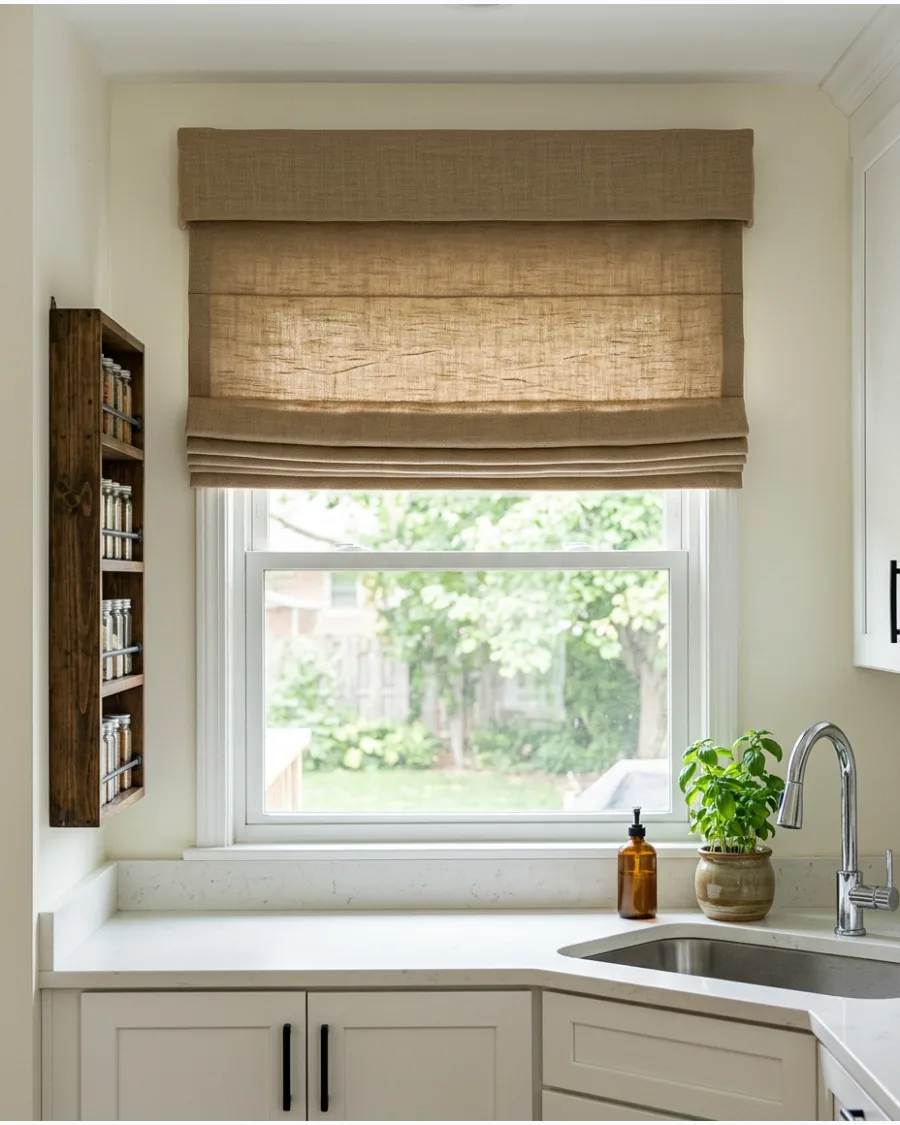
Mount the shade slightly above and beyond the window frame to create a larger visual presence. This can also help cover an unattractive frame or make a narrow window appear wider.
Hang the shade four inches above the frame to make the kitchen ceiling feel taller. This method provides better light blockage because the fabric overlaps the edges of the window.
- Works for any standard shade style for $40 to $250.
- Use wall anchors if you are not hitting a wooden stud behind the drywall.
- Add two to three inches to the width on each side to ensure total coverage.
Most people skip this: Check that the shade won't interfere with cabinet doors opening when it is mounted on the wall surface.
Shutters and Architectural Treatments
40. White Interior Shutters
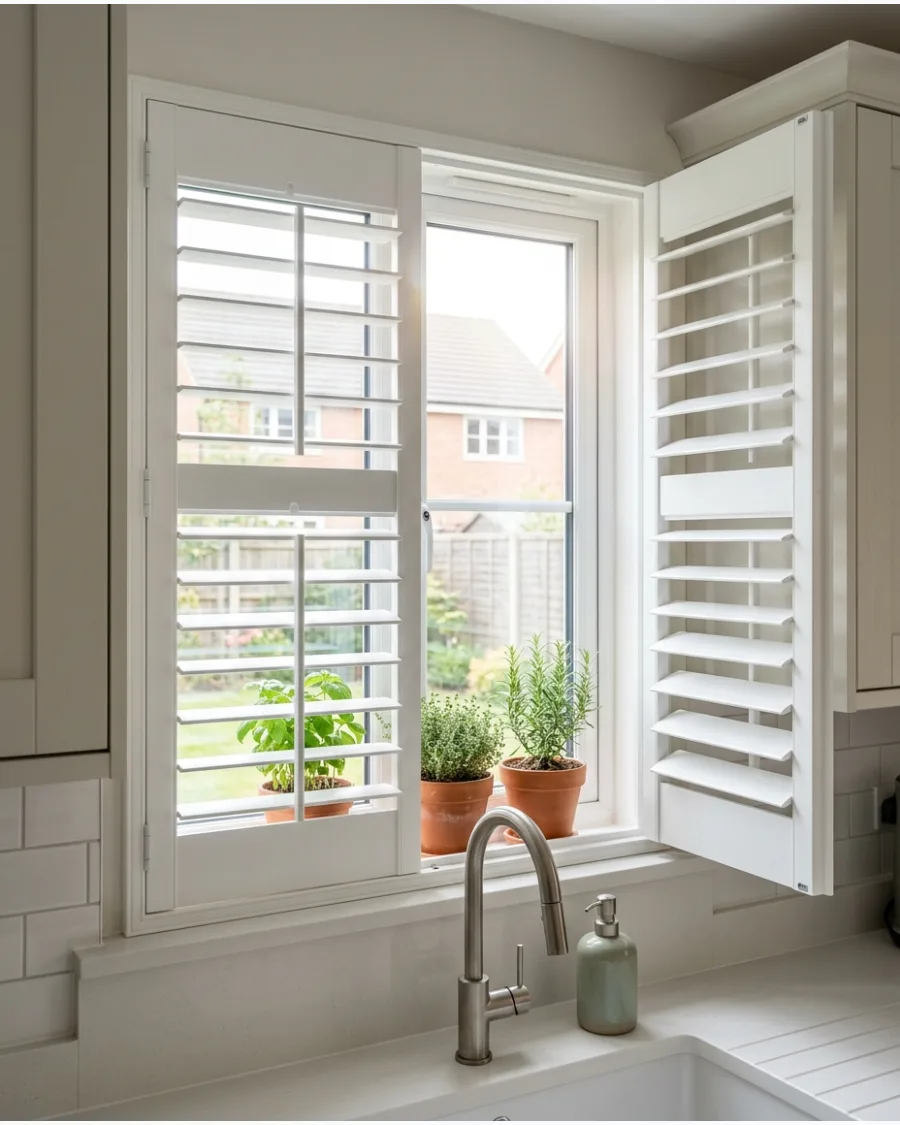
Add white shutters for a structured treatment that becomes part of the kitchen architecture. Adjustable louvers provide flexible privacy and light control.
Choose a hidden tilt rod for a cleaner, more modern look that doesn't obstruct the view. These are incredibly durable and can be wiped down just like your kitchen cabinets.
- Available from custom window companies or DIY kits for $150 to $500.
- Mount the frame to the window casing using the provided long screws.
- Use the central louvers to direct light toward the workspace without creating glare.
Quick win: Cafe-style shutters covering only the bottom half are perfect for privacy while keeping the top of the window completely open.
41. Café-Style Shutters
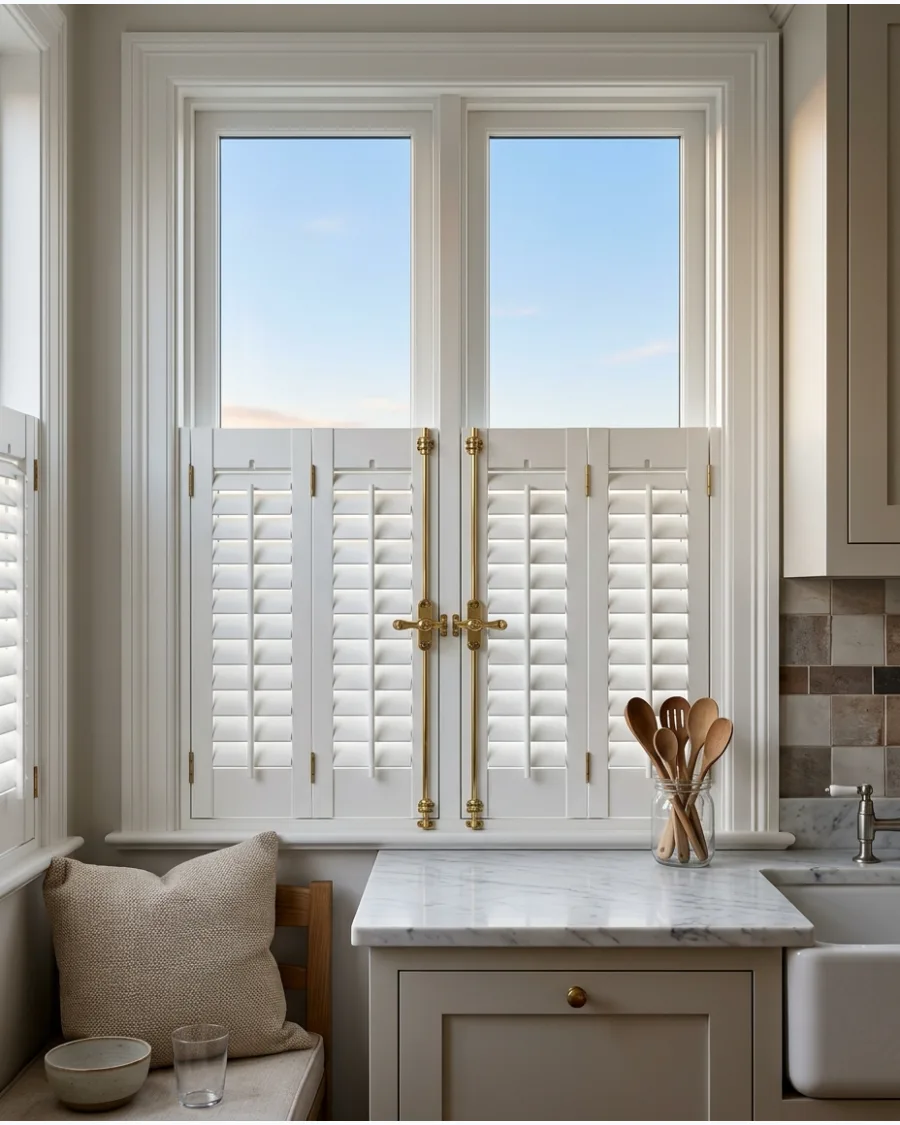
These shutters cover only the bottom half of the glass, leaving the top open for natural light. They offer a permanent, architectural look compared to fabric versions.
Mounting them inside the window frame creates a flush, tidy appearance that does not interfere with cabinet doors. A white finish helps the shutters blend into the trim for a seamless feel.
- Expect to spend more on custom-fitted shutters than on basic fabric curtains.
- Use a drill and level to ensure the mounting brackets are perfectly straight for a smooth swing.
- Renters can use tension-mounted café rods with lightweight shutters if the window frame is deep enough.
Quick win: Choose shutters with wider louvers to allow more light in when they are tilted open.
42. Natural Wood Shutters
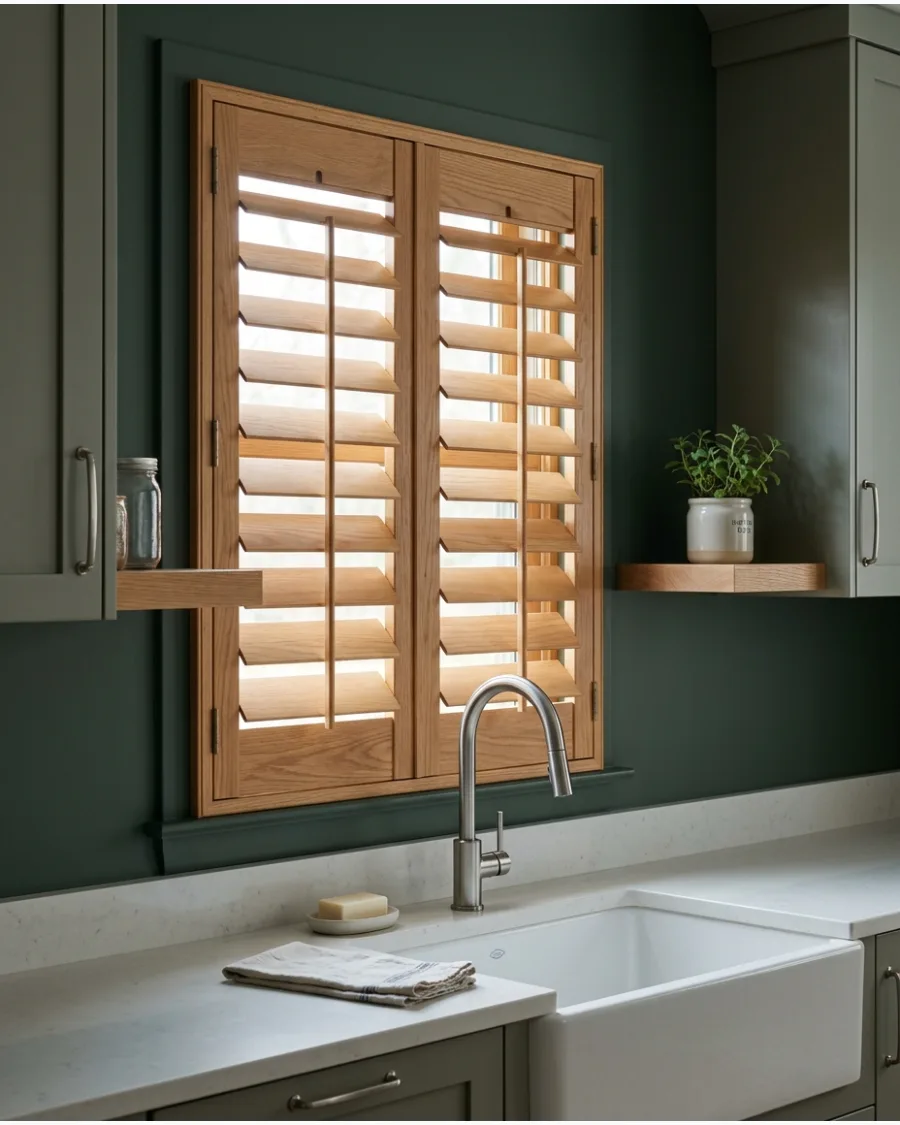
Stained wood shutters add organic texture and warmth to a cool-toned or white kitchen. Matching the shutter stain to a kitchen island or open shelving creates a unified design.
Ensure the wood is sealed with a moisture-resistant finish to protect against steam from the stovetop or sink. This choice works well for grounding large windows in an open-concept space.
- Real wood shutters are a long-term investment that can increase home value.
- Measure the window depth to ensure the louvers have enough room to rotate without hitting the glass.
- For a budget-friendly version, look for faux-wood shutters with a realistic grain print.
Most people skip this: Check the hinge color to make sure it matches your kitchen cabinet hardware.
43. Slim Black Shutters
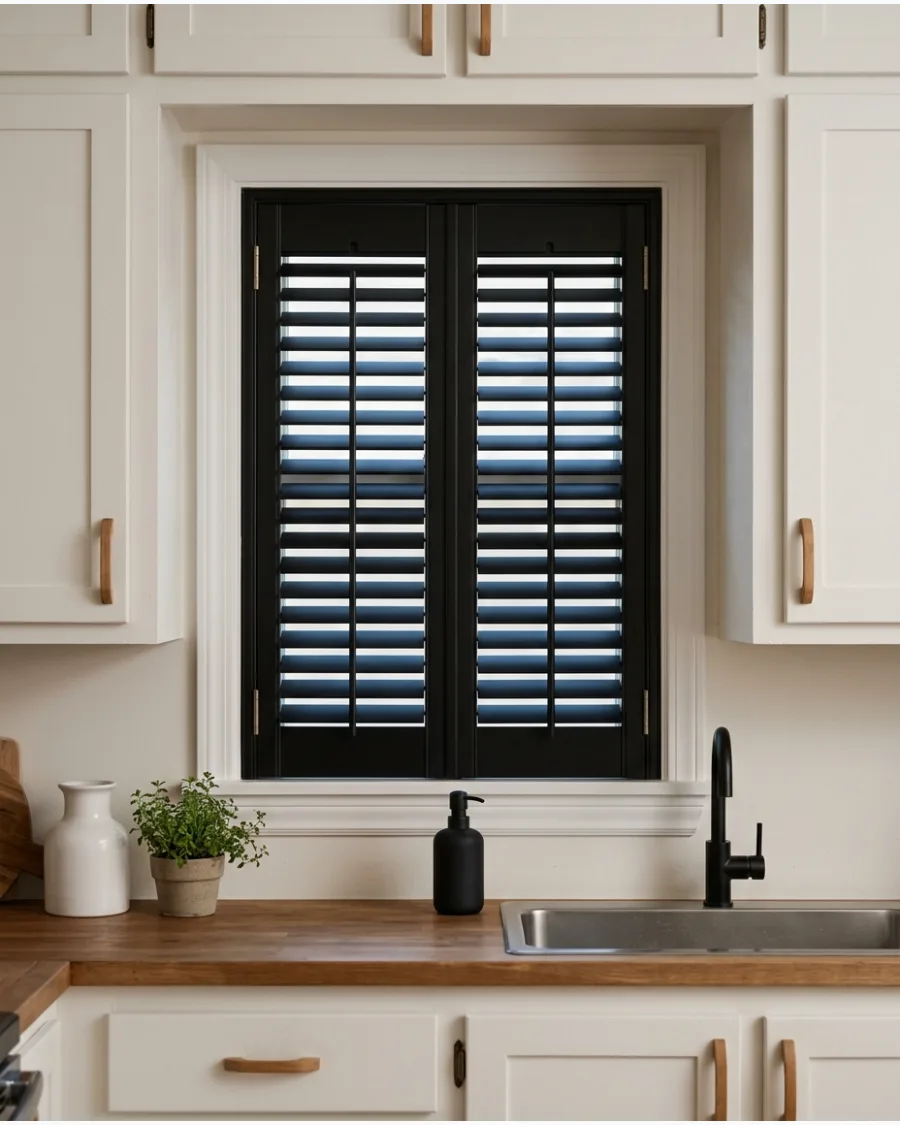
Narrow black shutters provide a crisp, high-contrast frame for modern window designs. They mimic the look of industrial steel-framed windows while offering adjustable privacy.
Use these in a kitchen with matte black hardware or light fixtures to pull the room accents together. The dark color hides small grease spots better than white alternatives.
- Order custom sizes online to get the exact slim profile needed for narrow kitchen windows.
- Wipe the louvers with a microfiber cloth weekly to prevent visible dust buildup on the dark surface.
- Small kitchens benefit from slim shutters because they don't add bulk to the wall.
Best shortcut: Use a vacuum brush attachment to clean between the louvers in seconds.
44. Folding Shutter Panels
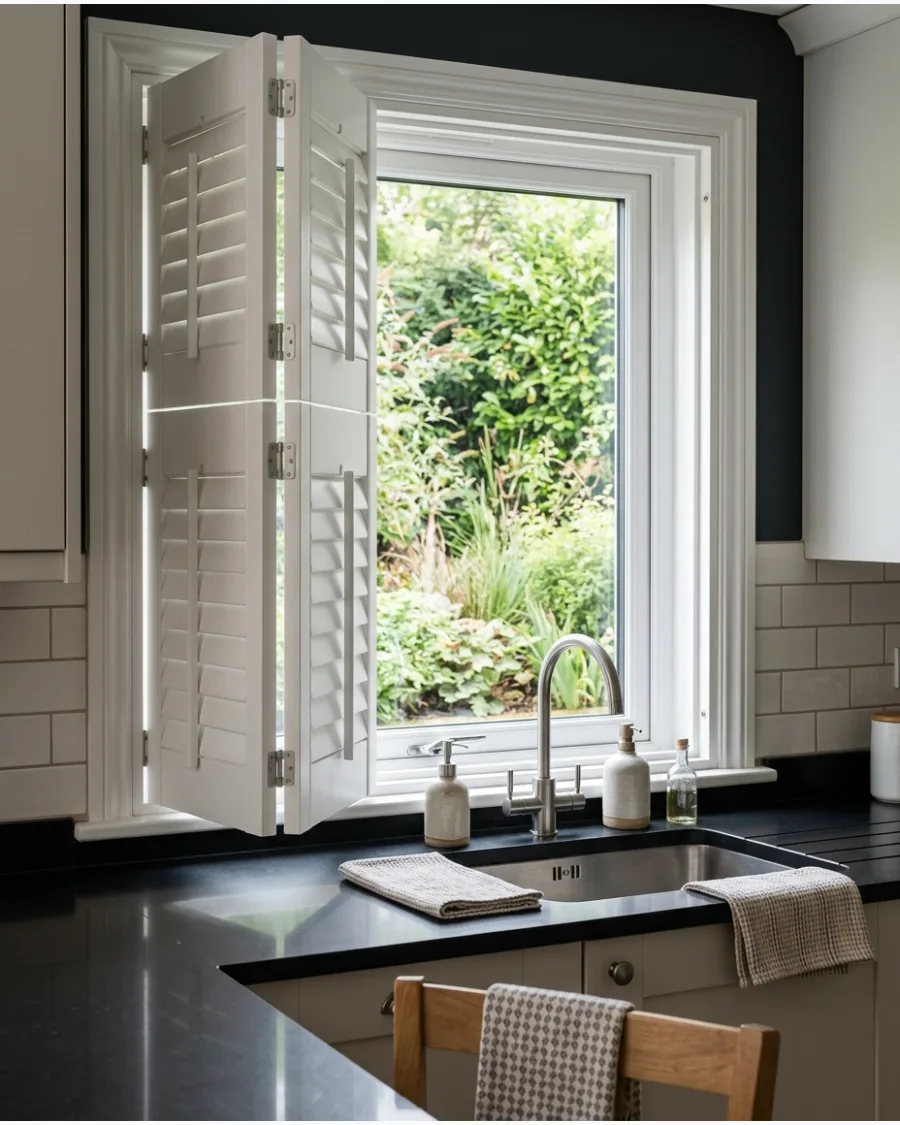
Multi-fold shutters hinge together so they can be pushed entirely to the side of the window. This allows for a completely clear view and maximum airflow when the window is open.
Check that there is enough wall space or cabinet clearance for the panels to stack when fully folded back. They act as a flexible wall treatment that changes the room mood instantly.
- These are available at most home improvement stores as kits for standard window sizes.
- Apply a small amount of silicone lubricant to the hinges for silent operation.
- Use bi-fold panels for wide windows where a single large shutter would be too heavy.
Quick win: Install a small magnetic catch at the top of the frame to keep panels perfectly flush when closed.
Layered and Decorative Window Treatments
45. Roman Shade With Café Curtains
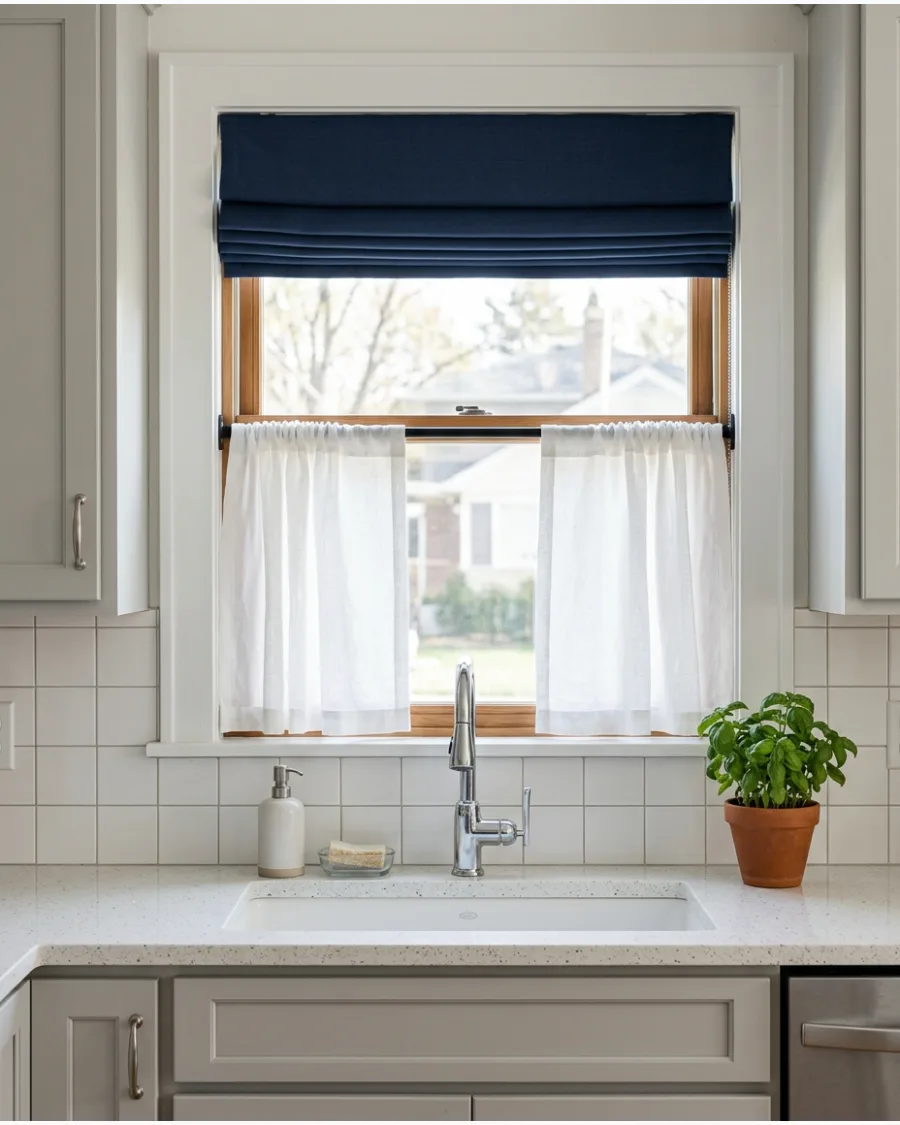
This combination uses a fabric shade for full coverage at night and a short curtain for daytime privacy. The layered look adds depth and allows for two different fabric patterns or textures.
Hang the café curtain rod at the halfway point of the window to keep the sink area feeling open and bright. It is a smart way to get the softness of fabric with the function of a blind.
- Buy ready-made café curtains and a custom Roman shade to save on total costs.
- Install the Roman shade outside the frame and the café rod inside the frame for the best layering.
- Choose a washable cotton for the café curtain since it sits closest to the sink splashes.
Best shortcut: Use clip-on rings for the café curtain so you can easily pull it off for washing.
46. Roller Shade With Decorative Valance
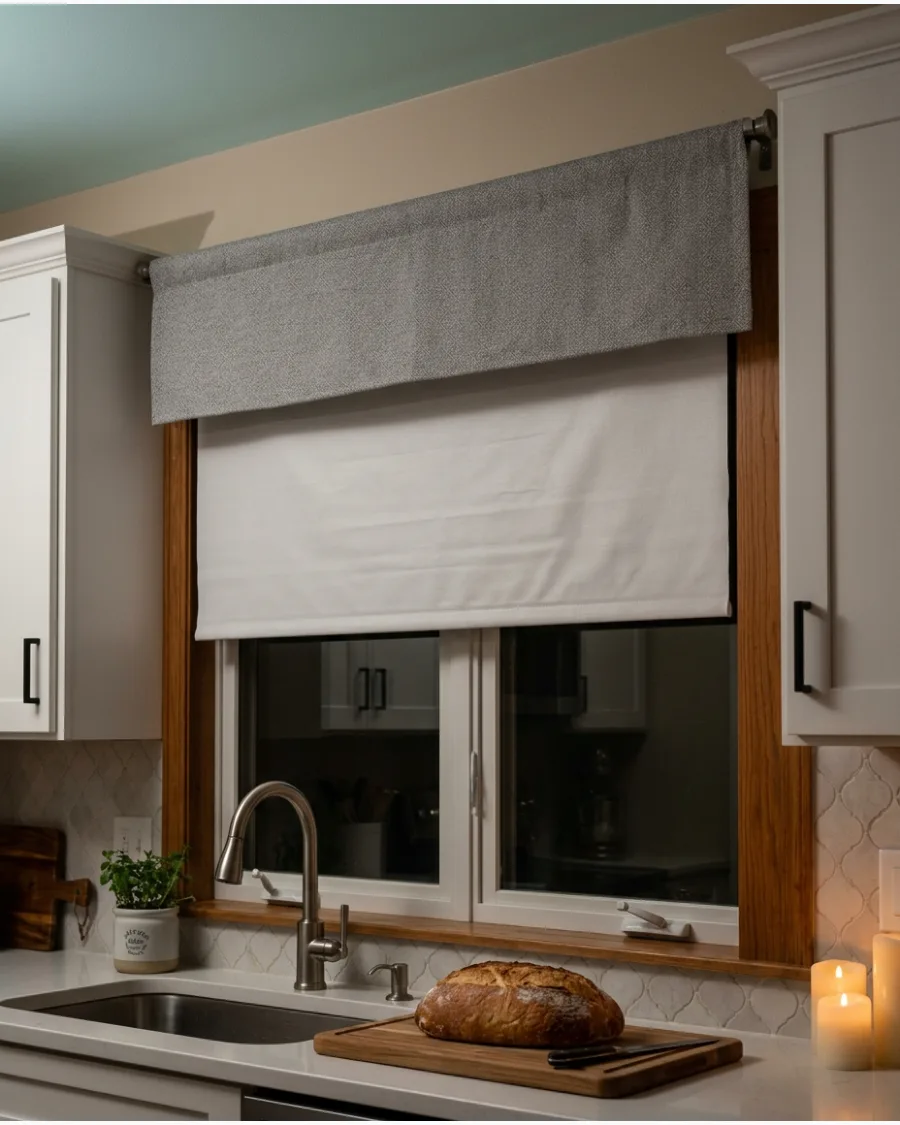
A fabric valance hides the roller mechanism and adds a decorative element to a basic shade. This setup is perfect for adding a pop of pattern without committing to full-length curtains.
Mount the valance several inches above the window frame to make the ceiling feel higher. The roller shade underneath remains the primary tool for blocking direct afternoon sun.
- A simple valance is a low-cost DIY project that requires very little fabric.
- Use a double-bracket system designed to hold both a roller shade and a curtain rod.
- Pick a moisture-resistant vinyl roller shade for easy cleaning behind the sink.
Most people skip this: Make sure the valance is wide enough to cover the sides of the roller shade brackets.
47. Modern Shaped Valance
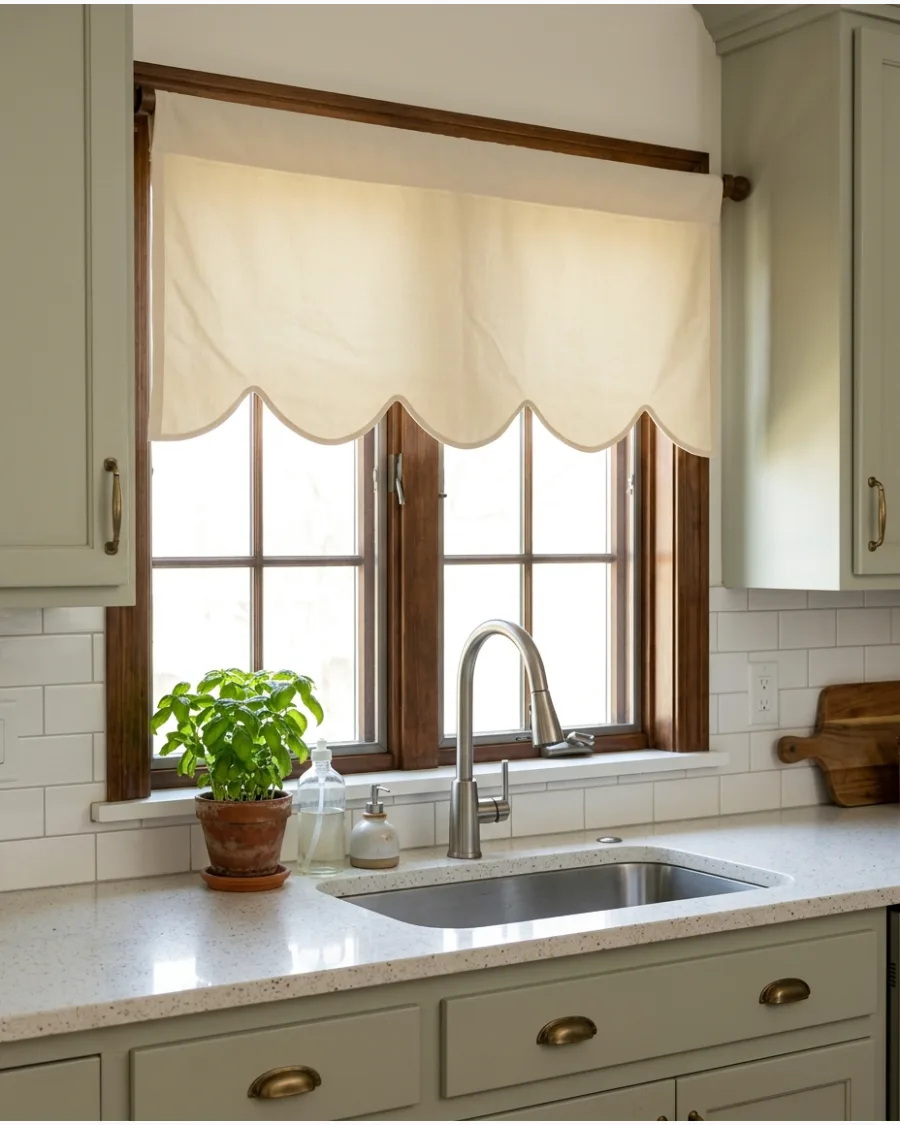
A shaped valance features a custom bottom edge like a gentle curve or a sharp, tailored box pleat. Unlike old-fashioned ruffles, a structured shape feels clean and intentional.
Choose a stiff interlining fabric to help the valance hold its unique shape over time. This treatment keeps the window area clear of the counter while providing a finished look.
- Custom upholstery shops can create these, or you can find semi-custom options online.
- Mount the valance on a wooden board rather than a rod for a more high-end, architectural feel.
- Solid colors work best for shaped valances to keep the focus on the silhouette.
Quick win: Use a fabric steamer to remove any shipping wrinkles so the shape stays crisp.
48. Full-Length Curtains in a Breakfast Nook
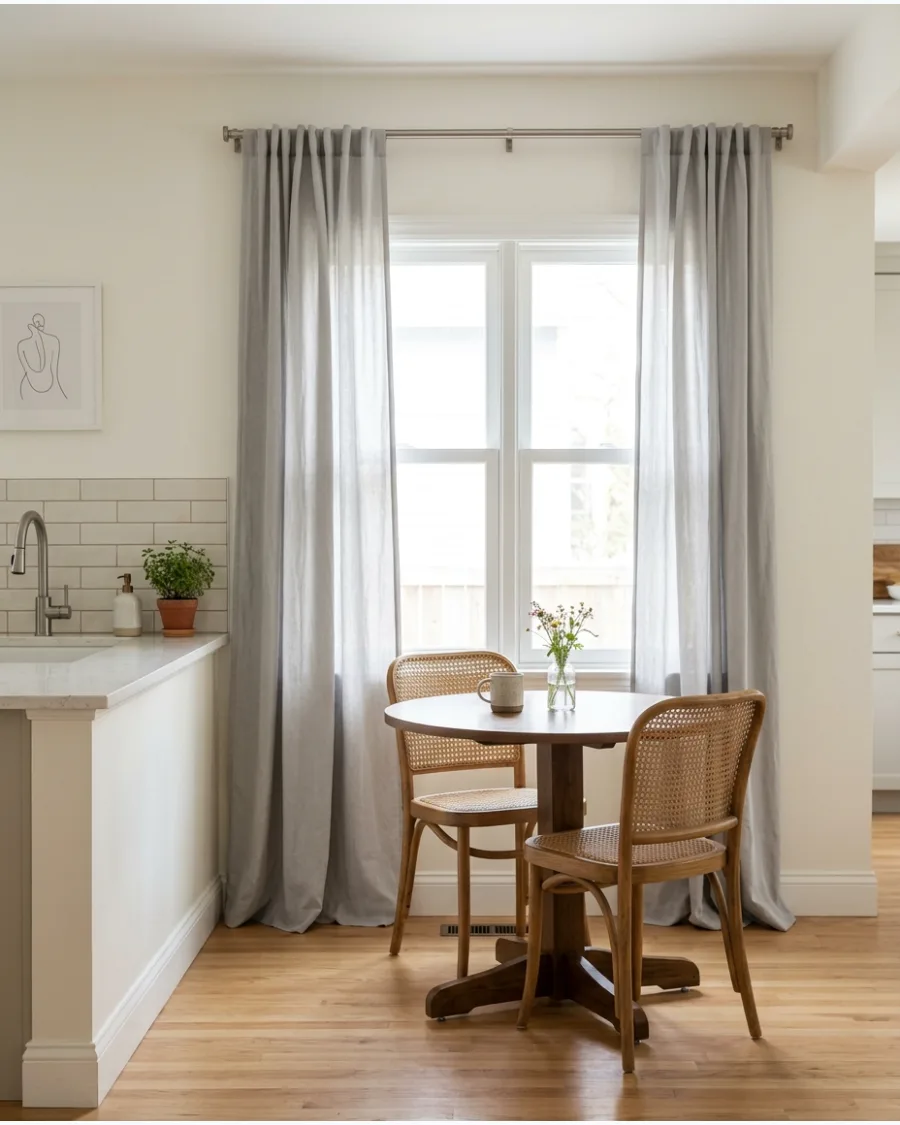
Long curtain panels soften the hard surfaces of a kitchen and define a dedicated dining zone. By keeping the fabric away from the stove and sink, maintenance stays low.
Install the curtain rod wide enough so the panels rest on the wall when open, maximizing the natural light. Heavy linen or cotton blends provide a high-end feel that makes the nook cozy.
- Standard 84-inch or 96-inch curtains fit most breakfast nook windows.
- Hang the rod 4 to 6 inches above the window frame to create a sense of height.
- Use tie-backs to keep fabric away from high-traffic walkways or sliding doors.
Best shortcut: Use an extra-long rod to span multiple windows in a nook for a seamless look.
49. Individual Shades for Bay Windows
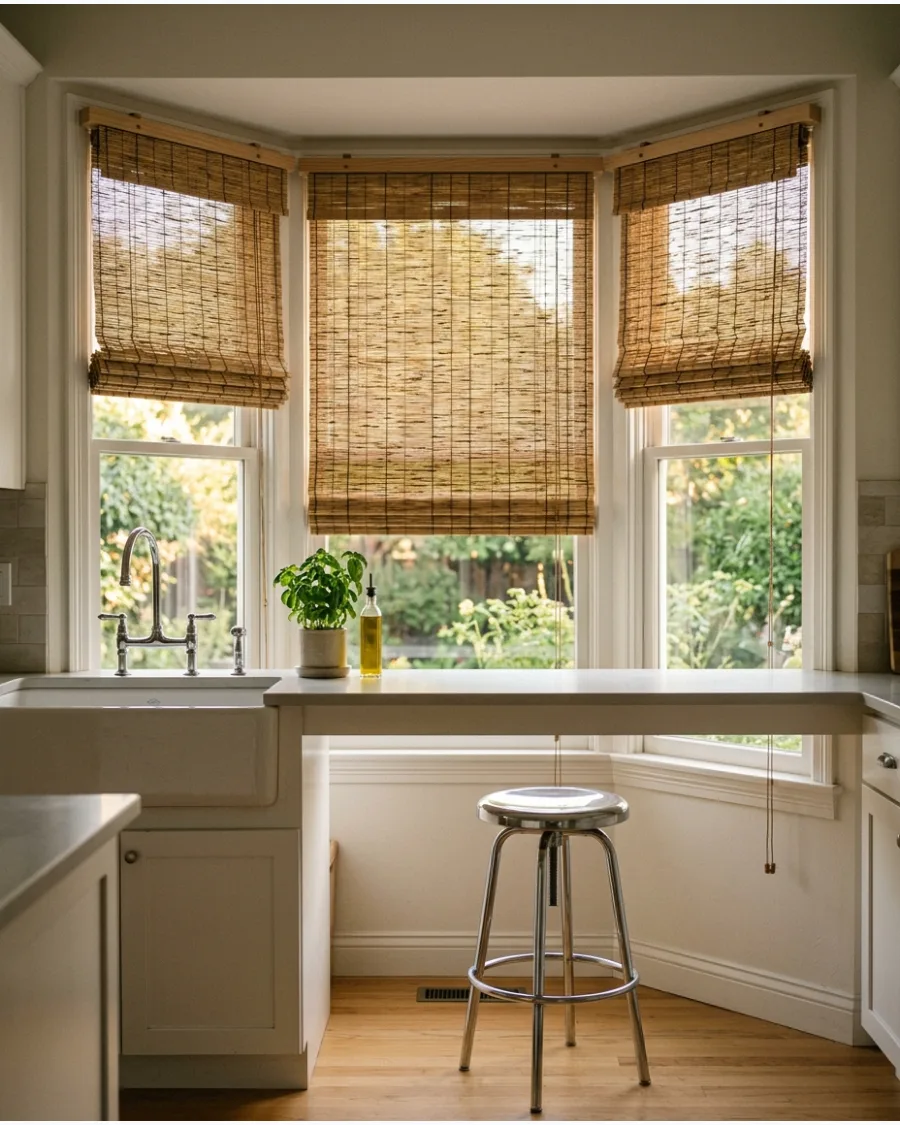
Treating each pane of a bay window separately allows for custom light control as the sun moves. Individual shades follow the architectural lines of the window rather than hiding them.
Measure each section carefully to ensure the shades can move freely without hitting each other in the corners. This approach makes a large window feature feel organized and functional.
- Budget for three separate shades, which may cost more than one large treatment.
- Inside-mount brackets are necessary for bay windows to keep the corners clear.
- Choose cordless options to avoid a cluttered look from multiple hanging strings.
Most people skip this: Deduct a quarter-inch from your measurements to ensure the shades don't rub against the frame.
50. Matching Kitchen and Dining Window Treatments
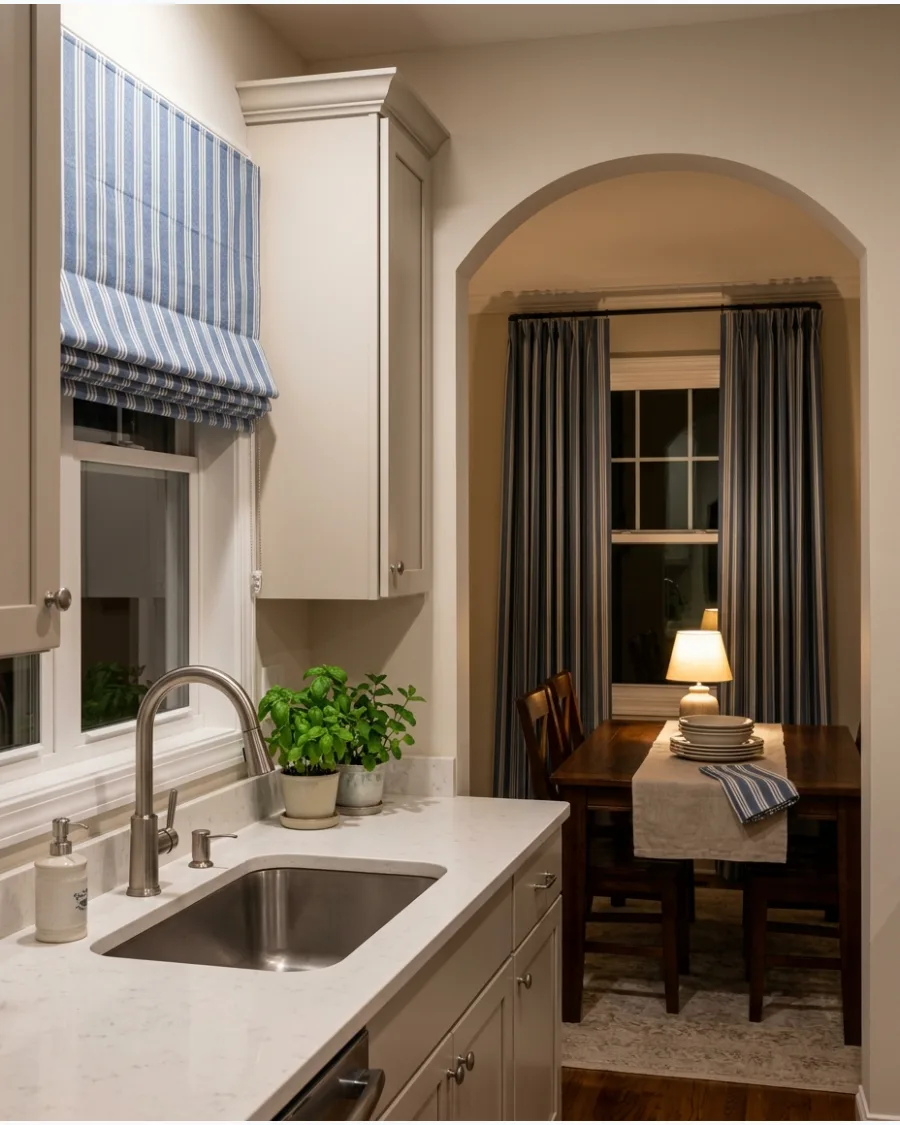
Using the same fabric or material in both the kitchen and dining area creates a visual bridge between the spaces. This consistency makes a home feel larger and more professionally designed.
Try a Roman shade in the kitchen and full curtains in the dining room using the exact same fabric for a coordinated but varied look. It ties together different zones without making them look identical.
- Buy fabric by the bolt if you are sewing your own to ensure the dye lots match perfectly.
- Focus on matching the color or pattern rather than the exact style of the shade.
- In rentals, use matching neutral-colored blinds in both rooms for a cohesive, clean look.
Quick win: If you can't find a perfect match, choose a solid color from the pattern to use as a coordinating shade.
Frequently Asked Questions
What is the best material for a window treatment over a kitchen sink?
For windows over the sink, moisture-resistant materials like faux wood, vinyl, or polyester blends are your best bet. These durable options won't warp or mildew when exposed to splashes and are incredibly easy to wipe clean.
How do I choose between cafe curtains and Roman shades for the kitchen?
Choose cafe curtains if you want privacy on the bottom half of the window while letting natural light stream in through the top. For a more polished, modern look that stacks neatly out of the way, Roman shades are an excellent, clean-lined choice.
Can I use real wood blinds in a kitchen?
While beautiful, real wood blinds are prone to warping or cracking due to the high humidity and steam common in kitchens. We recommend faux wood blinds instead, as they offer the same classic look with much better resistance to moisture.
How high should I hang my kitchen window treatment?
Mount your window treatments a few inches above the window frame to maximize natural light and make your ceiling feel taller. This placement also ensures the bottom of the fabric stays safely away from wet countertops and sink splashes.
How do I clean kitchen grease off of fabric shades?
To remove grease, gently spot-treat the fabric with a mixture of warm water and a few drops of mild dish soap. Always check the care label first to see if your specific shades are machine washable or require professional dry cleaning.