45 Living Room Wall Paneling Ideas That Add Real Character

This post may contain affiliate links: full affiliate disclosure.
Wall paneling can give a living room the depth that paint alone cannot provide, but the strongest designs start with the room rather than the trend. Ceiling height, daylight, furniture scale, outlets, and how people move through the space should shape the pattern.
Research kept producing useful variations across wood, painted millwork, tactile surfaces, masonry-look panels, storage, and renter-aware systems. The pool saturated at 45 visually distinct ideas; later candidates were mostly color swaps, repeated trim grids, or weaker material imitations.
How to Plan Living Room Wall Paneling
Before ordering, tape the proposed lines on the wall and view them from the main doorway and sofa. Measure around baseboards, windows, switches, and vents, then confirm fire, moisture, mounting, and rental requirements for the chosen material.
Warm Wood Paneling for Modern Living Rooms
Wood paneling can warm a living room without making it feel rustic. The grain, joint width, and finish matter as much as the species, so compare samples beside the sofa, flooring, and evening lamps before committing.
1. Install Full-Height White Oak Slats
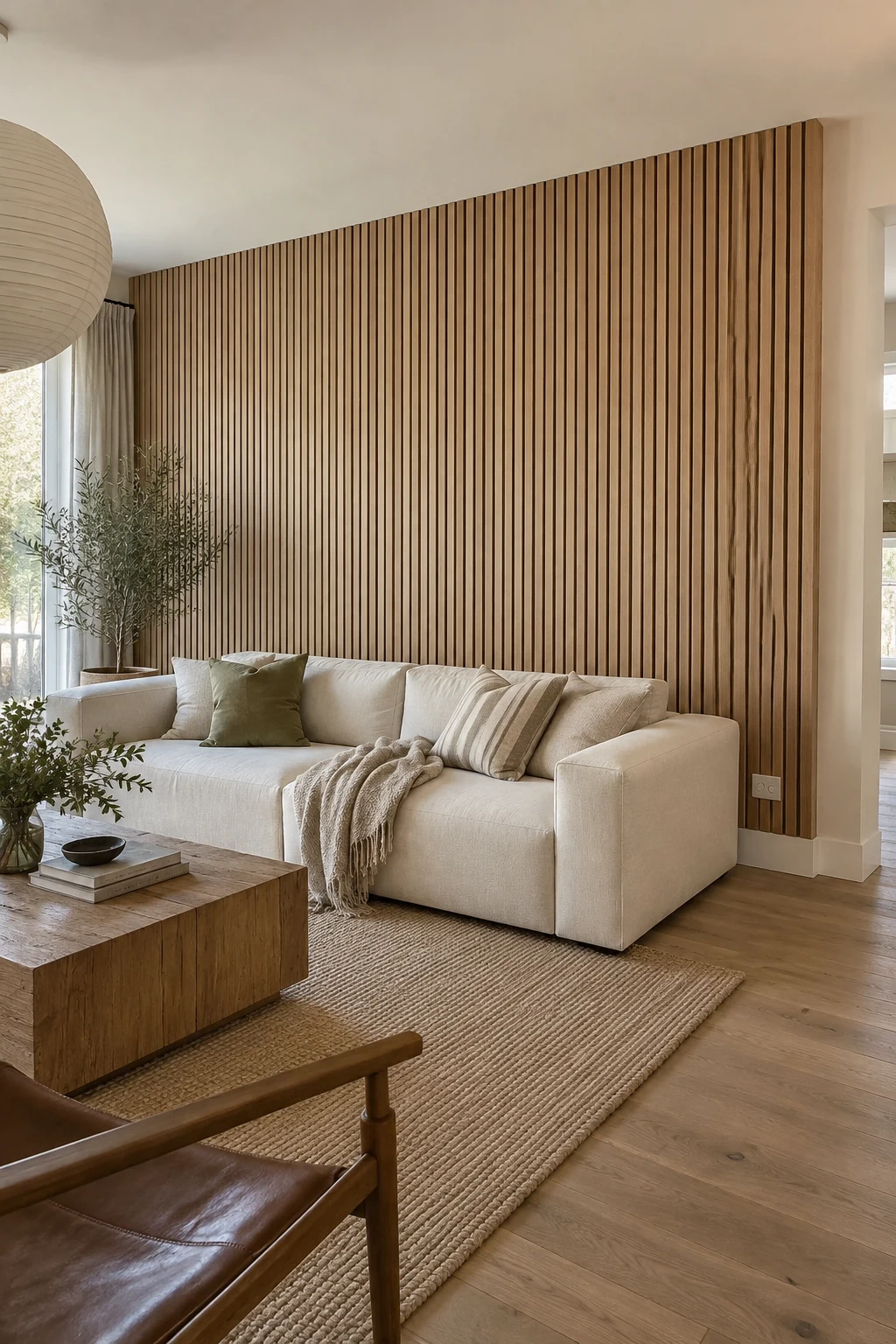
Run pale oak slats from baseboard to ceiling to give a simple sofa wall rhythm and warmth. A dark felt backing sharpens the spacing and can soften echo in an open living area.
Keep slats narrow on a short wall and leave at least one adjoining wall plain. That break lets the grain read as an architectural feature instead of surrounding the room with visual lines.
2. Frame the TV With Walnut Slats
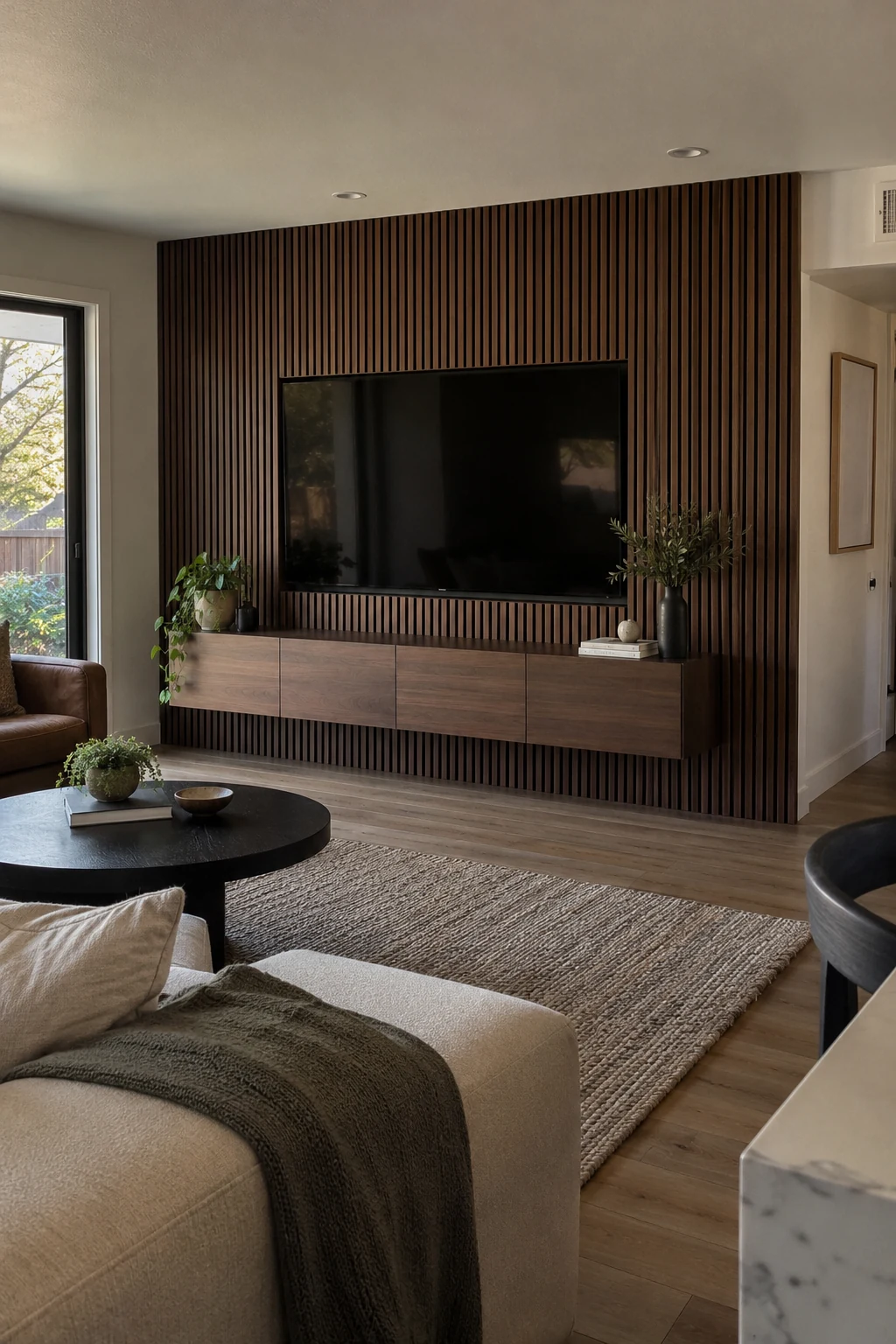
Center a smooth TV panel inside darker walnut slats, then repeat the wood on a low floating cabinet. The solid center keeps cables and mounts visually quiet while the slats soften the electronics.
Plan the outlet, ventilation, and service access before fastening panels. A removable center section makes future wiring changes far easier than cutting through finished millwork.
3. Use Wide Horizontal Oak Boards
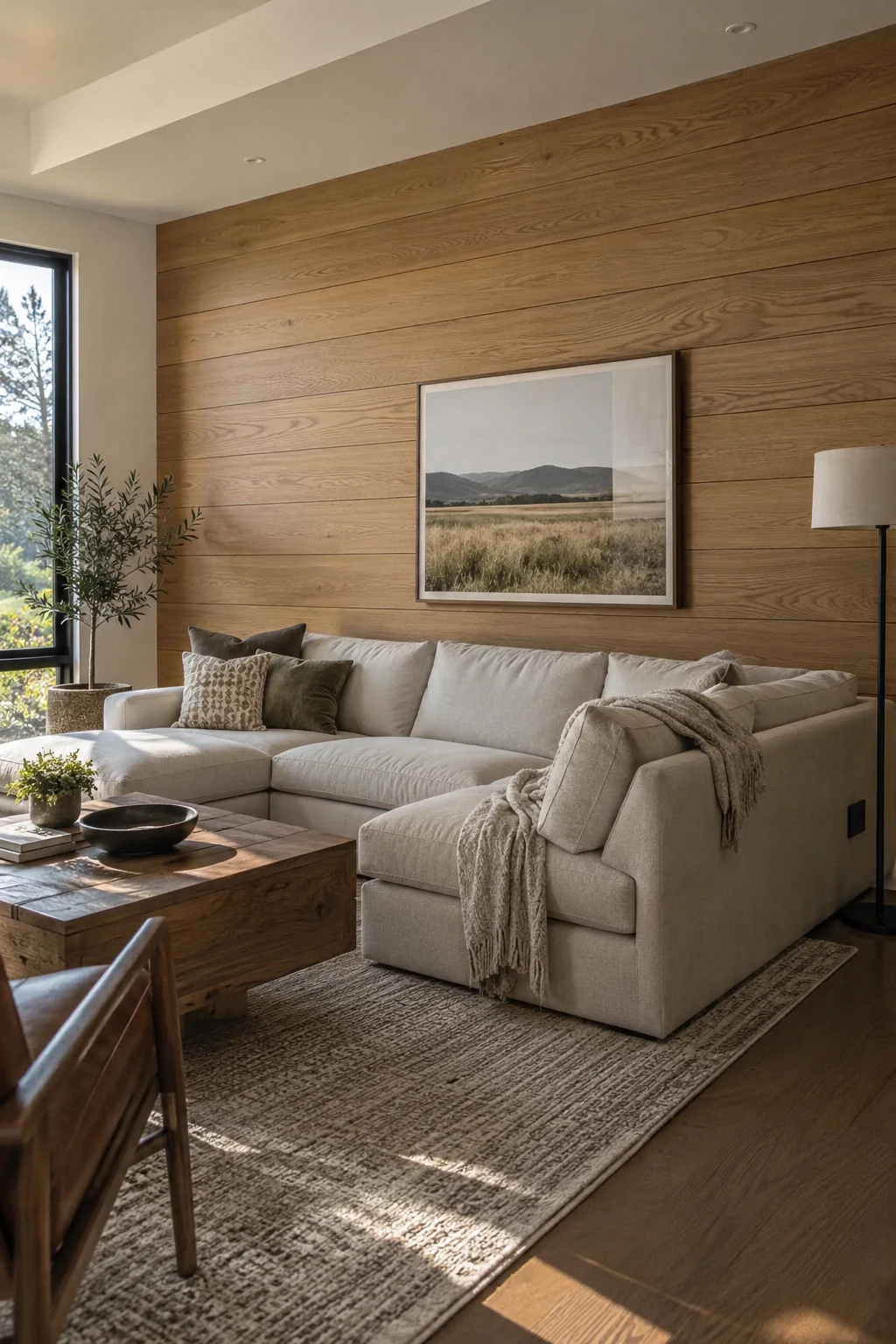
Wide horizontal boards stretch the eye across a narrow room and show more natural grain than narrow planks. Choose book-matched or consistently toned boards when you want a calm, tailored finish.
A slim shadow gap keeps the installation contemporary. Stop the paneling cleanly at an inside corner or doorway rather than adding a heavy border around every edge.
4. Mix Reclaimed Boards by Width
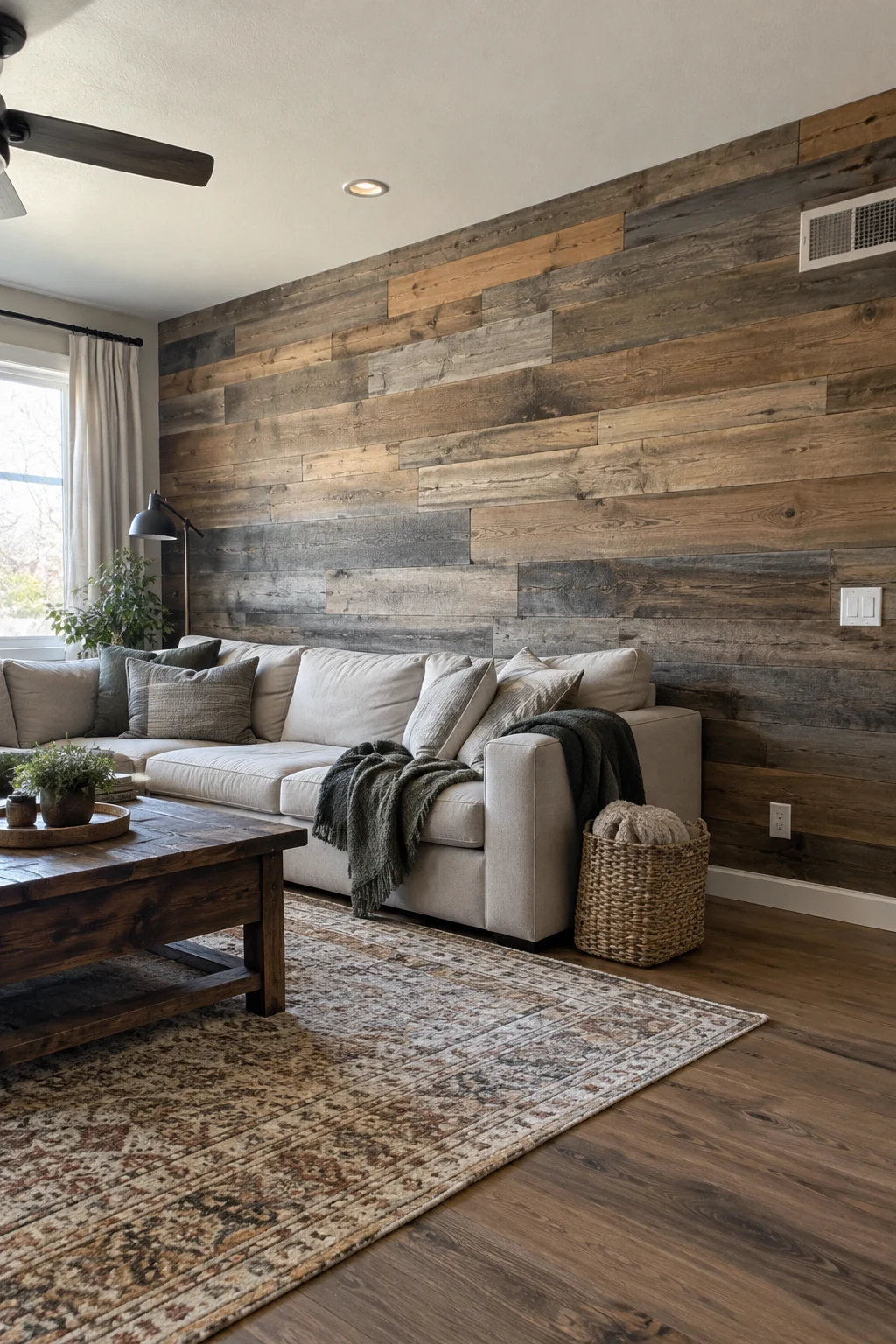
Combine two or three board widths so reclaimed paneling feels collected rather than manufactured. Sand splintered edges and seal the surface with a low-sheen clear coat that preserves the weathered color.
Limit the palette to related brown, gray, and honey tones. Too many contrasting boards can compete with artwork and make a compact living room feel busy.
5. Wrap Slats Around a Corner
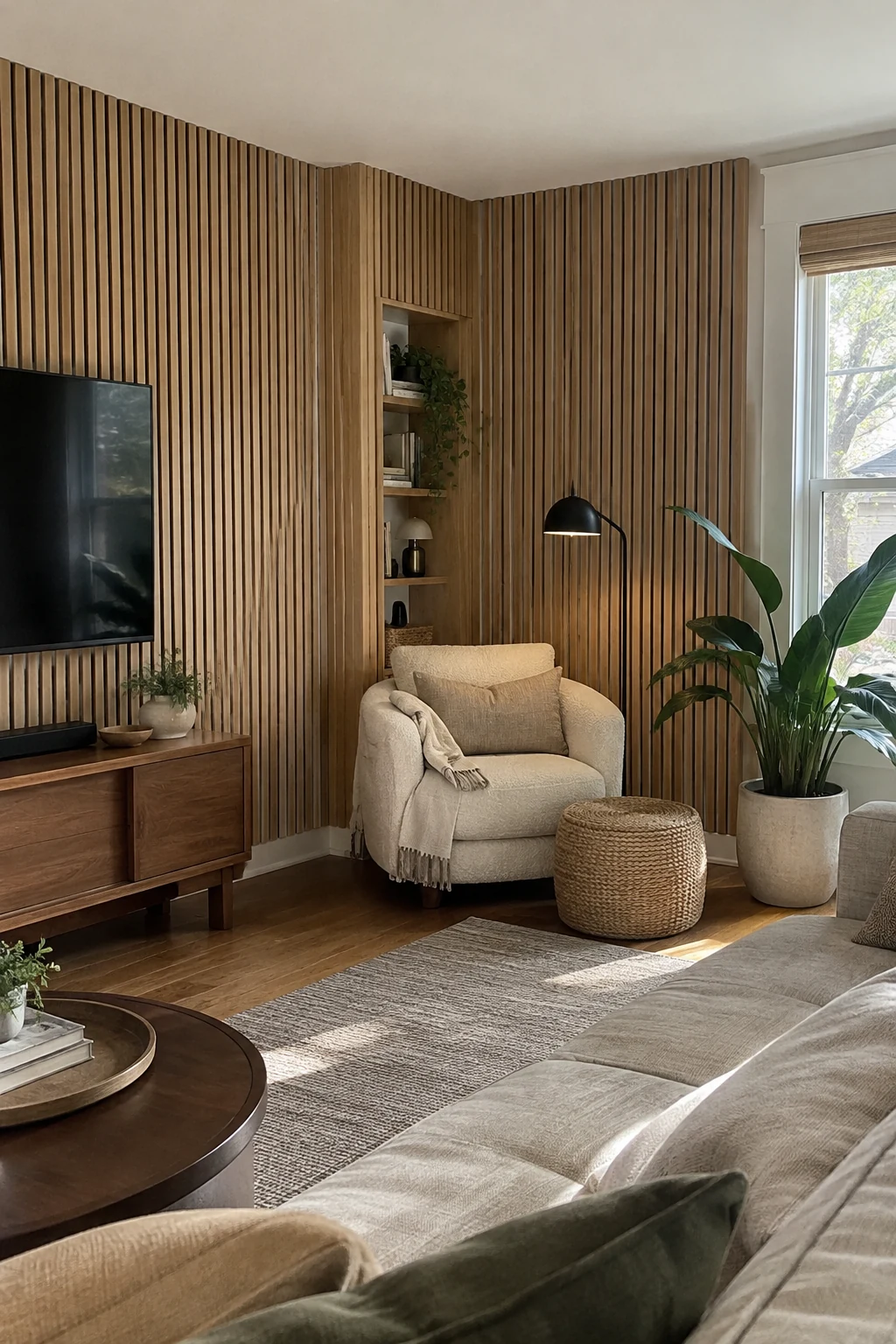
Continue light ash slats around an inside corner to connect a sofa wall with a small reading nook. The turn makes the treatment feel built into the room instead of applied to one isolated rectangle.
Use a matching corner trim or carefully miter the backing so the spacing stays consistent. Check the final slat location against switches and outlets before cutting.
6. Flute the Fireplace Surround
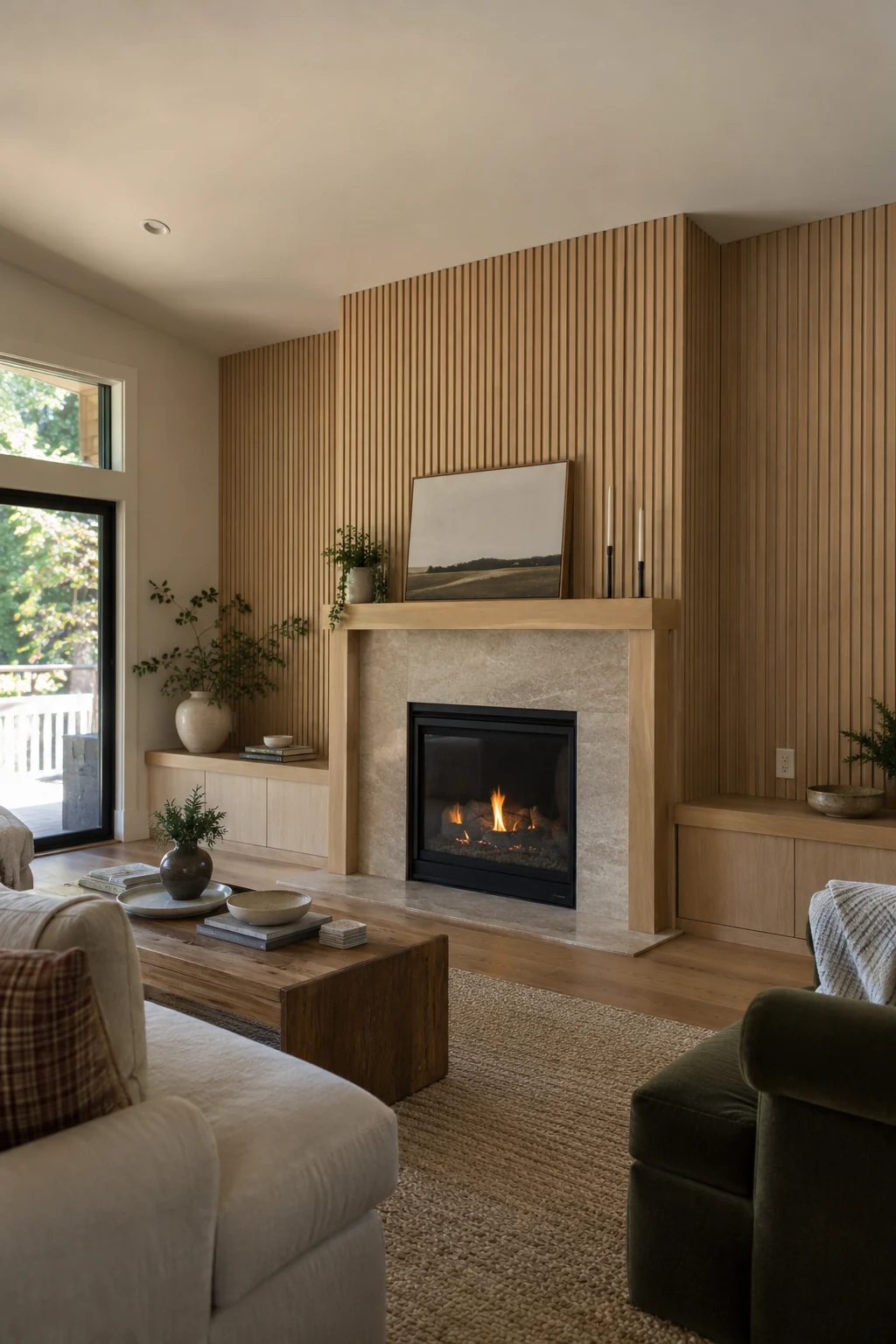
Fluted maple gives a flat fireplace wall enough texture to anchor the seating area. Pair it with a simple stone or plaster firebox surround so the grooves do not meet heat-sensitive edges.
Follow the fireplace manufacturer’s clearance rules and local code. Keep the wood finish matte; glossy grooves catch every reflection from the flames and nearby windows.
7. Choose Charred Black Timber Boards
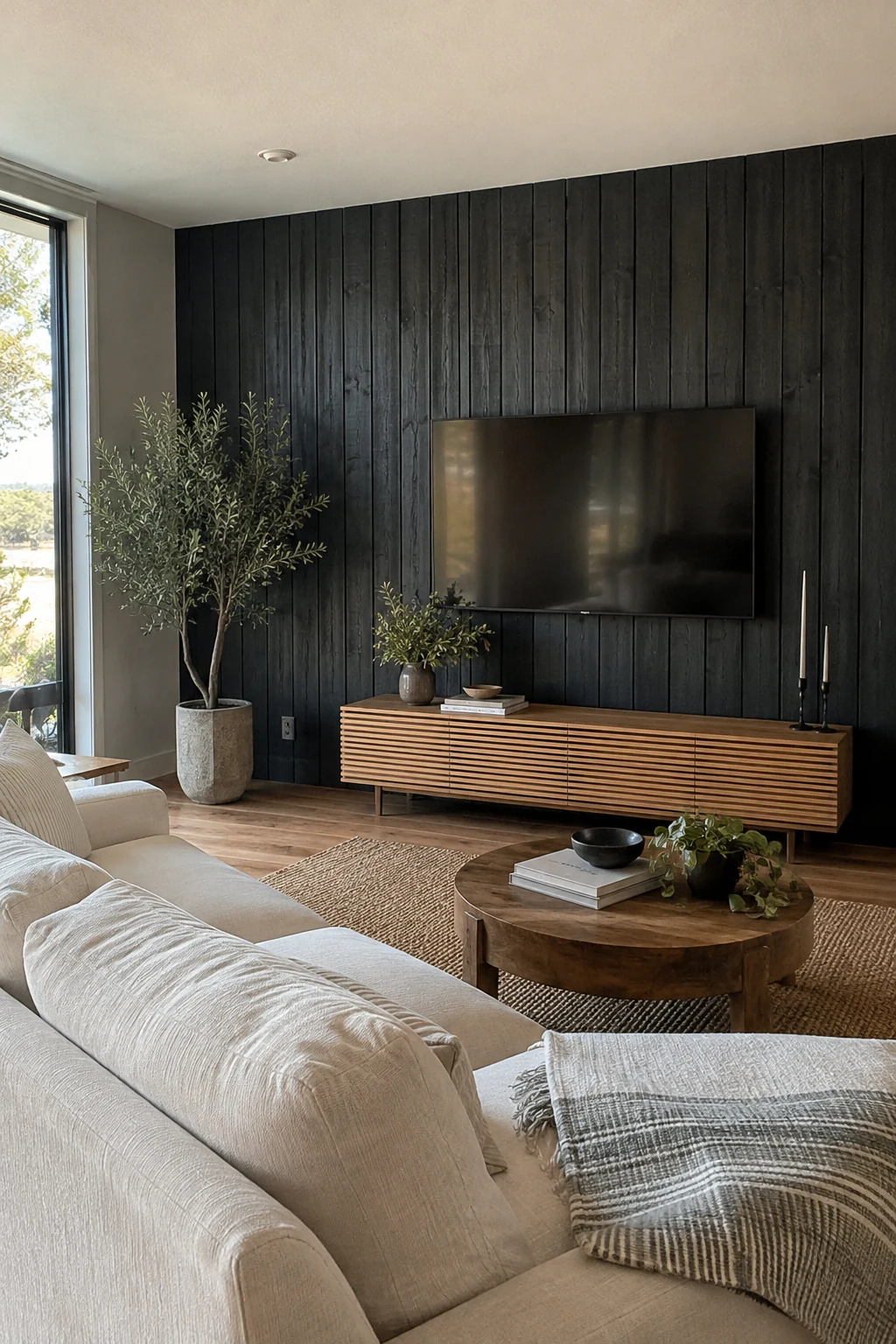
A sealed charred-look timber wall adds depth behind pale upholstery and light flooring. Use boards with a stable factory finish so the black surface does not shed soot or rough fibers into the room.
Balance the dark wall with generous daylight and a light ceiling. Warm lamps and tan textiles prevent the contrast from feeling cold after sunset.
8. Lay Veneer Squares in a Grid
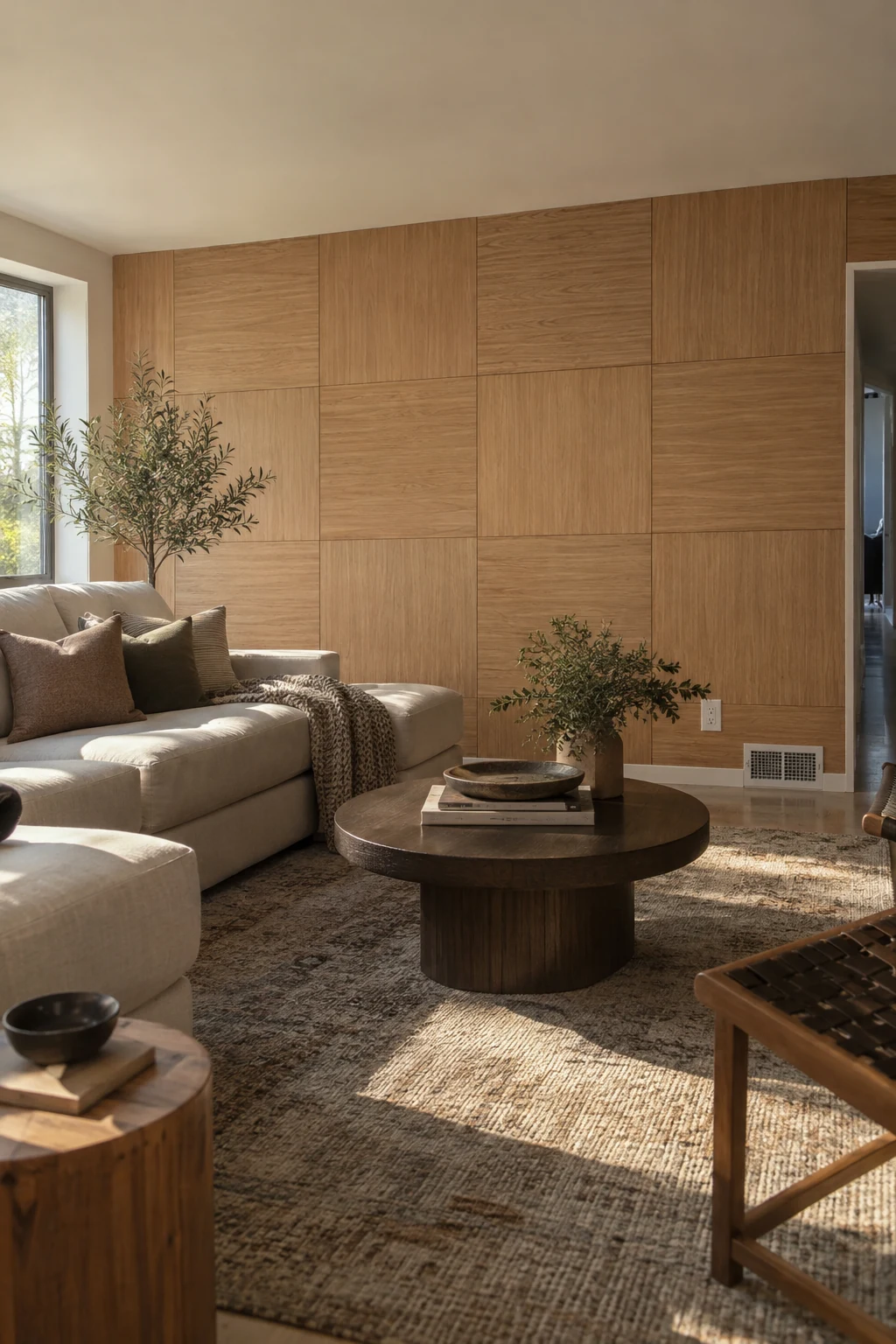
Turn large veneer squares so the grain alternates vertically and horizontally. The checkerboard shifts gently with the light while staying quieter than a strongly colored feature wall.
Use fewer, larger squares in a small room. Align the grid with the sofa width or nearby built-ins so the pattern feels related to the furniture layout.
Painted Millwork and Classic Panel Styles
Painted trim can suit traditional, transitional, or pared-back rooms depending on profile and proportion. Mock up the main rails with painter’s tape first; small changes in panel width are obvious once the wall is painted.
If the wall is uneven, caulk slim gaps after installation and use a durable trim paint on surfaces likely to collect fingerprints or chair scuffs.
9. Add Tone-on-Tone Picture Molding
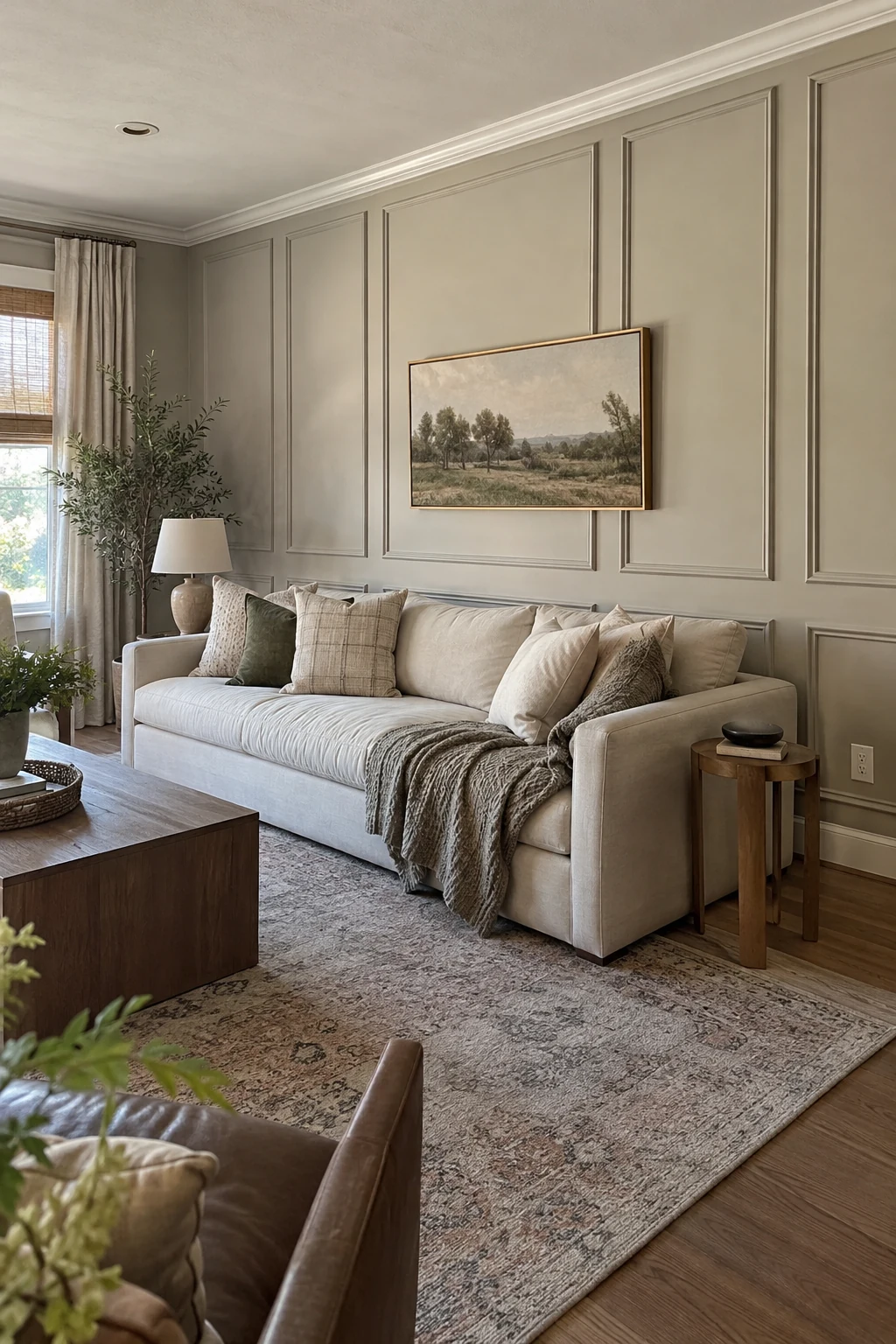
Build evenly spaced rectangular frames from slim molding, then paint the trim and wall one color. The shadows provide detail while large artwork can still hang inside the center frame.
Start the layout from the wall center and work outward. Keep the lower frame line clear of the sofa back so the molding remains visible after furniture is in place.
10. Build Tall Board-and-Batten Panels
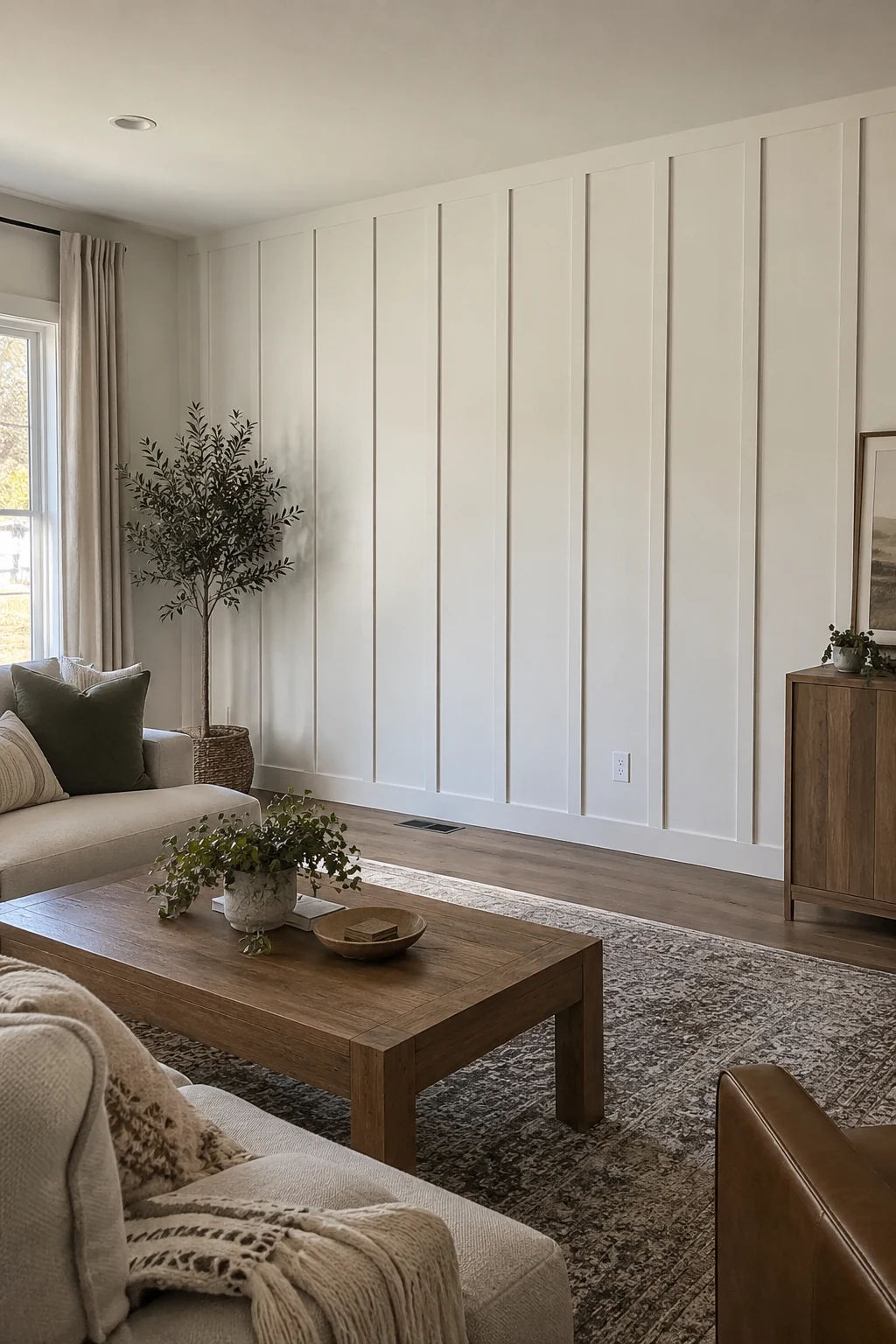
Full-height board and batten adds vertical structure to a room with a low or plain ceiling. Use wider spacing for a modern look and narrower spacing when the wall must coordinate with traditional casing.
Locate studs and map wiring before fastening long battens. Mark the entire layout in pencil, then check the repeated gaps from both ends of the wall before cutting the final pieces.
Shop the Franklin Sensors stud finder on Amazon
11. Stop Board and Batten Halfway
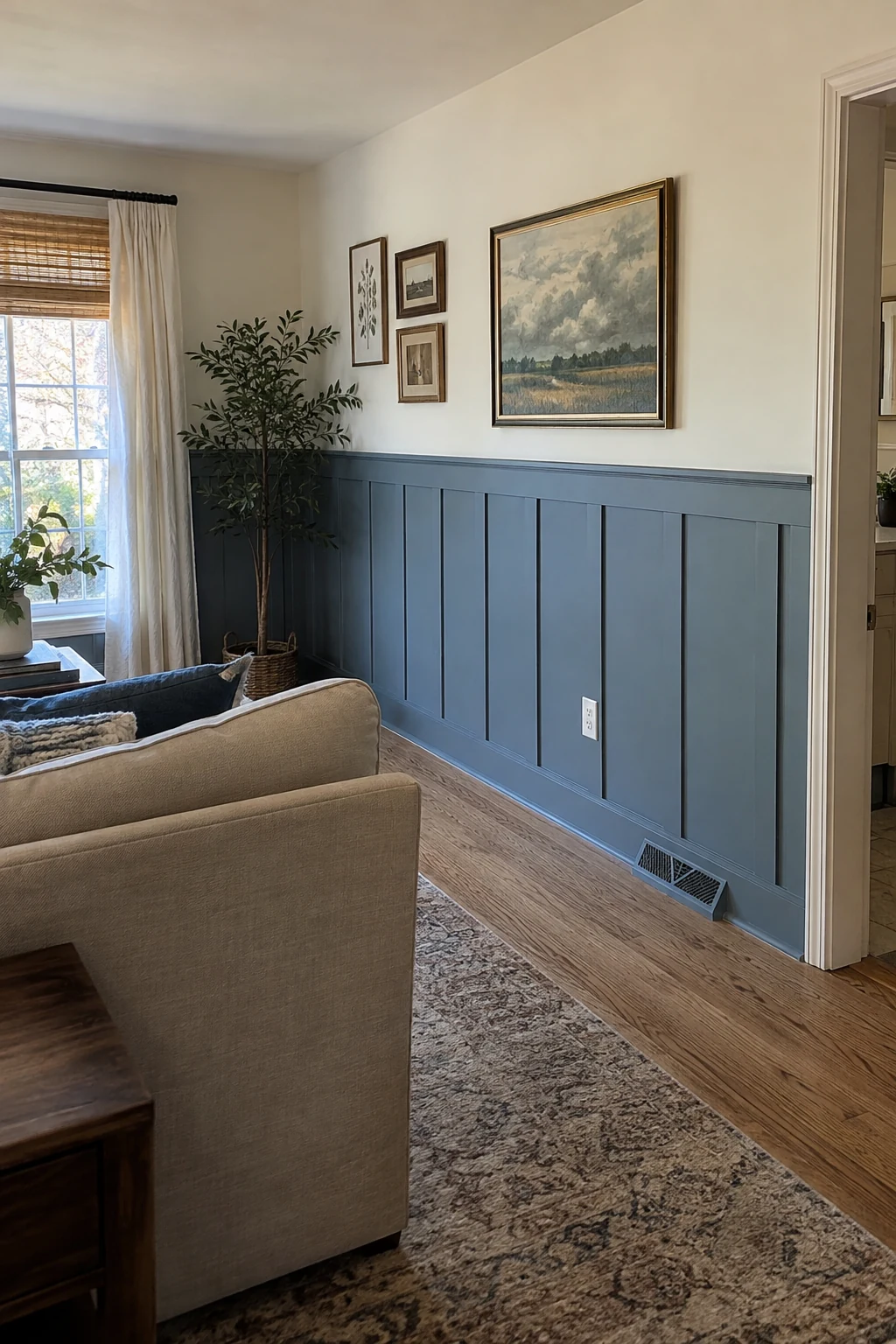
Half-height board and batten protects the lower wall without surrounding a compact room with heavy millwork. Set the top rail near the back of the sofa or slightly higher so cushions do not hide it.
Paint the paneling a muted blue, green, or taupe and keep the upper wall lighter. This split gives the room a grounded base while preserving brightness near eye level.
12. Create a Large Square Grid
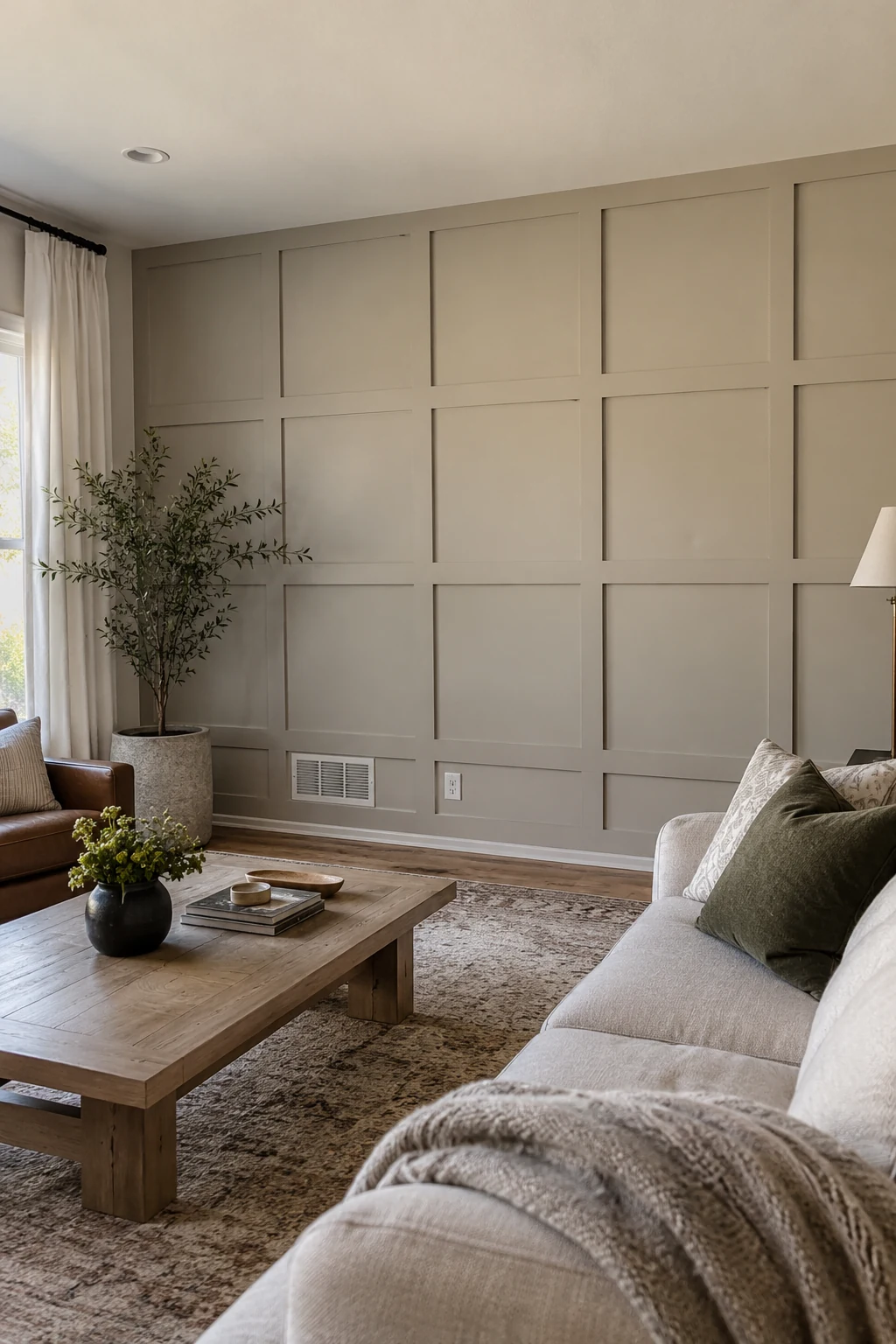
A square grid turns a long blank wall into a simple architectural backdrop. Size the squares around the total wall width rather than forcing a standard dimension that leaves a narrow strip at one side.
Keep art sparse or mount one large piece across several squares. Small frames placed in every opening can make the grid feel crowded.
13. Install Raised-Panel Wainscoting
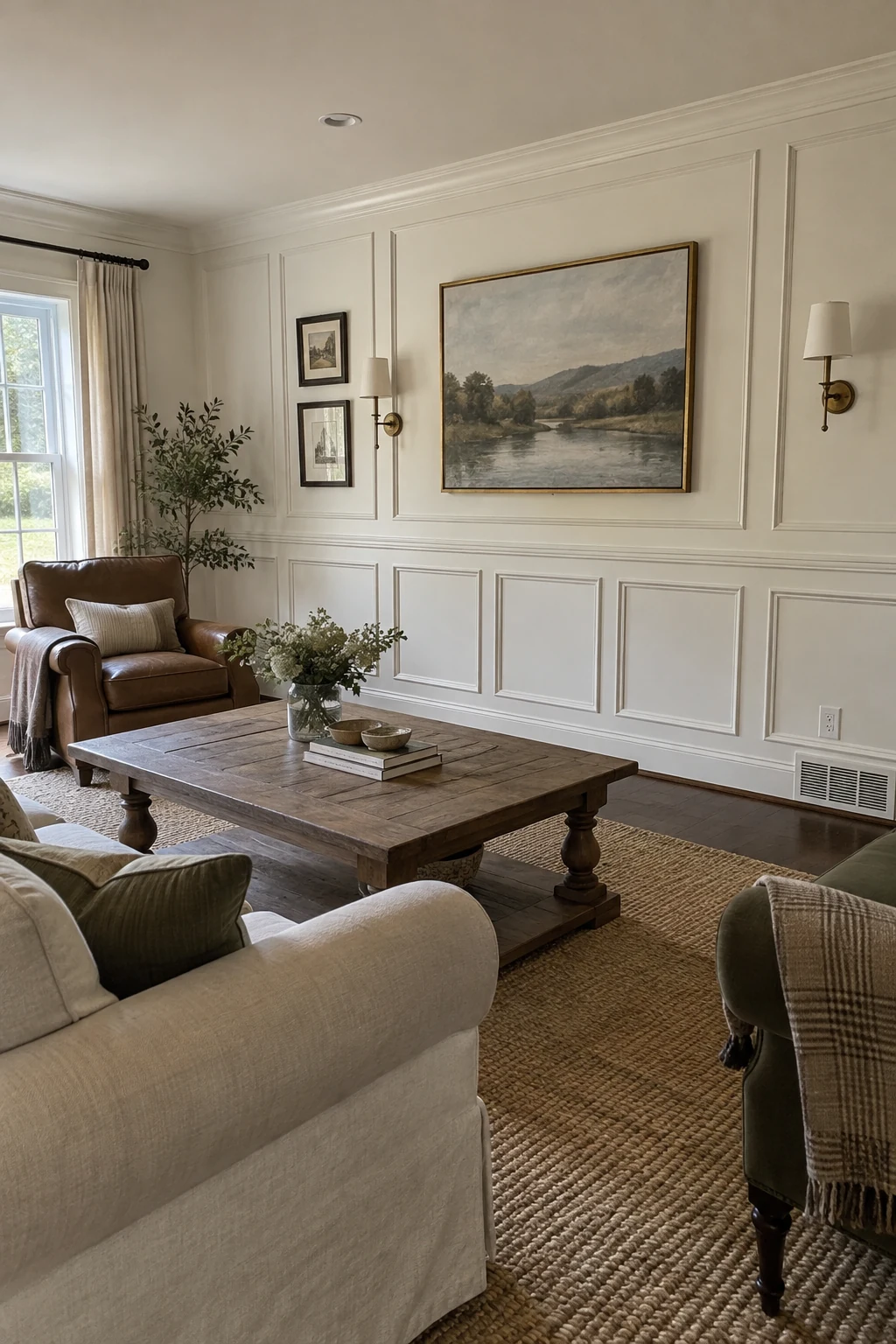
Raised panels bring depth to a formal living room and look especially convincing beside substantial door casings and crown molding. Use the treatment around the room rather than stopping abruptly behind one sofa.
Match rail heights at openings and allow full panels to land symmetrically on the most visible wall. Premade MDF panels can simplify the joinery in dry interior spaces.
14. Choose Recessed Shaker Panels
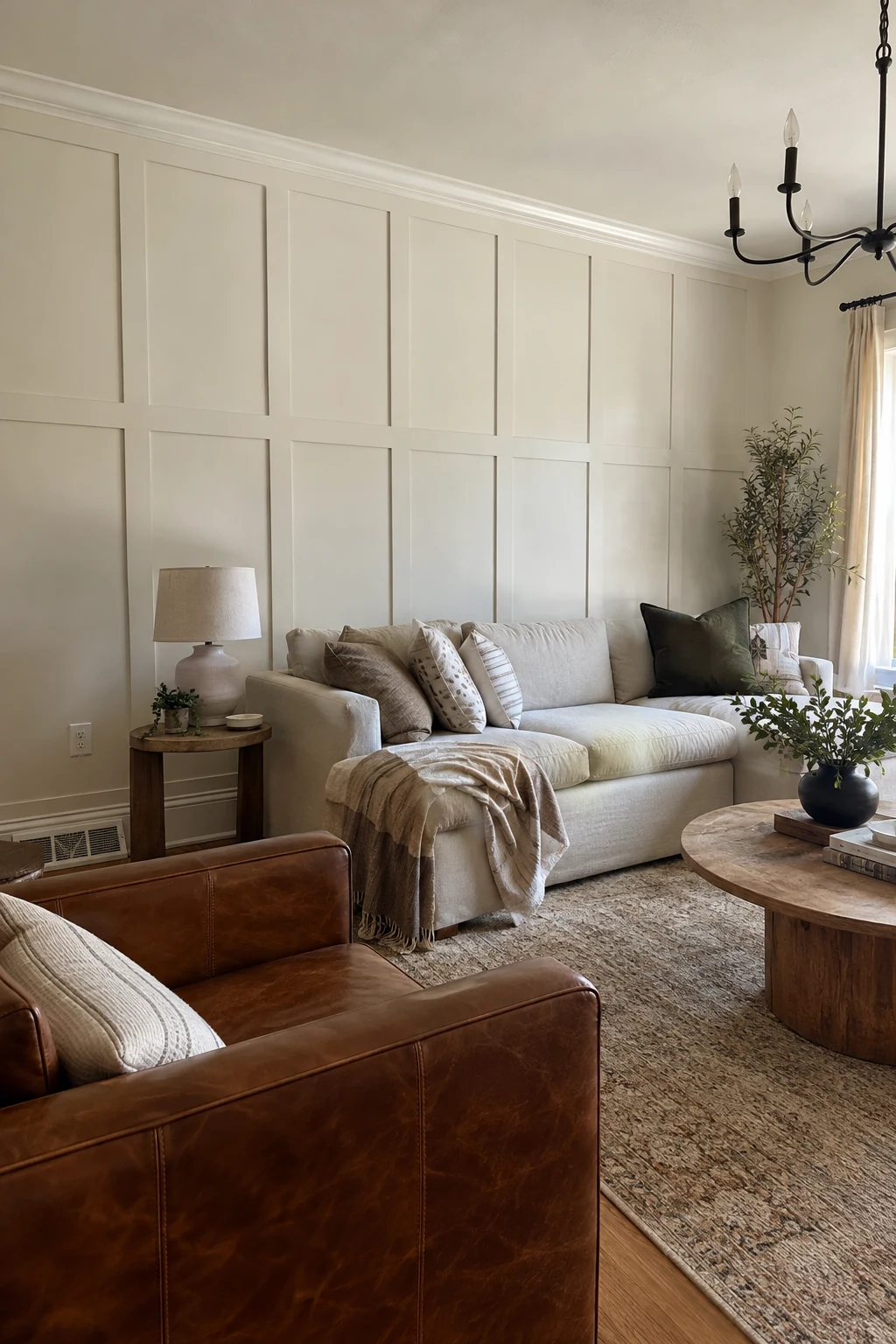
Recessed Shaker panels have cleaner edges than ornate raised molding, making them useful between modern furniture and older architecture. A warm ivory or soft stone color keeps the recesses visible without strong contrast.
Repeat the panel proportions from nearby cabinet doors or built-ins. Shared dimensions help separate elements read as one room.
15. Run Beadboard to the Ceiling
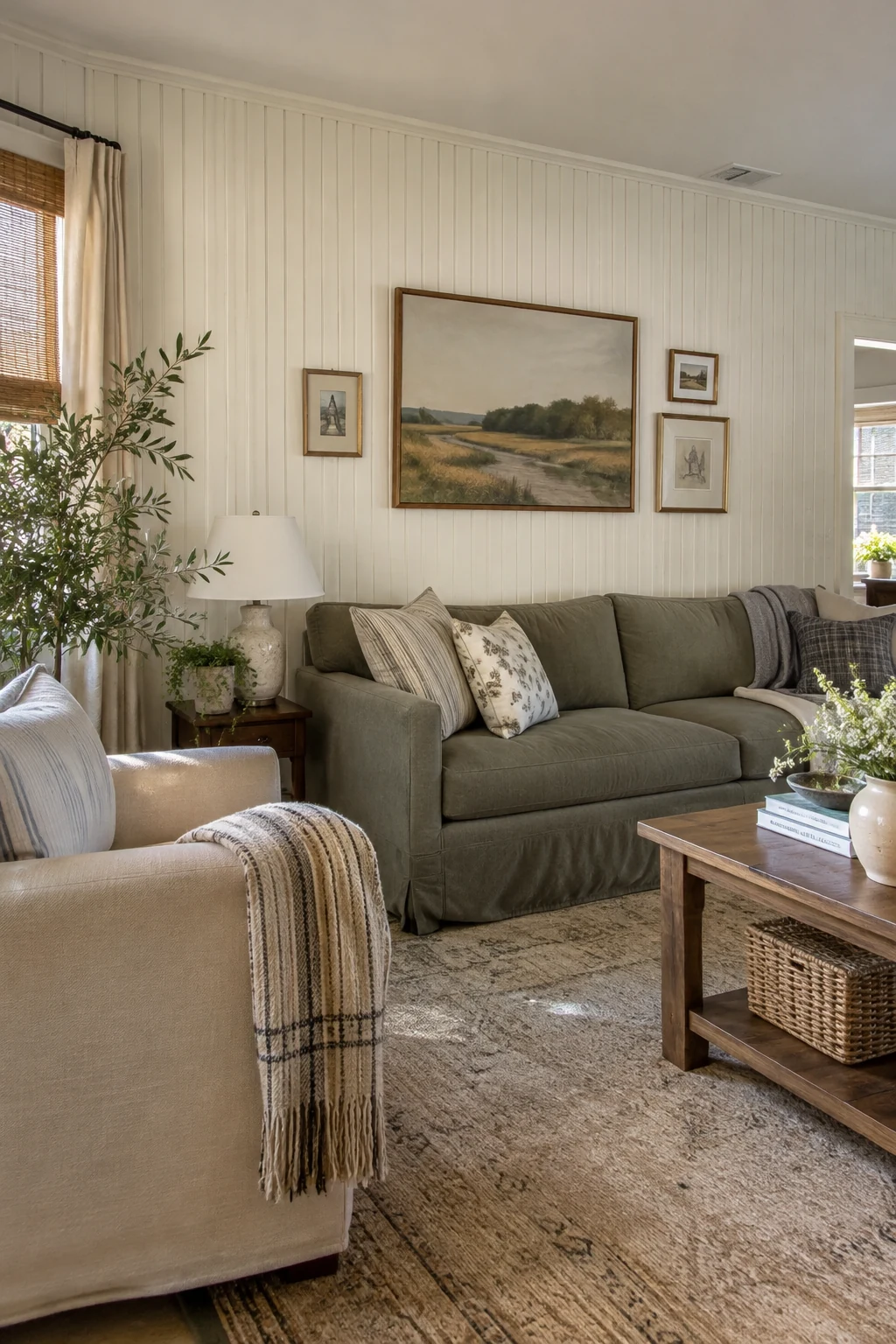
Full-wall beadboard gives a cottage living room a fine, regular texture that works well around windows and built-in benches. Use narrow grooves for a delicate scale and wider boards for a more casual effect.
Prime cut edges before installation and finish the top with a simple crown or square trim. A washable eggshell paint makes dust easier to remove from the grooves.
16. Use Wide Vertical V-Groove Boards
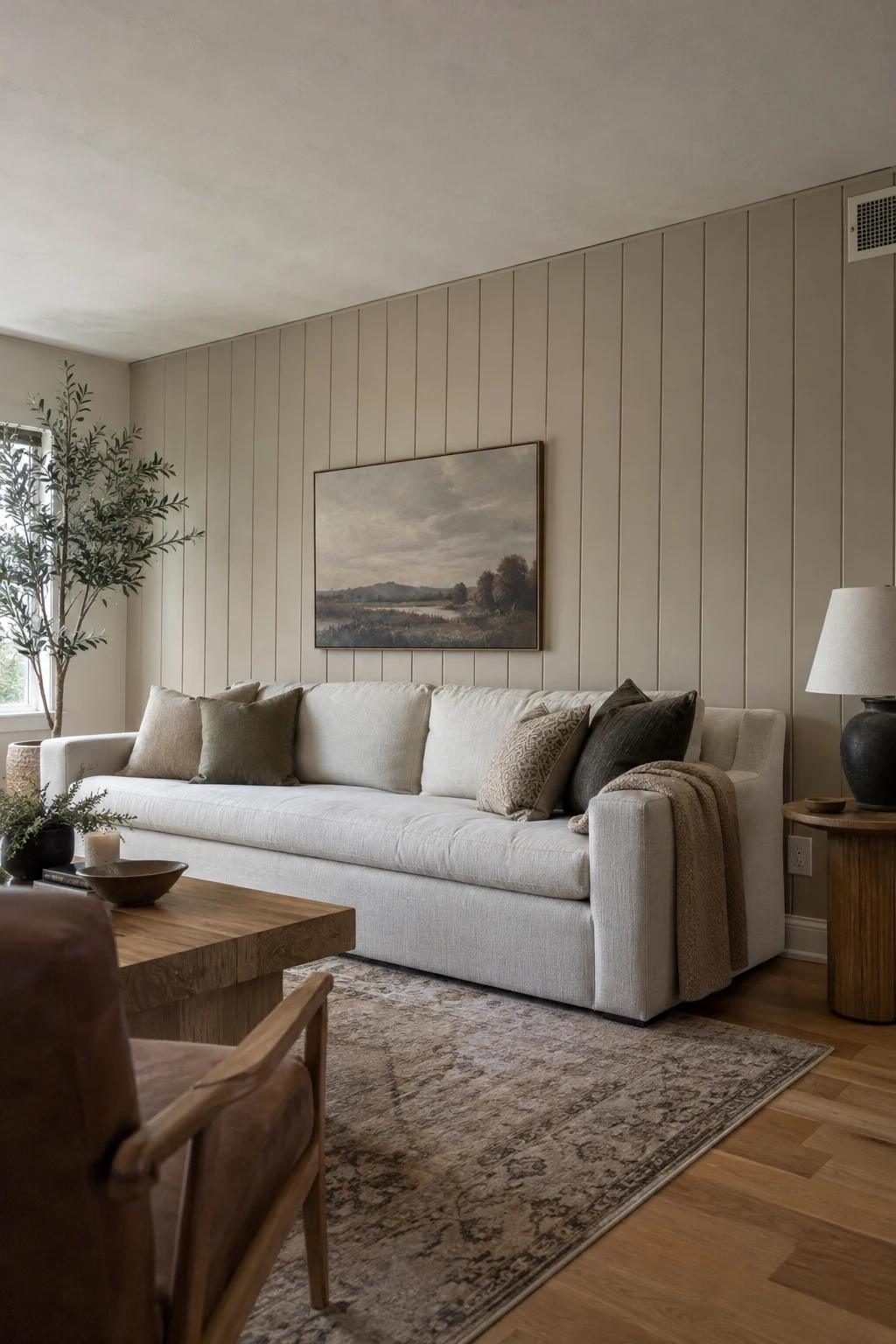
Wide V-groove boards create fewer lines than beadboard and feel calmer on a full wall. Their vertical joints can make an average ceiling appear taller, especially when the baseboard stays simple.
Paint the boards and trim in the same warm putty tone for a wrapped effect. Test the groove shadow under both daylight and lamp light before choosing the final color.
17. Turn Shiplap Vertically
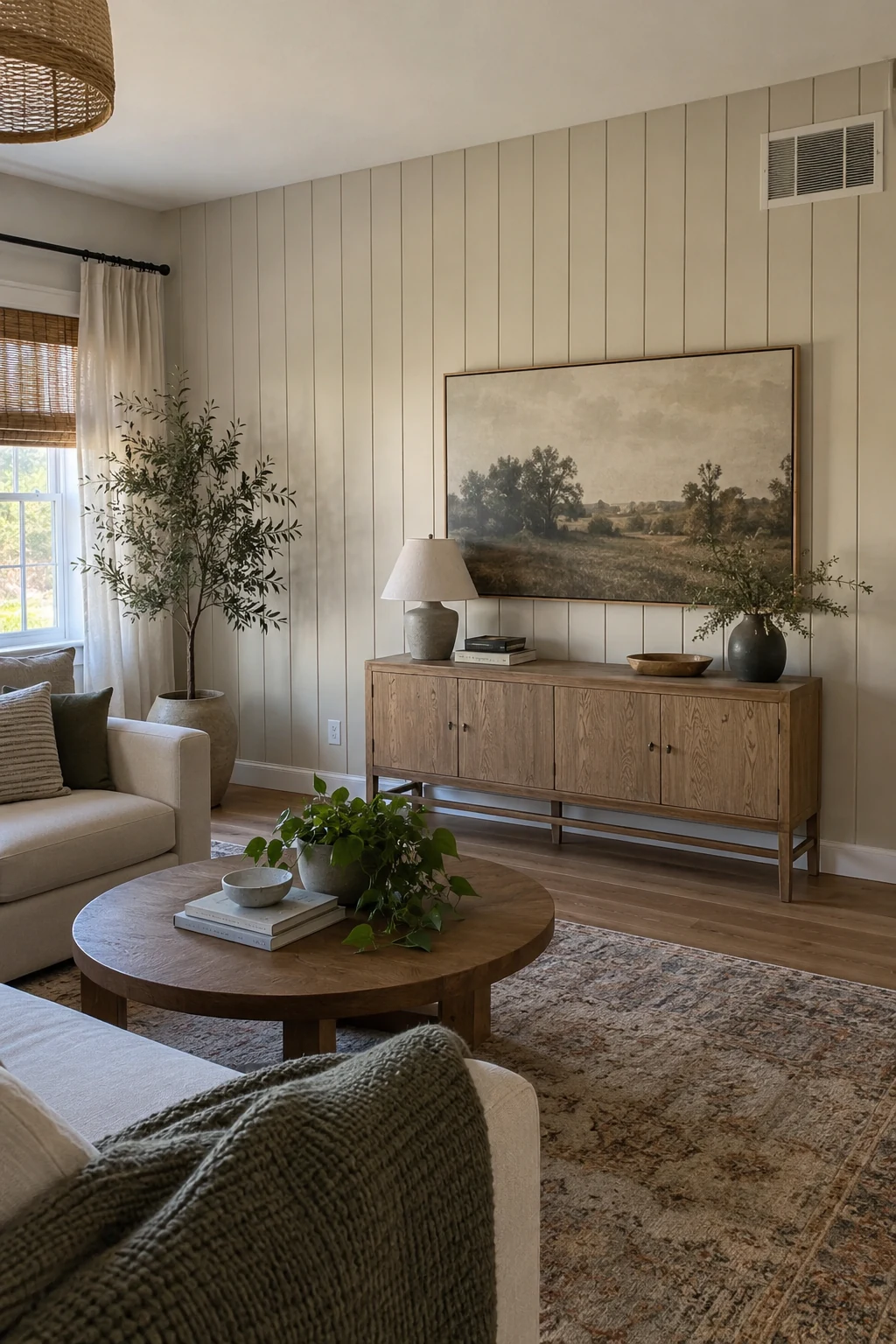
Vertical shiplap feels less overtly farmhouse than the familiar horizontal layout. Use it behind a media console or sofa where the long lines can frame furniture without competing with it.
Keep the reveal consistent and avoid deep gaps that collect dust. Pale sand, smoke, or muted green can show the joints more gently than bright white.
18. Angle Trim Into a Geometric Pattern
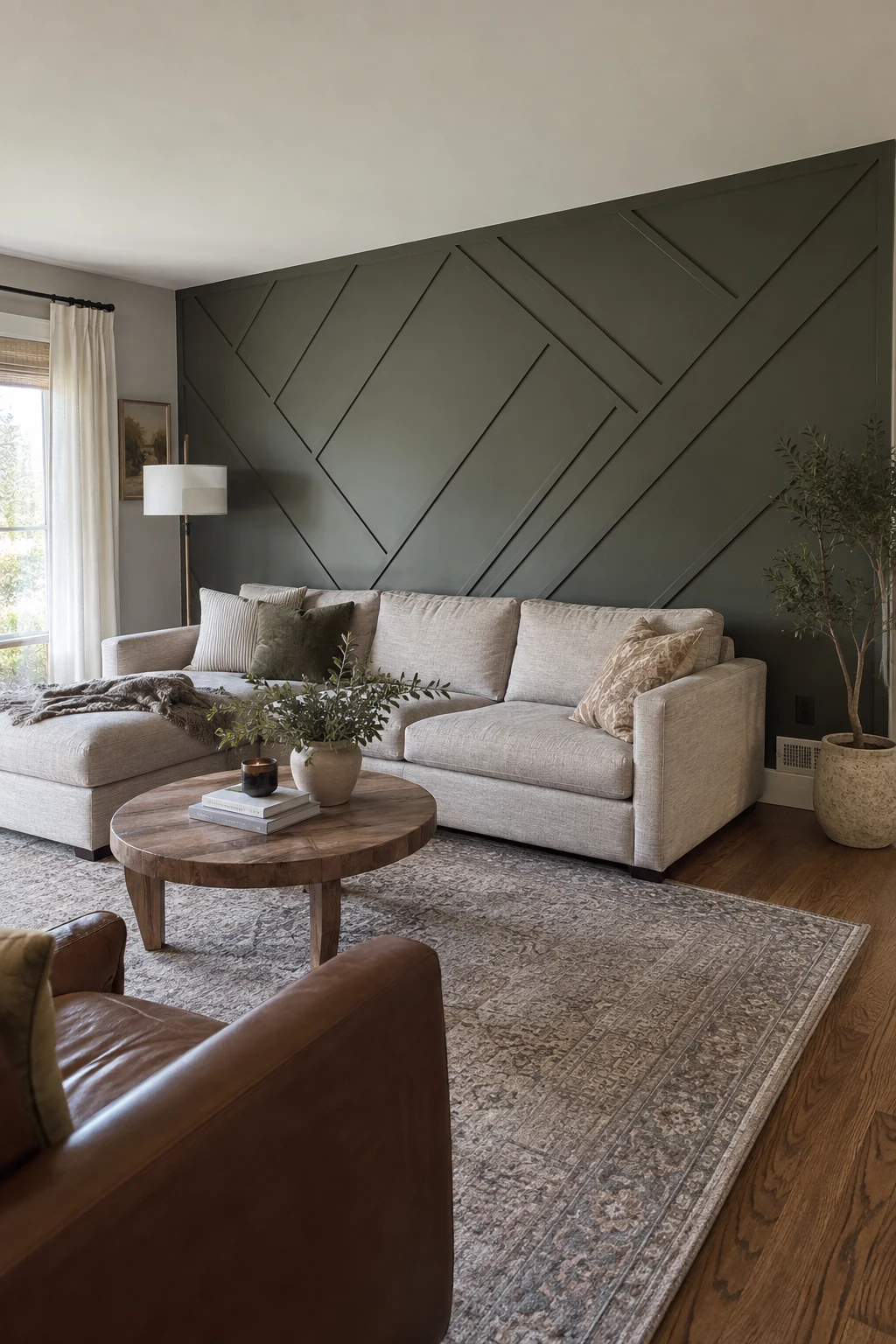
Use a few broad diagonal lines to break a large wall into asymmetric fields. Paint everything one color so the pattern comes from shadow instead of a high-contrast graphic.
Lay out the design around the sofa and sconces, then keep the busiest intersections away from outlets. This approach works best on one contained wall with simple surrounding surfaces.
Color, Fabric, and Tactile Panel Ideas
Paneling can introduce softness, color, or sound control as well as wood grain. These treatments benefit from large samples because ribbing, fabric, and reflective surfaces change noticeably as daylight moves through the room.
19. Paint Molding Deep Navy
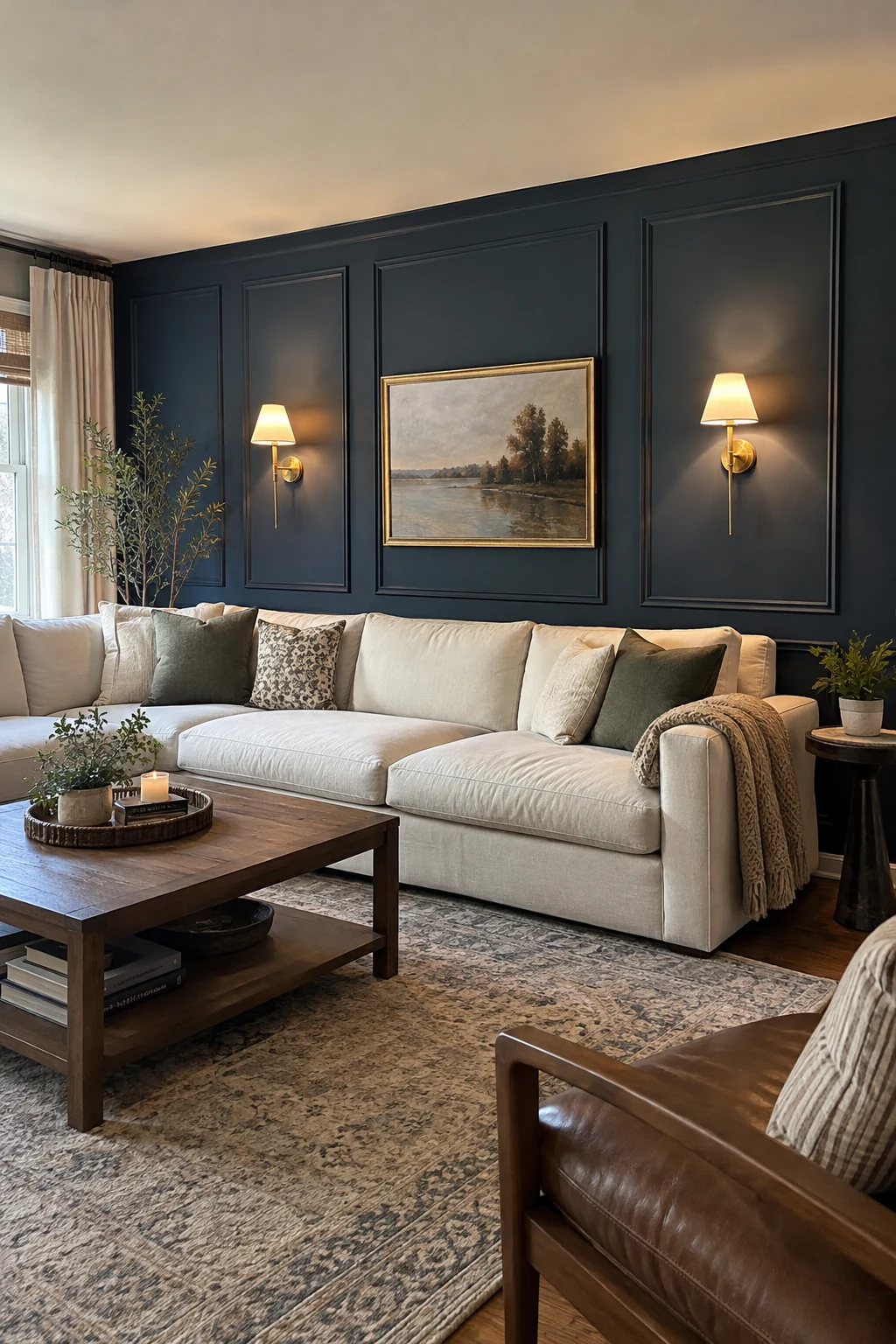
Deep navy picture molding gives a formal wall more weight and makes pale upholstery stand out. Carry the color onto the baseboard for a continuous lower edge rather than leaving a bright strip at the floor.
Use warm bulbs and aged brass or bronze nearby. Cool lighting can push navy toward flat blue and reduce the depth created by the molding shadows.
20. Drench Panels in Oxblood Red
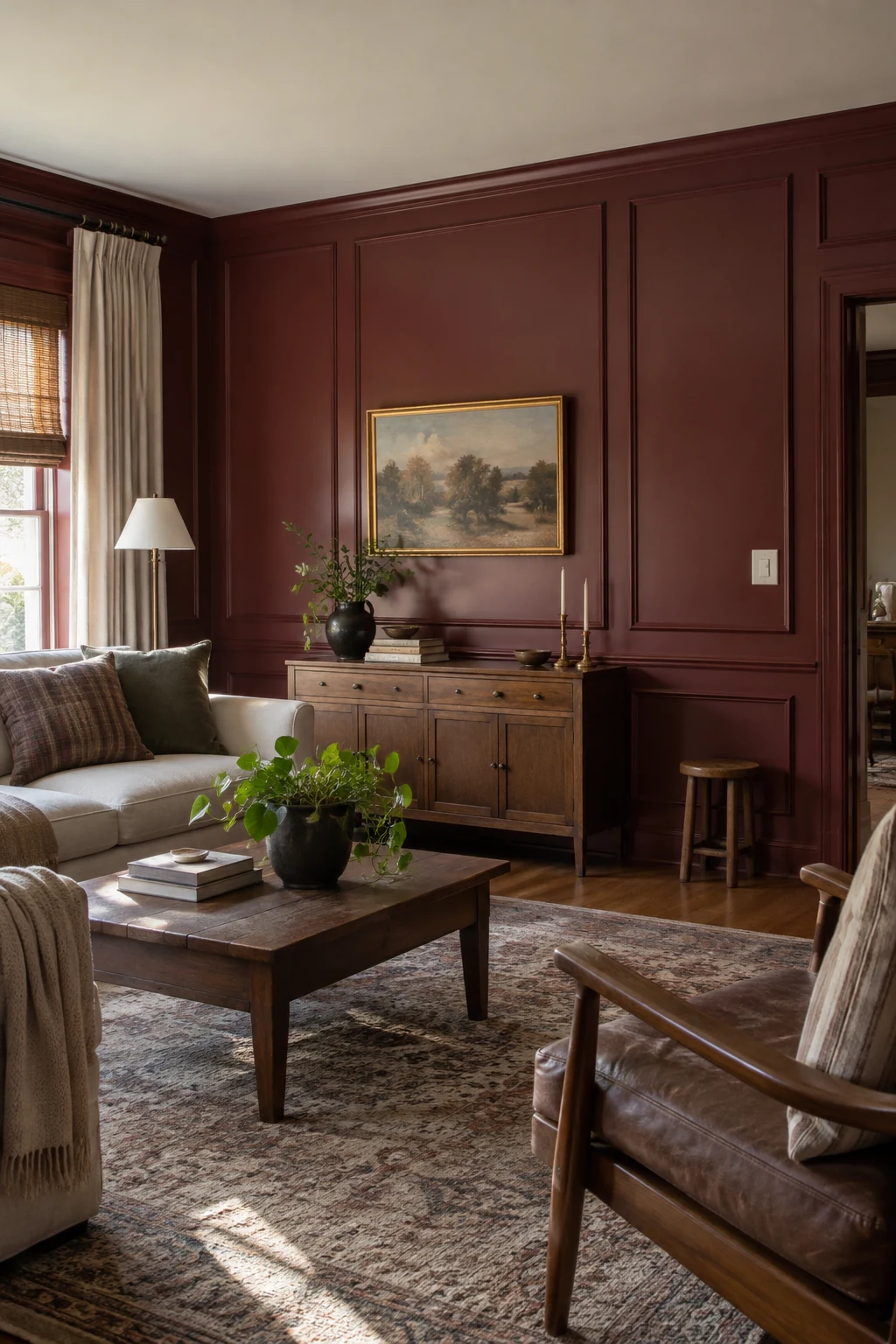
Paint paneling, trim, and the wall above in one oxblood tone for a cocooning room. The continuous color suits a north-facing lounge or evening space where depth matters more than maximum brightness.
Choose a restrained sheen and add linen, wool, and medium-toned wood. Those matte textures keep the saturated walls from feeling theatrical.
21. Pair Sage Beadboard With Wallpaper
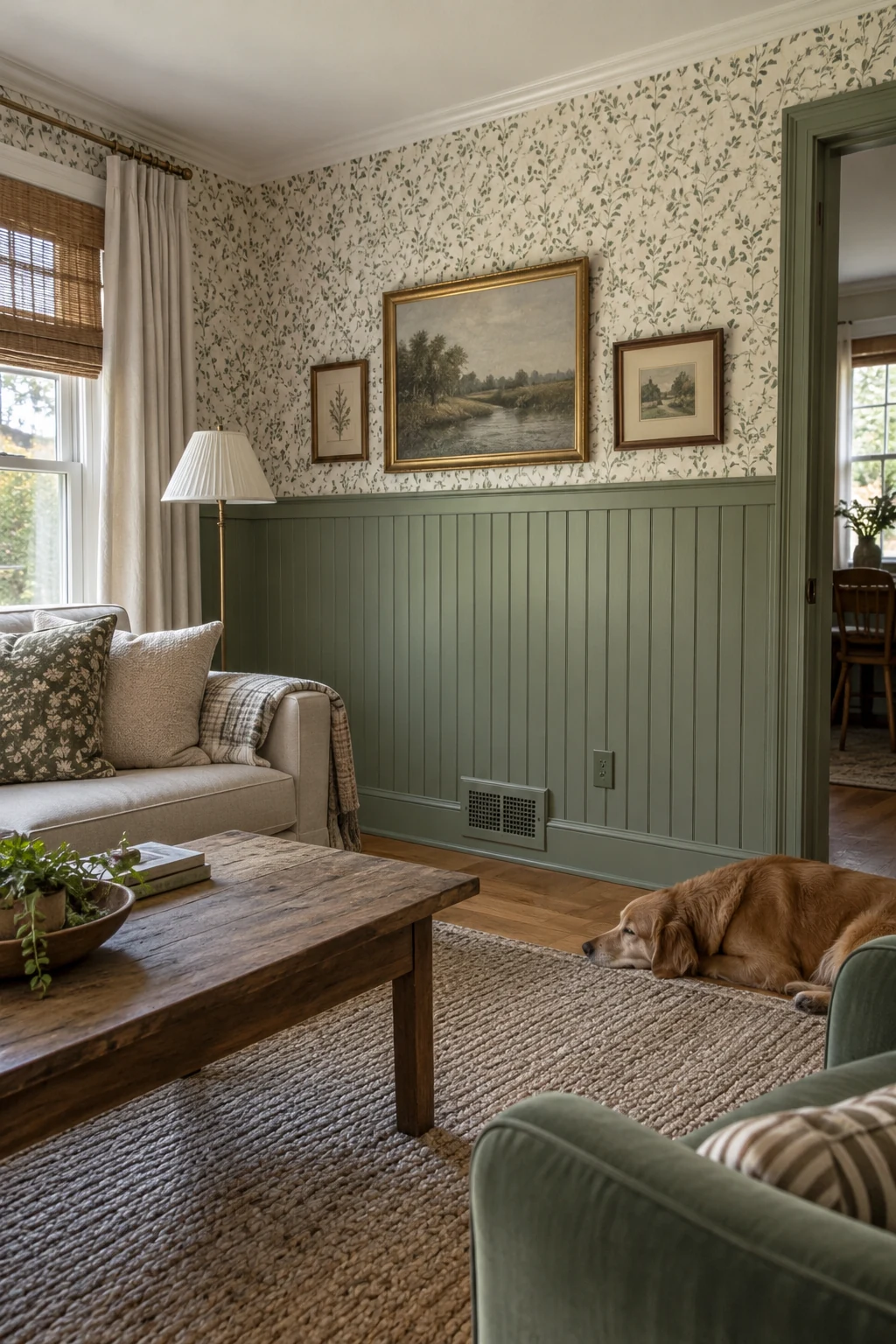
Use sage beadboard below a chair rail and a quiet botanical wallpaper above. The painted lower wall handles scuffs while the paper introduces pattern where furniture is less likely to touch it.
Pull the beadboard color from a small leaf or stem in the wallpaper. A shared undertone makes the two finishes feel planned instead of divided.
22. Choose Taupe Micro-Fluted Panels
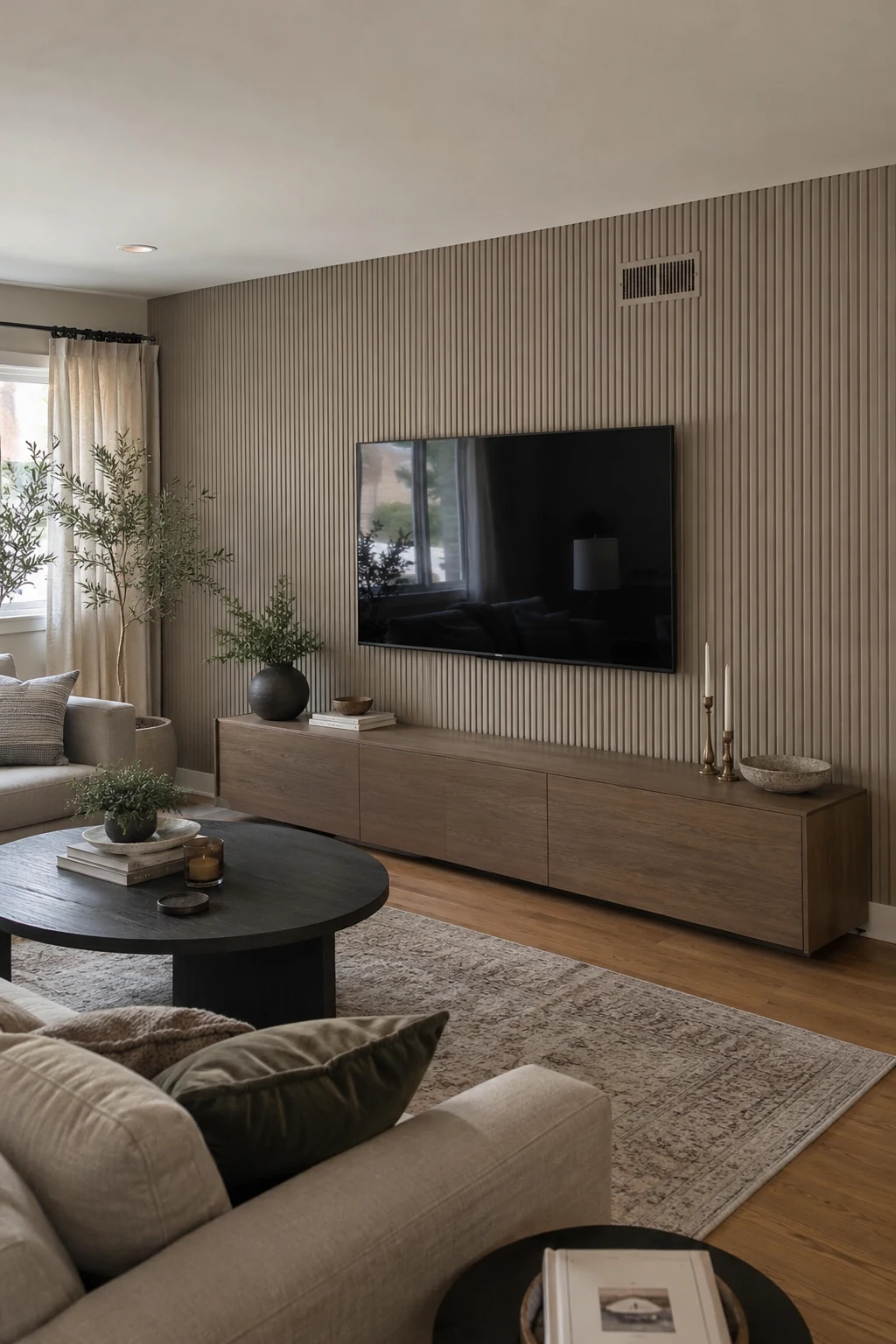
Fine fluting adds shadow without the strong stripes of wide timber slats. A matte taupe finish works behind curved furniture and keeps the texture visible in both bright and low light.
Use full panels where possible because seams can interrupt the narrow rhythm. Vacuum with a soft brush attachment before repainting or touching up the grooves.
23. Fill Molding Frames With Limewash
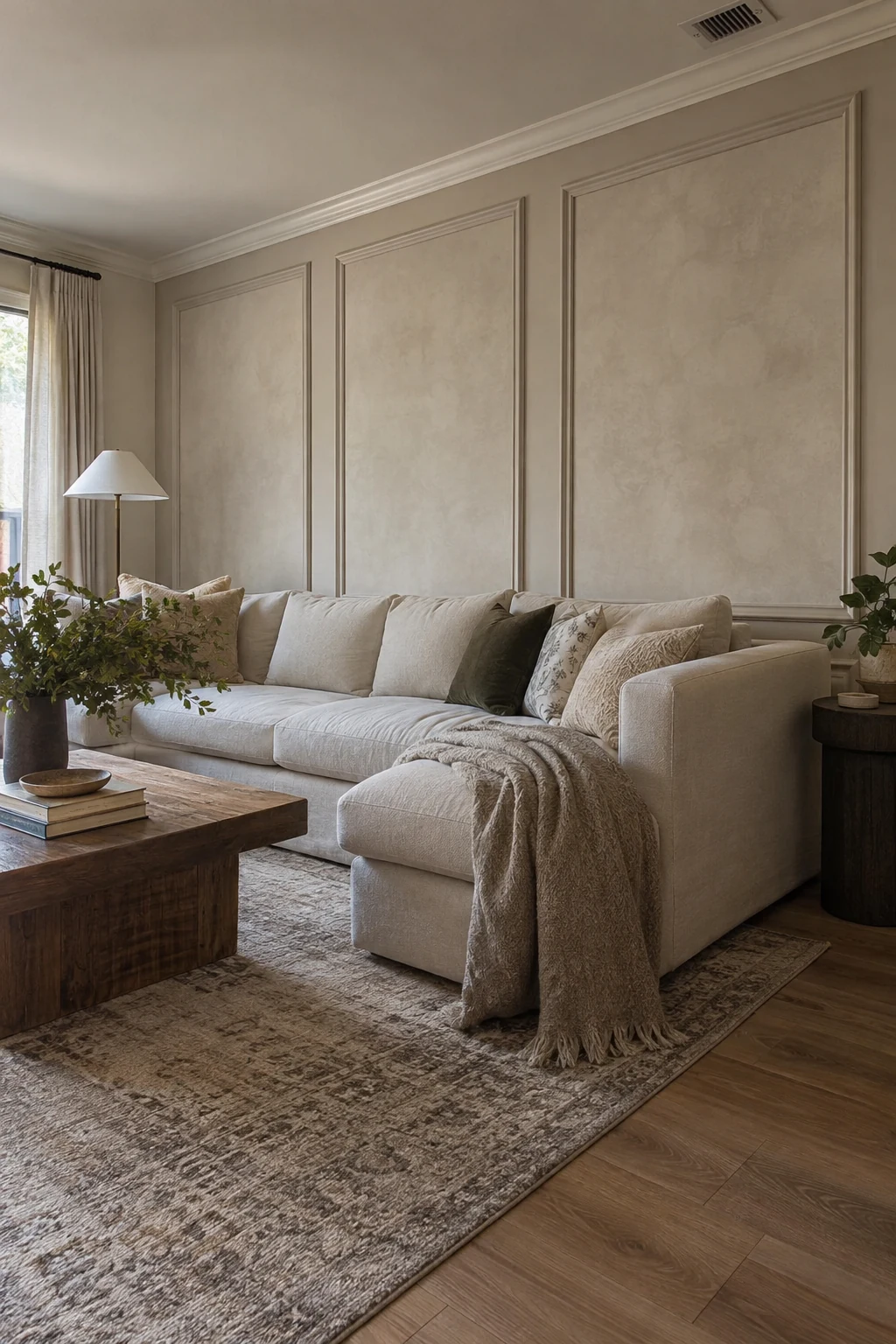
Apply limewash inside large molding frames while keeping the rails in a solid related color. The cloudy mineral finish creates movement, and the crisp trim keeps it from reading as an unfinished paint effect.
Prepare the wall for the chosen product and make a sample board first. Natural variation is part of the finish, so avoid trying to correct every lighter patch.
24. Inset Grasscloth Inside Molding
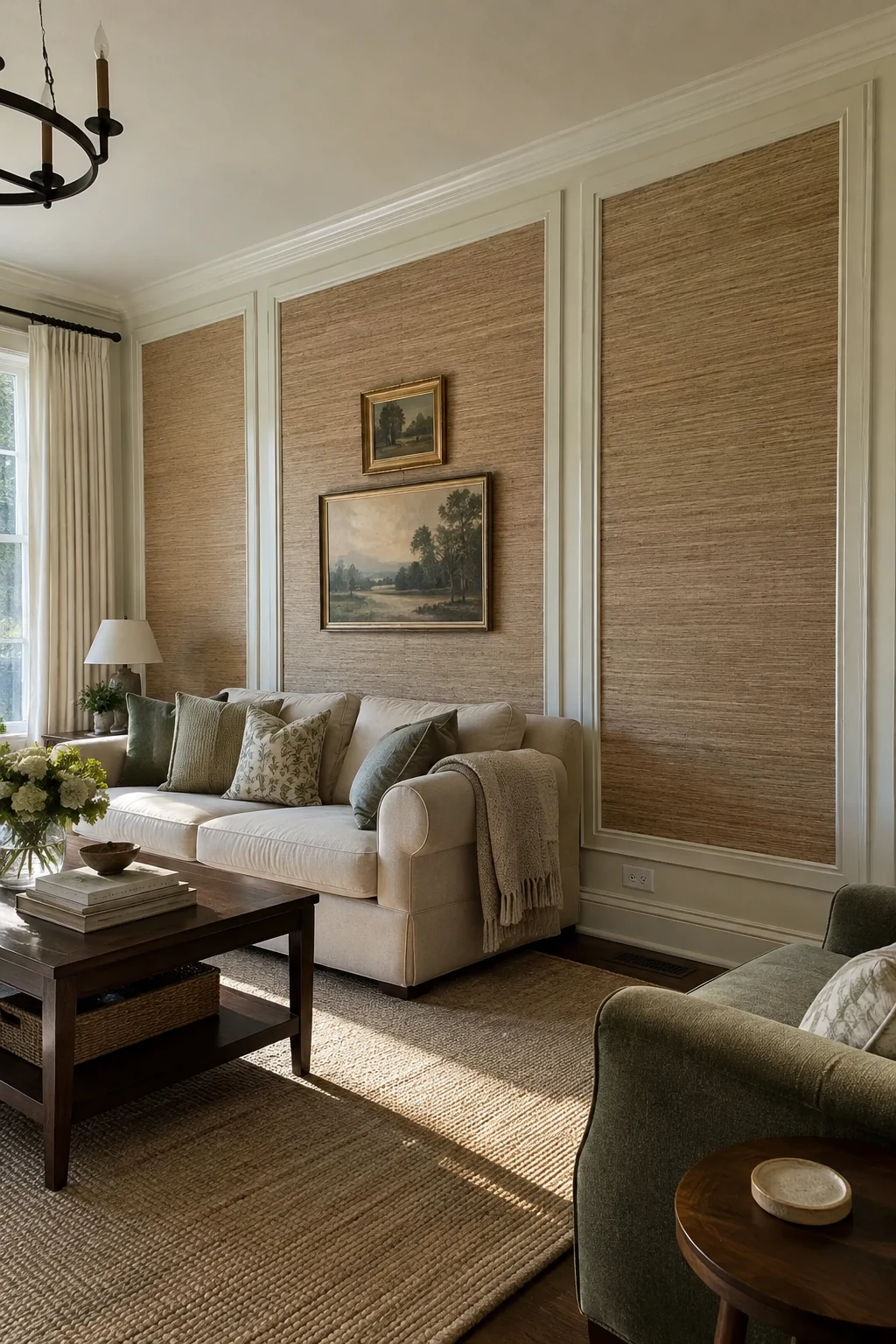
Frame natural grasscloth with broad painted molding to combine woven texture with traditional proportions. The trim protects exposed paper edges and gives each drop a deliberate boundary.
Place this treatment away from damp exterior walls and strong splash zones. Grasscloth seams remain visible, so plan them as part of the panel rhythm.
25. Cover One Wall in Cork Tiles
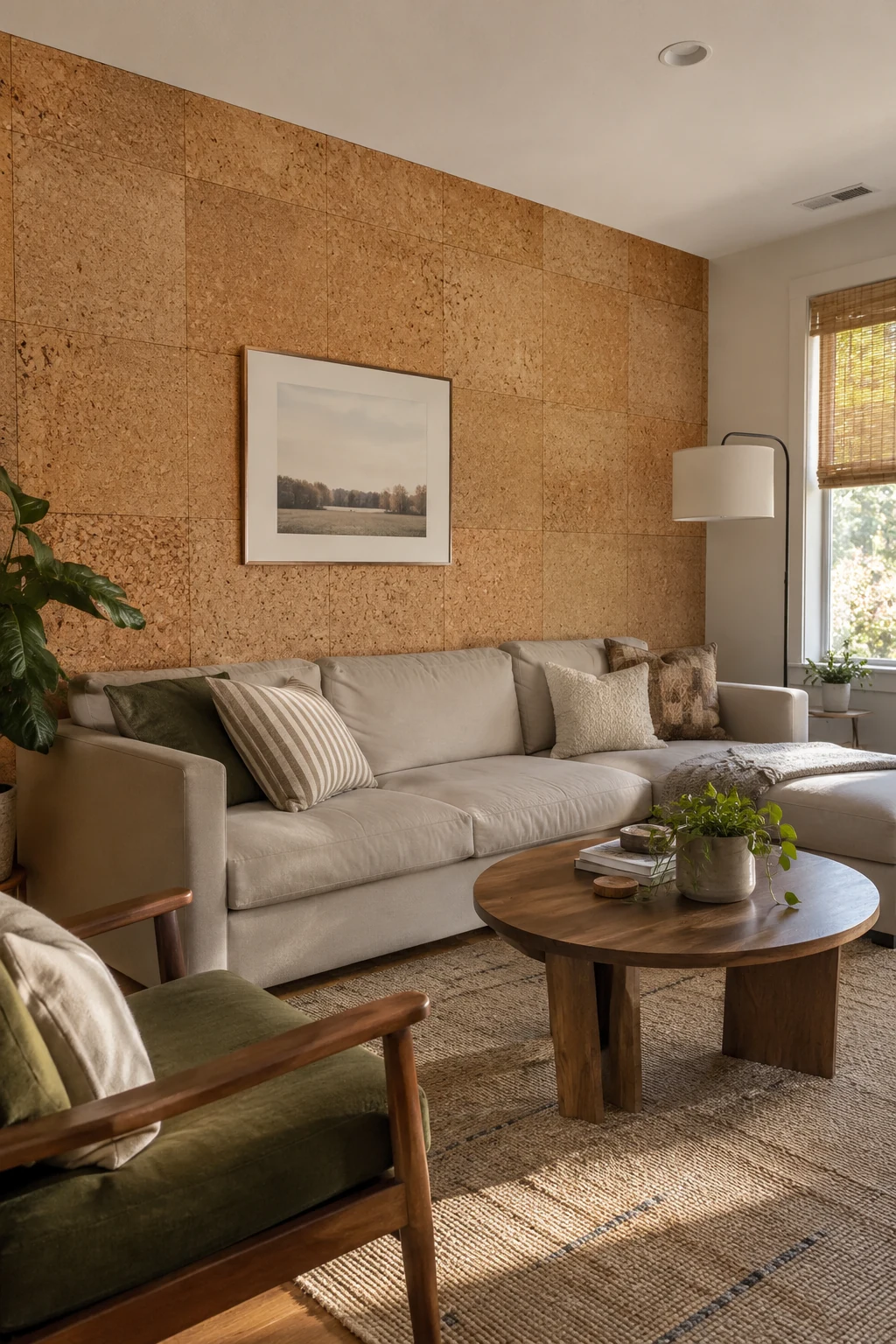
Large cork tiles add warmth and a softly absorbent surface behind a reading or music area. Choose a restrained natural pattern so the joints and color variation remain calm across the wall.
Seal the cork if the manufacturer recommends it, and protect the lower edge from pets or furniture abrasion. Removable framed cork panels offer a smaller commitment for renters.
26. Build Upholstered Linen Panels
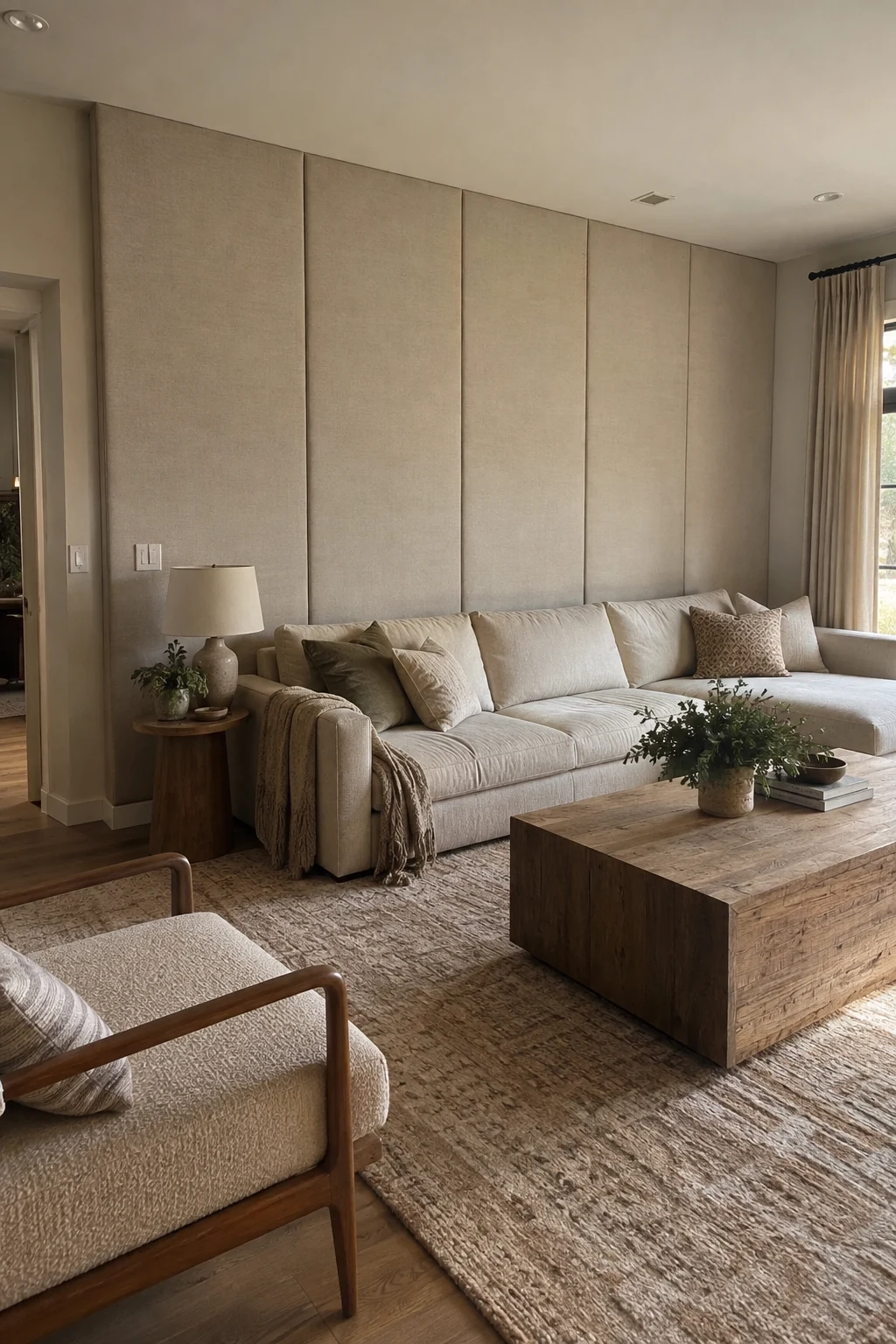
Mount large padded linen panels behind the sofa to soften sound and add a tailored backdrop. Keep the padding shallow and the seams straight so the wall feels architectural rather than like an oversized headboard.
Use a tightly woven performance fabric and a removable mounting system. Vacuum the panels periodically and keep them clear of fireplaces, radiators, and supply vents.
27. Try Channel-Tufted Velvet Panels
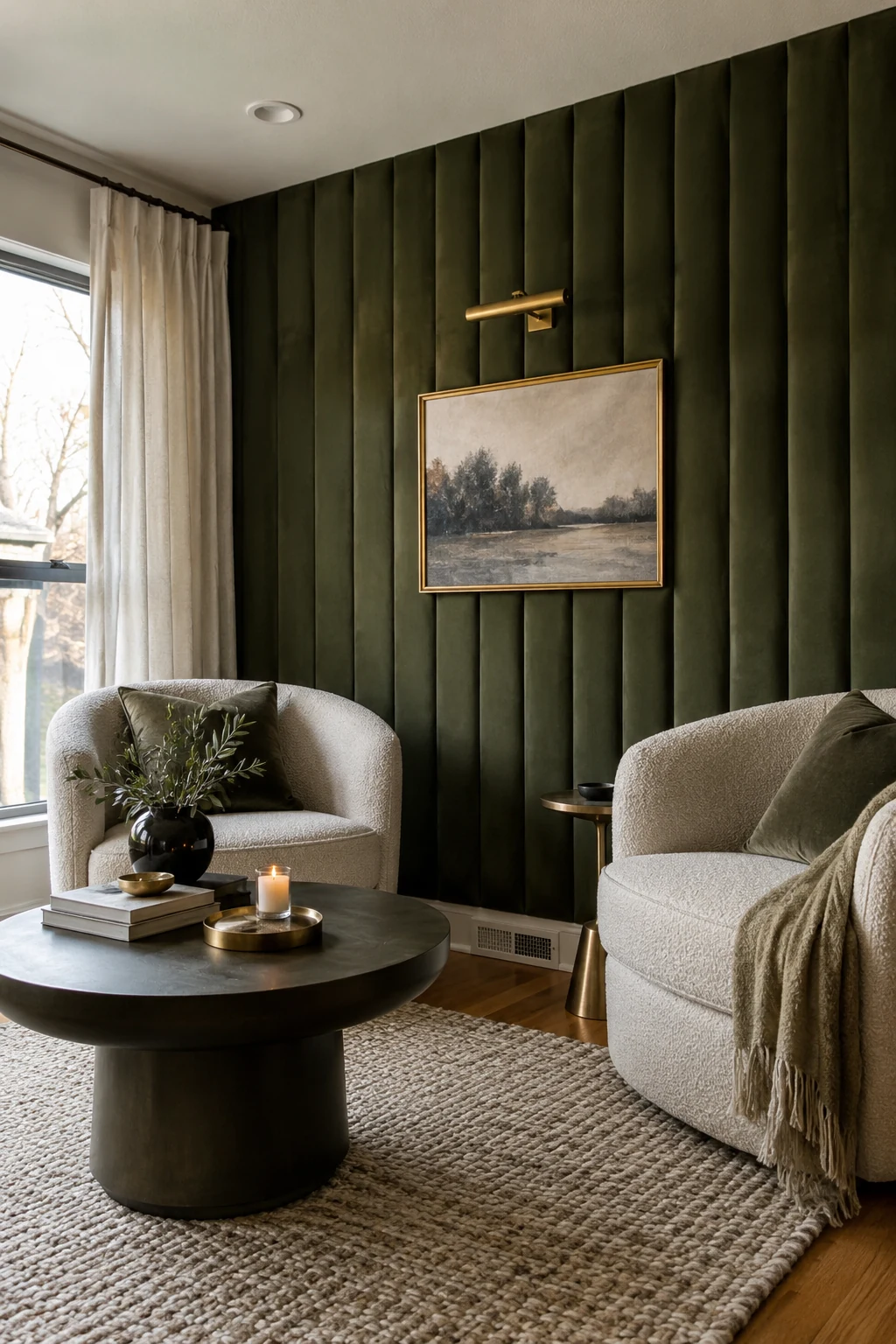
Use vertical channel-tufted velvet on a small conversation nook or bar wall rather than every surface. The plush channels absorb light and give the area a distinct purpose.
Choose commercial-grade upholstery fabric and shallow channels that do not steal floor space. A matching paint color on adjacent walls reduces the visual break.
Stone, Plaster, and Mixed-Material Walls
Heavier-looking materials need breathing room. Use them where the architecture already offers a focal point, and check structural, fire, moisture, and mounting requirements before treating decorative panels like ordinary trim.
28. Clad the Fireplace in Limestone
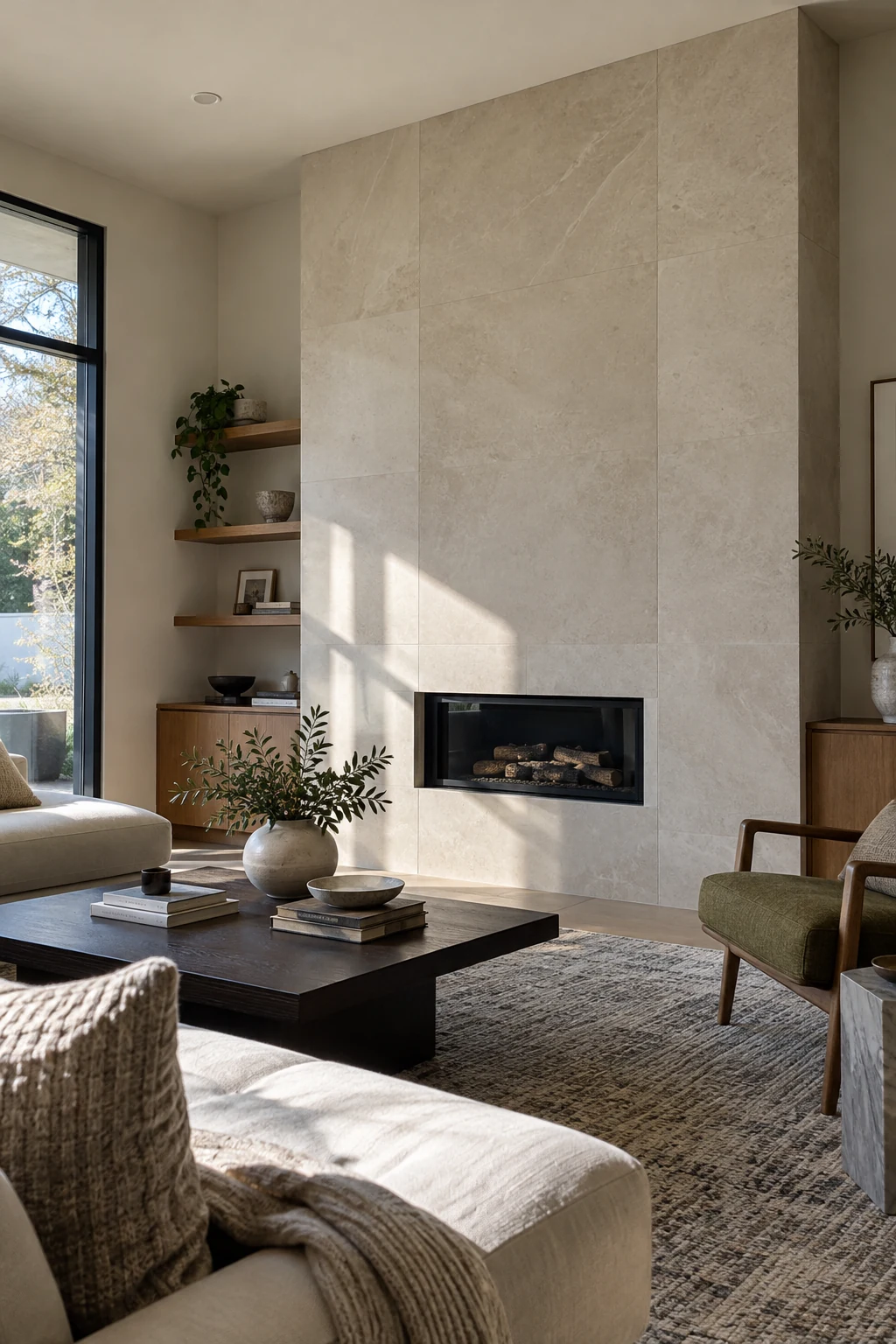
Large honed limestone panels give a fireplace wall quiet scale with fewer grout lines than small tile. Choose slabs or approved thin panels with restrained variation so the stone does not compete with the room’s main furnishings.
Have the substrate, weight, anchors, and fire clearances reviewed for the specific system. Align major joints with the mantel, hearth, or built-in shelves.
29. Use Thin Brick Panel Sections
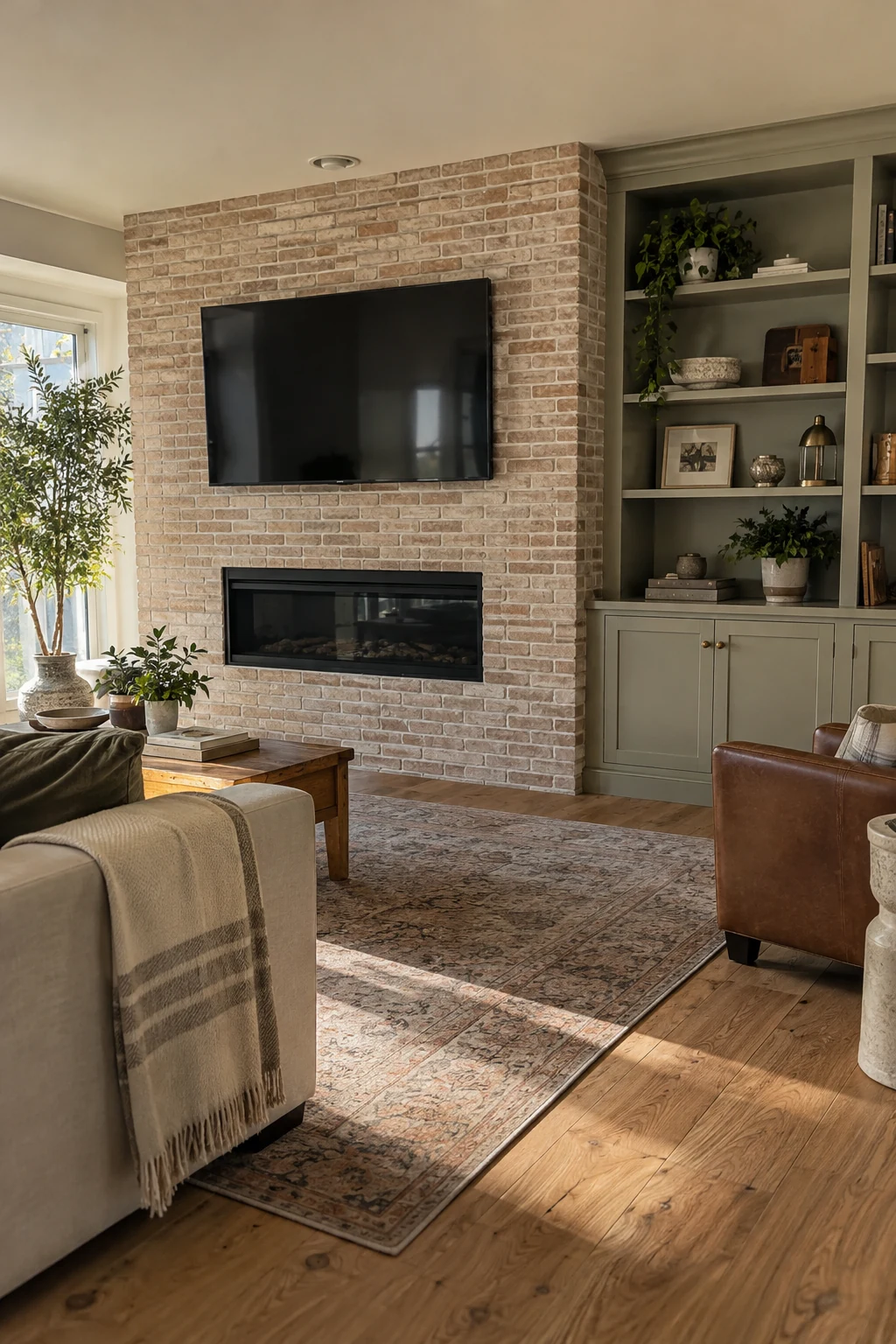
Thin brick adds texture without the depth of full masonry. A pale buff or softly limewashed finish works with both industrial and cottage furniture when mortar joints stay consistent.
Use brick on a contained wall or fireplace return and finish outside corners carefully. Confirm the panel system is rated for the location, especially near heat or an exterior wall.
30. Add Terrazzo-Look Composite Panels
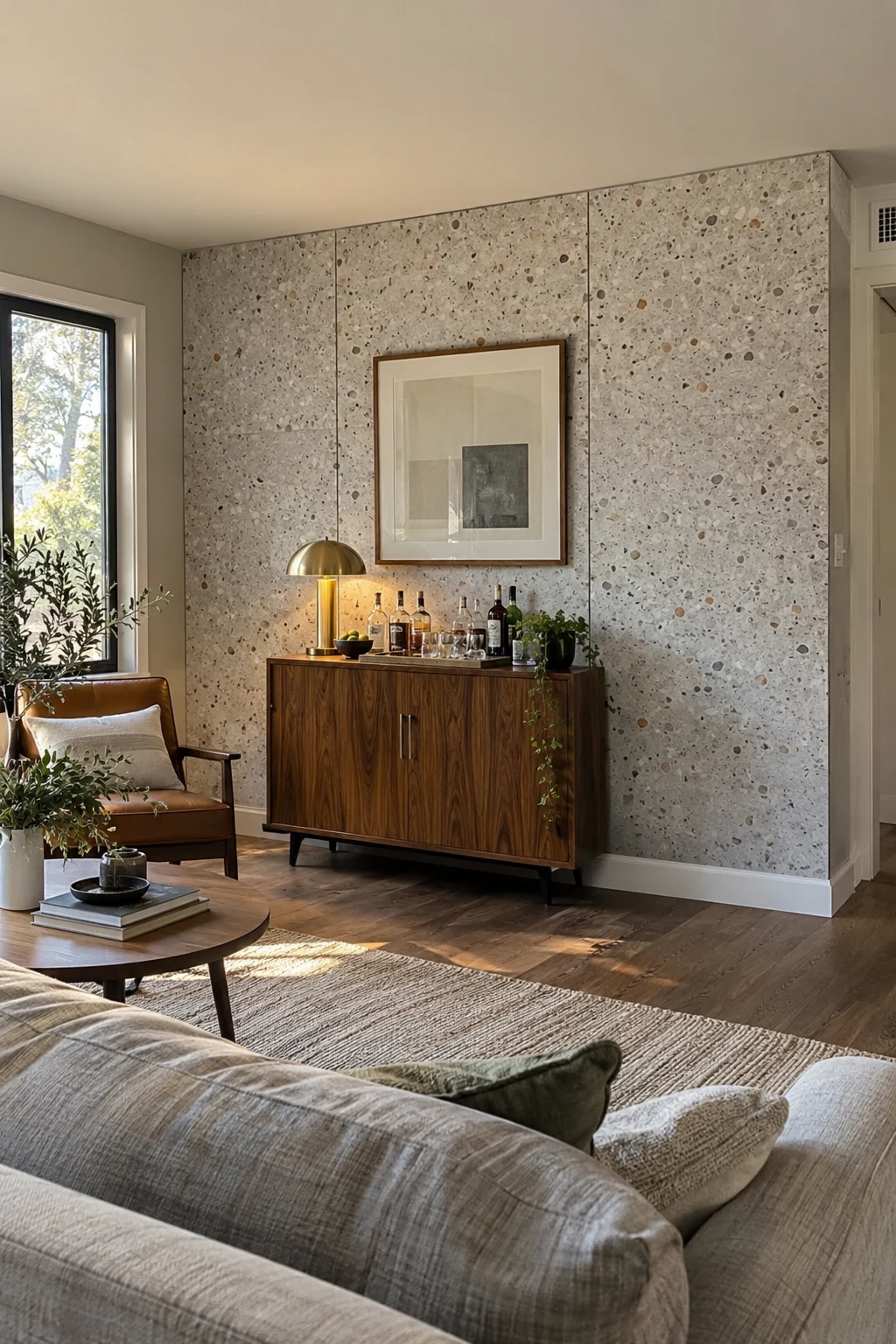
Use terrazzo-look composite panels behind a small bar cabinet or display niche for controlled pattern. Select a muted aggregate palette drawn from the floor, upholstery, and cabinet hardware.
Keep seams aligned with cabinet edges and avoid covering an entire long wall. A focused installation reads as a purposeful material moment and is easier to maintain.
31. Install Ribbed Plaster Panels
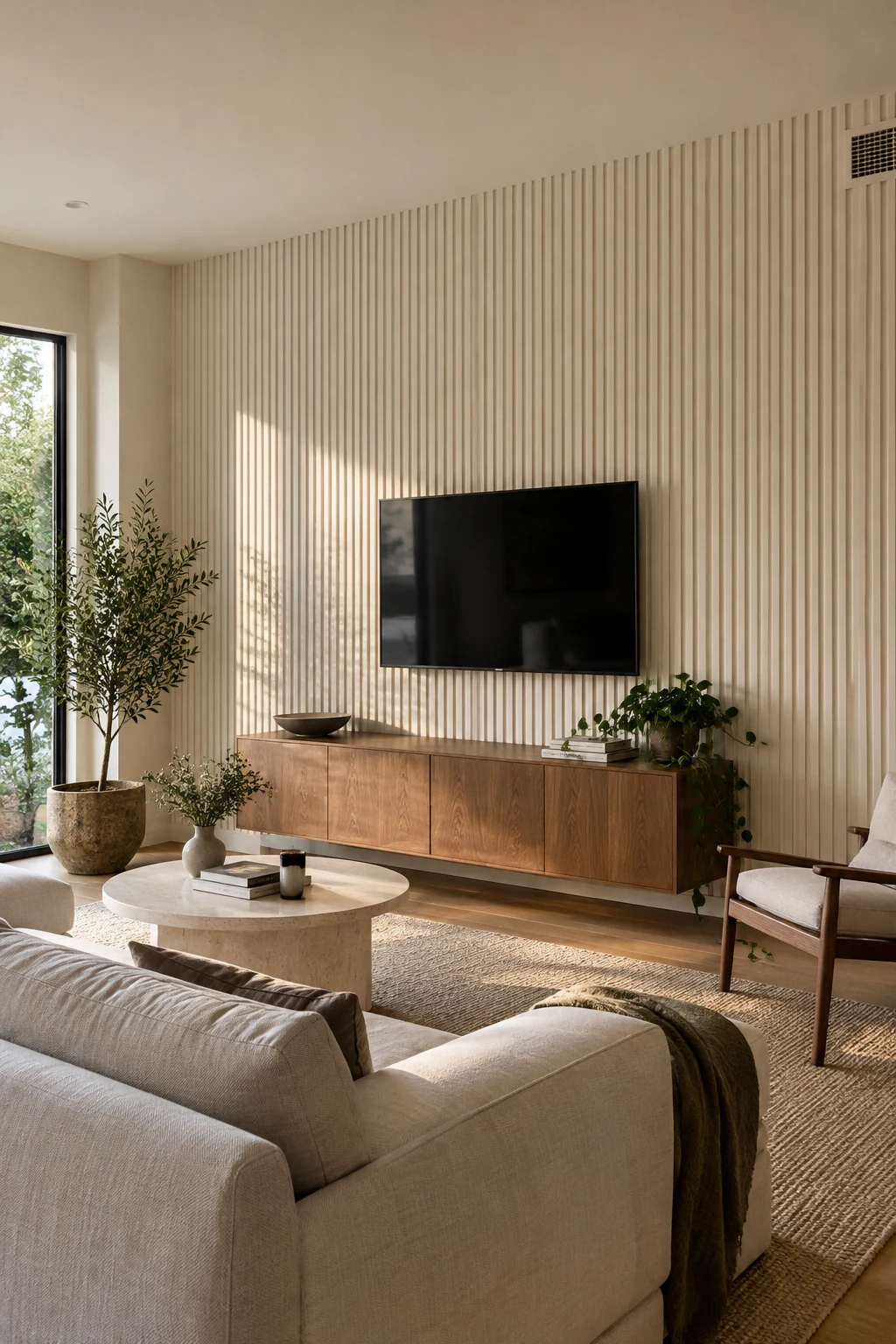
Ribbed plaster panels create fine shadow lines while keeping the surface monochromatic. They look strongest on a wall with side lighting, where each ridge can register without a contrasting color.
Use an installer familiar with joint finishing so repeated modules do not remain obvious. Protect crisp ridges near walkways from bags, toys, and furniture corners.
32. Mount Concrete-Look Large Panels
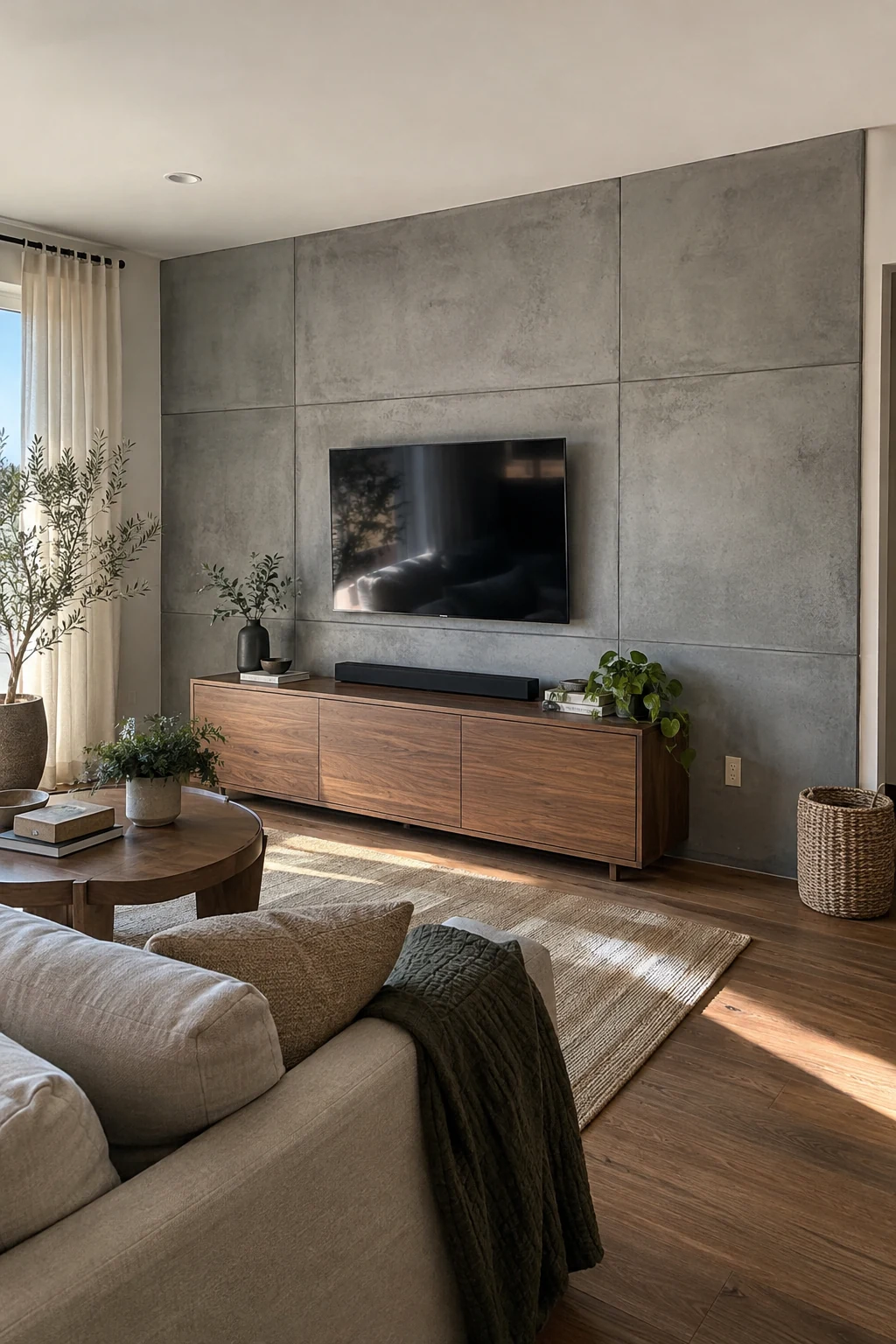
Large concrete-look panels bring a quiet industrial surface without pouring a structural wall. Warm wood, boucle, and woven rugs keep the gray finish from dominating the room.
Choose panels with varied but believable markings and a low sheen. Repeat joint widths deliberately, because uneven gaps quickly reveal the modular system.
33. Frame Woven Cane Insets
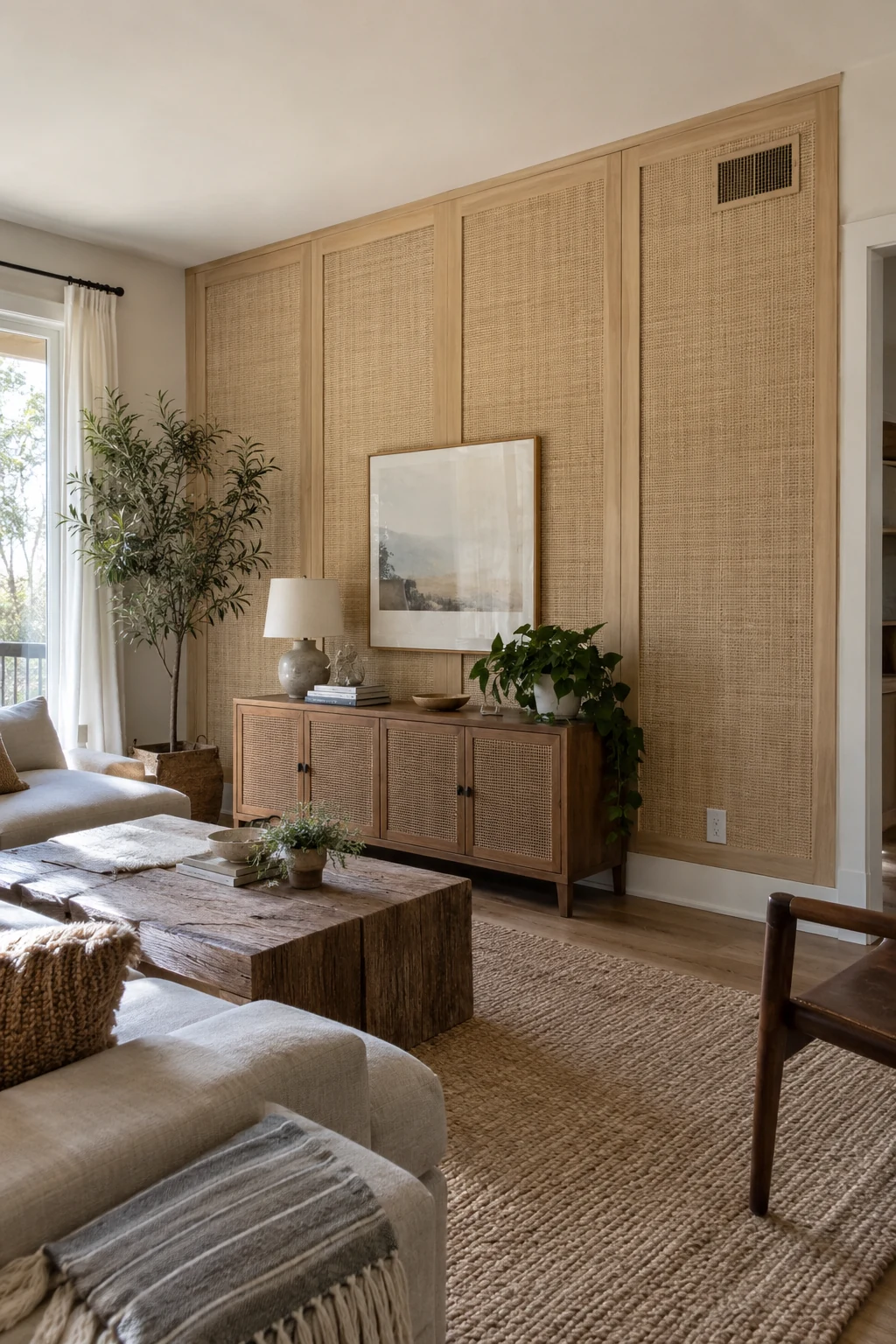
Set woven cane inside shallow oak frames for a light, breathable wall treatment. The pattern suits a reading area or sunroom side of the living room where natural texture already appears in chairs and baskets.
Back the cane with a matching solid panel if the wall color shows unevenly through it. Keep the weave away from high-contact paths where it may snag.
34. Insert Antiqued Mirror Panels
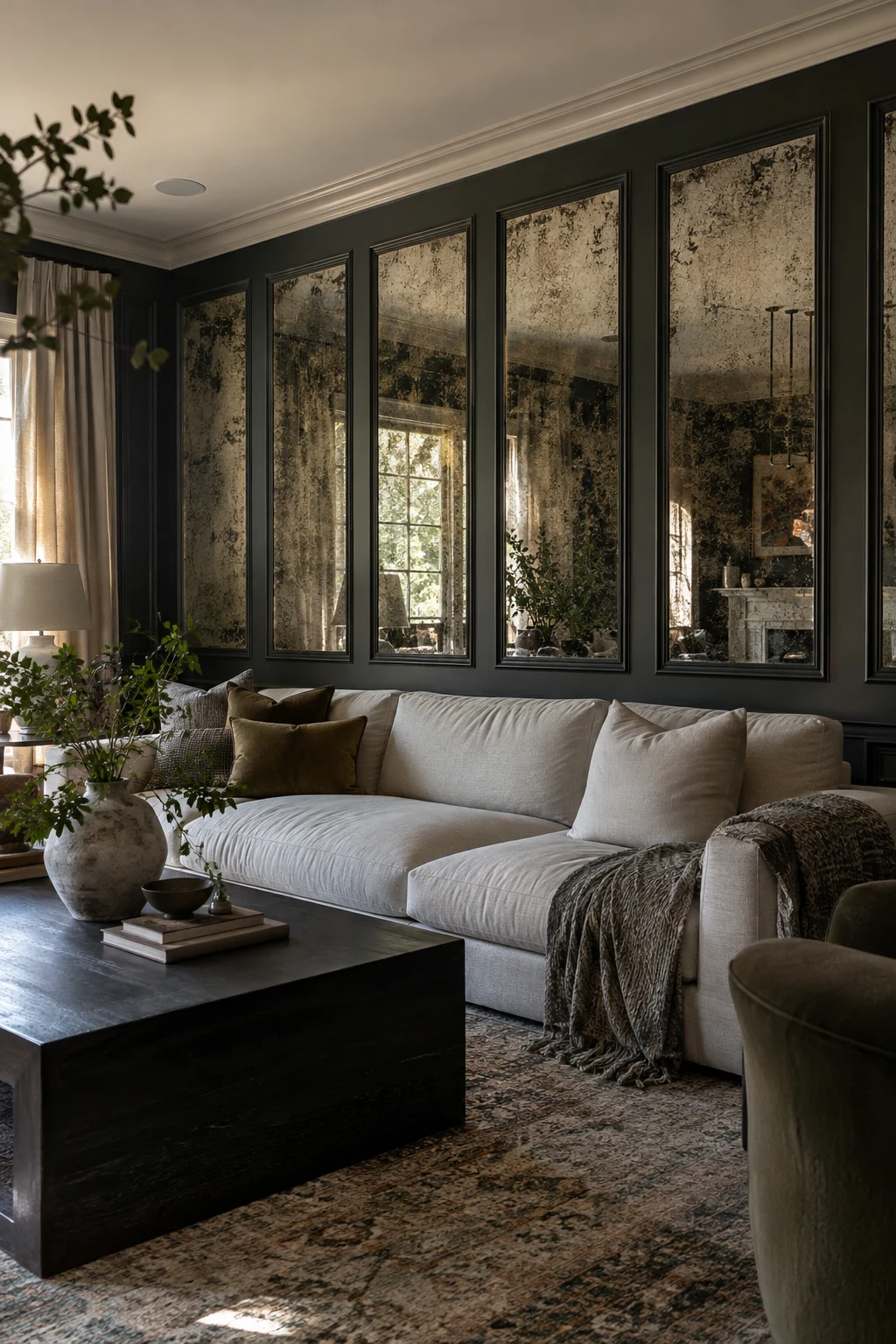
Antiqued mirror inside broad molding can brighten a dim wall without the hard reflection of new mirror. Use a few large panels so the mottled finish feels intentional and remains easy to clean.
Position panels where they reflect windows or lamps rather than the television. Safety backing and professional installation are important for large pieces.
35. Inlay Brass Strips Into Wood
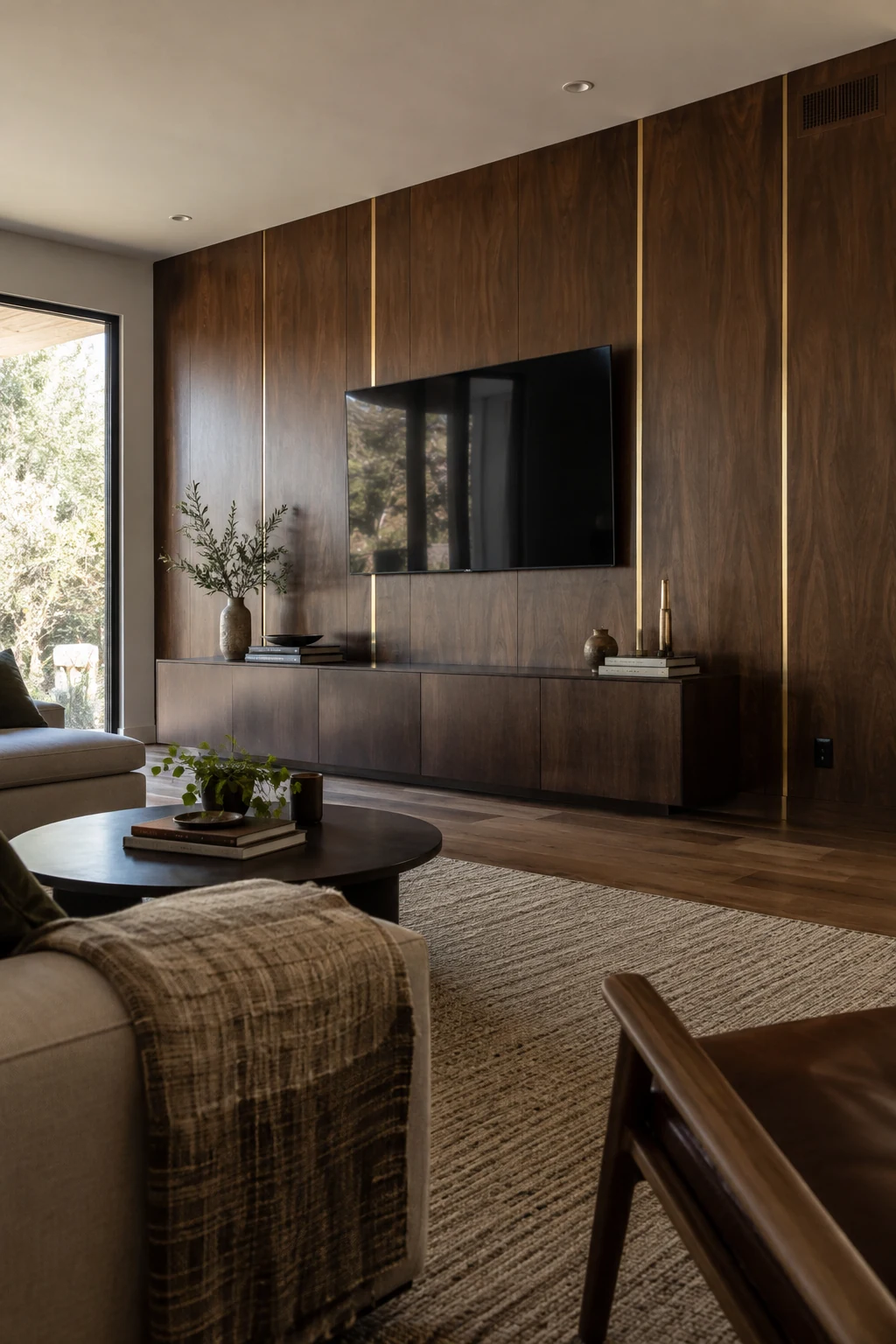
Separate wide walnut panels with narrow brushed-brass strips for a precise, furniture-like wall. Keep the metal lines sparse and align them with shelves, sconces, or cabinet divisions.
Choose a brushed or aged finish that tolerates fingerprints. Flush inlays are easier to dust than proud strips and reduce sharp edges near seating.
Smart Paneling for Layouts, Storage, and Rentals
The most useful paneling can solve a layout problem: defining a TV zone, hiding storage, protecting a high-touch wall, or adding a removable layer in a rental. Measure furniture and circulation before deciding where the treatment begins and ends.
36. Add a Slim Display Ledge
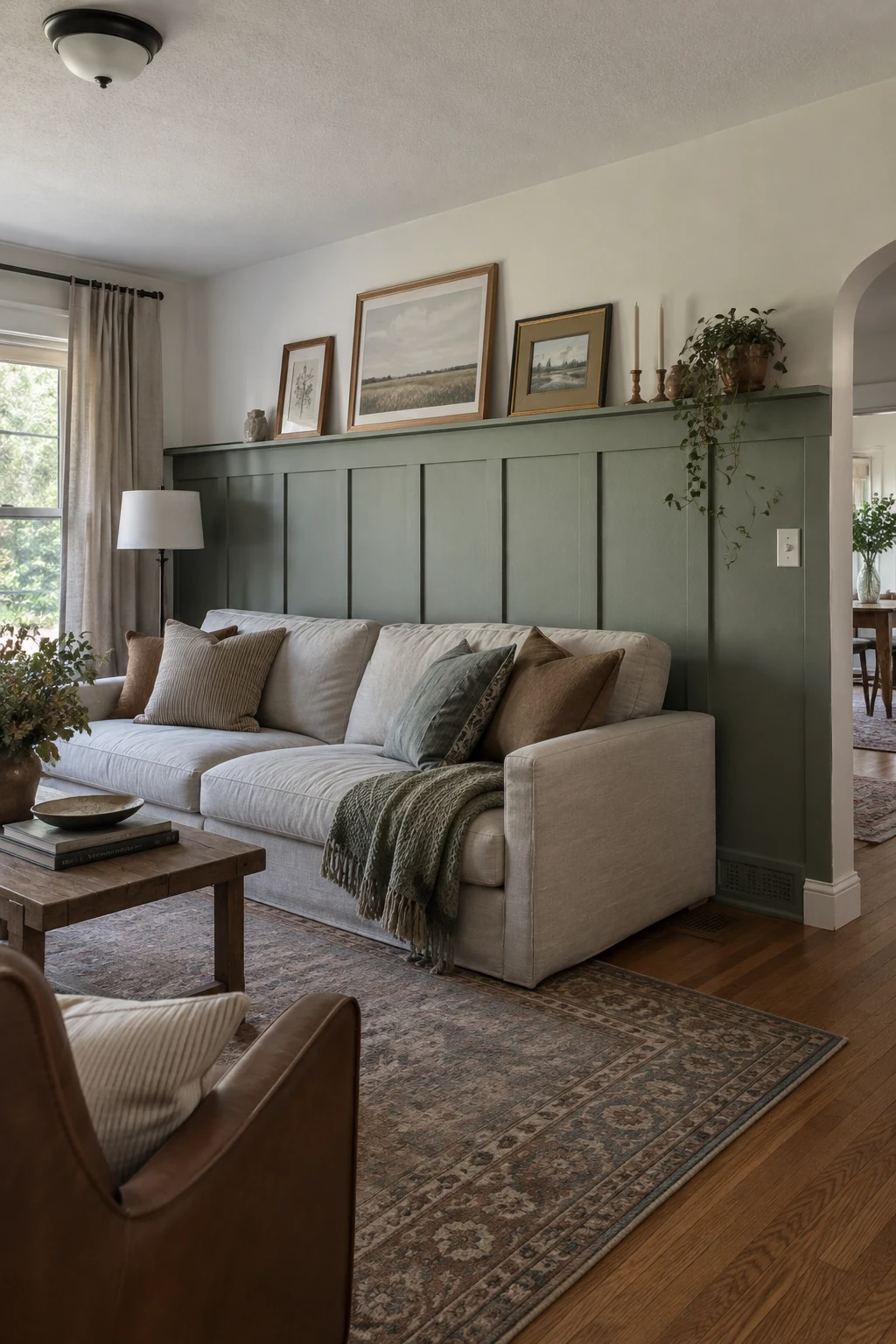
Cap half-wall paneling with a shallow ledge for small framed art and seasonal objects. The ledge lets renters or frequent decorators change the display with fewer holes above the sofa.
Keep the projection narrow enough that seated guests cannot bump it. Secure the ledge into framing and avoid placing heavy glass pieces overhead.
37. Panel Only the TV Niche
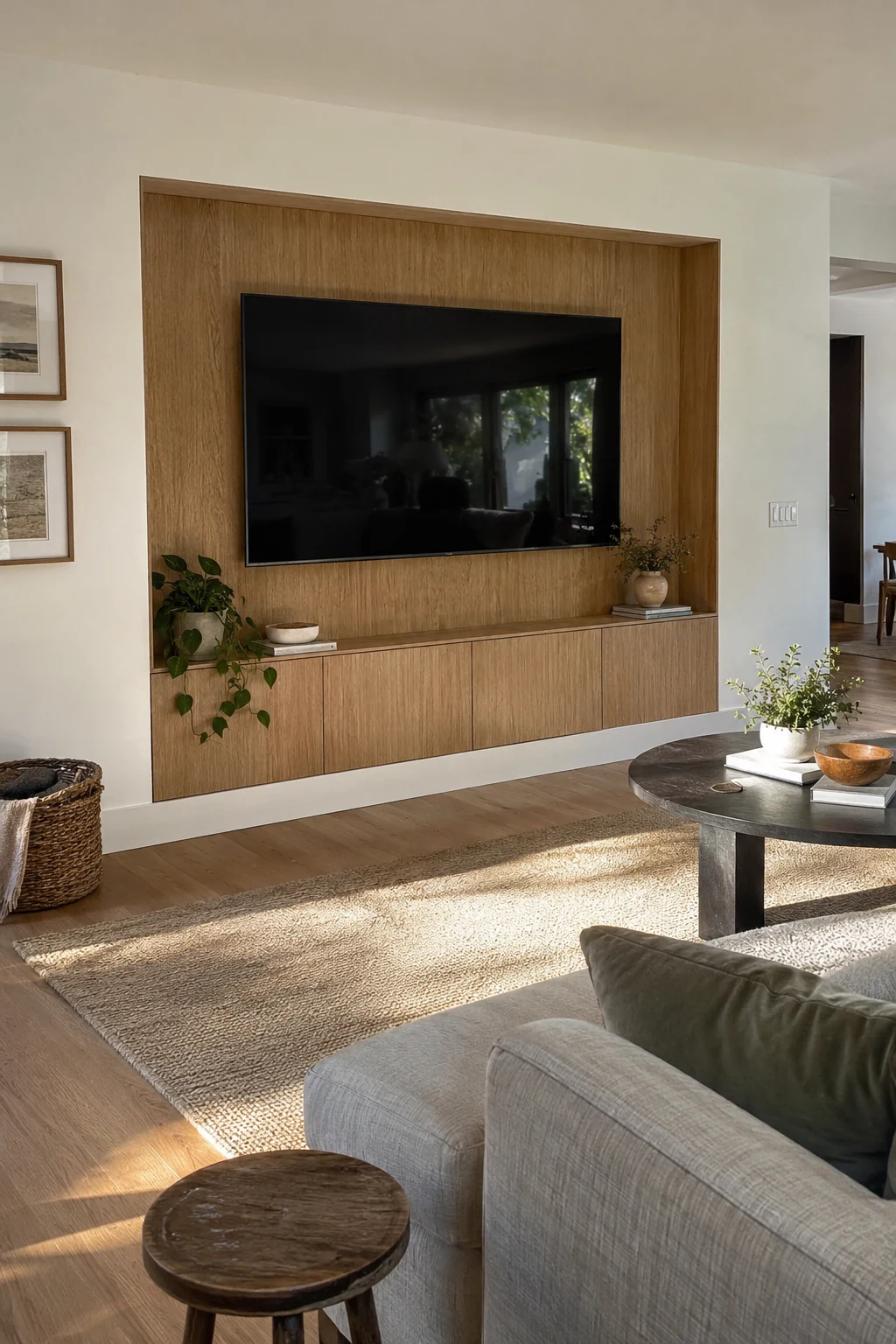
Line a recessed TV niche with medium oak while leaving the surrounding wall plain. The contained wood field defines the media zone and reduces the amount of material needed.
Provide cable paths and ventilation before closing the niche. Size the opening for some space around the screen so a future replacement is possible.
38. Back Built-Ins With Paneling
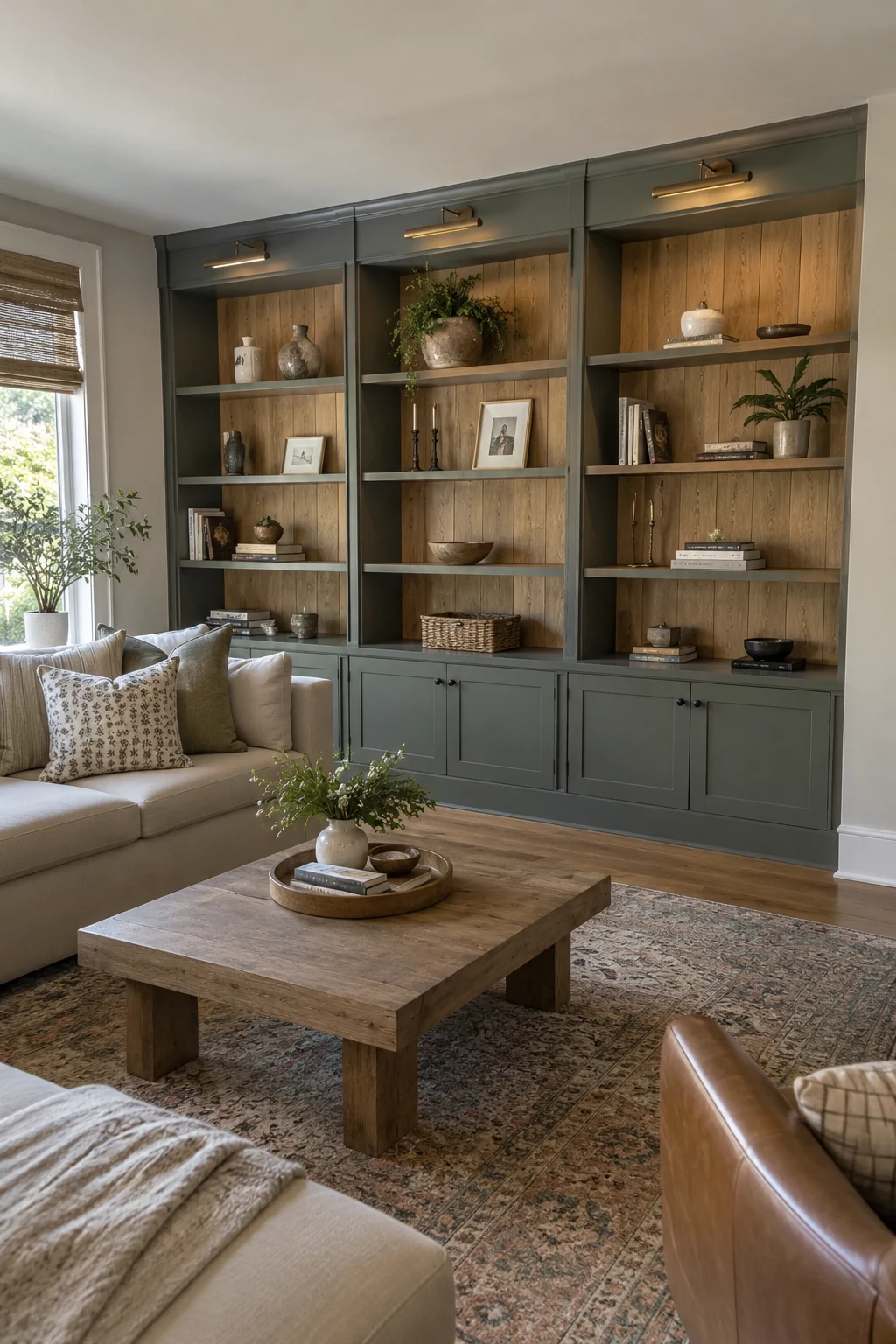
Use narrow oak boards or painted beadboard on the backs of built-in bookcases. The texture remains visible between books and objects while the cabinet faces stay simple.
Choose a panel depth that does not steal shelf space. Install the backing before fixed shelves whenever possible so joints and cuts remain tidy.
39. Hide a Door in Paneling
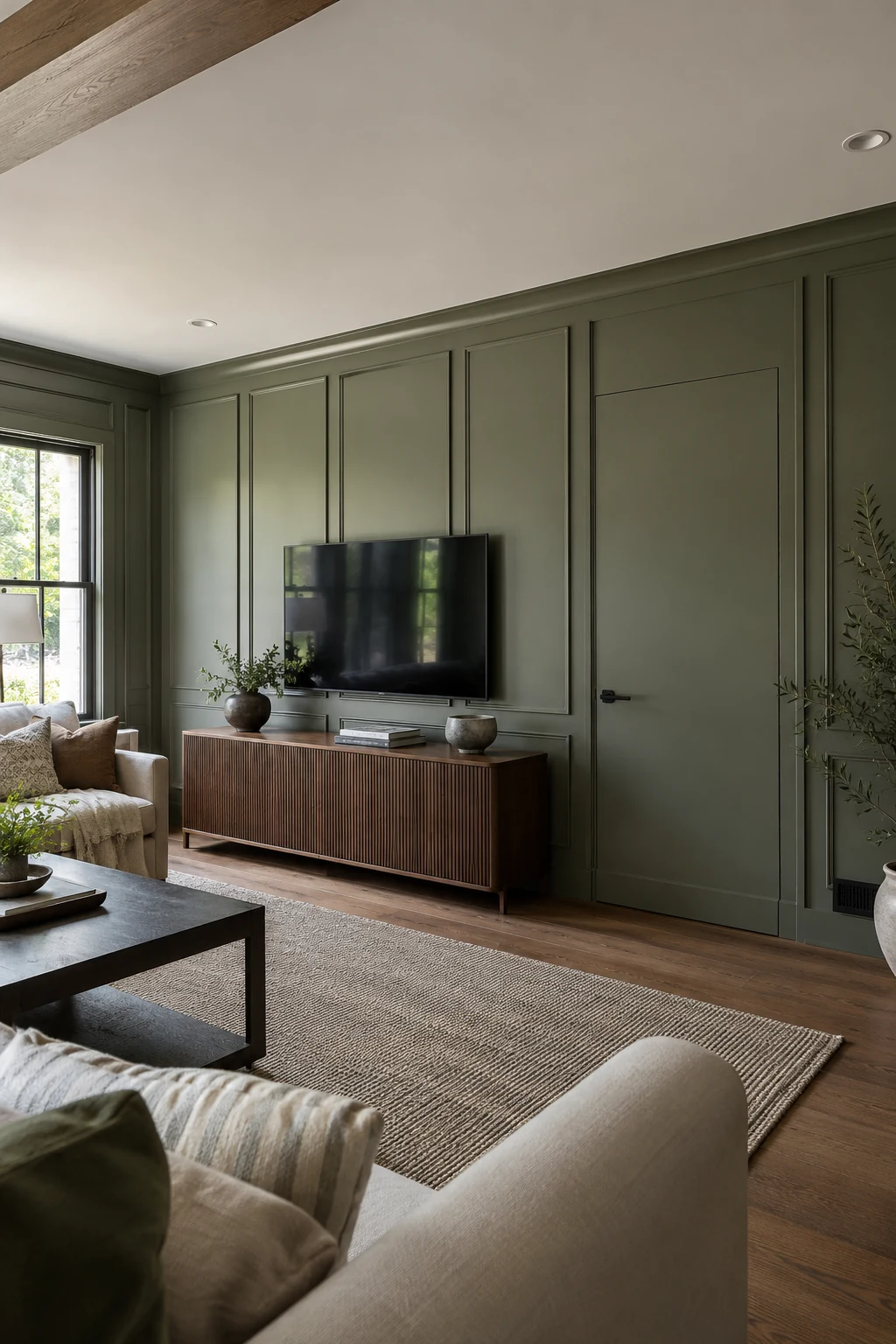
Continue rails or vertical slats across a flush door so it disappears into the wall when closed. This works well for a closet or utility room that interrupts an otherwise calm seating wall.
Use appropriate hinges, latch hardware, clearances, and egress rules for the opening. Removable trim at the perimeter simplifies future adjustment.
40. Panel a Window-Seat Wall
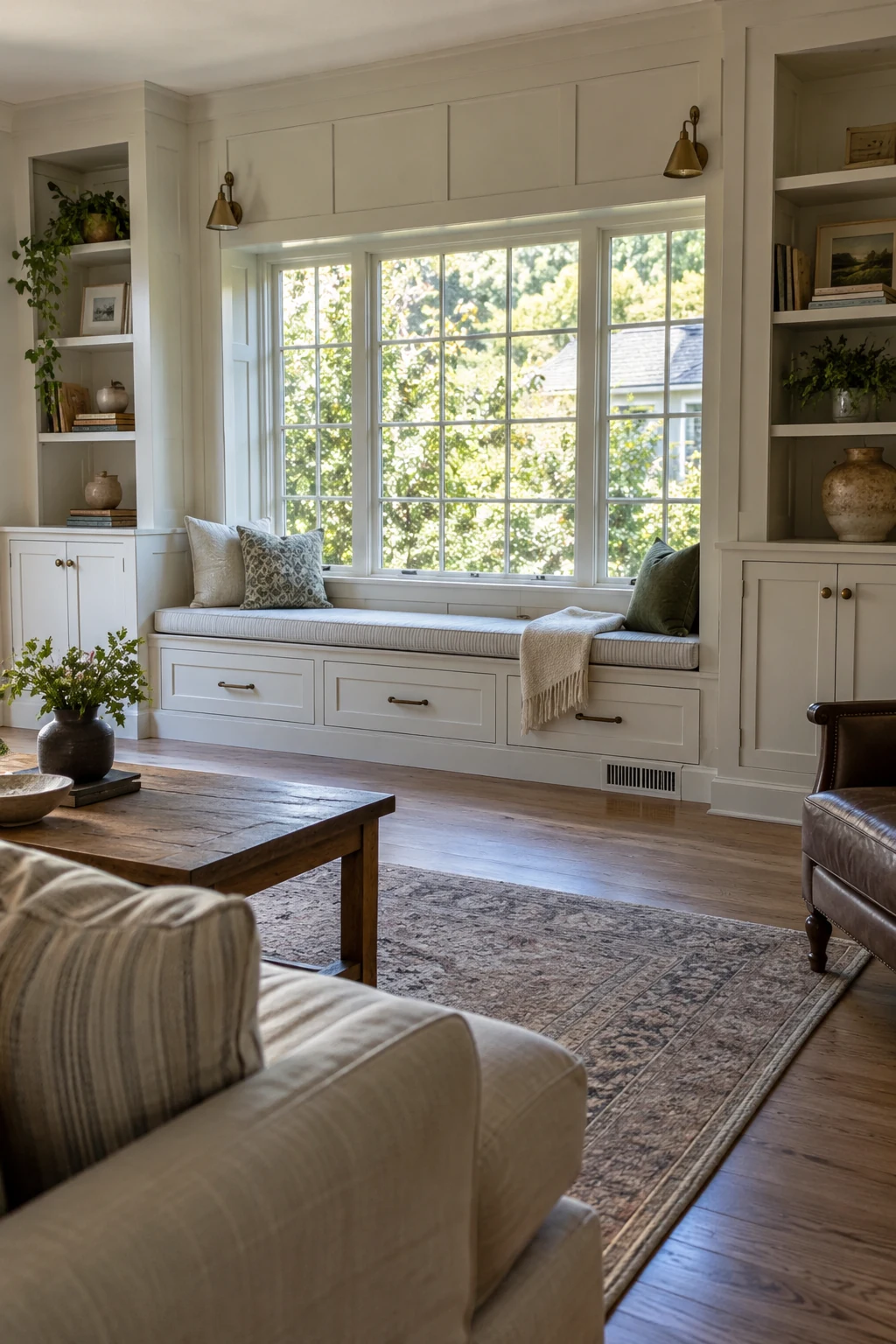
Wrap painted panels around a window seat to connect the bench, side cabinets, and wall. Continue the main vertical lines through the drawer fronts so the storage feels built in.
Keep return-air grilles, outlets, and window hardware accessible. A durable finish on the lower panels handles shoes, baskets, and everyday contact.
41. Continue Panels Beside the Stairs
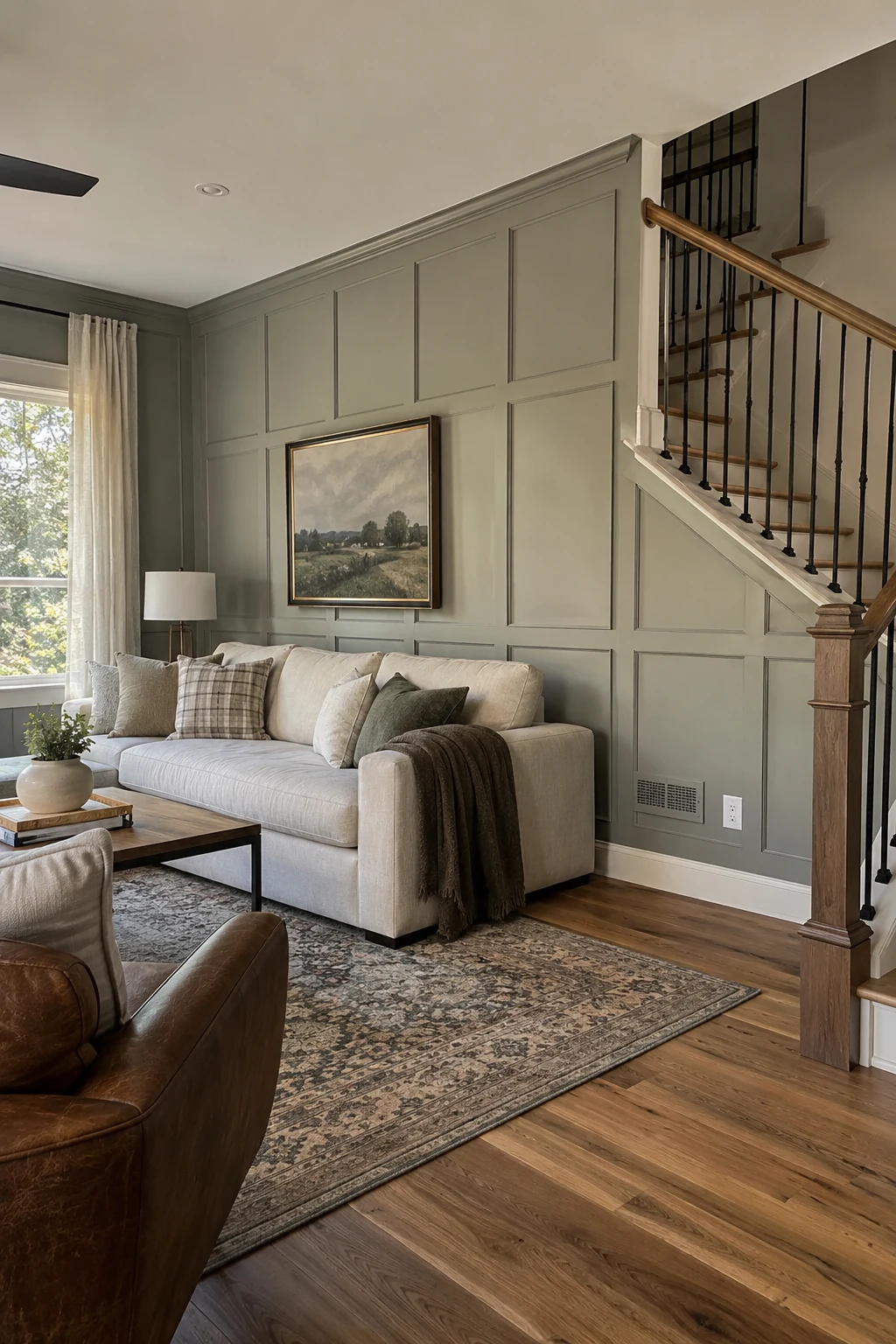
Carry living room paneling onto the wall beside an open staircase to connect the two zones. Keep the top line level in the room, then decide whether the stair section steps or follows the rake.
Mock up both transitions with tape before cutting. The junction at the first stair is more visible than most individual panel widths.
42. Hang Removable Fabric Panel Frames
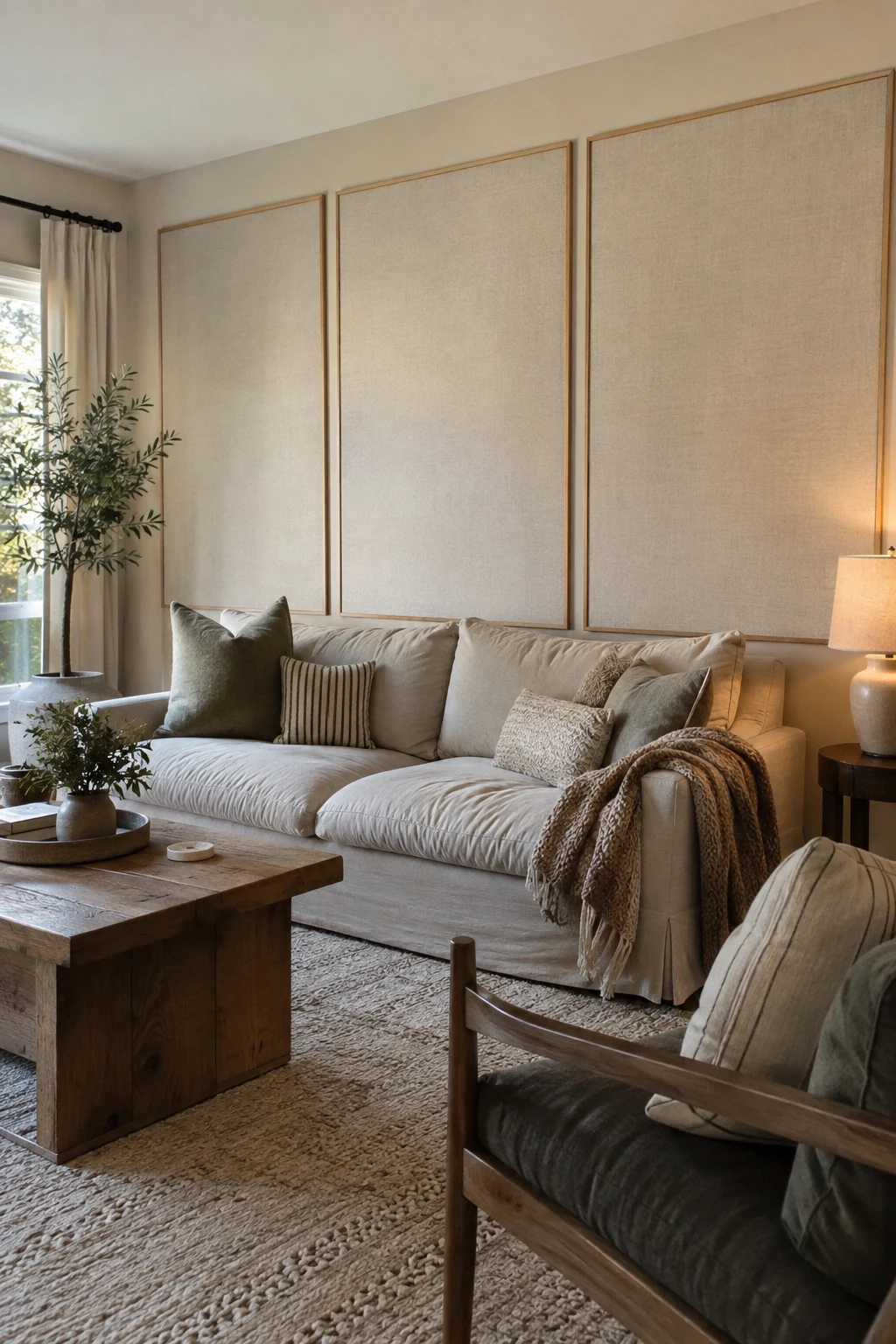
Stretch linen over lightweight frames and hang them as three large removable panels. The result adds softness and scale while leaving the original rental wall mostly intact.
Use wall hardware rated for the frame weight and the actual surface. Keep panels clear of heaters and inspect attachment points periodically, especially above seating.
43. Use a Freestanding Slat Divider
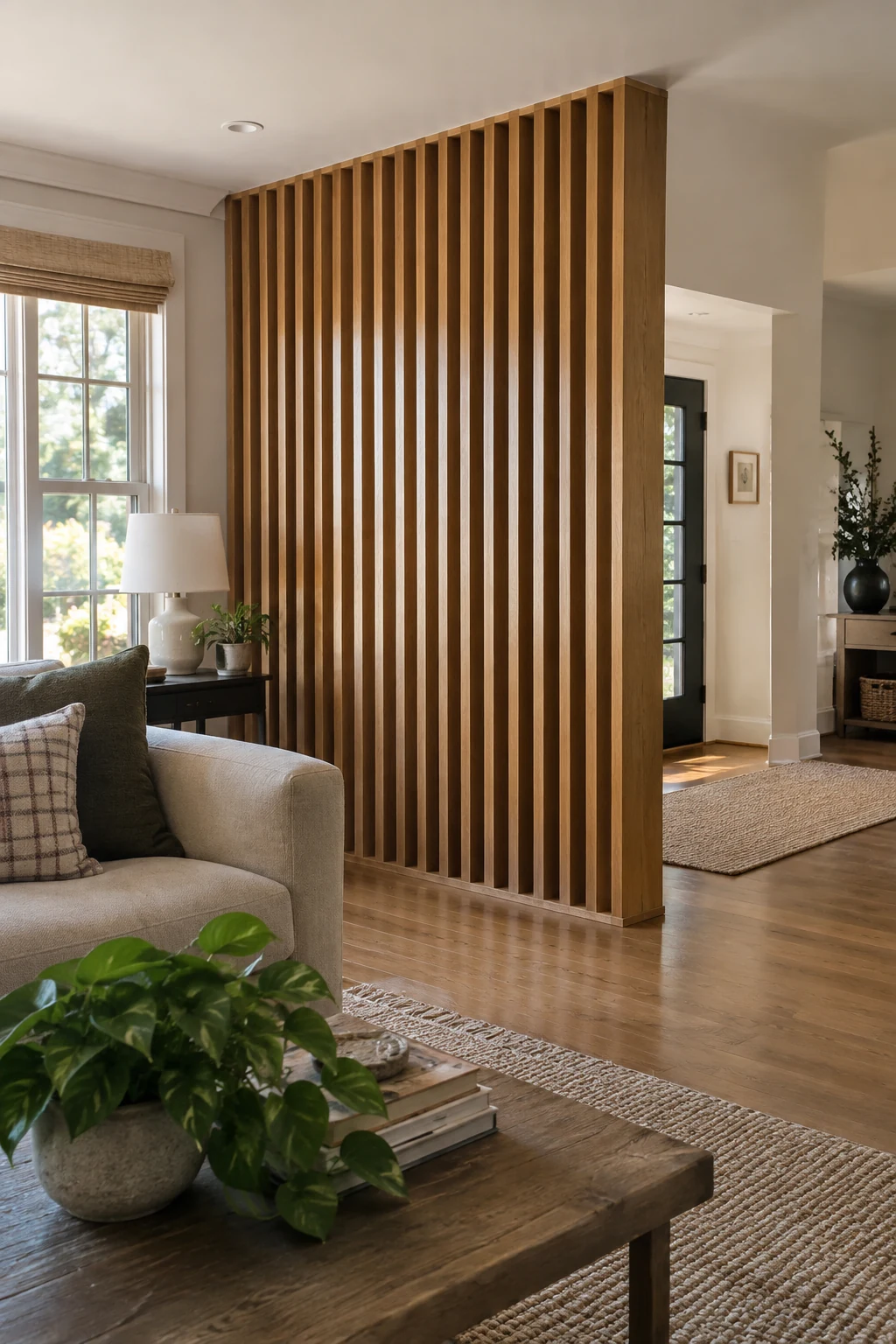
A floor-to-ceiling slat divider can define an entry or work corner without closing off daylight. Match its wood tone to nearby furniture so it reads as part of the living room.
This is a structural installation, even when it looks light. Secure it appropriately at the floor and ceiling, and keep spacing safe for children and pets.
44. Build an Arched Paneled Alcove
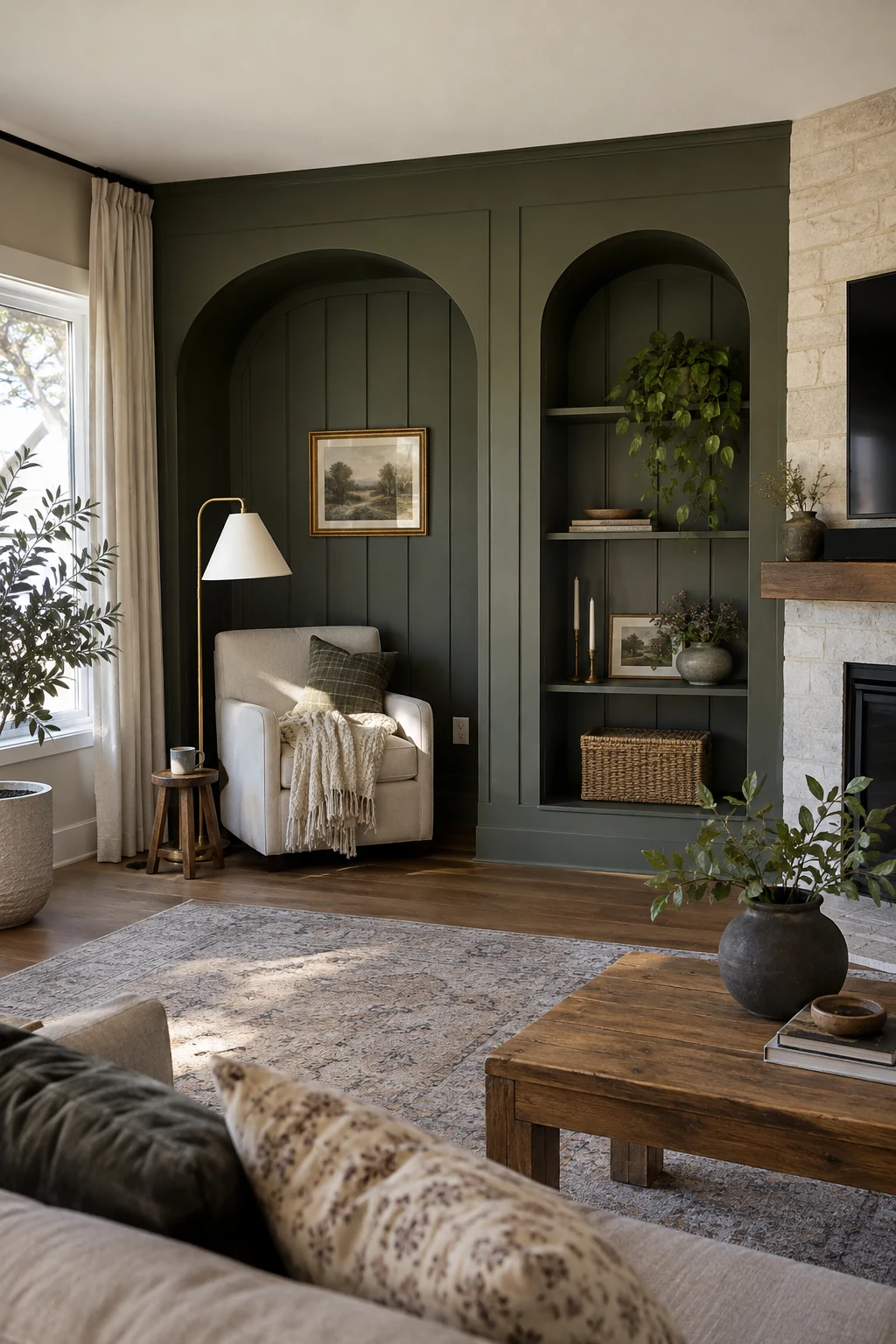
Shape shallow trim into a broad arch around a reading chair or console to give an open wall a focal point. Continue simple vertical panels below the curve so the design feels grounded.
Center the arch on the furniture grouping rather than automatically centering it on the wall. Flexible molding or carefully segmented trim can produce a smoother curve.
45. Create an Acoustic Reading Corner
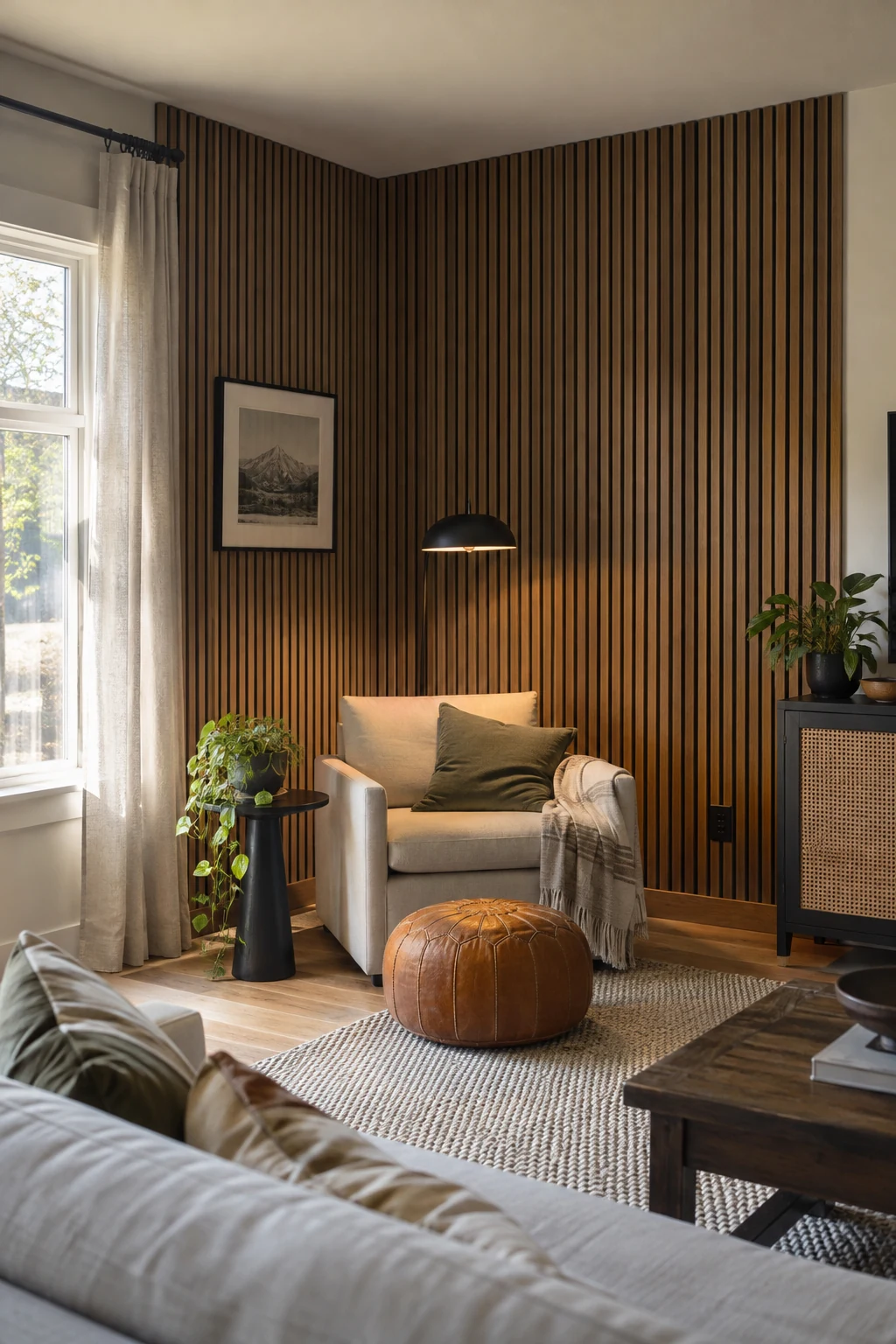
Wrap a reading corner with felt-backed wood slat panels to reduce hard-wall reflection and visually separate the seat from the main conversation area. Choose a felt color close to the wall so the backing recedes.
Acoustic performance depends on the product and installation assembly. Keep panels clear of outlets, vents, and heat sources, and follow the manufacturer’s fire-rating guidance.
Choose the Paneling That Solves the Room
Start with the wall that already needs a job: anchoring the sofa, quieting the TV, defining a reading corner, or protecting a busy lower wall. That purpose will narrow the material and pattern choices quickly.
Sample the finish at full scale, confirm clearances and attachment points, and keep adjoining surfaces calmer. Thoughtful proportion usually matters more than using the newest panel style.