50 Hanging Quilts on Wall Ideas

This post may contain affiliate links: full affiliate disclosure.
Hanging a quilt is a smart way to add texture and warmth to any room without the weight of heavy framed art. These textile displays improve room acoustics while turning family heirlooms or modern designs into stunning focal points.
LARGE STATEMENT QUILT DISPLAYS
1. Oversized Quilt Above the Sofa
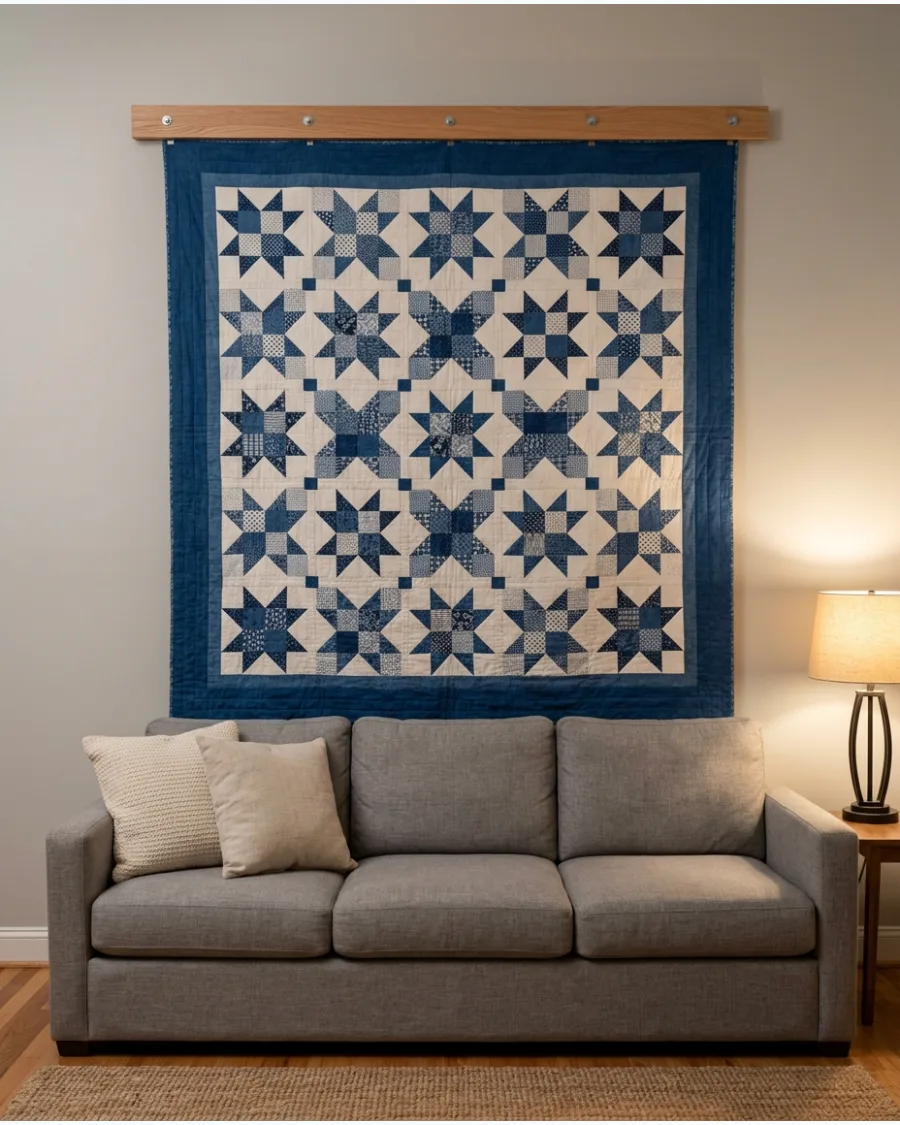
Hanging a large quilt over the sofa provides a soft, acoustic-friendly alternative to heavy framed art. The textile adds immediate warmth and visual interest to the main seating area.
Ensure the quilt width is about two-thirds to three-quarters the length of the sofa to keep the proportions from feeling top-heavy. It is best to use a wooden compression slat to prevent the top edge from sagging over time.
- Budget $30 to $100 for mounting hardware.
- Center the quilt 6 to 10 inches above the sofa back.
- Swap quilts seasonally to refresh the room color palette.
Quick win: Use a laser level to ensure the hanging rod is perfectly straight before drilling into the studs.
2. Full-Wall Quilt Display
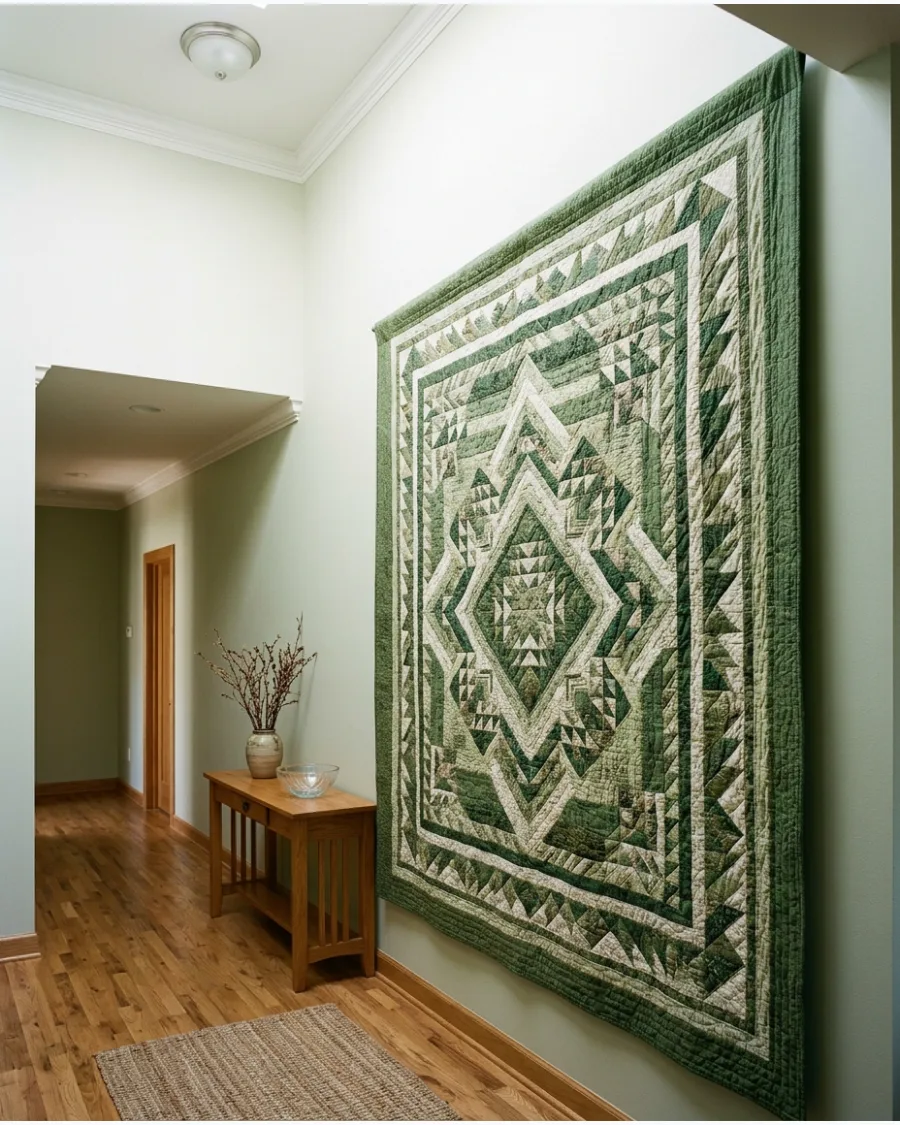
A quilt that covers most of a wall creates a dramatic, mural-like effect in a large room. This setup works perfectly for high-ceilinged spaces that often feel cold or echoey.
Mount the quilt with a hidden sleeve and a heavy-duty rod to create a seamless look that mimics a custom wall treatment. Large-scale patterns are most effective here because they are easily seen from across the room.
- Project takes about two hours for two people.
- Requires a long metal or wood rod and heavy-duty wall brackets.
- Best for walls with minimal trim or architectural distractions.
Most people skip this: Vacuum the quilt with a soft brush attachment before hanging to remove lint that becomes visible under bright lights.
3. Quilt Above the Bed
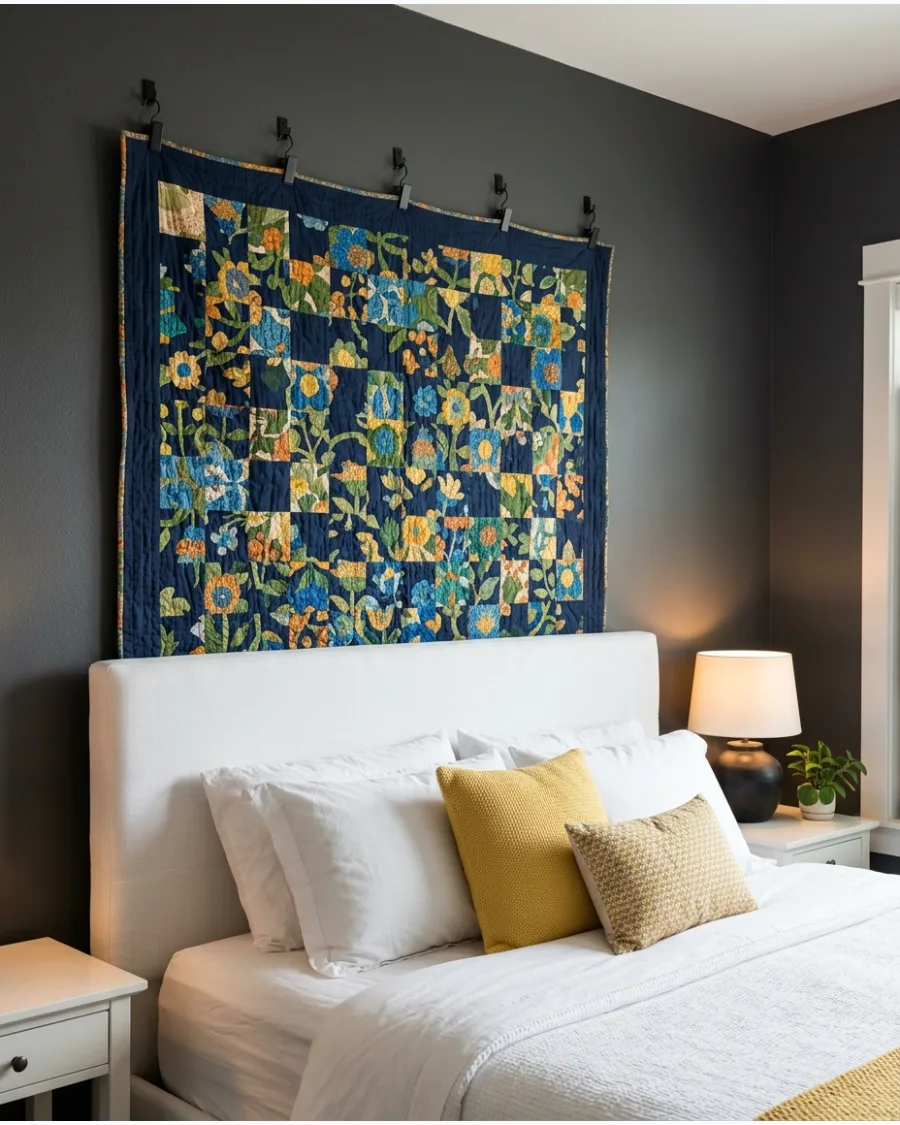
Placing a quilt over the headboard adds a layer of texture that hard-surface art cannot provide. It creates a cozy atmosphere while serving as the room primary design element.
Match one secondary color from the quilt pattern to your throw pillows to tie the entire bed scape together. A lightweight quilt is easier to hang and safer for a sleeping area.
- Budget $20 to $60 for clips and rod.
- Hang the bottom edge just above the headboard or pillows.
- Use clip-on rings for a casual, farmhouse look.
Best shortcut: Use adhesive strips for the rod brackets if you are in a rental and the quilt is lightweight.
4. Floor-to-Ceiling Quilt Feature
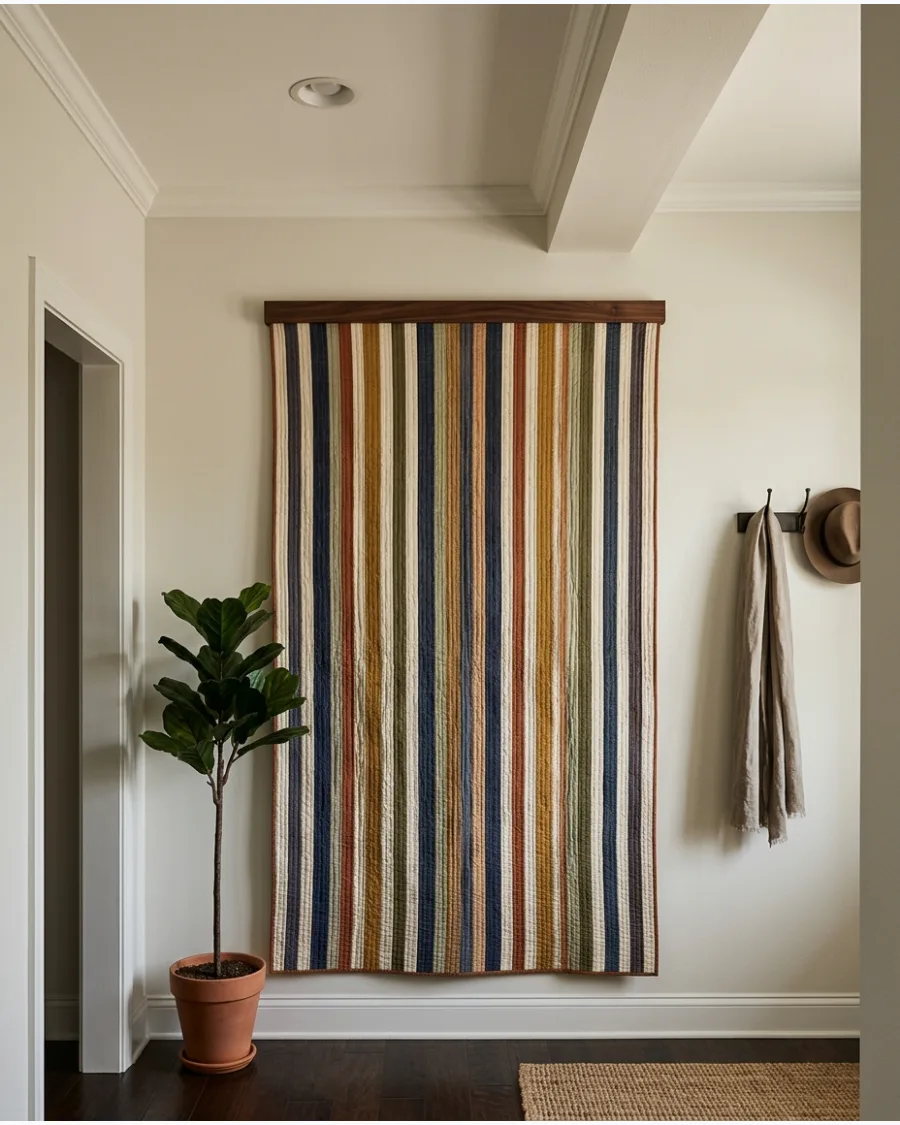
Hanging a quilt vertically draws the eye upward and can make a low ceiling feel much higher. This vertical orientation works best on narrow walls or in transitional spaces like landings.
Choose a quilt with a strong vertical design or repeating stripes to maximize the height-boosting effect. Secure the bottom corners with small weights if the fabric tends to curl away from the wall.
- One-hour installation time.
- Mount the rod as close to the ceiling line as possible.
- Use a narrow wall between two doorways or windows.
Quick win: Iron the quilt on the reverse side with low steam to remove fold lines before hanging.
5. Quilt as a Living Room Focal Point
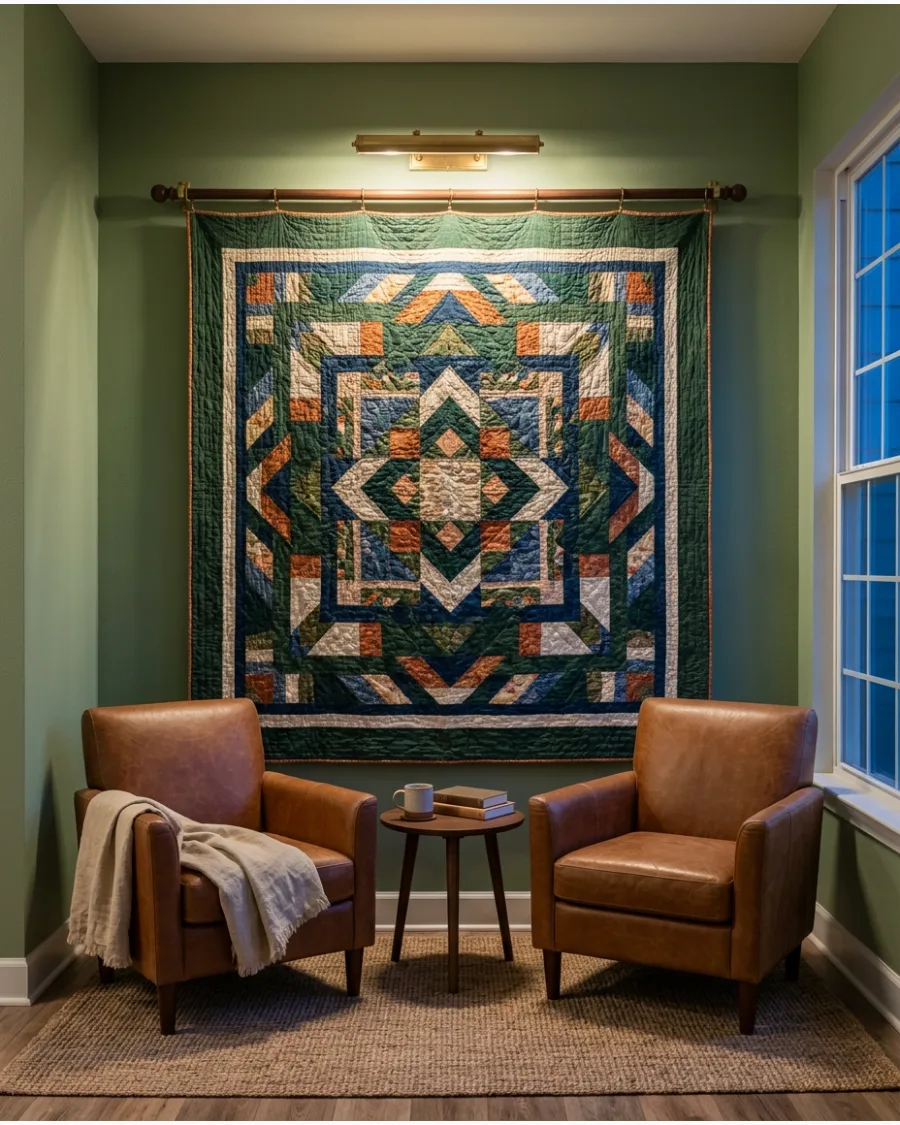
Treat a handmade quilt like a masterpiece by giving it the most prominent wall in the living room. This approach celebrates the craftsmanship and makes the textile the undisputed star of the space.
Keep surrounding furniture neutral and low-profile so they do not compete with the intricate stitching. Proper lighting, such as a dedicated picture light, can highlight the texture of the quilting.
- Professional framing or custom slat recommended for heirlooms.
- Place on the wall opposite the main entrance.
- Avoid direct sunlight to prevent fabric fading over time.
Most people skip this: Check the quilt every few months for dust buildup, especially along the top fold or rod.
6. Large Quilt Behind a Dining Table
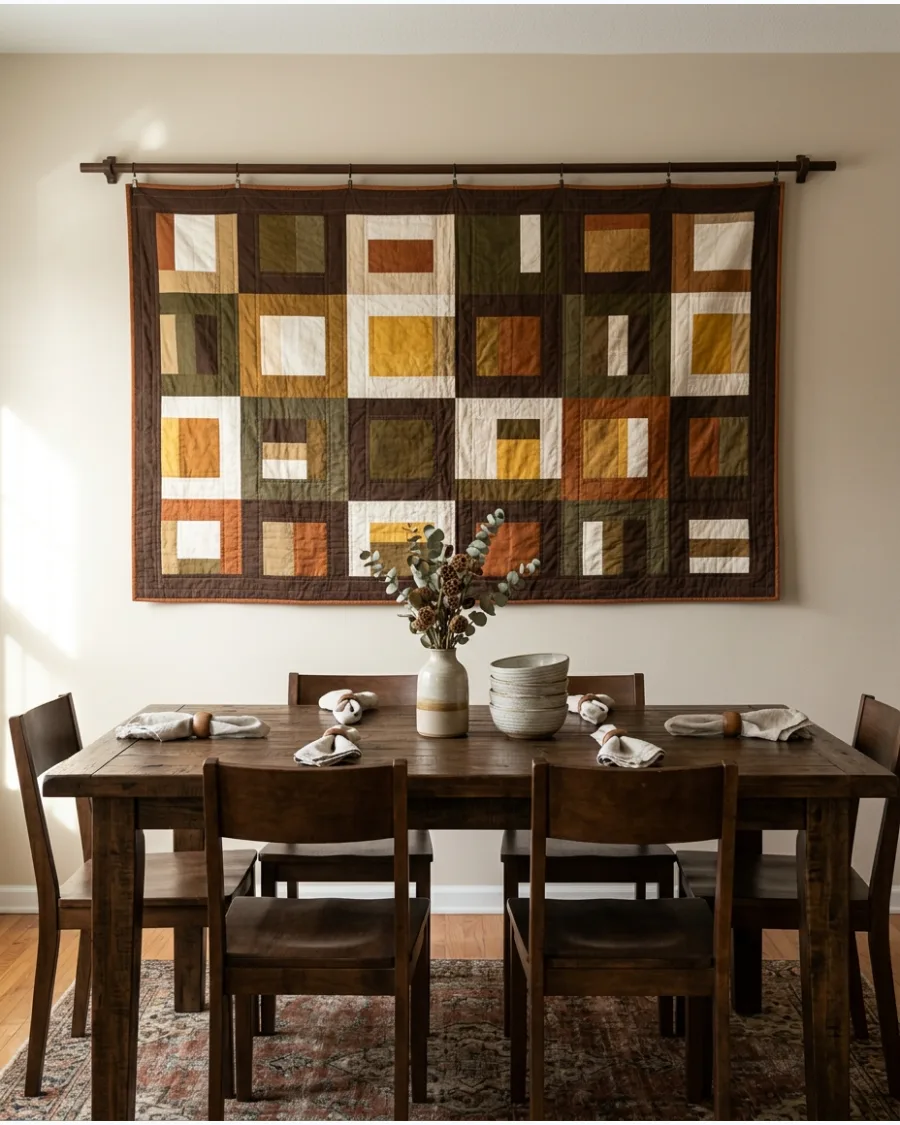
A wide quilt behind the dining table softens the hard surfaces of the table and chairs. It also helps dampen the sound of conversation during dinner parties.
Select a quilt with colors that pull from the wood tones of the dining set to create a cohesive environment. Ensure the quilt is hung high enough that it doesn't get bumped by diners sitting down or standing up.
- Budget $40 to $120 for rod and hardware.
- Center the quilt horizontally with the dining table.
- Use a sturdy rod that can support the weight of a thick cotton quilt.
Best shortcut: Use a decorative curtain rod with finials that match your dining room cabinet hardware.
7. Quilt Above a Fireplace Mantel
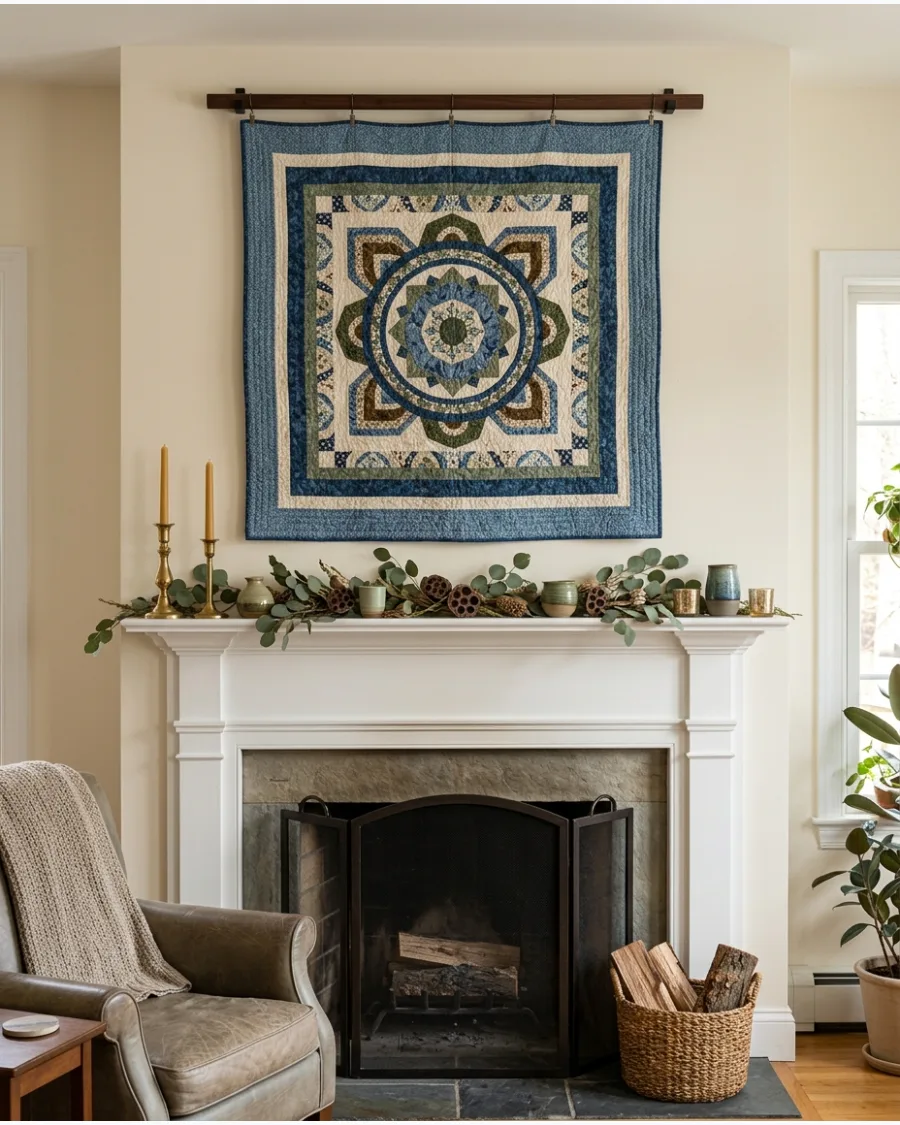
Hanging a quilt above the mantel offers a soft contrast to the stone or brick of a fireplace. A geometric or medallion pattern creates a strong central point that grounds the entire room.
Measure the heat output of the fireplace to ensure the fabric remains at a safe temperature when the fire is lit. A simple wooden slat hanger keeps the look clean and doesn't distract from the mantel decor.
- Thirty-minute setup time.
- Mount at least 12 inches above the mantel surface.
- Works best with traditional or transitional decor styles.
Quick win: If the quilt is an heirloom, avoid hanging it above a wood-burning fireplace where smoke could damage the fibers.
8. Quilt on a Double-Height Wall
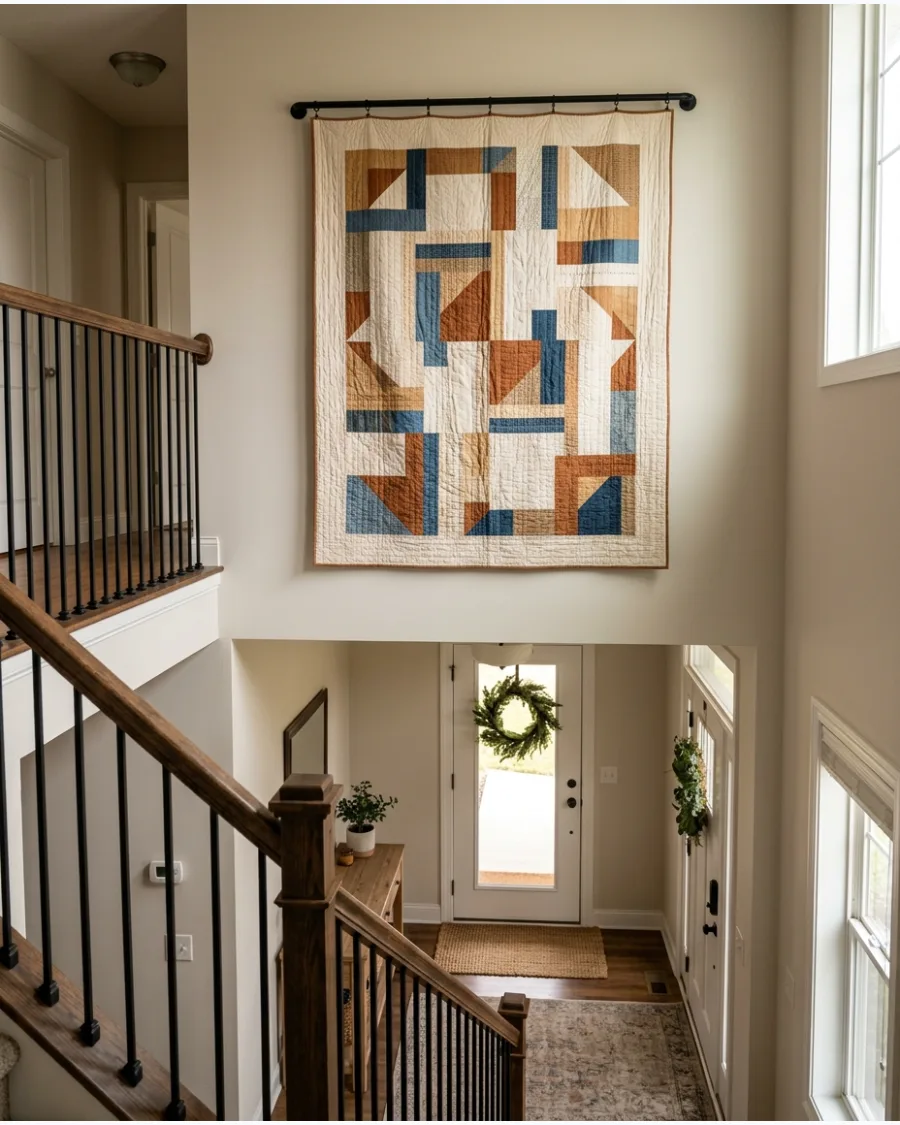
Large vertical quilts are ideal for filling the vast empty space found in two-story foyers or staircases. Textiles are much lighter than framed glass art, making them safer and easier to install in high-traffic areas.
Use a large-scale pattern that can be appreciated from both the ground floor and the upper landing. A heavy rod is necessary to ensure the quilt hangs straight without bowing in the middle.
- Requires a tall ladder for safe installation.
- Use heavy-duty wall anchors for the brackets.
- Ideal for modern homes with large white walls.
Most people skip this: Use a helper to hold the quilt while you level the rod, as the weight of a large quilt can shift the rod during installation.
9. Quilt Behind a Console Table
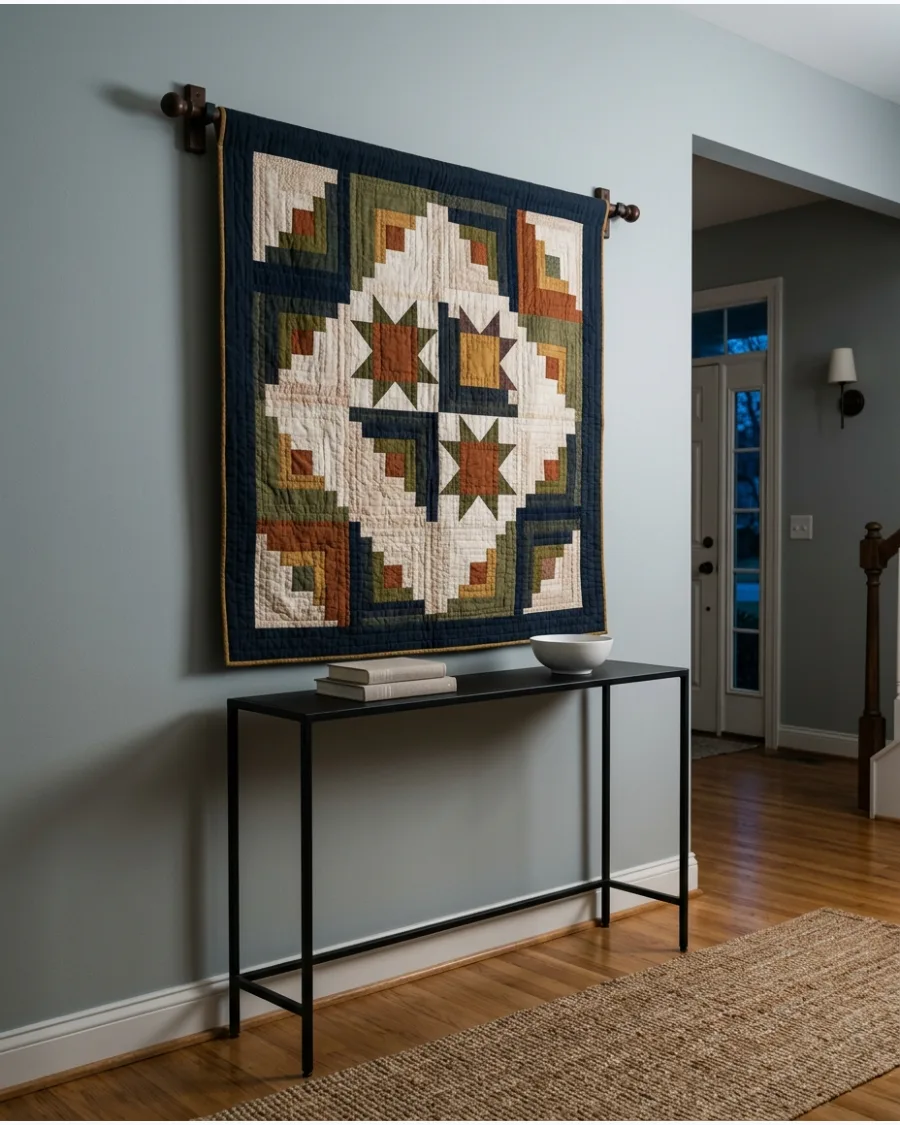
Layering a quilt behind a console table creates a rich, textured backdrop for your favorite decorative objects. It defines the entryway or a hallway nook without the need for a bulky mirror or painting.
Keep the items on the table sparse and low to the surface so the quilt pattern remains the main focus. A quilt that is slightly wider than the console table provides a nice visual frame.
- Budget $15 to $50 for hanging hardware.
- Mount the quilt so the bottom edge sits 2 to 4 inches above the table.
- Use magnetic quilt hangers for a modern, sleek look.
Best shortcut: Use magnetic hangers to swap out quilts in seconds without needing tools.
10. Quilt as a Soft Headboard
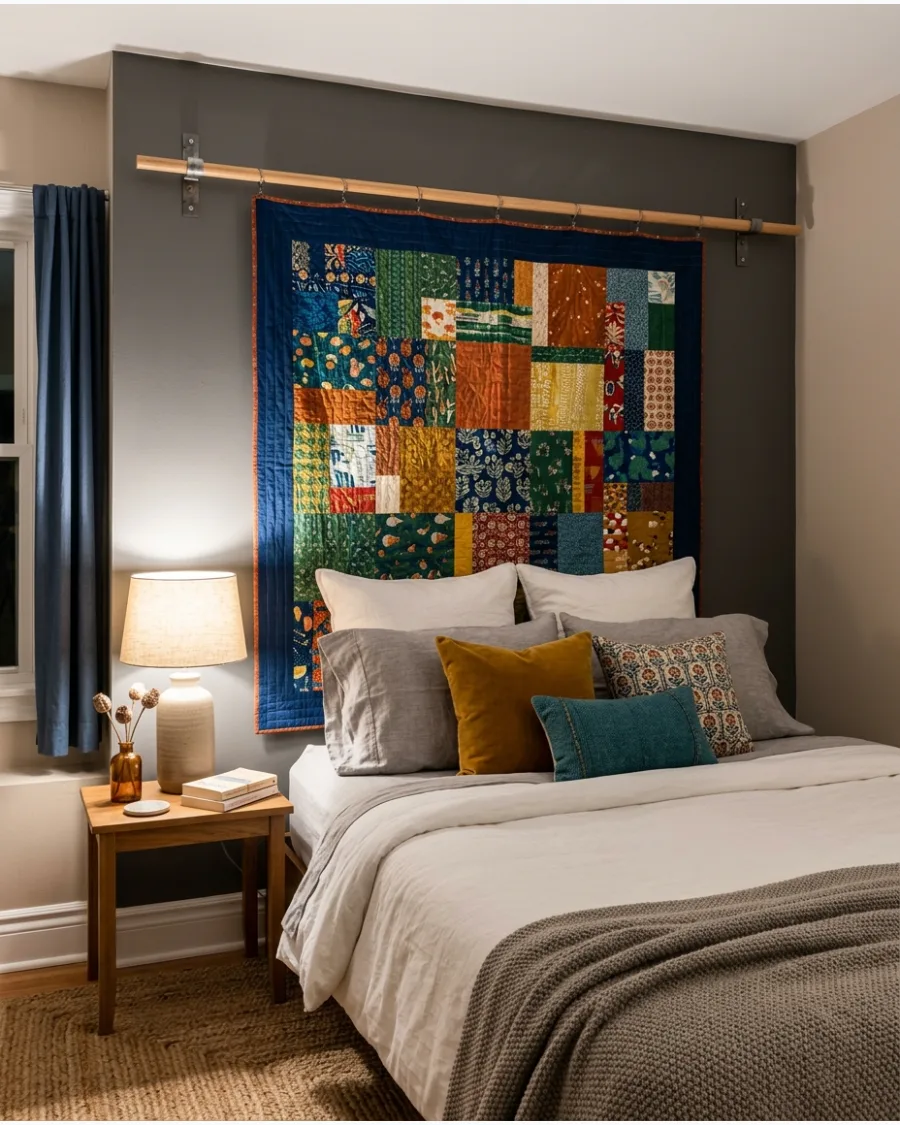
Using a quilt as a headboard adds immediate comfort and a custom look to a basic bed frame. It provides a soft surface to lean against and introduces a large block of pattern to the room.
Hang the quilt wide enough to extend past the edges of the mattress for a more luxurious, high-end feel. This is an excellent solution for guest rooms where you want a finished look without the cost of a new headboard.
- Forty-five minute installation time.
- Mount the rod directly to the wall at headboard height.
- Use a washable quilt if it will be leaned against frequently.
Quick win: Add a sleeve of fabric to the back of the quilt to hide the hanging rod completely for a cleaner finish.
VINTAGE AND HEIRLOOM QUILT IDEAS
11. Vintage Patchwork Quilt Wall
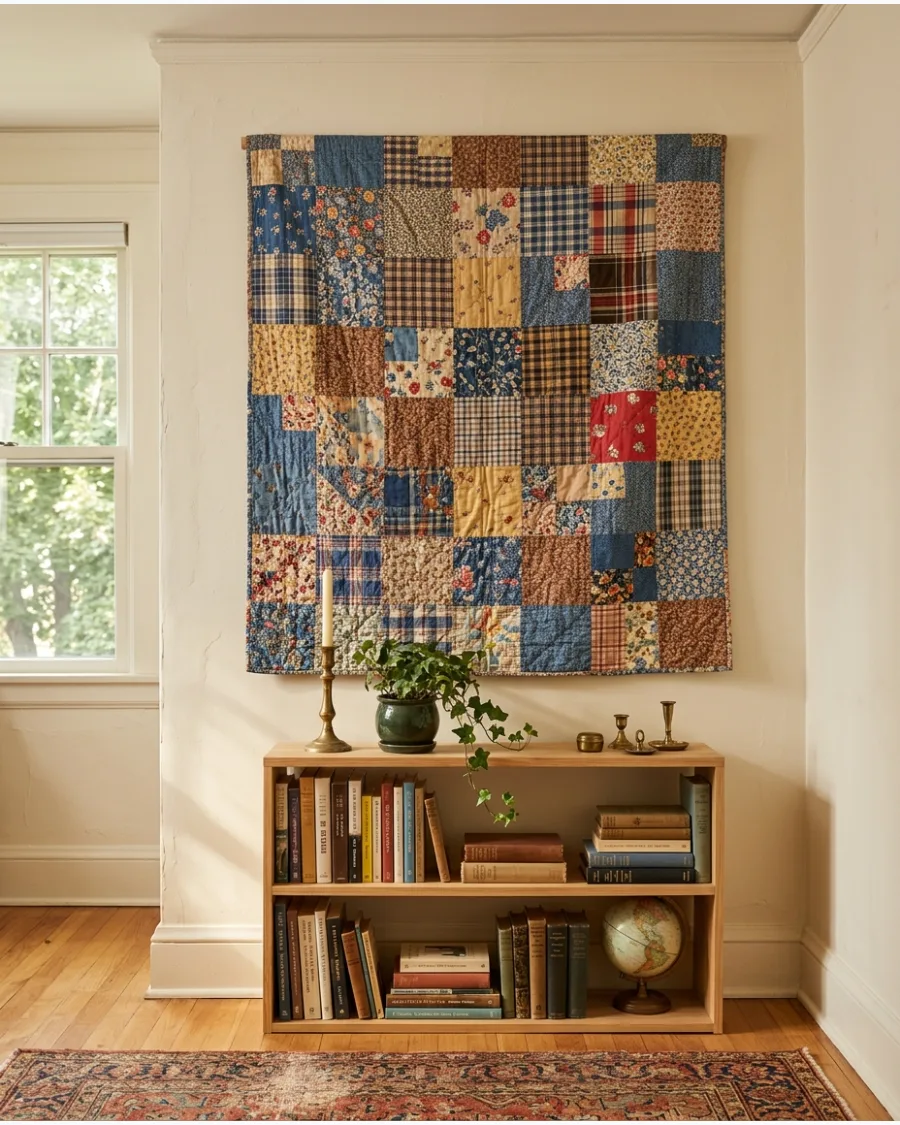
A traditional patchwork quilt brings a sense of history to a warm white or neutral wall. The simple background allows the aged fabrics and varied patterns to stand out as the main focus.
Mount the quilt with a hidden sleeve to keep the focus entirely on the pattern. Busy patterns look best when the surrounding wall has at least twelve inches of breathing room.
- Cotton patchwork quilts typically range from $50 to $200.
- Use a fabric sleeve and a wooden rod for a seamless look.
- Swap for a lighter linen quilt in summer to change the mood.
Quick win: Use a magnetic hanger for lightweight vintage pieces to avoid piercing the fabric.
12. Family Heirloom Quilt Display
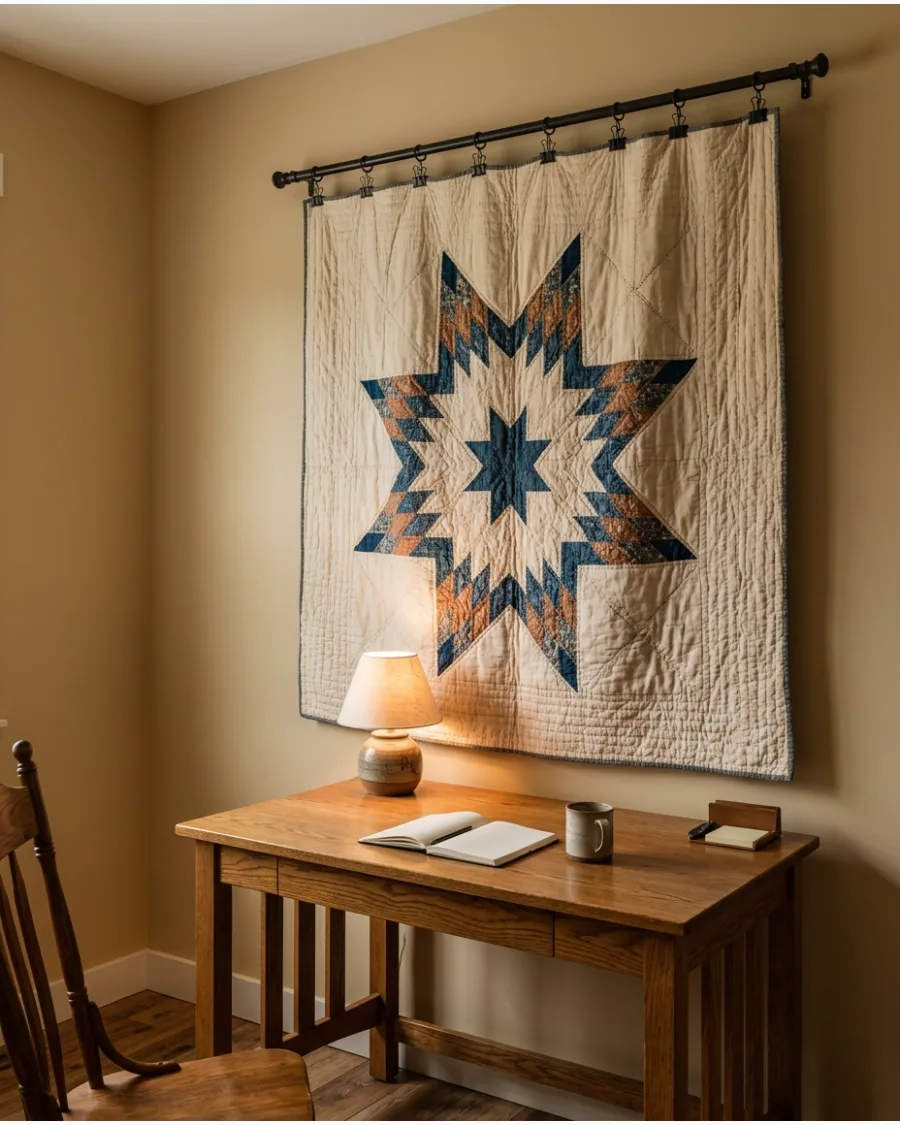
Bring a meaningful family quilt out of storage and make it part of the home’s everyday decor. Place it in a quieter room where its story and craftsmanship can be appreciated without being in the way.
Choose a wall away from direct sunlight to prevent the old dyes from fading over time. Textiles in hallways or home offices stay cleaner than those in kitchens or dining areas.
- Family heirloom quilts are priceless and require gentle care.
- Install away from HVAC vents to prevent fabric drying.
- Rotate the quilt every few months to prevent permanent fold lines.
Best shortcut: Vacuum the quilt through a nylon screen before hanging to remove dust without snagging threads.
13. Antique Quilt on a Dark Wall
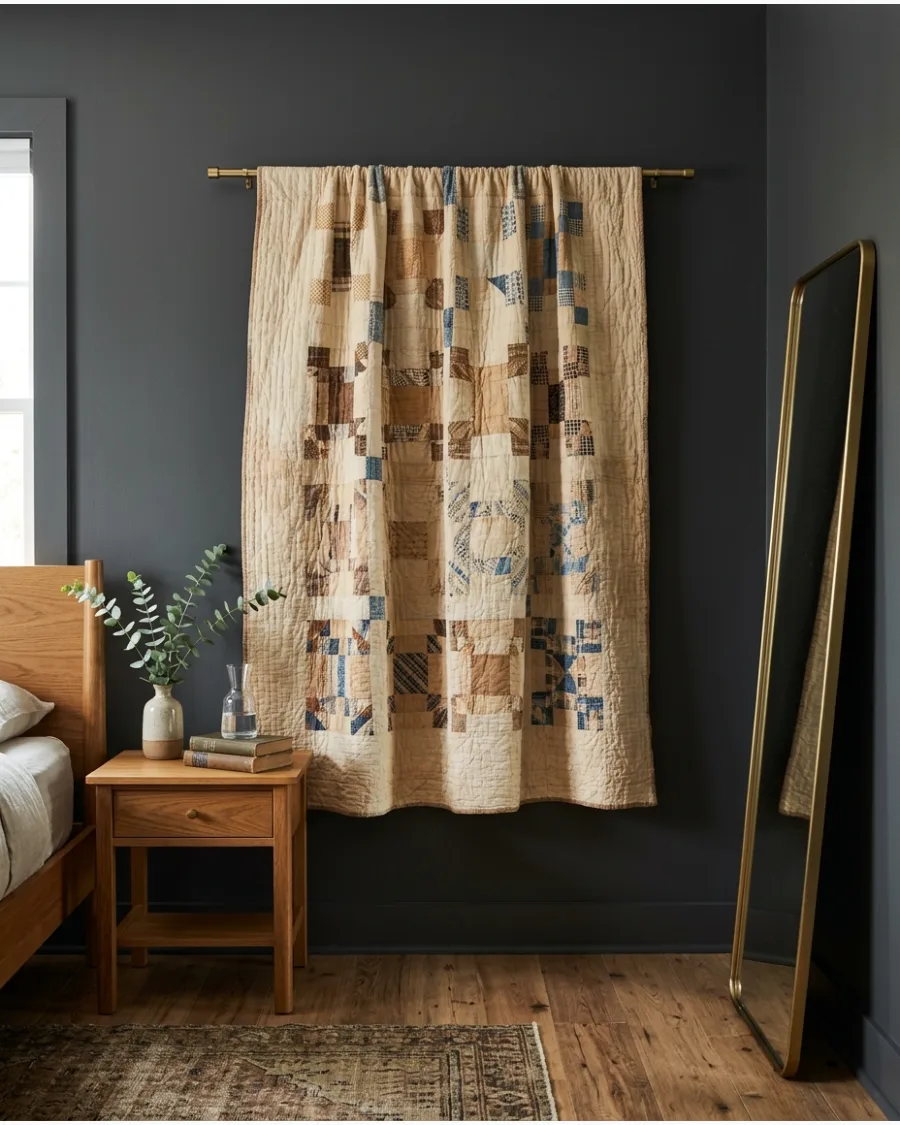
Hang a faded antique quilt against deep blue, forest green, or charcoal paint for high contrast. The darker background can emphasize the lighter stitching and time-worn colors of the fabric.
Paint the wall a matte dark color to make the faded stitches pop without adding glare. Dark backgrounds give old fabrics a museum-quality appearance that feels very intentional.
- Dark interior paint costs around $40 per gallon.
- Use a rod with at least a 1-inch diameter for stability.
- Pair with brass hardware for a high-end look.
Quick win: Match the hanging rod color to the wall paint to make the hardware disappear.
14. Framed Heirloom Quilt Section
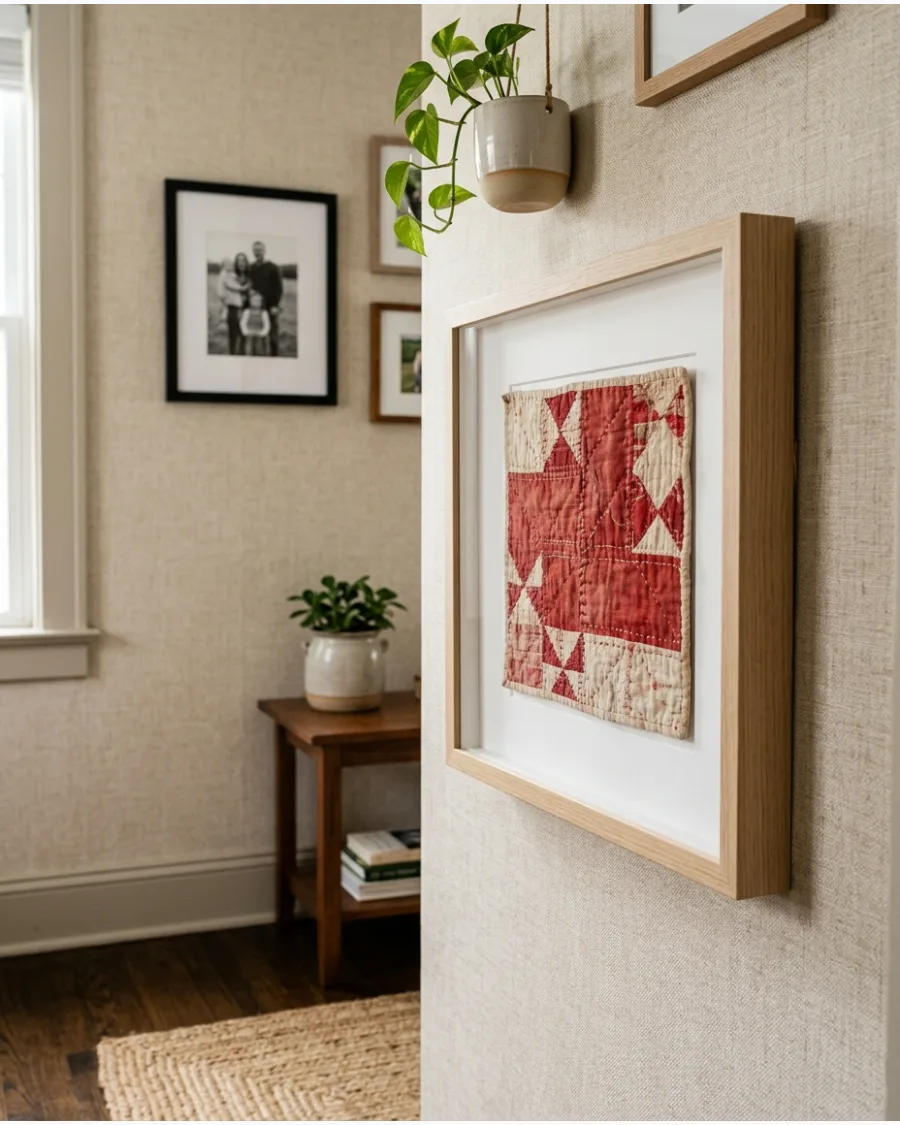
Professionally frame a smaller quilt or a carefully selected quilt section behind protective glazing. This approach gives a delicate textile the appearance of museum-style artwork while protecting it from dust.
Ensure the glass does not touch the fabric by using a deep shadowbox frame. Framing is the safest way to display fragile pieces that can no longer support their own weight.
- Custom shadowbox frames usually start at $100.
- Secure the fabric to acid-free backing to prevent damage.
- Use UV-protective glass to prevent yellowing over time.
Most people skip this: Use stainless steel pins to mount the fabric to the backing board so they won't rust over time.
15. Vintage Quilt Above an Antique Dresser
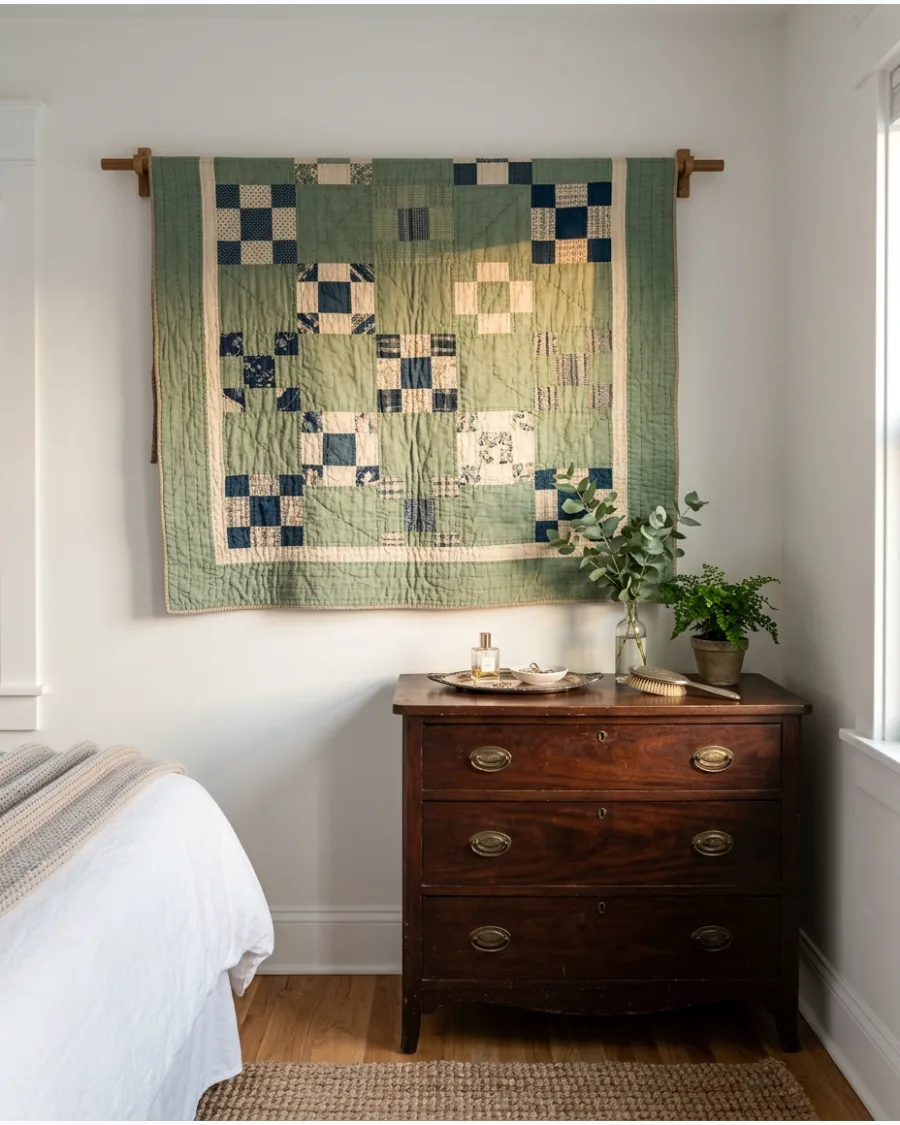
Pair an older quilt with a wood dresser, vintage mirror, or traditional sideboard. The combination creates a collected room that feels developed over years rather than all at once.
Center the quilt over the furniture piece to anchor the entire vignette. Mixing wood tones with soft textiles prevents a room from feeling too stiff or formal.
- Vintage wood dressers can be found for $150 to $500.
- Leave 6 inches of space between the dresser top and the quilt.
- Add a small lamp to the dresser to highlight the textile texture.
Best shortcut: Use a compression slat hanger to keep the top edge perfectly straight without sagging.
16. Faded Quilt in a Modern Room
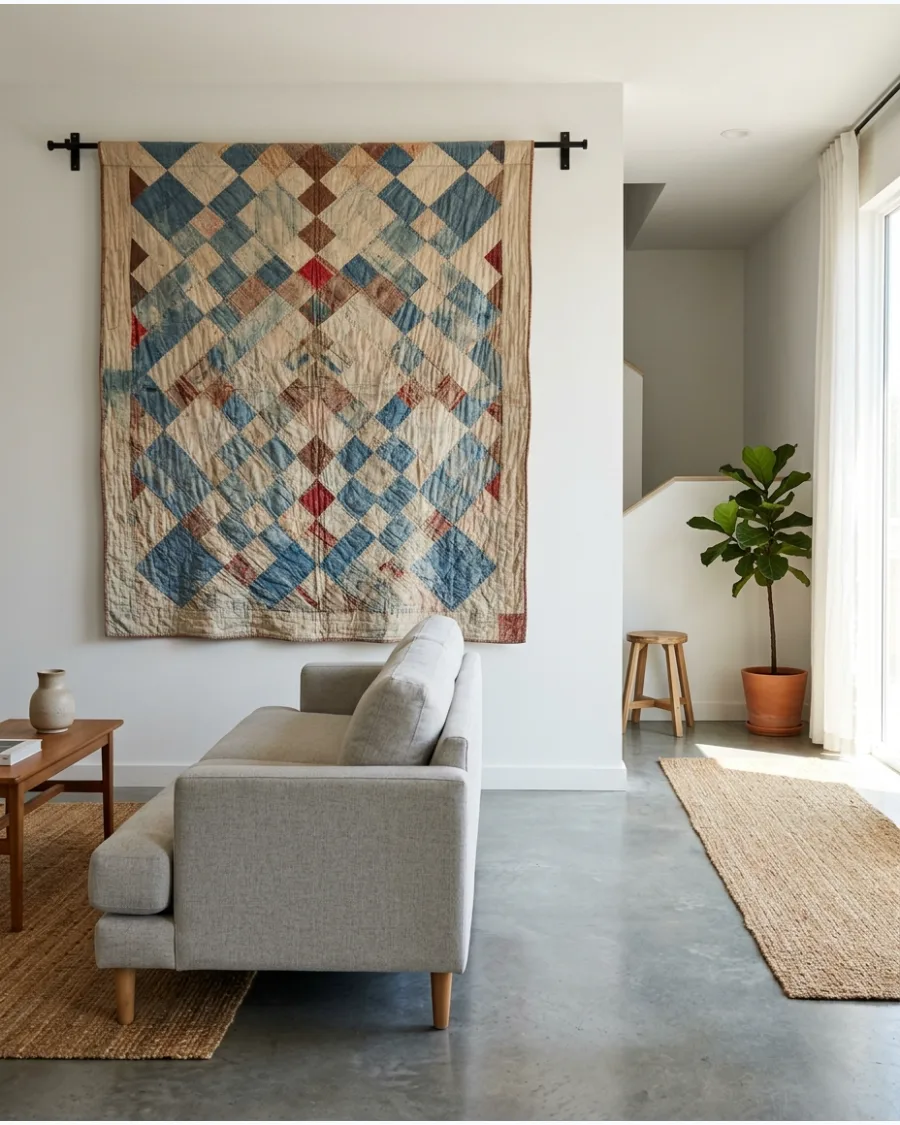
Introduce a softly faded quilt into a room with clean-lined contemporary furniture. The contrast between old textile craftsmanship and modern shapes creates a balanced, character-rich design.
Pick a quilt with geometric lines to bridge the gap between old-world craft and modern design. Soft, worn fabrics take the cold edge off rooms with metal or glass accents.
- Modern minimalist rods cost around $30.
- Hang the quilt at eye level for the best visual impact.
- Keep other wall decor minimal to avoid visual clutter.
Quick win: Steam the quilt gently while it is hanging to help it lay flat against the wall.
17. Red and White Heritage Quilt
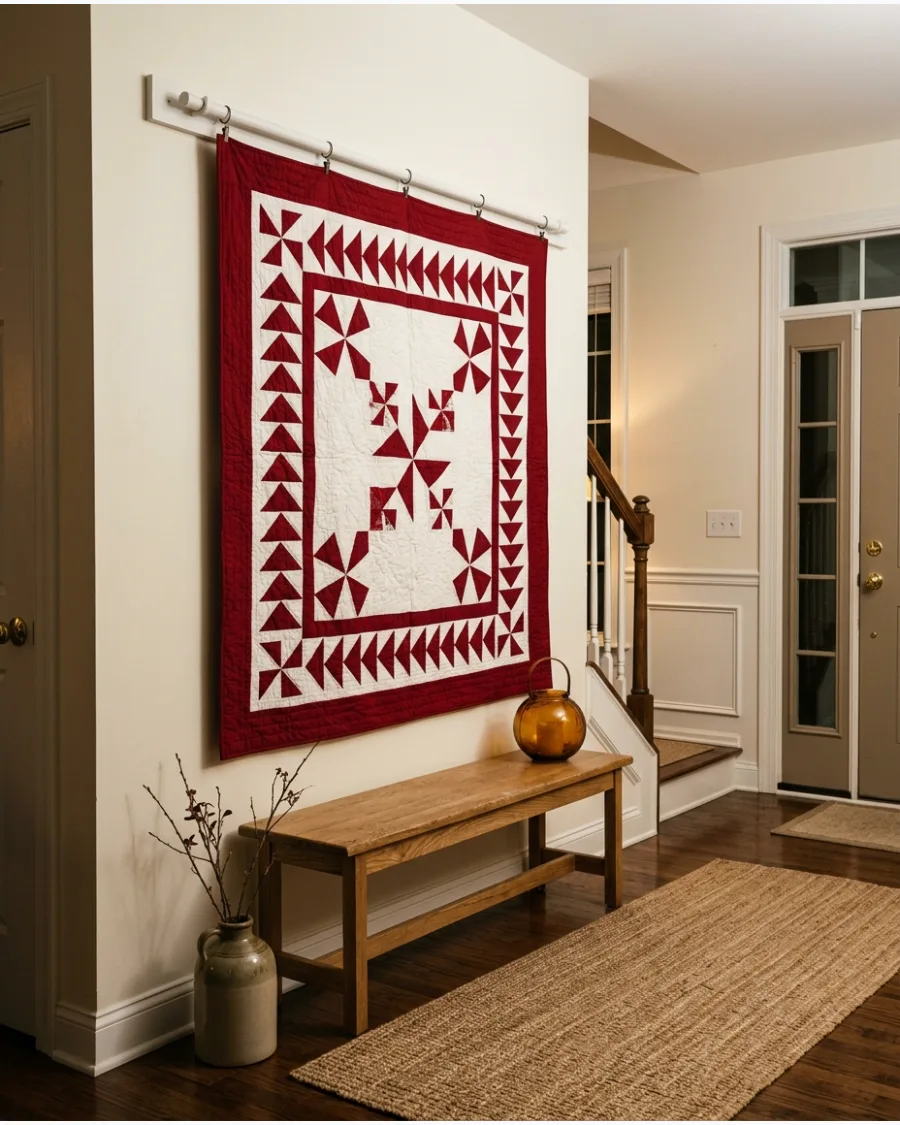
Hang a red-and-white quilt as a bold graphic feature in a neutral room. Repeat small red accents elsewhere in the room without duplicating the entire color scheme.
Hang a red-and-white quilt on a large, empty wall to let the high-contrast pattern serve as the main art. Two-tone quilts provide a much cleaner, more graphic look than multi-colored scrap quilts.
- Cotton heritage quilts range from $100 to $300.
- Use a rod that matches the room trim color for a cohesive look.
- Add a red pillow on a nearby chair to tie the room together.
Most people skip this: Check the weight of the quilt before choosing wall anchors to ensure it stays secure.
18. Blue and White Vintage Quilt
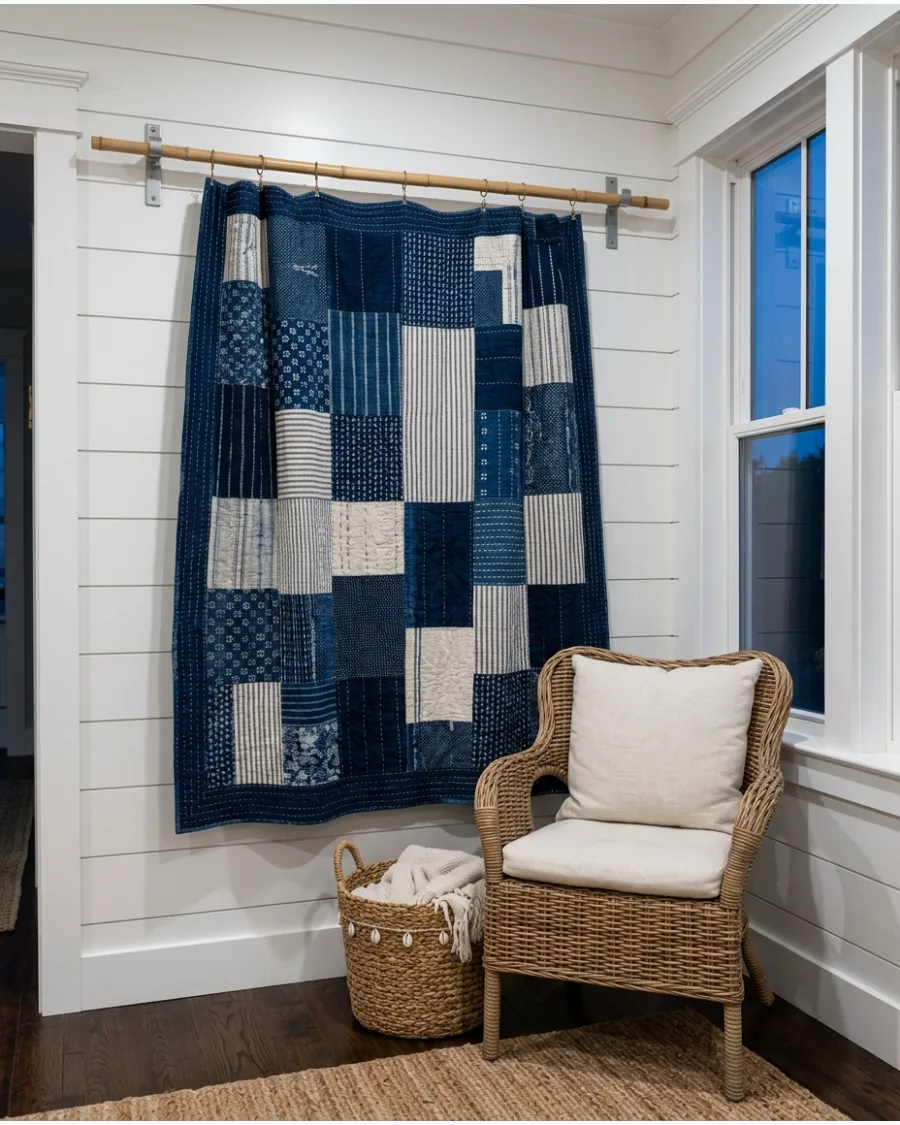
Display an indigo, navy, or blue-and-white quilt in a coastal, cottage, or traditional room. Natural wood and woven textures can reinforce its relaxed and comfortable character.
Mix different shades of blue in the room to make the quilt feel like a natural part of the space. Blue and white is a timeless combination that works in almost any lighting condition.
- Blue and white quilts are common and cost $80 to $250.
- Mount the quilt on a textured or paneled wall for depth.
- Pair with woven baskets for a relaxed, coastal feel.
Quick win: Use a wooden rod with decorative finials to add a touch of cottage charm.
19. Floral Heirloom Quilt Wall
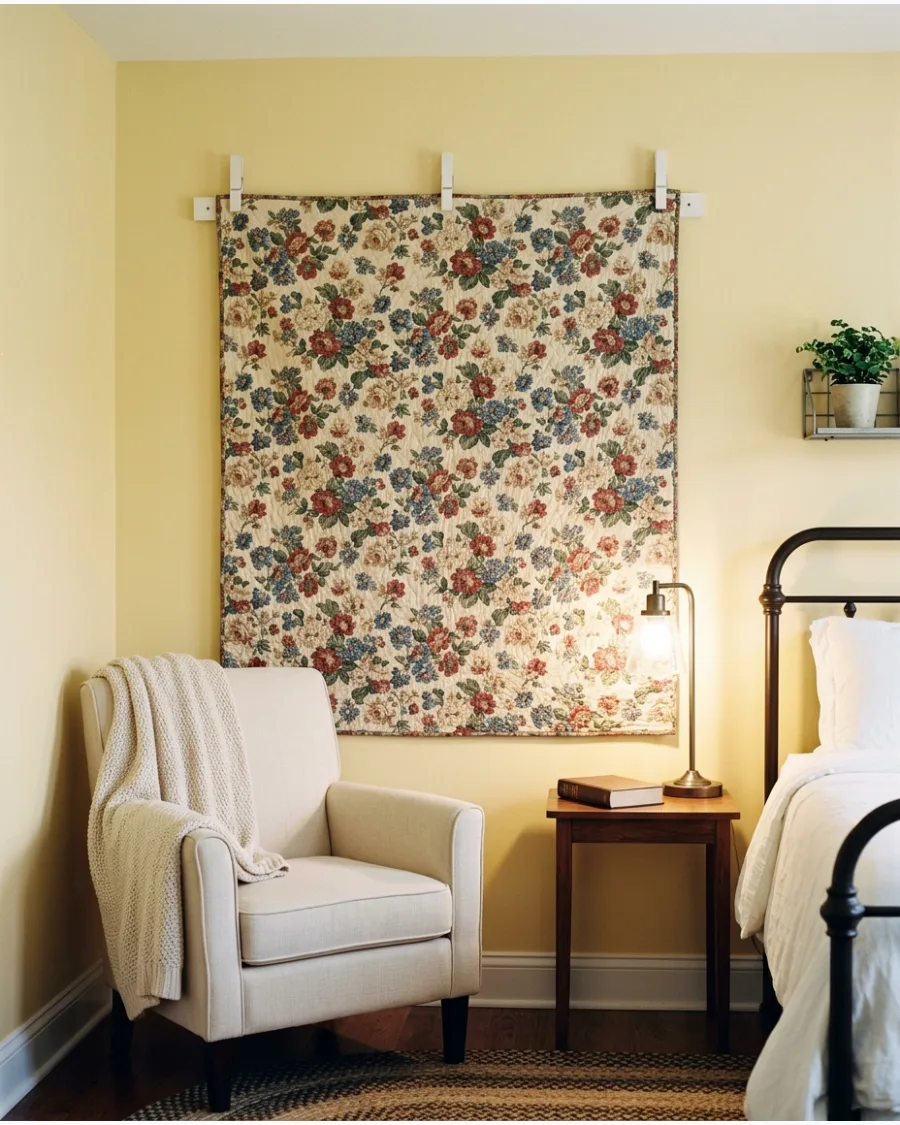
Use a floral quilt to soften a bedroom, dressing room, or reading corner. Choose simple curtains and bedding so the floral pattern does not become overwhelming to the eye.
Balance a busy floral quilt with solid-colored bedding to keep the room feeling restful. Floral patterns on the wall can act like a softer version of wallpaper without the permanent commitment.
- Floral cotton quilts typically cost $60 to $180.
- Hang the quilt in a low-traffic corner to avoid snags.
- Use white hardware to keep the overall look light and airy.
Best shortcut: If the quilt is thin, add a layer of flannel behind it to give it more body and prevent sagging.
20. Repaired Quilt as Textile Art
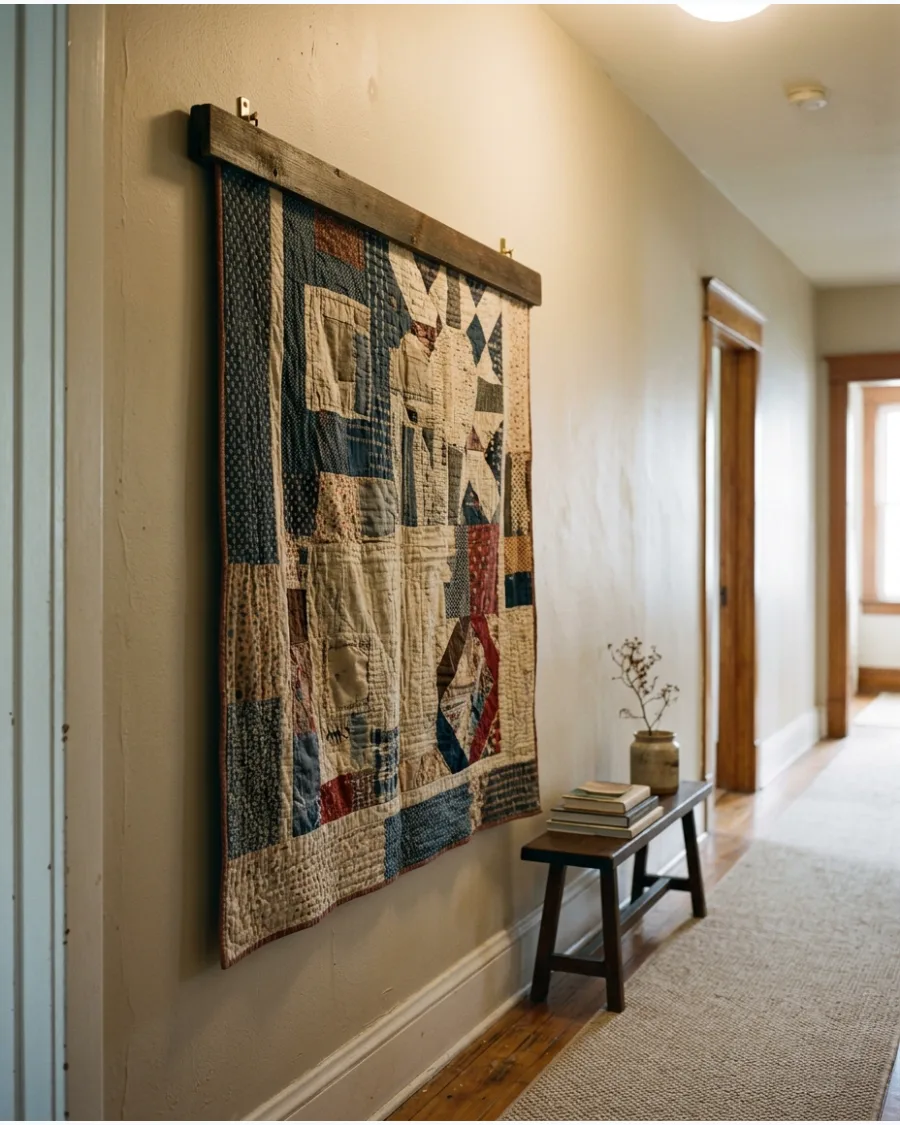
Display an older quilt that shows visible patches, repairs, or hand stitching. Those imperfections become part of the quilt’s story rather than something that needs to be hidden.
Highlight the hand-repaired sections by placing them near a window or light source. Visible repairs add a layer of soul and history that brand-new items simply cannot provide.
- Repaired vintage quilts vary widely in price.
- Use a compression hanger to protect the fragile edges.
- Place in a hallway where guests can see the detail up close.
Most people skip this: Avoid using tape or adhesives on any part of the quilt as they will ruin the fibers over time.
MODERN AND MINIMALIST QUILT WALLS
21. Contemporary Geometric Quilt
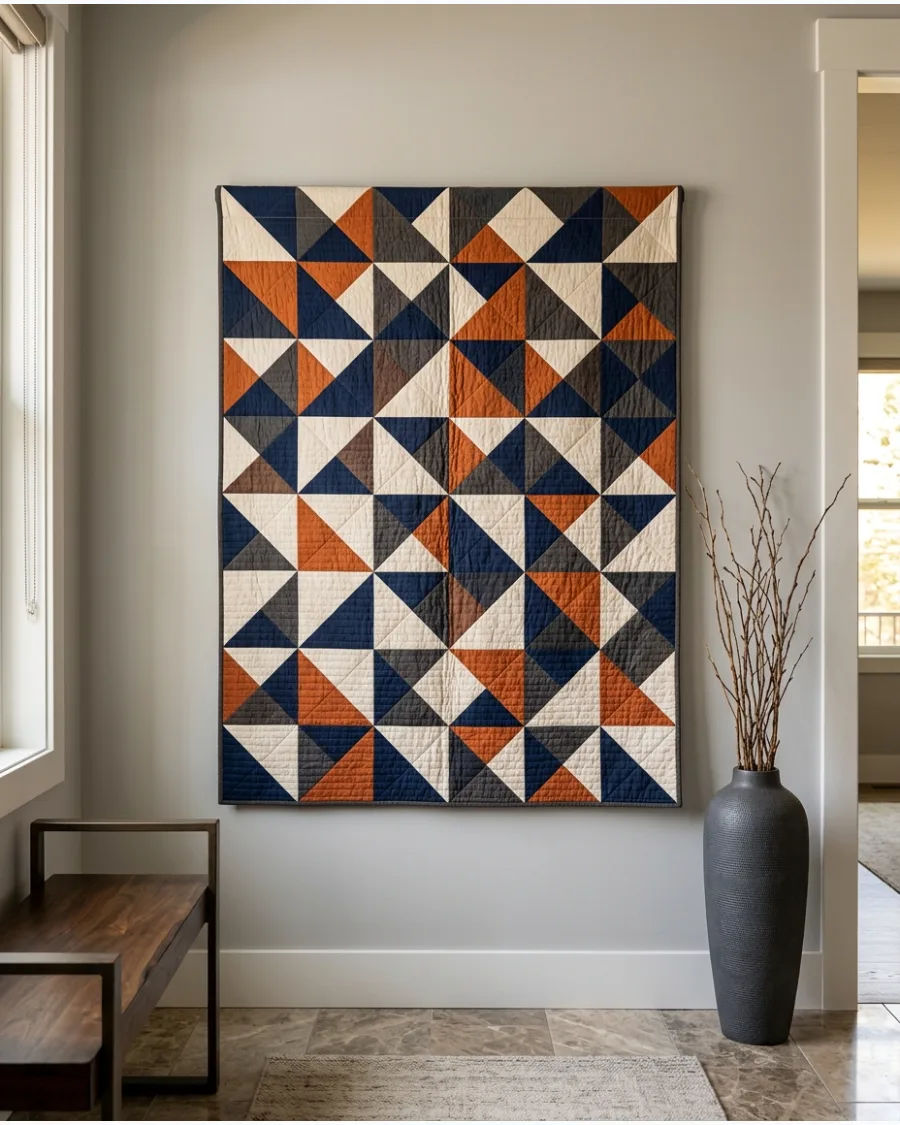
Modern quilts with sharp lines act like oversized abstract art. Attach a sleeve to the back of the quilt to slide a hidden rod through for a seamless look. The fabric adds a soft layer that paint or canvas cannot provide.
- Designer or custom-made modern quilts
- Center the quilt at eye level on a wide entryway wall
- Use a black rod for high contrast against light walls
Quick win: Match one thread color in the quilt to your wall paint to make it feel integrated.
22. Neutral-Tone Quilt Display
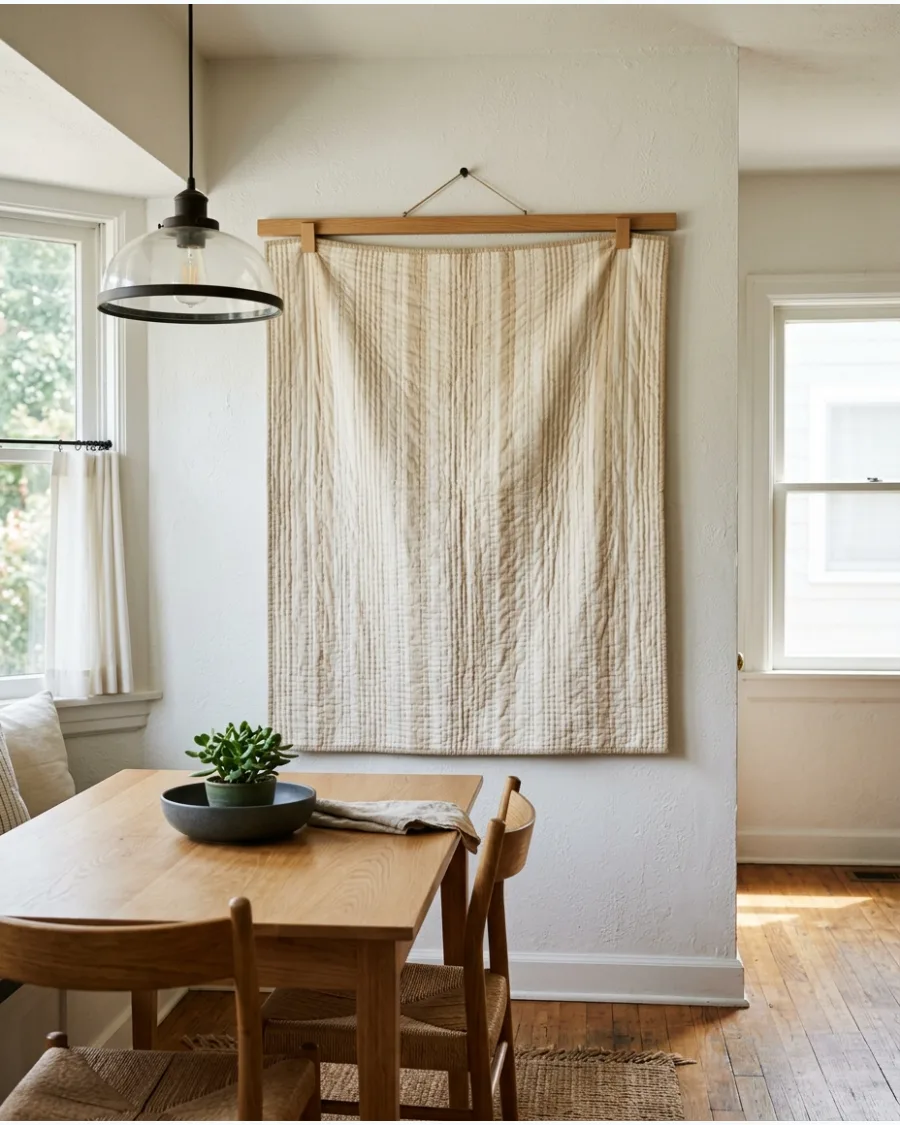
A palette of cream, beige, and taupe brings texture without visual noise. Choose a quilt with heavy top-stitching to ensure the pattern is visible even without bright colors. This style bridges the gap between cozy traditional and modern organic decor.
- Organic cotton or linen quilts
- Hang in a sun-drenched breakfast nook
- Pair with light oak furniture to keep the room feeling airy
Most people skip this: Check the quilt's weight before buying a rod, as heavy linen needs extra support.
23. Black and White Quilt Wall
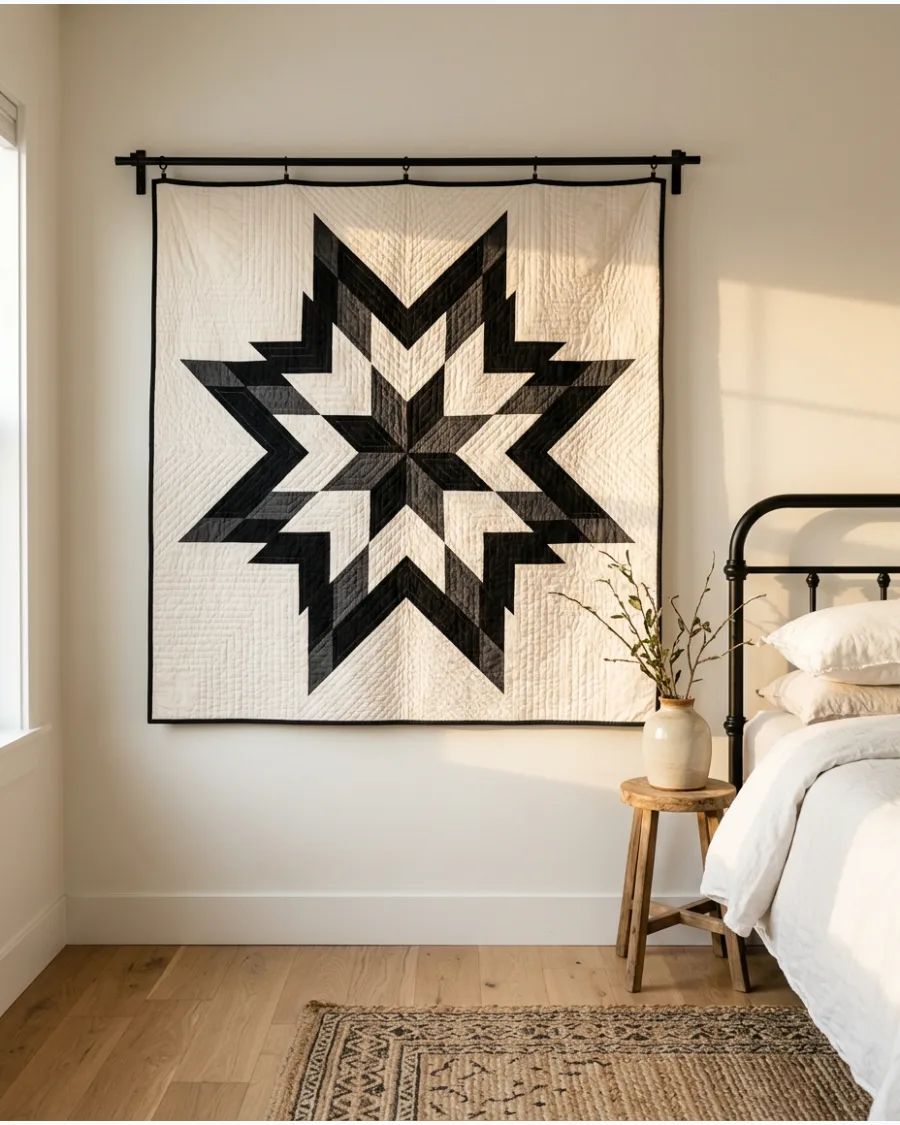
High-contrast patterns make a bold statement in a monochrome room. Use a thin black metal rod that matches the quilt's dark tones for a professional gallery finish. The simplicity of two colors keeps a large textile from overwhelming a small space.
- Modern graphic quilts
- Mount on a white bedroom wall
- Swap for a gray and white version if pure black feels too harsh
Best shortcut: Use magnetic quilt hangers to avoid sewing sleeves onto modern textiles.
24. Color-Block Quilt Artwork
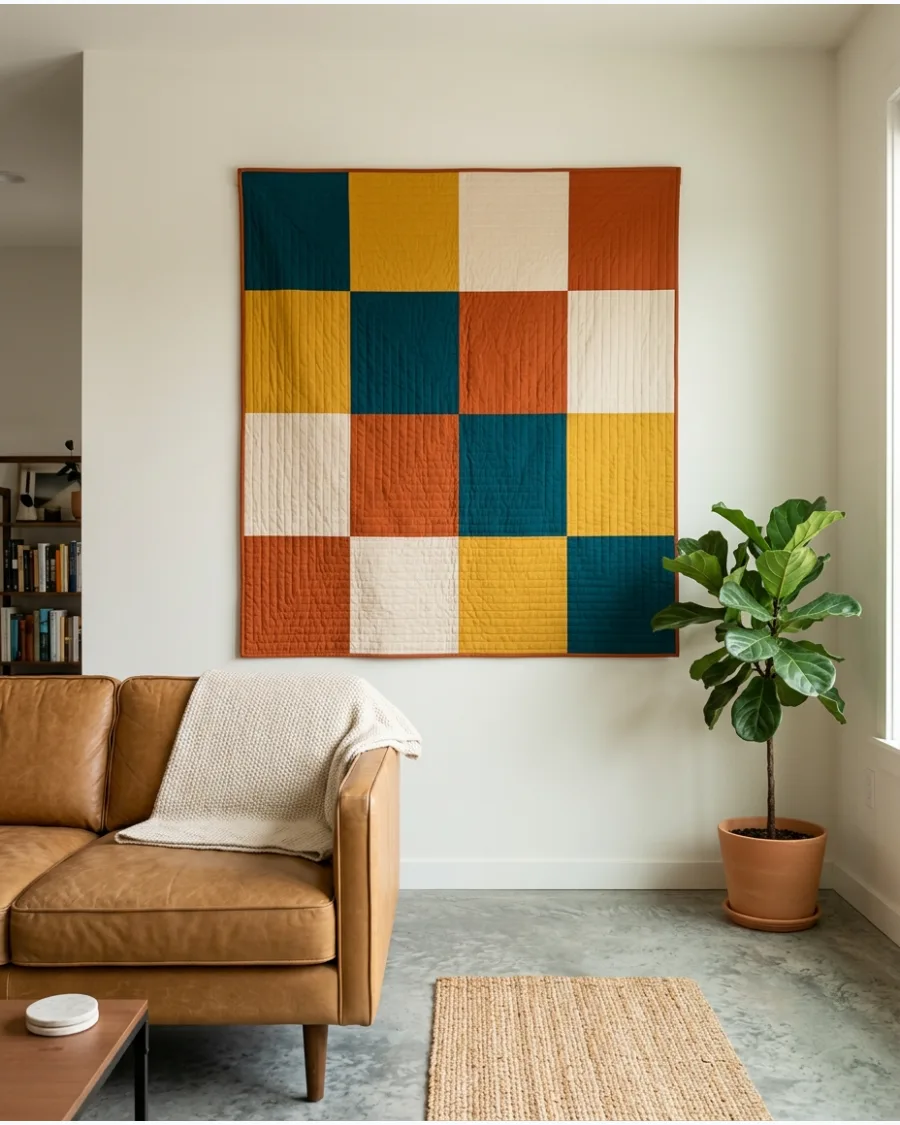
Solid blocks of color give a quilt a clean, graphic look. Secure the bottom corners with small weights or magnets to keep the fabric from curling away from the wall. Large color fields provide a warm backdrop for a minimalist living room.
- Hand-dyed solid fabric quilts
- Hang behind a low-profile leather sofa
- Scale the blocks to match the size of your furniture
Quick win: Align the top edge of the quilt with the top of a nearby window frame for visual symmetry.
Home Decor
25. Offset Art Quilt Wall Display
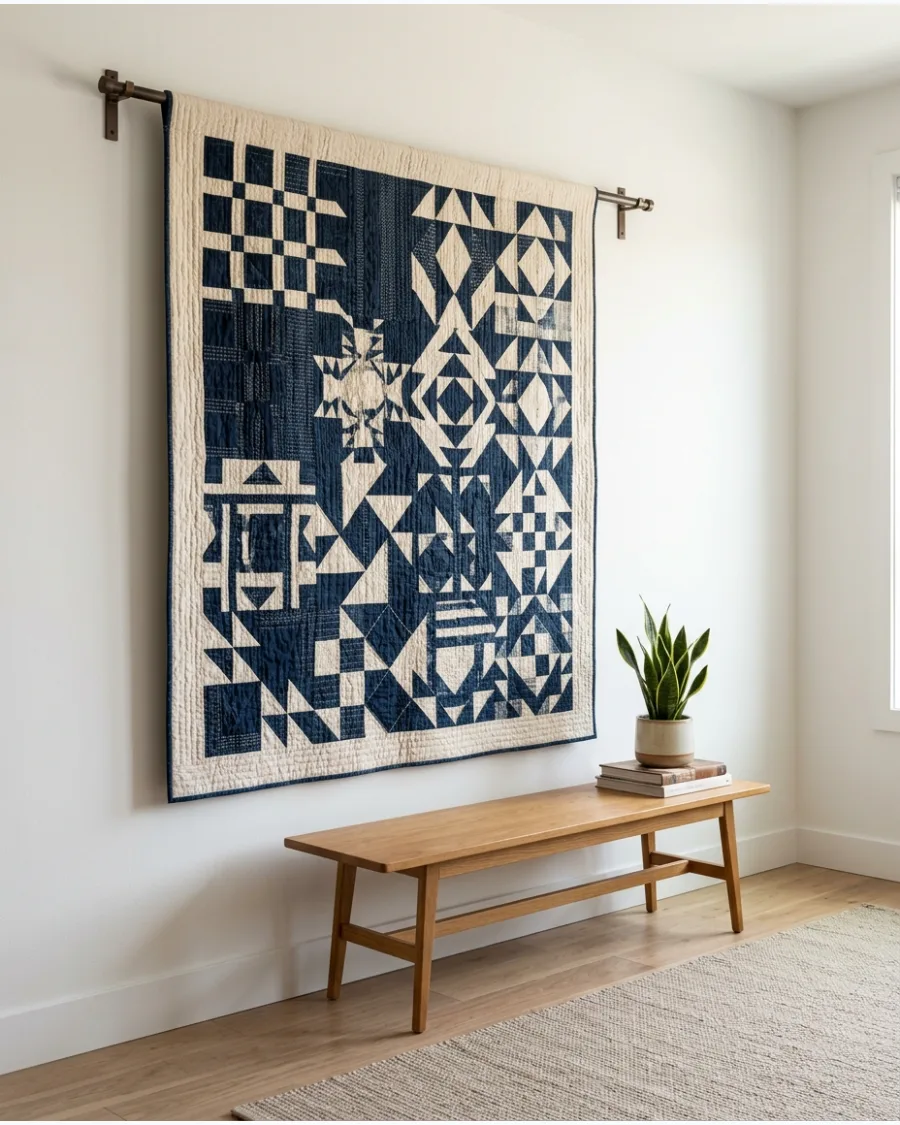
Modern art quilts with irregular patterns create a dynamic focal point when placed in minimalist rooms. Mount the textile using a hidden wooden slat to maintain the clean lines of the asymmetrical design. This method prevents sagging and keeps the focus entirely on the fabric's geometric intersections.
Using high-contrast fabrics against a neutral wall ensures the silhouette of the quilt remains the primary visual interest. Hanging the piece slightly off-center from furniture creates a more curated and less formal atmosphere.
- Source unique, non-traditional patterns from fiber artists on artisan marketplaces or at local textile galleries.
- Hand-sew a heavy cotton sleeve to the back of the quilt top and slide a flat timber lath through for invisible support.
- Rotate the quilt from horizontal to vertical to fill narrow wall gaps between windows or doorways.
Most people skip this: Use a level during the slat installation to ensure the top edge is perfectly horizontal, which makes the internal asymmetry look intentional rather than accidental.
MODERN AND MINIMALIST QUILT WALLS
26. Quilt With Curved Patterns
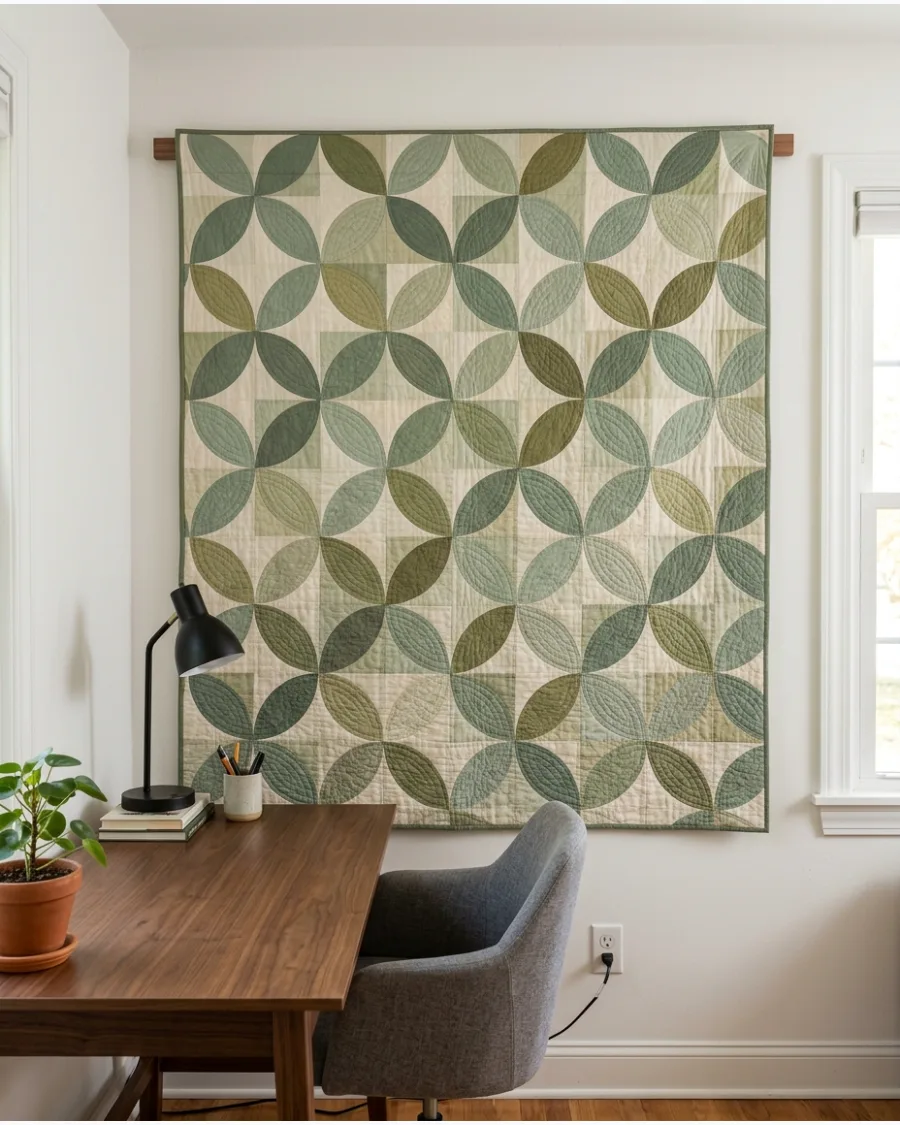
Quilts with circles or waves soften the hard edges of a room. Position a curved-pattern quilt in a room with lots of square furniture to create visual balance. The repetitive motion of the stitching adds a rhythmic feel to the wall.
- Drunkard's Path or modern circle quilts
- Hang in a home office with a rectangular desk
- Choose tonal blues for a calming, wave-like effect
Best shortcut: Steam the quilt while it is hanging to let the curves drape naturally.
Home Decor
27. Raw-Edge Quilt Block Gallery
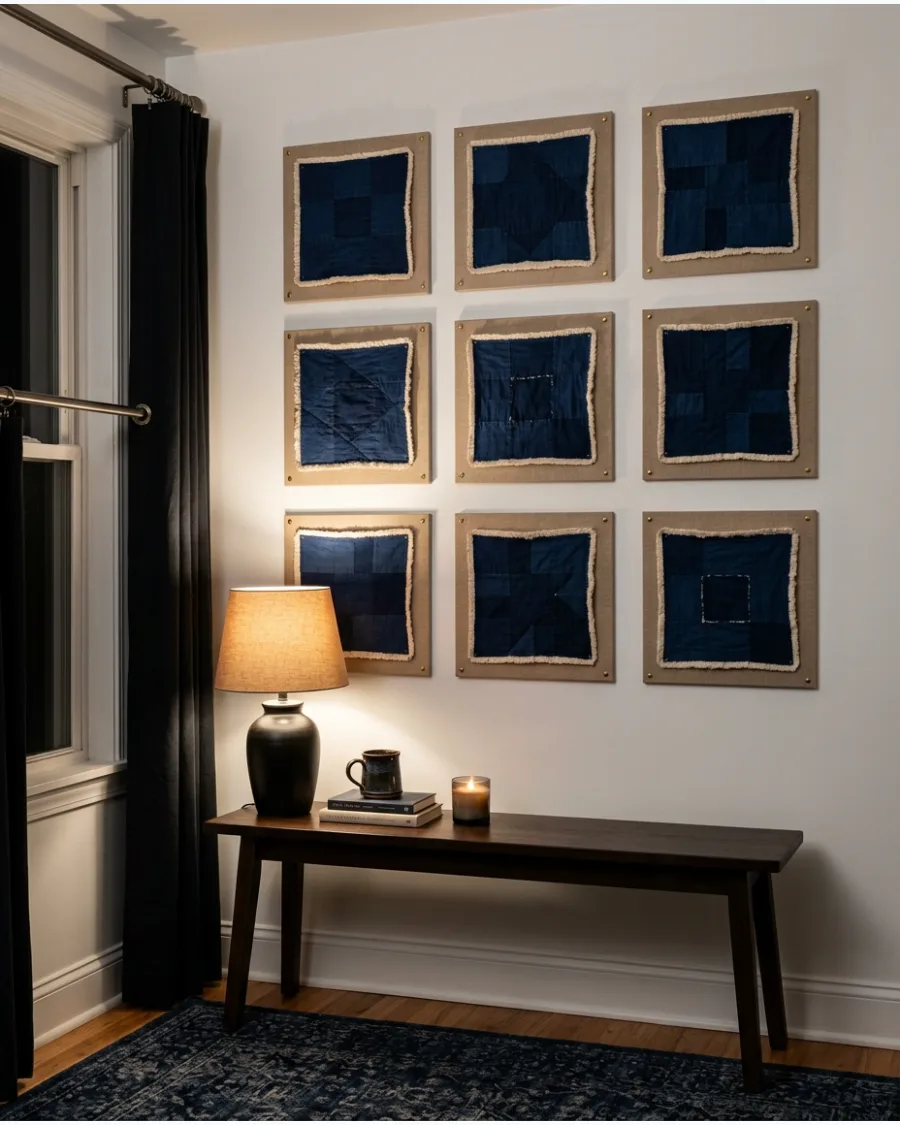
Unfinished quilt blocks or vintage textile fragments offer a tactile, layered look that feels softer than traditional framed prints. Mounting these pieces on a linen-wrapped board creates a professional museum-style display without the cost of custom framing.
Secure the fabric with small brass pins at the corners to maintain the natural drape and frayed edges. This approach works best with high-contrast patterns to prevent the fabric from looking messy against the wall.
- Look for orphaned quilt blocks at antique shops or fabric remnants for a budget-friendly start.
- Use acid-free foam core wrapped in neutral fabric as a sturdy, lightweight backing for the textile.
- Group three different sized blocks in a vertical line to fill narrow wall spaces.
Most people skip this: Lightly steam the fabric before mounting to remove deep creases while keeping the raw edges intact.
MODERN AND MINIMALIST QUILT WALLS
28. Minimal Quilt on Limewash Walls
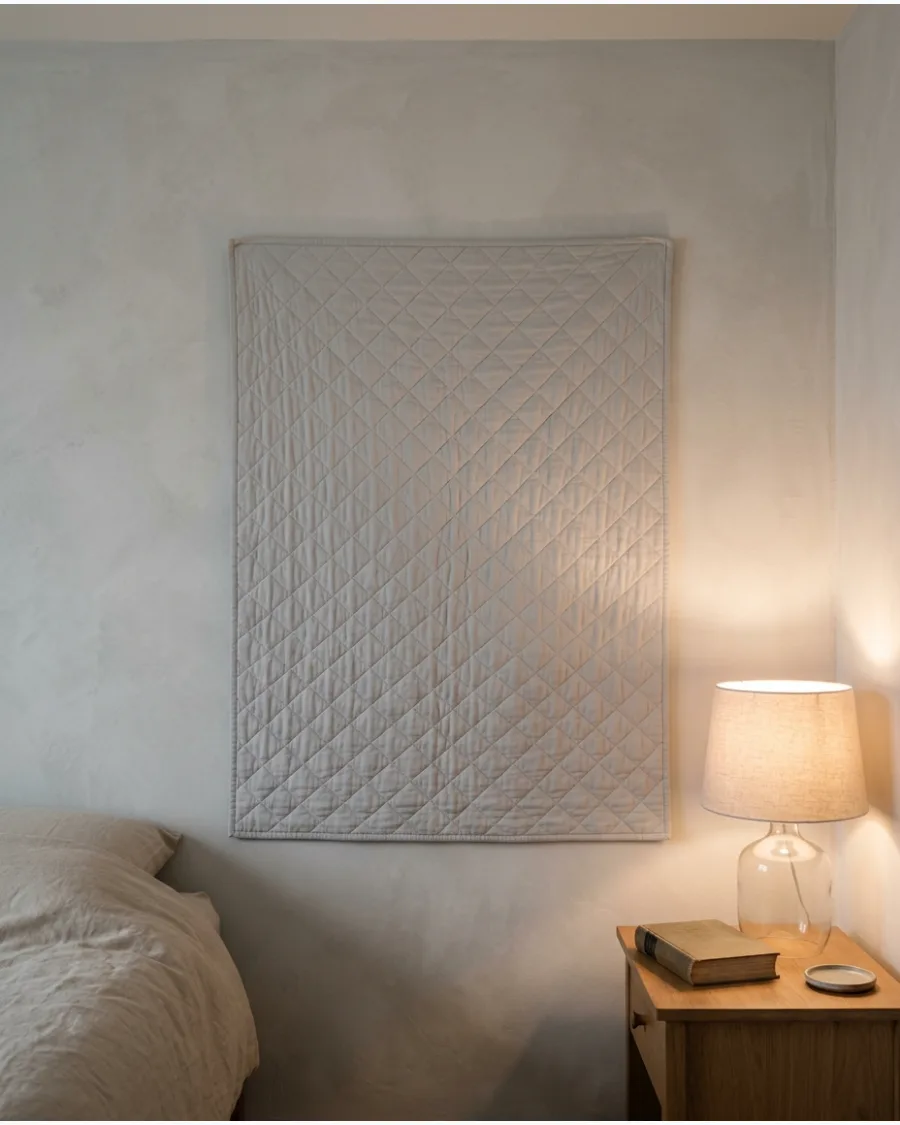
The subtle texture of limewash paint pairs perfectly with soft fabric. Select a quilt with a single color but intricate stitching to let the shadows of the quilting pop. This combination creates a sophisticated, layered look that feels very high-end.
- Single-color whole-cloth quilts
- Hang in a minimalist master suite
- Use a hidden wooden slat to keep the focus on the wall texture
Most people skip this: Use warm-toned lighting to emphasize the depth of the limewash and the fabric texture.
29. Narrow Modern Quilt Panel
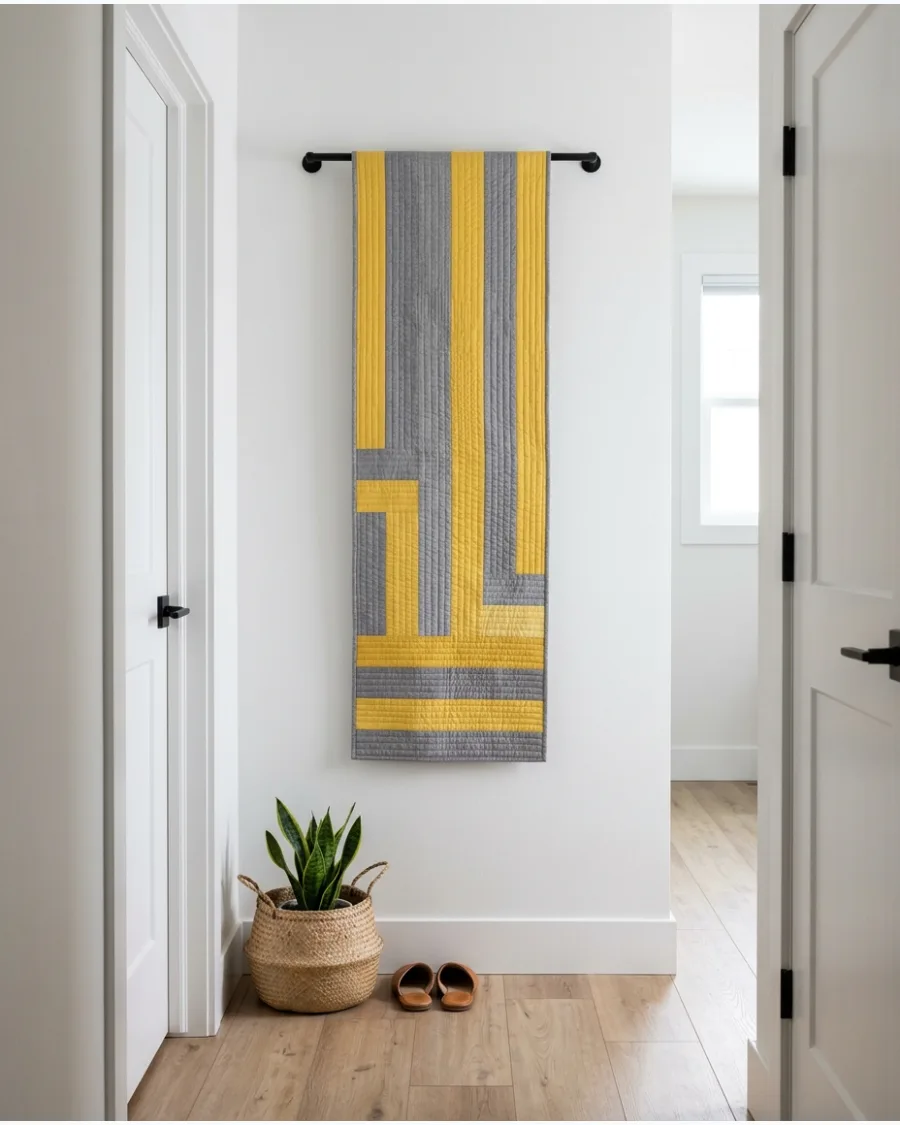
Vertical panels fit into narrow wall sections that are too small for paintings. Choose a bold vertical stripe or a long geometric repeat to lead the eye upward. This is a great way to add color to a hallway or the space between two doors.
- Runner-style quilts or narrow panels
- Hang in a transition space like a landing
- Use a weighted bottom rod to keep the narrow fabric taut
Best shortcut: Use a decorative curtain rod and matching rings for a quick, stylish installation.
30. Tonal Quilt and Wall Combination
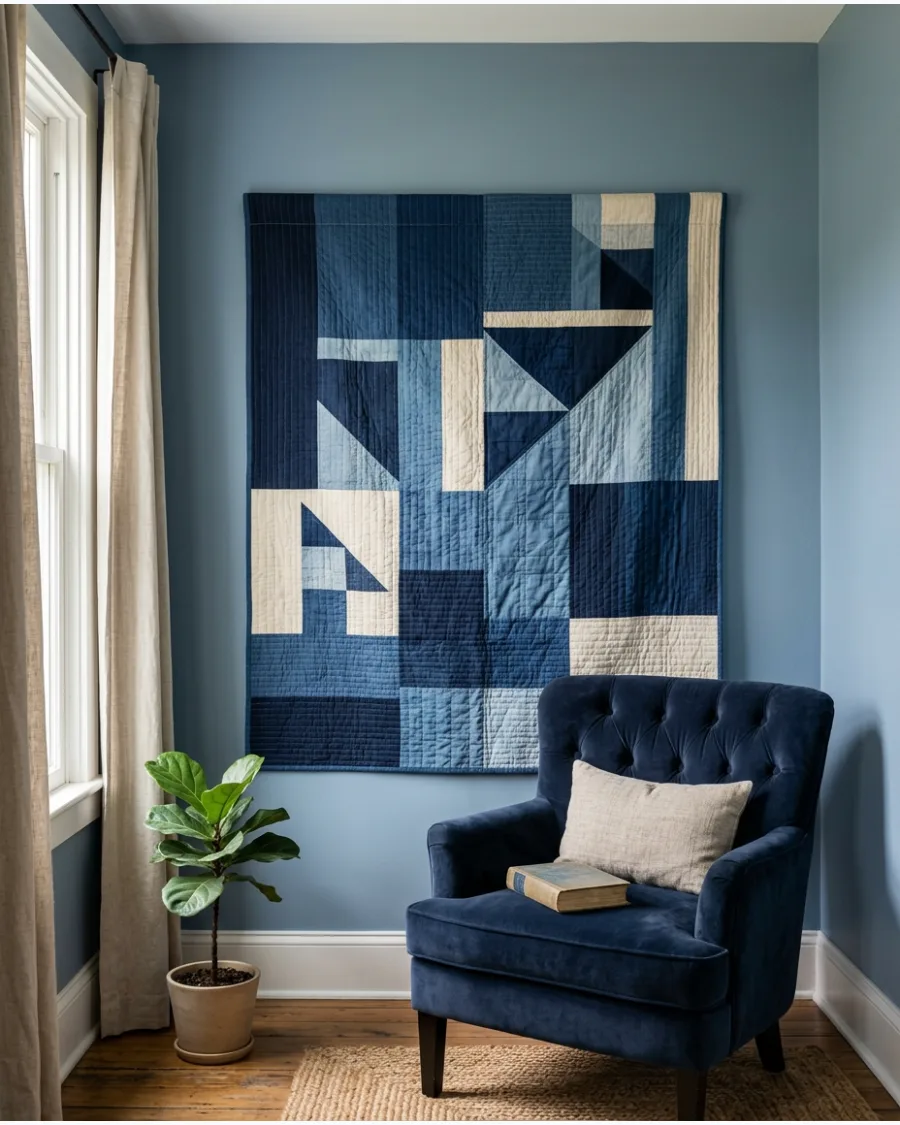
Using shades of the same color creates a quiet, sophisticated feature. Pick a quilt that is two shades darker than your wall color to add depth without creating a jarring break. This tone-on-tone approach makes the room feel larger and more cohesive.
- Tonal or monochromatic quilts
- Hang in a cozy den or reading corner
- Mix different fabric types like linen and silk for extra sheen
Quick win: Take a paint swatch of your wall color to the fabric store to ensure the quilt tones match perfectly.
MINI QUILT AND GALLERY WALL IDEAS
31. Mini Quilt Gallery Wall
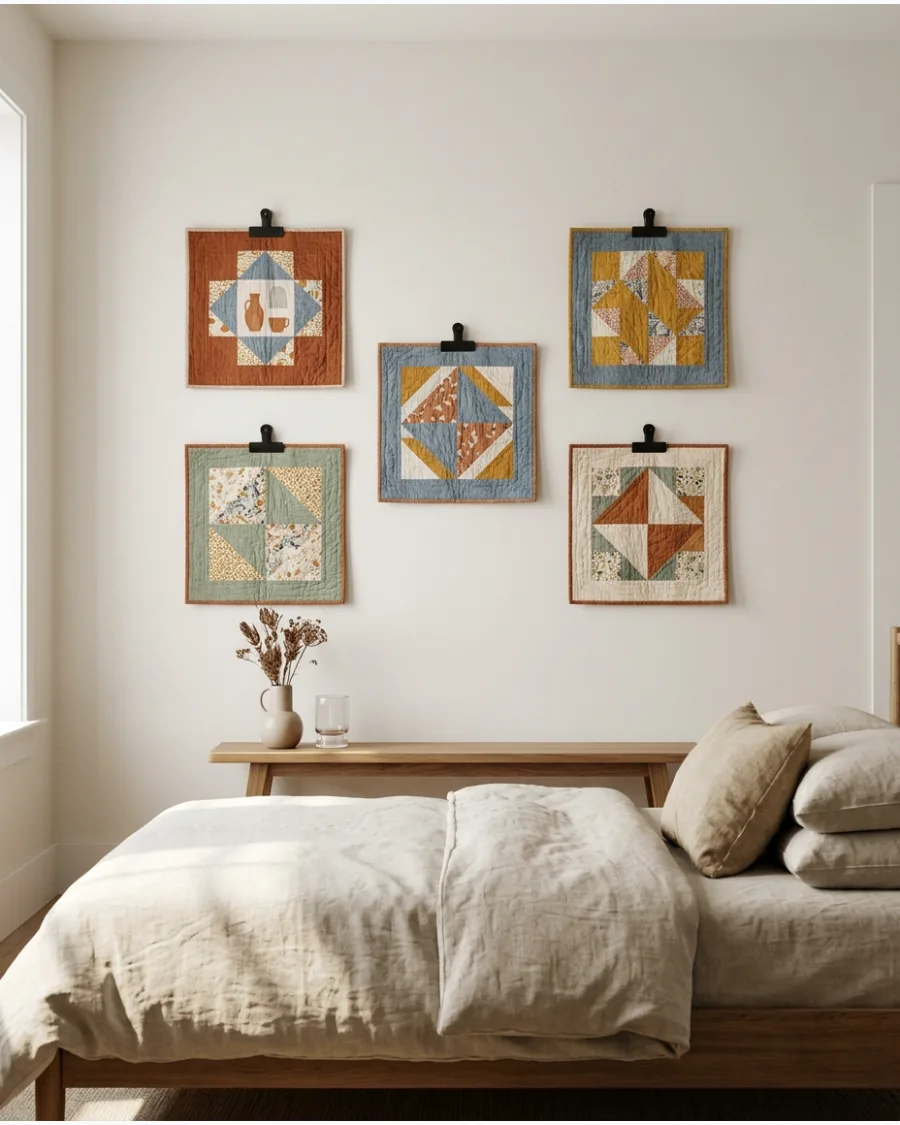
Arrange several small quilts together like a collection of framed prints. Maintain consistent spacing while allowing the colors and patterns to vary.
Place the center of the grouping at eye level to ensure the collection feels grounded and intentional. Large collections work best when there is a common thread, like a repeating border color.
- Sourcing small quilts or making them from fabric scraps
- Use a laser level to ensure perfect alignment across the row
- Works well in small dining nooks or entryways
Quick win: Use consistent hardware, like matching clips or rods, to make mismatched quilt patterns look like a curated set.
32. Grid of Matching Mini Quilts
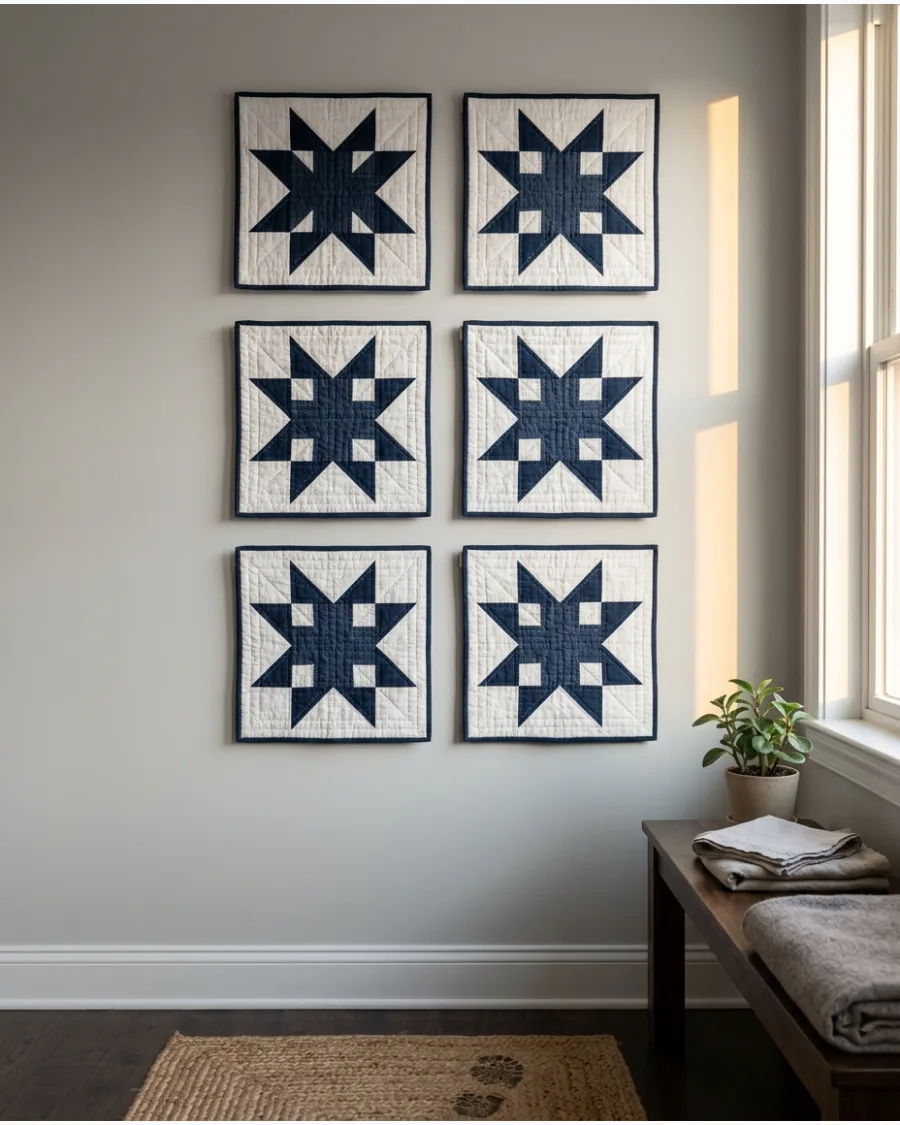
Hang four, six, or nine similarly sized mini quilts in an orderly grid. This structured arrangement gives handmade textiles a clean and contemporary presentation.
Measure the gaps between each piece with a spacer block to keep the grid perfectly symmetrical. A tight grid turns individual blocks into one massive statement piece.
- Custom quilt blocks or vintage finds
- Maintain two-inch gaps for a modern look
- Ideal for large blank walls in a primary bedroom
Best shortcut: Use 3M Command strips on the back of wooden slats for a drill-free installation that stays level.
33. Mixed-Size Quilt Collection
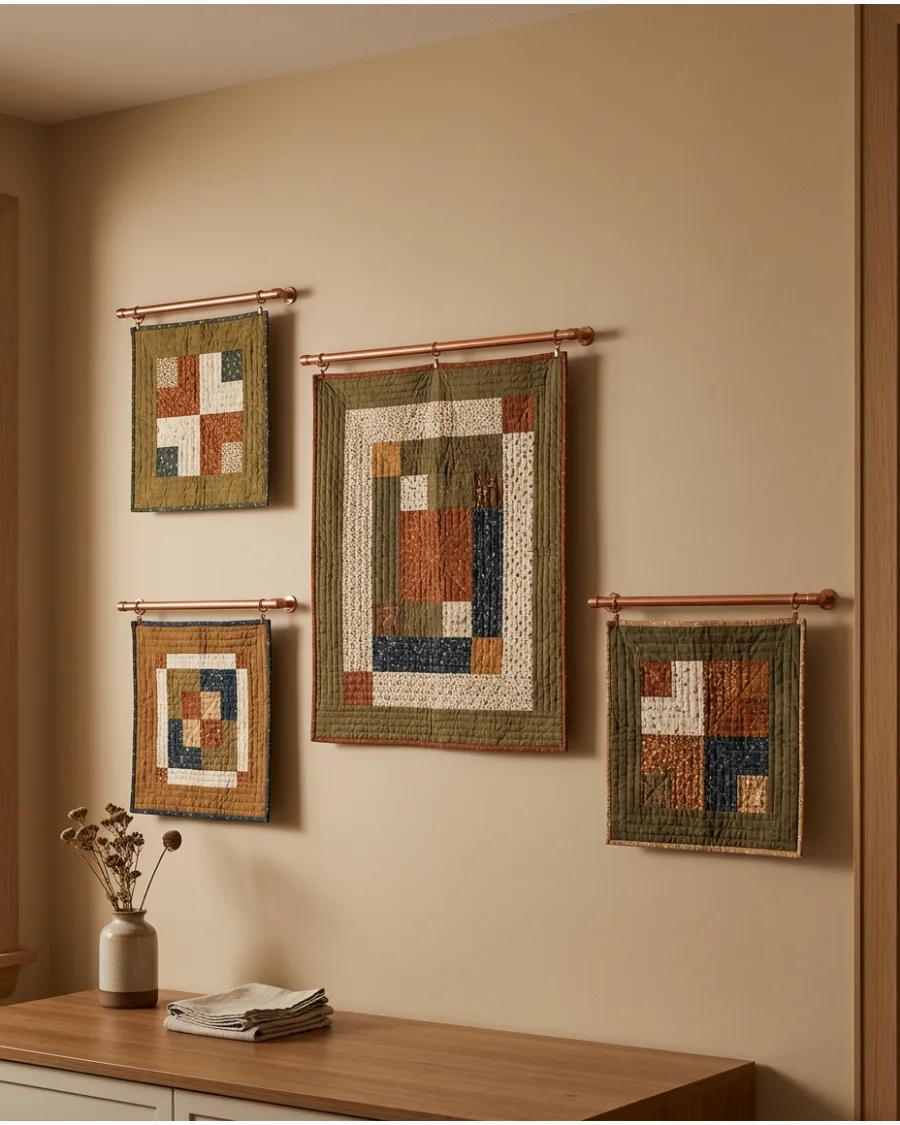
Combine small, medium, and narrow quilted pieces in one relaxed wall display. Begin with the largest piece and build the smaller items around it.
Overlap the edges of the display slightly with furniture below to anchor the art to the room. Mixing sizes prevents the wall from feeling too stiff or formal.
- Estate sales or handmade projects
- Lay the arrangement out on the floor before hammering nails
- Great for eclectic or bohemian living rooms
Most people skip this: Always leave at least three inches of space between the quilt and any lamps to prevent heat damage to the fabric.
34. Mini Quilts Above a Desk
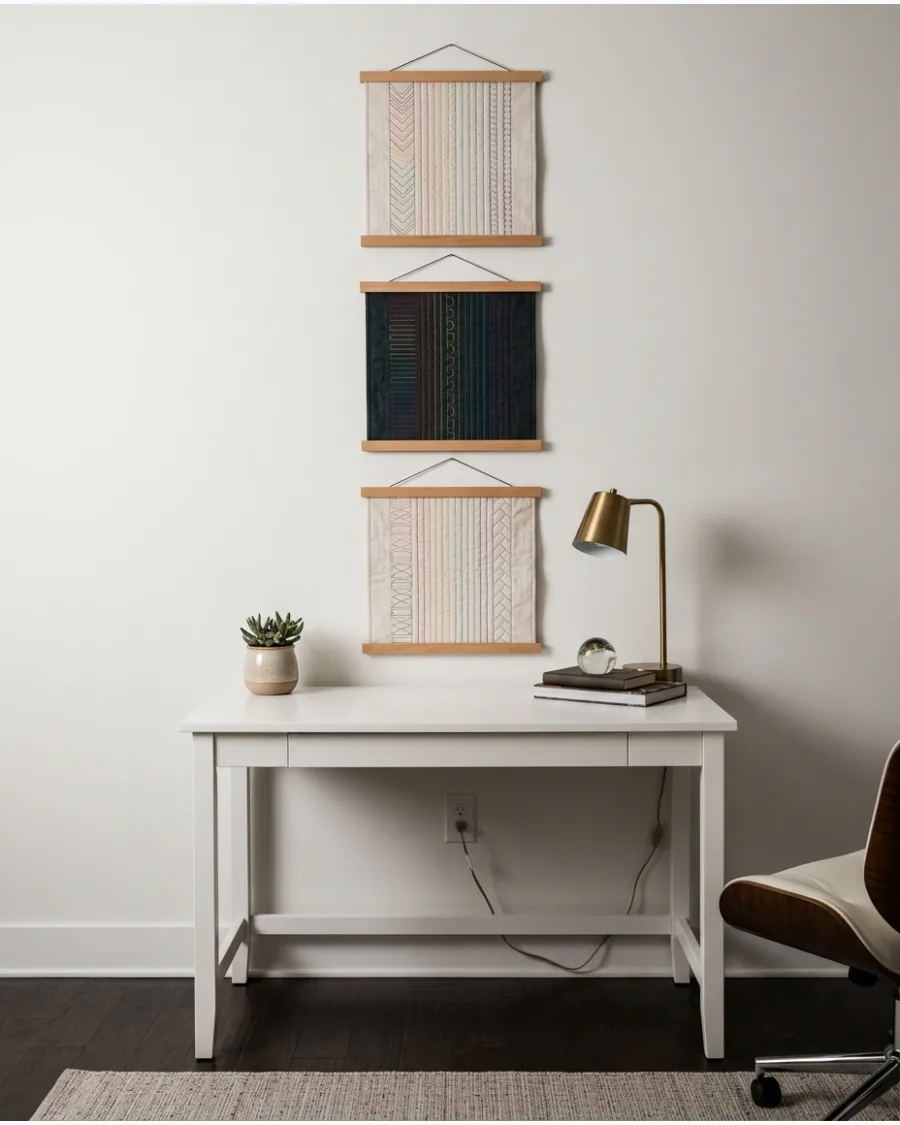
Display a row of small quilts above a home-office or craft-room desk. Their colors and stitching can provide creative inspiration without occupying work surfaces.
Mount the quilts high enough that they do not interfere with your computer monitor or desk lamp. Textiles also help dampen sound, making the room quieter for focused work.
- Small art quilts or sample blocks
- Align the bottom edges for a clean horizontal line
- Perfect for renters using lightweight magnetic hangers
Quick win: Choose quilts with high-contrast stitching to add visual texture that looks great in video call backgrounds.
35. Seasonal Mini Quilt Wall
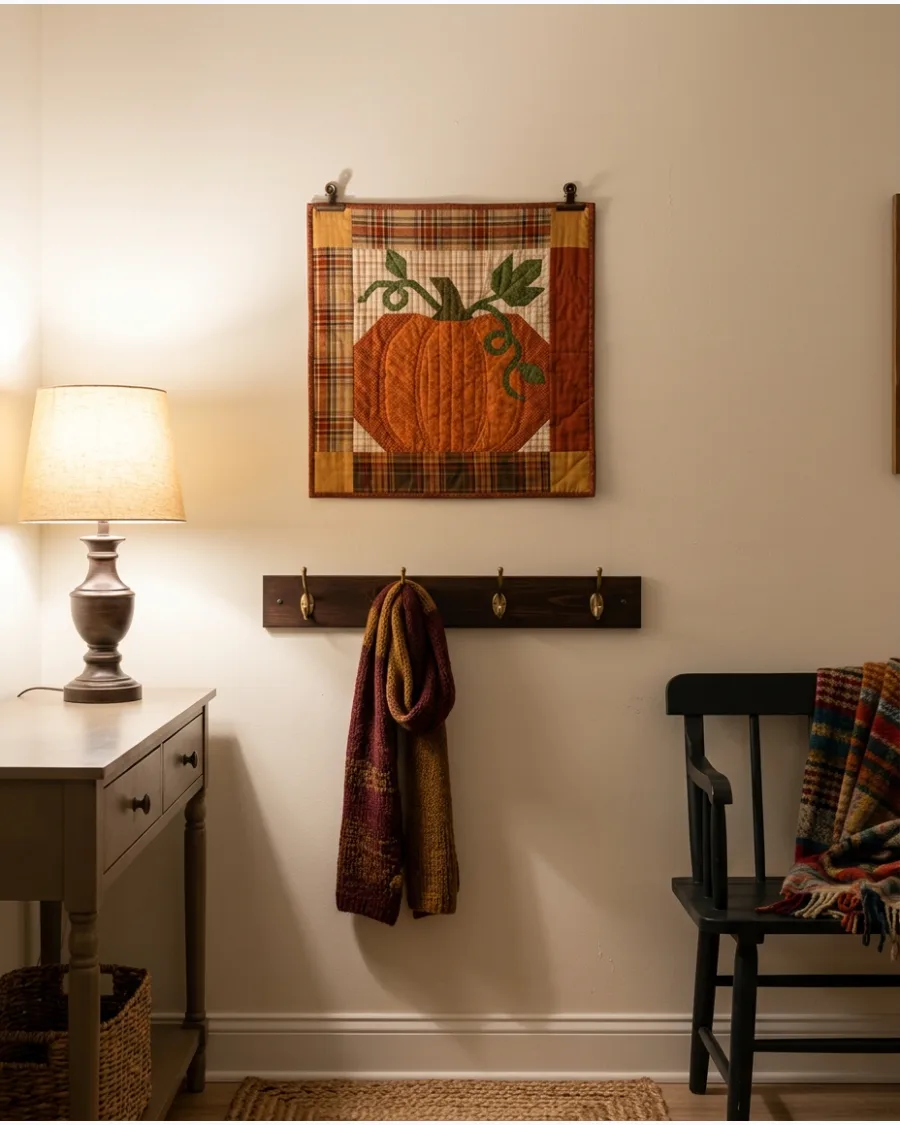
Install a flexible display system that allows small quilts to be changed throughout the year. Rotate floral, autumnal, holiday, or winter designs as the seasons change.
Keep a set of uniform hangers permanently mounted so swapping the fabric takes only seconds. This approach keeps the room decor feeling fresh and relevant.
- Seasonal quilted wall hangings
- Store off-season quilts flat in acid-free boxes
- Use a dedicated wall in a hallway or kitchen
Best shortcut: Use clip-on rings on a permanent rod to make switching textiles as easy as changing a curtain.
36. Quilt Blocks Displayed Separately
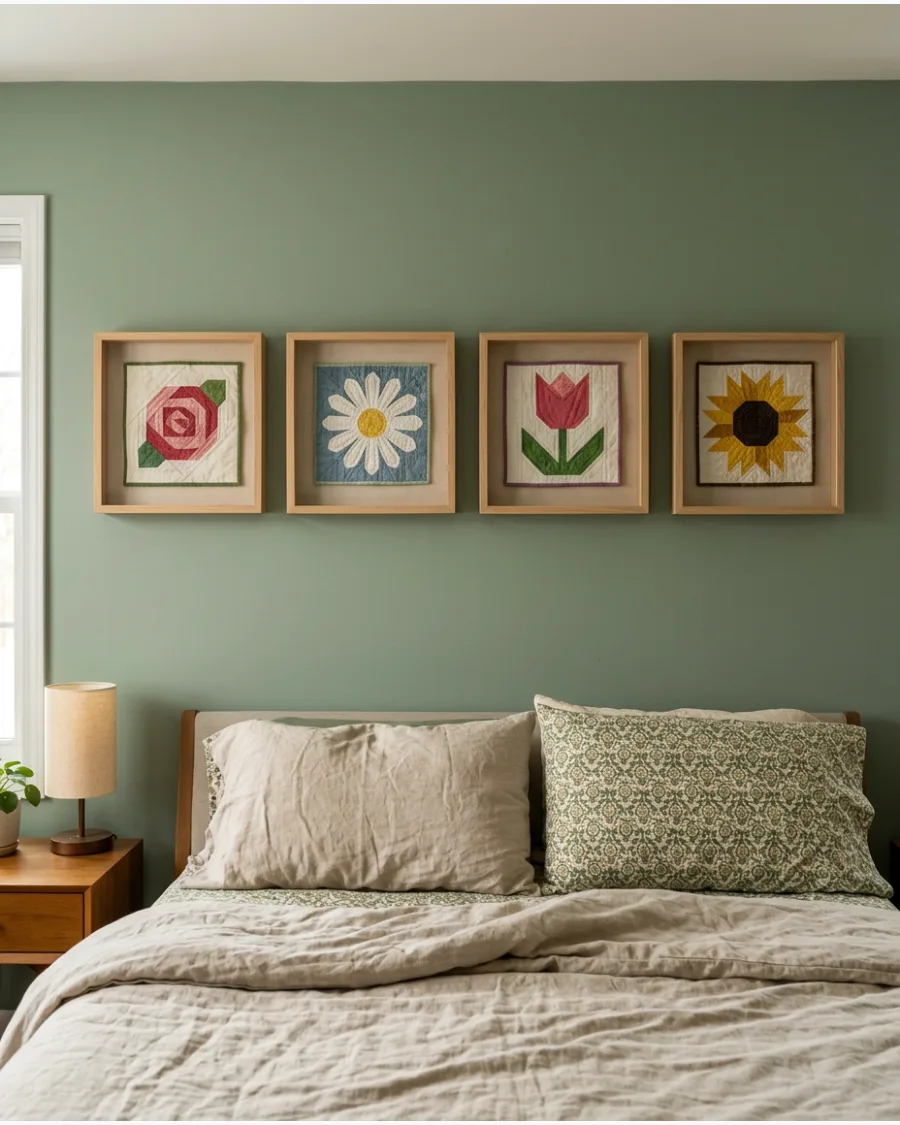
Hang individual finished quilt blocks as a coordinated series. Use identical hanging methods or simple frames to unite the different patterns.
Choose blocks with a consistent background fabric to make the different patterns feel like a set. This is a great way to showcase intricate hand-work that might get lost in a full-sized quilt.
- Individual twelve-inch quilt blocks
- Use shadow boxes to protect delicate fabrics from dust
- Fits well in a laundry room or guest bathroom
Most people skip this: Use acid-free mounting board inside frames to prevent the fabric from yellowing over time.
37. Mini Quilts Along a Hallway
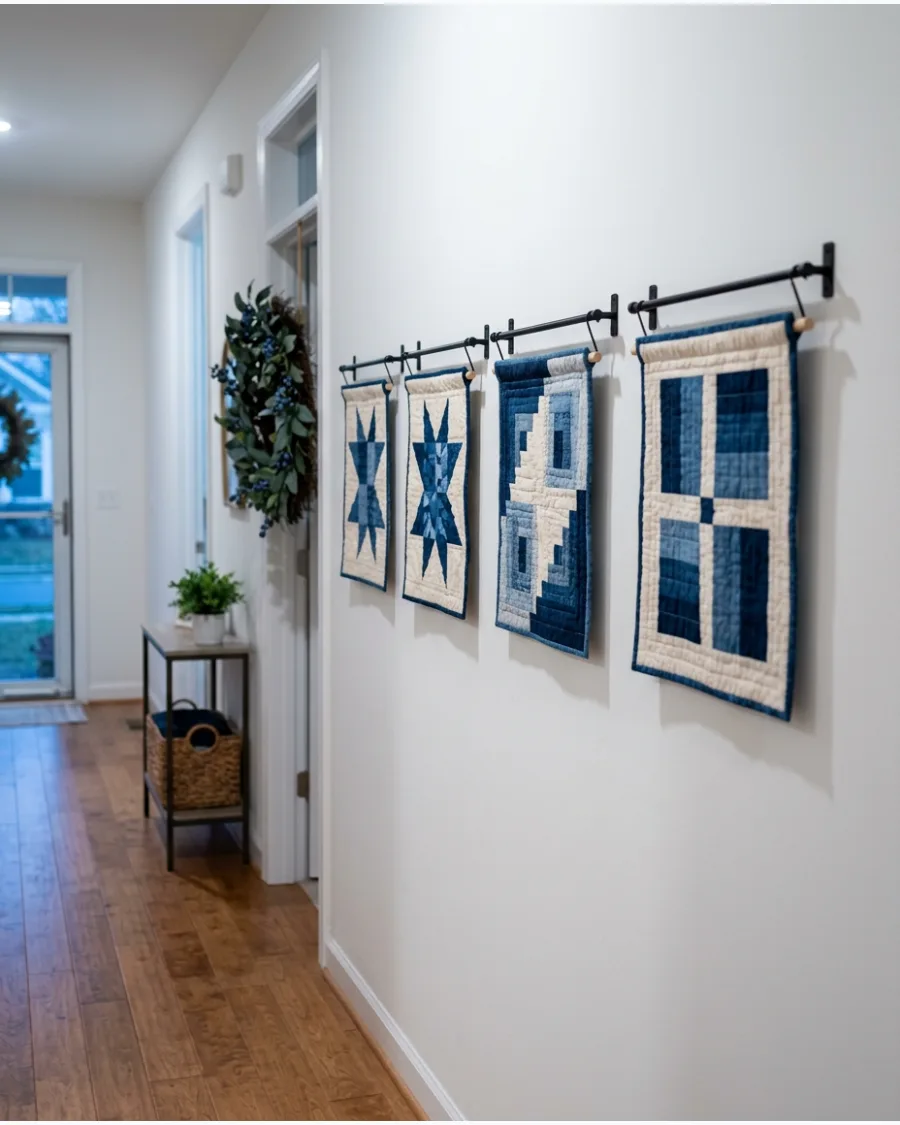
Create a sequence of small textile artworks along a narrow hallway. Keep the center points aligned to make the collection feel organized.
Space the quilts based on the distance between doorways to create a natural rhythm. Soft textiles are better than glass frames in narrow halls because they will not shatter if bumped.
- Coordinated mini quilts
- Hang at fifty-seven inches from the floor to the center point
- Ideal for high-traffic transition spaces
Quick win: If the hallway is dark, use battery-operated picture lights above each quilt to highlight the textile texture.
38. Staircase Quilt Gallery
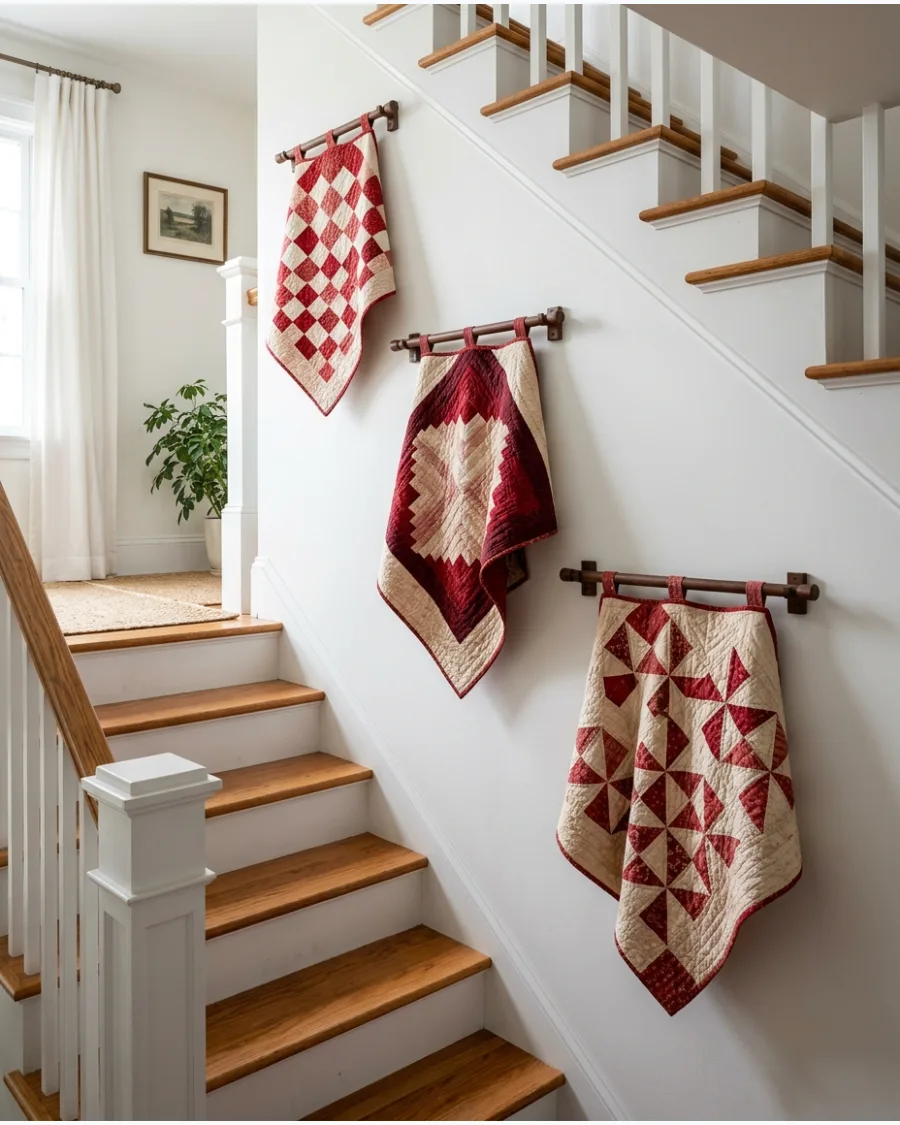
Arrange small quilts so the display gradually follows the upward angle of the staircase. Mix geometric and traditional patterns while repeating a consistent color.
Measure the distance from each step to the bottom of the quilt to ensure the incline is steady. This utilizes vertical space that often stays empty.
- Variety of small square quilts
- Use a yardstick to keep the angle consistent with the stairs
- Best for traditional or farmhouse-style homes
Best shortcut: Use heavy-duty velcro tabs on all four corners to keep quilts from shifting when people walk by.
39. Quilts Mixed With Framed Artwork
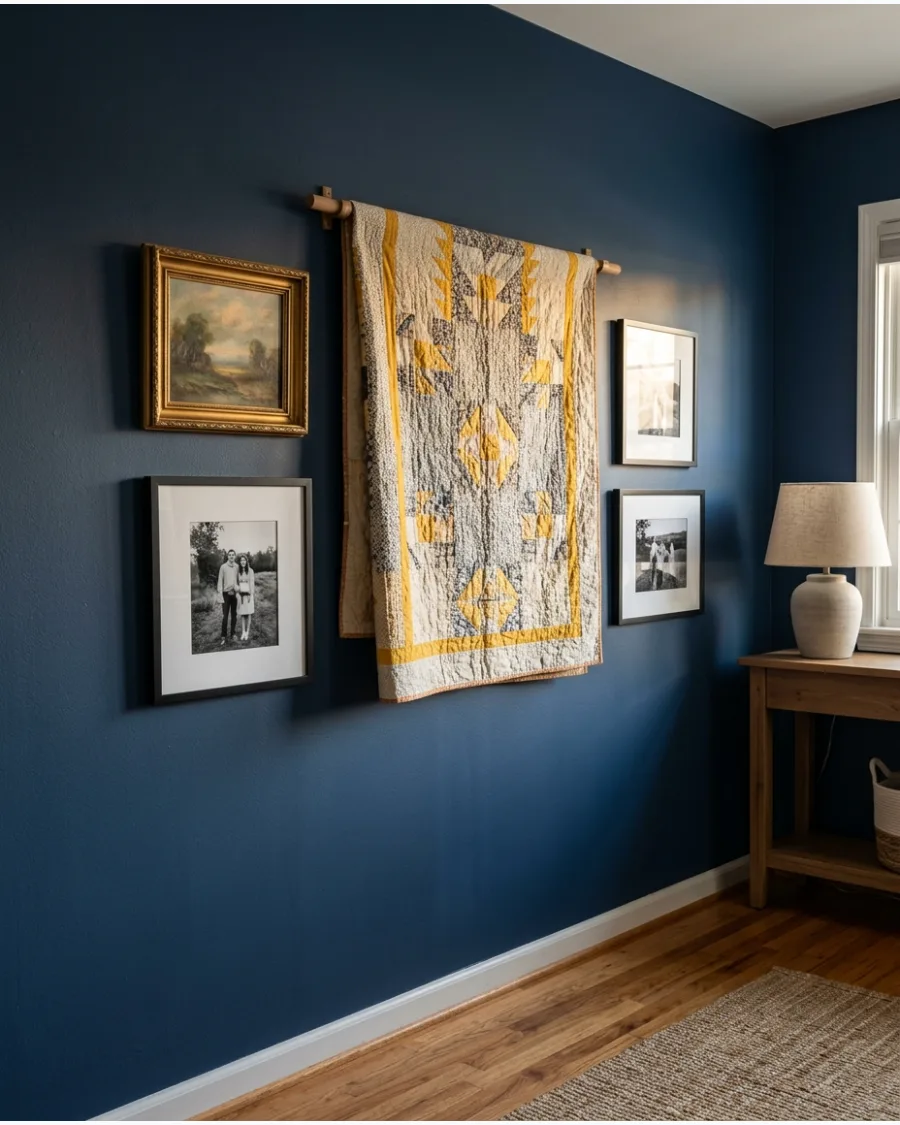
Combine textile pieces with paintings, prints, and photographs in one gallery wall. Repeat several colors throughout the collection so the different materials feel connected.
Mix the textures by placing a soft quilt next to a sharp, glass-fronted frame. This adds depth and warmth that a wall of only paper prints lacks.
- Art prints, family photos, and mini quilts
- Keep frame finishes consistent to ground the look
- Great for living room focal walls
Most people skip this: Make sure the quilt is the heaviest visual item by placing it toward the bottom or center of the arrangement.
40. Quilts Mixed With Woven Decor
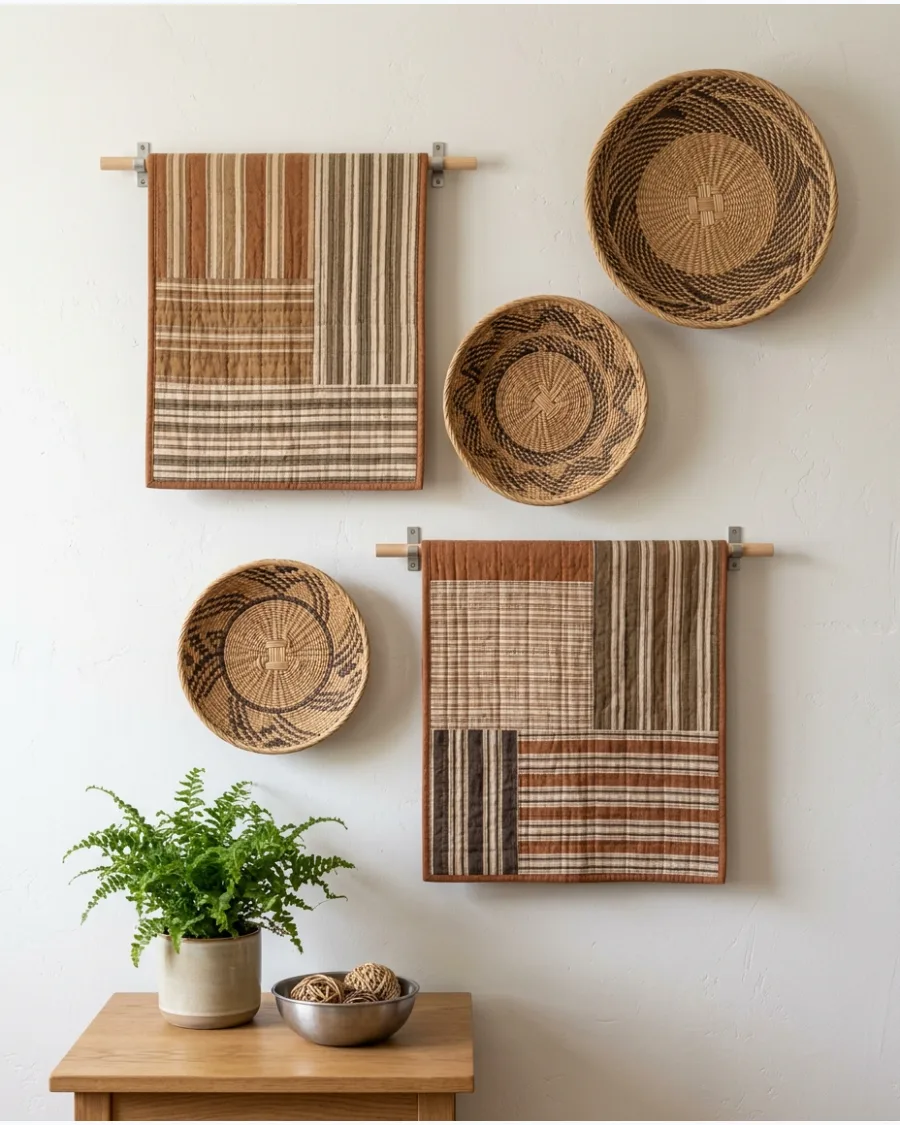
Pair mini quilts with shallow baskets, woven trays, or fiber artwork. The layered materials create a warm, handcrafted wall without depending on one decorating style.
Group items in odd numbers like three or five for a more natural look. Combining different crafts celebrates a handmade aesthetic throughout the room.
- Hand-woven baskets and mini quilts
- Use small finish nails for lightweight baskets
- Works perfectly in sunrooms or casual dens
Quick win: Use a steamer on the quilts before hanging to remove fold lines so they sit flat against the wall like the baskets.
CREATIVE QUILT-HANGING PRESENTATIONS
41. Quilt on a Wooden Display Rod
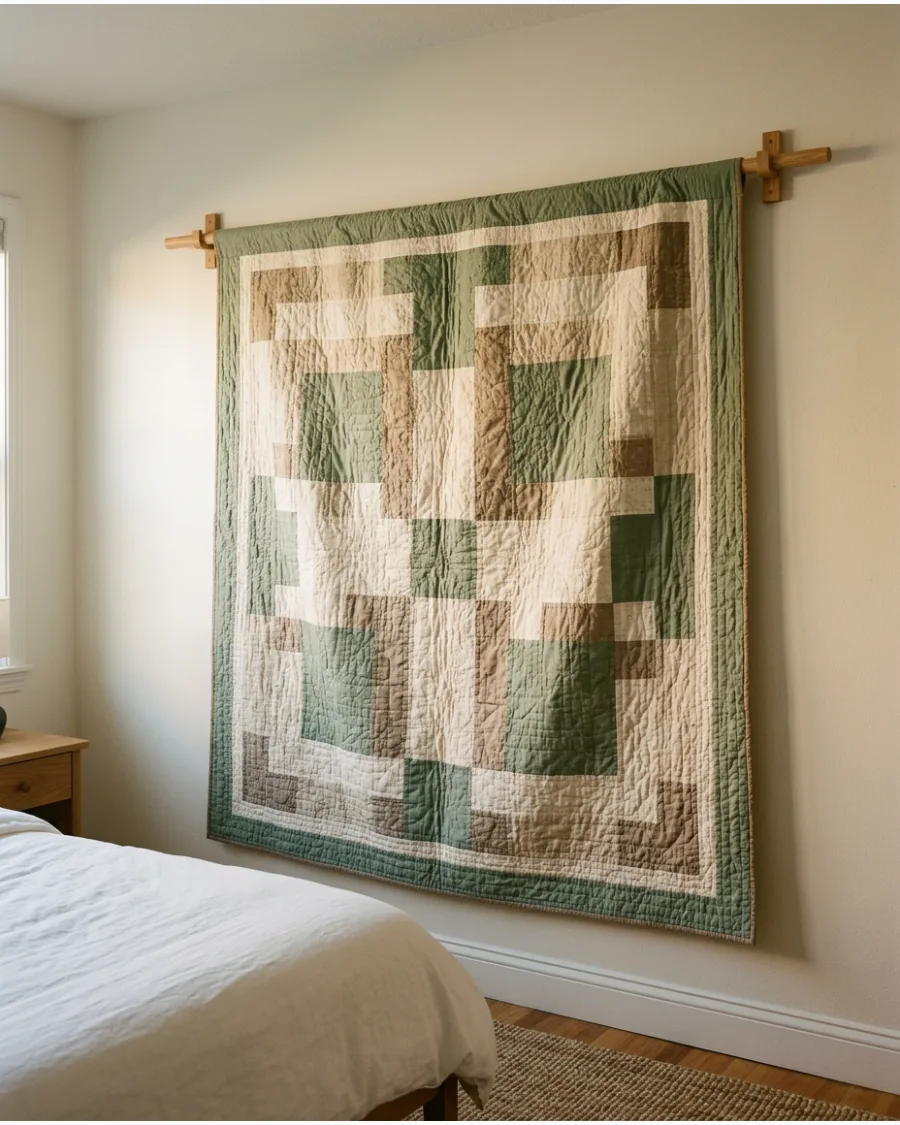
Threading a rod through a sleeve ensures the weight of the fabric is distributed evenly to prevent sagging. Natural wood finishes bring a soft, organic warmth that works well with cotton and linen textiles.
Mount the brackets slightly wider than the quilt edges to let the rod ends peek out for a finished look. It provides a classic, museum-quality feel without looking too formal or stiff.
- Buy a 1-inch diameter wooden dowel at a hardware store.
- Measure the quilt width and add 4 inches for the rod length.
- Use this for heavy cotton quilts that need full support.
Quick win: Sand the rod well to prevent any splinters from snagging the delicate threads of the quilt.
42. Quilt on a Decorative Metal Rod
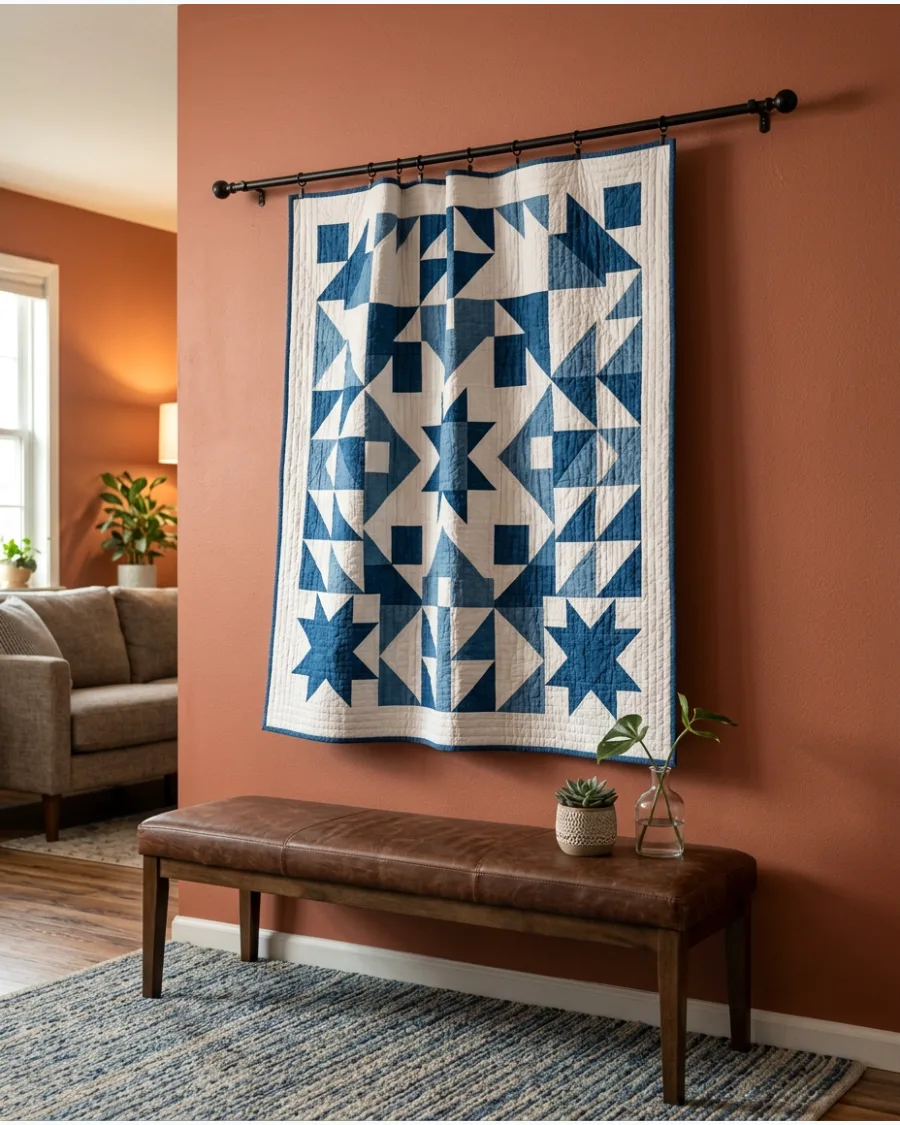
Metal rods offer a thinner profile that works perfectly for modern or industrial spaces. Choosing a dark bronze or matte black finish creates a sharp contrast against a light-colored textile.
Select low-profile finials to keep the focus on the fabric pattern rather than the hardware. This method is incredibly durable and won't warp over time like some lighter materials might.
- Spend $20-$40 on a sturdy adjustable metal curtain rod.
- Install into wall studs or use heavy-duty anchors for safety.
- Perfect for high-traffic areas where a sturdy mount is required.
Best shortcut: Match the metal finish to your door handles or light fixtures for a cohesive room design.
43. Quilt Displayed From a Gallery Rail
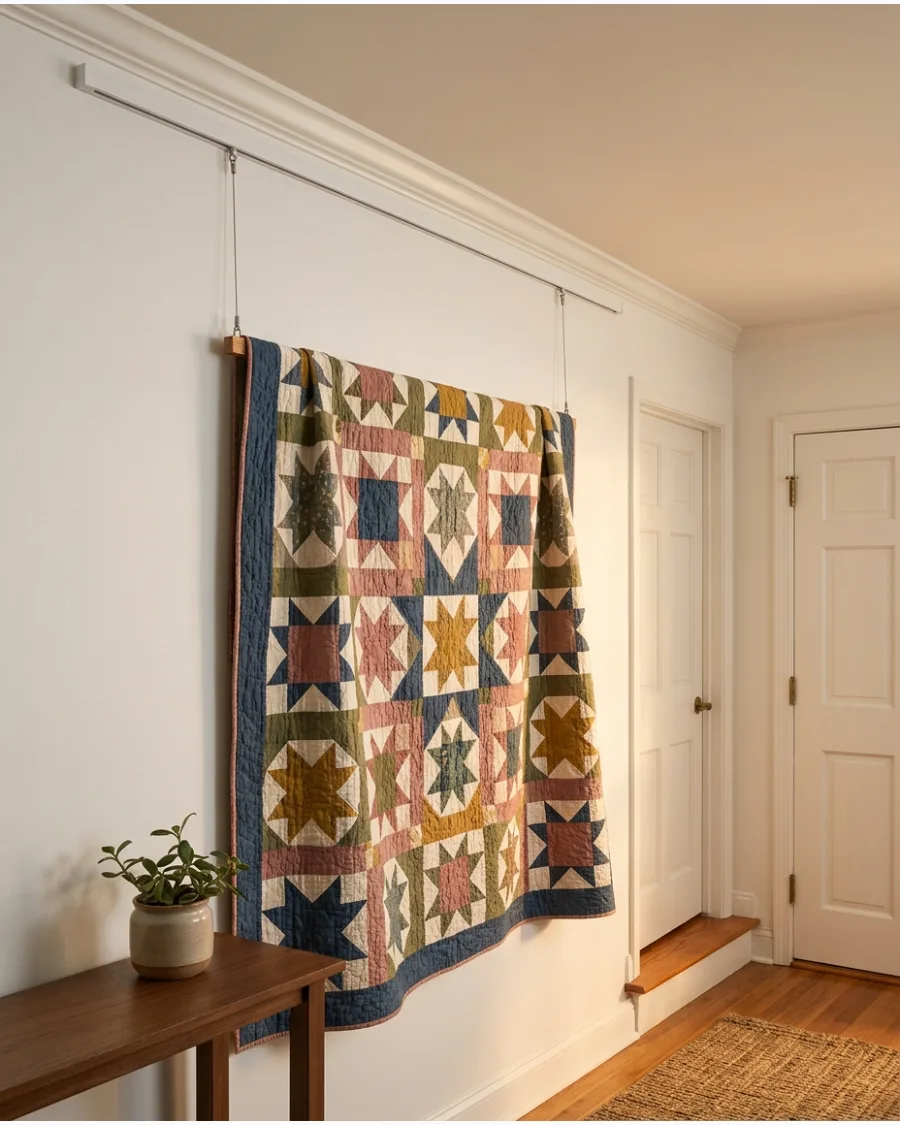
A gallery rail system uses thin cables or chains to hang items from a high-mounted track. This allows for height adjustments without drilling new holes in the wall every time you swap pieces.
Loop the hanging cables around a sturdy rod inserted into the quilt sleeve for a level hang. It is the best choice for collectors who want to rotate their textile art frequently.
- Invest in a professional picture hanging rail system.
- Attach the rail near the ceiling or crown molding.
- Ideal for renters who want to avoid multiple holes in the drywall.
Most people skip this: Use a level on the top rod to ensure the cables are adjusted to the exact same height.
44. Horizontal Ladder Quilt Display
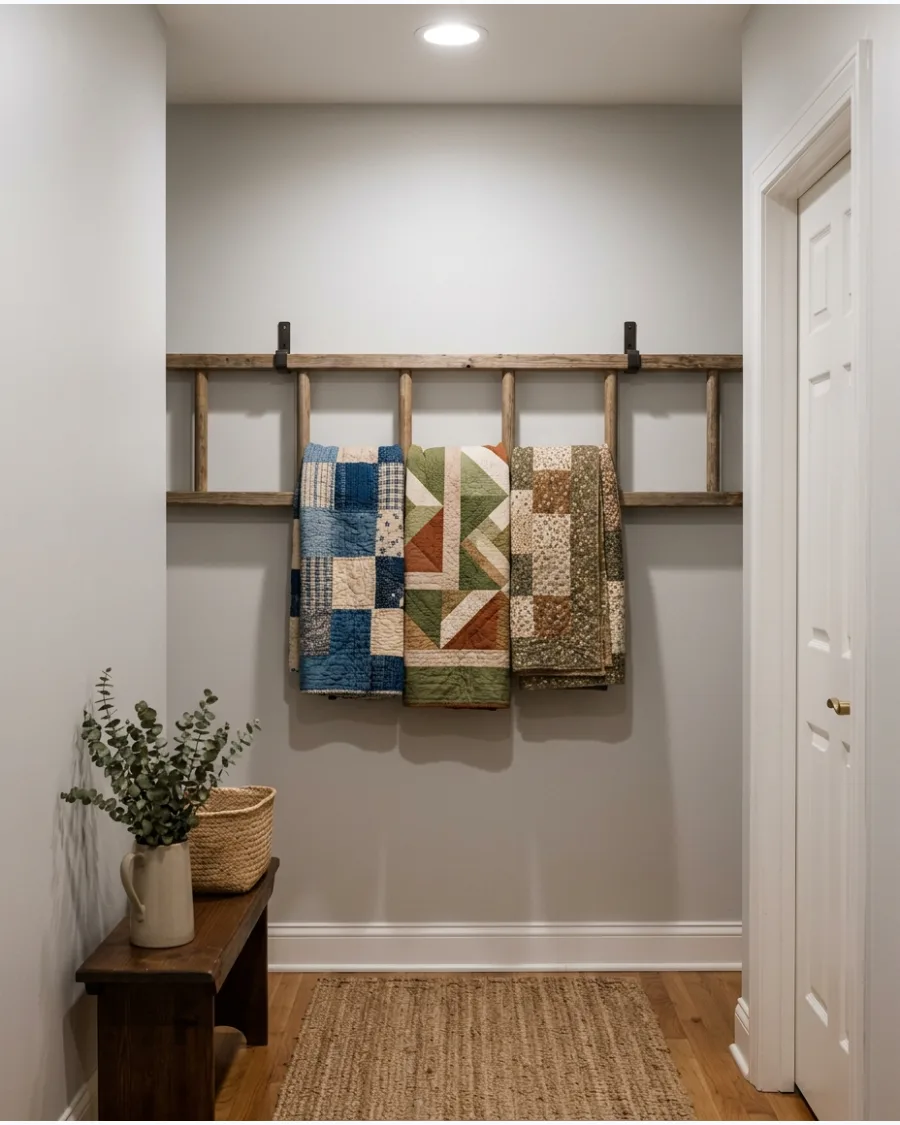
Mounting a wooden ladder horizontally creates several separate frames for draping multiple smaller textiles. This adds depth to the wall and works beautifully in a cozy den or a large hallway.
Drape the quilts so that the most intricate patterns are visible between the rungs. It turns a functional storage item into a unique architectural element.
- Find a vintage wooden ladder or a new decorative blanket ladder.
- Secure both ends of the ladder to wall studs with heavy-duty brackets.
- Use for small lap quilts or baby quilts that are too small for a full wall.
Quick win: Wrap the rungs in acid-free tissue paper to protect vintage fabrics from wood oils or stains.
45. Quilt Hanging From a Wooden Clamp Rail
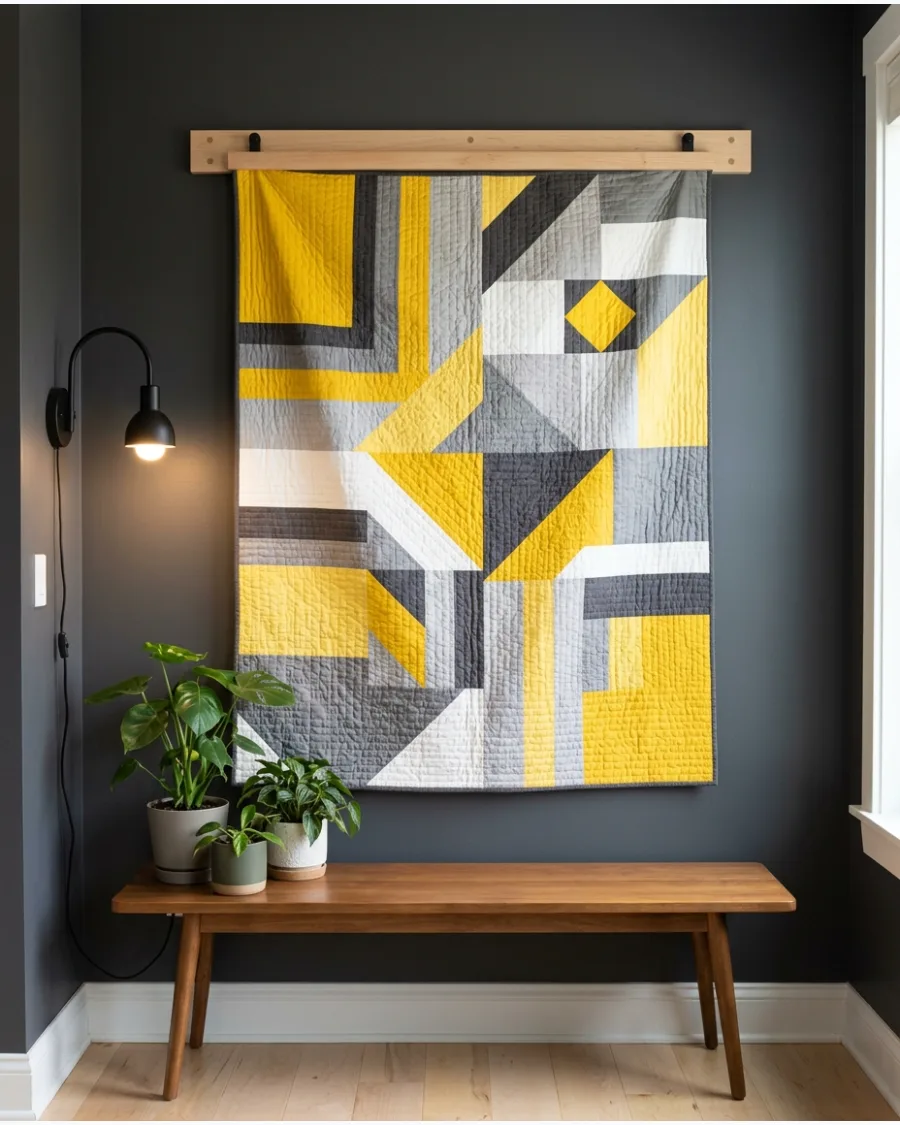
A clamp rail uses two pieces of wood that screw together to sandwich the top edge of the fabric. This provides a clean, straight line across the top without needing a sewn sleeve.
Tighten the screws just enough to hold the weight without crushing the batting inside the quilt. This creates a modern, minimalist look that highlights the quilt's craftsmanship.
- Look for magnetic or screw-tightened wooden quilt hangers.
- Center the quilt within the slats before tightening.
- Best for modern quilts with clean edges and no hanging sleeves.
Best shortcut: Use a magnetic clamp for lightweight quilts to make seasonal swapping even faster.
46. Quilt Inside Wall Molding
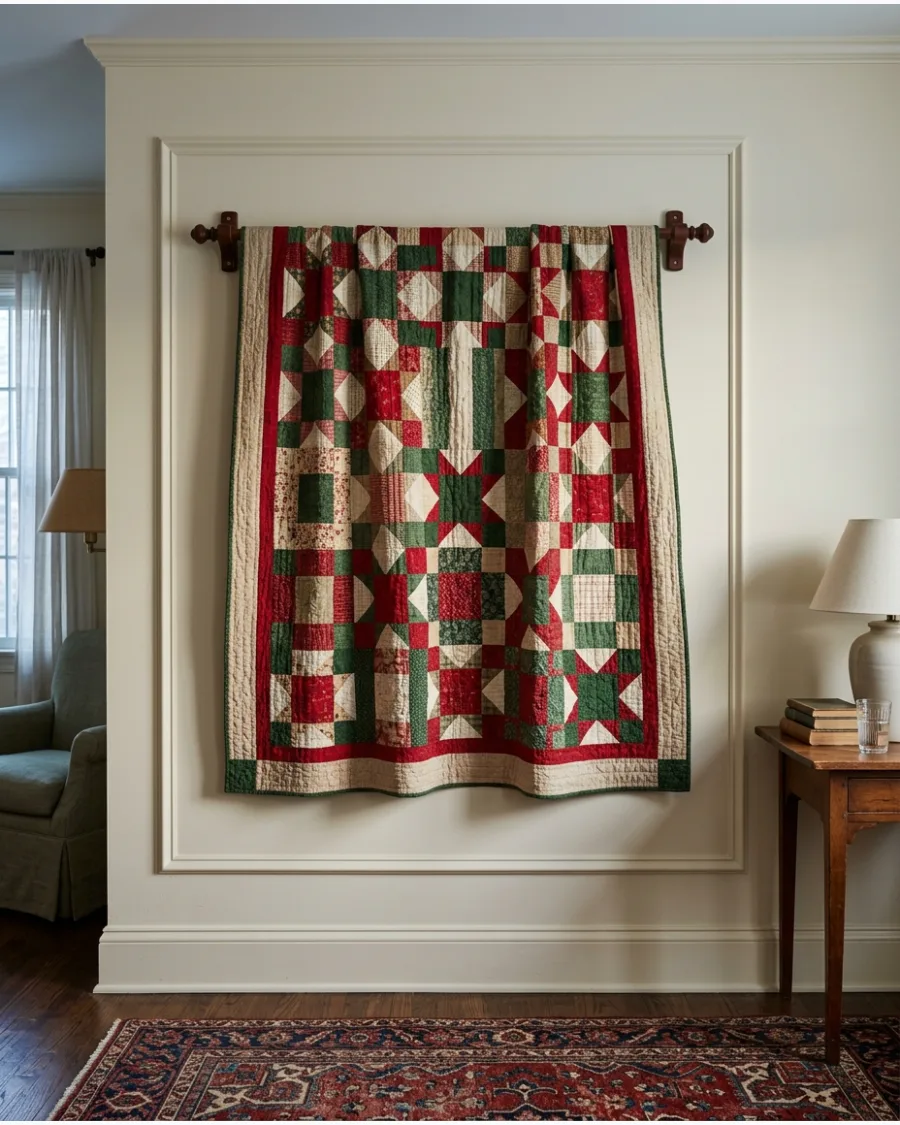
Placing a quilt inside a decorative wall box or picture frame molding makes the textile feel like a permanent part of the architecture. The trim defines the space and keeps the fabric from looking like it is just floating on a large wall.
Measure the molding box to be exactly two inches wider than the quilt on all sides. It elevates a simple quilt into a formal piece of fine art.
- Install wood trim or polyurethane molding directly to the drywall.
- Paint the molding the same color as the wall for a subtle look.
- Use for a permanent heirloom display in a dining room.
Most people skip this: Paint the wall inside the molding a slightly darker shade to make the quilt colors pop.
47. Quilt Suspended From Ceiling Hardware
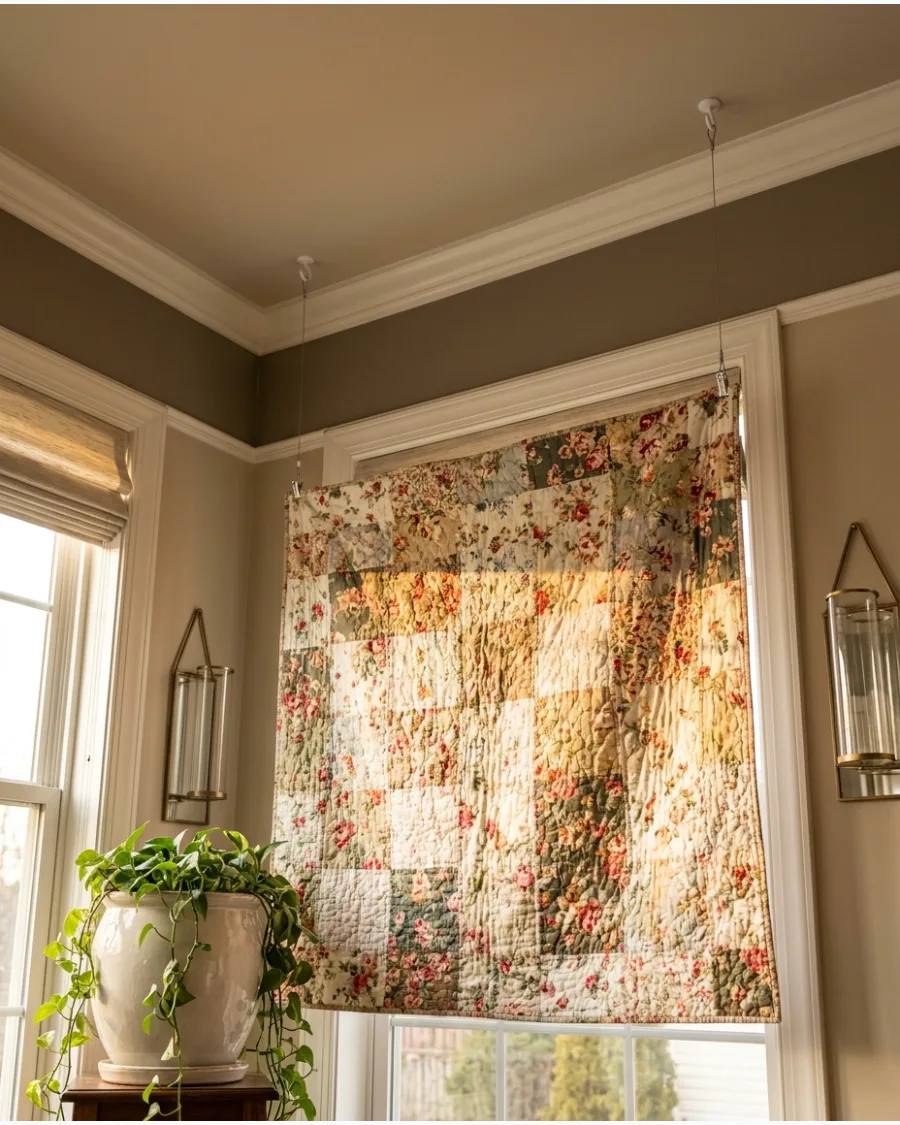
When wall space is limited by windows or doors, ceiling-mounted hardware allows you to hang a quilt just an inch or two away from the wall surface. This technique creates a floating effect that adds interesting shadows and dimension.
Use high-quality swivel hooks to keep the quilt parallel to the wall. It is a smart solution for awkward corners or rooms with very high ceilings.
- Install heavy-duty ceiling hooks into a joist.
- Use clear monofilament or thin steel wire for a floating look.
- Best for lightweight quilts in modern or minimalist homes.
Quick win: Use a bottom rod inside a sleeve to weight the quilt down so it doesn't move with air currents.
48. Quilt as a Soft Room Divider
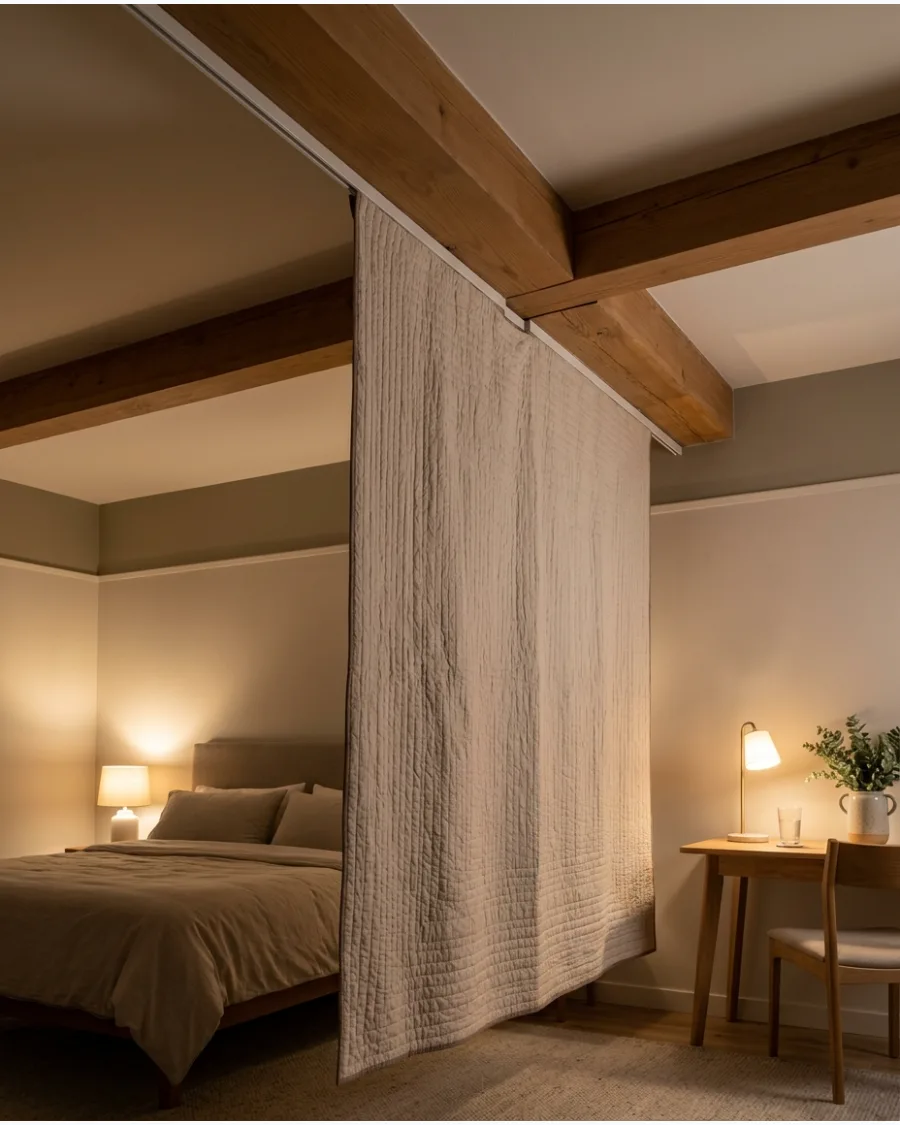
Hanging a quilt in the middle of a room can define a reading nook or separate a home office from a bedroom. This adds a layer of sound dampening and visual privacy without the permanence of a wall.
Choose a quilt with a finished back or two-sided pattern so it looks good from any angle. It is a functional way to bring texture into an open-concept living space.
- Install a ceiling-mounted curtain track for easy movement.
- Select a quilt that is large enough to create a significant visual barrier.
- Use in studio apartments or large basements to create zones.
Best shortcut: Use a double-sided adhesive hem tape to finish the back of a quilt if it wasn't originally intended for two-sided viewing.
49. Quilt Draped From Wall Hooks
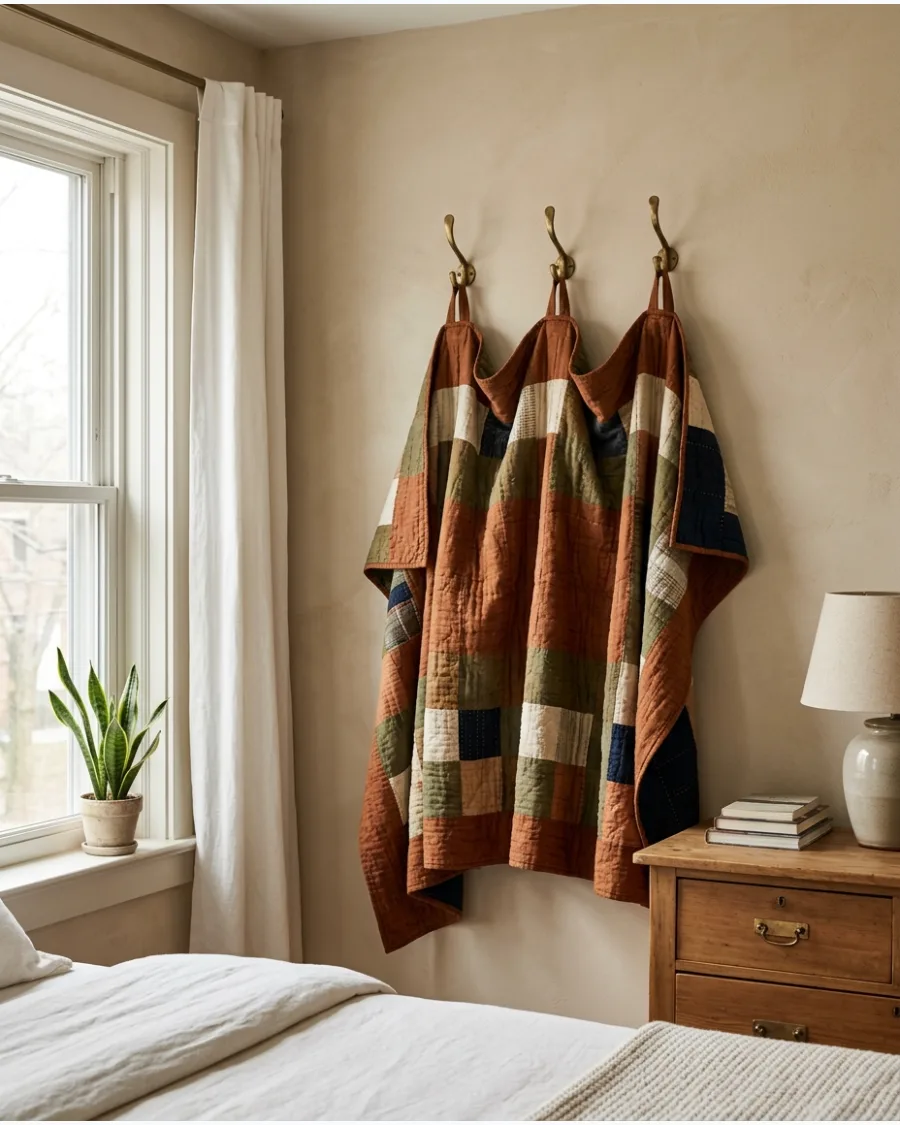
Decorative wall hooks offer a casual way to display quilts that you might still want to use on a cold night. This method creates soft, natural folds in the fabric rather than keeping it perfectly flat.
Space the hooks evenly and use fabric loops to prevent the metal from touching the quilt directly. It works perfectly for a guest room or a cozy cottage-style living area.
- Choose three to five matching brass or wooden wall hooks.
- Sew small fabric tabs onto the back of the quilt top.
- Ideal for sturdy, everyday quilts that get moved often.
Most people skip this: Use wide ribbon loops instead of thin string to distribute the weight and prevent the fabric from stretching.
50. Rotating Quilt Exhibition Wall
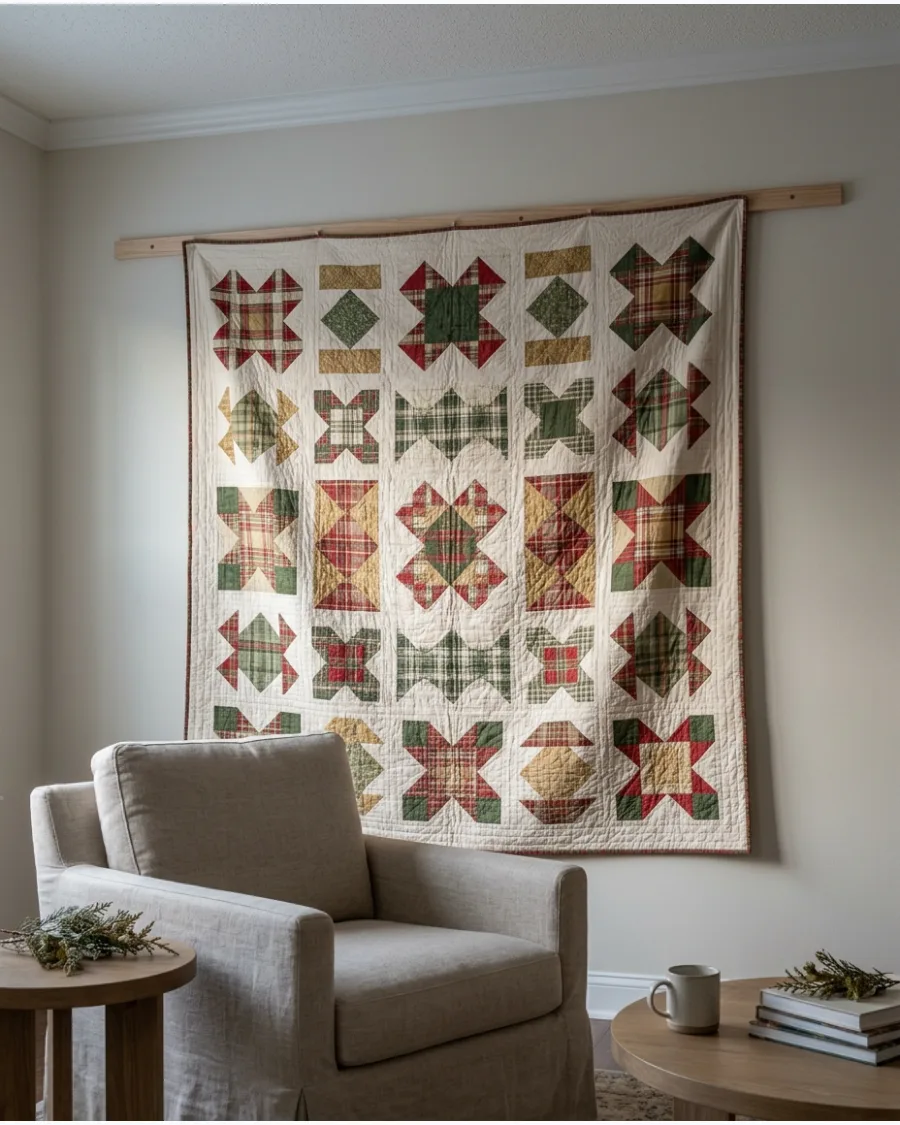
Dedicating one large wall to a rotating display keeps the room feeling fresh throughout the year. Use a permanent, easy-access mounting system like a heavy-duty rod or a French cleat.
Switch to a thicker, darker quilt in winter and a light, airy cotton version for the summer months. It turns your quilt collection into a dynamic part of your home's seasonal decor.
- Install a permanent mounting bracket at eye level.
- Store off-season quilts in breathable cotton bags to prevent mold.
- Use for a large collection of varying sizes and styles.
Quick win: Keep a small step stool nearby to make swapping out the quilts a five-minute task.
Frequently Asked Questions
How do I hang a quilt without damaging the fabric?
The safest method is sewing a fabric hanging sleeve to the back of the quilt to distribute weight evenly across the top. Always use acid-free materials and avoid direct contact with raw metal or sticky adhesives that can degrade the fibers over time.
What is the best way to hang a very heavy quilt?
For heavy pieces, use a sturdy full-width rod or a wooden compression slat system to support the entire top edge. This ensures the weight is distributed across the whole quilt, preventing the corners from stretching or tearing under the load.
Can I use Command strips to hang a quilt?
While Command strips don't stick well directly to fabric, they are great for holding a lightweight rod in place. Simply mount adhesive hooks on the wall and rest a thin rod inside them for a damage-free, renter-friendly display.
How do I prevent a wall-hung quilt from stretching over time?
A well-made support sleeve is essential for maintaining the quilt's shape and preventing gravity from pulling it out of square. It also helps to periodically rotate your quilt or take it down for a rest to shift the stress points on the fabric.
Where should I avoid hanging a quilt in my home?
Keep your quilts away from direct sunlight to prevent permanent fading and avoid high-humidity areas like bathrooms where moisture can damage fibers. You should also stay clear of heat sources like radiators, which can make the cotton brittle over time.