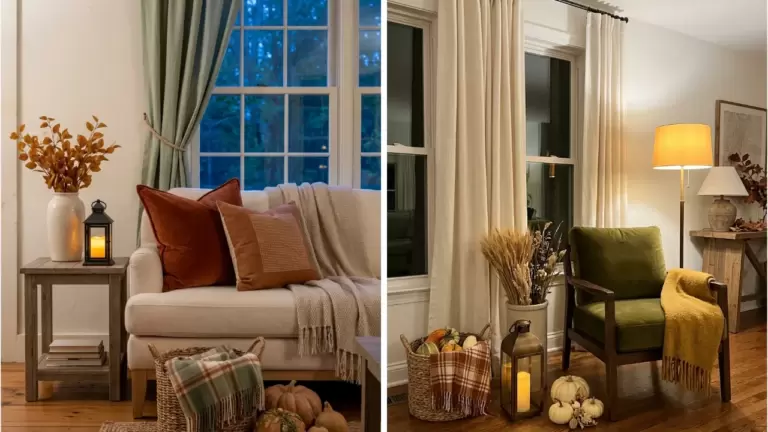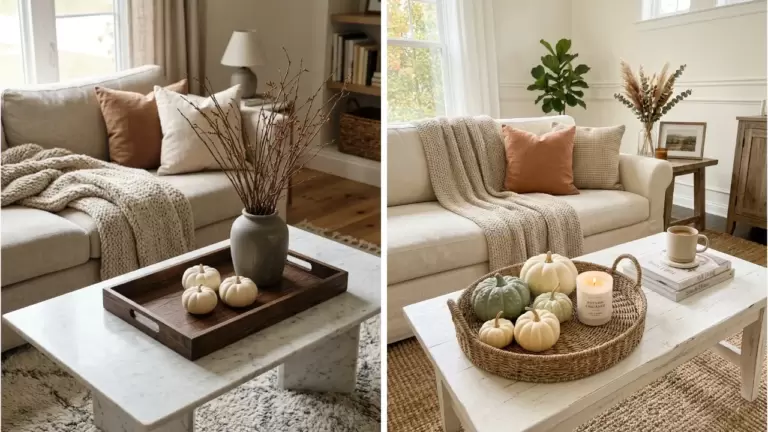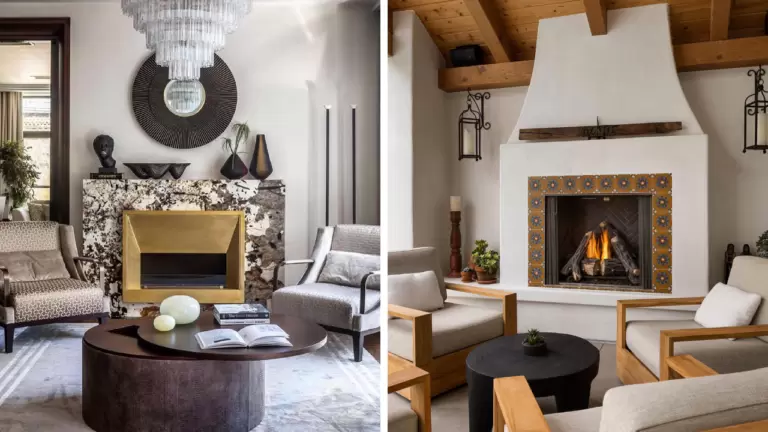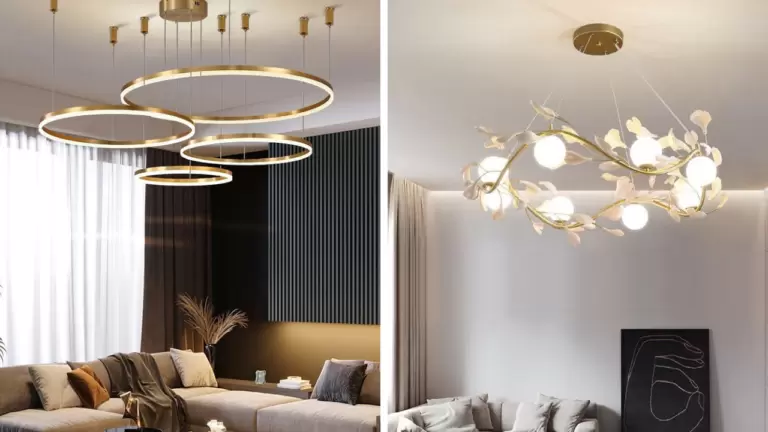
50 Fireplace Makeover Ideas With a TV

This post may contain affiliate links: full affiliate disclosure.
You can keep the brick you love, trade a bulky mantel for a cleaner line, or move the TV so the fireplace gets its own moment.
Start with what bothers you most about the current wall. A dark screen, awkward viewing angle, and lack of storage each call for a different makeover.
Before planning a TV above a working fireplace, check the appliance manual and the TV's operating limits. Draw the heat clearances into your layout before choosing finishes.
As an Amazon Associate I earn from qualifying purchases.
Simple updates for the fireplace you already have
If the layout works, start with the parts you see most often from the sofa. Paint, a quieter mantel, or better cord routing can be enough.
1. Paint red brick a soft white
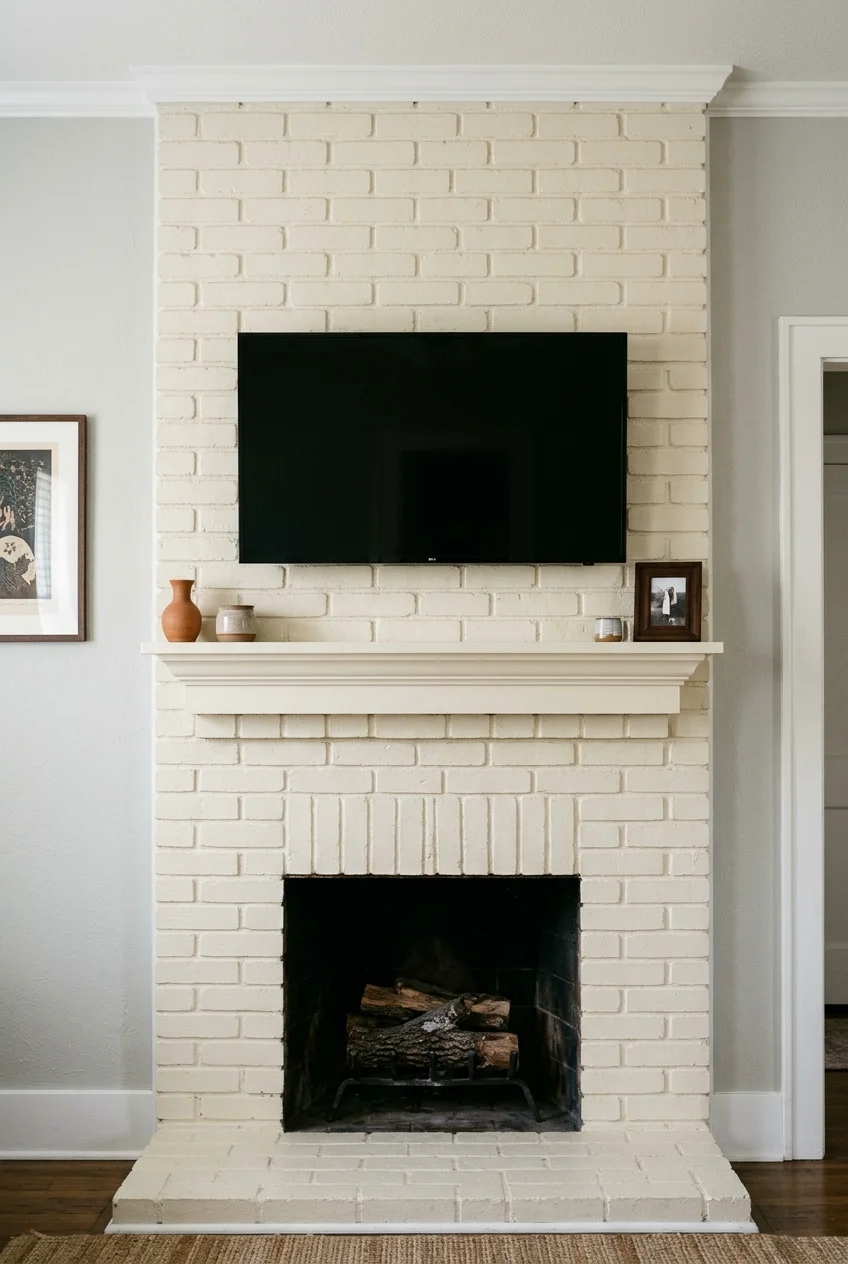
Use a warm white that works with the nearby trim and floor. The mortar lines will still show, so the wall keeps some depth beside the smooth screen.
Clean the brick and resolve moisture or crumbling mortar before coating it. Pick a masonry paint system suitable for the exterior surround temperatures and keep ordinary paint outside the firebox.
2. Give the black screen a charcoal backdrop
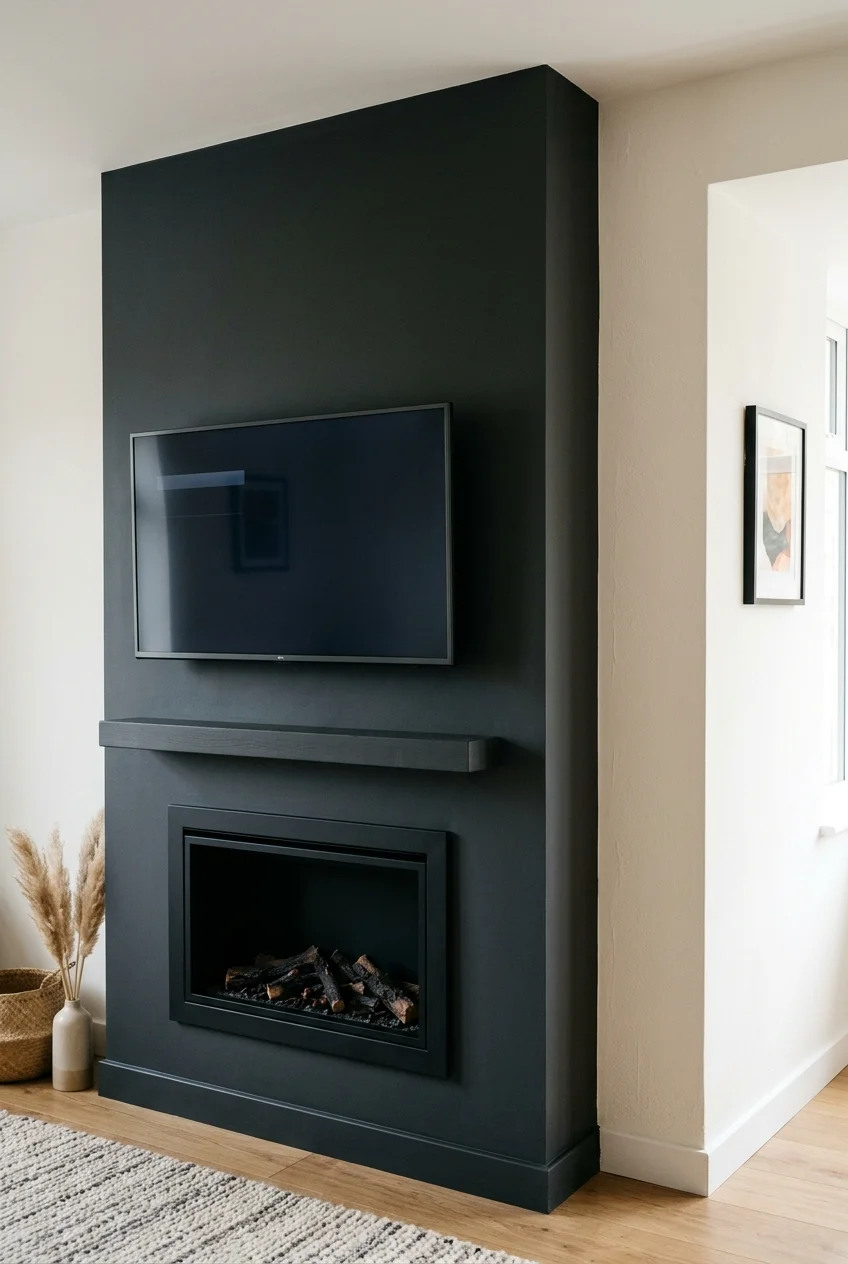
Confine the dark color to the chimney breast and leave the side walls light. The dark block gives the TV a place to sit without swallowing the room.
Brush a sample behind the screen and check it after sundown. A slightly softened charcoal is easier to pair with black metal trim than a blue gray.
3. Keep the brick and simplify the mantel
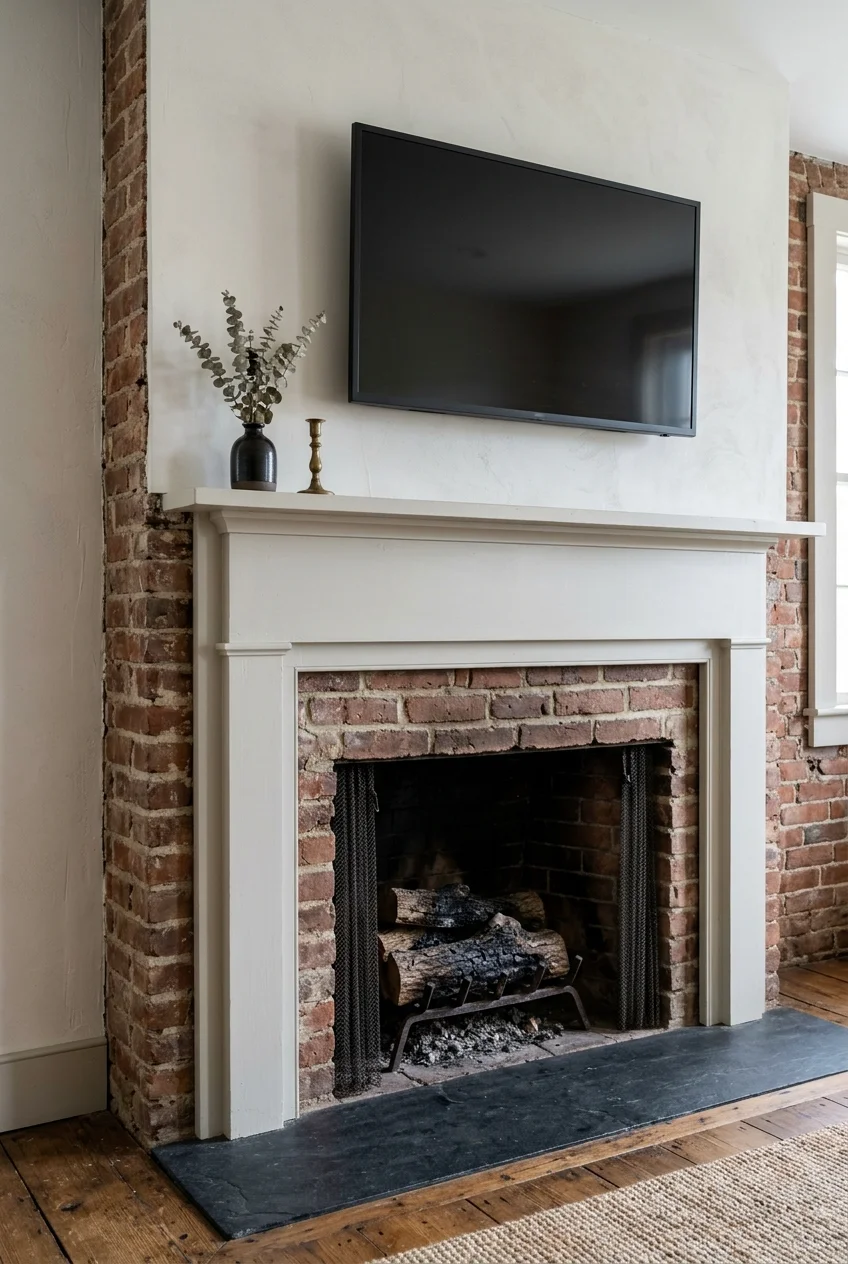
Natural brick can carry the whole wall if the piece above it is quiet. Try an existing plain mantel finished in a shade pulled from the mortar.
Keep the shelf ends within the brick facing if the proportions allow. With a working firebox, confirm any replacement mantel meets the required height, depth, and clearance.
4. Clear the center of the mantel
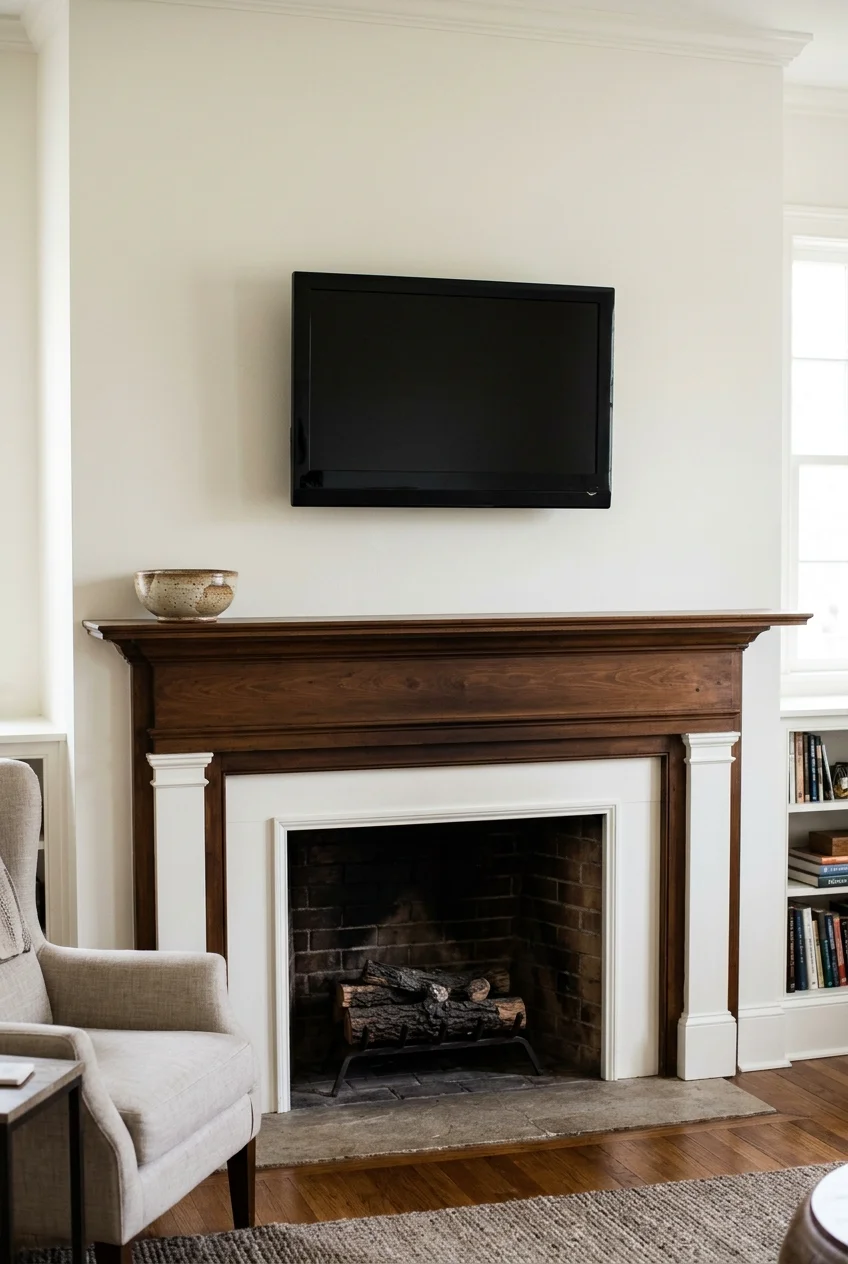
If objects creep into the picture, leave the shelf directly below the screen empty. The TV looks calmer and subtitles stay readable from a low sofa.
For a permanently inactive fireplace, try one low bowl at the far end of a long shelf. A working fireplace calls for keeping combustible decor outside required clearances.
5. Show art when the TV is idle
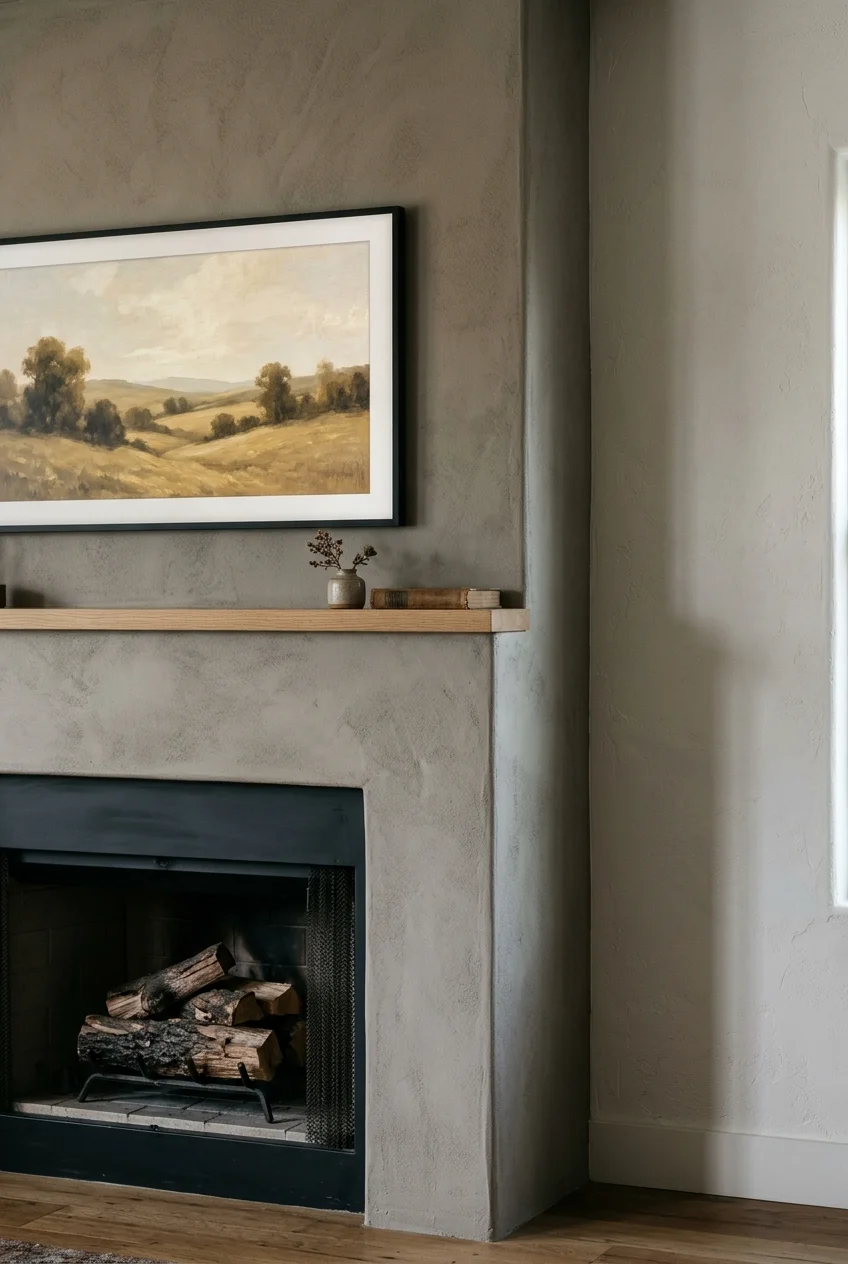
An art mode display lets you pull a color from the room into the space above the mantel. Start with a muted landscape or a simple print.
Test the image at the brightness you actually use in the evening. A bright white digital mat can draw more attention than the original black screen.
When upgrading the TV, note where its electronics box or cables will go. Confirm cable routing requirements for the exact model before committing to a flush mount.
6. Replace shiny doors with a compatible matte front
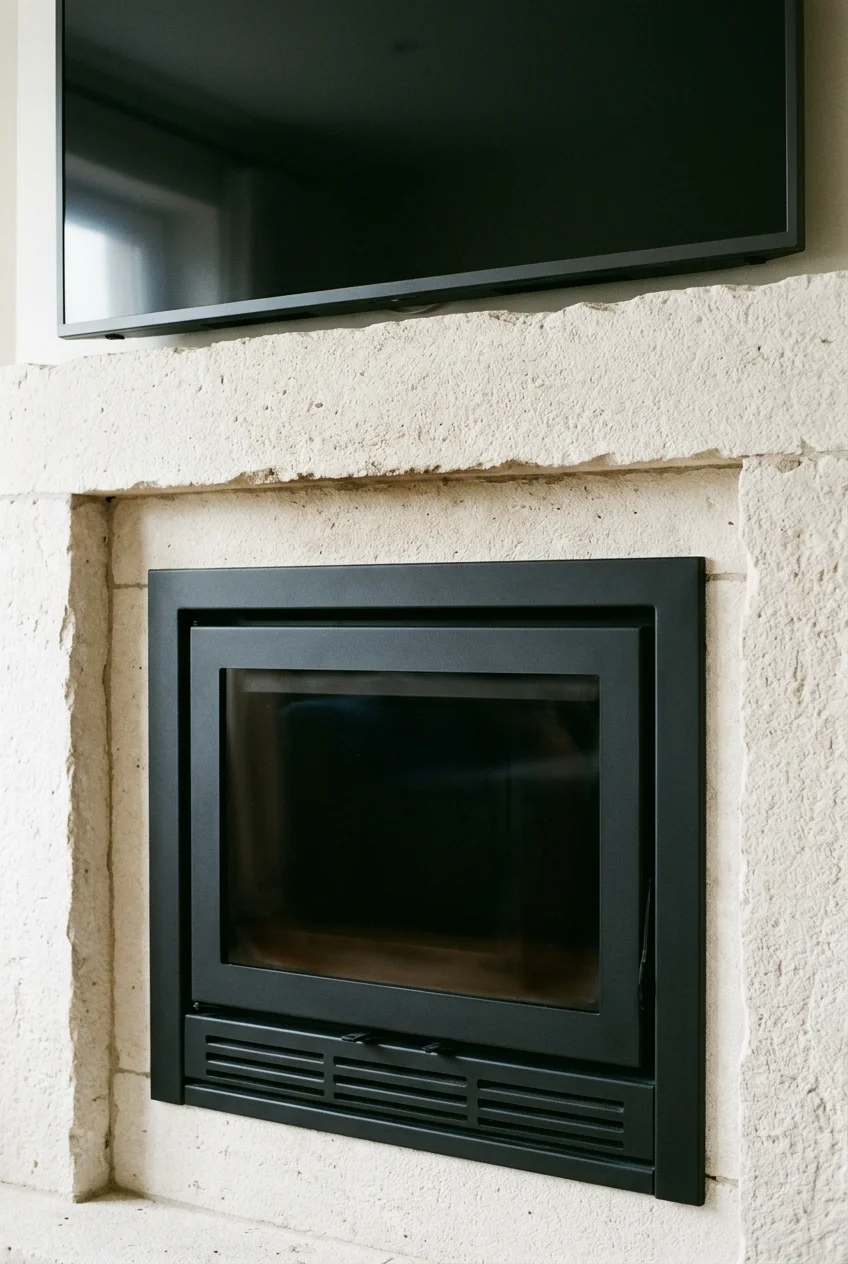
A matte black front ties the fireplace opening to the TV bezel. Keep the existing masonry and concentrate the change around the glossy metal that catches your eye.
On a gas or electric appliance, look for an approved front for the exact model. Preserve its air openings, glass, service access, and any required safety screen.
7. Use the hearth color elsewhere on the wall
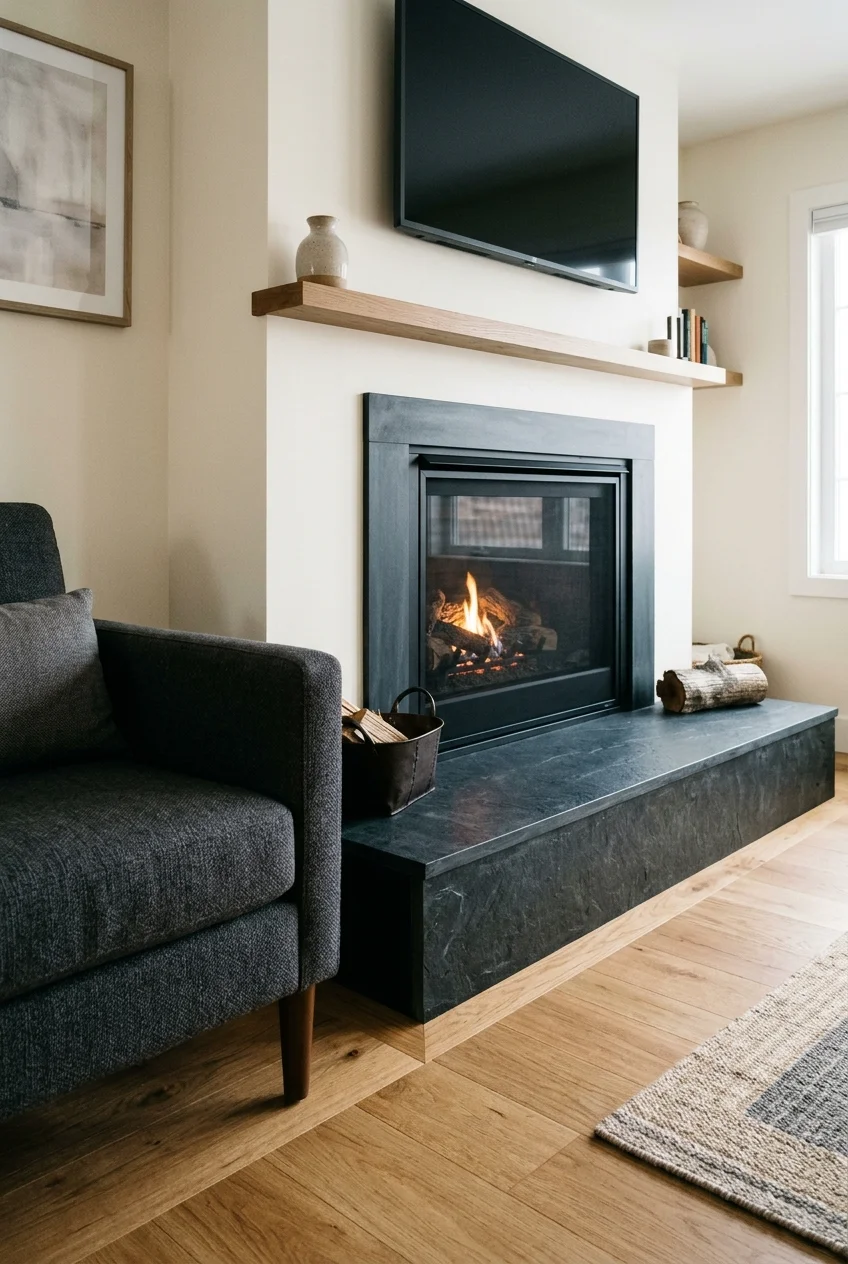
A black slate hearth can connect a pale fireplace to a black TV. Repeat the slate tone once in the firebox trim to carry the color upward.
This works with an existing dark hearth and a mostly light surround. For a new hearth, confirm the required footprint and construction before deciding how far it extends.
8. Hide an HDMI lead in a painted cord cover
Image pending: No image is attached to this draft for idea 8 (image-08).
If the TV sits beside the fireplace, follow a cabinet edge with the cable run. A straight vertical cover looks more intentional than one crossing open wall.
The paintable Wiremold cord cover (paid link) takes paint and suits low-voltage leads on a cool wall. Check connector size and use an appropriate outlet for the TV's power.
Practical tip Lay out the route with painter's tape before removing the adhesive liner. View it from the entry in case the proposed end is visible beside your console.
Tile, stone, and other ways to reface the wall
Decide where you want texture to stop. A narrow tiled surround leaves the screen area quiet, while full-height cladding makes the fireplace wall part of the room's architecture.
9. Frame the firebox with handmade-look tile
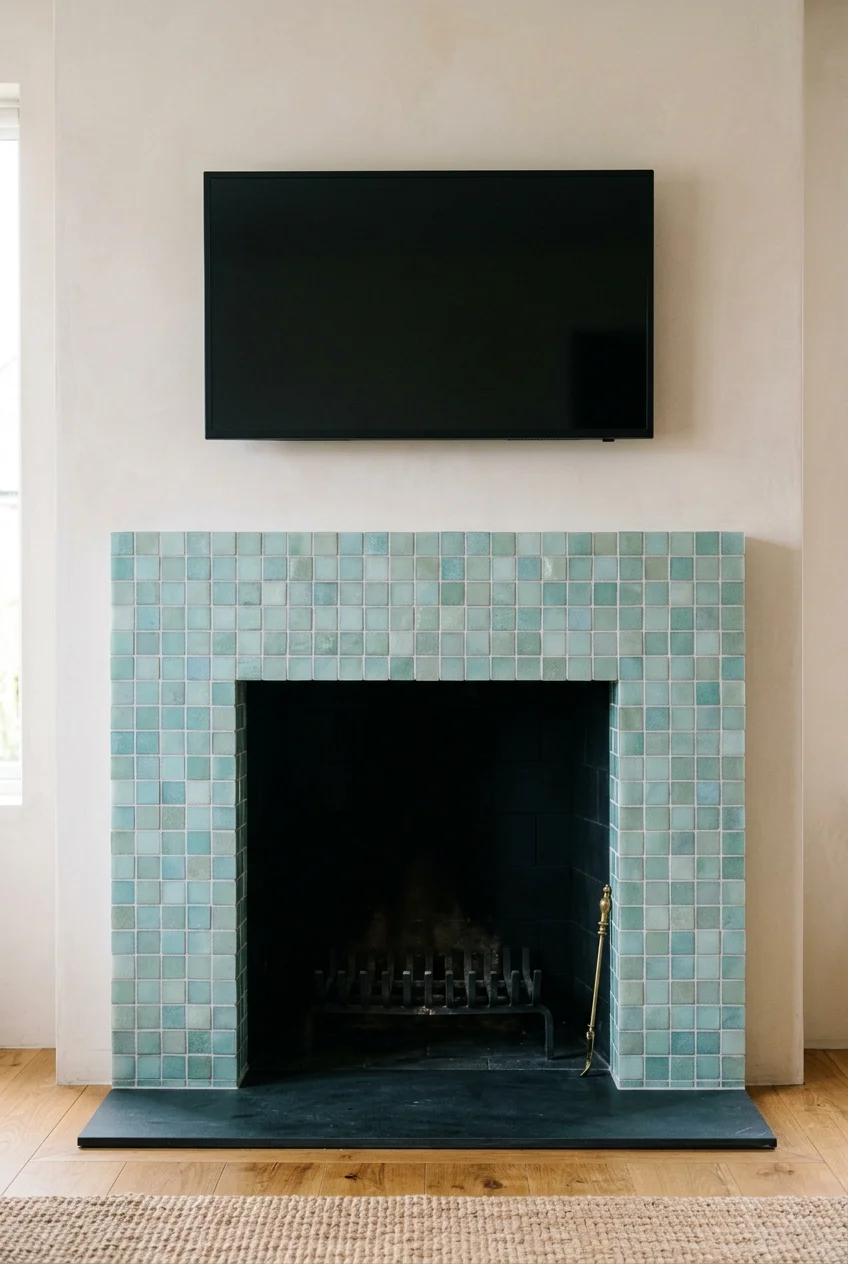
Keep the tile in a compact band around the opening so its variation can be seen up close. Leave the TV above on a plain wall.
Lay out a row on the floor before finalizing the design. Plan both legs together so the narrow cuts look deliberate and the edge treatment is consistent.
Choose a complete tile assembly suited to fireplace temperatures, including its setting materials. Check where the appliance calls for specific facing materials or a service gap.
10. Run herringbone only inside the mantel frame
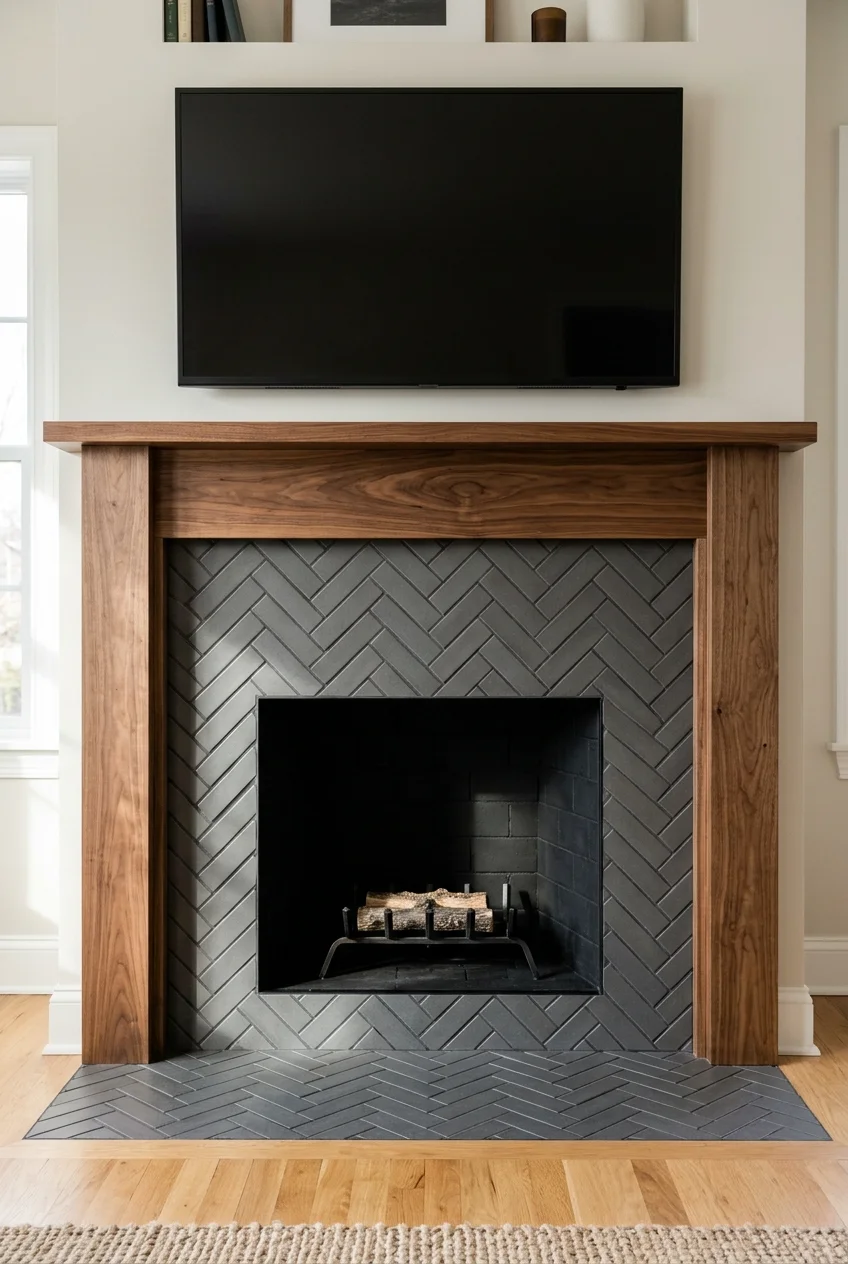
A tight herringbone pattern fits inside the opening of a traditional mantel surround. Use a low-contrast grout that lets you see the angle without outlining every piece.
Ask for a dry layout that centers the pattern over the opening. Match the cuts at the two outer legs and choose approved setting materials for the fireplace.
11. Wrap the chimney breast in large porcelain panels
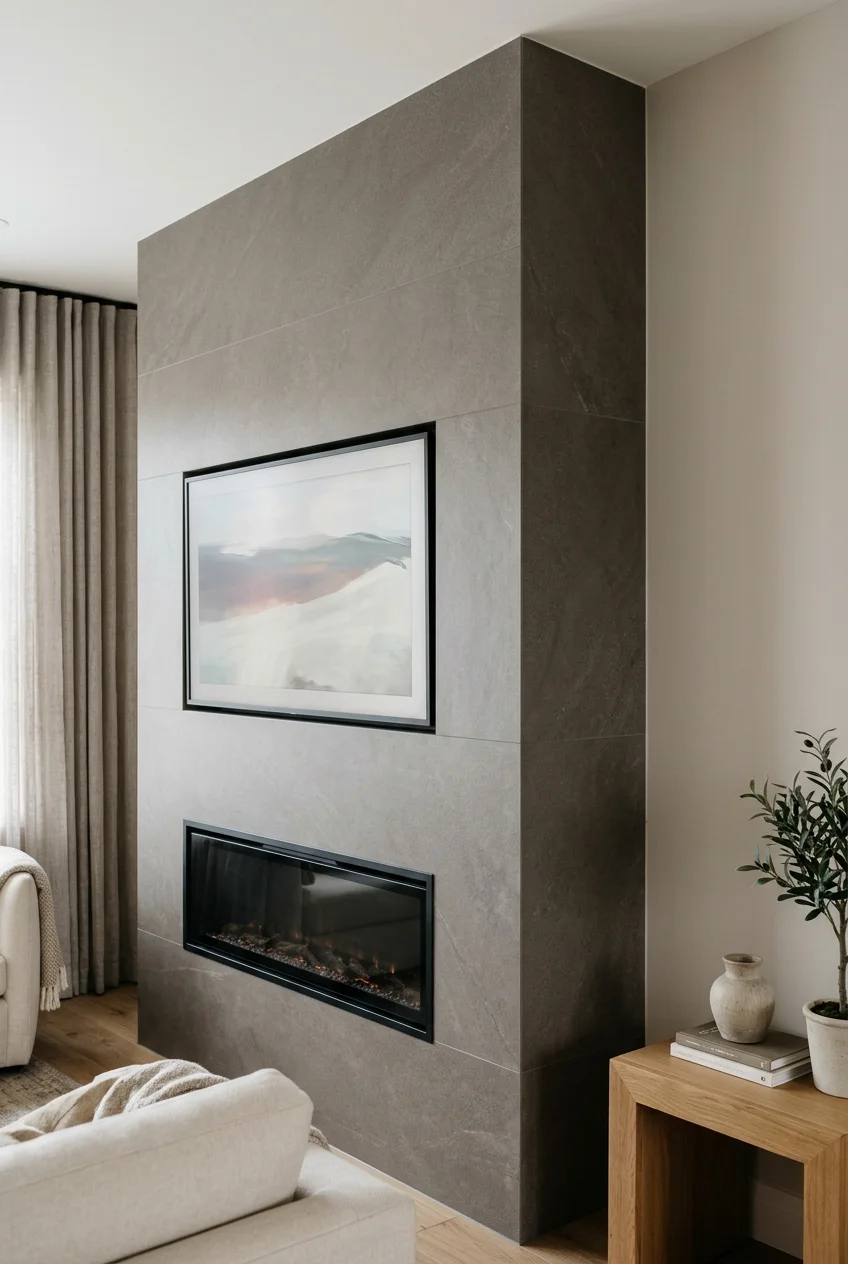
Use the chimney breast as the boundary for slab-look porcelain. Giving the screen and firebox the same surface makes two separate openings feel like one wall.
Pick the actual panel layout before ordering. Put seams where they work with the opening and decide which edge details will be visible from the entry.
On an existing fireplace, find out which facing materials can be removed and confirm the required substrate, support, and opening details before adding the new panels.
12. Add a veined stone mantel surround
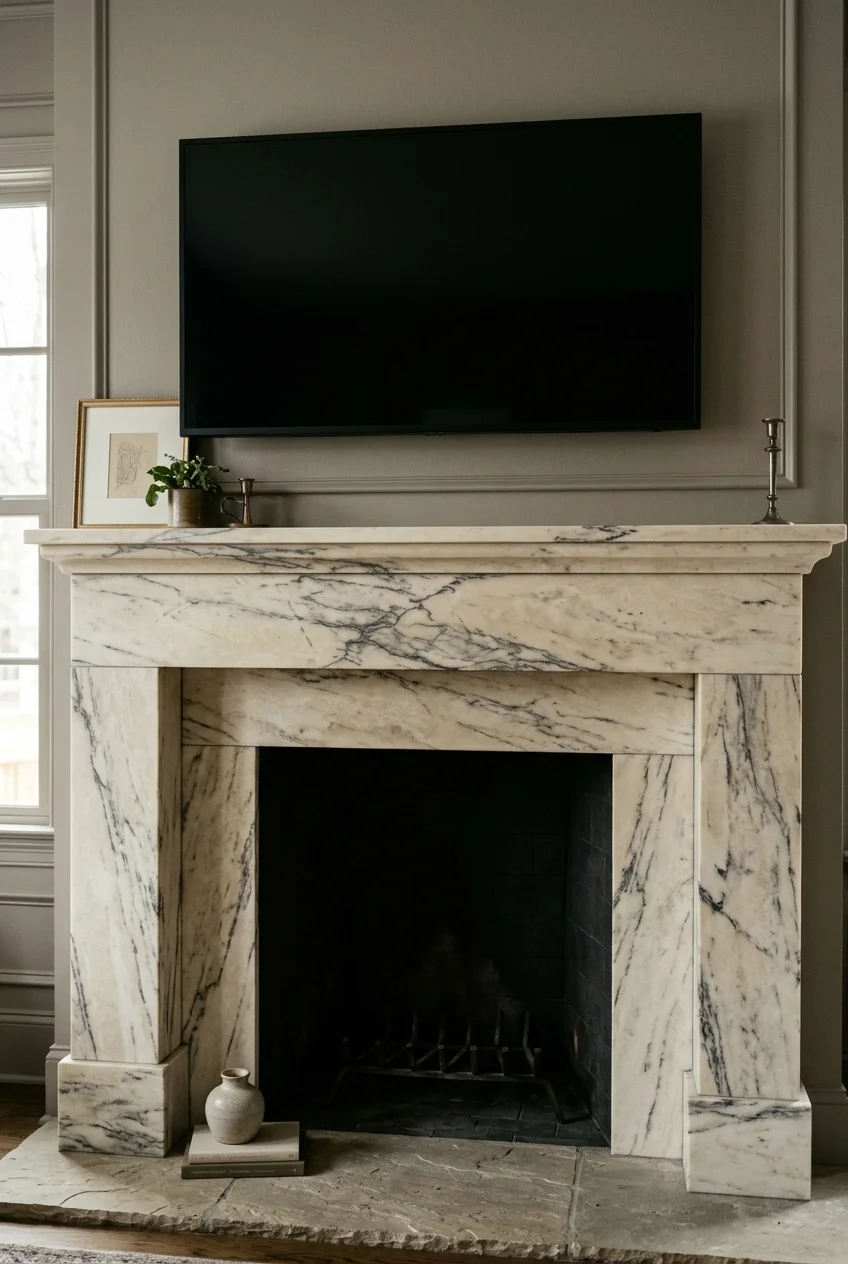
A stone surround with soft, directional veining can give the fireplace more prominence beneath a large screen. Keep the wall above it pale and spare.
Review the slab layout around the firebox cutout before fabrication. Decide which veins continue across the header and which stone edges will be exposed at the opening.
Have the fabricator and fireplace installer confirm heat suitability, support, and service access. The finish will look more convincing when the seams follow the shape of the surround.
13. Bring fieldstone up the chimney and move the TV beside it
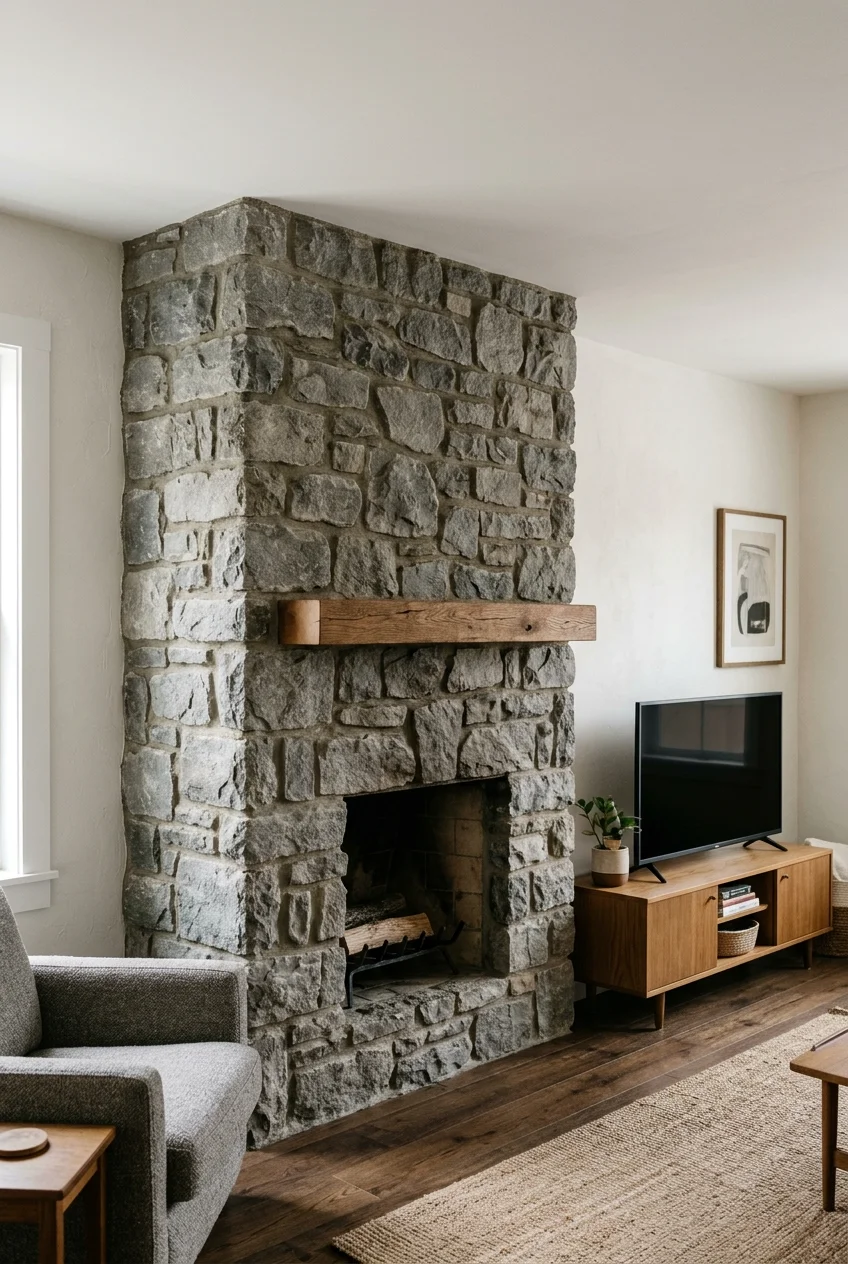
Run the irregular stone up to the ceiling and give the TV a smooth side wall. That leaves the stone intact and simplifies the mounting surface.
If you're adding veneer, have the installer review support, corner returns, the finish transition, and the fireplace's facing requirements. Keep the TV backed by its own suitable wall structure.
Make the side cabinet quieter than the stone. A single wood tone with closed doors gives the TV some weight without introducing another strong pattern at floor level.
14. Skim the surround with a smooth plaster finish
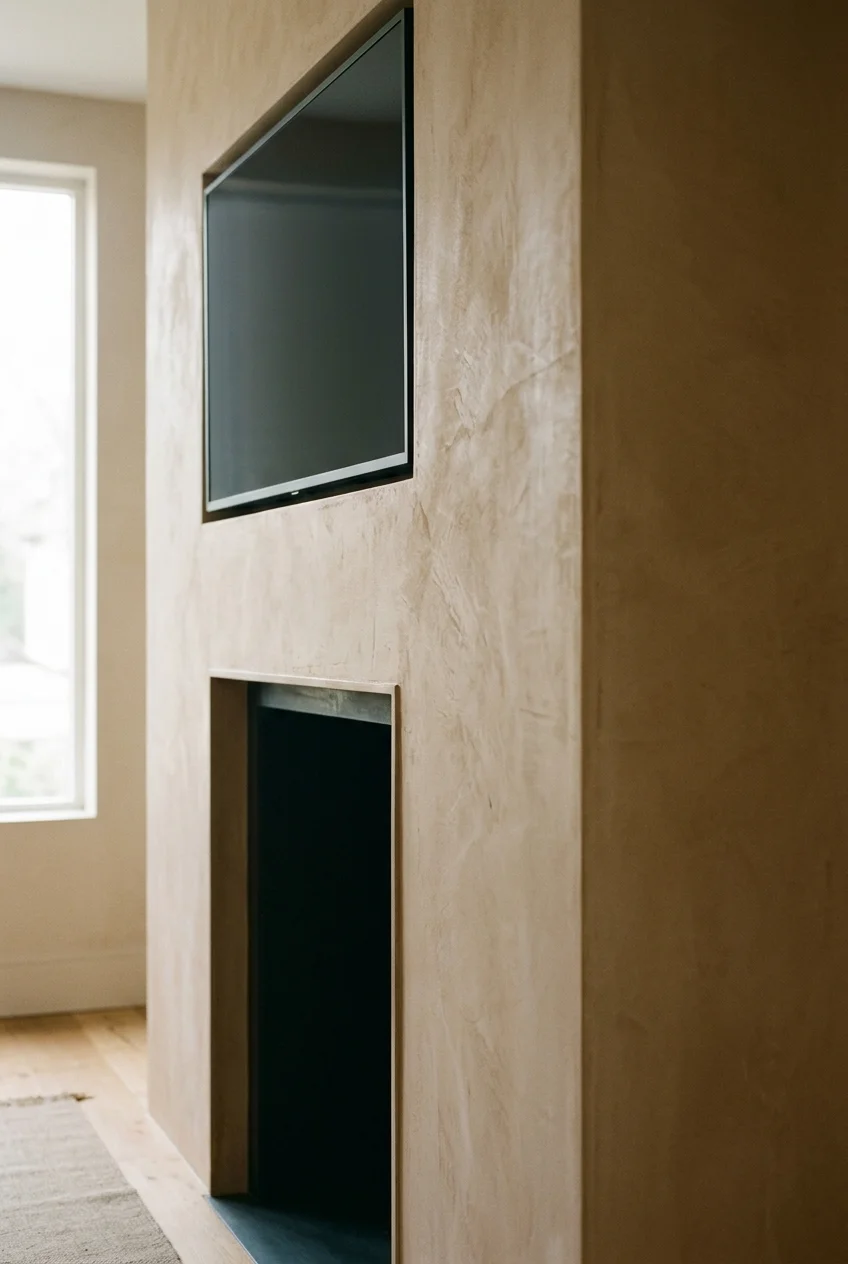
A smooth finish calms a wall with several competing textures. Choose a soft mineral tone and use a simple black opening to define the base.
A skim coat depends on a sound, compatible substrate and finish system. Have the installer assess movement cracks, heat exposure, and the correct junction where plaster meets the appliance.
Check the look at a shallow angle before committing to a final sheen. Abrupt texture changes and clumsy edge beads stand out when the rest is plain.
15. Pair the fireplace with vertical slats on the TV side
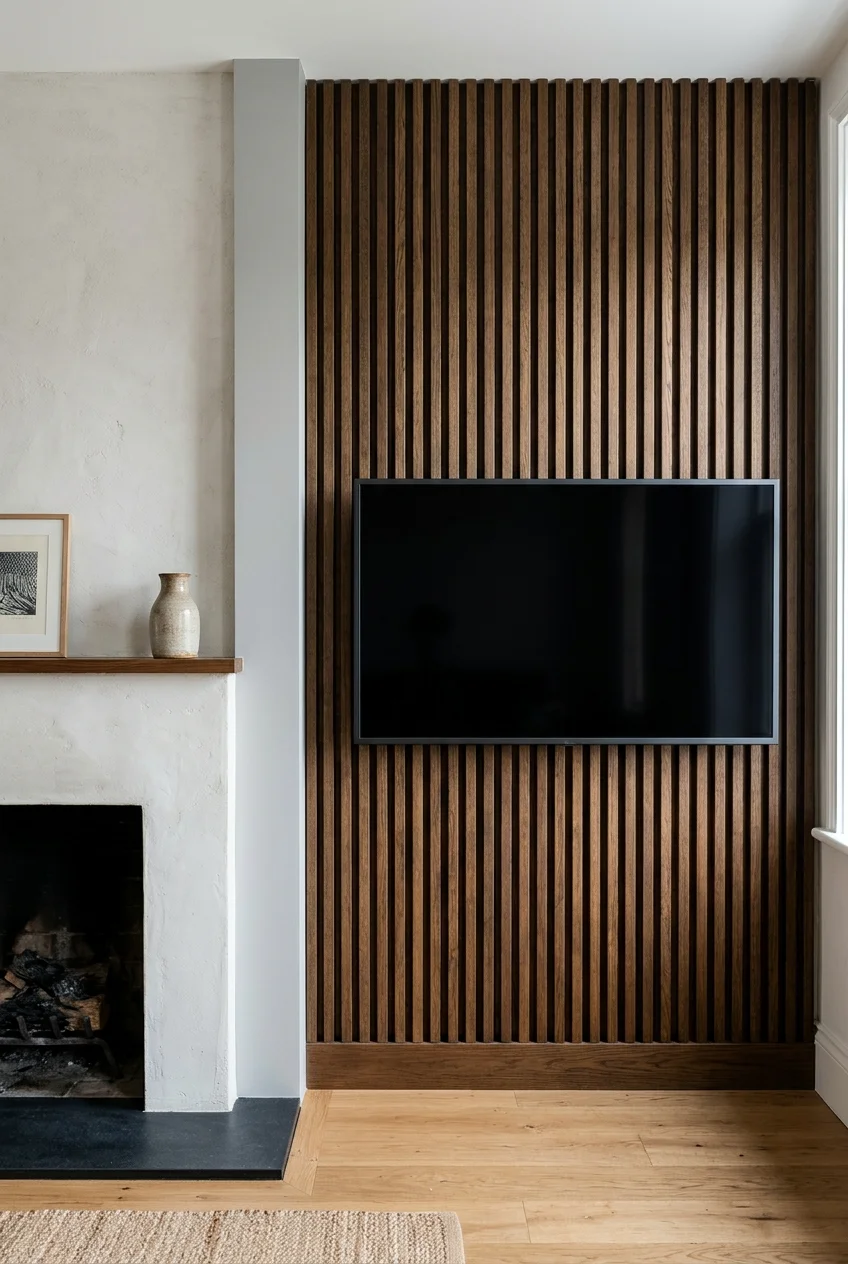
Put wood slats on a separate TV panel beside the fireplace so the ribbed texture reads as a backdrop. Let plain plaster carry the hearth surround.
Match the slat spacing around the panel's exposed ends and have the TV bracket engage suitable structure behind it. Keep combustible cladding outside the fireplace's required clearances.
16. Add horizontal boards above a separate tiled surround
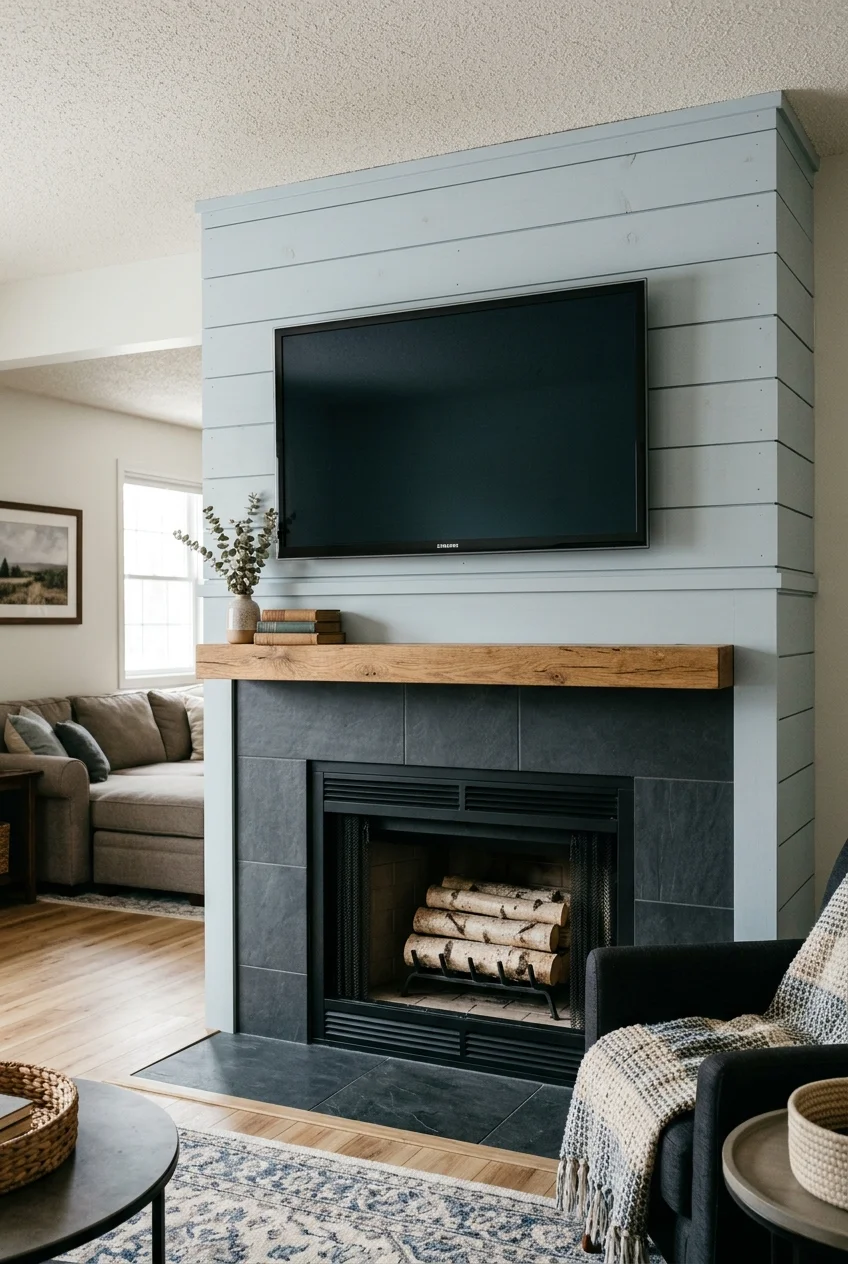
Horizontal boards can give a low wall a wider look, especially if their ends align with the edges of the tiled fireplace below. Keep the joints fine.
Set the lower board boundary using the appliance's combustible finish requirements. Treat the tile zone as its own assembly and keep the TV bracket anchored to suitable structure.
17. Place a fluted tile band around the fireplace
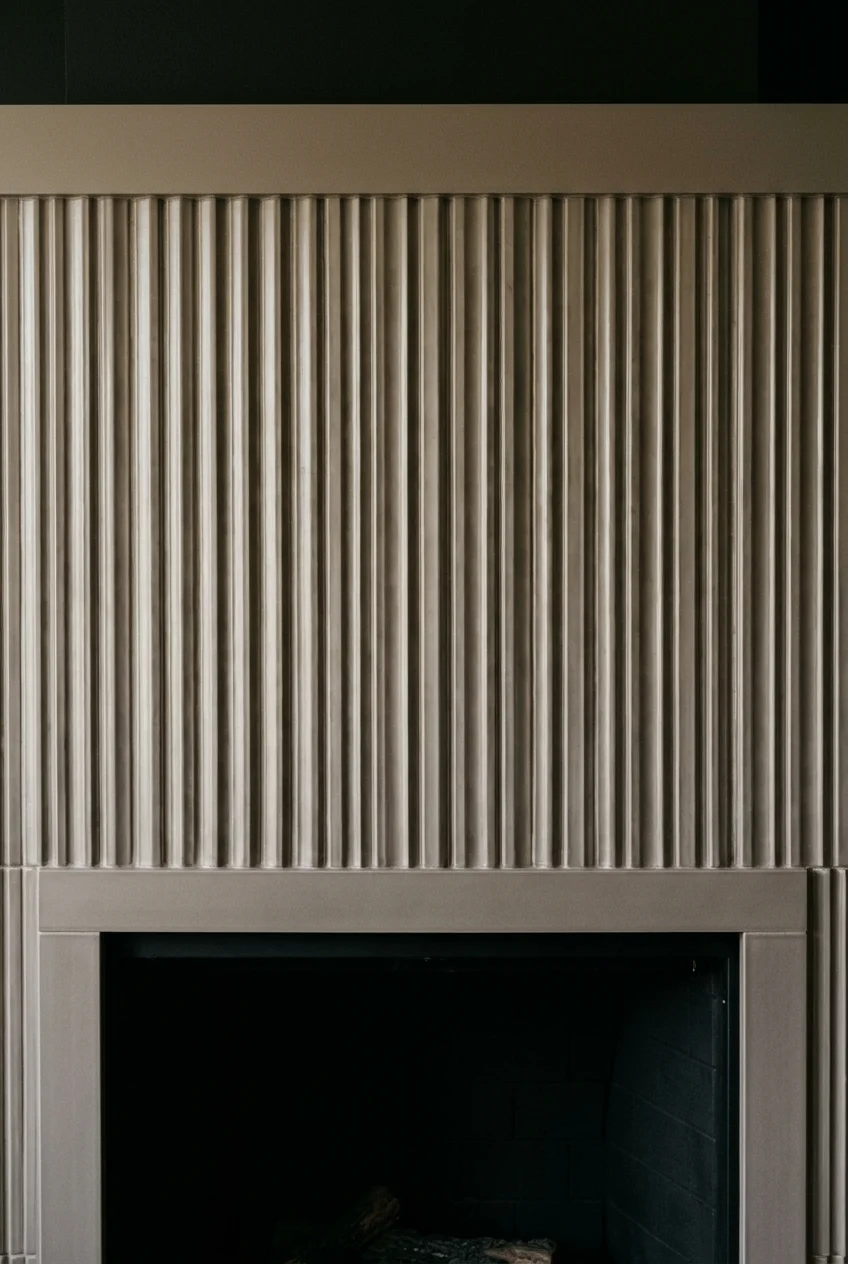
Slim ribs catch enough shadow to give a plain fireplace some depth. Keep the upper wall smooth so the fine texture has a clean place to stop.
Decide how the ribbed top band meets the sides before buying. A matching flat trim can resolve corners more cleanly than a jagged cut through the grooves.
Check that tile, adhesive, grout, and substrate are suitable for the surround. A ribbed surface still needs a clean termination around the appliance and access to removable parts.
18. Use paneled molding to frame the TV zone
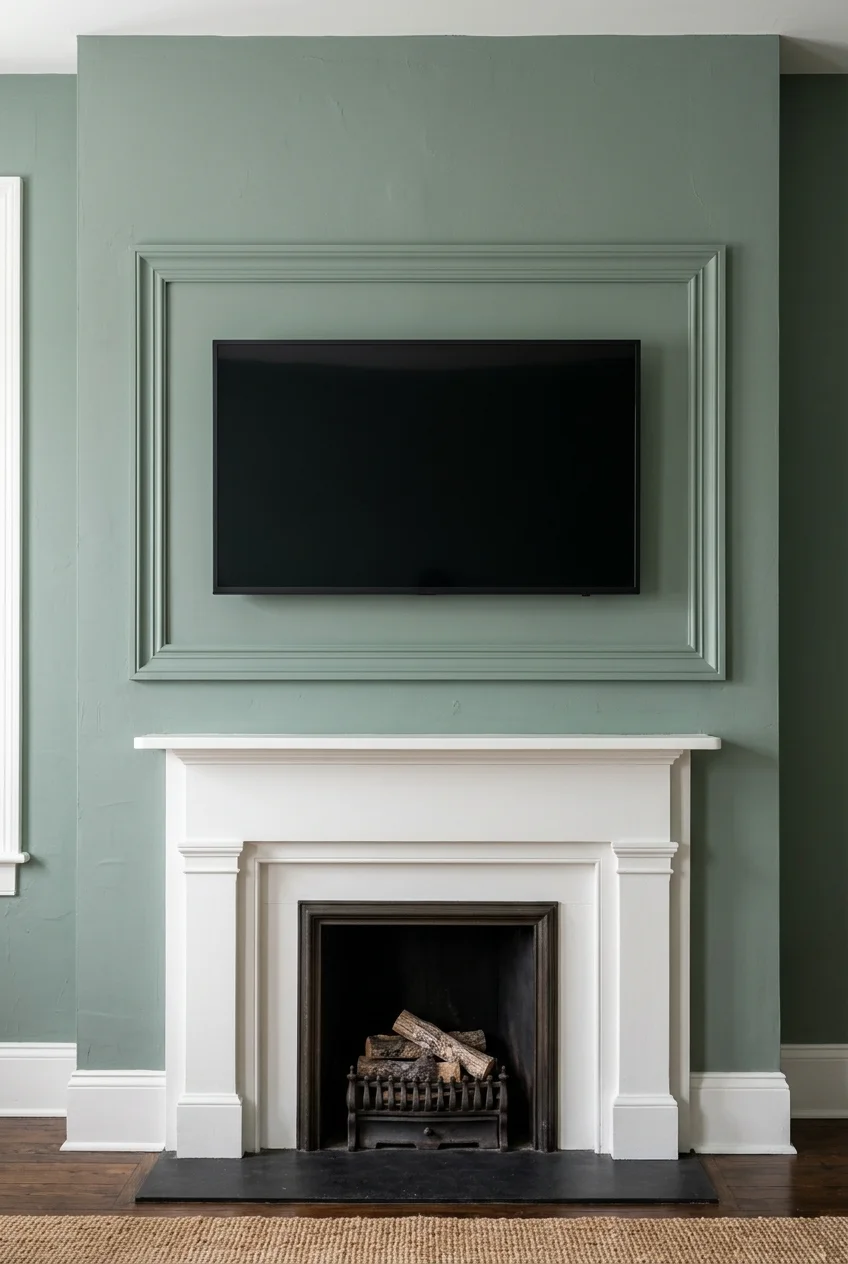
Give the screen breathing room inside one broad rectangular panel. Echo the mantel's width or centerline so the upper molding looks connected to the architecture below.
Keep the panel trim shallow if it passes behind the edges of the screen. Set the frame dimensions after measuring the TV case and how the bracket positions it.
19. Carry the same stone onto the hearth and up the opening
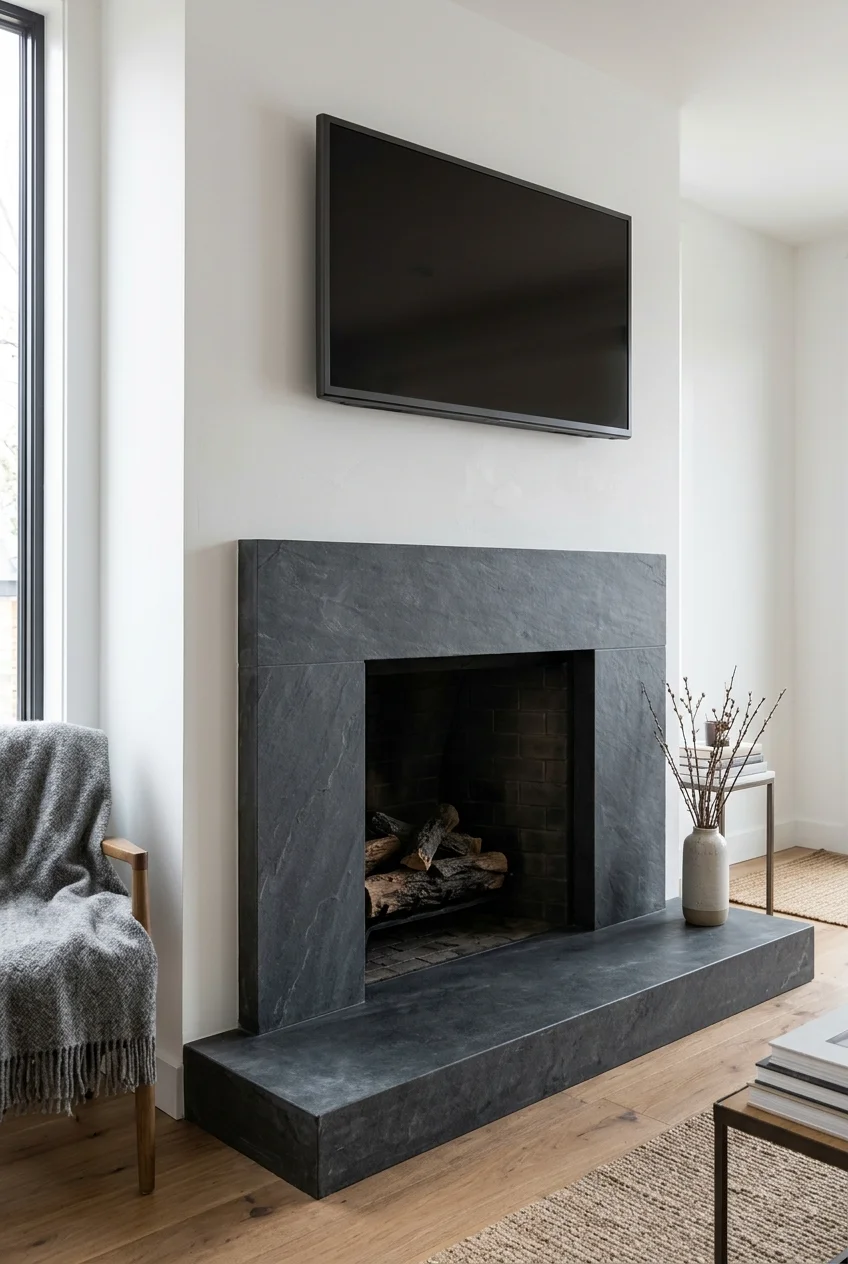
Matching the hearth and surround gives a traditional firebox one continuous frame. A honed finish keeps the broad horizontal surface from reflecting the TV like a mirror.
Ask for a drawing of the corner where the hearth turns upward into the jambs. Decide where thickness, seams, and front edges will be visible from the room.
Keep the hearth's required dimensions and assembly in the drawing as well. Similar-looking stones can have different installation requirements near heat, so confirm the actual material selection.
Put the TV where you'll want to watch it
Think about the seats people use before choosing the screen position. A cozy setup for two can benefit from a different layout than a family movie room.
20. Center a smaller TV above a broad mantel
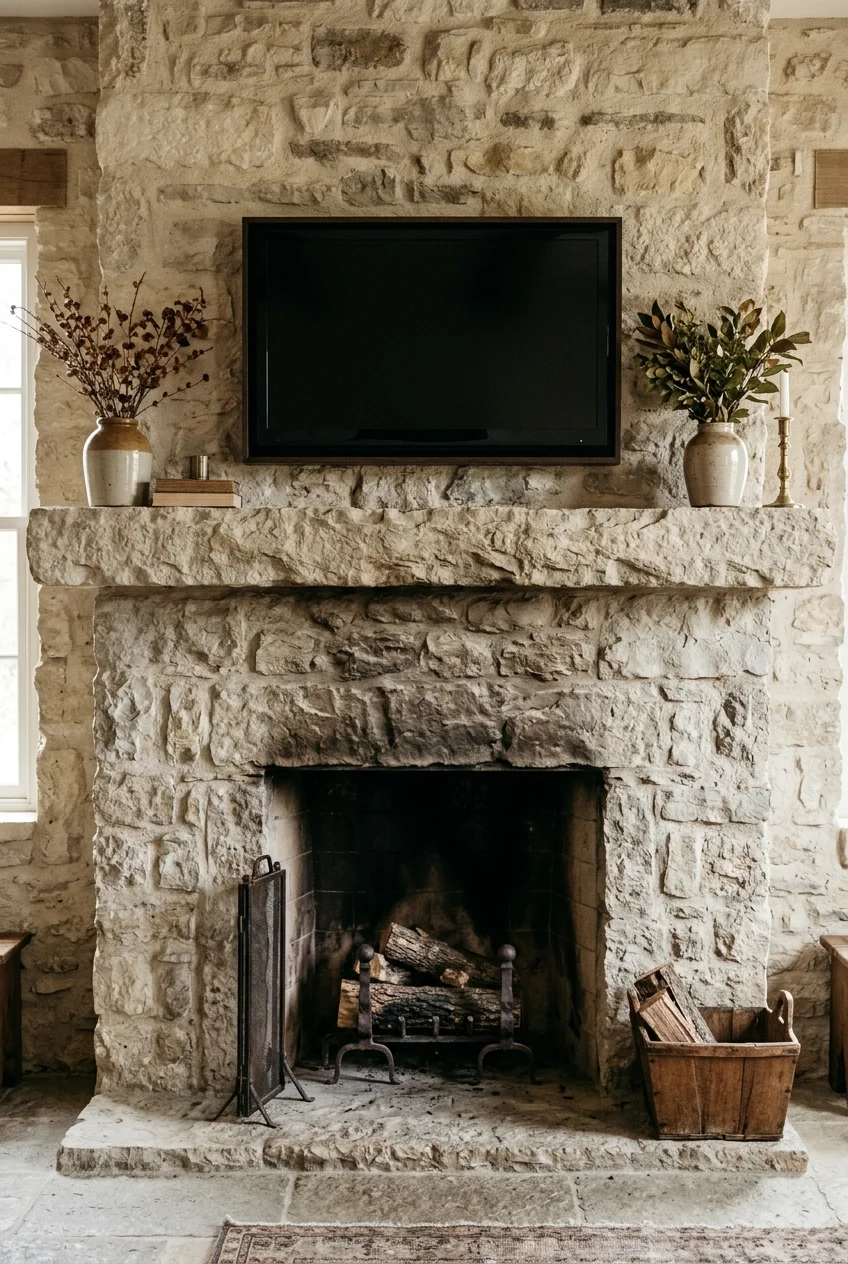
Leaving visible mantel at each end gives the lower part of the wall some weight. This works especially well when the opening is tall and narrow.
Compare the actual width of the TV case with the shelf using paper outlines. Product screen sizes are measured diagonally, which can make the comparison misleading.
21. Put the TV low in one fireplace alcove
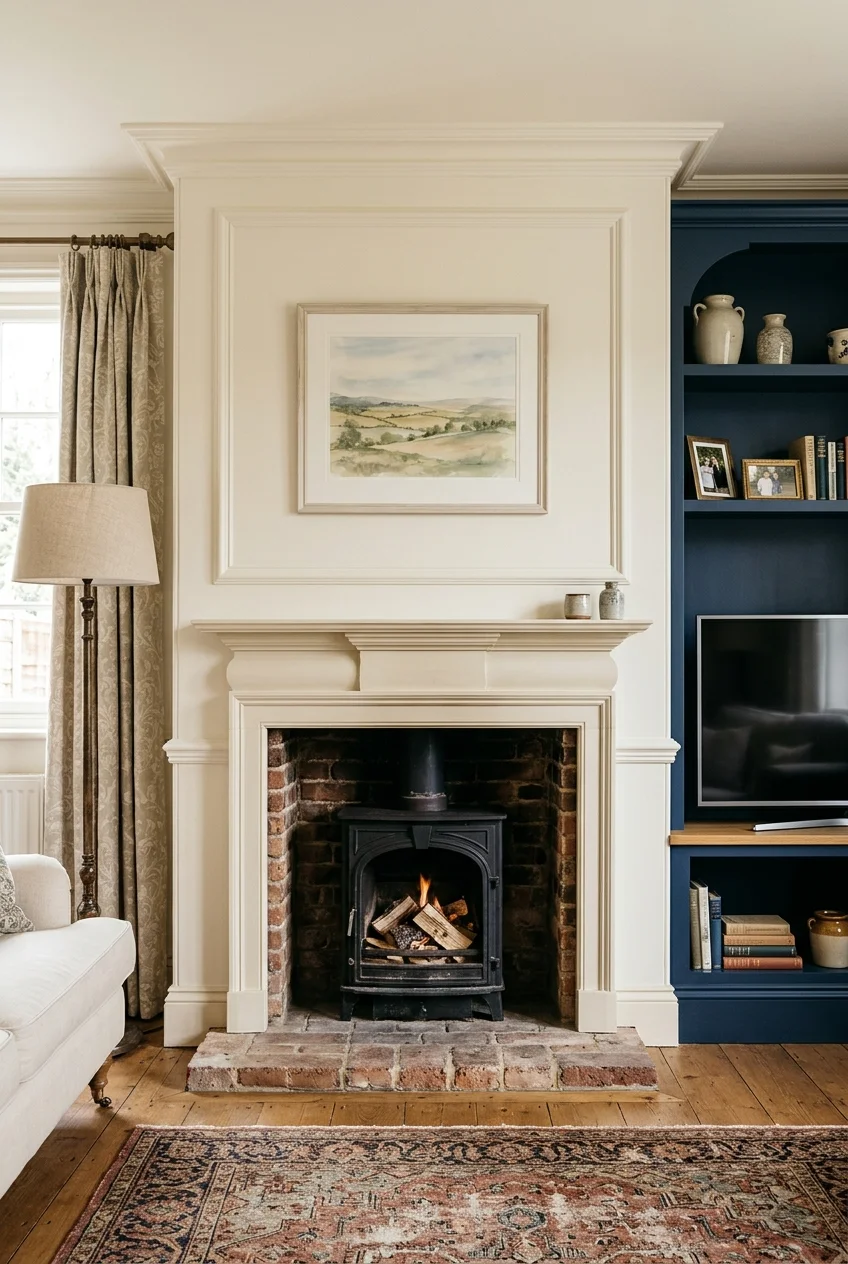
A tall chimney can stay the center of the wall while a side alcove holds the screen near seated eye level. The niche limits the TV size.
Check the bracket and plug depth as well as screen width. Leave enough side space to reach the ports and remove the TV when it needs service.
Choose a piece of art over the fireplace that has a quieter palette than the screen. The mantel can hold its own even when the TV is off.
22. Hang the TV on the wall at right angles to the hearth
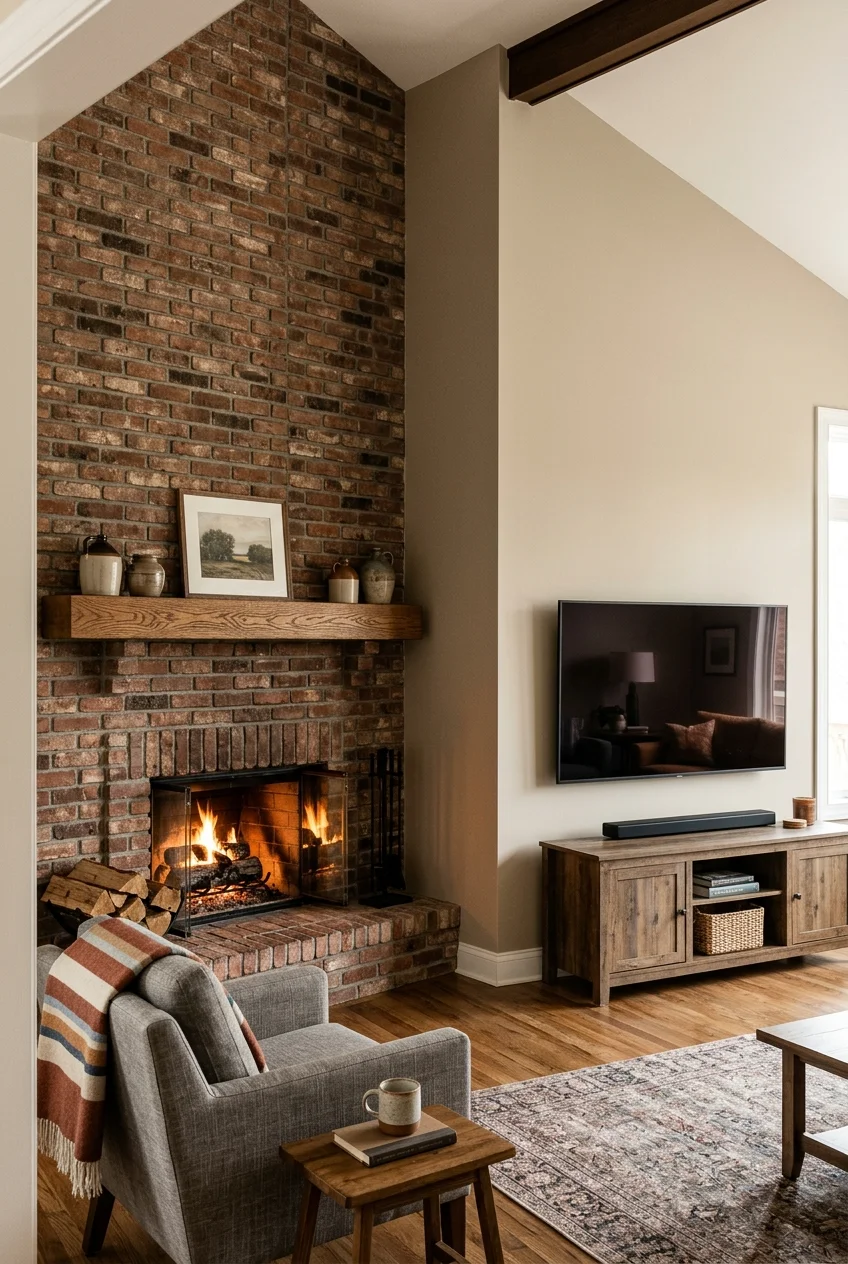
When a tall mantel makes a stacked layout uncomfortable, turn the screen onto an adjacent wall. Angle a chair or sectional so both features stay in view.
Try the seats before fixing the mount. Someone on the far end of the sofa should be able to watch without sitting sideways for an entire movie.
23. Pull a high screen down for movie night
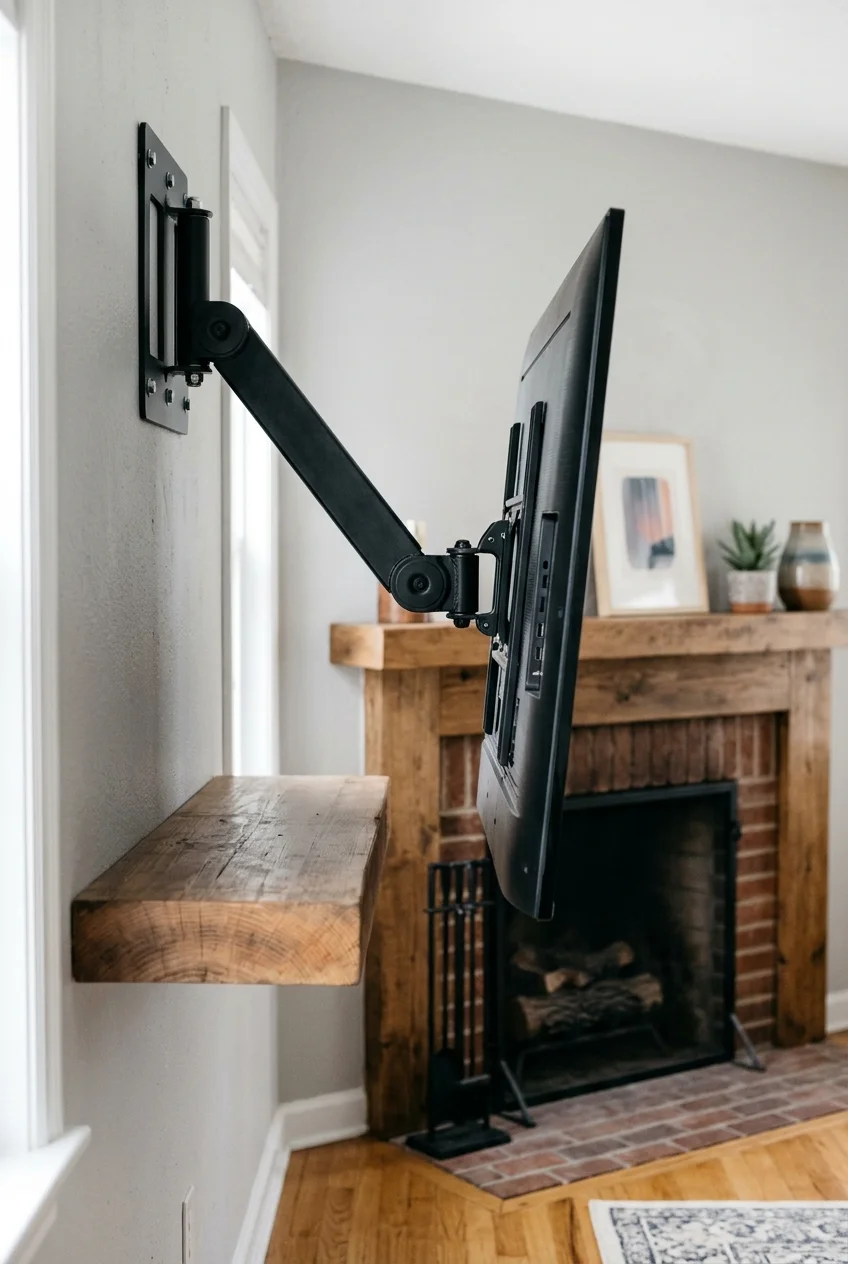
A pull-down mount can bring a high screen closer to seated eye level when the fireplace is off and cool. The arm needs room to travel.
Check the mount's TV size, weight and VESA range against the actual display. Confirm the mantel projection, wall support, and full path of the screen in the installation guide.
Ask the installer to confirm the fireplace and TV requirements for the parked and lowered positions. Follow all operating restrictions for the mount, including when the fireplace is used.
A deep mantel can push the screen farther into the room as it comes down. Test the proposed viewing angle with the main sofa and the nearest side seat.
- Mock up the parked and lowered screen positions.
- Allow cable slack for full arm travel.
- Check that the lowered screen clears the mantel nose and any soundbar.
24. Set a corner fireplace beside a flat-wall TV
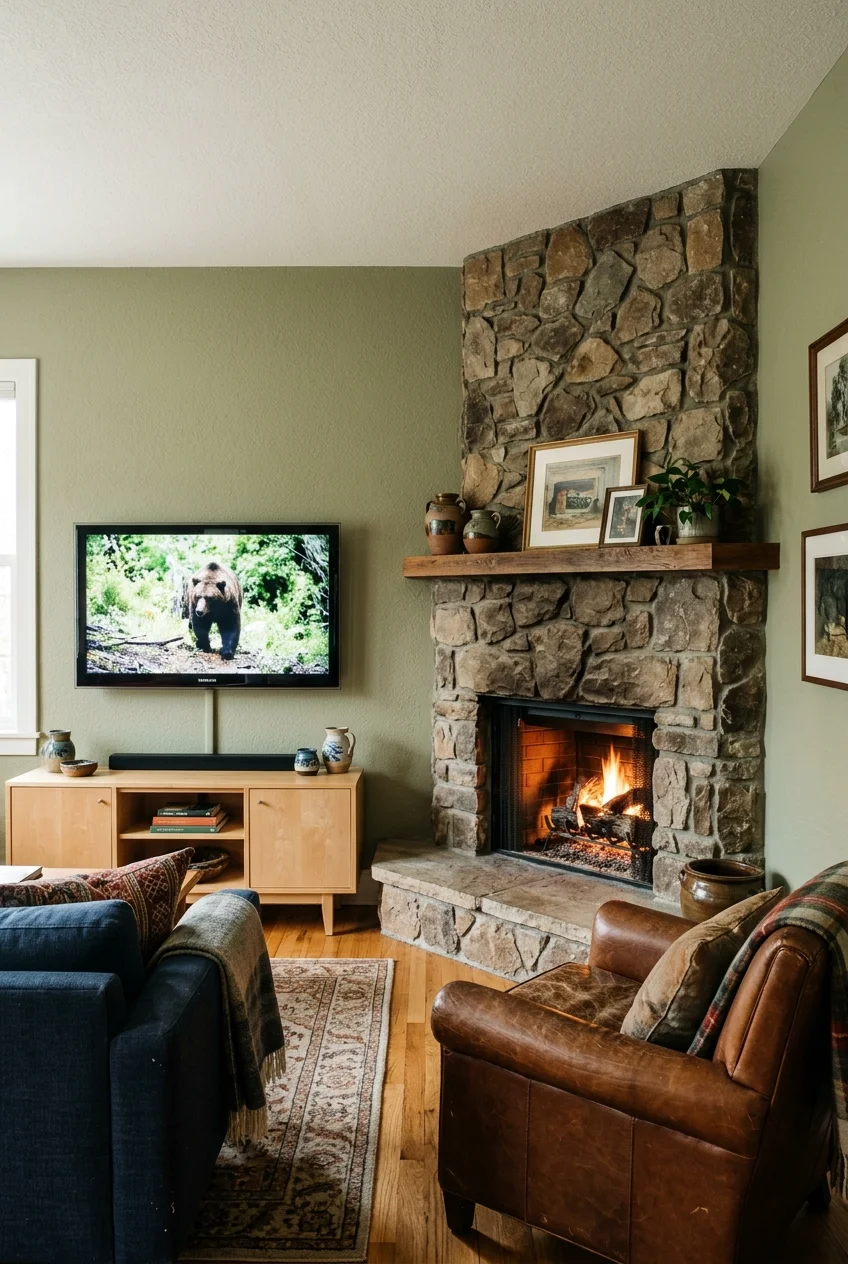
Leave a diagonal corner fireplace on its original angle and give the screen the next full wall. The TV can then face the primary seats directly.
Use a compact console that stops before the diagonal hearth begins. If the console extends into that corner, the two features will look crowded and circulation can suffer.
25. Angle the TV toward the seats with a swivel mount
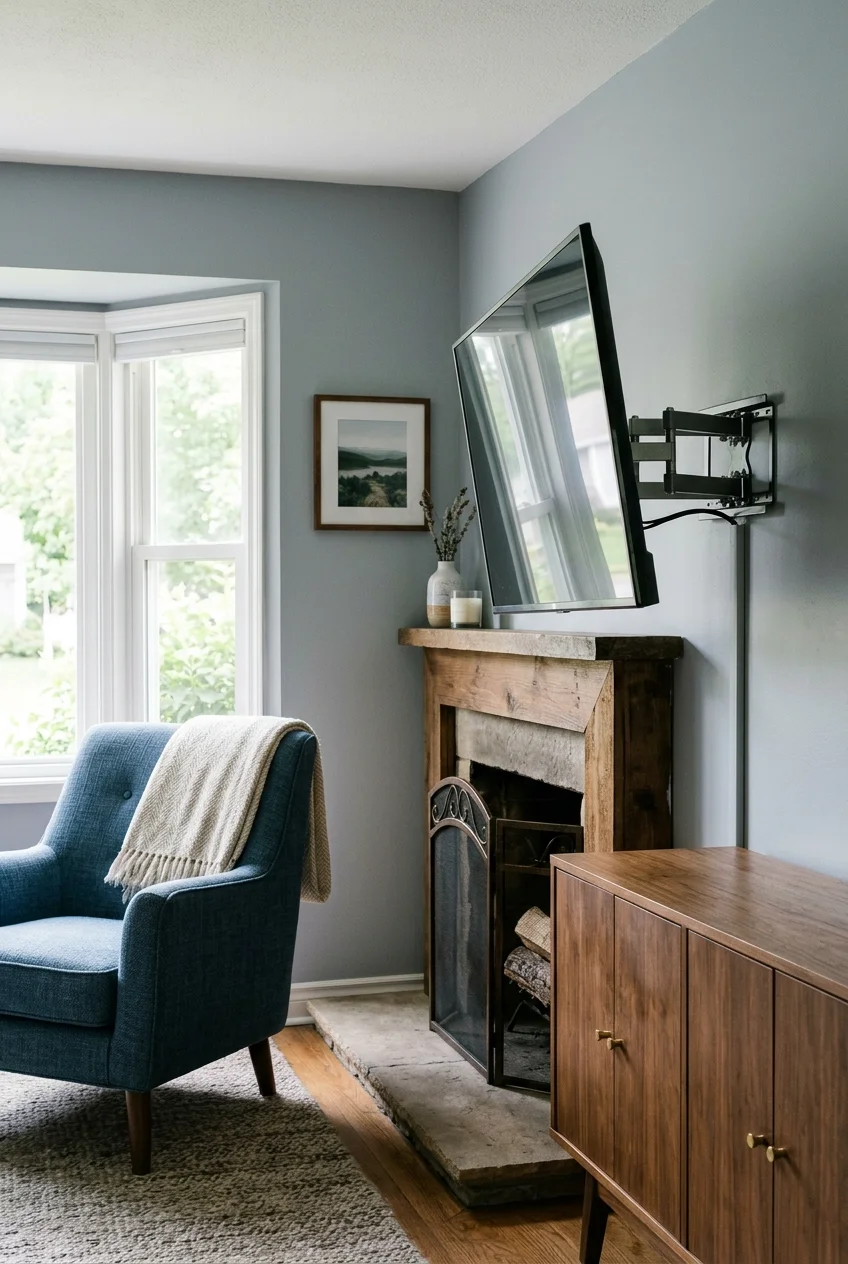
For a TV beside the fireplace and seats scattered across the room, an articulating mount can change which chair has the clearest view. Park it flat between uses.
Check that the fully extended screen clears lights and cabinet doors. Use the manufacturer-approved mounting surface and leave enough cable slack for the full swivel without pulling connectors.
26. Give the TV a freestanding console in a rental
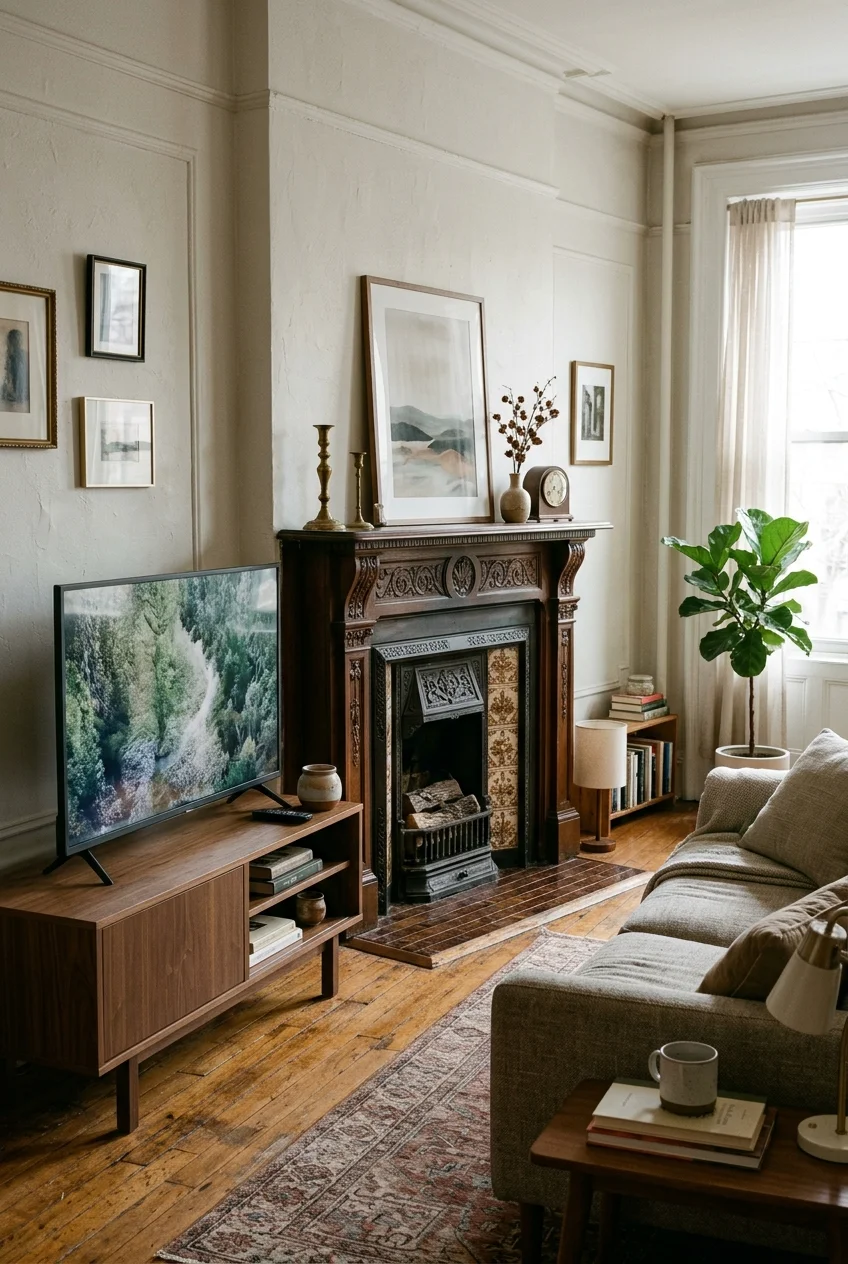
A low console beside the existing fireplace can change the balance of a rental without drilling into the mantel or chimney. Choose one deeper than the TV feet.
Check the console's load rating, the TV's foot spacing, and the manufacturer's anti-tip instructions. Arrange permission to anchor the TV and console before settling on the layout.
27. Test the screen position before mounting anything
Image pending: No image is attached to this draft for idea 27 (image-27).
Tape a paper rectangle the size of the TV on the cool wall. Make a second outline if you're deciding between the chimney and an adjacent wall.
Try the mockup from all regular seats, then check the room at the hour when glare is worst. Compare how much wall and furniture each position leaves free.
- Measure the outside dimensions of the TV case.
- Mark the fireplace's model-specific clearance boundaries in your planning sketch.
- Put the paper mockup on a suitable wall and check it from each seat.
- Confirm mounting support and cable access before drilling.
28. Place the TV and fireplace on opposite walls
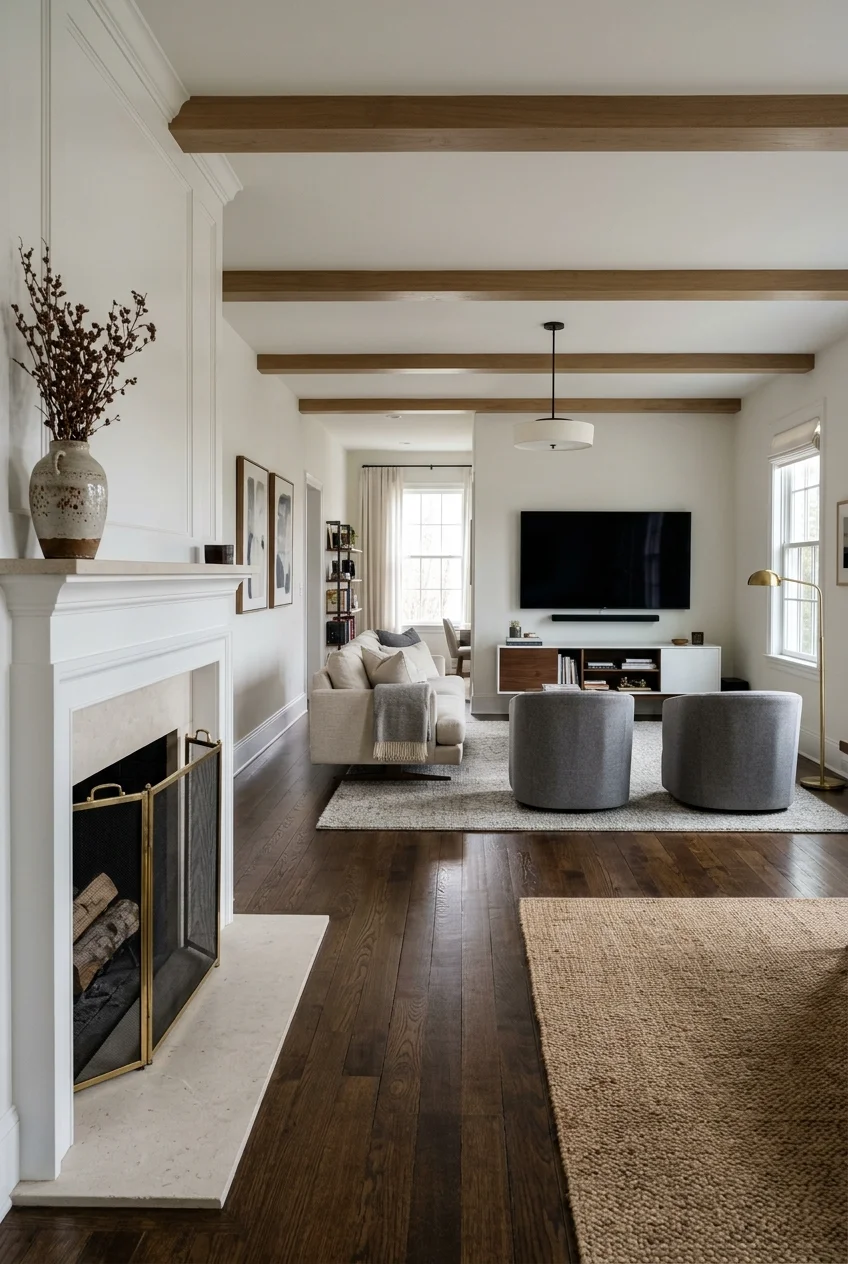
A long room can give the screen and fireplace separate ends. Float a sofa facing the TV and angle two swivel chairs so they can serve both zones.
Check the path behind the sofa and protect the fireplace's hearth clearance. If the room can't spare that circulation space, the perpendicular-wall layout may fit it better.
Built-ins that make room for both
Decide what needs to live near the screen before designing the cabinet doors. Controllers, books, and electronics have different space, access, and ventilation needs in daily use.
29. Flank the fireplace with matching bookcases and closed bases
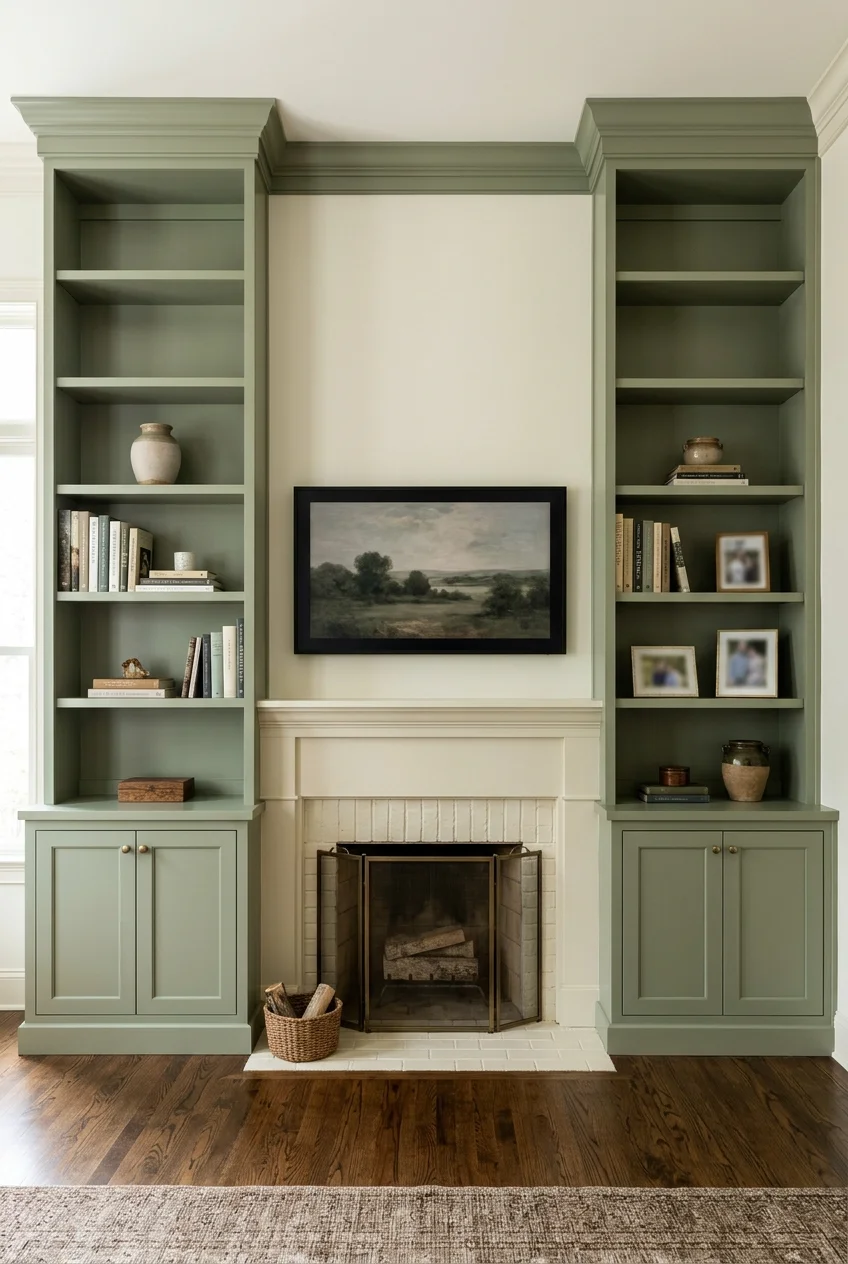
Two matching cabinet runs give an off-the-shelf TV and fireplace a built-in setting. Bring the base cabinets to the same height and let the shelves carry the vertical rhythm.
Sort what you want to see from what you reach for daily. Use the open shelves for books, then put spare cables and controllers inside the bases.
Before fitting cabinets, locate floor registers, outlets, and any fireplace controls. Have the layout preserve required air circulation, service paths, and distance from the working fireplace.
30. Put a cabinet on the wider side only
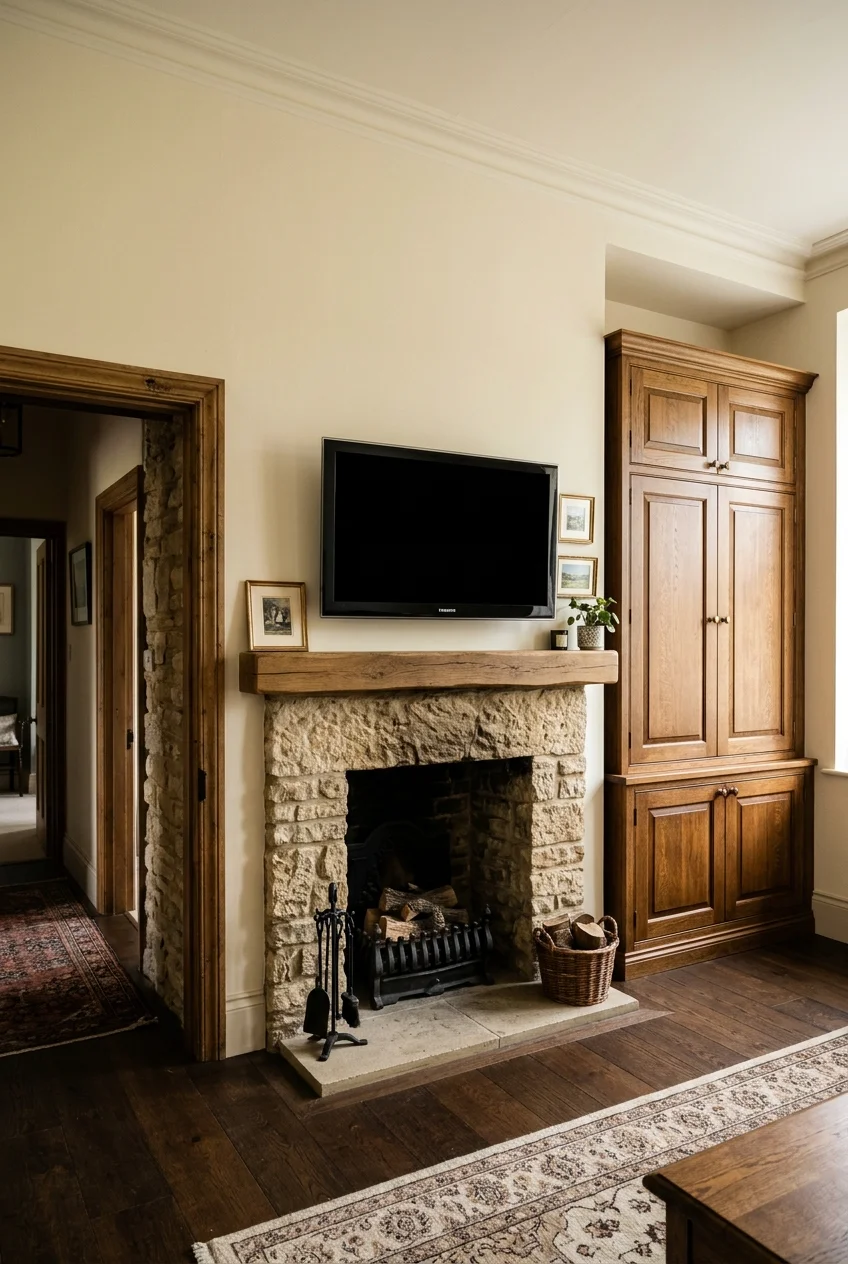
Use the wider side of an uneven chimney breast for one proper cabinet run. Keep the narrow side open for light, a door swing, or an existing passage.
Paint the cabinet and chimney breast in related shades if the wall looks split in two. A taller cabinet can balance the visual height of the screen.
31. Turn a window bay into a low bench
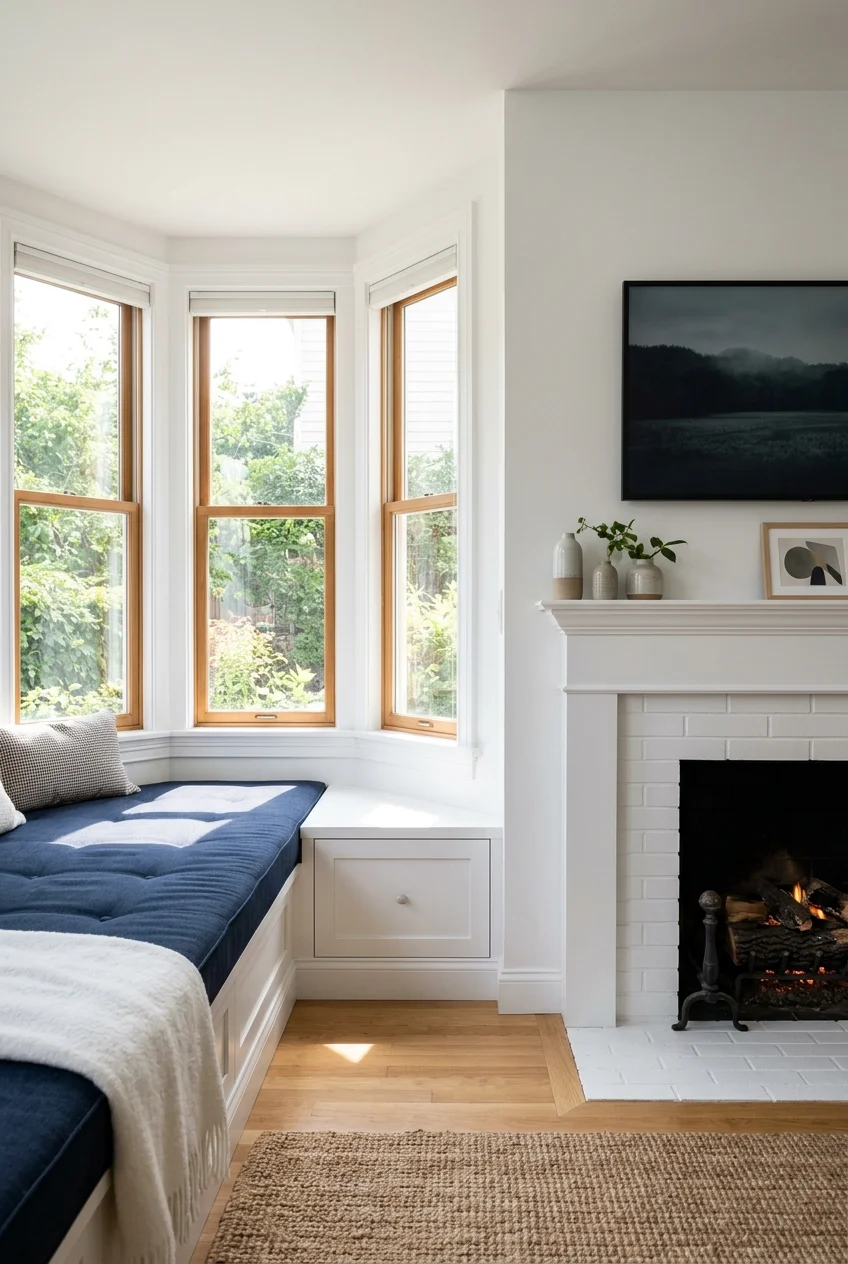
If a window limits the height of nearby storage, use the space beneath it for a bench. A closed drawer can hold throws without filling the view.
Map the path from the bench to the room and leave the fireplace's hearth and hot surfaces clear. Check for floor registers and operable windows before building.
Give the seat its own stop at the fireplace side. A visible break between the cushion and chimney keeps the seating from looking squeezed into the hearth.
32. Give remotes and controllers a divided drawer
Image pending: No image is attached to this draft for idea 32 (image-32).
Measure the game controllers and remotes before picking drawer inserts. Shallow compartments let you see every device without piling cables on top of handheld gear.
Keep chargers accessible in an appropriate ventilated location, and use the closed drawers for unplugged gear. Leave room above deep drawer fronts so pulls are easy to grasp.
33. Give equipment a ventilated cabinet with a removable back
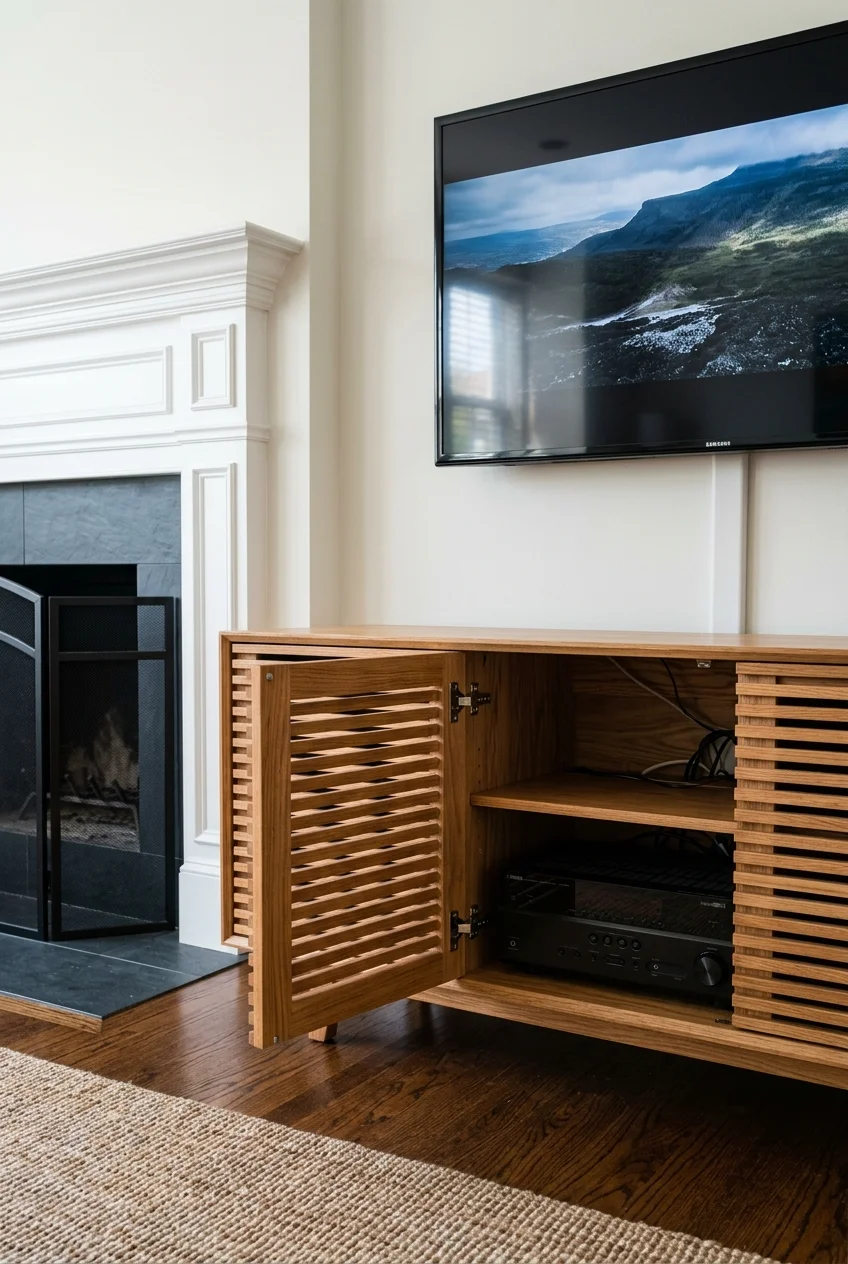
Give the receiver and streaming devices a dedicated compartment on the cool side of the wall. Vented doors let the cabinet front look finished while allowing airflow.
Check device clearance and airflow requirements, then plan intake and exhaust paths for the compartment. A slatted door alone may leave hot air trapped behind the equipment.
Put a removable back or service panel where you can actually reach it. Test the remote and wireless connection through the door material before fitting every front.
If the receiver runs warm with the doors shut, follow the equipment maker's guidance on ventilation and consider an open shelf before adding more gear.
- Measure the deepest device including plugged-in connectors.
- Check vertical clearance above the receiver.
- Leave a reachable route to the outlet and service panel.
34. Use a slim in-wall media enclosure behind a side-mounted TV
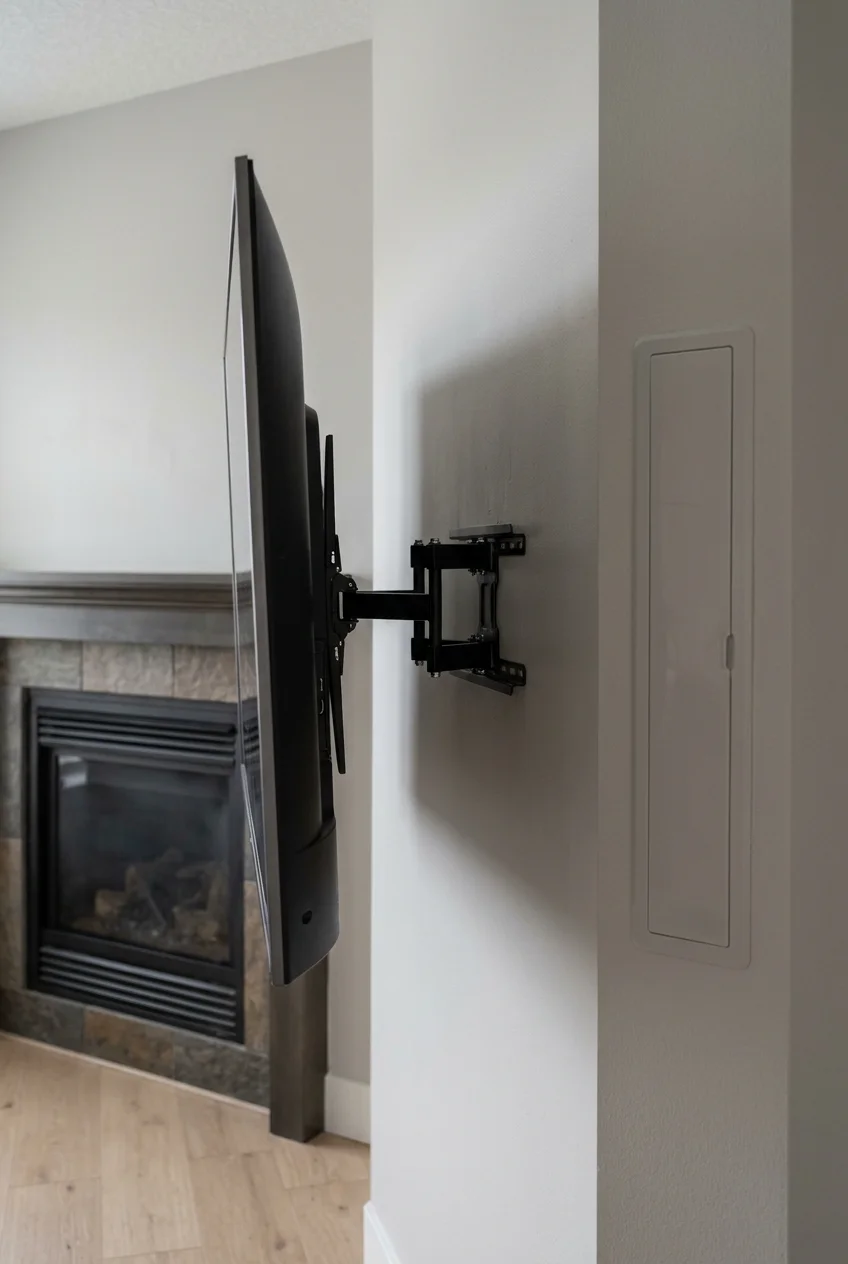
An enclosure can free up a console shelf in a narrow room. It's useful for compact electronics when the wall beside the fireplace has a suitable stud bay.
Plan the recess before choosing a flush bracket. Check the box depth, connector bend room, and removal path so the equipment stays reachable once the TV is mounted.
Have an installer check the wall cavity and provide appropriate power. Keep alterations outside the chimney or fireplace enclosure and follow each device's ventilation requirements.
If the wall is shallow or there's blocking where the box needs to go, use a small ventilated side cabinet and keep that drywall intact.
Setup note Ask whether the screen can be removed from its bracket without pulling the cables tight. The next device swap should be possible from the room.
35. Align two low cabinets across the fireplace
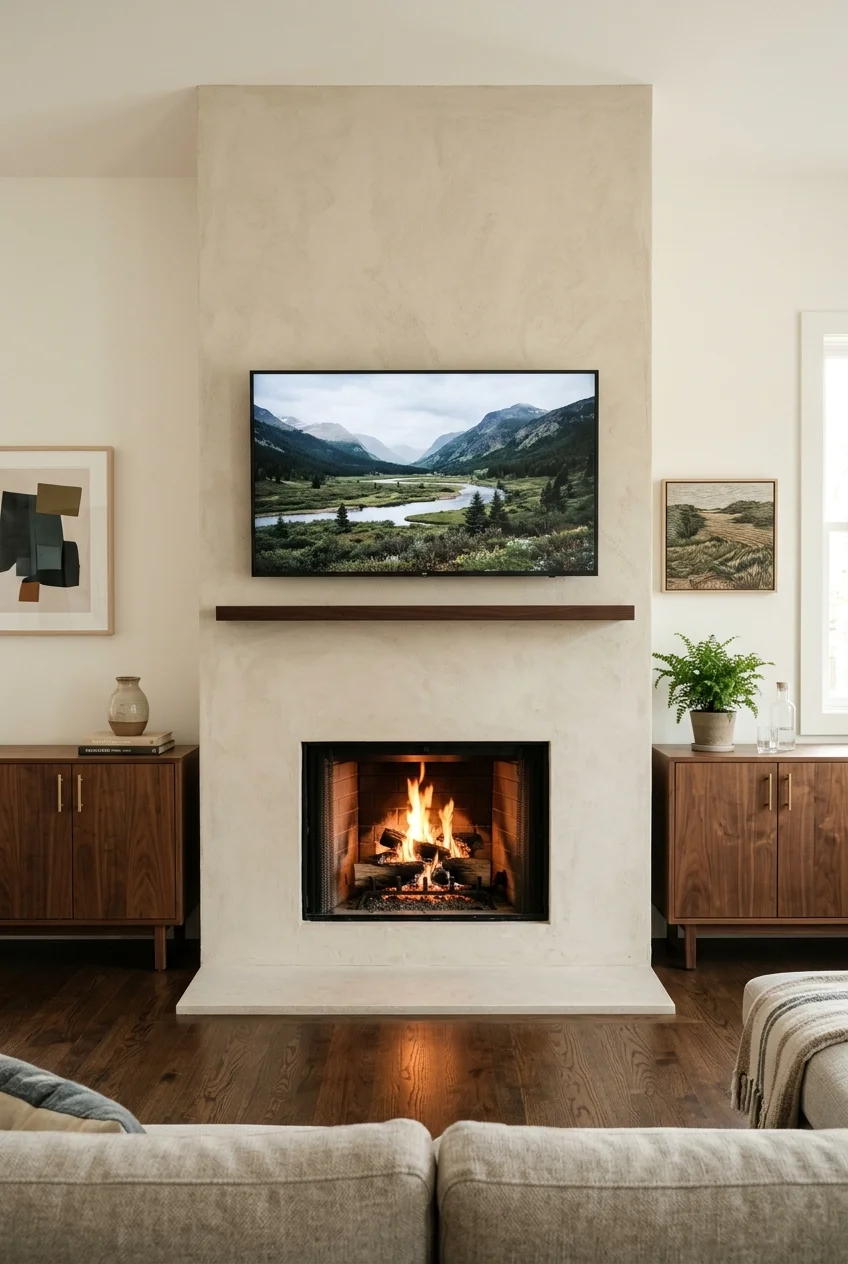
A pair of low cabinets can make a fireplace wall read wider. Use matching top heights, with each cabinet ending before the hearth and its required clearances.
Align doors and pulls across the room so the eye makes the connection. This gives you the long-console effect while preserving separate access on either side.
36. Add shallow display shelves where a bookcase would project
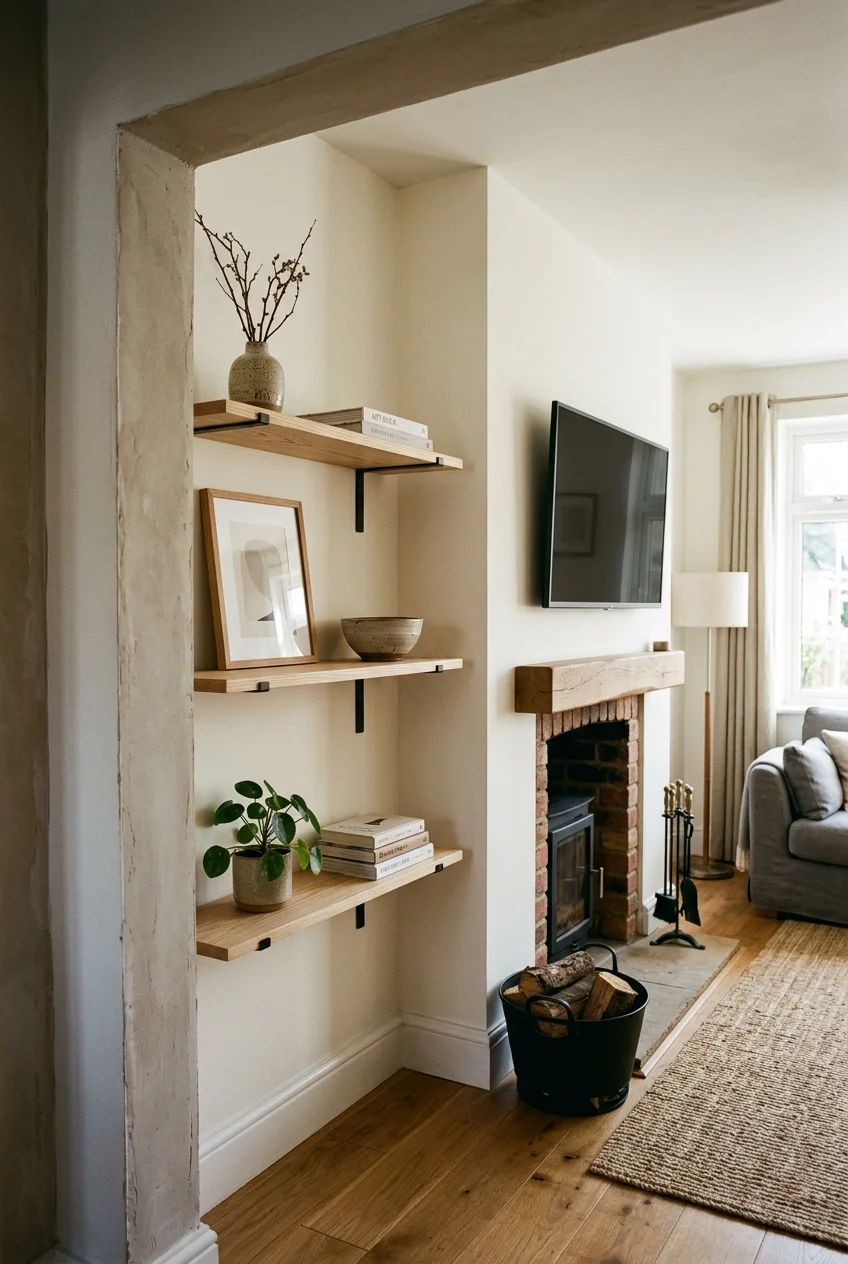
Shallow shelves suit a room where full-depth cabinetry would narrow a path. Use tops deep enough for a few framed objects or small books held by bookends.
Anchor the shelves to suitable structure outside required fireplace clearances. From the sofa, check that their ends leave a clear stretch of wall beside the TV.
Remodel the fireplace and TV wall together
A new insert or bump-out lets you change the whole composition. Choose the firebox, TV position, and access points before drawing the finished face of the wall.
37. Stack a long electric fireplace below a wider TV
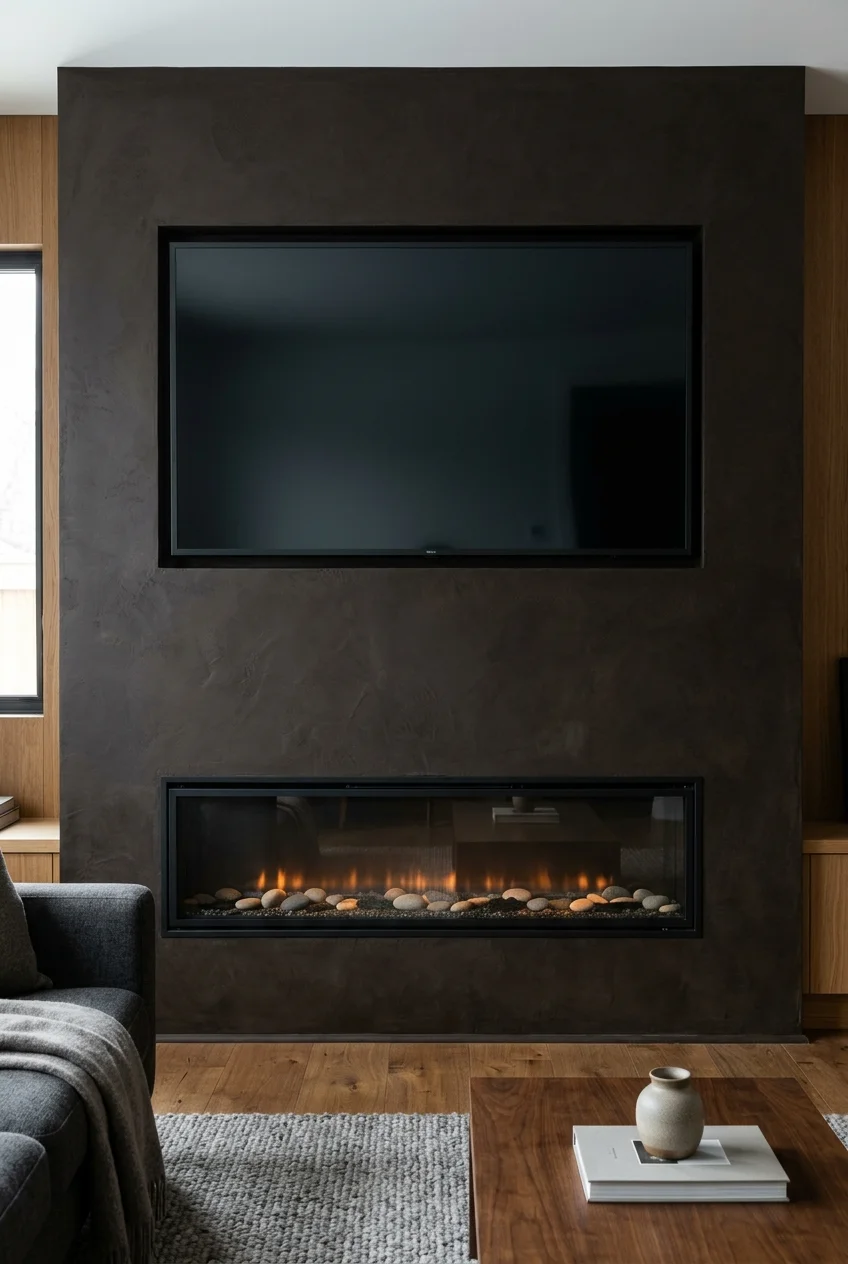
Pair a low strip of flames with a centered screen for a broad, clean composition. Line up the center points and let one rectangle be noticeably wider.
Draw the fireplace's actual glass opening and its outer installation dimensions. Use the opening for visual proportion and the full dimensions to plan the framing and finish.
Locate the heater discharge and any intake before deciding where the TV or soundbar goes. Check the fireplace's installation instructions and the TV's operating temperature limits.
Practical tip When you shop, compare the width of the visible flame bed with the TV cabinet. Catalog sizes for the two products often measure different parts.
38. Refresh a retired masonry hearth with electric logs
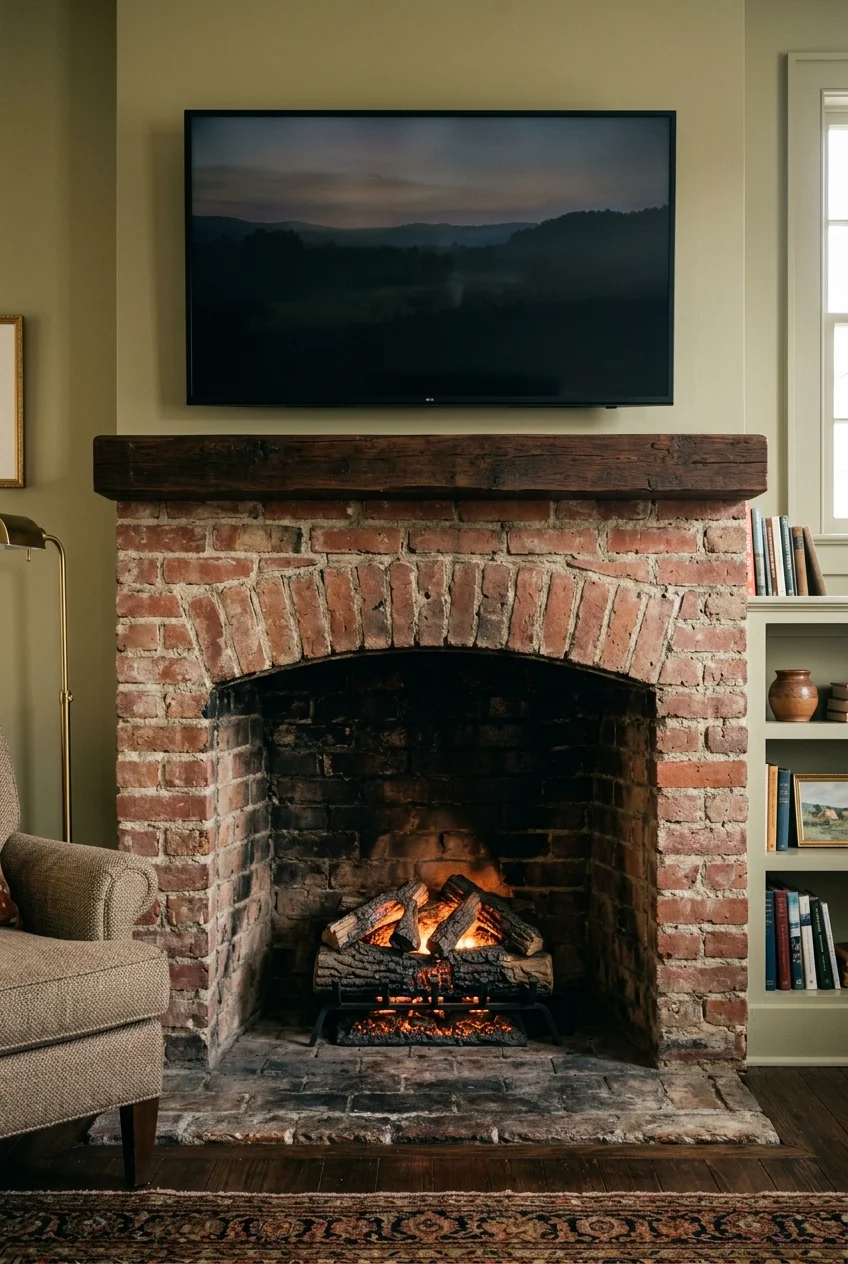
An electric log set can give an unused firebox a visible flame effect while preserving the arch and mantel above. Measure the cavity at its narrowest point.
Check depth and height where the set will sit, including any flame-effect screen it comes with. See how far the feet and trim sit behind the opening.
Confirm the fireplace is out of service and arrange suitable power for the specific set. Choose a model with separate flame and heat controls if you mainly want evening glow.
39. Recess the TV into a carefully sized opening
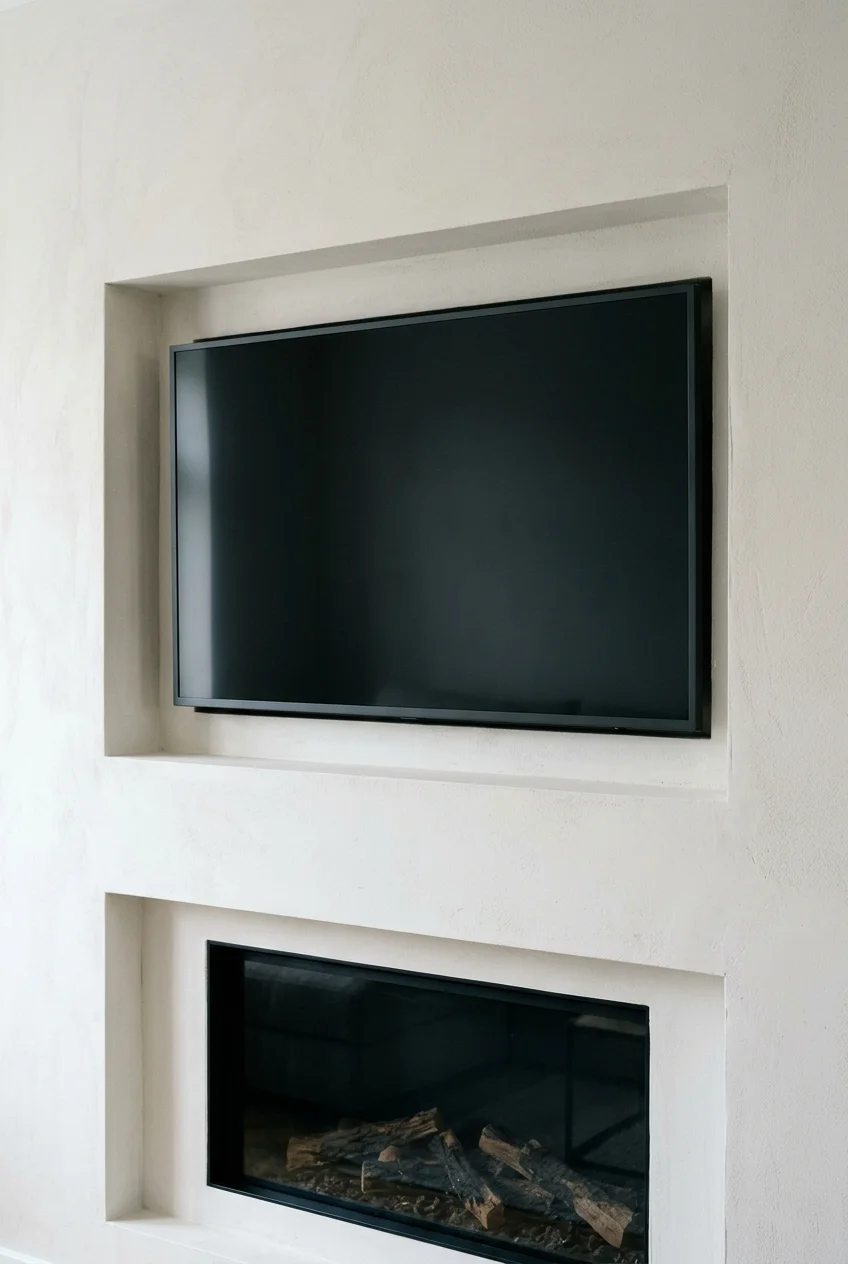
A shallow niche can align the face of the TV with a new fireplace bump-out. Leave a deliberate reveal around the screen so small variations look intentional.
Set the opening from the actual screen case, the mount, and the TV manufacturer's ventilation needs. Account for plugs and mounting movement before drywall covers the backing.
Plan how the television will come out. Keep a clear path to release tabs and outlets, and allow space for a replacement without rebuilding the whole face.
For a niche over a working fireplace, verify any rules for recess depth and heat management with the fireplace installer and check the TV's environmental limits.
- Mock up the TV and opening before finishing the wall.
- Test access to the mount release from the room.
- Photograph the backing before closing the wall for future mount changes.
40. Open both ends of a three-sided fireplace
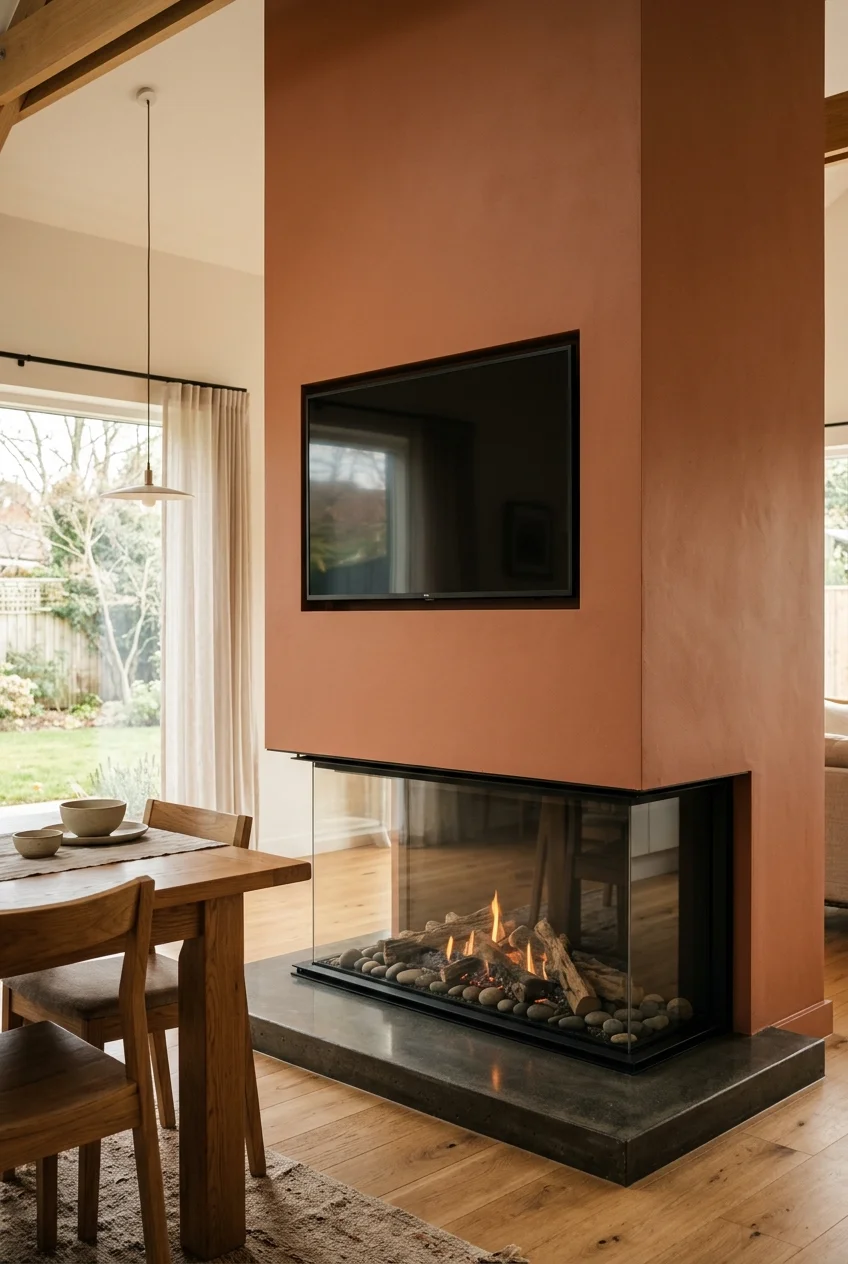
A bay-style electric unit lets the flame effect show from seats at the side of the room. Use it where a flat fireplace face would disappear from an angle.
Select a model approved for a three-sided installation. Establish where the supports meet the glass and keep required vents and access points free of finish materials.
Keep the TV on the solid face above only when the installation instructions and its temperature limit permit it. From side seats, the fire can still be the main view.
41. Keep a heat outlet visible within the wall design
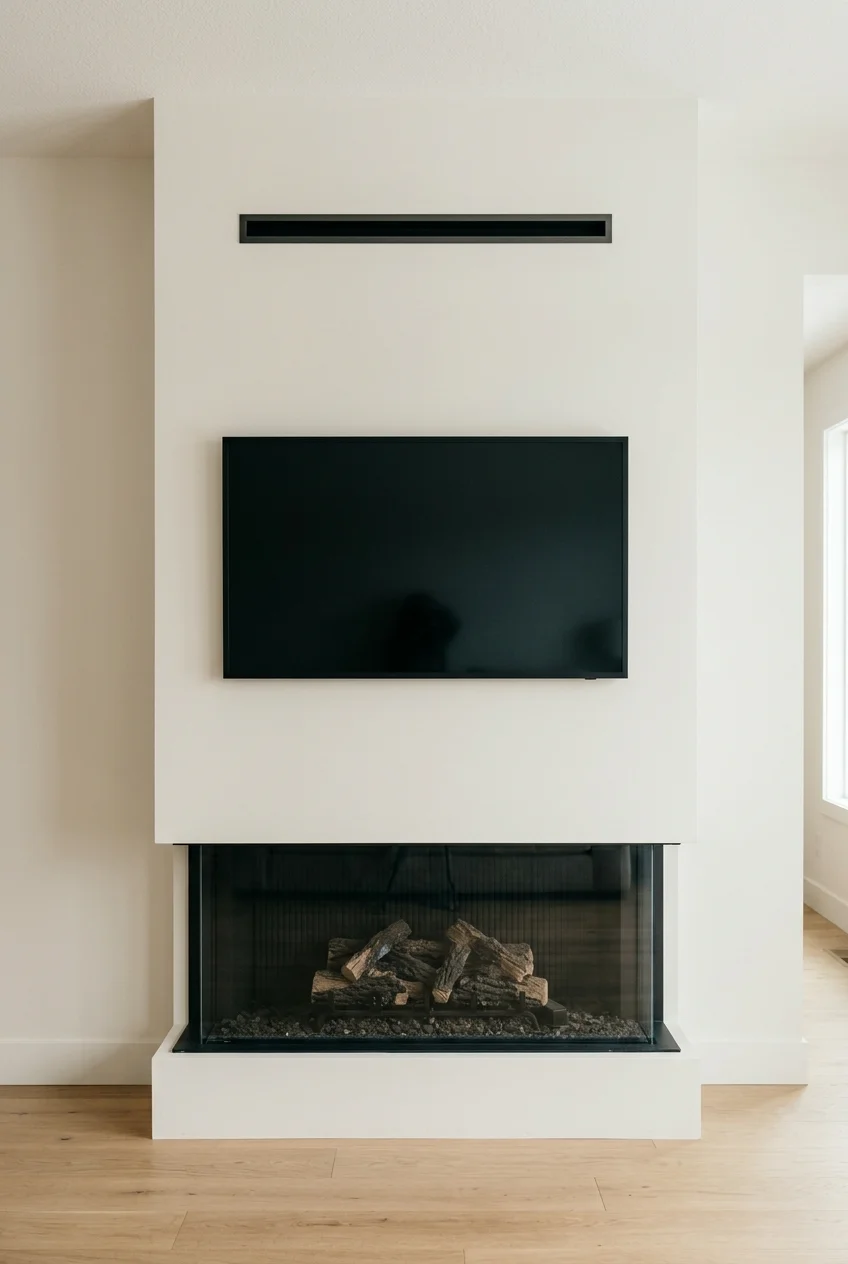
Some gas fireplace systems are designed to route heat to an upper opening. An intentional horizontal grille can sit in line with the screen and fireplace below.
Ask a hearth professional which heat management layouts the exact appliance supports. They can specify the outlet location and the installation dimensions for that particular configuration.
Build around the approved outlet before choosing cabinetry or trim. Confirm the installed temperatures at the TV with the system operating, using the television manufacturer's limits.
Look at the grille from where you enter the room. Align it with the wall's centerline only if that position follows the fireplace manufacturer's outlet layout.
42. Style a permanently retired firebox as a display niche
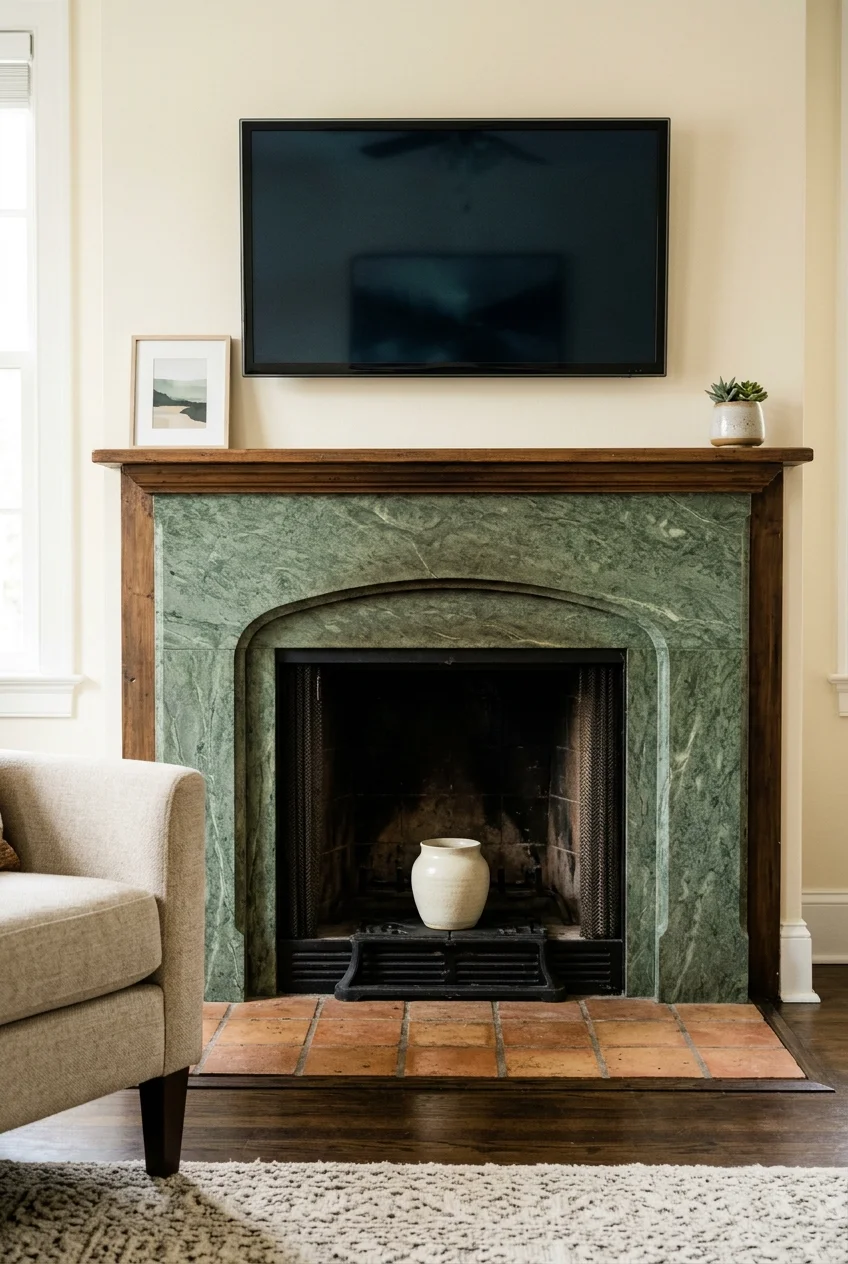
A single sculptural vessel in a dark opening gives an unused fireplace a purpose beneath the TV. Pick a broad shape that you can see from the sofa.
Reserve this idea for a permanently decommissioned firebox that's appropriate to use as a display. Use a stable vessel and keep the original hearth edge easy to see.
Browse these living room fireplace ideas for mantel and surround profiles that still give the wall some definition when the firebox stays dark.
43. Choose an electric fireplace media console for one wall
Image pending: No image is attached to this draft for idea 43 (image-43).
A freestanding unit can join the TV and fireplace in one piece of furniture. Compare the fireplace opening and console width with the actual size of your screen.
Choose a console built to support a television and match its load limit to the TV. Check foot placement and anchoring instructions before bringing it home.
Confirm the unit's electrical requirements and leave heater vents clear. Side storage is handy for unplugged accessories when it sits outside the spots the manufacturer identifies as hot.
44. Let a two-sided fireplace divide the room
Image pending: No image is attached to this draft for idea 44 (image-44).
In an open layout, the fireplace can face both seating areas while the TV serves only one. That gives the dining side a view of the hearth without the screen.
Choose a listed see-through model and work with the installer on framing, ventilation, controls, and service access. Keep sightlines and clearance needs in the layout as you place furniture.
A perpendicular media wall in the lounge lets the fireplace partition stay uncluttered from both sides. Keep power and cable work on the TV's own wall.
Finish the wall for everyday watching
Check the fireplace wall after dark and from your usual seat. That's when you'll notice whether the lights reflect, the speakers fit, or the decor feels crowded.
45. Light a single display niche from above
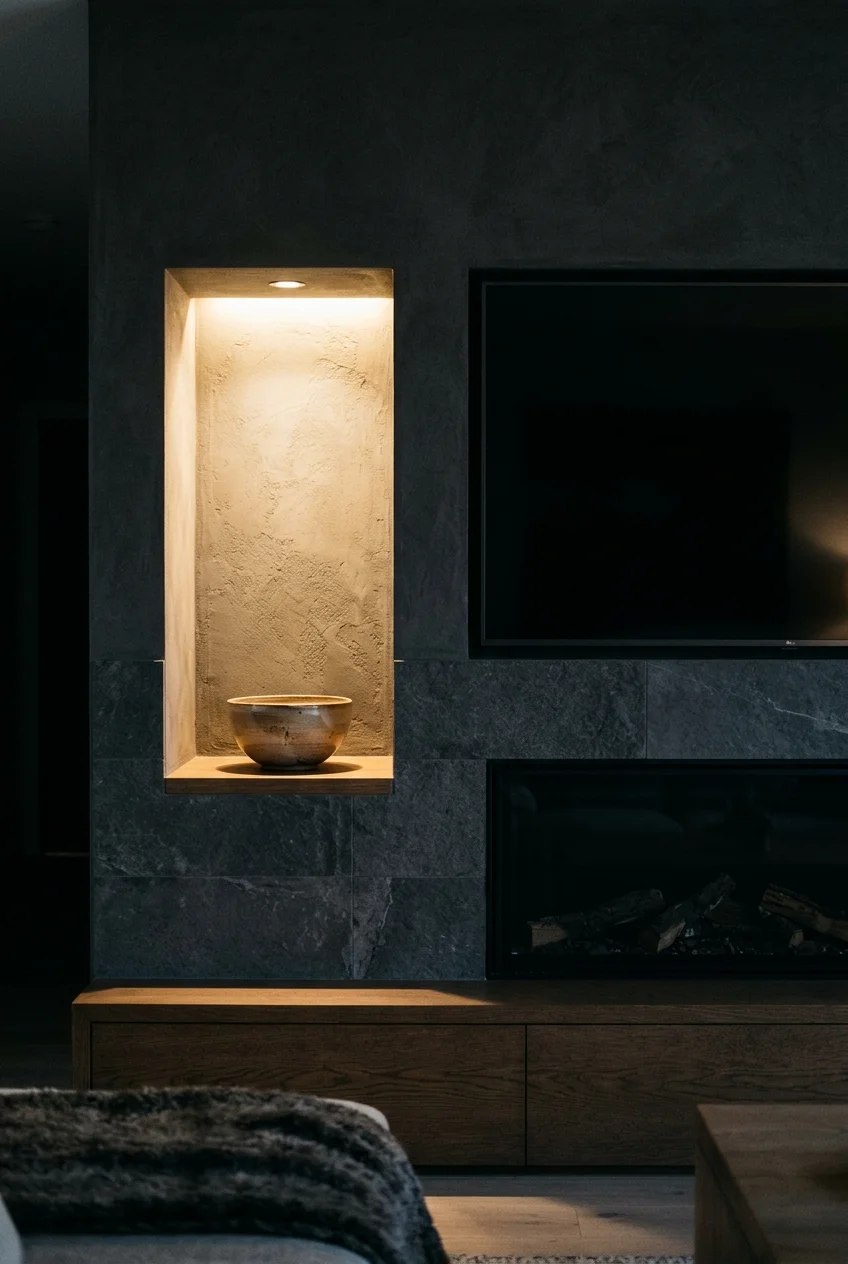
A slim light under the top of one display niche brings out the cabinet's interior without brightening the whole TV wall. Give it a separate dimmable control.
Place the source so you see its wash from the sofa, with the fixture itself tucked out of sight. Keep the niche outside any fireplace clearance requirements.
46. Aim side sconces at the wall
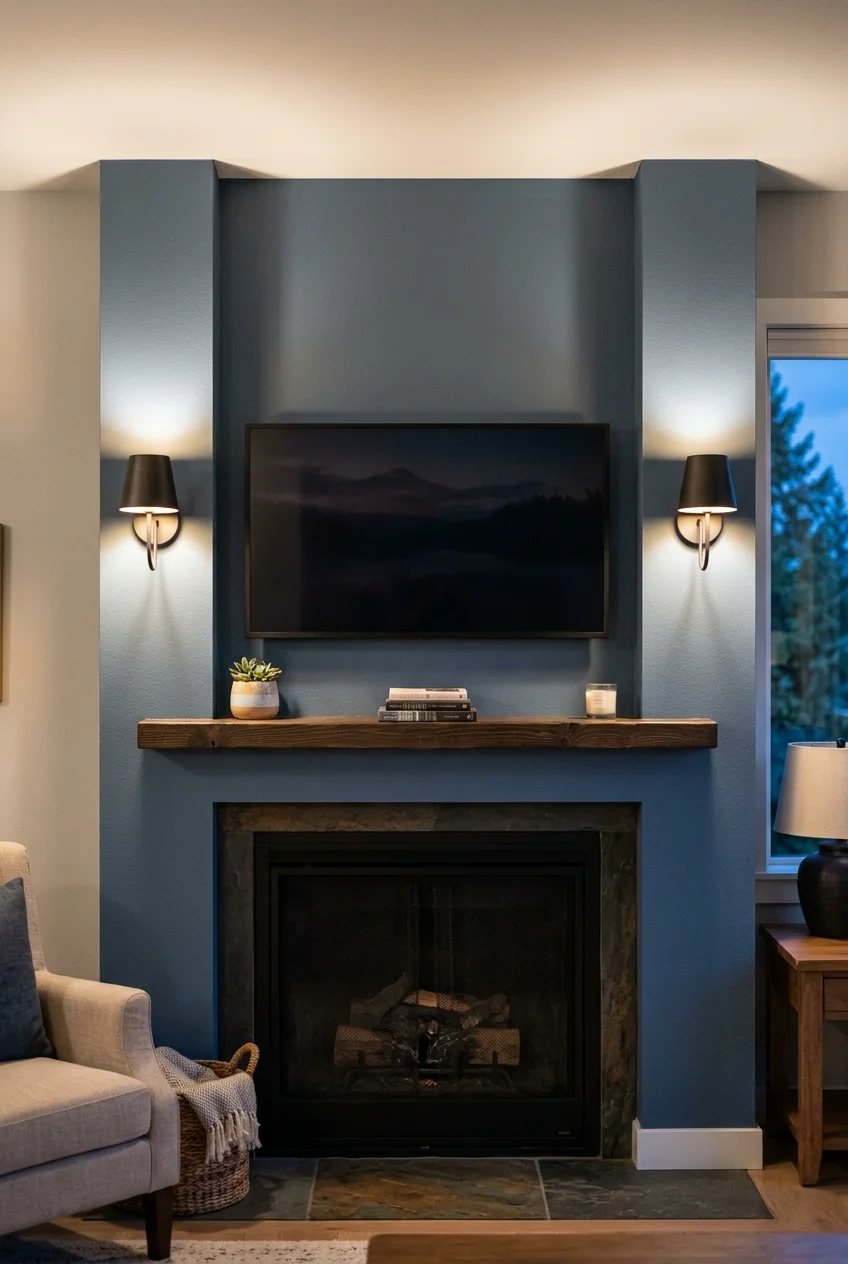
Shaded sconces can frame the fireplace and TV without putting two bare bulbs at screen height. Choose fittings that point light up or back toward the wall.
Turn on a lamp in each proposed location before wiring. Check the screen from the seats you use at night and adjust for any reflections you notice.
47. Build a small gallery on the wall beside the screen
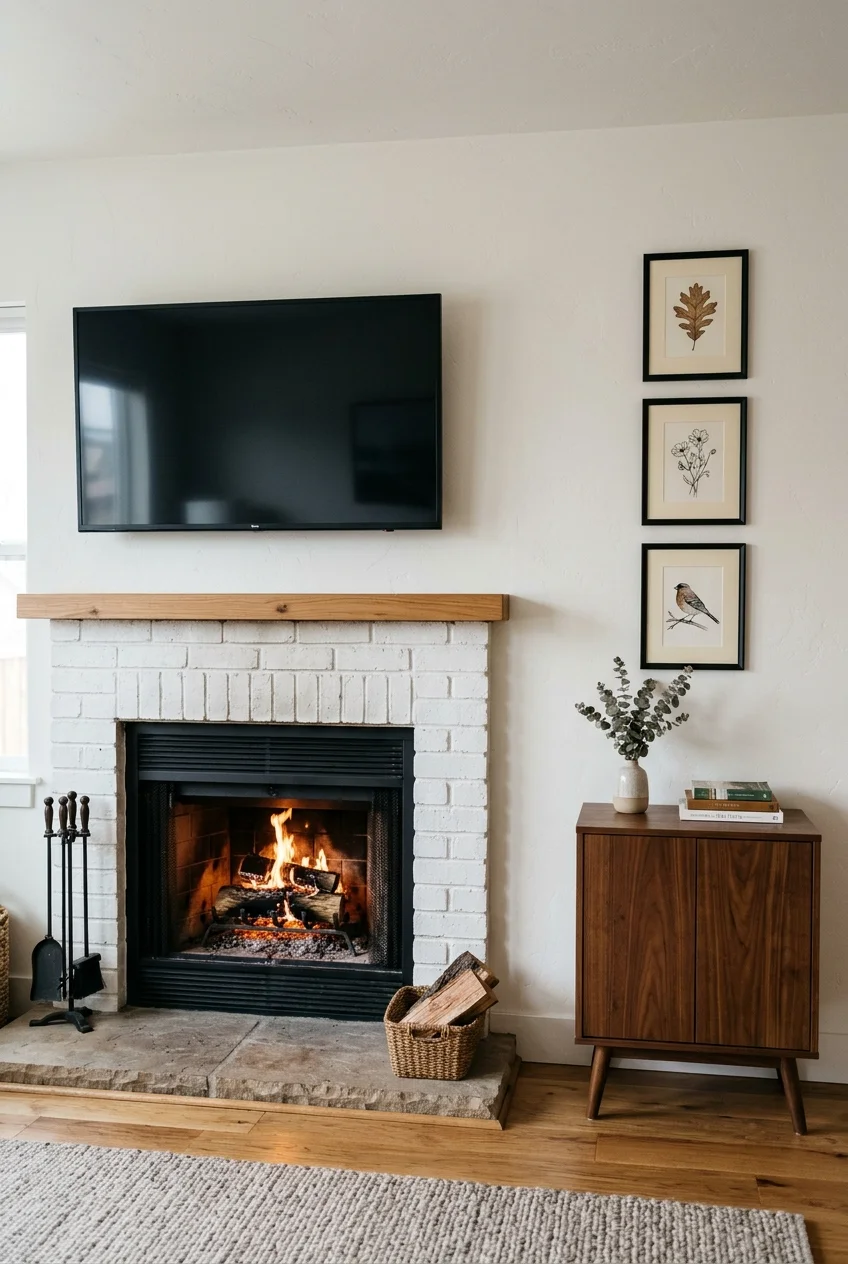
Keep the fireplace side spare and place the artwork where the top edge can align with the television. Pick frames that relate to the screen's dark border.
Try a small cluster that fits above the side cabinet. Lay the arrangement out on the floor first, then refine the gaps as one group.
48. Mount the soundbar on the separate TV wall
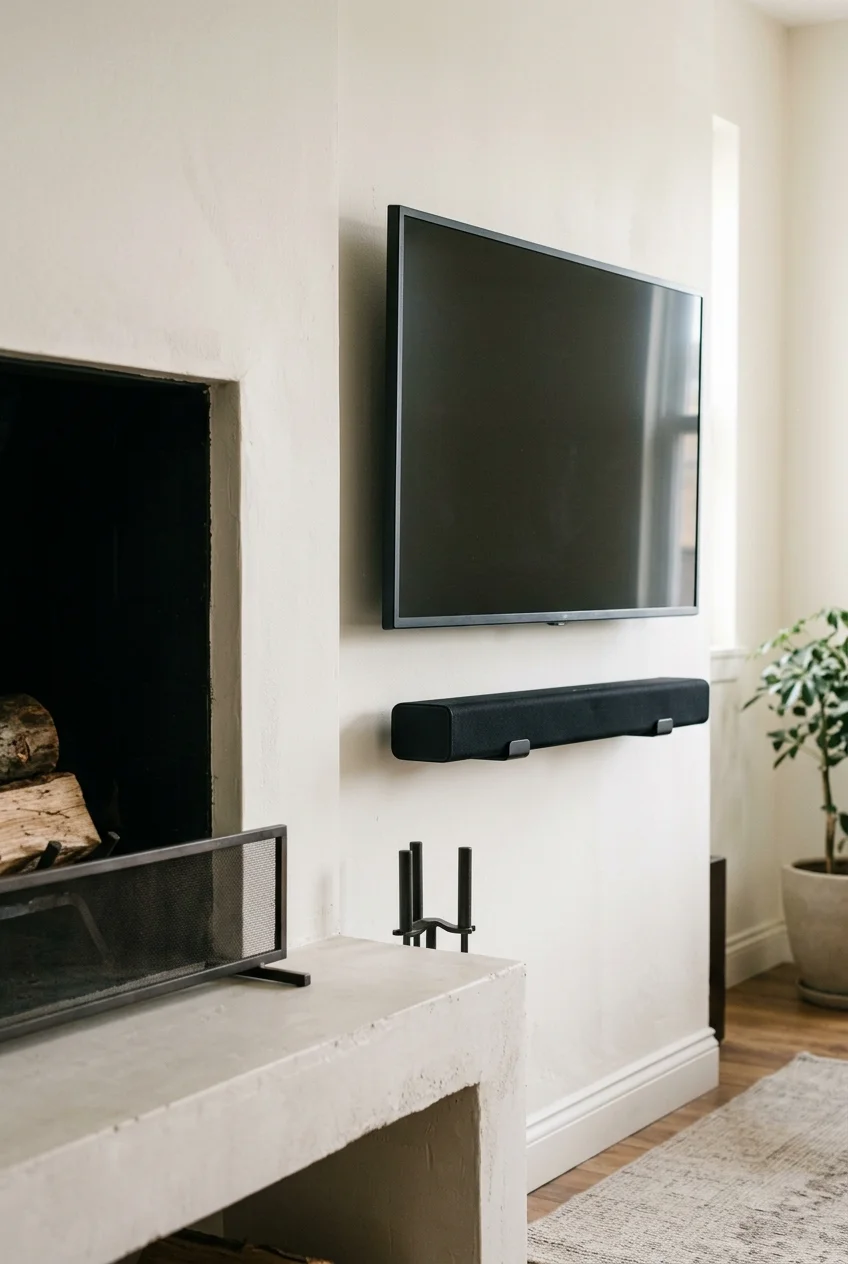
A wall-mounted soundbar saves console space when your TV is beside the fireplace. Align it with the screen and leave the speaker face open to the room.
An ECHOGEAR soundbar wall bracket (paid link) keeps the speaker off the furniture. Compare the speaker's attachment style, depth and weight with the bracket and check the wall fasteners.
Setup note If the speaker fires upward, check its manual for overhead space. A close shelf or projecting television can interfere with the direction of that sound.
49. Add a light-filtering shade across from the screen
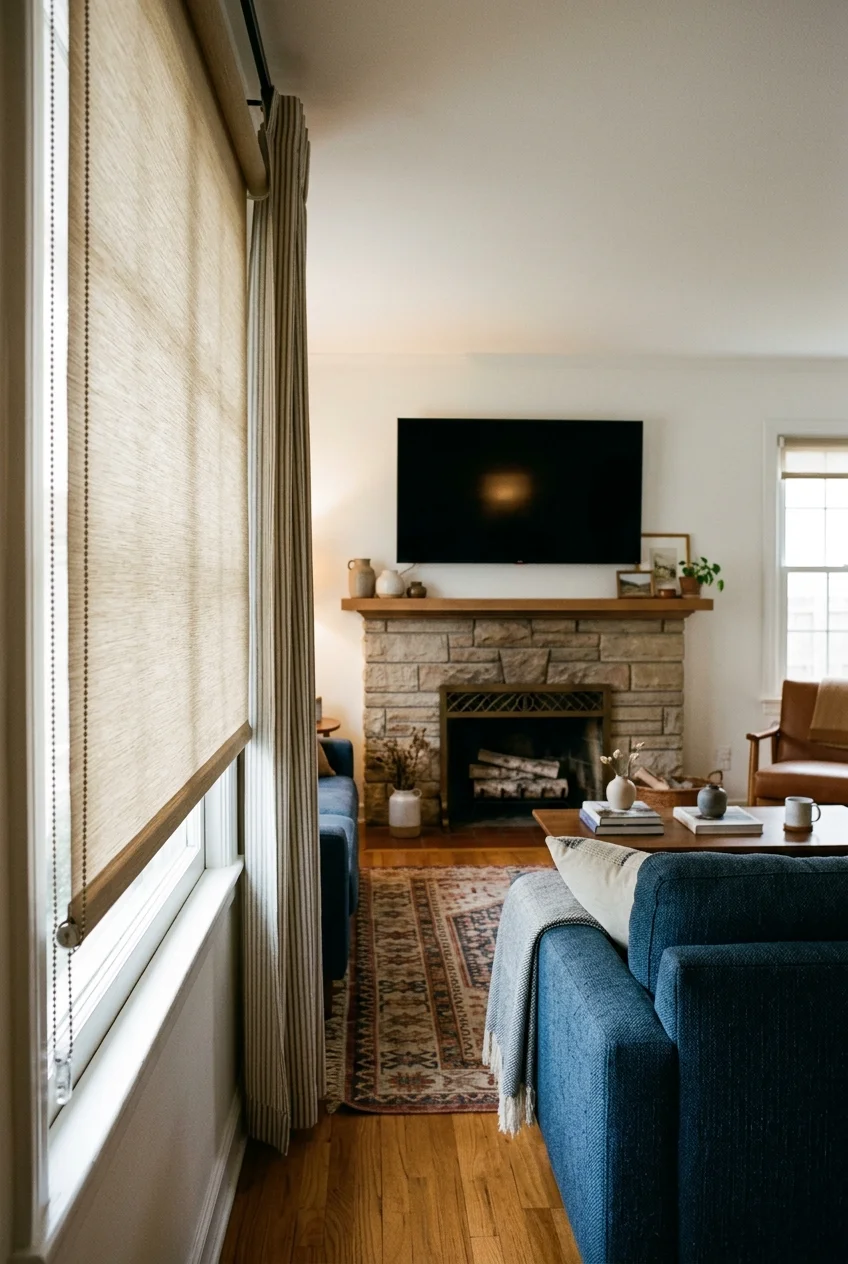
A window opposite the TV can make both the display and the fireplace glass hard to look at by day. Close the shade during your brightest viewing hour.
Try a light-filtering material if you want daylight to reach the room. If direct sun still shows in the glass, compare a more opaque fabric sample at the same hour.
50. Keep seasonal color in the cooler side cabinets
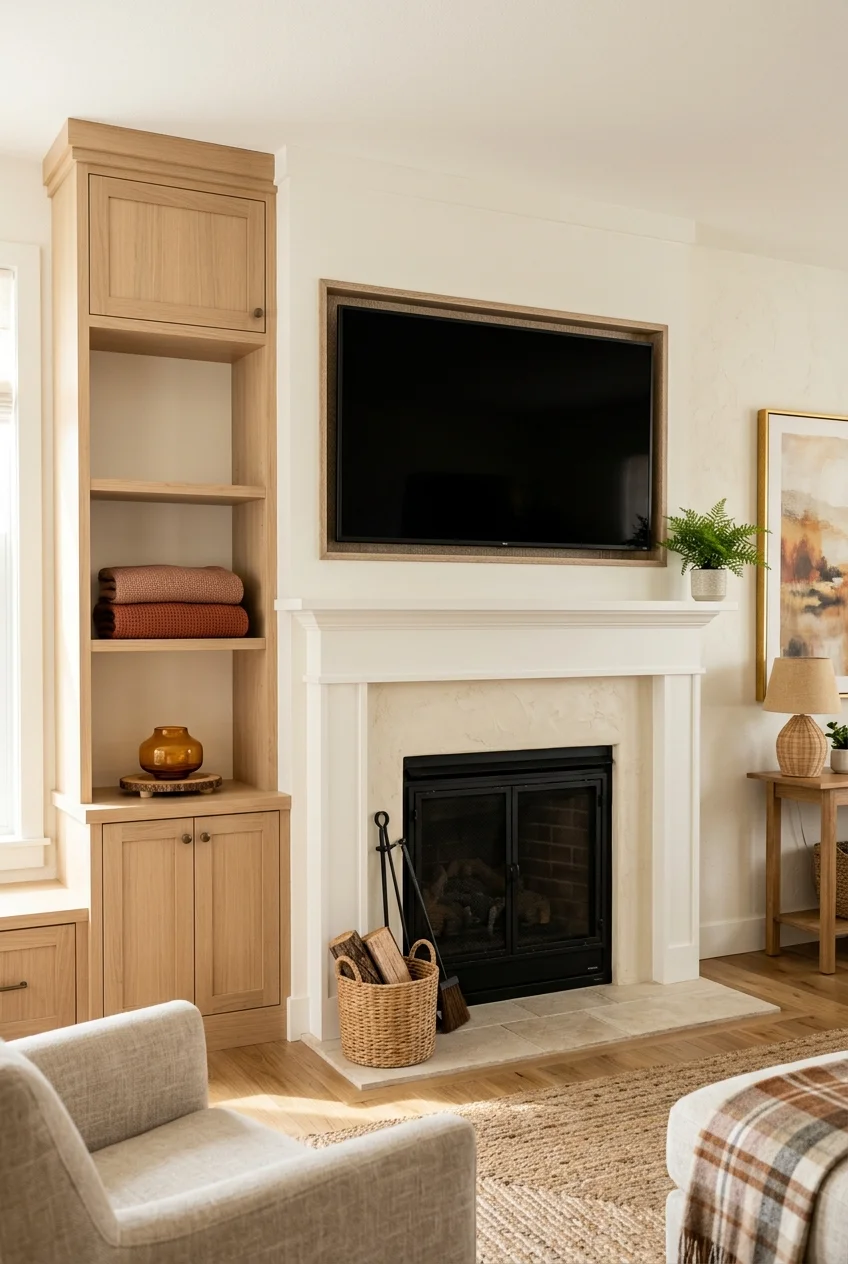
Move tall stems and seasonal pieces onto shelves beside the fireplace. A single color repeated across the shelves can refresh the wall without taking over the TV.
For an inactive fireplace with room on the shelf, these fall mantel ideas for a wall with a TV show low-profile arrangements you can adapt while keeping the screen clear.
Frequently Asked Questions
Is there a standard gap between a fireplace and a TV?
The required gap depends on the fireplace model, mantel geometry, heat management, and the TV's limits. Use the installation manuals for the exact products and configuration.
If your installer can't confirm the conditions at the TV meet both manufacturers' requirements, shift the screen to a side wall before you finalize the surround.
Can I run my TV power cord inside the wall?
Use a properly installed receptacle behind the TV or a listed in-wall power kit where suitable. An ordinary flexible TV cord belongs outside the wall cavity.
Keep in-wall signal cables suitable for their route and use the listed system's specified separation. A qualified installer can help when the wall contains fireplace components.
How can I identify my existing fireplace model?
For a factory-built unit, check the owner's paperwork or look for a rating label in the location described by the manufacturer once the fireplace is cool.
If the label is inaccessible or the fireplace is site-built masonry, have a hearth professional identify the assembly before altering the surround, mantel, or vents.