55 Winter Bedroom Decor Ideas for a Cozy, Finished Room

This post may contain affiliate links: full affiliate disclosure.
Winter bedroom decor works best when it improves warmth, light, and everyday comfort without leaving the room stuck in Christmas. Start with the bed, then adjust the palette, window layers, lighting, and floor texture according to the space you already have.
These 55 ideas range from quick textile swaps to renter-friendly wall treatments and fully coordinated room styles. Each one is designed to be achievable on its own, so you can make a focused change or combine several into a complete winter reset.
Layer the Bed for Cold Nights
Start with the bed because it carries the most color and texture in the room. These combinations add warmth through washable, movable layers, so the bedroom can return to a lighter setup when the season changes.
1. Layer an Oatmeal Quilt with a Rust Throw
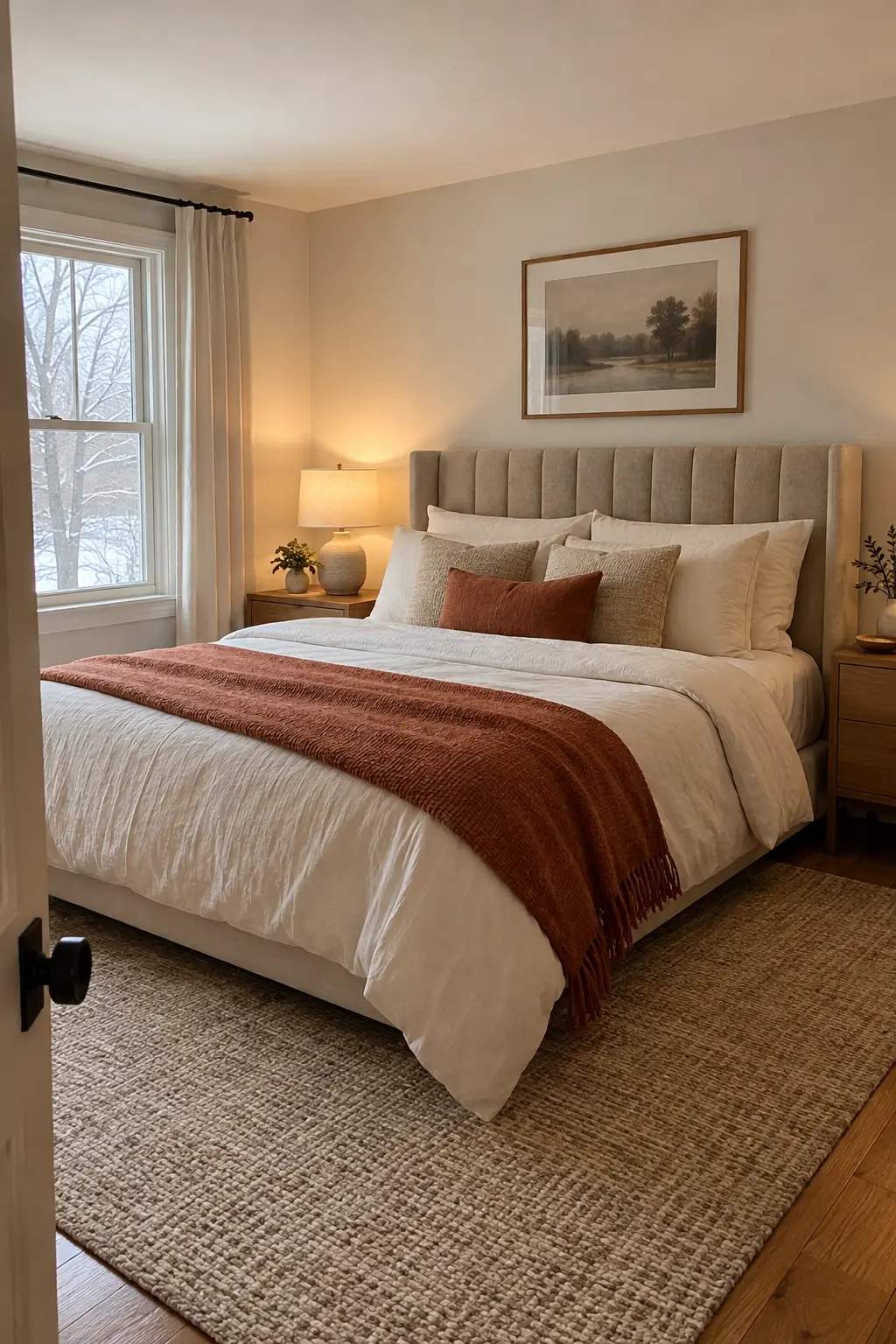
Begin with a channel-stitched oatmeal quilt, then lay one rust wool throw diagonally across the lower third of the bed. The warm accent adds depth without requiring new furniture, while cream sheets and medium oak keep the palette light enough for short winter days.
2. Turn Back the Duvet to Show Flannel Sheets
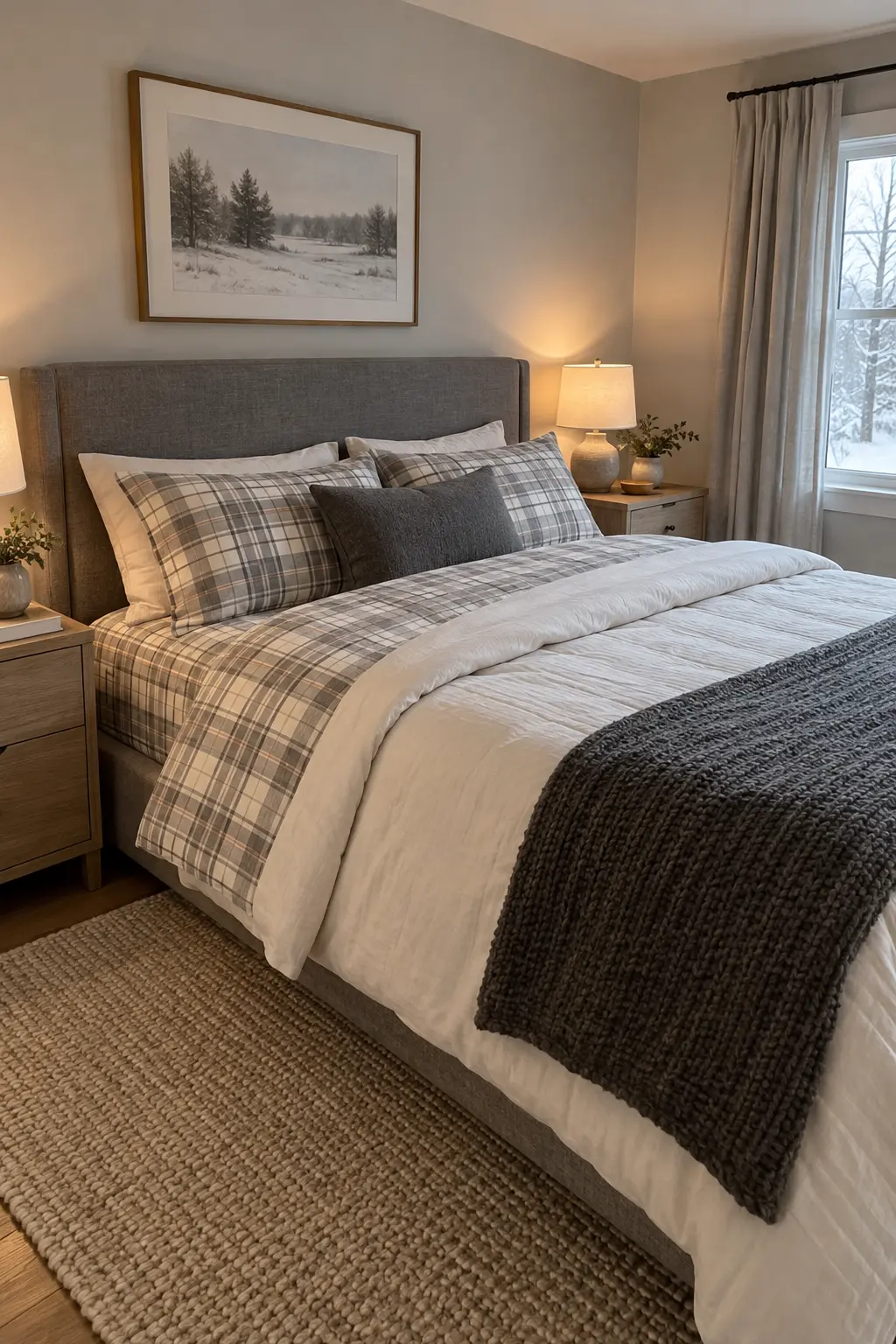
Fold the duvet down far enough to reveal a patterned 100% cotton flannel sheet set. A gray or cream plaid brings winter pattern close to the sleeping surface, while a solid duvet prevents the bed from looking busy.
3. Use a Forest-Green Velvet Duvet
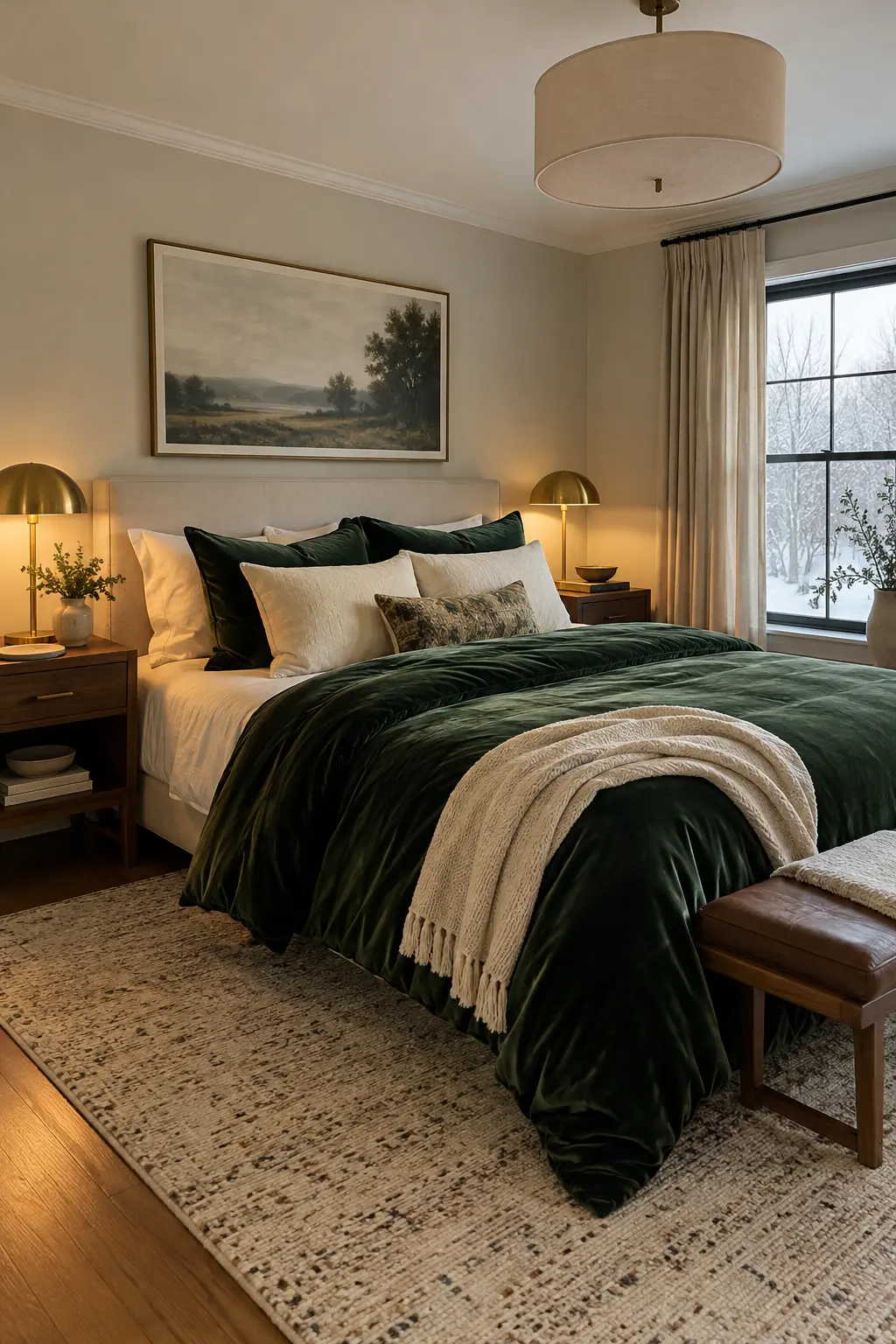
Let a forest-green velvet duvet carry the room instead of adding many small seasonal accessories. Pair its soft sheen with matte linen pillows, walnut nightstands, and restrained brass lamps so the bed feels rich rather than theatrical.
4. Build a Tonal White Bed with Texture
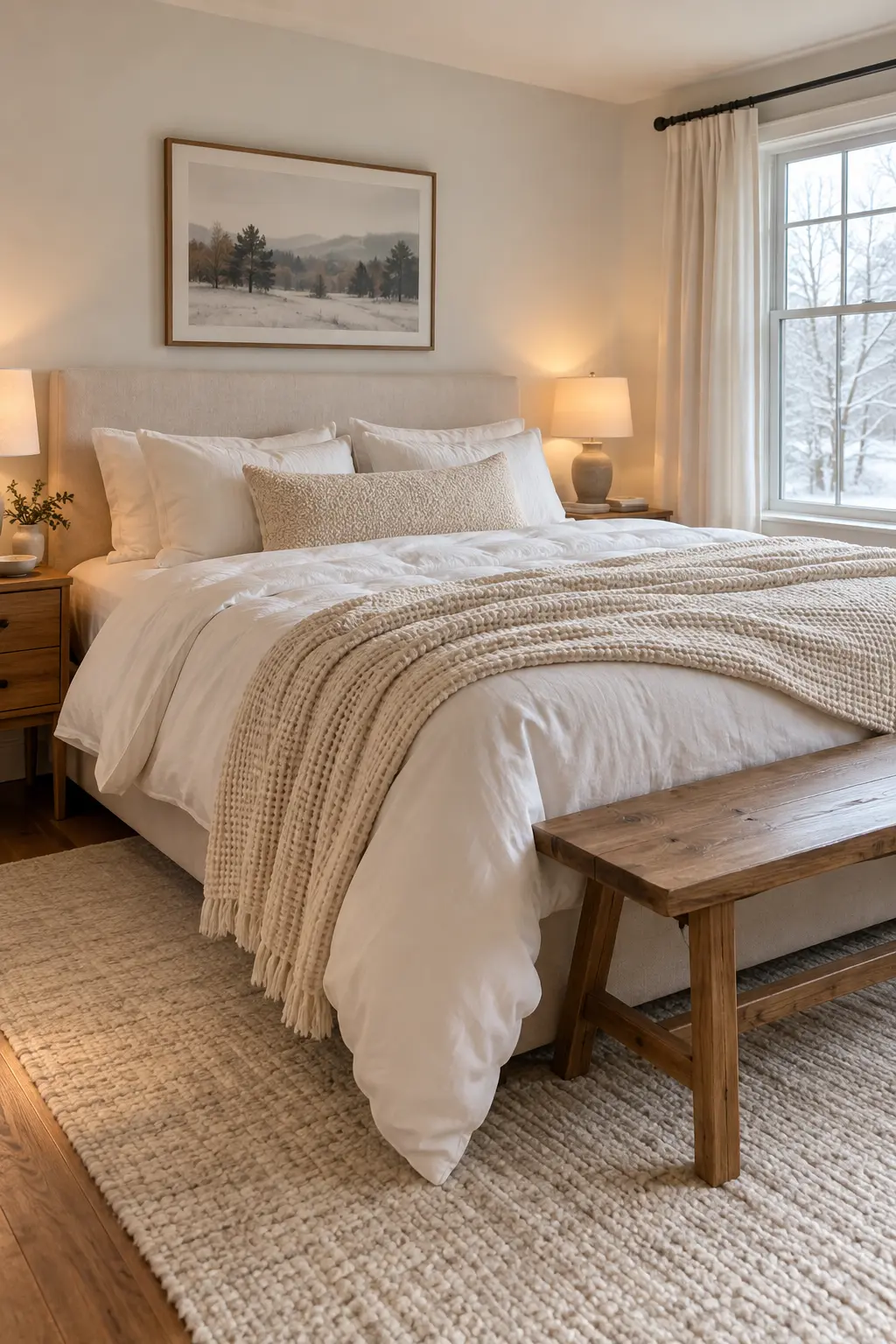
Keep the palette between winter white and oatmeal, but change the surface at every layer. Combine smooth cotton, a waffle blanket, one boucle pillow, and a low-pile wool rug; the texture shifts make a pale room feel finished instead of flat.
5. Bring In a Muted Patchwork Quilt
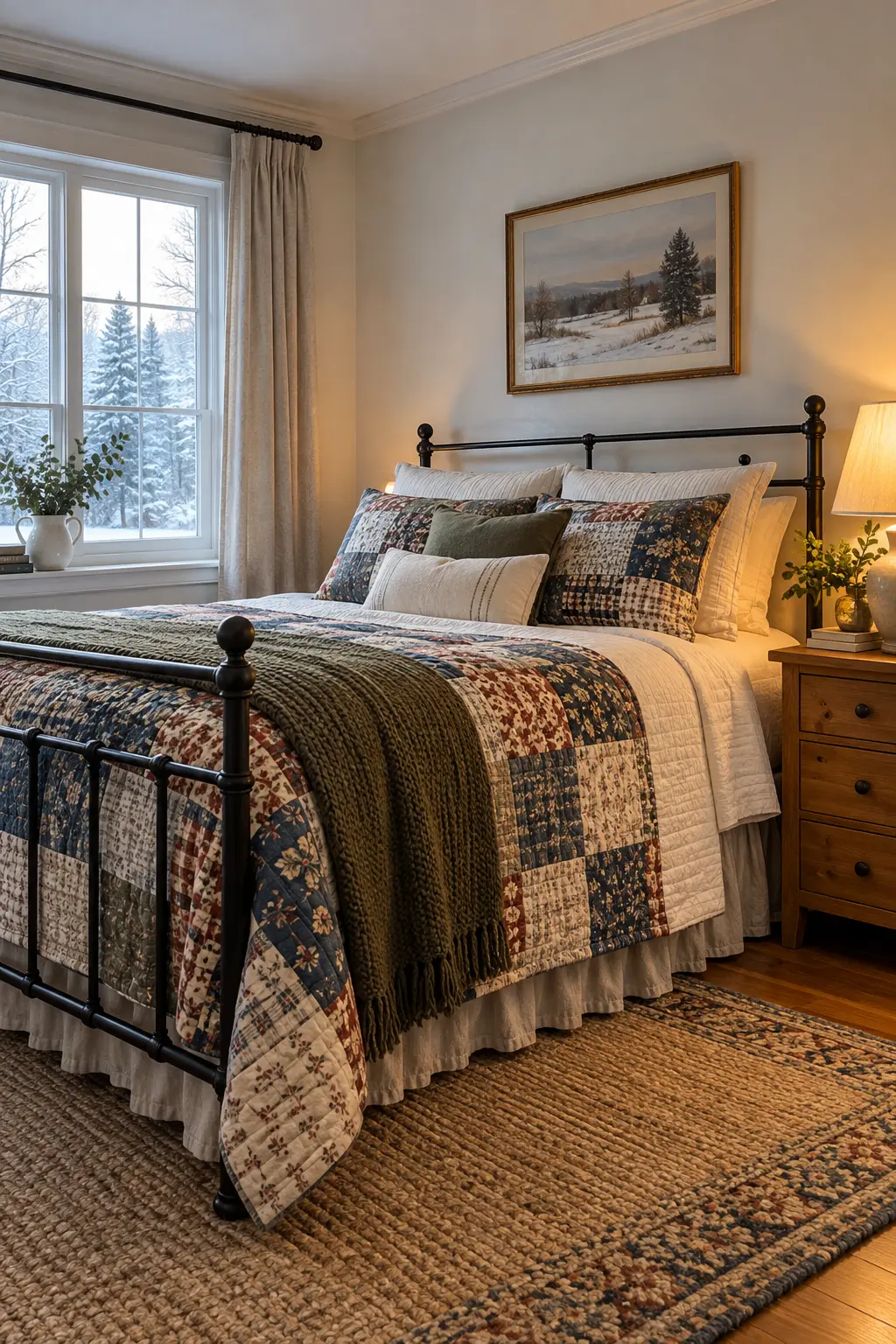
Choose a patchwork quilt that repeats three or four softened colors, such as blue, rust, olive, and cream. Give it room to show on a simple iron or wood bed, then keep the curtains and bedside pieces quiet.
6. Fold a Camel Wool Blanket Hotel-Style
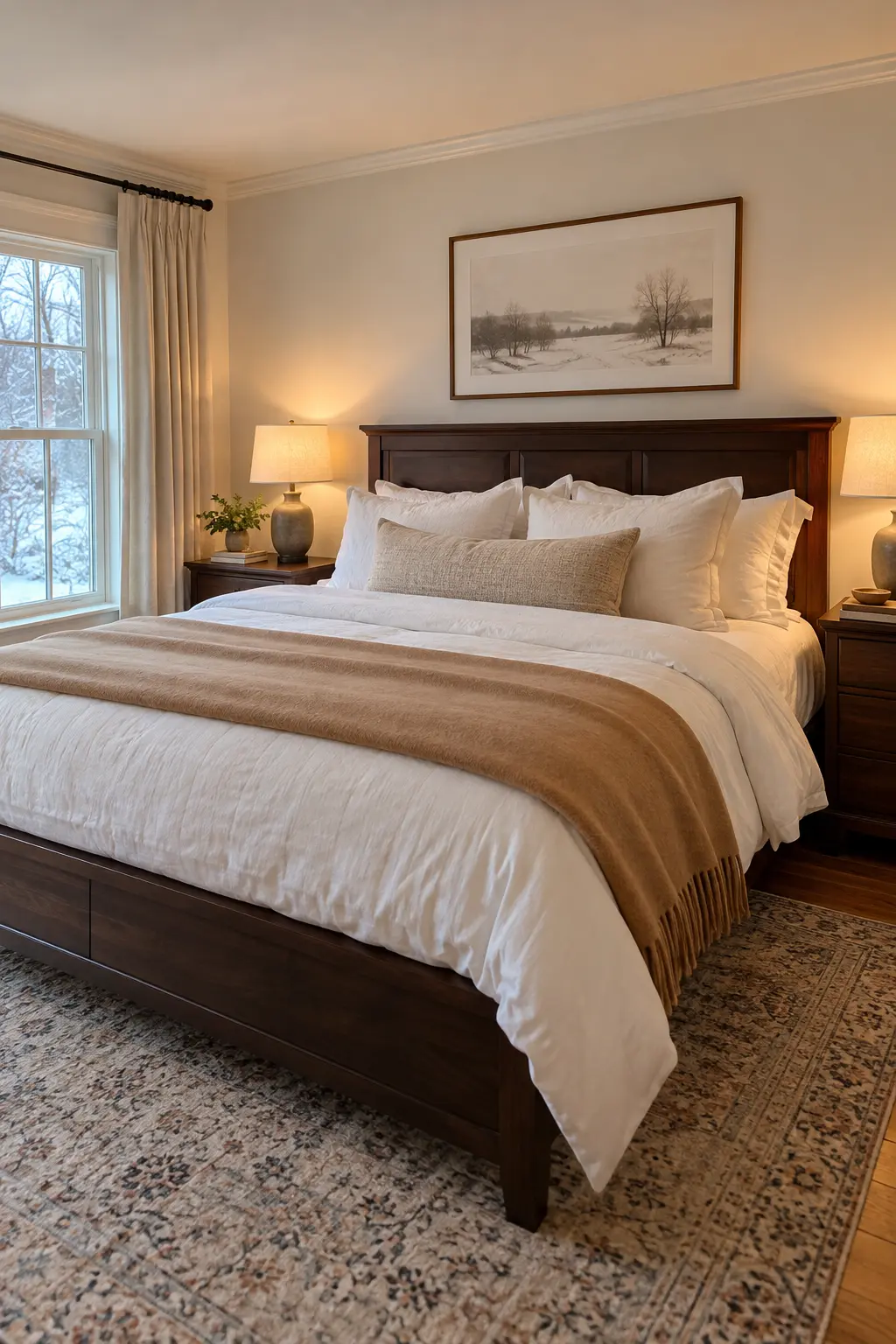
Fold a camel wool blanket into a wide band across the bottom quarter of crisp white bedding. The tailored placement adds warmth without covering the entire duvet, and the neutral color works with both dark wood and upholstered headboards.
7. Add One Faux-Fur Accent

Limit faux fur to one throw draped over a lower corner of the bed. Smooth cotton bedding and a flat woven rug provide contrast, keeping the room tactile without letting the fluffy texture spread across every surface.
8. Keep the Pillow Layers Useful
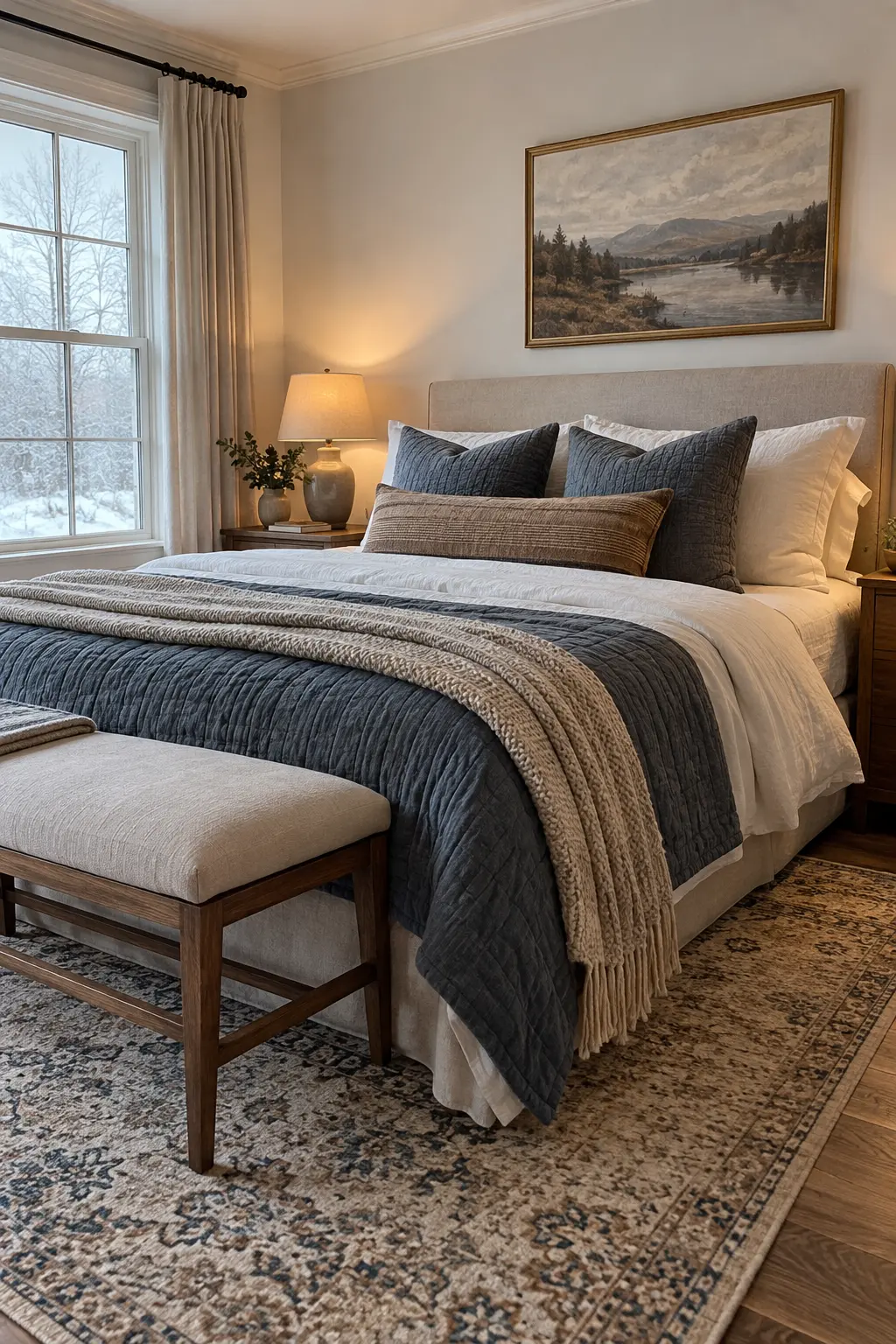
Use two sleeping pillows, two textured shams, and one long lumbar pillow rather than building a wall of cushions. Repeat the room's oatmeal, slate, and warm-brown tones so the arrangement looks deliberate and is still easy to clear at night.
9. Lay a Chunky-Knit Scarf Across the Bed
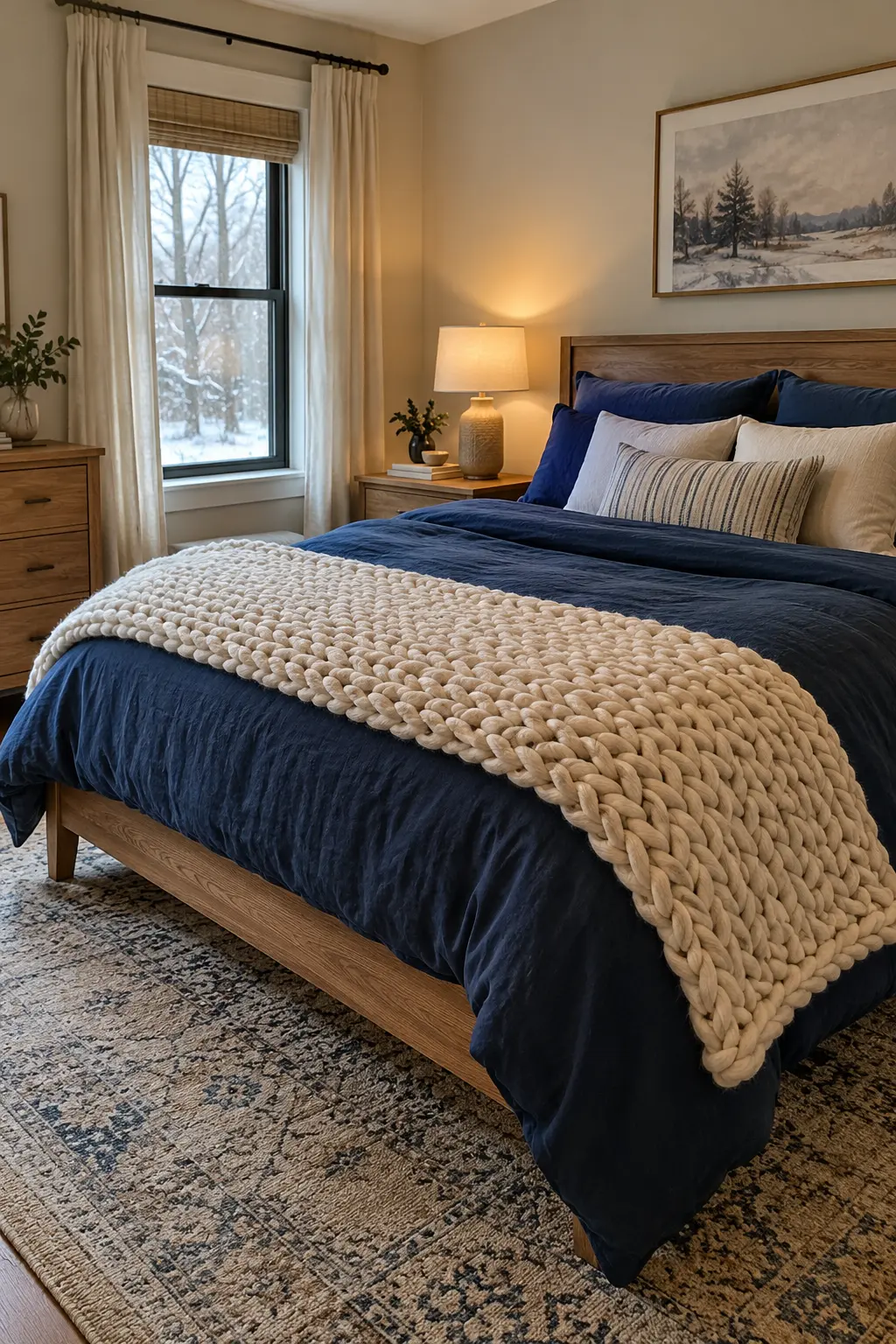
A chunky-knit bed scarf can add visible warmth without the weight of another full blanket. Keep the knit realistically scaled and place it across the foot of a navy or charcoal duvet for a clear light-dark contrast.
10. Soften a Canopy Bed with Linen Panels
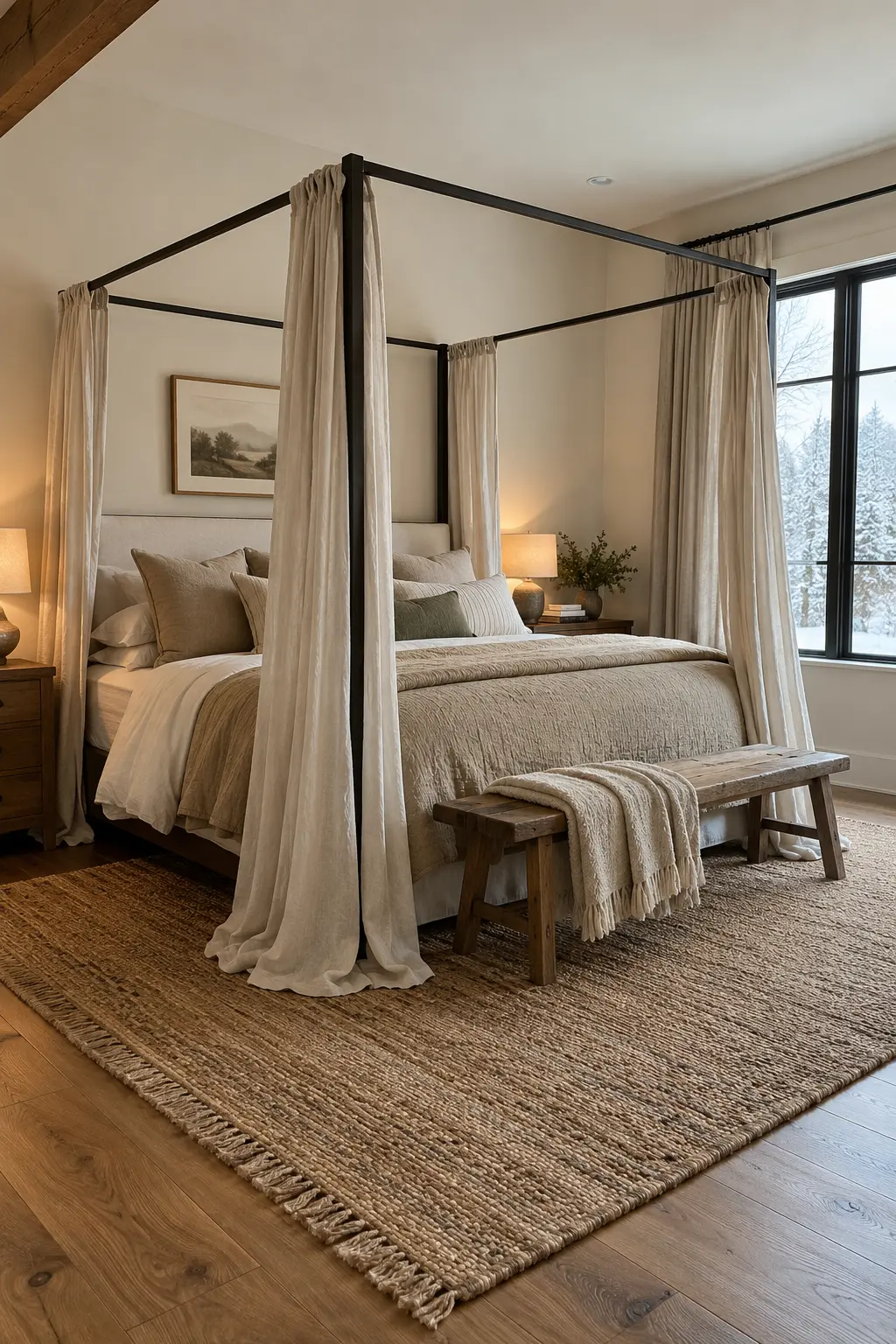
Gather natural-linen panels loosely at the upper corners of a simple canopy bed. Leave the sides open and the fabric clear of lamps so the treatment frames the bed without creating a closed or fussy enclosure.
Choose a Winter Color Palette
Winter color does not have to mean red, green, or an all-beige room. Use one deep anchor, one lighter supporting neutral, and a small contrasting accent so the palette stays clear.
11. Anchor the Room in Chocolate Brown
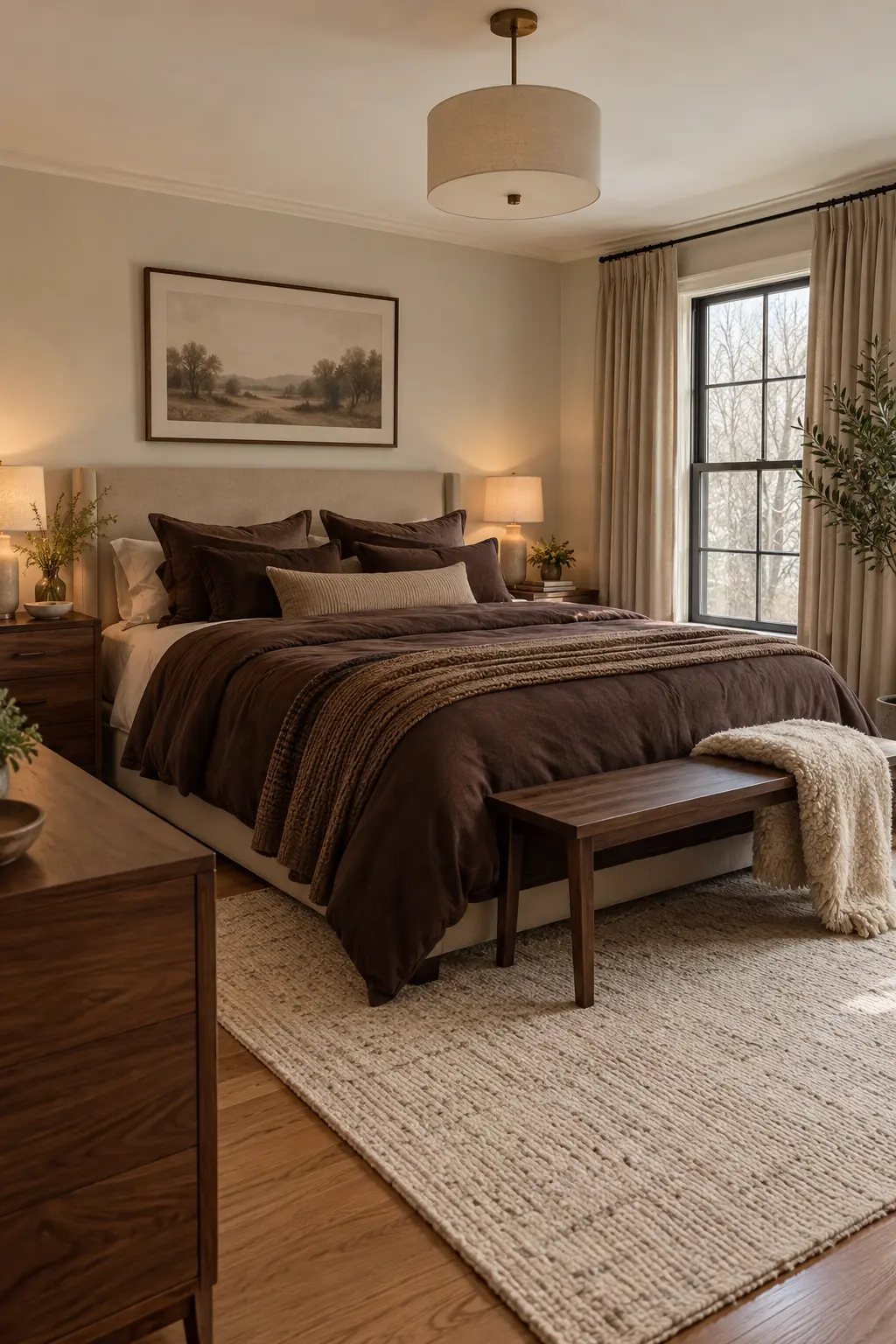
Use chocolate brown on the duvet or quilt, then lighten it with oatmeal pillows, pale curtains, and a cream rug. Walnut furniture can repeat the deeper tone without creating a matched set, giving the room a grounded winter base.
12. Swap Holiday Red for Burgundy and Plum
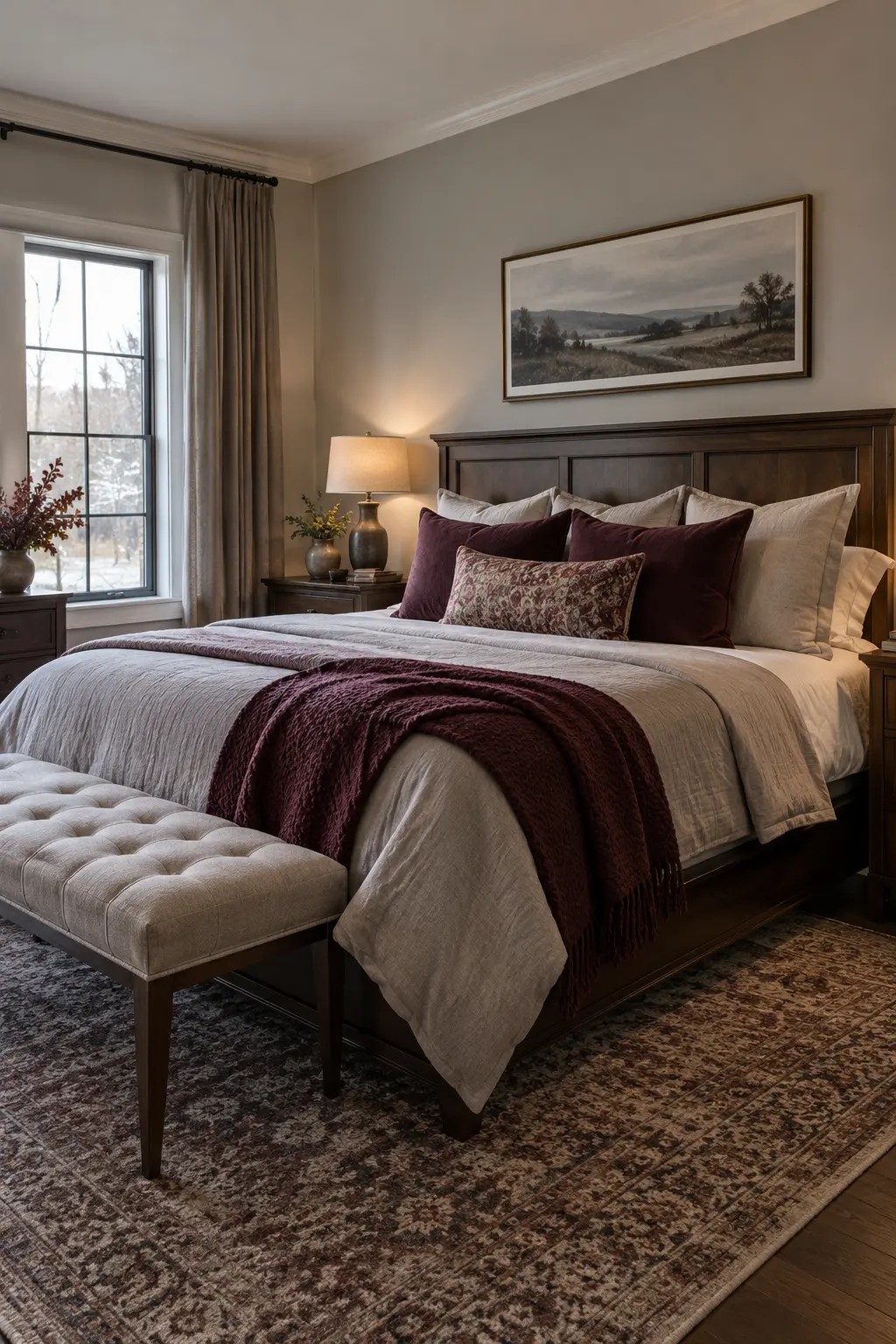
Burgundy and plum hold the depth of red without making the bedroom look decorated for Christmas. Introduce them through two pillow covers and one folded throw against warm gray bedding, leaving the walls and larger furniture neutral.
13. Pair Olive Bedding with Sage Walls
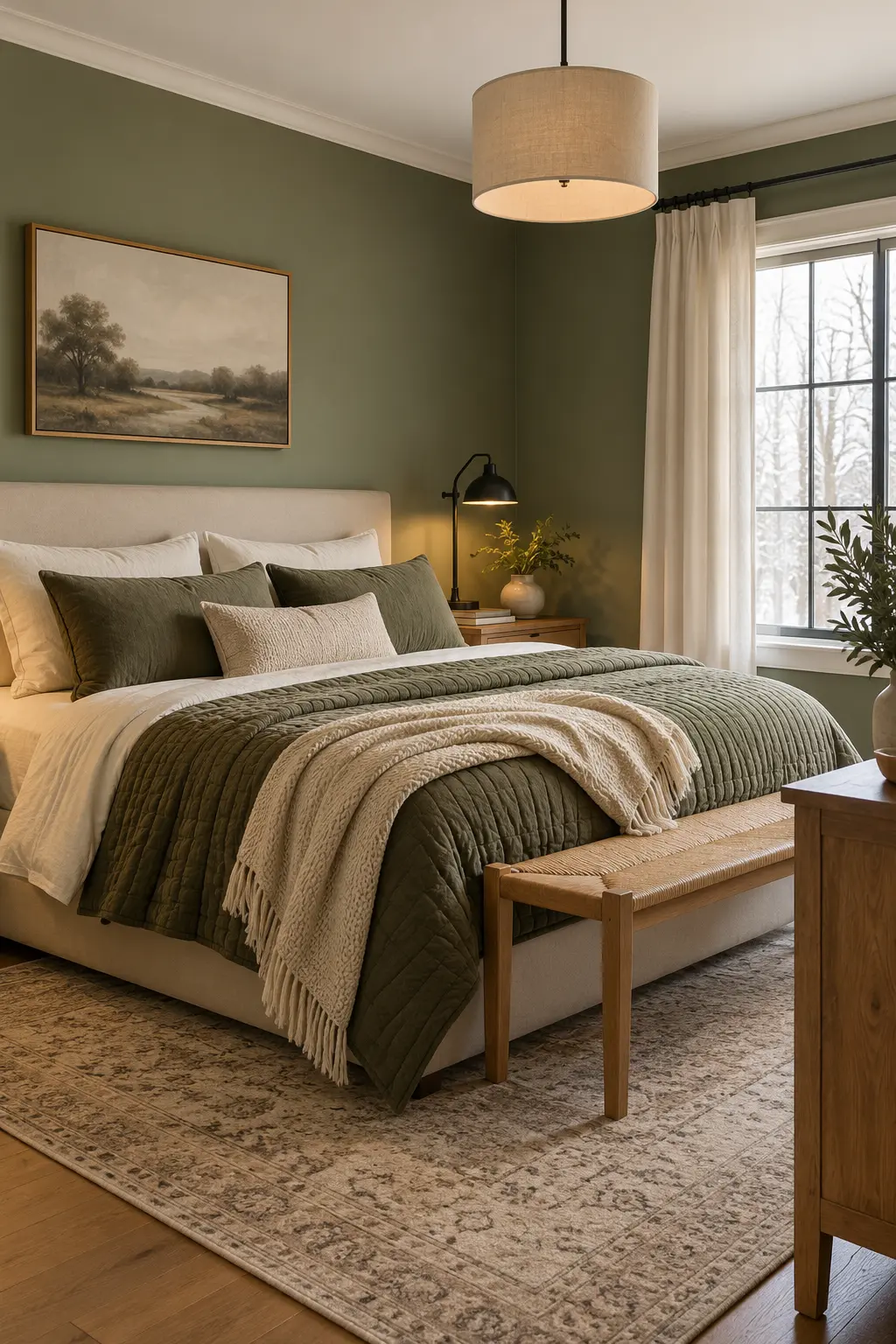
Combine muted sage walls with an olive quilt for a cocooning green scheme that still feels natural in daylight. Cream sheets, oak furniture, and one black reading lamp add enough contrast to keep the colors from blending together.
14. Warm Icy Blue with Honey Oak
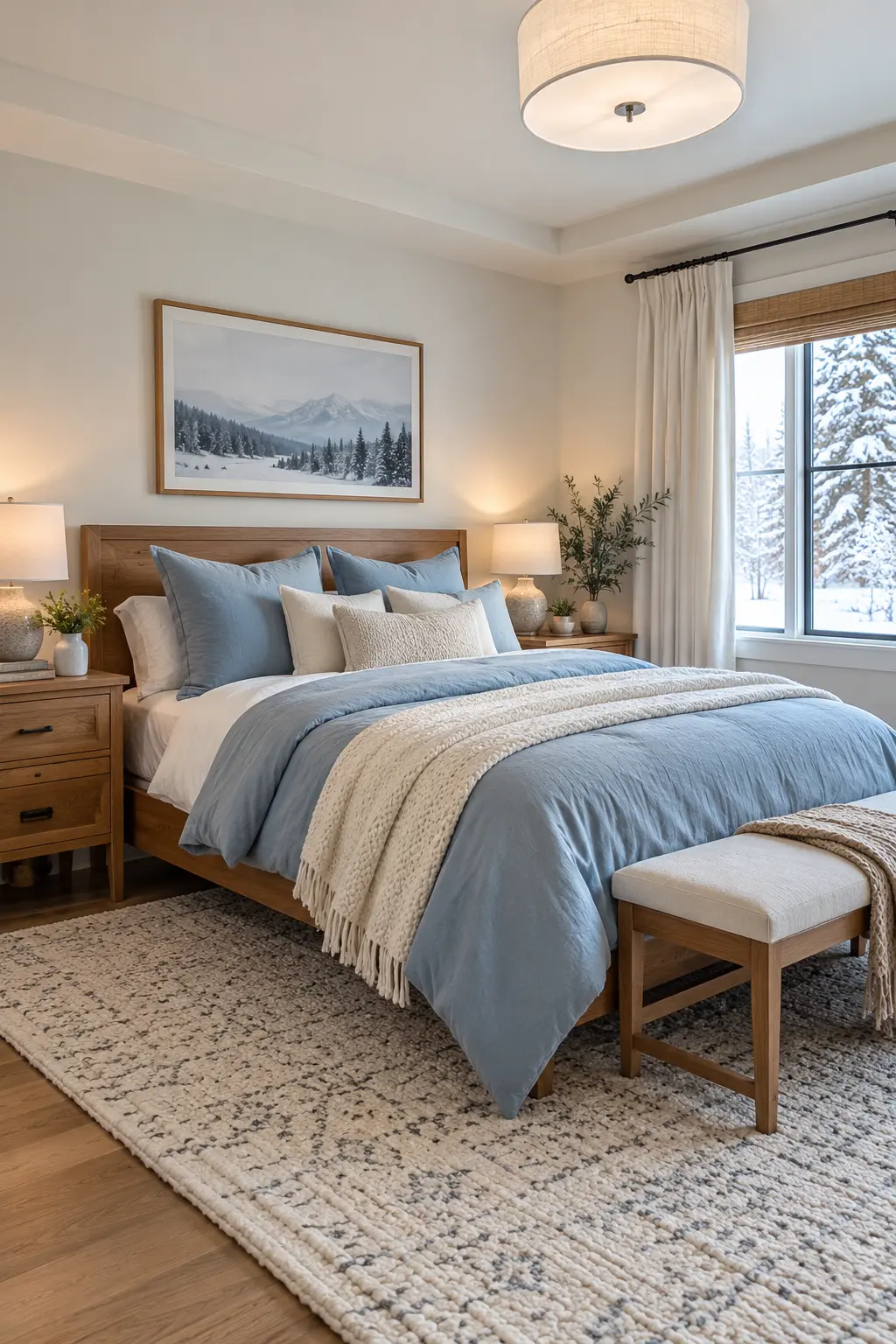
Icy-blue bedding can feel wintry without looking cold when the bed and nightstands are honey oak. Add off-white wool and woven textures instead of silver accessories, allowing the wood grain to supply the warmth.
15. Mix Navy with Terracotta
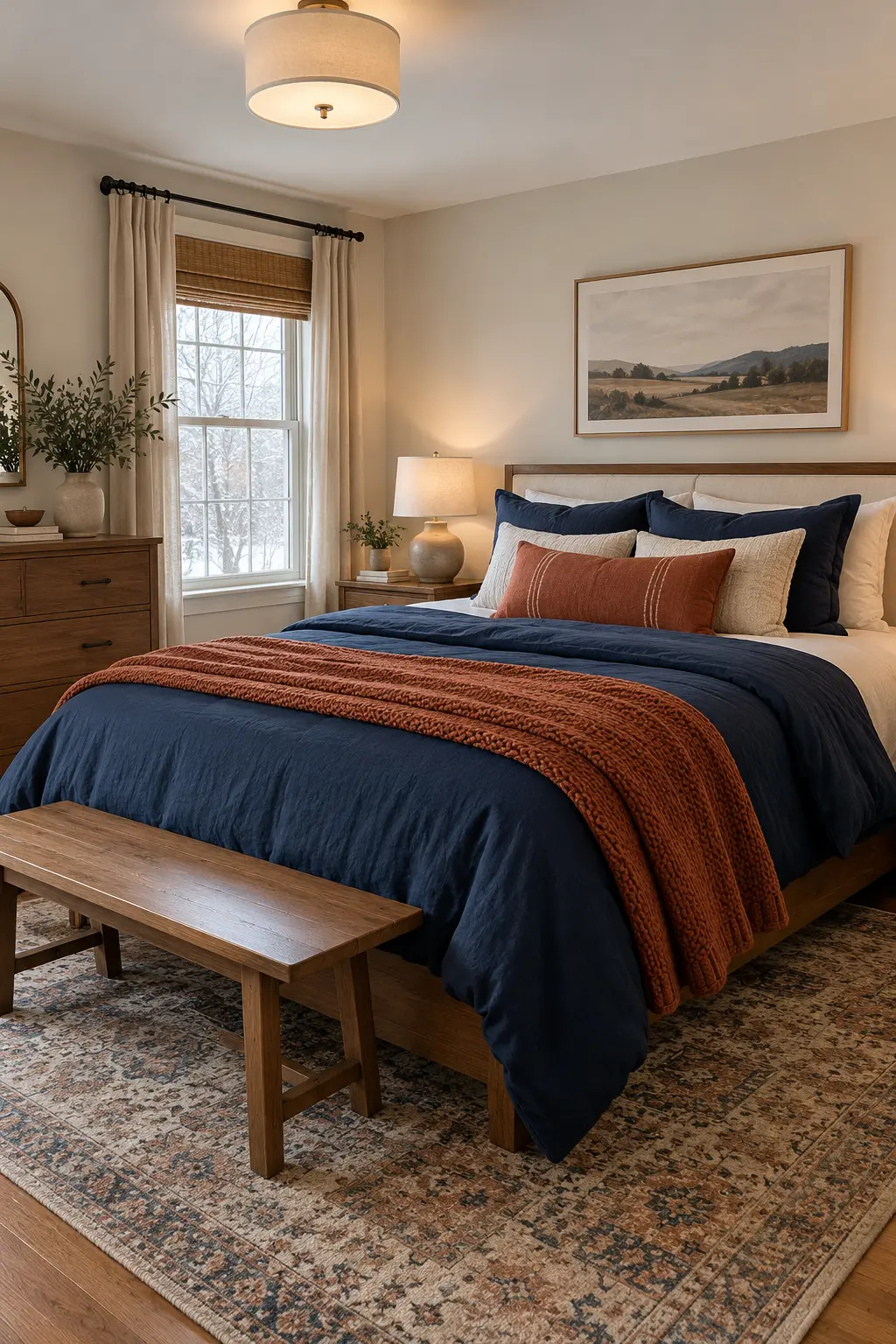
Start with a navy duvet, then add one terracotta lumbar pillow and a rust-toned throw. The warm accents lift the dark bedding, while pale walls and medium wood keep the two-color combination from becoming heavy.
16. Balance Charcoal with Camel
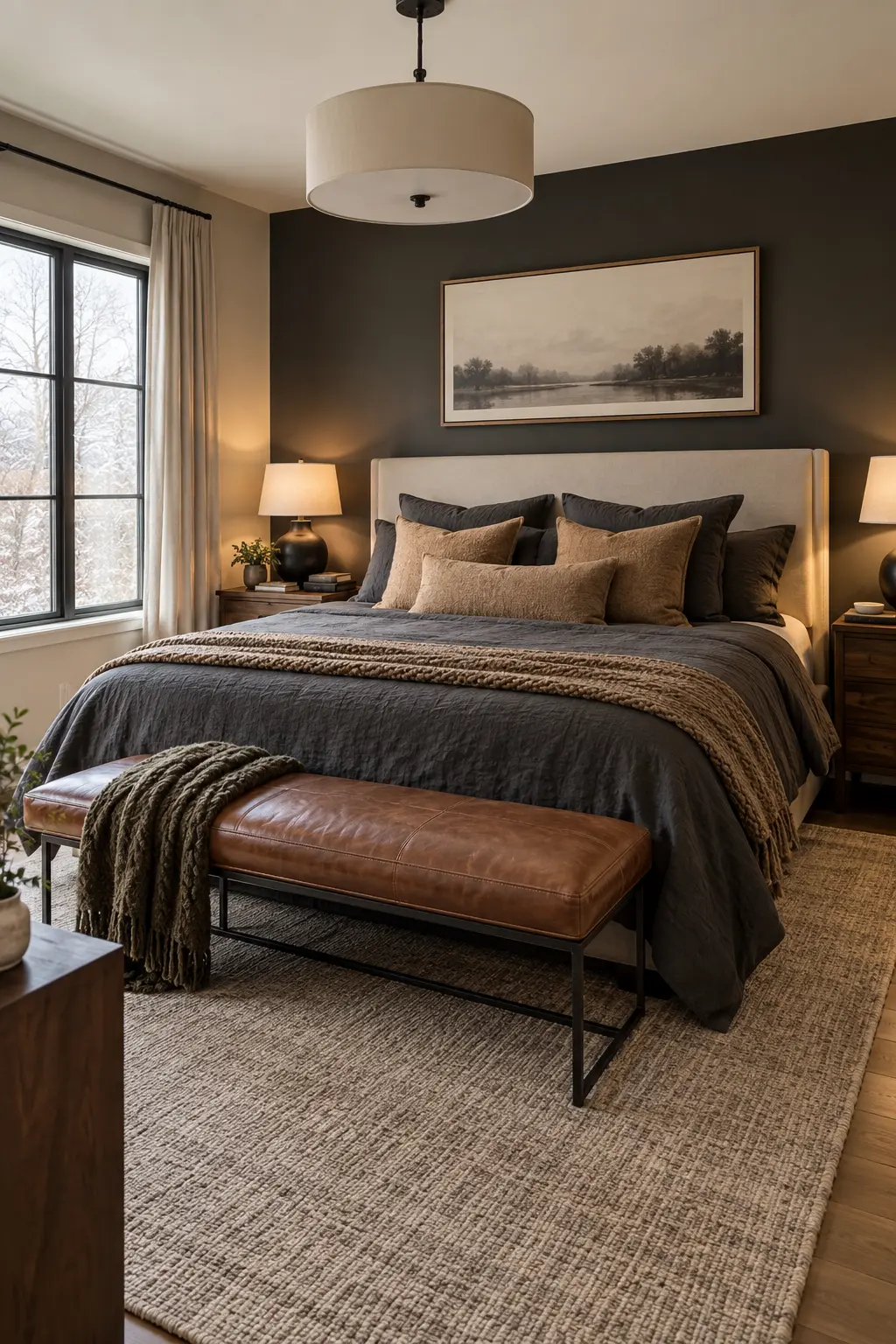
Layer camel wool pillows over charcoal bedding, then echo the warm note with a cognac leather bench or wood frame. Matte black lighting fits the palette, but leave the rug and curtains pale to preserve definition.
17. Create a Cream-on-Cream Cocoon
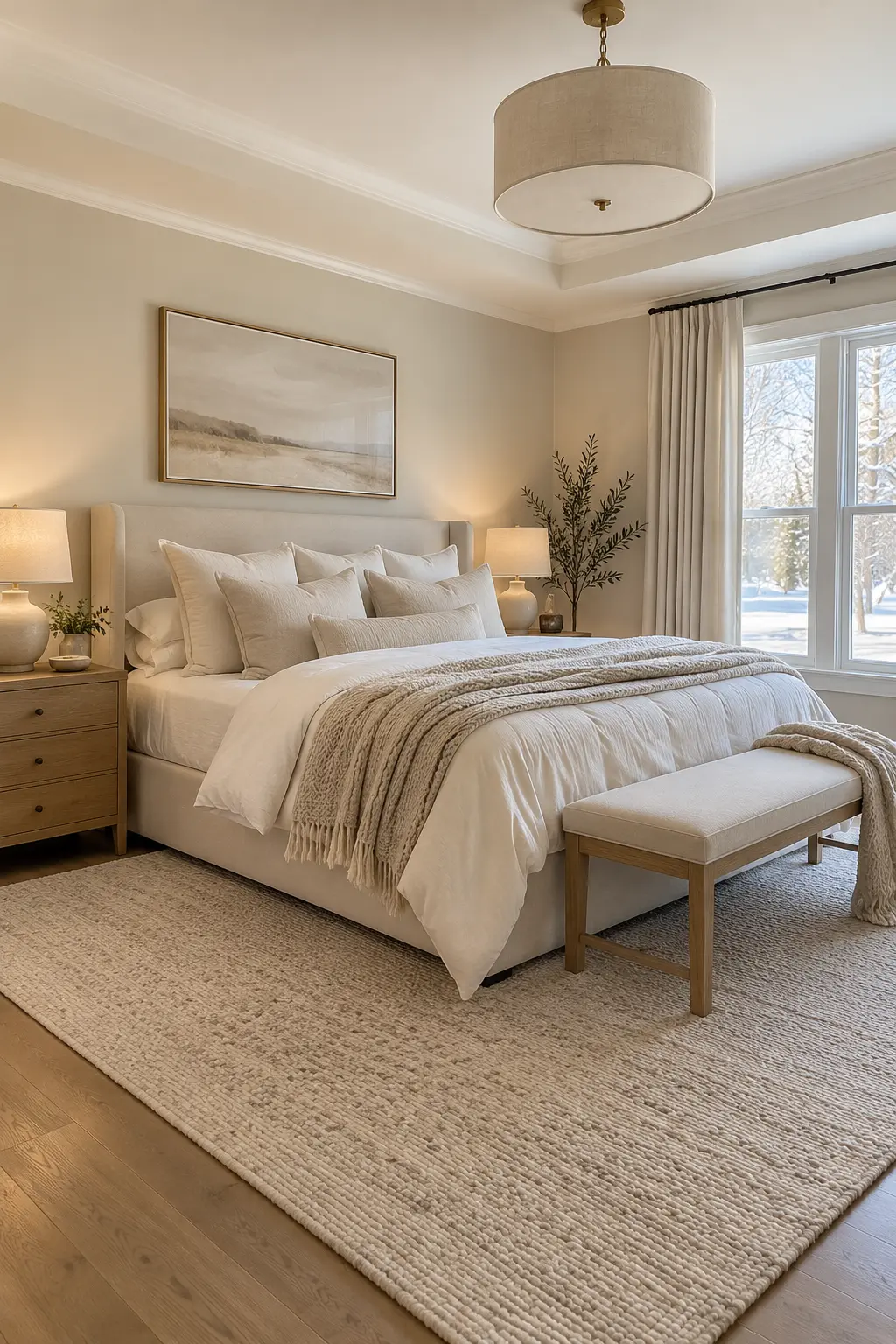
Build a light cocoon from ivory, cream, oatmeal, and pale oak rather than using one identical beige. Separate the layers with quilting, boucle, linen, and wool, then add a single darker object for visual orientation.
18. Color-Drench the Room in Deep Green
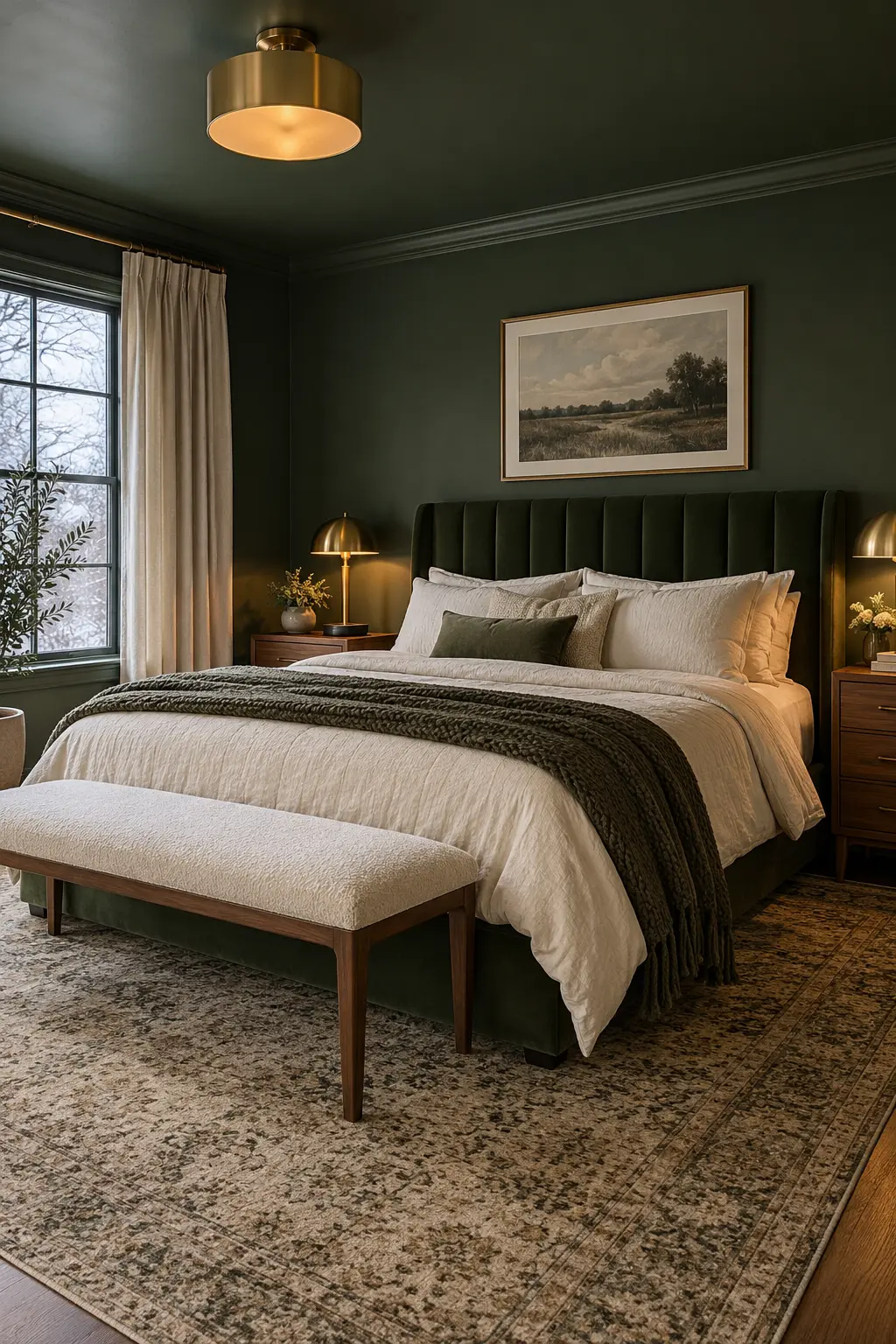
For a dramatic winter room, carry moss green from the walls onto the ceiling and upholstered headboard. Cream bedding and warm metal lamps break up the dark field, while walnut furniture keeps the result earthy rather than jewel-toned.
19. Sharpen Winter White with Black Lines
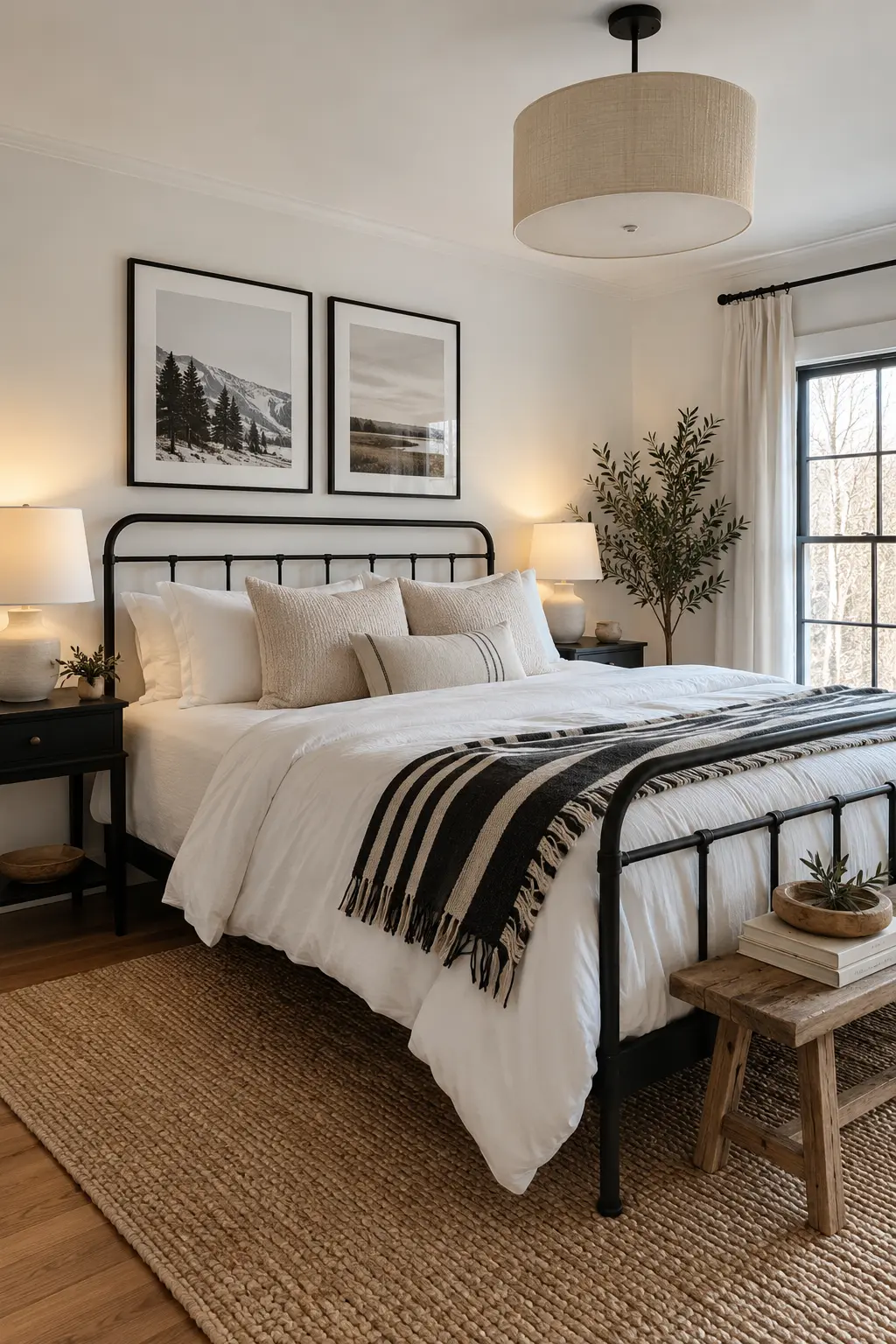
Use a thin black metal bed, narrow picture frames, and one striped throw to outline an otherwise white room. Keeping the black elements slender preserves the airy winter-white effect while giving the eye a clear structure.
Warm the Room with Layered Light
Short days make lighting part of the decor. Combine focused reading light, soft ambient light, and reflected daylight while keeping cords, fabric, and flames safely managed.
20. Create Two Pools of Bedside Light
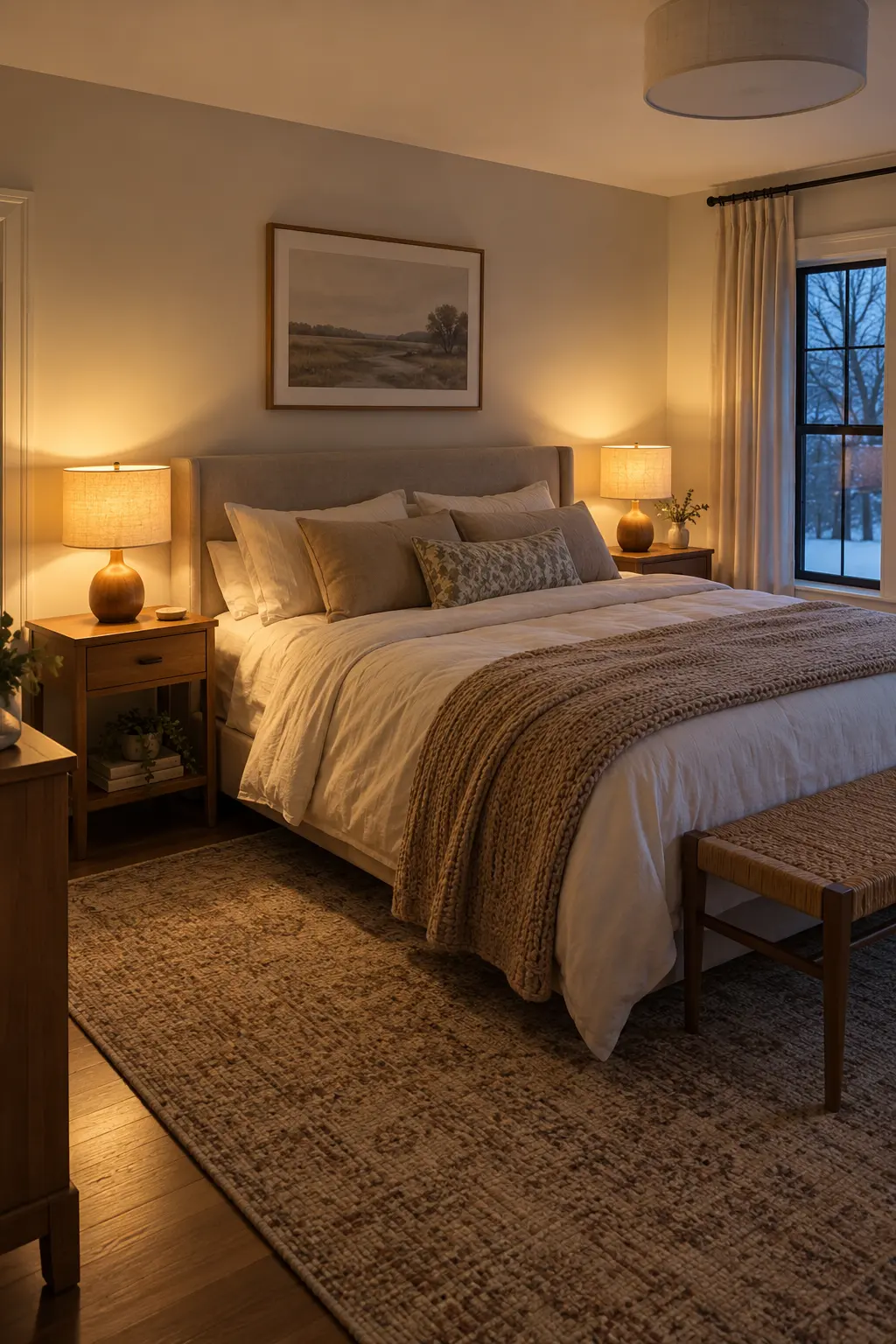
Place a small bedside lamp with a warm-white bulb on each side of the bed. Separate pools of light feel softer than one bright ceiling fixture and make reading or winding down easier without turning the whole room dark.
21. Free the Nightstands with Plug-In Sconces
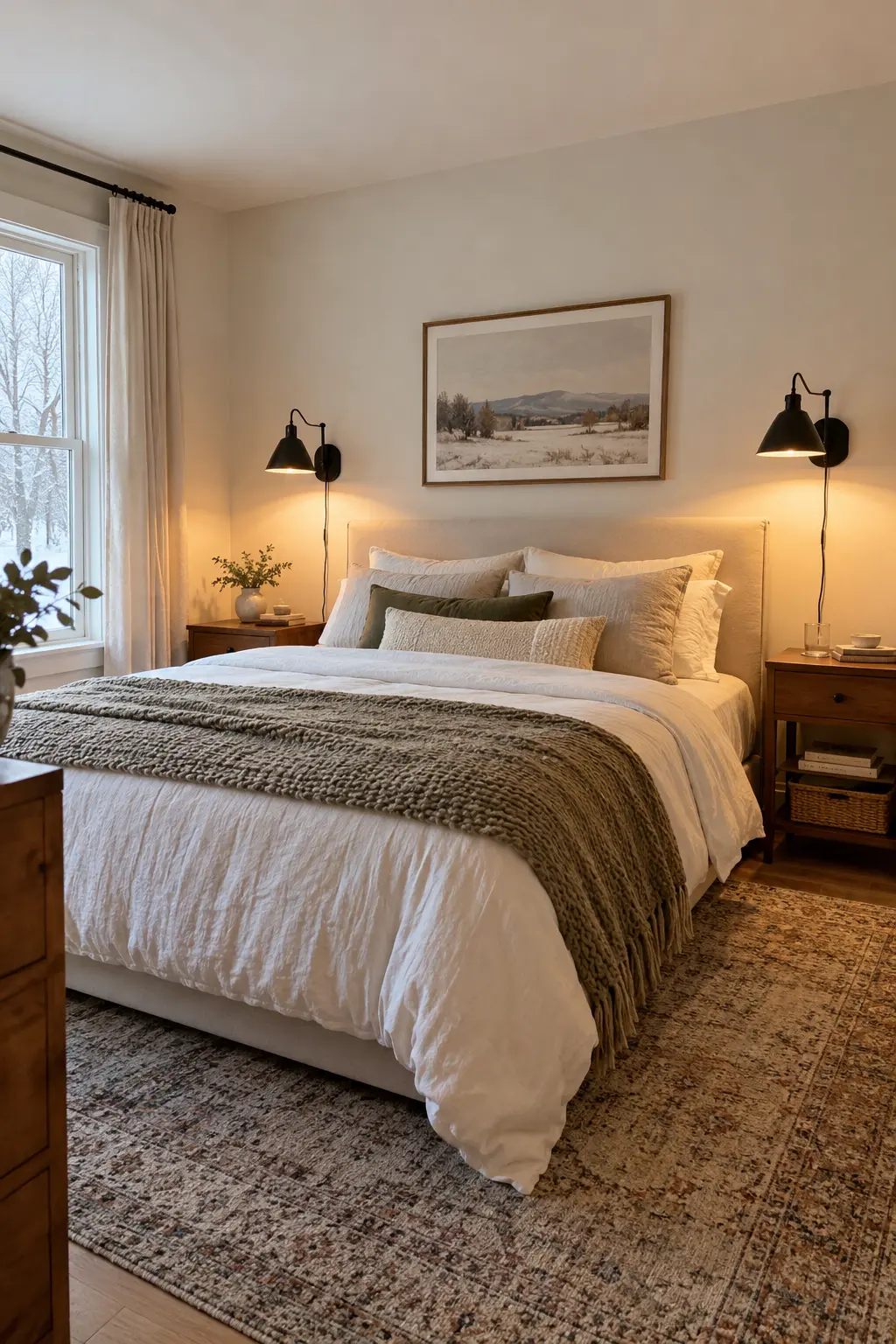
Mount plug-in sconces above compact nightstands and route each cord straight down with removable clips. Aim the shades toward reading height, leaving the tabletops open for a book, water, and the objects actually used overnight.
22. Diffuse Overhead Light with a Paper Lantern
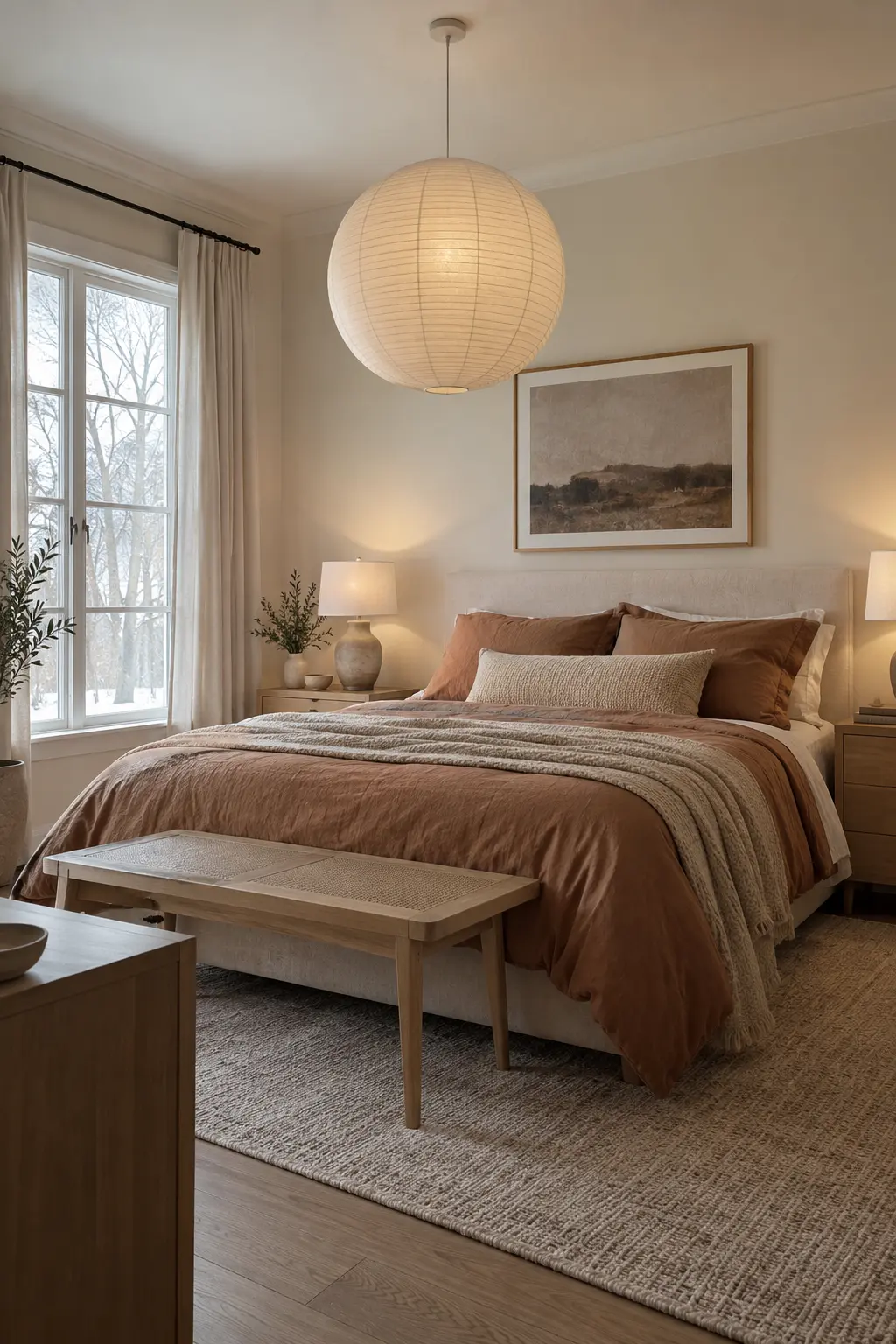
A large paper lantern softens an overhead bulb and gives the ceiling a simple focal point. Center it over the bed, keep comfortable clearance below, and let its matte surface balance heavier winter fabrics.
23. Group Flameless Candles on a Dresser
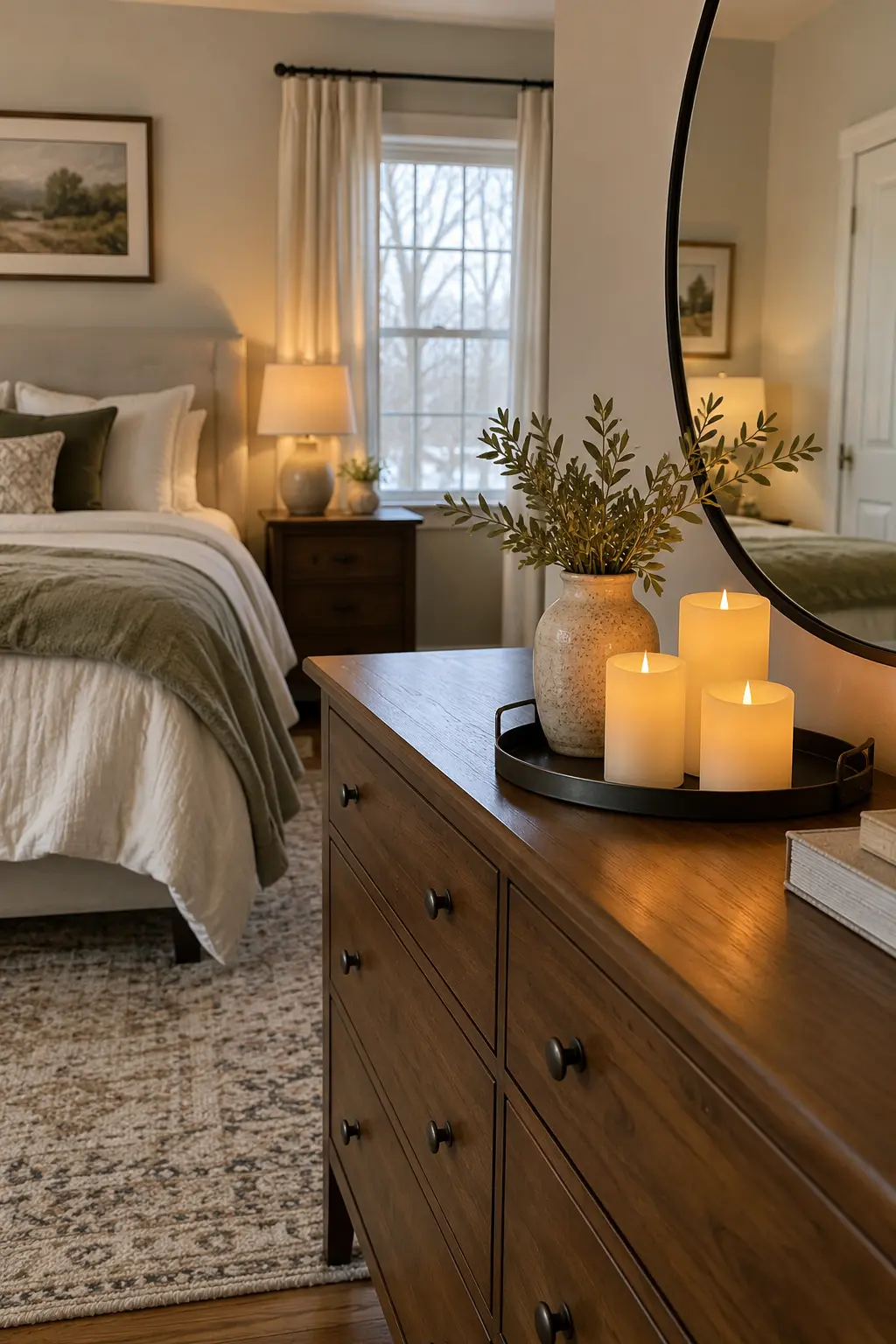
Arrange three flameless pillars of different heights on a metal or stone tray. The contained grouping reads as one object, and it gives a dresser evening glow without placing an open flame near curtains, bedding, or dried stems.
24. Wash a Dark Corner with an Uplight
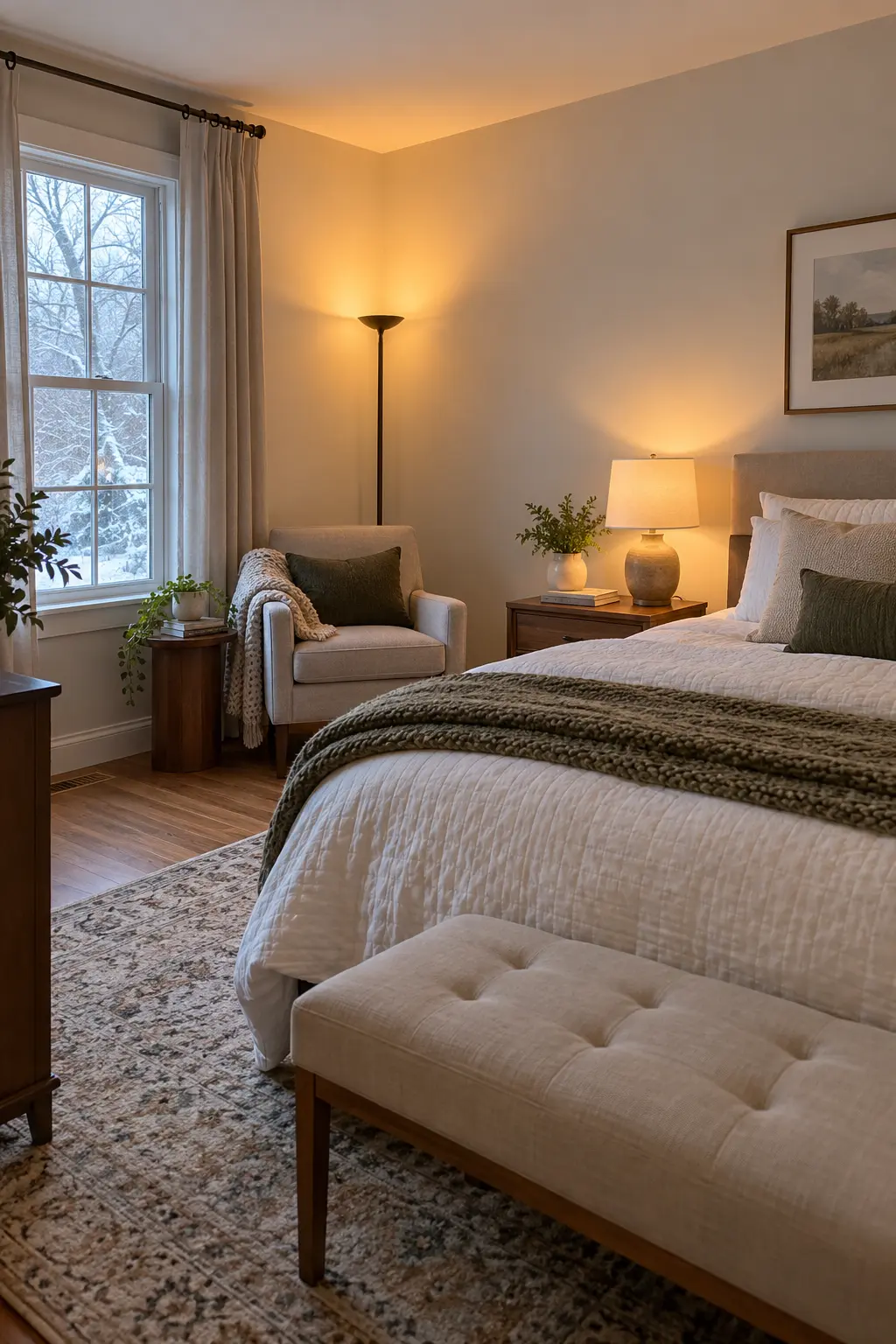
Place a slim uplight behind a reading chair or plant where the ceiling meets a dark corner. The reflected light softens strong shadows and adds depth, especially in a room where the central fixture feels too harsh.
25. Bounce Daylight with a Tall Mirror
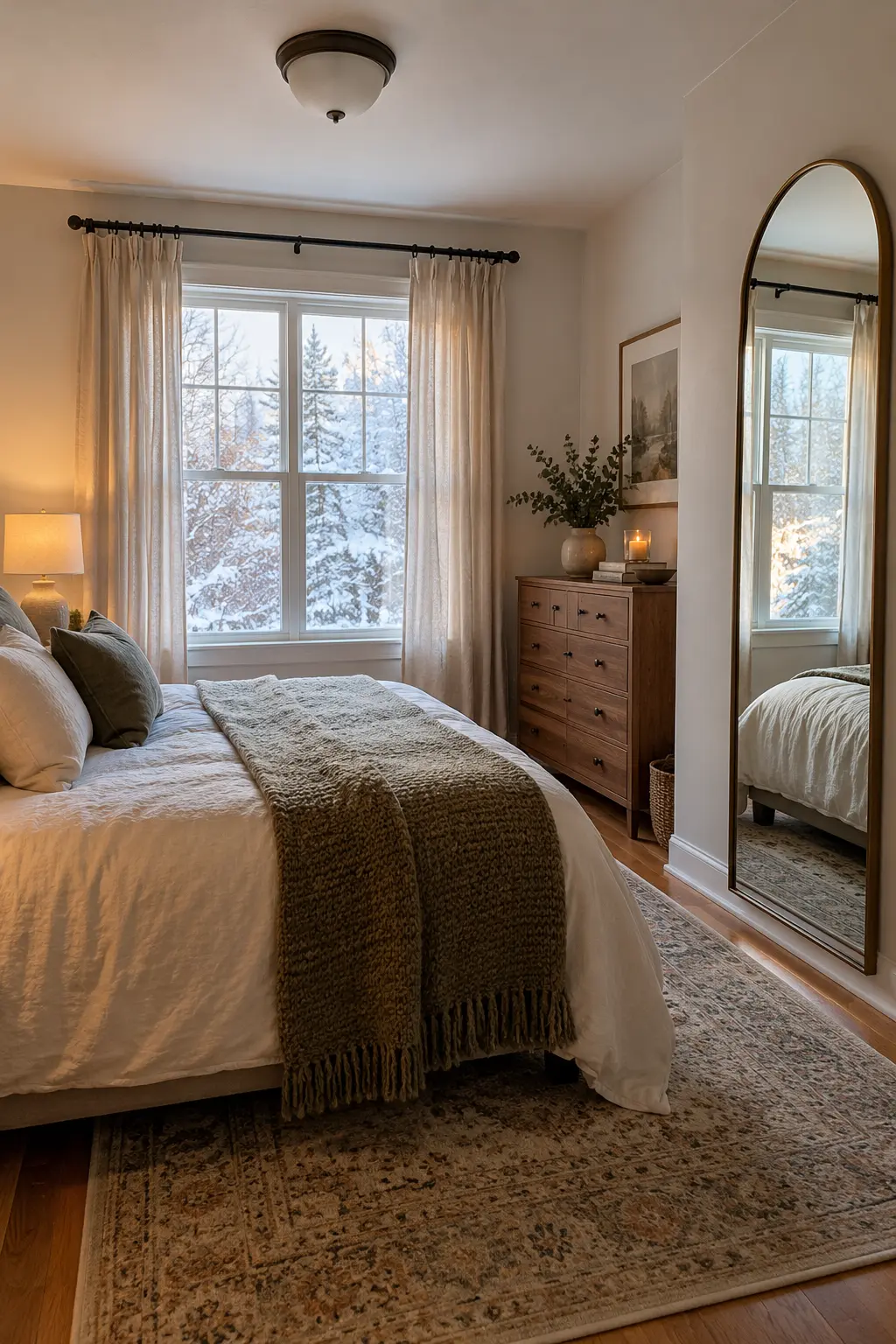
Hang or lean a tall mirror on the wall perpendicular to the window so it catches daylight without facing the bed directly. Keep enough clearance around the frame, and use proper anchoring if the mirror rests on the floor.
26. Hang Pendants Over the Nightstands
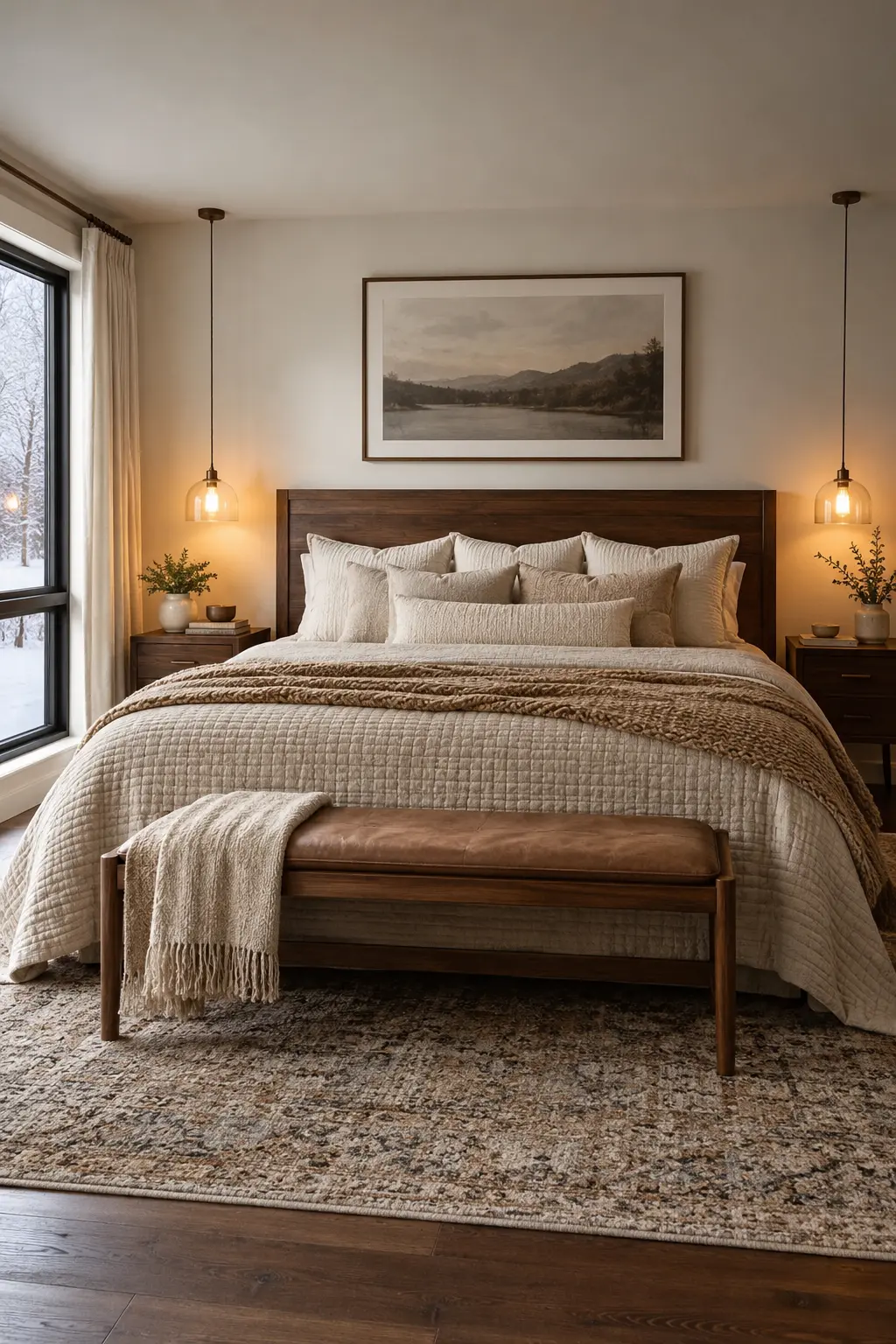
Small bedside pendants add vertical interest and preserve tabletop space. Hang matching shades at comfortable reading height, use warm bulbs, and confirm that cords or hardwired connections follow the fixture's installation requirements.
27. Trace the Headboard with Micro Lights
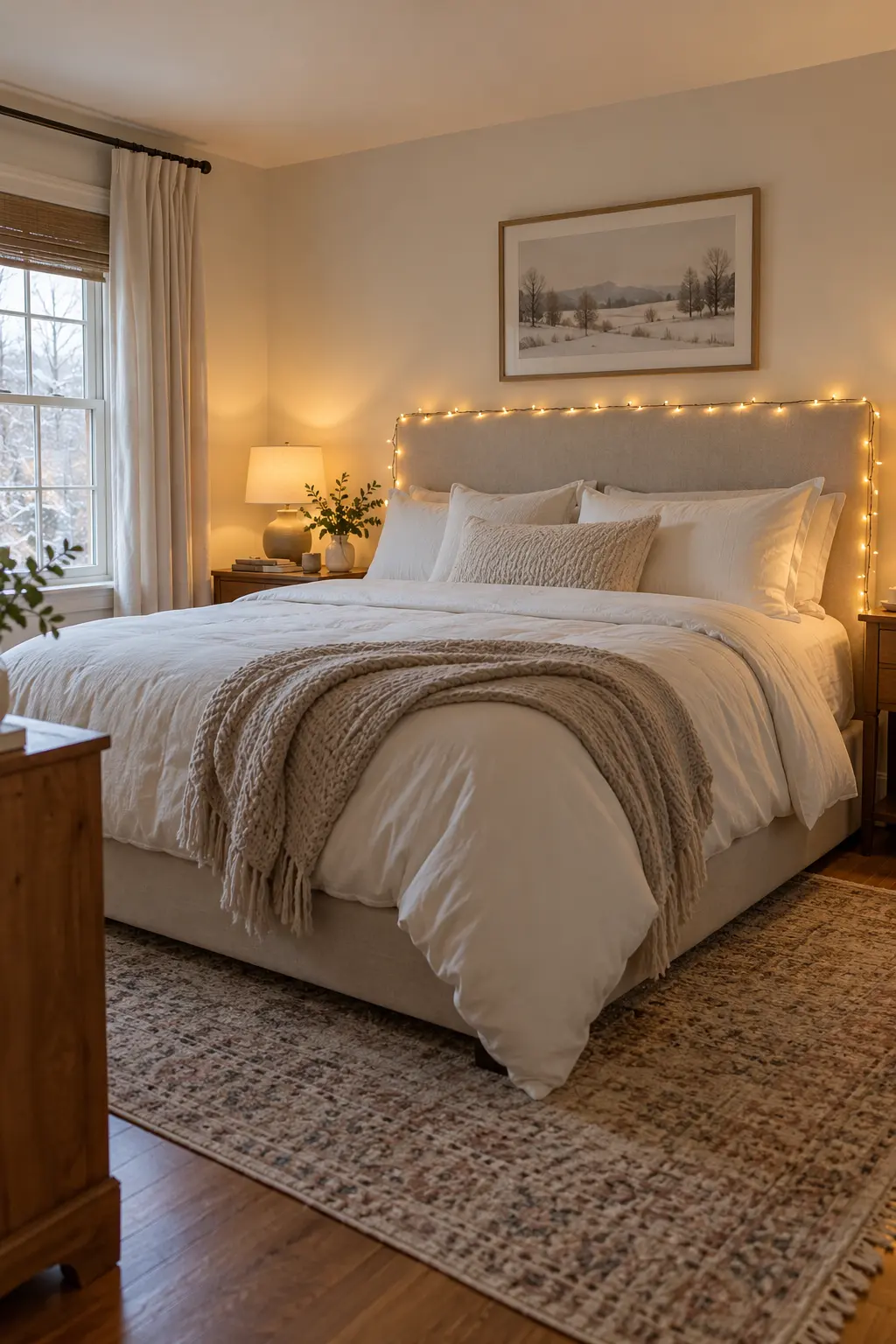
Use one delicate strand of warm micro lights around a plain headboard rather than covering the wall. Secure the wire with removable clear clips, keep it away from loose fabric, and choose a steady setting for an everyday winter glow.
Treat the Windows and Walls
Curtains, removable finishes, and large-scale textiles change the room without filling its surfaces. Choose treatments that respect the window, heat sources, mounting limits, and the amount of pattern already on the bed.
28. Frame the Window with Thermal Panels

Choose full-length thermal panels in oatmeal or warm gray and hang them close to the wall so the edges cover the window trim. Let the hems meet the floor without pooling, and keep fabric clear of radiators or baseboard heaters.
29. Layer Sheers Behind Velvet Curtains
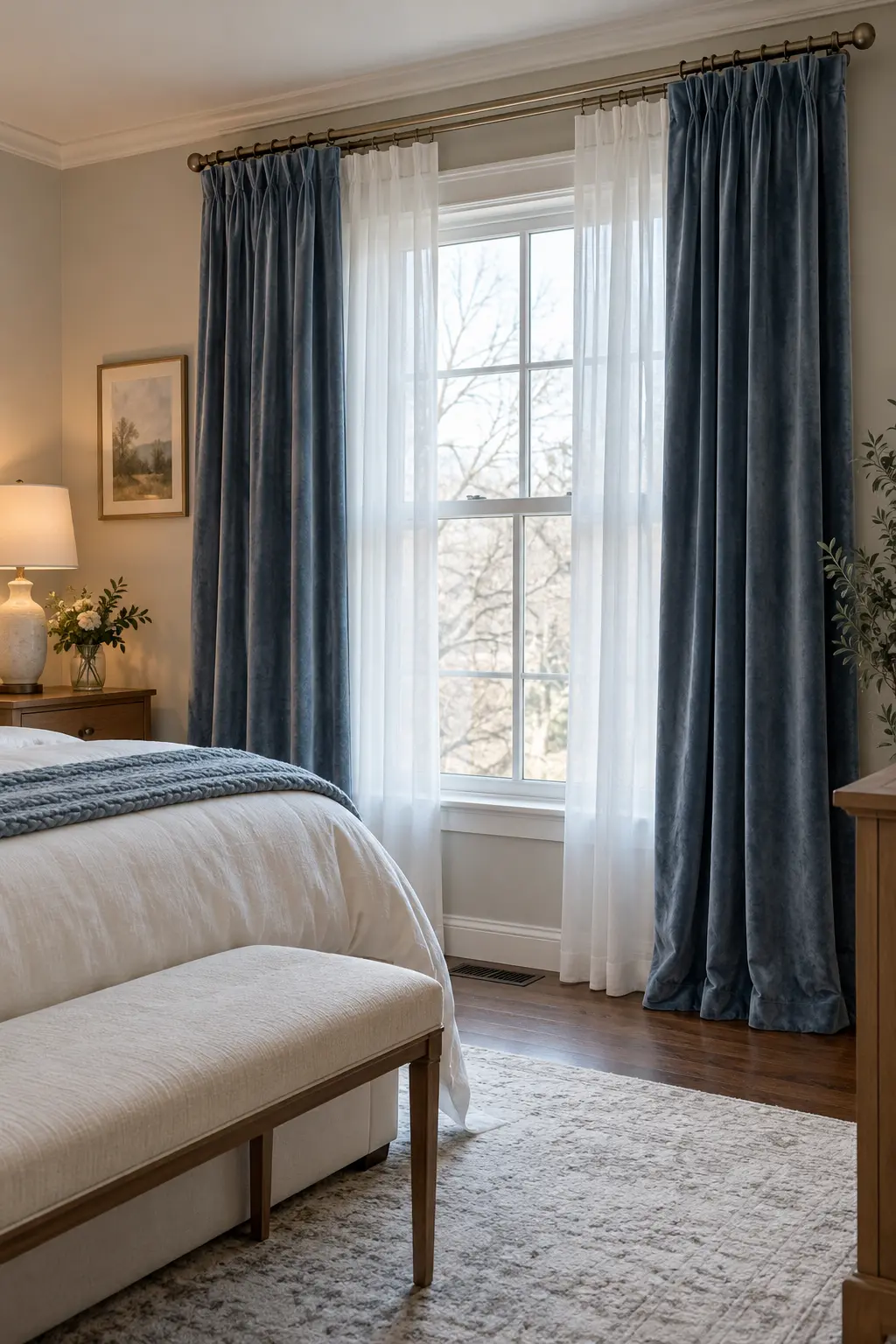
Use white sheers for daytime privacy and muted blue velvet panels for a heavier evening layer. A double rod lets each fabric move independently, while floor-length hems create a cleaner line than short curtains.
30. Fit a Tension Rod Inside the Window
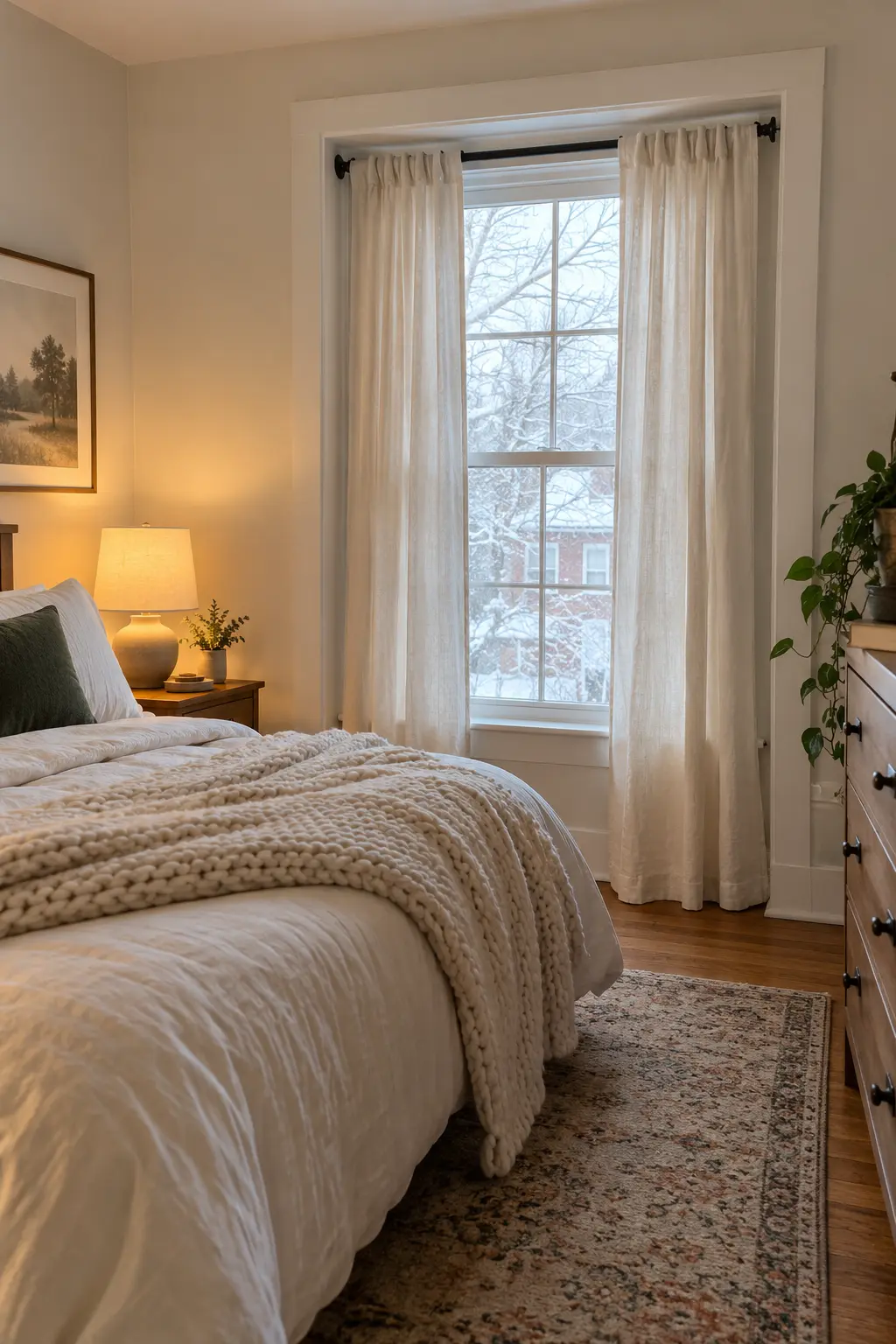
A no-drill tension curtain rod can hold lightweight cream panels inside a suitable window recess. Measure between the side jambs, follow the rod's load limits, and check the grip periodically rather than hanging heavy blackout drapes.
31. Use Removable Wallpaper Behind the Bed
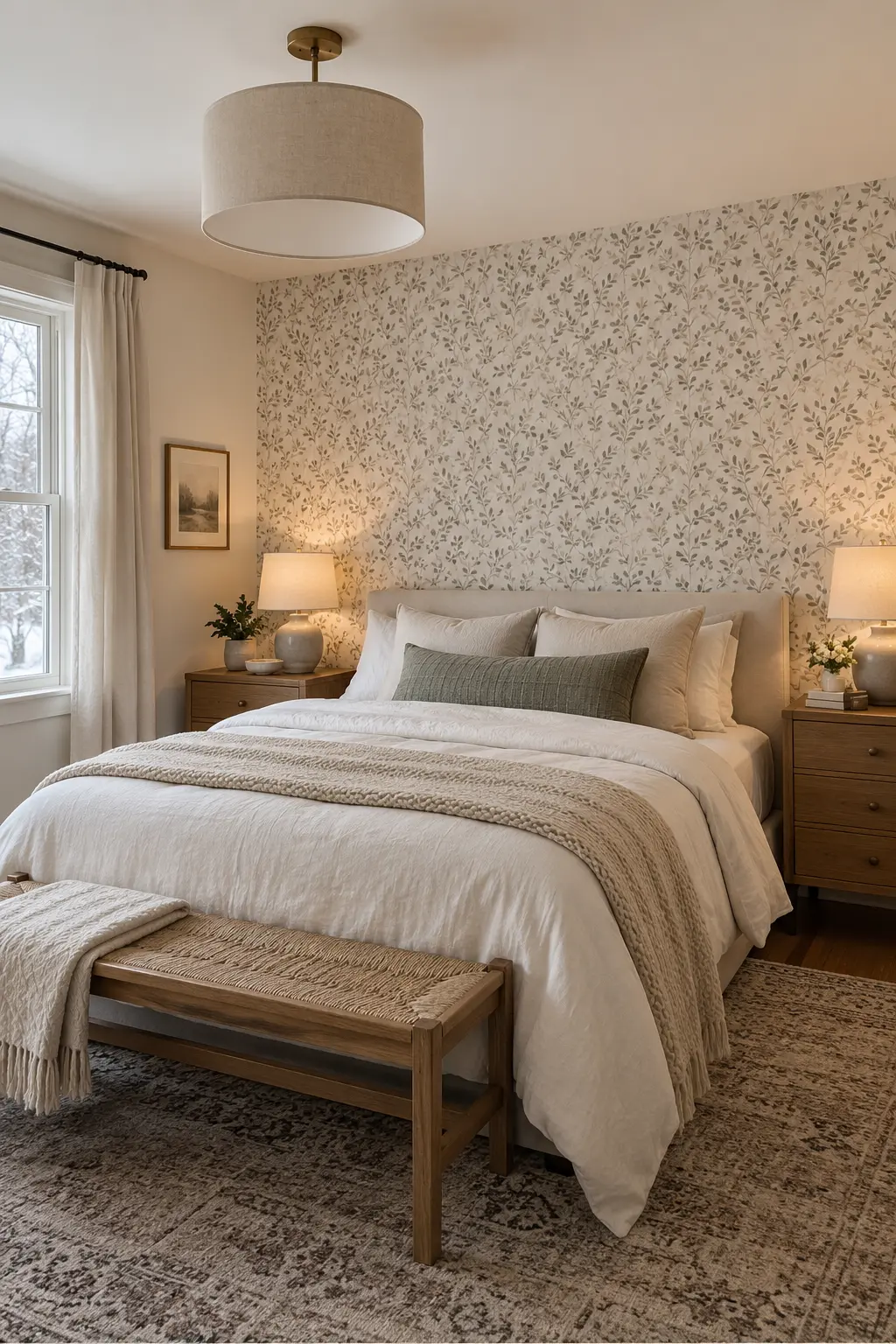
Cover only the headboard wall with removable wallpaper in a small taupe botanical print. Test a sample on the existing paint first, then keep the bedding solid so the pattern provides interest without competing with several other motifs.
32. Make a Woven Textile the Headboard
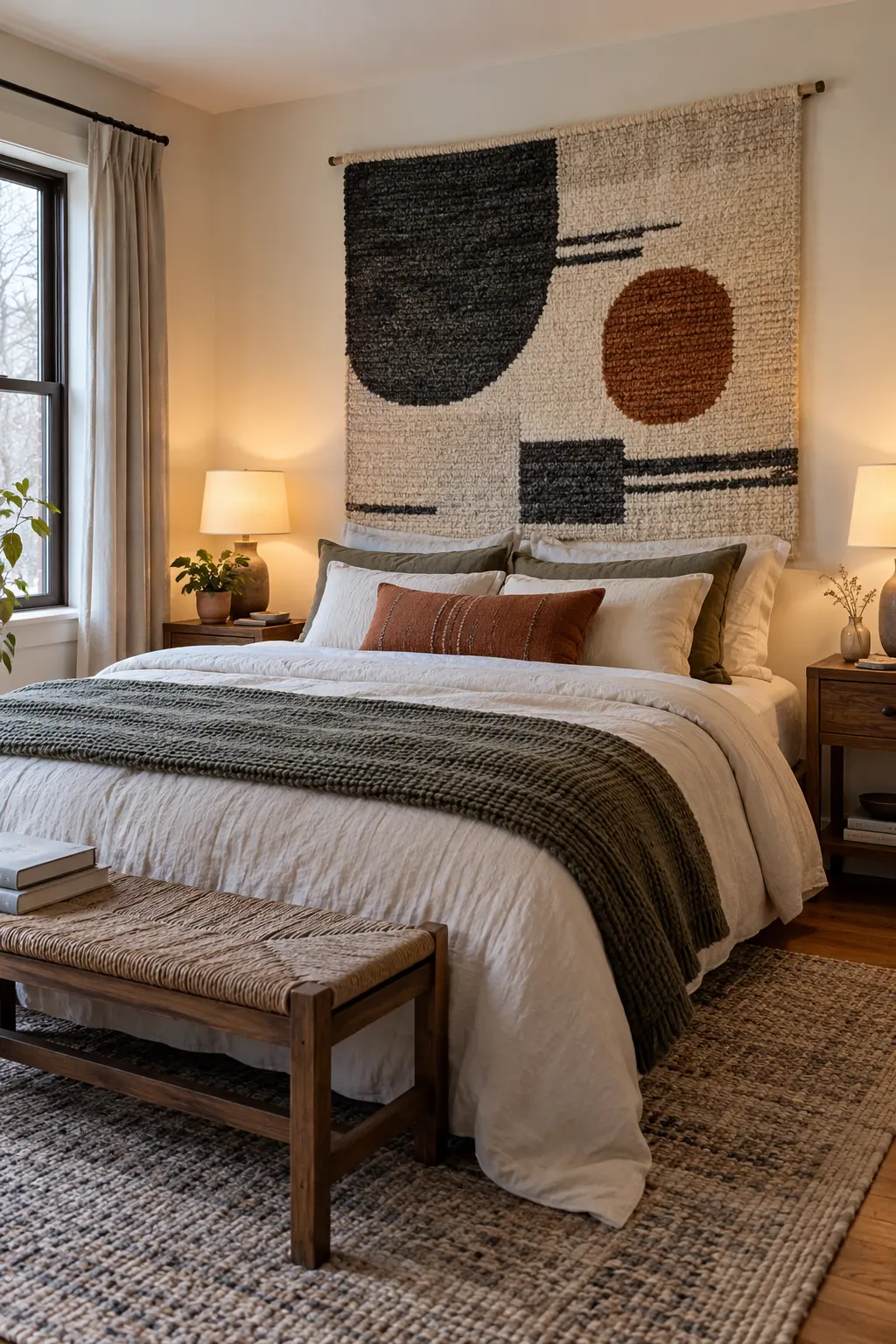
Center one substantial woven textile above a bed that lacks a headboard. A cream, charcoal, and rust design brings softness to the wall; mount it straight and securely, with the lower edge clear of lamps and pillows.
33. Scale Up One Winter Landscape
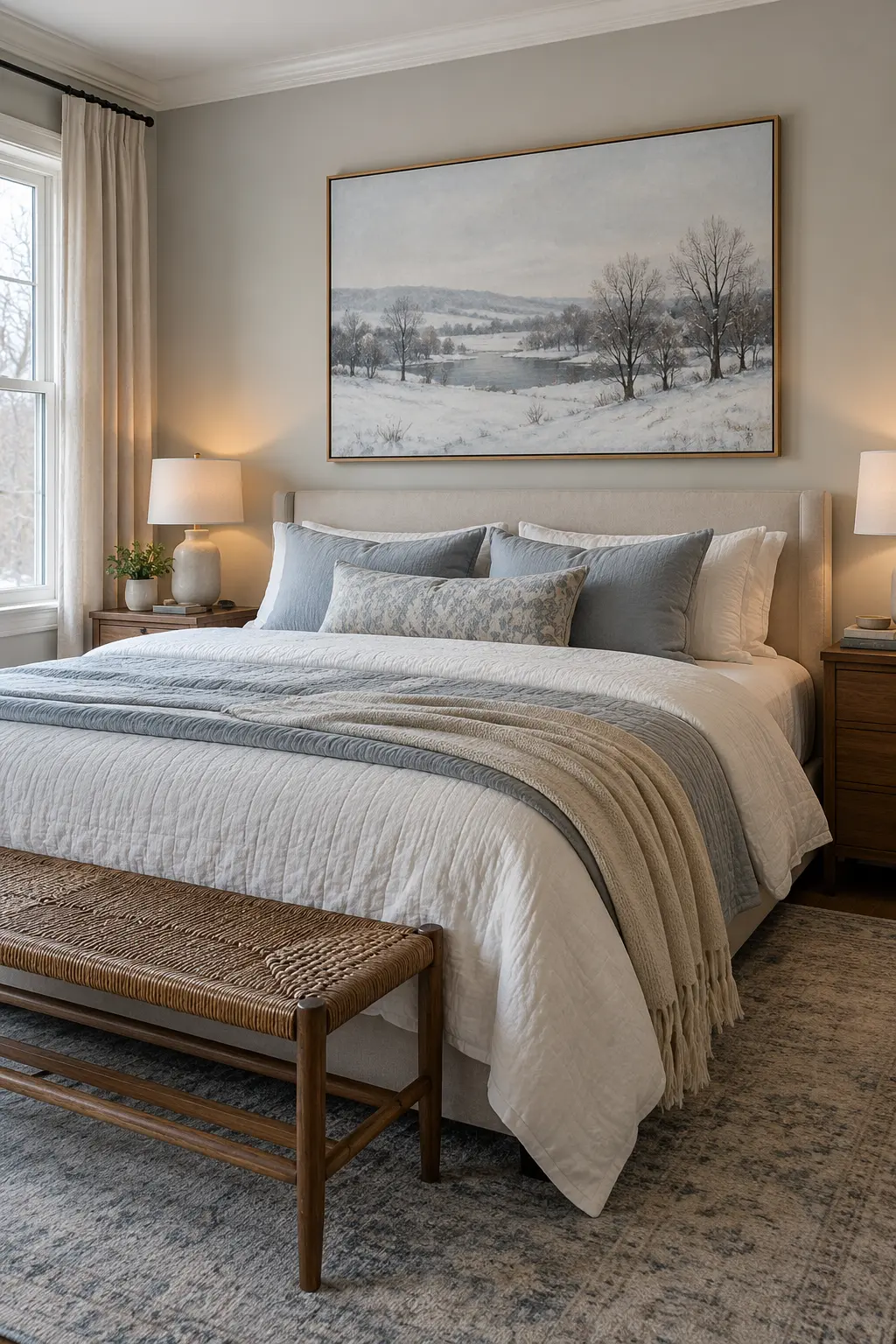
Choose one oversized landscape with bare trees, snowy fields, or gray water instead of assembling many small seasonal prints. Pull two quiet colors from the art into the bedding, then leave the surrounding wall mostly open.
34. Display a Vintage Wool Blanket as Art
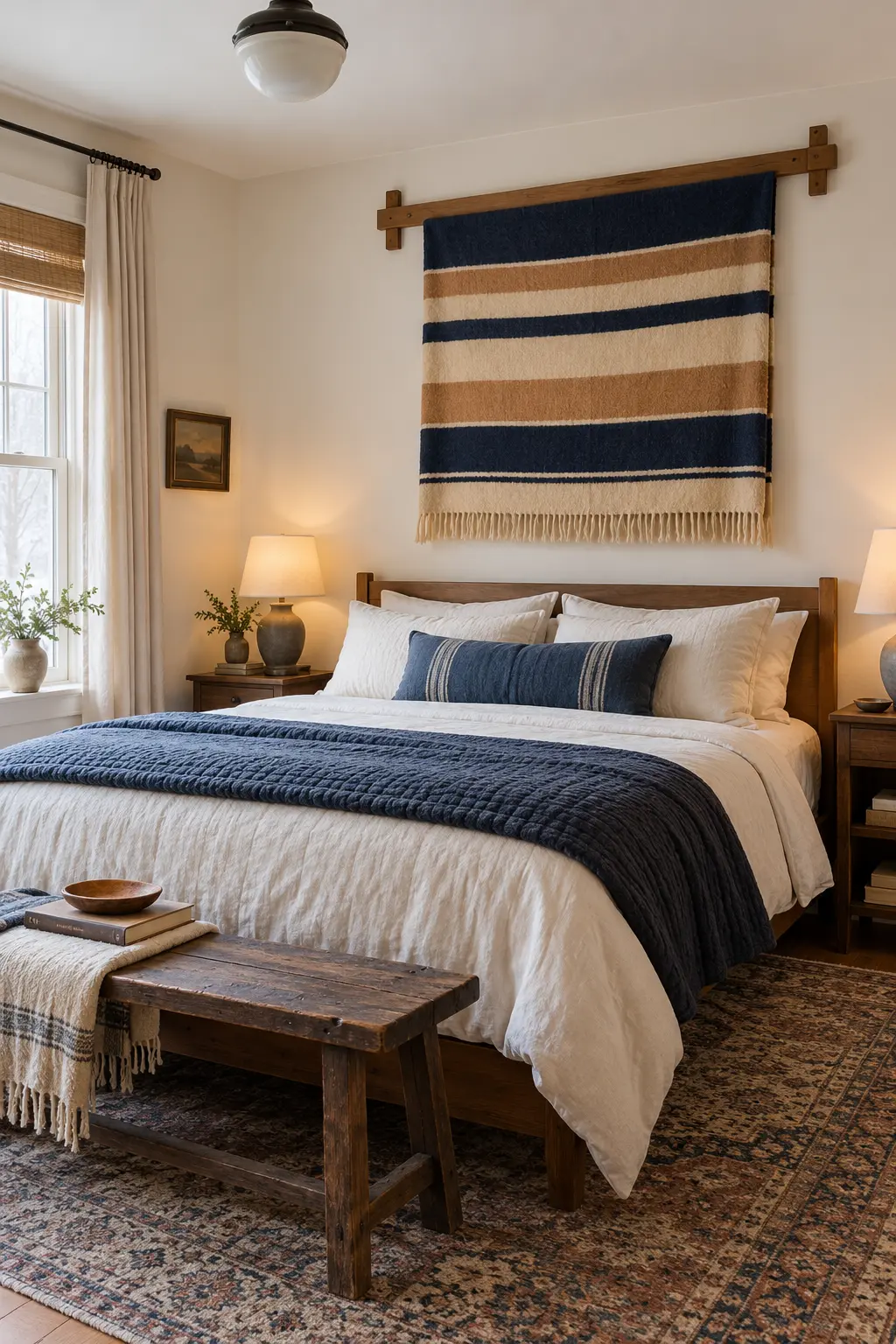
Hang a clean striped wool blanket from a simple quilt rail above the bed. Deep navy, camel, and cream add winter weight to a plain wall, while a rigid hanger keeps the textile flat and intentional.
35. Install a Bedside Peg Rail
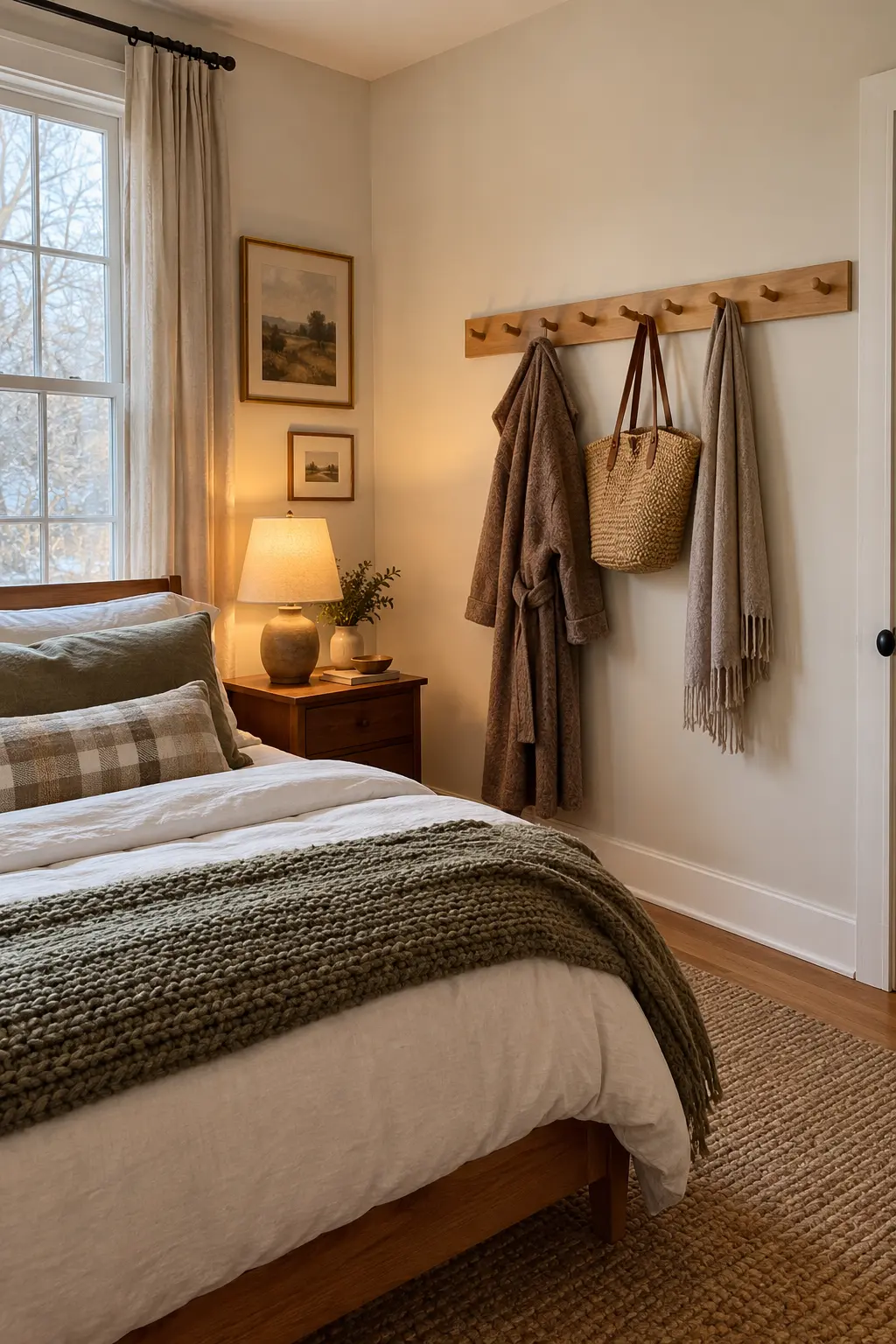
Mount a short oak peg rail near the bedroom door or beside the bed for one robe, a scarf, and a light tote. Leave several pegs empty; useful winter storage looks calmer when every hook is not carrying something.
Make the Bedroom Work Better in Winter
Cold-weather routines bring more blankets, books, robes, and indoor work into the bedroom. Give those items defined places so the added comfort does not become visual or physical clutter.
36. Build a Small Bedside Comfort Tray
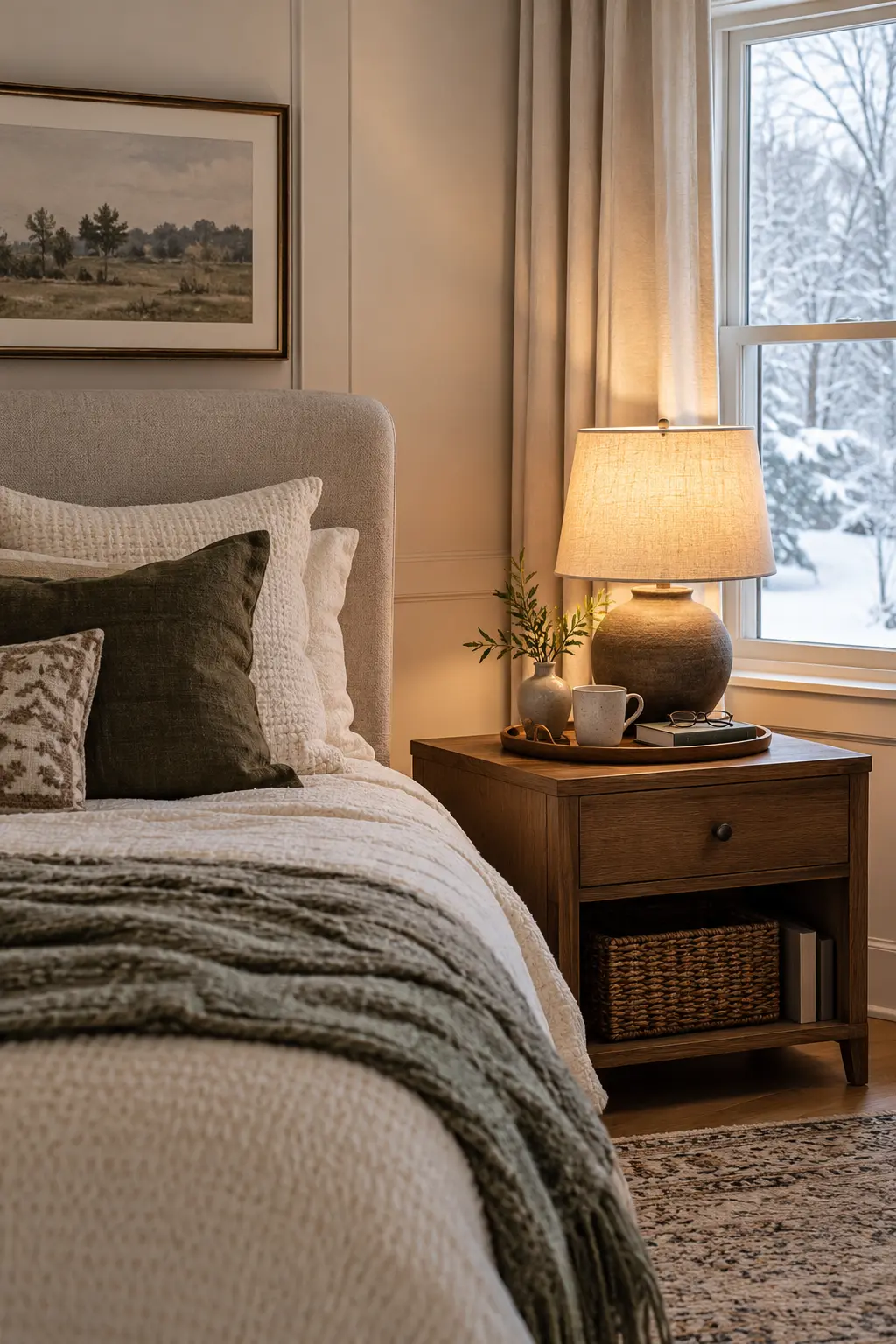
Corral a mug, closed book, reading glasses, and a tiny vase on a small wood tray. Keep part of the nightstand free for a phone or water, and remove drinks before sleep if spills could reach electronics.
37. Store Extra Quilts in a Foot Bench
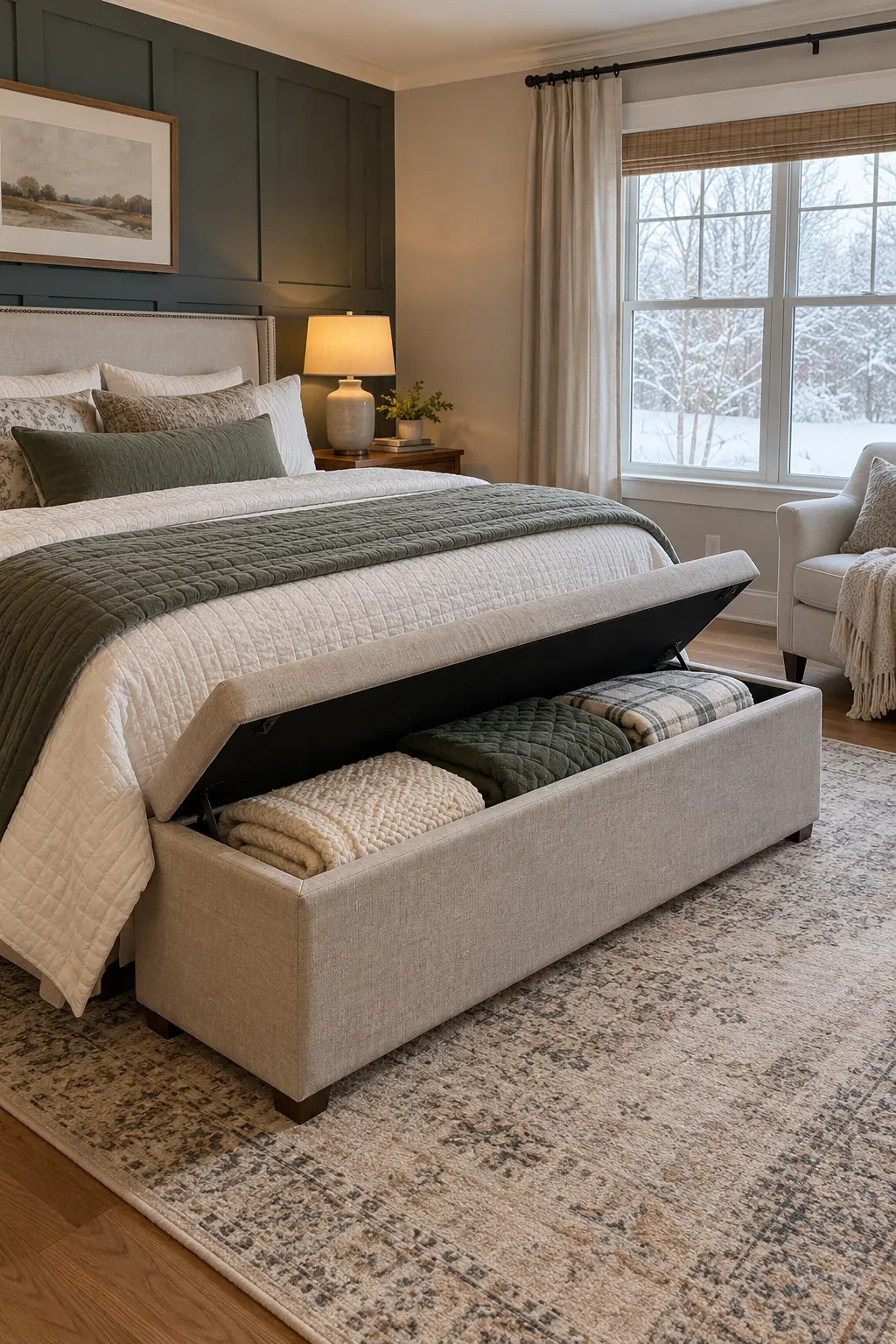
Use a hinged storage bench for the quilts and blankets rotated through the season. Keep enough space between the bench and the bed to open the lid, and leave a clear route around both sides.
38. Make a Reading Nook by the Window
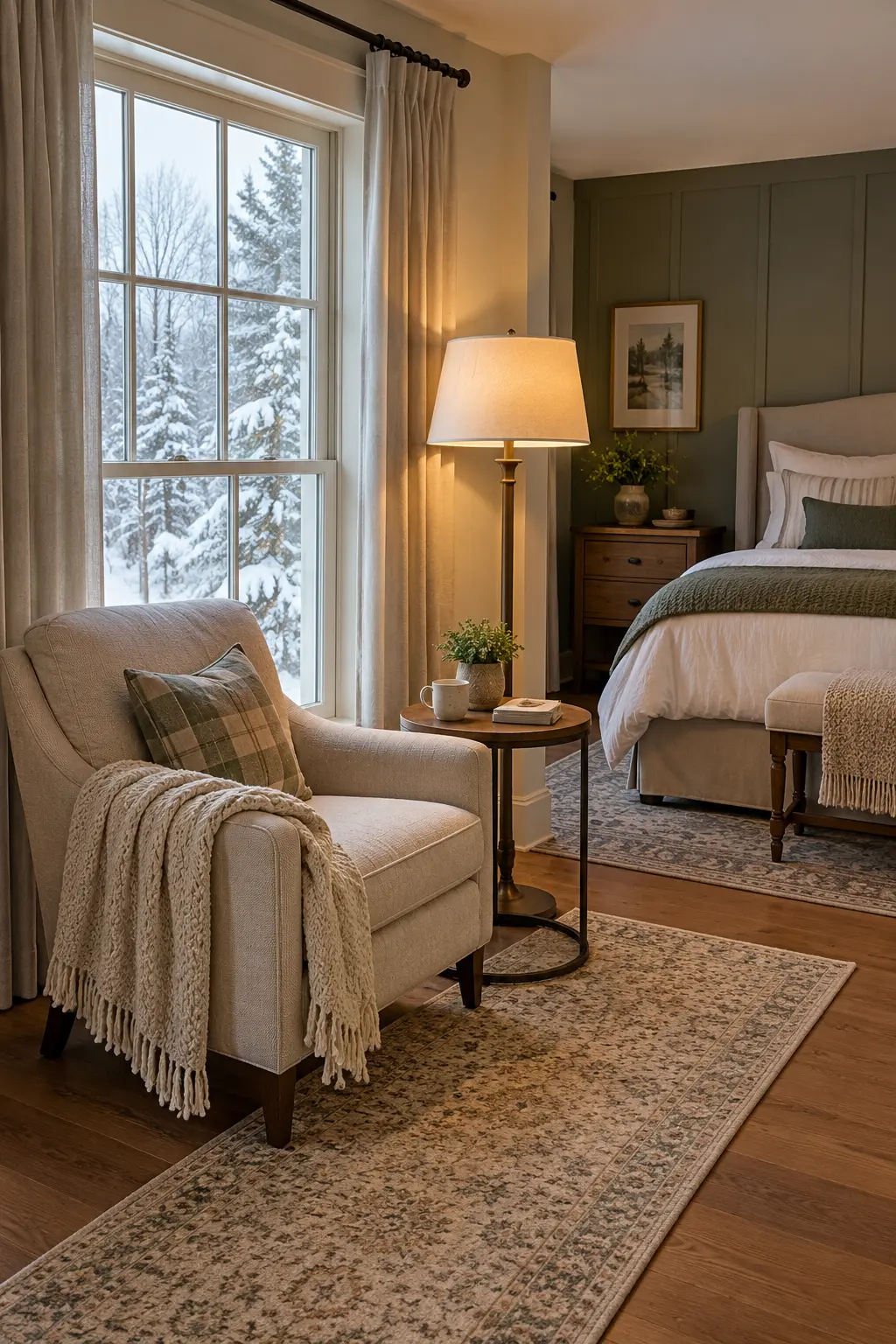
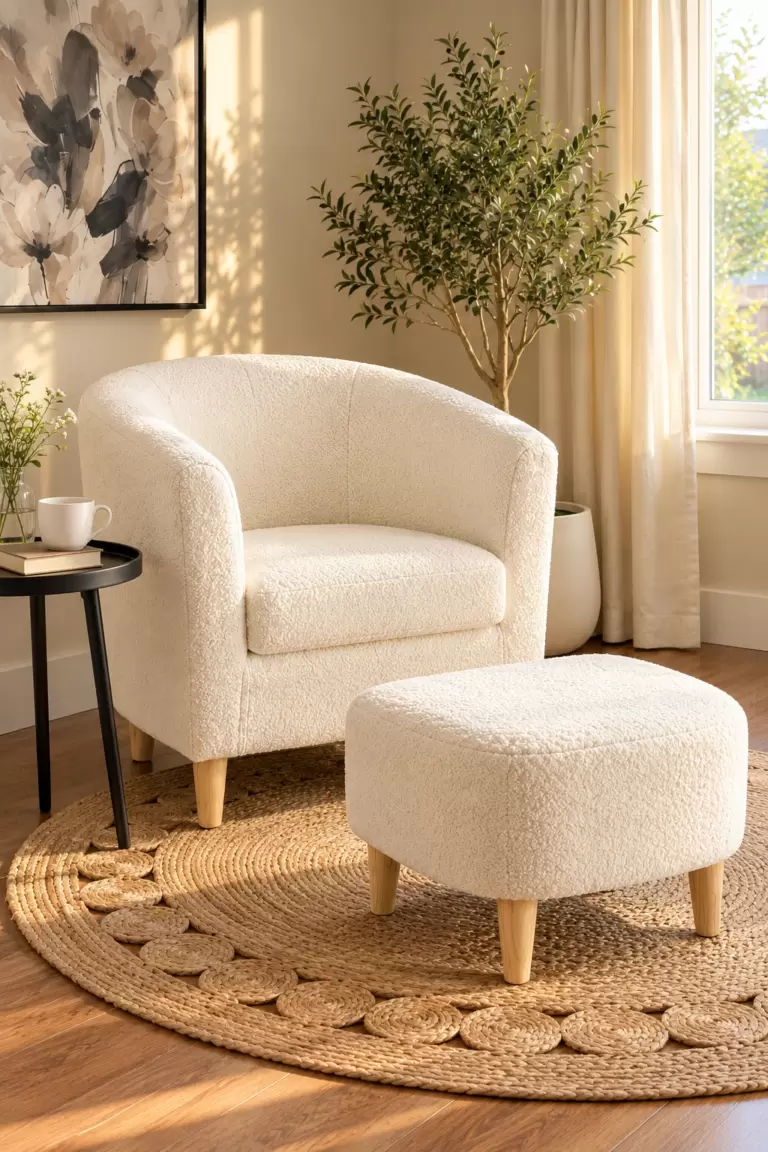
Pair one supportive chair with a wool throw, small table, floor lamp, and narrow rug near the window. The nook should occupy one corner without narrowing the path to the bed or closet.
39. Slide Matching Baskets Under the Bed
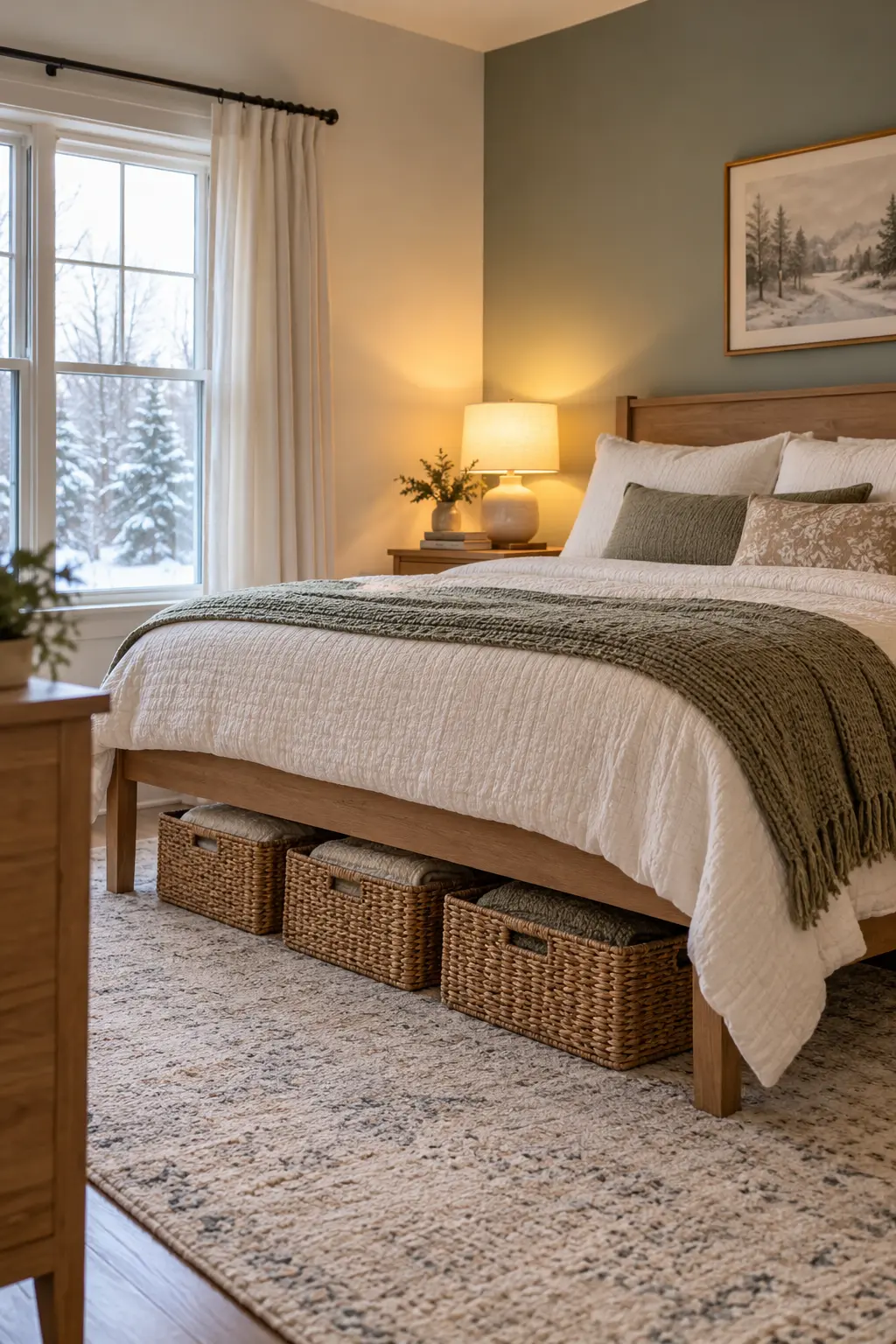
Fit low woven baskets beneath a raised bed for spare blankets and pillow covers. Matching shapes create a cleaner line, but measure the height before buying and leave the baskets easy to pull without scraping the floor.
40. Turn the Window Wall into a Winter Work Zone
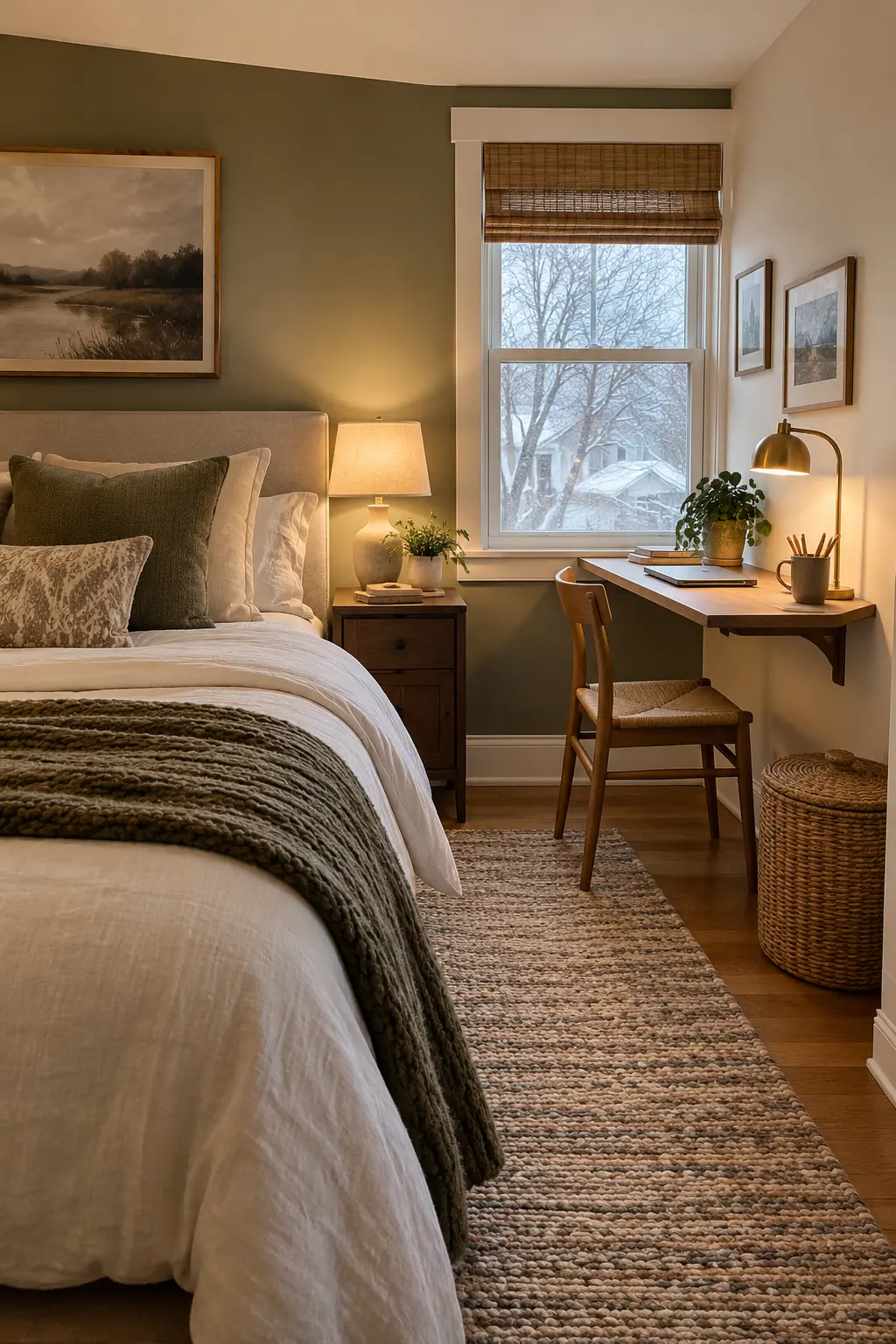
Place a slim desk near daylight, add one task lamp, and hide work supplies in a lidded basket when the day ends. Keeping the desktop shallow protects the walkway and helps the sleeping area remain visually calm.
Add Warmth Underfoot and Natural Texture
Rugs and natural materials make a bedroom feel settled after the bedding is finished. Use them where they improve comfort or balance, and leave heaters, doors, and walking paths clear.
41. Extend a Wool Rug Beyond the Bed
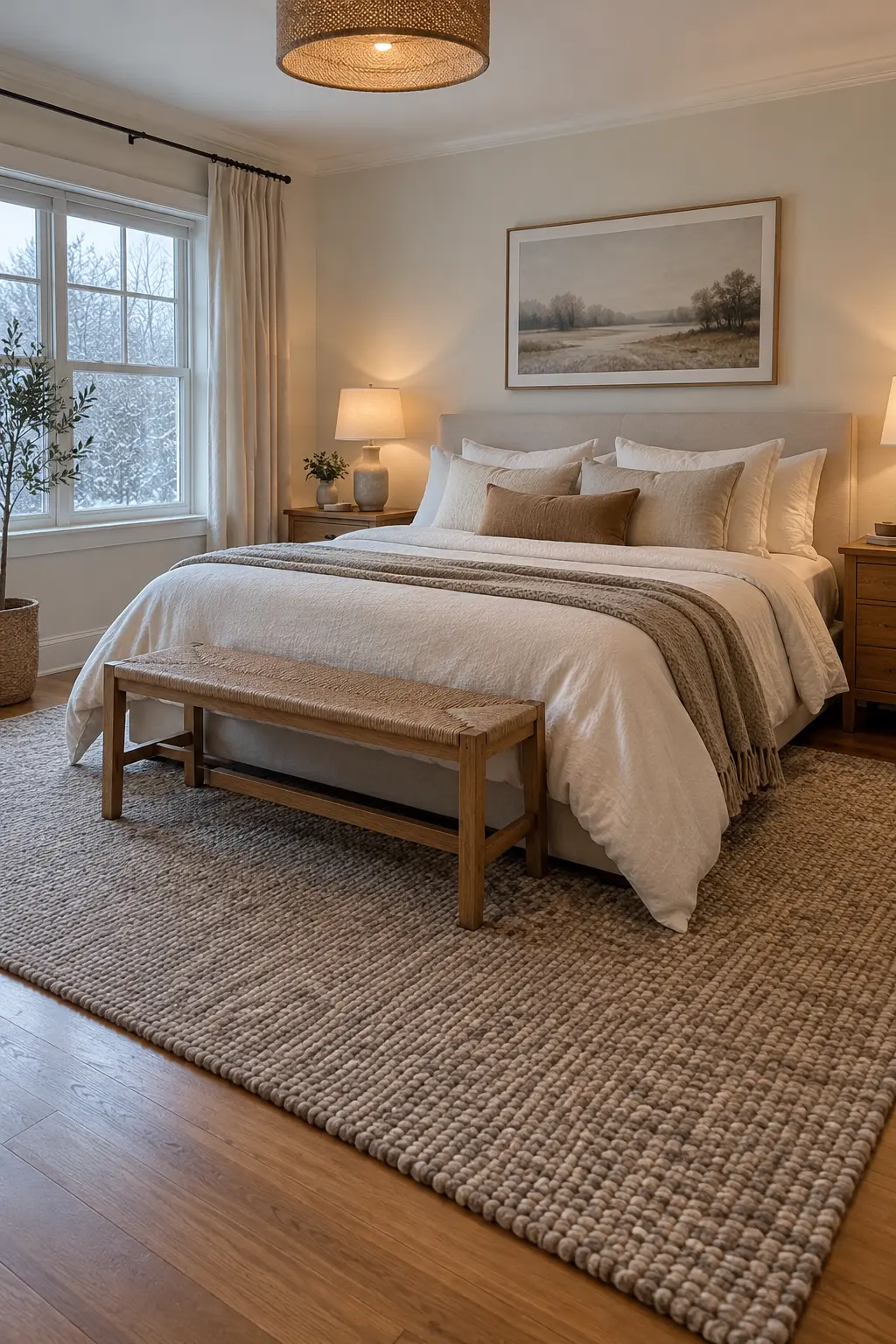
Place a substantial wool rug under the lower two-thirds of the bed so it extends beyond both sides and the foot. That layout warms the first step out of bed while avoiding a rug hidden almost entirely beneath furniture.
42. Place a Sheepskin Runner Beside the Bed
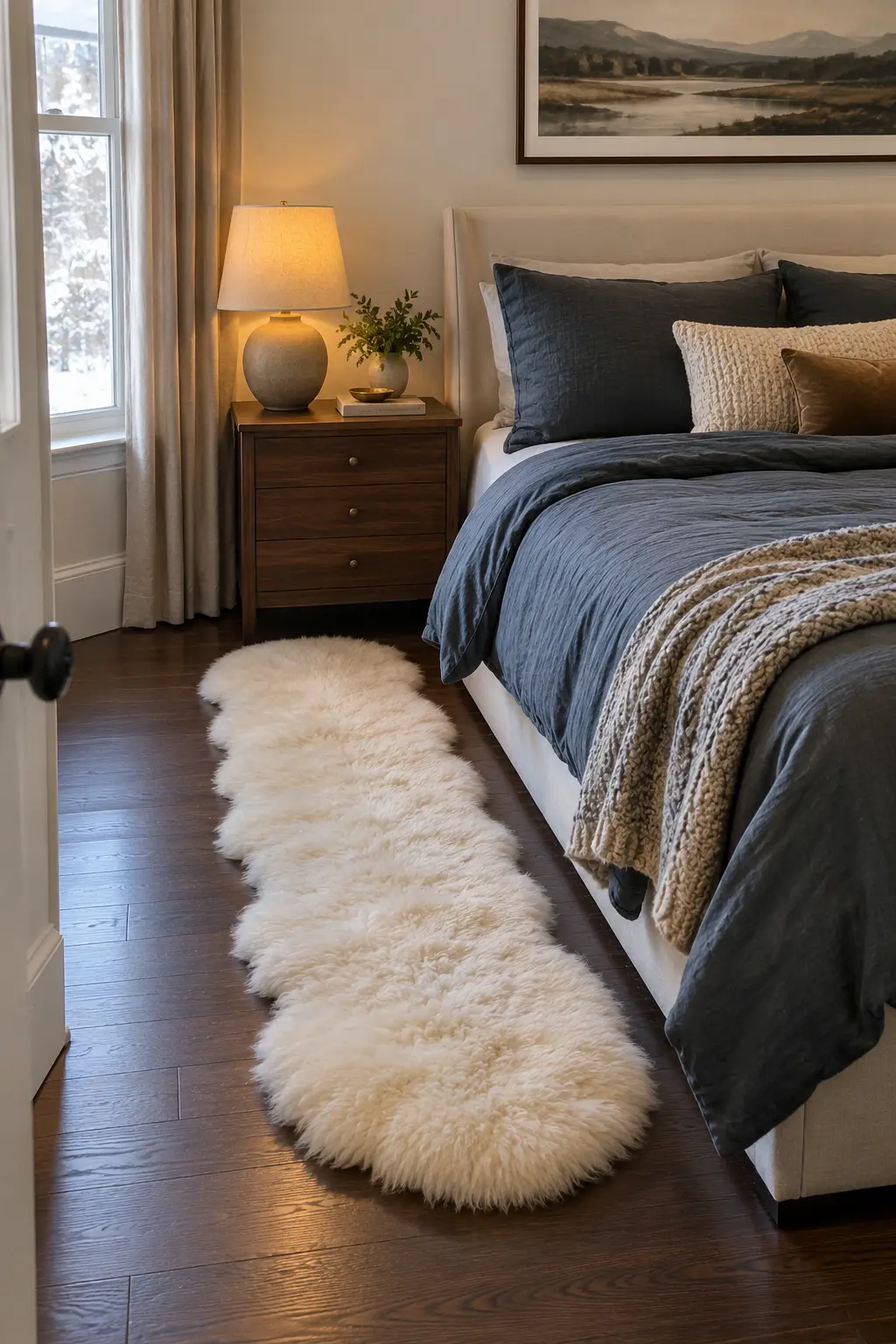
Use one narrow sheepskin-style runner where bare feet land, especially when a full-room rug is impractical. Keep it flat, add a suitable rug pad on slick floors, and limit the fluffy texture to this small zone.
43. Layer a Patterned Rug over Jute
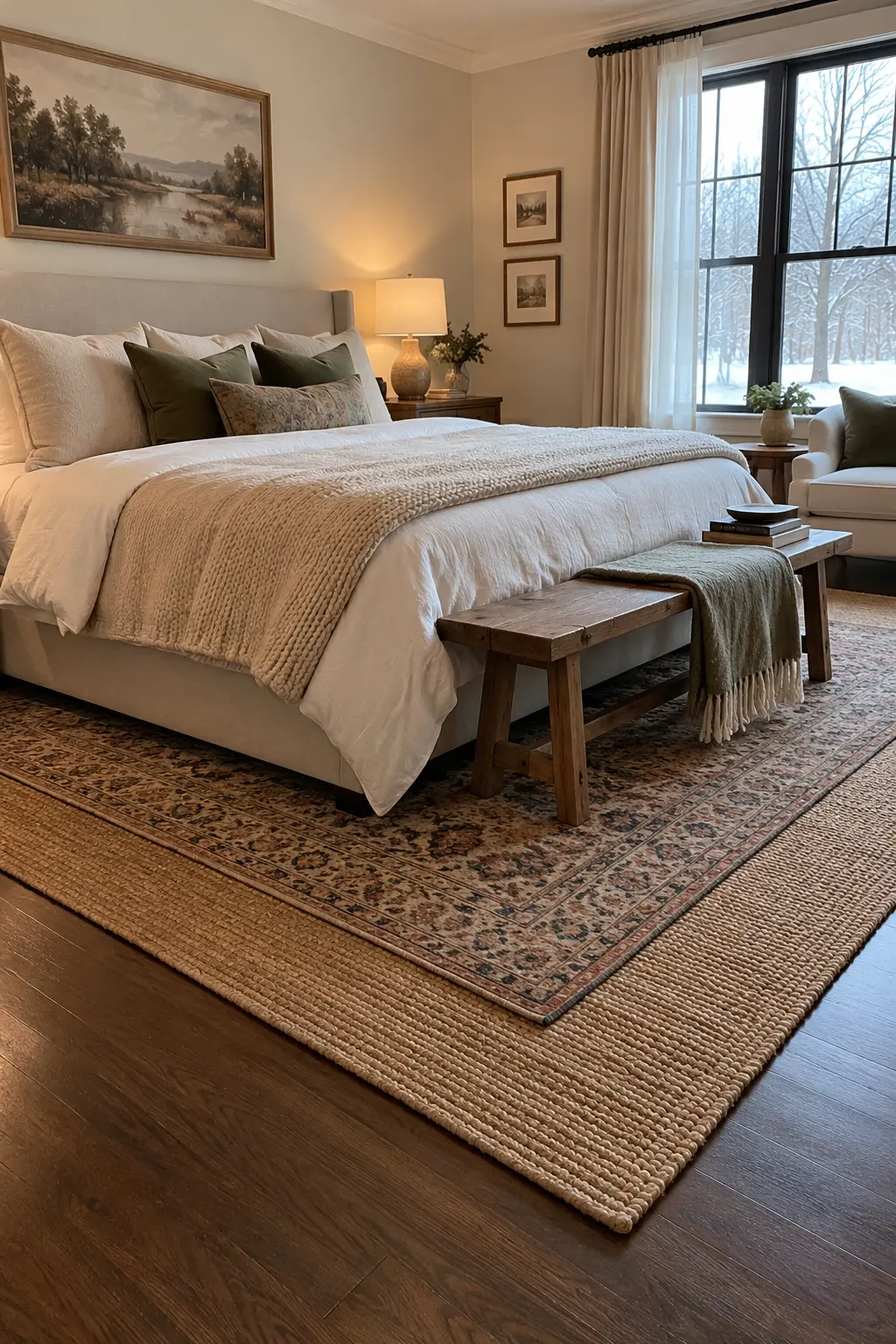
Center a small patterned wool rug over a larger jute base, aligning the edges with the bed rather than the room. Keep the layered section away from the main doorway so the added thickness does not catch feet.
44. Arrange Plain Evergreen Branches
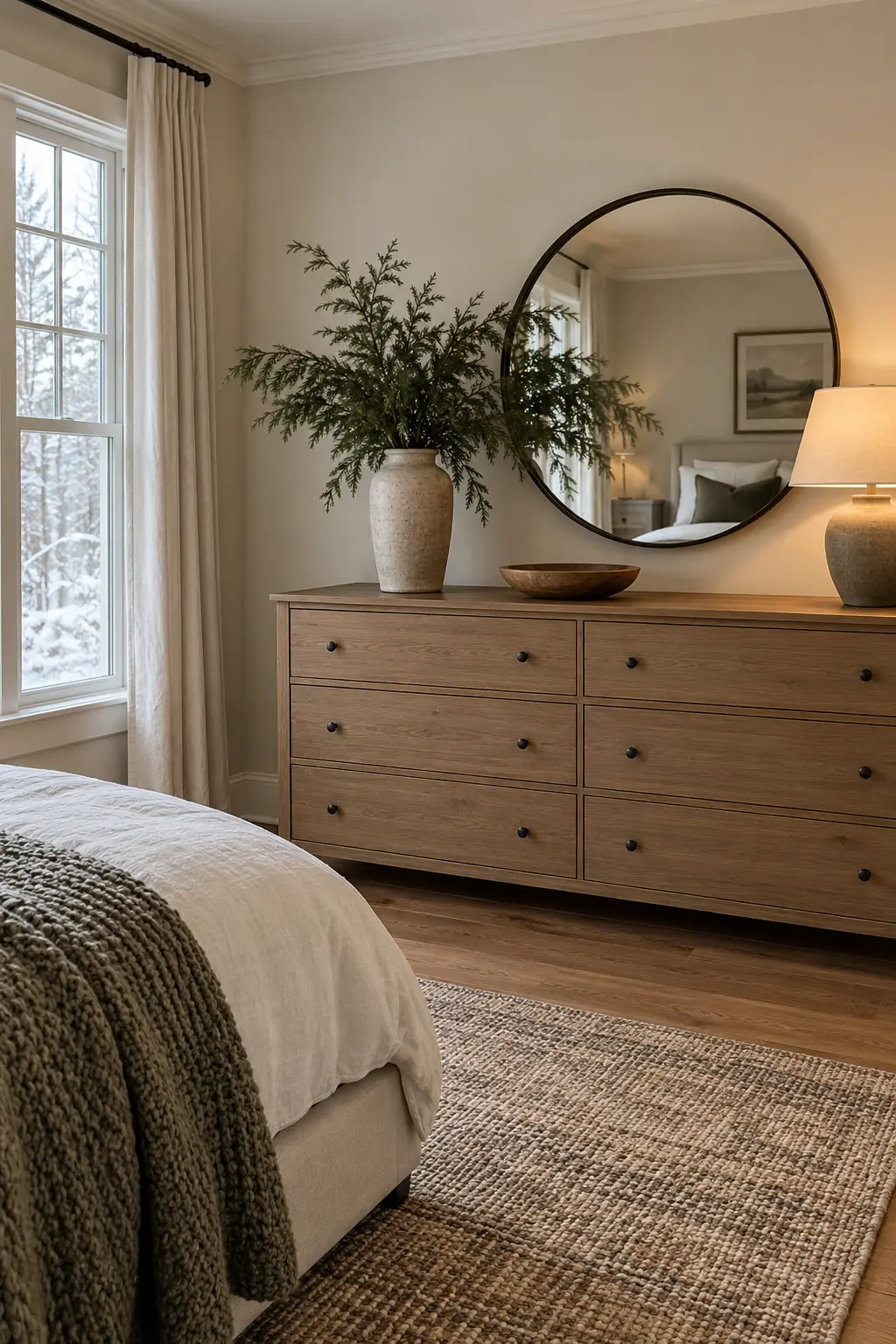
Place a few loose evergreen branches in a heavy stoneware vase on the dresser. Skip ribbons, ornaments, berries, and lights; the simple green shape will read as winter foliage rather than leftover Christmas decor.
45. Use Bare Branches for Sculptural Height
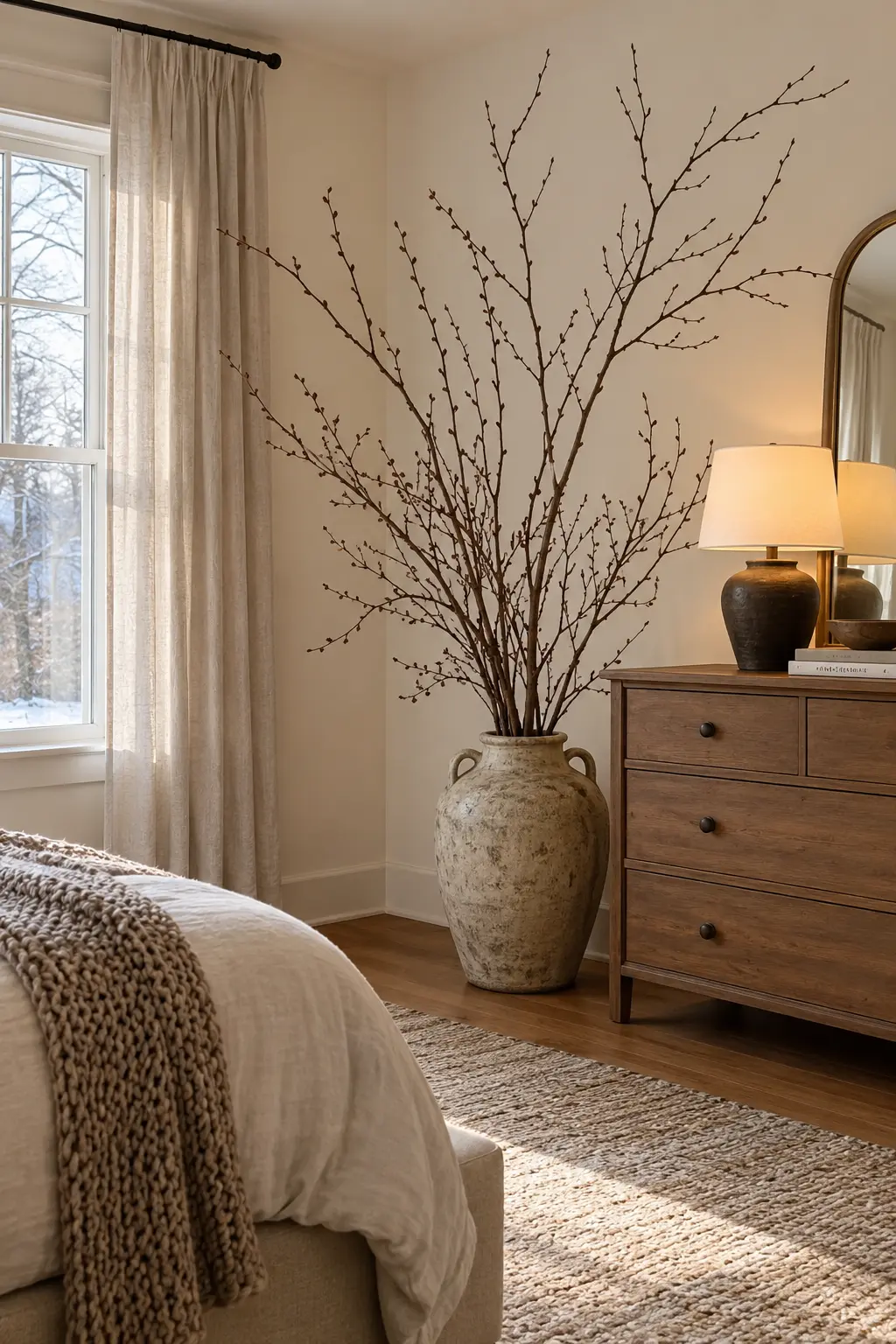
Set tall bare branches in a weighty floor crock beside a low dresser. Trim the arrangement to stay below the ceiling and outside walking paths, then leave the nearby wall mostly empty so the silhouette has room.
46. Mix Dried Hydrangeas with Seed Pods
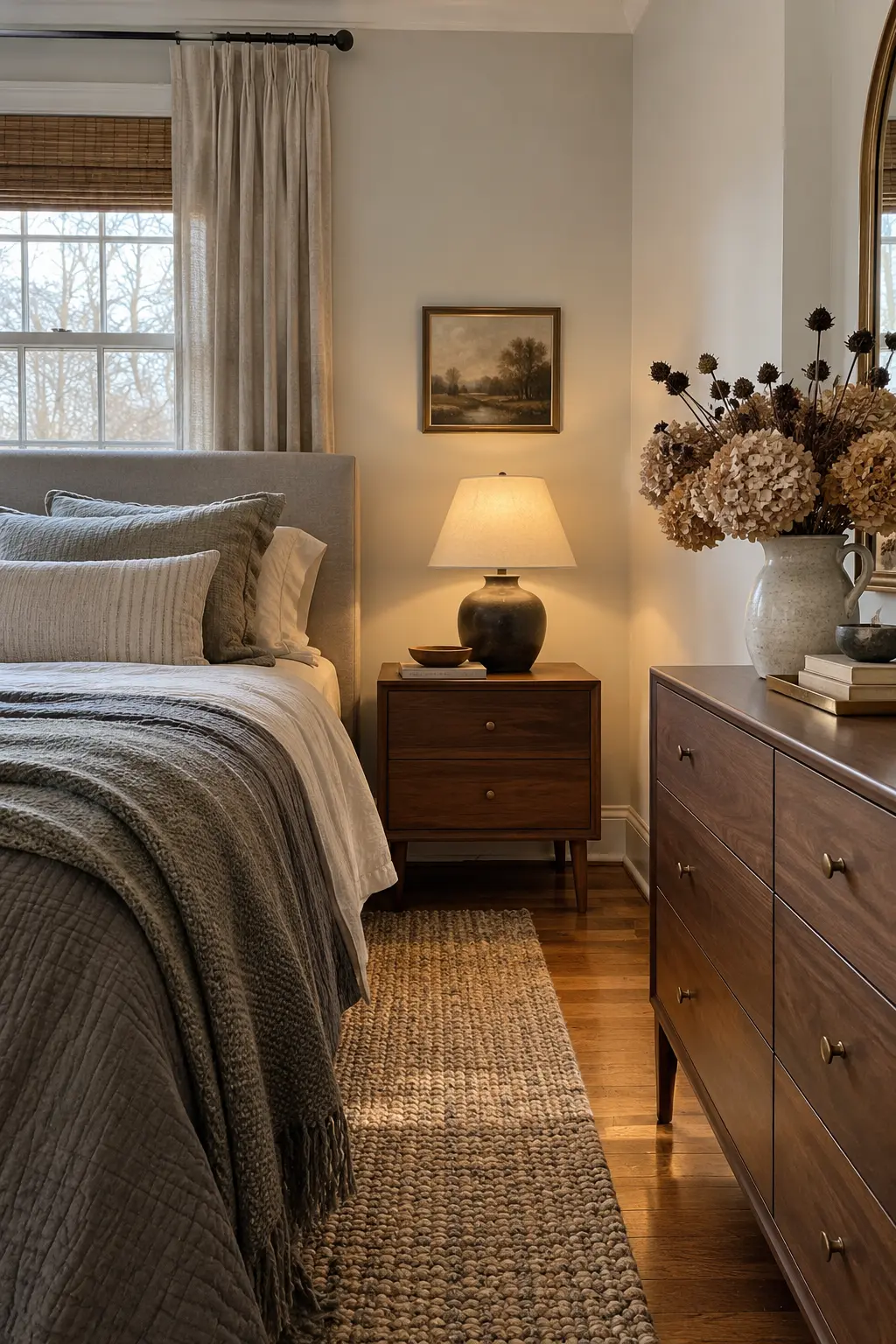
Combine faded hydrangea heads with dark seed pods in a matte pitcher for a restrained natural arrangement. Keep the stems away from open flames and shake out loose material before bringing them into the bedroom.
47. Fill a Basket with Decorative Birch Logs
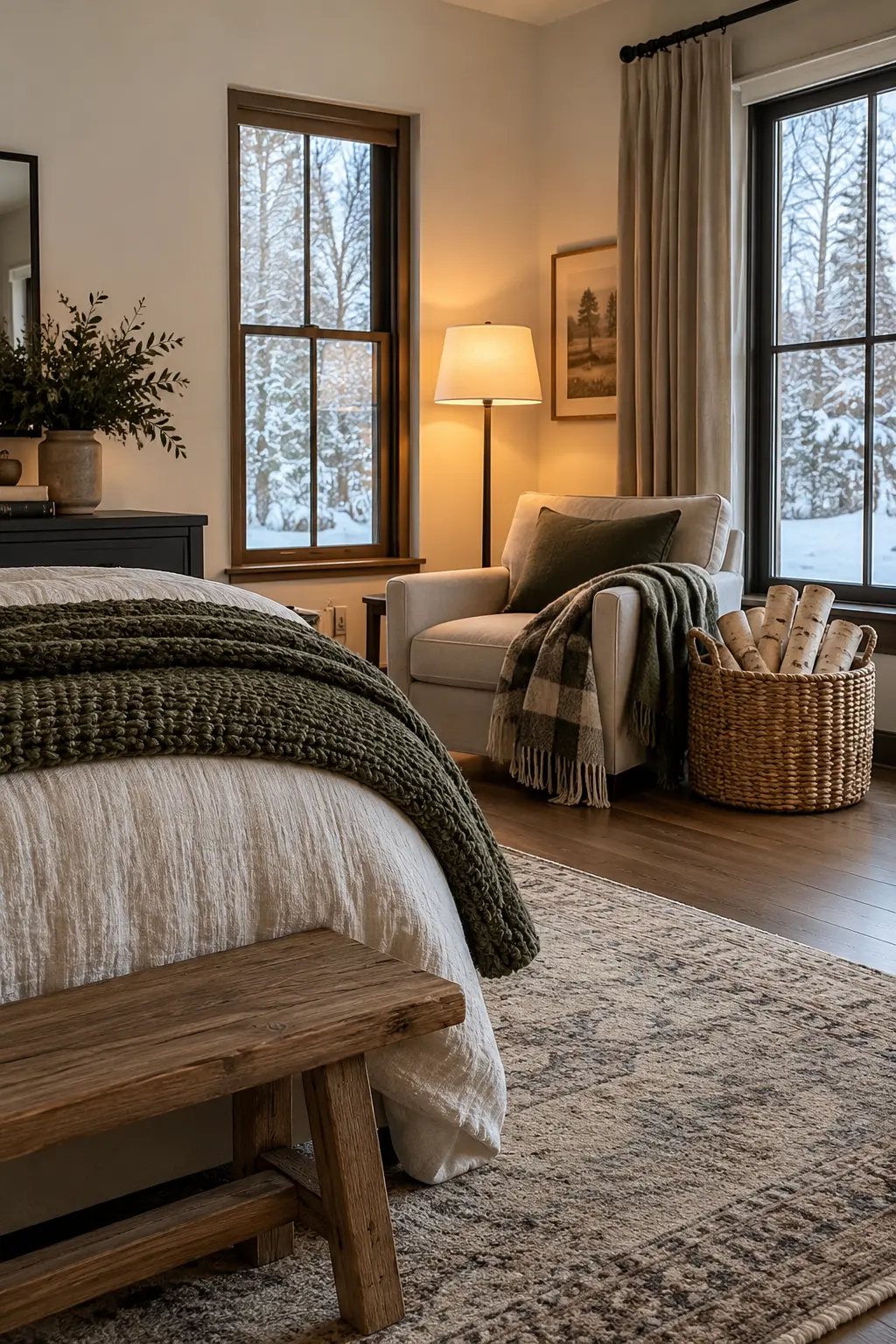
A low basket of clean birch logs adds pale bark and natural pattern beside a reading chair, even without a fireplace. Use dry, debris-free pieces and keep the basket outside the chair's footpath.
48. Regroup Houseplants Near Winter Light
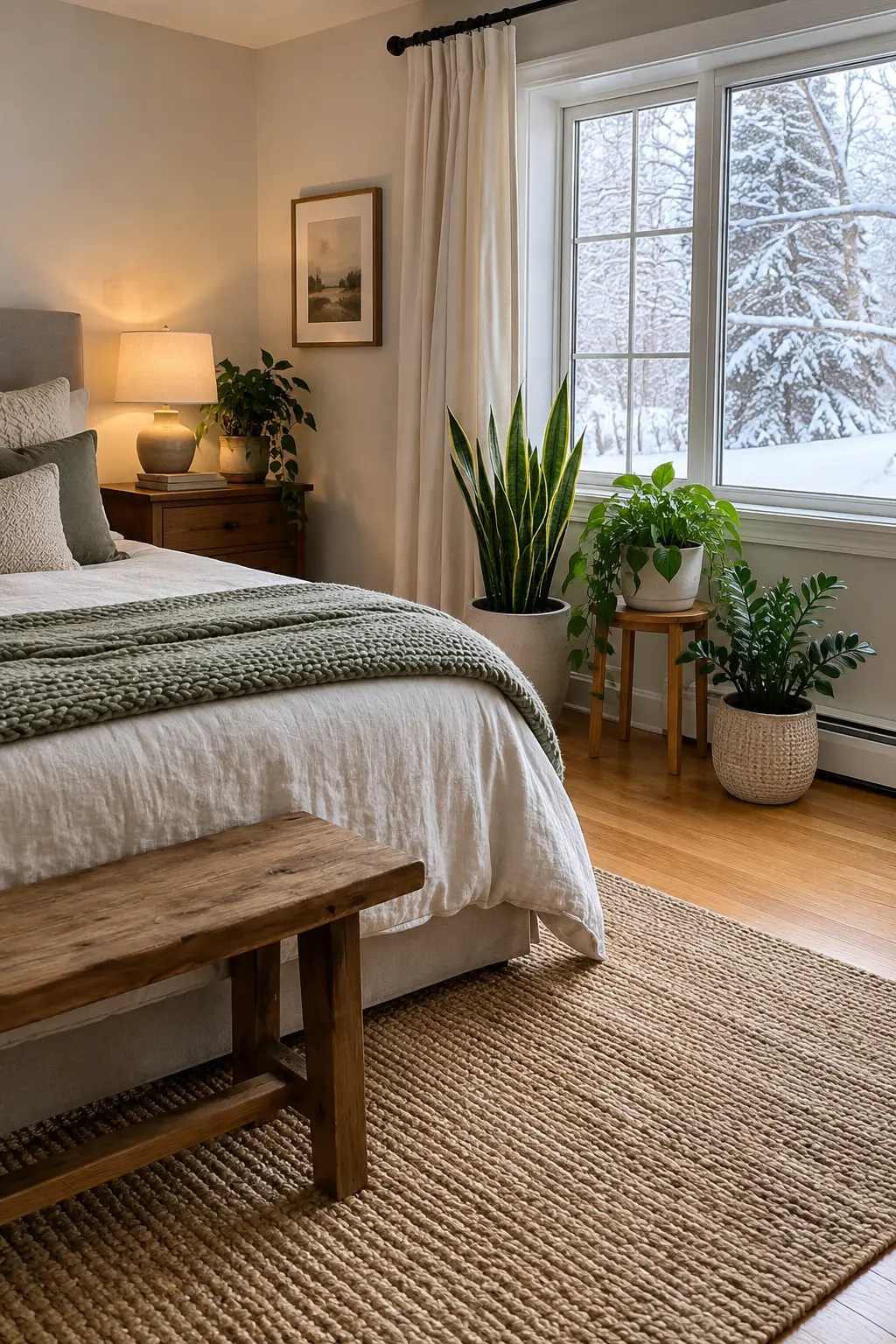
Move three compatible houseplants near the brightest suitable window and vary their height with one low stand. Leave heaters, vents, and curtain movement clear, and base placement on each plant's actual light needs.
49. Style the Dresser with Stoneware and Wood
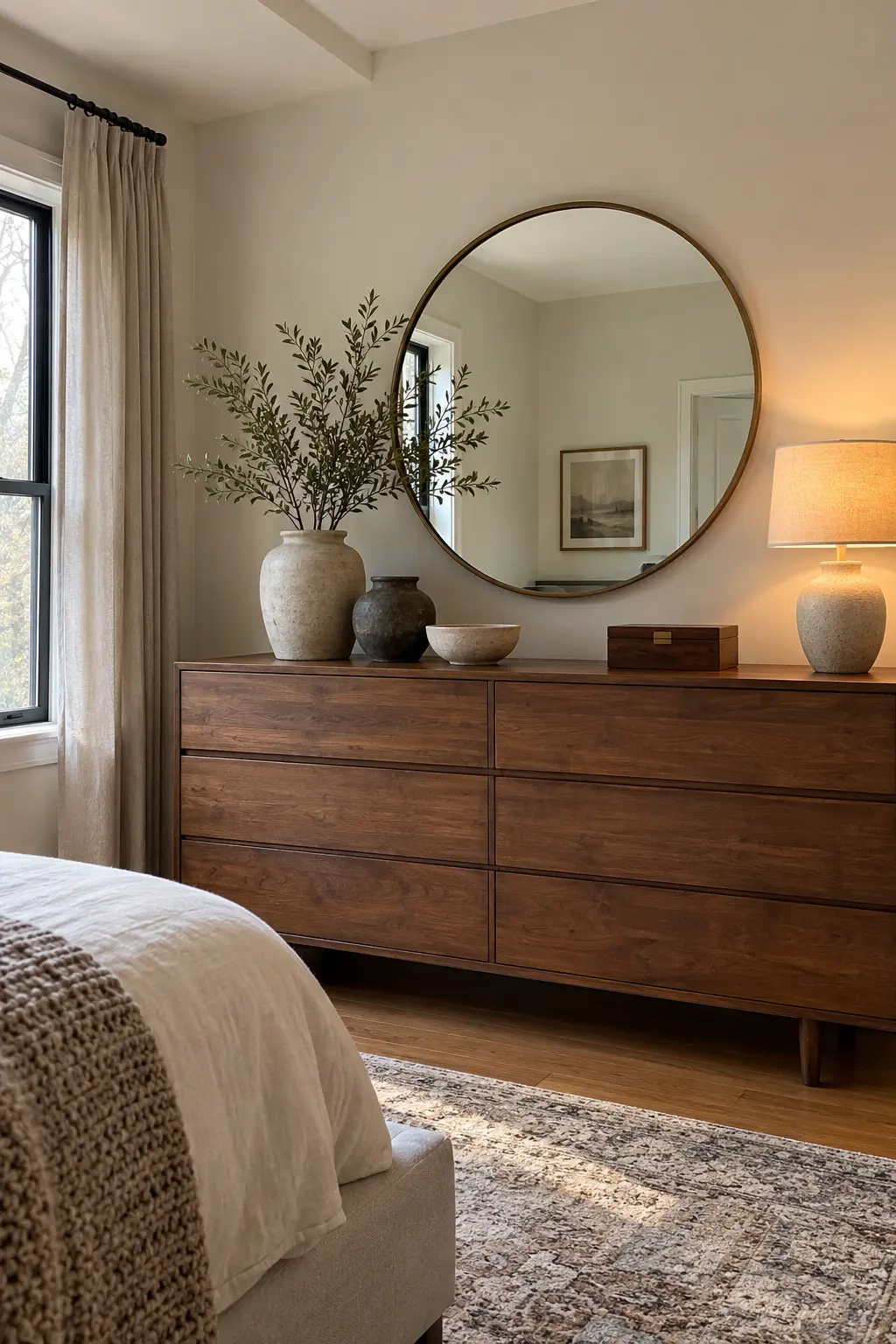
Group three mismatched matte vessels with one small wood box beneath a round mirror. Vary the height and finish, but preserve open surface around the arrangement so the dresser remains useful rather than becoming a display shelf.
50. Add a Firm Knit Pouf to the Reading Corner
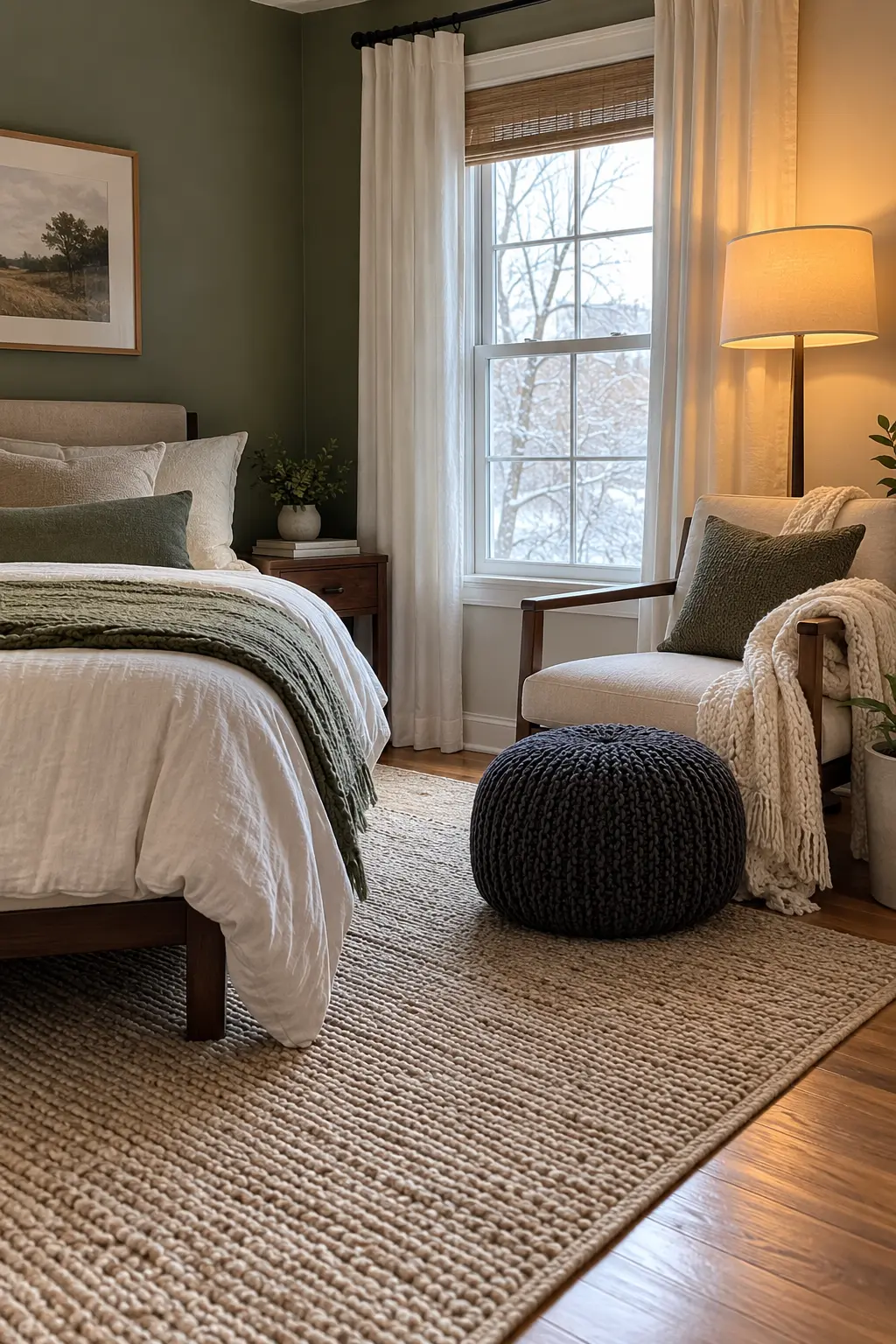
Use a firm knit pouf as a footrest beside a low chair, not as another loose decorative object. Charcoal or deep olive hides everyday wear and gives pale bedding a grounded accent without taking much floor space.
Finish with a Cohesive Winter Style
A strong style comes from repeating a few materials and colors, not from buying a themed set. These final rooms show how the same winter principles adapt to different homes and budgets.
51. Keep a Scandinavian Winter Room Light
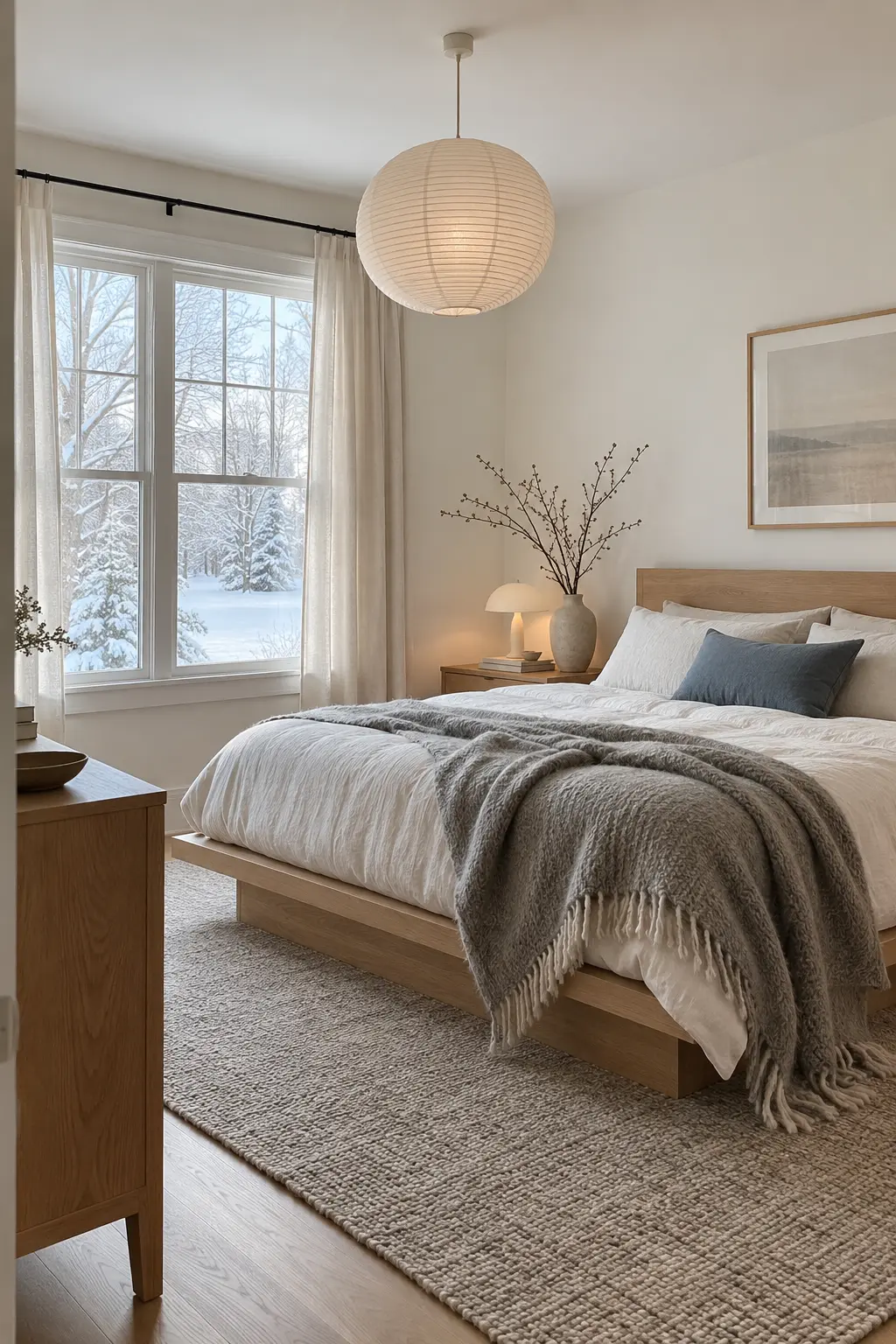
Combine a pale oak bed, white walls, gray wool, and one muted blue accent for a Scandinavian winter look. A paper pendant and single branch arrangement add shape while the limited object count keeps the room airy.
52. Build a Dark-Academia Winter Bedroom
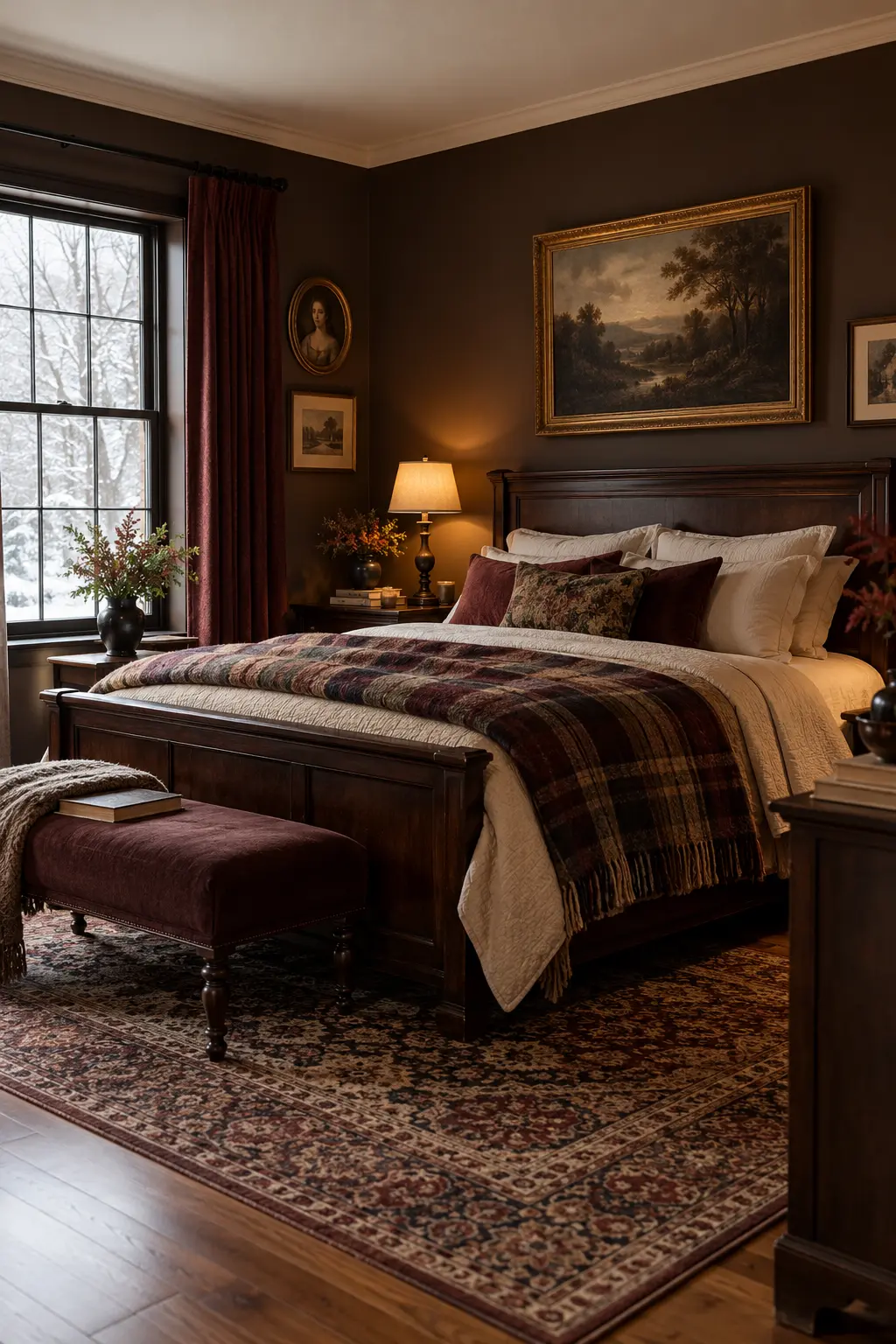
Use deep brown walls, dark wood, a plaid wool blanket, burgundy accents, and a focused reading lamp. A few stacked books and framed traditional art finish the theme, but clear the nightstand and floor so the room remains usable.
53. Refine a Rustic Cabin Bedroom
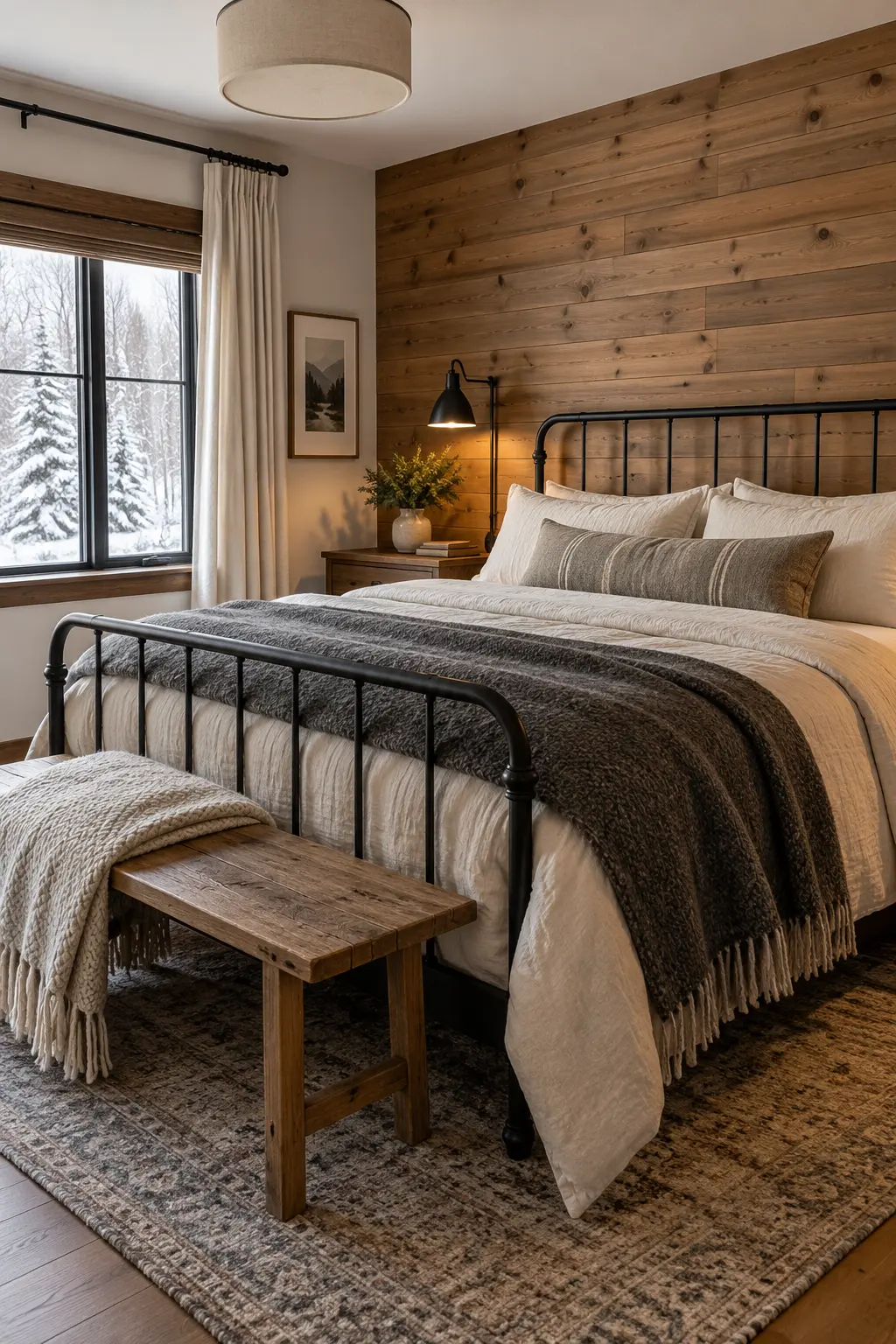
Balance a tongue-and-groove wood wall with a simple black iron bed, cream linens, and one gray wool blanket. Contemporary lamps and an uncluttered rug prevent the cabin elements from turning into a collection of rustic motifs.
54. Give a Rental Bedroom a Low-Cost Winter Reset
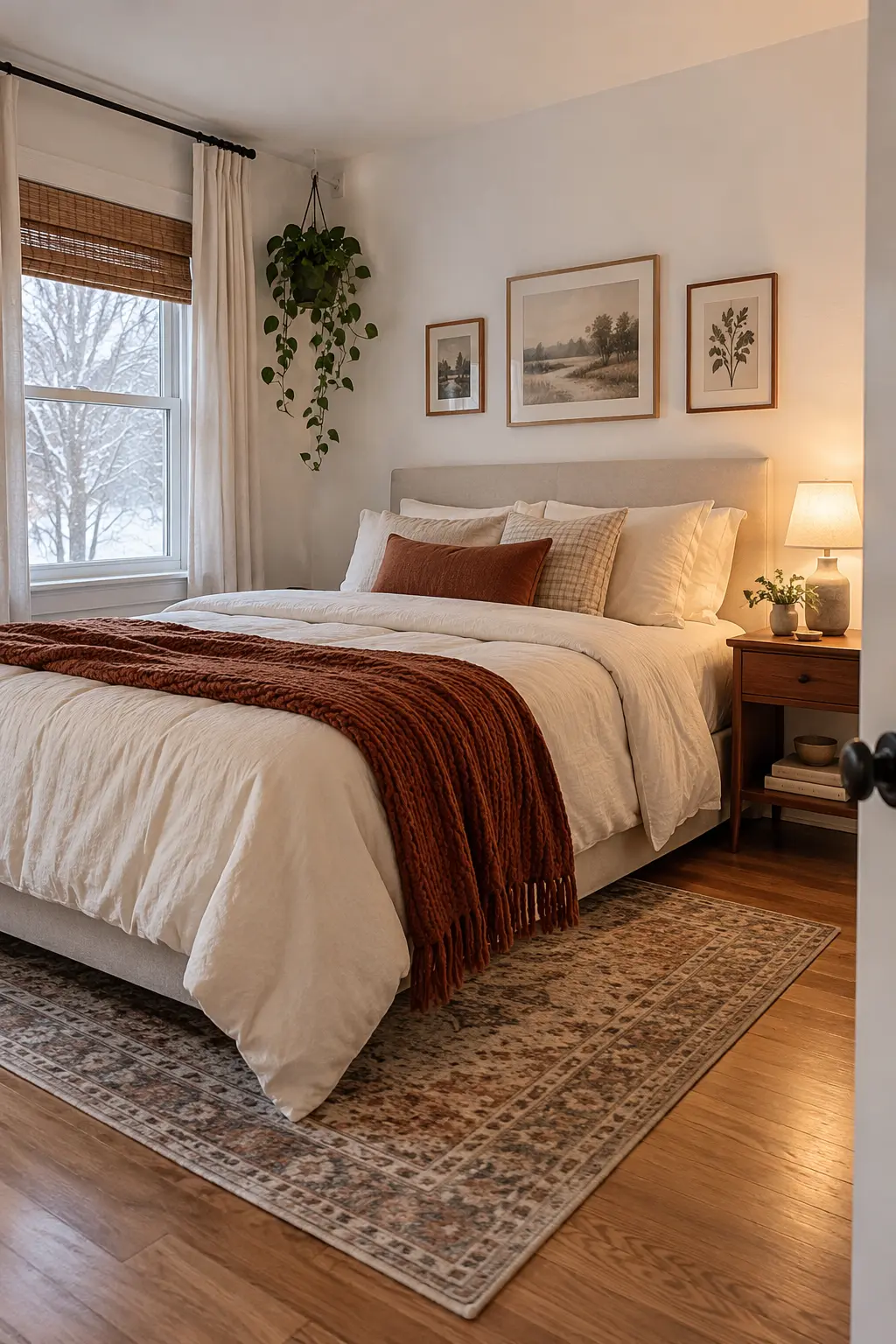
Refresh a rental with washable cream bedding, one rust throw, thrifted wood furniture, a compact rug, and removable picture-hanging hardware. Repeating two warm colors makes mixed affordable pieces look coordinated without permanent construction.
55. Prepare a Winter Guest Room
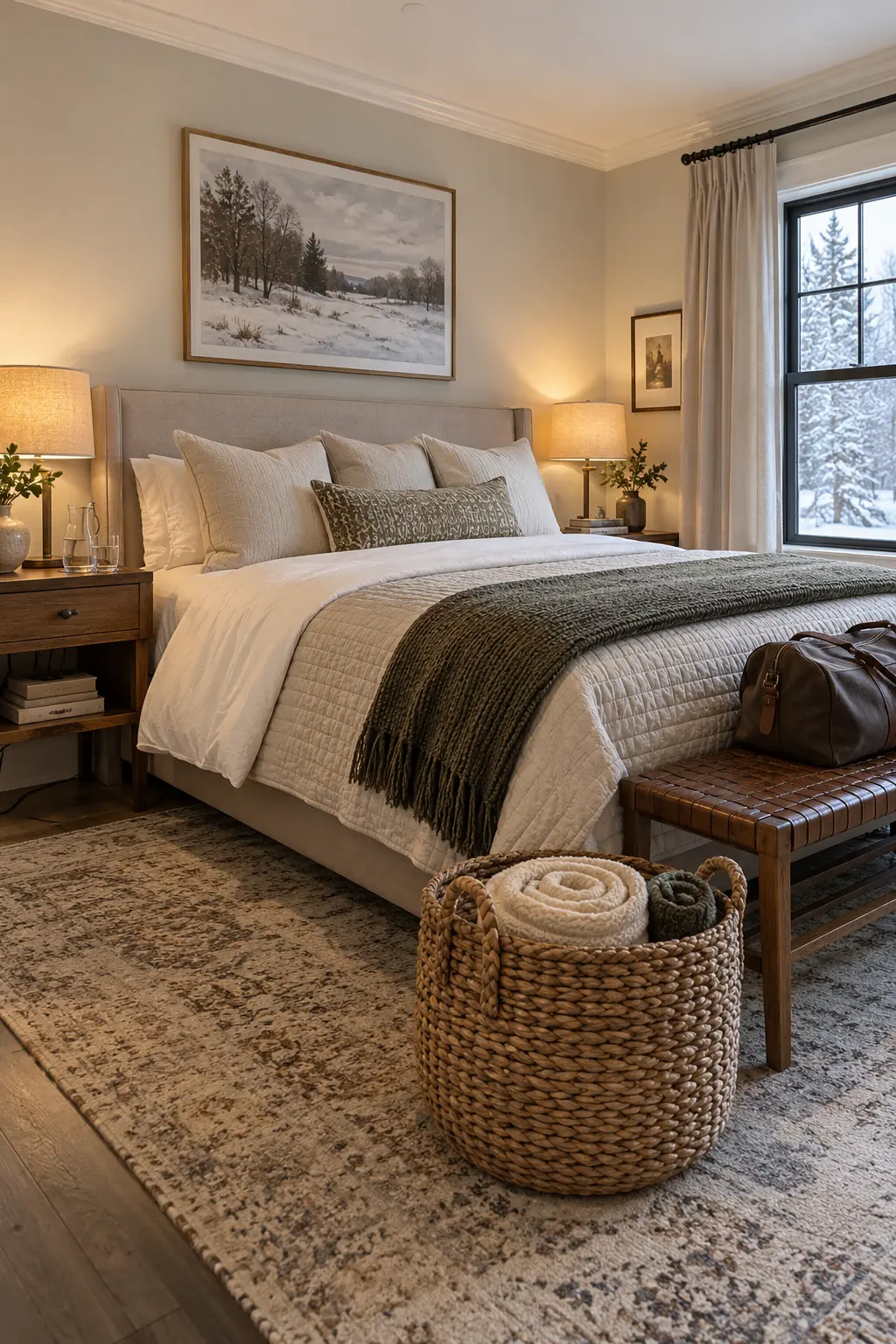
Layer neutral bedding, fold one wool throw at the foot, and place spare blankets in an open basket. A carafe, glass, and clear luggage bench make the room practical for guests without adding themed signs or decorative clutter.
Create a Winter Bedroom You Can Live In
Choose one idea that solves a real problem first, such as cold floors, harsh lighting, or nowhere to keep spare blankets. Then repeat its colors or materials in one other part of the room instead of adding unrelated seasonal objects.
The most convincing winter rooms still leave space to walk, sleep, read, and put things away. When the weather changes, store the heaviest layers and keep the lighting, layout, and useful storage improvements that continue to serve the room.