50 Dried Orange Garland Ideas

This post may contain affiliate links: full affiliate disclosure.
Dried orange garlands offer a natural, aromatic way to add warmth and a vintage feel to your home decor. Whether you prefer a minimalist look or a lush, layered aesthetic, these versatile strands can be adapted with greenery, spices, and ribbons to suit any seasonal theme.
This collection explores various ways to assemble and display citrus garlands across mantels, windows, and holiday trees.
CLASSIC DRIED ORANGE GARLAND IDEAS
1. Simple Dried Orange Slice Garland
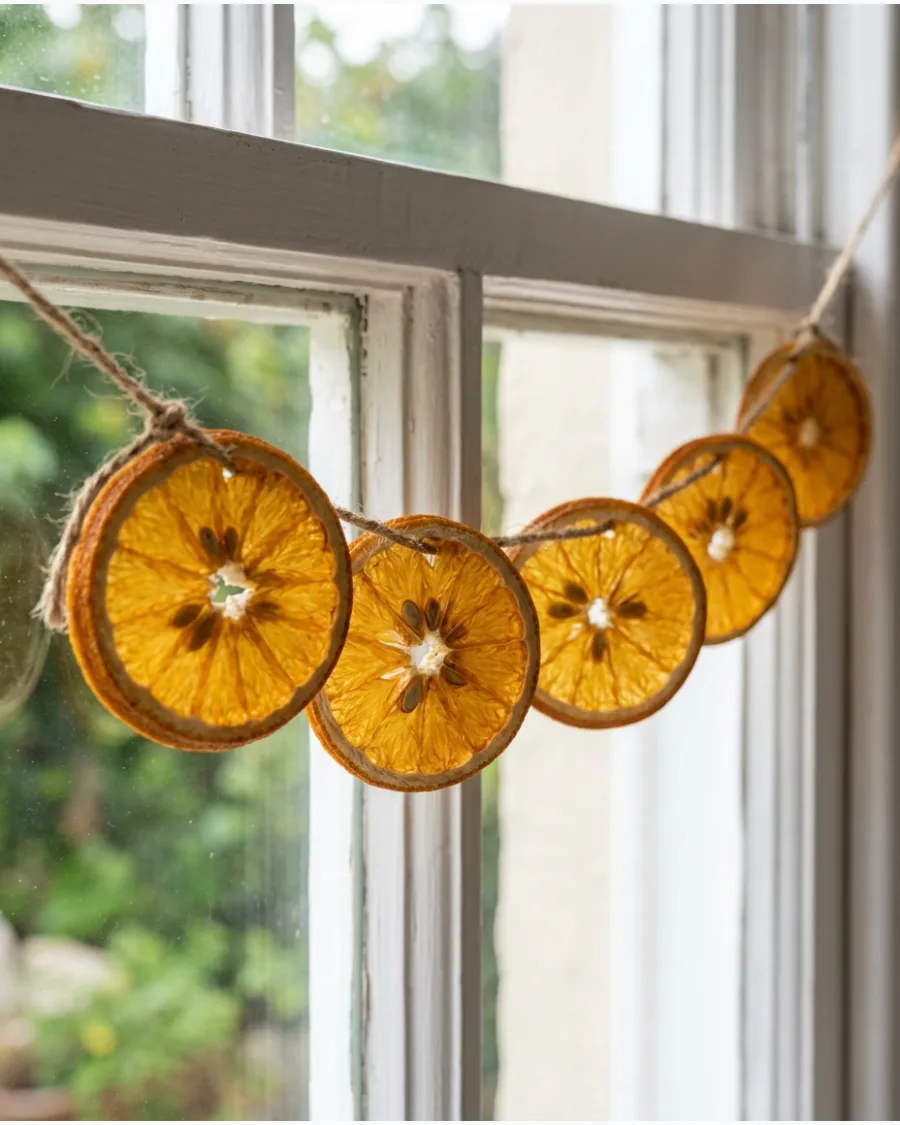
This minimalist approach highlights the natural patterns and warm amber glow of the citrus without unnecessary distractions. Thread a needle with natural jute twine and pierce each orange slice twice through the flesh near the peel to keep them facing forward. It works beautifully draped across a window where backlighting can emphasize the stained-glass effect.
The simplicity makes it versatile enough for year-round decor or traditional holiday themes.
- Space slices approximately 2 to 3 inches apart to ensure the light catches the edges of every piece
- Use thin natural twine or heavy-duty thread for a nearly invisible support system
- Ensure slices are completely dehydrated until they are crisp to prevent mold and sagging over time
Use a large-eye embroidery needle to pass the twine through the orange flesh without tearing the delicate fibers of the fruit.
2. Dried Orange and Cinnamon Stick Garland
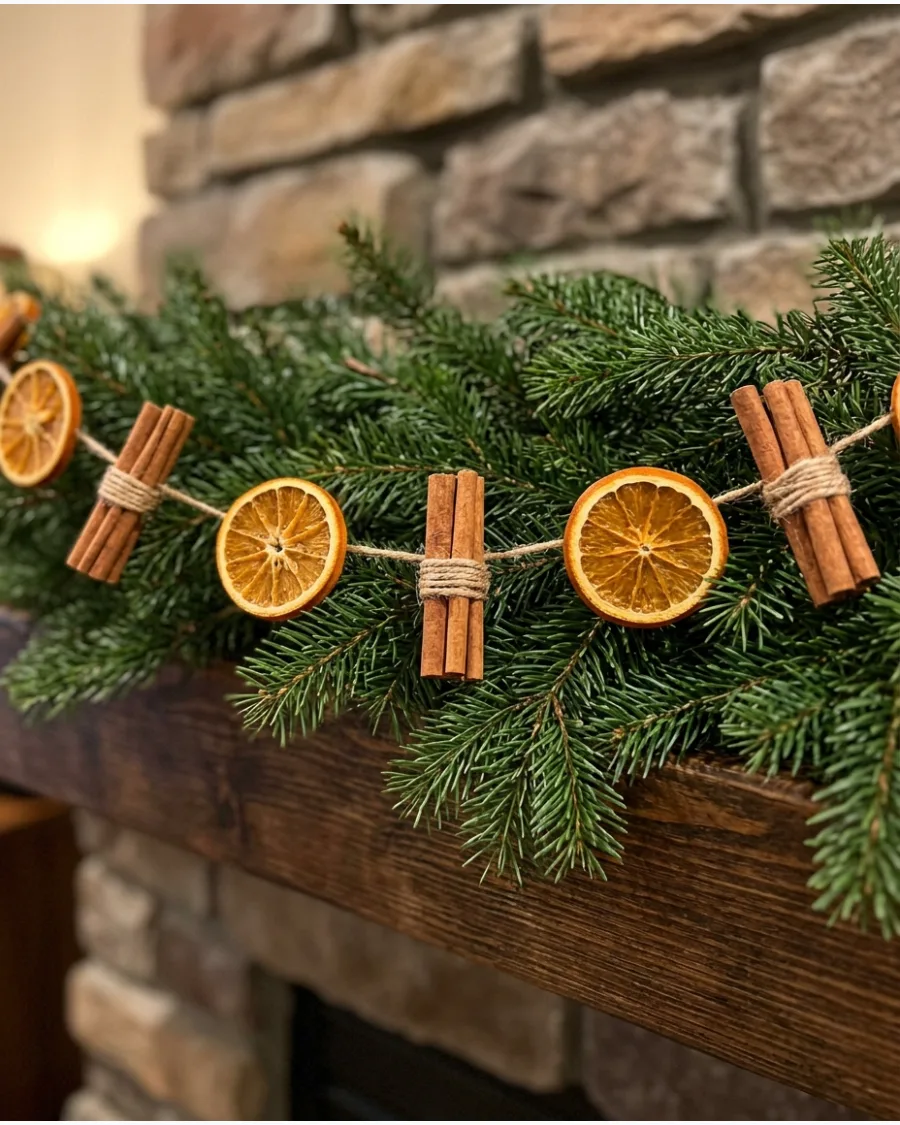
Mix dried orange slices with bundles of cinnamon sticks for a traditional aesthetic and a light spicy scent. Tie small bunches of two or three cinnamon sticks together with twine before securing them between the orange slices along the main garland cord. This layering of textures adds depth and a cozy, rustic feel to your holiday decorations.
It pairs perfectly with fresh cedar or pine boughs for a classic mantel display.
- Secure cinnamon bundles with a tight knot to prevent them from sliding into the orange slices
- Use 3-inch cinnamon sticks for the best visual scale against standard orange rounds
- Leave 4 inches of space between each element to maintain a balanced, uncluttered look
Lightly scuff the surface of the cinnamon sticks with fine-grit sandpaper before hanging to release a fresh aroma into the room.
3. Dried Orange and Star Anise Garland
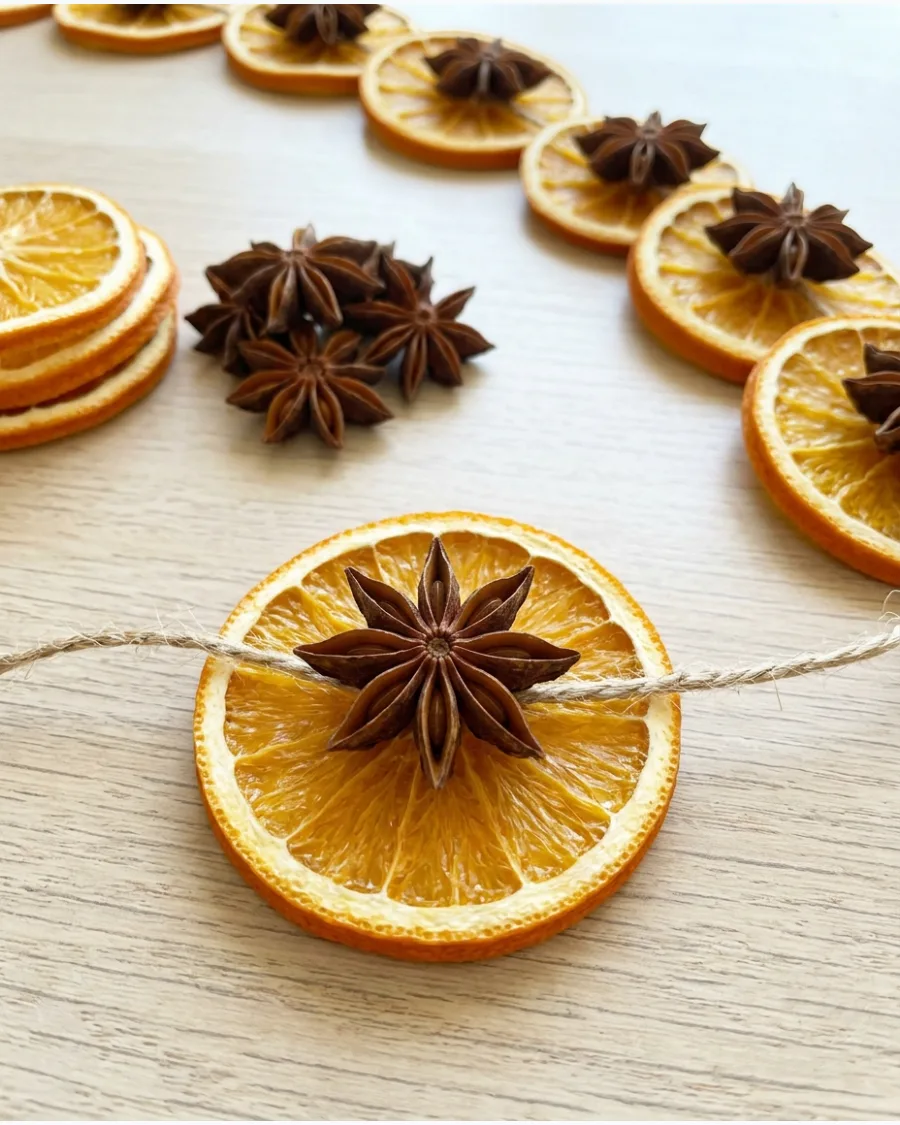
Incorporate the delicate geometric shapes of star anise between your citrus rounds for a detailed, botanical look. Apply a small drop of hot glue to the center of each star anise and press it directly onto the twine or the center of an orange slice to ensure it stays visible. Because star anise is fragile, handle the garland gently during assembly and storage.
The dark brown stars offer a sharp contrast against the bright, warm orange tones.
- Position stars every third or fourth orange slice for a subtle, professional-looking accent
- Use whole star anise pods only to maintain the distinct star-shaped silhouette
- Match the twine color to the star anise for a seamless appearance that highlights the botanicals
If you prefer not to use glue, wrap thin floral wire around the center of the star and twist it onto the main garland cord.
4. Dried Orange and Cranberry Garland
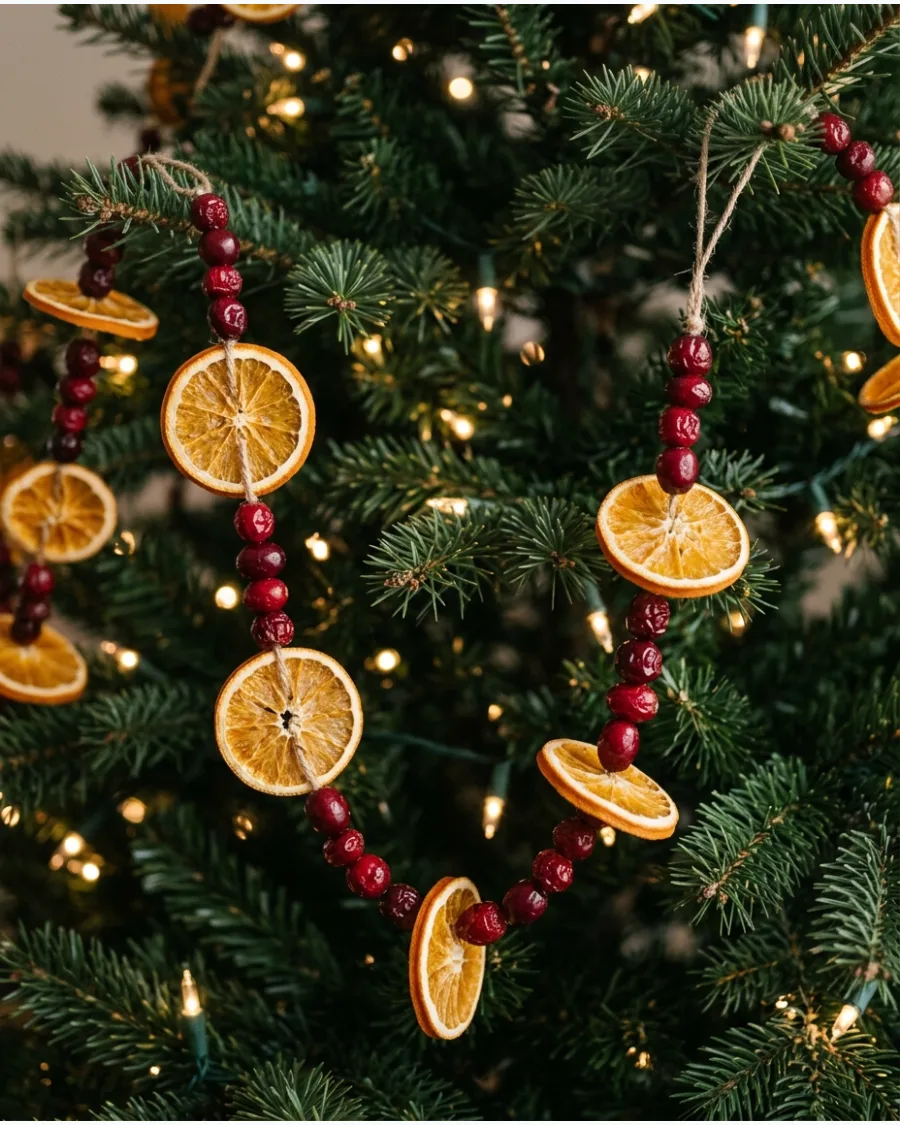
Create a vibrant holiday color palette by alternating deep red cranberries with golden orange slices. String four to five cranberries onto the twine between each orange slice to create distinct blocks of color that pop against dark backgrounds. This combination is a staple of traditional Christmas decor and adds a cheerful, festive touch to a tree or banister.
Dried cranberries work best for long-term use, though fresh berries can be used for short-term events.
- Use a sharp needle to thread through the center of the cranberries to avoid splitting the skins
- Choose uniform cranberry sizes for a neat and professional finished look
- Knot the twine on either side of the cranberry groups to keep them from shifting during hanging
Seal the finished garland with a light coat of clear acrylic spray to preserve the bright red and orange colors.
5. Dried Orange and Pinecone Garland
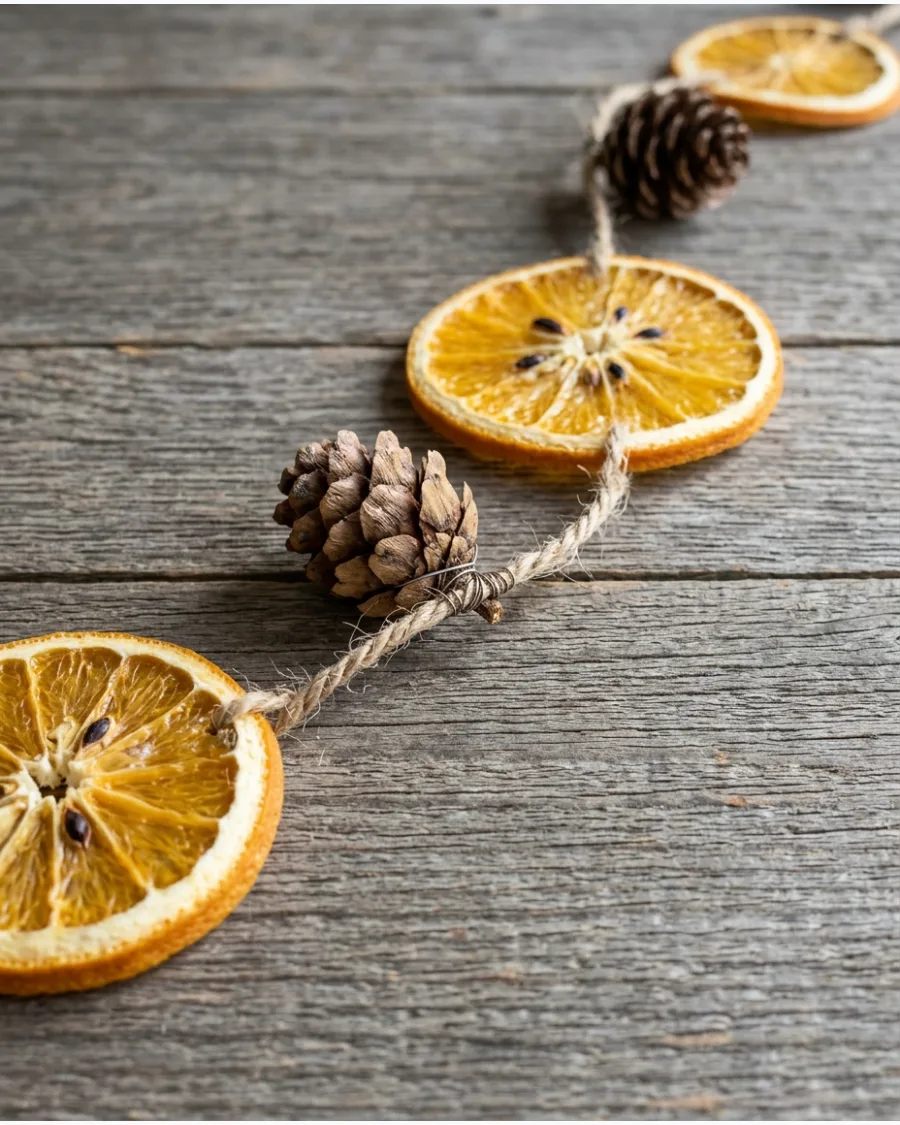
Bring a woodland vibe to your home by adding small pinecones to your orange slice arrangement. Wrap a short length of thin floral wire around the base of a small pinecone and twist it onto the main twine between the citrus slices for a secure hold. This heavy-duty garland has a significant visual weight that grounds a room's decor.
It is an excellent choice for outdoor-inspired themes or rustic farmhouse interiors.
- Select small larch or hemlock pinecones that won't overwhelm the delicate orange slices
- Space elements evenly so the garland hangs straight without twisting or tilting
- Combine with natural hemp cord to match the earthy textures of the wood and citrus
Bake gathered pinecones at 200°F for 30 minutes before use to kill any bugs and help the scales open up fully.
6. Dried Orange and Evergreen Garland
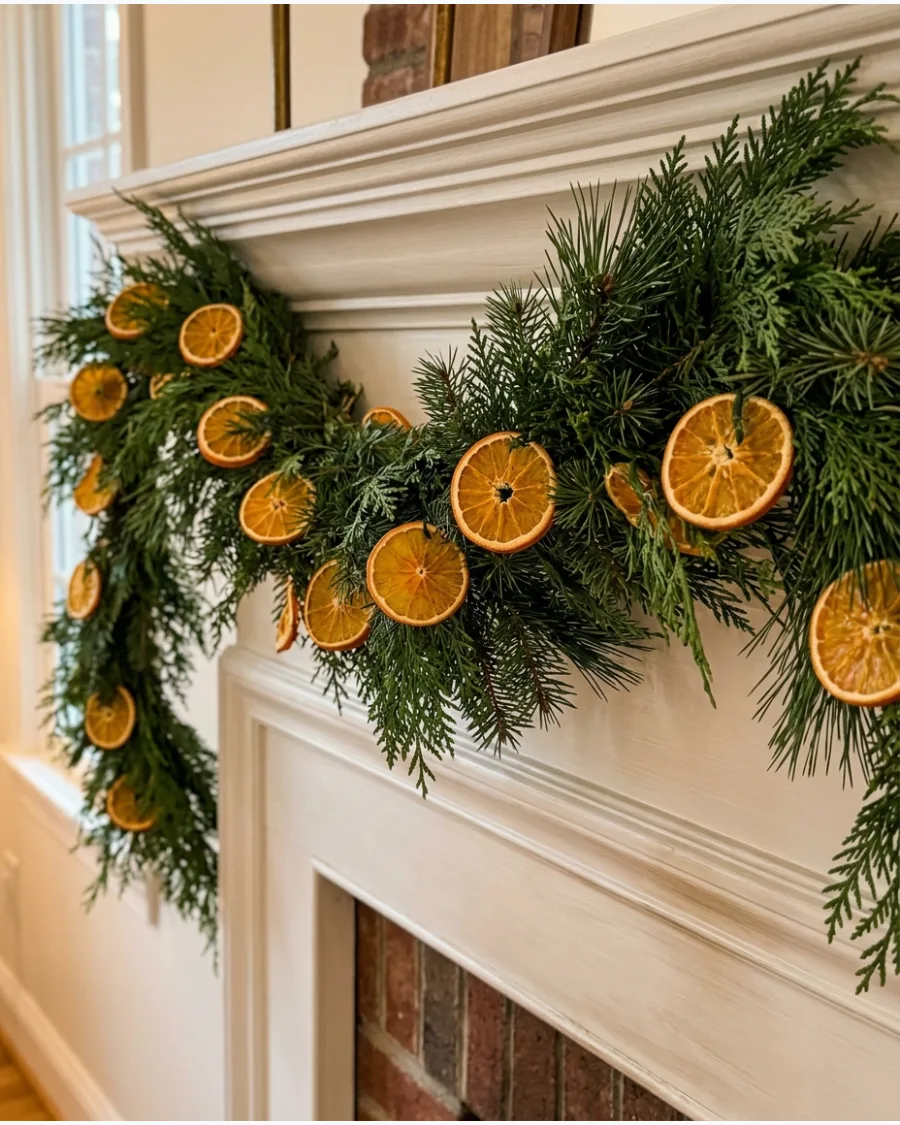
This design elevates a standard evergreen base by integrating the bright, citrusy tones of dried fruit into traditional holiday greenery. Instead of stringing the oranges on a long cord, you integrate them as individual ornaments to create a lush, professional appearance.
Use florist wire or green twine to secure individual orange slices deep into the evergreen boughs for a layered, three-dimensional look. The contrast between the deep green needles and the translucent orange flesh creates a warm, natural aesthetic that works for the entire winter season.
- Cluster slices in groups of two or three to provide more visual impact against heavy pine or cedar textures.
- Weave the wire through the center of the orange slice and wrap it around the main structural stem of the garland for a secure hold.
- Mix different evergreen types, like feathery cedar and stiff pine, to highlight the varying sizes of the orange rounds.
Position the slices near the tips of the branches if you want them to catch more light, or deeper for a subtle, integrated effect.
7. Dried Orange and Cedar Garland
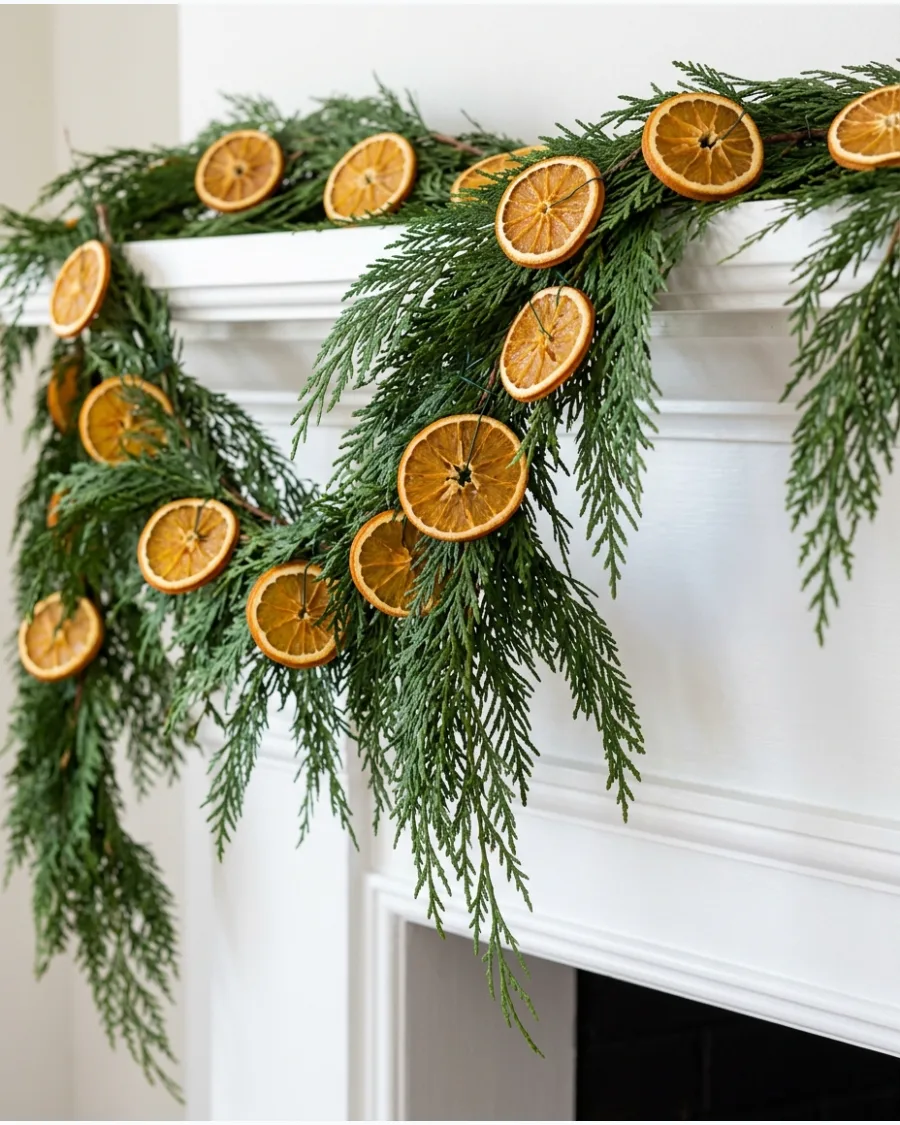
Combine the earthy fragrance of cedar with the translucent glow of citrus for a textured, woodland-inspired display. By layering slices within the greenery rather than stringing them on a separate twine, you create a more integrated and organic look.
Interweave the orange slices by threading thin floral wire through the fruit centers and securing them directly to the sturdier cedar stems. This method ensures the oranges stay visible even if the branches shift during hanging.
- Use fresh cedar for an authentic scent or high-quality faux branches for a reusable holiday decoration.
- Vary the size of the orange slices, placing larger rounds at the center of the garland and smaller ones near the tapered ends.
- Allow the wispy tips of the cedar to drape naturally downward to maintain a relaxed, non-uniform aesthetic.
If using fresh cedar, spritz the branches with a fine water mist once a week to help the needles stay vibrant and attached longer.
8. Dried Orange and Eucalyptus Garland
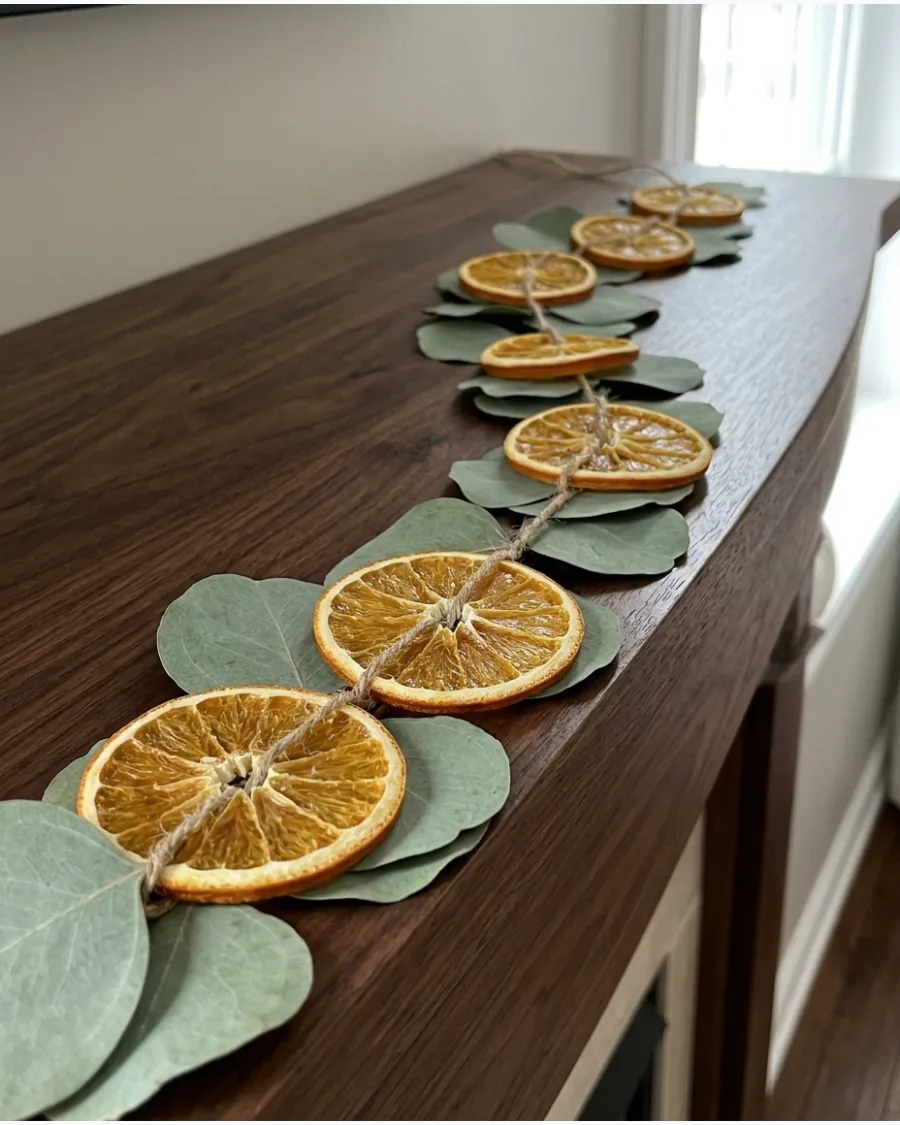
This combination pairs the translucent, stained-glass effect of citrus with the matte, dusty texture of eucalyptus foliage. The muted sage tones provide a sophisticated backdrop that highlights the warm amber hues of the fruit.
Thread a needle with natural jute twine and pierce through the top of the orange flesh and the base of the eucalyptus stems to create a continuous organic line.
- Mix silver dollar eucalyptus for a rounded look or willow eucalyptus for a longer, more trailing aesthetic.
- Space the orange slices every three to four inches to allow the greenery to provide volume without overcrowding.
- Use preserved eucalyptus rather than fresh to ensure the leaves maintain their color and shape as the garland hangs.
If the eucalyptus leaves are brittle, lightly mist them with water before threading to prevent the stems from snapping.
9. Dried Orange and Bay Leaf Garland
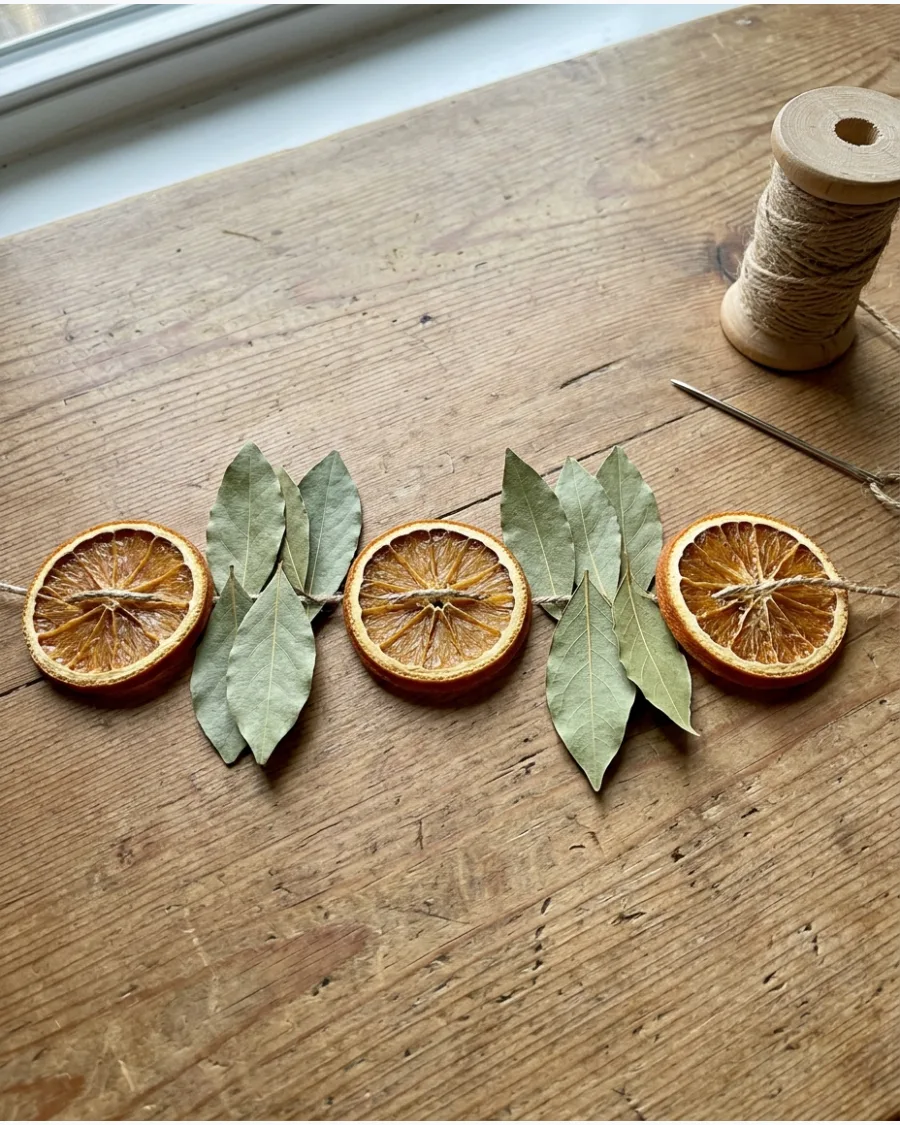
Combine the vibrant color of citrus with the muted, herbal tones of greenery for a sophisticated botanical look. Thread a large embroidery needle with jute twine and alternate single orange slices with clusters of three bay leaves. Aligning the leaves in a single direction creates a professional, polished finish that flows beautifully across a mantel or shelf.
- Pierce the bay leaves through the center vein to prevent the brittle edges from cracking during assembly.
- Overlapping the leaves slightly hides the twine and adds volume to the sections between the orange slices.
- Ensure all leaves face the same way to give the garland a sense of movement and intentional design.
If your dried bay leaves are too brittle to thread, lightly mist them with water and wait ten minutes to make them pliable enough to work with.
10. Dried Orange and Rosemary Garland
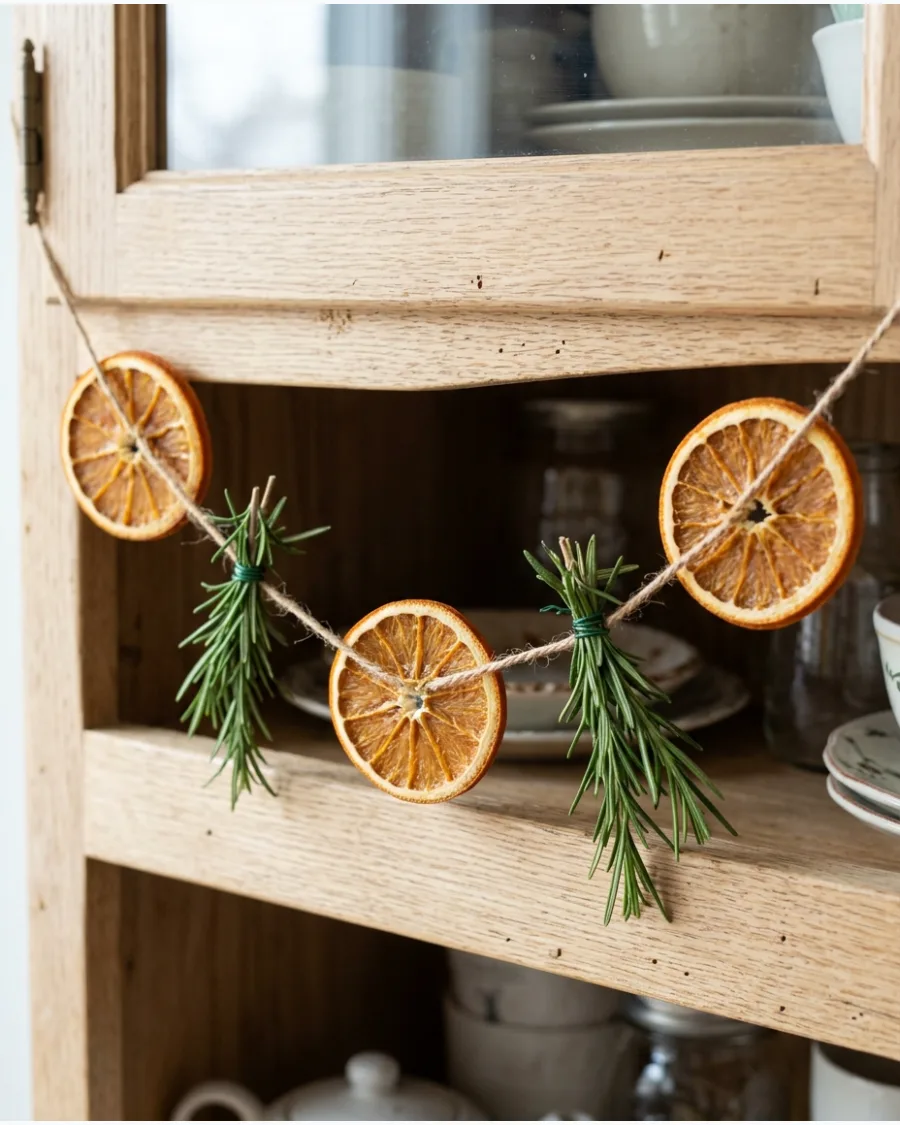
This herb-inspired garland brings a garden-fresh scent and deep texture to your holiday decor by pairing vibrant citrus with needle-like greens. It is particularly effective for decorating kitchens and dining areas where the culinary theme feels most appropriate.
Secure small bundles of rosemary with thin floral wire before threading them onto the twine between every two or three orange slices. The contrast between the translucent orange rounds and the structured herbs creates a sophisticated, rustic aesthetic.
- Use 3-inch sprigs of rosemary to ensure the bundles maintain a consistent scale with the orange slices.
- Opt for faux rosemary for a multi-year decoration or fresh sprigs that will air-dry naturally as they hang.
- Alternate the direction of the rosemary bundles along the twine to give the garland a more organic and voluminous appearance.
To prevent dried rosemary from shedding needles over food preparation surfaces, lightly mist the sprigs with a clear matte sealant before assembly.
RUSTIC AND OLD-FASHIONED DRIED ORANGE GARLANDS
11. Old-Fashioned Dried Orange Garland
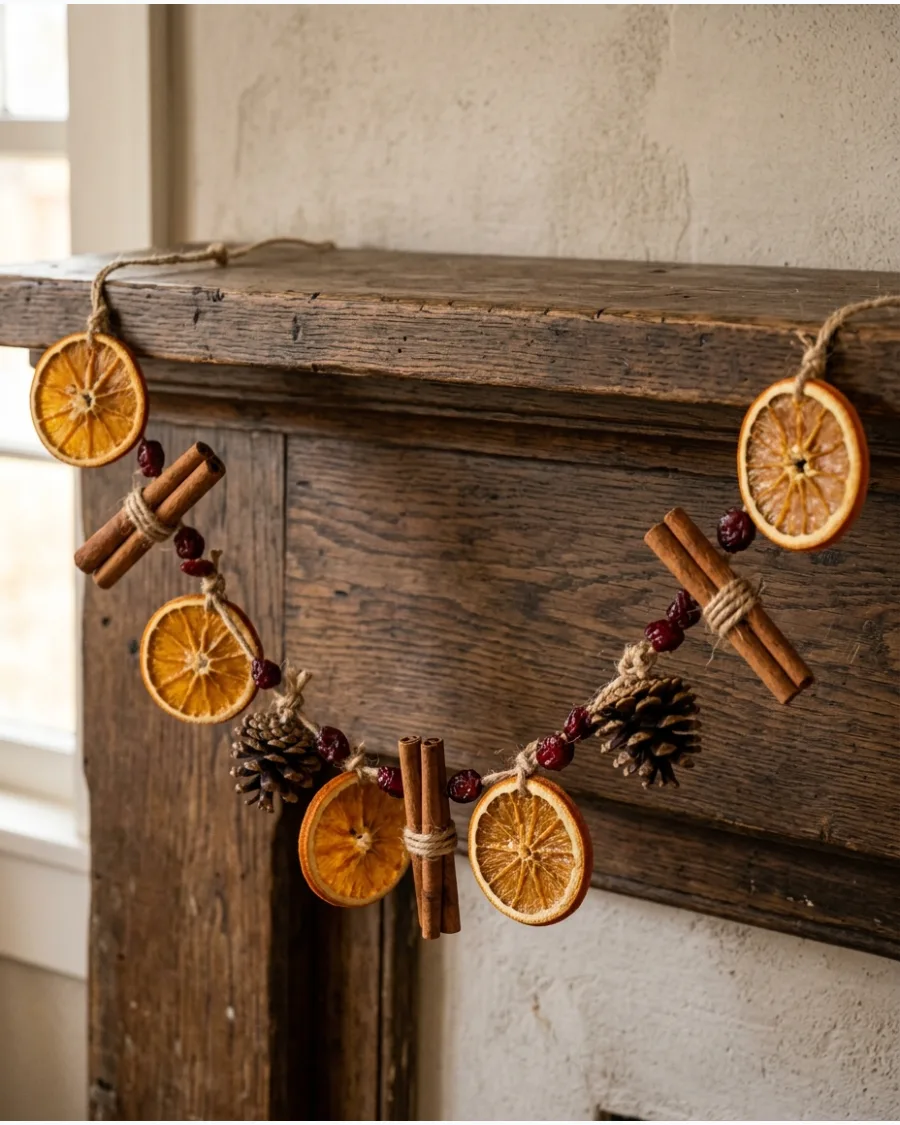
This design captures a nostalgic holiday aesthetic by combining several natural elements into one cohesive strand. By mixing textures from citrus, wood, and berry, you create a tactile decoration that feels timeless and handmade.
Alternate the placement of dried orange slices with bundles of cinnamon sticks and whole pinecones along a length of natural jute or hemp twine. This variety provides a sense of abundance and a traditional "found in nature" look suitable for any cozy room.
- Space the larger components about 3 to 4 inches apart to ensure the garland drapes evenly without looking cluttered.
- Incorporate fresh or dried cranberries between the oranges and pinecones to add a festive pop of deep red color.
- Thread the twine through the fleshy part of the orange slices twice to keep them from tilting or sliding down the string.
Tie a small knot in the twine on both sides of heavier items like pinecones and cinnamon sticks to lock them into their specific positions.
12. Dried Orange and Popcorn Garland
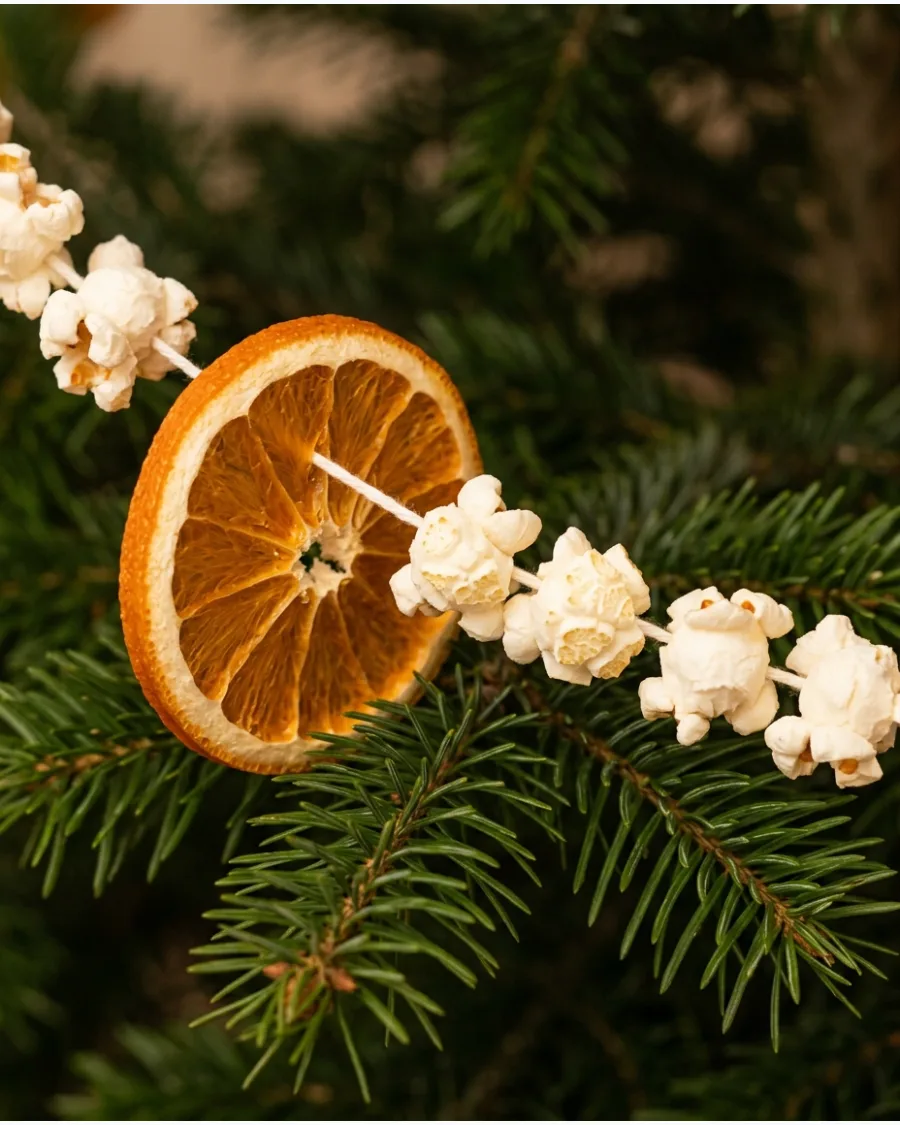
Combine the vibrant translucency of dried citrus with the classic, snowy texture of air-popped corn for a vintage holiday look. This design relies on a rhythmic pattern to balance the heavy slices with the light, airy popcorn clusters.
Thread a sharp needle with heavy-duty white cotton string to alternate single orange slices with segments of four to six popcorn kernels. This combination creates a nostalgic aesthetic that captures light beautifully when draped near a window or tree lights.
- Use plain, unbuttered air-popped corn to prevent oil spots or residue from transferring to the oranges or your hands.
- Pierce the orange slices through the top of the flesh just below the rind to ensure they hang vertically without the weight tearing the center.
- Maintain consistent spacing between the popcorn segments to create a clean, intentional pattern that doesn't look cluttered.
If the popcorn is too brittle and shatters while threading, let it sit out in an open bowl overnight to become slightly stale and more pliable.
13. Rustic Dried Orange and Jute Garland
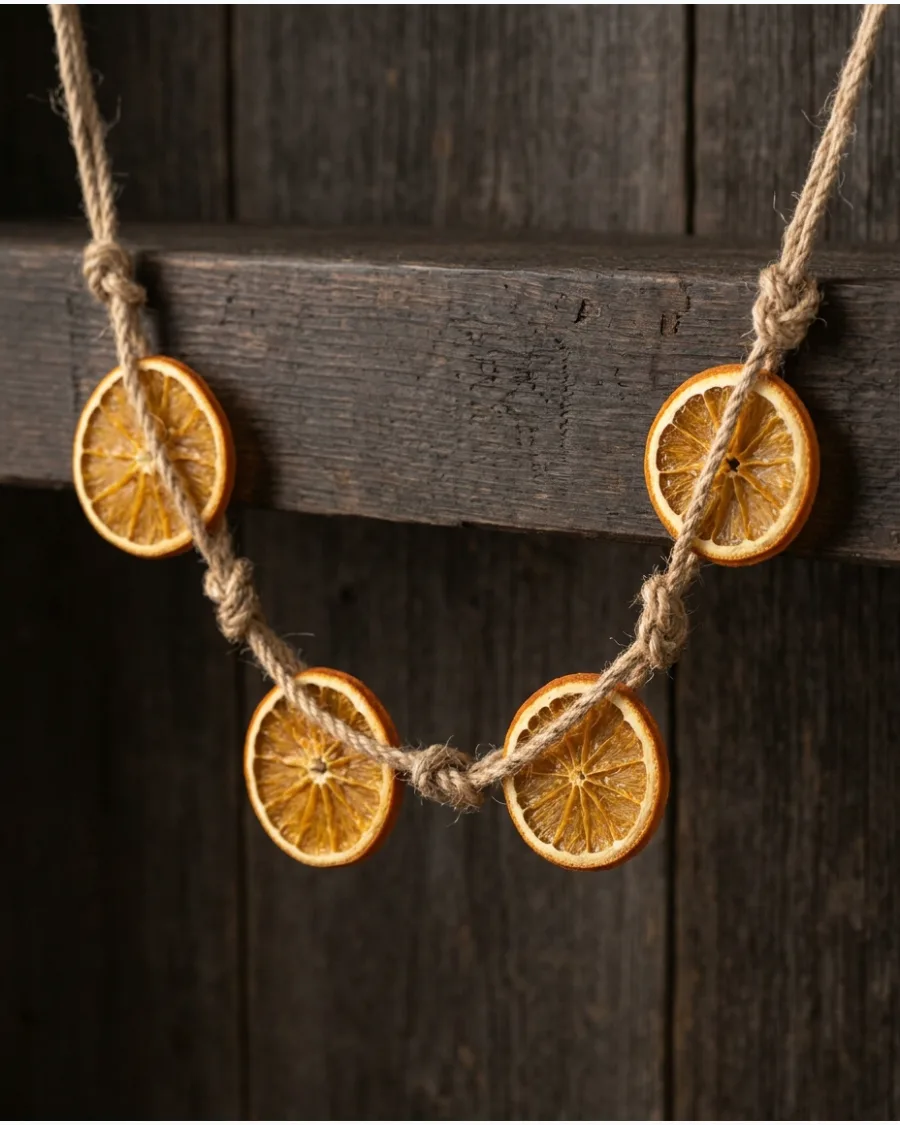
This design emphasizes a rugged, handmade aesthetic by pairing delicate citrus slices with heavy-duty fibers. The contrast between the translucent fruit and the coarse twine makes it an ideal accent for farmhouse or primitive decor styles.
Thread your dried orange slices onto thick natural jute and tie visible overhand knots between the fruit to anchor them in place and add textured gaps. Using thick twine ensures the garland feels substantial rather than fragile.
- Choose a 3-ply or 4-ply jute twine to match the visual weight of large navel orange slices.
- Use a large-eyed upholstery needle or a small crochet hook to pull the thick fibers through the flesh of the fruit without tearing it.
- Space the knots three to five inches apart to allow the natural fibers of the twine to serve as a decorative element.
Dip the ends of the jute in a small amount of melted beeswax or white glue to create a stiff point for easier threading.
14. Dried Orange and Wood Bead Garland
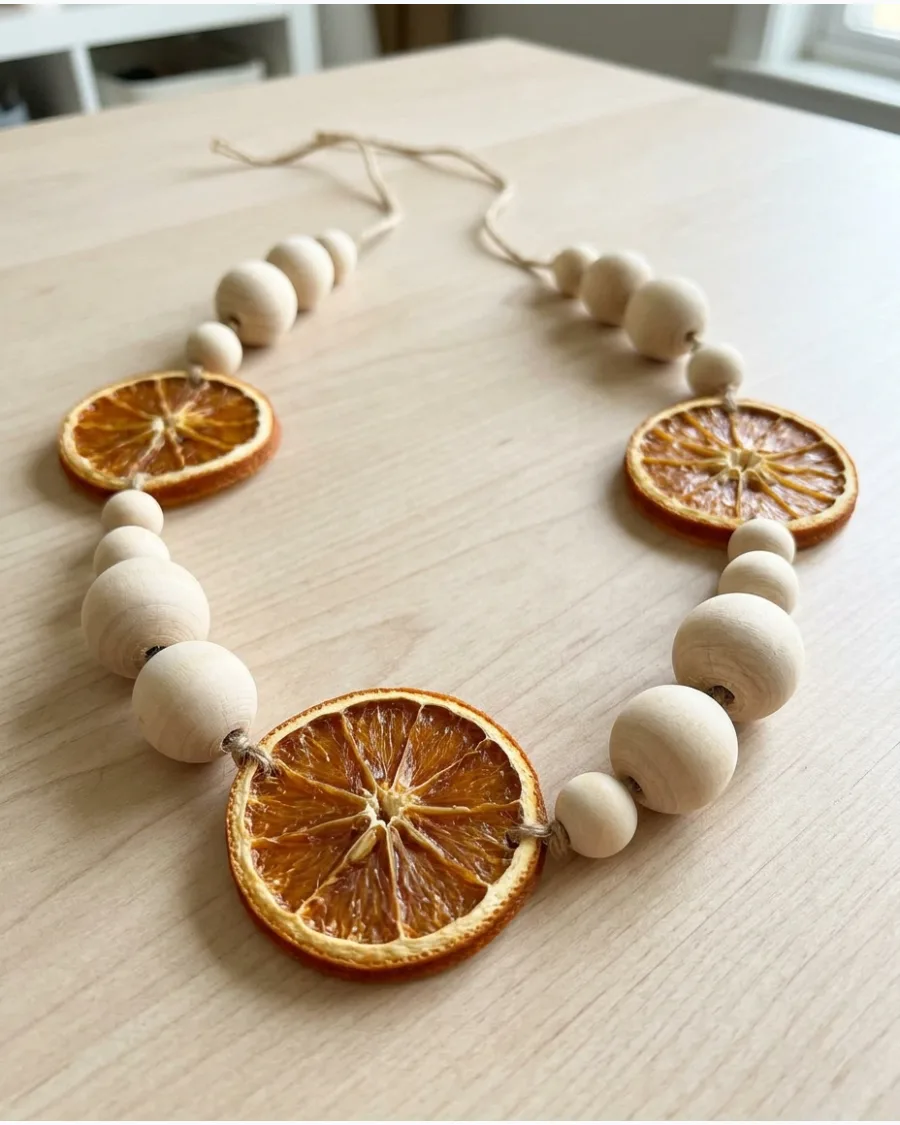
This variation combines the vibrant translucency of dried citrus with the organic texture of raw timber. By integrating wooden beads between each slice, you create more physical separation and structural weight for the strand.
Thread your twine through different sizes of unfinished wooden beads to establish a rhythmic, varied pattern that complements a Scandi or farmhouse aesthetic. The lack of paint or stain ensures the focus remains on the natural grain and the warm amber tones of the fruit.
- Use a variety of 10mm to 20mm beads to create visual interest through diameter variation.
- Select jute or thick cotton baker's twine to support the added weight of the timber.
- Leave a small gap between the bead and the orange slice to allow the fruit to hang vertically without twisting.
Check that the holes in your wooden beads are wide enough for a tapestry needle to pass through twice if you plan on looping the twine for extra security.
15. Dried Orange Pinecone and Cinnamon Garland
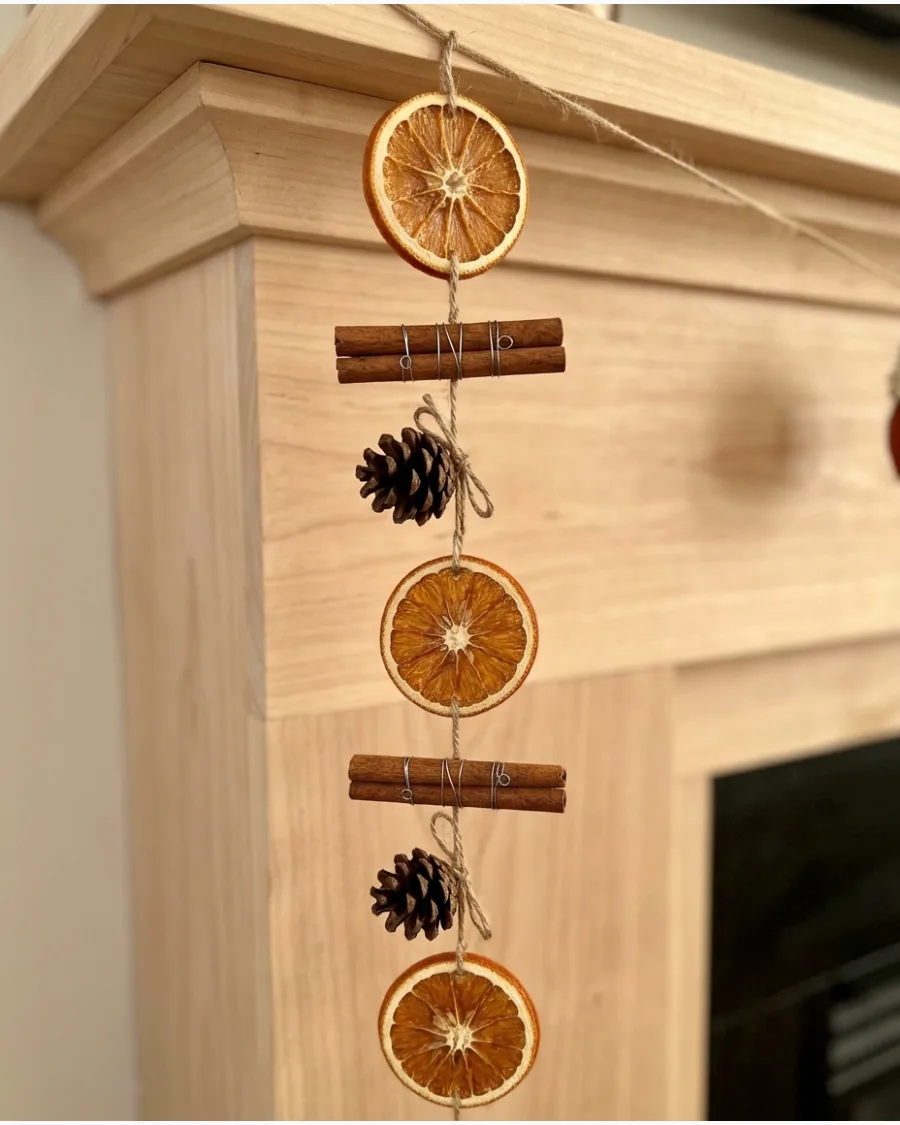
This design uses three distinct textures to create a rich, tactile holiday decoration. By grouping cinnamon sticks into small bundles and mixing them with pinecones and citrus, you achieve a balanced look that works well in rustic settings.
Space each element at least two inches apart on heavy jute twine to ensure the individual shapes of the cones and cinnamon remain distinct. This arrangement highlights the contrast between the translucent orange slices and the dark, matte wood tones.
- Secure cinnamon bundles by wrapping thin florist wire around two or three sticks before looping them onto the main twine.
- Choose miniature pinecones, such as hemlock or larch, to prevent excess weight from sagging the string over time.
- Pierce the orange slices through the flesh near the top edge rather than the center to help them hang vertically.
Dip the tips of the pinecones in a small amount of white craft paint to mimic frost and help them stand out against dark walls.
16. Dried Orange and Brass Bell Garland
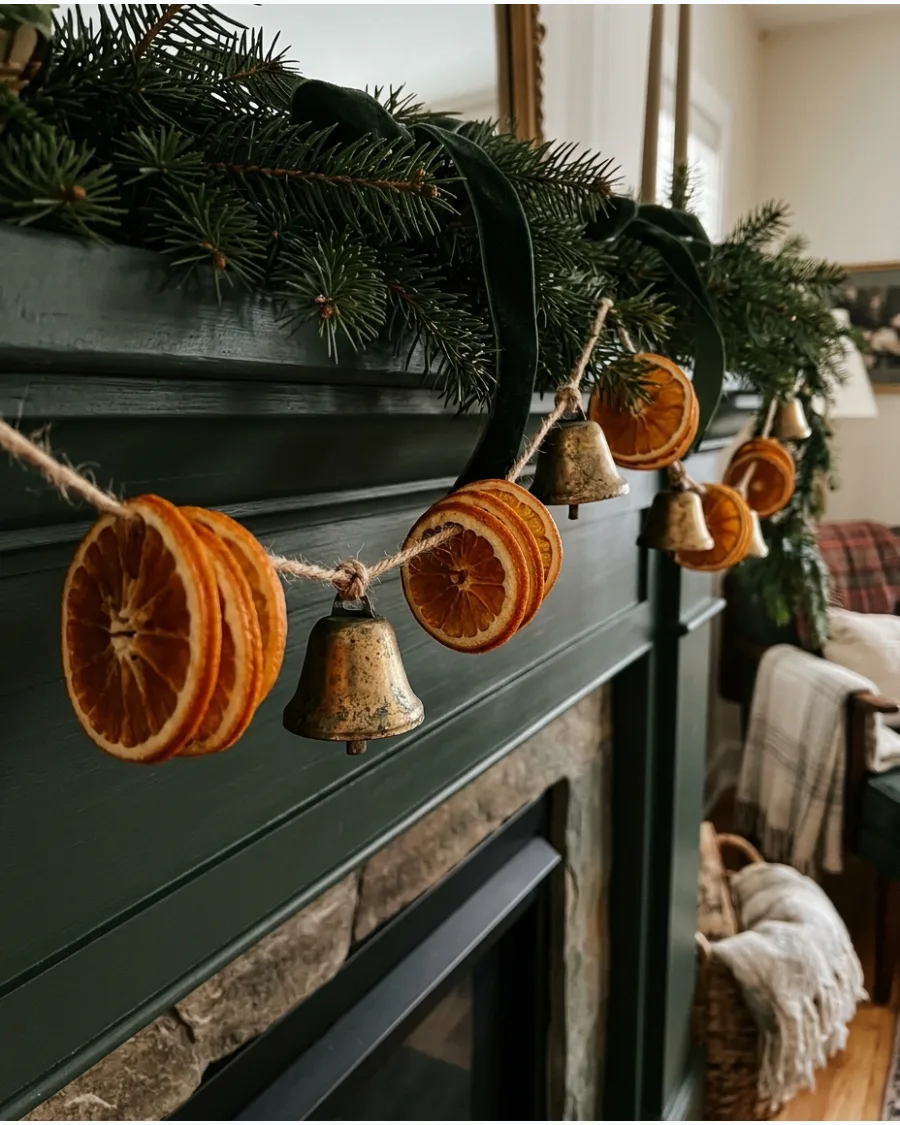
Mixing citrus slices with metallic accents provides a classic contrast that catches the light during the holidays. Use aged brass bells rather than shiny gold to maintain a vintage, heritage feel that complements the fruit.
Space the bells evenly between clusters of two or three orange slices to create a balanced rhythm along the twine. This combination works exceptionally well when layered over dark green pine or cedar branches.
- Aged brass bells add a subtle chime when the garland is moved by a breeze or passing guests
- Dry oranges until they are translucent and firm to ensure they can support the weight of the metal bells
- Use a heavy-duty jute or hemp cord rather than thin thread to prevent the garland from sagging
Loop the twine through the top handle of each bell twice to lock it in place and prevent it from sliding into the orange slices.
17. Dried Orange and Red Velvet Bow Garland
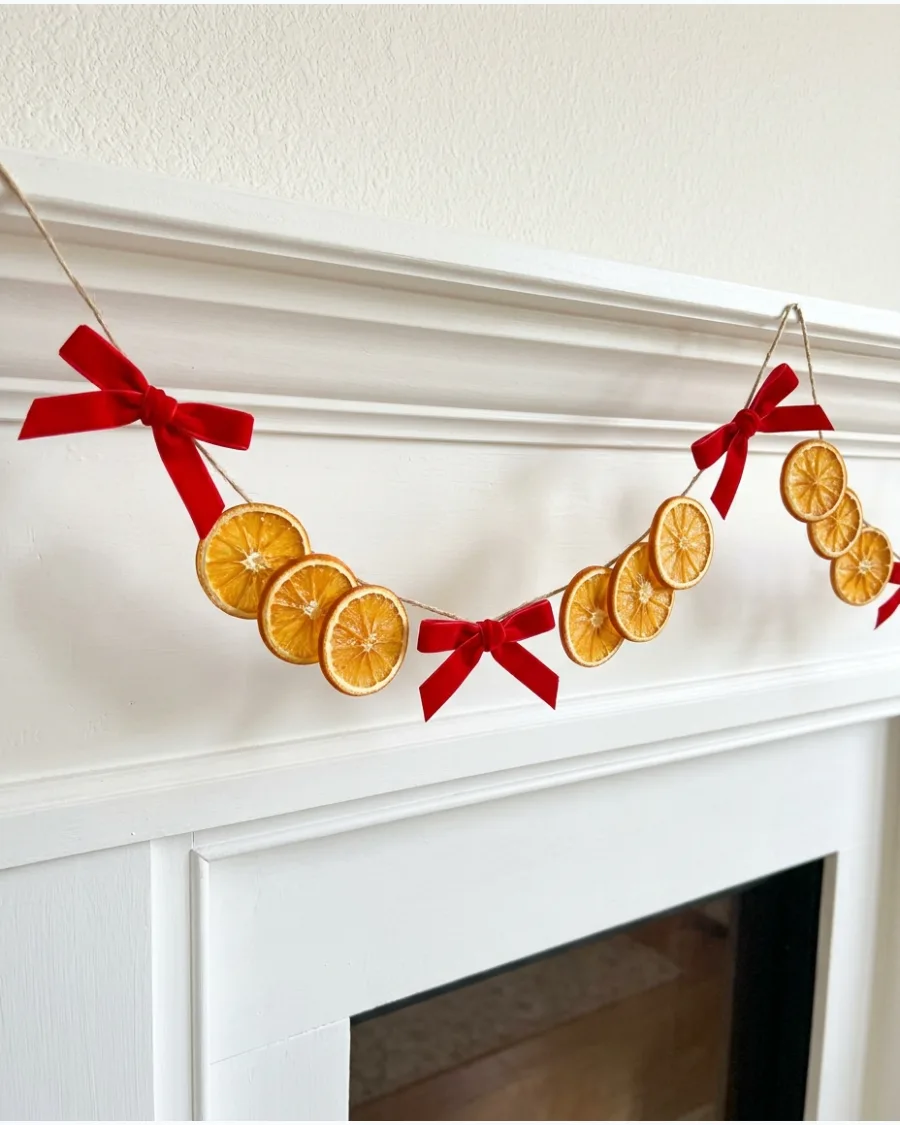
Red velvet adds a soft, luxurious texture that offsets the crisp, matte finish of dried citrus. This style bridges the gap between handmade rustic and traditional holiday elegance by introducing a pop of classic color.
Secure small pre-tied velvet bows onto the twine using thin florist wire or a simple knot between every third orange slice. The result is a vibrant, festive strand that feels finished and intentional.
- Choose a narrow 3/8-inch ribbon to keep the bows proportional to the orange slices
- Natural jute twine provides a grippy surface that prevents the bows from shifting once tied
- Coordinate the red velvet with other room accents like stockings or pillows for a cohesive theme
Use wired velvet ribbon if you want the bow loops to stay perfectly round and perky all season long without flattening.
18. Dried Orange and Burgundy Ribbon Garland
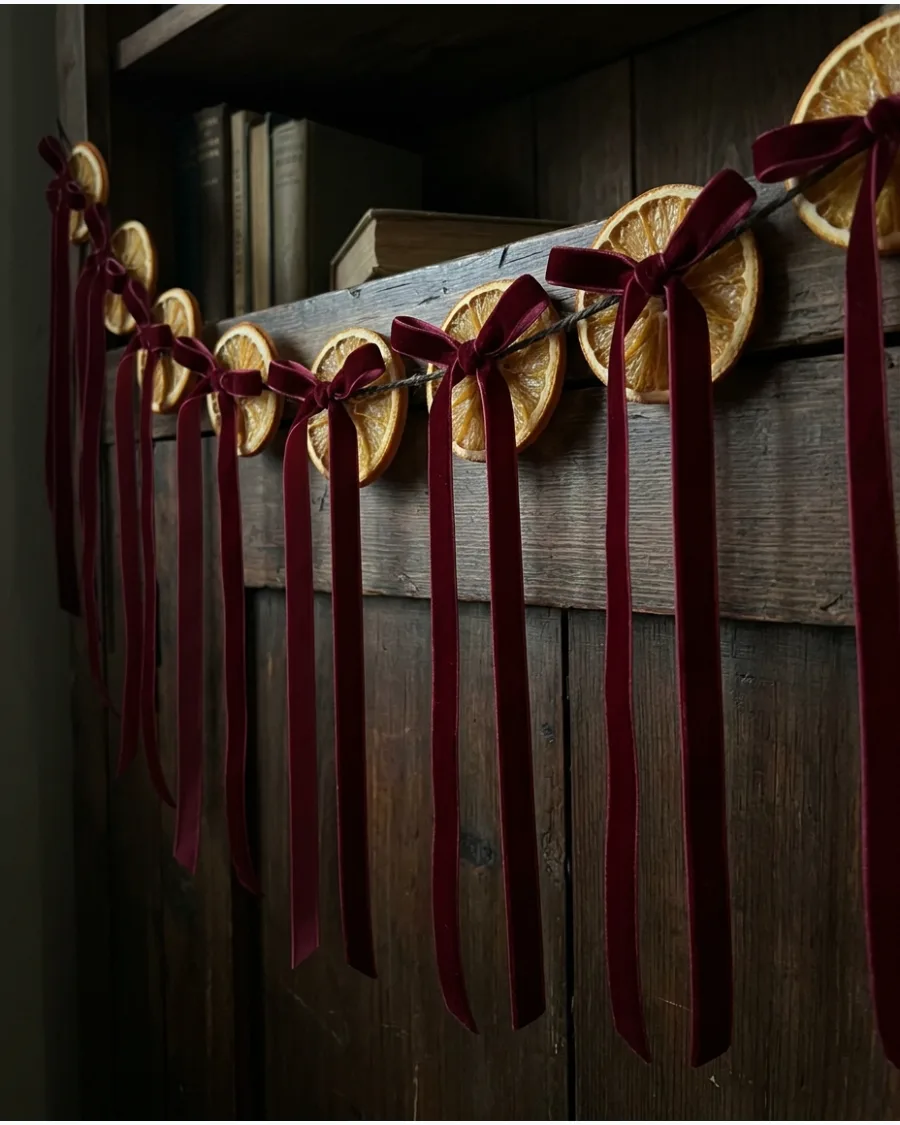
Burgundy offers a sophisticated alternative to bright red, leaning into a moody, old-world aesthetic. This deeper tone complements the burnt orange and amber hues of the dried fruit perfectly for a more formal holiday setup.
Tie narrow burgundy ribbons directly onto the garland string with long, flowing tails to add vertical movement and grace. This approach looks best when the garland is hung in a deep swag rather than pulled tight against a wall.
- Deep wine and oxblood shades of ribbon create a victorian-inspired palette
- Velvet or grosgrain textures work best for holding knots securely on the twine
- Distribute the ribbons at irregular intervals for a more organic, handcrafted appearance
Seal the ends of the ribbon with a tiny dab of clear glue or a quick heat singe to prevent fraying over time.
19. Dried Orange and Twine Bow Garland
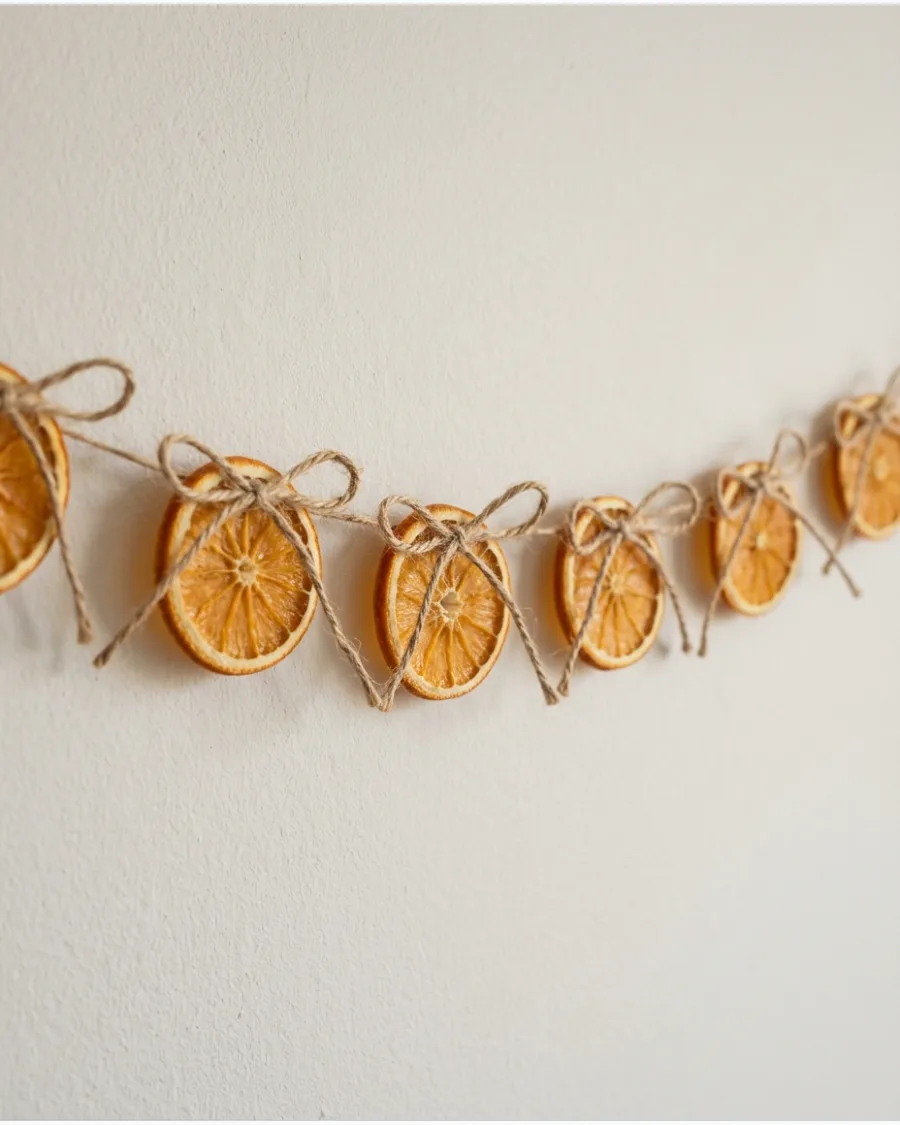
For a purely rustic and budget-friendly project, use the same material for the bows as you do for the main string. This monochromatic texture emphasizes the natural shapes of the oranges without adding competing colors or patterns.
Knot small loops of raw jute twine between each citrus slice, leaving the ends slightly frayed for a relaxed, cottagecore look. This is an ideal project for a minimalist or farmhouse-style interior.
- Use a three-ply twine for the main strand and a thinner two-ply twine for the decorative bows to vary the scale
- Ensure oranges are fully dehydrated until they feel like wood to prevent moisture from damaging the twine
- This lightweight garland is easy to hang using simple clear adhesive hooks or small tacks
Soak the twine in a strong black tea bath before assembly if you want a darker, more aged 'antique' brown color.
20. Farmhouse Dried Orange Garland
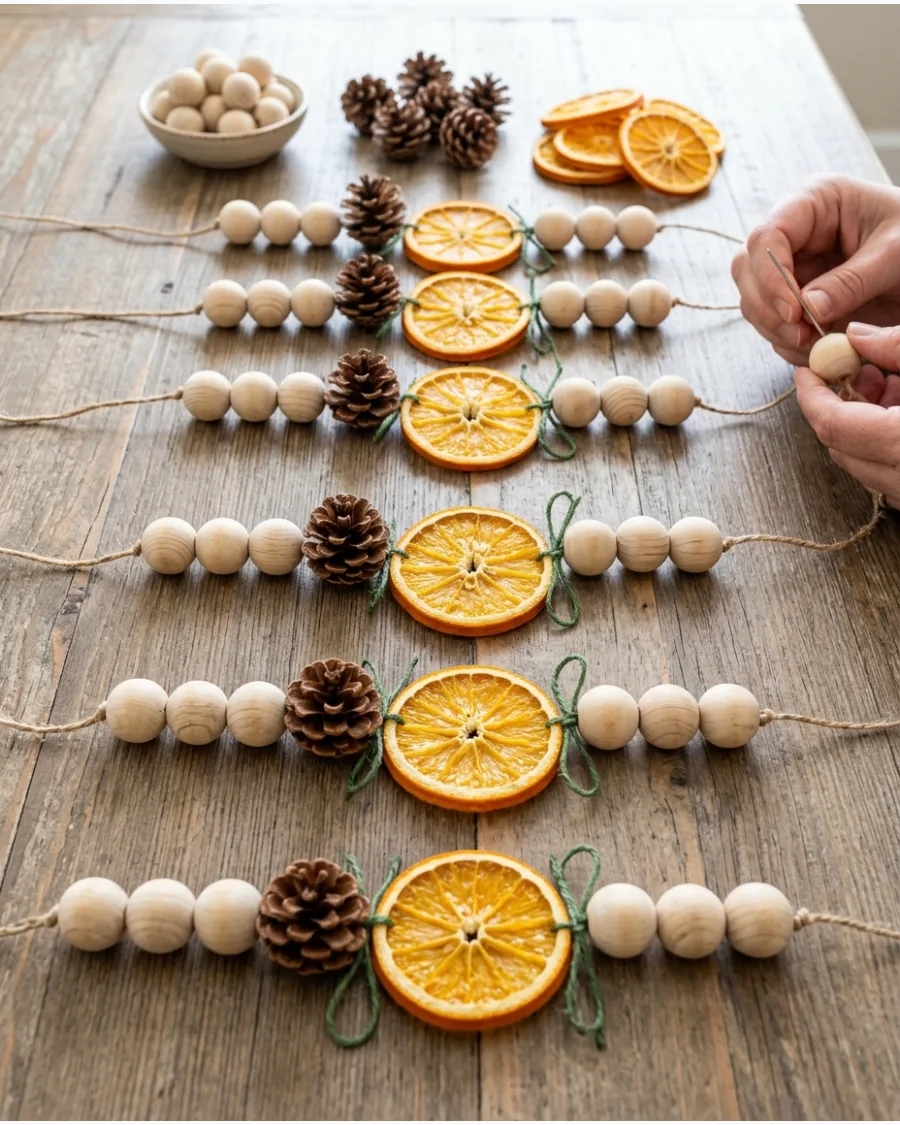
A true farmhouse garland utilizes a mix of natural elements to create a layered, textured strand with visual weight. By combining wood beads, pinecones, and oranges, you get a piece that feels gathered from the winter landscape.
Alternate three unfinished wooden beads with one orange slice and a small pinecone to build a sturdy, thick decoration. The neutral palette fits seamlessly into modern farmhouse decor.
- Use unfinished light wood beads to keep the look bright and airy against the darker pinecones
- Secure pinecones by wrapping a thin wire around the base and twisting it onto the main garland cord
- Add a few sprigs of dried eucalyptus or bay leaves for a subtle, natural scent boost
Use a large-eyed tapestry needle to thread the twine through the wood beads and the center of the orange slices for a faster assembly.
CHRISTMAS TREE AND STAIRCASE DRIED ORANGE GARLANDS
21. Dried Orange Christmas Tree Garland
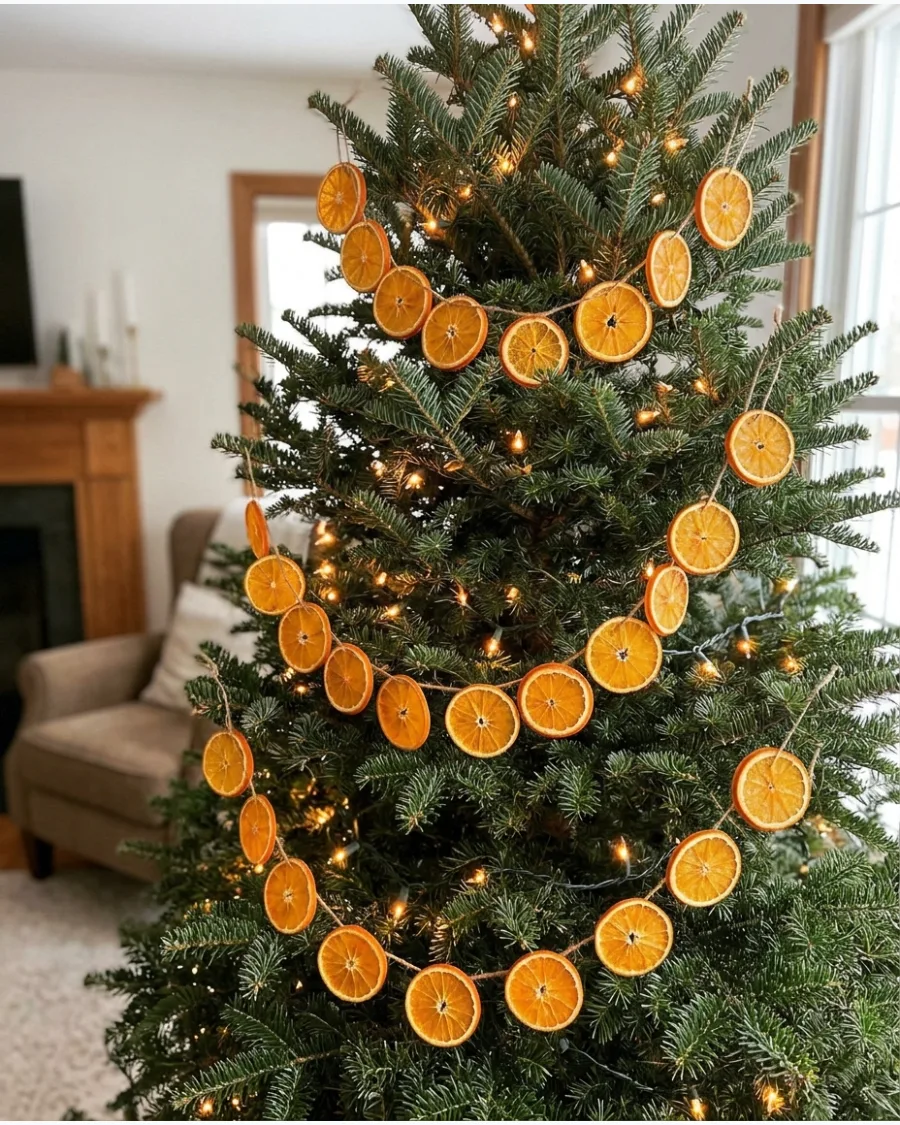
Using dried citrus as a tree decoration provides a translucent, stained-glass effect when positioned near warm holiday lights. This natural alternative to tinsel adds organic warmth and a vintage feel to traditional evergreen boughs.
Wrap the finished orange strand loosely around the branches, allowing for a slight drape between each point of contact to maintain a relaxed look. Ensure the loops are spaced widely so the vibrant orange color pops clearly against the dark green needles.
- Thread the twine through the top fleshy part of each orange slice rather than the center hole to keep them hanging flat against the branches.
- Check the total weight of the strand before hanging, as a very long garland of thick-cut slices can pull down the tips of lighter branches.
- Position individual slices directly in front of warm-toned LED bulbs to highlight the internal segments and the texture of the rind.
Knot the twine on both sides of every third or fourth orange slice to act as a stopper that prevents the fruit from sliding and bunching at the bottom of the drapes.
22. Dried Orange and Cranberry Christmas Tree Garland
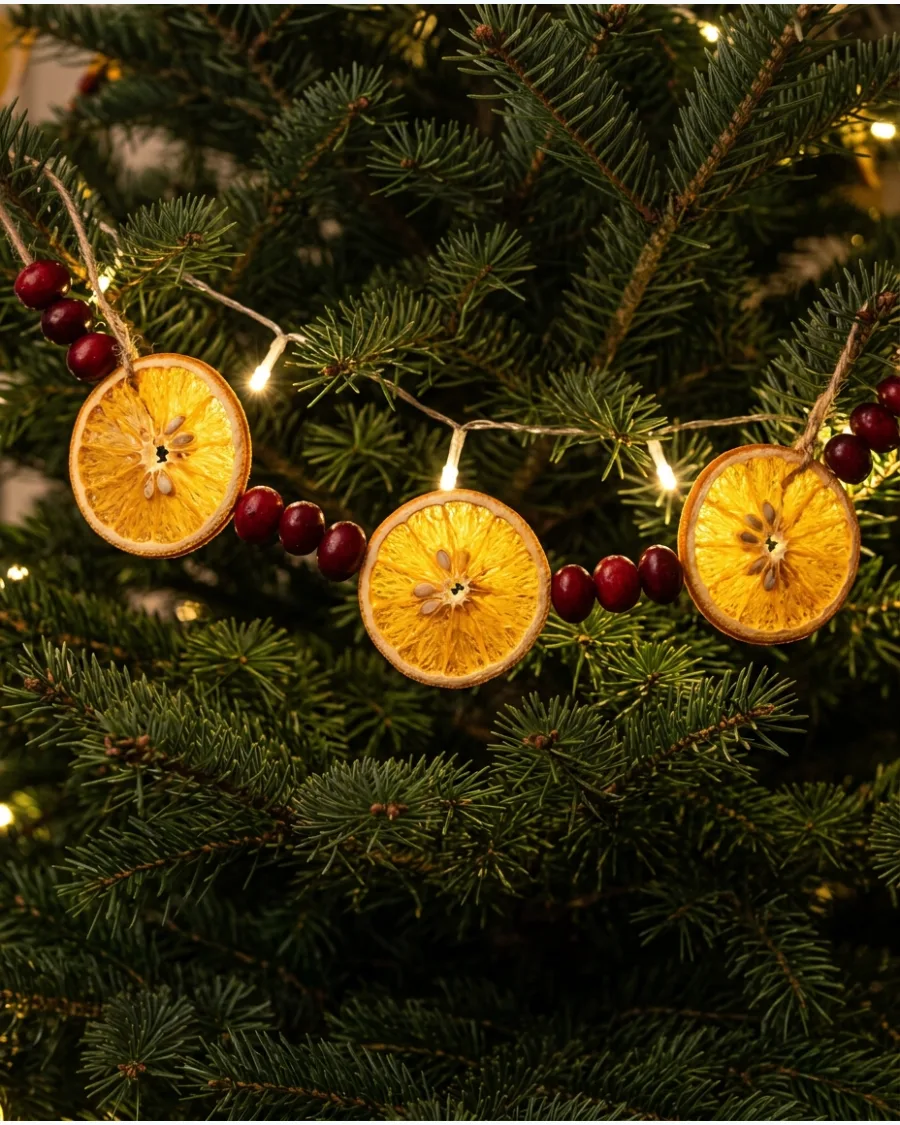
Combine the vibrant citrus of dried oranges with the deep red of cranberries for a classic, old-fashioned holiday look. This combination works exceptionally well on a dark green evergreen tree where the warm colors pop against the cool needles.
Alternate your dried orange slices with clusters of cranberries or single berries to create a rhythmic pattern along a length of sturdy twine. When you hang the finished strand, position it so the tree's string lights sit directly behind the orange slices to highlight their translucent centers.
- Use an upholstery needle and heavy-duty fishing line or waxed twine to easily pierce through the center of the oranges and the skin of the berries.
- Space the oranges roughly 4 to 6 inches apart to allow the red cranberries to stand out as distinct color breaks in the design.
- Ensure the garland is draped loosely over branches rather than pulled taut to mimic the natural curve of the tree.
If using fresh cranberries, select only the firmest berries and discard any soft ones to prevent them from leaking juice onto the tree as they air-dry.
23. Dried Orange and Wooden Bead Tree Garland
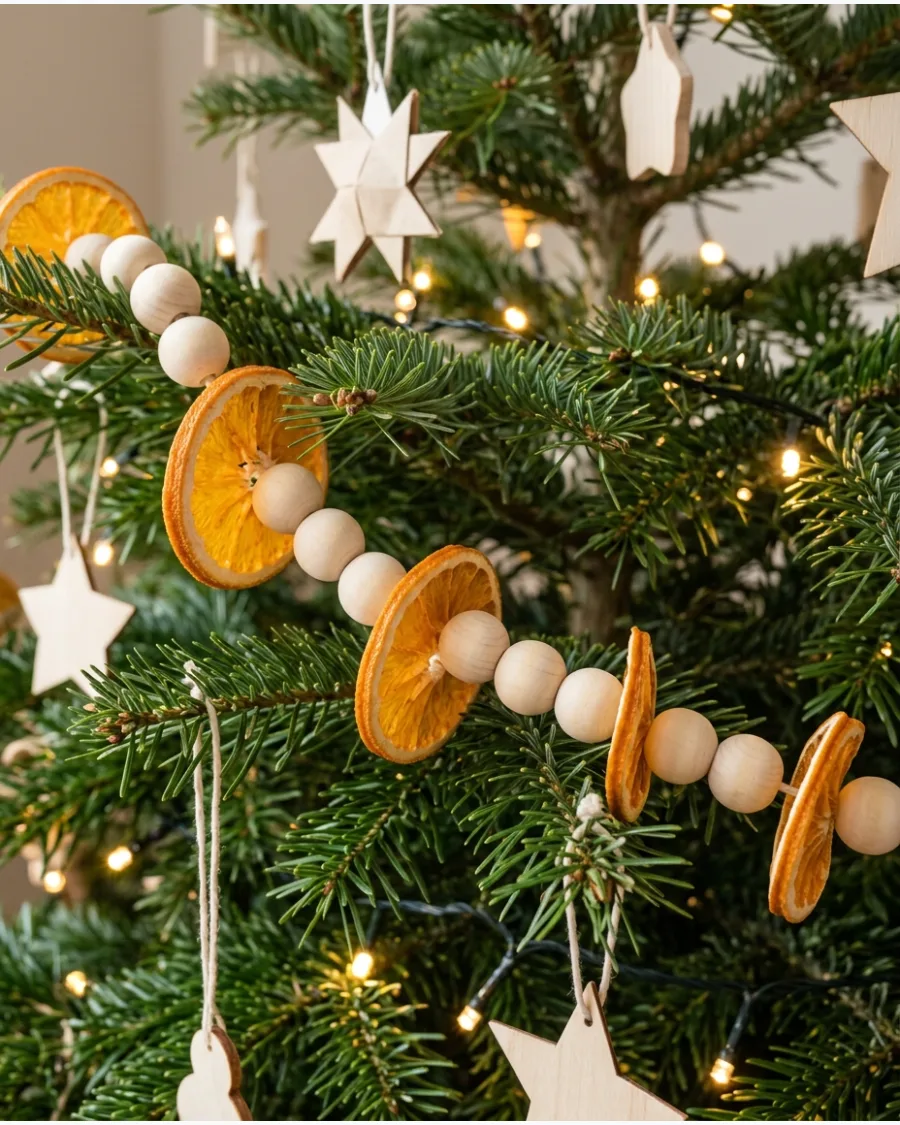
Integrating dried orange slices with unfinished wooden beads creates a soft, Scandinavian-inspired look for holiday decor. This combination offers a beautiful contrast between the vibrant, translucent citrus and the matte, pale wood.
Thread a series of three wooden beads between every orange slice to create distinct spacing and visual rhythm across the length of the garland. This approach works exceptionally well on a tree with a neutral color palette.
- Use varying bead sizes, such as 15mm and 20mm, to add texture and organic movement.
- Secure the ends with a large loop or a decorative knot to make hanging on tree branches easier.
- Opt for unpainted, raw wood beads to maintain the natural, rustic aesthetic of the dried citrus.
Use a blunt tapestry needle to thread the jute or cotton cord through the beads and the tough center of the orange slices without splitting the fruit.
24. Dried Orange and Velvet Ribbon Tree Garland
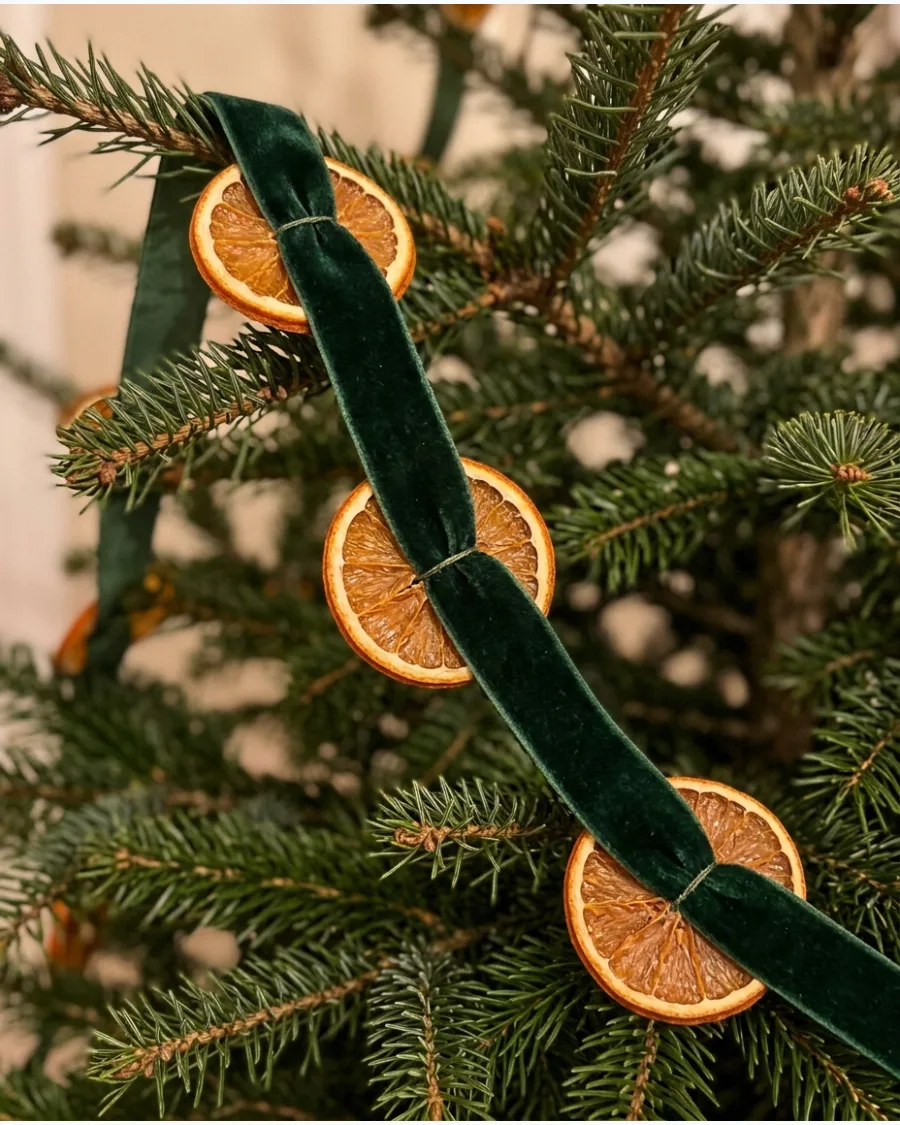
Switching from rustic twine to a soft velvet ribbon elevates the look of your citrus decorations for a more sophisticated holiday aesthetic. This approach works exceptionally well on a Christmas tree where the texture of the ribbon complements the soft needles.
Thread the velvet ribbon through small slits in the center of the orange slices or use floral wire to secure each slice to the back of the ribbon for a hidden attachment. Drape the finished garland vertically from the top of the tree or wind it loosely around the branches to showcase the contrast between the translucent fruit and the opaque fabric.
- Select a velvet ribbon at least 1/2 inch wide to provide enough surface area for the orange slices to sit flat against.
- Space slices approximately 4 to 6 inches apart to allow the color and sheen of the ribbon to remain visible between the fruit.
- Opt for deep forest green or rich burgundy velvet to coordinate with traditional holiday color palettes and highlight the orange tones.
If the velvet ribbon is too thick to thread through the oranges, use a needle and thread to sew a few small stitches through the orange rind directly onto the ribbon fabric.
25. Dried Orange and Evergreen Staircase Garland
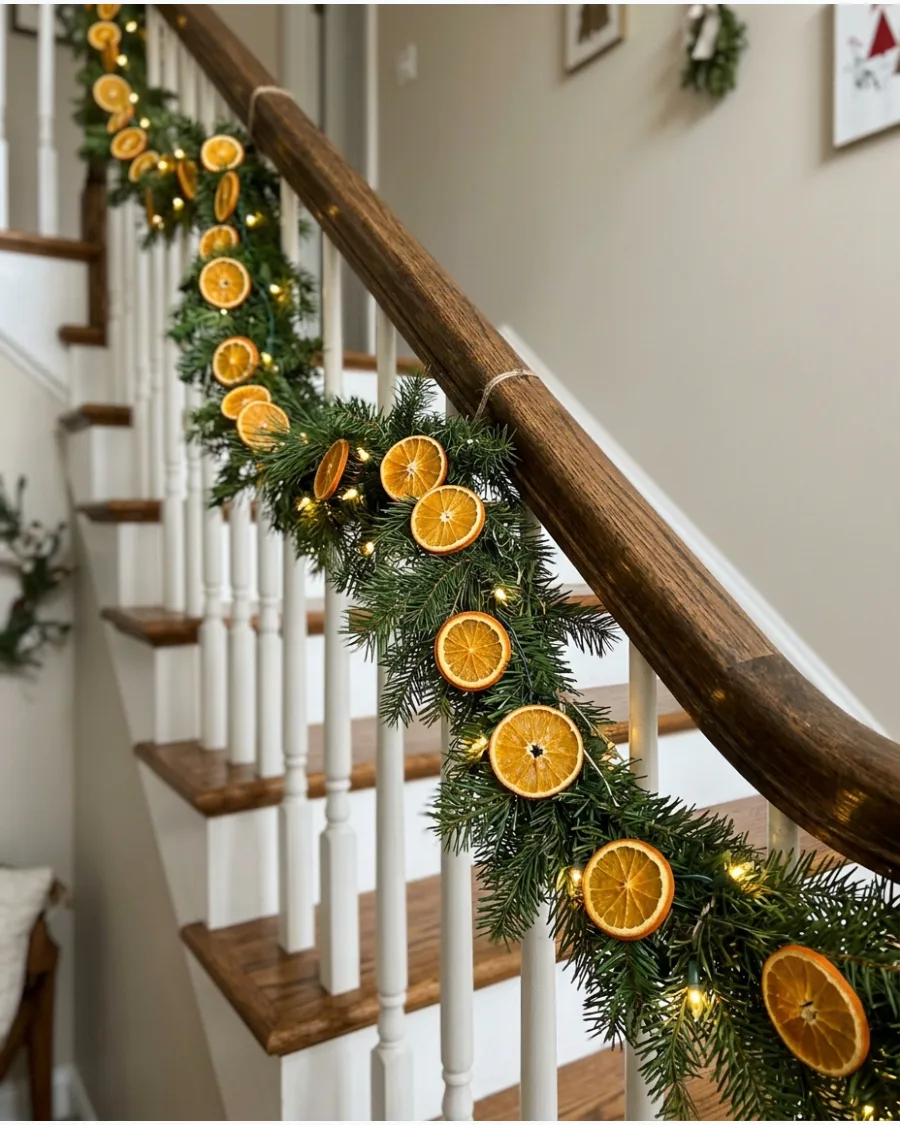
Integrate natural elements into your holiday banister display by layering citrus against lush greenery. The contrast between the deep green needles and the translucent orange slices creates a vibrant, organic look.
Secure each orange slice to the evergreen branches using thin floral wire to ensure they face outward toward the room. Use a mix of large and small slices to create visual depth along the length of the staircase.
- Intertwine warm LED fairy lights within the needles to illuminate the orange slices from behind.
- Space the oranges every 4 to 6 inches to maintain a balanced distribution without overcrowding the greenery.
- Fasten the evergreen base to the railing with zip ties or ribbon before adding the delicate citrus accents.
To prevent the oranges from drooping over time, thread the wire through the toughest part of the rind rather than the soft pulp.
26. Dried Orange Stair Garland With Brass Bells
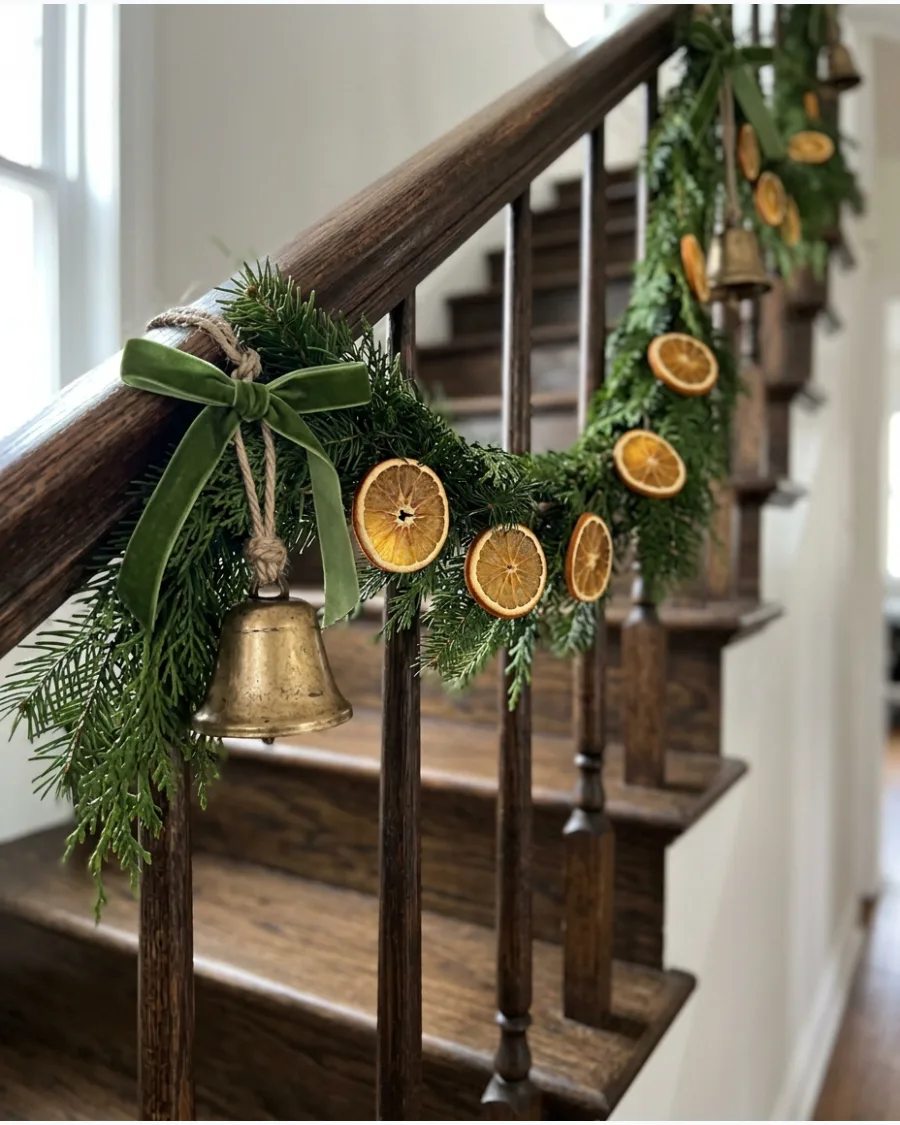
Layering textures on a staircase creates a sophisticated look for the holidays. Secure your heaviest brass bells near the banister brackets or spindles where the greenery is already anchored to prevent the garland from sagging. This strategy allows the lighter dried orange slices and velvet bows to fill the gaps between the structural points.
The contrast between the metallic shine and organic citrus slices adds visual interest to every step.
- Use thin florist wire to hide the attachment points of the heavier bells.
- Choose velvet ribbon in a deep forest green or burgundy for a classic holiday aesthetic.
- Space the bells approximately every 18 to 24 inches for a balanced rhythm along the handrail.
Gently polish the brass bells with a soft cloth before hanging to ensure they catch the ambient light in the hallway.
27. Dried Orange and Pinecone Banister Garland
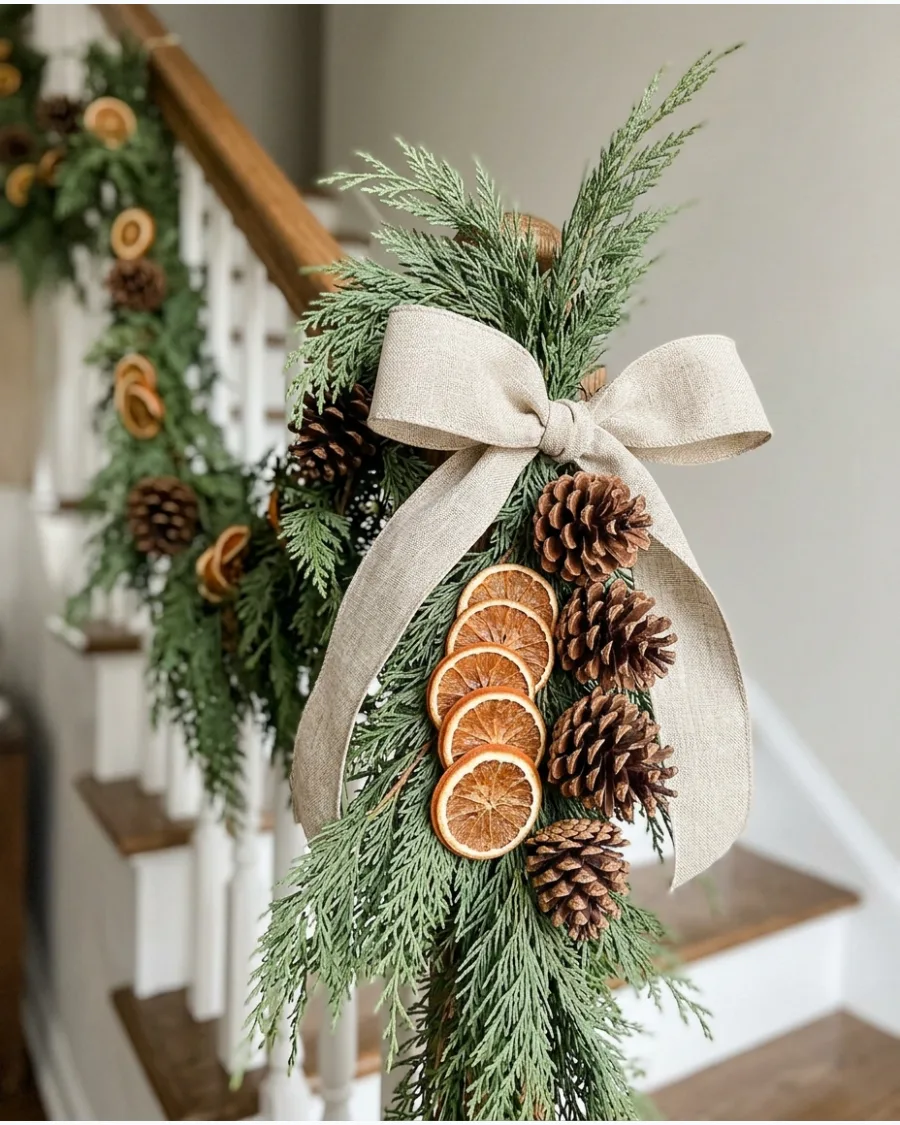
A woodland-inspired banister garland brings a rustic, forest-like atmosphere into the entryway. Intersperse clusters of dried orange slices and various sized pinecones throughout a base of loose cedar or pine boughs. Use a natural linen or jute ribbon at the primary swags to reinforce the organic theme while hiding any necessary zip ties or wire.
This combination provides a rich, multi-dimensional texture that works well in traditional homes.
- Mix different pinecone species like long spruce cones and round pine cones for visual variety.
- Secure pinecones by wrapping thin wire deep into the scales so the attachment remains invisible.
- Drape the greenery in soft swags rather than tight wraps to maintain a relaxed, natural appearance.
Spray the pinecones with a scent-free clear sealant if they have sticky sap to protect your banister's finish.
28. Scandinavian Dried Orange Tree Garland
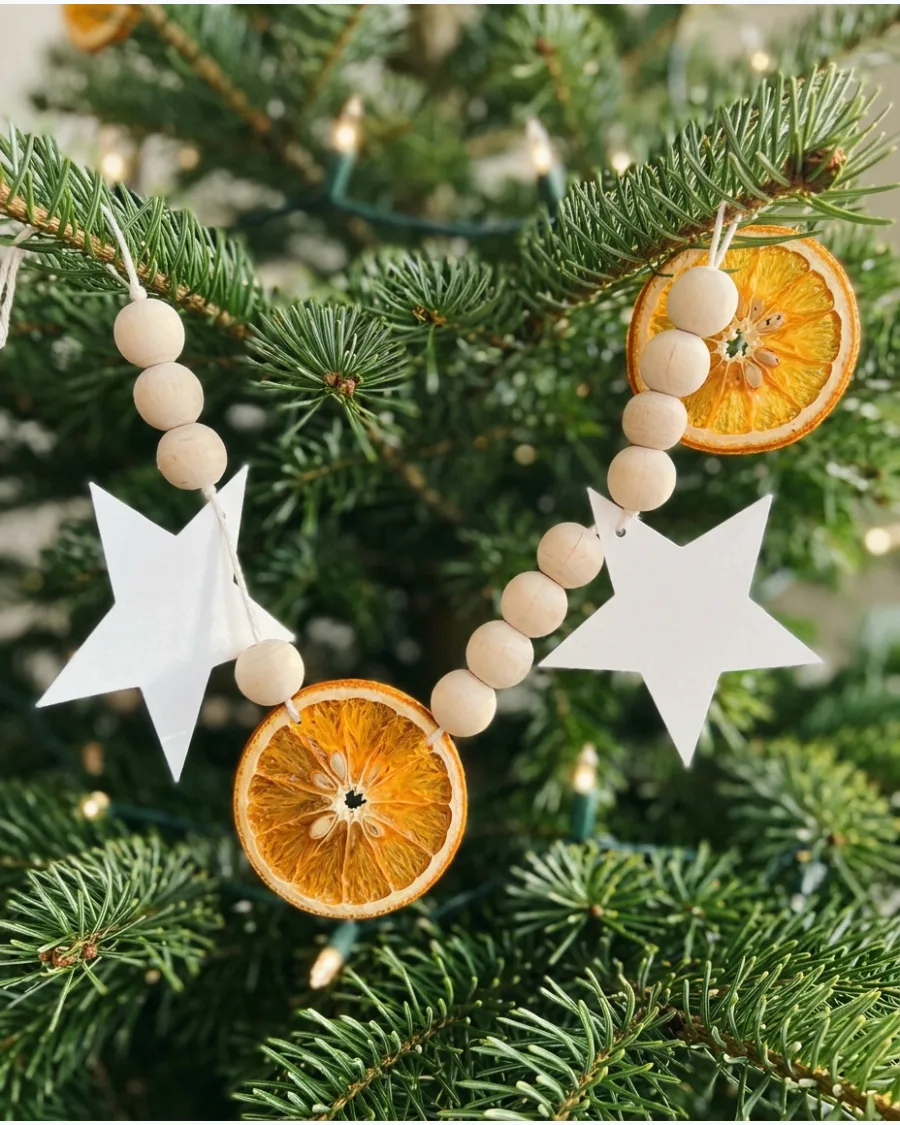
Achieve a minimalist, Nordic aesthetic by combining natural materials with bright, clean accents. Thread dried orange slices onto a string alternating with unfinished pale wood beads and delicate white paper stars. This garland is most effective on a 'sparse' or lightly branched Christmas tree where the dark green branches can be seen behind the ornaments.
The neutral tones of the wood and paper allow the translucent amber of the citrus to glow when backlit.
- Use 10mm to 15mm wood beads to maintain a delicate, lightweight scale for the branches.
- Opt for matte white cardstock stars for a clean, non-reflective finish that mimics snow.
- String the elements on white cotton twine to blend seamlessly with the paper stars.
Position the orange slices directly in front of tree lights to highlight the intricate natural patterns in the fruit pulp.
29. Dried Orange Garland on a Small Kitchen Christmas Tree
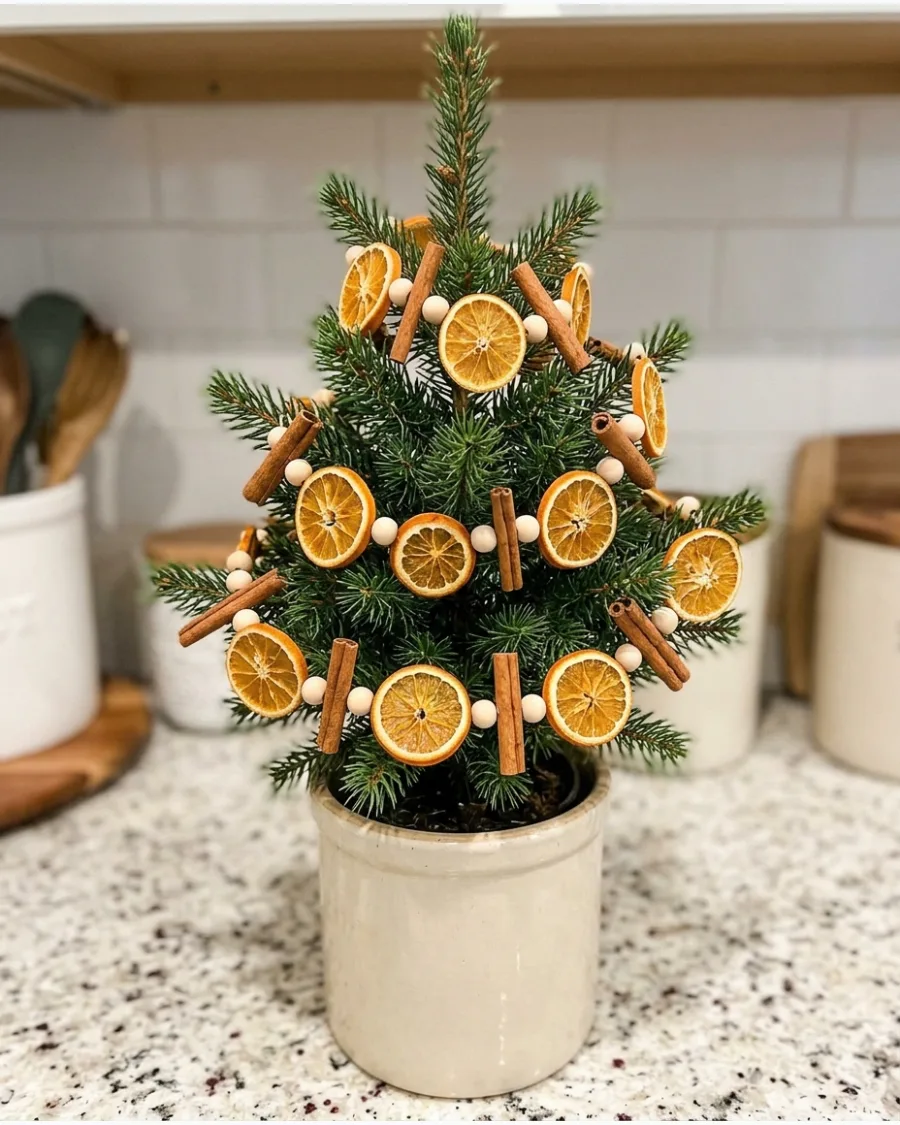
Kitchen-themed holiday decor adds warmth to the heart of the home without occupying significant space. Select miniature orange slices or small mandarins to ensure the citrus garland remains in proportion with a tabletop tree. Combining these with short cinnamon sticks and tiny wooden beads keeps the arrangement lightweight and fragrant.
This scaled-down approach prevents a small tree from looking cluttered or overwhelmed by heavy ornaments.
- Cut standard cinnamon sticks in half to match the smaller diameter of the miniature oranges.
- Use a 2-foot or 3-foot evergreen in a heavy ceramic crock to ensure stability on a kitchen island.
- Intersperse the garland with small sprigs of fresh rosemary for an extra herbal scent.
Place the tree away from direct heat sources like the stove or toaster to prevent the dried fruit from becoming brittle or scorched.
30. Dried Orange Garland on a Flocked Christmas Tree
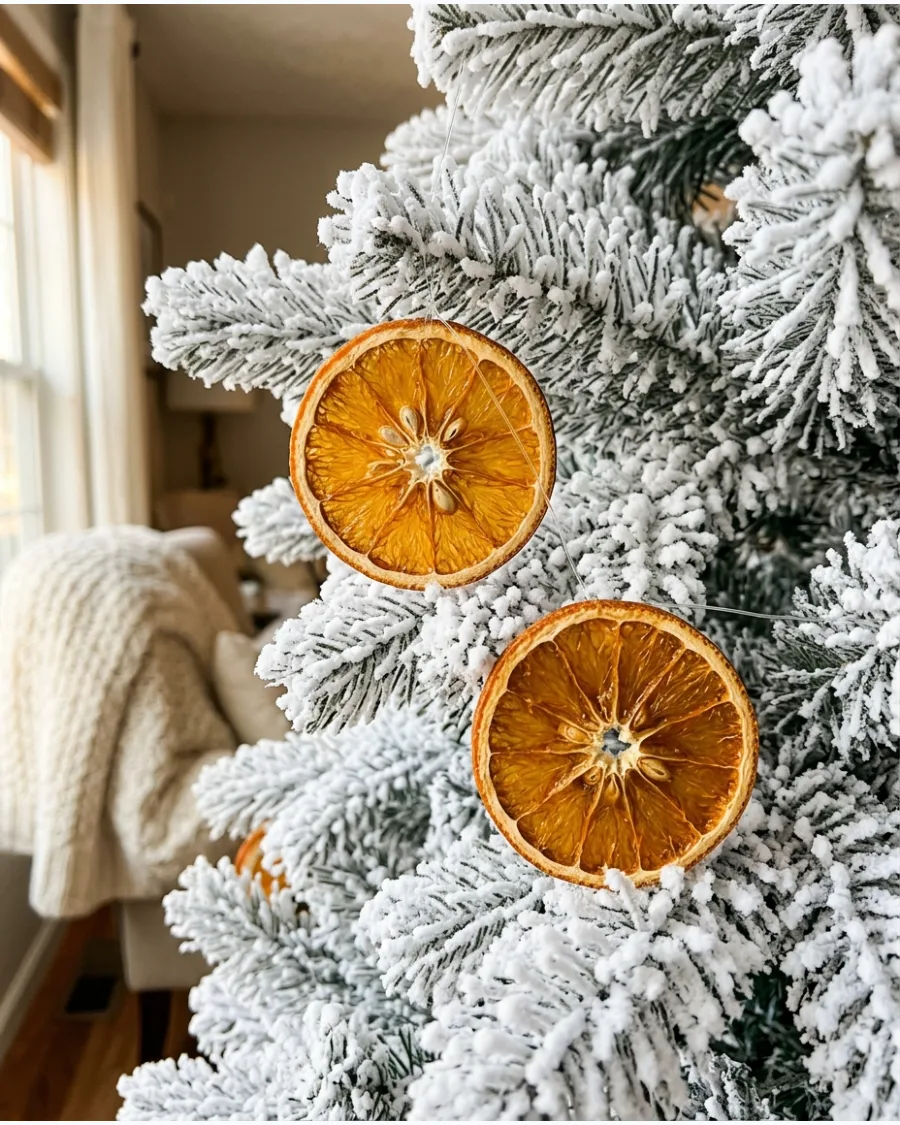
The contrast between vibrant citrus and 'snow-covered' branches creates a striking, high-contrast focal point. Drape your dried orange garland deeply into the branches of a flocked tree to let the white needles make the amber colors pop. To maintain a cohesive look, limit your other ornaments to a palette of cream, natural wood, and muted sage greens.
This design feels both cozy and modern, focusing on the warmth of the fruit against the cool white background.
- Select orange slices with a deep, burnt-orange hue to contrast most effectively against the stark white flocking.
- Use clear monofilament or thin fishing line so the oranges appear to float on the snowy branches.
- Avoid adding bright red or blue ornaments which can compete with and distract from the warm citrus tones.
If your tree flocking is heavy, use a small handheld vacuum to clean up any white dust that settles on the orange slices after you finish decorating.
MANTEL, WINDOW AND DOORWAY DRIED ORANGE GARLANDS
31. Dried Orange Christmas Mantel Garland
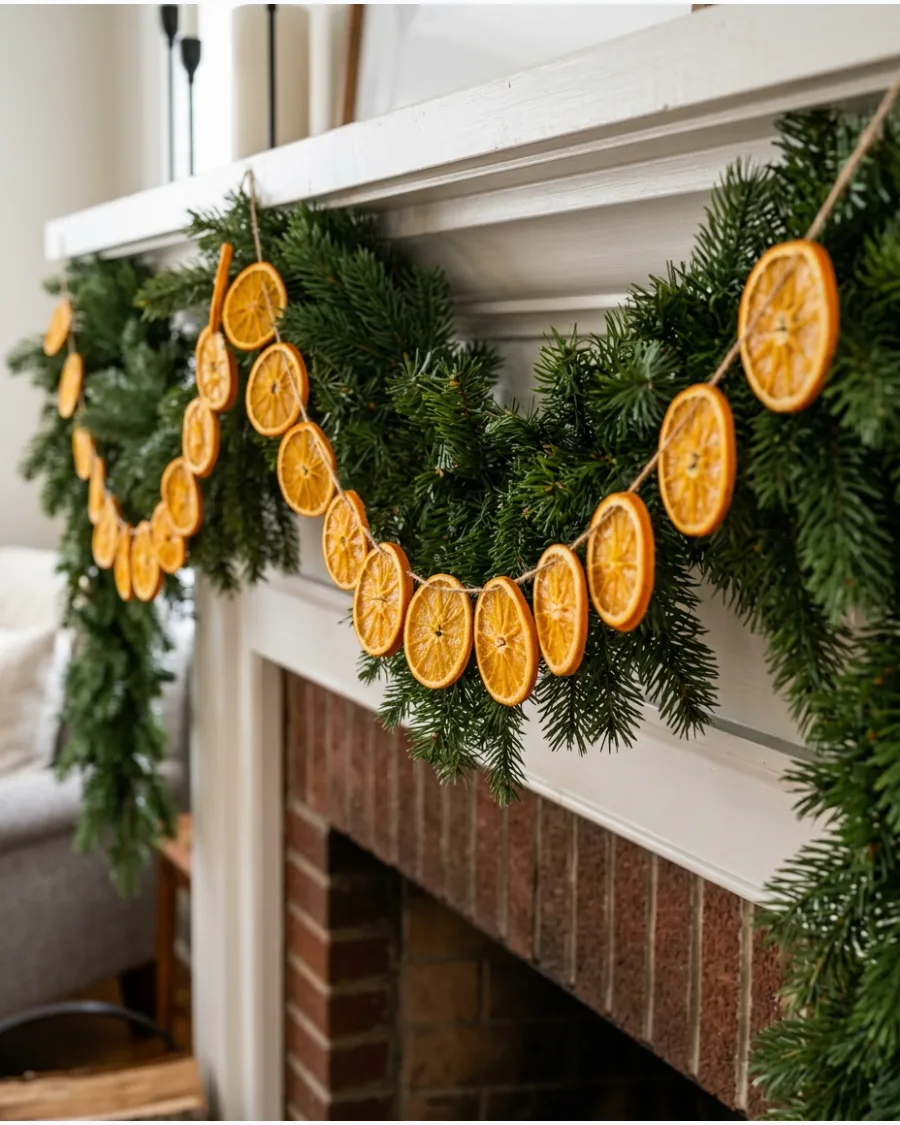
This classic holiday look emphasizes the contrast between vibrant citrus and deep forest greens. Drape your strand of dried orange slices across the mantel and let it dip lower in the middle to reveal the cross-sections against the greenery. Positioning the oranges in front of the foliage ensures they do not get lost in the needles.
This setup adds a natural fragrance and a pop of color to a traditional fireplace display.
- Use thin floral wire to secure the garland ends to the mantel edge hidden under the greenery.
- Check that the oranges are spaced evenly so the weight distribution remains balanced across the drape.
- Pair with white ceramic accents or stockings for a clean, Scandinavian-inspired aesthetic.
Use clear command hooks hidden behind the greenery to prevent the citrus weight from pulling the garland off the mantel.
32. Layered Evergreen and Dried Orange Mantel Garland
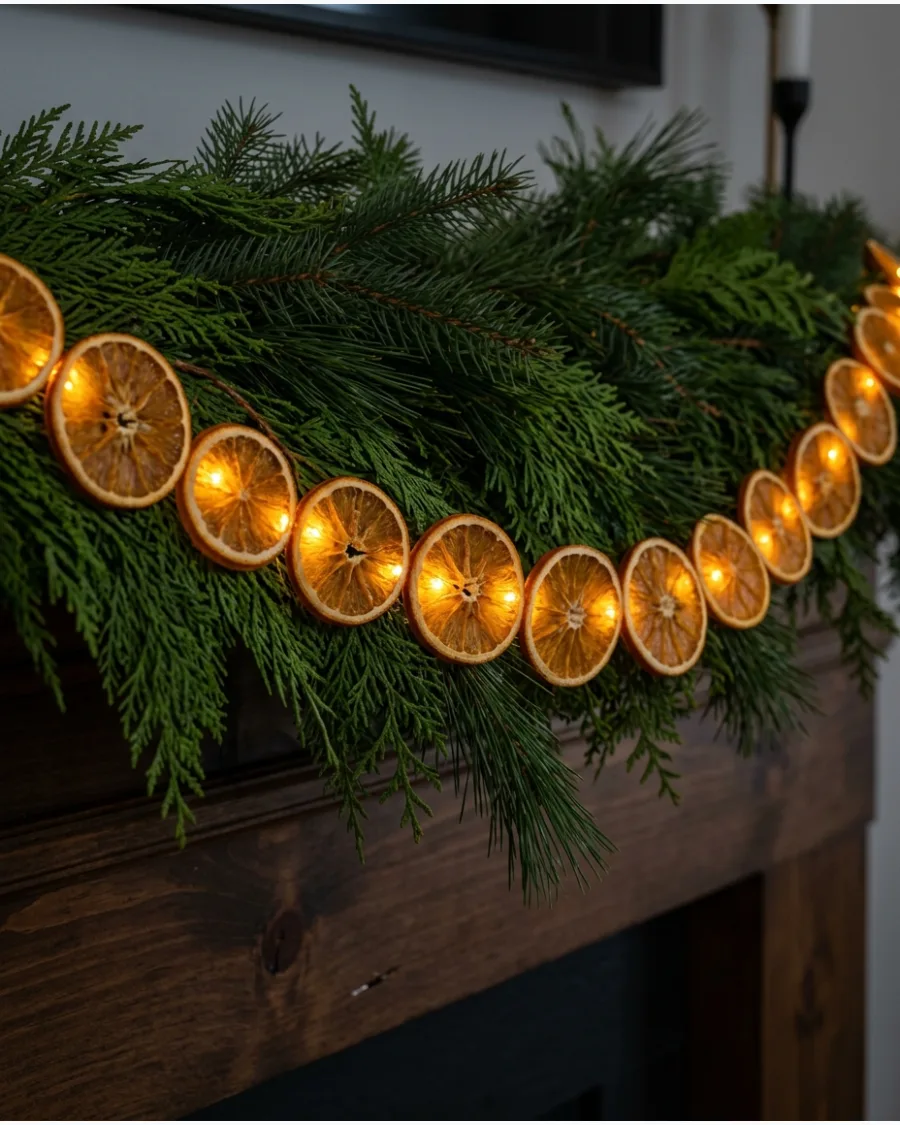
Combining different textures of greenery creates a lush, professional foundation for your citrus accents. Set a base of thick cedar and pine boughs across the mantel before layering the orange garland over the top foliage layer. Adding a string of warm LED lights tucked behind the slices will illuminate the translucent centers of the fruit.
This creates a cozy, amber glow that highlights the natural beauty of the dried oranges after dark.
- Use battery-operated micro-LED lights to avoid unsightly cords trailing down the fireplace.
- Intertwine cedar for drape and pine for volume to create a varied green background.
- Ensure the lights are placed directly behind the orange slices for the best glowing effect.
Choose a warm white light temperature (around 2700K) to enhance the natural orange and yellow tones of the dried fruit.
33. Dried Orange and Candle Mantel Garland
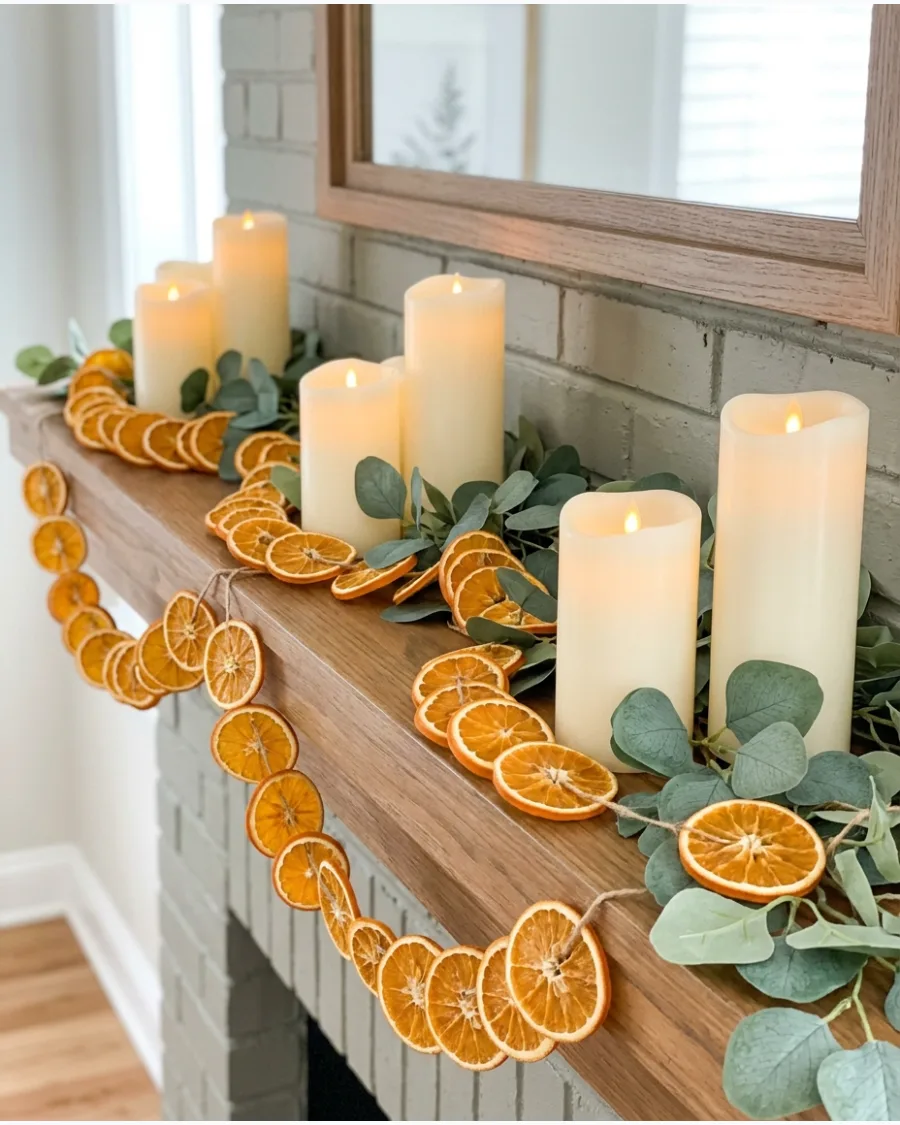
Integrating height variations on a mantel makes the decor feel intentional and dynamic. Weave your dried orange garland between clusters of flameless pillar candles, allowing the strand to snake around the bases. Surround the candles with sprigs of pine or eucalyptus to soften the edges and fill in gaps.
This arrangement provides a sophisticated focal point while keeping the display safe from heat risks.
- Mix candle heights, such as 3-inch, 6-inch, and 9-inch pillars, to create visual interest.
- Opt for ivory or cream candles to make the rich orange and green colors pop.
- Use eucalyptus leaves to provide a lighter, silvery-green contrast to traditional dark pine.
Always use flameless LED candles for this design to ensure the dried fruit and greenery do not pose a fire hazard.
34. Dried Orange Window Garland
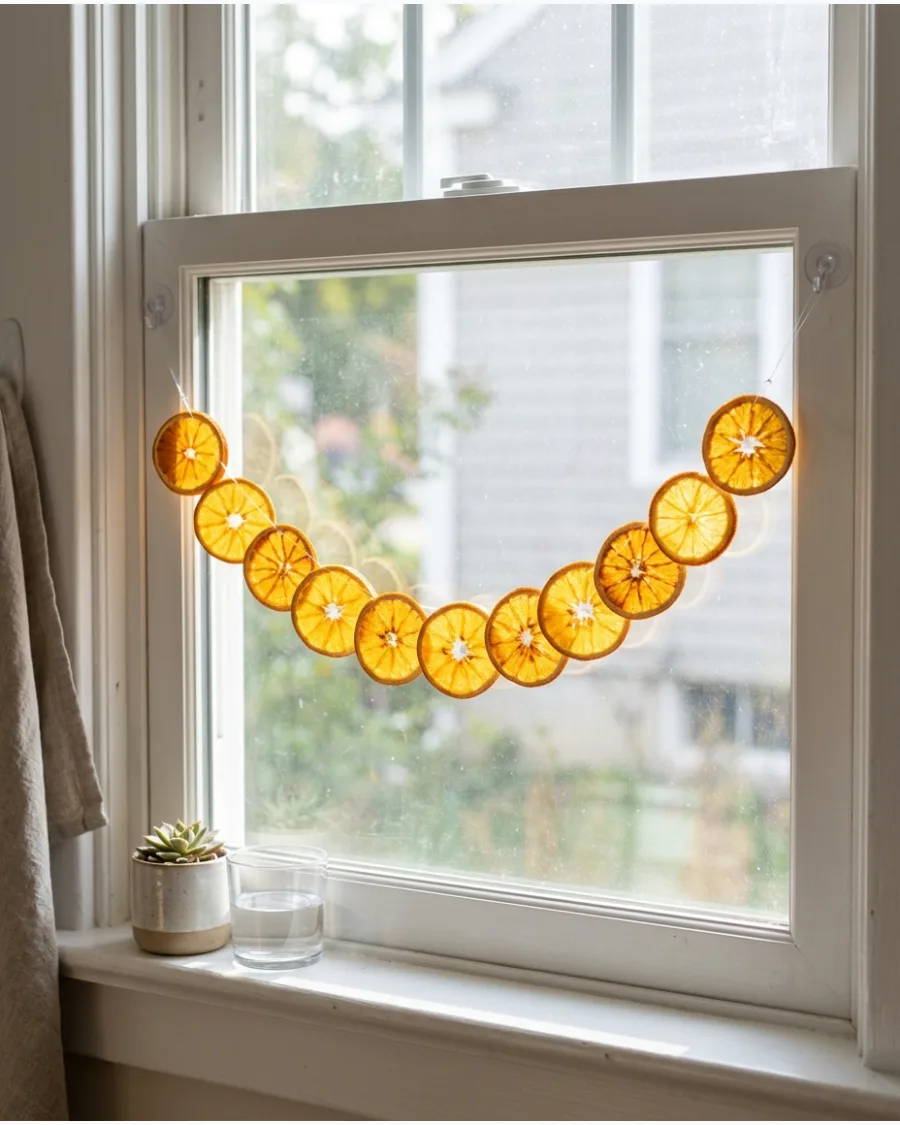
Using window light is one of the most effective ways to showcase the intricate patterns inside dried citrus. Hang a horizontal strand of orange slices across a bright window using small suction hooks or a tension rod. As the sun passes through the slices, they will glow with a warm amber light similar to stained glass.
This placement is ideal for kitchens where the fresh scent and bright colors feel naturally at home.
- Space the slices about 2 inches apart to allow the sunlight to define each circular shape clearly.
- Use clear fishing line for the stringing material to make the oranges appear as if they are floating.
- Position the garland at the midline of the window for maximum light exposure during the day.
If your windows gather condensation, hang the garland a few inches away from the glass to prevent the dried fruit from softening.
35. Vertical Dried Orange Window Garland
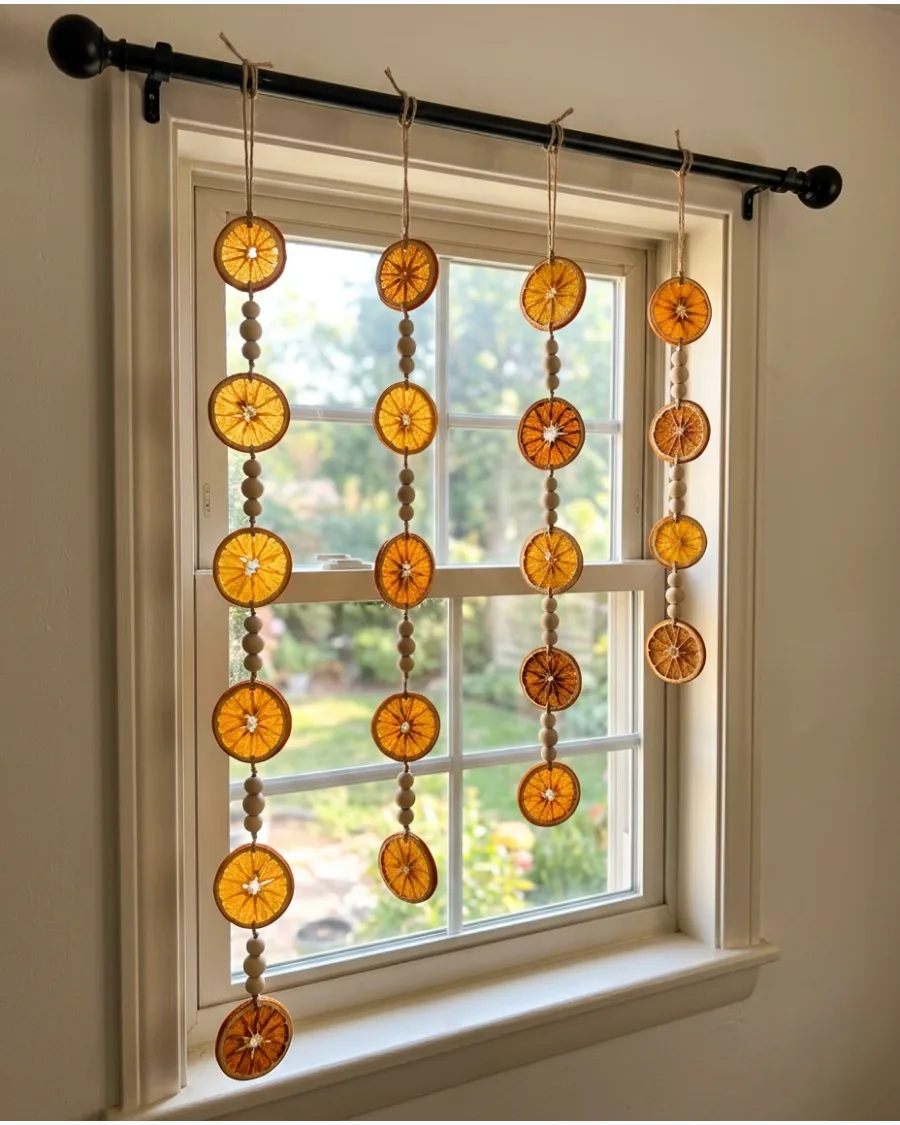
Vertical arrangements offer a modern twist on the traditional garland and can fill large window spaces beautifully. Tie several individual strands of dried oranges to a top curtain rod or tension bar, varying the lengths for a staggered look. Leaving plenty of space between the vertical drops ensures that each slice catches the light without crowding the view.
This method creates a "rain" effect of citrus that adds height and interest to your window treatments.
- Tie a small wooden bead or a brass weight at the bottom of each strand to keep them hanging straight.
- Use three to five strands for a standard-sized window to maintain a clean, uncluttered appearance.
- Alternate between large navel oranges and smaller blood oranges for a variety of sizes and shades.
Measure the distance from the rod to the sill before cutting your twine to ensure the longest strand doesn't drag.
36. Dried Orange Kitchen Window Garland
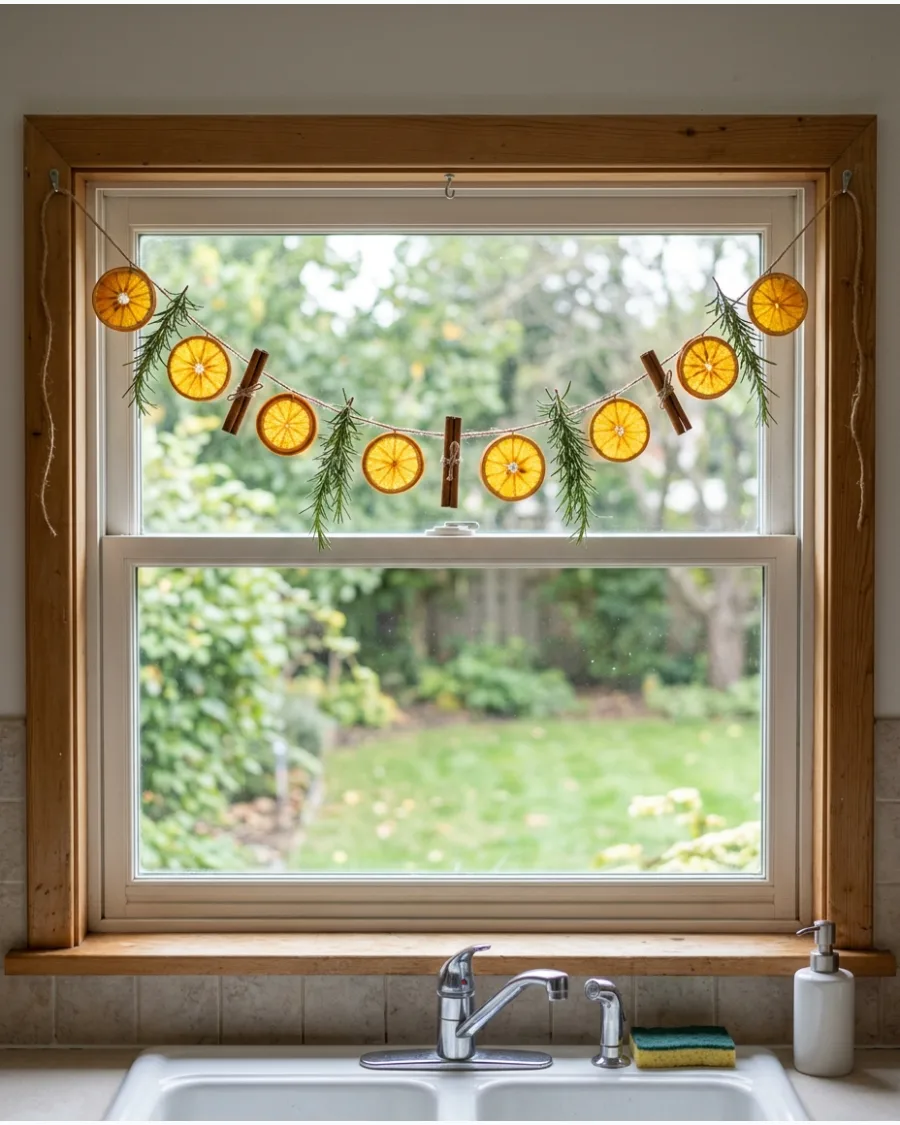
A kitchen window garland brings a natural, farmhouse feel to the heart of the home. By using aromatic additions like rosemary or bay leaves, you create a scent profile that complements cooking aromas.
Thread twine through the centers of orange slices and tie small bunches of rosemary or cinnamon sticks between them to create a fragrant window accent.
- Mount the garland using small, clear adhesive hooks placed on the upper corners of the window frame.
- Keep the strand slightly shorter than the window width to prevent it from catching in the sash when opening.
- Position the slices so they are backlit by the sun, showcasing the translucent, stained-glass effect of the fruit.
Hang the garland away from direct steam from a stove or kettle to prevent the dried fruit from absorbing moisture and molding.
37. Dried Orange Doorway Garland
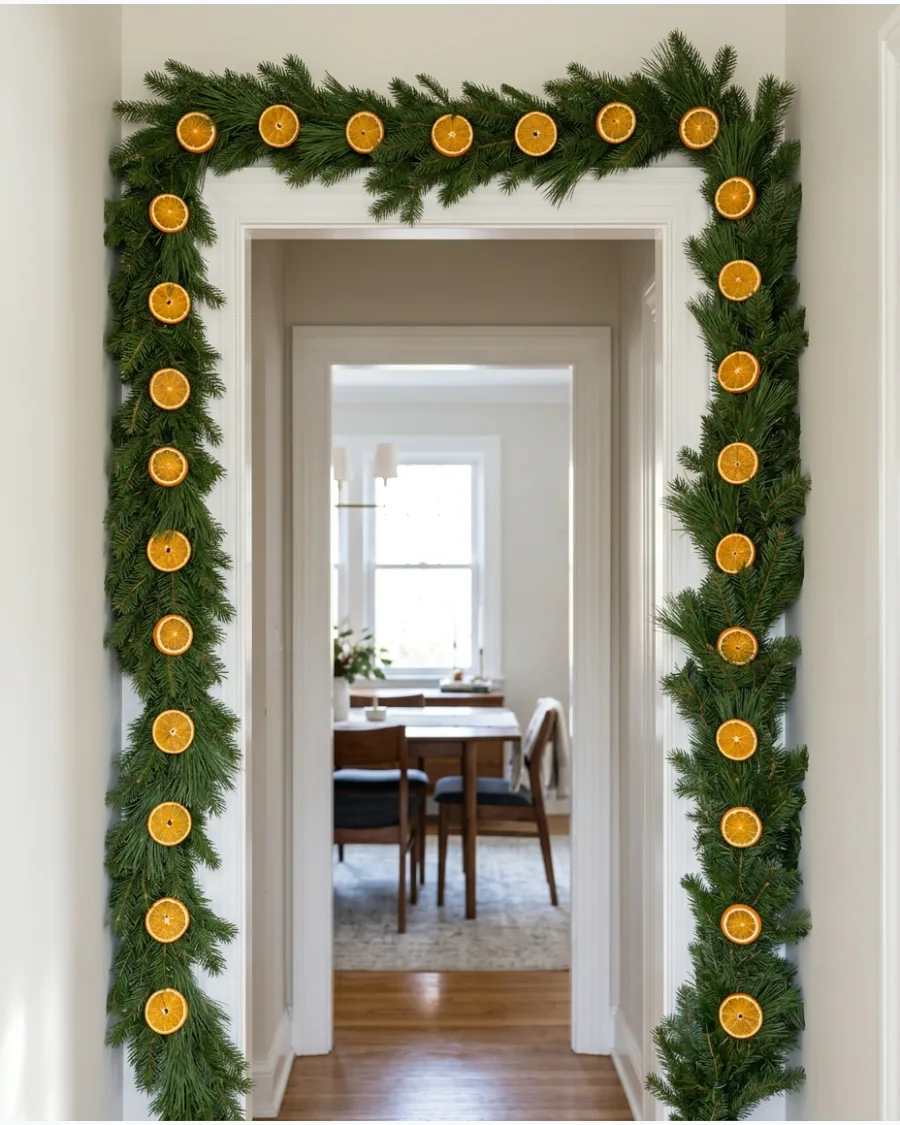
Framing an interior doorway with greenery and citrus adds a grand, festive feel to high-traffic transition areas. This method uses the existing structure of a bough garland as a base for the lighter orange accents.
Secure the dried orange slices to a pre-hung evergreen bough using thin floral wire to ensure they stay upright and visible against the dark needles.
- Space the orange slices evenly every 6 to 8 inches to create a rhythmic, repeating pattern.
- Use a mix of whole slices and half-moons to add variety to the visual texture.
- Focus the fruit placement on the upper corners and top horizontal run to keep the path clear for walking.
Wire the oranges near the outer tips of the evergreen branches so they aren't buried deep within the needles.
38. Dried Orange Garland Over a Mirror
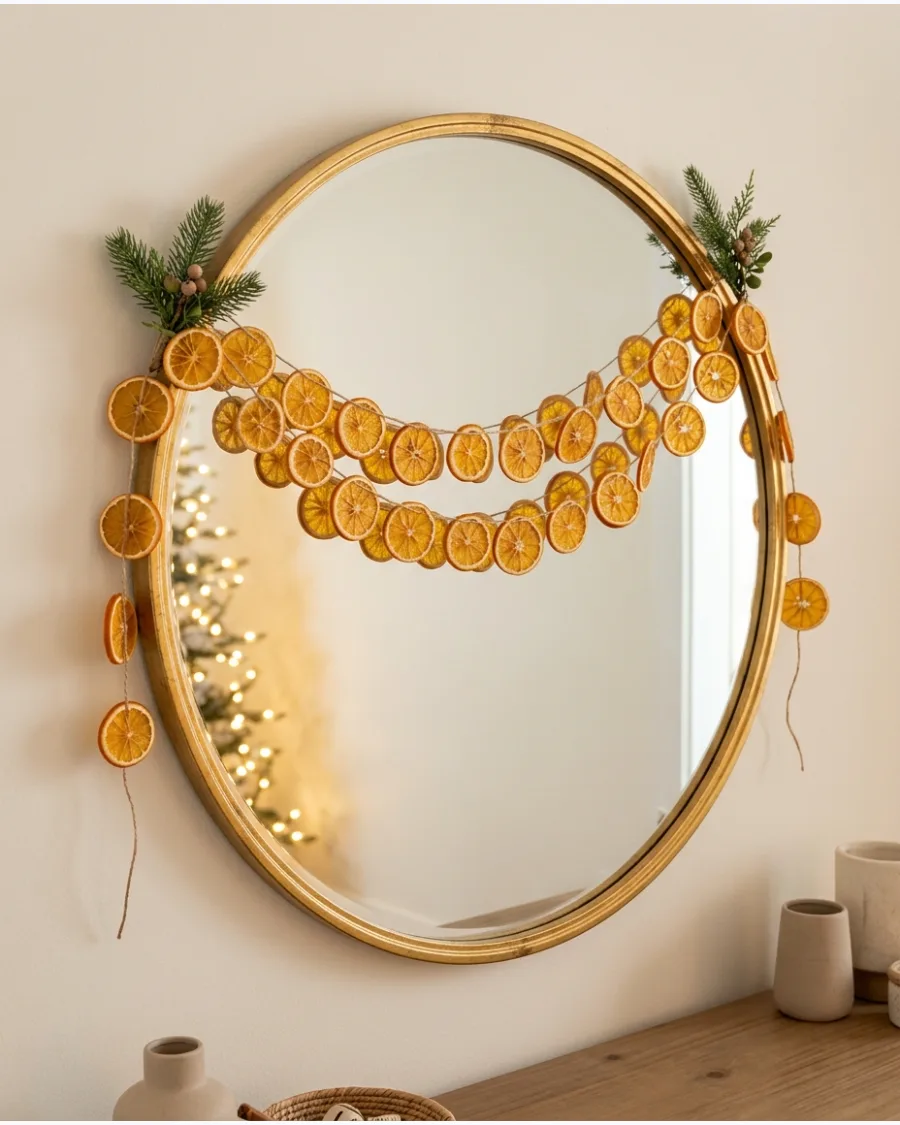
Draping a garland over a mirror is a smart design trick that uses reflection to double the visual impact of your decor. The warm orange tones contrast beautifully with glass and metallic frames, making it ideal for entryways.
Drape a single strand of orange slices across the top edge of a mirror, allowing the ends to hang slightly over the sides for a casual, elegant look.
- Incorporate a few sprigs of eucalyptus or pine at the top corners to anchor the garland visually.
- Pair the citrus with a thin strand of battery-operated fairy lights to catch reflections in the mirror glass.
- Ensure the string is lightweight jute or embroidery floss so it doesn't put pressure on the mirror's mounting.
Apply a small pea-sized amount of museum putty to the back of the corner slices to keep the garland from sliding off the smooth mirror surface.
39. Dried Orange Garland Across Open Shelves
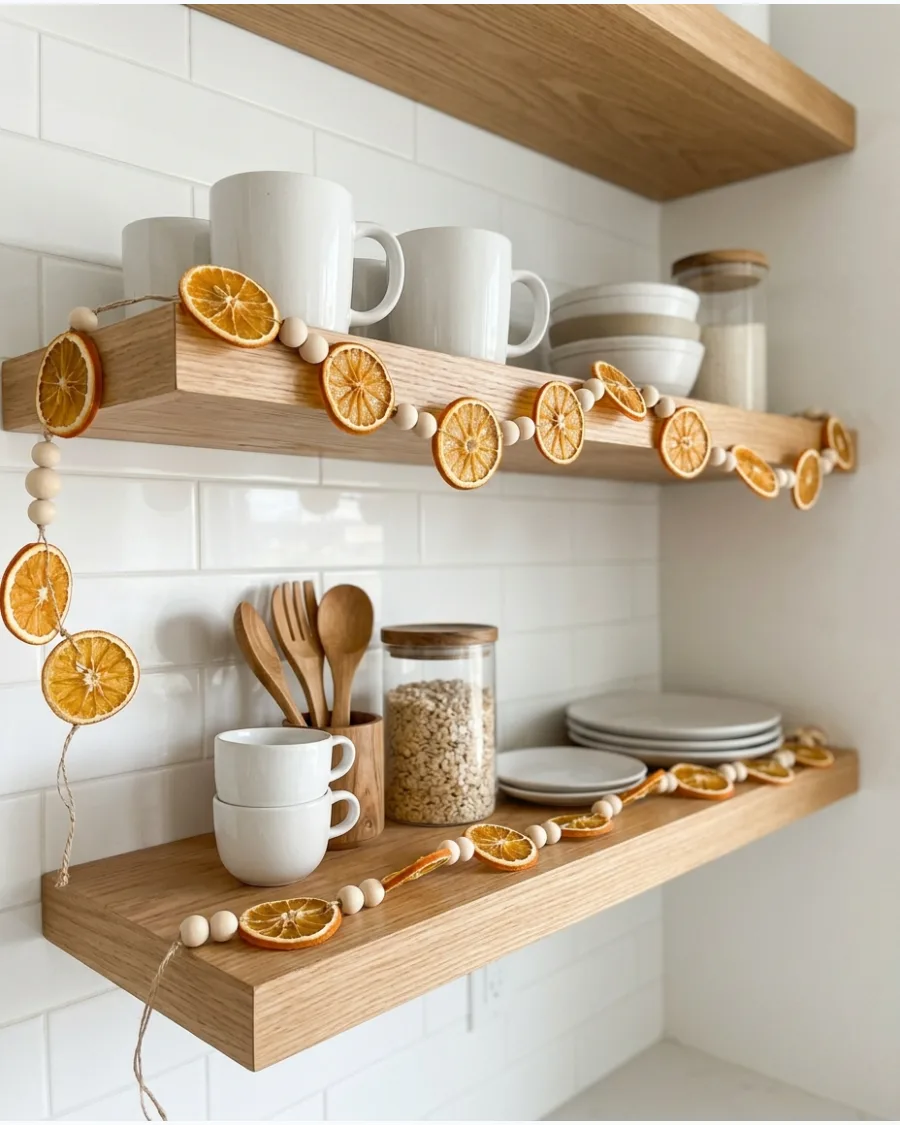
Open shelving offers a perfect horizontal stage for thin garlands that won't interfere with daily functionality. By weaving the citrus between your existing decor, the garland feels integrated rather than just placed on top.
Lay a thin garland of oranges and wood beads directly along the front edge of an open shelf, weaving it around existing jars or decorative objects.
- Coordinate the orange slices with wooden bowls or white ceramic dishes for a clean, Scandinavian aesthetic.
- Leave enough slack in the twine so the garland follows the natural curves of your shelf display.
- Use baker's twine in red or white to add a subtle pop of seasonal color to the strand.
Use small, clear adhesive clips on the underside of the shelf if the garland tends to sag or slide forward.
40. Dried Orange Garland Around a Christmas Hutch
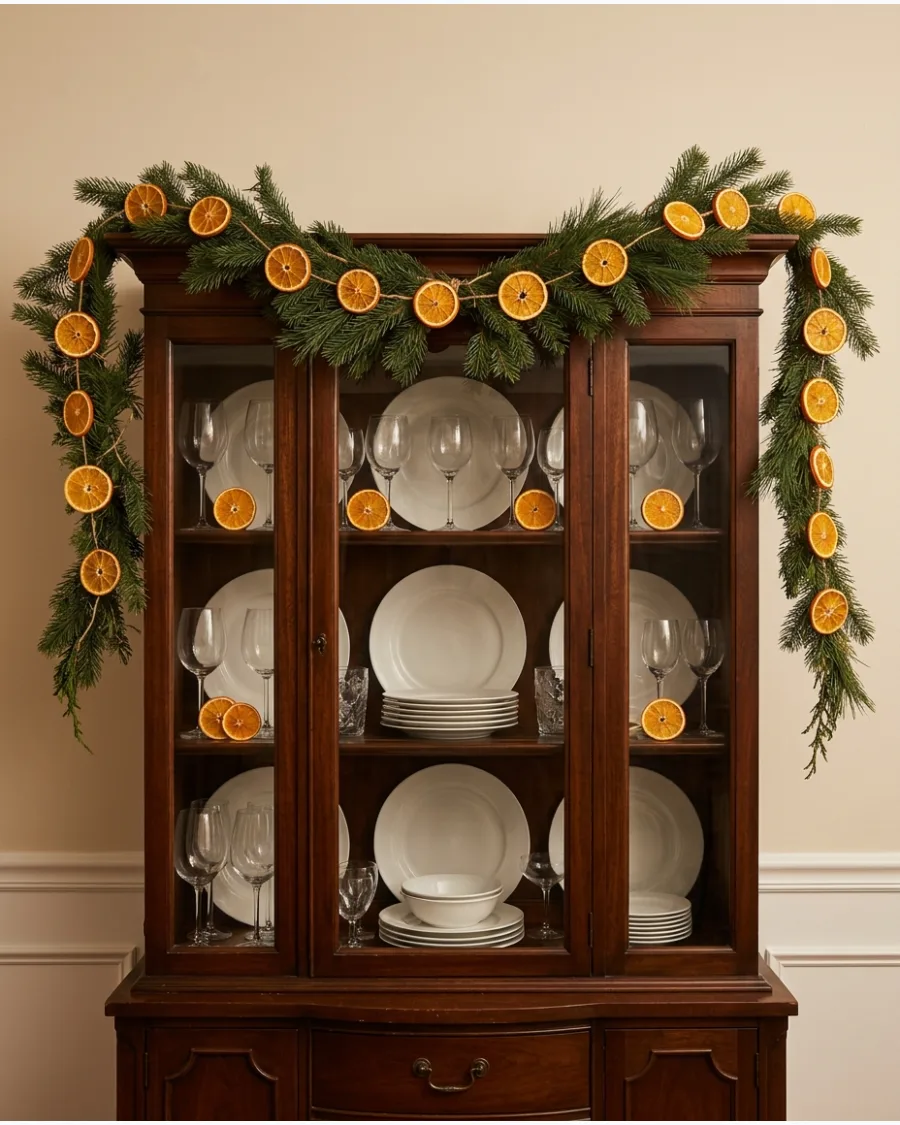
A dining room hutch often serves as the focal point for holiday gatherings, making it a prime spot for a lush, layered garland. Combining evergreen boughs with citrus ensures the piece looks substantial from across the room.
Wrap a lush evergreen and orange garland along the top crown molding of a dining room hutch, letting the ends trail down the sides.
- Place a few loose dried orange slices on the interior shelves to tie the exterior garland into the inner display.
- Incorporate pinecones or small ornaments into the top garland to match the scale of a large furniture piece.
- Secure the greenery with heavy-duty mounting tape or small finishing nails on the top surface of the hutch where they won't be seen.
Tuck a few orange slices near an LED candle inside the hutch to simulate a warm, glowing citrus display without the risk of heat damage.
MODERN AND CREATIVE DRIED ORANGE GARLANDS
41. Minimalist Dried Orange Garland
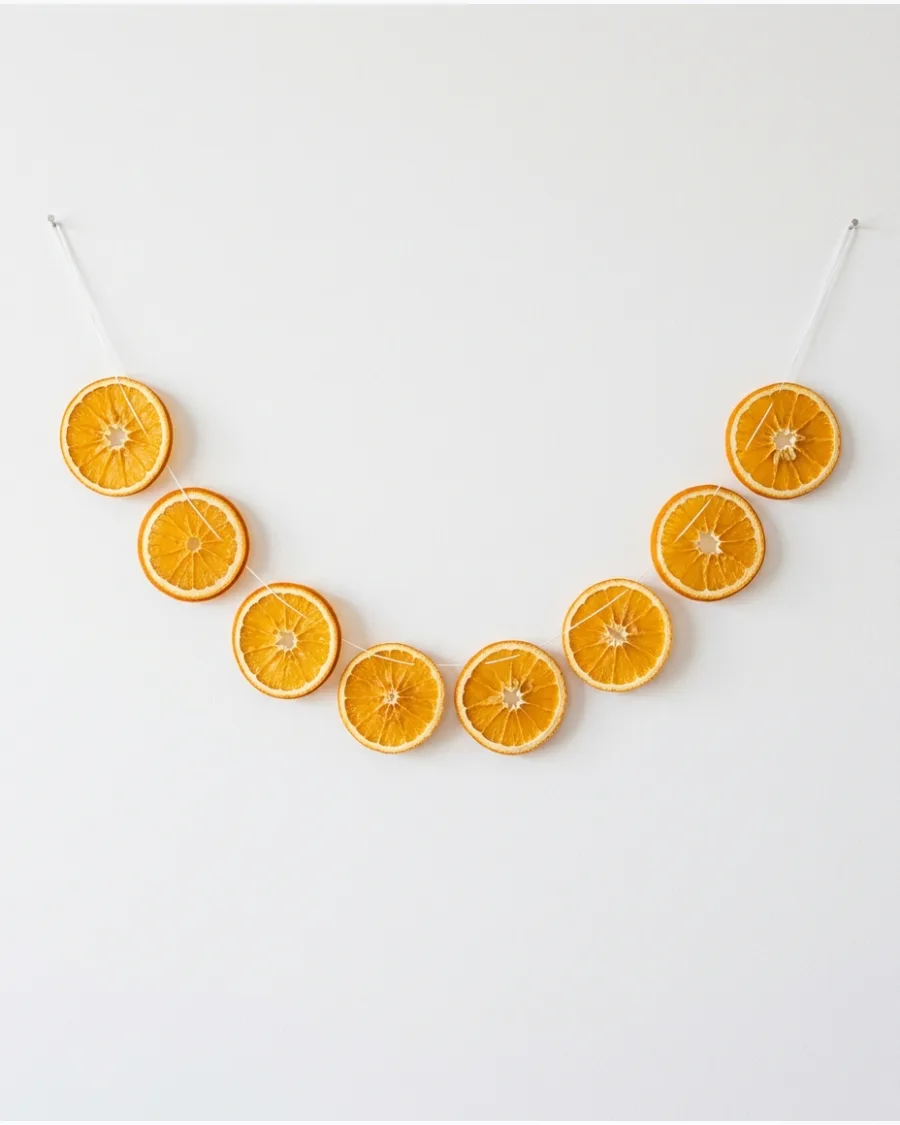
This design emphasizes the natural beauty of the citrus fruit without any competing textures. String the translucent orange slices at consistent three-inch intervals along a thin white or tan cord to maintain a clean, rhythmic look. This approach is ideal for small apartments or modern spaces where you want a hint of holiday warmth without clutter.
- Select a high-strength neutral thread or very fine jute to keep the focus on the fruit
- Use a ruler during assembly to ensure the spacing remains perfectly uniform across the length
- Mount the garland against a plain white or light gray wall to maximize the color pop of the oranges
Thread the cord through the center flesh of the orange rather than the peel to keep the slices facing forward.
42. Neutral Dried Orange and Cream Garland
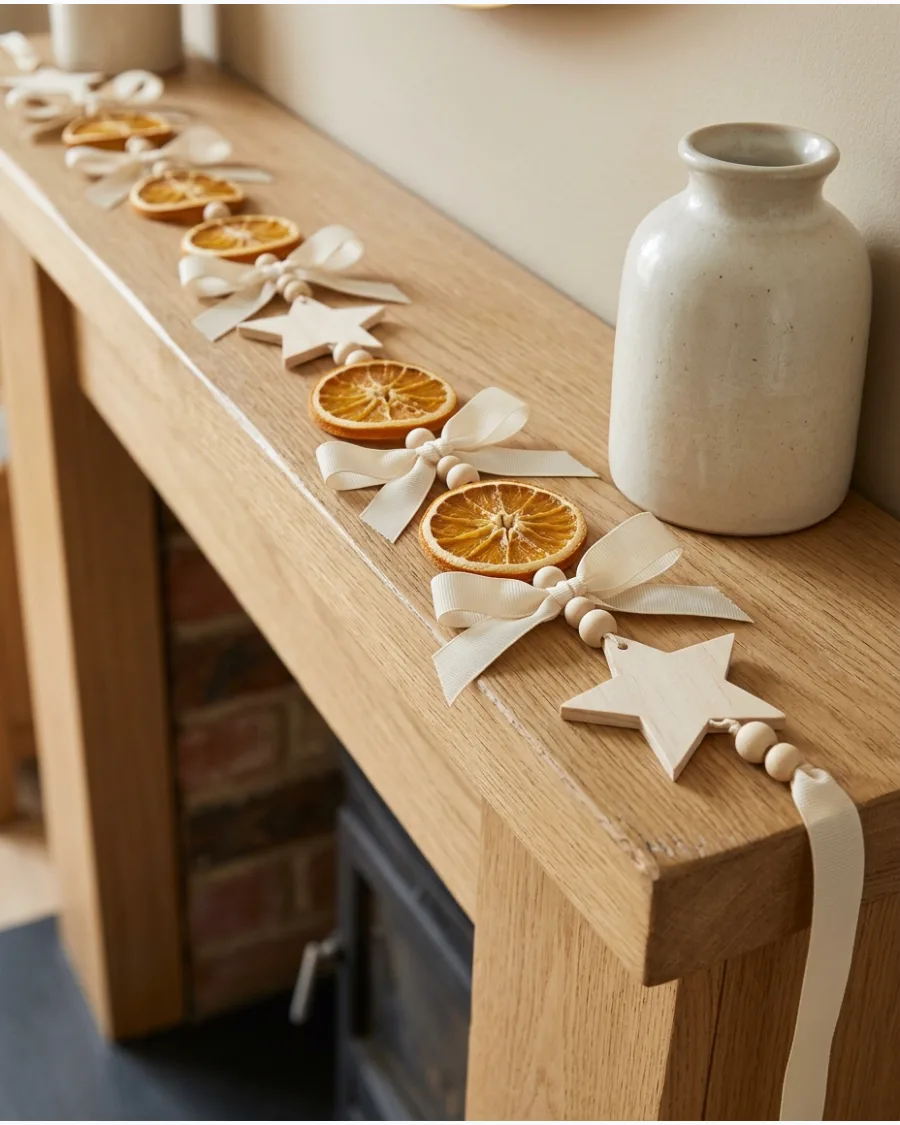
Achieve a sophisticated, muted holiday look by pairing warm citrus with soft whites and natural wood. Incorporate cream-colored grosgrain ribbon and unfinished wooden stars between the citrus rounds to soften the high-contrast orange tones. This palette works well in Scandinavian-inspired rooms that rely on textures rather than bold primary colors.
- Choose pale, lightweight wooden stars to prevent the garland from sagging too much
- Layer in cream silk or cotton ribbon bows at the ends for a soft finish
- Avoid all red or green elements to maintain the specific warm-neutral aesthetic
Use a matte sealant on the wooden beads and stars to prevent them from absorbing oils from the oranges over time.
43. Cottagecore Dried Orange Garland
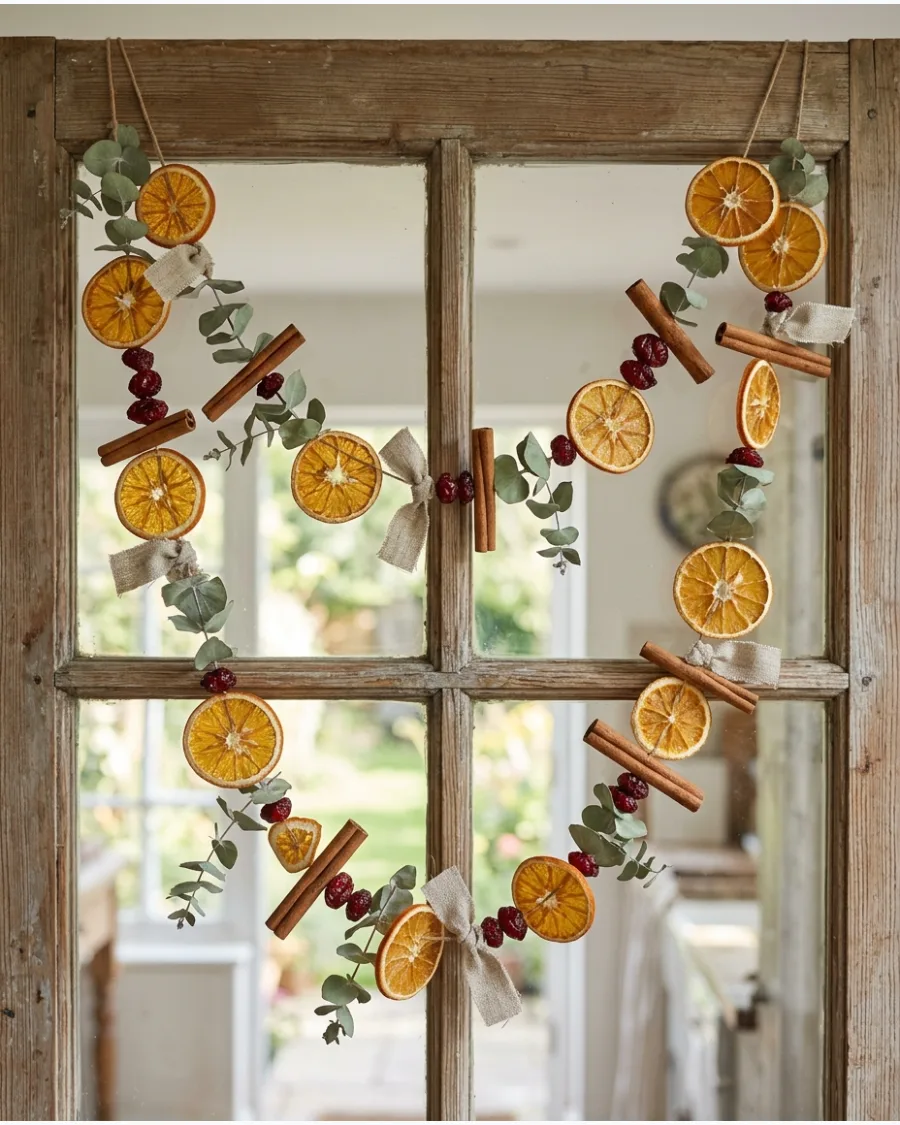
Embrace a rustic, found-and-foraged look by mixing diverse natural elements with varying textures. Alternate your orange slices with varying lengths of cinnamon sticks and sprigs of dried eucalyptus, allowing the spacing to vary slightly for a gathered, organic feel. The lack of perfect symmetry gives the garland a charming, handmade quality that suits a cozy farmhouse or cottage kitchen.
- Mix in dried cranberries for small pops of deep red without using artificial beads
- Use scraps of linen or floral fabric tied into messy knots for a homespun texture
- Ensure the greenery is fully dried to prevent it from wilting or curling after hanging
Vary the sizes of your orange slices—putting larger ones in the center and smaller ones at the ends—to enhance the organic shape.
44. Vintage Christmas Dried Orange Garland
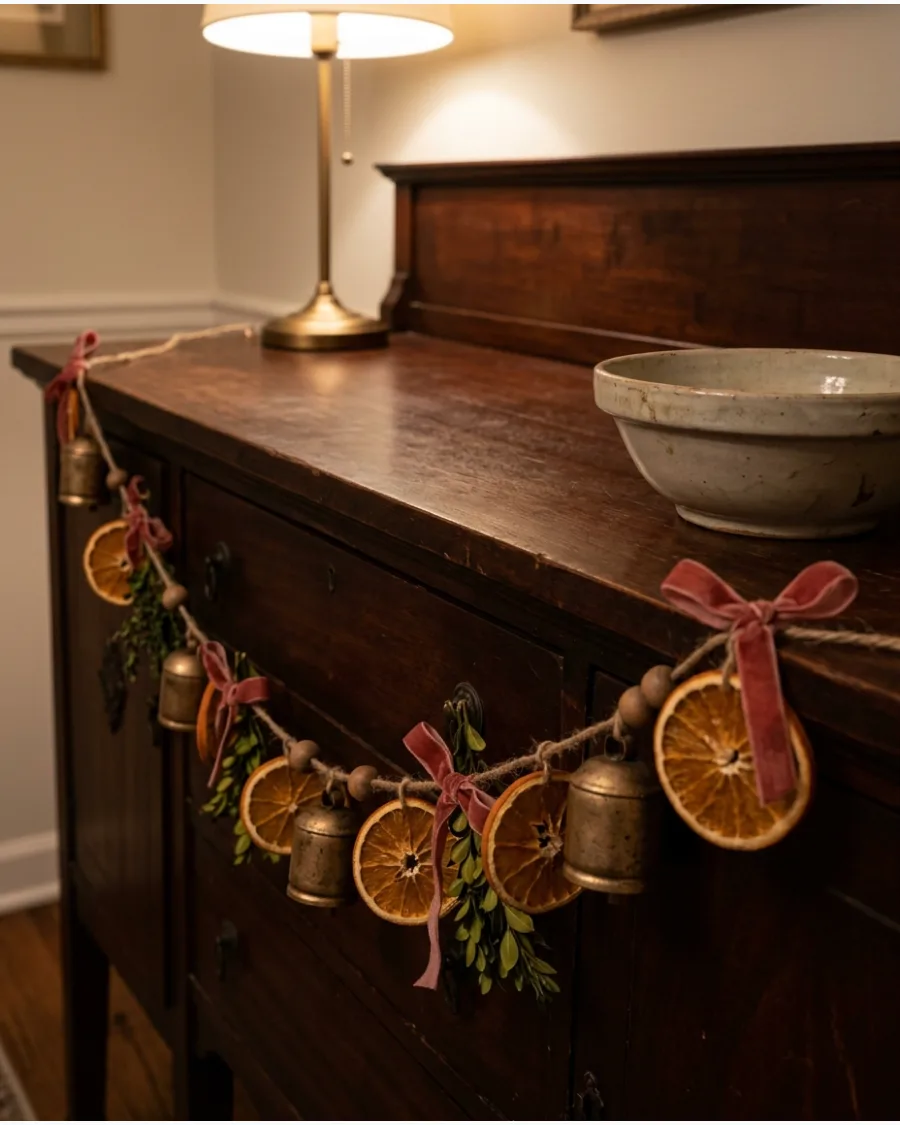
Capture the nostalgia of past holidays by using materials with a lived-in, antique finish. Select small brass bells with a matte or tarnished finish and thread them alongside oranges on a spool of muted, dusty-red velvet or cotton ribbon. By avoiding glitter and high-gloss plastics, the garland appears as if it has been lovingly stored and reused for decades.
- Seek out 'old-fashioned' greenery like long-needle pine or dried boxwood for a period-accurate look
- Choose a 'faded' red ribbon rather than a bright, vibrant scarlet to mimic aged fabric
- Space the brass bells so they tinkle slightly when the garland moves in a draft
If your brass bells are too shiny, soak them in a bowl of vinegar and salt for 30 minutes to create an instant antique patina.
45. Boho Dried Orange Garland
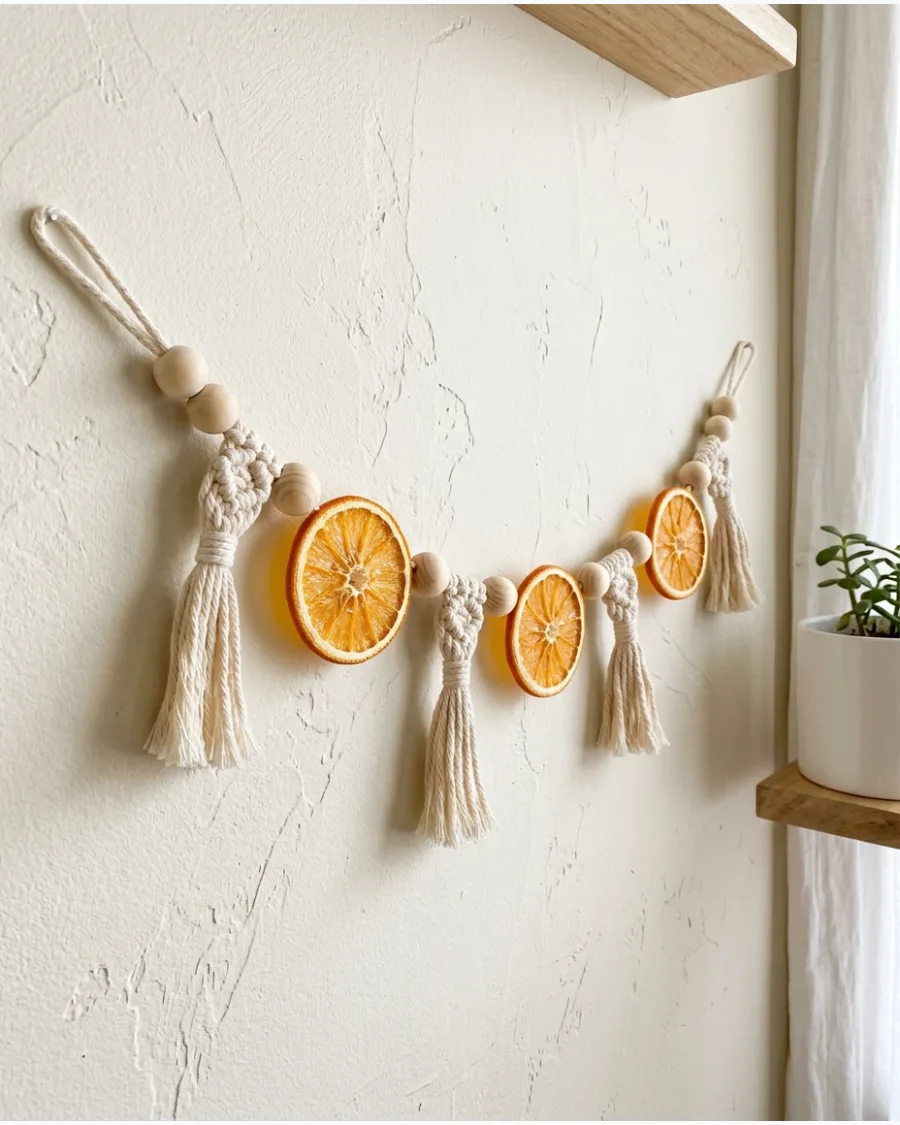
Bring bohemian flair to your decor by combining citrus with textile art elements. Create small macramé tassels using cream cotton twine and place them between every third orange slice for a textured, bohemian aesthetic. The use of cream and beige fibers allows the vibrant color of the fruit to remain the focal point while adding significant visual weight.
- Incorporate unfinished natural wood beads of varying sizes to add geometric interest
- Use simple lark's head knots to secure the orange slices onto a thicker cotton base cord
- Keep the fiber ends frayed and brushed out for a softer, more relaxed appearance
Brush the cotton tassels with a fine-tooth comb to create a 'fringe' effect that looks more professional.
46. Dried Orange and Mixed Citrus Garland
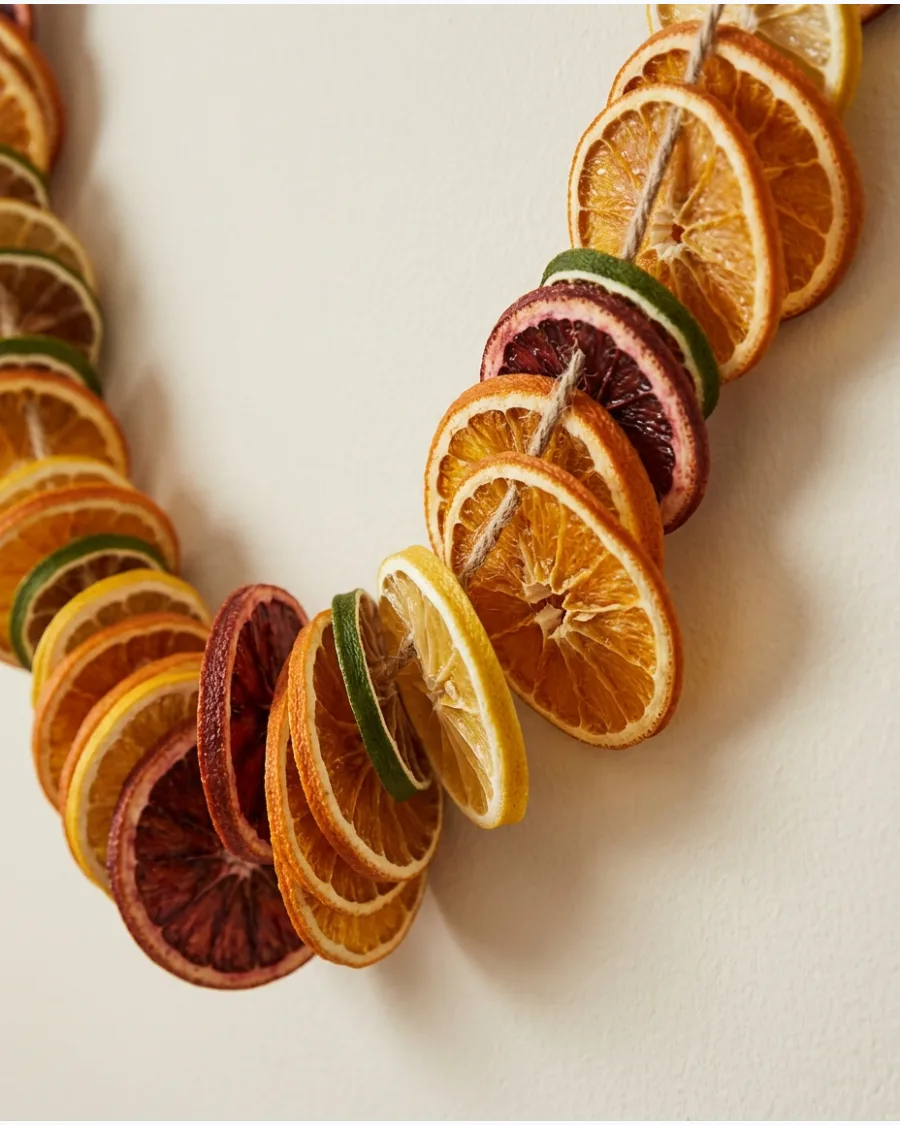
Mixing various citrus fruits creates a vibrant gradient of colors and sizes that elevates a standard strand. Thread thin slices of lemon, lime, and grapefruit between your larger orange slices to add visual interest and a diverse color palette. This technique breaks up the uniformity of a single-fruit garland while keeping the orange tones dominant.
Ensure all citrus types are dried to a consistent, leathery texture to prevent spoilage over time.
- Lemons provide a bright yellow pop, while limes offer a deep, moody green contrast.
- Blood oranges add a rich ruby or purple hue that pairs beautifully with standard navel oranges.
- Vary the slice thickness slightly in the oven to allow different fruits to dehydrate evenly at the same temperature.
Place the smallest lime slices near the ends of the garland to create a natural tapered look for the strand.
47. Double Dried Orange Slice Garland
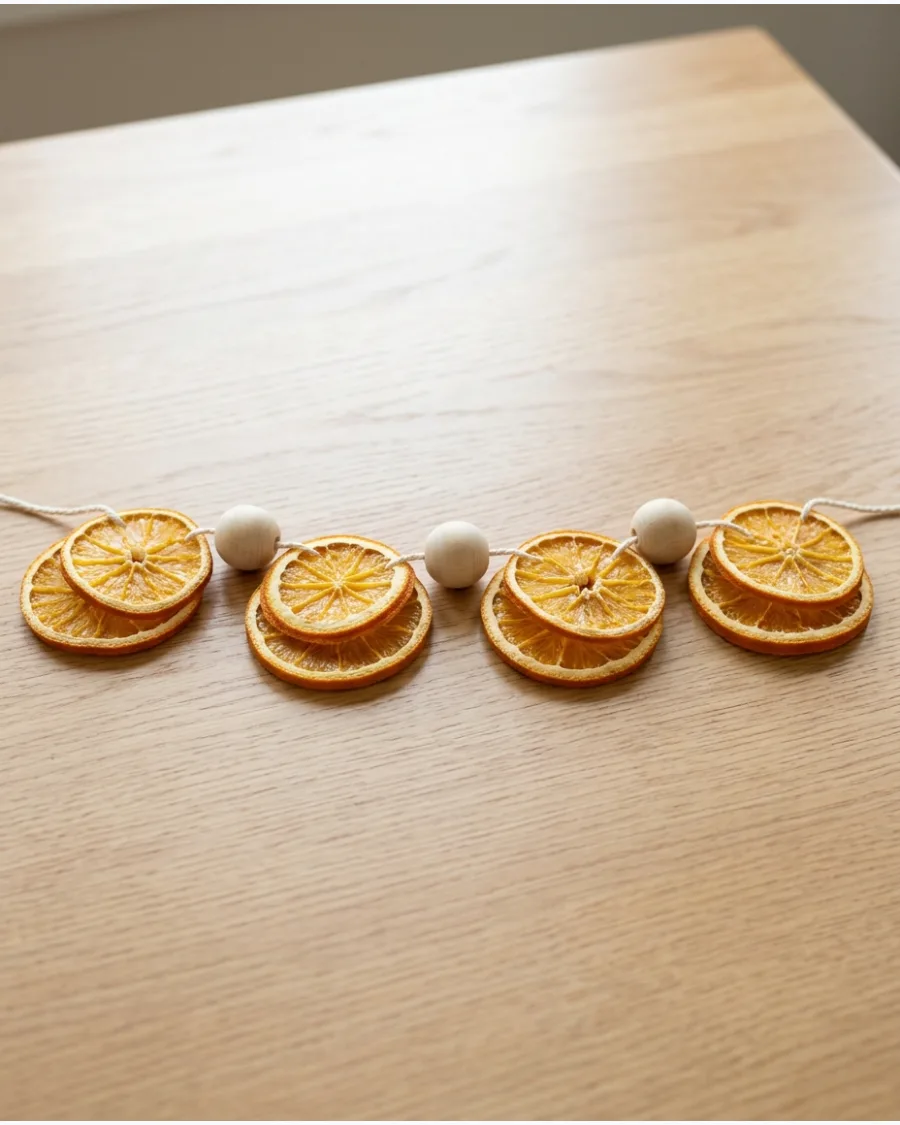
Creating clusters of orange slices gives the garland a chunky, substantial feel that stands out in large rooms. Slide two orange slices onto the twine so they slightly overlap, then secure the pair with a wooden bead or a simple overhand knot. This method creates a 'shingled' effect that looks more intentional and high-end than single slices.
It is particularly effective for wide mantels or banisters where a thin strand might look lost.
- Use slices of roughly the same diameter for each pair to maintain a consistent, symmetrical shape.
- Wooden beads help space the clusters and prevent the sticky fruit surfaces from pressing too tightly together.
- Natural jute or heavy cotton twine provides enough friction to hold the overlapping slices in place without them sliding.
If you choose to use knots instead of beads for spacing, tie them twice to ensure the heavier double-slice clusters remain secure.
48. Dried Orange Garland With Christmas Stars
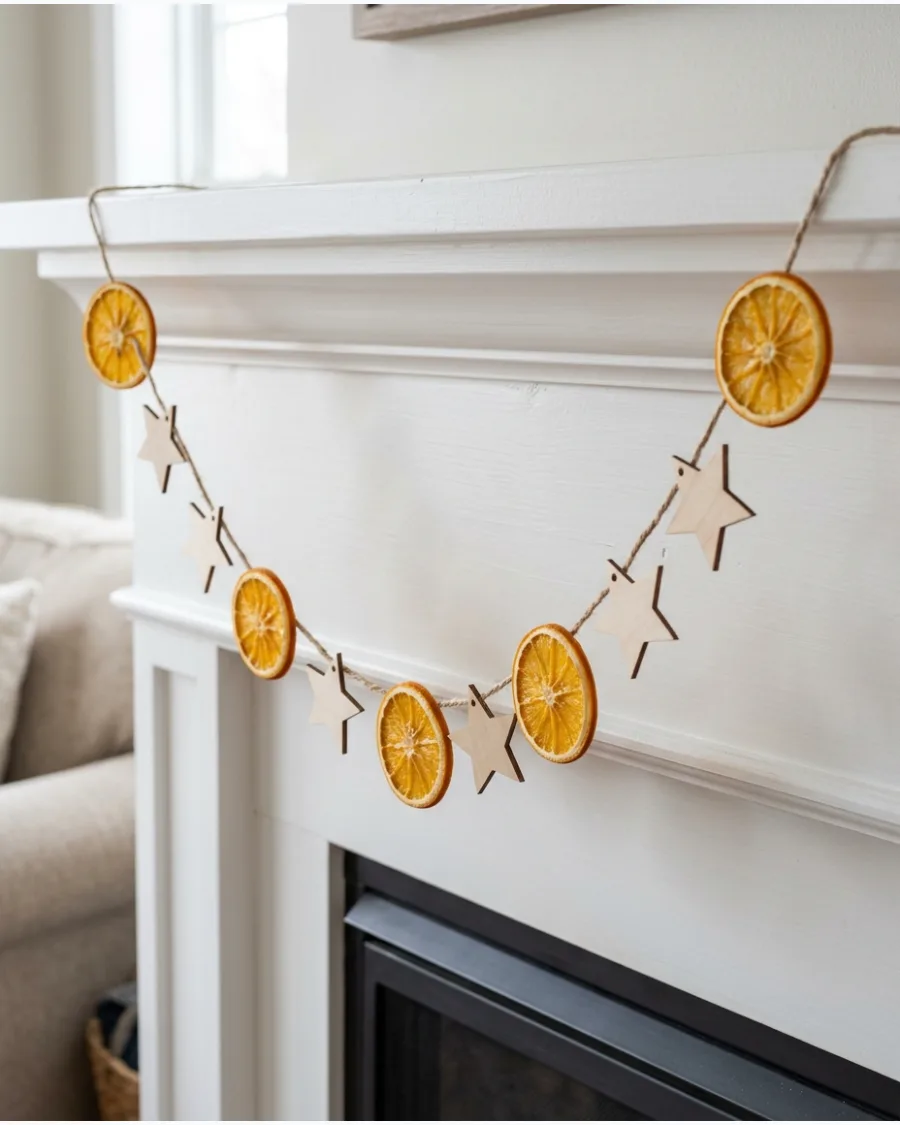
Incorporating star shapes introduces a classic celestial element to your organic citrus decor. Alternate your dried orange slices with small stars made of unfinished wood or cream-colored cardstock for a neutral, festive look. The contrast between the translucent fruit and the opaque stars makes each component pop against the background.
This design is ideal for Scandinavian or farmhouse-style holiday themes that favor natural materials.
- Unfinished wooden stars offer a rustic texture that complements the matte finish of the dried orange rinds.
- Salt-dough stars are a budget-friendly DIY alternative that can be baked and dried alongside the fruit slices.
- Keep the star ornaments slightly smaller than the orange slices so the citrus remains the primary focal point.
Use a small handheld drill bit or a very thick upholstery needle to pre-poke holes in wooden or heavy paper stars before threading them.
49. Dried Orange Garland With Mini Christmas Trees
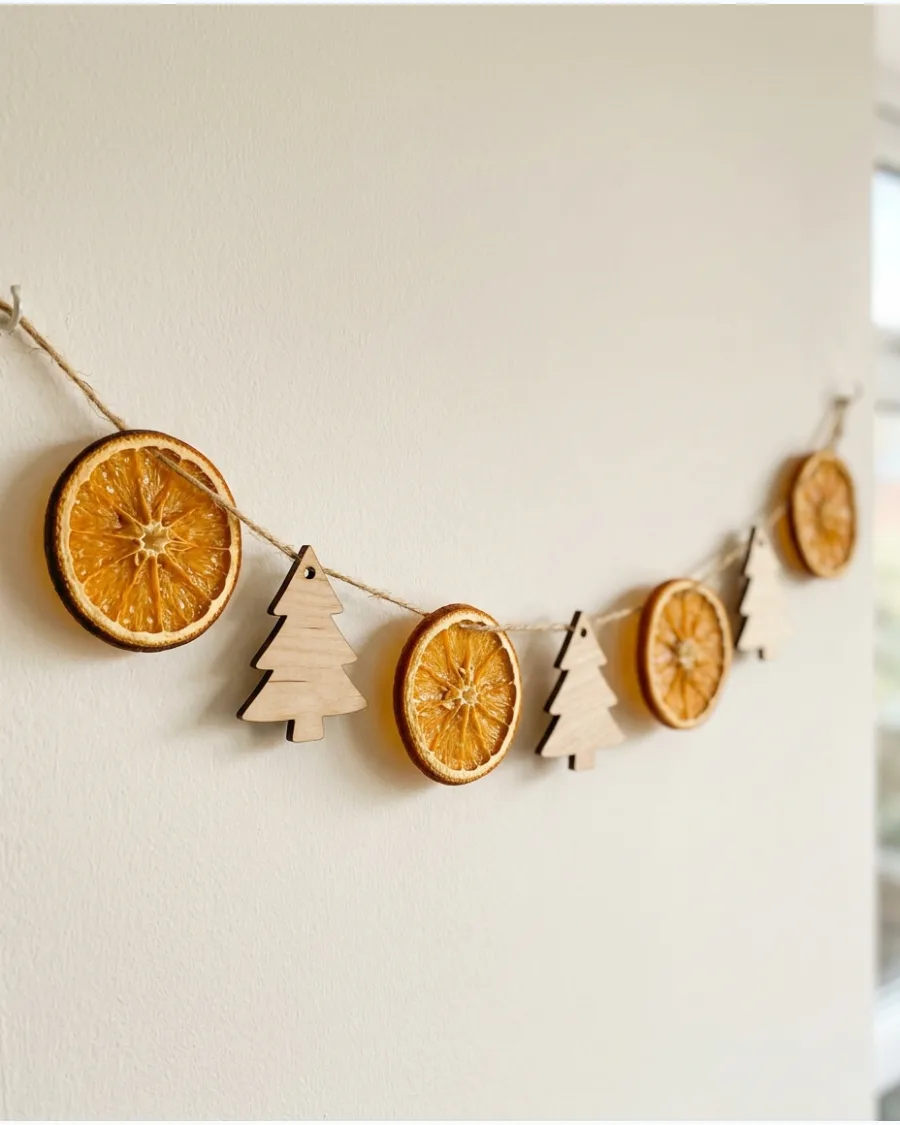
Incorporate small flat ornaments to give a traditional citrus string a more specific holiday theme. Alternating one or two dried orange slices with a flat wooden or paper tree ornament creates a rhythmic, festive pattern that remains lightweight. The flat profile of the trees ensures the garland hangs straight against a wall or along a mantel without twisting awkwardly.
By using muted green or natural wood tones, you maintain an organic aesthetic while adding seasonal visual variety.
- Select lightweight ornaments like laser-cut plywood or heavy cardstock to prevent the twine from sagging or snapping.
- Thread the twine through the top of the tree ornaments and the fleshy part of the orange slices for a balanced, centered look.
- Space the elements about three to four inches apart to allow both the citrus texture and the tree silhouettes to be clearly visible.
Use a small dot of hot glue on the back of the tree ornaments where the twine passes through if they tend to spin or flip over when hung.
50. Dried Orange Garland With Warm Christmas Lights
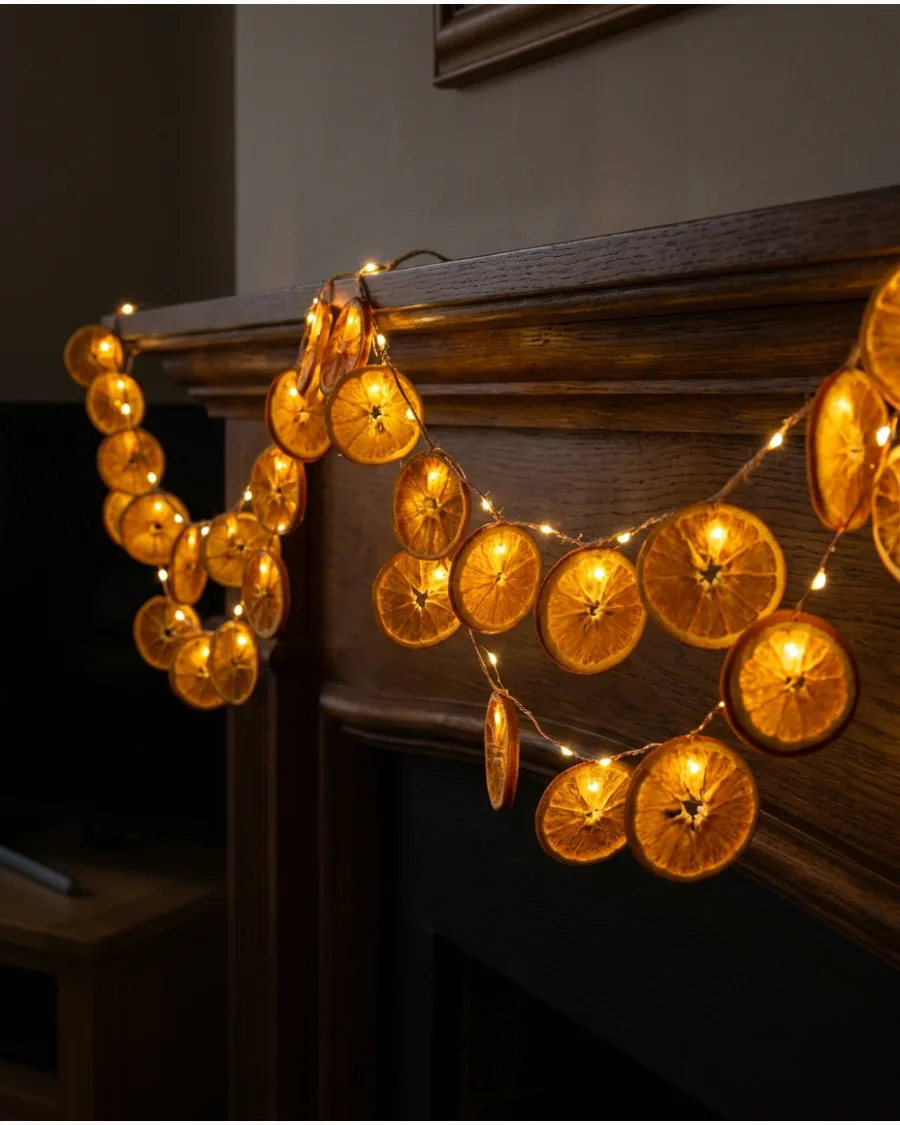
Lighting your garland from behind emphasizes the beautiful, stained-glass effect of dried citrus. Layer a dried-orange strand alongside a thin battery-powered copper wire LED light garland so the tiny bulbs sit directly behind the fruit slices. When illuminated, the warm light passes through the translucent orange flesh, creating a soft, glowing amber effect.
This setup is perfect for adding cozy evening ambiance to a mantel, window frame, or staircase.
- Use 'fairy lights' on thin wire rather than traditional thick-corded Christmas lights for a delicate, hidden appearance.
- Hide the battery pack behind a vase, book, or inside a decorative box at the end of the display for a clean look.
- Secure the light strand to the orange twine at intervals using small pieces of clear floral wire or tiny twists of the light wire itself.
Check that the LED bulbs are the 'cool-touch' variety to prevent the dried fruit from getting warm or becoming sticky over time.
Frequently Asked Questions
How do you store a dried orange garland for the next season?
To keep your garland for future use, store it in a cool, dry place inside an airtight container or a sealed zip-top bag. Adding a silica gel packet can help absorb any residual humidity that might cause the fruit to soften or mold over time.
Will a dried orange garland lose its scent over time?
The natural citrus scent is strongest when the oranges are freshly dried and will gradually fade after a few weeks of exposure to the air. You can refresh the fragrance by lightly misting the slices with orange essential oil or by pairing the fruit with cinnamon sticks and star anise.
What is the best string to use for a citrus garland?
Natural jute twine or hemp cord is ideal for a rustic look and provides enough friction to keep slices from sliding. For a more delicate or modern appearance, use clear fishing line or heavy-duty cotton thread, ensuring you use a sharp embroidery needle to pierce the fruit flesh rather than the tough rind.
Does a dried orange garland attract pests or insects?
If the orange slices are fully dehydrated and have a leathery, brittle texture with no sticky residue, they are unlikely to attract insects. Ensure the fruit is completely dry before assembly and avoid hanging the garland in high-humidity areas where the fruit could reabsorb moisture.
Is it safe to hang a dried orange garland near a fireplace?
While these garlands look beautiful on mantels, they should be kept away from open flames and high-heat heating elements because dried fruit and twine are flammable. Ensure the garland is securely anchored to the front or top of the mantel so it cannot fall into the hearth.