50 Best Curtain Ideas Instead of Closet Doors

This post may contain affiliate links: full affiliate disclosure.
Swapping heavy closet doors for fabric curtains instantly softens a bedroom and saves valuable floor space. This simple change removes the clearance needed for swinging doors while adding texture and color to the walls.
Soft and Neutral Closet Curtain Ideas
1. Floor-to-Ceiling White Linen Curtains
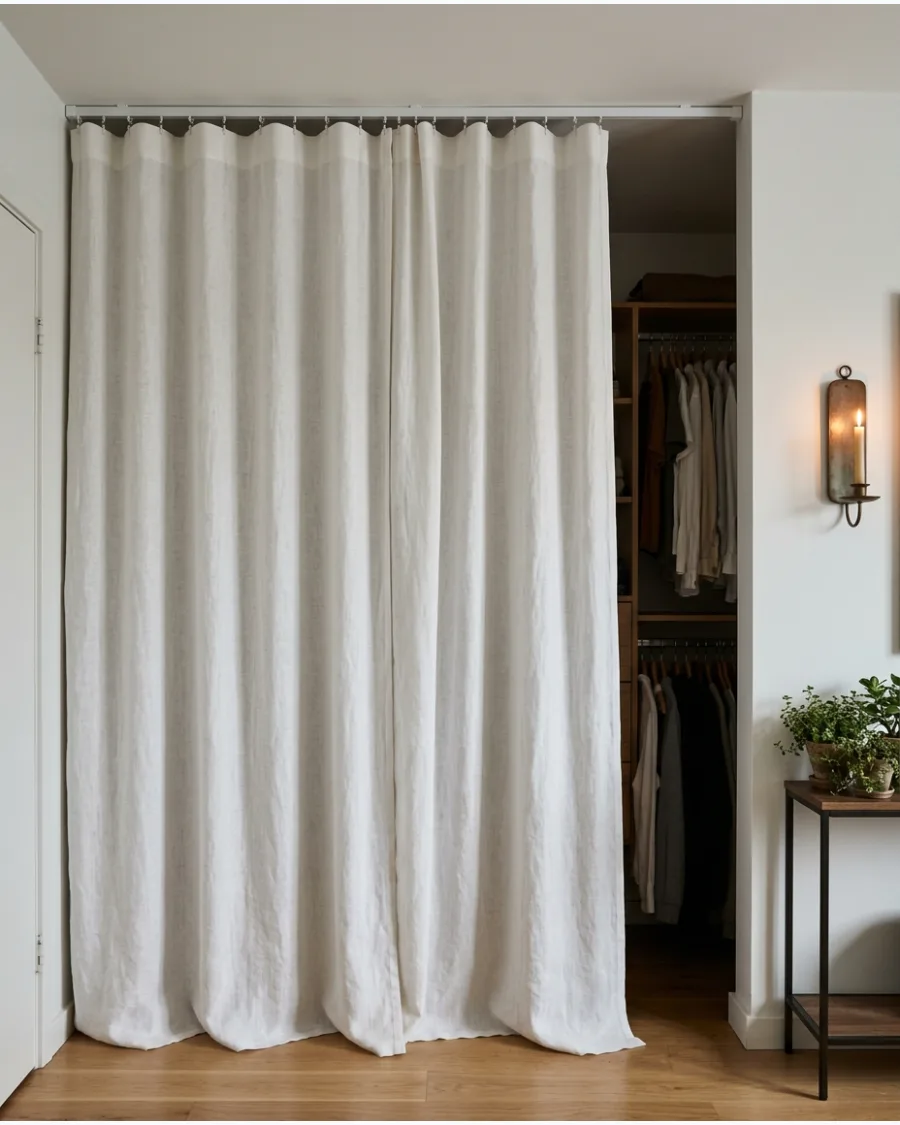
Hang long white linen curtains from a ceiling-mounted track to create a clean and airy closet entrance. The natural texture keeps the white fabric from looking too plain while making the room appear taller.
Install the track as close to the ceiling as possible to draw the eye upward and maximize the height of the room.
- Sourcing: $40 to $80 for two panels and hardware.
- Setup: Install the track into ceiling joists for a secure hold.
- Adaptation: Use sheer linen for a lighter look or lined linen for more privacy.
Most people skip this: Measure from the ceiling to the floor before buying to ensure the fabric pools slightly or just kisses the ground.
2. Warm Beige Closet Curtains
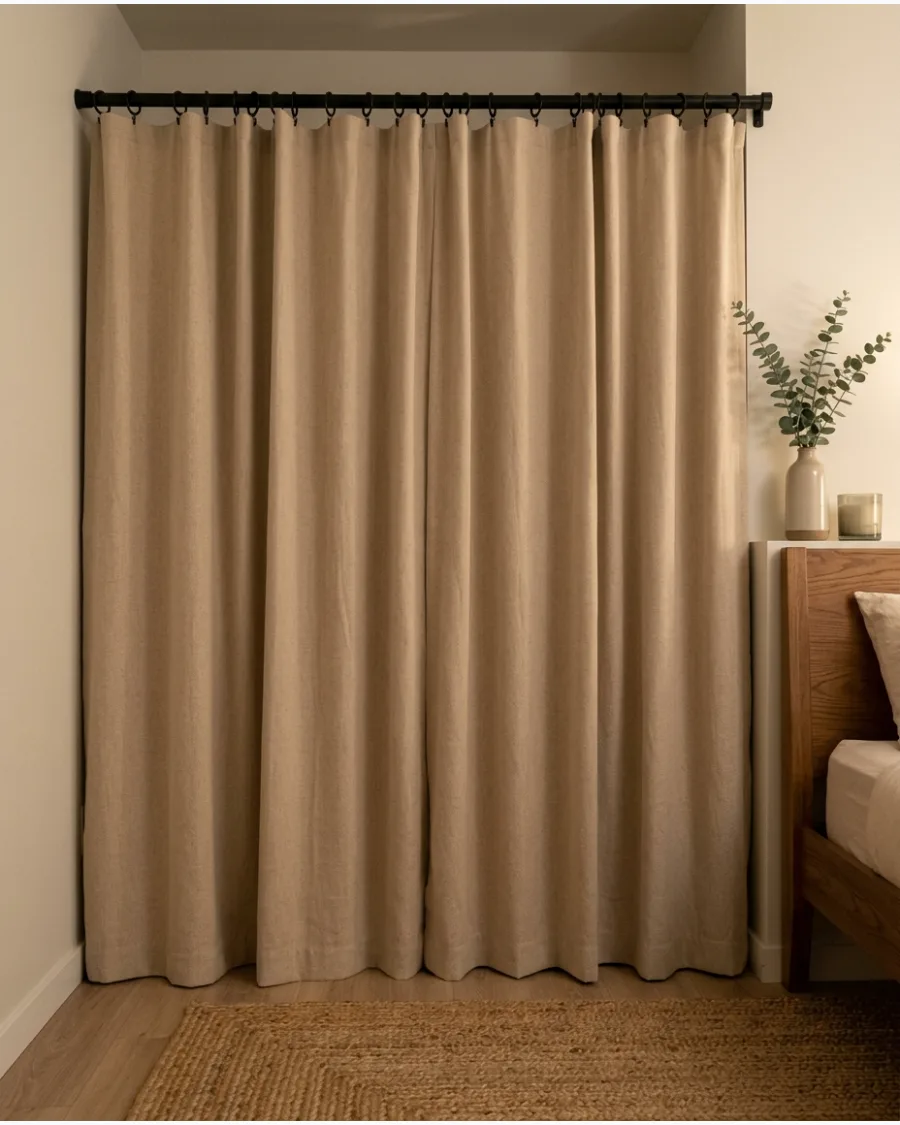
Choose beige curtains with a soft woven finish for a calm and welcoming bedroom. This warm neutral works especially well with cream bedding, natural wood furniture, and earthy decor.
Select a fabric with a slight weight so the panels hang straight and offer full coverage for the items inside.
- Sourcing: $30 to $60 depending on fabric thickness.
- Setup: Mount the rod two inches above the door frame to hide the top edge.
- Adaptation: Works well in rooms with cream or off-white walls.
Quick win: Use a steamer on the panels after hanging to remove fold lines for a high-end look.
3. Ivory Pinch-Pleat Curtains
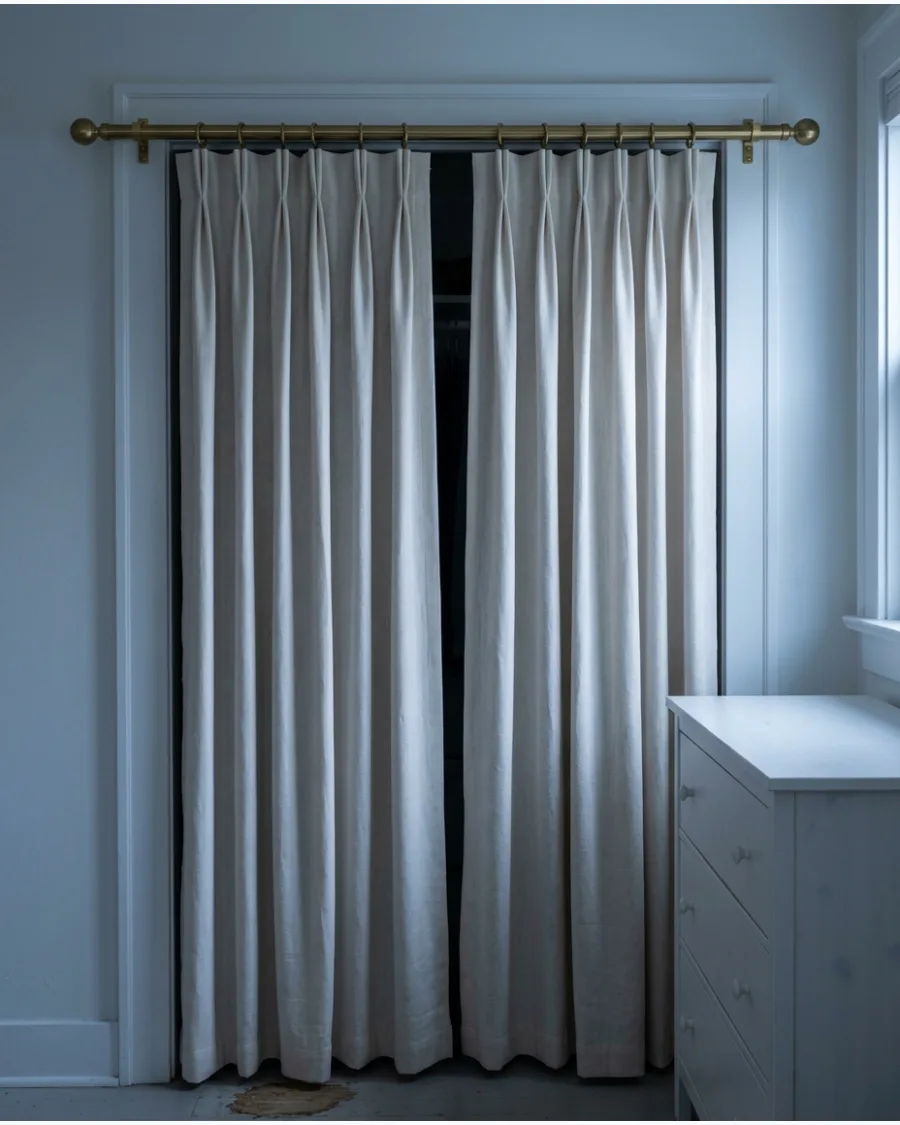
Use ivory pinch-pleat curtains to give an open closet a polished, tailored appearance. Mounting them close to the ceiling makes the closet look like a built-in architectural feature.
Opt for rings with clips or hooks that slide easily along the rod for daily access.
- Sourcing: $50 to $100 for high-quality pleated panels.
- Setup: Use curtain rings to allow the fabric to glide smoothly.
- Adaptation: Best for traditional or classic bedroom styles.
Best shortcut: Buy pre-pleated panels to get the custom look without the sewing or expensive tailoring.
4. Soft Gray Closet Curtain Panels
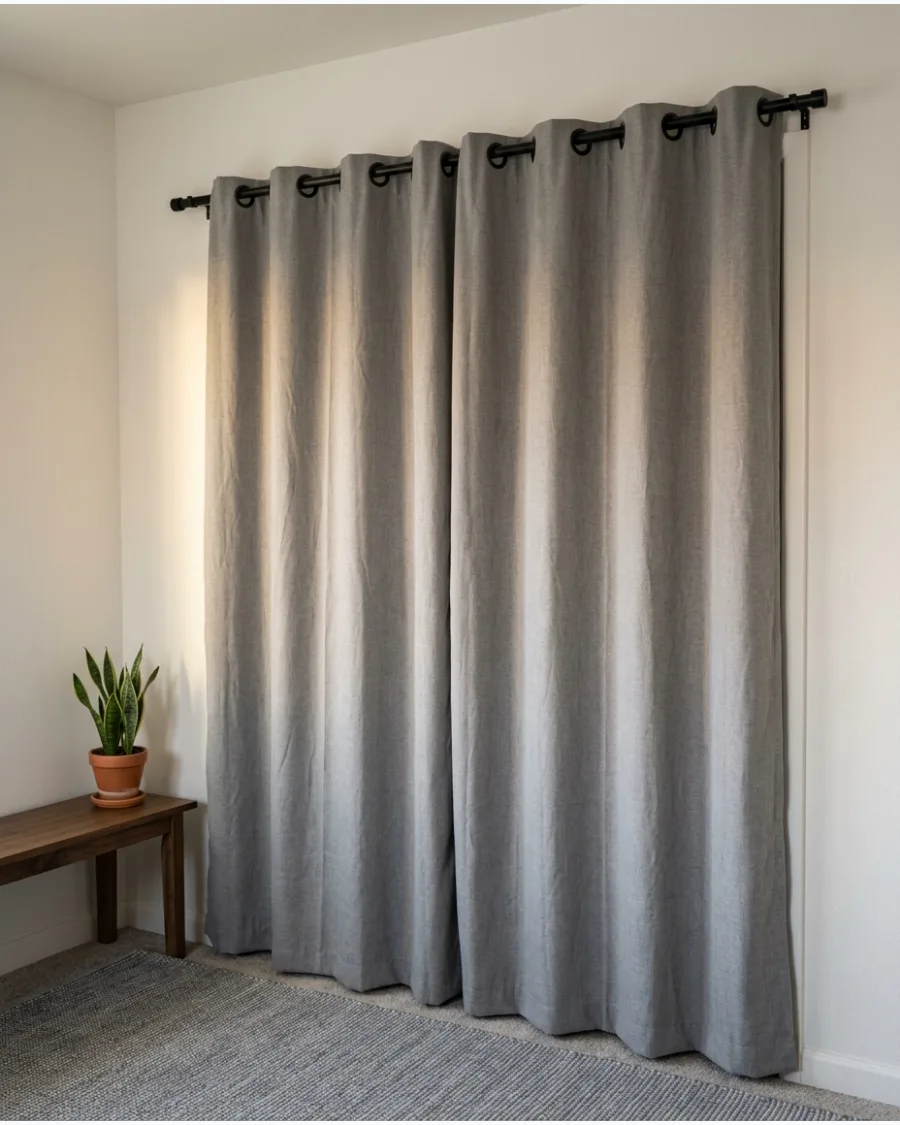
Light gray curtains can conceal closet storage without making a small bedroom feel darker. Pair them with white walls and black hardware for a simple contemporary look.
Choose a light-filtering fabric to keep the closet area from feeling like a dark void when the curtains are closed.
- Sourcing: $25 to $50 for standard sizes.
- Setup: Slide panels directly onto the rod for a clean appearance.
- Adaptation: Fits well in rooms with cool-toned color palettes.
Quick win: Match the rod color to other hardware in the room, like door handles or light fixtures, for a cohesive feel.
5. Oatmeal Textured Curtains
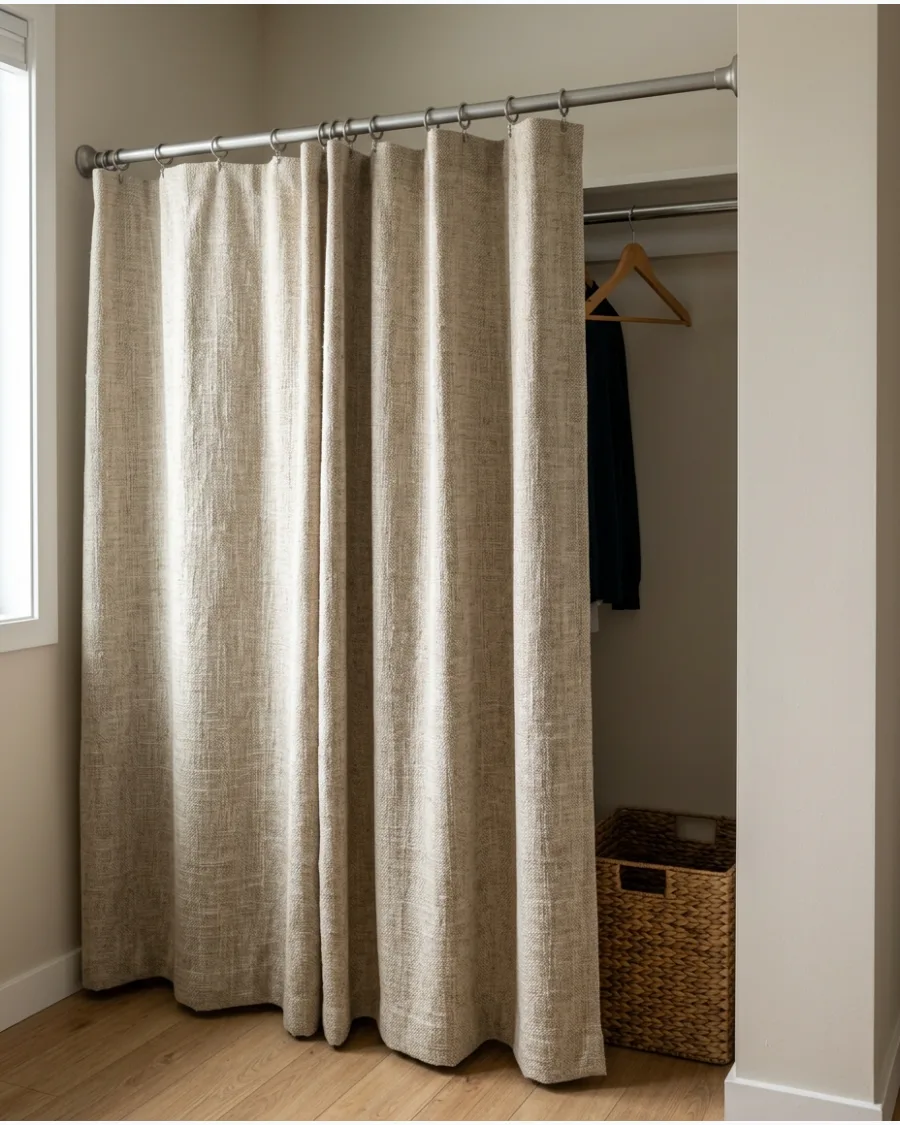
Oatmeal-colored fabric adds subtle depth while blending easily with neutral bedroom decor. Look for linen-blend or slub-textured panels for a relaxed designer finish.
Use two panels for a standard closet so you can pull them to either side for full access.
- Sourcing: $35 to $70 for linen-blend materials.
- Setup: Center the rod over the opening with a three-inch overhang on each side.
- Adaptation: Great for minimalist or Scandinavian style rooms.
Most people skip this: Make sure the total width of the curtains is at least twice the width of the closet opening for a full look.
6. Cream Cotton Closet Curtains
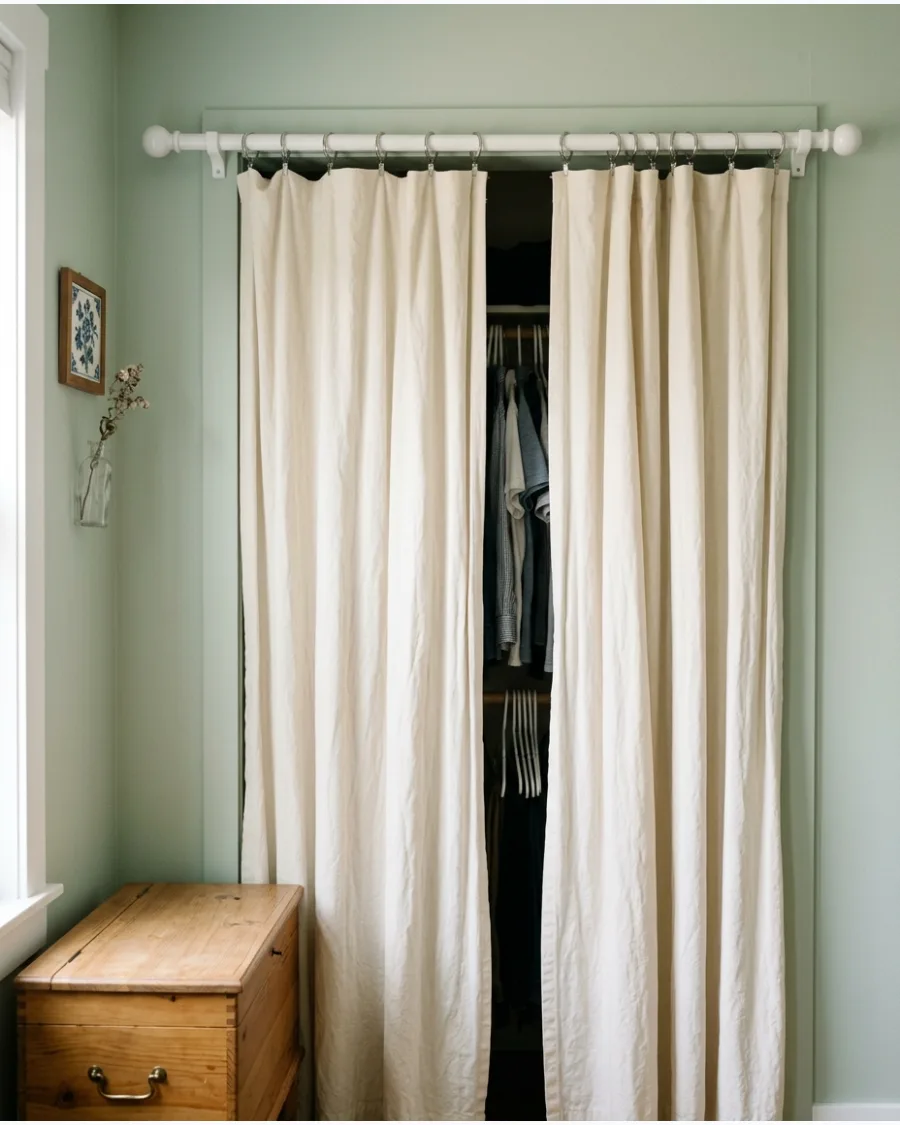
Simple cream cotton curtains create a softer alternative to heavy closet doors. The lightweight material is easy to open, wash, and replace when you want to refresh the room.
Wash and dry the fabric before hanging to account for any shrinkage in the length.
- Sourcing: $20 to $40 for basic cotton panels.
- Setup: Use a standard curtain rod or a tension rod for no-drill options.
- Adaptation: Perfect for children's rooms or nurseries.
Best shortcut: Use a tension rod for a no-drill installation in rental apartments or temporary spaces.
7. Taupe Curtains for a Cozy Bedroom
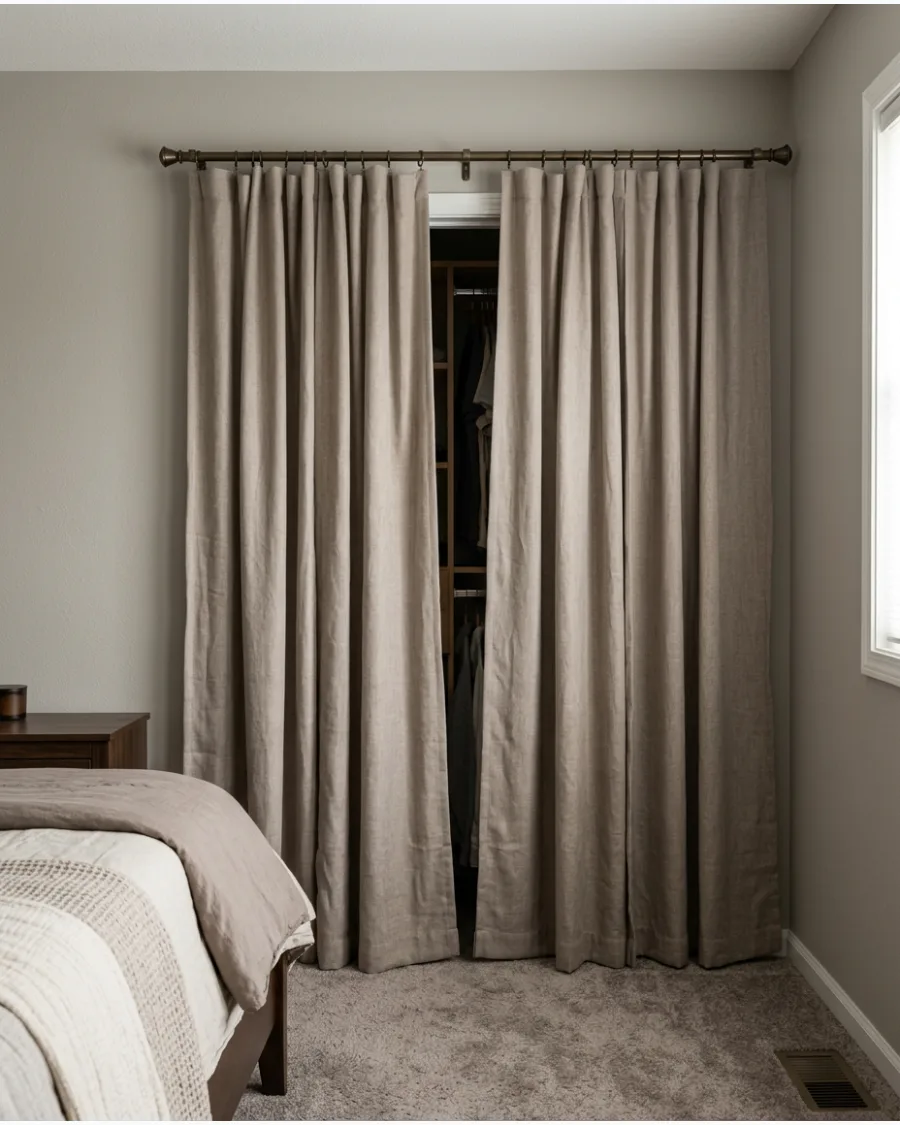
Taupe curtains bring warmth to gray, beige, and brown bedroom color schemes. Use extra-wide panels so the fabric looks full and luxurious when the closet is closed.
Pick a shade that is slightly darker than the walls to add dimension without overwhelming the space.
- Sourcing: $45 to $90 for extra-wide panels.
- Setup: Mount the rod high to create a sense of grandeur.
- Adaptation: Ideal for larger master bedrooms with deep closet openings.
Quick win: Hang the rod 4 to 6 inches wider than the closet frame to hide the edges of the opening completely.
8. Natural Flax Linen Curtains
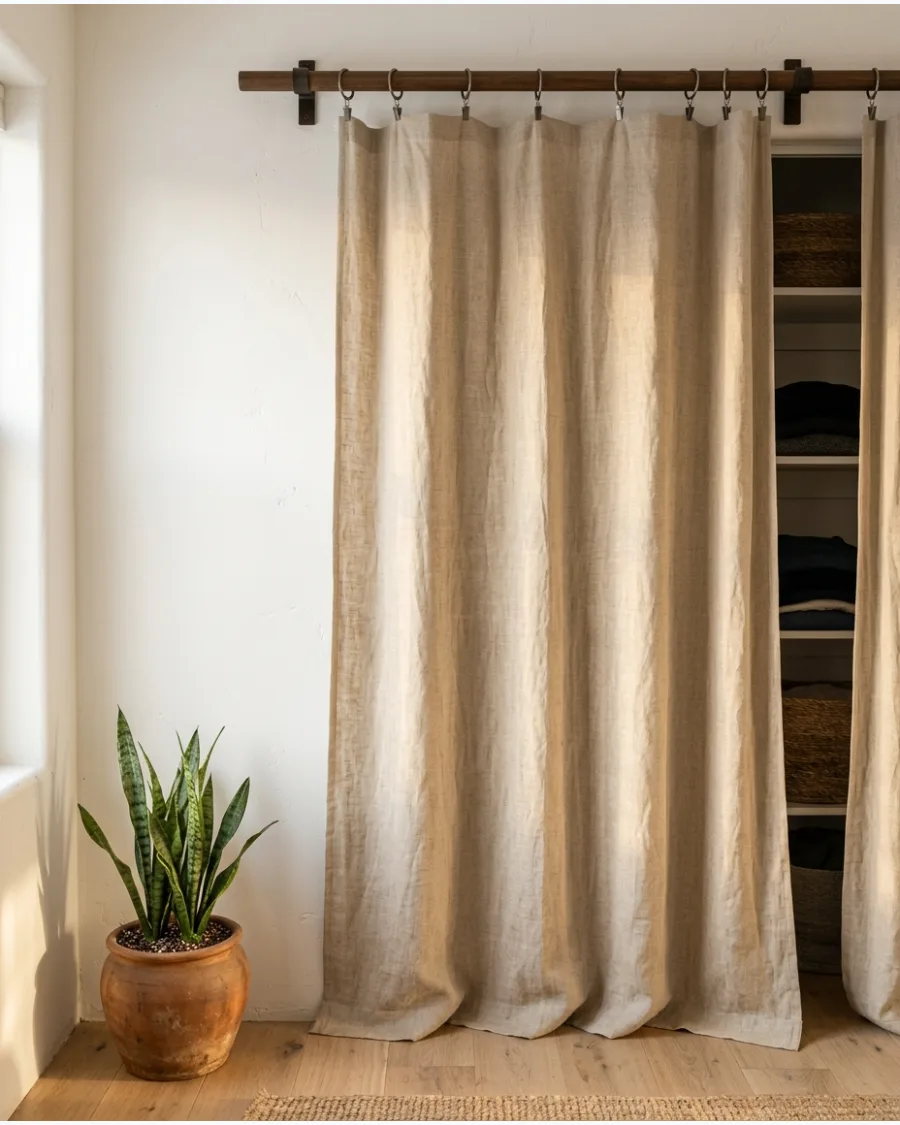
Unbleached flax linen offers an organic look that complements rustic, Scandinavian, and minimalist bedrooms. Its slightly imperfect texture makes the closet treatment feel relaxed rather than formal.
Pair these with a matte black or dark wood rod to ground the light fabric.
- Sourcing: $40 to $85 for natural linen fabric.
- Setup: Use wooden rings for a consistent organic aesthetic.
- Adaptation: Works well in brightly lit rooms with natural textures.
Most people skip this: Iron only the top hem and let the rest of the linen have its natural, soft wrinkles for a lived-in look.
9. White-on-White Closet Wall
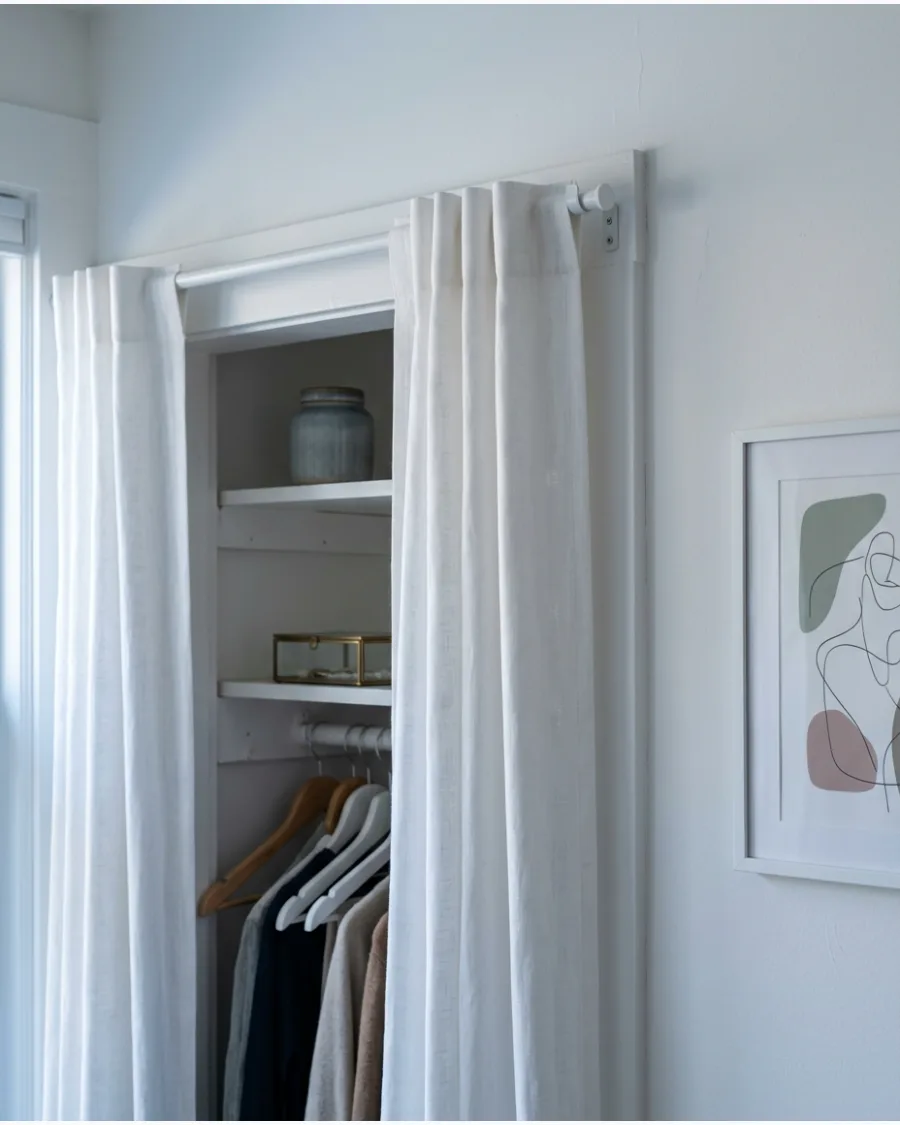
Match white curtains to the wall color so the closet visually disappears when closed. This approach is useful when you want furniture, artwork, or bedding to remain the room’s main focus.
Use a white rod and white rings to complete the seamless, hidden look.
- Sourcing: $30 to $60 for opaque white fabric.
- Setup: Match the white paint brand to the fabric shade if possible.
- Adaptation: Best for small modern rooms where visual clutter must be minimized.
Quick win: Use blackout-lined white curtains if the items inside the closet are colorful and might show through thin fabric.
10. Greige Ripple-Fold Curtains
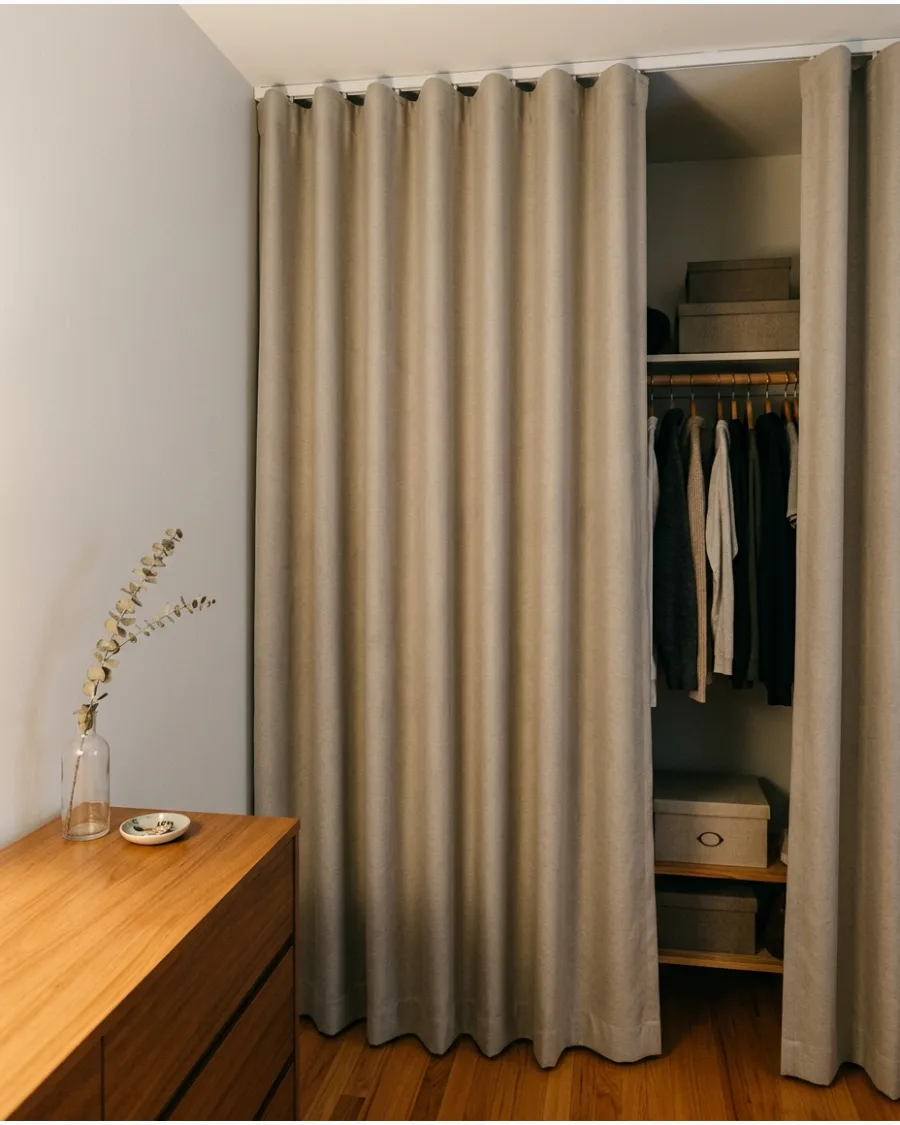
Install greige ripple-fold curtains on a slim ceiling track for a clean, evenly pleated finish. The soft gray-beige color is neutral enough for almost any bedroom palette.
Measure the track length precisely so the fabric covers the entire width without any gaps at the ends.
- Sourcing: $60 to $120 for track and custom-style panels.
- Setup: Drill the track directly into the ceiling for a flush fit.
- Adaptation: Suited for modern or contemporary apartment designs.
Best shortcut: Look for 'wave fold' tape that can be sewn onto standard flat panels to mimic the ripple-fold look.
Modern and Minimalist Closet Curtain Ideas
11. Ceiling-Track Closet Curtains
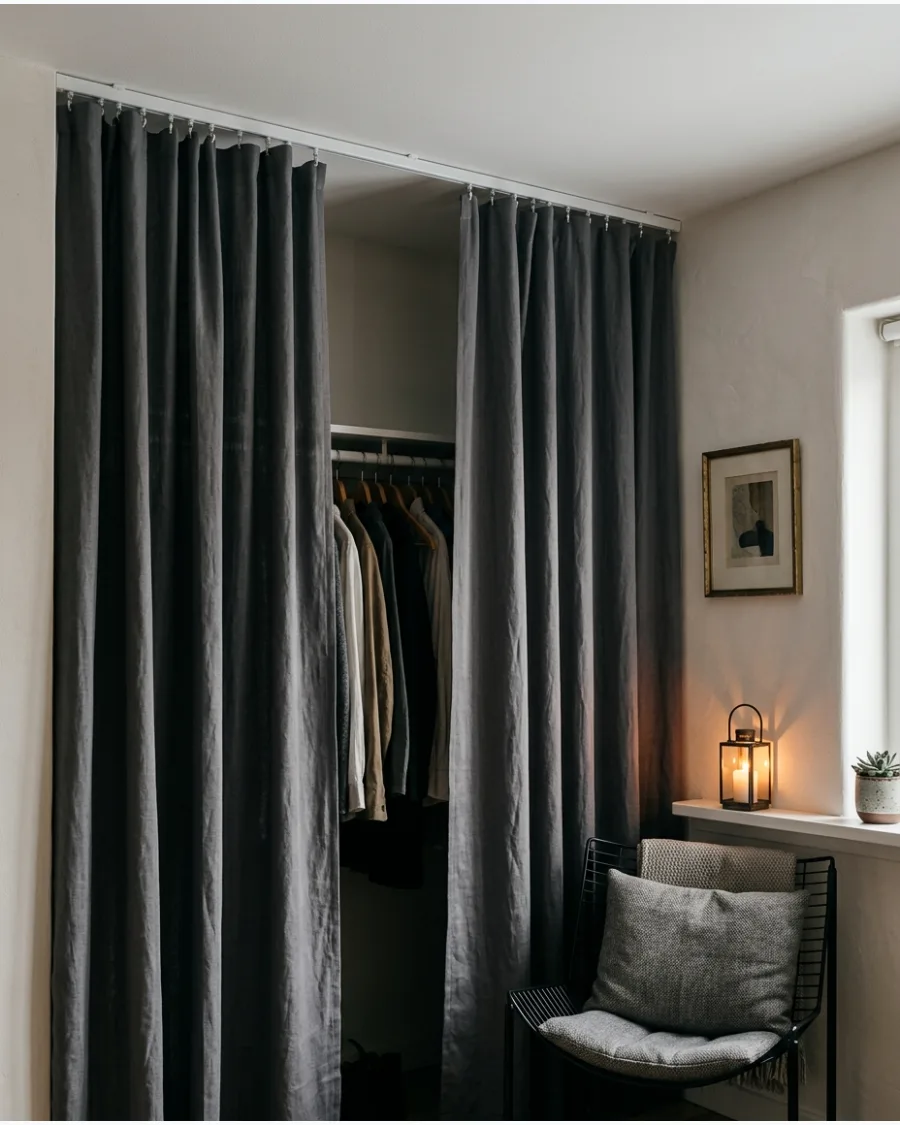
Replace a visible rod with a discreet ceiling-mounted curtain track. This creates a streamlined finish and allows the fabric to glide smoothly across a wide closet opening.
Ensure the track is screwed into ceiling joists or use heavy-duty anchors to support the weight of the fabric.
- Sourcing: $50 to $110 for heavy-duty track systems.
- Setup: Use a hacksaw to trim the track to your exact closet width.
- Adaptation: Great for closets that span the entire width of a wall.
Most people skip this: Lubricate the track with a tiny bit of silicone spray to make the sliders move silently.
12. Wall-to-Wall Curtain Installation
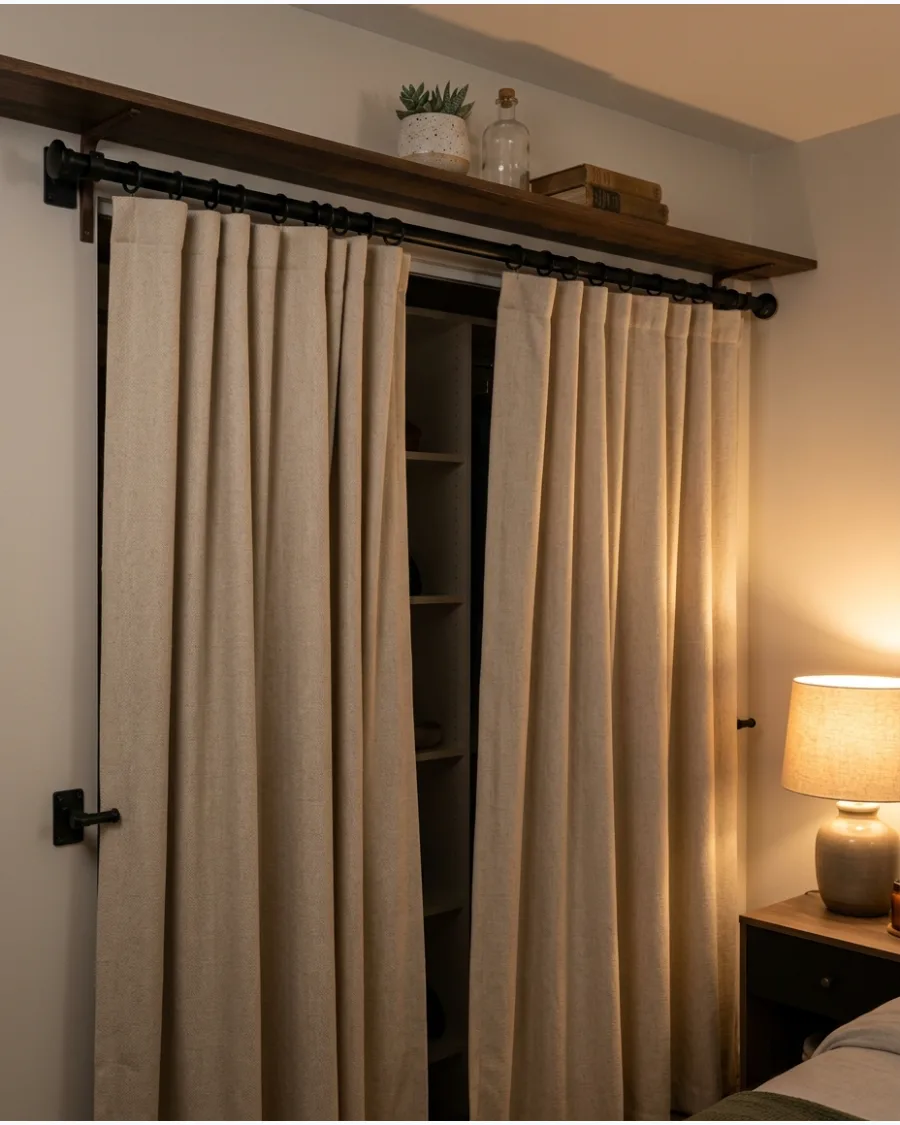
Cover the entire closet wall rather than only the opening. Wall-to-wall curtains can disguise uneven frames, extra shelving, and awkward closet proportions while giving the bedroom a boutique-hotel feel.
Extend the curtain rod from one side wall to the other for a high-end, custom appearance.
- Sourcing: $80 to $150 for multiple panels and a long rod.
- Setup: Use center support brackets to prevent the long rod from sagging.
- Adaptation: Ideal for transforming a cluttered wall into a soft backdrop.
Quick win: Use this method to hide a small home office or desk area tucked into a bedroom corner.
13. Black Closet Curtains
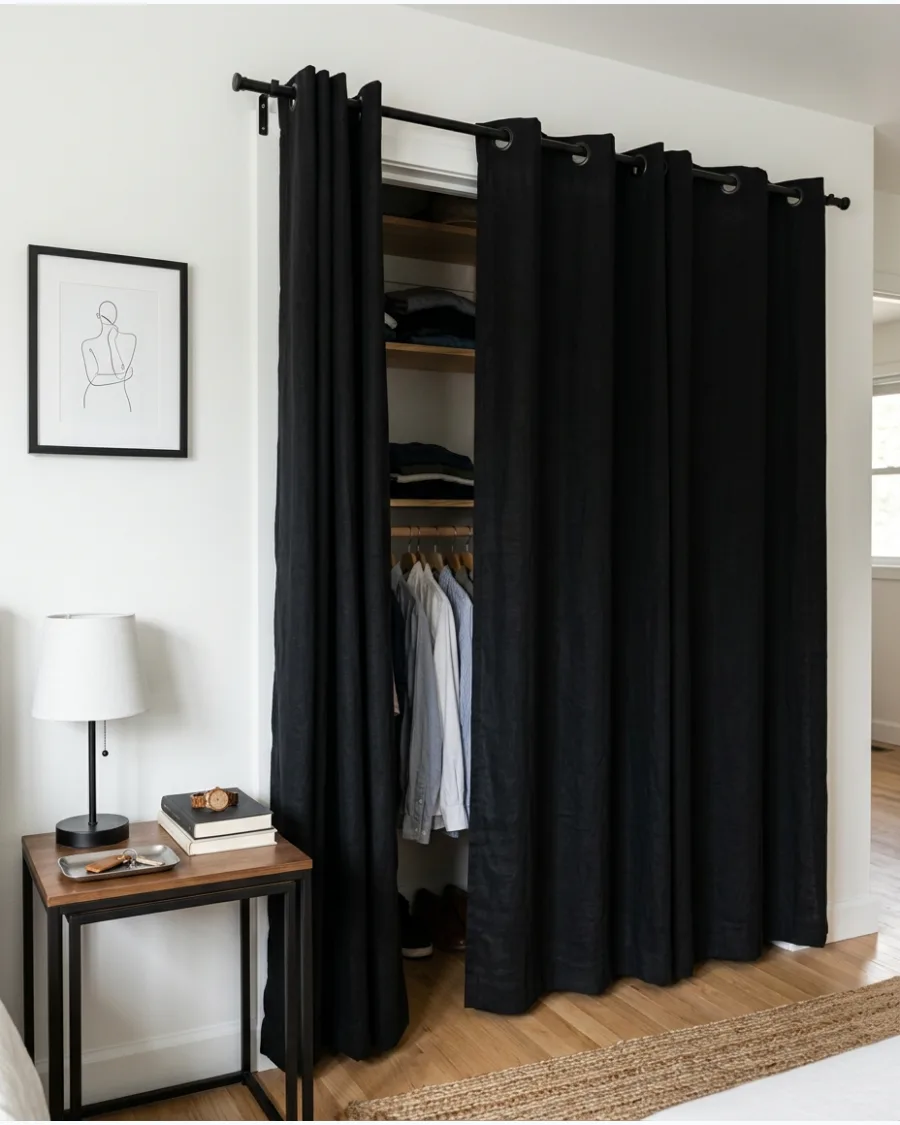
Use matte black curtains to create a bold contrast against white or light neutral walls. Keep the rest of the room simple so the dark closet treatment feels intentional instead of heavy.
Choose a velvet or thick cotton fabric to prevent light from bouncing off the surface.
- Sourcing: $40 to $80 for heavy black panels.
- Setup: Use a black rod to make the hardware disappear into the fabric.
- Adaptation: Works best in high-contrast or monochromatic rooms.
Most people skip this: Lint-roll black curtains regularly, as they show dust and pet hair more than lighter colors.
14. Charcoal Ripple-Fold Drapes
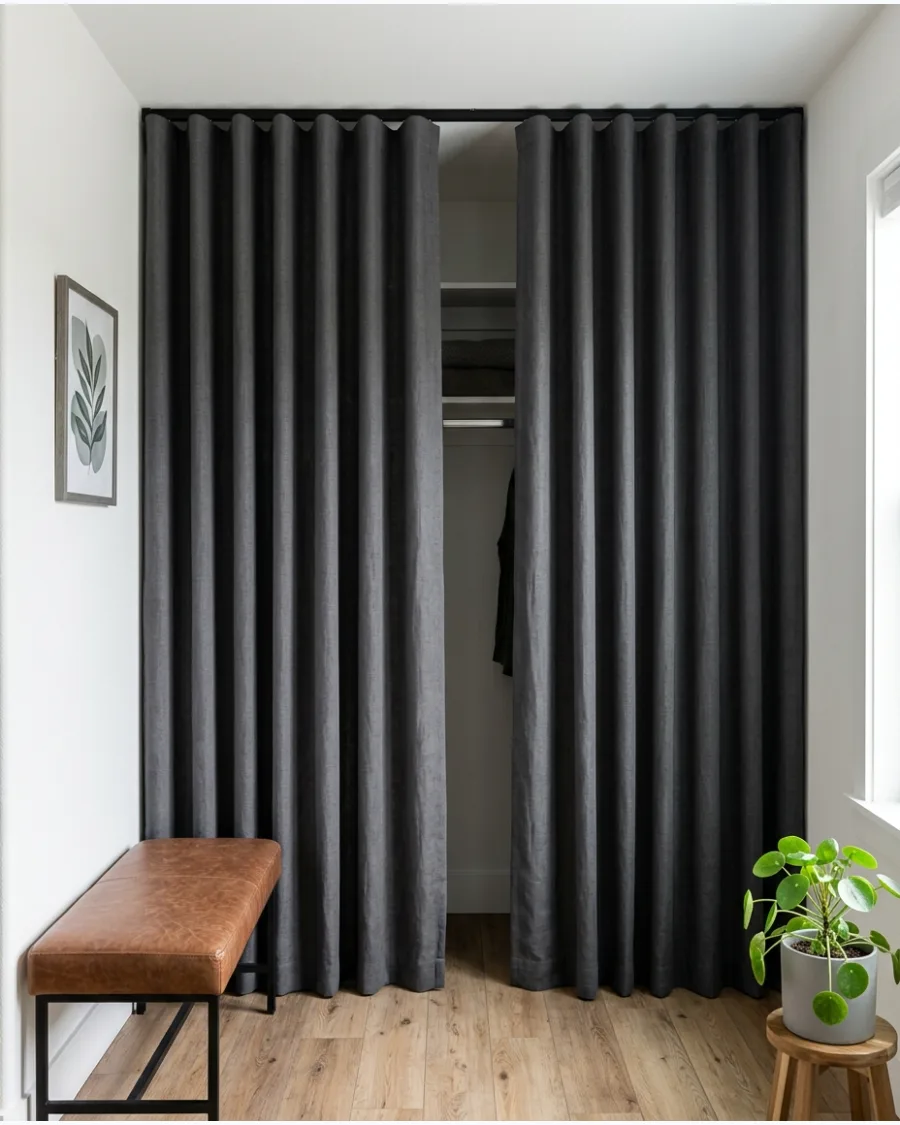
Charcoal ripple-fold curtains provide a sleek option for masculine, industrial, or modern bedrooms. Add a black ceiling track to maintain the clean monochromatic appearance.
Select a fabric with a slight sheen to add a touch of luxury to the dark color.
- Sourcing: $70 to $130 for specialized ripple-fold systems.
- Setup: Space the carriers evenly on the track for perfect folds.
- Adaptation: Fits industrial loft styles with concrete or brick walls.
Best shortcut: Use a wand attachment on the lead carrier so you can pull the curtains without touching the fabric.
15. Color-Matched Closet Curtains
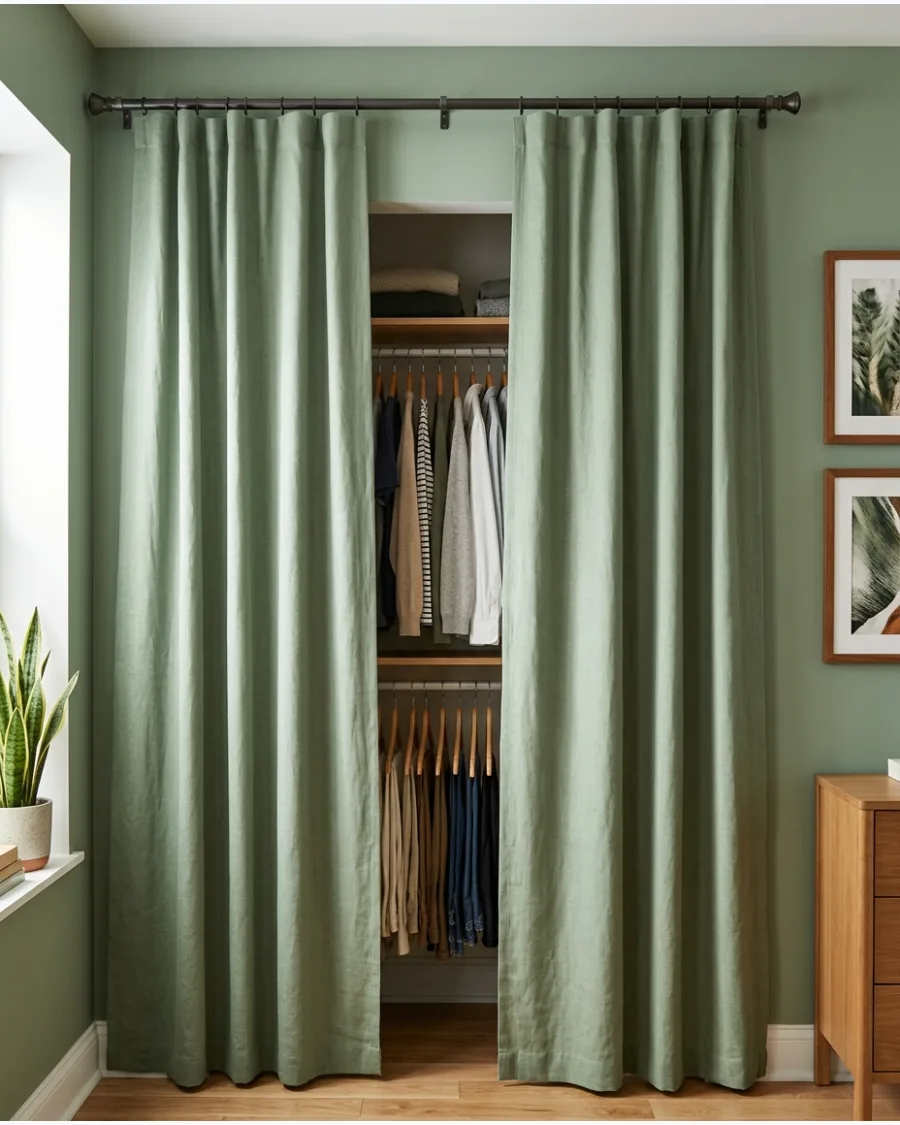
Select curtain fabric in nearly the same shade as the bedroom walls. Matching the two surfaces helps the closet blend into the architecture and creates a calmer visual flow.
Take a paint swatch to the fabric store to ensure the undertones of the fabric and paint match perfectly.
- Sourcing: $30 to $70 for solid color panels.
- Setup: Paint the rod the same color as the wall for a hidden look.
- Adaptation: Useful for making small bedrooms feel more expansive.
Quick win: If you can't find a perfect match, buy white cotton curtains and use fabric dye for a custom color.
16. Hidden Ceiling Track
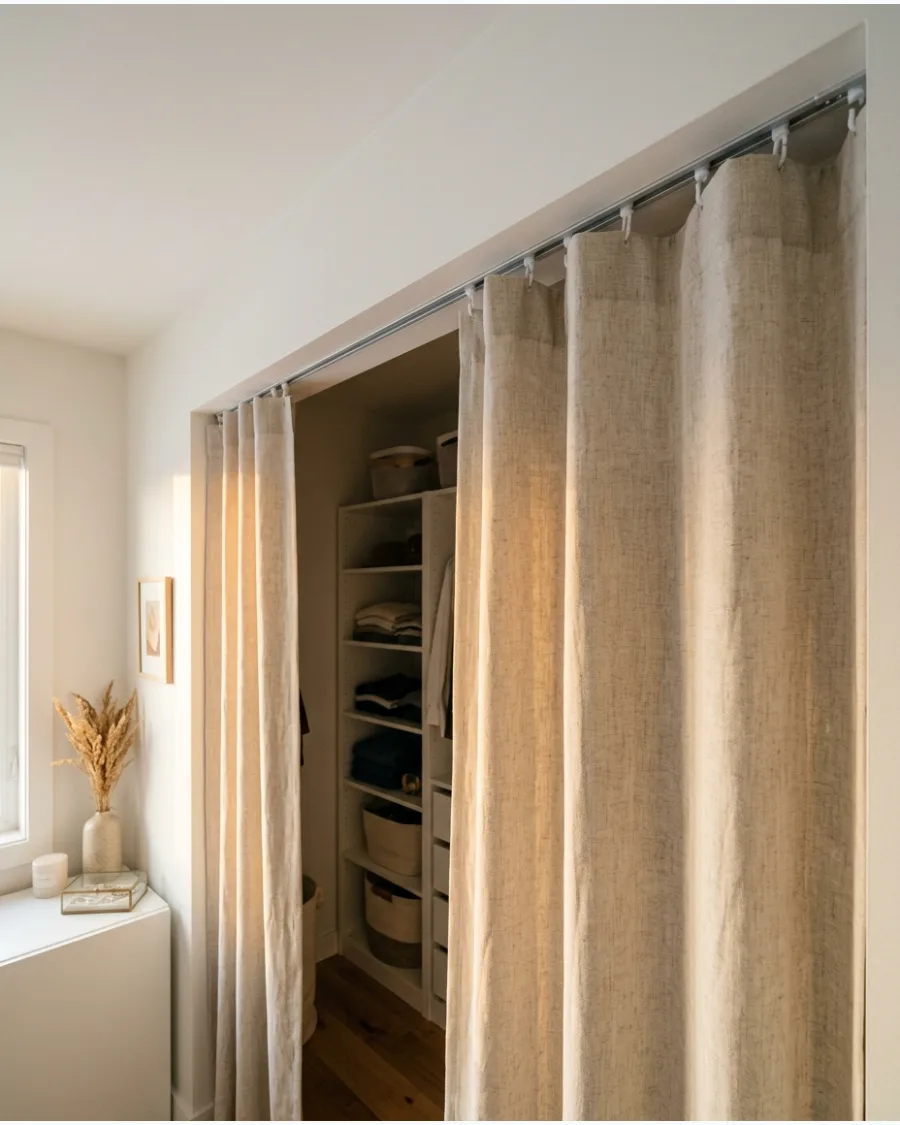
Recess the curtain track into a ceiling channel or conceal it behind a narrow trim piece for a high-end architectural look. This method makes the fabric appear to fall directly from the ceiling without any visible hardware.
Mount the track slightly inside the closet frame to keep the mechanism hidden from every angle in the room. It is an ideal solution for modern spaces with low ceilings.
- Aluminum ceiling-mount track system
- Secure into ceiling joists or use heavy-duty toggle bolts
- Best for minimalist or contemporary bedroom designs
Quick win: Paint the visible metal part of the track the same color as the ceiling to make it disappear completely.
17. Single Wide Curtain Panel
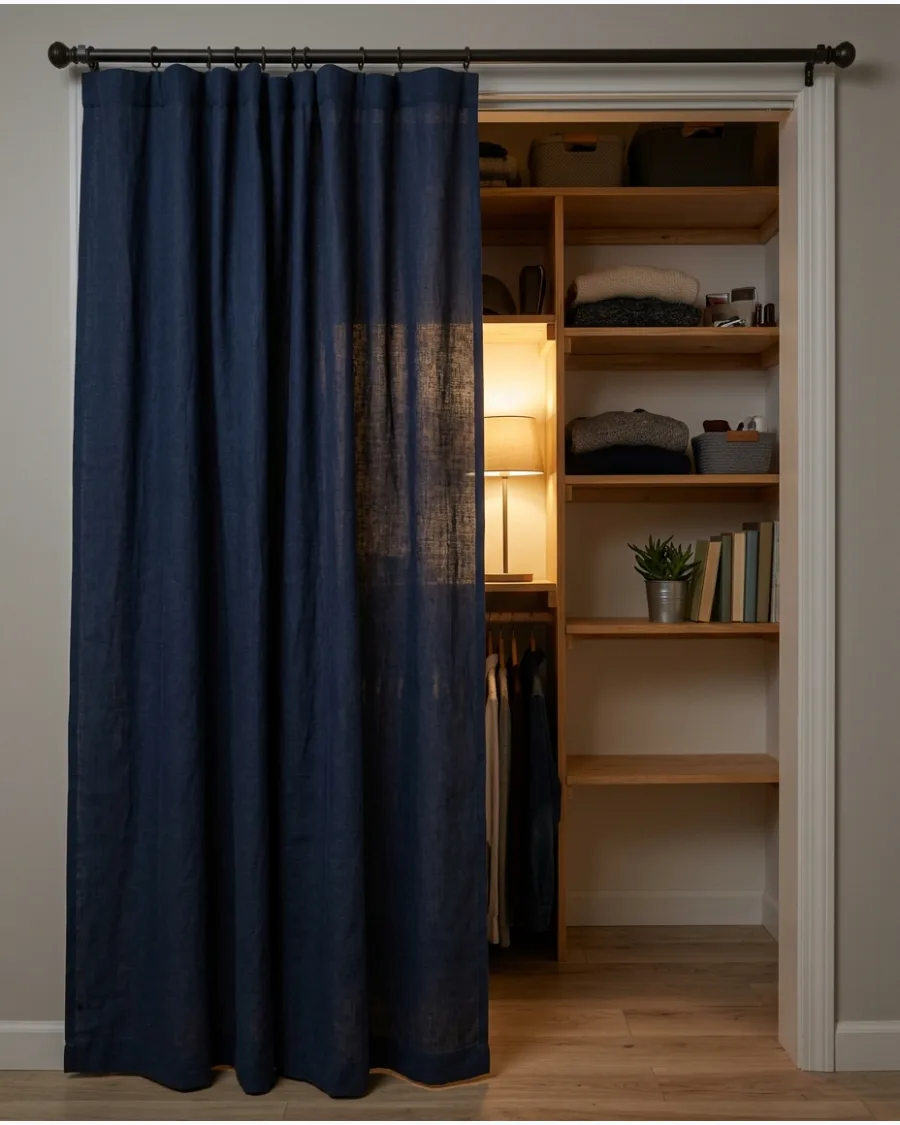
One extra-wide curtain panel covers the entire opening and slides completely to one side for full access. This is a practical choice for narrow rooms where a second panel would block a nearby nightstand or desk.
Choose a fabric with a heavy weight so the single panel hangs straight without curling at the edges. It creates a clean, undivided look when the closet is closed.
- Single extra-wide linen or cotton panel
- Slide the fabric toward the wall with the most clearance
- Great for studio apartments or very narrow hallways
Best shortcut: Buy a panel that is double the width of the closet opening to ensure full coverage and nice folds when closed.
18. Center-Opening Curtain Panels
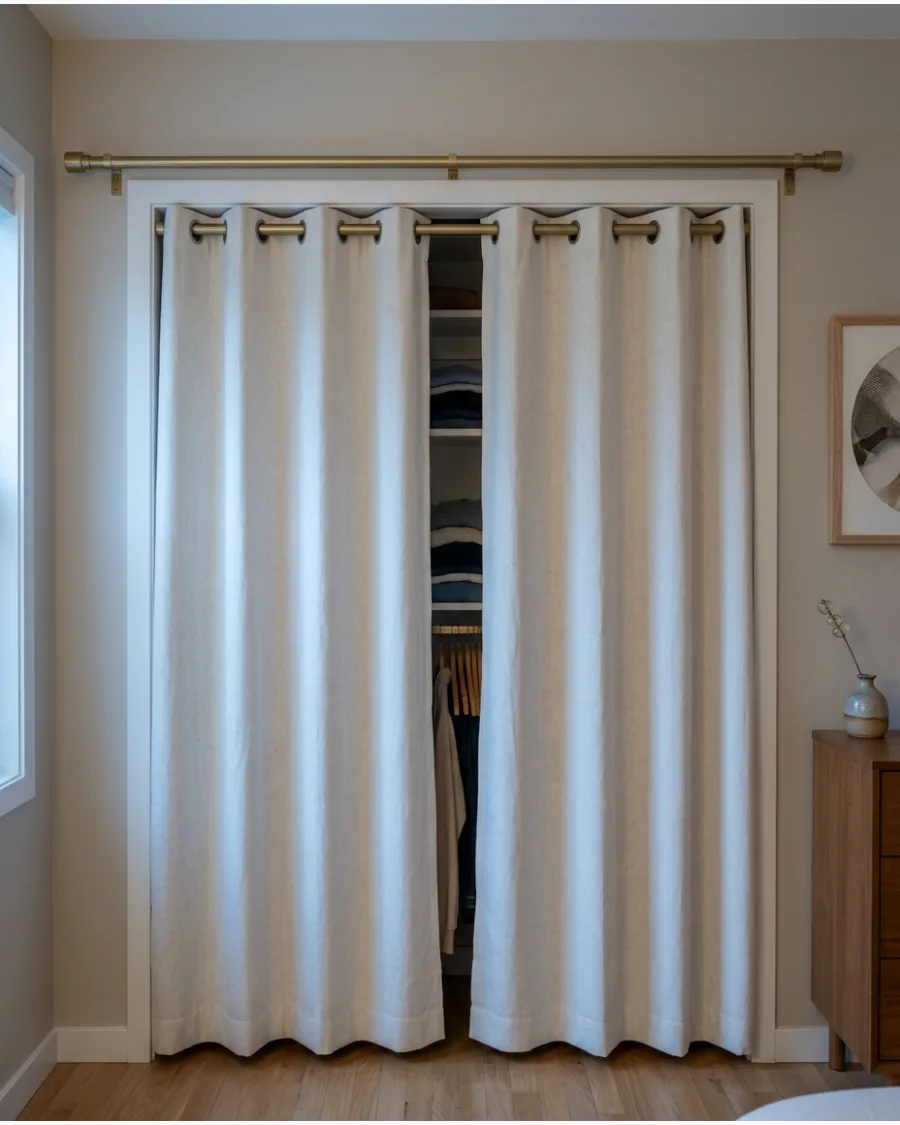
Hang two equal panels that meet neatly in the center for a balanced and symmetrical look. This traditional arrangement feels very intentional and works well when the closet is a main feature of the wall.
Overlap the panels by two inches in the middle to prevent any clothes from peeking through the gap. It is the easiest style to operate for daily use.
- Two standard-width curtain panels
- Center the rod brackets for even weight distribution
- Works for standard reach-in or wide walk-in closets
Most people skip this: Use magnetic curtain closures on the inner edges to keep the center seam tight and tidy.
19. Flat-Panel Closet Curtain
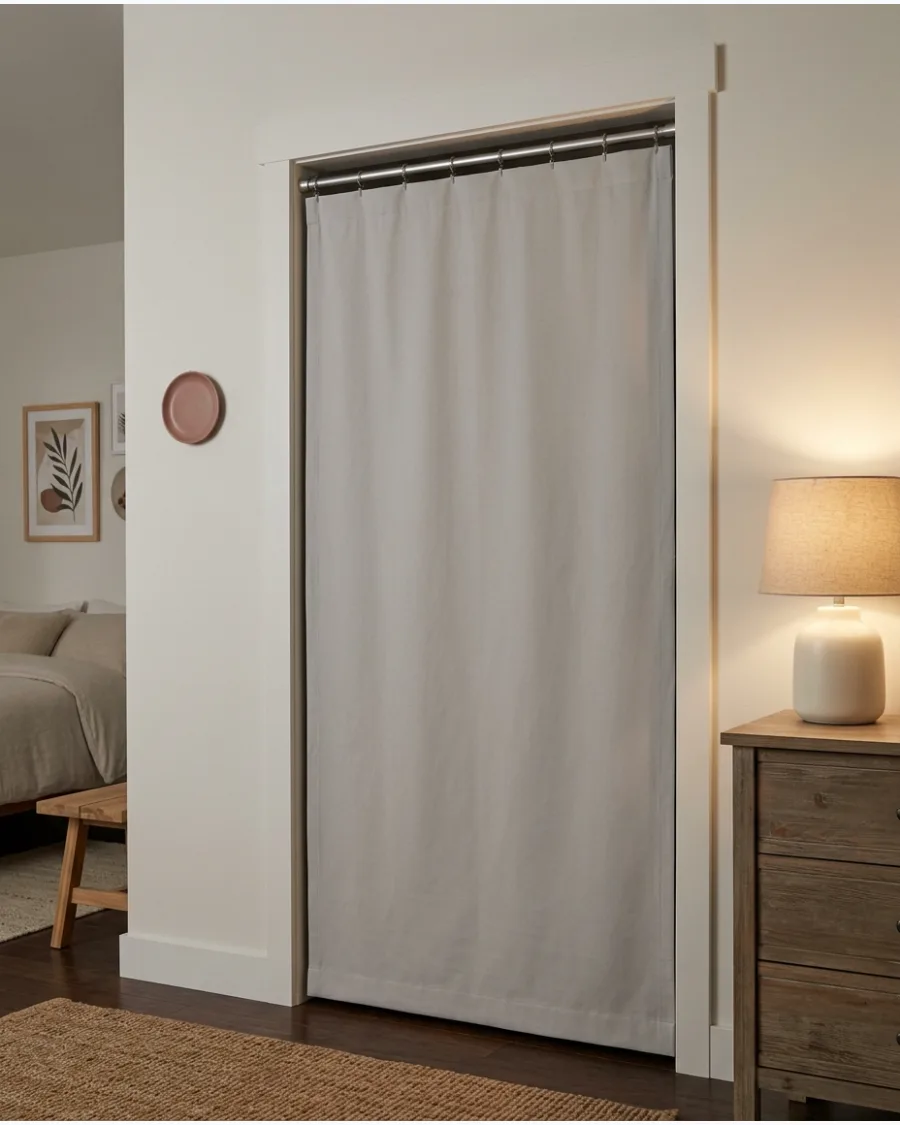
Select a curtain with minimal gathers to create a clean, almost wall-like surface when closed. Flat panels are especially effective in compact rooms because they don't add the visual bulk of heavy pleats.
Opt for a stiff fabric like canvas or heavy linen to help the panel maintain its flat shape. This look mimics a solid door while keeping the softness of fabric.
- Heavy canvas or stiff linen fabric
- Clip-on rings spaced widely apart to reduce bunching
- Ideal for ultra-modern or industrial interior styles
Quick win: Iron the panels with heavy steam to remove every wrinkle for a crisp, flat finish.
20. Track Curtains With Curtain Wands
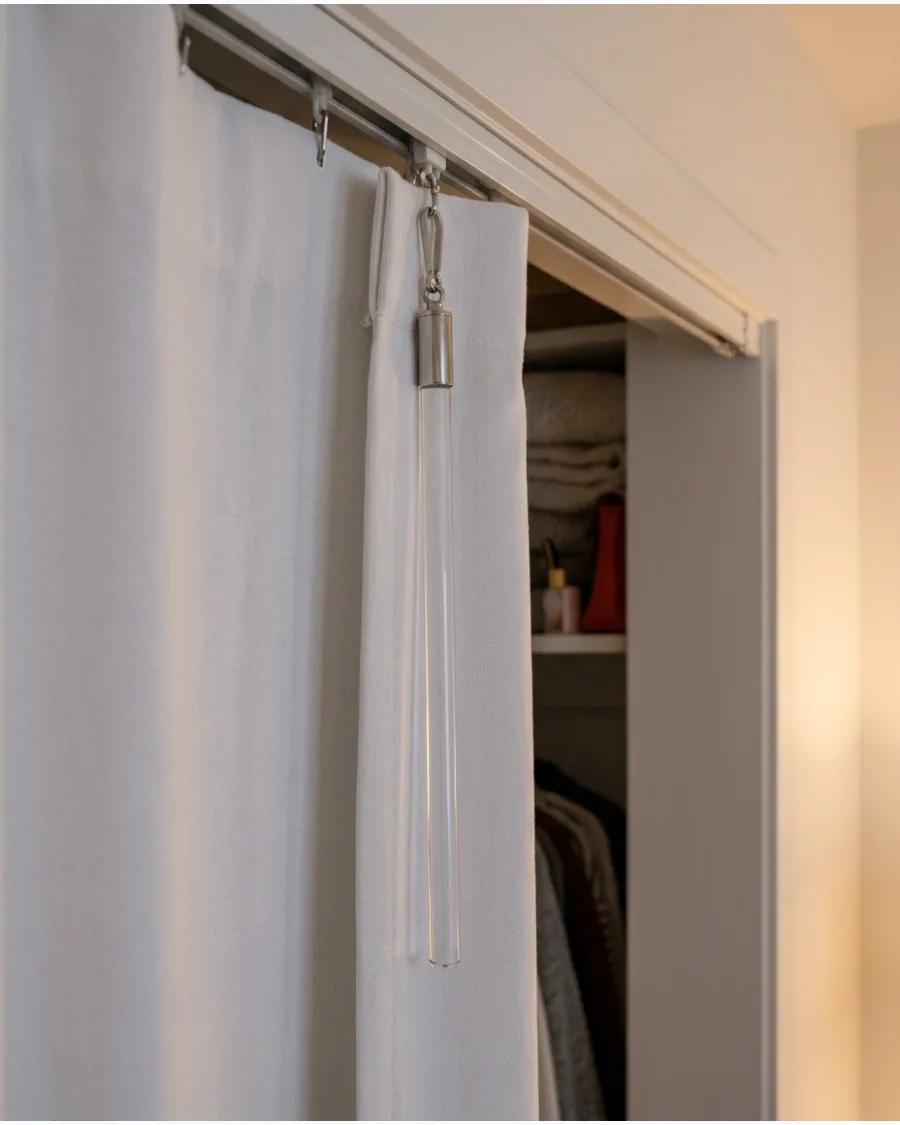
Add slim curtain wands to the leading edges of the panels to make them easier to pull. Wands help keep fingerprints and oils away from the fabric, which is essential for light-colored or delicate materials.
Clip the wand to the first ring or carrier to get the most leverage when opening the closet. It makes the transition from a door to a curtain feel much more high-end.
- Clear acrylic or metal curtain wands
- Attach to the leading edge of the panel
- Protects delicate or light-colored fabrics from hand stains
Best shortcut: Use clear wands to make the hardware virtually invisible against any fabric color.
Colorful and Patterned Closet Curtain Ideas
21. Sage Green Closet Curtains
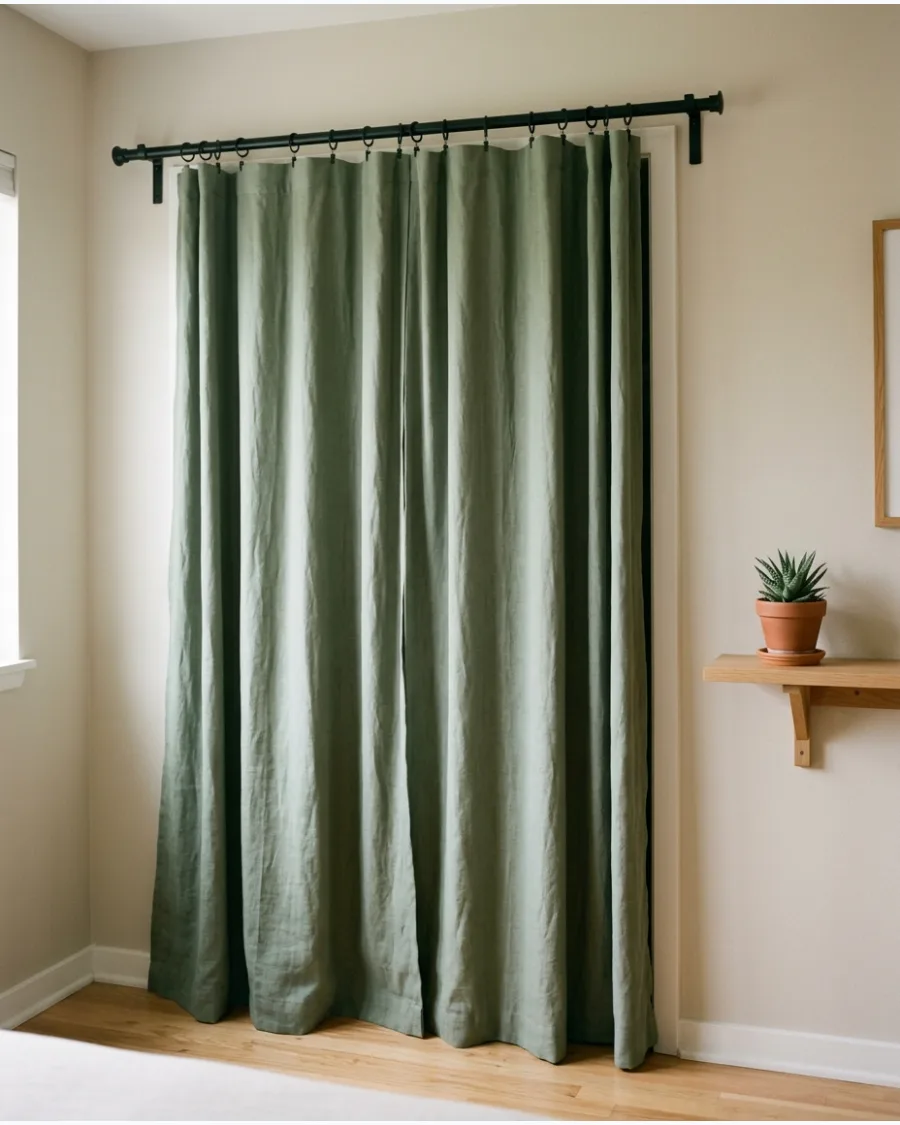
Sage green curtains introduce a gentle, earthy color that feels restful in a bedroom. This shade acts like a neutral but adds enough interest to turn the closet into a design feature.
Pair sage fabric with matte black hardware to give the soft color a modern, sophisticated edge. It works beautifully in rooms with plenty of natural light and plants.
- Sage green linen or cotton panels
- Black or bronze curtain rod
- Best for bedrooms with botanical or natural themes
Quick win: Match the sage tone to a color in your bedding or a rug for a coordinated room design.
22. Dusty Blue Closet Curtains
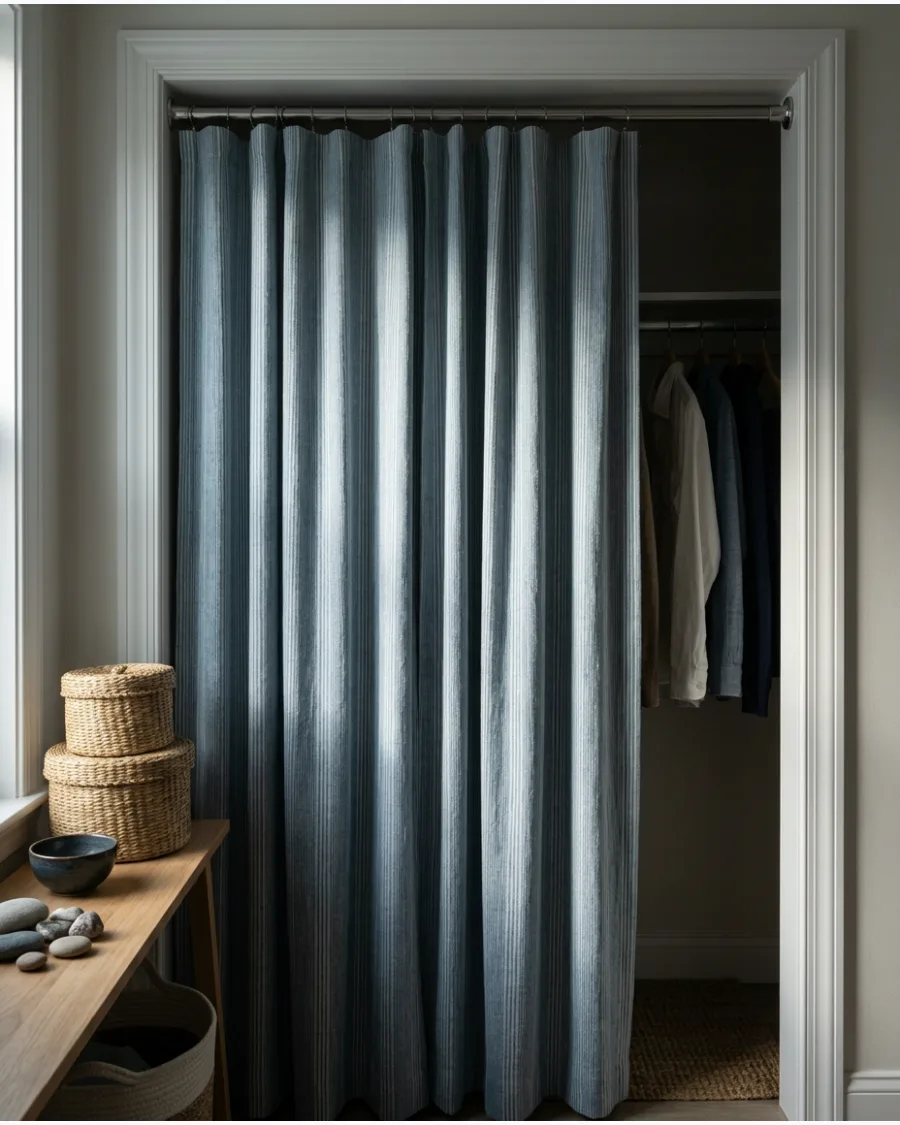
Soft dusty blue curtains create a calm backdrop that works well in coastal or traditional rooms. It is a quiet color that hides dust better than white but still keeps the space feeling airy.
Select a fabric with a slight texture, like a slub weave, to keep the blue from looking too flat. This shade pairs perfectly with white trim and silver accents.
- Dusty blue cotton or polyester blend
- Brushed nickel or silver hardware
- Complements white, light gray, or cream walls
Most people skip this: Check the fabric in both daylight and lamplight, as blue tones can change significantly with the light.
23. Terracotta Closet Curtains
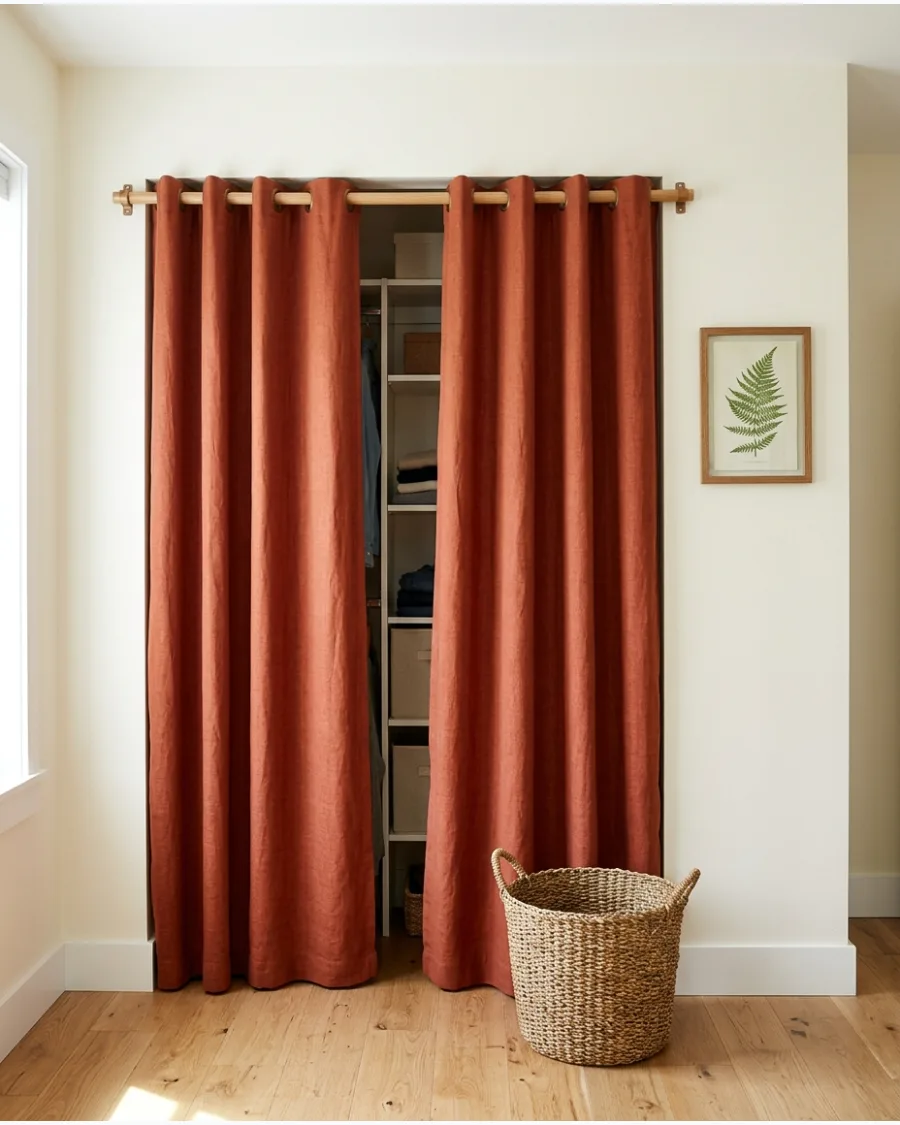
Turn an ordinary closet into a warm focal point with rich terracotta panels. This earthy orange tone makes a large room feel cozy and grounded rather than empty.
Use woven baskets nearby to pull the natural, warm vibes of the terracotta together. It is an excellent choice for white or cream rooms that need a pop of energy.
- Terracotta or burnt orange fabric
- Wooden or dark bronze curtain rod
- Ideal for boho, southwestern, or eclectic styles
Quick win: Use a heavier fabric like velvet in this color to make the room feel extra warm and cozy in winter.
24. Deep Navy Closet Drapes
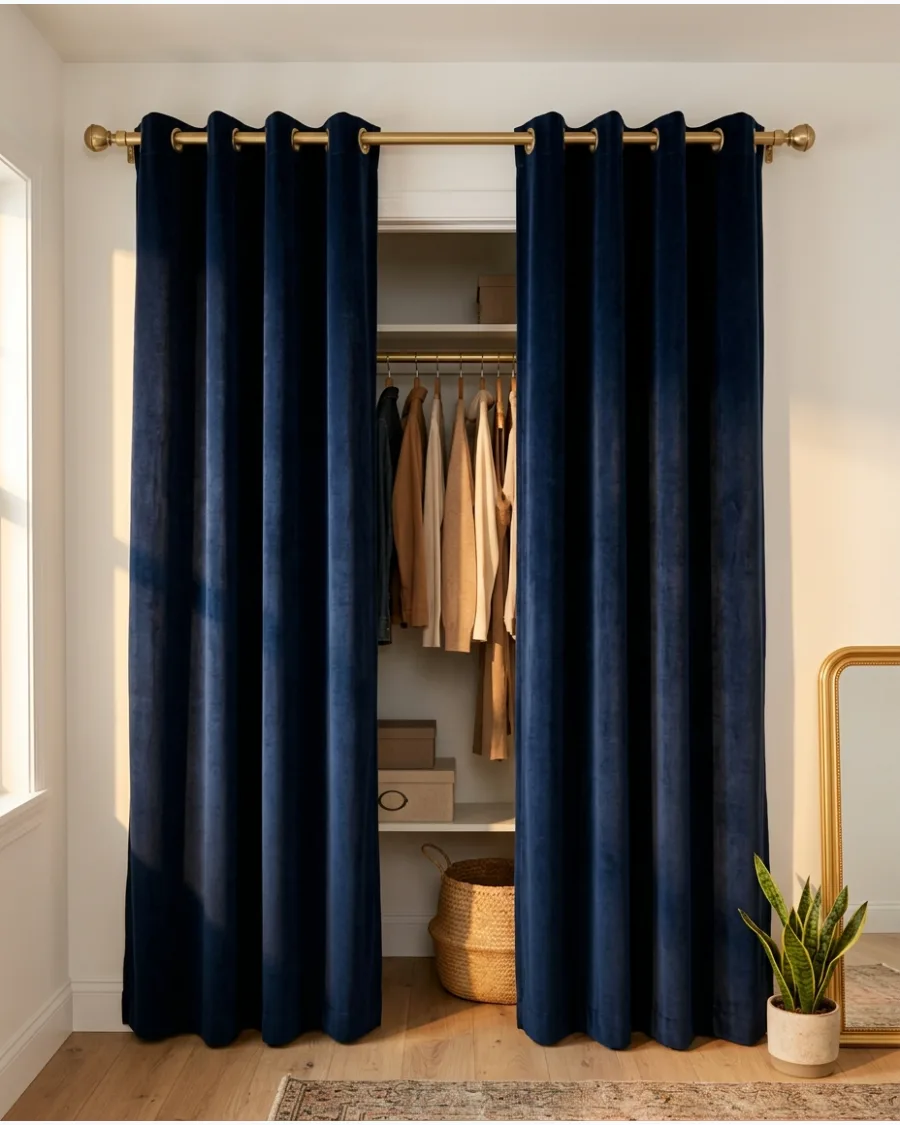
Navy curtains provide drama and sophistication while remaining easier to decorate around than black. They ground the room and hide the shadows of a dark closet interior perfectly.
Choose a blackout lining to ensure no light from inside the closet leaks through the dark fabric. Navy looks stunning when paired with crisp white walls and gold hardware.
- Navy blue velvet or heavy twill
- Gold or brass hardware
- Works well in masculine, formal, or nautical bedrooms
Best shortcut: Use a lint roller occasionally to keep dark navy fabric looking sharp and free of dust or pet hair.
25. Burgundy Velvet Closet Curtains
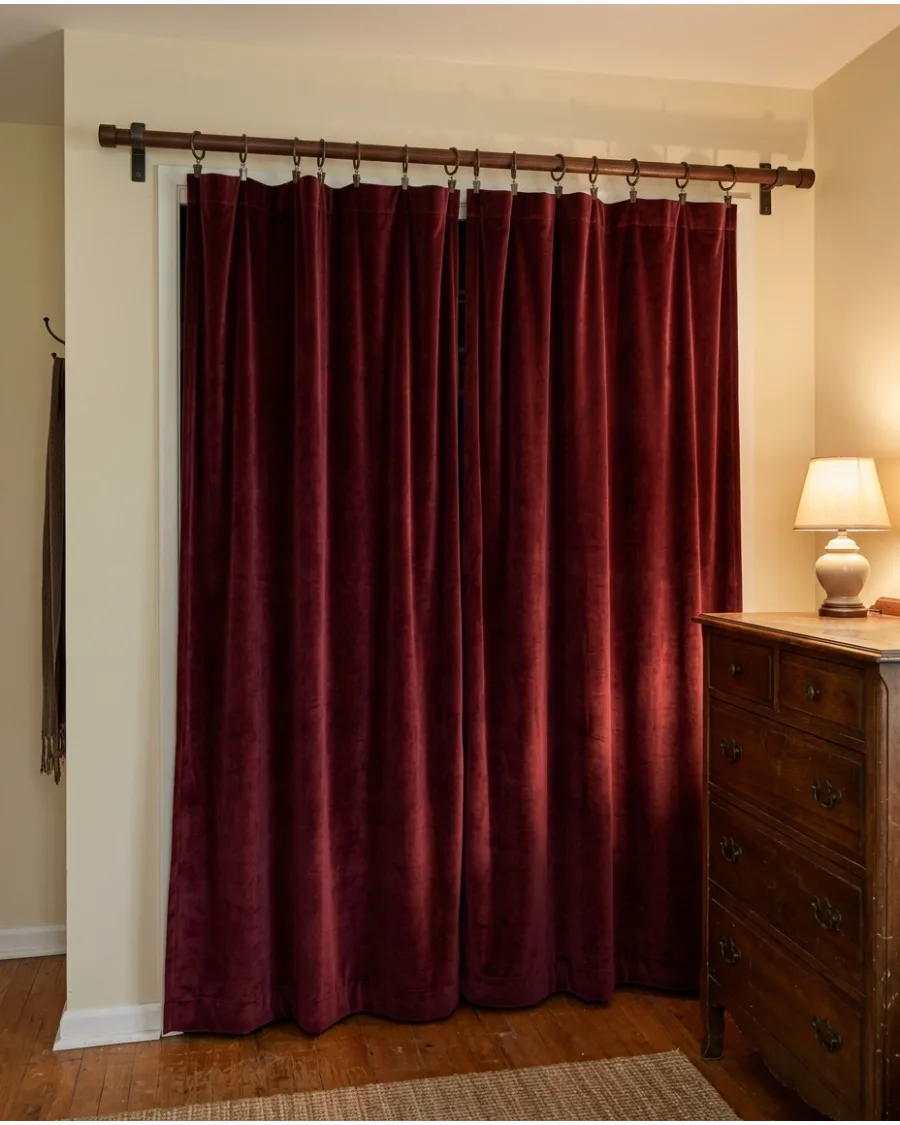
Use burgundy velvet panels to add depth and a luxurious mood to a bedroom. The heavy weight of velvet helps the curtains hang in perfect, straight columns that look very professional.
Hang the rod at least six inches above the closet opening to emphasize the height of the fabric. This color works particularly well with vintage furniture and warm metals.
- Burgundy or wine-colored velvet panels
- Dark wood or antique brass rod
- Best for vintage, maximalist, or moody decor
Quick win: Steam velvet from the back side to remove packing creases without crushing the soft pile.
26. Olive Green Closet Curtains
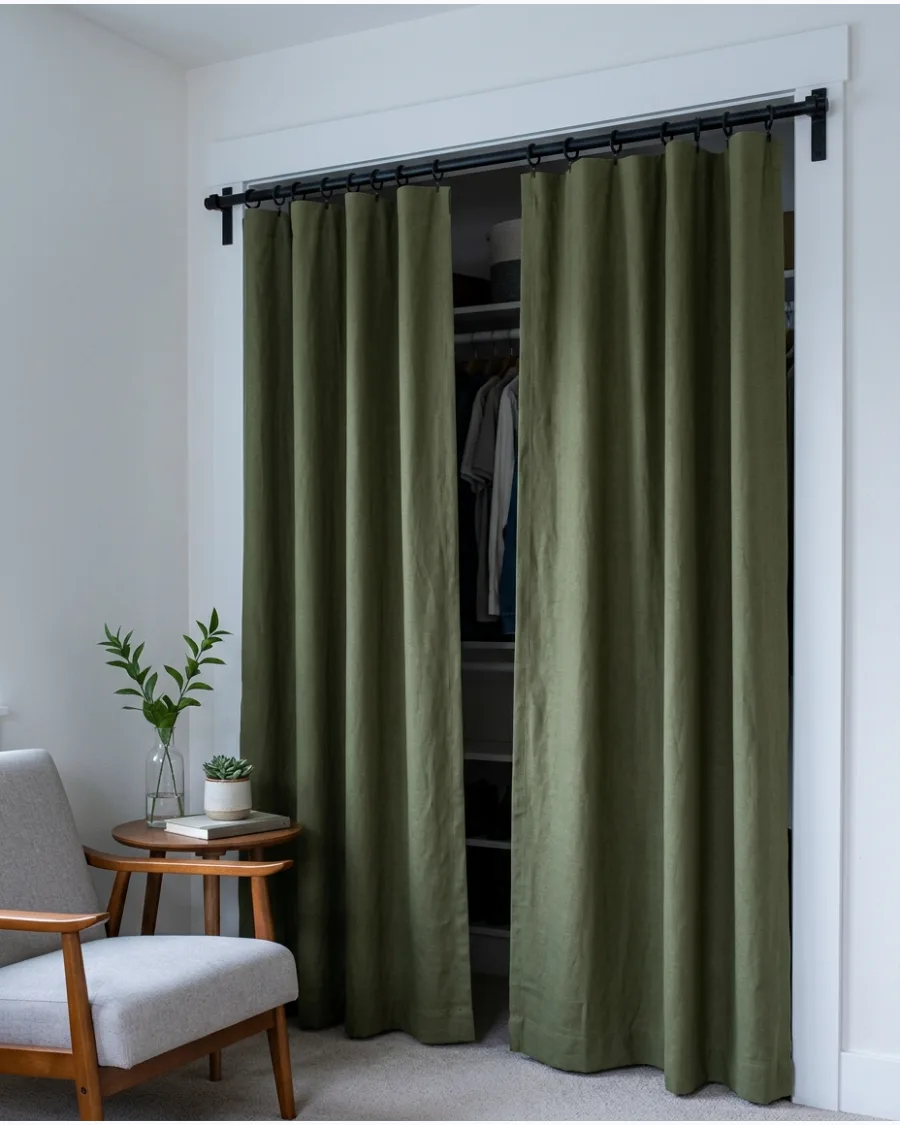
Olive green is a sophisticated choice that pairs beautifully with natural materials and leather accents. It is a hardworking color that hides wear and tear well in high-traffic areas.
Opt for a matte fabric to keep the olive tone looking organic and high-end rather than shiny. This shade complements mid-century modern furniture and earthy palettes.
- Olive or forest green fabric
- Matte black or bronze hardware
- Pairs well with walnut, teak, or oak furniture
Most people skip this: Use rings with clips for olive curtains to give them a slightly more casual and updated look.
27. Soft Blush Closet Curtains
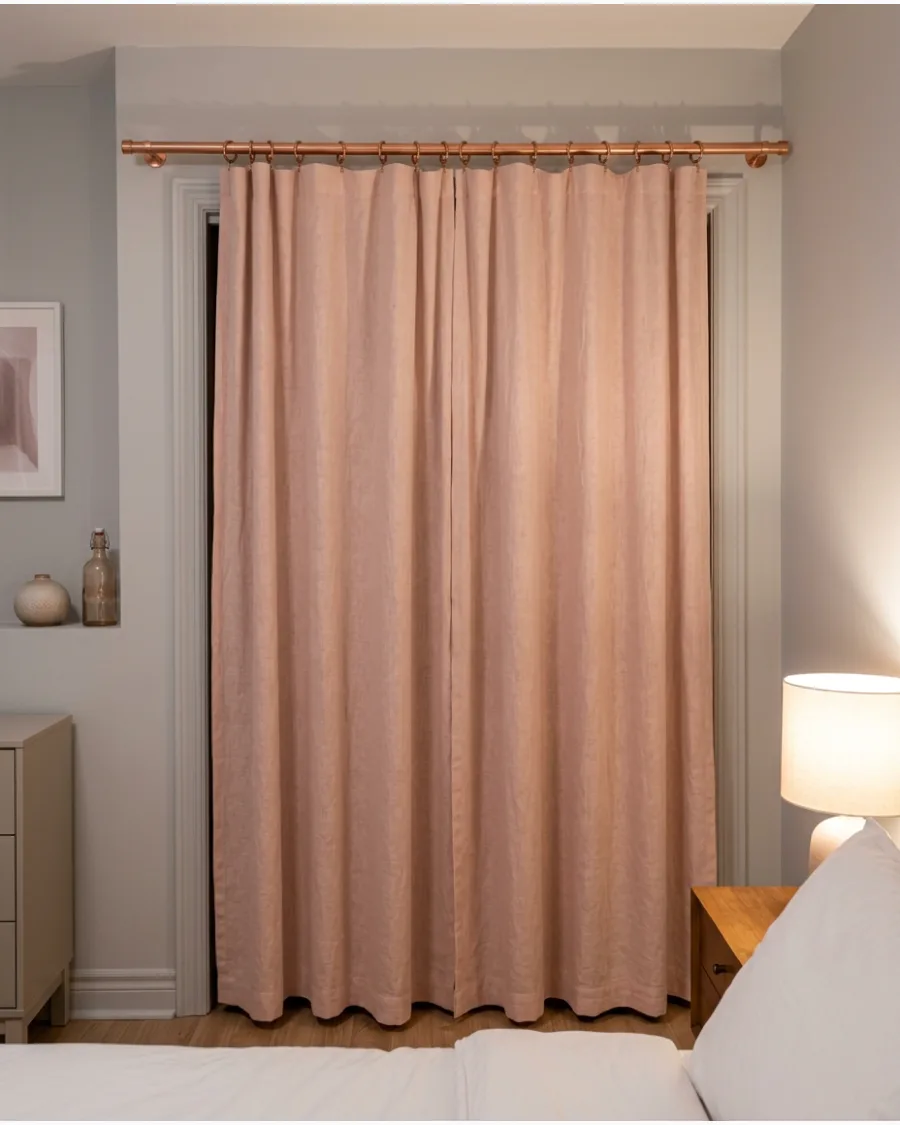
Blush curtains add a soft, warm glow to a bedroom without looking overly bright or childish. It is a sophisticated alternative to white that makes the room feel inviting and cozy.
Coordinate the blush color with copper or rose gold hardware for a trendy and feminine touch. This shade works surprisingly well as a neutral against gray or green walls.
- Blush or dusty rose fabric
- Copper, white, or rose gold hardware
- Great for nurseries, guest rooms, or modern bedrooms
Best shortcut: Choose a slightly sheer blush fabric over a solid one for a layered look that filters light beautifully.
28. Chocolate Brown Closet Curtains
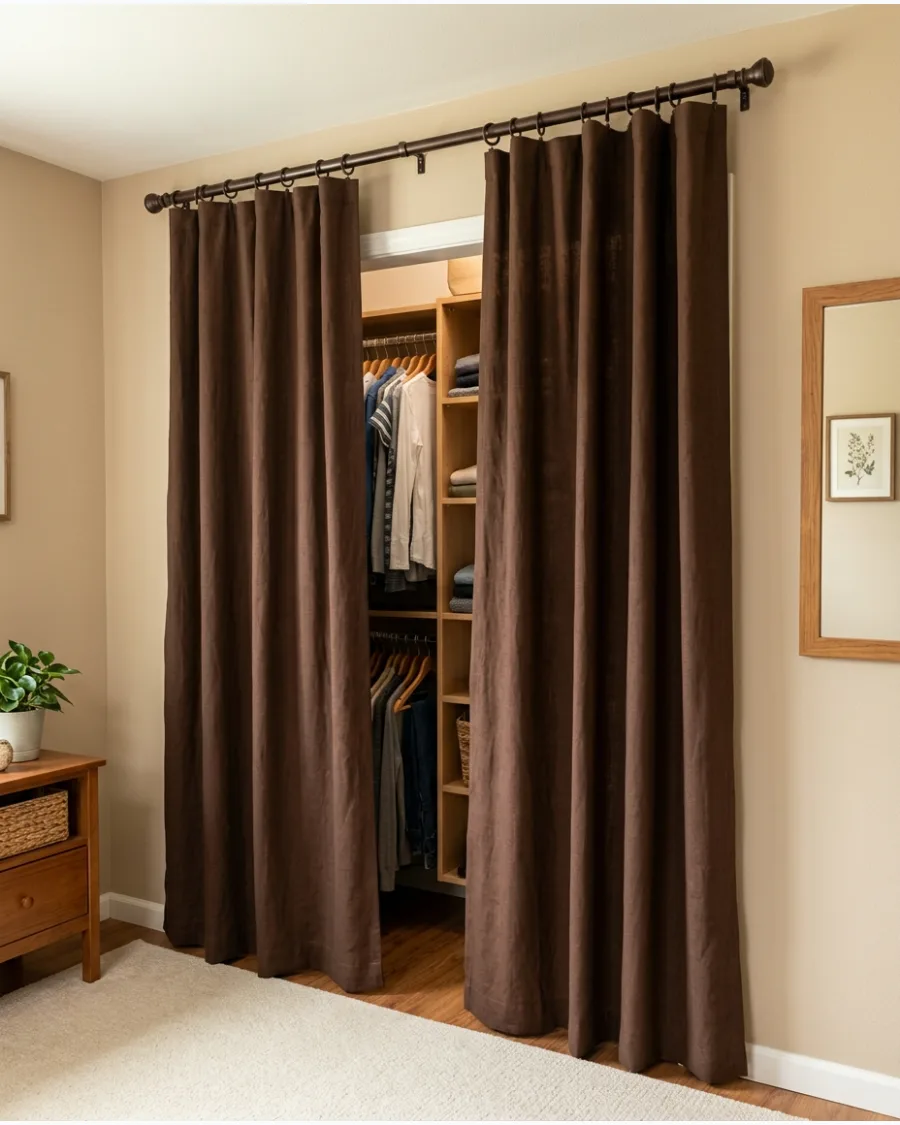
Rich brown curtains make a bedroom feel grounded and secure, especially in large rooms with high ceilings. The dark color is excellent for hiding any clutter that might be sitting on the closet floor.
Contrast the dark brown fabric with a light-colored rug to keep the floor area from looking too heavy. It is a timeless choice for traditional or rustic homes.
- Chocolate or espresso brown fabric
- Bronze or black hardware
- Best for large rooms that need a sense of coziness
Quick win: Choose a fabric with a very subtle sheen to prevent dark brown from looking flat or dull in the corner.
29. Vertical Striped Closet Curtains
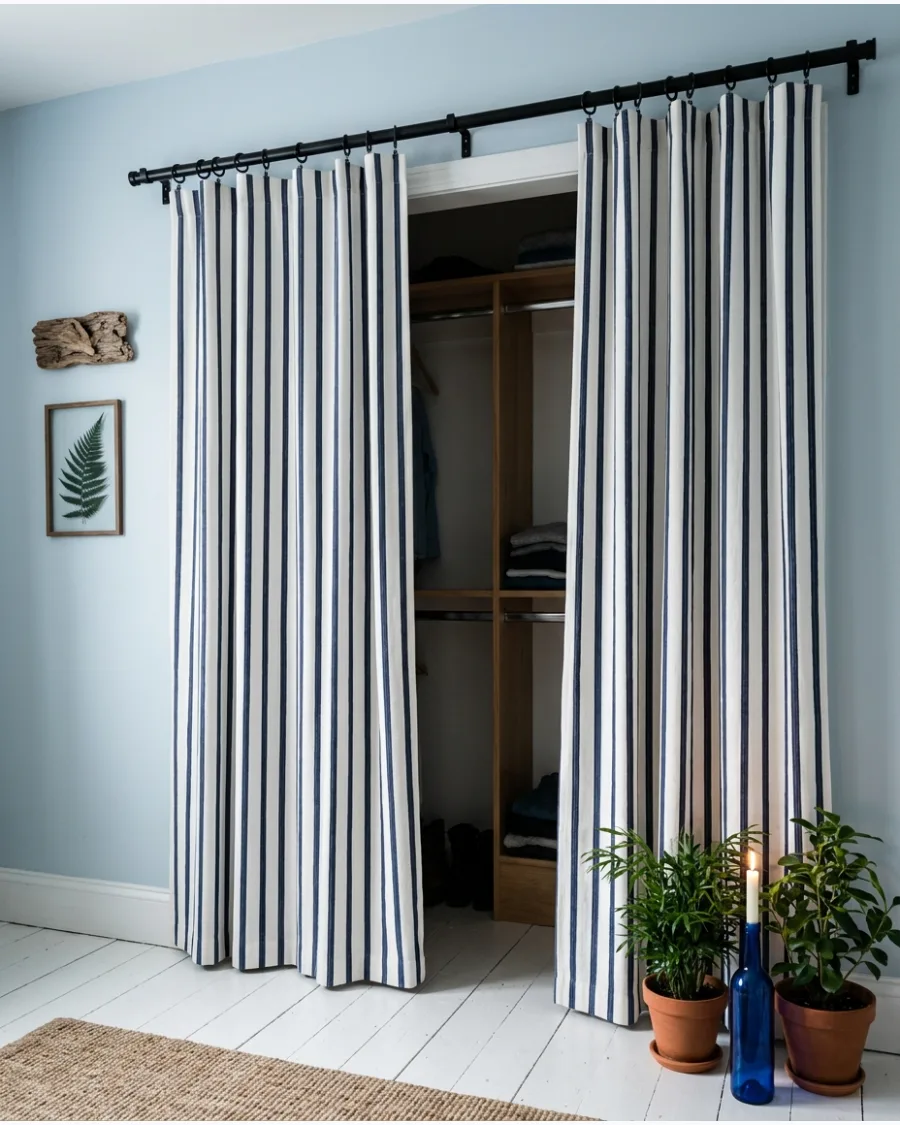
Vertical stripes draw the eye upward and can make a low ceiling appear much taller than it actually is. This classic pattern adds a sense of order and structure to a room without being too bold.
Stick to two-tone stripes in neutral colors to keep the pattern from becoming too busy for the space. It is perfect for nautical, farmhouse, or traditional styles.
- Striped cotton or linen fabric
- Simple black or white curtain rod
- Adds visual height to rooms with low ceilings
Most people skip this: Ensure the stripes are perfectly vertical by using a level when you hem or hang the panels.
30. Small Floral Closet Curtains
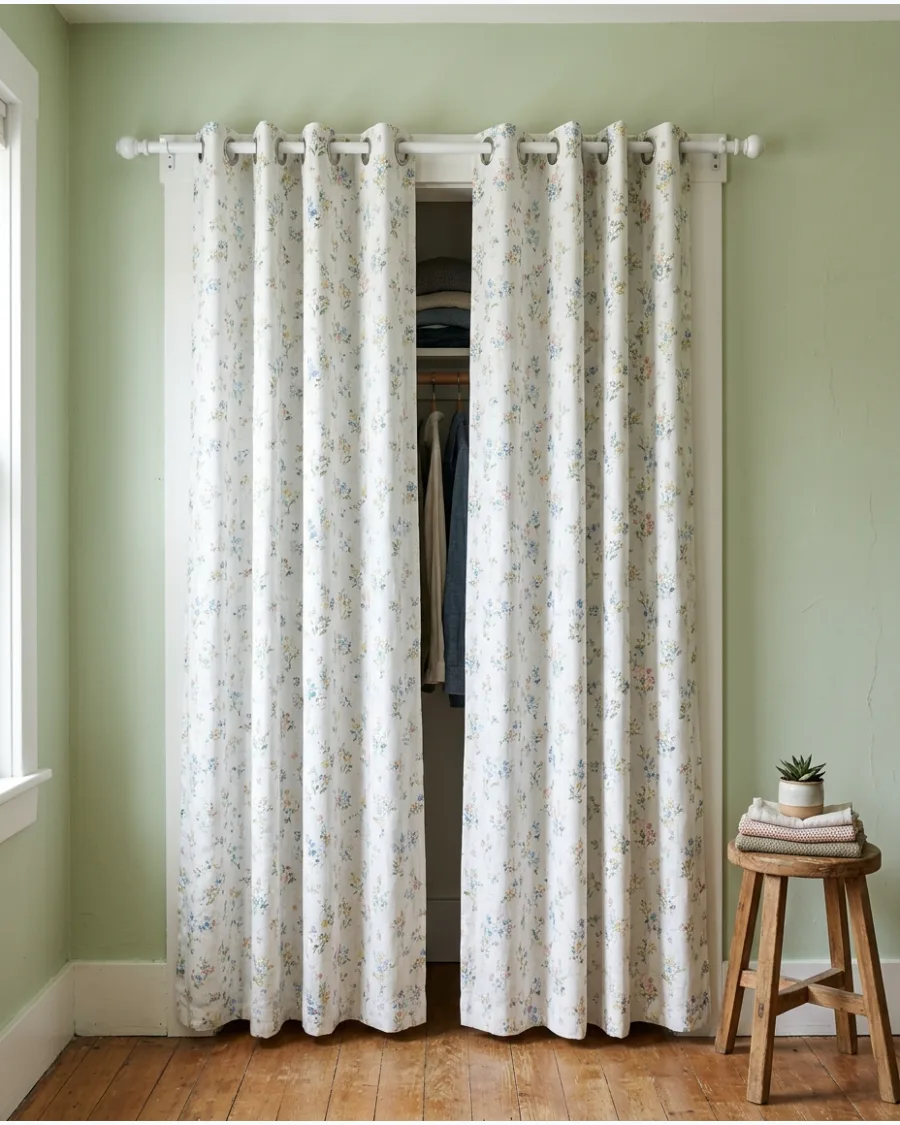
A delicate floral print brings charm and a touch of vintage personality to a bedroom. It breaks up large expanses of solid wall color and makes the room feel more curated and soft.
Pick a floral pattern that features the same color as your wall paint to help the curtains blend in. This style is ideal for cottage or romantic guest rooms.
- Floral print cotton or chintz fabric
- White or light wood hardware
- Perfect for cottage, vintage, or romantic styles
Best shortcut: Use a simple rod-pocket style for floral curtains to lean into the soft, traditional look of the pattern.
31. Large Botanical Print Curtains
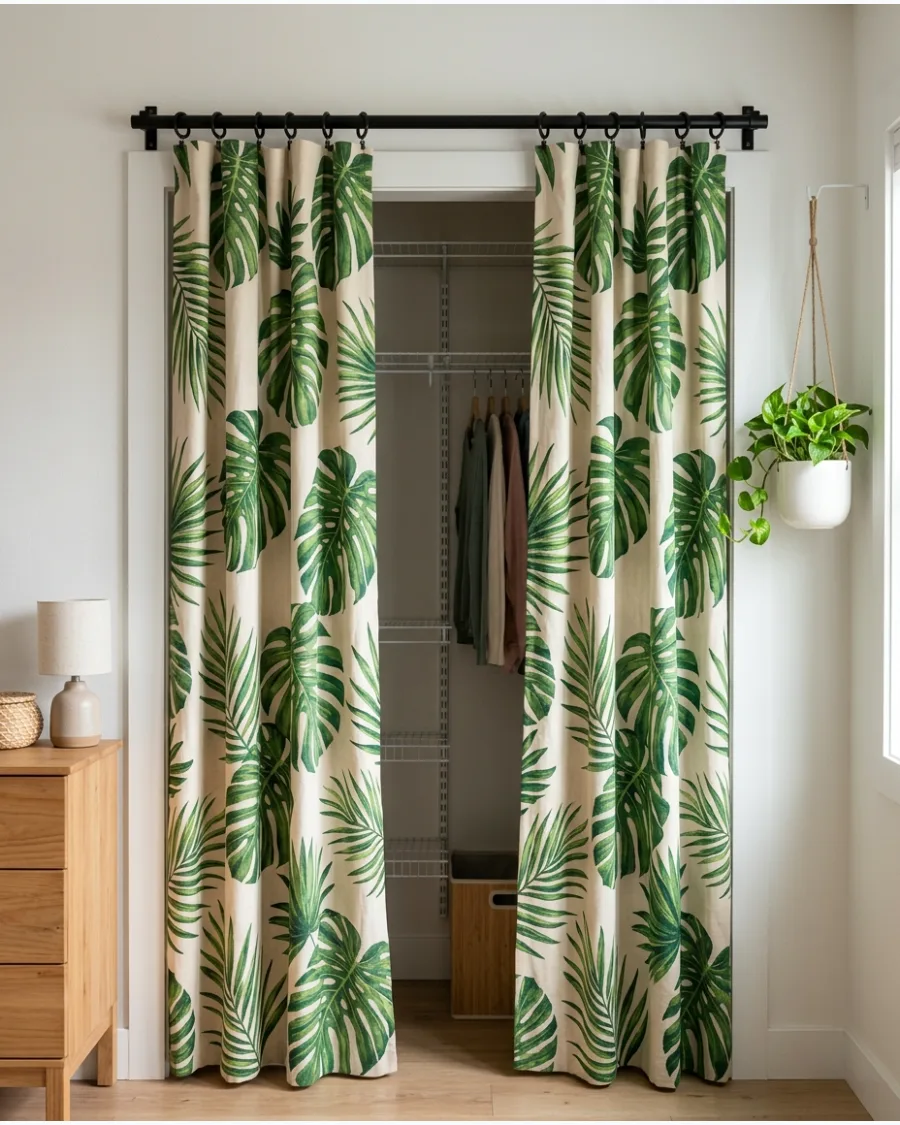
Oversized leaves or botanical motifs turn the closet into a decorative feature wall. Keep nearby patterns simple so the print remains visually balanced.
Select a fabric with a large-scale pattern to make a bold statement in a room with neutral walls.
- Budget: $40-$80 for high-quality printed panels.
- Installation: Mount the rod 4-6 inches above the frame to show the full pattern.
- Style: Pair with solid-colored bedding to prevent the room from feeling cluttered.
Best shortcut: Use a fabric steamer to remove packing creases so the botanical print hangs perfectly flat.
32. Gingham Closet Curtains
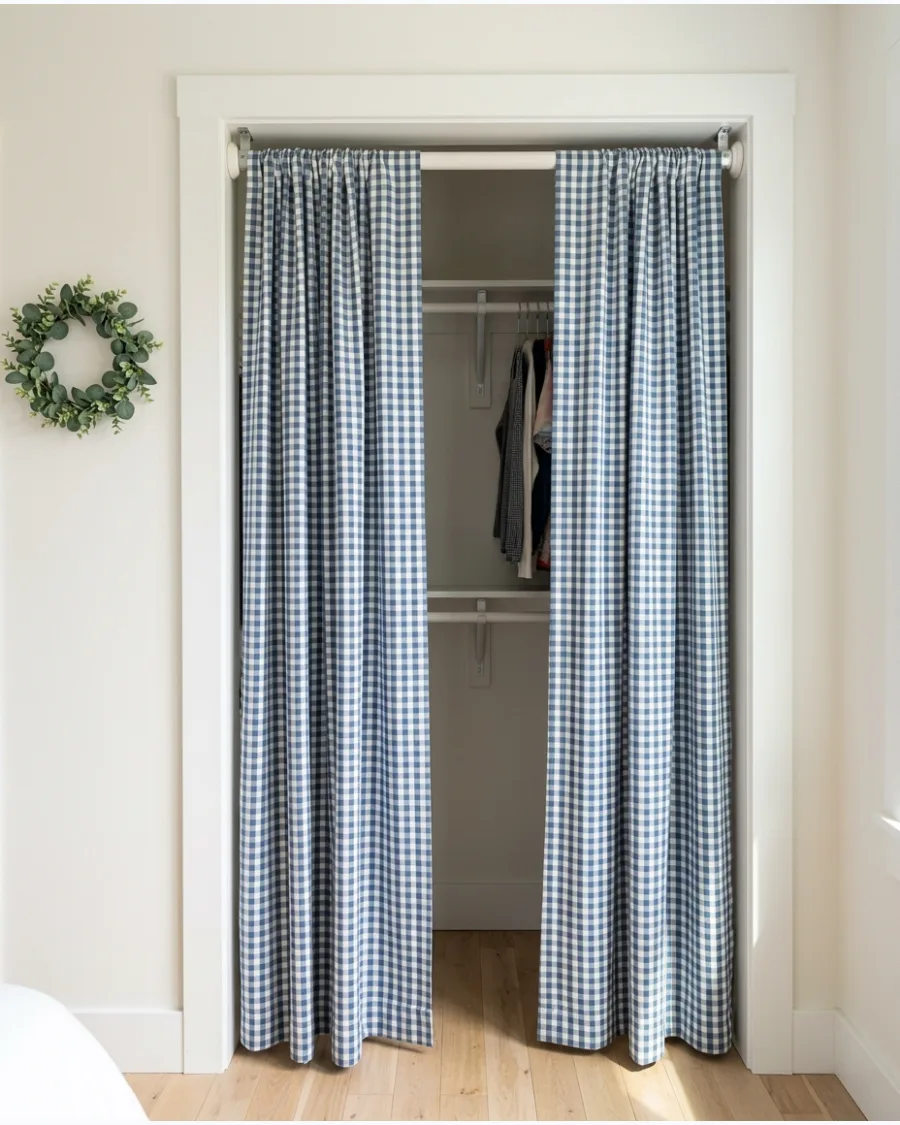
Gingham fabric gives a closet a cheerful country-inspired appearance. Small-scale checks feel classic, while oversized checks create a more modern interpretation.
Opt for a medium-weight cotton to ensure the checks hang straight without sagging.
- Budget: $20-$50 depending on fabric weight.
- Setup: Use clip rings for a casual look that makes sliding the curtains easy.
- Adaptation: Choose black and white gingham for a modern farmhouse aesthetic.
Quick win: Match the color of the gingham to a minor color in the room's rug for a coordinated look.
33. Block-Print Closet Curtains
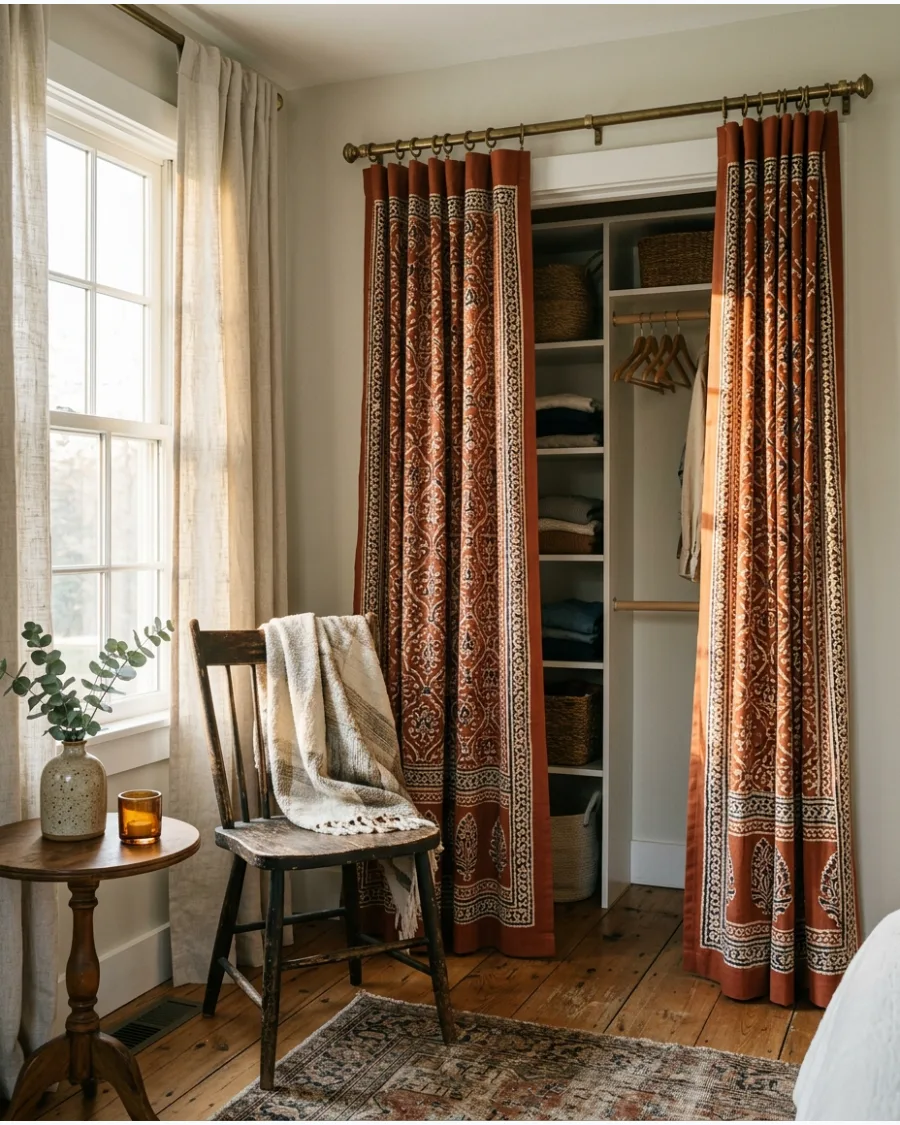
Hand-block-inspired patterns add character and an artisanal quality to a bedroom. Muted blue, rust, green, or brown prints work especially well with natural wood furniture.
Choose a linen-blend fabric to highlight the organic texture of the block print.
- Budget: $50-$100 for artisanal or hand-printed styles.
- Placement: Hang the curtains so they just touch the floor for a tailored finish.
- Style: Mix with woven baskets and clay pots to lean into the handcrafted vibe.
Most people skip this: Check the back of the fabric to ensure the print does not look messy from inside the closet.
34. Geometric Closet Curtain Panels
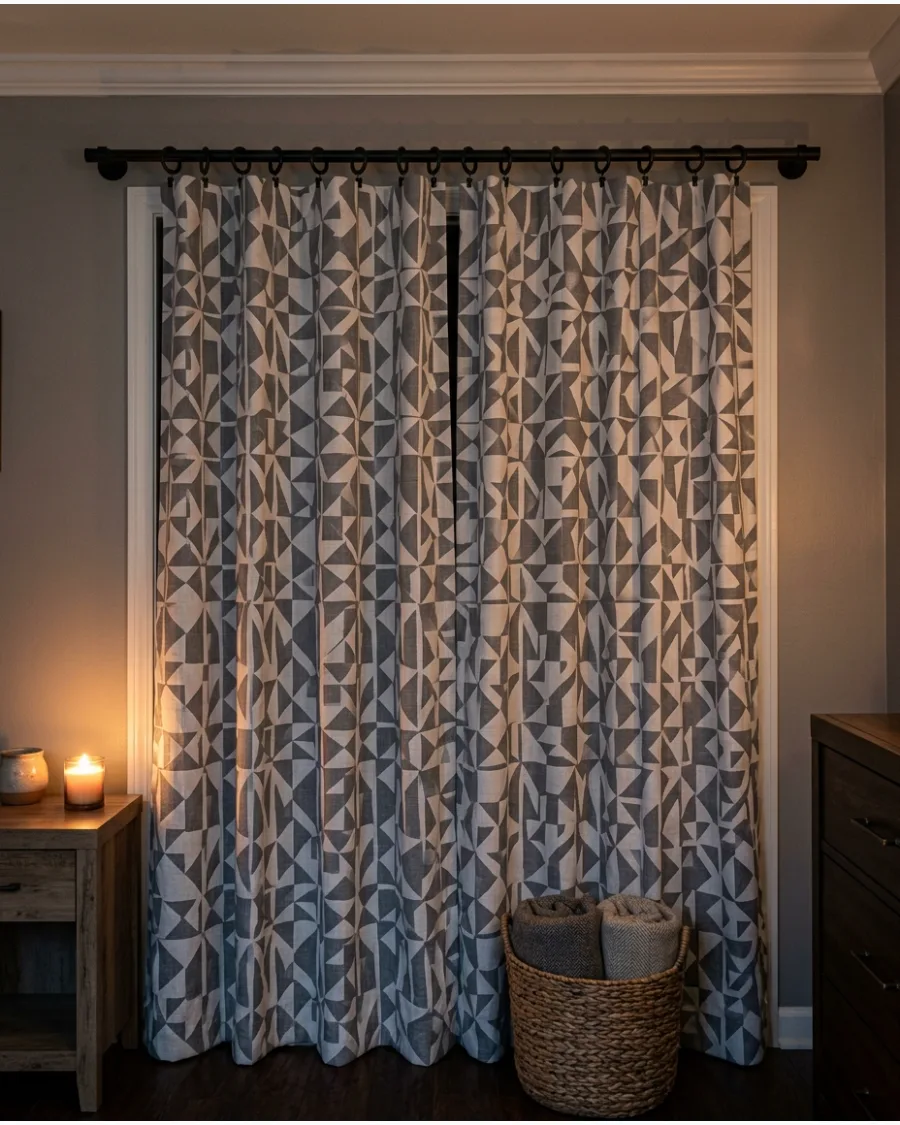
Choose a clean geometric print for a modern bedroom, home office, or teenager’s room. Look for a limited color palette so the closet covering does not feel overly busy.
Pick a pattern with sharp lines to provide a structured look that mimics the feel of a solid door.
- Budget: $30-$60 for standard polyester or cotton blends.
- Setup: Use a sturdy rod to prevent bowing under the weight of patterned fabric.
- Adaptation: Use a small-scale geometric print in a tiny room to add interest without overwhelming the space.
Quick win: Align the pattern across both panels so the design remains continuous when the closet is closed.
35. Color-Blocked Closet Curtains
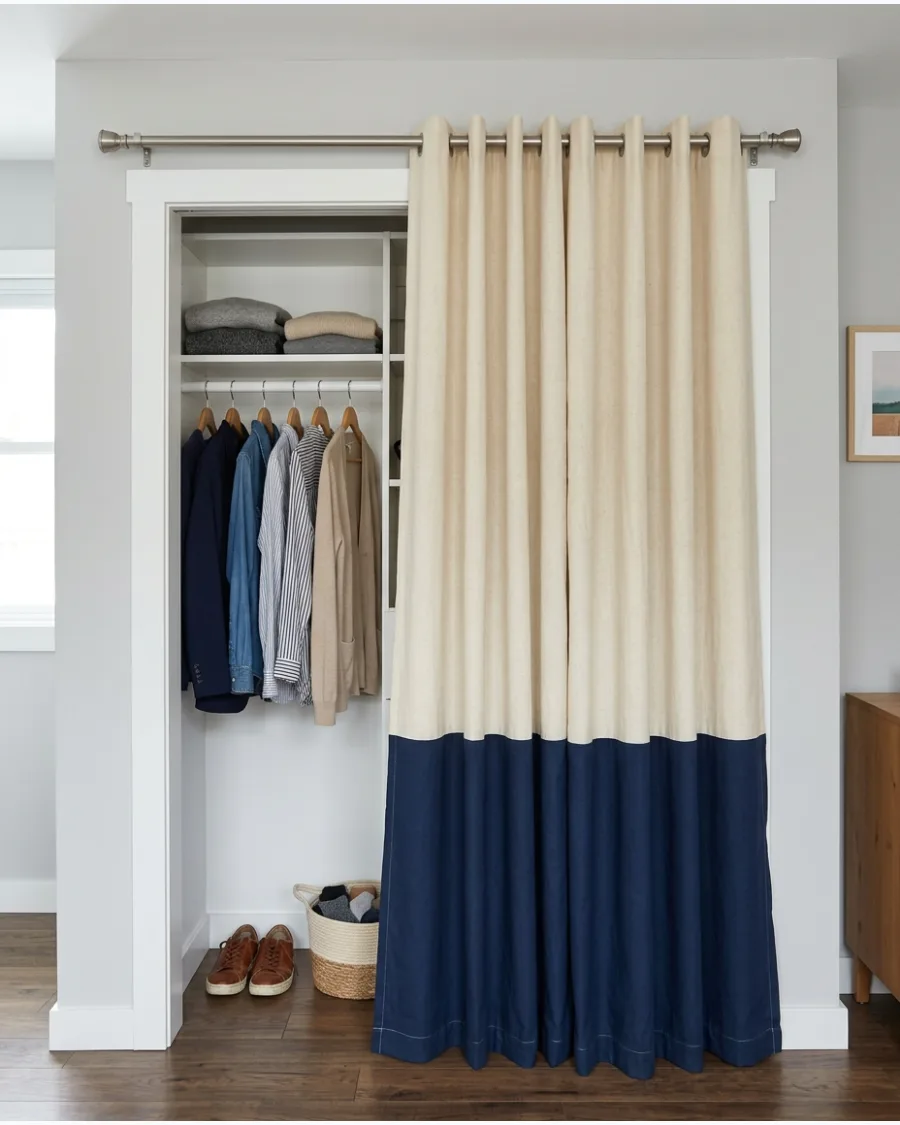
Combine two solid fabrics to create color-blocked curtain panels. A darker lower section can hide marks, while a lighter upper section keeps the room feeling open.
Sew two contrasting panels together at the one-third mark for a professional custom look.
- Budget: $40-$90 for two sets of panels and sewing supplies.
- Logistics: Ensure the seam where the colors meet is perfectly horizontal across all panels.
- Adaptation: Use a bright pop of color on the bottom to draw the eye down and ground the space.
Best shortcut: Use iron-on hem tape to join the colors if you want to avoid using a sewing machine.
Small Bedroom and Renter-Friendly Ideas
36. Tension-Rod Closet Curtain
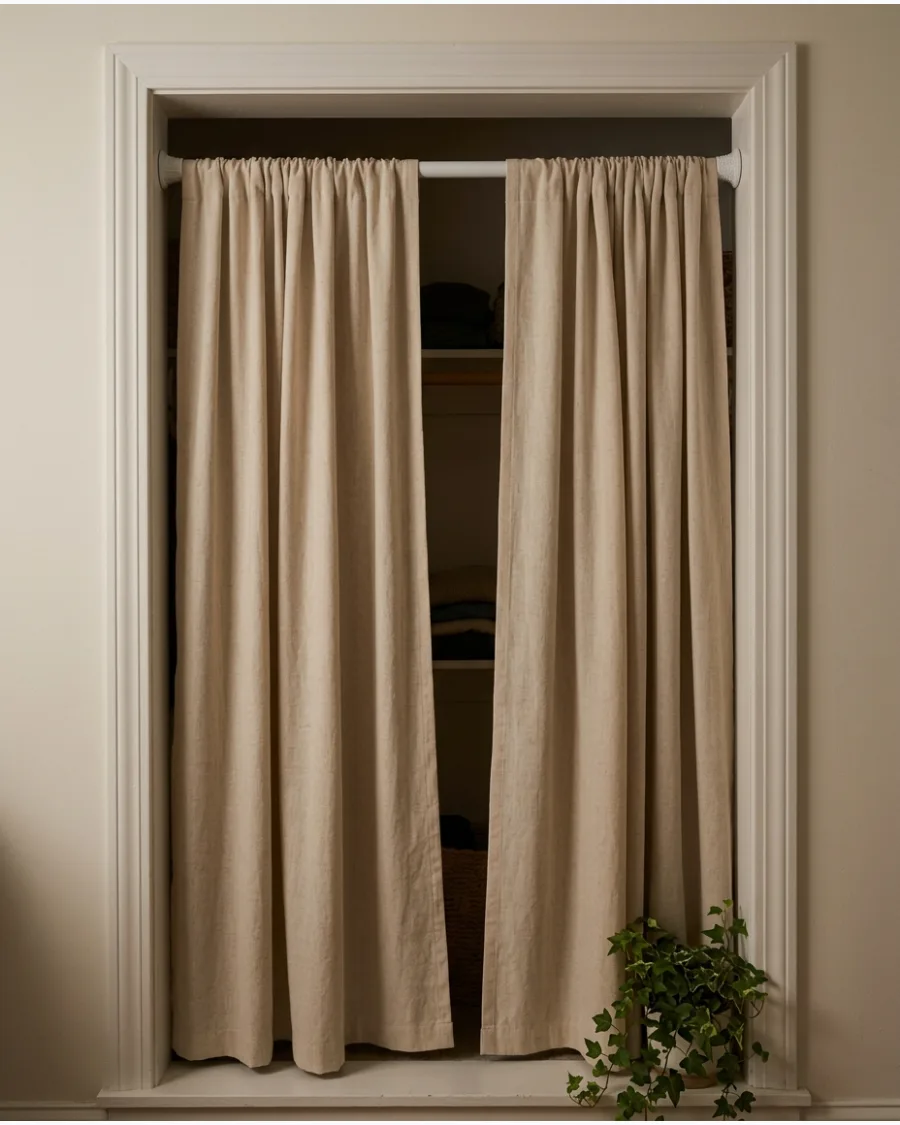
Fit a tension rod inside the closet frame for a no-drill installation. This is one of the simplest solutions for renters or anyone who wants to avoid permanent hardware.
Twist the rod until it is extremely tight to prevent it from slipping down over time.
- Budget: $15-$30 for a heavy-duty tension rod.
- Setup: Measure the inside width of the frame twice to ensure the rod fits snugly.
- Adaptation: Use a spring-loaded rod for lightweight fabrics or a screw-out rod for heavier drapes.
Most people skip this: Wipe the wall surface with rubbing alcohol before installing the rod to help the rubber grips stay in place.
37. Curtains Mounted Inside the Closet Frame
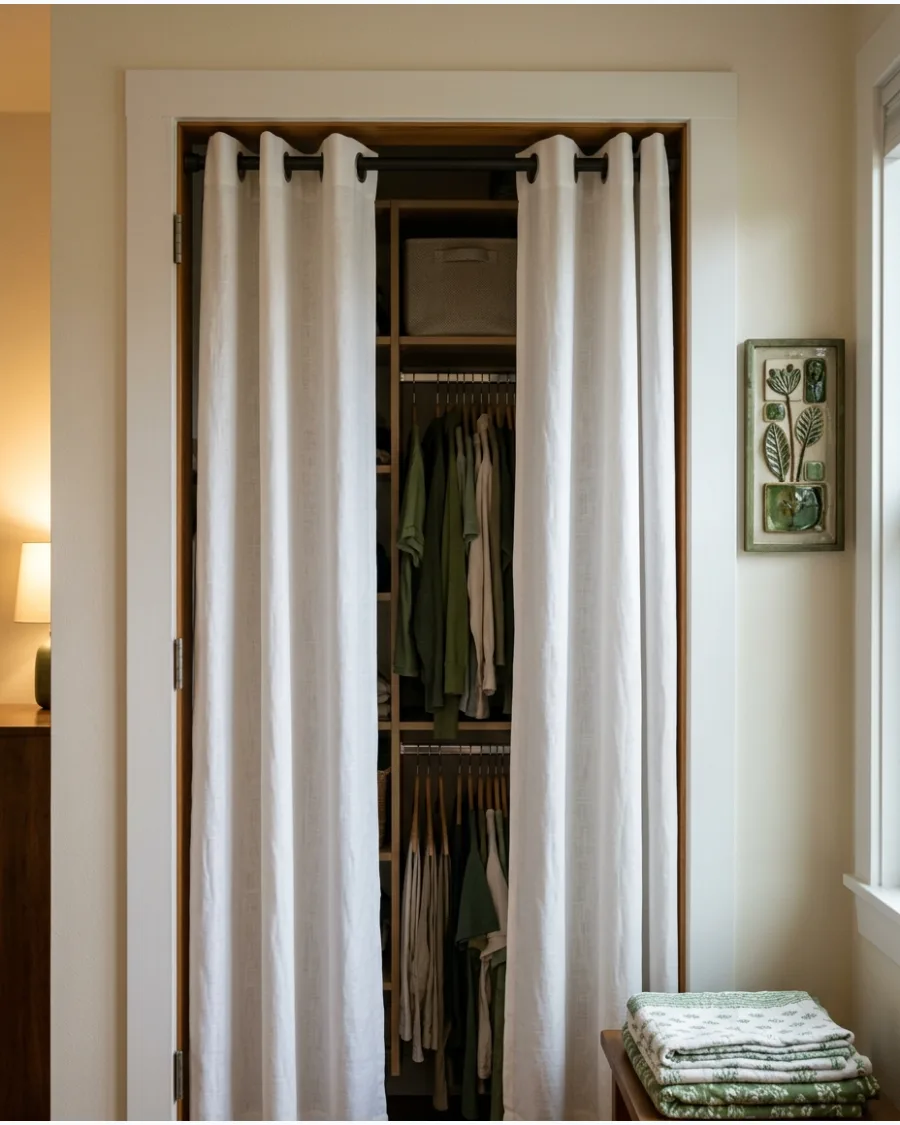
Position the curtain rod just inside the opening instead of above it.
The recessed installation keeps the fabric contained and creates a neat, understated finish. Use a slim rod that fits within the depth of the door trim for a flush appearance.
- Budget: $20-$40 for a basic rod and hardware.
- Logistics: Mount the brackets high enough so no light or storage is visible above the rod.
- Style: This method works best in hallways where you do not want fabric protruding into the walkway.
Quick win: Choose curtains the same color as the door frame to make the closet blend into the wall.
38. Curtains Mounted Outside the Closet Frame
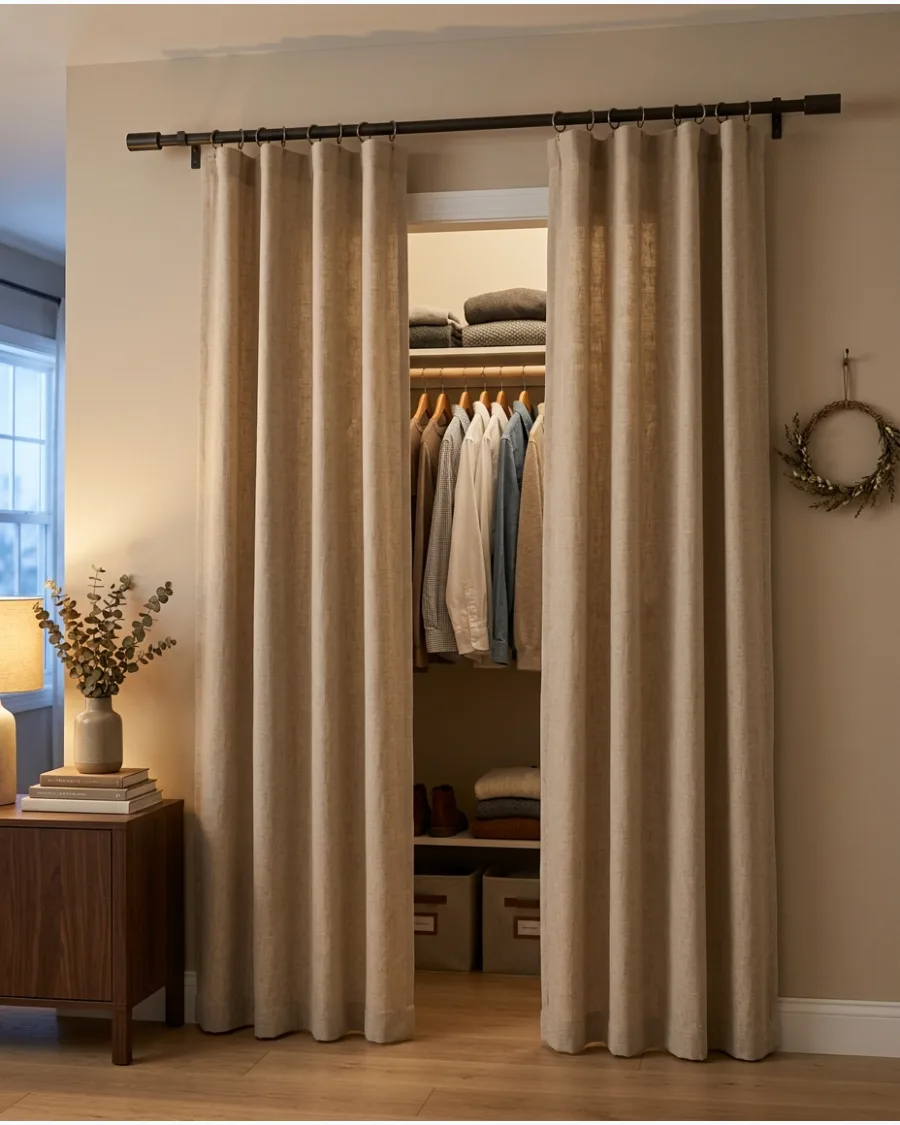
Mount the rod several inches above and beyond the opening to conceal the entire frame. This can make a basic reach-in closet appear wider and more substantial.
Extend the rod at least four inches past each side of the opening to hide the trim completely.
- Budget: $30-$70 for a wider rod and extra-wide panels.
- Setup: Use wall anchors to ensure the rod can support the weight of wider curtains.
- Adaptation: This is the best way to hide damaged or unattractive door frames without a full renovation.
Best shortcut: Use a wrap-around rod to eliminate the side gap between the curtain and the wall.
39. Lightweight Curtains for Easy Access
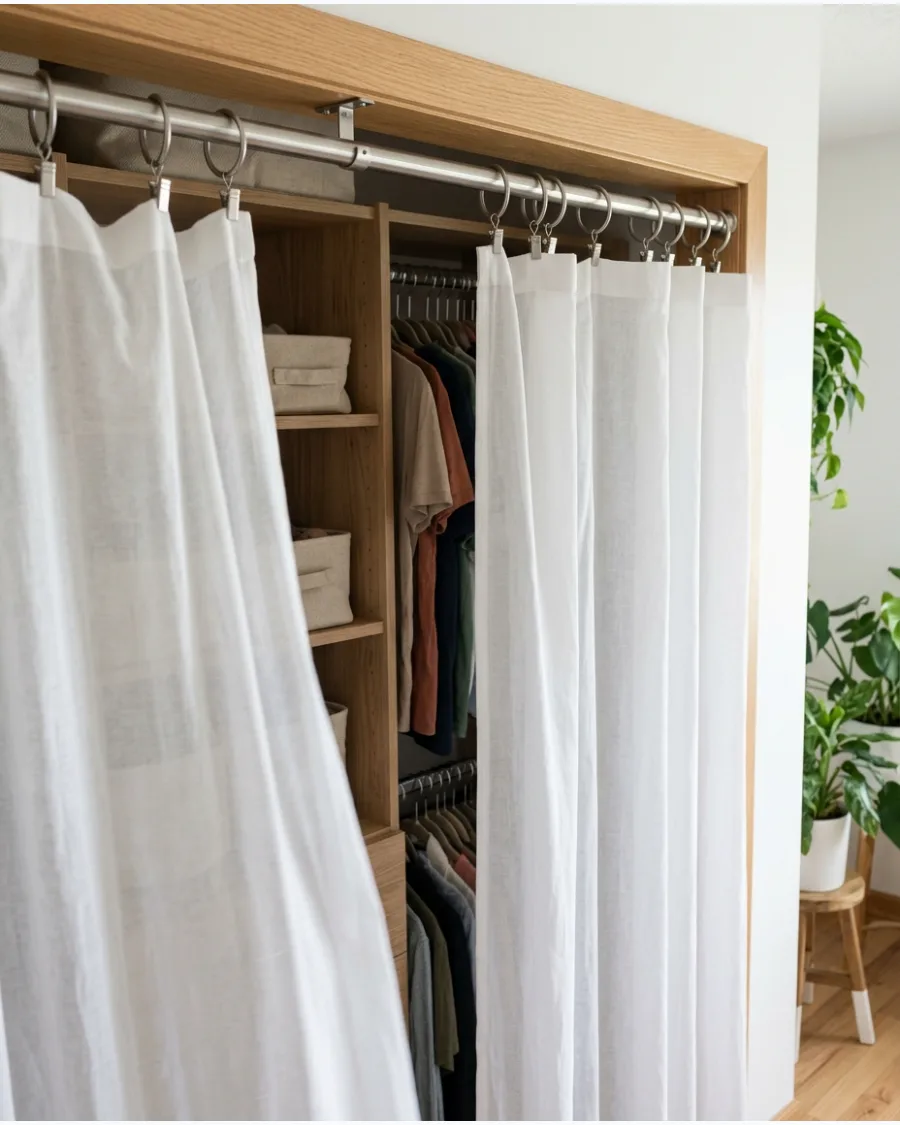
Choose lightweight cotton or linen-blend panels for a closet used several times a day. They slide easily and are less likely to feel cumbersome in a small room.
Pick a semi-sheer fabric to allow some light to filter into the closet while still hiding the contents.
- Budget: $15-$35 for light cotton panels.
- Logistics: Use rings with a smooth finish to ensure the fabric glides without catching.
- Style: Lighter fabrics work well in nurseries or guest rooms where a breezy feel is preferred.
Most people skip this: Add small drapery weights to the bottom corners to keep lightweight curtains from blowing when the door opens.
40. Short Curtains for a Closet Nook
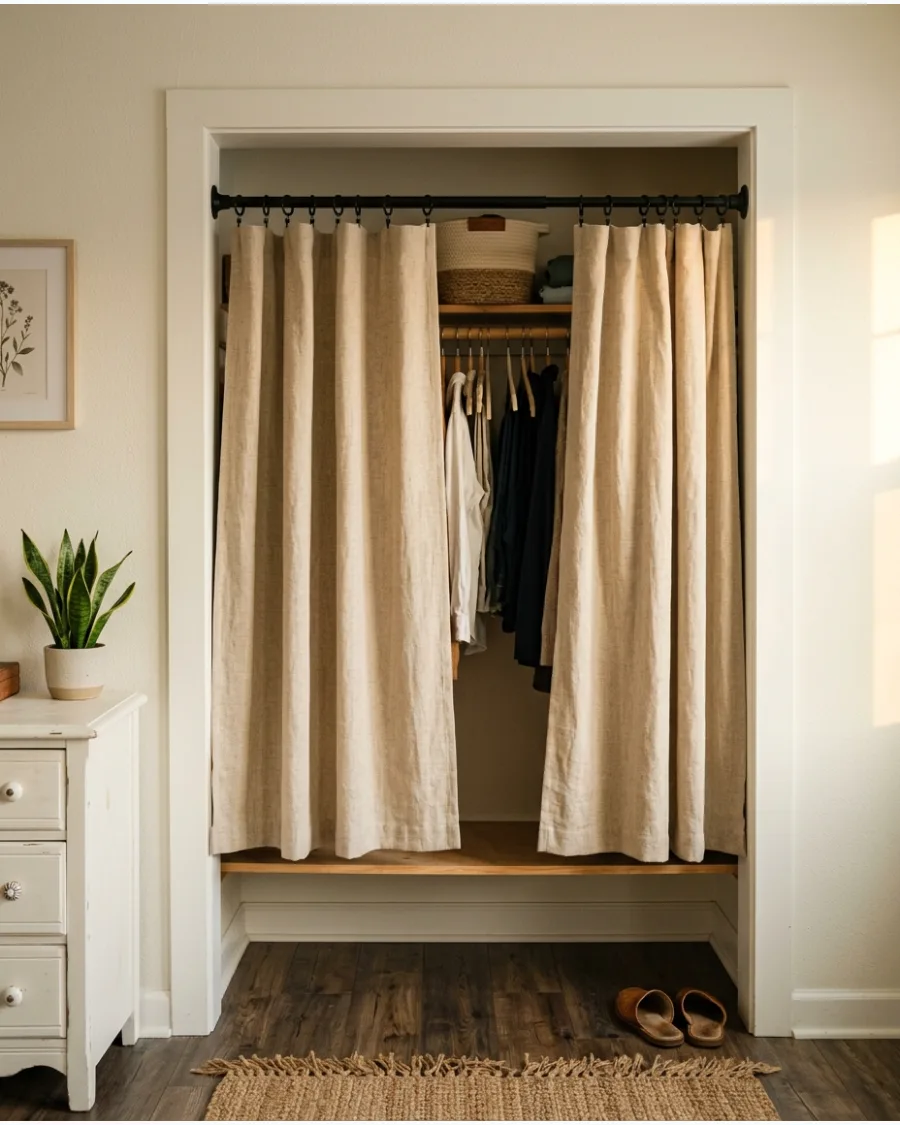
Use curtains that end just below the closet opening when floor-length fabric would interfere with furniture or vents. A carefully measured hem keeps the shorter style looking intentional.
Hem the curtains to stop exactly one inch below the bottom of the closet opening for a clean line.
- Budget: $20-$40 for standard panels that can be hemmed.
- Setup: Measure from the rod to the bottom of the opening before cutting fabric.
- Adaptation: This is ideal for closets located above built-in drawers or heating vents.
Quick win: Use iron-on hem tape for a perfectly straight bottom edge without needing a sewing machine.
41. No-Sew Closet Curtains
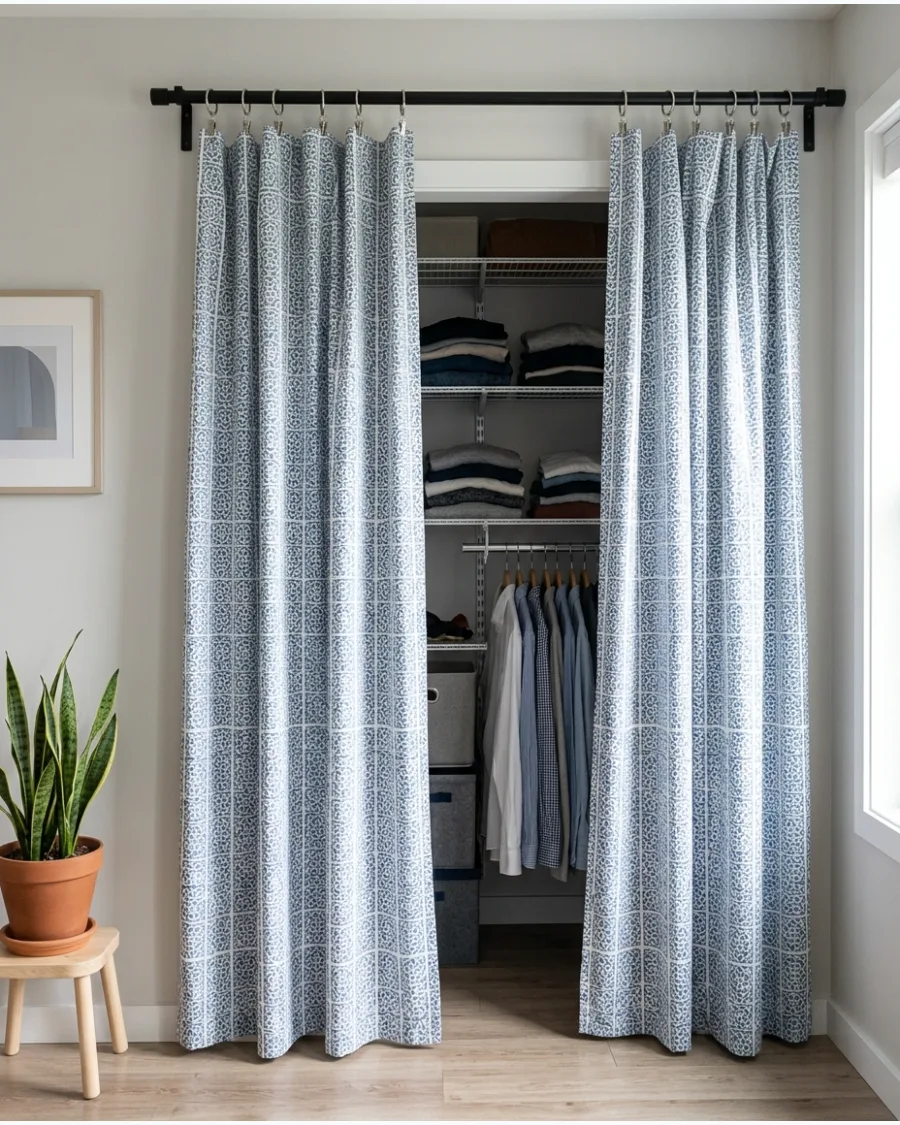
Turn flat sheets or tablecloths into closet curtains using iron-on hemming tape and clip rings. This offers a budget-friendly way to test colors and patterns before investing in custom drapery.
Fold the top edge of a flat sheet over to create a decorative valance before attaching the clips.
- Budget: $10-$30 using existing linens or thrifted sheets.
- Logistics: Check the fabric weight to ensure it is not too heavy for the clip rings to hold.
- Adaptation: Tablecloths are often the perfect width for standard reach-in closet openings.
Best shortcut: Use a high thread-count sheet for a smoother, more expensive-looking finish.
42. Clip-Ring Closet Curtains
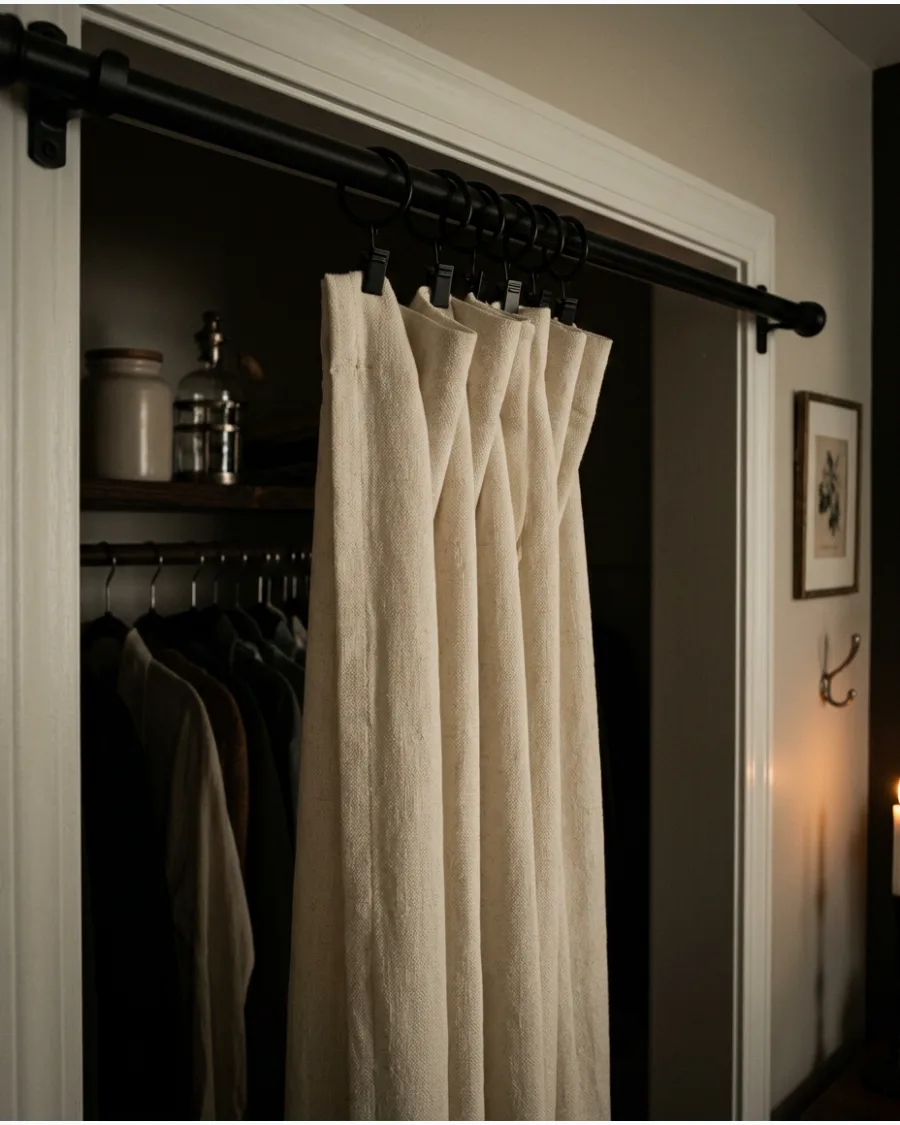
Attach fabric panels to clip rings for an easy, casual installation. The rings also make the curtains simple to remove whenever they need washing or changing.
Space the clips every four to six inches to create natural, even folds in the fabric.
- Budget: $10-$20 for a pack of clip rings.
- Setup: Slide all rings onto the rod before mounting it to the wall.
- Style: Choose rings that match your light fixtures or hardware for a cohesive room design.
Quick win: If the curtains are too long, fold the top of the fabric down and clip through both layers to shorten them without sewing.
43. Closet Curtains Behind a Dresser
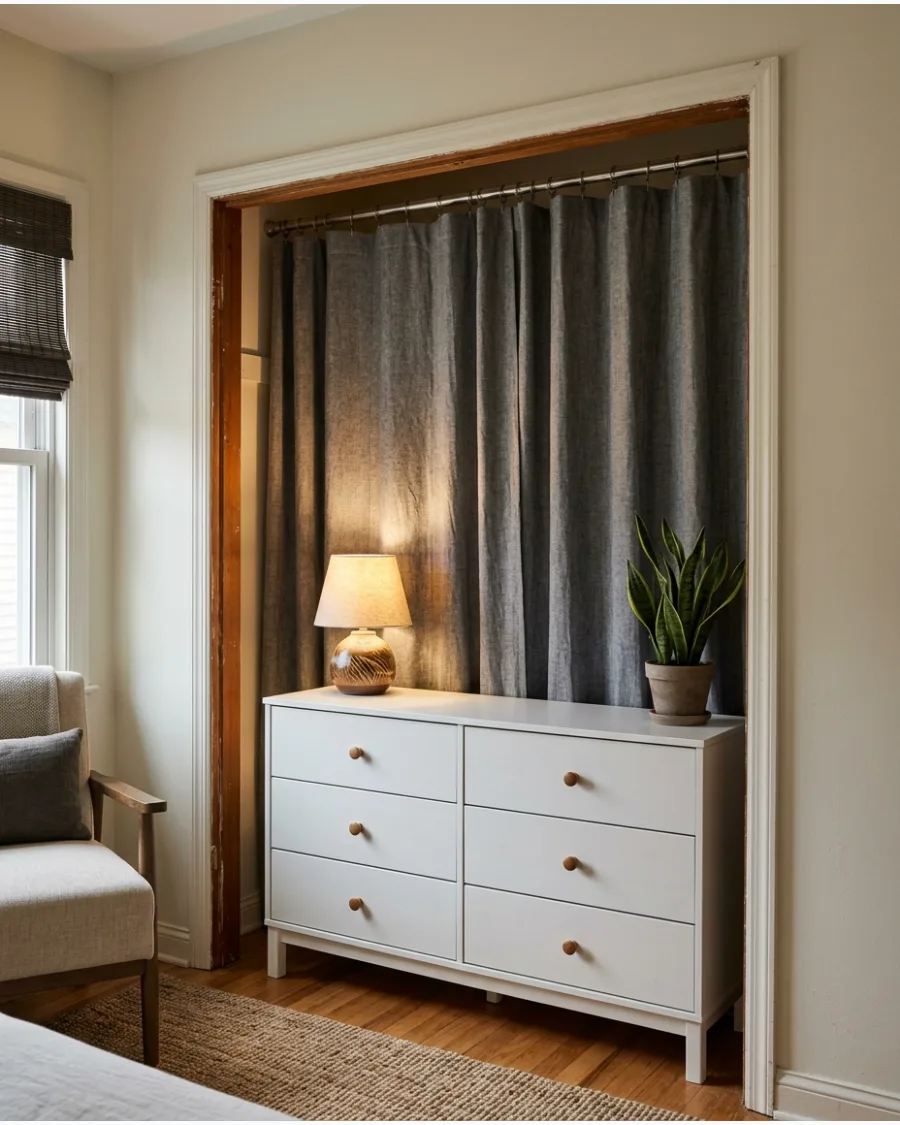
Remove bulky doors, place a low dresser partially inside the closet, and curtain the remaining storage area. This arrangement can free valuable floor space in a compact bedroom.
Install the curtain rod high enough so the fabric hangs just behind the top of the dresser.
- Budget: $30-$60 for rod and curtains.
- Placement: Leave enough space between the dresser and the curtain for the fabric to move freely.
- Adaptation: This works best in rooms where there is no space for both a dresser and swinging closet doors.
Most people skip this: Secure the dresser to the wall inside the closet for safety, especially in children's rooms.
44. Curtain-Covered Clothing Rack
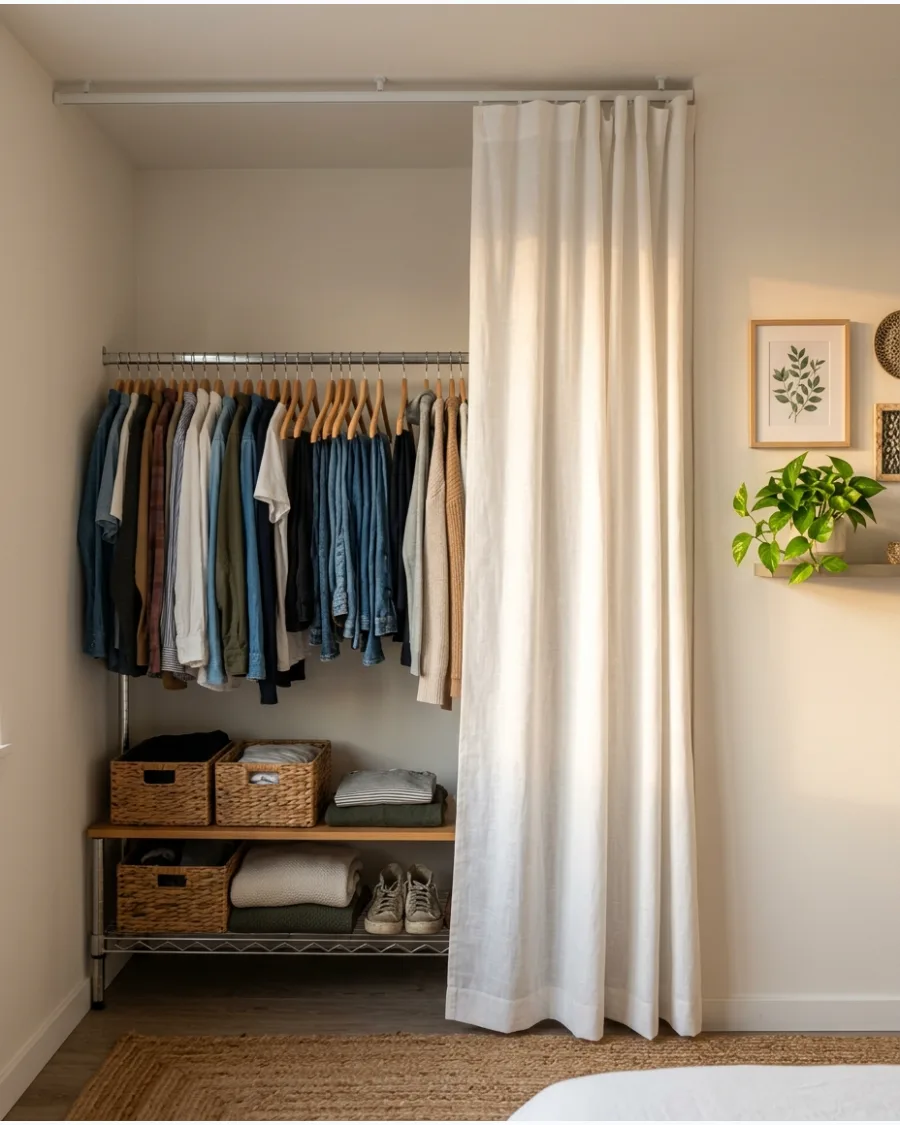
Create a closet where none exists by placing a clothing rack and shelves along an empty wall. Install a ceiling track in front so the entire storage system can be hidden behind curtains.
Choose floor-to-ceiling panels to make the temporary storage look like a built-in feature.
- Budget: $100-$200 for a rack, track, and large curtains.
- Setup: Mount the ceiling track 12-18 inches away from the wall to clear the clothes on hangers.
- Adaptation: Use this in studio apartments to separate the sleeping area from storage.
Best shortcut: Use a flexible ceiling track if you need to curve the curtain around the end of the rack.
45. Corner Closet Curtain Track
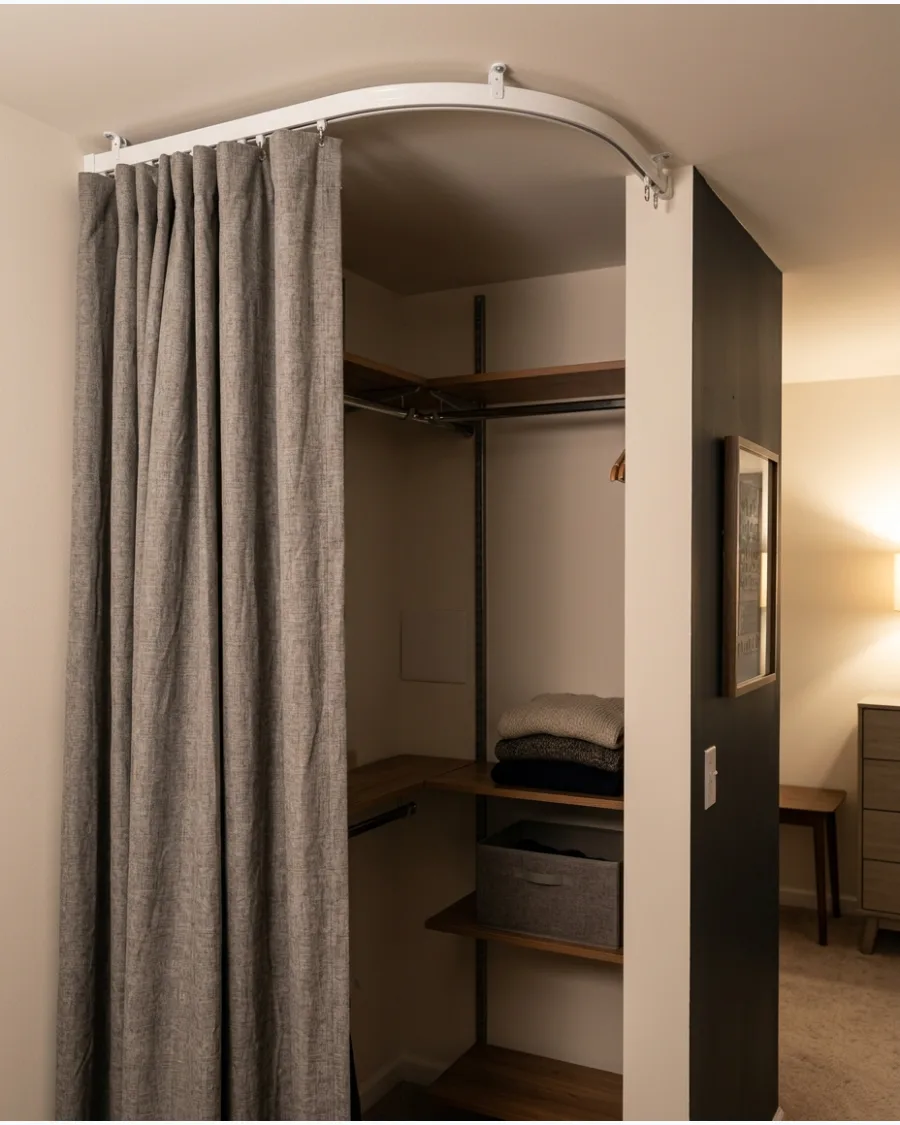
Use a flexible or L-shaped ceiling track to conceal storage arranged in a bedroom corner. This creates the feeling of a compact walk-in closet without constructing permanent walls.
Mount the track in a 90-degree angle to fully enclose a corner clothing rack or shelving unit.
- Budget: $50-$120 for flexible track and curtains.
- Logistics: Ensure the ceiling can support the weight of the track and fabric.
- Style: Use thick, opaque fabric to ensure no shadows of the storage show through.
Quick win: Use a wand attachment on the lead ring to pull the curtain around the corner without tugging on the fabric.
Practical and Custom Closet Curtain Ideas
46. Double-Layer Closet Curtains
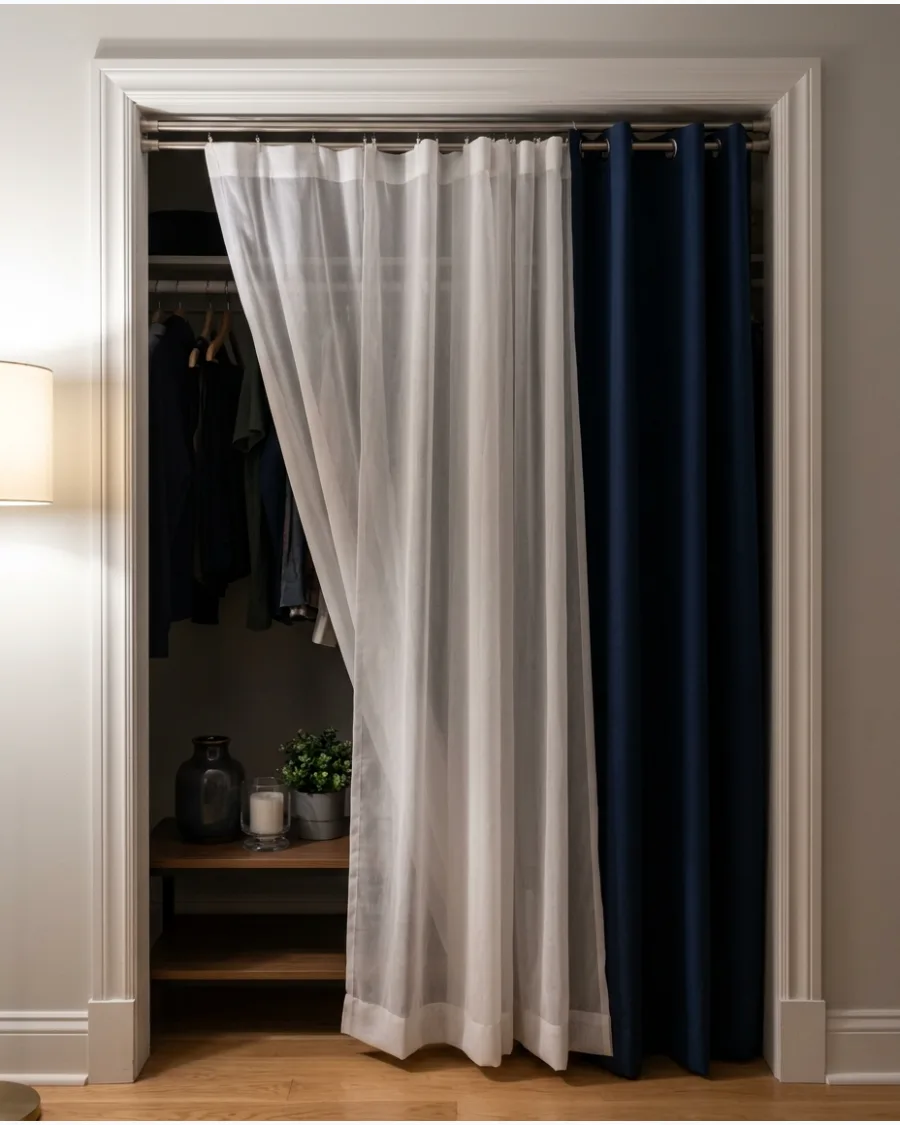
Layering a sheer panel in front of a heavier fabric adds a high-end look while keeping the closet partially obscured even when open. Install a double-rod bracket to hold both the sheer and opaque panels independently for the most flexibility. This setup allows for varying levels of privacy and light filtration throughout the day.
It provides a soft, dimensional appearance that masks the flat look of a standard closet opening.
- Budget for two sets of panels and one double-rod kit, typically under one hundred dollars.
- Setup requires enough wall clearance for the deeper double-rod brackets to sit flush.
- Use a sheer with a subtle pattern to add texture without clashing with the solid base color.
Best shortcut: Use a double-track system if the closet is in a narrow hallway to save even more space.
47. Blackout Closet Curtains
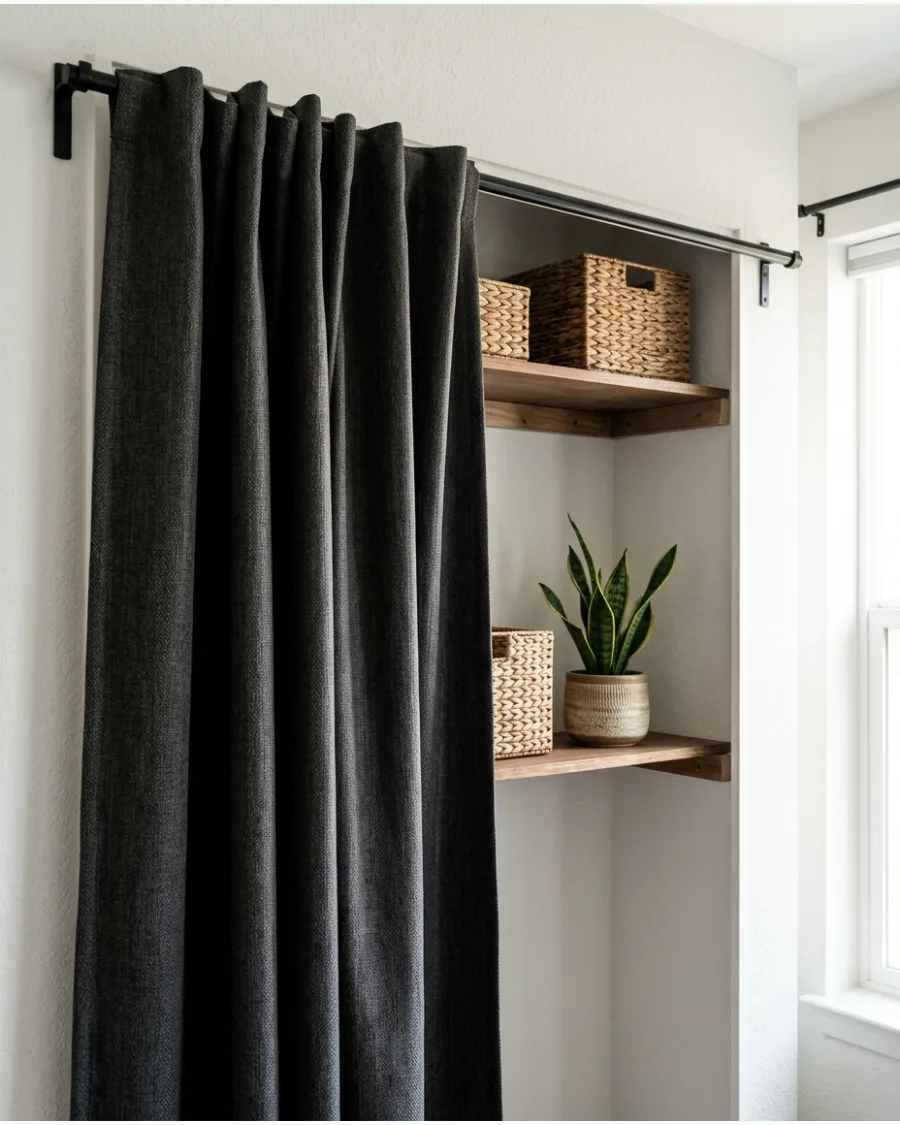
Blackout panels are perfect for closets that get direct sunlight, preventing clothes from fading over time. Choose a fabric with a built-in liner to ensure the curtain hangs with a heavy and professional drape. The extra weight helps the fabric stay in place even when there is a draft in the room.
This is the most effective way to hide bulky storage bins or irregular shelving that might show through thinner fabrics.
- Blackout panels typically cost thirty to sixty dollars depending on the width and fabric quality.
- Ensure the rod is rated for heavy fabric to prevent sagging in the middle of the closet opening.
- Swap these for velvet blackout panels in winter to add a layer of insulation to a cold room.
Quick win: Steam the panels after hanging to remove fold lines that make blackout fabric look stiff.
48. Curtains With Decorative Trim
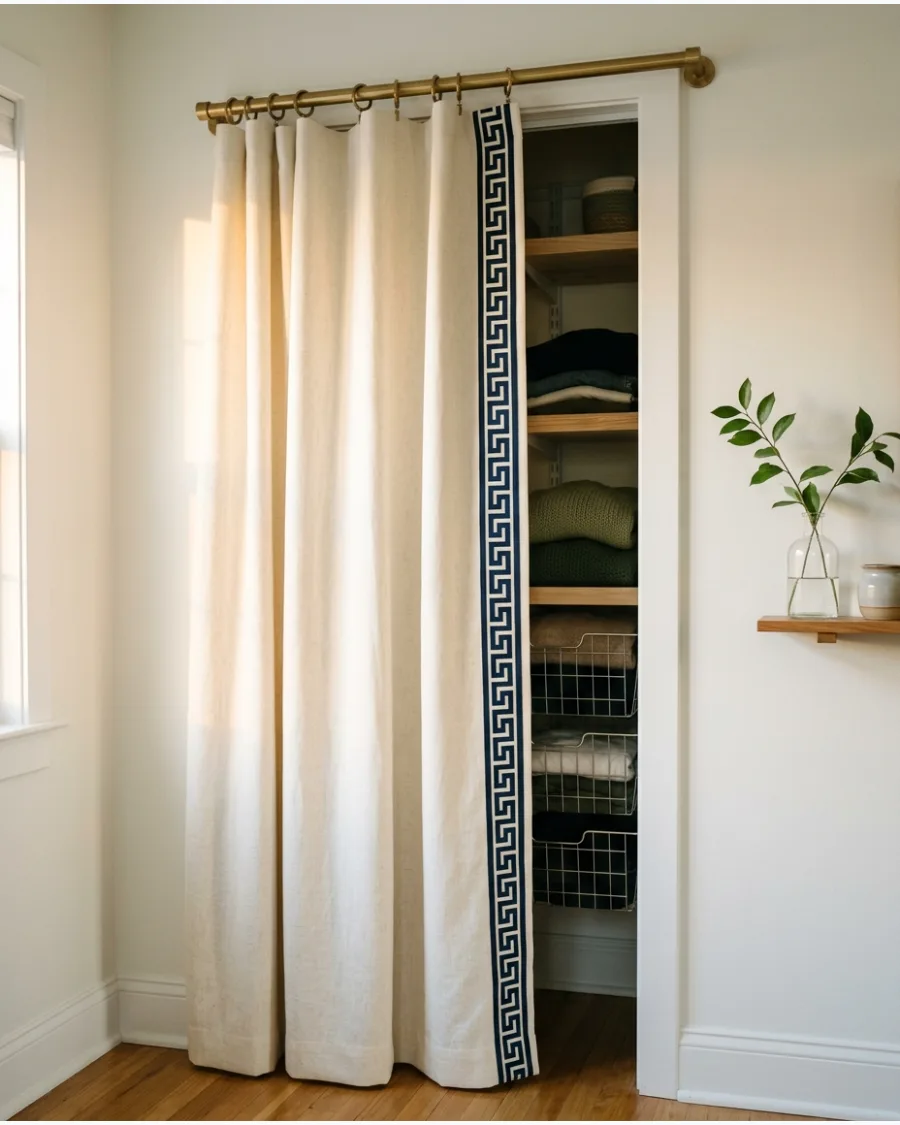
Adding a custom edge to a basic curtain panel makes a simple DIY project look like a designer choice.
Glue or sew a decorative ribbon or tassel trim along the inner vertical edge of each panel to create a focal point. This small detail draws the eye and gives the closet a finished, intentional feel. It is a smart way to tie the closet color into other textiles used in the bedroom.
- Trim is available at craft stores for a few dollars per yard and requires very little material.
- Use permanent fabric glue for a no-sew option that stands up to daily pulling and movement.
- Choose a trim color that matches your throw pillows or rug to unify the bedroom design.
Most people skip this: Apply the trim only to the leading edge where you grab the curtain to save time and money.
49. Closet Curtains With Tiebacks
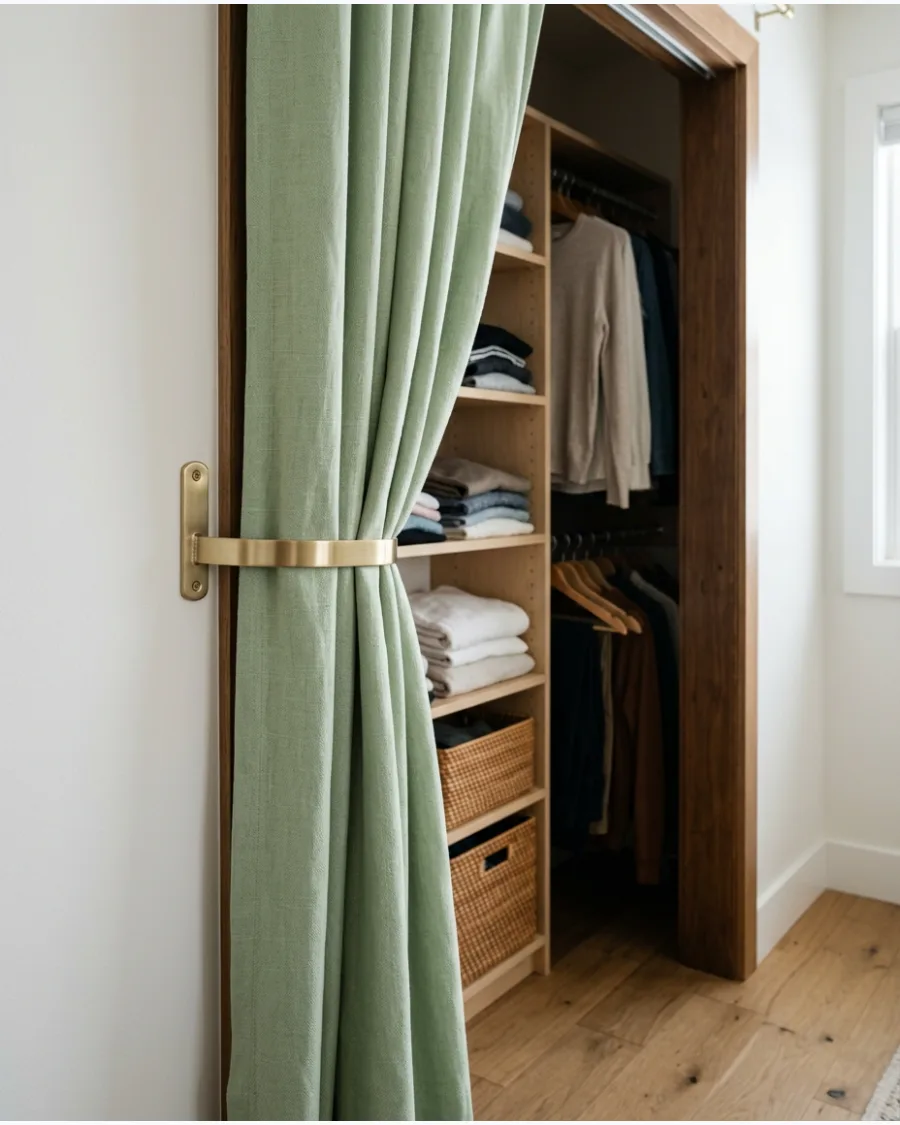
Tiebacks are a functional addition that keeps fabric out of the way during busy morning routines. Mount decorative metal hooks halfway up the side of the closet frame to hold the fabric back neatly when you need full access. This prevents the curtains from getting caught in vacuum cleaners or tripping people in high-traffic areas.
It also creates a draped, elegant look when the closet contents are organized and on display.
- Metal tieback hooks are an affordable five-minute upgrade that improves daily function.
- Position the hooks at elbow height for the most natural-looking drape when the curtains are open.
- Use fabric rope tiebacks for a softer look in a nursery or guest room.
Best shortcut: If you cannot drill into the wall, use magnetic tiebacks that wrap around the fabric itself.
50. Custom Pleated Closet Drapes
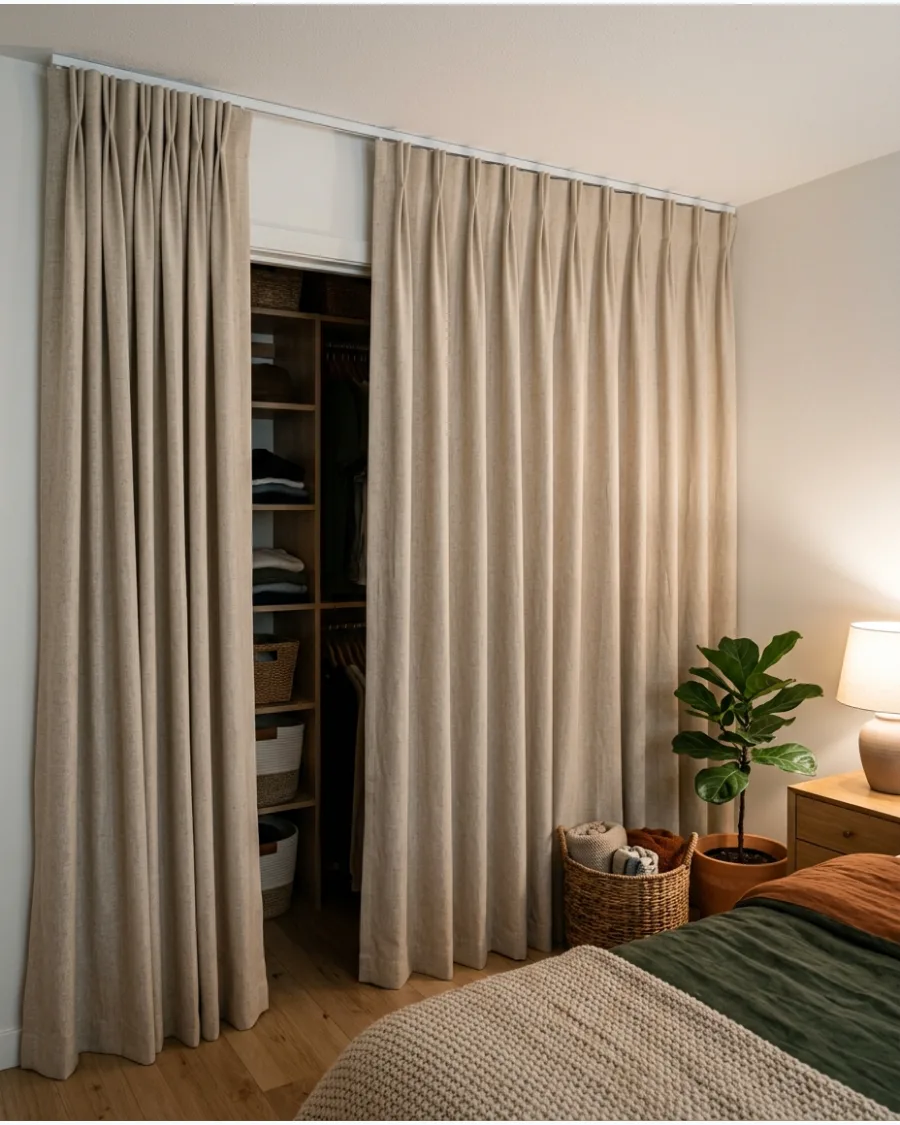
Tailored pleats make a closet curtain look like a permanent architectural feature rather than a temporary fix. Use a ceiling-mounted track and pleated hooks to create uniform folds that stay perfect even when the curtains are moved. The structure of the pleats ensures the fabric stacks back tightly, leaving the closet fully accessible.
Weighted hems are essential here to keep the panels from flaring out at the bottom.
- Professional pleated panels are a mid-range investment compared to basic rod-pocket styles.
- Measure from the ceiling to exactly one-half inch above the floor for a custom fit.
- Opt for a ripple-fold track if you prefer a modern wavy appearance over traditional pleats.
Most people skip this: Insert drapery weights into the bottom corners to ensure the pleats hang perfectly straight.
Frequently Asked Questions
How do I make closet curtains look expensive instead of cheap?
To achieve a high-end look, choose heavy, high-quality fabrics and hang them from the ceiling all the way to the floor. Skip the basic clip rings and opt for back-tabs or a professional track system to create clean, elegant lines.
What is the best hardware for hanging curtains in a closet doorway?
Tension rods are a great, damage-free option for renters, but ceiling tracks offer the most seamless, built-in appearance. If you want a permanent solution that feels like a custom design feature, a low-profile track is your best bet.
How much wider should the curtains be than the closet opening?
Aim for a total curtain width that is at least twice the width of your closet opening to ensure a lush, gathered look. This 2x fullness rule prevents the fabric from looking stretched thin or flat when the closet is closed.
Can I use curtains for a walk-in closet without a door frame?
Yes, you can easily create a fabric wall effect by installing wall-to-wall ceiling tracks across the entire opening. This method hides the lack of a frame and provides a soft, sophisticated transition into your walk-in closet space.
How do I keep the closet contents from peeking out the sides?
To eliminate side gaps, use wrap-around French return rods that curve back to the wall, sealing the edges. You should also mount your hardware a few inches wider than the opening to ensure the fabric fully overlaps the edges.