50 Small Garden Under Stairs Ideas

This post may contain affiliate links: full affiliate disclosure.
The hollow area beneath a staircase often becomes a dusty corner for clutter. Turning this awkward zone into a pebble garden adds immediate texture and life to a hallway or entryway.
These ideas focus on using stones and low-light plants to create a clean, modern look that requires very little water.
ZEN & PEBBLE GARDENS UNDER STAIRS
1. White Pebble Zen Garden Under Stairs
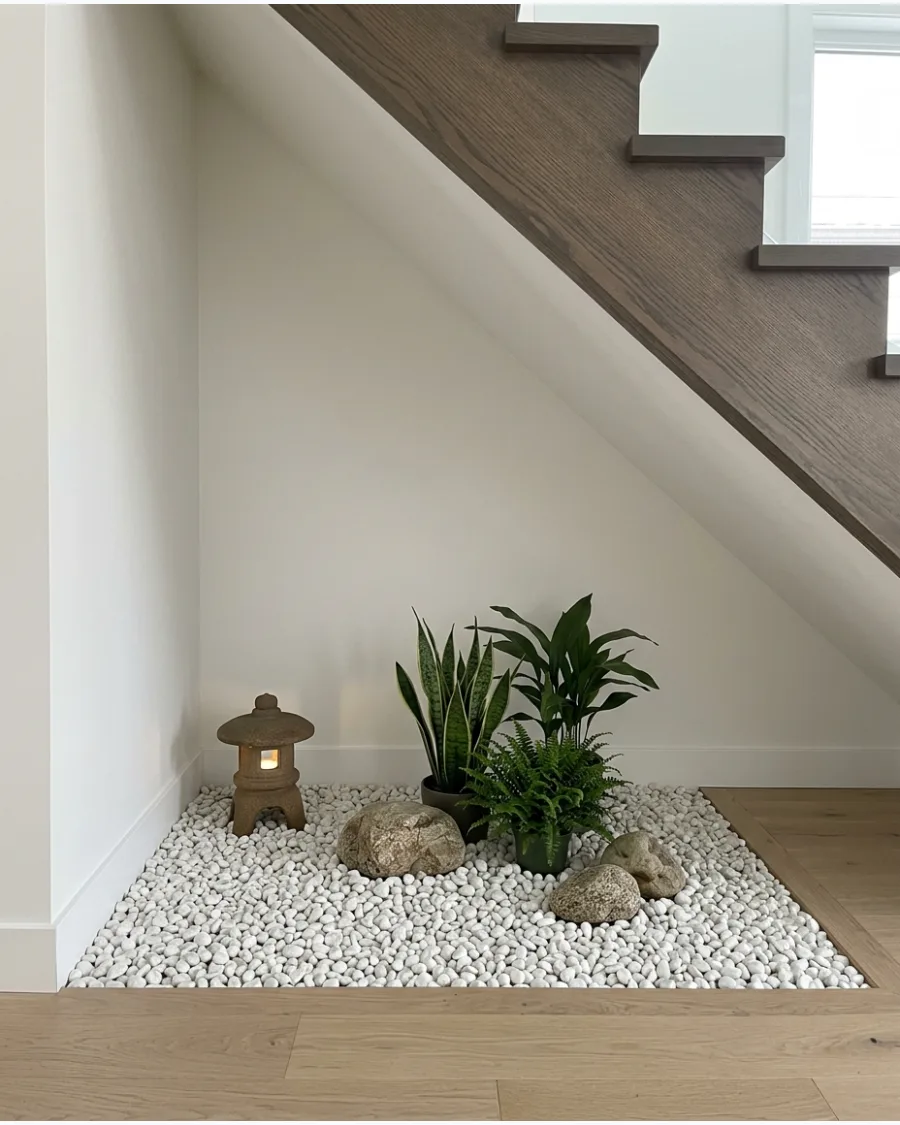
Covering the floor with bright white pebbles reflects light back into a dark corner. This setup uses sculptural plants like Snake Plants to add height without needing much horizontal room.
Lay down a heavy-duty plastic liner before pouring the stones to protect the subfloor from moisture. A single stone lantern adds a focal point that keeps the space from looking like an empty pit of gravel.
- Sourcing: Buy 50-pound bags of polished white river stones from a local landscape center.
- Setup: Pour stones at least two inches deep to hide the floor completely.
- Adaptation: Use faux plants if the area has zero natural light and no outlet for grow lights.
Quick win: Use white pebbles to bounce light from nearby windows into the rest of the hallway.
2. Black Pebble Garden Under Stairs
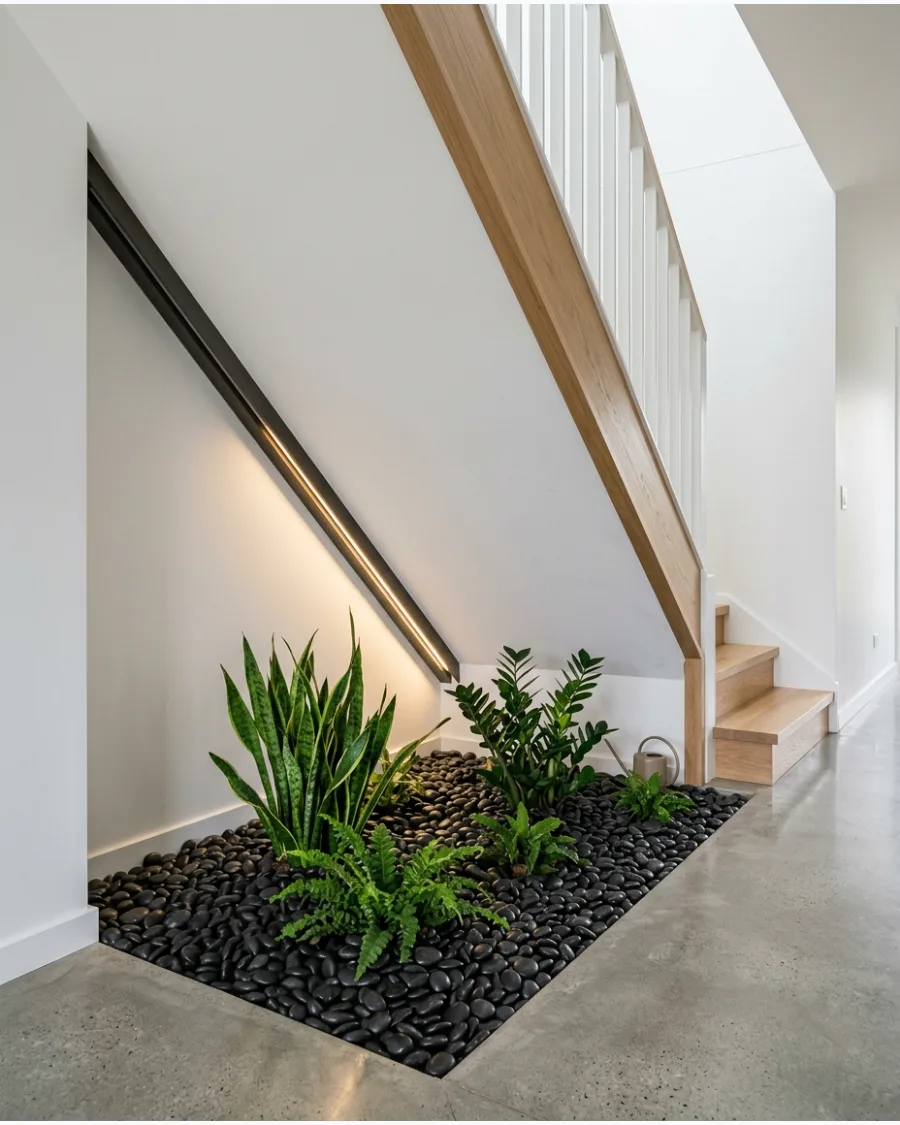
Dark polished stones create a sophisticated, moody base that makes green leaves pop. This look works best under modern open-tread stairs where light can filter down from above.
Install a small LED spotlight at the base of the plants to highlight the glossy texture of the black stones at night. The high contrast between the dark floor and bright foliage looks incredibly high-end.
- Sourcing: Look for 'Mexican Beach Pebbles' for the smoothest, darkest finish.
- Setup: Wipe the stones with a damp cloth after installation to remove any shipping dust.
- Adaptation: Choose white or light gray pots to ensure the plants don't disappear against the dark ground.
Most people skip this: Polished stones stay looking 'wet' and high-end without the maintenance of actual water features.
3. Mixed River Rock Under-Stair Garden
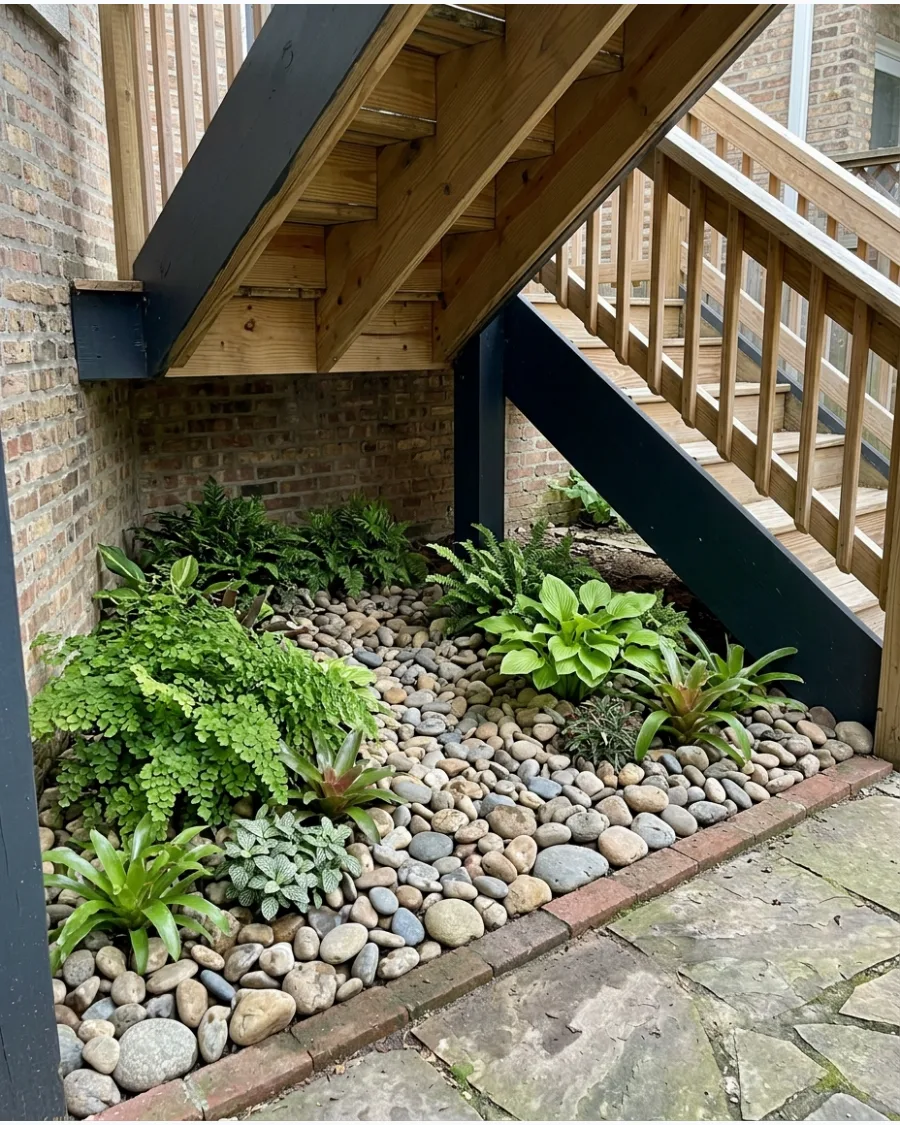
Combining different shades of tan, gray, and brown creates a more natural, organic feel than a single-color stone. This style mimics a dry creek bed and pairs perfectly with soft ferns.
Group stones of varying sizes together in clusters to make the arrangement look like a real outdoor landscape. Natural tones are very forgiving when it comes to dust and debris.
- Sourcing: Mixed river rock is often the most affordable bulk stone option.
- Setup: Place larger rocks first, then fill in the gaps with smaller gravel.
- Adaptation: Add a piece of driftwood to the center for a more rustic, forest-floor aesthetic.
Best shortcut: Use a leaf blower on the lowest setting once a month to clear dust from the rocks quickly.
4. Japanese-Inspired Garden Under Stairs
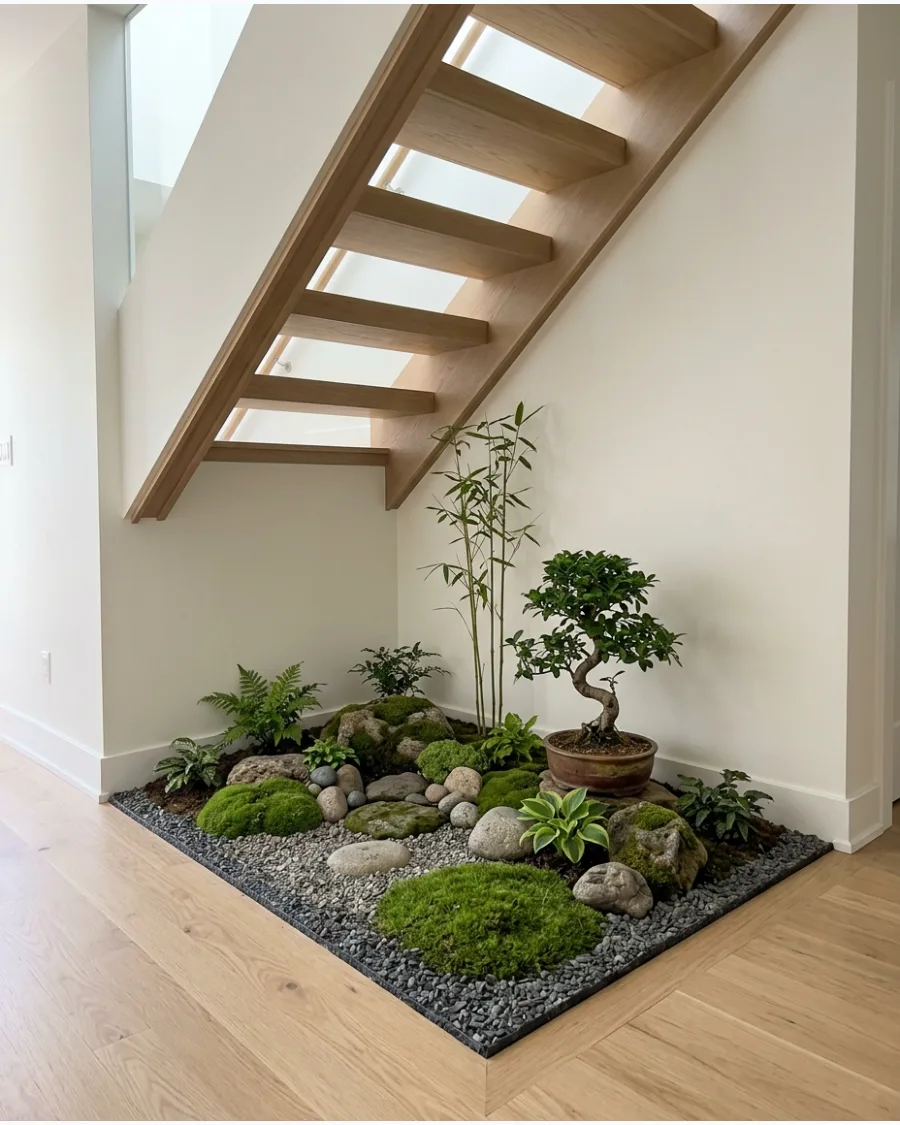
This design uses intentional spacing and traditional elements like bamboo to create a miniature retreat. A small bonsai tree or a low-growing moss patch serves as the center of attention.
Use a bamboo screen as a backdrop against the wall to hide electrical outlets or uneven drywall. This style is about quality over quantity, so don't overcrowd the area.
- Sourcing: Find preserved moss at craft stores to avoid the humidity needs of live moss.
- Setup: Elevate the bonsai on a stand so it doesn't get lost in the floor-level gravel.
- Adaptation: Substitute a real bonsai with a large jade plant if you need something easier to keep alive.
Quick win: Place a small mirror behind the bamboo to make the narrow space feel twice as deep.
5. Minimal Zen Garden With One Statement Plant
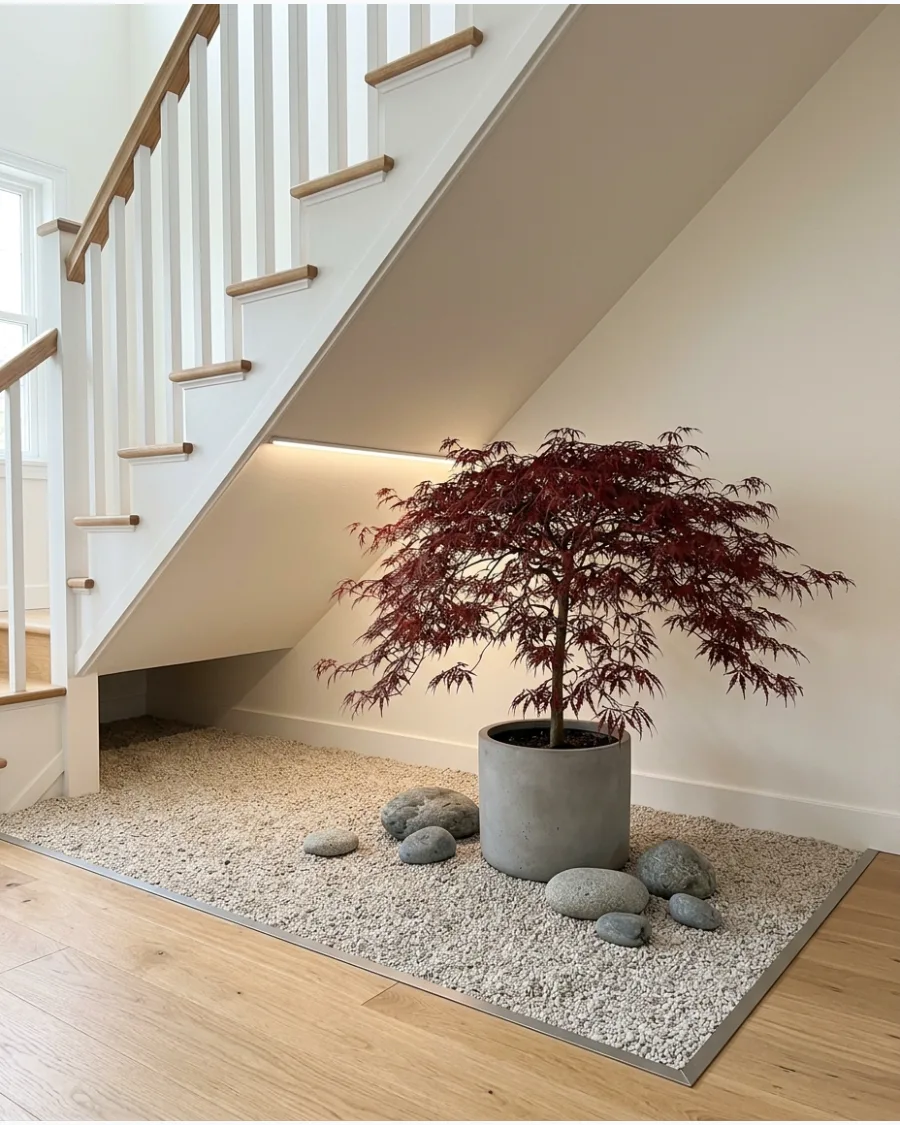
Focusing on just one large, sculptural plant creates a clean look that won't feel cluttered in a small home. Pale gravel provides a neutral stage for a plant with an interesting trunk or leaf shape.
Choose a large Dracaena or a Money Tree that can handle the height limitations of the stairs. This approach is much easier to clean than a space packed with many small pots.
- Sourcing: Buy one high-quality, large-scale planter that matches your home's trim color.
- Setup: Place the plant where it has the most vertical clearance to allow for growth.
- Adaptation: If the space is very shallow, use a wide, flat bowl instead of a tall pot.
Most people skip this: Measure the height of the staircase slope before buying the plant to ensure the leaves won't touch the ceiling.
6. Raked Gravel Zen Garden Under Stairs
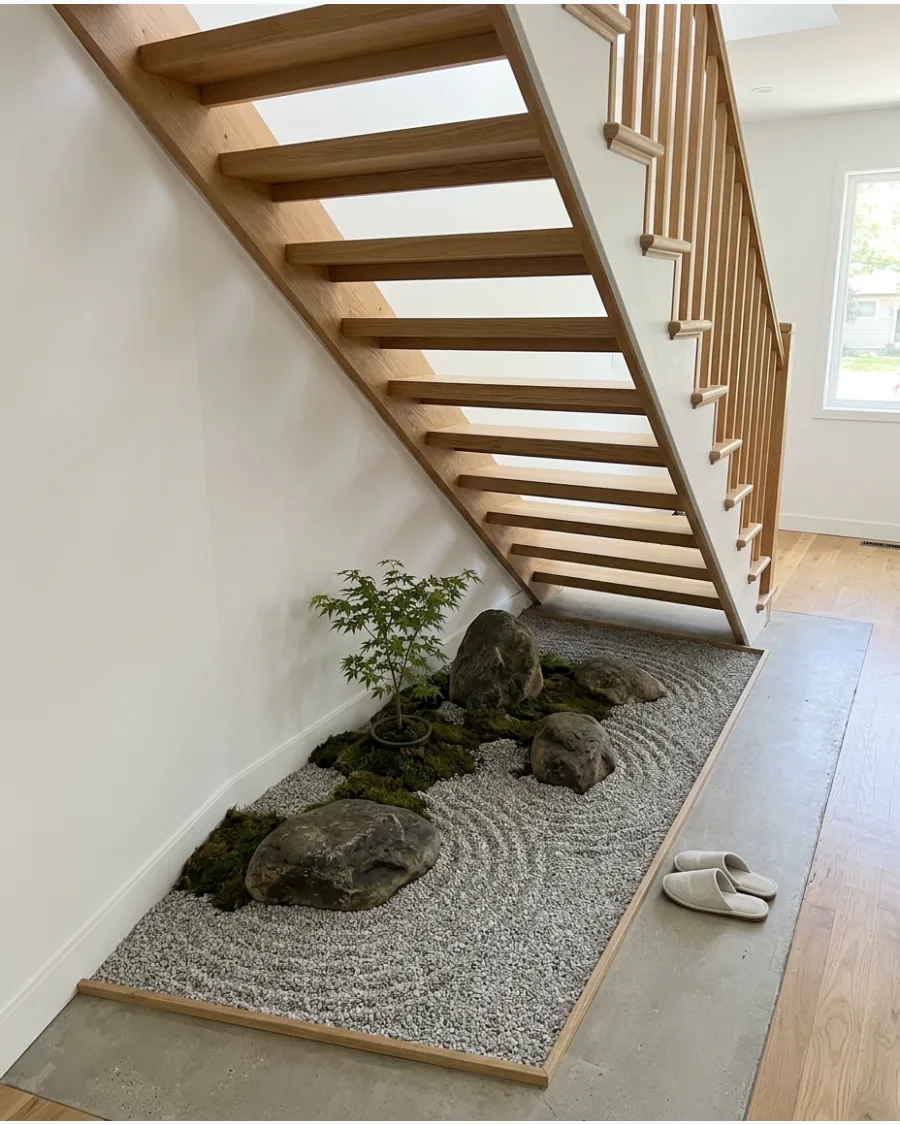
Fine gravel allows you to create patterns that represent water, adding a sense of movement to a static space. Large, jagged stones placed among the patterns act as 'islands' in the gravel sea.
Use a small hand rake once a week to refresh the circular patterns around the rocks. It is a meditative way to keep the entryway looking intentional and tidy.
- Sourcing: Use 'crushed granite' or fine 'aquarium sand' for the best raking texture.
- Setup: Ensure the floor is perfectly level before pouring sand to prevent the patterns from shifting.
- Adaptation: Use a wooden border or trim to keep the sand from spilling onto the surrounding floor.
Best shortcut: A mini zen garden rake set is the perfect size for working in the tight corners under stairs.
7. Pebble Garden With Stepping Stones
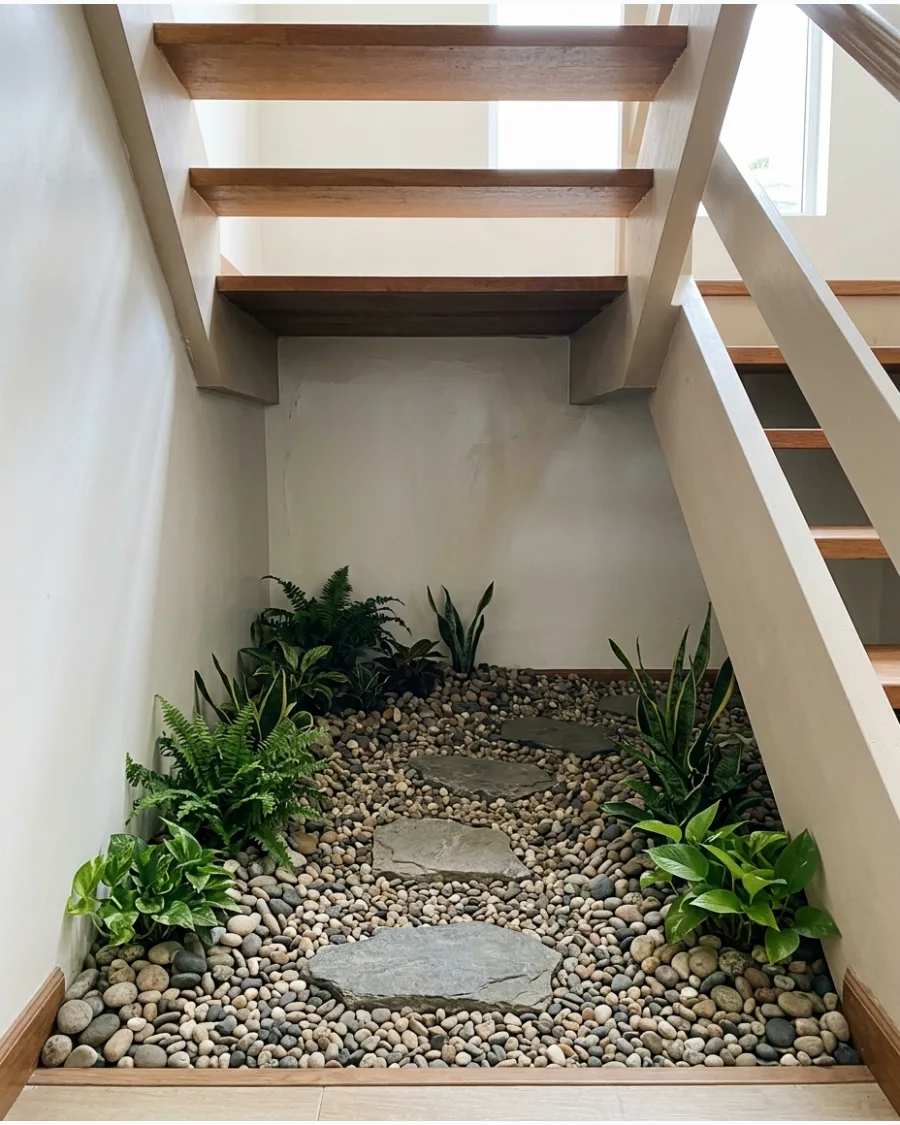
Flat stepping stones break up the texture of small pebbles and add a sense of scale. Surrounding these stones with leafy, low-growing plants like Pothos creates a lush, layered look.
Tuck the plastic nursery pots directly into the pebbles so you can easily swap plants out if they decline. This gives the illusion that the plants are growing directly out of the stone floor.
- Sourcing: Look for flat flagstone remnants at a local stone yard for the stepping stones.
- Setup: Sink the stepping stones into the gravel so they are flush with the surface.
- Adaptation: Use faux trailing ivy for the same look if you don't want to deal with watering over stones.
Quick win: Place the stepping stones in a slight 'S' curve to lead the eye through the space.
8. Pebble Garden With Large Decorative Rocks
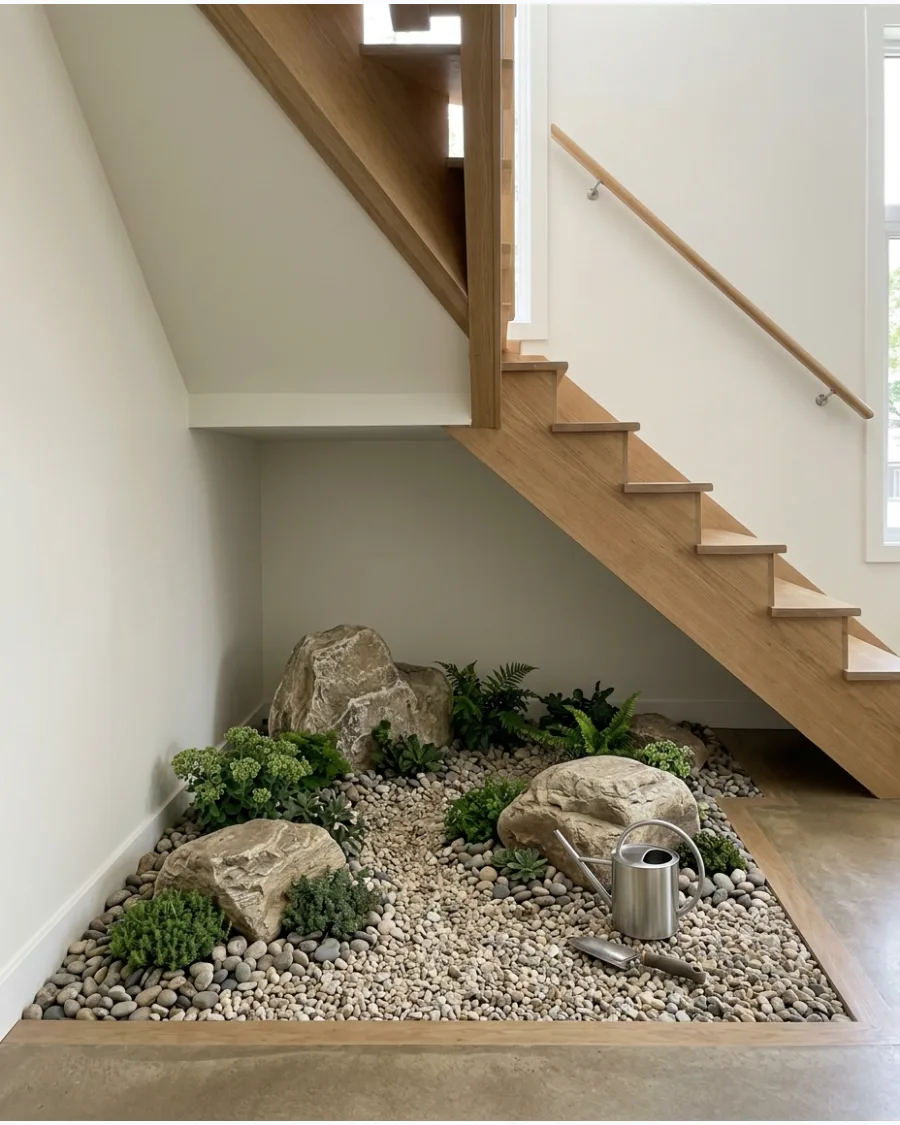
Mixing oversized boulders with small gravel creates a dramatic, rugged look that feels like a real garden. Low-growing greenery like Bird's Nest Ferns fills the gaps without blocking the view of the large rocks.
Position the largest rocks near the back wall to create depth and a solid foundation for the scene. This style works best in larger homes where the under-stair area is wider.
- Sourcing: Check local construction sites or nurseries for 'fieldstone' or large landscaping rocks.
- Setup: Place a piece of cardboard under heavy rocks to protect the floor during positioning.
- Adaptation: Use lightweight resin 'faux' rocks if you are worried about the weight on a second-floor landing.
Most people skip this: Vary the heights of the rocks to make the garden look more natural and less like a straight line.
9. Warm Beige Gravel Garden Under Stairs
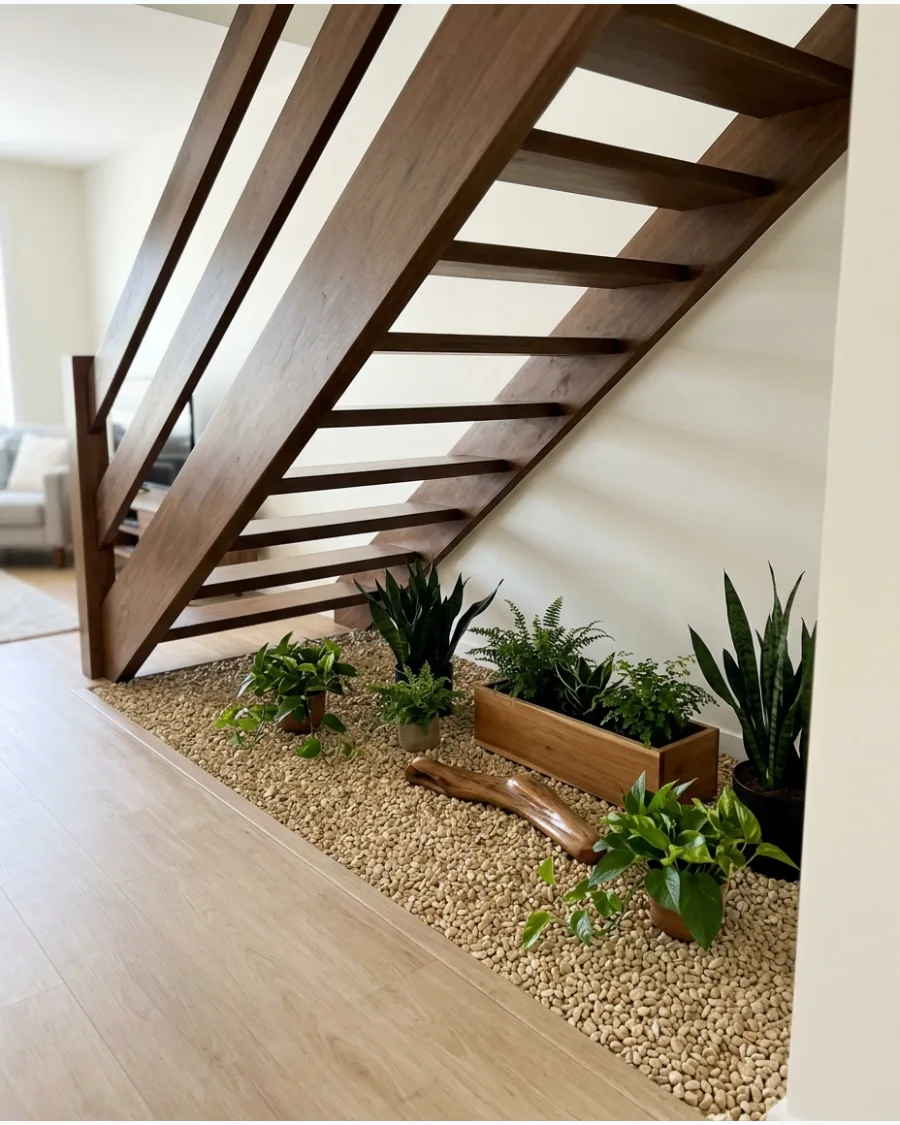
Beige and tan tones feel much warmer and more inviting than stark white or black. Pairing these stones with wood accents, like a small cedar bench or wooden planters, creates a cozy organic-modern vibe.
Choose plants with lighter green or variegated leaves to complement the warm tones of the gravel. This palette is perfect for homes with traditional wood trim or warm-toned flooring.
- Sourcing: Look for 'pea gravel' or 'decomposed granite' in gold or tan hues.
- Setup: Use a 1-inch thick wood trim border to match the stairs and hold the gravel in place.
- Adaptation: Add a few warm-toned river shells for a subtle beachy variation.
Best shortcut: If your gravel looks dull, spray it with a stone sealer to bring out the warm gold and tan colors.
10. Curved Pebble Bed Under Staircase
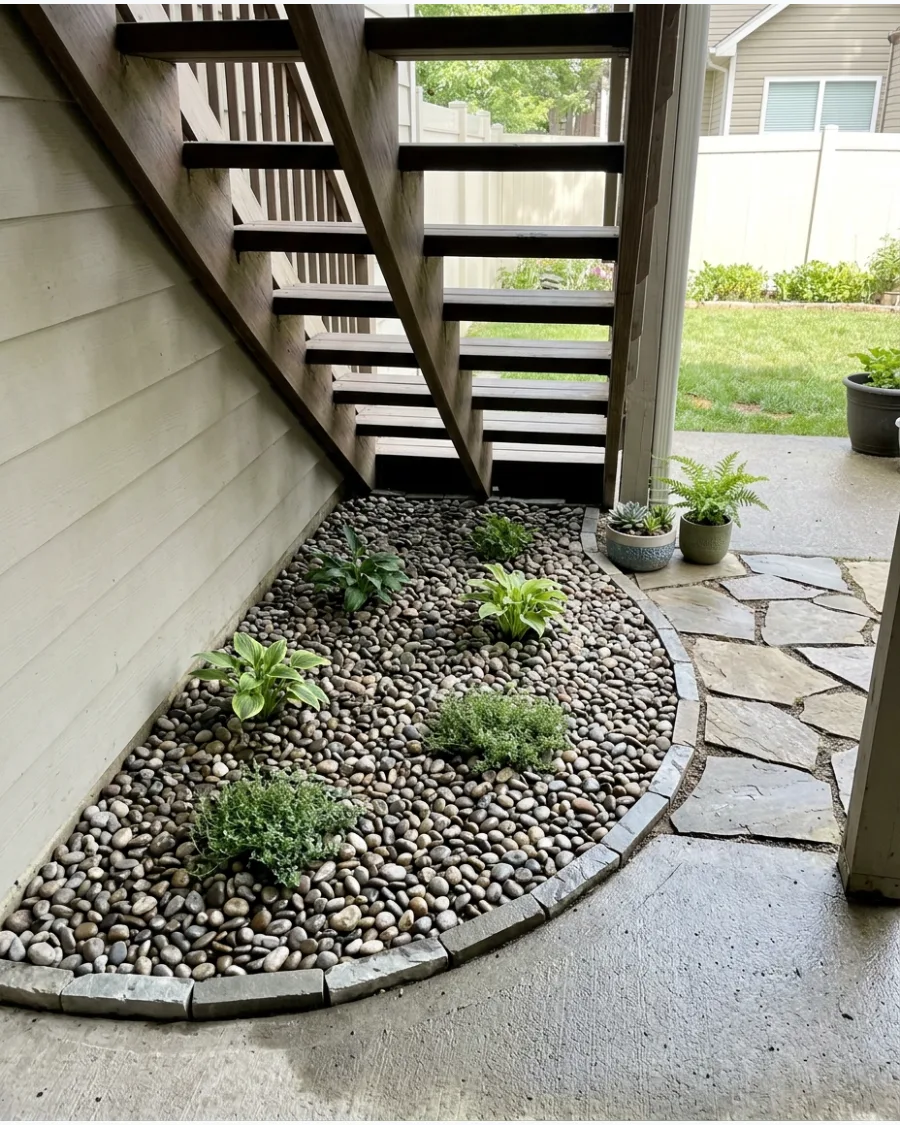
Instead of filling the whole rectangular space, create a gentle curve with the pebble bed for a more artistic look.
This leaves part of the floor visible, which can make the garden feel like a deliberate piece of art rather than a storage solution. Use flexible landscape edging to create a crisp, clean border between the stones and the floor. The curve adds visual interest and softens the sharp angles of the staircase.
- Sourcing: Flexible plastic or metal garden edging works perfectly for creating the curve.
- Setup: Draw the curve on the floor with painter's tape first to get the shape right before installing.
- Adaptation: Fill the curved area with plants and use the remaining flat floor for a single decorative vase.
Quick win: Align the peak of the curve with the highest part of the stairs for the best visual balance.
LUSH INDOOR GARDENS UNDER STAIRS
11. Tropical Garden Under Stairs
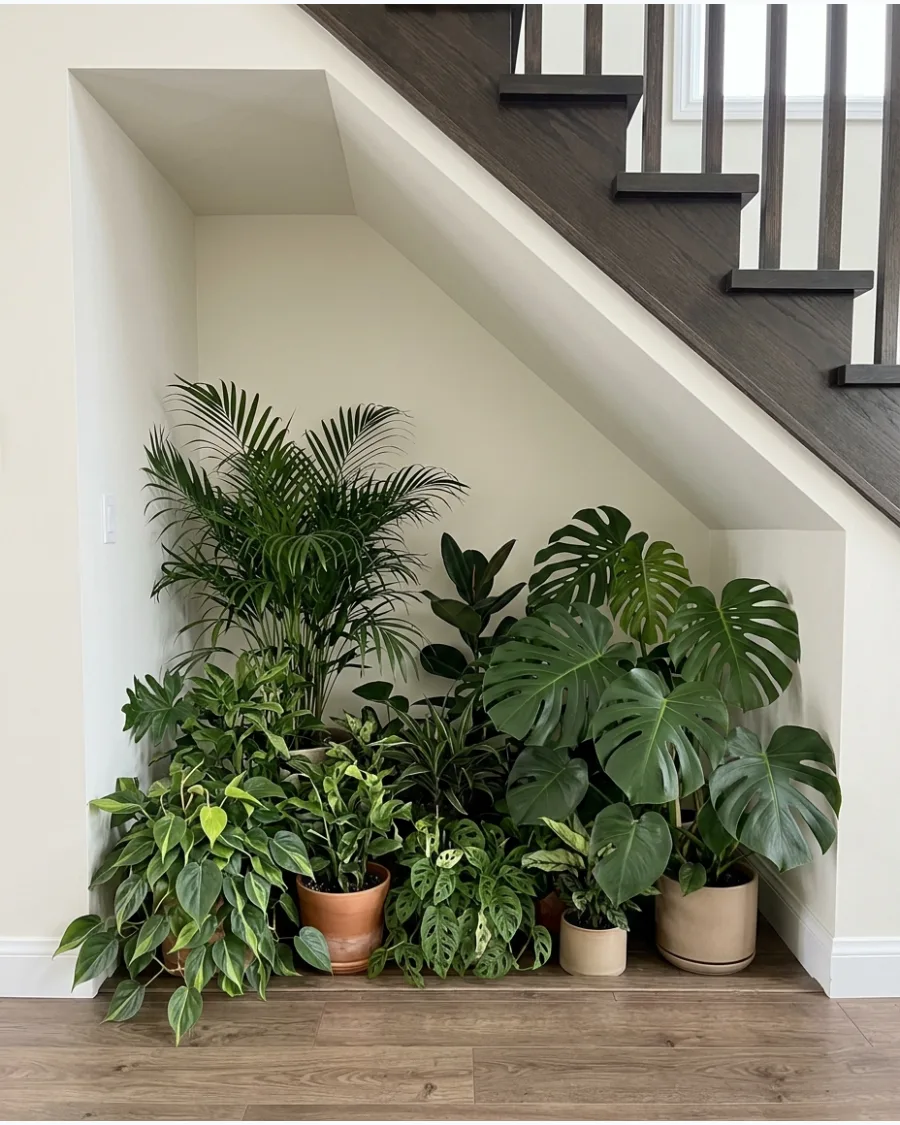
Use broad leaves like Monstera and palms to fill the vertical space beneath the treads. Group plants with different leaf shapes to make the small corner feel like a dense, layered jungle. Large leaves help hide the back wall and soften the sharp architectural angles of the staircase.
- Sourcing from local nurseries or garden centers for a total of $150-$300.
- Place the tallest plant at the highest point of the stair slope to maximize vertical space.
- Use a moisture meter to check soil levels deep in the large pots before watering.
Quick win: Use a rolling plant stand for heavy pots to make cleaning the floor under the stairs much easier.
12. Fern Garden Under Stairs
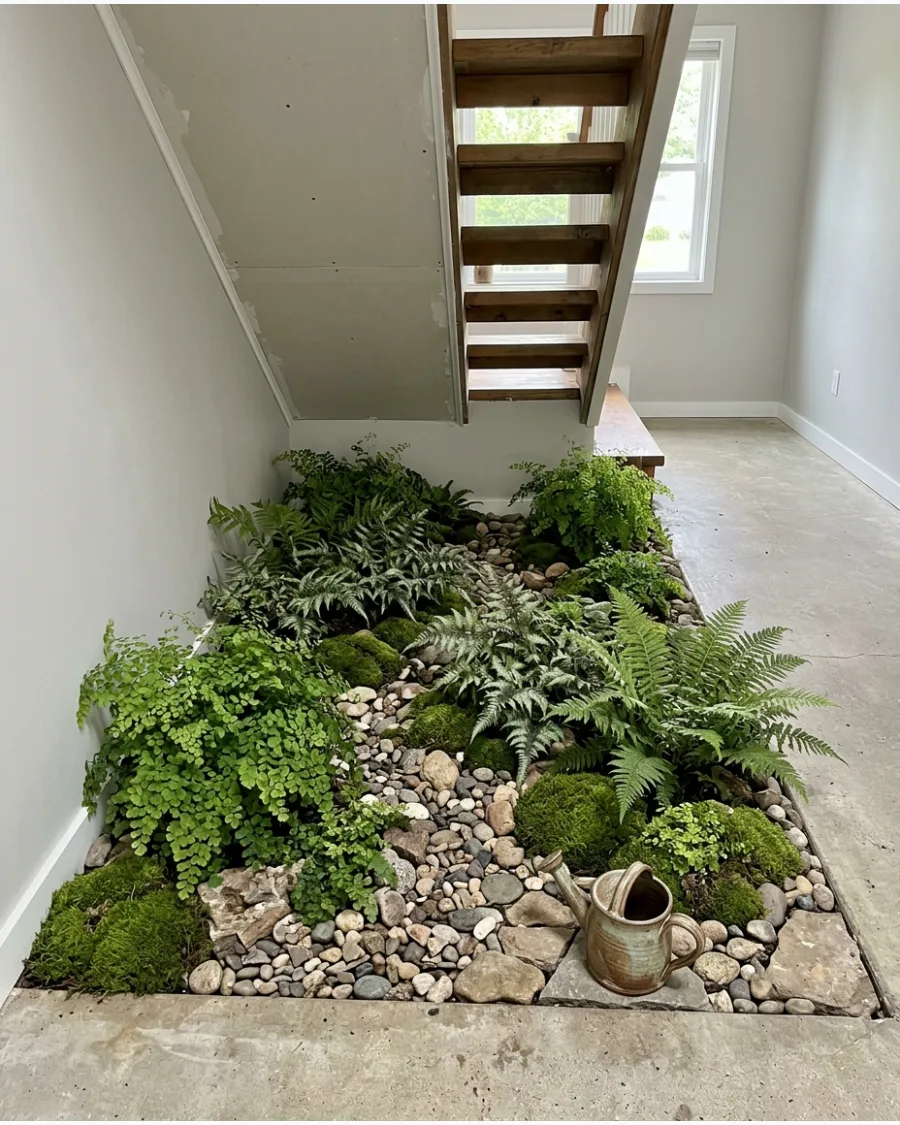
Ferns love the shaded and cooler environment often found tucked away in an entryway or hallway. Mix classic Boston ferns with delicate Maidenhair varieties to create a textured woodland look. Adding a few natural river stones around the base of the pots completes the forest floor vibe.
- Budget-friendly plants typically ranging from $10 to $25 each.
- Keep ferns away from direct HVAC vents to prevent the delicate leaves from browning.
- Grouping ferns together helps maintain the high humidity levels these plants crave.
Best shortcut: Place a small, hidden tray of water and pebbles nearby to keep the air humid for the ferns.
13. Monstera Garden Under Stairs
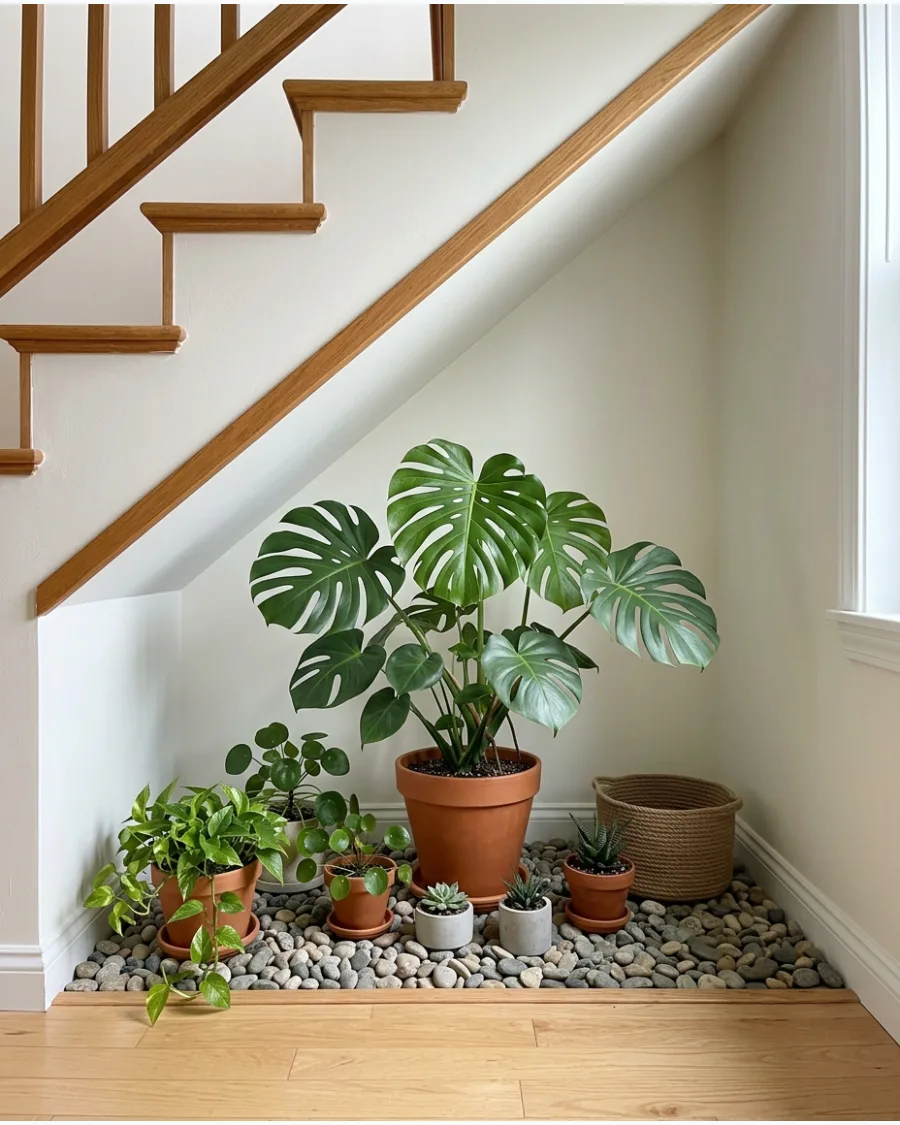
A single, large Monstera makes a massive visual impact without cluttering the floor space. Train the vines to grow along the underside of the stairs using small, clear adhesive clips for a custom fit. Surround the main pot with small river stones to ground the design and hide the drainage tray.
- High-impact focal point that usually costs under $100 for a mature plant.
- Ensure the pot has a deep drainage saucer to protect the flooring from water damage.
- Wipe the large leaves with a damp cloth monthly to keep them shiny and dust-free.
Most people skip this: Rotate the pot every two weeks so the plant grows evenly toward the nearest light source.
14. Snake Plant Garden Under Stairs
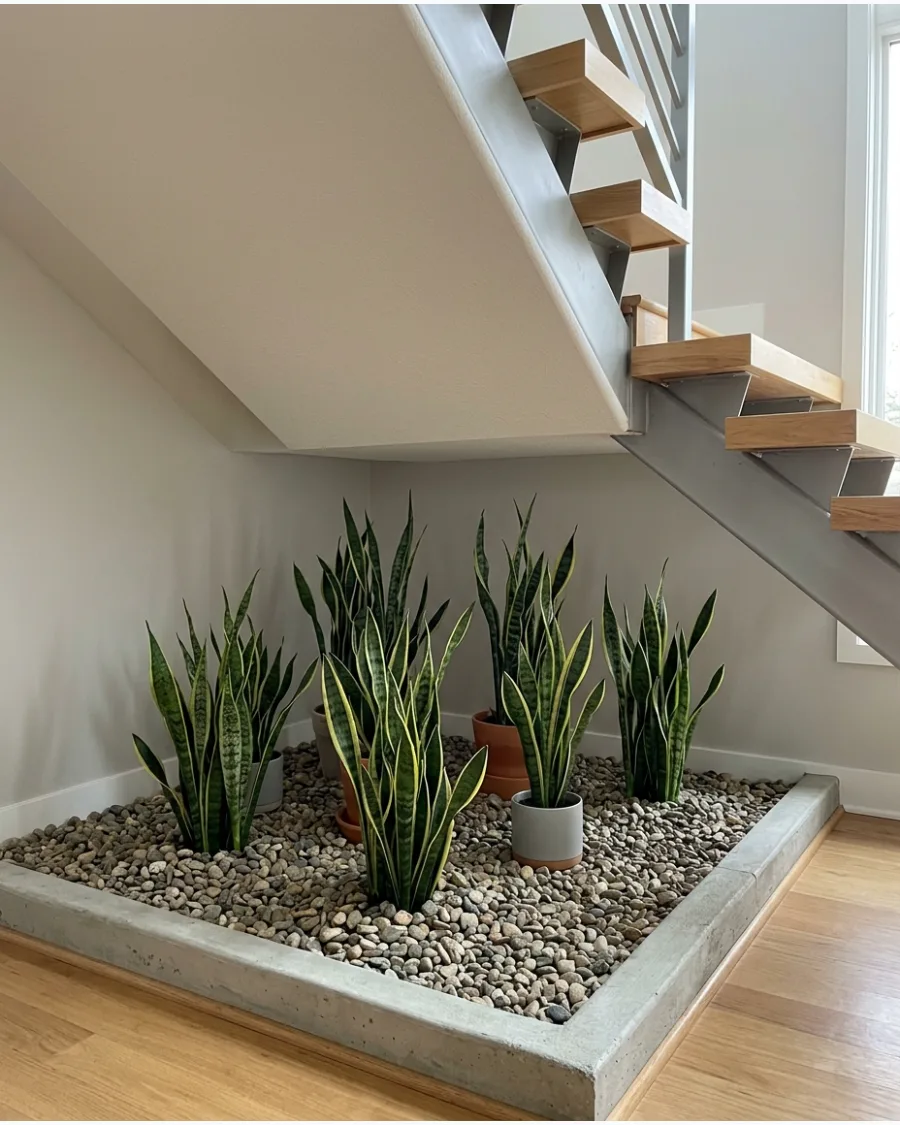
Snake plants are the ultimate choice for modern, low-maintenance indoor gardens. Vary the heights of the pots to mimic a natural skyline and add visual depth to the corner. These plants are nearly impossible to kill and thrive in the low-light conditions common under stairs.
- Low maintenance and budget-friendly at $15-$40 per plant.
- Space the pots at least six inches apart to allow for proper airflow between the leaves.
- Use a well-draining cactus soil mix to prevent root rot in these hardy succulents.
Quick win: Use the Sansevieria Laurentii variety for yellow-edged leaves that brighten up dark corners.
15. Calathea and Fern Under-Stair Garden
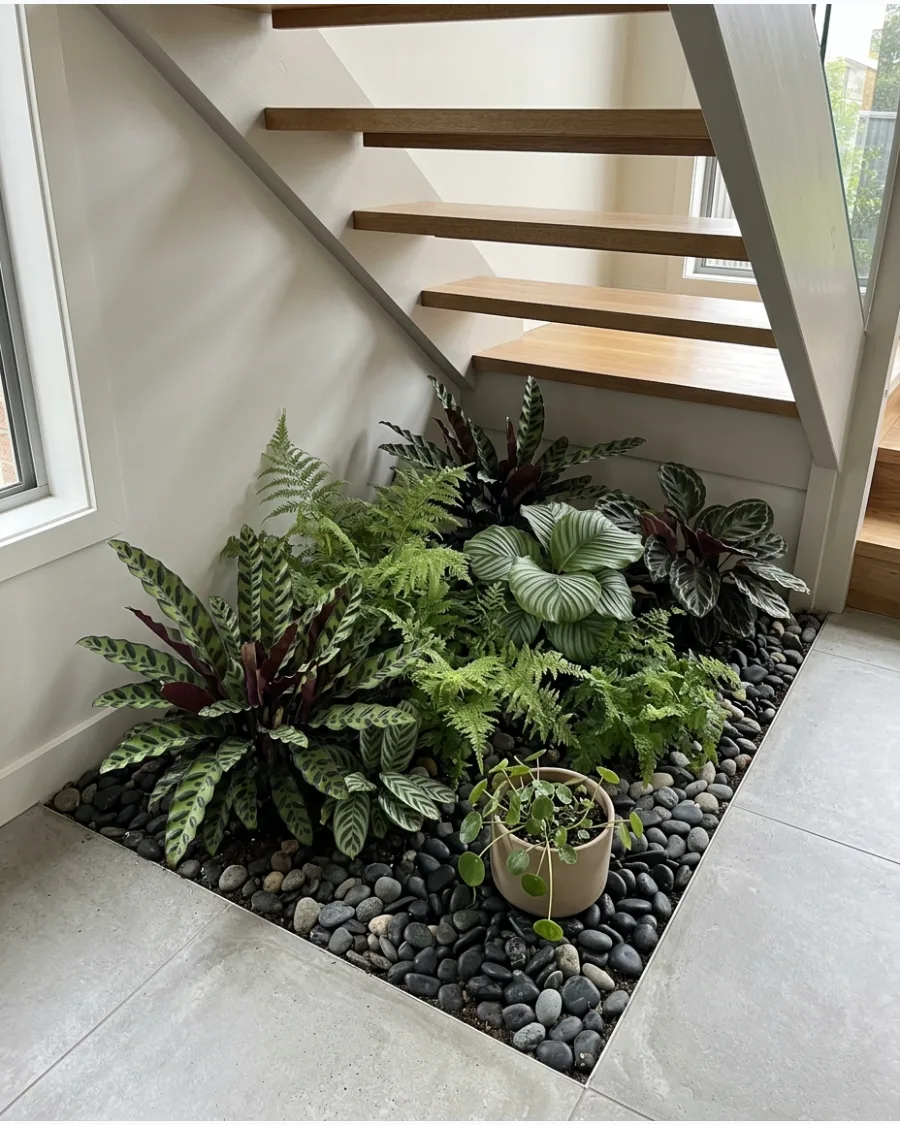
Combine the bold, painted patterns of Calathea leaves with the soft and airy texture of ferns. Place the Calatheas in the foreground to show off their colorful foliage against the solid green fern backdrop. This mix looks expensive and intentional without requiring a full structural renovation.
- Mid-range budget of $60-$120 for a full, layered look.
- Use distilled water or rainwater for Calatheas to prevent the edges of the leaves from turning brown.
- Pick pots with a similar finish or color to keep the busy foliage looking cohesive.
Best shortcut: Use a small plant light on a timer if the area gets zero natural sunlight during the day.
16. Indoor Rainforest Under Stairs
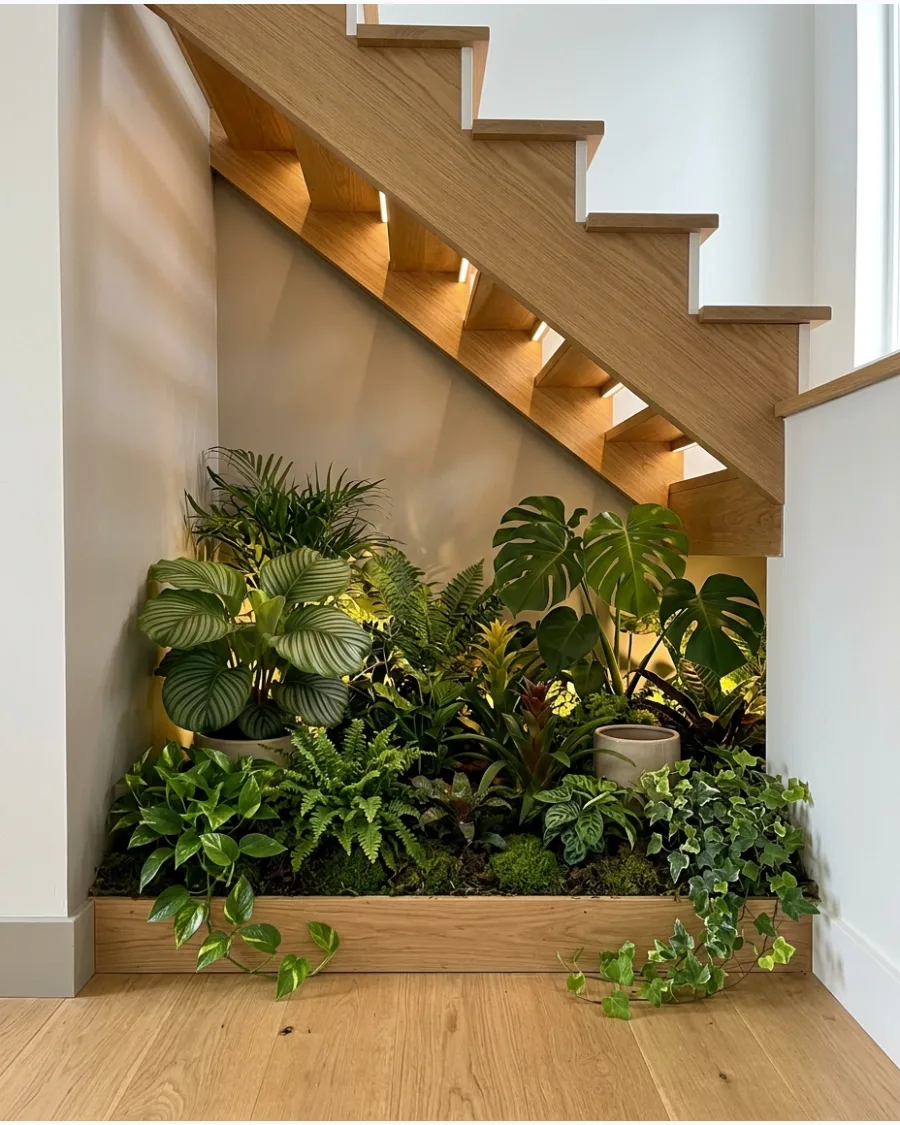
Create a miniature ecosystem by layering trailing vines, broad leaves, and patches of moss. Tuck warm LED strip lights behind the pots to create a soft glow that highlights the leaf textures at night. This setup turns a dark dead zone into a lush, glowing sanctuary in the middle of the home.
- Comprehensive project taking about 2-4 hours to set up and arrange.
- Use a heavy-duty plastic liner under the garden bed to protect the floor from moisture.
- Clean the light bulbs or strips regularly as dust will reduce the brightness over time.
Most people skip this: Hidden lights should point upward to make the low staircase ceiling feel taller and more open.
17. Low-Light Plant Garden Under Stairs
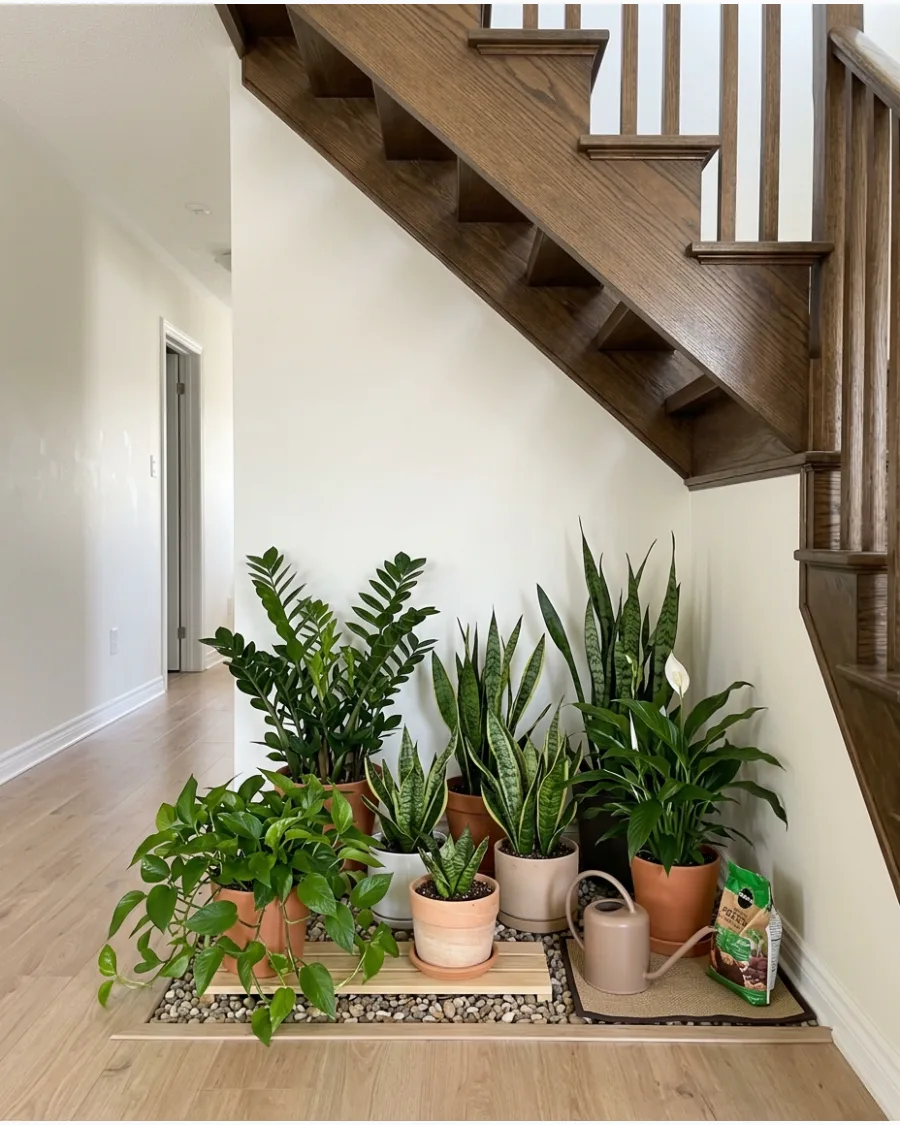
Many staircases are located in hallways with very little natural light. Stick to tough plants like ZZ plants and Peace Lilies that don't mind staying in the shade. These varieties stay green and vibrant even in the dimmest parts of the house where other plants might struggle.
- Budget-friendly and widely available at most stores for under $50.
- Water these plants only when the top two inches of soil are completely dry to the touch.
- Choose white or light-colored pots to help reflect what little light is available in the space.
Quick win: Use a glossy pot finish to bounce light into the darkest corners of the under-stair garden.
18. Statement Palm Garden Under Stairs
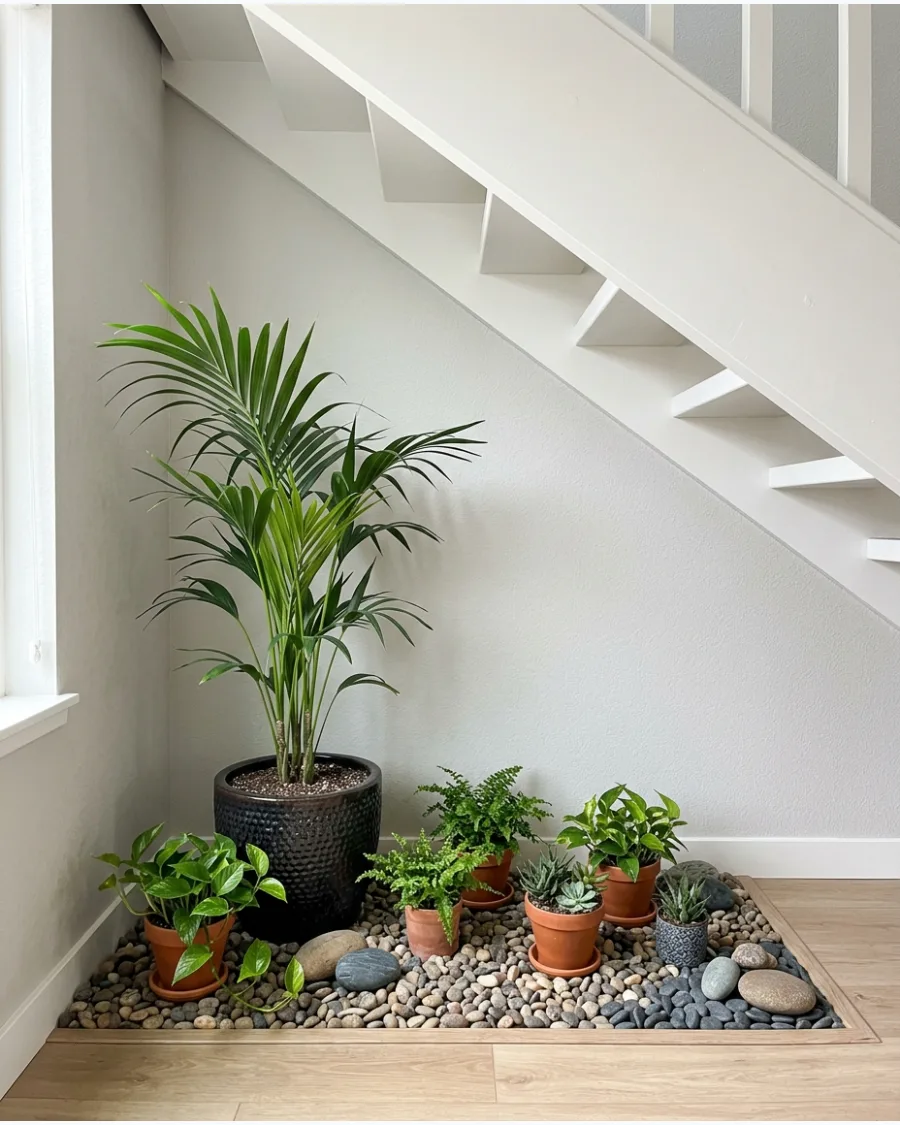
A single Palm tree can fill the tallest part of the under-stair slope perfectly. Underplant the palm with small succulents or decorative glass beads to hide the bare soil in the pot. This creates a clean, architectural look that fits well in minimalist or modern homes.
- One-time investment of $50-$100 for a large, established palm.
- Check the ceiling height before buying to ensure the palm fronds have room to spread.
- Palms need consistent moisture but should never sit in stagnant, standing water.
Best shortcut: Buy a palm that is already the height of your space so you don't have to wait years for it to grow.
19. Layered Greenery Garden Under Stairs
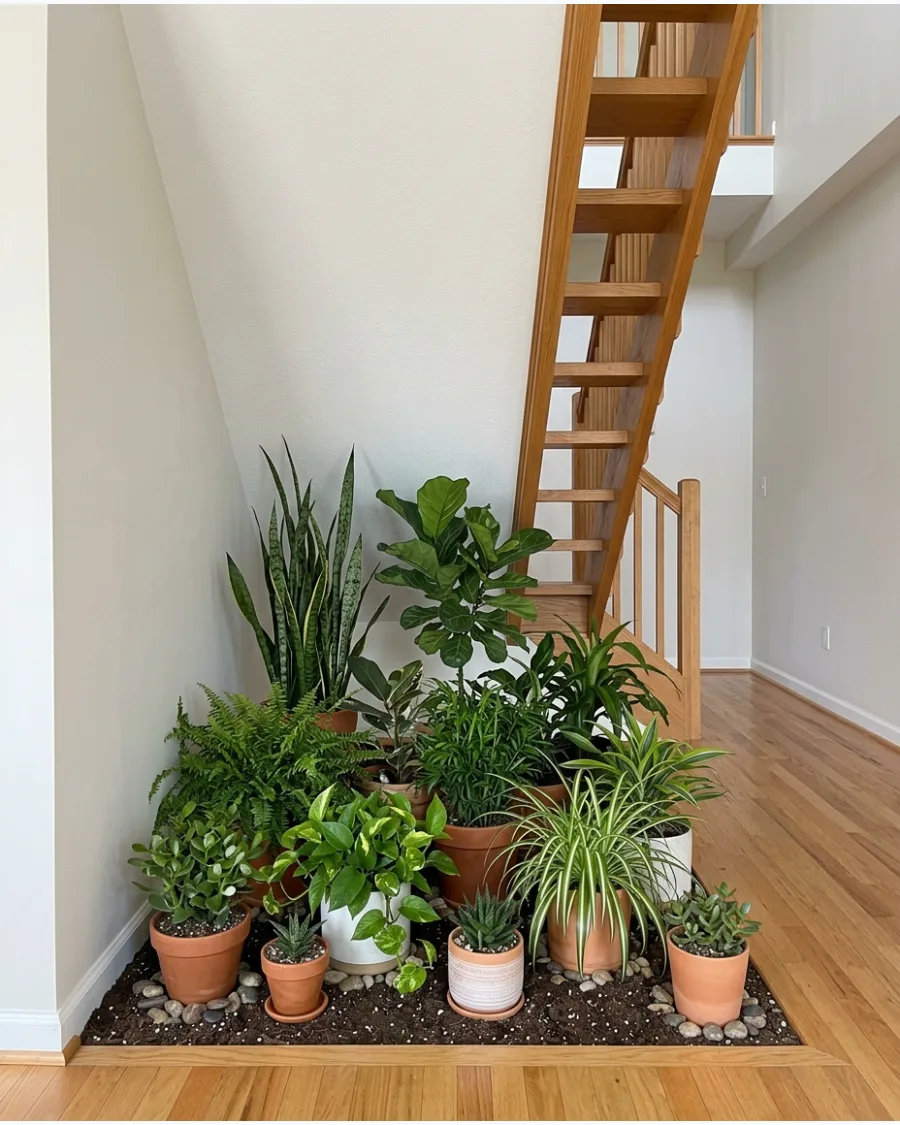
Use the natural slope of the stairs to your advantage by staggering plant heights. Place tall Dracaenas in the back and small Ivy or Pothos in the front to create a stadium seating effect. This technique makes a shallow space look much deeper and more lush than it actually is.
- Mix and match common plants for a varied, professional look for under $150.
- Use hidden plant stands or bricks to lift shorter pots in the back rows.
- Ensure every plant is visible from the main walking path to maximize the garden's impact.
Most people skip this: Place the thirstiest plants in the front where they are easiest to reach with a watering can.
20. Indoor Garden With Ground-Cover Greenery
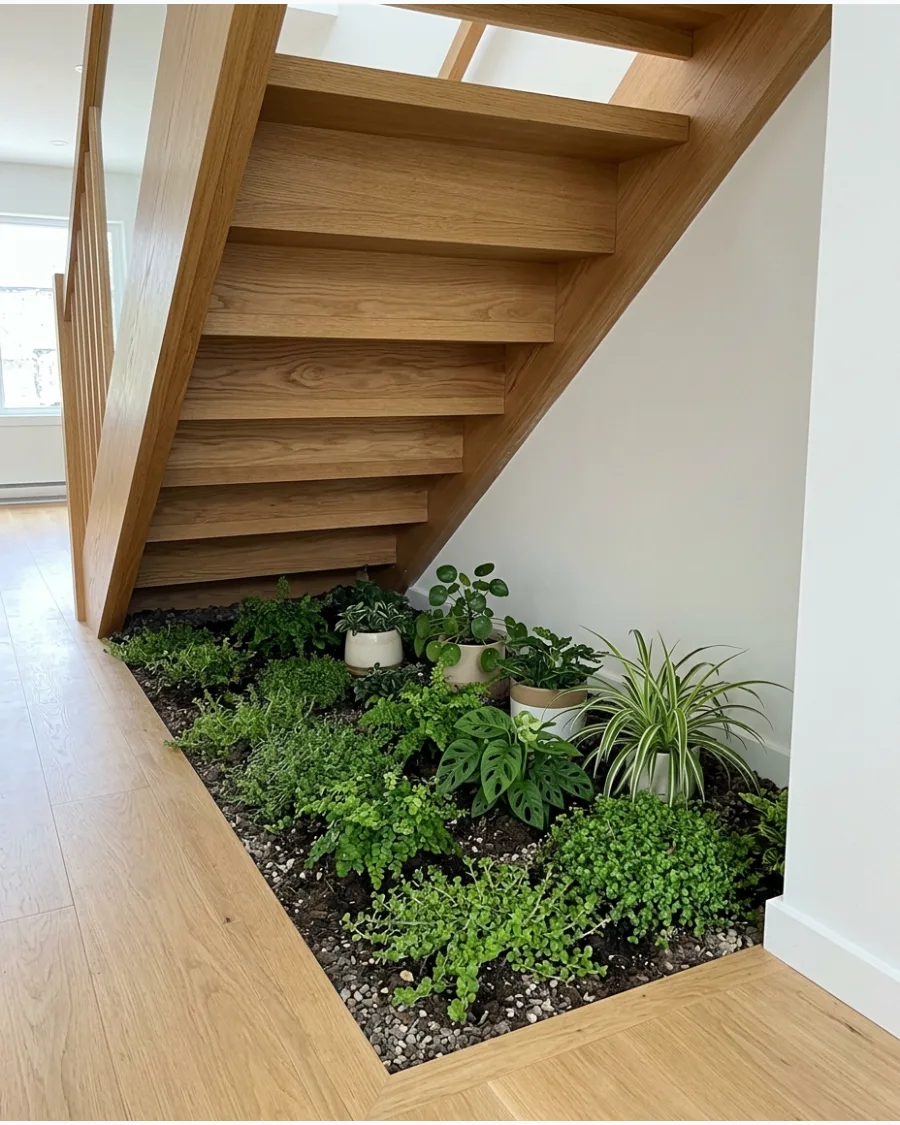
Instead of seeing dirt or individual pots, use low-growing plants to create a carpet of green. Creeping Fig or Baby’s Tears can grow over the edges of pots to hide the mechanics of the garden. This gives the area a built-in look that feels like a permanent landscape feature.
- Affordable ground cover starts at roughly $5 per small starter pot.
- Use a large tray or pond liner to contain the spreading plants and protect your floor.
- Prune the edges of the ground cover once a month to keep the walkway clear.
Quick win: Use preserved sheet moss for an instant green carpet that requires zero watering or maintenance.
MODERN UNDER-STAIR GARDENS
21. Organic Modern Garden Under Stairs
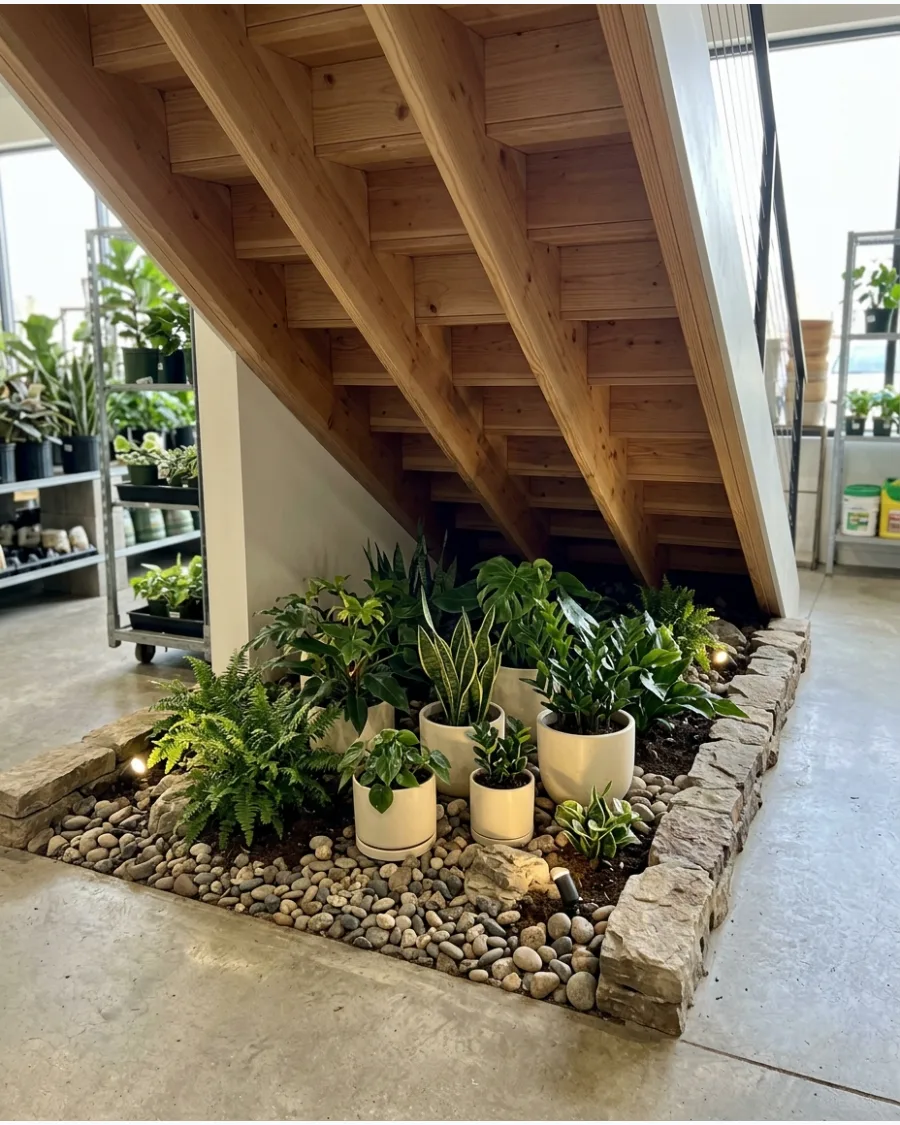
This style blends natural textures like wood and stone to create a soft, contemporary look. Use cream-colored ceramic pots to keep the palette light and airy.
Add a layer of smooth river stones around the base of the pots to hide plastic nursery liners. It makes the transition from the floor to the garden feel intentional and permanent.
- Sourcing: Budget $150 to $300 for high-quality ceramic pots and bulk stones.
- Setup: Plan for two hours to wash the stones and arrange the pots for the best height balance.
- Adaptation: Use lightweight faux stones if the garden is located on an upper-floor landing.
Quick win: Mix different sizes of stones for a more natural, less store-bought appearance.
22. Modern Black Planter Garden
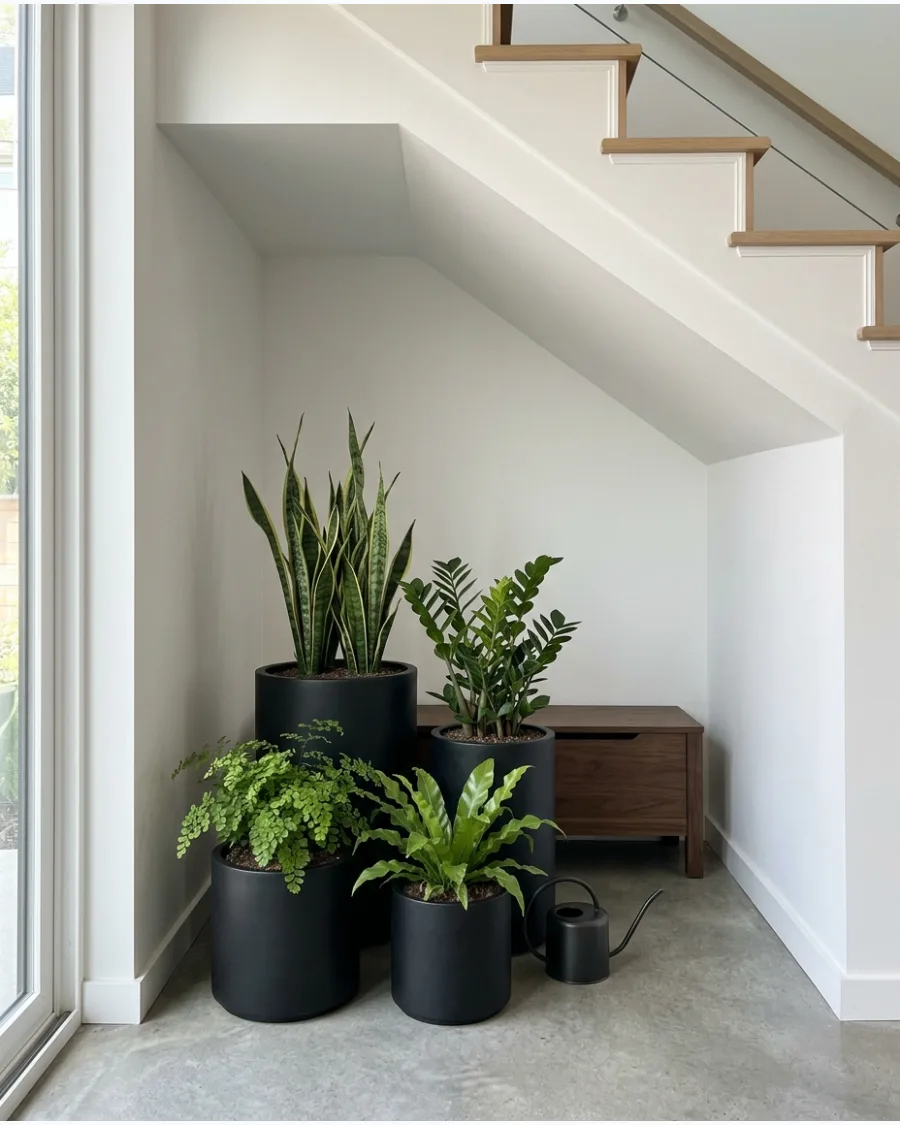
Matte black containers provide a sharp contrast against white walls and green leaves. Grouping different heights creates a skyline effect that fills the vertical space under the treads.
Stick to plants with strong architectural lines like Sansevieria to match the bold pots. This setup looks expensive but is very easy to maintain.
- Sourcing: Find matte black resin or ceramic pots at most home improvement stores.
- Setup: Arrange the tallest pots in the back where the staircase clearance is highest.
- Adaptation: Use plastic matte pots for a lightweight, renter-friendly version that is easy to move.
Best shortcut: Wipe black pots with a damp microfiber cloth once a week to prevent visible dust buildup.
23. White Planter Garden Under Stairs
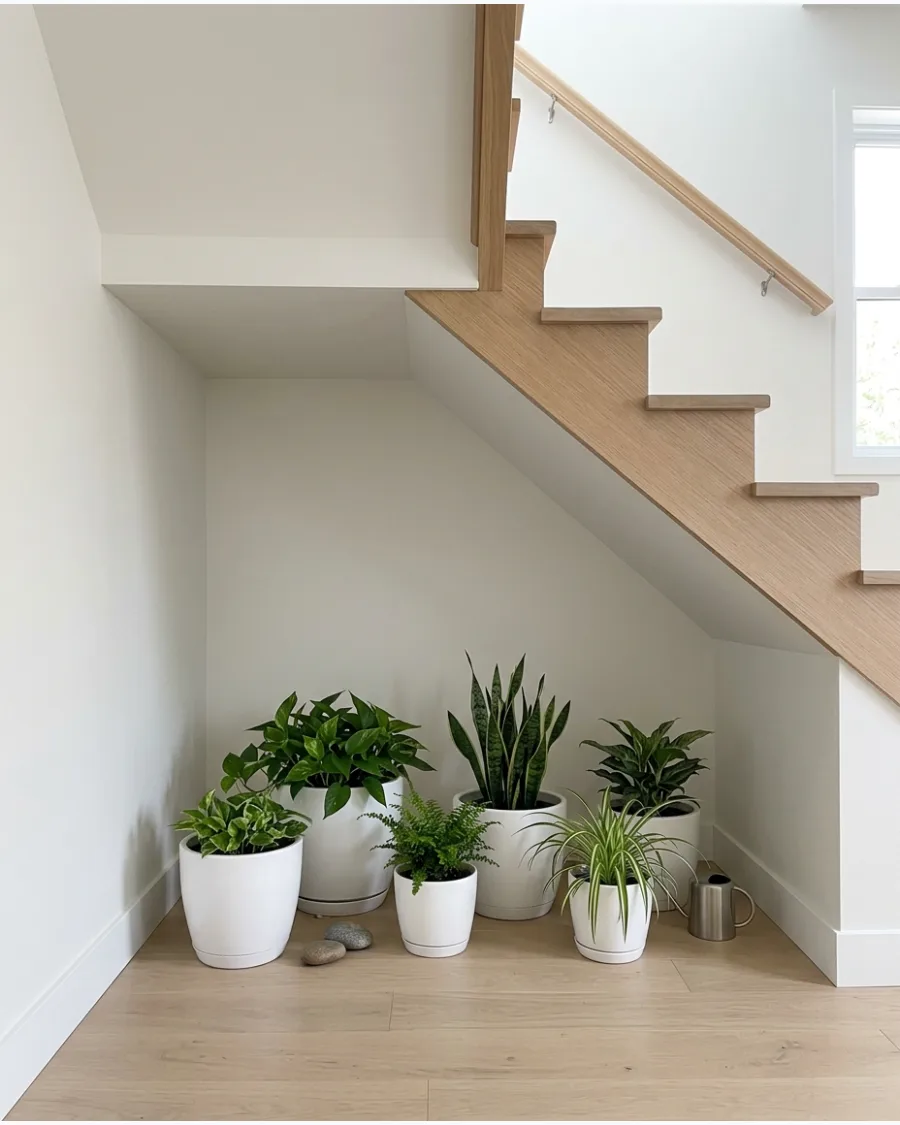
Matching white pots make a dark corner feel much larger and cleaner. This monochromatic base lets the vibrant greens of the foliage become the main focus.
Choose pots with a glossy finish to reflect any available light back into the room. It is a foolproof way to brighten a windowless hallway or entryway.
- Sourcing: $40 to $80 per pot depending on the size and material.
- Setup: Place the largest pot in the deepest part of the nook to anchor the arrangement.
- Adaptation: Swap for matte white if you want a more subtle, Scandi-style look.
Most people skip this: Use white saucers that fit perfectly under the pots to catch water without ruining the clean look.
24. Concrete Planter Garden Under Stairs
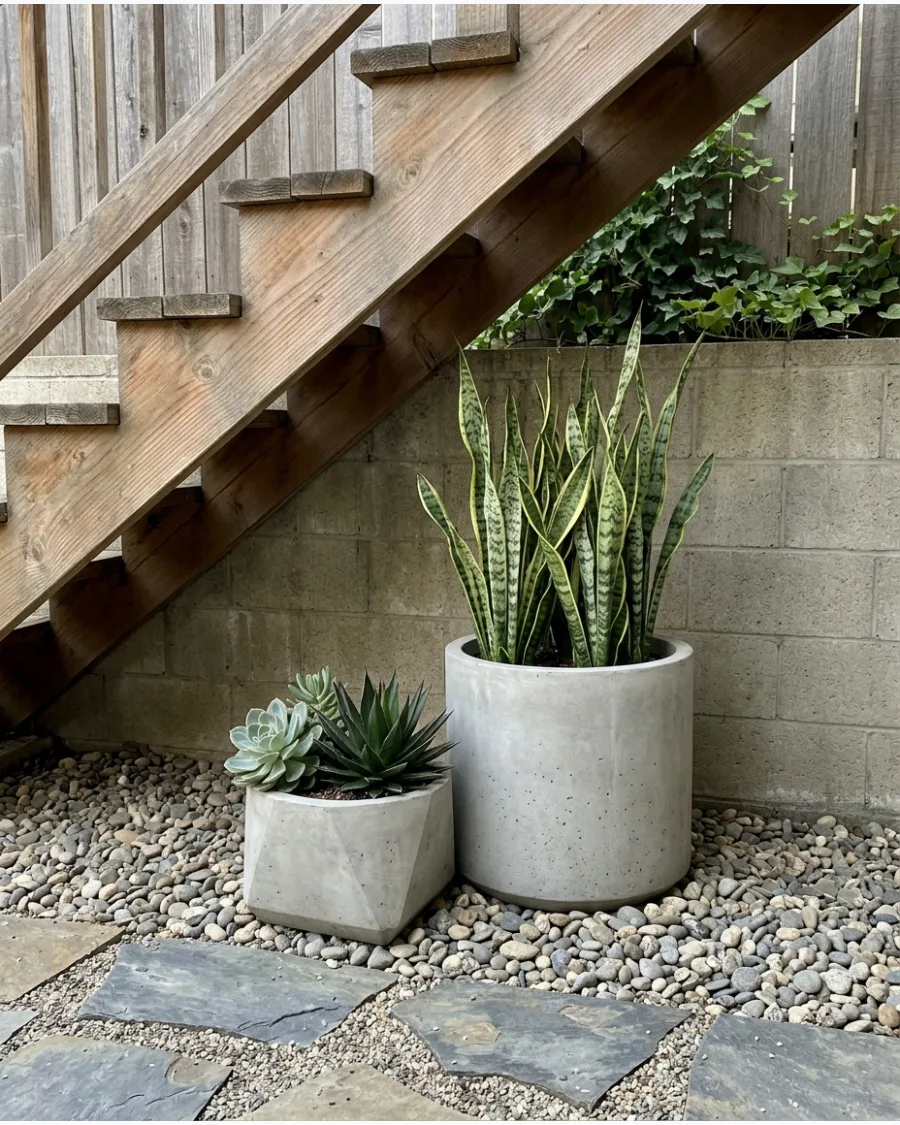
Raw concrete brings an industrial edge that pairs beautifully with minimalist architecture. The heavy weight of these pots provides stability for taller, top-heavy plants.
Fill the gaps between the pots with coarse grey gravel to create a unified foundation. It looks like a custom-built landscape feature rather than a collection of pots.
- Sourcing: Moderate to high cost due to shipping weight; check local garden centers first.
- Setup: Place heavy pots in their final position before filling them with soil.
- Adaptation: Use fiberstone pots for the look of concrete with half the weight.
Quick win: Seal the concrete pots before planting to prevent moisture from seeping through and staining the floor.
25. Built-In Planter Under Staircase
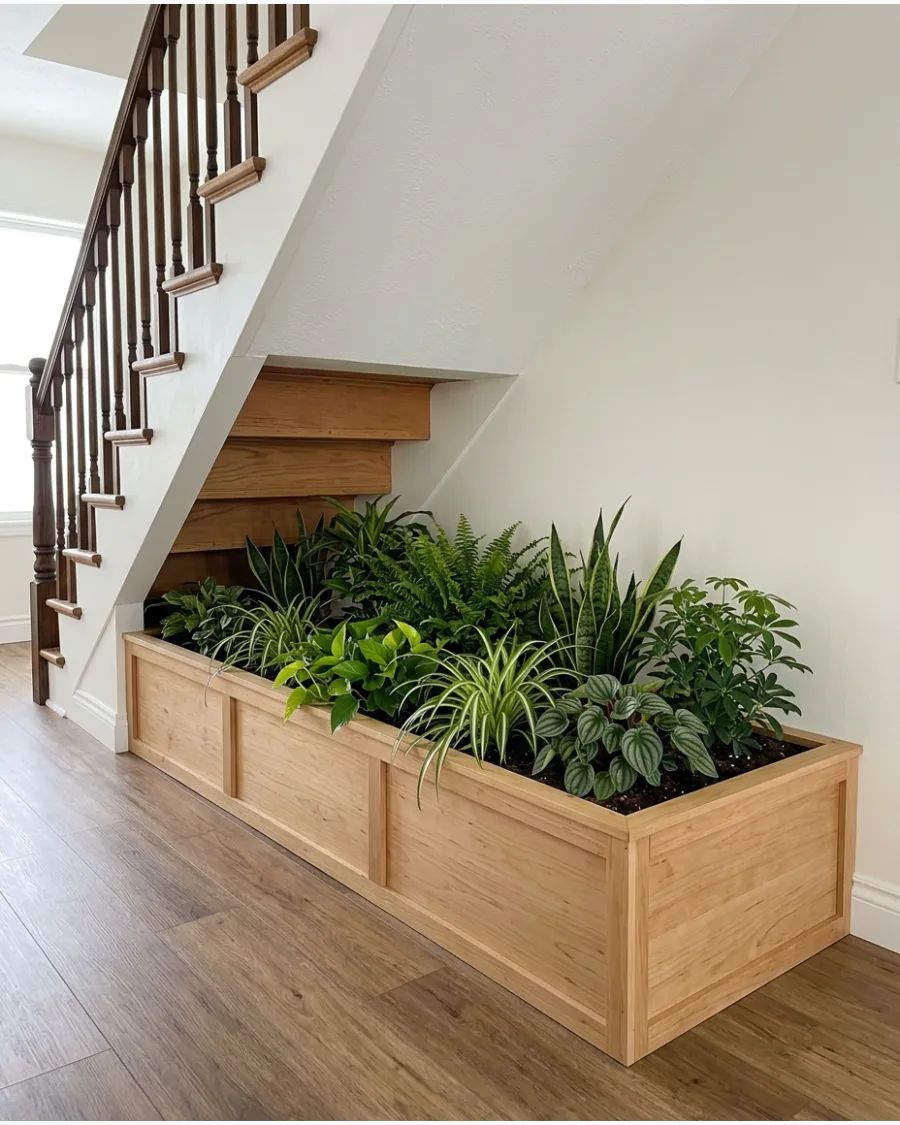
A custom-built planter box creates a seamless look that follows the exact angle of your stairs. This approach maximizes every inch of the floor space for a lush, dense garden.
Line the interior of the wooden box with a heavy-duty pond liner to protect the floor from moisture. It transforms a dead corner into a high-end architectural detail.
- Sourcing: Budget $100 for lumber, waterproof liner, and basic fasteners.
- Setup: Requires basic carpentry skills and a drill to assemble the box on-site.
- Adaptation: Paint the box the same color as the wall to make it blend into the architecture.
Best shortcut: Build the box around existing plastic pots so you can easily swap plants out if they struggle.
26. Floating Planter Garden Under Stairs
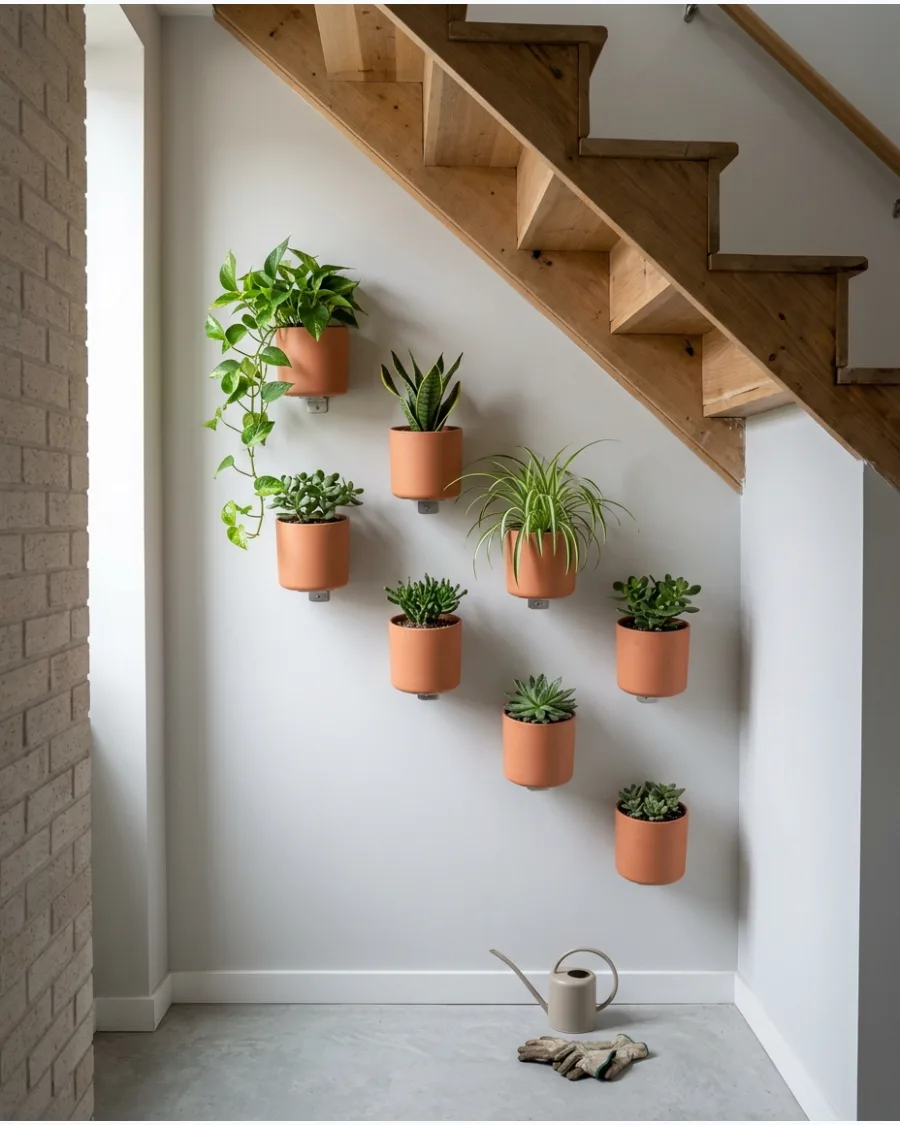
Mounting pots directly to the wall keeps the floor clear and makes cleaning much easier. This staggered arrangement uses the wall space effectively, especially where the ceiling height is low.
Use wall-mounted rings or brackets that match your hardware for a cohesive look. It creates a modern, vertical interest that feels light and airy.
- Sourcing: Very budget-friendly; rings usually cost under $15 each.
- Setup: Use heavy-duty wall anchors to support the weight of wet soil and pots.
- Adaptation: Use magnetic planters if the staircase has a metal frame or side panel.
Most people skip this: Leave an inch of space between the pot and the wall to prevent moisture from trapping against the paint.
27. Wood Slat and Plant Garden Under Stairs
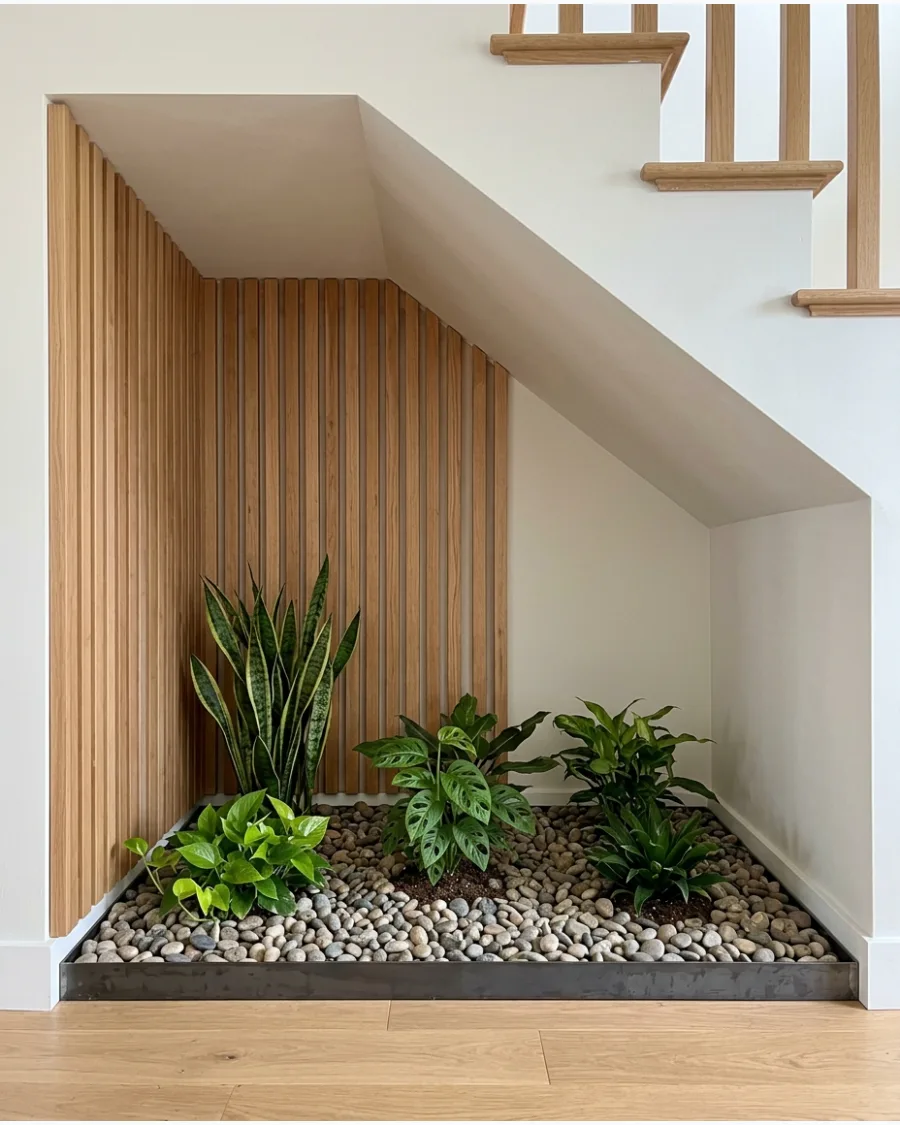
Installing vertical wood slats creates a warm, textured backdrop for your indoor greenery. This adds a designer touch that makes the garden feel like a permanent room feature.
Space the slats about an inch apart to allow for airflow and a sense of depth. Pair this with a simple bed of white stones for a clean, professional finish.
- Sourcing: $150 for wood and mounting hardware at a local lumber yard.
- Setup: Cut slats to match the specific angle of the staircase treads for a custom fit.
- Adaptation: Use peel-and-stick wood planks for a renter-friendly version that is easy to remove.
Quick win: Stain the slats before you mount them to the wall to avoid getting drips on your paint.
28. Monochromatic Green Under-Stair Garden
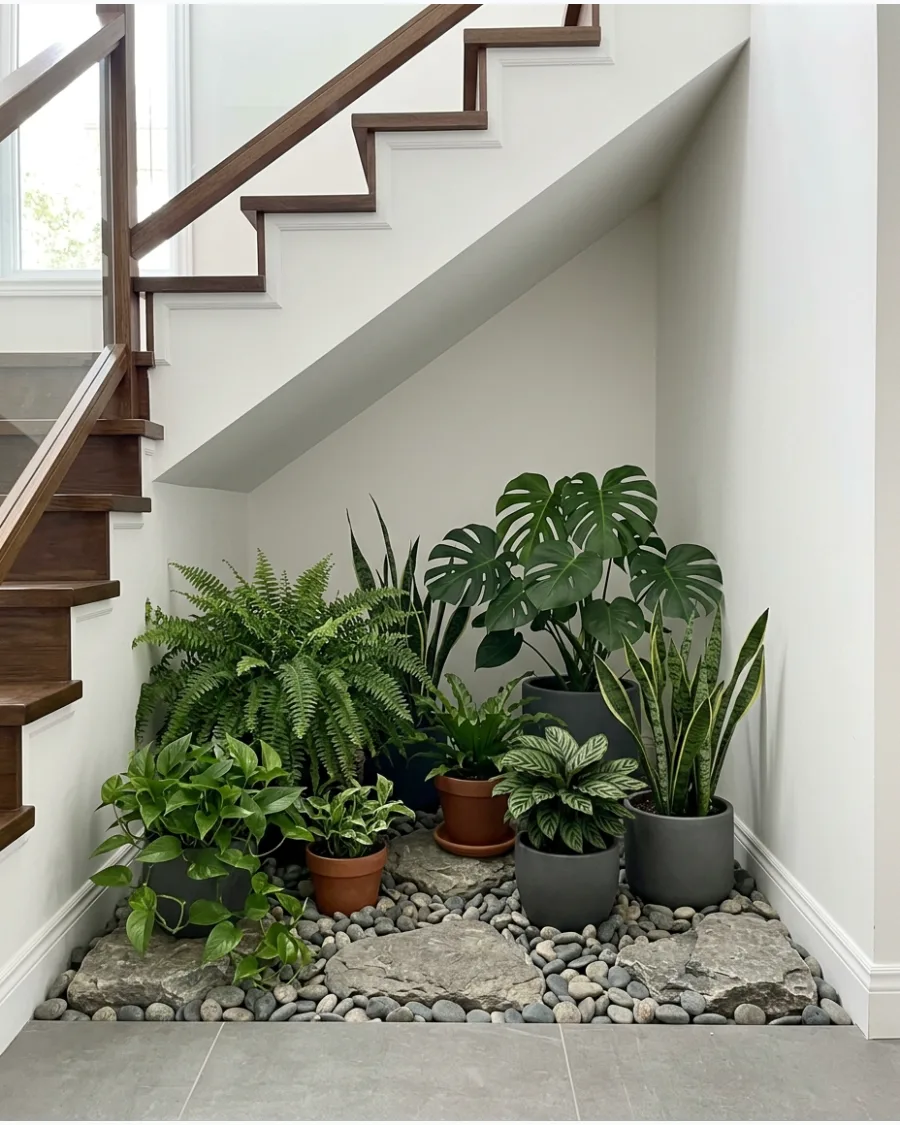
Focus on a single color palette to create a calm and sophisticated garden area. By using different leaf shapes and textures, you keep the space interesting without it feeling cluttered.
Mix broad-leaf plants like Aspidistra with fine-textured plants like Asparagus Fern. This strategy works best in minimalist homes where you want a pop of life.
- Sourcing: Easy to find at any local nursery or big-box garden center.
- Setup: Group plants with similar water and light needs together for easier care.
- Adaptation: Use different shades of green like lime and emerald for more visual contrast.
Best shortcut: Use a leaf shine spray on broad leaves to make the monochromatic greens look more vibrant.
29. Modern Garden With Sculptural Lighting
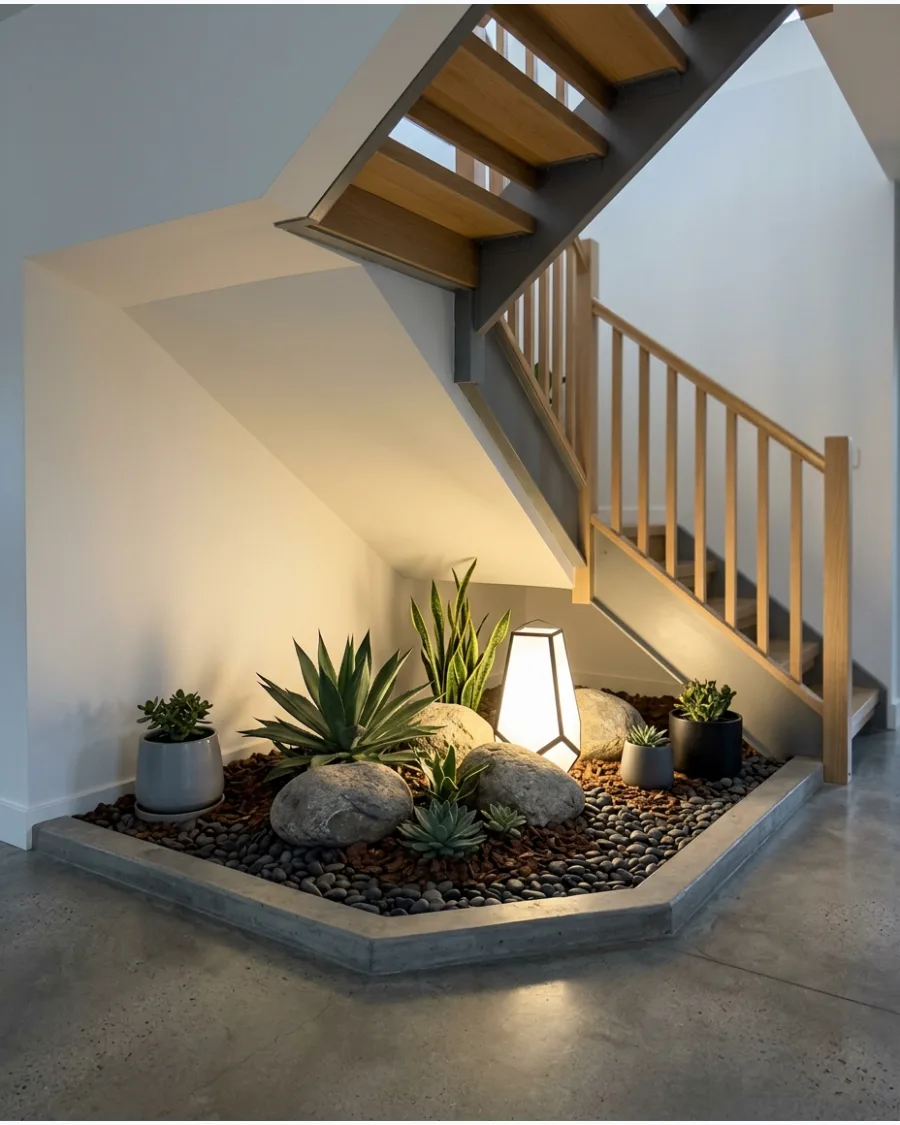
Good lighting turns a simple plant corner into a dramatic focal point at night. Concealing small LED uplights behind your pots creates beautiful shadows on the walls and ceiling.
Position the lights at the base of your tallest plants to highlight their structure. This is the easiest way to make a small garden feel high-end.
- Sourcing: $30 to $60 for a set of LED puck lights or small spotlights.
- Setup: Use a timer so the lights turn on automatically at sunset every day.
- Adaptation: Use battery-powered lights if there isn't a nearby electrical outlet.
Quick win: Use warm white bulbs (2700K) instead of cool white to keep the space feeling inviting.
30. Minimal Plant Gallery Under Stairs
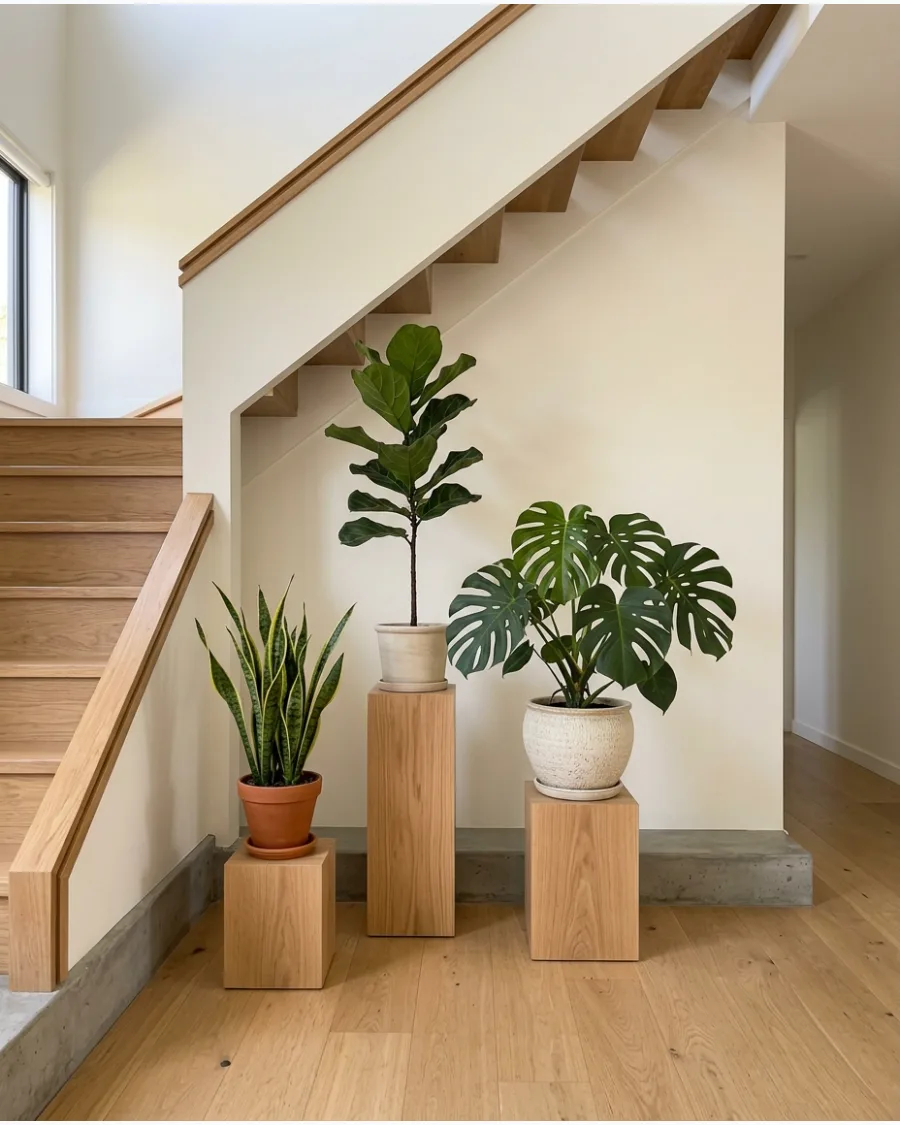
Instead of a crowded garden, treat each plant like a piece of art on a pedestal.
This approach highlights the beauty of individual plants and keeps the area feeling open. Use plant stands of different heights to create a sense of movement. It is perfect for smaller spaces where you don't want to overwhelm the entryway.
- Sourcing: $20 to $50 per stand depending on the height and material.
- Setup: Wipe the floor under the stands regularly to maintain the clean gallery look.
- Adaptation: Use wooden stools or ceramic stools for a warmer, more organic feel.
Most people skip this: Make sure the pot diameter is slightly smaller than the stand's top for a secure and balanced fit.
VERTICAL & SPACE-SAVING GARDENS
31. Vertical Living Wall Under Stairs
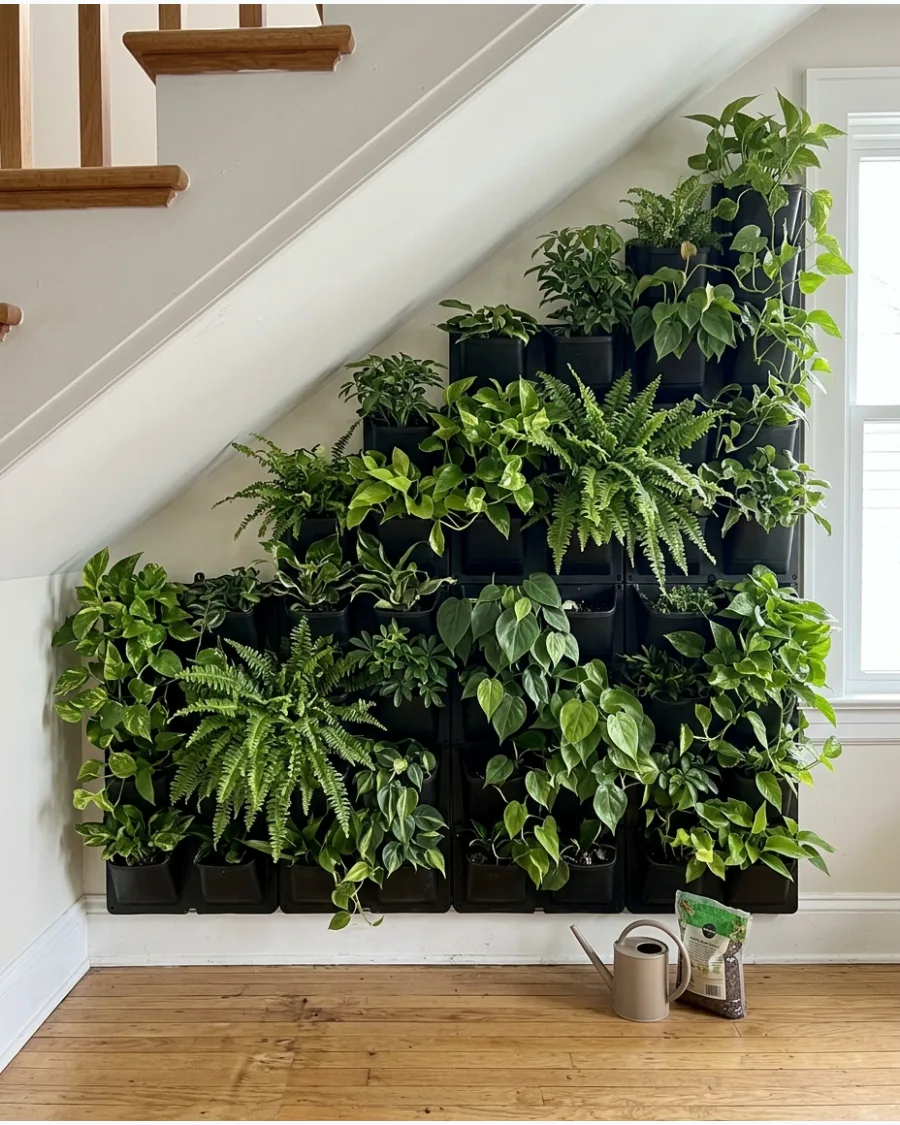
A modular living-wall system turns a blank wall into a lush tapestry of greenery. Use felt or plastic pocket systems to house a variety of low-light species like Pothos and Philodendrons.
Mount the modular system directly to the wall studs to support the weight of wet soil and plants. Living walls require a drip tray at the bottom to protect the flooring from excess moisture.
- Sourcing: Modular wall kits typically range from $30 to $80 at major garden centers.
- Setup: Secure the backing plate into wall studs and slide the plant pockets into place.
- Adaptation: Renters can use high-strength adhesive hooks if the system is lightweight and holds small air plants.
Quick win: Use a moisture-wicking felt system to ensure even watering across all plant pockets simultaneously.
32. Tiered Plant Stand Garden Under Stairs
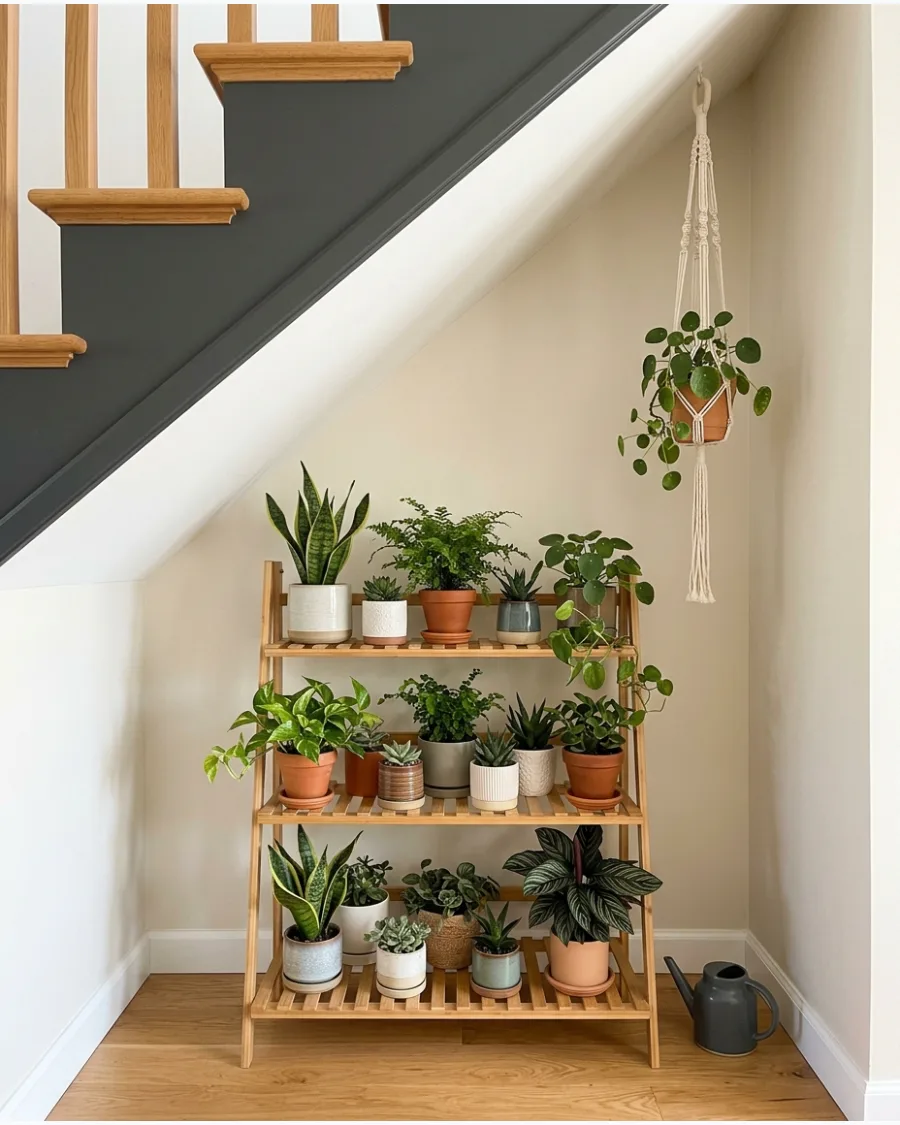
Multi-level stands allow for a dense collection of plants without cluttering the floor. This setup works perfectly in the tallest section of the under-stair nook where vertical clearance is highest.
Place the tallest plants on the top tier to draw the eye upward and utilize the height near the highest stair tread. Staggering the sizes of the pots prevents the stand from looking visually overwhelmed.
- Sourcing: Look for metal or bamboo tiered stands at home decor retailers.
- Setup: Ensure the stand is perfectly level to prevent heavy pots from tipping.
- Adaptation: Paint a wooden stand the same color as the staircase trim for a custom, built-in look.
Most people skip this: Rotate the entire stand every two weeks so all plants receive equal light from the nearest window.
33. Floating Plant Shelf Garden
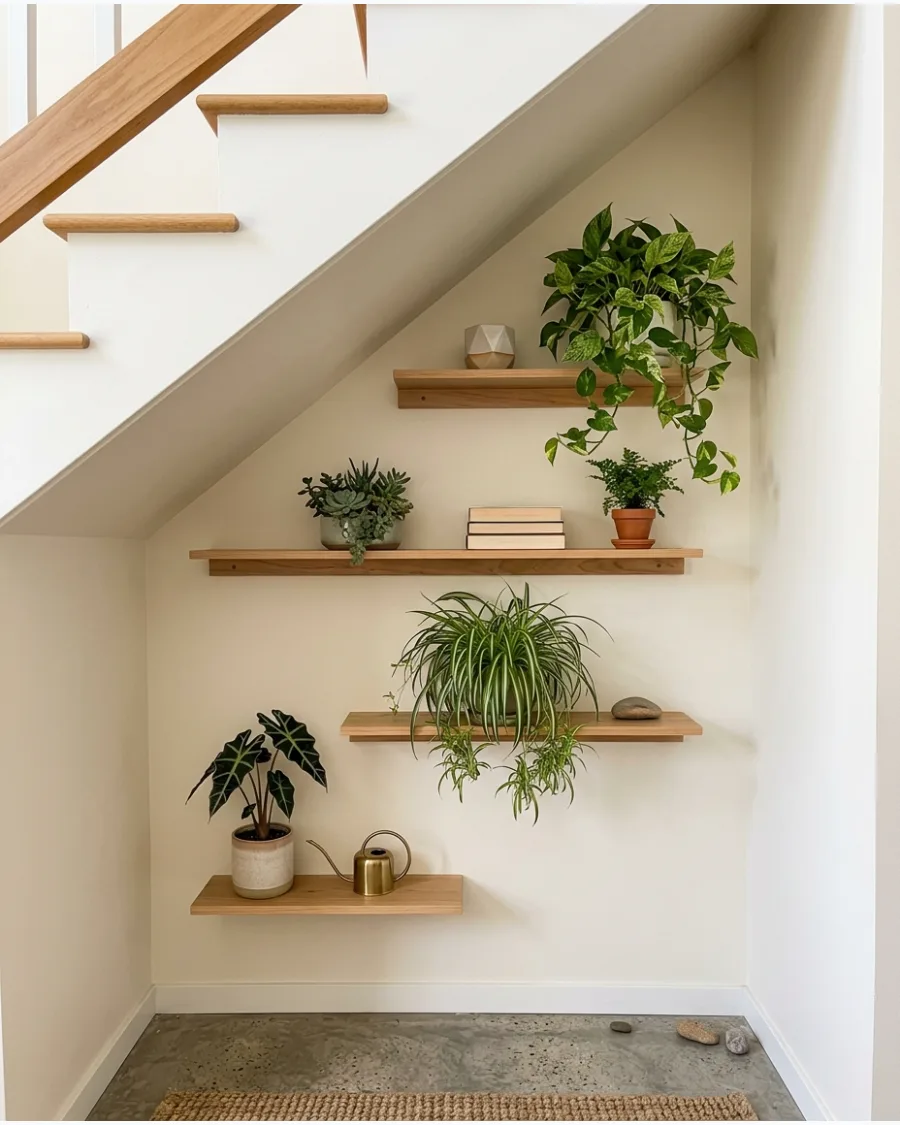
Floating shelves create a clean, modern look while following the natural diagonal line of the staircase. These shelves provide a stable surface for smaller decorative pots and trailing varieties that can spill over the edges.
Install floating shelves at different heights to mimic the staircase angle and provide plenty of room for trailing vines to spill over. Matching the shelf material to the stair treads makes the garden feel like part of the original architecture.
- Sourcing: Standard floating shelf kits are available at most hardware stores.
- Setup: Space shelves at least 12 inches apart to allow for plant growth and air circulation.
- Adaptation: Use clear acrylic shelves in dark corners to keep the space feeling open and light.
Best shortcut: Use a laser level to align the shelves perfectly with the angle of the stairs above.
34. Hanging Plant Garden Under Stairs
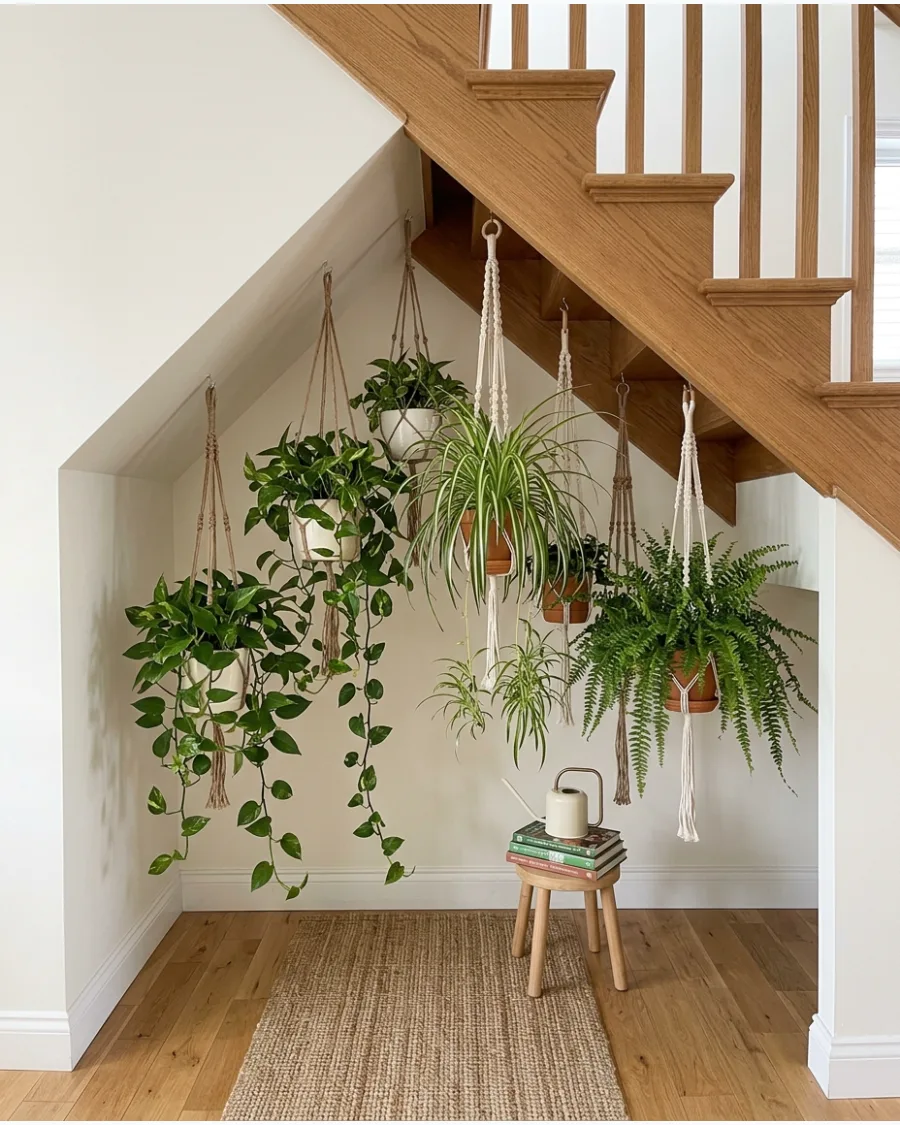
Suspending plants from the underside of the stairs utilizes the often-wasted "dead air" in the nook. Macrame hangers or sleek metal hooks allow cascading plants like English Ivy to create a curtain of green.
Use heavy-duty ceiling hooks rated for at least ten pounds to ensure the weight of watered pots doesn't pull them out of the treads. Hanging gardens are the most effective way to fill vertical space without occupying any floor area.
- Sourcing: Macrame hangers are affordable and widely available or can be made from cotton cord.
- Setup: Pre-drill pilot holes into the wood treads to prevent splitting when installing hooks.
- Adaptation: Use different cord colors or lengths to create a more eclectic, bohemian vibe.
Quick win: Choose lightweight plastic pots for hanging displays to reduce the strain on the hooks and staircase structure.
35. Climbing Vine Garden Under Stairs
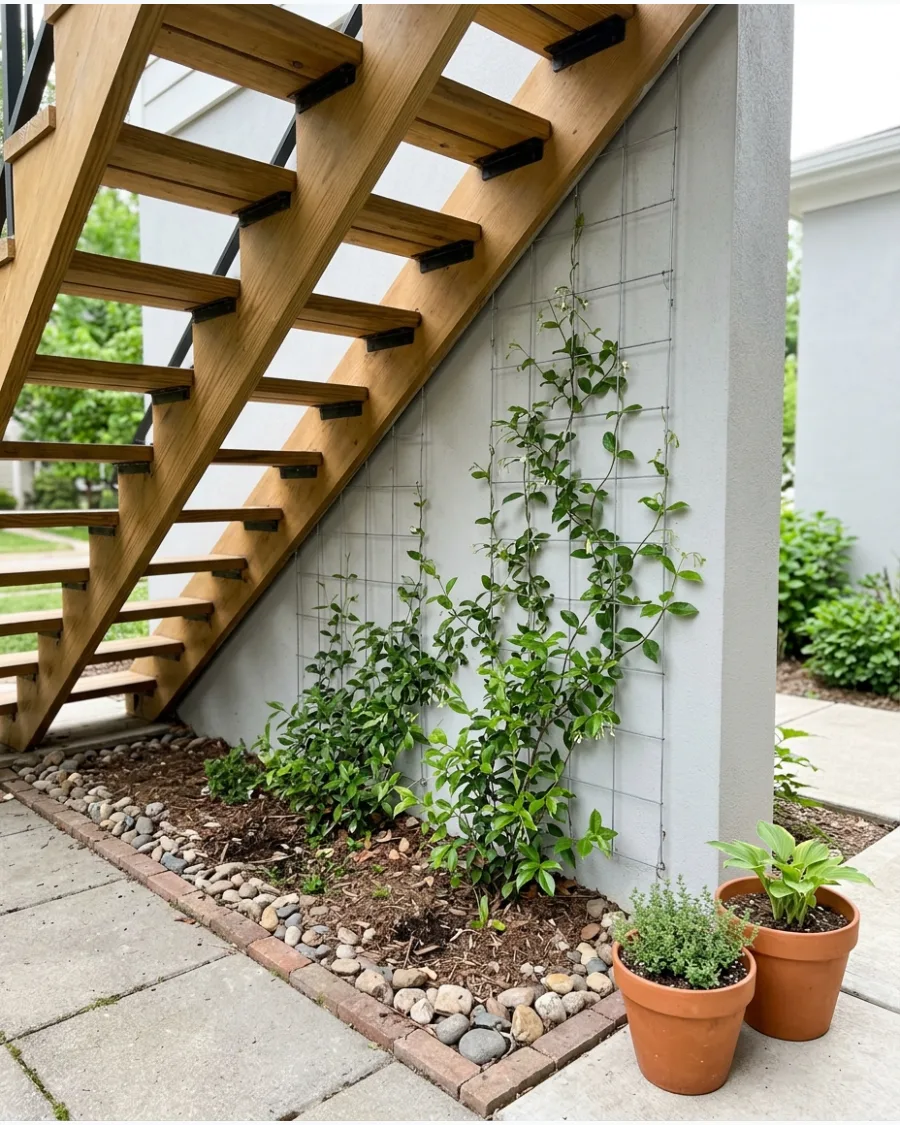
A trellis or wire system allows climbing plants to gradually cover the wall beneath the stairs. This creates a living backdrop that feels permanent and intentional.
Attach a slim trellis or a wire grid to the wall using spacers so the vines have enough room to wrap around the support. Vining plants like Jasmine or Creeping Fig will need regular pruning to keep the walkway clear and the growth contained.
- Sourcing: Trellises can be found at garden centers or made from simple wood lath.
- Setup: Maintain a one-inch gap between the trellis and the wall for proper airflow.
- Adaptation: Use removable adhesive cable clips for a renter-friendly way to guide vines without a trellis.
Most people skip this: Gently tie new growth to the trellis using soft garden twine to train the plant in the desired direction.
36. Stair-Step Planter Garden
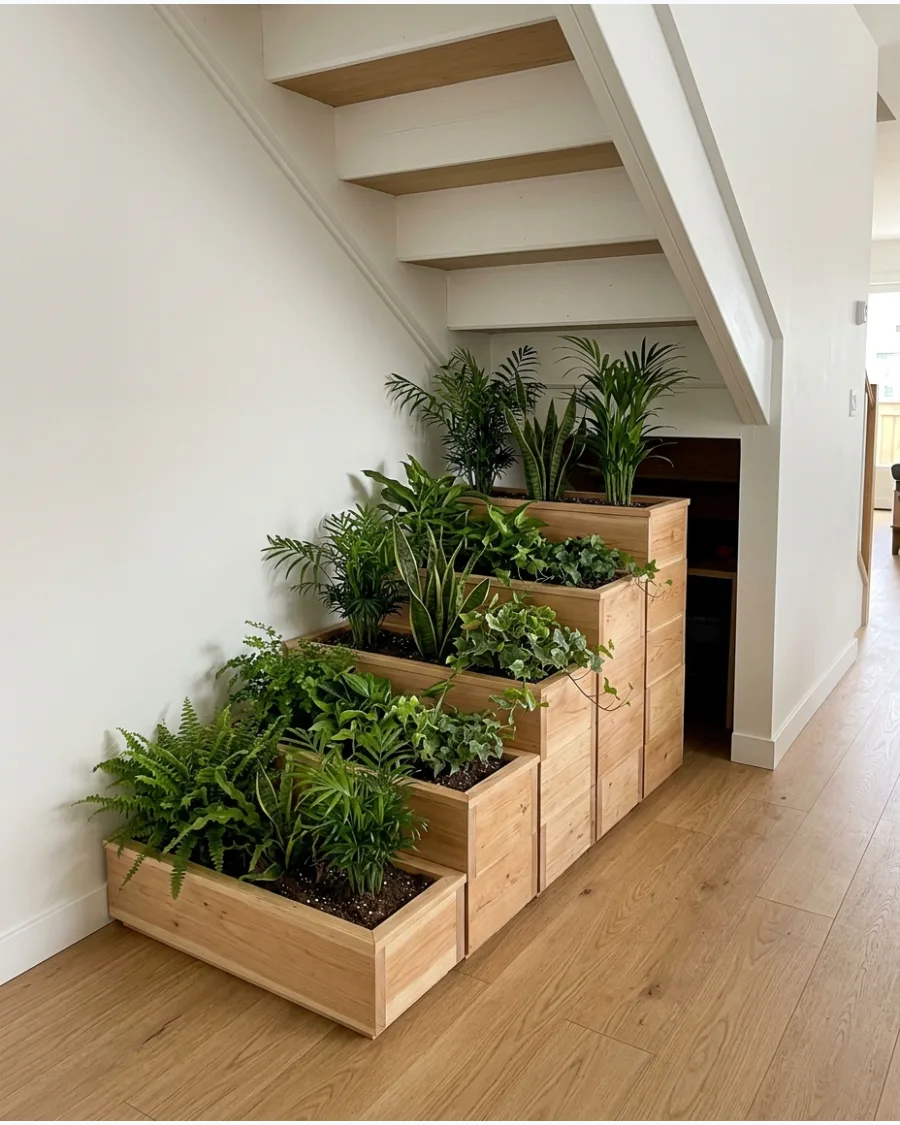
Using rectangular planters in graduated heights creates a visual rhythm that matches the staircase. This architectural approach looks best with clean-lined pots in neutral colors.
Group planters of varying heights in a tight row to create a clean, architectural look that mirrors the stairs above. Modern planters look more sophisticated when they share the same color and material but vary in scale.
- Sourcing: Look for "nested sets" of planters to ensure matching materials and colors.
- Setup: Place the shortest planter at the lowest point of the slope and the tallest at the highest.
- Adaptation: Fill with tall ornamental grasses or snake plants for a structured, low-maintenance display.
Best shortcut: Fill the bottom half of tall planters with empty plastic bottles to save on potting soil weight.
37. Wall Pocket Garden Under Stairs
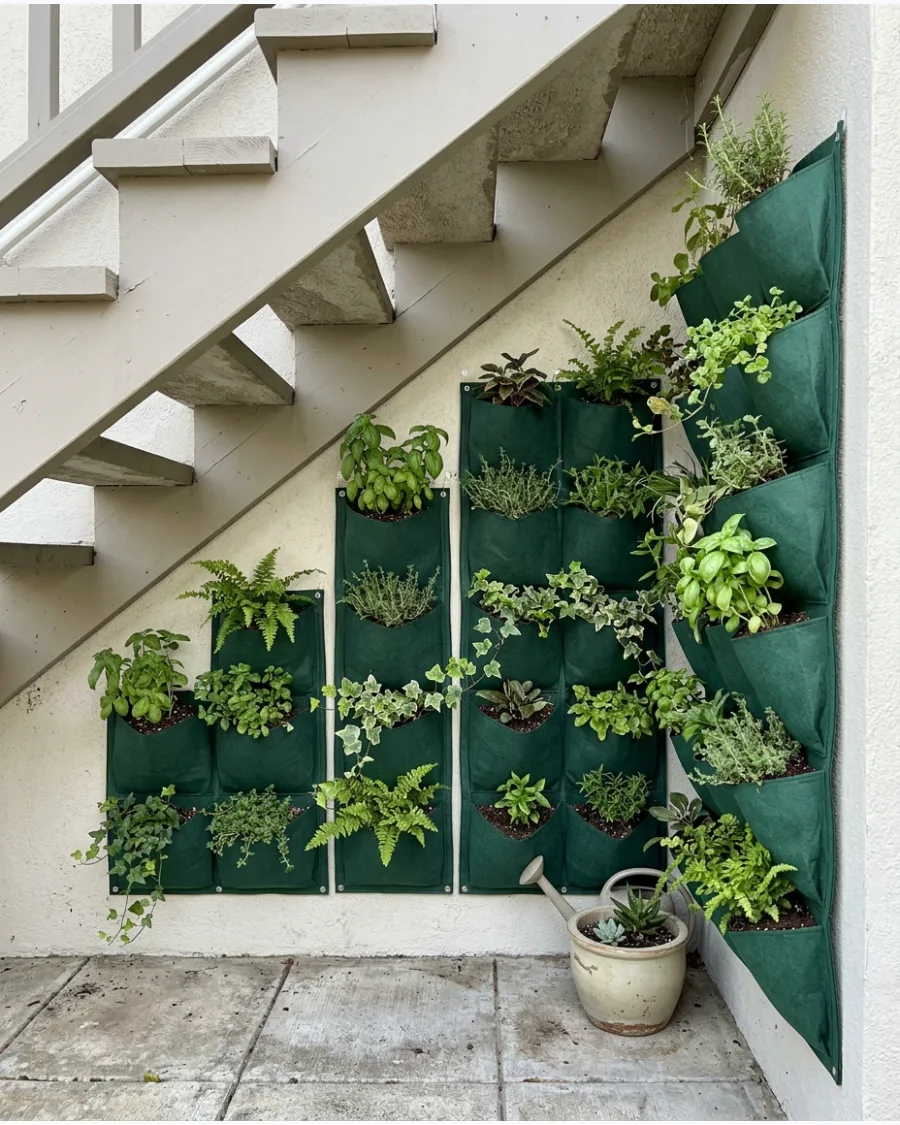
Compact wall pockets are ideal for small herbs or ferns, keeping the floor completely clear for storage or walkways. These pockets can be arranged in a grid or a random pattern to suit the space.
Choose wall pockets with built-in drainage plugs to prevent water from dripping down your interior walls after watering. Wall pockets are especially useful if the staircase is located near a kitchen or high-traffic hallway.
- Sourcing: Ceramic or metal wall pockets are available from specialty home decor boutiques.
- Setup: Use sturdy wall anchors to account for the weight of soil and water.
- Adaptation: Mix different pocket shapes—like circles and triangles—for a more artistic, gallery-wall look.
Quick win: Use a small watering can with a long, thin spout to reach the wall pockets without spilling.
38. Corner Plant Tower Under Stairs
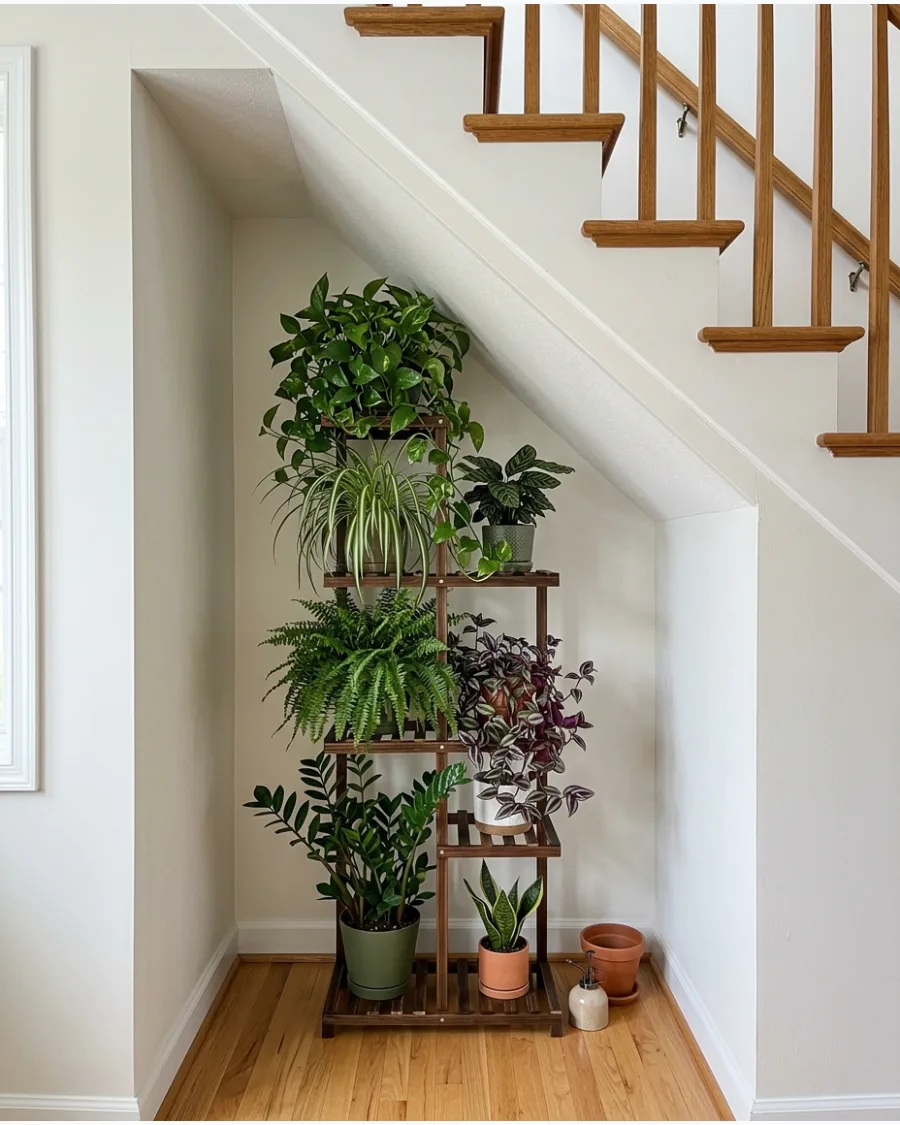
A tall, multi-tier tower maximizes the deepest, highest corner of the under-stair area. This allows for a variety of plant textures and trailing habits in a very small footprint.
Position a multi-tier tower in the deepest corner of the nook to maximize every inch of vertical space without blocking the hallway. Since towers can become top-heavy, always place the largest and heaviest pots on the bottom level for stability.
- Sourcing: Bamboo or wood corner towers are popular for their warmth and durability.
- Setup: Check the stability of the tower on the floor surface before adding plants.
- Adaptation: Install a small, clip-on LED grow light to the top of the tower if the corner is too dark.
Most people skip this: Use a saucer under every pot on the tower to prevent water from leaking onto the lower levels.
WATER FEATURE GARDENS UNDER STAIRS
39. Small Fountain Garden Under Stairs
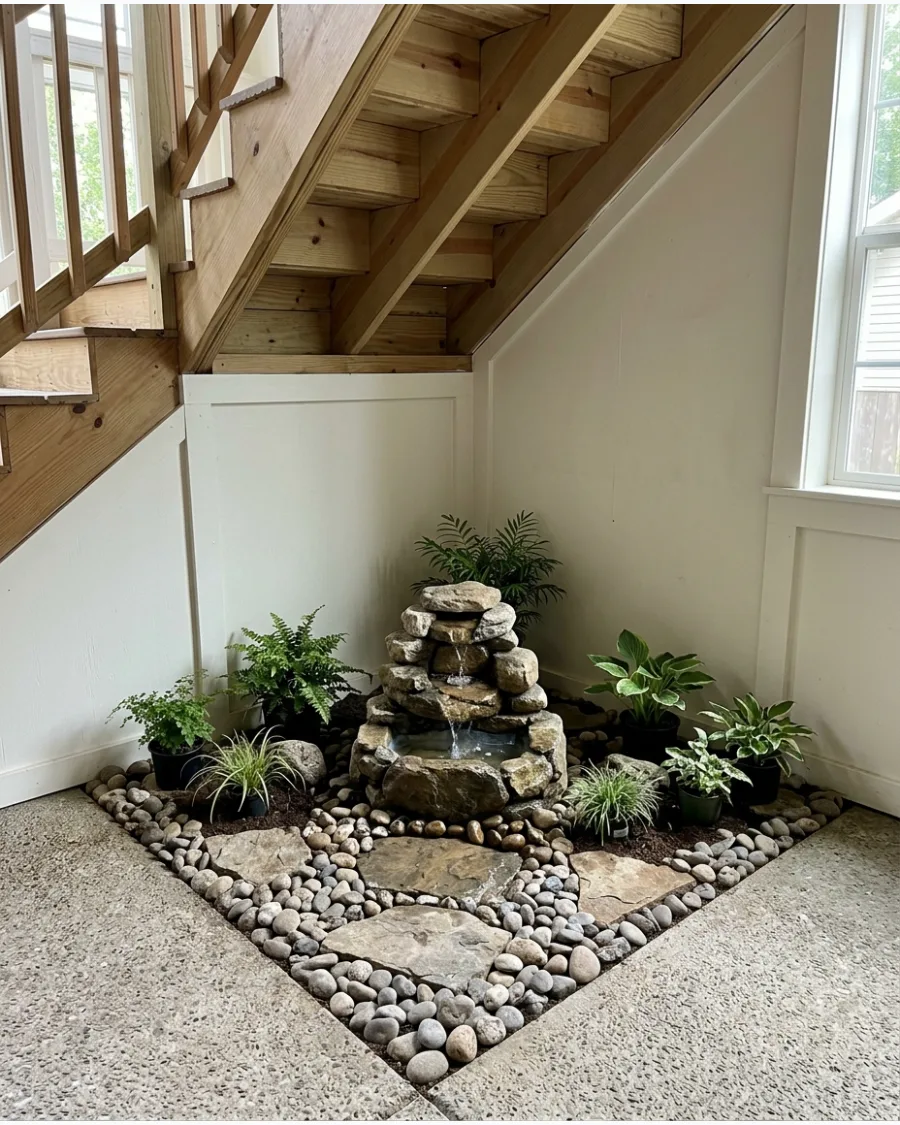
A compact recirculating fountain adds a peaceful sound element to the home while increasing humidity for surrounding plants. Tucking a fountain among stones and greenery creates a natural, outdoor feel indoors.
Hide the fountain power cord along the baseboard or under a layer of decorative pebbles for a seamless, professional look. Moving water is an excellent way to mask background household noise in open-concept areas.
- Sourcing: Tabletop fountains are affordable and available at most home goods stores.
- Setup: Place the fountain near a power outlet and ensure the cord is properly secured.
- Adaptation: Surround the fountain with faux moss or river stones to create a lush, woodland aesthetic.
Best shortcut: Use distilled water in the fountain to prevent mineral buildup and keep the pump running quietly.
40. Stone Bowl Fountain Under Stairs
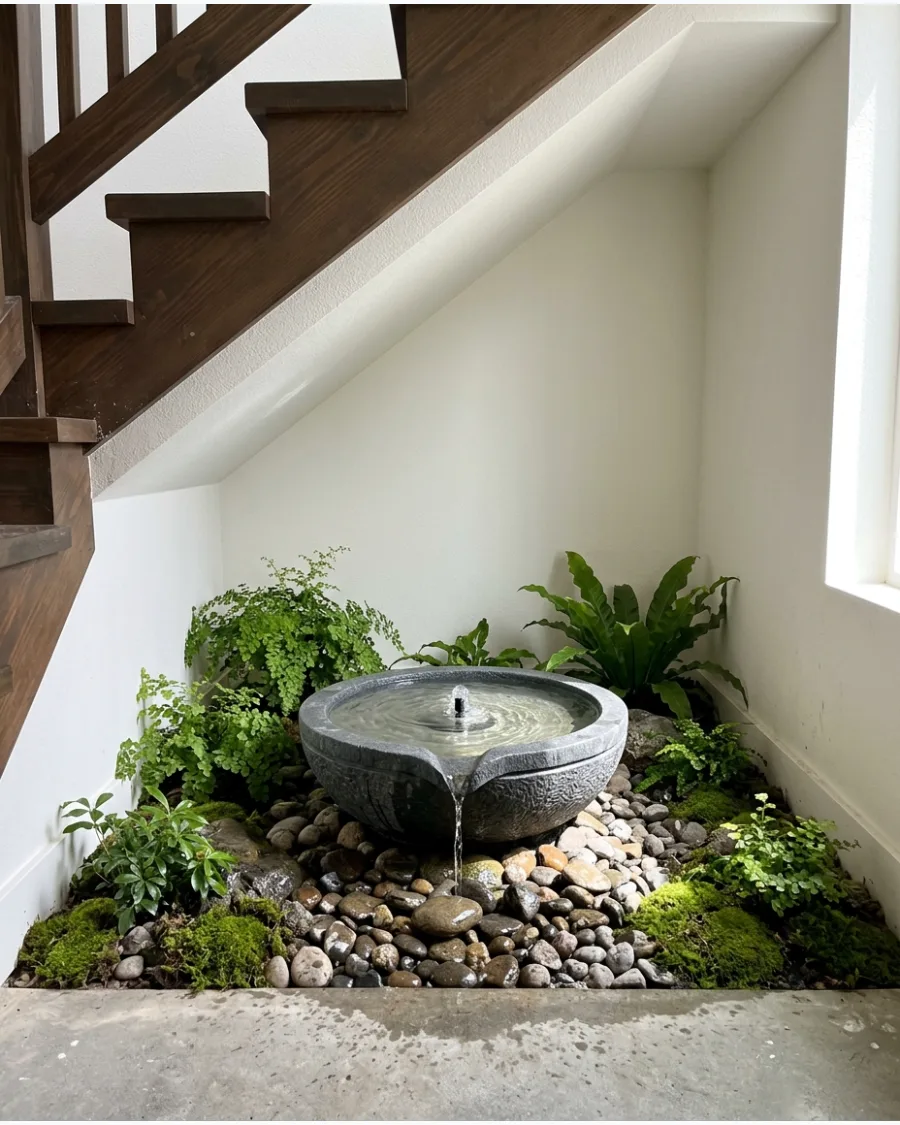
A low stone water bowl provides a minimalist, spa-like focal point that requires very little maintenance. This feature works beautifully when surrounded by moisture-loving plants like ferns and moss.
Place a low-profile stone bowl on a waterproof mat or tray to protect your flooring from occasional splashes or condensation. A stone bowl is a subtle way to introduce the element of water without the complexity of a larger pond.
- Sourcing: Granite or basalt bowls can be found at garden specialty shops or stone yards.
- Setup: Ensure the floor is level and can support the significant weight of a stone bowl filled with water.
- Adaptation: Add a floating LED candle or a single lotus flower to the bowl for a decorative evening touch.
Quick win: Add a small, silent submersible pump to keep the water moving and prevent it from becoming stagnant.
41. Mini Waterfall Garden Under Stairs
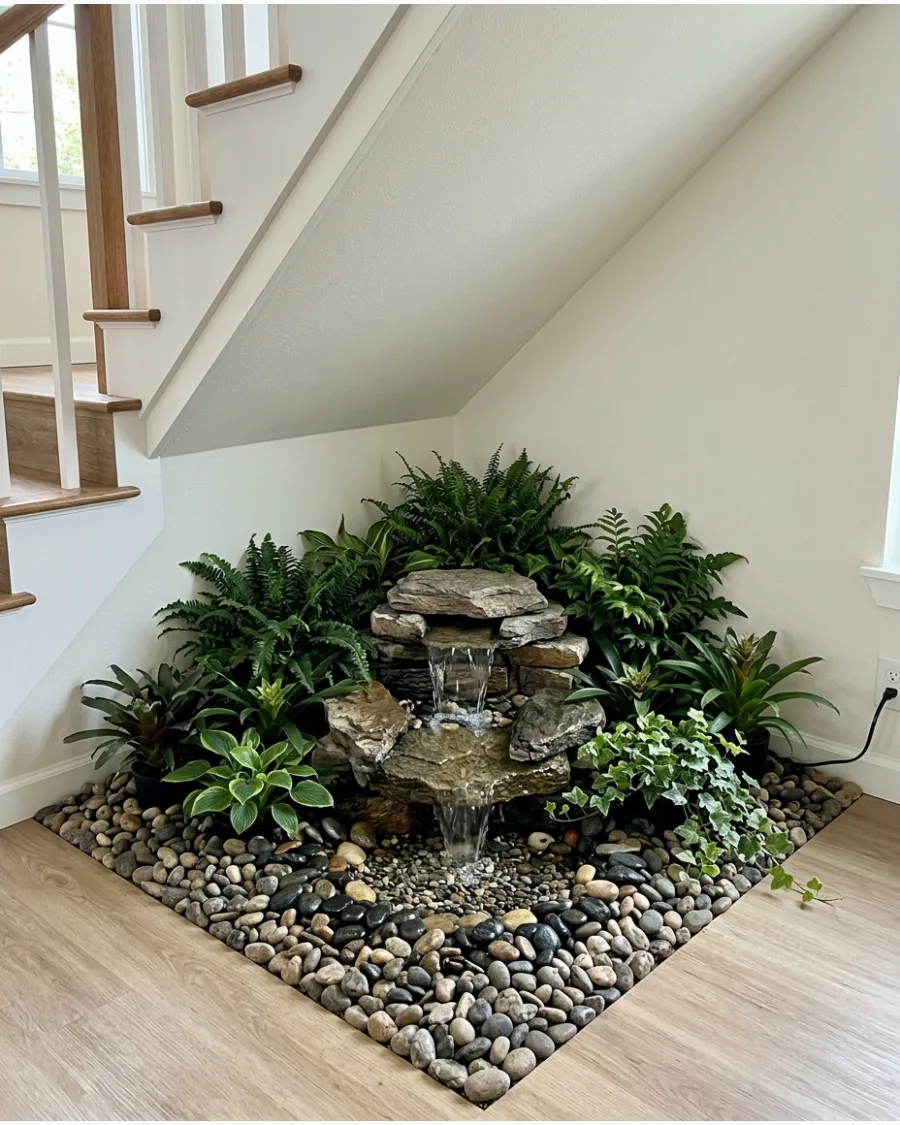
Stacked natural slate stones create a gentle trickling sound that masks household noise while adding moisture to the air. This setup uses a small submersible pump tucked inside a hidden basin to recirculate water over the rocks.
Surround the base with moisture-loving ferns and moss to create a lush, self-contained ecosystem in the nook. Natural stone looks better than resin models because it develops a realistic patina over time.
- Budget: $50 to $150 for pump and stones.
- Setup: Place the basin on a perfectly level floor to ensure even water flow.
- Adaptation: Use distilled water to prevent mineral buildup on the stones over time.
Most people skip this: Place a rubber mat under the basin to dampen pump vibration noise.
42. Modern Wall Fountain Garden
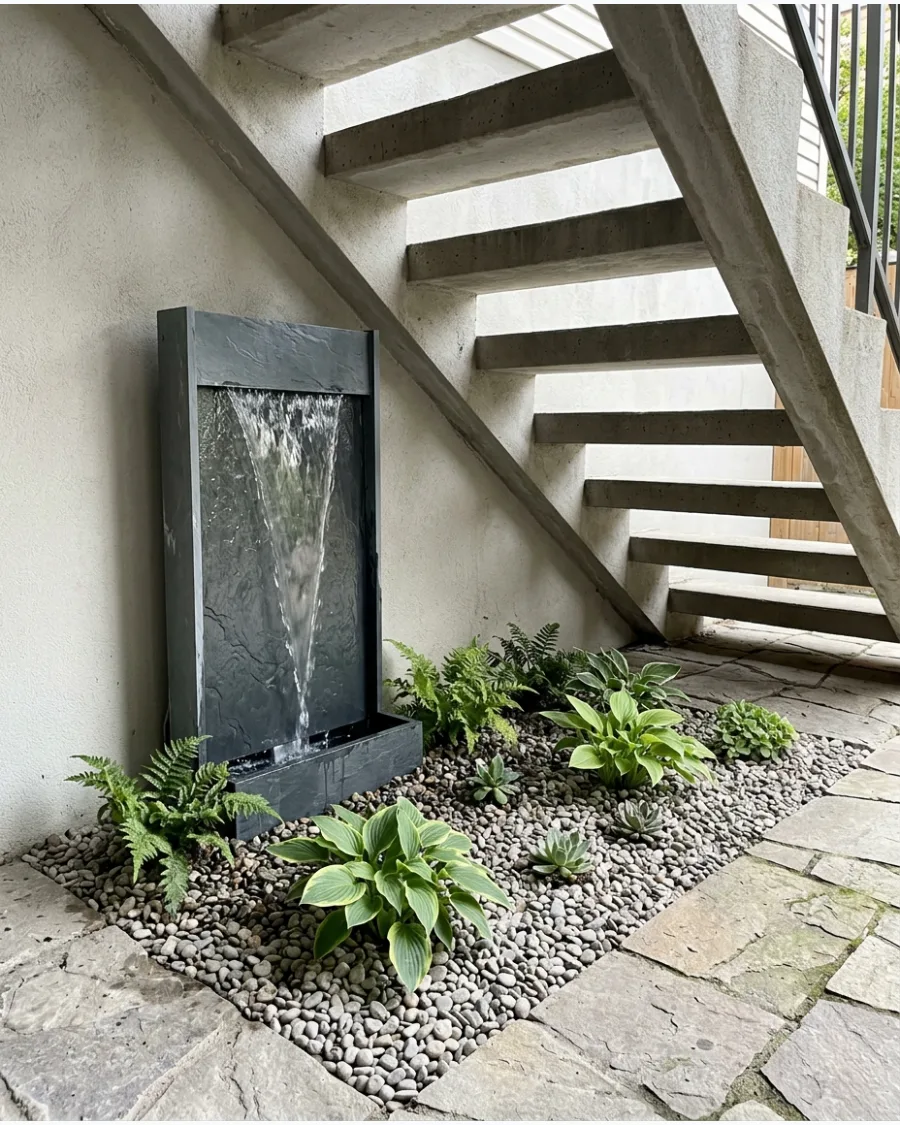
A slim, vertical wall fountain saves floor space while providing a sleek backdrop for a minimalist garden bed. The water flows down a textured metal or slate panel into a narrow gravel-filled trough at the bottom.
Place two architectural plants like Sansevieria on either side to frame the fountain without cluttering the floor. Wall fountains are the best choice for narrow hallways where a floor basin would block the walking path.
- Timing: 1-2 hours for mounting and filling.
- Placement: Mount directly into wall studs to support the weight of the water.
- Style: Choose a matte metal finish to hide water spots better than polished chrome.
Quick win: Hide the power cord behind a decorative plant or inside a paintable cord cover.
43. Mini Pond Garden Under Stairs
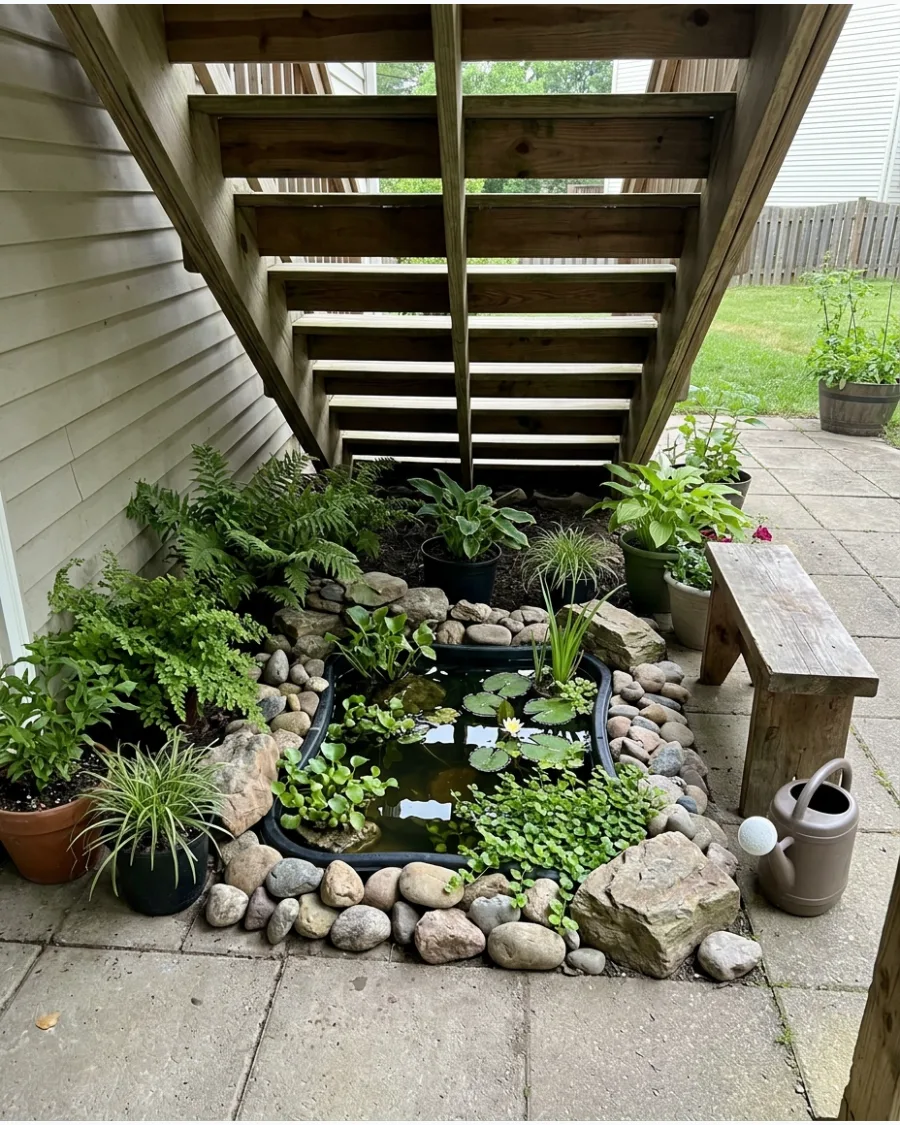
A deep, waterproof glazed ceramic pot serves as a patio pond that fits perfectly under the tallest part of the staircase. You can add aquatic plants like dwarf papyrus or floating water lettuce to keep the water clear and add texture.
Line the floor around the pot with large river stones to catch splashes and protect your flooring from moisture. Still water features need a small air stone or bubbler to prevent mosquitoes and keep the greenery healthy.
- Budget: $30 to $80 for the pot and aquatic plants.
- Logistics: Center the pot under the highest point of the stairs to prevent head-bumps during maintenance.
- Renter limit: Use a freestanding pot so the feature can be moved easily without damaging floors.
Best shortcut: Use a battery-operated bubbler if you do not have an outlet nearby.
44. Fountain and White Pebble Garden
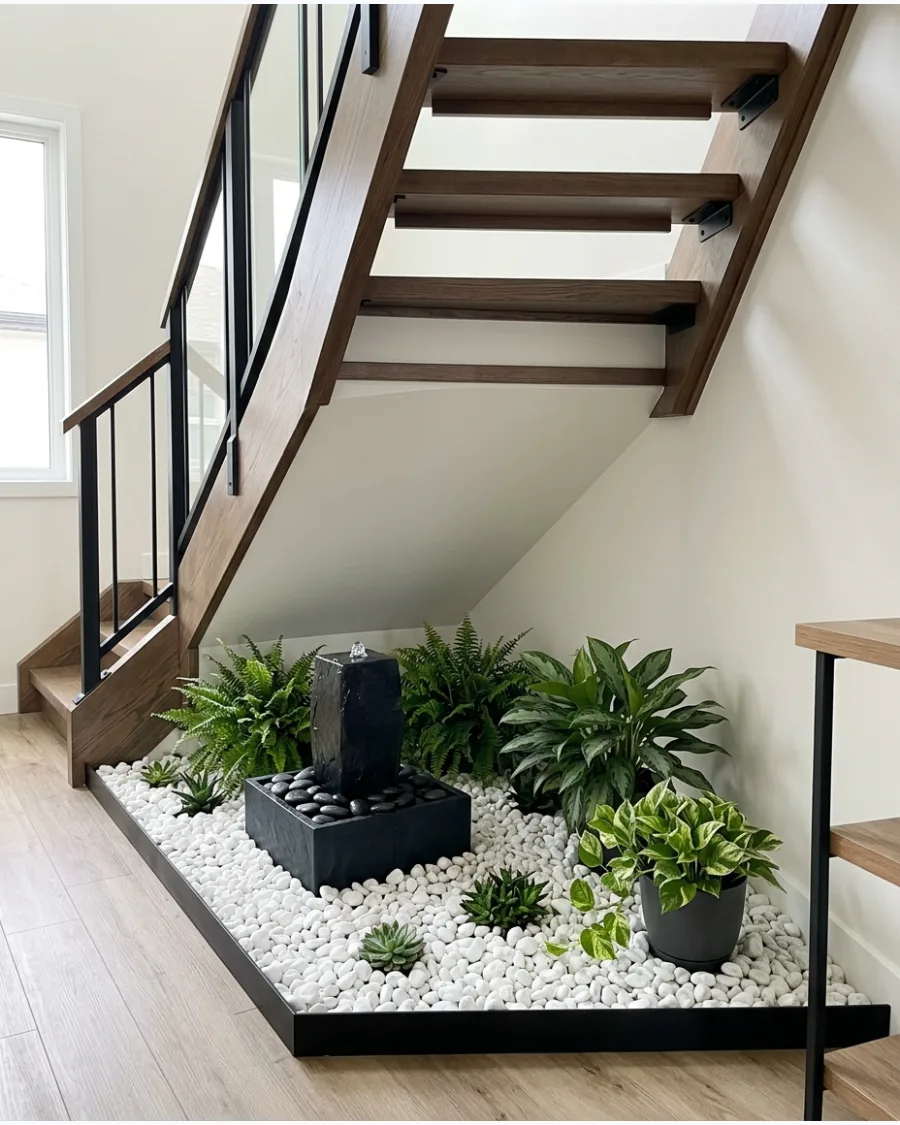
This high-contrast look uses a matte black fountain as a focal point against a bed of bright white marble pebbles. The dark fountain pops against the light stones, making the small space feel much brighter and more intentional.
Tuck a few deep green Pothos plants into the pebbles to soften the hard edges of the stone and water feature. White pebbles reflect light upward, which helps low-light plants grow better in dark under-stair corners.
- Materials: 3-5 bags of white marble pebbles and one central fountain.
- Assembly: Layer the pebbles at least two inches deep to completely hide the floor.
- Adaptation: Swap white pebbles for dark river rocks if you want a moodier, more organic feel.
Most people skip this: Wash the pebbles in a colander before placing them to remove white dust.
OUTDOOR & PRACTICAL UNDER-STAIR GARDENS
45. Outdoor Raised Garden Bed Under Stairs
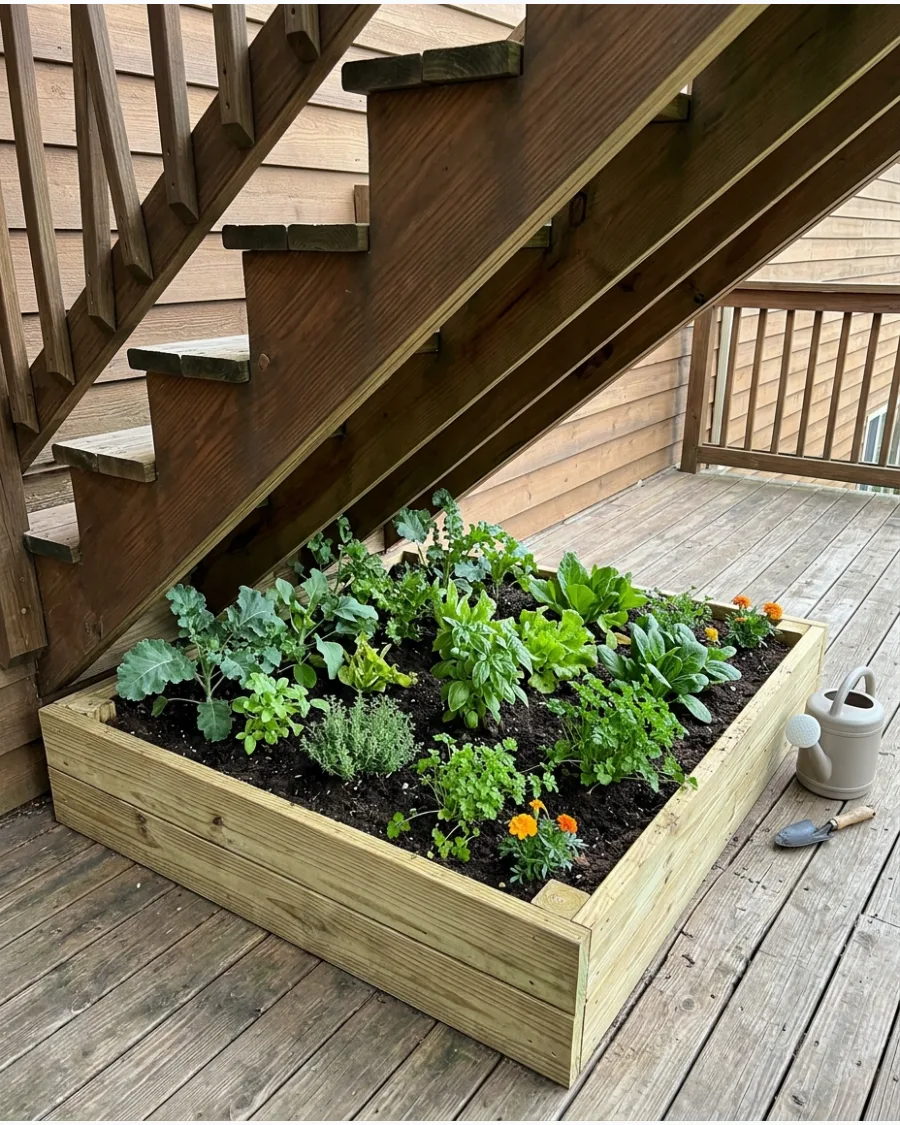
Building a shallow cedar box under exterior stairs prevents soil from washing away and keeps the area looking tidy. Fill the bed with shade-tolerant hostas or coral bells that thrive in the shadow of the staircase treads.
Use a weed barrier fabric inside the bed to keep the soil contained and prevent grass from growing through the structure. Raising the garden just six inches off the ground makes maintenance much easier on your back.
- Budget: $40 to $100 for lumber and soil.
- Setup: Anchor the corners into the ground with wooden stakes for stability.
- Season: Choose perennials so the garden returns every year without replanting.
Quick win: Use cedar or redwood because they naturally resist rot in damp, shaded spots.
46. Small Herb Garden Under Outdoor Stairs
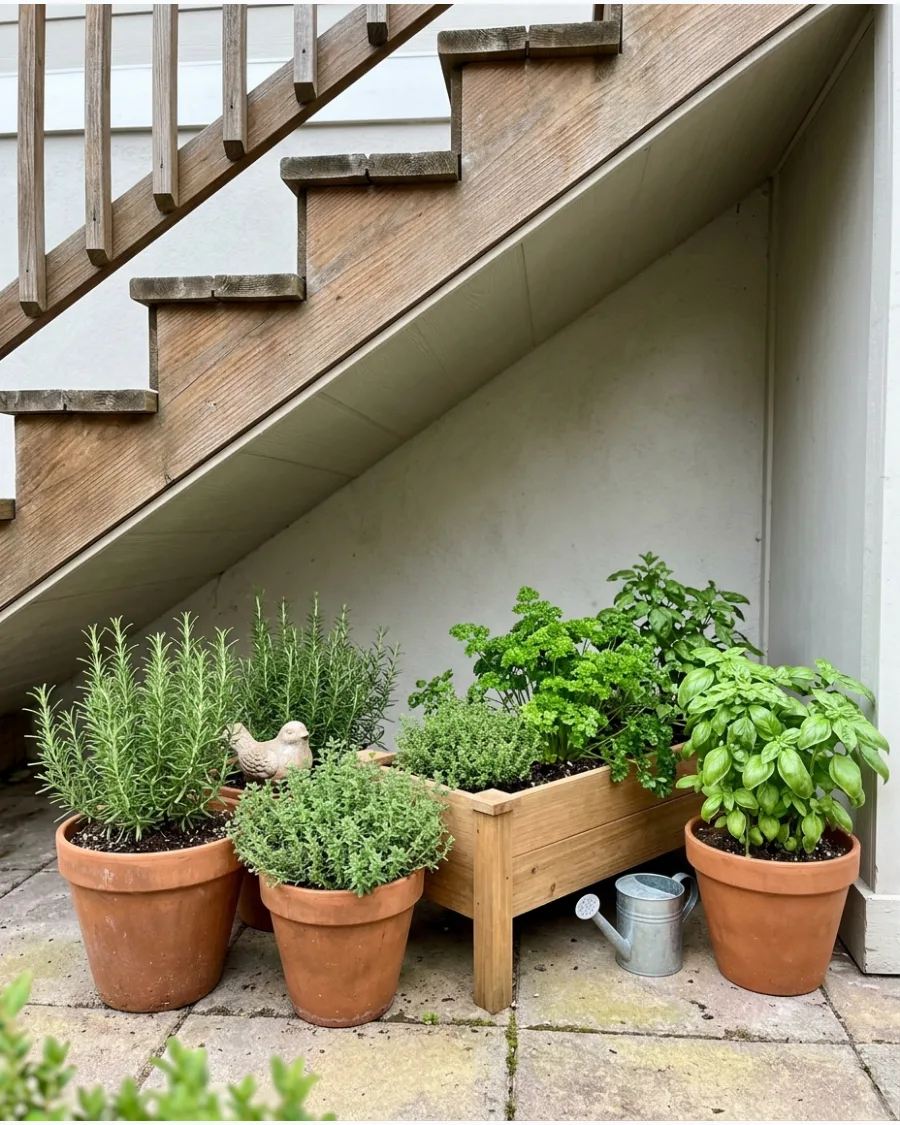
If your outdoor stairs get decent light, use the space for a productive kitchen garden filled with fragrant herbs. Rosemary and thyme are hardy enough to handle the slightly drier conditions often found under a stair overhang.
Arrange individual terracotta pots on a stepped wooden stand to maximize the vertical space and ensure every plant gets sun. Grouping herbs together creates a microclimate that holds moisture better than scattered pots.
- Sourcing: Buy established herb starts rather than seeds for an instant garden.
- Placement: Position the stand at the outer edge of the stairs where sunlight is strongest.
- Budget: Terracotta pots are very affordable and provide great drainage for herbs.
Best shortcut: Label your pots with a chalk marker so you never mix up similar-looking herbs.
47. Cottage Garden Under Outdoor Stairs
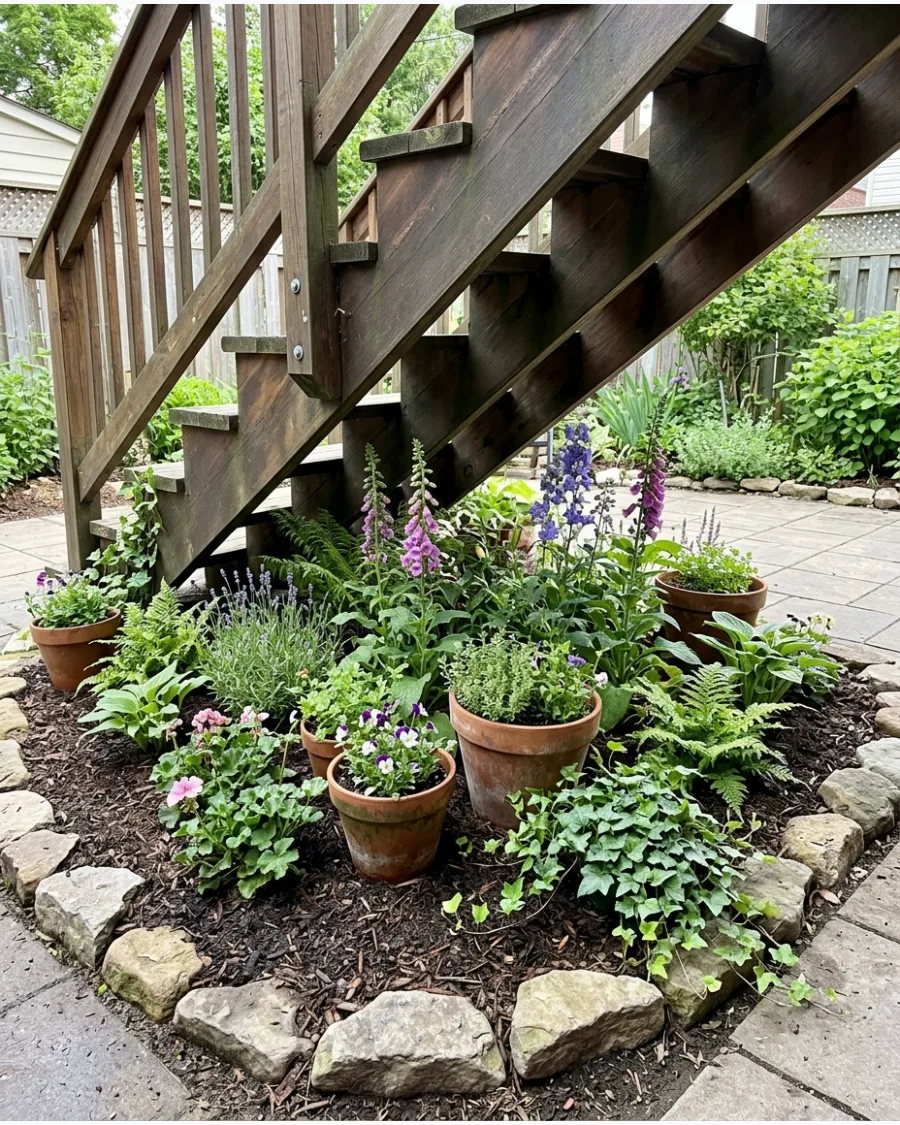
Soften the industrial look of metal or concrete stairs with an informal mix of flowering perennials and trailing vines. Use natural stone edging to create a curved border that breaks up the straight lines of the staircase structure.
Plant a mix of heights, placing taller foxgloves in the back and low-growing sweet alyssum at the very front edge. A loose, cottage style hides the awkward angles of the stairs better than a stiff, formal layout.
- Timing: Plan for a full afternoon of planting and stone placement.
- Logistics: Leave a small gap between the plants and the stair structure for air circulation.
- Style: Mix at least three different leaf textures to give the small space depth.
Quick win: Use a garden hose to map out the curve of your border before digging.
48. Mediterranean Garden Under Stairs
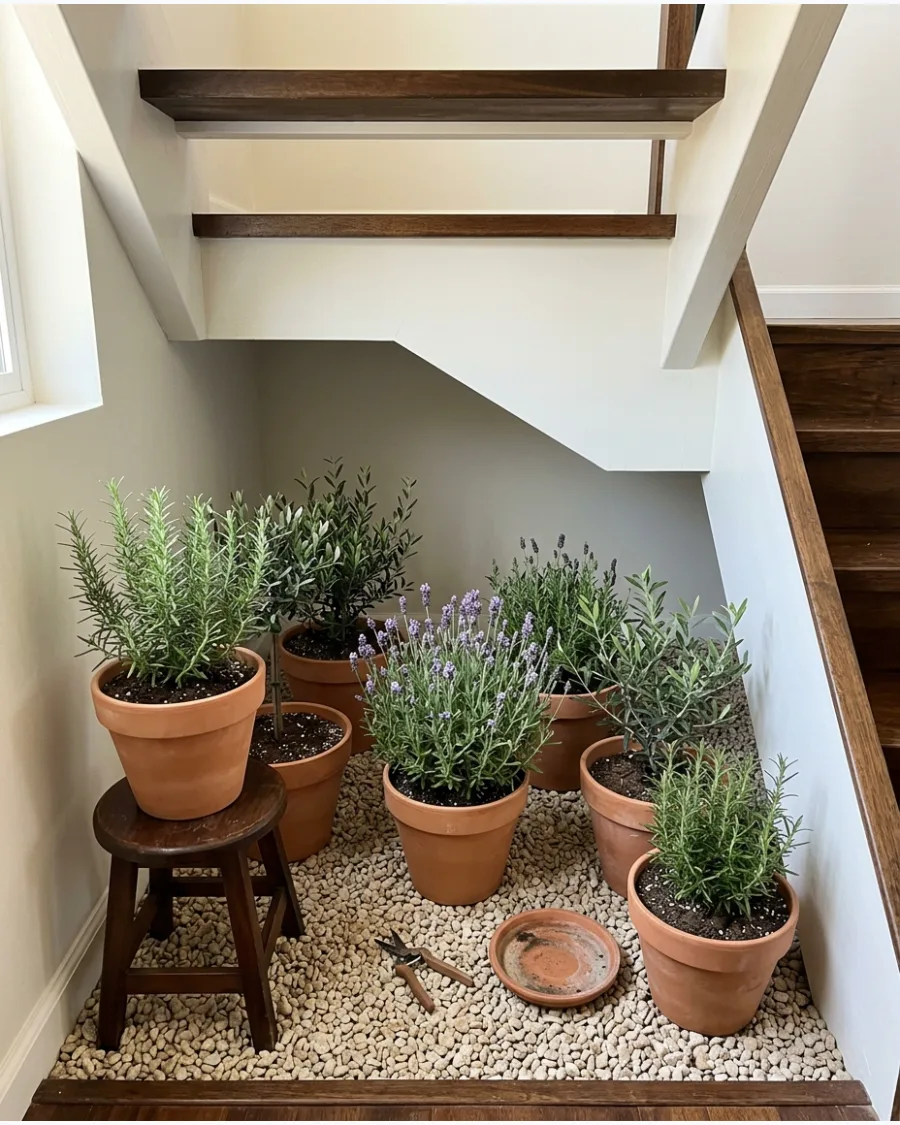
Focus on drought-tolerant plants and warm-toned materials like terracotta and pale tan gravel to evoke a coastal feel. Lavender and dwarf olive trees work well here because they do not mind the heat that can get trapped under a staircase.
Top the soil in your pots with a layer of fine gravel to help retain moisture and give the garden a finished look. Stick to a limited color palette of silver-green leaves and purple flowers to keep the small space from feeling cluttered.
- Budget: $100 for pots, plants, and gravel.
- Placement: Group pots in odd numbers like three or five for the best visual balance.
- Maintenance: These plants need very little water once established in their pots.
Most people skip this: Use pot feet to lift the containers slightly and prevent staining on the gravel.
49. Dry Creek Garden Under Outdoor Stairs
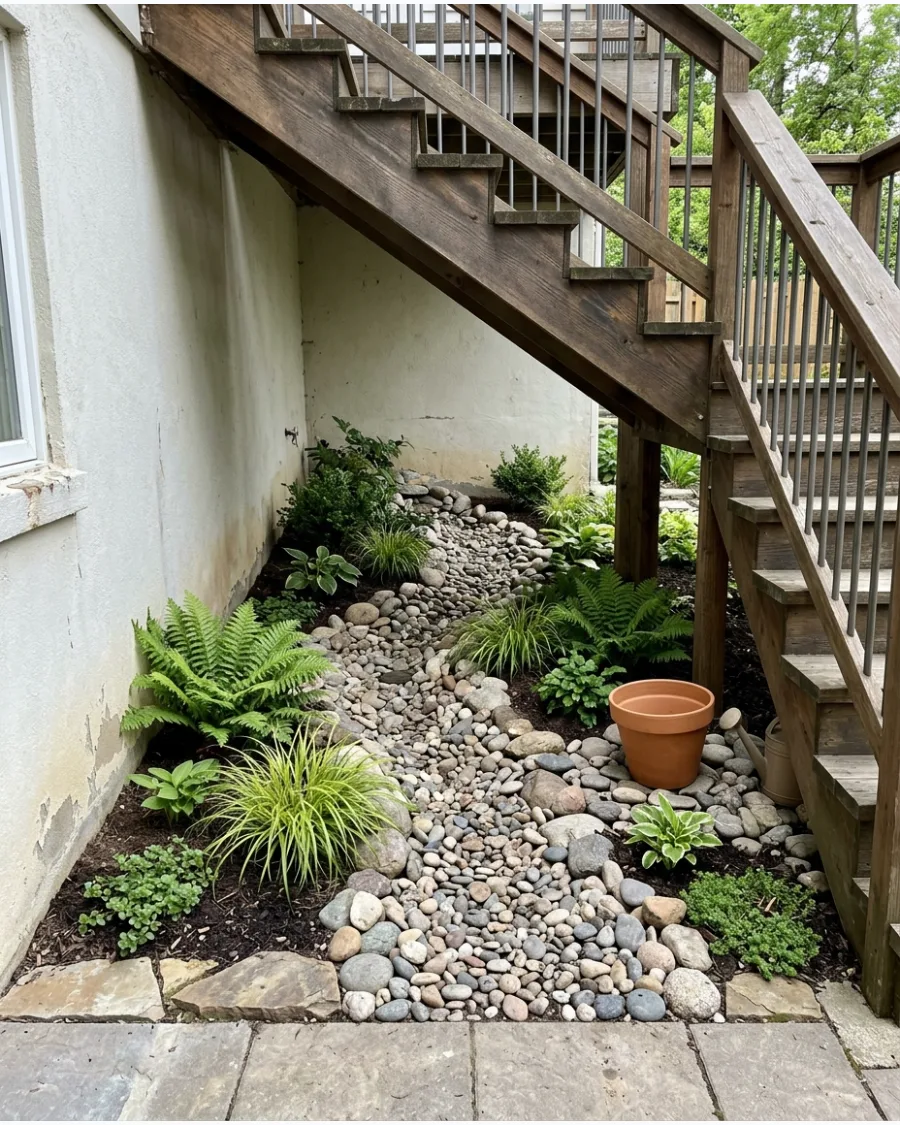
A dry creek bed made of smooth river rocks solves drainage issues while providing a beautiful visual texture. This is a great low-maintenance option for areas where real plants might struggle to get enough water or light.
Scatter larger anchor boulders along the edges of the rock path to mimic the look of a natural stream bed. Use stones in varying sizes rather than one uniform size to make the creek look authentic instead of man-made.
- Sourcing: Buy river rock in bulk from a local landscape yard to save money.
- Setup: Dig a shallow three-inch trench before laying landscape fabric and stones.
- Adaptation: Add a few solar-powered spotlights to highlight the texture of the rocks at night.
Best shortcut: Tuck small clumps of fake grass among the rocks if the shade is too deep for real plants.
50. Small Garden Under Stairs With Hidden Lighting
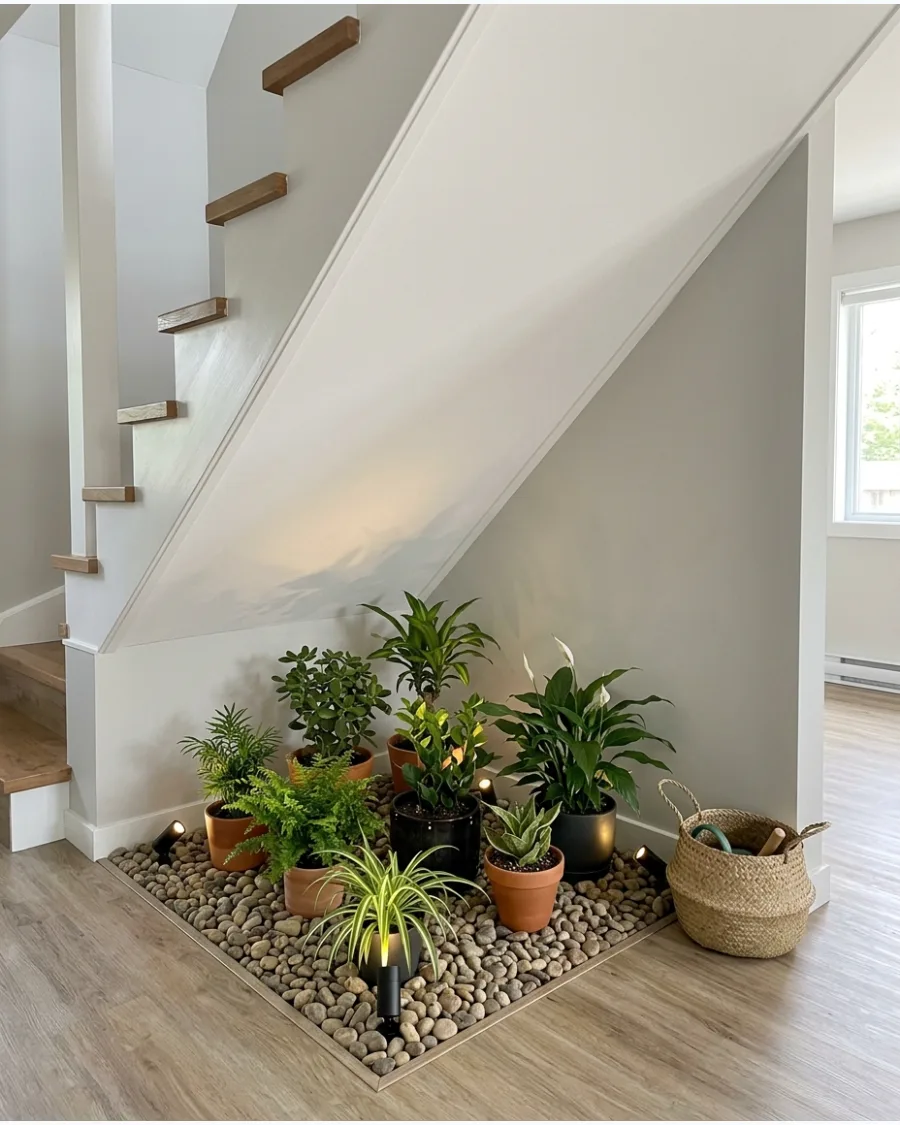
Adding discreet lighting transforms a dark under-stair garden into a glowing focal point after sunset. Small LED uplights placed behind large leaves create dramatic shadows on the wall and highlight the texture of the stairs.
Use a timer or a smart plug so the lights turn on automatically every evening without you having to reach into the corner. Warm white bulbs make the greenery look lush and natural, while cool white can make it look clinical.
- Budget: $30 to $60 for a set of small LED spotlights.
- Setup: Aim the lights at a 45-degree angle toward the wall for the best shadow effects.
- Renter limit: Use battery-powered puck lights if you do not have an outdoor outlet.
Quick win: Hide the light fixtures behind the rims of your pots so you only see the glow.
Frequently Asked Questions
What are the best low-light plants for under-stair gardens?
ZZ plants and Snake plants are top choices because they are incredibly resilient and thrive in deep shade with minimal care. You can also add Bird’s Nest ferns or Pothos to bring soft textures and vibrant greenery to these dim indoor corners.
How do I prevent water damage to my floors?
To protect your flooring, always use a waterproof liner or heavy-duty drainage trays beneath your containers. A 'pot-within-a-pot' system is also a smart choice, as it allows you to water the inner plant easily while keeping the decorative outer pot completely dry.
Do I need grow lights for an indoor stair garden?
While some plants tolerate ambient room light, adding discreet LED grow strips to the underside of the stair treads ensures your garden remains vibrant. These slim fixtures provide the necessary light spectrum for growth without cluttering your design.
How do I handle dust on plants in such a confined space?
Since airflow is often limited in tight nooks, dust can settle on leaves and hinder a plant's health. Periodically wipe the foliage with a damp microfiber cloth or use a soft brush to keep the leaves clean and glowing.
Can I do a dry garden if I don't want the maintenance of live plants?
A Zen-style dry garden is a perfect alternative, utilizing white pebbles, large decorative rocks, and architectural wood. You can also add high-quality preserved moss to achieve a lush look that requires zero watering or light.