50 Patio Privacy Ideas

This post may contain affiliate links: full affiliate disclosure.
Are you tired of feeling like your neighbors are watching your backyard BBQ?
We all deserve a private outdoor space that feels like a true escape.
These 50 simple and stylish patio privacy ideas will help you block those views and create your own cozy retreat today, without breaking the bank.
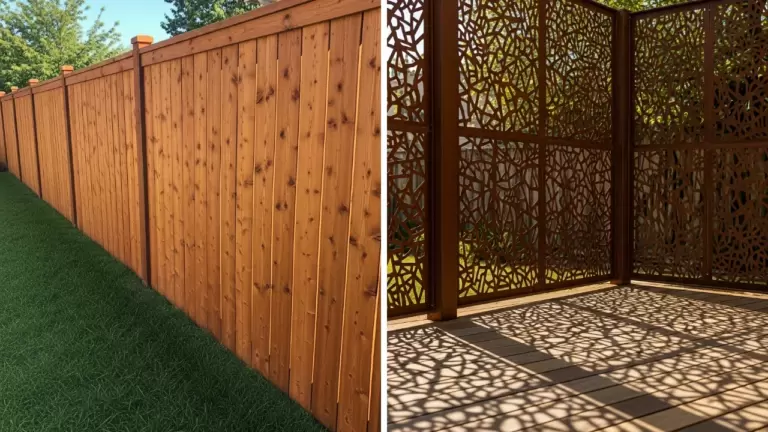
1. Tall Wood Privacy Fence
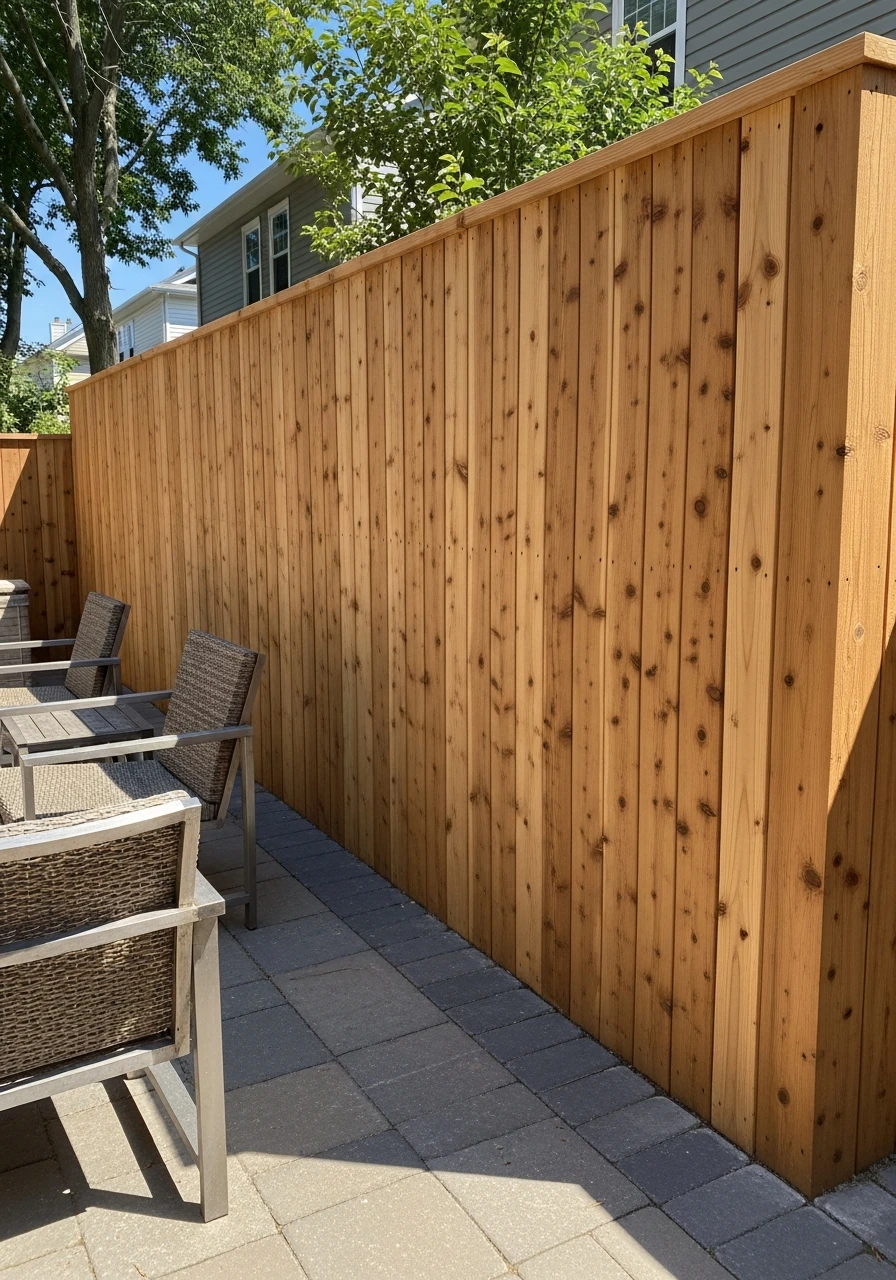
A full-height wooden fence creates instant and complete privacy from neighbors. This works best for ground-level patios and gives you maximum coverage. You can stain the wood a modern black or a rustic cedar color.
- Use pre-built fence panels for fast installation.
- Stain the wood deeply for a high-end look.
- Ensure the height meets local building codes.
Pro Tip: Painting the inside of the fence a dark color, like charcoal, makes the greenery in your patio pop.
2. Sleek Horizontal Slat Fence
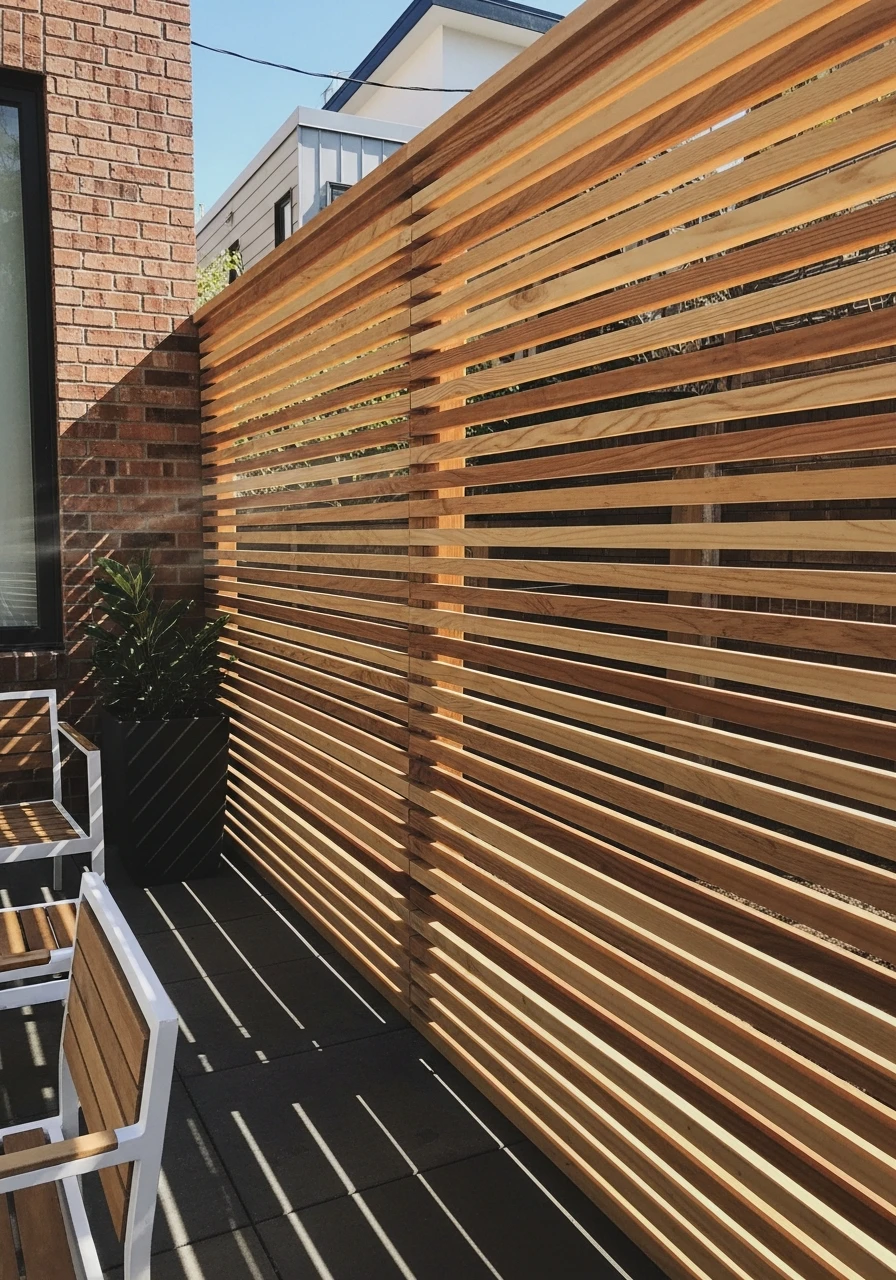
Horizontal wood slats look modern and allow some light and air to pass through. This design prevents your patio from feeling totally boxed in, making it great for smaller spaces. Space the slats closely for best results.
- Attach slats horizontally for a contemporary style.
- Use thin slats to keep the design sleek.
- Install a small gap between slats for airflow.
Pro Tip: This style visually widens your patio, which is a great trick for narrow areas.
3. Modern Metal Privacy Panels
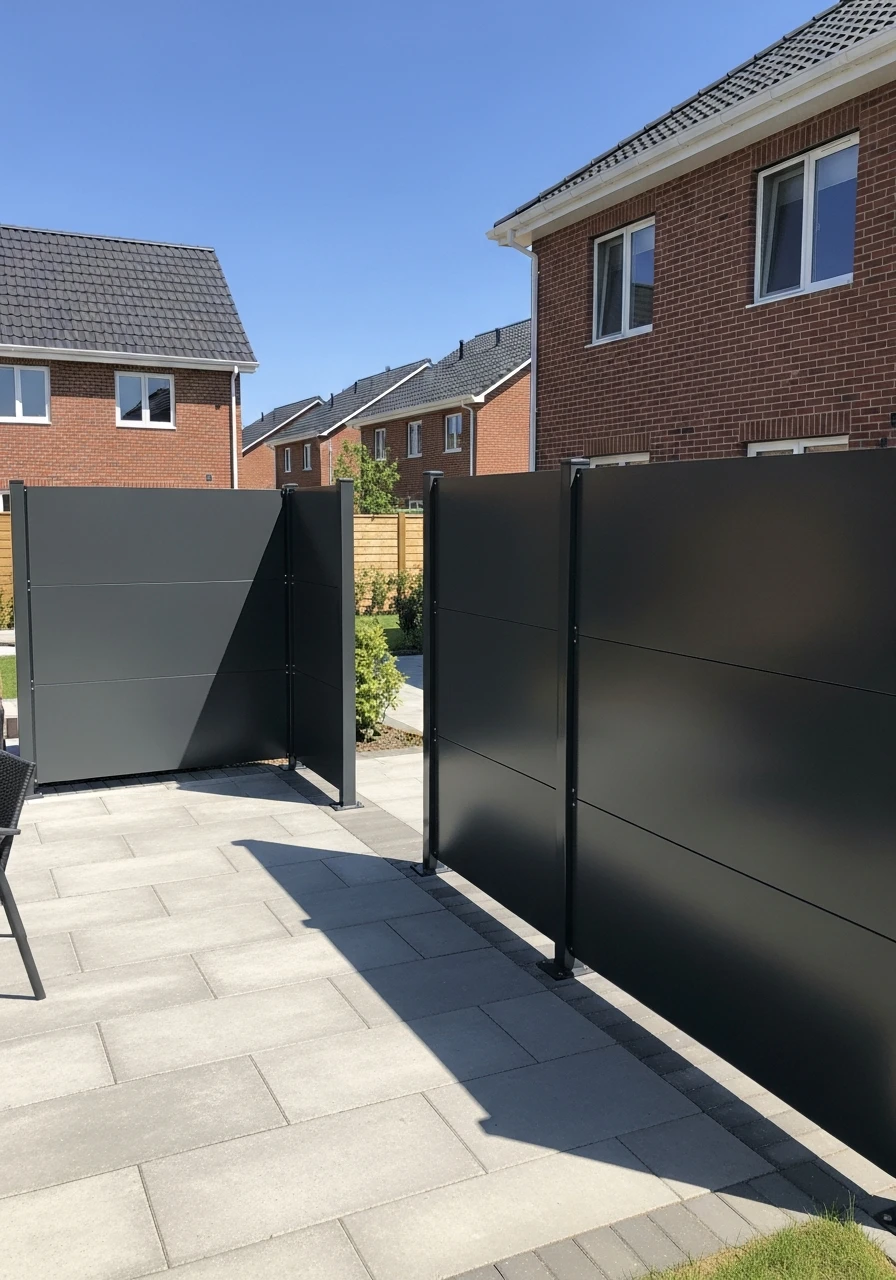
Metal panels add durability and are perfect for patios exposed to tough weather. They provide great visual blocking and fit well with modern or industrial outdoor styles. They require very little upkeep.
- Choose powder-coated metal for rust resistance.
- Use panels with simple geometric cutouts.
- Anchor them firmly to resist high winds.
Pro Tip: Metal heats up in the sun, so consider planting a small vine next to the panel to add cooling shade.
4. Fancy Laser-Cut Screens
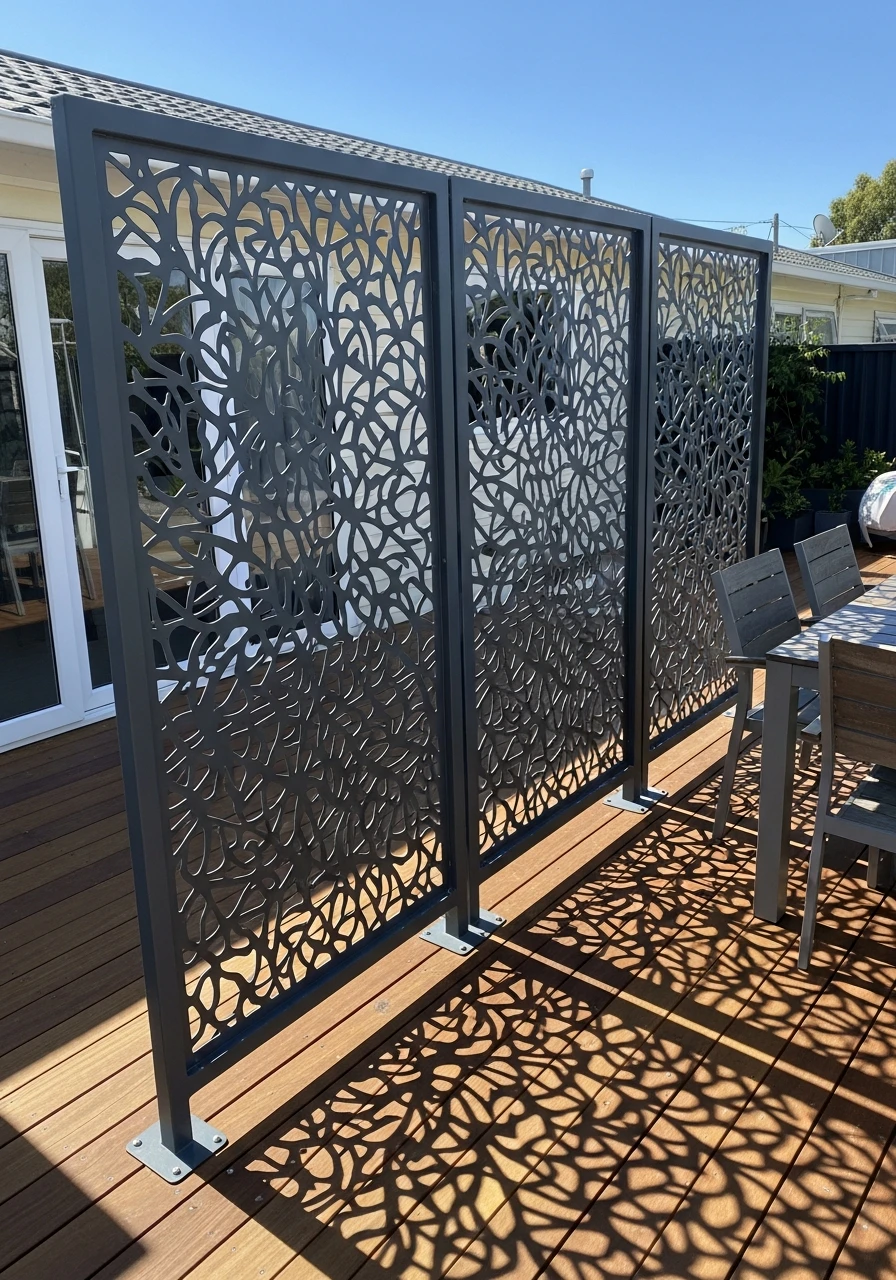
Laser-cut panels have beautiful, intricate patterns that block direct views while still letting light stream through. They act as a piece of art for your patio and work well as standalone dividers. This is an easy way to get a designer look.
- Look for nature-inspired or geometric patterns.
- Use them to divide a large seating area.
- Install simple backlighting for a cool nighttime effect.
Pro Tip: Place a laser-cut screen behind a simple sofa to create an instant focal wall.
5. Flexible Modular Privacy Walls
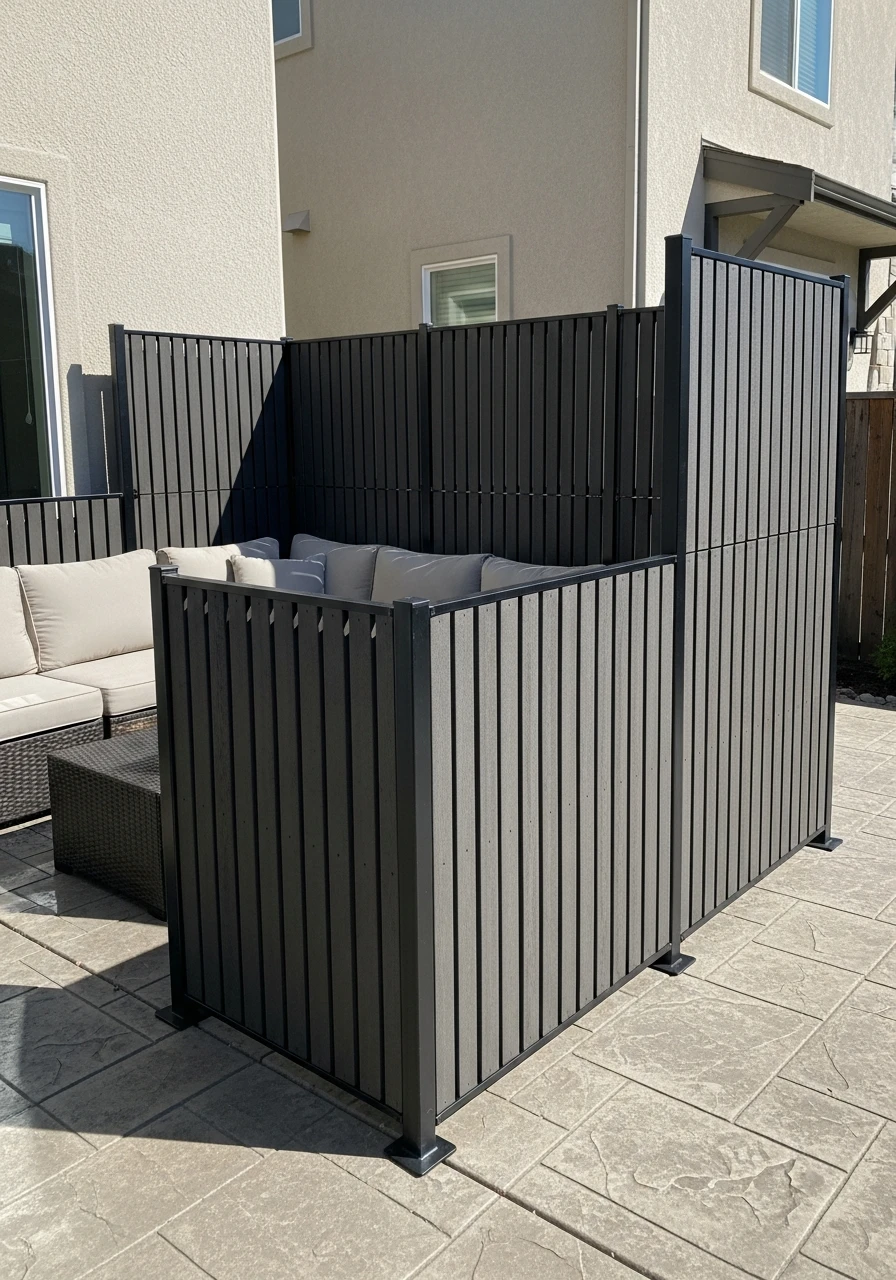
Modular walls are perfect if you rent or if you think your patio layout might change later. They can be moved, rearranged, or expanded over time without a huge construction project. They offer great flexibility and quick installation.
- Choose lightweight but sturdy materials like composite.
- Use interlocking panels for easy setup.
- Reposition them seasonally to follow the sun.
Pro Tip: Use two smaller modular walls instead of one large one to keep the space feeling open.
6. Gabion Stone Privacy Cages
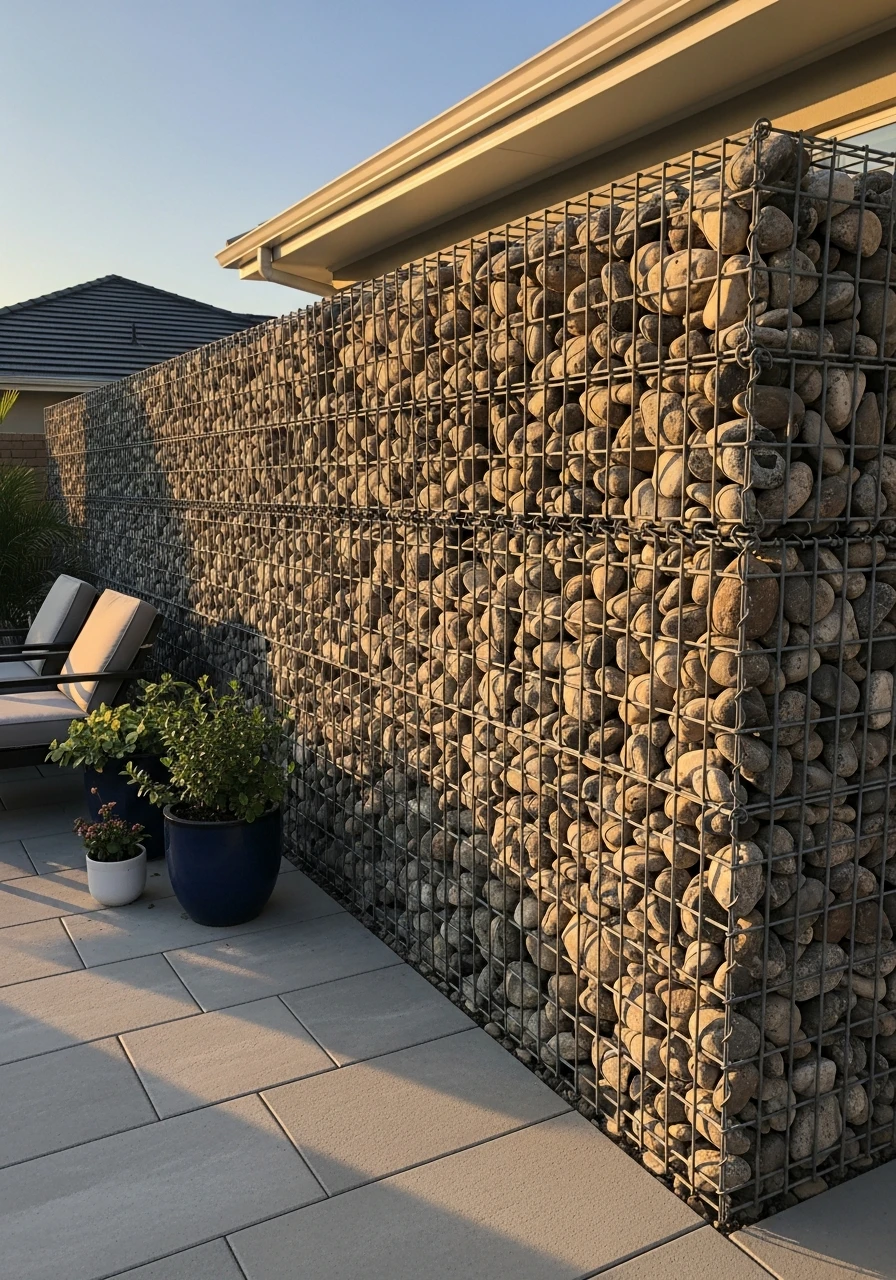
Gabion walls use wire cages filled with stone or rocks to create a solid, heavy privacy barrier. They naturally block noise and look fantastic in contemporary or rustic settings. This option is extremely durable and requires no maintenance.
- Fill the cages with local, affordable river rock.
- Stack the cages to the desired height.
- Use them in areas where you need serious noise reduction.
Pro Tip: For a sleek look, top the gabion wall with a smooth wooden plank to use as a bench or serving shelf.
7. Urban Corrugated Metal Screens
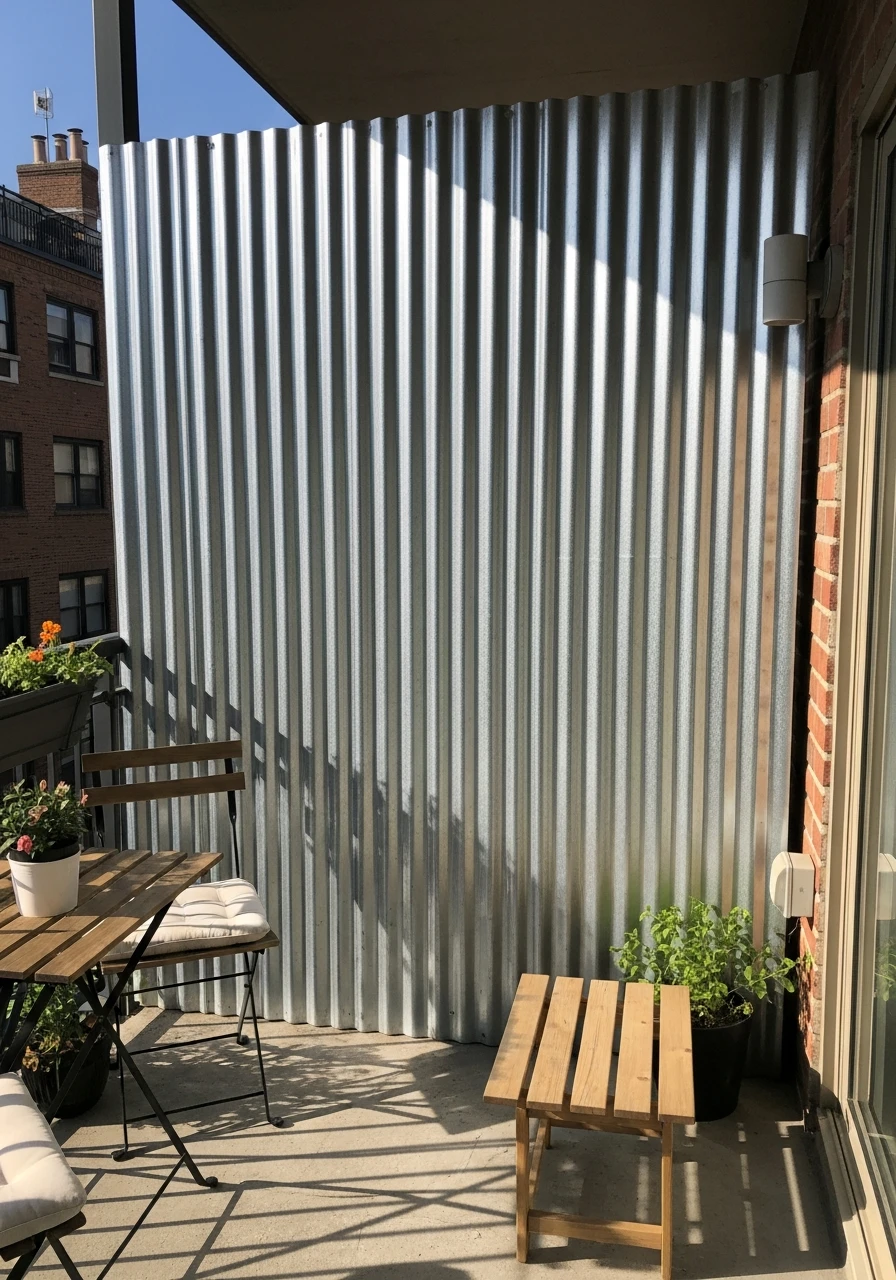
Corrugated metal panels give you strong visual privacy with a cool, modern edge. They are low maintenance and are often used in urban patios or spaces with an industrial vibe. They are very budget-friendly.
- Use galvanized metal for long-lasting results.
- Frame the metal with wood to soften the look.
- Pair them with concrete planters for a cohesive style.
Pro Tip: The slight texture of the corrugated metal adds interest without needing extra decoration.
8. Classic Tight Picket Fence
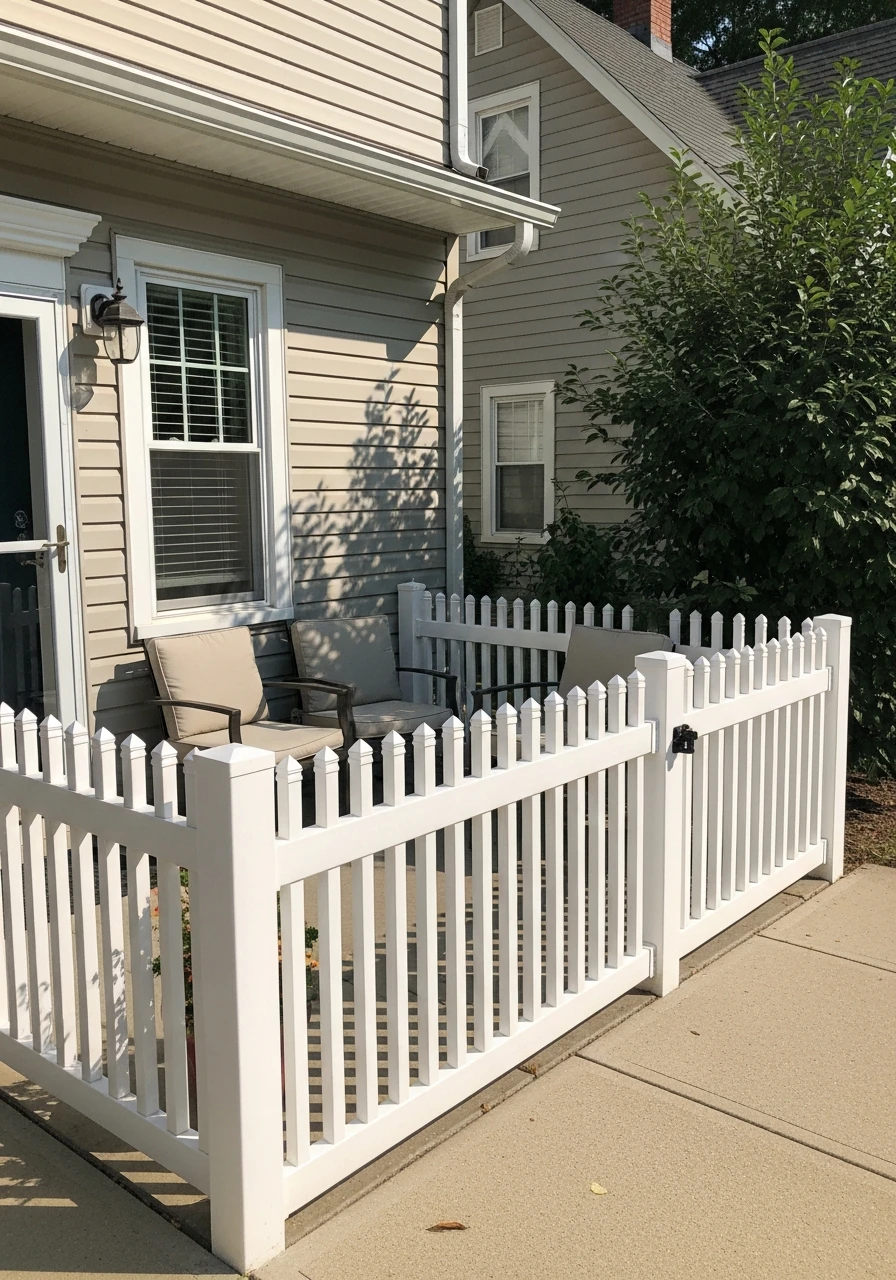
A tightly spaced picket fence gives you partial privacy while keeping a traditional, friendly look. This is a great choice for front patios or areas where you just need to define the boundary, not completely hide it. It feels very welcoming.
- Ensure the gaps between the pickets are small.
- Paint the fence white for a classic charm.
- Use it to support low-growing flowers.
Pro Tip: Adding a low gate makes the patio feel like a distinct, special room.
9. Semi-Opaque Wood Panels
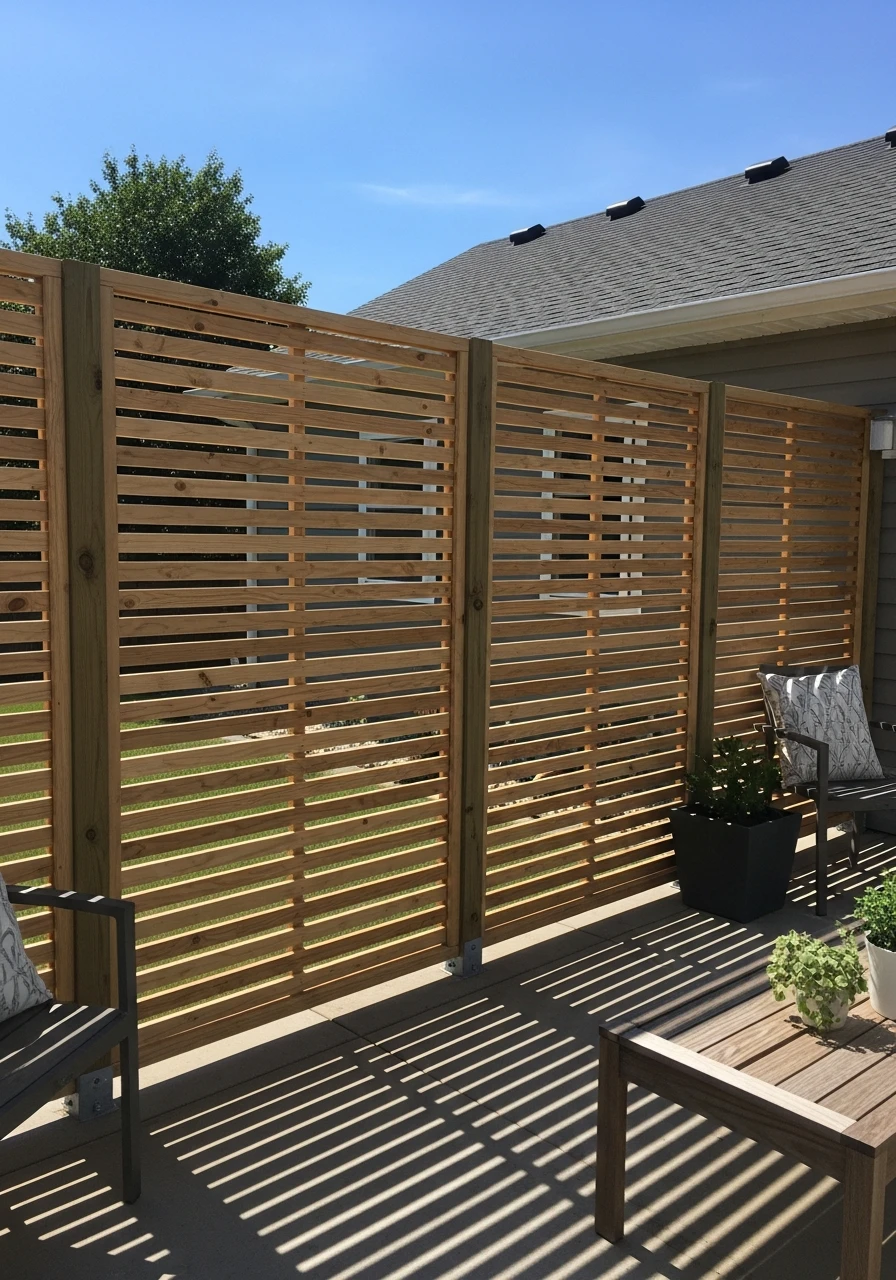
These panels block direct views but are not fully solid, which allows light and airflow to move easily. They are a great solution for patios that need privacy without feeling boxed in or gloomy. It’s a perfect balance.
- Use frosted glass inserts within wood frames.
- Try panels with small, intentional gaps.
- Place them facing the strongest neighboring sightline.
Pro Tip: Use translucent material, not clear, to blur the view without stopping the light.
10. Permanent Masonry Stone Wall
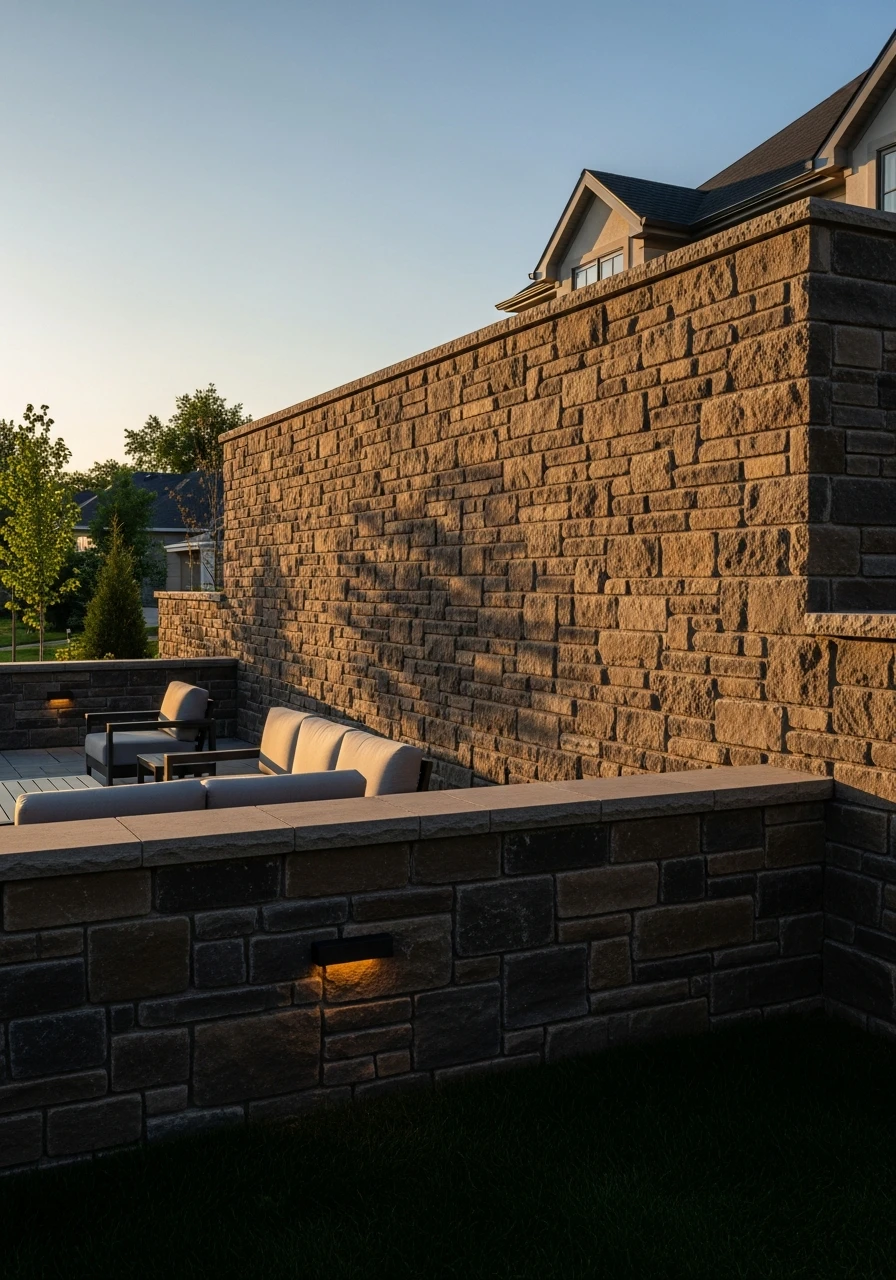
A masonry wall made of brick or stone provides maximum privacy, excellent noise cancellation, and long-term durability. This is a permanent structure best suited for high-end outdoor designs. It adds significant value to your home.
- Choose a stone color that matches your house.
- Integrate built-in lighting near the base.
- Use the wall’s top edge as extra seating or a shelf.
Pro Tip: Planting small vines or creeping fig on the stone softens the hard look over time.
11. Moveable Wood Privacy Screens
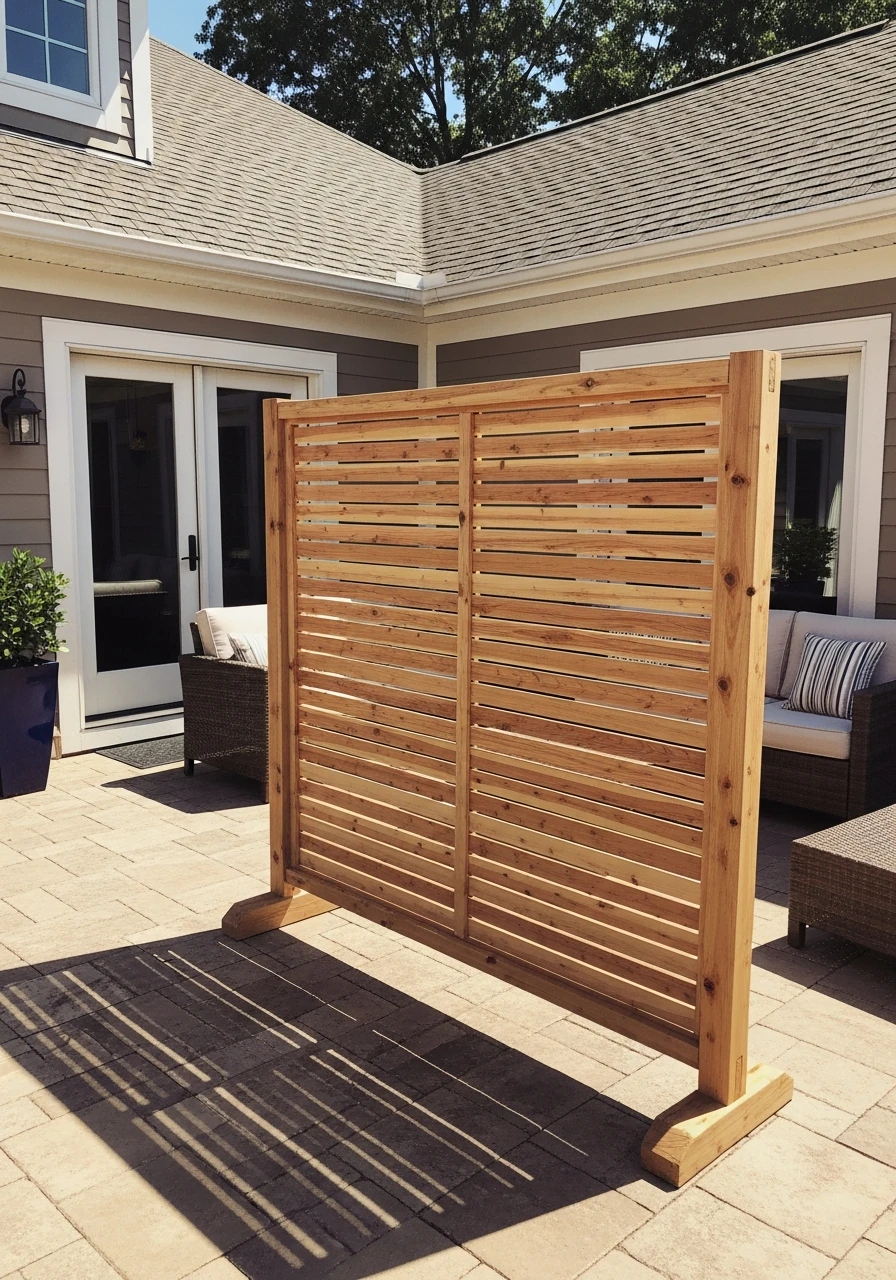
Freestanding screens let you easily control where and when you need privacy without any permanent construction. They are ideal for blocking specific angles or dividing different seating areas on a larger patio. Look for sturdy models that won’t tip.
- Choose a screen with wide, supportive feet.
- Place screens near the edge of a dining area.
- Use them temporarily to block afternoon sun glare.
Pro Tip: Look for screens with built-in planter boxes at the base for added stability and greenery.
12. Folding Patio Divider Screens
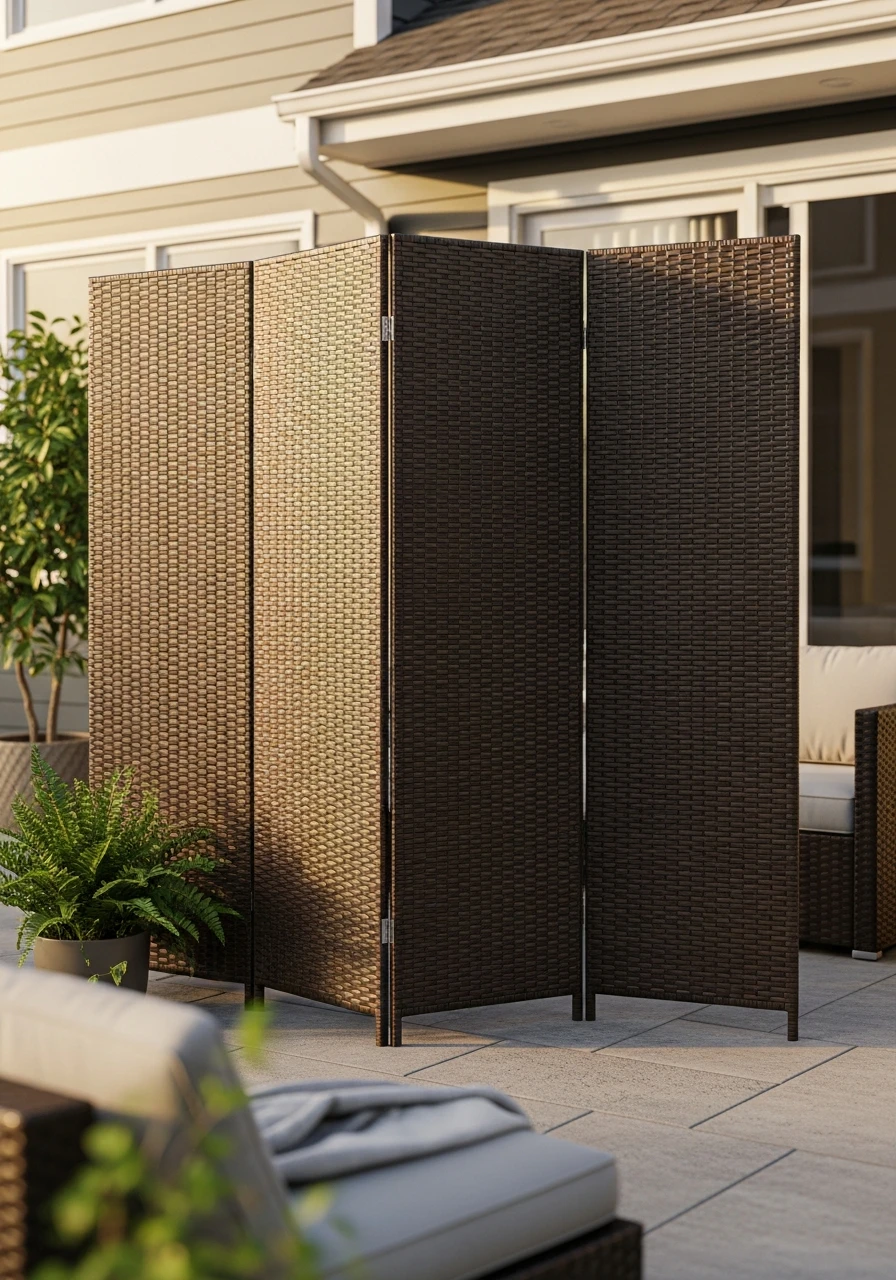
Folding screens can be quickly opened, closed, or stored away as you need them, perfect for adjustable privacy. They are especially useful if you share a patio space or if you only need privacy during certain times of the day. They are super flexible.
- Pick lightweight, weather-resistant materials.
- Fold them flat for easy winter storage.
- Use them to hide unsightly storage bins when guests arrive.
Pro Tip: A folding screen with three or four panels gives you the most versatility in placement.
13. Vertical Slat Divider Panels
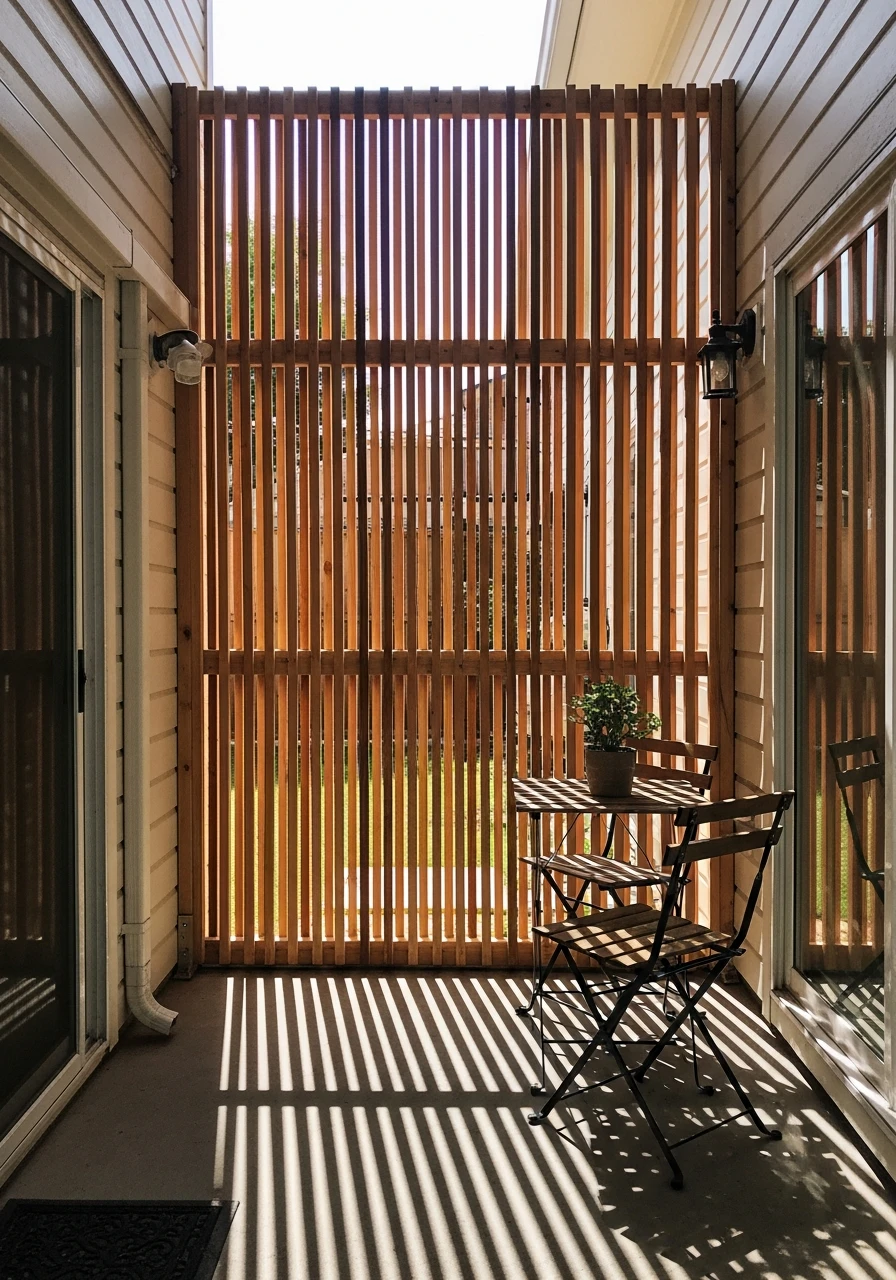
Using vertical slats makes the space visually taller while still blocking views effectively. This design works well for narrow patios where you want to draw the eye up instead of focusing on the limited width. It creates a sense of height.
- Choose a dark stain to highlight the vertical lines.
- Mount them slightly above the patio floor.
- Use them to frame an entryway to the patio.
Pro Tip: Hang string lights vertically down the slats to emphasize the height at night.
14. Lattice Trellis For Vines
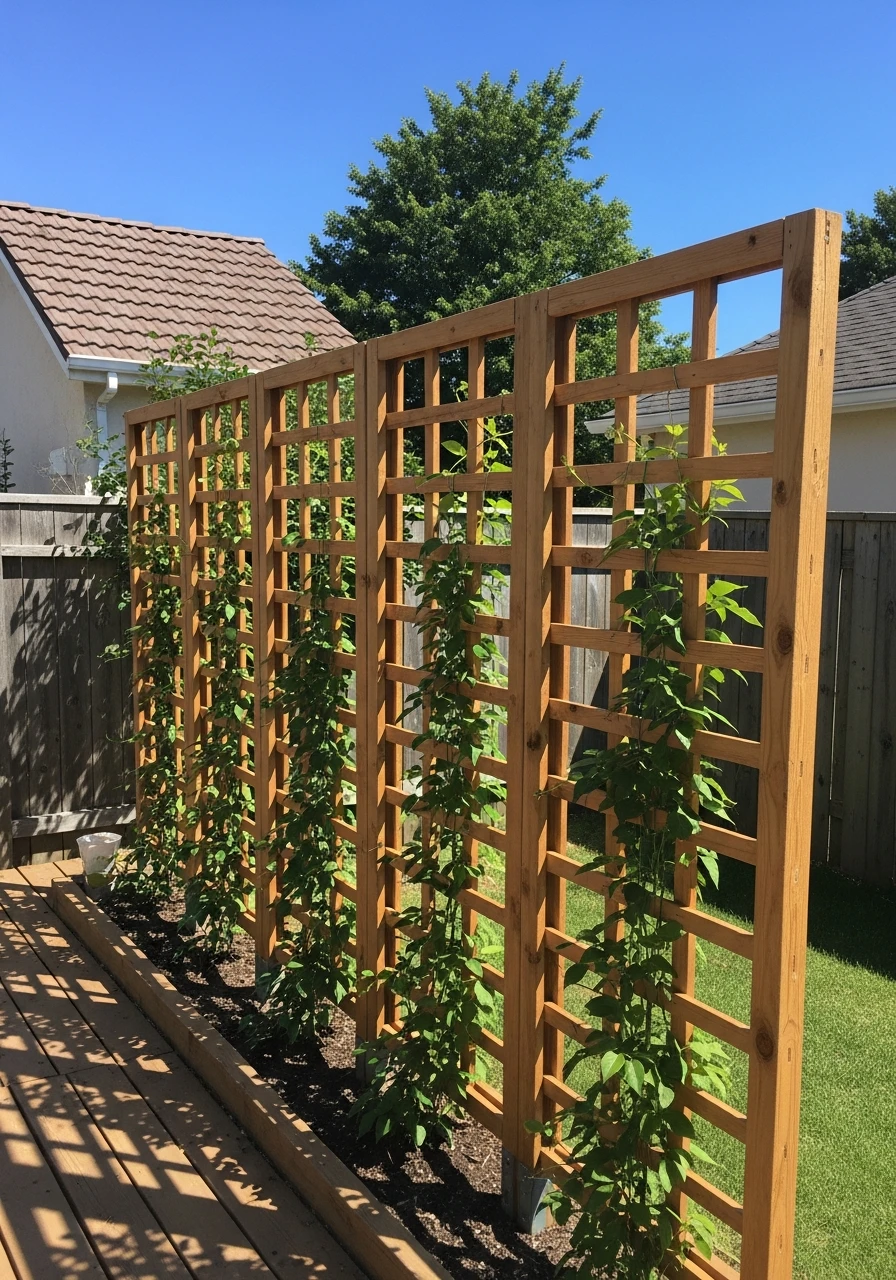
Lattice panels offer partial privacy right away and are designed to support climbing plants. As the greenery grows, it naturally increases the coverage and gives your patio a beautiful, organic feel. This is a budget-friendly option.
- Choose a strong wood or vinyl lattice.
- Plant fast-growing vines like jasmine or clematis.
- Weave the vines through the openings as they grow.
Pro Tip: Painting the lattice black before the vines start growing makes the green leaves look extra vibrant.
15. Natural Reed Roll Screens
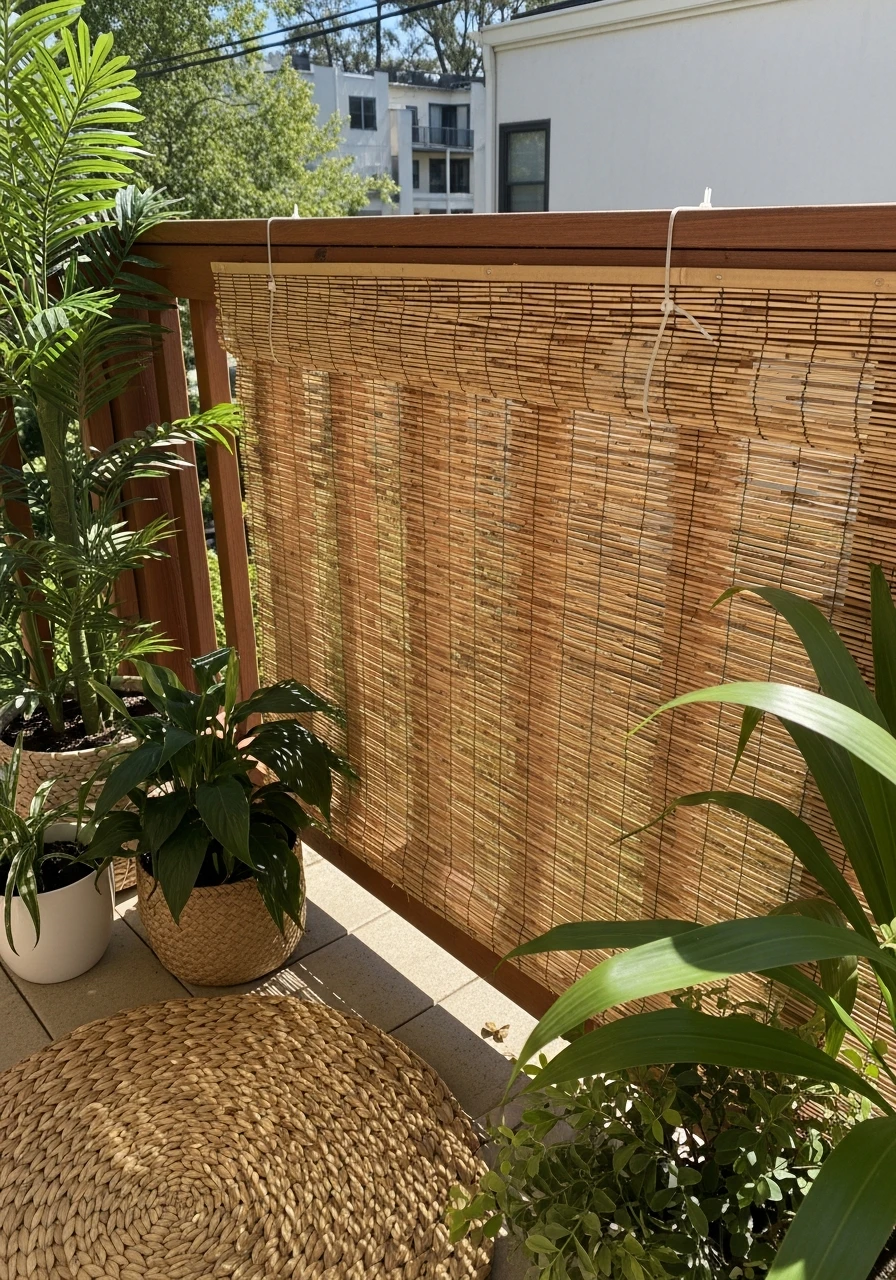
Natural bamboo or reed screens are lightweight and affordable, creating an immediate organic look. They are great for boho or tropical patios and are easy to attach to an existing railing or fence frame. They offer quick, temporary coverage.
- Unroll and secure them using zip ties.
- Place them over chain-link fences for instant decor.
- Double-layer the screen for maximum opacity.
Pro Tip: Roll-up reed screens are perfect for renters because they can be taken down quickly when you move.
16. Soft Fabric Privacy Panels
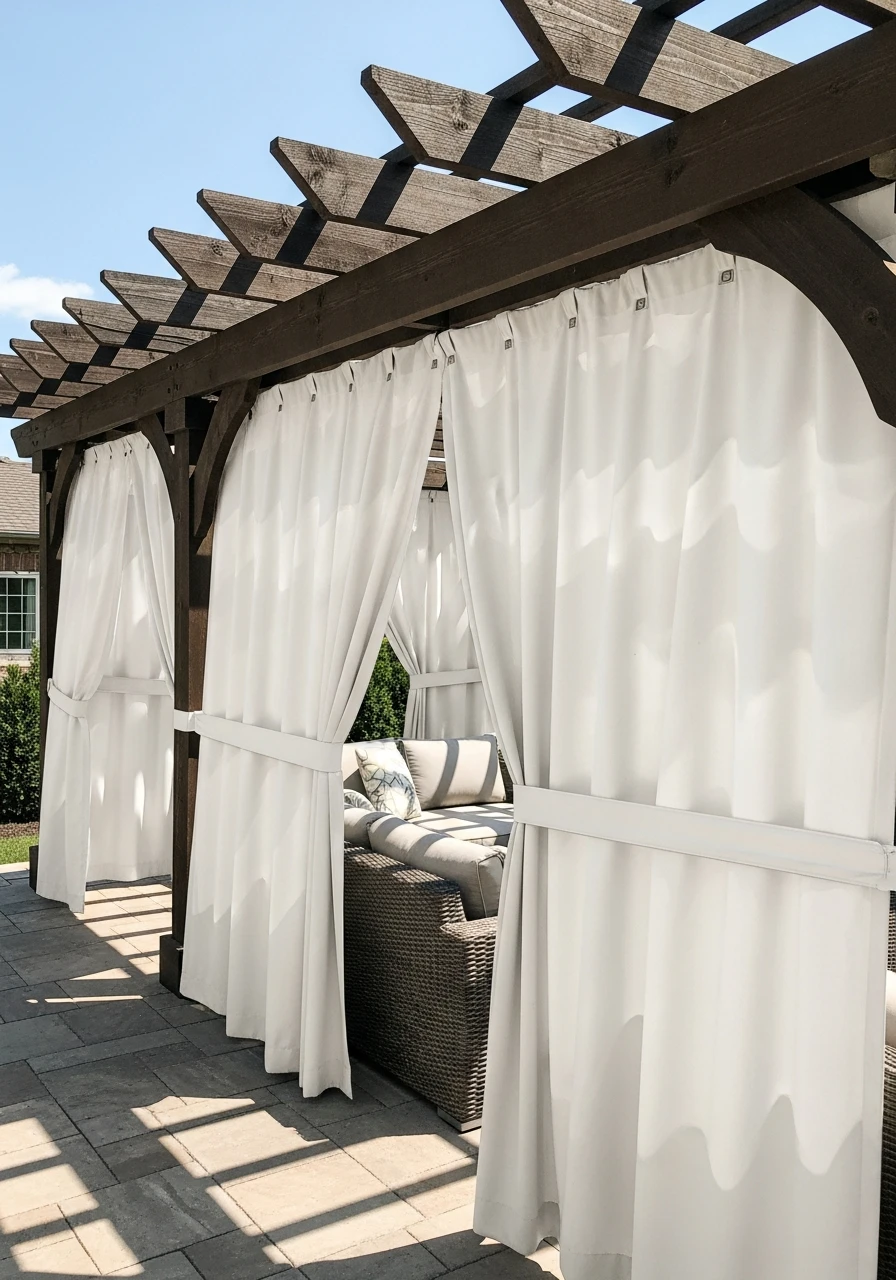
Weather-resistant fabric panels soften the patio space while adding easy privacy. They work best in covered patios or pergolas where they are protected from the worst rain. They add a cozy, resort-like feel.
- Choose UV-resistant outdoor fabric.
- Select a neutral color like cream or gray.
- Hang them from simple wire cables.
Pro Tip: Use a weighted chain inside the bottom hem of the fabric panel to keep it from blowing around in the wind.
17. Side Retractable Privacy Screens
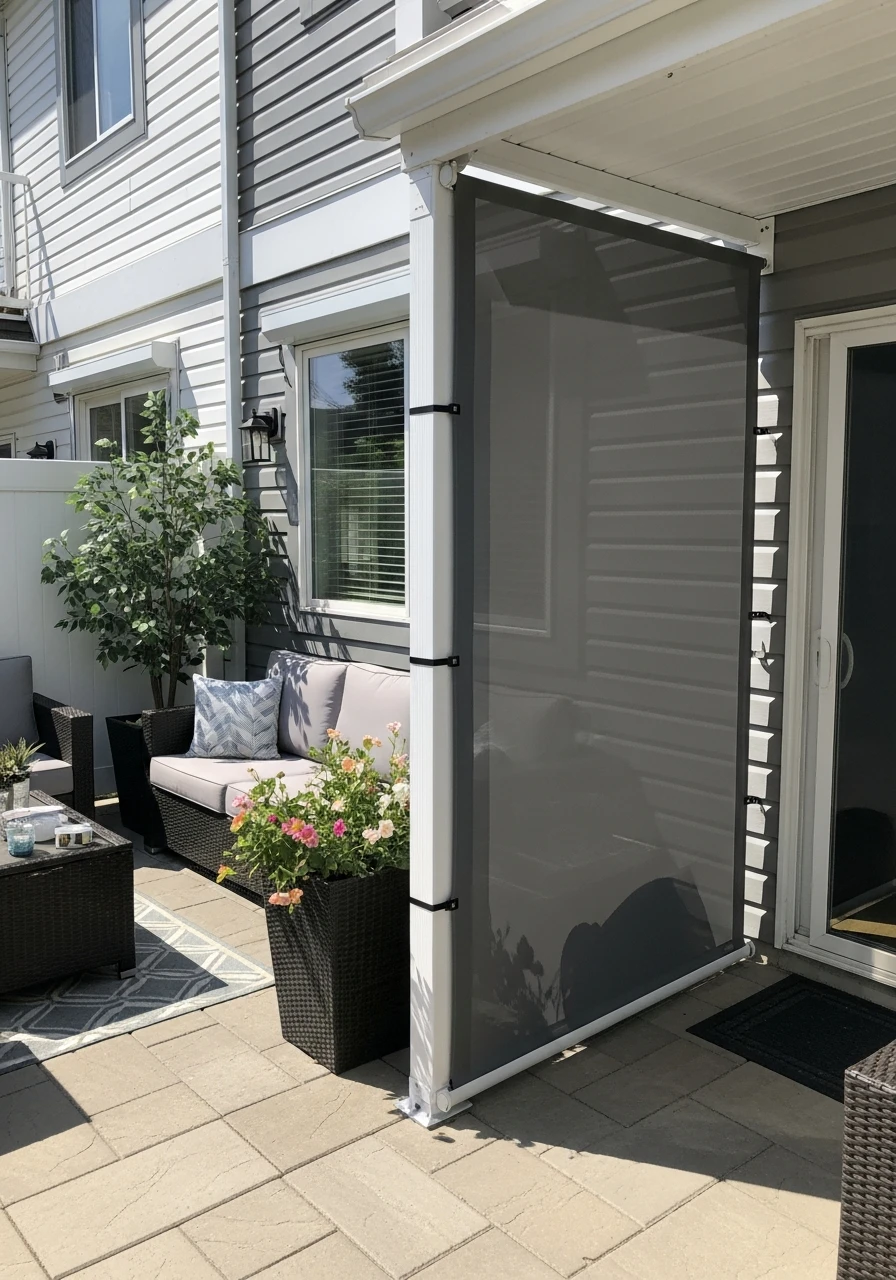
Retractable side screens roll out like an awning and let you control privacy levels instantly. They are ideal for patios that need protection from wind, sun, and neighbor views all in one system. Just pull and hook when needed.
- Install the screen on a solid wall or post.
- Look for models that lock securely into place.
- Retract them fully when not in use to protect the fabric.
Pro Tip: These are perfect for side-by-side townhouse patios where you share a wall with a neighbor.
18. Rolling Patio Partitions
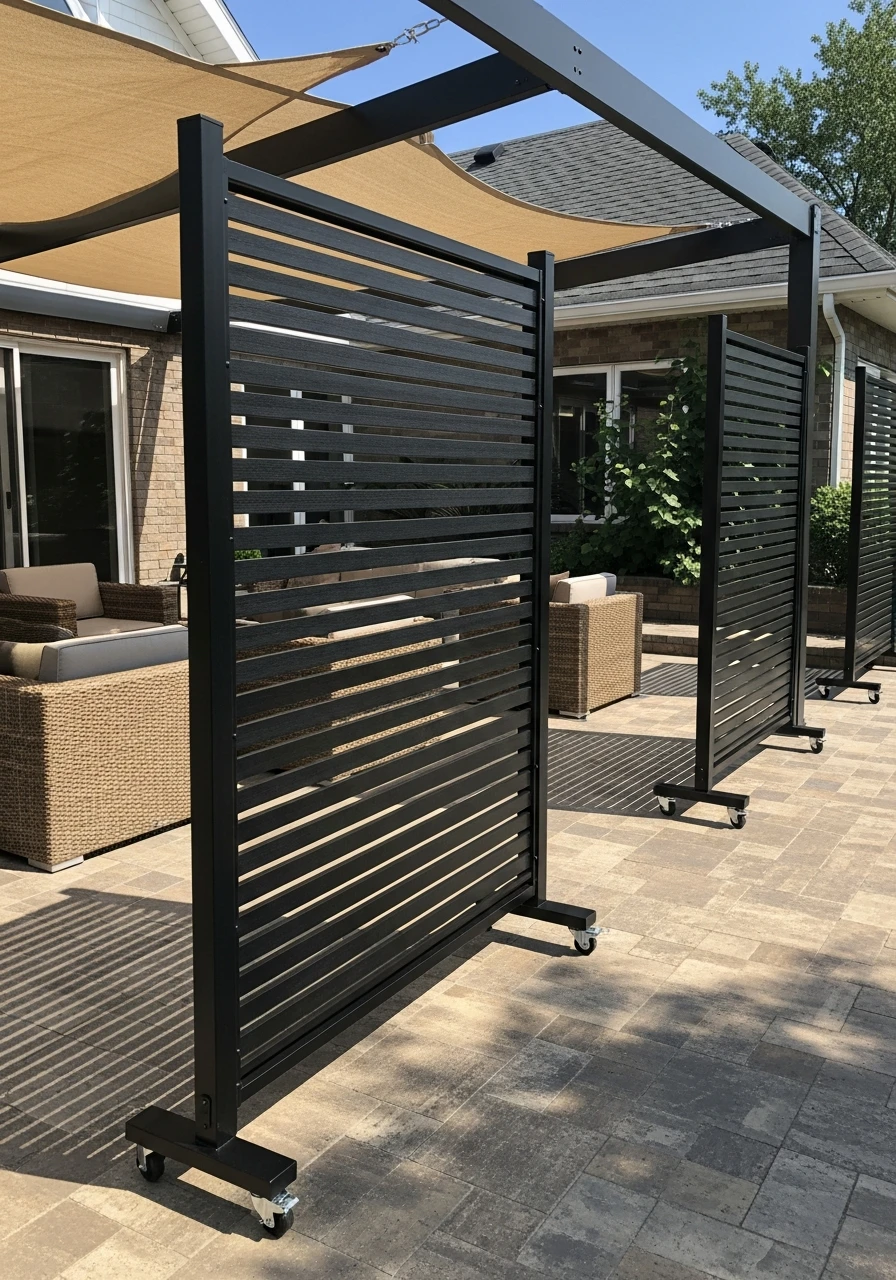
Mobile privacy partitions are built on wheels, allowing you to move them easily based on your seating arrangement or party layout. They are essential for multifunctional patios used for both relaxing and entertaining. They offer great flexibility.
- Ensure the wheels have a locking mechanism.
- Use them to hide a grilling station temporarily.
- Choose a design with built-in handles for easy pushing.
Pro Tip: A rolling partition can also serve as a backdrop for taking photos during a party.
19. Mirror Panels Trick the Eye
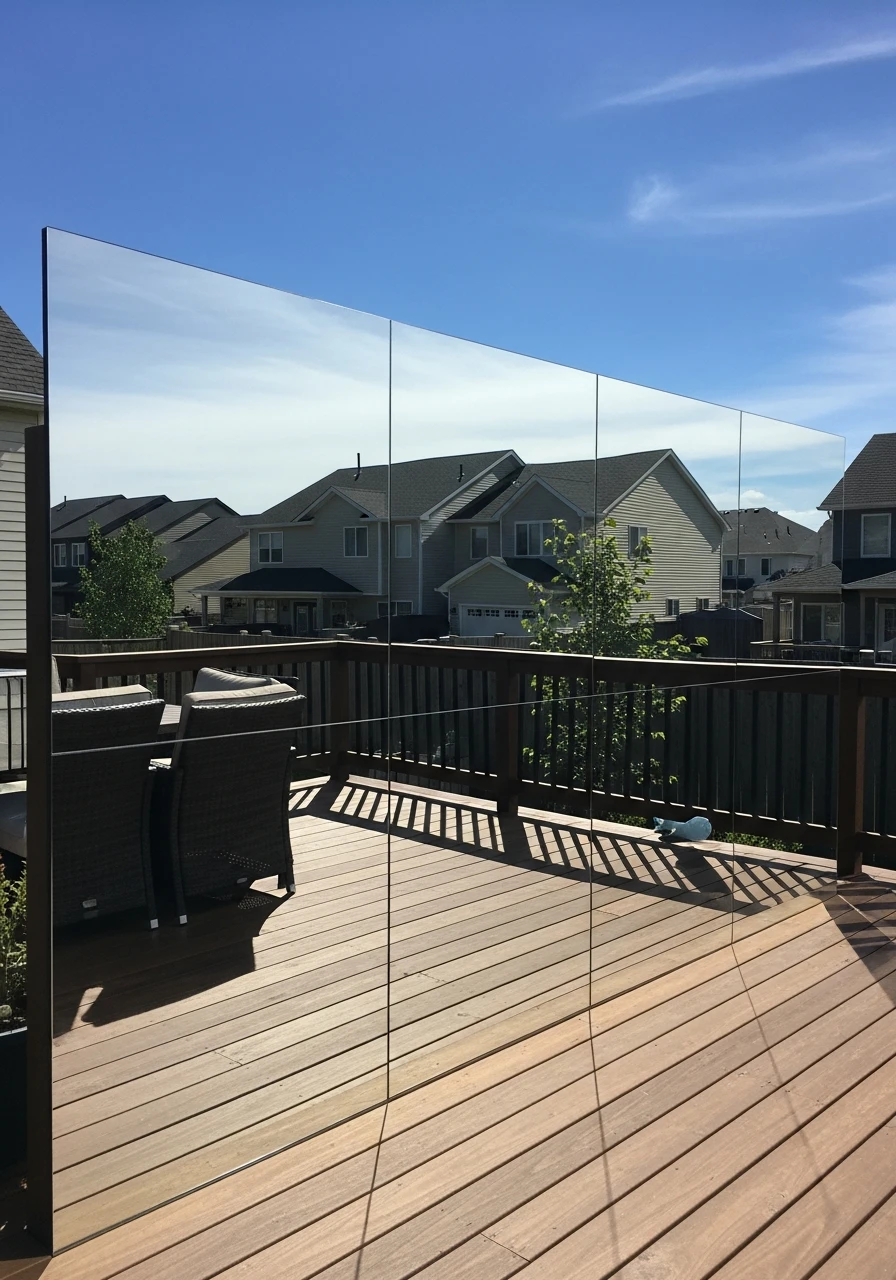
Want privacy without feeling locked in? Reflective panels are a sneaky way to keep nosy neighbors out while bouncing light back onto your patio. It looks like a mirror from the outside, but gives you a solid wall of protection.
- Attach to existing fences or railings.
- Choose shatterproof acrylic for safety.
- Reflects view back at the viewer (the neighbor!).
- Makes small patios feel bigger.
Pro Tip: For maximum effect, place the panels opposite a nice view (like your garden) so the neighbors see that instead of you.
20. Statement Art Privacy Screens
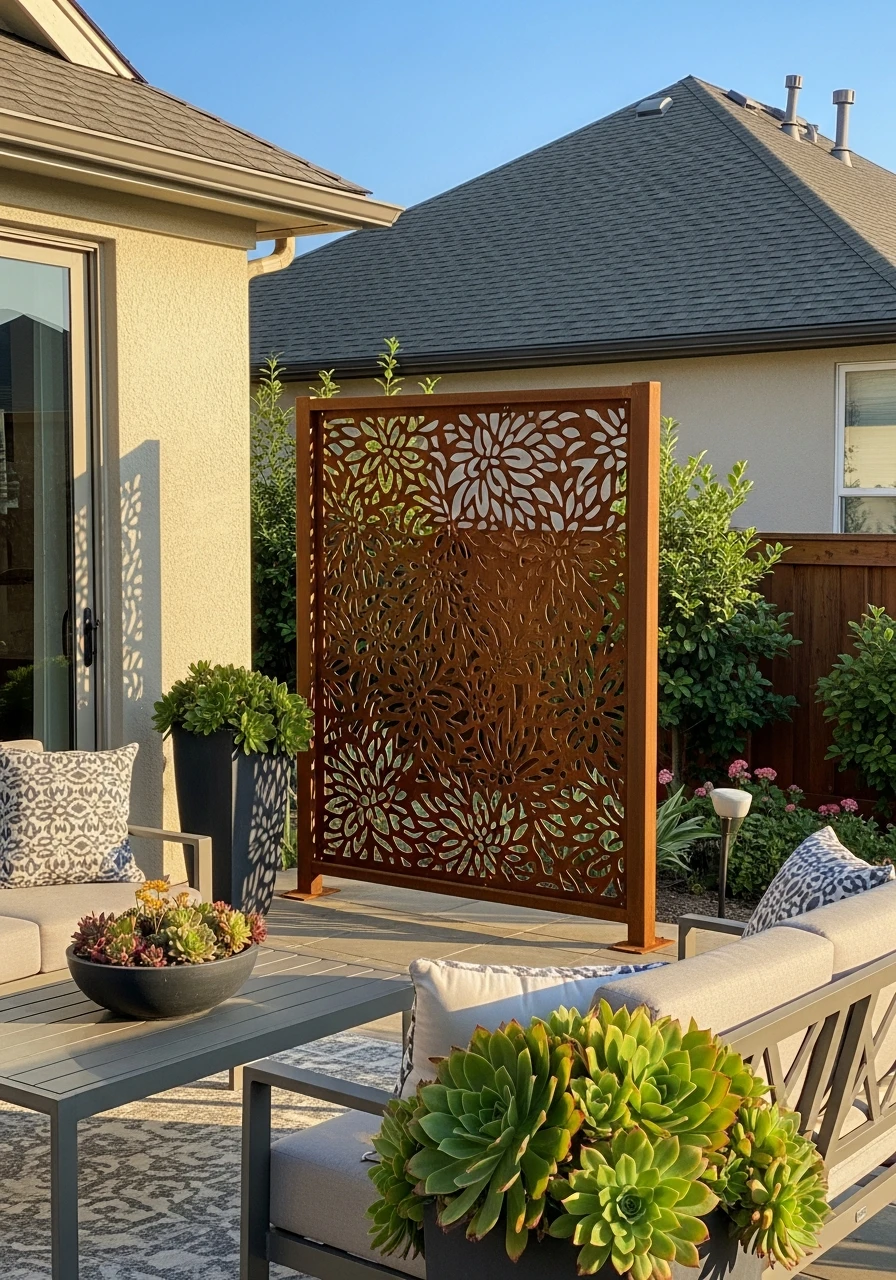
Art-style privacy screens serve two jobs: they act as a visual barrier and a beautiful focal point. They are perfect for patios where aesthetics are just as important as blocking the view. Choose a screen that fits your personal style.
- Select screens with unique, abstract designs.
- Use a single screen as a dramatic wall feature.
- Pair the metal finish with your patio furniture.
Pro Tip: Hang a tiny spotlight above the screen to highlight the pattern after sundown.
21. Pergola With Side Panels
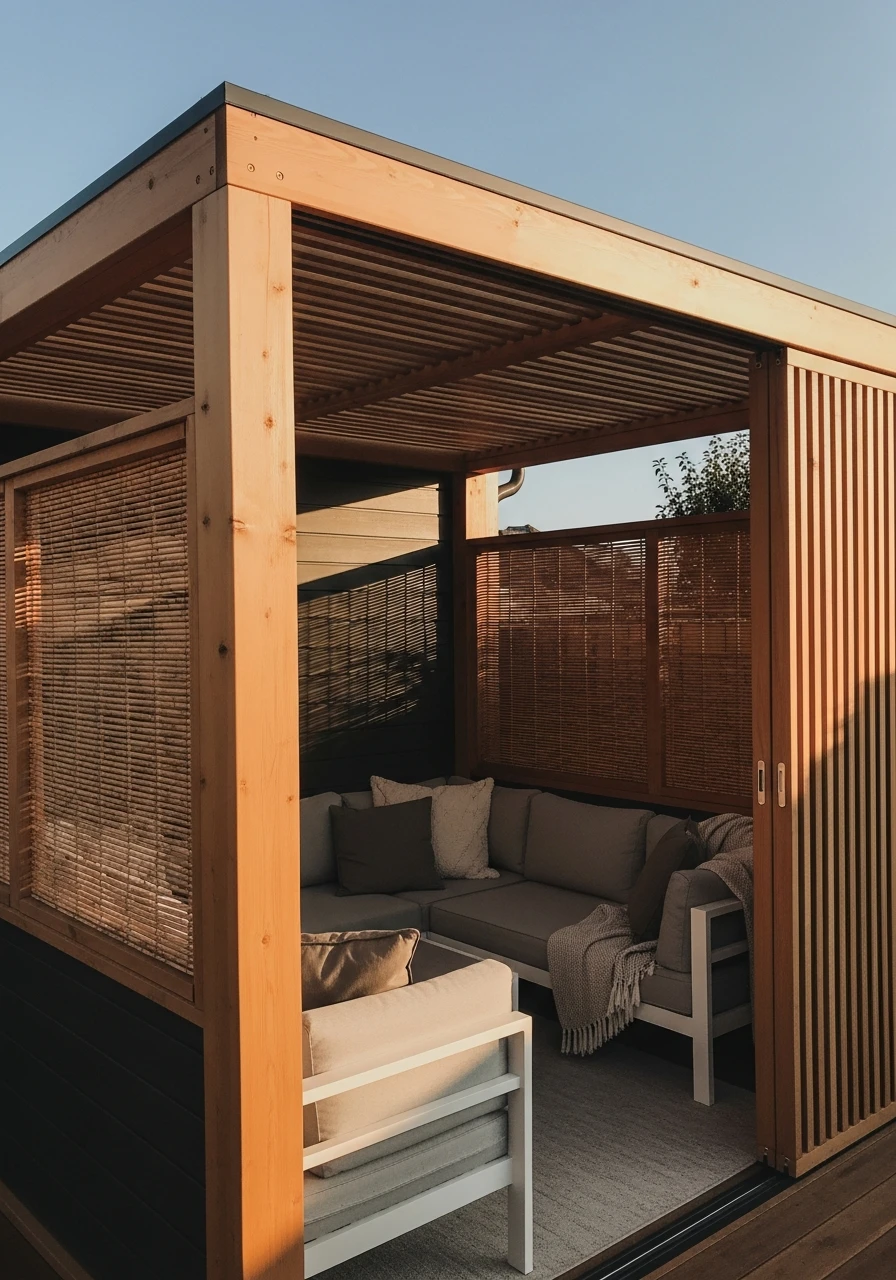
Adding side panels or screens to your existing pergola creates a semi-enclosed, cozy patio space. This smart approach combines overhead shade, structural definition, and privacy all at once. It feels like an outdoor room.
- Use lattice panels on one or two sides.
- Train vines up the pergola posts.
- Install sheer curtains inside the panels for extra softness.
Pro Tip: If you are buying a new pergola, choose one that is already designed to accept screw-in privacy panels.
22. Adjustable Louvered Walls
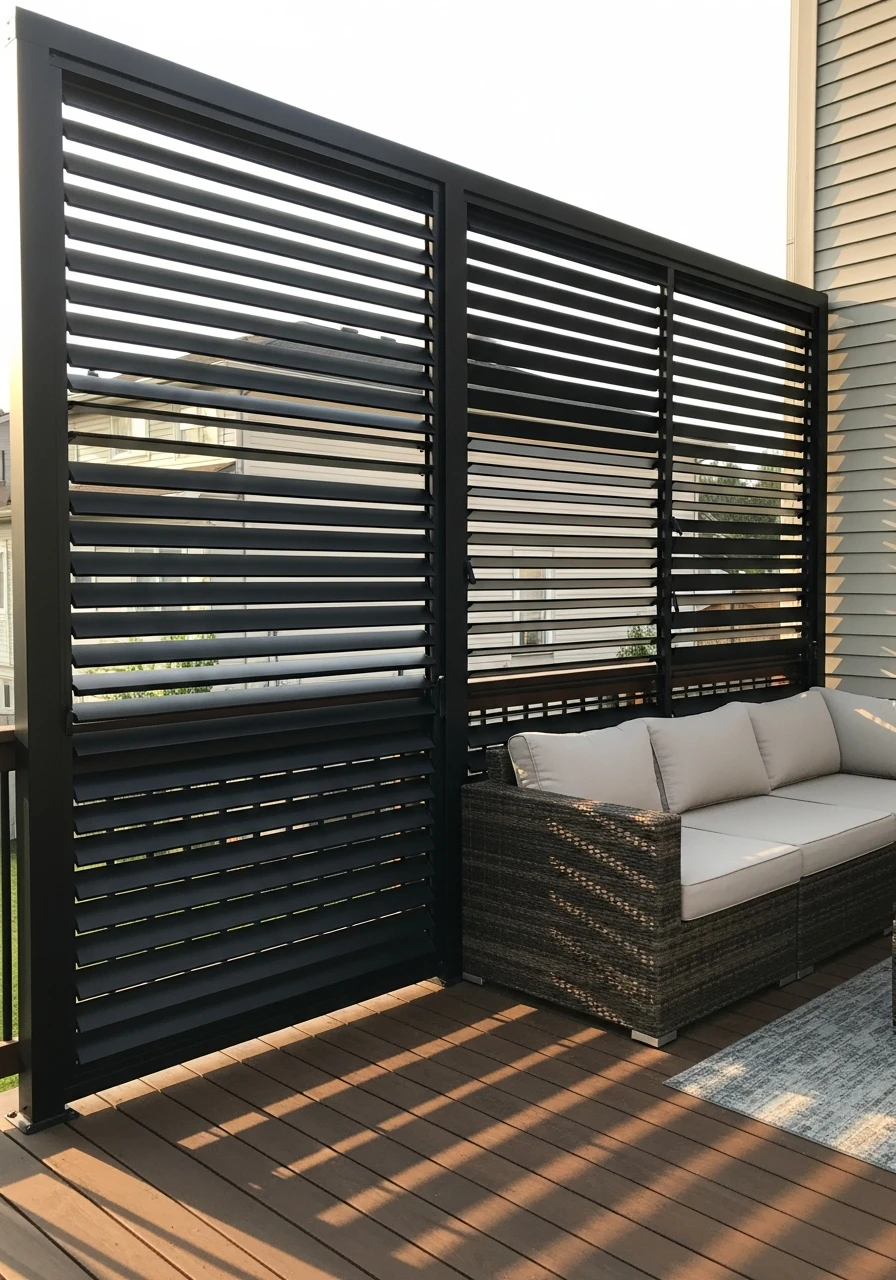
Louvered walls have slats that you can adjust, letting you control the amount of airflow and visibility. They are ideal for patios that need flexible privacy throughout the day as the sun or neighbors move. Tilt them closed for total privacy.
- Choose aluminum or composite louvers for easy movement.
- Angle them to block the lowest sun rays.
- Use them near a dining table for adjustable shade.
Pro Tip: Louvered systems can be expensive, so use them only on the side where the view is the worst.
23. Awning Plus Side Screens
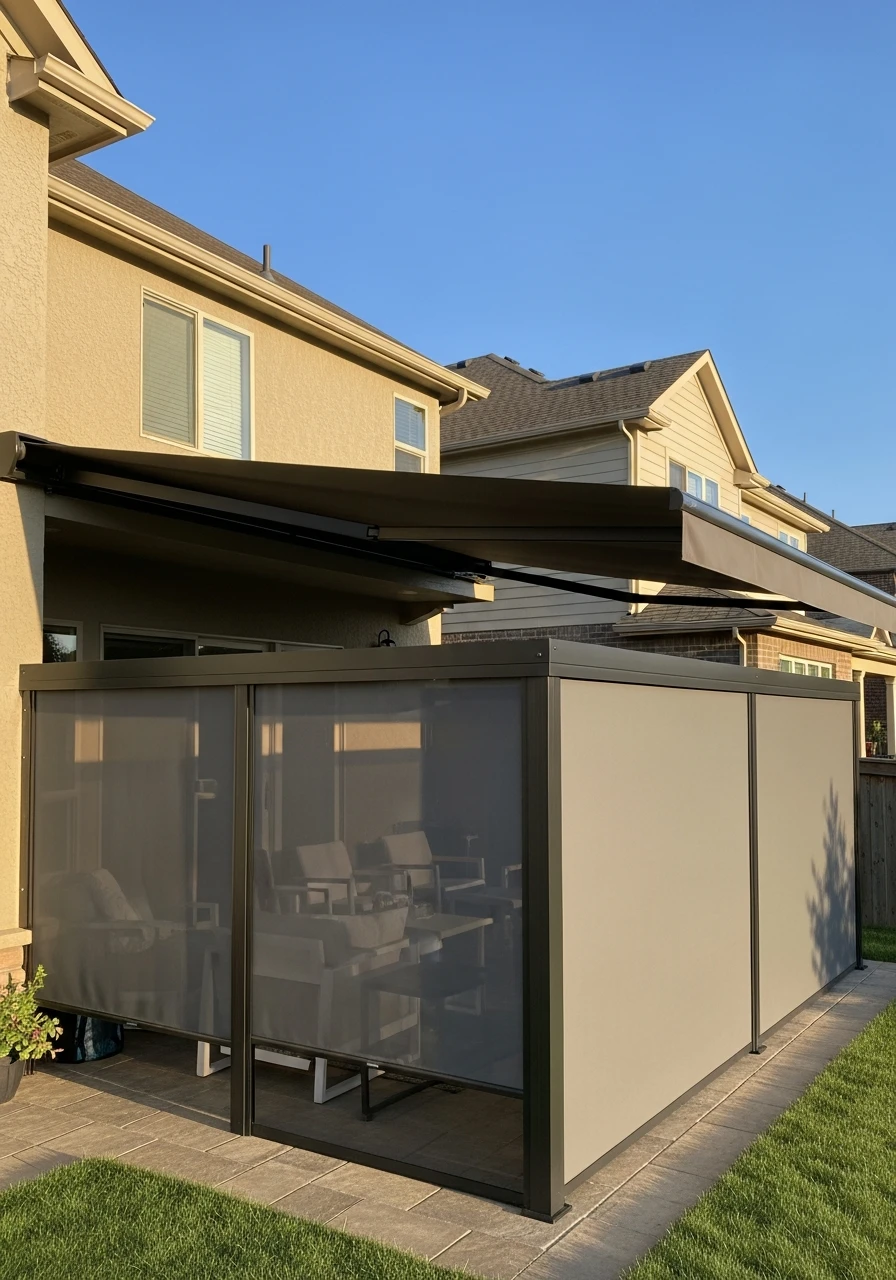
This setup gives you overhead shade and side privacy at the same time, making it super useful for exposed patios. It’s especially good if your patio gets hit by sun or neighboring views from two different directions. Look for weather-grade fabrics.
- Install a retractable awning for overhead coverage.
- Attach roll-down mesh screens to the sides.
- Match the colors of the awning and the side screens.
Pro Tip: This solution is often easier and cheaper than building a full permanent roof structure.
24. Overhead Shade Sails
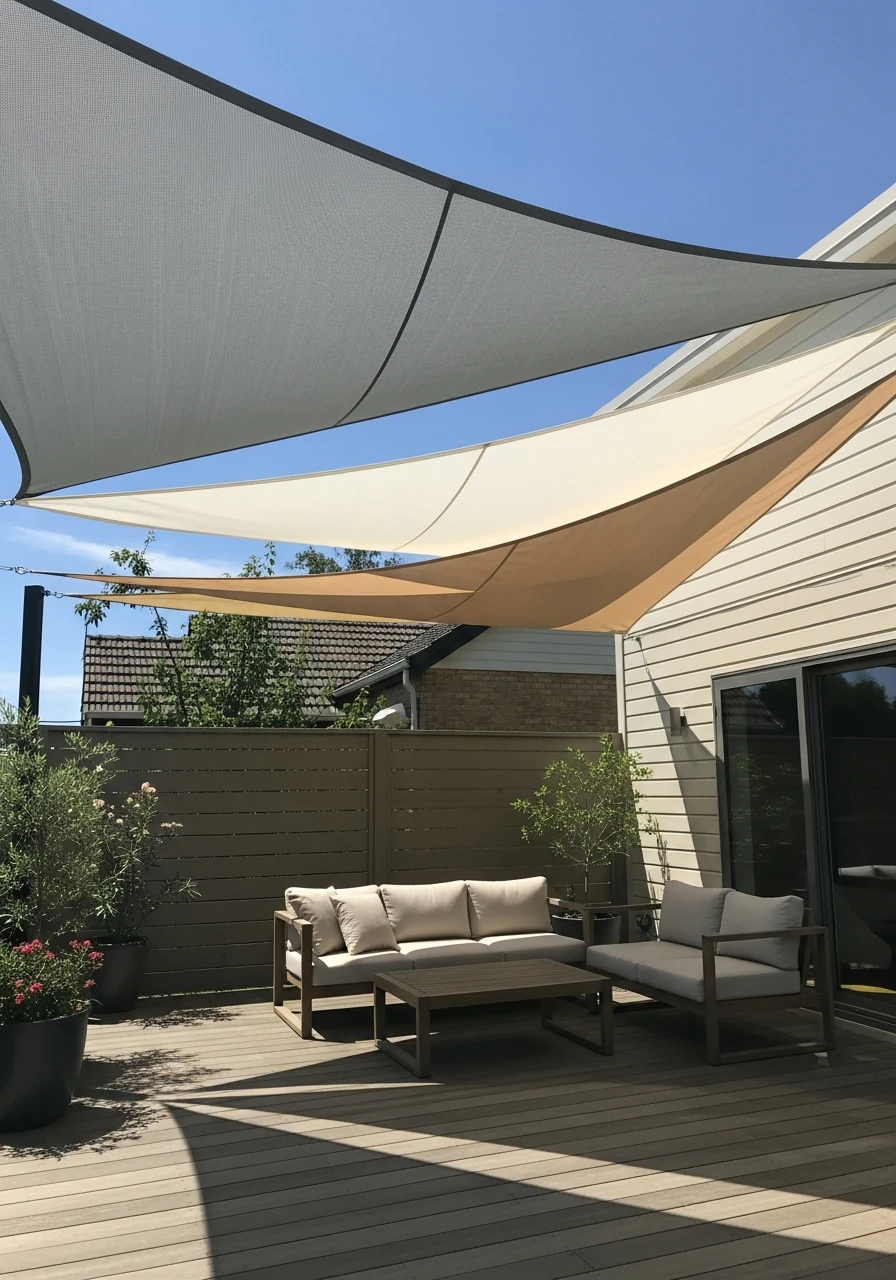
Shade sails are excellent for blocking overhead views from higher buildings, balconies, or second-story windows. They also add a modern, geometric design element and provide comfortable shade. Use multiple sails for better coverage.
- Anchor them tightly using strong posts or wall mounts.
- Layer two or three sails at different heights.
- Choose a high-density, UV-blocking material.
Pro Tip: Shade sails must be taken down during heavy snow or severe wind storms to prevent damage.
25. Fixed Veranda Screens
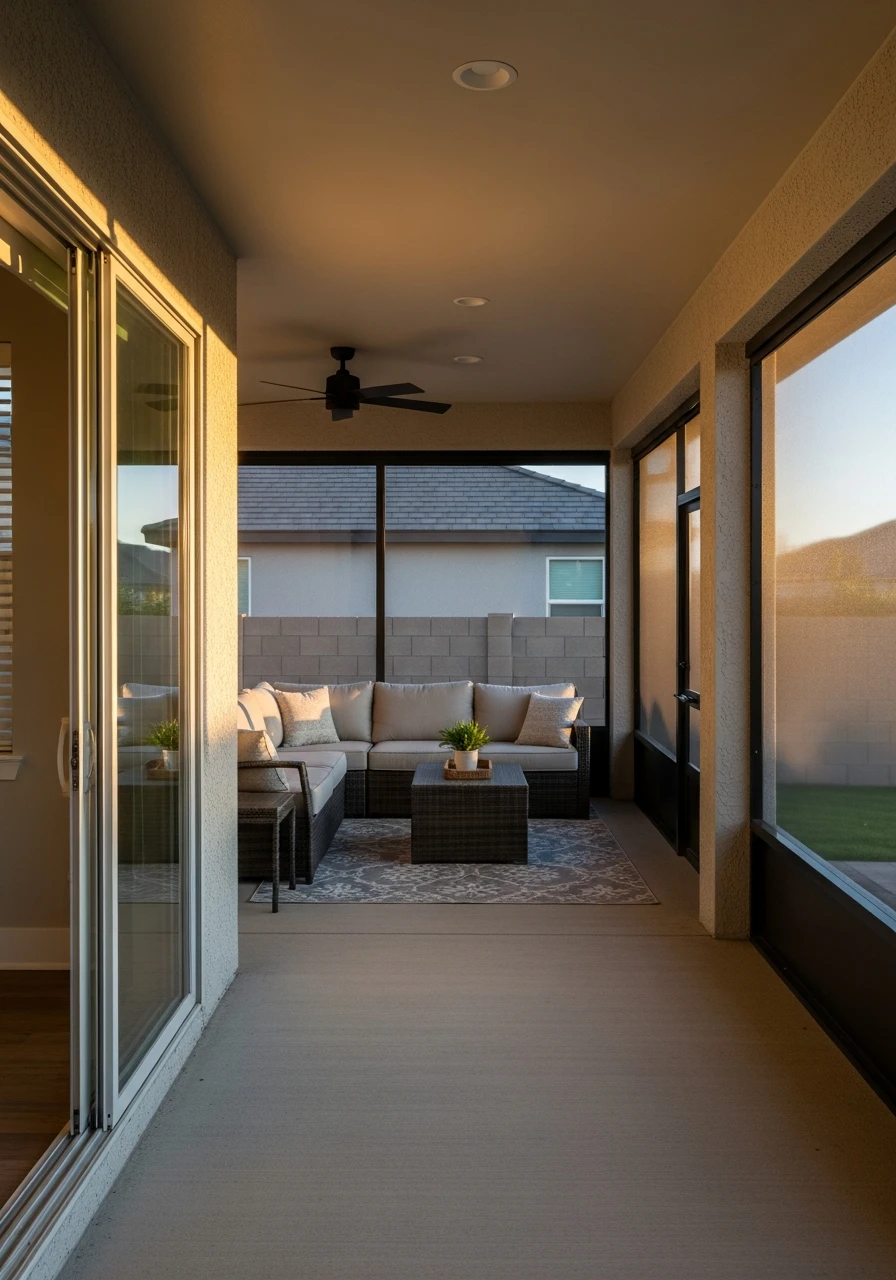
Fixed screens attached to a veranda or covered porch create a private extension of your indoor living space. This is ideal for patios connected directly to the home, making the transition seamless. It protects the space from bugs too.
- Install full-length screens on existing posts.
- Choose dark mesh to minimize visibility from outside.
- Add a locking screen door for secure entry.
Pro Tip: Using screens instead of glass is a much more affordable way to enclose a patio area.
26. Live Evergreen Hedge
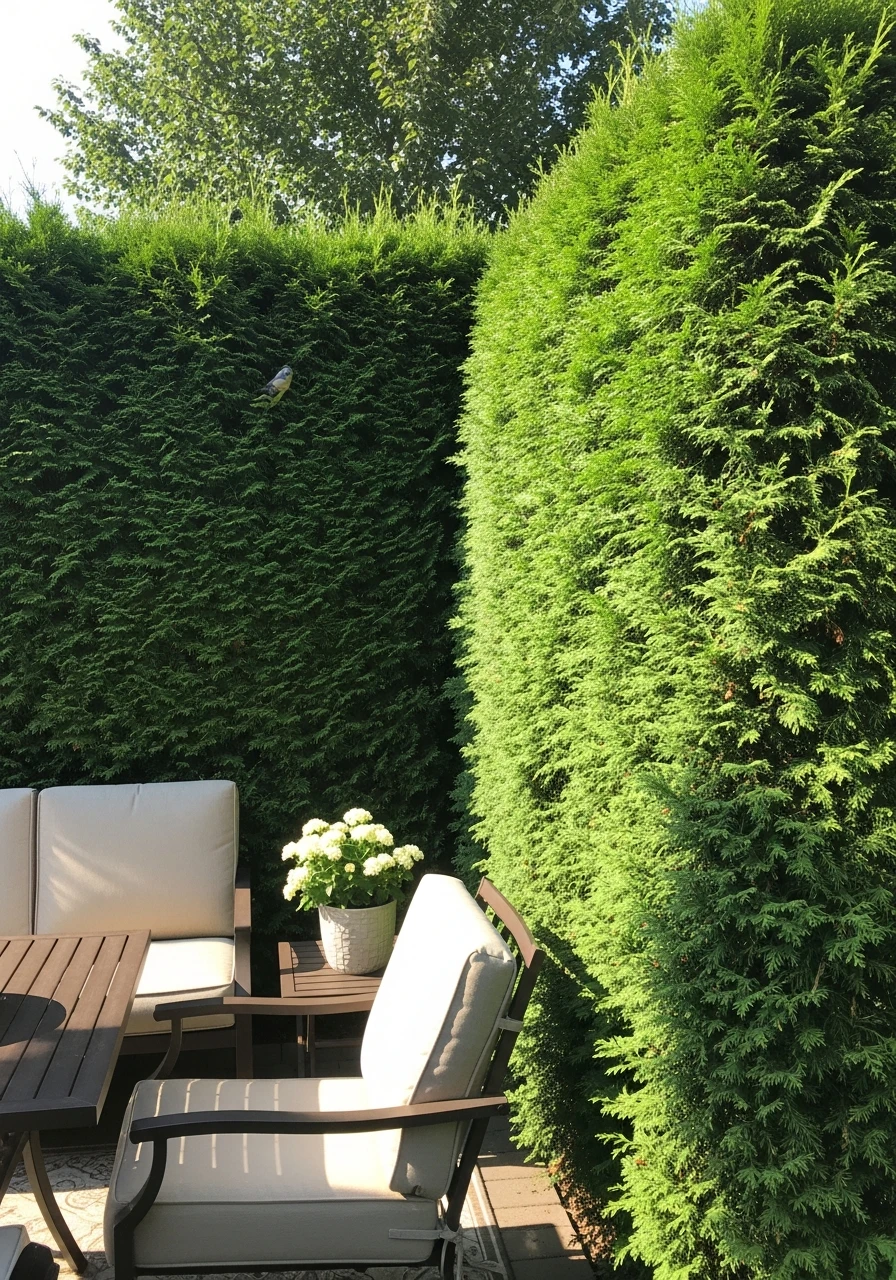
Evergreen hedges provide year-round patio privacy and give your space a soft, natural look. They are perfect if you want a deep green, living barrier instead of a hard wall. They smell great and attract birds.
- Choose dense plants like arborvitae or boxwood.
- Be patient, as hedges take time to grow tall.
- Prune them regularly for a neat, formal look.
Pro Tip: If you plant them close to the fence, they will grow through the structure, adding extra thickness and privacy.
27. Vines On Trellis
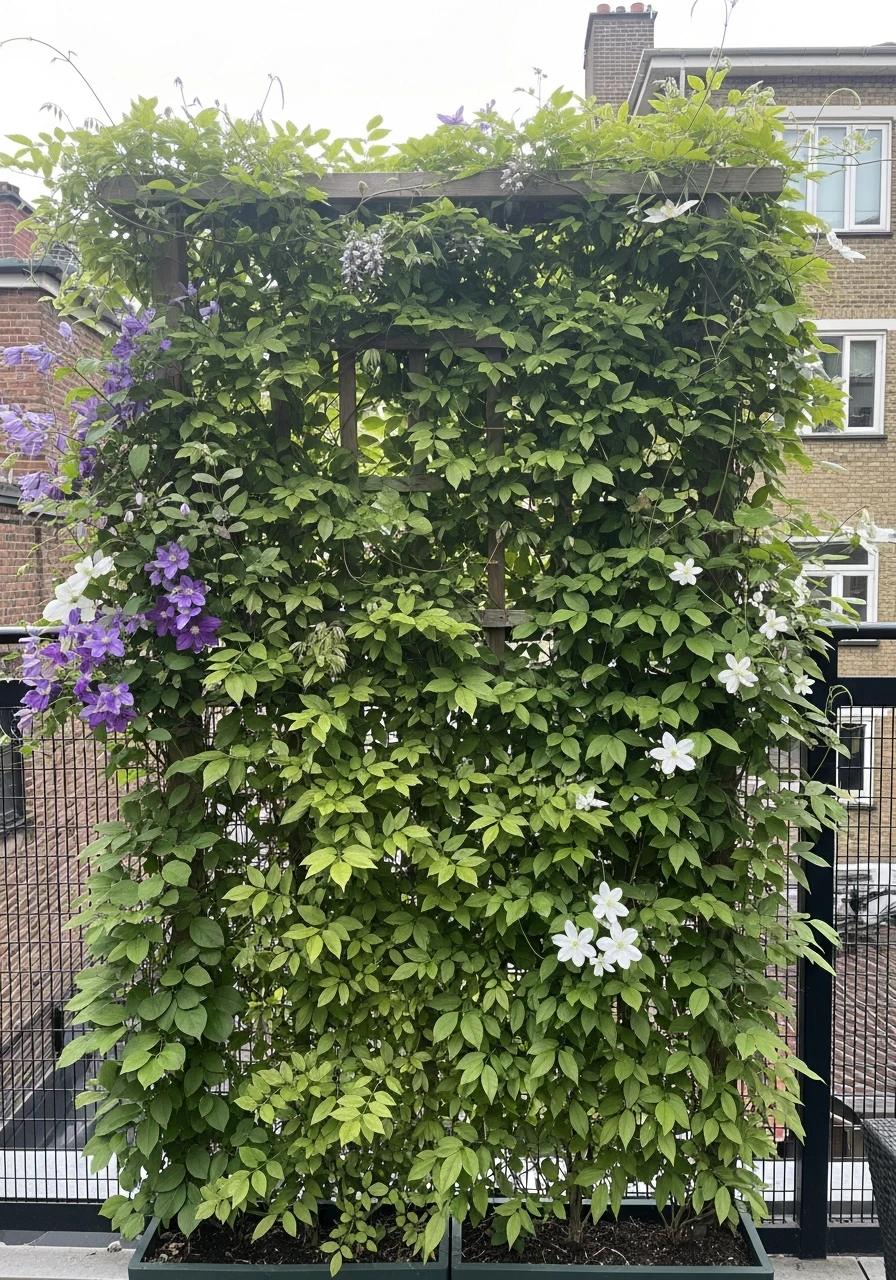
Climbing vines block views while softening any hard structures like fences or walls. This option works especially well for patios with limited floor space, as the greenery grows vertically. The flowers on some vines add color.
- Install a tall, sturdy trellis first.
- Choose perennial vines that return every year.
- Guide the vines gently as they start climbing.
Pro Tip: Honeysuckle is a beautiful, fragrant choice that grows quickly and provides excellent coverage.
28. Instant Hedge Panels
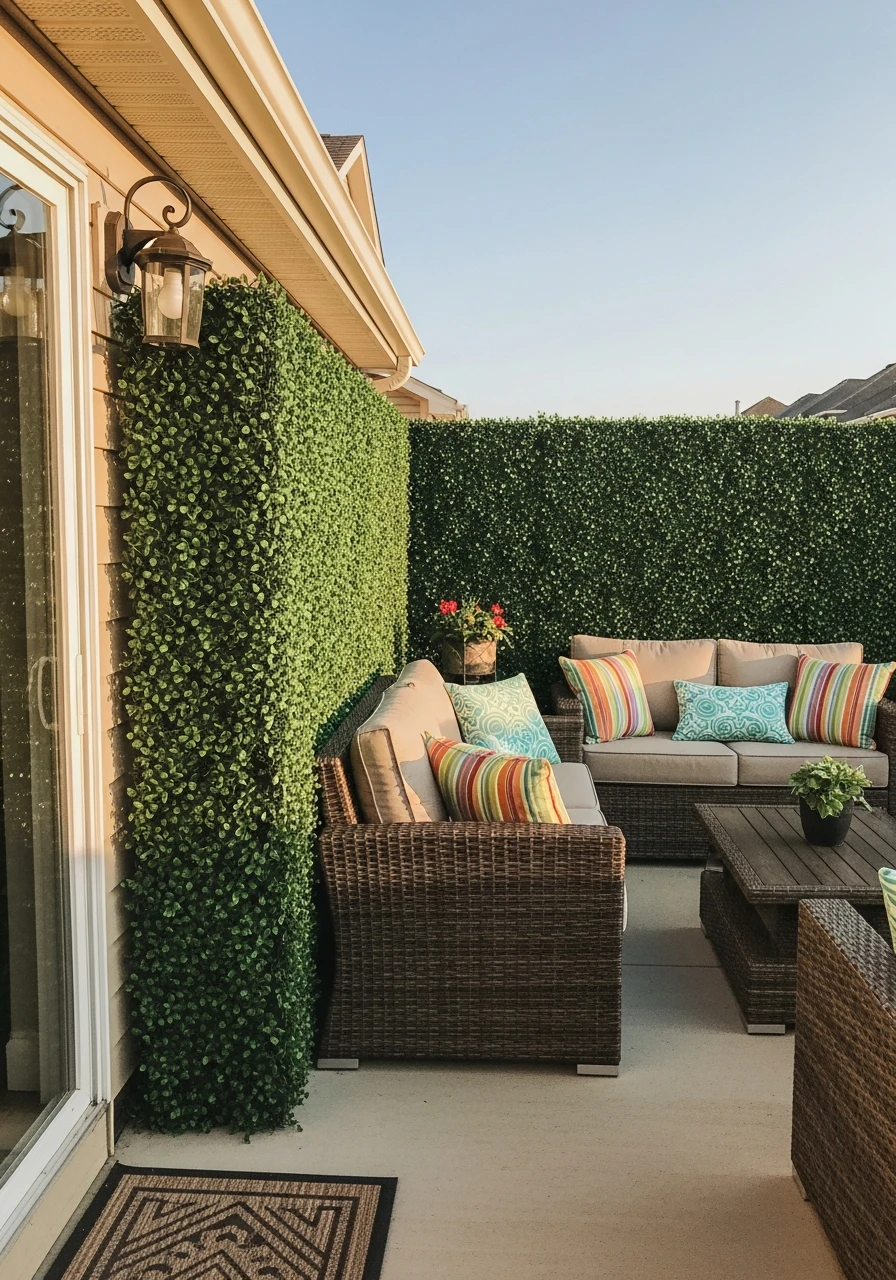
Pre-grown or artificial hedge panels offer immediate privacy without waiting years for plants to mature. They are perfect for quick patio upgrades or for renters who need a temporary, dense green solution. They look surprisingly real now.
- Look for UV-resistant artificial panels.
- Attach them directly to an existing railing or fence.
- Mix in a few real potted plants nearby to enhance the illusion.
Pro Tip: Use faux hedge panels to cover up an ugly concrete wall quickly and affordably.
29. Green Vertical Living Wall
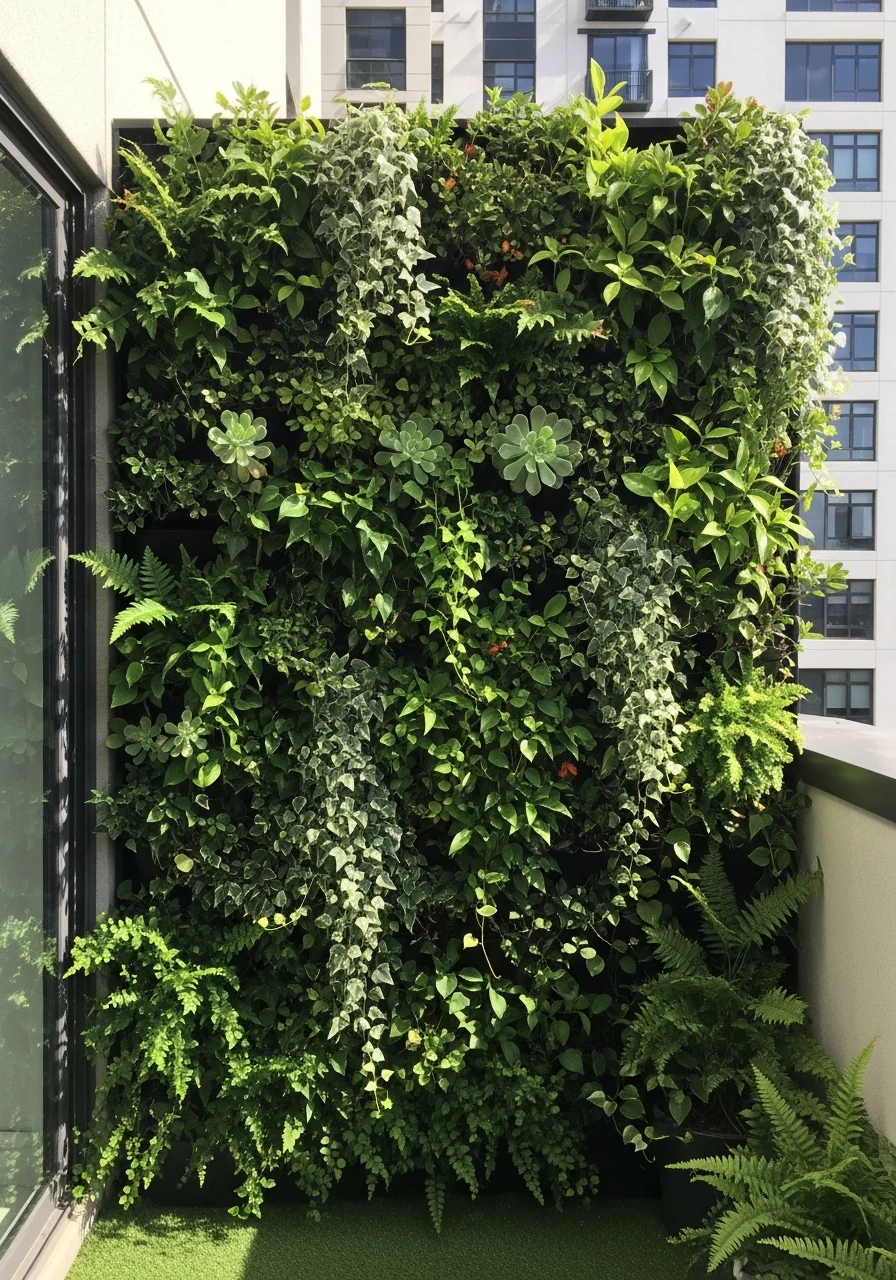
Living walls combine structure and many small plants to create dense, beautiful privacy. They are perfect for modern patios or urban balconies with very limited space. They also help cool down the air naturally.
- Use a modular planter system designed for vertical use.
- Install a simple drip irrigation system.
- Choose low-maintenance succulents or ferns.
Pro Tip: A vertical living wall is a great way to hide an unattractive outdoor utility box or pipe.
30. Tall Potted Trees
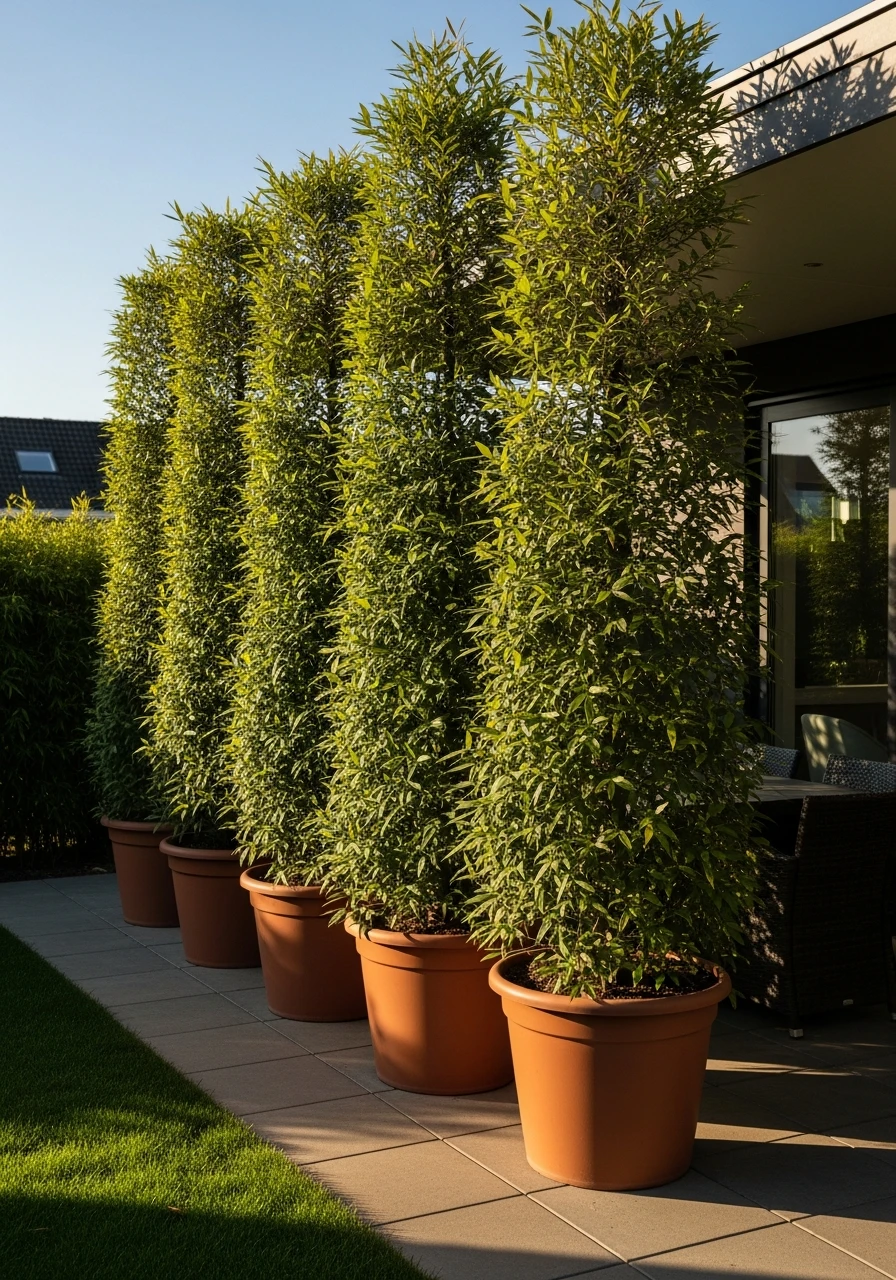
Tall potted trees can be arranged strategically to block specific views or sightlines into your patio. They are flexible and can be repositioned easily when your patio layout changes. Choose trees that are happy in containers.
- Use tall, narrow varieties like Italian cypress.
- Place them directly next to the seating area.
- Choose heavy planters to prevent tipping in the wind.
Pro Tip: Buy planters that are slightly larger than you think you need, as this gives the tree roots room to grow.
31. Grasses In Large Planters
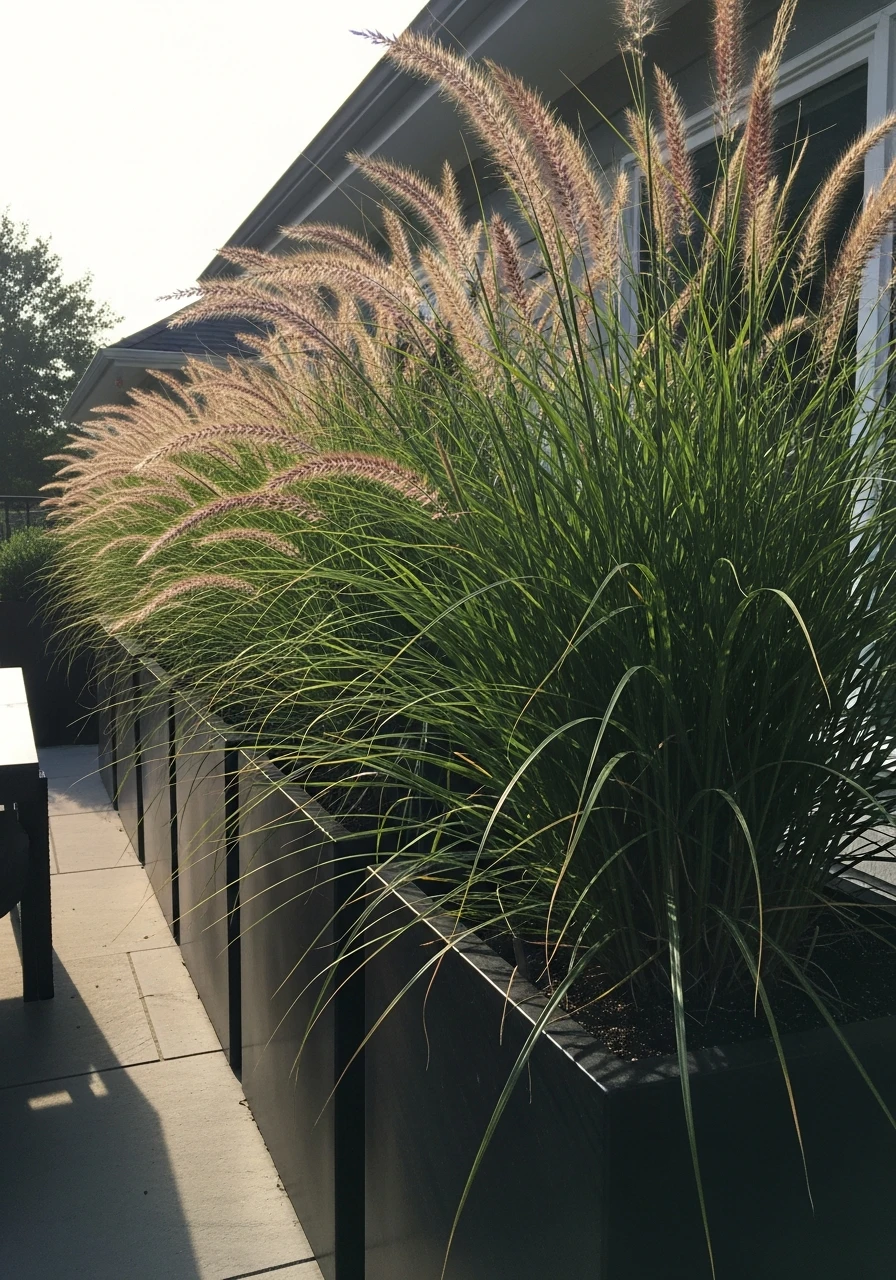
Ornamental grasses add soft, flowing privacy while keeping an open, airy feel to your patio. They are ideal for contemporary patios and look especially beautiful when they sway in windy areas. They offer texture and movement.
- Choose tall varieties like switchgrass or pampas grass.
- Place them in modern, rectangular planters.
- Cut them back hard every spring to encourage new growth.
Pro Tip: The fine blades of the grass blur the sightline without creating a solid, hard barrier.
32. Layered Plant Border
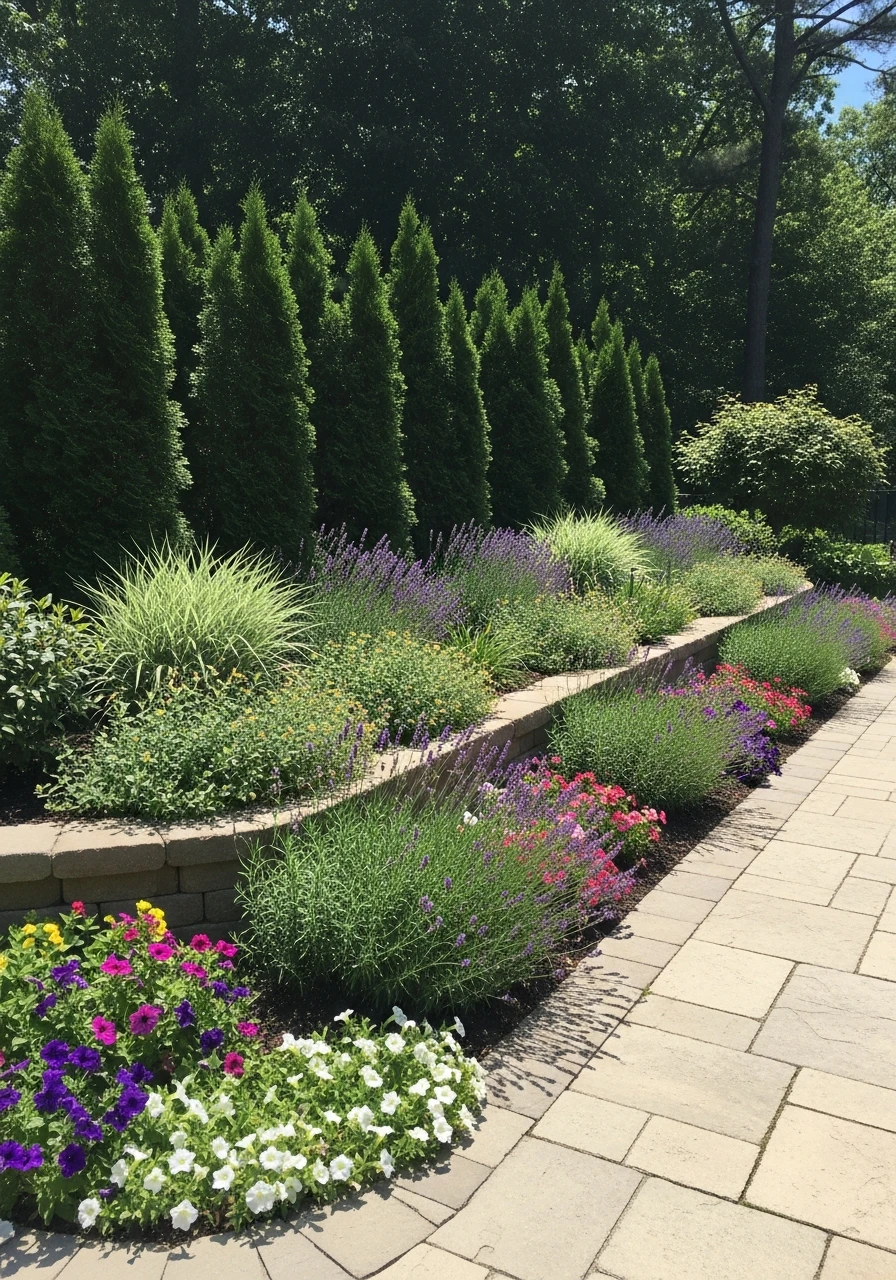
Using plants of different heights creates a natural, soft privacy gradient around your patio. Start with low flowers near the edge and build up to tall shrubs or trees in the back. This works well for large patios with garden space.
- Place the tallest plants farthest from the seating.
- Use varying leaf textures for visual interest.
- Ensure all plants have the same light requirements.
Pro Tip: This layering technique is great for masking an existing, short fence and making it disappear.
33. Raised Planter Beds
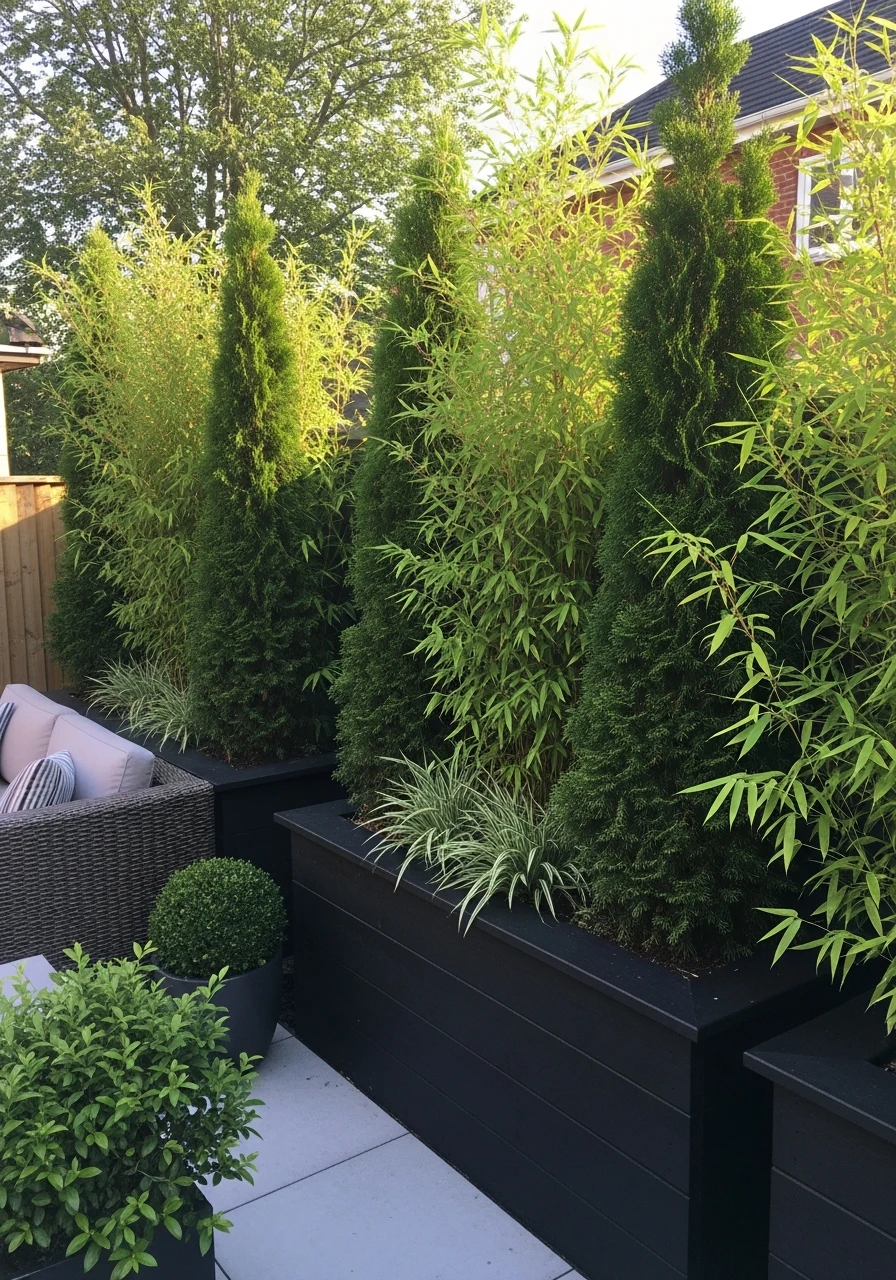
Elevated planter beds add instant height and privacy without requiring permanent walls. They are ideal for patios that need both greenery and serious screening. The raised structure makes gardening easier on your back, too.
- Build beds out of cedar or weather-resistant composite.
- Fill them with tall grasses or slender bamboo.
- Use them to define the patio’s perimeter.
Pro Tip: If you don’t want to buy soil, use light filler material like empty plastic bottles in the bottom of the raised bed.
34. Bamboo In Containers
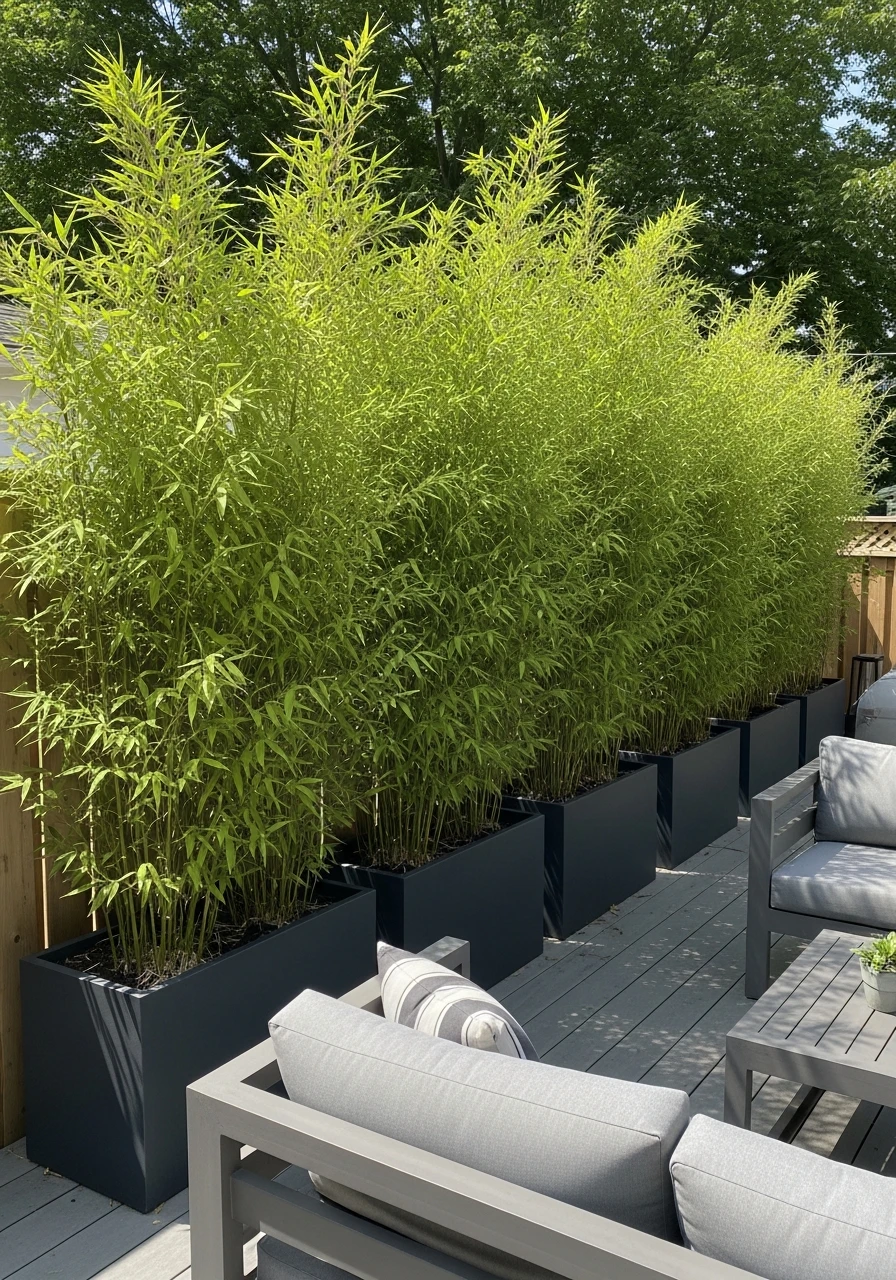
Bamboo grows tall and dense quickly, making it an excellent choice for patio privacy. Containers keep the growth controlled, preventing it from spreading into your neighbor’s yard, while maintaining flexibility. Choose a clumping variety.
- Use a large, non-porous container to hold moisture.
- Ensure the bamboo gets plenty of water.
- Group three containers together for a dense screen.
Pro Tip: Bamboo looks best when paired with modern, smooth planters in white or dark gray.
35. Espaliered Fruit Trees
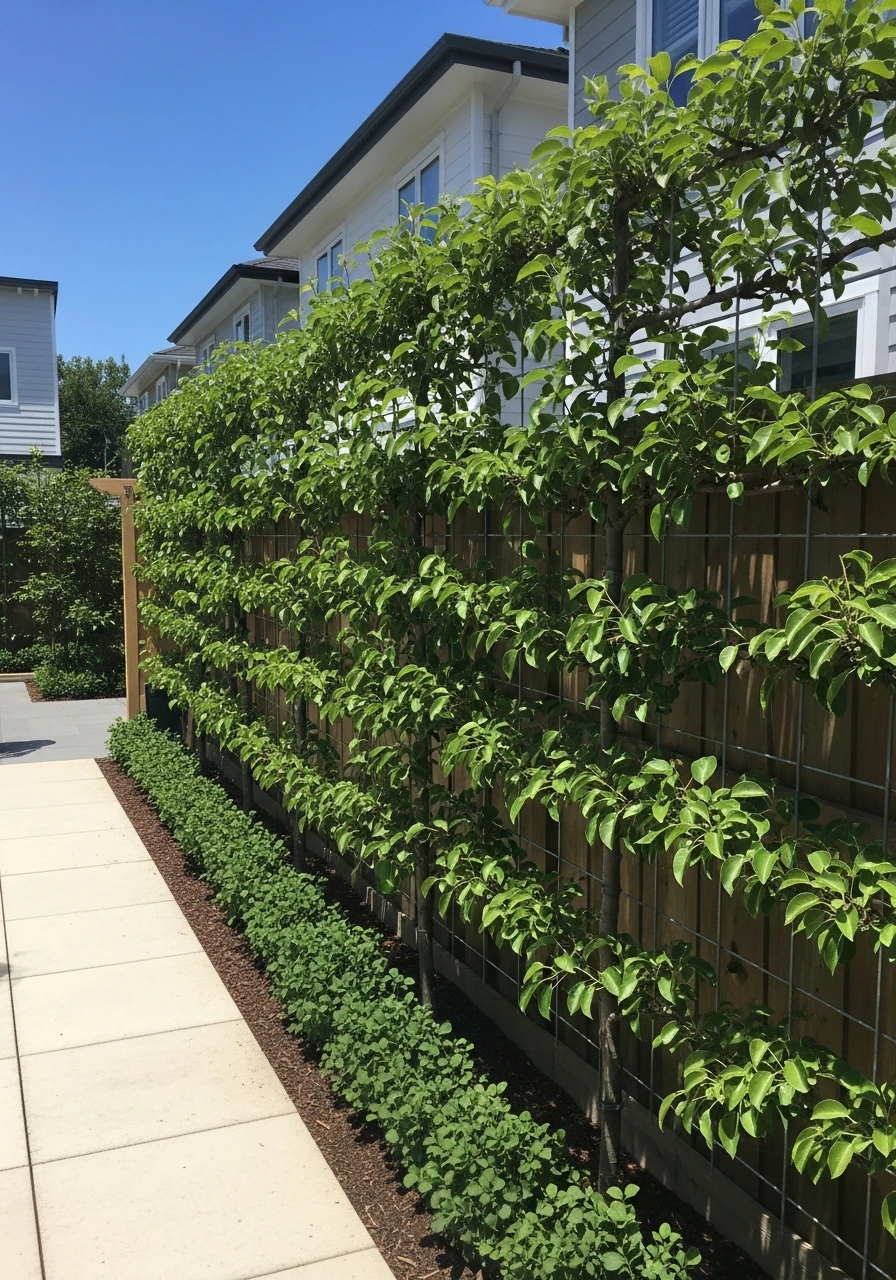
Espaliered trees are trained to grow flat against a support, providing elegant privacy in a very shallow space. This option is ideal for narrow patios or tight property boundaries where traditional hedges won’t fit. It looks very sophisticated.
- Choose fruit trees like apple or pear.
- Install a wire system to guide the branches.
- Prune carefully to maintain the flat shape.
Pro Tip: This method takes time, so use a temporary screen while the tree is growing into its shape.
36. Sheer Outdoor Curtains
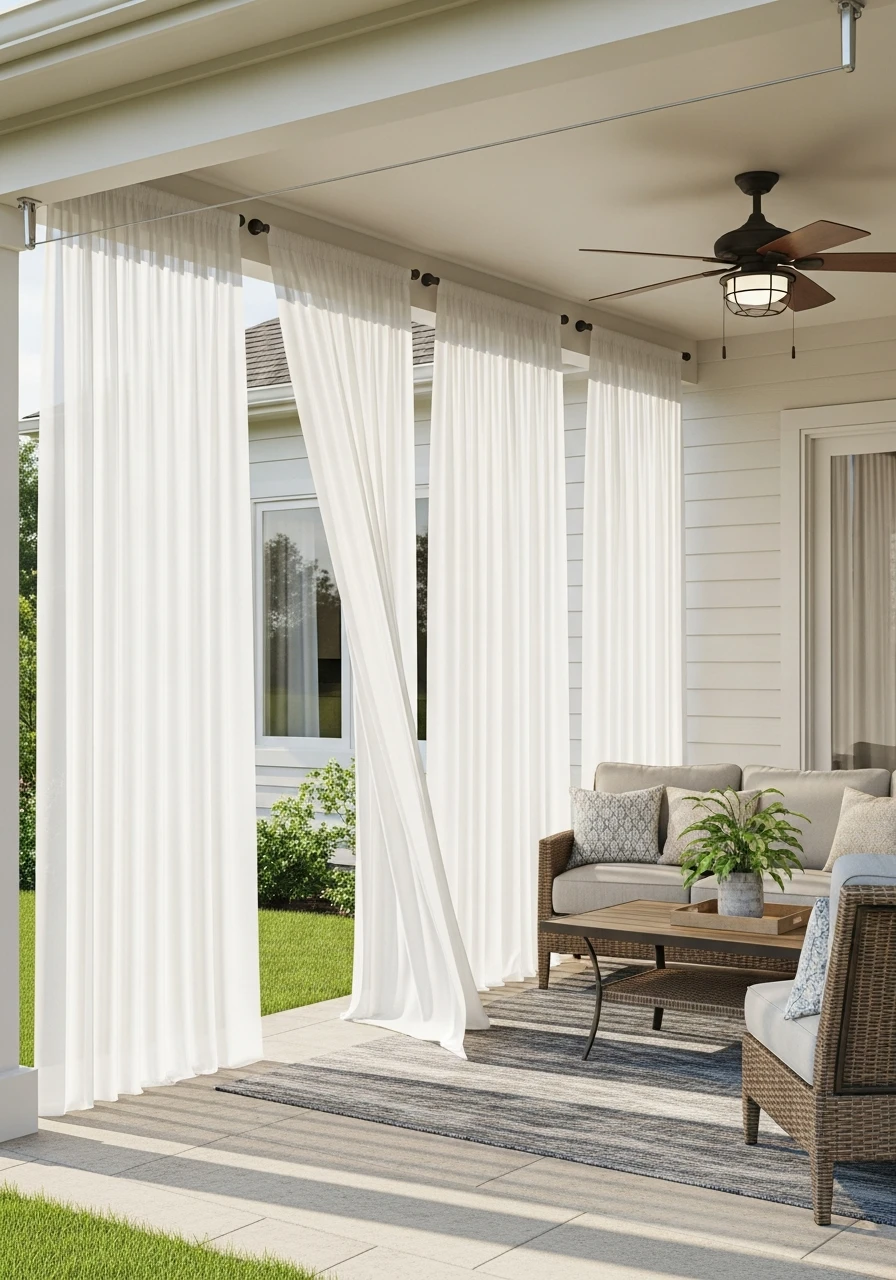
Curtains create soft, adjustable privacy around seating areas and add a luxurious, resort-style feel. They work best in covered patios or pergola setups where they are protected from strong weather. They are easy to install on a budget.
- Choose lightweight, sheer fabric for daytime light.
- Hang them from simple galvanized metal rods.
- Use tie-backs to hold them open when not needed.
Pro Tip: Use shower curtain hooks on the rods for the easiest opening and closing motion.
37. Heavy Outdoor Drapes
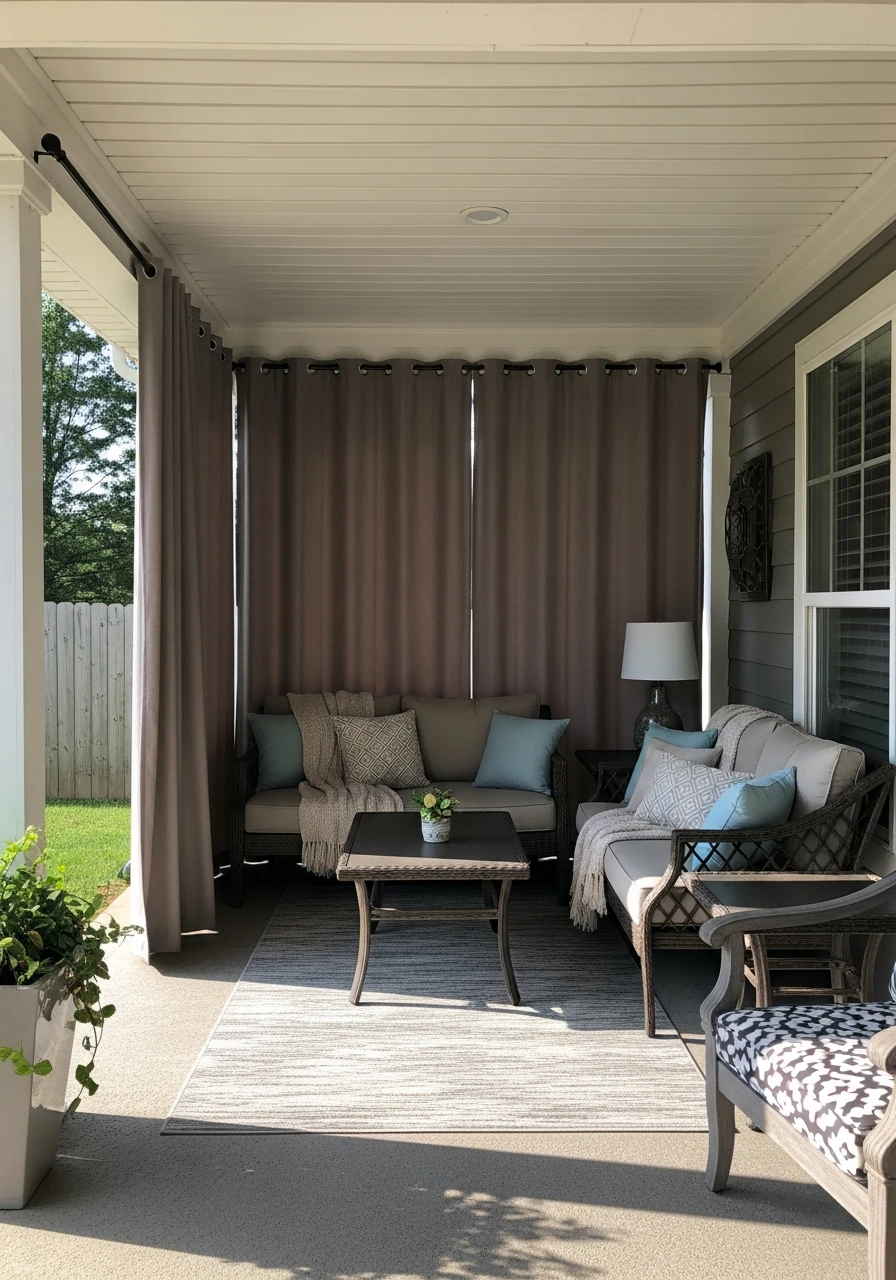
Heavy-duty drapes block views completely and also help buffer wind and light noise, adding comfort to the space. They are ideal for creating cozy, enclosed patio seating zones that feel like an extension of the living room.
- Select thick, opaque outdoor fabric.
- Use weighted hems to keep them hanging straight.
- Choose a rich color like navy or terracotta.
Pro Tip: These drapes can be machine washed, which makes them easy to maintain throughout the summer.
38. Tension Rod Curtain Hack
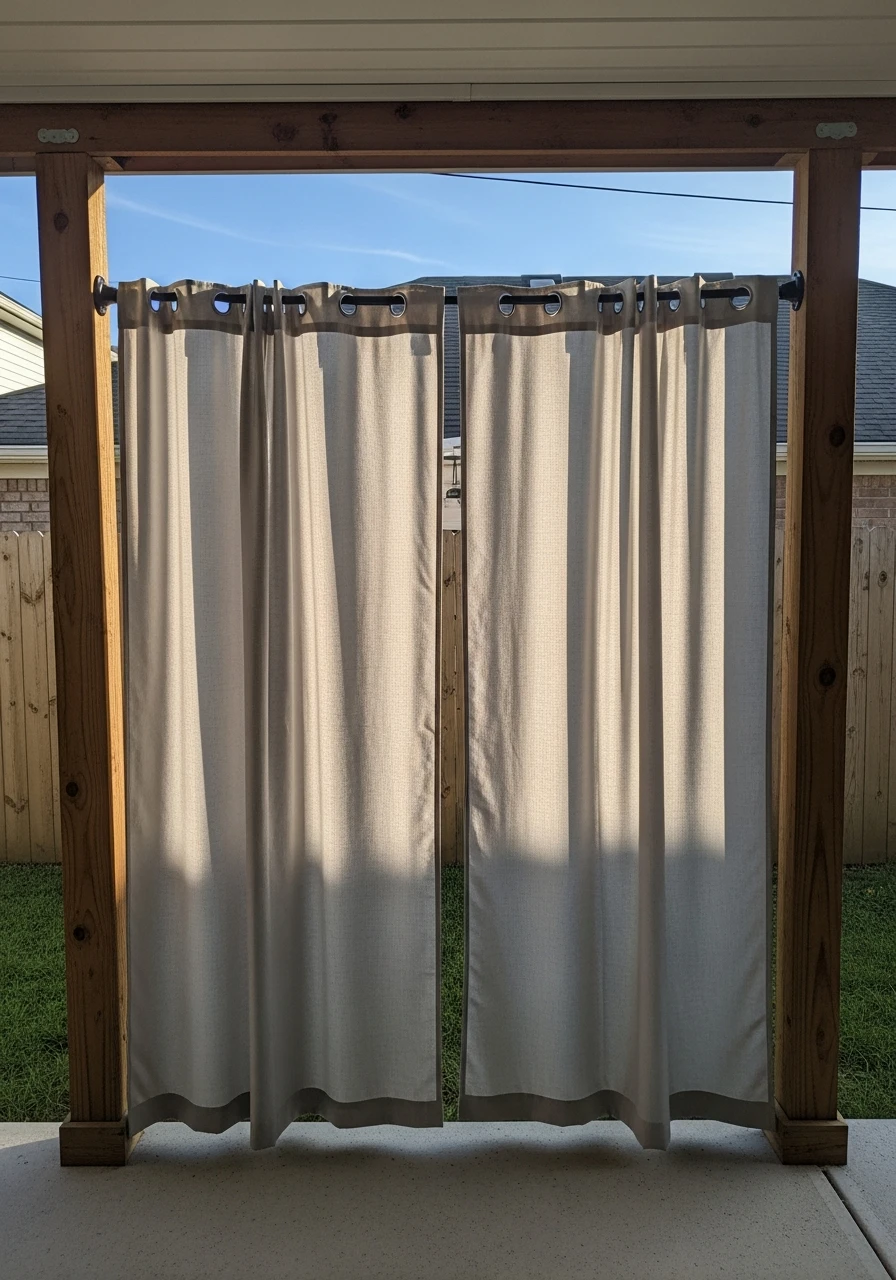
This temporary solution offers privacy without any permanent drilling or installation, making it perfect for renters or seasonal use. Simply place tension rods between two existing posts or walls and hang the curtains. It’s super fast.
- Ensure the tension rod is rated for outdoor weight.
- Use lightweight curtains for safety.
- Measure the distance carefully before buying the rod.
Pro Tip: If your patio posts are far apart, use two rods that meet in the middle for better support.
39. Simple Shade Cloth Panels
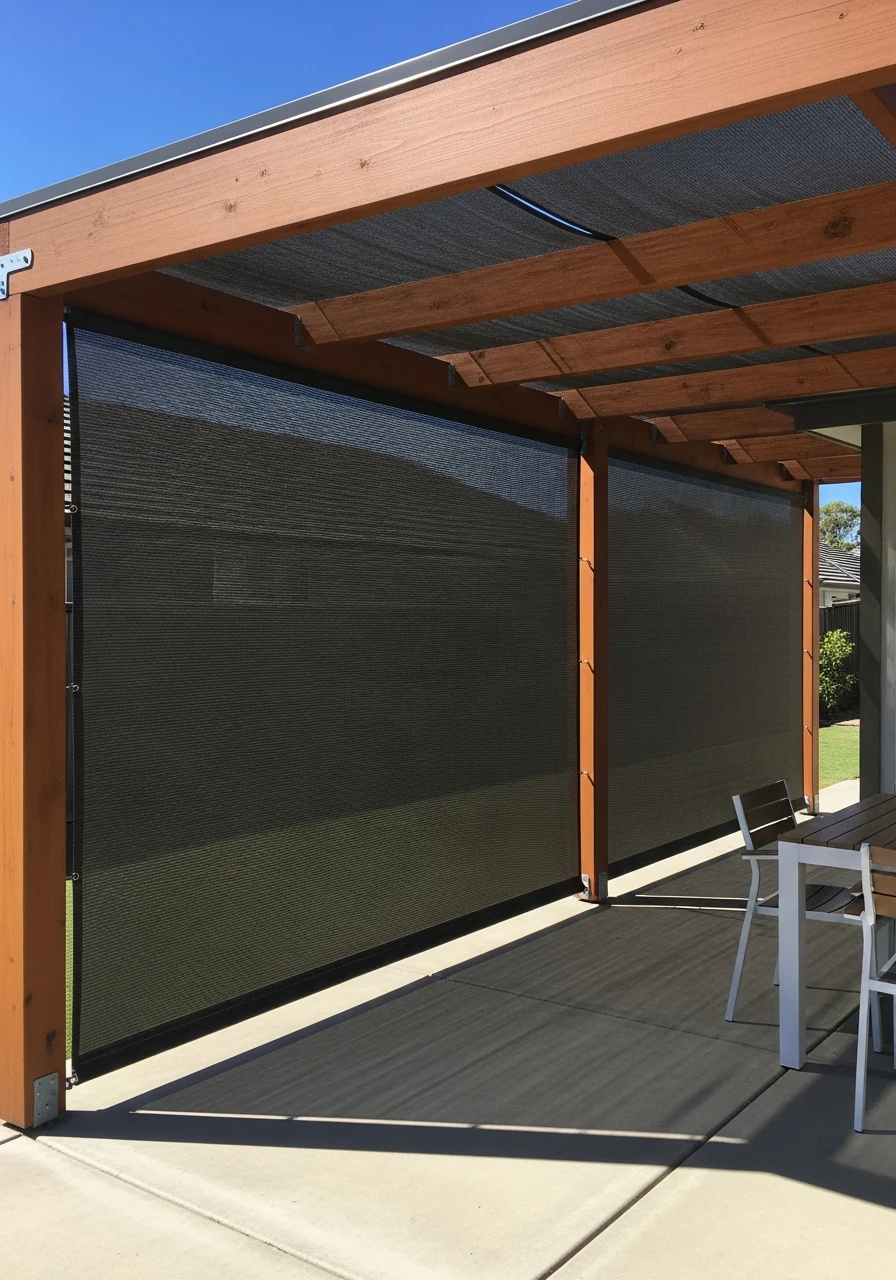
Shade cloth is a durable material that blocks visibility while still allowing cooling airflow to pass through. It works well for hot climates and sunny patios where you need light reduction along with privacy. It’s a very practical choice.
- Choose a high percentage UV block cloth (90% or higher).
- Secure the cloth tightly with grommets and bungee cords.
- Use it primarily on the sunniest side of the patio.
Pro Tip: Shade cloth is often sold in large rolls and can be cut to fit any custom size you need.
40. Patterned Fabric Screens
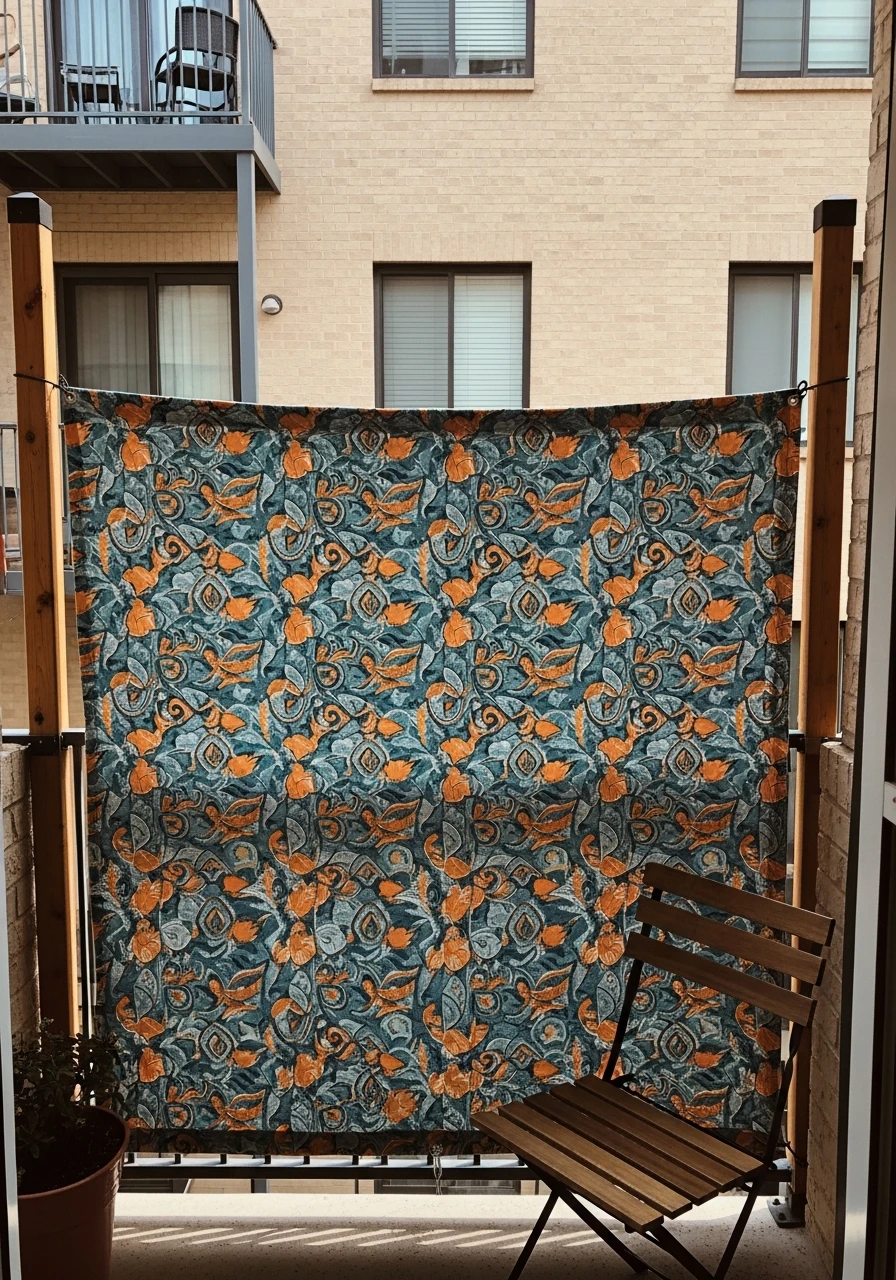
Textile screens combine decoration and privacy, adding a pop of color or texture to your outdoor space. They are best for patios that prioritize style and flexibility over a permanent solution. Look for fun prints.
- Choose bold geometric or floral patterns.
- Use them to hide a plain wall or fence.
- Change the screen seasonally for a fresh look.
Pro Tip: Match the pattern of the screen to your outdoor pillows to tie the whole space together.
41. Strategic Furniture Placement
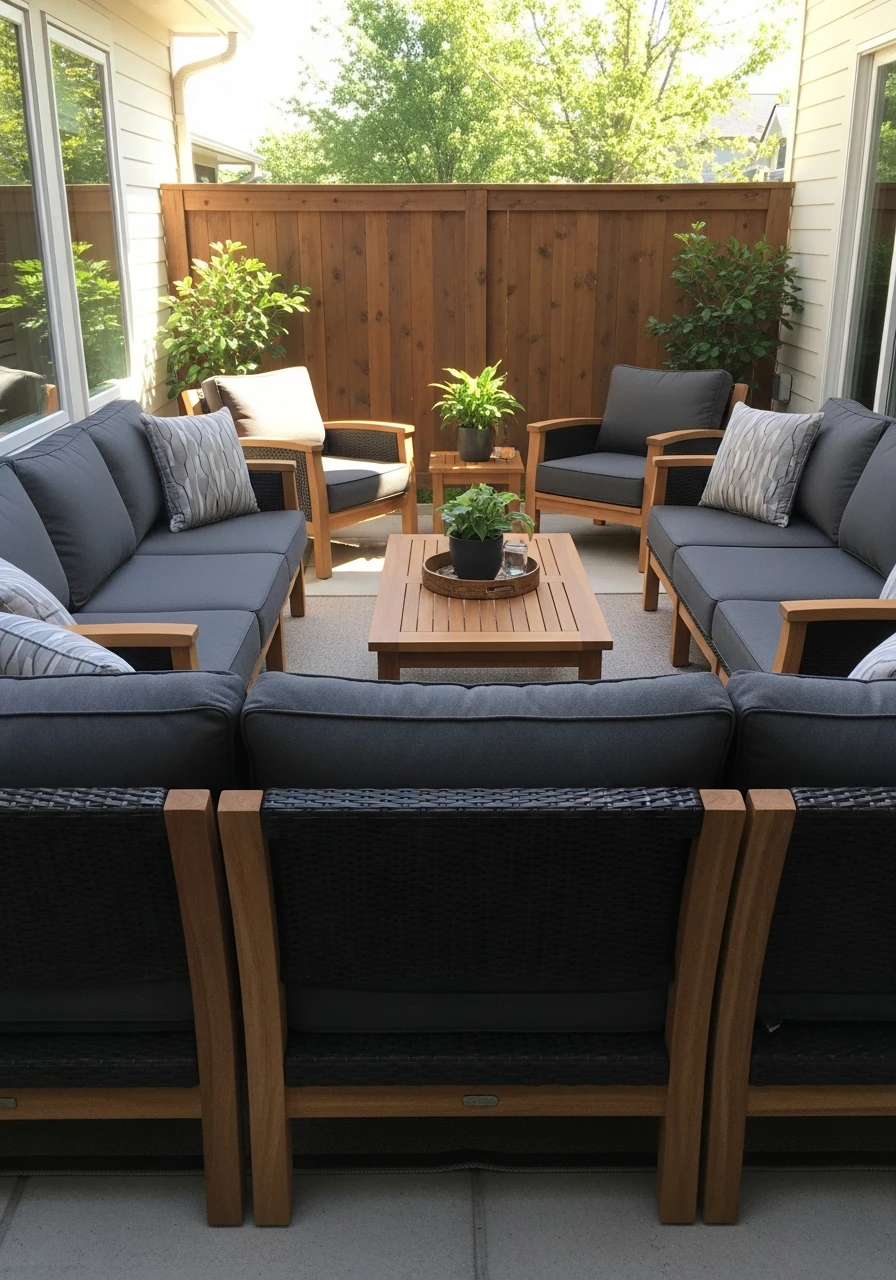
Arranging your patio sofas, benches, and chairs to block sightlines creates natural privacy without any construction. This method works well when structural changes are not possible or allowed. Face seating away from the view.
- Use the back of a tall sofa as a barrier.
- Position benches facing an internal feature like a fire pit.
- Place a large dining table in the most exposed area to draw attention there.
Pro Tip: Use the tallest piece of furniture you own, like a high-backed outdoor cabinet, to protect the most sensitive area.
42. Fountain For Sound Blocking
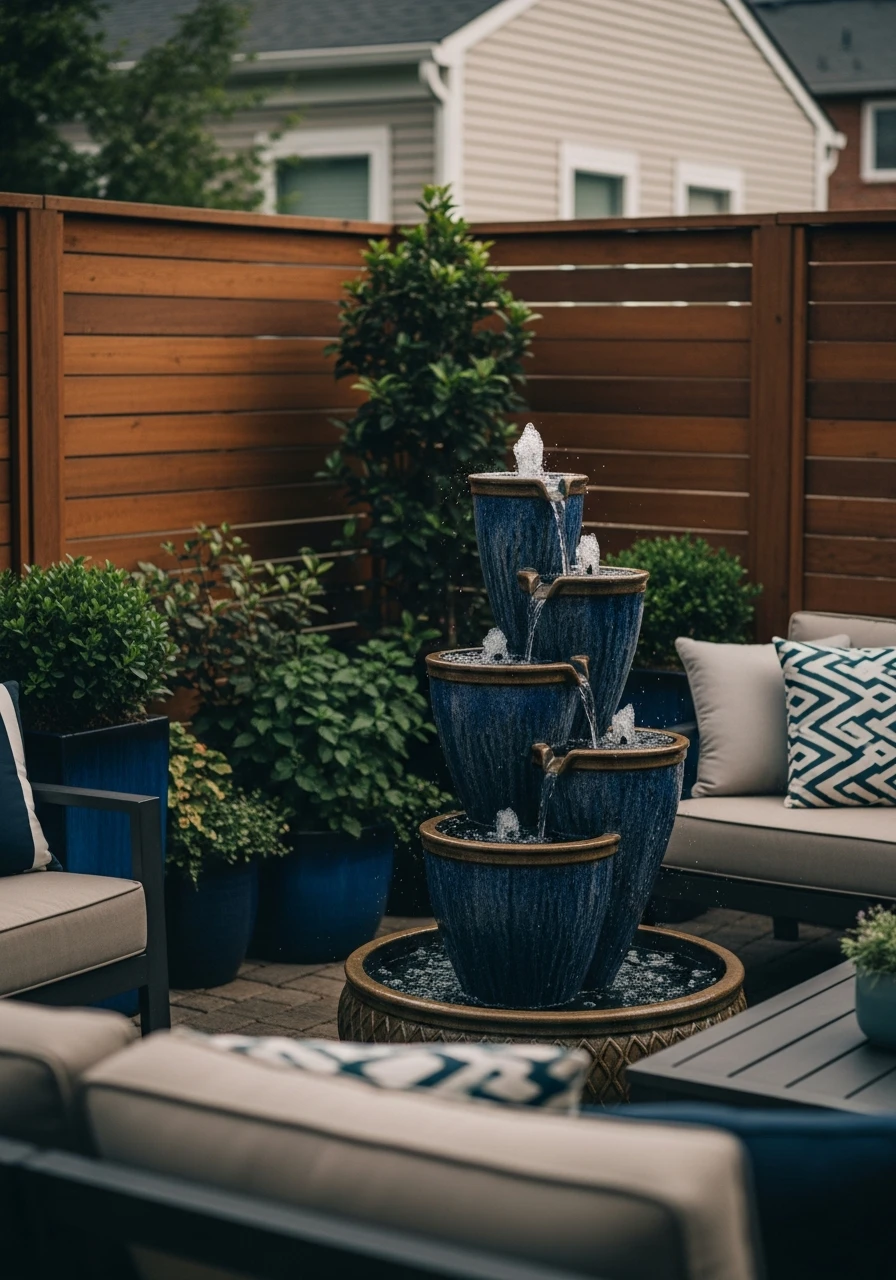
Water features mask surrounding neighborhood noise like traffic or loud talkers, greatly enhancing your perception of privacy. The gentle sound of running water is very relaxing. This is perfect for patios near busy areas.
- Choose a fountain with a steady, deep flow sound.
- Place the fountain closest to the noise source.
- Look for low-maintenance, self-contained units.
Pro Tip: The sound of the water feature is often more effective at creating privacy than a solid visual wall.
43. Built-In Corner Seating
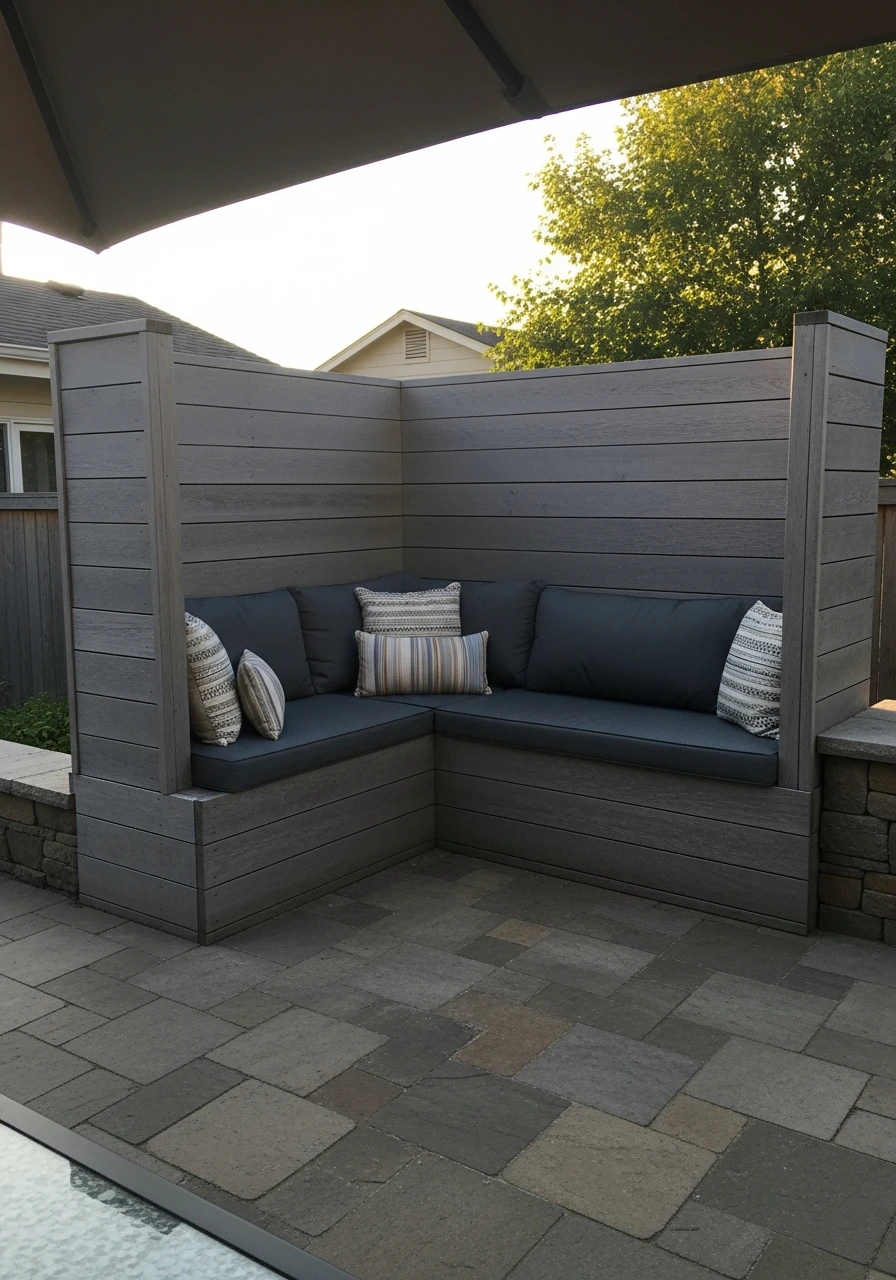
Installing corner seating with integrated high back panels or walls creates a private, cozy patio nook. This is ideal for relaxation-focused outdoor spaces where you want a sheltered spot to read or nap. It feels very intimate.
- Design the back wall to be above eye level.
- Add comfortable, custom cushions.
- Integrate shelving into the side walls for books.
Pro Tip: Use a U-shaped seating arrangement to naturally block views from three sides at once.
44. Use a Tall Privacy Bench
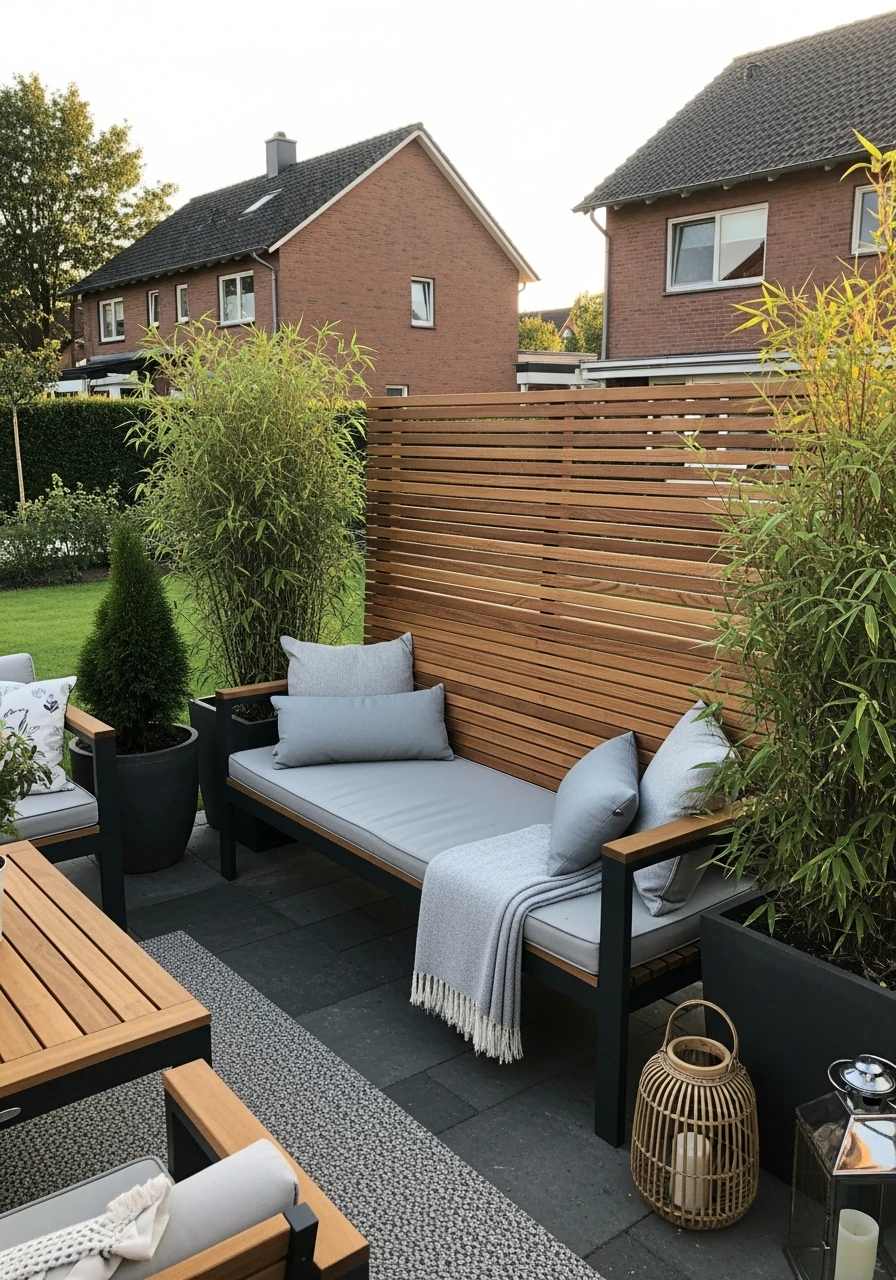
Instead of bulky wooden fences, use furniture that does double duty to create a private zone. A bench with a super tall back creates a nice visual barrier between you and your neighbor. It’s a smart way to get seating and privacy all in one spot without permanent construction.
- Look for benches that are at least five feet high for maximum screening.
- Place the bench facing the area you want to visually block off.
- Toss on extra large outdoor pillows to make the tall back feel more cozy and less imposing.
Pro Tip: If you can’t find a bench tall enough, place a narrow, tall planter directly behind it. The greenery will peek over the backrest, giving you an extra foot of natural privacy.
45. Shelving Unit Divider
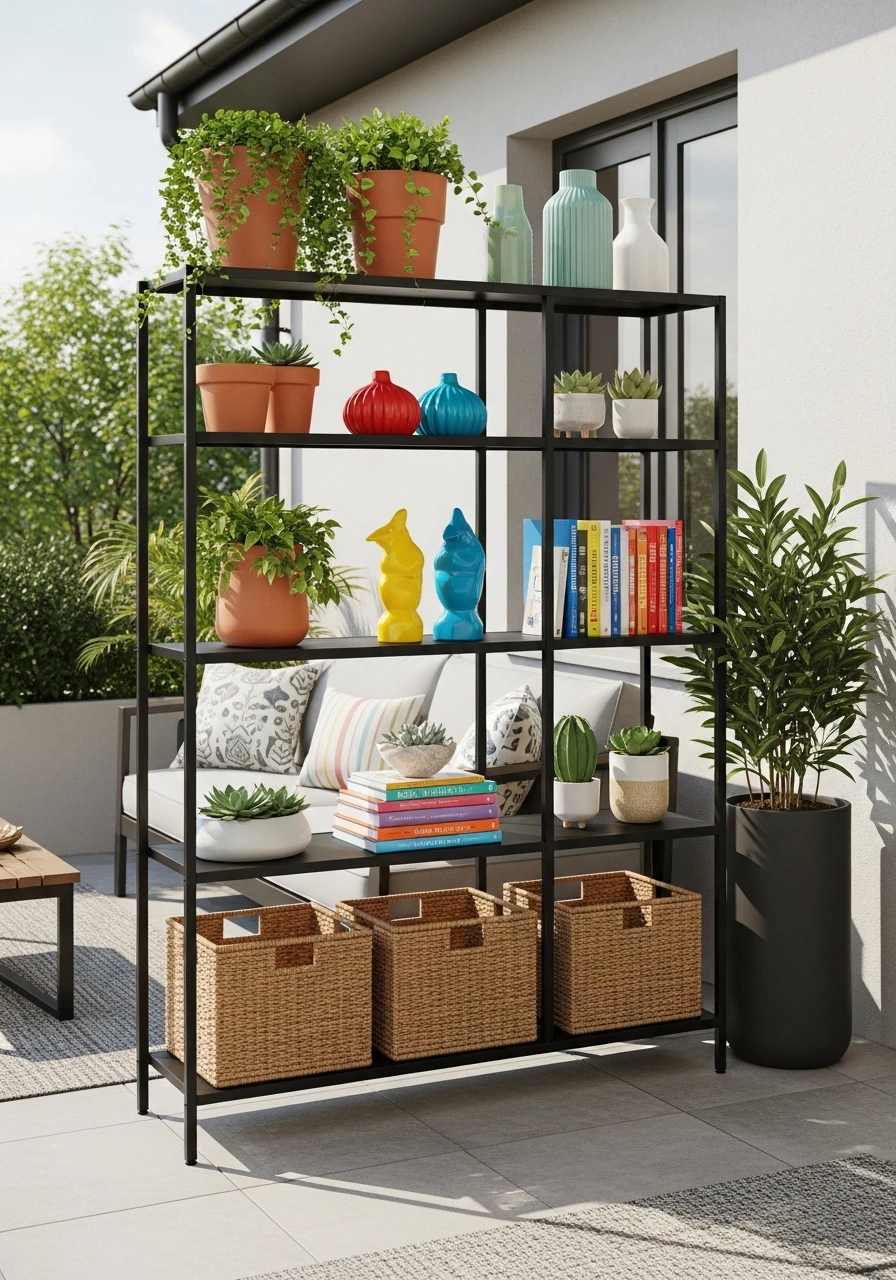
Outdoor shelving units act as visual barriers while offering storage or space for decor and plants. They work well for multifunctional patios that need to be both private and organized. Fill the shelves with fun items.
- Choose a durable, tall metal or wood shelving unit.
- Fill the top shelves with tall, dense plants.
- Use the bottom shelves for storing towels or games.
Pro Tip: Use the unit to house a collection of colorful ceramic vases or lanterns for extra style.
46. Line Edges With Planters
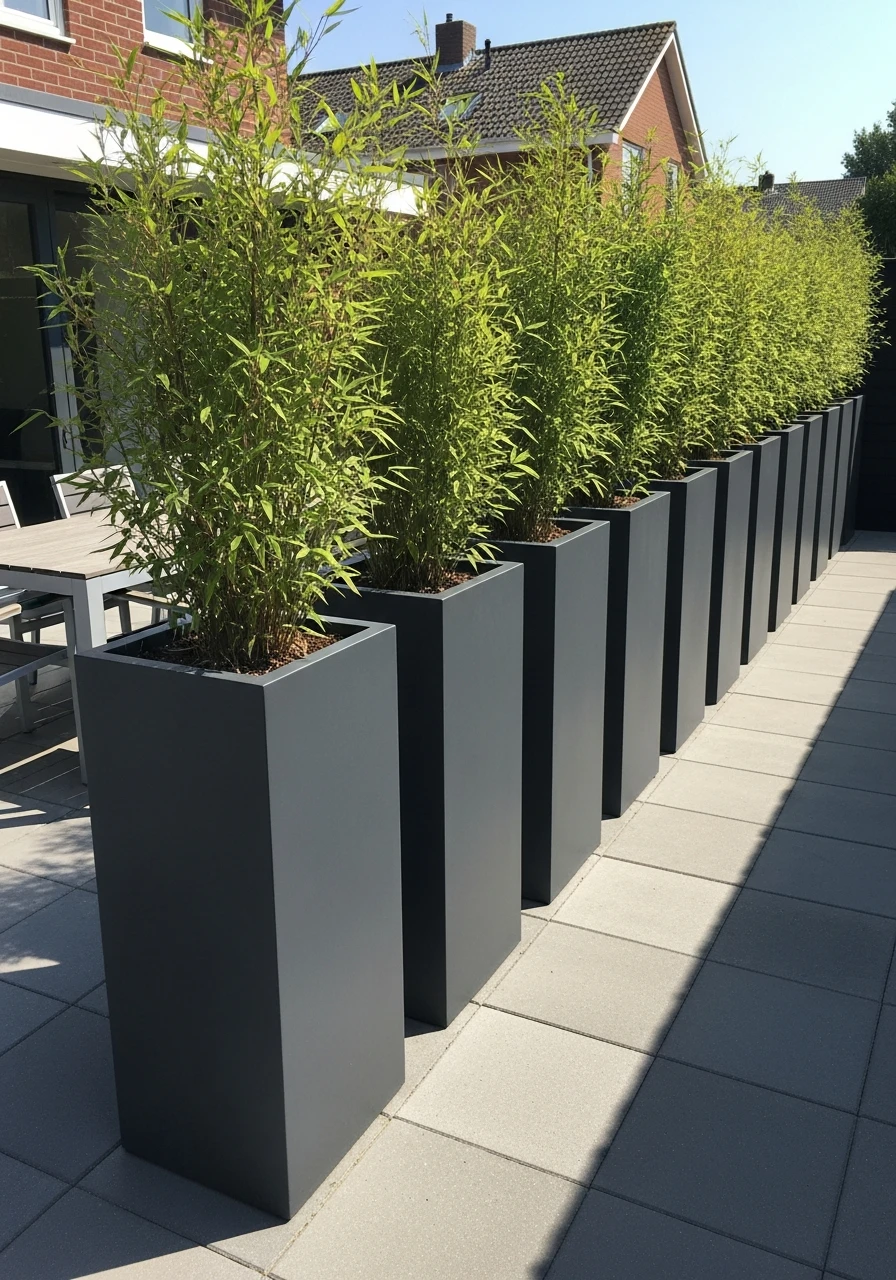
A continuous row of tall, matching planters creates a clear privacy boundary around your patio. This approach works well for patios near walkways or shared community spaces. The uniformity looks very chic and organized.
- Use planters of the same size and material.
- Plant a uniform evergreen shrub in each one.
- Place them so they touch, minimizing gaps.
Pro Tip: Using planters that are square or rectangular helps keep the line straight and formal.
47. Hanging Plant Screening
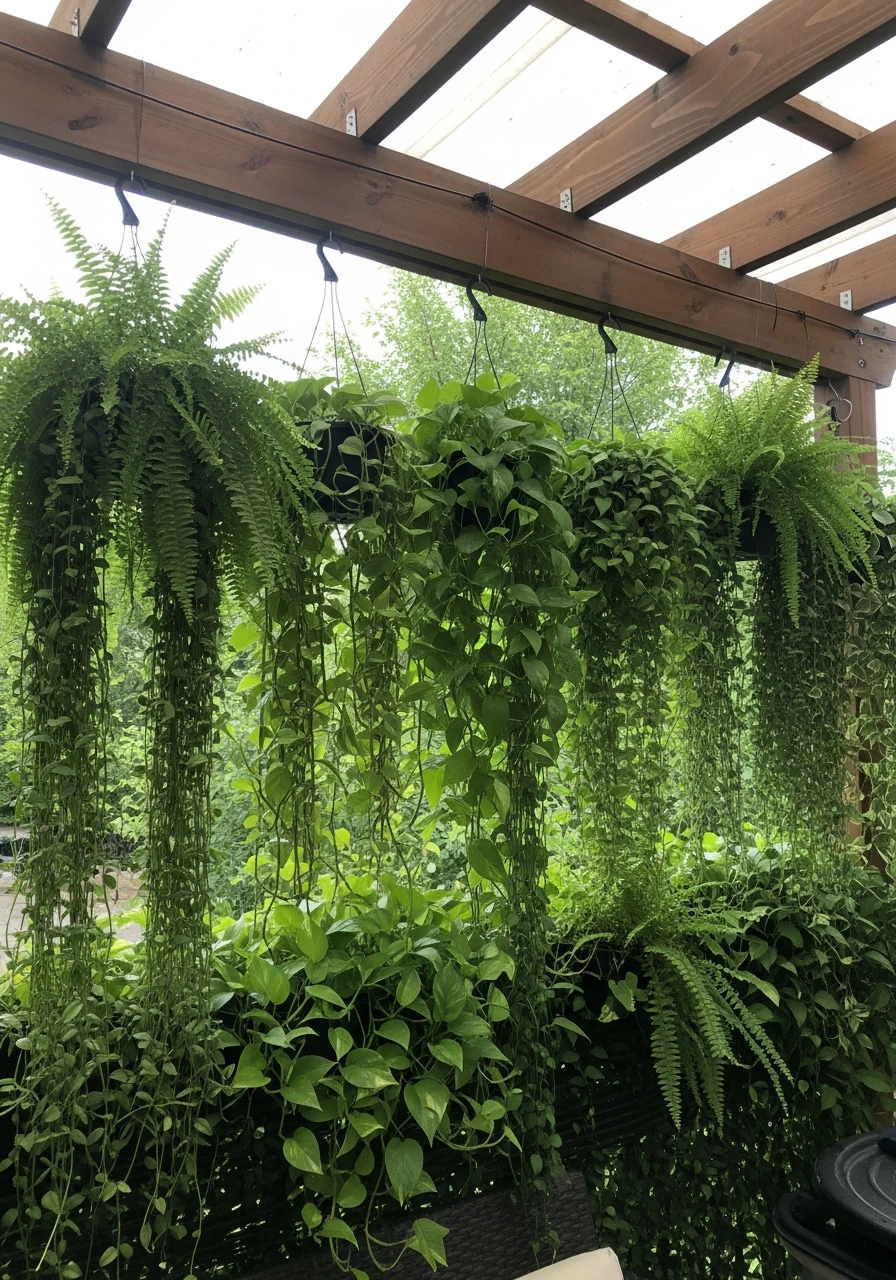
Suspended plants, either from hooks or a wire system, block views from above and the sides of your patio. They are ideal for covered patios, balconies, and pergolas. The movement of the hanging plants adds a soft, natural element.
- Use large hanging baskets filled with trailing plants.
- Hang them at varying heights for a dense screen.
- Choose plants that don’t drop too much debris.
Pro Tip: This is a great, renter-friendly way to get privacy on a second-floor balcony.
48. Fence and Greenery Combo
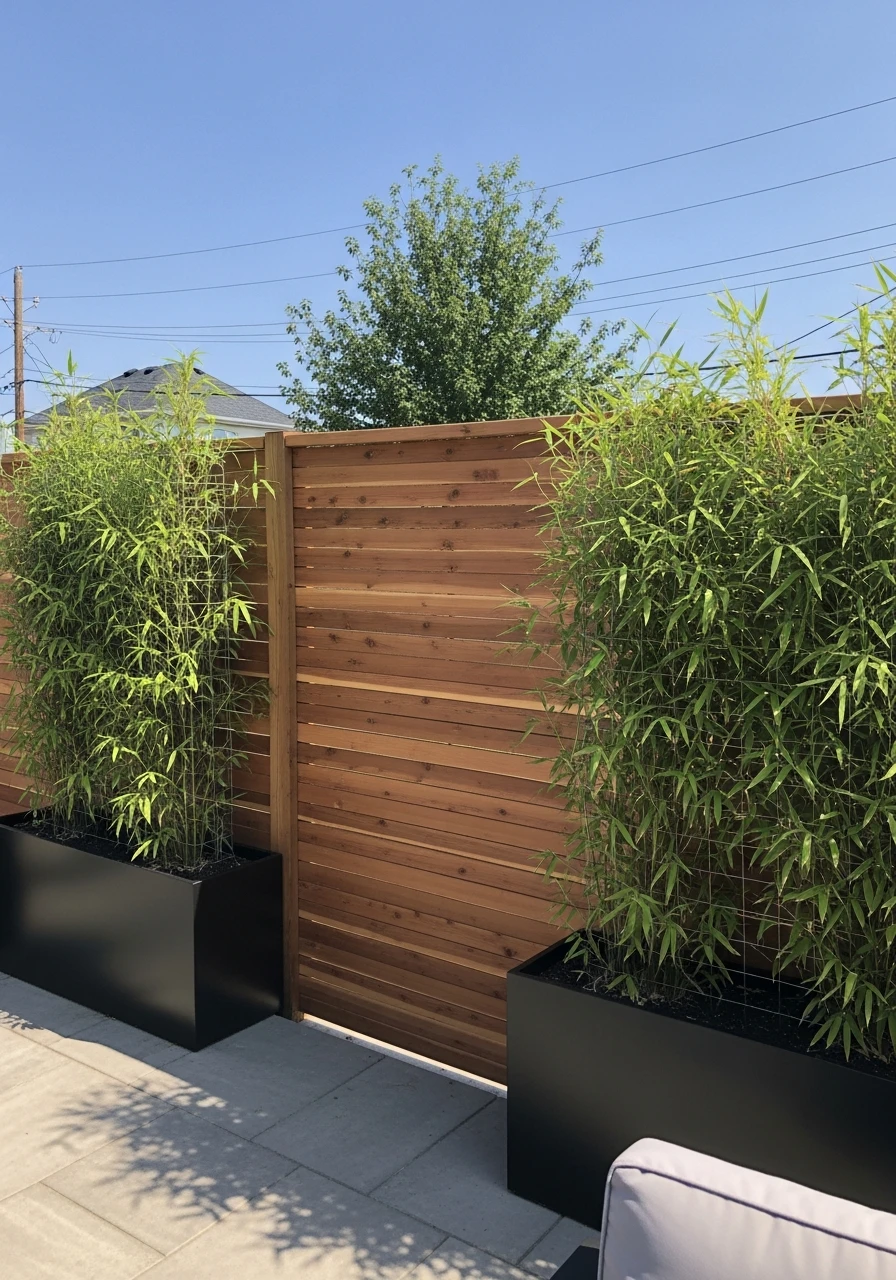
Combining a solid fence with carefully placed plants softens the hard edges of the barrier and improves privacy. This hybrid approach uses structure for immediate blocking and greenery for texture and height. It works in most styles.
- Build a shorter fence (4-5 feet) and add tall plants behind it.
- Use climbing vines to cover the top third of the fence.
- Place a row of small, bright shrubs along the base.
Pro Tip: If your fence is old, using greenery to cover it is a quick and cheap way to make it look new.
49. Light Up Your Screens
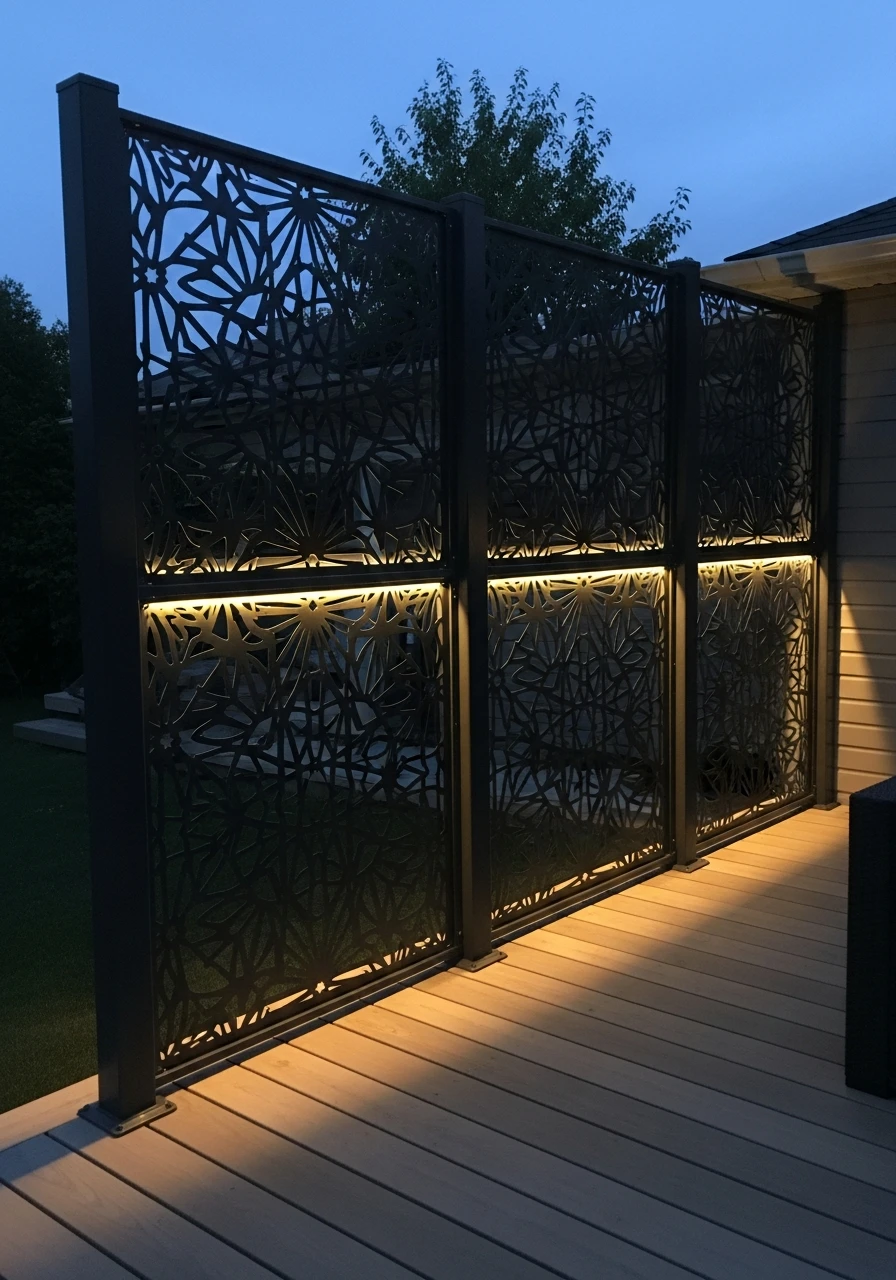
Integrating lighting within or behind your privacy screens makes them functional at night while creating a beautiful, ambient glow. This improves safety, highlights the screen’s pattern, and enhances the cozy atmosphere. It looks very sophisticated.
- Install low-voltage LED strip lights behind the panel.
- Use soft white or warm yellow lights.
- Place small spotlights at the base of the screens.
Pro Tip: Solar-powered string lights are the easiest way to add integrated lighting without needing an electrician.
50. Removable Seasonal Panels
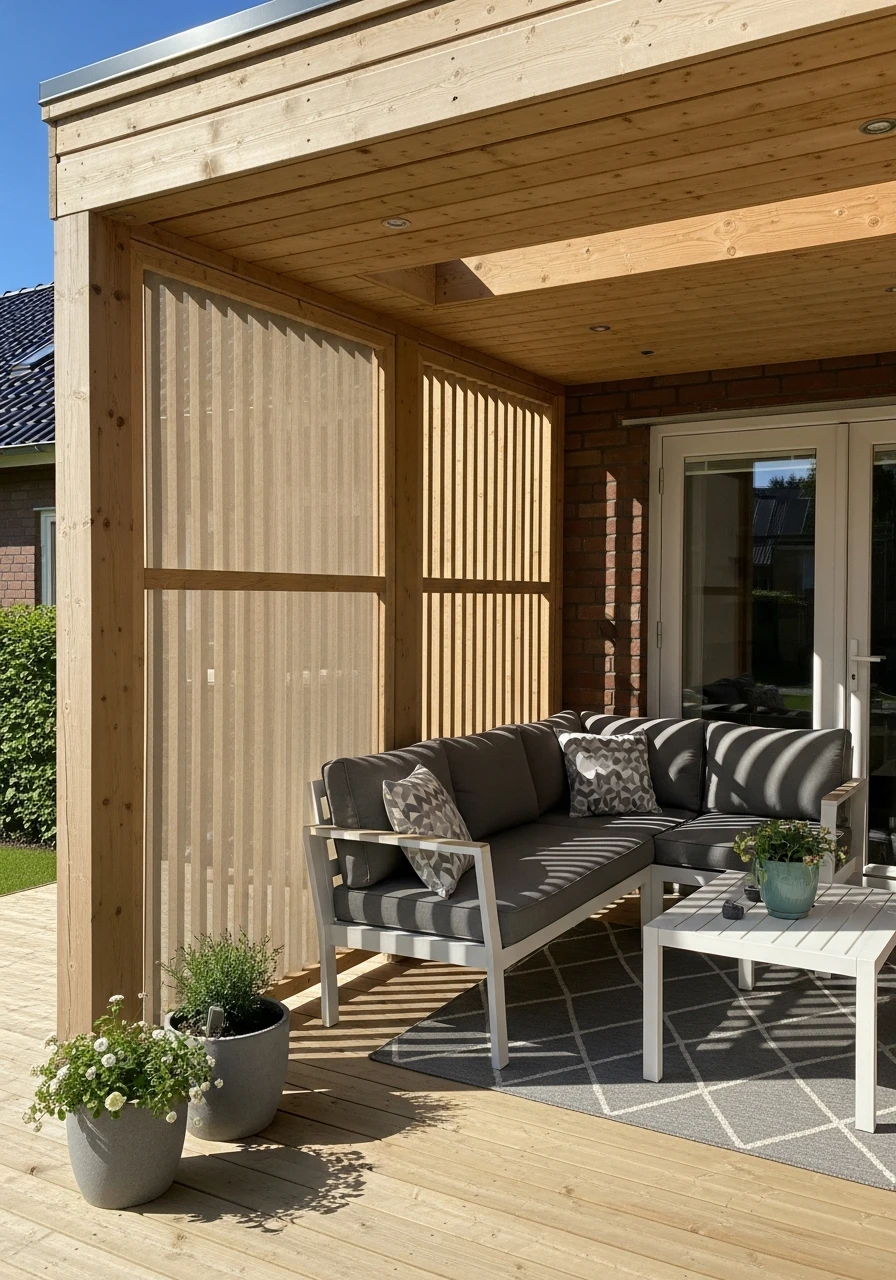
Removable panels allow you to adjust privacy based on the weather or season. For example, you can take them down in winter to let in more sunlight and put them back up in summer when you are outside often. They are ideal for flexible outdoor living spaces.
- Use panels that attach with heavy-duty hooks or screws.
- Store them in a garage during the off-season.
- Choose light materials like canvas or thin wood.
Pro Tip: If you use fabric, look for marine-grade canvas that can withstand being taken up and down frequently.
Getting privacy doesn’t mean building a fortress or spending a fortune.
Whether you use natural plants, stylish curtains, or sleek designer panels, choosing the right patio privacy ideas can make your outdoor area feel like a true escape.
Now go enjoy your perfectly private patio space!