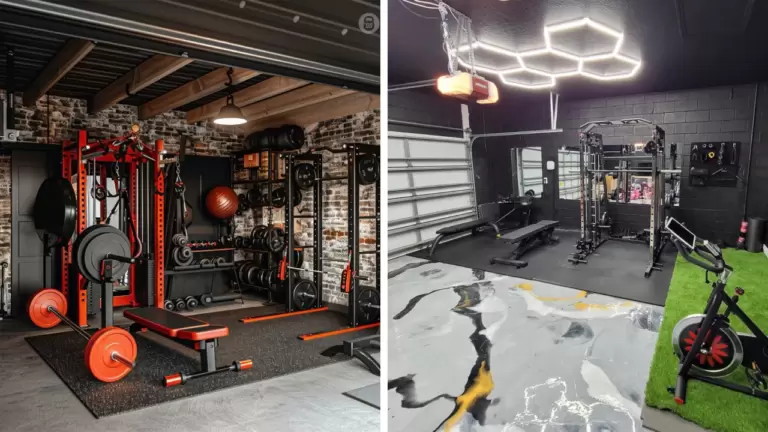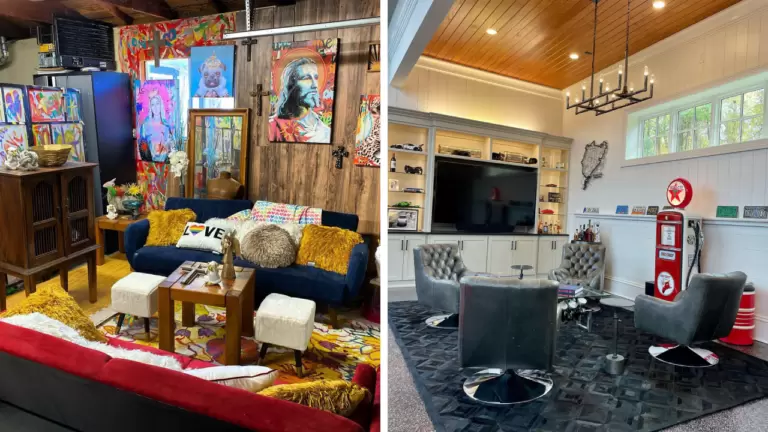
50 Detached Garage Ideas

This post may contain affiliate links: full affiliate disclosure.
A detached garage adds value and solves storage problems while keeping noise and fumes away from the main living area. Successful designs treat the structure like a small house rather than an afterthought.
Focus on architectural details that mirror the primary residence to create a unified look across the property.
1. Modern Detached Garage
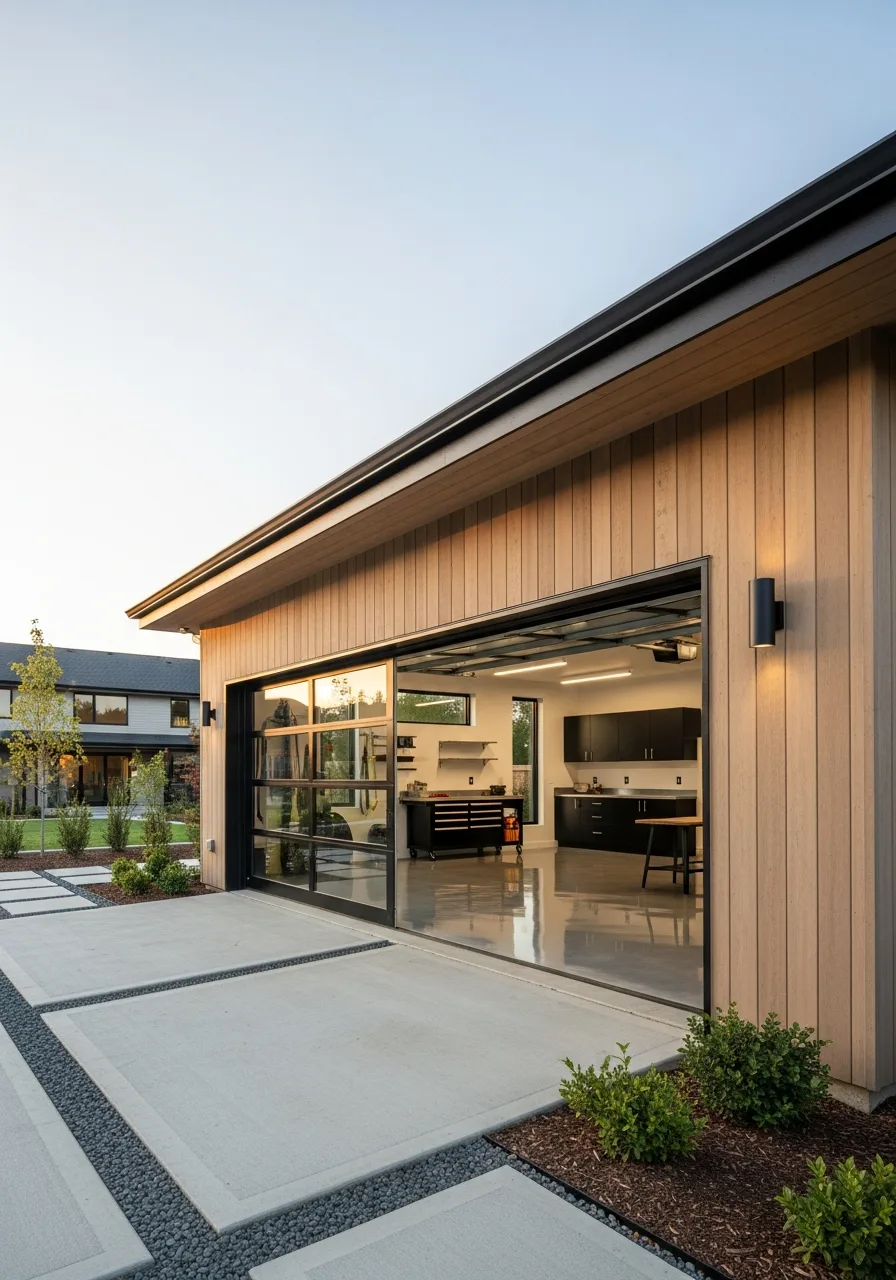
This design uses clean lines and simple siding to create a sleek profile. It works because it avoids the cluttered look of traditional garages by hiding gutters and using flat roofs.
Install black-framed glass doors to give the exterior a high-end architectural feel.
- Leave 3 feet of clearance around the vehicle for easy movement.
- Use vertical siding to make a short structure appear taller.
- Hide trash bins behind a matching privacy screen at the back.
Design Secret: Use a dark charcoal trim to make standard white siding look more expensive.
2. Detached Garage With Apartment
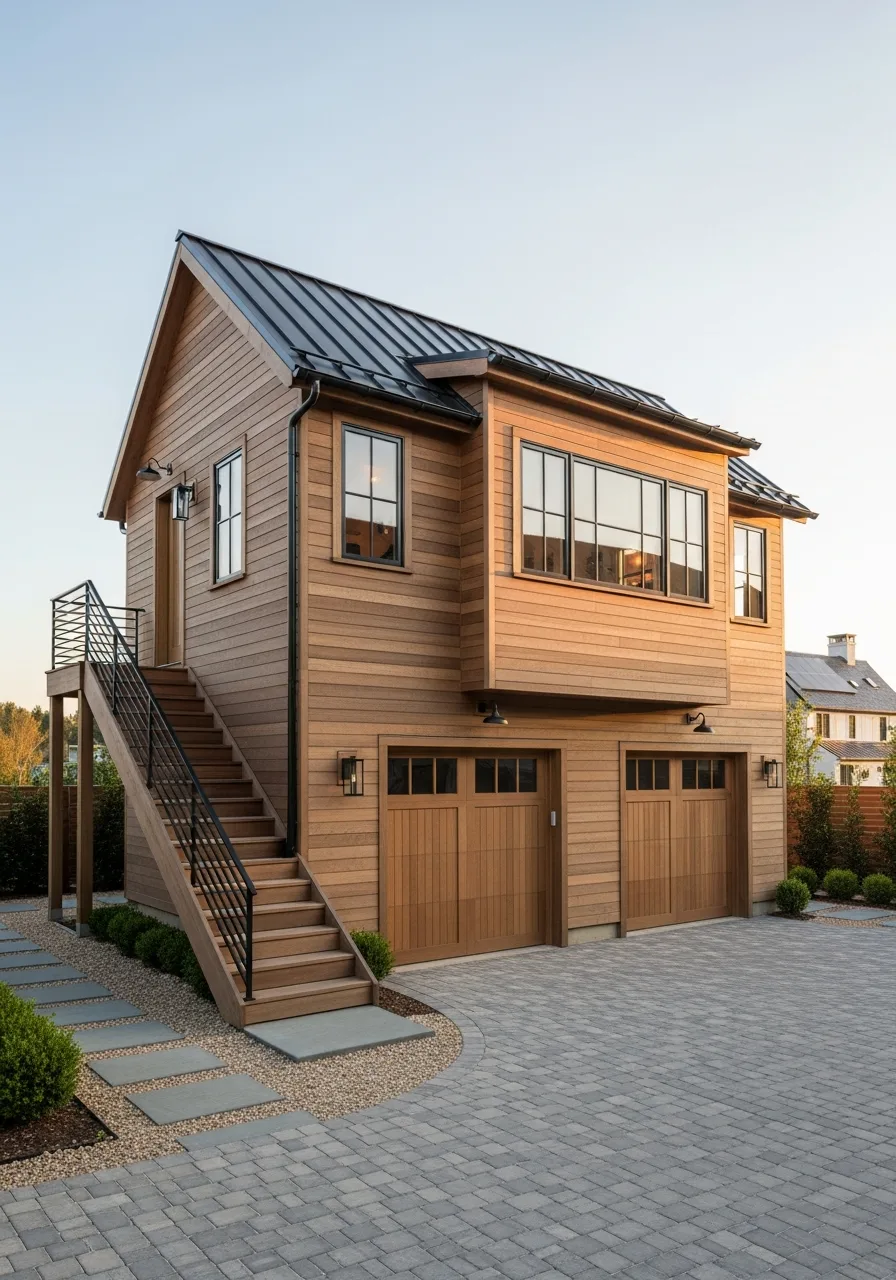
Adding a living space above the garage maximizes the footprint of the building. This setup provides privacy for guests or creates a steady stream of rental income.
Include a separate exterior staircase so visitors do not have to walk through the parking area.
- Ensure the staircase is at least 36 inches wide for moving furniture.
- Install oversized windows to prevent the small unit from feeling cramped.
- Use the space under the stairs for a hidden outdoor tool closet.
Design Secret: Soundproof the floor thoroughly to keep car engine noise out of the living area.
3. Detached Garage With Loft
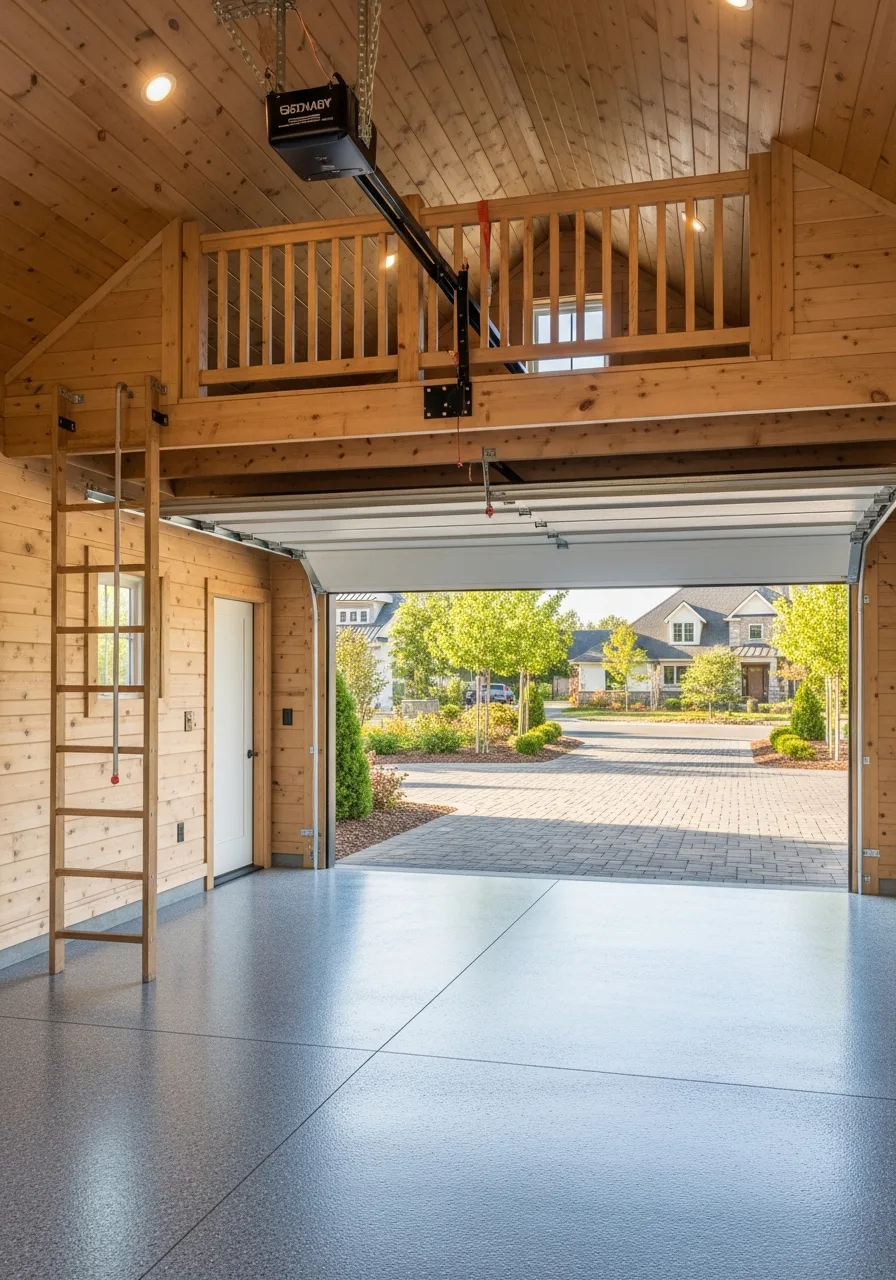
A loft area utilizes the empty peak of the roof for extra square footage. It provides a flexible zone for seasonal storage or a quiet hobby room without expanding the building's base.
Add a heavy-duty pulldown ladder with a high weight capacity for safe access to the upper level.
- Maintain 7 feet of head clearance in the center of the loft.
- Paint the loft ceiling white to reflect light into the garage below.
- Install a dormer window to turn a dark storage attic into a usable room.
Design Secret: Use attic trusses during construction to create a wide open room without support posts.
4. Two Car Detached Garage
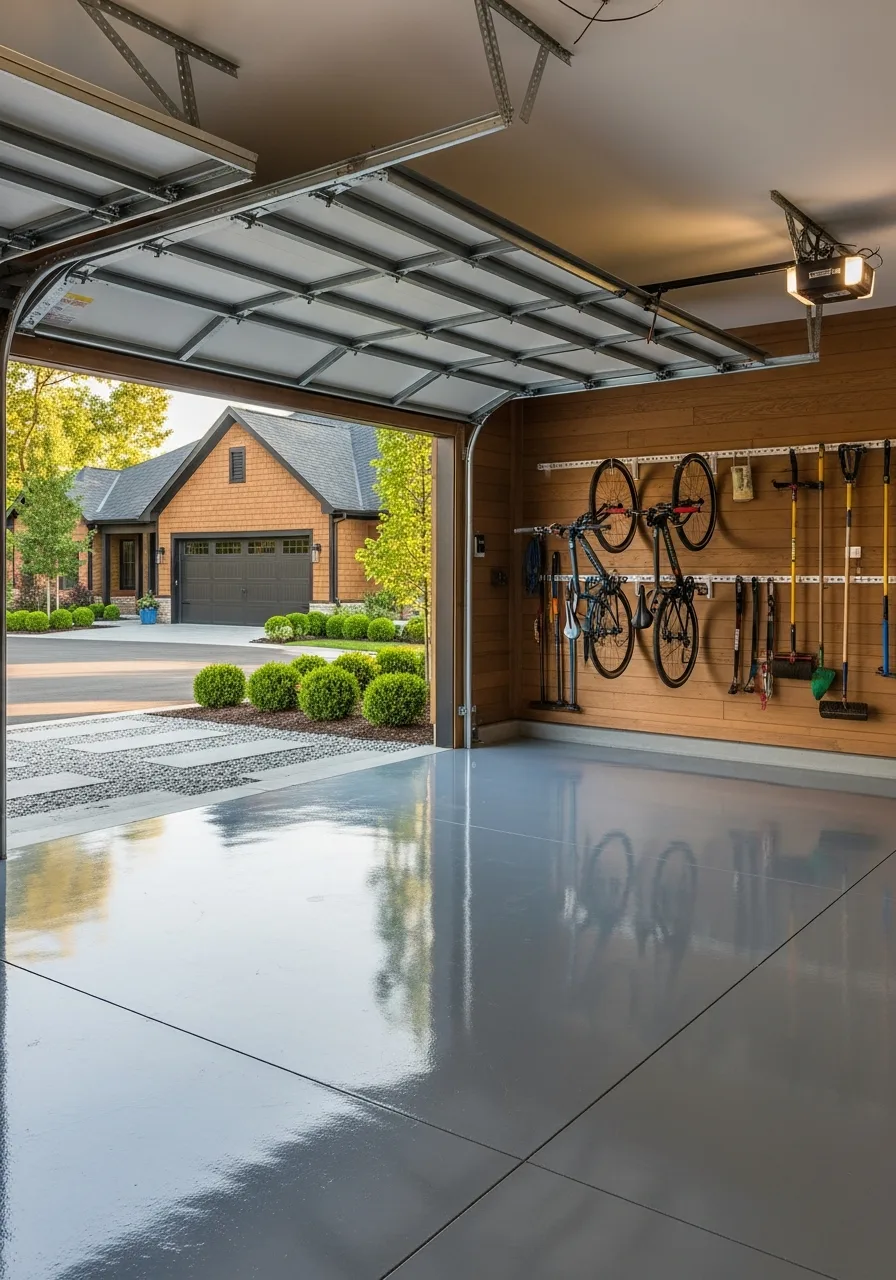
This classic layout provides enough room for two vehicles plus perimeter storage. It works for most families because it balances property space with daily utility.
Mount a wall-organized track system to keep bikes and lawn tools off the floor and away from car doors.
- Allow 24 inches between the car and the side walls for door swings.
- Use a single wide garage door to make the building look larger from the street.
- Build a small workbench at the back of one bay to utilize depth.
Design Secret: Install a laser parking guide to help drivers stop perfectly every time.
5. Three Car Detached Garage
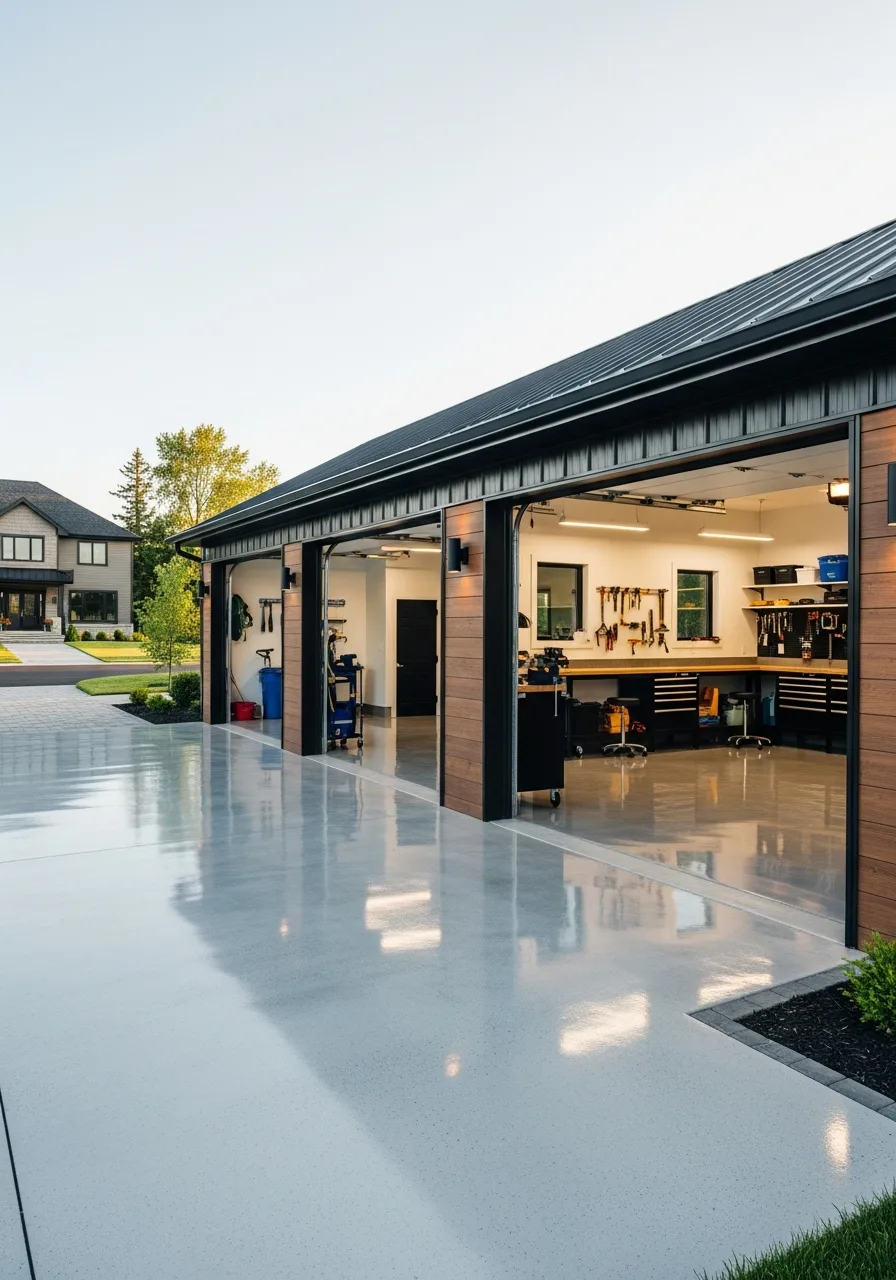
A three-car garage offers dedicated bays for vehicles and a third space for a permanent project or workshop. This layout is ideal for households with multiple drivers or heavy hobby equipment.
Dedicate the far end bay to long-term storage or a workshop to keep the main traffic lanes clear.
- Leave 10 feet of width per bay for comfortable parking.
- Use three individual doors instead of one giant door to break up the visual mass.
- Install a utility sink in the third bay for easy cleanup after projects.
Design Secret: Offset the third bay by a few feet to create a more interesting roofline.
6. Detached Garage Workshop
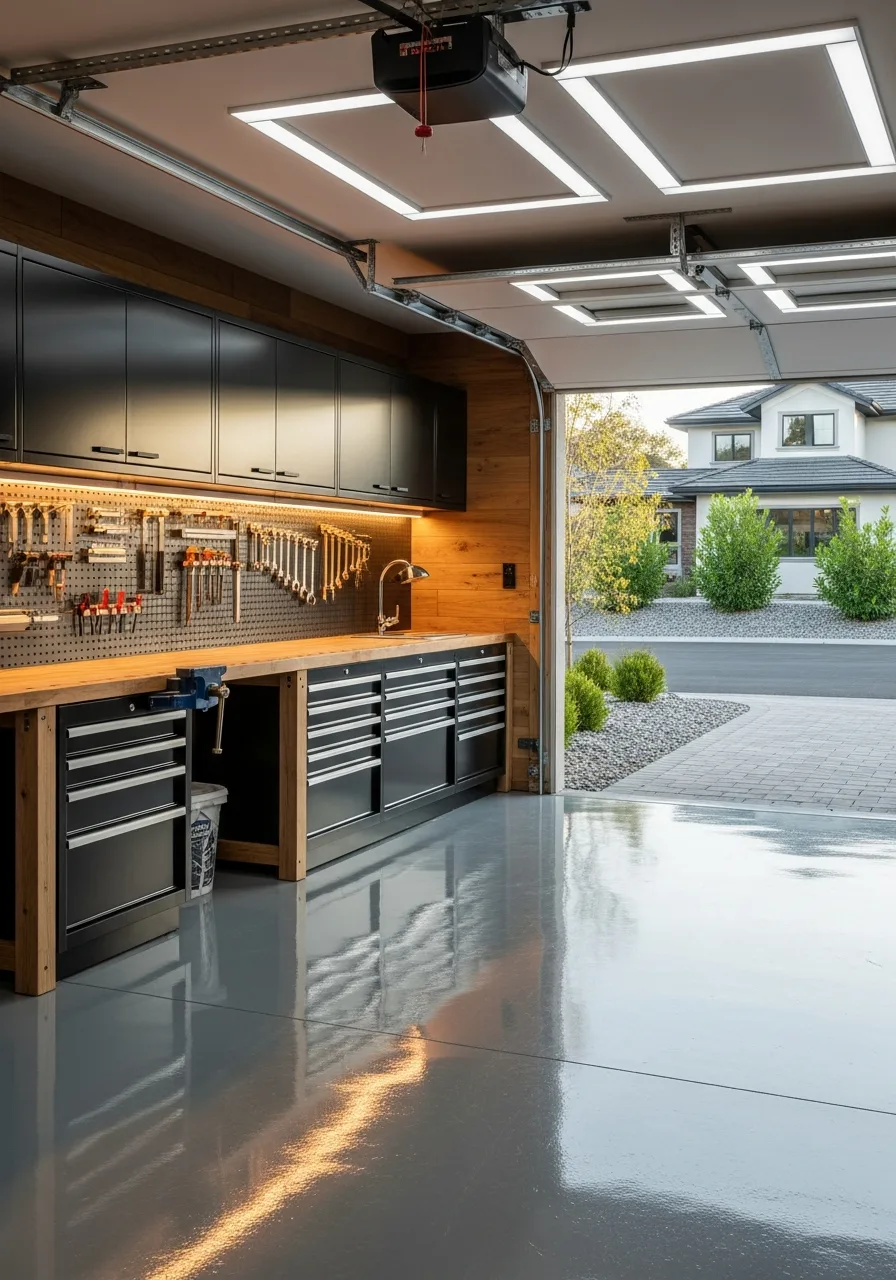
This setup turns a standard garage into a professional-grade workspace with heavy benches and tool storage.
It works by centralizing messy projects in a dedicated building away from the main house. Install bright LED shop lights in a grid pattern to eliminate shadows on your work surface.
- Leave 48 inches of space behind the workbench for a clear walkway.
- Use light-colored walls to bounce light into every corner of the shop.
- Add a wall of pegboards to keep every hand tool within reach.
Design Secret: Put all heavy workbenches on locking casters so the floor can be cleared quickly.
7. Farmhouse Detached Garage
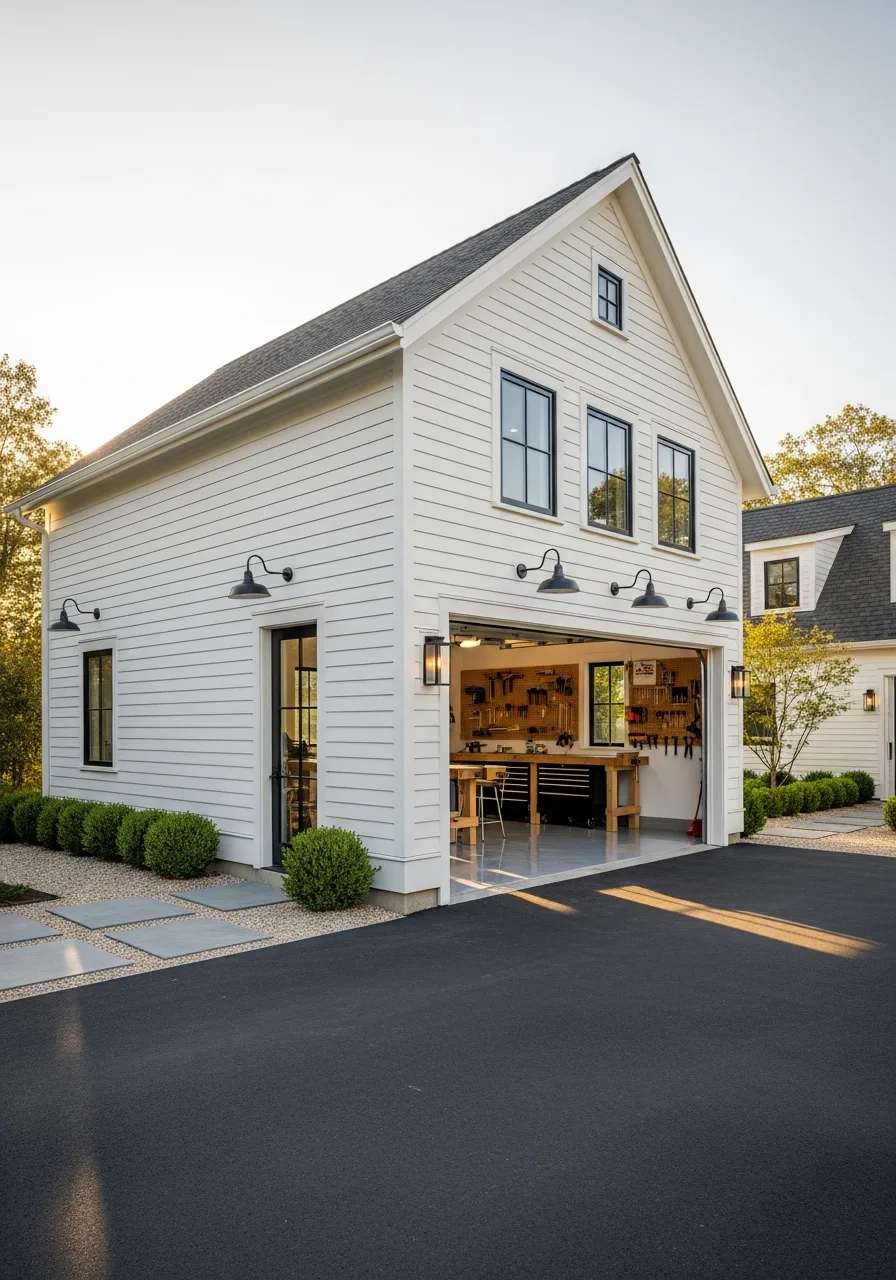
This style uses white siding and black accents to create a clean, rural aesthetic. It works because it feels welcoming and matches the popular modern farmhouse home style perfectly.
Add gooseneck barn lights above the garage doors to highlight the architecture at night.
- Space lights 12 inches above the door frame for the best proportions.
- Use board and batten siding to add vertical texture to the walls.
- Install a cupola on the roof to add height and traditional character.
Design Secret: Choose "X" patterns on the garage doors to reinforce the barn-inspired look.
8. Detached Garage With Breezeway
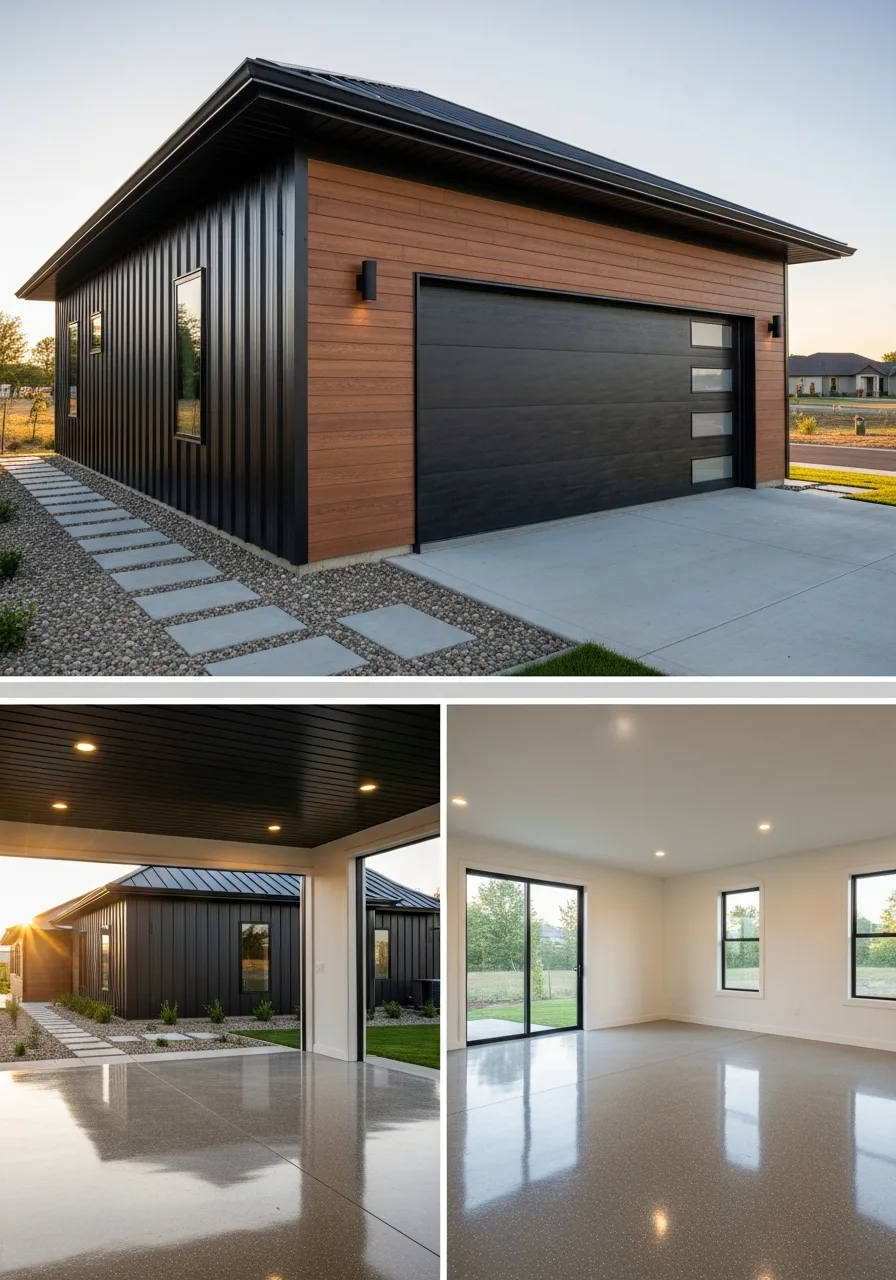
A breezeway connects the separate garage to the main house with a covered roof. This works by providing shelter from rain while maintaining the benefits of a detached structure.
Pave the walkway with slip-resistant stone or concrete to ensure safe passage during winter months.
- Make the breezeway at least 5 feet wide for two people to pass.
- Use the same roofing material on the breezeway as the house for a seamless look.
- Add a bench in the breezeway to create an outdoor mudroom area.
Design Secret: Angle the breezeway roof slightly away from the house to prevent water runoff issues.
9. Carriage House Garage
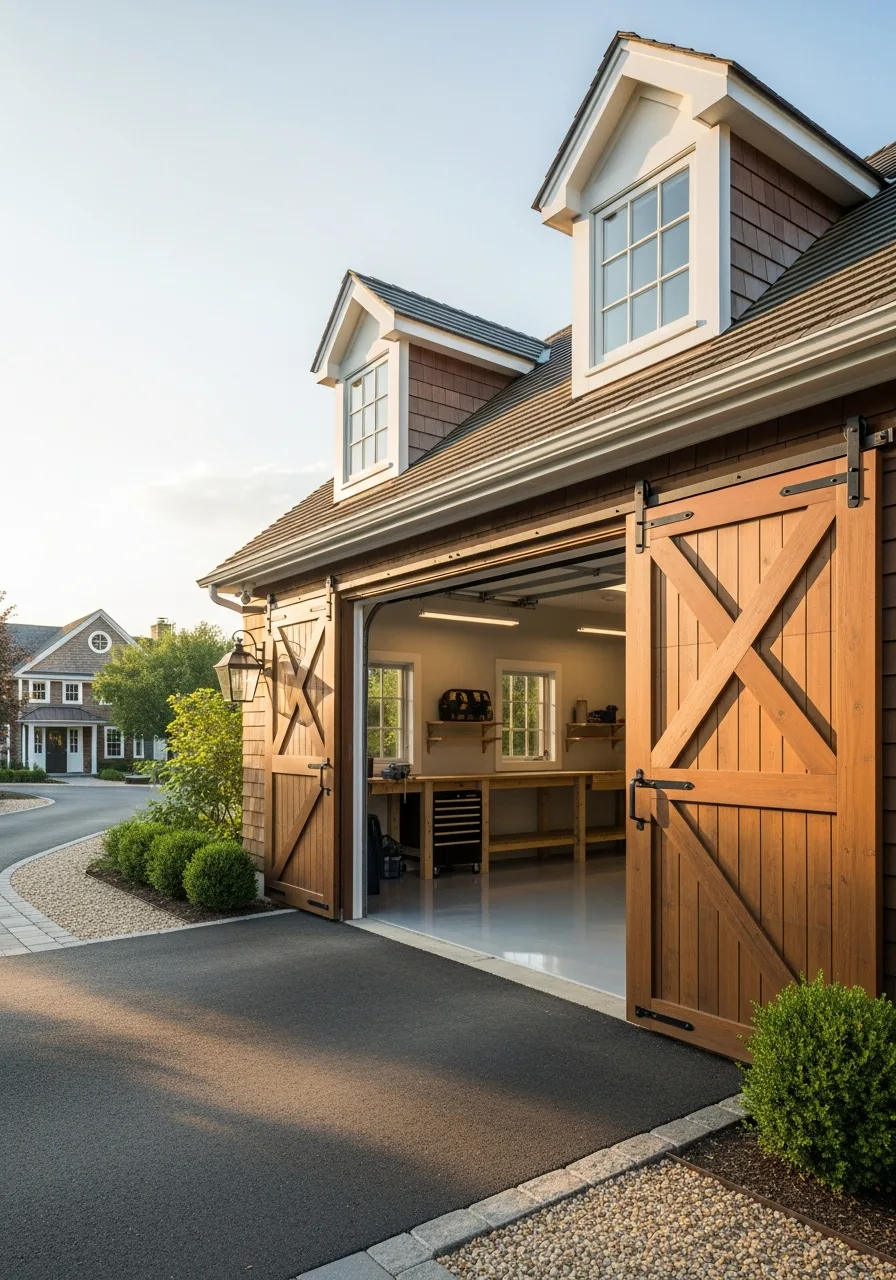
This design mimics the look of historic horse-drawn carriage buildings with decorative trim and dormers. It adds instant charm and "old world" character to a modern property.
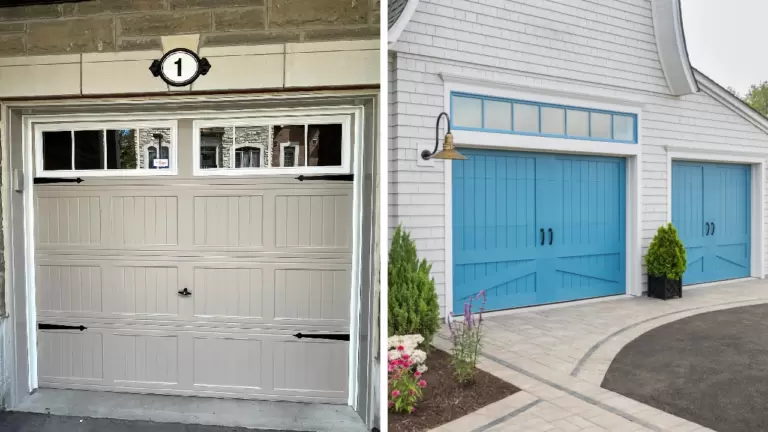
Choose garage doors that look like swinging barn doors but actually roll up for modern convenience.
- Keep trim colors within two shades of the siding for a classic look.
- Use window flower boxes on the lower level to soften the building's appearance.
- Install decorative strap hinges to make standard doors look authentic.
Design Secret: Use real wood for the trim pieces to give the building a high-quality, custom feel.
10. Detached Garage Storage Loft
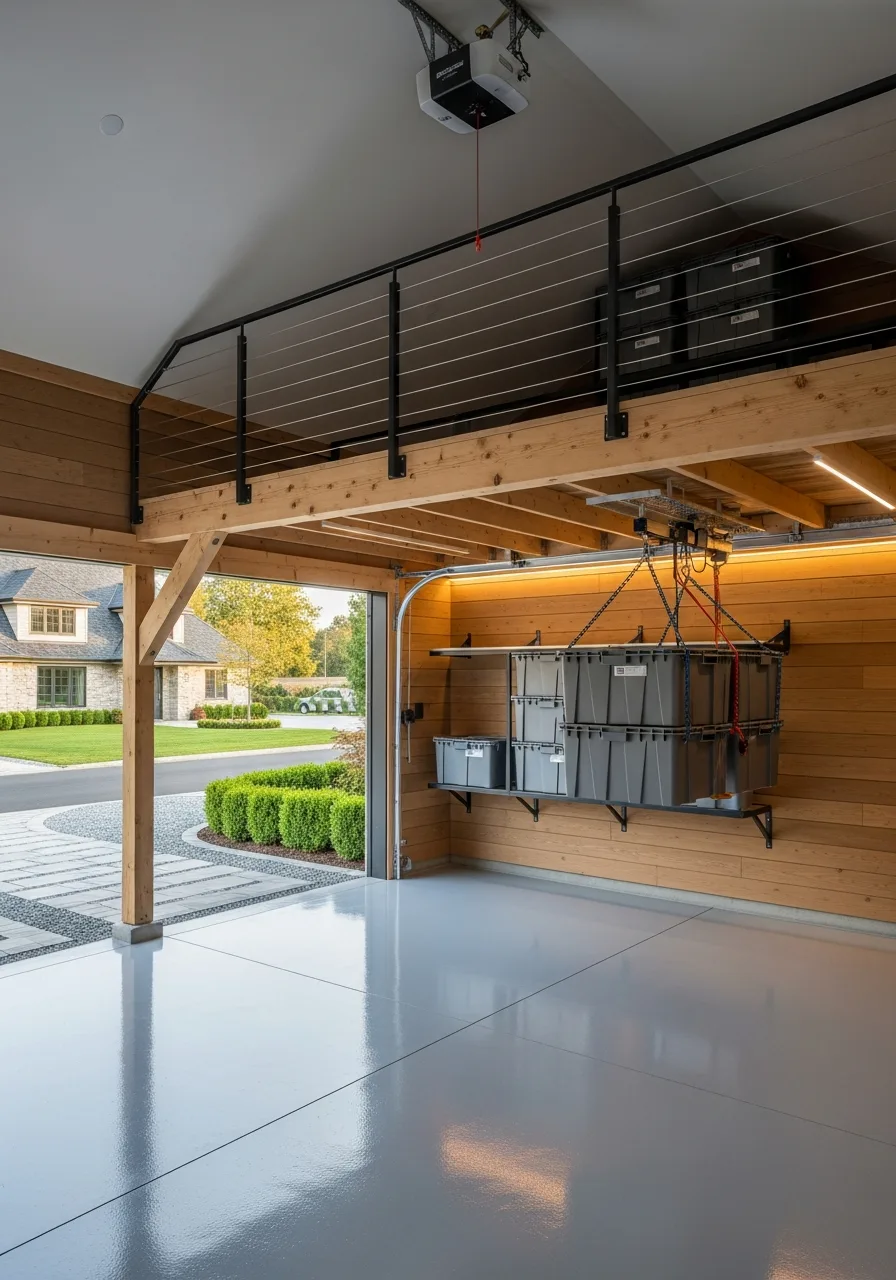
A storage loft provides a dedicated place for items used only once a year. This keeps the main floor clear for parking and prevents clutter from piling up against the walls.
Install a motorized ceiling hoist to lift heavy bins up to the loft without using a ladder.
- Leave 18 inches of clearance between the loft floor and the car roof.
- Paint the underside of the loft a light color to avoid a dark garage floor.
- Use clear plastic bins on the loft edge to identify contents from below.
Design Secret: Install a safety railing with a removable section for easy loading and unloading.
11. Rustic Detached Garage
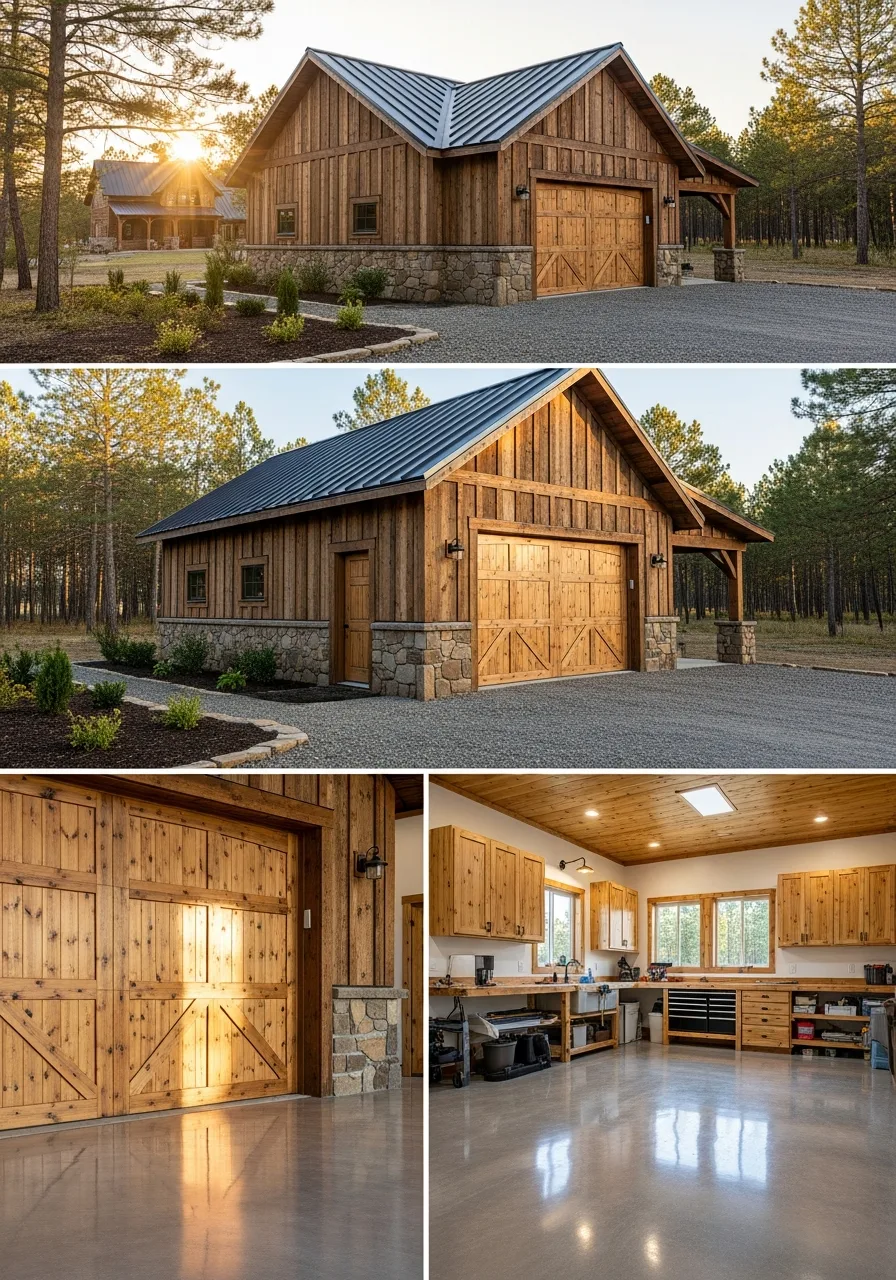
This style uses natural materials like stone and rough-sawn wood to blend into a wooded or rural landscape. It works by making a large building feel like a natural part of the environment.
Use a matte metal roof to provide durability and a rugged, cabin-like finish.
- Extend the roof eaves by 12 inches to protect wood siding from rain.
- Use large river stones around the foundation to ground the structure.
- Install warm-toned exterior lanterns to create a cozy glow at dusk.
Design Secret: Mix horizontal and vertical wood siding to break up the scale of a large building.
12. Craftsman Detached Garage
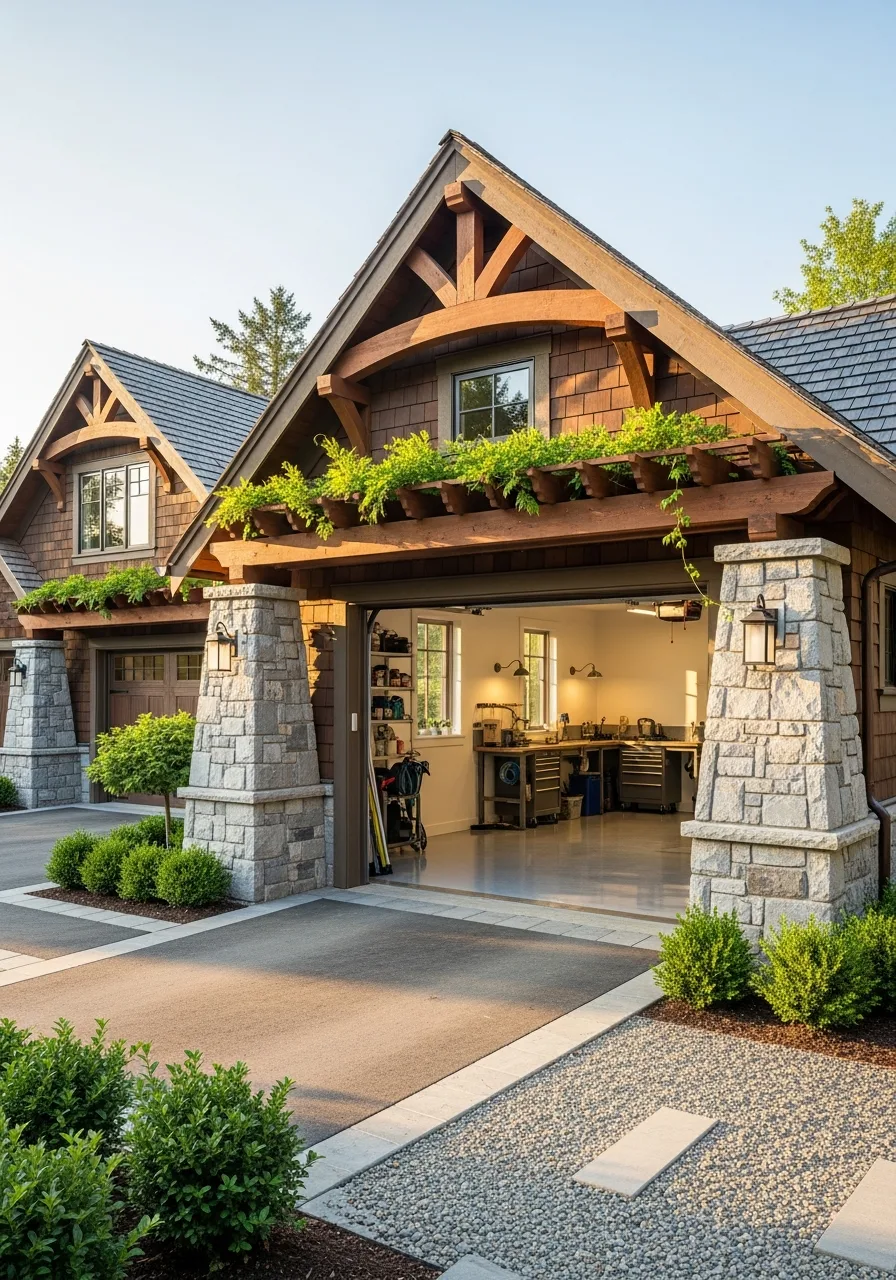
Craftsman garages feature tapered columns, exposed rafters, and intricate wood details. This style works because it emphasizes hand-crafted quality and architectural interest.
Add a small pergola over the garage door to create depth and support climbing vines.
- Match the pillar base stone to the stone used on the main house.
- Use earth-tone paint colors like sage or ochre for an authentic look.
- Install windows with divided lites to mirror the Craftsman home style.
Design Secret: Use thick, flat trim around windows to emphasize the sturdy Craftsman aesthetic.
13. Detached Garage With Office
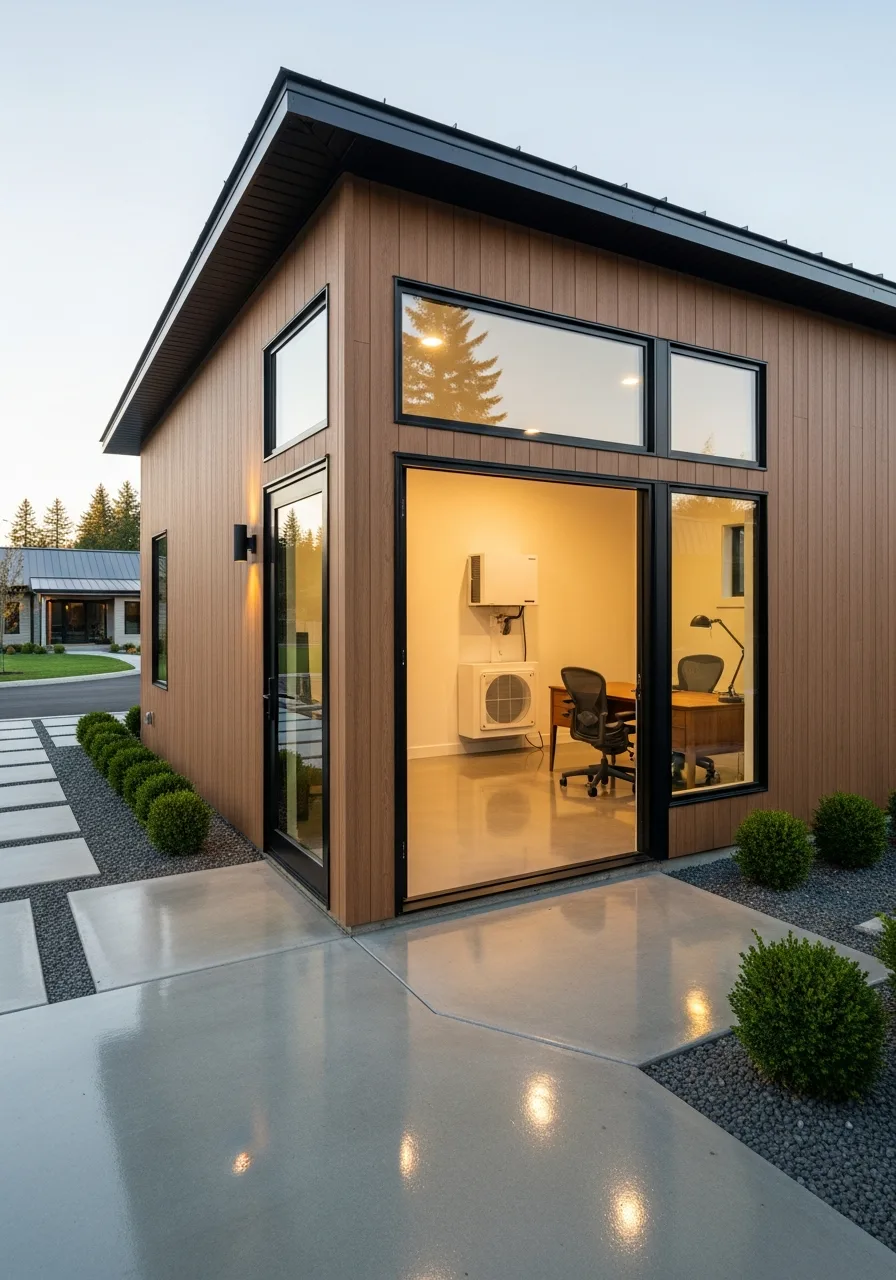
A dedicated garage office provides a quiet, professional environment away from household distractions. This setup is perfect for remote workers who need a clear boundary between home and work life.
Install a mini-split HVAC system to keep the office comfortable year-round without ductwork.
- Position the desk facing a window to maximize natural light during the day.
- Use sound-dampening panels on the walls to block out garage noises.
- Build a small coffee station or wet bar to minimize trips back to the house.
Design Secret: Run a dedicated internet line to the garage for a more stable connection than Wi-Fi.
14. Detached Garage Gym
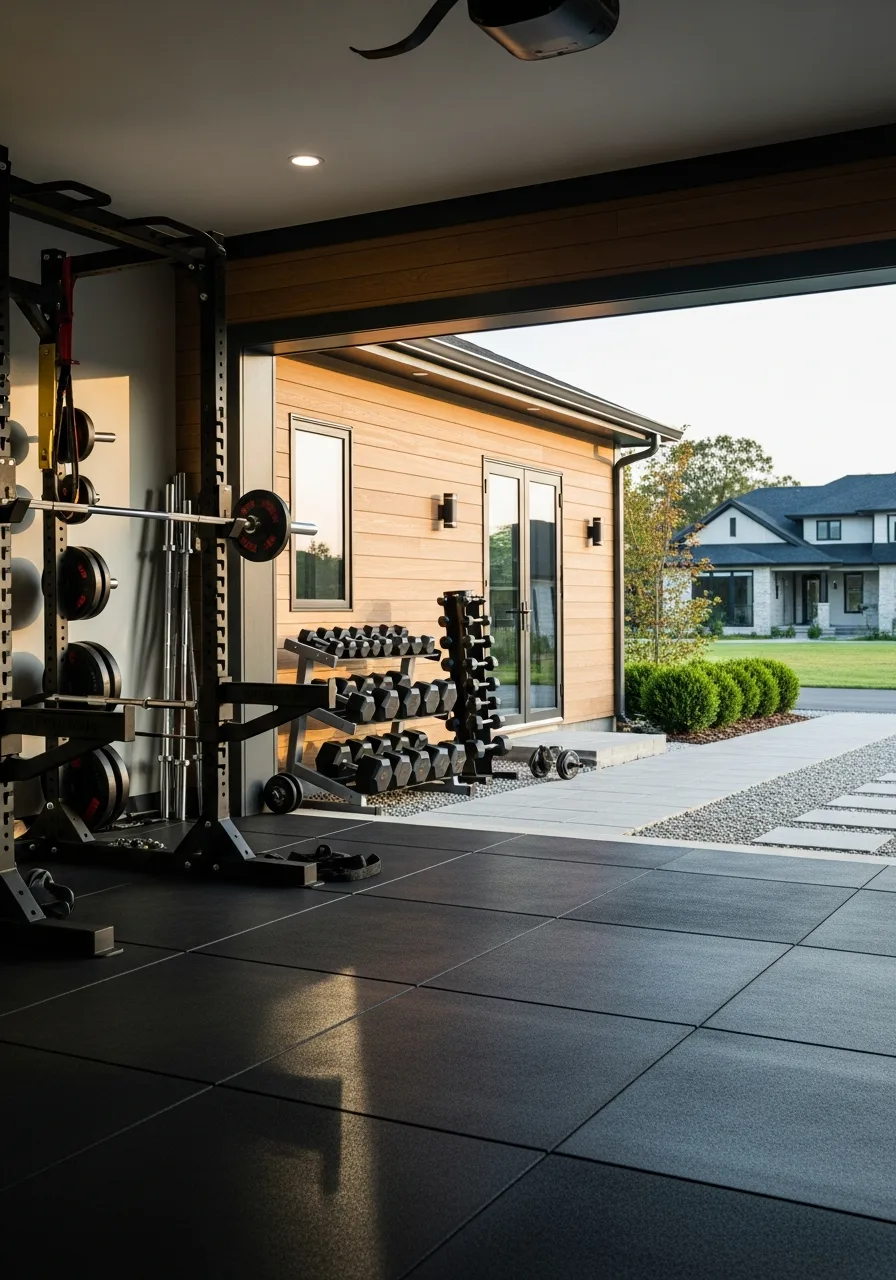
Converting a garage bay into a gym provides a durable space for heavy equipment and high-impact workouts. It works because the concrete floor can handle weight and the ventilation is superior to an indoor room.
Lay down thick rubber floor mats to protect the concrete and reduce noise from dropped weights.
- Leave 6 feet of clearance around a power rack for safe movement.
- Install a full-length wall mirror to make the gym feel twice as large.
- Use wall-mounted fans to keep the air moving during intense sessions.
Design Secret: Install a garage door screen to let in fresh air while keeping bugs out during workouts.
15. Detached Garage Studio
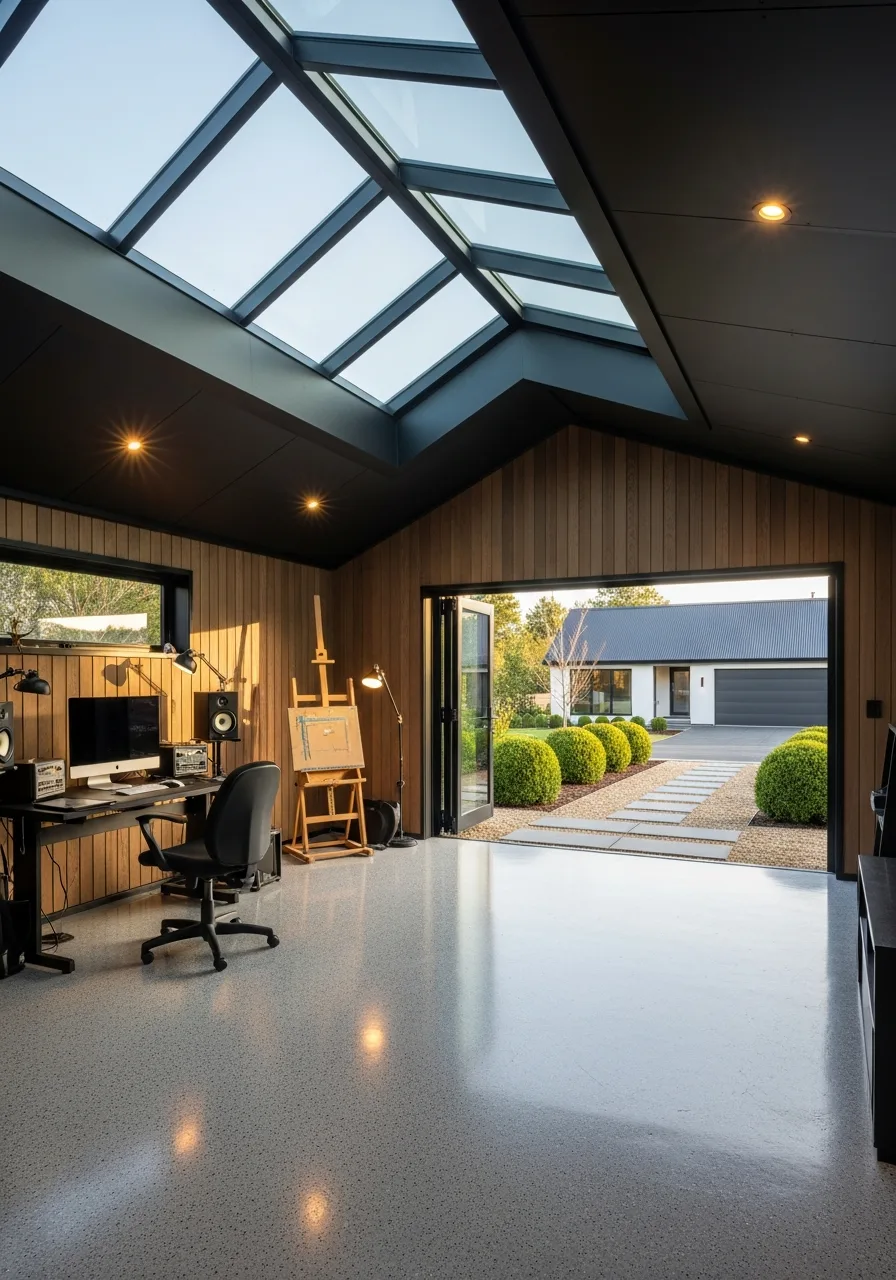
A garage studio offers a private sanctuary for painting, music, or digital content creation. The open floor plan allows for large-scale projects that would not fit inside a standard house.
Install large skylights to flood the workspace with the consistent natural light artists need.
- Allow 4 feet of clearance around a central work table or easel.
- Use white walls and a light-colored floor to maximize light reflection.
- Install extra electrical outlets every 4 feet for various lights and tools.
Design Secret: Choose a polished concrete floor for an industrial look that is easy to wipe clean of paint or dust.
16. Guest Suite Garage Addition
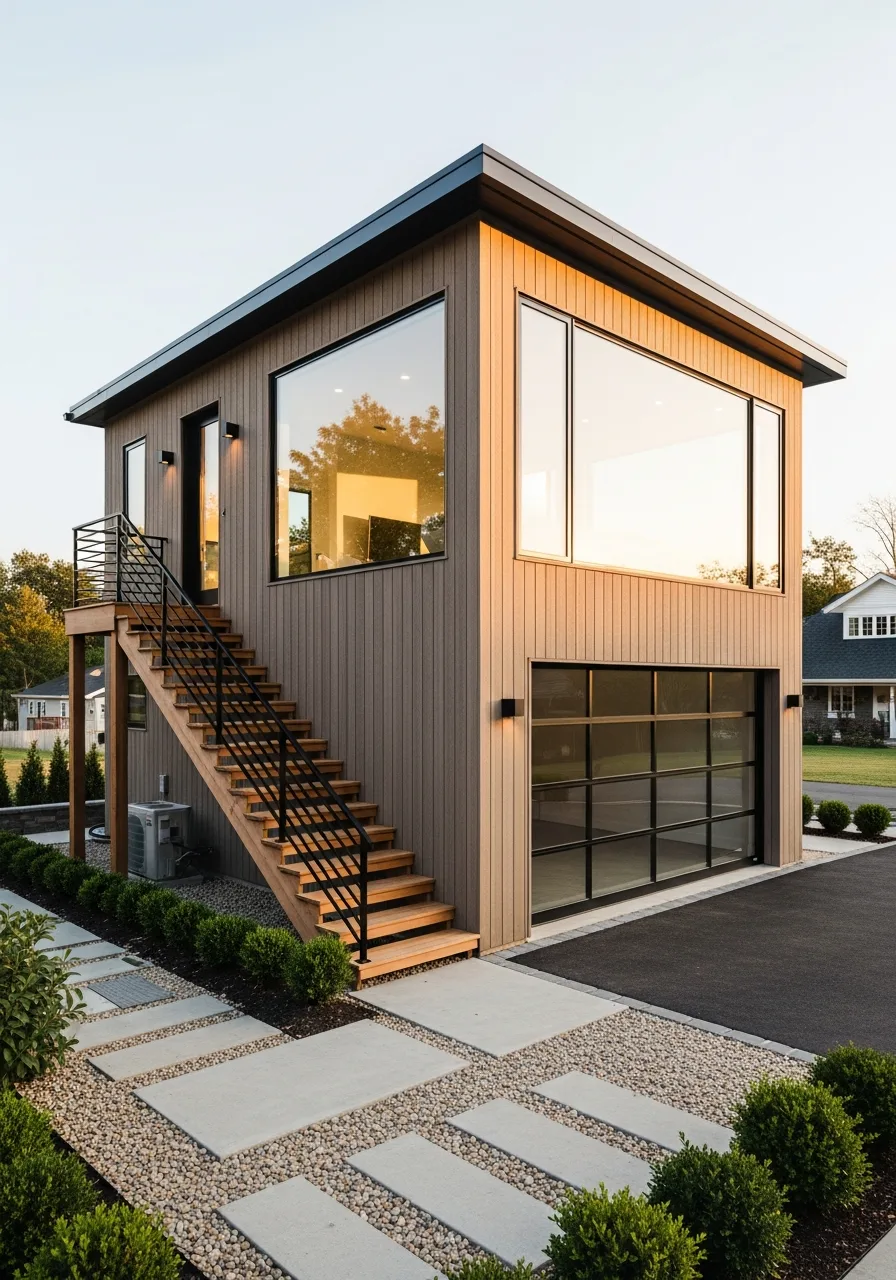
This setup adds a full living space above or beside the vehicle area.
It provides privacy for visitors while increasing the total square footage of the property. Install a separate exterior staircase so guests can come and go without entering the garage work zone.
- Keep walkways at least 36 inches wide to accommodate luggage.
- Use dormer windows to create the illusion of higher ceilings in the living area.
- Include a small kitchenette to make the suite fully self-sufficient.
Design Secret: Run plumbing lines during the initial slab pour to avoid expensive concrete cutting later.
17. Side Entry Garage Layout
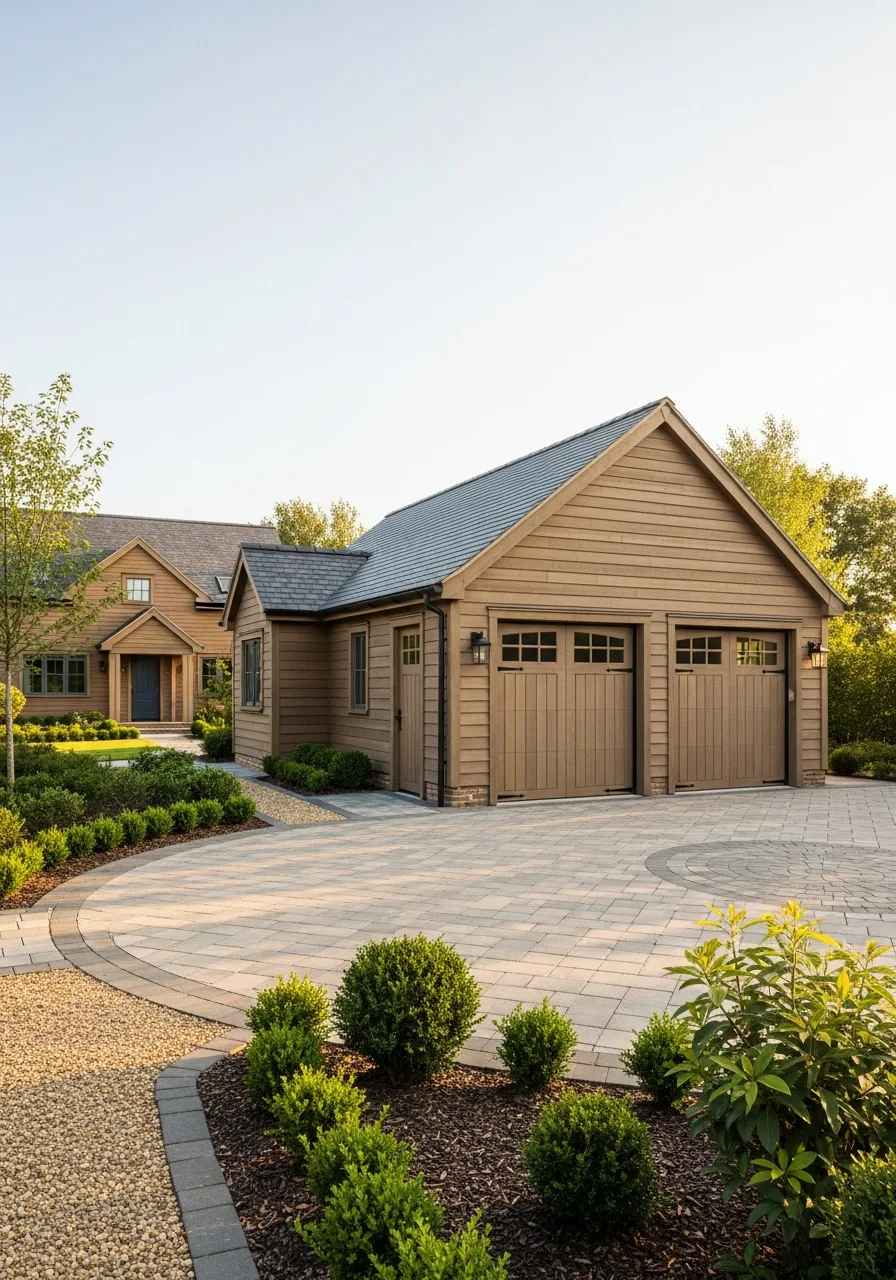
A side-entry layout turns the garage doors away from the street to hide clutter and large vehicles. This orientation makes the building look more like a traditional cottage or guest house from the front.
Ensure the driveway apron has a wide enough radius for a comfortable 24-foot turning circle.
- Leave 10 feet of clearance in front of the doors for easy vehicle maneuvering.
- Match the front-facing windows to the main house to blend the structures.
- Use the space behind the doors for a hidden trash bin enclosure.
Design Secret: Use carriage-style hardware on the side doors to maintain a high-end architectural look.
18. Front Porch Garage Design
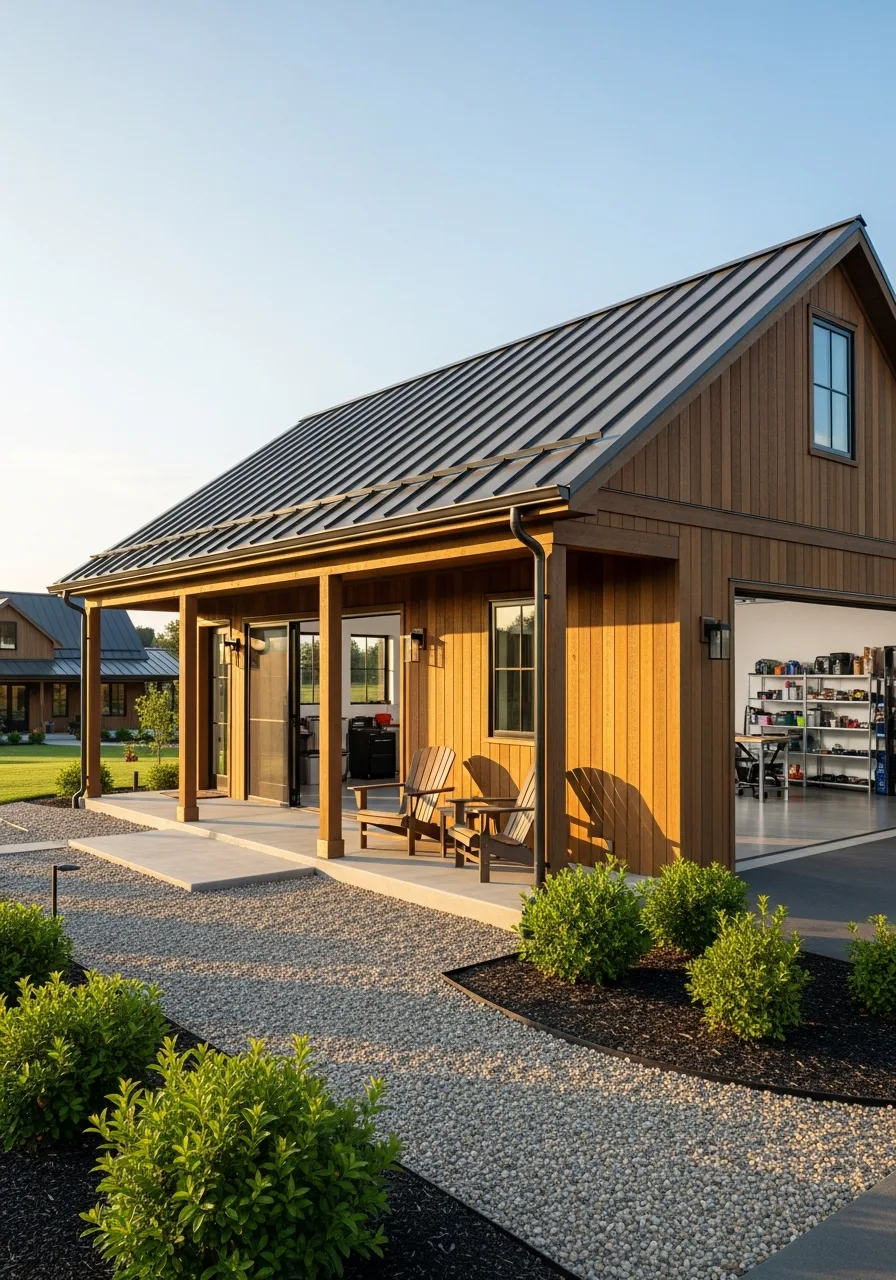
Adding a covered porch to the front of the garage creates a welcoming transition between the driveway and the interior. It softens the look of a large utility building and provides a shaded spot for outdoor breaks.
Set up a pair of heavy-duty Adirondack chairs to make the structure feel like a part of the backyard living space.
- Extend the porch roof at least 6 feet out to provide real protection from rain.
- Use vertical siding on the porch wall to draw the eye upward and add height.
- Install recessed lighting in the porch ceiling for safety and evening curb appeal.
Design Secret: Paint the porch ceiling a light haint blue to mimic the sky and keep the area feeling bright.
19. Covered Patio Garage Space
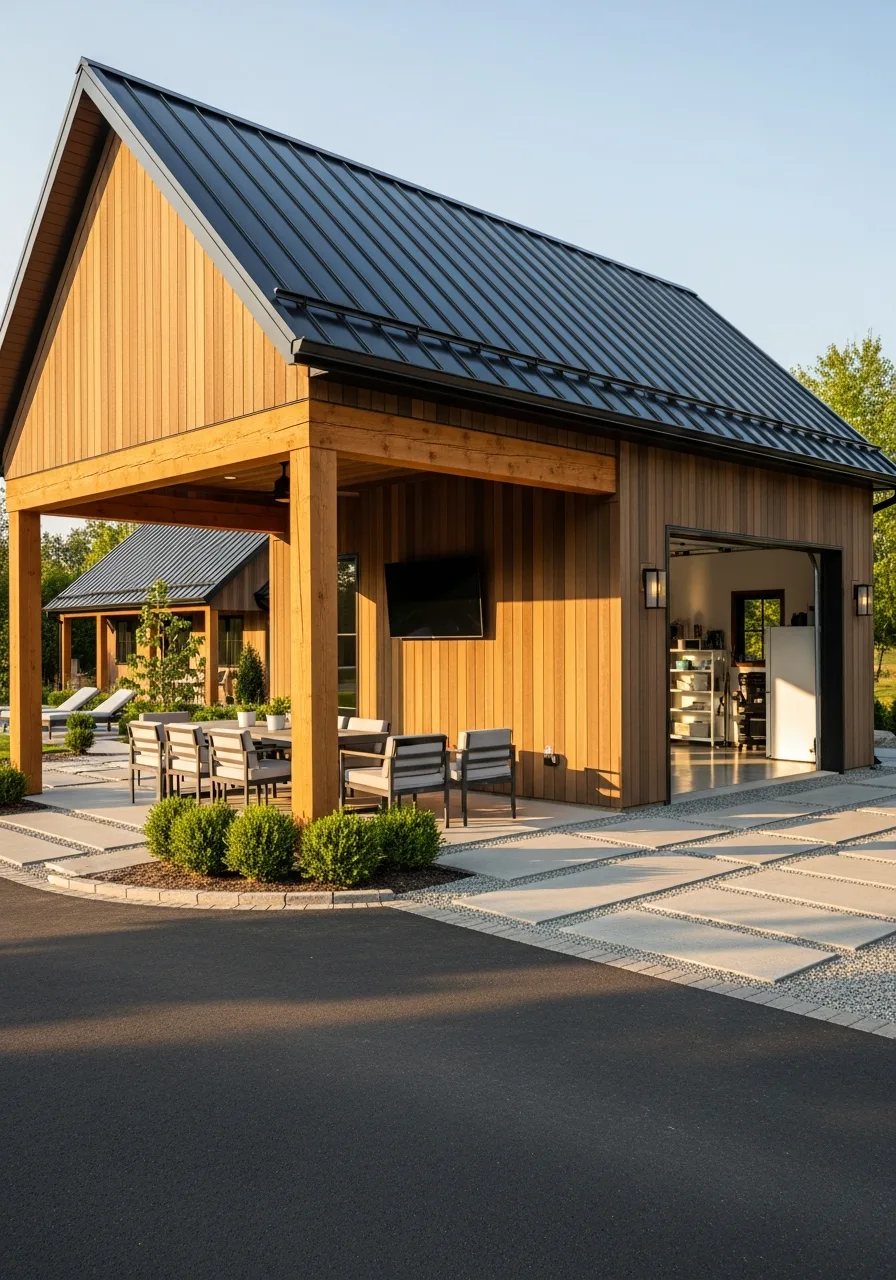
A covered patio extension on the side of the garage offers a permanent roof for outdoor dining or lounging. This design keeps the main yard open while utilizing the existing garage wall for wind protection.
Bolt a television mount directly to the exterior garage wall for an instant outdoor theater.
- Maintain a 5-foot clearance between the patio furniture and the garage side door.
- Use a shed roof pitch that matches the garage to create a seamless architectural line.
- Add a ceiling fan to the patio rafters to keep the air moving during summer projects.
Design Secret: Install a French door on the side of the garage to connect the interior workshop to the patio.
20. Bold Black Exterior Garage
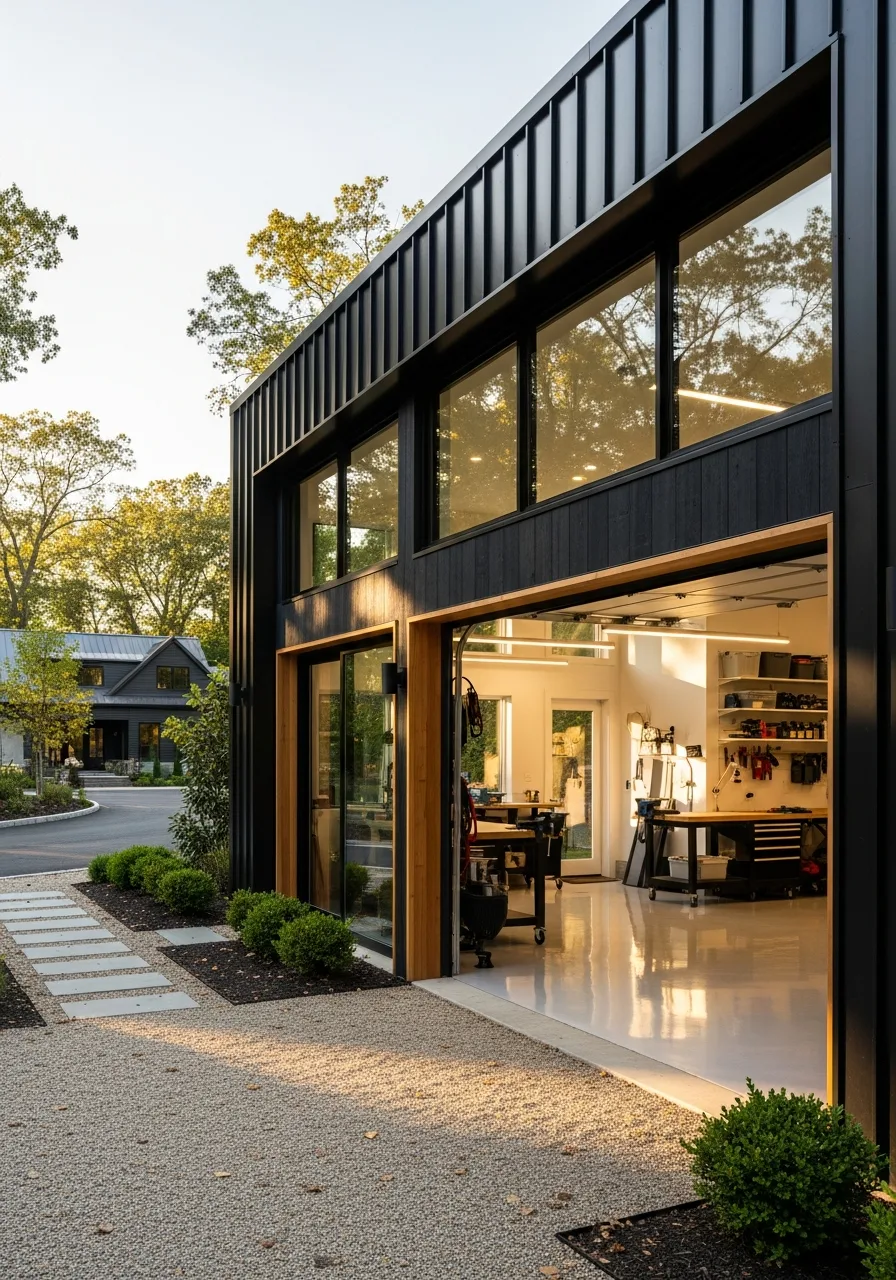
Dark charcoal or black siding makes a detached garage look modern and sophisticated. This bold color choice helps the building recede into the shadows of surrounding trees rather than standing out.
Contrast the dark walls with natural wood trim around the doors to add warmth to the design.
- Allow 4 feet of space for light-colored stone paths to prevent the area from looking too dark.
- Use high-gloss paint on the trim to reflect light and define the building’s shape.
- Hide utility meters and wires with matching black covers for a seamless look.
Design Secret: Choose a matte finish for the main siding to hide imperfections in the wood or vinyl.
21. Clean White Garage Design
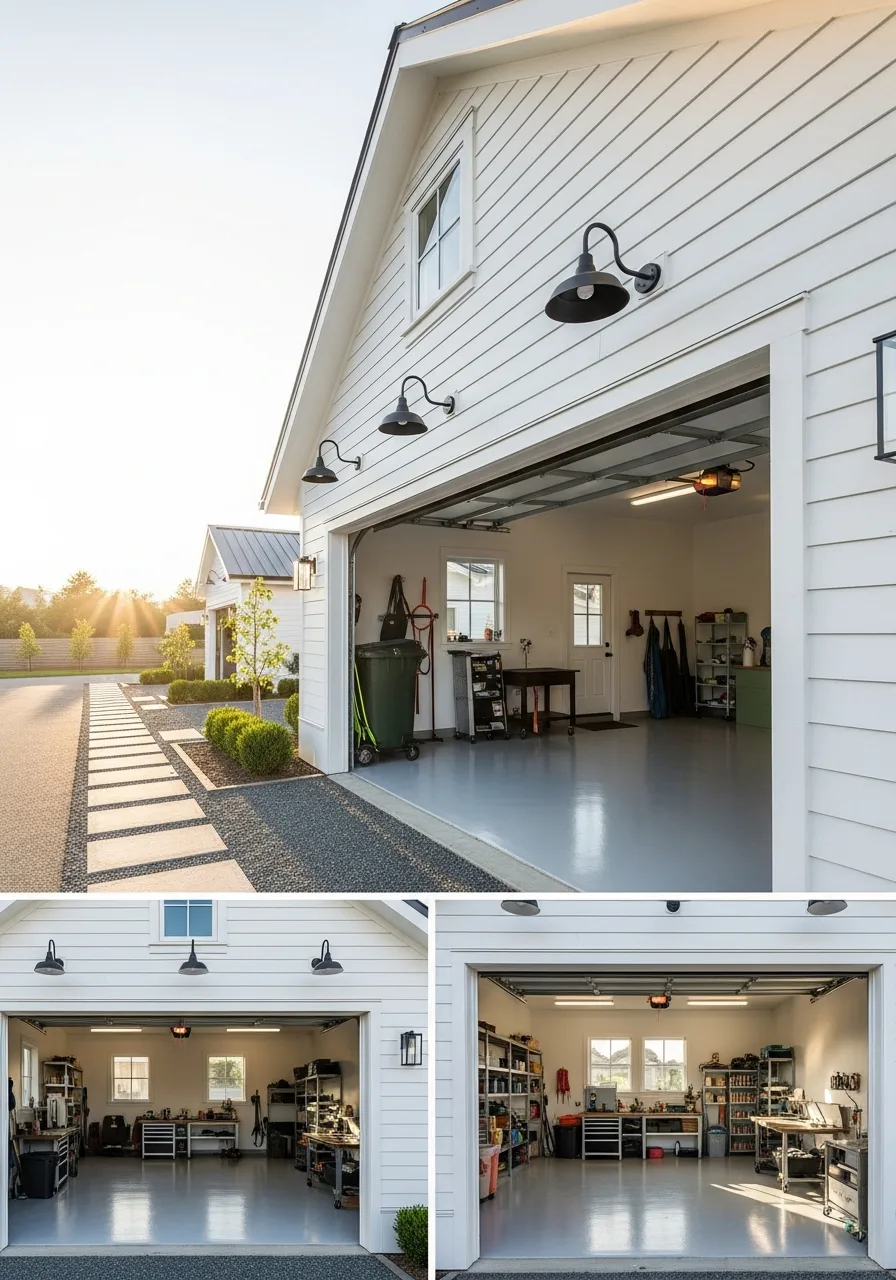
A crisp white garage offers a timeless look that feels clean and expansive. It reflects sunlight to keep the interior cooler and makes the structure appear larger than it actually is.
Pair white siding with black metal gooseneck lights for a classic high-contrast finish.
- Space exterior lights 8 feet apart to ensure even illumination across the facade.
- Use white trim on white siding to create a textured, monochromatic look that hides bulk.
- Install a gravel border around the base to prevent mud splatter from staining the white walls.
Design Secret: Use a soft off-white rather than a stark refrigerator white to avoid a blinding glare in direct sun.
22. Durable Metal Roof Garage
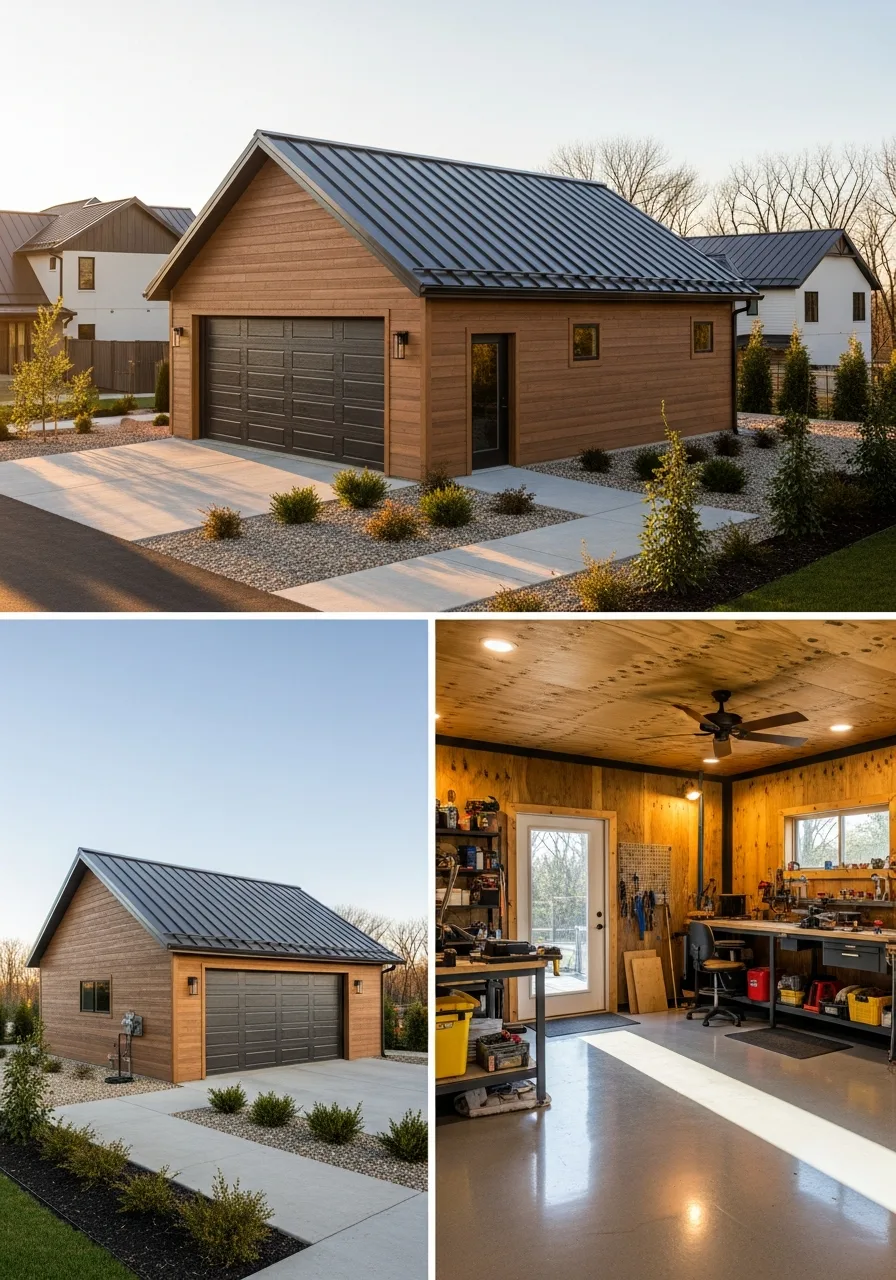
Metal roofing provides superior durability and a distinct architectural edge for secondary buildings. It sheds snow and rain efficiently while giving the garage a professional, finished appearance.
Select a standing-seam metal roof in a dark bronze or silver to complement any siding color.
- Ensure the roof overhang is at least 12 inches to protect the siding from runoff.
- Use a light-colored metal to reflect heat and lower the temperature in the garage loft.
- Install snow guards above the entry doors to prevent heavy slides during winter months.
Design Secret: Match the metal roof color to the window frames for a cohesive, designer-level look.
23. Glass Panel Garage Doors
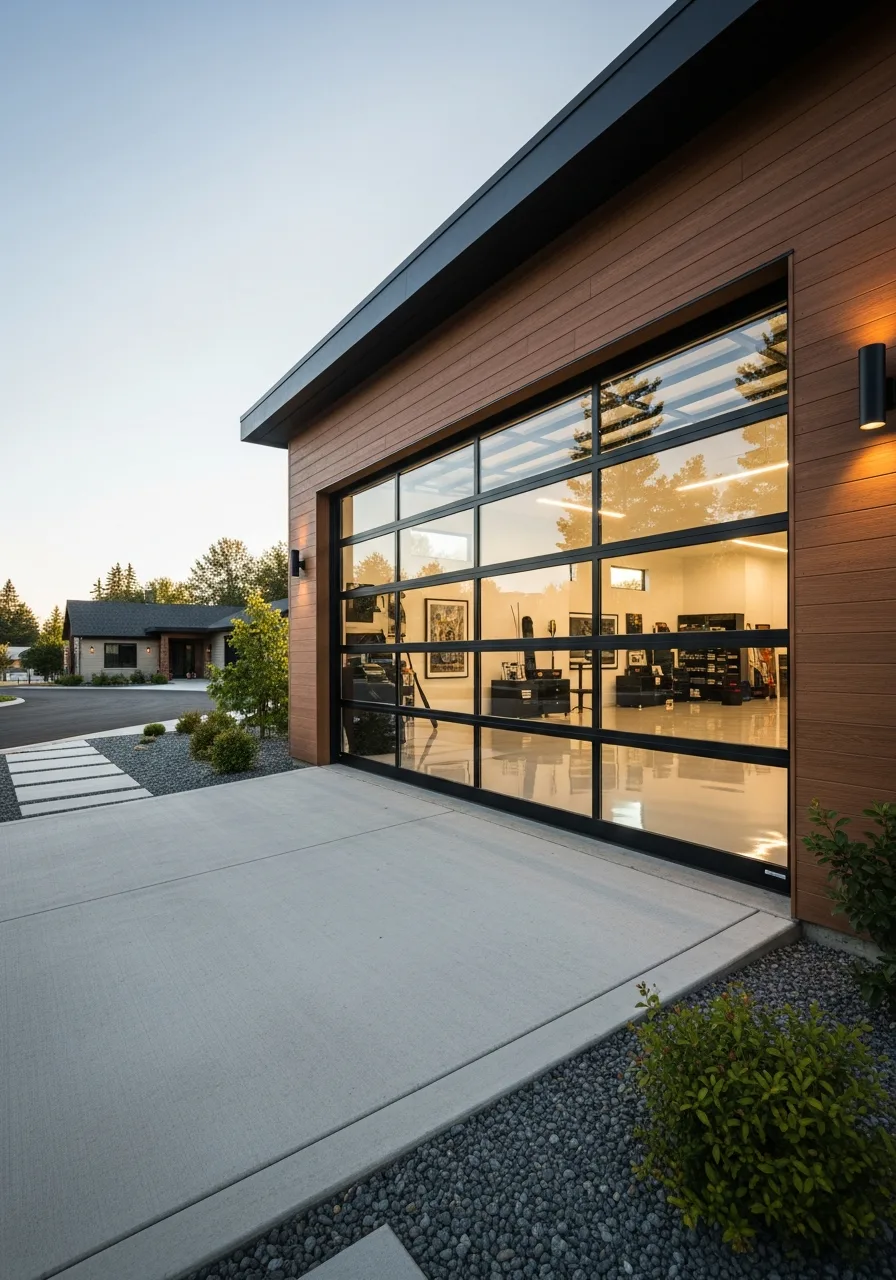
Full-view glass garage doors turn a dark storage area into a bright, usable studio or showroom. These doors allow natural light to flood the space while giving the exterior a high-end, modern feel.
Choose frosted or tinted glass to maintain privacy for the items stored inside.
- Leave 2 feet of clear space around the door tracks to avoid blocking the light flow.
- Use black aluminum frames to create a grid pattern that mimics industrial windows.
- Install interior motorized shades to block heat gain during the hottest part of the day.
Design Secret: Use insulated glass panels to help regulate the garage temperature if the space is conditioned.
24. Sliding Barn Door Garage
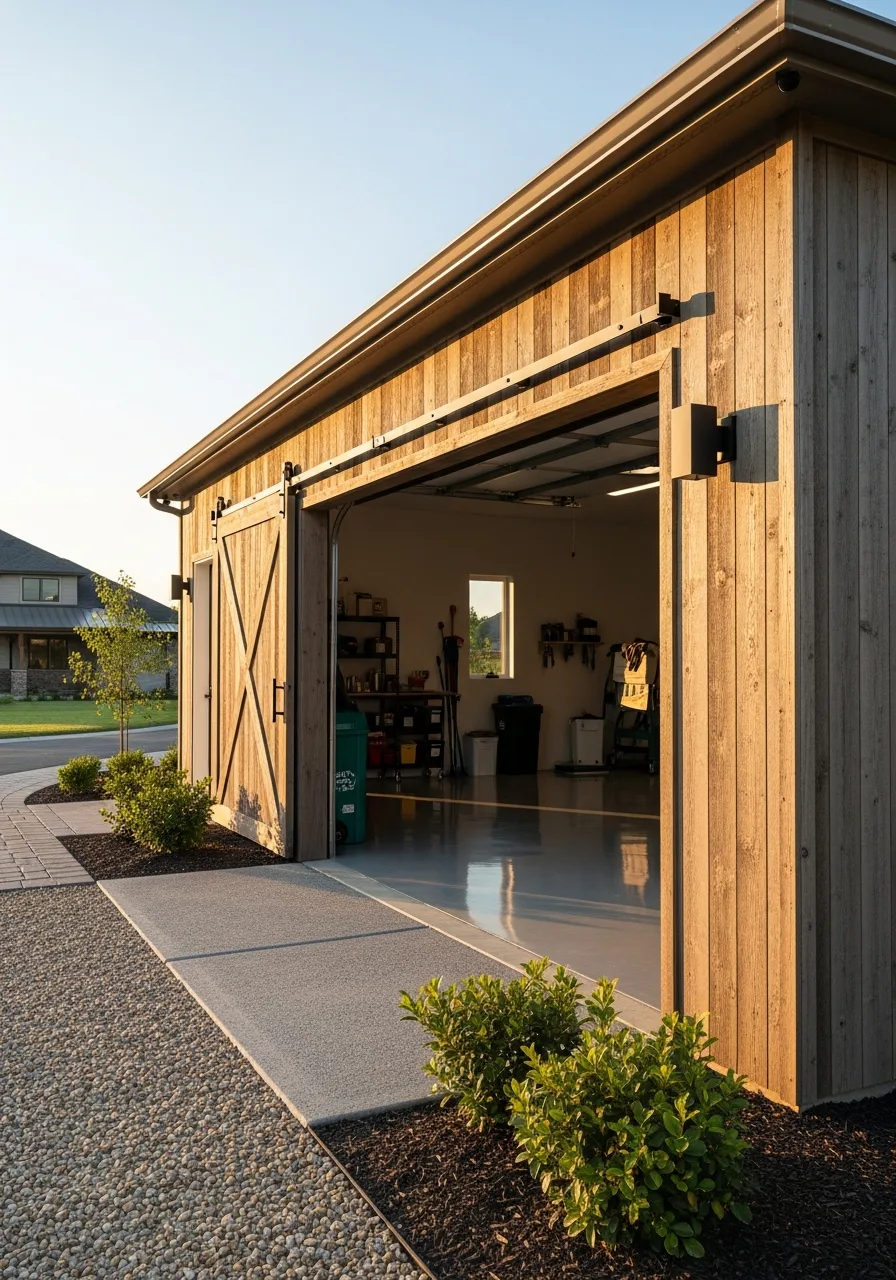
Sliding barn doors offer a rustic aesthetic and save space by not swinging outward or upward. They are perfect for wide openings where traditional overhead doors might feel too industrial.
Mount the heavy-duty sliding track on the exterior of the building to save interior wall space.
- Ensure the track is twice the width of the door for full clearance when open.
- Use reclaimed wood or X-brace designs to add visual interest to the large flat surfaces.
- Install a floor guide to prevent the doors from swinging in the wind.
Design Secret: Add a small wicket door inside one of the large barn doors for quick human entry without moving the heavy sliders.
25. Compact Small Garage Build
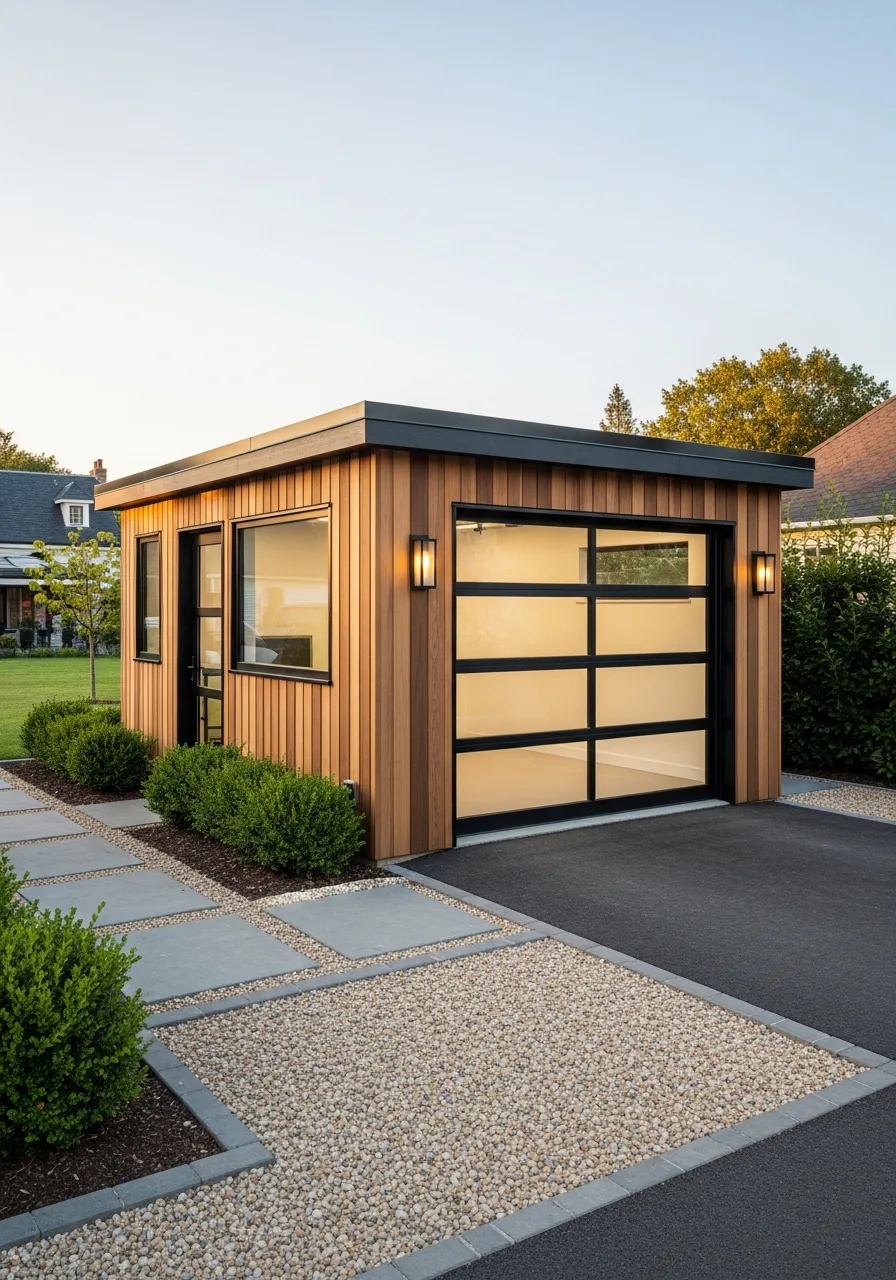
A compact one-car garage is an efficient way to add value to a small lot without overwhelming the yard. It provides essential protection for a vehicle or lawn equipment while maintaining a small footprint.
Use vertical cedar siding to make the small structure feel taller and more elegant.
- Leave at least 3 feet of clearance on one side for a dedicated walking path.
- Install a window on the back wall to create a sightline that makes the interior feel less cramped.
- Use wall-mounted folding workbenches to maximize the limited floor area.
Design Secret: Paint the interior ceiling the same color as the walls to blur the corners and expand the sense of space.
26. Garage Mudroom Entry Zone
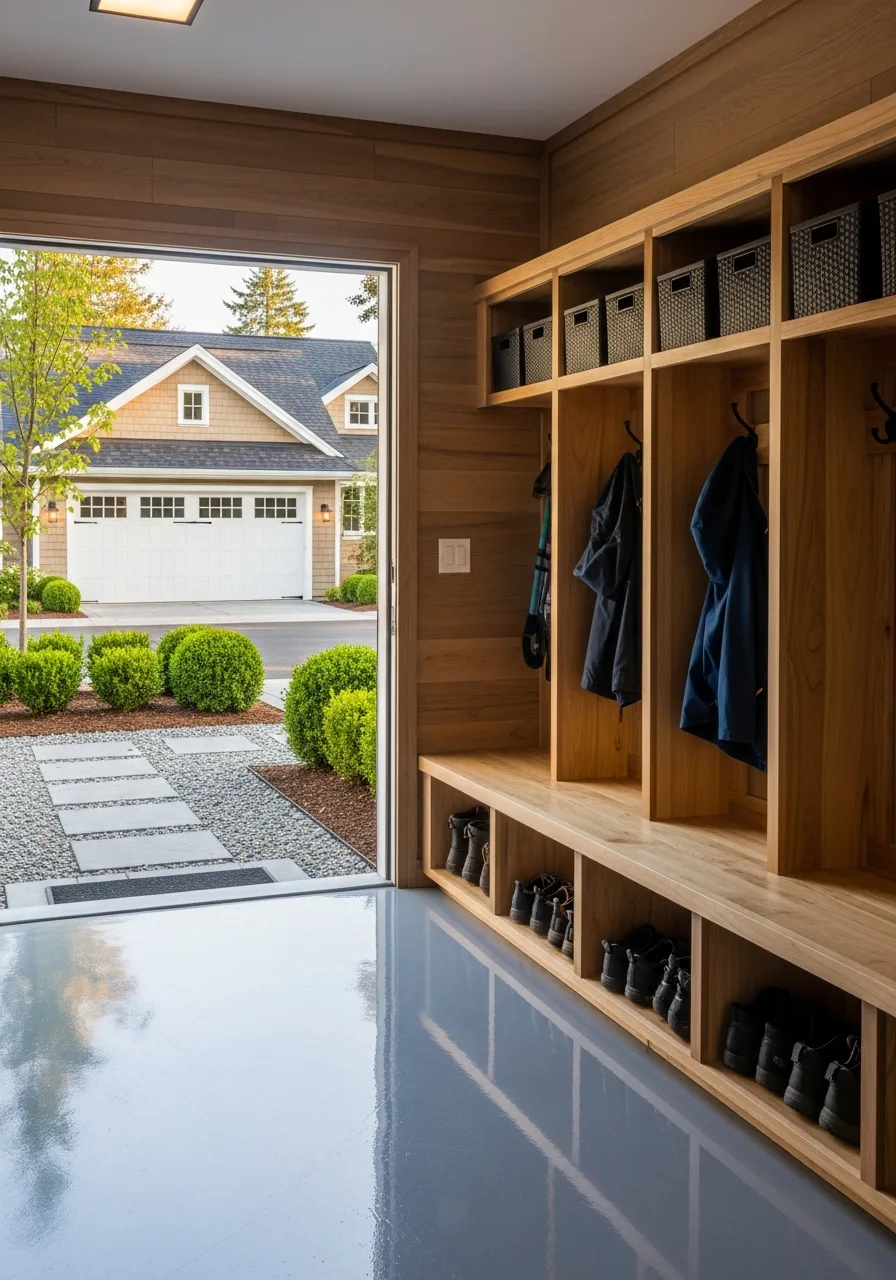
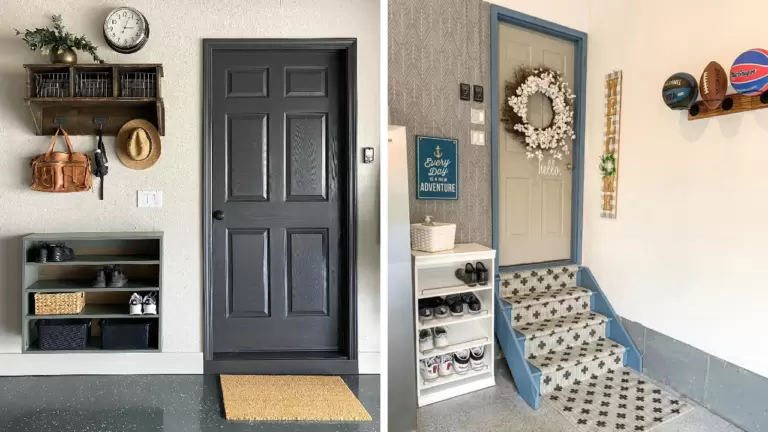
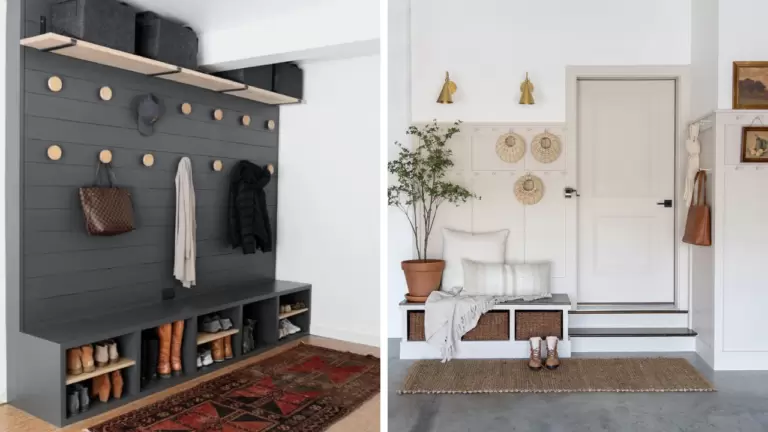
A mudroom zone acts as a buffer between the dirty garage floor and the clean outdoors or home. This dedicated transition area keeps boots, coats, and sports gear organized and out of the main vehicle bay.
Build a custom bench with cubbies underneath for easy shoe storage right by the door.
- Allocate a 4-foot by 5-foot area near the side door for the mudroom zone.
- Use beadboard paneling on the walls to protect against scuffs from bags and equipment.
- Install a heavy-duty floor mat that spans the entire width of the entry to catch debris.
Design Secret: Add a utility sink in the mudroom area for quick clean-ups before entering the house.
27. Outdoor Kitchen Garage Hub
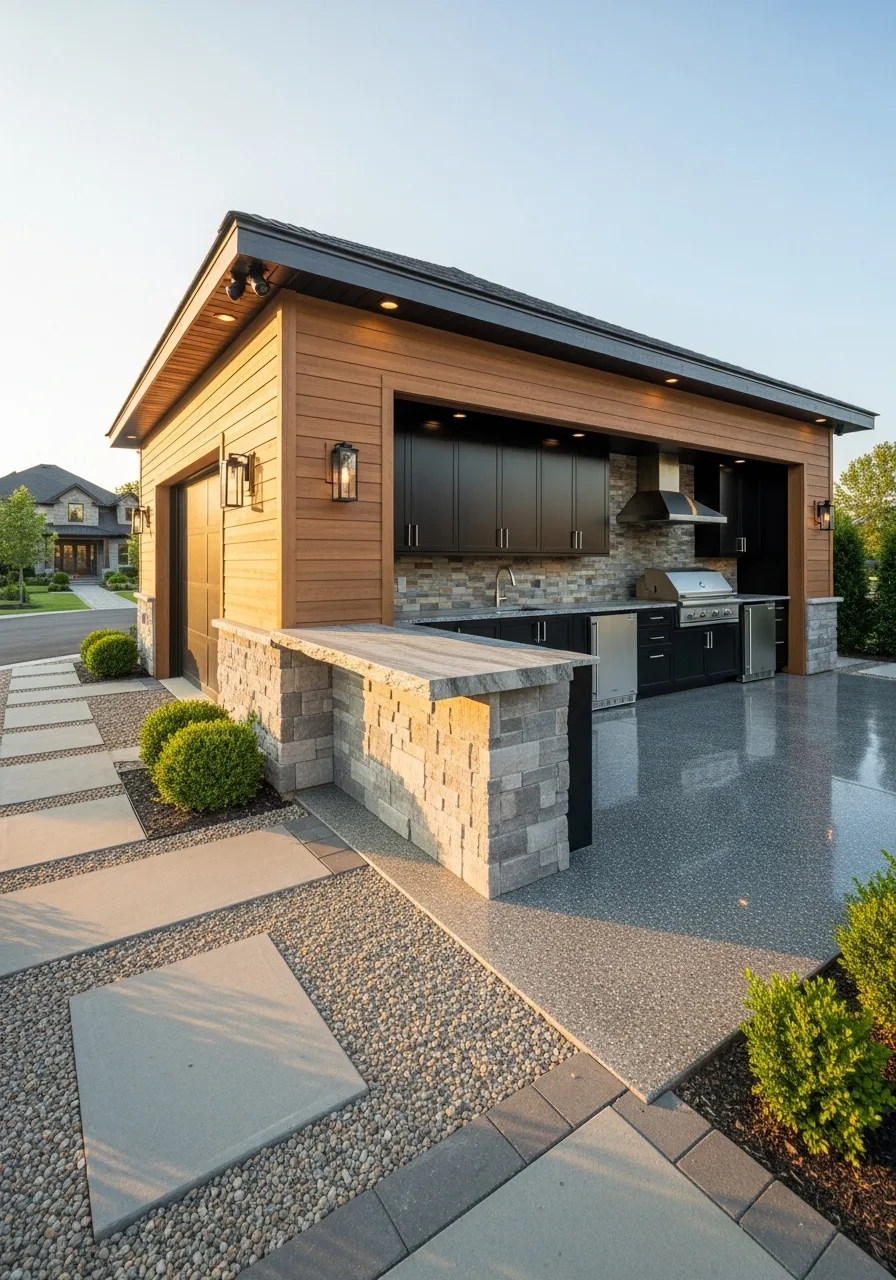
Integrating a kitchen into the side of the garage creates a central hub for backyard hosting. This setup lets you access storage and utilities while keeping cooking smoke out of the main house.
Install a long stone countertop that doubles as a serving bar for guests.
- Place the grill at least 3 feet away from the garage siding to prevent heat damage.
- Use a shed roof extension to keep the appliances and the cook dry during rain.
- Incorporate a small refrigerator inside the garage wall to keep drinks cold and within reach.
Design Secret: Run a gas line from the main house during construction to avoid the hassle of propane tanks.
28. Pool House Garage Combo
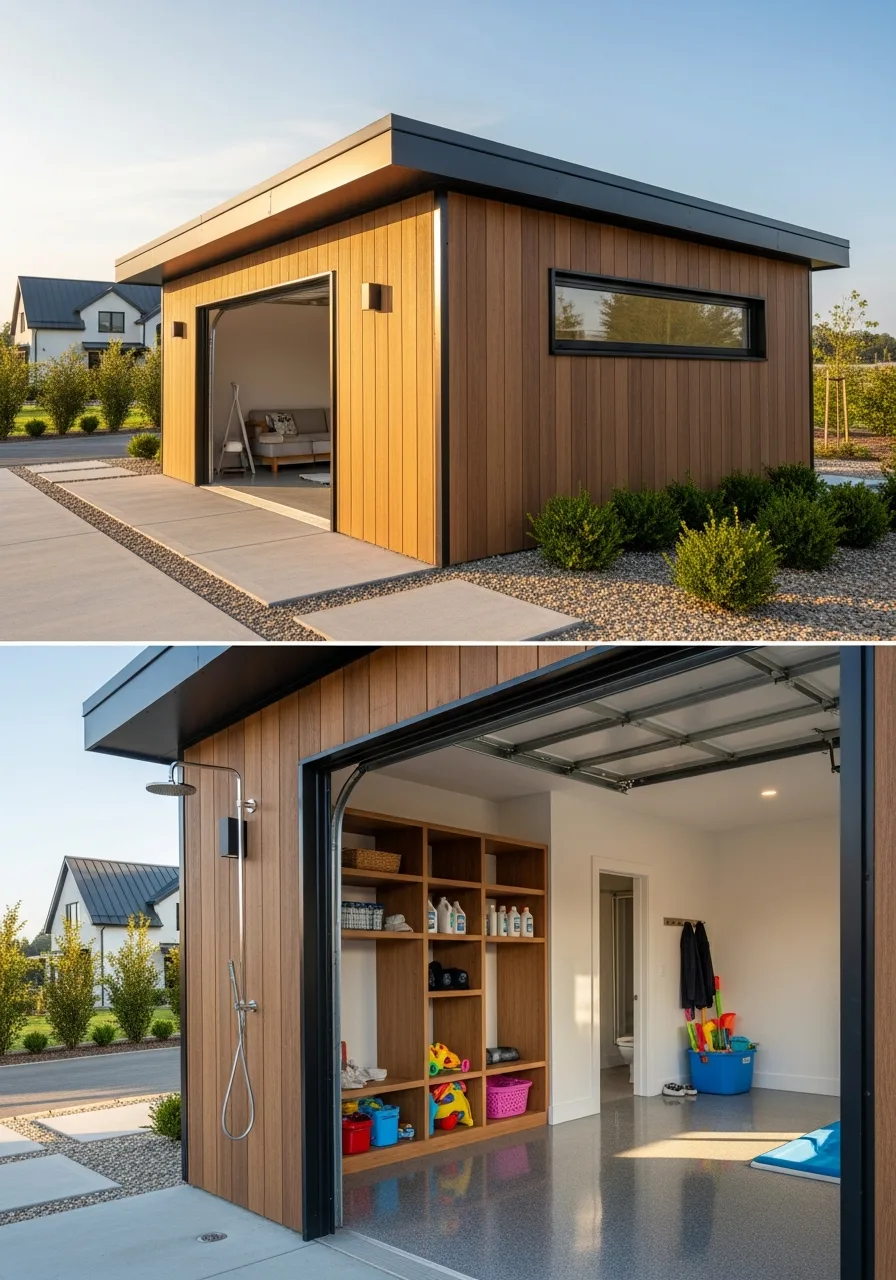
Part of the garage can serve as a changing room and storage area for pool chemicals and toys. This dual-purpose design keeps wet feet out of the main house and centralizes all maintenance supplies.
Add an outdoor shower head to the exterior wall for a quick rinse before and after swimming.
- Ensure the floor in the pool zone is non-slip and sloped toward a drain.
- Use waterproof PVC trim inside the changing area to prevent rot and mold.
- Install a row of sturdy hooks at different heights for towels and life jackets.
Design Secret: Use louvered doors on the storage section to allow for airflow and prevent damp odors.
29. Garden Storage Garage Area
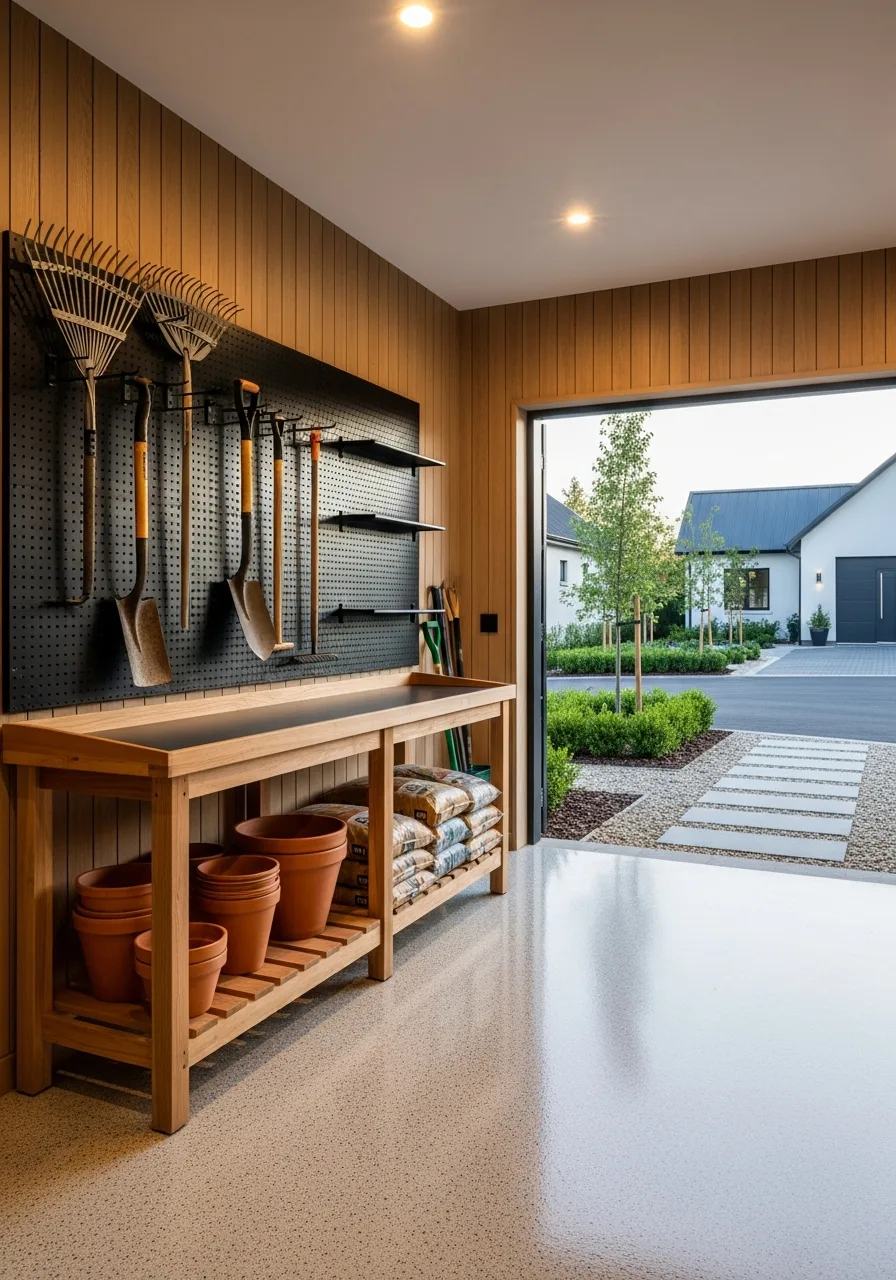
A dedicated garden zone keeps dirt and tools separate from the vehicle area. It provides a clean space for potting plants, storing soil, and organizing hand tools.
Mount a pegboard system on the wall to keep rakes and shovels visible and easy to grab.
- Leave 30 inches of space in front of the potting bench for comfortable movement.
- Use a skylight above the garden area to provide natural light for indoor seedlings.
- Install a wall-mounted hose reel on the exterior near the garden door for easy watering.
Design Secret: Use galvanized metal bins for soil storage to keep pests out and the area looking tidy.
30. Organized Bike Storage Garage
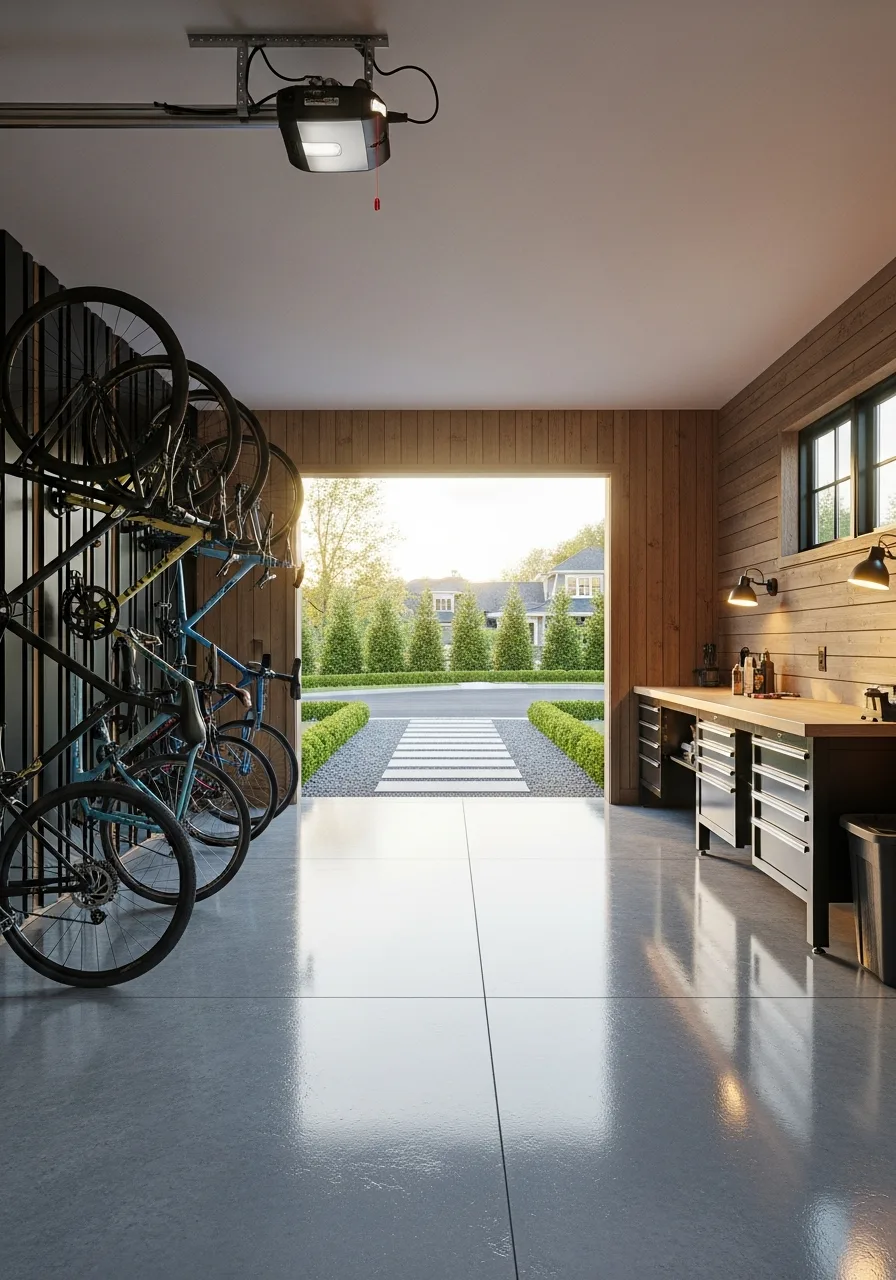
Specialized bike storage keeps expensive cycles safe and out of the way of car doors. This organization prevents the garage from becoming a cluttered mess of tangled handlebars and flat tires.
Use vertical wall racks to lift bikes off the floor and reclaim valuable square footage.
- Space wall hooks at least 16 inches apart to prevent bikes from bumping into each other.
- Install a rubber floor mat under the bike rack to catch grease and mud.
- Add a small overhead shelf for helmets, shoes, and repair kits.
Design Secret: Use a pulley system for heavy e-bikes to make lifting them into ceiling storage effortless.
31. Modern Detached Garage
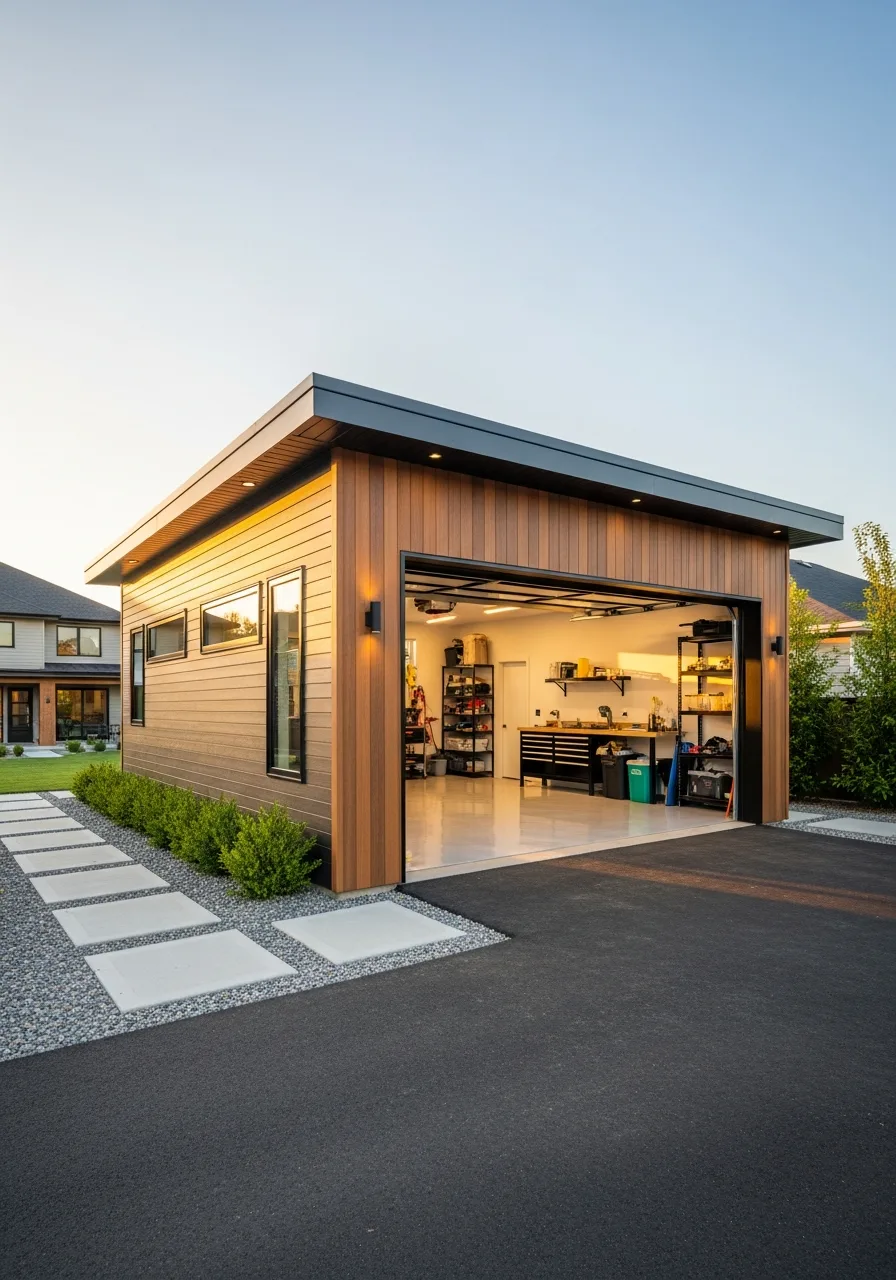
This design uses flat roofs and simple materials for a sleek look. It works well for homes with a minimal aesthetic because it doesn't distract from the main house.
Install slim horizontal siding to emphasize the length of the building.
- Leave 36 inches of clear floor space for walkways between the car and the wall.
- Use vertical siding on the top half of the building to make the structure look taller.
- Build a concealed nook on the side to hide trash bins from street view.
Design Secret: Use dark window frames to make the glass look invisible at night.
32. Detached Garage With Apartment
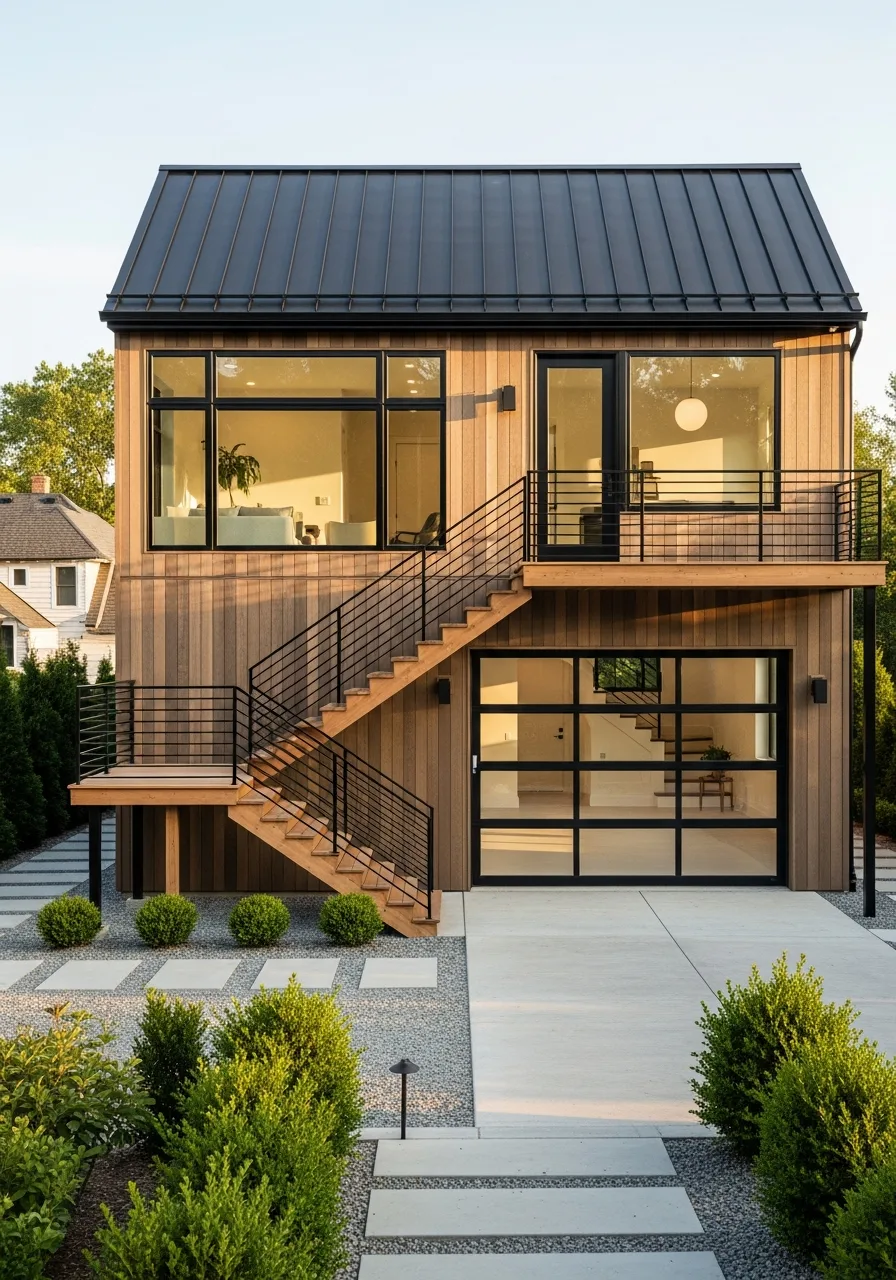
A secondary living space above the vehicles creates a private retreat for guests or renters. It adds significant value to the property without changing the main house footprint.
Place the staircase on the exterior to save interior floor space for the living area.
- Plan for 42-inch wide stairs to make moving furniture into the upper unit easier.
- Add vaulted ceilings in the living area to make a small footprint feel much larger.
- Install a stacked washer and dryer unit inside a closet to maximize utility.
Design Secret: Soundproof the floor between levels with thick rubber underlayment.
33. Detached Garage With Loft
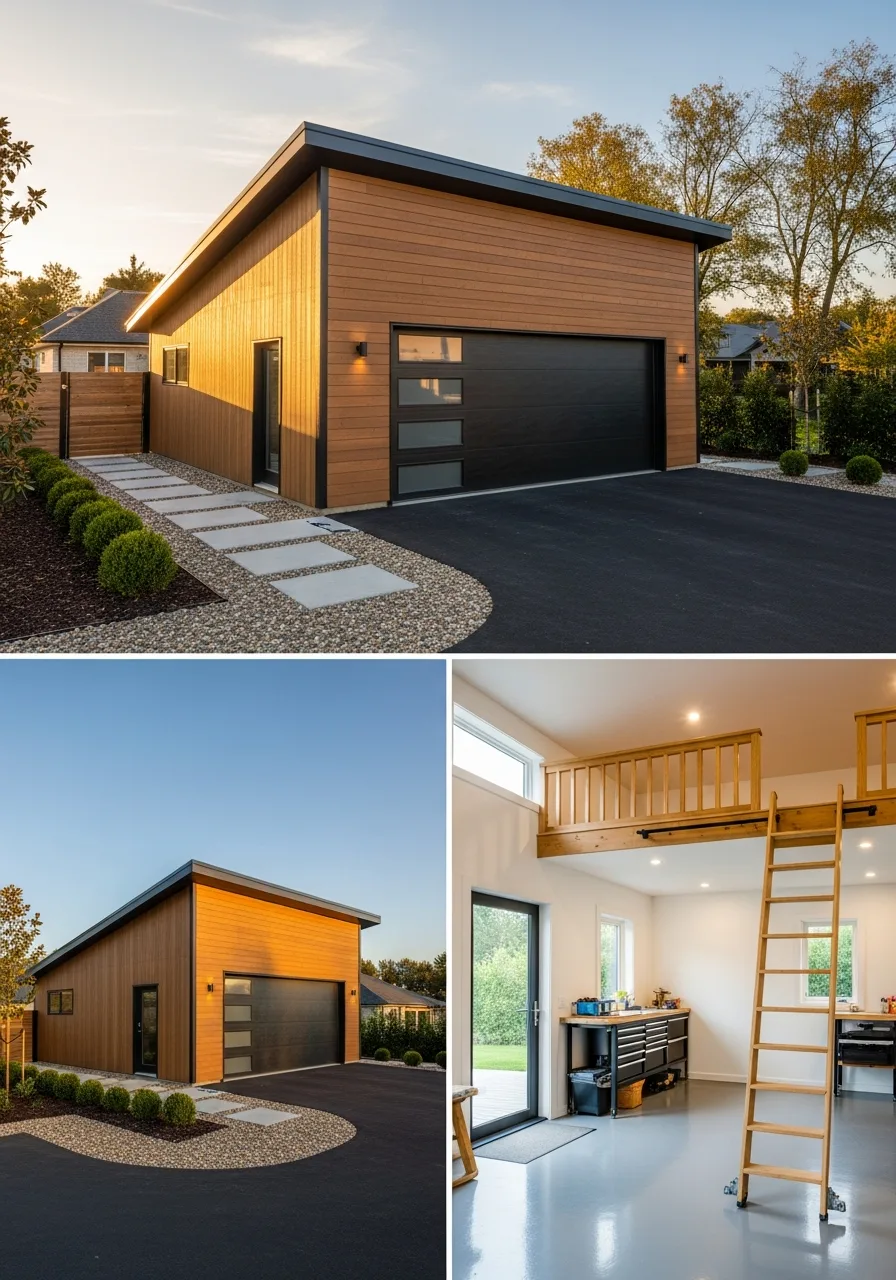
A loft provides extra room for storage or a hobby area without the cost of a full second story. This works best in structures with high rooflines that would otherwise have wasted space.
Use a ship's ladder instead of a full staircase to keep the garage floor open for cars.
- Ensure the loft floor has at least 7 feet of head clearance for comfortable movement.
- Build knee walls with built-in cabinets to use the low space under the roof rafters.
- Install skylights in the roof to bring natural light into the loft area.
Design Secret: Paint the loft ceiling the same color as the walls to hide awkward angles.
34. Two-Car Detached Garage
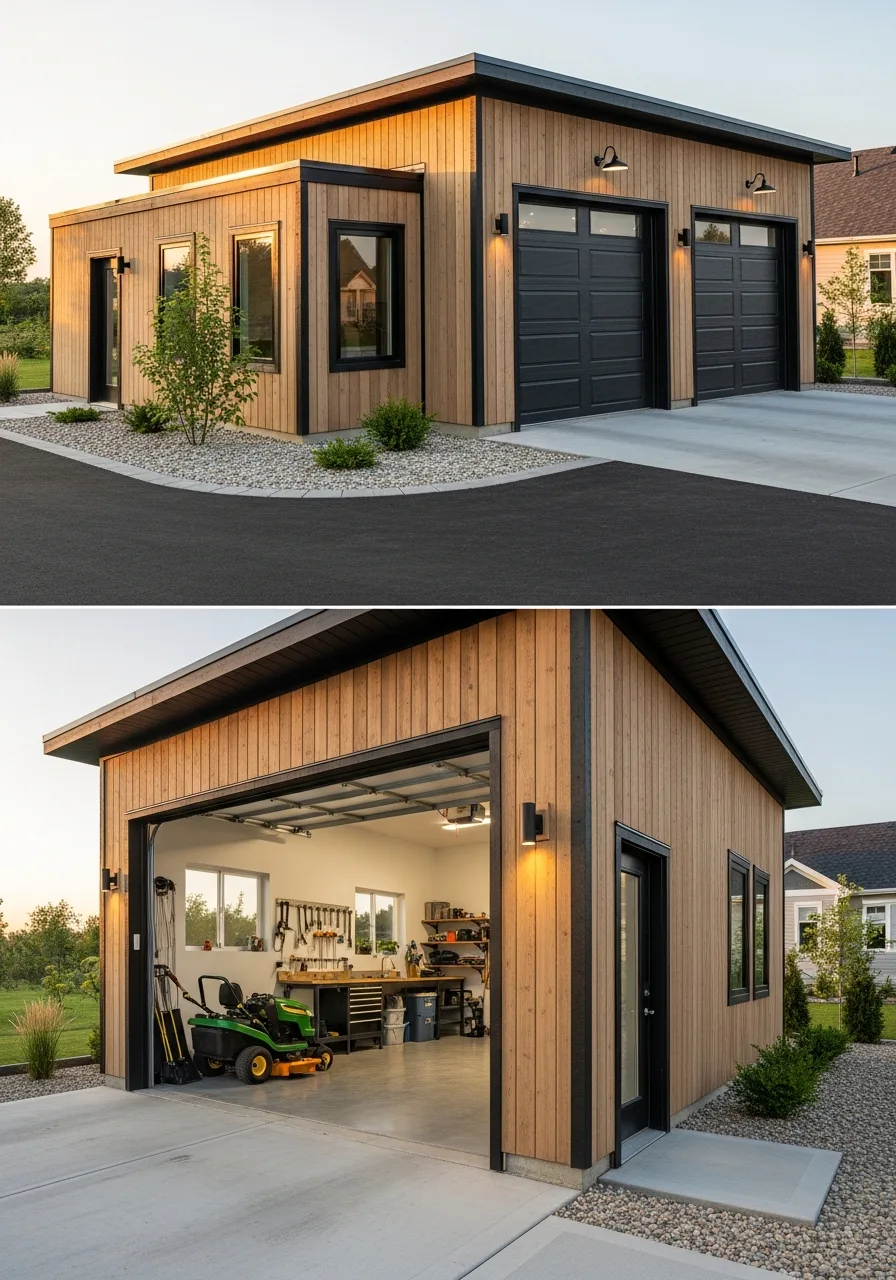
The two-car layout is a classic choice that offers plenty of room for vehicles and gear. It provides a balanced look that fits most standard suburban lots.
Add a four-foot bump-out on one side to store lawn mowers without blocking car doors.
- Maintain at least 30 inches of space between parked cars to prevent door dings.
- Choose a double-wide 16-foot door to make pulling in and out much easier.
- Use wall-mounted racks to keep bikes and ladders off the floor and out of the way.
Design Secret: Offset the main door by two feet to create a dedicated walk zone on one side.
35. Three-Car Detached Garage
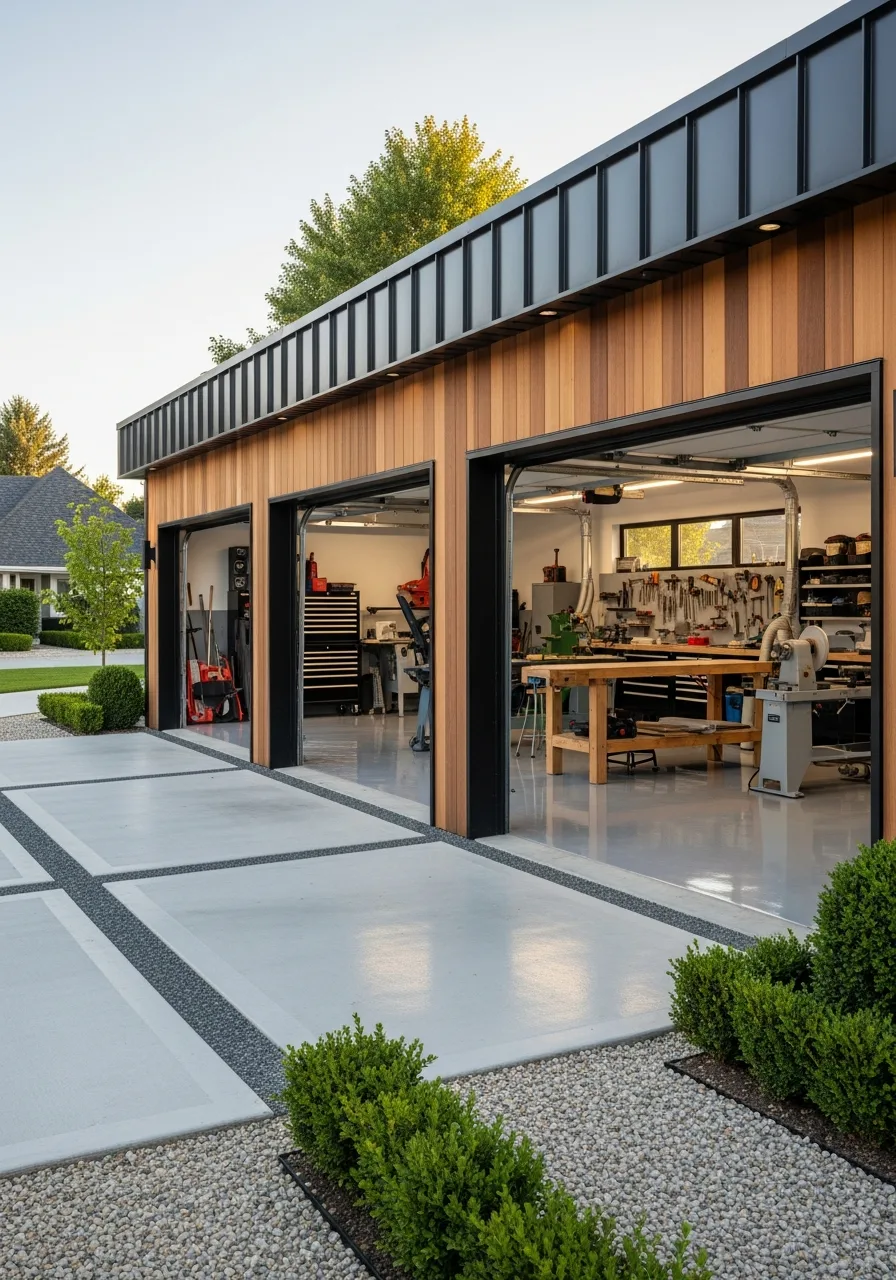
A larger three-car footprint is perfect for families with multiple drivers or big hobbies. This size allows for dedicated zones for parking and separate projects.
Dedicate the third bay to a specific hobby like woodturning or car restoration to keep the main area clean.
- Use 10-foot wide bays instead of standard 9-foot widths for larger SUVs or trucks.
- Install transom windows above the garage doors to let in light while maintaining privacy.
- Place a central floor drain in one bay for easier cleaning and snow melt management.
Design Secret: Use three individual doors instead of one giant door to control airflow and privacy.
36. Detached Garage Workshop
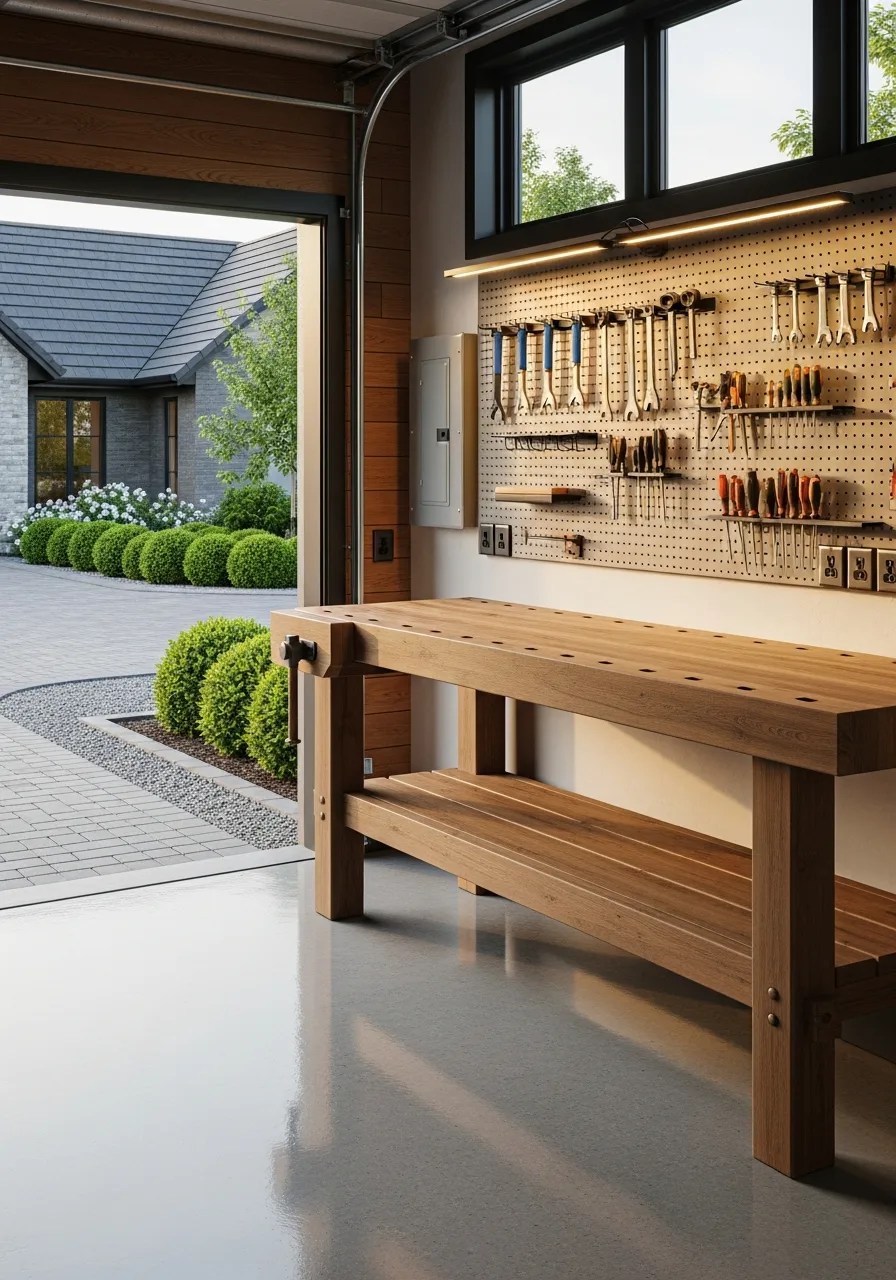
A dedicated workshop keeps sawdust and noise away from the main living areas. This setup works best when everything has a specific place on the wall.
Install a dedicated electrical box with extra outlets every four feet along the workbench wall.
- Set workbench heights at 36 inches to reduce back strain during long projects.
- Mount LED shop lights directly over work surfaces to eliminate shadows.
- Place thick anti-fatigue floor mats in front of stationary tools for comfort.
Design Secret: Mount a shop vacuum behind a wall partition to muffle the noise while working.
37. Farmhouse Detached Garage
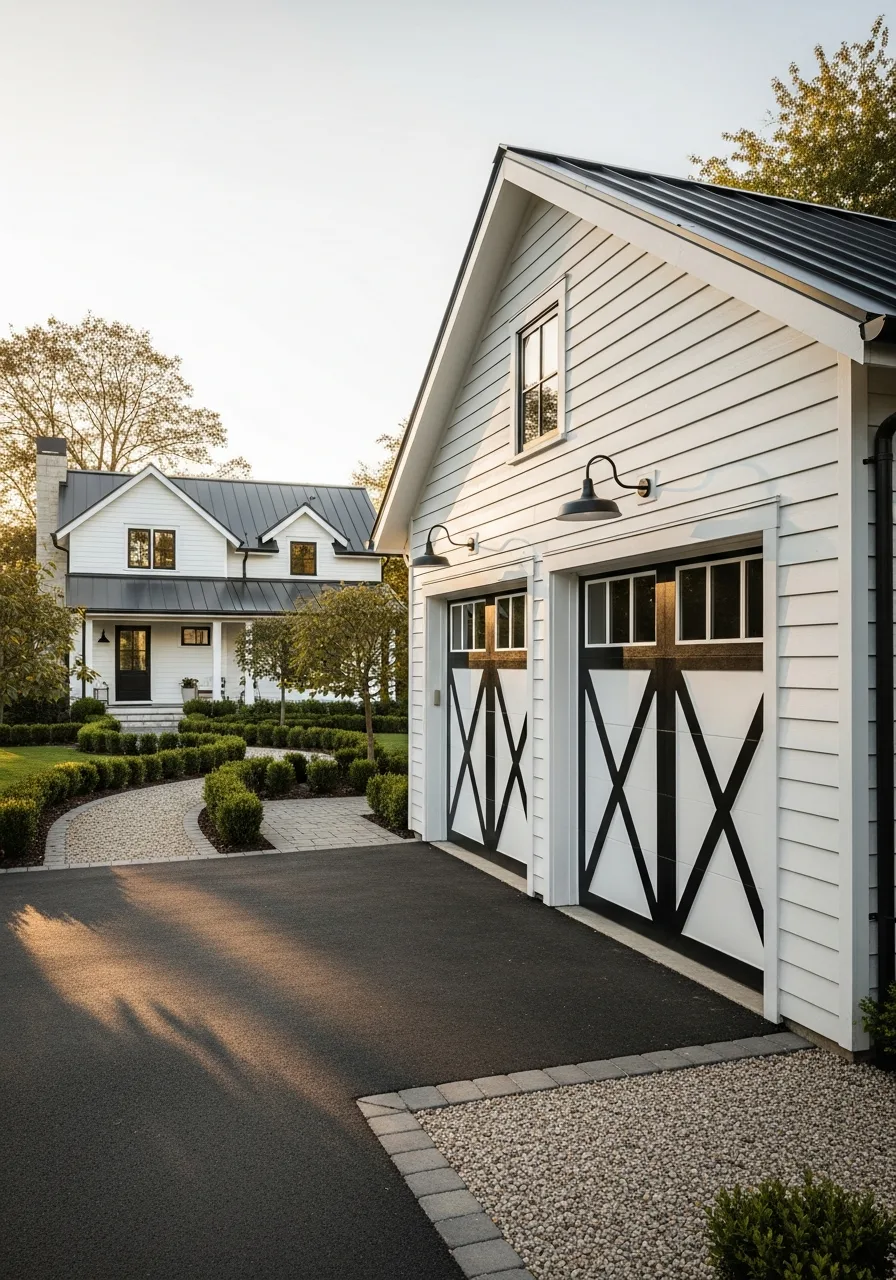
This style uses white siding and black accents to create a timeless, clean look. It is a popular choice because it feels both traditional and very current.
Choose X-brace patterns on the garage doors to mimic a classic barn look.
- Hang 24-inch gooseneck lights above the doors for a classic exterior feel.
- Use board and batten siding to add vertical texture and visual interest.
- Add a cupola on the roof peak to give the building an authentic farm aesthetic.
Design Secret: Use oversized black hardware on white doors for high-contrast curb appeal.
38. Detached Garage With Breezeway
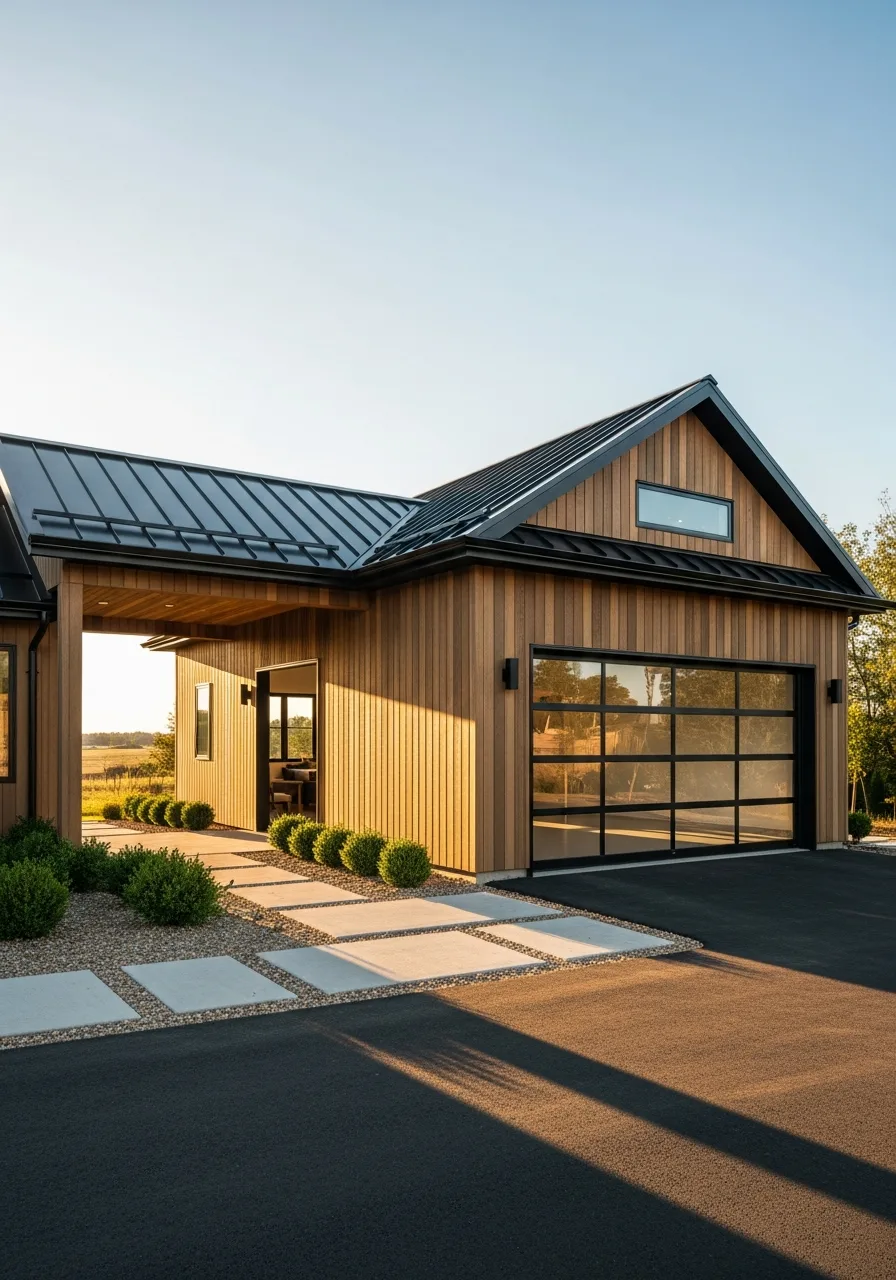
A breezeway connects the garage to the house while keeping the structures separate. This provides a dry path for groceries and passengers during bad weather.
Angle the roof of the breezeway so it sheds water away from the main house entry.
- Keep the walkway at least 5 feet wide to allow two people to pass comfortably.
- Use non-slip stone pavers for the flooring to prevent accidents in wet weather.
- Install recessed ceiling lights in the breezeway for safe evening passage.
Design Secret: Line the breezeway with tall planters to create a living hallway feel.
39. Carriage House Garage
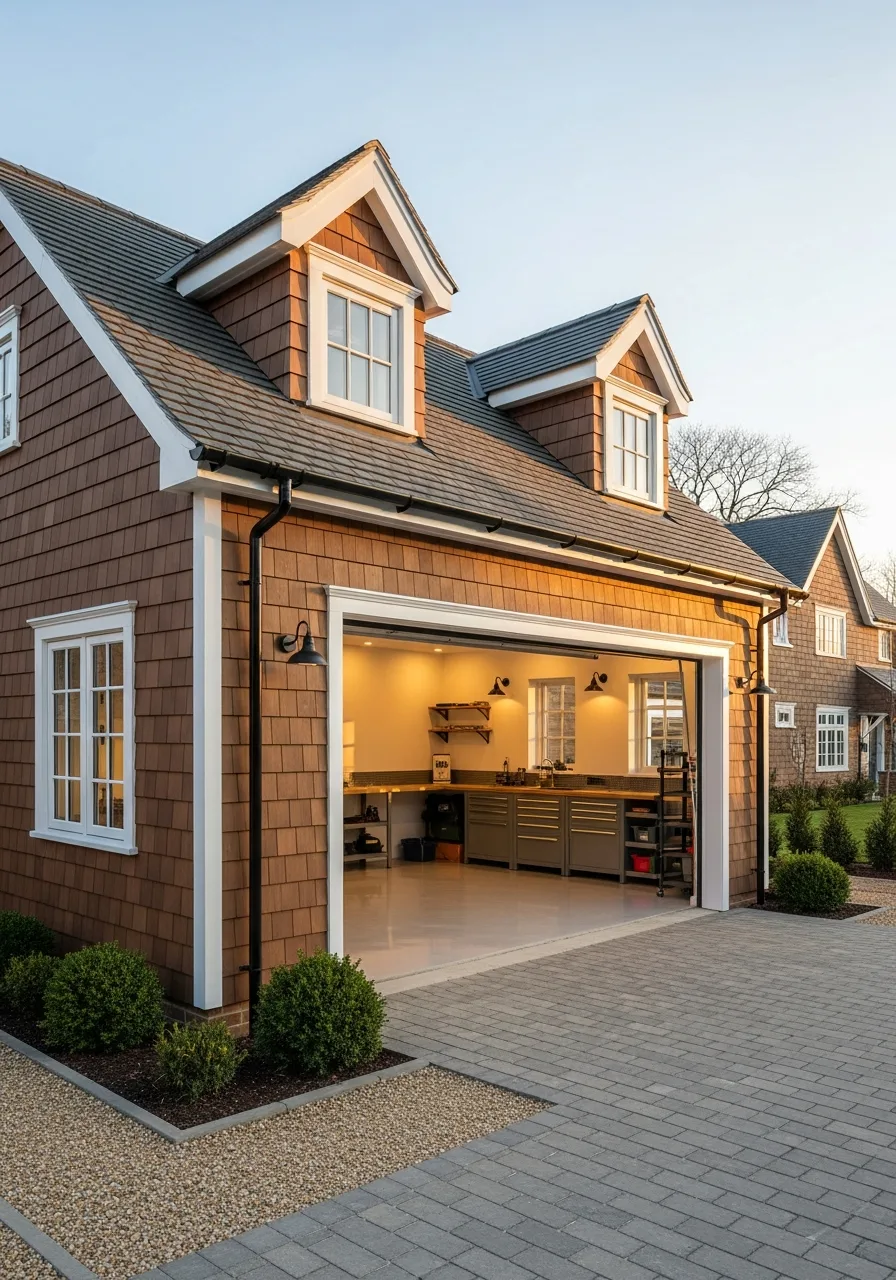
Carriage houses offer a historic feel with decorative trim and traditional window placements. This design makes a utility building look like a charming cottage.
Incorporate dormer windows on the roof to break up the mass of a large garage.
- Choose garage doors that look like they swing open but actually roll up for convenience.
- Add decorative corbels under the roof eaves to highlight the craftsmanship.
- Use cedar shake accents on the gables to add warmth and texture.
Design Secret: Use carriage-style garage doors that look like they swing open but actually roll up.
40. Detached Garage With Storage Loft
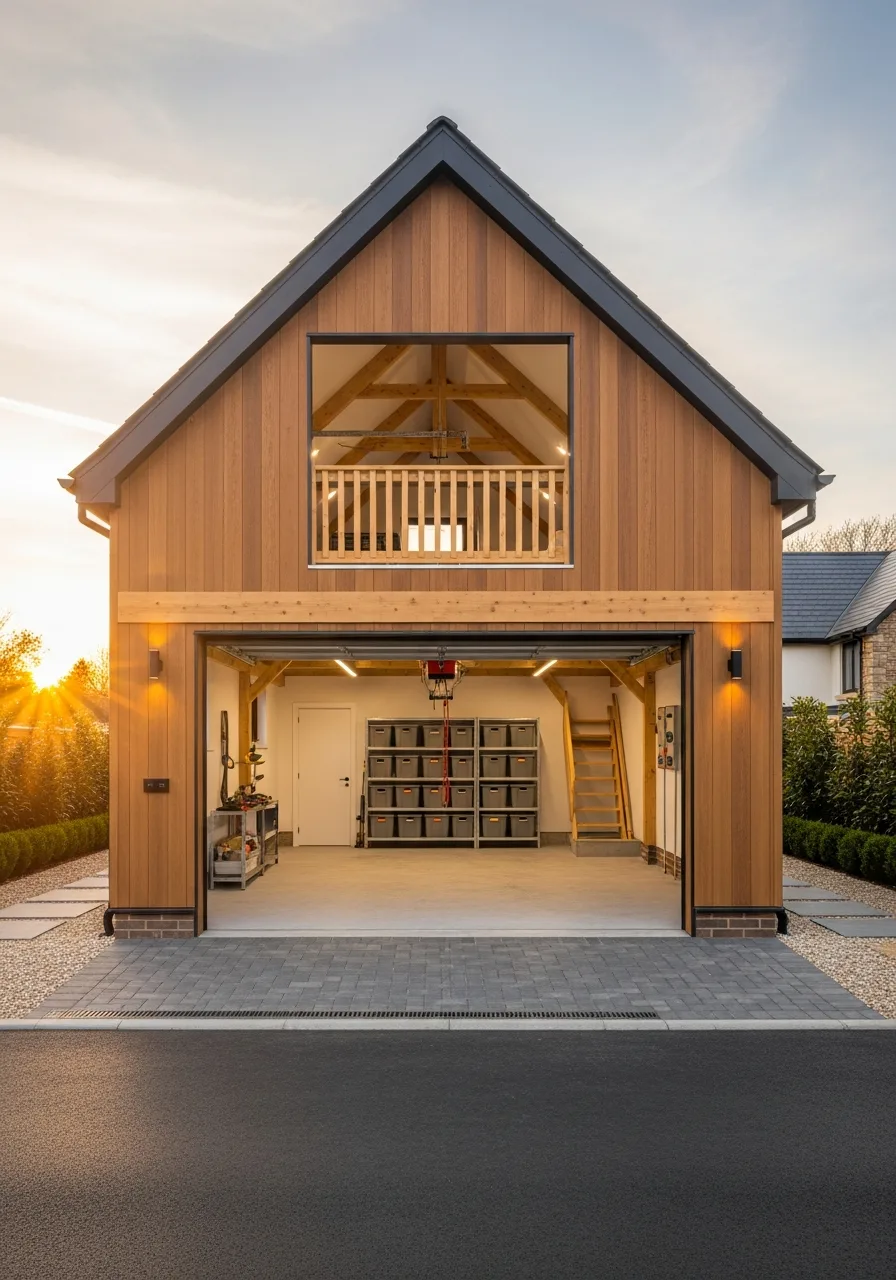
A storage loft is the best way to keep seasonal items out of the main parking bays. It keeps the ground floor clear for vehicles while making use of the high ceiling.
Build a hoist system to lift heavy seasonal bins directly from the car into the loft.
- Space shelves 12 inches apart to fit standard plastic storage bins perfectly.
- Use 3/4-inch plywood for the loft floor to handle the weight of heavy boxes.
- Reinforce the ceiling joists to ensure the loft can support a full load safely.
Design Secret: Install a clear panel in the loft floor to see what is stored from below.
41. Rustic Detached Garage
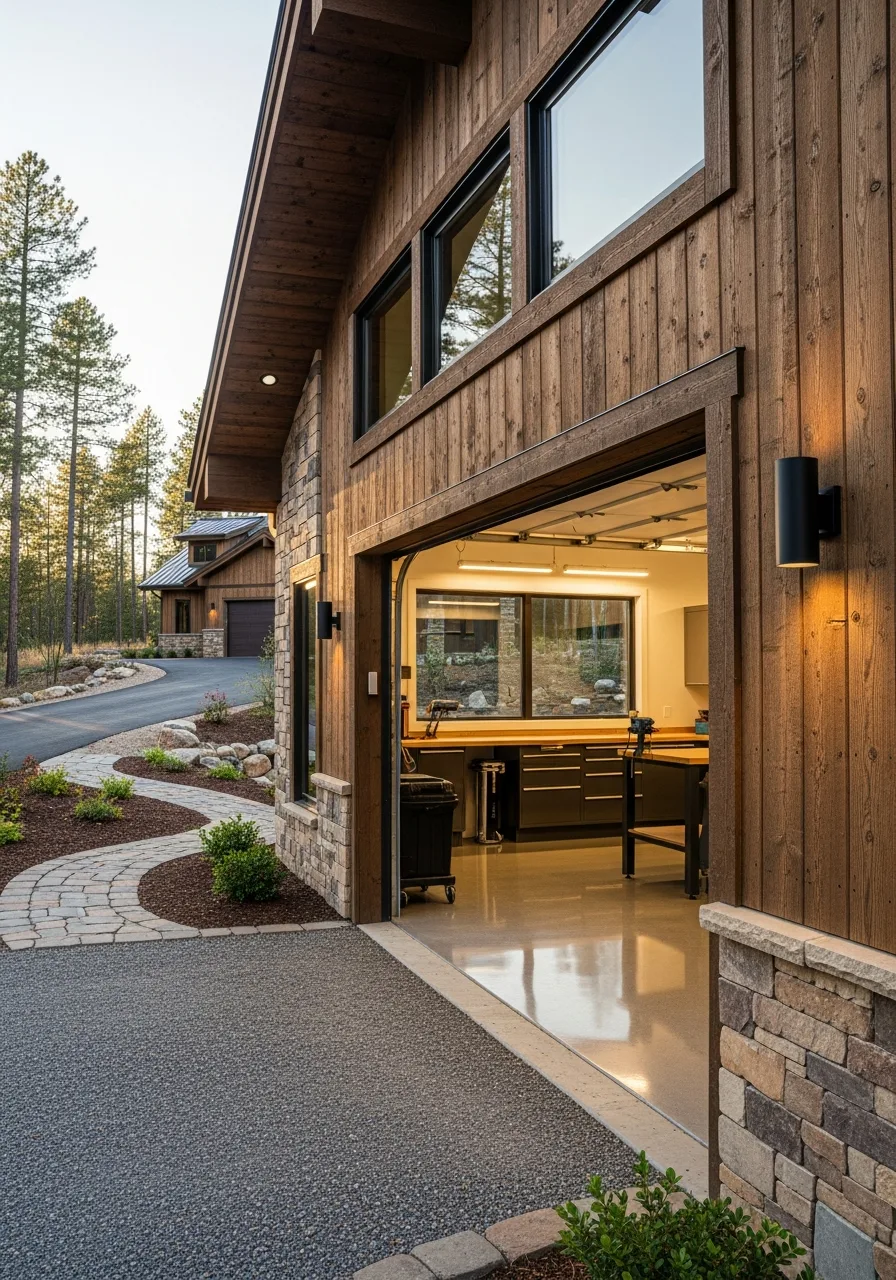
Rustic designs focus on natural materials like wood and stone to blend with the landscape. This look is perfect for wooded lots or mountain homes.
Mix natural stone veneer with rough-sawn wood siding for a structure that blends into the woods.
- Choose an earth-tone metal roof to provide durability and a rugged appearance.
- Install heavy timber lintels over the doors and windows for a hand-built feel.
- Use copper outdoor lanterns that will develop a natural patina over time.
Design Secret: Use reclaimed wood for the door headers to add instant history and character.
Detached Garage Ideas
42. Craftsman Carriage House Workshop
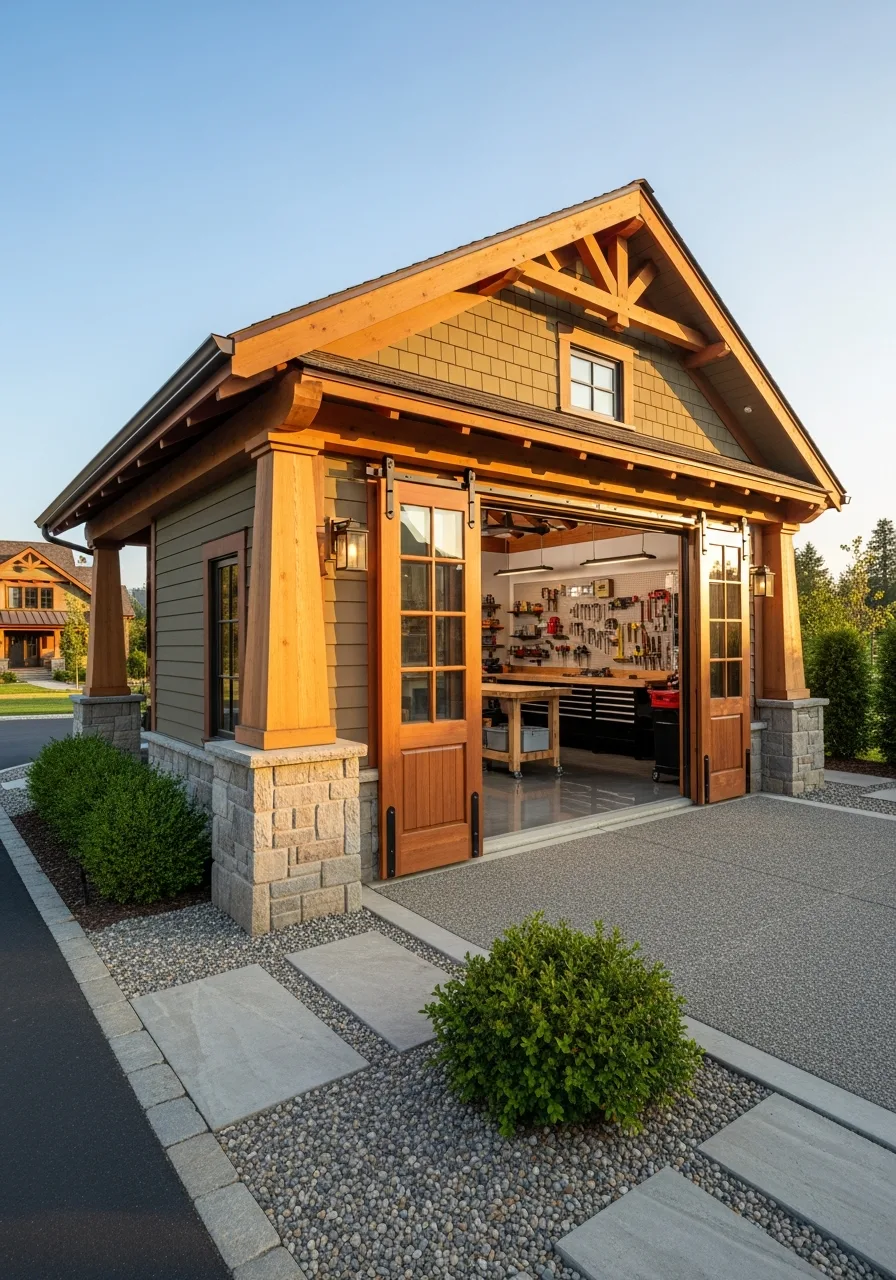
This detached garage design emphasizes the tapered columns and exposed rafters characteristic of the American Craftsman movement. By integrating earth-toned siding with natural stone pedestals, the structure feels like a permanent extension of the main home rather than a secondary utility building. Install a set of carriage-style doors with glass panes to invite natural light into the workspace while maintaining architectural integrity.
- Source reclaimed wood brackets or custom corbels from architectural salvage yards to add authentic texture without a full custom build cost.
- Position the garage offset from the main house with a gravel or flagstone path to create a defined transition between the living space and the workshop.
- Swap standard overhead doors for swing-out timber versions if the driveway layout allows for the necessary clearance.
Heritage Hack: Match the paint trim color exactly to the main house’s window sashes to unify the entire property instantly.
43. Glass-Fronted Modern Garden Studio
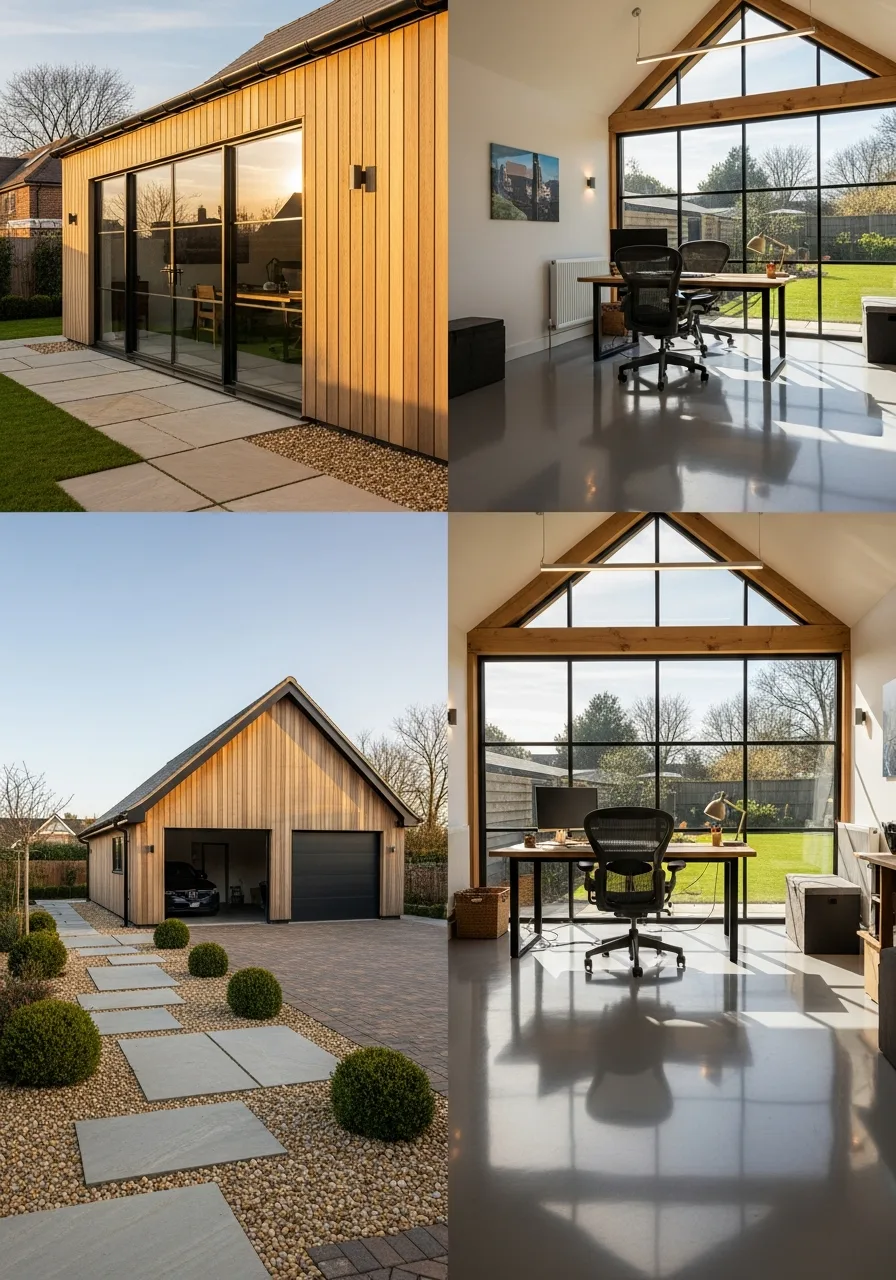
A detached garage conversion creates a dedicated professional workspace separated from the main residence. Large-scale glazing and vaulted ceilings prevent the space from feeling like a storage unit while maximizing natural light. Position the desk to face the garden or a landscaped view to boost focus and mental clarity throughout the workday.
- Budget roughly $5,000 to $15,000 for insulation, drywall, and electrical upgrades depending on the existing structure.
- Install a dedicated sub-panel and high-speed Wi-Fi extender to ensure a stable connection for video conferencing.
- Incorporate a small kitchenette or coffee station to make the workspace fully self-sufficient during long hours.
Acoustic Trick: Use heavy linen floor-to-ceiling curtains across the garage door wall to dampen sound echoes and hide the industrial hardware.
44. Detached Garage Gym
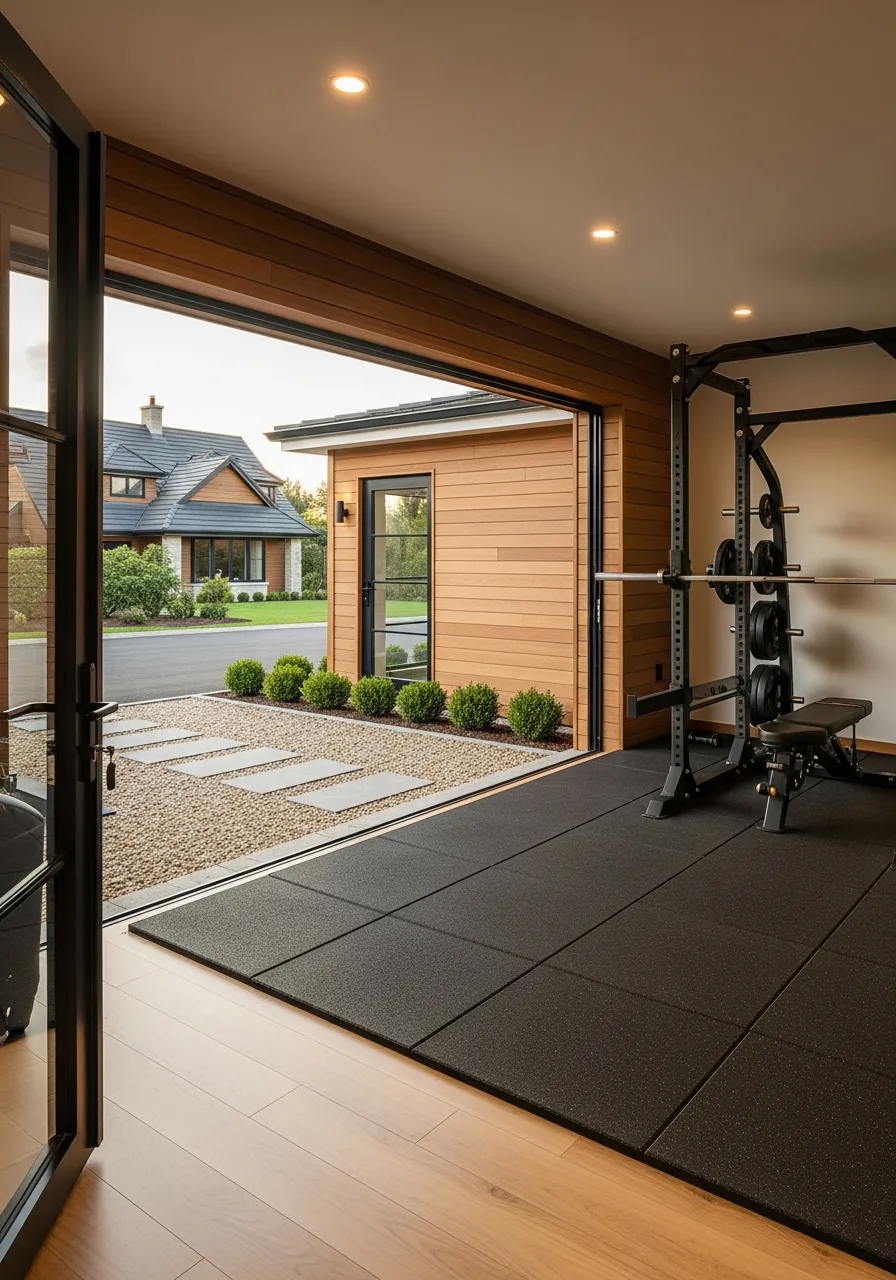
A garage gym allows for heavy equipment and high-intensity workouts that might shake the house. It is a great way to use an extra bay or a finished upper level.
Lay down 3/4-inch thick rubber mats to protect the concrete floor from heavy weights.
- Mount mirrors at least 8 feet high to make the gym feel larger and brighter.
- Use high-velocity floor fans to keep air moving during intense workouts.
- Install a wall-mounted TV bracket at eye level for following workout videos.
Design Secret: Install a glass garage door to let in light and air while you exercise.
45. Detached Garage Studio
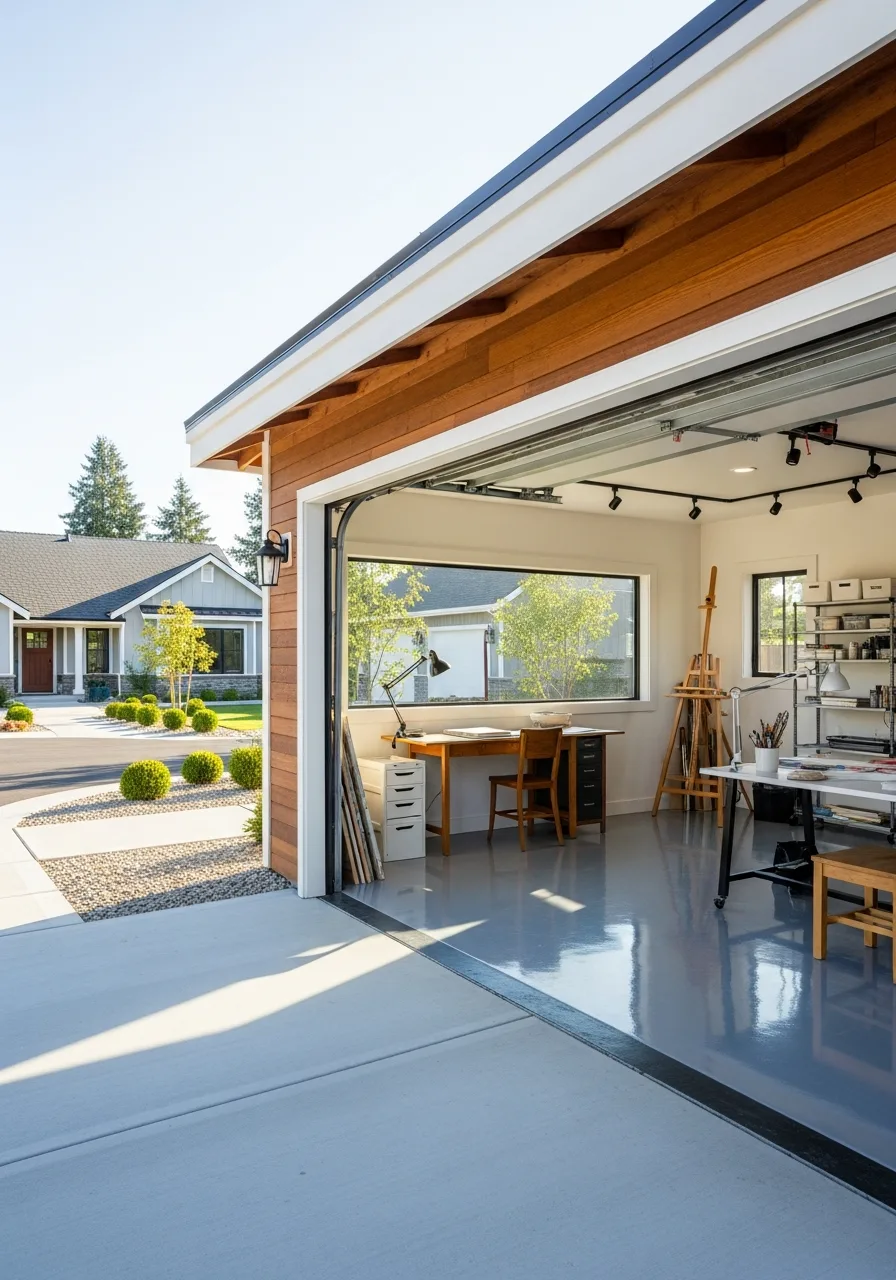
A studio space provides the perfect environment for painting, music, or crafting. The separate building ensures that messy or noisy projects don't interfere with the home.
Paint the interior walls a gallery white and use track lighting to highlight different work stations.
- Install a deep utility sink for easy cleanup of paint brushes or tools.
- Aim for 10-foot ceilings to give you enough room for large canvases or equipment.
- Use rolling utility carts to keep supplies organized and easy to move.
Design Secret: Use a polished concrete floor for easy cleanup of paint spills or sawdust.
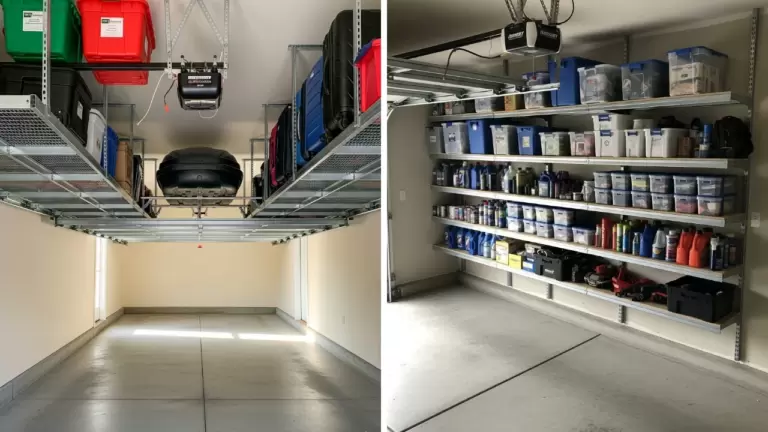
46. Detached Garage With Smart Storage
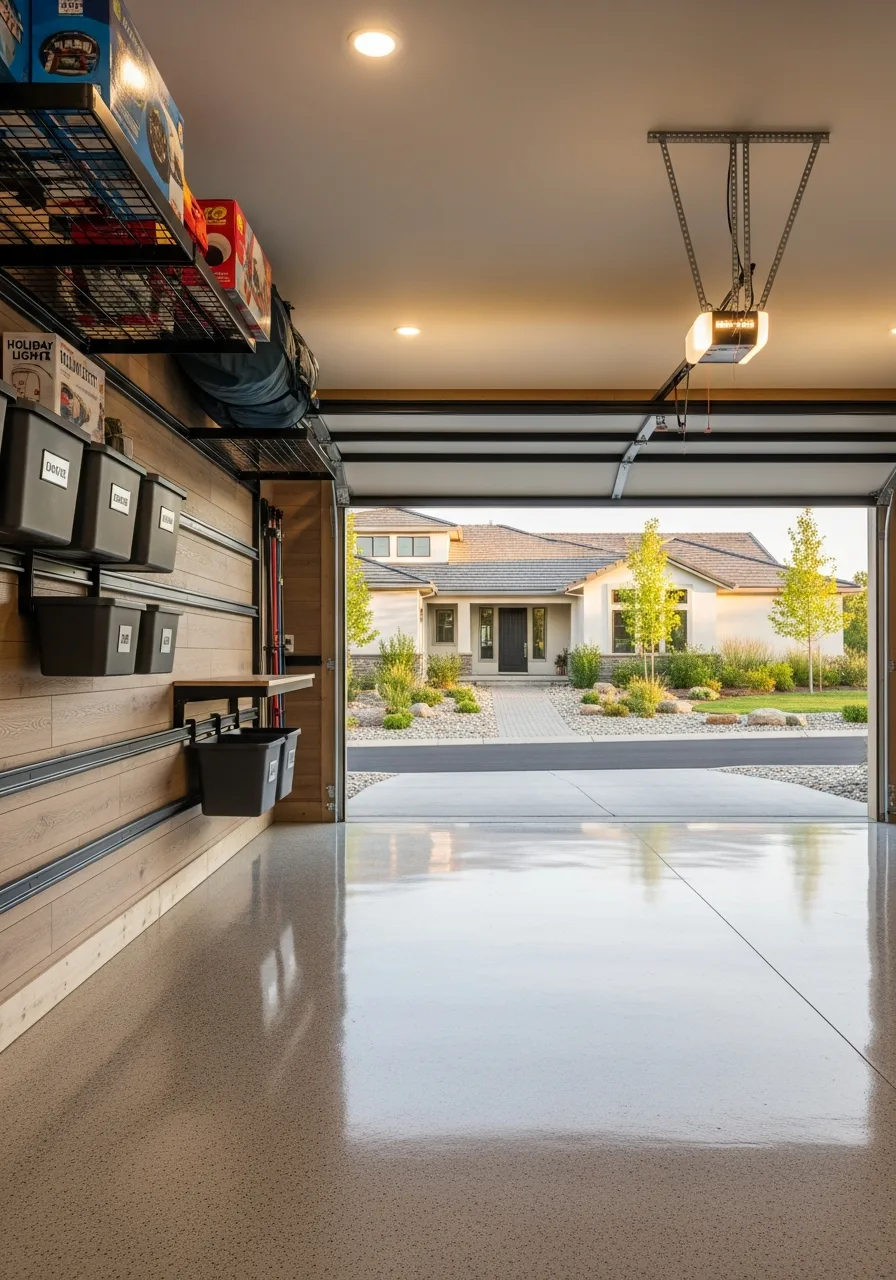
This system uses wall-mounted tracks and labeled bins to keep every tool in its place. It works because it clears the floor, making the garage feel twice as large.
Install adjustable ceiling racks to store large seasonal items like holiday lights or camping gear.
- Leave 24 inches of clearance between wall racks and parked car doors.
- Use a uniform color for all storage bins to reduce visual clutter and make the room look larger.
- Mount a charging station for power tools near the main entrance.
Design Secret: Paint the wall behind your storage racks a bright accent color to make the organization look like a design feature.
47. Detached Garage With Epoxy Floor
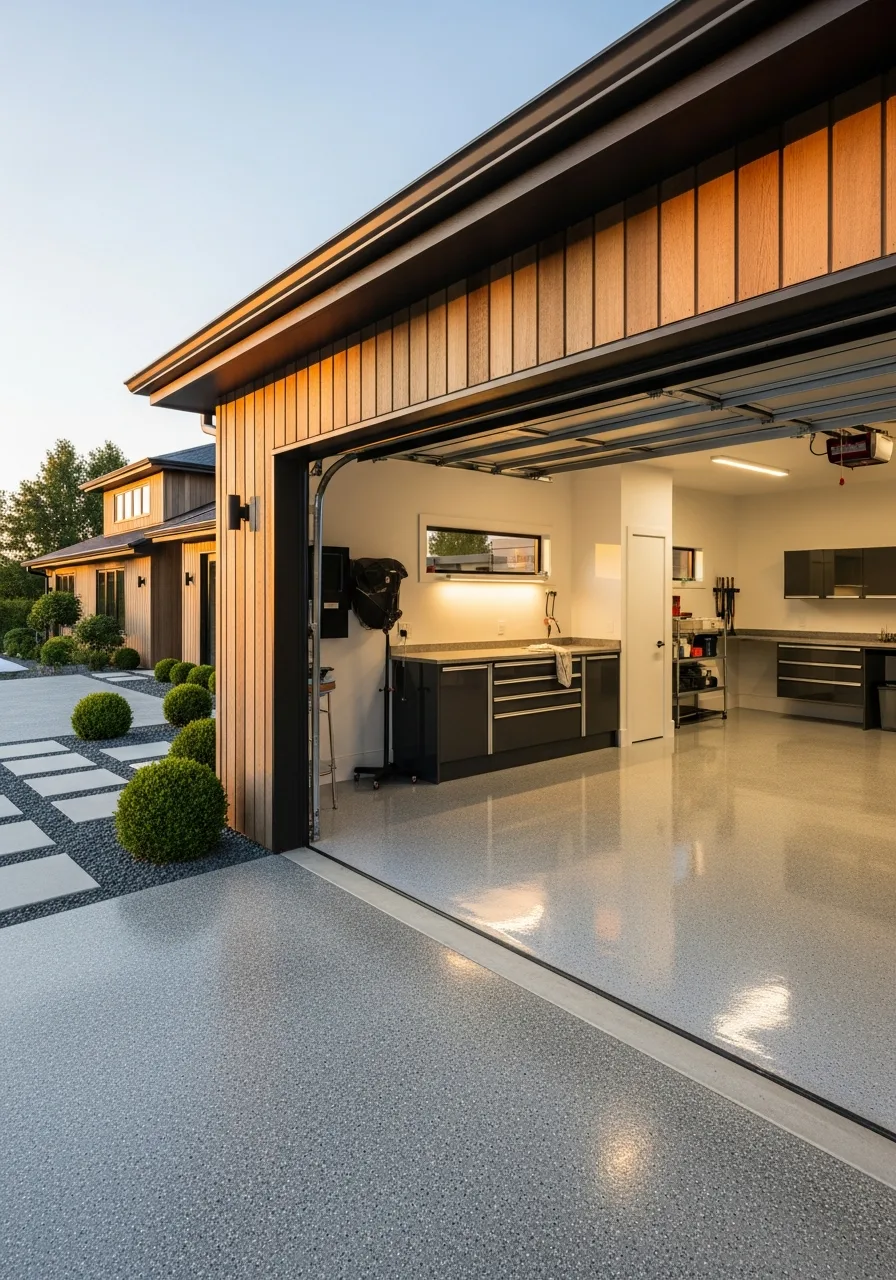
An epoxy coating creates a smooth, showroom-style finish that resists oil stains and spills. It works well for high-traffic areas because it is incredibly easy to sweep and mop.
Choose a light grey base with metallic flakes to hide small scratches and dust between cleanings.
- Allow at least 72 hours for the coating to cure before driving.
- Choose a high-gloss finish to reflect light and make the floor space feel wider.
- Run the epoxy 4 inches up the wall to create a waterproof base.
Design Secret: Use a moisture-vapor barrier primer first to prevent the epoxy from peeling or bubbling over time.
48. Detached Garage With High Ceilings
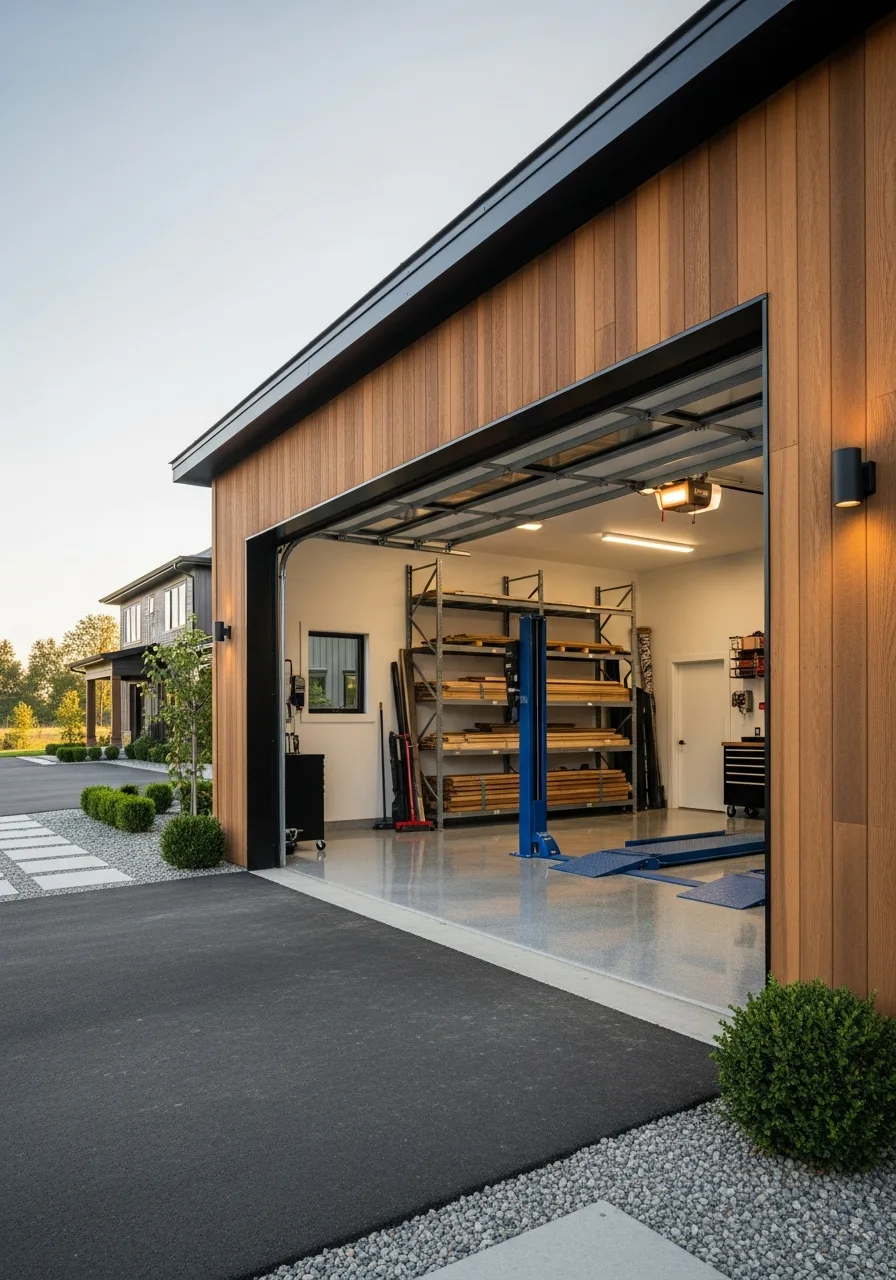
Extra vertical space allows for car lifts or tall shelving that maximizes every square foot. This works for car enthusiasts or those who need to store ladders and lumber out of the way.
Install a side-mount garage door opener to keep the ceiling area completely clear for storage.
- Ensure at least 12 feet of height if you plan to install a car lift.
- Use tall windows near the roofline to draw the eye upward and emphasize height.
- Add a rolling library ladder to reach the highest storage bins safely.
Design Secret: Use industrial-style pendant lights on long cords to bring the light down to a working level.
49. RV Detached Garage
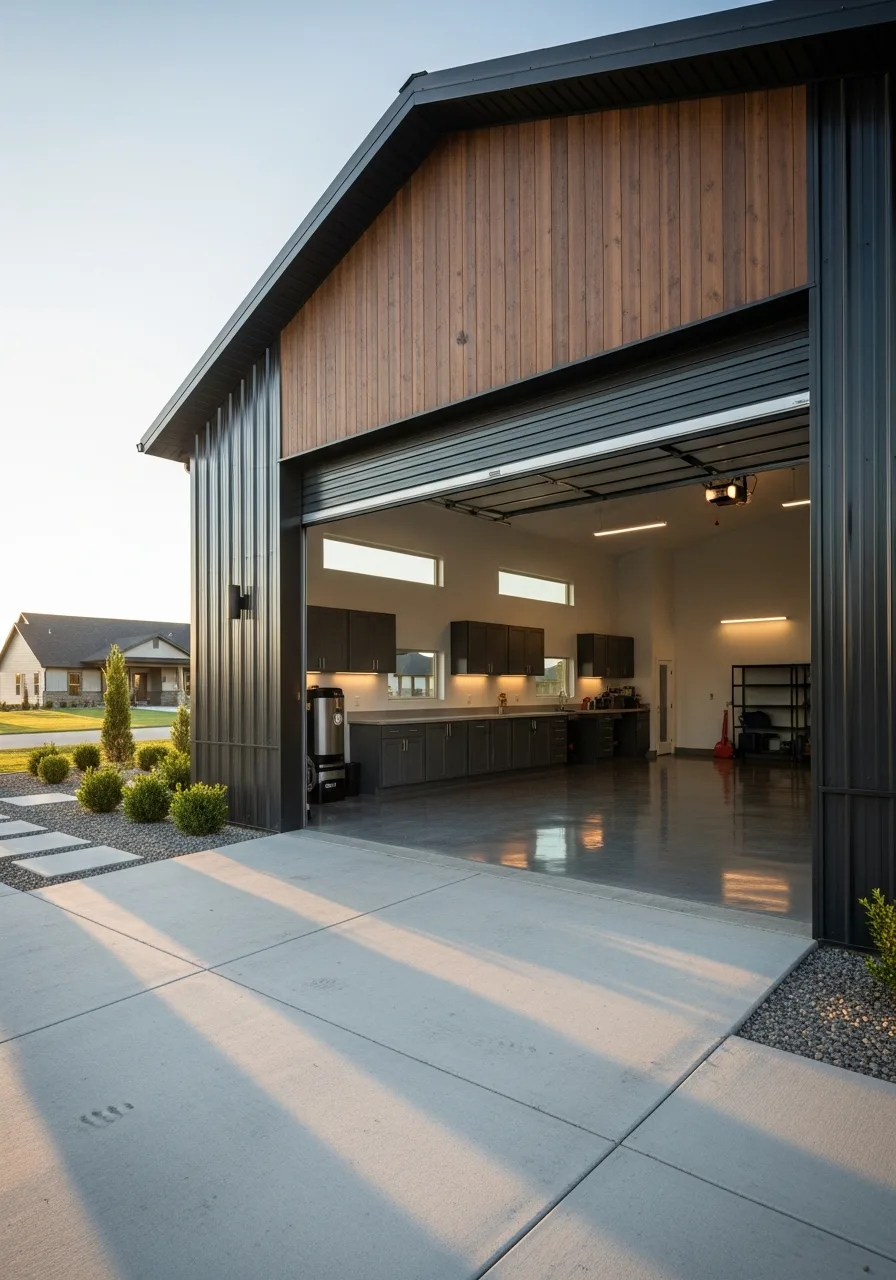
A dedicated tall bay provides a safe, weather-proof home for your motorhome or boat.
It works by protecting your expensive investment from sun damage and freezing temperatures. Design the door with at least 14 feet of clearance to accommodate most modern campers and roof AC units.
- Plan for a 16-foot wide door to make backing in stress-free.
- Paint the interior walls a bright white to prevent the large space from feeling like a cave.
- Install a 50-amp electrical outlet inside for keeping batteries charged.
Design Secret: Add a small mezzanine at the back of the bay to utilize the extra height for storage.
50. Detached Garage With Carport
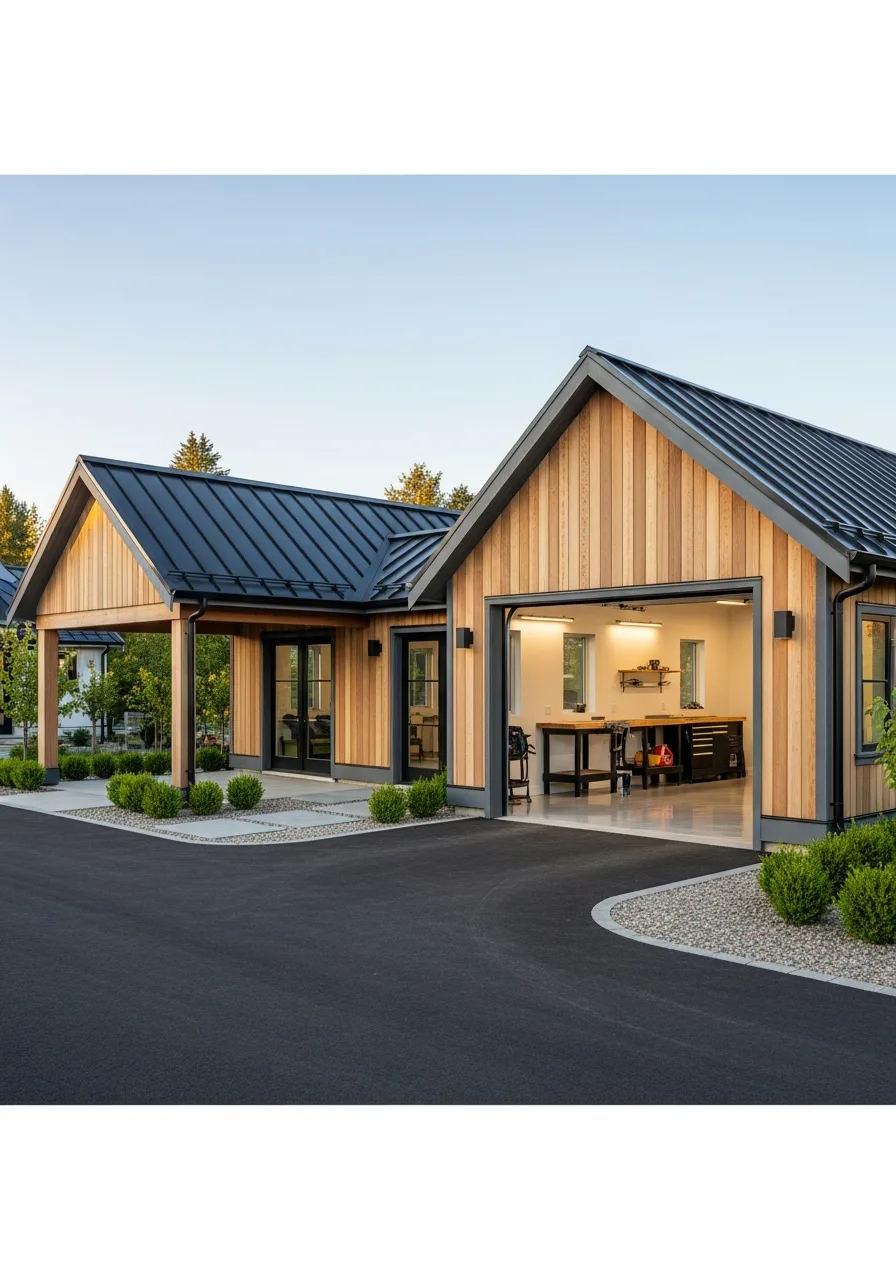
A carport provides extra covered parking for daily drivers while keeping the main garage open for projects. It works by offering shade and protection from rain without the cost of a full addition.
Match the carport roof pitch to the main garage for a seamless architectural look.
- Leave 10 feet of width for the carport to allow for easy door opening.
- Use open-beam construction to keep the structure feeling light and airy.
- Install motion-sensor LED lights under the roof for safety at night.
Design Secret: Use pavers for the carport floor to distinguish the space from the concrete garage floor.
Frequently Asked Questions
What are the benefits of a detached garage vs. an attached one?
Detached garages provide excellent noise isolation for loud workshops and keep hazardous chemicals safely away from your main living area. They also offer a distinct physical separation that is ideal for creating a quiet home office or a private guest suite.
How do I make my detached garage look like it belongs with my house?
To create a cohesive look, match the garage’s roof pitch and trim colors to your home’s existing architecture. You can also visually link the two structures using a breezeway or consistent landscaping elements like matching garden beds and pathways.
Do I need a permit for a detached garage with an apartment?
Yes, adding an apartment turns the structure into an Accessory Dwelling Unit (ADU), which typically requires specific permits for residential occupancy. You will need to comply with local zoning laws and meet strict building codes for plumbing, electrical, and fire safety.
What is the best flooring for a multi-use detached garage?
Durable epoxy coatings are ideal for workshops and car storage because they resist stains and are easy to clean. For multi-use spaces like home gyms or studios, consider polished concrete for a sleek look or heavy-duty rubber mats for added comfort and impact protection.
How can I add natural light to a detached garage without sacrificing security?
Installing high clerestory windows or skylights allows plenty of natural light to enter while keeping your belongings out of sight from the street. Frosted glass-paneled garage doors are another great option to brighten the interior without compromising your privacy or security.