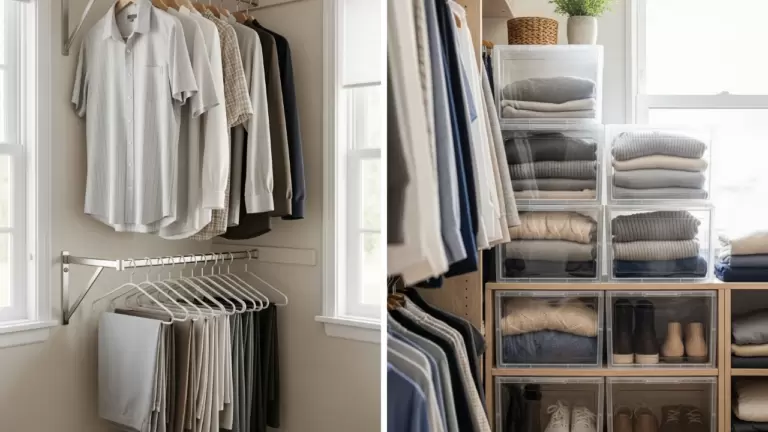
50 Blanket Storage Ideas for Throws and Bedding

This post may contain affiliate links: full affiliate disclosure.
The throw you reach for every night can live beside the sofa. The bulky bedding you use in January needs a spot you can spare year-round.
Fold your biggest blanket the way you’ll store it, then measure the fold and the opening it must pass through. Start here to compare layouts and find a fit.
If you buy through an Amazon link in this article, I may earn a commission. As an Amazon Associate I earn from qualifying purchases.
Keep everyday throws within reach
1. An Open Basket Beside the Sofa
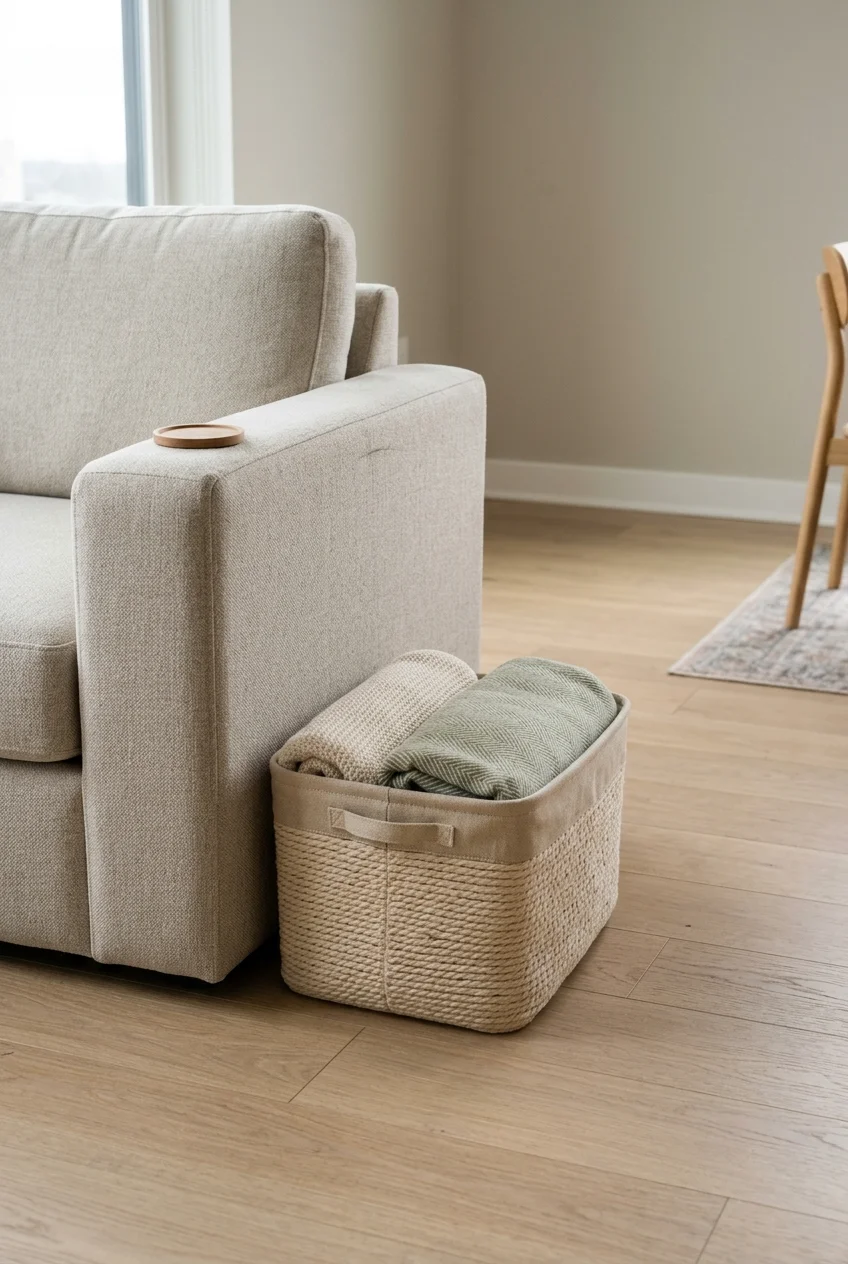
An open basket makes the blanket you use every night the easiest one to put back. Start with the throw folded the way you actually fold it.
Measure the base and the opening, especially on a tapered basket. The bottom needs enough room for the folded blanket, and the rim should be smooth.
Place it beside the sofa arm on the side you already use. If that corner is part of the walkway, tuck it into the seating area.
2. A Storage Ottoman That Doubles as a Footrest
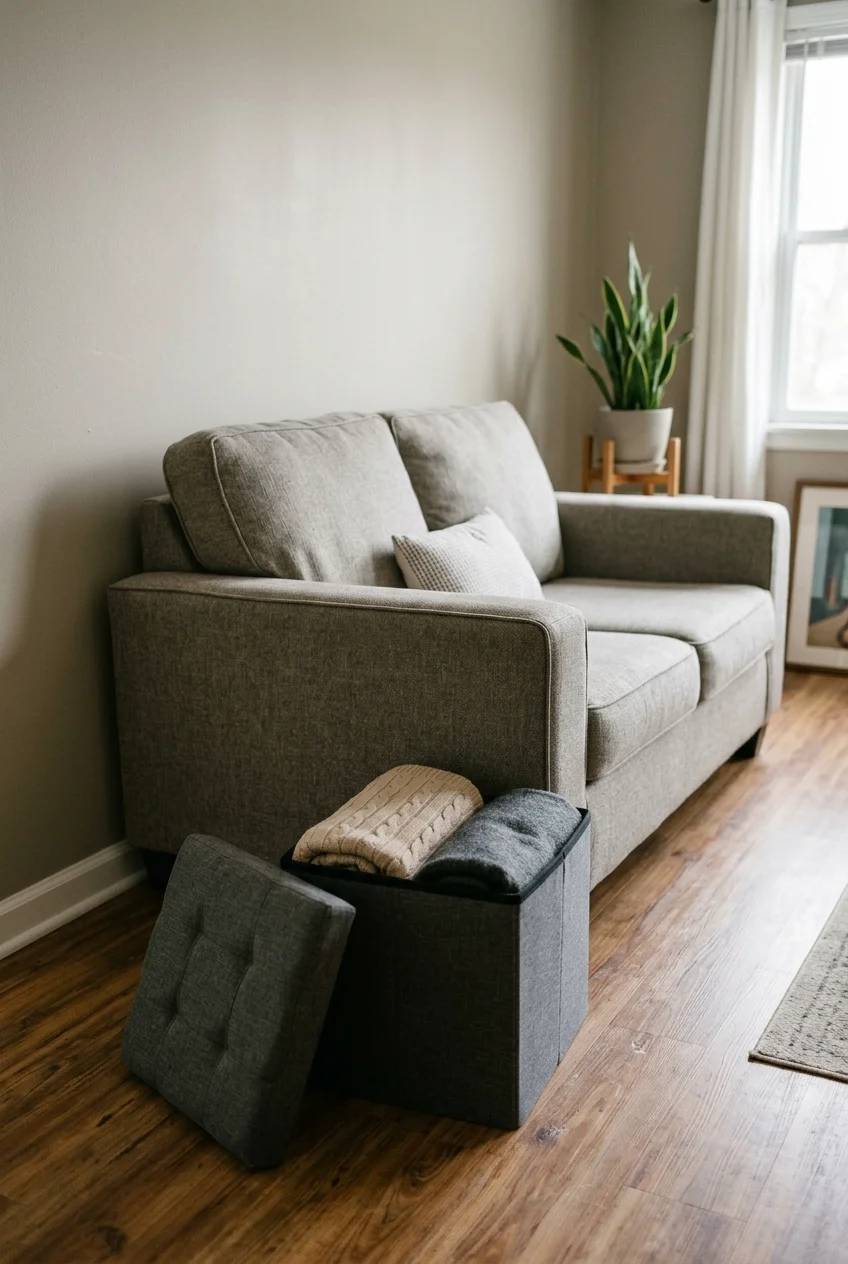
A cube ottoman puts spare throws where your feet already land. The small footprint works particularly well with an apartment loveseat or a single reading chair.
The SONGMICS folding storage ottoman measures 15 inches on each side outside. Compare your folded throw with the interior, which is smaller than the outside dimensions.
Use the lid as your test. If it rocks or sits high after you put the blanket in, refold the throw loosely or store one fewer.
Leave a clear spot to set the removable lid. When a footrest also serves as a side table, getting to the blankets means moving anything on top.
3. One Throw Folded Over the Sofa Arm
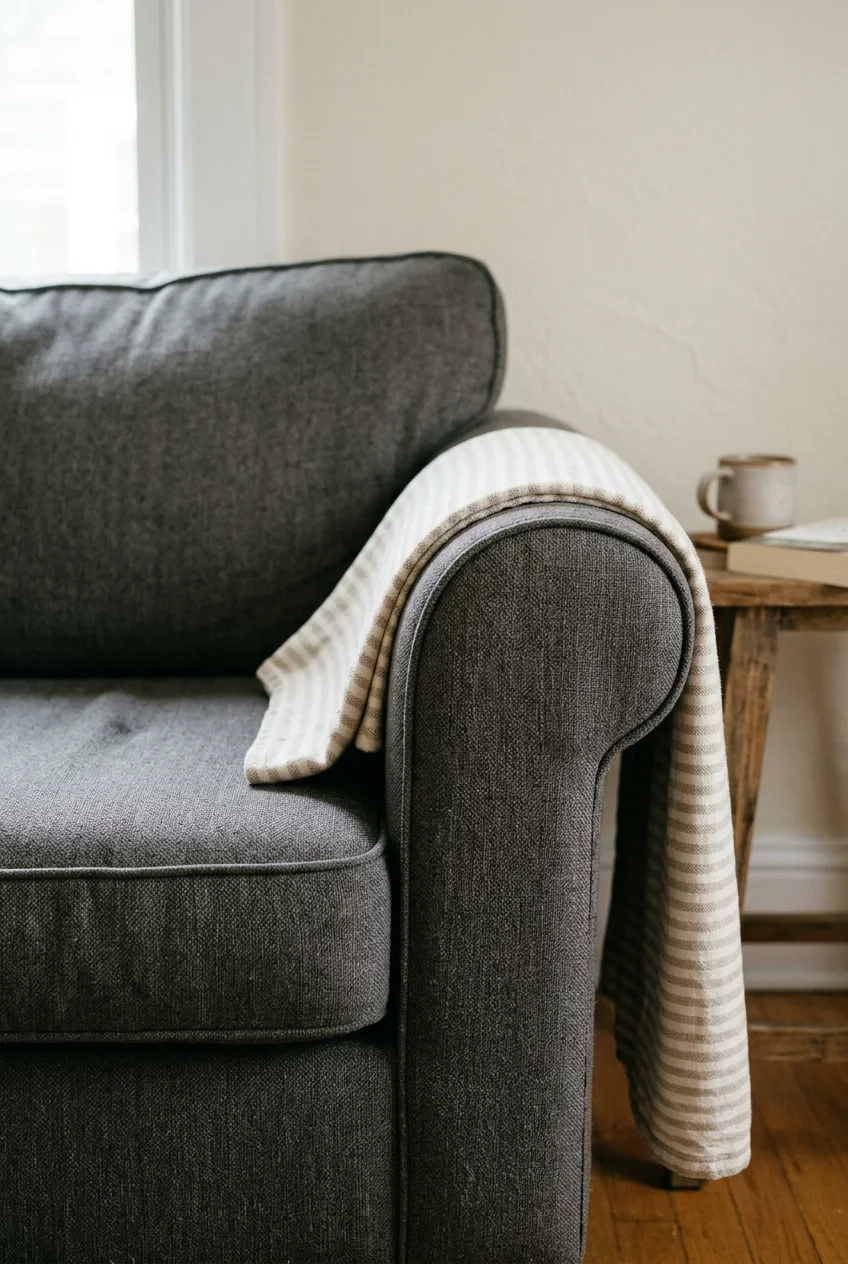
Fold a single throw into a narrow strip and center it over a sofa arm. This gives one everyday blanket a home without adding any furniture.
Let the outside end stop well above the floor and keep the inside end clear of the seat. An open knit can catch on rough trim.
4. Pullout Baskets Under a Sofa Console
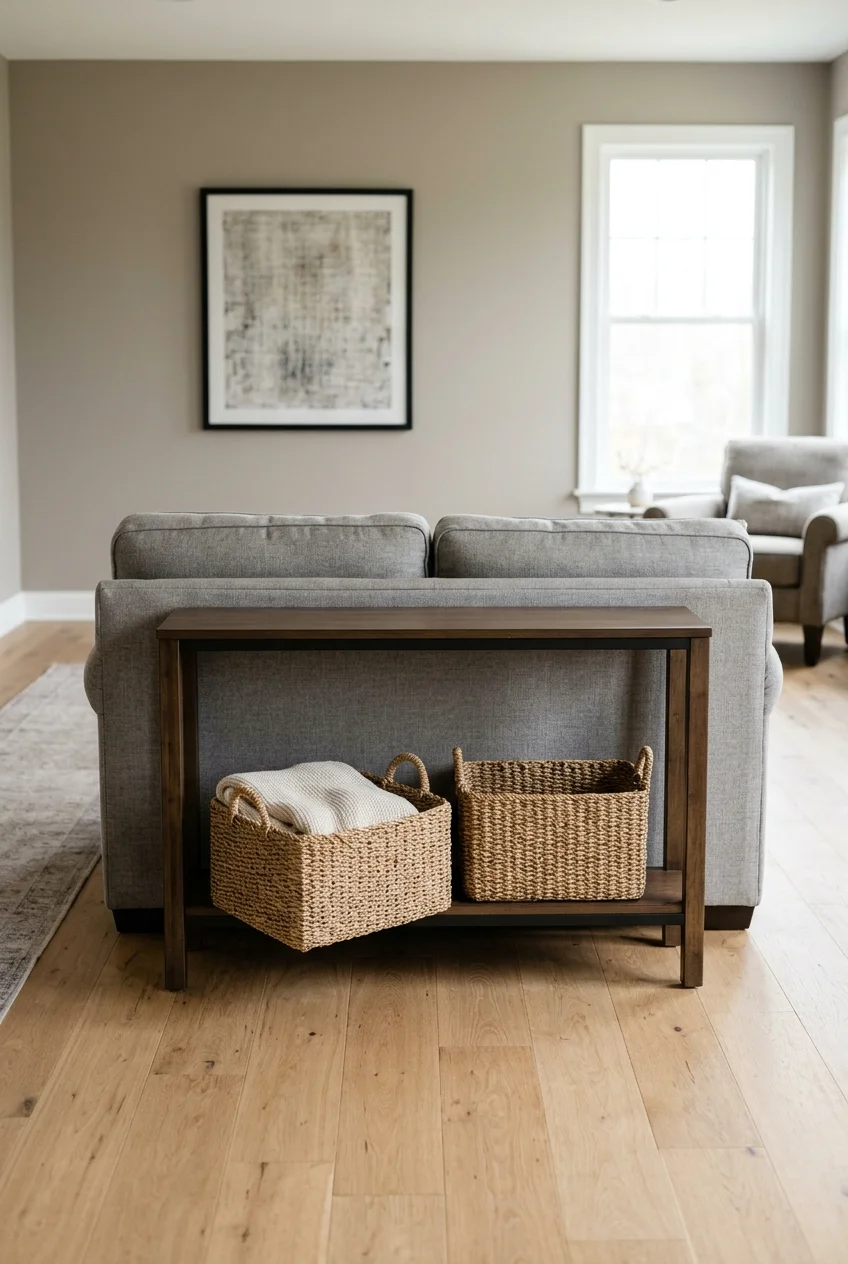
A lower shelf on a sofa console gives baskets a parking spot, so throws stay handy without spreading across the tabletop or taking up a separate corner.
Choose low baskets with front handles. Measure between the legs and from the shelf to the underside of the tabletop, including the tallest part of the handle.
If the console sits behind a floating sofa, test the basket with someone walking past. In a tight walkway, a wall-facing side table may be easier.
The same placement can work when you add a narrow sofa table to a living room. Start by measuring the path before choosing the table depth.
5. A Blanket Ladder for Lightweight Throws
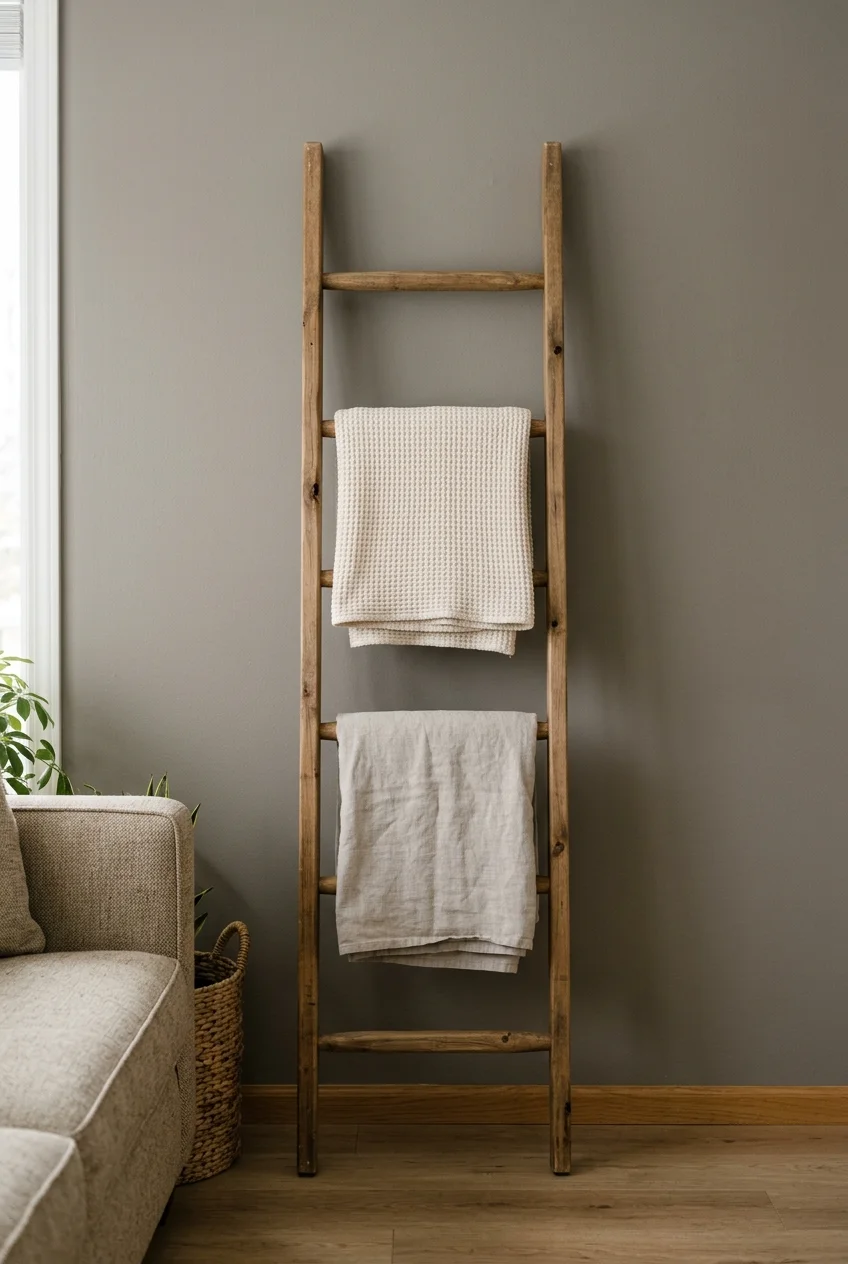
A slim blanket ladder lets several throws share one patch of wall. Choose a purpose-built display ladder with smooth rungs and secure it as its maker directs.
Fold each throw to fit between the rails and leave a rung empty if longer blankets overlap. Keep the lowest edge off the floor so it stays clean.
Measure how far the feet project into the room before buying. A secured wall bar gives you a similar fold-over display where a leaning footprint would block traffic.
6. A Broad Rail on a Freestanding Quilt Stand
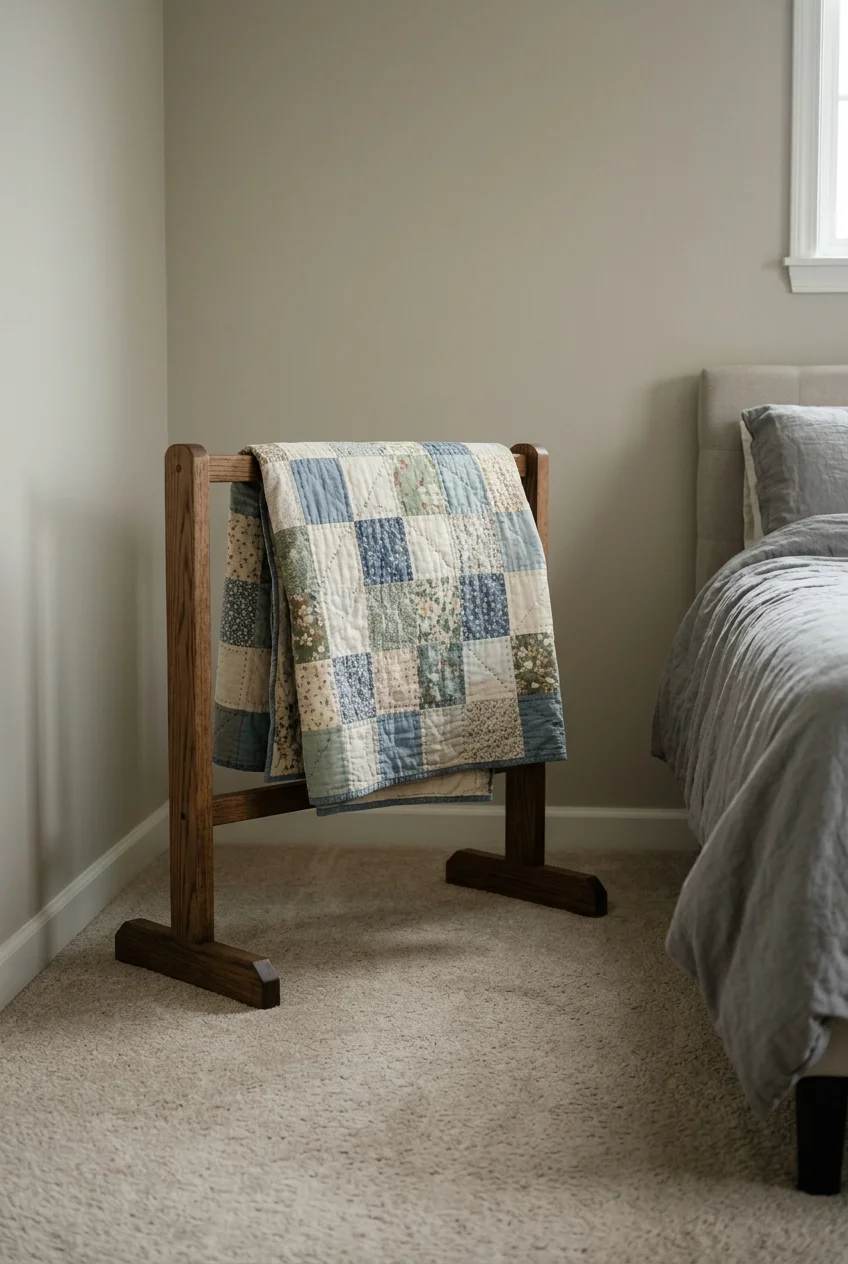
Give a quilt its own wide rail when you want to see the pattern and pick it up without lifting another blanket out of the way.
Choose a stand wide enough for a loose fold and deep enough to carry the quilt without dragging. Avoid placing its feet in the path to the bed.
Use a broad, smooth top rail for a sturdy quilt you actually use. A fragile keepsake belongs in supported, flat storage away from strong light.
7. A Single Wall Bar in a Narrow Nook
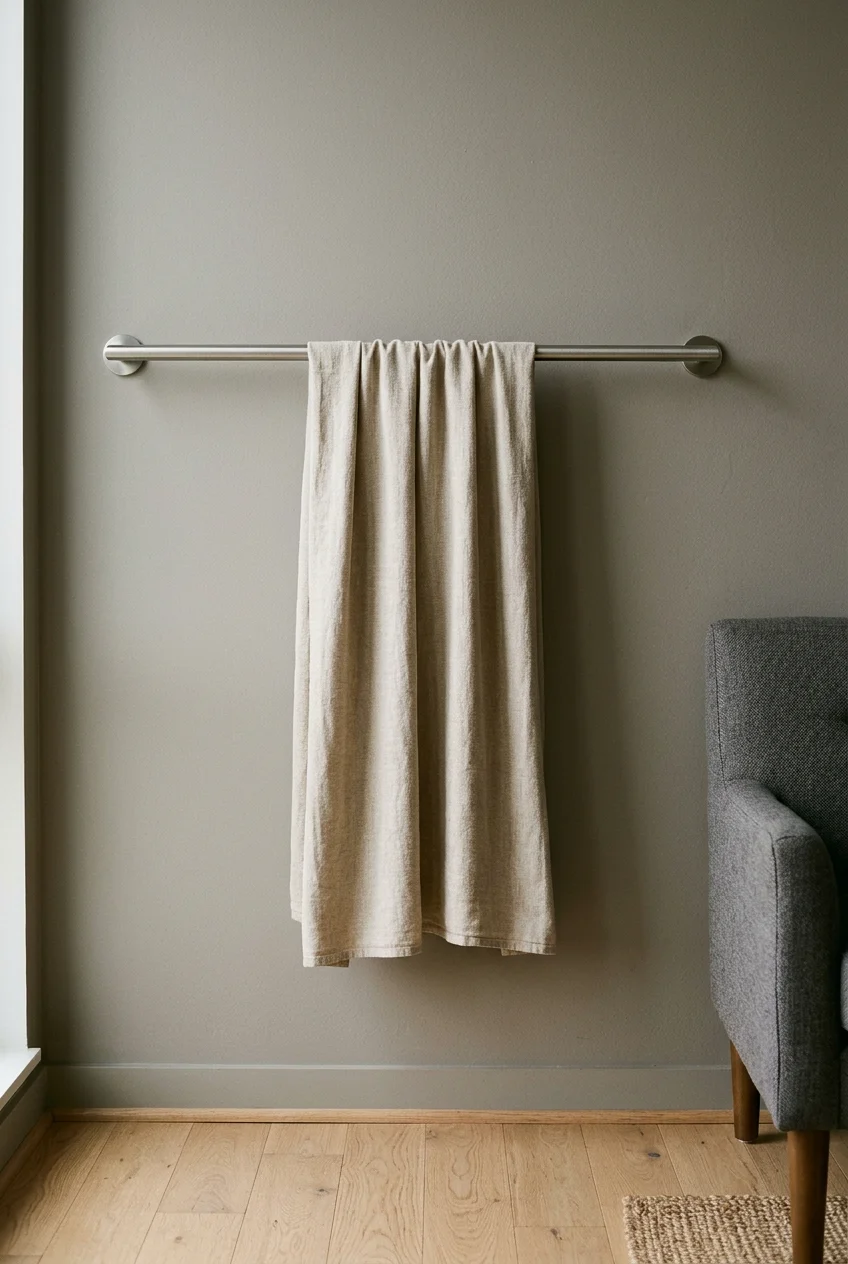
A wall bar uses the depth of a folded throw where even a slim floor rack would be in the way. Choose a smooth, fixed rail.
Measure how far the rail and fabric will project. Check that the loaded bar clears any door swing and that the brackets suit your wall and load.
Double the throw over the middle of the bar so it stays balanced. Choose a different spot if the blanket would hang near a heater or vent.
8. Wall Hooks With Looped Throws
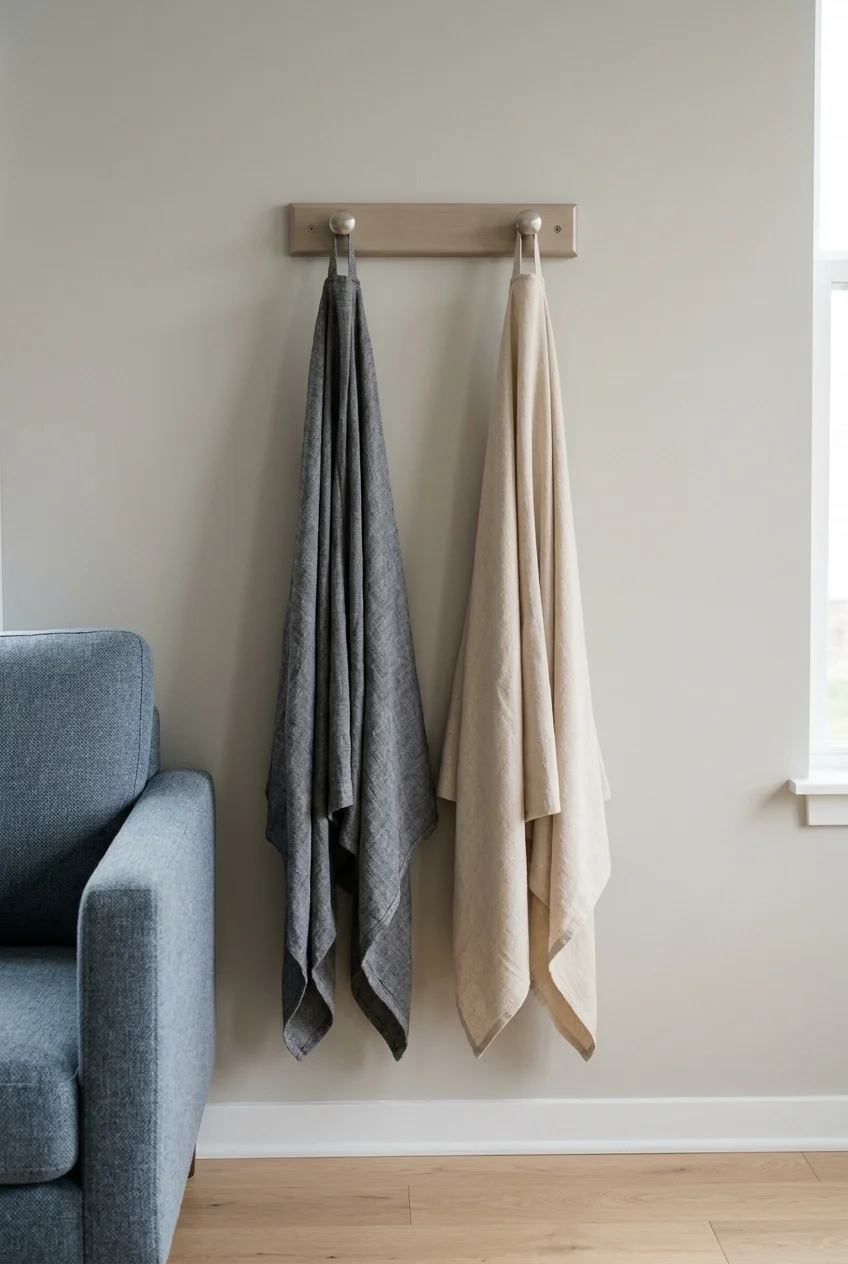
A short hook rail works for lightweight throws that already have sturdy hanging loops. Each blanket has its own hook and comes down without disturbing the next.
Set the hooks far enough apart for the fabric to hang freely. Avoid hanging by fringe or snagging one corner of an open knit on a hook.
Check the mounting instructions and mark the lower edge of your longest throw before fixing the rail. Use it on a clear wall outside the door swing.
9. A Wall Rack for Rolled Throws
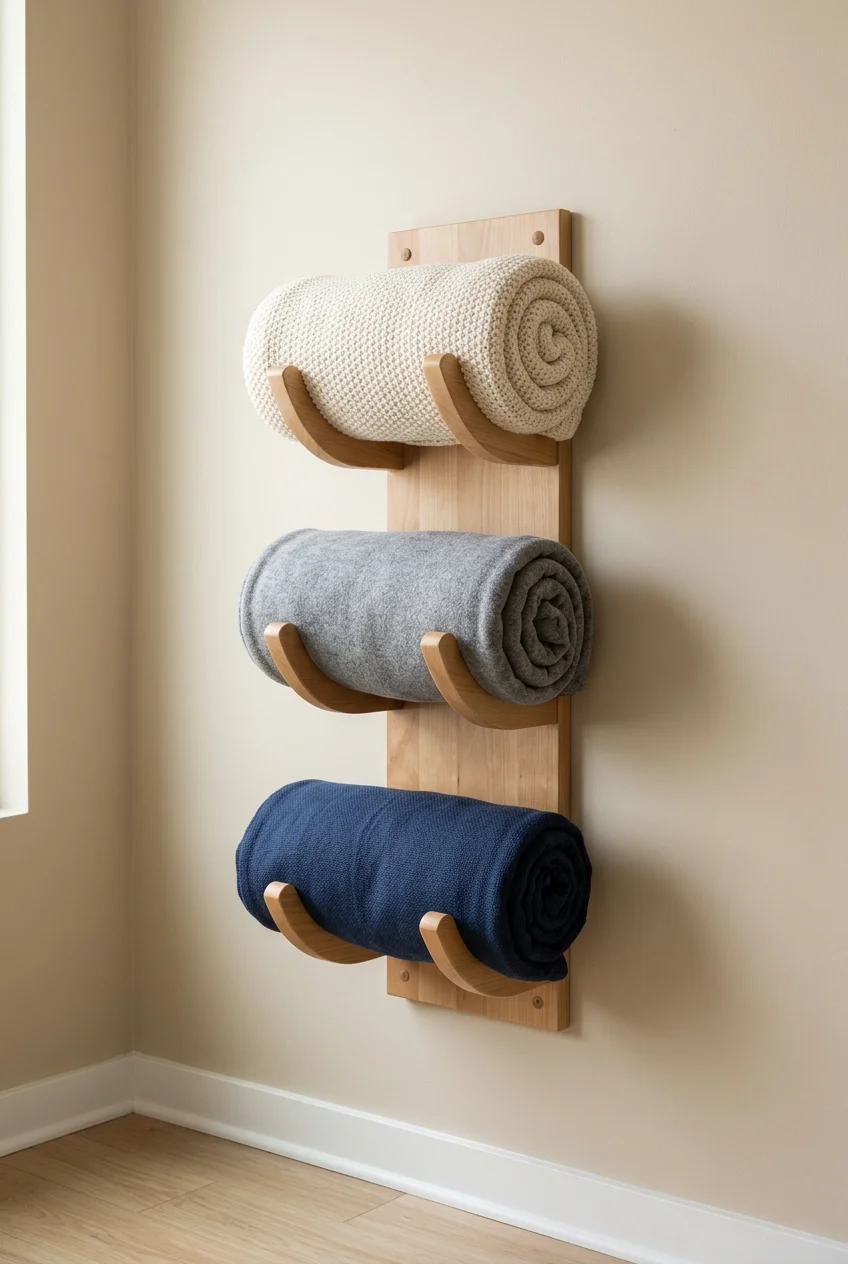
A vertical rack with individual cradles holds rolled fleece or cotton throws with each one visible. It works best if the blankets roll to a similar diameter.
Test a roll against the depth and width of a cradle. Thick knits can be too bulky, while loosely rolled small throws may slip through wide supports.
Hang the rack where you can lift the top roll out comfortably. Measure the full projection with a blanket in place and follow the mounting instructions.
10. A Magazine Sling for One Reading Blanket
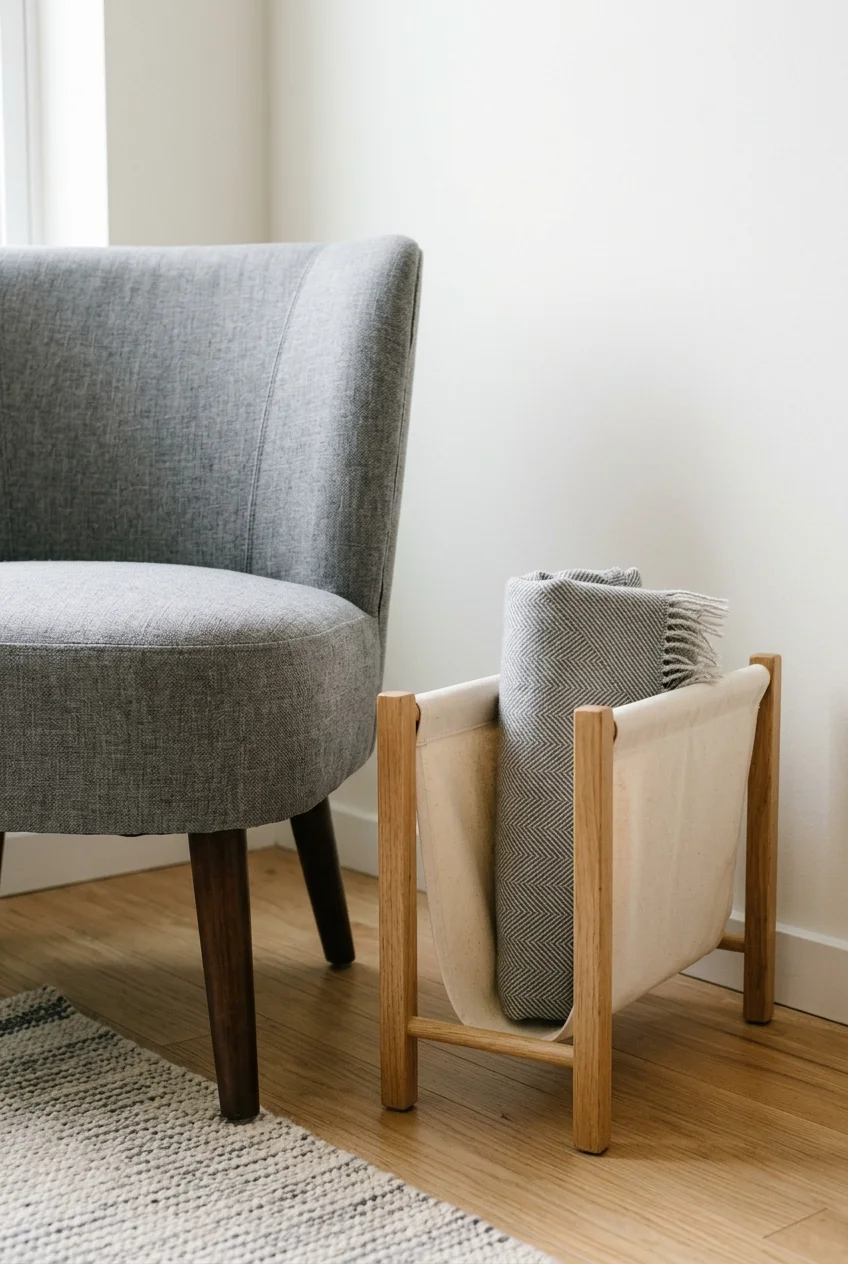
A magazine sling suits one thin lap blanket next to a chair. Its shallow pocket holds the folded piece upright with an edge you can grab.
Check the width between the supports and the depth of the pouch. Smooth fabric and rounded rails are easier on a knit than rough edges.
Hide blankets in furniture you already use
Measure storage with a blanket folded and the furniture open. A piece can fit the room and still be awkward to use once the lid or drawer moves.
11. Lift Up a Sectional Chaise
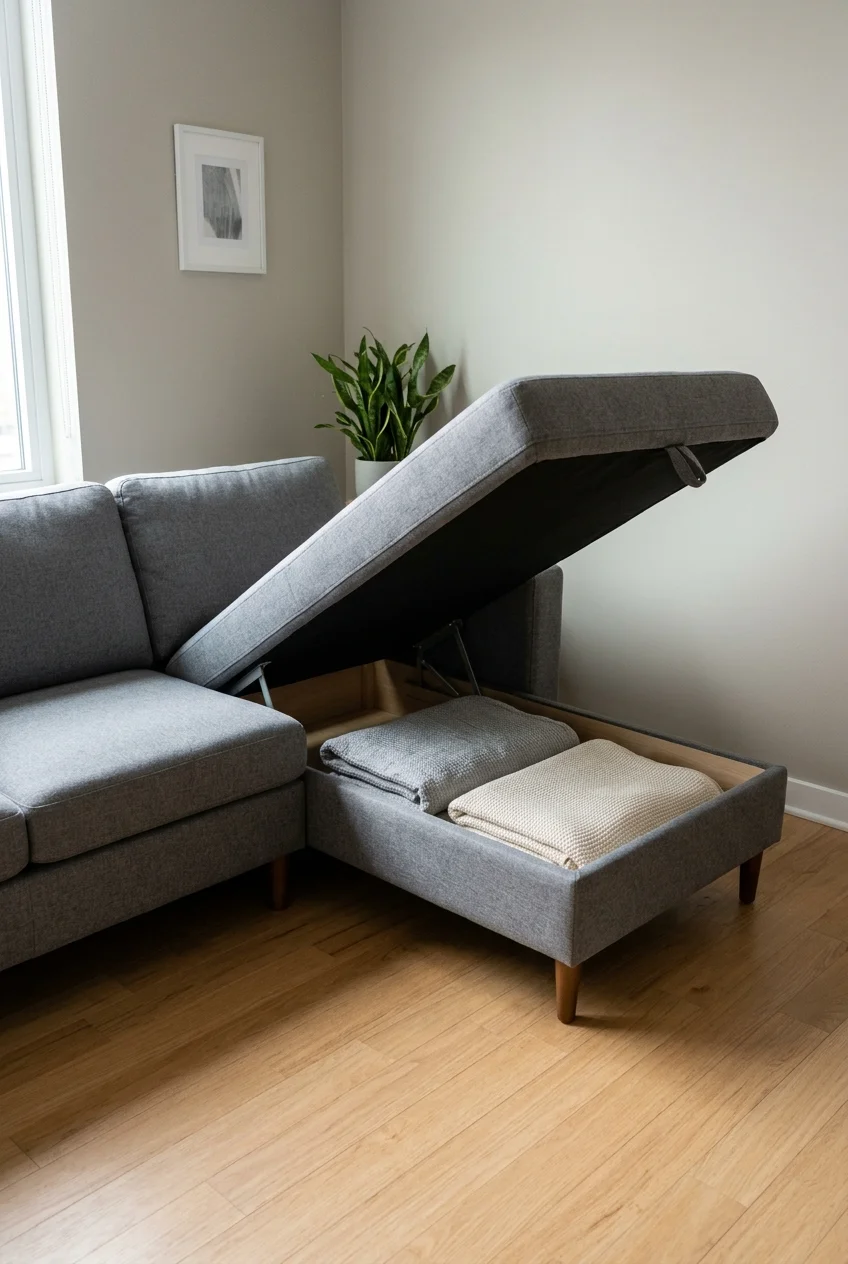
A storage chaise can hold the bedding for a sleeper sofa right where it gets used. It also keeps spare layers from competing with everyday sofa throws.
IKEA’s FRIHETEN sleeper sectional is one example with storage under the chaise. If you already own a storage sectional, check which section opens and how far.
Fold your largest blanket and compare it with the compartment opening. A wide interior does little good if the blanket only fits through the top when squeezed.
Set the coffee table far enough away to reach in easily. Pull the sleeper out once with the table in its normal spot before finalizing the layout.
12. A Lift-Top Coffee Table for Flat-Folded Throws
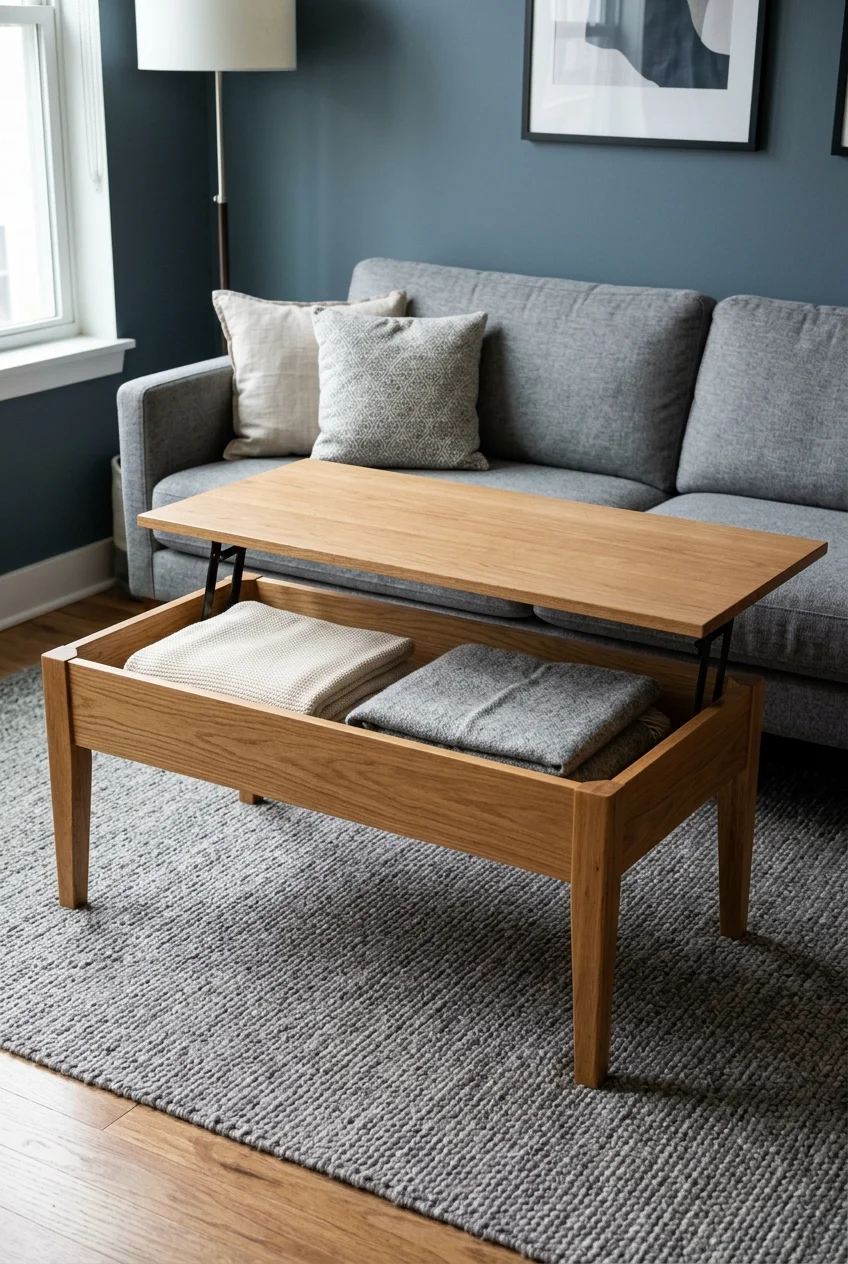
A lift-top coffee table gives you a shallow compartment for a pair of flat-folded throws while keeping the outside looking like a regular table.
Measure the depth with the top closed and check how far it travels toward the sofa. Use the compartment for blankets that sit well clear of moving parts.
If the top is usually covered with books or drinks, test how often you want to clear it. A basket nearby may work better for the everyday throw.
13. A Sliding-Door Sideboard for a Tight Walkway
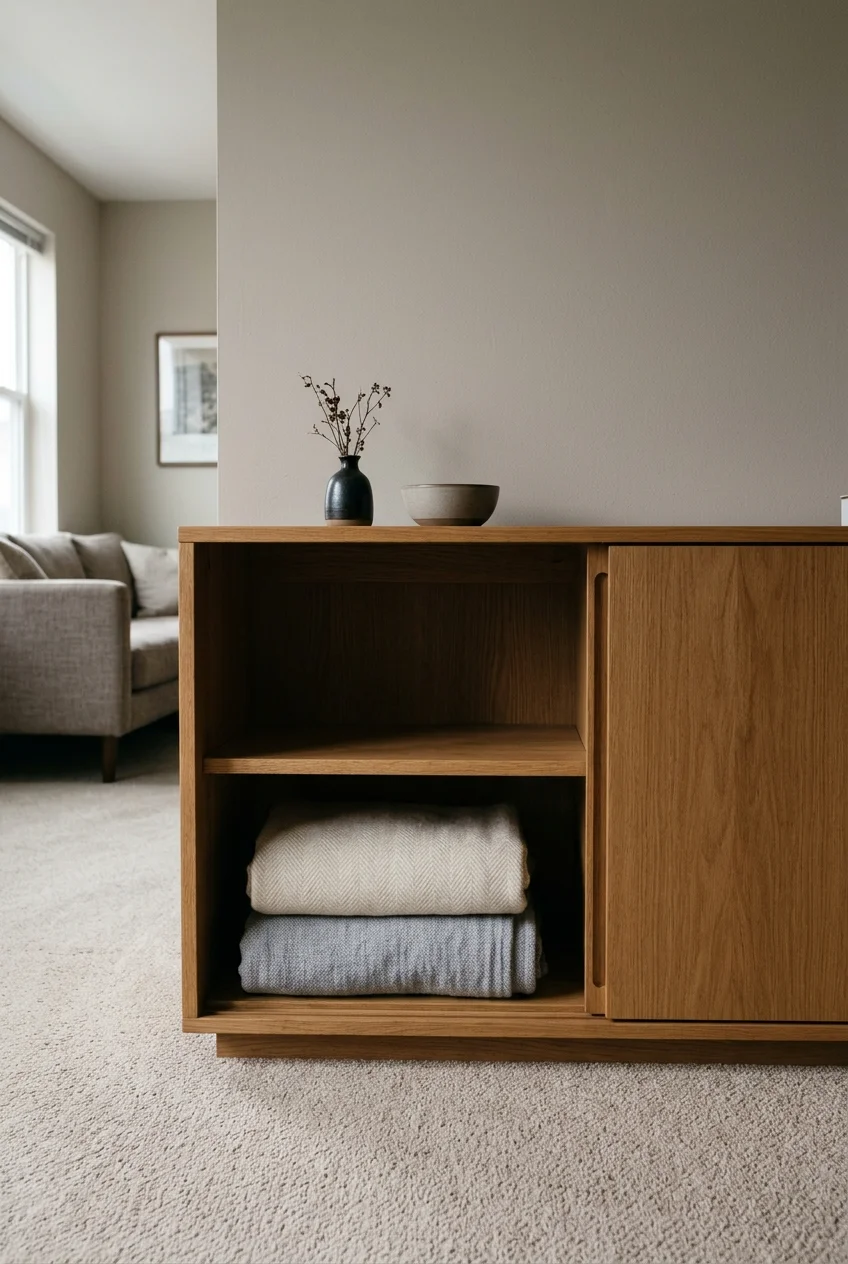
Sliding doors let you reach folded blankets beside a dining or living area without swinging cabinet doors into the path. Check how much of each shelf the doors uncover.
Use separate shelf bays for lightweight and winter blankets. Try slipping the larger folded blanket through one open bay before assigning that space to bulky bedding.
Check the usable depth inside the track and follow the sideboard’s installation directions. A blanket corner left protruding can drag along the door as you close it.
14. An Open Shelf Under a Window Seat
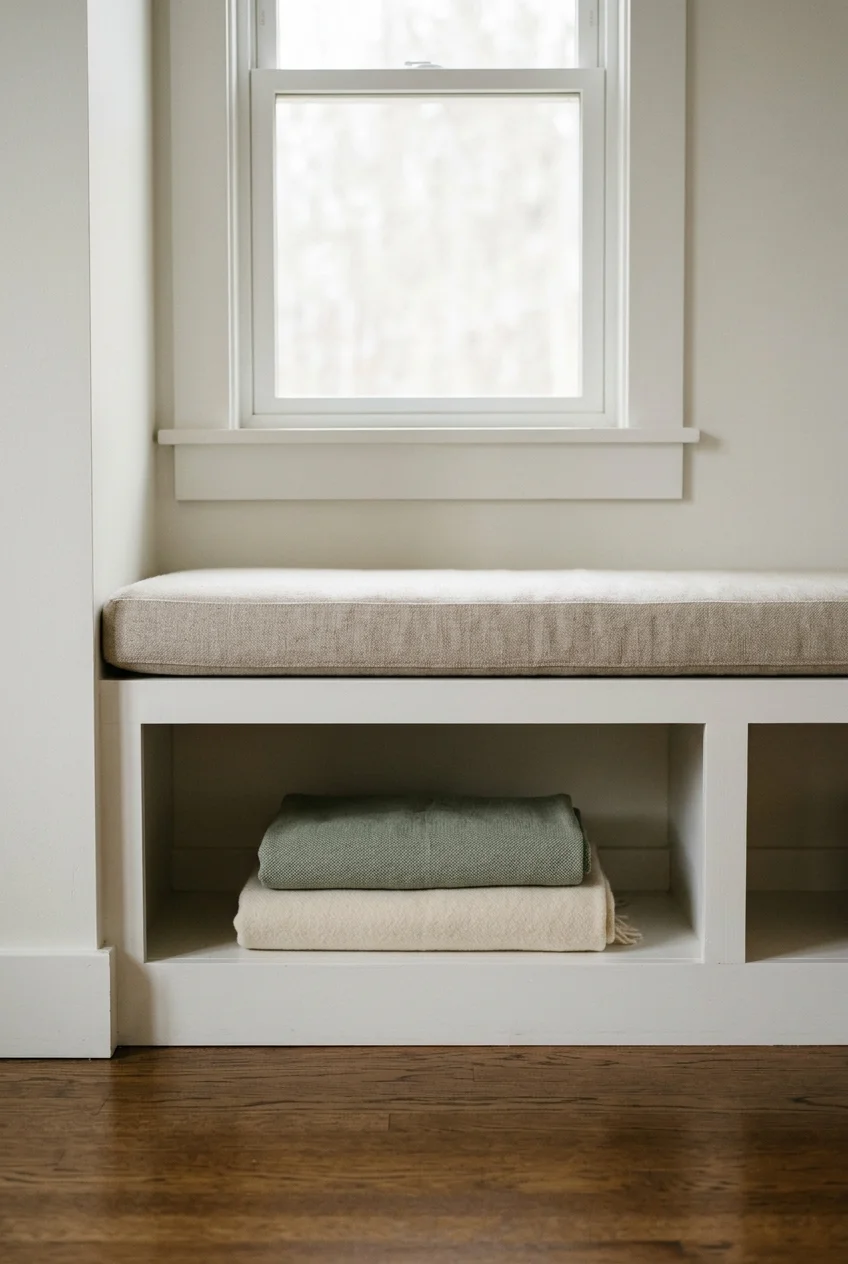
An open bay beneath a window seat keeps one reading quilt and a spare close by. The seat cushion can stay in place while you reach below.
Choose a shelf area where blankets can lie flat and stay behind the front edge. Keep the stack short enough to pull one out with a single hand.
Check whether the spot gets strong sun or has a heater or register. Keep the vent clear, and use a different shelf for anything prone to fading.
15. One Pullout Bin Per Person in a Cube Unit
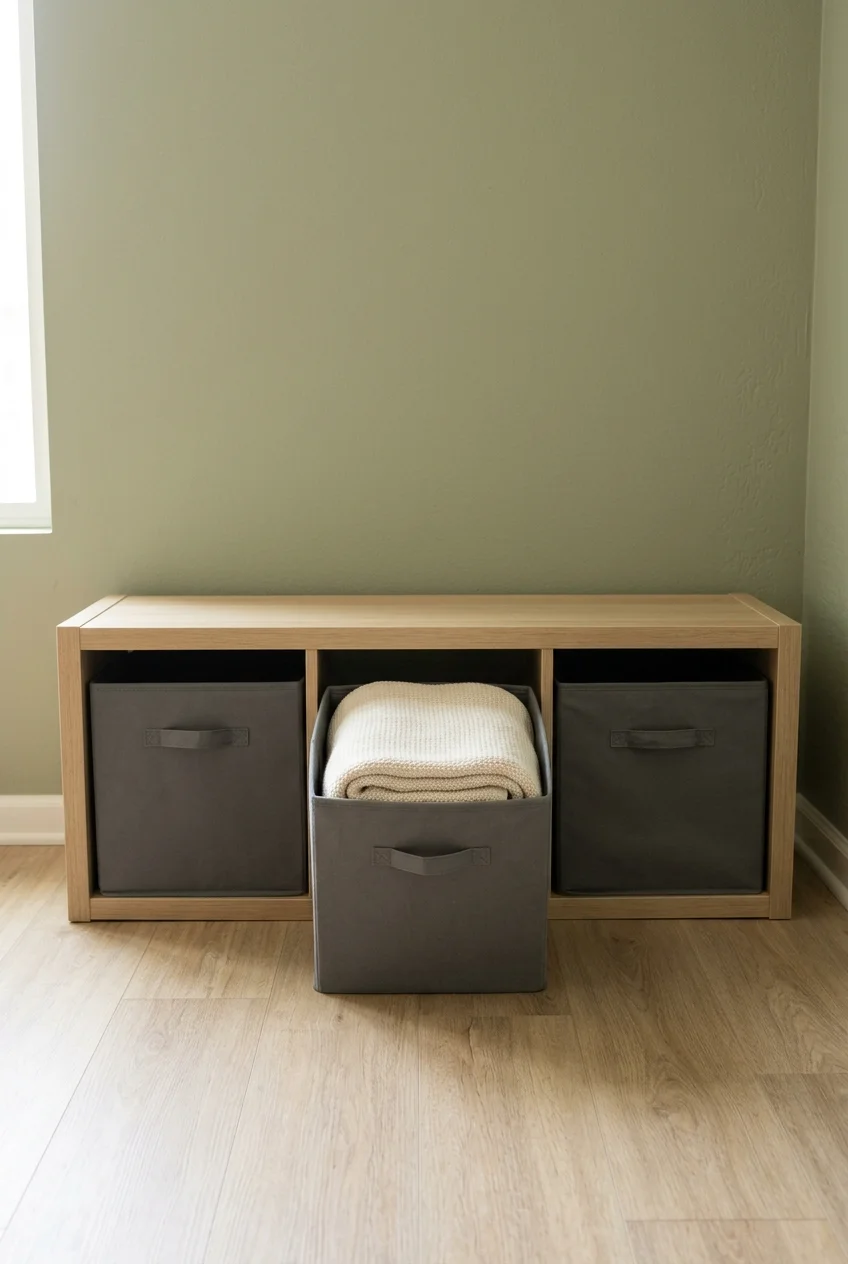
Separate cube bins let each person grab a throw without rummaging. This works for a family room where the blankets look similar and often get switched.
Use soft bins with pull handles and measure the cube opening before buying. Set a one-blanket limit if the bin bows outward or scrapes the shelf above.
Put frequently used cubes within reach and secure the unit as directed. Distinguish the bins with small tags or give each person the same position every time.
16. A Slim Sofa Arm Pocket
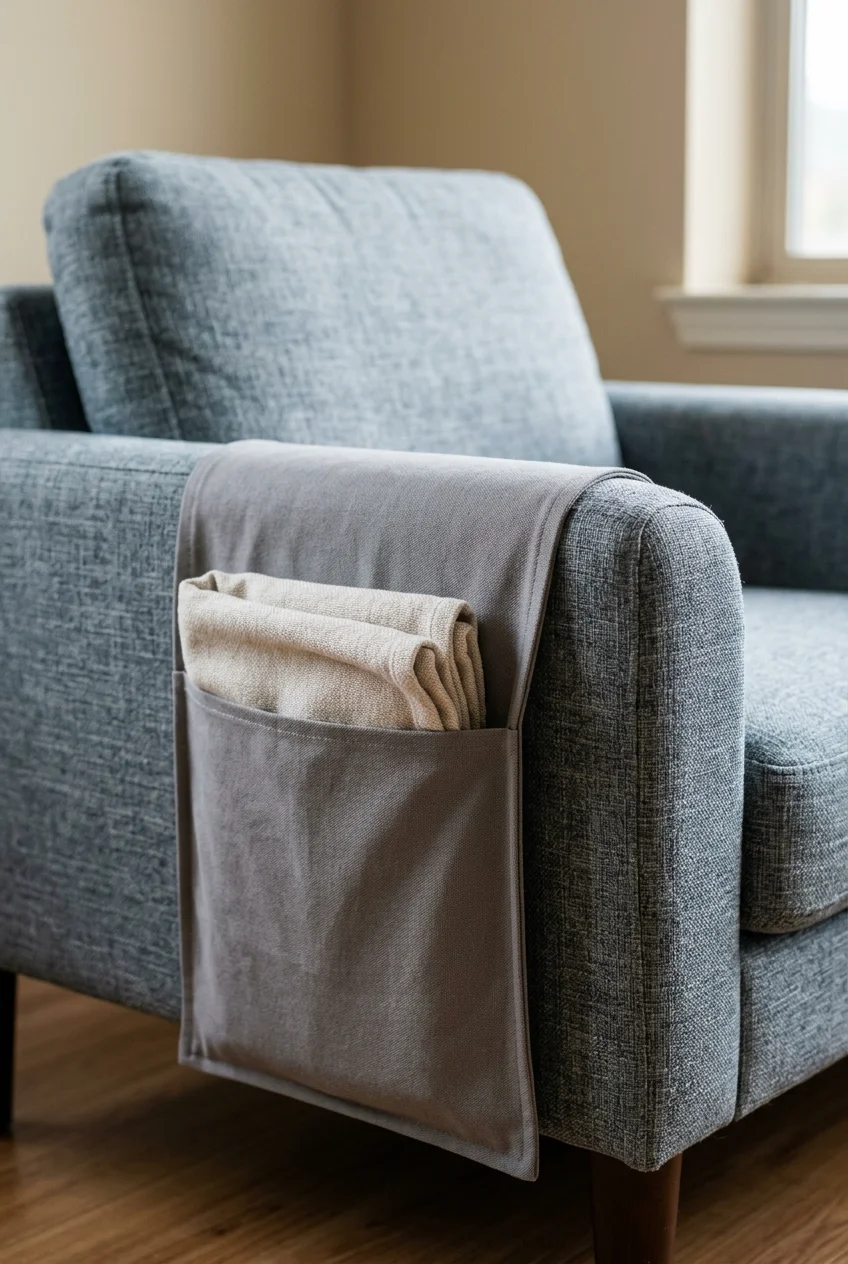
A sofa arm pocket keeps one thin lap throw off the seat in a narrow seating area. Use a pocket designed to tuck under a removable cushion.
Check whether the pocket stays put when you lift the blanket out. Fold the fabric until it fits loosely and stays above the floor.
17. A Foot-of-Bed Bench With Front Drawers
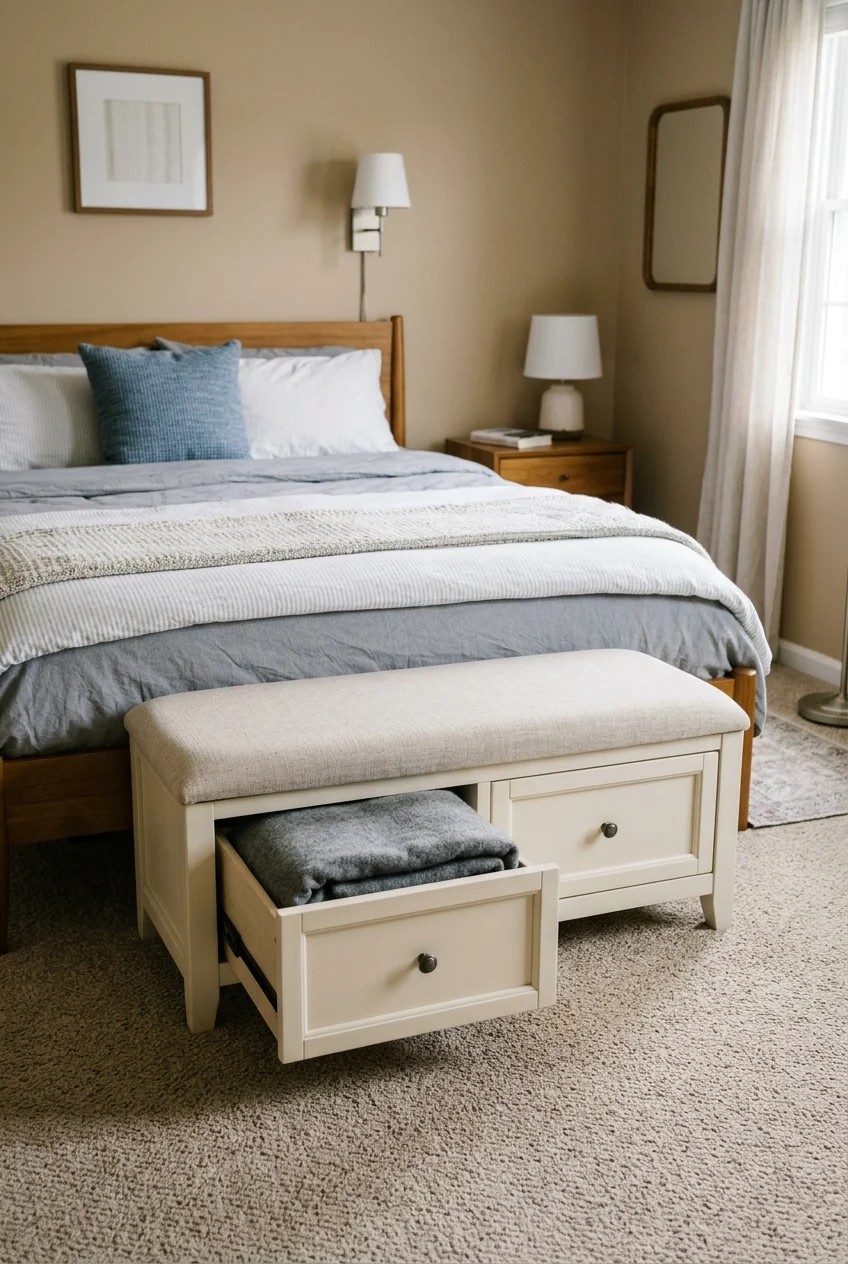
A drawer bench lets you sit down to dress and reach two bed blankets from the front. Choose seating furniture sold for that purpose and check its instructions.
Tape the bench outline on the floor and extend the tape to show how far a drawer opens. Test the route around the foot of the bed.
Use one drawer for the layer on your bed now and the other for a lighter spare. Fold both blankets before judging how deep the drawers need to be.
If the passage is already tight, use an existing dresser or the bed’s built-in drawers. Keep everyday steps around the bed simple, especially in a shared bedroom.
18. A Rolling Cart for Blankets Used in Two Rooms
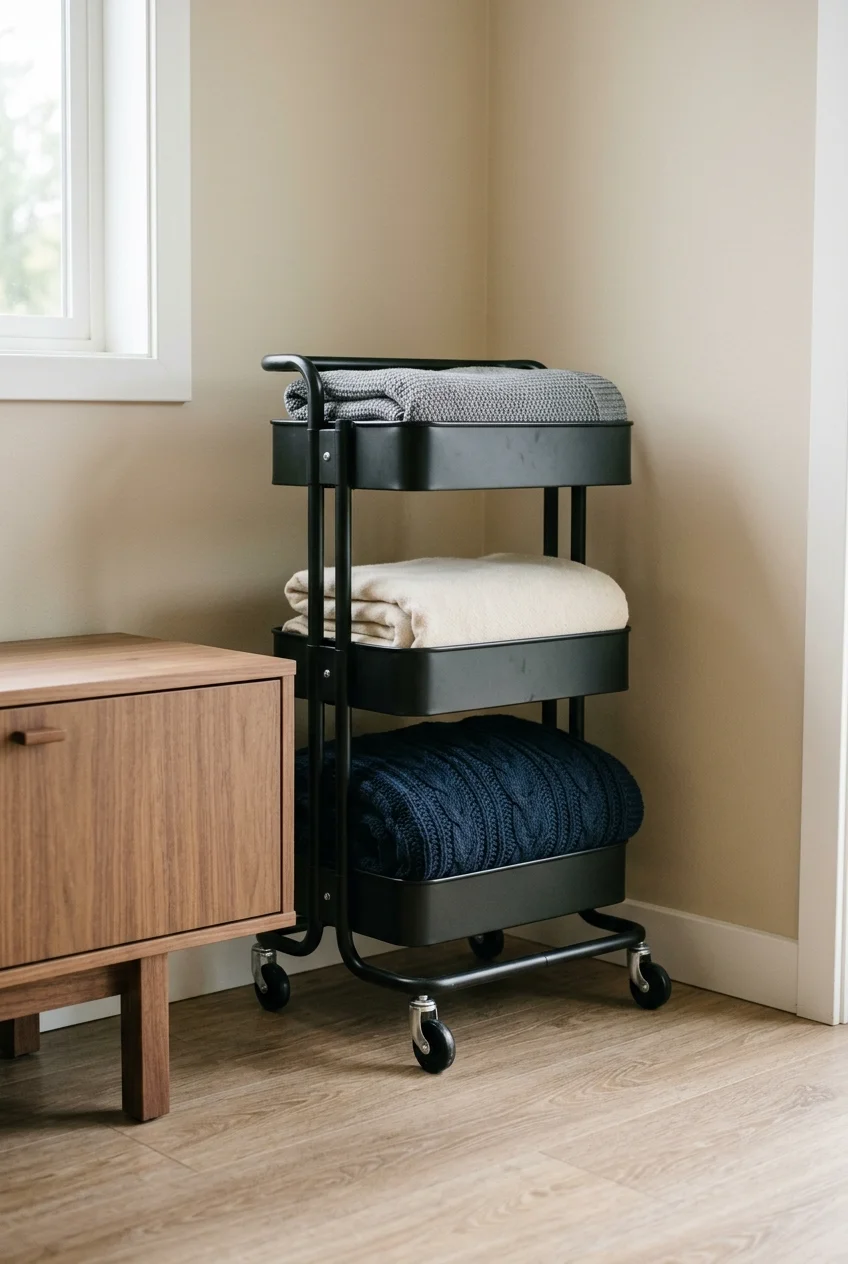
A compact rolling cart moves a small supply of throws between a den and a guest room. Deep tray sides help hold loose folds during the move.
Choose trays wide enough for your blankets and put the heaviest one on the lowest tier. Measure the narrowest doorway and include any handle that sticks out.
Give the cart a dedicated parking spot outside the hall. Lock the casters if the model has brakes and check that the wheels suit your flooring.
Store extra bedding in bedrooms and closets
Start with the folded blanket and the opening it has to pass through. Drawer sides, bed rails, and closet frames can all shrink the space you can use.
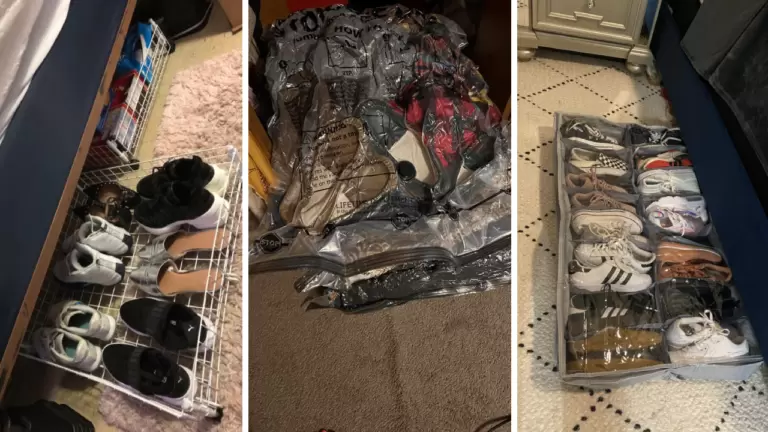
19. A Low Zipper Case Under the Bed
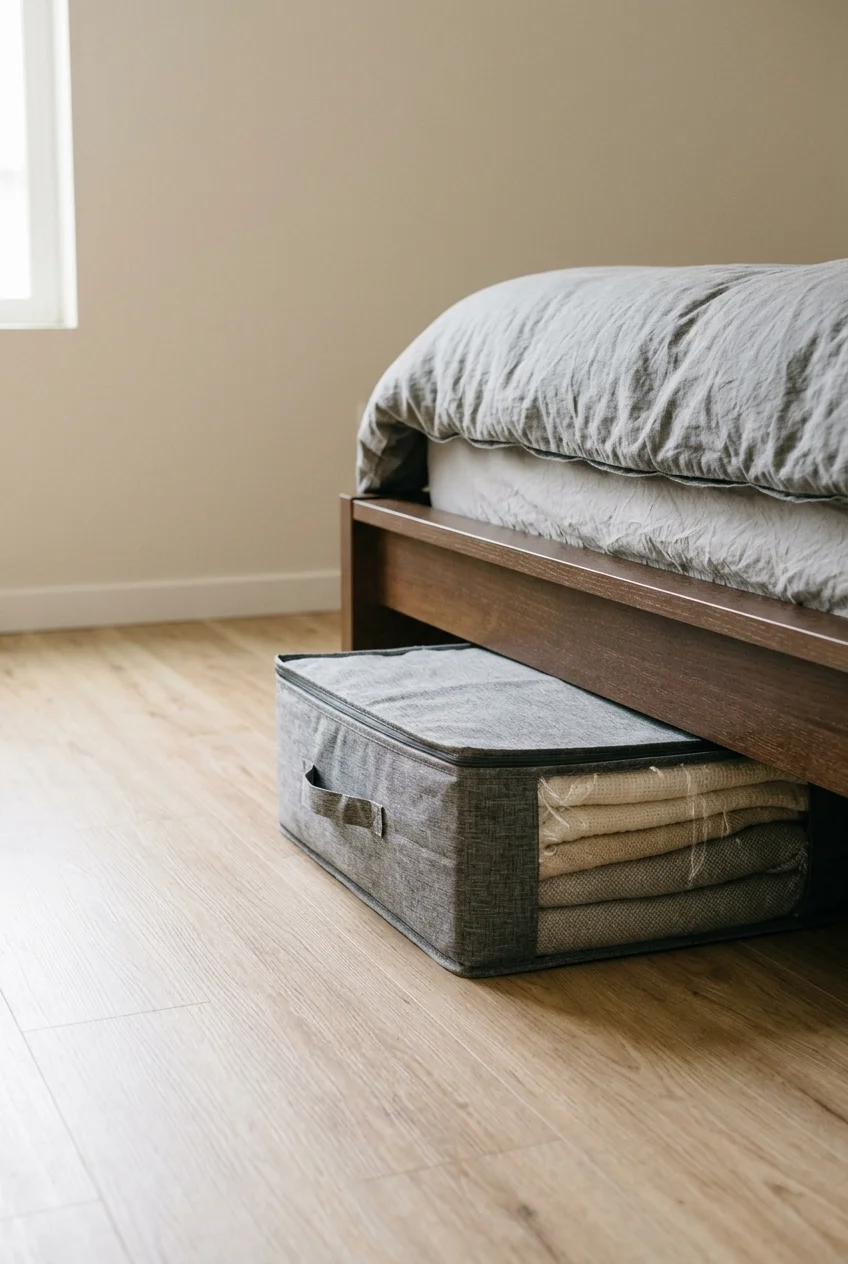
A shallow case keeps seasonal blankets under a bed you already own. Find the lowest part of the frame and measure to the floor at several points.
The Amazon Basics zippered underbed case has a clear top and a listed size of 18 by 42 by 6 inches. Check the filled height too.
Check the path from the bed edge to the center support. Fold the blanket into a flat layer so the case stays shallow enough to slide.
Face the handle toward the side you can actually reach. Leave some slack around a zipper so you can open the case without pulling fabric into it.
20. An Open Headboard Cubby for a Bedtime Layer
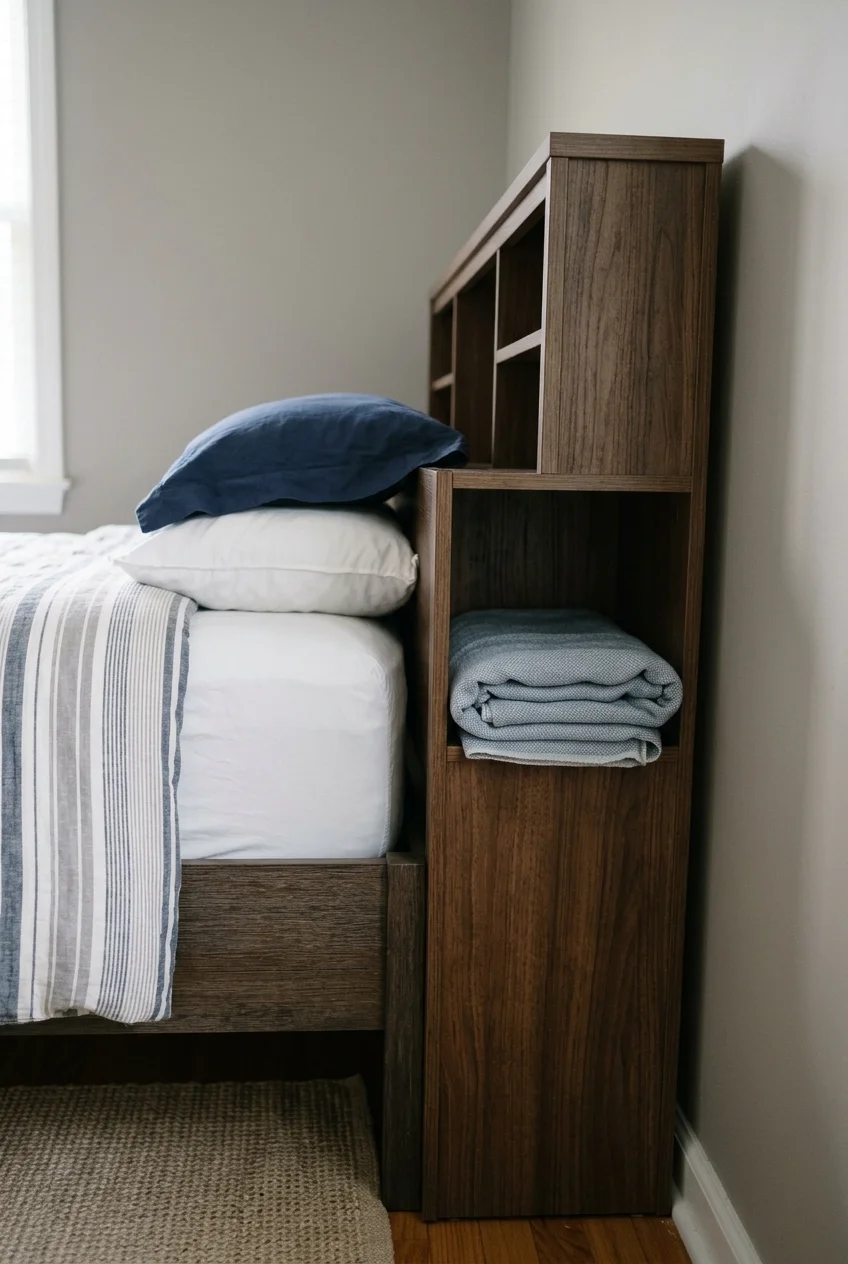
Use a low open compartment in an existing bookcase headboard for a light bedtime layer you reach for after the lights are off. Keep it separate from books.
Set the blanket flat within the cubby so a corner stays easy to grasp. Follow the furniture maker’s instructions and leave anything heavy out of the overhead area.
21. Side Drawers Built Into the Bed Frame
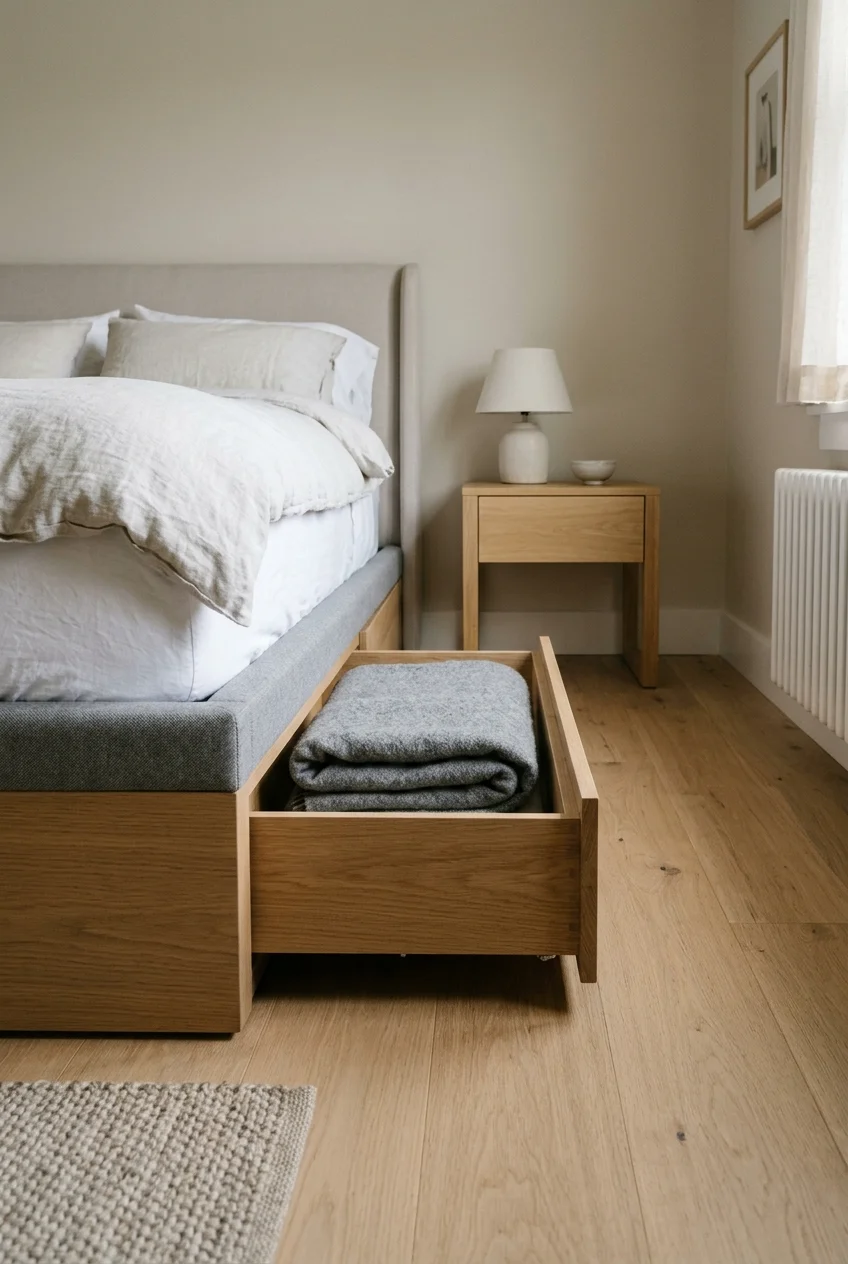
A bed with integrated side drawers makes spare blankets accessible from the bedroom aisle. It gives bed-sized layers a regular drawer without taking up dresser space.
Measure the aisle with nightstands and other furniture in place. Check which drawer fronts are blocked by a nightstand and how far the usable drawers can open.
Fold blankets loosely to the drawer’s actual inside width. Stop filling when the highest fold approaches the frame, so the fabric stays clear of the moving drawer.
Practical tip Put the season you are using in the drawer with the clearest approach. If one opening is partly blocked, keep infrequently used linens there only when retrieval is easy.
22. A Lift-Up Bed Base for Narrow Side Aisles
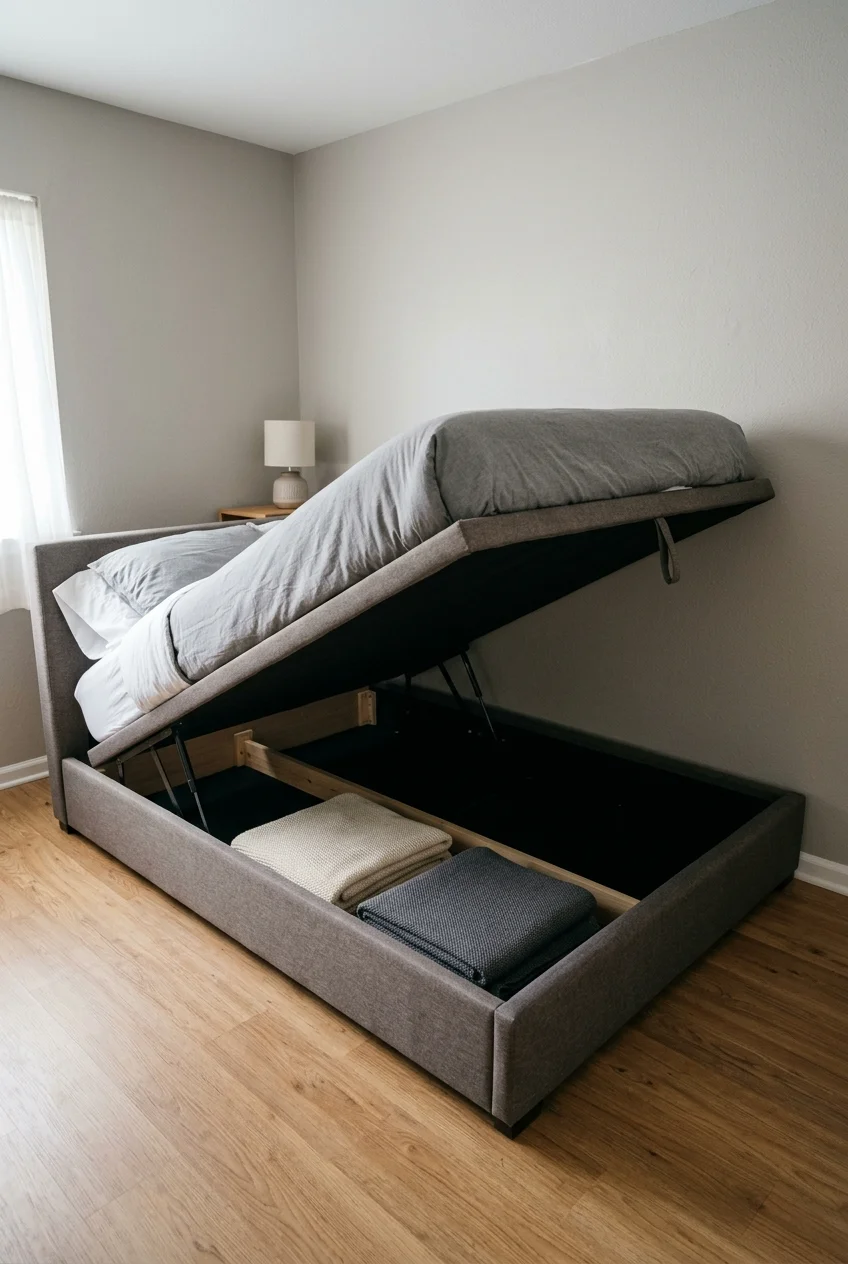
A bed with a lift-up mattress platform gives you a broad compartment when bedside drawers would run into a wall. It suits bedding you only swap occasionally.
Check where you need to stand to open the bed and how high the platform rises. Include the mattress thickness when comparing the open height with available clearance.
Use the mattress dimensions and weight range specified for the frame. Consider whether you can lift and lower the loaded setup easily each time you change bedding.
Separate large blankets into loose piles within reach from the access side. Put the next layer you expect to use closest to the edge where you stand.
If you change layers before bedtime, check how easy it is to reach the lift handle under your usual bedspread. Tuck long bedding clear before opening.
- Foot-opening frame for a room with tight bedside aisles and clear standing room at the end.
- Side-opening frame for a room with one clear long side and furniture at the foot.
- Side drawers for frequent swaps when there is room to pull them fully out.
23. Throws Filed Upright in a Dresser Drawer
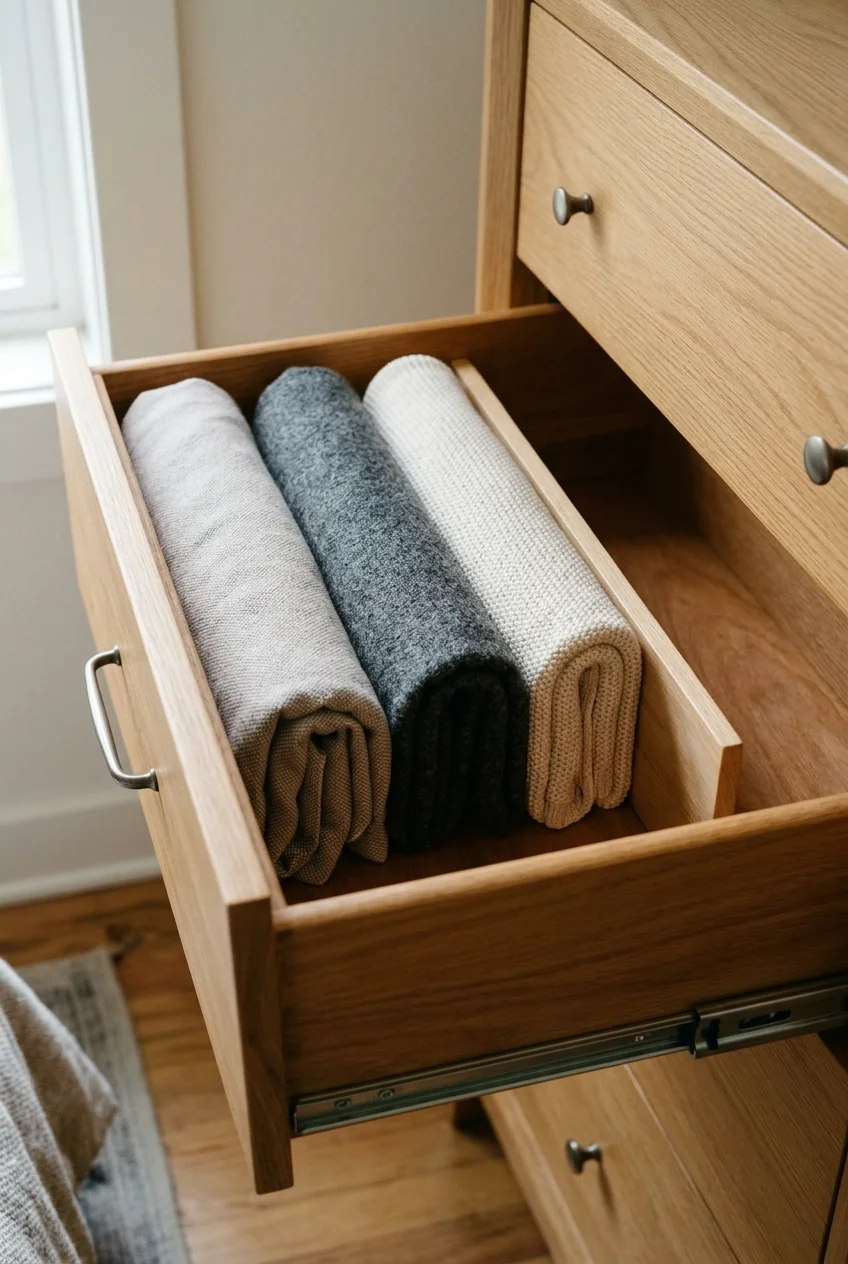
File-fold thin throws in a deep dresser drawer so you can pull out the one you need. Bring the folded edges up where you can see them.
Test the first blanket with the drawer closed. If it catches, make a shorter fold or reserve that drawer for thinner throws and use a shelf for bulky knits.
Leave some space for your hand between the folds. A removable divider helps keep a short row upright when only one or two blankets are in the drawer.
24. Hanging Closet Shelves for Small Throws
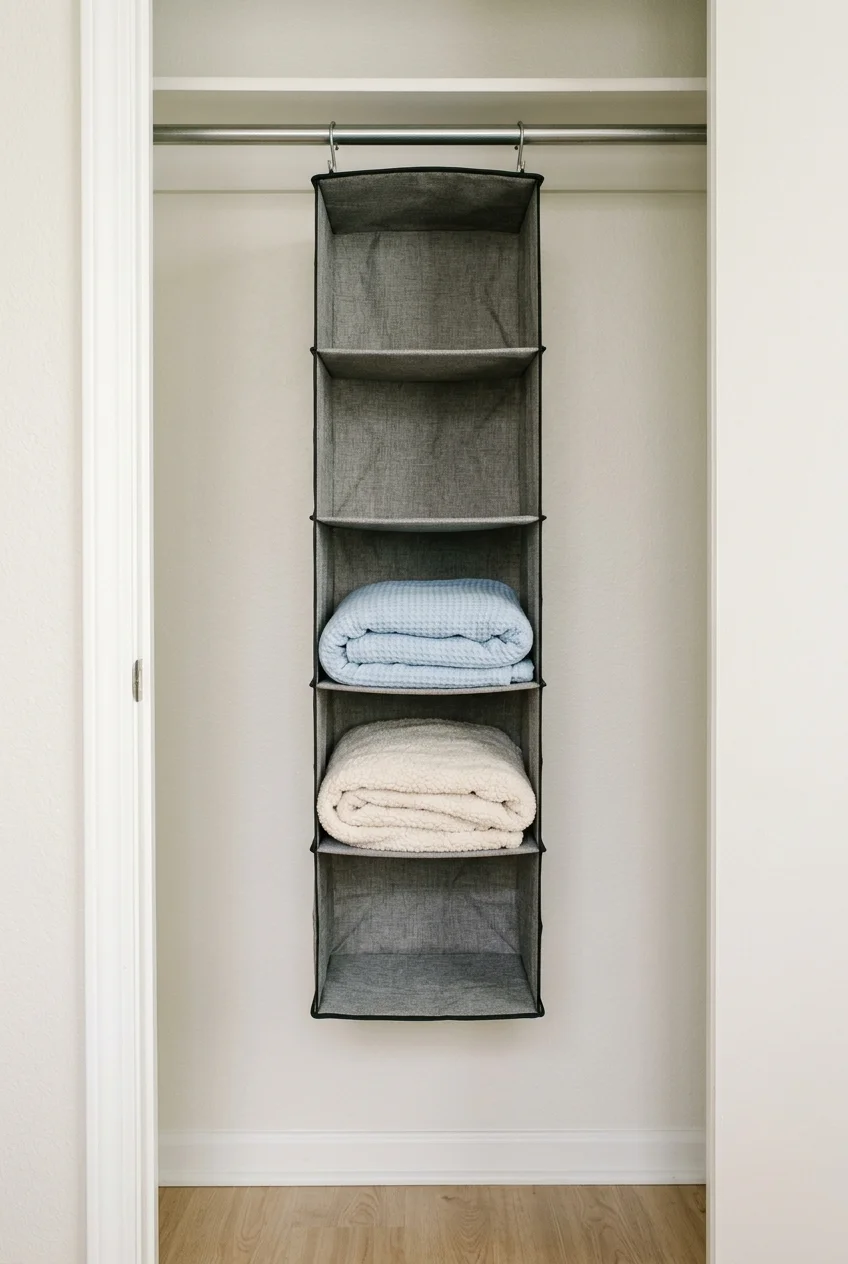
A closet rod can carry several folded lap blankets in a hanging shelf unit. Use the compartments for lightweight throws that fit without pushing the sides outward.
The Whitmor five-section hanging organizer is listed as 10 inches wide and hangs from a closet rod. Measure your fold against the usable opening before buying.
Check the organizer and rod instructions before loading them. Put the folds you reach for in the middle cubbies and keep the bottom clear of shoes.
25. A Pullout Mesh Drawer in the Closet
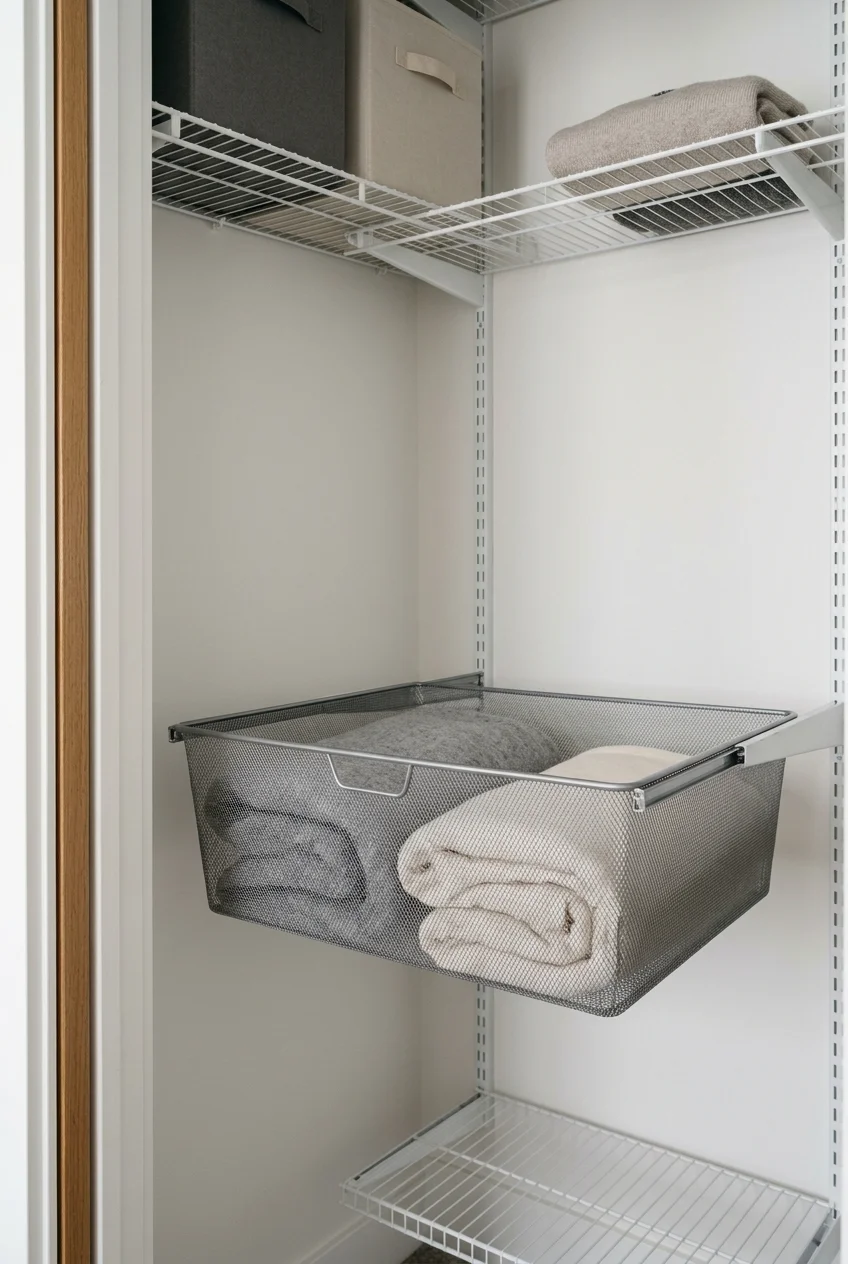
A mesh drawer lets you pull blankets out at waist level and see what is underneath the top fold. It works inside a closet system with compatible slides.
Check whether the closet opening exposes the full drawer width. A bypass door, jamb, or hinge can stop a basket long before it reaches its intended extension.
Look for smooth mesh and use a cotton liner if fine threads catch. Fold blankets below the rim and confirm the drawer can clear the shelf above.
26. An Adjustable Shelf for Oversized Folds
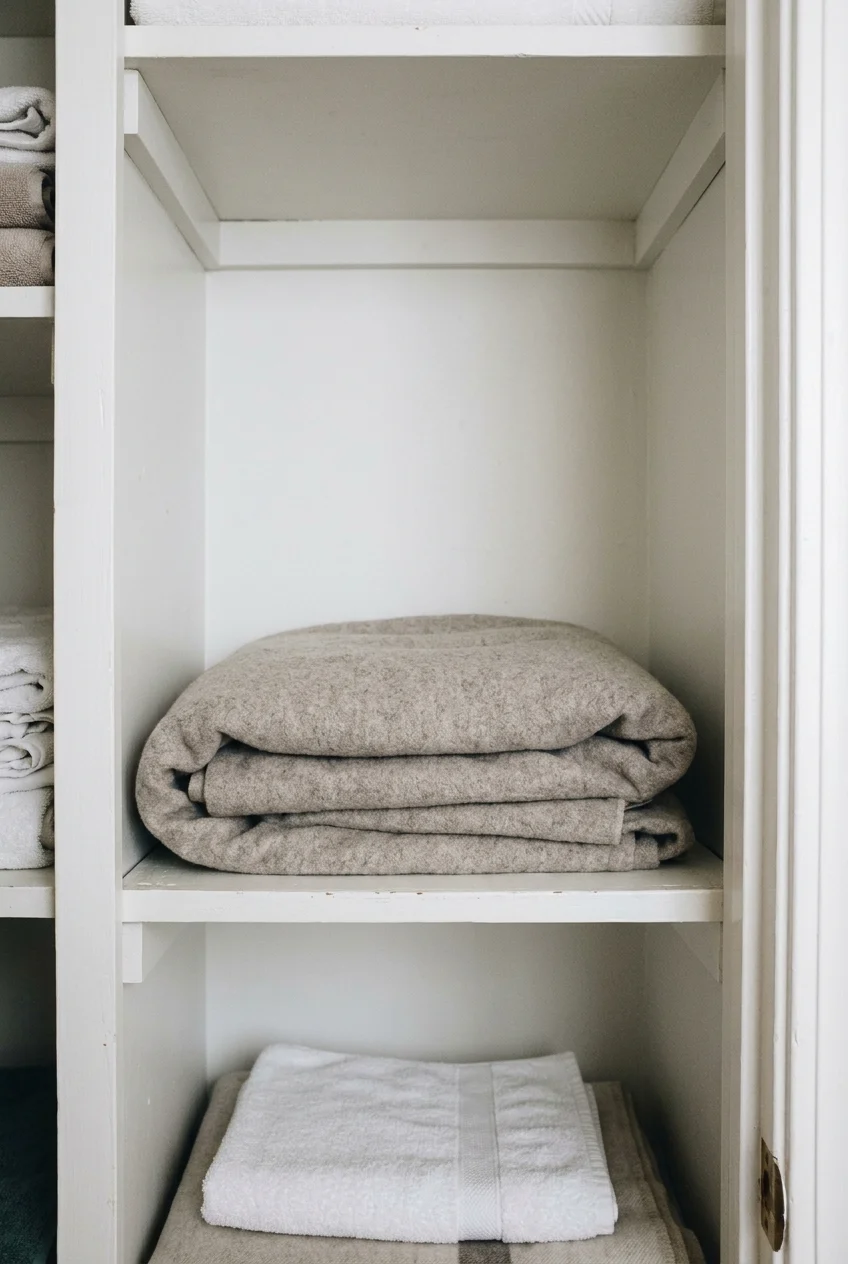
A full-width adjustable shelf lets a king blanket lie in broad folds. Moving a shelf up can create the extra height without adding more bins or drawers.
Fold the blanket on the bed and measure its width, depth, and height. Compare those numbers with the clear space between shelf supports and the closet door opening.
Place bulky blankets on an accessible middle shelf, where you can support them with both hands. Follow the system’s directions for shelf pins, spacing, and supported loads.
If you share the cabinet with towels and sheets, these linen closet organization ideas can help you decide what belongs on the shelves beside the blankets.
27. Shelf Dividers for Short Stacks
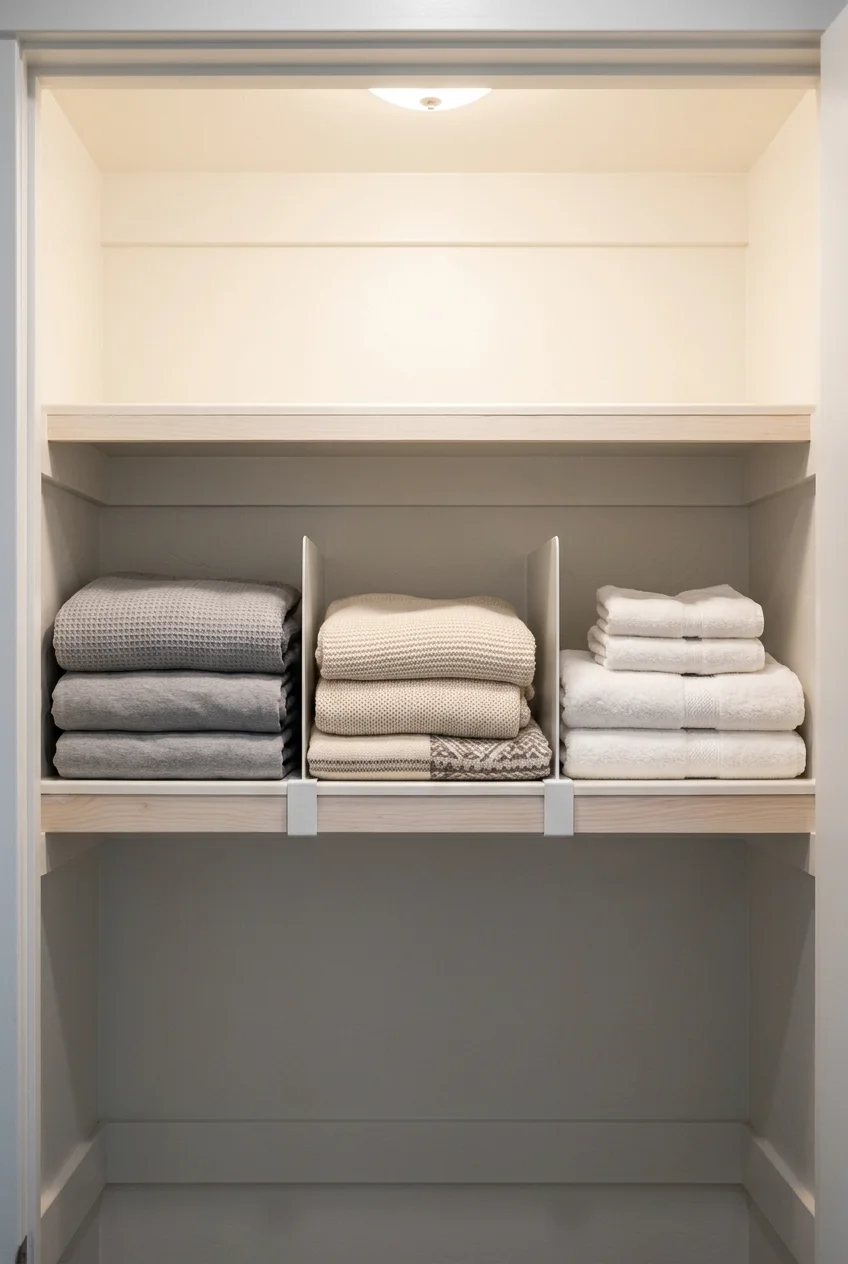
Clip-on shelf dividers give blankets separate lanes on a shared shelf. They help when a thin summer blanket keeps slipping underneath a bulkier pile of winter layers.
Choose a divider made for the shelf thickness and depth. Slide your tallest stack through the opening without scraping the divider or the underside of the shelf above.
Keep the lane wide enough for your hands. If you need to tip one stack to pull it out, reduce the pile or use fewer dividers.
28. A Smooth Liner Over Wire Shelving
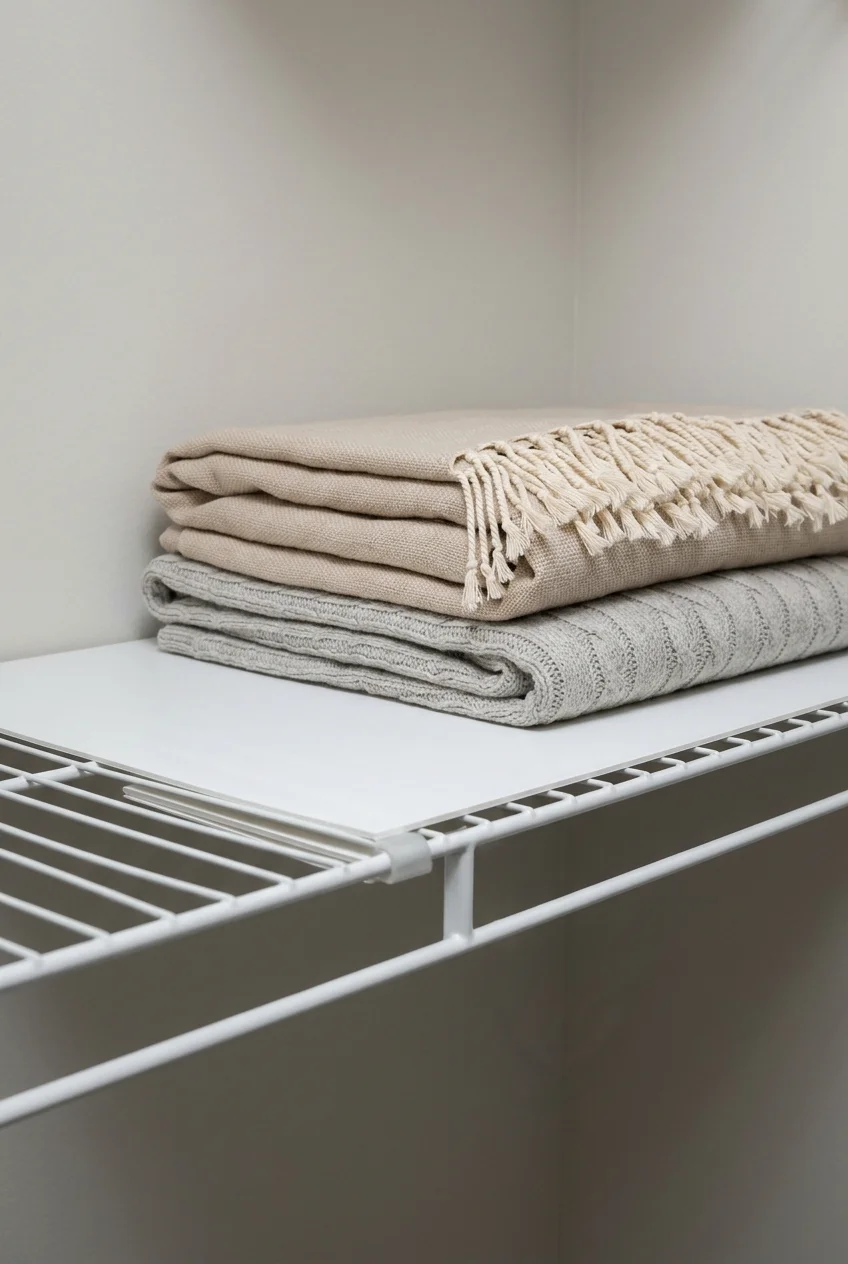
A fitted liner turns a wire closet shelf into a smooth surface for loose knits and fringed throws. It also keeps soft corners from dropping through the gaps.
Choose a liner made for your shelf depth, then check that the front edge stays put when you pull a blanket forward. Trim only as directed.
29. Door-Mounted Baskets for Small Lap Blankets
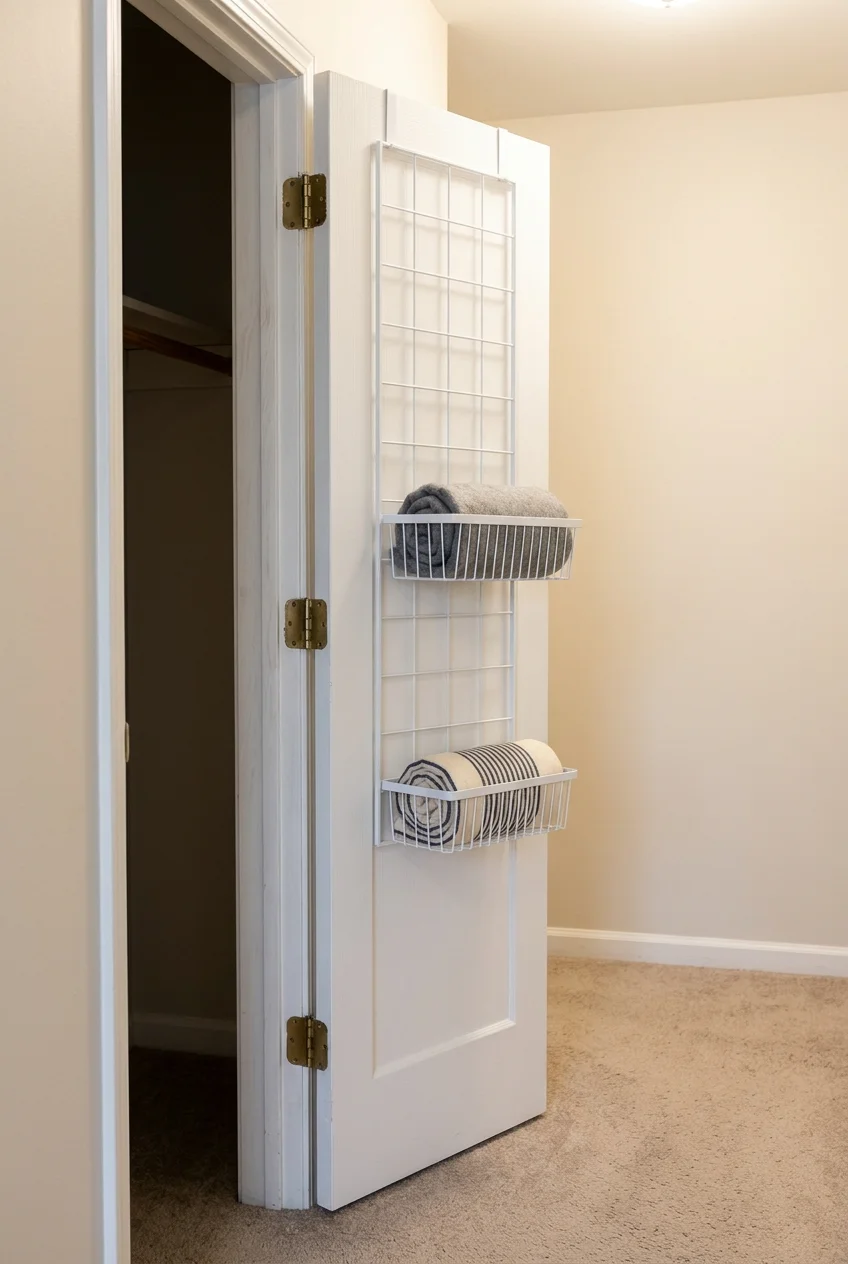
Shallow baskets on the back of a closet door give light lap blankets a place without using a shelf. Start by checking the door and organizer instructions.
Roll small throws so the upper ends stay below each basket rim. Open and close the door slowly with the baskets empty to check both sides of the swing.
Include the closest shelf or clothes rod when you measure. If inside clearance is tight, try a light hanging organizer from the closet rod instead.
30. Stackable Boxes That Open at the Front
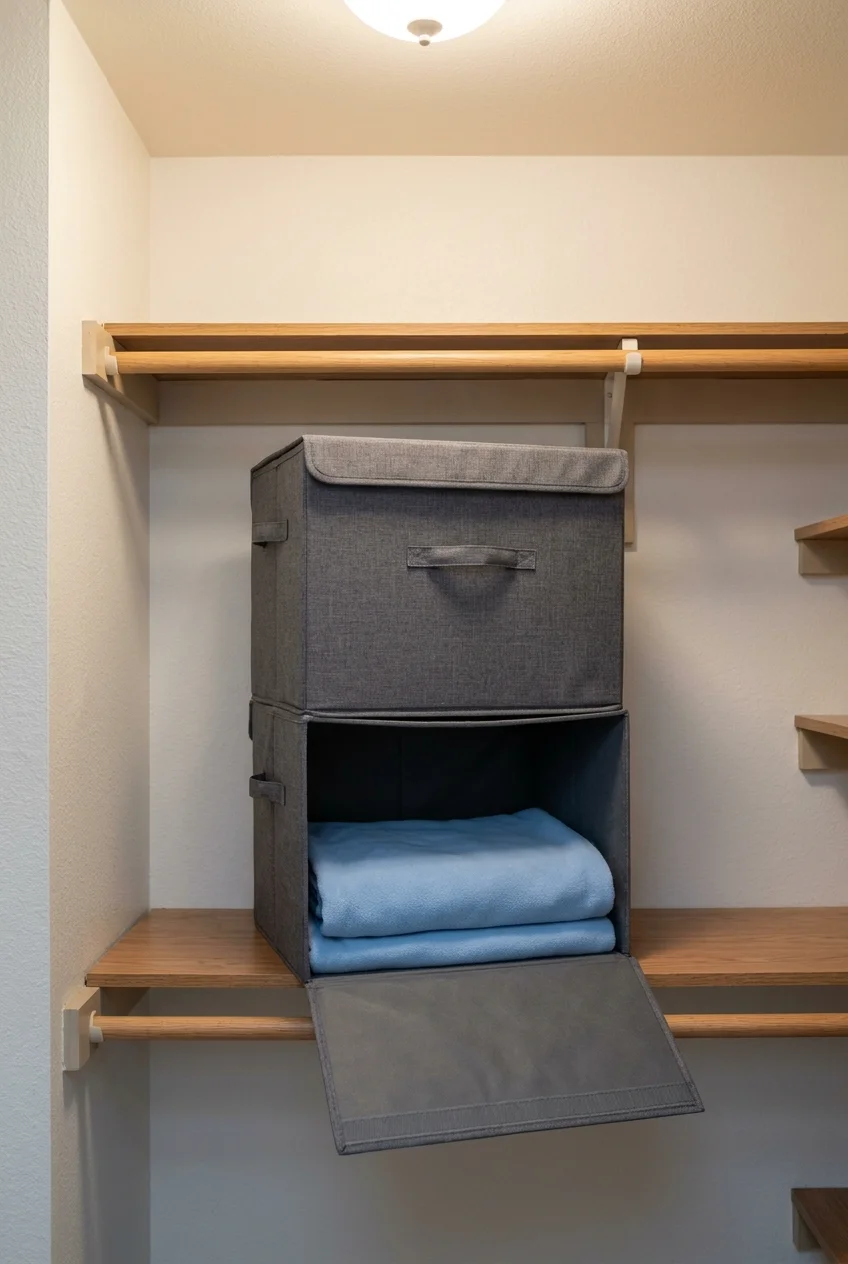
Front-opening boxes let you reach the lower blanket while the box above stays in place. Choose a system designed to stack and place it at a comfortable height.
Measure the front opening as well as the box depth. A blanket can fit the box but catch on the lip or door when you pull it out.
Put heavier boxes lower and follow the maker’s stacking limits. Use these for blankets you want to reach during the season, and fold them small enough to slide freely.
31. A Spare Suitcase for Off-Season Cotton Blankets
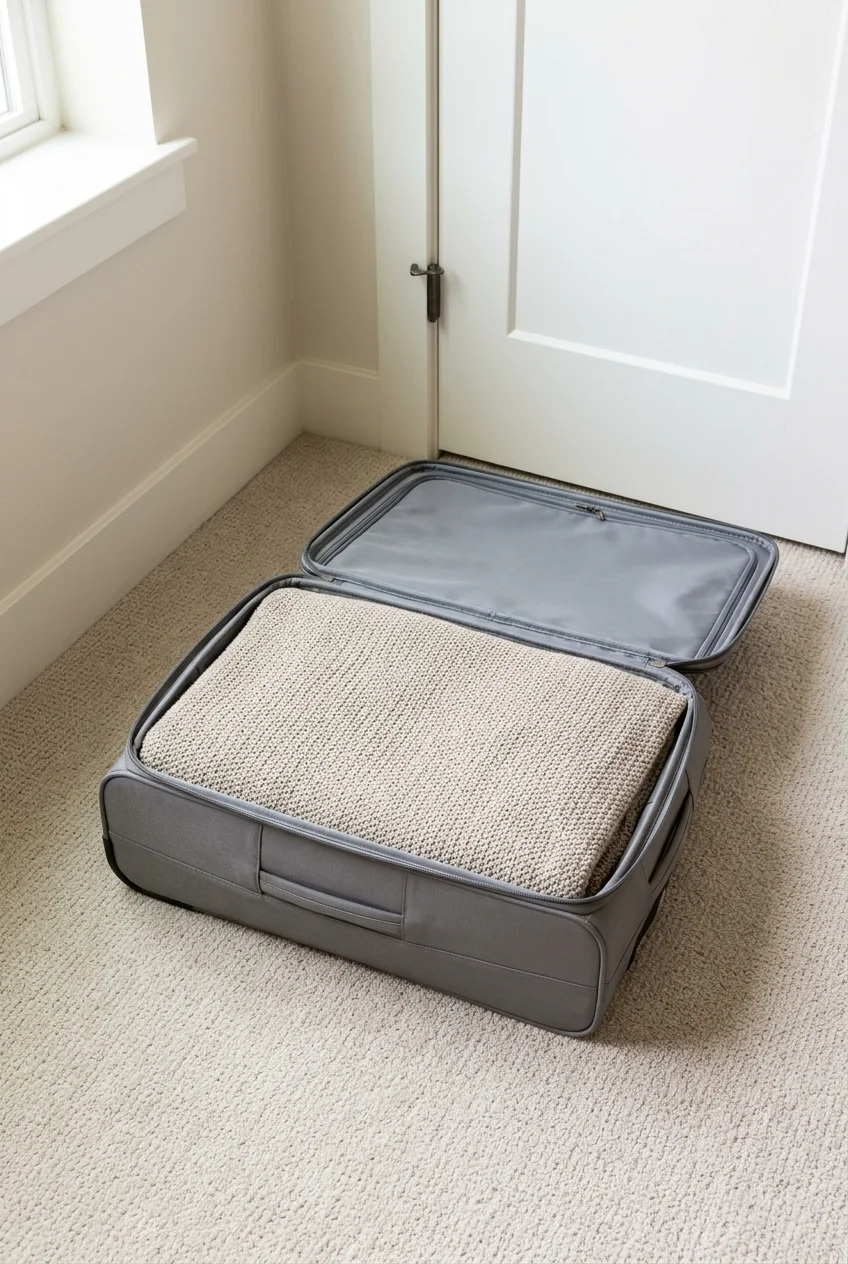
An empty suitcase can hold a spare cotton blanket until you need the case for a trip. Choose one with a clean, dry interior and usable depth.
Fold to the full interior footprint and smooth the corners before zipping. If you travel often, choose a container that will stay available year-round.
32. A Clip-On Basket Below a Closet Shelf
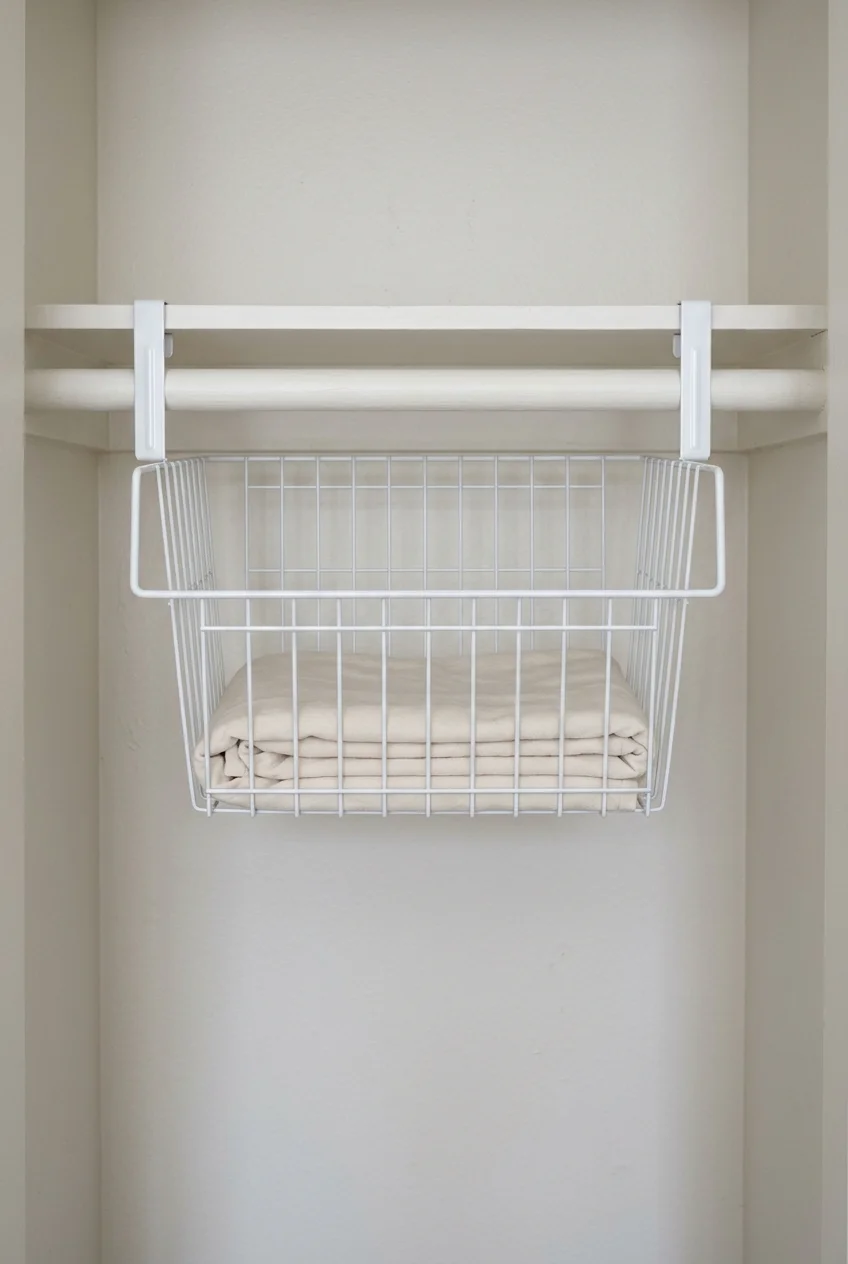
An undershelf basket creates a small slot for one lightweight blanket beneath an existing shelf. Use the gap over a short stack or a clear hanging area.
Measure shelf thickness where the clips slide on. Check that any raised front edge, door trim, and nearby hangers leave room for the basket to sit level.
Use a basket intended for your shelf and check its load limit. Give the blanket a flat fold so it slips out without dragging against the mesh.
33. A Curtain Across a Blanket Shelf Niche
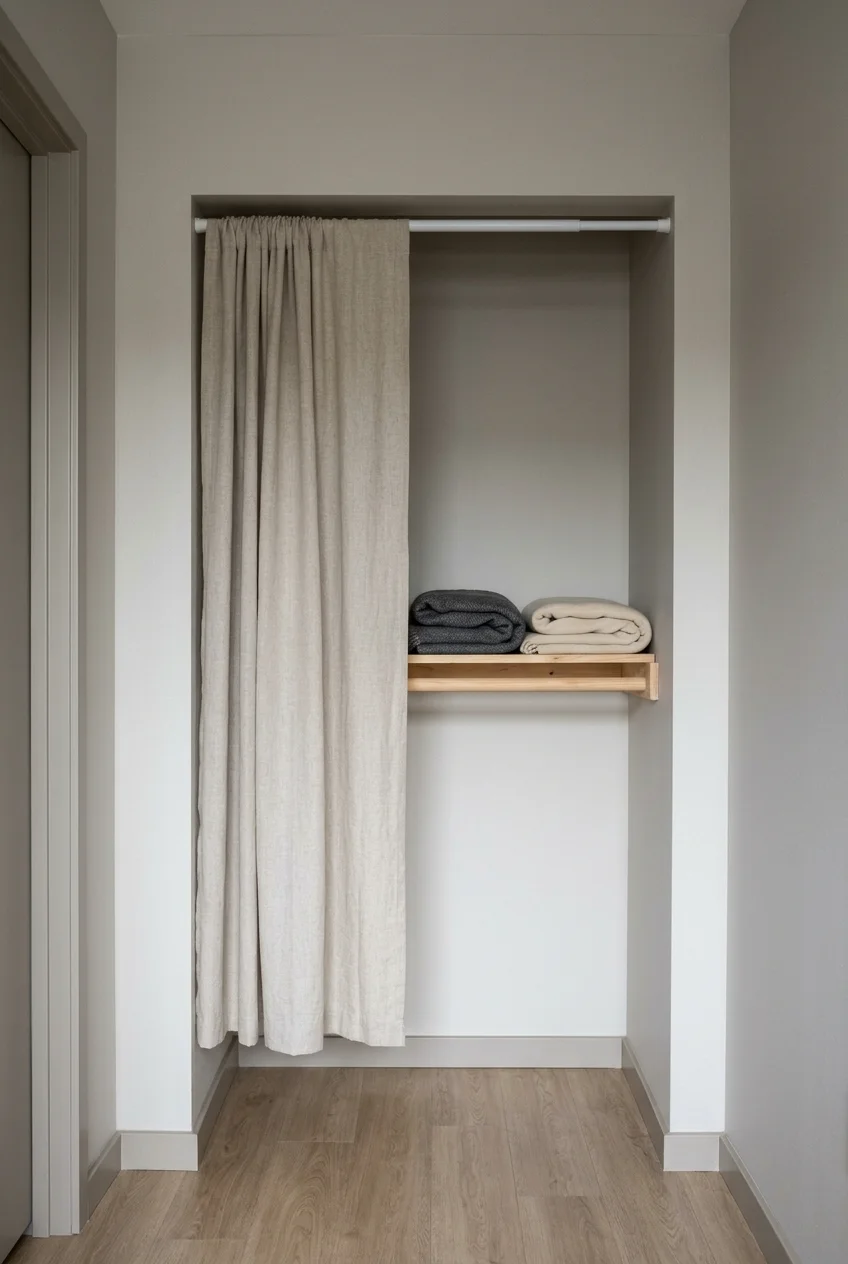
A curtain can turn a recessed alcove into soft-sided linen storage. Choose an alcove deep enough for a shelf and blanket folds entirely behind the curtain line.
Measure the narrowest width and pick a tension rod rated for the curtain’s weight. Position the rod within the recess so the curtain clears the front shelf edge.
Allow enough fabric to slide aside without dragging on the floor. Use an appropriately installed shelf or a unit secured as directed so the curtain carries no storage load.
Group blankets by size in short piles and keep the ones you use most in the easiest bay to reach. Leave room to grasp each fold with both hands.
34. A Rigid Rolling Box for Heavy Cotton Bedding
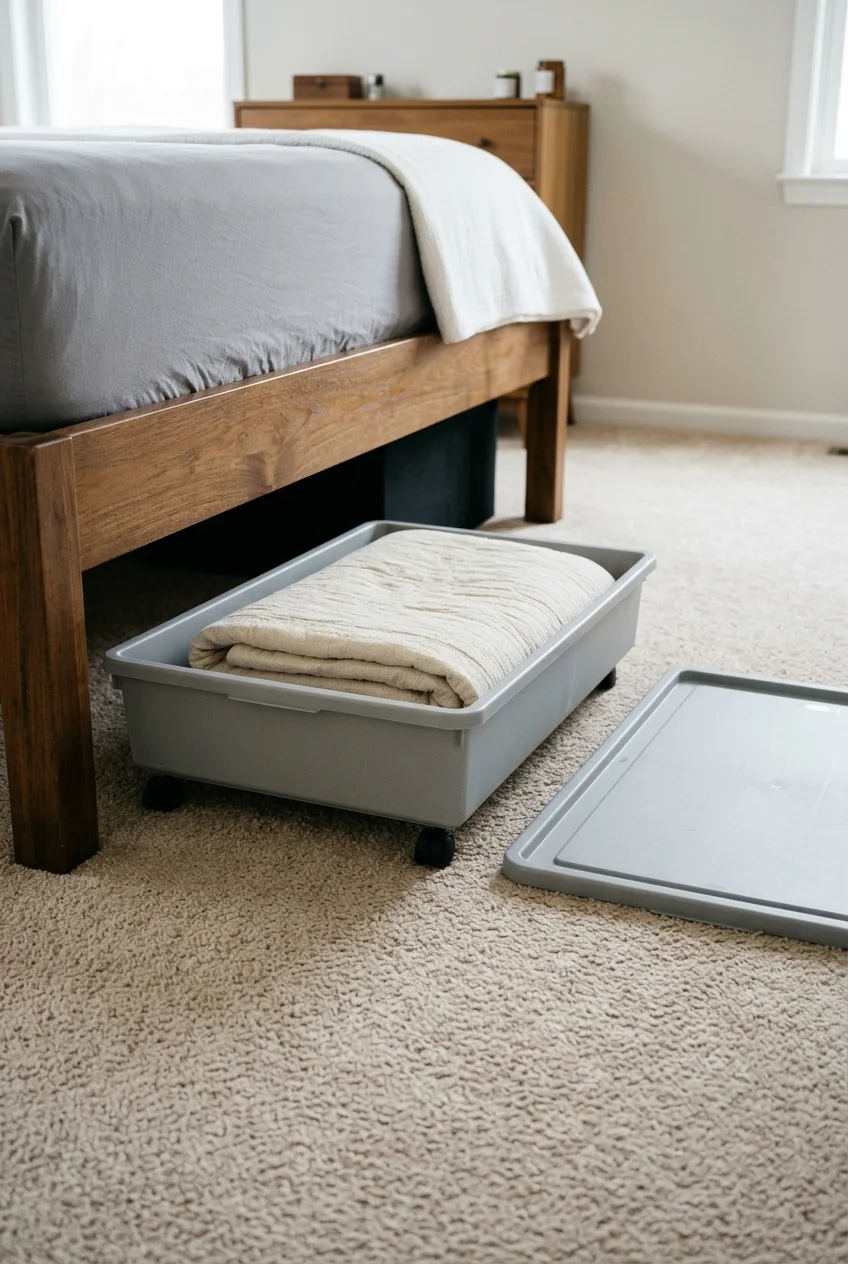
A rolling underbed box helps you move a heavy cotton quilt without dragging a fabric bag across the floor. Look for small wheels that suit the surface.
Measure the total height, including the wheels and lid. Compare the box length with the full pullout distance and check that the bed supports leave a clear lane.
Test for rug edges before loading the box. Keep the quilt loose within the box and use a handle you can reach from the side of the bed.
Choose storage that suits the blanket
Check the care label before packing. A washable fleece throw and a down comforter take up different amounts of room, and each needs a different approach.
35. A Roomy Cotton Bag for Down
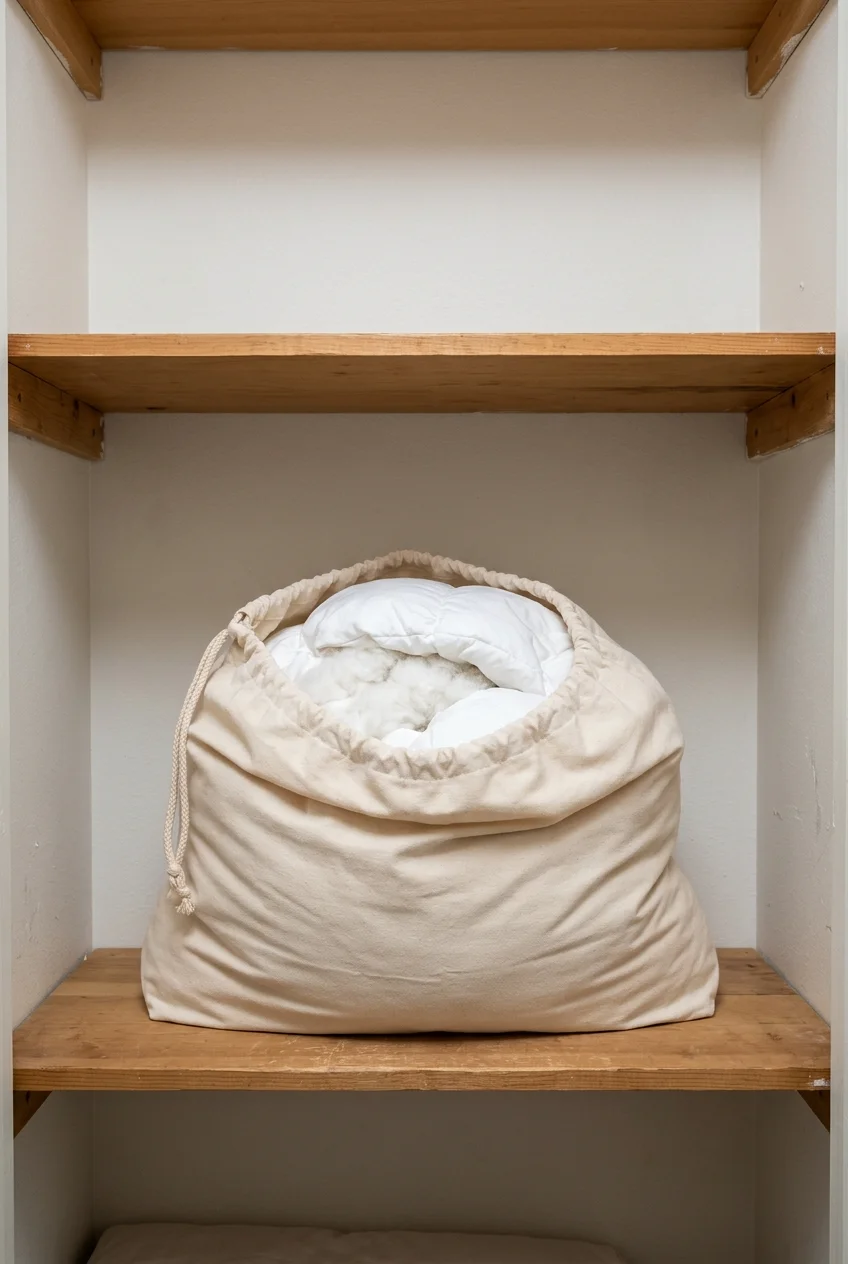
Store a down comforter in a roomy breathable cotton bag to leave space for the filling. Make sure the comforter is completely dry before you put it away.
Fold it loosely so the bag closes without pressure. If it takes a knee or two hands to squeeze the bag shut, use a larger size.
Set the bag on a dry closet shelf with space above it. Keep heavier bins and blankets off the bag so the filling has room to stay lofted.
36. Vacuum Bags for Suitable Synthetic Blankets
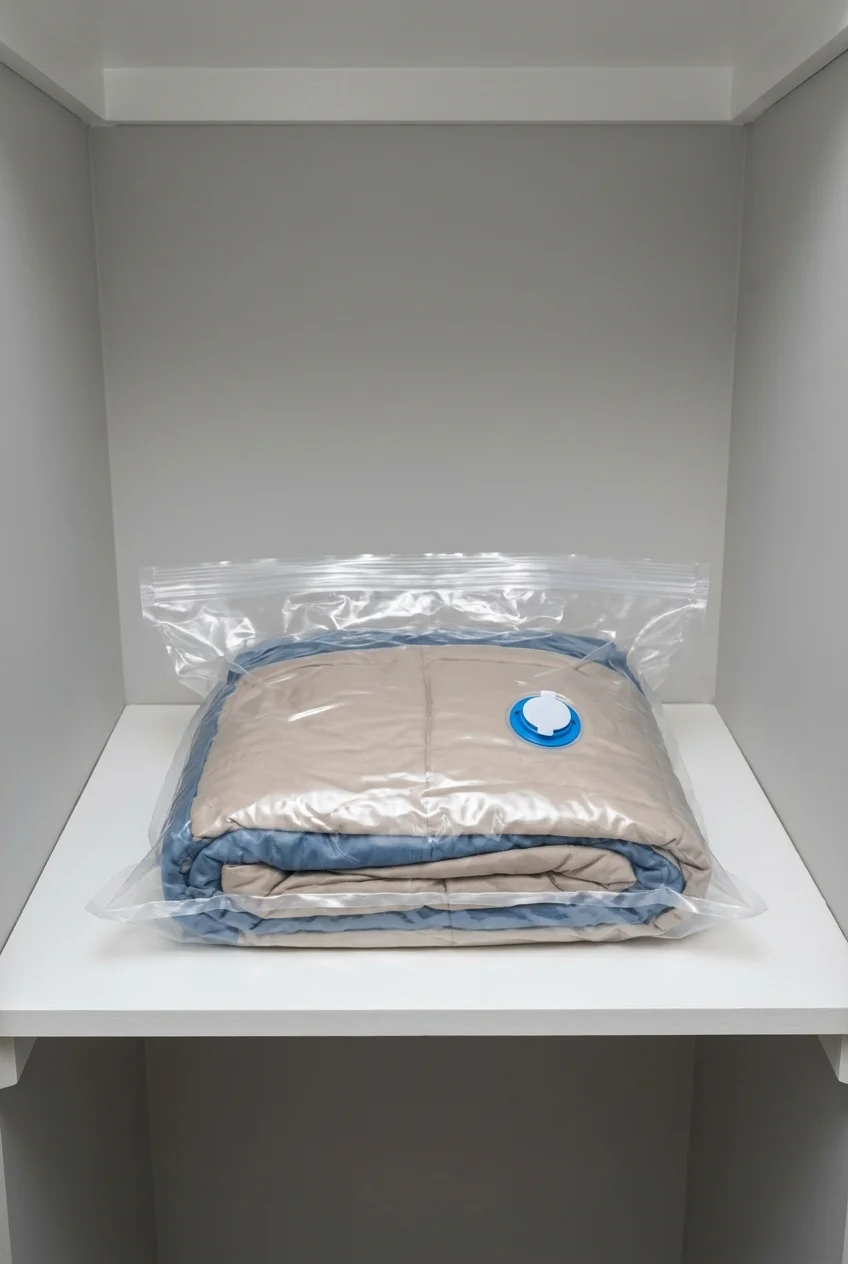
Save space with a vacuum bag for a washable synthetic blanket if the care label or maker allows compression. Set down, wool, and heated blankets aside.
Choose a bag that holds the dry, folded blanket below the fill line. Keep fabric away from the zipper and valve so the closure can seal.
- Smooth the blanket into an even layer and close the seal as directed.
- Follow the bag maker’s instructions for the valve and vacuum attachment.
- Set the bag flat on a smooth shelf away from sharp corners.
Check it again before placing anything above it. If the bag expands, reseal it or switch to a standard case that can hold the blanket at full size.
37. A Flat Archival Box for an Heirloom Quilt
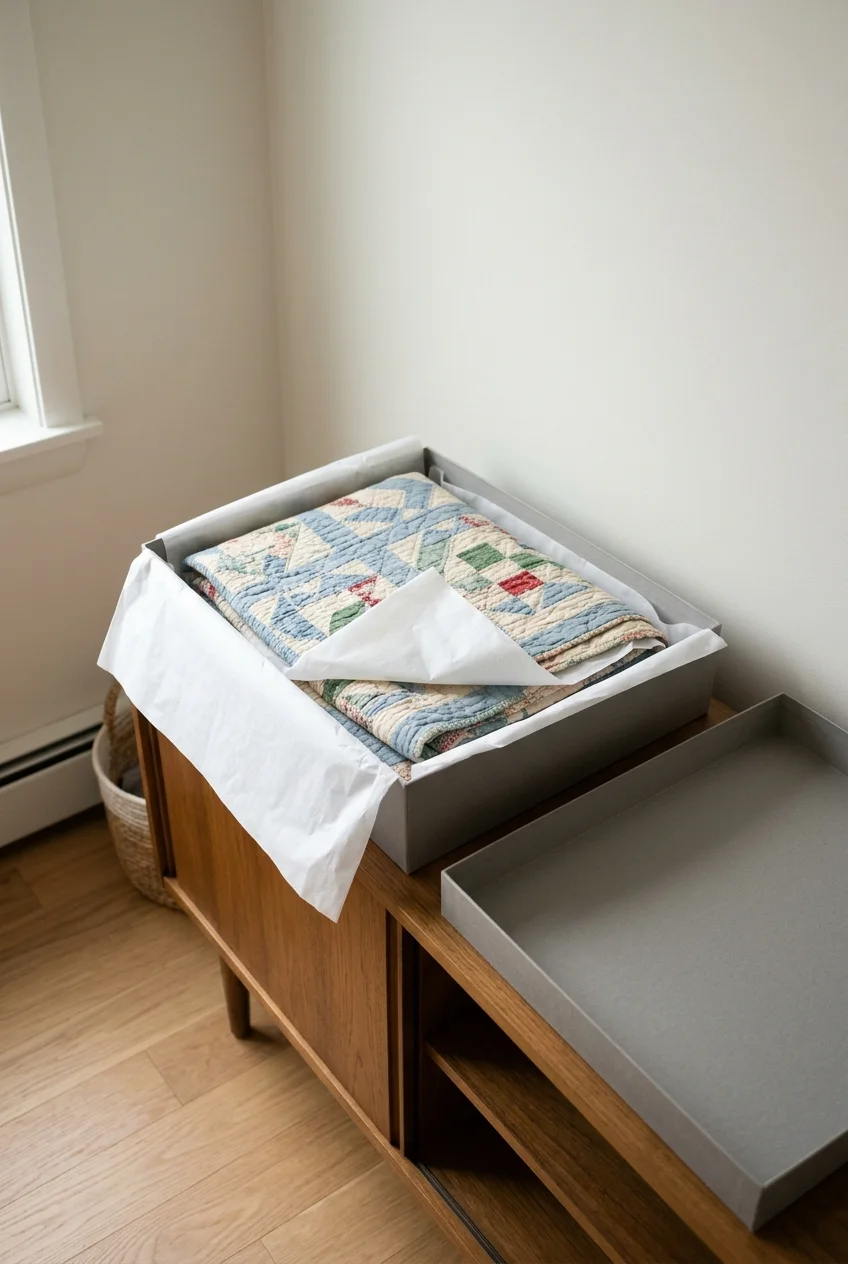
A wide archival textile box supports a family quilt when you have a broad shelf. Choose the largest practical footprint so you can keep folds to a minimum.
Use unbuffered acid-free tissue to cushion unavoidable folds. Nestle it inside each bend so the fabric curves gently instead of forming a sharp crease in one spot.
Keep the box on a dry interior shelf away from direct sunlight. Leave nothing heavy on top of the quilt and handle it with clean, dry hands.
Set a reminder to check the quilt and shift its folds periodically. If the fabric tears easily or has weak seams, consult a textile conservator before moving it.
38. A Supported Roll for a Sturdy Oversized Quilt
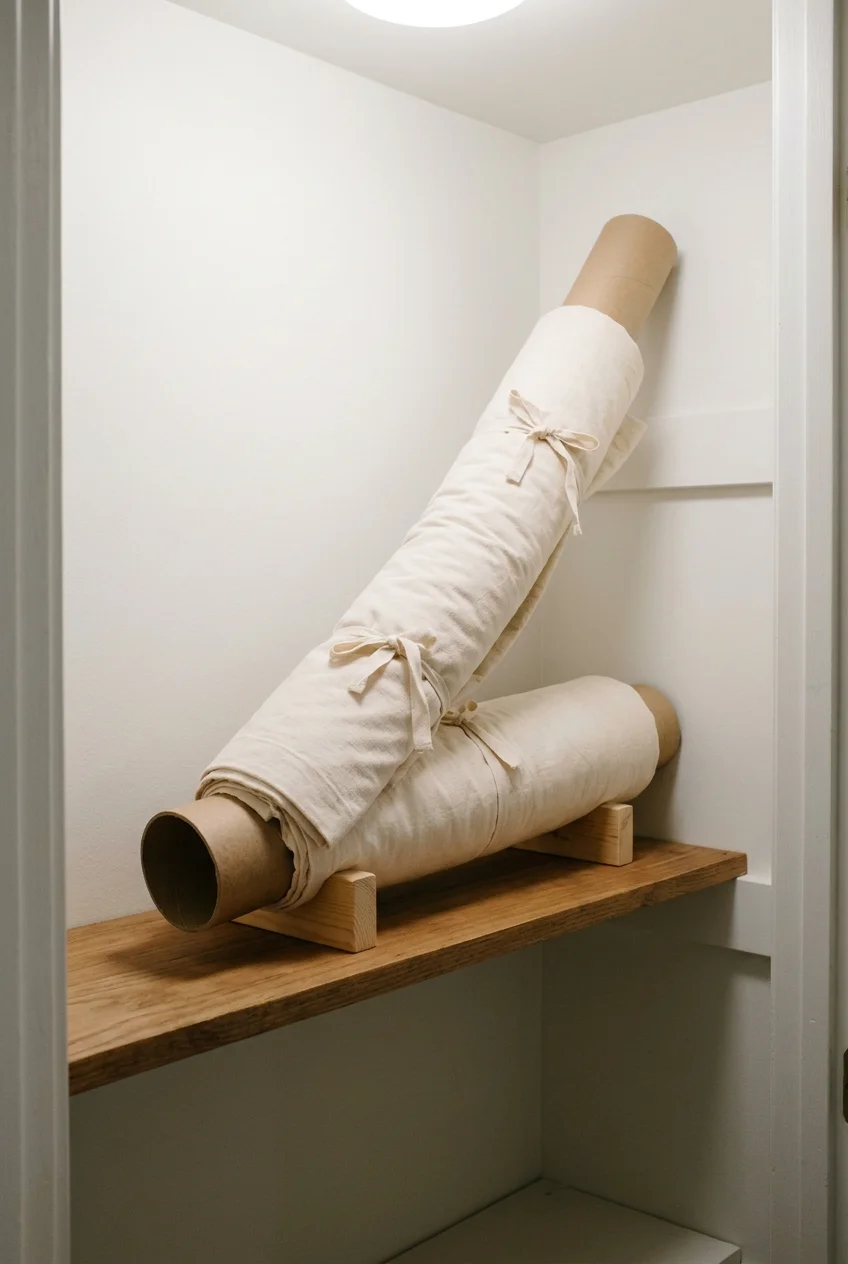
Roll a suitable quilt when a flat box would require several folds. Use an archival tube longer than the quilt is wide, and start on a clean surface.
Interleave with unbuffered acid-free tissue or clean, prewashed cotton sheeting. Roll an ordinary flat-faced quilt with the face inward and keep the fabric aligned as you go.
Cover the finished roll with clean cotton sheeting and tie it loosely with cotton twill tape. Leave tube ends exposed so they can carry the roll’s weight.
Rest the exposed tube ends on stable supports sized for the roll. Keep the textile itself clear of the shelf and choose a dry interior storage spot.
Ask a textile conservator first if a quilt has fragile areas, raised embellishments, or heavy seams. Flat supported storage may suit the fabric and construction better.
39. An Easy-to-Inspect Spot for Wool Blankets
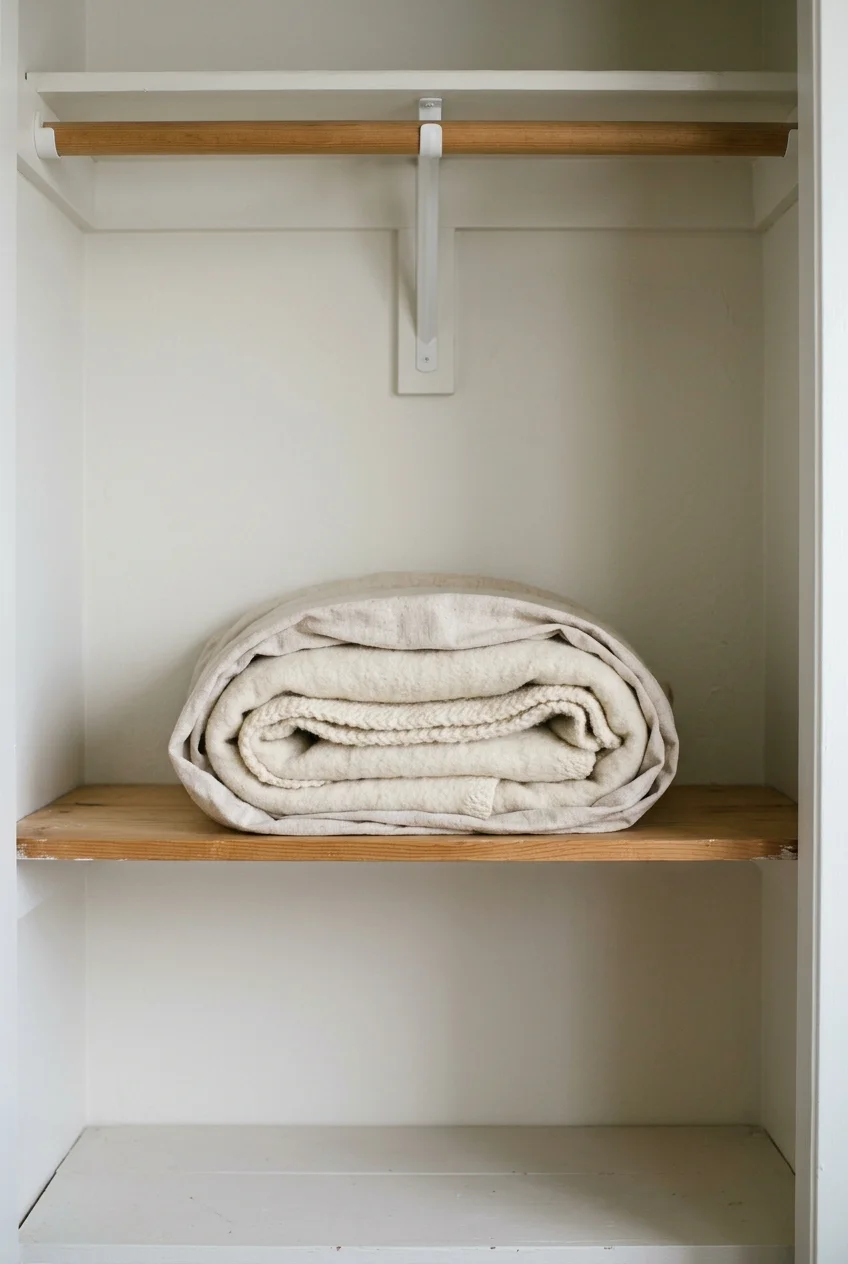
Put wool on an accessible interior shelf where you can inspect it without unstacking other bedding. Clean the blanket as its care label directs before storing it.
A clean cotton cover keeps dust off while making it easy to pull the blanket out for a look. Cover the wool loosely so you can lift it easily.
Sweep the shelf before returning the blanket and check along its folds for signs of moth activity. Store clean wool away from laundry waiting to be washed.
40. A Low, Sturdy Shelf for a Weighted Blanket
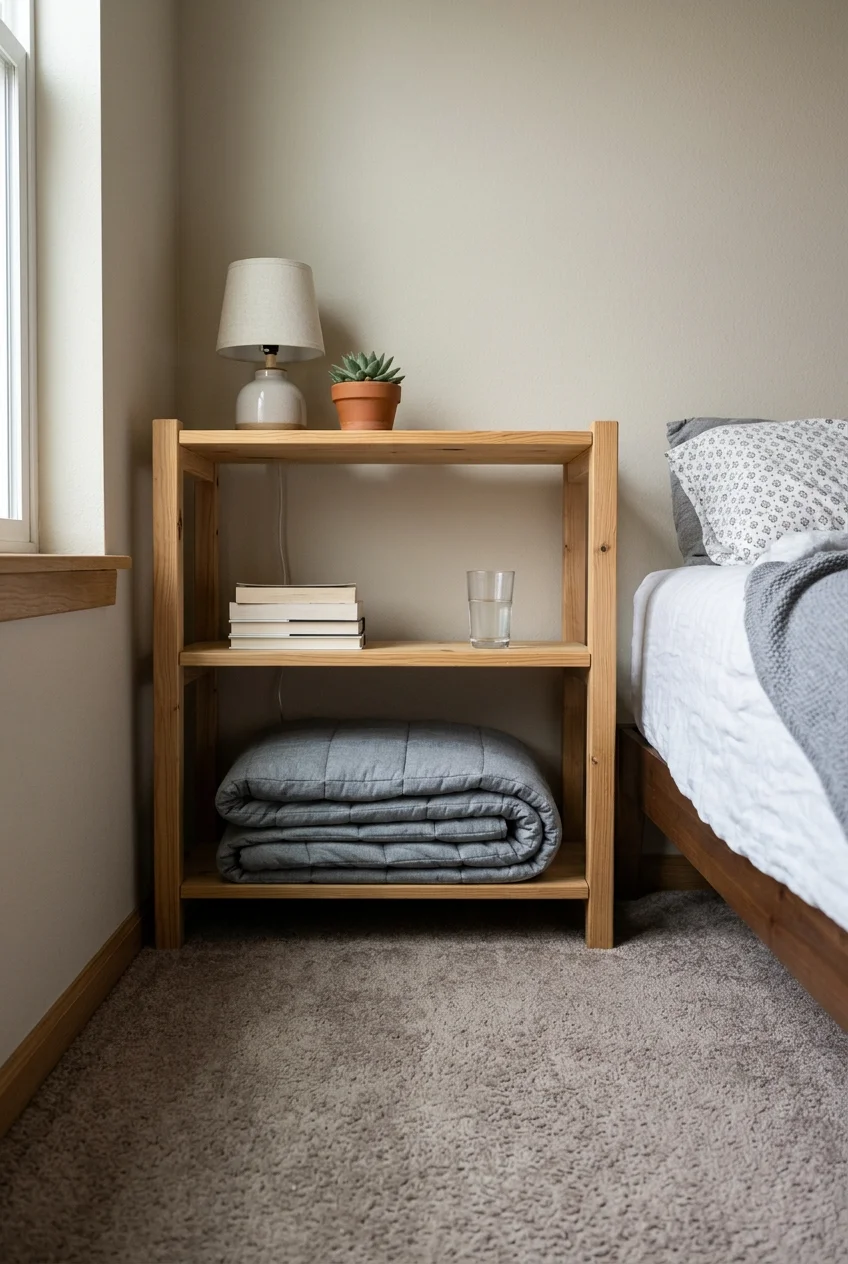
Put a weighted blanket on a low shelf near the bed so you can lift it with both hands. Check the shelf’s rating for the actual weight.
Fold the blanket into a broad rectangle that rests fully on the shelf. Leave room to get your fingers under both edges before you start lifting.
Set it down close to where you use it. If the storage spot requires an awkward reach or twist, try a dedicated low shelf beside the bed.
41. A Dedicated Shelf for an Electric Blanket and Its Controller
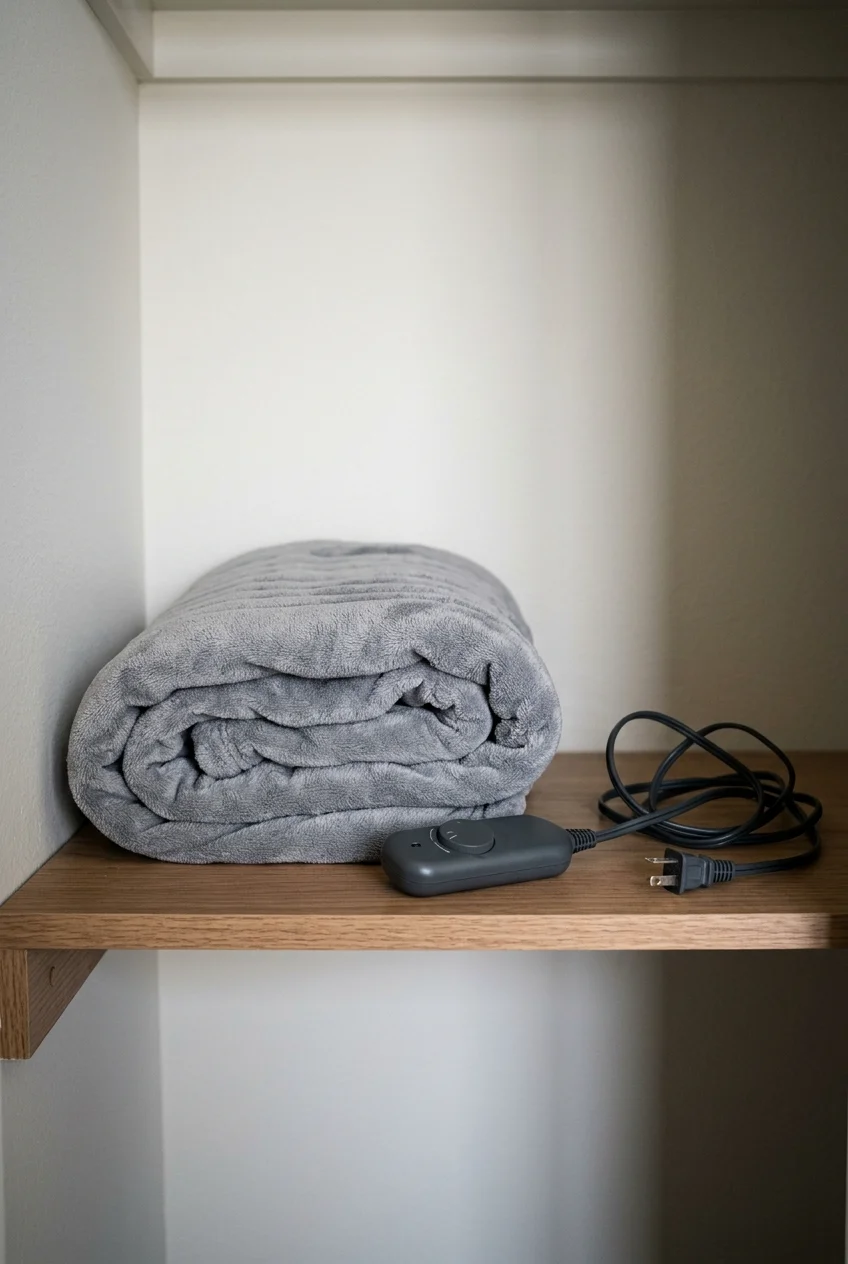
Give an electric blanket its own broad shelf so the blanket and its controller stay together. Read the storage directions for your exact model before folding it.
Unplug the blanket, let it cool, and follow the manual for disconnecting the controls. If folding is allowed, make loose folds and leave the space above clear.
Keep the controller beside the blanket and loosely loop the cord if directed. Leave enough space that the cord and plug stay clear of the closet door.
42. A Clear Tote for the Spare Bedding Rotation
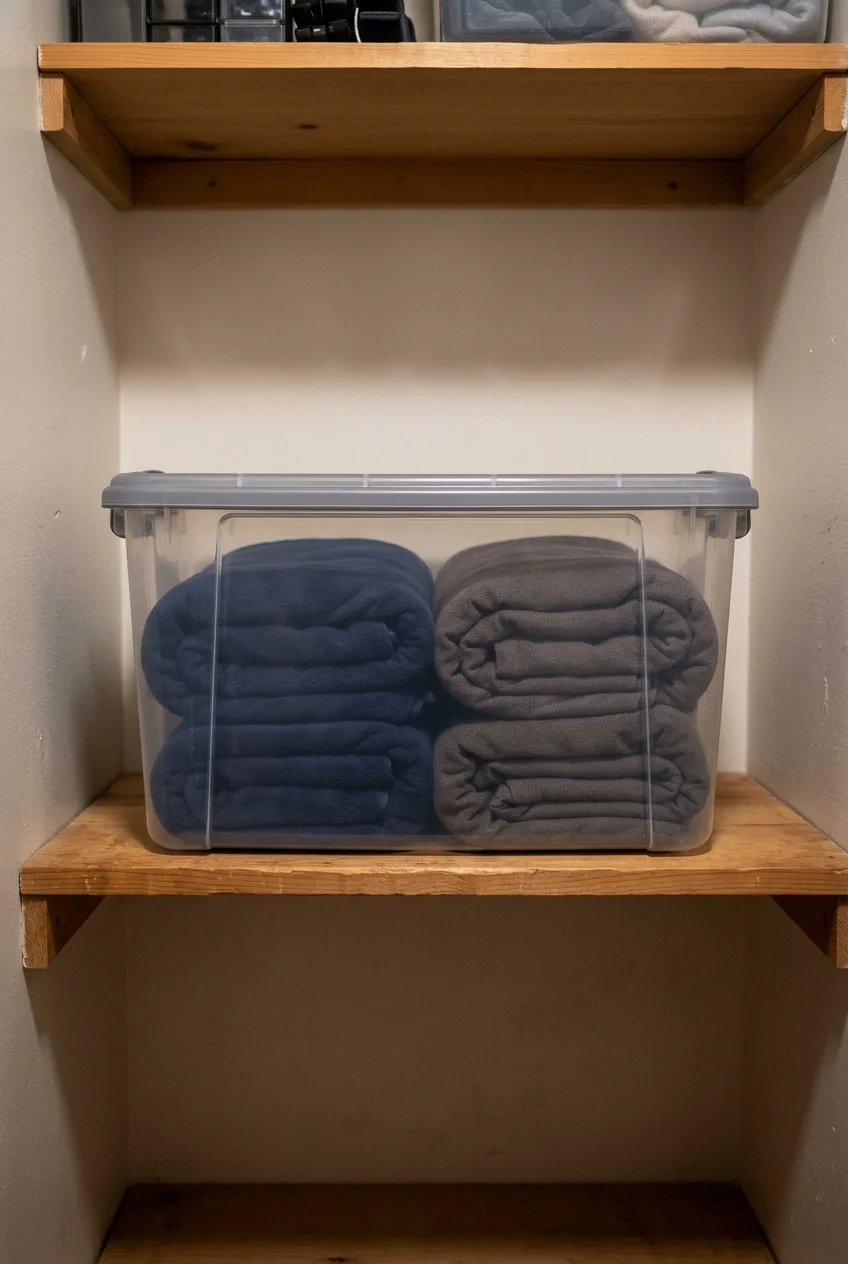
A shallow clear tote keeps spare washable blankets visible in a utility closet. Use it for fully dry everyday bedding that you rotate in on laundry day.
Choose a shelf in a dry interior space and measure it with the tote lid in place. Keep the container shallow enough for you to lift comfortably.
Place the blanket you expect to take next near the front. If the tote often stays shut for long stretches, check it whenever you rotate bedding.
Set up blankets for their next use
Set up the next use as you put each blanket away. A bedside bundle, a grab-and-go tote, or a laundry spot can make the handoff easier.
43. A Guest Bedding Kit in a Spare Pillowcase
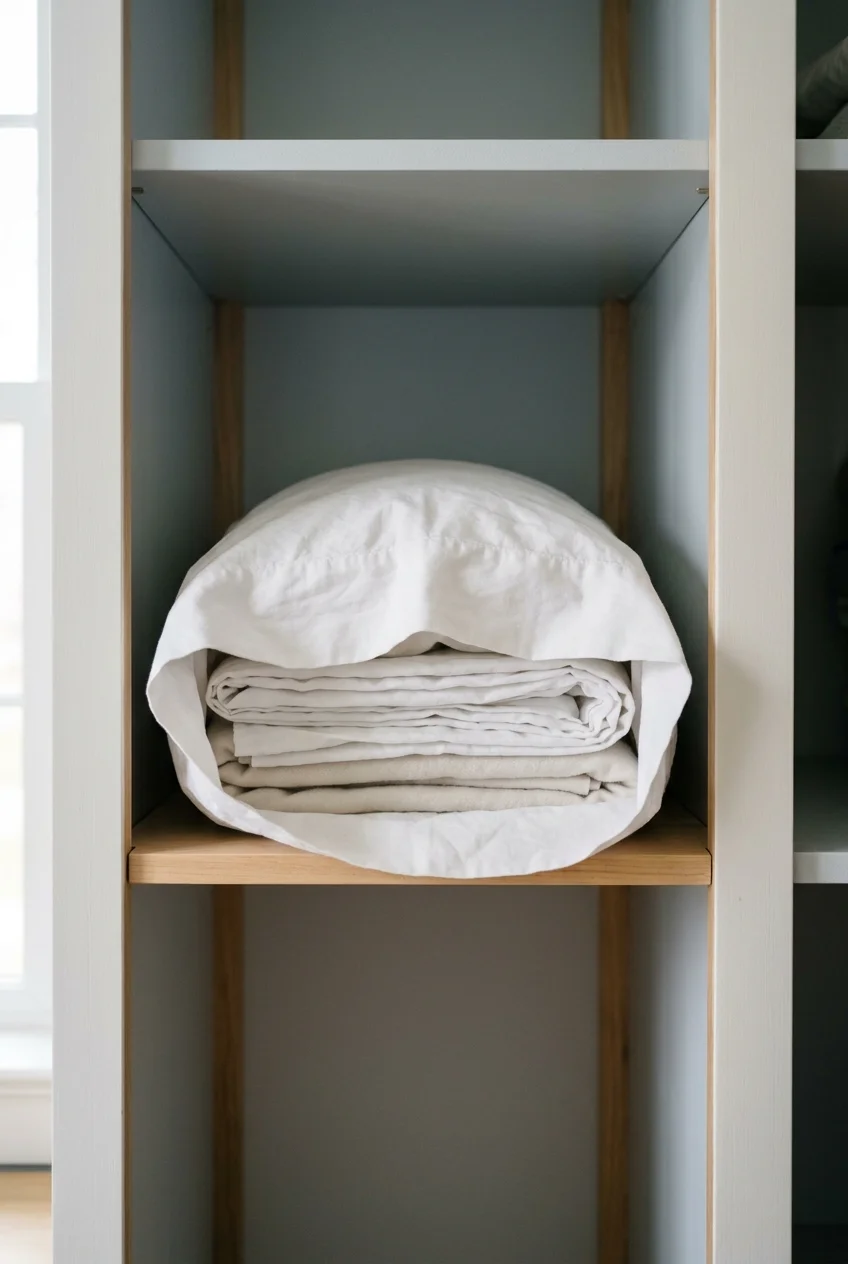
Bundle a light guest blanket and its matching sheet inside a spare pillowcase. It keeps the right bedding together when the guest bed shares storage with another room.
Fold both layers flat enough that the pillowcase closes with a loose tuck. If the blanket is bulky, use the pillowcase only for the sheet and store both together.
Keep the bundle on a reachable shelf with the folded edge facing out. Tell guests where it lives so they can grab it without searching at bedtime.
44. Separate Clean and Used Pet Throws
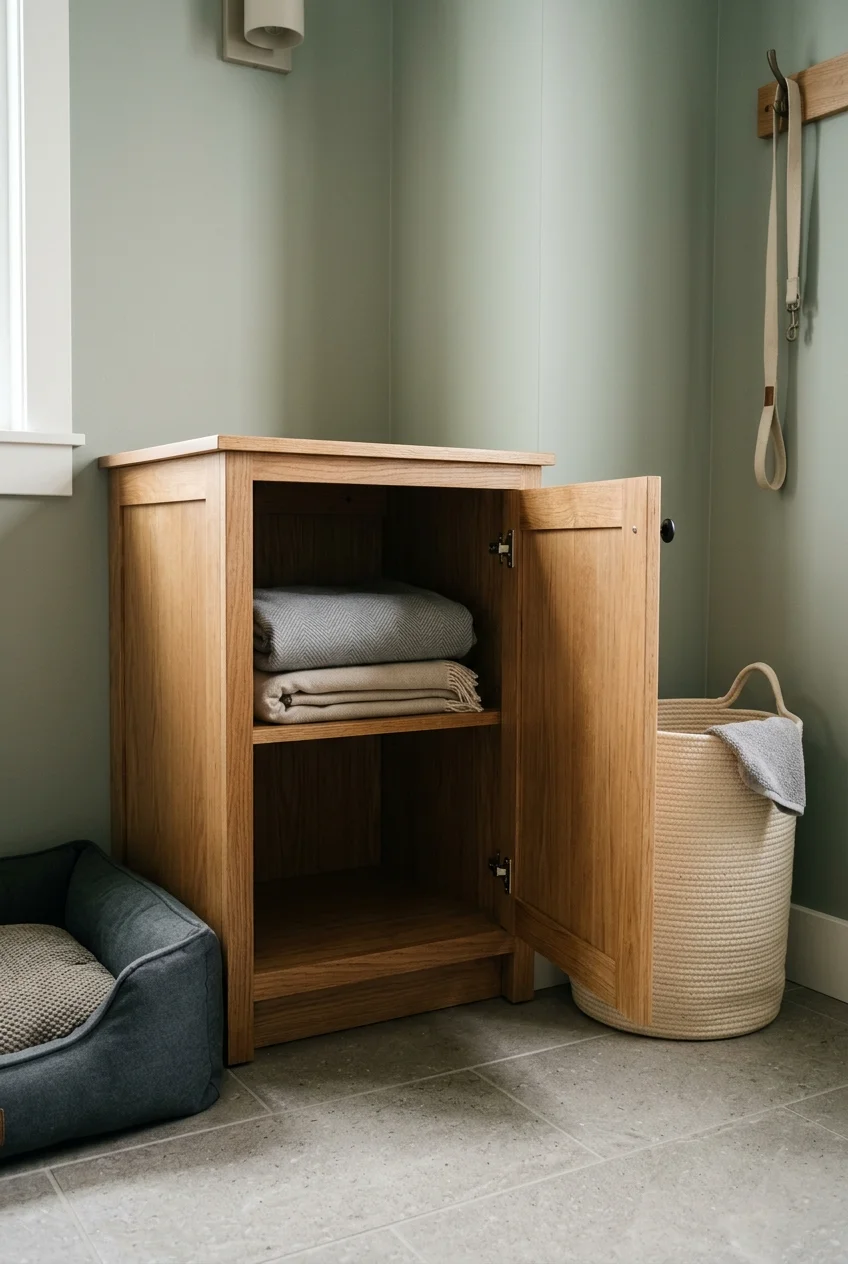
Give washable pet throws a clean supply spot and a separate place to land when they need washing. It keeps a muddy throw from going back into the clean stack.
Store a small clean fold inside a cabinet near the pet bed. Put used dry throws in a washable hamper and take damp or soiled items straight to laundry.
Match the number of backups to your wash schedule. Leave room to pull one clean throw out without disturbing the others or leaning into the pet bed.
45. A Carry Tote for Picnic and Game-Day Blankets
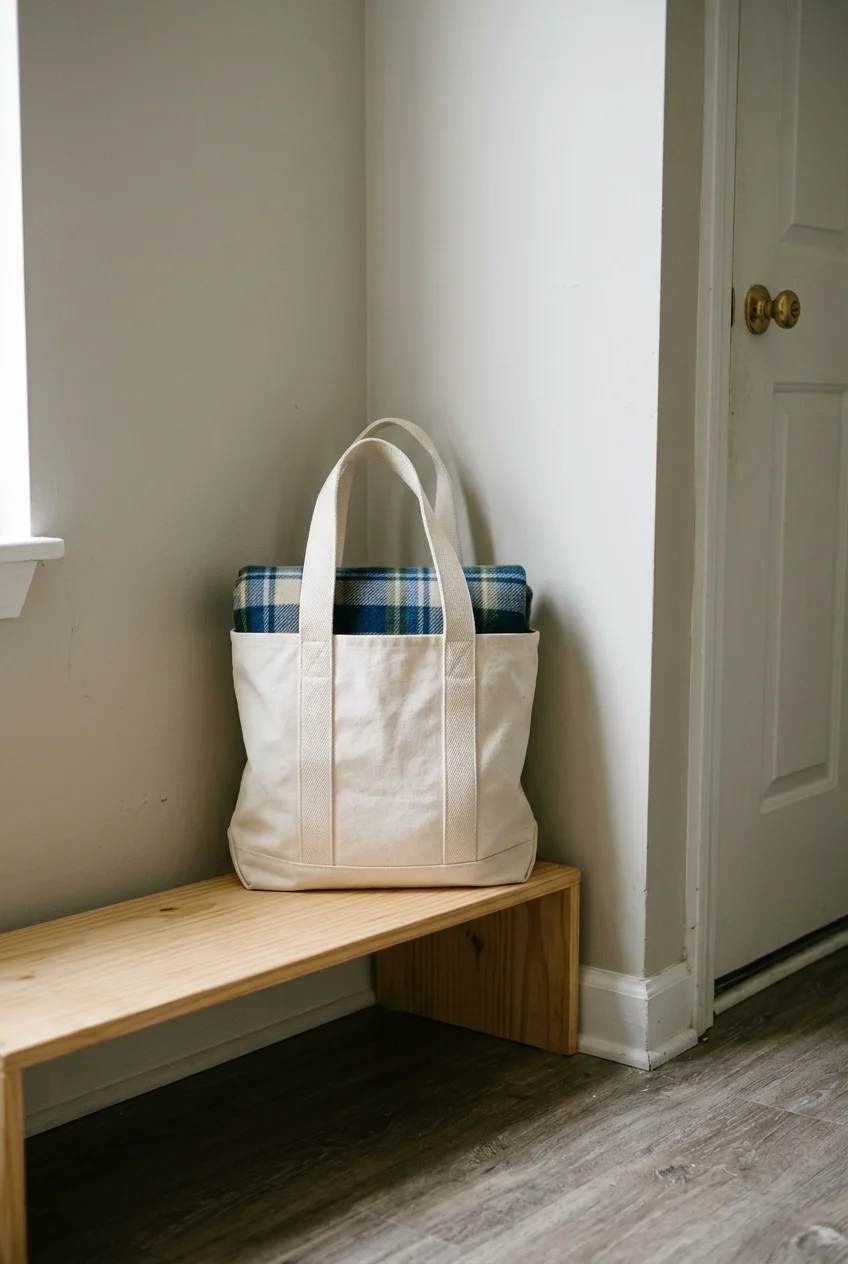
A sturdy carry tote keeps clean picnic blankets ready to take outside. A wide mouth lets you lift out a folded blanket without unpacking the whole bag.
Store the tote near the door on a shelf you can reach. Shake out the blanket after a trip and let it dry completely before returning it.
46. Soft Straps Around a Roll for Overnight Trips
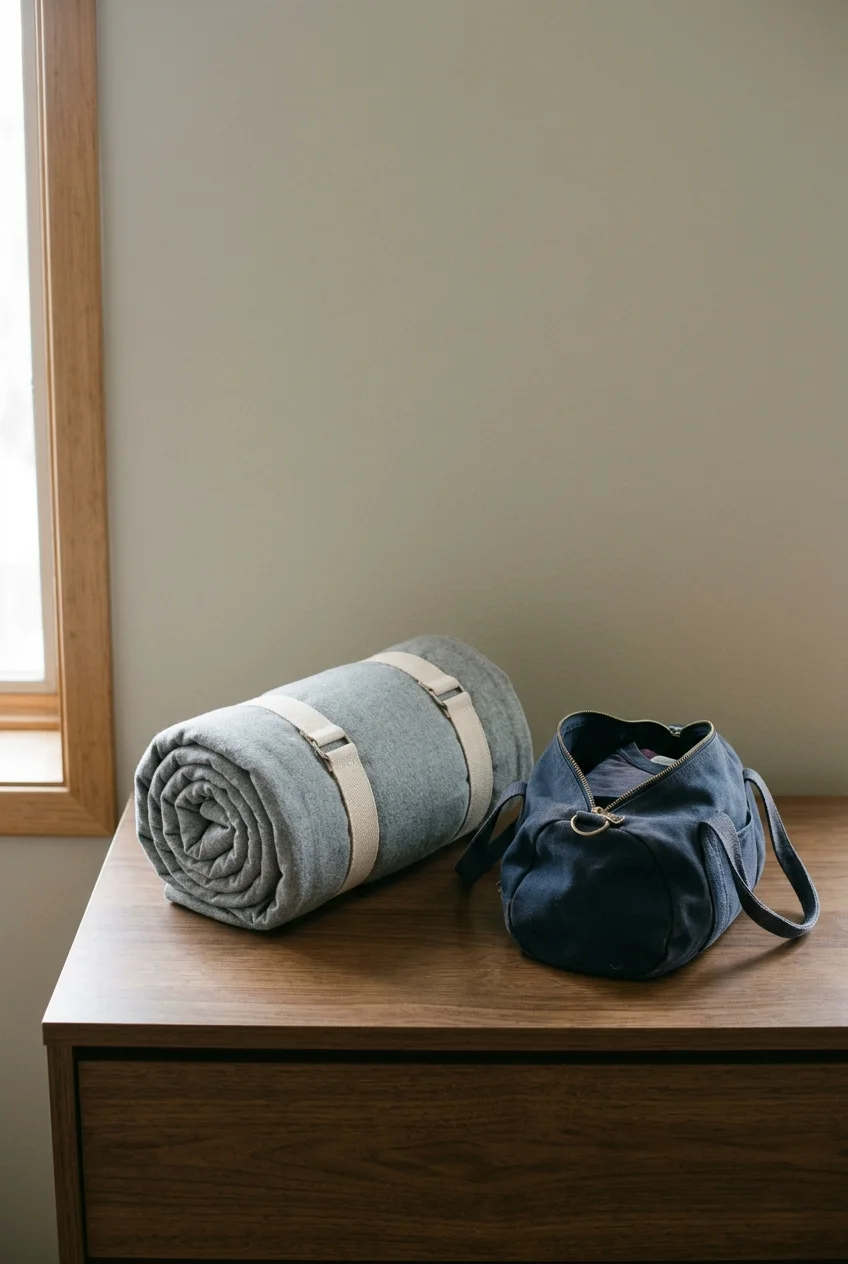
Secure a washable travel blanket with two wide fabric straps so it stays rolled when it shares space with a bag. Use straps with smooth, adjustable closures.
Fold the blanket lengthwise to the width you need, roll it loosely, and place one strap near each end. Keep the straps snug enough to stop unrolling.
Measure the rolled bundle against your luggage or travel cubby. Release the straps when the blanket returns to long-term storage, especially if the material holds a crease.
47. A Wide Closet Hanger for the Next Cotton Layer
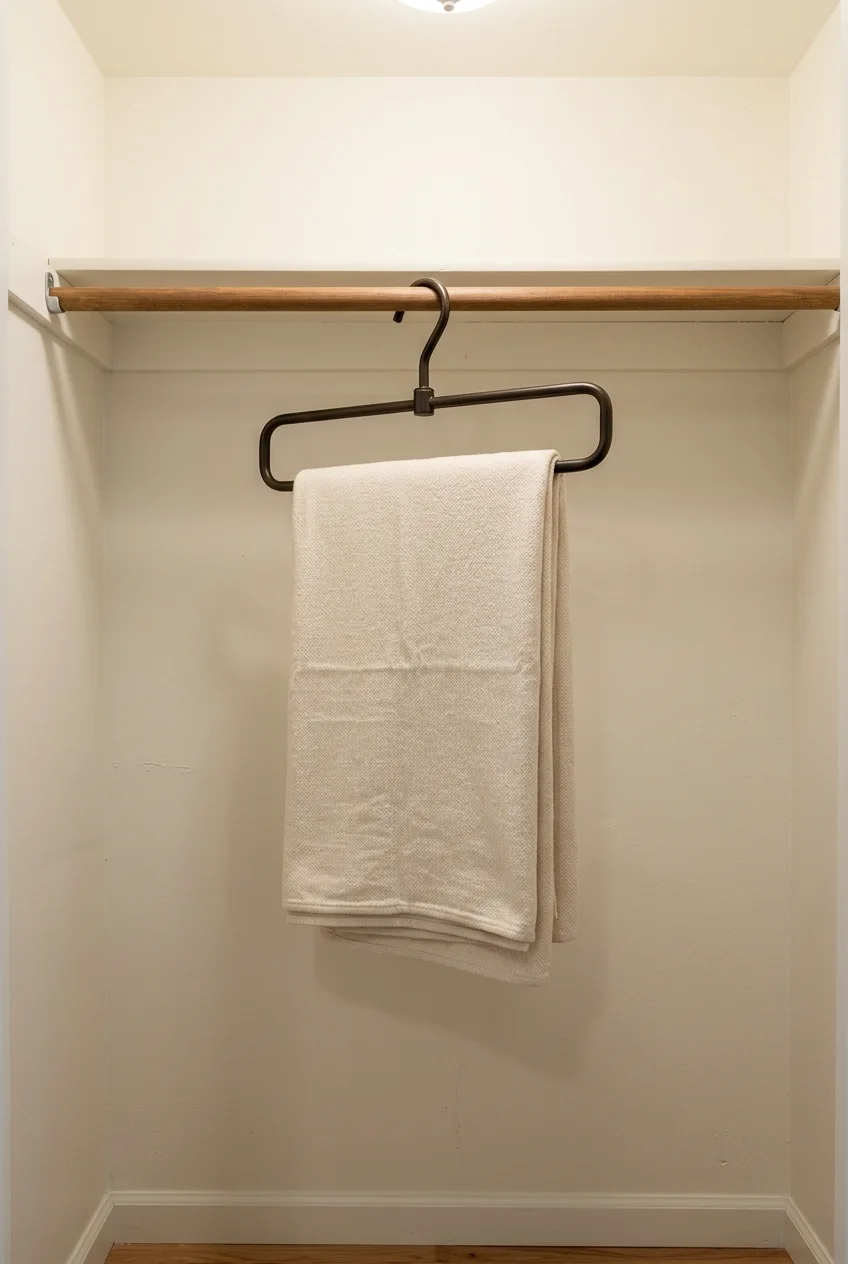
A broad, smooth blanket hanger keeps a sturdy cotton blanket accessible during a seasonal bedding swap. Use a hanger designed for blankets and a rod that supports the load.
Fold the blanket evenly across the bar and make sure the ends clear the floor. Give it its own space so it slides out past neighboring clothes.
Use this setup for a rotation blanket with a sturdy weave. Put stretchy knits or fragile quilts back on a flat shelf where their weight is supported.
48. A Tilt-Out Hamper for Throws Headed to the Wash
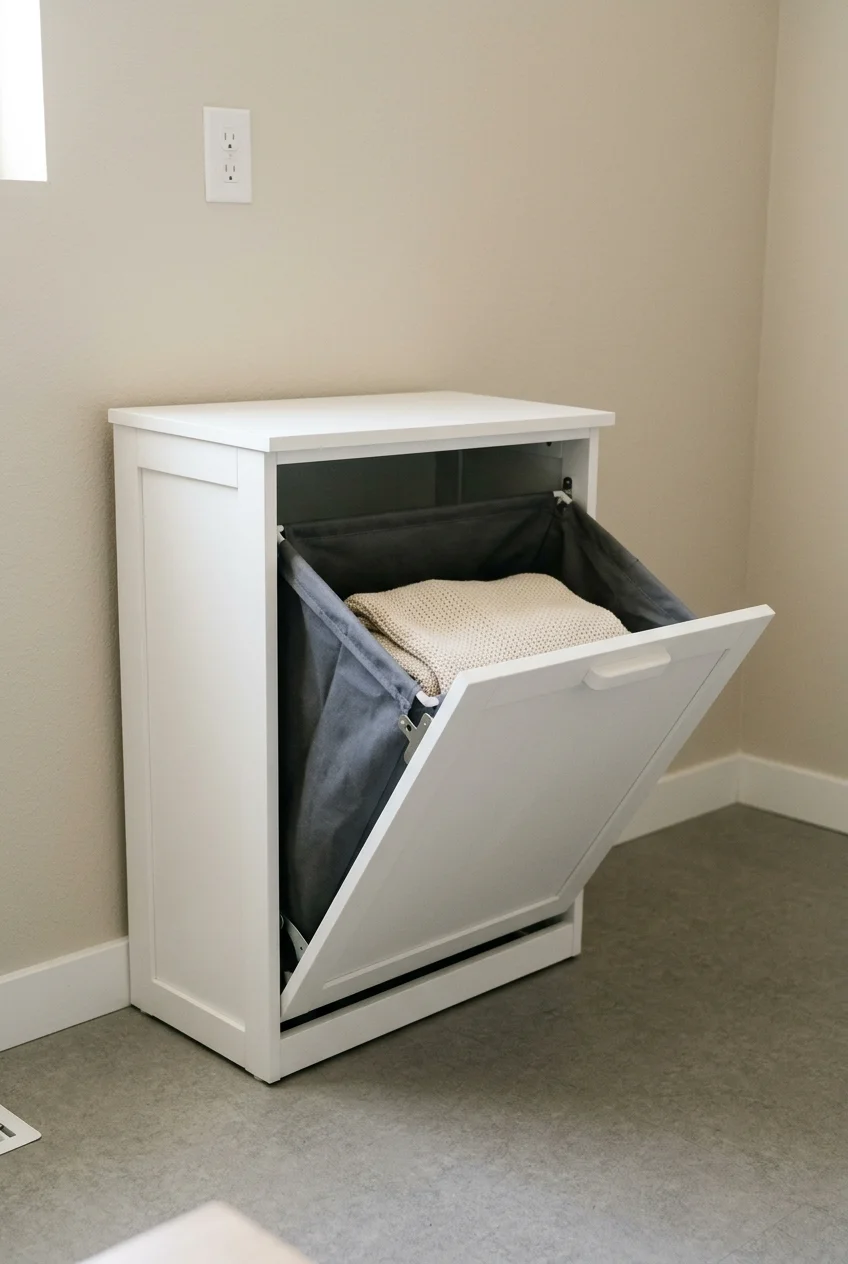
A tilt-out utility hamper gives dry used family throws a defined spot while they wait for laundry. It fits a room where a freestanding basket would block the path.
Check the open cabinet depth from the wall. Choose a removable liner you can carry to the washer and follow the manufacturer’s installation or anchoring instructions.
Set a regular wash day and empty the hamper before the fabric presses against the door. Take damp blankets straight to the laundry area so they can dry.
49. A Zip Pillow Cover for a Soft Spare Throw
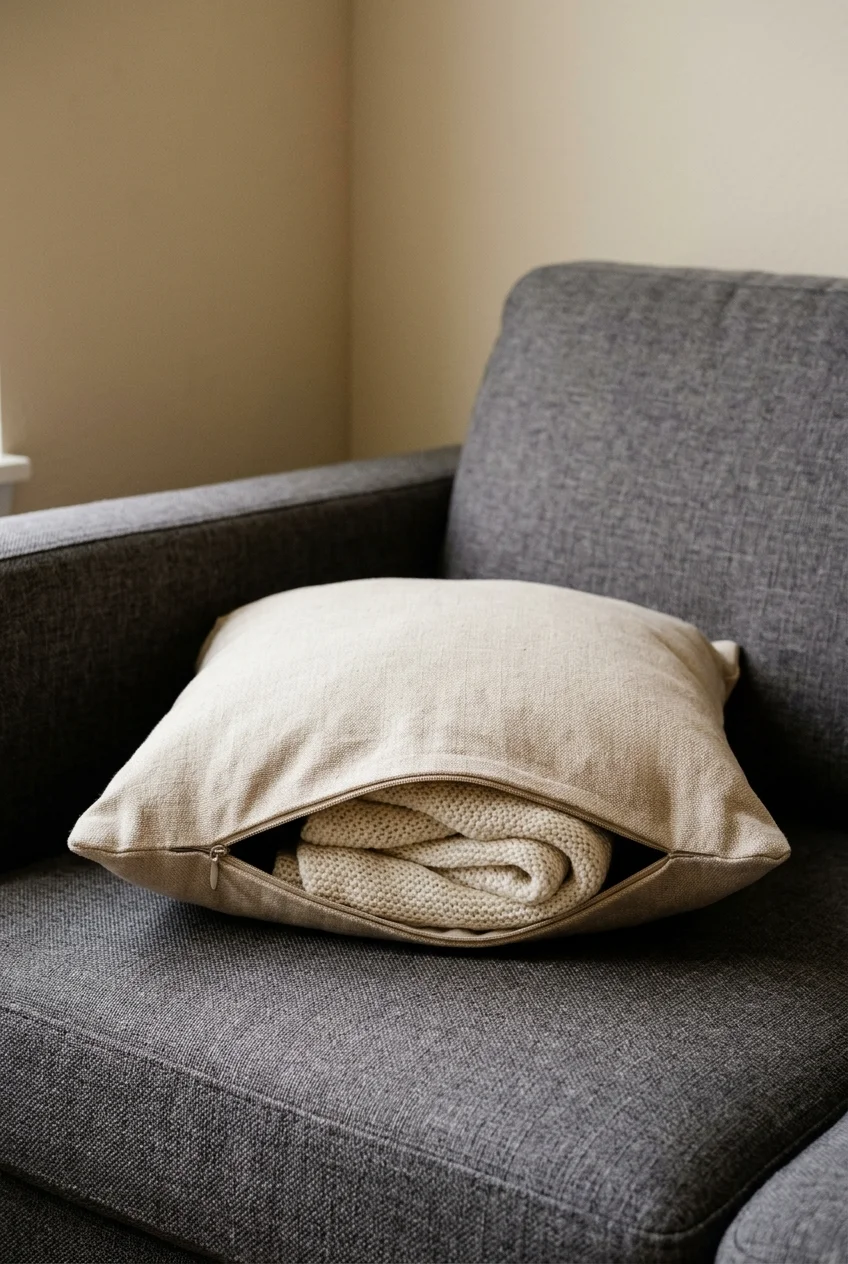
A washable throw can fill a zippered cushion cover until someone needs it. Choose a soft, pliable blanket that fits without putting tension on the zipper.
Fold it into an even square and turn the edges inward to keep the corners smooth. Keep the zipper facing where you can reach it easily.
Use a different cover if the bundle feels stiff against your back. When the blanket is in use, fold the empty cover and tuck it into a drawer.
50. A Guest Blanket at the Foot of a Made Bed
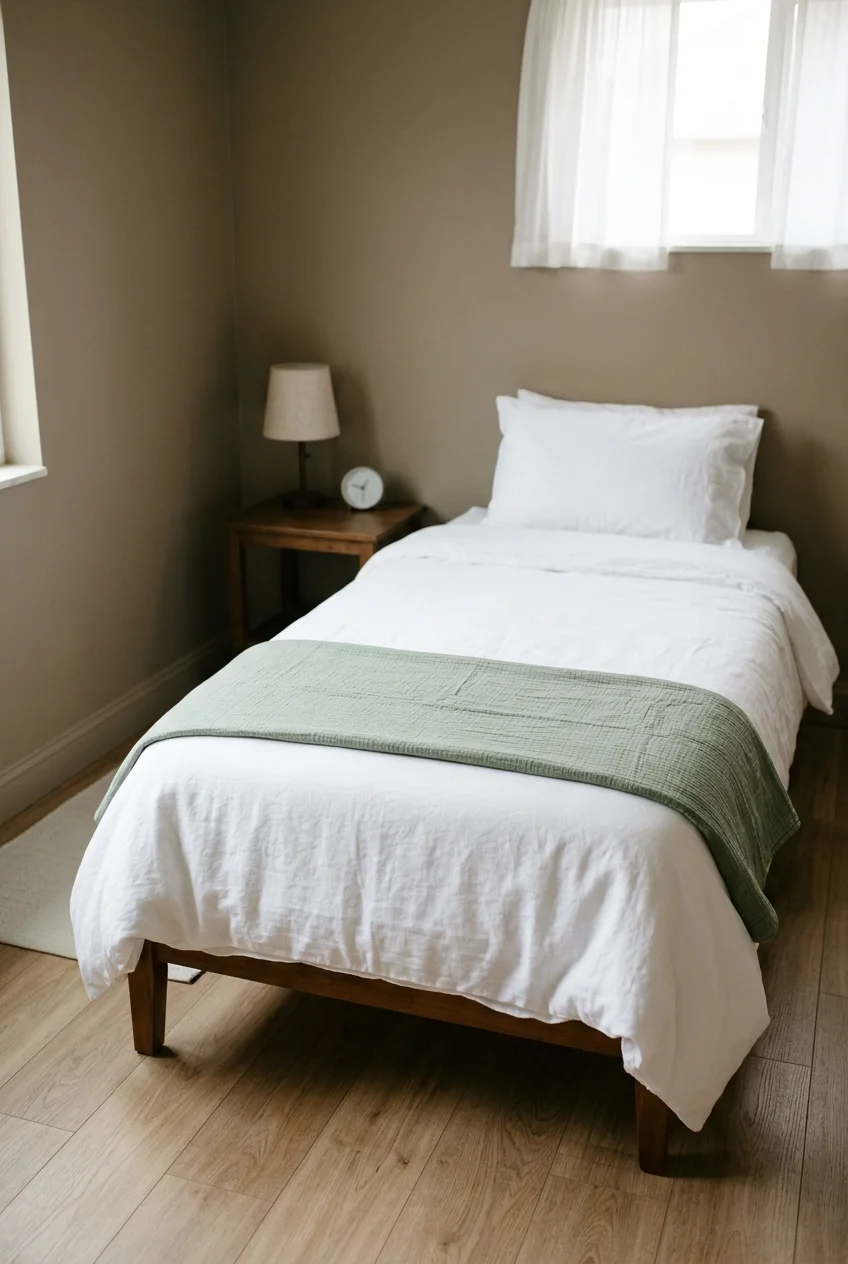
Fold one extra blanket across the foot of a guest bed. Overnight visitors can pull it up without searching the closet or undoing the tucked bedding.
Fold it to a width that keeps both ends well off the floor. Choose a layer that feels different from the main bedding, such as a light extra blanket.
Set it fully on the mattress if the room has a tight aisle at the foot. Remove it when washing the guest bedding and return it clean.