40 Winter Backyard Ideas for a Cozy and Useful Outdoor Space

This post may contain affiliate links: full affiliate disclosure.
A backyard does not have to disappear from daily life when temperatures drop. The most useful winter spaces combine one protected zone with safe heat, dependable lighting, clear paths, and landscaping that still looks intentional.
These ideas range from compact patio changes to wildlife-friendly garden choices and practical activity zones. Always match heaters, fire features, structures, electrical products, and plant choices to local rules, climate, and manufacturer guidance.
Create One Comfortable Winter Zone
1. Build One Protected Seating Area
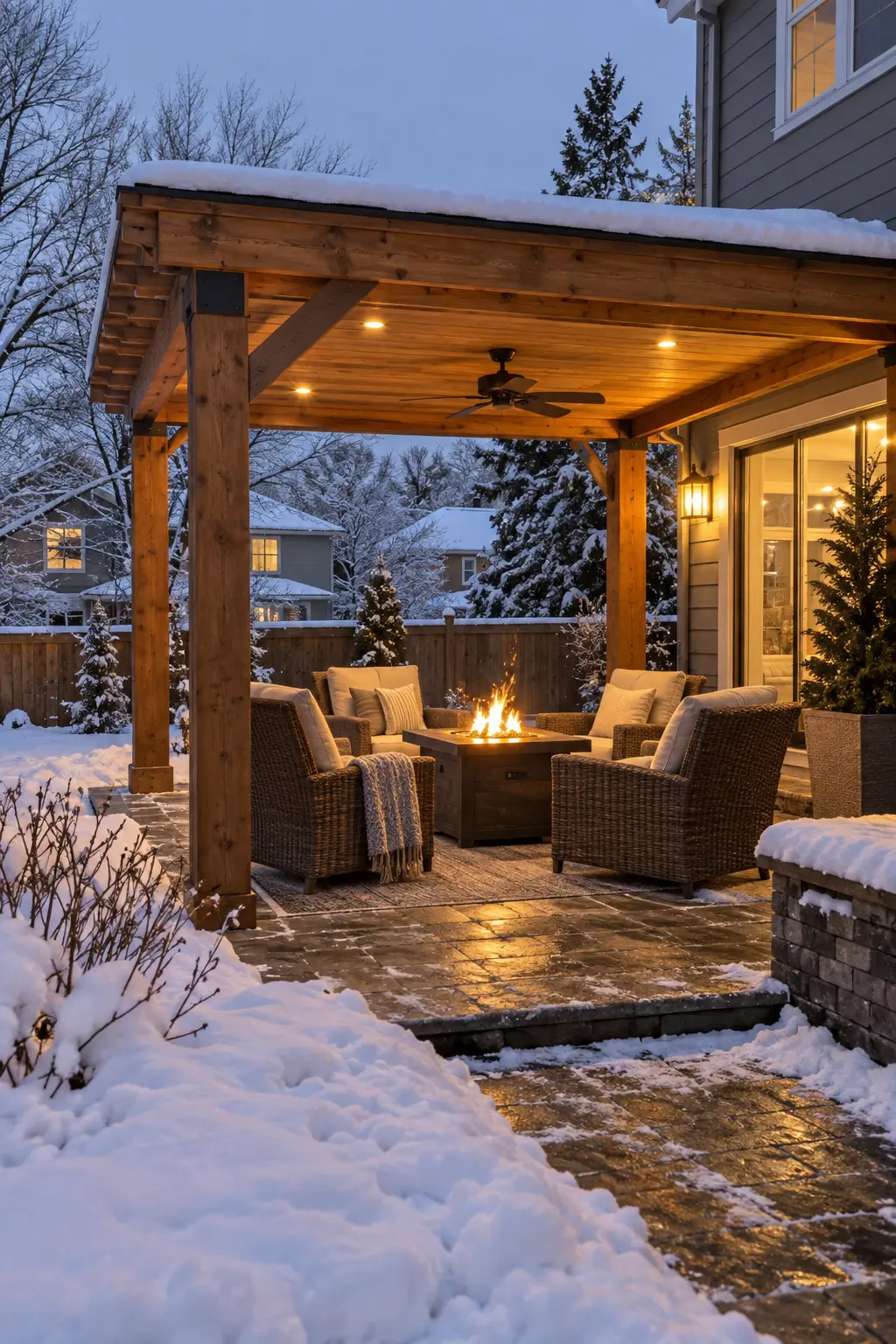
Concentrate seating, heat, and light in one compact patio zone instead of scattering furniture across the yard. A smaller setup is easier to shelter from wind and more likely to be used.
2. Place Seating With Its Back to the Wind
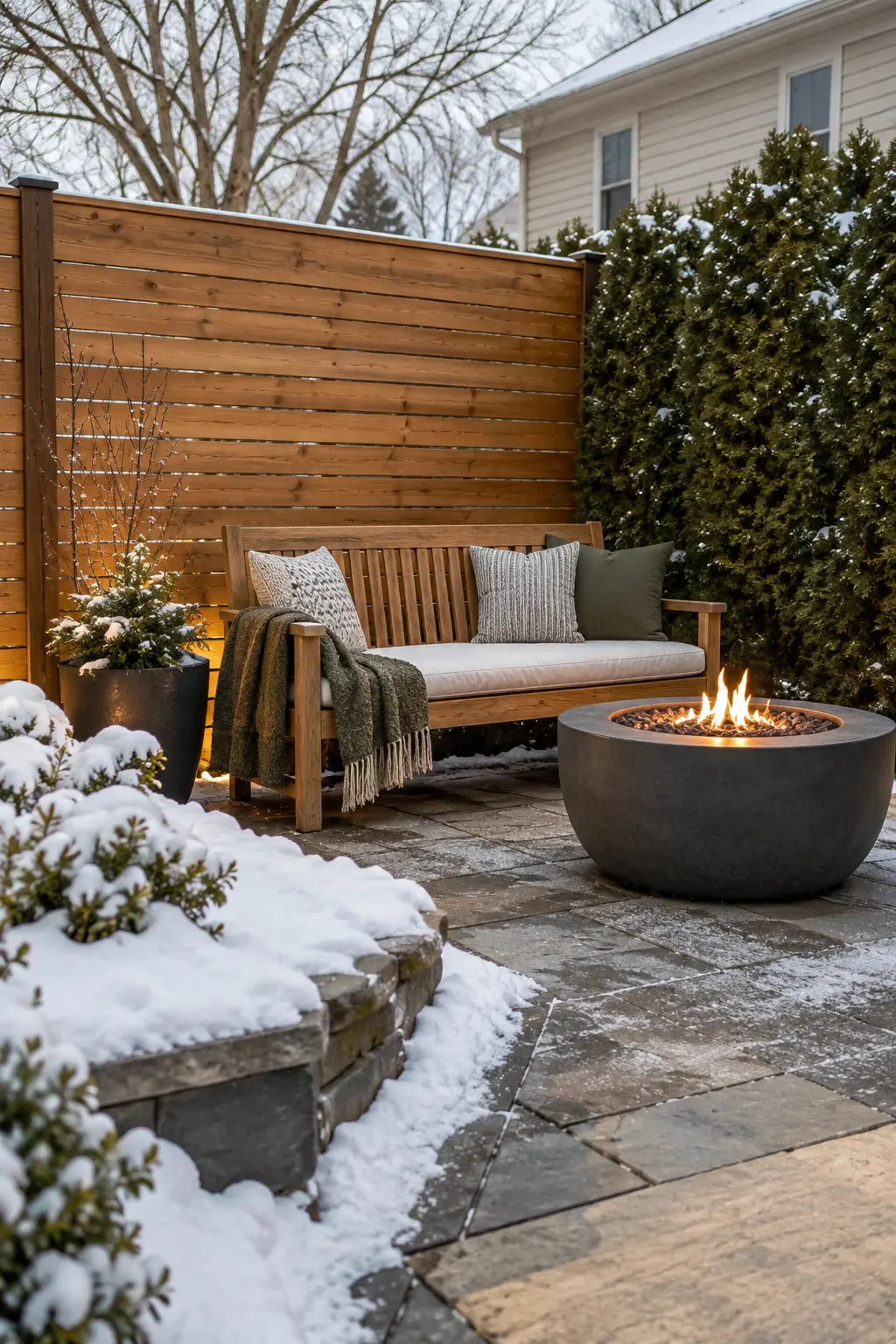
Use a fence, masonry wall, dense hedge, or approved outdoor screen behind the main seats. Blocking the prevailing breeze can improve comfort before adding more heat.
3. Choose Chairs That Work With Bulky Coats
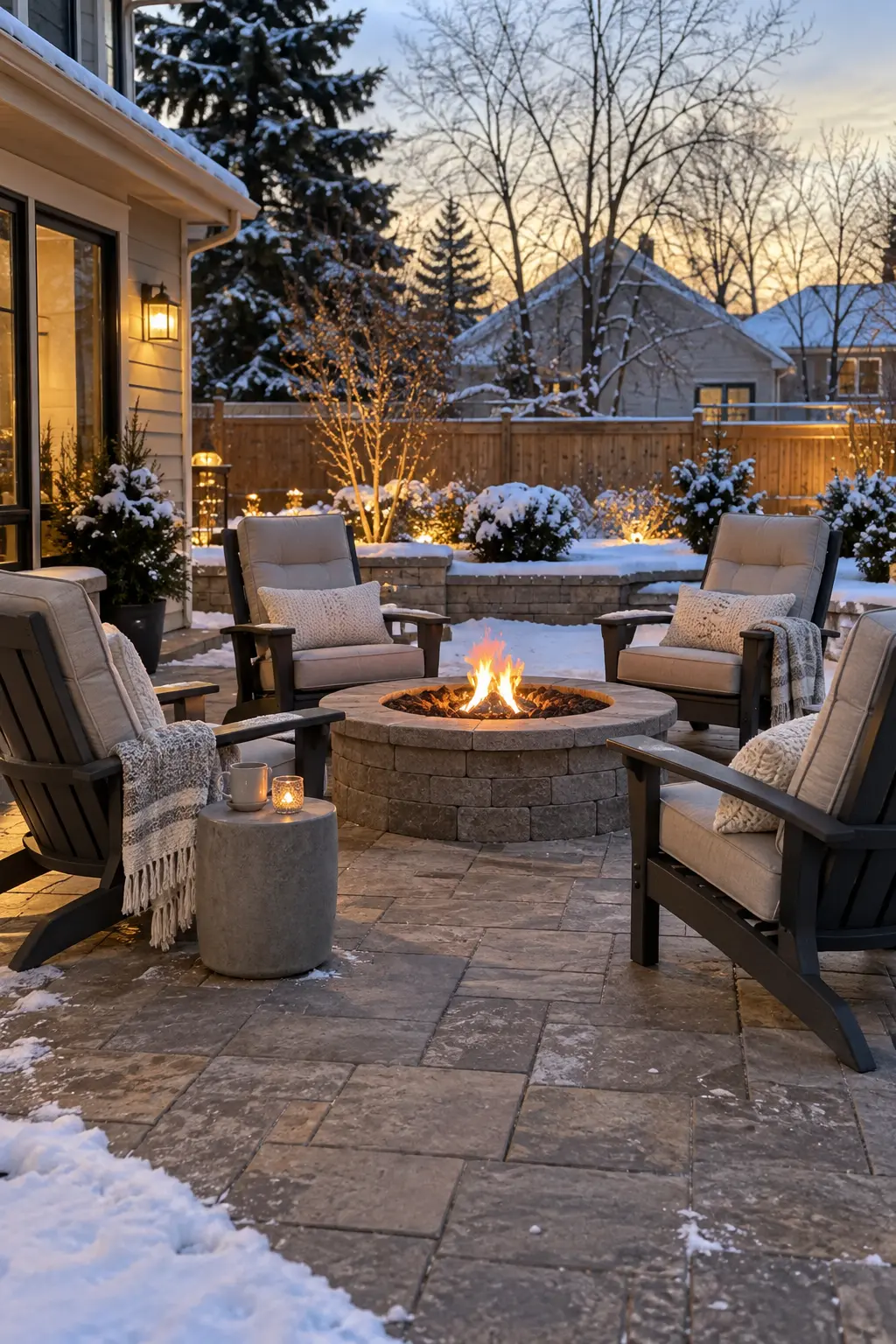
Use supportive outdoor chairs with full backs and enough spacing for winter layers. Skip low sling seating that is difficult to enter while wearing boots and a heavy coat.
4. Add Quick-Dry Outdoor Cushions
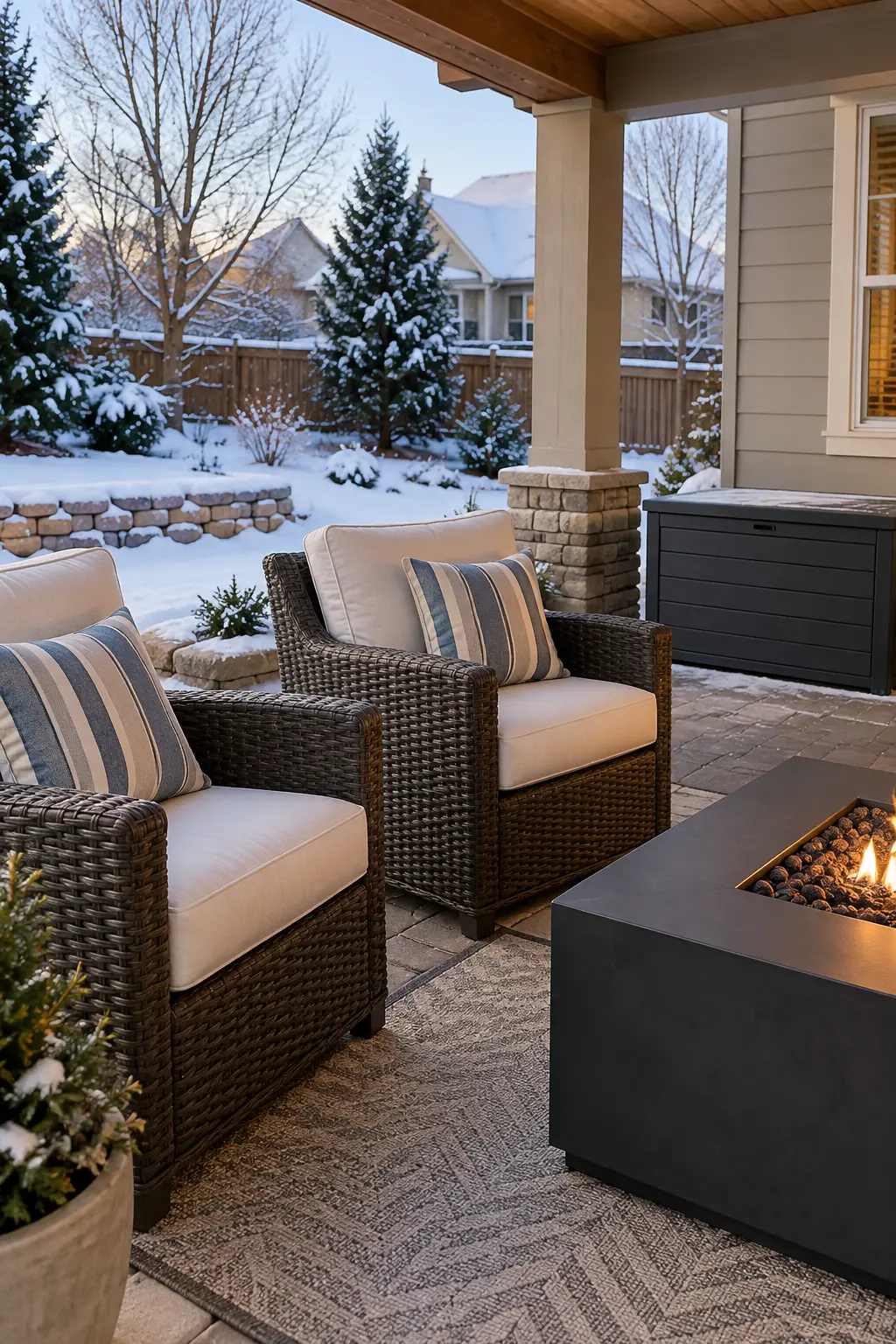
Bring weather-resistant cushions outside only when the seating area is in use, then store them dry. Deep seats feel warmer when fabric is not damp, frozen, or snow-covered.
5. Keep Blankets in a Lidded Deck Box
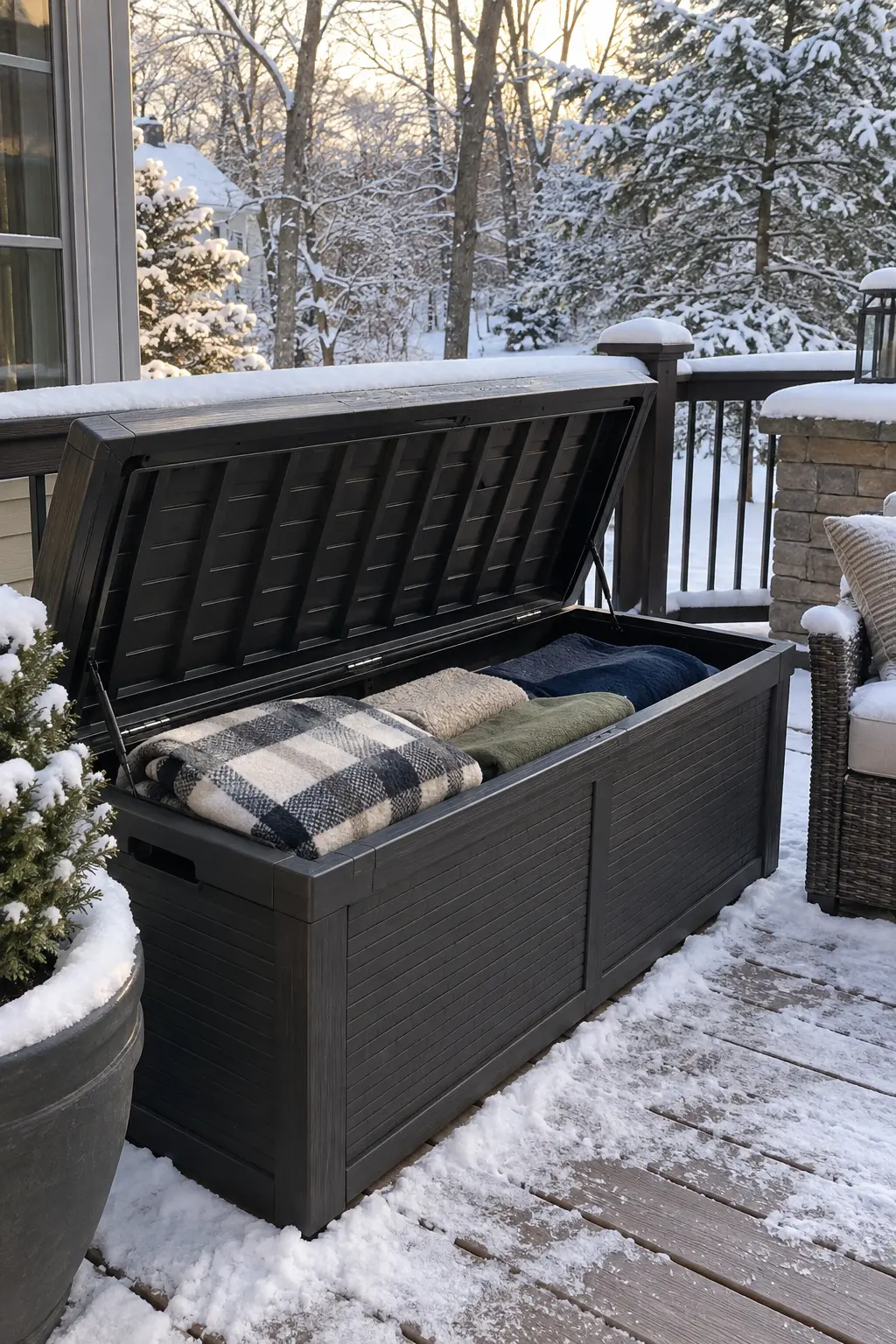
Store washable outdoor blankets in a weather-resistant container and carry them out shortly before guests arrive. Dry layers are useful; permanently displayed damp textiles are not.
6. Anchor the Zone With an Outdoor Rug
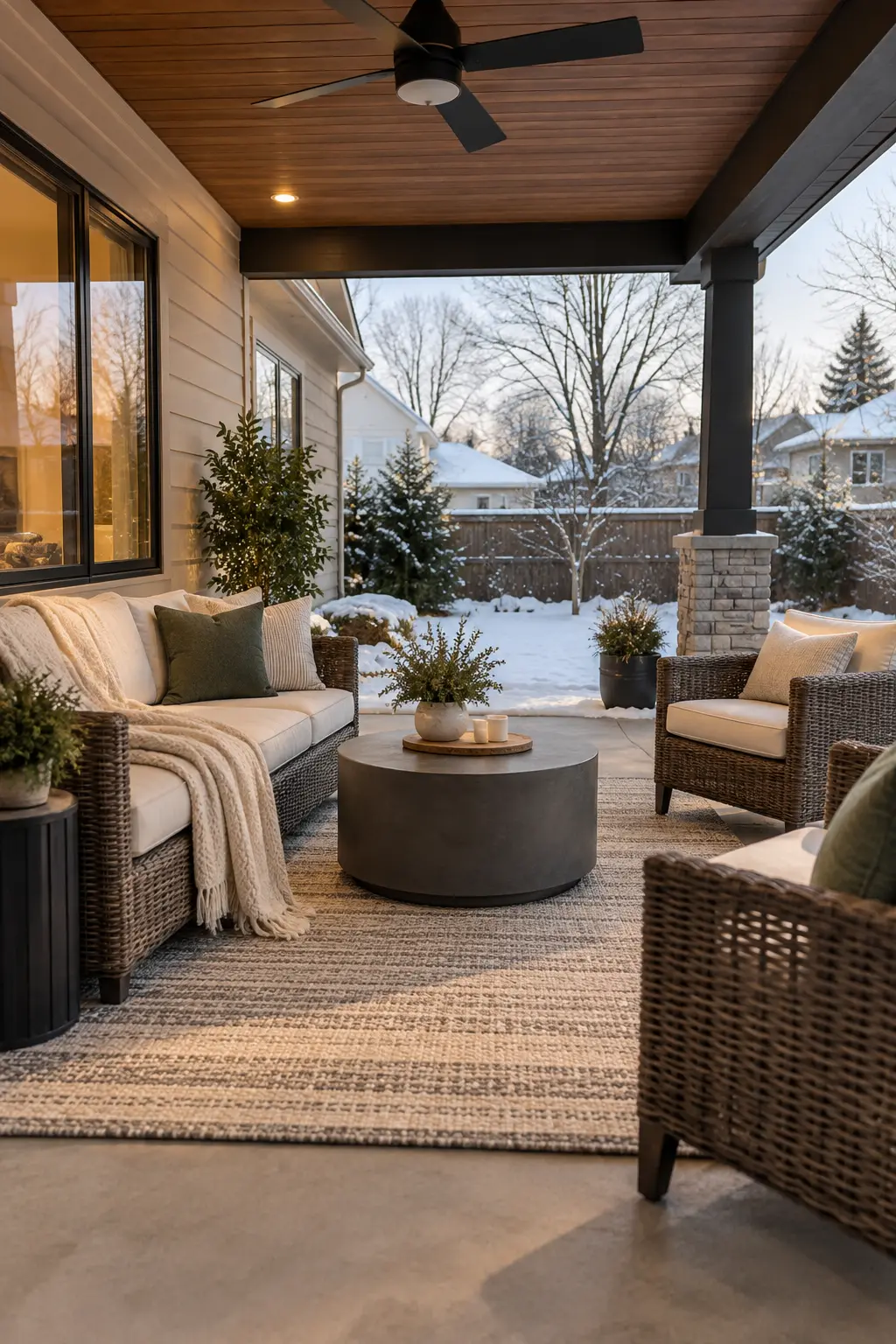
Use a durable rug only on a well-drained covered surface where it can dry fully. A defined floor makes a small winter seating group feel like an outdoor room.
7. Turn a Pergola Into a Winter Room
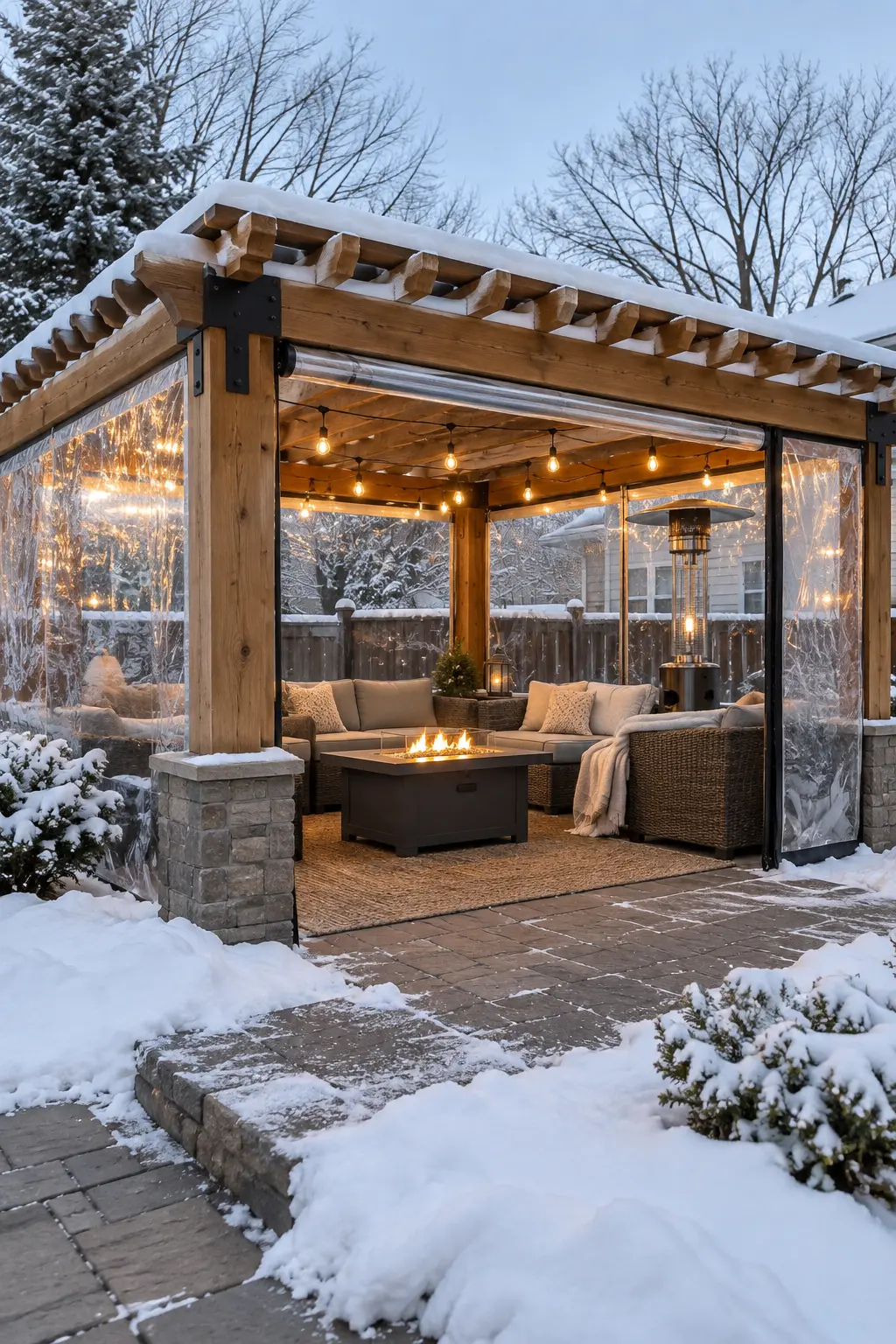
Add code-compliant lighting and removable weather panels where local conditions allow. Keep ventilation and snow-load limits in mind rather than sealing a structure not designed for winter.
8. Use a Small Bistro Setup Near the Door
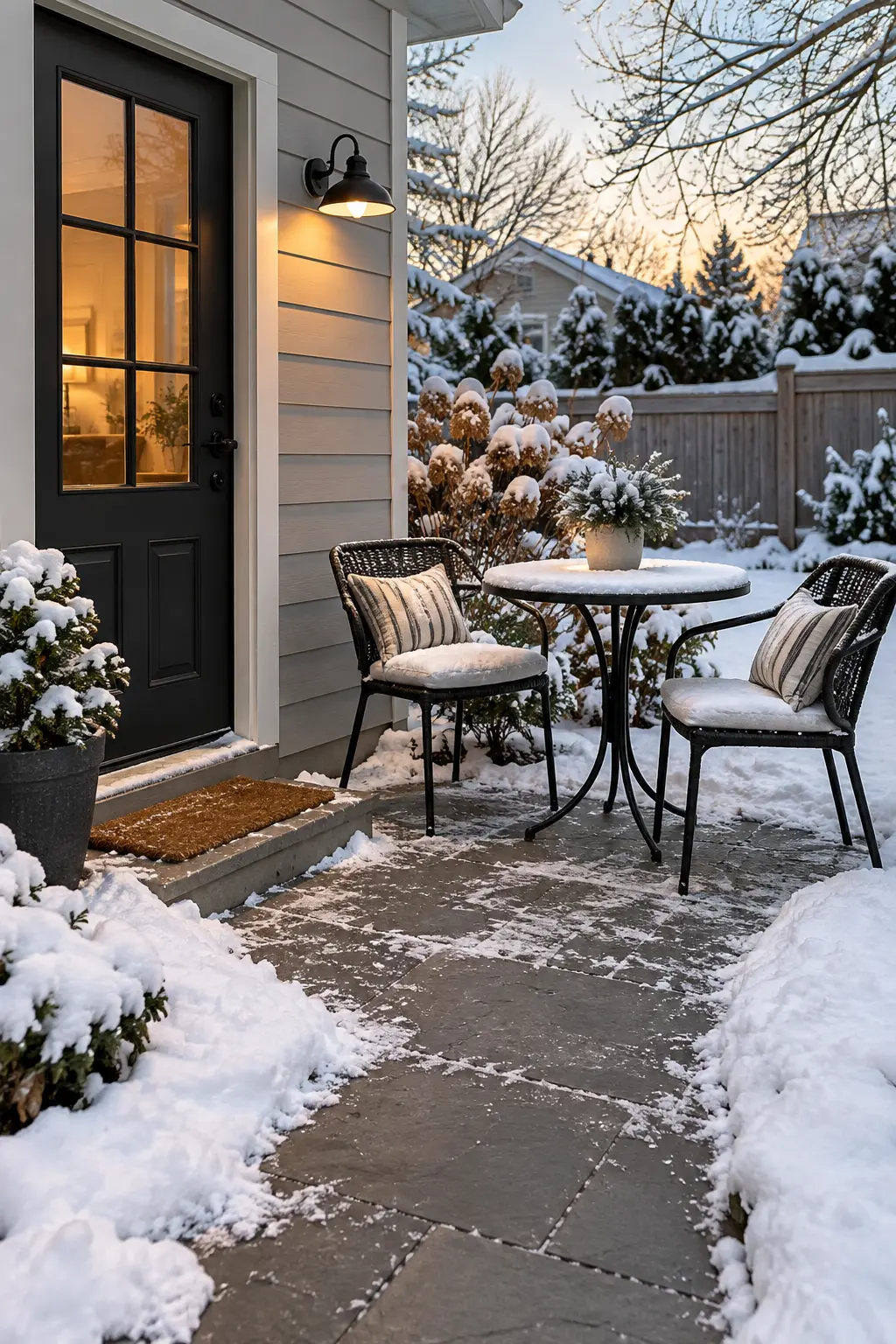
Place a compact table and two chairs close to the house for quick coffee breaks. A short cleared route makes the space easier to use on cold mornings.
Add Safe Heat and Useful Light
9. Create a Code-Compliant Fire-Pit Circle
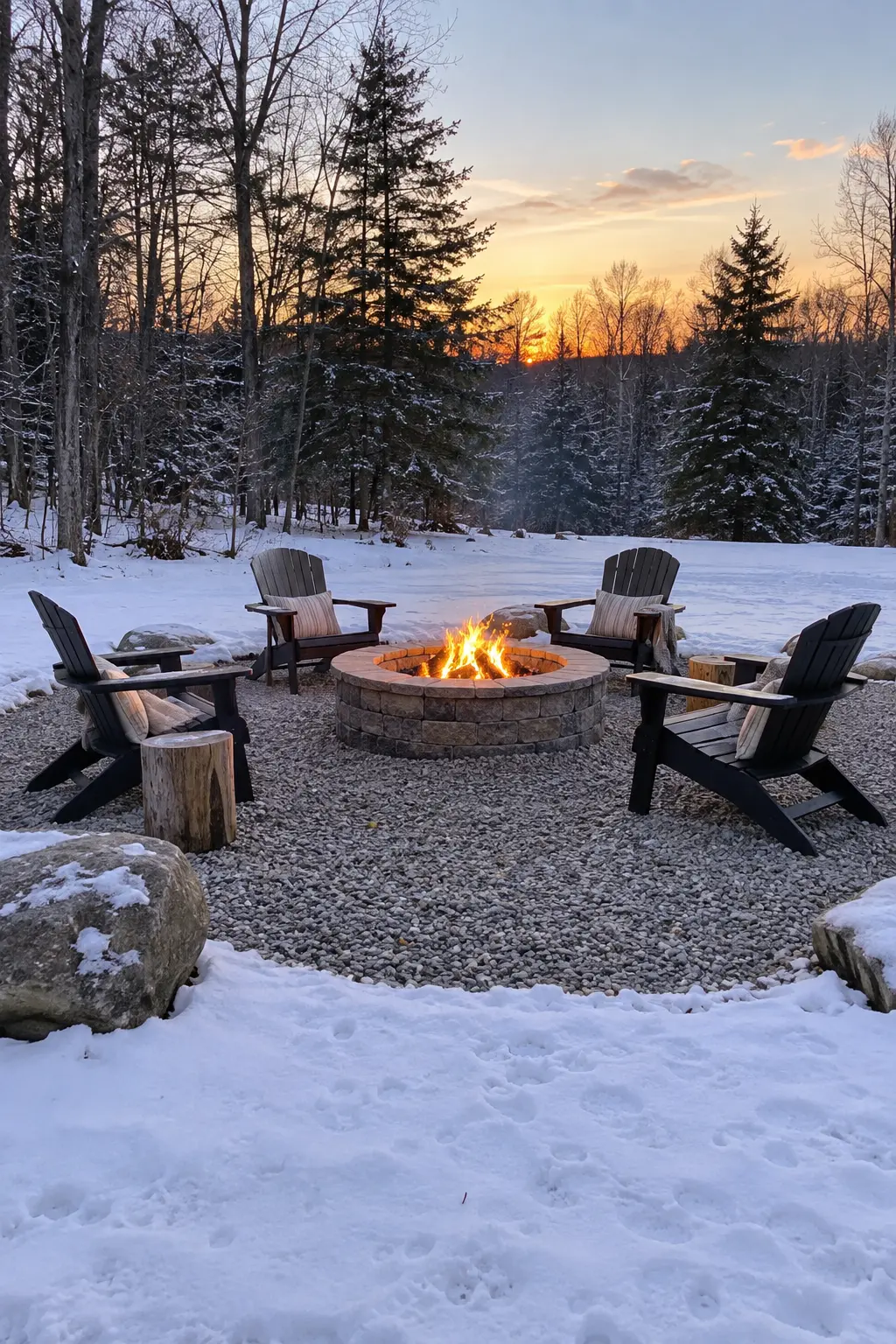
Set a listed fire pit on a noncombustible surface with clear space from structures, branches, and furniture. Check local burn rules and the manufacturer’s required clearances before use.
10. Use a Gas Fire Table for Fast Warmth
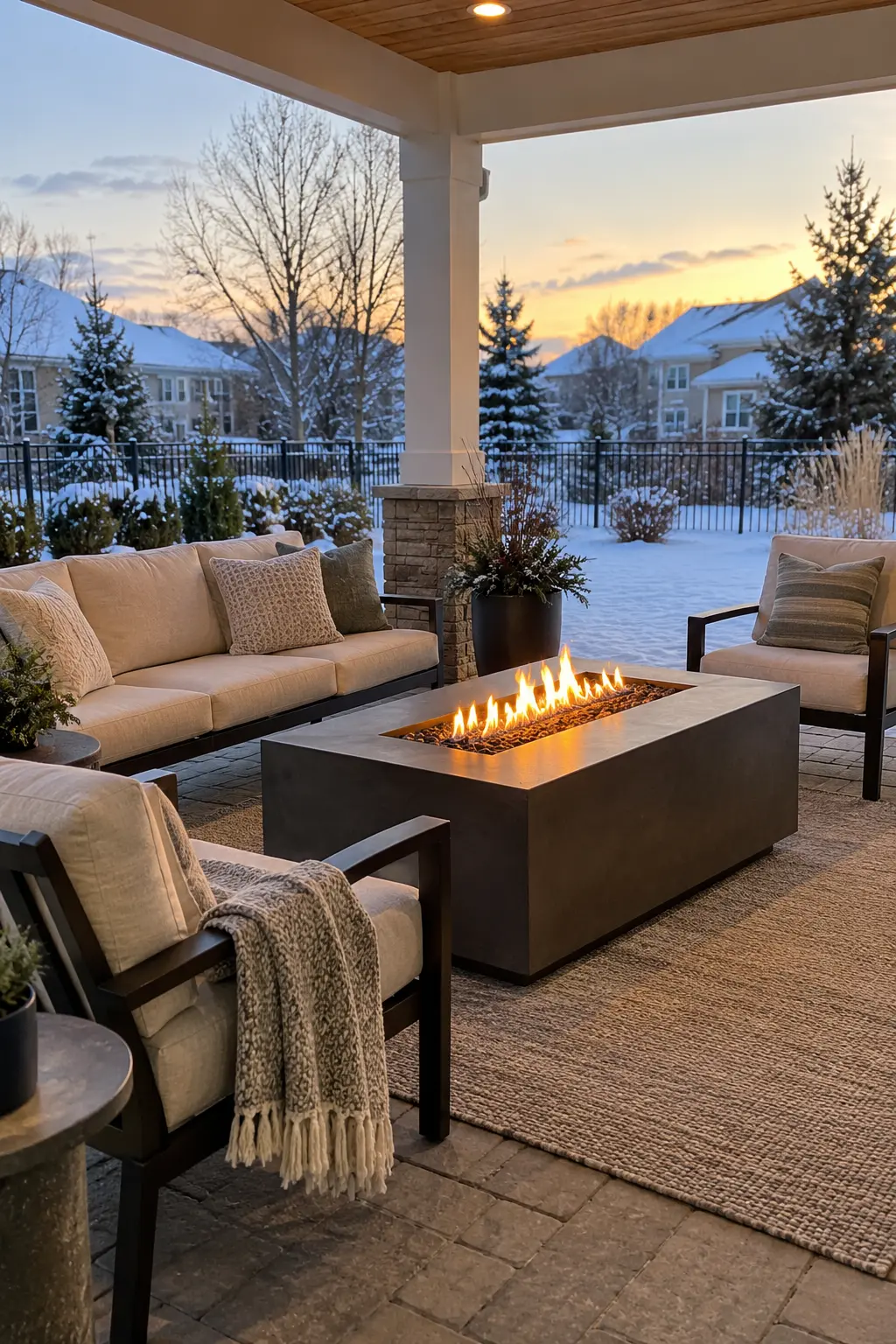
A listed gas fire table can provide quick, controlled heat for short winter gatherings. Keep ventilation open and follow fuel-storage and clearance instructions exactly.
11. Install an Outdoor-Rated Electric Heater
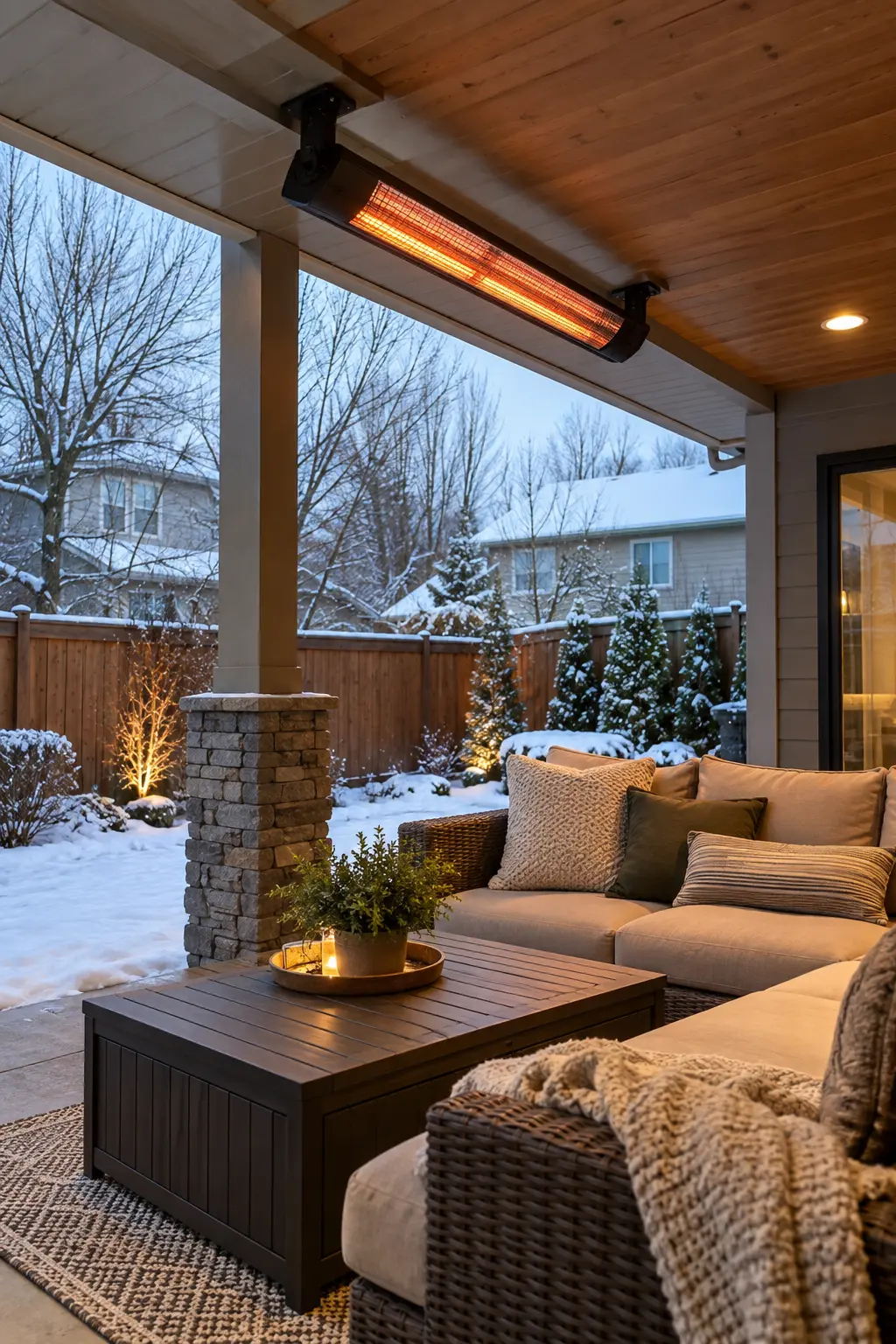
Mount or position a heater only as its manual allows, using a suitable outdoor electrical supply. Aim it at a defined seating zone instead of trying to heat the whole yard.
12. Add Warm Path Lights
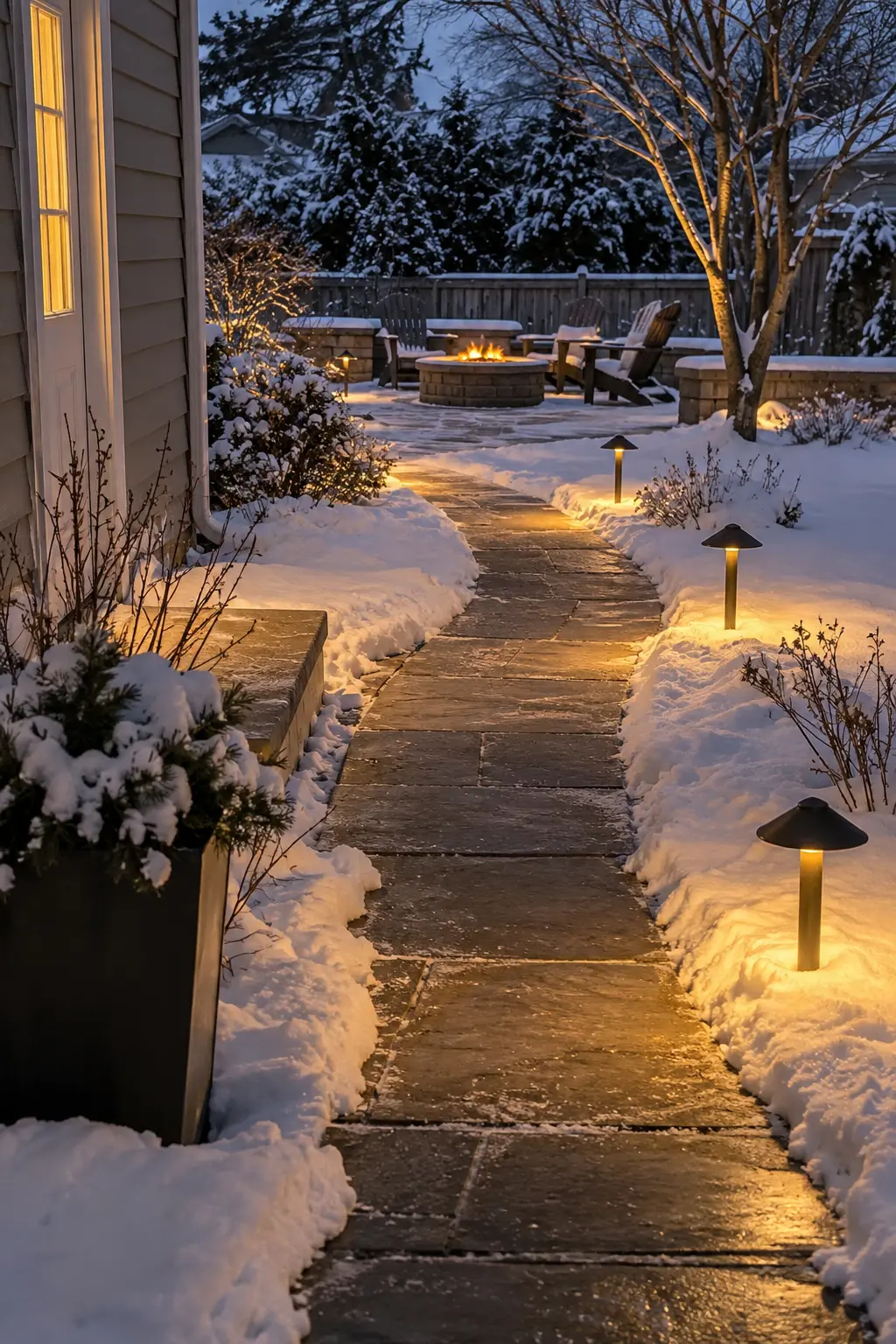
Illuminate the route from the back door to the seating area with low, shielded fixtures. Winter lighting should reveal steps, ice, and edges without creating glare.
13. Hang Outdoor String Lights Correctly
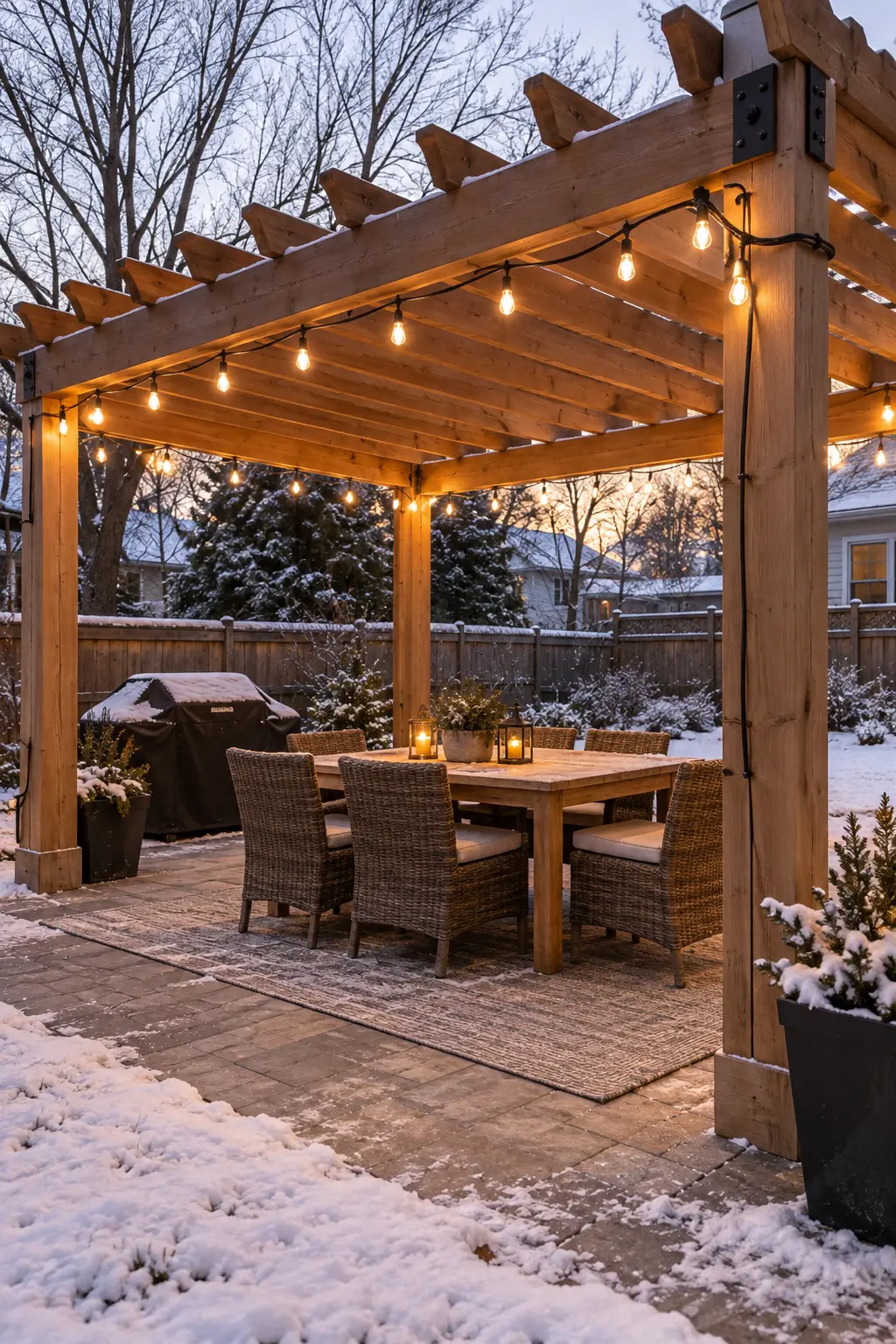
Use wet-location-rated lights secured to posts, a fence, or a pergola with proper outdoor connections. Keep cords off walking surfaces and do not rely on trees that move heavily in storms.
14. Place Rechargeable Lamps on the Table
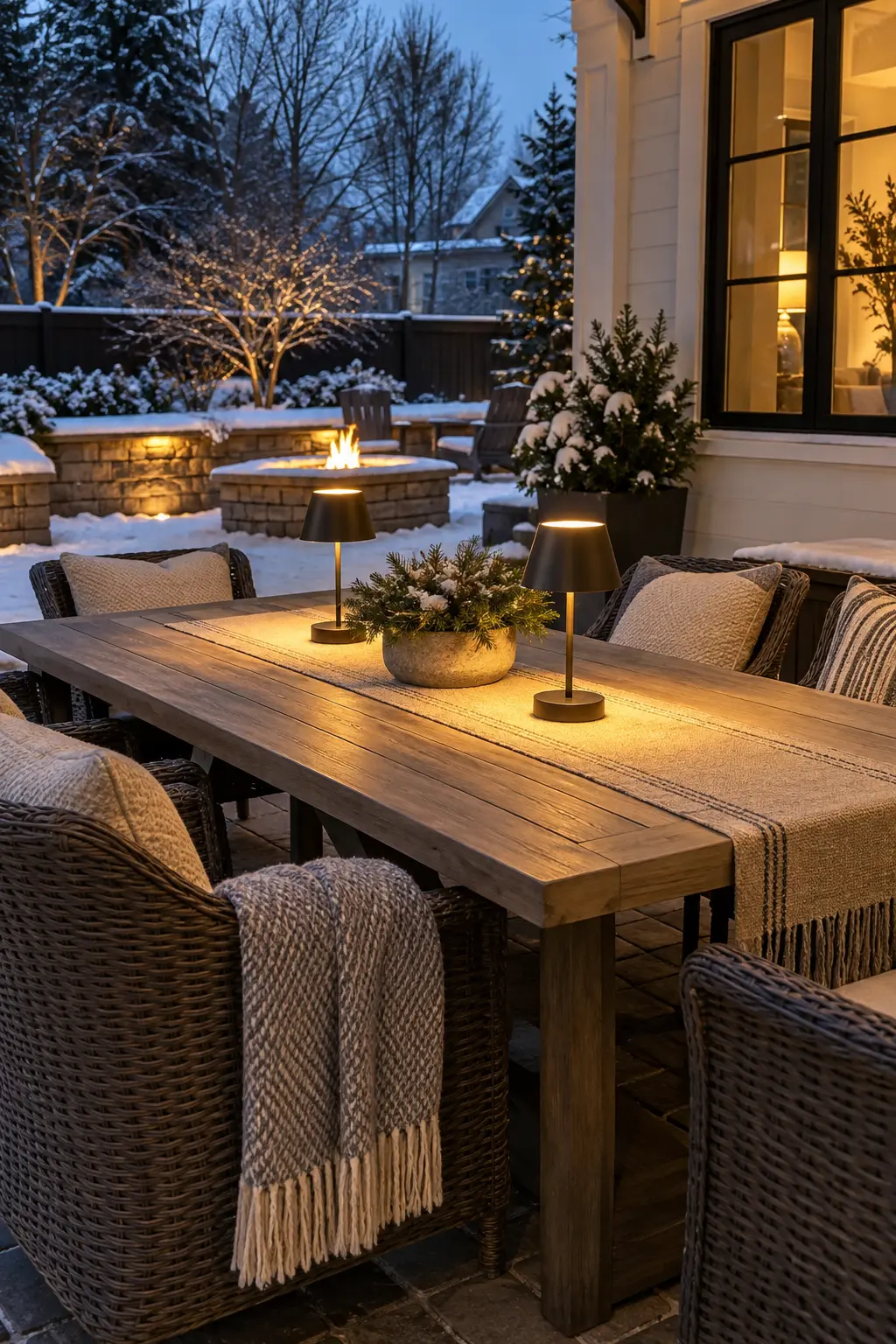
Use weighted, outdoor-rated cordless lamps for flexible light at seated height. Bring them indoors after use if their temperature or moisture rating requires it.
15. Light Steps and Deck Edges
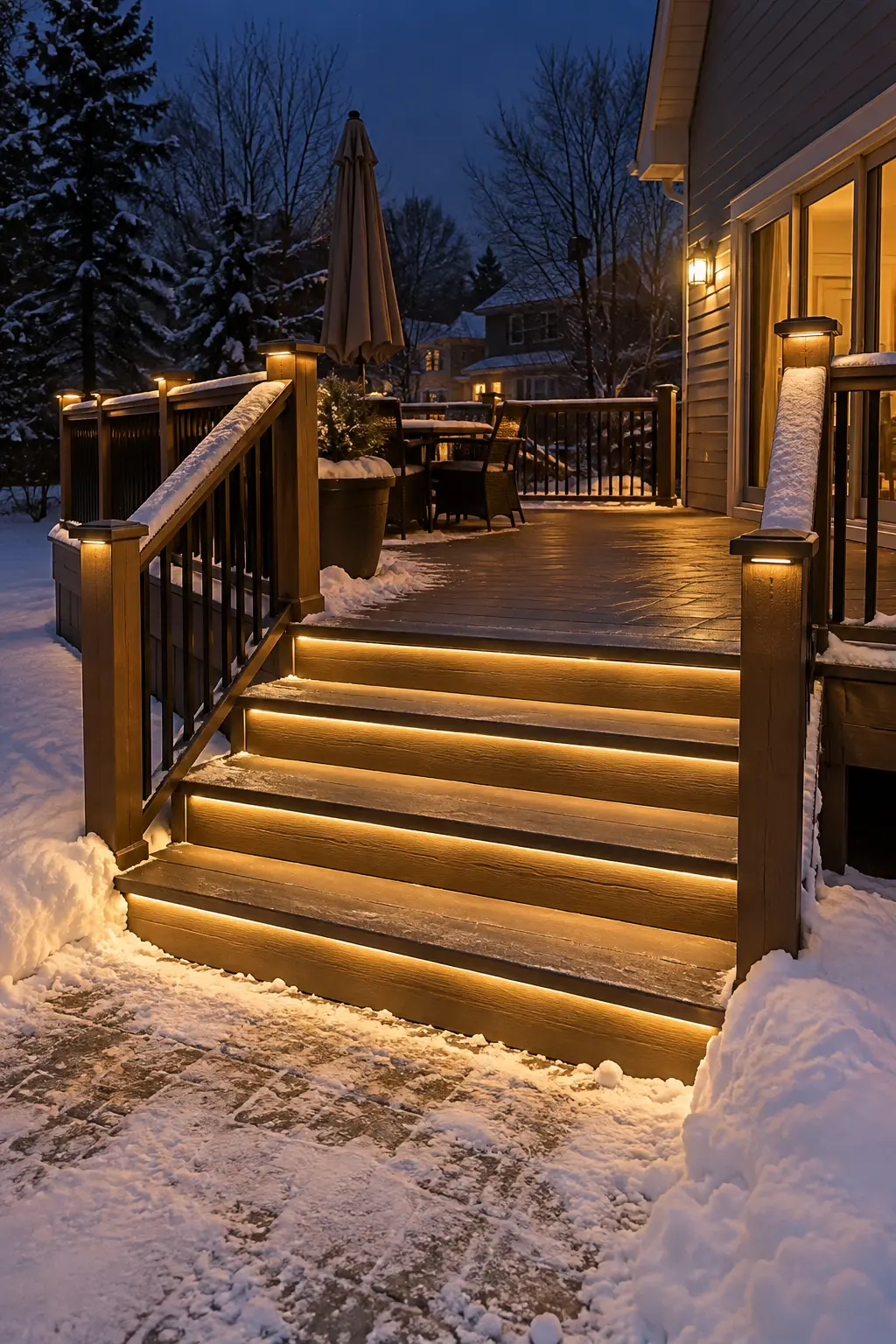
Add recessed or surface-mounted fixtures where level changes are easy to miss after dark. Clear snow first so lighting complements rather than replaces safe maintenance.
16. Use Lanterns With Flameless Candles
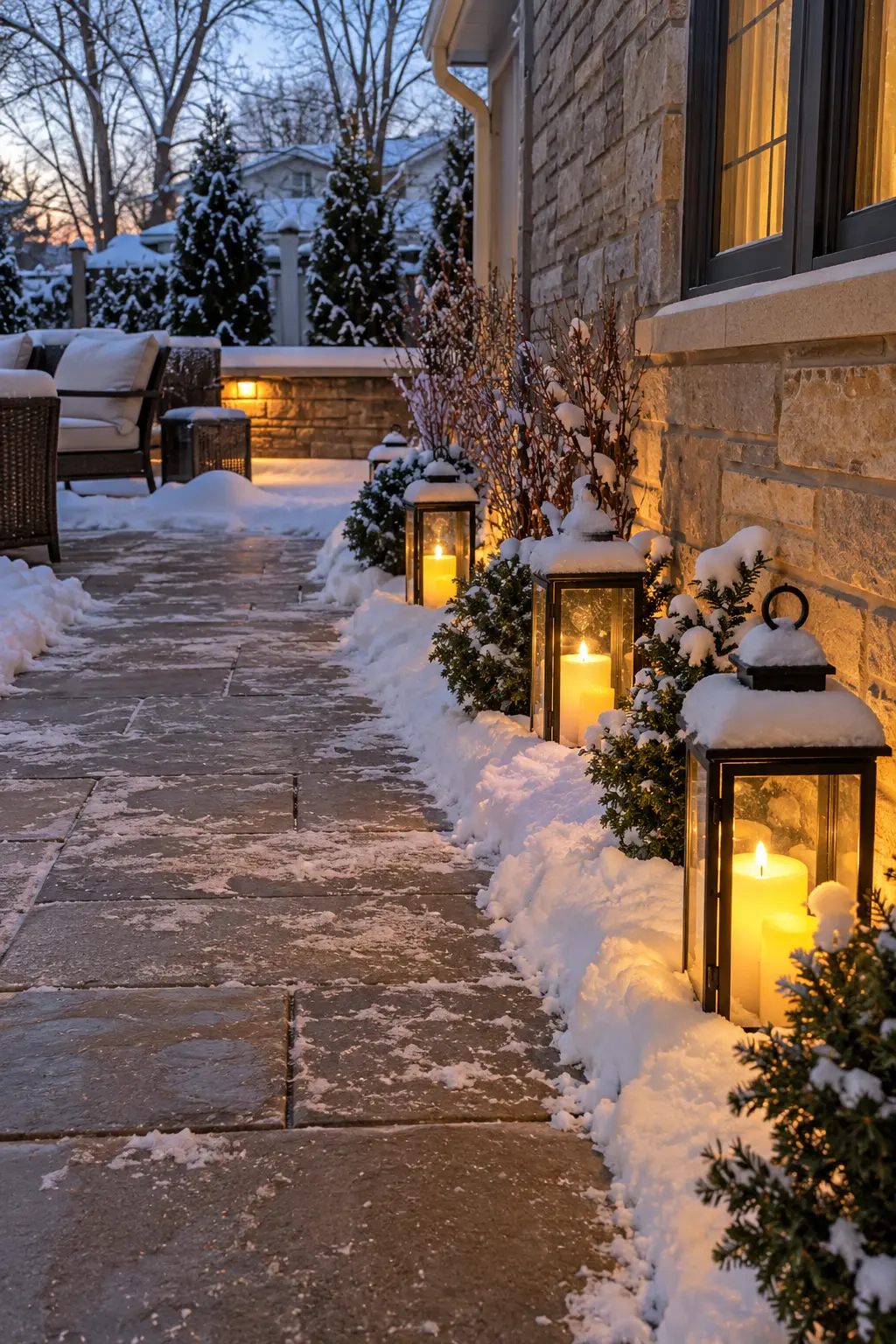
Group stable lanterns where they cannot tip into traffic or dry plants. Battery candles provide atmosphere without exposed flames in windy conditions.
Make the Yard Look Good From Indoors
17. Frame the View With Evergreen Containers
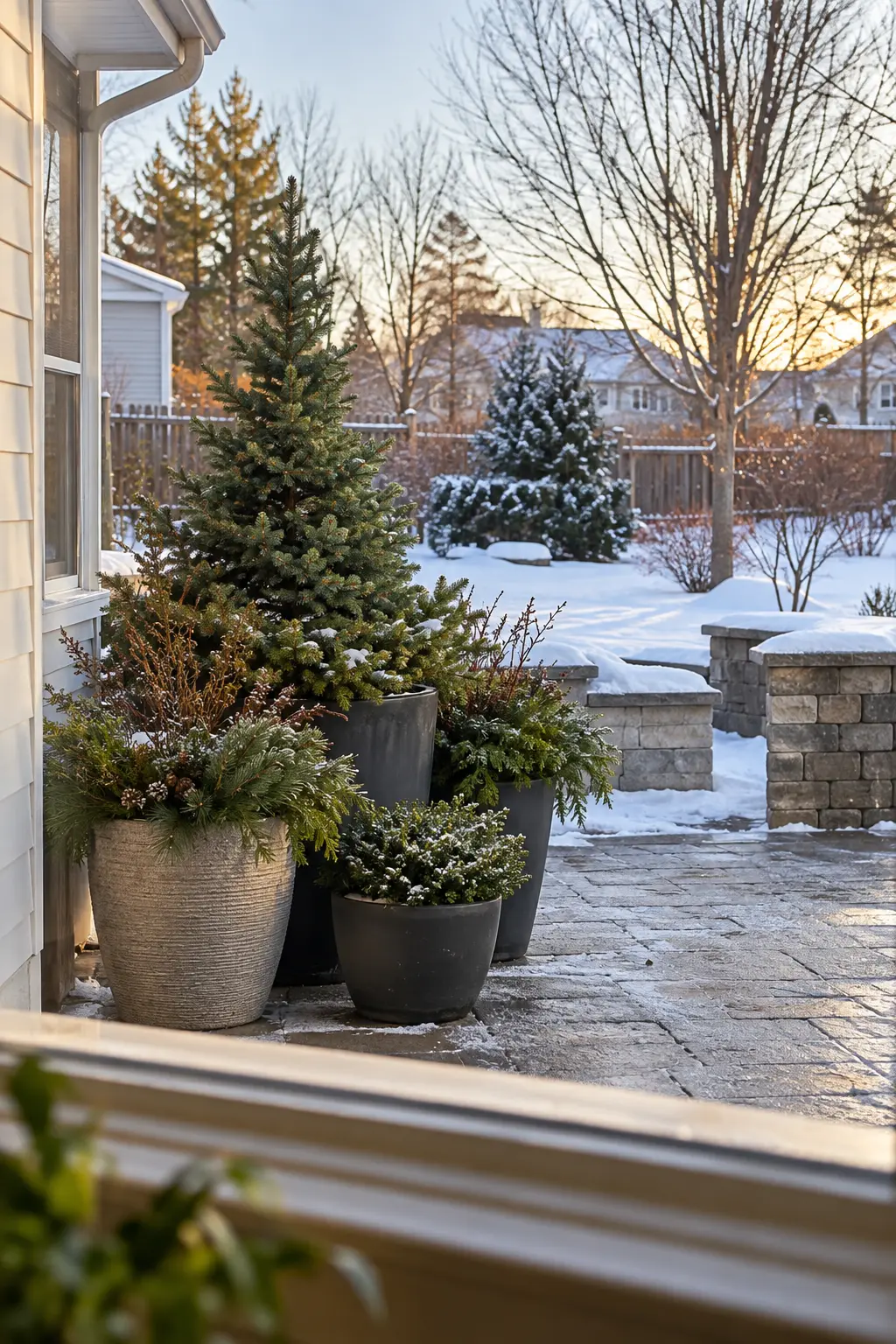
Place cold-hardy evergreens in frost-resistant planters where they can be seen from a main window. Match plants and containers to the local climate and exposure.
18. Leave Ornamental Grasses Standing
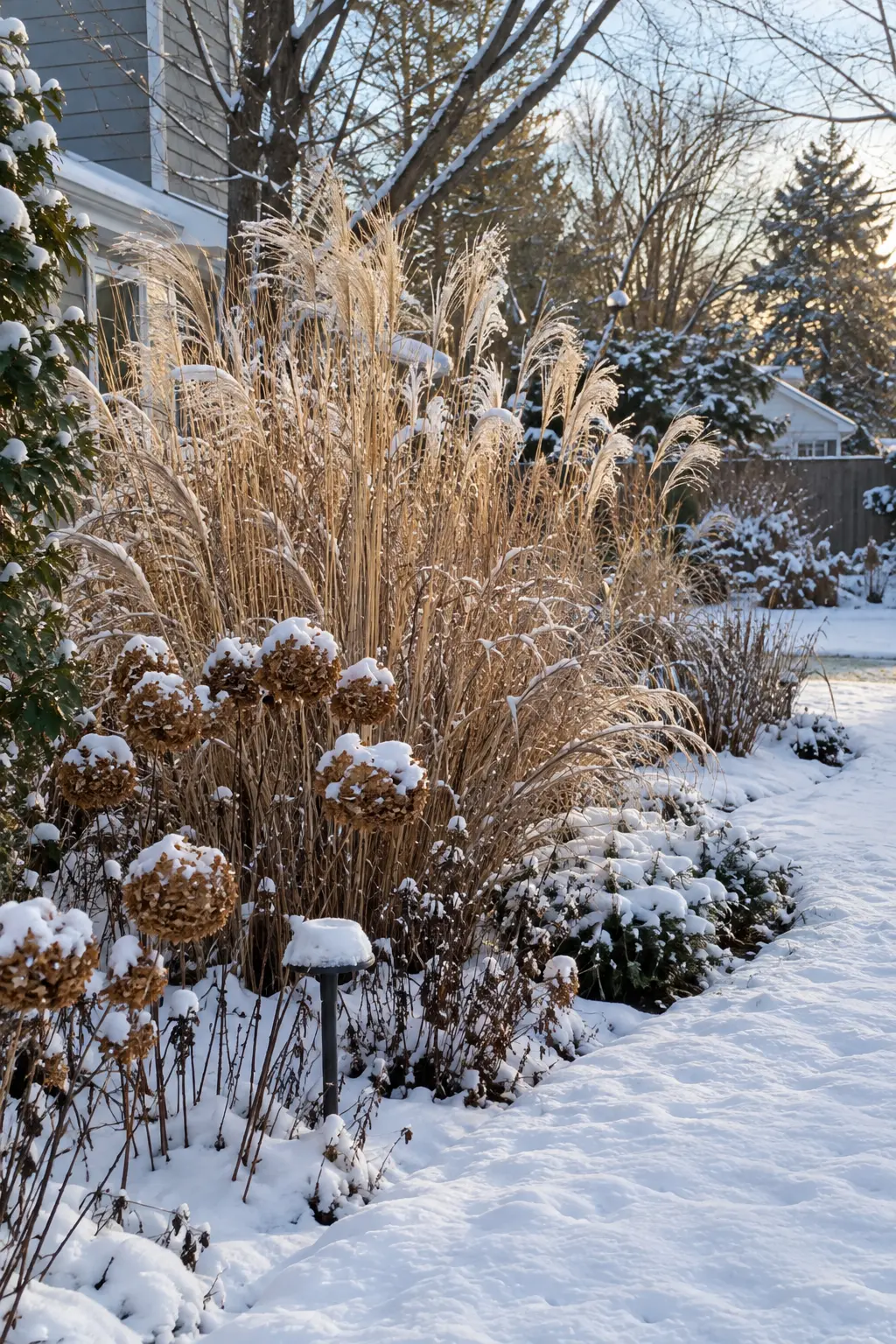
Keep healthy grasses and seed heads through winter for movement, texture, and wildlife value. Cut them back at the appropriate time for the species and region.
19. Plant for Colorful Winter Bark
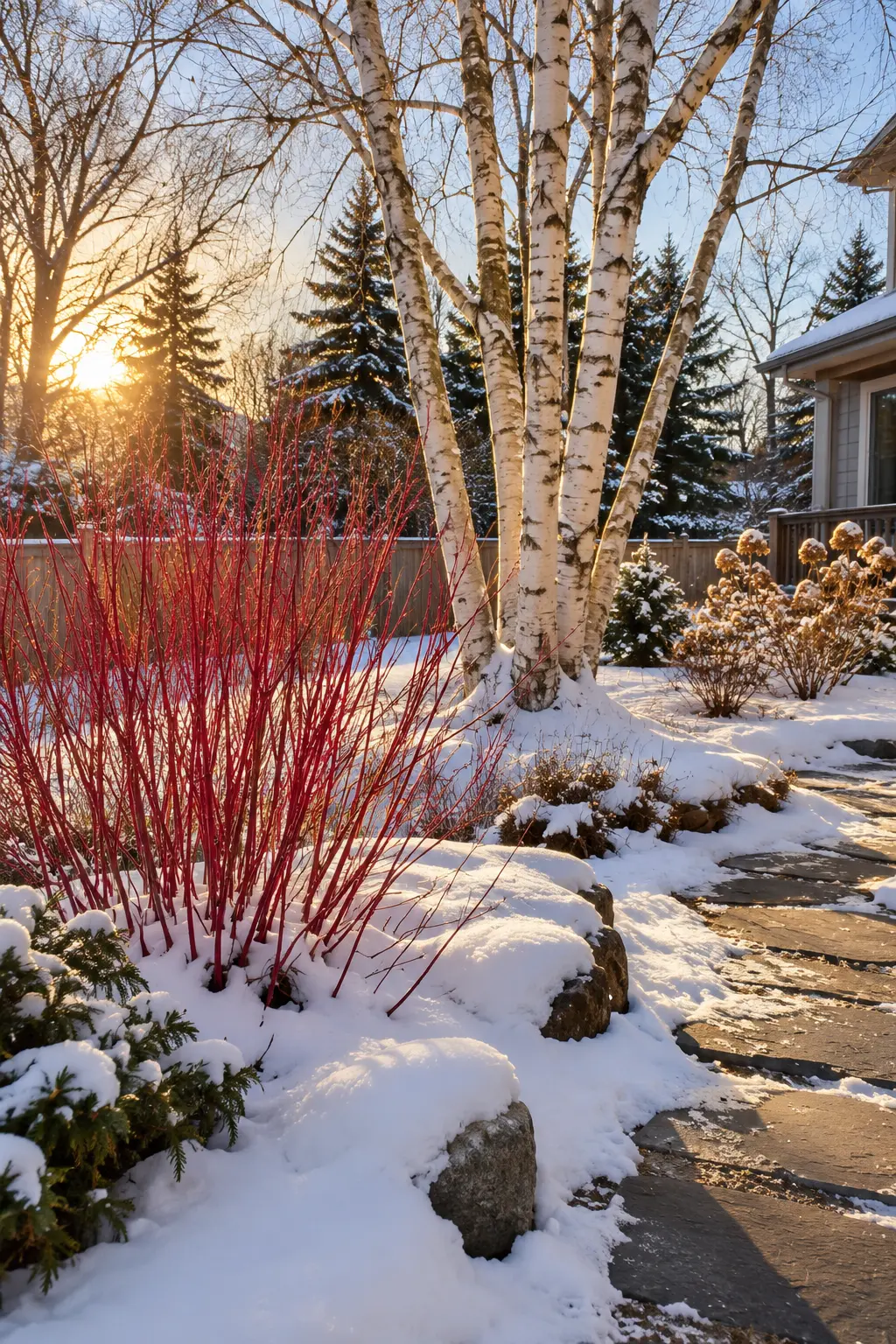
Use suitable dogwood, birch, or other regionally appropriate plants with interesting stems and bark. Position them where low winter sun makes the color visible.
20. Build Structure With Mixed Evergreens
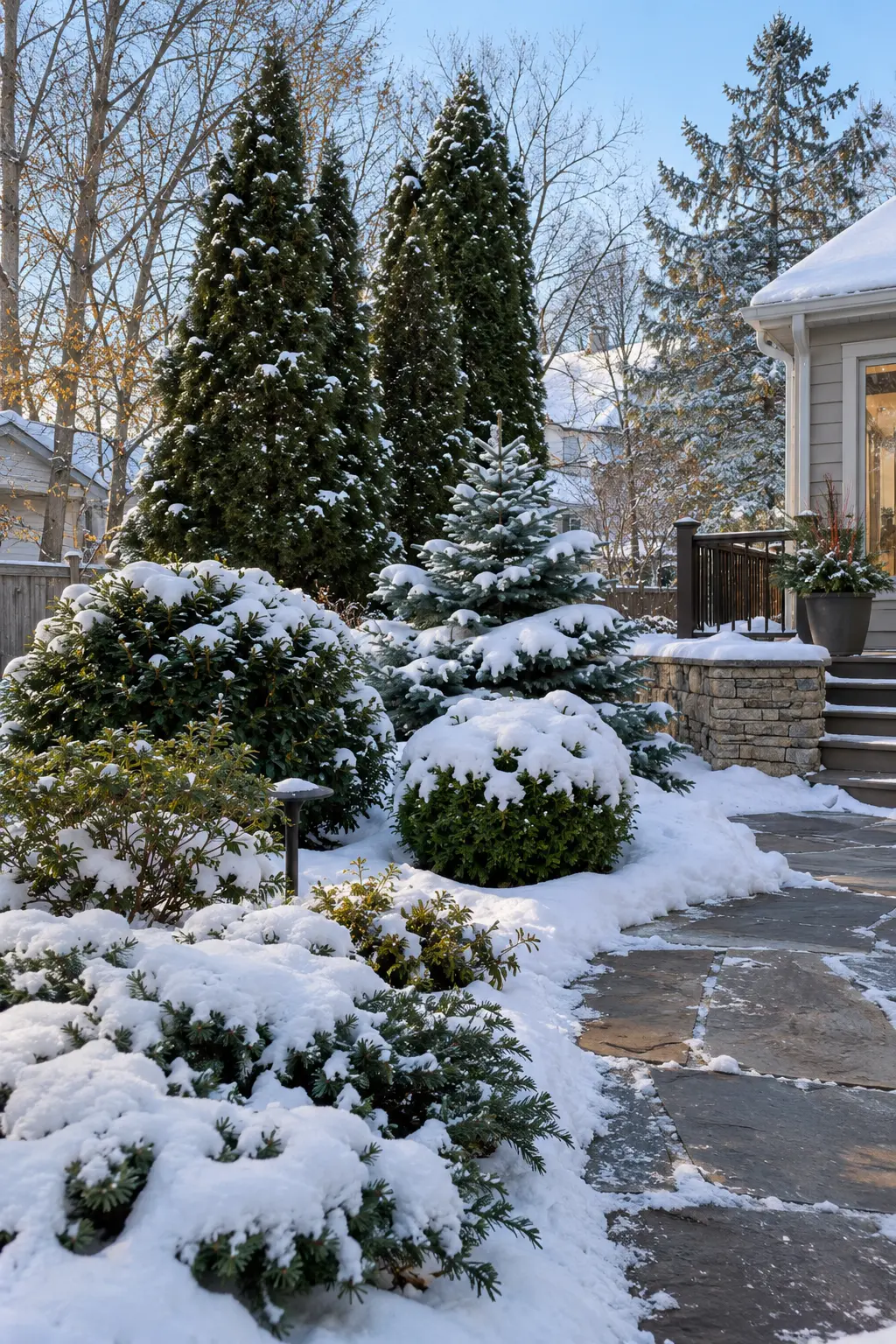
Combine upright, rounded, and low evergreen forms so the garden keeps shape after deciduous leaves fall. Choose species appropriate for the site rather than planting one repeated hedge.
21. Keep Sculptural Seed Heads
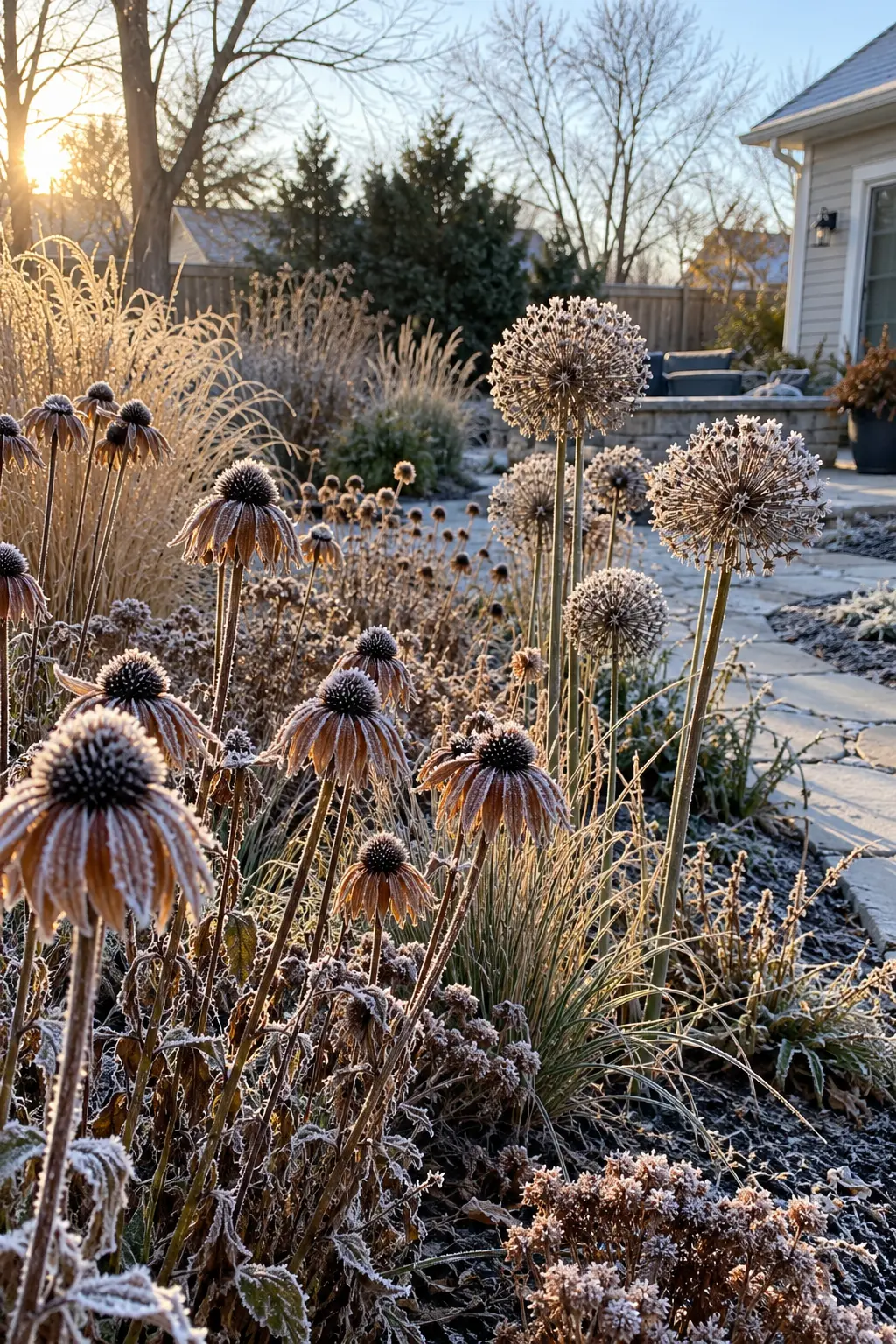
Leave sturdy coneflower, allium, and similar seed heads where they remain healthy and safe. Frost highlights their shapes while birds can use some seeds.
22. Add a Simple Garden Obelisk
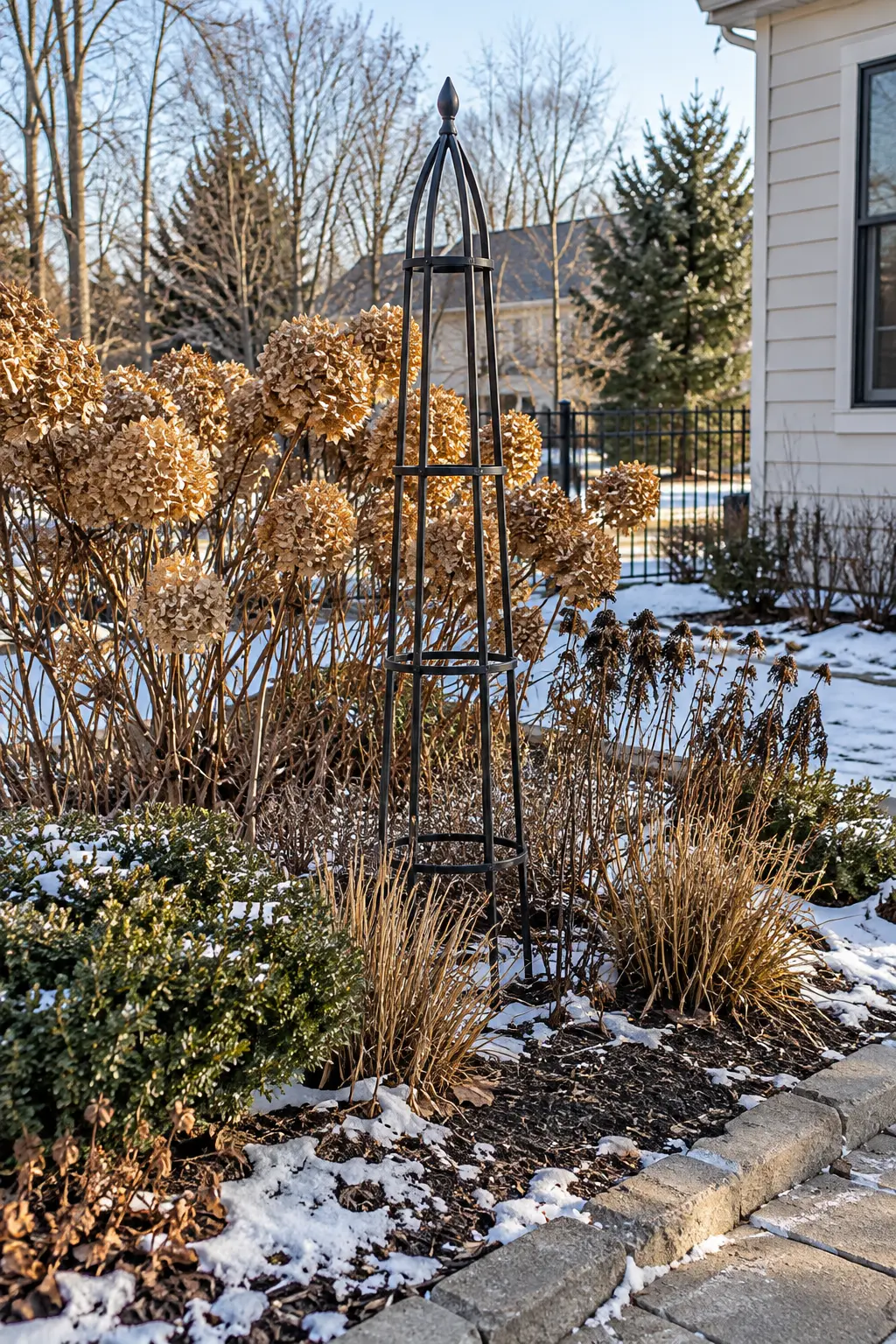
A wood or metal obelisk gives an empty bed height when vines are dormant. Secure it for winter wind and avoid flimsy decorative pieces that may topple.
23. Use a Bench as a Winter Focal Point
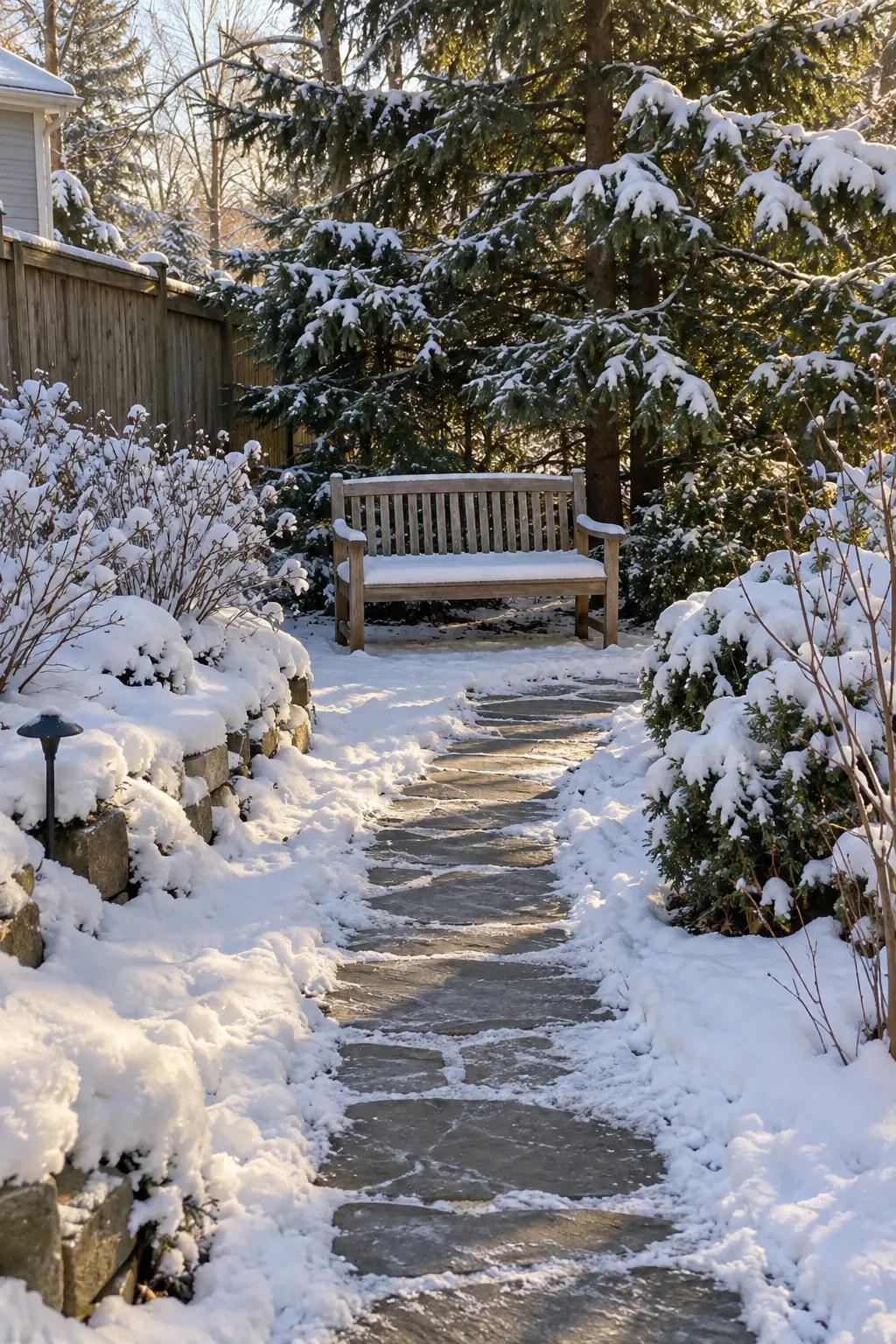
Place a durable bench at the end of a path or beneath an evergreen canopy. Even when unused, it gives the bare garden a clear destination.
24. Highlight One Tree With Uplighting
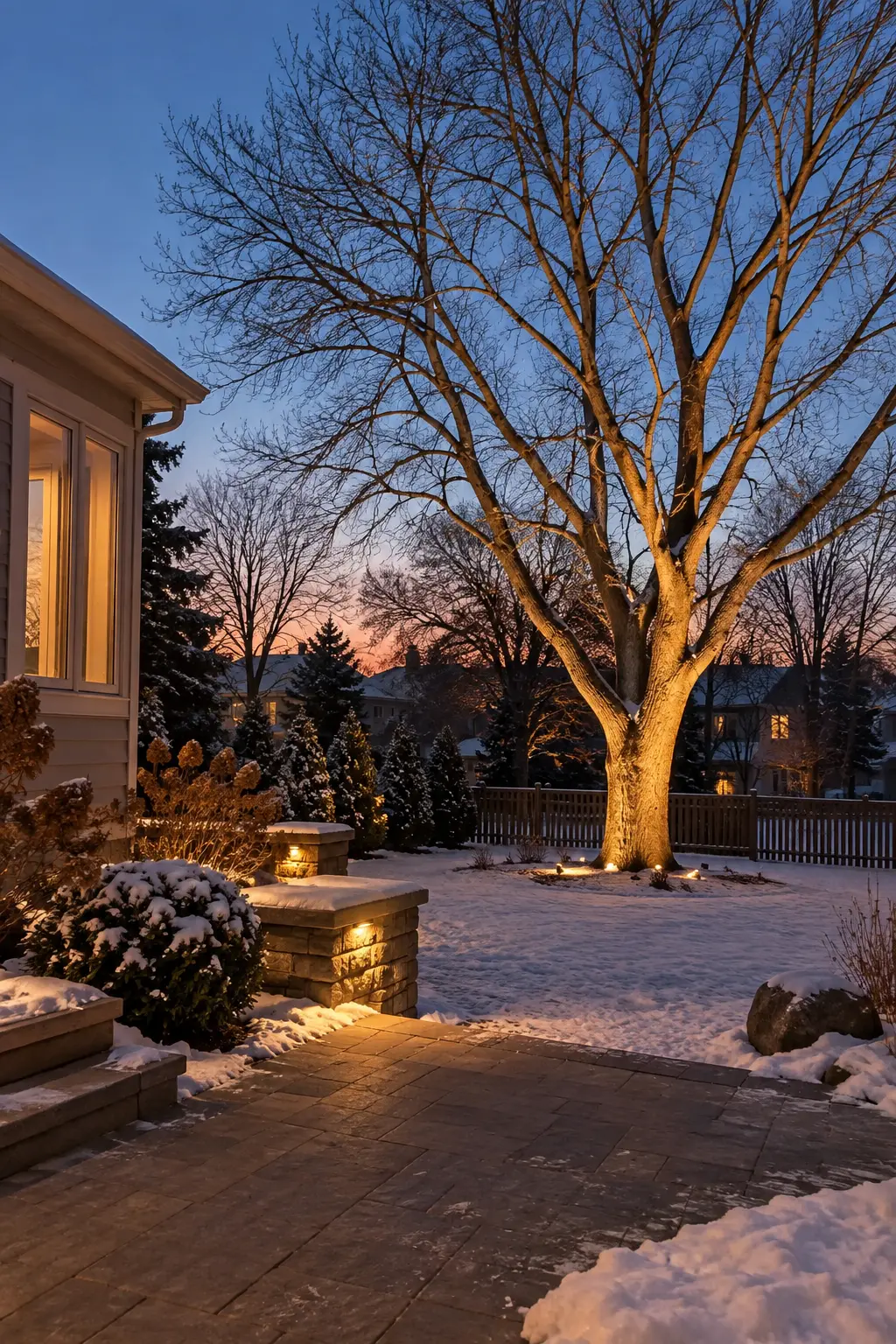
Use a low-voltage outdoor fixture to softly light the trunk and branching structure of one tree. Aim carefully to limit glare into windows and the night sky.
Support Winter Wildlife Responsibly
25. Clean and Refill Bird Feeders
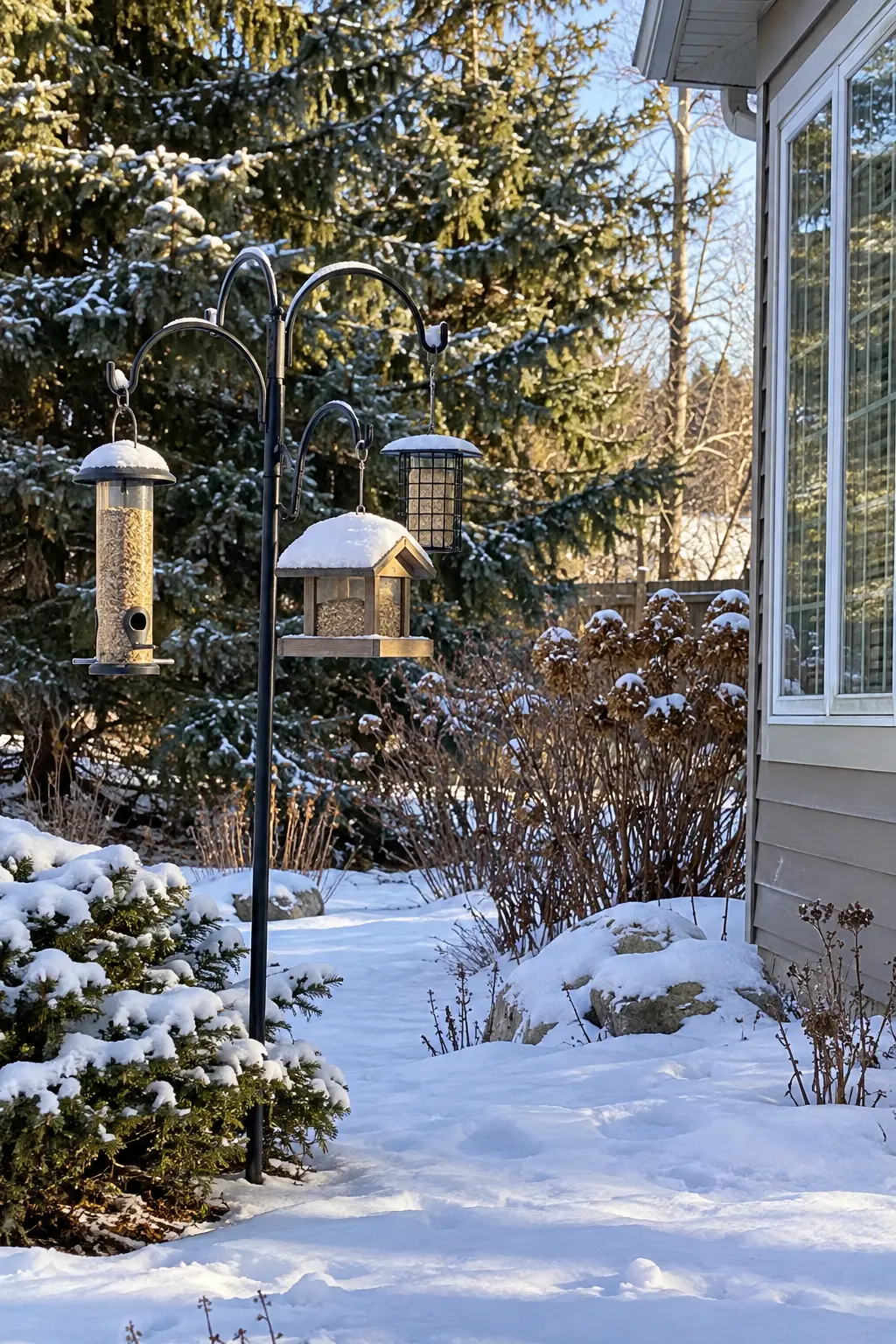
Wash feeders regularly and provide appropriate food for local species. Position them where birds have nearby cover while reducing collision risk at windows.
26. Provide Unfrozen Water
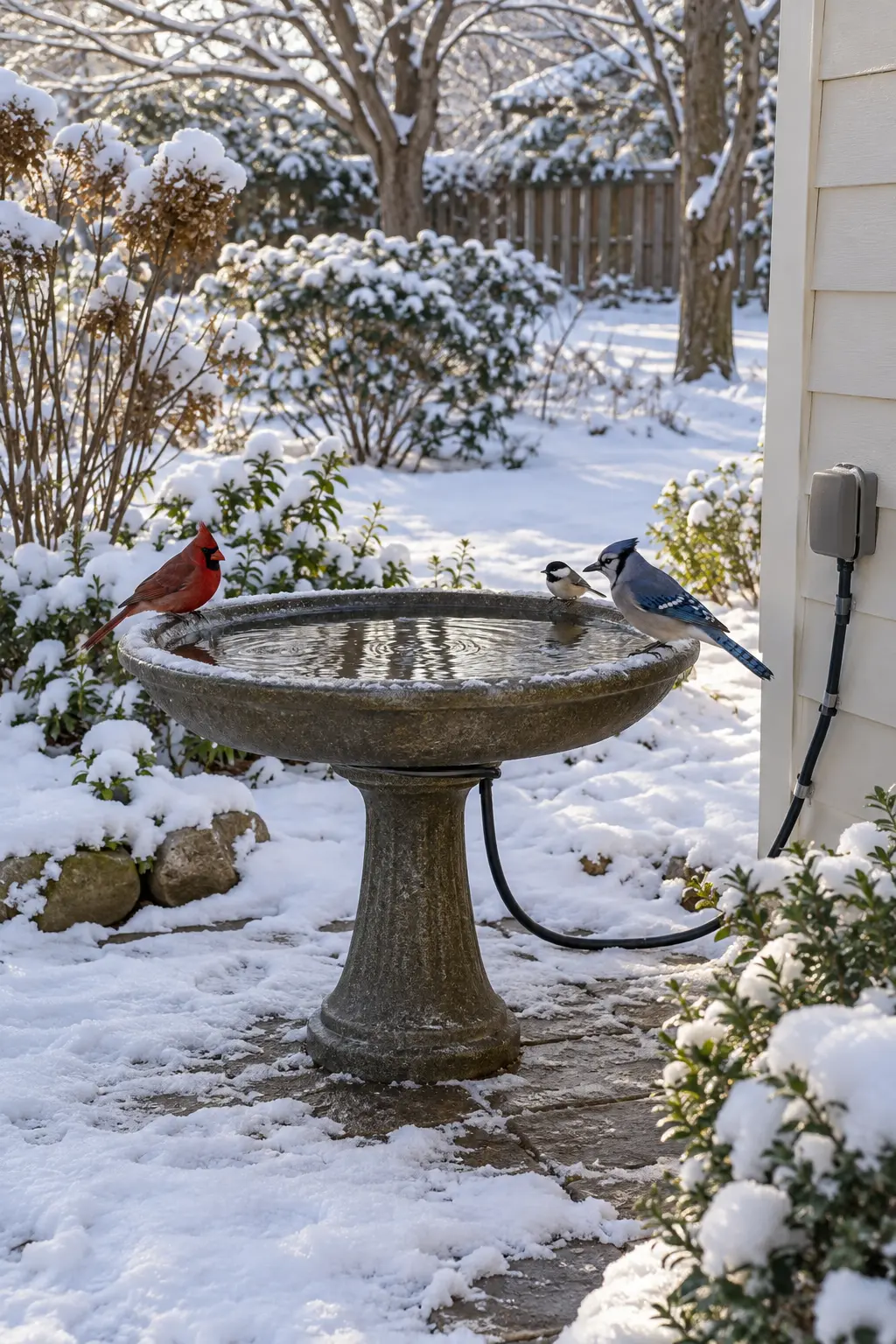
Use a properly rated heated birdbath or de-icer when freezing is common. Keep the basin clean, shallow, and supplied with fresh water.
27. Plant Berry-Producing Native Shrubs
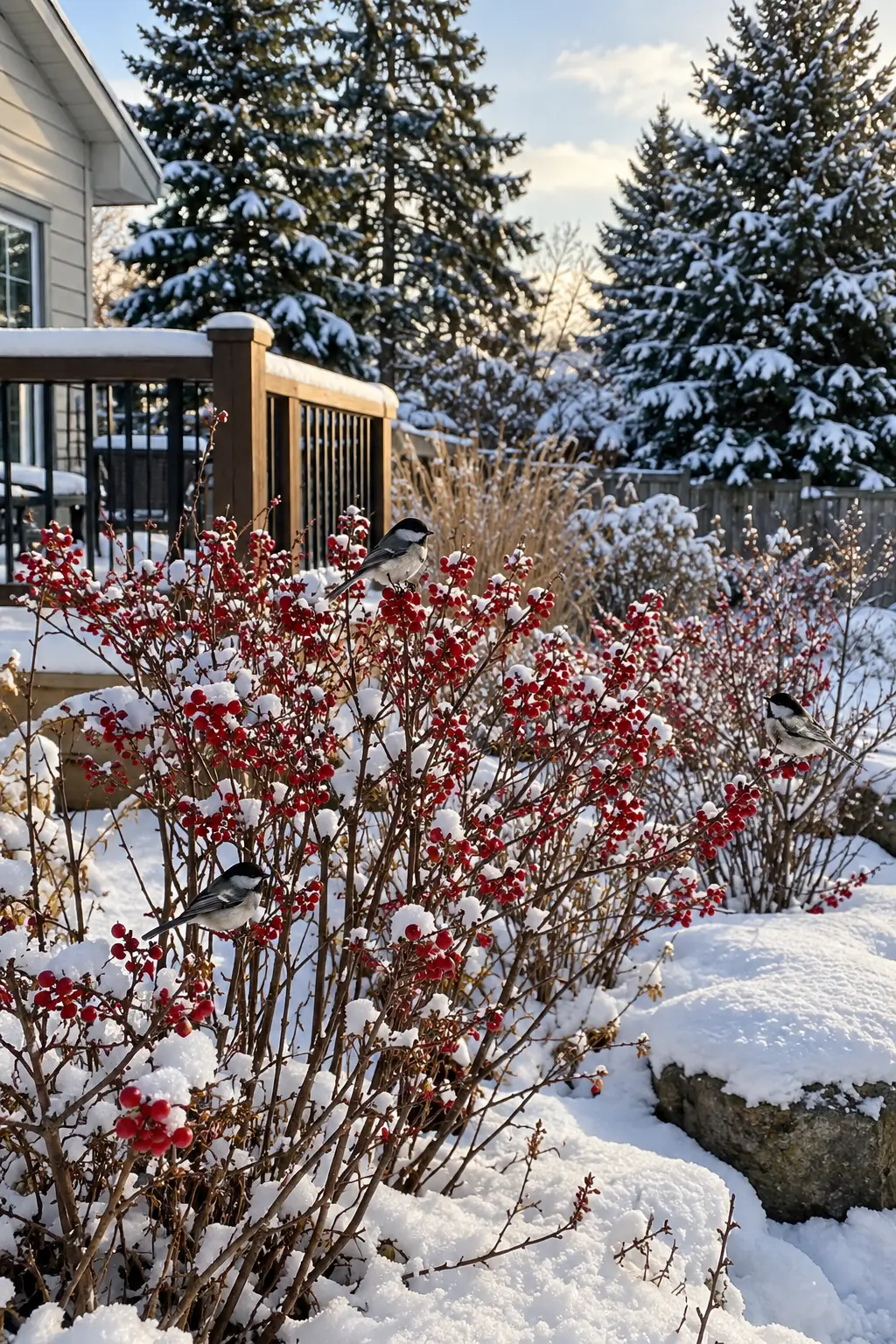
Choose locally native shrubs whose winter fruit supports birds and whose mature size fits the site. Avoid invasive berry plants even when they look decorative.
28. Create a Discreet Brush-Pile Shelter
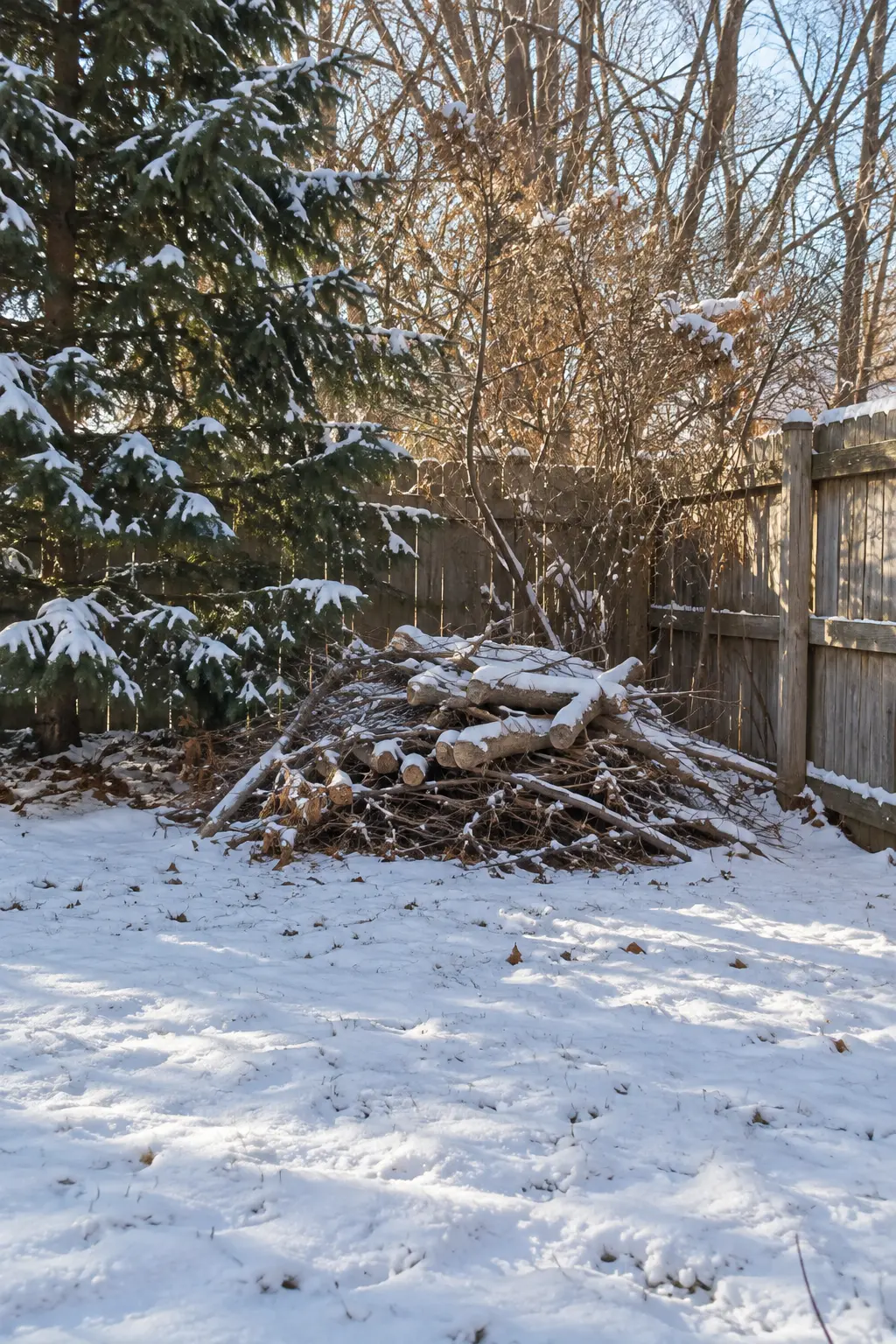
Stack small branches in a quiet back corner where local rules allow and pests will not threaten the home. A tidy habitat pile can shelter wildlife through cold weather.
29. Leave Leaves in Designated Beds
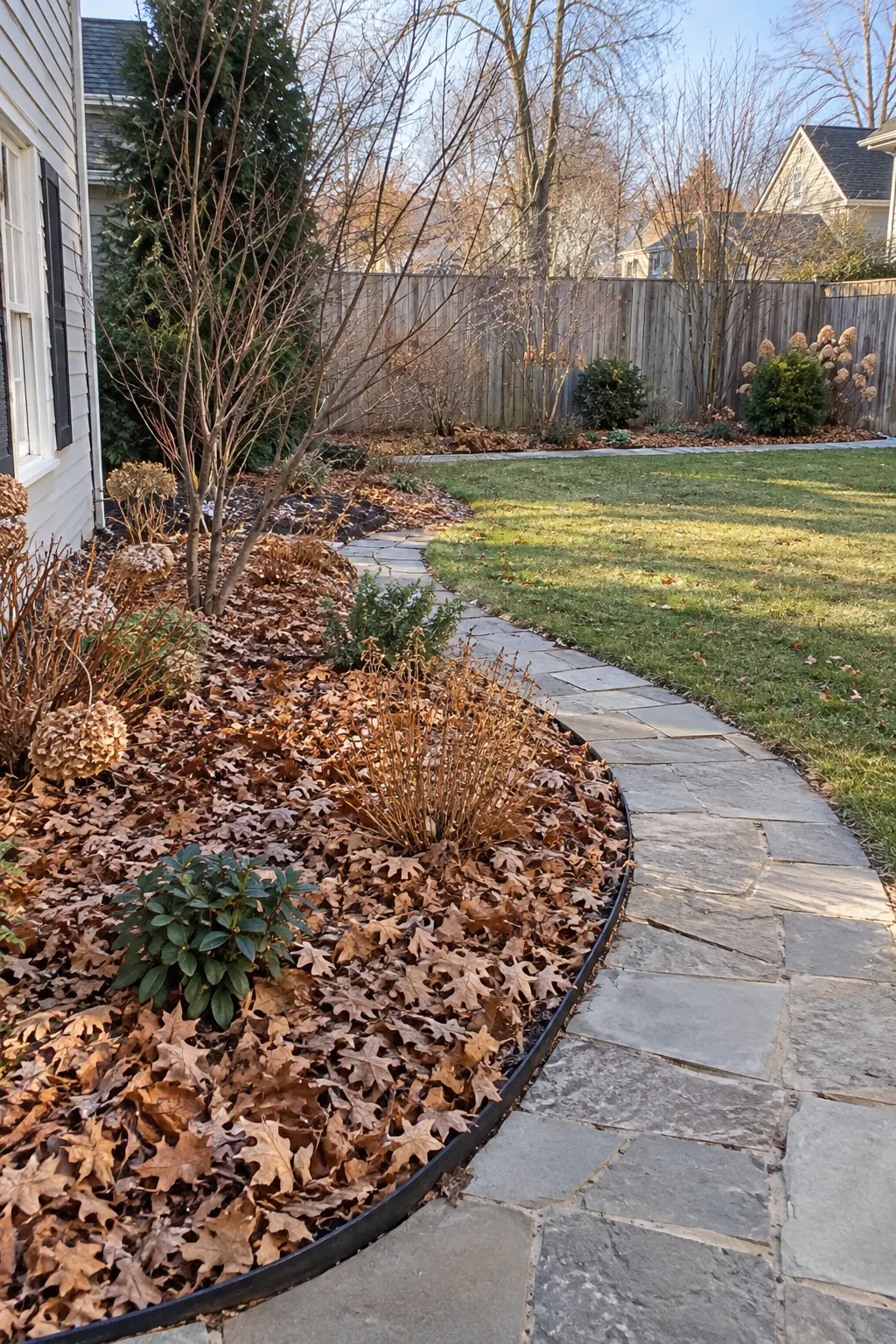
Move fallen leaves from lawns and paths into garden beds where they can insulate soil and shelter insects. Keep drainage areas and hard surfaces clear.
30. Delay Cutting Hollow Stems
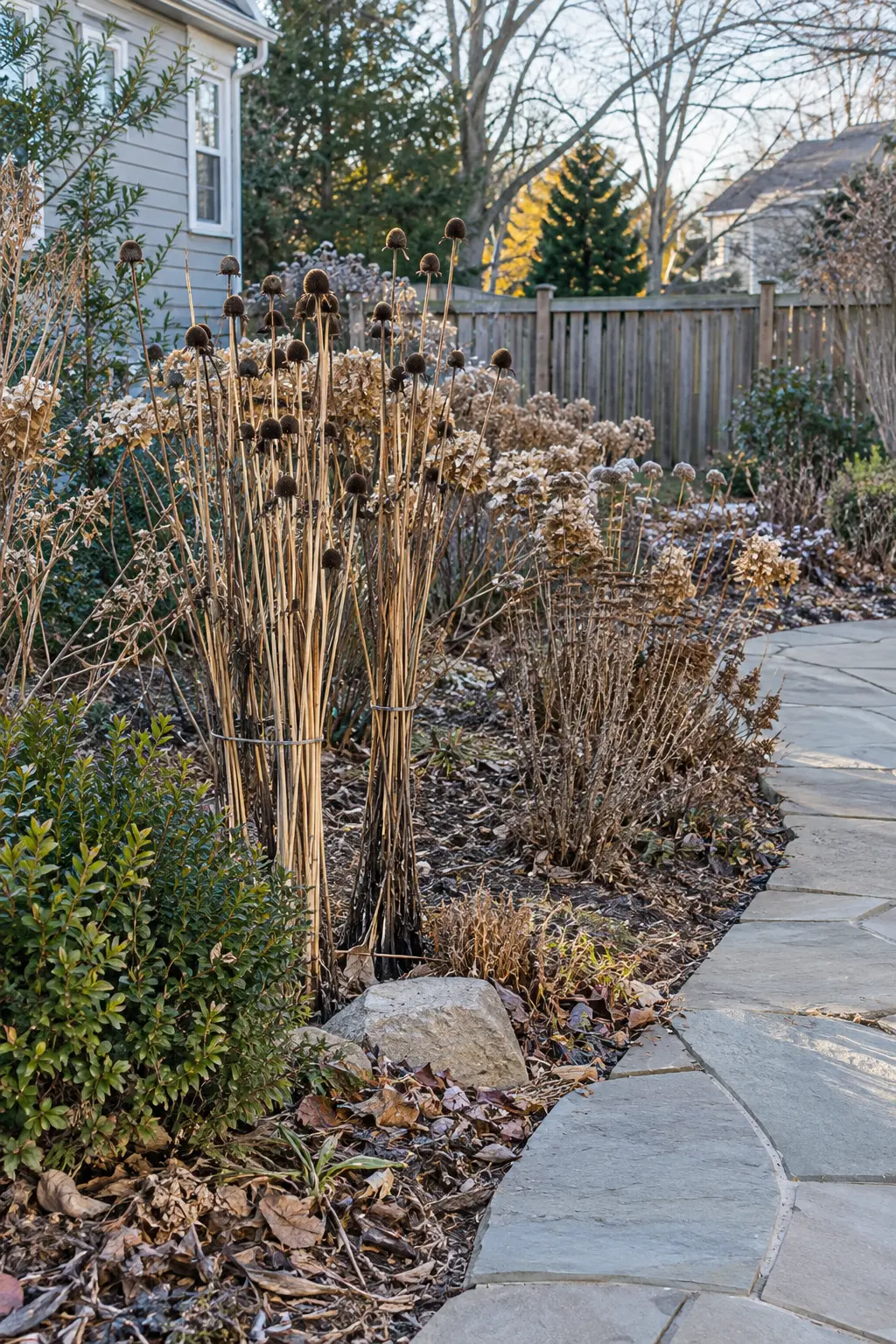
Leave suitable native plant stems standing until seasonal conditions support emerging insects. Bundle or edge the patch neatly if a more intentional look is preferred.
31. Add a Winter Roosting Box
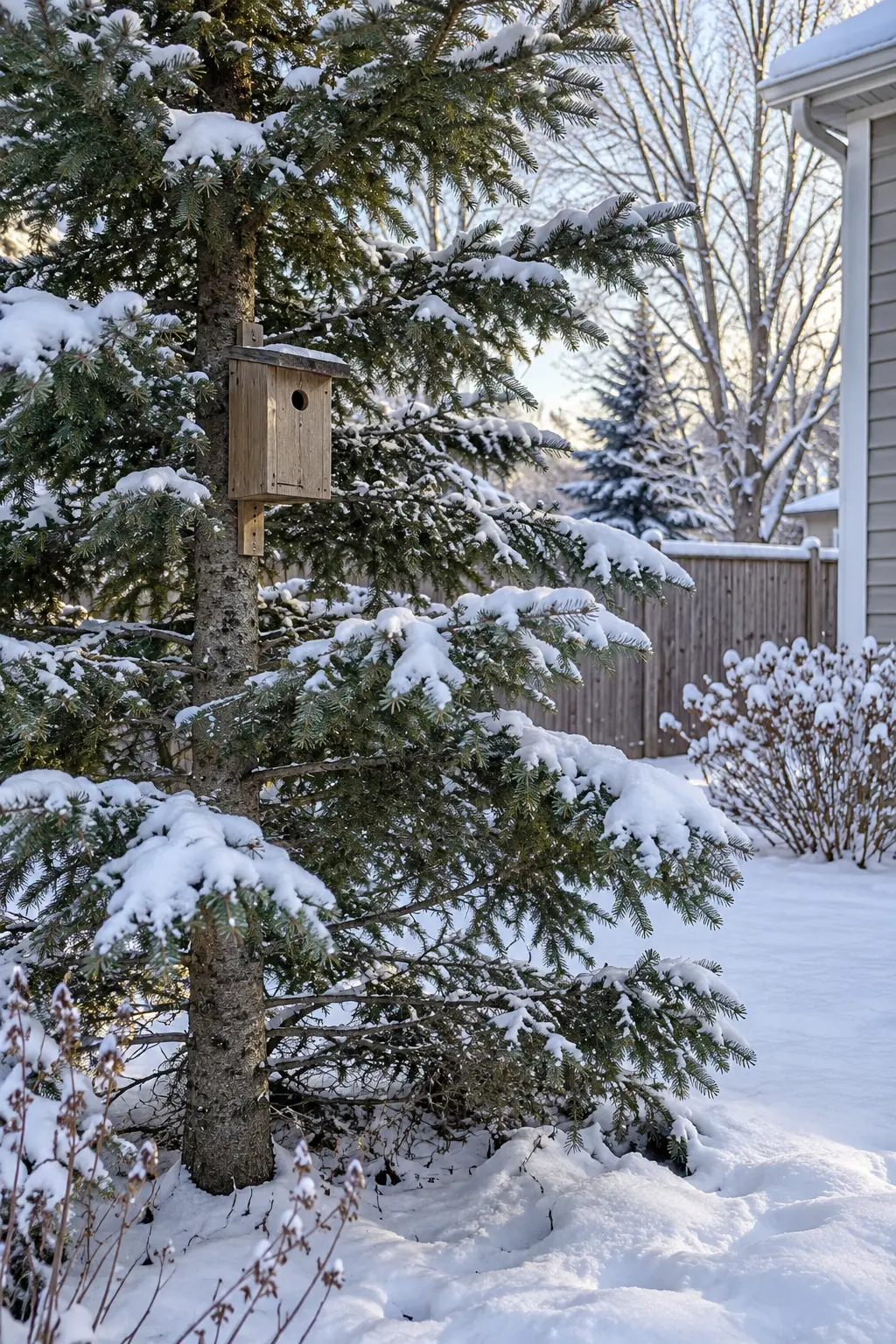
Install a purpose-built roosting box at the correct height and orientation for local birds. Keep it secure from predators and clean it as recommended.
32. Create Layered Wildlife Cover
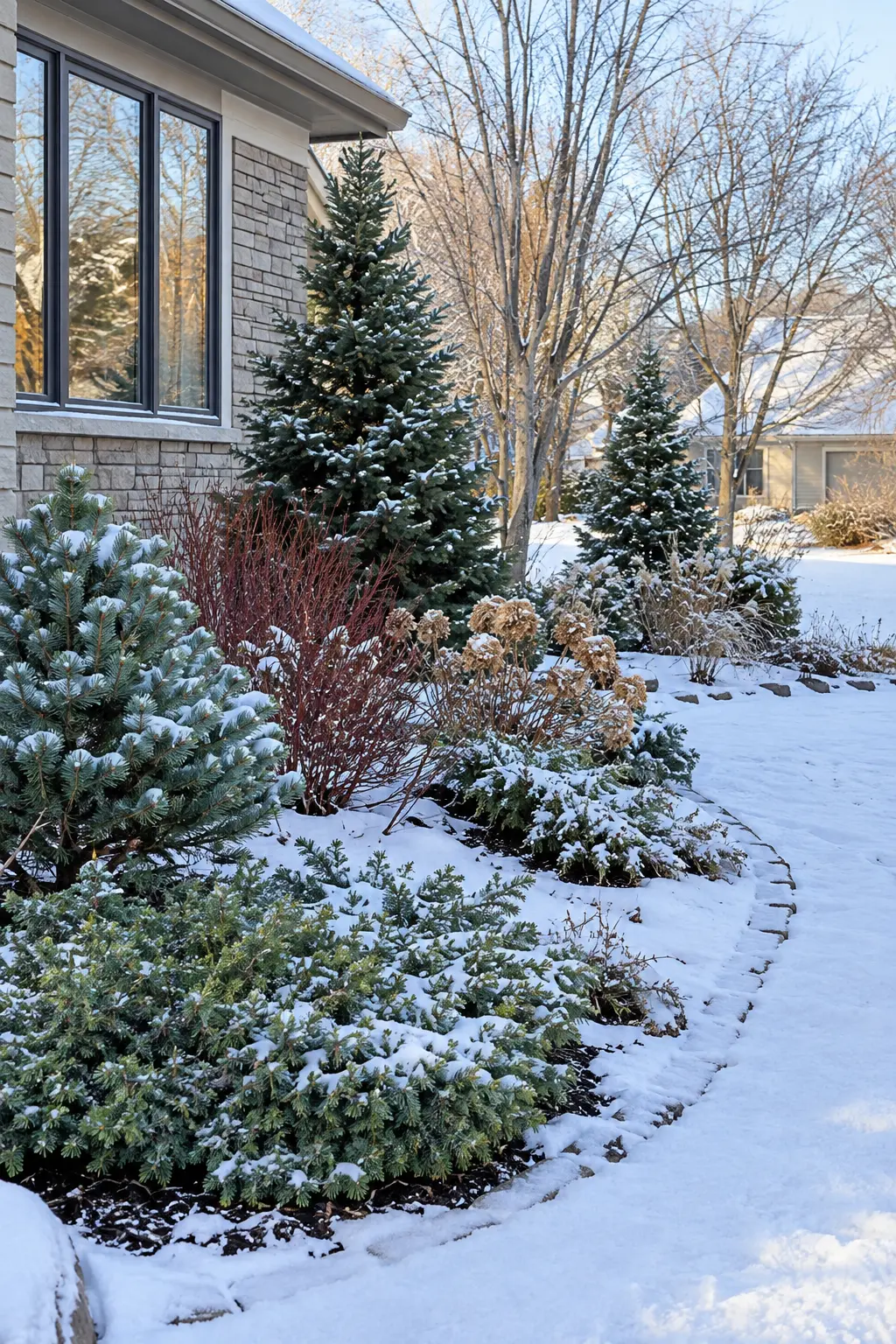
Combine groundcover, shrubs, and small trees to offer shelter at different heights. A layered planting also gives the winter garden stronger visual depth.
Plan Practical Winter Activities
33. Build a Safe Snow-Play Zone
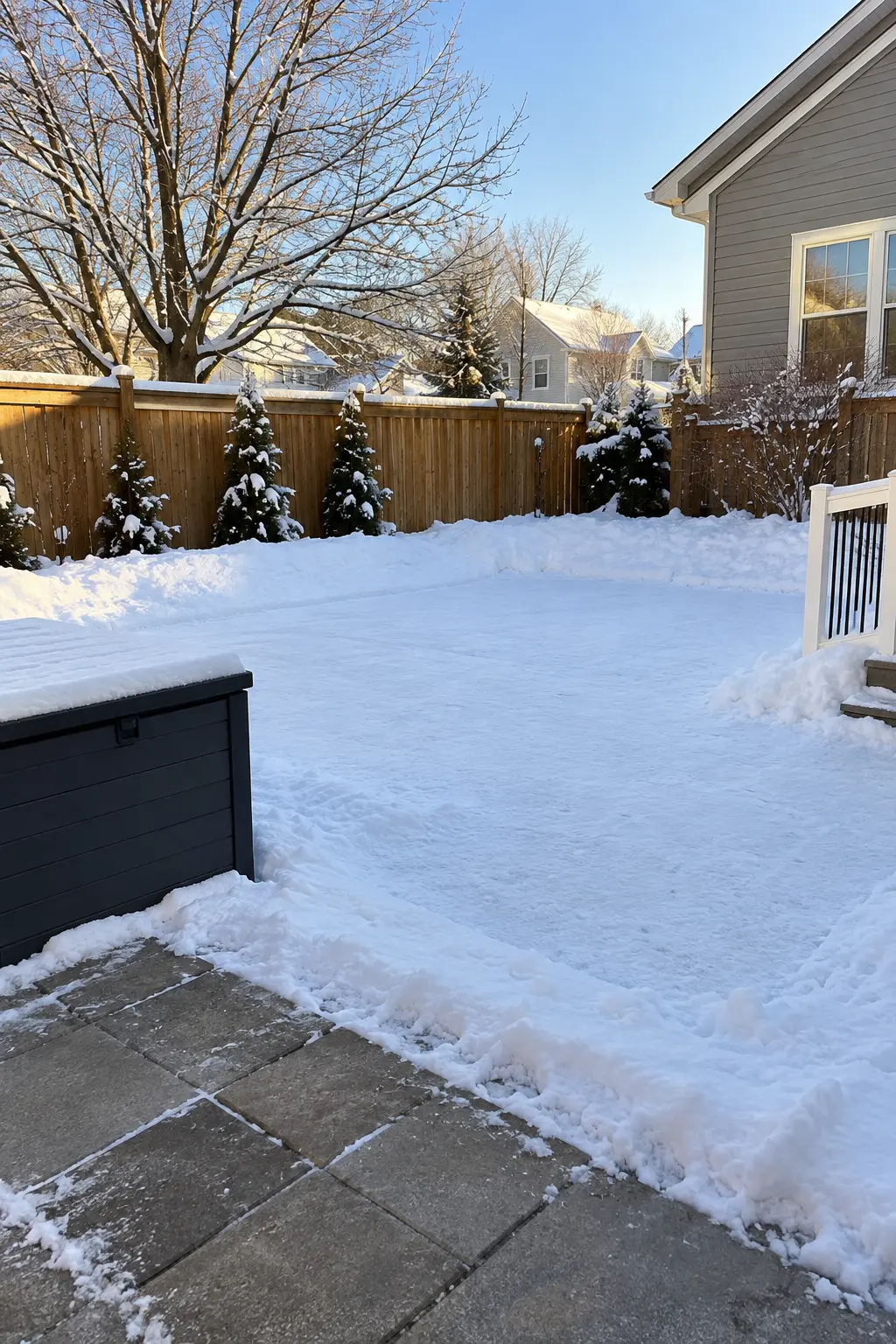
Choose a level area away from driveways, streets, fire pits, and fragile plantings. Store sleds and snow toys in a nearby weather-resistant bin.
34. Set Up an Outdoor Cocoa Table
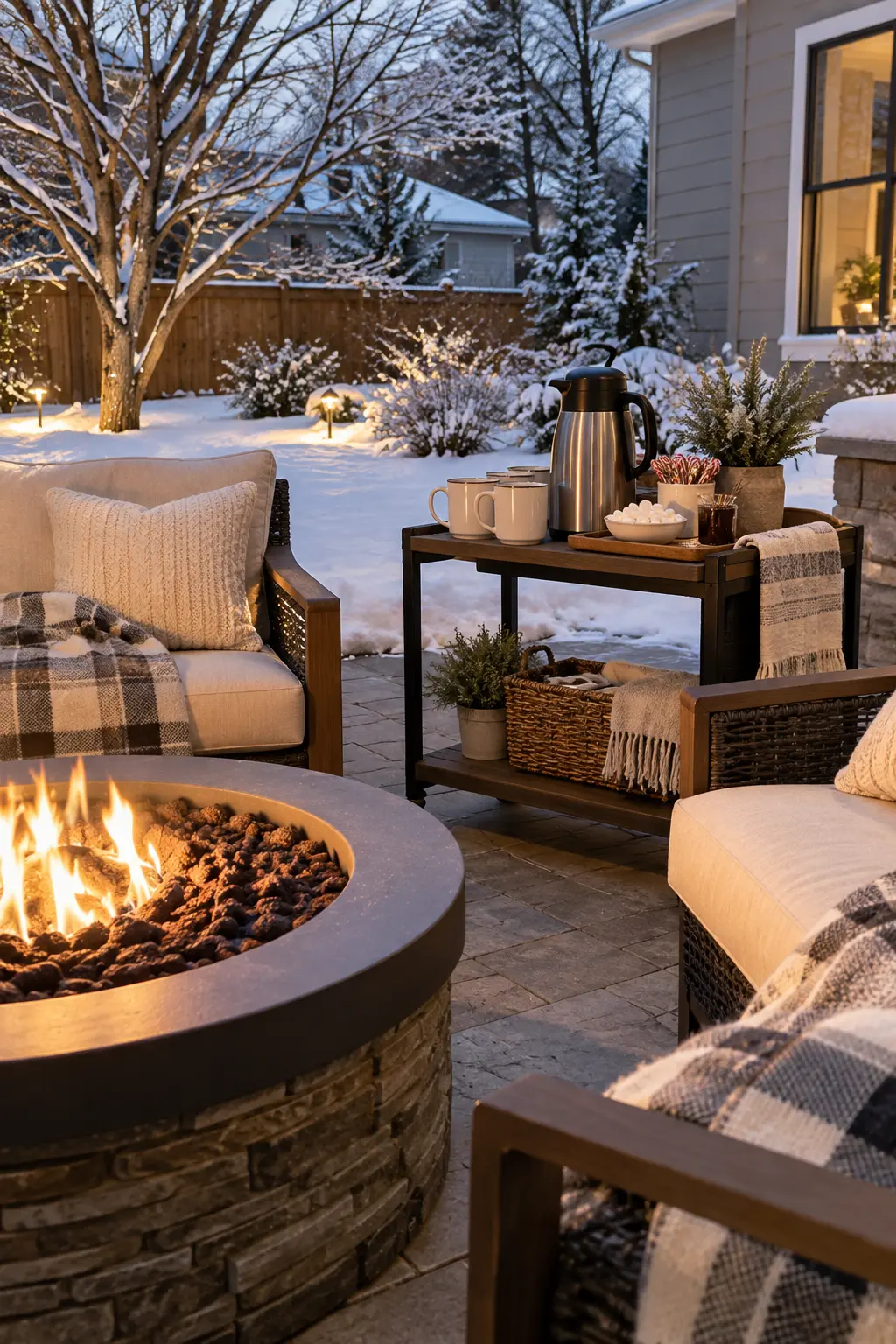
Use a small stable table near the heated seating area for insulated drink containers and mugs. Keep cords, flames, and hot liquid away from children’s play routes.
35. Create a Backyard Stargazing Spot
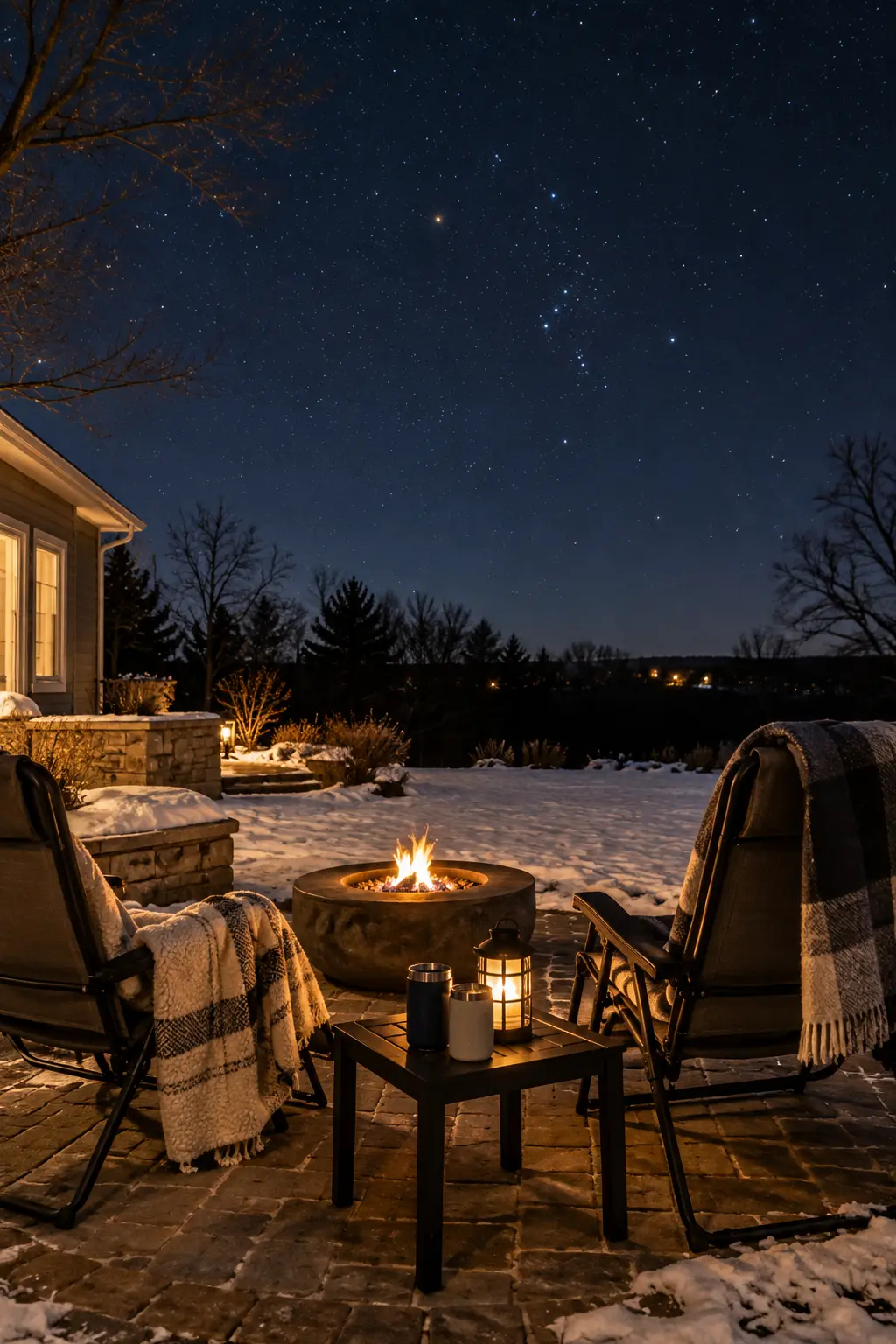
Position reclining chairs where exterior lights can be dimmed and the sky view is open. Bring cushions and blankets out only for the session, then store them dry.
36. Make a Covered Grill Station
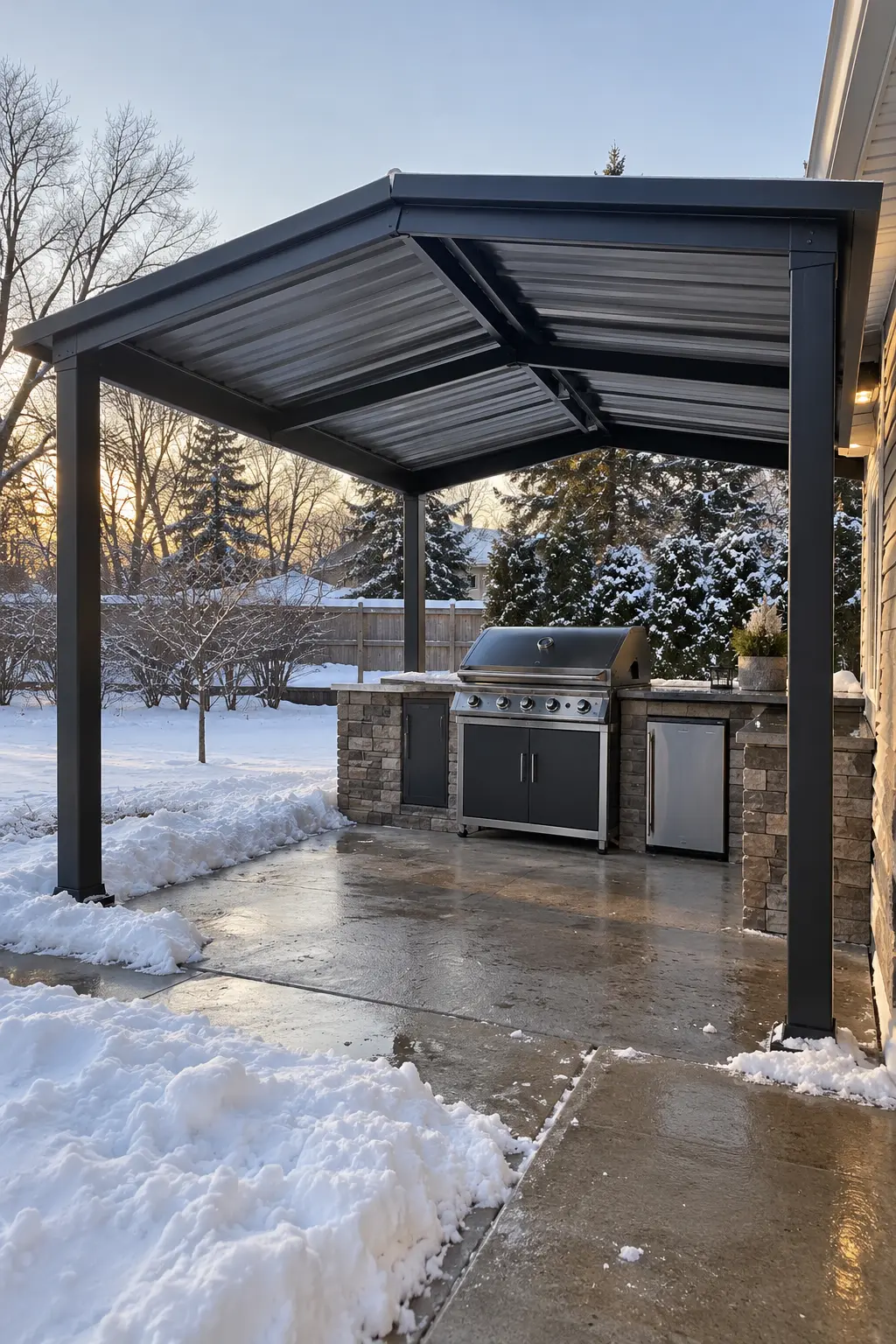
Use a freestanding cover or roof designed for outdoor cooking while preserving required ventilation and clearances. Never grill inside an enclosed porch, garage, or improvised tent.
37. Add a Boot-Scraping Station
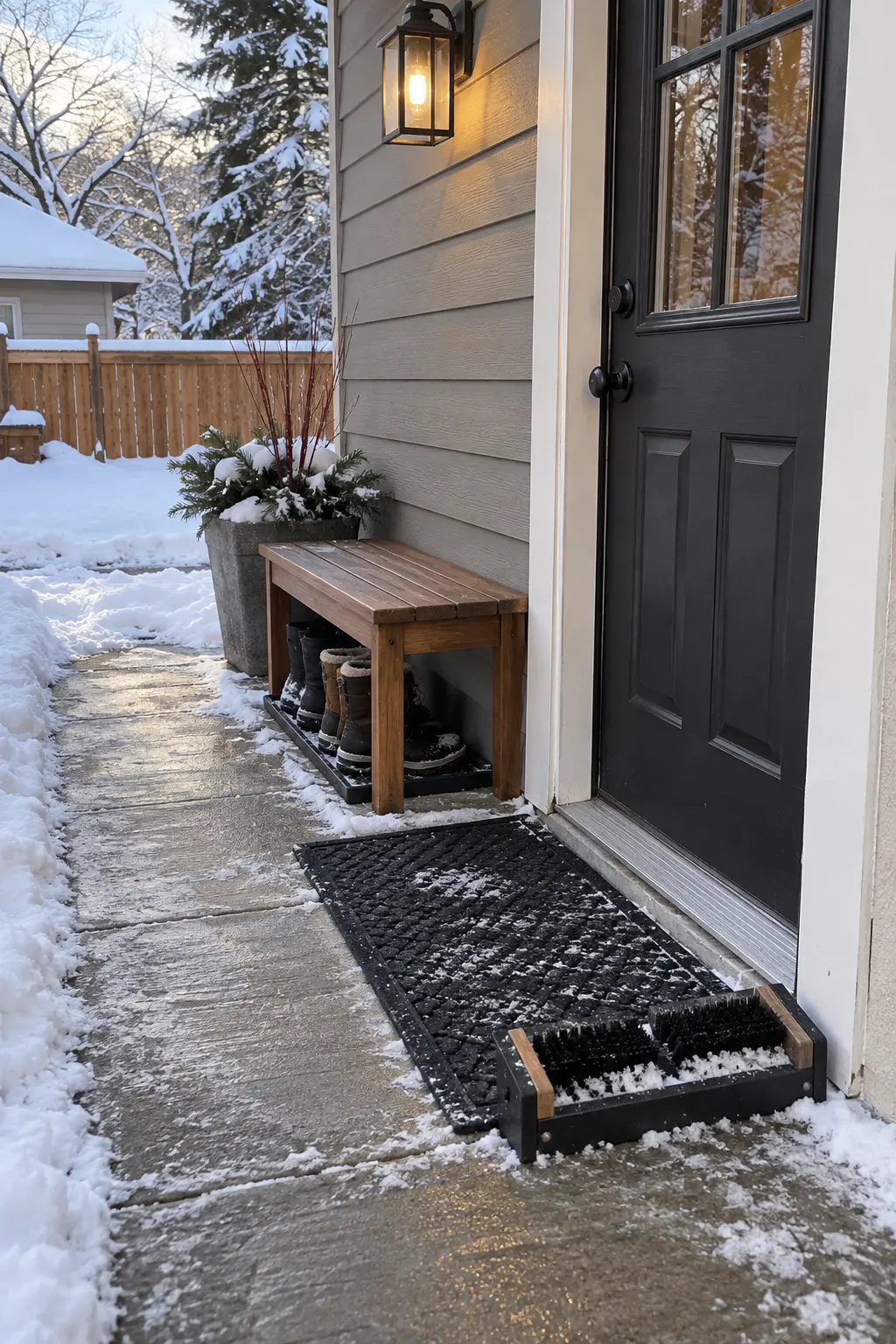
Place a sturdy scraper, absorbent mat, and small bench near the back door. The transition zone keeps snow, salt, and mud from traveling into the house.
38. Keep One Path Fully Clear
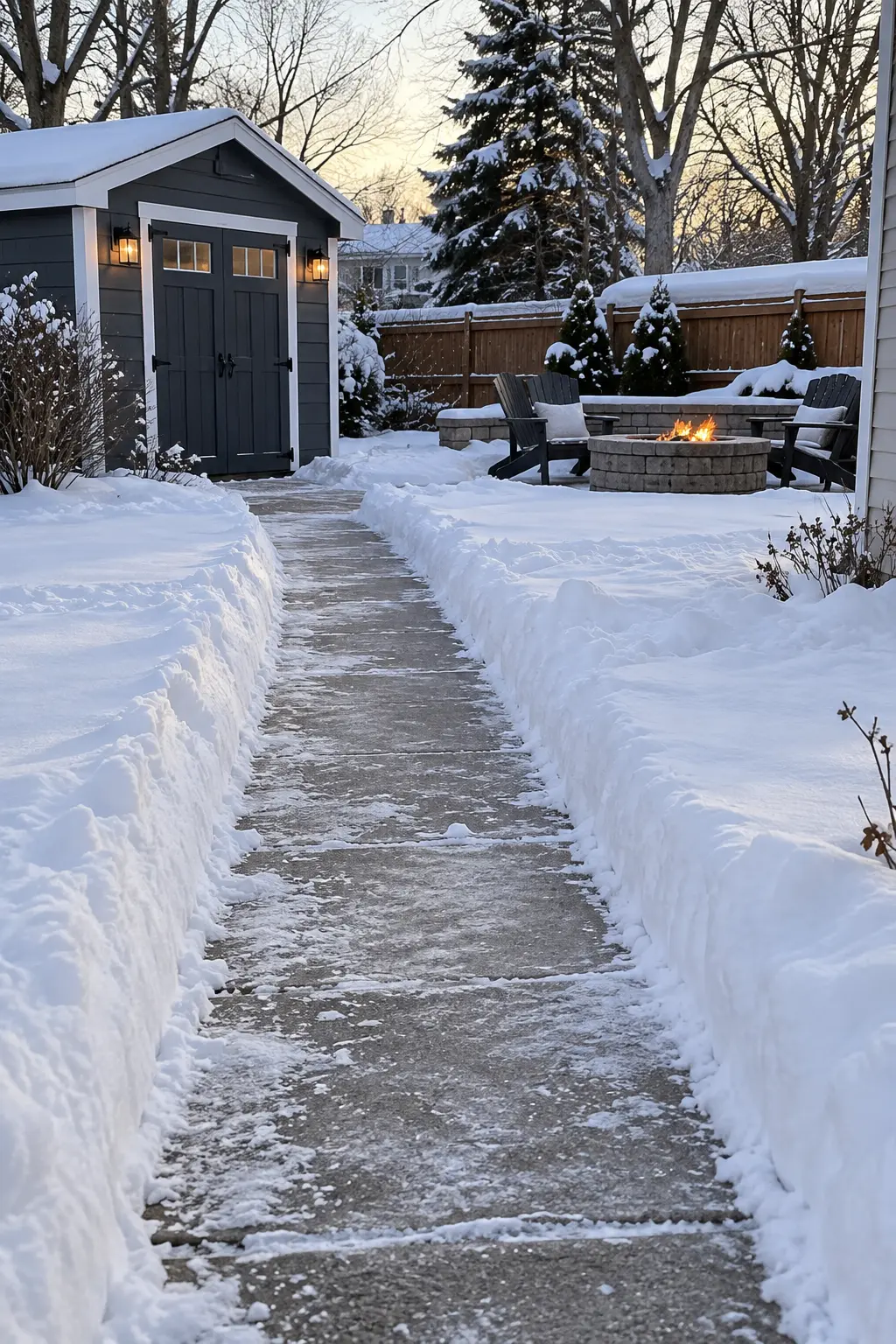
Prioritize the shortest route to the seating, bins, bird feeder, or shed. Shovel to a safe width and address ice according to the surface and local conditions.
39. Use a Shed as a Winter Work Zone
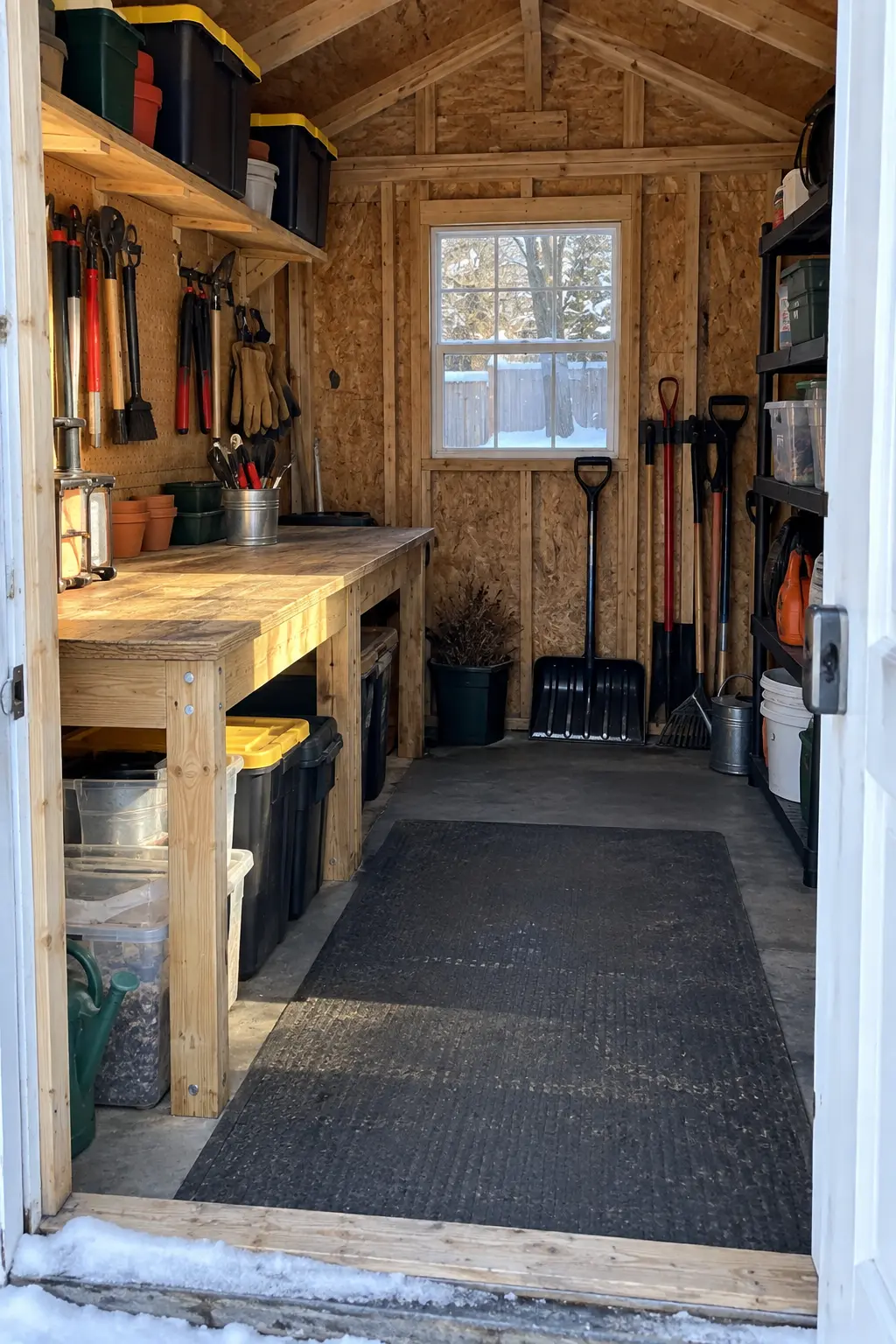
Organize frequently used tools, ice melt, gloves, and birdseed near the entrance. Keep chemicals sealed and fuels stored only where permitted.
40. Plan a Small Winter Wellness Corner
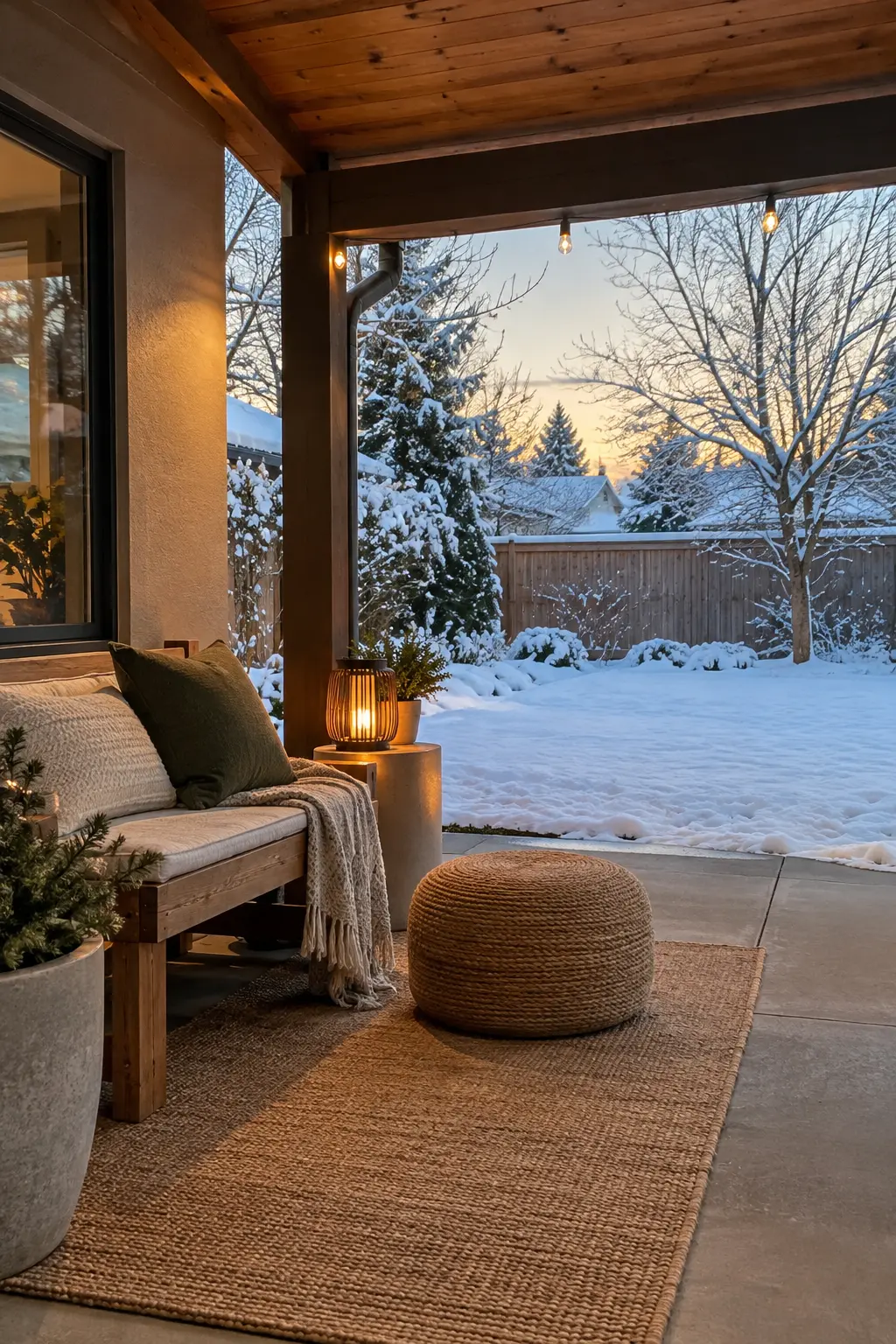
Create a sheltered stretching or quiet-sitting area with a dry mat and bench. Add only equipment rated for outdoor cold, moisture, and the structure supporting it.
Make the Backyard Work Through Winter
Start with the route, wind, light, and one place to sit before adding decorative details. A focused, well-maintained winter zone will feel more inviting than a large yard filled with furniture no one can comfortably reach or use.