50 Nook Under Stairs Ideas

This post may contain affiliate links: full affiliate disclosure.
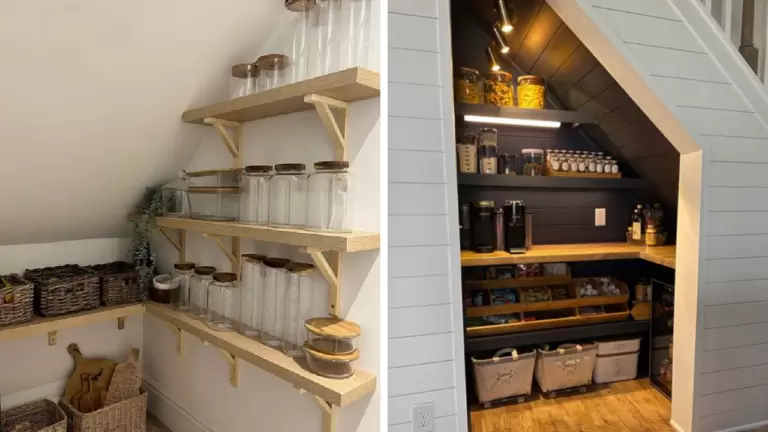
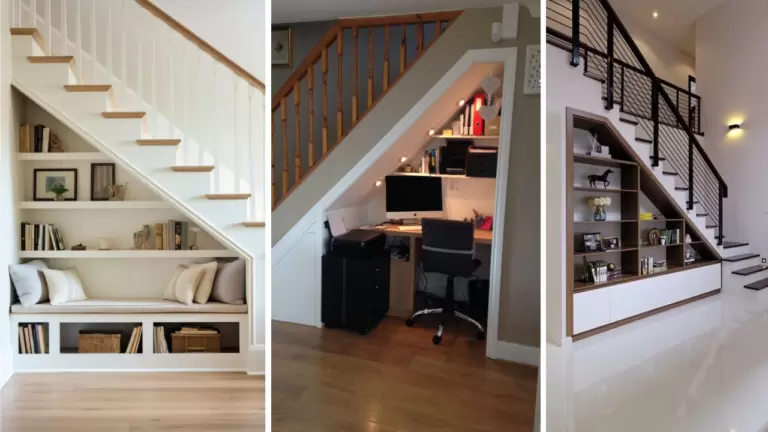
Transforming the empty space beneath a staircase adds valuable square footage and character to any home. These sloped alcoves work best when tailored to a specific activity like reading or quiet storage while utilizing the unique architectural angles.
COZY READING NOOKS UNDER STAIRS
1. Built-In Reading Nook With Storage Bench
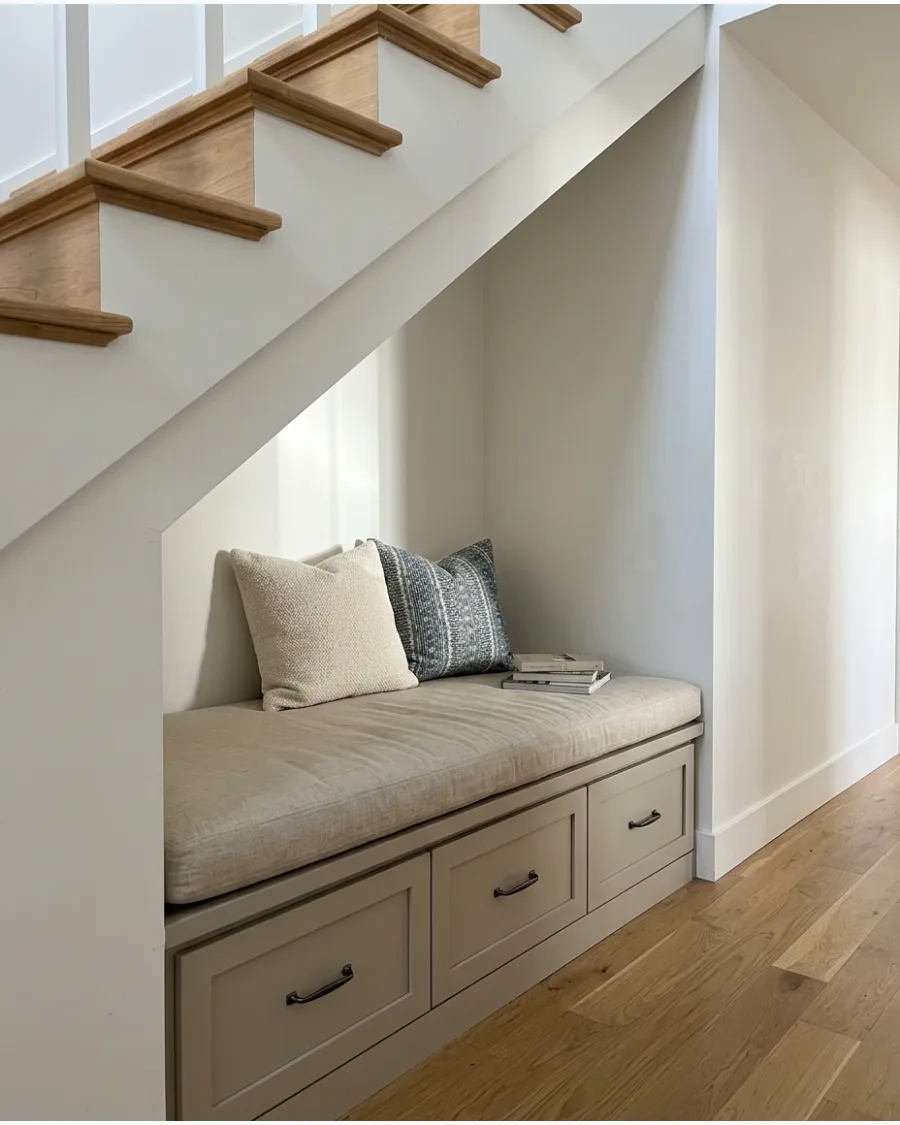
Custom benches maximize every inch of the triangular gap while providing essential utility. Deep drawers under the seat offer hidden space for bulky blankets or seasonal items that usually clutter closets.
Measure the depth of the stairs first to ensure the bench sits flush with the outer wall for a professional look. Storage benches are the most efficient way to handle low-clearance areas in a hallway.
- Budget: $300 to $800 for lumber and custom upholstery.
- Install heavy-duty drawer slides to handle the weight of bulkier storage items.
- Swap drawers for open cubbies and wicker baskets to save on hardware costs.
Quick win: Use a high-density foam for the cushion so it does not bottom out over time.
2. Book-Lined Reading Nook Under Stairs
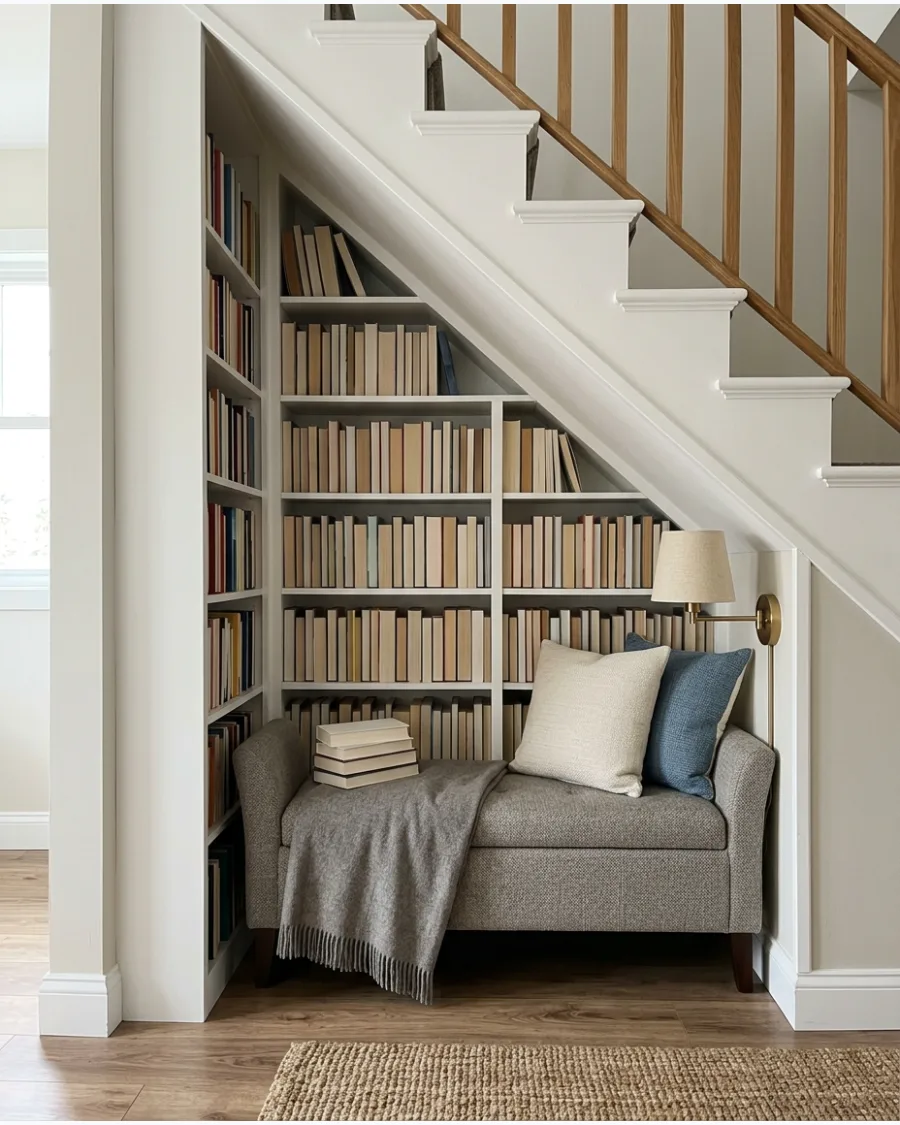
Vertical shelving turns a dark corner into a functional library that feels like a separate room. Lining the back wall with books adds natural insulation and sound dampening to the nook.
Install shelves at varying heights to accommodate both tall hardcovers and smaller paperbacks effectively. Bookshelves should always be anchored directly into the wall studs for safety in high-traffic zones.
- Budget: $150 to $500 depending on shelf material and length.
- Align the shelf edges with the angle of the staircase for a seamless built-in look.
- Renters can use tension rods and light fabric to hide shelves instead of drilling.
Most people skip this: Add a small lip to the front of the shelves to prevent books from sliding off in high-traffic hallways.
3. Moody Green Reading Nook
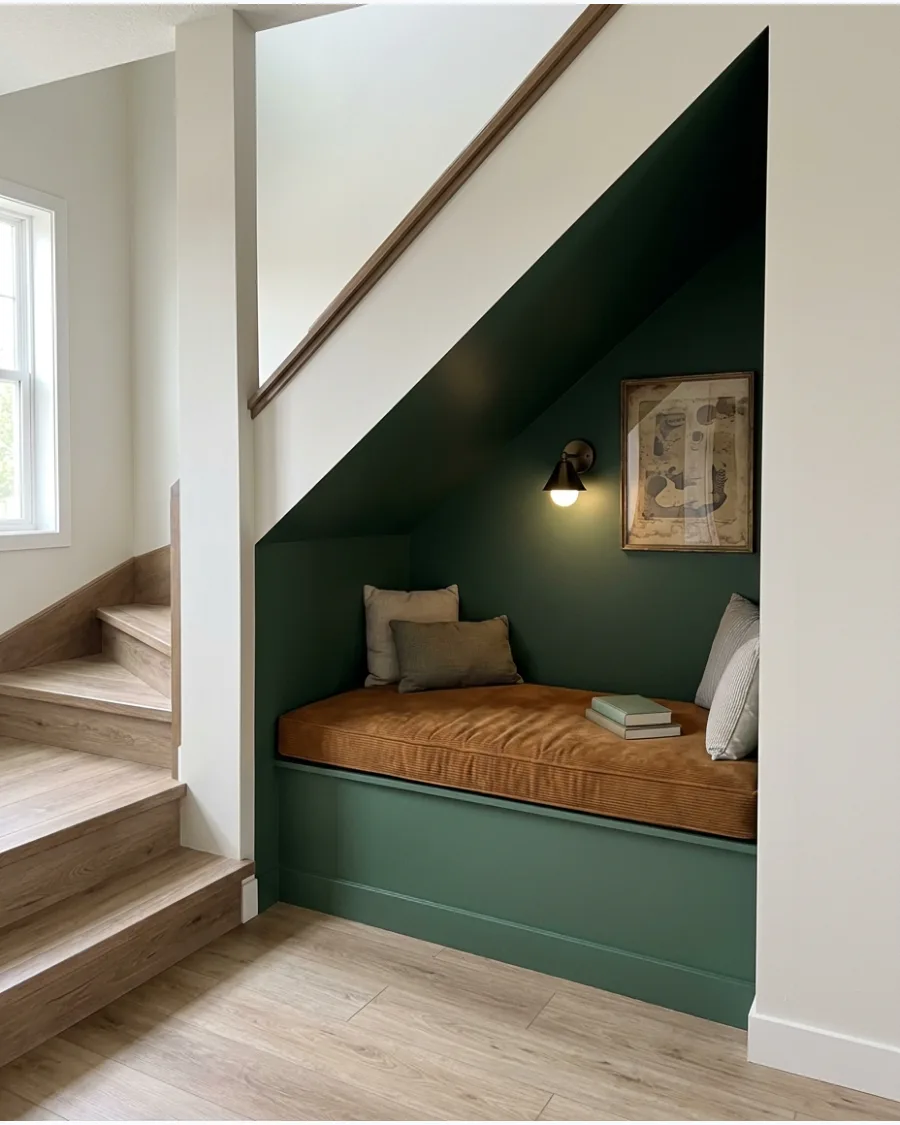
Dark colors make a small space feel intentional and cozy rather than cramped. Deep forest green pairs well with warm wood and brass to create a sophisticated retreat.
Paint the ceiling of the alcove the same color as the walls to blur the sharp angles and expand the space visually. Moody tones are excellent for hiding scuffs and fingerprints in narrow entryways.
- Budget: $50 to $100 for paint and a basic light fixture.
- Use a satin finish paint to reflect light and make the dark color feel less flat.
- Choose a peel-and-stick dark green wallpaper if you are not ready for permanent paint.
Best shortcut: Use a battery-powered puck light inside a brass sconce to avoid expensive electrical wiring.
4. Neutral Reading Nook With Linen Cushions
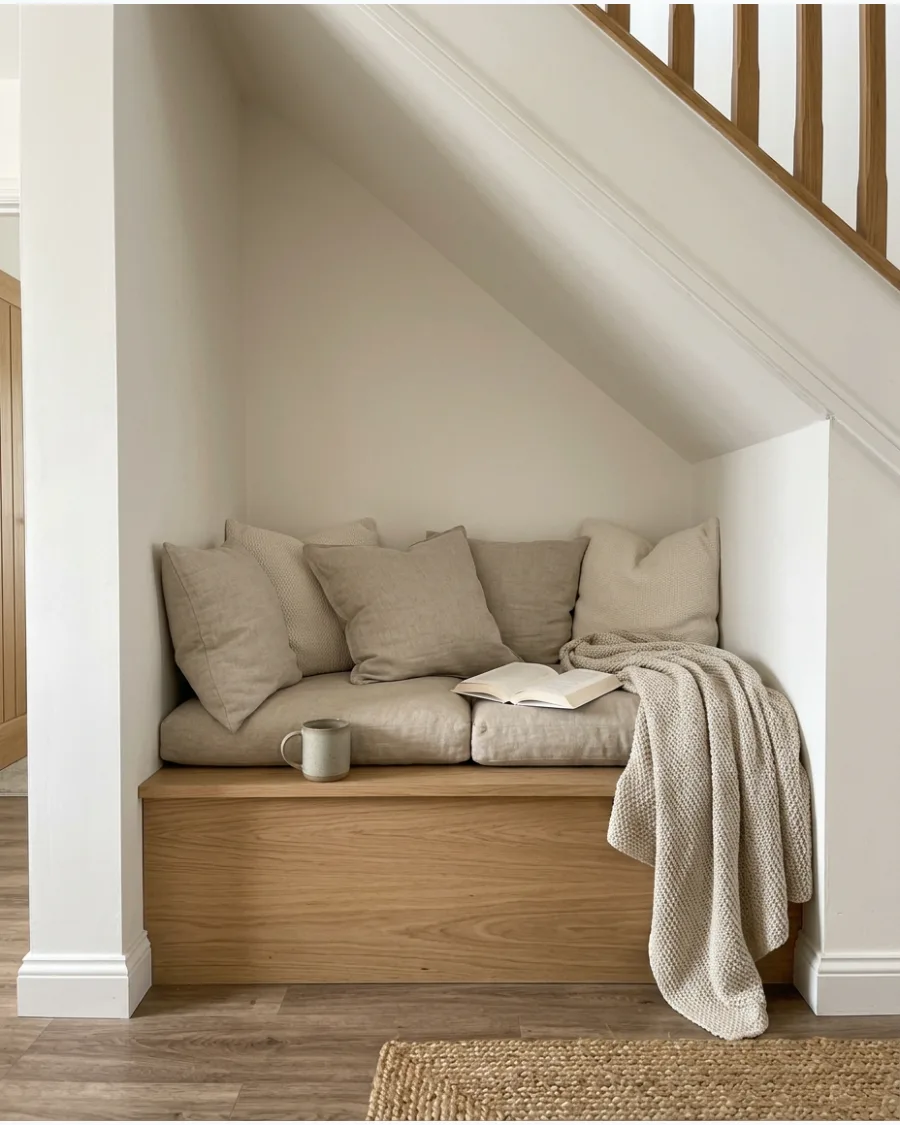
A light color palette keeps a windowless space from feeling like a cave. Linen fabrics and light wood bring an organic, breezy feel to the home’s interior.
Layer different shades of beige and cream to add depth without using bold colors that might overwhelm the hallway. Natural textures make even the smallest nook feel high-end and inviting.
- Budget: $200 to $400 for textiles and wood materials.
- Use removable cushion covers for easy washing in high-traffic areas.
- Add a small jute rug in front of the nook to define the zone from the hallway.
Quick win: Stick to off-white instead of stark white to keep the nook from looking clinical.
5. Wallpapered Reading Nook Under Stairs
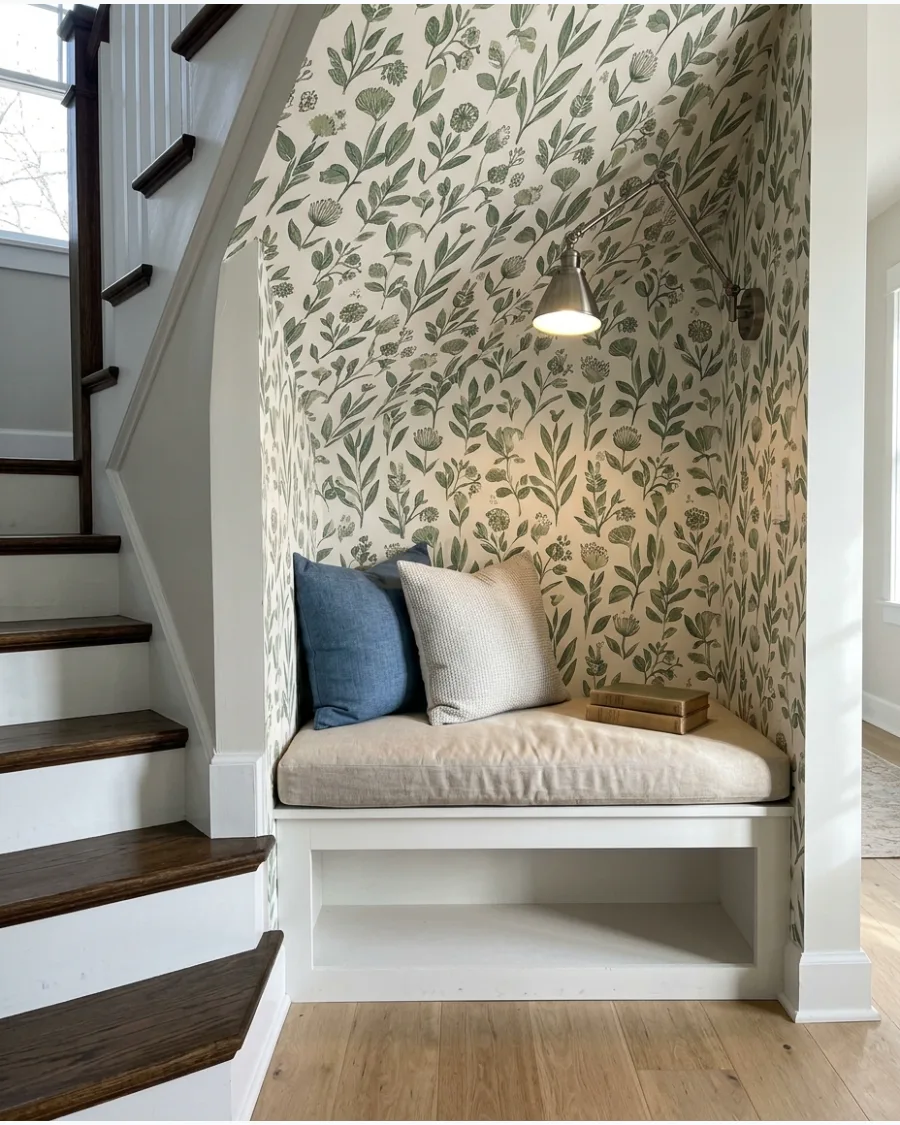
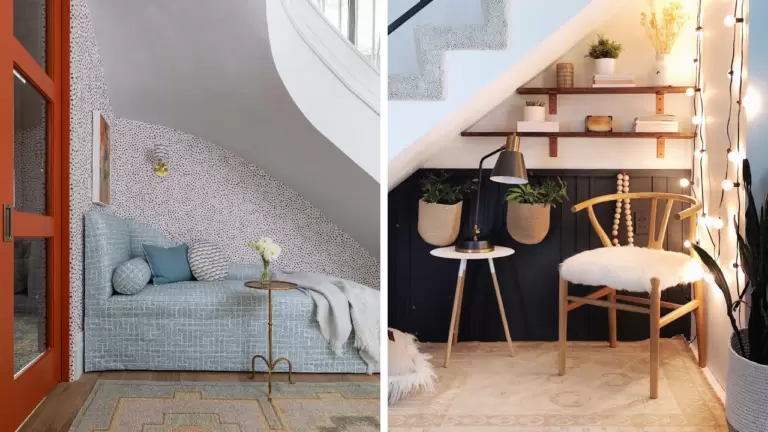
Patterned wallpaper adds immediate visual interest to a plain hallway or entryway. It defines the nook as a separate room rather than just a hole in the wall.
Apply the wallpaper to the back wall and the sloped ceiling for a cohesive, wrapped effect. Busy patterns are excellent for disguising slightly uneven drywall in older homes.
- Budget: $80 to $200 for wallpaper and basic application tools.
- Use peel-and-stick paper for an easy DIY that is simple to change later.
- Match the pillow colors to one of the secondary colors in the wallpaper pattern.
Most people skip this: Order one extra roll of wallpaper to account for the tricky diagonal cuts under the stairs.
6. Arched Reading Nook Under Stairs
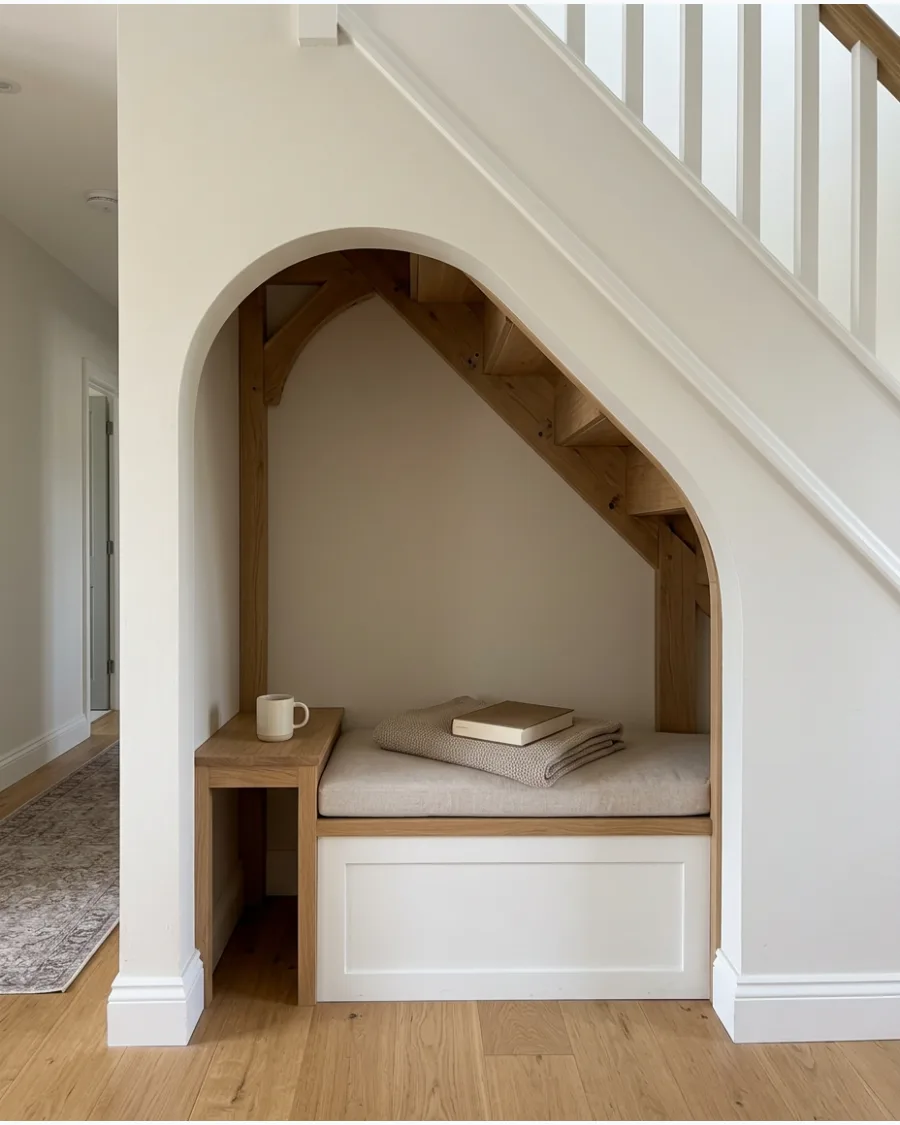
An arched opening softens the harsh diagonal lines typically found in a staircase design. This architectural detail makes the nook look like an original part of the home's construction.
Use flexible drywall or an arch kit to achieve a smooth curve without complex framing. Arches instantly elevate a standard builder-grade hallway into something custom.
- Budget: $400 to $1,000 for framing and professional drywall finishing.
- Ensure the arch height allows for comfortable head clearance when sitting down.
- Paint the inside of the arch a slightly darker shade to emphasize the architectural depth.
Best shortcut: Use a pre-formed archway kit to save hours of manual framing and measuring.
Home Decor
7. Built-In Under-Stair Window Bench
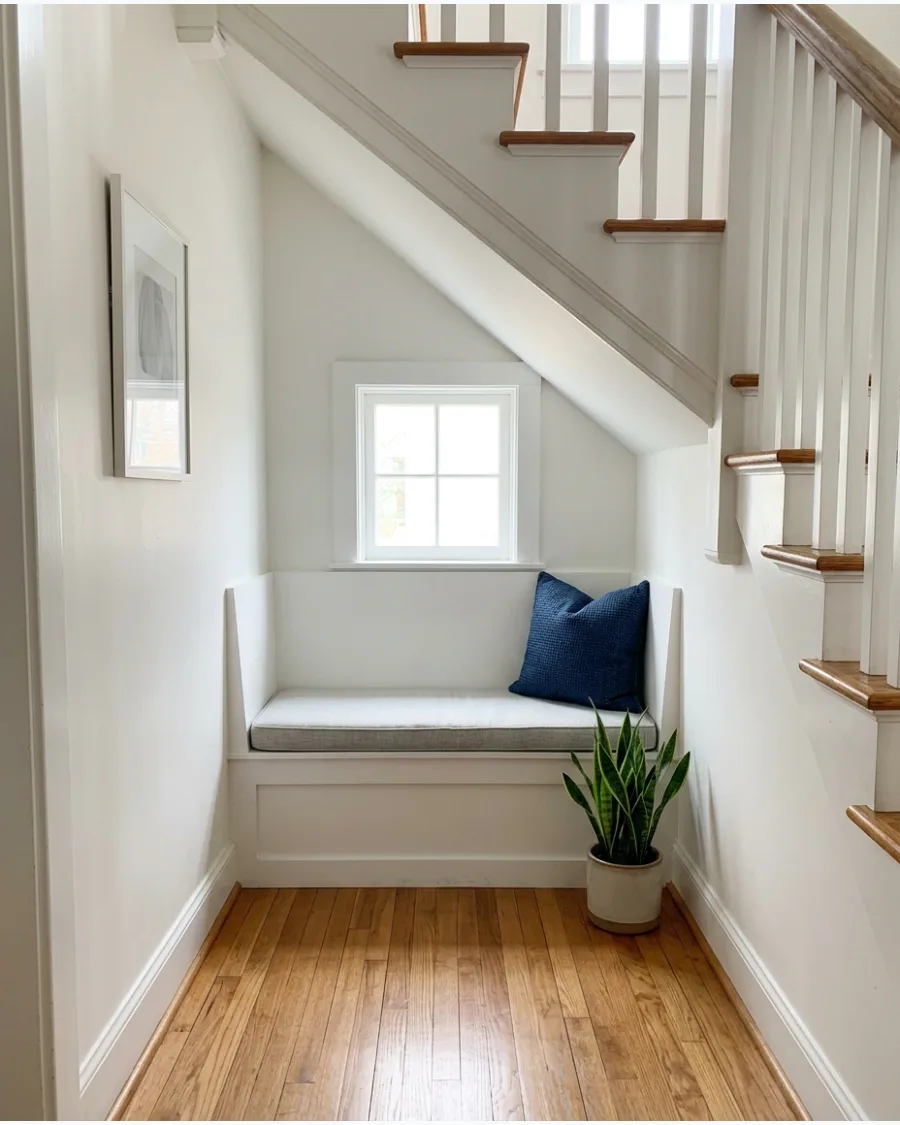
Convert the awkward gap beneath a staircase into a peaceful retreat by installing a permanent bench beneath an existing window. This structural addition utilizes natural light to create an inviting focal point in an otherwise dark hallway or entryway.
Mount the bench at a standard chair height of 18 inches to allow for comfortable seating and easy access for all ages. Incorporating wood paneling along the back wall adds texture and protects the paint from scuffs.
- Expect to spend $200 on materials for a basic frame or up to $600 for high-end cabinetry finishes.
- Check for electrical outlets or HVAC vents behind the wall before drilling to avoid costly utility repairs.
- Paint the bench the same color as the staircase trim to make the nook feel like an original architectural feature.
Quick win: Use a piano hinge on the bench top to create a flip-up lid for instant, deep-chest storage.
COZY READING NOOKS UNDER STAIRS
8. Cottage Reading Nook Under Stairs
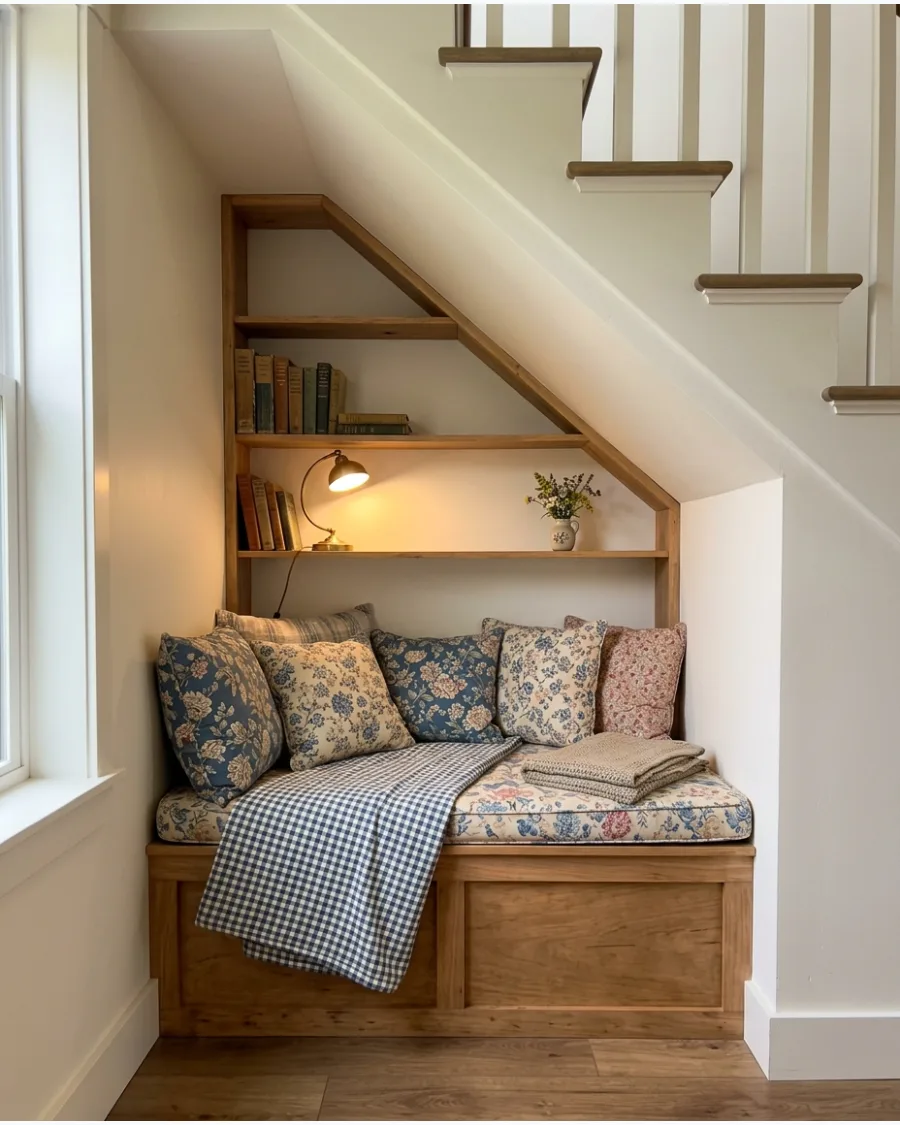
Cottage style focuses on warmth through mixed patterns and aged metal finishes. Floral prints and brass accents make the nook feel lived-in, cozy, and personal.
Mix vintage-style books with new ones to give the shelves an authentic collected look. Warm wood tones prevent the space from feeling too busy or cluttered.
- Budget: $100 to $300 using thrifted finds and new fabric.
- Use a tension rod to hang a small cafe curtain if you want to hide storage.
- Scour local antique shops for a small brass lamp with a pleated shade.
Most people skip this: Use a warm-toned LED bulb (2700K) to keep the cottage vibe from looking too modern.
9. Modern Minimalist Reading Nook
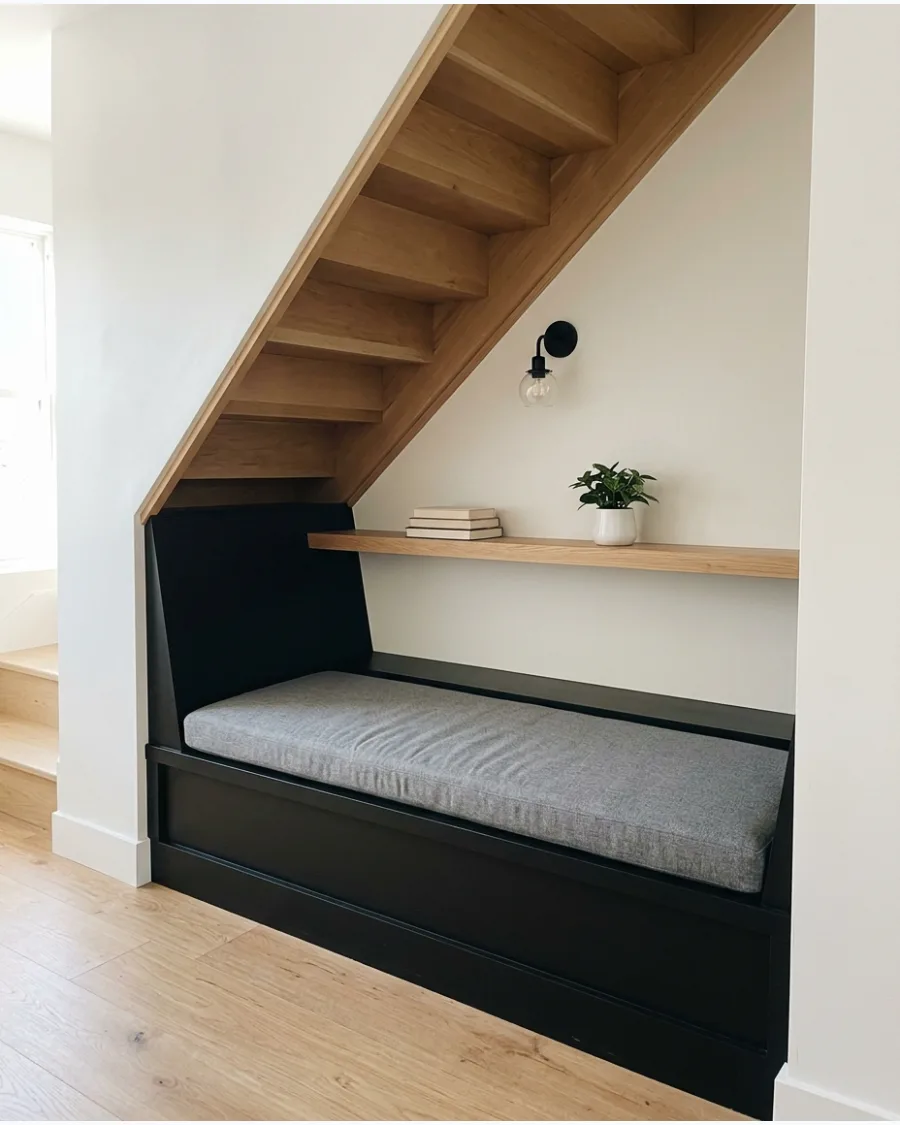
Minimalist nooks rely on clean lines and a lack of visual clutter to maintain an open feel. A single long cushion and floating shelves keep the space feeling airy rather than heavy.
Choose a monochromatic color scheme to help the nook blend into the surrounding walls seamlessly. This style works best in modern homes with open-tread staircases.
- Budget: $200 to $500 for high-quality materials and hardware.
- Use hidden brackets for the shelves to maintain the floating appearance.
- Keep the area under the bench clear of any items to emphasize the floor space.
Best shortcut: Use a high-quality plywood with an edge band for a custom look at a fraction of the cost of solid wood.
10. Kids' Storybook Reading Nook

Small spaces are perfect for children who love secret hideouts for play and reading. Low book ledges make it easy for toddlers to reach their favorite stories independently.
Add a soft rug and several floor cushions to create a safe landing spot for activity. Bright colors and fun patterns encourage kids to spend more time in their own corner.
- Budget: $100 to $250 for shelving and soft goods.
- Mount book ledges low enough for a seated child to reach safely.
- Use washable fabric covers for all cushions to handle inevitable spills and stains.
Quick win: Use front-facing book ledges so kids can see the covers, which makes them more likely to pick up a book.
BUILT-IN SEATING & LOUNGE NOOKS
11. Upholstered Bench Nook Under Stairs
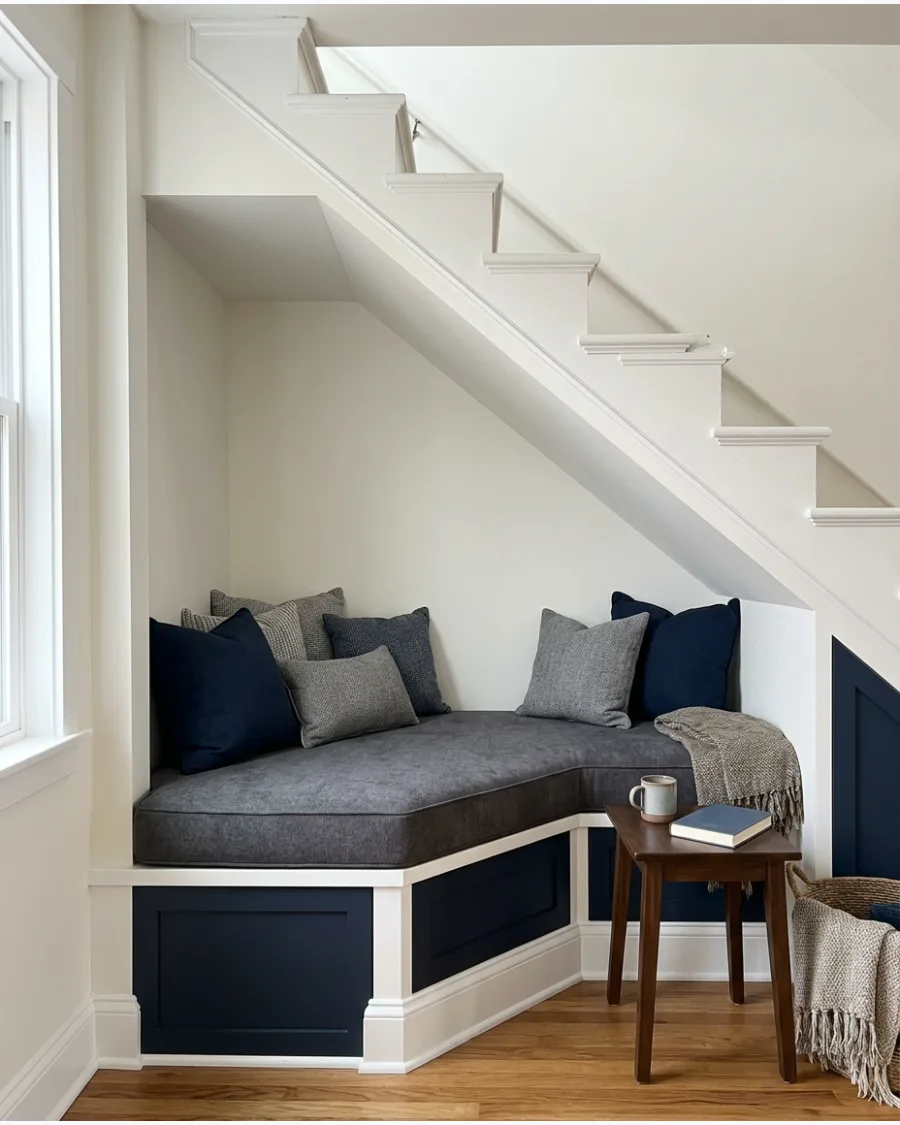
Fitting a wall-to-wall bench uses every inch of the triangular footprint beneath the steps. Measure the widest and narrowest points carefully before ordering a custom cushion to ensure a seamless fit. Layering multiple pillows of different sizes creates depth and makes the low ceiling feel intentional.
A thick foam base provides enough support for long reading sessions and prevents the bench from feeling hard.
- Custom cushions cost $150-$400 depending on foam density.
- Secure the bench frame to wall studs for maximum weight capacity.
- Swap pillow covers seasonally to refresh the look without a full renovation.
Quick win: Use a non-slip rug pad under the bench cushion to prevent it from sliding forward during use.
12. Daybed Nook Under Stairs
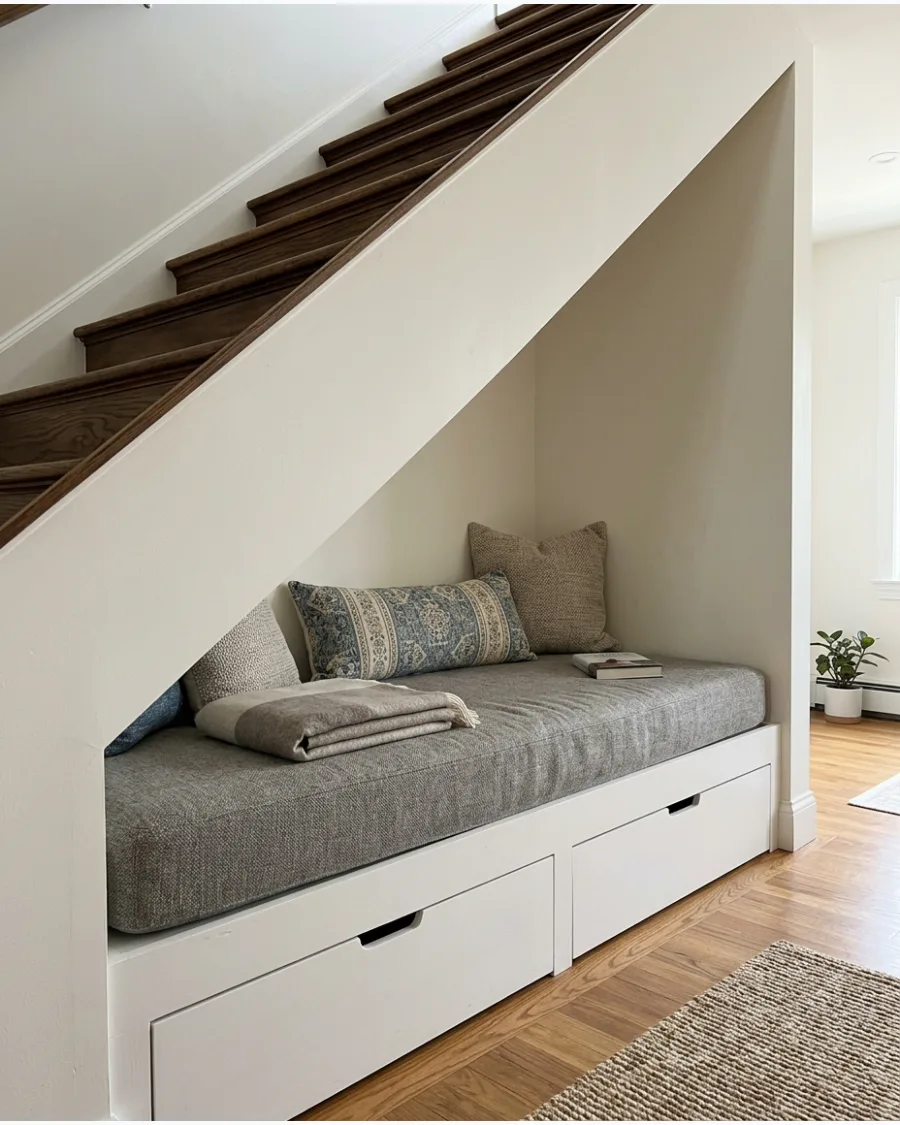
A daybed setup turns a deep alcove into a functional guest sleeping space or a heavy-duty lounge.
Choose a twin-sized mattress if the depth allows or opt for high-density foam cut to size for narrower stairs. Hidden storage underneath the mattress frame keeps extra linens close but out of sight.
This transformation works best in hallways that are wide enough to accommodate the mattress depth without blocking traffic.
- Budget $500-$900 for a custom-built frame and mattress.
- Ensure the base has ventilation holes to prevent moisture buildup under the mattress.
- Use a standard twin sheet set if the dimensions match to save on custom bedding.
Most people skip this: Install a small recessed light at the head of the daybed so you can read without a bulky lamp taking up mattress space.
13. Modern Wood Slat Nook
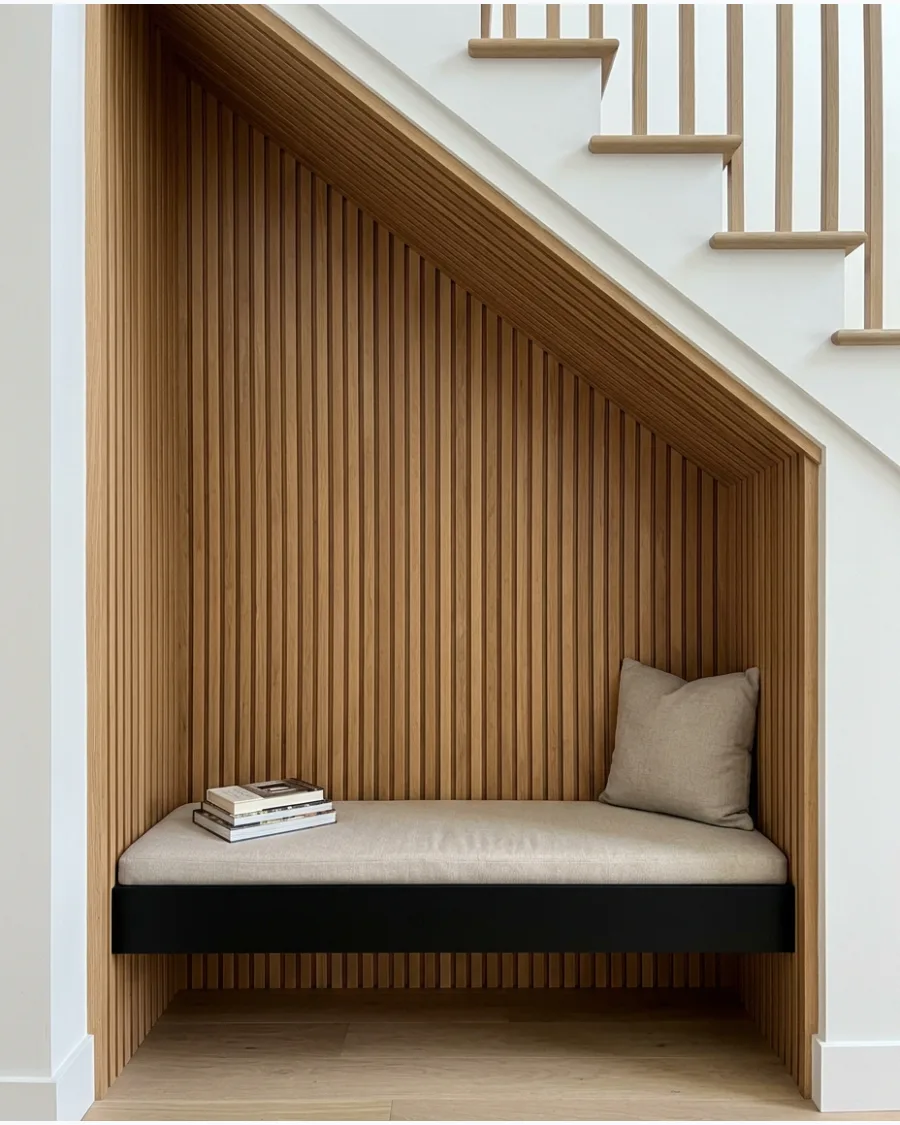
Vertical wood slats create a rhythmic architectural detail that draws the eye upward along the staircase slope. Install the slats with a small gap between each piece to add texture and shadows to the back wall. A simple floating bench keeps the floor visible, making the small area feel more open.
This style works exceptionally well in homes with a contemporary or mid-century aesthetic.
- Pine or oak slats cost roughly $5 per linear foot.
- Use a black felt backing behind the slats to create a high-contrast shadow line.
- Apply a clear matte sealant to the wood to prevent fingerprints without adding shine.
Best shortcut: Use construction adhesive and a few finish nails to secure slats quickly without a complex framing system.
14. Bouclé Bench Nook Under Stairs
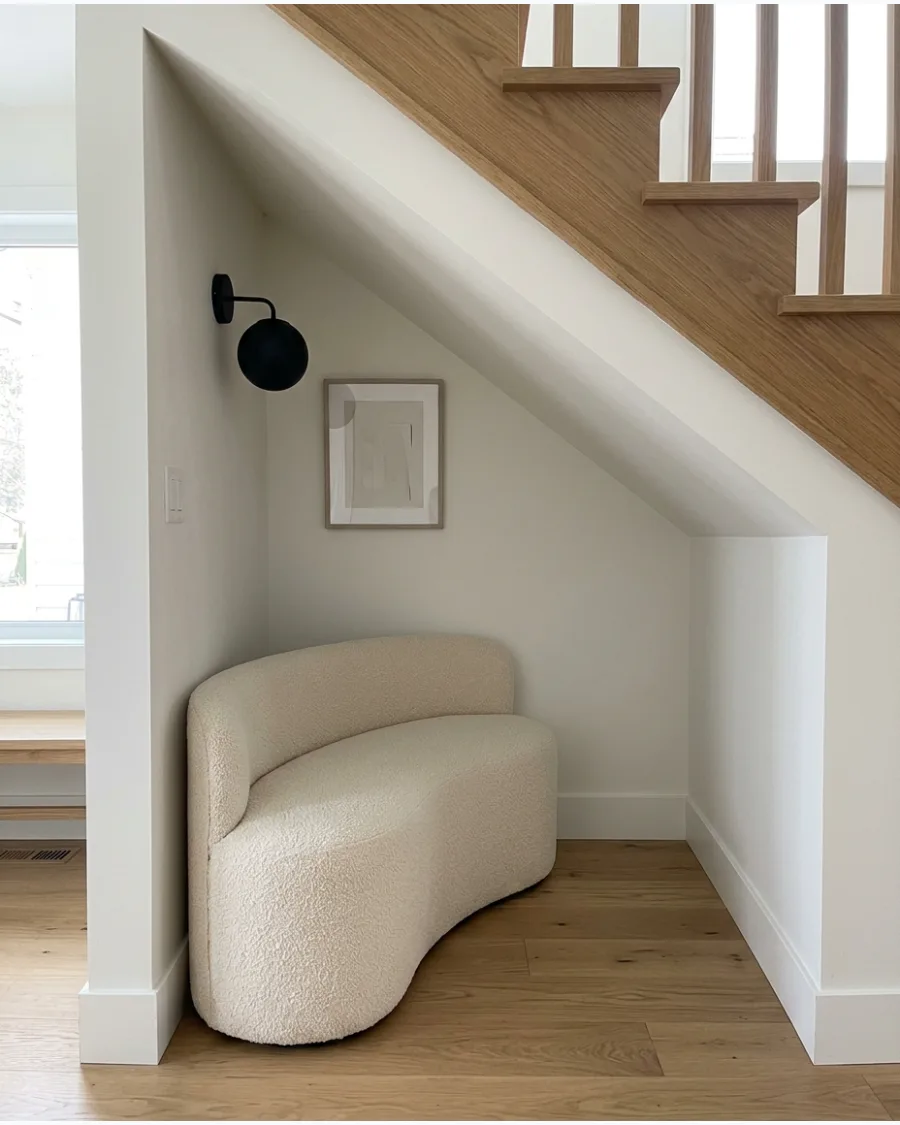
Texture is the key to making a white or neutral space feel high-end rather than empty. Pair a nubby bouclé-covered bench with a sculptural wall light to create a sophisticated focal point in an entryway. Keep the artwork minimal so the focus stays on the play of light and fabric.
Soft textures like bouclé balance the hard angles of the staircase structure.
- High-quality bouclé fabric averages $40-$70 per yard.
- Position the bench at least two inches away from the wall to prevent fabric rubbing.
- Choose a warm-tone LED bulb to highlight the texture of the fabric.
Quick win: Use a lint roller regularly on bouclé to keep dust and fibers from dulling the bright white or cream color.
15. Built-In Bench With Drawers
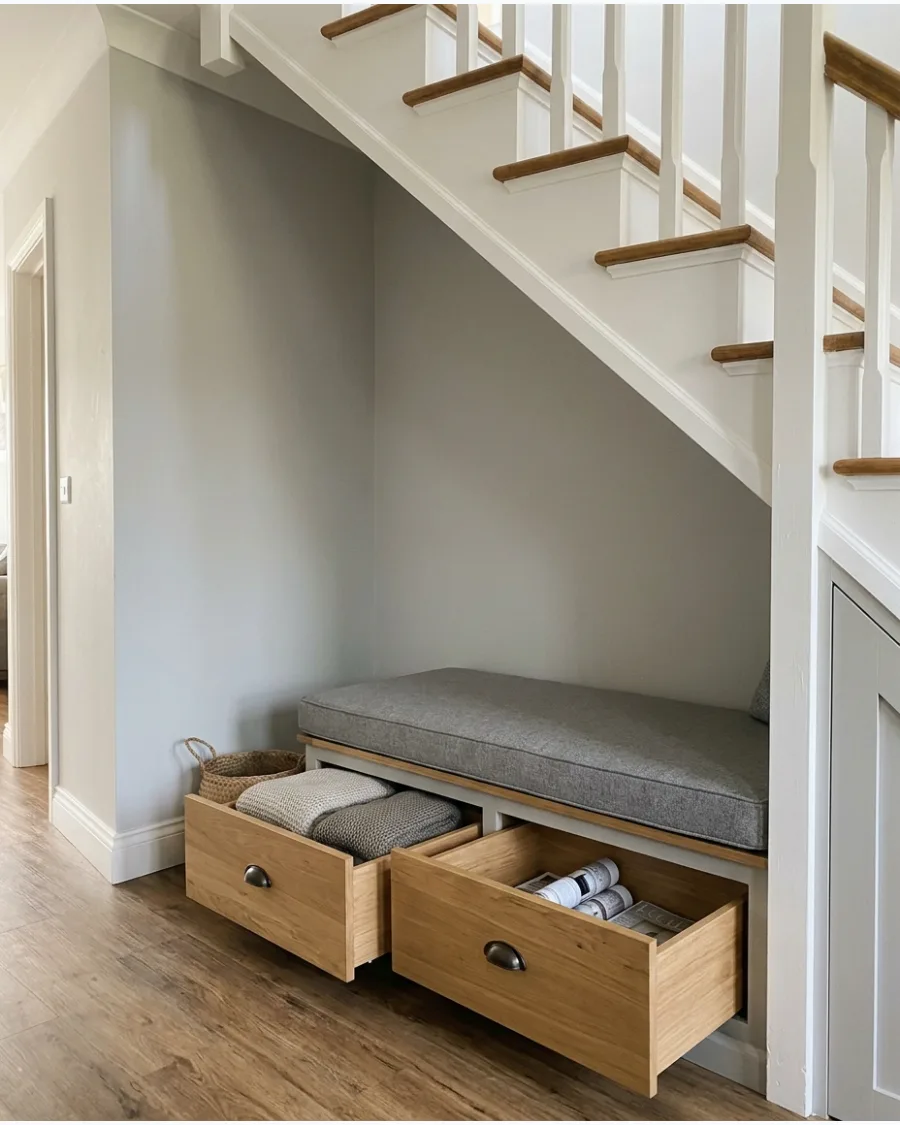
Maximizing utility means making the furniture work twice as hard. Install deep, soft-close drawers into the base of the bench to hide shoes, bags, or seasonal gear. This setup is perfect for entryways where floor clutter is a constant battle.
The solid base of the drawers provides a sturdy foundation for the seating above.
- Prefab drawer units can be modified for $200-$500.
- Use heavy-duty drawer slides rated for at least 100 pounds.
- Opt for finger pulls or recessed hardware so nothing catches on your legs while sitting.
Most people skip this: Paint the inside of the drawers a bright color to make it easier to find dark items tucked in the back corners.
16. Floating Bench Under-Stair Nook
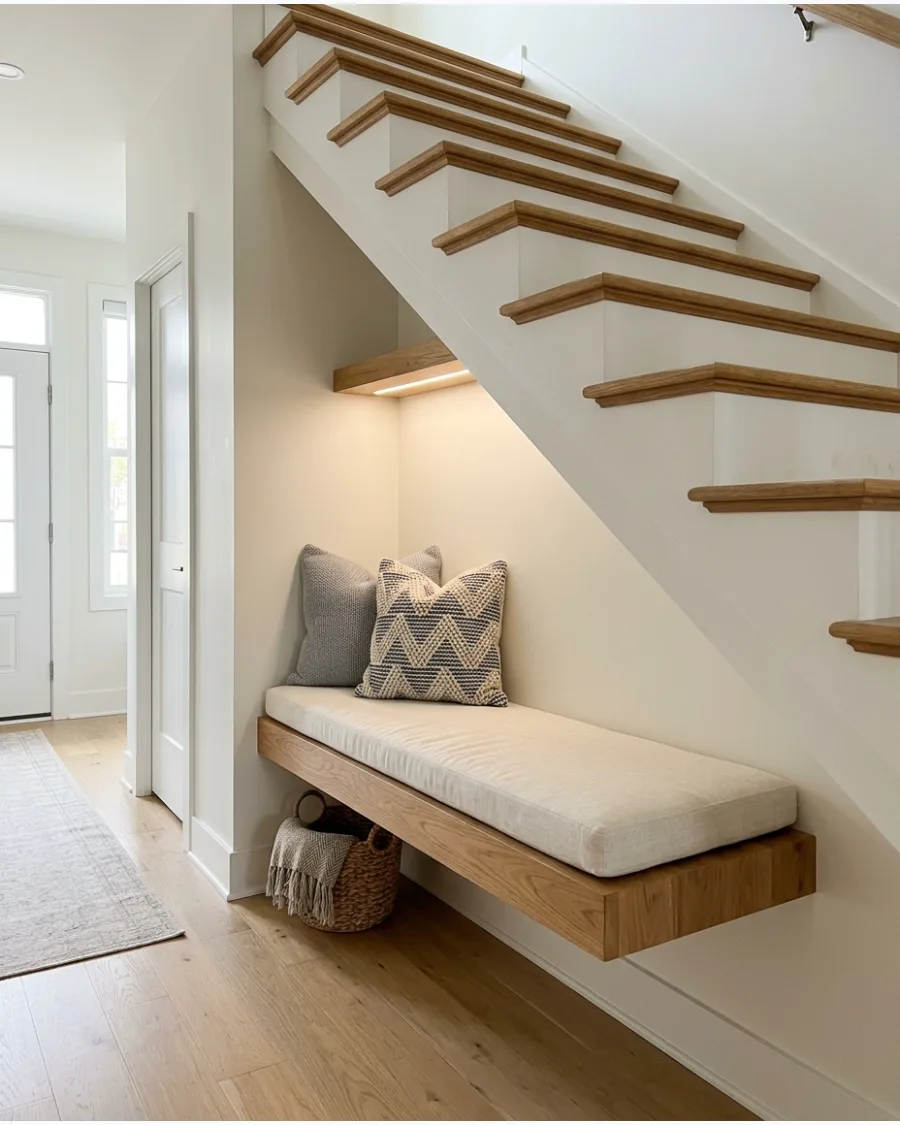
A floating bench creates a sense of lightness by leaving the floor space completely clear. Use heavy-duty steel brackets hidden inside the bench frame to support the weight without visible legs. This design allows for a rug to run continuously under the bench, which helps the room feel larger.
It is a sleek solution for narrow hallways where a bulky base would feel cramped.
- Steel L-brackets should be anchored directly into the wall studs.
- Budget $150 for high-grade lumber and $50 for structural hardware.
- Leave at least 18 inches of clearance from the floor to the bottom of the bench for a standard seat height.
Best shortcut: Buy a solid-core door slab and cut it to size for an affordable, perfectly flat, and sturdy floating bench top.
17. Corner Lounge Nook Under Stairs
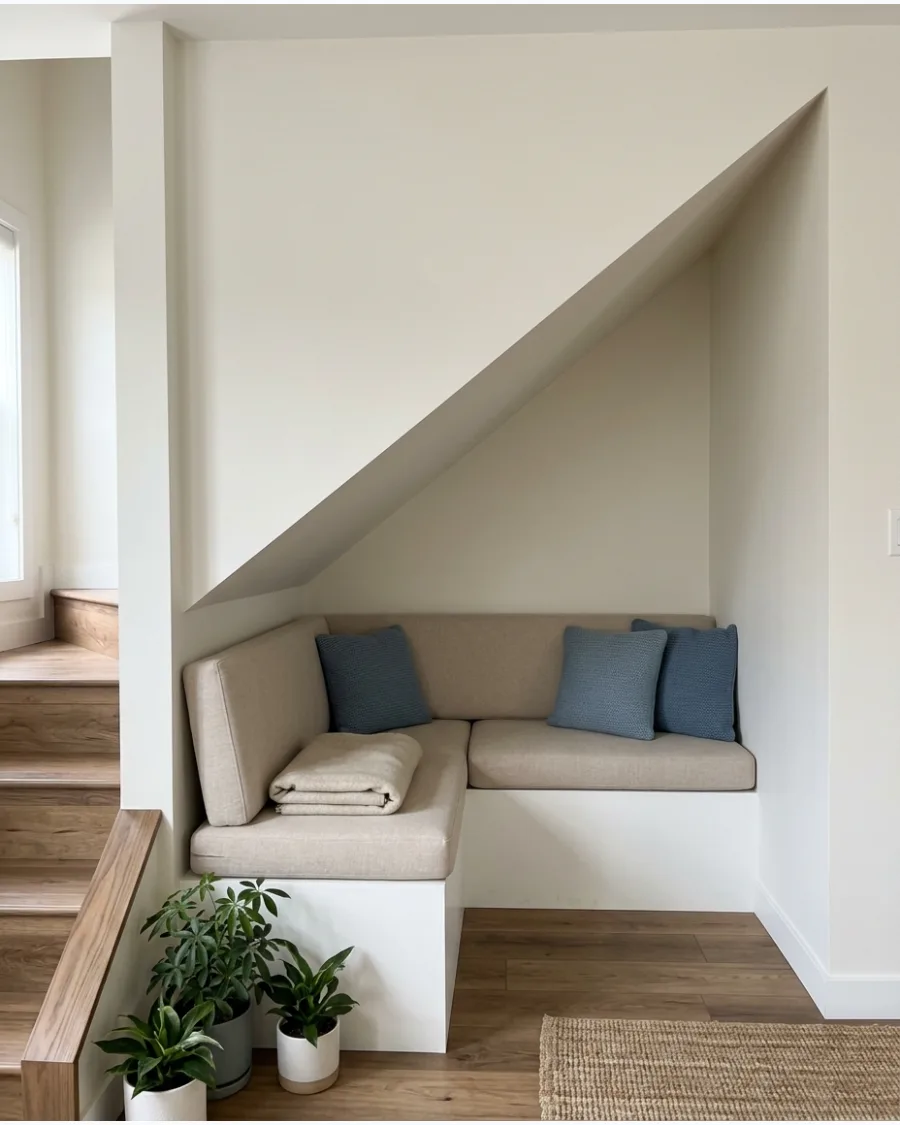
An L-shaped bench makes the most of the widest part of the staircase footprint. Wrap the seating around the corner to create a nest feeling that works for two people or one person lounging sideways. This layout turns a transition space into a destination for conversation.
It effectively fills the awkward dead zone where the stairs meet the floor.
- L-shaped custom cushions often require a template for the manufacturer.
- Plan for a 45-degree miter joint where the two bench frames meet for a professional look.
- Add a small round pedestal table in the center to hold a cup of coffee.
Quick win: Place a large floor plant at the end of the L to soften the transition from the bench to the open room.
18. Scandinavian Under-Stair Nook
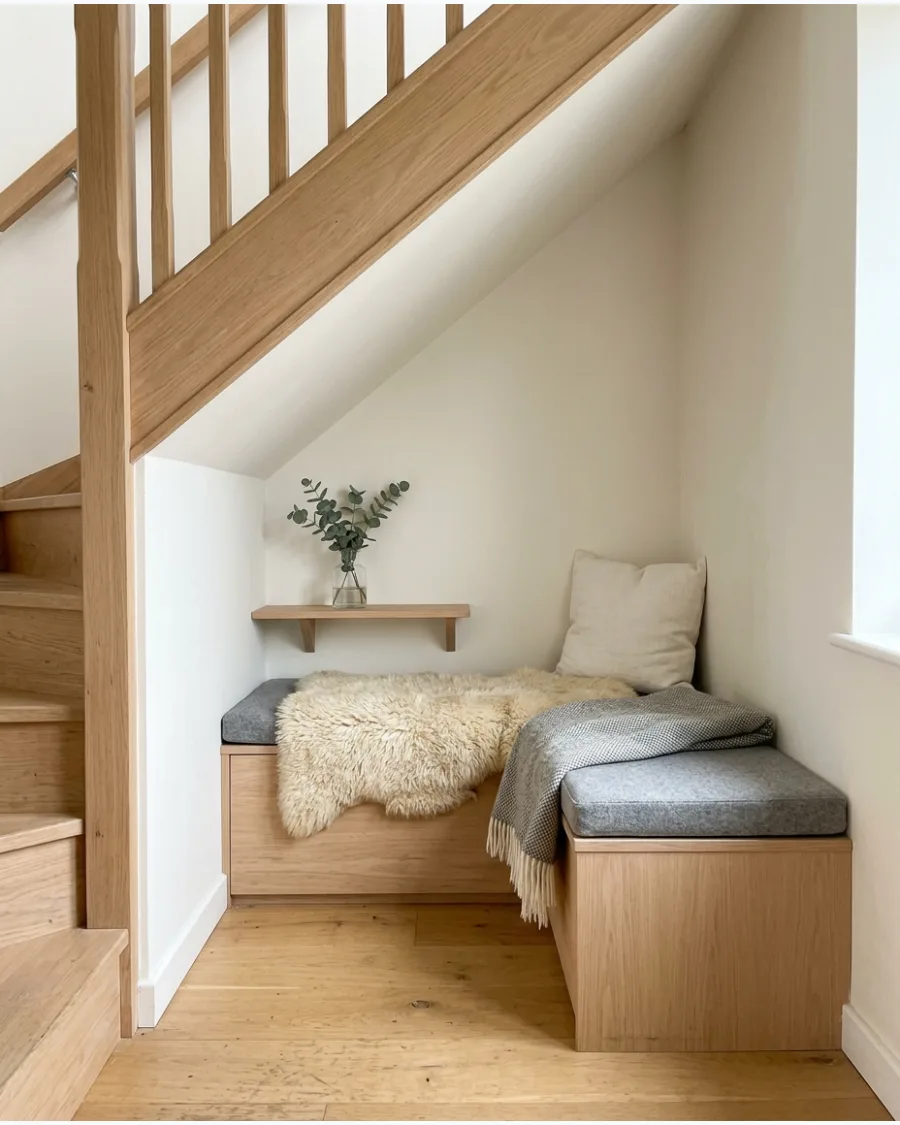
Scandinavian design relies on light colors and natural materials to maximize brightness in dark corners. Layer a light oak bench with a white wool throw and simple linen pillows to create a clean, airy look. The goal is to keep the space uncluttered and functional.
This approach is ideal for small homes where visual clutter makes the space feel smaller.
- Sheepskin throws or high-quality faux versions cost $30-$100.
- Stick to a palette of white, cream, and light wood to keep the nook bright.
- Use a matte finish on any wood surfaces to maintain the natural Scandinavian feel.
Most people skip this: Use a cool-toned white paint on the sloped ceiling to reflect more natural light into the deeper parts of the nook.
19. Cozy Nook With Wall Sconces
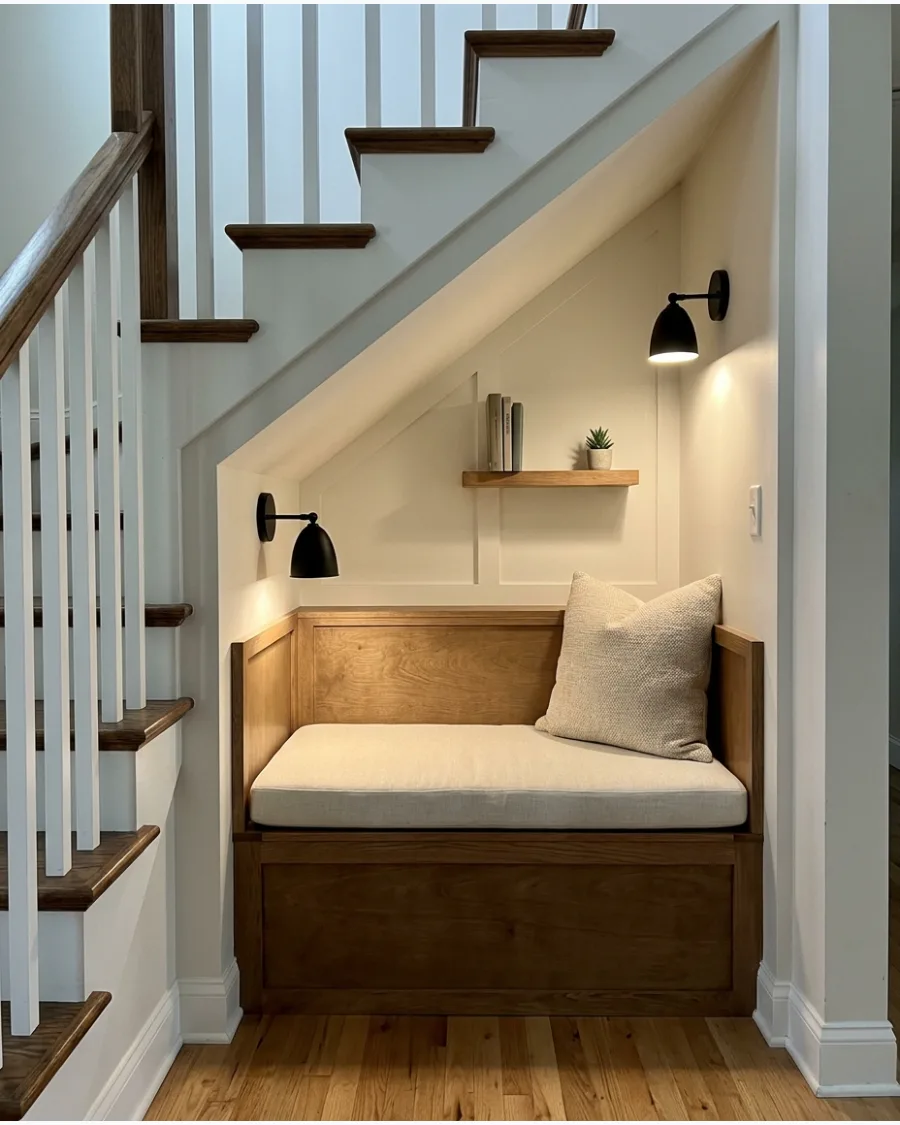
Lighting is often the most overlooked element in under-stair design. Mount two matching wall sconces at eye level to frame the seating area and provide balanced light for reading. Hardwiring the lights creates a clean look, but plug-in versions with cord covers work well for renters.
Symmetrical lighting makes the asymmetrical shape of the staircase feel balanced.
- Plug-in sconces cost $40-$120 each and install in minutes.
- Position lights approximately 30 inches above the bench seat for the best reading angle.
- Use dimmable bulbs to adjust the mood from bright task lighting to a soft evening glow.
Best shortcut: Use battery-operated puck lights inside standard sconces if you want the look of hardwired lighting without the electrical bill.
20. Nook With Hidden Storage Seating
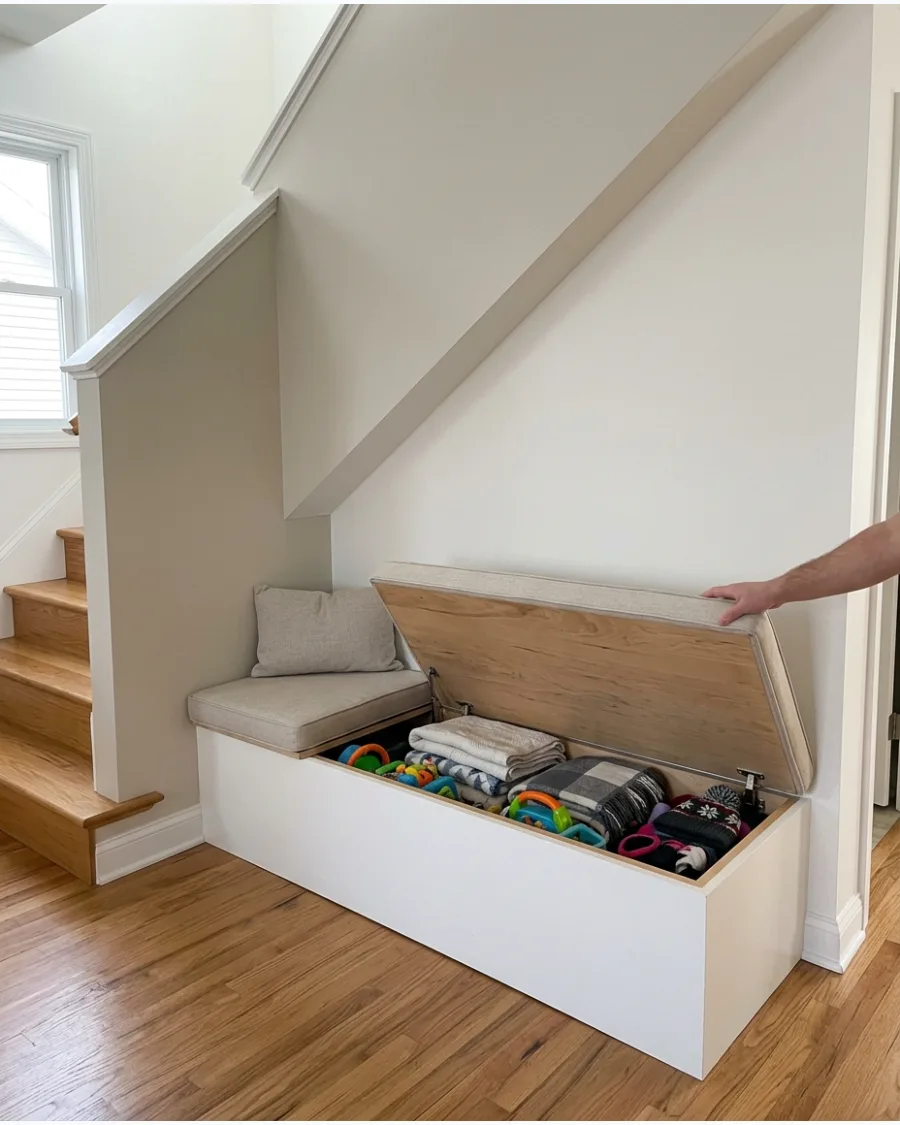
Hidden storage is the ultimate solution for items you need but do not want to see.
Design the bench with a piano hinge on the top so the entire seat lifts up like a chest. This is the best place to store bulky winter blankets or board games that usually clutter the living room. It keeps the exterior lines of the nook clean and modern.
- Piano hinges provide the most stable support for a heavy lifting lid.
- Include a finger gap or a small handle to make opening the lid safe and easy.
- Line the interior with cedar or smooth plywood to protect stored fabrics from snags.
Quick win: Install a soft-close gas strut to prevent the heavy wooden lid from slamming shut on fingers.
HOME OFFICE & STUDY NOOKS
21. Built-In Desk Nook Under Stairs
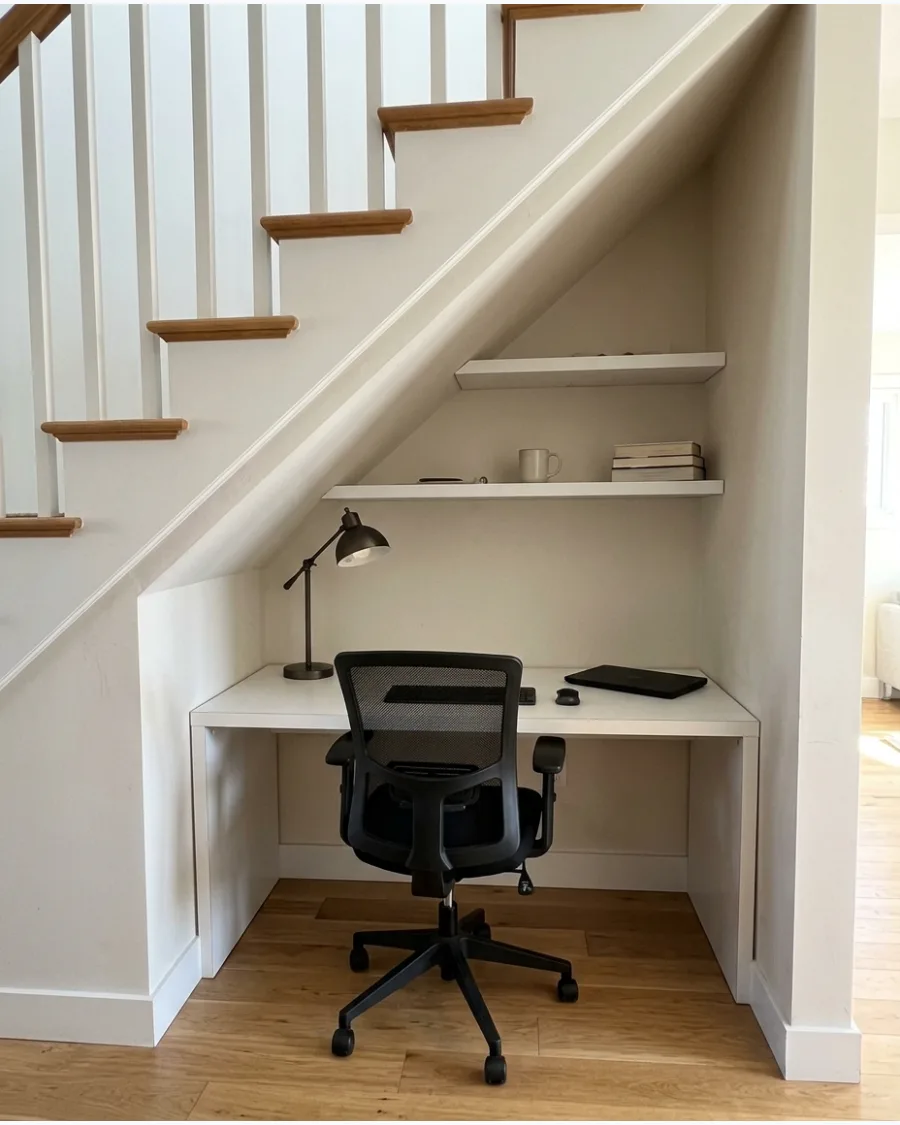
A custom-built desk turns that odd triangle into a useful zone for bills or remote work. Adding floating shelves above the desk uses the vertical wall space that usually goes to waste.
Measure the depth of the staircase to ensure the desk surface is at least 24 inches deep for comfortable legroom. This setup keeps the main living areas free from messy paper piles.
- Budget: $200 to $500 for materials and basic task lighting.
- Setup: Install the desktop first, then space the shelves at least 15 inches apart.
- Renter tip: Use a pre-made desk that fits the width instead of a permanent built-in.
Most people skip this: check for nearby electrical outlets before building to avoid running extension cords across the floor.
22. Small Home Office With Floating Desk
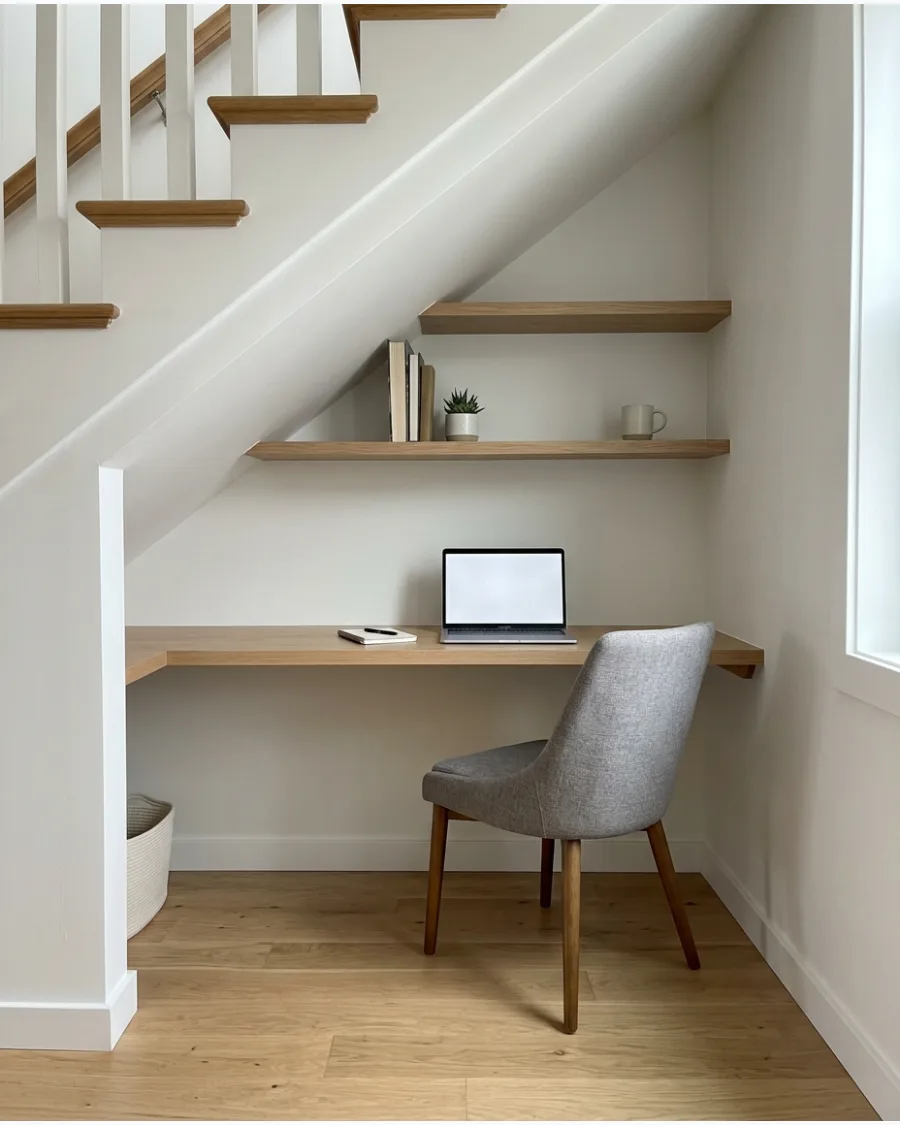
A floating desk is the smartest choice for very narrow hallways or tight corners. Without legs taking up floor space, the area looks much bigger and is easier to clean.
Secure the floating desk to wall studs using heavy-duty brackets to prevent any wobbling during typing. It creates a professional feel without the bulk of a heavy table.
- Timing: This project takes about 2 to 3 hours to measure and mount.
- Placement: Mount the desk at a standard height of 29 to 30 inches from the floor.
- Adaptation: For very small spaces, choose a desk with a shallow depth of 18 inches.
Quick win: use a clear acrylic chair to make the workspace look almost invisible and keep the room feeling open.
23. Dark and Moody Office Nook
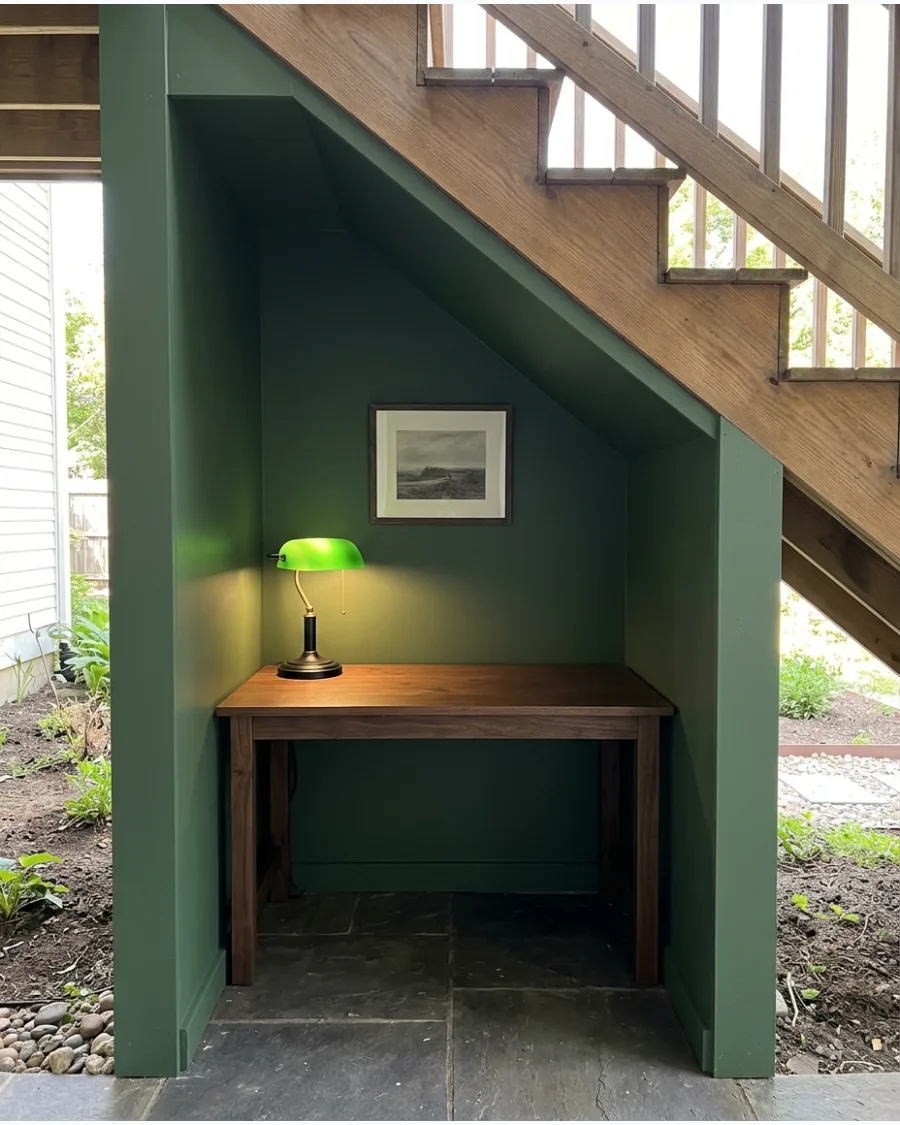
Going dark in a small alcove is a bold move that makes the space feel intentional. Dark colors like charcoal or navy make the walls look further away, giving the illusion of more depth.
Paint the ceiling and walls of the alcove the same dark charcoal or navy to make the boundaries disappear. Pair it with warm wood tones to keep the nook from feeling too cold.
- Budget: Under $100 for a gallon of paint, rollers, and a small brass lamp.
- Setup: Use a high-quality primer to ensure the dark paint adheres evenly to the drywall.
- Styling: Add a small piece of gold or brass decor to catch the light in the dark corner.
Best shortcut: use a matte finish paint to hide any bumps or imperfections on the underside of the stairs.
24. Minimal White Office Nook
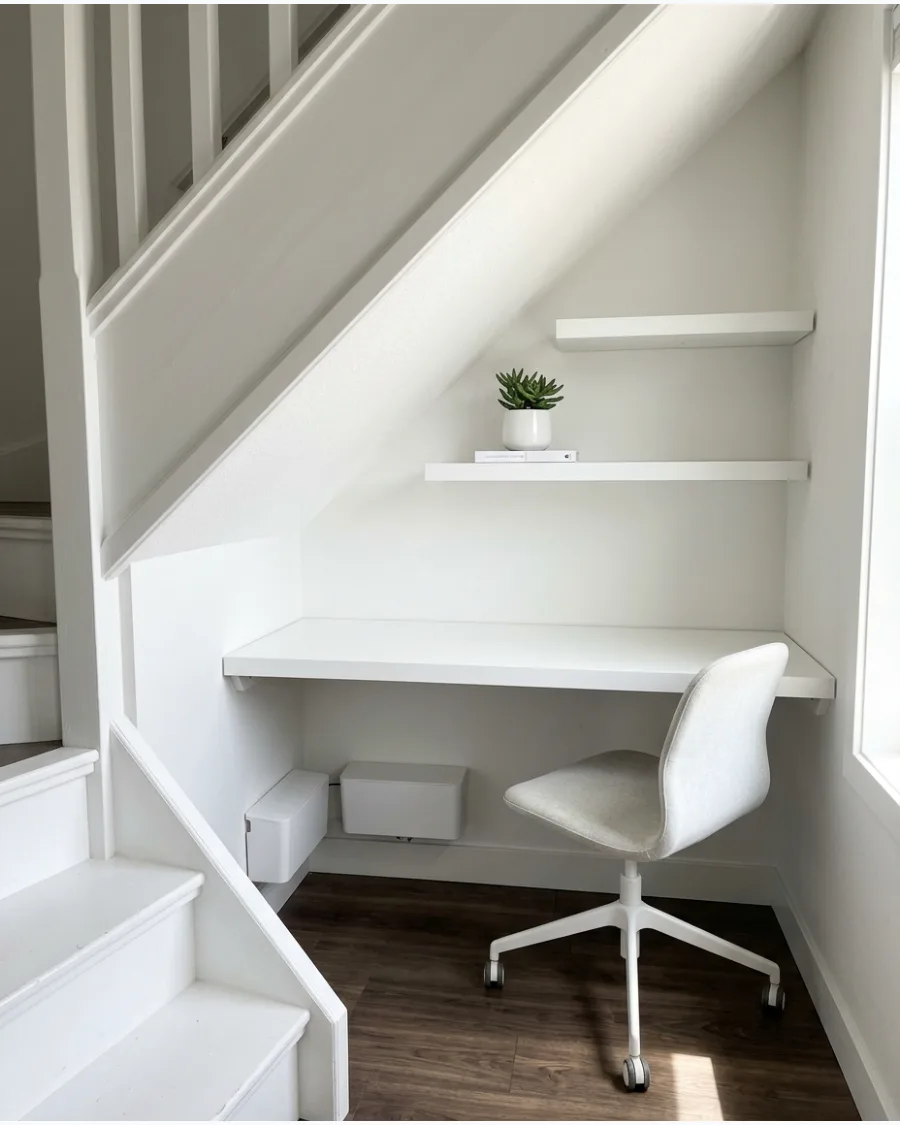
White furniture and walls reflect the most light, which is essential for areas under the stairs that lack windows. This minimal approach works best in modern homes where you want the office to blend into the house.
Install a white cable management box under the desk to hide power strips and keep the floor looking clean. It keeps the visual noise low in a busy hallway.
- Sourcing: Look for high-gloss white finishes to help bounce light around the nook.
- Logistics: Keep only the essentials on the desk to maintain the minimalist look.
- Adaptation: If the space feels too sterile, add a single small plant for a pop of color.
Quick win: swap standard plastic bins for white metal organizers to keep the look sleek and high-end.
25. Homework Nook Under Stairs
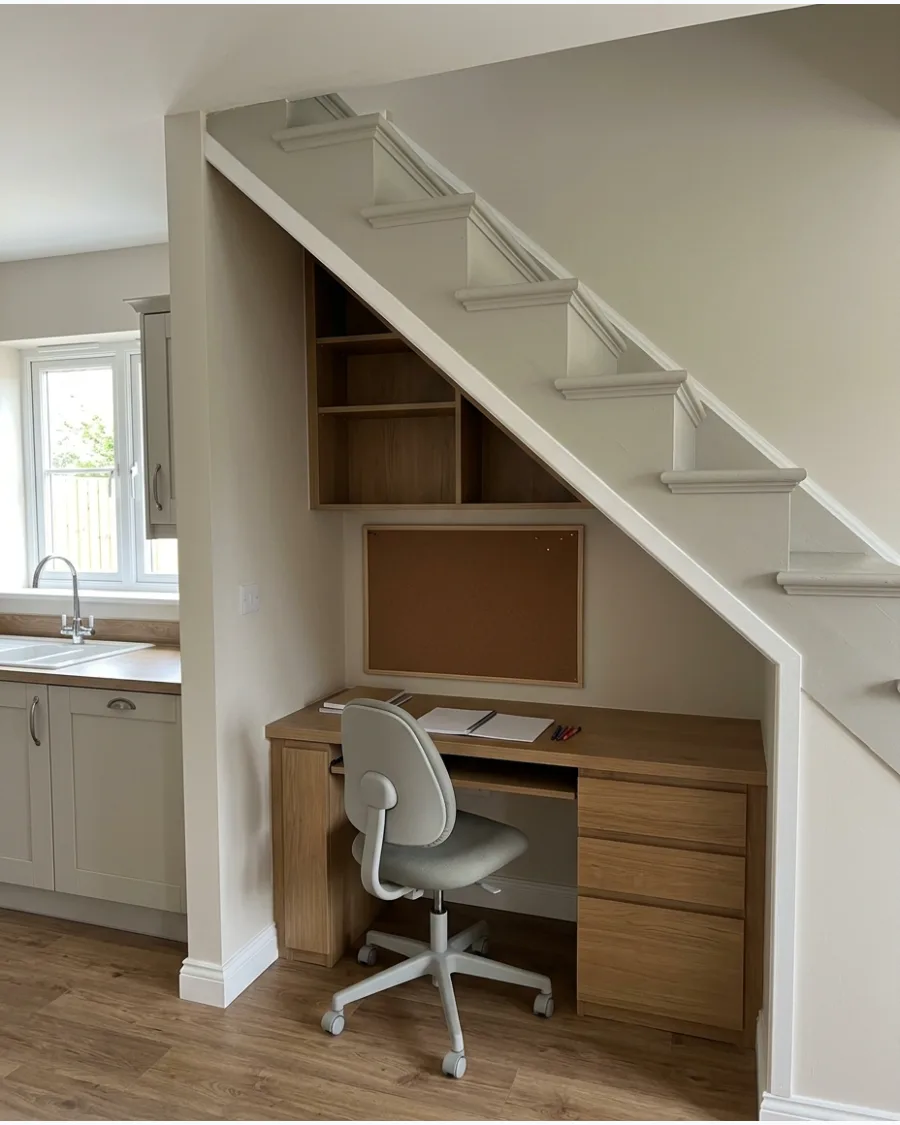
Giving kids their own workspace under the stairs keeps school supplies off the kitchen table. A built-in desk at a lower height works well for primary schoolers, or a standard height can grow with them.
Line the back wall with a cork pinboard so school schedules and art projects have a dedicated home. It makes homework time feel like a special destination.
- Budget: $100 to $300 depending on the size of the desk and organizers.
- Setup: Place a colorful rug underneath to protect the floor from rolling chair wheels.
- Adaptation: Use magnetic paint instead of cork if you want a smoother look for the back wall.
Most people skip this: mount a power strip to the side of the desk so kids can easily plug in tablets or laptops.
26. Two-Person Under-Stair Desk Nook
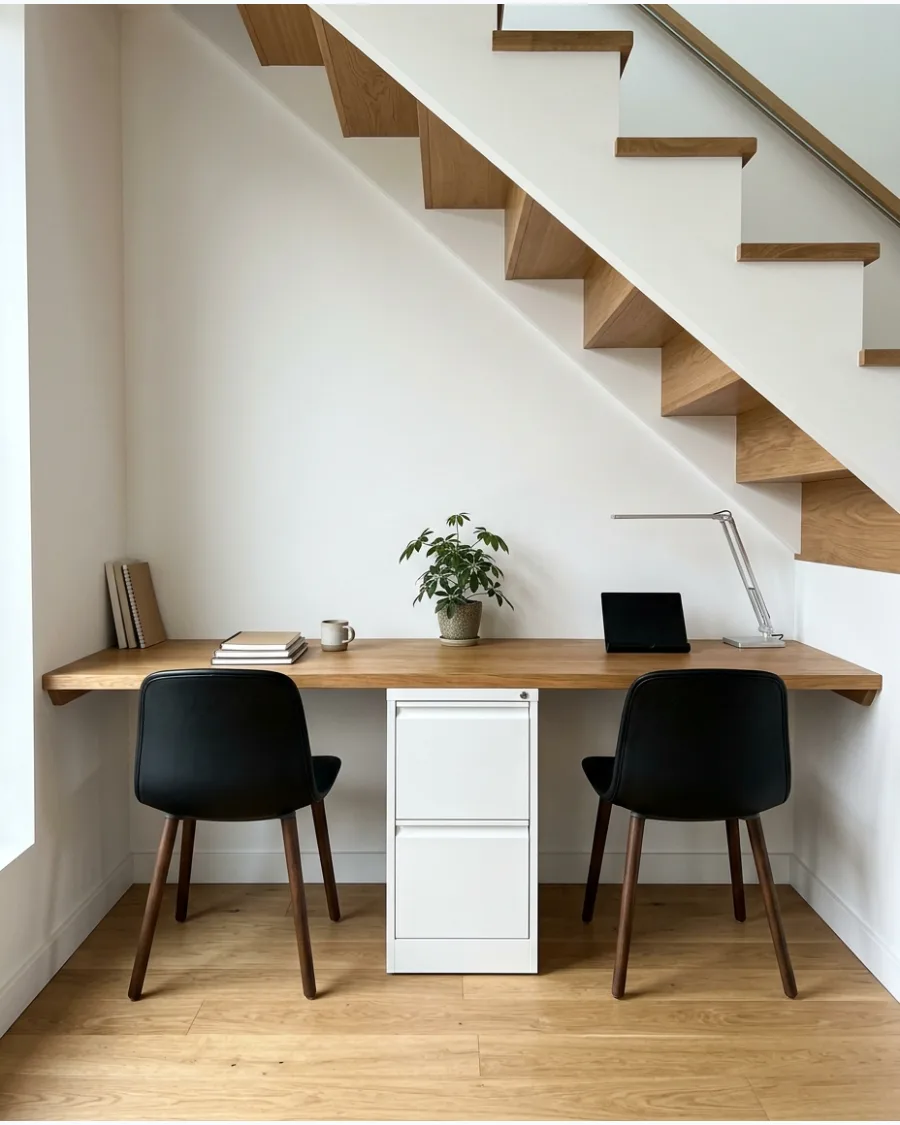
A wide staircase offers enough space to fit two people side-by-side. This layout is perfect for siblings or couples who both need a spot for laptops.
Place a central filing cabinet under the long desk to act as both a support pillar and a divider between the two seats. It maximizes the use of a larger alcove without needing two separate rooms.
- Budget: $400 to $800 for a long countertop and two sturdy chairs.
- Logistics: Ensure there are enough outlets for two sets of computers and lamps.
- Setup: Use a 72-inch or longer countertop to give both people enough elbow room.
Best shortcut: buy a pre-cut kitchen countertop from a hardware store for a durable and affordable extra-long desk.
27. Office Nook With Pegboard Wall
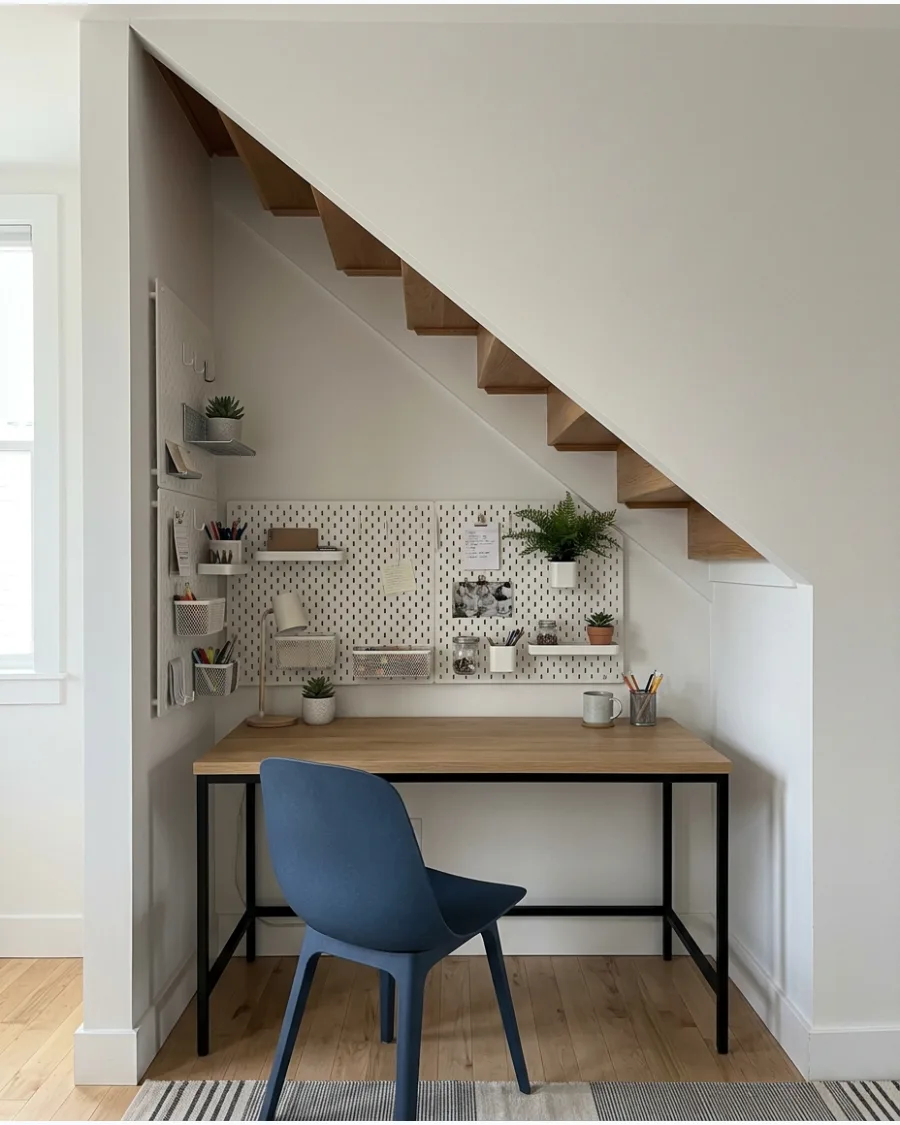
Pegboards are the ultimate organization tool for small nooks because you can move them around. You can change the hooks and baskets as your work needs change over time.
Mount a large white pegboard across the entire back wall to maximize vertical storage without needing bulky shelves. This keeps the actual desk surface clear for a computer.
- Budget: $50 to $100 for the pegboard and a variety of hook attachments.
- Setup: Use spacers behind the pegboard so the hooks have room to clip into the holes.
- Adaptation: Paint the pegboard the same color as the wall for a more subtle look.
Quick win: hang a small bucket on the pegboard for pens and pencils to free up every inch of desk space.
28. Built-In Office With Closed Cabinets
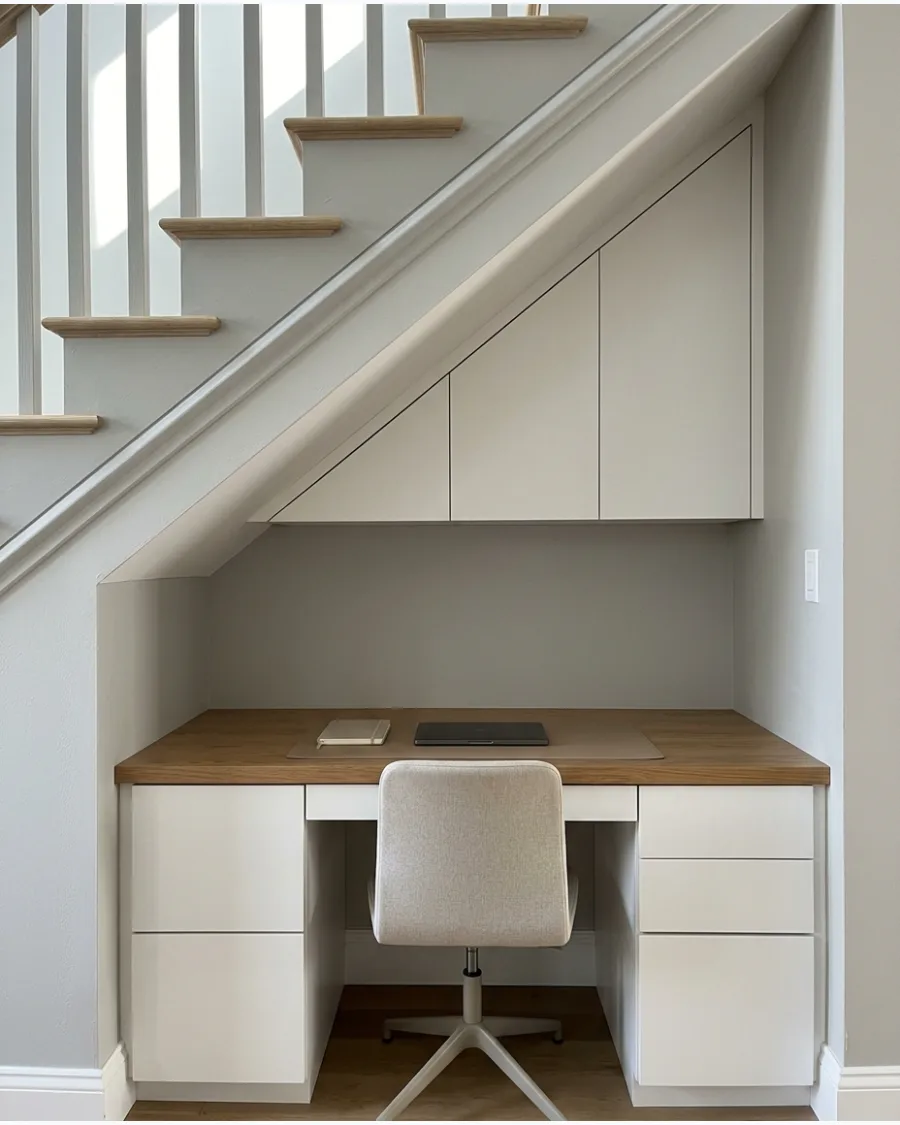
Closed cabinetry is the best solution for those who want a workspace that can be hidden. When the doors are shut, the under-stair area looks like a plain wall.
Choose handle-less cabinets with touch-latches for a seamless look that mimics a flat wall when the office isn't in use. This hides the clutter of printers and files from guests.
- Budget: $1,000+ for custom cabinetry and professional installation.
- Setup: Plan for internal cabinet lighting so you can see into the storage areas.
- Logistics: Include a pull-out shelf for the printer to make it accessible but hidden.
Most people skip this: ventilate the cabinet that holds the computer tower or printer to prevent overheating.
29. Library and Desk Nook Under Stairs
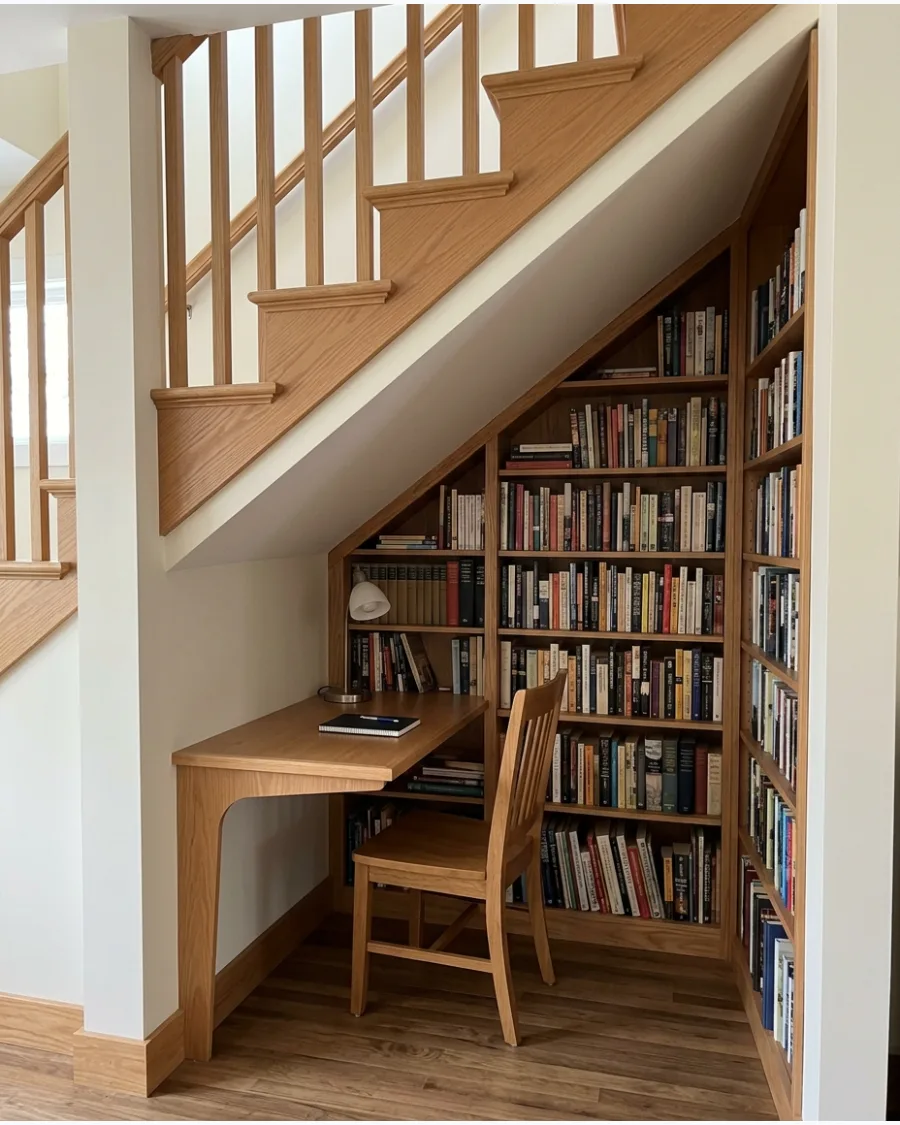
Combining a desk with floor-to-ceiling bookshelves creates a quiet retreat in an unused zone. The books act as a natural shield against noise, making the nook feel more private.
Run shelves all the way to the sloped ceiling to take advantage of every inch of vertical space for books. It turns a simple workspace into a classy home library.
- Timing: Expect 1 to 2 days for shelf assembly and book organization.
- Setup: Secure every bookshelf to the wall studs to prevent tipping.
- Adaptation: Use adjustable shelving tracks so you can fit tall coffee table books and small paperbacks.
Best shortcut: use battery-operated LED puck lights on the undersides of shelves for an expensive look without wiring.
30. Vintage Writing Nook Under Stairs
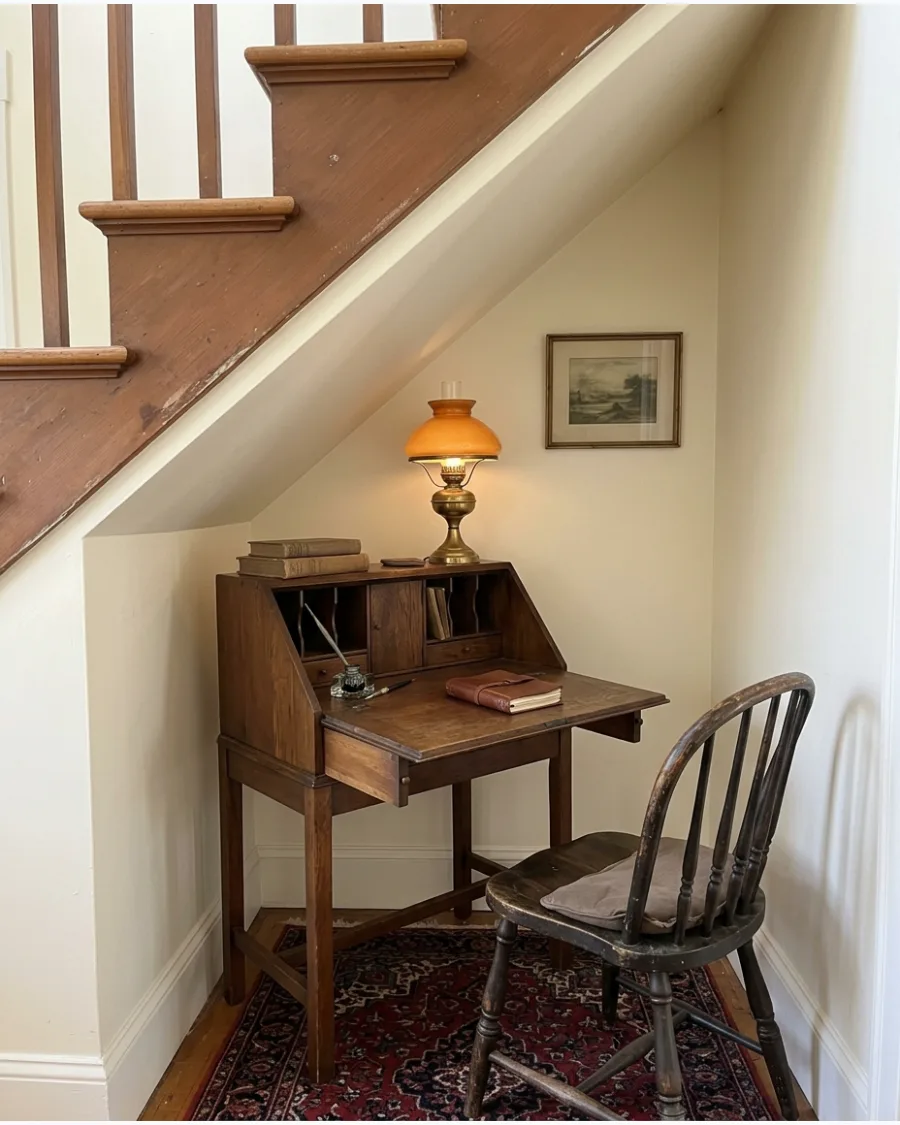
A vintage desk adds instant style and a cozy feel to a modern home. Antique pieces are often smaller, making them ideal fits for the tight dimensions under a staircase.
Use a vintage secretary desk with a fold-down top to provide a writing surface that can be tucked away in seconds. This approach turns a structural necessity into a curated design feature.
- Sourcing: Check local thrift stores or online marketplaces for small desks.
- Setup: Ensure the floor is level and add a small rug to define the writing zone.
- Adaptation: If the desk is too low, add wood risers to the legs to reach a comfortable height.
Quick win: place a small mirror on the wall above the desk to reflect light and make the writing corner feel less enclosed.
STORAGE & ENTRYWAY NOOKS
31. Mudroom Nook Under Stairs
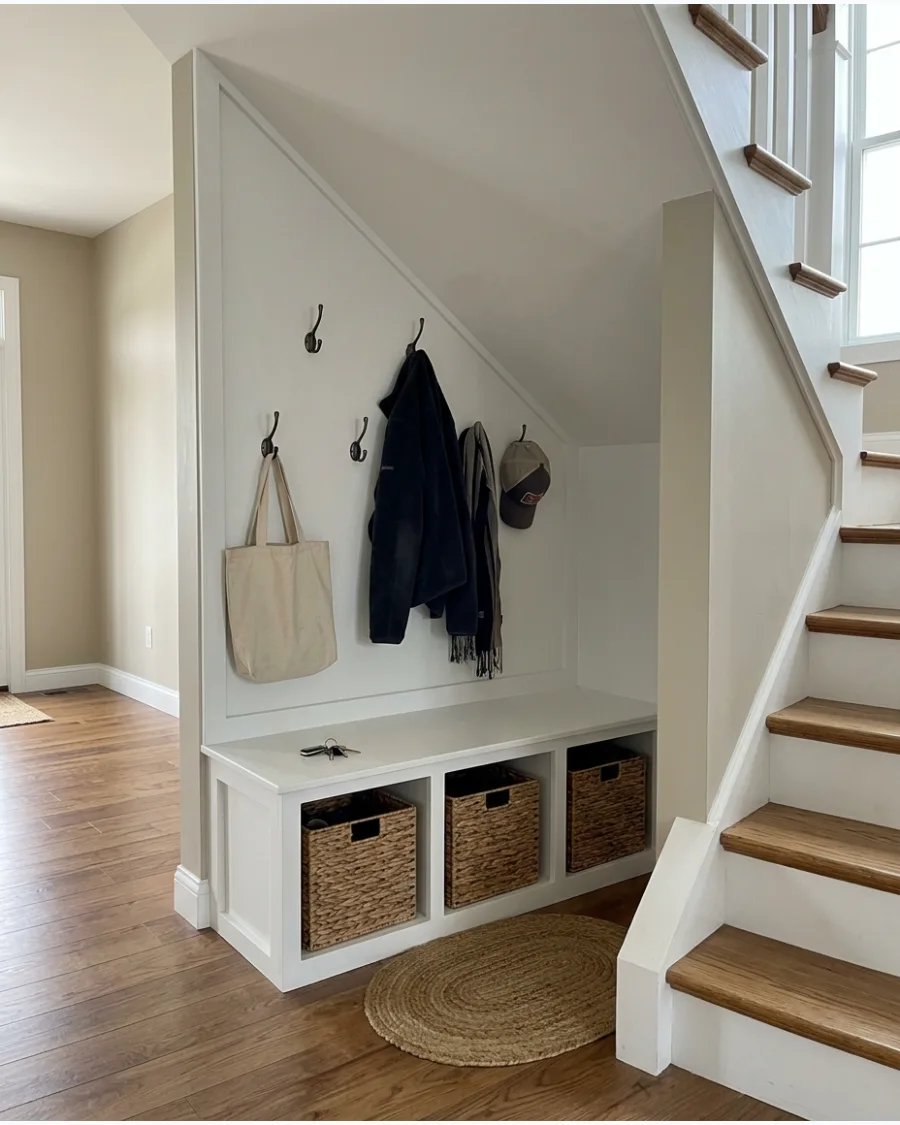
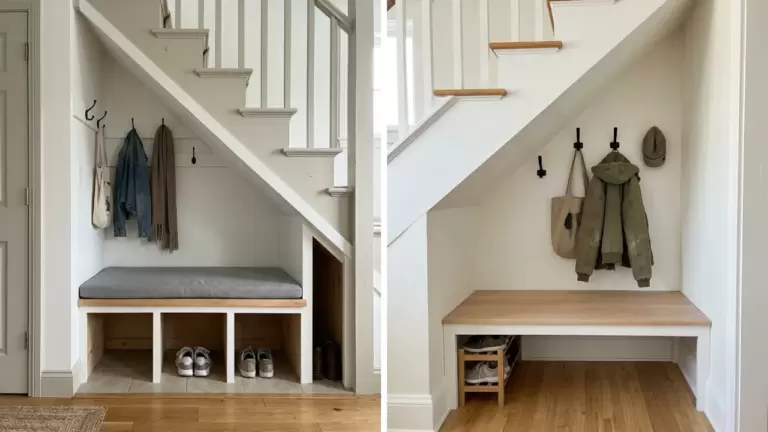
Transform the space into a drop zone with a bench, shoe storage, and hooks. Mount heavy-duty hooks at different heights so kids can reach their own jackets while adults use the higher ones. It keeps the floor clear and organizes the chaos of a busy morning without taking up extra square footage.
- Expect to spend $150-$400 depending on bench quality and hook materials.
- Install hooks directly into wall studs for maximum weight capacity to prevent drywall damage.
- Swap woven baskets for plastic bins in snowy or rainy climates to handle moisture.
Quick win: Paint the wall behind the hooks with a durable semi-gloss finish to make scuff marks easy to wipe away.
Entryway Organization
32. Under-Stair Mudroom Bench Nook
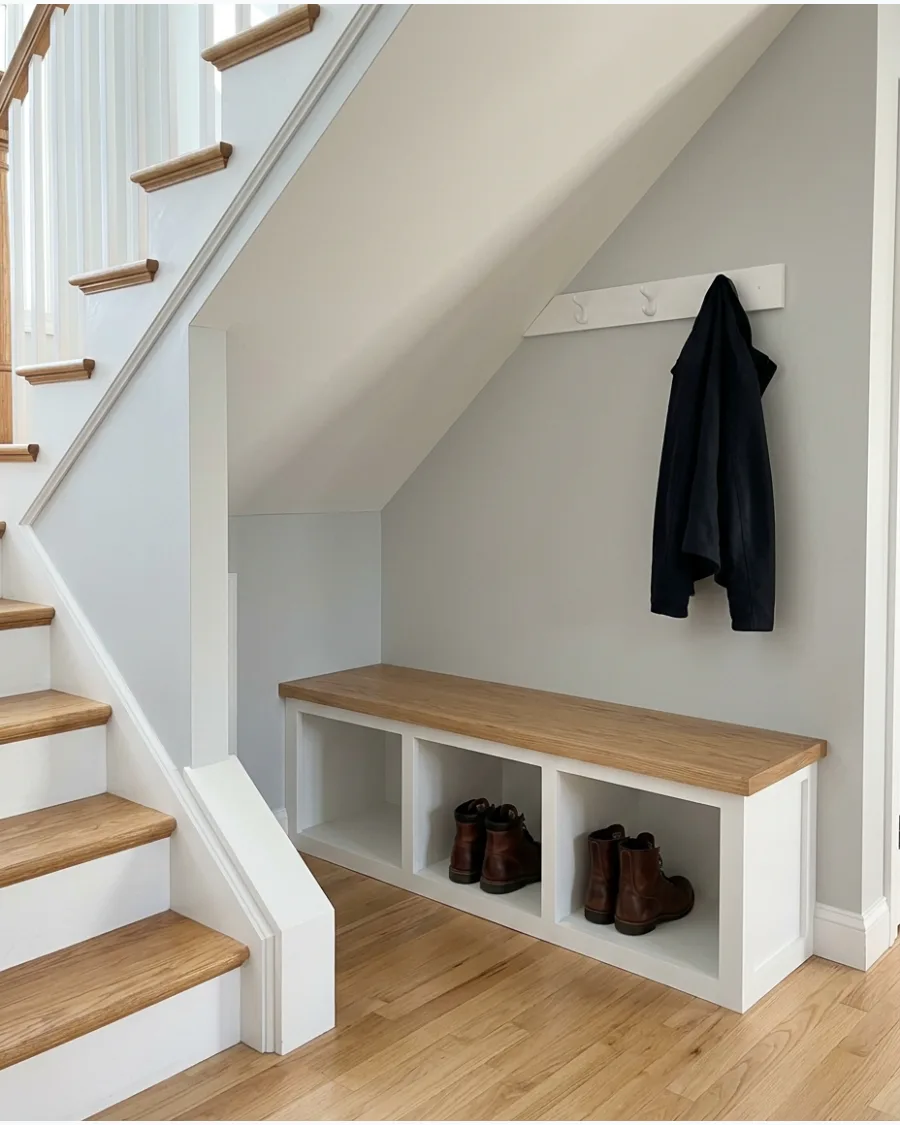
Transform the awkward void beneath a staircase into a dedicated transition zone for footwear and bags. This setup maximizes floor space in narrow hallways while providing a stable place to sit.
Install a custom-fit bench with open cubbies underneath to keep daily shoes accessible yet organized. Adding a high-performance indoor/outdoor rug beneath the bench prevents dirt from migrating into the rest of the home. Open-front storage is more effective than drawers for high-traffic areas because it eliminates the physical barrier to tidying up.
- Budget 2-4 hours for assembly and roughly $150 to $300 for a pre-made or DIY wood bench kit.
- Measure the lowest point of the stair pitch to ensure the bench height allows for comfortable head clearance when seated.
- Swap wooden cubbies for wicker baskets to hide clutter while maintaining a textured, organic look.
Most people skip this: Leave a two-inch gap behind the bench for air circulation to prevent moisture buildup on the wall.
STORAGE & ENTRYWAY NOOKS
33. Built-In Cubby Nook Under Stairs
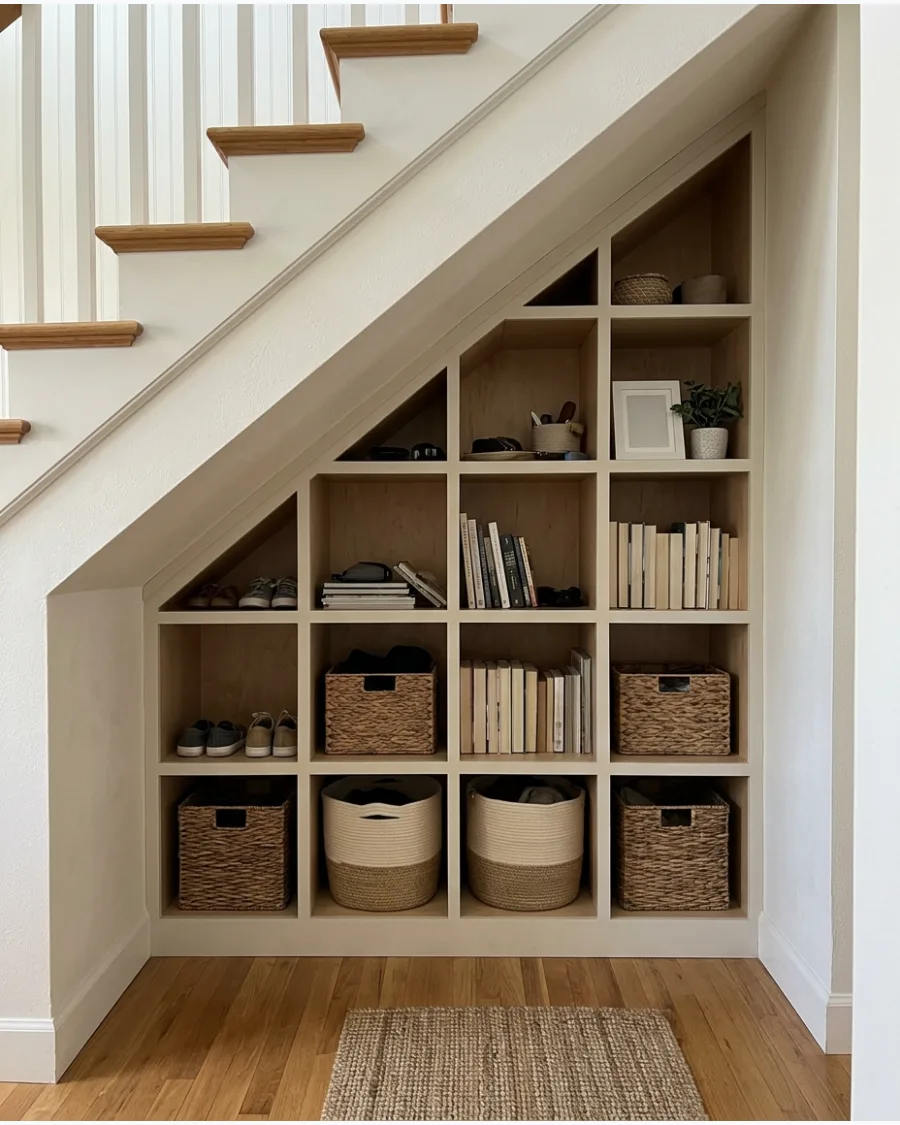
Use the triangular slope to create custom-sized cubbies for baskets, books, and daily essentials. Vary the size of the cubbies to accommodate taller items like boots and smaller things like mail organizers. It turns an awkward angle into a geometric focal point that looks intentional rather than like wasted space.
- Costs range from $300-$800 for custom carpentry or semi-custom modular units.
- Use a level during installation to ensure every shelf is perfectly straight along the slope.
- Line the bottom cubbies with rubber mats to protect the wood from wet items or dirty shoes.
Best shortcut: Use pre-built cube organizers and add decorative trim around the edges to get a high-end built-in look for less.
34. Hidden Drawer Nook Under Stairs
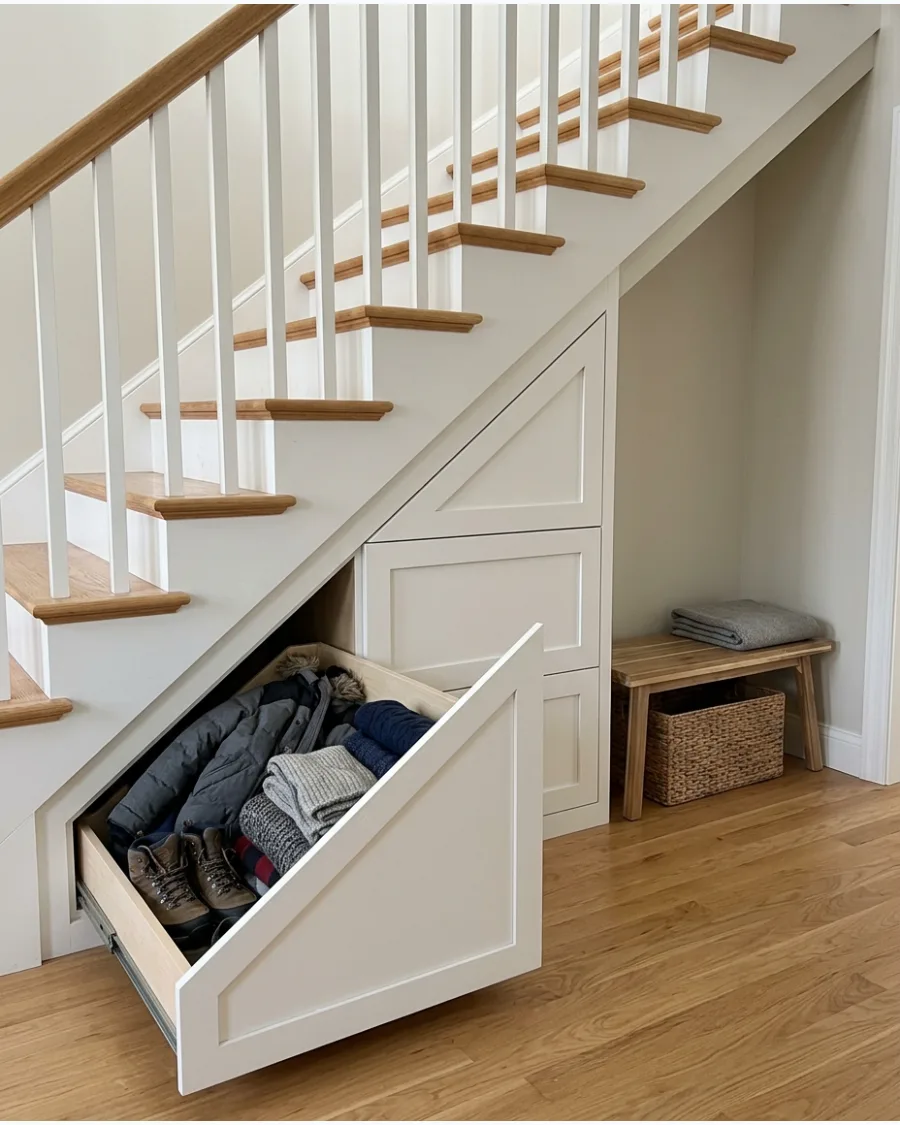
Maximize deep, hard-to-reach spaces by installing large triangular pull-out drawers that follow the staircase line. Use heavy-duty drawer slides rated for at least 100 pounds so the drawers move smoothly even when fully loaded. This keeps seasonal gear out of sight while ensuring everything remains easily accessible.
- Budget $500-$1,200 for professional installation of heavy-duty drawer systems.
- Choose hardware-free 'push to open' latches for a seamless and modern look.
- Label the inside edge of each drawer so everyone in the house knows where items belong.
Quick win: Install a small battery-powered LED light inside the drawer so you can see all the way to the back.
35. Entryway Bench With Hooks
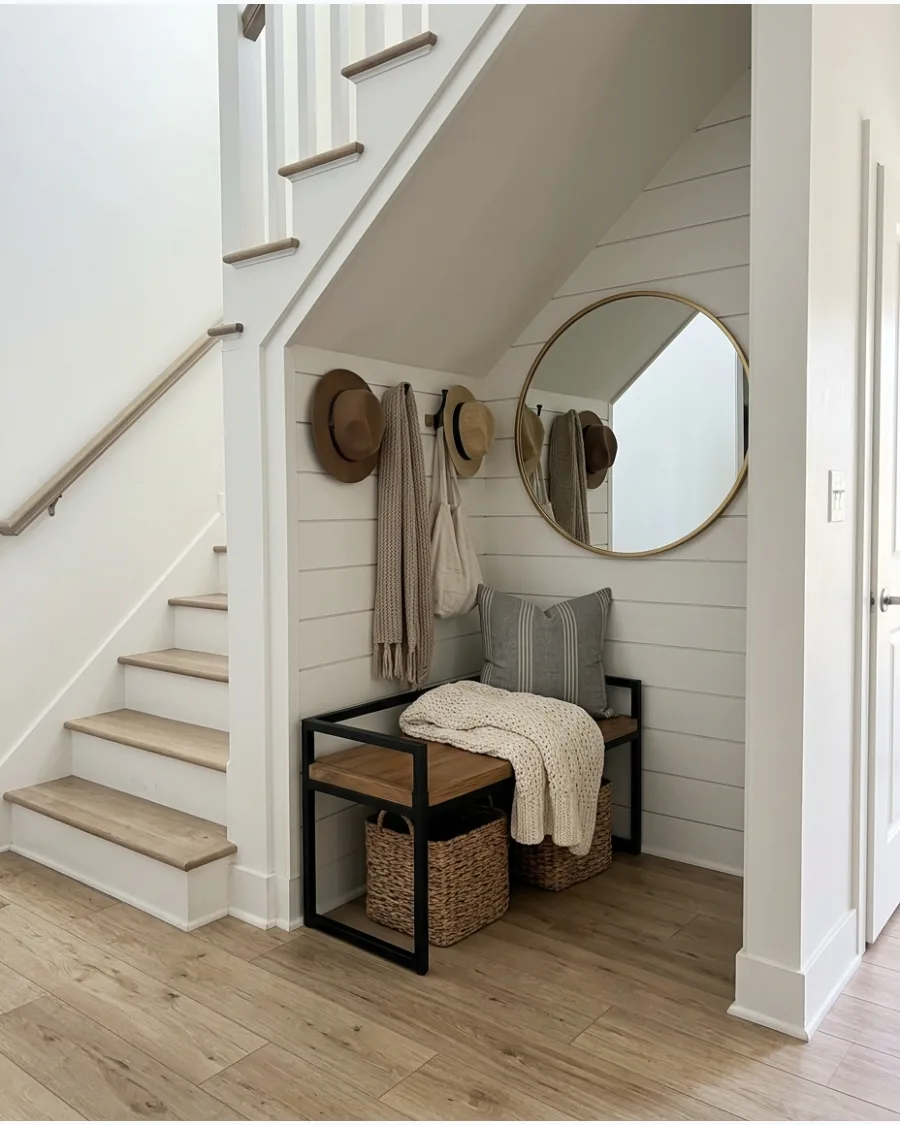
Create a miniature entryway by fitting a bench, wall hooks, and a mirror under the stairs. Hang a large mirror on the back wall of the nook to bounce light and make the hallway feel twice as wide. This setup defines the space as a functional entry without the need for a full closet.
- Plan to spend $200-$500 for a coordinated set of bench, mirror, and hooks.
- Place the mirror at eye level for the tallest person in the house for daily use.
- Add a small tray on the bench for keys and sunglasses to prevent clutter.
Most people skip this: Use a rug that is slightly wider than the bench to anchor the nook and protect the floor.
36. Family Drop-Zone Nook
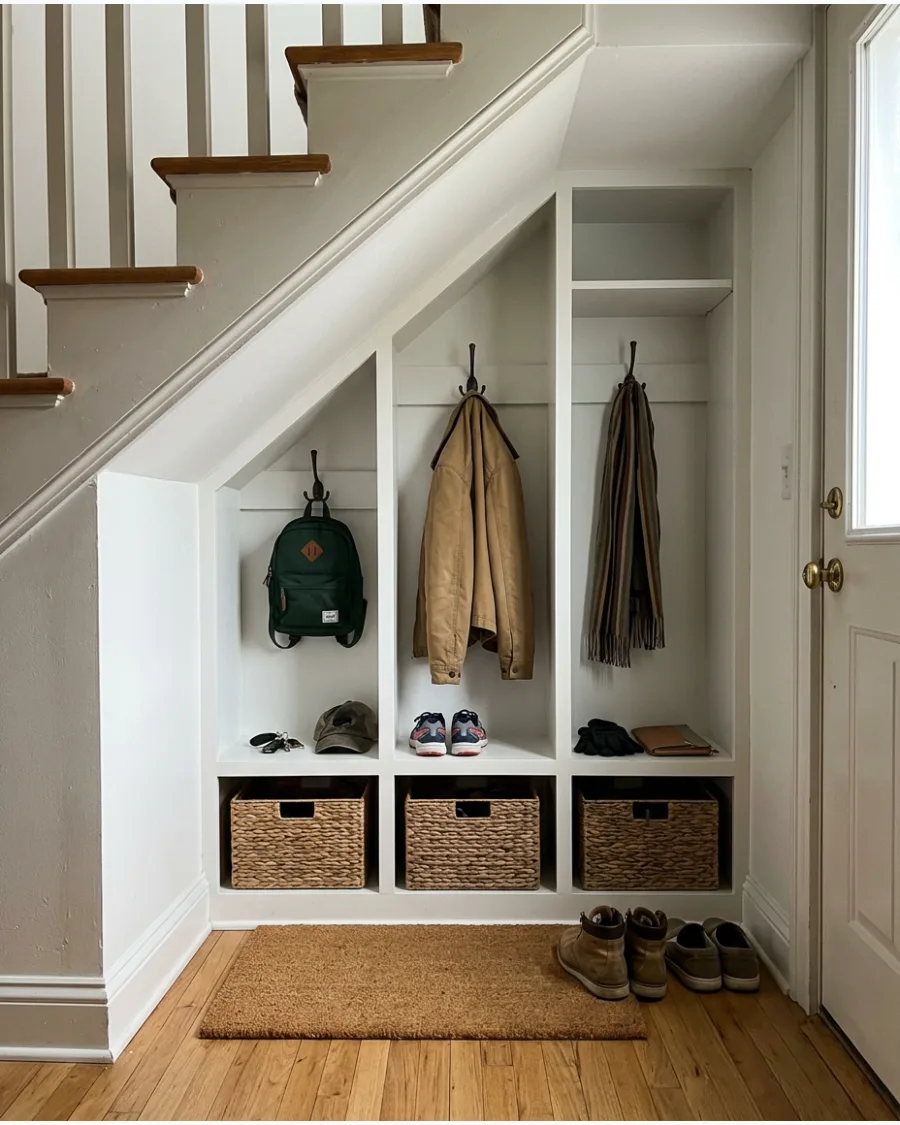
Designate specific zones for each family member to keep backpacks and coats organized. Assign a specific color of basket or a name tag to each cubby so kids take ownership of their own cleanup. It eliminates the morning panic of missing bags and keeps the entryway tidy.
- Modular systems range from $200-$600 depending on the number of family members.
- Use sturdy metal hooks that can handle the weight of a heavy school bag or laptop case.
- Install the unit 2 inches off the floor to make vacuuming and cleaning underneath easier.
Quick win: Add a small charging station in one cubby so electronics stay in the drop zone overnight.
37. Open Shelf Storage Nook

Fill the entire triangular wall with open shelving to display ceramics, books, and decorative objects. Space the shelves at different heights to create visual interest and fit items of various sizes. This approach turns storage into a gallery wall that feels open and airy rather than cramped.
- Material costs are typically $100-$300 for basic shelving and brackets.
- Secure shelves into at least two studs for safety, especially if holding heavy books.
- Group items in odd numbers like threes or fives for a more professional look.
Best shortcut: Use 'invisible' floating shelf brackets to make the shelves look like they are part of the wall.
38. Closed Cabinet Nook Under Stairs
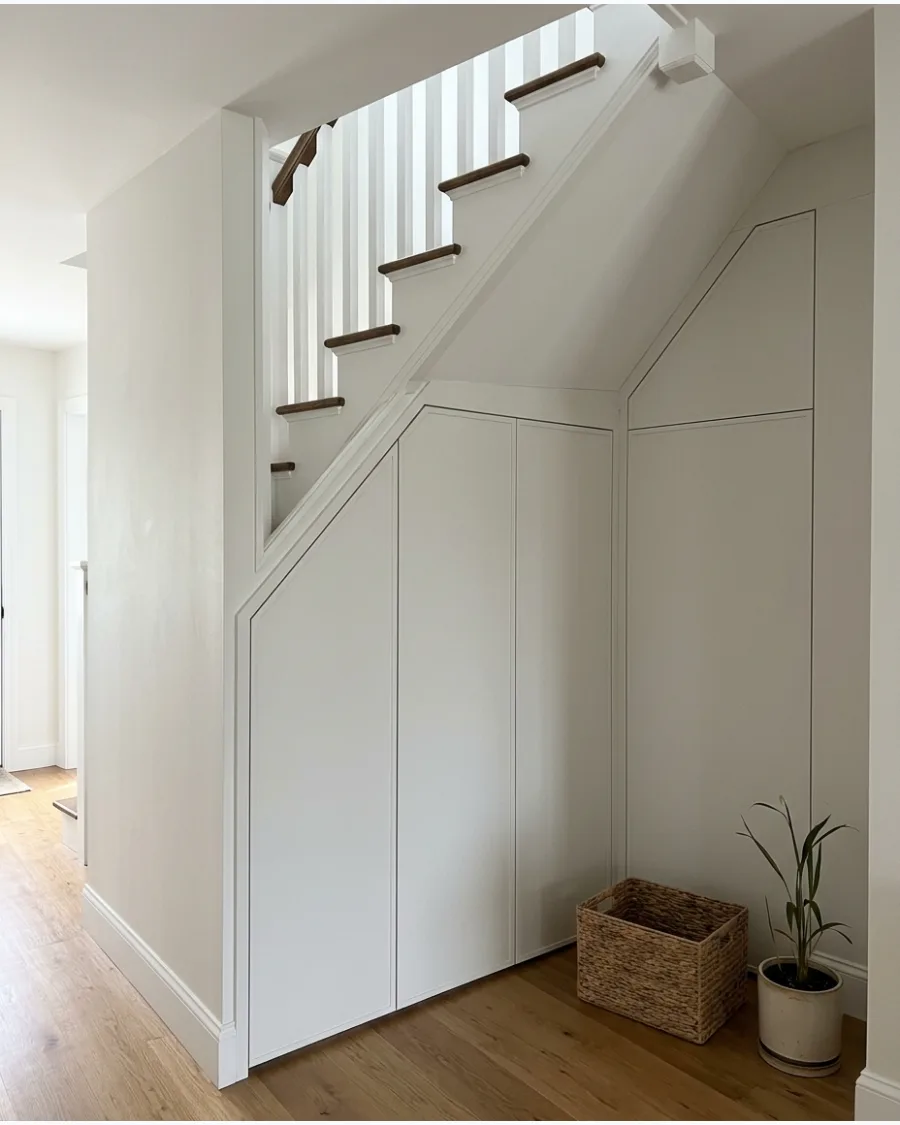
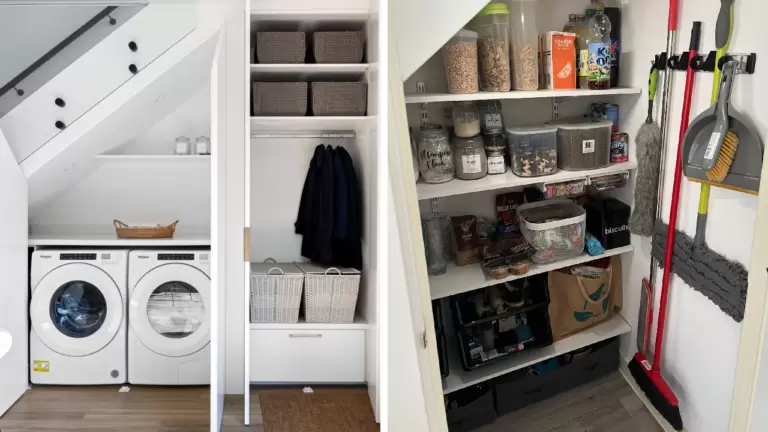
Hide clutter by installing seamless cabinet fronts that match the surrounding walls. Paint the cabinet doors the exact same color and sheen as the staircase trim to make the storage virtually disappear. This is the best solution for high-traffic areas where you want a clean, minimalist look.
- Custom doors and hardware will cost between $600-$1,500.
- Use 'touch-to-open' hinges to avoid bulky hardware and keep the profile slim.
- Store bulky items like vacuum cleaners or suitcases in the tallest cabinets near the top of the slope.
Quick win: Seal the gaps between the cabinets and the stairs with caulk before painting for a high-end finished look.
39. Bench and Basket Storage Nook
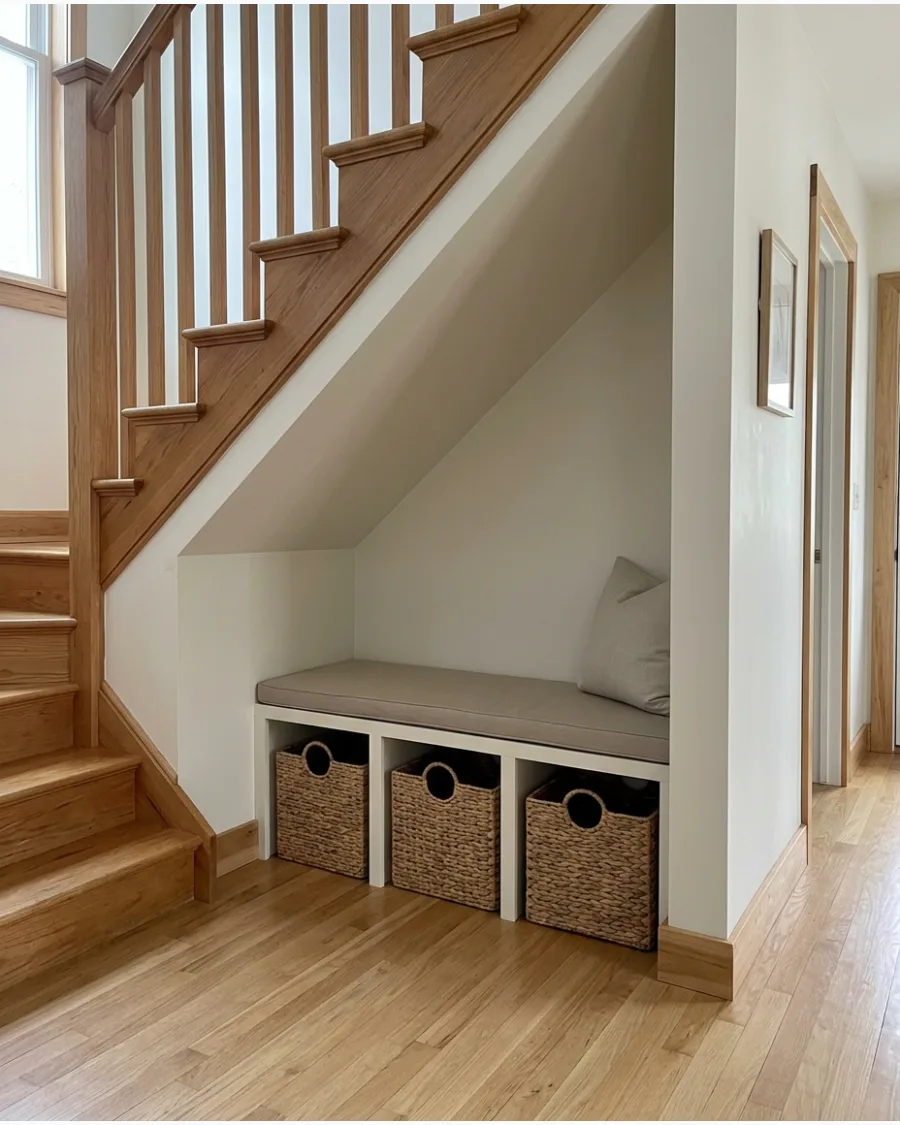
Place a simple built-in bench over open space to hold large woven baskets for an easy storage fix. Choose oversized baskets that fill the entire height of the opening to maximize every inch of available space. It adds natural texture to the room while keeping shoes and toys out of sight.
- Expect to spend $150-$300 for the bench materials and high-quality baskets.
- Glue felt pads to the bottom of the baskets so they don't scratch the floor over time.
- Rotate the baskets every few months to prevent uneven wear on the natural fibers.
Most people skip this: Measure the opening under the bench after it is built before buying baskets to ensure a perfect fit.
40. Under-Stair Nook With Coat Closet
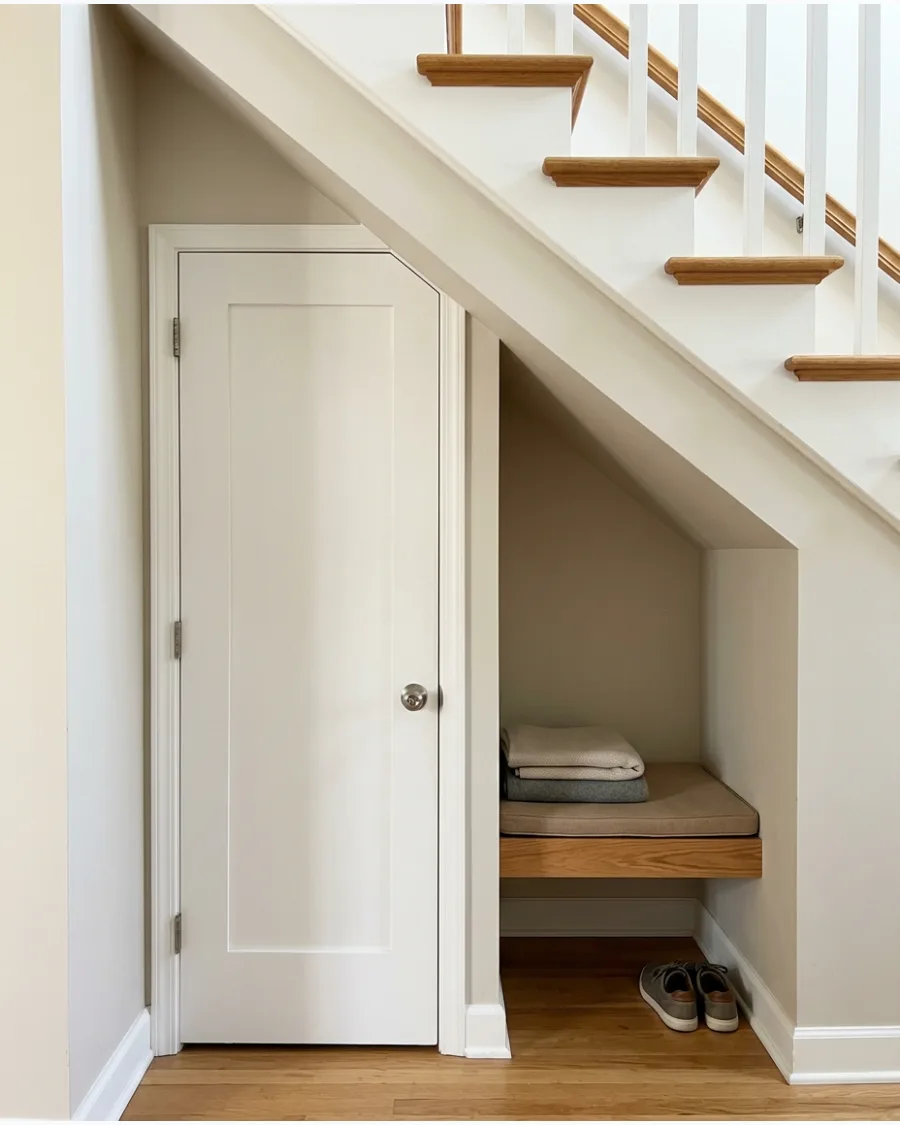
Use the deepest part of the staircase for a small enclosed coat closet while leaving the shallow end for a bench. Install a motion-sensor light inside the closet so you can find what you need without fumbling for a switch. This provides both hidden storage and a functional seating area in one compact spot.
- Framing and door installation can cost $800-$2,000 depending on structural needs.
- Use a standard-sized door if possible to save on custom fabrication costs.
- Add a small shelf inside the closet above the hanging rod for hats and gloves.
Best shortcut: Use a heavy curtain instead of a door if you want easy access and a softer look on a tight budget.
CREATIVE & LIFESTYLE NOOKS
41. Coffee Bar Nook Under Stairs
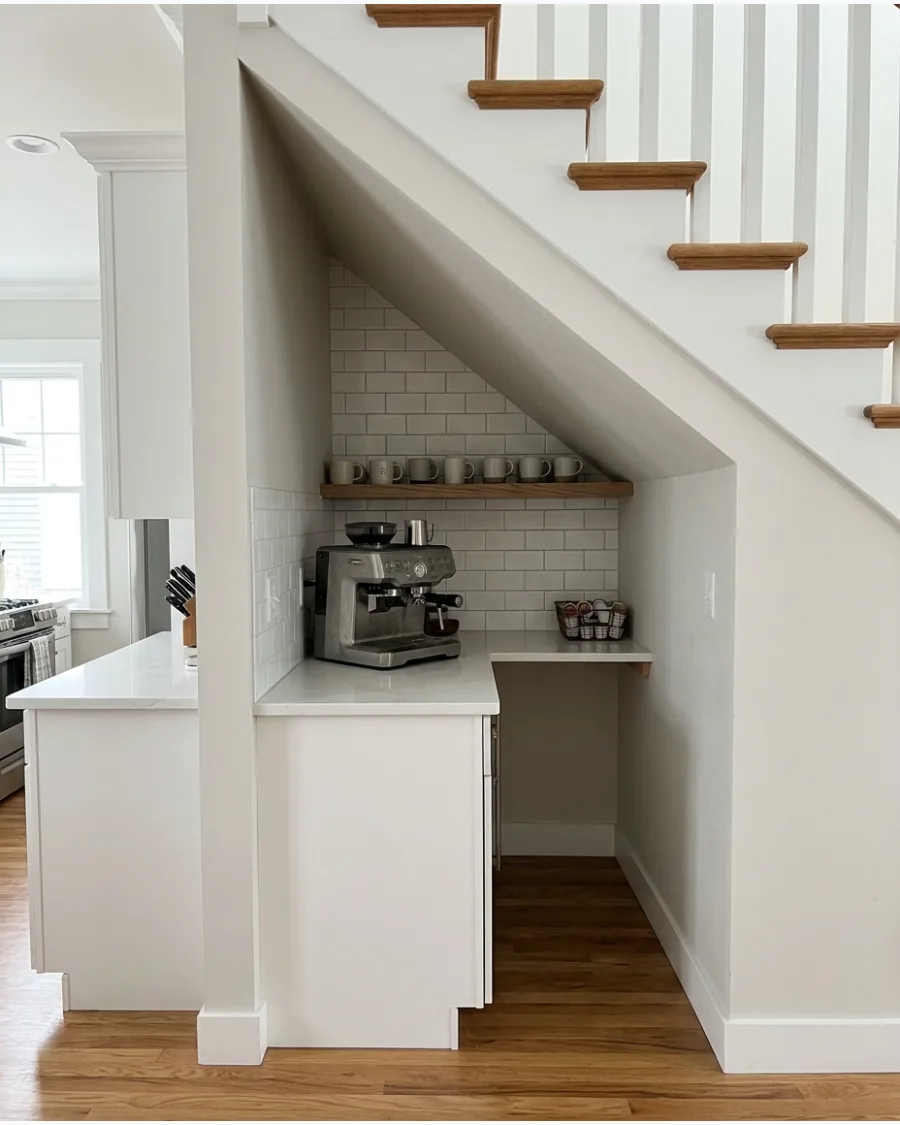
Transform a small gap into a morning destination by adding a slim console table or custom cabinet. Floating shelves above hold mugs and beans without making the area feel cramped.
Install a dedicated power outlet behind the counter to keep messy cords hidden from view. A tiled backsplash makes the area feel like a permanent kitchen extension.
- $200 – $800 depending on cabinetry
- Measure machine height before mounting shelves to ensure clearance
- Use a mirror backsplash to brighten dark corners
Quick win: Use a battery-powered motion sensor light under the shelf so you do not have to fumble for a switch in the dark.
42. Mini Home Bar Under Stairs
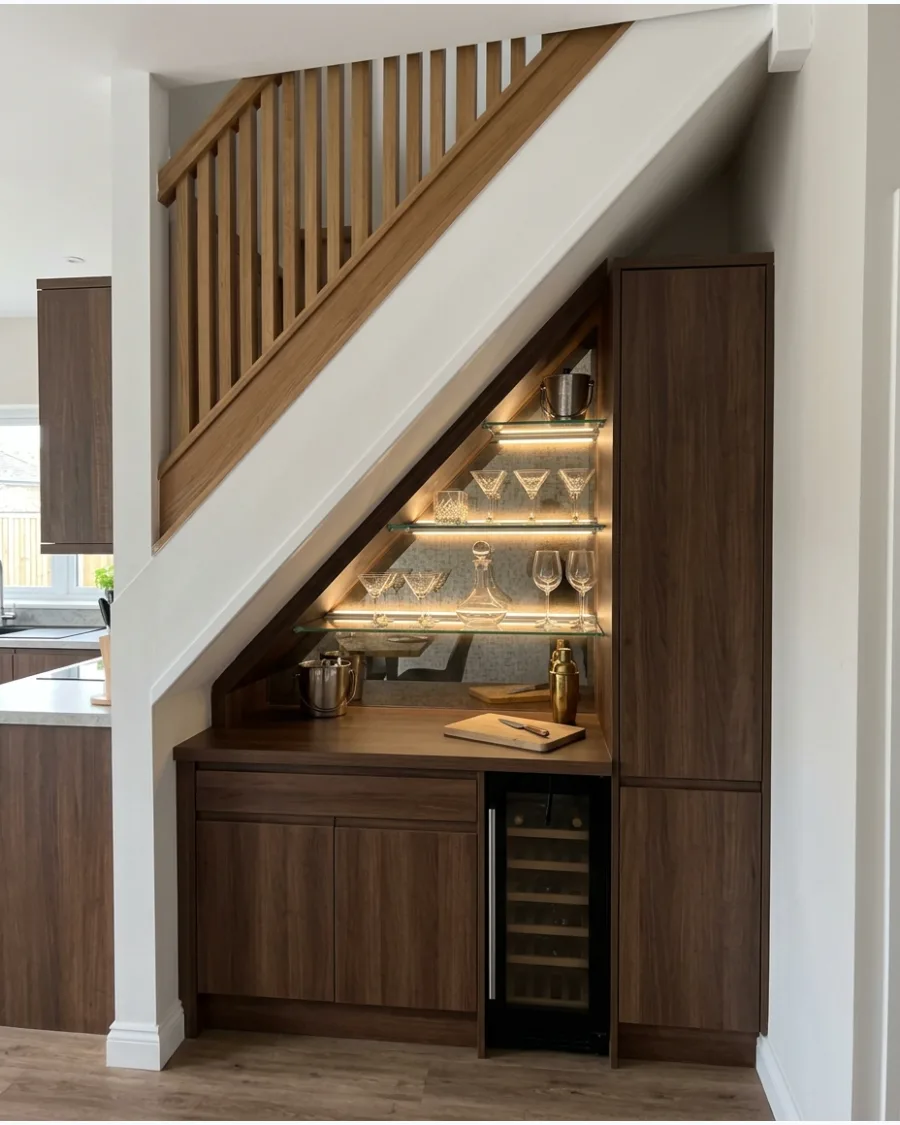
Turn an unused corner into a sophisticated serving station with dark cabinetry and glass shelving. Mirrored back panels reflect light and make the shallow space feel significantly deeper.
Choose a compact wine fridge that fits flush with the base cabinets for a high-end look. It is the perfect way to display glassware that usually stays hidden in a pantry.
- $500 – $1,500 for cabinets and cooling
- Ensure the floor is level for a wine fridge
- Swap wood shelves for glass to let light pass through
Most people skip this: Leave at least two inches of clearance behind the wine fridge for proper ventilation to prevent overheating.
43. Plant Nook Under Stairs
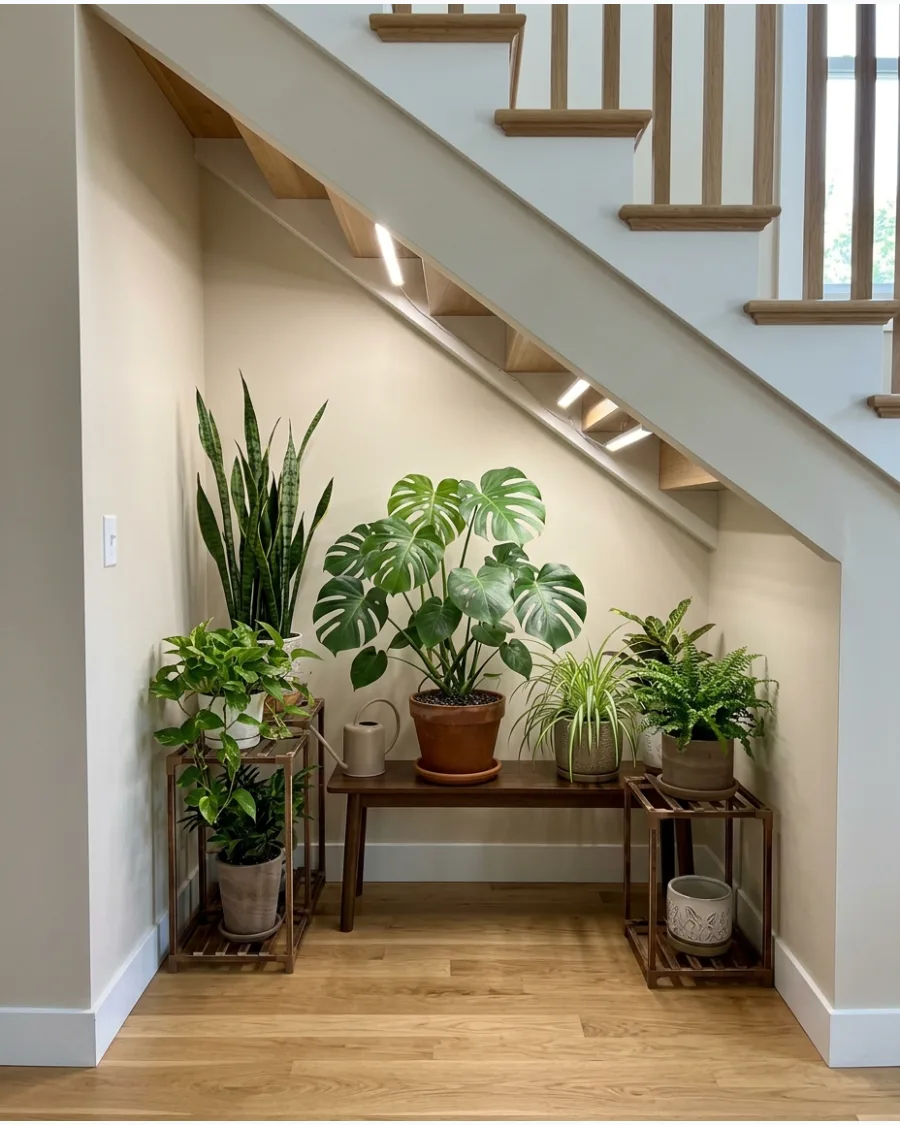
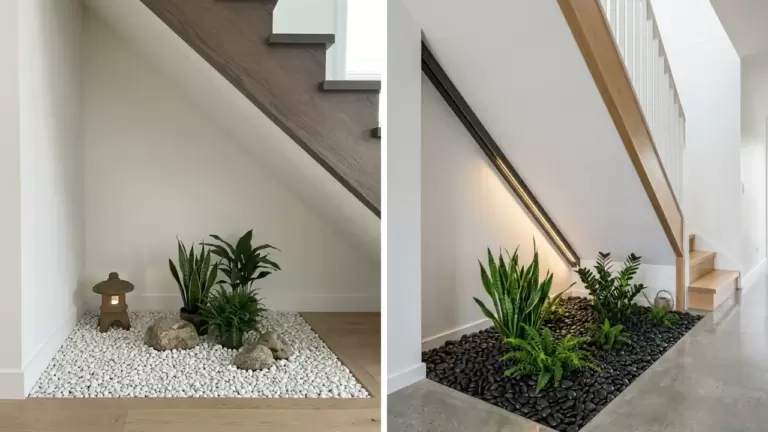
Bring life to a dark hallway by grouping shade-loving plants on a tiered stand. Use a mix of leaf textures and heights to create a lush, jungle-like effect in the triangular space.
Mount discreet full-spectrum grow lights to the underside of the stairs to keep greenery healthy in low-light zones. It turns a dead corner into a vibrant focal point that improves air quality.
- $50 – $150 for stands and plants
- Choose pots with drainage trays to protect the floor
- Use a humidifier nearby if the area gets dry from a heater
Best shortcut: Use a smart plug timer for your grow lights so the plants get a consistent 12 hours of light without any effort.
44. Pet Nook Under Stairs
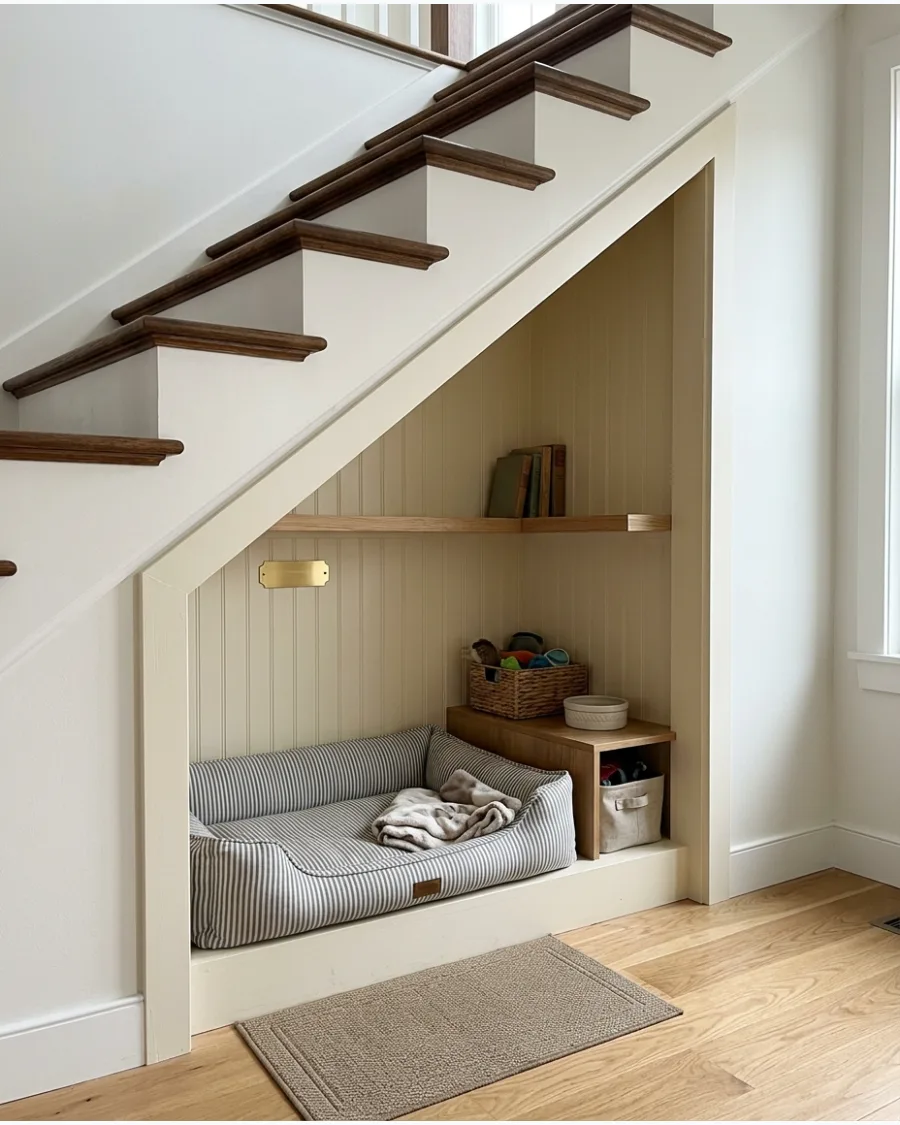
Give your dog or cat a private retreat by carving out a cozy den under the bottom few steps. Line the interior with washable beadboard and a thick, plush bed that fits the floor dimensions exactly.
Add a small decorative trim or an arched opening to make the entrance look like a finished part of the home. This keeps pet beds out of high-traffic walkways where people might trip.
- $100 – $300 for materials and bedding
- Use semi-gloss paint for easy cleaning of scuff marks
- Add a small toy basket inside the nook to keep the floor clear
Most people skip this: Install a small, low-wattage LED puck light inside the ceiling of the pet nook so it does not feel like a dark cave.
45. Kids' Secret Hideaway Nook
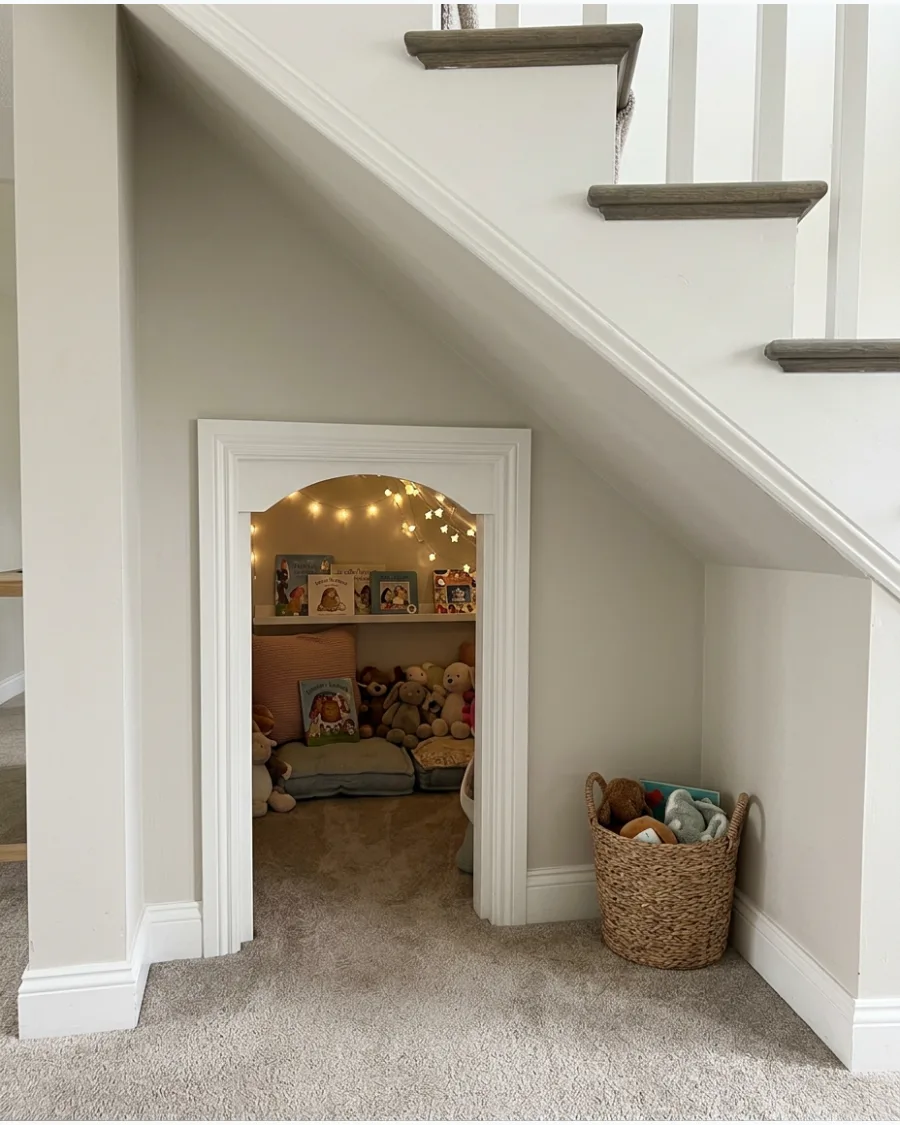
Create a magical escape for children by enclosing the under-stair area with a small door or a heavy curtain. Fill the interior with floor cushions, a soft rug, and a string of fairy lights for an instant reading fort.
Attach a chalkboard panel to the inside wall to give them a creative place to draw without ruining the main house walls. It is a smart way to keep toys contained and out of sight.
- $50 – $200 for decor and lighting
- Use battery-operated lights to avoid cord hazards
- Add a soft rubber mat under the rug for extra cushioning on hard floors
Quick win: Use a tension rod and a blackout curtain if you are not ready to commit to building a permanent wall or door.
46. Music Listening Nook Under Stairs
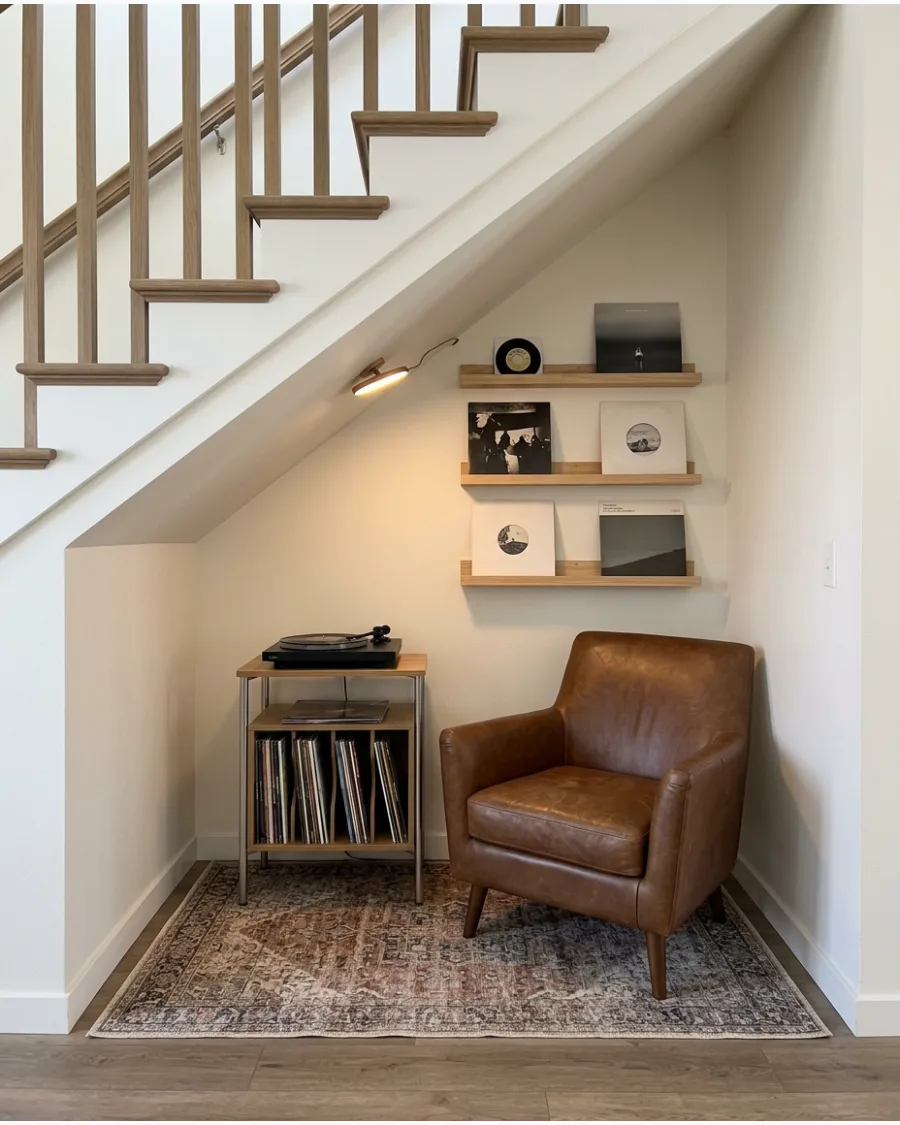
Dedicate a quiet corner to your record collection with a low-profile turntable stand. A single comfortable armchair makes the space feel like a destination rather than a transition zone.
Mount a few vinyl record ledges on the sloped wall to turn your favorite album covers into rotating art pieces. High-quality headphones are a great addition if the nook is in a busy part of the house.
- $300 – $1,000 for furniture and equipment
- Check that the turntable is perfectly level to prevent skipping
- Use a cord management box to hide speaker wires
Best shortcut: Use "now playing" wall mounts to easily swap out the record sleeve currently in use without digging through the whole stack.
47. Art and Display Nook Under Stairs
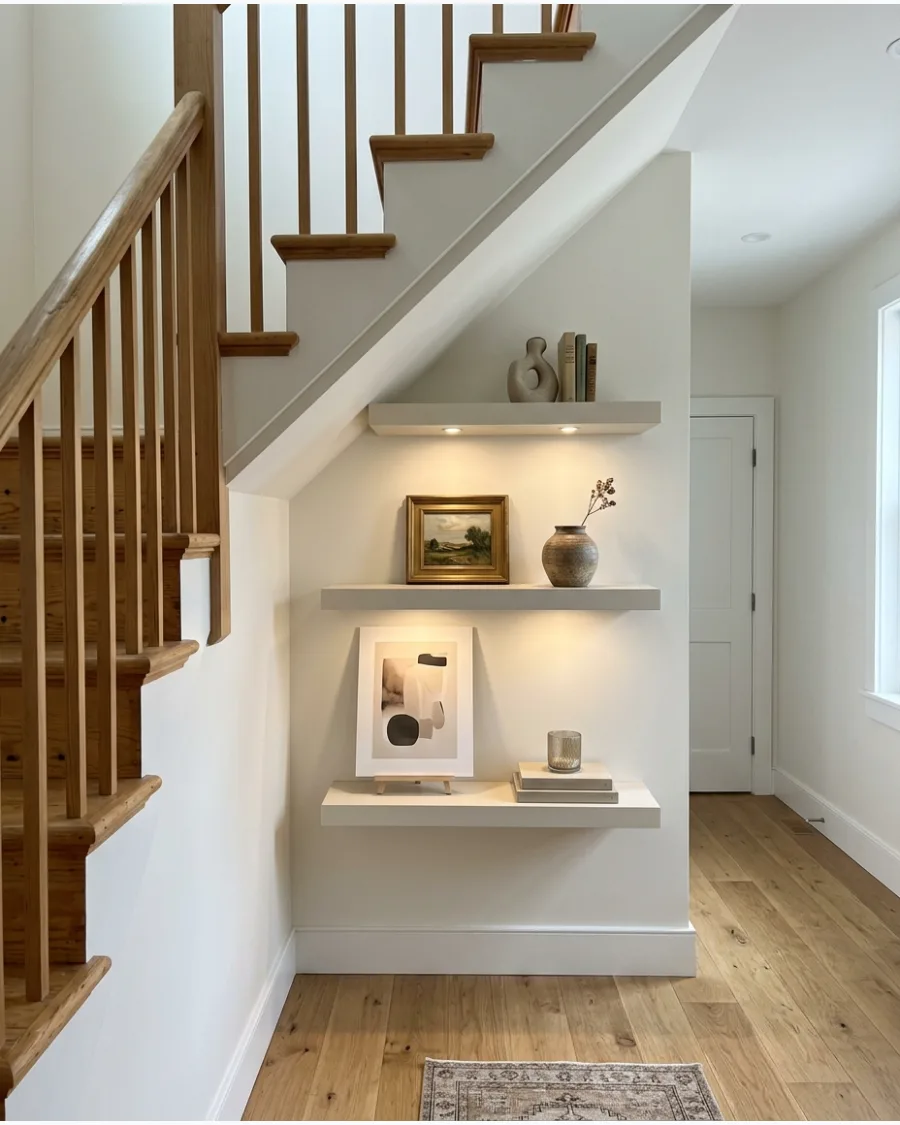
Turn an architectural challenge into a gallery by installing custom-cut floating shelves. Mix framed photos with sculptural vases and small travel souvenirs to create a layered, curated look.
Use warm-toned picture lights or recessed spots to highlight the objects and eliminate shadows from the stairs. It makes the hallway feel more expensive and intentional.
- $100 – $400 for shelving and lighting
- Use heavy-duty wall anchors for shelves holding heavy pottery
- Group items in odd numbers like threes or fives for better balance
Most people skip this: Leave at least 10 inches of vertical space between shelves so the display does not look cluttered or cramped.
48. Breakfast Nook Under Stairs
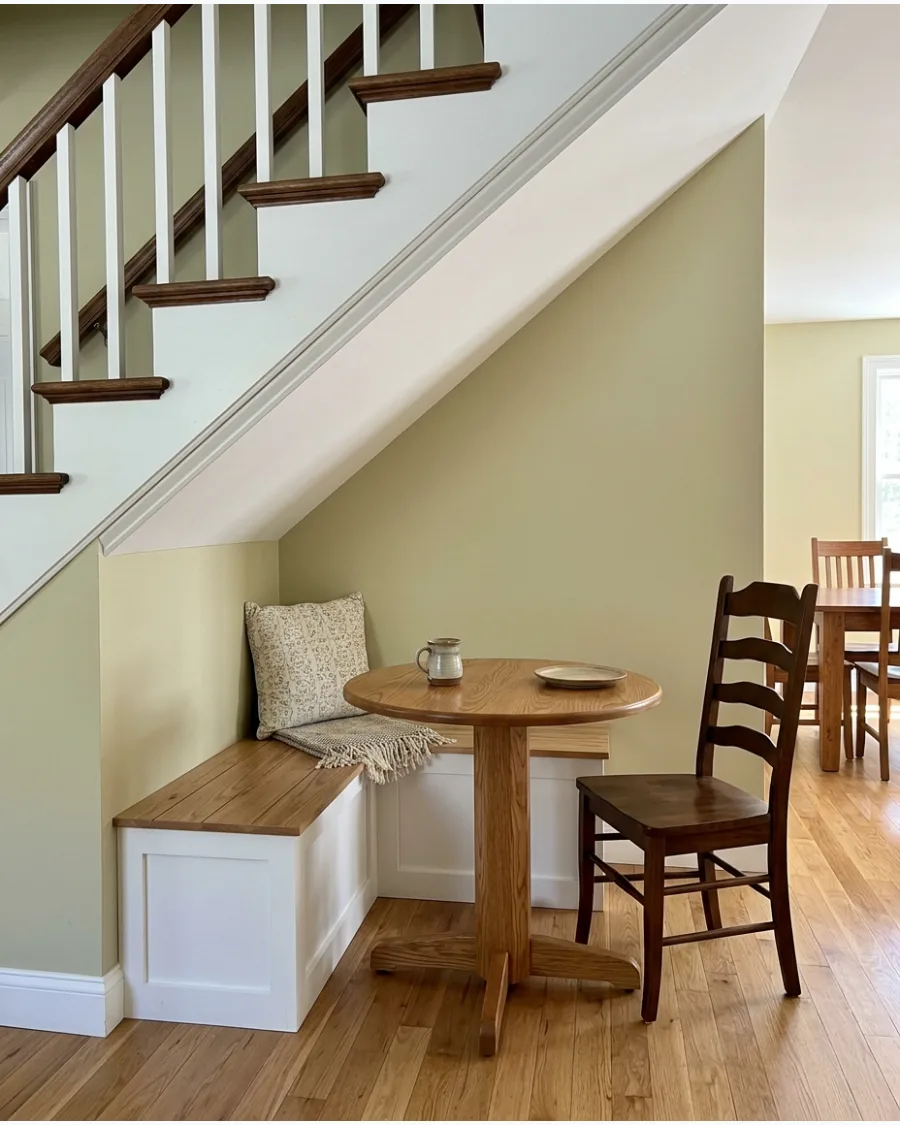
Squeeze a dining spot into a small kitchen by fitting a custom bench into the deepest part of the stair slope. A small pedestal table saves floor space and allows for easy movement in and out of the seat.
Choose a table with a round top to avoid sharp corners in a tight, narrow walkway. It is a charming way to use space that is usually too small for standard furniture.
- $400 – $900 for bench and table
- Measure the head strike zone to ensure people do not hit the ceiling when standing
- Use outdoor fabric for bench cushions to resist spills
Quick win: Add a wall-mounted swing-arm lamp above the table so you do not need to take up surface space with a bulky table lamp.
49. Meditation Nook Under Stairs
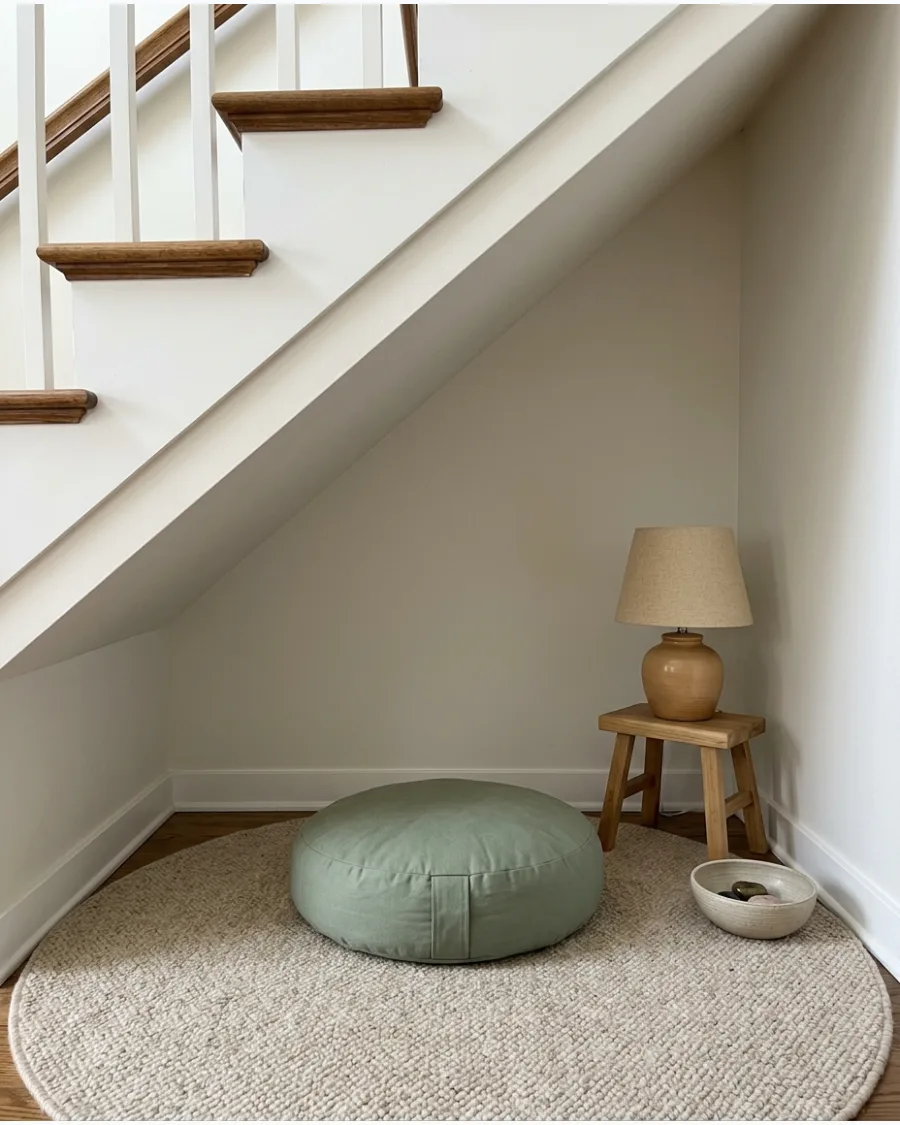
Design a peaceful retreat for daily reflection with a minimalist approach. A thick linen floor cushion and a soft, neutral rug create a comfortable base without adding visual clutter.
Place a small wooden tray on the floor to hold a single candle or a bowl of stones to ground the space. Keeping the colors muted helps signal to the brain that this is a place for rest.
- $60 – $200 for cushions and decor
- Use a small room divider if you need more privacy
- Choose a rug with a non-slip backing for safety
Best shortcut: Use a battery-operated flameless candle to get the warm glow of fire without worrying about smoke or safety in a small enclosed area.
50. Cozy Conversation Nook Under Stairs
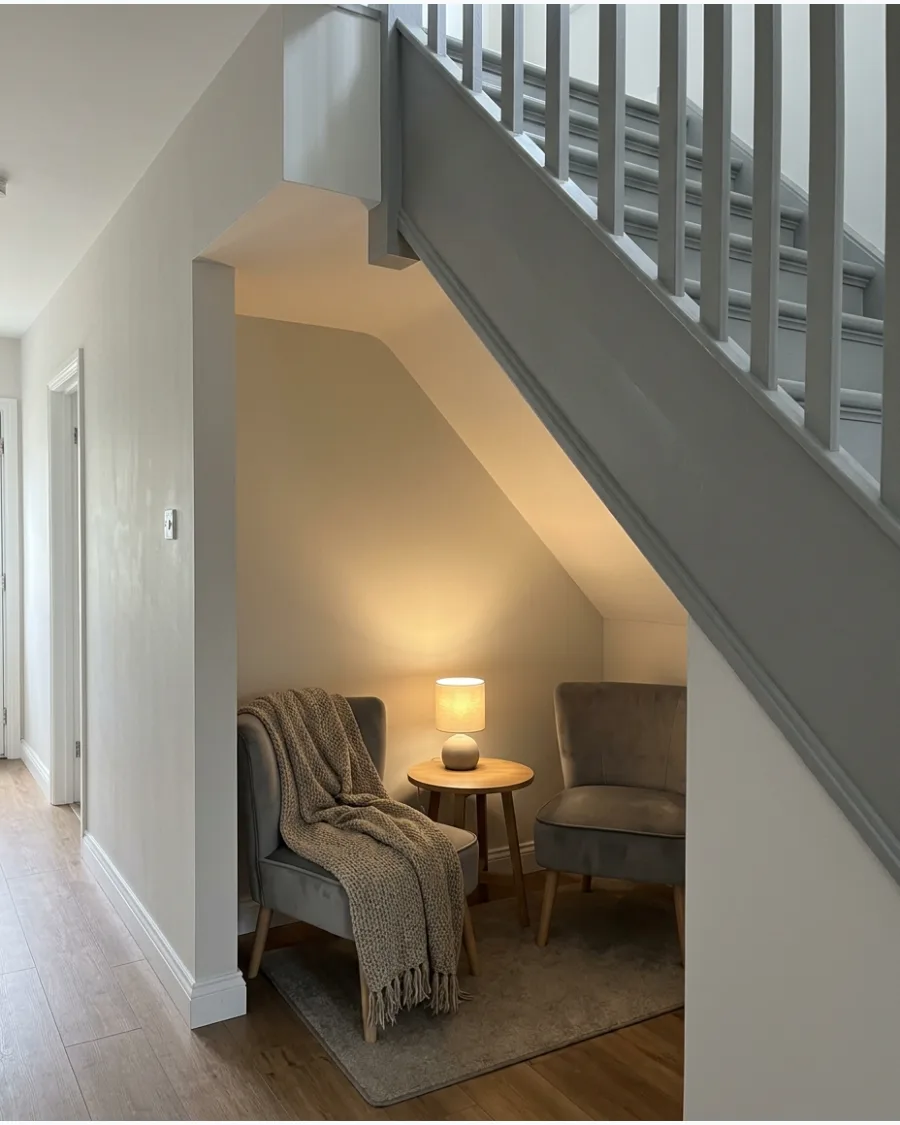
Create an intimate spot for chatting by placing two small-scale armchairs facing each other. A tiny martini table between them provides just enough room for two drinks without blocking the path.
Add a soft throw blanket over one chair to soften the hard lines of the staircase and make the area feel inviting. It turns a pass-through hallway into a functional living zone.
- $500 – $1,200 for furniture
- Select apartment-sized furniture to avoid overwhelming the footprint
- Use a round rug to define the seating area
Most people skip this: Position the chairs at a slight angle toward each other rather than perfectly straight to encourage a more natural conversation flow.
Frequently Asked Questions
How do I handle the low head clearance at the back of the nook?
Utilize the lowest point of the slope for storage baskets, a cozy pet bed, or decorative floor plants to make the most of the tight space. Always position your primary activity, like sitting or standing, at the highest point to ensure the nook feels comfortable and spacious.
What is the best lighting for a dark under-stair space?
Brighten the area using battery-operated puck lights or slim LED strips that offer easy installation without the need for complex hardwiring. Plug-in sconces are also a great practical choice for adding focused light and a touch of style to a dim corner.
Should I keep the nook open or add doors?
Leaving the nook open provides visual "breathing room" and is ideal for creating an inviting reading bench or display area. If you need to hide household clutter, adding doors can transform the space into a functional, out-of-sight storage closet.
How do I make a desk under the stairs feel less cramped?
Mounting a floating desk keeps the floor space visible, which helps the entire nook feel much more open and airy. Pair it with a low-profile chair that can tuck completely under the surface to maintain a clear and organized walkway.
Can I turn the space under the stairs into a powder room?
You can certainly convert the space, provided you account for the necessary plumbing and ventilation requirements to meet local building codes. For a simpler project, consider dry-use ideas like a walk-in pantry or a custom library which require significantly less construction.