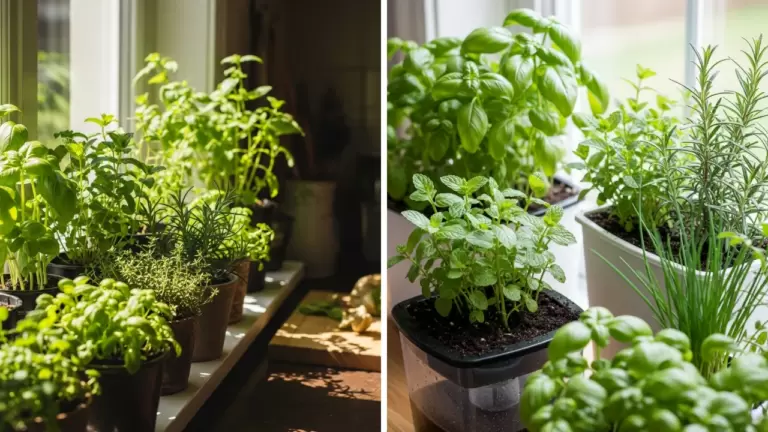
50 Garden Gate Ideas

This post may contain affiliate links: full affiliate disclosure.
A garden gate is more than a boundary; it is the first impression of your outdoor space. Choosing a design that blends security with style ensures your yard feels both private and polished.
Modern Garden Gate Ideas
1. Horizontal Wood-Slat Garden Gate
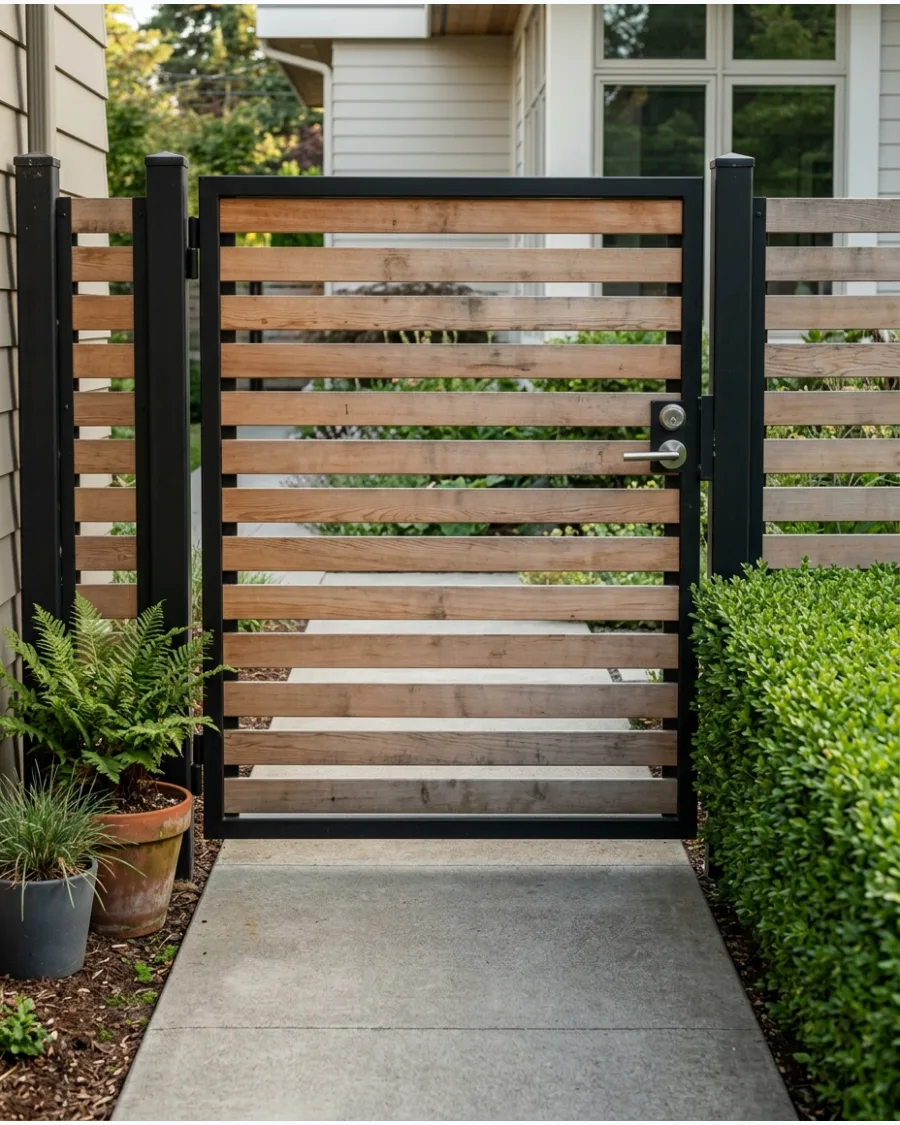
Narrow wooden boards arranged horizontally create a wide, modern look for any side yard. This design works best when paired with a slim black metal frame to keep the structure rigid over time.
Fasten the slats from the back to hide screw heads and maintain a clean surface. Using cedar or redwood will help the gate resist rot naturally without heavy chemical stains.
- Expect to spend $200-$500 for materials depending on wood type.
- Requires 4-6 hours for assembly and mounting to existing posts.
- Works well for small side yards or wide driveway entrances.
Best shortcut: Use a spacer block between slats during installation to ensure every gap is perfectly even.
2. Vertical Cedar Slat Gate
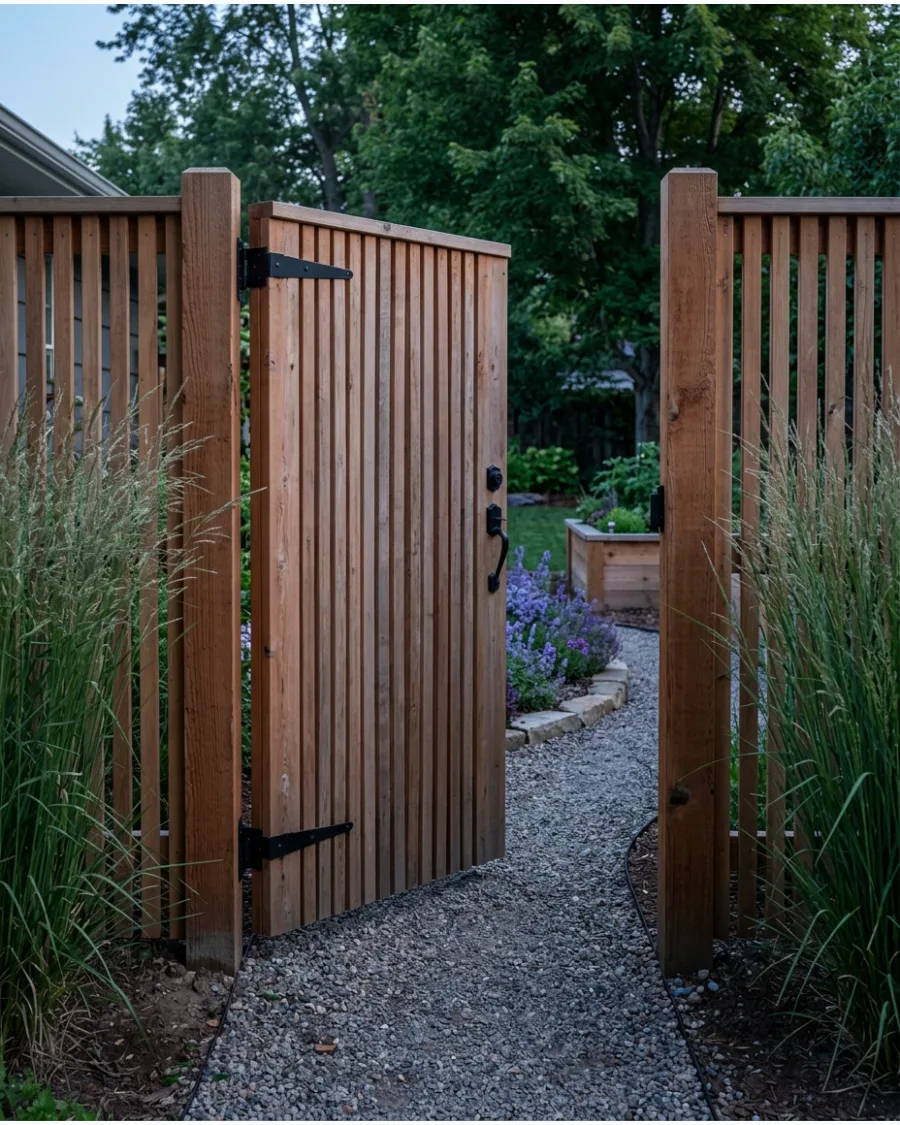
Vertical slats draw the eye upward and make a small garden entrance feel much taller. Small gaps between the boards allow breezes to pass through so the gate does not act like a sail during high winds.
Mount the slats with a half-inch gap to balance visibility with a sense of enclosure. Cedar naturally weathers to a beautiful silver-grey if left untreated, which fits a relaxed landscape.
- Budget $150-$350 for standard cedar lumber and hardware.
- Plan for 3-5 hours of work including post setting.
- Ideal for narrow paths that need a visual height boost.
Quick win: Apply a clear UV-sealer every two years to keep the cedar's warm orange-red tone from fading.
3. Matte Black Metal Gate
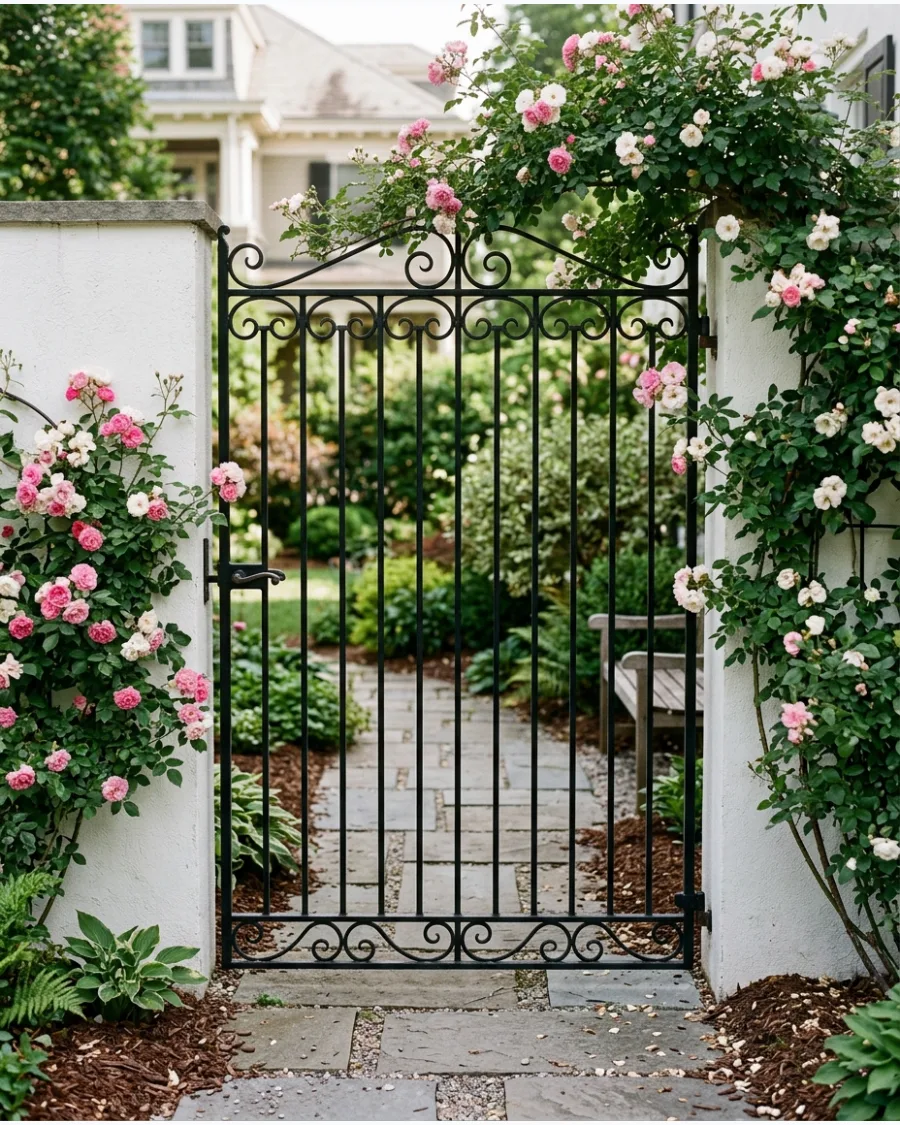
A simple metal gate with vertical bars offers a timeless look that never feels bulky. The matte black finish hides fingerprints and dust while providing a sharp contrast against green foliage or white garden walls.
Choose a powder-coated finish to prevent rust and peeling in humid climates. This style is perfect for keeping pets in without blocking the view of the neighborhood.
- Costs range from $300-$700 for pre-fabricated metal panels.
- Quick 2-hour installation if using pre-made gate sections.
- Great for high-visibility front yards where security is needed.
Most people skip this: Check that the bar spacing is narrow enough to prevent small dogs from squeezing through.
4. Wood-and-Steel Garden Gate
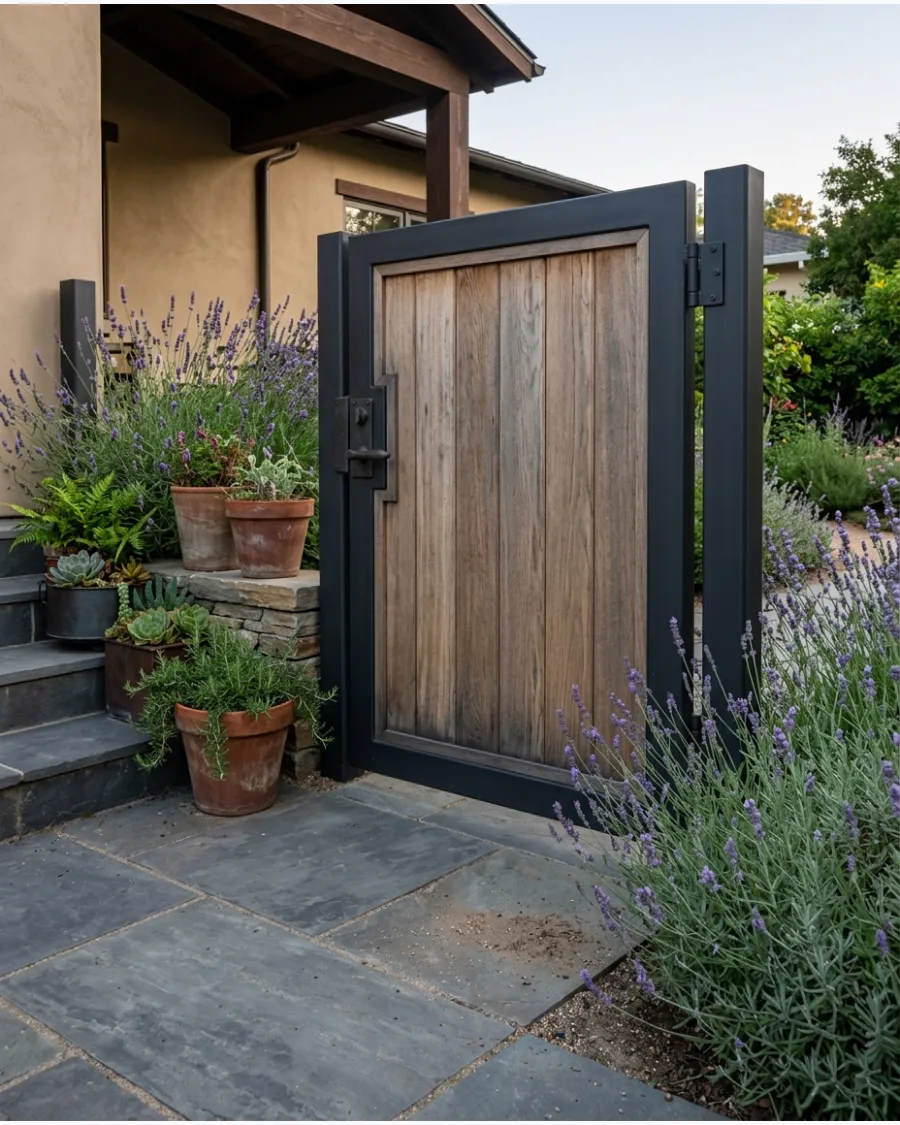
Mixing warm wood with industrial steel creates a sturdy gate that handles heavy daily use. The steel frame prevents the wood from sagging over time, which is a common problem with all-wood designs.
Use heavy-duty bolts instead of simple screws to secure the wood panels into the metal frame. This combination looks especially high-end next to modern stone pavers or concrete steps.
- Materials and frame may cost $400-$800.
- Requires 6-8 hours for assembly and mounting.
- Best for high-traffic main entrances to the backyard.
Quick win: Use a metal-drill bit to pre-drill holes in the steel to avoid snapping screw heads during assembly.
5. Minimalist Solid-Panel Gate
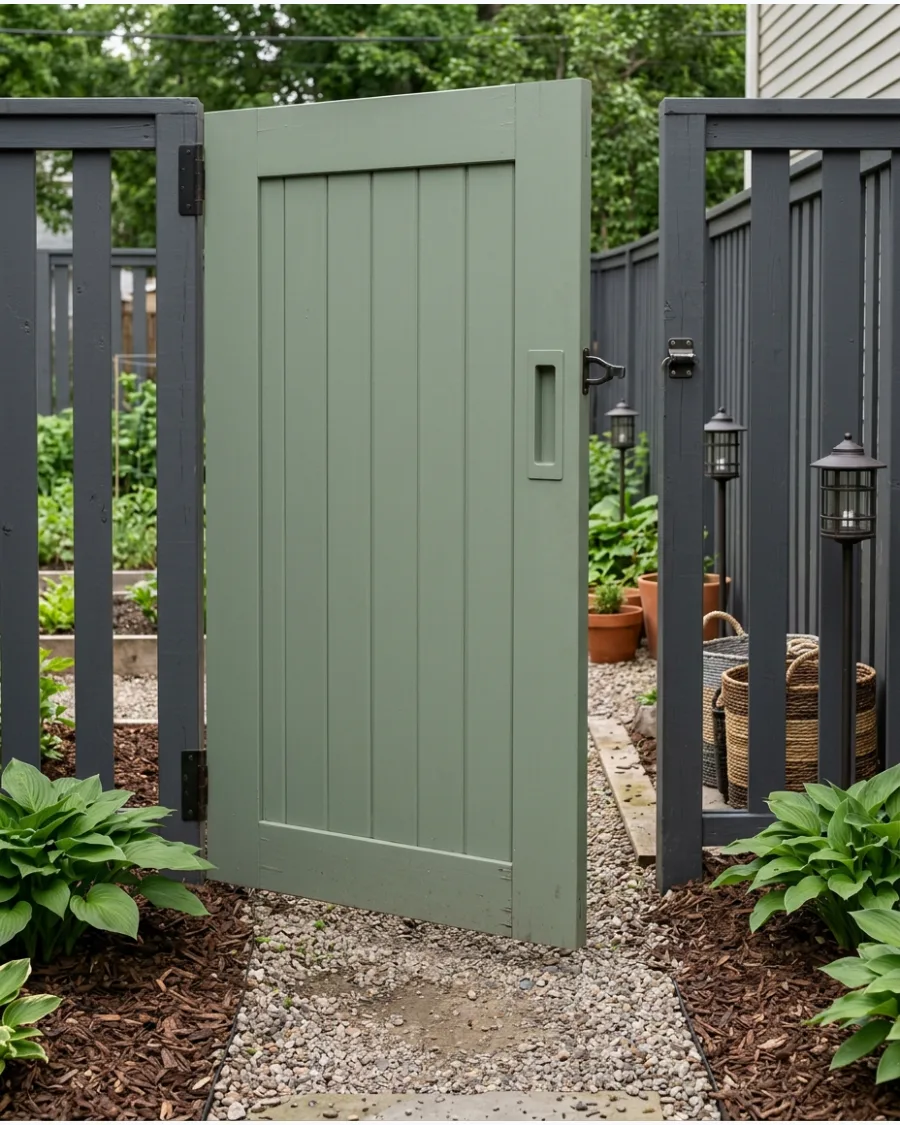
A solid panel gate provides total privacy for backyard retreats or side-yard storage areas. Choosing a muted color like charcoal or sage green helps the large flat surface blend into the surrounding landscape.
Install a heavy-duty magnetic latch to ensure the gate stays closed even if it is not perfectly level. High-quality hidden hinges keep the focus on the clean lines of the panel itself.
- Budget $250-$600 for a solid core or custom-built panel.
- Takes about 4 hours to hang and align correctly.
- Provides maximum privacy for hot tubs or trash bin storage.
Best shortcut: Buy a pre-primed solid-core exterior door for a quick DIY version of a solid-panel gate.
6. Asymmetrical Slat Gate
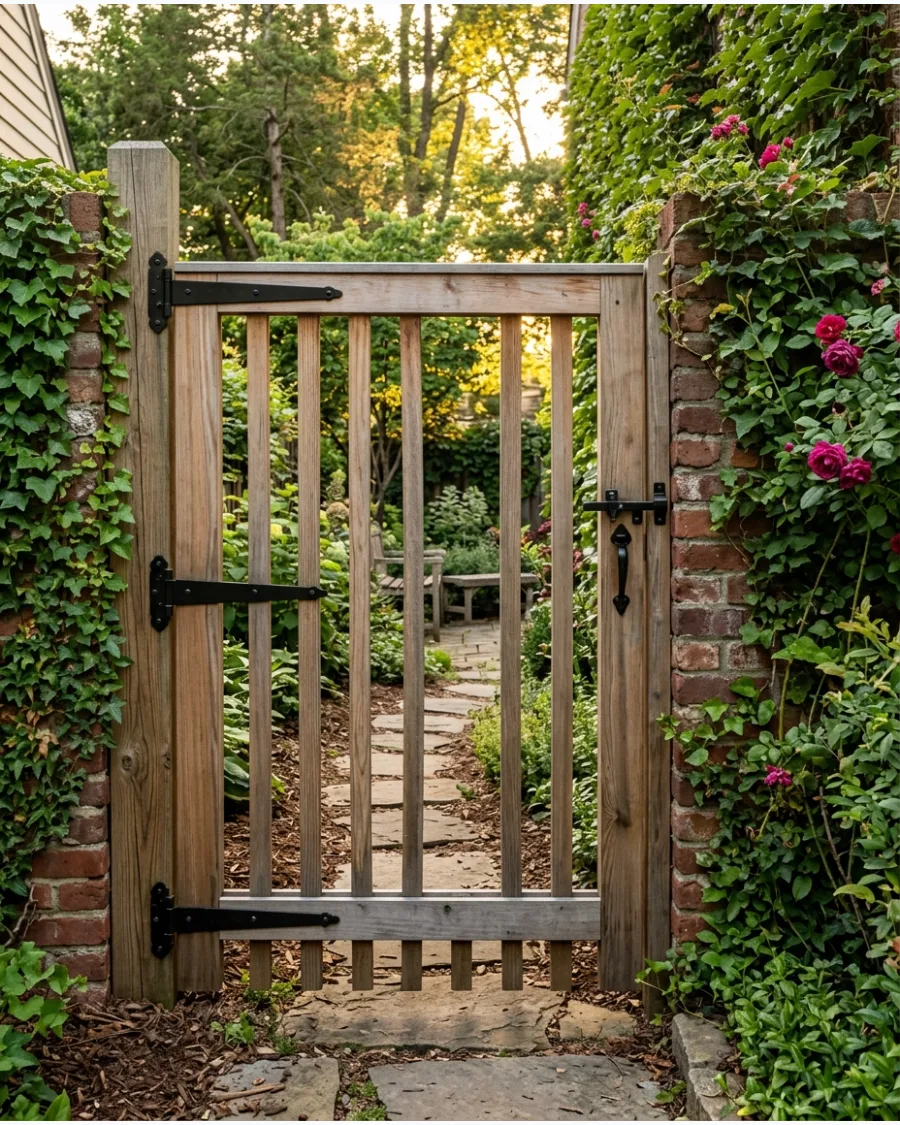
Alternating different slat widths adds a custom, architectural feel to a standard garden entrance. This design breaks up the monotony of a long fence line without requiring expensive or rare materials.
Keep the color uniform across all slat sizes to ensure the pattern looks intentional rather than messy. It is an easy way to make a basic backyard look like it was designed by a professional.
- Materials cost $200-$400 depending on the wood species.
- Expect 5 hours for the layout and assembly of the custom pattern.
- Works well as a focal point in a long, plain fence.
Quick win: Sketch the pattern on paper first to make sure the slats end evenly at both edges of the frame.
7. Geometric Metal Gate
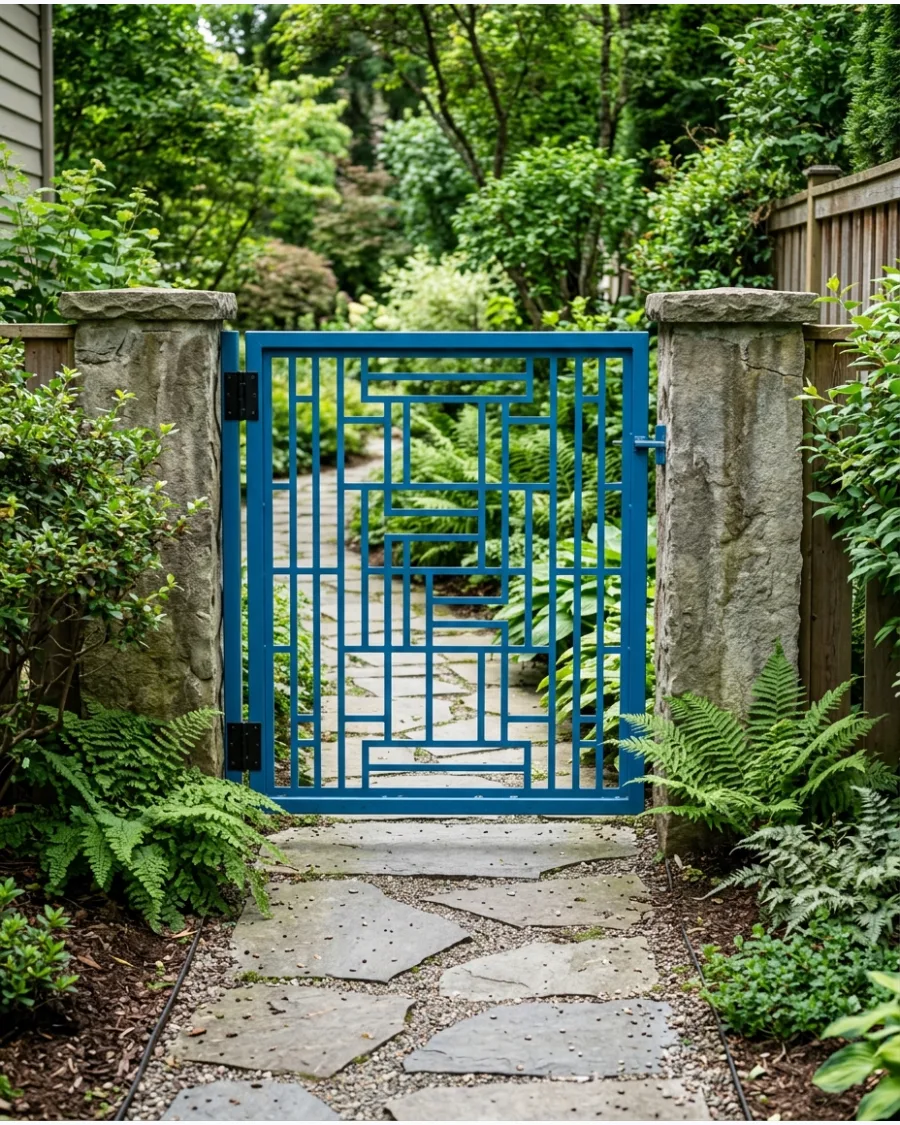
A gate with a geometric pattern creates a striking visual frame for the garden beyond. Whether it features rectangles or diagonal lines, the open design invites guests to peek at the landscaping.
Paint the metal a bold color like deep navy to make the geometric pattern pop against green plants. It serves as a piece of functional art that works year-round.
- Custom laser-cut metal gates cost $500-$1,200.
- Installation takes 3 hours but professional help is recommended.
- Best for artistic front entries or courtyard entrances.
Most people skip this: Ensure the pattern does not have sharp interior angles where leaves and debris can get stuck and cause rust.
8. Pivot-Style Garden Gate
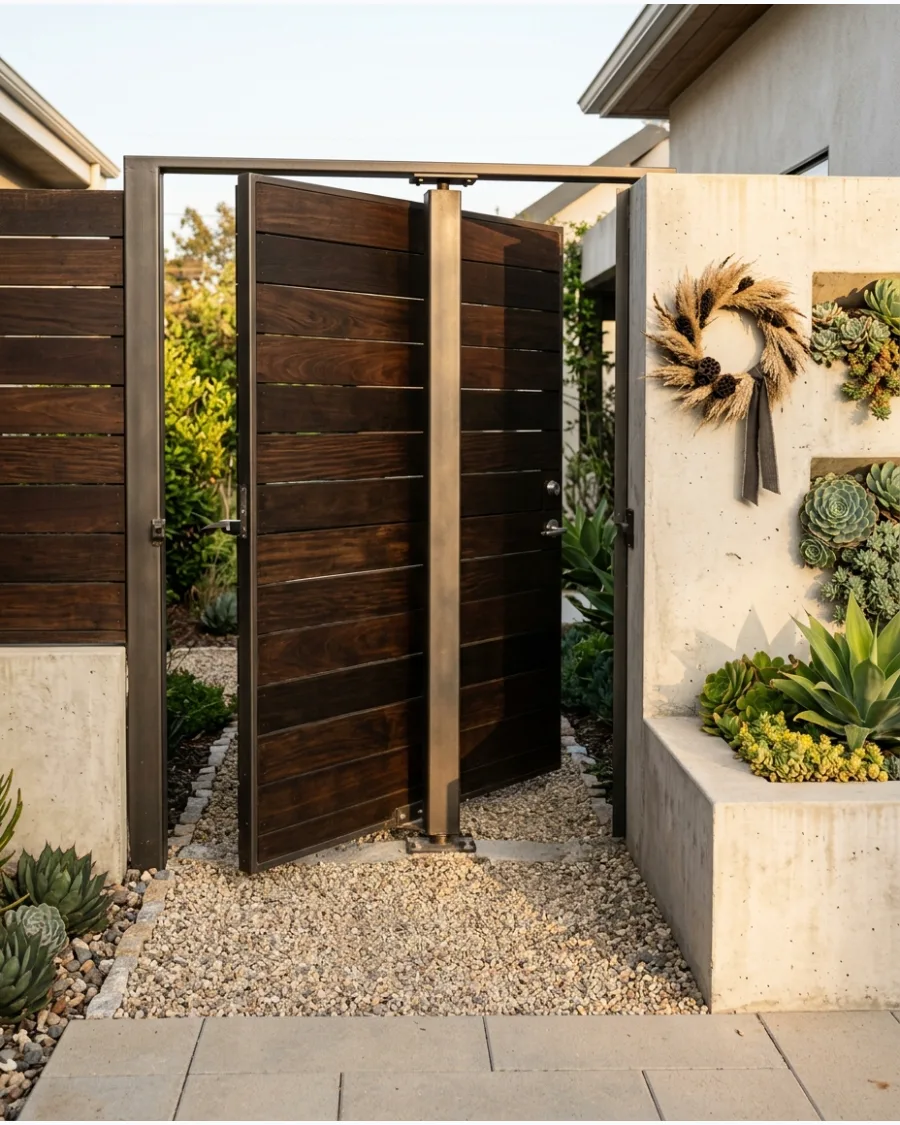
A pivot gate rotates on a central or offset axis rather than swinging from side hinges. This unique movement feels modern and high-tech, making it a great conversation piece for a front walk.
Ensure the ground is perfectly level beneath the gate to allow for the specialized swinging motion. It is an excellent choice for wider openings where a traditional swinging gate might be too heavy.
- Heavy-duty pivot hardware and gate cost $800-$2,000.
- Installation is complex and may take 10 or more hours.
- Best for wide architectural entrances on modern homes.
Best shortcut: Hire a welder to create the frame and pivot point, then add the wood slats yourself to save on labor costs.
9. Warm Charcoal Garden Gate
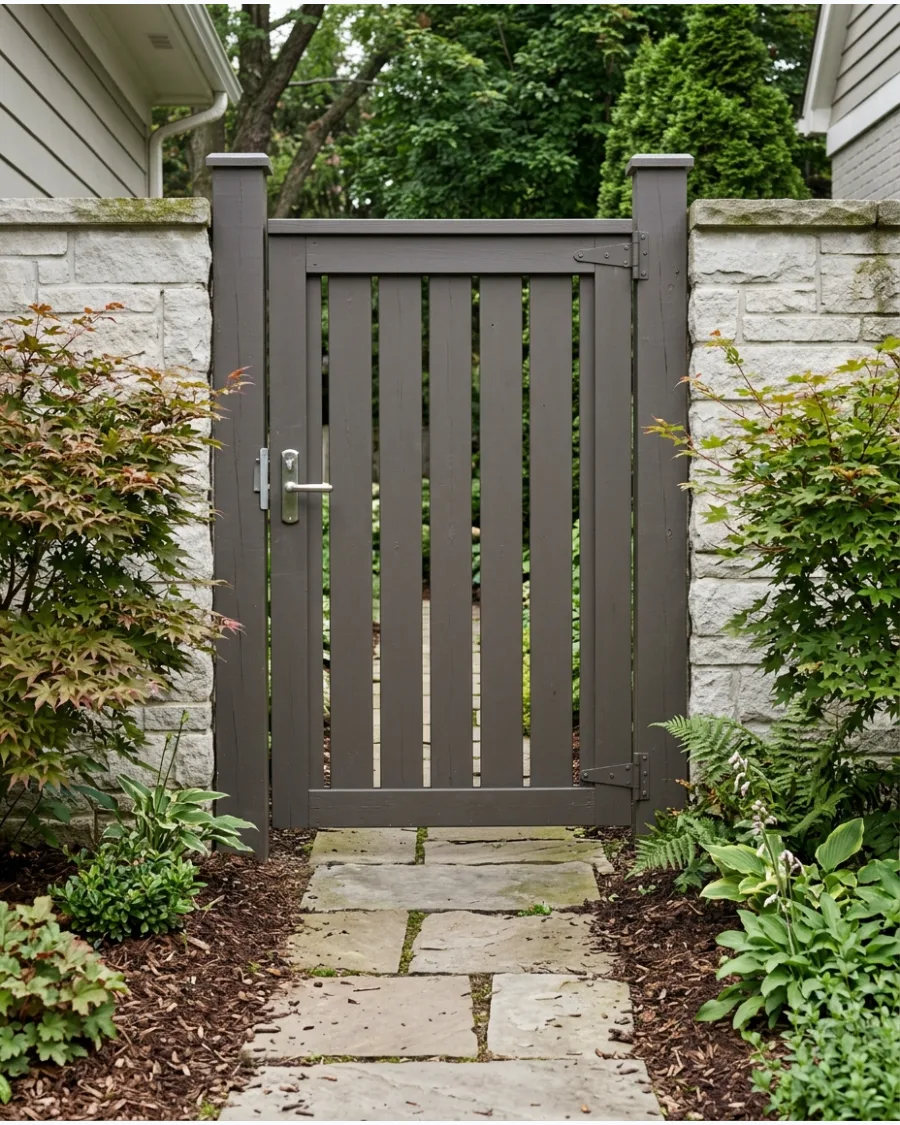
Charcoal is a softer alternative to black that still provides a sophisticated, modern edge. This shade hides dirt and scuffs better than lighter colors while making the green of nearby plants look more vibrant.
Use a satin or semi-gloss finish to make the gate easier to wipe down after rainstorms. It bridges the gap between traditional wood and industrial metal perfectly.
- Painting an existing gate costs $100-$300 in supplies.
- Requires 4 hours including cleaning, sanding, and painting.
- Matches almost any home exterior color or siding material.
Quick win: Paint the gate hardware the same charcoal color for a sleek, monochromatic look.
10. Gate That Matches the Garden Fence
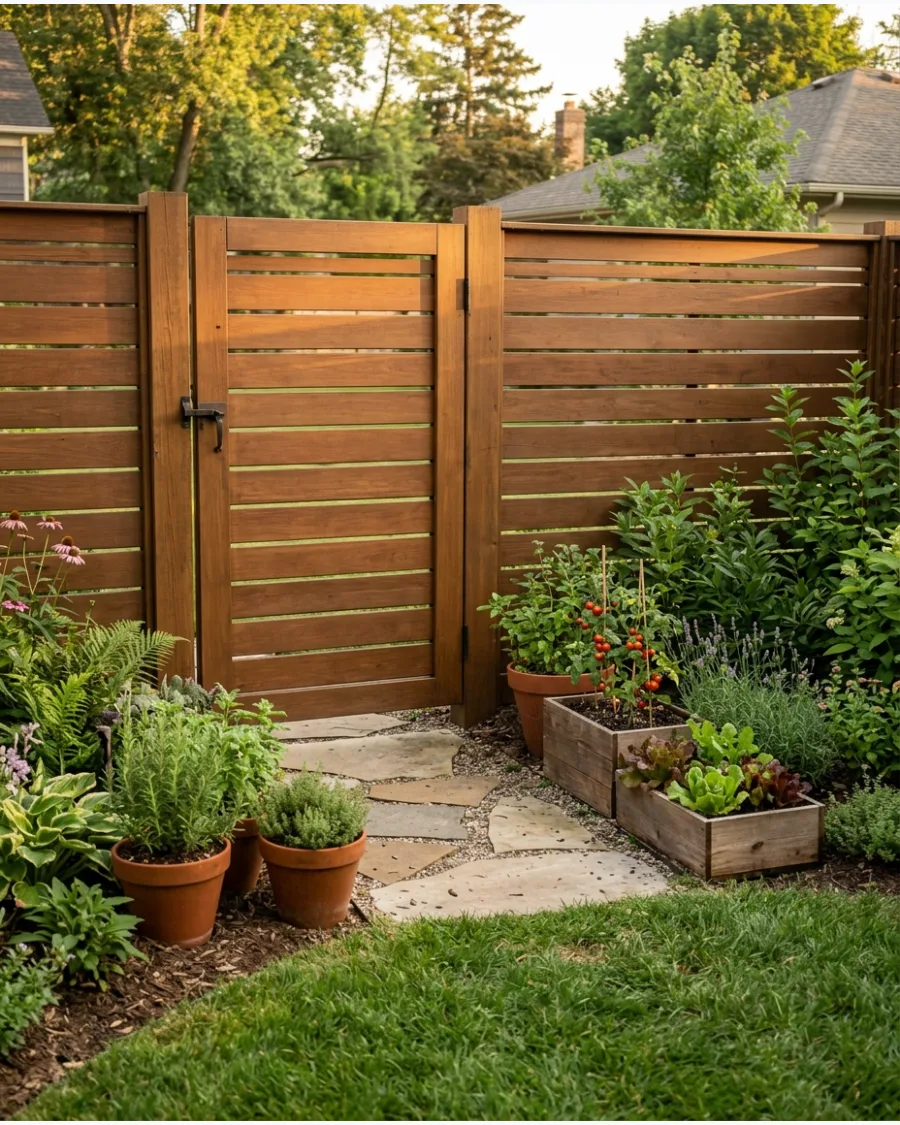
Matching the gate exactly to the surrounding fence creates a seamless, high-end appearance. This "hidden" gate design makes a small yard feel larger because the visual line of the fence is not interrupted.
Align the gate slats perfectly with the fence slats to hide the seams when the gate is closed. It is a practical way to maintain a clean and uncluttered landscape.
- Costs $150-$400 for additional fencing materials and a gate frame.
- Assembly takes 4-6 hours to ensure perfect alignment.
- Best for achieving a minimalist, high-end look in a backyard.
Most people skip this: Use a heavy-duty gate sag kit on the back of the gate to keep the lines perfectly aligned with the fence over time.
Wooden Garden Gate Ideas
11. Classic Arched Wooden Gate
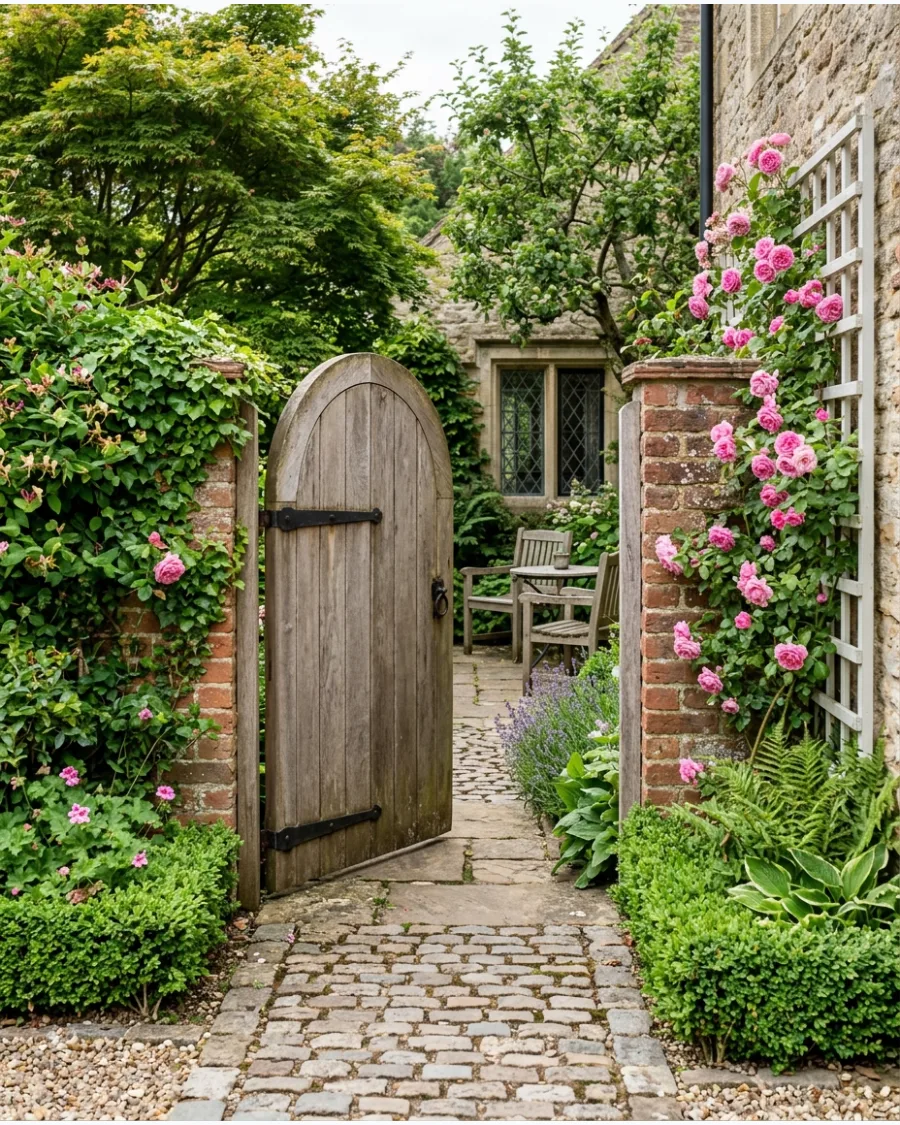
A curved top edge adds a soft, welcoming look to a standard wooden entrance. This design fits perfectly with cottage-style homes and lush, overflowing flower beds.
Mount the hinges on the back of the gate to keep the focus on the elegant curved silhouette from the street. Arches look best when they mirror the roofline or a nearby window shape.
- Expect to pay $200–$500 for a pre-built arched gate at specialty lumber yards.
- Check that the highest point of the arch matches the height of the adjacent fence for a seamless line.
- Paint the arch a contrasting color like cream or navy to make it a standout architectural feature.
Quick win: Use a flexible piece of trim as a guide to trace a perfect, symmetrical arc before cutting.
12. Natural Cedar Garden Gate
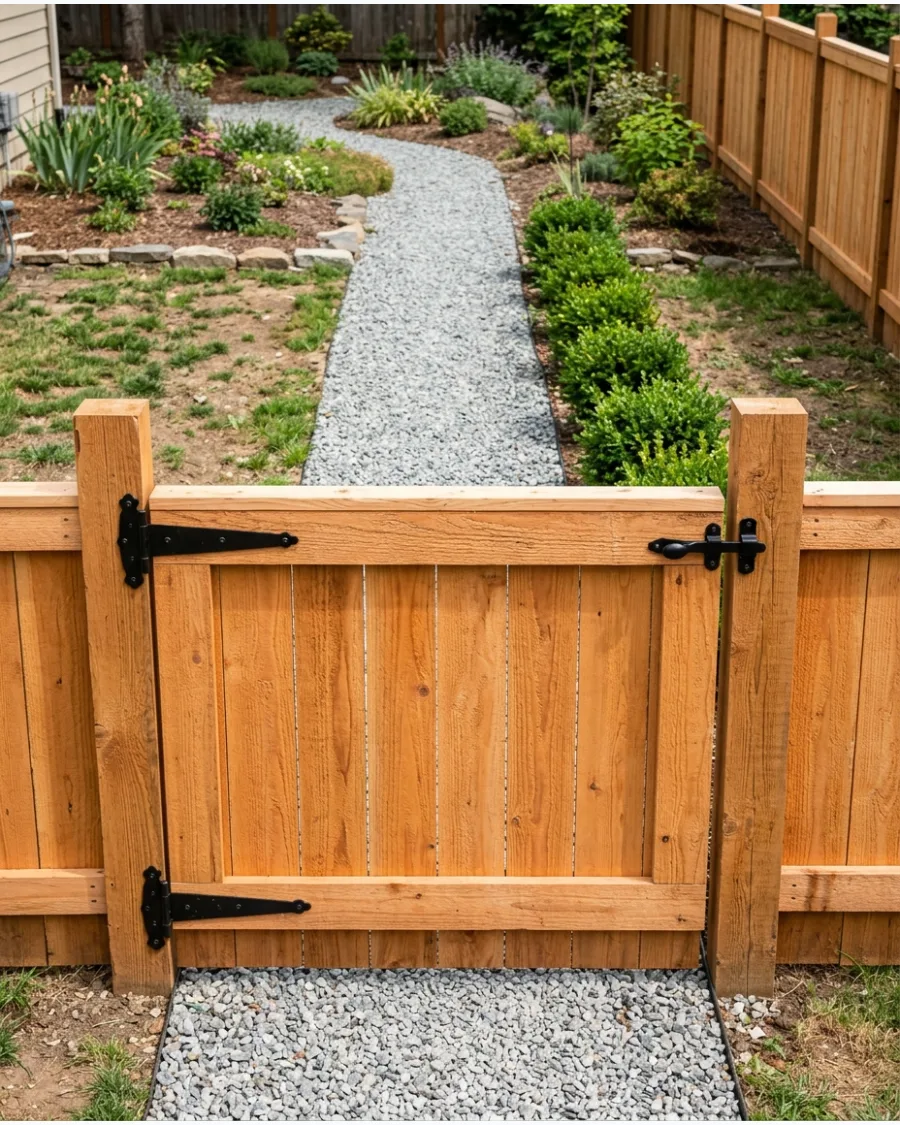
Cedar is naturally rot-resistant and features a beautiful, warm grain that looks better with age. Simple black hardware provides a clean contrast against the orange-toned wood.
Apply a clear UV-resistant sealer every two years to prevent the cedar from turning silver while keeping its natural warmth. High-quality cedar should never be painted because the natural wood texture is the main attraction.
- Purchase Western Red Cedar for the best balance of durability and color.
- Use stainless steel fasteners to prevent the wood from developing dark chemical stains over time.
- Swap the standard latch for a modern lever handle to give a traditional material a contemporary edge.
Most people skip this: Sand the edges of the planks slightly to prevent splintering where people naturally grab the gate.
13. Dark-Stained Wood Gate
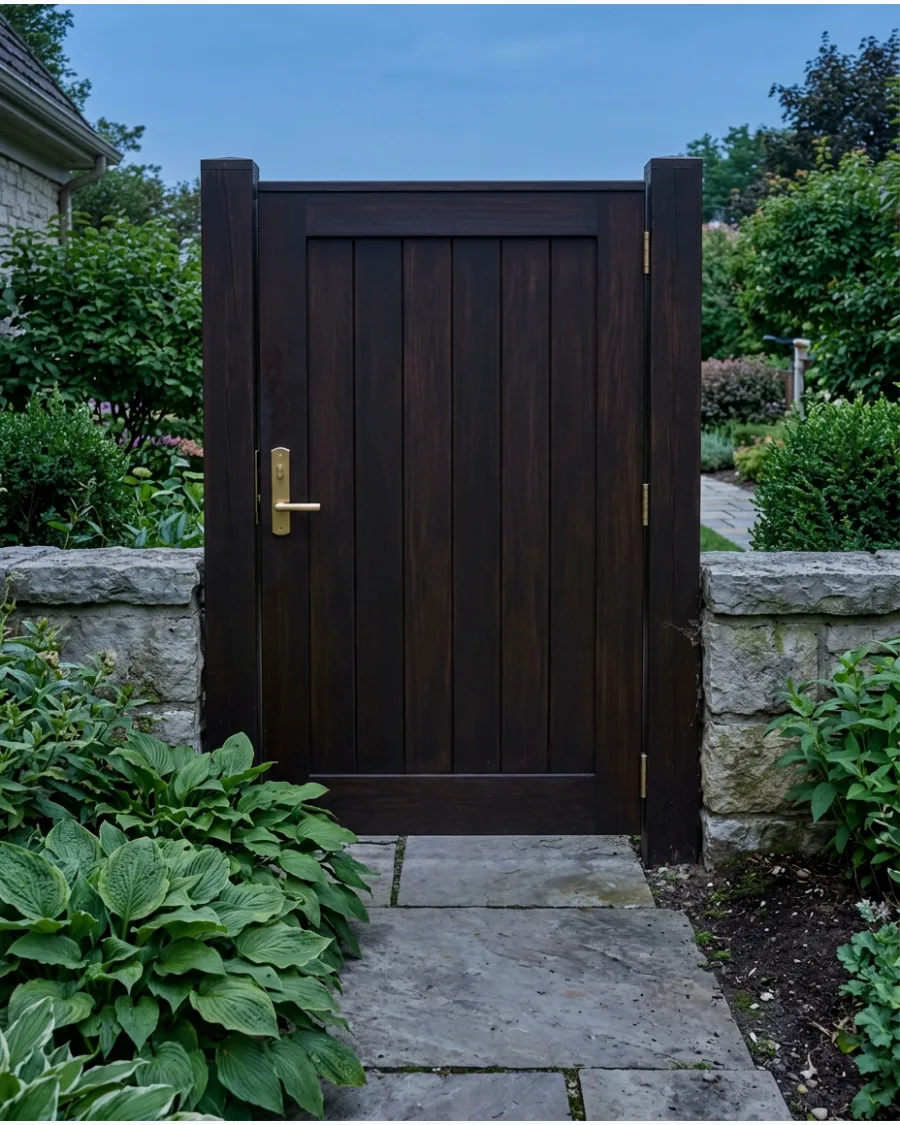
A deep espresso or walnut stain creates a sophisticated, high-end look for any yard. This dark finish makes the surrounding green plants and bright flowers look much more vibrant.
Contrast a dark walnut gate with a light-colored stone or concrete path to draw the eye toward the entrance. Dark gates recede into shadows, which helps a small yard feel deeper and more spacious.
- Use a semi-transparent dark stain to allow some of the wood grain to show through.
- Re-stain the gate every three years to maintain the richness of the color.
- Pair with brass or gold-toned hardware for a luxury look that pops against the dark wood.
Best shortcut: Apply a wood conditioner before staining to ensure the dark pigment absorbs evenly without blotches.
14. Board-and-Batten Garden Gate
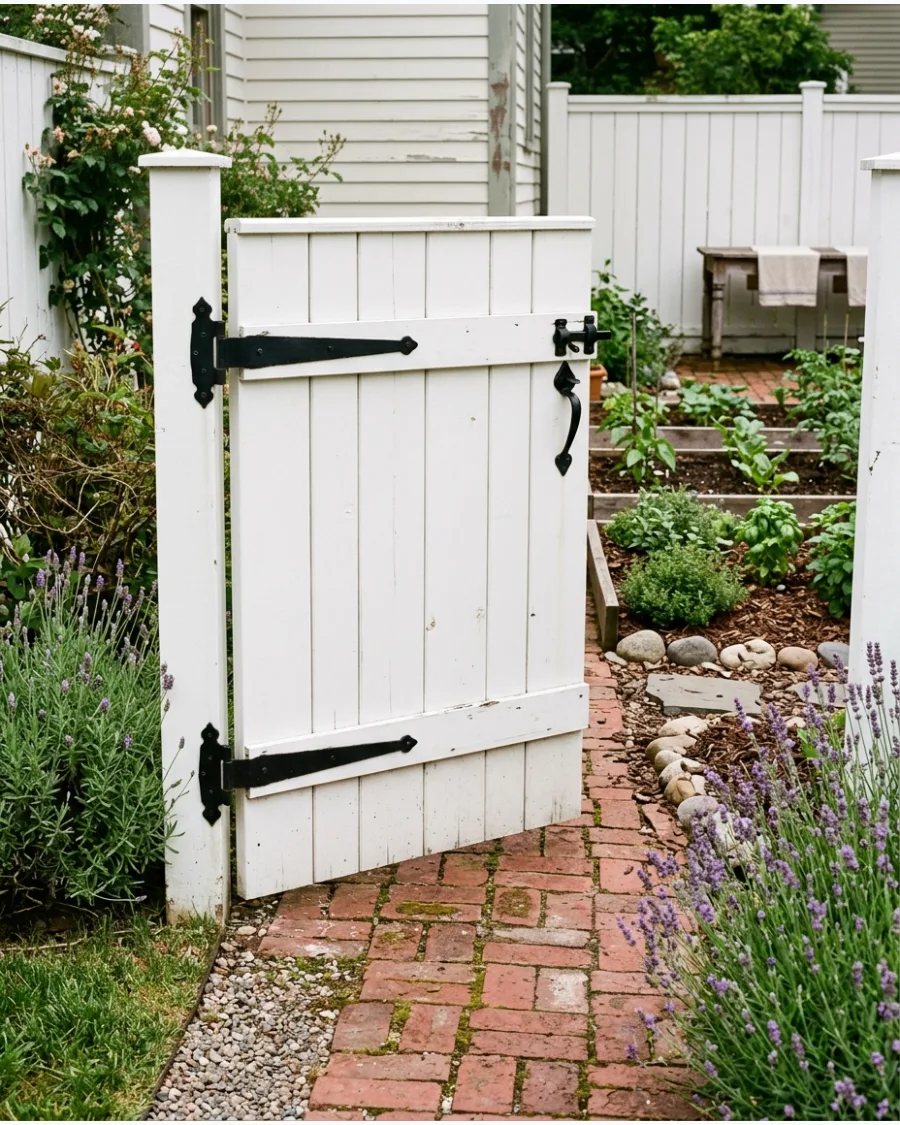
This classic construction uses wide vertical boards with thin strips covering the seams for a sturdy, farmhouse feel. It provides excellent privacy while remaining visually interesting.
Space the vertical boards about a quarter-inch apart to allow for natural wood expansion during humid months. Use stainless steel screws so you do not get those ugly black streaks on the wood later.
- Build this from standard 1×6 and 1×2 pine or cedar boards from any home improvement store.
- Ensure the horizontal 'battens' are fastened securely to prevent the vertical boards from warping.
- Leave the wood raw and let it weather for a rustic barn look, or paint it white for a clean cottage vibe.
Quick win: Add a diagonal cross-brace on the back to prevent the gate from sagging under its own weight.
15. Chevron Wood Gate
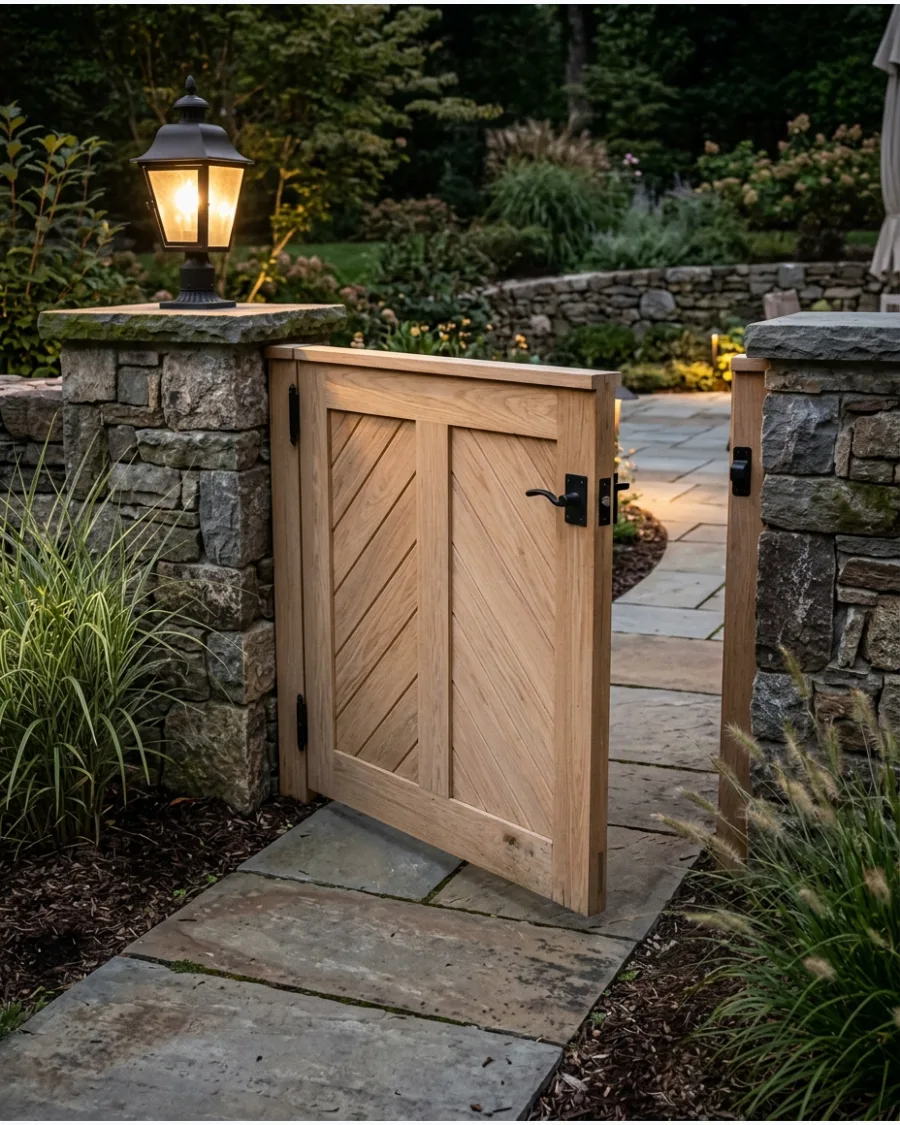
Arranging wood planks in a V-shape creates a dynamic sense of movement and serves as a piece of outdoor art. The symmetry of the pattern draws the eye directly to the center of the entrance.
Cut the boards at a precise 45-degree angle to ensure the chevron peaks meet perfectly in the center. Chevron patterns need a very sturdy internal frame to prevent the diagonal boards from shifting over time.
- Plan for roughly 20% more wood waste due to the many angled cuts required for this design.
- Start the pattern from the center line of the gate and work outward for perfect symmetry.
- Use multi-toned wood scraps to create a reclaimed, bohemian look within the chevron pattern.
Most people skip this: Use a waterproof wood glue on the mitered center joints to keep the pattern tight for years.
16. Herringbone Garden Gate
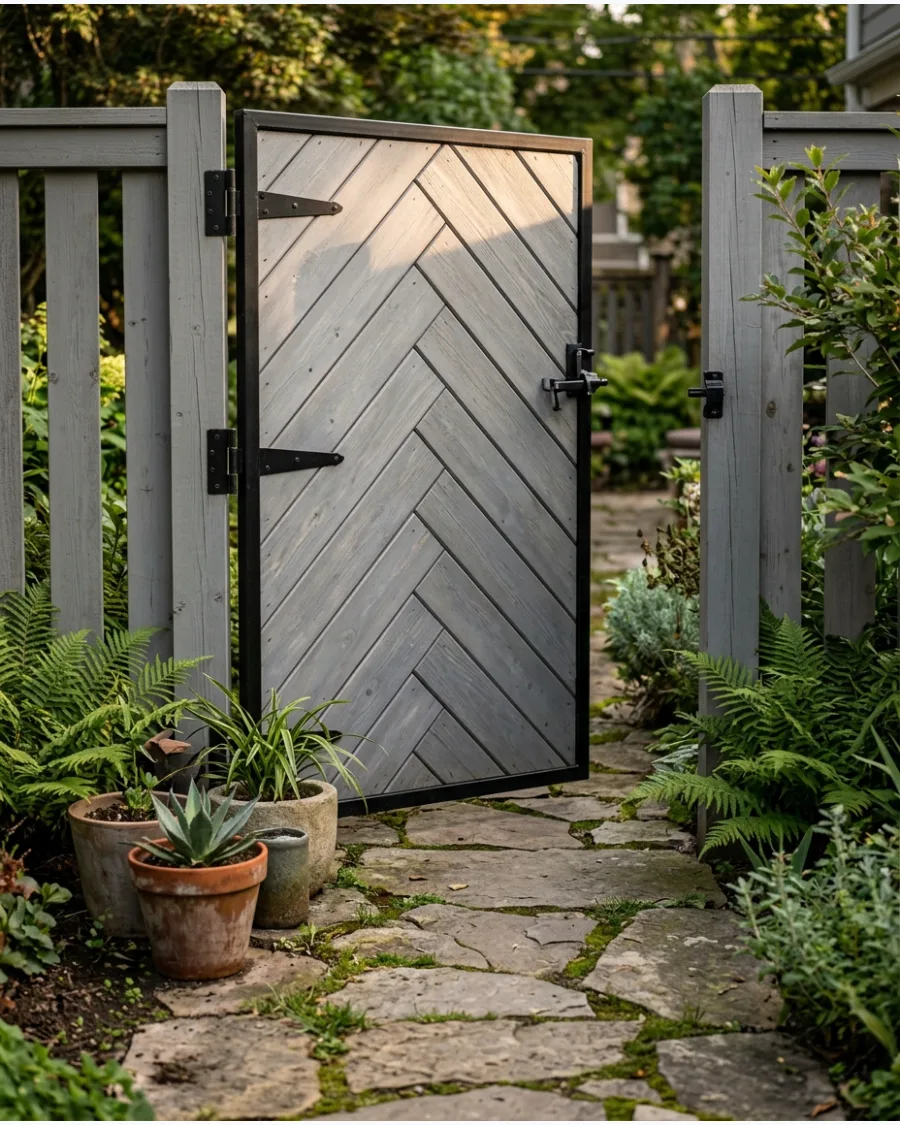
A herringbone pattern uses overlapping diagonal boards for a sophisticated, textured look. It feels more intricate than a standard gate and works well in modern or traditional landscapes.
Install a hidden metal frame behind the herringbone pattern to provide the structural support diagonal boards lack. Keep the pattern scale small so the gate does not look too busy against a simple fence.
- Use 1×4 boards for the pattern to keep the weight manageable and the design crisp.
- Apply a grey wash or light stain to emphasize the shadow lines created by the pattern.
- Mount the gate within a thick timber frame to give the intricate pattern a solid border.
Best shortcut: Lay the entire pattern out on the ground first to ensure the angles are consistent before nailing anything down.
17. Reclaimed-Wood Garden Gate
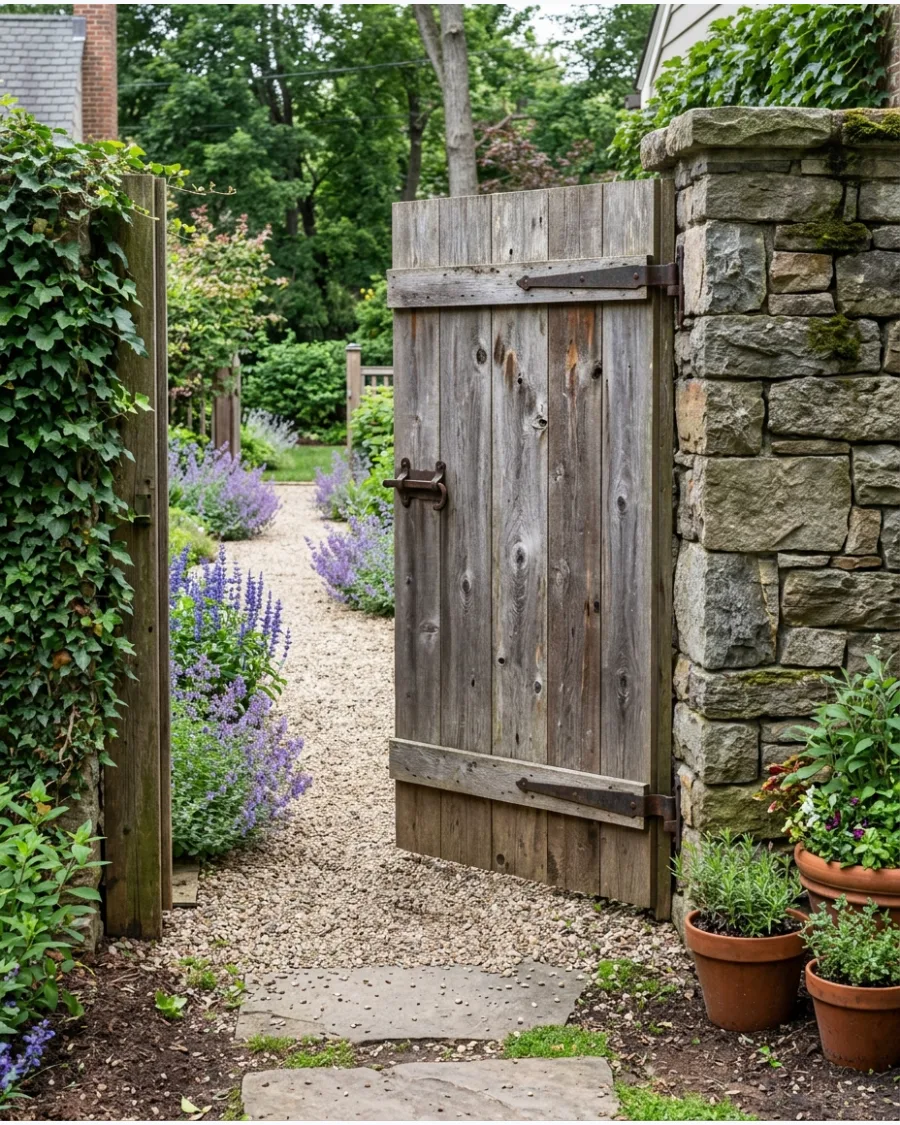
Using weathered boards with visible knots and color variations gives the garden an instant sense of history. This eco-friendly option works beautifully in rustic or meadow-style gardens.
Sand down any rough splinters on the reclaimed boards before assembly to make the gate safe for daily use. Mix different widths of reclaimed boards to emphasize the handmade, authentic look.
- Source wood from old pallets, barns, or fencing, ensuring it hasn't been treated with harmful chemicals.
- Build a new, pressure-treated frame first, then 'skin' it with the reclaimed boards for structural integrity.
- Use oversized, rustic iron hardware to match the heavy, weathered feel of the wood.
Quick win: Use a wire brush to remove loose debris from the wood without stripping away the aged patina.
18. Scalloped Wooden Gate
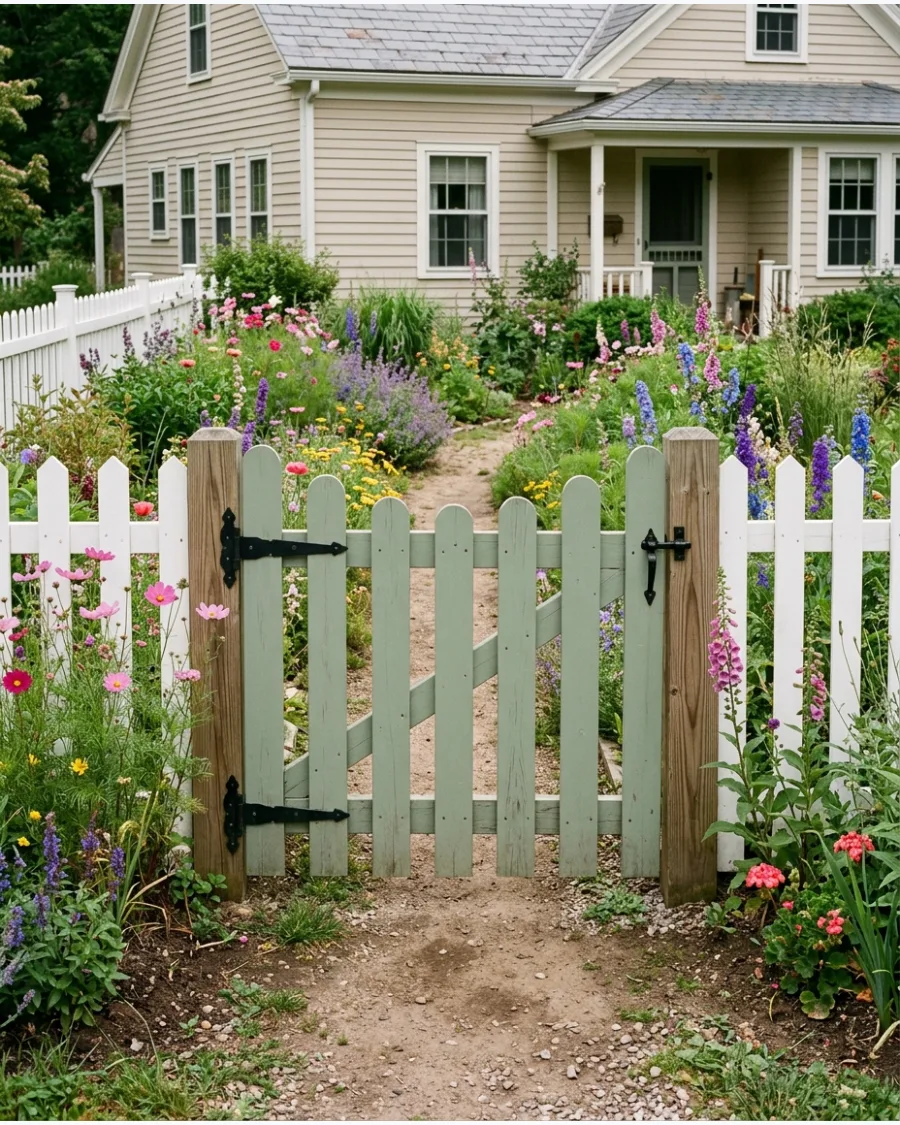
A scalloped top features a series of gentle curves that dip in the middle, offering a playful and traditional look. It is an excellent choice for front yard gardens where you want to maintain visibility.
Use a jigsaw to cut the rounded scalloped edge into the tops of the boards before attaching them to the frame. Scalloped tops are great for low gates where you want to keep the view open but define the boundary.
- This style is most effective on gates that are 3 to 4 feet tall.
- Paint the gate a soft pastel like sage green or dusty blue to lean into the cottage aesthetic.
- Space the pickets evenly to ensure the curves of the scallops look consistent across the width.
Most people skip this: Prime the end-grain on the top of the scallops heavily, as this is where moisture is most likely to soak in.
19. Slatted Gate With a Small Window
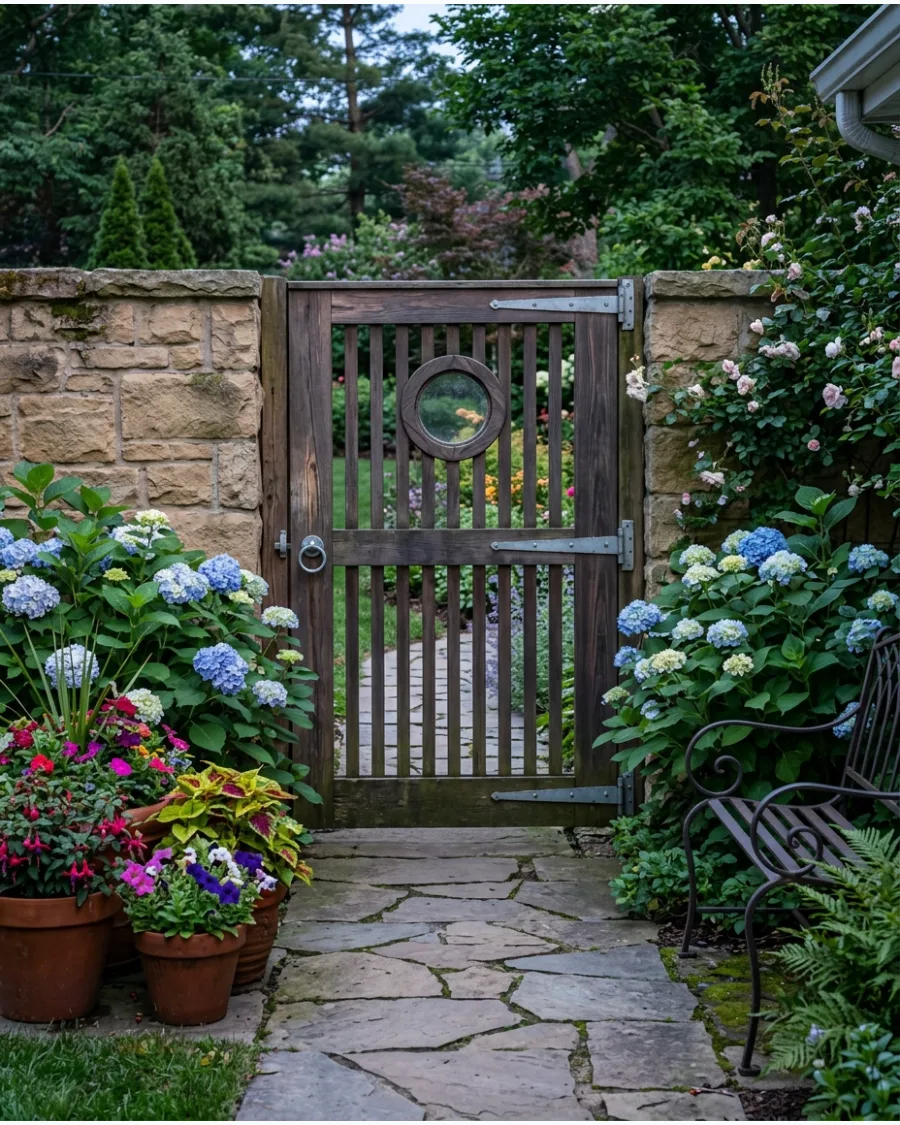
Adding a small cutout window near the top of a solid gate provides a 'peek-a-boo' effect for guests. This small detail adds instant personality and breaks up the heaviness of a solid wood panel.
Line the small window opening with a decorative metal grate to add security while keeping the view clear. Place the window at eye level so it serves a purpose for greeting guests before opening the gate.
- Cut a circle, square, or diamond shape using a hole saw or jigsaw.
- Install a small piece of tempered glass or an iron insert to prevent pets or pests from jumping through.
- Use a contrasting trim color around the window frame to make the feature pop.
Best shortcut: Buy a pre-made decorative iron 'speakeasy' grille to easily install over a simple square cutout.
20. Japanese-Inspired Timber Gate
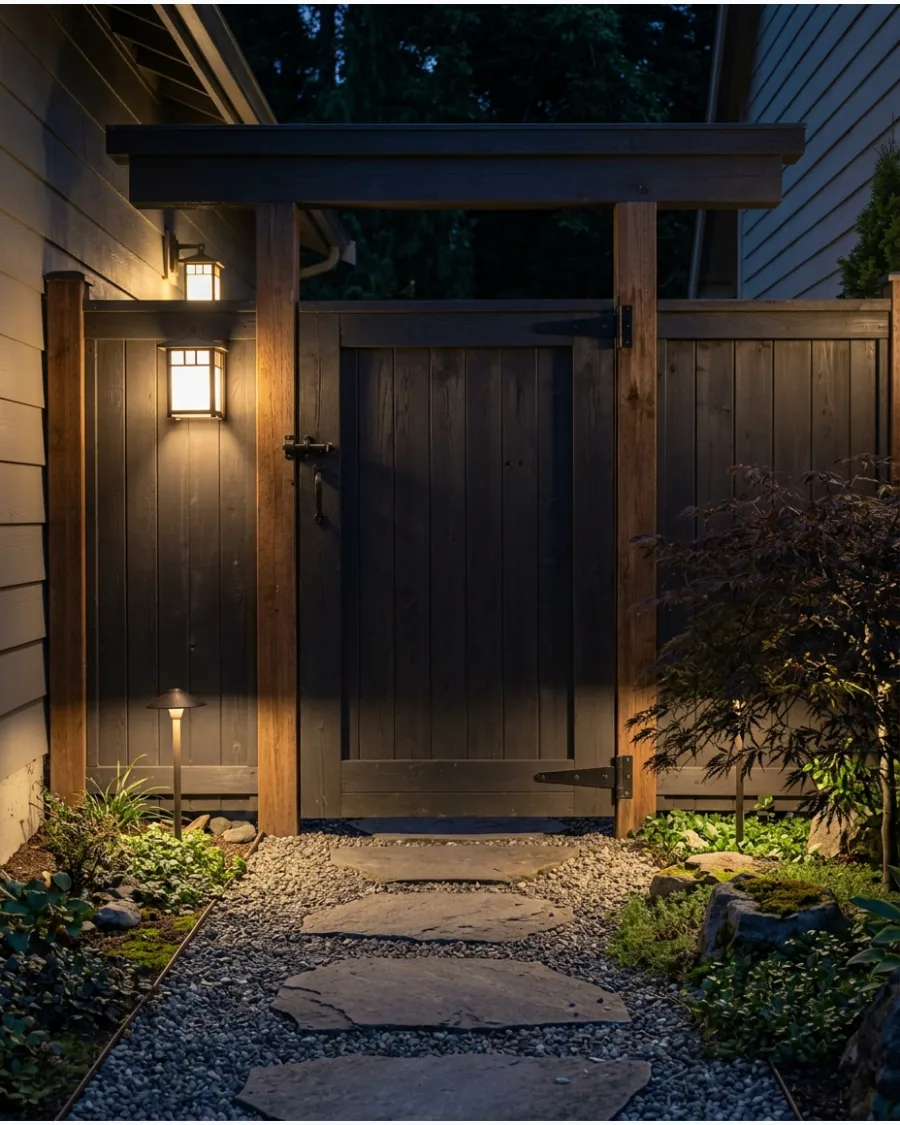
This design focuses on clean lines, heavy timbers, and a flat overhead beam known as a lintel. It creates a formal sense of transition between the outside world and a peaceful garden.
Set the main gate posts into deep concrete footings to support the weight of the heavy overhead timber beam. The overhead beam adds structural stability and makes the entrance feel like a separate outdoor room.
- Use dark-stained 4×4 or 6×6 posts for the main structure to achieve the necessary scale.
- Keep the gate itself simple with vertical slats and minimal, hidden hardware.
- Surround the base with pea gravel and large stepping stones to complete the Zen-like aesthetic.
Quick win: Extend the overhead beam slightly past the posts on both sides for a more authentic architectural silhouette.
Cottage and Farmhouse Garden Gates
21. White Picket Garden Gate
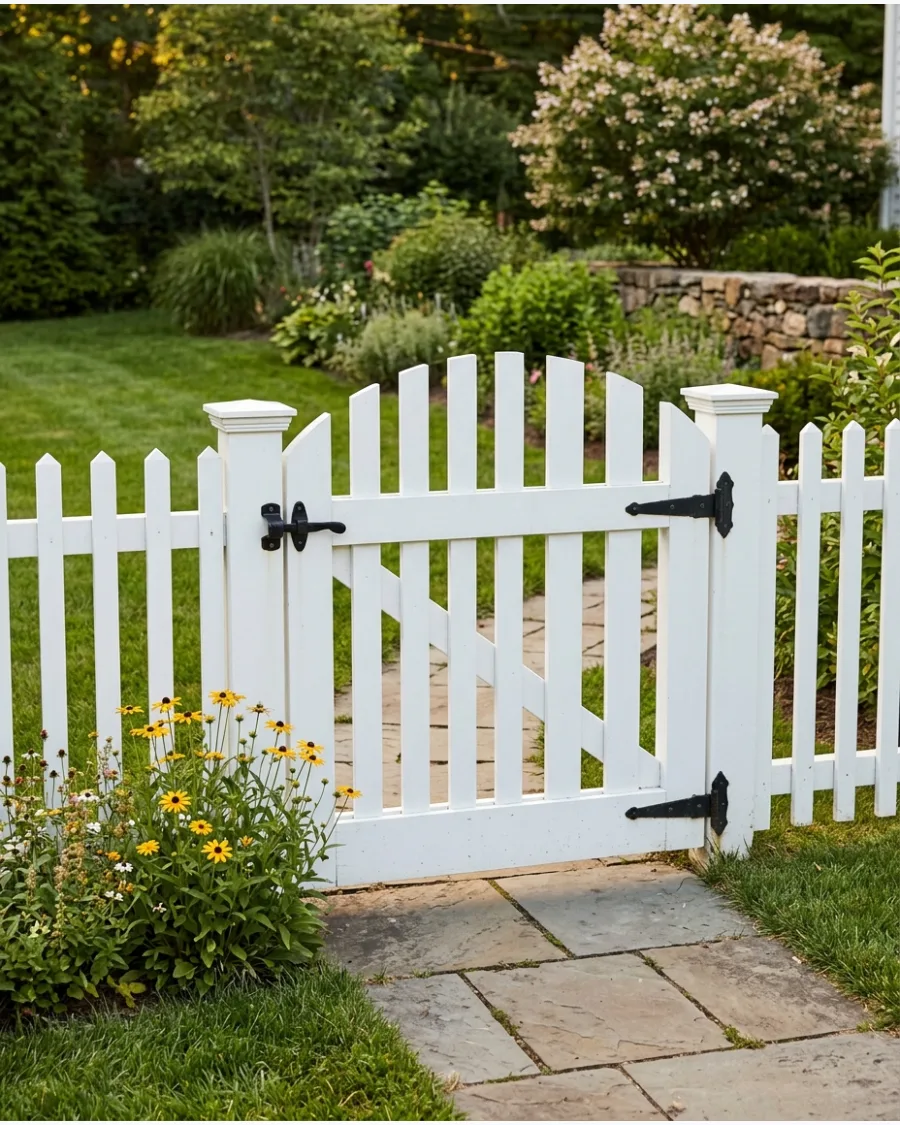
A classic white picket gate offers a clean and welcoming look for any front yard. The curved top and simple black latch provide a soft contrast to the sharp lines of the pickets.
White paint shows dirt quickly, so choosing a semi-gloss finish makes it much easier to spray clean with a hose. Sand the edges of the pickets before painting to prevent the finish from peeling at the corners.
- Expect to spend $150 to $300 for a pre-made gate or a weekend on a DIY build.
- Mount the gate at least two inches off the ground to prevent the bottom of the pickets from rotting.
- Use vinyl pickets instead of wood for a low-maintenance option that never needs repainting.
Most people skip this: Apply a wood preservative to the bottom of the pickets even if you plan to paint them.
22. Rustic Cross-Brace Gate
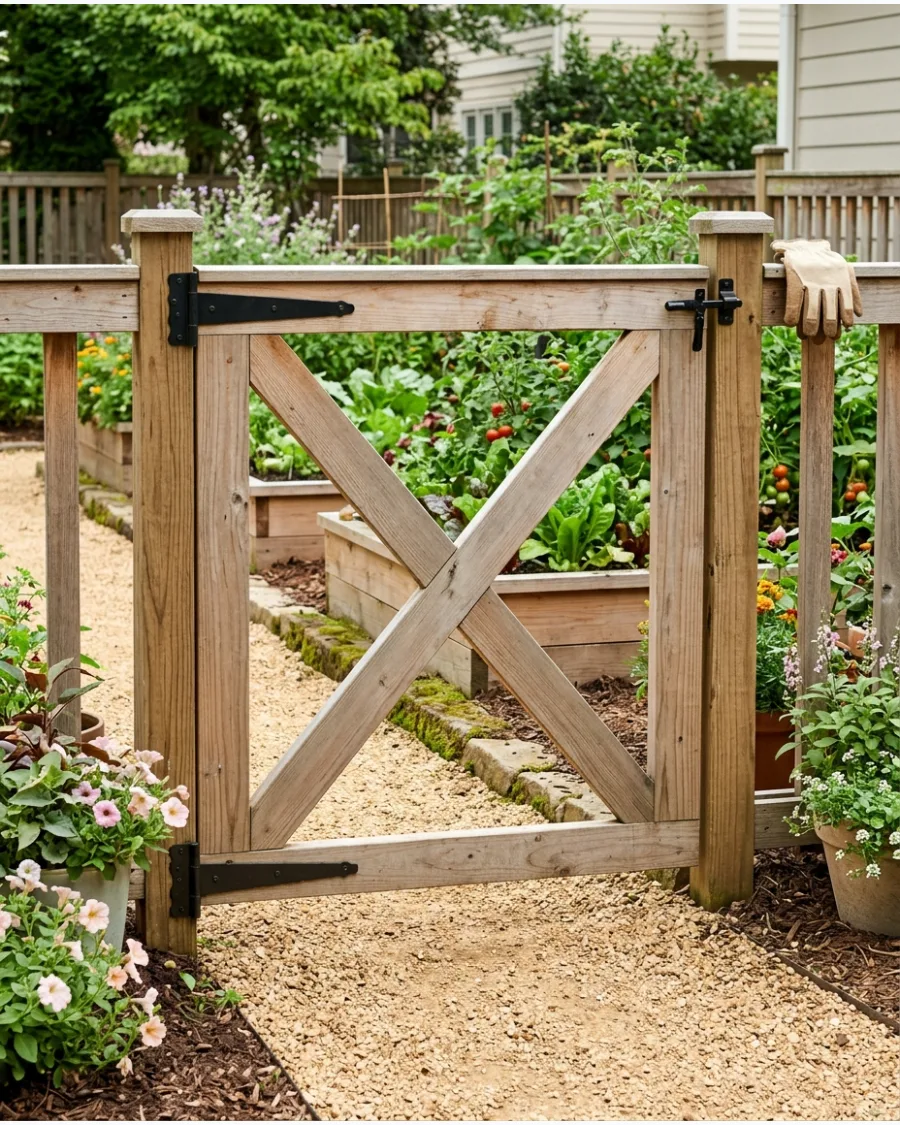
An X-shaped brace adds instant farmhouse character and structural strength to a wooden gate. This design works perfectly for vegetable gardens or side yards where a casual, sturdy look is needed.
The cross-brace prevents the gate from sagging over years of heavy use. Install the diagonal braces so they sit flush against the horizontal rails for a professional, tight fit.
- Budget $100 for lumber and heavy-duty hardware from a local home center.
- Use a speed square to ensure your diagonal cuts are at exactly the right angle for a snug fit.
- Stain the gate a dark walnut color to make the X-brace stand out against green foliage.
Quick win: Use a power drill to countersink your screws so the heads sit below the wood surface.
23. English Cottage Garden Gate
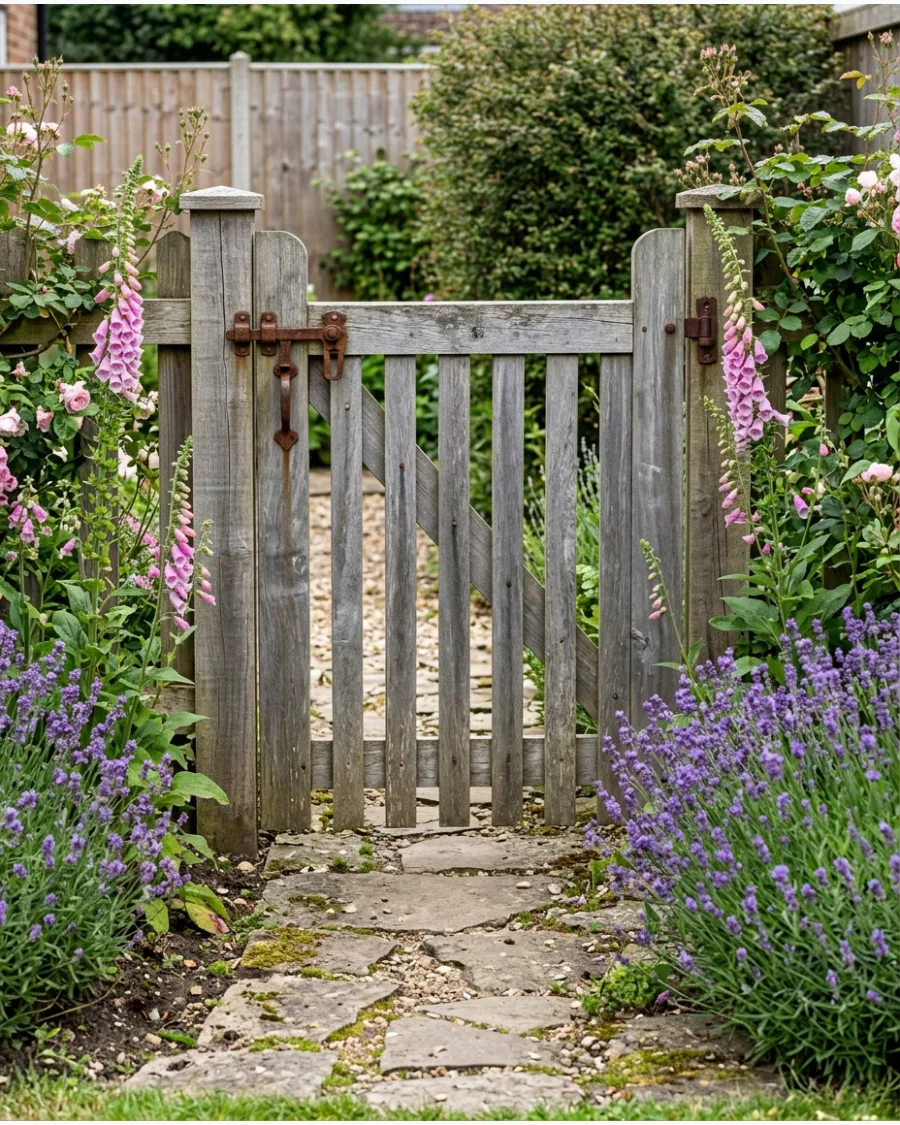
An aged wooden gate creates a sense of history and charm when surrounded by lush flowers. Softening the entrance with lavender or climbing roses makes the gate feel like a natural part of the landscape.
Weathered wood looks best when the structure is solid, so ensure the posts are set deep in concrete. Plant climbing roses at least twelve inches away from the gate post to give the roots room to spread without hitting the concrete footer.
- Sourcing reclaimed wood can cost very little, but high-quality hardware adds $50.
- Ensure the latch is easy to reach from both sides if the gate is surrounded by tall plants.
- Apply a clear matte sealant to weathered wood to stop further decay without changing the color.
Best shortcut: Use a wire brush to remove loose splinters from old wood before sealing it.
24. Farmhouse Gate With Black Hardware
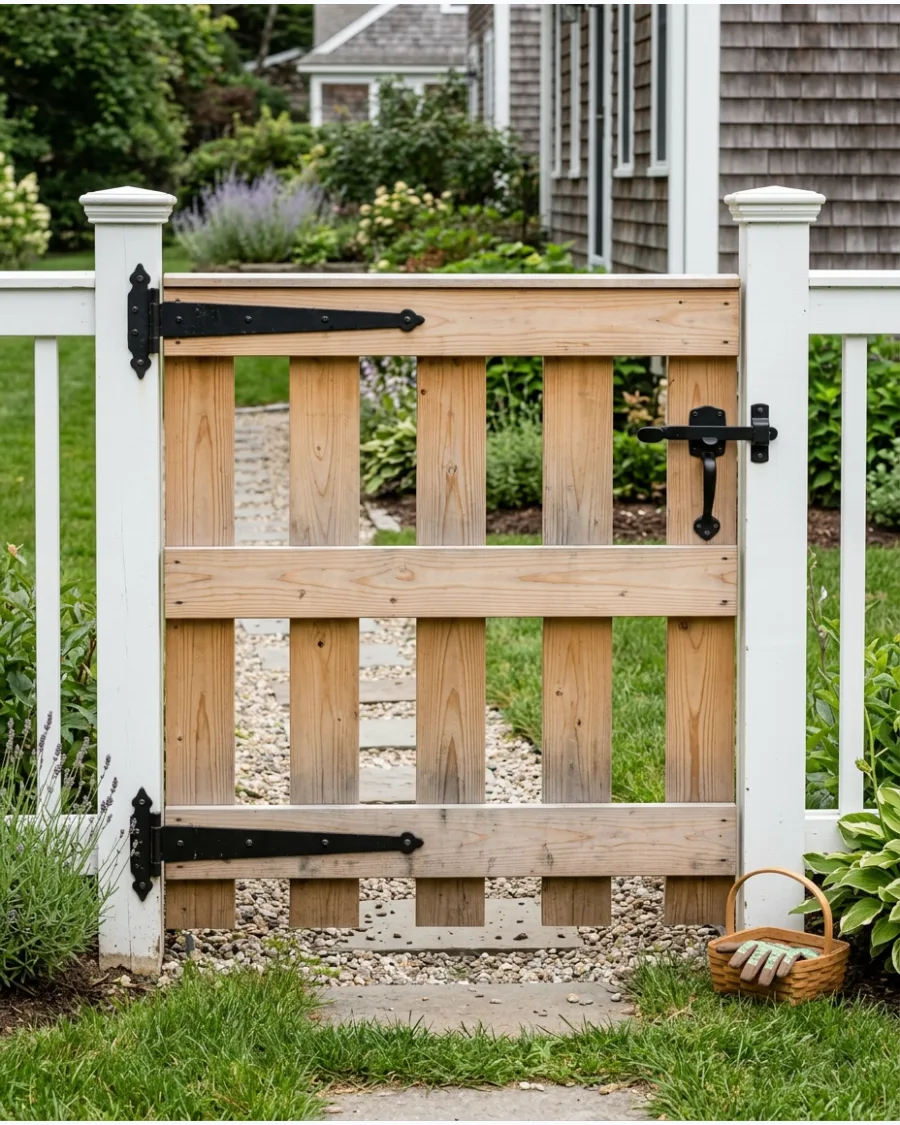
Combining natural wood with oversized black hardware creates a bold, high-contrast look that fits the modern farmhouse style. The long strap hinges aren't just decorative; they support the weight of the gate to keep it swinging straight.
Choose a simple gate shape to let the metalwork be the star of the show. Pre-drill holes for the heavy strap hinges to keep the wood from splitting during the installation.
- Heavy-duty strap hinges and a matching latch set typically cost $40 to $80.
- Use a level on the top rail of the gate while someone else tightens the hinge bolts.
- Swap natural wood for white-painted wood to give the black hardware an even sharper look.
Most people skip this: Use galvanized screws and then paint the heads black to match the hardware and prevent rust streaks.
25. Split-Rail Garden Gate
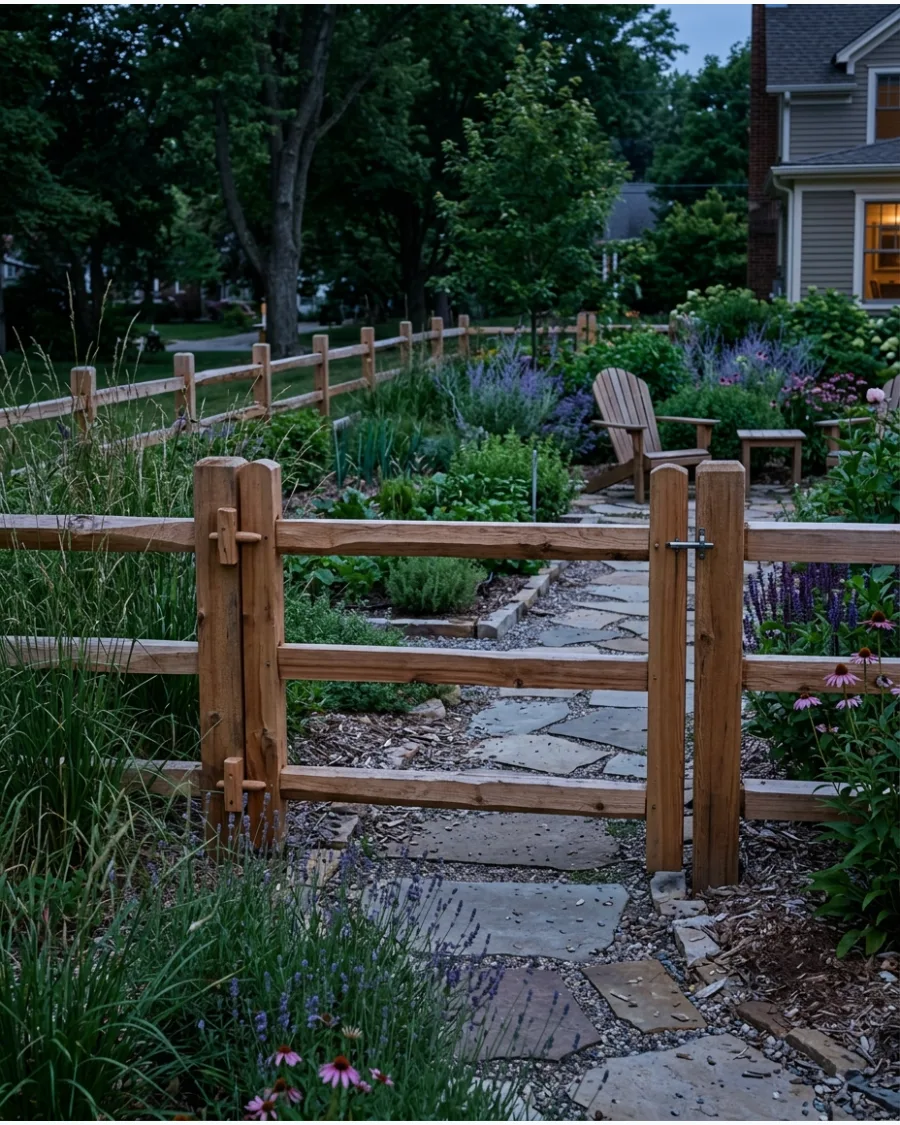
A split-rail gate provides a rustic, open entrance that defines a boundary without blocking the view of the garden. This style is ideal for large properties or informal backyards where you want to maintain a sense of space.
It is one of the easiest gate styles to build because it requires minimal precision. Line the back of the rails with black wire mesh if you need to keep rabbits out without ruining the rustic look.
- Split-rail sections are very affordable, often under $100 for a full gate setup.
- Set the gate posts at least 30 inches deep to handle the leverage of the wide rails.
- Leave the cedar unfinished so it weathers to a beautiful silvery-grey over time.
Quick win: Use a heavy-duty gate wheel on the opening end if the gate is wider than four feet.
26. Arched Picket Gate
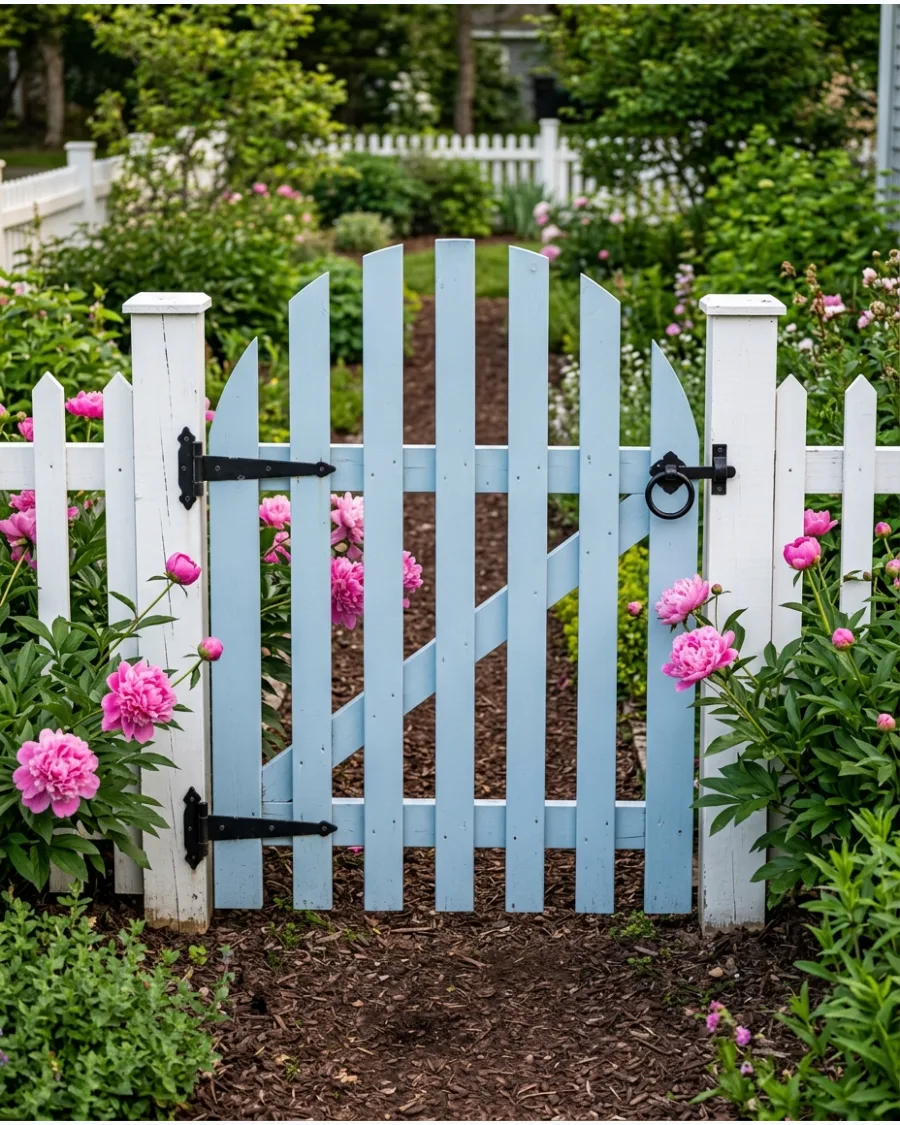
An arched top rail gives a standard picket gate a custom, high-end feel. The curve draws the eye upward and makes the entrance feel more like a doorway to a special outdoor room.
This design allows you to see the garden beyond while still providing a clear barrier. Use a flexible piece of trim or a string-and-pencil compass to mark a perfectly smooth curve before cutting the pickets.
- Expect a 2-day timeline for cutting, sanding, and painting a custom arched gate.
- Check the spacing between pickets to ensure it matches the rest of your fence line.
- Paint the gate a soft blue or sage green to make it a focal point in a green garden.
Best shortcut: Cut the arch across all pickets at once by clamping them together firmly.
27. Garden Gate Between Brick Pillars
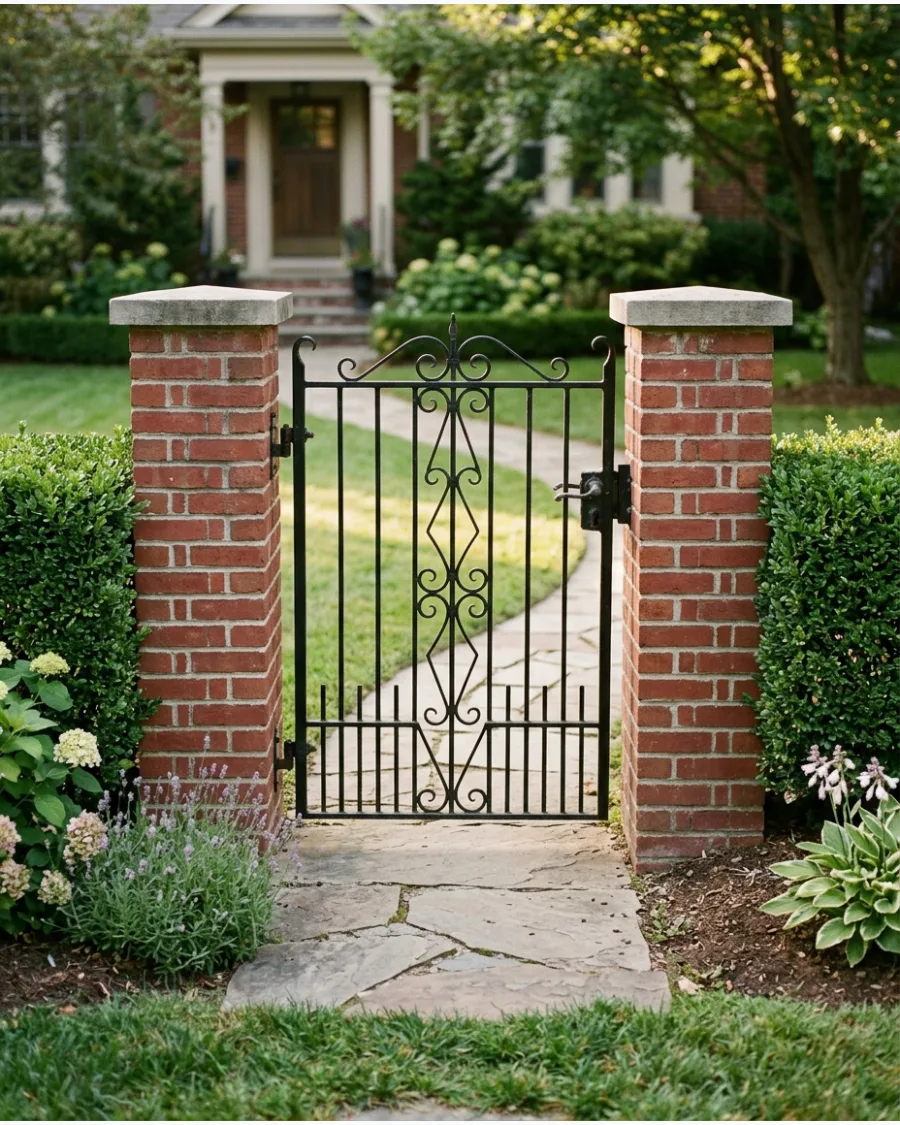
Framing a gate with brick pillars creates a sense of permanence and architectural interest. This setup works well for front walkways or formal garden entrances where you want a sturdy, expensive look.
Matching the brick to the home's exterior makes the garden feel like a true extension of the house. Check that the brick pillars are perfectly level before mounting the gate to ensure it swings smoothly without dragging.
- Professional masonry pillars can cost $500+, but DIY faux-brick sleeves are a budget alternative.
- Anchor the gate hardware into the mortar joints for a more secure and repairable hold.
- Add solar-powered post caps to the pillars to light up the entrance at night.
Most people skip this: Seal the brick and mortar to prevent white salt stains from appearing over time.
28. Garden Gate Between Stone Walls
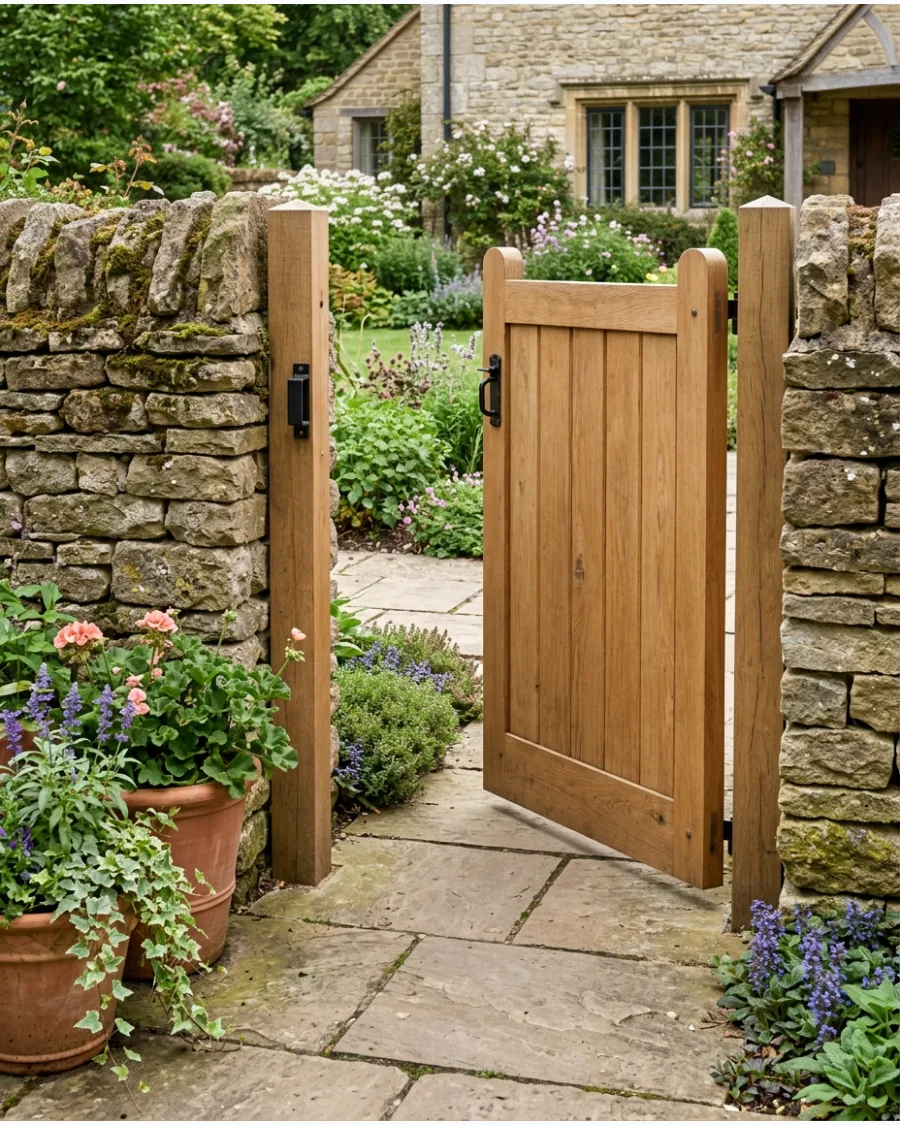
A timber gate set into a natural stone wall creates a timeless, old-world aesthetic. The contrast between the warm wood and the cool, rugged stone makes the entrance feel very substantial.
Using heavy-duty masonry anchors is essential because stone walls are often uneven. Leave a half-inch gap between the gate and the stone wall to account for natural expansion during humid weather.
- Stone walls are a significant investment; a heavy oak gate can cost $400 or more.
- Use a hammer drill to create deep holes in the stone for the hinge mounting bolts.
- Plant moss or creeping thyme in the stone gaps to soften the look of the entrance.
Quick win: Use adjustable hinges so you can easily fix the gate if the stone wall shifts slightly over time.
29. Vintage Latch Garden Gate
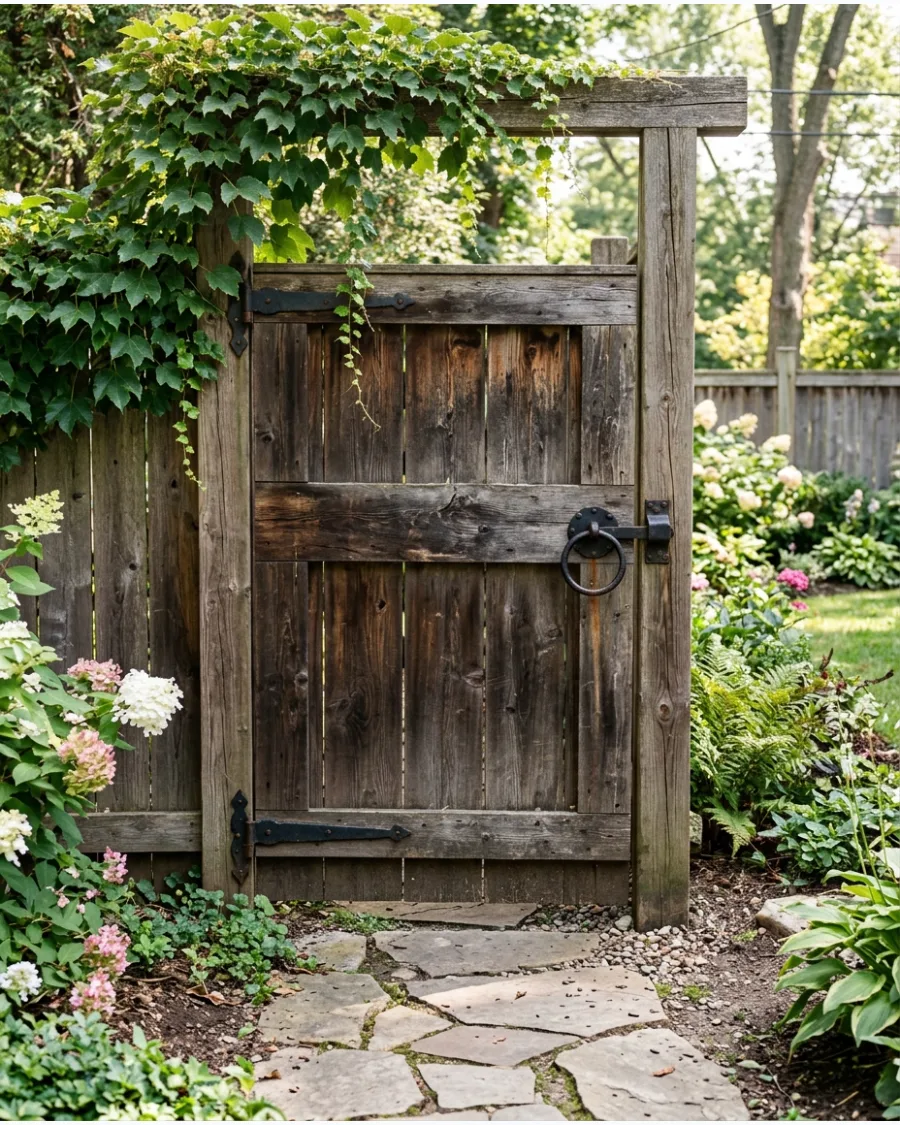
Focusing on a high-quality vintage latch can make even a simple gate feel special. A traditional thumb latch or a heavy iron ring handle provides a satisfying weight and sound when you enter the garden.
These small details are what give a landscape a sense of craftsmanship. Rub a little wax or graphite on the moving parts of a vintage latch to keep it from sticking or squeaking.
- Vintage-style hardware sets usually range from $25 to $60 online.
- Mount the latch at a height that is comfortable for adults but out of reach for small children.
- Choose a powder-coated finish to prevent the hardware from rusting and staining the wood.
Best shortcut: Use a template to mark your screw holes so the latch and striker plate line up perfectly.
30. Barn-Door-Style Garden Gate
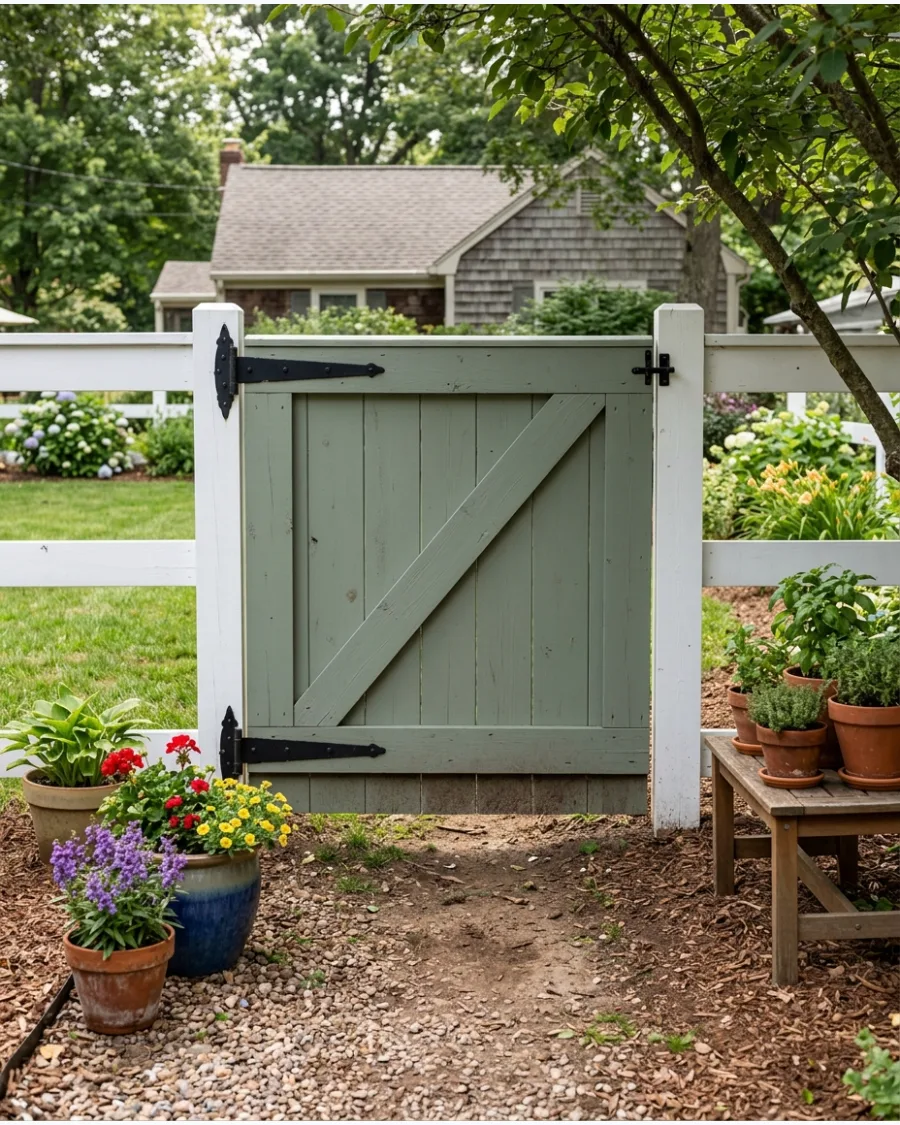
A barn-door gate uses diagonal Z-bracing and bold metal hardware to bring a country feel to the backyard. This design is incredibly strong and won't warp or sag even with heavy daily use.
A soft paint color, like sage green or cream, keeps the heavy design from feeling too industrial. Apply a high-quality exterior stain to the end grain of the diagonal boards to prevent rot where water collects.
- Building this gate yourself costs about $120 for cedar boards and heavy hinges.
- Ensure the diagonal brace points upward from the hinge side to the latch side for maximum support.
- Use carriage bolts instead of wood screws for a more secure and authentic barn-door look.
Quick win: Add a decorative metal 'X' or 'Z' to the front for the look of a barn door without the extra weight of thick lumber.
Decorative Metal Garden Gate Ideas
31. Simple Wrought-Iron Gate
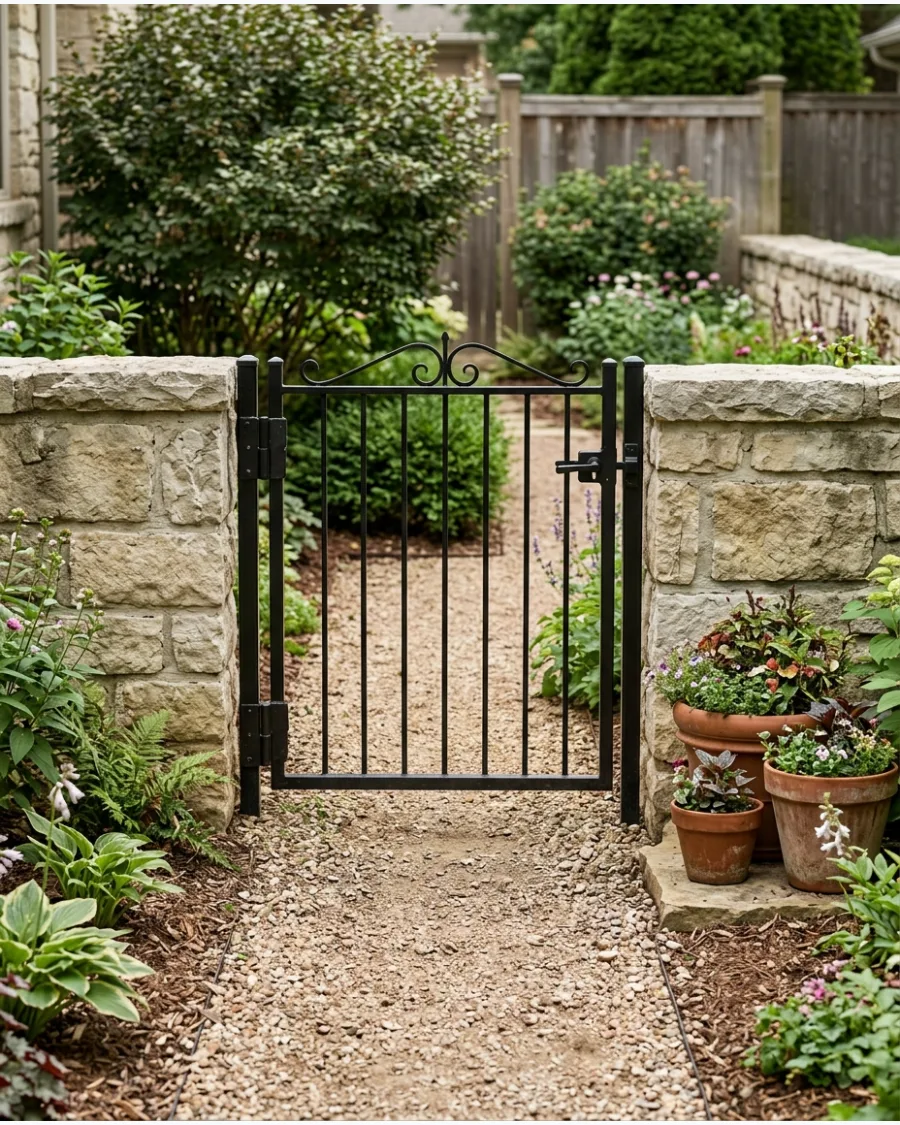
Choose narrow vertical bars with a curved top and restrained scrollwork to create a classic look. The open design provides security while allowing the garden to remain visible from the path.
Install this gate at the start of a winding stone path to create a clear sense of entry without blocking the view. Simple ironwork works best when it does not compete with busy flower beds.
- Typically costs $200 to $500 for standard sizes.
- Mount to masonry pillars or heavy wood posts for stability.
- Ideal for providing a boundary without adding visual bulk.
Quick win: Spray the hinges with a silicone-based lubricant twice a year to prevent squeaking and rust buildup.
32. Floral Metal Garden Gate
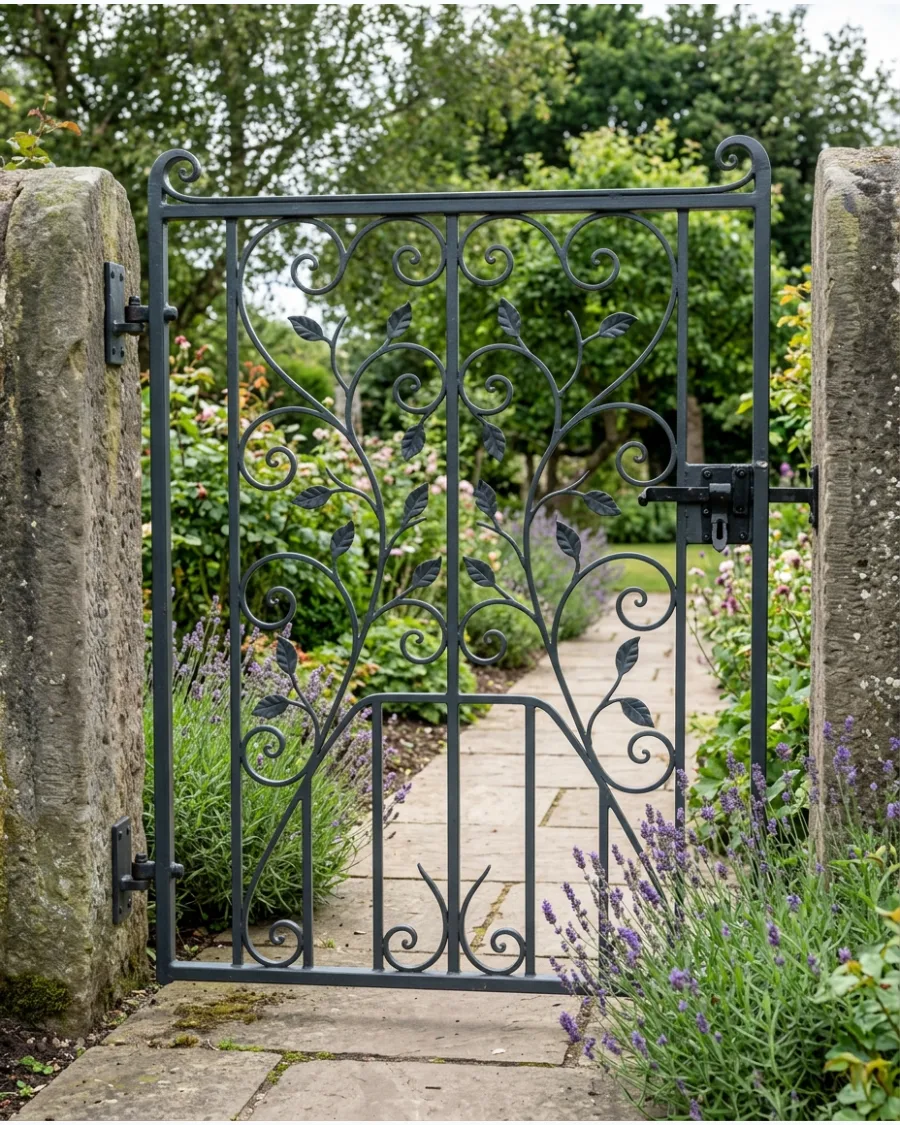
Include metal flowers, leaves, branches, or vines within the gate design for an artistic touch. A dark finish allows the decorative shapes to stand out against bright greenery.
Match the metal floral patterns to the actual species growing nearby for a cohesive look. It turns a functional barrier into a piece of permanent art that looks good even in winter.
- Expect to pay $350 or more for decorative ironwork.
- Check all weld points annually for signs of chips or rust.
- Best suited for cottage-style yards or lush flower gardens.
Most people skip this: Use a soft-bristle brush to clean cobwebs and dust out of the intricate metal leaves so the design stays sharp.
33. Laser-Cut Botanical Gate
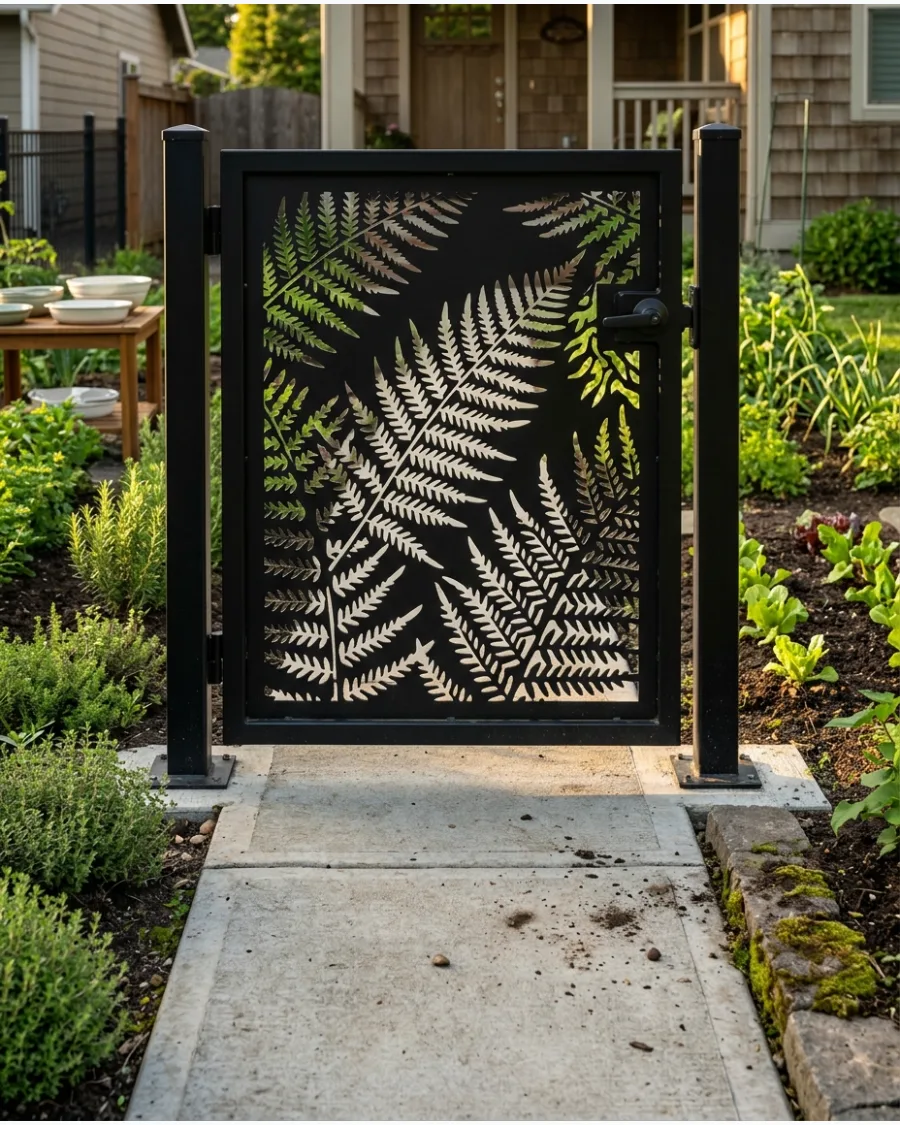
Select a metal panel cut with fern, tree, grass, or wildflower silhouettes for a modern feel. Use a balanced pattern that provides partial privacy without making the panel appear completely solid.
Position a laser-cut panel where the setting sun can cast decorative shadows across the garden floor. This style offers a clean edge while still feeling connected to nature.
- Price ranges from $500 to $1,200 depending on the metal thickness.
- Bolt the frame directly into level posts to prevent the heavy panel from sagging.
- Choose powder-coated finishes to ensure the color stays vibrant for years.
Best shortcut: Choose a pattern with smaller cutouts if the gate is meant to keep small pets from squeezing through.
34. Corten-Steel Garden Gate
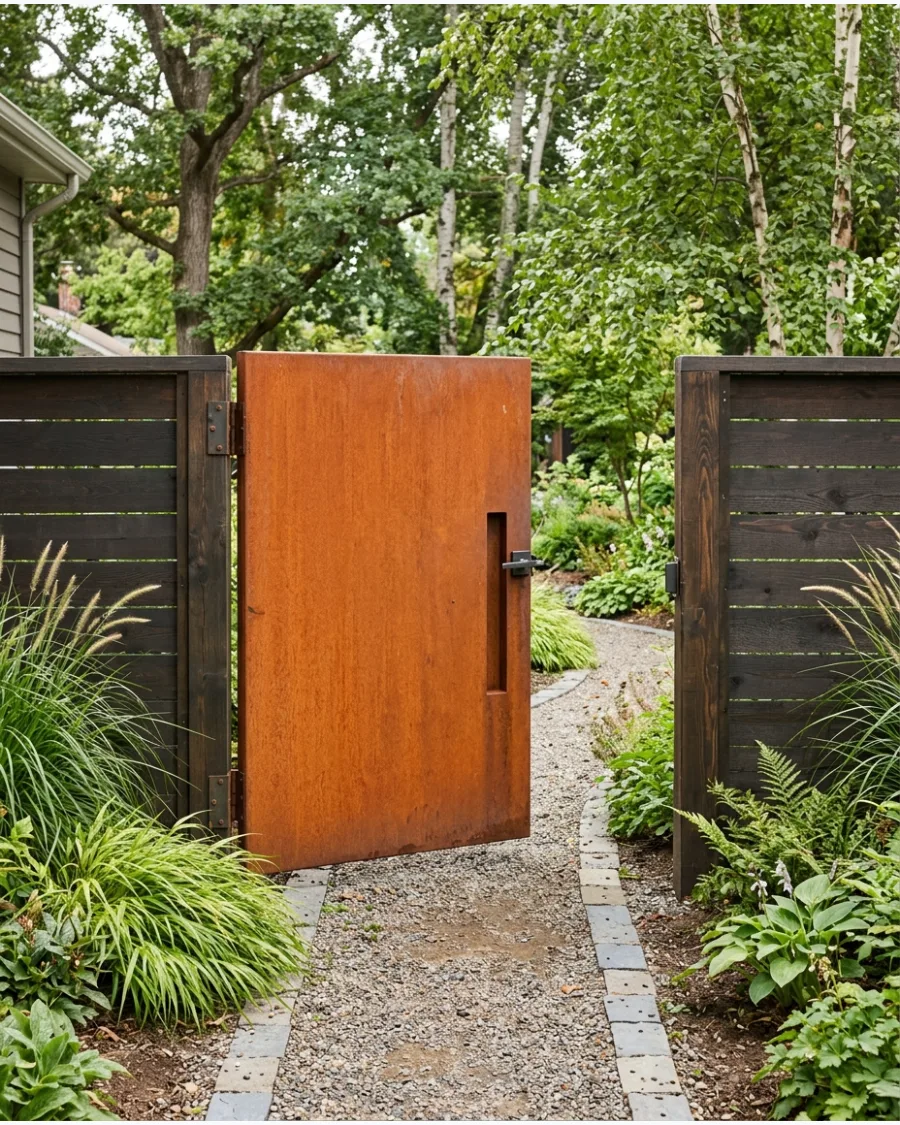
Use weathering steel to introduce a warm rust-colored surface to your landscape. Its earthy finish coordinates naturally with gravel, ornamental grasses, timber, and contemporary planting.
Allow the steel to weather naturally for several months to reach its signature orange-brown hue. This material is incredibly durable and never needs painting or staining.
- Budget $600 to $1,500 for high-quality weathering steel.
- Install the gate over gravel or mulch to avoid rust stains on concrete surfaces.
- Great for xeriscaped yards or contemporary landscape designs.
Quick win: If you want to speed up the rusting process, spray the gate with a mixture of water, salt, and vinegar.
35. Decorative Branch Gate
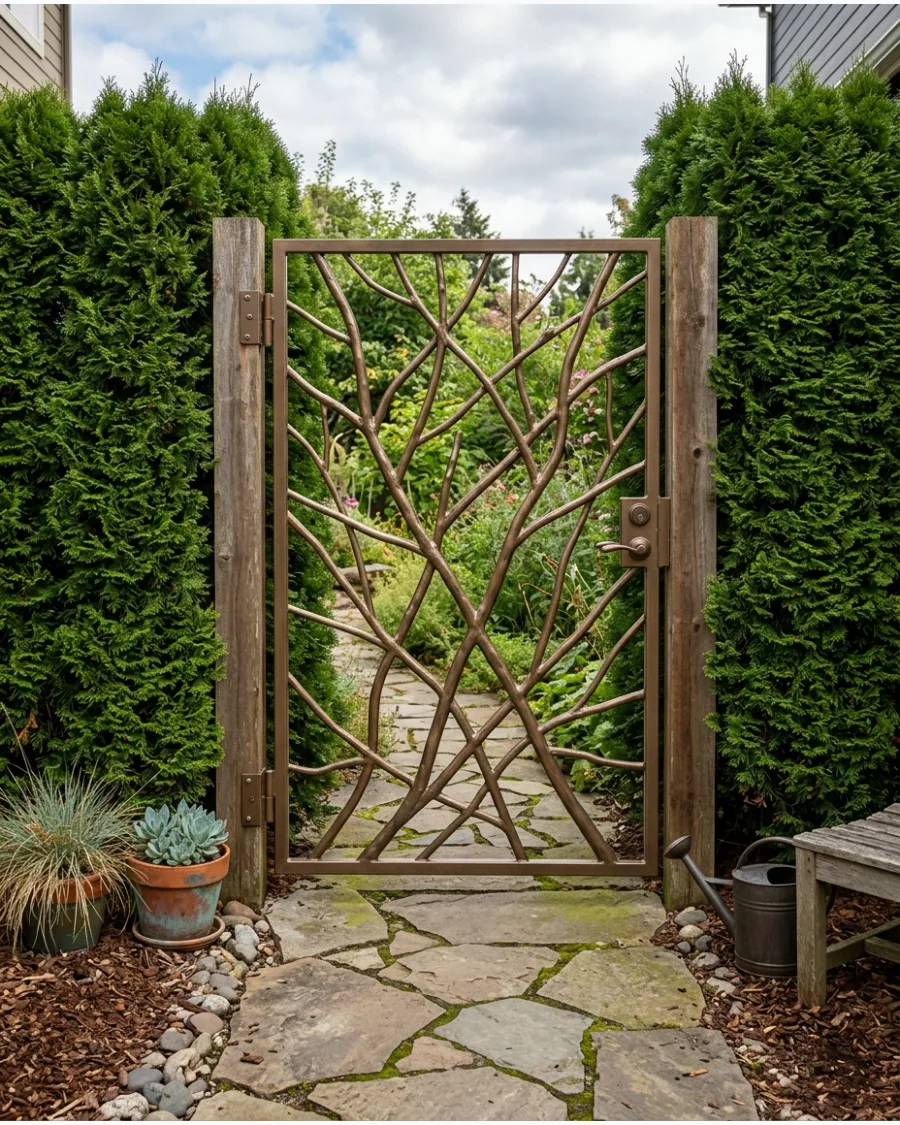
Choose a gate formed from metal branches arranged in an organic pattern. The irregular lines create a sculptural entrance inspired by the surrounding plants.
Select a branch design with varied thickness to mimic the look of real trees. These gates tend to blend into the landscape and disappear into the surrounding shrubbery.
- Custom or specialty gates often cost $400 to $800.
- Ensure the gaps between 'branches' are not wide enough for pets to escape.
- Best for wooded areas or wilder, naturalistic garden zones.
Most people skip this: Check that the 'twigs' on the gate do not have sharp ends that could snag clothing as people walk through.
36. Arched Iron Garden Gate
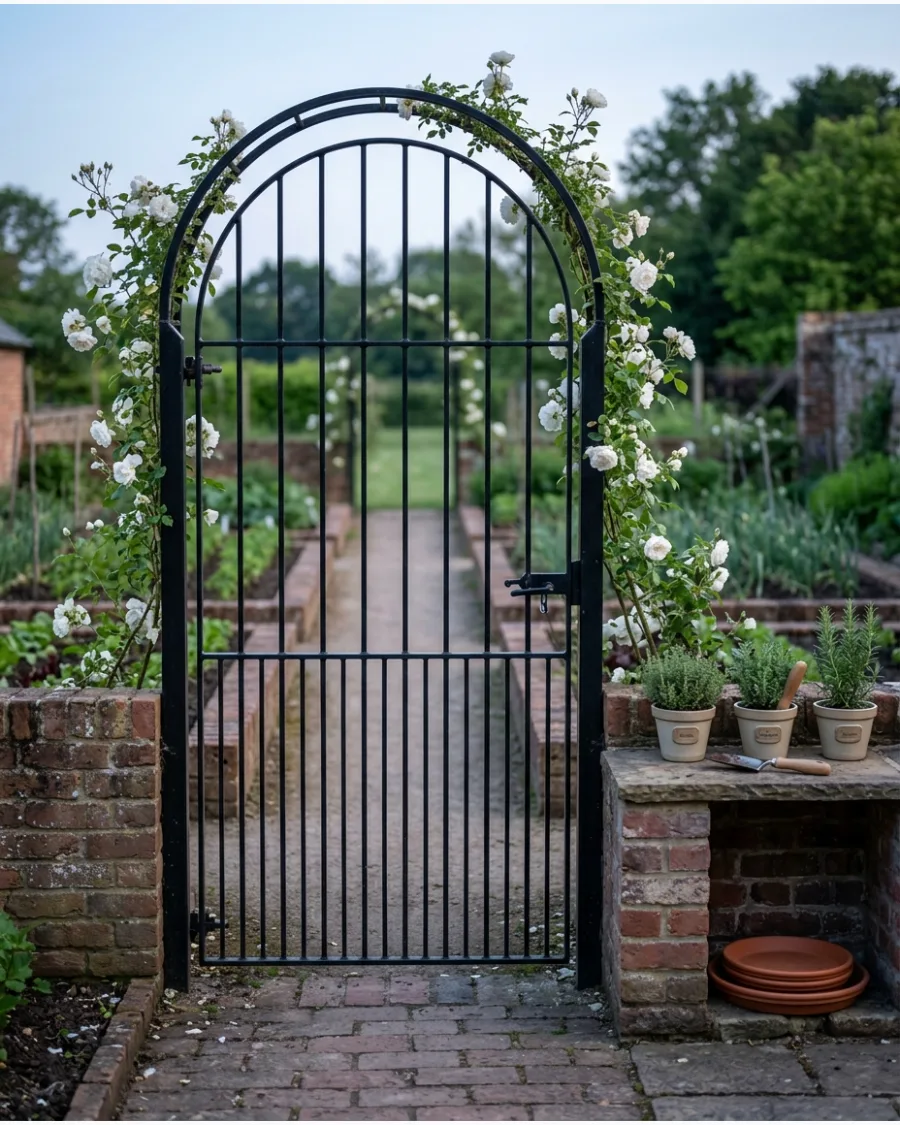
Use a tall curved frame to give the garden entrance a more romantic and formal appearance. Add climbing roses or jasmine to soften the metal structure over time.
Train fast-growing vines to follow the curve of the top rail for a living archway. A high arch creates a vertical focal point that draws the eye upward and makes the space feel larger.
- Plan for a $300 to $700 investment for a tall arched frame.
- Secure the gate with heavy-duty hinges that can handle the weight of mature vines.
- Ideal for formal entryways or as a transition into a secret garden.
Best shortcut: Use clear garden ties to guide new vine growth along the arch until the plant is strong enough to hold itself.
37. Metal Mesh Garden Gate
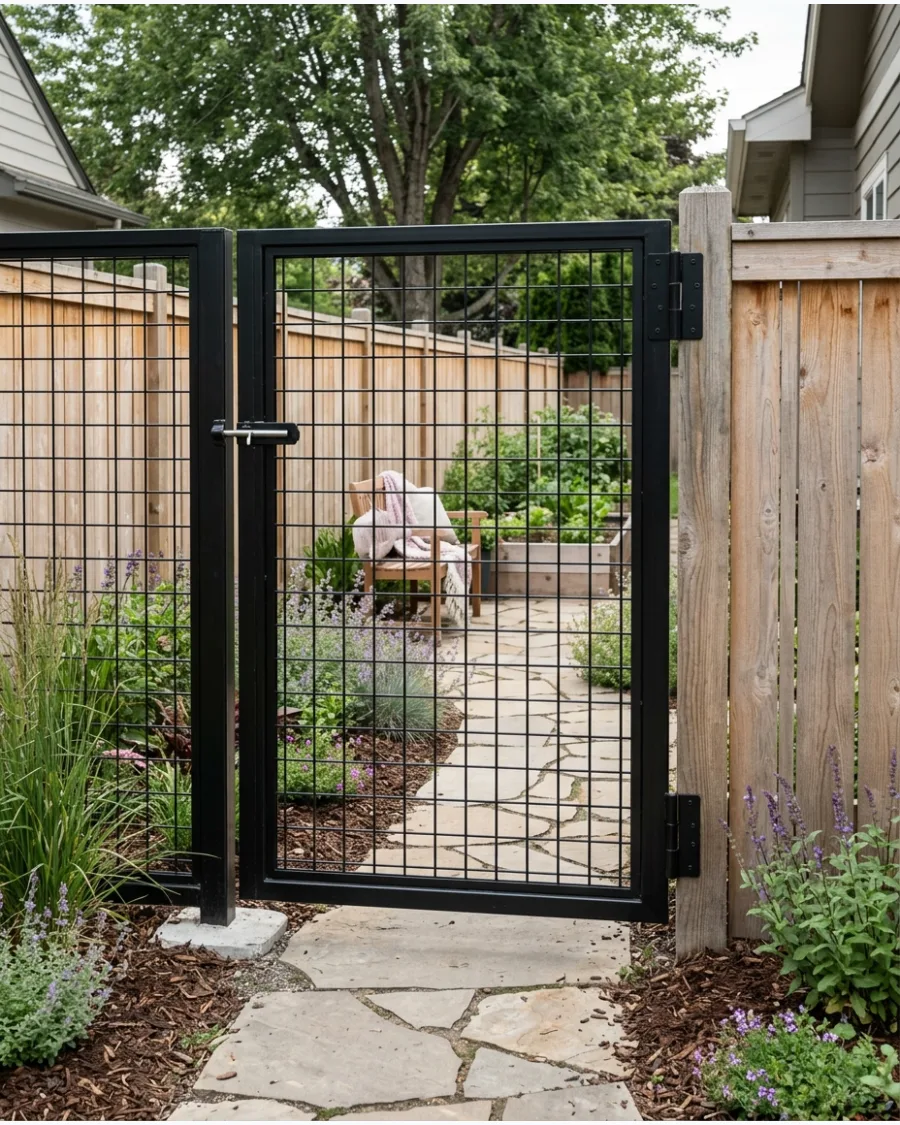
Fill a clean metal frame with dark welded mesh for a practical and modern look. This design maintains visibility and works well in modern vegetable gardens or minimalist backyards.
Use a tight mesh weave to keep small animals out while keeping the garden visible. It provides a utilitarian look that feels organized and intentional.
- Budget-friendly option at $150 to $300.
- Use self-closing hinges to ensure the garden stays protected from wildlife.
- Paint the mesh black to make it visually disappear against the plants.
Quick win: Choose a mesh with openings no larger than one inch if you are trying to keep rabbits out of a vegetable patch.
38. Bronze-Finish Metal Gate
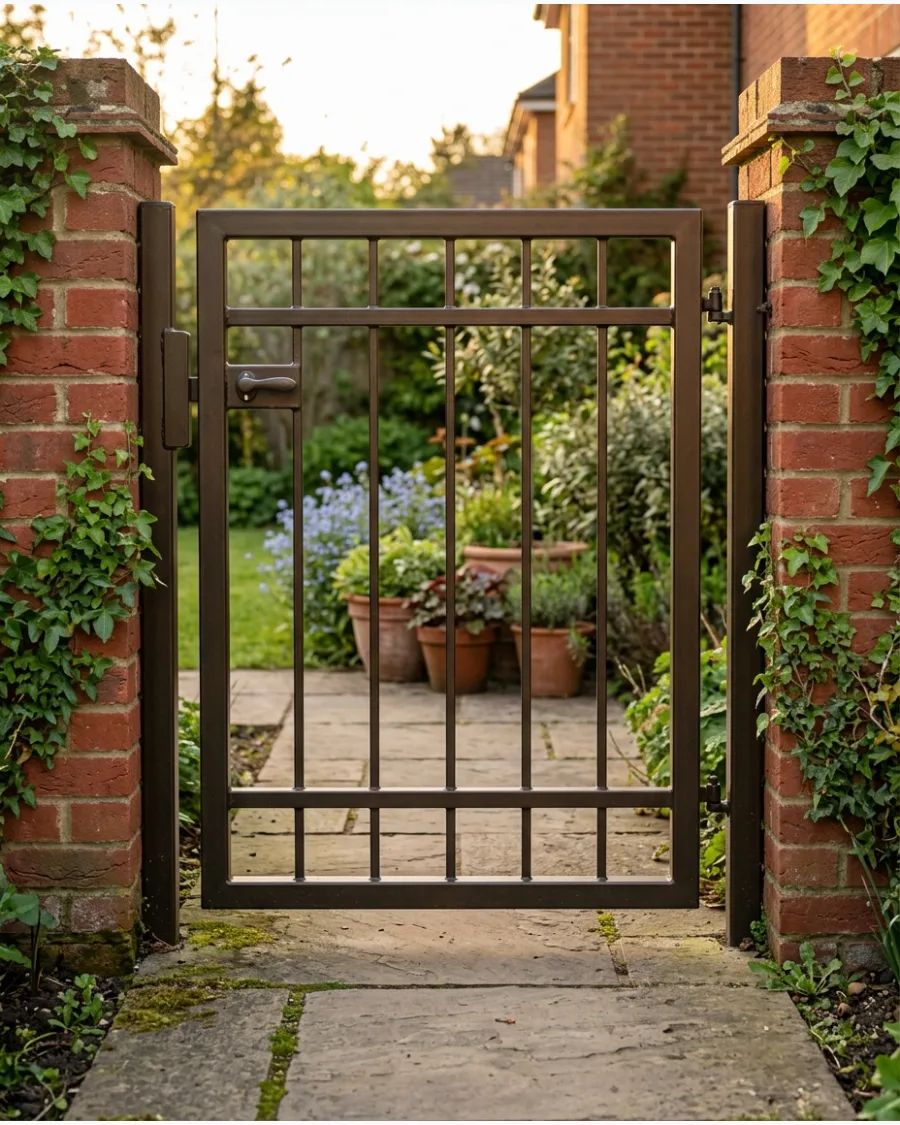
Replace standard black with aged bronze or dark brown metal for a warmer traditional look. The finish complements brick, natural stone, terracotta, and autumn-colored planting.
Pair a bronze gate with copper-toned hardware to highlight the warm undertones of the metal. This finish feels softer and more high-end than standard black iron.
- Quality bronze-finished gates range from $400 to $900.
- Wipe the metal down with a light coat of oil annually to maintain the luster.
- Works well with Mediterranean, Spanish, or traditional architectural styles.
Most people skip this: Ensure your house numbers or mailbox match the bronze finish for a professional, coordinated look.
39. Art-Deco-Inspired Gate
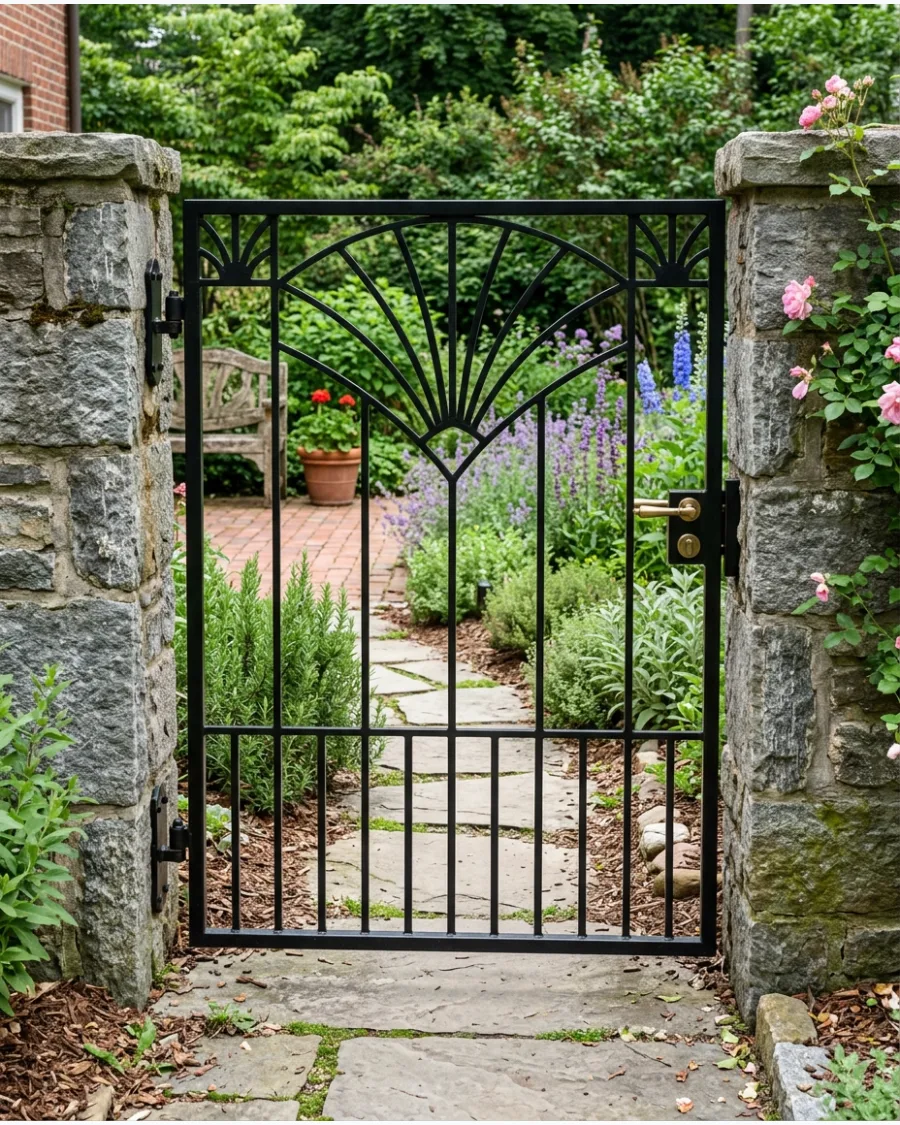
Use fan shapes, stepped lines, and symmetrical geometric details to create a decorative statement. A restrained black or bronze finish keeps the pattern sophisticated rather than overwhelming.
Choose a gate with bold geometric lines to contrast against the soft, messy textures of a flower garden. It adds architectural interest to a plain side yard.
- Custom fabrication often starts at $500.
- Check that the gate is perfectly level during installation to keep the geometric lines straight.
- Use this style for front-facing gates to boost curb appeal.
Best shortcut: If you cannot find a full Art Deco gate, add a decorative geometric metal insert to a plain gate frame.
40. Custom Initial Garden Gate
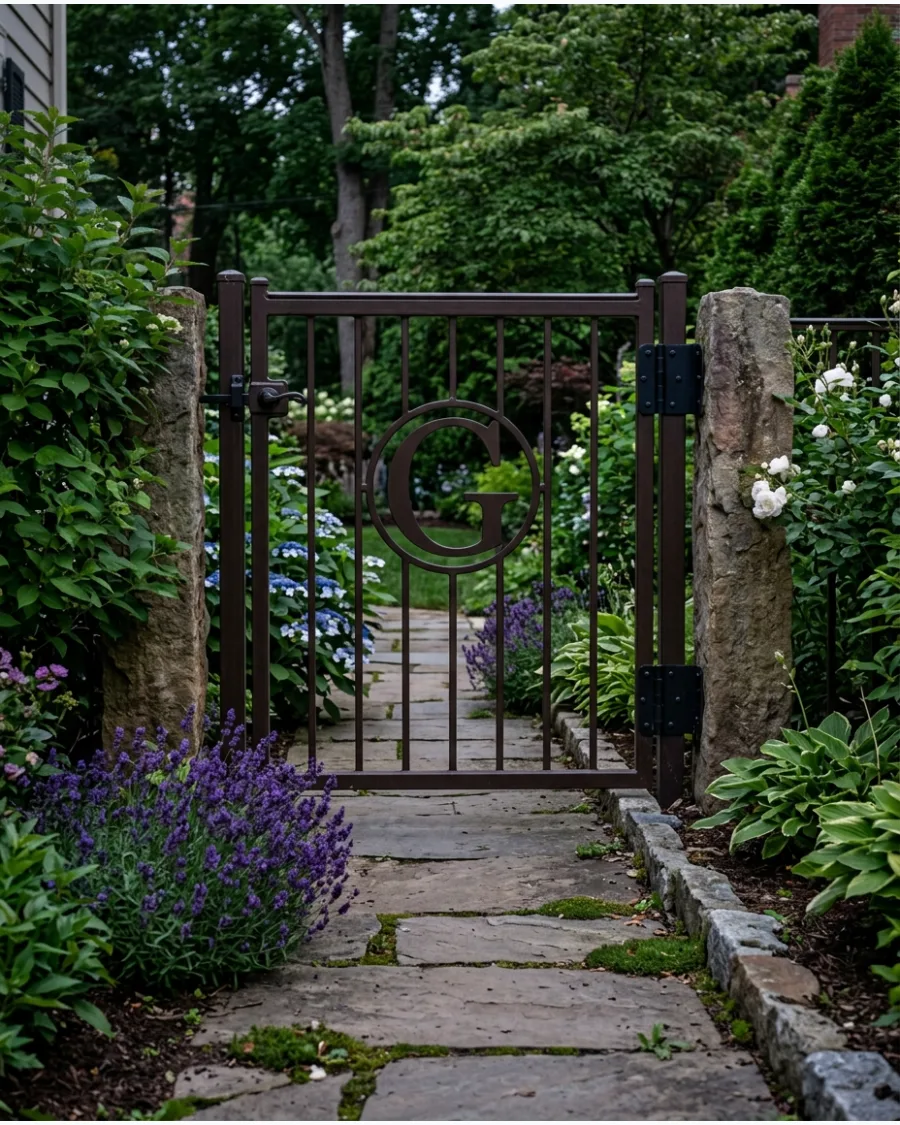
Add a single family initial, house number, or simple monogram to the center of a metal gate for a personal touch. Keep the symbol modest in size so it feels integrated into the overall design.
Keep the monogram finish the same color as the gate frame to ensure the detail remains subtle. It adds a custom, high-end feel to a standard gate.
- Customized gates usually start at $450.
- Order from specialized metal shops that offer laser-cutting services.
- Position the monogram at chest height for the best visual balance.
Quick win: Use a classic serif font for the initial to maintain a timeless look that will not feel dated in a few years.
Garden Gates With Arches and Plants
41. Rose-Covered Garden Gate
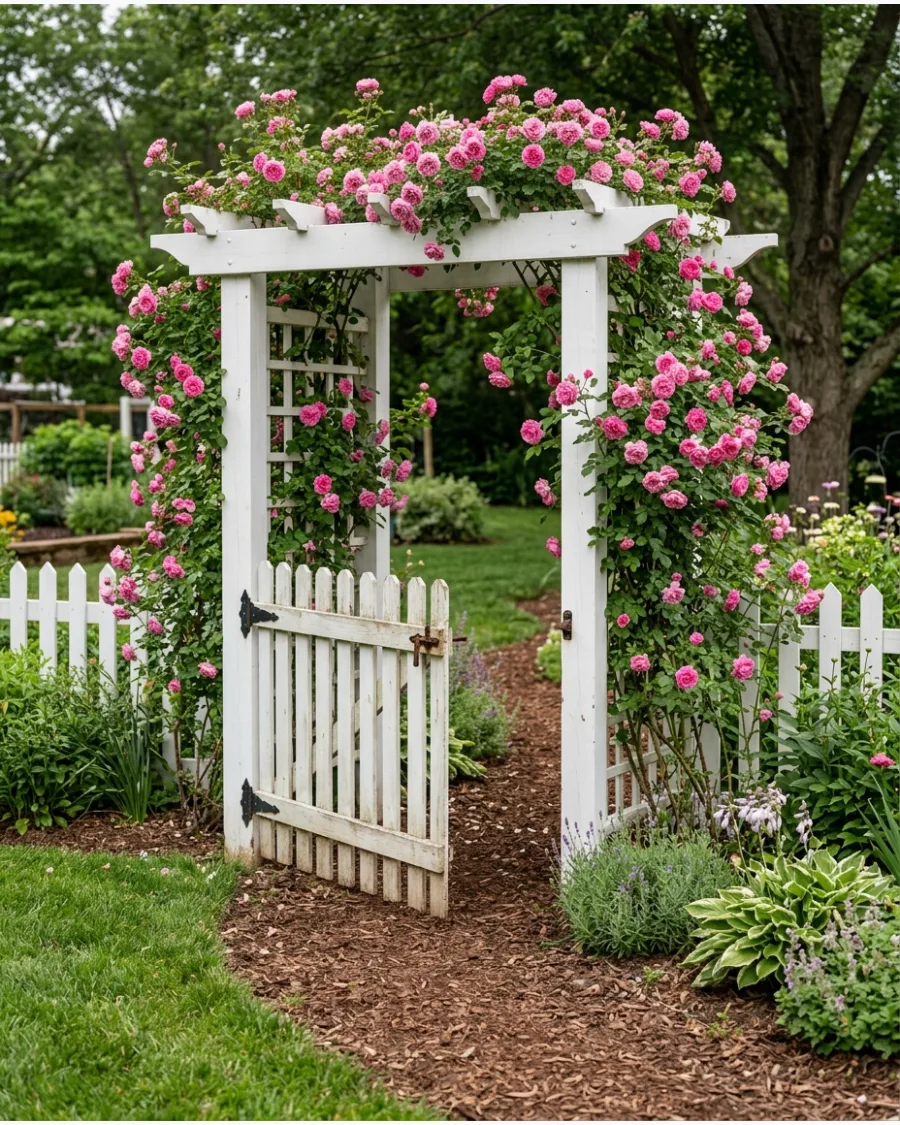
Climbing roses add a classic, romantic feel to any entrance. A sturdy wooden gate paired with a matching arbor provides the necessary support for heavy canes.
Choose a repeat-blooming variety to ensure the entrance looks vibrant for more than just a few weeks in early summer. Regular pruning keeps the walkway clear and prevents the roses from snagging clothes.
- Expect to spend 4 to 6 hours for arbor assembly and planting.
- Install the arbor posts at least 18 inches deep for stability.
- Use a metal arch instead of wood for a lower-maintenance option in humid climates.
Quick win: Use soft garden twine or flexible plant ties to guide new growth without damaging the stems.
42. Wisteria Pergola Gate
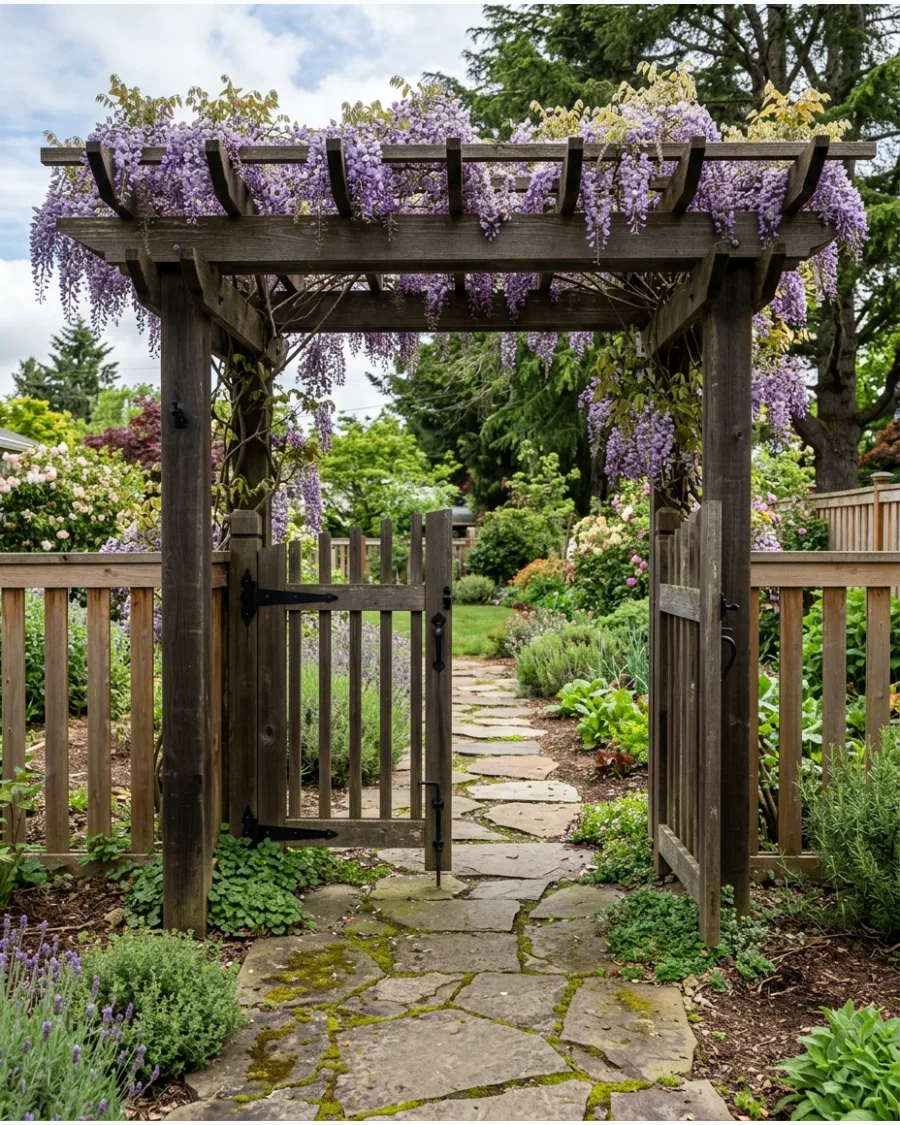
A small pergola built directly over the gate creates a sense of arrival. Wisteria vines wrap around the posts and hang from the rafters for a lush, shaded look.
Ensure the gate posts are anchored in deep concrete to handle the significant weight of mature woody vines. This setup works best as a transition between a front yard and a more private backyard space.
- This project requires basic carpentry skills and a weekend for construction.
- Space the pergola rafters 12 inches apart to allow vines to weave through.
- Opt for a faux-wood composite material if you want the look without the upkeep.
Most people skip this: Prune wisteria twice a year—once in winter and once in summer—to encourage more blooms and less messy growth.
43. Jasmine-Covered Garden Arch
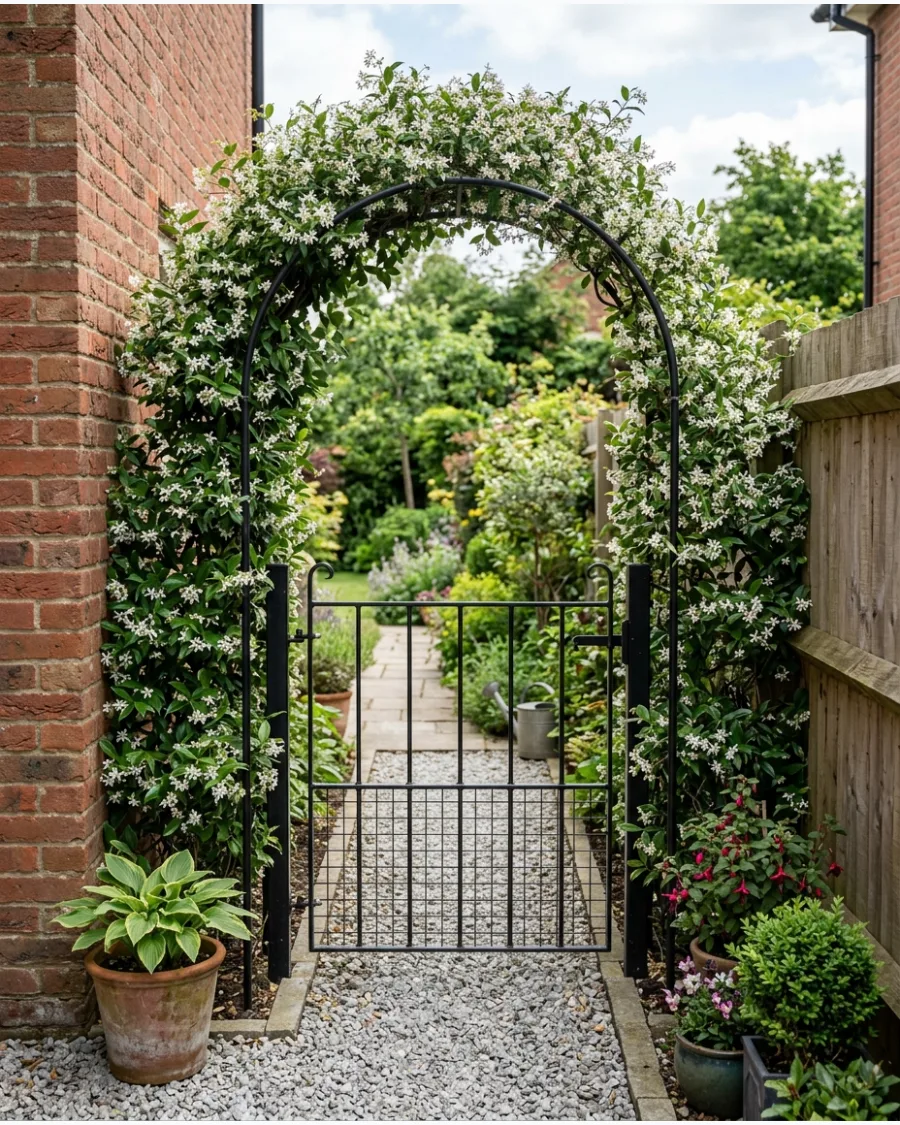
Star jasmine offers dense green foliage and a sweet scent that greets everyone who enters. The vine is light enough to grow on a simple metal arch without requiring massive structural reinforcements.
Mount the arch slightly wider than the gate itself so the jasmine doesn't obstruct the latch or the swing path. This is an excellent choice for narrow side yards where space is tight.
- Metal arches are budget-friendly and can be set up in under an hour.
- Place the arch feet inside the fence line to keep the walkway clear.
- Choose variegated jasmine for extra color even when the plant isn't blooming.
Best shortcut: Plant jasmine in the ground rather than pots to ensure it has enough root space to cover a tall arch.
44. Clematis Garden Gate
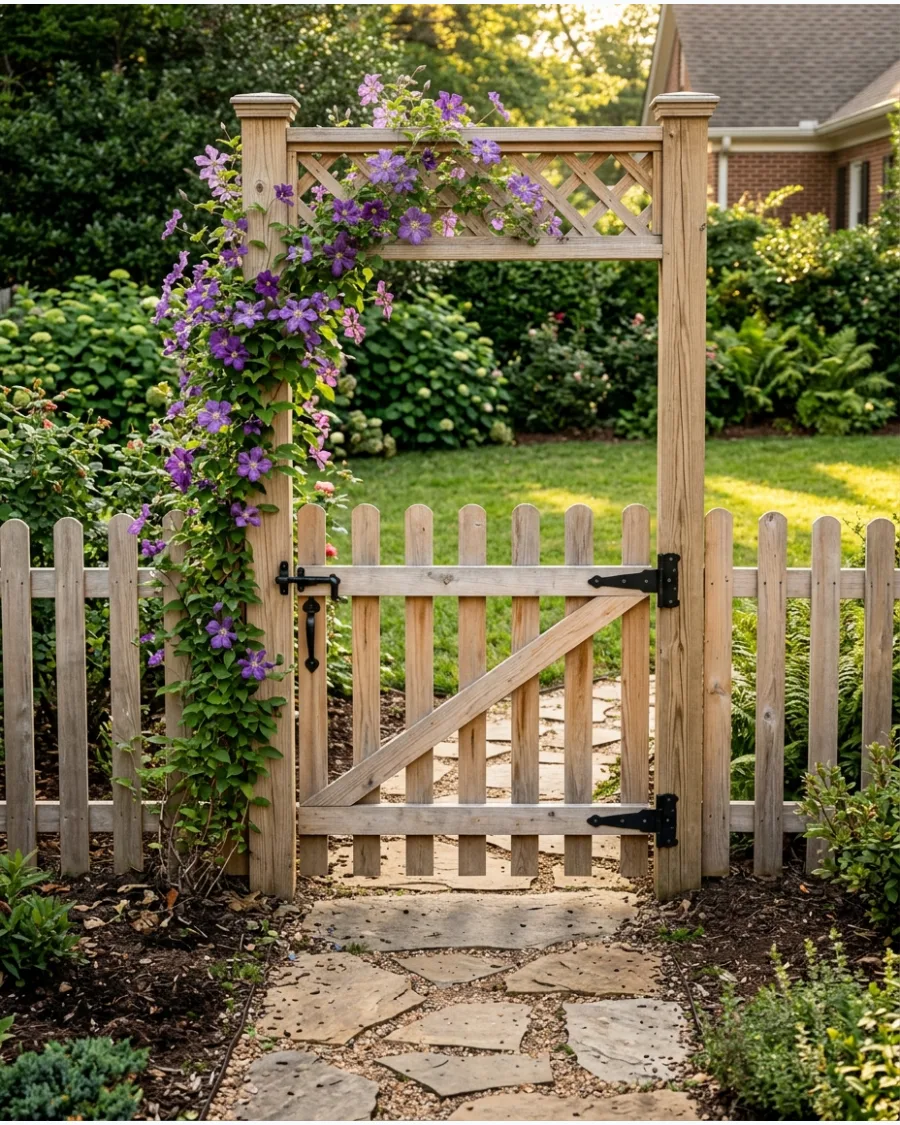
Clematis provides a pop of color without the bulk of heavy woody vines. It winds easily through the pickets of a wooden gate or around a trellis attached to the gate post.
Select a variety that blooms at a different time than your other garden plants to extend the visual interest of the entrance. Because it clings with its leaf stalks, it won't damage the paint or finish of the gate.
- A small trellis can be added to an existing gate in about 30 minutes.
- Use stainless steel staples to secure the trellis to the gate frame.
- Renters can use a free-standing trellis stake next to the gate for a temporary look.
Quick win: Place a few flat stones or a thick layer of mulch over the plant's base to keep the roots cool while the top grows in the sun.
45. Living-Hedge Garden Gate
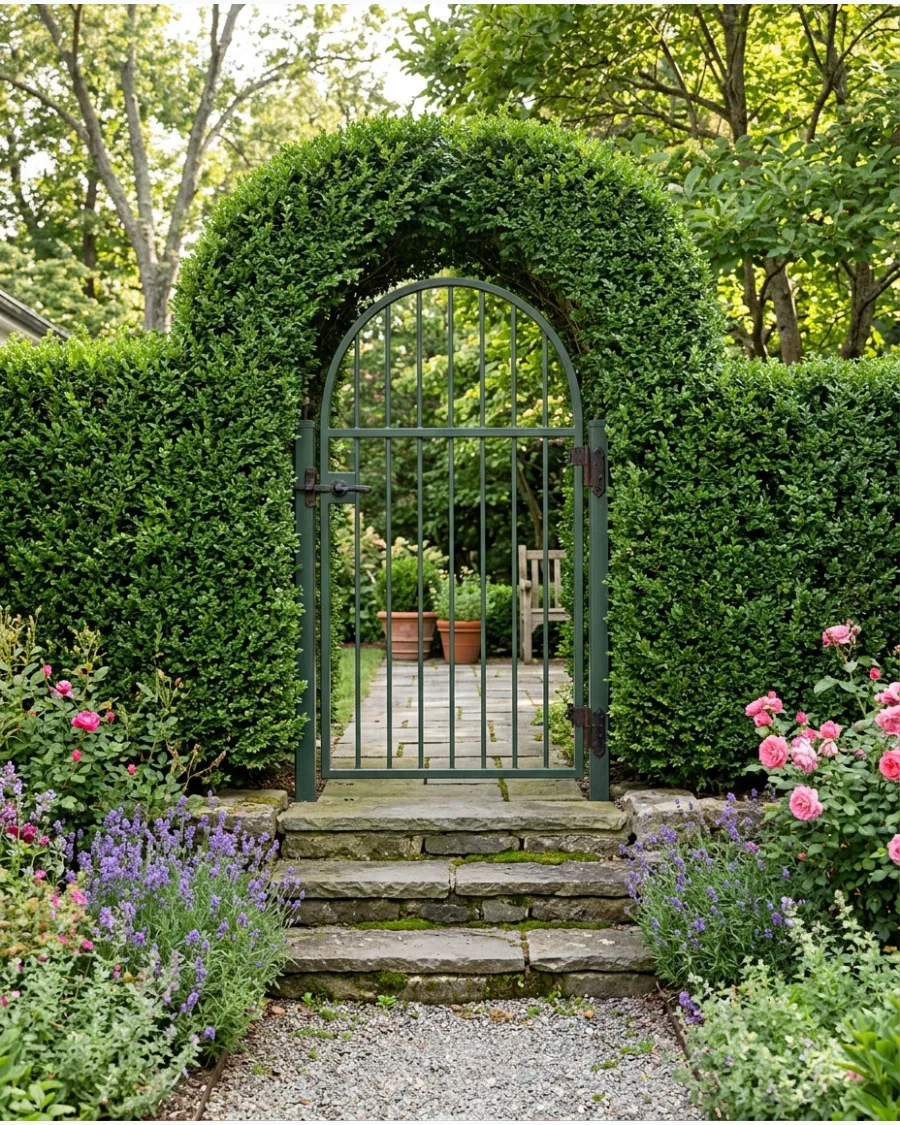
Integrating a gate into a tall hedge makes the entrance feel like a natural part of the landscape. A simple wooden or metal gate provides security without breaking the visual line of the greenery.
Trim the hedge back at an angle near the gate to allow the door to swing fully open without hitting the branches. This approach offers high privacy and acts as a windbreak for the inner garden.
- Budget for the gate and hardware plus the cost of mature hedge plants.
- Secure the gate posts into the ground before planting the surrounding hedge.
- Use evergreen plants like boxwood or privet to keep the gate framed all year.
Most people skip this: Leave a two-inch gap between the gate and the hedge to prevent moisture from the leaves from rotting the gate hardware.
46. Secret-Garden Gate
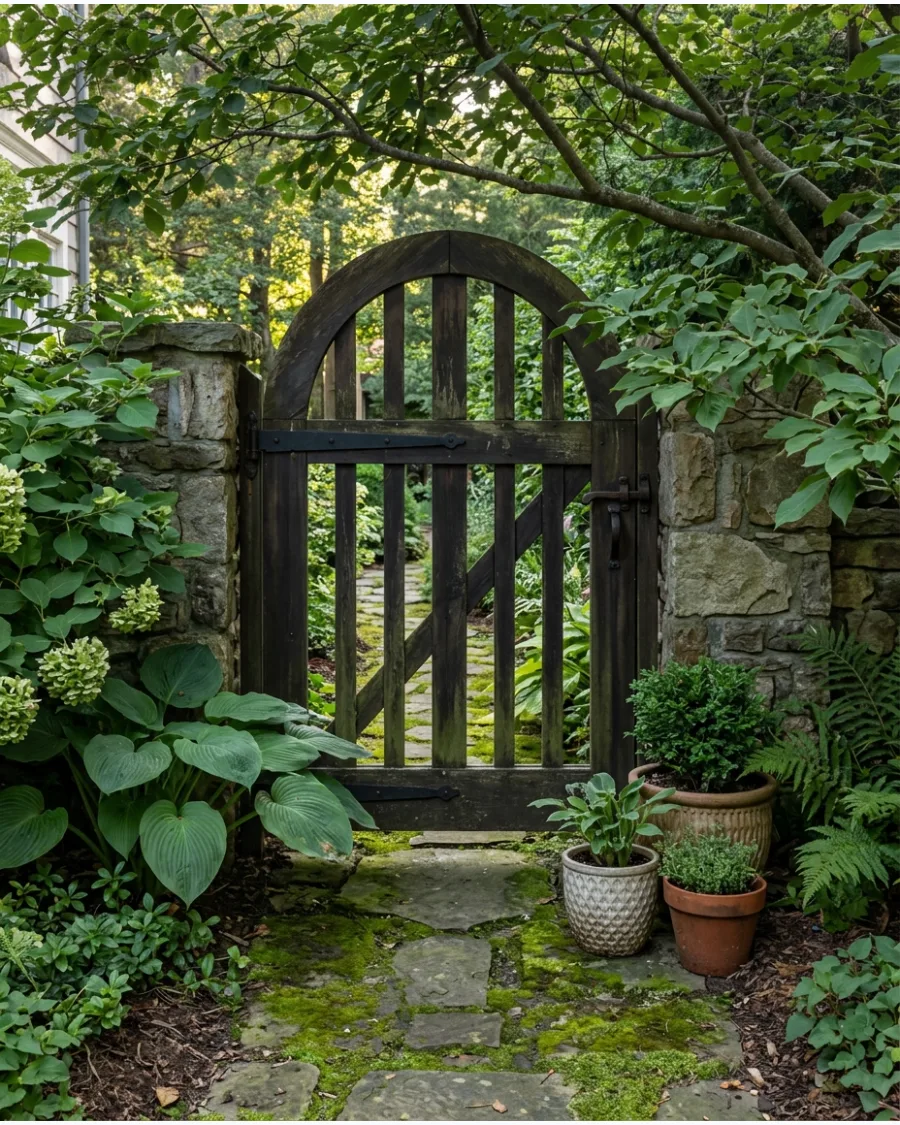
Creating a sense of mystery starts with a gate that is partially obscured by overhanging trees or tall perennials. An arched wooden gate creates a classic silhouette that draws the eye toward the path beyond.
Use a curving walkway on the other side of the gate to hide the rest of the garden from view and spark curiosity. This design works best in shaded corners or at the entrance to a woodland-style area.
- Choose an arched gate to soften the transition into a natural garden area.
- Position the gate at the end of a straight path to create a focal point.
- Add a small bell or knocker to the gate to enhance the 'secret' theme.
Best shortcut: Install a battery-powered light on the inside of the gate post to make the entrance safer and more inviting at night.
Colorful and Creative Garden Gate Ideas
47. Sage-Green Garden Gate
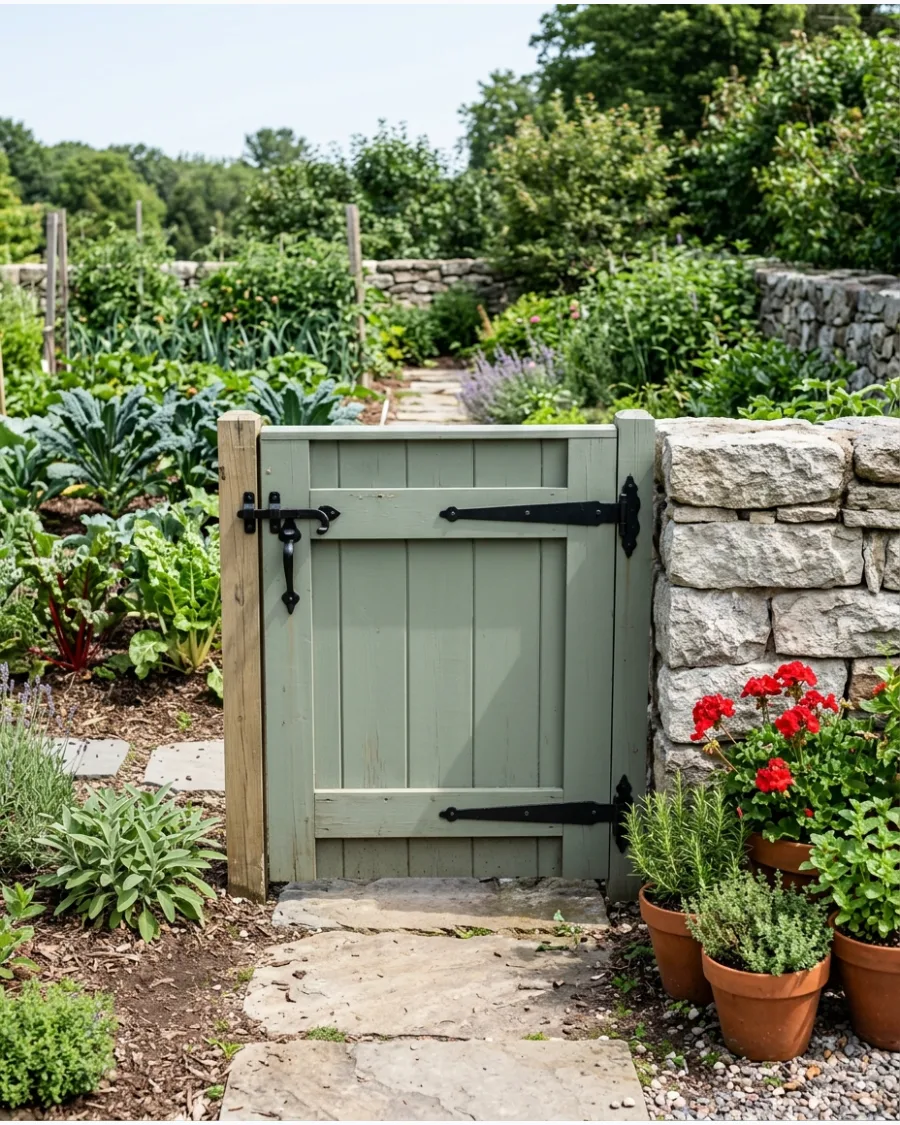
Sage green is a sophisticated choice that mirrors the natural tones of stems and leaves. It makes a wooden gate look established and grounded rather than like a brand-new addition.
Use a satin or semi-gloss finish to make the gate easier to wipe down after rain or dusty days. Pair the color with black iron hardware to give the entrance a timeless, high-end feel.
- One quart of exterior paint is usually enough for a standard gate.
- Remove all hardware before painting to ensure a professional finish.
- Use a wood filler on any cracks before painting to prevent water damage.
Quick win: Test the paint color at different times of day, as sage can look more gray or more yellow depending on the sunlight.
48. Terracotta Garden Gate
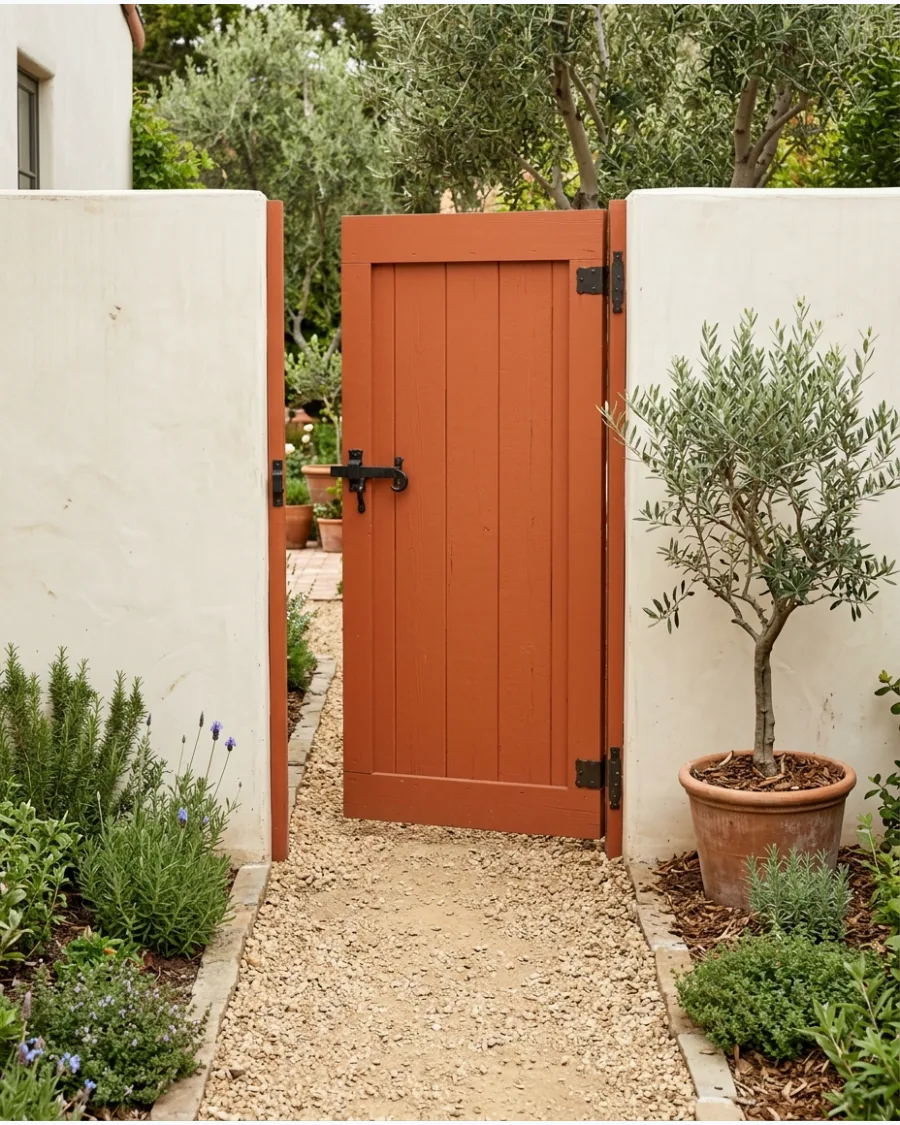
A warm, earthy orange-brown brings an immediate Mediterranean vibe to the yard. This shade works exceptionally well against light-colored stucco or cream-colored stone walls.
Surround the gate with silver-leafed plants like lavender or sage to create a striking color contrast. The warm tone makes the garden feel sunny even on overcast days.
- This color works best on solid wood gates with minimal decorative carving.
- Apply two coats of UV-resistant paint to keep the color from turning dull.
- Add a copper latch for a metallic accent that complements the orange tones.
Most people skip this: Use a high-quality primer specifically for wood to prevent the vibrant orange pigment from fading in direct sun.
49. Dusty-Blue Cottage Gate
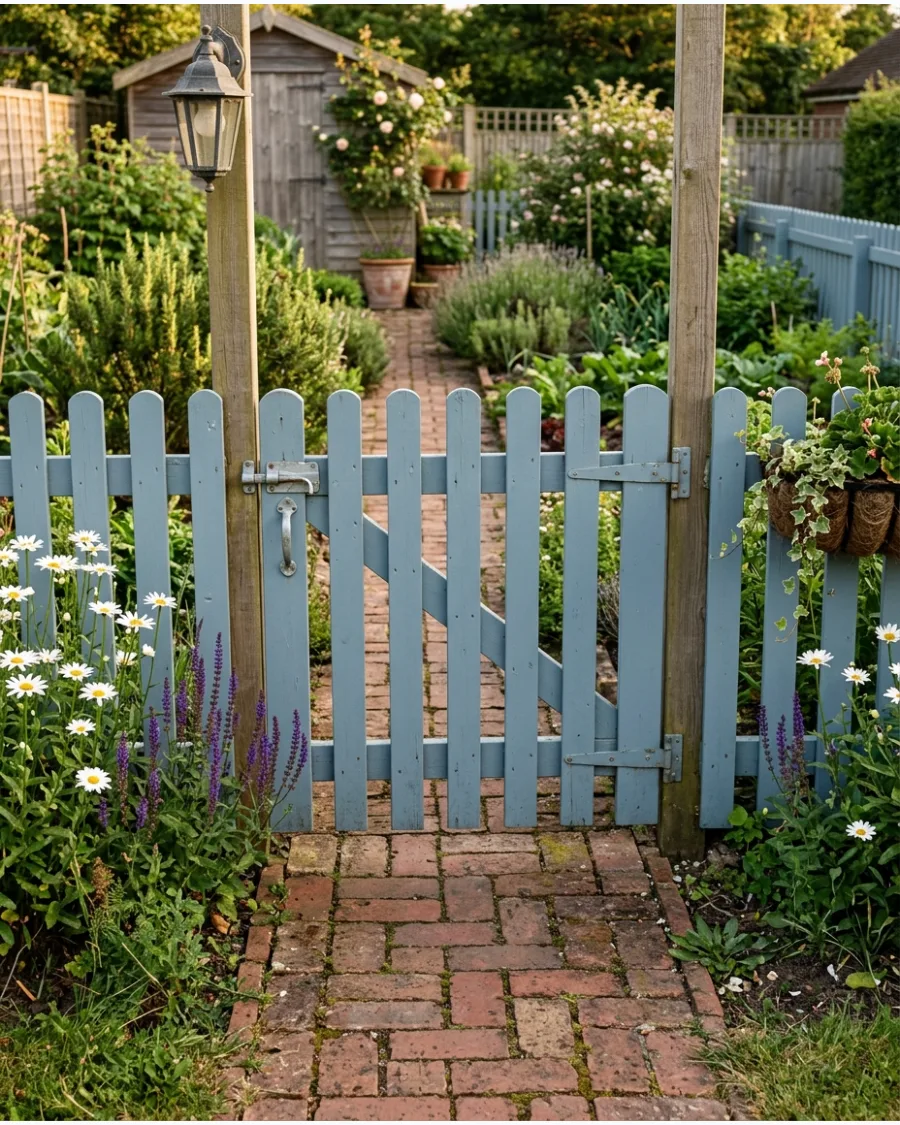
Soft blue is a classic cottage choice that feels airy and welcoming. It provides a beautiful backdrop for brightly colored flowers like yellow marigolds or pink zinnias.
Keep the gate design simple, such as a picket or vertical plank style, to let the color take center stage. This shade is particularly effective in smaller gardens where dark colors might feel too heavy.
- Plan for about 2 hours of prep work including sanding and cleaning.
- Use a brush rather than a roller for picket gates to reach every angle.
- Pair with white or natural wood fence panels for a coastal appearance.
Best shortcut: Paint only the gate blue and leave the rest of the fence white or natural to create a clear focal point.
50. Repurposed Vintage-Door Gate
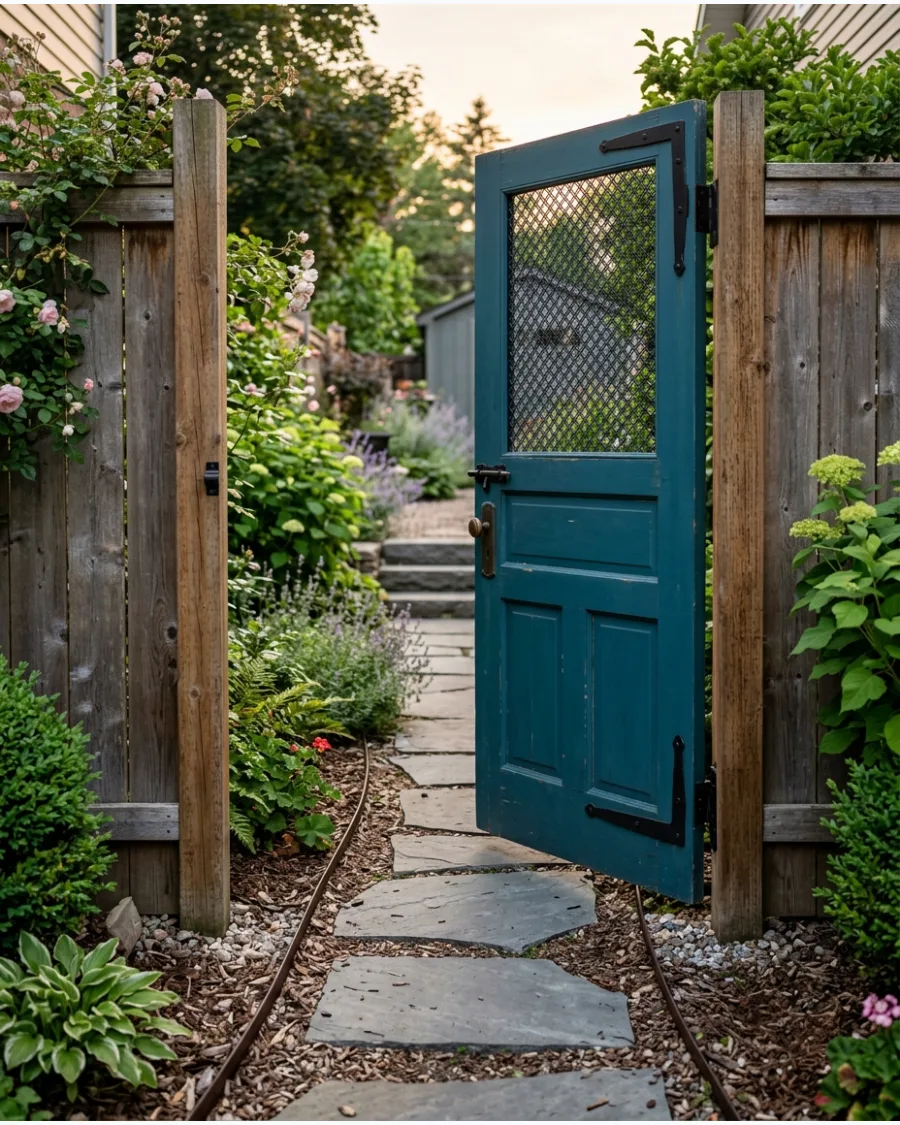
Giving a second life to an old exterior door adds instant character and a story to the garden. Solid wood doors are best, as they can be sanded and resealed for outdoor use.
Replace any glass panels with decorative metal mesh or wooden slats to ensure the gate is safe and durable. Match the door's hardware to the existing style of the house for a cohesive look.
- Sourcing a door from a salvage yard can save money over buying a new gate.
- Check that the door's width matches your existing gate opening before buying.
- Add a kick plate to the bottom of the door to protect it from rot and kicks.
Most people skip this: Seal the top and bottom edges of the door with extra coats of outdoor varnish to prevent moisture from seeping into the end grain.
Frequently Asked Questions
What is the standard width for a walk-through garden gate?
A standard walk-through gate is typically 36 to 48 inches wide, which comfortably accommodates most people and hand tools. If you need to pass through with a riding lawn mower or large garden cart, you should aim for a width of at least 60 inches.
How do I prevent my wooden garden gate from sagging?
The most effective way to prevent sagging is to install a diagonal cross-brace, creating a 'Z' frame that transfers weight toward the hinges. Using heavy-duty hinges and ensuring your gate posts are set deeply in concrete will also keep the gate level for years.
Which materials are best for low-maintenance garden gates?
Powder-coated aluminum and vinyl are the best options for homeowners who want to avoid painting or staining. While pressure-treated wood is a budget-friendly and durable choice, it does require more upkeep than metal or synthetic materials.
How high should a garden gate be for deer protection?
For effective deer protection, your garden gate should be at least 7 to 8 feet high to prevent them from jumping over. If a shorter gate is necessary for aesthetics, adding a tall trellis or wire extension can help deter persistent visitors.
Should a garden gate swing inward or outward?
Traditionally, garden gates swing inward toward the garden to offer a welcoming feel and keep the path clear for pedestrians. However, if your garden sits on an upward slope, you should install the gate to swing outward so it doesn't get stuck on the rising terrain.