50 Modern Bedroom Door Paint Ideas

This post may contain affiliate links: full affiliate disclosure.
Updating a bedroom door with a fresh color is one of the fastest ways to make a standard room feel like a custom suite. These paint choices turn a functional exit into a deliberate design feature that ties the whole space together.
Warm and Earthy Bedroom Door Colors
1. Chocolate Brown Door
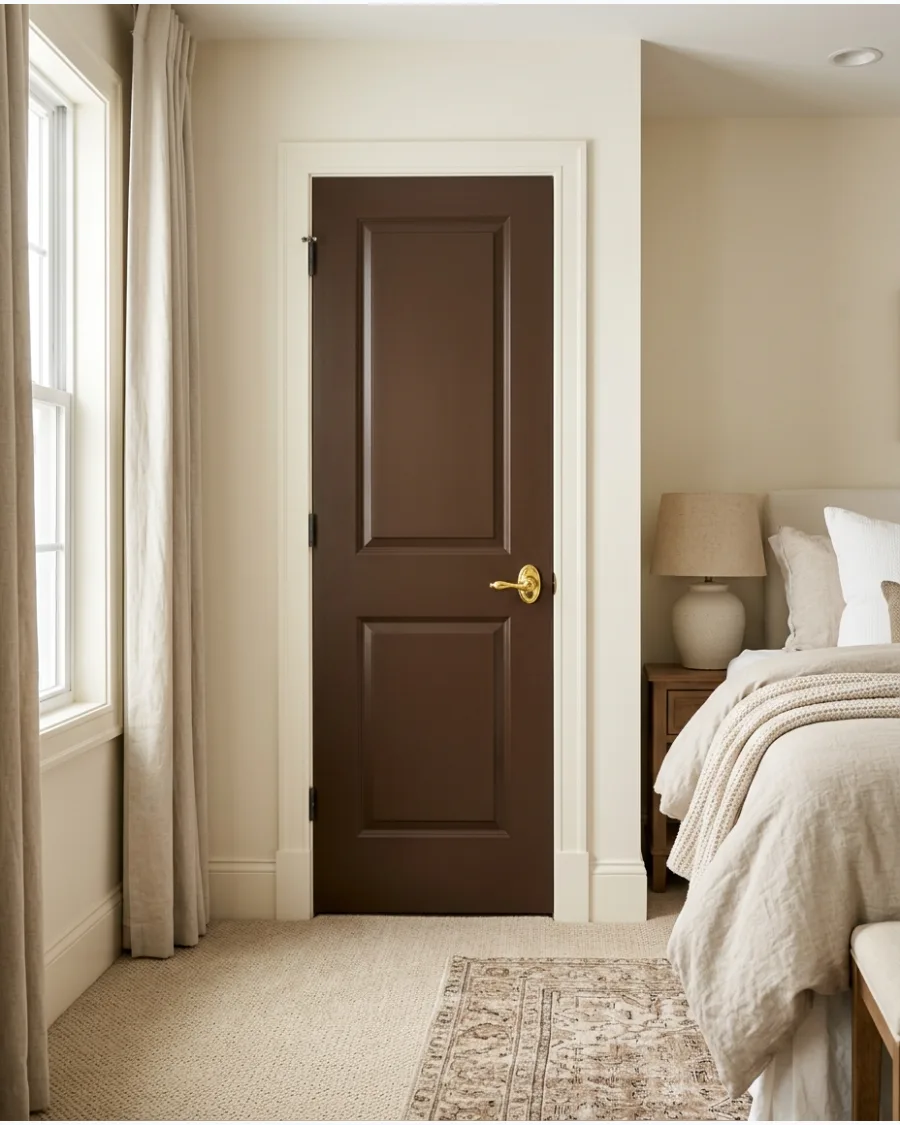
A rich chocolate brown door adds instant weight and a sense of permanence to a bedroom. This deep tone creates a grounding focal point that works perfectly against cream or off-white walls.
Swap out standard silver knobs for polished brass hardware to make the dark finish look intentionally high-end. Dark brown is much more forgiving with fingerprints than stark white paint.
- One gallon of interior satin paint costs about 30 to 50 dollars.
- Remove the door from the hinges and lay it flat on sawhorses for a drip-free finish.
- Choose a warm-toned brown rather than a cool espresso to keep the room feeling cozy.
Most people skip this: Sand the door lightly between coats to remove any tiny dust nibs for a factory-smooth feel.
2. Warm Khaki Door
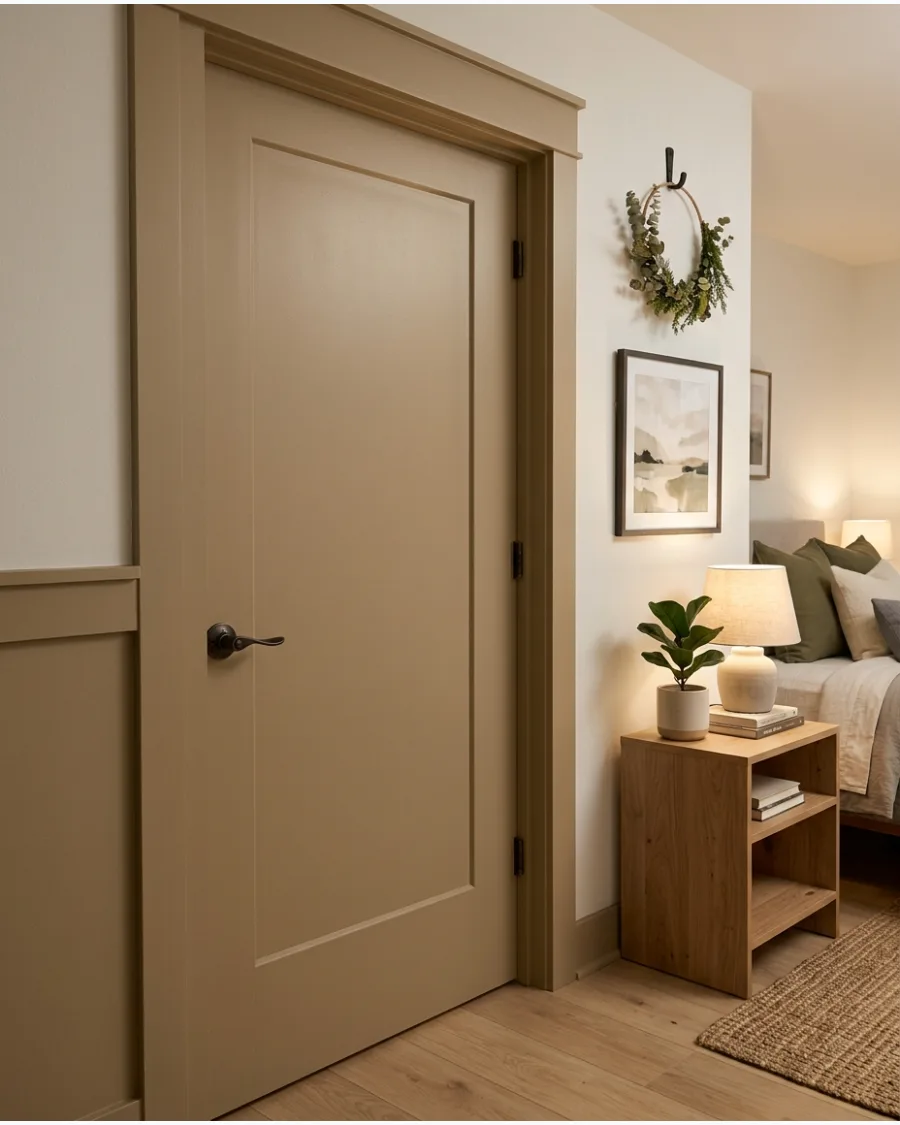
Warm khaki is a sophisticated alternative for anyone who finds white too boring but isn't ready for bold colors.
It acts as a soft neutral that bridges the gap between light walls and natural wood furniture. Paint the door trim in the same khaki shade to make the doorway appear larger and more architectural. This color hides dust exceptionally well in high-traffic rooms.
- Expect to spend two hours on prep and painting for a standard door size.
- Use a high-quality angled sash brush for the recessed panels and a small roller for the flats.
- Pair this with linen bedding and woven baskets to lean into a natural, earthy aesthetic.
Quick win: Match the khaki shade to the darkest thread in your bedroom rug for a cohesive look.
3. Burnt Umber Door
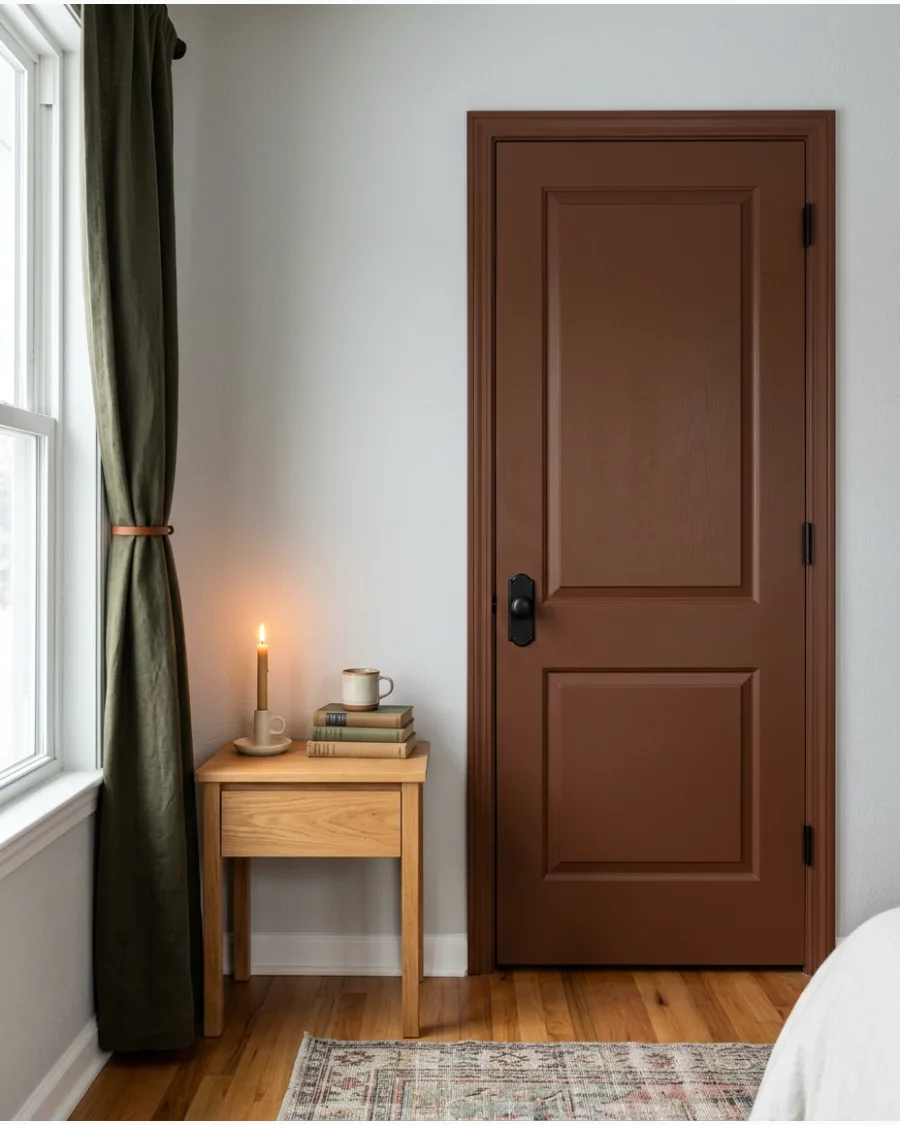
Burnt umber provides a deep, earthy depth that feels more organic than black or charcoal. It brings a sense of history to a bedroom, especially when applied to a door with traditional molding.
Apply a thin second coat of paint along the panel edges first to prevent paint from pooling in the corners. This shade is a great way to anchor a room filled with light-colored textiles.
- Darker pigments often require a tinted primer to reach full opacity in two coats.
- Keep a damp microfiber cloth handy to wipe the door edges before the paint dries.
- This color works best in rooms with plenty of natural light to prevent it from feeling too heavy.
Best shortcut: Use a mini foam roller instead of a nap roller to get a smooth, spray-like finish without the mess.
4. Muted Terracotta Door
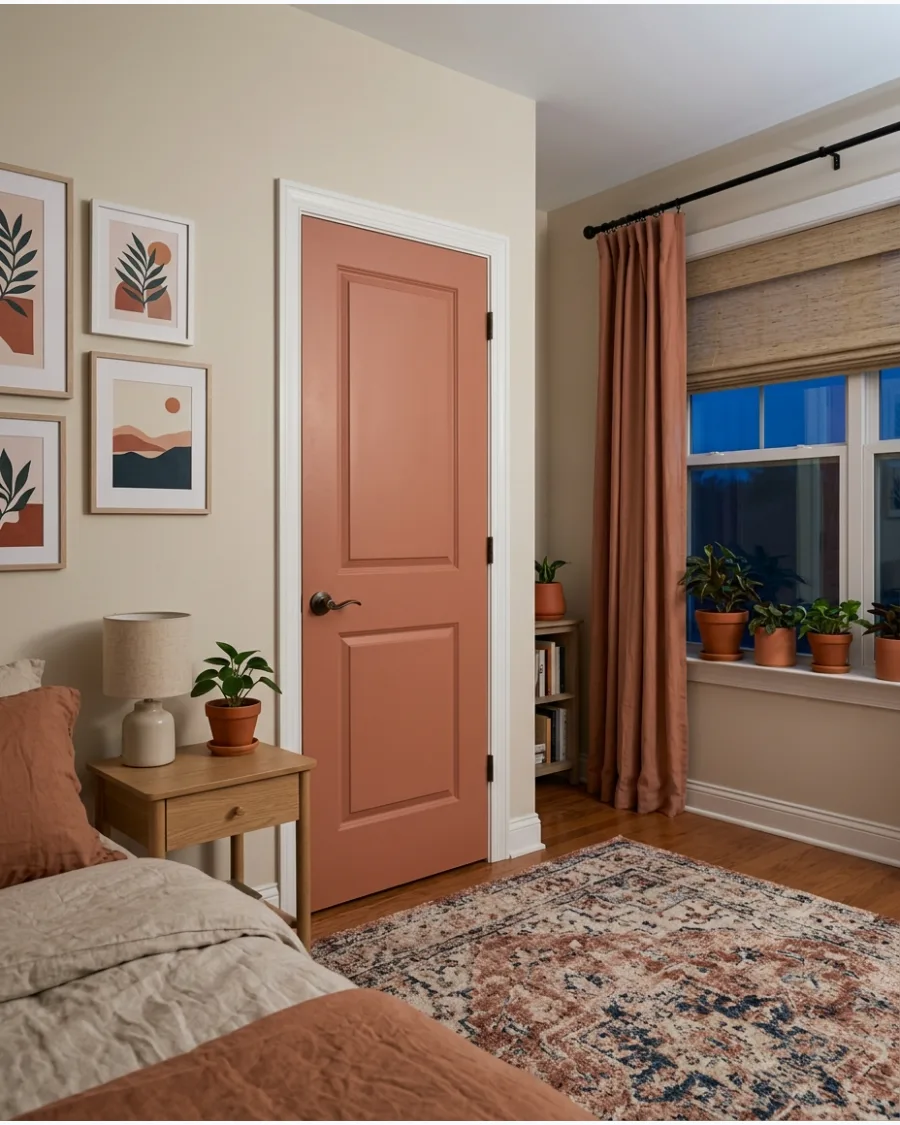
A muted terracotta door adds a sunset-like warmth that makes a bedroom feel immediately inviting. It provides a pop of personality without the aggression of a bright red or orange.
Coordinate the door color with a few terracotta plant pots on a nearby windowsill to spread the color through the room. This shade looks best in a matte or eggshell finish to keep the look soft.
- Small sample cans are usually enough to cover one side of a standard interior door.
- Tape off the hinges with high-quality painter's tape if you aren't removing the door.
- Works well for renters who can use peel-and-stick vinyl in a similar shade for a temporary change.
Most people skip this: Paint the very top and bottom edges of the door to protect the wood from moisture and warping.
5. Earthy Coral Door
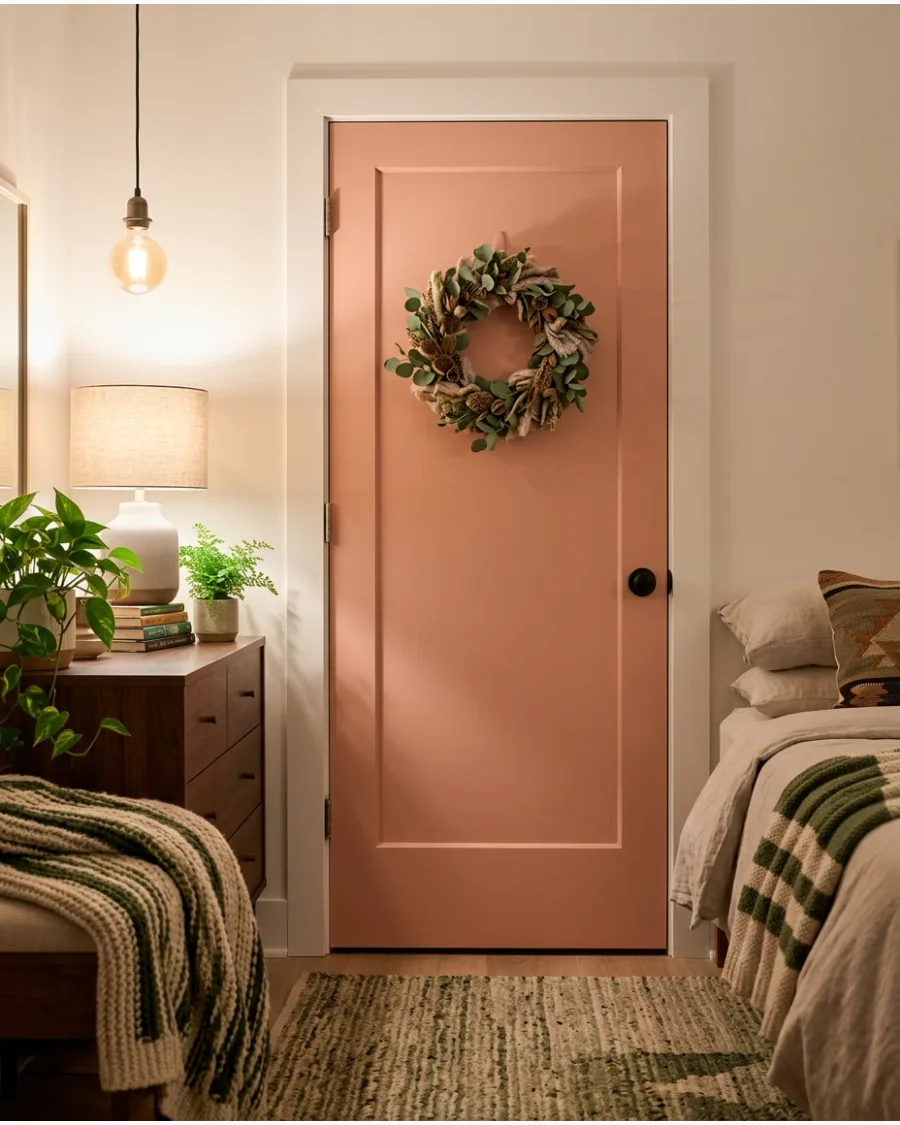
Earthy coral is a gentle, sophisticated pink-orange that brings a soft glow to the bedroom entrance. It is far more grown-up than a pastel pink and pairs beautifully with warm white walls.
Install a simple black round knob to give the soft coral a modern, graphic edge. This color choice makes a bedroom feel brighter even on cloudy days.
- Total project cost is under 50 dollars for paint and basic supplies.
- Clean the door with a degreaser before painting to ensure the new color sticks properly.
- This shade is ideal for smaller bedrooms because it adds color without closing in the space.
Quick win: If the room is very dark, choose a coral with more yellow undertones to maximize the warmth.
6. Soft Mushroom Door
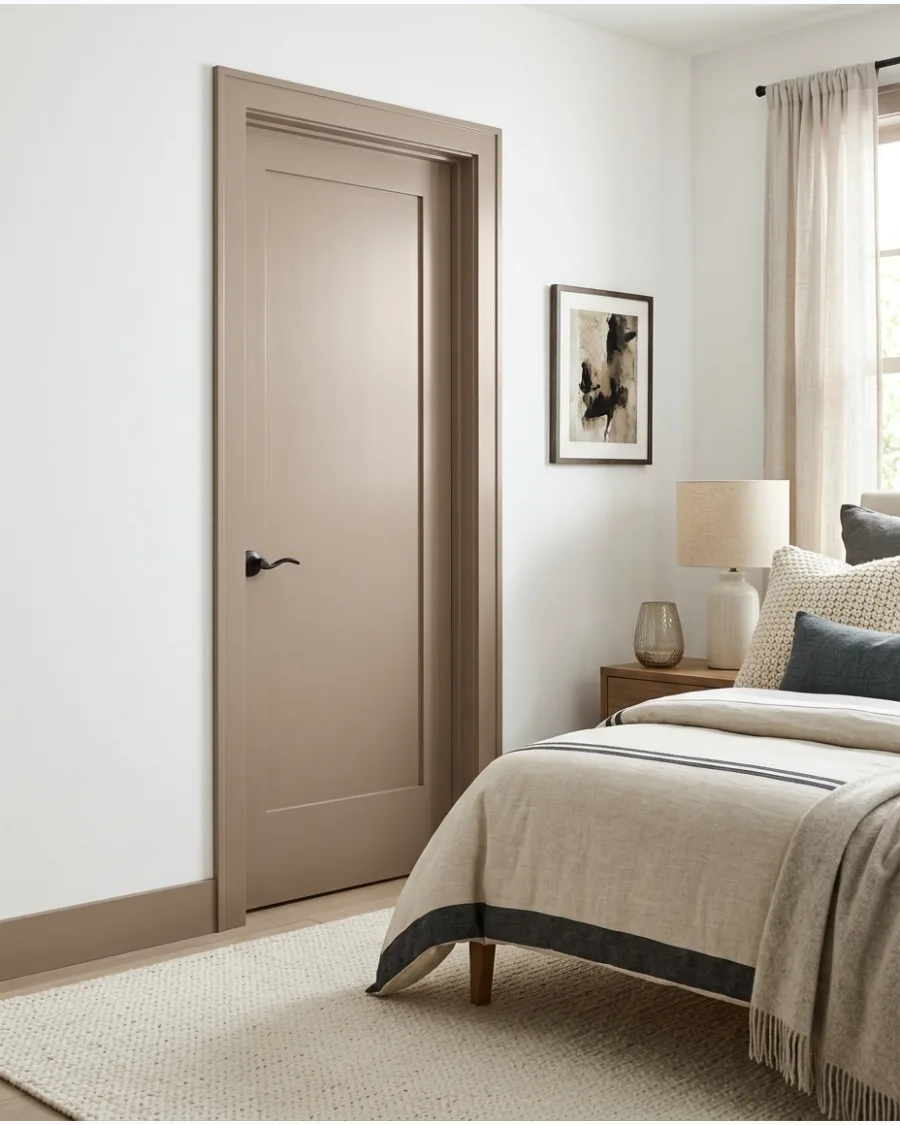
Mushroom is the ultimate "new neutral" for bedroom doors because it feels warmer than grey but cleaner than beige.
It provides just enough contrast against white trim to look intentional and high-end. Carry the mushroom color onto the baseboards for a seamless, designer-inspired look that elongates the walls. It is a timeless choice that won't clash if you change your bedding later.
- High-quality acrylic latex paint is the best choice for easy cleanup and durability.
- Paint in the direction of the wood grain, even on smooth doors, to maintain a natural look.
- This color hides scuffs from vacuum cleaners and shoes much better than white trim.
Best shortcut: Use a paint additive to slow the drying time so your brush marks have time to level out and disappear.
7. Warm Greige Door
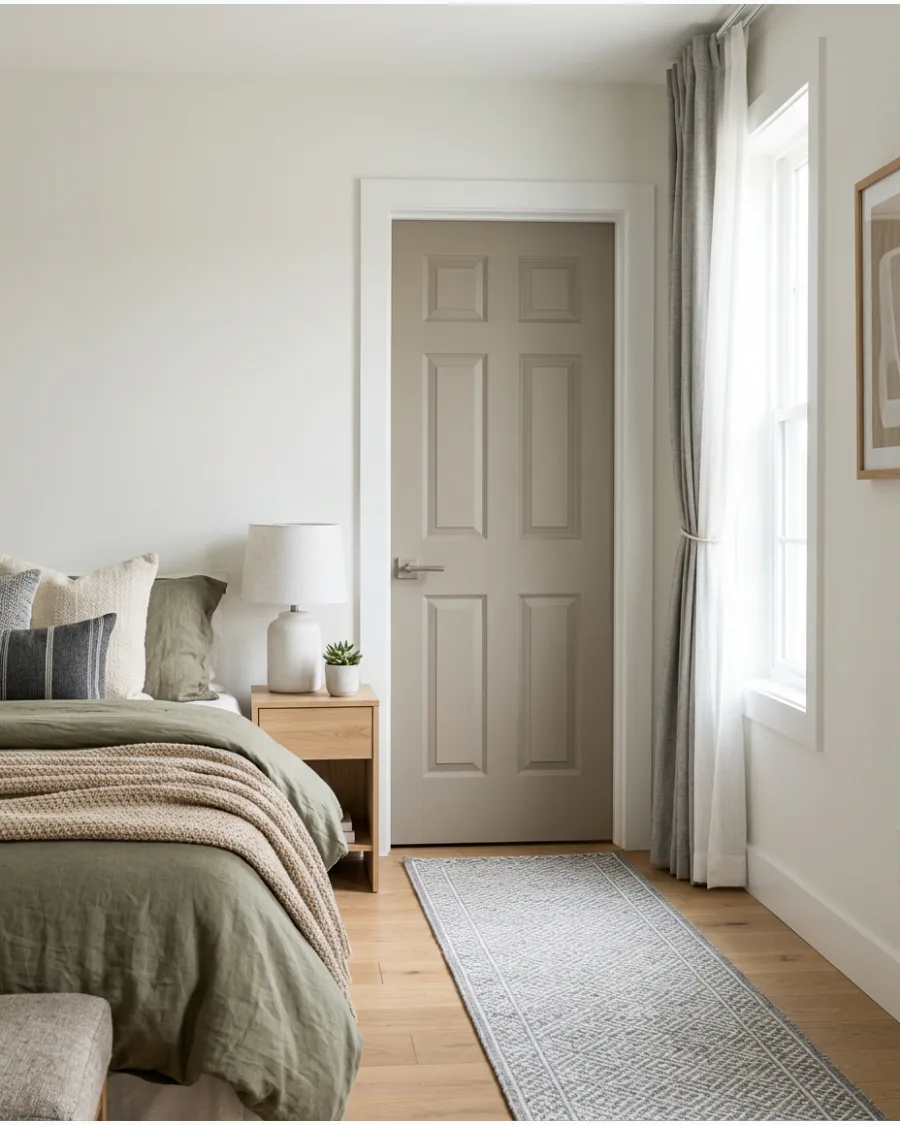
Greige is a reliable choice that offers the calmness of grey with the coziness of beige. It makes a bedroom entrance look clean and modern without feeling cold or clinical.
Select a greige shade that is at least two shades darker than your wall color so the door actually stands out. It is the safest choice for resale value while still offering a custom feel.
- A quart of paint is usually plenty for two coats on a single door side.
- Wait at least 24 hours before closing the door fully to prevent the paint from sticking to the frame.
- Pair with silver or nickel hardware to keep the look cool and contemporary.
Most people skip this: Paint the 'strike side' of the door (the edge with the latch) the same color as the door face.
8. Ochre Yellow Door
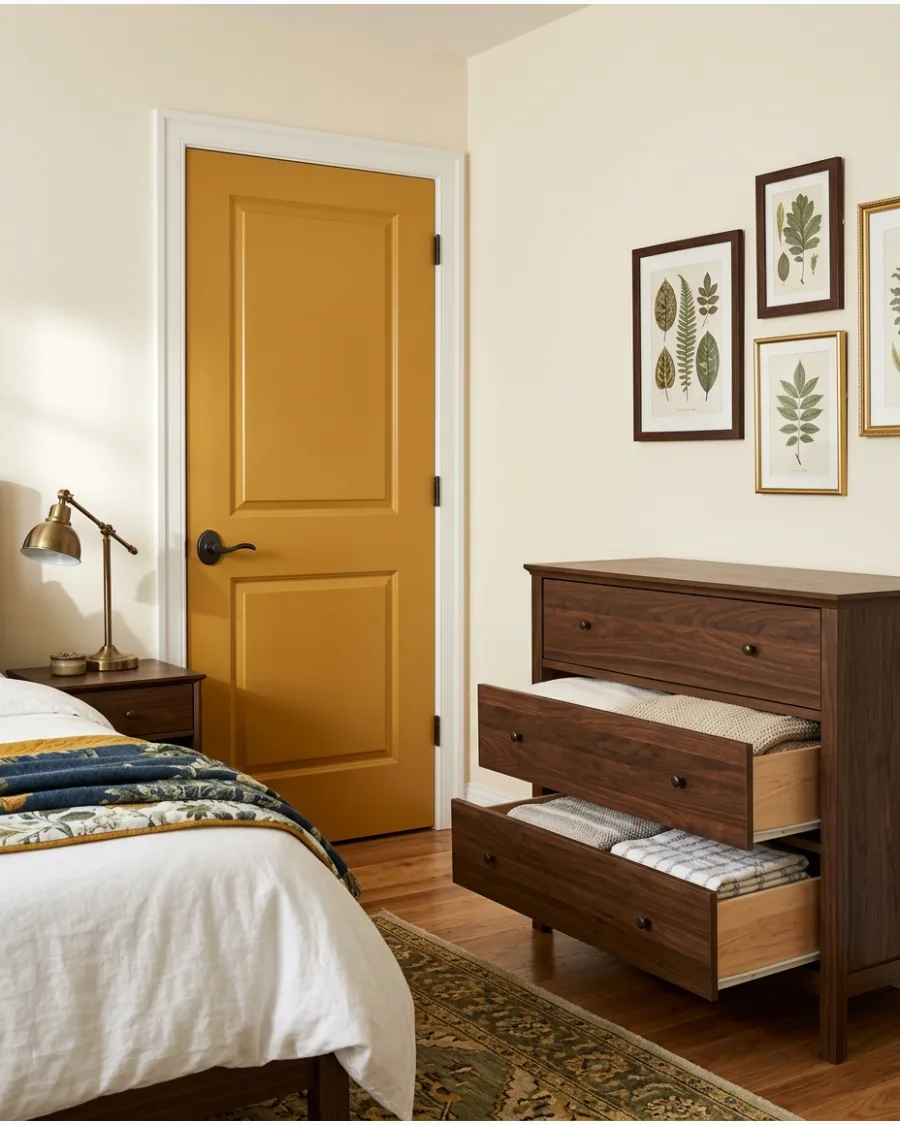
Ochre yellow is a bold, vintage-inspired choice that adds a sunny disposition to any bedroom. It pairs beautifully with dark wood furniture and botanical-themed decor.
Use a semi-gloss finish to make the yellow pop and to make the surface easier to wipe clean. This color is an excellent way to turn a boring hallway-facing door into a piece of art.
- Yellow pigments can be translucent, so a white primer is often necessary for a bright result.
- Remove all hardware rather than taping around it for the cleanest possible edges.
- Best suited for eclectic or bohemian bedroom styles with lots of texture.
Quick win: If the ochre feels too bright, rub a very thin layer of brown wax over the dry paint for an aged look.
9. Butter Yellow Door
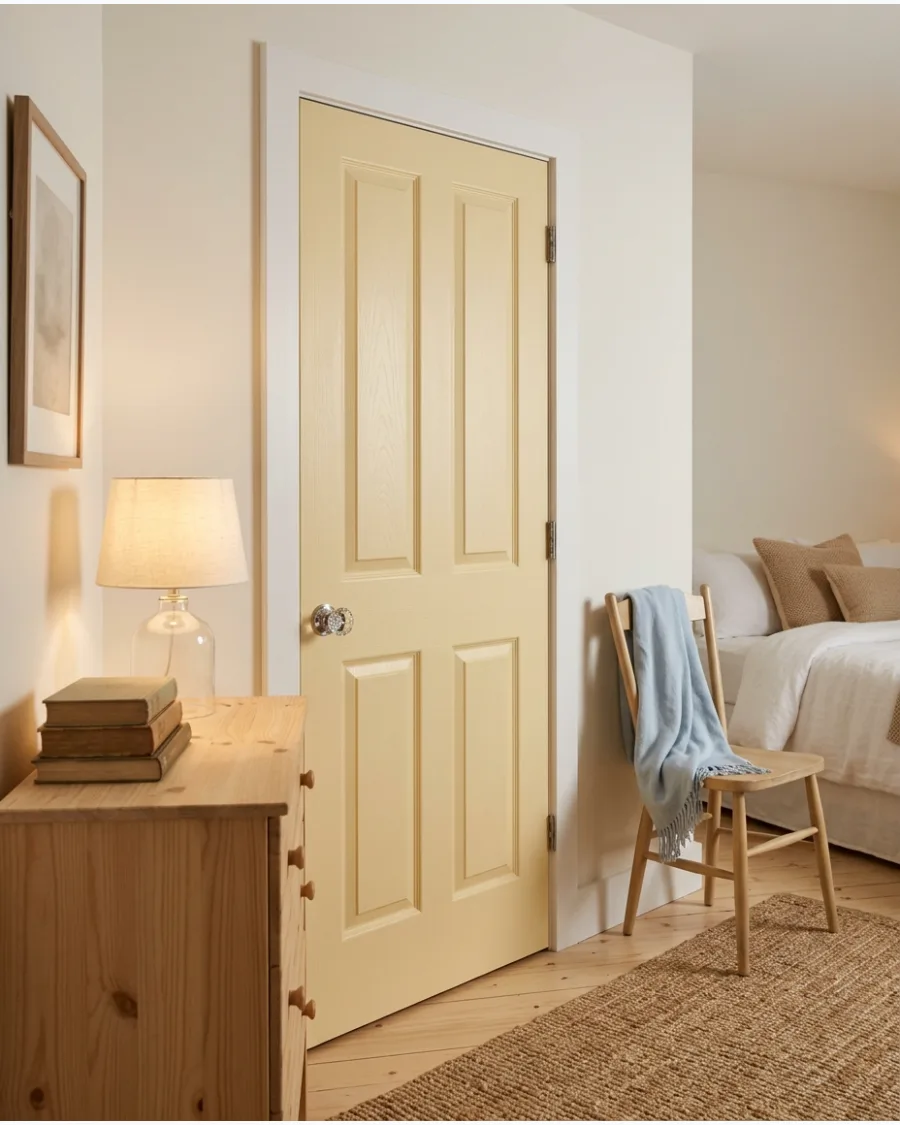
Butter yellow is a softer, more subtle way to introduce light and cheer into a dim bedroom. It feels traditional and sweet, especially when paired with light wood or white furniture.
Add a crystal-style knob to enhance the airy, vintage feel of the soft yellow paint. This is a perfect choice for guest rooms or nurseries where a calming vibe is key.
- This project can be completed in a single Saturday morning.
- Use a 2-inch angled brush to get into the decorative grooves of a paneled door.
- Pairs well with floral patterns and light, breezy window treatments.
Best shortcut: Use a 'handy paint pail' with a liner to make moving around the door easier than using a big tray.
10. Deep Burgundy Door
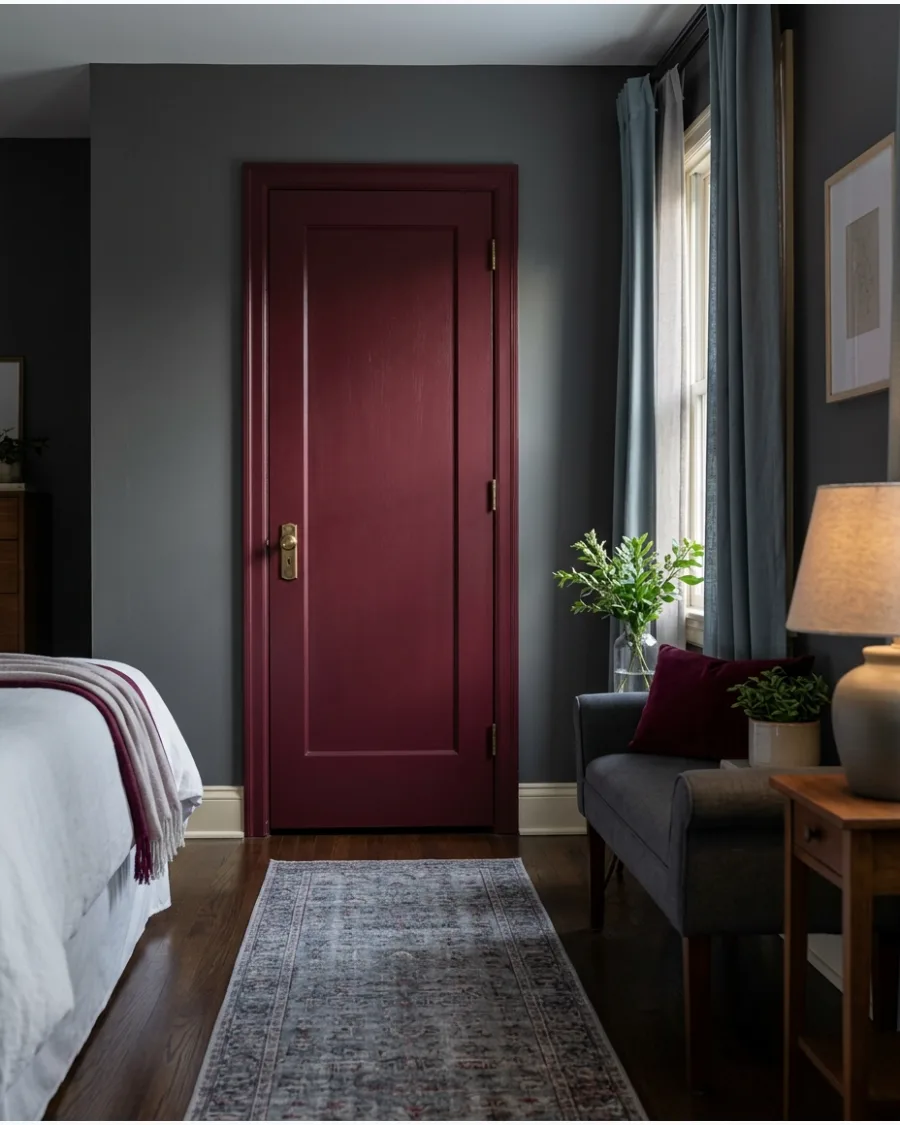
Deep burgundy creates a sense of luxury and drama that makes a bedroom feel like a high-end hotel suite. It is a sophisticated way to use red without it feeling overwhelming or too bright.
Tie the door into the room by choosing a rug or throw pillow that features a similar wine-red accent. Dark colors like this look best when the door is in good condition with no deep scratches.
- Dark red tones often require three coats for a perfectly even, professional finish.
- Ensure the room has adequate overhead lighting so the door doesn't just look black at night.
- A high-quality synthetic brush will help avoid visible brush strokes in the dark pigment.
Most people skip this: Lightly sand the door with 220-grit sandpaper before the final coat for a professional shine.
Green and Blue Bedroom Door Ideas
11. Smoky Jade Door
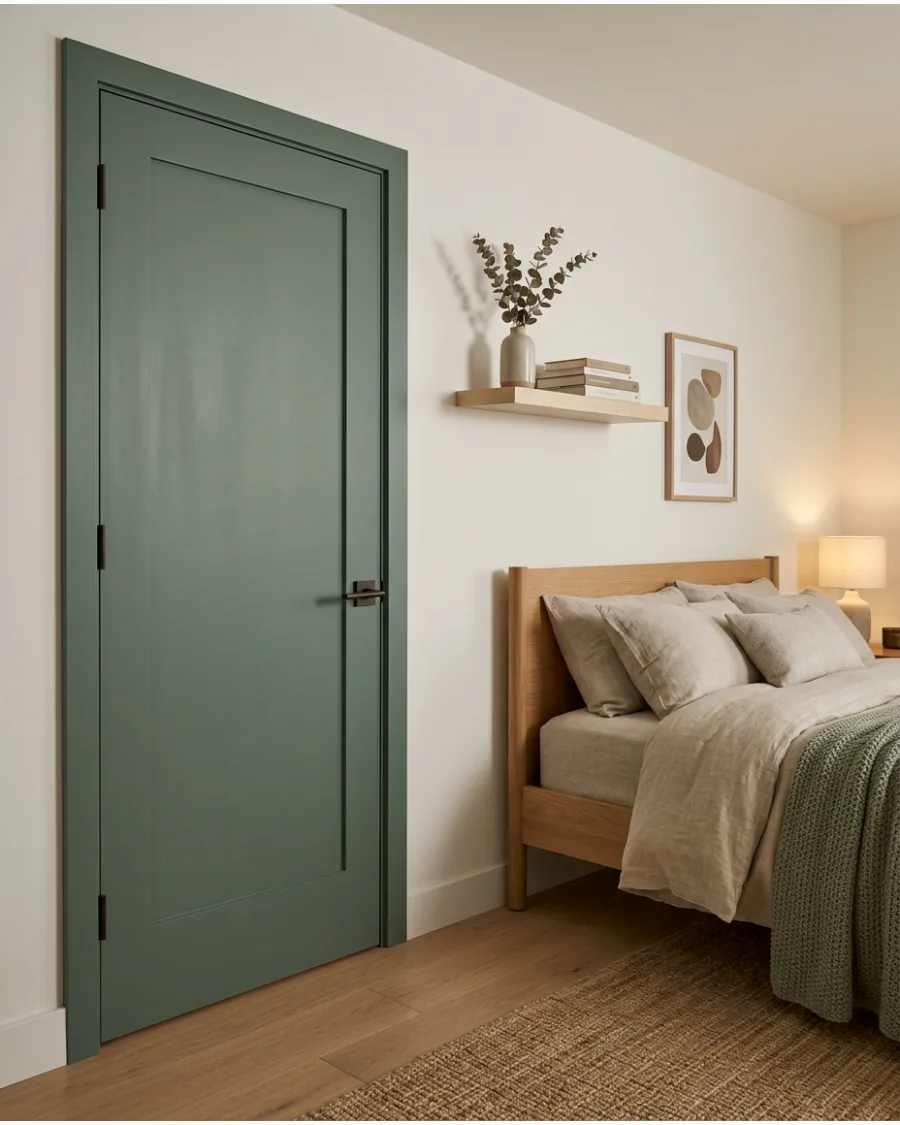
Smoky jade is a muted, sophisticated green that brings a sense of calm and nature into the bedroom. It is distinctive enough to be a feature but soft enough to act as a neutral.
Use a matte finish to give the jade a velvety look that absorbs light and feels very modern. This color pairs exceptionally well with light oak or birch furniture.
- A quart of paint plus a small roller kit will cost around 40 dollars.
- Work in sections: panels first, then the horizontal rails, then the vertical stiles.
- This shade is very effective at masking the yellow tones in old, dated wood flooring.
Quick win: If you have a walk-in closet, paint that door the same jade color to create a balanced look in the room.
12. Forest Green Door
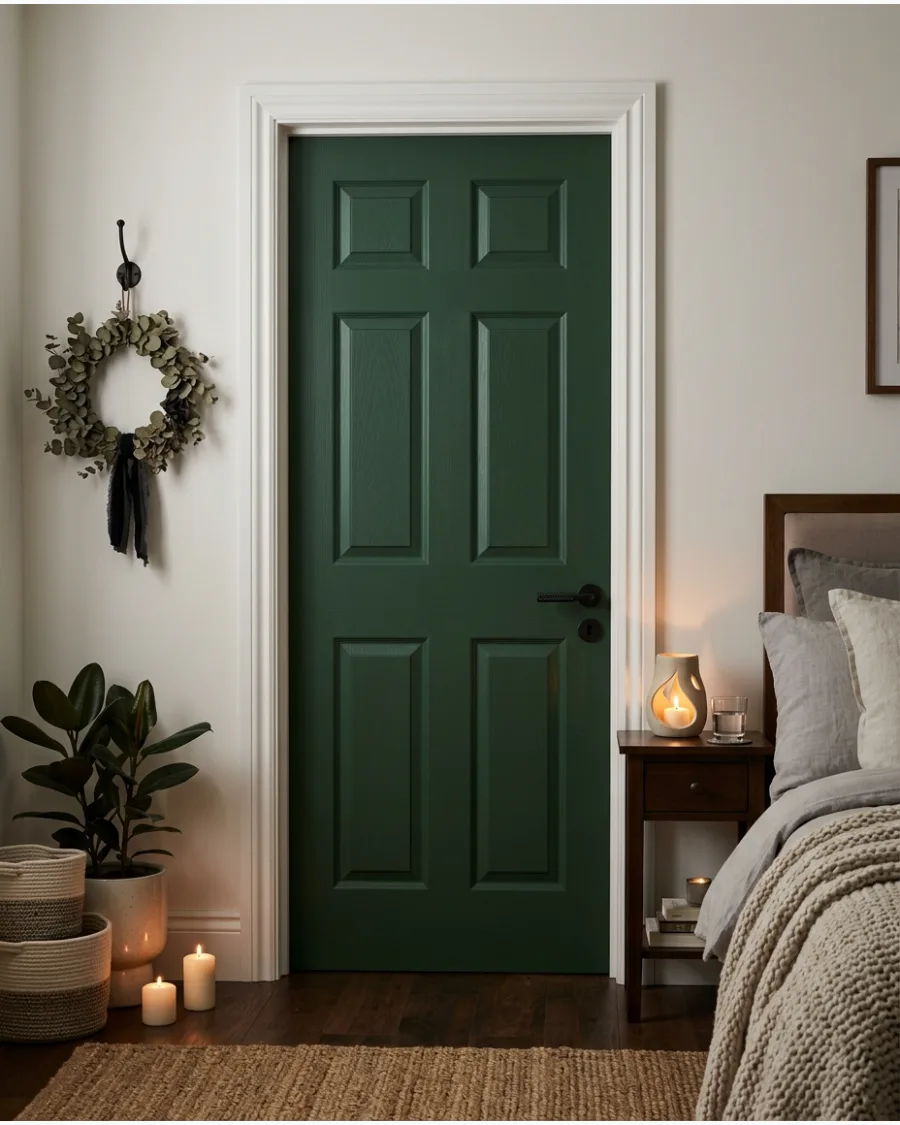
Forest green is a classic choice that highlights the architectural lines of a paneled door beautifully. It feels traditional yet fresh, especially when paired with modern hardware.
Install matte black hardware for a moody look or gold hardware for a more classic, regal feel. This deep green acts as a beautiful frame for the view into the rest of the home.
- Clean the door with TSP (trisodium phosphate) first to remove any oils that might prevent paint sticking.
- This color is excellent for hiding the imperfections of a heavily used or older door.
- Works best in bedrooms with white or very light grey walls for maximum contrast.
Best shortcut: Use a small foam roller for the flat surfaces of the door to get the smoothest possible finish.
13. Muted Olive Door
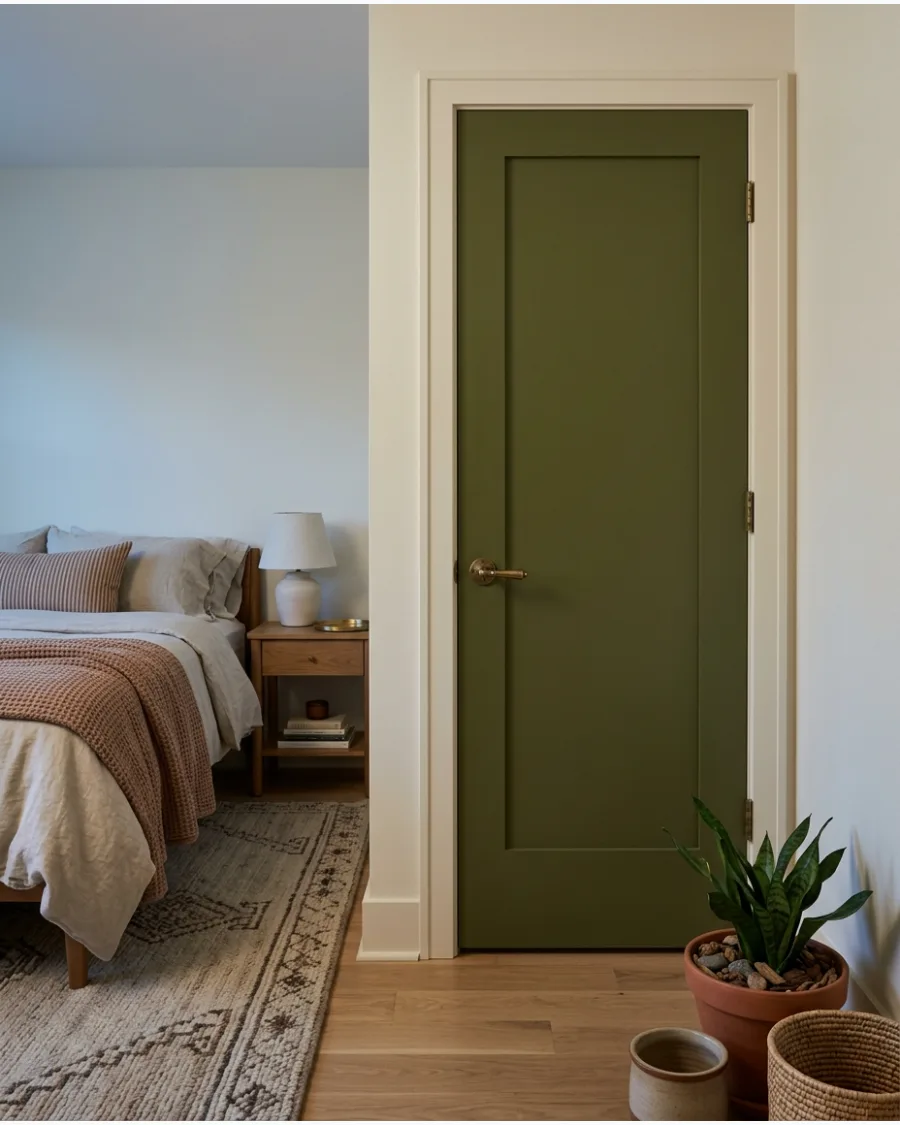
Muted olive is an organic, earthy green that feels incredibly relaxing in a sleep environment. It mimics the colors found in nature and works as a bridge between different wood tones in the room.
Pair the olive door with brass hinges to lean into a vintage, cottage-inspired aesthetic. It is a very forgiving color that doesn't show dust or light scuffs easily.
- Expect to use about half a quart of paint per side of the door.
- Check the weather; don't paint on a very humid day or the paint will stay tacky for too long.
- This shade looks best with other 'warm' colors like tan, cream, and rust.
Most people skip this: Paint the door frame one shade lighter than the door for a subtle, professional depth.
14. Sage Green Door
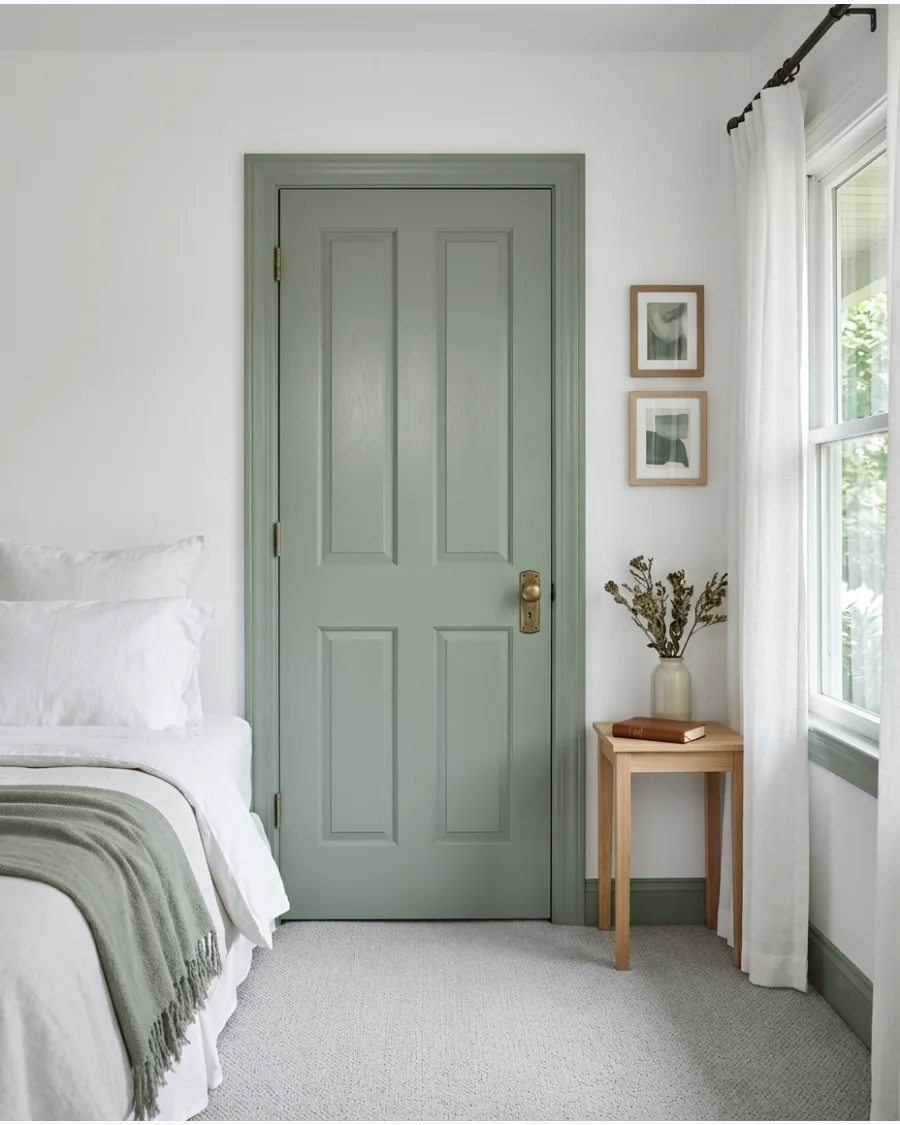
Sage green is a perennial favorite for bedrooms because of its proven ability to lower the visual energy of a space. It is light enough to keep a small room feeling airy but offers more personality than a standard white door.
Paint the door frame in the exact same sage shade to create a 'color drench' effect that feels very high-end. This color looks beautiful next to white linen or cotton textures.
- Sage green is a very popular color, making it easy to find matching accessories in most stores.
- Use a satin finish for the best balance between durability and a soft look.
- Perfect for a 'coastal' or 'modern farmhouse' bedroom style.
Quick win: If your walls are also a cool color, choose a sage with a bit more grey in it to keep the room from looking too 'minty'.
15. Deep Teal Door
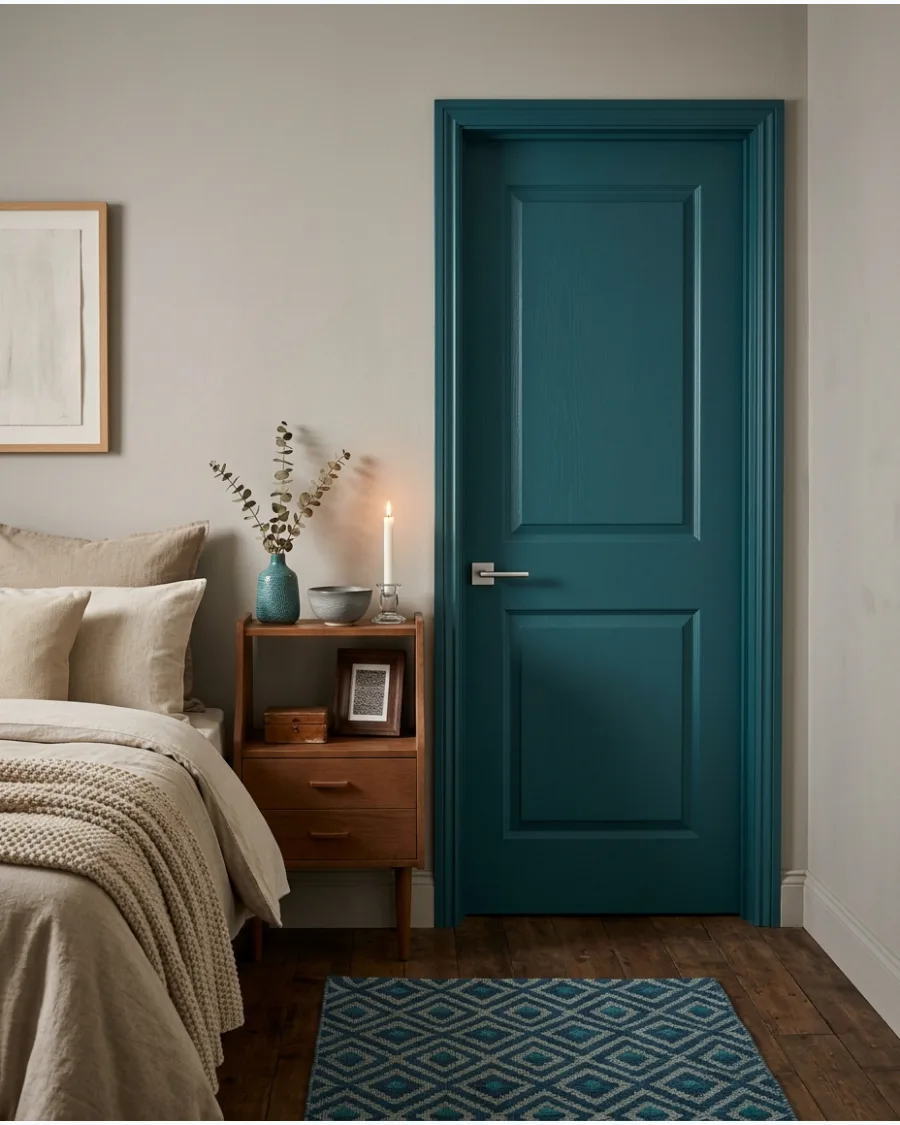
Deep teal is a sophisticated mix of blue and green that adds a boutique-hotel vibe to a bedroom. It is a bold choice that feels both moody and energetic at the same time.
Repeat the teal color in a small way, like a single candle or a pattern in a throw rug, to make the door feel integrated. This color is particularly striking when the rest of the room is kept quite neutral.
- Teal is a strong pigment; use a high-quality primer to ensure the color is even across the whole door.
- Remove the doorknob entirely rather than using tape to get a perfect circle of paint around the hole.
- Works well with both silver and gold hardware, depending on if you want a cool or warm feel.
Best shortcut: Use a paint tray liner so you can switch colors or clean up in seconds without scrubbing plastic.
16. Powder Blue Door
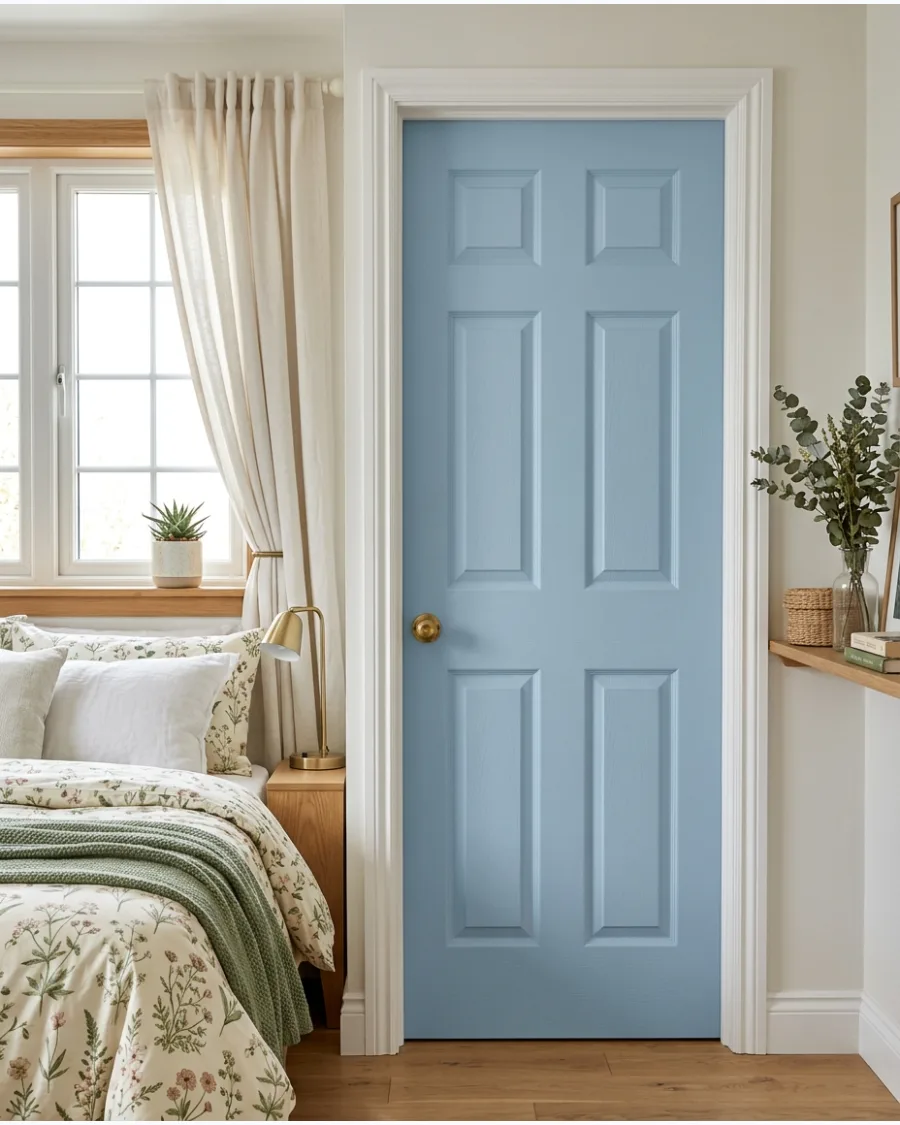
Paint the door powder blue for a bright and peaceful bedroom. White trim, floral bedding, and light-colored furniture can create a fresh cottage-inspired look.
Sand the door lightly before painting to ensure the light blue pigment sticks evenly across the surface. This shade works best when the room gets plenty of morning light to keep the color from looking cold.
- One quart of satin paint costs under $30.
- Remove the door from hinges for a drip-free finish.
- Use a semi-gloss finish if the room has high humidity.
Quick win: Use a high-density foam roller to avoid brush marks on flat panels.
17. Moody Blue Door
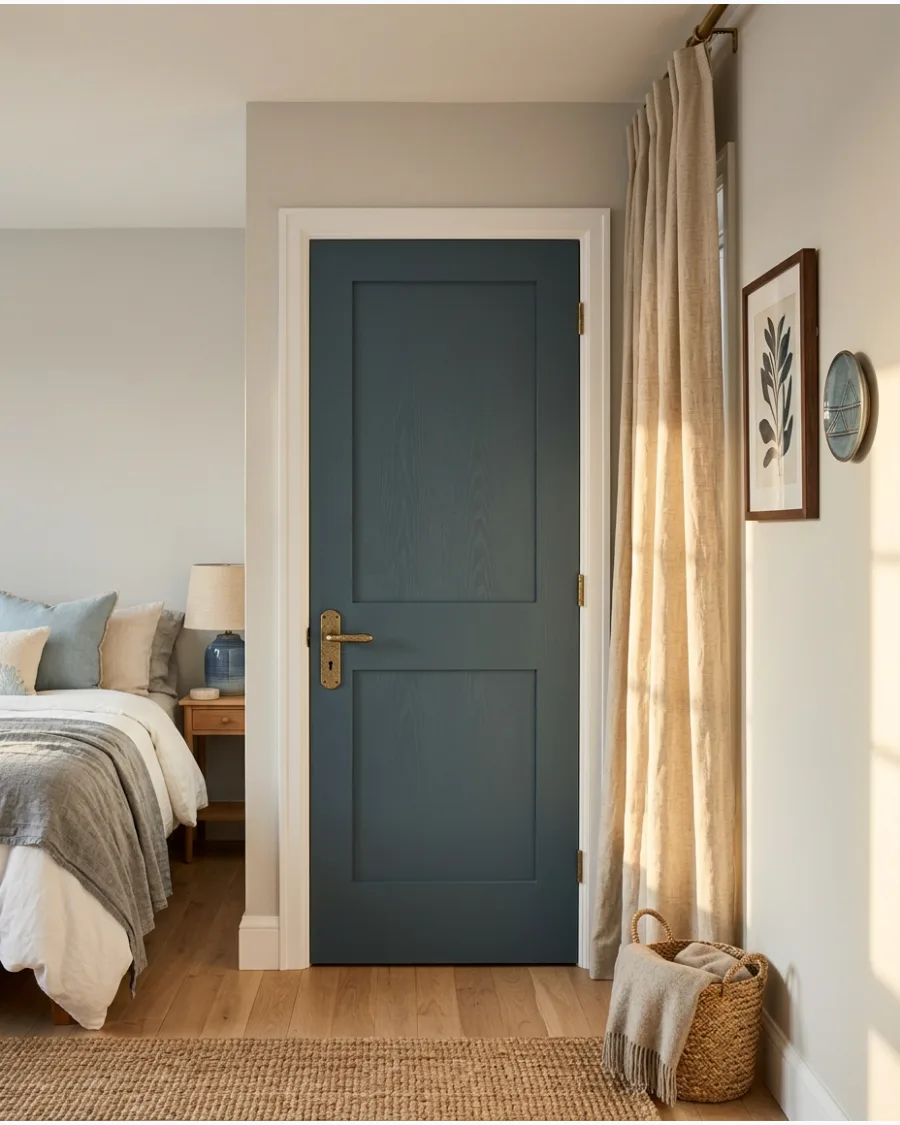
Use a dark blue with soft gray or green undertones for a dramatic but restful finish.
It offers more warmth and softness than a traditional navy door. Swap out standard silver hardware for aged brass to make the blue tones feel richer. Darker colors like this hide fingerprints much better than white or pale shades.
- Budget $40 for premium paint and a new handle.
- Paint the door edges first to avoid sticking when closed.
- Works well in large rooms where the door can act as a focal point.
Most people skip this: Paint the door frame the same dark color to make the doorway feel more architectural.
18. Dusty Blue Door
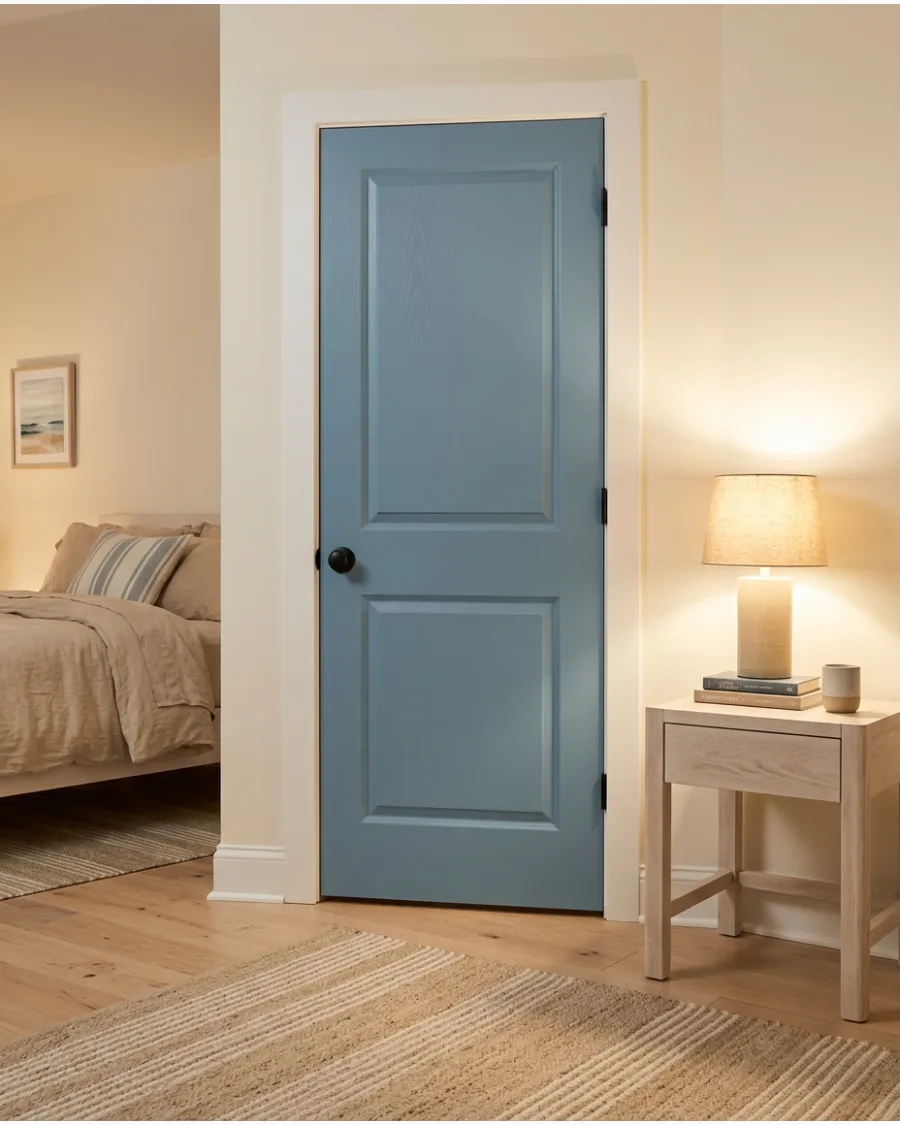
Choose dusty blue for a relaxed color that works in modern, coastal, farmhouse, and traditional bedrooms. Pair it with cream, beige, and natural wood.
Apply two thin coats instead of one thick one to prevent the paint from sagging in the decorative grooves. This color acts as a neutral and won't clash with changing seasonal decor.
- Expect 4 hours of active work time.
- Tape off the hinges with painter's tape if you aren't removing them.
- Swap the black knob for glass for a more vintage feel.
Best shortcut: Use a paint with a built-in primer to save a step on pre-painted surfaces.
19. Blue-Gray Door
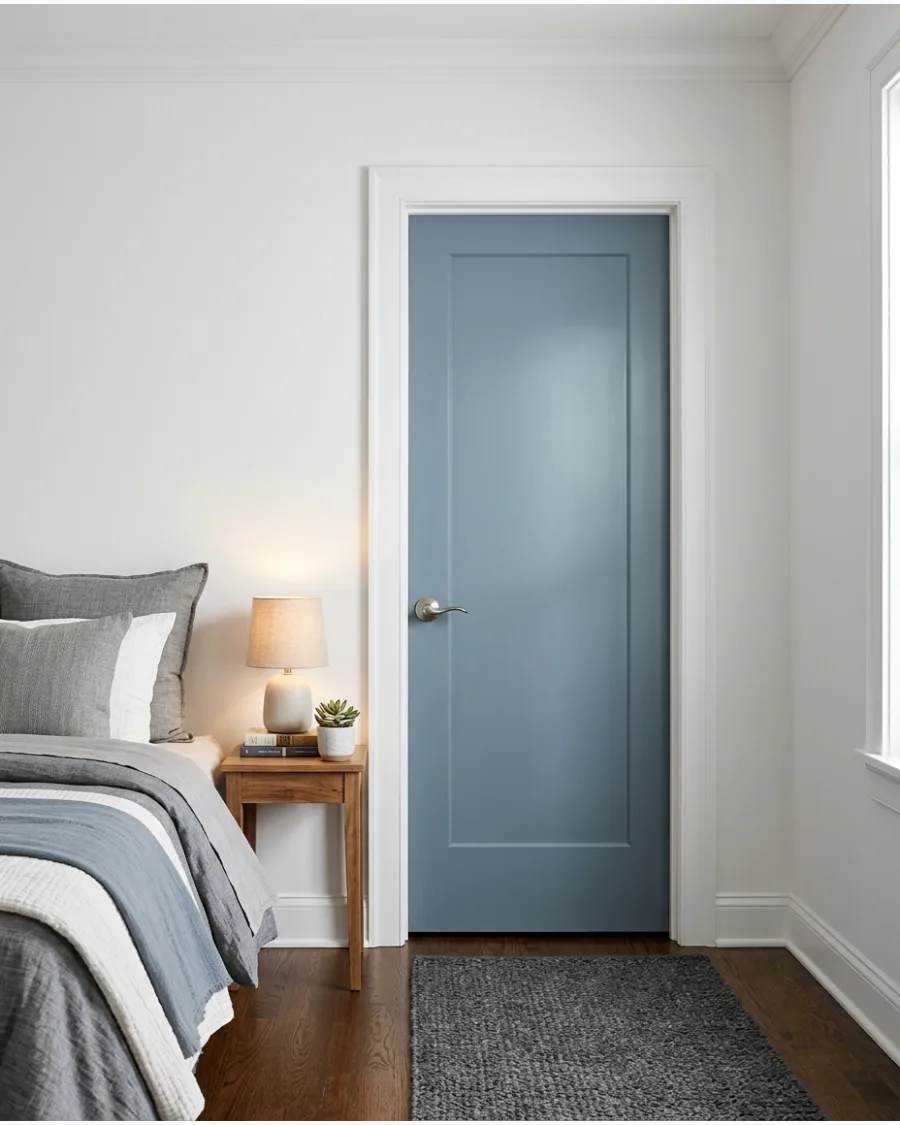
A blue-gray door adds cool color without appearing too bright. It works especially well in bedrooms with silver hardware, white walls, and charcoal accents.
Choose a satin finish to give the blue-gray a soft glow without the harsh reflection of high-gloss. It is the safest choice for someone who wants color but fears making the room look too small.
- Paint and basic supplies cost about $50.
- Clean the door with a degreaser before starting.
- Use a darker charcoal trim for a more modern, high-contrast look.
Quick win: Paint the insides of the door panels first, then the horizontal rails, then the vertical stiles.
20. Dark Green-Black Door
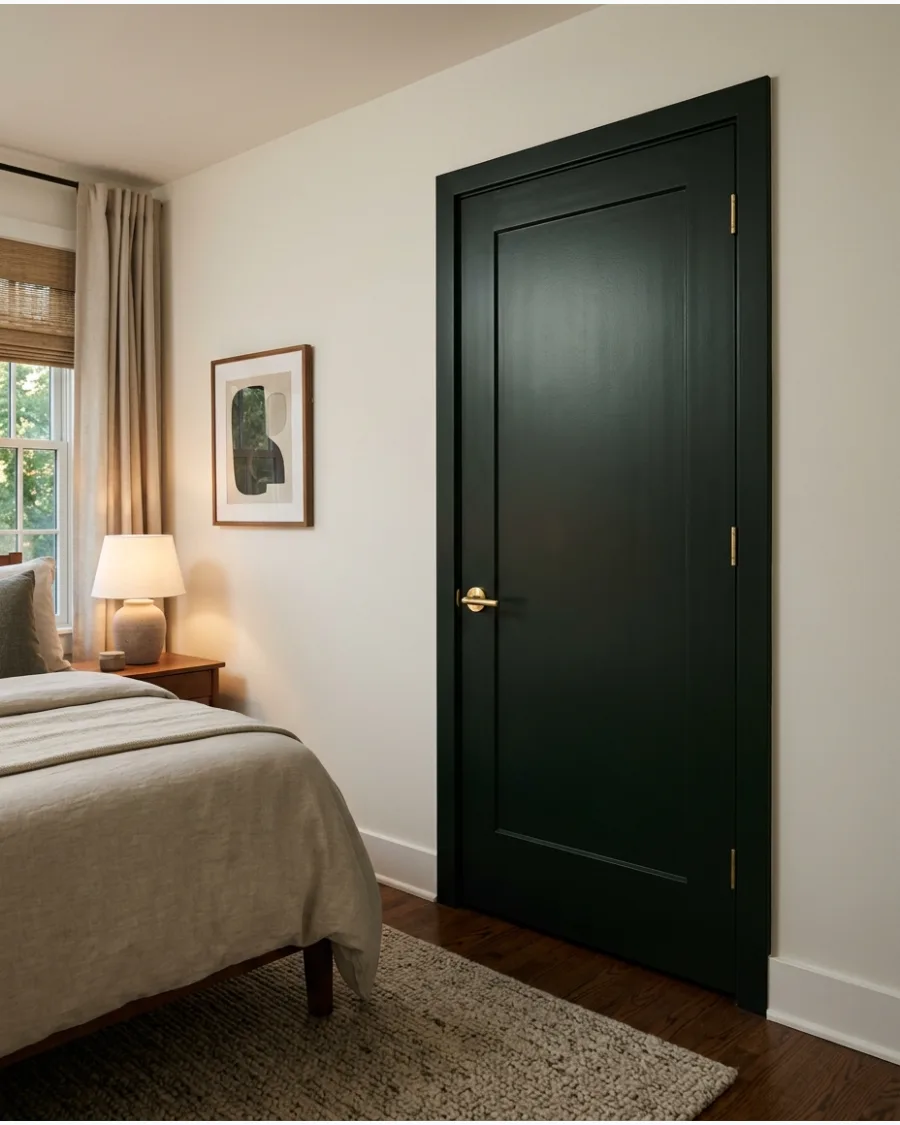
Paint the door a nearly black green for a sophisticated alternative to solid black. The subtle green undertone adds depth when viewed in natural light.
Install a bright gold or polished brass handle to contrast against the dark, moody surface. This color makes even a cheap hollow-core door look expensive and heavy.
- High-quality dark pigment paint is essential.
- Use a 2-inch angled brush for the recessed panel edges.
- Use this color on a door that faces a window to catch the green undertones.
Most people skip this: Check the door from different angles in the room to ensure the dark green doesn't just look like flat black.
Soft and Romantic Door Colors
21. Dusty Rose Door
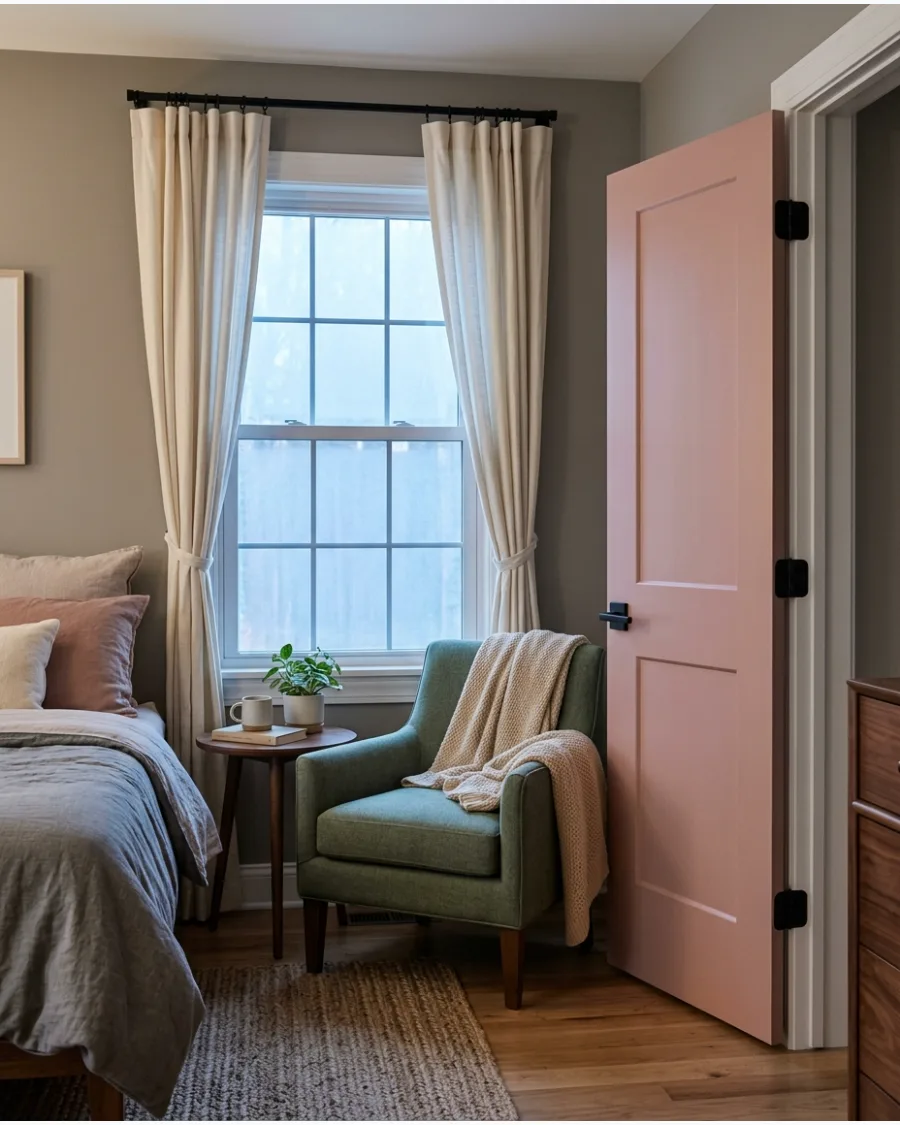
Use dusty rose for a soft bedroom color that still feels mature. Pair it with warm gray, walnut, cream, or muted green furnishings.
Avoid shades that are too bright by looking for a pink with a heavy gray base. This color provides a sophisticated warmth that keeps a north-facing room from feeling chilly.
- One quart of paint covers two coats on one door.
- Sand between coats with 220-grit paper for a professional feel.
- Pair with a white frame to make the rose color pop.
Best shortcut: Use a microfiber roller cover for the smoothest finish on flat-panel doors.
22. Earthy Mauve Door
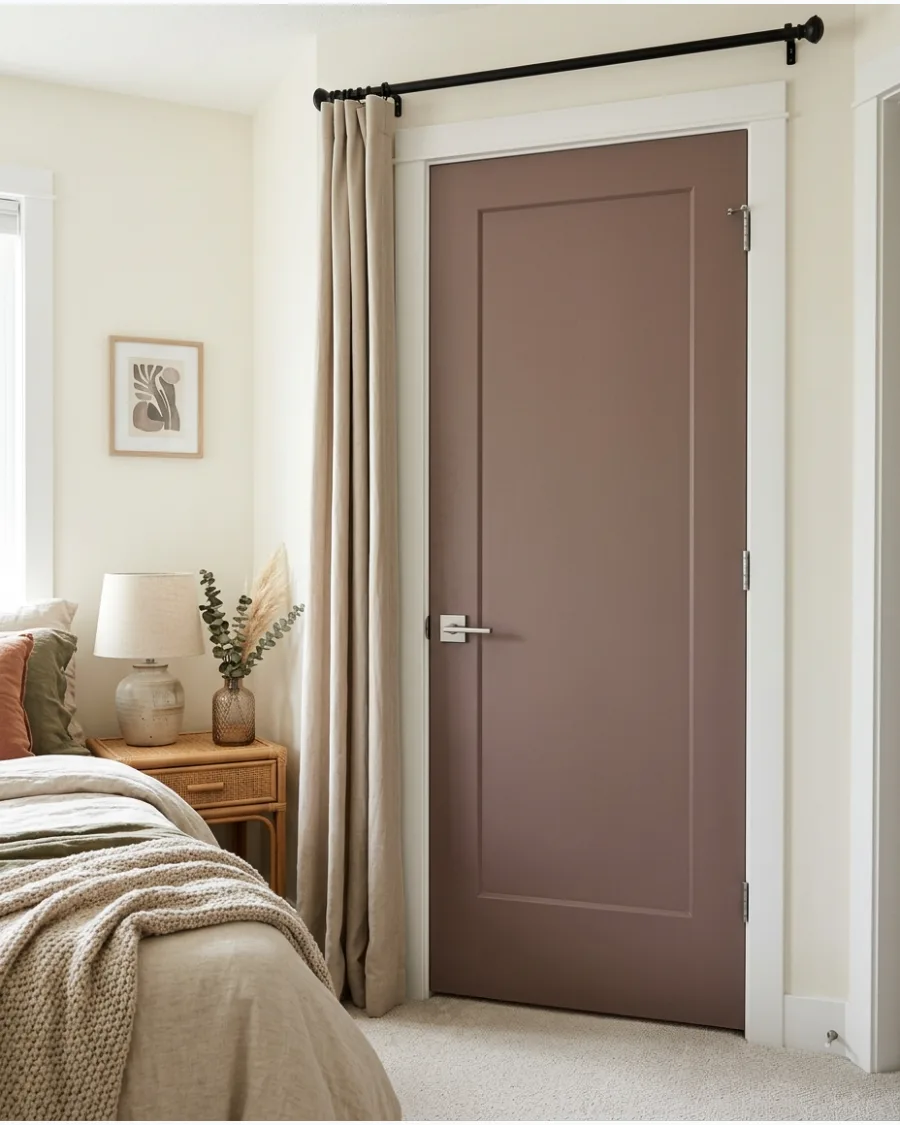
Paint the bedroom door an earthy mauve with brown or gray undertones. This shade creates gentle warmth without looking overly pink.
Test a large swatch on the door itself because mauve can change drastically depending on the light bulbs in the room. It is a great middle-ground color for shared bedrooms because it feels both cozy and neutral.
- Budget $35 for paint and sandpaper.
- Remove the strike plate to avoid getting paint on the metal.
- Use a darker plum for the trim if you want more drama.
Quick win: Use a damp cloth to wipe away dust after sanding so the paint bonds perfectly.
23. Lavender-Gray Door
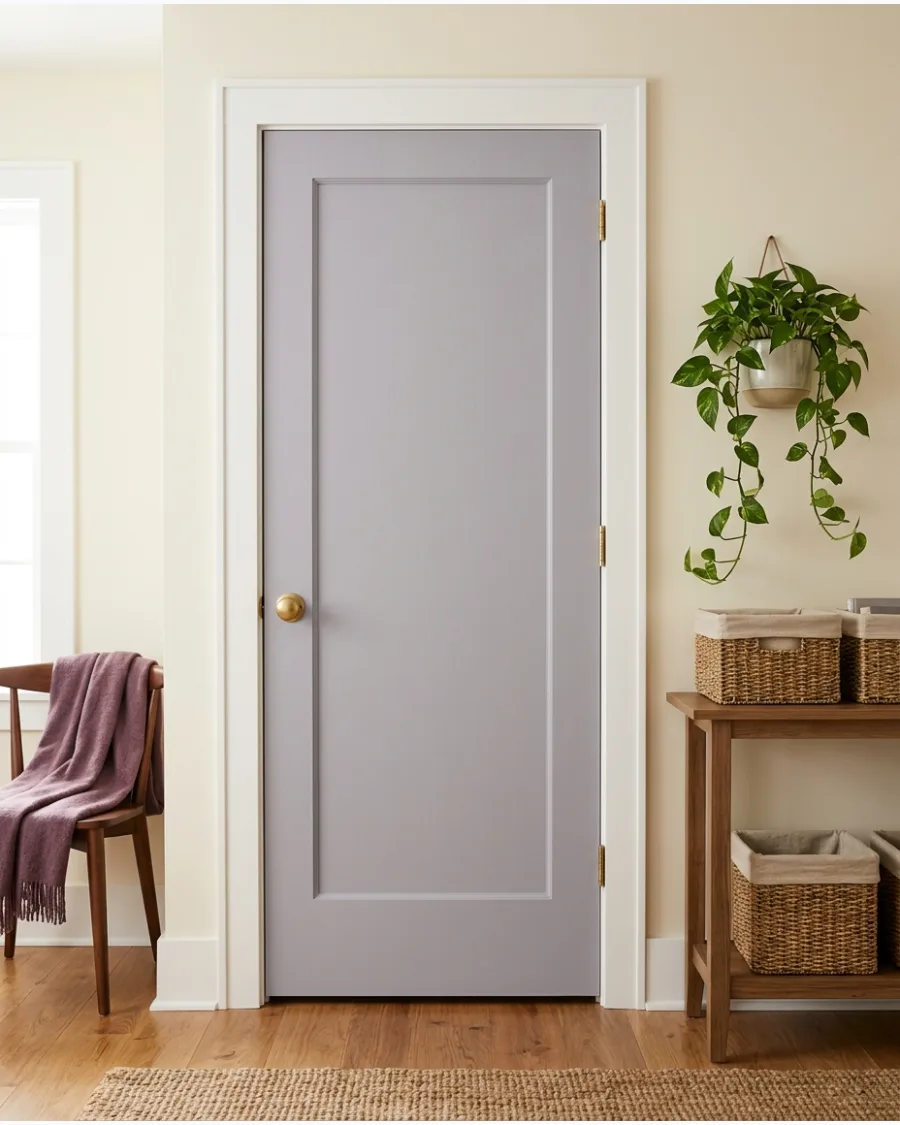
Choose lavender mixed with gray for a calm and sophisticated entrance. Combine it with cream walls, soft plum accents, and silver or brass hardware.
Stick to a matte or eggshell finish to keep the purple tones subtle and high-end. This color works beautifully in a room with plenty of natural greenery or houseplants.
- Expect the project to take one weekend.
- Use a high-quality synthetic brush for the trim.
- Swap the brass for chrome hardware to lean into the cool gray tones.
Most people skip this: Paint the very top edge of the door so it looks finished when you are standing and the door is open.
24. Muted Peach Door
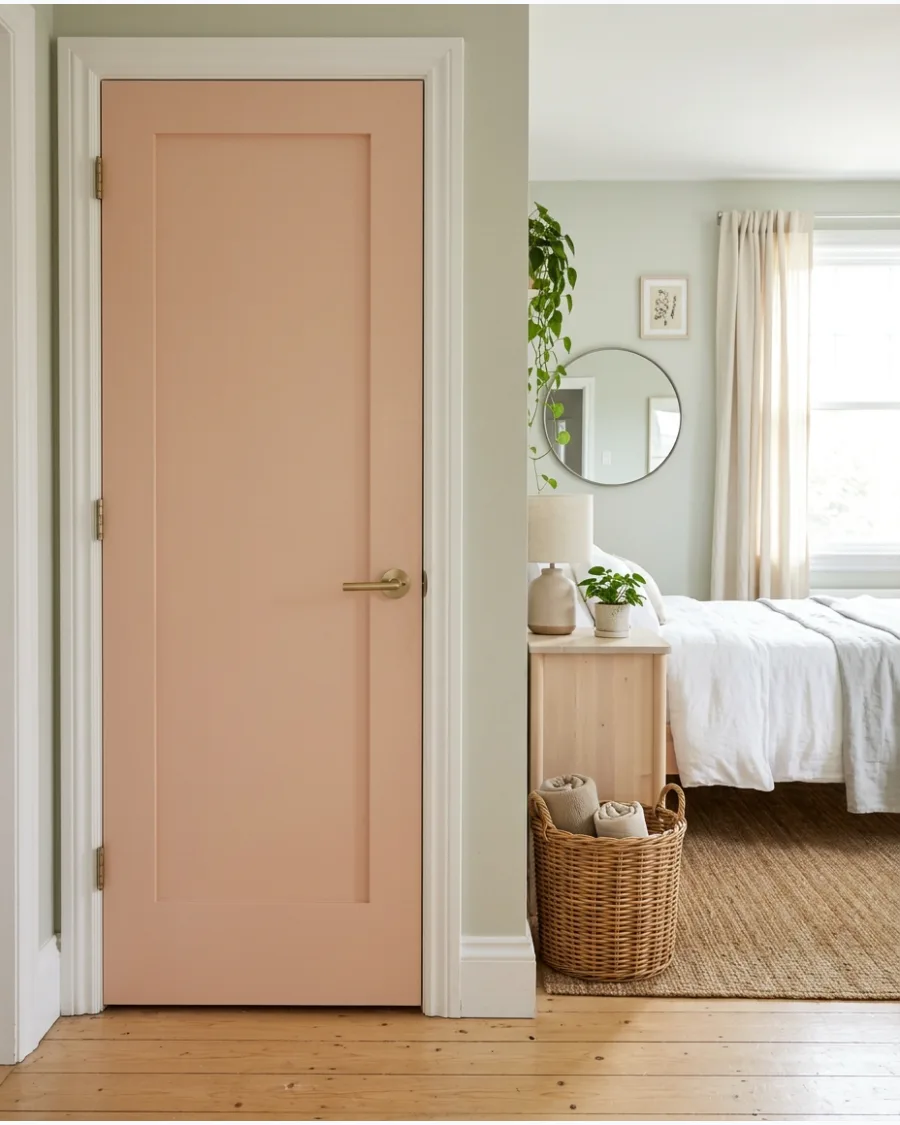
A muted peach door can warm up a bedroom without becoming too vivid. Pair it with white bedding, pale wood, and woven textures.
Look for a nude peach rather than a neon one to ensure the room stays restful. This color is an excellent way to brighten a dark hallway leading into the bedroom.
- Costs under $40 for paint and tape.
- Clean the door with soap and water before sanding.
- Paint the door frame peach too for a more modern look.
Best shortcut: Use a small 4-inch whizz roller for the flat sections to speed up the process.
25. Soft Blush Door
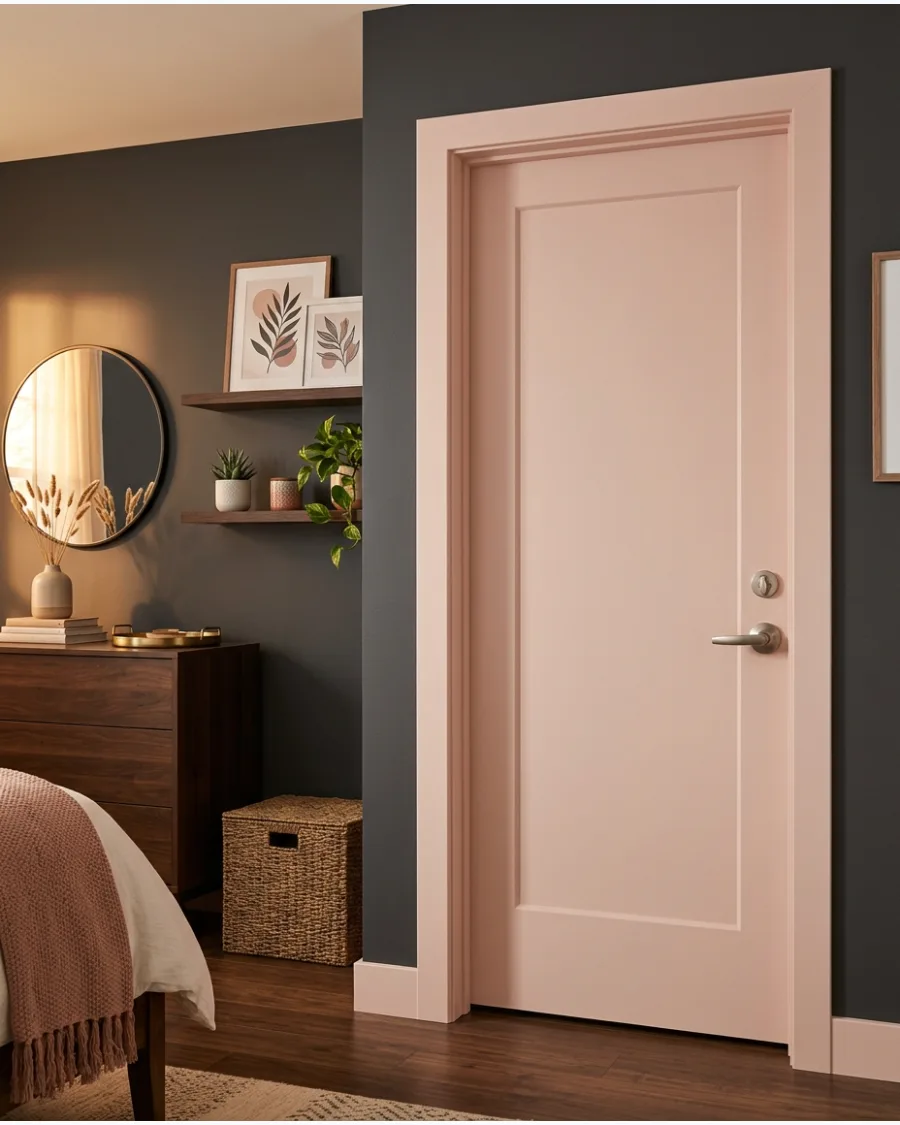
Use a subtle blush shade for an understated romantic look. Paint the frame in the same color for a seamless and polished finish. This technique makes the doorway feel like a custom architectural feature rather than an afterthought.
The color is faint enough that it won't overwhelm other patterns in the room.
- Buy an extra quart if painting the frame and trim.
- Use painter's tape on the floor and wall edges.
- Transition to a white wall to keep the blush feeling intentional.
Quick win: Remove the door handle entirely instead of taping around it for a cleaner look.
Coordinated Door and Wall Painting Ideas
26. Door Matching the Feature Wall
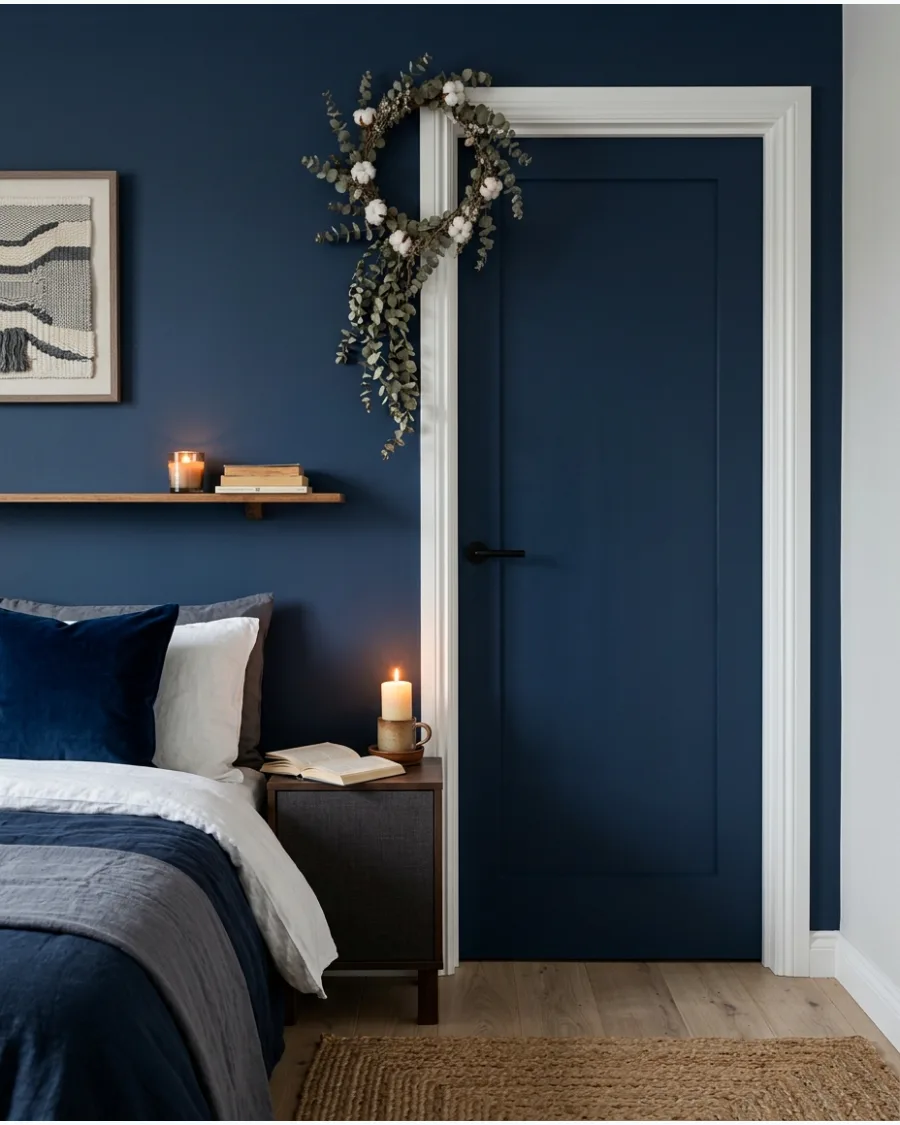
Paint the door in the same color as the bedroom feature wall. Repeating the shade helps the door feel connected to the overall room design.
Use a different sheen, like satin on the door and flat on the wall, to create a subtle texture difference. This trick makes a small room feel much larger because the eye doesn't stop at the door frame.
- Use the leftover paint from your wall project.
- Match the door hardware to the room's light fixtures.
- Keep the other three walls a light neutral to balance the dark color.
Most people skip this: Paint the door hinges if you want the door to truly disappear into the wall.
27. Door and Trim in One Color
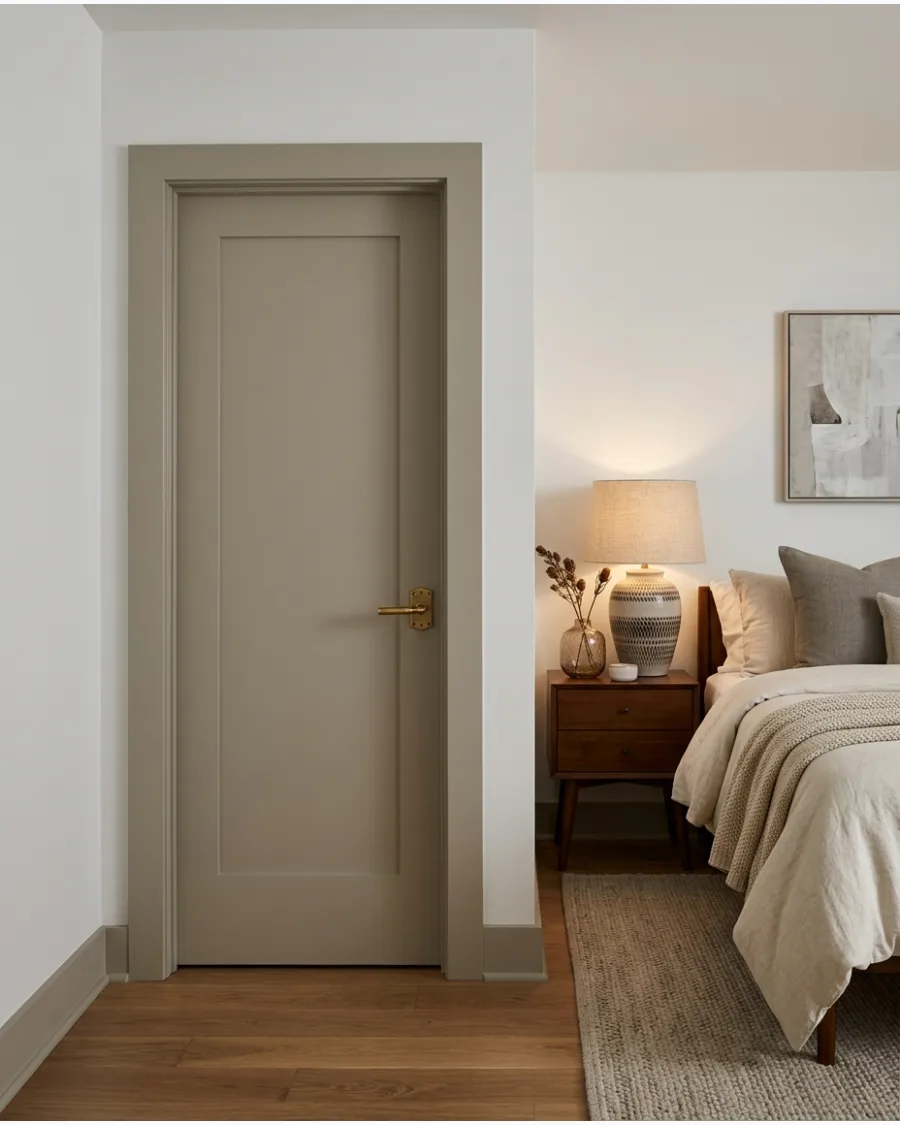
Paint the door, frame, and surrounding trim in one continuous color. This can make an inexpensive door appear larger and more finished.
Choose a neutral like greige or soft white to give the room a high-end, custom-built appearance. It hides the gap between the door and the frame which often looks messy on older homes.
- Budget $50 for enough paint for both door and trim.
- Use a high-quality angled brush for the trim work.
- Paint the baseboards the same color for a fully integrated look.
Best shortcut: Buy a trim and door specific paint for a harder, more durable finish.
28. Color-Drenched Bedroom Door
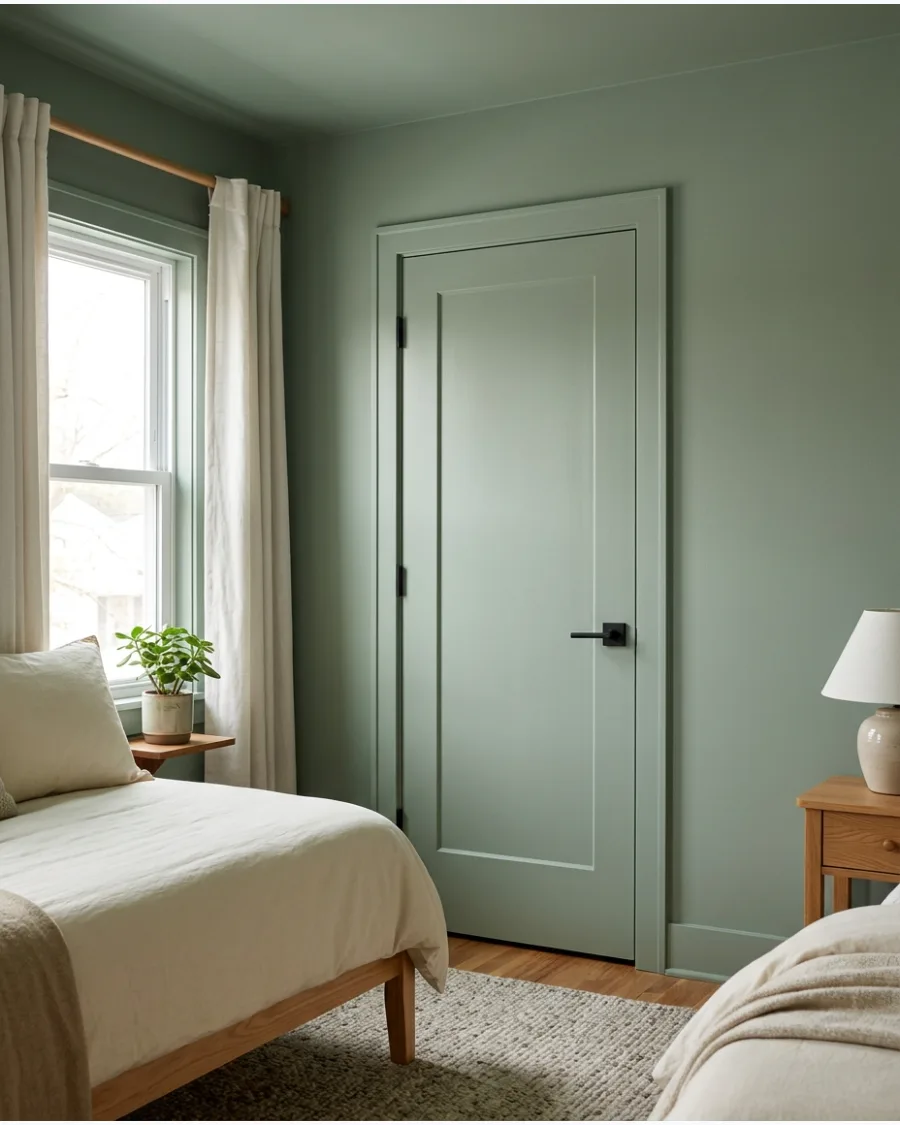
Paint the bedroom walls, ceiling, trim, and door in the same shade. Muted green, warm brown, or dusty blue can create a cozy and enveloping room.
Keep the furniture and bedding in light, contrasting colors so the room doesn't feel too heavy. This approach is the best way to hide awkward room shapes or multiple doors in one small space.
- Plan for multiple gallons of paint.
- Use a roller extension pole for the ceiling.
- Ensure you have high-quality lighting since dark colors absorb light.
Quick win: Use a flat finish on the ceiling and a satin finish on the door and walls for better durability.
29. Tonal Door and Wall Combination
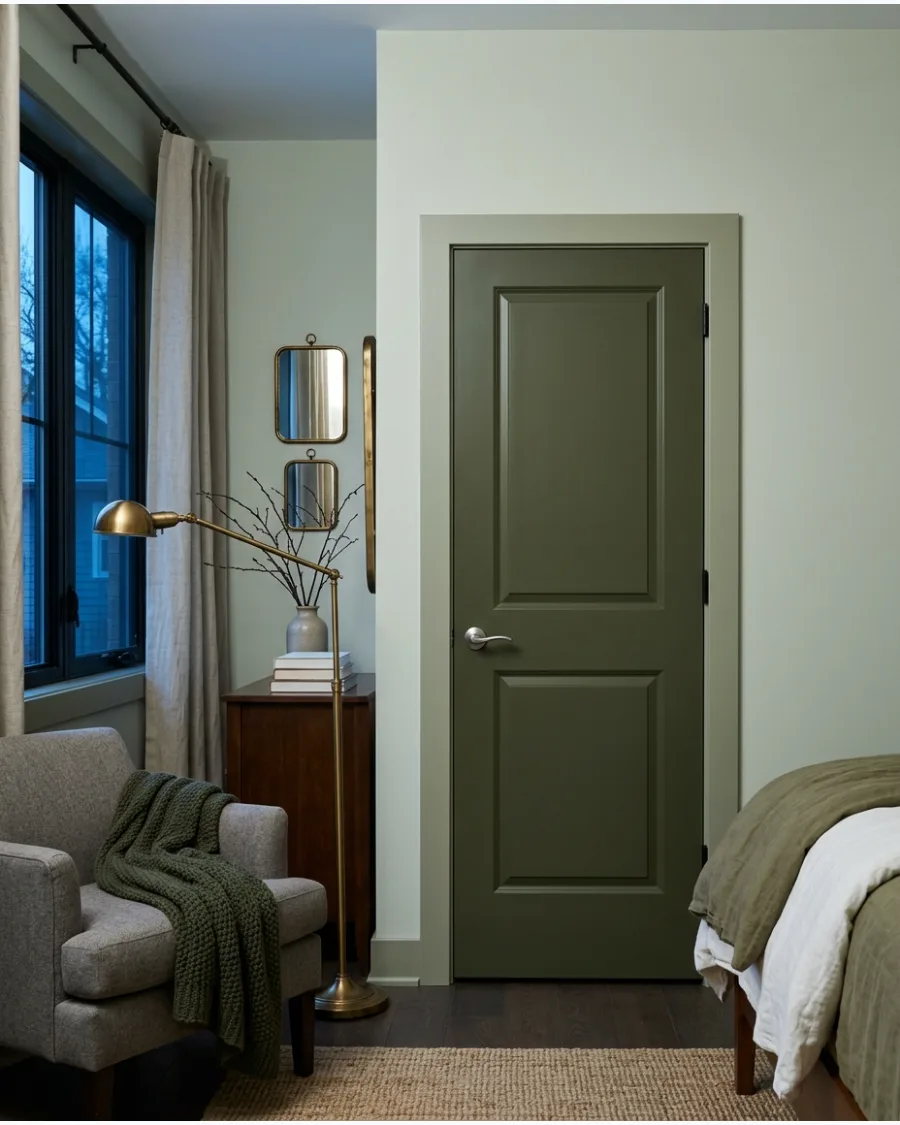
Choose a door color that is several shades darker than the walls. Try pale sage walls with an olive door or blush walls with a burgundy door.
Pick colors from the same paint strip at the store to guarantee they have the same undertones. This creates a sophisticated layer of color without the shock of a high-contrast look.
- Buy two sample pots to test the colors together.
- Paint the door first to see how much it darkens the room.
- Use a white ceiling to keep the space feeling open.
Most people skip this: Paint the door frame the lighter wall color to make the darker door pop.
30. Contrasting Door Frame
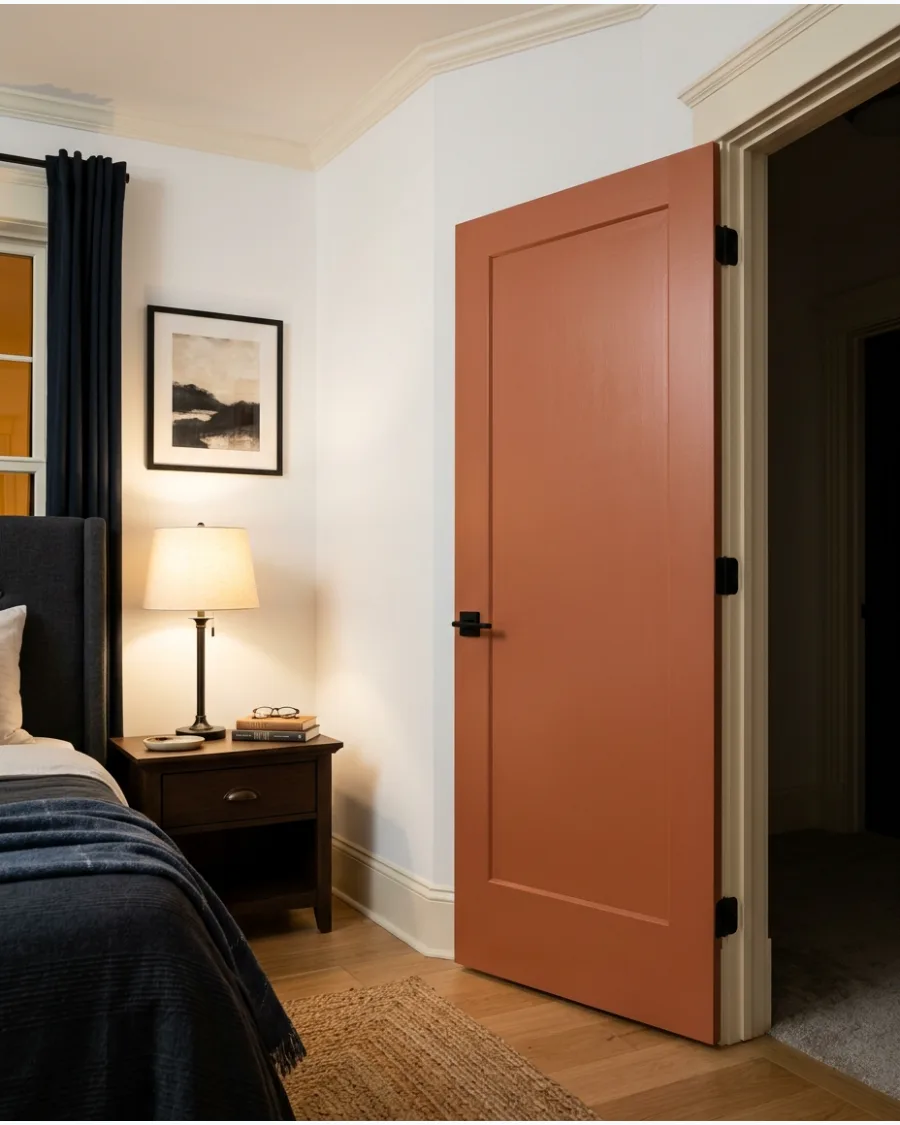
Paint the door one color and its surrounding frame another. A terracotta door with cream trim or a blue door with mustard trim can create an eye-catching border.
Limit this look to one door in the room so it doesn't feel too busy or distracting. It is a great way to use up small amounts of leftover paint from other projects.
- Use high-quality painter's tape for the line between the door and frame.
- Costs less than $20 if using leftover paint.
- Best for modern or eclectic bedroom styles.
Best shortcut: Paint the frame first, let it dry completely, then tape it off to paint the door.
31. Monochrome Matte Door
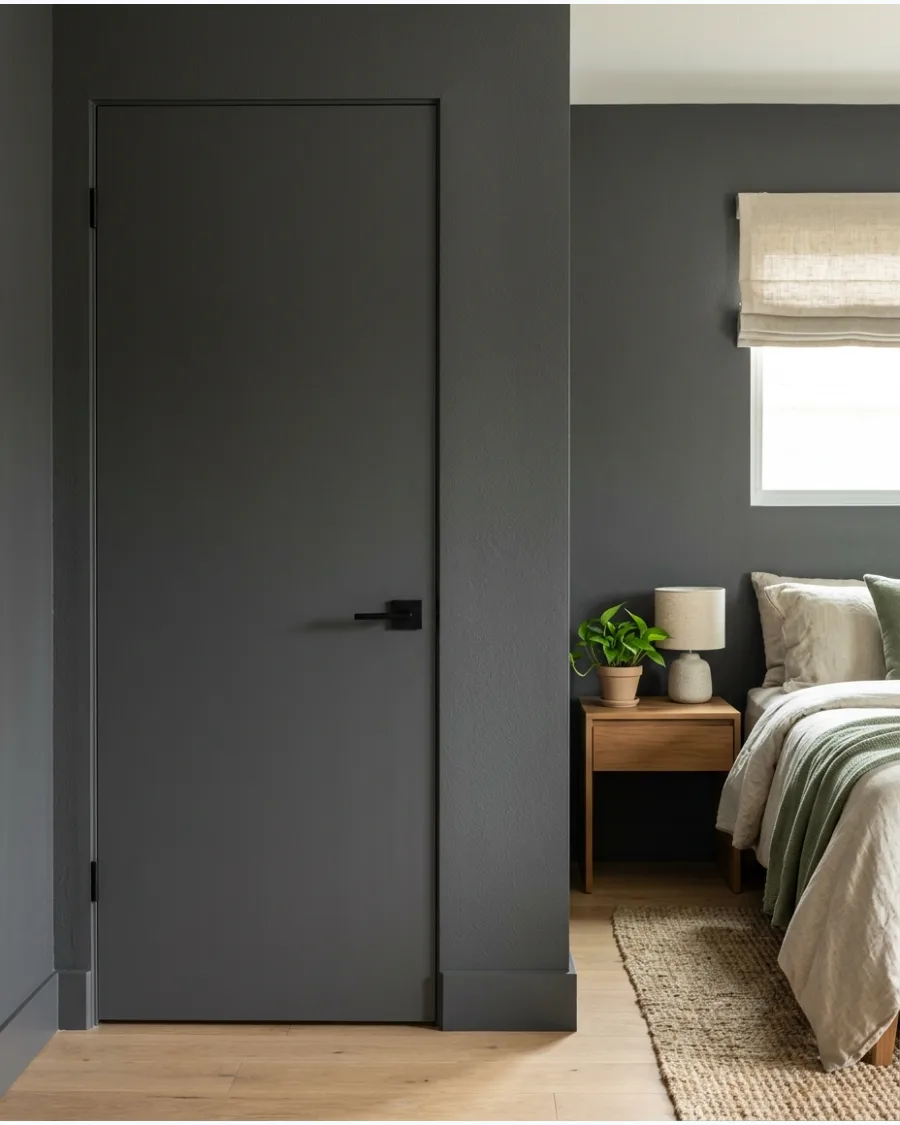
Using an ultra-matte finish in the same color as the walls allows the door to blend quietly into a minimalist or modern bedroom. This technique removes visual clutter and makes a small room feel much more expansive.
Sand the surface lightly before applying matte paint to ensure the flat finish adheres perfectly to the door. The result is a seamless, sophisticated look that highlights the architectural lines of the room.
- Budget roughly $30 for a quart of high-quality matte interior paint.
- Remove all hardware and clean the door with a degreaser before starting.
- Swap out shiny silver handles for matte black to maintain the modern aesthetic.
Quick win: Use a foam roller instead of a brush to avoid leaving visible texture on the matte surface.
32. Hidden-Door Paint Effect
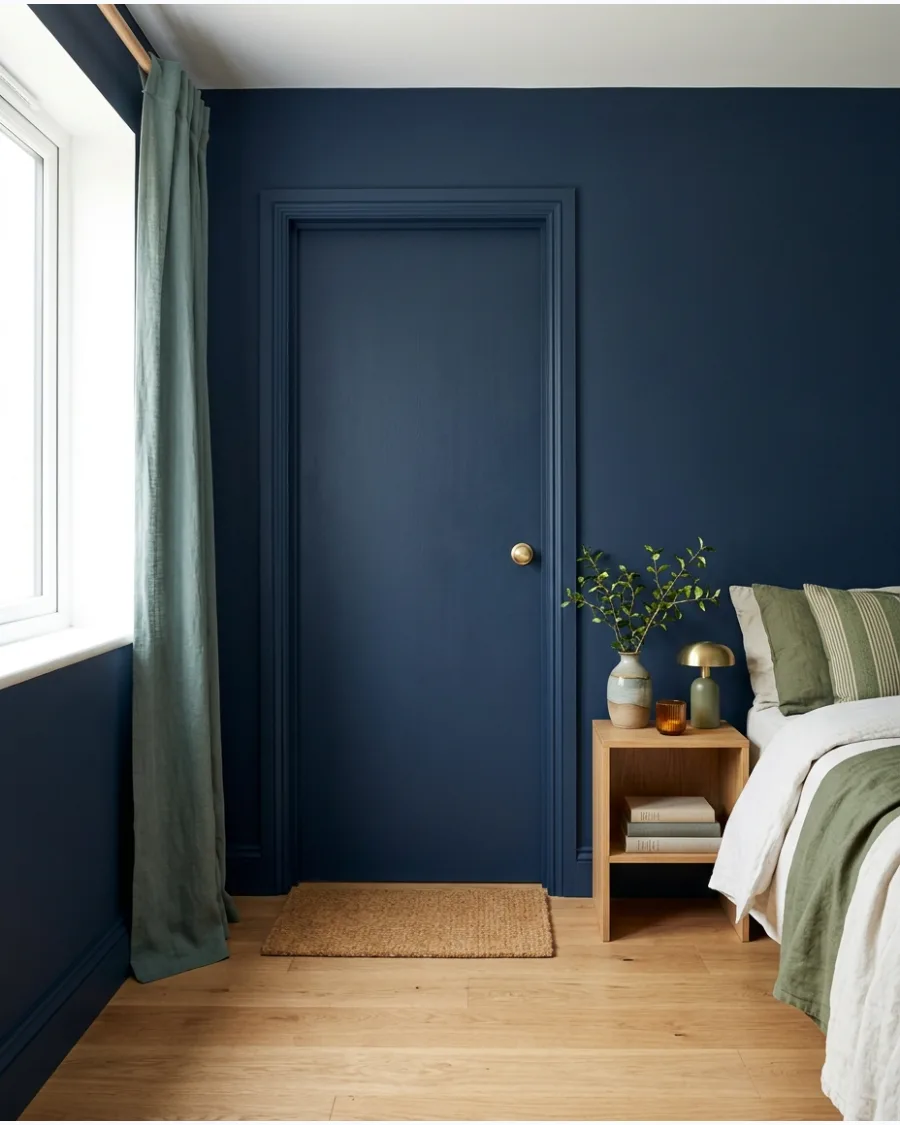
Continue the wall color or pattern directly across the door to create a cohesive look. Carefully aligning the design can make the doorway nearly disappear when it is closed, which is perfect for closets or en-suite bathrooms.
Paint the door trim in the exact same shade to remove any visual breaks in the wall. This trick works best in rooms with bold colors where you want to minimize the number of vertical lines.
- Expect this project to take a full weekend to allow for proper drying between coats.
- Use a laser level to ensure the wall color lines up perfectly with the door surface.
- Apply this to a flat-panel door for the most convincing hidden effect.
Most people skip this: Paint the door hinges to match the wall so they do not give away the door's location.
Two-Tone and Color-Block Door Ideas
33. Two-Tone Horizontal Door
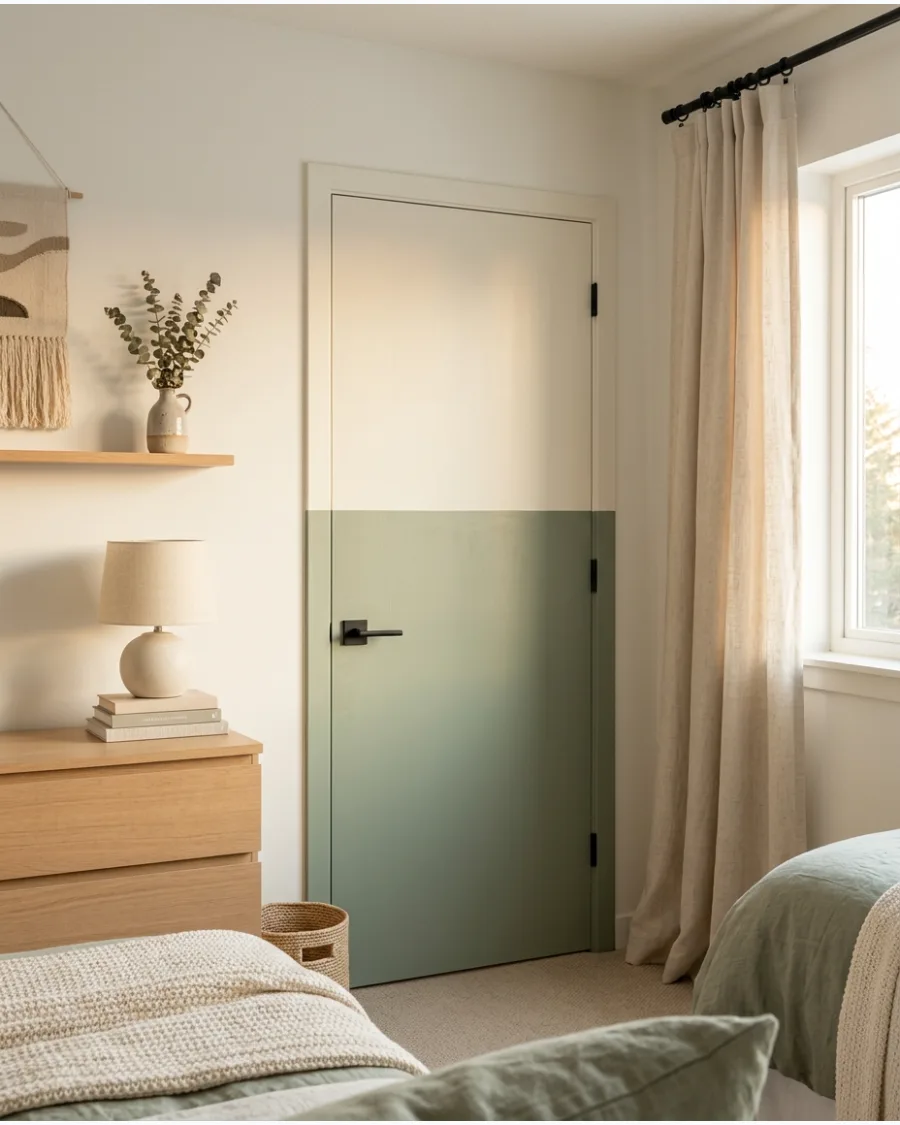
Divide the door horizontally and paint each section a different color for a modern twist. Place the darker shade on the bottom to ground the design and disguise everyday marks like scuffs or fingerprints.
Use a laser level to mark the center line for a perfectly straight transition between the two colors. This style adds a playful element without overwhelming the bedroom decor.
- Purchase two sample-sized paint cans to save money on this two-color project.
- Position the color split at the same height as your nightstand for visual continuity.
- Opt for a satin finish on the bottom half for better durability against kicks and scuffs.
Best shortcut: Paint the entire door the lighter color first, then tape off and paint the bottom half once it is dry.
34. Vertical Two-Tone Door
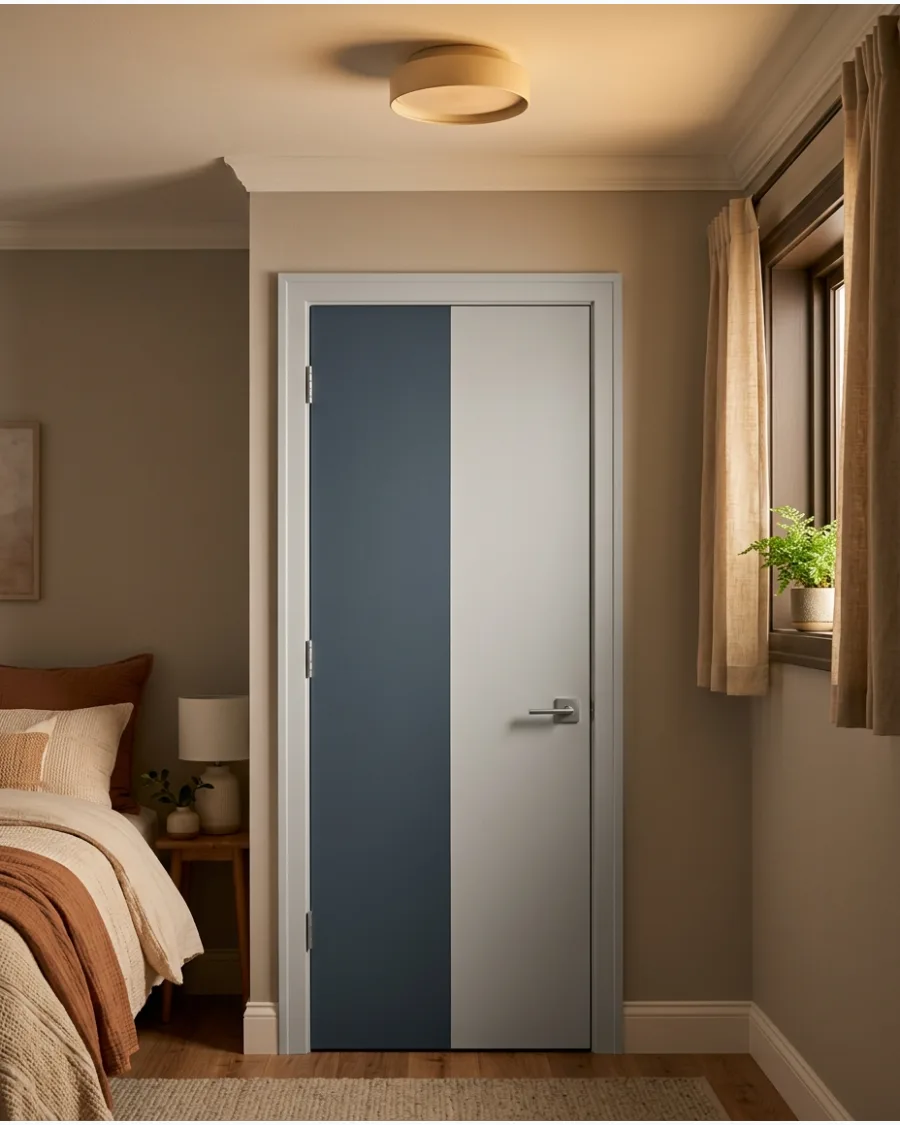
Split the door vertically using two coordinated colors to create a unique architectural detail. This technique can make a plain door appear taller and more narrow, which helps in rooms with low ceilings.
Apply the darker color on the side closest to the hinges to create a sense of depth. It is a simple way to make a basic builder-grade door look like a custom design choice.
- Plan for about four hours of active work time, excluding drying periods.
- Use high-quality frog tape to prevent paint from bleeding across the vertical seam.
- Choose colors from the same paint strip to ensure the tones complement each other.
Quick win: Align the vertical split with the edge of the door handle for a balanced, intentional look.
35. Diagonal Color-Block Door
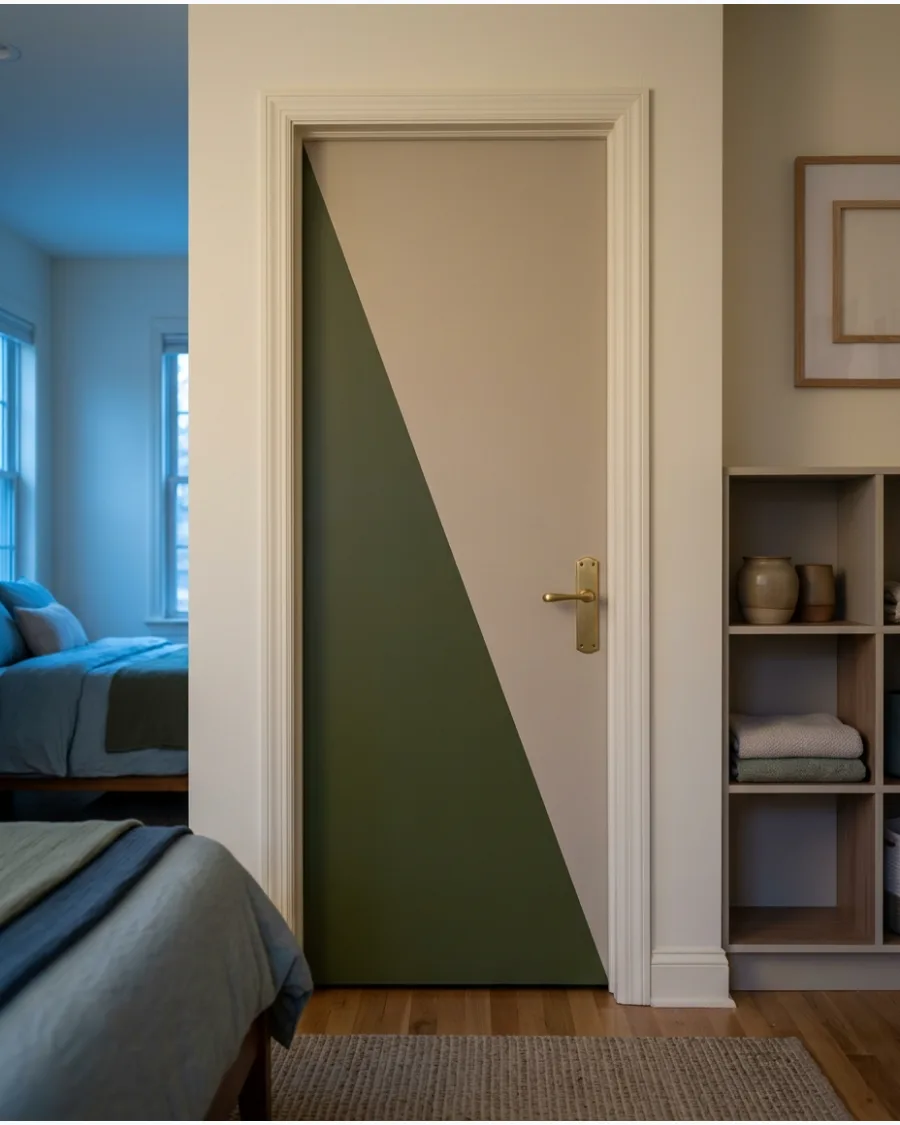
Create a clean diagonal line across the door with painter’s tape for an energetic, modern vibe. Try combinations like cream with coral, pale blue with navy, or beige with olive.
Remove the painter's tape while the paint is still slightly damp to get the crispest line possible. This bold geometric approach transforms the door into a piece of abstract art.
- Budget for a roll of professional-grade tape and two small paint containers.
- Run the diagonal line through the center of the door handle for a dynamic layout.
- Stick to two colors to keep the design from feeling too chaotic in a sleeping space.
Most people skip this: Seal the edge of the tape with a tiny bit of the base color to prevent the second color from leaking under.
36. Asymmetrical Color Block
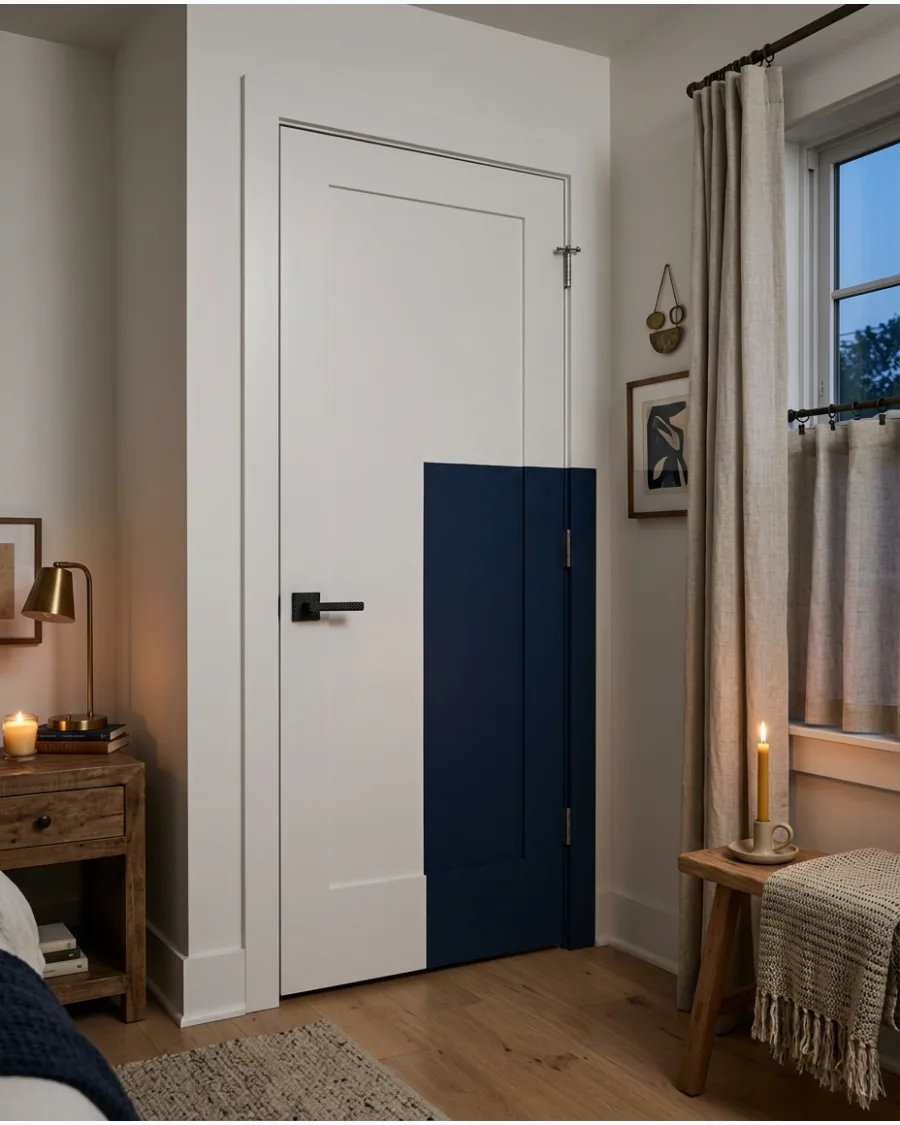
Paint one side or corner of the door in a contrasting shade to break up the monotony. The uneven placement gives a standard flat door a more contemporary look that feels custom.
Keep the rest of the bedroom decor simple so the door remains the main focal point. This is a great way to use up leftover paint from other projects around the house.
- This project costs almost nothing if you use paint remnants and standard tape.
- Experiment with different shapes by sketching them on the door with a pencil first.
- Use a high-contrast color like navy or black against a white door for maximum impact.
Best shortcut: Paint a rectangle that covers only the area around the door handle to create a 'zone' effect.
37. Painted Door Panels
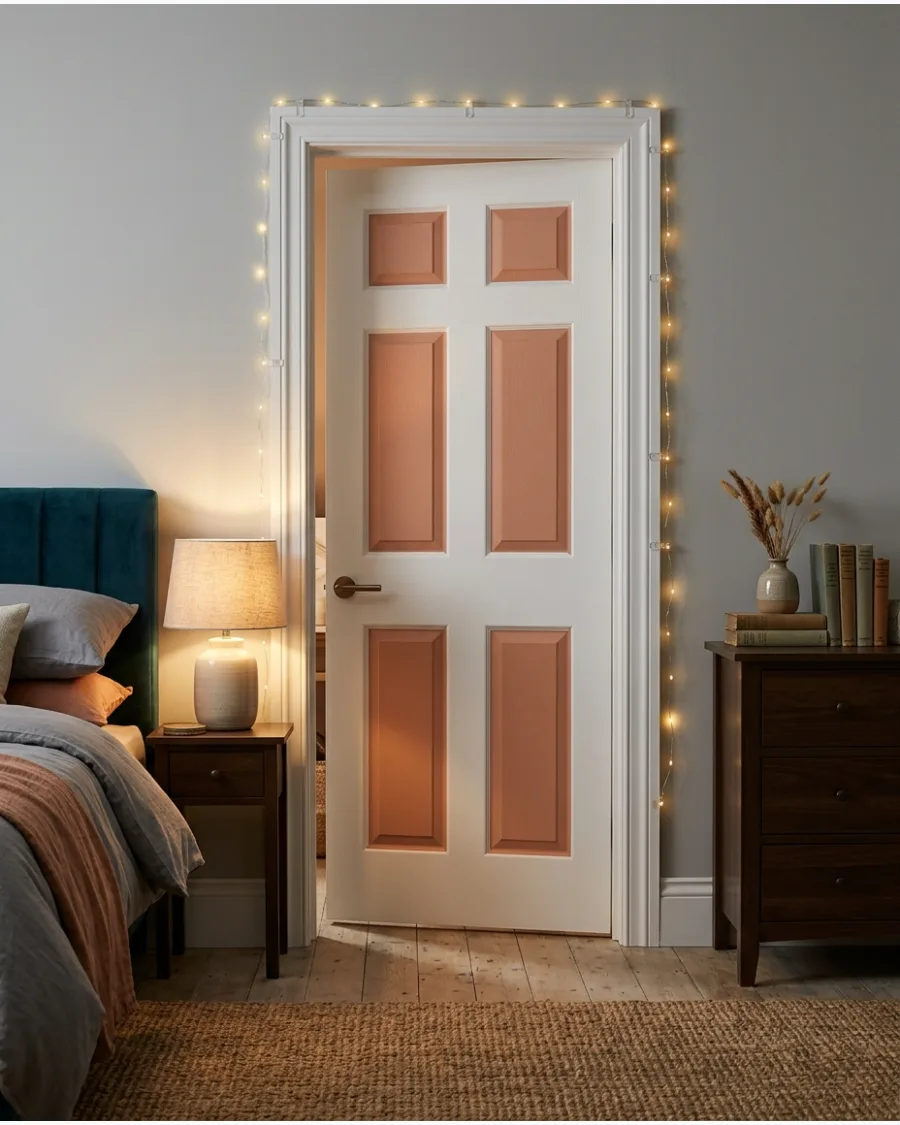
Keep most of the door neutral and paint only the recessed panels for a classic yet updated look. This introduces color while emphasizing traditional molding and decorative details of the door.
Use a small angled sash brush to get clean edges inside the panel grooves. It is a sophisticated way to add a pop of color without committing to a fully painted door.
- Spend about $15 on a high-quality angled brush for the detail work.
- Work from the inside of the panels outward to avoid drips on the flat surfaces.
- Choose a color that matches your throw pillows or curtains for a coordinated feel.
Quick win: Use a light-colored glaze over the panel paint to add extra depth to the recessed areas.
38. Contrasting Door Edge
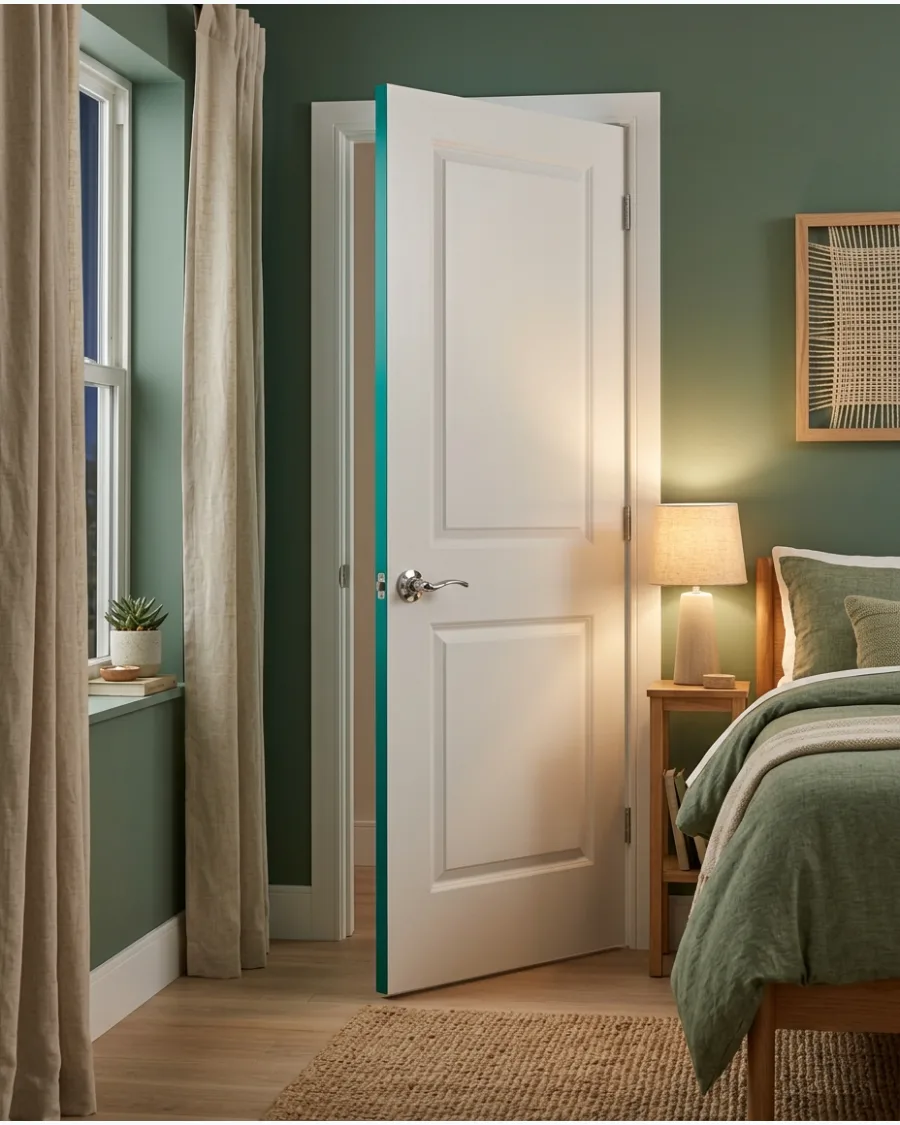
Paint the narrow outer edge of the door in a surprising accent color for a hidden design detail. The shade remains hidden when the door is closed and appears as a bright stripe when it is opened.
Choose a vibrant neon or deep jewel tone for a fun surprise every time the door swings open. This is a perfect low-commitment project for those who want a touch of whimsy.
- A single sample pot of paint is all you need for this small surface area.
- Tape off the front and back faces of the door carefully to keep the edge paint contained.
- Use a quick-drying enamel paint to prevent the door from sticking when closed.
Most people skip this: Paint both the hinge edge and the latch edge for a complete wrap-around look.
Geometric and Patterned Door Ideas
39. Wide Striped Door
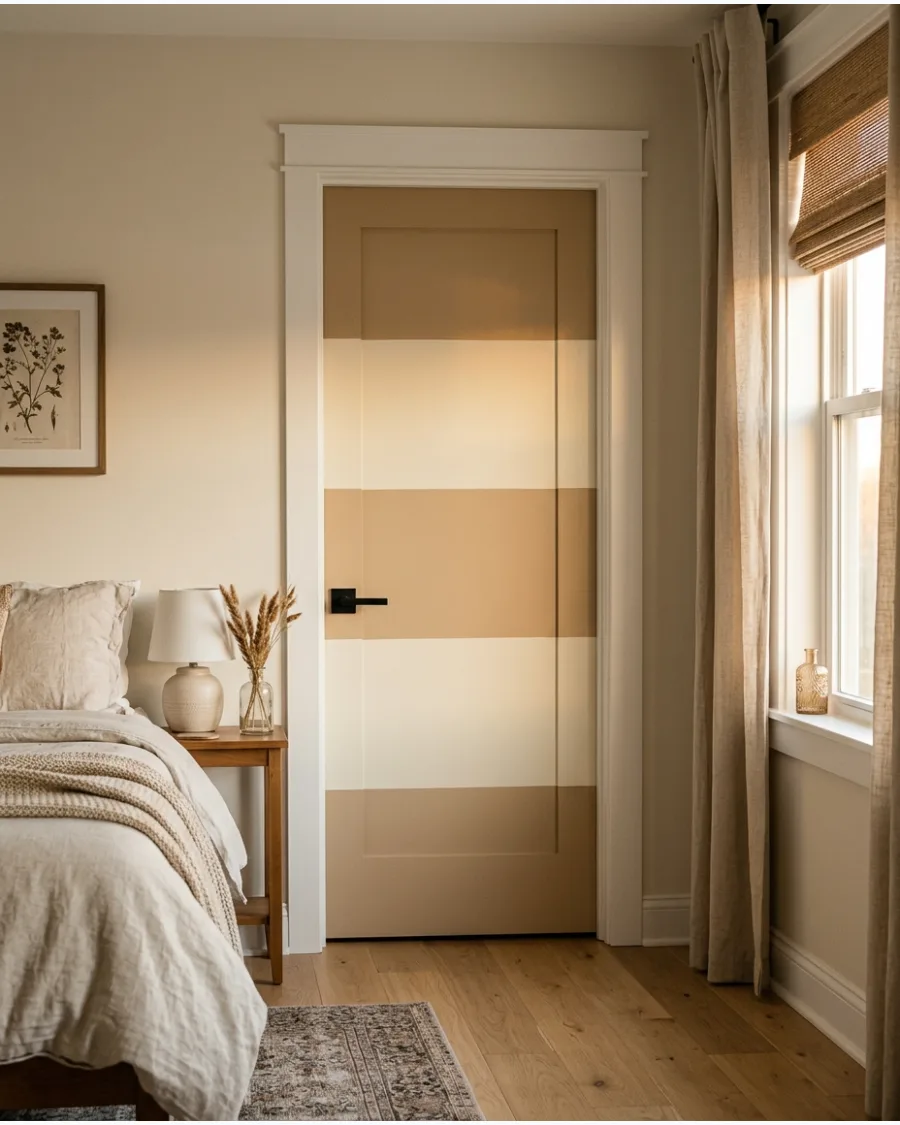
Cover the door with wide vertical or horizontal stripes to add visual interest. Tonal combinations such as beige and cream add texture without making the design too busy for a relaxing bedroom.
Measure the door height and divide by an odd number to ensure the top and bottom stripes match. This classic pattern makes a standard door feel like a high-end designer piece.
- Allow for extra time to measure and tape accurately, as this is the hardest part.
- Use a 4-inch roller to apply paint evenly across the wide stripe sections.
- Keep the stripes at least 8 inches wide to prevent the door from looking cluttered.
Best shortcut: Use a chalk line tool to mark perfectly straight horizontal lines across the door width.
40. Thin Pinstripe Door
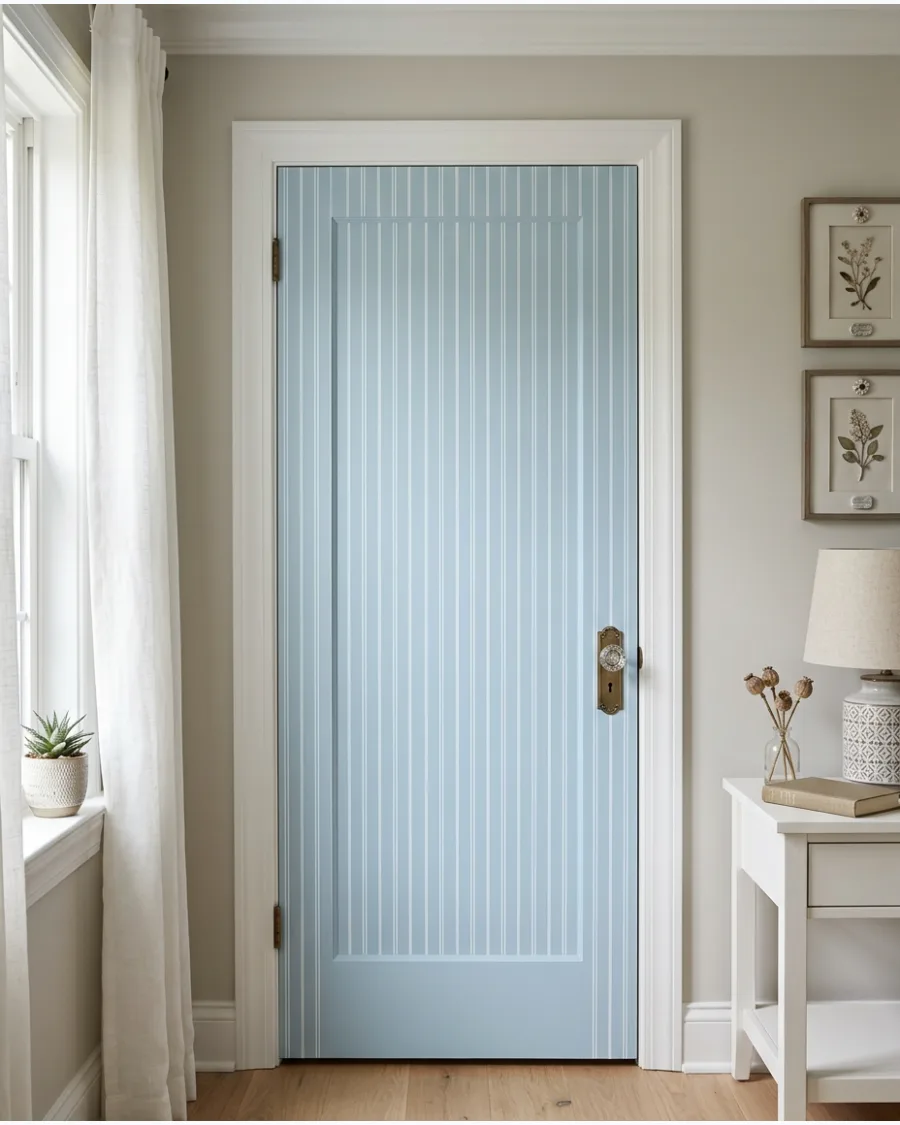
Add narrow painted stripes over a solid-colored base for a tailored, high-end finish. Use slightly darker and lighter shades of the same color for a subtle look that mimics expensive wallpaper.
Use 1/4-inch detailing tape to create perfectly even pinstripes across the door surface. This technique adds a level of detail that feels custom and intentional.
- Budget for several rolls of thin detailing tape to cover the entire door surface.
- Apply the base coat and let it cure for at least 24 hours before applying tape.
- Use a dry brush technique for the stripes to avoid paint buildup against the tape edges.
Quick win: Paint vertical pinstripes to make a short bedroom door feel significantly taller.
41. Checkerboard Door
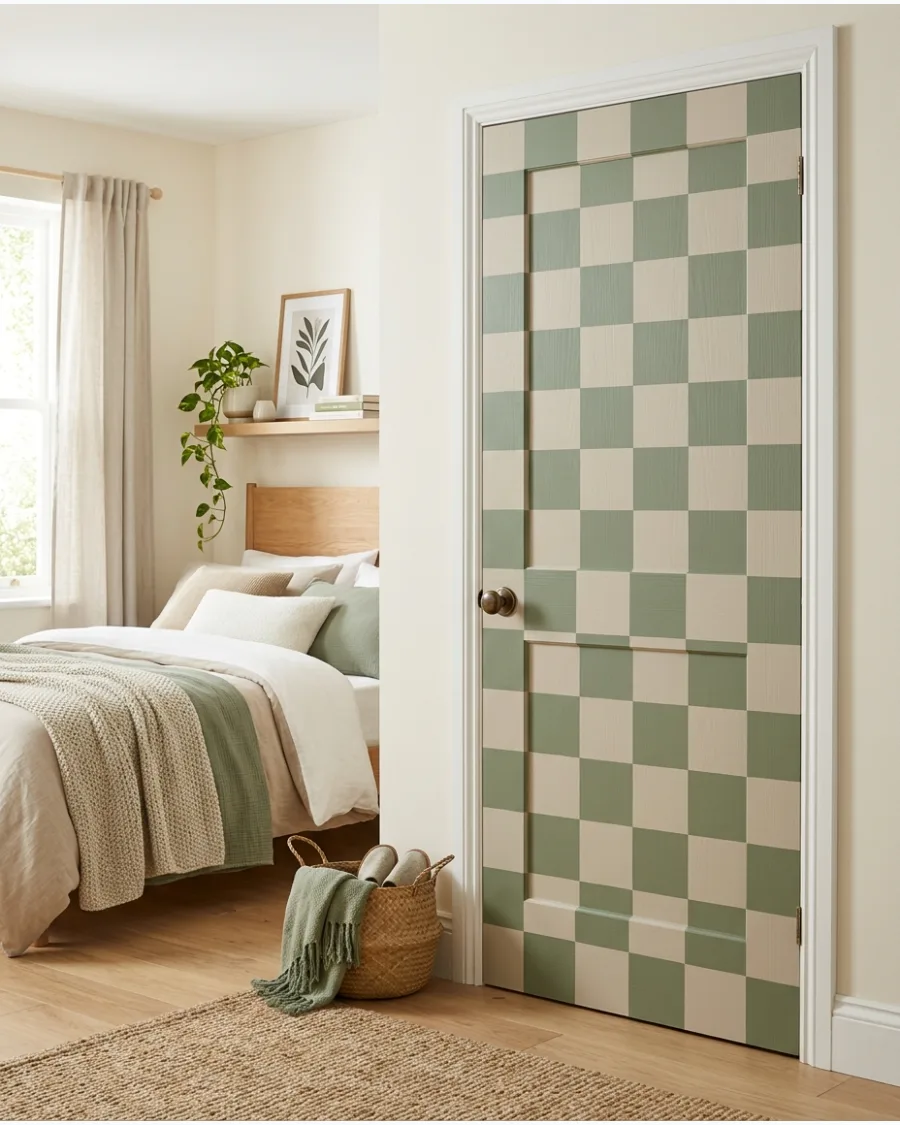
Create a checkerboard pattern using soft bedroom-friendly colors for a playful yet balanced look. Dusty pink and cream or sage and beige work beautifully to keep the pattern from feeling too loud.
Start the pattern from the center of the door to ensure the grid looks symmetrical on both sides. This approach works best on flat doors where the grid can flow uninterrupted.
- Use a square template made of cardboard to trace the pattern quickly and accurately.
- Expect this project to be time-intensive due to the amount of taping required.
- Choose low-sheen paints to prevent the pattern from reflecting too much light.
Most people skip this: Number each square lightly with a pencil so you know which ones to paint with the second color.
42. Geometric Shape Door
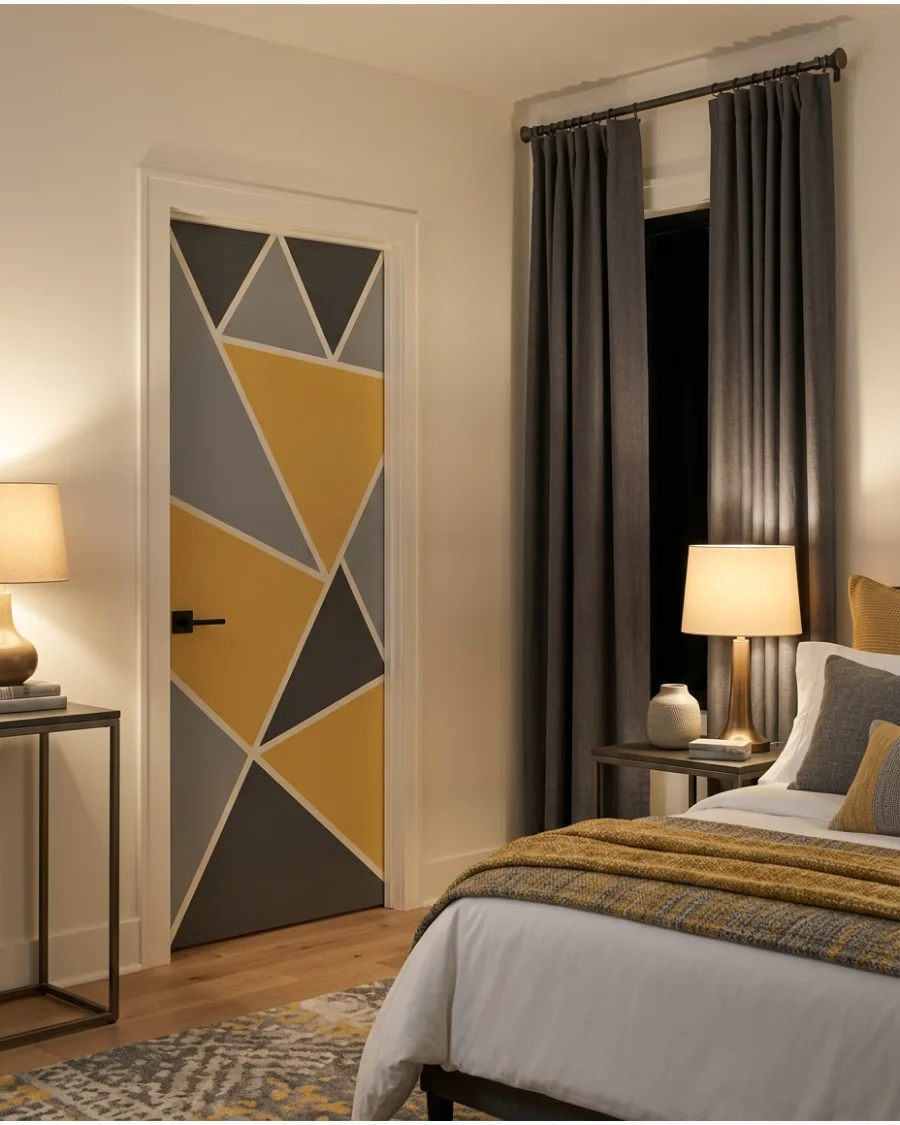
Use painter’s tape to create triangles, diamonds, or irregular geometric sections for a modern look. Limit the design to two or three coordinating colors to ensure a clean and sophisticated result.
Map out your shapes with a pencil first to visualize the balance before you start taping. It is an excellent way to add a bold focal point to an otherwise neutral bedroom.
- Use leftover paint from other rooms to create a multi-colored geometric design.
- Focus the shapes around the door handle area for an asymmetrical, artistic feel.
- Ensure each shape is fully dry before taping over it to add overlapping colors.
Best shortcut: Use pre-cut geometric wall decals as stencils for perfectly shaped triangles or diamonds.
43. Painted Arch Door
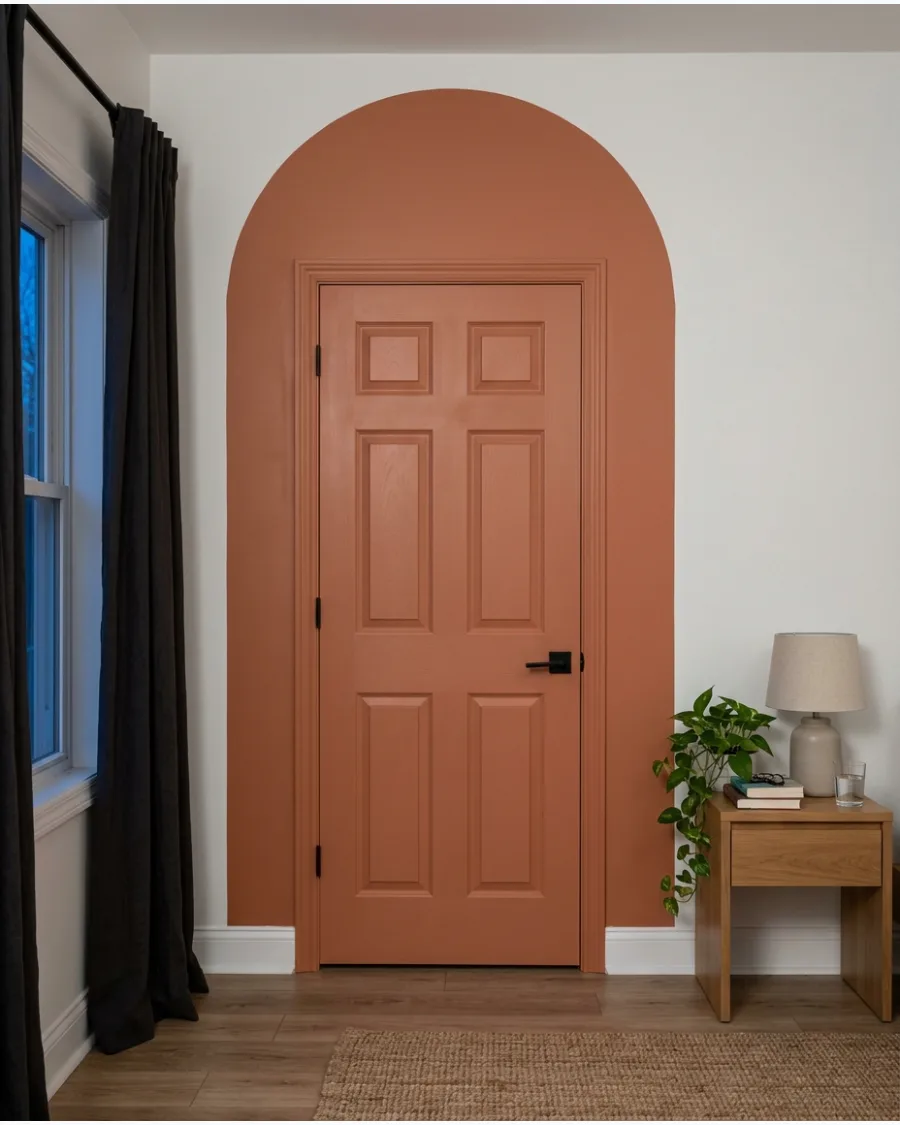
Paint a large arch across the door using a contrasting shade to soften the rectangular lines of the room. Continue part of the arch onto the surrounding wall to create a larger, more dramatic decorative feature.
Use a piece of string and a pencil to draw a perfect curve for the top of the arch. This trend adds a sense of height and architectural interest to a standard bedroom layout.
- Buy a quart of paint in a warm, earthy tone like terracotta or ochre for the arch.
- Use a small brush for the curved edges and a roller for the large center area.
- Ensure the door is closed and latched when drawing the arch so the lines meet perfectly.
Quick win: Paint the arch slightly wider than the door frame to make the entrance feel more grand.
44. Oversized Circle Design
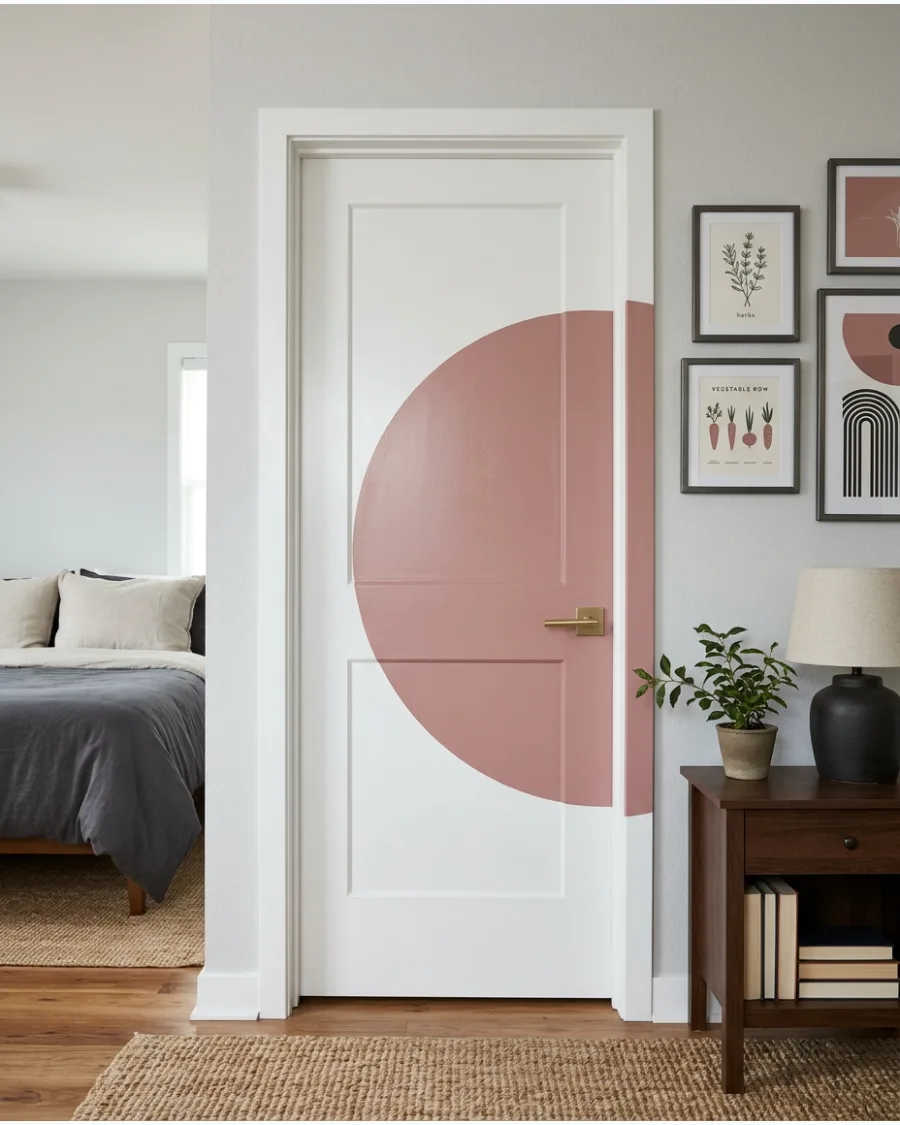
Paint one large circle across the door panels for a modern and artistic appearance. Positioning the circle slightly off-center creates a more contemporary look than a centered design.
Choose a color that appears elsewhere in the room to tie the door design into the overall space. This simple shape makes a huge visual impact without requiring complex taping.
- Use a thumbtack, string, and pencil to create a makeshift compass for the circle.
- Apply two thin coats of paint to the circle to ensure the color is solid and even.
- Keep the circle diameter at least half the width of the door for the best scale.
Most people skip this: Sand the pencil line lightly before painting to ensure it doesn't show through the lighter paint colors.
45. Scalloped Door Pattern
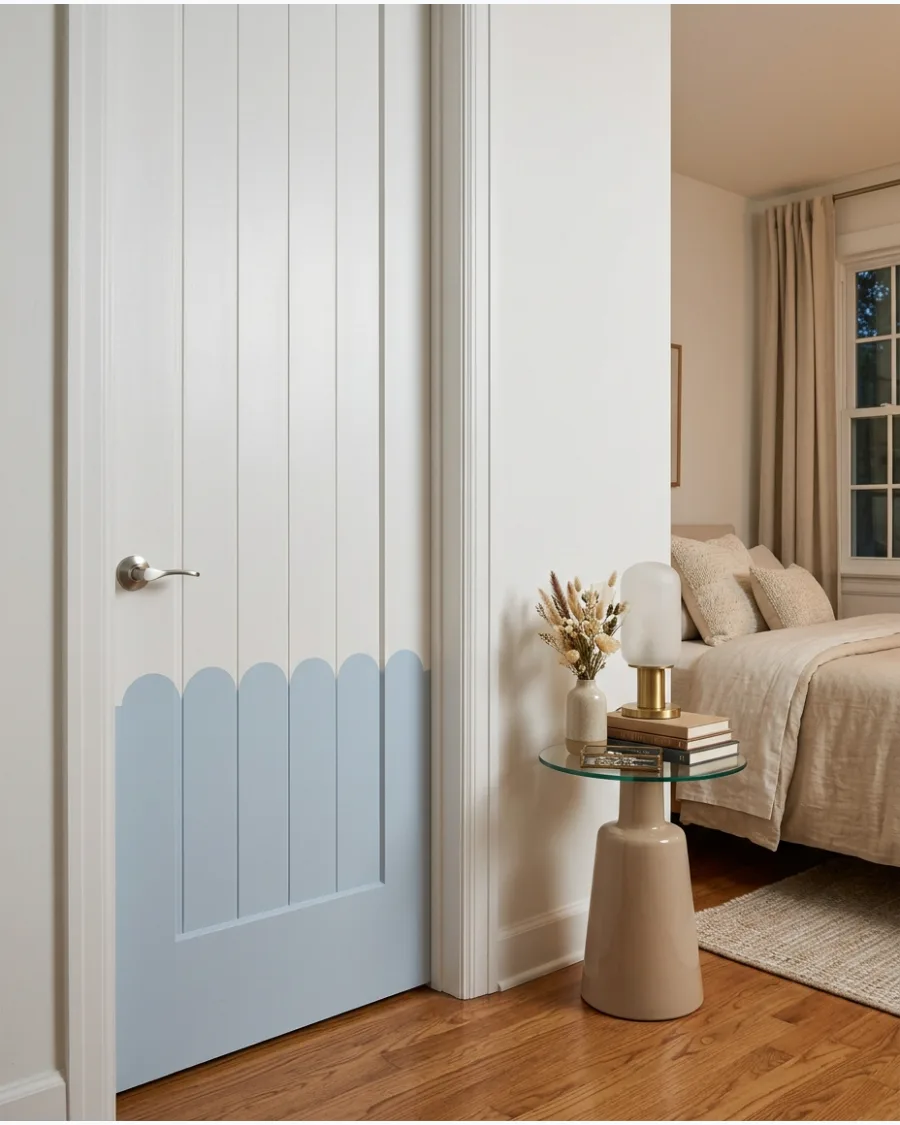
Add painted scallops along the bottom, top, or side of the door for a playful, cottage-inspired feel. This treatment works exceptionally well in children’s rooms or guest bedrooms that need a touch of character.
Trace a bowl or a large coin to get perfectly uniform scallop shapes for the border. It is a charming way to soften the hard edges of a standard interior door.
- This project is very budget-friendly, requiring only a small amount of accent paint.
- Use a high-quality artist's brush to fill in the curved scallop shapes accurately.
- Limit the scallops to just one edge of the door to keep the design from feeling too busy.
Best shortcut: Create a scallop stencil out of a piece of cardstock to ensure every curve is identical.
46. Wavy Color-Block Door
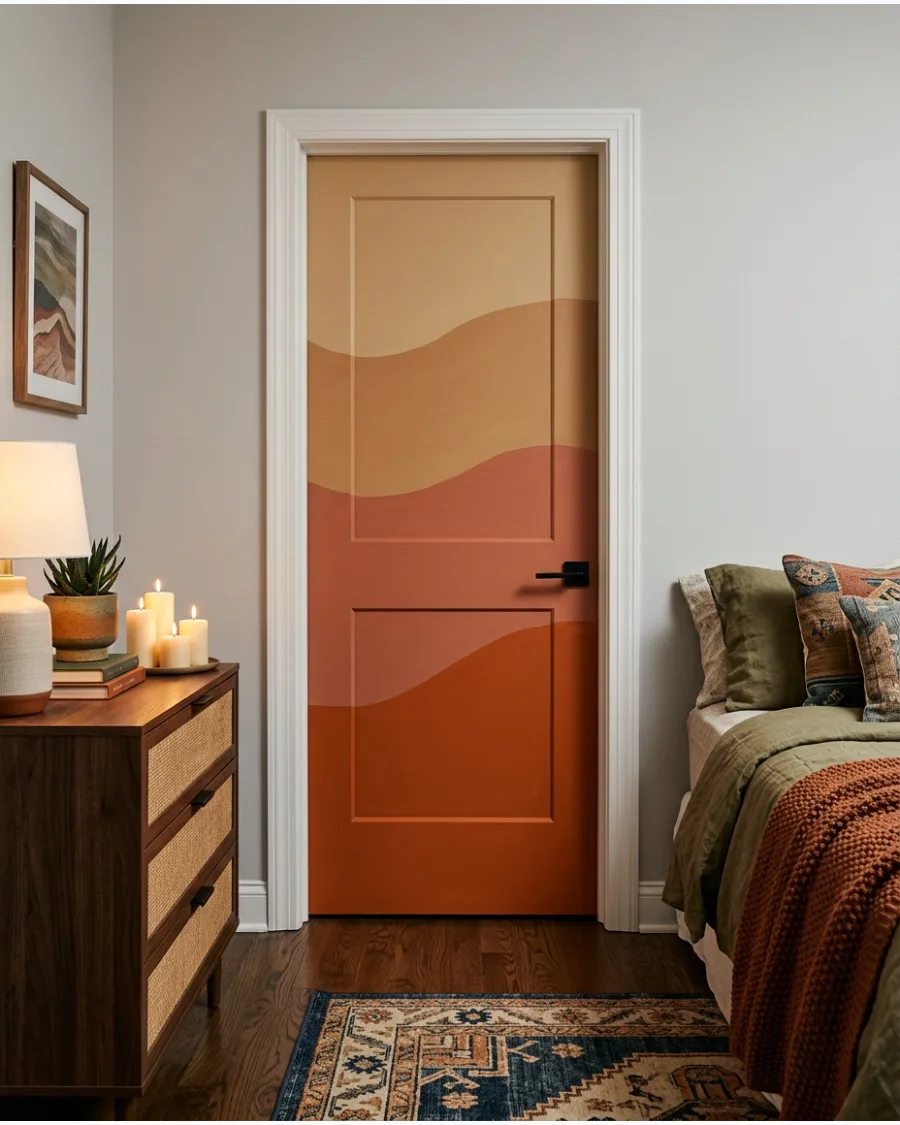
Replace straight dividing lines with flowing painted waves for a softer look. Use tonal blues, greens, or sunset-inspired colors for an organic mural effect.
Sketch the waves with a pencil first to ensure the curves feel balanced across the door panels. Painted waves add a rhythmic energy that breaks up the rigid lines of a standard bedroom.
- Budget: $20 for two sample pots and a high-quality angled brush.
- Trace the wave pattern with a pencil and use flexible painters tape for clean edges on the curves.
- Choose colors that pull from your existing bedding or rug to make the door feel integrated.
Quick win: Use a flexible measuring tape or a piece of string to map out the waves before you start painting.
Painted Bedroom Door Mural Ideas
47. Botanical Leaf Door
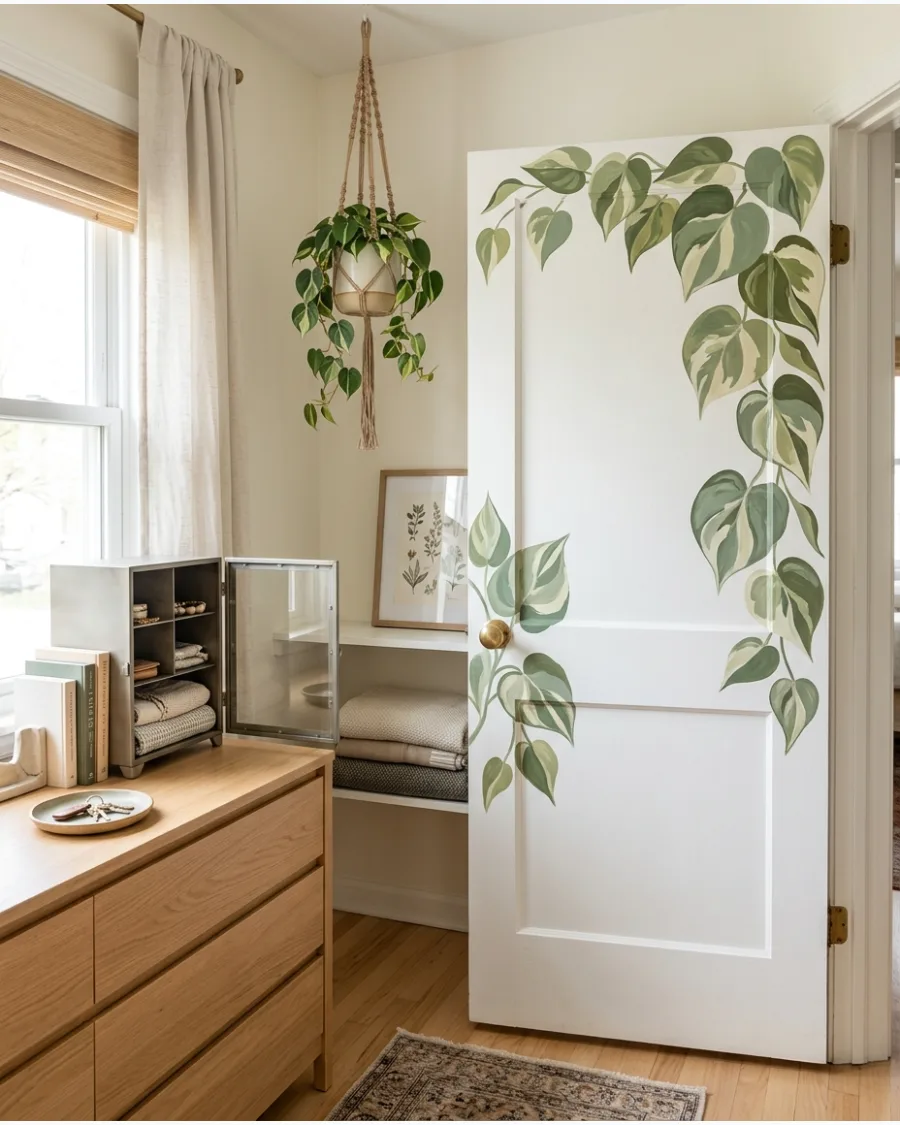
Paint oversized leaves or delicate climbing vines around the edges of the door. Leave enough empty space so the finished design does not feel crowded.
Focus the greenery near the handle or along the top corner for a sophisticated framing effect. This approach brings a touch of nature indoors without the maintenance of real plants.
- Project time: 2-4 hours depending on the complexity of the leaf shapes.
- Use a small detail brush for the stems and a medium round brush for the leaf bodies.
- For a subtle look, paint the leaves in a shade just slightly darker than the door base color.
Most people skip this: Seal the hand-painted art with a clear matte topcoat to prevent the design from wearing off around the handle.
48. Wildflower Meadow Door
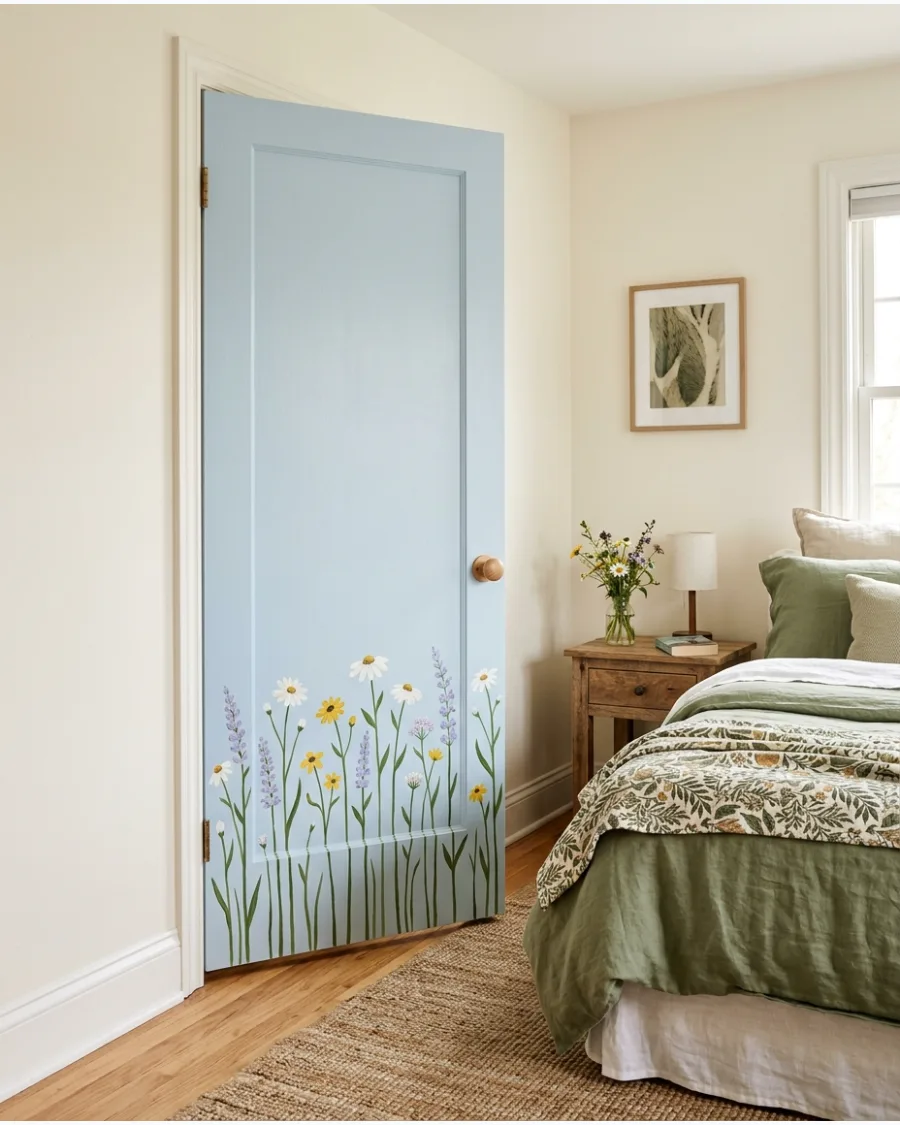
Paint a loose row of wildflowers growing upward from the bottom edge. This creates a whimsical feature while keeping the upper section of the door visually open.
Keep the flower stems varying heights to mimic a natural field. This design works perfectly to hide scuffs that often happen at the bottom of high-traffic doors.
- Cost: Under $30 for a variety of craft paint colors and a set of brushes.
- Work from the bottom up and overlap some leaves to create a sense of depth.
- Stencil the flowers if you are not confident in freehand painting for a more uniform look.
Best shortcut: Use a sea sponge to dab on the foliage for a soft, textured look that requires less precision.
49. Mountain Landscape Door
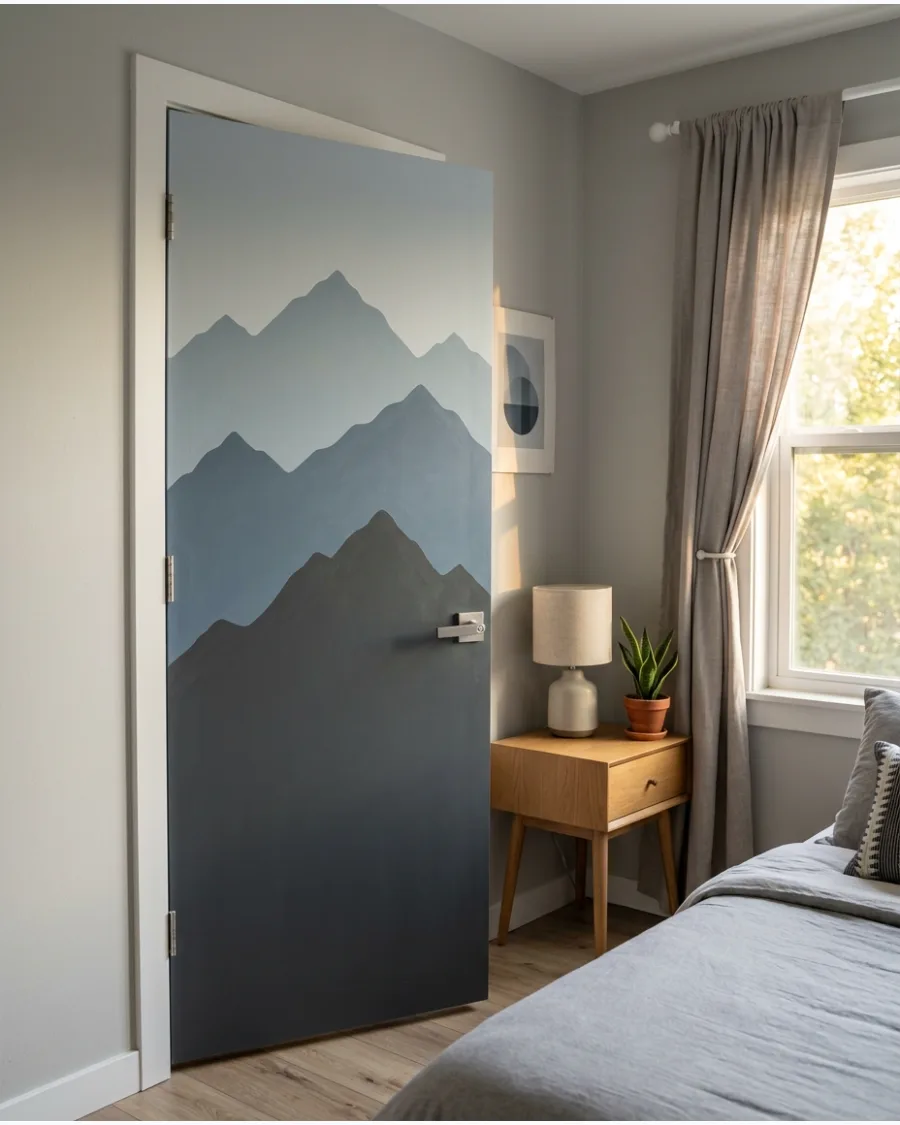
Turn the bedroom door into a peaceful mountain mural using layered silhouettes. Dusty blue, sage green, taupe, and gray work especially well together.
Paint the farthest mountains in the lightest shade and get darker as you move toward the foreground. The horizontal layers create a sense of depth that can make a small bedroom feel much larger.
- Timing: One weekend to allow each color layer to dry before overlapping the next.
- Use a level to keep the bottom of the mural grounded and the horizon lines straight.
- This style looks best on flat-panel doors where the design is not interrupted by traditional molding.
Most people skip this: Sand the door lightly before starting to ensure the mural layers stick without peeling over time.
50. Night-Sky Door
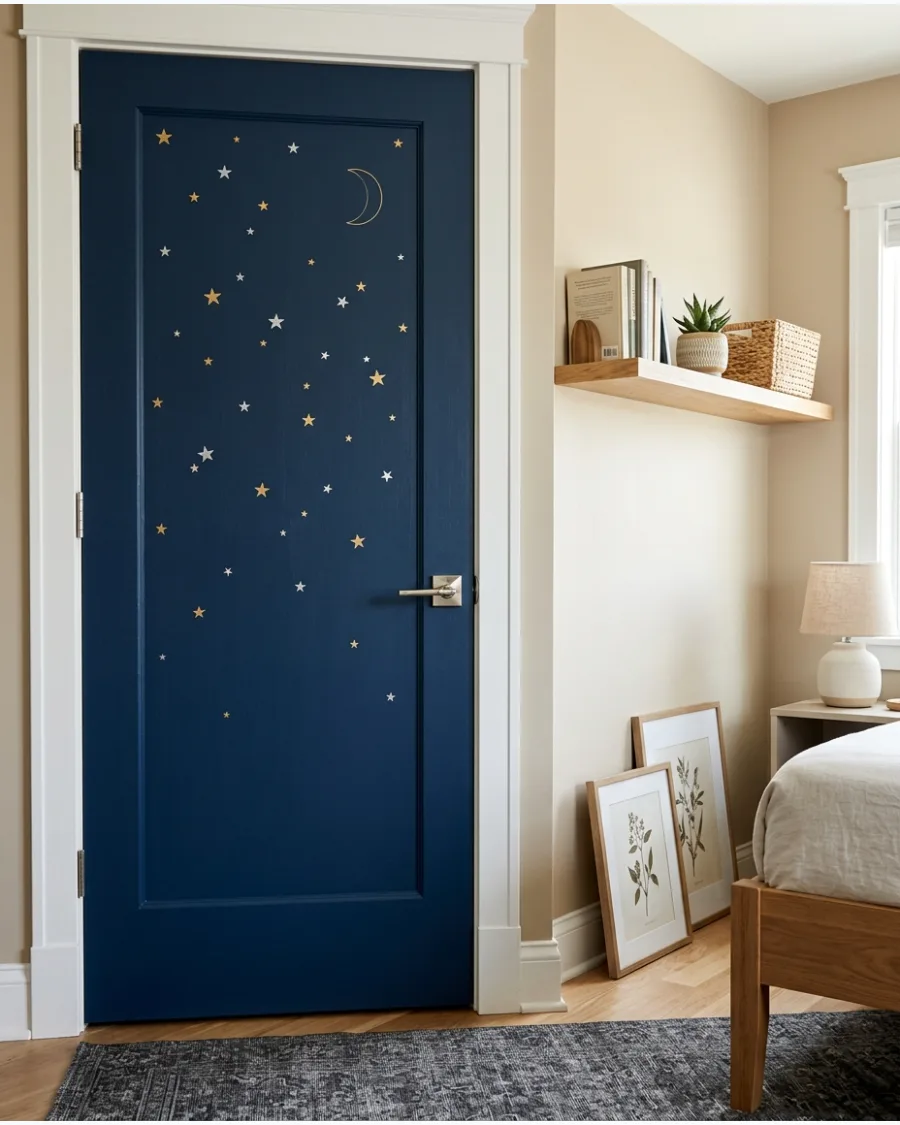
Use a deep blue base and add small stars, moons, or constellations. Keep the celestial details simple for a design that works in both children’s and adult bedrooms.
Use a metallic gold or silver paint for the stars to catch the light at night. A dark door adds a cozy, grounded feel to a room meant for sleep.
- Budget: $25 for a quart of dark paint and a metallic paint pen for the details.
- Use a paint pen instead of a brush for the stars to get perfectly sharp points.
- Renters can paint this design on a removable door wrap if they cannot paint the actual wood.
Quick win: Flick a stiff-bristled brush dipped in white paint for a realistic milky way splatter effect.
Frequently Asked Questions
What is the best paint finish for a bedroom door?
A semi-gloss or satin finish is the best choice because these sheens are much more durable and easier to wipe clean than flat paint. Since bedroom doors are high-touch areas prone to fingerprints, these finishes provide a beautiful, resilient glow that stands up to daily use.
Should I paint both sides of the bedroom door the same color?
You can certainly paint each side differently to match the hallway aesthetic on one side and the bedroom decor on the other. If you choose two colors, just remember to paint the hinge edge the same color as the side that opens into the room for a professional look.
Do I need to take the door off the hinges to paint it?
While you can paint a door while it is still hanging to save time, removing it and laying it flat helps prevent drips and ensures a smoother finish. If you decide to leave it on the hinges, be sure to use high-quality painter's tape to protect the hardware from any stray paint.
How do I prevent brush marks on a flat or paneled door?
To achieve a smooth finish, use a high-quality synthetic brush for recessed panels and a small foam roller for the flat sections. You can also add a paint conditioner like Floetrol to your paint, which helps the coat level out and eliminates visible brush strokes as it dries.
Should the door color match the walls or the trim?
Matching the trim is a classic choice, but painting the door the same color as the walls creates a sophisticated, monochrome look that makes a room feel larger. Alternatively, choosing a contrasting color provides a modern 'pop' that turns your door into a stylish architectural focal point.