50 Boys Room Paint Ideas

This post may contain affiliate links: full affiliate disclosure.
Choosing the right paint color for a boy’s room means thinking about how the space will grow. These palettes move past basic primary colors to create a room that feels stylish now and stays relevant for years.
Modern Neutral Boys Room Paint Ideas
1. Warm Khaki Walls
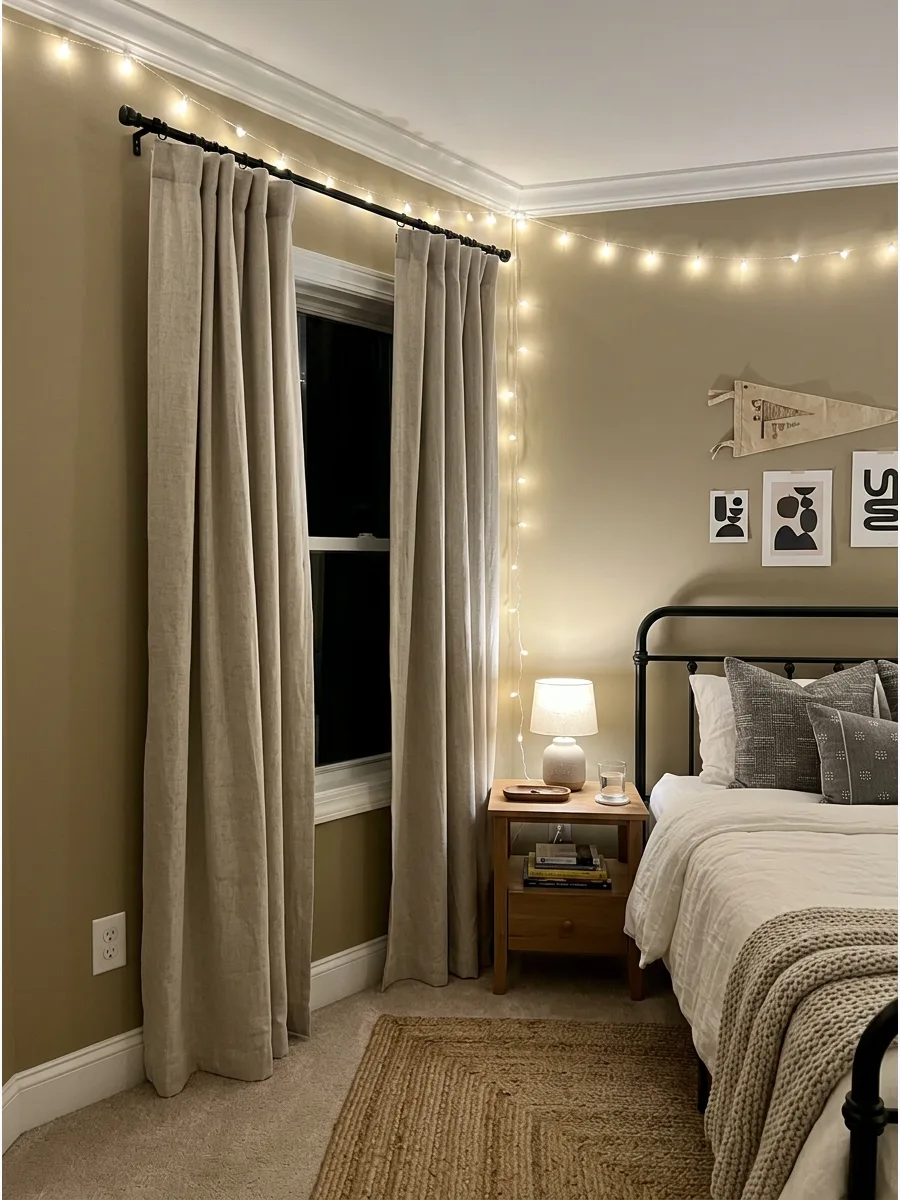
Khaki is a reliable neutral that hides small scuffs better than bright white. It provides a warm backdrop for colorful posters or sports gear without clashing.
Test the paint in different light levels to ensure it does not turn too yellow during the afternoon. This shade creates a grounded feeling that makes a large room feel more intimate.
- Gallon of eggshell khaki paint ($40-$70)
- Use a 3/8-inch nap roller for smooth coverage on drywall
- Swap the bedding to navy or charcoal to instantly update the look for a teenager
Quick win: Paint the outlet covers the same color as the wall to make them disappear.
2. Creamy White With Wood Accents
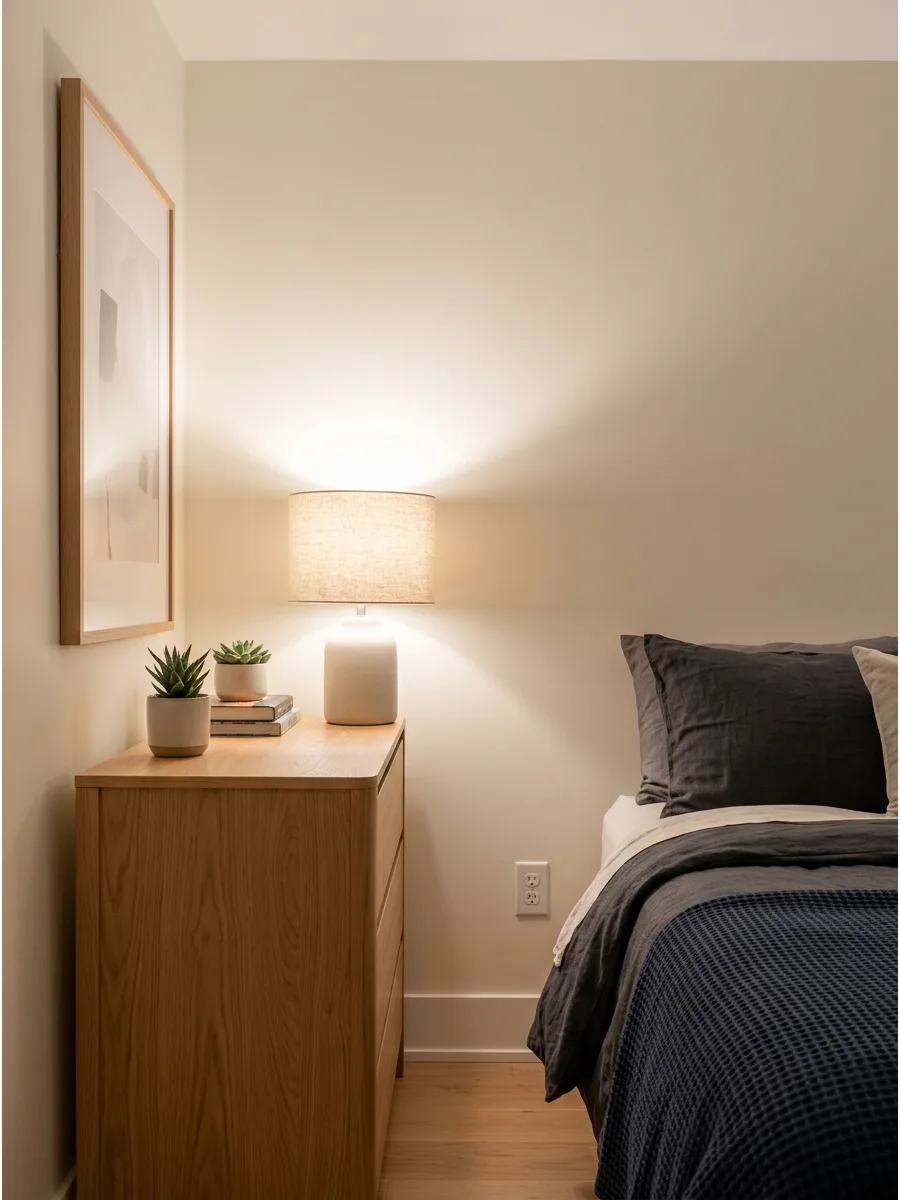
Creamy white is softer than stark white and feels much more inviting in a bedroom. It reflects natural light well, which helps a small space feel open and bright.
Pair this color with light wood furniture to keep the room feeling modern and cohesive. This palette is the ultimate blank canvas for a child whose interests change often.
- Gallon of warm white paint in eggshell finish ($40)
- Clean the walls with a damp cloth to remove dust before starting
- Add a colorful rug to bring energy into the neutral space
Most people skip this: Check the paint undertone against your wood furniture to make sure they both have warm or cool leanings.
3. Greige Boys Room
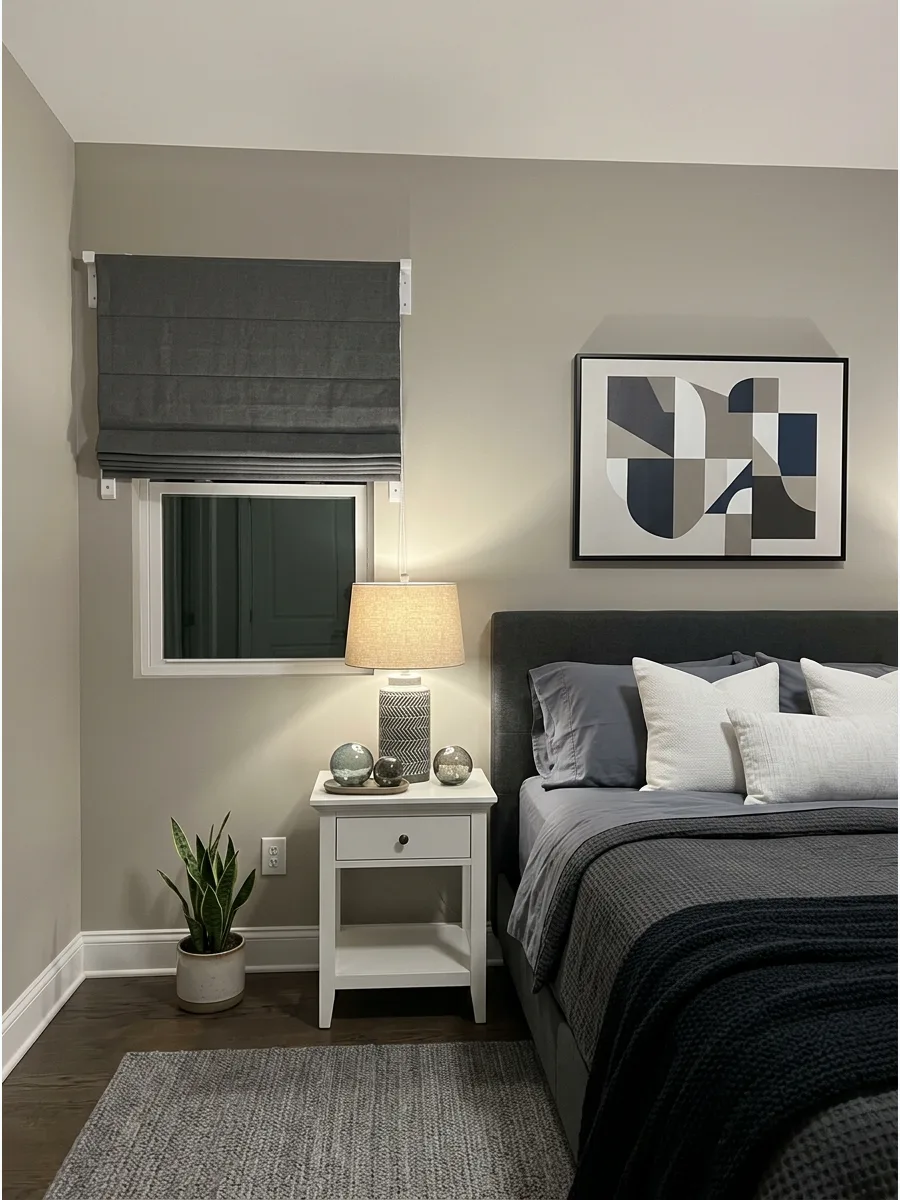
Greige is the perfect middle ground between gray and beige, offering a clean look that isn’t cold. It hides scuffs well and works with almost any secondary color you choose for bedding.
Apply two coats of paint to ensure the color looks consistent across the entire wall. This shade is excellent for rooms that do not get much natural light.
- One gallon of greige paint ($40-$65)
- Use a microfiber roller for the smoothest finish on flat walls
- Add navy blue pillows to give the neutral walls a classic boyish feel
Quick win: Paint a small sample board and move it around the room to see how the color changes throughout the day.
4. Soft Taupe Bedroom
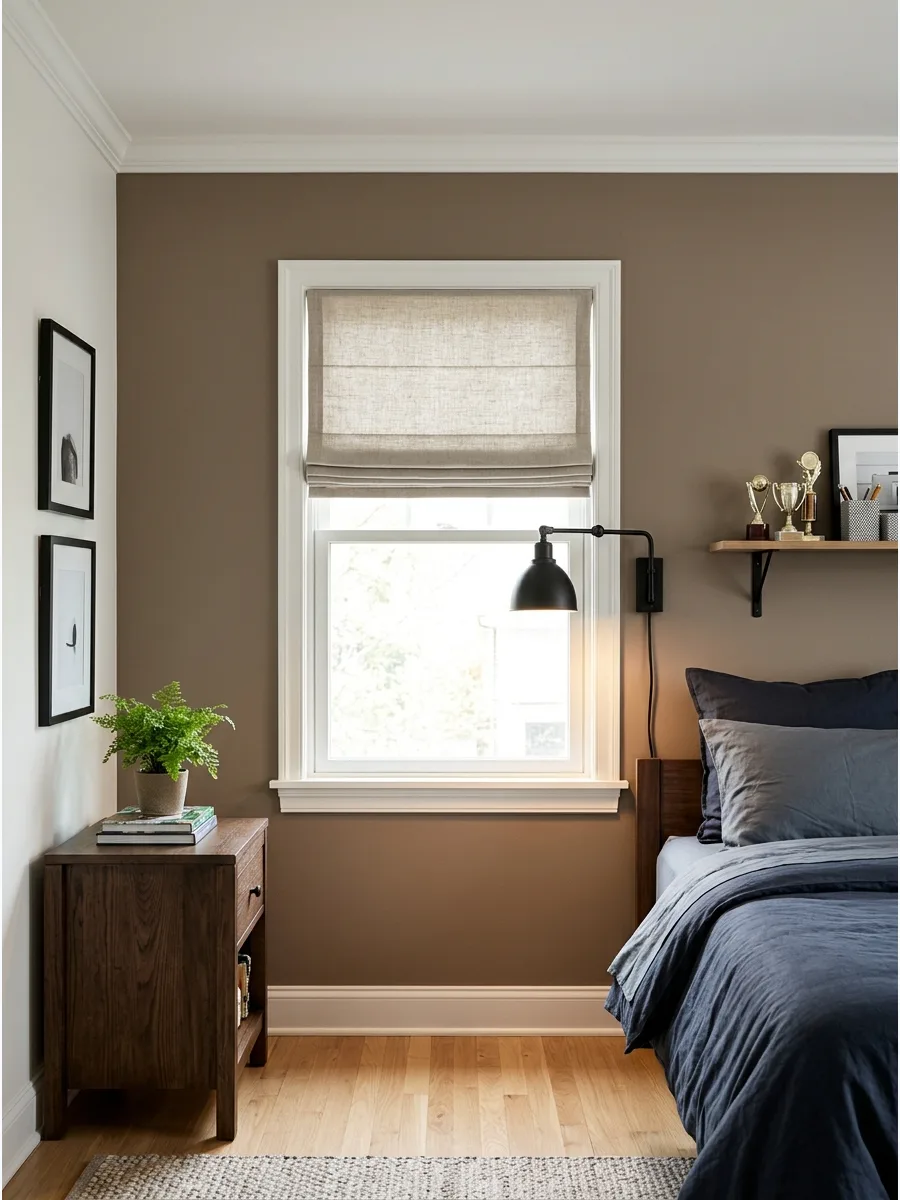
Taupe is a versatile neutral that leans slightly more toward brown than gray, giving it a cozy, earthy feel. It provides a rich background for black-and-white photography or framed art.
Use taupe in a room with large windows to let the natural light bring out the warmth of the color. This shade feels more intentional and high-end than a standard builder-grade beige.
- Gallon of taupe interior paint ($45-$70)
- A sturdy ladder and a paint tray with disposable liners
- Mix in some metal accents like a brass lamp to brighten up the earthy walls
Most people skip this: Paint the back of the bedroom door in the same taupe color for a seamless, designer look.
5. Mushroom Paint Color
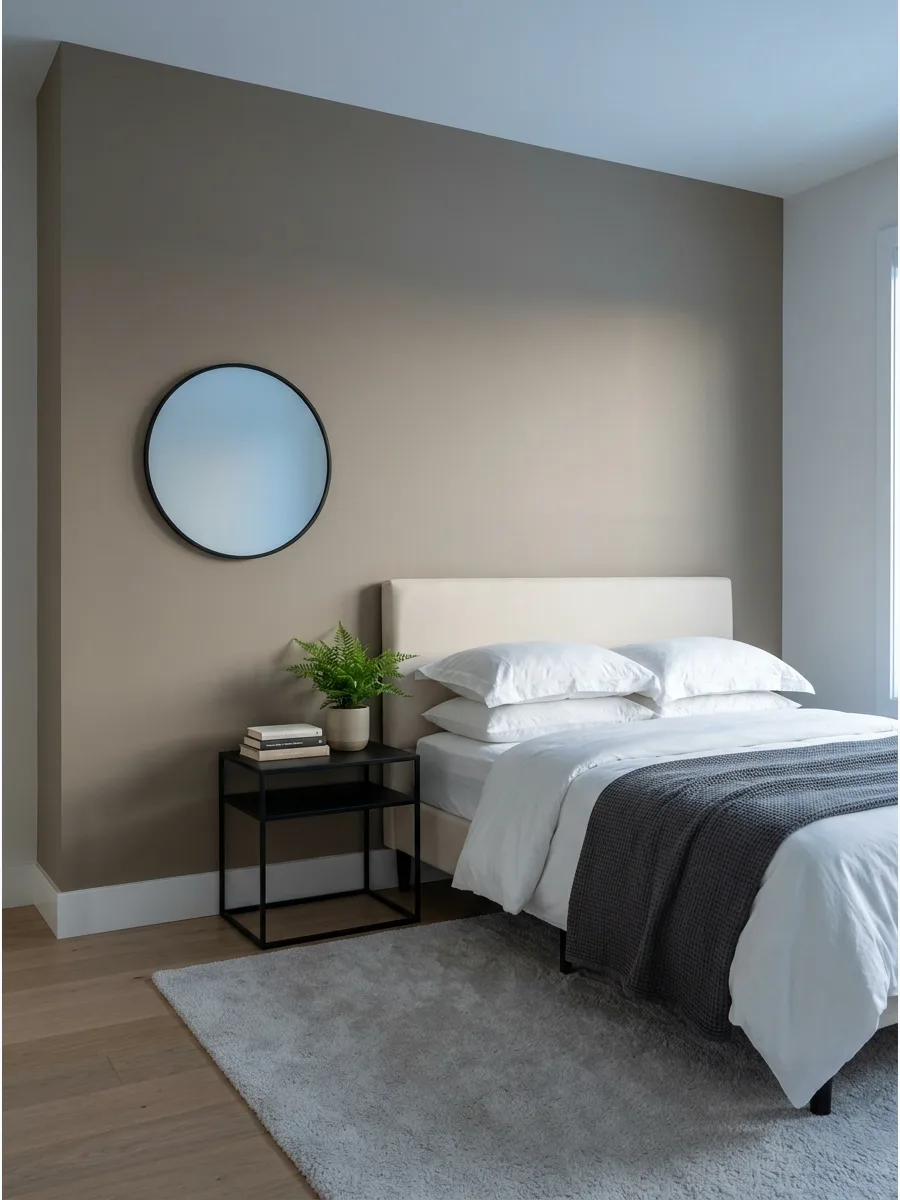
Mushroom is a trendy neutral that feels both modern and timeless. It has enough depth to look interesting on its own without needing a lot of extra decor.
Balance the earthy mushroom walls with crisp white bedding to keep the room from looking too dark. This color works well with both modern and traditional furniture styles.
- Mushroom beige paint ($55)
- Use a paint extender to slow down drying time and reduce visible brush marks
- Swap out old wooden knobs for modern black ones to complement the wall color
Best shortcut: Buy a paint and primer in one to save time and get better coverage on dark walls.
6. Stone Gray Walls
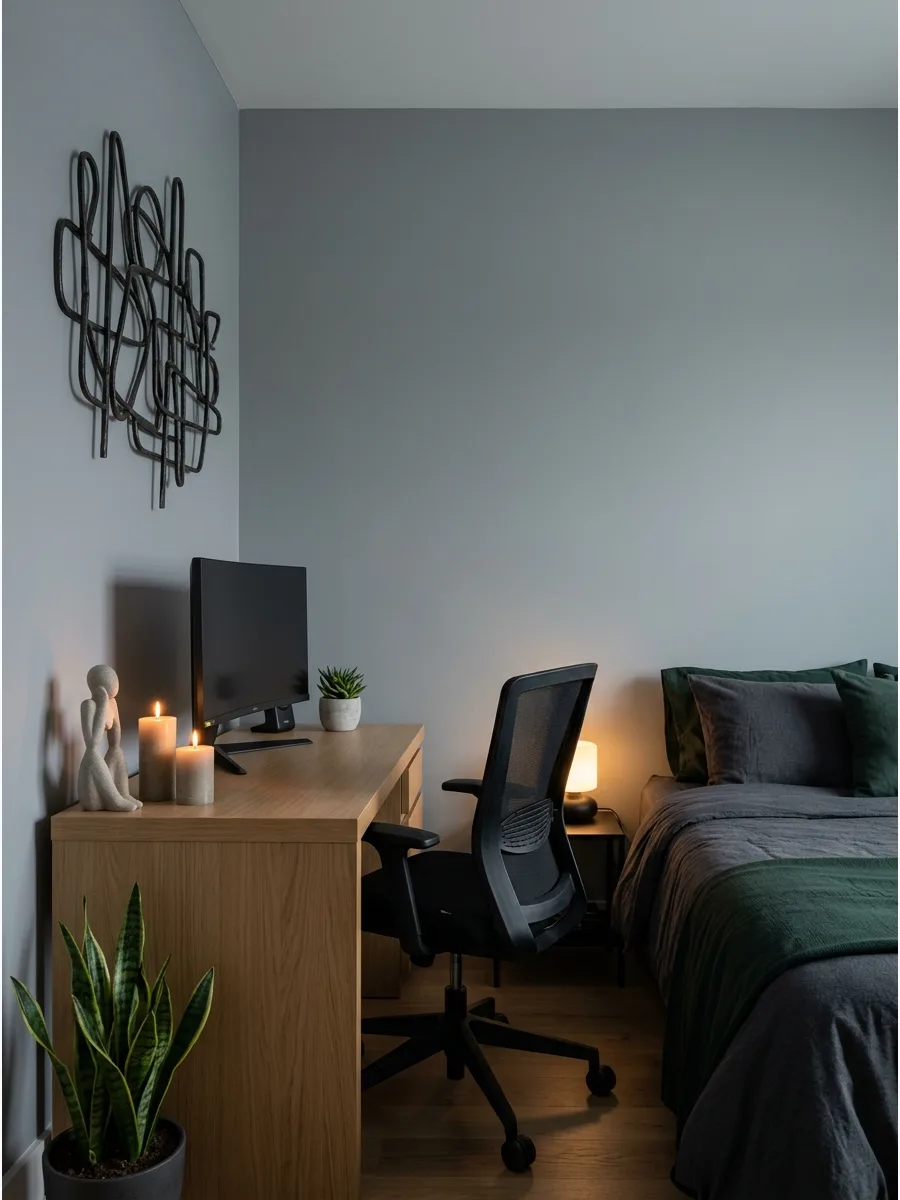
Stone gray provides a cool, modern backdrop that feels very grown-up for a middle or high schooler. It does not compete with colorful gaming setups or sports jerseys.
Pick a gray with blue undertones if you want the room to feel extra calm and focused. This color is durable and stays looking fresh even in high-traffic areas.
- Stone gray interior paint ($45)
- A 2-inch angled brush for cutting in around the ceiling and baseboards
- Use bright orange or yellow accents to make the gray walls feel more energetic
Best shortcut: Use a paint shield when painting near the carpet to avoid getting gray drips on the floor.
7. Sand Beige Room
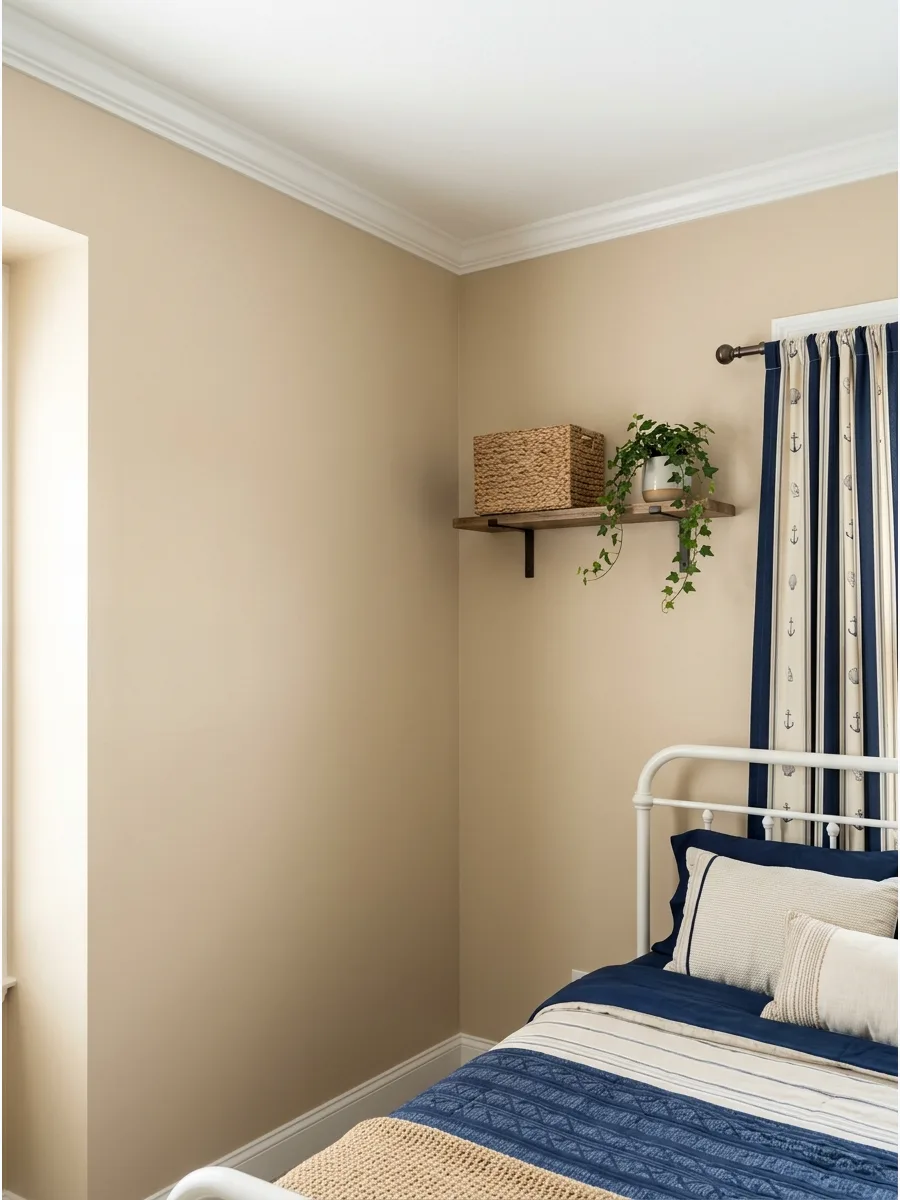
Sand beige is a light, airy color that makes a cramped bedroom feel much larger. It has a warm undertone that prevents the space from feeling sterile or boring.
Choose this color if the room has low ceilings to help the walls recede and open up the space. It is the perfect backdrop for a beach or coastal-themed room.
- Sand beige paint ($40)
- A high-quality drop cloth to protect the flooring from splatters
- Use navy blue or coral accents to lean into a nautical or beachy vibe
Quick win: Paint the ceiling half the strength of the wall color to make the room feel taller.
8. Warm White Walls With Painted Trim
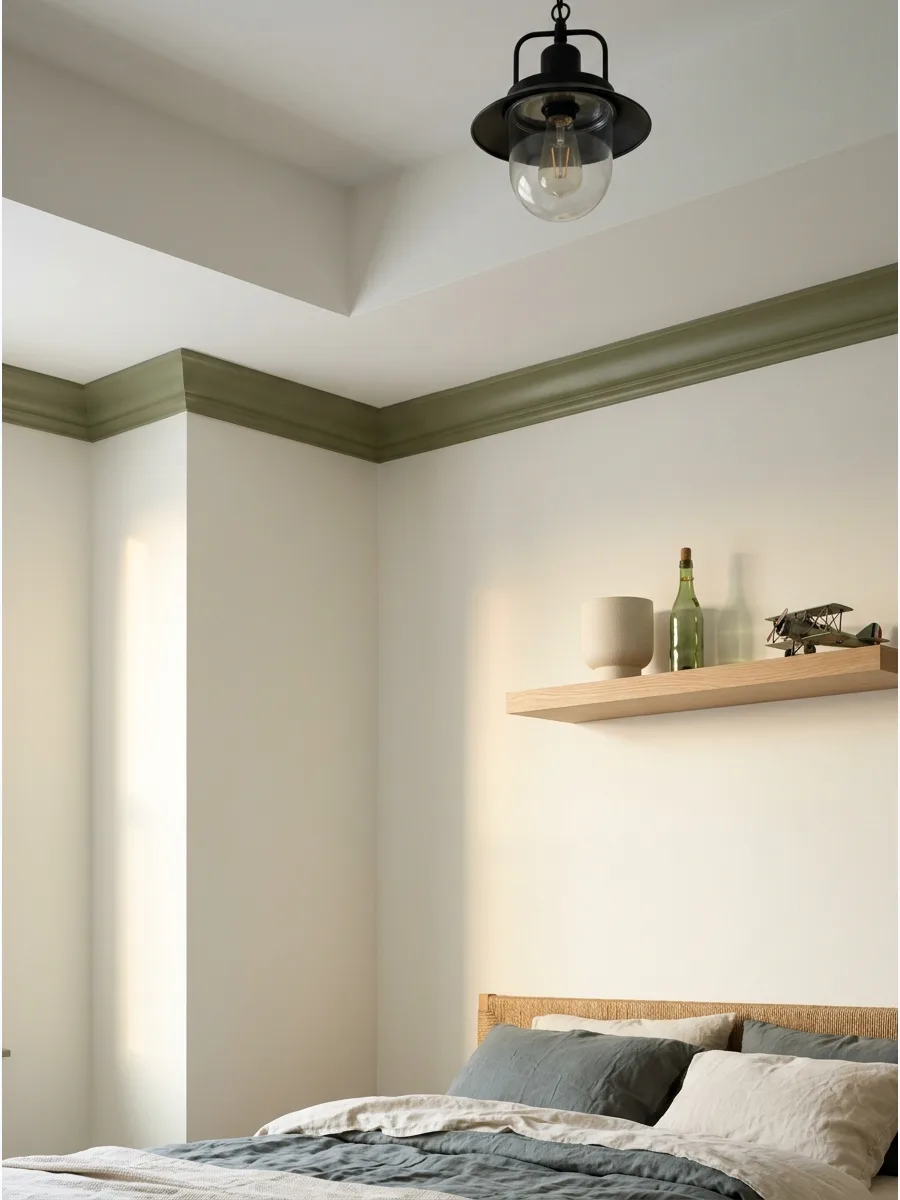
Painting the trim a different color than the walls adds instant architectural interest. It is a sophisticated way to introduce color without overwhelming the entire space.
Use a semi-gloss finish on the trim to make it stand out against matte or eggshell walls. This technique works especially well in rooms with high ceilings or wide baseboards.
- High-quality trim paint ($25-$40 per quart)
- Use painters tape with a built-in sealant to prevent bleeds on the white wall
- Choose a dark navy trim if the room has a nautical or preppy theme
Best shortcut: Use a small angled sash brush for crisp lines where the trim meets the floor.
Green Boys Room Paint Ideas
9. Smoky Jade Accent Wall
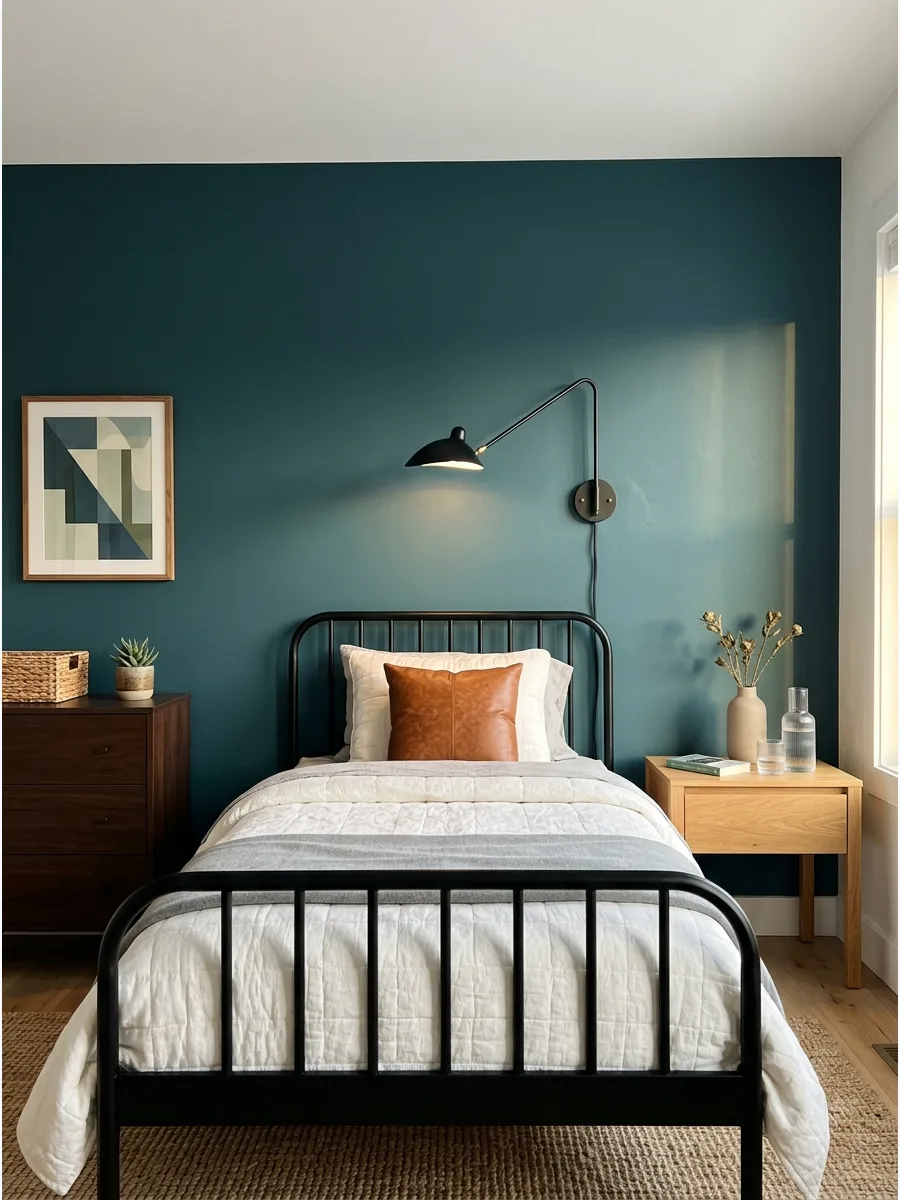
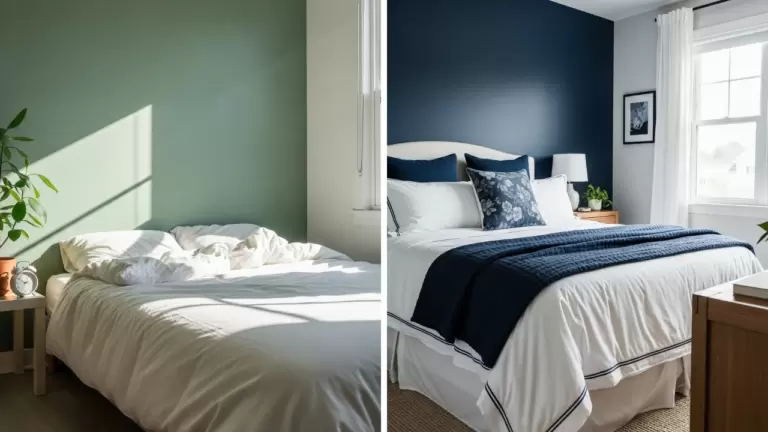
A smoky jade accent wall adds depth and a sense of calm to the sleeping area. This blue-green hybrid feels more sophisticated than a standard primary green.
Paint only the wall behind the bed to create a focal point without making the room feel small. It pairs beautifully with leather accents or dark metal bed frames.
- One gallon of deep jade paint ($45-$75)
- Use a high-quality synthetic brush for the corners and edges
- Switch to light gray walls on the other three sides to balance the dark accent
Quick win: Use a matte finish for the accent wall to hide any imperfections in the drywall.
10. Warm Eucalyptus Walls
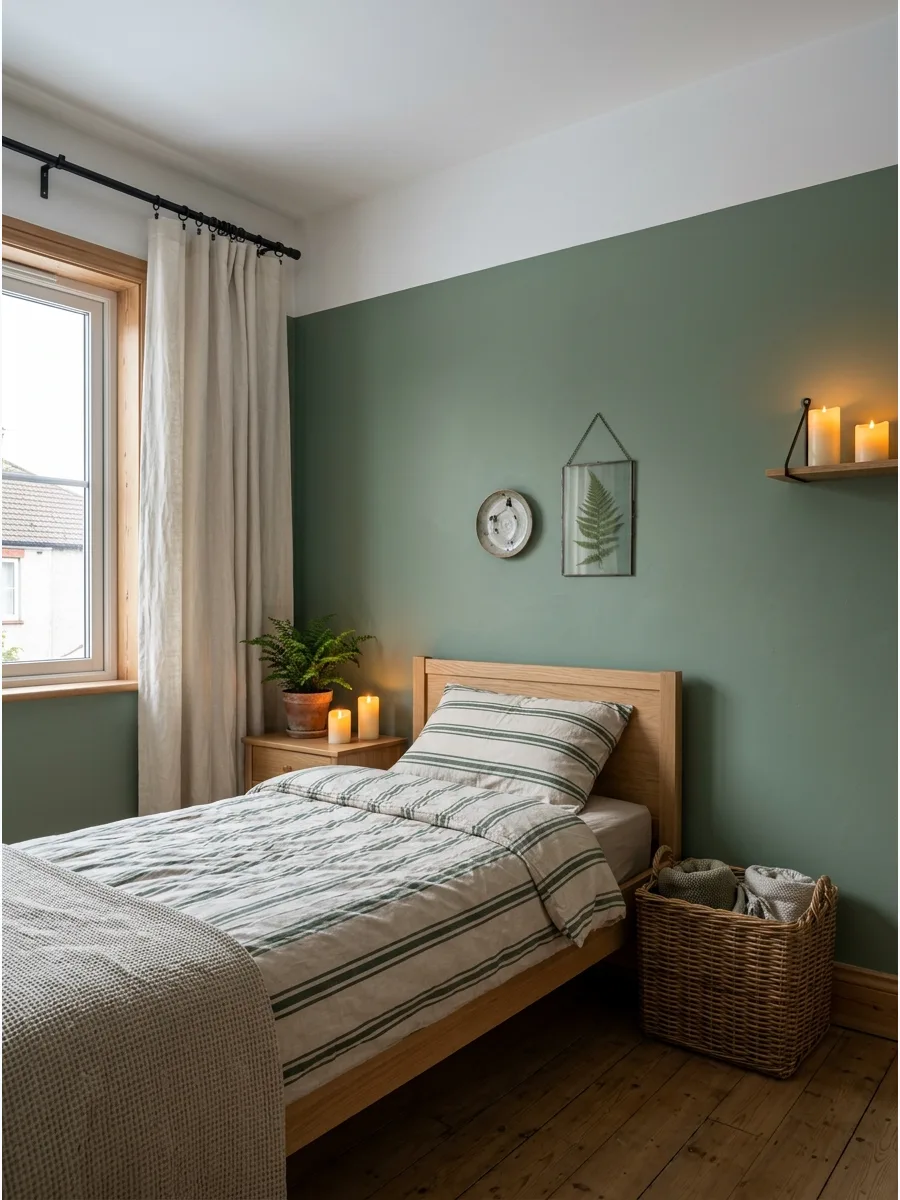
Eucalyptus green is a soft, muted shade that brings a touch of nature indoors. It creates a relaxing environment that is perfect for a child who needs a quiet space to unwind.
Coordinate this wall color with natural textures like wicker or cotton for a complete look. It is a gender-neutral green that feels sophisticated as the child grows.
- Eucalyptus-toned wall paint ($50)
- Remove all wall decor and patch small holes before you start painting
- Pair with white curtains to keep the window area looking bright and clean
Quick win: Use a satin finish in a kid’s room so you can easily wipe off smudges with a damp cloth.
11. Sage Green Half Wall
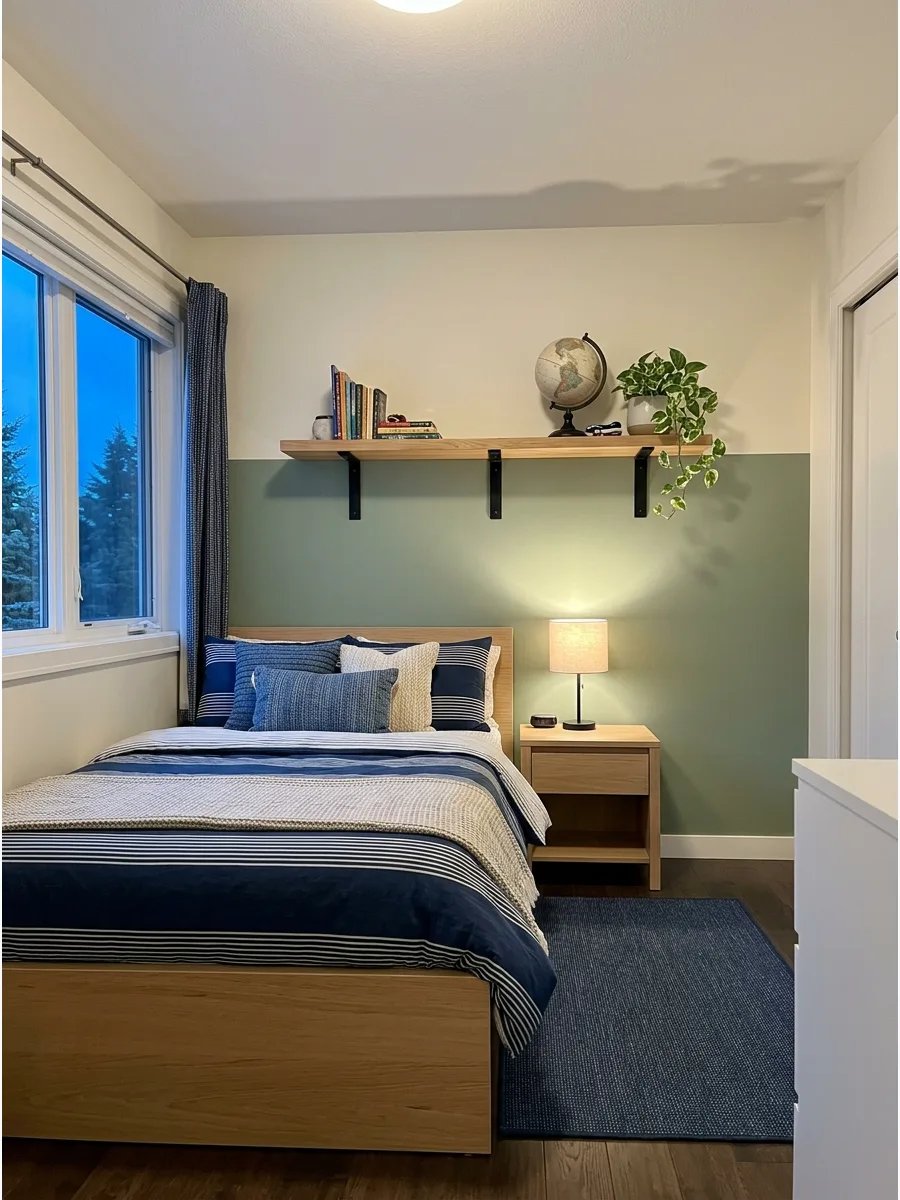
A half wall adds visual height and keeps the room feeling airy. The darker color on the bottom is practical because it hides fingerprints and marks from toys.
Use a laser level to mark a perfectly straight line around the room before applying tape. This two-tone look provides a built-in headboard effect if the bed lacks one.
- Two quarts of contrasting paint ($50 total)
- Measure 36 to 42 inches from the floor for the most balanced height
- Paint the top color first and let it dry for 24 hours before taping for the bottom color
Most people skip this: Paint over the edge of the tape with the top color first to seal the line for a perfect edge.
12. Olive Green Boys Room
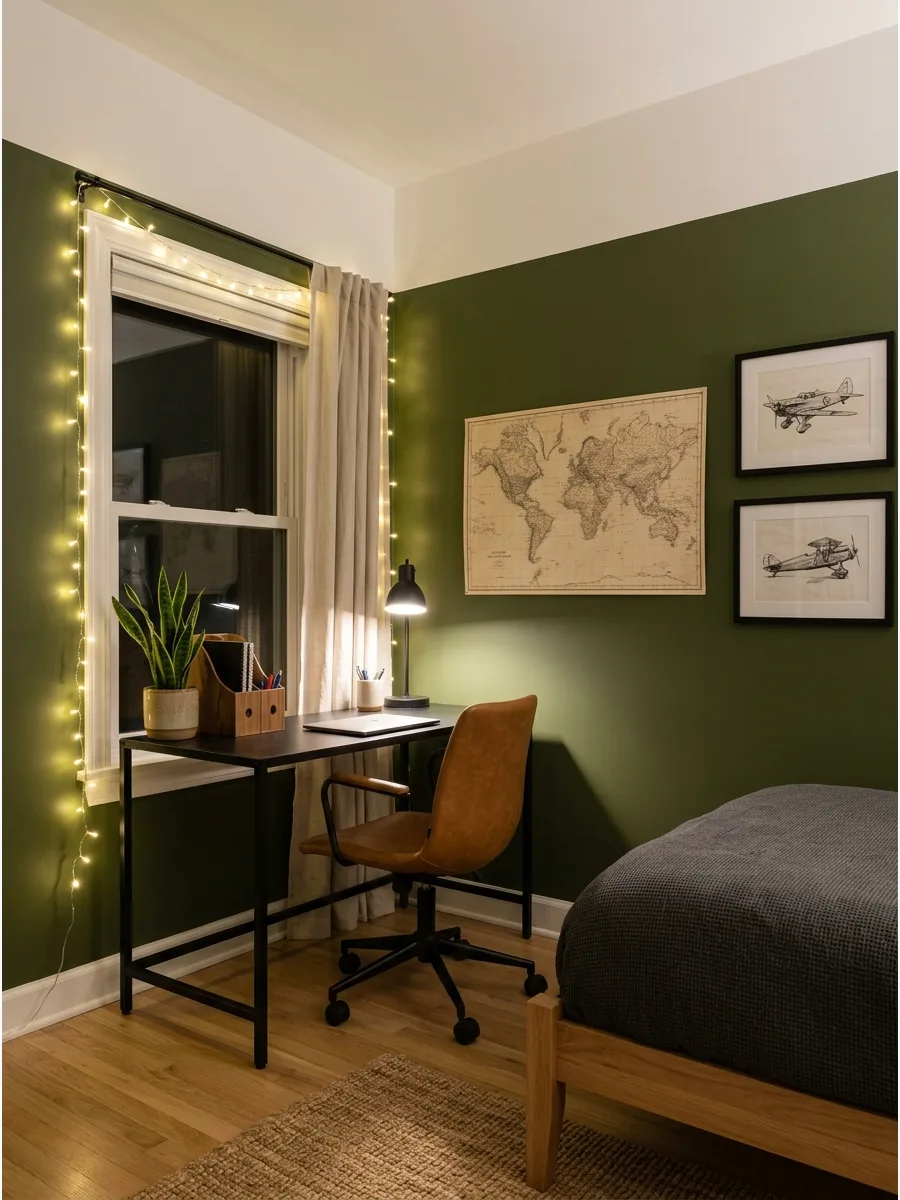
Olive green feels more mature than bright green and works well with tan, black, and wood furniture. It is a smart choice for a room that needs to transition from a playroom to a study space.
Keep the ceiling a crisp white to prevent the olive walls from feeling too heavy. This shade looks especially good when paired with vintage-style posters or maps.
- Gallon of olive green interior paint ($45)
- A 9-inch roller frame and high-quality covers
- Use black metal picture frames to create a modern gallery wall against the green
Quick win: Use brass-colored light fixtures to bring out the warmth in olive green paint.
13. Forest Green Accent Wall
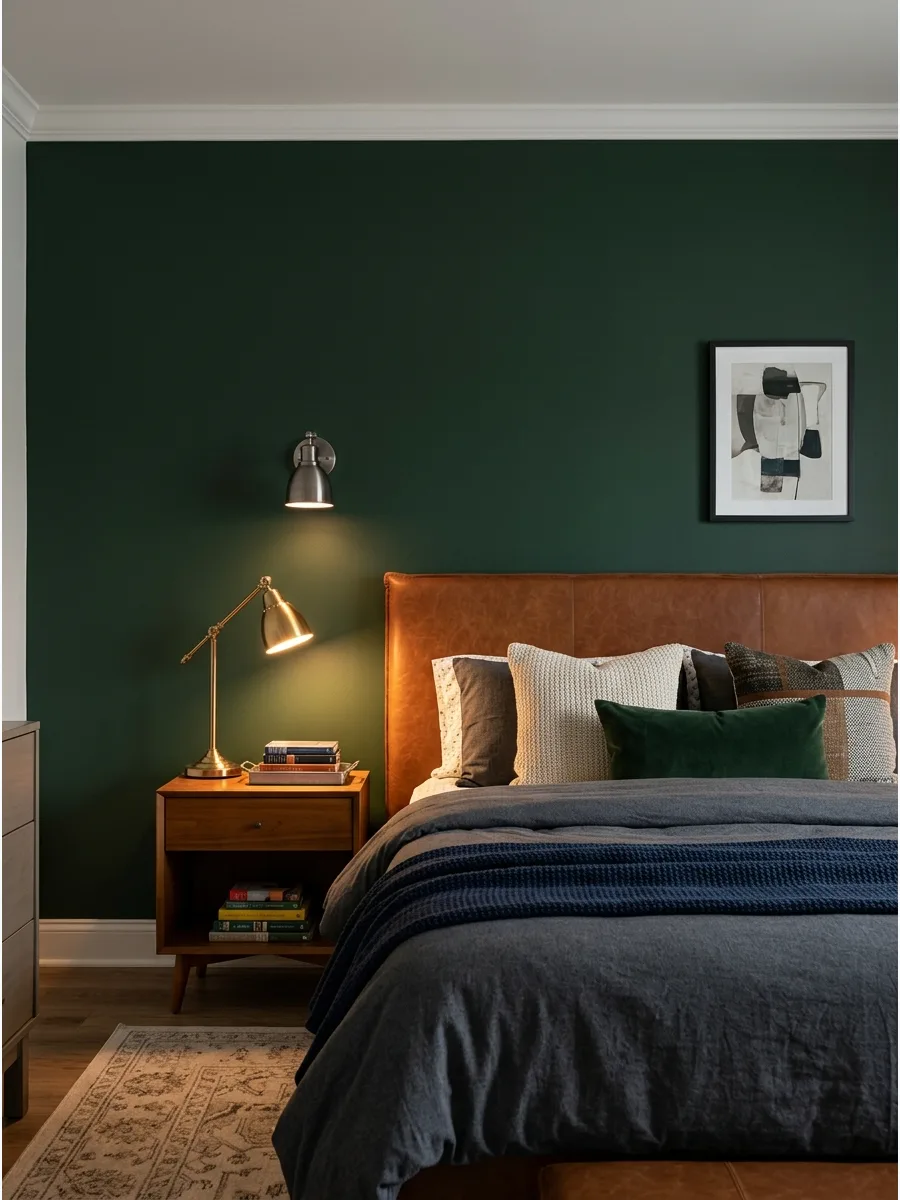
Forest green is a classic choice that feels cozy and grounded for an older boy. It works well in rooms with plenty of natural light to prevent the space from feeling like a cave.
Choose a cognac leather or warm wood headboard to pop against the dark green background. This color choice creates a high-end look that won’t need updating for years.
- Dark-base paint and a high-quality roller cover ($60)
- Expect to apply at least two to three coats for full coverage with dark colors
- Use white bedding to provide a sharp contrast against the moody wall
Best shortcut: Use a tinted primer to reach the true forest green color in fewer coats.
14. Muted Green Built-Ins
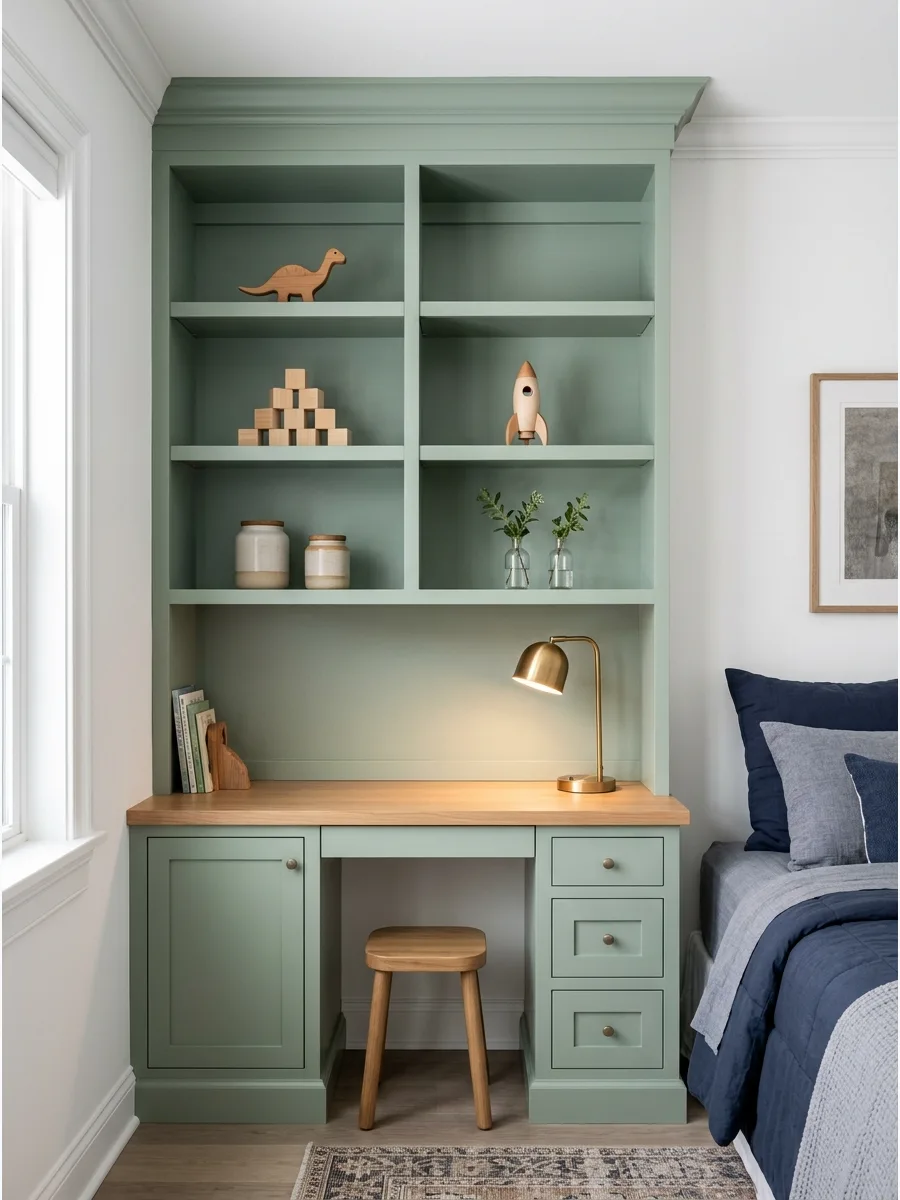
Painting built-ins or a desk nook adds a pop of personality to a neutral room. It defines a specific zone for homework or hobbies without the commitment of four green walls.
Remove all hardware and doors before painting to get a professional, drip-free finish. Muted greens act like a neutral and won’t distract a child while they study.
- Cabinet-grade paint ($30-$50)
- Use a small foam roller on flat surfaces to avoid brush marks
- Add brass or matte black handles to the doors for a high-end look
Quick win: Line the back of the shelves with a patterned wallpaper that matches the green paint.
15. Green and Beige Color Block Wall
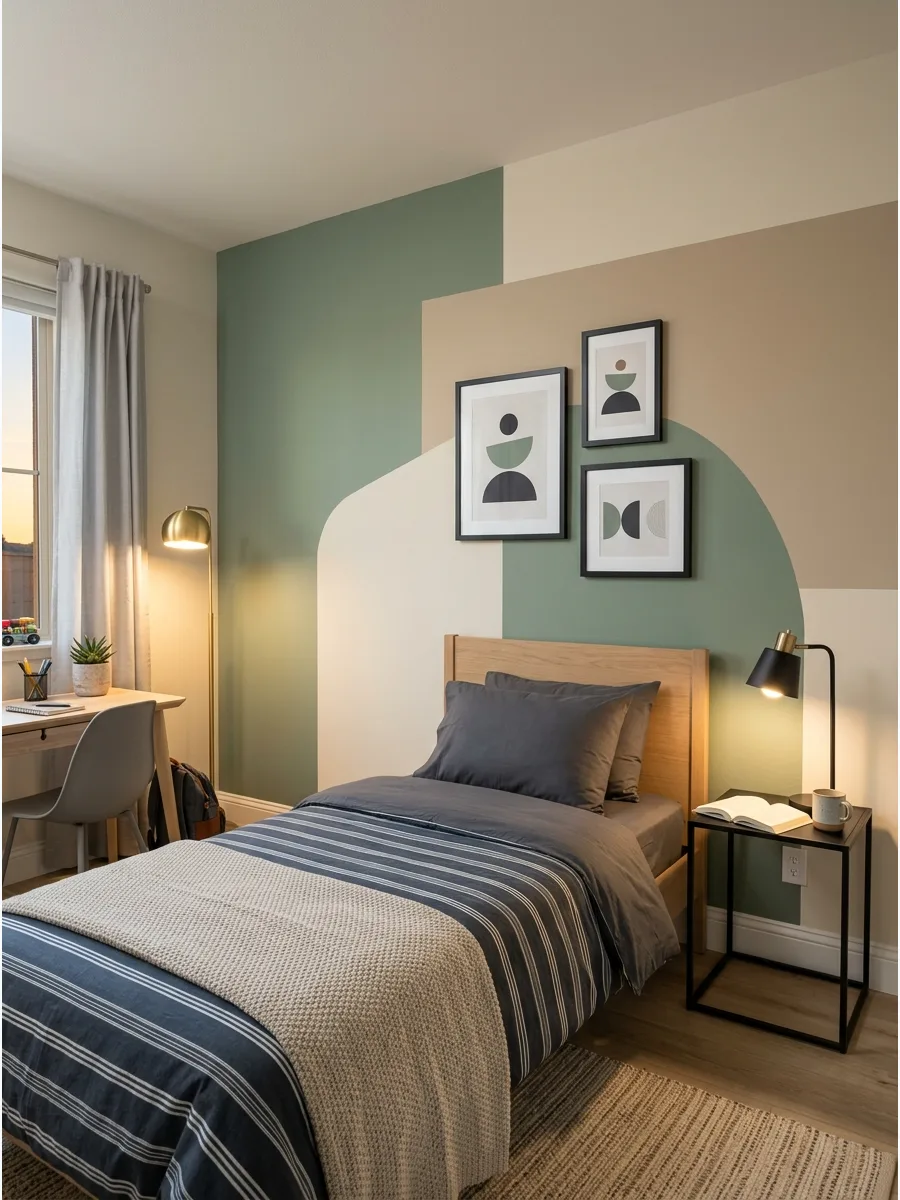
Color blocking is a modern way to use leftover paint from other projects. It creates a focal point that acts like a mural but feels more mature.
Sketch the design on paper first to figure out where the shapes will overlap with furniture. This style allows for a lot of creativity without needing professional artistic skills.
- Three sample-sized paint cans ($20-$30)
- Use low-tack painters tape to protect the base colors as you add new shapes
- Keep the shapes large and simple to avoid a cluttered look in a small room
Best shortcut: Use a piece of chalk to sketch the shapes on the wall because it wipes off easily if you change your mind.
16. Dark Green Wainscoting
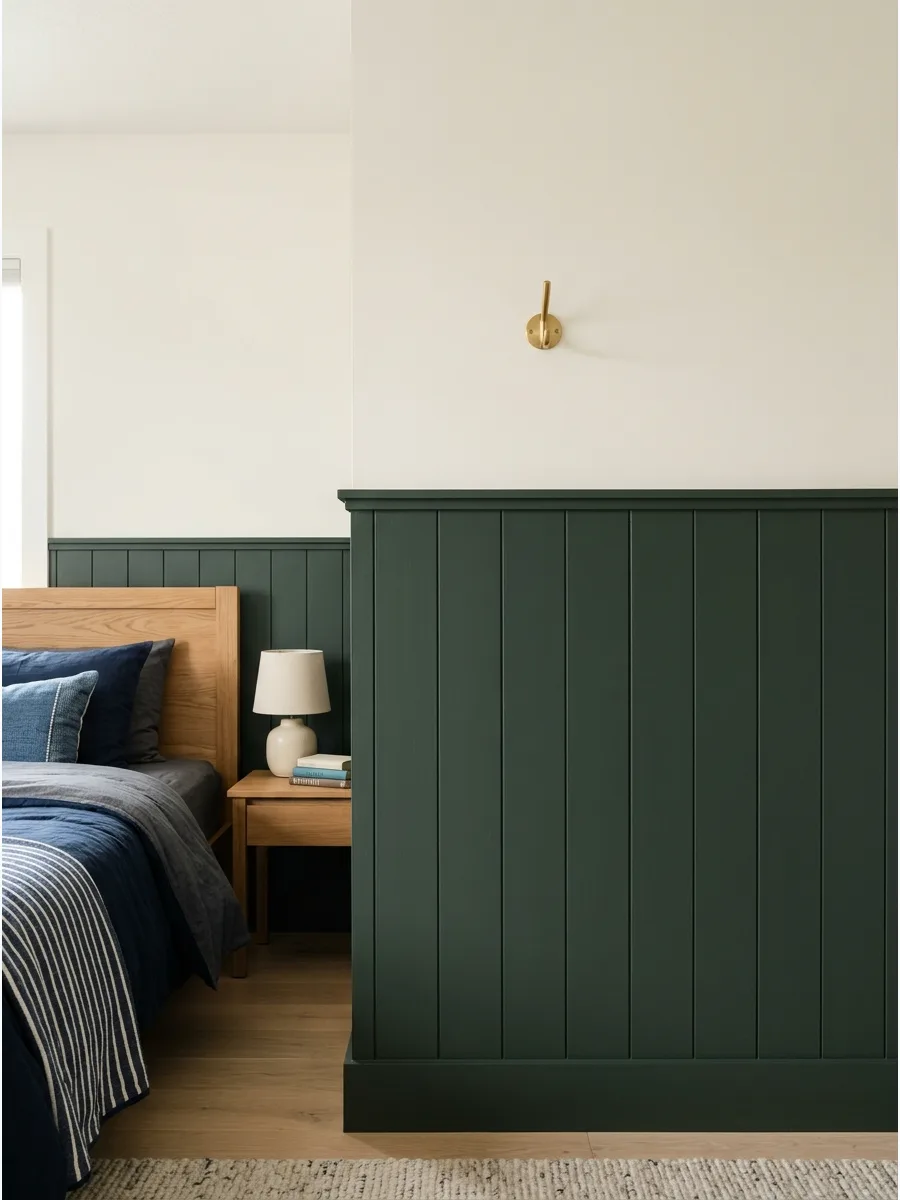
Wainscoting adds texture and a high-end feel to a kid’s space without a full renovation. Paint the lower third of the wall in a deep forest green and use a warm off-white for the top portion. Dark colors on the bottom part of the wall hide scuffs and handprints much better than light paint does.
This classic look stays stylish from the toddler years all the way through high school.
- Materials and paint: $150-$300; one weekend project.
- Install the wood panels first, then use a small roller for a smooth finish on the green section.
- In a small room, keep the wainscoting lower to avoid making the ceiling feel short.
Quick win: Use a laser level to get the wainscoting line perfectly straight across the room.
Blue Boys Room Paint Ideas
17. Blue-Gray Bedroom Walls
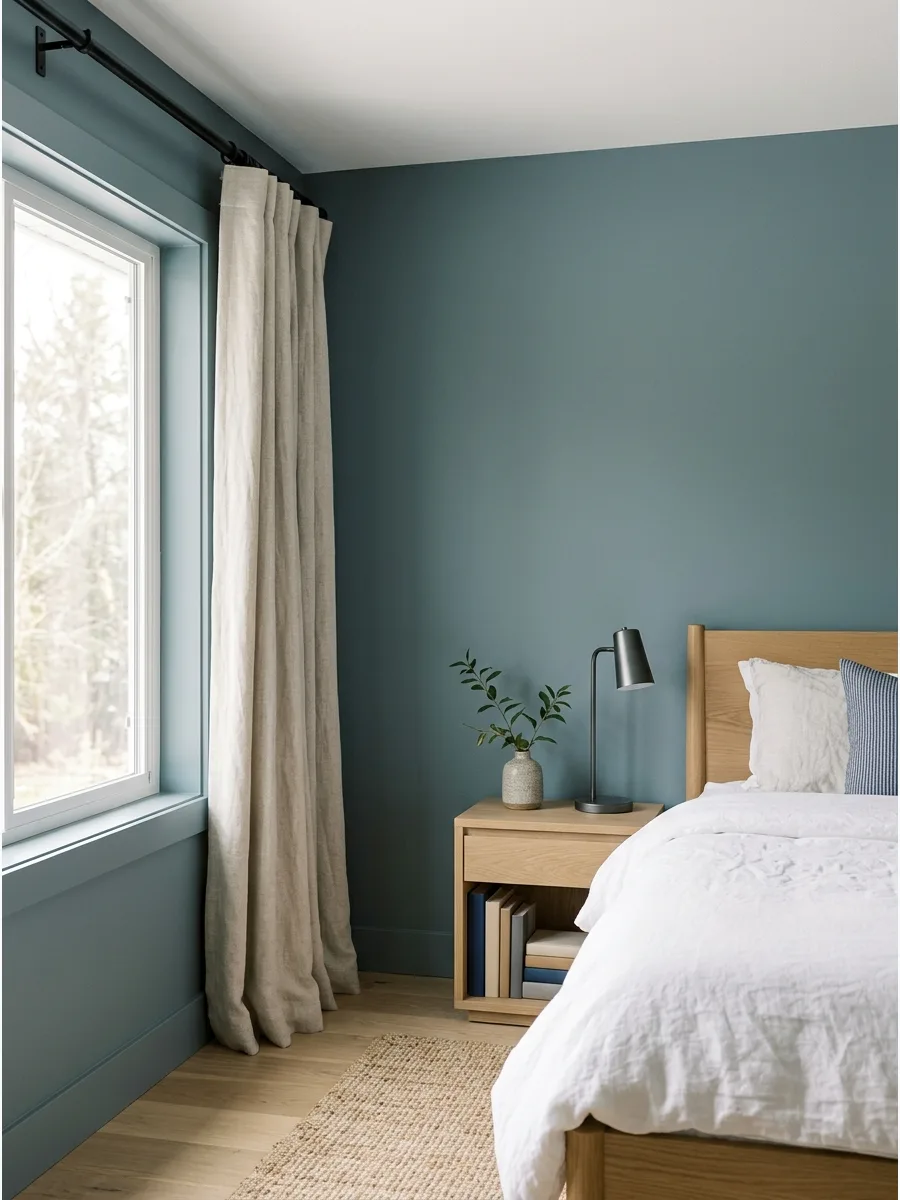
Blue-gray is a chameleon color that changes based on the time of day. Pair blue-gray walls with light oak furniture to keep the room from feeling too cold or sterile. It is a sophisticated choice that works for a nursery or a teenager’s hangout.
Most people pick a gray that has too much purple, so look for a shade with a muddy, green-blue undertone.
- One gallon of paint: $45-$65; 4 hours of painting time.
- Test a large swatch on every wall because this color shifts significantly in different light.
- Use black metal accents like lamps or frames to give the soft color a modern edge.
Most people skip this: Paint a large piece of poster board and move it around the room for two days before buying the full gallon.
18. Dusty Blue Boys Room
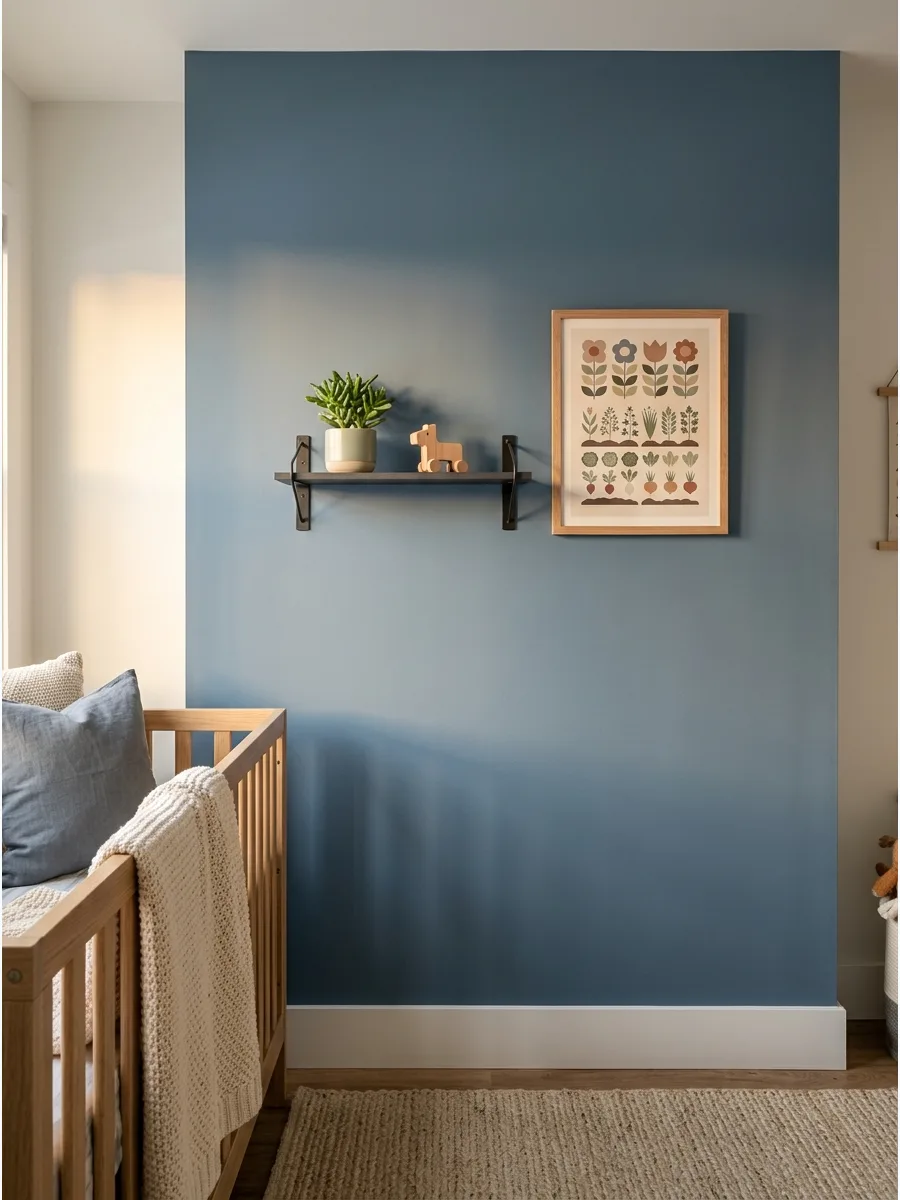
Dusty blue is soft and peaceful but still provides plenty of personality.
Use a matte finish to give the dusty blue a velvet-like appearance on the walls. This color creates a calm environment that actually helps with sleep and relaxation. A slight gray tint keeps the blue from looking like a traditional baby nursery.
- Standard paint supplies: $60; half-day project.
- Apply two thin coats rather than one thick coat to avoid visible roller marks in the matte finish.
- Add warmth with tan leather or woven baskets to balance the cool blue tones.
Best shortcut: Use a high-quality microfiber roller cover to get the smoothest possible finish with matte paint.
19. Navy Blue Accent Wall
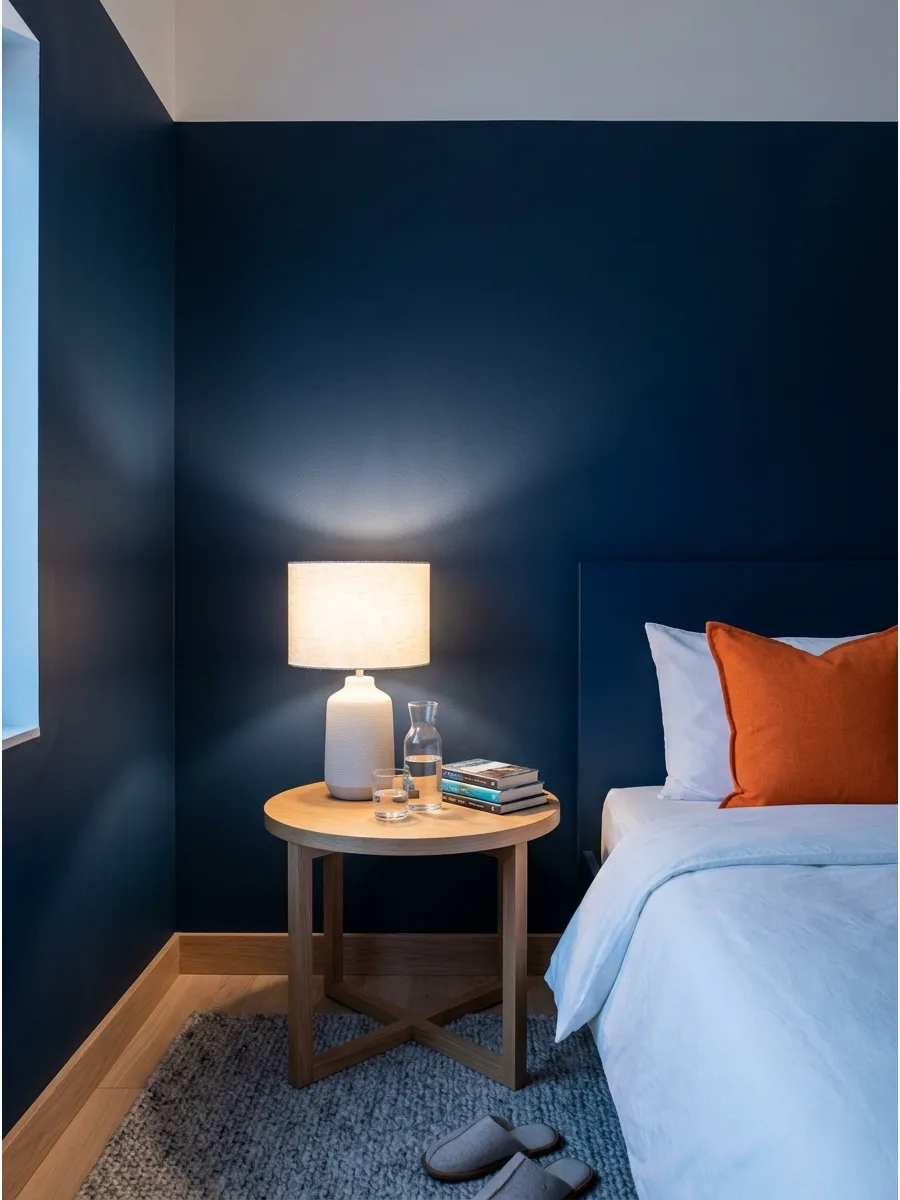
Navy is a classic choice that adds instant depth to a bedroom. Position the bed directly against the navy wall to create a strong focal point that grounds the furniture. It makes white bedding or bright orange pillows pop against the dark background.
You do not need to worry about the room feeling too dark if the other three walls stay light.
- One gallon of navy paint: $55; 3 hours of painting.
- Use a tinted primer first so the dark navy color covers the wall in fewer coats.
- Works best on the wall with the most window light to show off the true blue color.
Quick win: Paint the outlet covers the same navy color so they disappear into the accent wall.
20. Denim Blue Paint Color
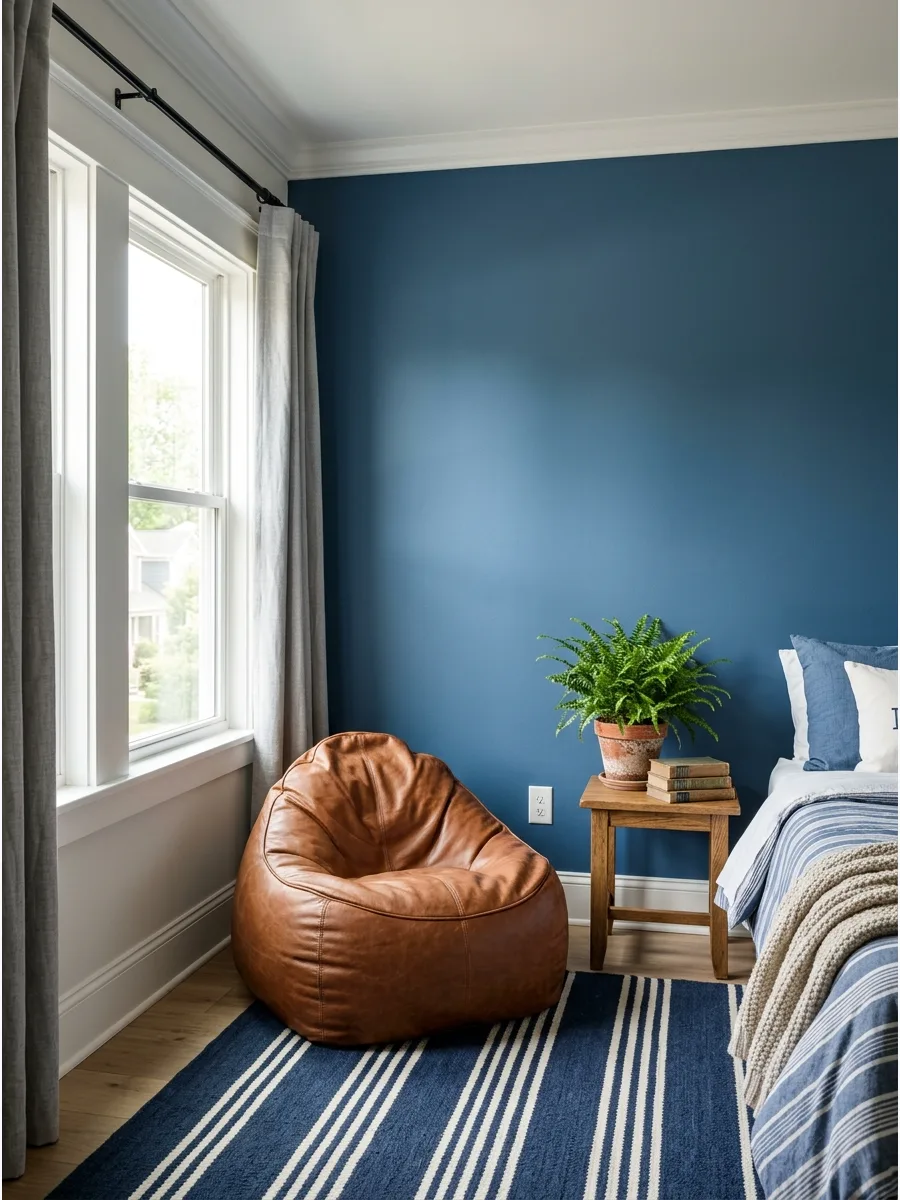
This shade feels lived-in and comfortable, much like a favorite pair of jeans. Incorporate striped bedding and leather accents to lean into the casual denim aesthetic. It is the perfect middle ground between a bright royal blue and a very dark navy.
This color looks best in rooms with plenty of natural light to bring out the blue pigment.
- Standard paint cost: $50-$70; 5 hours for prep and paint.
- Pair with white trim to give the blue a crisp, clean look.
- Great for high-traffic rooms because mid-tone blues hide small marks well.
Most people skip this: Choose a satin finish for denim blue to make the walls easier to wipe clean in a kid’s room.
21. Slate Blue Walls
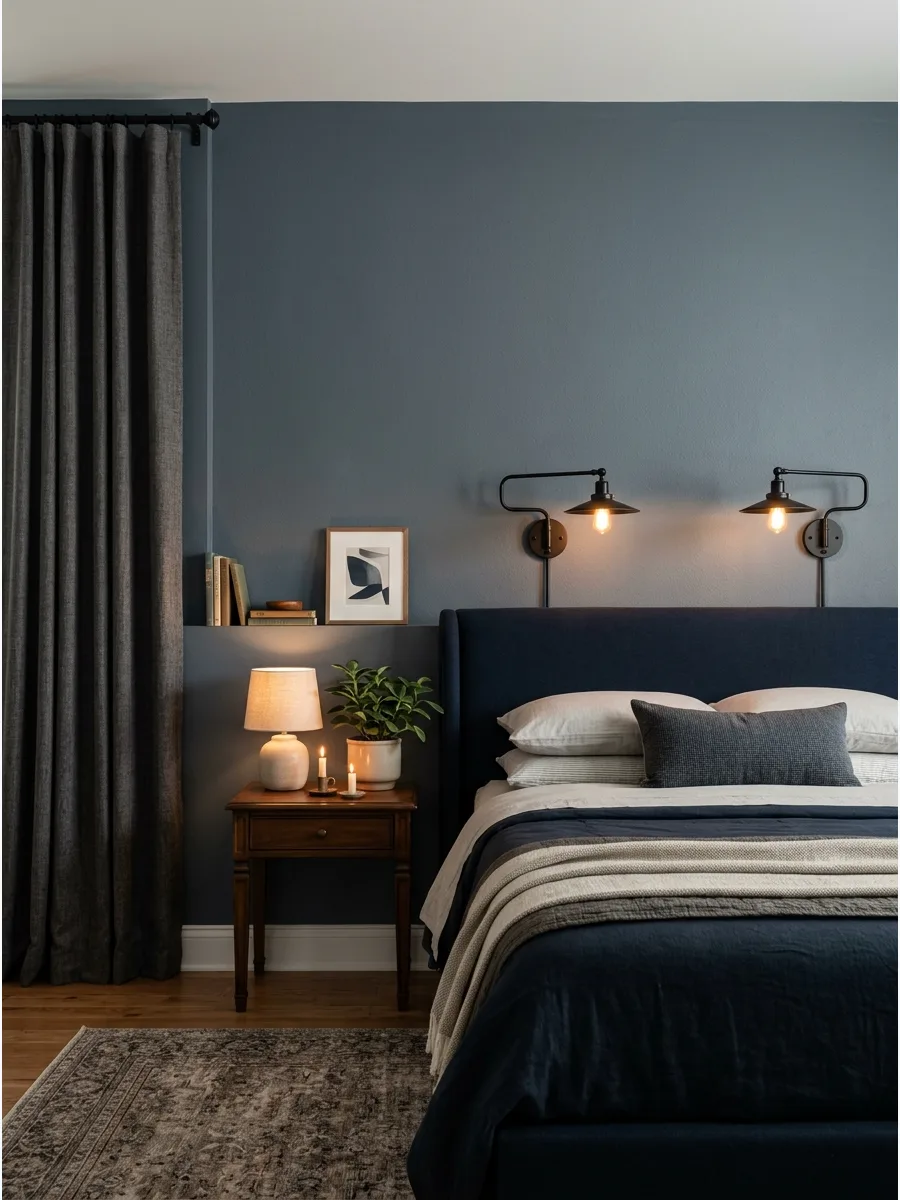
Slate blue has a sophisticated gray edge that feels very mature. Install black metal wall sconces over the bed to contrast with the deep slate blue paint. This is an excellent choice for an older boy who wants a room that does not feel childish.
This specific shade actually makes small rooms feel deeper rather than smaller.
- Premium paint: $65; 4-6 hours for a full room.
- Carry the color onto the window trim for a high-end, custom look.
- Balance the cool slate with warm wood floors or a jute rug.
Best shortcut: Paint the back of a bookshelf in slate blue to test the color before committing to the whole wall.
22. Soft Sky Blue Ceiling
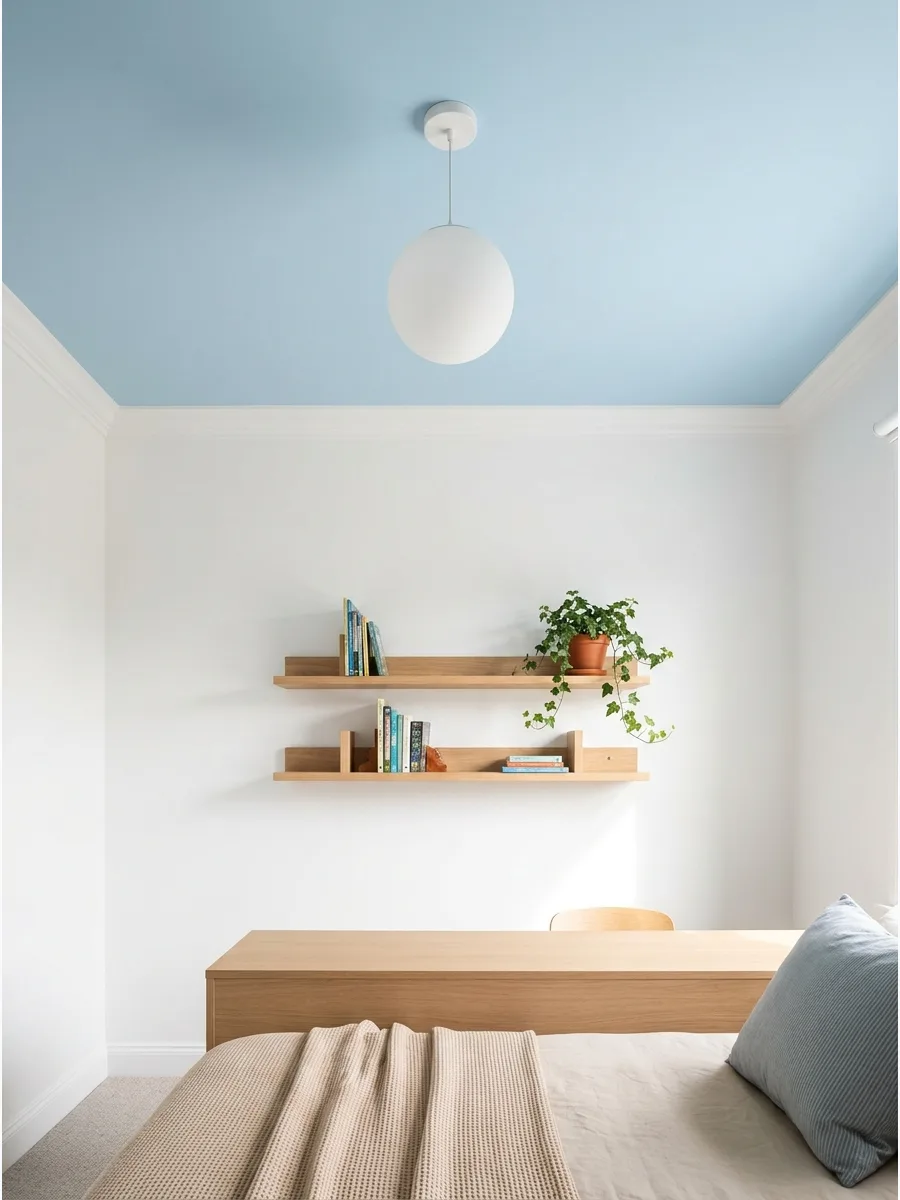
The ceiling is often forgotten, but it is a great place to add a surprise.
Paint the ceiling a very pale sky blue while keeping the walls a crisp, clean white. This draws the eye upward and makes the ceiling feel much higher than it actually is. It is a smart way to add color if the walls are mostly covered in posters or shelves.
- One quart of paint: $25; 2 hours to paint a ceiling.
- Use a long extension pole for your roller to save your back and neck from strain.
- Ensure the ceiling is perfectly smooth before painting, as color shows every bump.
Quick win: Use a ‘ceiling paint’ that goes on pink and dries blue so you can see exactly where you have already painted.
23. Blue and Cream Two-Tone Wall
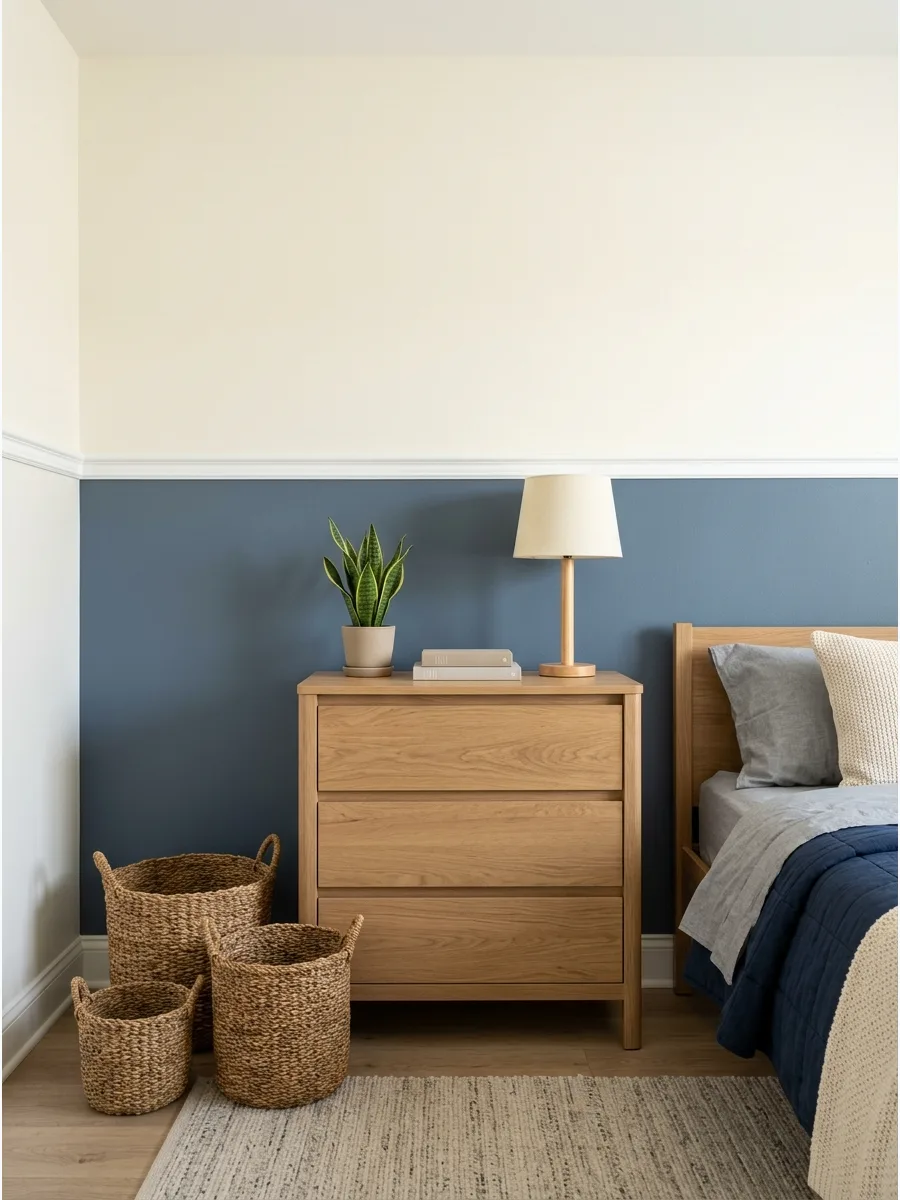
This is a timeless combination that creates a structured, clean look. Apply a muted blue paint to the bottom half of the wall and a creamy white to the top half. Use a thin piece of wood trim to hide the paint line for a professional, finished appearance.
This style provides a classic backdrop that stays stylish as the child grows.
- Two colors of paint: $100; 6-8 hours including trim installation.
- Use high-quality painter’s tape and pull it off while the paint is still slightly wet for a sharp line.
- Put the darker color on the bottom to ground the room and hide scuff marks.
Most people skip this: Paint the cream color first and let it dry for 24 hours before taping off the line for the blue.
24. Navy Painted Closet Doors
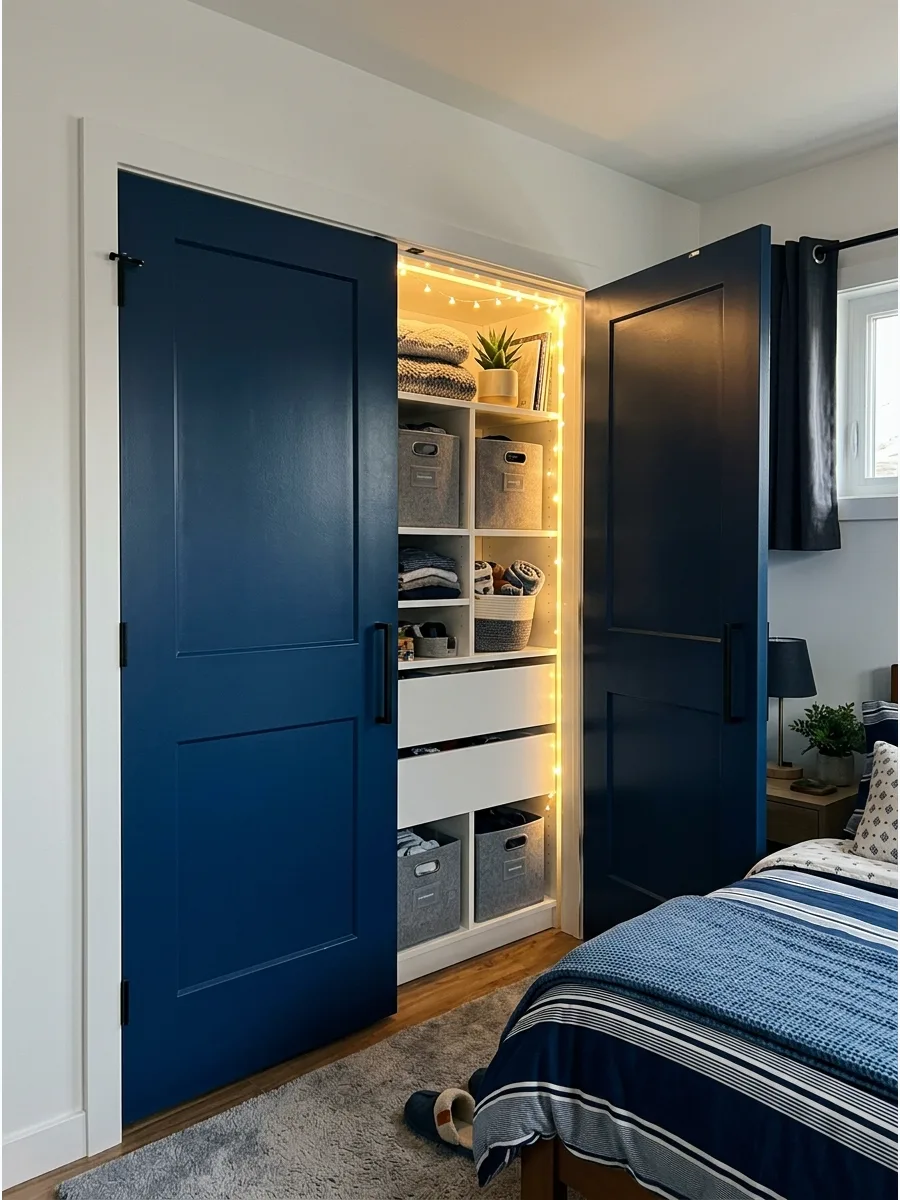
Painting the doors adds a punch of color without the commitment of a full room change. Swap out standard white closet doors for doors painted in a rich, satin navy blue. It turns a boring utility feature into a major design element.
Make sure to use a durable paint that can handle frequent touching and cleaning.
- One quart of satin paint: $30; 3 hours of work.
- Sand the doors lightly with fine-grit sandpaper before painting so the color sticks better.
- Add modern black or brass hardware to complete the updated look.
Best shortcut: Take the doors off the hinges and lay them flat on sawhorses to prevent paint drips.
Moody Boys Room Paint Ideas
25. Chocolate Brown Accent Wall
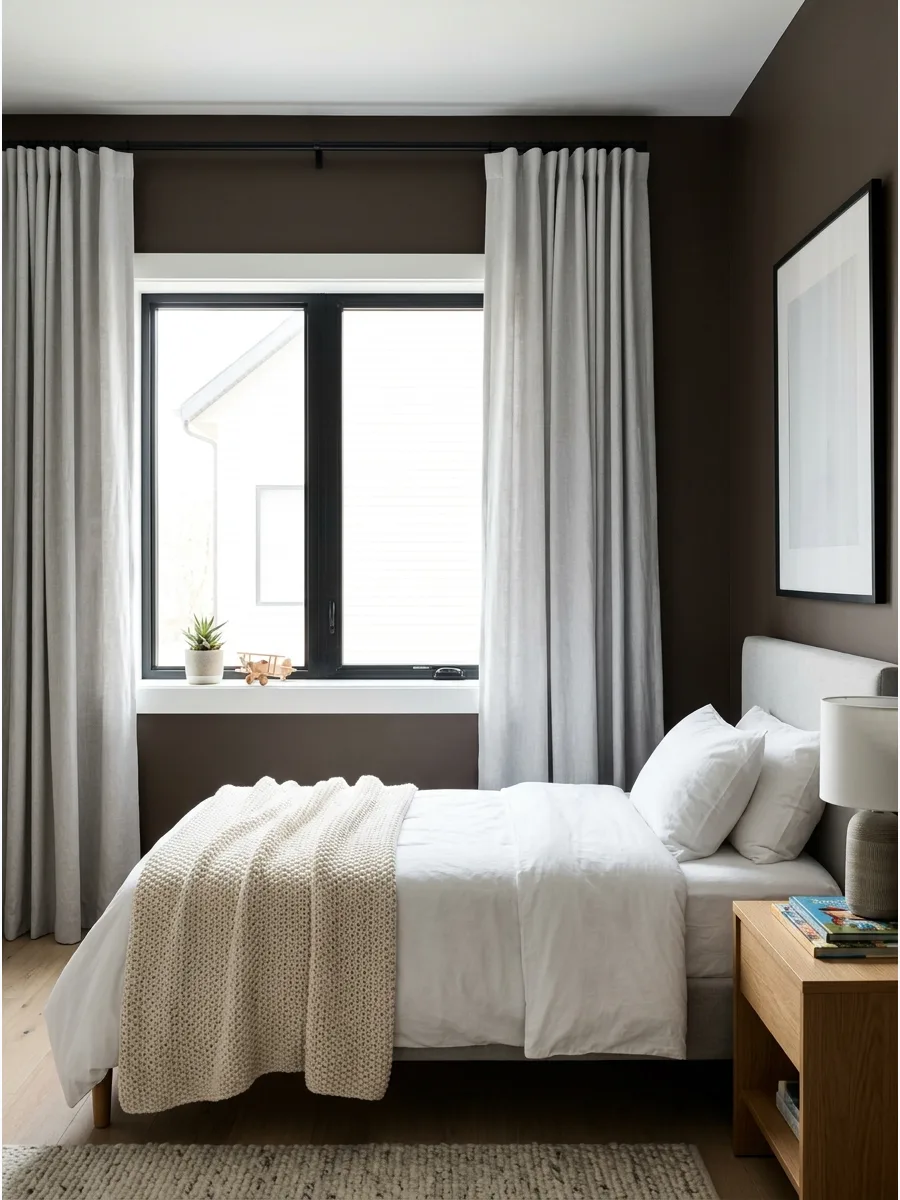
Brown is making a huge comeback because it feels grounded and cozy. Place a light gray or cream headboard against the chocolate brown wall for maximum contrast. It feels like a modern mountain cabin or a high-end hotel room.
Avoid ‘muddy’ browns by choosing a shade with cool, ashy undertones rather than red ones.
- One gallon of paint: $50; 3 hours to complete.
- Use warm white light bulbs in the room to keep the brown from looking too dark or black at night.
- Pair with light-colored wood furniture to maintain a modern, fresh feel.
Quick win: Bring a piece of your wood furniture to the paint store to make sure the brown shade doesn’t clash with the wood grain.
26. Charcoal Boys Room
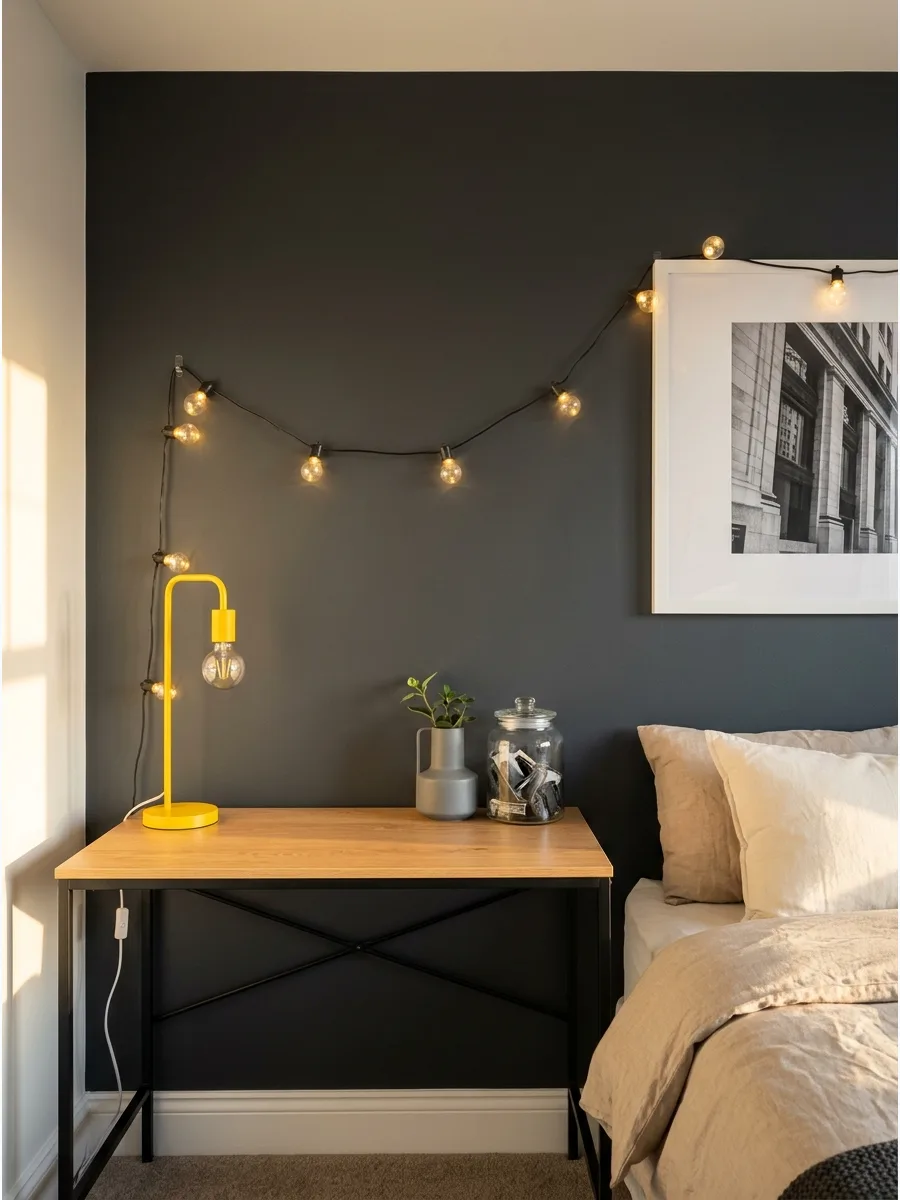
Charcoal is the ultimate neutral for a cool, modern boys’ room. Bring in pops of bright orange or yellow through decor to keep the charcoal walls from looking flat. It hides fingerprints and wall marks exceptionally well, making it very practical for kids.
Use large-scale art with white frames to break up the dark surface.
- One gallon of charcoal paint: $60; 4 hours of painting.
- Paint only one wall charcoal if the room is small or lacks a large window.
- Use a matte or eggshell finish to minimize reflections on the dark surface.
Most people skip this: Use white primer if you are painting charcoal over a very light color to ensure the gray looks even.
27. Black Painted Feature Wall
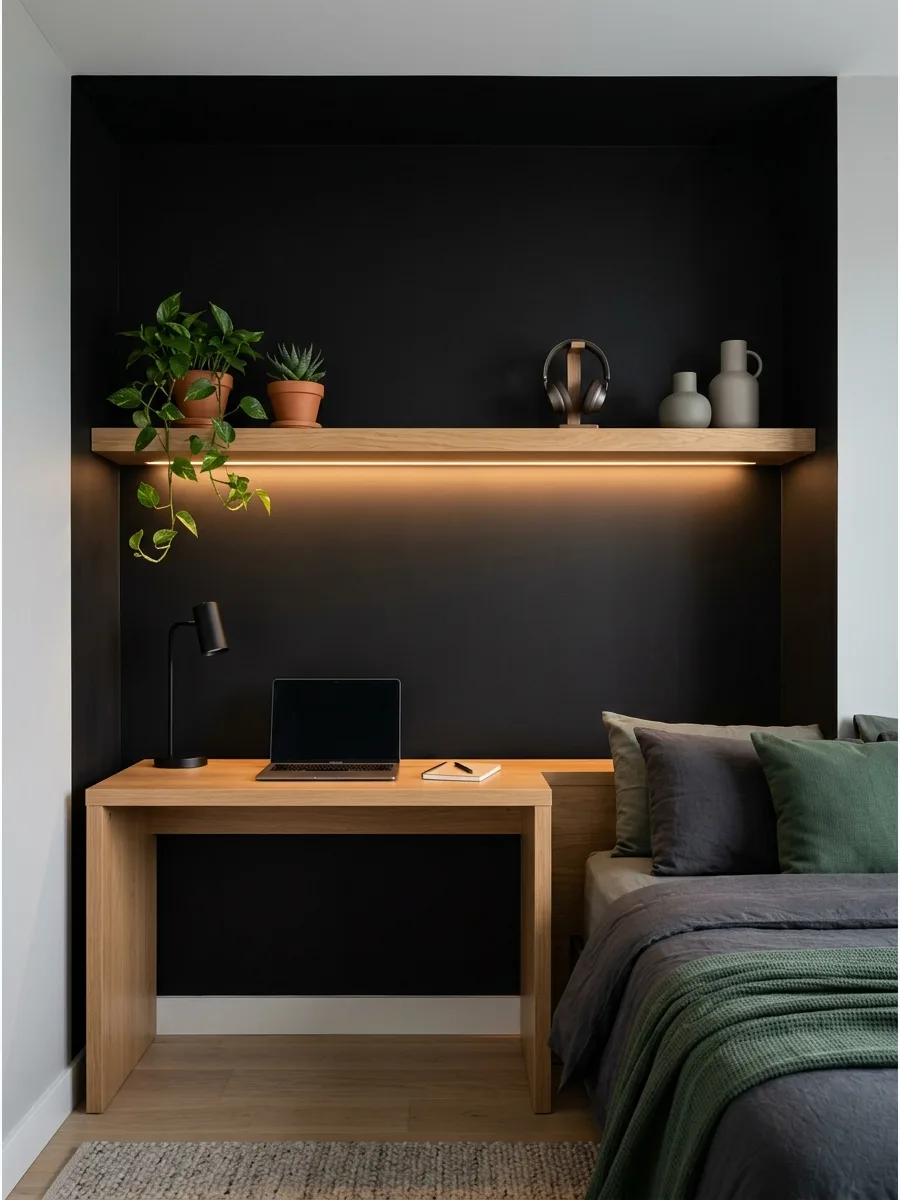
Black is a bold choice that feels very intentional and modern for a teen. Install warm LED strip lighting behind a bed or desk to make the black wall glow. It creates a high-contrast look that makes every other color in the room stand out.
A flat or matte finish is best to avoid glare from windows or lamps.
- One gallon of matte black paint: $65; 3 hours of painting.
- Clean the wall thoroughly before painting, as black shows every speck of dust or hair.
- Use light-colored bedding and rugs to balance the heavy visual weight of the black wall.
Best shortcut: Use a small foam roller for the edges near the ceiling to get a perfectly straight line without a brush.
28. Dark Auburn Stripe
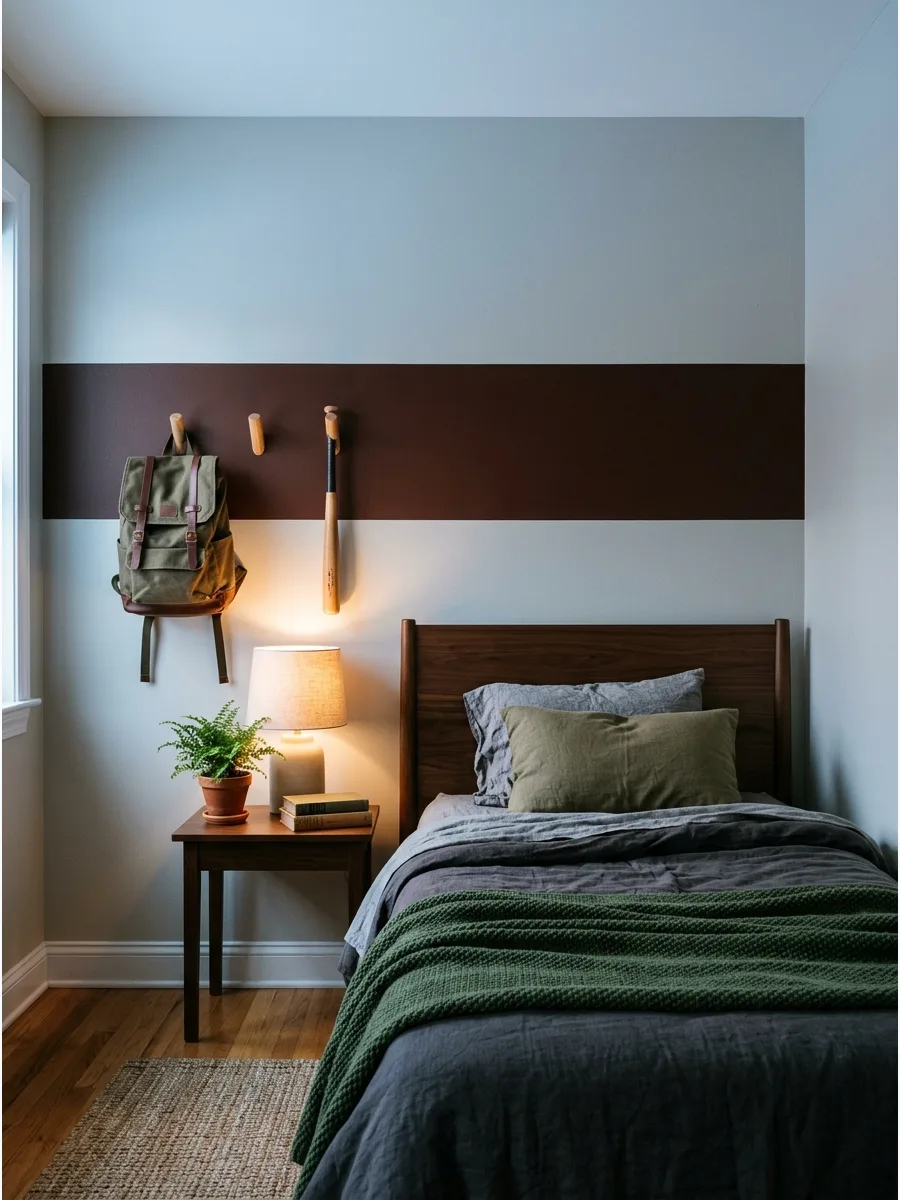
A single stripe adds a sporty vibe without needing a full themed room. Tape off a horizontal twelve-inch stripe at eye level and paint it a deep auburn brown. This breaks up a large, plain wall and adds a sense of movement to the space.
It works best on a neutral gray or beige base wall.
- One quart of auburn paint: $25; 2 hours of work.
- Use a level to ensure the stripe is perfectly horizontal before applying the tape.
- Carry the stripe across the door for a continuous, custom architectural look.
Quick win: Paint over the edge of your tape with the base wall color first to seal it and prevent the auburn from bleeding.
29. Moody Green-Black Wall
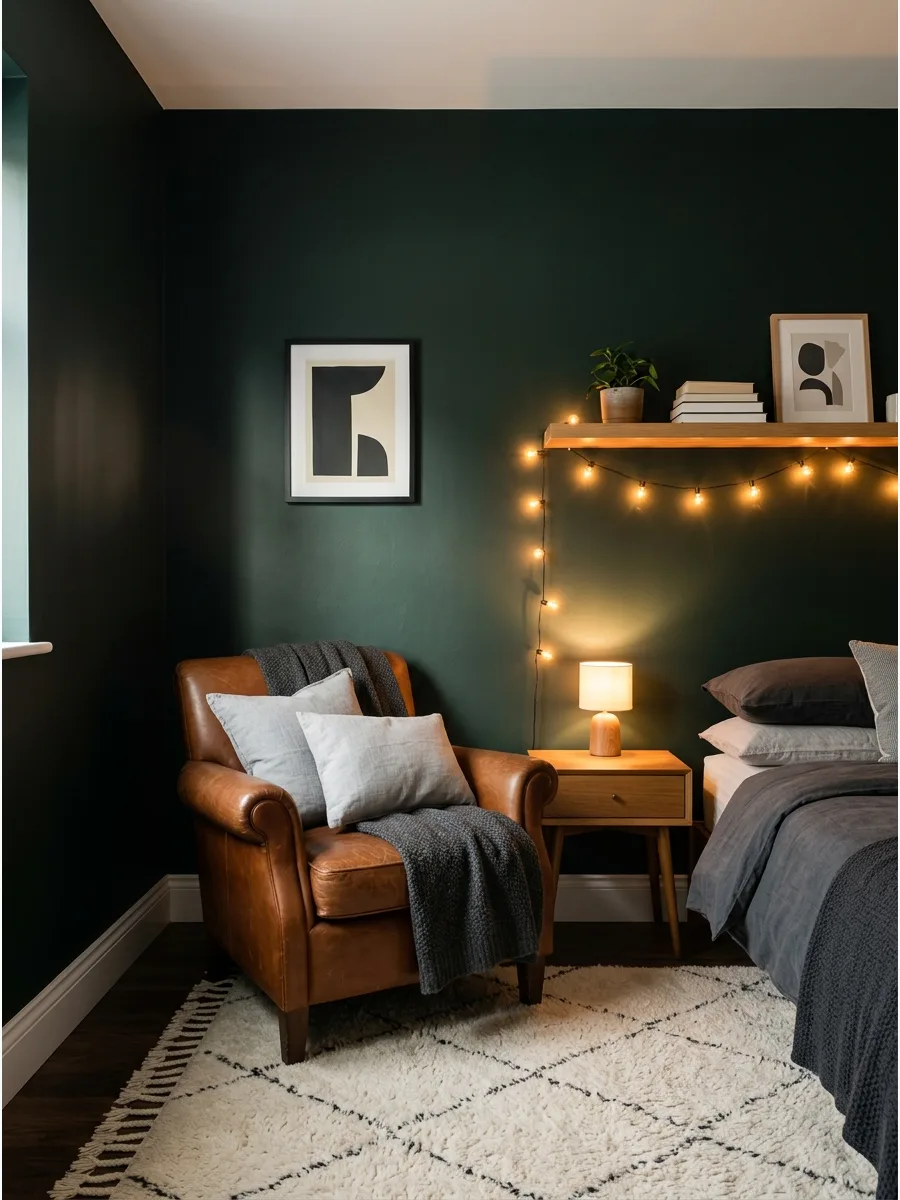
This deep color changes with the light and adds a ton of character. Layer different textures like wool and linen in front of the green-black wall to add depth. In the morning it looks like a dark forest green, and at night it looks almost black.
It is a sophisticated choice that won’t be outgrown as his tastes change.
- One gallon of premium dark paint: $70; 4 hours of painting.
- Use brass or gold hardware on furniture in front of this wall to make it feel expensive.
- Ensure you have at least two sources of warm light to keep the corner from feeling too dark.
Most people skip this: Order a ‘peel and stick’ sample of this color first, as green-black can look very different under LED versus natural light.
30. Dark Painted Desk Nook
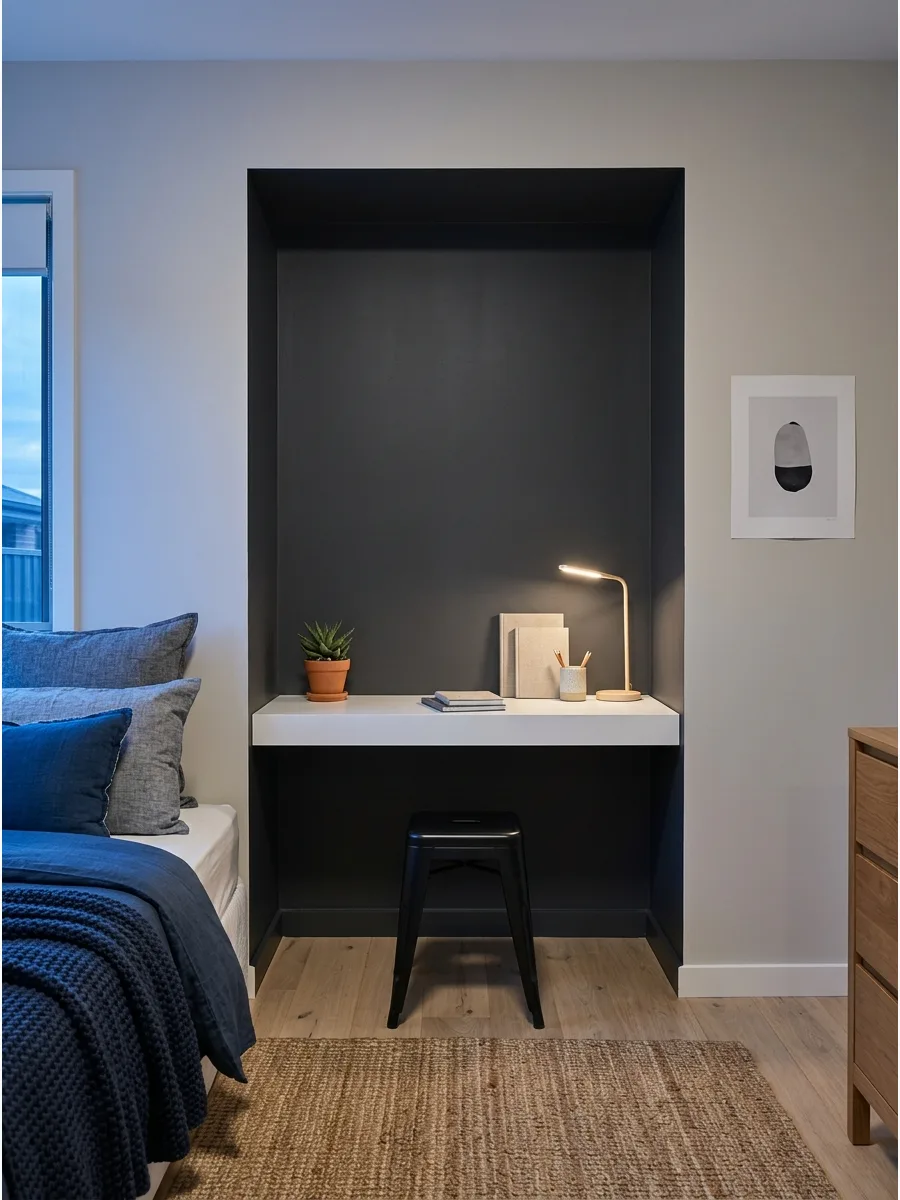
Zoned painting defines a workspace and helps with focus. Paint a recessed nook or a specific corner in a dark charcoal or navy to separate the study area from the sleeping area. It creates a distinct visual boundary that makes the room feel organized.
Keep the desk itself a light color to prevent the nook from feeling too cramped.
- One quart of dark paint: $30; 2 hours of painting.
- Use the dark color on the side walls of the nook as well as the back for a ‘wrapped’ look.
- Install a bright task light to ensure the dark paint doesn’t make the workspace too dim.
Best shortcut: Paint the floating shelves the same dark color as the nook so they blend in and keep the focus on the desk.
31. Dark Trim With Light Walls
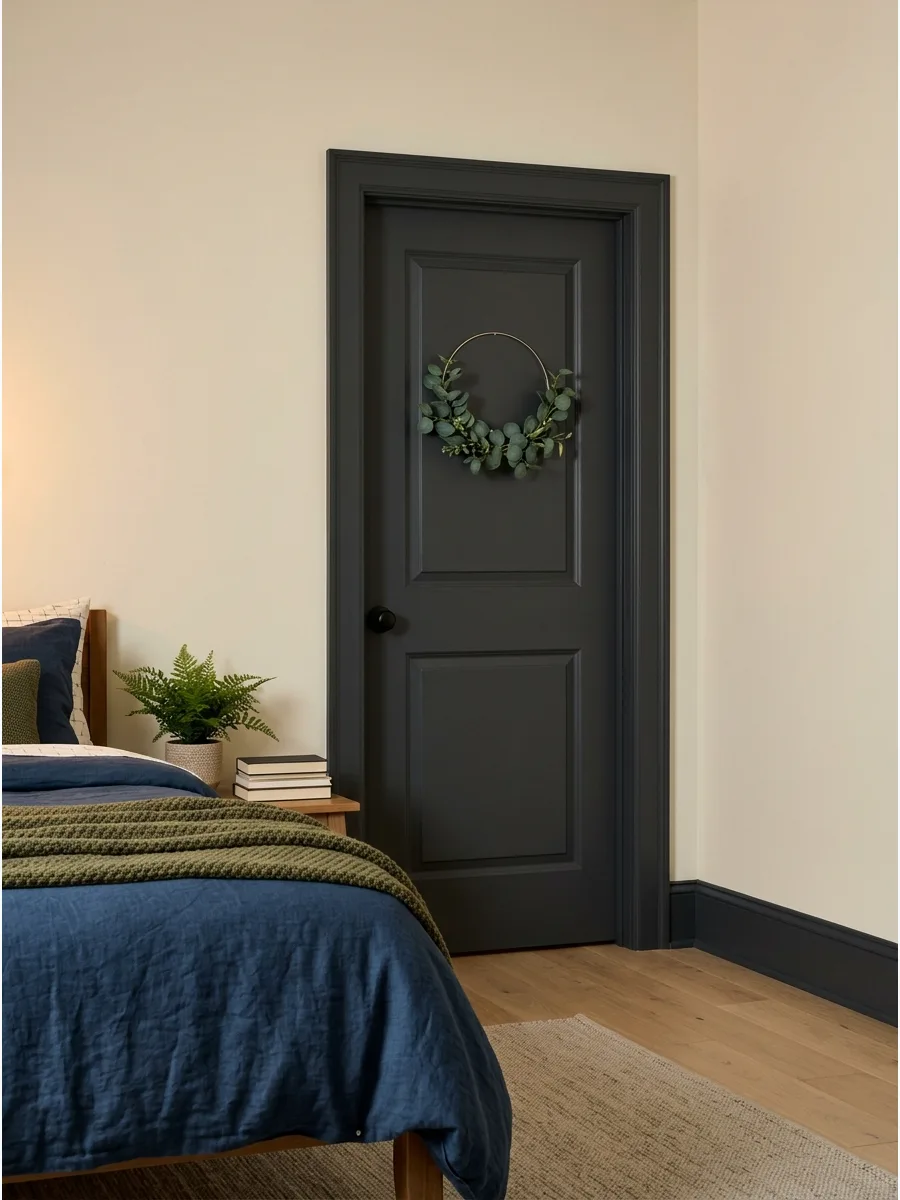
Painting door frames, baseboards, and window casings in a deep tone like charcoal or navy adds instant architectural interest. This technique anchors a room without the commitment of painting every wall a dark shade.
Pairing dark trim with off-white walls creates a high-contrast look that feels intentional and high-end. Deep colors on high-traffic trim areas also hide scuffs better than standard white.
- Budget for one gallon of high-quality trim paint
- Tape off all wall edges carefully for a sharp line
- Use a semi-gloss finish for maximum durability
Quick win: Use the same dark color on the door itself to make the room feel more cohesive.
32. Painted Ceiling in a Dark Color
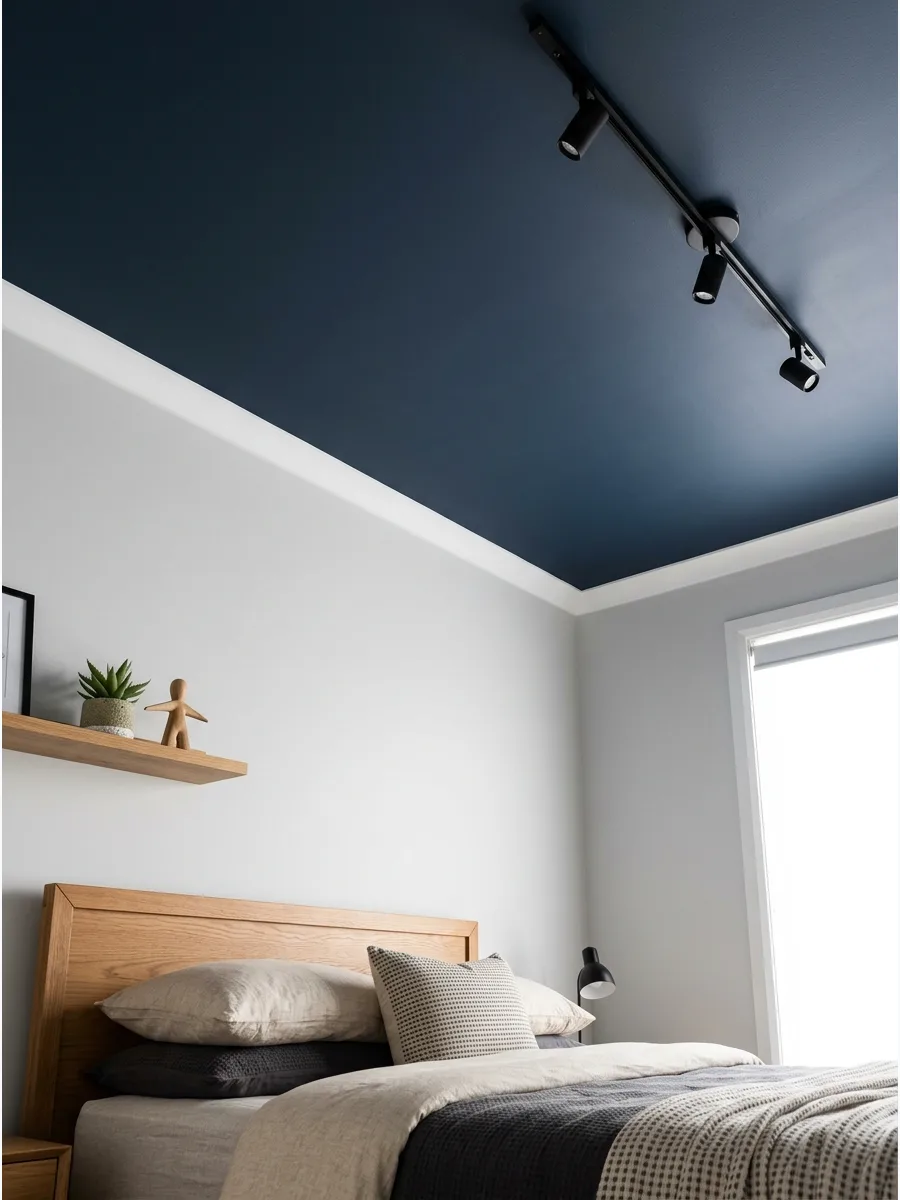
Coating the ceiling in a rich navy or forest green makes a large space feel more intimate and grounded. This approach draws the eye upward and turns the fifth wall into the main design feature.
Choosing a flat finish for a dark ceiling prevents light from bouncing in a way that highlights drywall imperfections. It works best in rooms with plenty of natural light to keep the atmosphere from feeling too heavy.
- Requires a sturdy ladder and roller extension
- Paint the ceiling before the walls to catch drips
- Best for rooms with at least eight-foot ceilings
Most people skip this: Paint the crown molding the same color as the ceiling to make the walls look taller.
Creative Accent Wall Paint Ideas
33. Painted Arch Behind the Bed
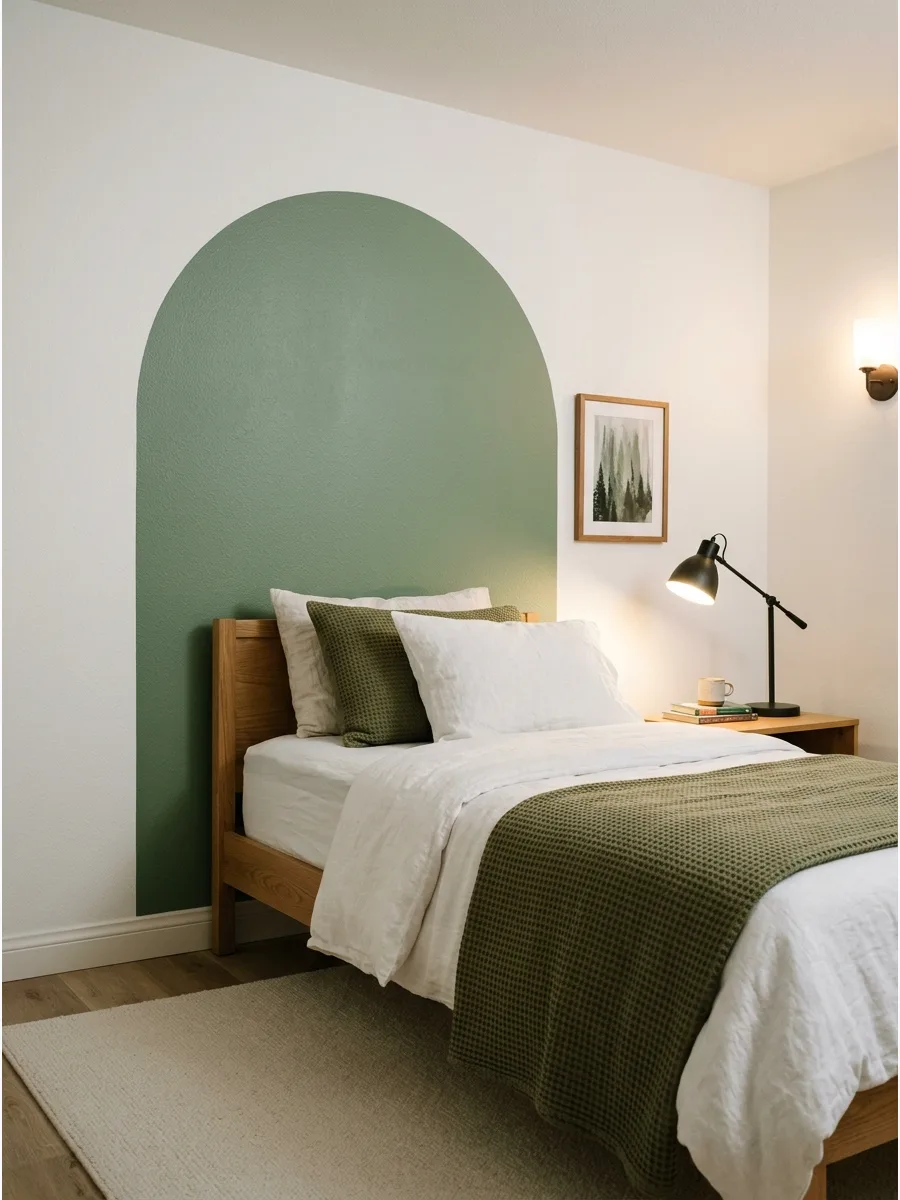
A painted arch serves as a focal point that mimics the look of an expensive headboard for the cost of a sample paint pot. This soft geometric shape adds a modern touch and defines the sleeping zone in a shared or large room.
Using a piece of string and a pencil as a compass ensures the top curve of the arch is perfectly symmetrical. It provides a pop of color that is easy to paint over as tastes change.
- Budget-friendly DIY using leftover paint
- Draw the outline with a pencil before painting
- Works well in small rooms to add depth
Best shortcut: Use a small angled brush to cut in the curved edge for a professional finish.
34. Layered Ombre Mountain Mural
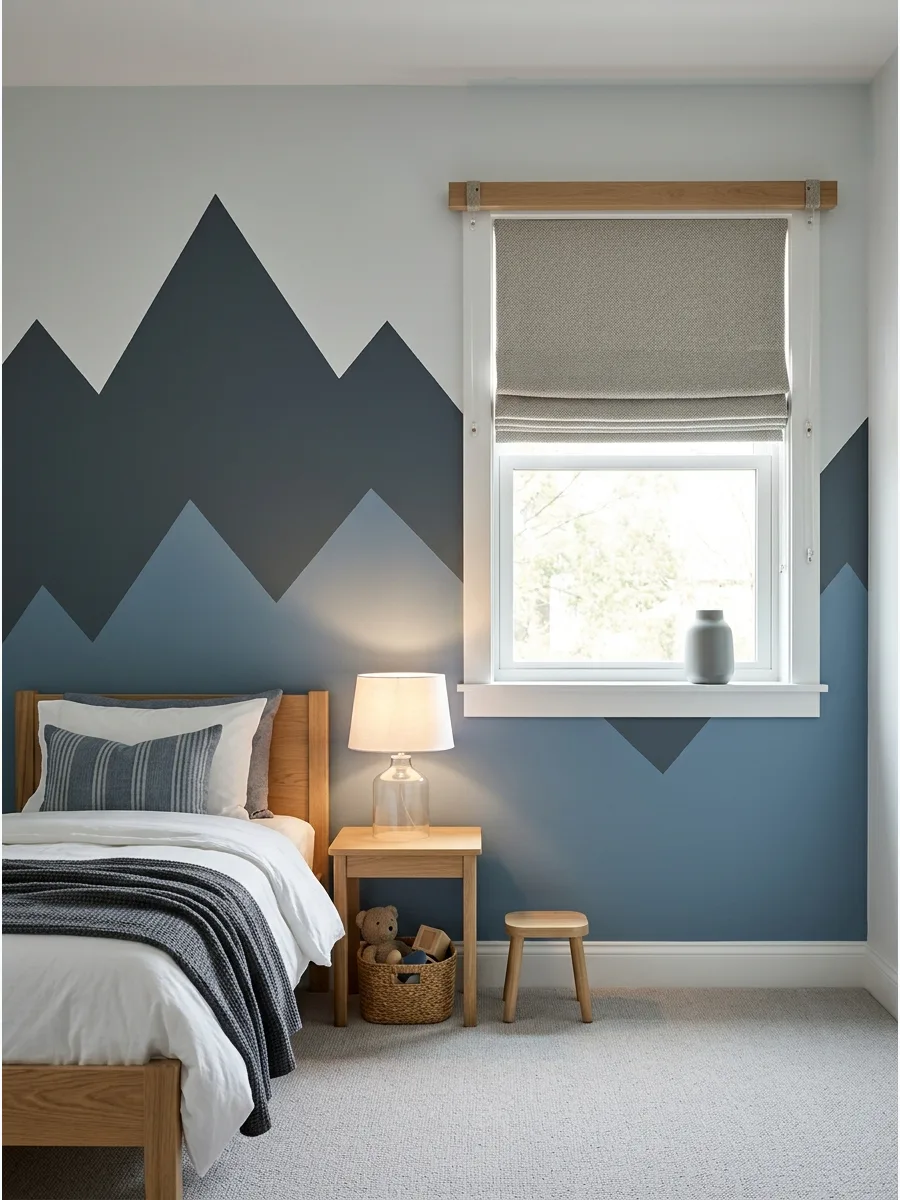
A layered mountain mural adds depth and a sense of adventure to a bedroom without requiring professional artistic skills. Using three to four varying shades of a single color creates a sophisticated gradient look that transitions well from toddler years to adolescence.
Map out the peaks using low-tack painter’s tape to ensure crisp lines and easy adjustments before opening the paint cans. Opting for a flat finish is the smartest choice because it prevents light glare from highlighting texture imperfections on the wall.
- Sourcing: Purchase three sample-sized paint cans in a monochromatic scheme for a cost-effective project that takes one weekend to complete.
- Setup: Start with the lightest color for the sky and furthest peaks, working toward the darkest shade for the foreground layers.
- Adaptation: Use a sponge to lightly dab white paint on the highest peaks to create a snow-capped effect for added realism.
Most people skip this: Lightly sand the edges of the tape once applied to the wall to ensure the adhesive is perfectly flat, preventing paint bleed under the ridges.
Creative Accent Wall Paint Ideas
35. Color Block Corner
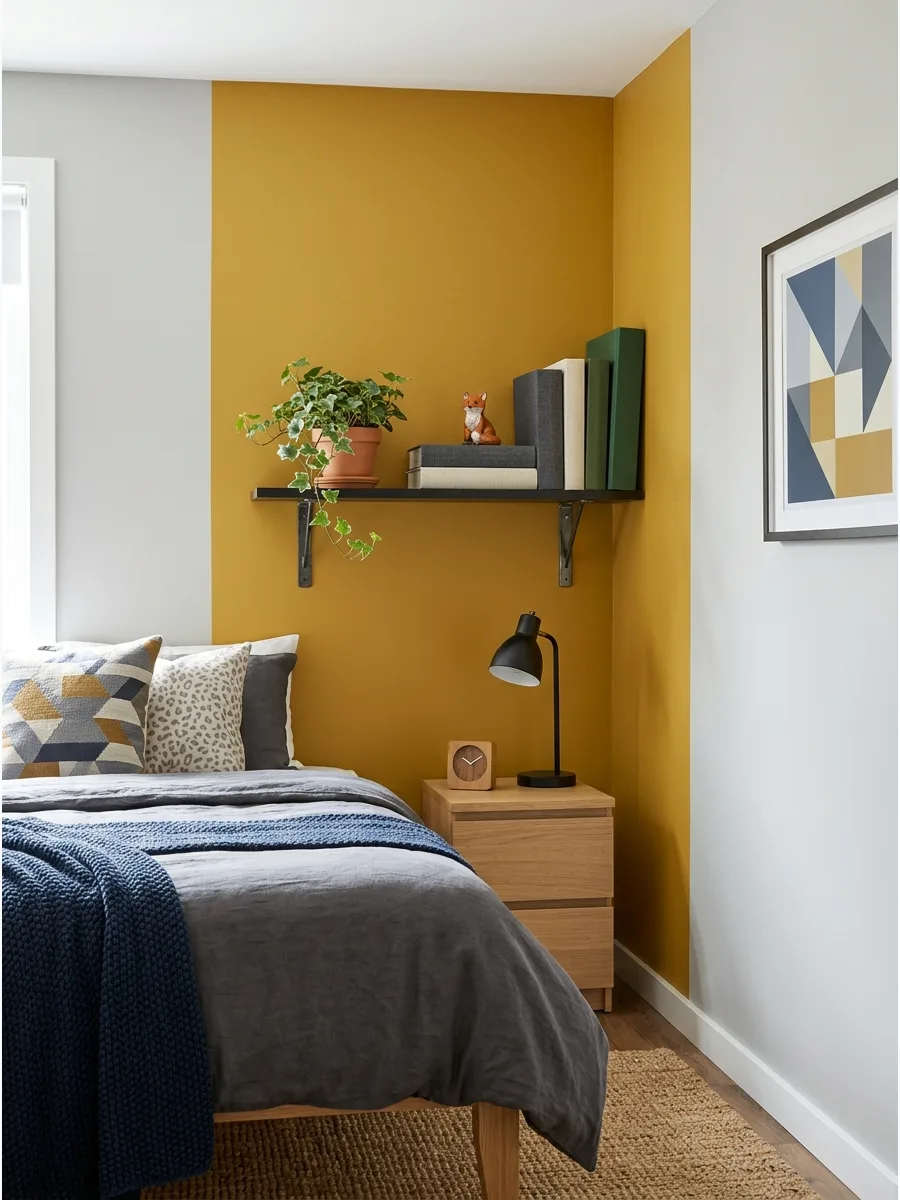
Painting a specific corner in a bold hue creates a designated zone for reading or homework. This visual separation helps organize a multi-purpose room without using physical dividers or bulky furniture.
Applying two different colors that meet at the corner seam adds a sharp, graphic element to the space. It is an effective way to introduce bright colors without overwhelming the entire room.
- Requires two contrasting paint colors
- Use a level to ensure vertical lines are straight
- Ideal for creating a distinct study nook
Most people skip this: Carry the color a few inches onto the ceiling to make the zone feel like a separate architectural feature.
36. Half-Painted Wall
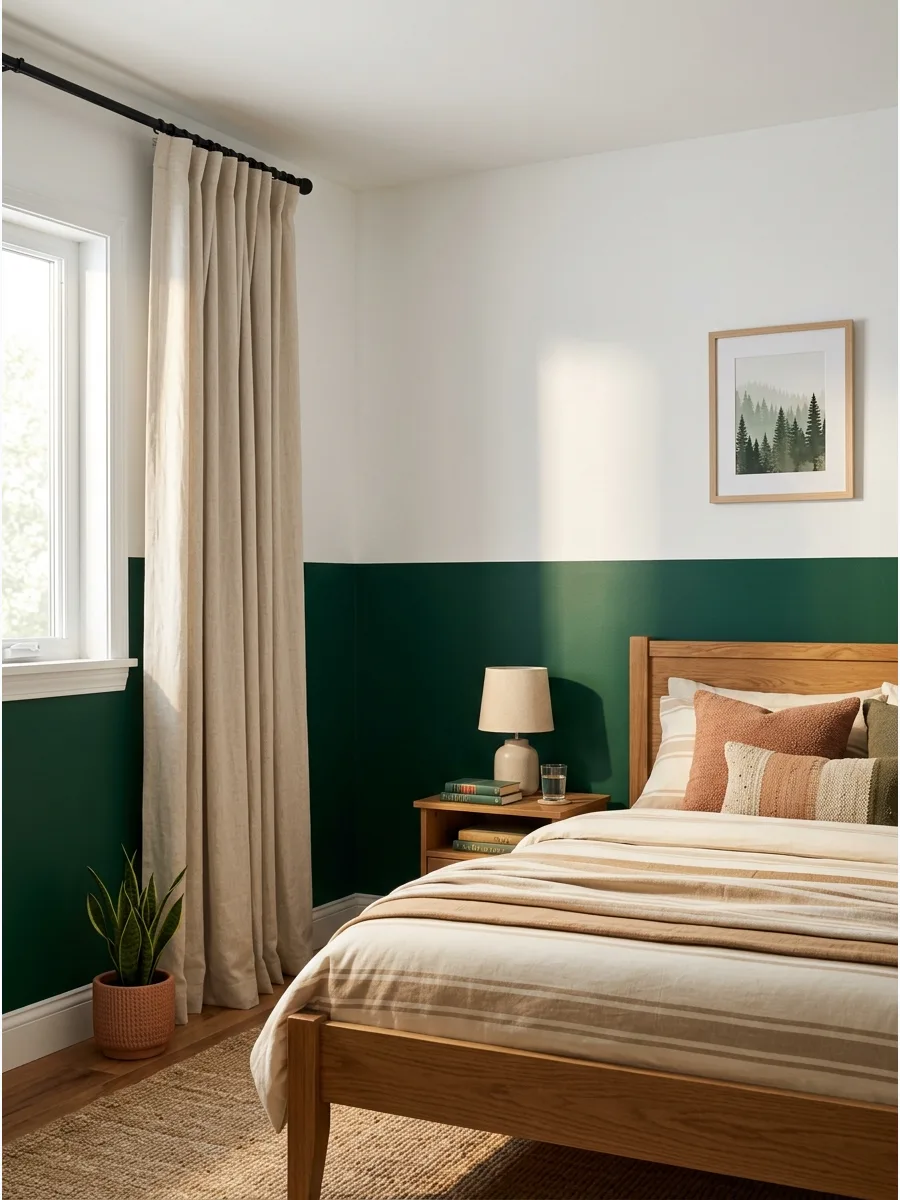
A horizontal split wall offers the best of both worlds by combining a moody dark shade with a bright top half. This technique keeps the room feeling airy while grounding the furniture against a saturated lower color.
Placing the paint line at roughly one-third or two-thirds of the wall height creates the most pleasing visual balance. It also provides a durable, darker surface at the level where most handprints and scuffs occur.
- One afternoon project time
- Use a laser level for a perfectly straight line
- Great for protecting walls in high-traffic play areas
Best shortcut: Hide the paint seam with a thin piece of wood trim for a classic wainscoting look.
37. Wide Horizontal Stripe Wall
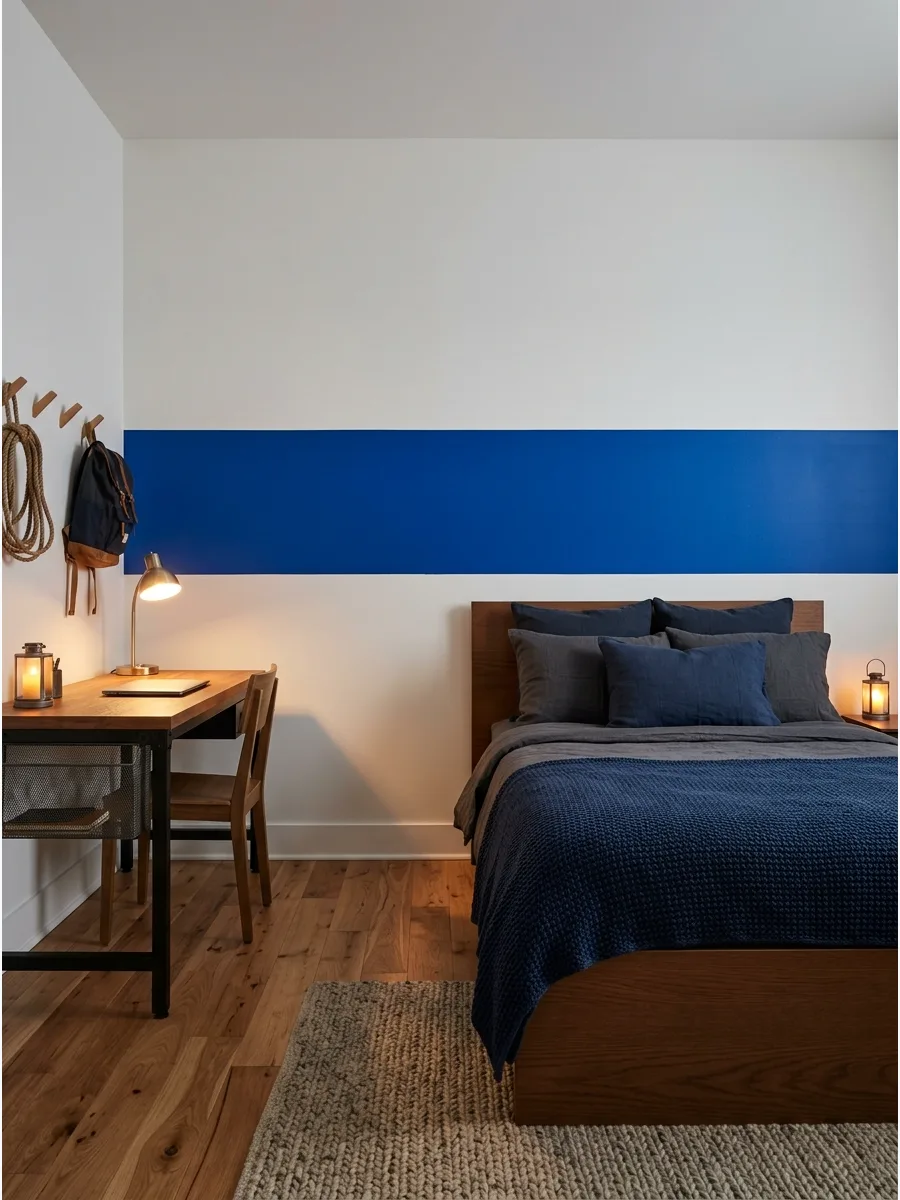
A single, oversized horizontal stripe across the middle of the wall adds a sporty, energetic feel. This design works well to tie together different elements in the room, such as a desk and a bed.
Choosing a stripe color that matches the bedding or rug creates a cohesive and professional design. It makes a narrow room feel wider by drawing the eye along the horizontal plane.
- Use 4-inch or wider painter’s tape
- Measure from the floor at several points for accuracy
- Works best on a single feature wall
Quick win: Paint the stripe over the door and trim to create a continuous, modern wrap effect.
38. Vertical Stripe Paint Design
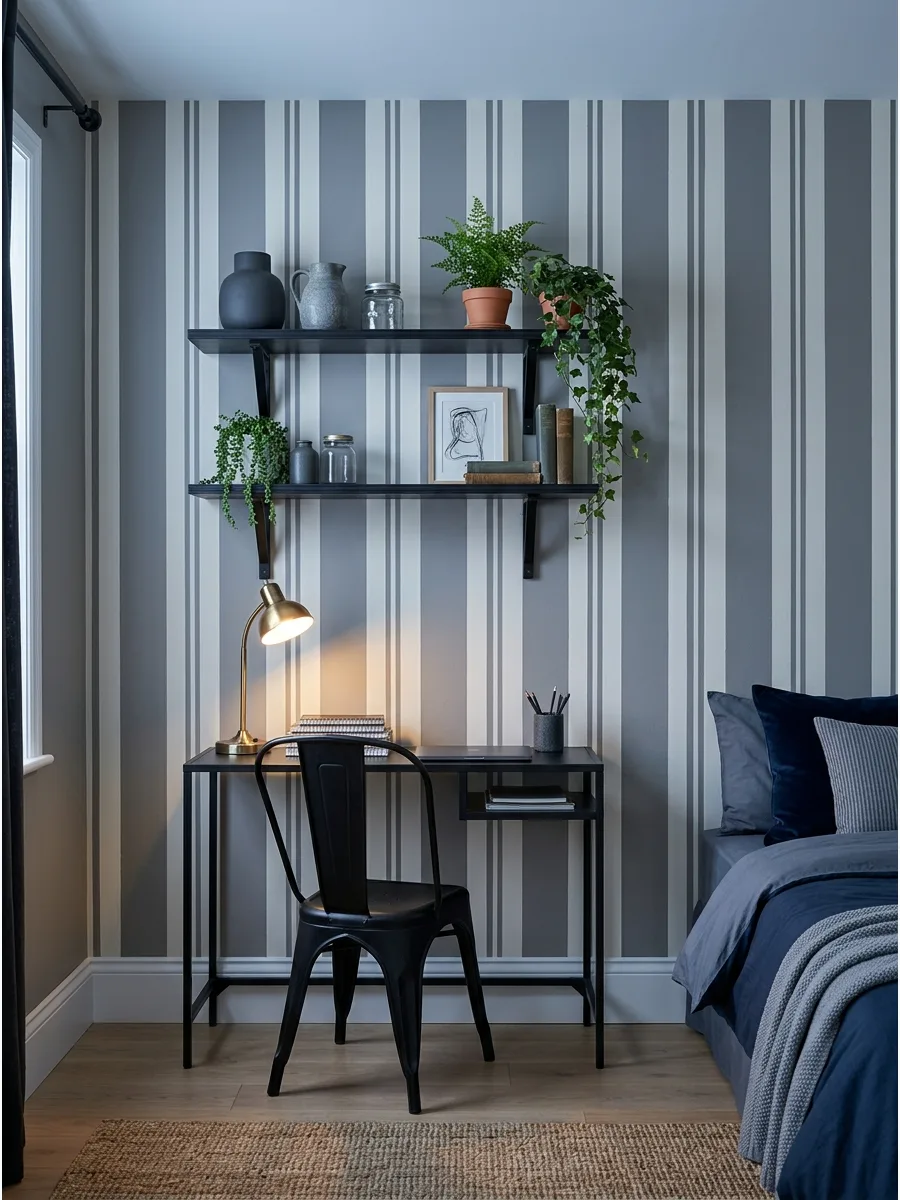
Vertical stripes are a classic choice that can make low ceilings appear much higher than they actually are. For a subtle look, use two shades of the same color, or go bold with high-contrast colors like navy and white.
Varying the widths of the stripes prevents the pattern from looking too much like wallpaper and adds a custom touch. This style provides a structured backdrop for wall art and shelving.
- Requires careful measuring and math
- Use a plumb line to ensure stripes are perfectly vertical
- Best for rooms with standard or low ceilings
Most people skip this: Seal the edge of the tape with the base wall color first to ensure zero bleed-through for the stripes.
39. Painted Headboard Shape
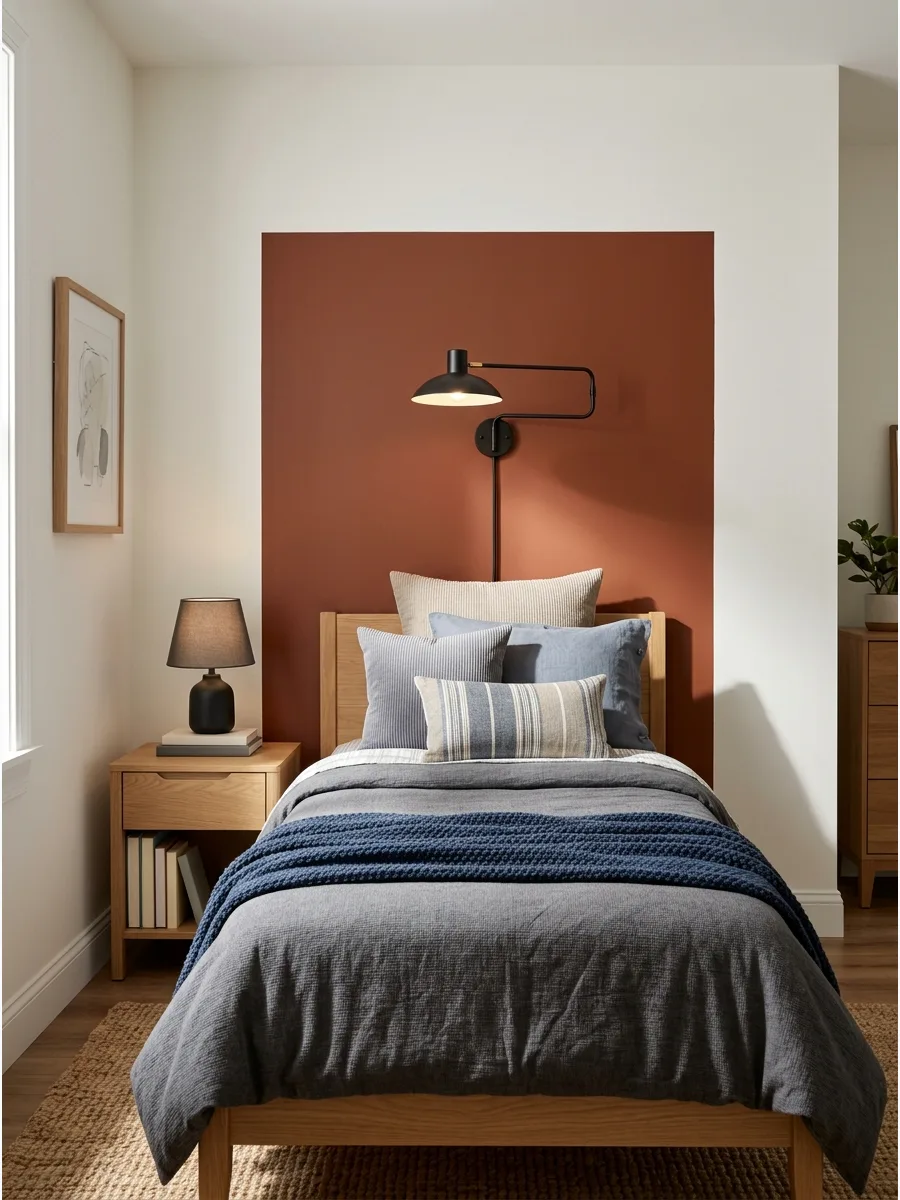
A painted rectangle or rounded shape behind the bed eliminates the need for a bulky furniture piece in a tight space. This faux headboard allows for more flexibility with bed placement and can be easily updated as the child grows.
Extending the painted shape about six inches beyond the width of the mattress creates a balanced look. It is a practical way to add a splash of color that frames the bed perfectly.
- Uses less than a quart of paint
- Easier to clean than fabric headboards
- Perfect for small bedrooms or studio-style layouts
Quick win: Use a satin or semi-gloss finish so the headboard area is easy to wipe down.
40. Checkerboard Painted Border
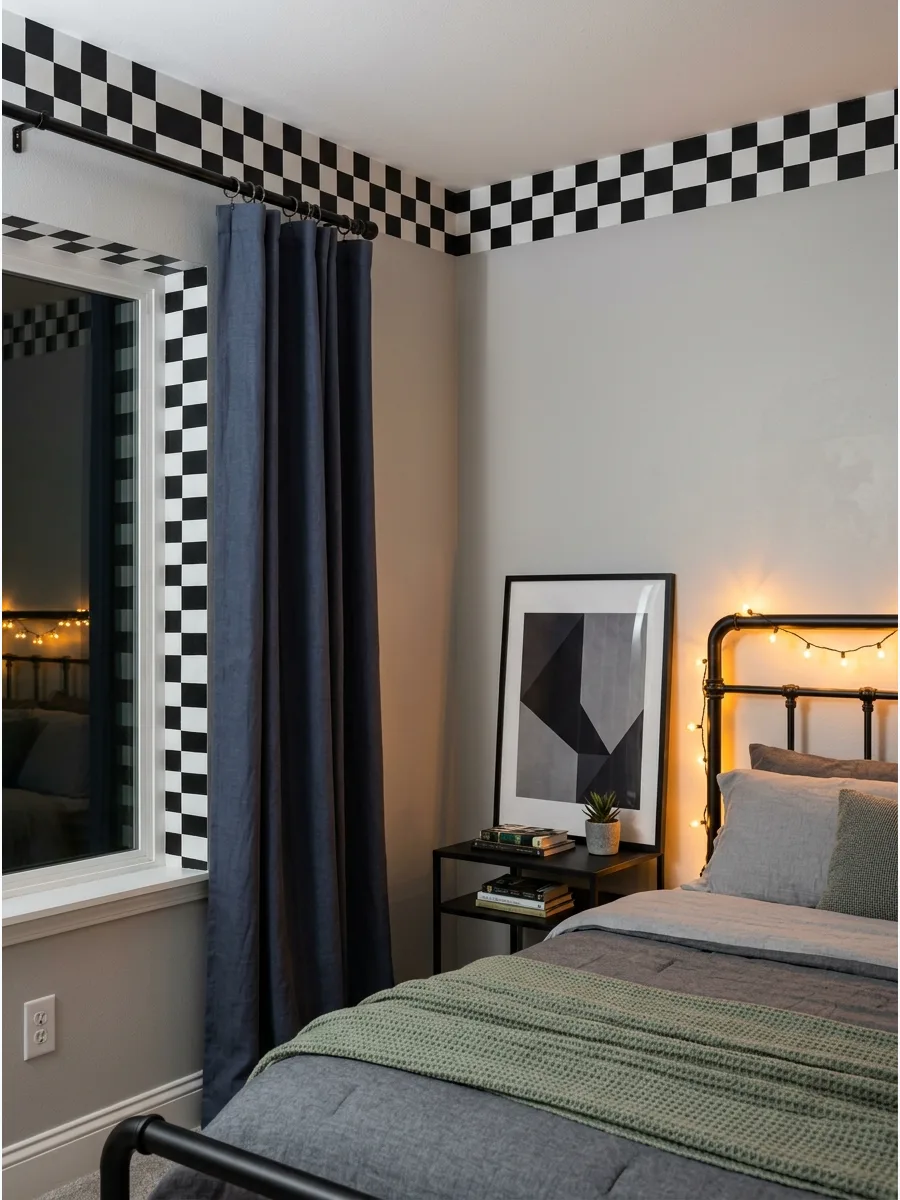
A small checkerboard pattern used as a border adds a playful, retro-cool vibe to a modern room. This detail works beautifully around a window frame, along the ceiling line, or above a desk.
Using a square sponge or a stencil makes applying the repeating pattern much faster and more consistent. It adds personality without the commitment of a full patterned wall.
- Stencils make this a quick project
- Use high-contrast colors for the best effect
- Great for adding a vintage racing or skate theme
Best shortcut: Use a square craft sponge to stamp the pattern for a slightly distressed, hand-painted look.
Theme-Based Boys Room Paint Ideas
41. Space-Themed Navy Wall
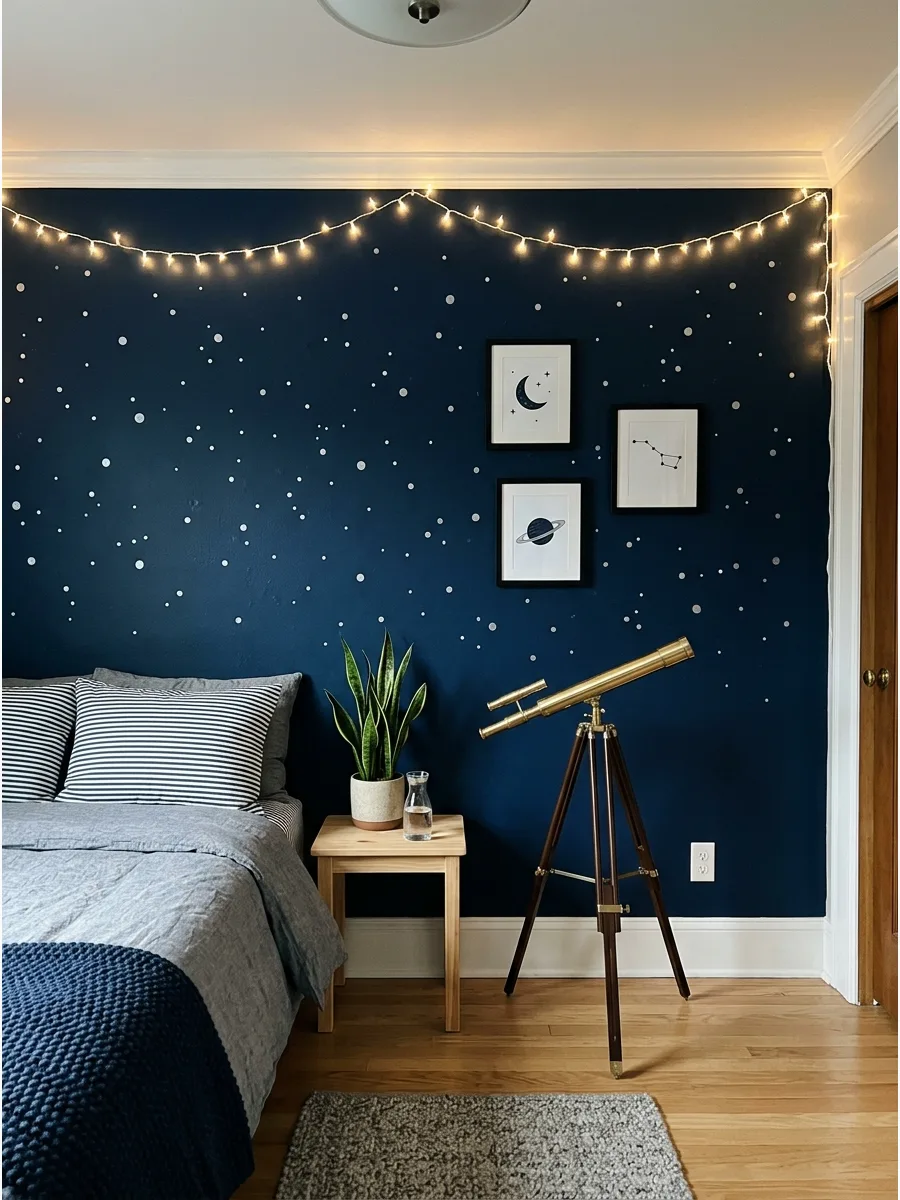
A deep navy wall serves as the perfect backdrop for a galactic-inspired room that feels sophisticated rather than juvenile. Instead of a busy mural, a solid dark wall allows stars and planets to stand out clearly.
Adding small silver or white painted dots of varying sizes creates a realistic star field effect. This theme is easy to transition later by simply swapping the celestial decor for more neutral accessories.
- Deep navy paint provides the best night sky base
- Use a fine-tip brush for the stars
- Pair with metallic accents like silver or chrome
Quick win: Use glow-in-the-dark paint for a few stars to create a subtle surprise when the lights go out.
42. Dinosaur Green Room
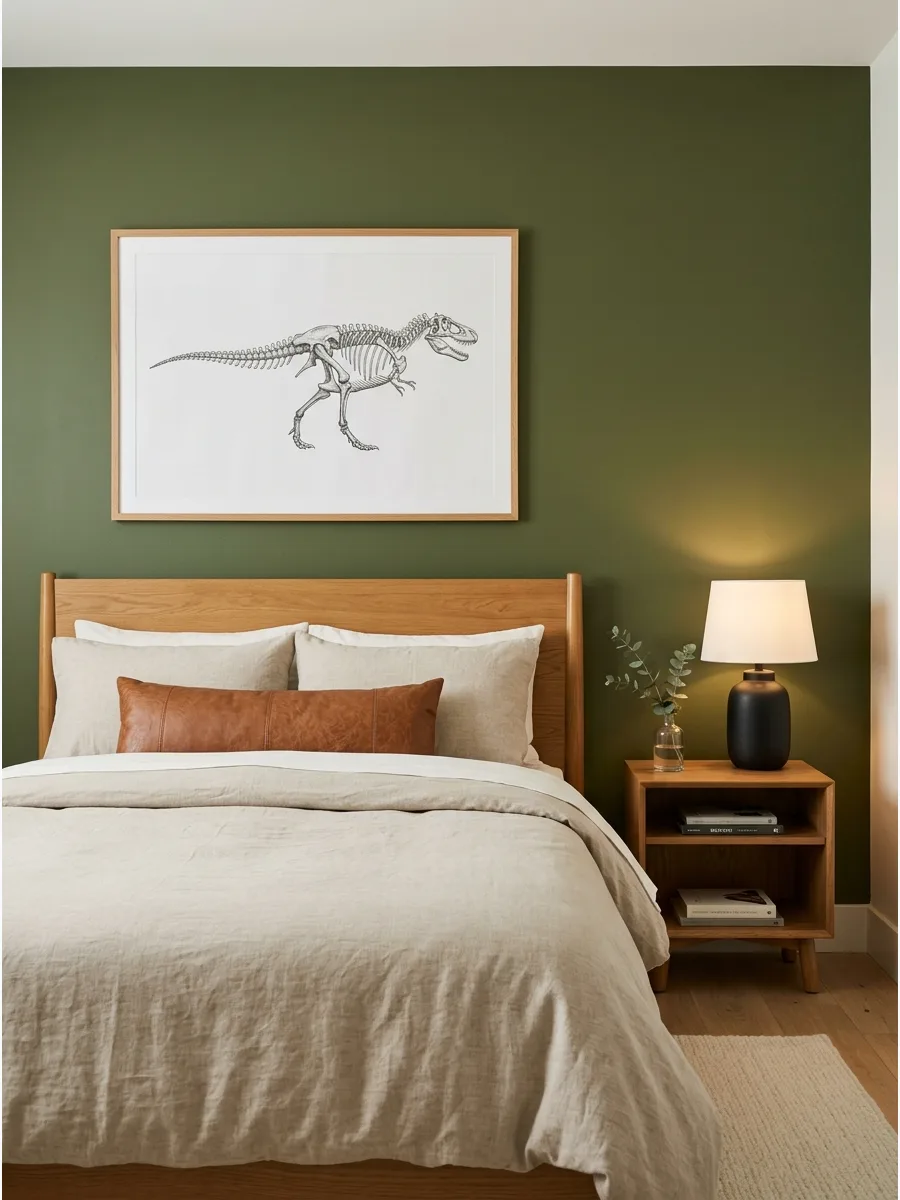
Muted green tones like olive or moss provide a sophisticated foundation for a dinosaur-themed space. These colors feel natural and earthy, making the room a calm environment for sleep and play.
Selecting a matte finish for the green walls gives the room a modern, high-end look that avoids a daycare feel. This palette works well with wooden furniture and leather accents.
- Olive or moss green paint colors
- Complement with natural wood and leather textures
- Choose a paint with a low-VOC formula for kids rooms
Most people skip this: Use a slightly darker shade of green for the closet interior to add a fun, hidden layer of color.
43. Jungle Green Accent Wall
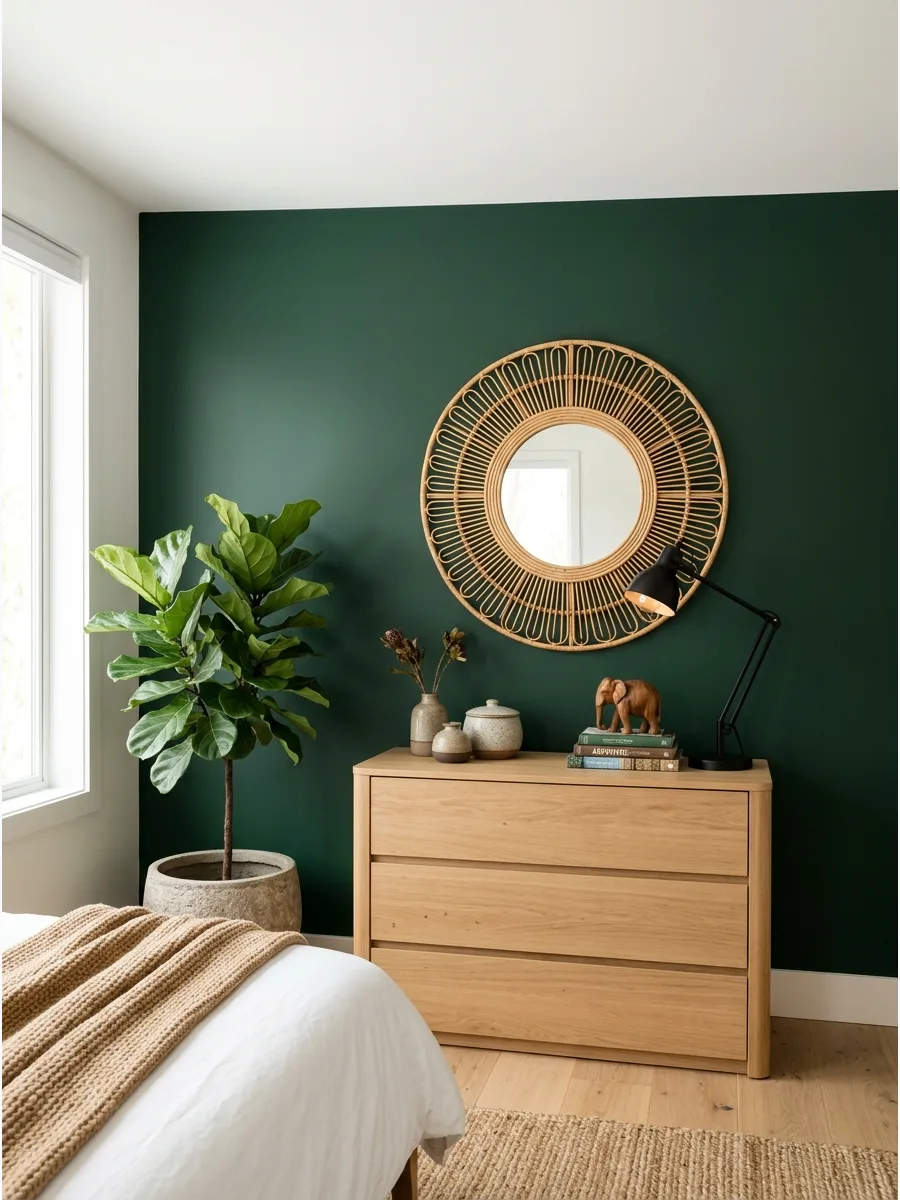
A rich, deep green accent wall brings the feeling of the outdoors inside and sets a lush tone for a jungle theme. This saturated color provides a striking contrast against light wood or white furniture.
Hanging a collection of wooden animal masks or botanical prints on the green wall enhances the tropical vibe. It is a bold choice that feels cozy and adventurous at the same time.
- Deep forest or hunter green paint
- Works best as a single accent wall
- Pair with rattan or wicker textures for a tropical feel
Best shortcut: Use a high-pile roller to ensure the dark green paint gets into every texture of the drywall for even coverage.
44. Sports Stripe Wall
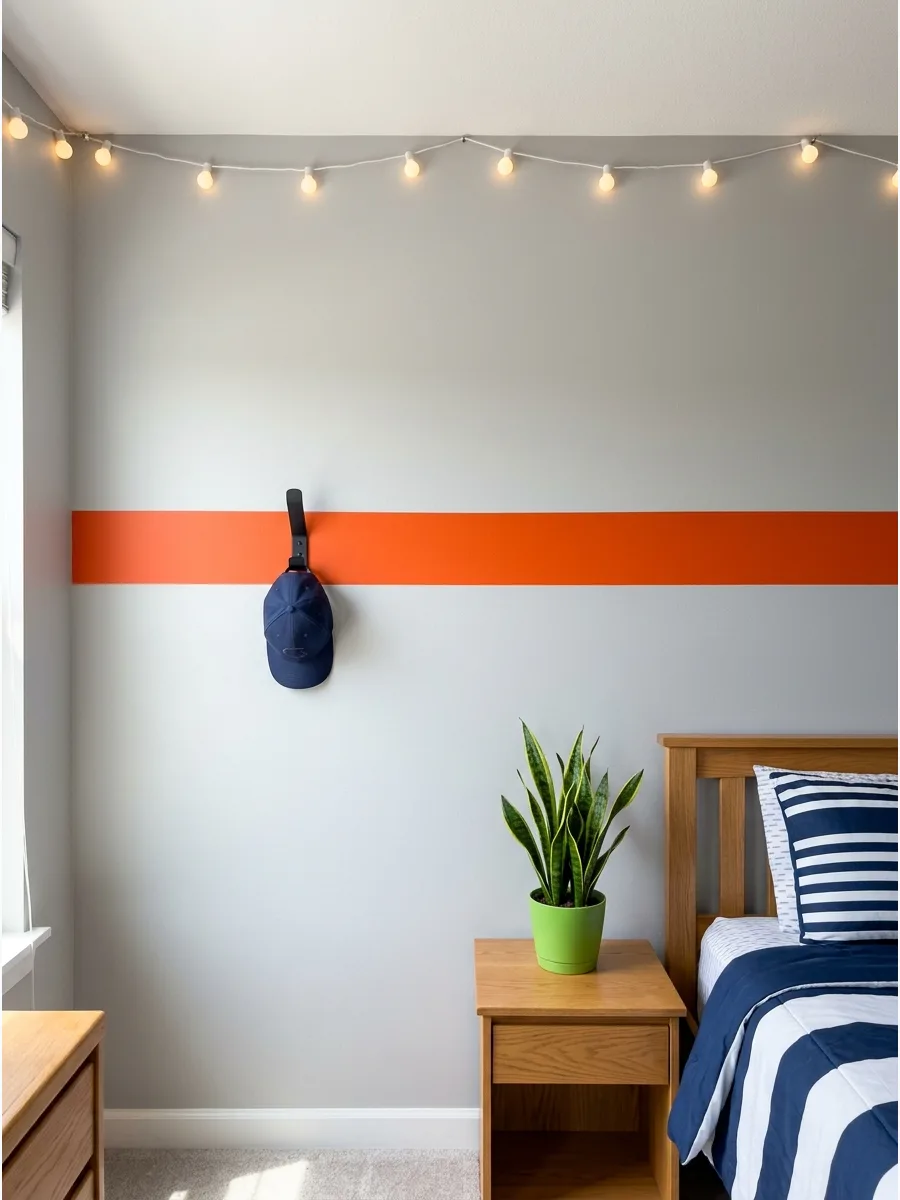
Painting a clean, crisp stripe in a favorite team color is a subtle way to show team spirit without overdecorating. This approach allows the room to remain stylish while still acknowledging the child’s interests.
Centering the stripe at eye level or just above the bed creates a sharp, athletic look. It is much easier to change a single stripe than to repaint four walls of bright team colors.
- Requires one quart of a bold accent color
- Use high-quality tape to prevent paint bleeding
- Easy to update as team preferences change
Quick win: Match the stripe color exactly to a piece of team memorabilia for a truly custom look.
45. Soccer Field Green Detail
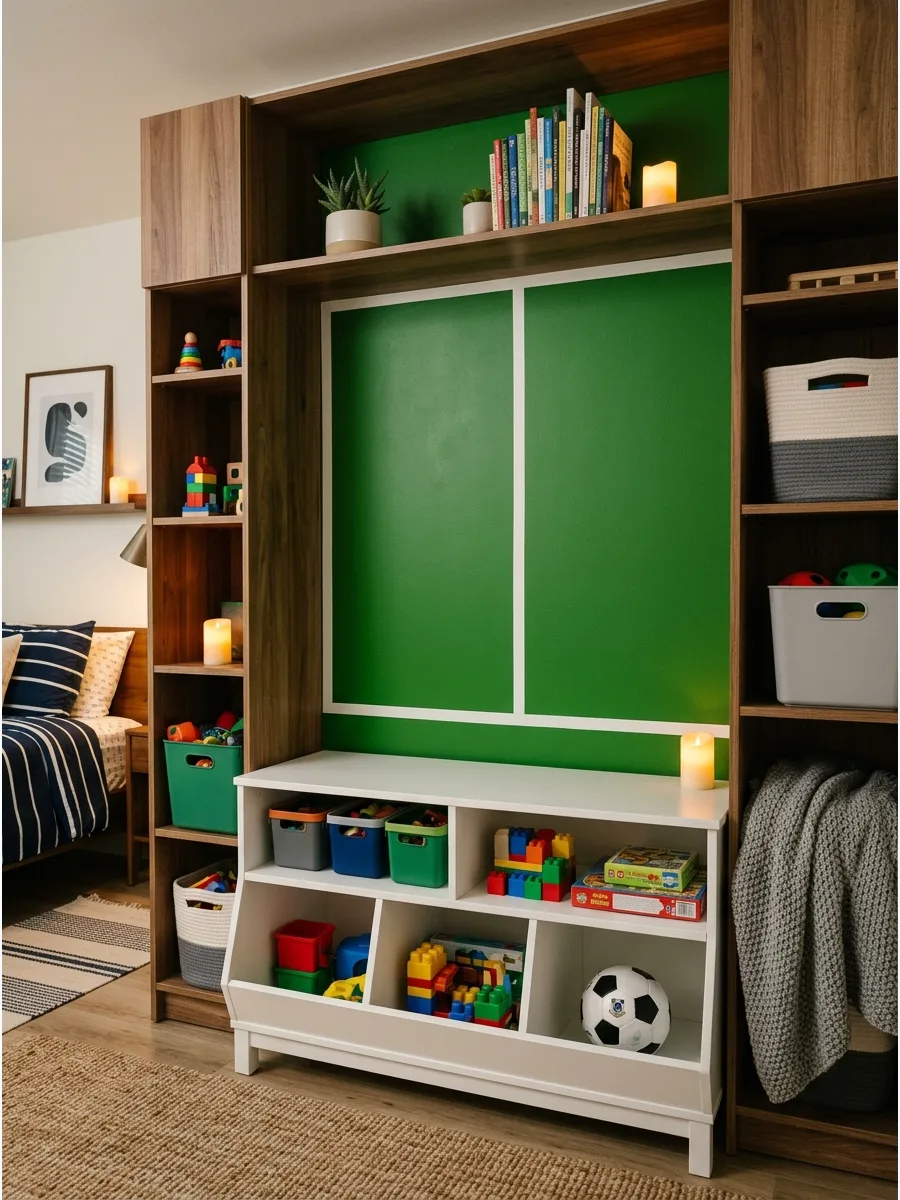
A vibrant grass-green section of the wall creates a dedicated area for play that feels like a mini soccer pitch. This bright pop of color is perfect for a designated goal area or a play nook.
Adding white painted lines to mimic a field’s boundaries completes the theme with minimal effort. It is a high-energy design element that defines the space for active kids.
- Grass-green paint for a vibrant look
- Use white paint or a paint pen for the field lines
- Best for a specific play corner or behind the bed
Most people skip this: Use chalkboard paint in the same green shade so the kids can draw their own plays on the wall.
46. Coastal Blue Boys Room
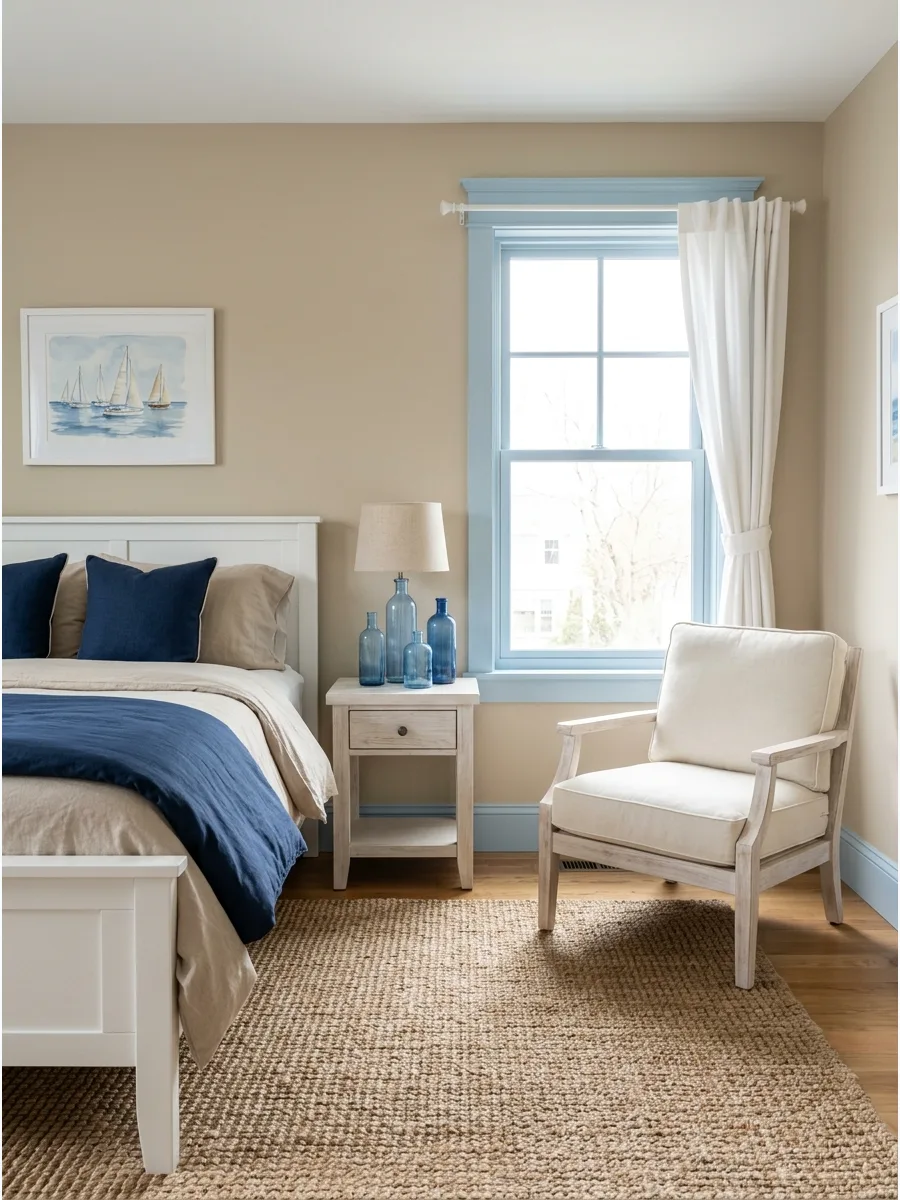
Mixing soft blues with sandy beiges creates a space that feels calm and timeless. This palette works well because it mimics the natural landscape of a shoreline without needing literal anchors on every surface.
Choose a flat finish for the beige walls and a satin finish for the blue trim to add subtle texture to the room. Lighter blues reflect natural light, making even a small bedroom feel more open and airy.
- Budget: $50 to $100 for two gallons of paint and basic supplies.
- Paint the ceiling the same sandy beige as the walls to eliminate harsh transition lines.
- Swap the light blue trim for a deep navy if the room gets a lot of bright afternoon sun.
Most people skip this: Test your blue paint swatches at noon and 8 PM to see how the artificial light changes the color tone.
47. Surf-Inspired Painted Stripe
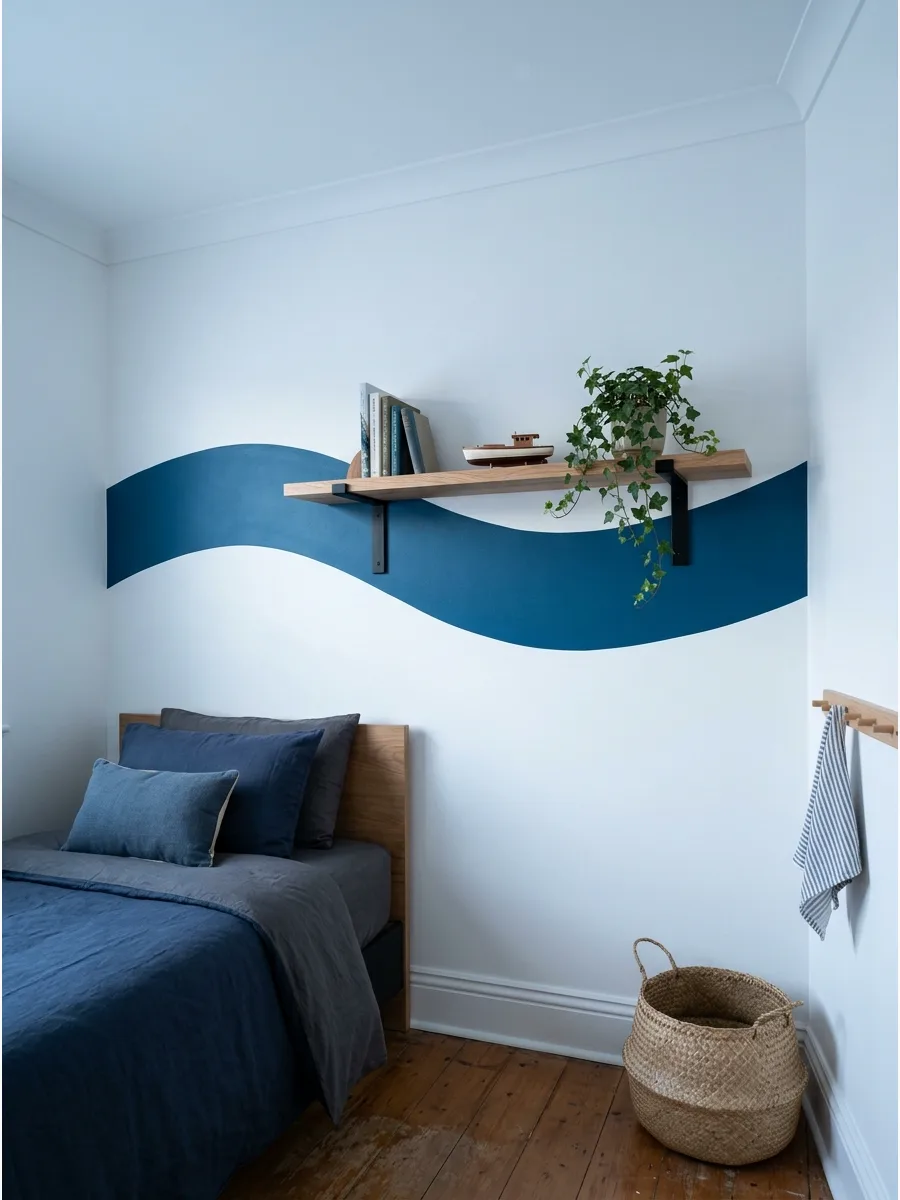
A single wide wave-like stripe across the center of the wall adds movement and energy to the space. Use a deep ocean blue for the stripe against a crisp white background to make the color pop.
Use a flexible painter’s tape to map out a gentle curve before you start painting. This design is easier to live with than a full wall mural and can be easily painted over as tastes change.
- Budget: $30 for a quart of accent paint and a roll of specialty flexible tape.
- Measure the height of the bed first so the stripe sits clearly above the headboard.
- Try a teal or seafoam green stripe if you want a more tropical or modern feel.
Quick win: Use a piece of chalk to lightly sketch the wave shape on the wall before applying the tape to ensure the curve is smooth.
48. Racing Stripe Wall
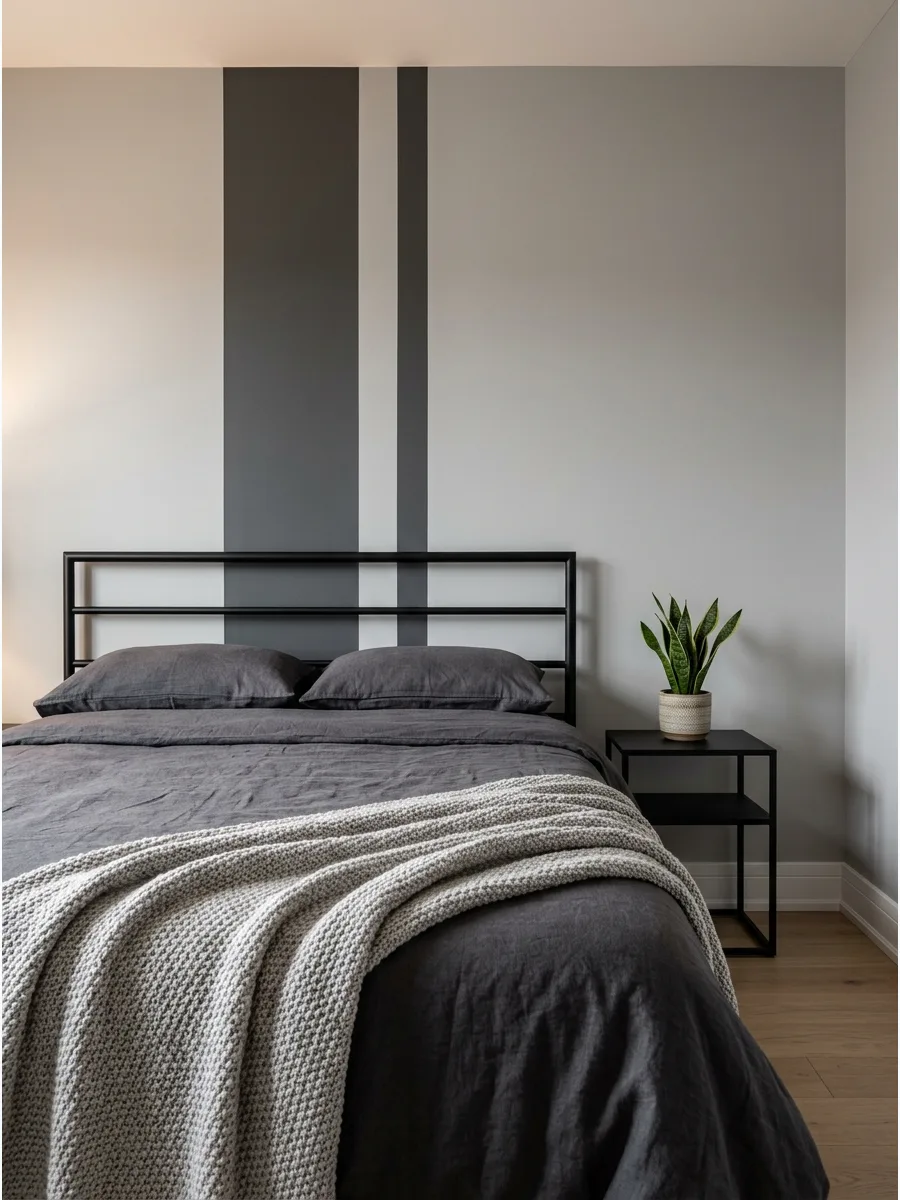
Two vertical stripes positioned off-center behind the bed create a sporty look that feels modern rather than juvenile. This approach uses visual balance to draw the eye without overwhelming the entire room with color.
Paint the stripes in a high-contrast color like charcoal gray or bright red against a light gray wall. Keeping the stripes narrow helps the room feel taller and more structured.
- Budget: $25 for a sample pot of accent paint and a roll of standard painter’s tape.
- Use a laser level to ensure the vertical lines are perfectly straight from the ceiling to the floor.
- For a more subtle look, use a glossy version of the same wall color for the stripes.
Best shortcut: Peel the painter’s tape back while the paint is still slightly damp to get the cleanest and sharpest line possible.
49. Gaming Room Dark Accent Wall
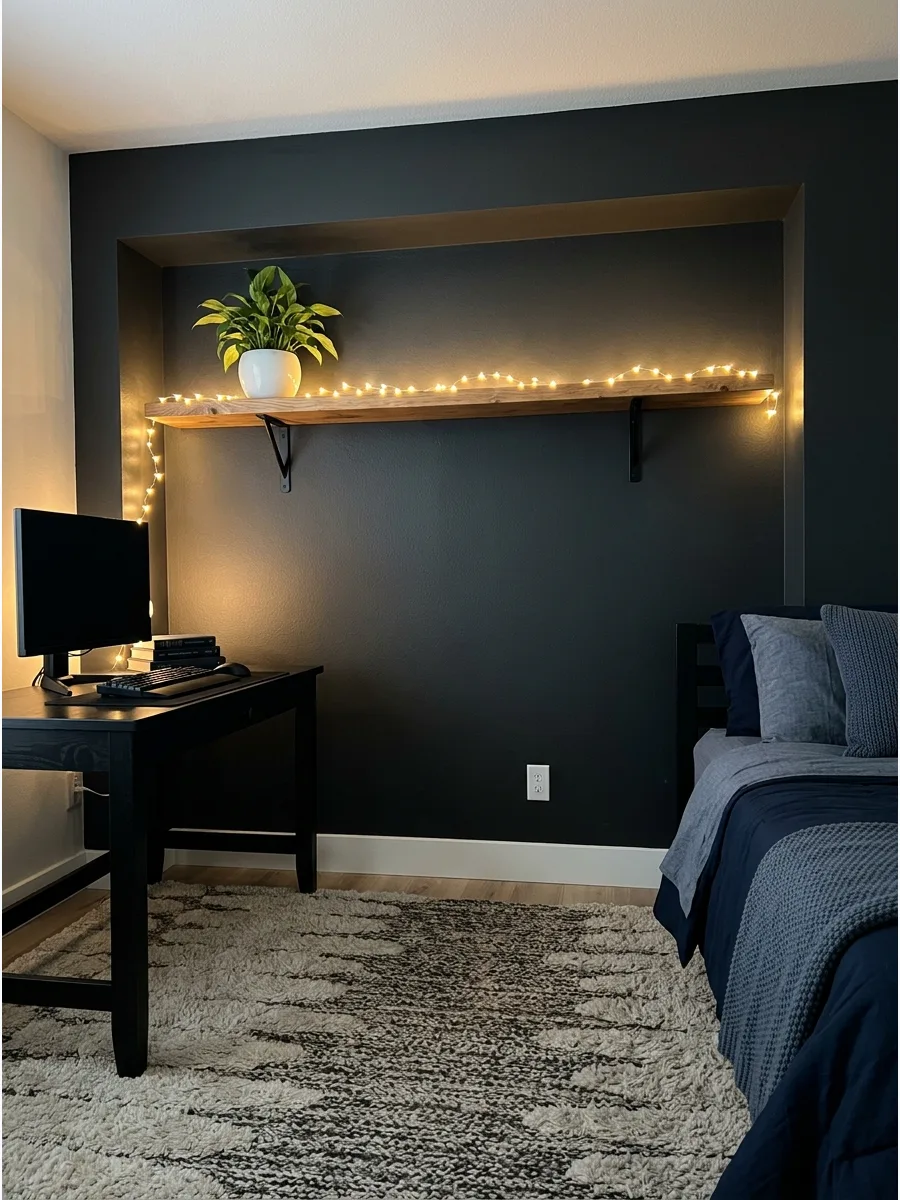
A dark teal or charcoal wall behind a desk area helps a computer monitor or TV blend into the background. This dark backdrop reduces eye strain and makes the colors on the screen appear more vivid during gameplay.
Install a simple wooden ledge above the desk to hold LED light strips that bounce off the dark paint. Deep colors provide a cozy, focused atmosphere that defines the play zone within the bedroom.
- Budget: $40 to $60 for a gallon of high-quality dark matte paint.
- Use a primer specifically made for dark colors to get full coverage in fewer coats.
- If the room is very small, limit the dark paint to just the recessed area of a wall nook.
Most people skip this: Use a matte or flat finish for dark gaming walls to prevent distracting light reflections from the screen or LED strips.
50. Lego Color Accent Blocks
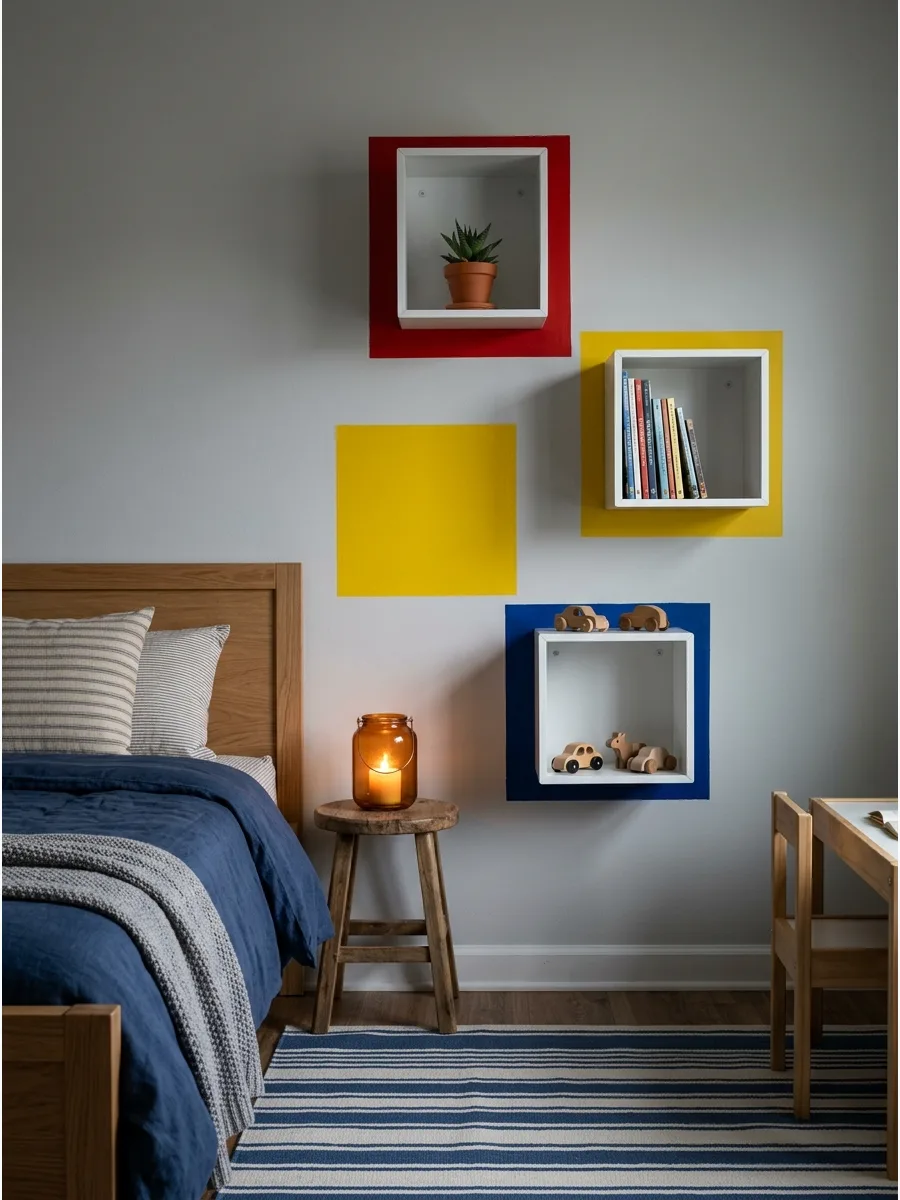
Painting small geometric blocks of primary colors around storage bins or shelves adds a playful touch to neutral walls. These blocks define specific play zones and make the toy organization feel intentional rather than cluttered.
Keep the blocks small and spaced out to prevent the room from feeling too busy or chaotic. This method is a great way to introduce bold colors like red or yellow without committing to a full wall.
- Budget: $15 to $20 for small paint sample pots in primary colors.
- Use a cardboard template to ensure every painted square is exactly the same size.
- Match the paint colors to the most common toy colors already in the room for a cohesive look.
Quick win: Paint the inside of a closet or the back of a built-in bookshelf with these bright colors for a hidden pop of fun.
Frequently Asked Questions
What is the best paint finish for a boy’s bedroom?
For high-traffic spaces, an eggshell or satin finish is the superior choice because it offers excellent durability and scrubbability. These finishes allow you to easily wipe away scuffs and fingerprints, whereas a flat finish tends to absorb stains and is much harder to clean.
How do I choose a paint color that grows with him?
Focus on shades with sophisticated undertones, such as a navy with grey hints rather than a bright primary blue. These muted tones feel timeless and transition seamlessly from early childhood into the teenage years as his decor preferences evolve.
Should I do an accent wall or paint the whole room?
An accent wall is a fantastic way to use bold or dark colors without overwhelming a small space. By painting just one wall in a vibrant hue, you can add plenty of personality while keeping the rest of the room feeling bright and open.
What colors make a small bedroom look larger?
Paints with a high Light Reflective Value (LRV) help bounce natural light, making a cramped room feel more spacious. Cool-toned colors like soft blues or light greys are especially effective because they visually recede, creating the illusion that the walls are further away.
How do I coordinate wall paint with existing wood furniture?
To achieve a balanced look, pair warm wood tones like oak or pine with cool-toned paints like slate blue or sage green. If you prefer warm wall colors, ensure there is enough contrast in the shade so the furniture stands out rather than blending into the background.