40 Magical Large Fairy Garden Ideas

This post may contain affiliate links: full affiliate disclosure.
Scaling up a fairy garden allows for more detail and creativity than a standard container. These ideas help transform large garden beds into sprawling miniature worlds that fit beautifully within a backyard landscape.
1. Large Fairy Village
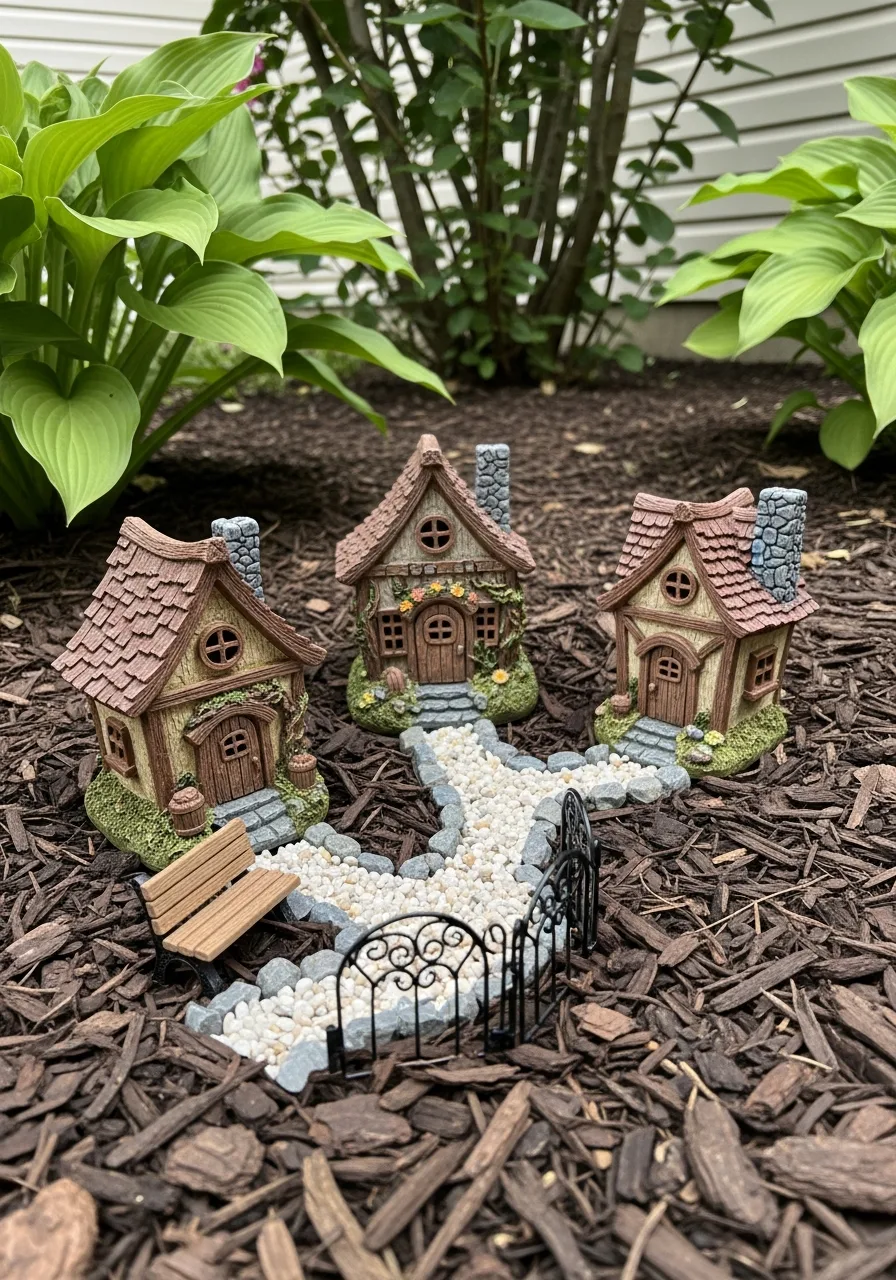
Arrange several cottages around a central square to create a community feel. Use winding pebble paths and tiny benches to make the space look inhabited.
The key to a large-scale display is grouping items in clusters rather than spreading them thin across the soil. Most people find that clustering decor prevents the garden from looking like a collection of scattered toys.
- Buy cottages in sets of three to save money and ensure a matching style.
- Clear a 4-foot circle of grass and lay landscape fabric before adding mulch.
- Change the path material to crushed shells for a coastal village look.
Quick win: Use a piece of cardboard to map out your village layout before you start digging.
2. Tree Stump Fairy Kingdom
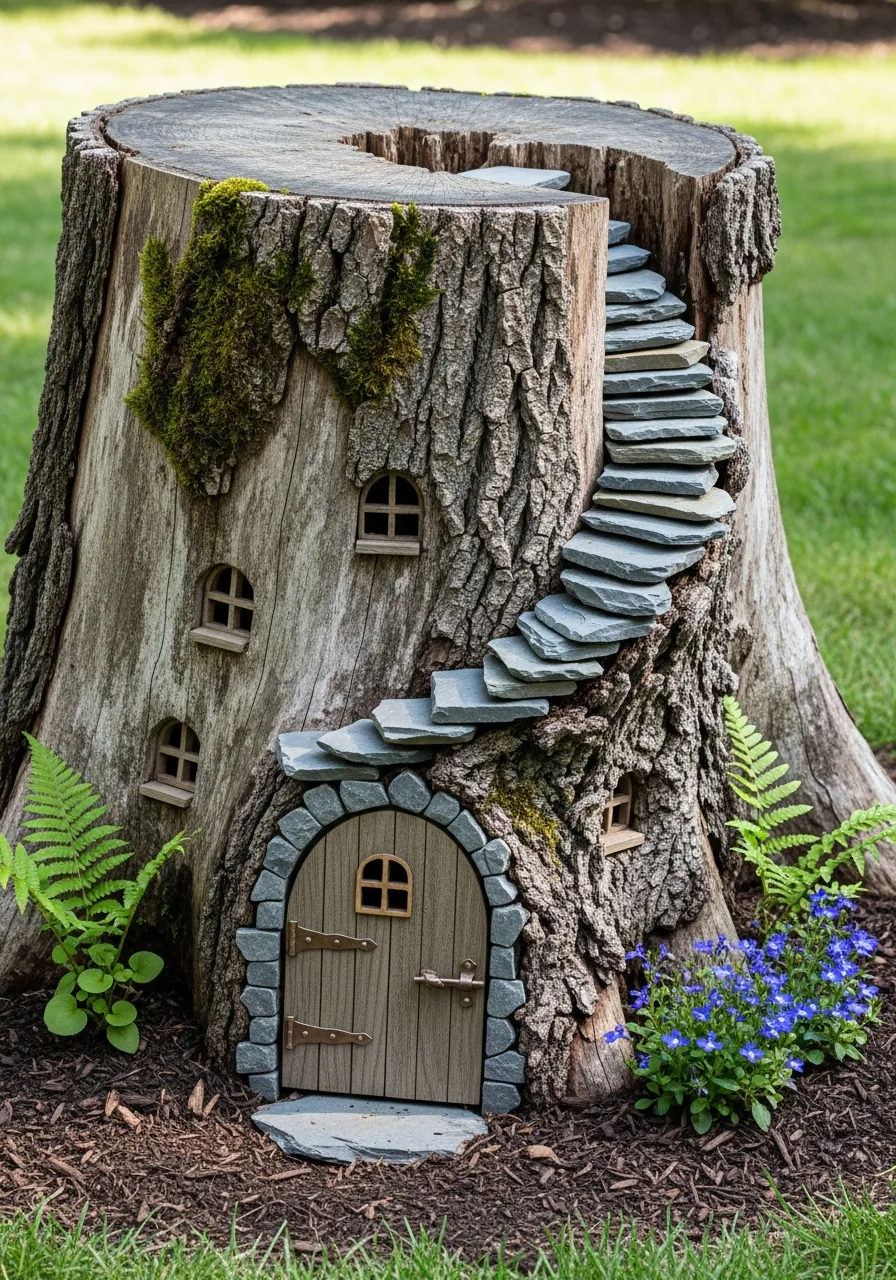
Turn an old stump into a multi-story residence by adding tiny doors and windows directly to the bark. Build stone stairs and smaller auxiliary houses around the base to expand the footprint.
Using the natural height of a stump provides an instant vertical focal point that grounds the entire garden. Verticality is essential for visibility in large yard beds so the details don't get lost at ground level.
- Use a natural wood sealer on the stump to prevent rapid decay from moisture.
- Screw doors and windows directly into the bark using small stainless steel screws.
- Add solar-powered spotlights at the base to highlight the stump at night.
Best shortcut: Use flat river stones and strong exterior construction adhesive to build stairs quickly.
3. Living Tree Fairy Base
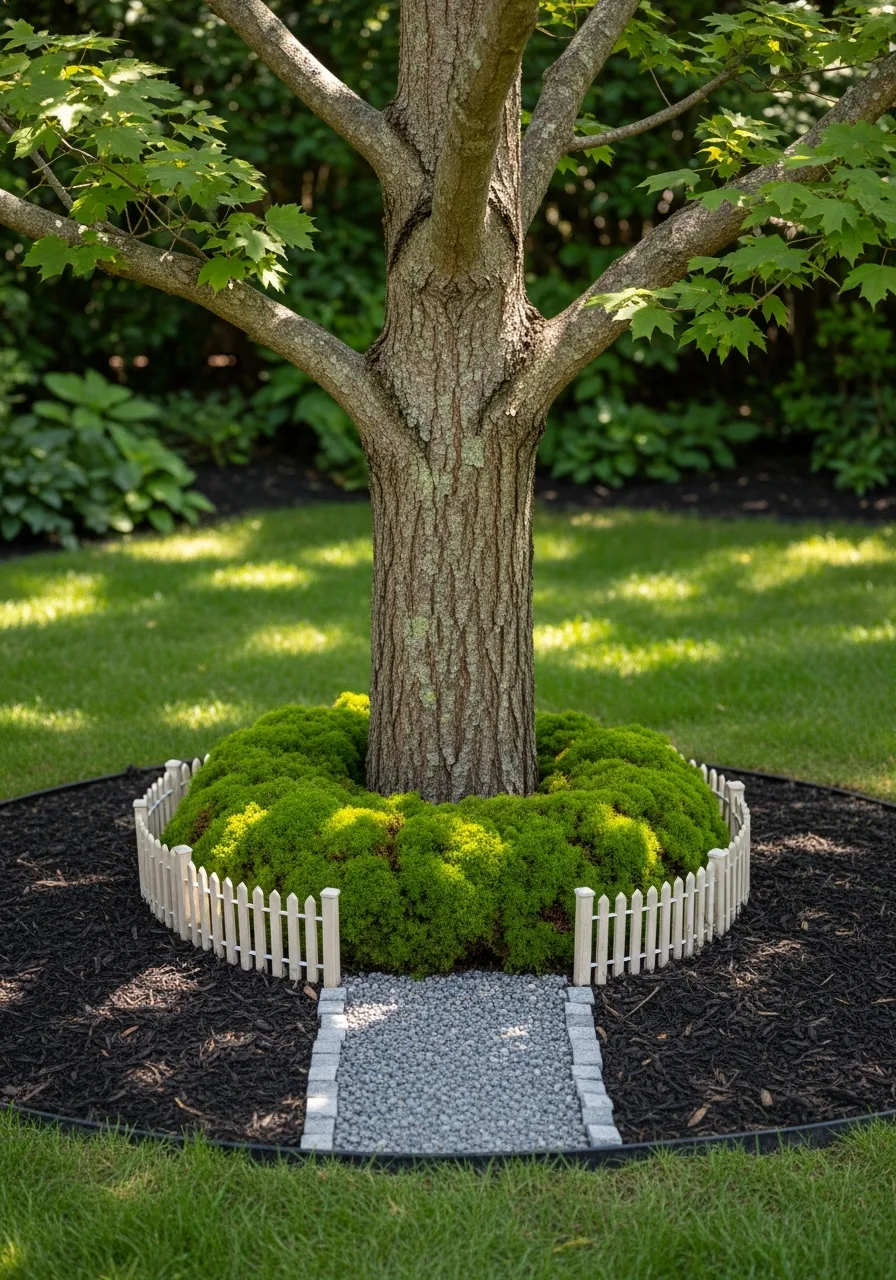
Design a circular garden that rings the base of a mature shade tree. Divide the area into small neighborhoods connected by gravel paths while leaving bare soil near the trunk for tree health.
Focus on shade-loving groundcovers like Irish Moss to keep the miniature scale looking lush under the canopy. One practical rule is to never pile mulch or soil against the tree flare to prevent rot.
- Select shade-tolerant plants like moss, ferns, or hostas for under-tree beds.
- Use flexible plastic edging to keep the fairy garden soil separate from the lawn.
- Swap moss for white sand in dry climates for a desert-tree aesthetic.
Most people skip this: Leave a 2-inch gap between the tree bark and your garden materials to allow the tree to breathe.
4. Multi-Level Hillside Garden
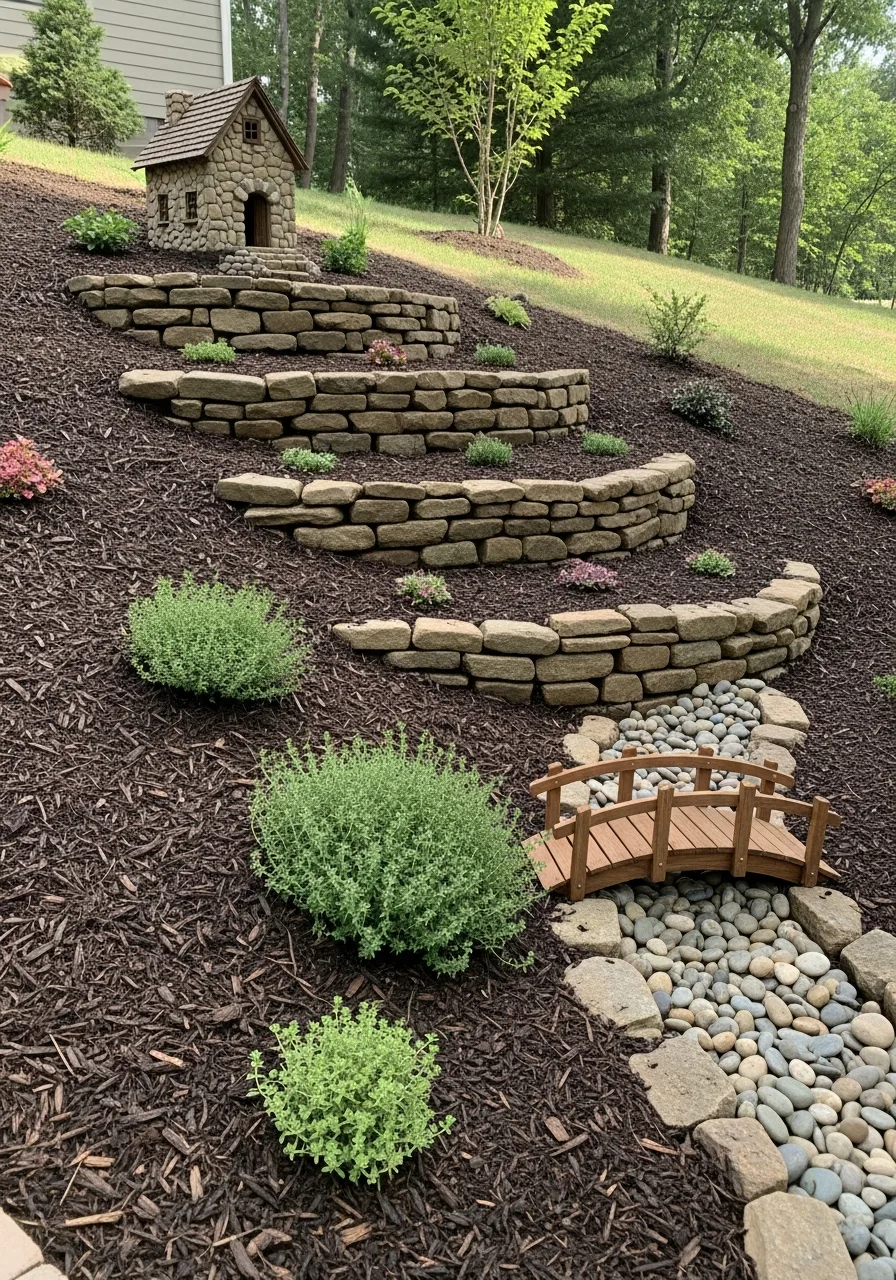
Use a natural slope to create tiered terraces for different fairy dwellings. Connect the upper cottages to the lower gardens using miniature stone stairs and arched bridges.
Graded levels prevent the garden from disappearing into the landscape and allow for better drainage. Terracing makes miniature details visible from a distance by lifting them toward eye level.
- Use flat fieldstones to build mini retaining walls that are roughly 3 inches high.
- Plant creeping thyme along the edges of terraces to soften the stone lines.
- Install steps in a zig-zag pattern to make a steep slope look more realistic.
Quick win: Use pre-made miniature stone stairs to save hours of stacking and balancing small rocks.
5. Grand Fairy Castle Garden
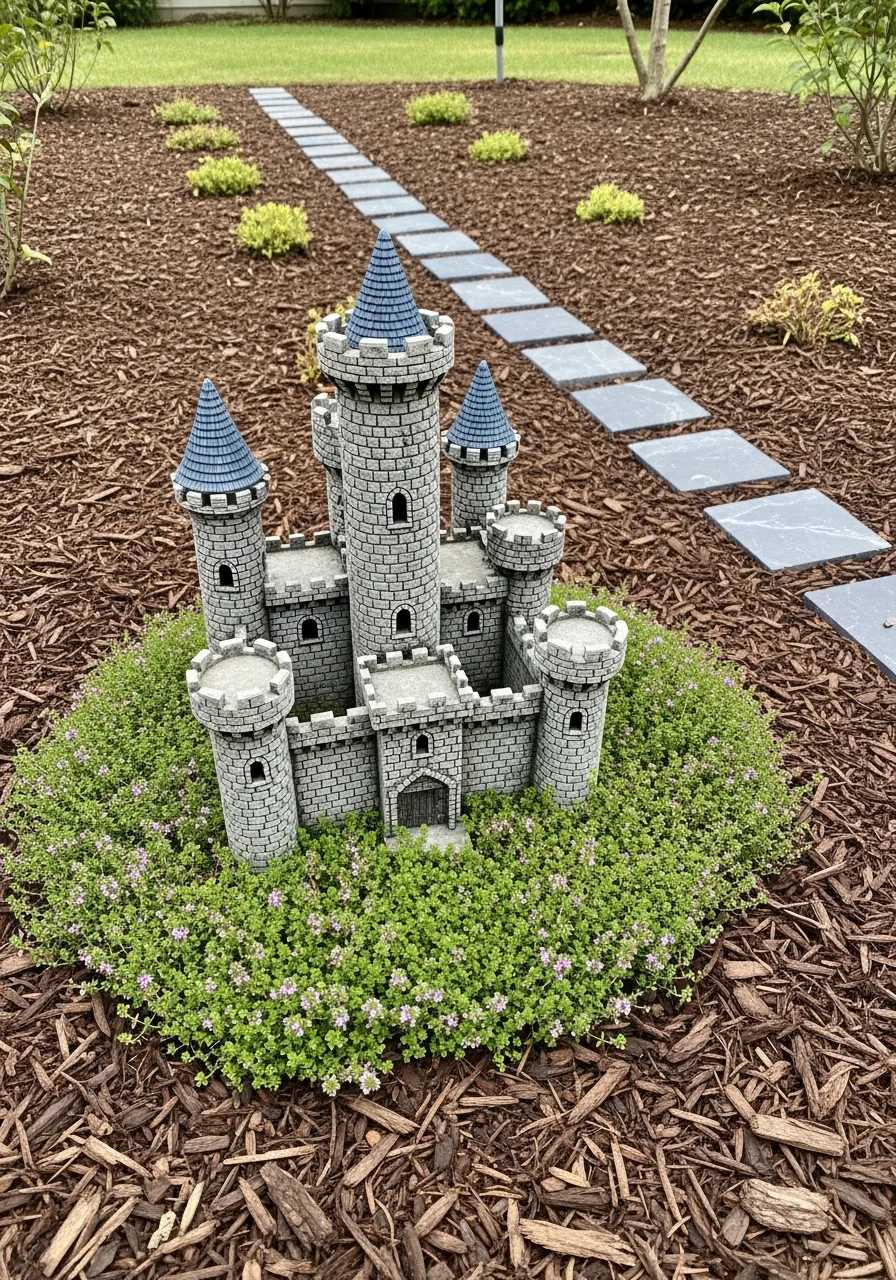
Position a large castle as the main anchor of a dedicated garden bed. Surround the structure with formal miniature gardens, stone walls, and a grand entrance path.
A single large focal point keeps a big garden from looking like a collection of random toys. It is best to scale the plants to match the castle height for a realistic, proportional look.
- Choose a castle made of resin or stone to withstand rain and UV rays.
- Create a 'moat' using dark gravel or blue glass stones around the base.
- Use boxwood clippings or dwarf shrubs to mimic formal castle hedges.
Most people skip this: Dig a shallow hole for the castle base so it sits 'in' the ground rather than 'on' it.
6. Natural Woodland Fairy Village
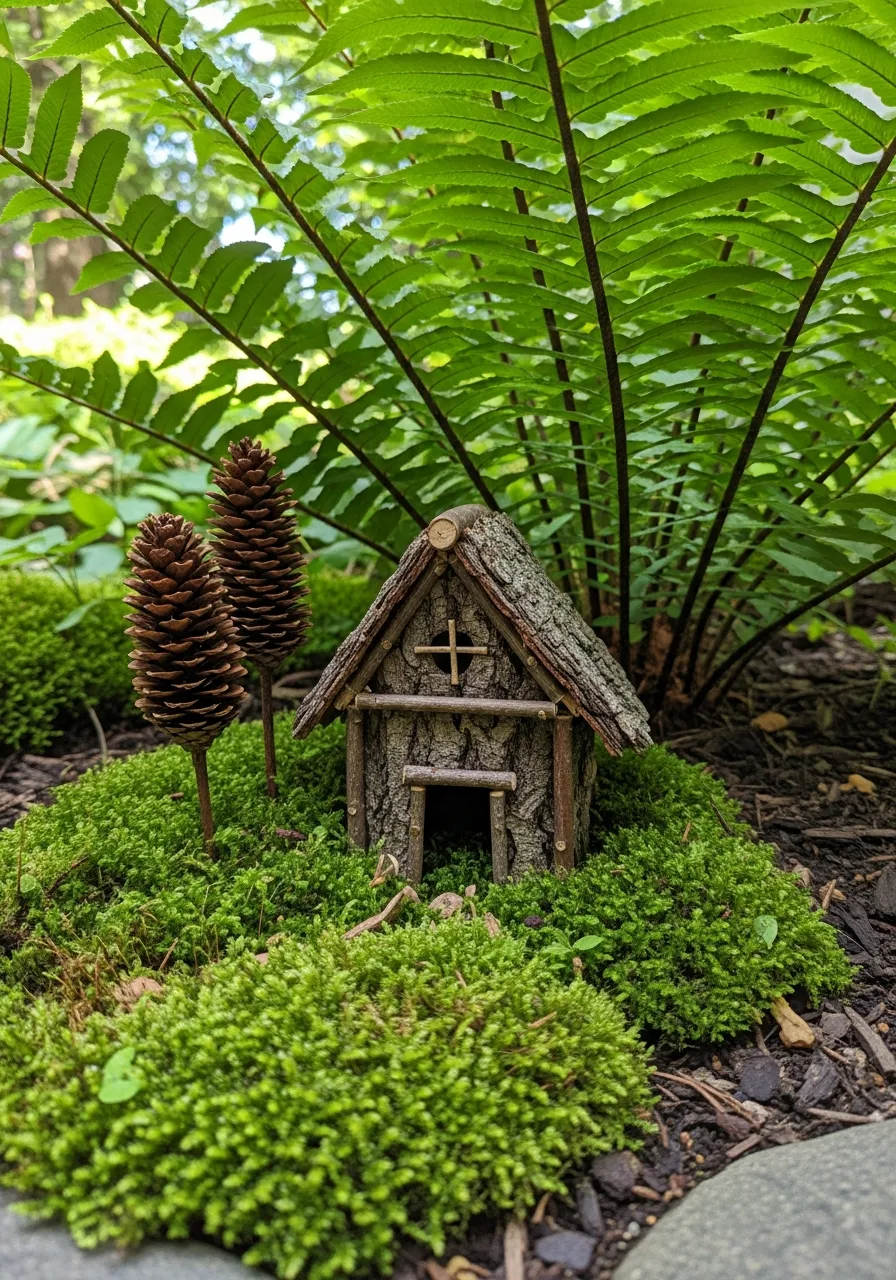
Build this village in a shaded corner using moss, bark, and ferns to mimic a forest floor. Use natural-toned cottages made of wood or stone so the structures blend into the environment.
Texture is more important than color when creating a believable woodland scene. Using real bark and twigs for fencing keeps the aesthetic organic and grounded.
- Gather acorns, pinecones, and interesting twigs from the yard for free decor.
- Place cottages near the roots of ferns to make the plants look like giant trees.
- Add a layer of leaf mold or forest floor mulch for an authentic smell and look.
Best shortcut: Use a hot glue gun to attach moss directly to the roofs of cottages for an aged look.
7. Whimsical Cottagecore Fairy Garden
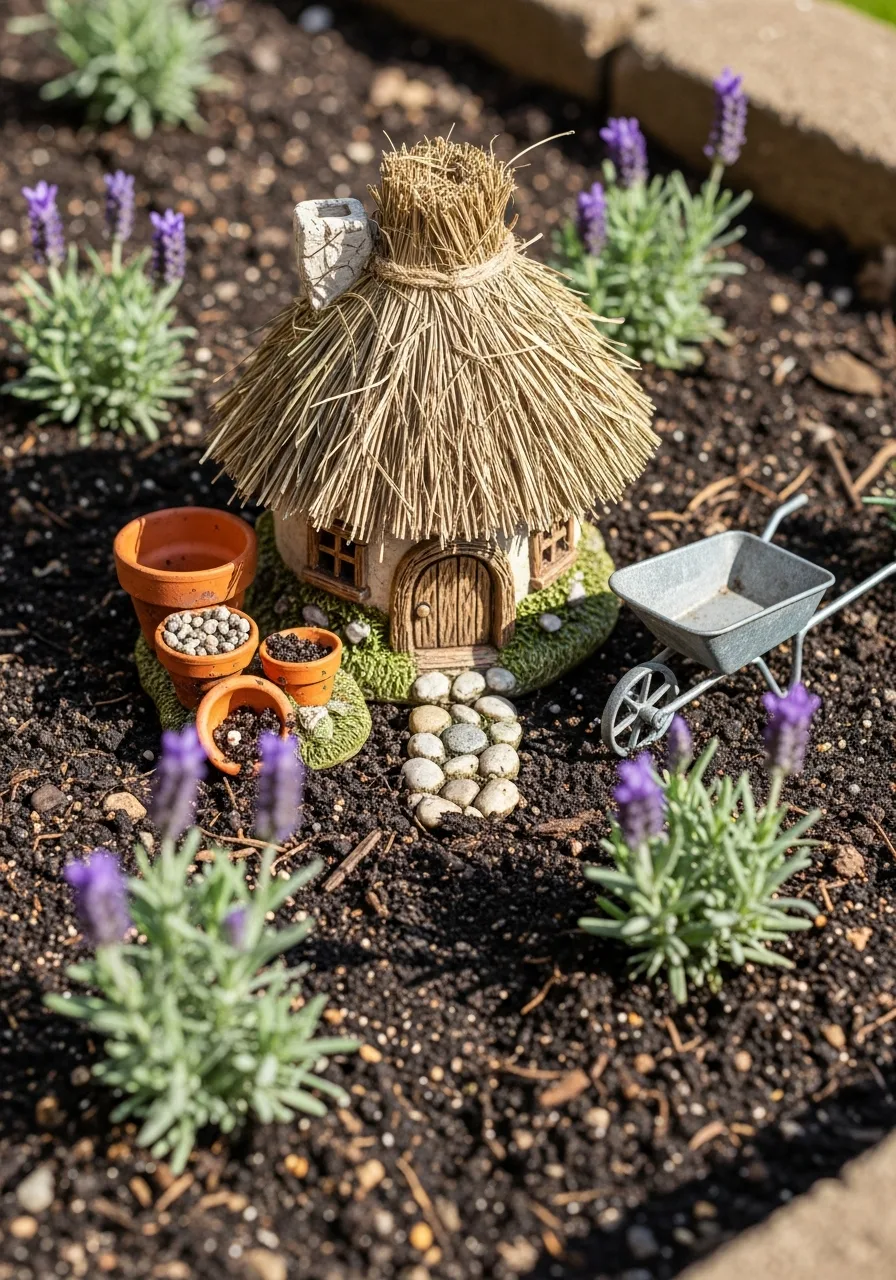
Mix thatched cottages with tiny vegetable patches and climbing roses for a lived-in feel. Use relaxed, flowering groundcovers like Woolly Thyme to soften the edges of the miniature buildings.
A slightly overgrown look makes the garden feel authentic rather than manufactured. Mismatched accessories often add more character than a perfectly coordinated set.
- Look for miniature accessories with chipped paint or weathered finishes.
- Plant herbs like rosemary or oregano to act as oversized 'bushes' for fairies.
- Add a tiny laundry line with fabric scraps to imply a resident lives there.
Quick win: Use broken terracotta pot pieces to create a rustic, 'shabby-chic' garden path.
8. Winding Blue Glass Stream
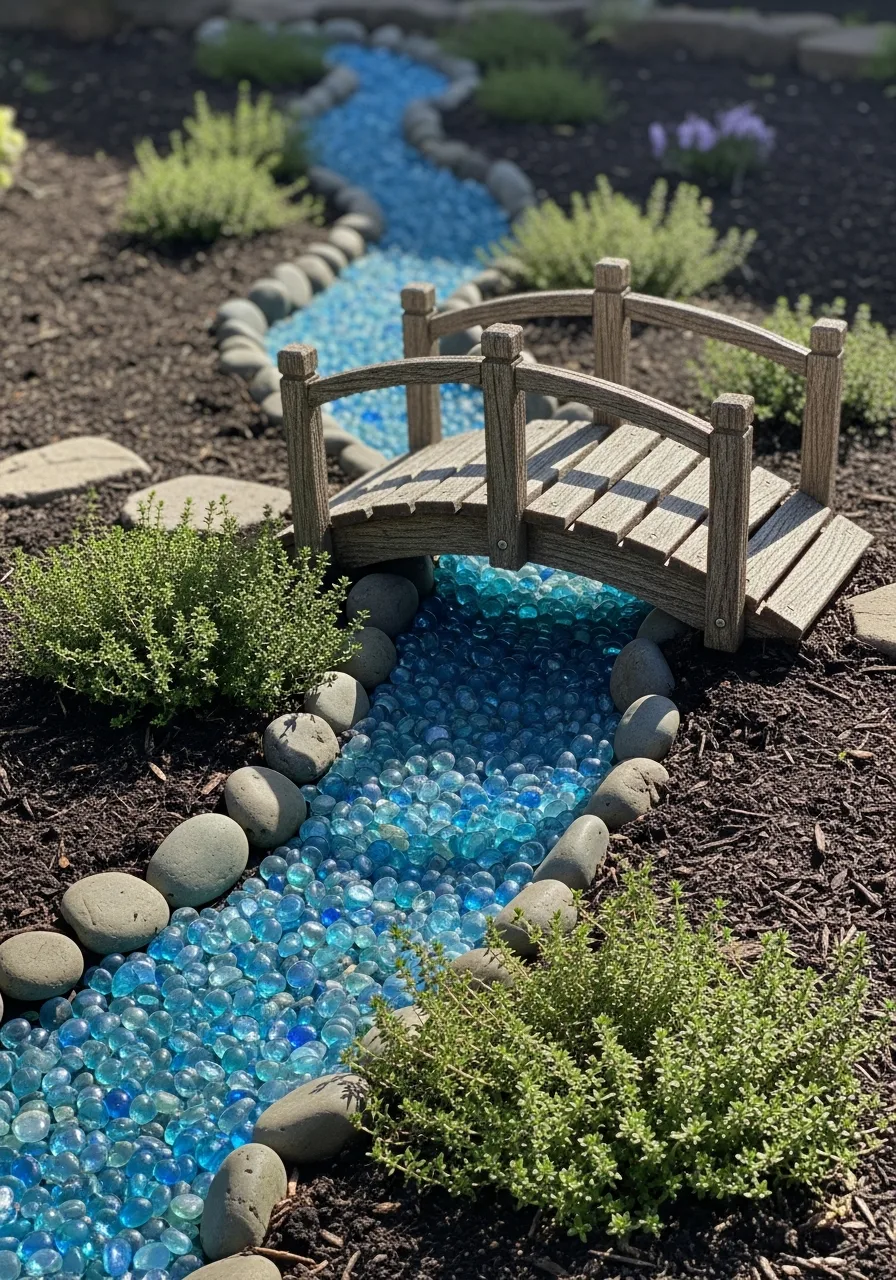
Create the illusion of water by laying out blue tumbled glass or polished river stones in a curved path. Let the stream pass under several small bridges to add depth and movement to the layout.
A winding path is more visually interesting than a straight line and helps lead the eye through the entire garden. Using different shades of blue stones creates a sense of depth in the fake water.
- Lay down a thin layer of sand before the glass to keep it from sinking into the dirt.
- Mix light blue, dark blue, and clear glass for a sparkling water effect.
- Place larger grey rocks along the 'banks' to keep the glass pebbles in place.
Best shortcut: Use a leaf blower on the lowest setting to clean debris off the glass without moving the stones.
9. Working Miniature Fairy Waterfall
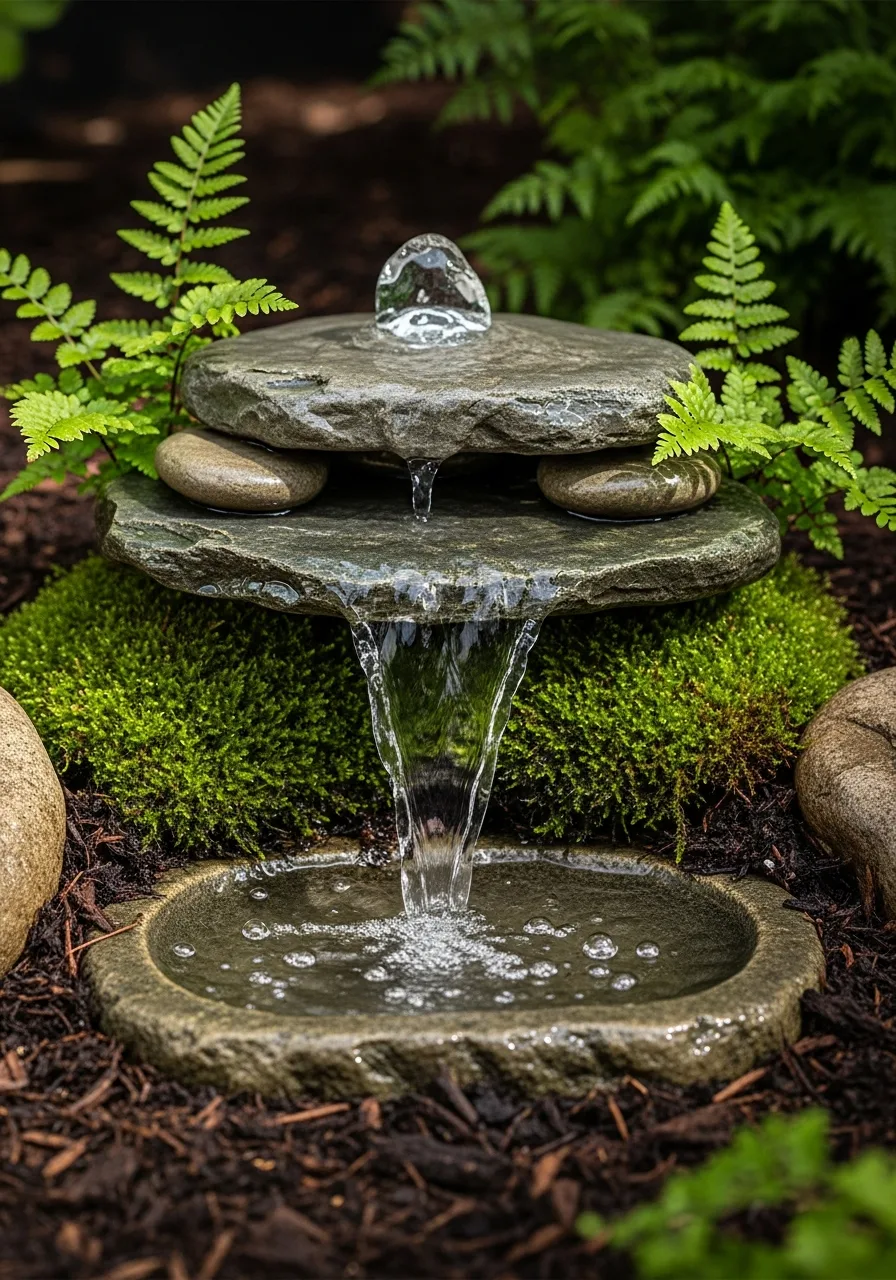
Install a small recirculating pump inside a rock formation to create a real flowing waterfall. Surround the splash zone with moss and moisture-loving plants like dwarf grasses.
The sound of moving water adds a sensory layer that makes a large garden feel like a destination. It is important to hide the pump cord under flat stones or thick mulch for a clean look.
- Choose a low-voltage submersible pump designed for small tabletop fountains.
- Ensure the water basin is deep enough to keep the pump fully submerged.
- Use pond liner scraps under the rocks to prevent water from leaking into the soil.
Most people skip this: Add a drop of bird-safe algaecide to the water to keep the rocks from getting slimy.
10. Large Pondside Fairy Village
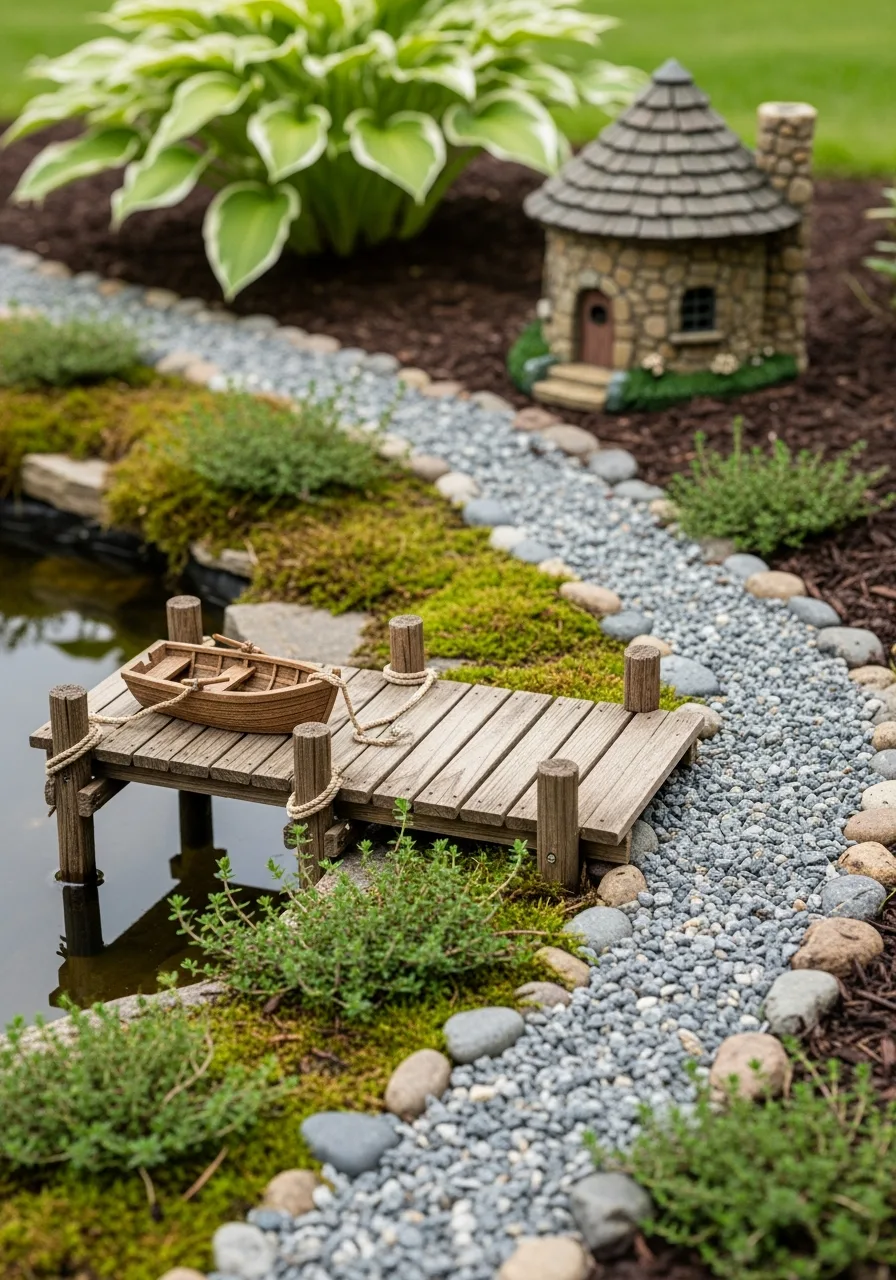
Set up a village around the edge of a backyard pond or a large sunken container. Place docks, tiny boats, and waterside paths to integrate the miniature world with the water feature.
Reflections in the water double the visual impact of the miniature structures. Ensure all decorations are heavy enough to withstand wind near open water so they do not blow into the pond.
- Use marine-grade adhesive if you are attaching docks directly to pond rocks.
- Select plants that thrive in high-moisture soil for the pond perimeter.
- Add a tiny 'No Fishing' sign for a humorous and realistic touch.
Quick win: Use a small floating solar fountain nearby to keep the water moving and prevent mosquitoes.
11. Floating Fairy Island Garden
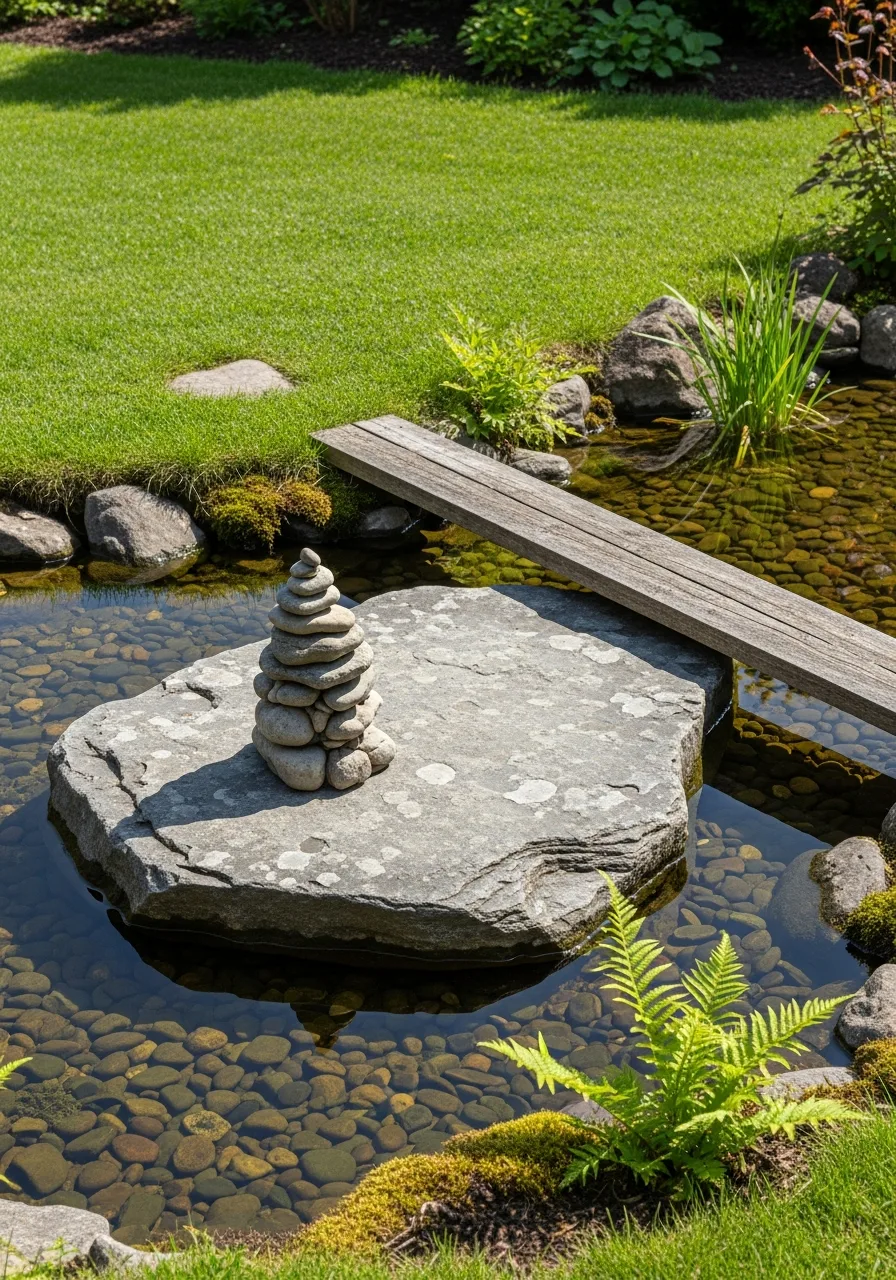
Place a large flat rock or a floating planter in the middle of a pond to serve as a secluded island. Add a single cottage or tower and connect it to the mainland with a long decorative bridge.
Isolating a section of the garden creates a sense of mystery and encourages closer inspection. Using a bridge with high railings makes the scale feel more realistic over open water.
- Secure the island rock with a bit of underwater epoxy to keep it from shifting.
- Choose a tower with a heavy base so it doesn't tip over on the rock.
- Use a long, arched bridge to span the distance without touching the water.
Best shortcut: A piece of cork bark makes a great lightweight, natural-looking floating island.
12. Dense Enchanted Fairy Forest
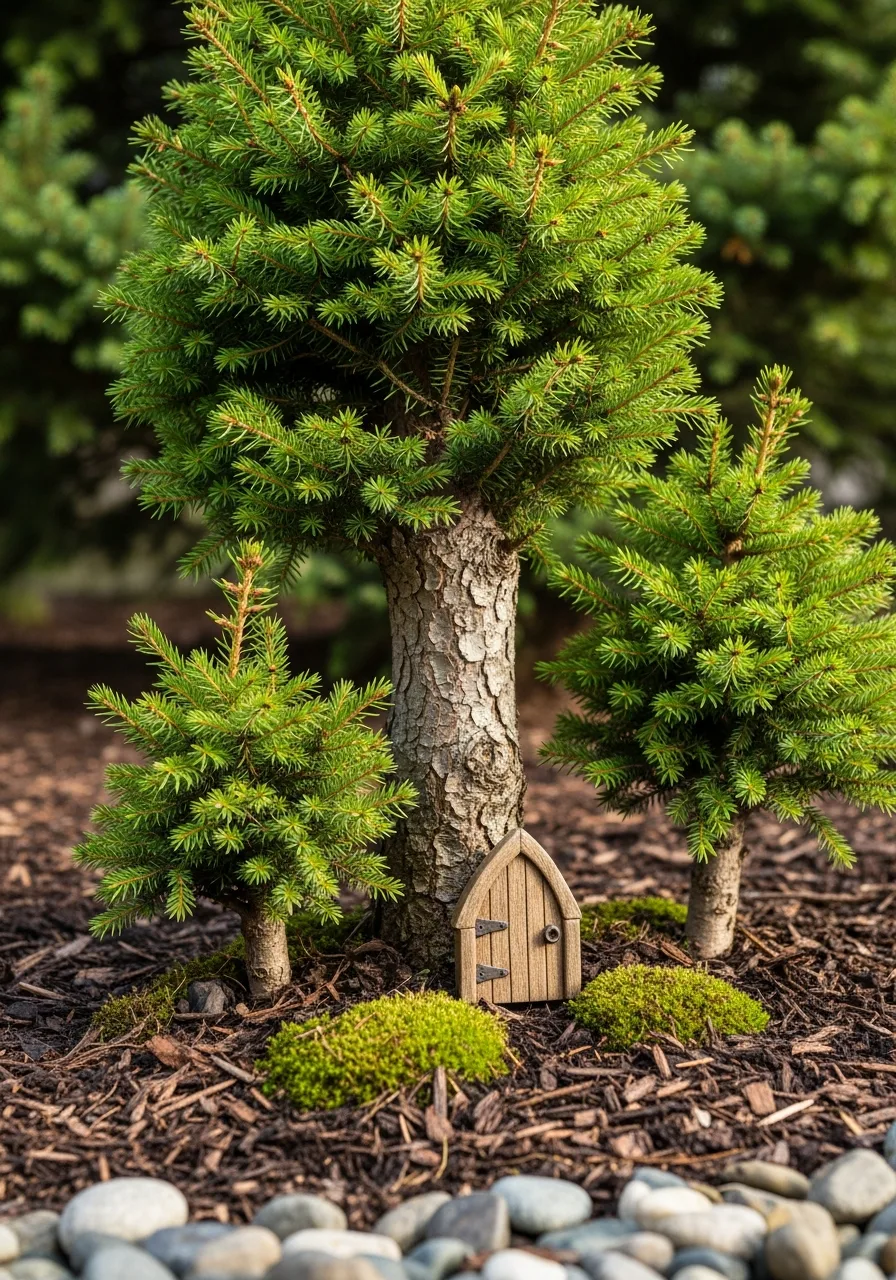
Use miniature conifers and dwarf shrubs to create a thicket that hides fairy houses from immediate view. This encourages visitors to walk around the garden to discover hidden details.
Layering plants of different heights creates a realistic forest canopy for the miniature world. Dwarf Mondo Grass is perfect for creating lawns that do not need constant trimming.
- Space plants according to their mature size to avoid overcrowding in two years.
- Use slow-growing 'dwarf' or 'miniature' varieties of evergreens.
- Prune the lower branches of tiny trees to create space for houses underneath.
Most people skip this: Check the growth rate on plant tags; some 'dwarf' plants still grow 6 inches a year.
13. Long Fairy Nature Trail
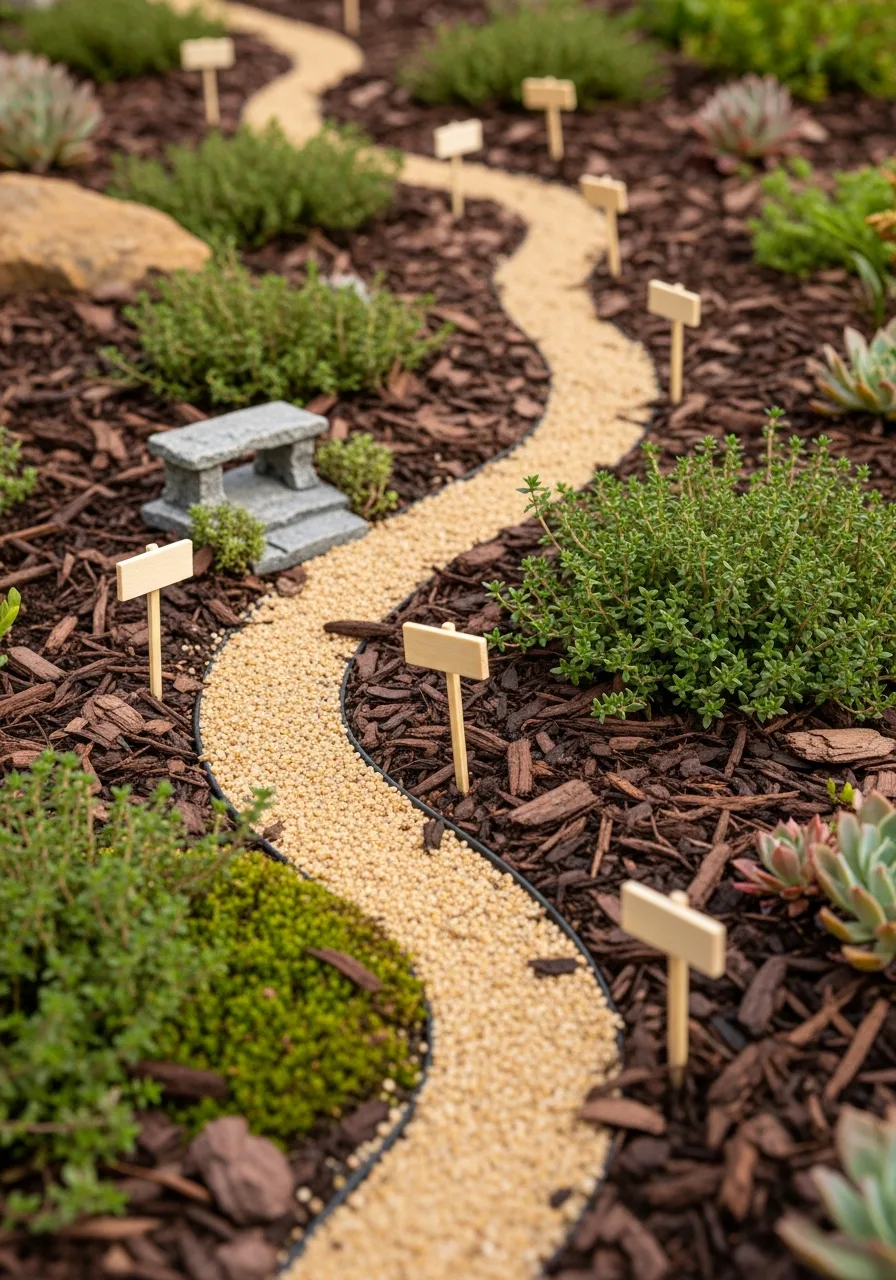
Establish a long, continuous path that travels through different themed zones in a large garden bed. Include tiny signs and resting places like benches or stumps along the route.
A clear path gives the entire landscape a sense of purpose and organization. Using contrasting materials like white sand against dark mulch makes the trail pop and guides the eye.
- Use a flexible garden hose to layout the path shape before digging.
- Press stones or sand firmly into the soil to prevent them from washing away.
- Add a 'trailhead' sign at the beginning of the garden for guests to see.
Quick win: Use popsicle sticks and a fine-tip permanent marker to make custom trail signs.
14. Connected Fairy Neighborhood Districts
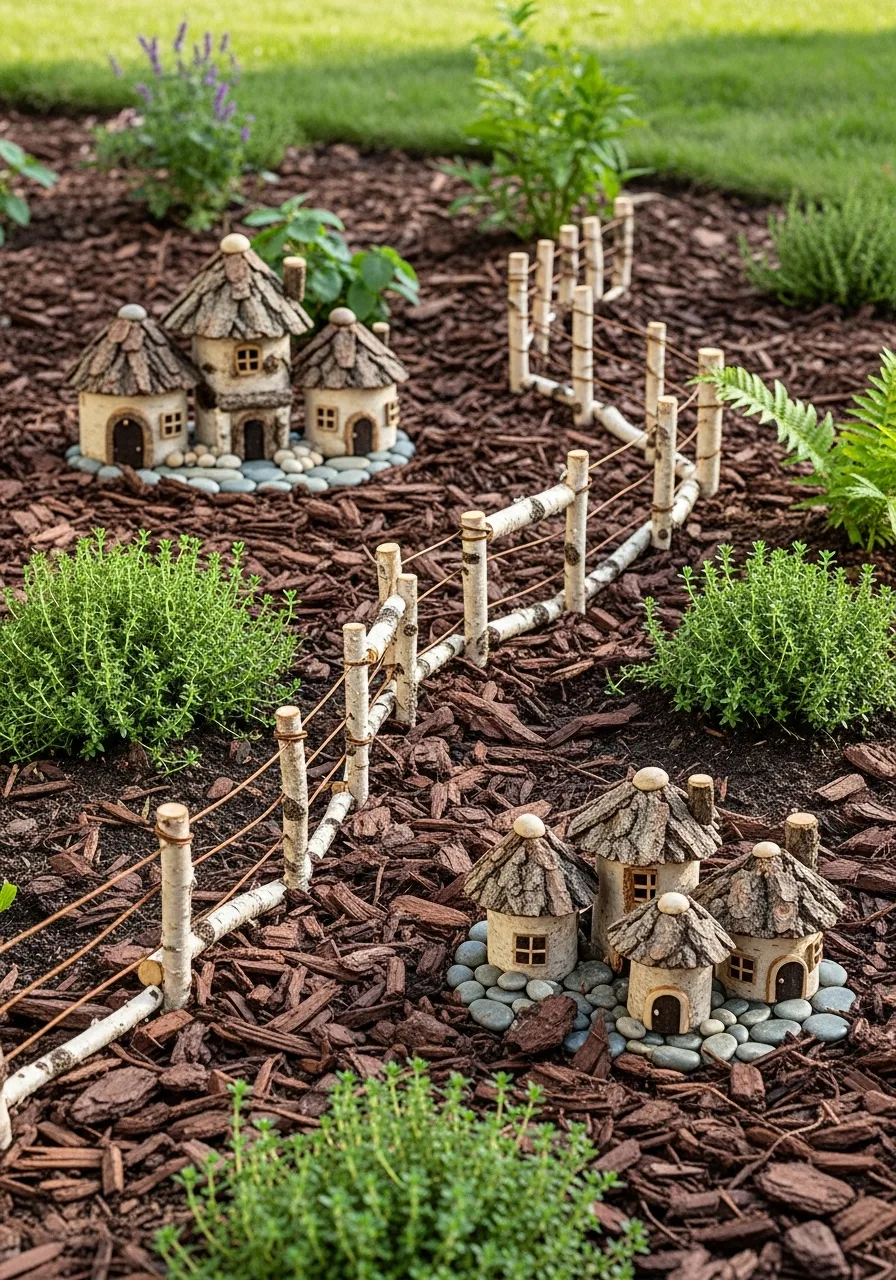
Divide a large area into distinct zones like a market district, a farming area, and a residential street. Use consistent materials for the paths and fences to make the separate areas feel like one cohesive town.
Zoning a large space prevents it from looking cluttered and disorganized. Giving each neighborhood a slightly different color palette helps define the boundaries clearly.
- Use different groundcovers, like thyme for one zone and moss for another.
- Connect the neighborhoods with a single long fence or a continuous path.
- Place a 'Welcome to [Name]' sign at the entrance of each district.
Best shortcut: Use a standard roll of miniature picket fence to quickly define large borders.
15. Bustling Fairy Market Village
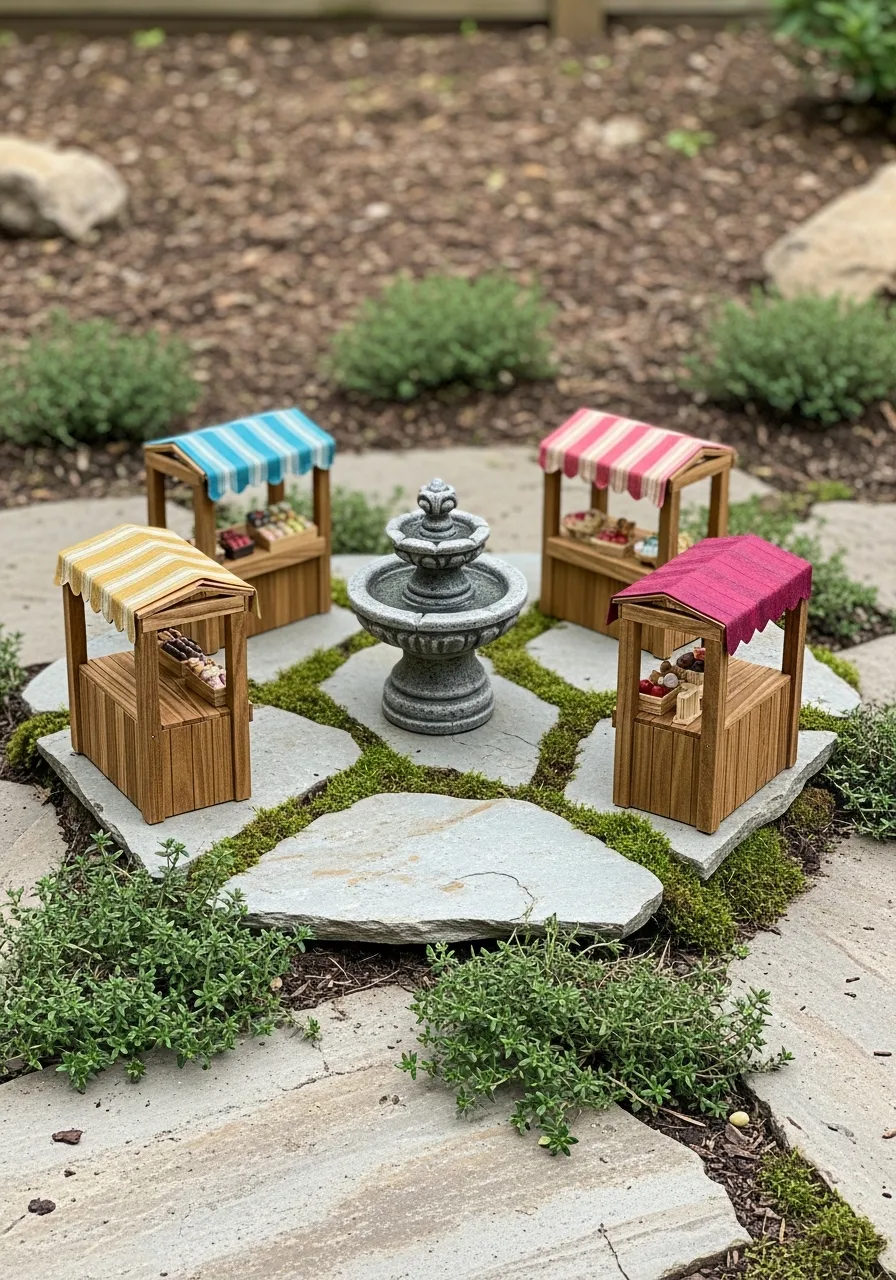
Arrange miniature stalls and carts around a central square or fountain. Add tiny details like baskets of fruit or fabric canopies to bring the scene to life.
Activity-based scenes tell a story and make the garden feel more dynamic than static displays. Using a central feature like a clock tower or fountain anchors the market square effectively.
- Use flat slate or flagstones for the market floor to create a 'paved' look.
- Glue tiny beads into baskets to represent fruits and vegetables.
- Space the stalls at least 4 inches apart so the details are visible from above.
Most people skip this: Use a waterproof spray sealant on fabric canopies to prevent them from rotting outdoors.
16. Fairy Farm and Orchard
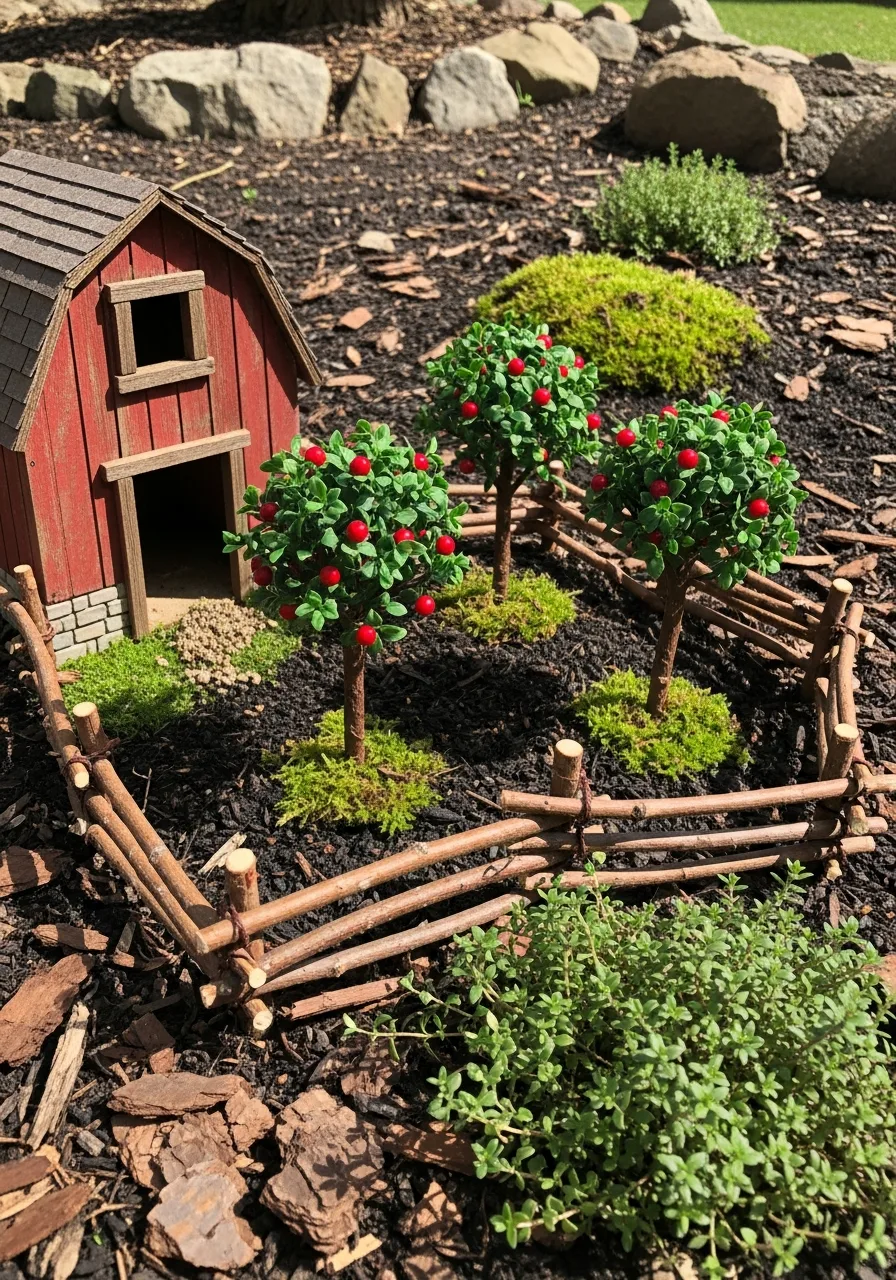
Build a miniature farm with a barn, fenced fields, and tiny fruit trees to create a productive landscape. Add wheelbarrows, watering cans, and small animal figures to give the scene a busy, working feel.
Grouping fruit trees into a grid-like orchard helps define the space and makes the large garden bed look organized.
- Sourcing miniature farm animals and resin barns online
- Clear a 3×2 foot rectangle of soil for the farm zone
- Use real twigs and jewelry wire to build custom livestock fences
Quick win: Use dwarf jade plants or small succulents to act as 'fruit trees' that stay the right size for years.
17. Fairy Vegetable Garden
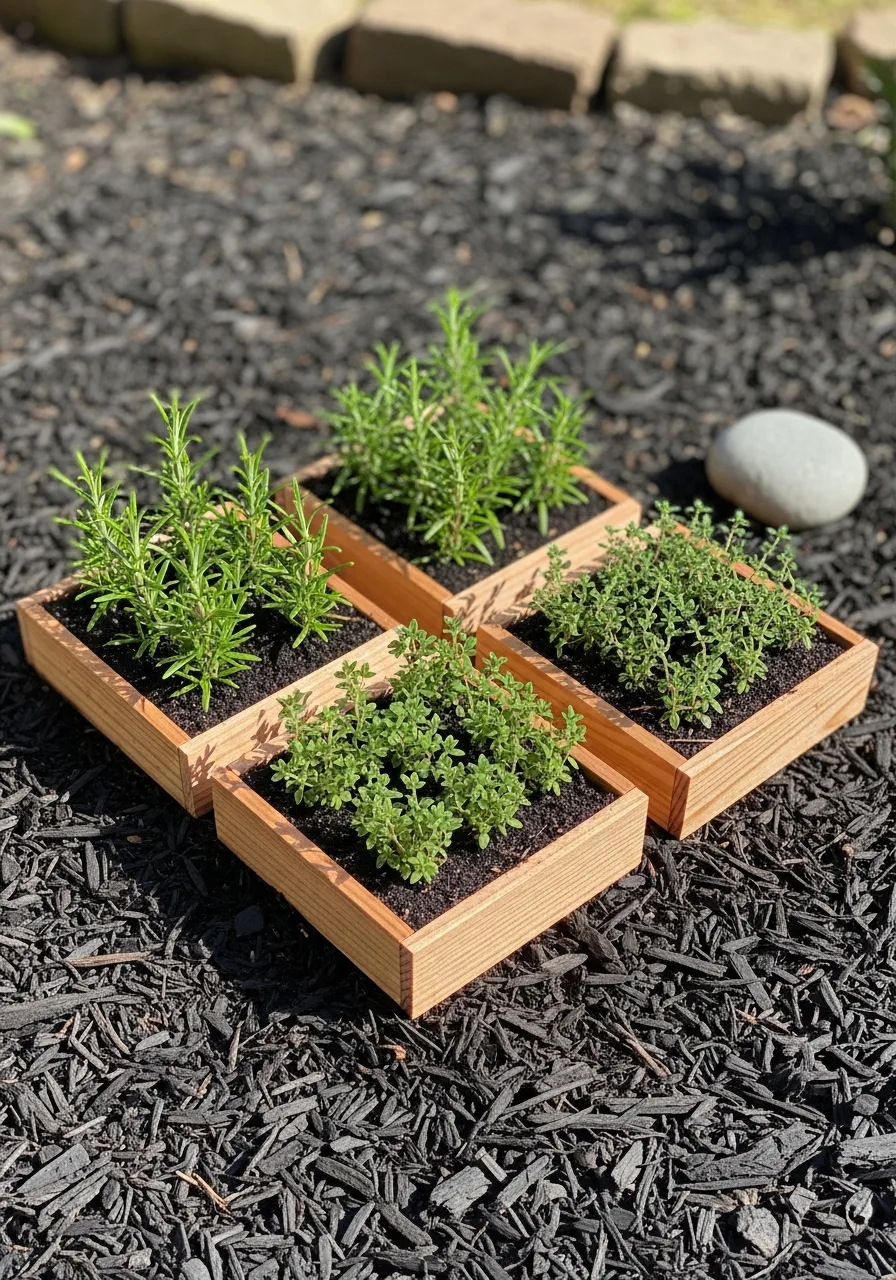
Create raised miniature planting beds using twigs, stones, or small wood pieces to represent a tiny crop field. Use low-growing herbs and tiny-leaved plants to stand in for vegetables like lettuce or kale.
Raised beds provide structure and prevent the miniature plants from being overwhelmed by the surrounding garden mulch.
- Crafting beds from popsicle sticks or small flat stones
- Planting compact herbs like 'Minimint' or 'Corsican Mint'
- Adding a tiny garden hose and a pile of dirt for realism
Best shortcut: Use a fork to rake the soil between your 'crops' to create the look of freshly tilled farm rows.
18. Fairy Flower Farm
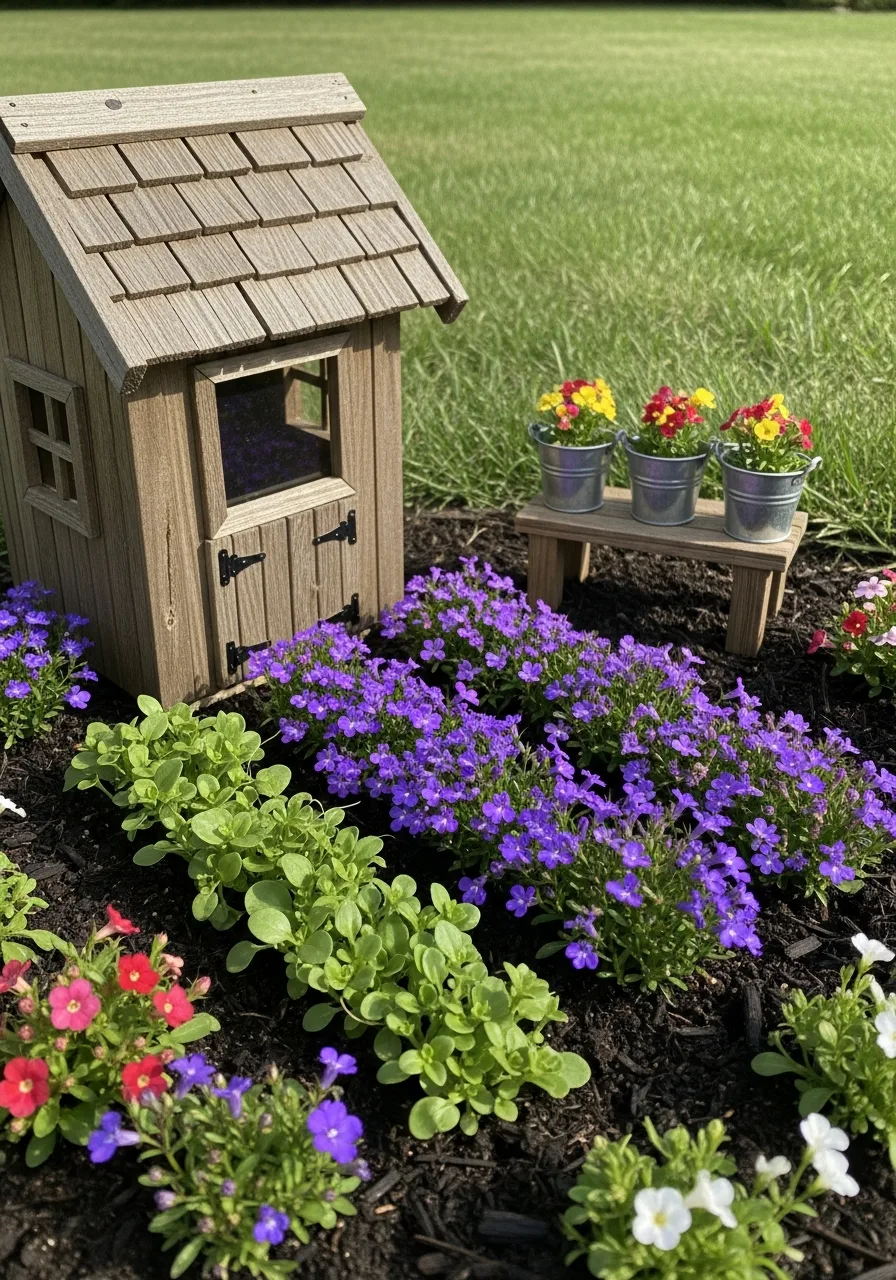
Plant rows of compact flowering plants around a cottage and a miniature potting shed to create a vibrant flower farm. Include tiny buckets, garden tools, and a stand where fairies can display their freshly cut blooms.
Massing flowers of the same color in rows mimics the look of a professional cut-flower farm at a miniature scale.
- Choosing small-flowering annuals like Alyssum or Lobelia
- Setting up a 1:12 scale flower stand near the main path
- Mixing fine gravel paths between the flower rows for access
Most people skip this: Deadhead your miniature flowers regularly to keep the blooms small and the farm looking tidy.
19. Fairy Greenhouse Garden
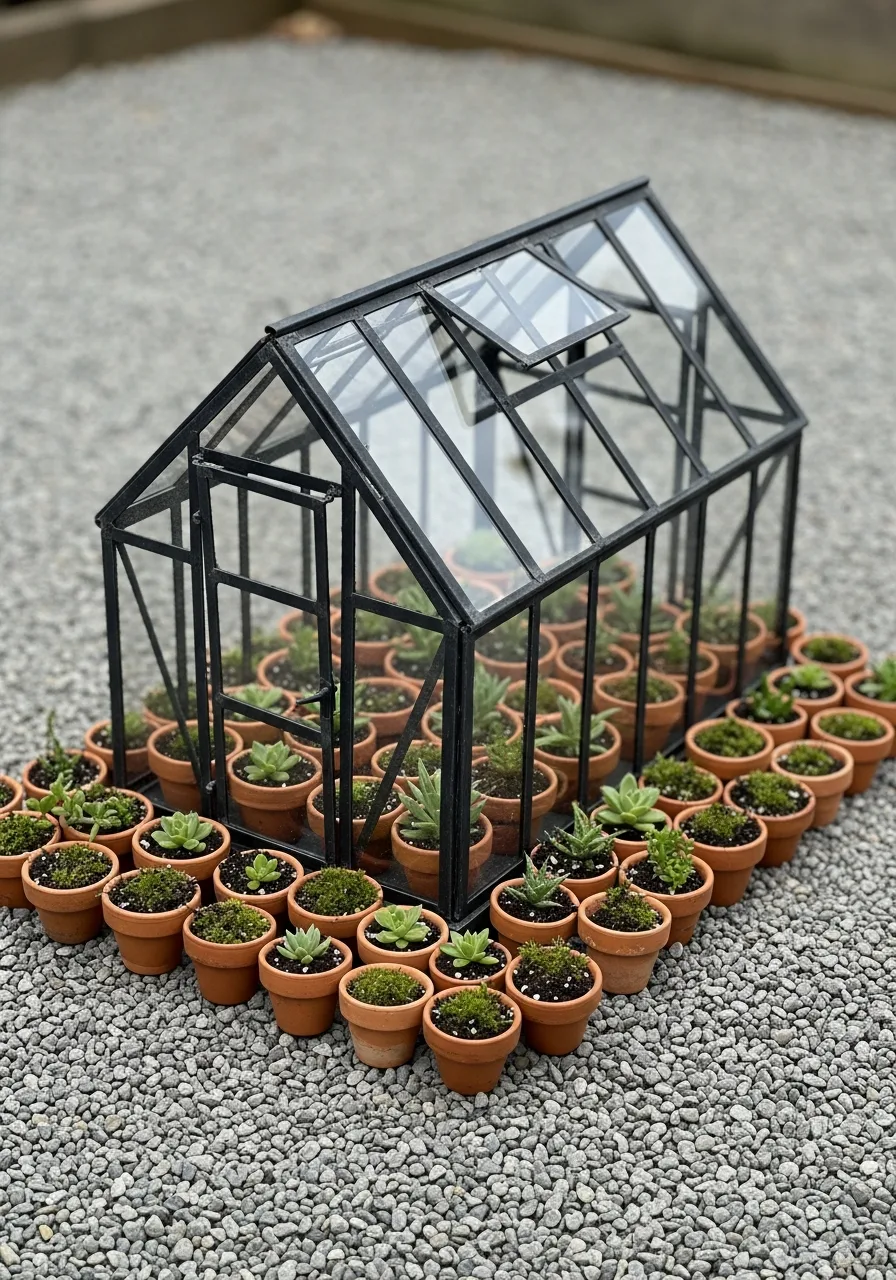
Place a miniature greenhouse at the center of a dedicated planting area to act as the village nursery. Surround it with tiny pots, seed trays, and neat gravel paths to emphasize the horticultural theme.
A glass or plastic greenhouse reflects light and adds a high-end architectural element to a large garden bed.
- Purchasing a glass terrarium to use as a fairy greenhouse
- Staging miniature seed packets and watering cans inside
- Using fine white sand to create clean paths around the structure
Quick win: Place a battery-operated tea light inside the greenhouse for a warm glow during evening garden parties.
20. Fairy Tea Garden
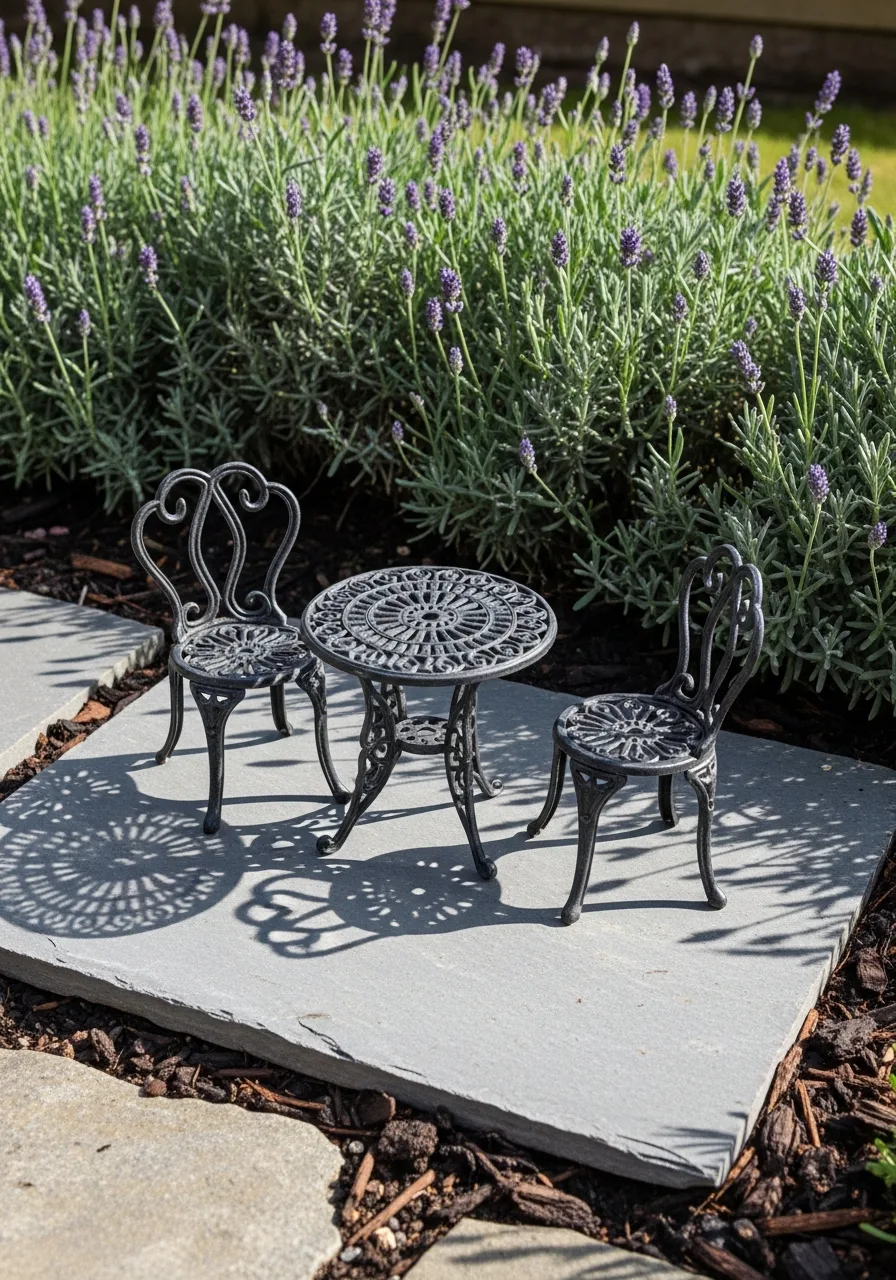
Design a garden gathering place with tiny tables, chairs, and a shaded pavilion for afternoon gatherings. Frame the area with fragrant herbs like lavender or chamomile to create a sensory experience for anyone walking by.
Using a flat flagstone as a patio base ensures the tiny furniture stays level and doesn't sink into the soil.
- Sourcing wrought-iron style miniature bistro sets
- Planting chamomile as a soft, fragrant groundcover 'carpet'
- Adding a tiny tea set with cups no larger than a pea
Best shortcut: Use a large, flat coaster or a single slate tile as a quick and easy patio for the furniture.
21. Fairy Festival Garden
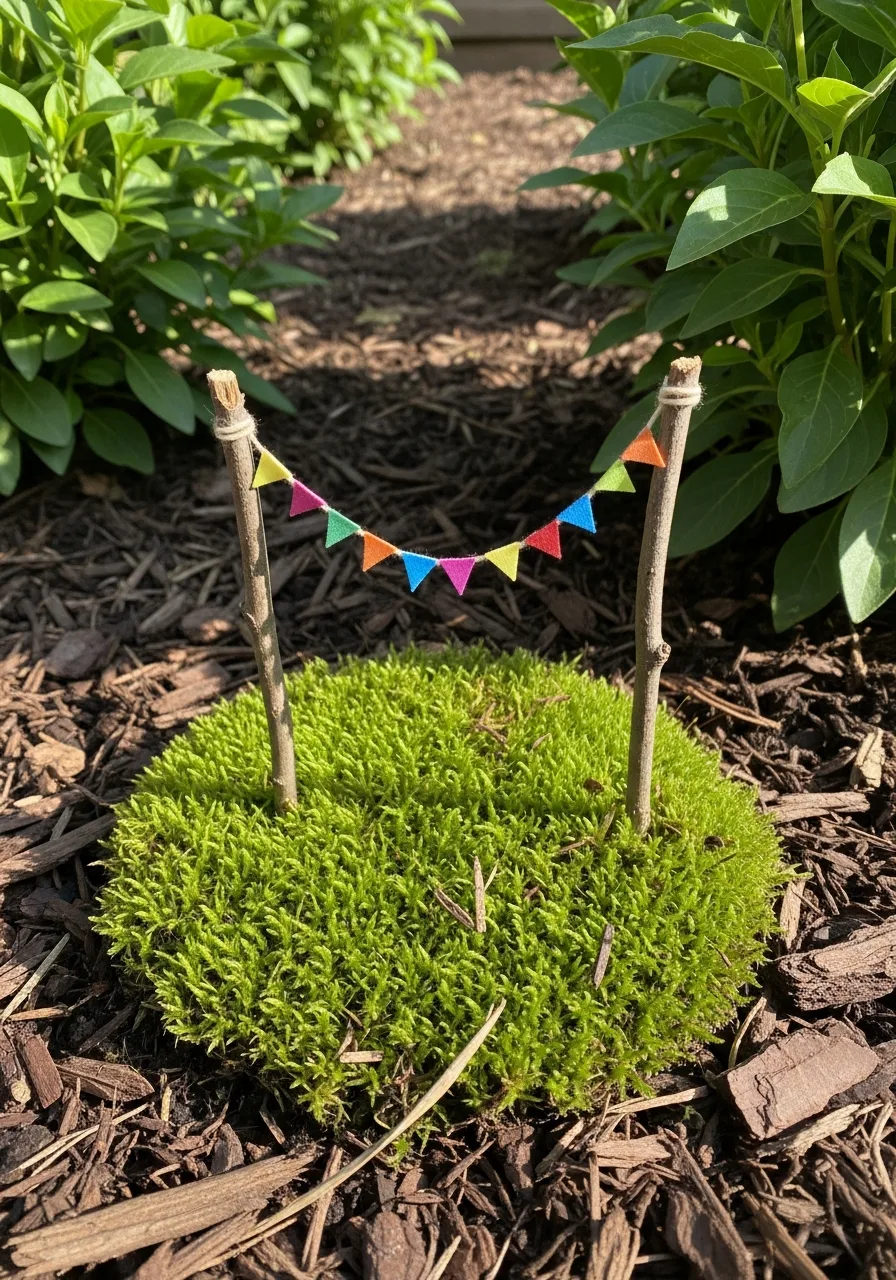
Create an open village green decorated with miniature banners, lights, and seating areas for a festive atmosphere. Add a small performance stage or a central maypole to make the village look ready for a celebration.
Brightly colored bunting made from fabric scraps adds movement and a sense of joy to the garden.
- Making bunting from embroidery floss and fabric scraps
- Building a small wooden stage from flat craft sticks
- Arranging benches in a semi-circle around the 'performance' area
Most people skip this: Use outdoor-rated string lights with a solar panel to keep the festival lit without needing an outlet.
22. Fairy Picnic Meadow
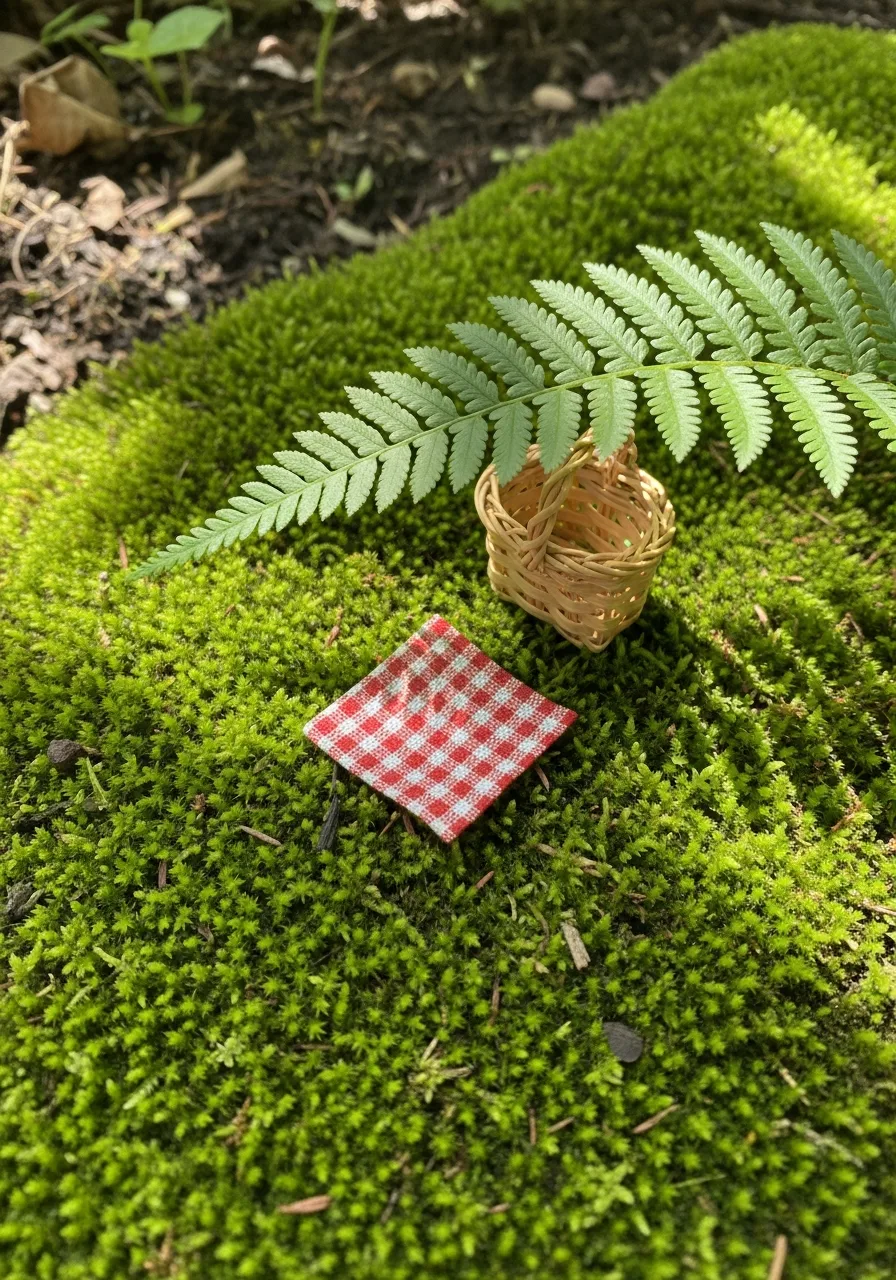
Leave an open patch of low ground cover to serve as a miniature meadow for picnics and relaxation. Add tiny blankets, baskets, and small food pieces near a few shade trees to complete the scene.
A wide, open green space provides a visual break from the detailed cottages and prevents the garden from looking cluttered.
- Using Irish Moss or Scotch Moss for the 'grass'
- Crafting a picnic blanket from a small square of gingham fabric
- Positioning the meadow near a 'water' feature or shade tree
Quick win: Spray your fabric picnic blanket with a clear sealant to prevent it from molding or fading in the rain.
23. Fairy Playground Garden
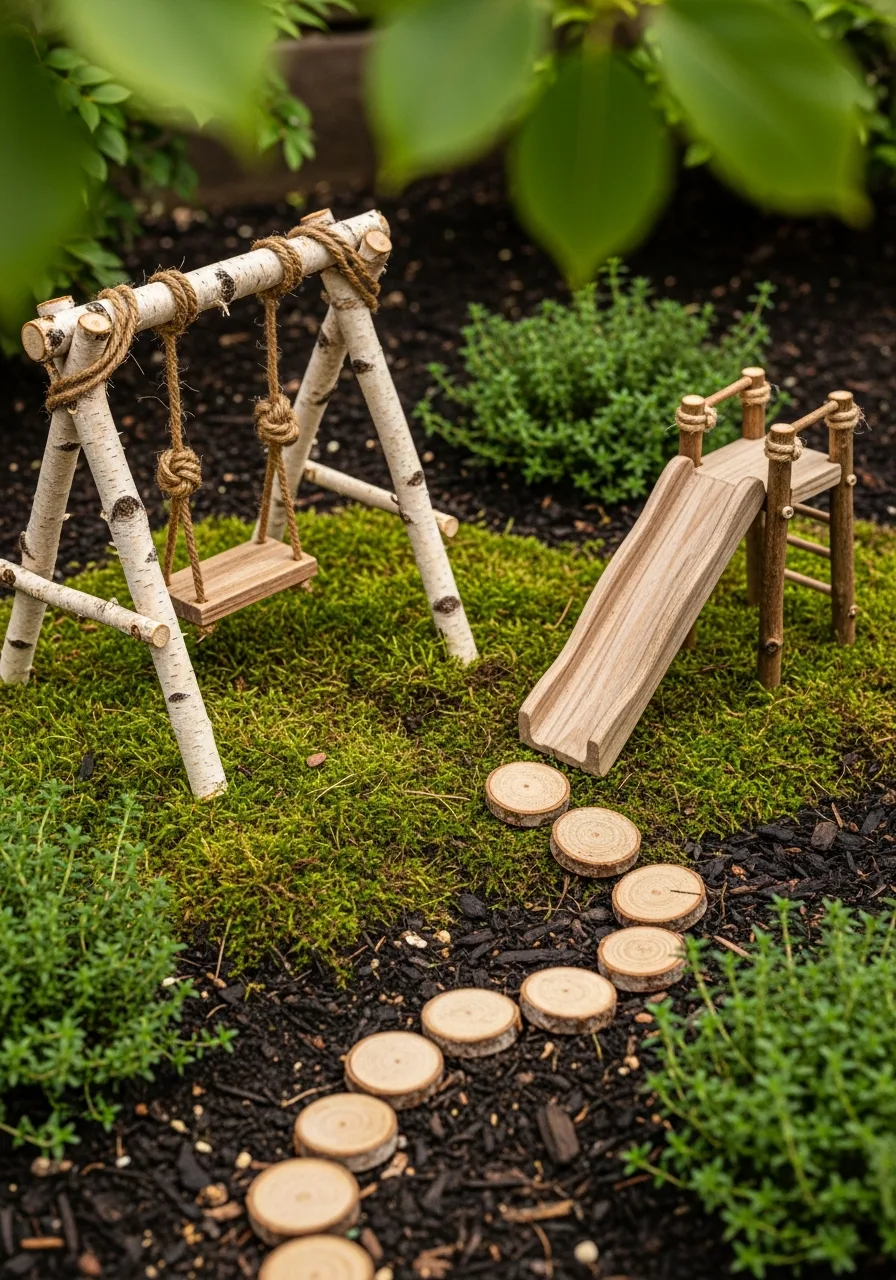
Build a playful area with miniature swings, slides, and stepping logs for the younger fairies in the village. Place the playground near the main cottages so it feels like a natural part of the community.
Using natural materials like twigs for the swing frames helps the playground blend into the garden environment.
- Building a swing using two 'Y' shaped twigs and a crossbar
- Using a curved piece of bark or PVC pipe as a slide
- Creating a 'sand pit' using a small jar lid filled with real sand
Best shortcut: Use large buttons as the 'seats' for swings; they are already the perfect shape and have holes for the string.
24. Fairy Campground
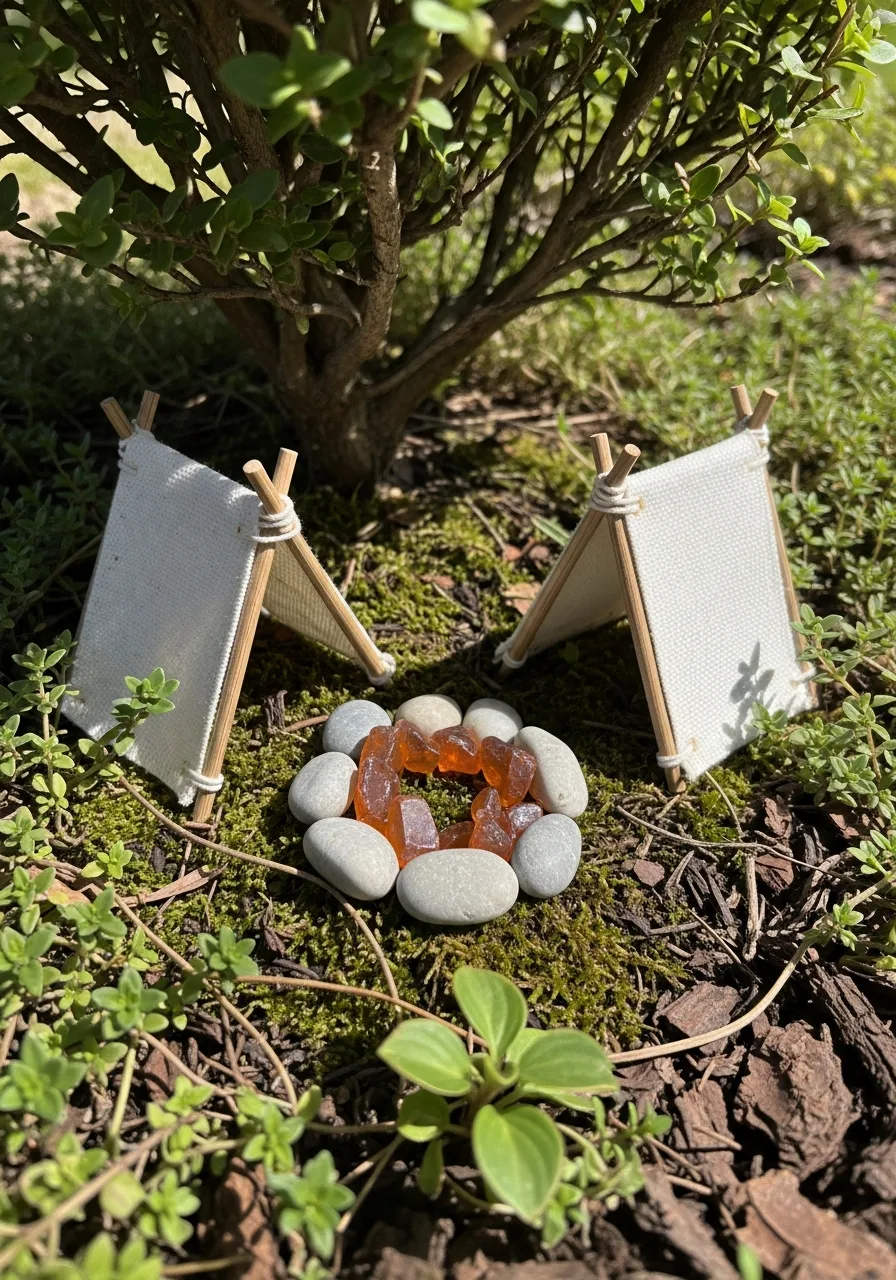
Arrange tiny tents, cabins, and a pretend campfire within a wooded section of your garden. Use natural elements like bark, pinecones, and stones to keep the setting looking rugged and outdoorsy.
A circle of small pebbles around a cluster of orange sea glass creates a convincing, safe-looking 'campfire'.
- Making tents from sticks and scrap canvas or leather
- Using a small log as a 'bench' for the campfire
- Placing the camp in a shaded, slightly overgrown corner
Most people skip this: Use real dried pine needles as the 'ground' for the campsite to give it an authentic forest floor texture.
25. Fairy Treehouse Community
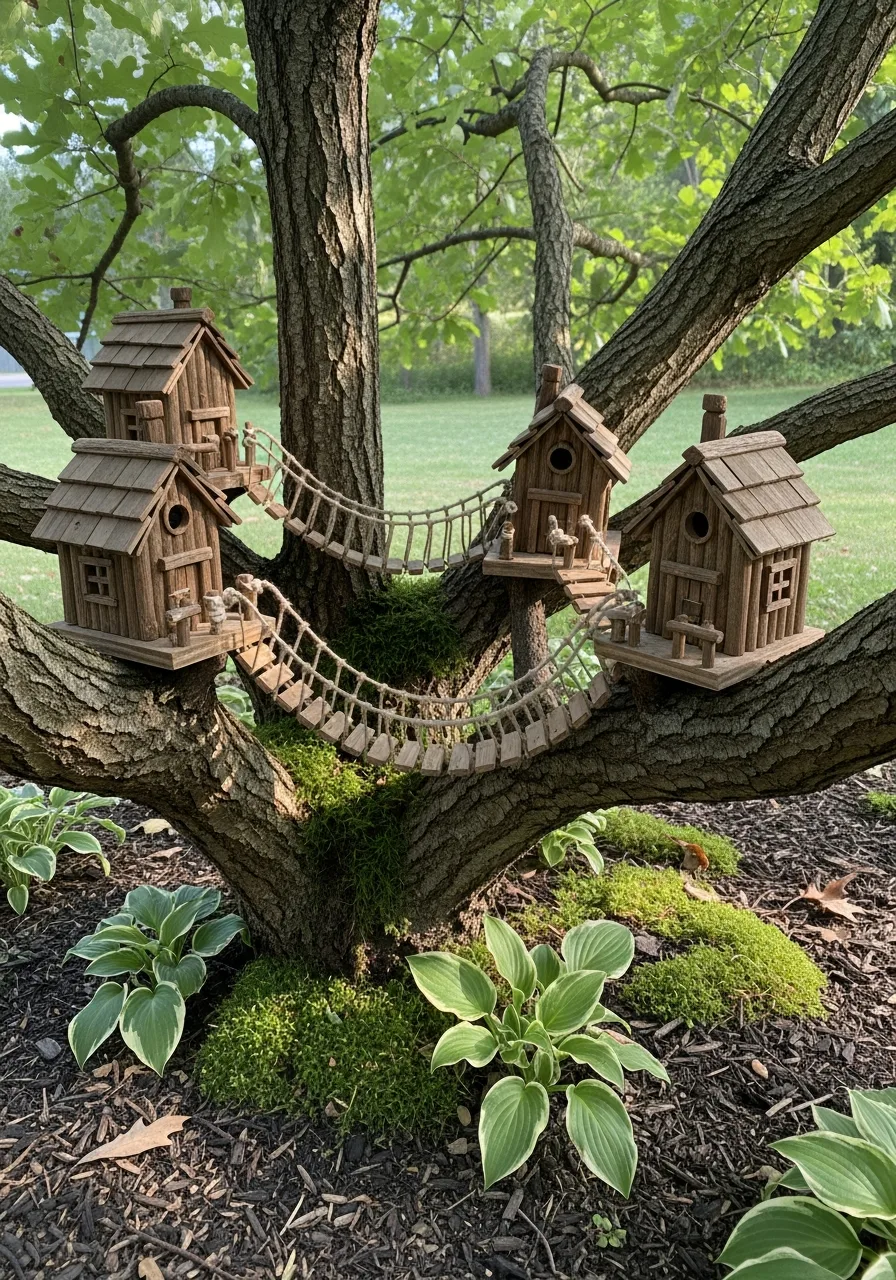
Attach small houses and platforms to a stump or a decorative branch structure to create an elevated neighborhood. Connect the homes with rope ladders and bridges to maximize the vertical space in your garden.
Building upward allows you to add more detail to a large garden without taking up more ground space.
- Securing platforms with outdoor-rated construction adhesive
- Using jute twine and small sticks to craft rope ladders
- Planting climbing vines at the base to 'grow' up the treehouse
Quick win: Use 'museum wax' to temporarily secure small figures to high platforms so they don't fall during high winds.
26. Fallen-Log Fairy Village
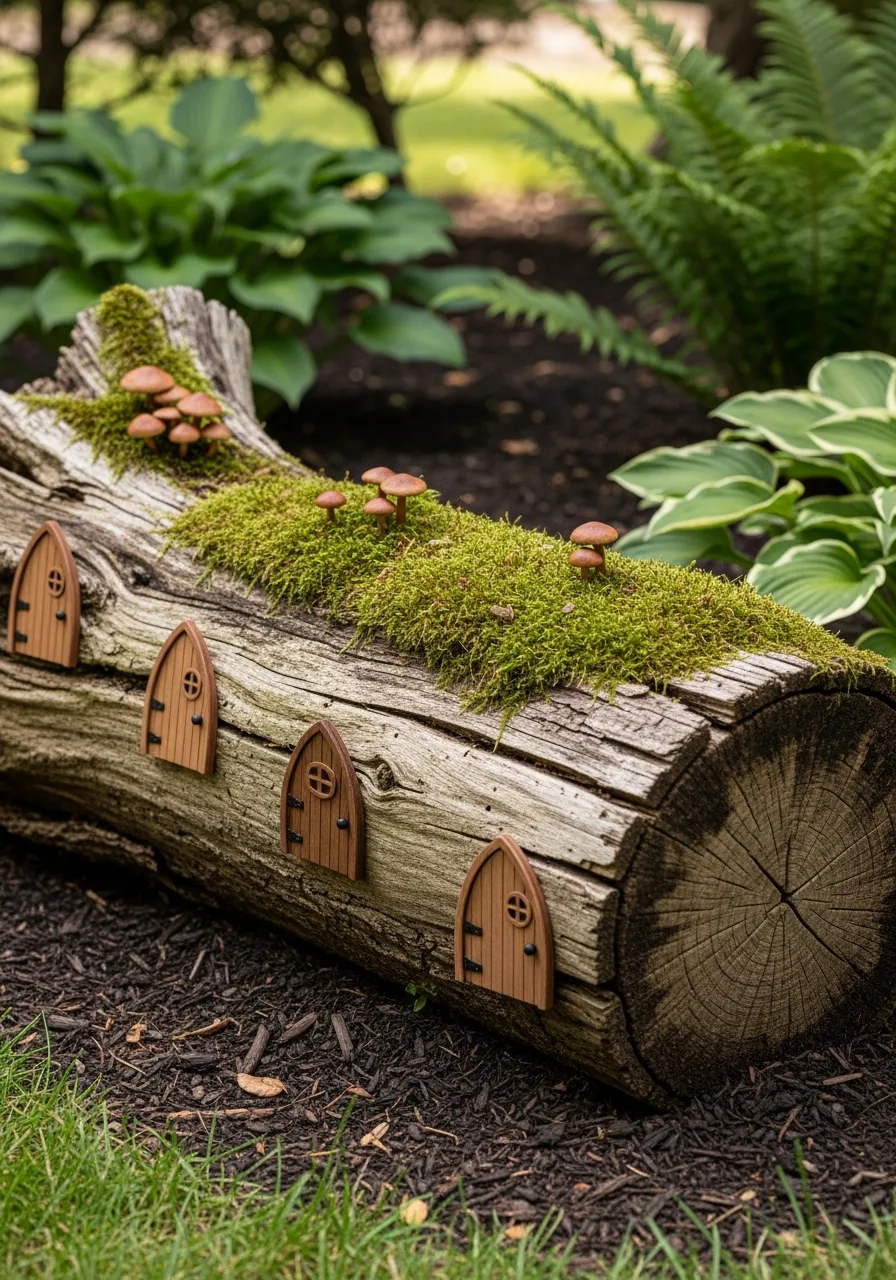
Use a large fallen log as the foundation for a row of fairy homes and businesses. Add doors along the side and moss on top to make the log look like a natural apartment complex.
The horizontal line of a log creates a clear 'street' that naturally guides the eye through the garden.
- Finding a weathered log with interesting bark and hollows
- Attaching resin doors and windows with small brass nails
- Creating a pebble path that runs parallel to the log 'street'
Best shortcut: If the log is too hard to nail into, use a drill to create pilot holes for your miniature door hinges.
27. Hollow-Log Fairy Tunnel
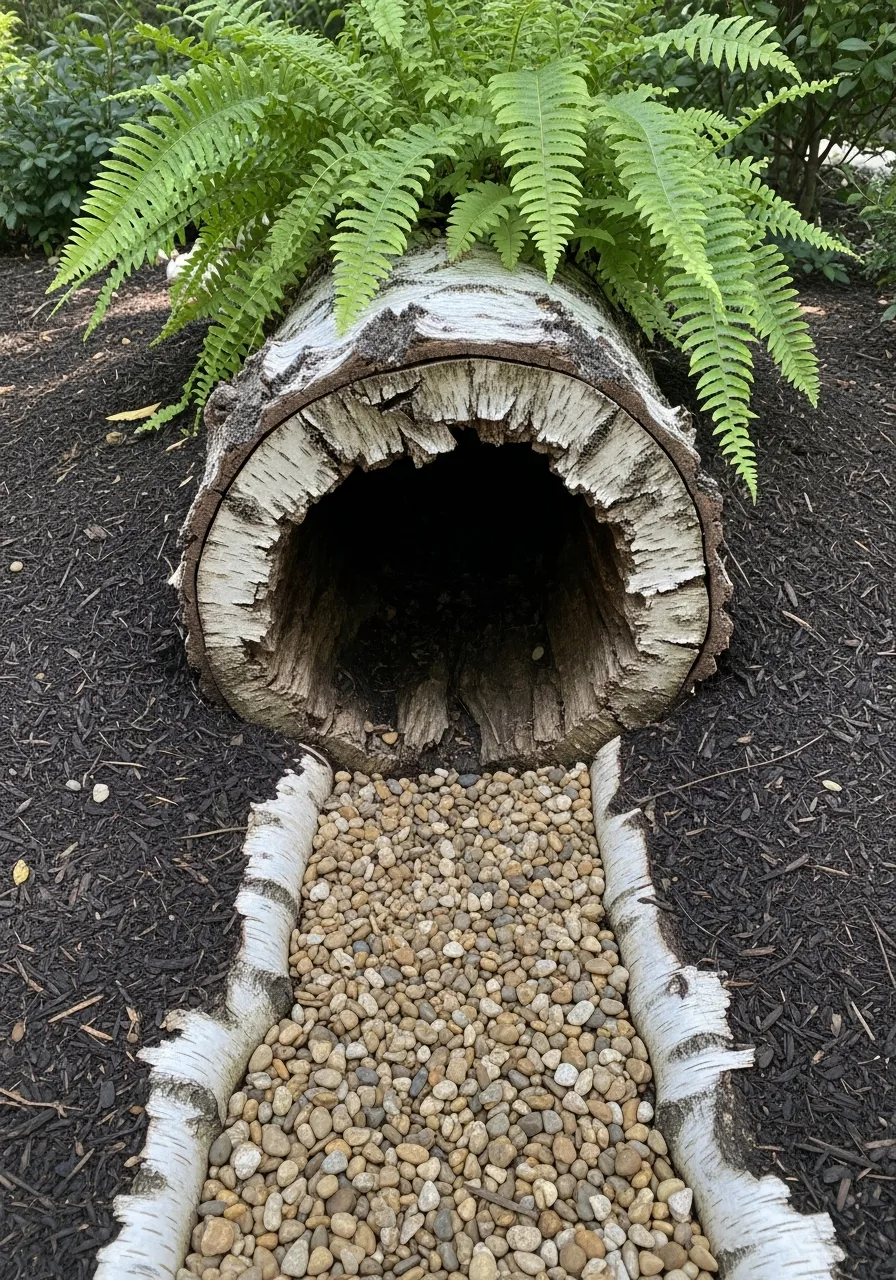
Place a hollow log or a sturdy tube between two sections of the garden to act as a secret connector. Decorate the entrances with stones and moss so the tunnel looks like a hidden passage for the fairies.
Tunnels add a sense of mystery and encourage viewers to peek into the garden from different angles.
- Using a piece of PVC pipe covered in bark as a durable tunnel
- Mounding soil over the tunnel to create a 'hill' for houses
- Placing a small light or a 'treasure' inside the tunnel for discovery
Most people skip this: Make sure the tunnel has a slight slope so water drains out and doesn't puddle inside after a rainstorm.
28. Fairy Garden Stone Ruins
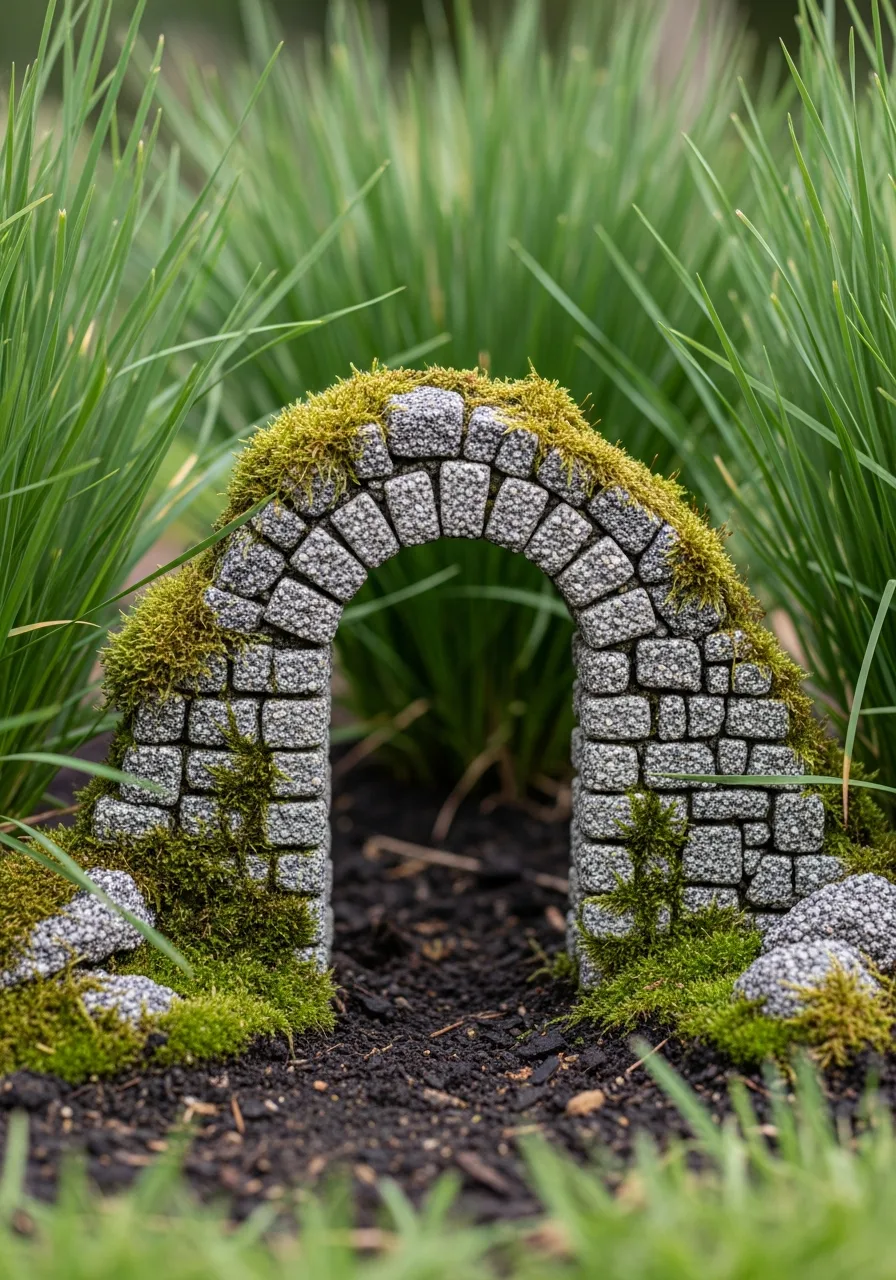
Create the remains of an ancient miniature castle or village wall using stacked stones and broken pottery. Allow moss and small creeping plants to grow over the stones to give the scene an aged, mysterious look.
Ruins provide a perfect contrast to neat cottages and add a sense of history to your fairy world.
- Stacking flat river rocks with a little mortar or exterior glue
- Using broken terracotta pot shards as 'ruined' walls
- Planting 'Elfin' Thyme to grow through the cracks in the stones
Quick win: Use a wire brush to scuff up new resin 'ruins' to make them look like weathered, ancient stone.
29. Secret Fairy Door Trail
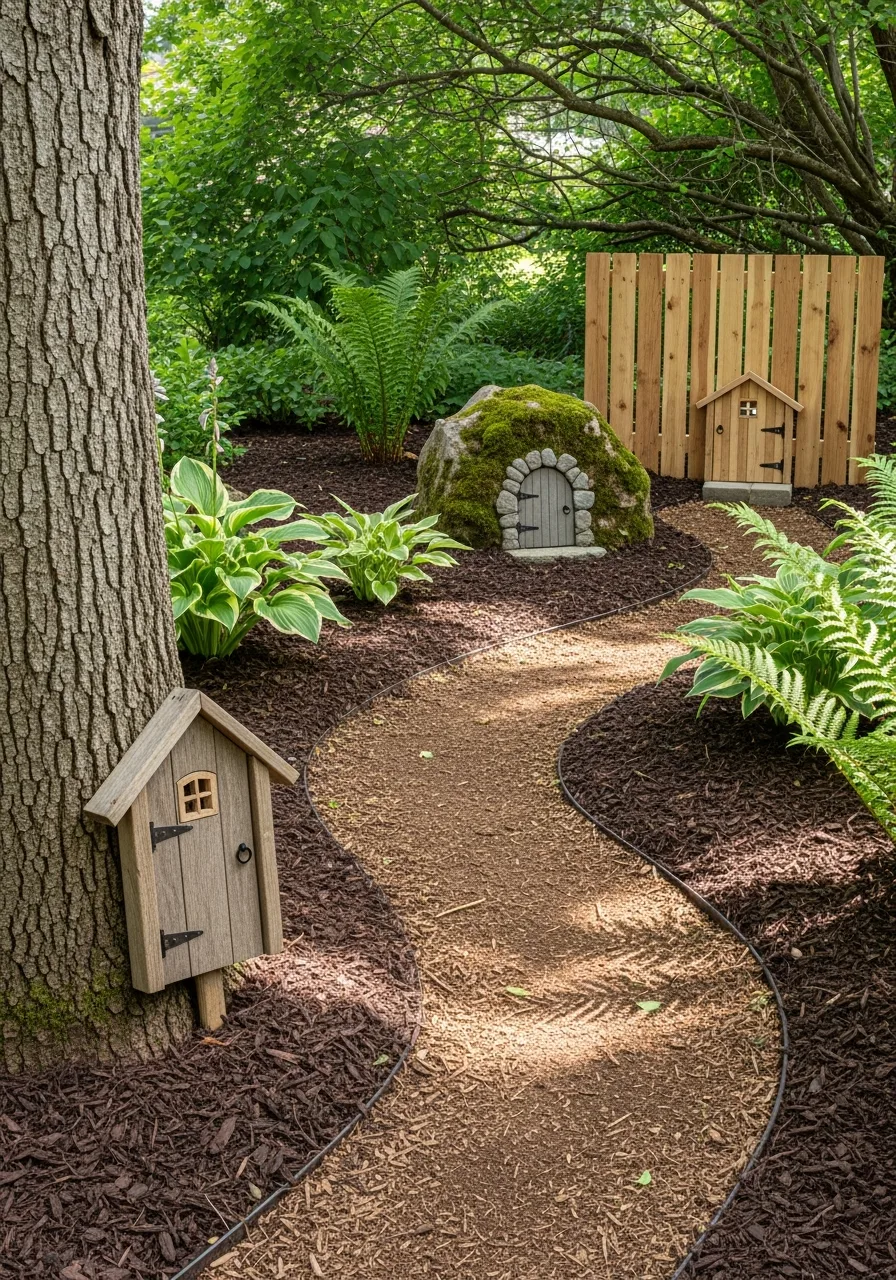
Attach several weather-resistant fairy doors to trees, rocks, and fences throughout a large landscape area.
Connect the doors with a visible dirt or gravel path to turn the entire garden into an exploration trail. A door trail is the best way to link far-apart sections of a large yard into one cohesive theme.
- Using heavy-duty outdoor mounting tape for doors on smooth surfaces
- Clearing a 4-inch wide path through the mulch to connect doors
- Adding small 'trail markers' like painted stones or tiny signs
Best shortcut: Paint the doors bright colors so they are easier to spot from a distance in a large, green garden.
30. Fairy Garden Maze
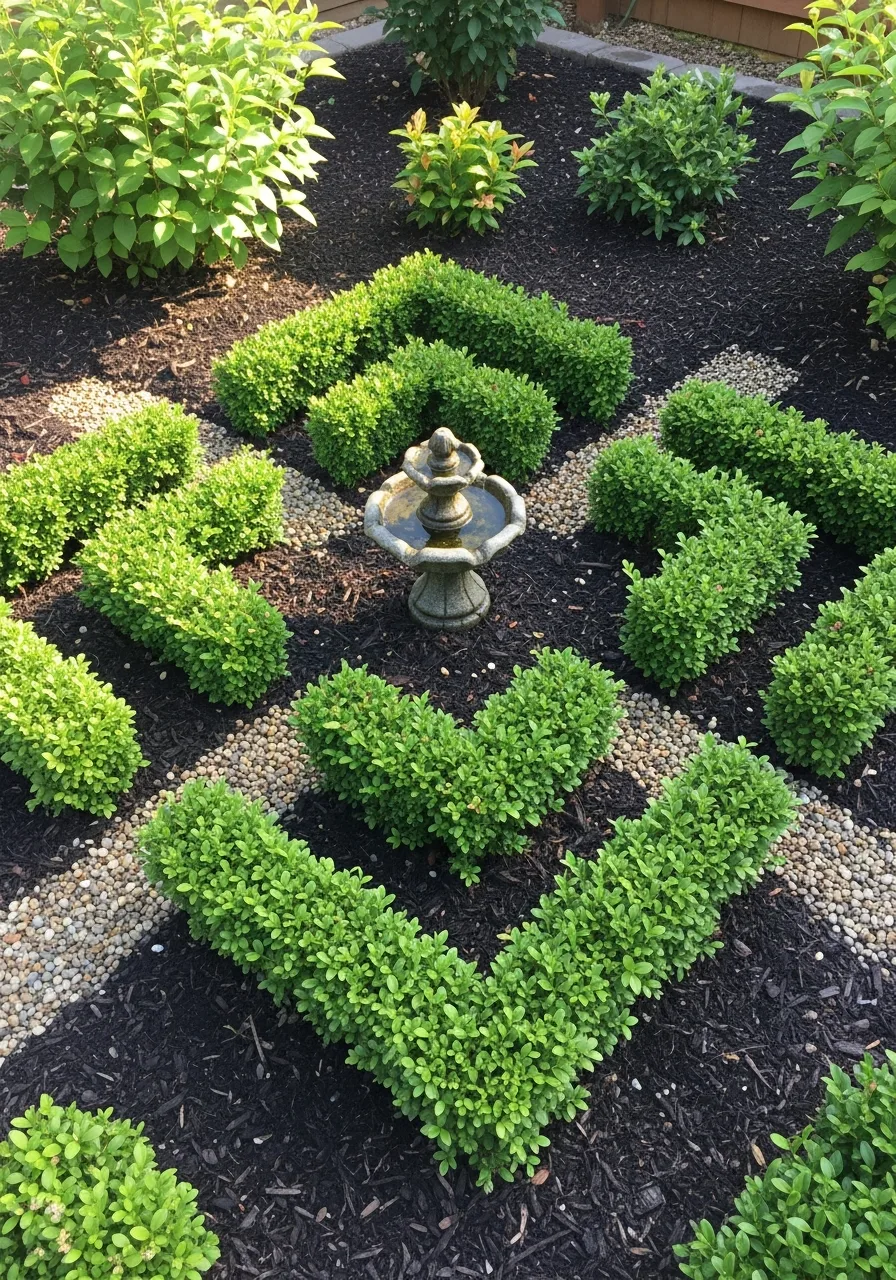
Build a simple miniature maze using low hedging plants, stones, or short twig fences. Place a special feature like a fountain or a hidden cottage at the center as the ultimate destination for the fairies.
Mazes add a geometric pattern to the garden that looks impressive and professional from an aerial view.
- Using 'Sky Box' Japanese Holly for tiny, easy-to-trim hedges
- Laying out the pattern with flour or string before planting
- Filling the maze paths with fine white sand for high contrast
Most people skip this: Keep a pair of precision embroidery scissors handy to trim your miniature hedges without damaging the tiny leaves.
31. Fairy Bridge Collection
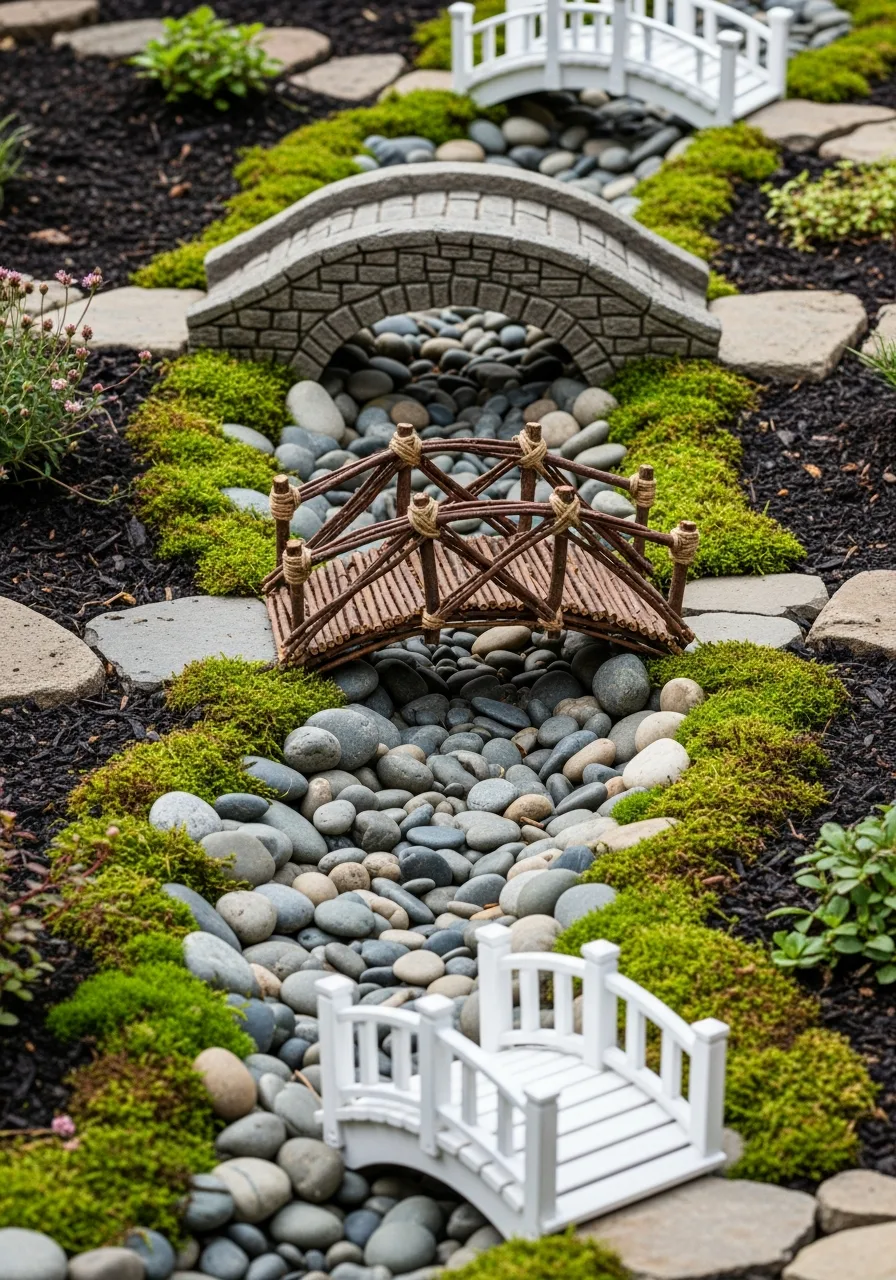
Use several bridge styles across dry streams, planted channels, and changes in elevation. Try arched stone, rustic twig, rope-style, and painted wooden bridges while keeping their scale consistent.
Consistency in bridge materials helps tie different garden zones together into one cohesive landscape. Bridges provide a natural transition between different plant textures.
- Sourcing: Local craft stores or DIY from garden twigs.
- Setup: Secure bridge ends into the soil or gravel to prevent shifting.
- Adaptation: Use larger flat stones as natural bridges for a more rugged look.
Most people skip this: Buried bridge supports prevent the structures from tipping over during heavy rain.
32. Fairy Garden Train Village
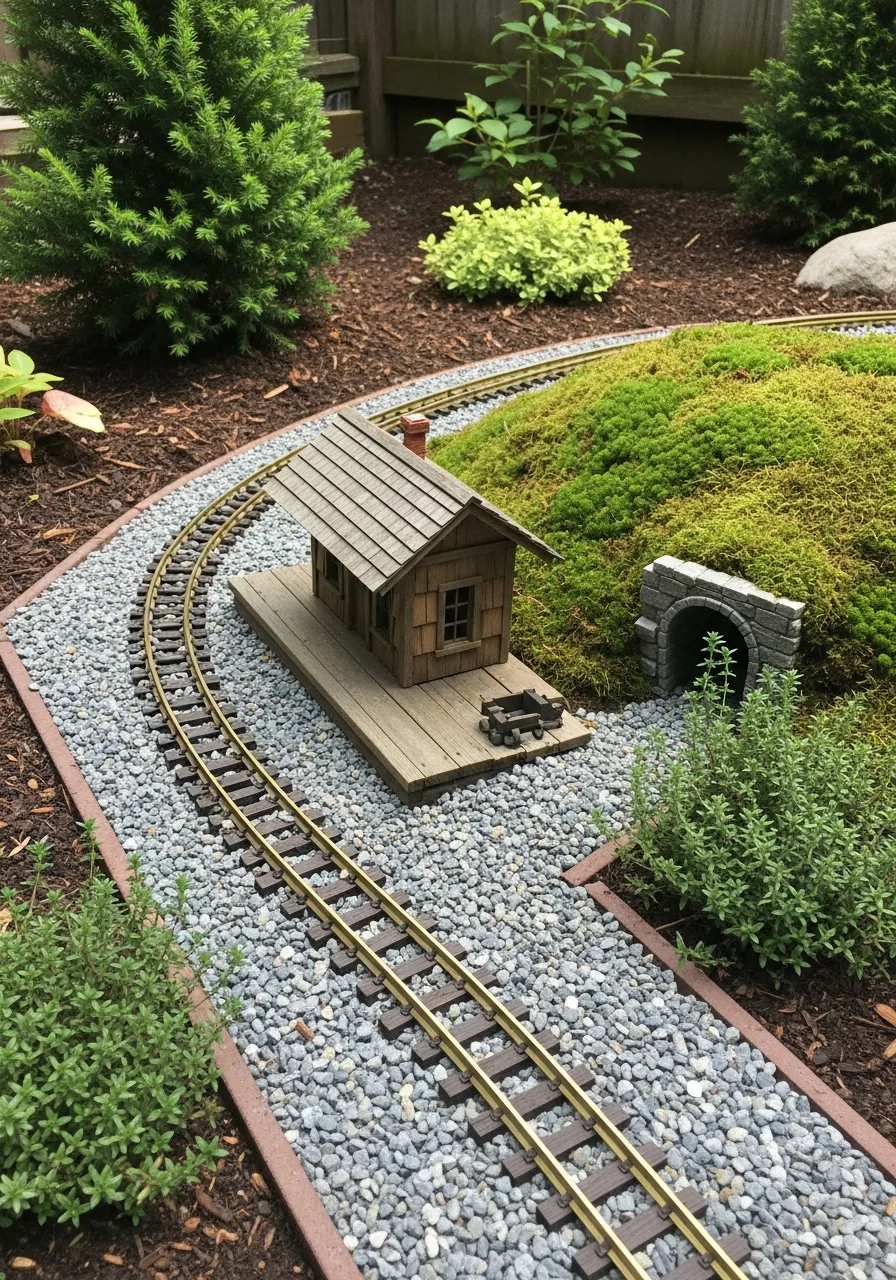
Run a decorative miniature railway through the garden and past several houses. Include a small station, platform, tunnel, and bridge to connect the different village zones.
A moving train adds a dynamic element that makes a large garden feel active and alive. Ensure the track sits on a level base of fine gravel for stability.
- Sourcing: G-scale or O-scale train sets for outdoor durability.
- Setup: Lay a weed barrier beneath the gravel track bed.
- Adaptation: Use a non-functional wooden train for a low-maintenance vintage look.
Quick win: Use creeping thyme around the tracks to mimic overgrown fields without blocking the train.
33. Coastal Fairy Village
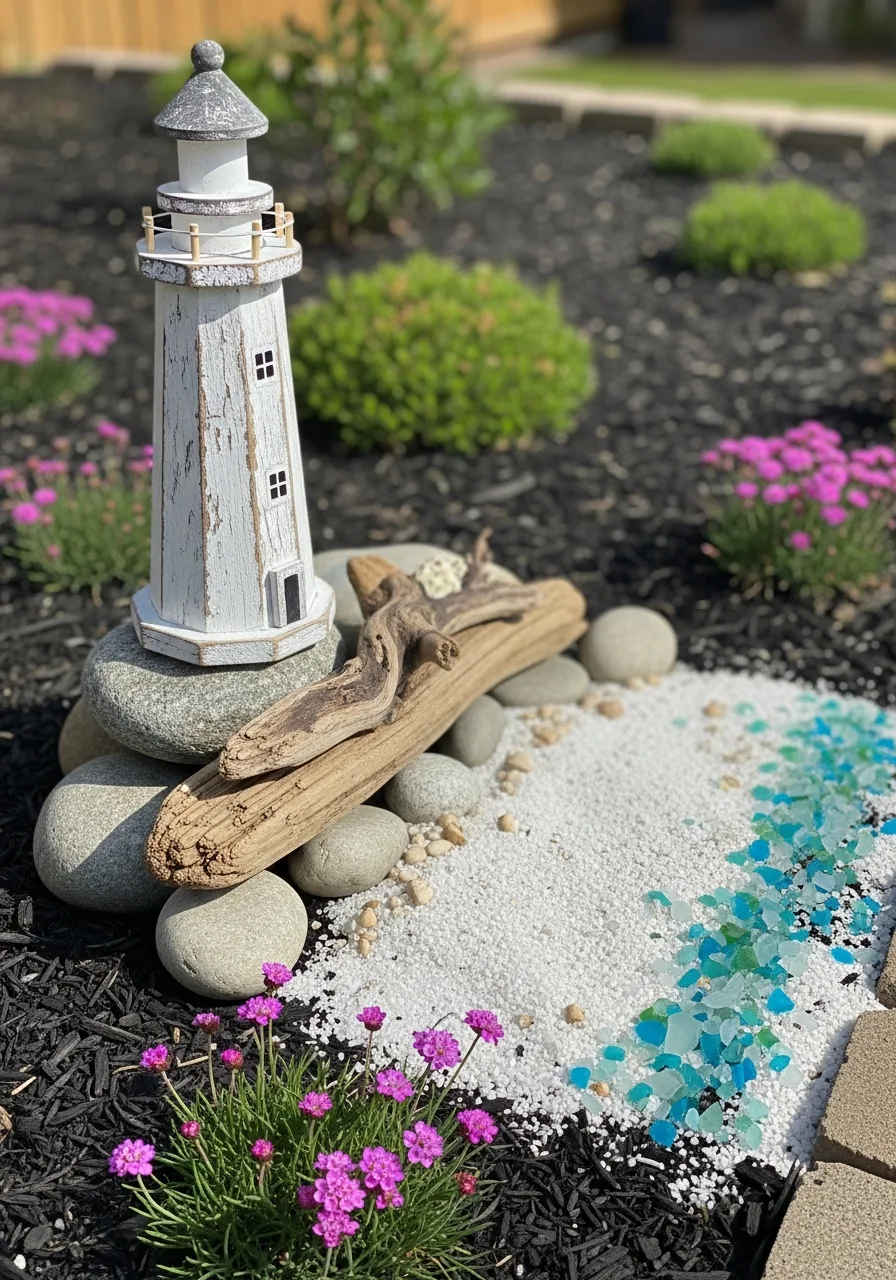
Use pale pebbles, driftwood, shells, beach grasses, and blue accents to create a seaside settlement. Add a lighthouse, fishing cottages, docks, and a path leading to the miniature shore.
Mixing real shells with miniature structures grounds the fantasy theme in a recognizable natural environment. This style works perfectly in sandy soil or near a pool area.
- Sourcing: Collect shells and driftwood from local beaches.
- Setup: Use blue glass pebbles to create the illusion of water without the mess.
- Adaptation: Add a tiny pier made of popsicle sticks for a rustic harbor feel.
Best shortcut: Bury a small plastic tray under the sand to keep the blue glass water from mixing with the dirt.
34. Fairy Harbor Garden
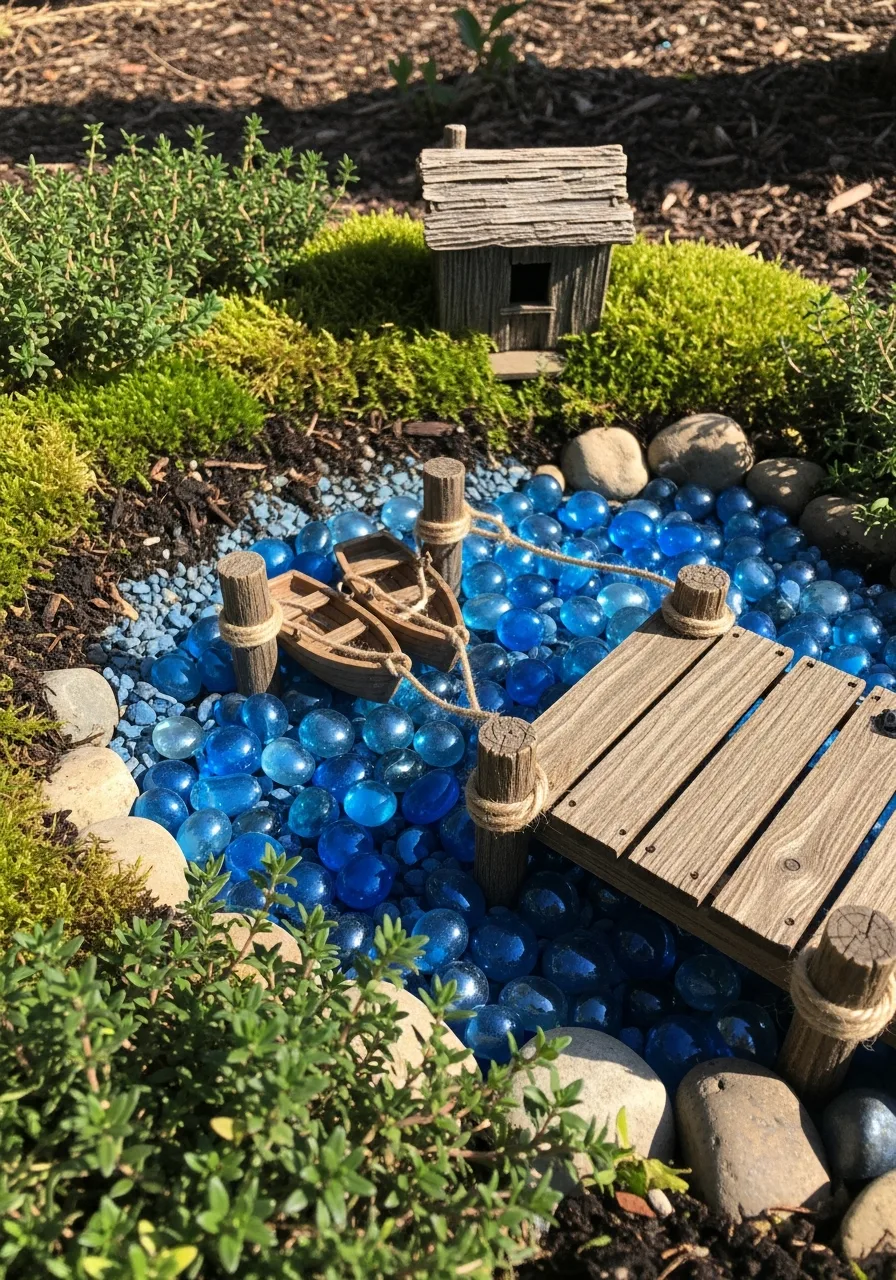
Build a small harbor beside a pond or blue-glass water feature. Include boats, piers, warehouses, fishing nets, and waterfront cottages.
Layering different heights with piers and docks creates visual depth along the water's edge. Weathered wood gives the harbor an authentic, salty look.
- Sourcing: Model ship accessories or dollhouse miniatures.
- Setup: Seal any wooden pieces with outdoor varnish to prevent rot.
- Adaptation: Use a shallow birdbath as the permanent water source for the harbor.
Quick win: Cut up a mesh onion bag to create realistic-looking miniature fishing nets.
35. Desert Fairy Garden
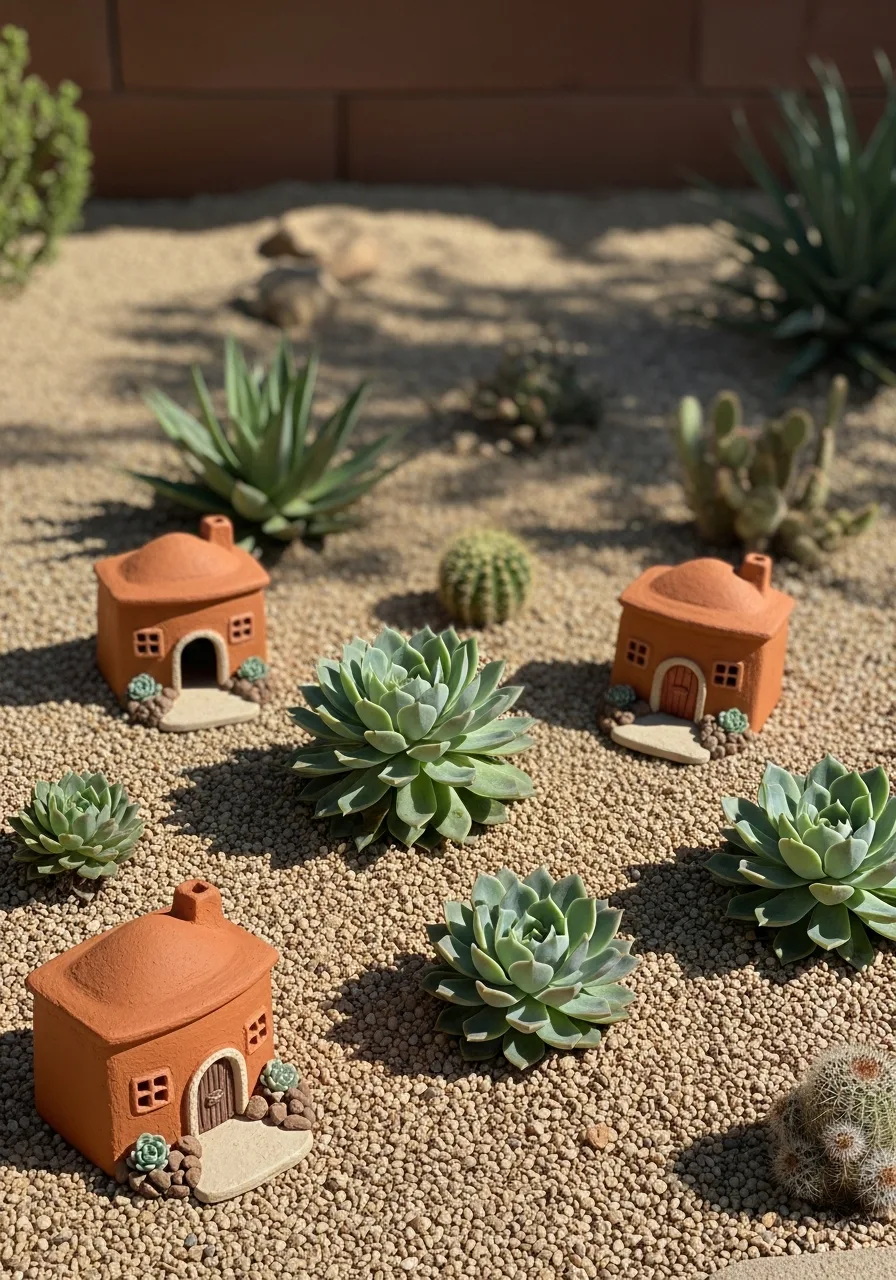
Create a dry-climate fairy landscape using gravel, rocks, small succulents, and drought-tolerant plants. Add adobe-style cottages, shaded courtyards, and winding sandy paths.
Succulents like Echeveria mimic oversized desert trees when placed next to miniature buildings. This low-maintenance setup is ideal for hot, sunny backyard spots.
- Sourcing: Local nurseries for miniature succulent varieties.
- Setup: Ensure the soil mix has high drainage to keep plants healthy.
- Adaptation: Use colorful crushed glass to represent a desert oasis or mirage.
Most people skip this: Top-dress the soil with heavy gravel to keep light-weight fairy furniture from blowing away.
36. Mediterranean Fairy Village
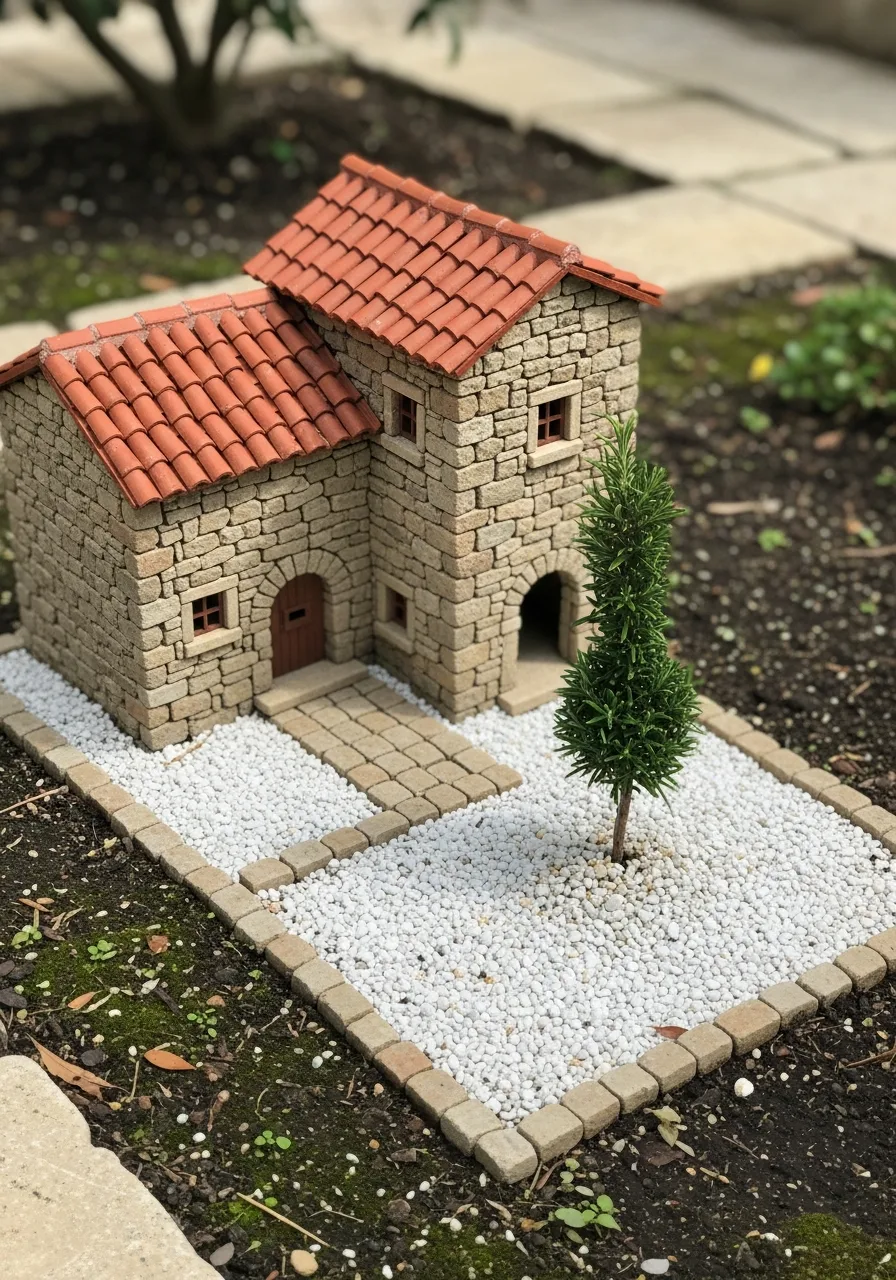
Combine terracotta-roofed houses, pale gravel, miniature olive-like plants, lavender, and tiny courtyard walls. Use warm stone and clay accessories to give the village a sun-washed character.
Aromatic herbs like rosemary can be trimmed to look like tiny cypress trees. This theme brings a sophisticated, old-world feel to a large garden bed.
- Sourcing: Look for herb garden miniatures or Italian-style dollhouse decor.
- Setup: Use flat slate pieces to build tiny retaining walls for different elevations.
- Adaptation: Plant dwarf lavender around the perimeter for a fragrant border.
Best shortcut: Use broken terracotta pot shards to create ancient ruins or garden walls.
37. Japanese-Inspired Fairy Garden
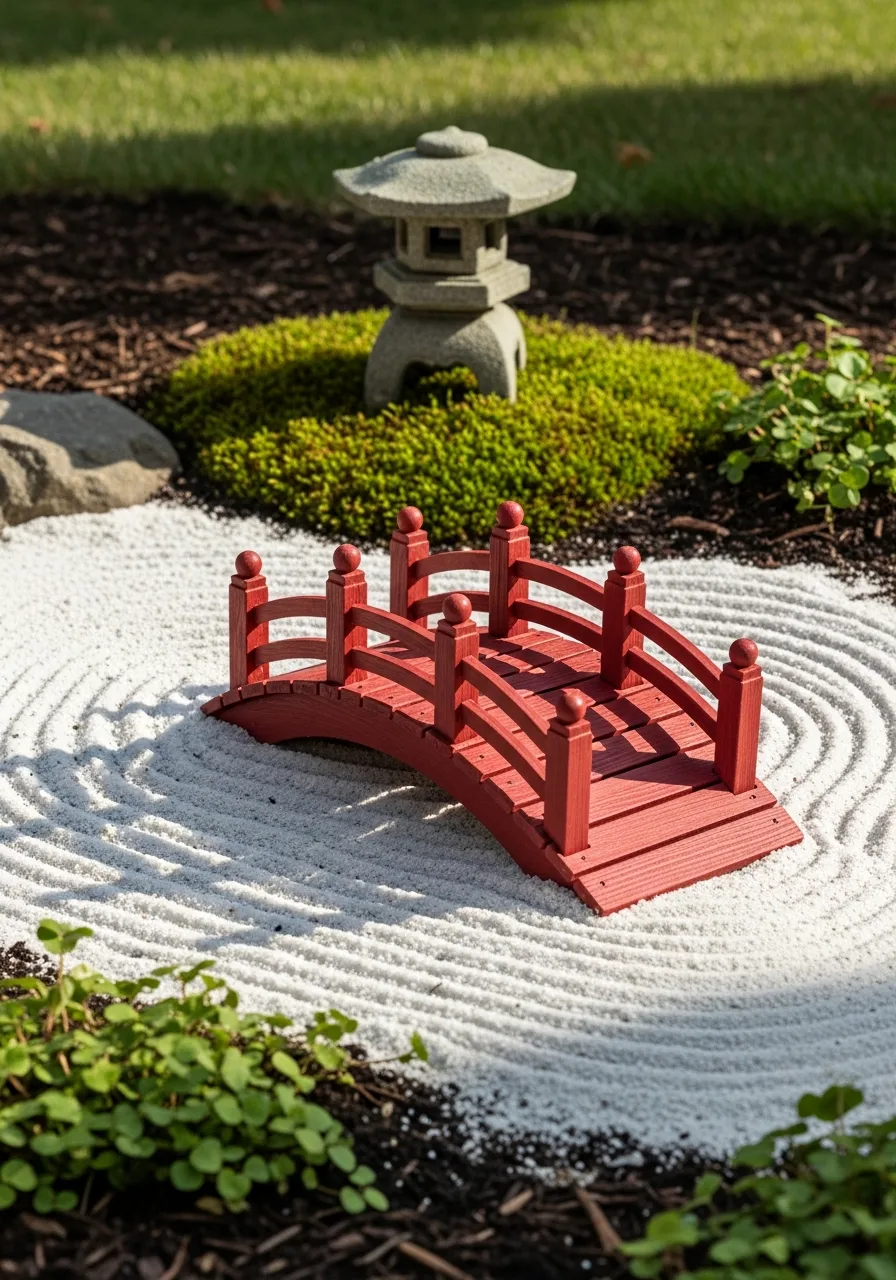
Design a calm landscape with fine gravel, moss, small bridges, stone lanterns, and carefully positioned miniature trees. Keep the number of decorations limited so the garden feels peaceful rather than crowded.
Negative space is just as important as the decor in creating a Zen-like atmosphere. Use a small rake to create patterns in the gravel for a traditional look.
- Sourcing: Bonsai supply stores often carry perfect scale lanterns and bridges.
- Setup: Use Scotch Moss to create vibrant green mounds that look like rolling hills.
- Adaptation: Place a single large hero stone to represent a mountain.
Quick win: Use a fork to rake water ripples into the sand or fine gravel daily.
38. Solar-Lit Fairy Garden
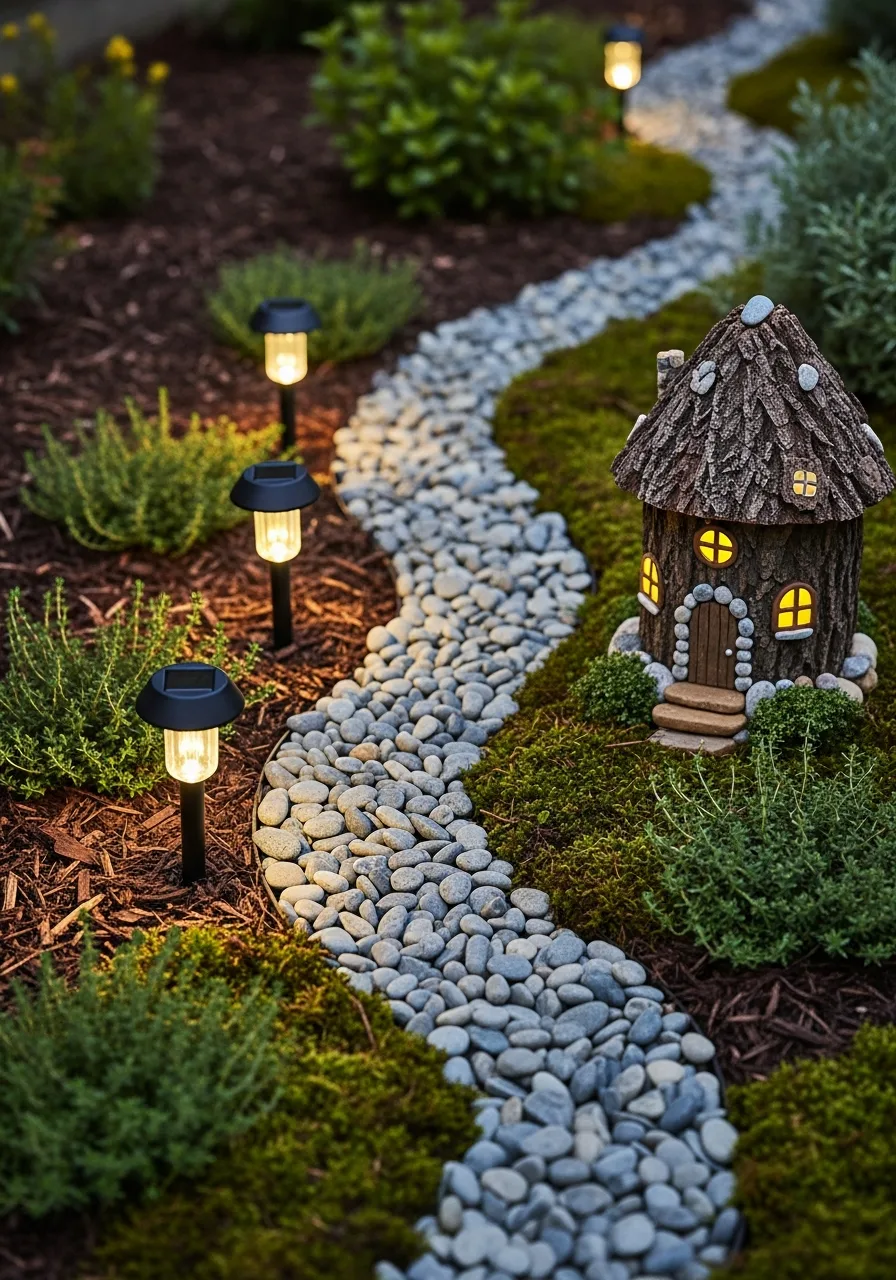
Add small solar lights along pathways, near bridges, and around major buildings. Use the lighting selectively to create a soft nighttime glow without overpowering the miniature landscape.
Strategic lighting highlights the best architectural details of your fairy houses after sunset. Hide the solar panels behind taller plants to keep the focus on the glow.
- Sourcing: Multi-packs of miniature solar pathway lights.
- Setup: Angle the solar sensors toward the south for the best daily charge.
- Adaptation: Use glow-in-the-dark pebbles for a battery-free magical path.
Most people skip this: Clean the tiny solar panels every few weeks to ensure the lights stay bright.
39. Four-Season Fairy Garden
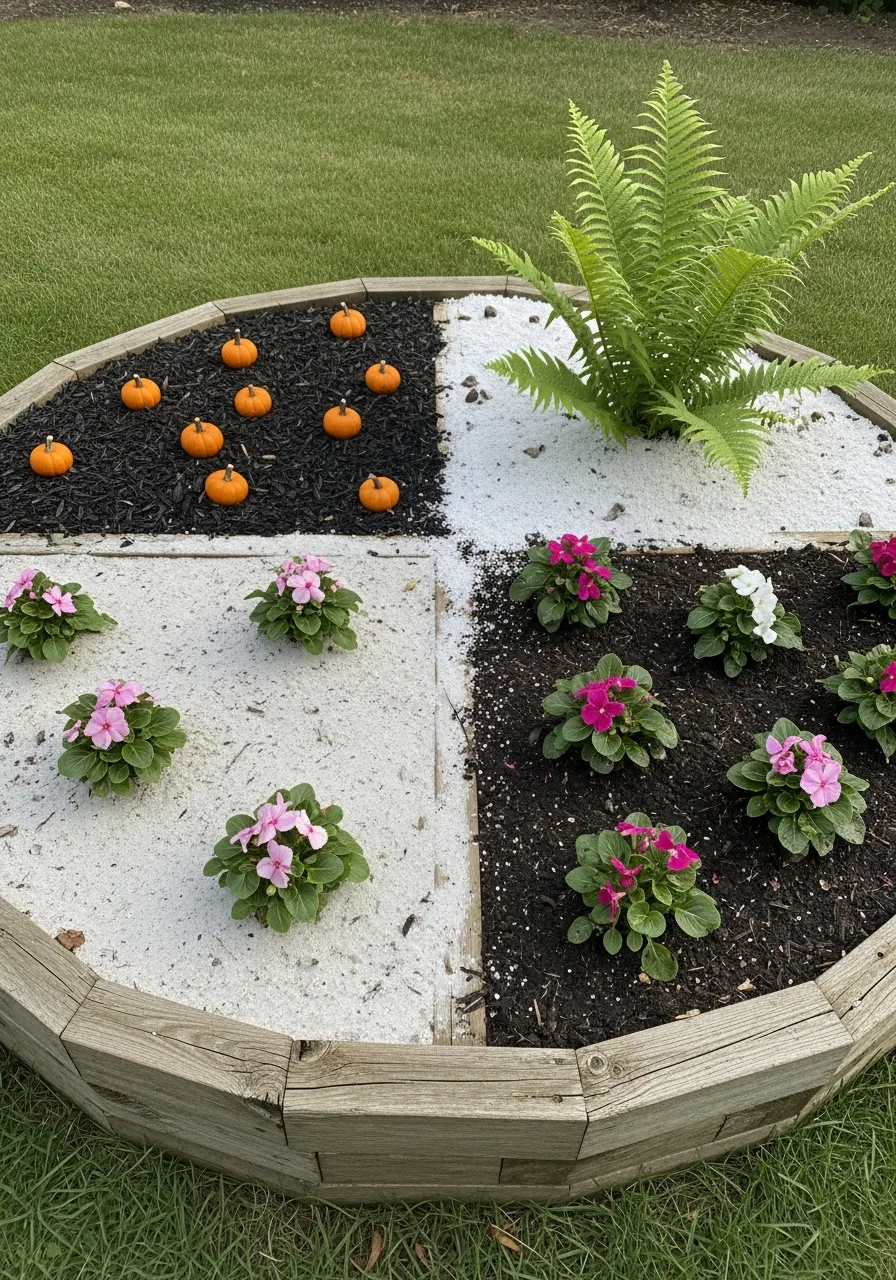
Divide the display into spring, summer, fall, and winter sections. Use seasonal plants, removable decorations, and different ground materials to give each area a distinct atmosphere.
Evergreen groundcovers like Sedum keep the garden looking lush even when seasonal plants go dormant. This layout allows for year-round interest in a large outdoor bed.
- Sourcing: Swap out seasonal miniatures like pumpkins or snowmen from craft stores.
- Setup: Use permanent evergreen shrubs as the anchor plants for all seasons.
- Adaptation: Use white marble chips to simulate snow in the winter section year-round.
Quick win: Use dried hydrangea petals as fallen leaves for the autumn section.
40. Interactive Storybook Fairy Garden
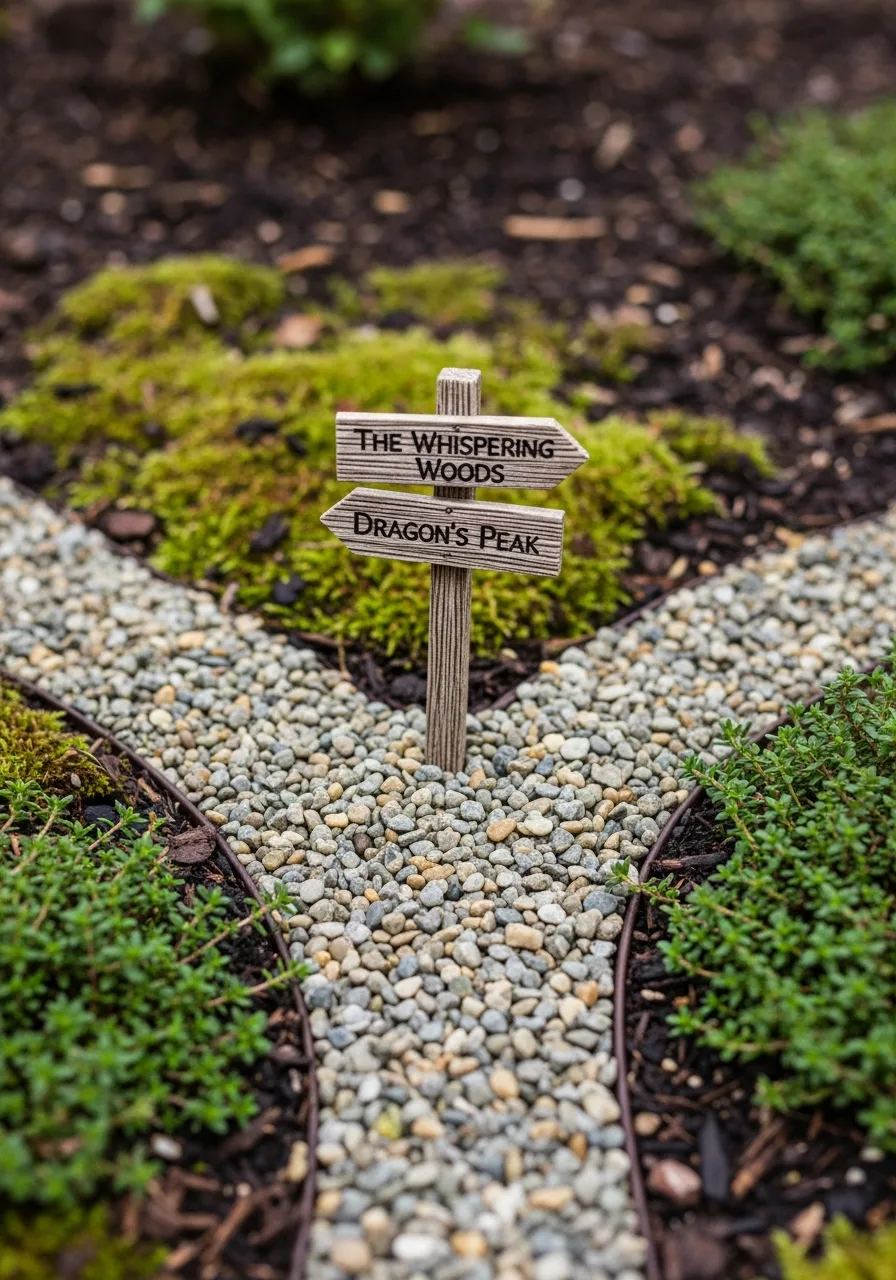
Design the garden as a sequence of scenes from an original fairy story. Add numbered signs or short clues that lead visitors from the village entrance through the forest, across the river, and toward the final castle.
Interactive elements turn a static display into an engaging experience for guests of all ages. Use durable, weather-proof materials for any signage or text.
- Sourcing: Custom-printed tiny signs or hand-painted flat stones.
- Setup: Place the scenes in a chronological loop to guide foot traffic.
- Adaptation: Use QR codes on small stakes to link to a digital story for tech-savvy visitors.
Best shortcut: Use a scavenger hunt list of 5 hidden items to keep kids engaged with the details.
Frequently Asked Questions
What are the best plants for a large outdoor fairy garden?
For a large garden, stick with low-growing groundcovers like Elfin Thyme and Miniature Daisies to keep everything in scale. Incorporating dwarf conifers adds structure and mimics full-sized trees without overwhelming your miniature village.
How do I prevent weeds from taking over my large fairy garden?
Laying down landscape fabric before planting is a lifesaver for managing larger spaces. You can also use heavy mulch in the spots between houses and plant dense groundcovers to naturally choke out unwanted weeds.
How do I protect miniature houses and furniture from rain and sun?
To keep your miniatures looking great, apply a clear outdoor-grade sealant to protect against UV rays and moisture. It’s also wise to invest in durable resin or stone pieces and store any delicate items indoors during harsh winter months.
How do I create a realistic miniature path in a large garden bed?
Use materials like pea gravel, slate chips, or sand to create natural-looking walkways that fit the scale. To keep your paths from washing away during rain, add a small border of tiny pebbles or landscape edging to hold the materials in place.
What is the best location in my yard for a large fairy garden?
Look for a low-traffic spot like a corner bed or a shaded area under a large tree where the garden won't be disturbed. These protected locations ensure your display stays safe from foot traffic and lawnmowers while adding a touch of magic to quiet corners.