50 Outdoor Privacy Screen Ideas

This post may contain affiliate links: full affiliate disclosure.
Are nosy neighbors peering into your patio or balcony?
Privacy doesn’t have to mean building a giant wall.
We promise these simple, stylish outdoor privacy screen ideas will help you create a cozy, secluded retreat without spending a fortune.
1. Moveable Wooden Panels
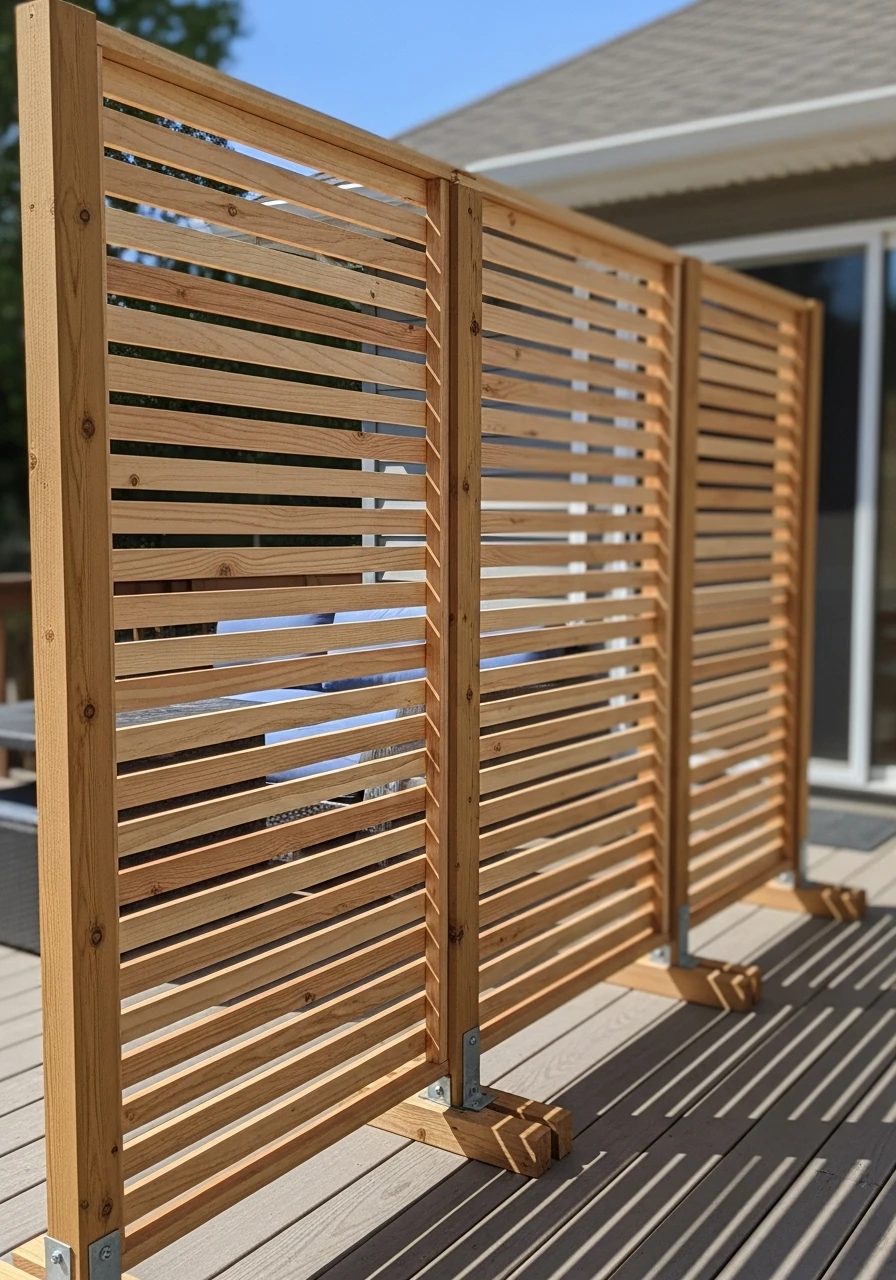
Use standalone wooden panels to block views on patios or decks without permanent installation. These screens can be moved easily, which is perfect if you rent or need a flexible layout.
- Look for weather-treated wood.
- Choose a foldable design for easy storage.
Pro Tip: Stain the wood a deep espresso color for a pricier, custom look on a budget.
2. Horizontal Slat Wood Look
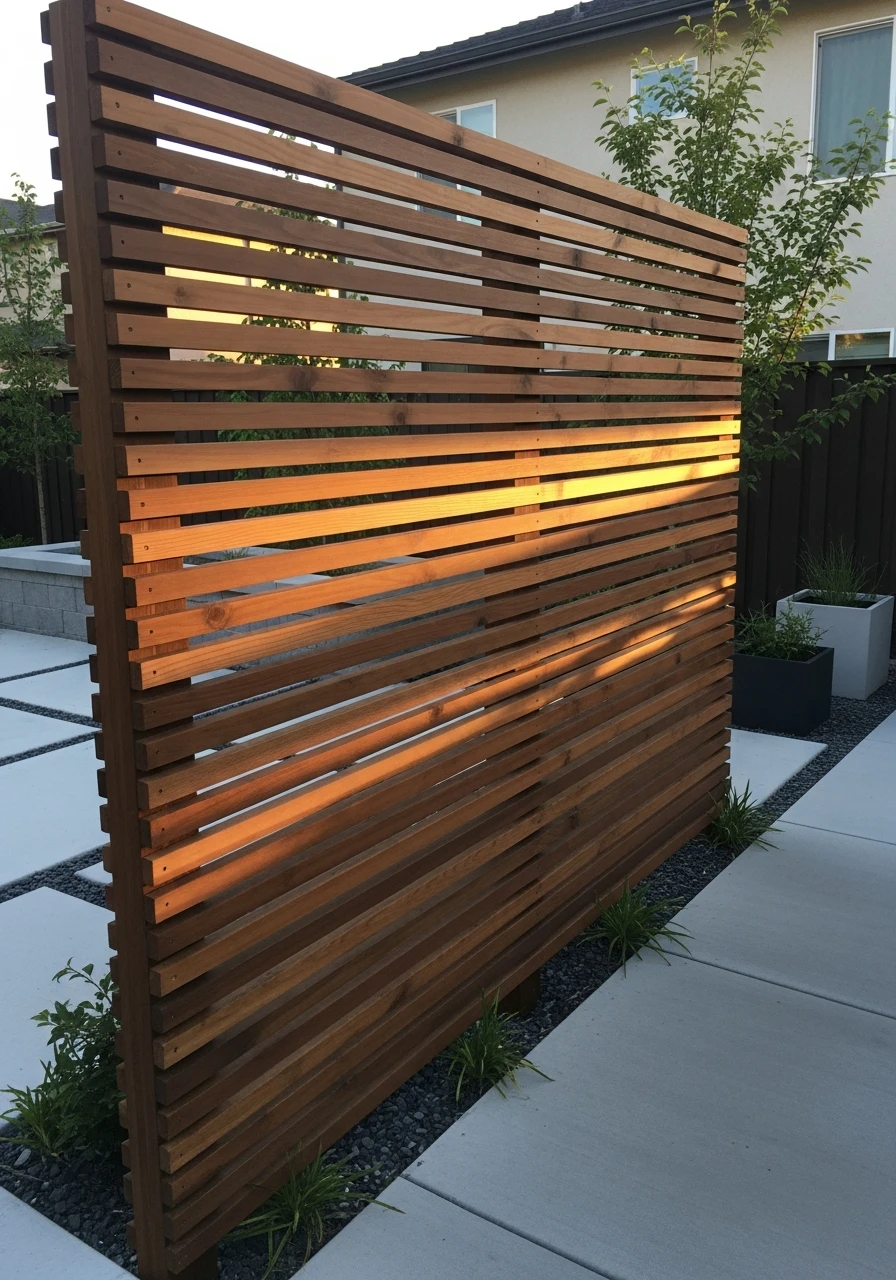
Install horizontal wood slats with small gaps to get privacy while still letting air and light through. This style looks very modern and works well for contemporary backyards.
- Use composite wood for less maintenance.
- Keep the gaps uniform for a clean finish.
Pro Tip: These slats look best when painted dark gray or black to define the space.
3. Vertical Slat Screens
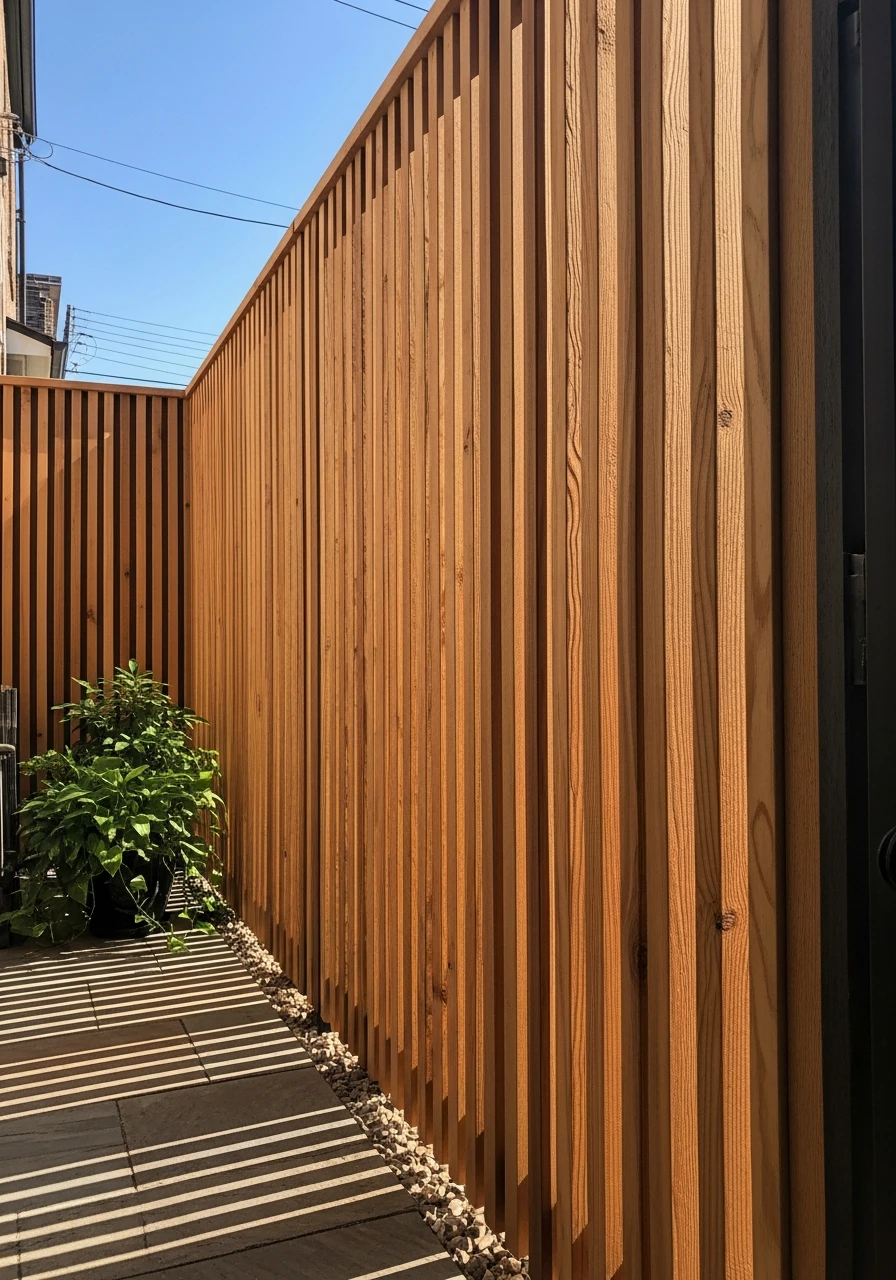
Vertical slats give a clean, classic look and trick the eye into seeing more height. This makes small outdoor spaces feel taller while blocking direct sightlines from neighbors.
- Use thin slats for a breezy feel.
- Mount the screen high for maximum coverage.
Pro Tip: Pair vertical screens with tall potted plants to soften the edges instantly.
4. Fancy Laser-Cut Metal
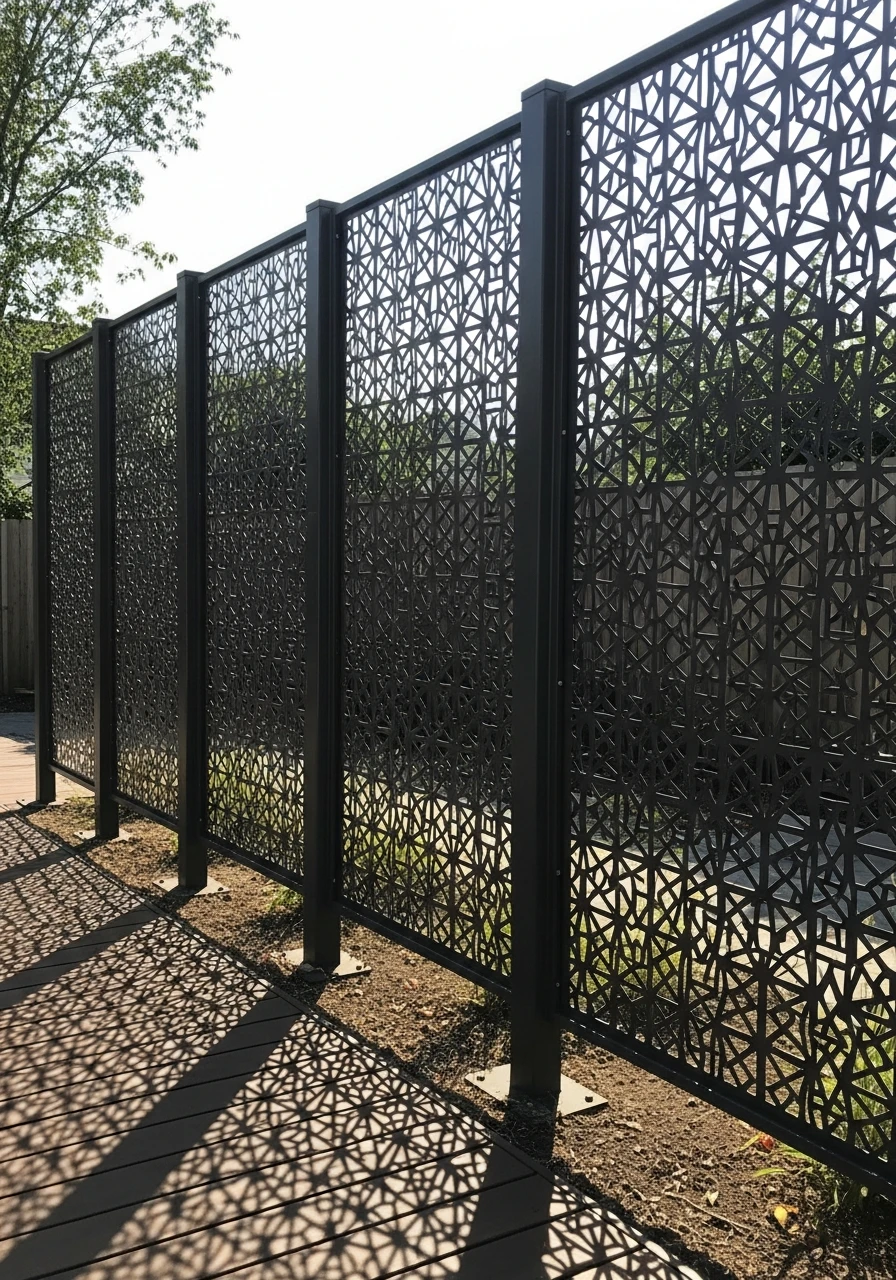
Use sturdy metal panels with cool laser-cut patterns. These screens add visual interest and look expensive, while still letting light and air pass through the decorative holes.
- Pick a geometric or nature-inspired pattern.
- Ensure the metal is rust-resistant.
Pro Tip: Lighting these panels from behind at night creates incredible shadow art on your patio floor.
5. Sleek Black Metal Panels
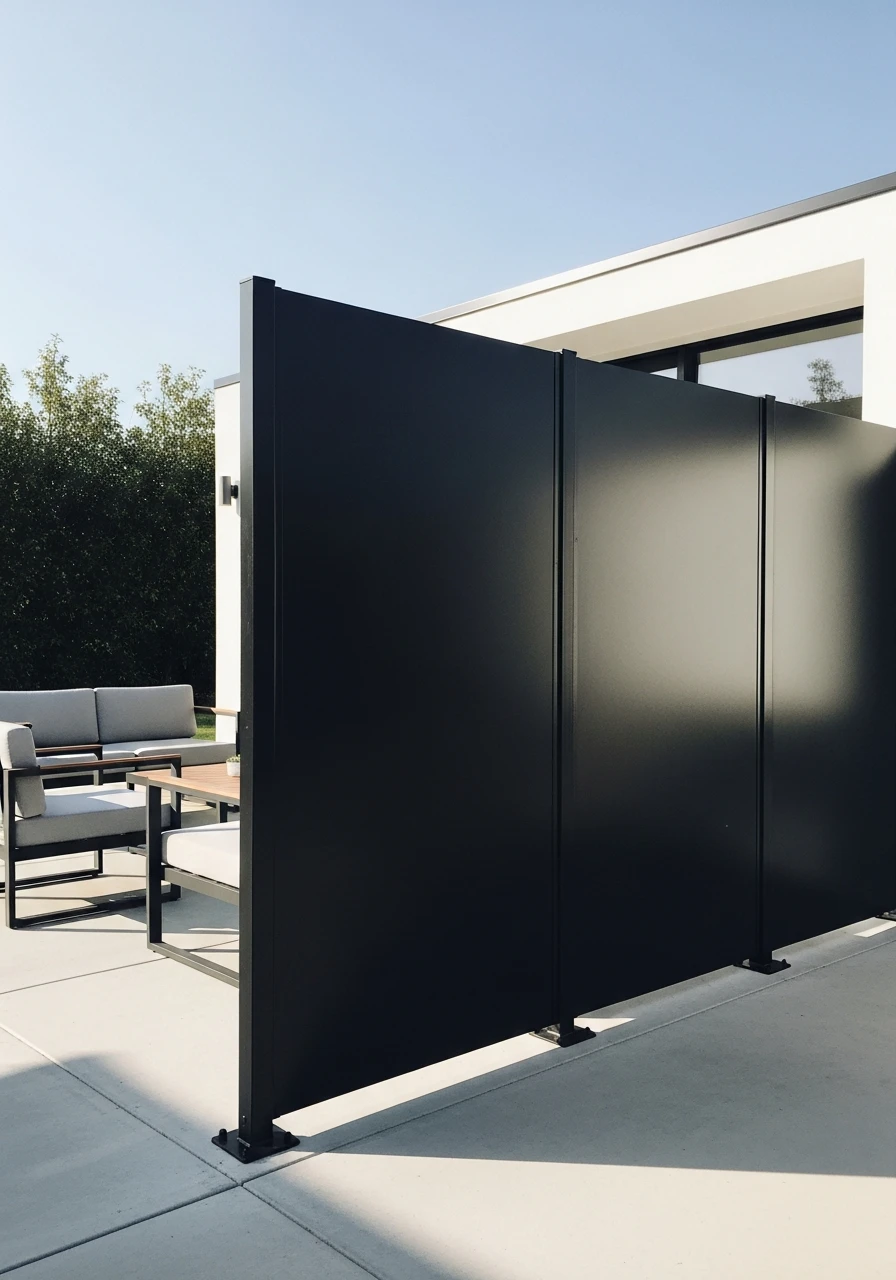
Matte or powder-coated black metal panels offer a sleek, modern privacy solution. They are super durable and pair perfectly with minimalist or industrial outdoor furniture.
- Choose a thick gauge metal for stability.
- Black hides dirt and wear easily.
Pro Tip: Black screens make bright green plants pop, acting as a perfect backdrop for your pots.
6. Natural Bamboo Roll
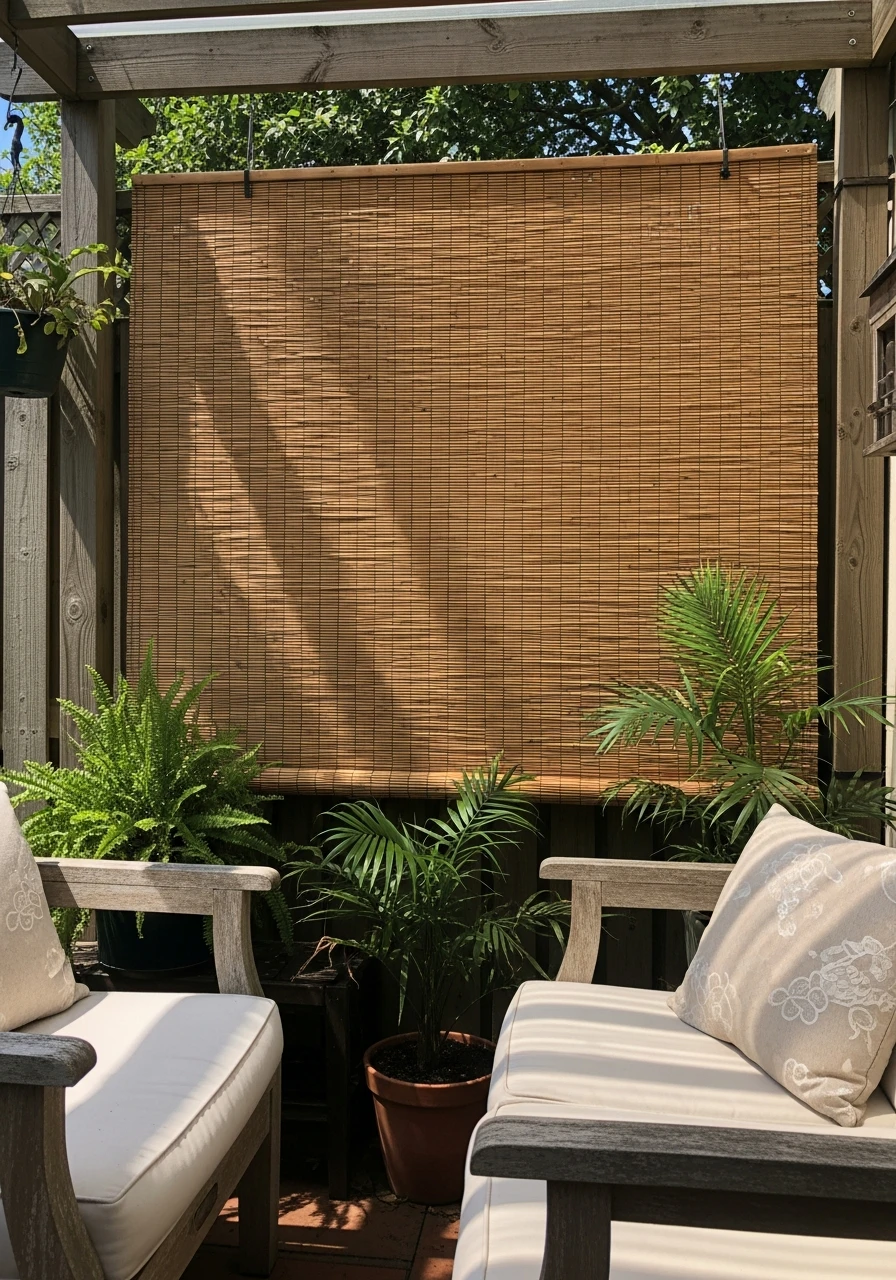
Natural bamboo screens offer an eco-friendly and tropical vibe. They are great for patios or garden seating areas when you need moderate privacy and a relaxed feel.
- Roll out and attach to existing fences easily.
- Treat bamboo annually to prevent mold.
Pro Tip: Use thick bamboo rolls for better durability and less transparency than thinner options.
7. Woven Reed Fencing
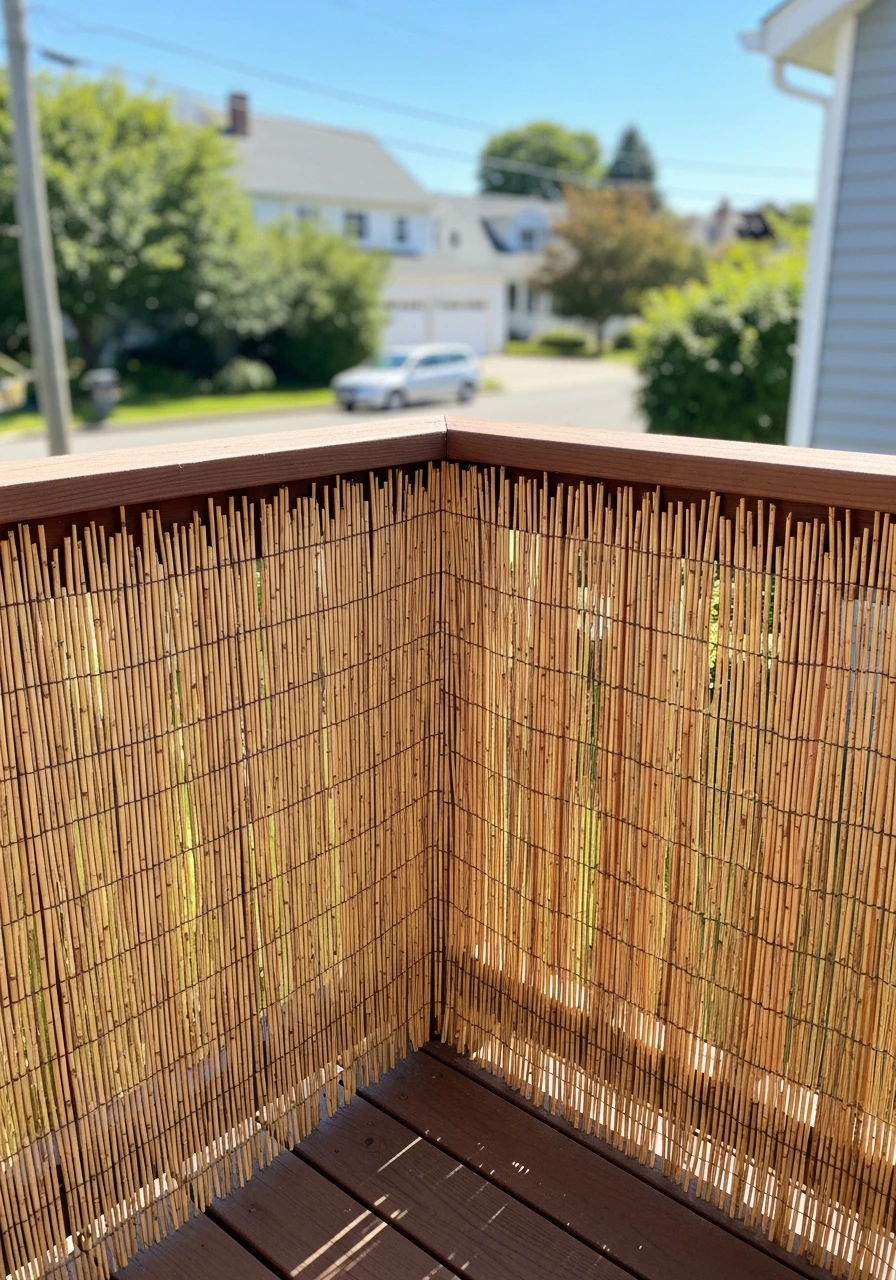
Reed or woven natural fiber screens create a relaxed, beach-inspired look. This is a budget-friendly option for casual outdoor spaces where soft visual blocking is enough.
- Attach to railings or chain-link fences.
- Buy extra rolls to layer them for more privacy.
Pro Tip: These screens look best when paired with chunky, natural fiber rugs and wicker furniture.
8. Outdoor Folding Screens
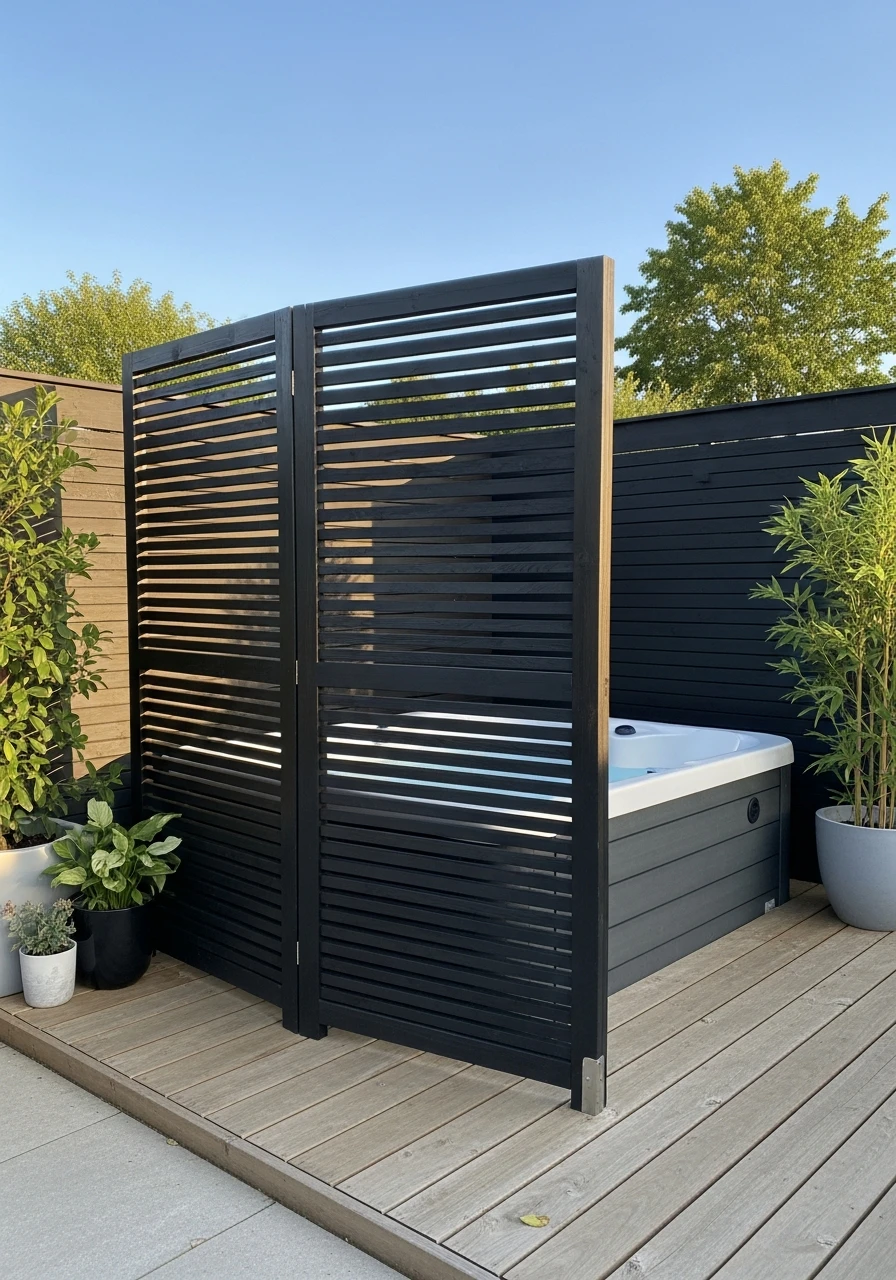
Folding screens let you open or close sections exactly where you need them. They are ideal for flexible privacy around hot tubs or outdoor dining areas that change often.
- Look for lightweight, weather-resistant frames.
- Choose screens with wide feet for stability.
Pro Tip: Keep a folding screen near the grill to block wind or hide cooking mess from guests.
9. Solid Vinyl Panels
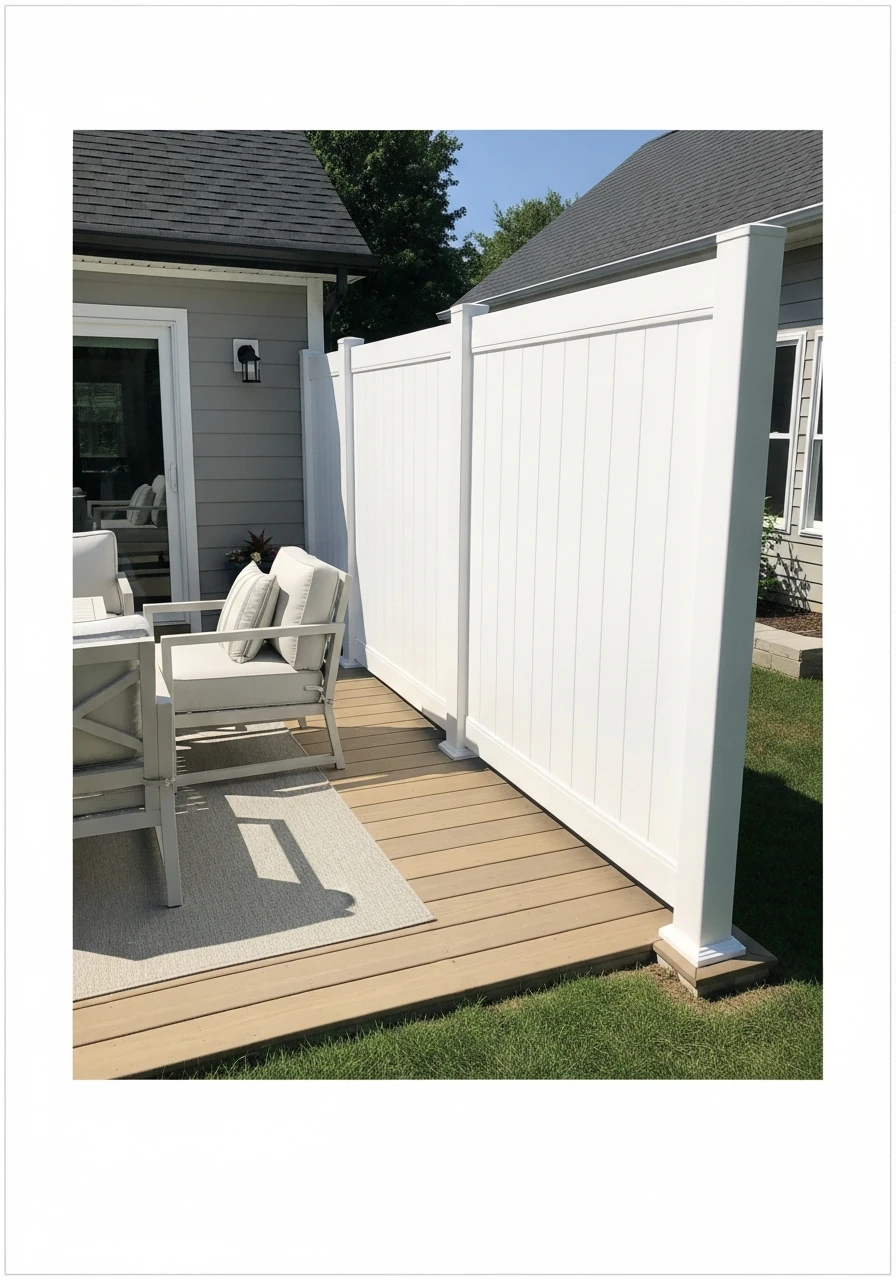
Vinyl screens are low maintenance, weather-resistant, and last a long time. They are a super practical choice if you need full outdoor privacy that stands up to all climates.
- Hose them down easily for quick cleaning.
- Choose solid colors for maximum coverage.
Pro Tip: Vinyl is great for pool areas because it resists moisture and chlorine splash.
10. White Vinyl Lattice
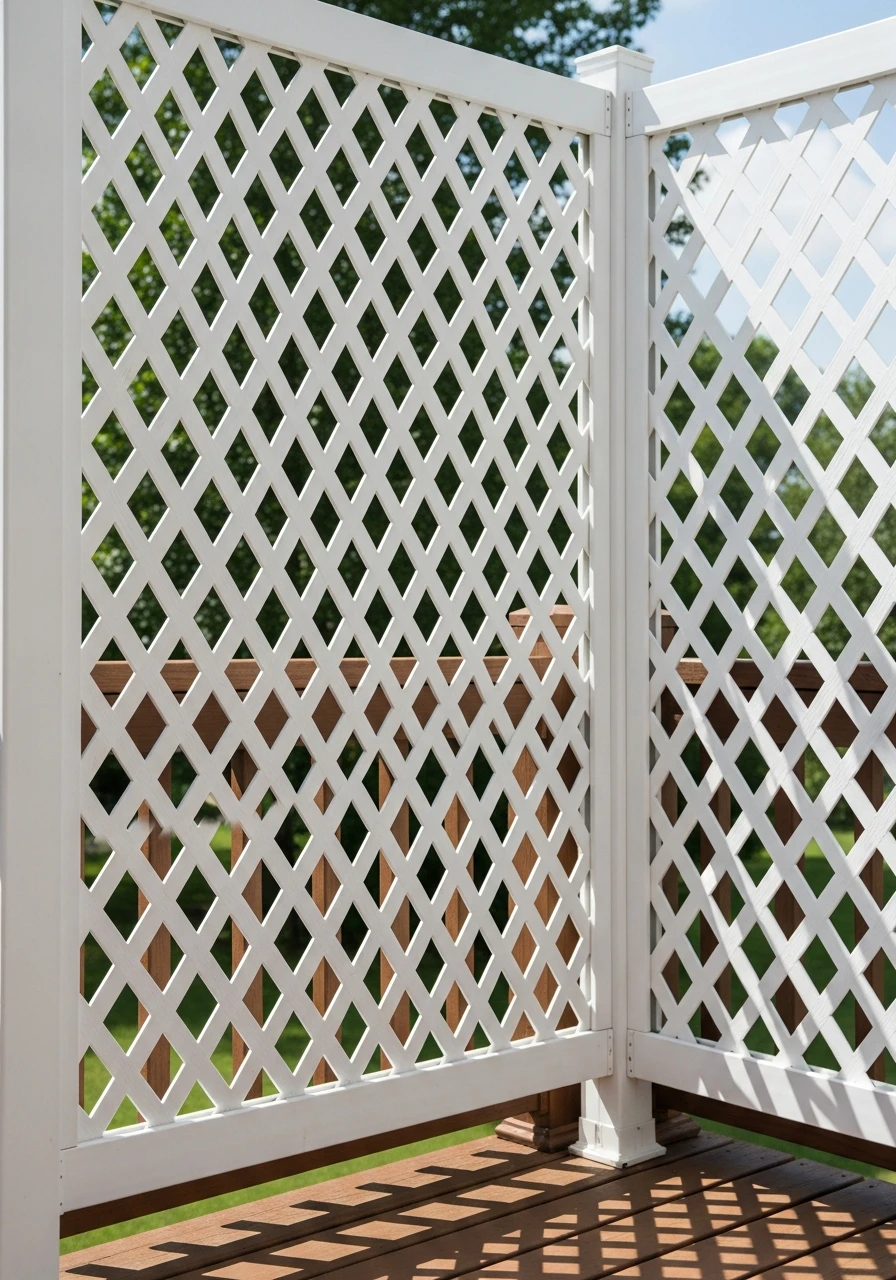
Lattice-style vinyl panels give you partial privacy while keeping an airy feel. They are perfect for patios where you want light and openness, not a heavy wall.
- They are easy to cut to fit odd spaces.
- Use them to divide garden areas subtly.
Pro Tip: Train a flowering vine to grow up the lattice for a charming, cottage garden vibe.
11. Screens with Planters
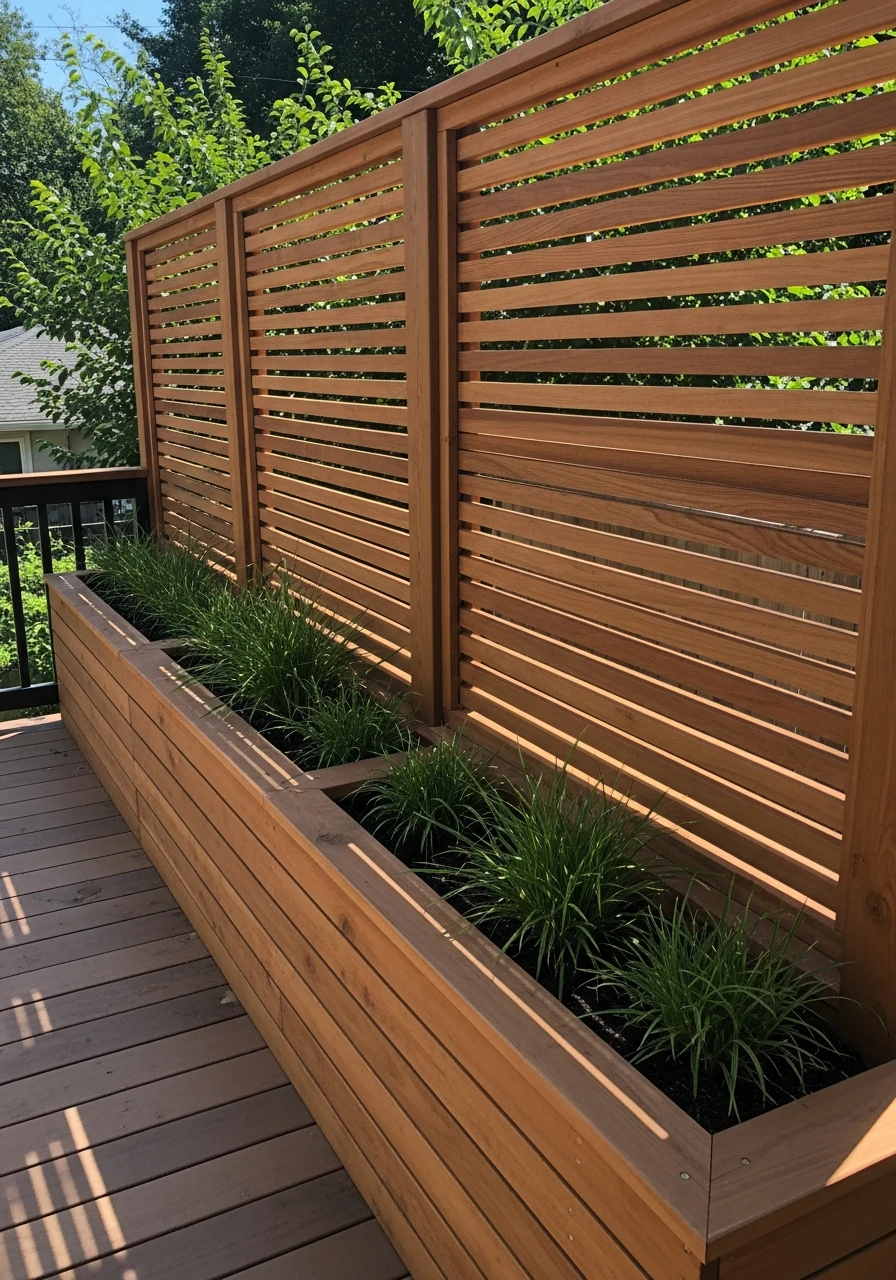
Combine privacy panels with planter boxes built into the base. This adds greenery and softens the look while increasing the visual coverage right where you need it.
- Fill planters with tall grasses or bamboo.
- Ensure the planter drainage is good.
Pro Tip: Use trailing ivy in the planters to drape down and hide the base of the screen.
12. Faux Ivy Green Walls
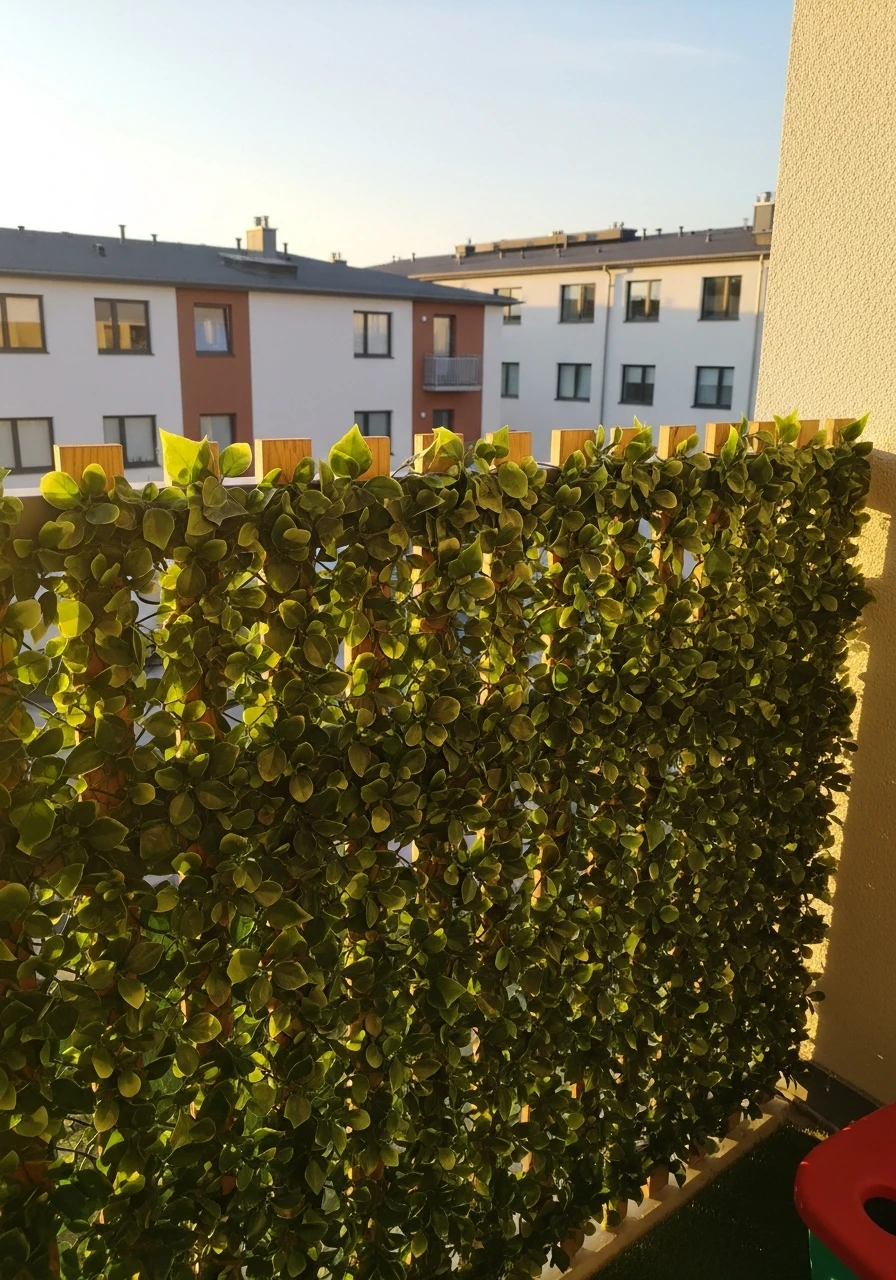
Artificial ivy panels create a lush green wall instantly without needing any maintenance. They work well for balconies or fences where real plants struggle to grow.
- Snap panels together for easy installation.
- Look for UV-resistant faux greenery.
Pro Tip: Mix different shades of faux ivy panels for a more natural, less uniform look.
13. Durable Faux Greenery
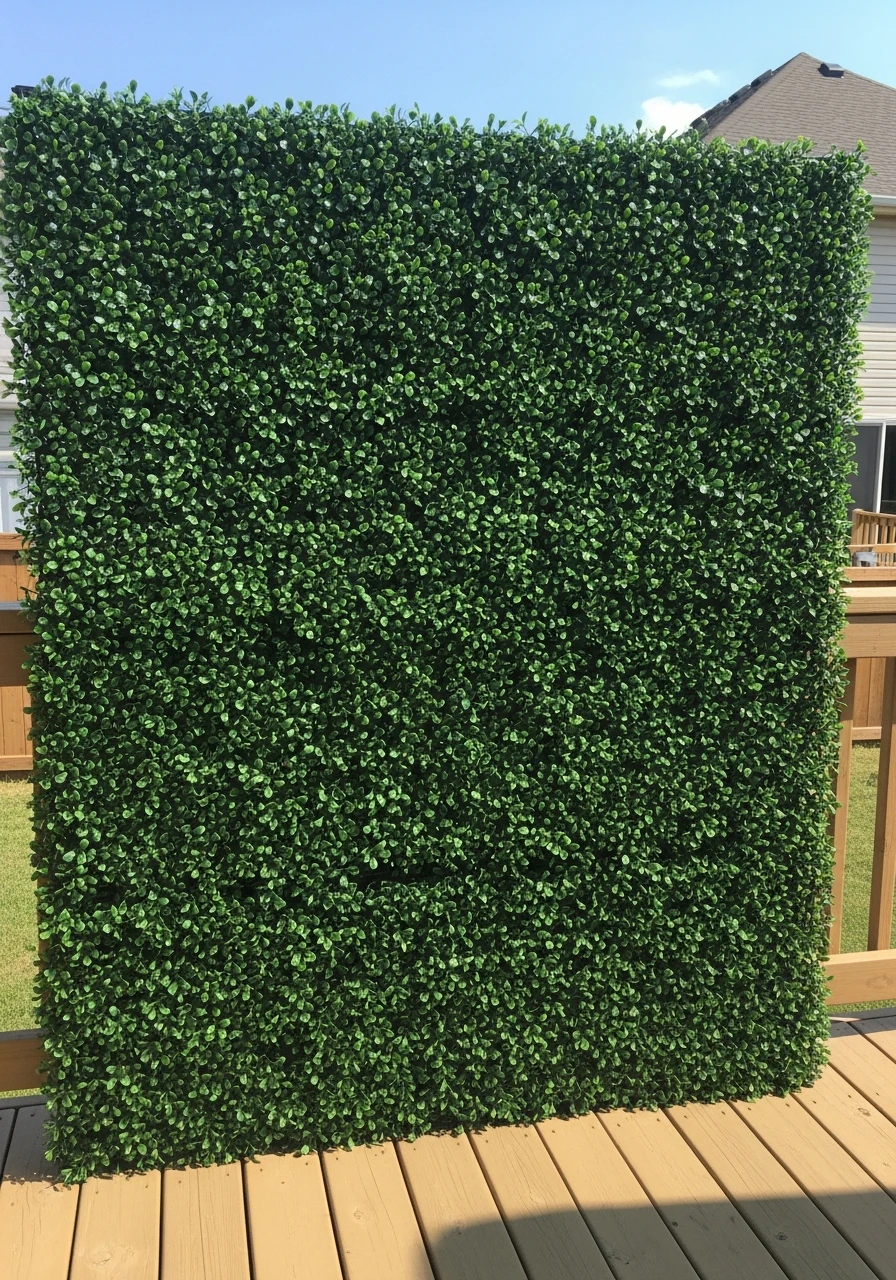
Use UV-protected artificial greenery specifically designed for outdoor use. This maintains the color and durability while giving you full visual coverage year-round.
- Check the UV rating before buying.
- Use zip ties for quick attachment to fences.
Pro Tip: A faux green wall is a stunning backdrop for outdoor portraits or photos of your furniture.
14. Natural Living Walls
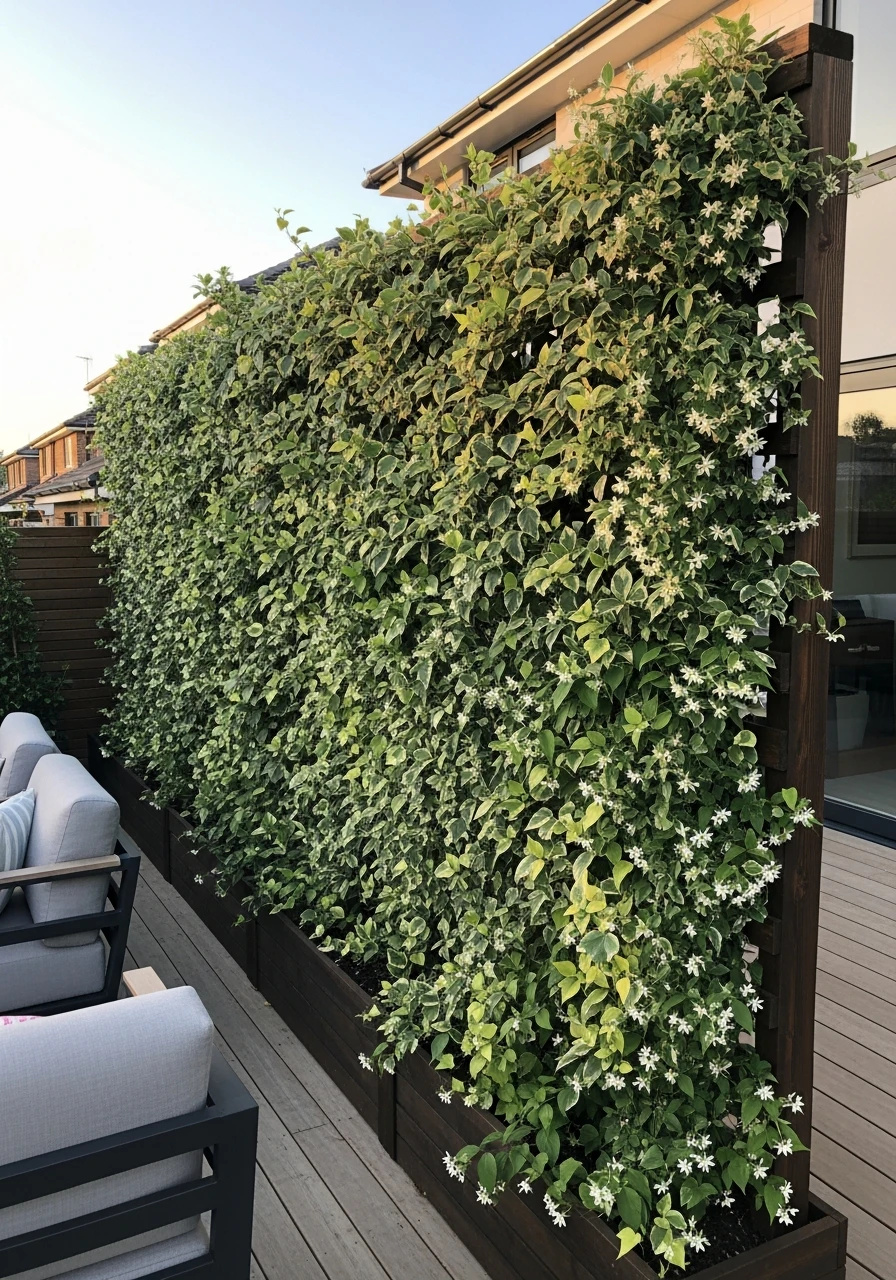
Create a natural privacy screen using climbing plants on trellises or frames. This provides privacy and acts as a vibrant, beautiful garden feature.
- Choose fast-growing, dense vines.
- Ensure the frame is strong enough to hold the mature plant weight.
Pro Tip: Use edible vines like grapes or runner beans for a functional and beautiful living wall.
15. Trellis for Vines
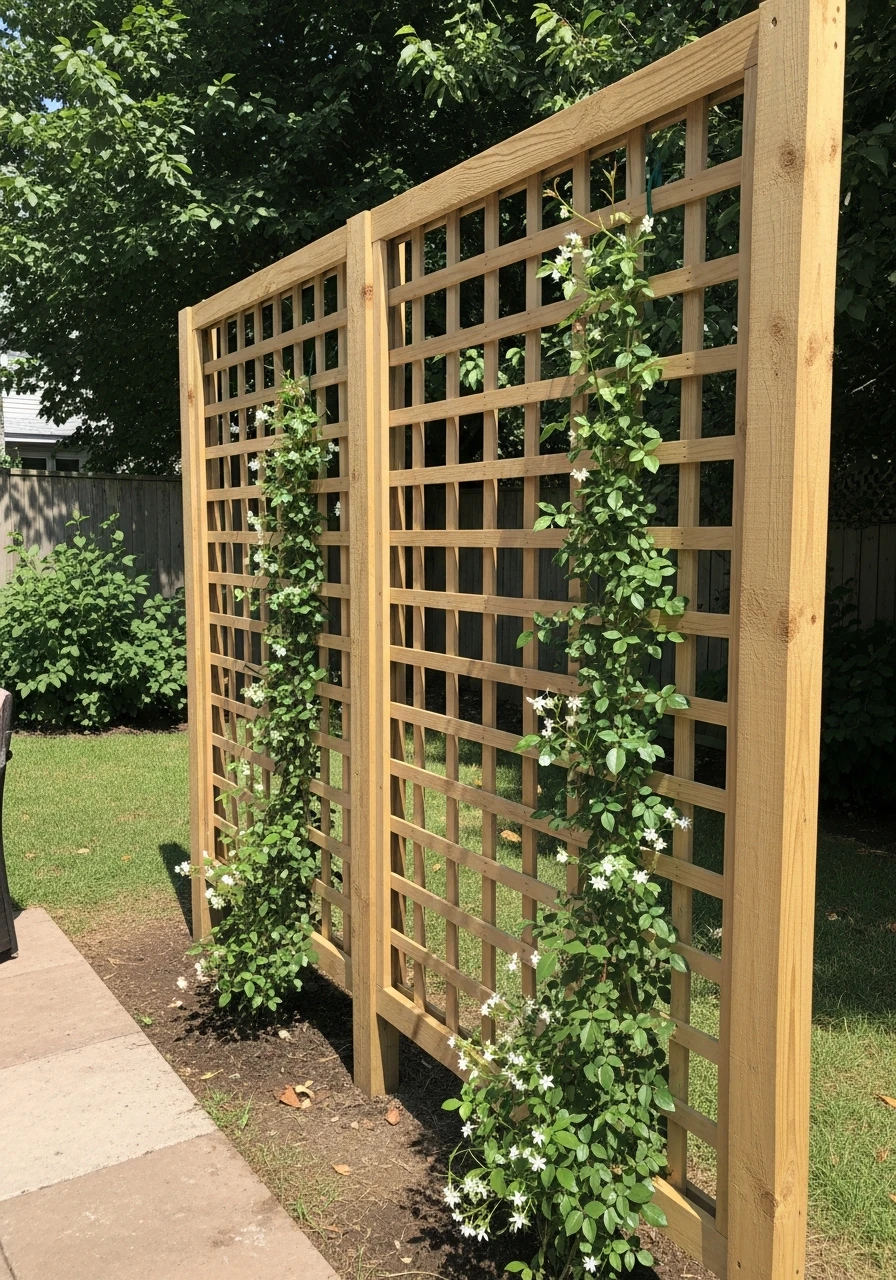
Install simple trellis panels that support vines like jasmine or climbing roses. The privacy will increase over time as the plants grow thicker and fill in the gaps.
- Pick a sturdy metal or wood trellis.
- Guide the growing vines along the structure.
Pro Tip: A diamond-patterned trellis looks more traditional than a square pattern.
16. Modular Panel Systems
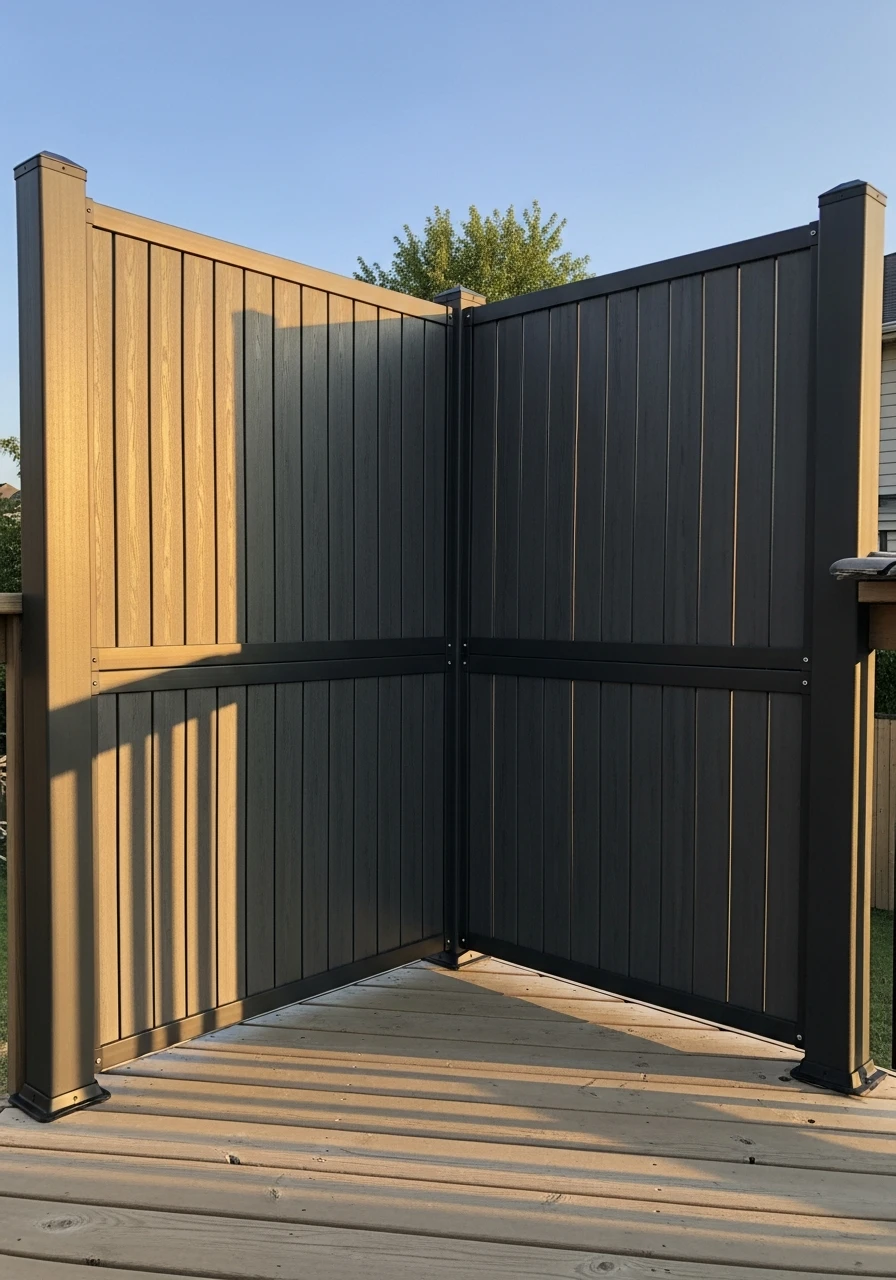
Use panels that can be connected or expanded easily to fit different outdoor layouts. Modular systems are great for custom privacy solutions in odd-shaped spaces.
- Buy pieces in stages as your budget allows.
- Mix and match colors or textures.
Pro Tip: Always start with the corner and end posts first to anchor the modular system.
17. Adjustable Panel Angles
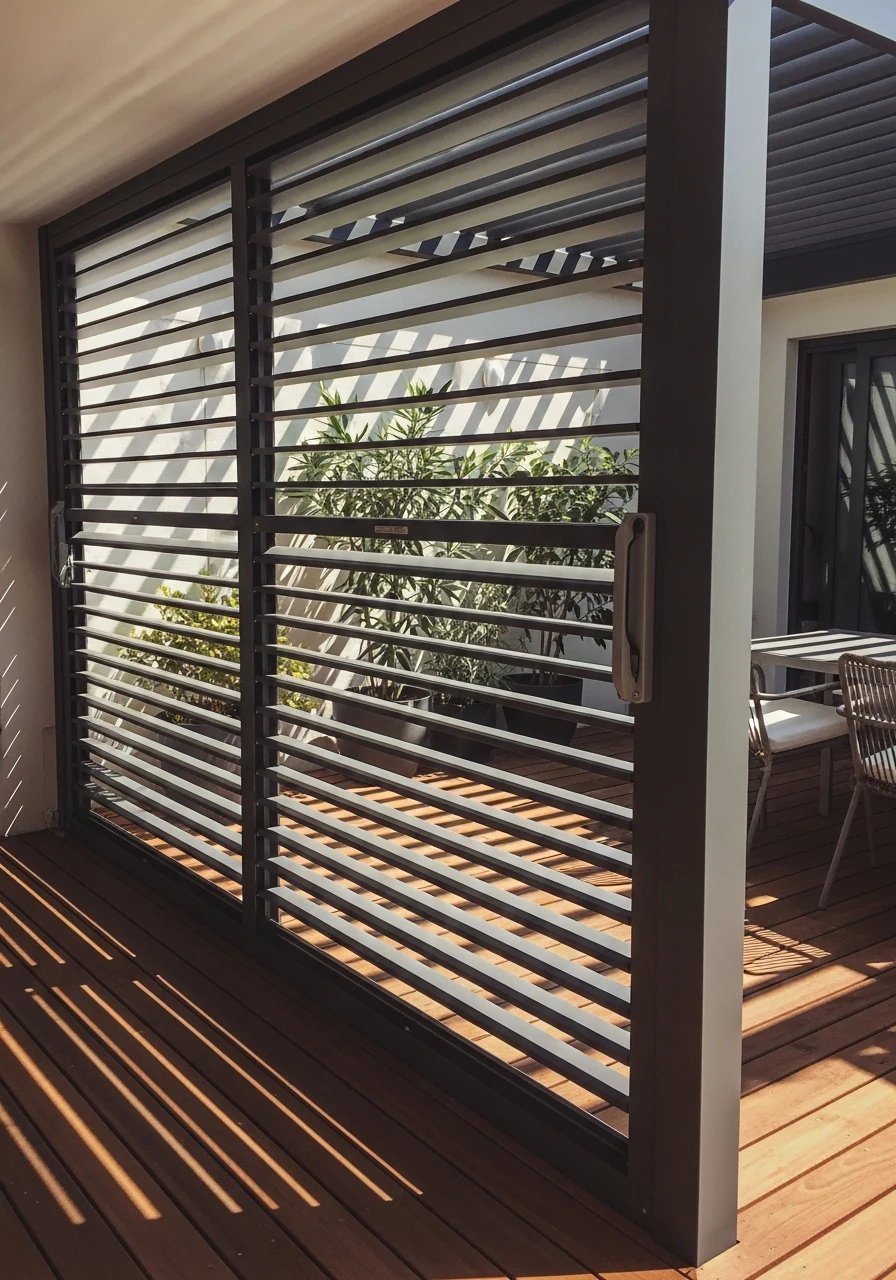
Choose adjustable systems that let you change the panel angle or height. This gives you control over visibility and airflow based on the time of day or your needs.
- Angle slats downward to block overhead views.
- Close panels completely for maximum privacy.
Pro Tip: These are ideal near pools where morning sun blocking is different from afternoon privacy needs.
18. Post and Board Systems
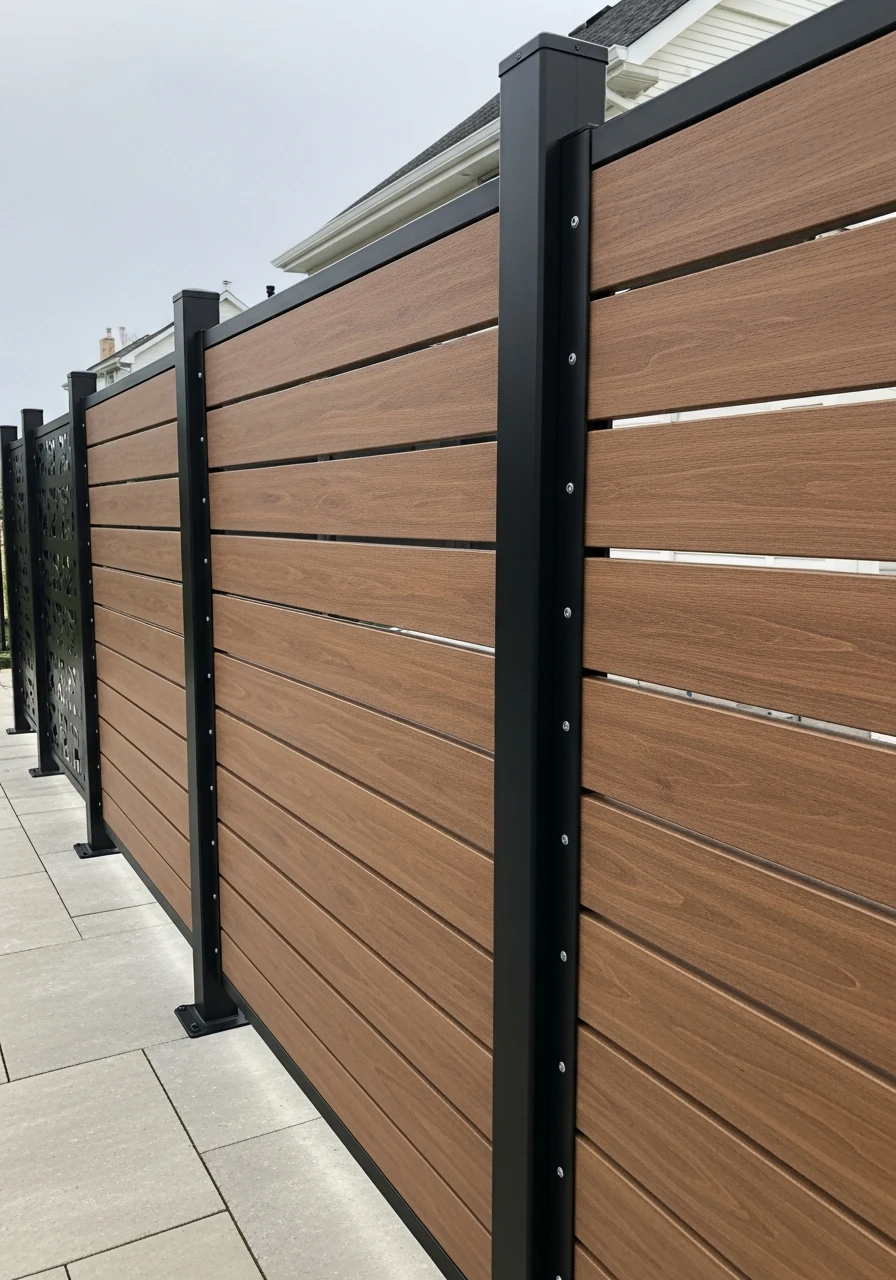
Use post-based systems where wood or composite boards slide right into metal posts. This allows you to fully customize the height and width of your privacy fence.
- Measure and cut boards to fit perfectly.
- Use composite boards for zero maintenance.
Pro Tip: Leave a small gap at the bottom of the fence to allow for drainage and prevent wood rot.
19. Balcony Vertical Screens
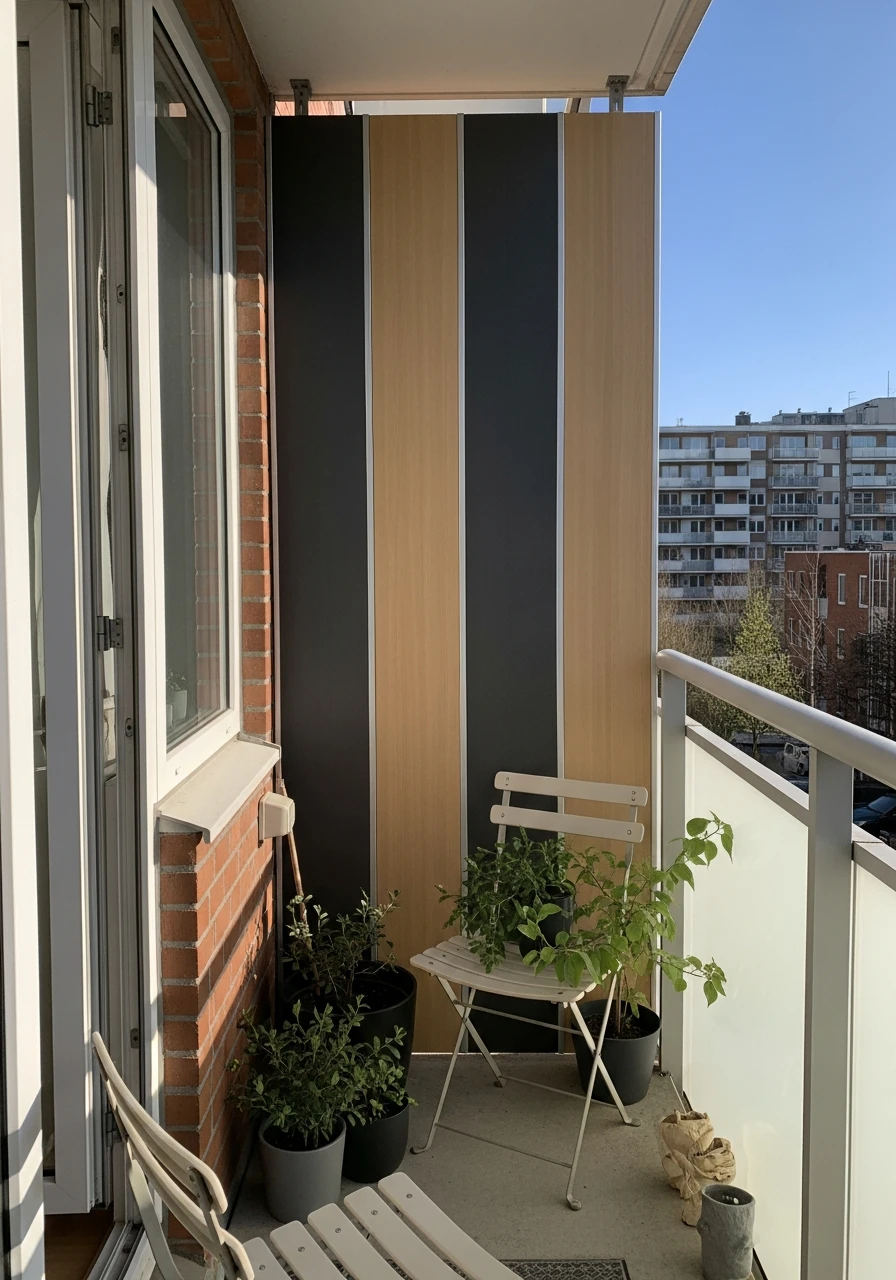
Install slim, vertical panels designed specifically for balconies. They block neighboring views without taking up precious floor space, which is critical in small areas.
- Choose lightweight aluminum frames.
- Ensure they can be securely attached to railings.
Pro Tip: Use white or light gray panels to make a small balcony feel larger and brighter.
20. Railing Attached Fabric
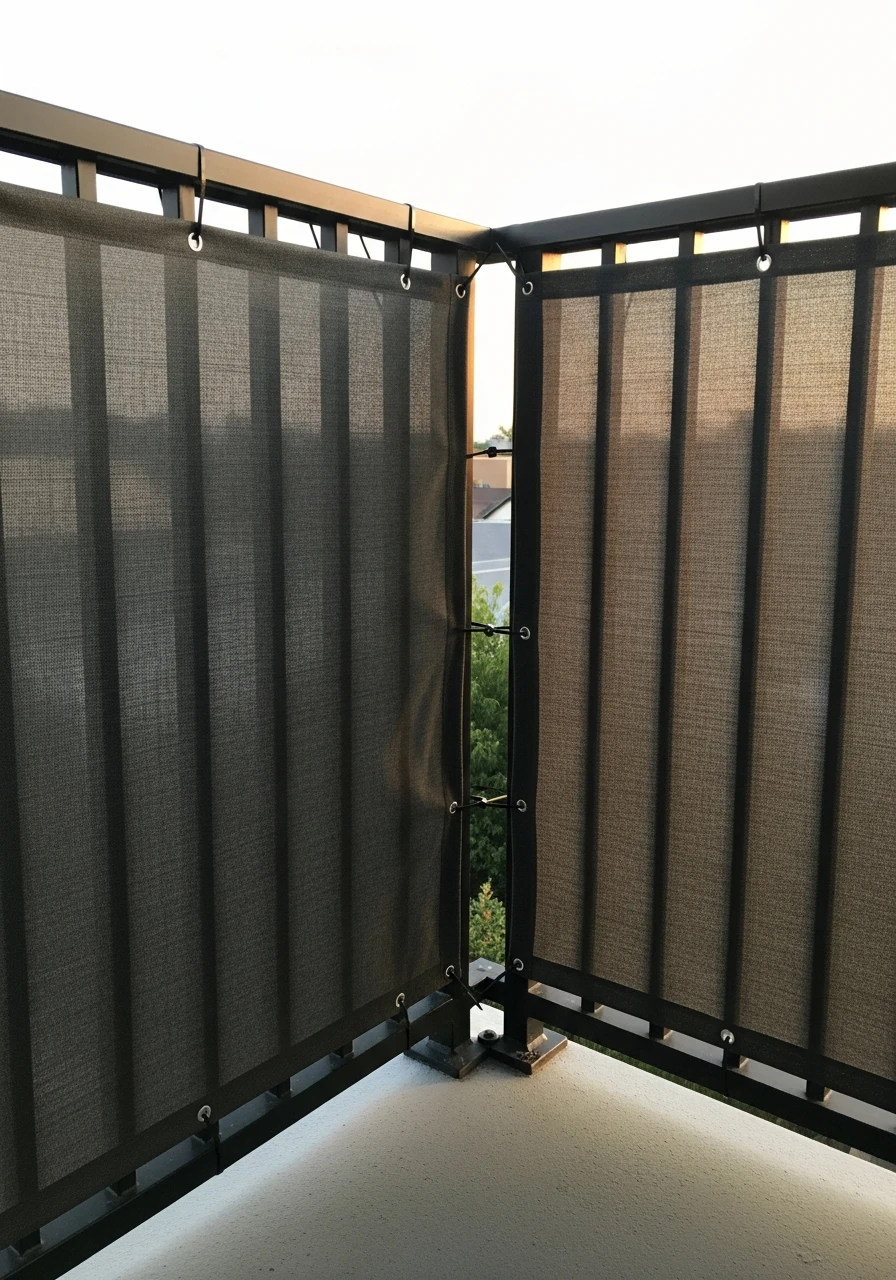
Attach mesh, fabric, or panel systems directly to balcony railings. This is a simple and effective solution for instant coverage without complicated construction.
- Use zip ties or bungee cords for attachment.
- Look for fade-resistant outdoor fabric.
Pro Tip: Darker colors provide better visual privacy than light colors when using mesh fabric.
21. Outdoor Curtains
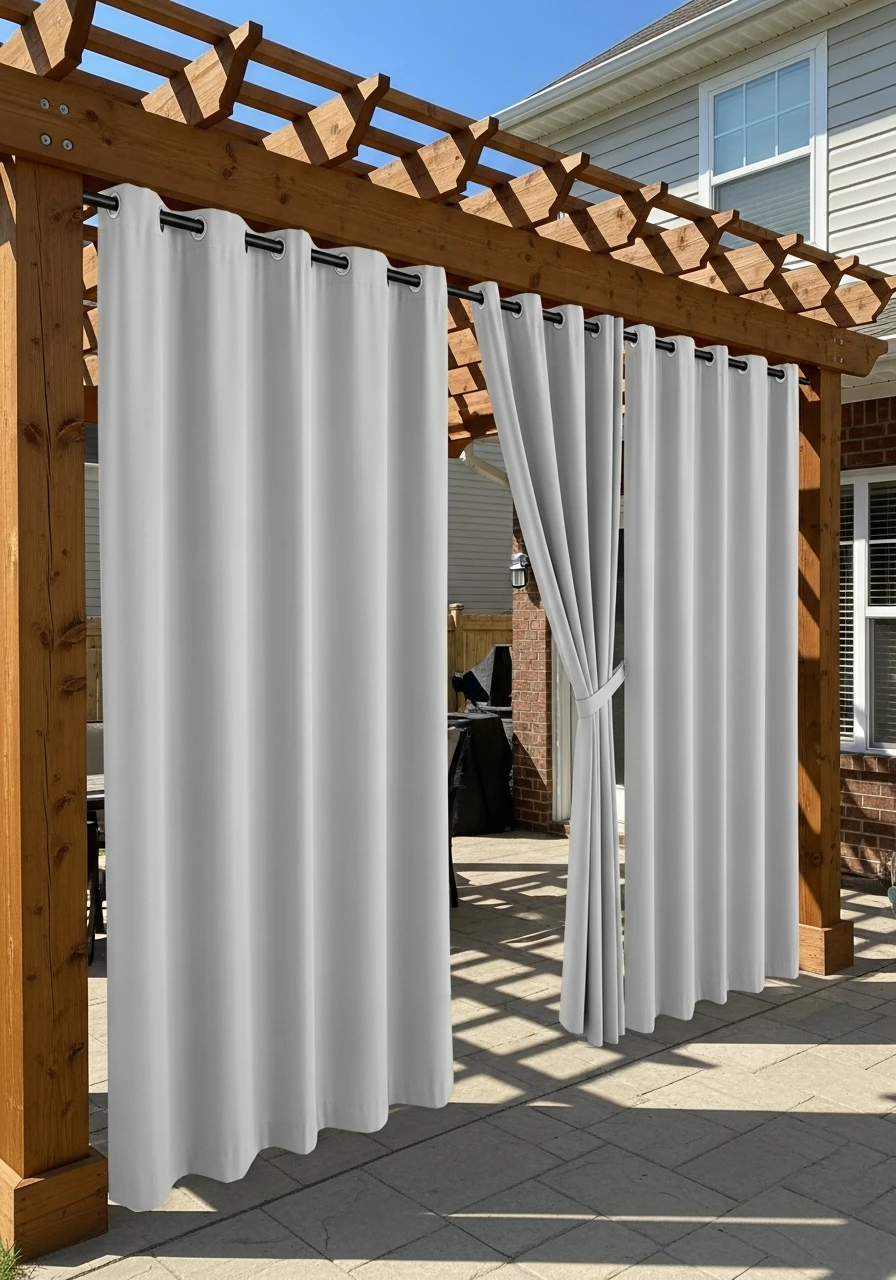
Use weather-resistant outdoor curtains hanging from a patio pergola or frame. They create soft, flexible privacy that can be opened or closed easily when the mood strikes.
- Use heavy, weighted curtains to prevent flapping.
- Install grommets at the bottom to secure them during wind.
Pro Tip: Sheer white curtains give a resort feel while providing light daytime privacy.
22. Retractable Pull Screens
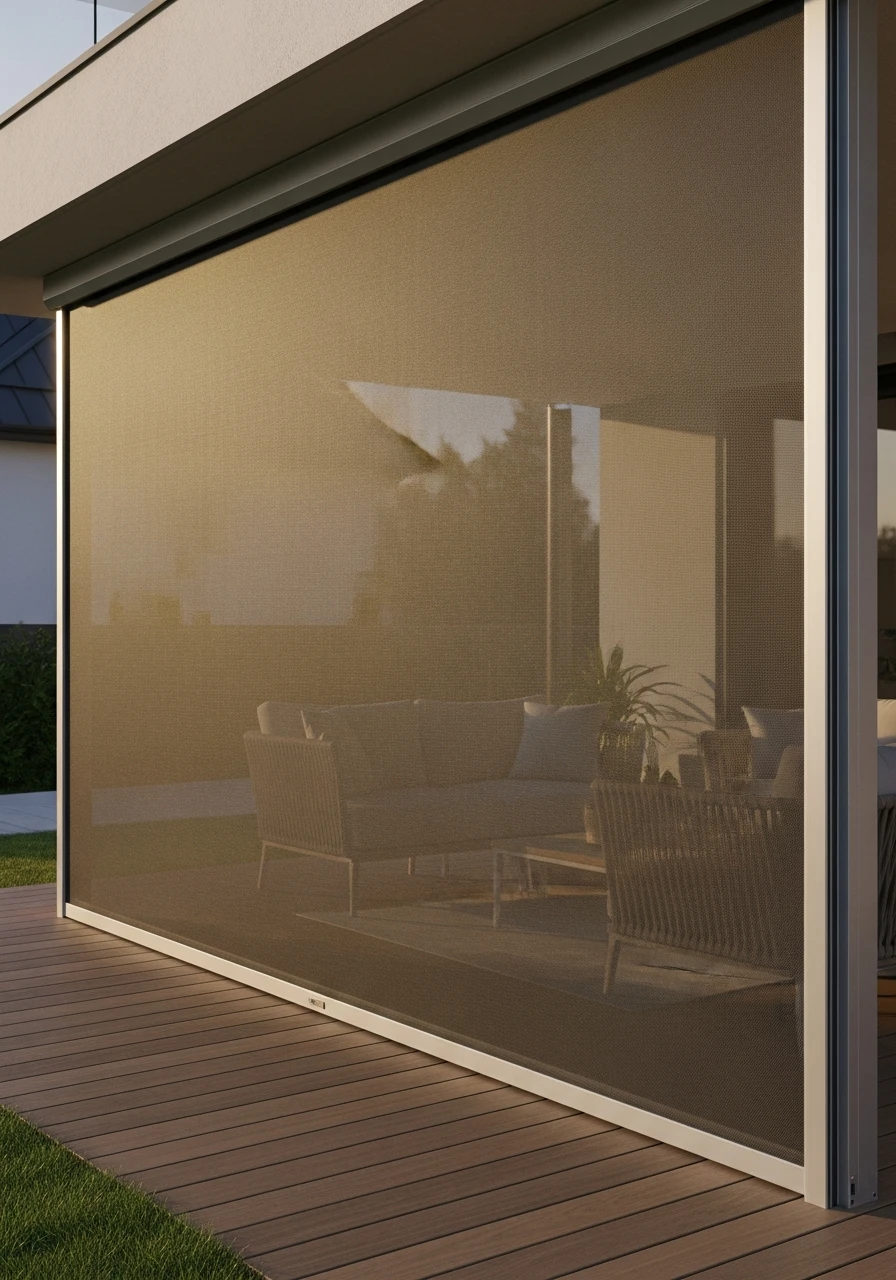
Install screens that pull out horizontally when you need privacy and then roll away neatly when open views are preferred. These are perfect for patios or decks.
- Ensure the mounting hardware is strong.
- Choose a high-density fabric for better blocking.
Pro Tip: Install two retractable screens meeting in a corner for flexible L-shaped privacy.
23. Shade Fabric Screens
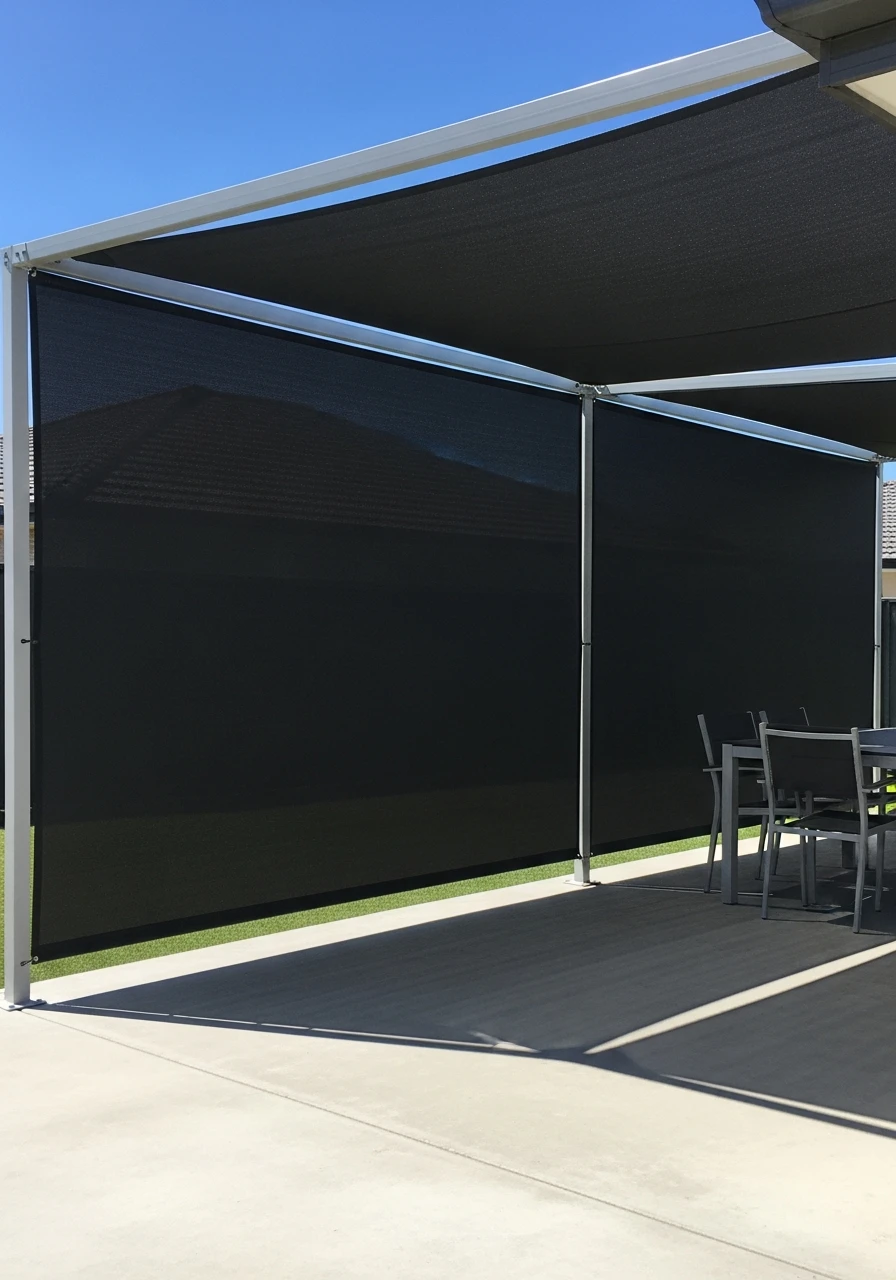
Combine dense shade fabric with privacy screening to block both harsh sun and views. This is ideal for hot climates and open patios that need dual protection.
- Look for UV-blocking fabric.
- Use tension cables to keep the fabric taut.
Pro Tip: Light-colored fabric reflects heat, keeping your patio cooler in the summer.
24. Vertical Shade Sails
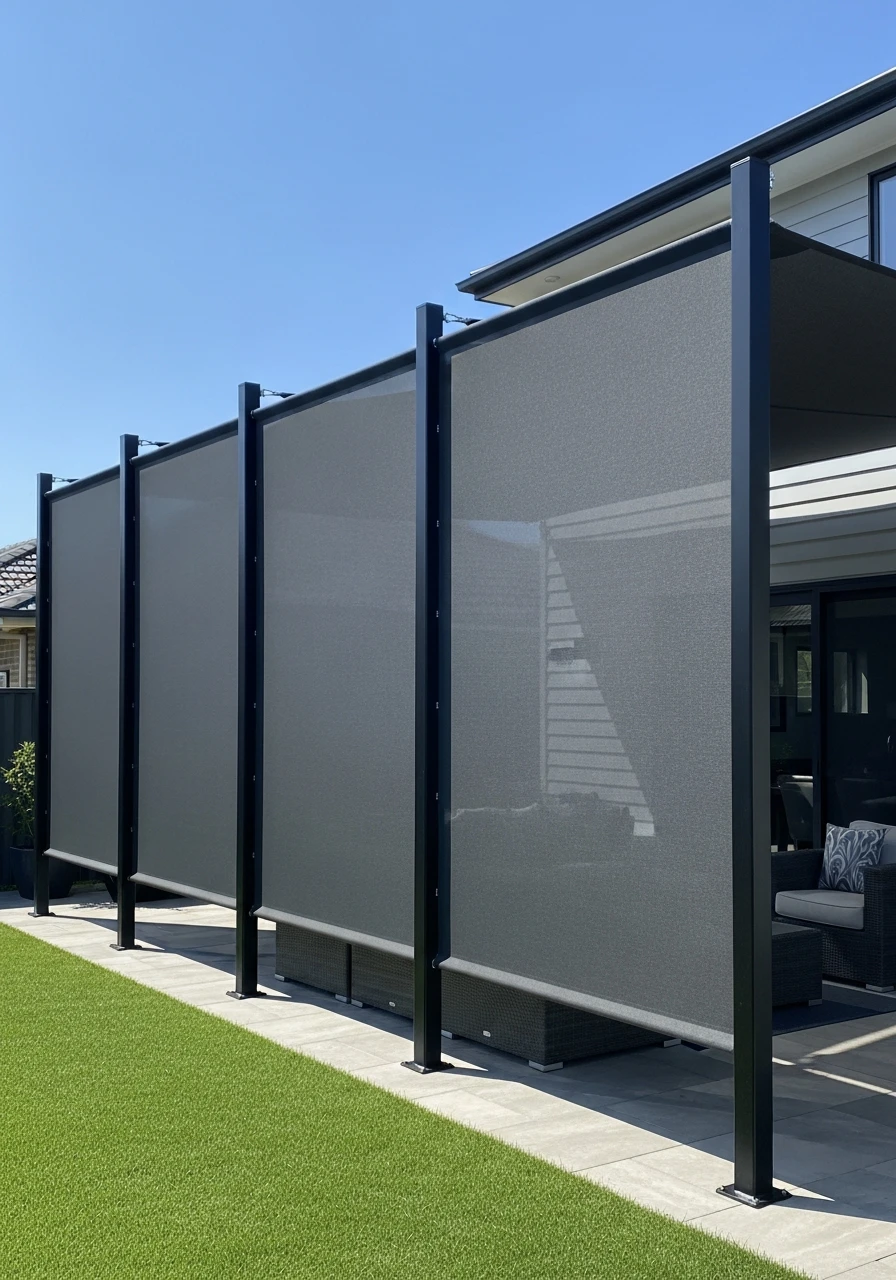
Instead of hanging them flat, mount shade sails vertically to block side views. This adds a modern, architectural element to your backyard while providing coverage.
- Use three attachment points for stability.
- Pick a unique color like terra cotta or deep blue.
Pro Tip: Angle the sail slightly to maximize the area of the view you want to block.
25. Fence Extension Screens
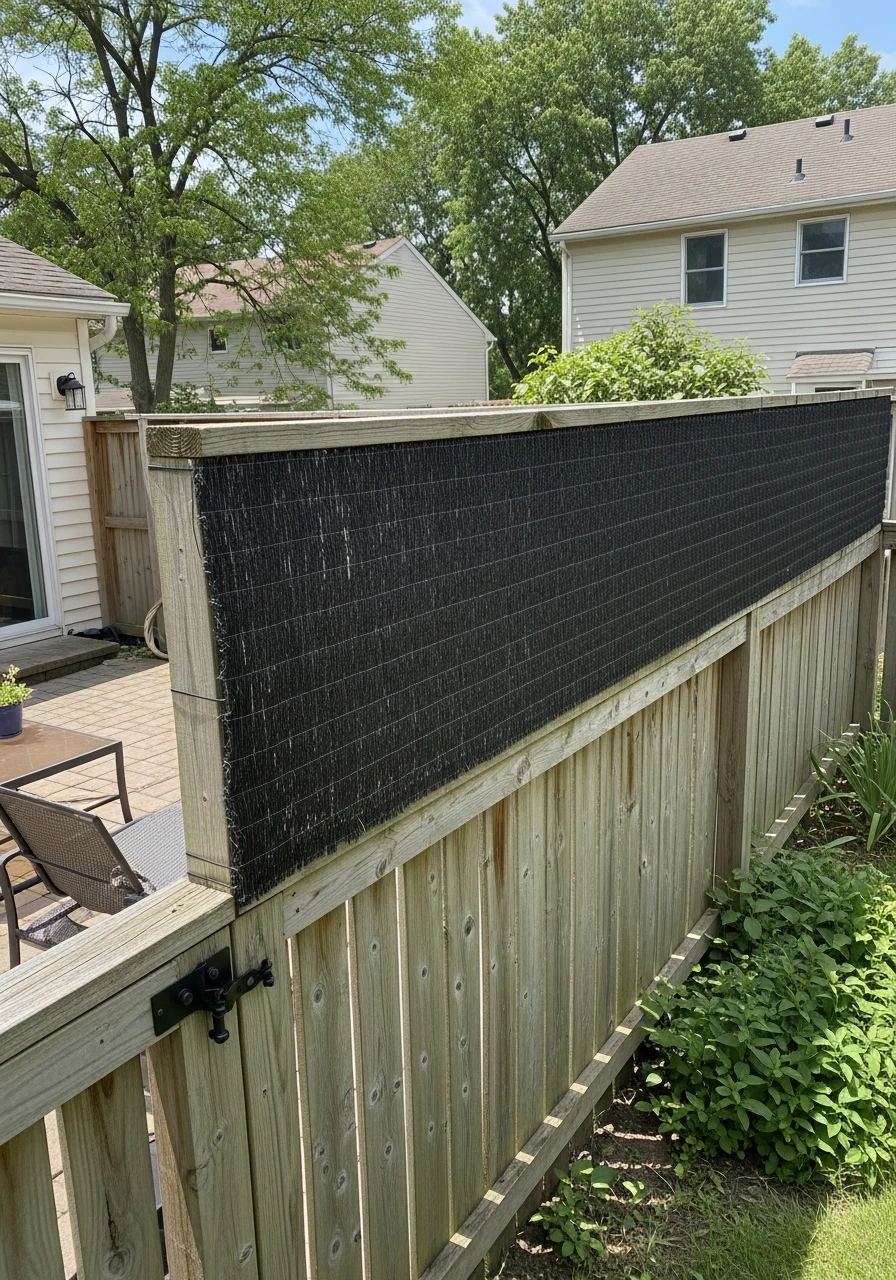
Attach privacy screens to the top of existing fences to increase the height or reduce visibility quickly. This is cheaper than replacing the entire fence.
- Use simple lattice or slatted panels.
- Make sure the existing fence can support the weight.
Pro Tip: Paint the extension the same color as the fence for a seamless, built-in look.
26. HDPE Mesh Fence Covers
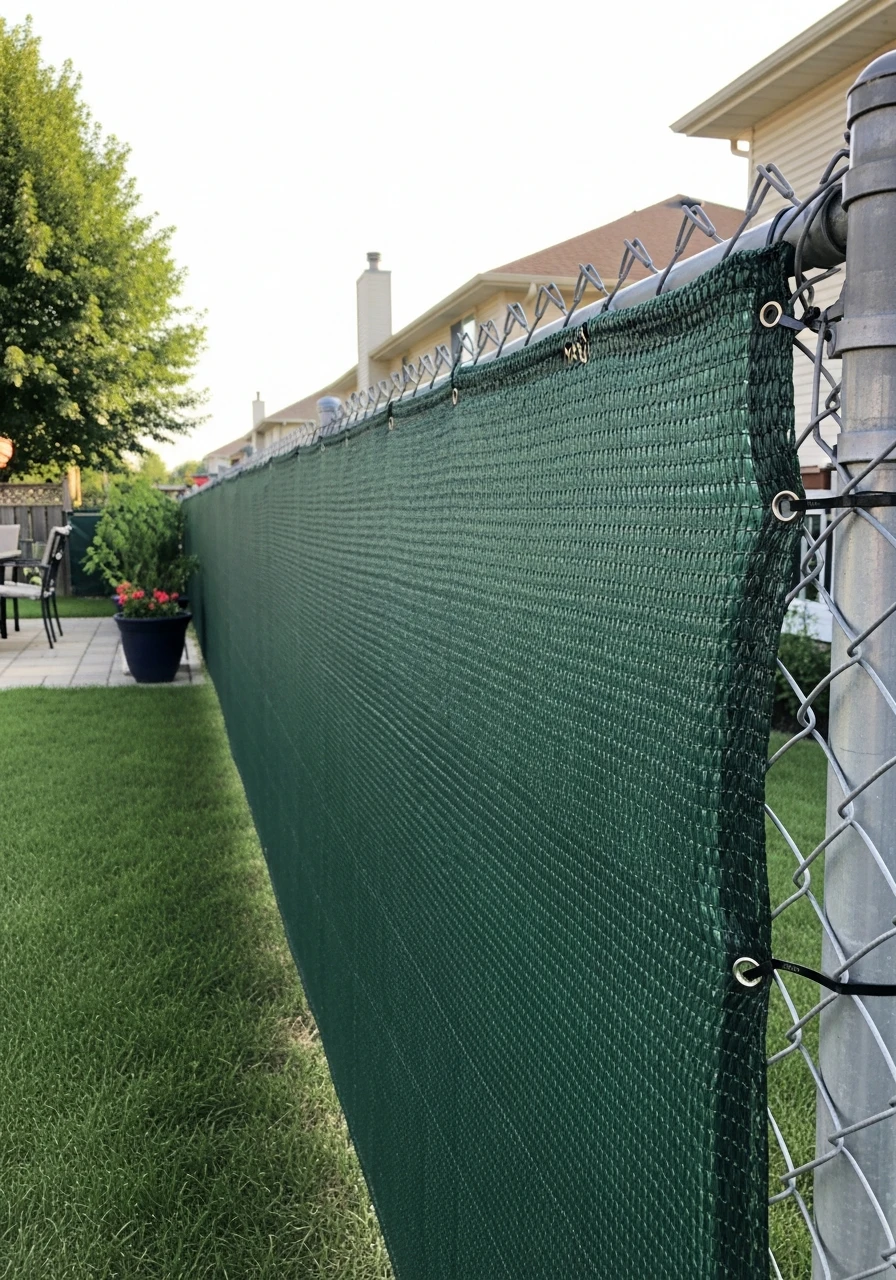
High-density polyethylene mesh provides wind protection and privacy while remaining breathable. This material is super durable and often used around sports courts or dog runs.
- Available in large rolls for long fences.
- Provides 80-90% visibility blockage.
Pro Tip: Use colored zip ties that match the mesh for a clean installation finish.
27. PVC Screening Rolls
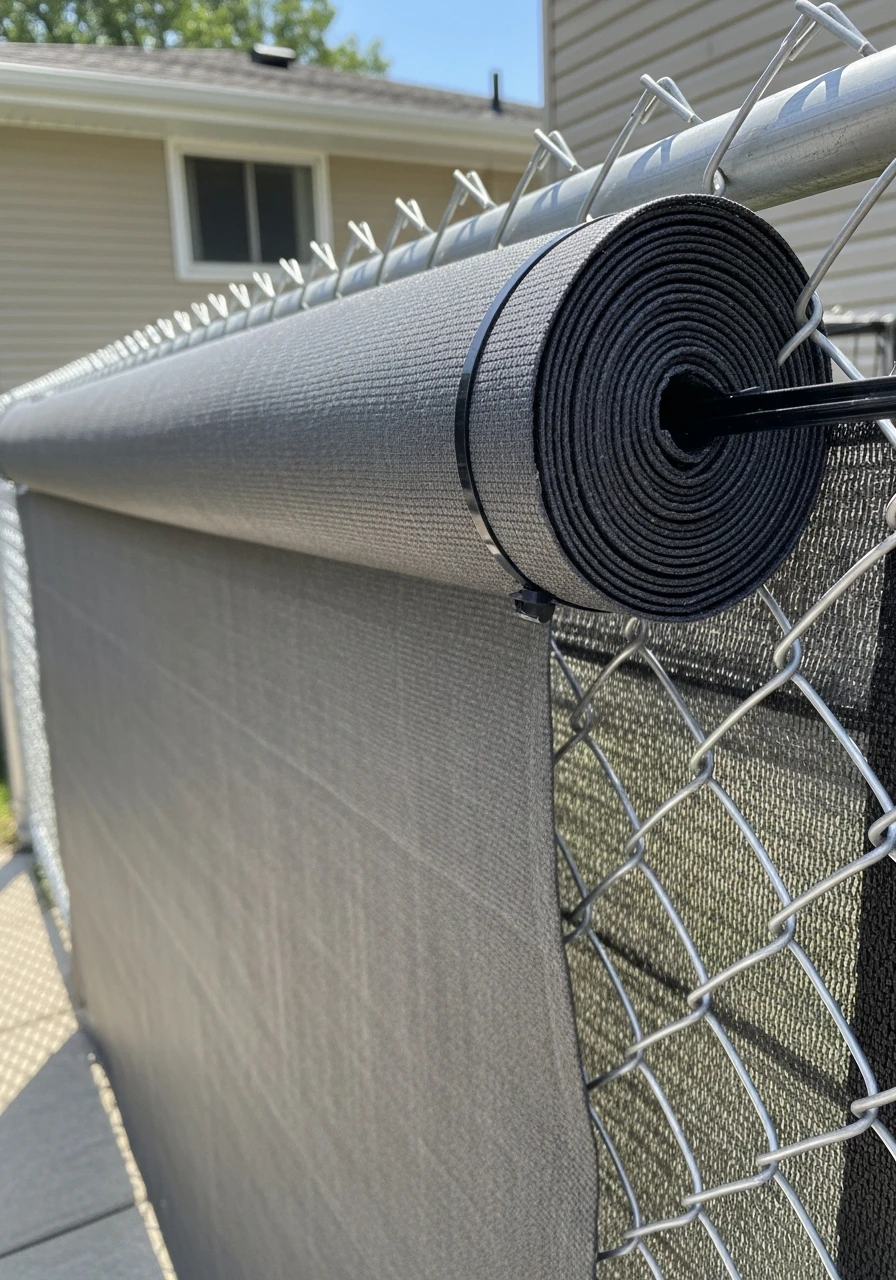
Roll-out PVC screens are easy to install and cut to size, making them a very budget-friendly option. They work great for quickly covering chain-link fences and railings.
- They are fully weather-resistant.
- Available in wood-look or solid colors.
Pro Tip: Unroll and let the PVC sit in the sun for an hour before installation to make it more flexible.
28. Faux Hedge Panels
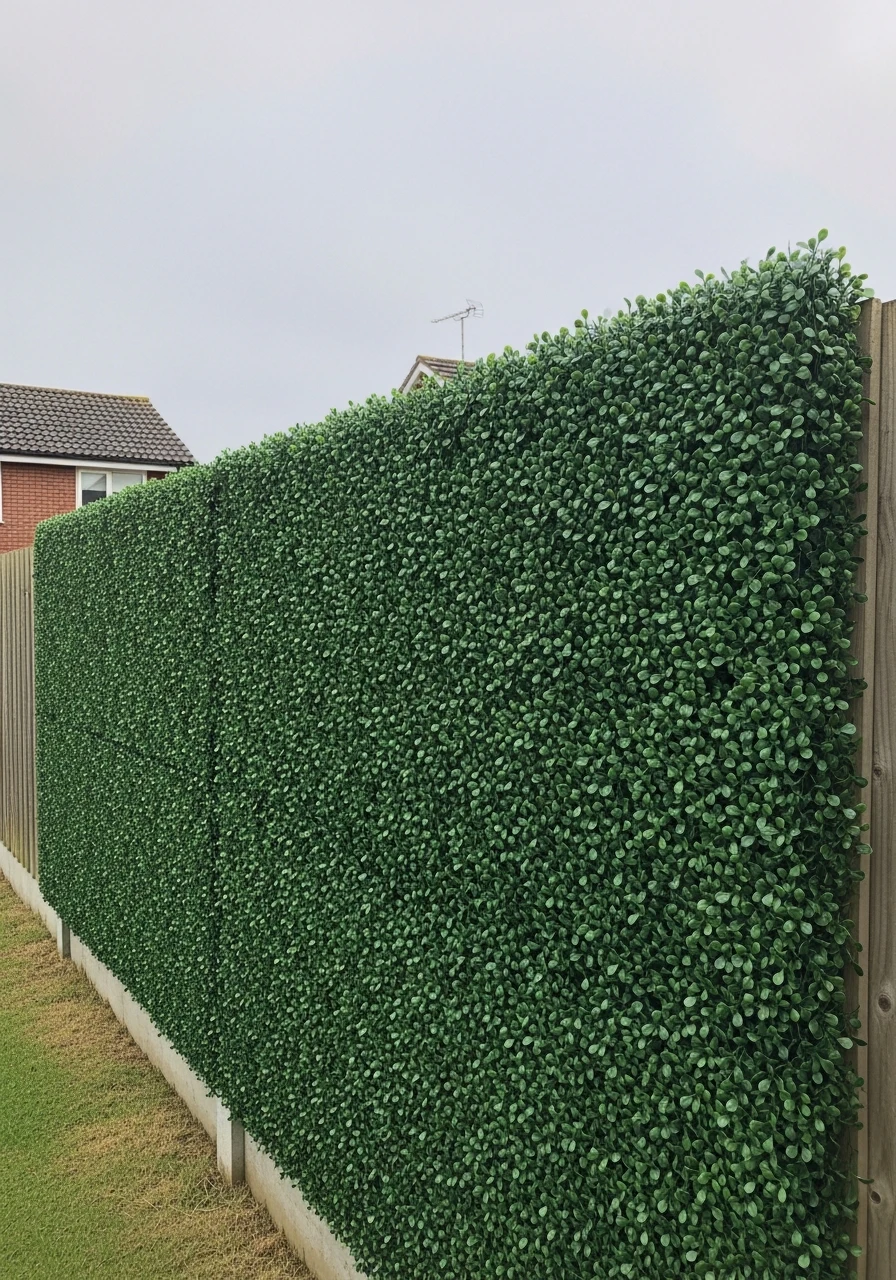
Use artificial hedge panels to mimic thick greenery and create instant, full-coverage privacy. They are perfect for covering old fences or walls that look tired.
- Choose high-density panels for better coverage.
- These require no trimming or watering.
Pro Tip: Use a few real plants near the base of the hedge screen to make the faux look more believable.
29. Wood and Metal Mix
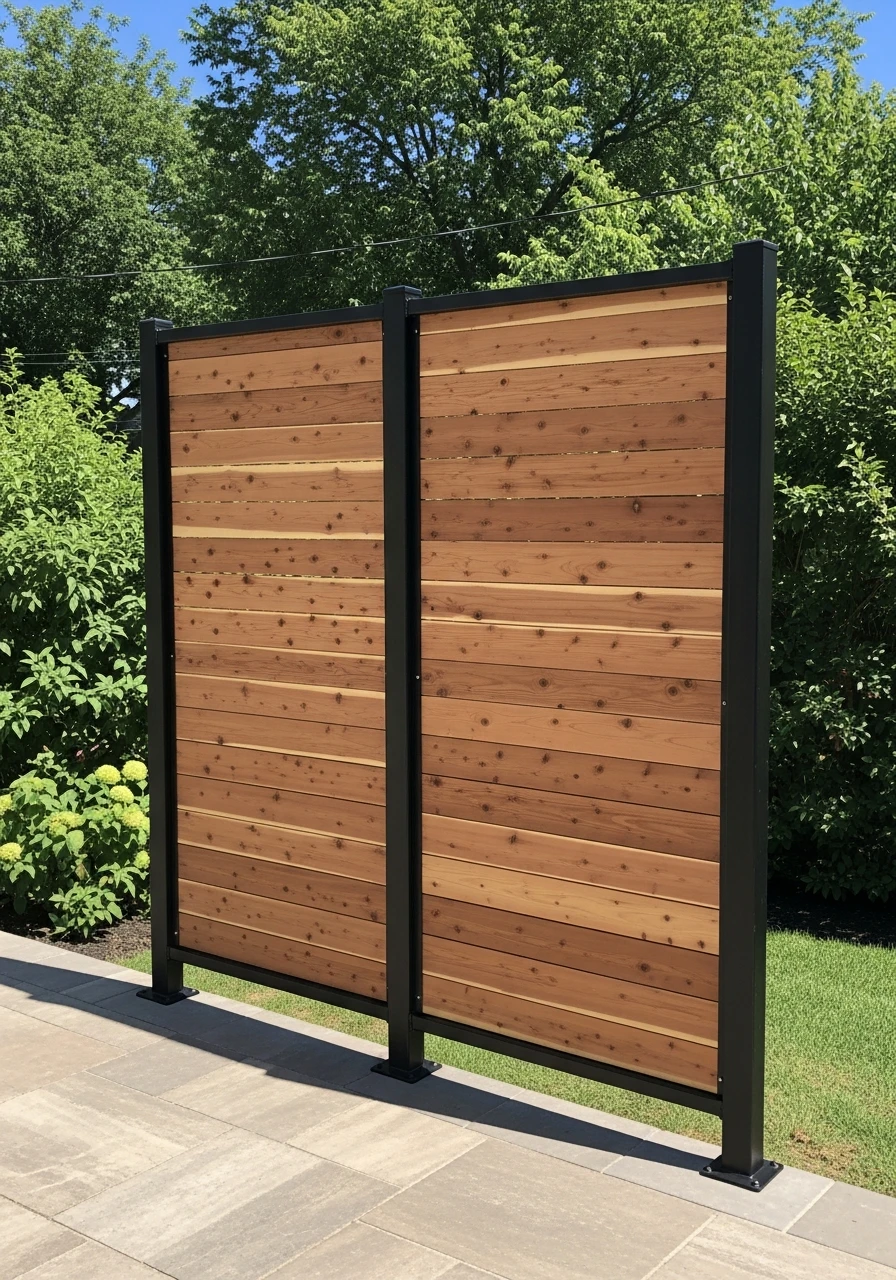
Combine wood panels with metal frames for a modern, durable design. This look balances the warmth of wood with the structure and longevity of metal.
- Use cedar wood for natural resistance.
- Ensure the metal frame is powder-coated.
Pro Tip: A dark metal frame around light-colored wood is a classic, high-end combination.
30. Aluminum Panels
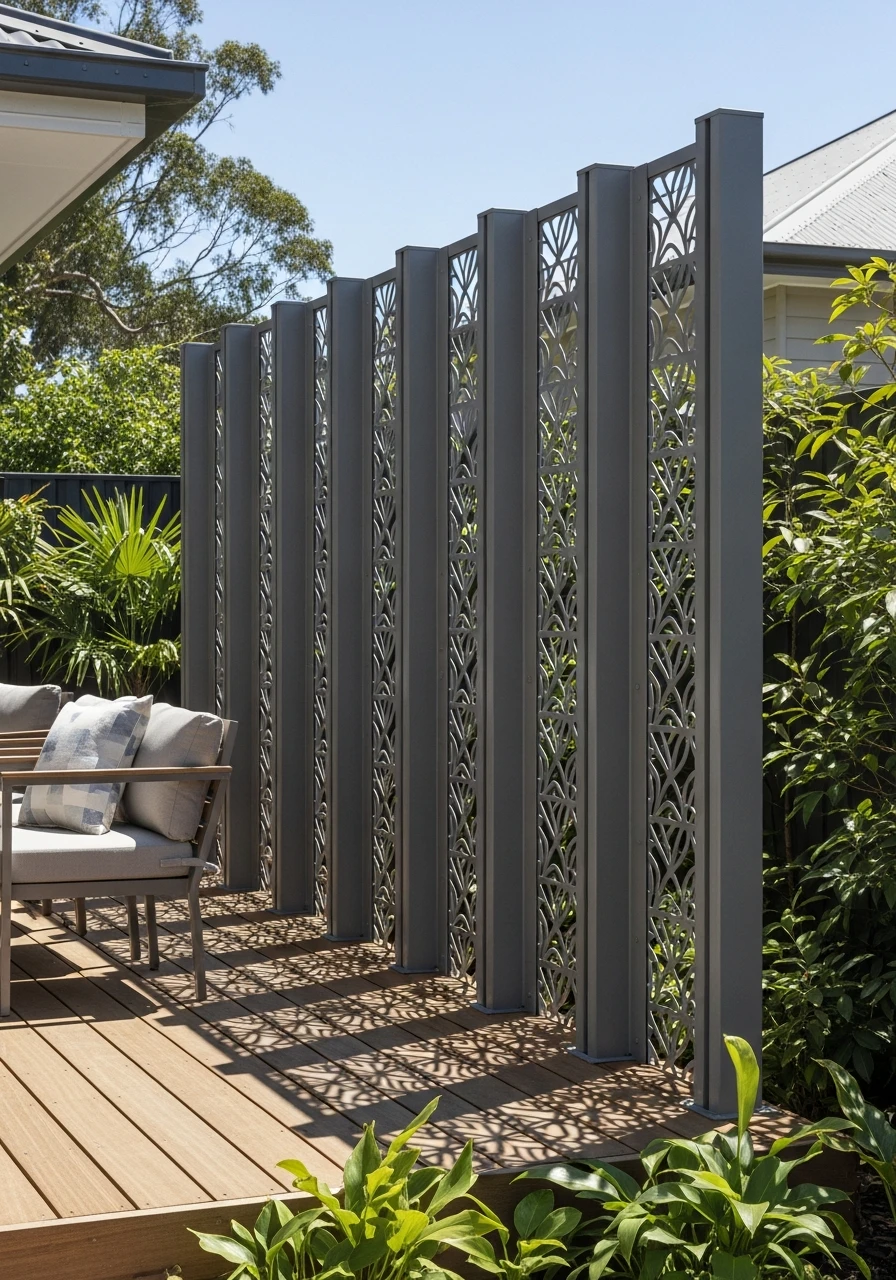
Aluminum panels resist corrosion and are very lightweight. This makes them ideal for humid or coastal environments where other metals might quickly rust.
- They are easy to install solo.
- Available in many finishes, including matte black.
Pro Tip: Aluminum is often pricier upfront but saves money long-term due to zero maintenance.
31. Hot Tub Screens
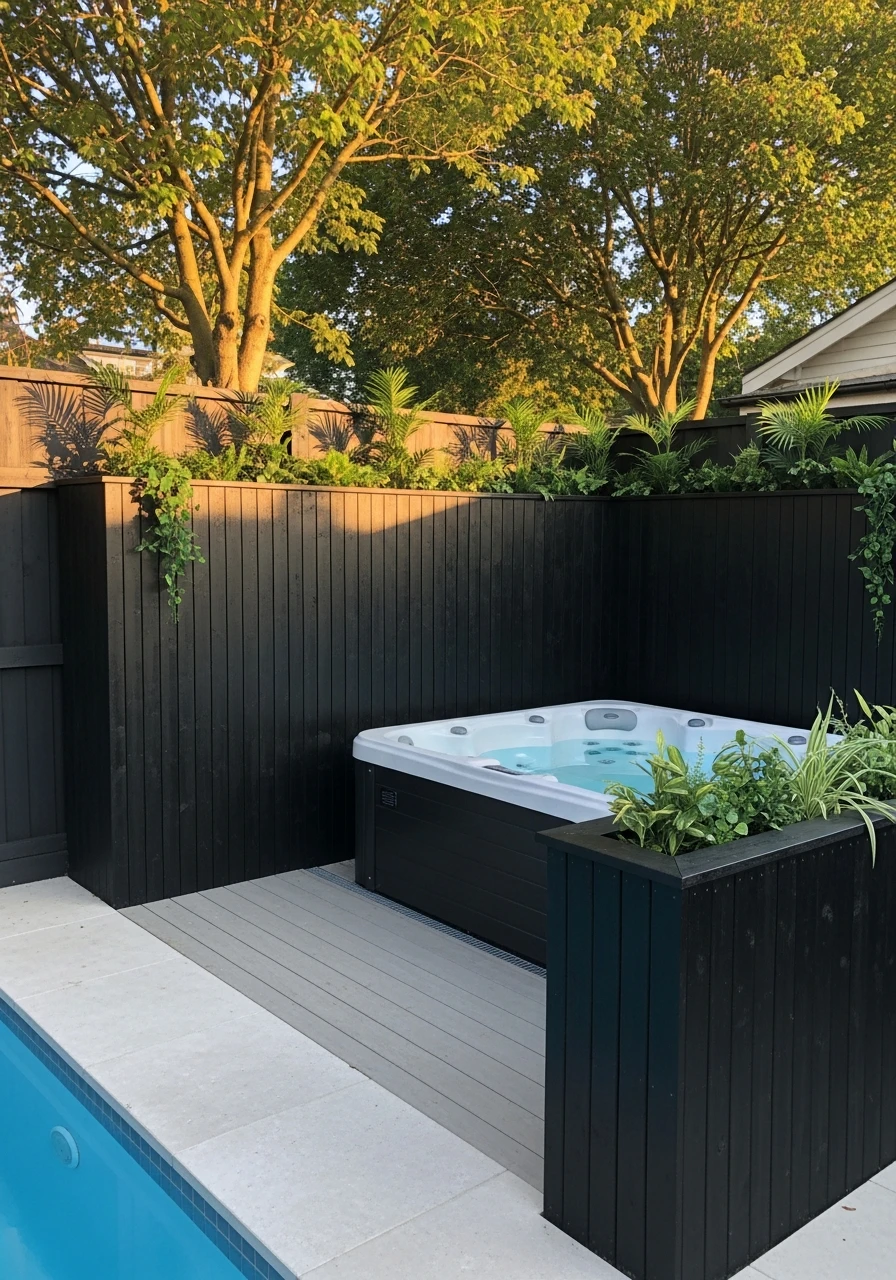
Install tall, solid privacy screens specifically designed to surround hot tub areas. This blocks views completely while creating a relaxing, spa-like outdoor atmosphere.
- Choose moisture-resistant materials.
- Ensure the screens are at least 6 feet tall.
Pro Tip: Add hooks to the inside of the screen to hold towels and robes nearby.
32. Corner L-Shaped Screens
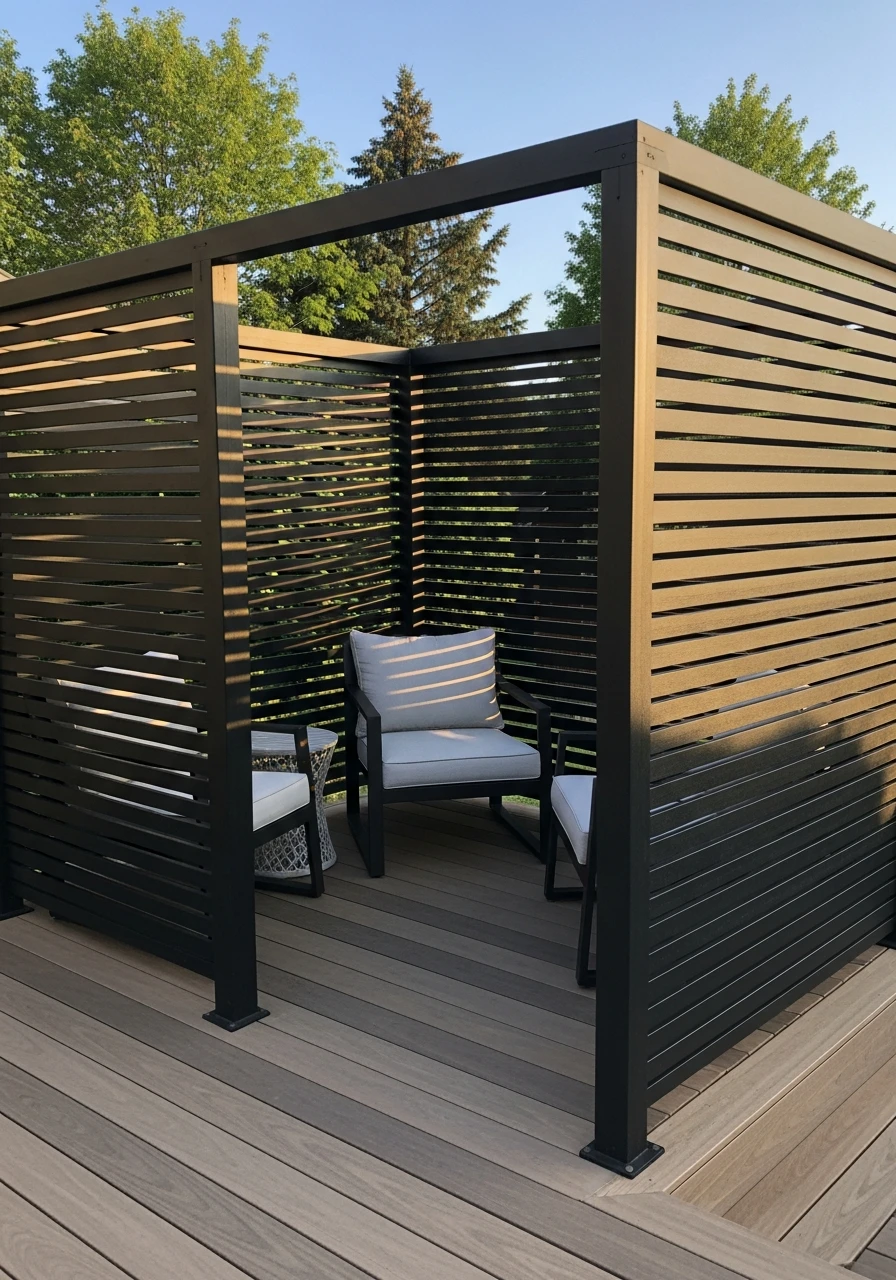
Use L-shaped or corner panels to shield seating areas from two sides. This is a great way to create a cozy nook without enclosing the entire patio space.
- Perfect for urban balconies.
- Use the corner for a small side table.
Pro Tip: Place a floor lamp inside the corner to make the area feel warm and intimate at night.
33. Portable Dividers
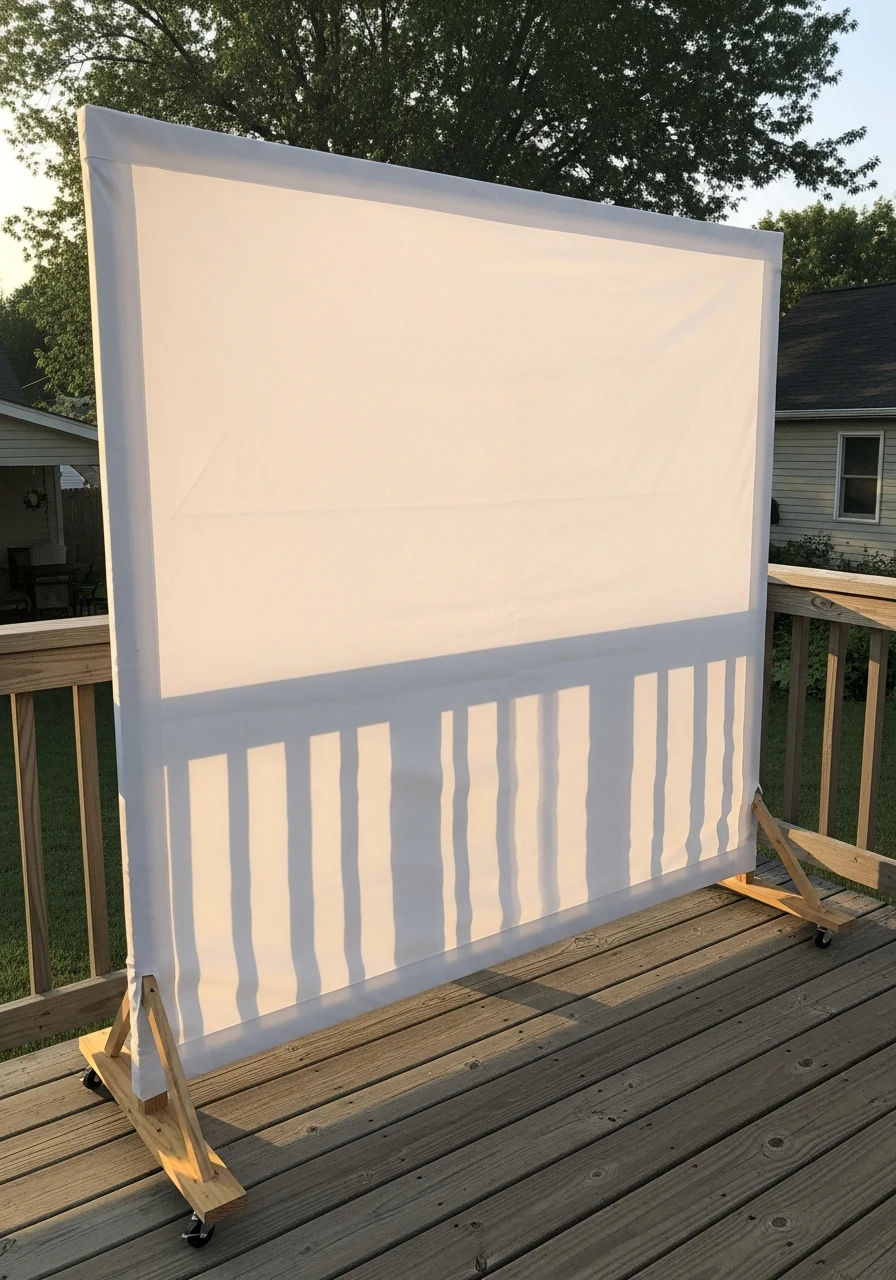
Lightweight dividers can be moved easily to create temporary privacy zones. These are great for blocking views only during special gatherings or events.
- Look for wheels for easy maneuvering.
- Choose screens that collapse flat for storage.
Pro Tip: A portable divider can hide recycling bins or AC units when guests are over.
34. Minimalist Solid Panels
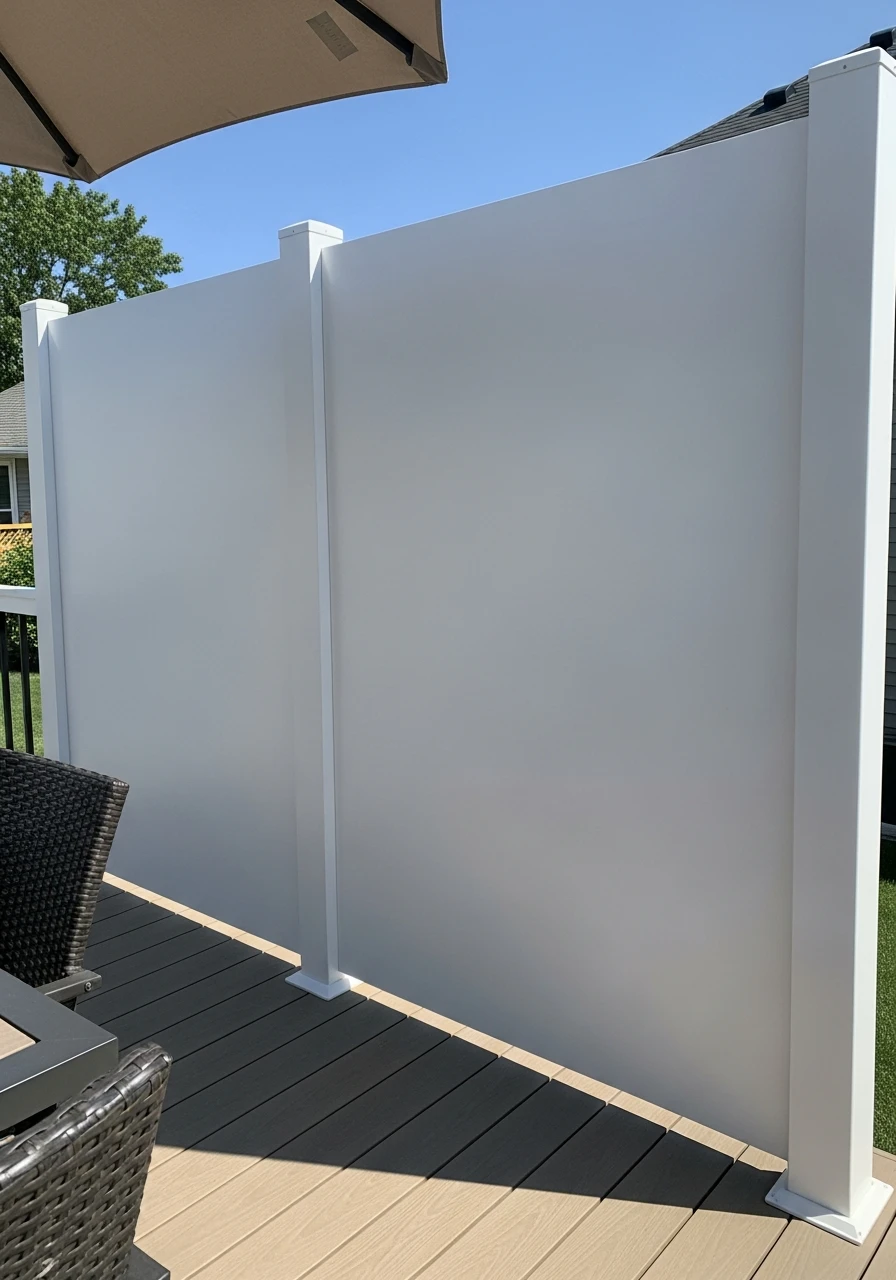
Choose simple, solid panels with no patterns or gaps for maximum privacy. This option provides a clean, modern look that won’t distract from your outdoor decor.
- Paint them a neutral color like taupe.
- Ensure they are securely anchored against wind.
Pro Tip: Solid screens are perfect for mounting outdoor art or string lights directly onto the surface.
35. Textured Screens
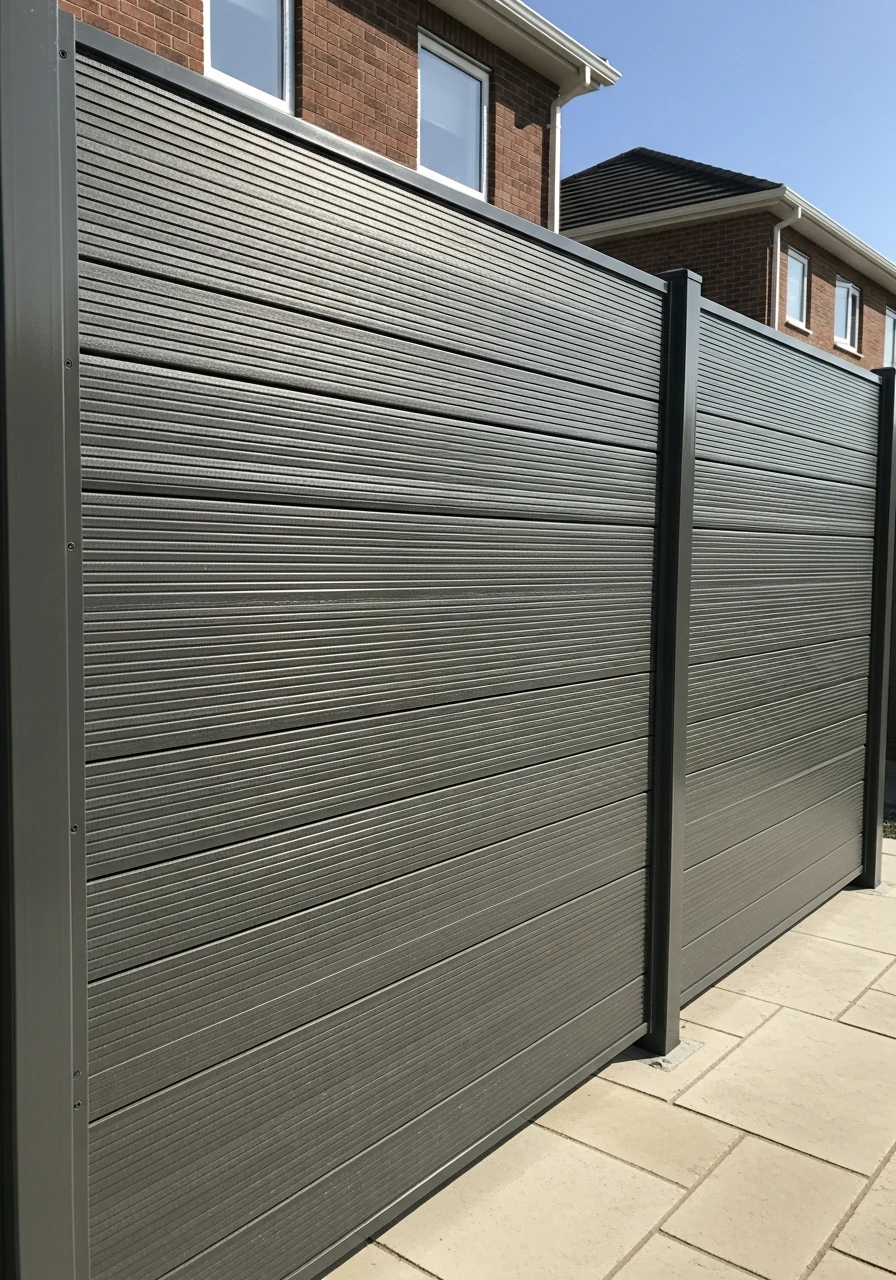
Use panels with subtle textures or grooves in the material. This adds visual depth and interest while still maintaining the full privacy you need from neighbors.
- Textured panels hide small scratches better.
- Look for vertical wood grain textures.
Pro Tip: Subtle texture prevents the screen from looking like a flat, boring wall.
36. Slim Patio Profiles
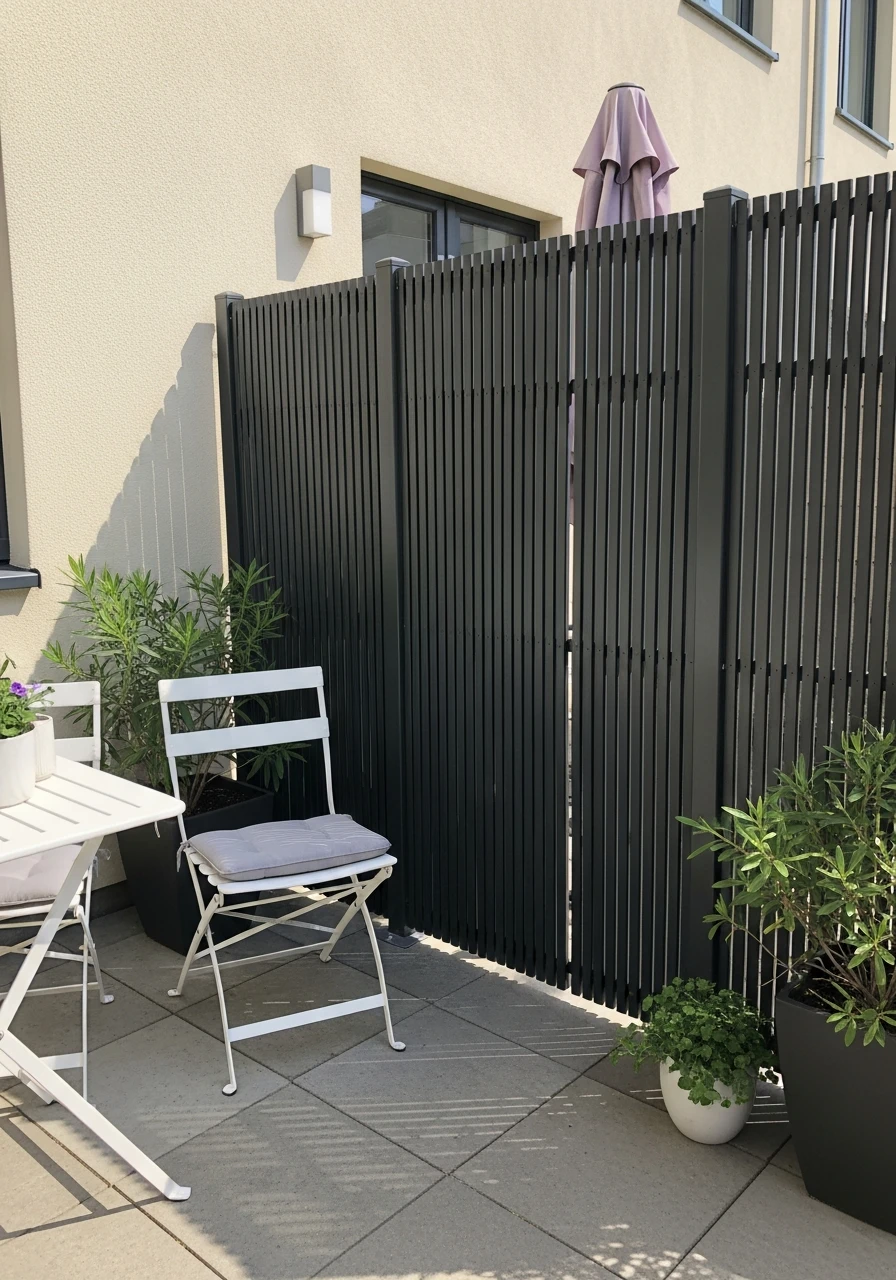
Opt for slim-profile panels that provide necessary privacy without overwhelming compact outdoor spaces. Thin screens make a small patio feel less crowded.
- Choose designs that mount flush to the wall.
- Avoid screens with bulky frames.
Pro Tip: Use a light color and slim profile to maximize the feeling of openness in a tight area.
37. Backdrop Screens
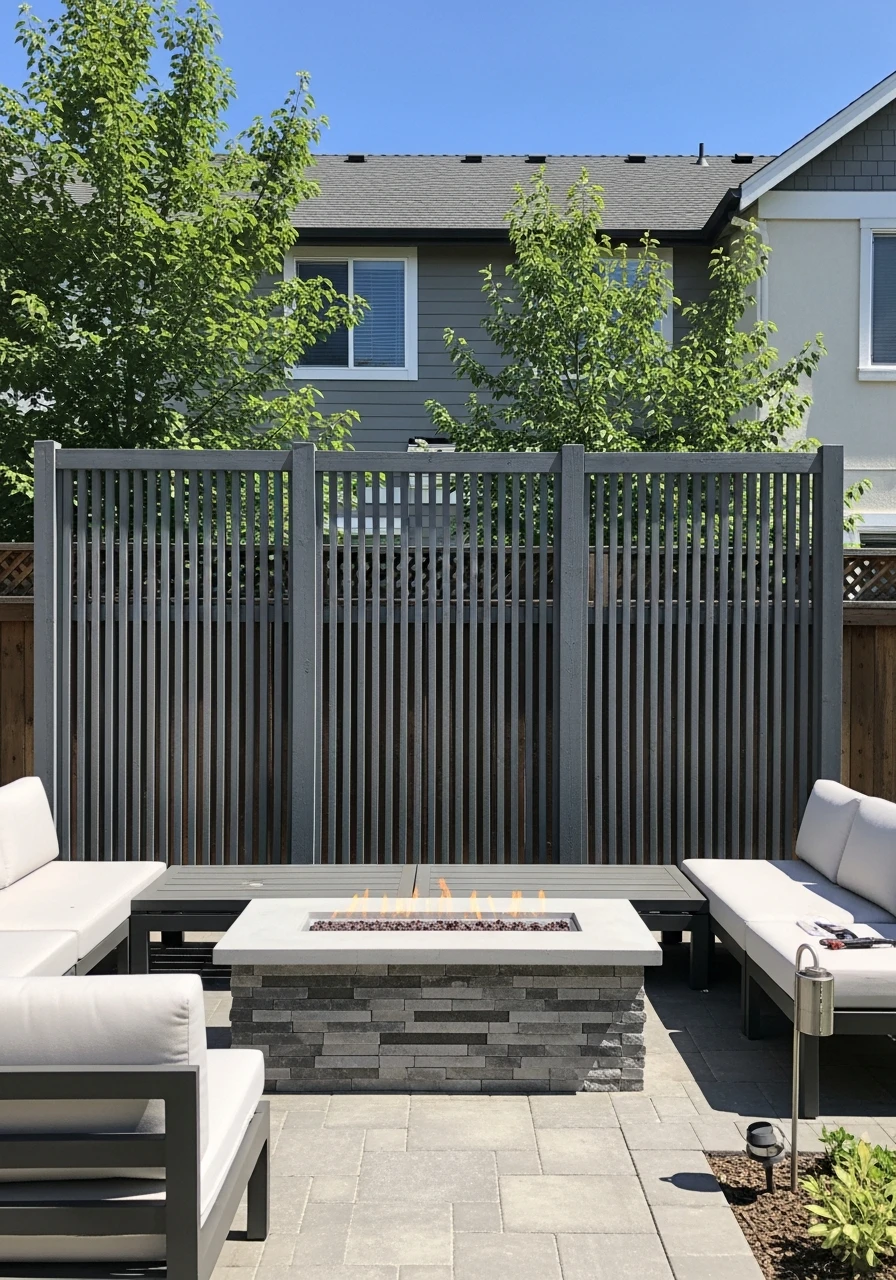
Use privacy screens as decorative backdrops for your seating areas, fire pits, or garden features. They frame the space and give it a polished, finished look.
- Place seating directly in front of the screen.
- Use lighting to highlight the screen at night.
Pro Tip: A simple screen backdrop can instantly define an outdoor ‘room’ separate from the yard.
38. Composite Material Screens
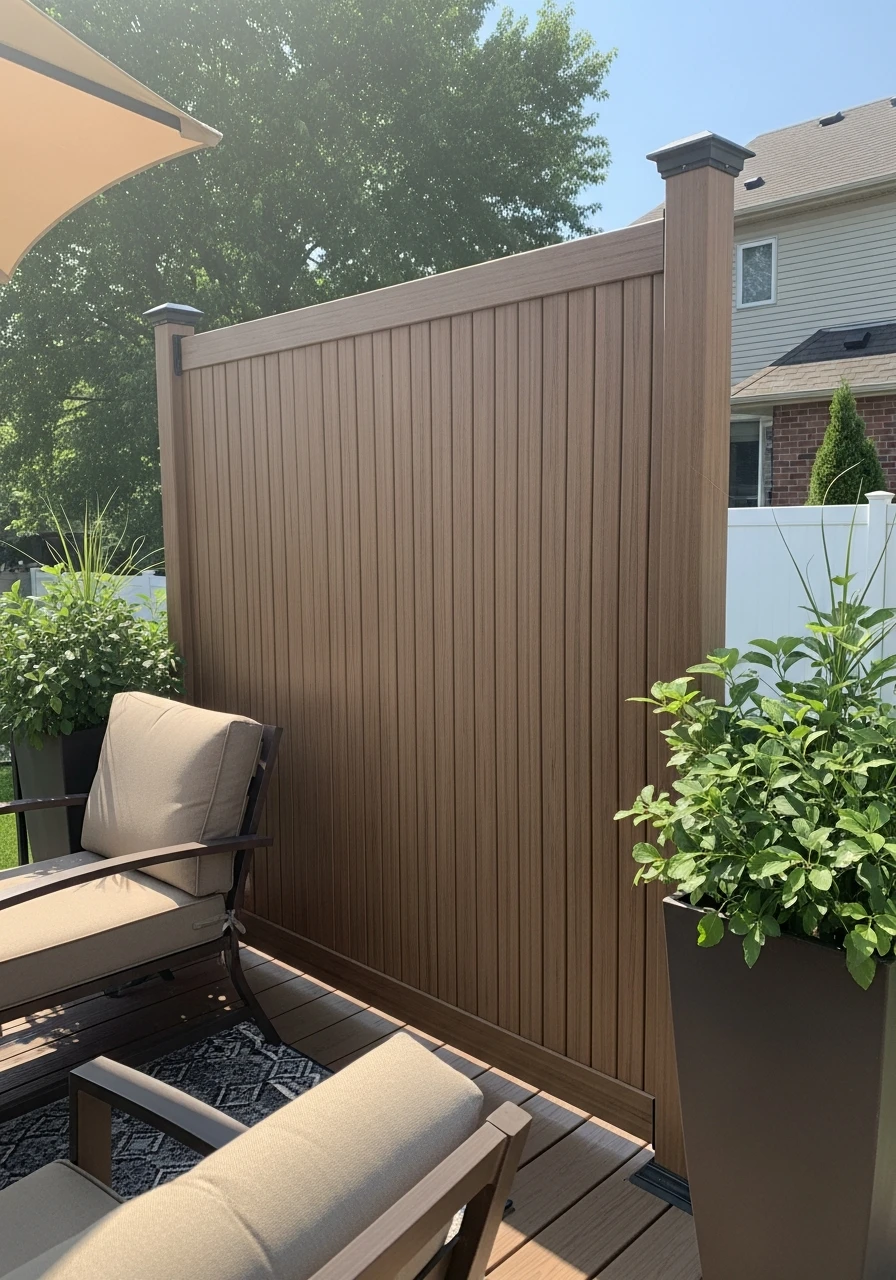
Composite materials combine a wood-like appearance with enhanced durability and low maintenance. They won’t warp, rot, or need painting like real wood.
- Look for boards made from recycled plastic.
- Wipe clean with soapy water.
Pro Tip: Composite screens are worth the higher upfront cost if you hate annual maintenance tasks.
39. Dining Area Screens
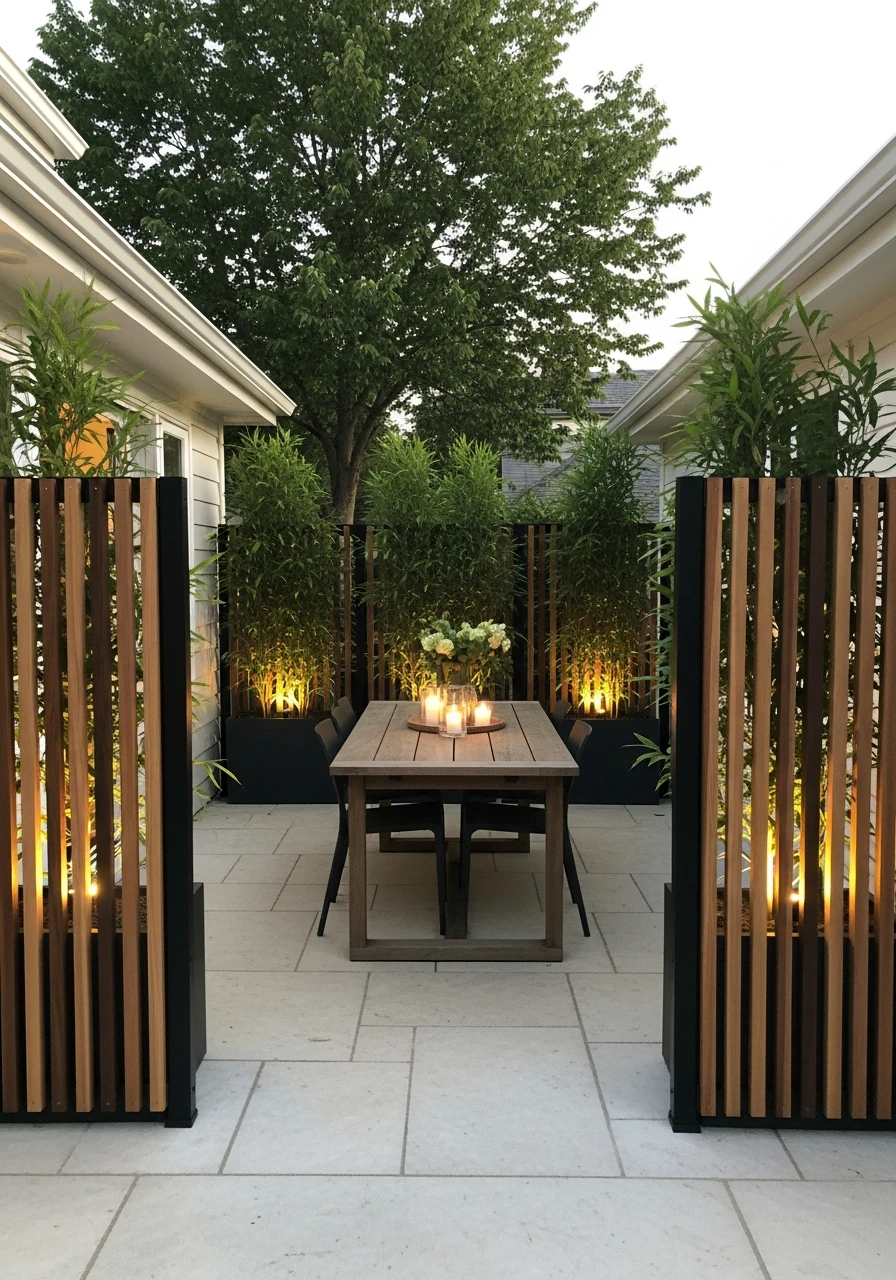
Install screens around outdoor dining spaces to create an intimate atmosphere. They help block nearby distractions and focus attention on the table.
- Ensure the screens are tall enough to block seated views.
- Use screens that match your dining set style.
Pro Tip: Mount small, battery-operated sconces onto the screen near the dining table for soft light.
40. No-Dig Systems
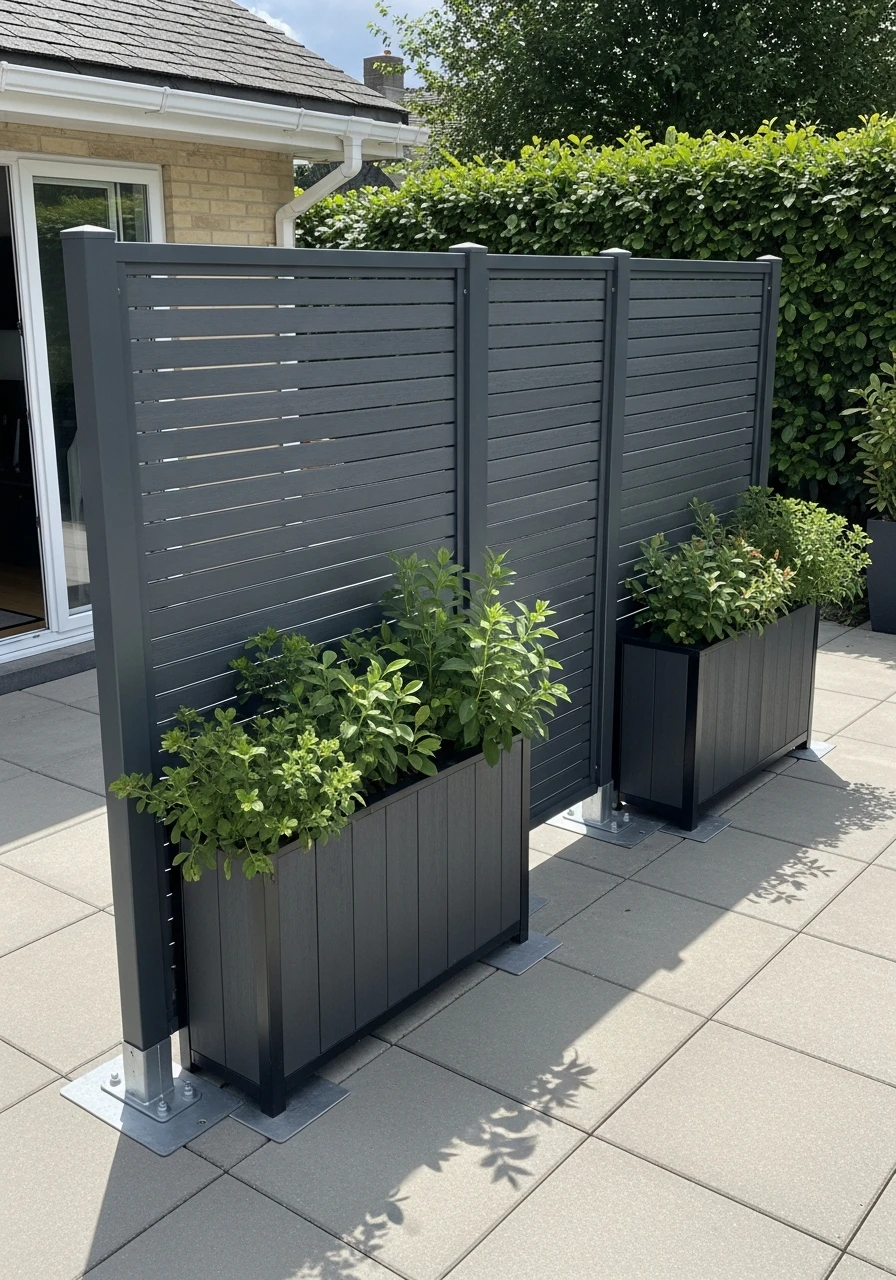
Choose systems that do not require digging holes or pouring concrete footings. These are ideal for quick installation, hard surfaces, and rental properties where you can’t alter the ground.
- Use weighted bases or anchor stakes.
- Perfect for mounting on concrete patios.
Pro Tip: Weight the bases with heavy gravel or sandbags for extra stability in windy areas.
41. Screens with Shelving
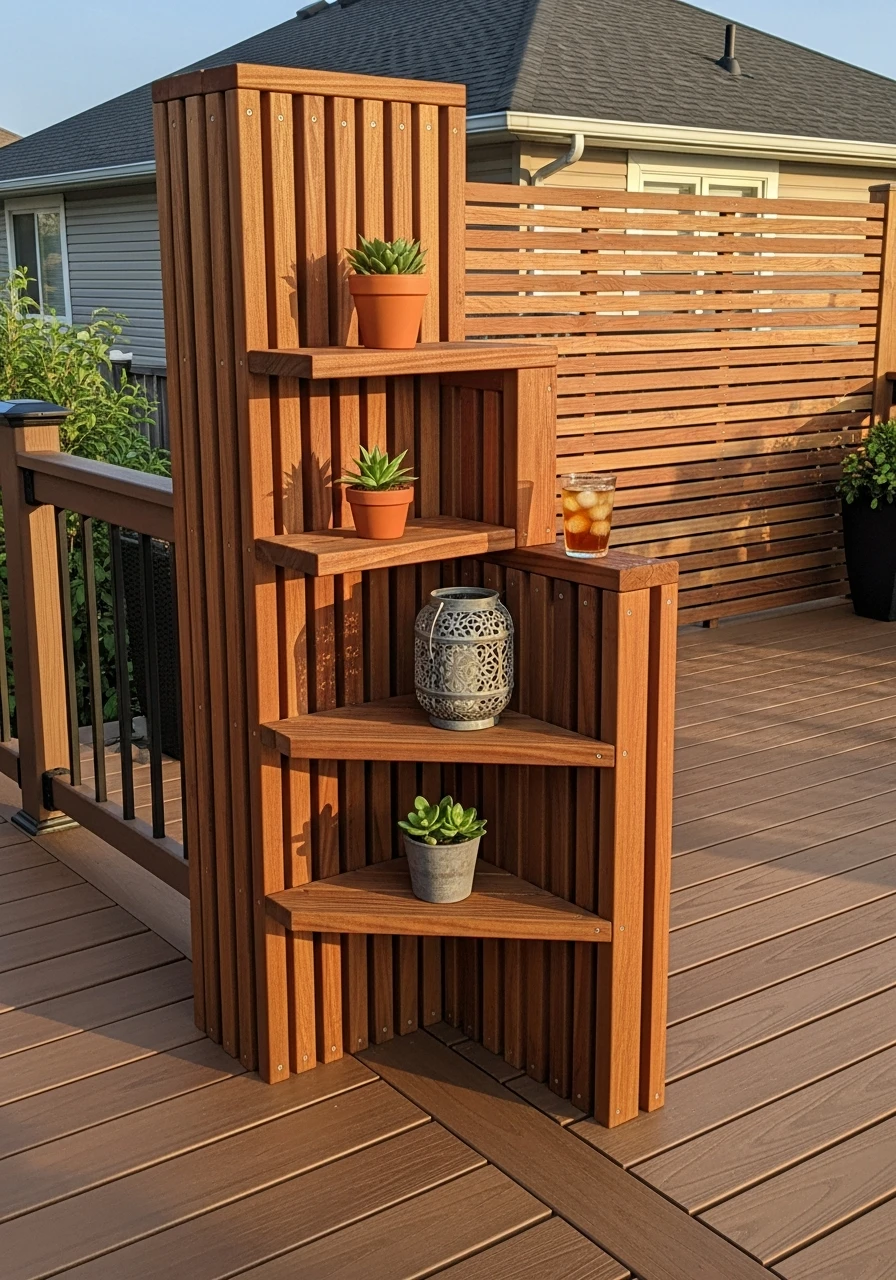
Some screen designs include built-in shelves for plants, drinks, or decor. This combines privacy with functional outdoor storage, maximizing your space.
- Use shelves for small herb pots.
- Ensure the shelves are bolted securely.
Pro Tip: Always place the heaviest items on the bottom shelf for better screen stability.
42. Wind Protection Screens
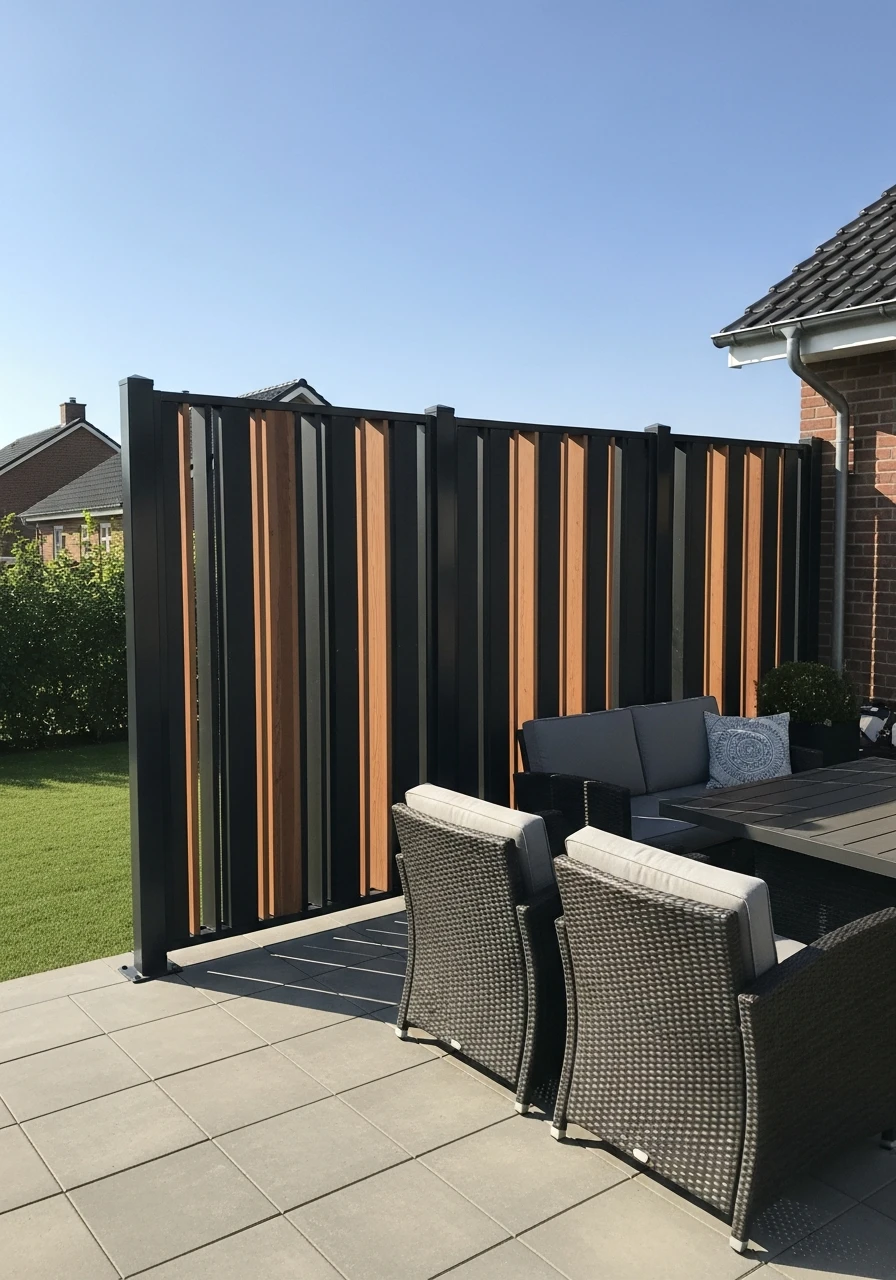
Use solid or semi-solid panels that reduce wind exposure while still offering visual privacy. This makes your patio comfortable even on breezy days.
- Install screens perpendicular to the prevailing wind.
- Choose materials like wood or thick composite.
Pro Tip: Avoid screens with large gaps if wind reduction is your main goal.
43. Extra Tall Screens
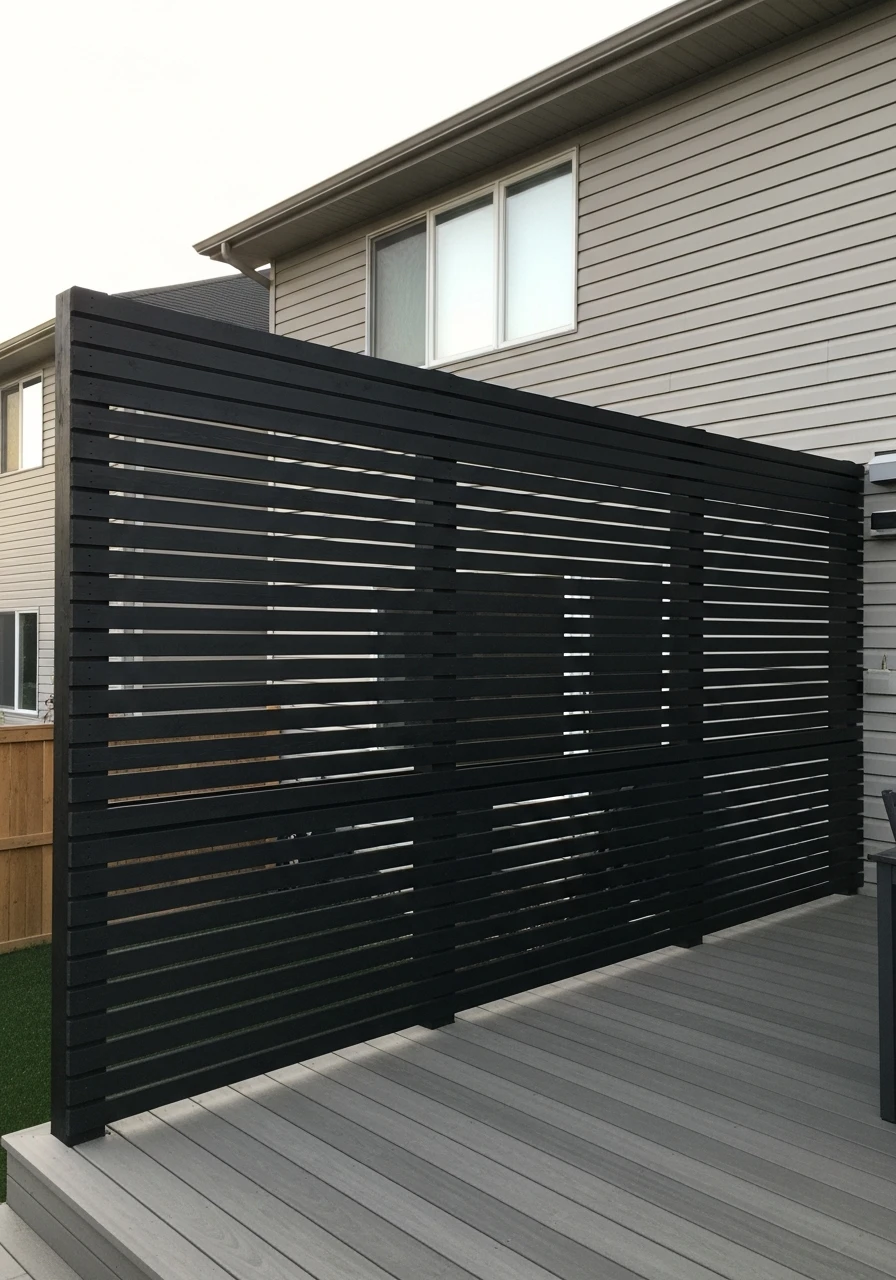
Install extra-tall panels to block views from second-story windows or nearby buildings. Full coverage height is essential for maximum peace and quiet.
- Ensure the tall posts are deeply anchored.
- Use these strategically, not everywhere.
Pro Tip: A tall screen can also block unwanted sun glare in the late afternoon.
44. Low Sectioning Screens
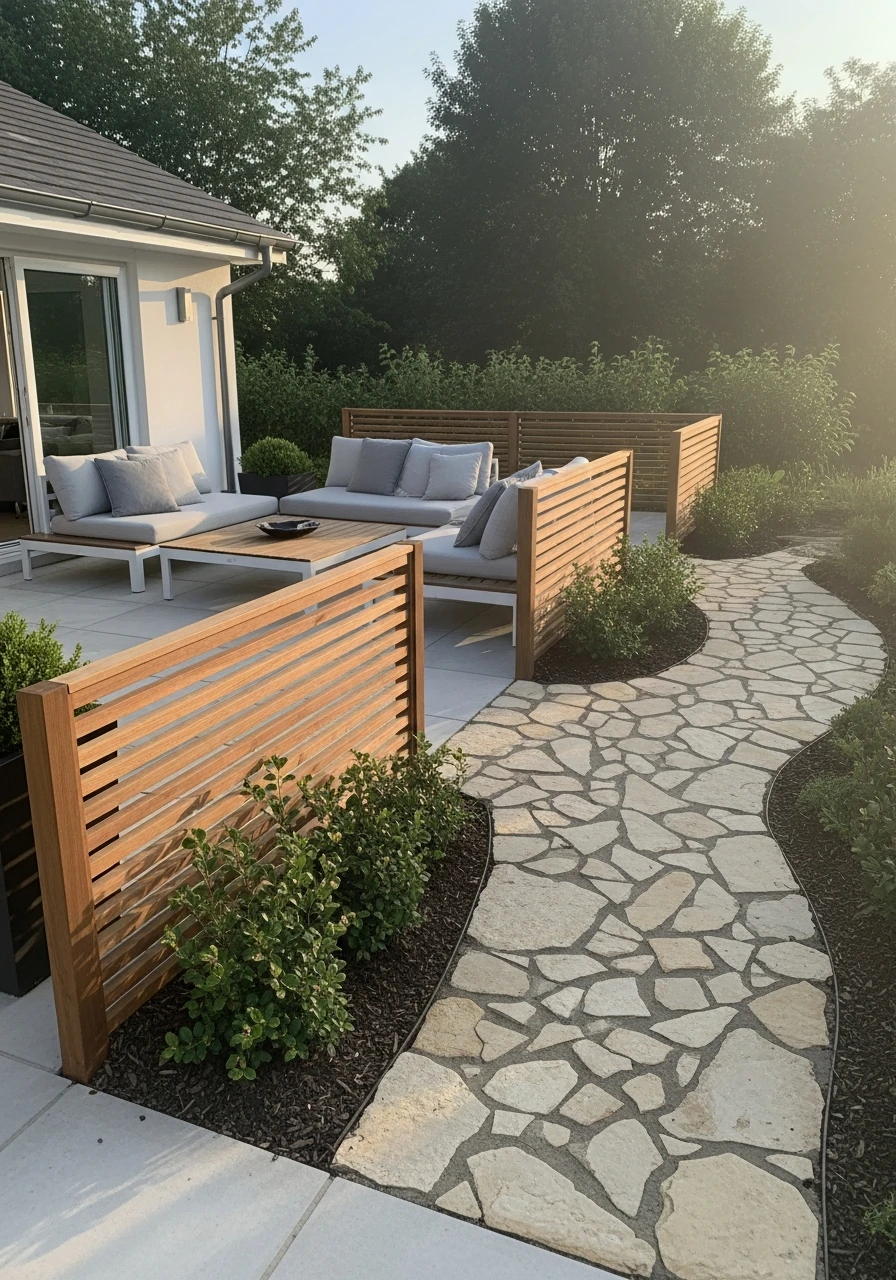
Use shorter screens to define specific zones without completely blocking sightlines. This is perfect for separating a lounge area from a garden path subtly.
- Keep them below 4 feet tall.
- Use three low screens to form a semi-circle.
Pro Tip: These short screens work well to prevent kids or pets from wandering into certain flower beds.
45. Poolside Screens
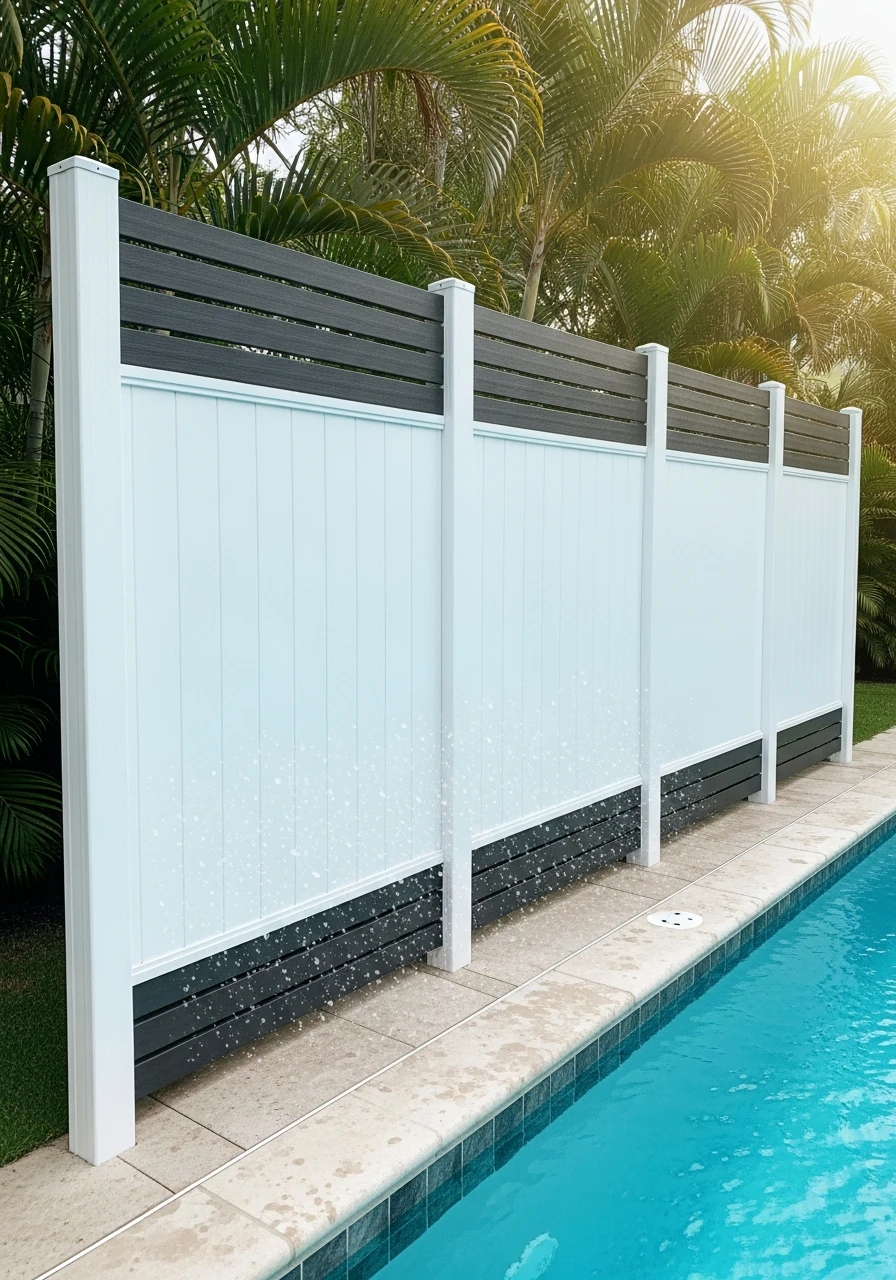
Choose moisture-resistant materials like vinyl, composite, or treated wood to create private, relaxing poolside environments. They must handle water splash and sun.
- Look for materials that dry quickly.
- Use light colors to reflect pool glare.
Pro Tip: Pool screens can also help block wind, keeping the water warmer for longer.
46. Slatted Gaps Screens
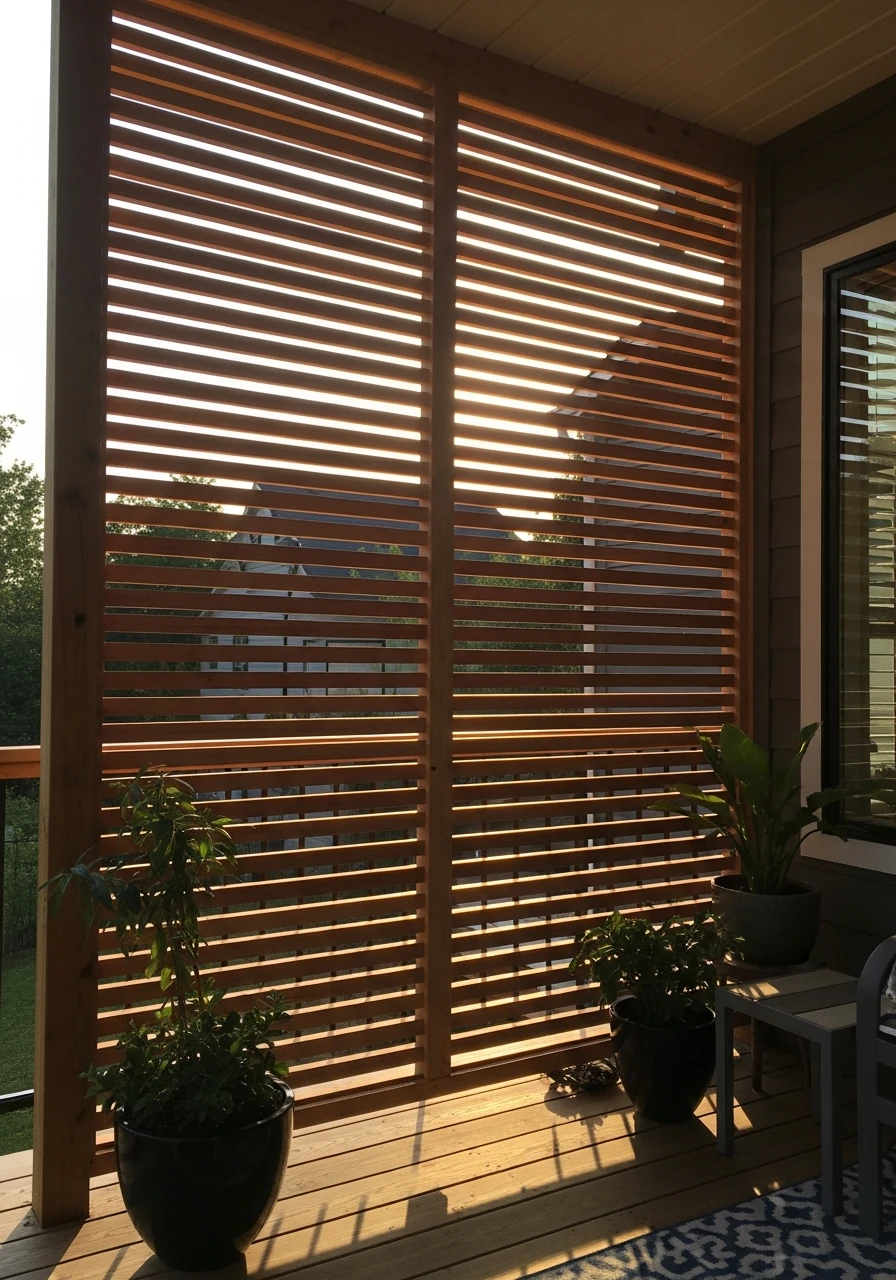
Slatted designs allow airflow and filtered views while still reducing direct visibility. You get light and air without feeling completely exposed to the neighbors.
- Gaps should be no wider than one inch.
- This style works well in breezy climates.
Pro Tip: The smaller the gap between slats, the more expensive and private the screen looks.
47. Neutral Color Screens
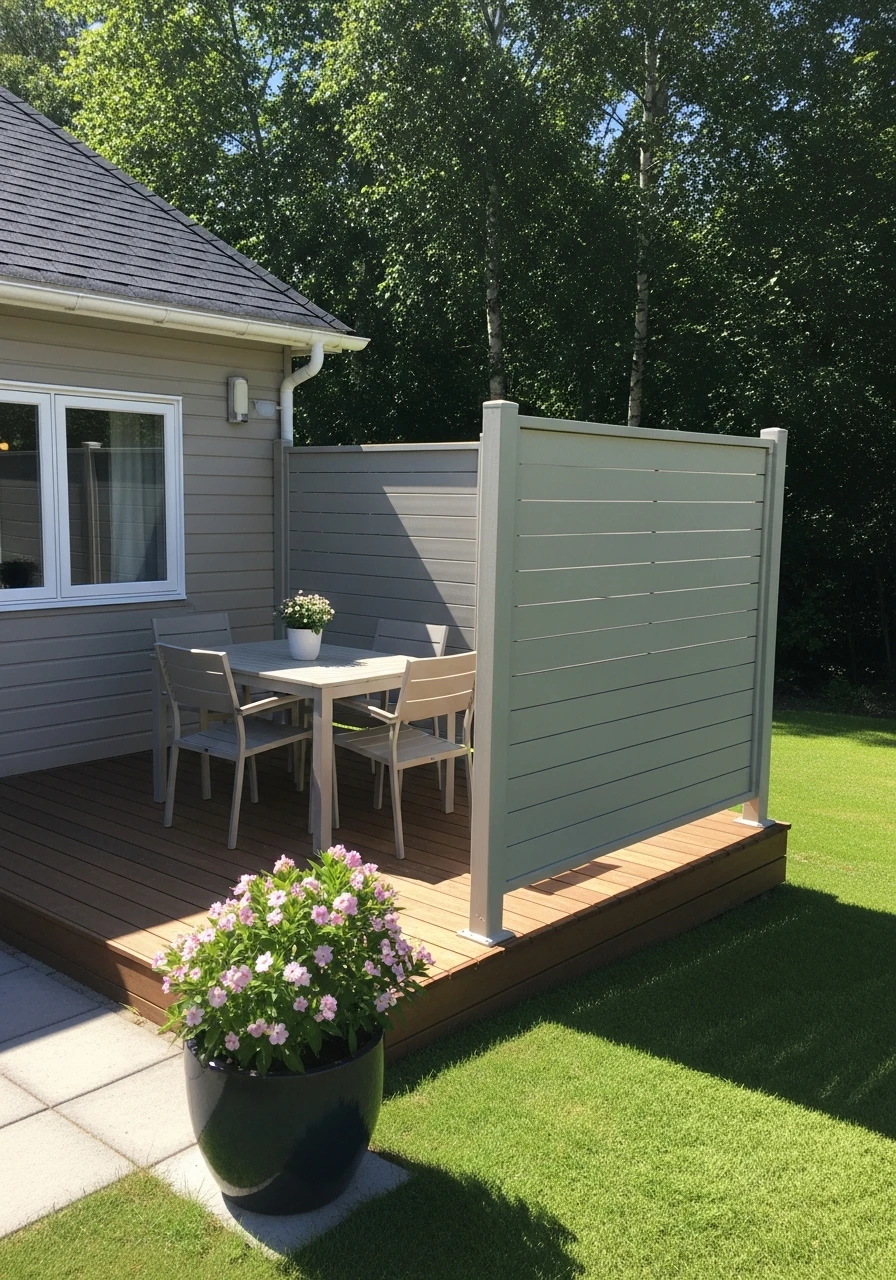
Neutral tones like gray, beige, or white blend seamlessly with most outdoor decor styles. They provide privacy without becoming the overwhelming focal point.
- Neutrals make your colorful pillows pop.
- Gray is a versatile, modern choice.
Pro Tip: Match the screen color to the trim of your house for a cohesive look.
48. Dark Modern Screens
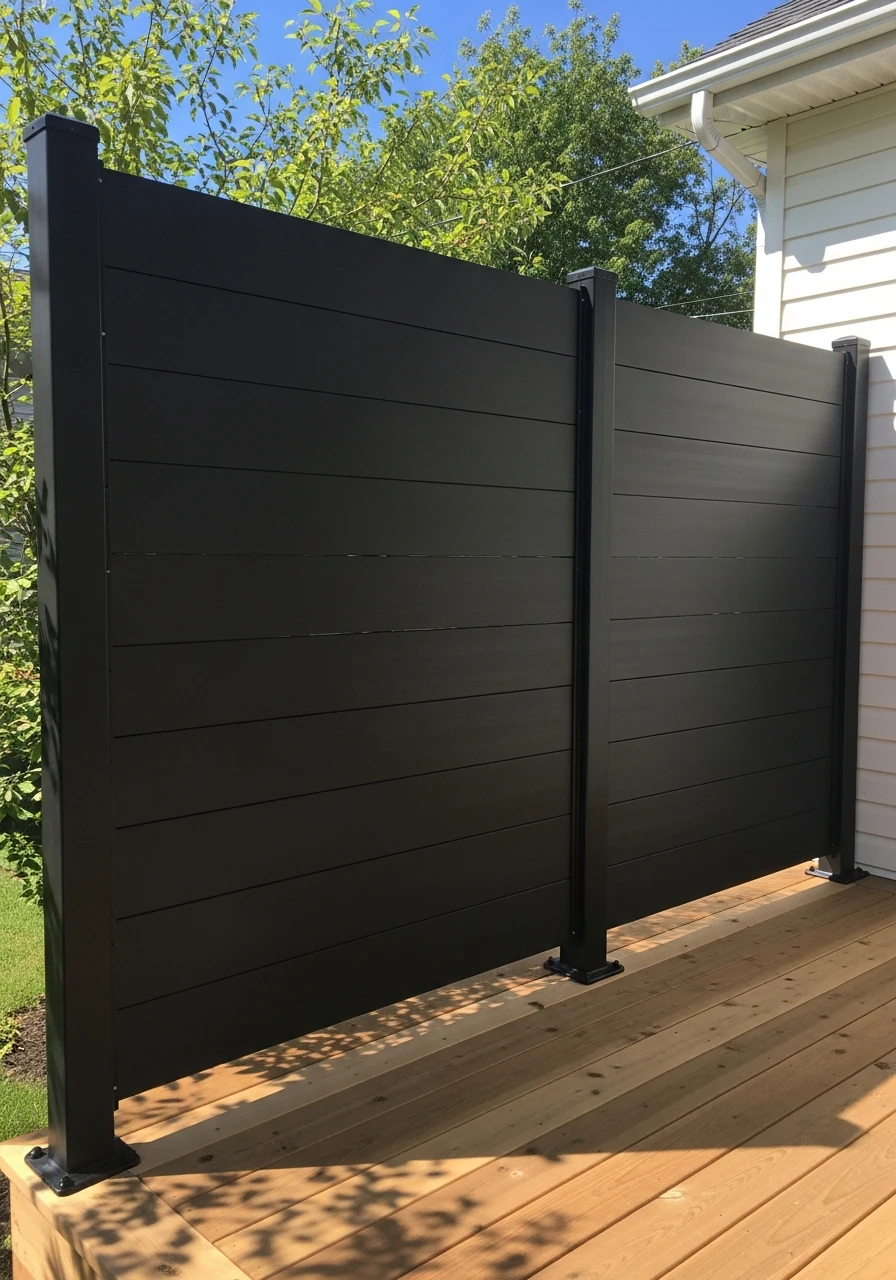
Dark finishes like black or deep charcoal create contrast and a bold, contemporary look. They also do a great job of hiding dirt and wear over time.
- Pair dark screens with bright white furniture.
- Use dark colors to make a statement.
Pro Tip: Dark colors absorb more heat, so avoid using them where you need cooling shade.
49. Focal Point Screens
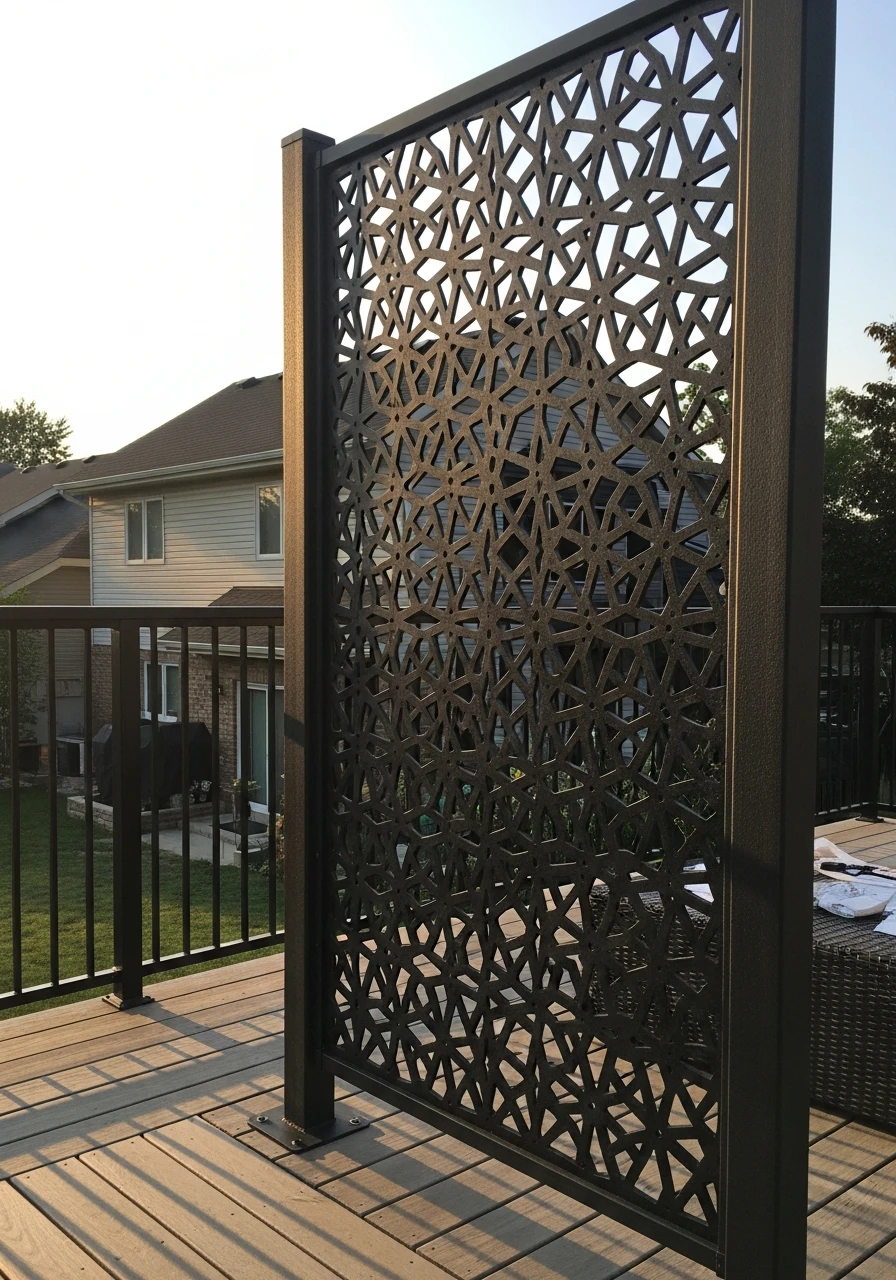
Use uniquely designed screens to serve both as privacy solutions and visual centerpieces. Look for intricate patterns or unusual textures that draw the eye.
- Choose a unique shape, like wave patterns.
- Use a single screen as a piece of yard art.
Pro Tip: A decorative screen can hide an ugly utility box while also looking intentional and stylish.
50. Custom Built Screens
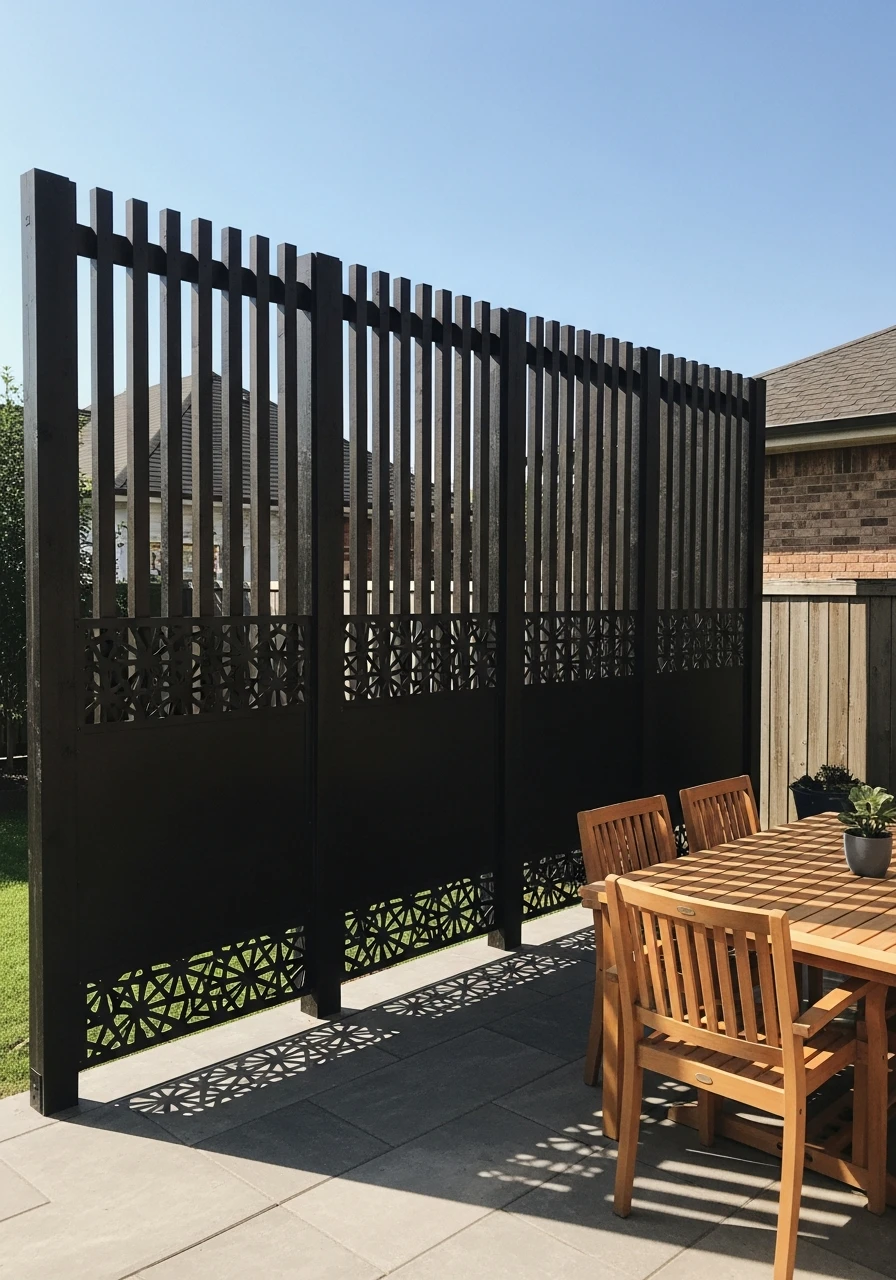
Design custom screens tailored exactly to your space and material preferences. This allows you to achieve the exact height, width, and privacy level you desire for a personalized solution.
- Plan the exact dimensions carefully.
- Hire a local carpenter for a professional finish.
Pro Tip: Custom screens should always match the materials already used on your home’s exterior.
Getting privacy outside is easier than you think.
Whether you choose a quick bamboo roll or a sleek metal panel, these outdoor privacy screen ideas prove you can create a beautiful, secluded retreat right in your own backyard.
Go grab your slice of quiet paradise!