50 Concrete Patio Ideas

This post may contain affiliate links: full affiliate disclosure.
Is your current concrete patio just a big, boring gray slab?
You want that chic outdoor living space without spending a fortune on pavers or stone.
Good news: concrete is amazing! I’ve rounded up 50 simple, budget-friendly ways to turn that plain slab into your favorite outdoor room today.
1. Oversized Slabs, Modern Look
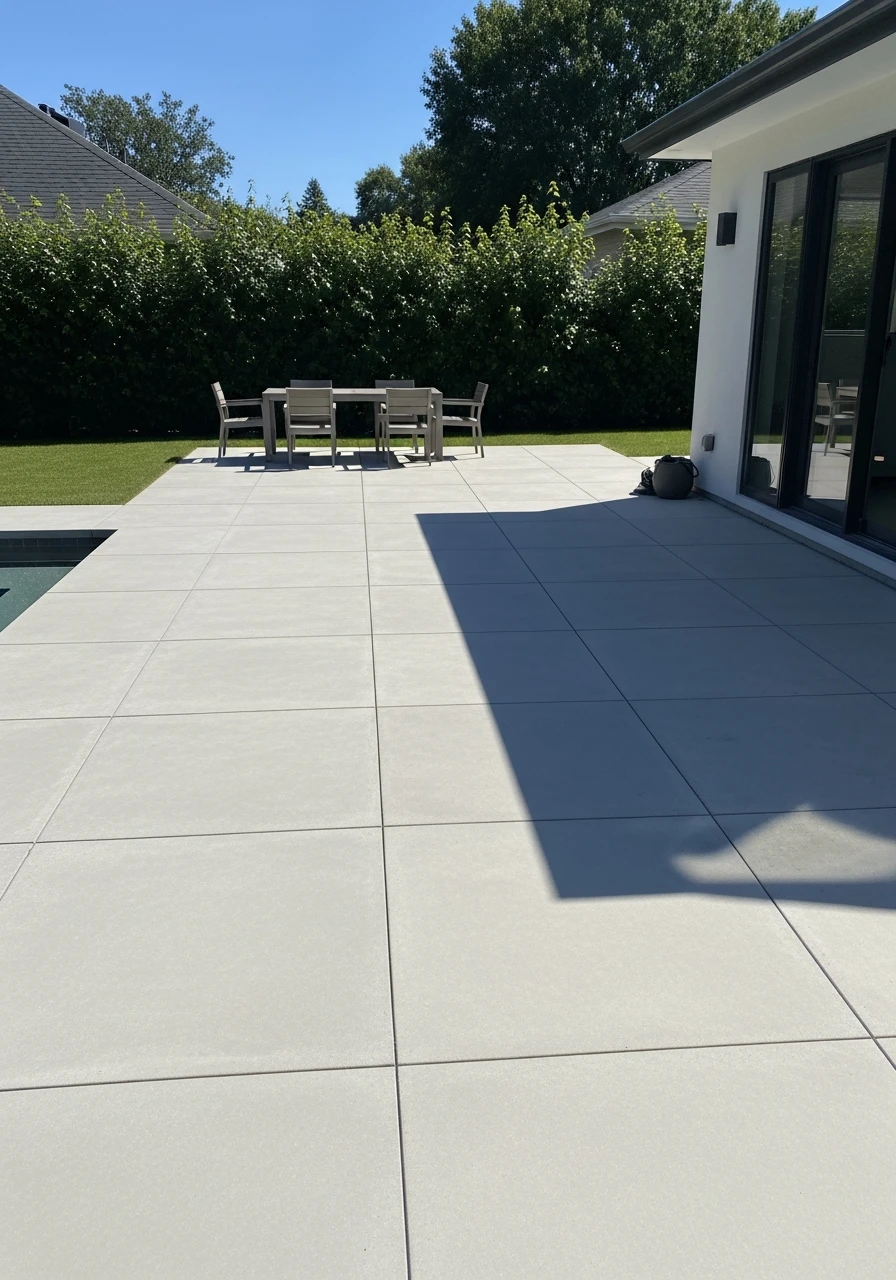
Using huge concrete slabs with almost no seams makes your patio look clean and expensive. This trick instantly gives a contemporary feel, perfect if you hate clutter and want sleek lines.
- Use minimal joint space between slabs.
- Keep the slab color a light, uniform gray.
- Ensure the surface is perfectly smooth and level.
Pro Tip: Less joint lines means less weeds to pull later!
2. Seamless Indoor-Outdoor Floor
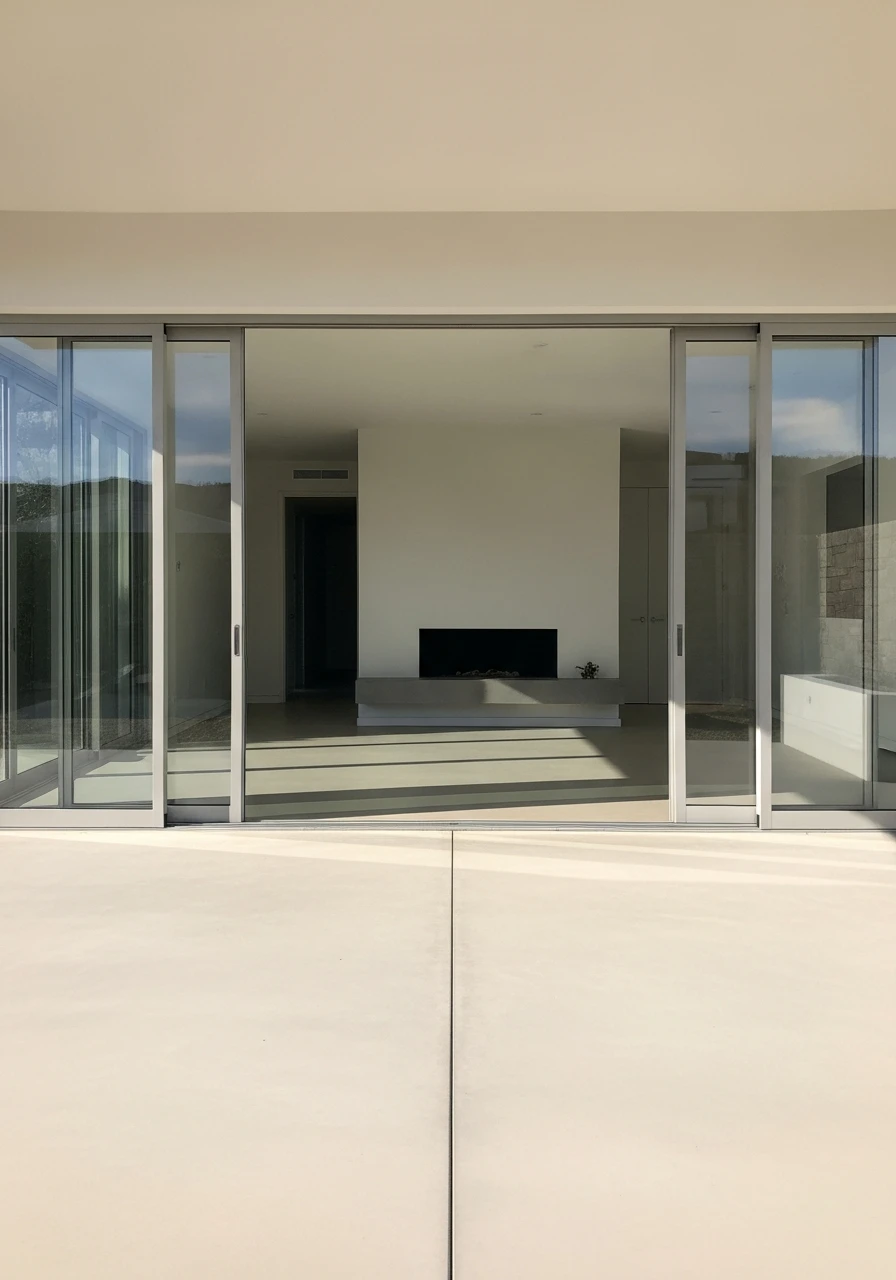
Visually connect your interior and exterior spaces by extending the same concrete color and finish outside. This makes your indoor living area feel much larger when the doors are open.
- Choose a neutral, consistent tone for both areas.
- Use minimal or hidden door thresholds.
- Match the sheen level for visual flow.
Pro Tip: This works best with large sliding or bi-fold glass doors.
3. Warm Neutral Concrete Tones
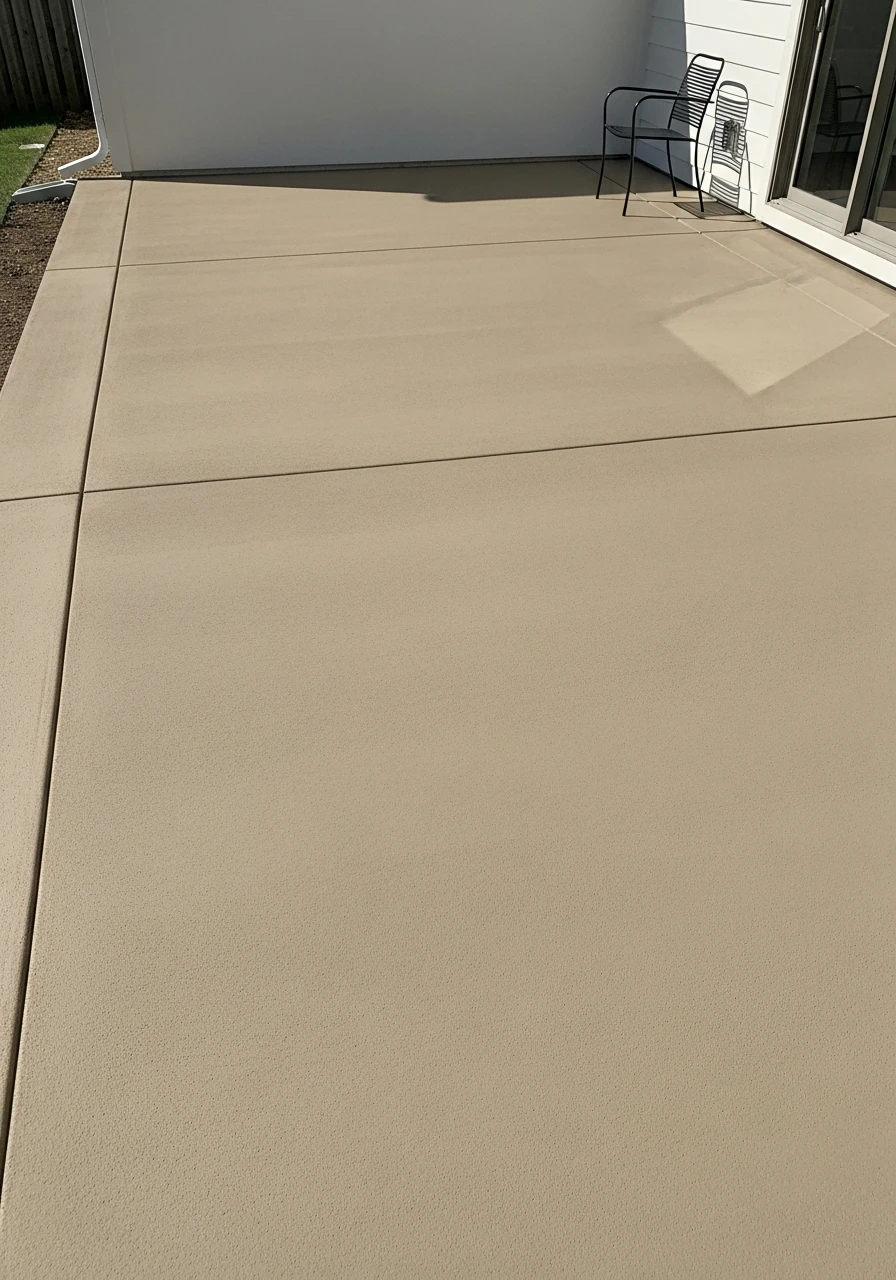
Ditch harsh gray for soft beige, taupe, or warm gray tones. Neutral concrete provides a timeless base that complements any style of outdoor furniture you choose later.
- Warm tones hide dirt better than pure white.
- Test color samples before pouring the whole area.
- Pair the warm concrete with teak wood furniture.
Pro Tip: A warm base makes bright accent pillows really pop!
4. Sleek Hidden Drainage
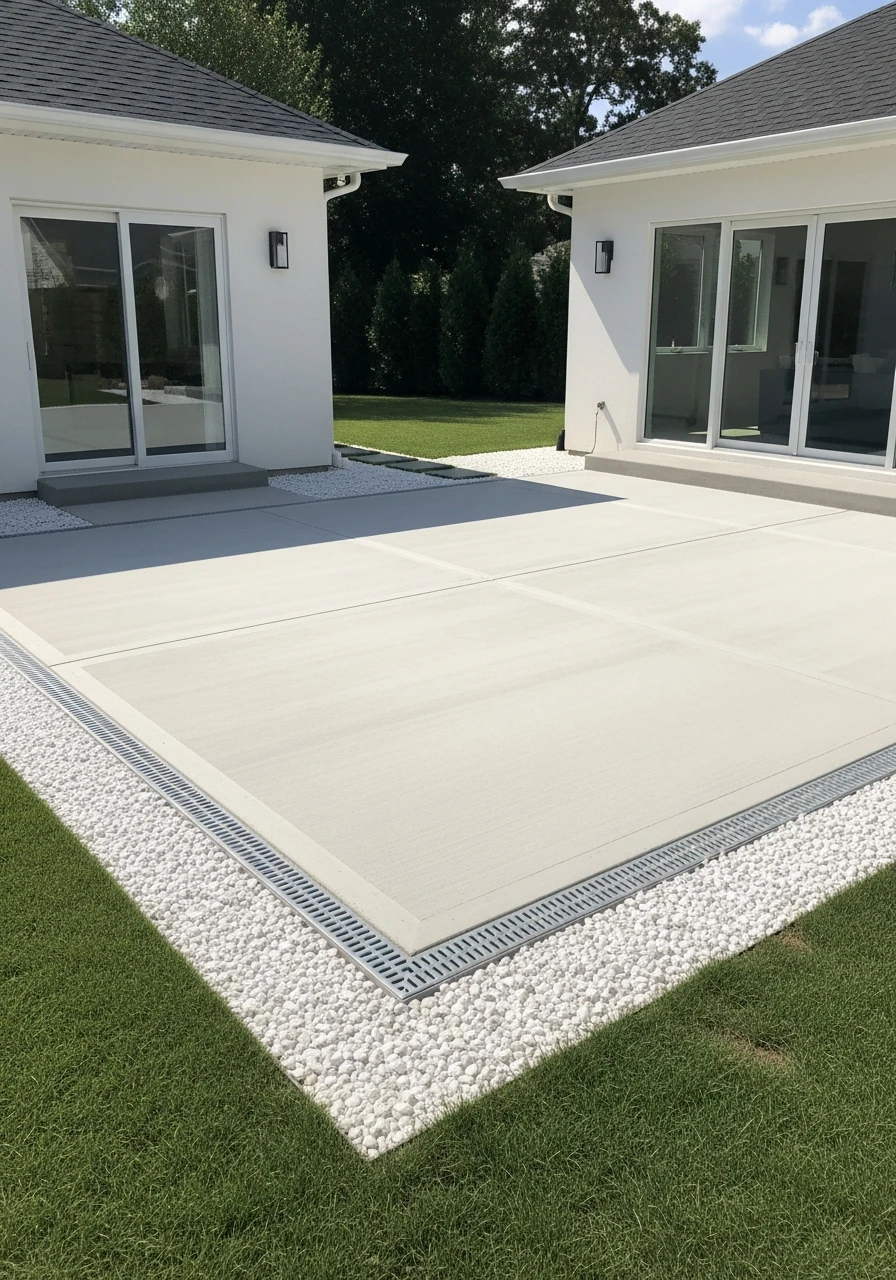
Design a flat concrete patio but hide the drainage channels along the edges or under decorative gravel. This keeps the sleek, uncluttered look while making sure water doesn’t pool.
- Use slim trench drains near the house foundation.
- Ensure a slight slope away from the structure.
- Cover drainage channels with decorative grates.
Pro Tip: Hidden drainage is key to maintaining that high-end, minimalist aesthetic.
5. Concrete Under A Pergola
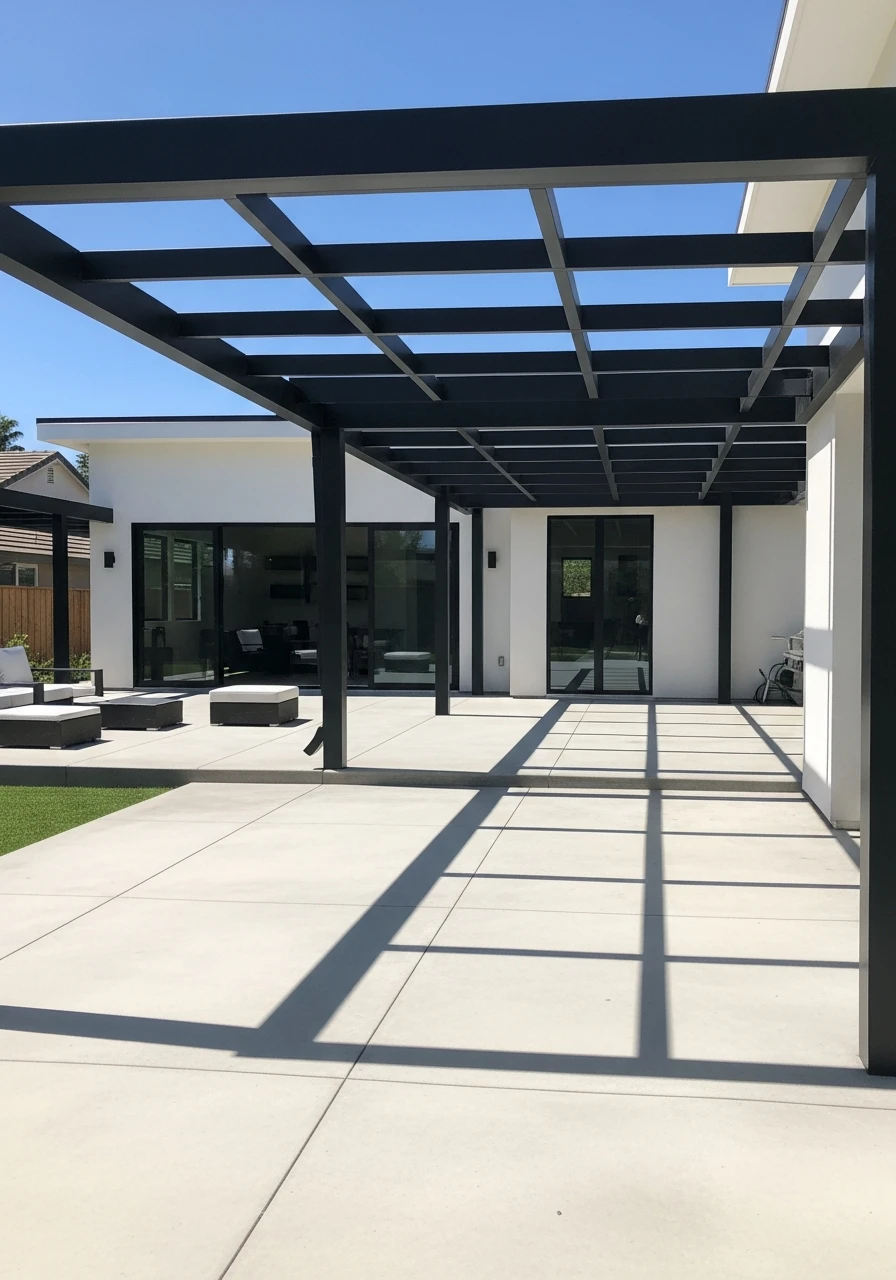
Pairing a clean concrete patio with a simple, modern pergola structure adds shade and definition. The structure complements the clean lines of the concrete without feeling fussy or heavy.
- Use metal or simple cedar for the pergola frame.
- Keep the pergola lines straight and minimal.
- Anchor the pergola directly into the concrete slab.
Pro Tip: Add string lights to the pergola for instant evening magic.
6. Saw-Cut Grid Patterns
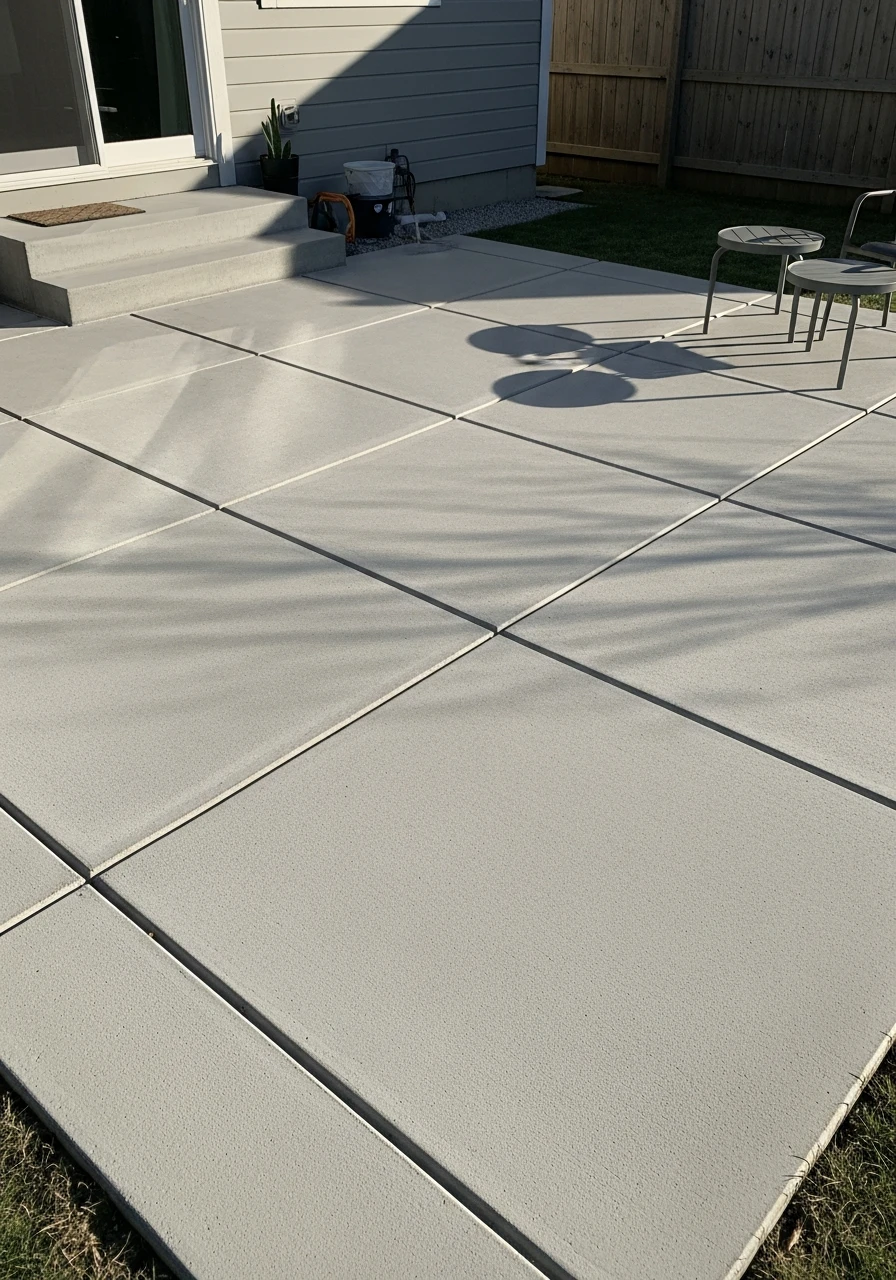
If you have a plain slab, ask your contractor to cut linear or grid patterns into the surface. This adds subtle visual texture and breaks up the monotony, mimicking large tiles.
- A simple square grid looks very contemporary.
- Use a dark joint sealant to emphasize the lines.
- This is an affordable way to add architectural detail.
Pro Tip: Saw-cut lines are great for hiding inevitable cracks later on.
7. Polished Concrete Finish
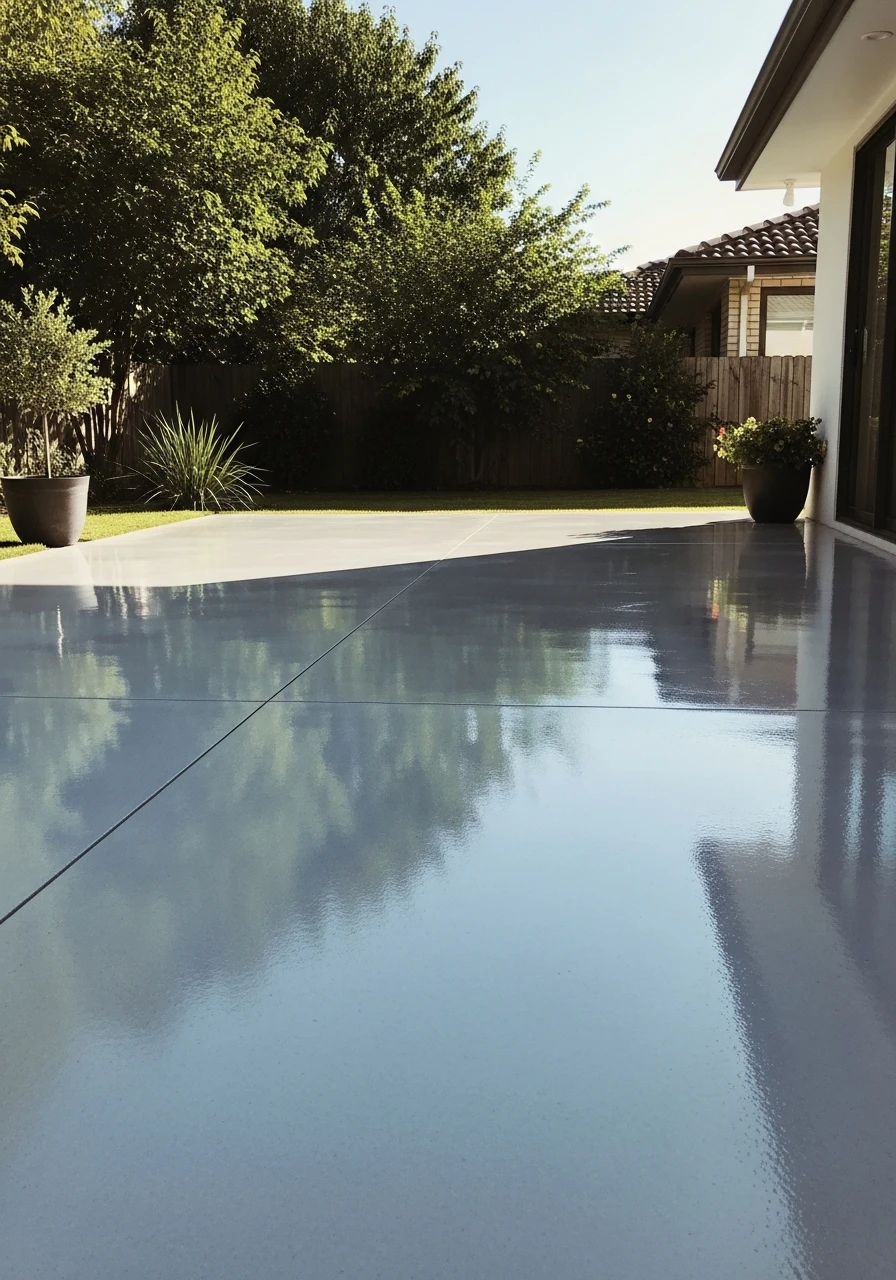
Polish the concrete surface until it shines for a smooth, refined look. This finish reflects light beautifully, making your outdoor space feel brighter and more sophisticated.
- Polishing requires professional equipment.
- The polished surface is very easy to clean.
- It gives the concrete a depth that flat finishes lack.
Pro Tip: A high-gloss polish can make a small patio look much larger.
8. Minimal Furniture Styling
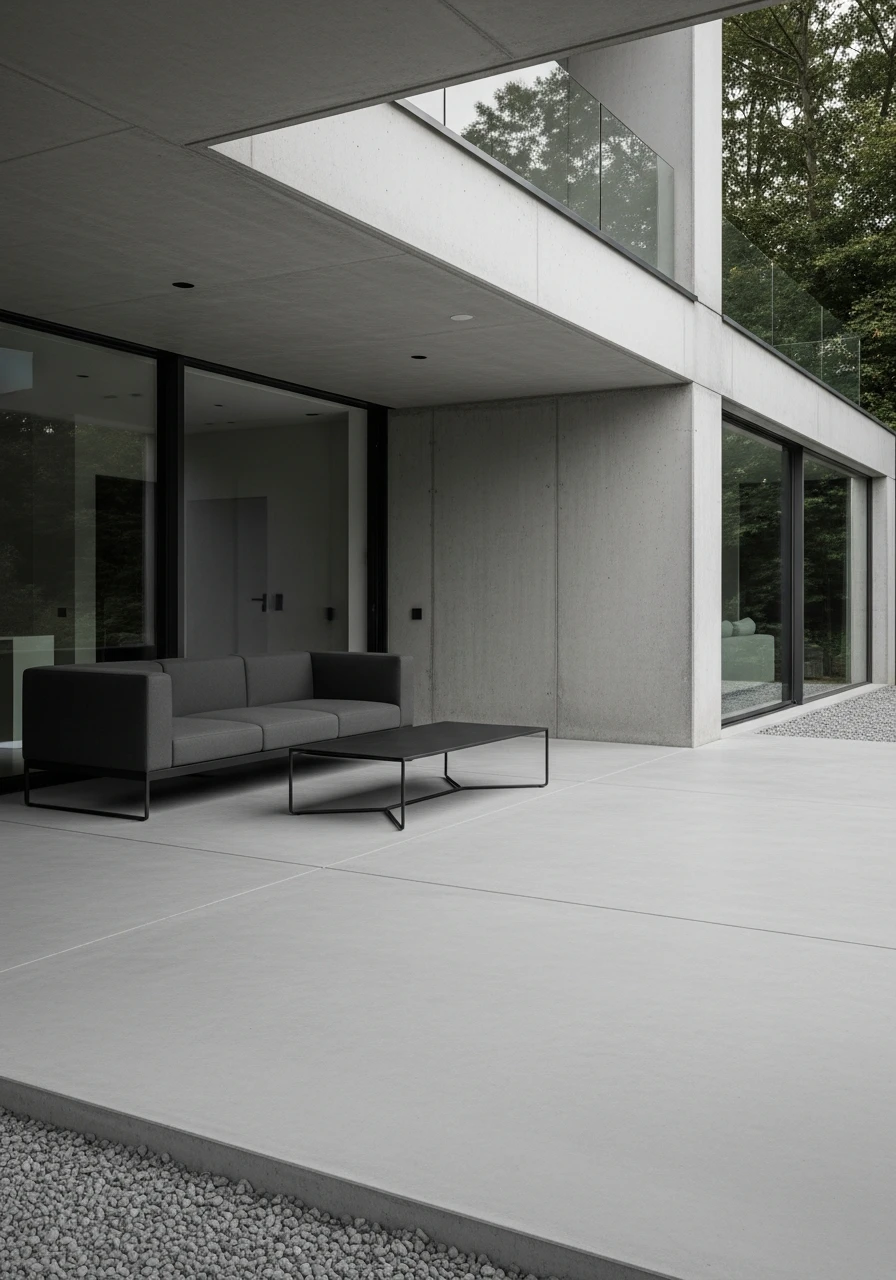
Keep the focus on the sleek gray concrete by using low-profile, minimal outdoor furniture. Fewer pieces mean cleaner lines and a greater emphasis on openness.
- Choose furniture with thin metal frames.
- Use neutral cushions (white, black, or navy).
- Avoid overly bulky or ornate pieces.
Pro Tip: A few well-chosen, expensive-looking pieces beat a lot of cheap ones.
9. Integrated LED Edge Lighting
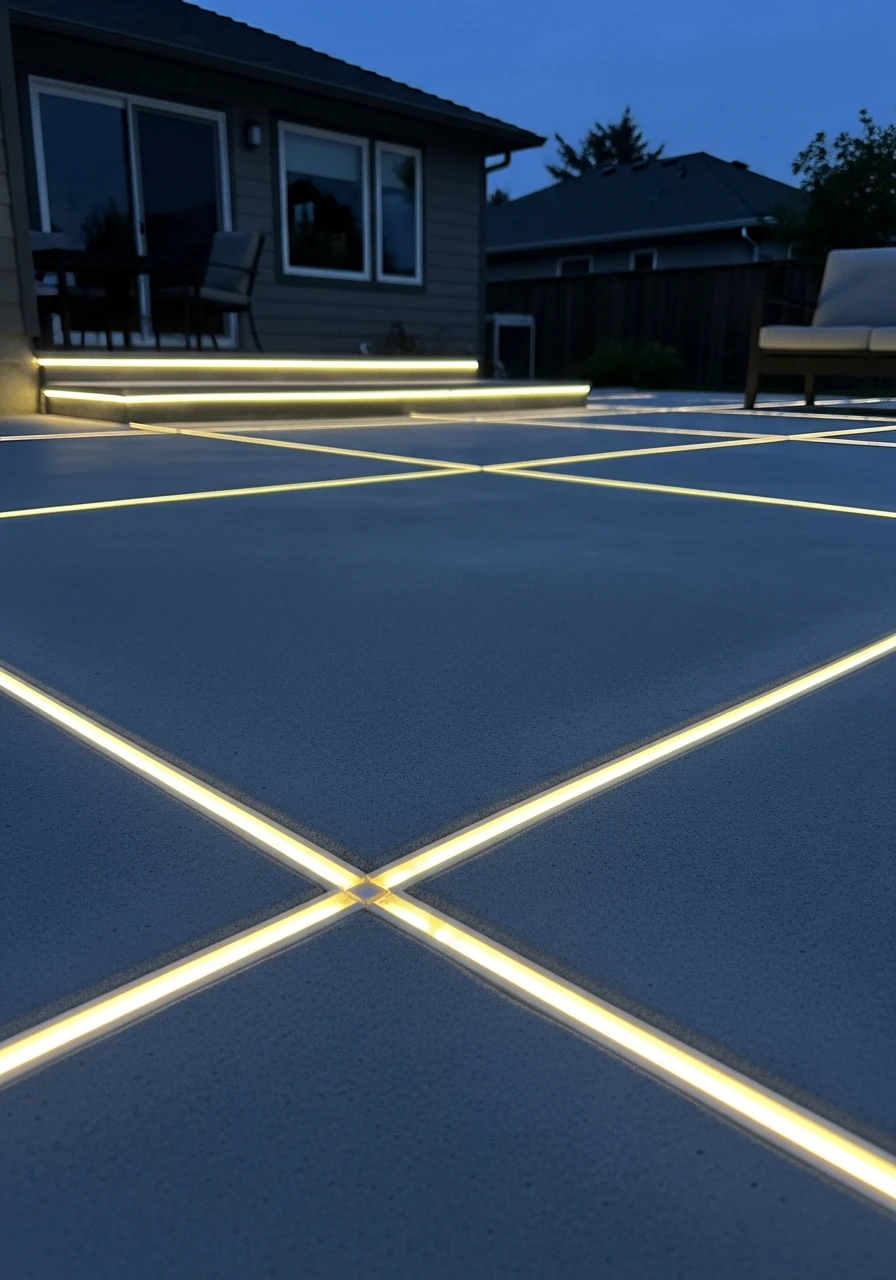
Install thin LED strip lighting along the edges or joints of the concrete slab. This highlights the patio’s shape, improves safety, and adds a stunning nighttime glow.
- Use warm white LEDs (3000K or less).
- Install lights that are rated for outdoor use.
- This feature looks best on patios with clean, straight edges.
Pro Tip: LED lighting instantly makes any patio feel like a resort lounge.
10. Invisible Expansion Joints
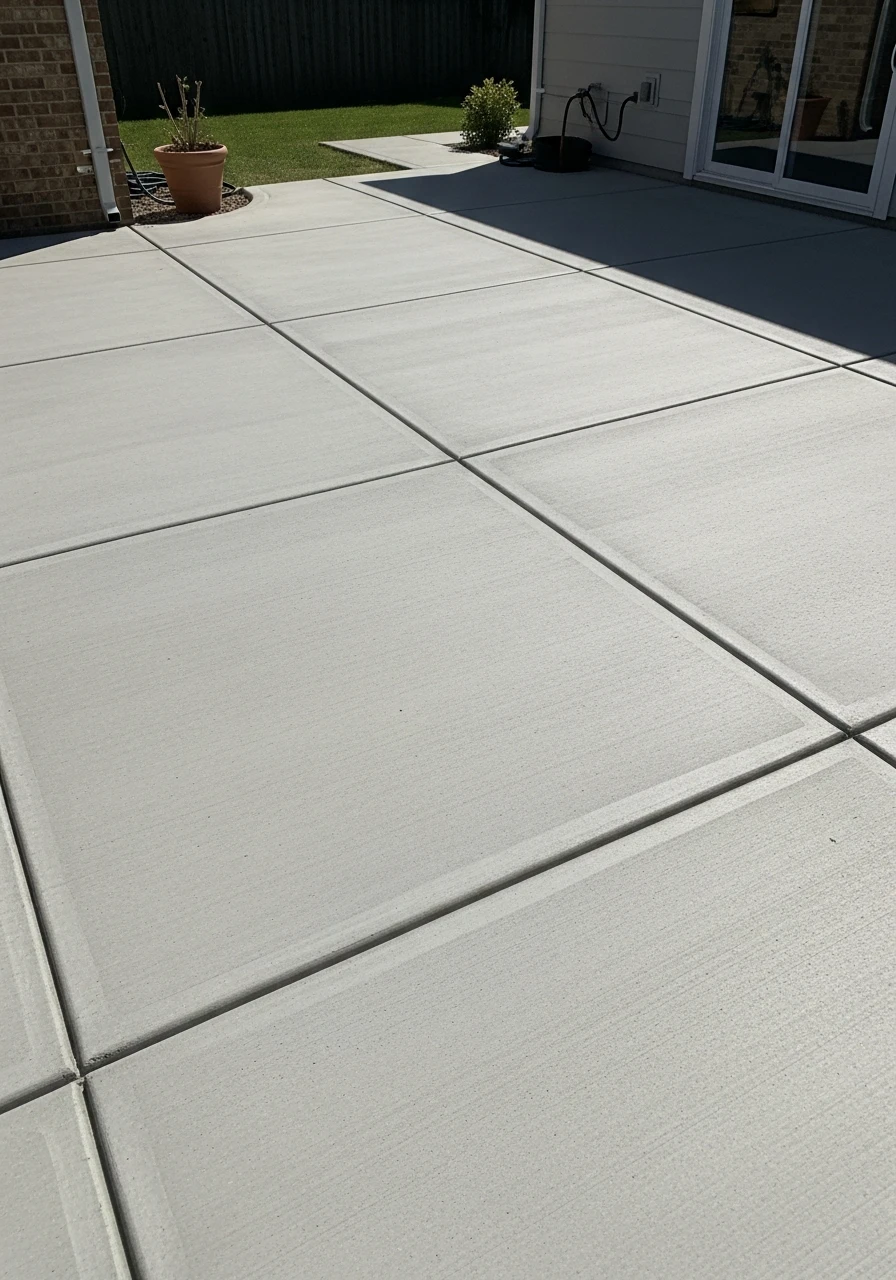
Expansion joints are necessary for concrete, but they can ruin the look if they stand out. Ask your contractor to place them where they blend into the overall design, perhaps integrated into a saw-cut pattern.
- Match the joint sealant color to the concrete.
- Use thin, subtle joint materials.
- Keep joints away from the main focal points.
Pro Tip: Hiding the joints makes the whole patio look like one seamless, custom piece.
11. Stamped Stone Look
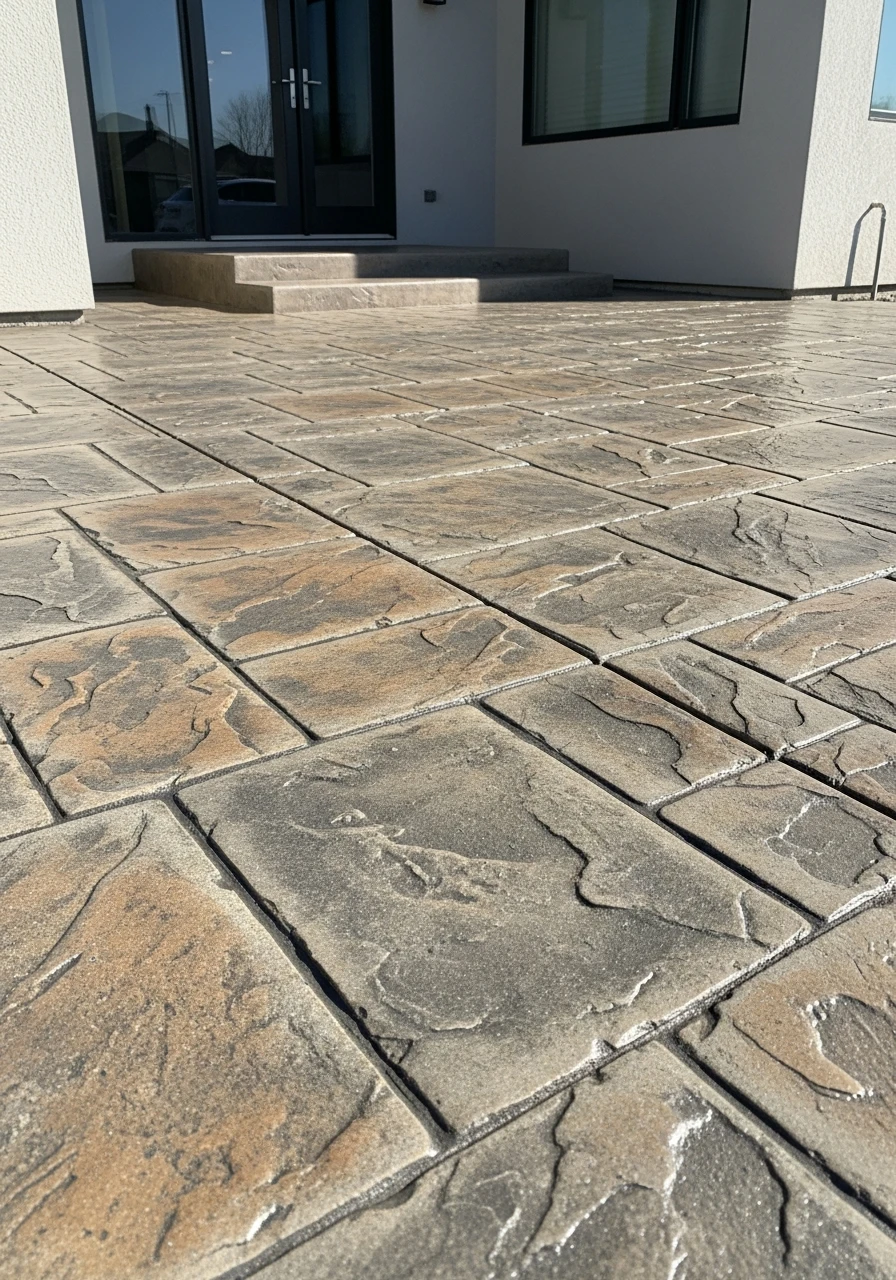
If you love the look of natural stone or tile but need durability and budget savings, use stamped concrete. Modern stamping offers realistic textures and patterns at a fraction of the cost.
- Choose large flagstone or slate patterns.
- Use natural earth tones for the stain.
- Apply a good sealant to protect the pattern.
Pro Tip: Stamped concrete requires very little maintenance compared to real pavers.
12. Warm Stained Earth Tones
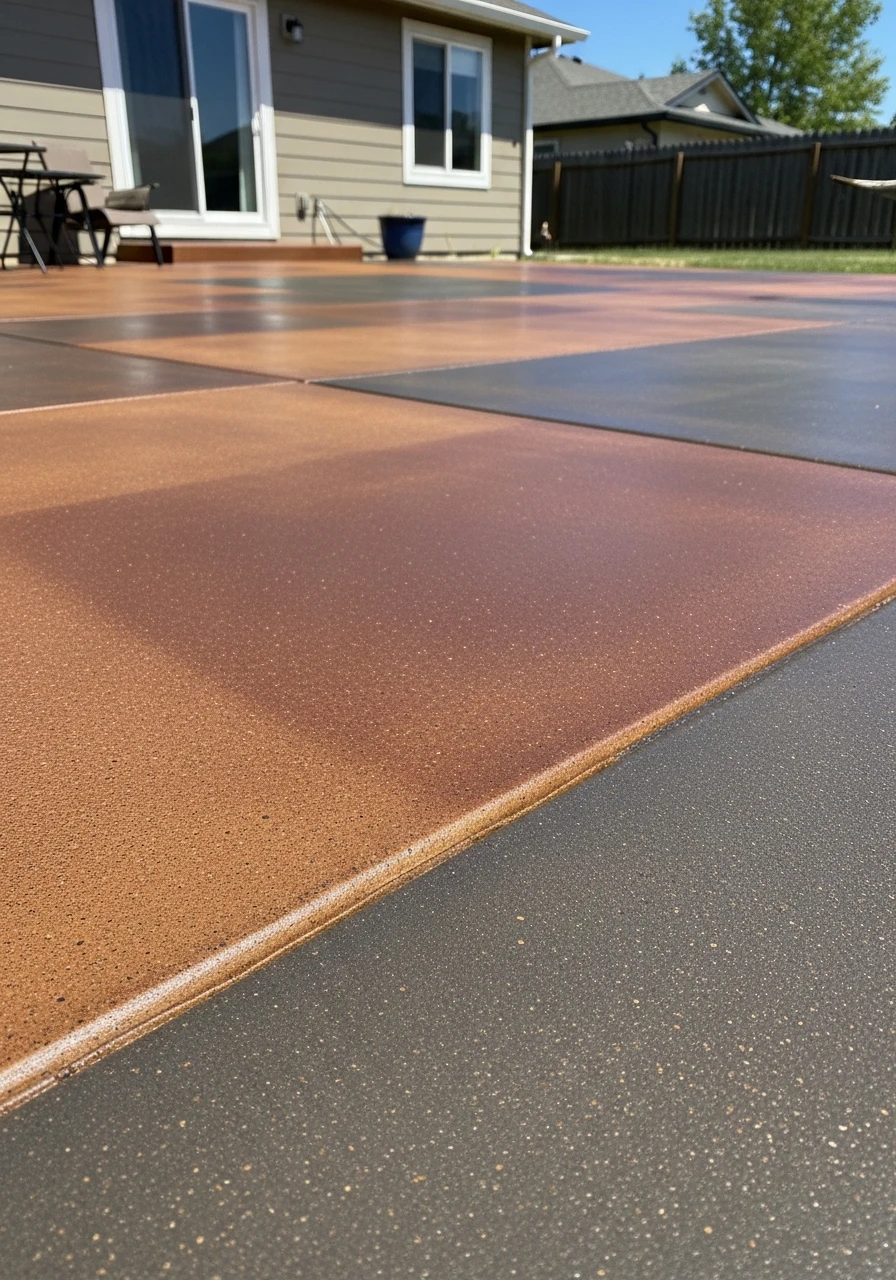
Apply concrete stain in rich, earthy shades like terracotta, deep brown, or warm charcoal. Staining adds character and depth while retaining the durable, weather-resistant surface of the concrete.
- Staining is an easy DIY project for existing slabs.
- Clean and prep the surface thoroughly first.
- A darker stain provides excellent contrast for white furniture.
Pro Tip: Use acid stain for a natural, mottled look that hides imperfections.
13. Exposed Aggregate Texture
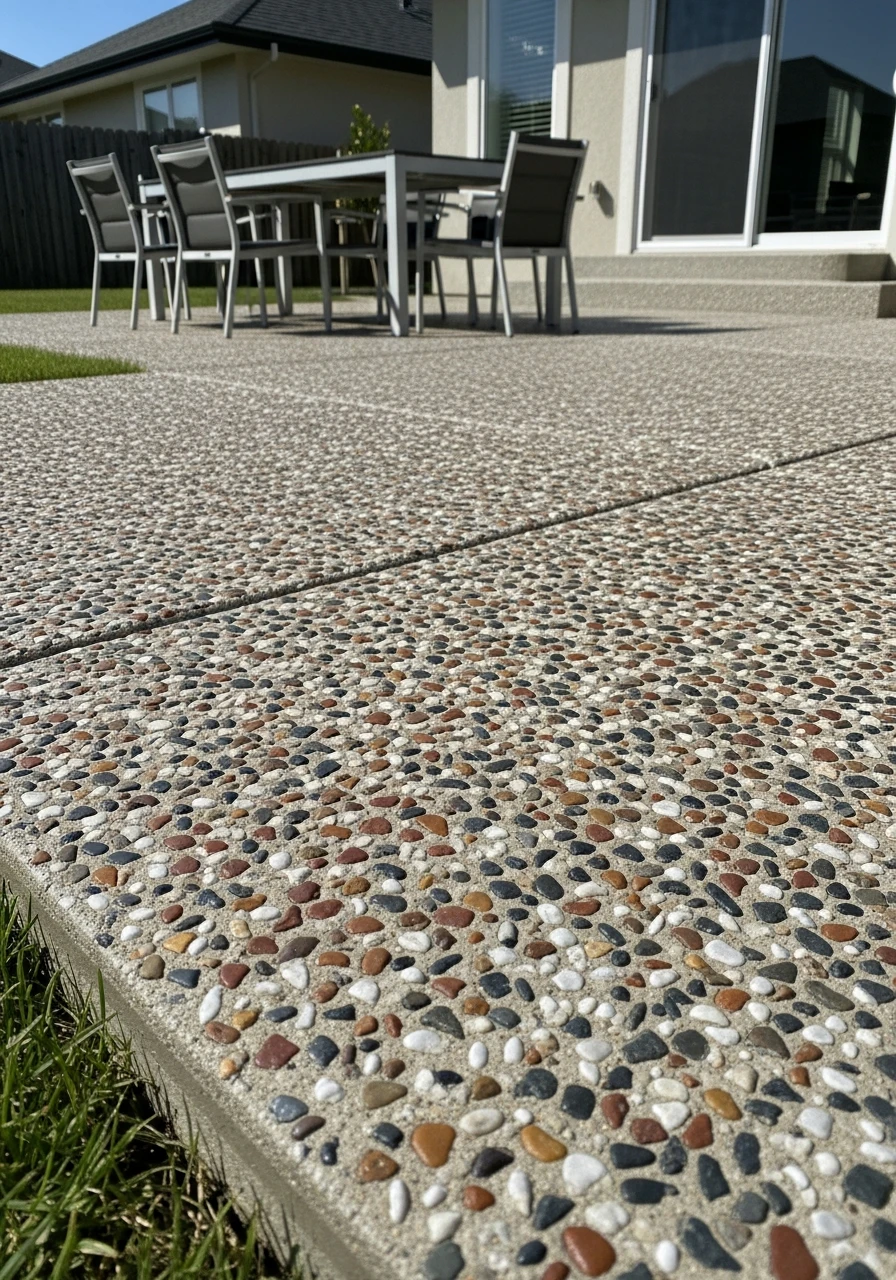
Exposed aggregate means revealing small, colorful stones embedded within the concrete surface. This adds texture, provides great slip resistance, and gives a natural, speckled appearance.
- Choose aggregate colors that match your house trim.
- This finish is incredibly durable.
- It provides a great texture underfoot.
Pro Tip: Exposed aggregate looks fantastic around pool areas for extra grip.
14. Bold Geometric Patterns
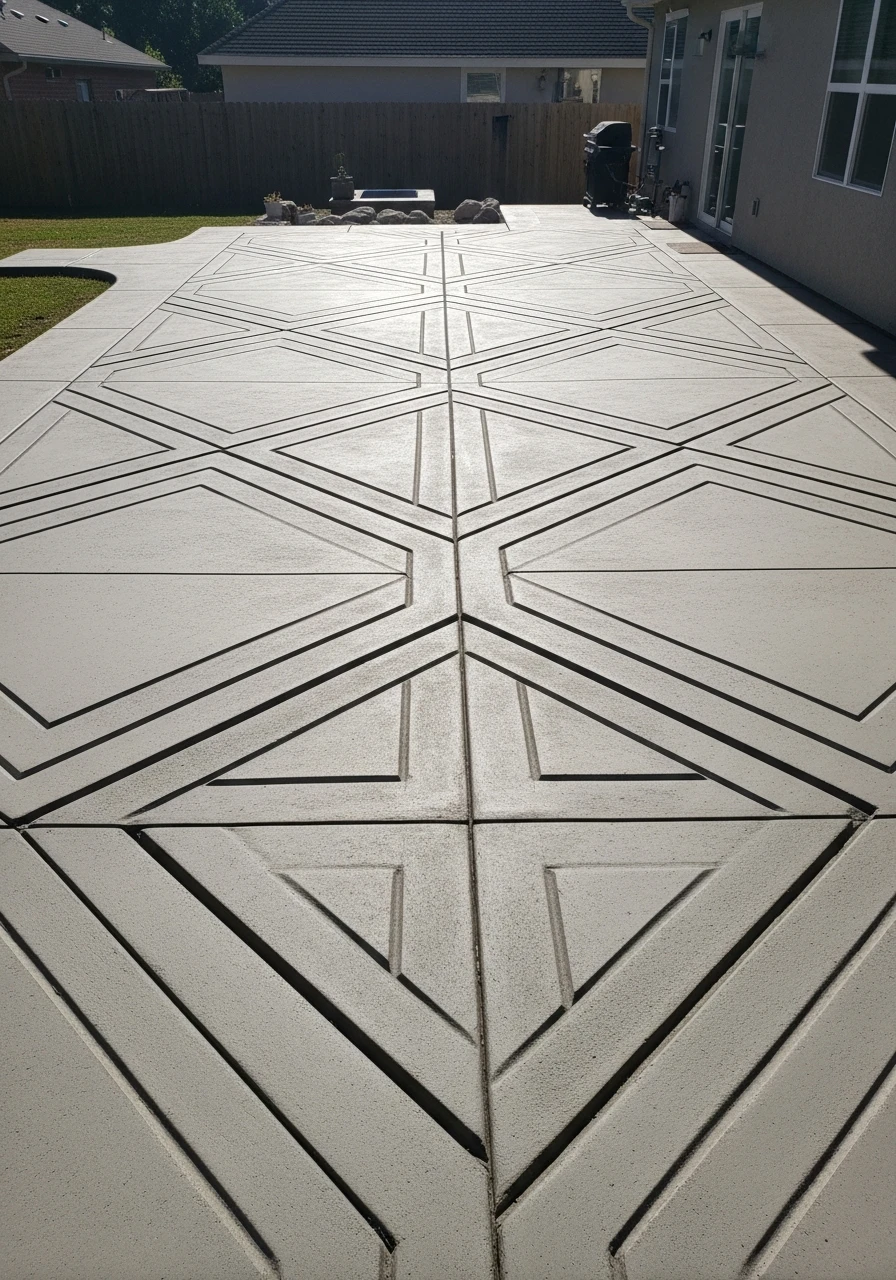
Use saw-cutting techniques to create striking geometric patterns—think diamonds, large chevrons, or intersecting lines. This creates visual depth and makes a massive modern statement.
- Map out the design carefully before cutting.
- Keep the furniture simple so the floor is the star.
- Use contrasting colors in the joints for impact.
Pro Tip: Geometric floors work best in totally flat, uncluttered spaces.
15. Decorative Tile Inlays
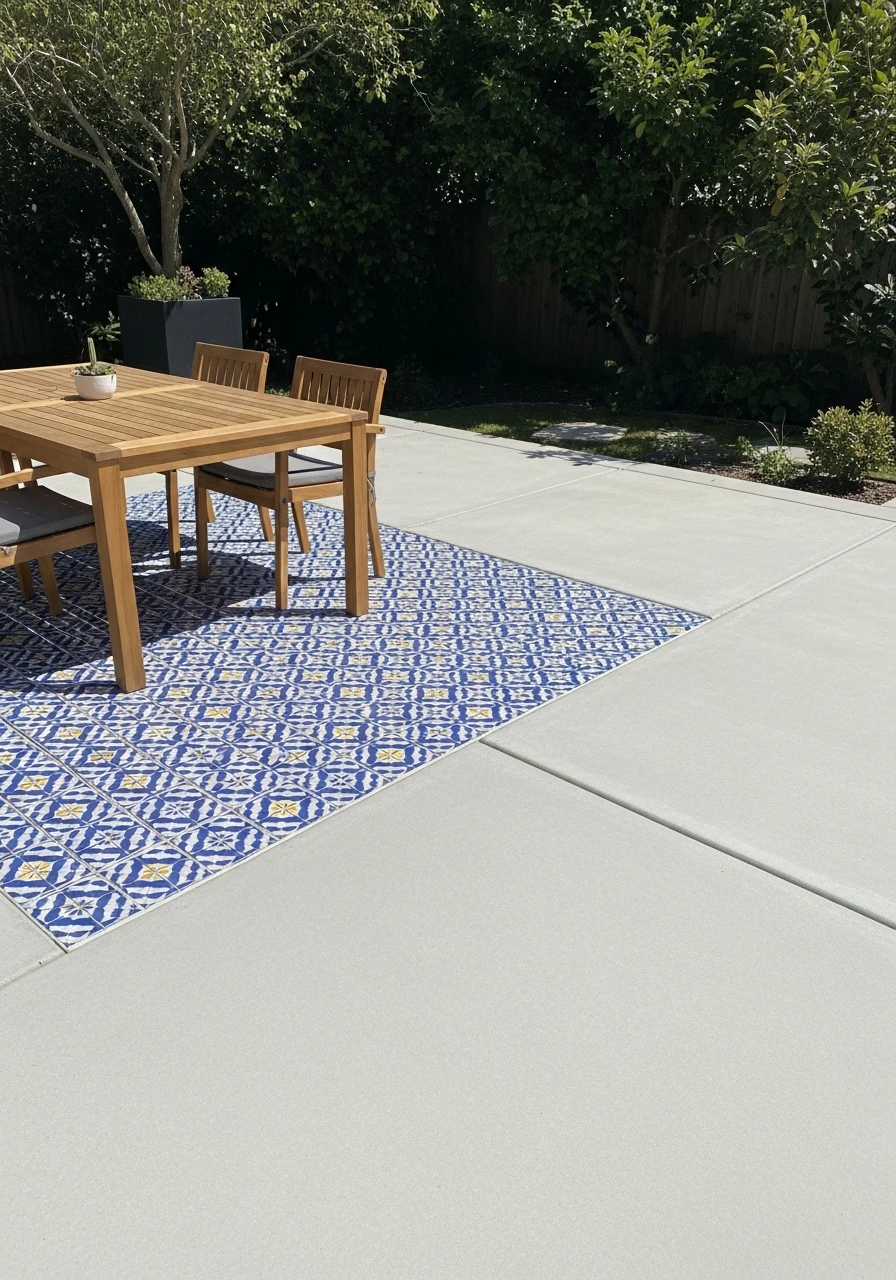
Add small sections of decorative tile directly into the concrete slab. This is a brilliant way to define seating or dining zones and introduce a pop of color or pattern without tiling the whole area.
- Use durable, outdoor-rated porcelain tiles.
- Place tile inlays under a dining table centerpiece.
- Choose bold Moroccan or Spanish-style patterns.
Pro Tip: Tile inlays make your patio look completely custom and bespoke.
16. Two-Tone Layouts
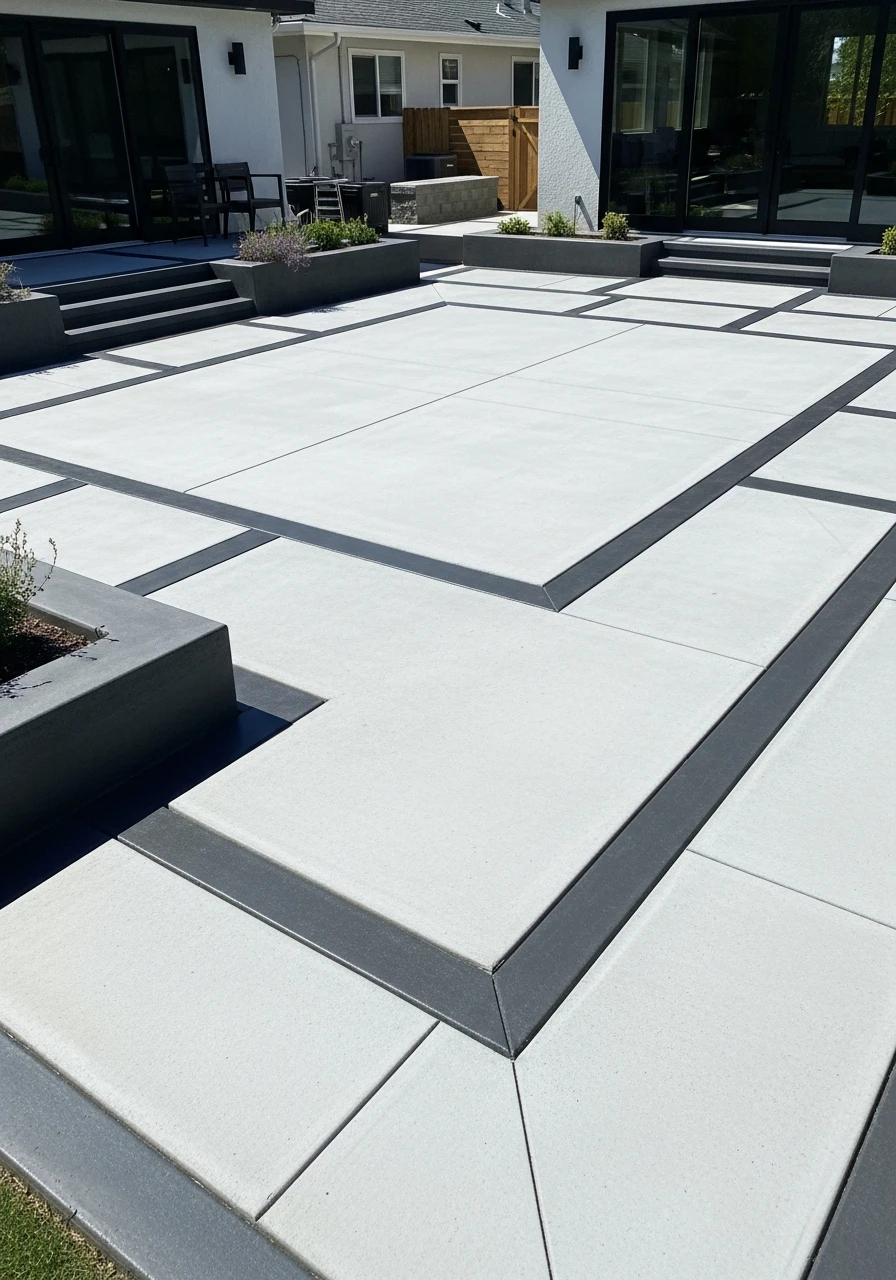
Use two different concrete colors—maybe a dark charcoal gray border around a lighter gray center. This defines walkways, edges, or central gathering spots, adding immediate structure.
- The contrast doesn’t need to be huge to work.
- Use the darker tone for high-traffic paths.
- This mimics the look of expensive stone banding.
Pro Tip: Using two tones makes a basic square patio look architecturally interesting.
17. Concrete Mosaic Details
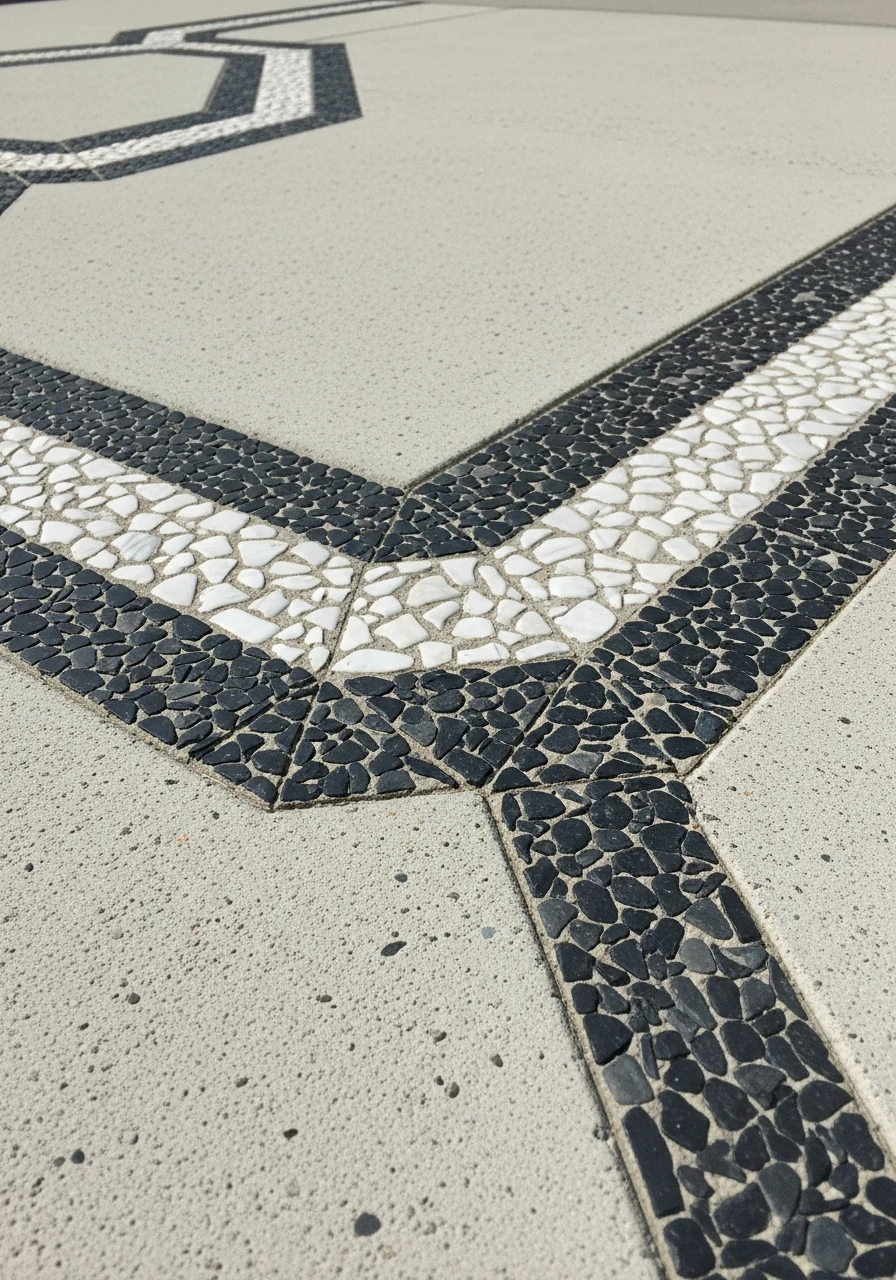
Create artistic flair by designing select areas with small, mosaic-style concrete sections. This involves using very small, contrasting pieces of concrete or aggregate for texture.
- Focus this detail on a small area, like under a planter.
- Use different colored aggregates for the ‘mosaic’ pieces.
- This is a unique, high-craft look.
Pro Tip: Keep the mosaic design abstract so it doesn’t look cheesy.
18. Gradient Stained Effect
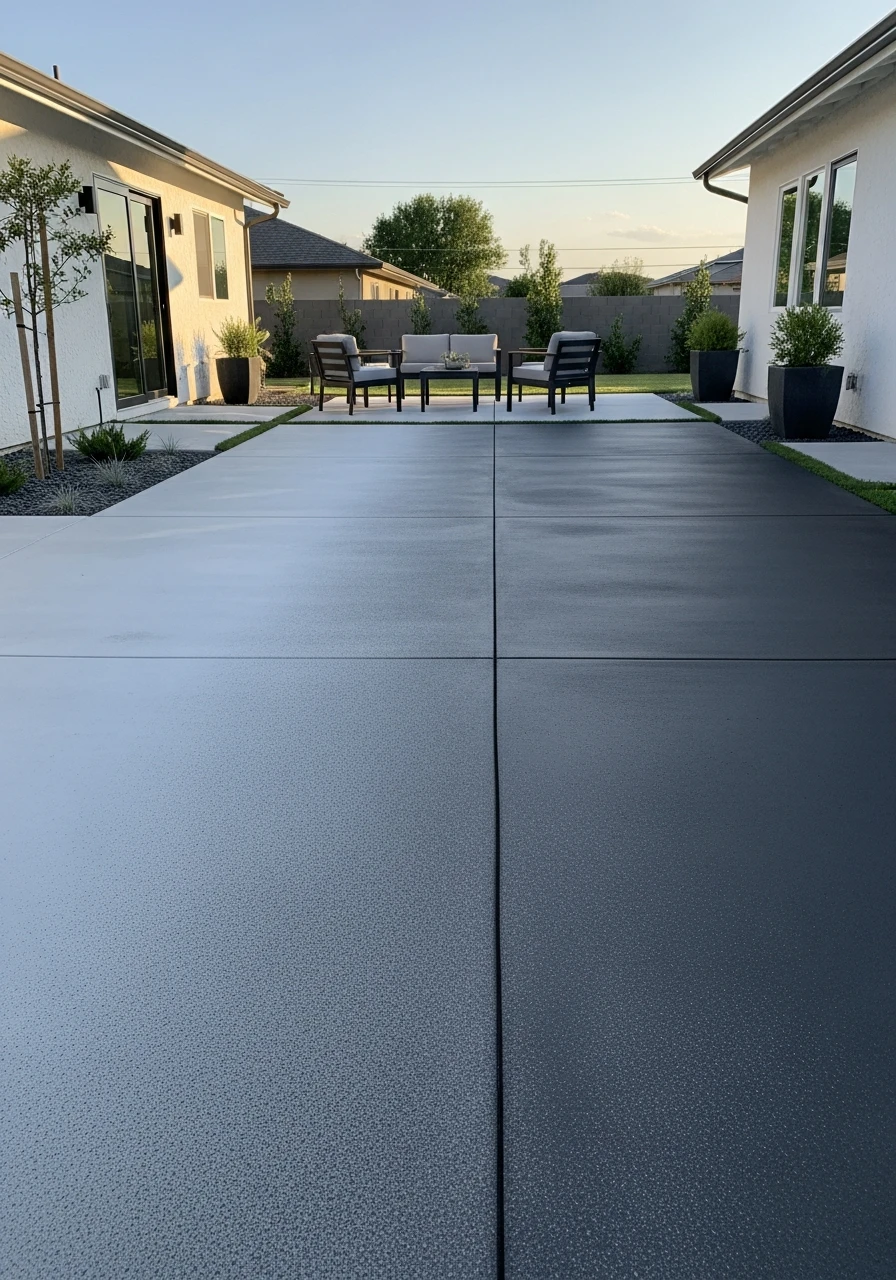
Apply stain in a way that creates a subtle color transition across the patio surface. Going from light gray to dark charcoal, for example, adds dimension and makes the surface look custom-designed.
- This technique requires careful application and blending.
- Use the lighter end near the house for visual connection.
- Seal the surface well to preserve the gradient.
Pro Tip: A gradient effect softens the transition between zones on a large patio.
19. Textured Broom Finish
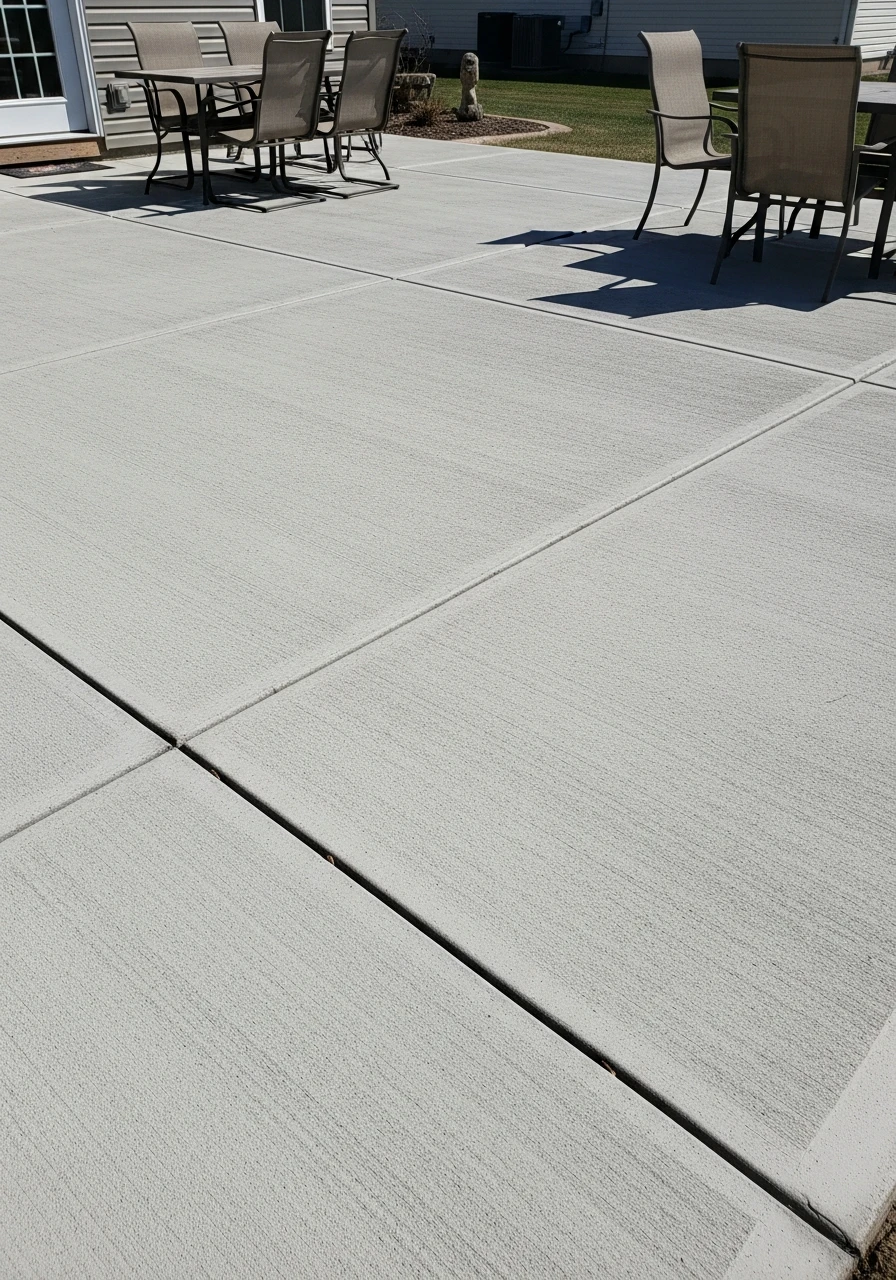
A simple broom finish gives the concrete a slightly textured surface. This is a classic, budget-friendly option that improves traction and works perfectly in casual outdoor settings.
- The texture is subtle but effective for grip.
- It hides small imperfections easily.
- Use a slightly coarser broom for high-traffic areas.
Pro Tip: The broom finish is the default for a reason—it’s practical and simple.
20. Etched Accent Designs
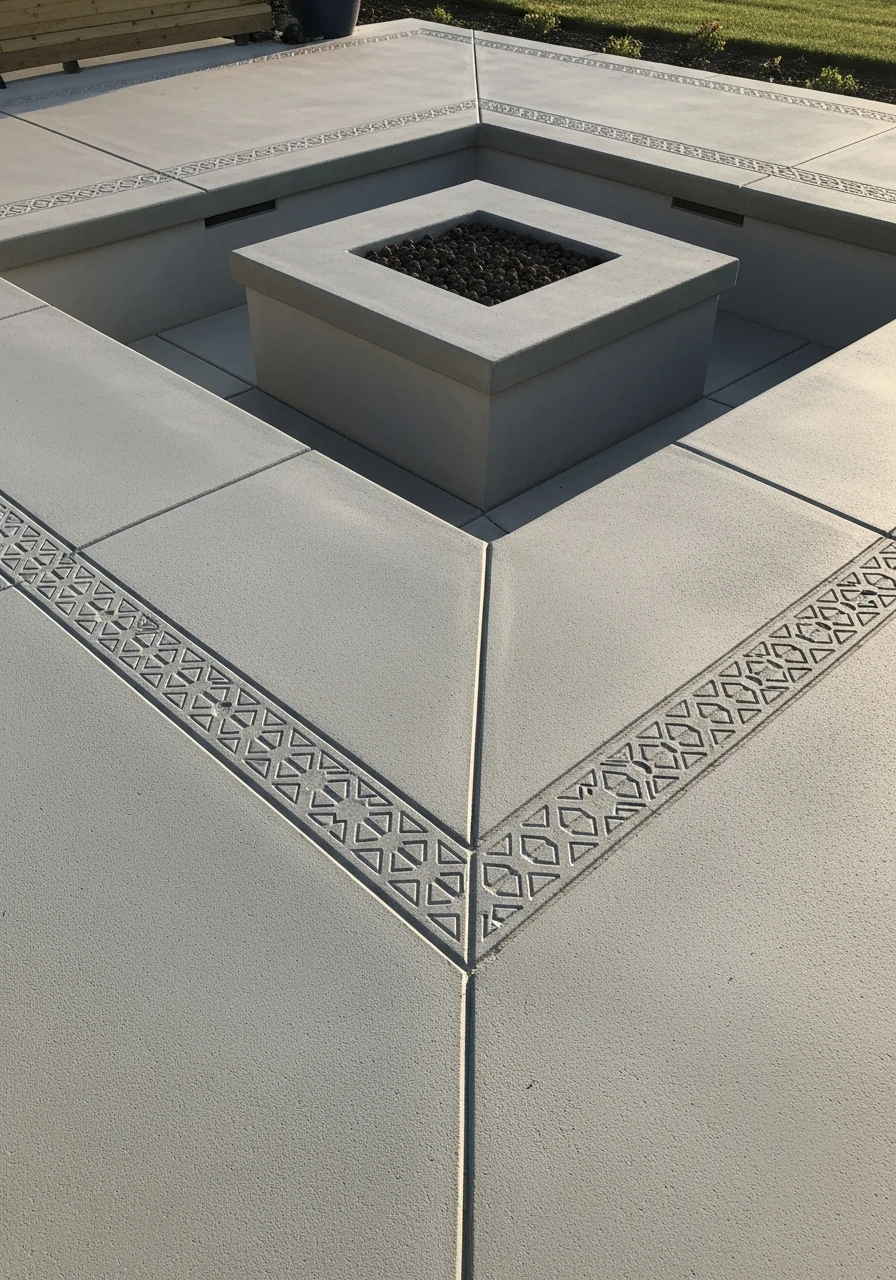
Etch decorative, subtle patterns into the concrete around focal points like fire pits or seating areas. This is a refined detail that draws attention exactly where you want it.
- Use stencils for simple geometric etching.
- Focus on borders or corner designs.
- The etching should be shallow for subtlety.
Pro Tip: Etched designs add visual interest without the maintenance of tile.
21. Built-In Seating Walls
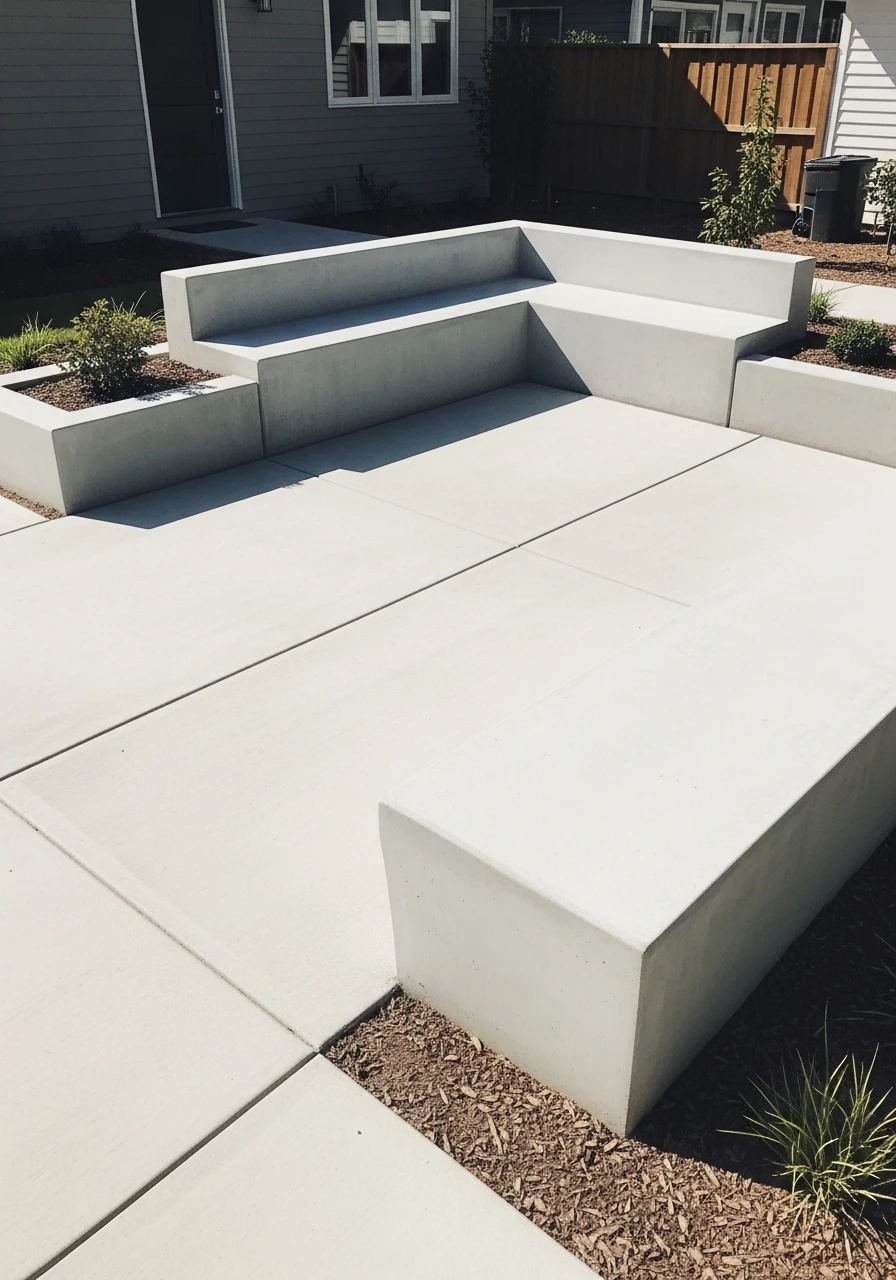
Instead of buying separate benches, incorporate low concrete seating walls into the patio design. This saves space, creates permanent seating, and gives a clean, architectural look.
- Add thick outdoor cushions for comfort.
- The walls should be about 18 inches high.
- Use the same concrete finish for the wall and floor.
Pro Tip: Built-in walls are perfect for defining the patio boundary.
22. Integrated Concrete Planters
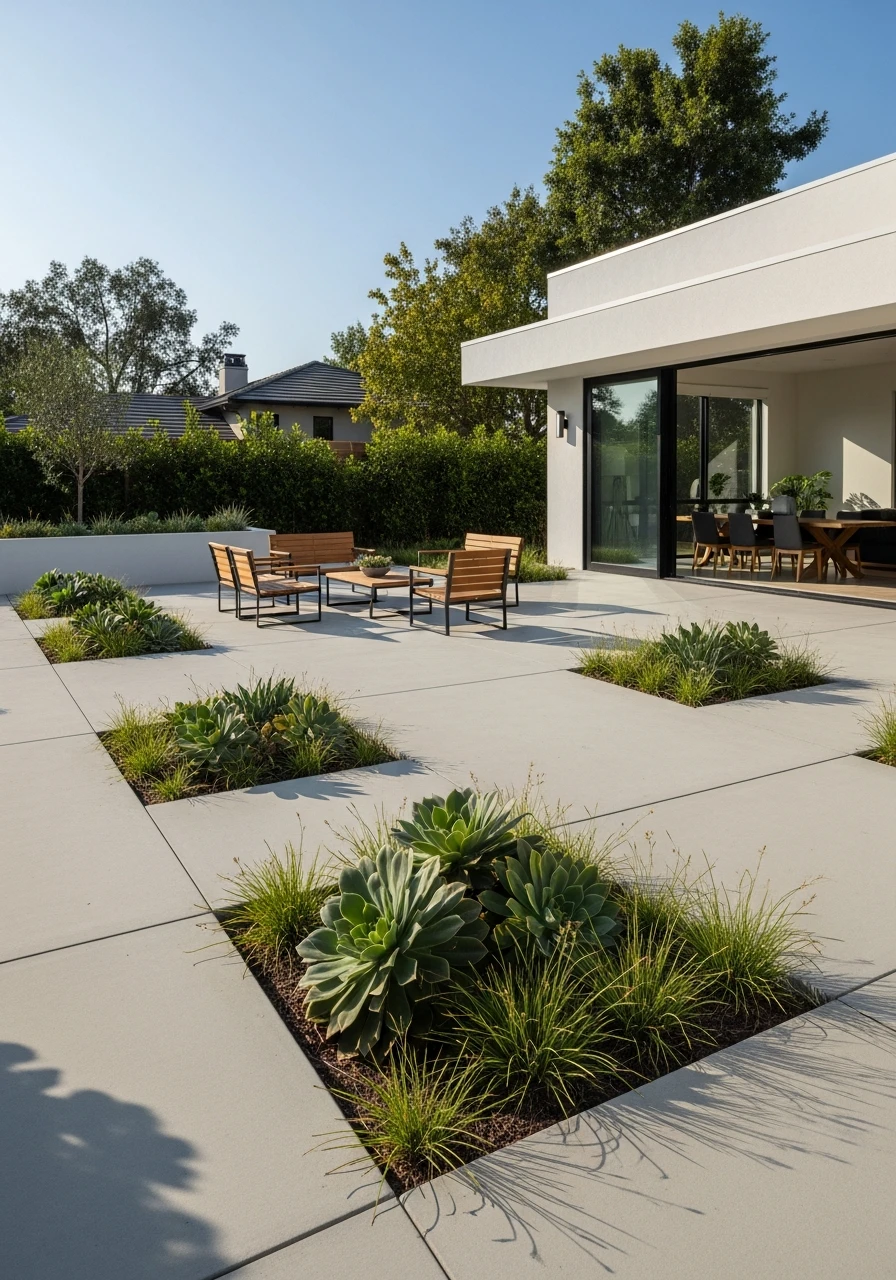
Build planters directly into the concrete layout to blend greenery seamlessly into the design. This creates clean boundaries and makes plant care feel like part of the structure.
- Use tall, structural plants like bamboo or grasses.
- Ensure the planters have proper drainage.
- Place planters strategically to create privacy screens.
Pro Tip: Integrated planters remove the clutter of mismatched pots.
23. Multi-Level Concrete Design
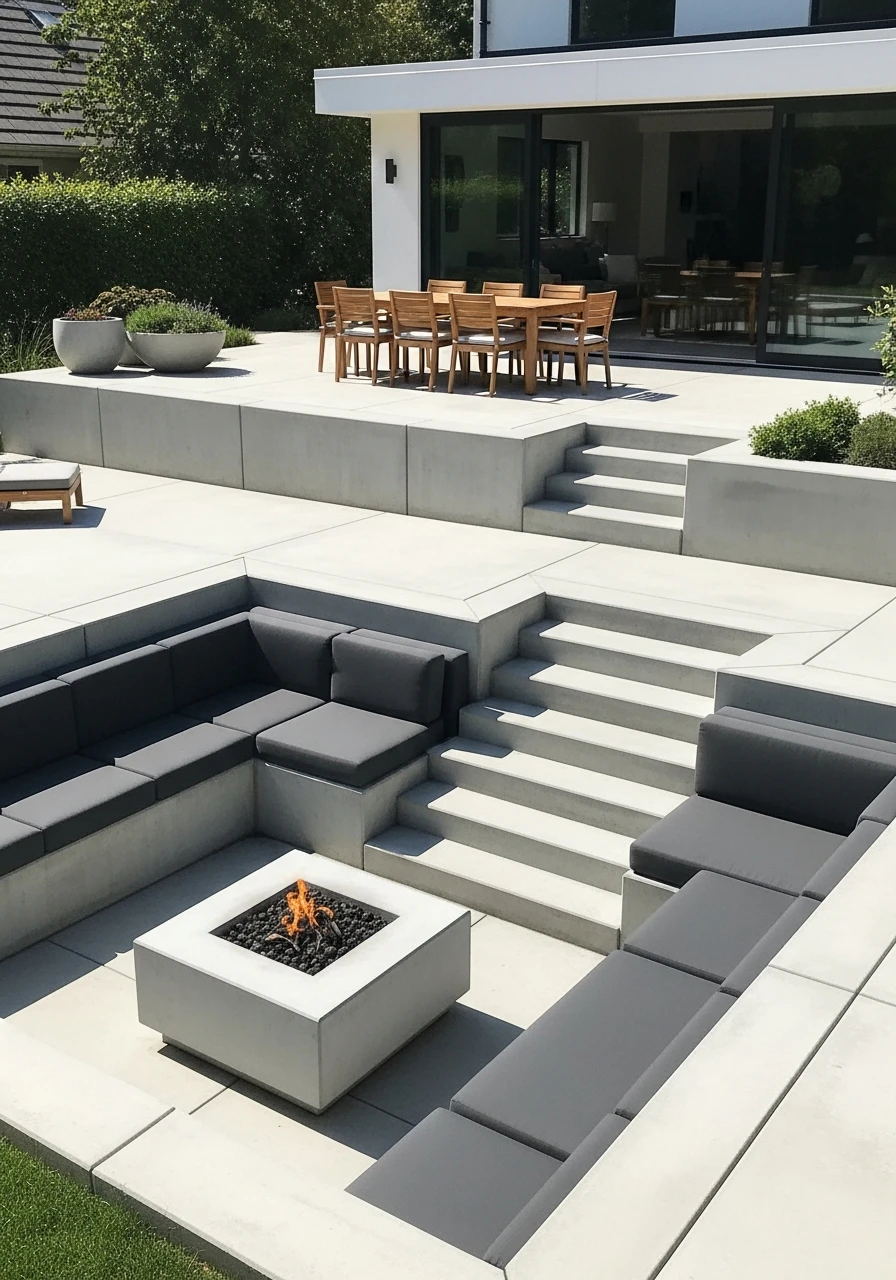
Use stepped concrete levels to separate dining, lounging, and entertainment areas within the same patio footprint. Even a six-inch step can define a zone beautifully.
- Use different colors or finishes for each level.
- Add subtle lighting to the step edges for safety.
- This adds architectural drama to a flat yard.
Pro Tip: Multi-level patios feel like different ‘rooms’ outdoors.
24. Built-In Fire Pit Base
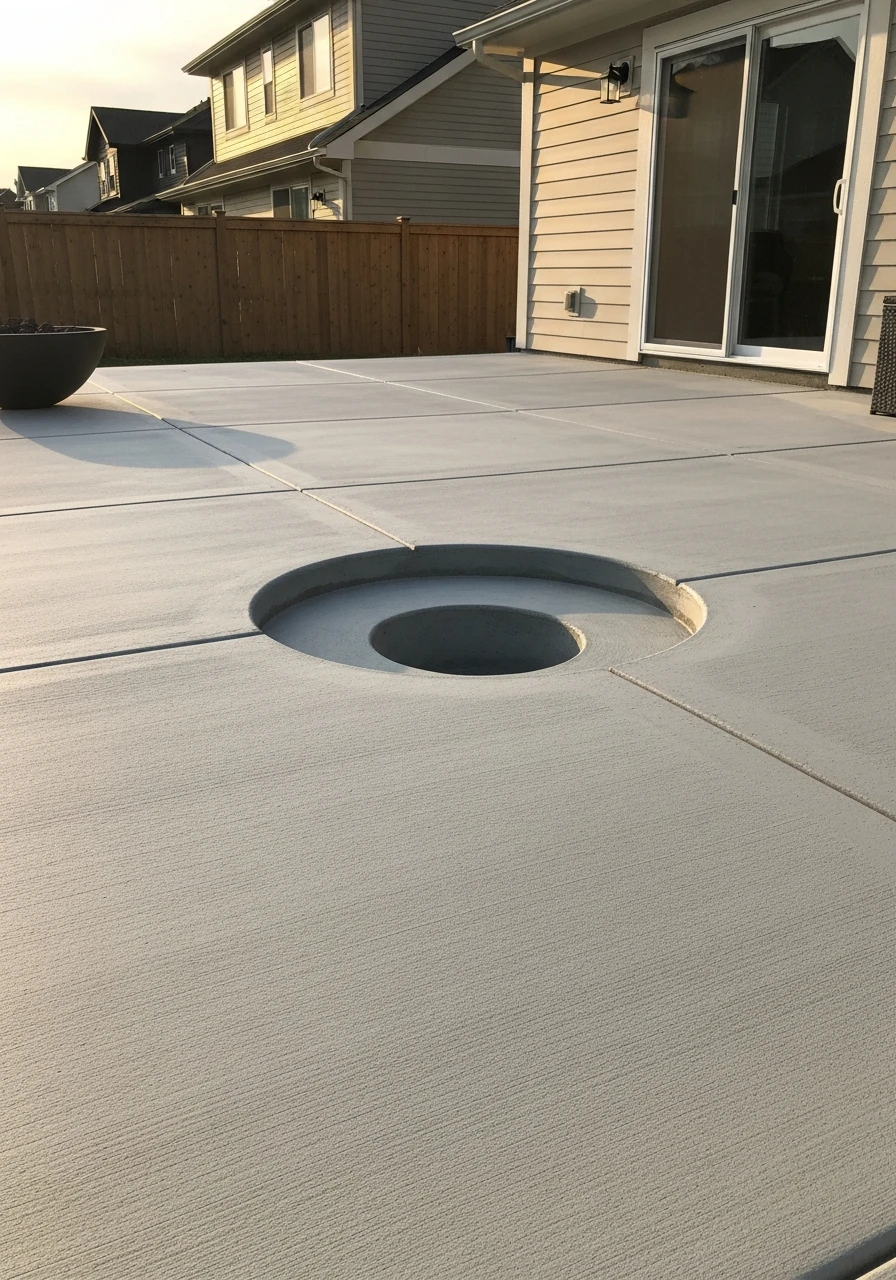
Design the concrete slab to include a designated, slightly recessed area for a fire pit. This creates a cohesive, safe layout that looks intentional and custom-made.
- Use exposed aggregate for the fire pit zone for contrast.
- Ensure the surrounding concrete is wide enough for safety.
- Place the fire pit far from seating walls.
Pro Tip: This setup prevents fire pits from looking like an afterthought.
25. Outdoor Kitchen Foundation
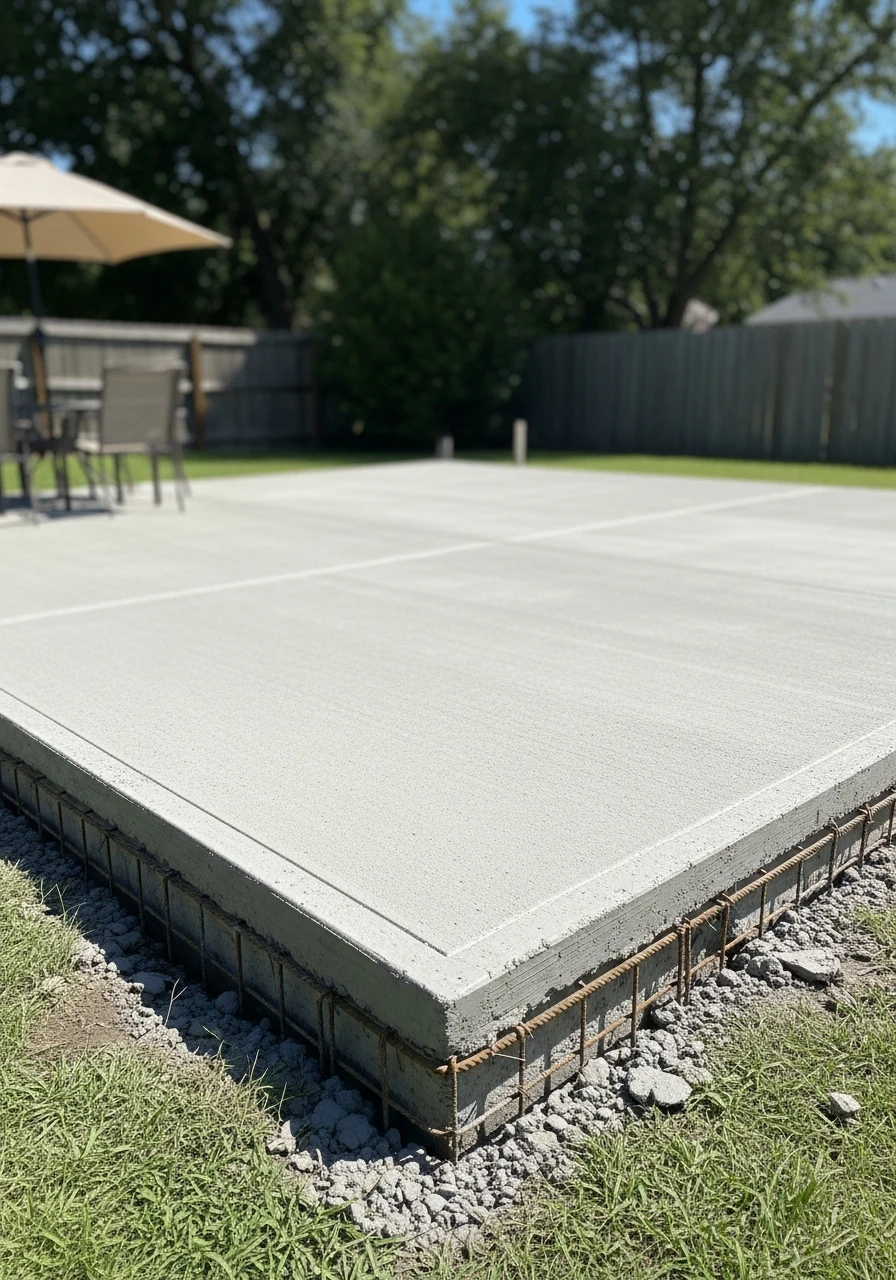
Use reinforced concrete as the foundation for your outdoor kitchen setup. Concrete offers unmatched durability and stability for heavy appliances and counter surfaces.
- Ensure the slab is perfectly level for cabinetry.
- Protect the concrete from grease stains with a high-quality sealant.
- Run necessary utility lines (gas, water) before pouring.
Pro Tip: Concrete is much easier to keep clean under a grill than gravel.
26. Built-In Bar Counter
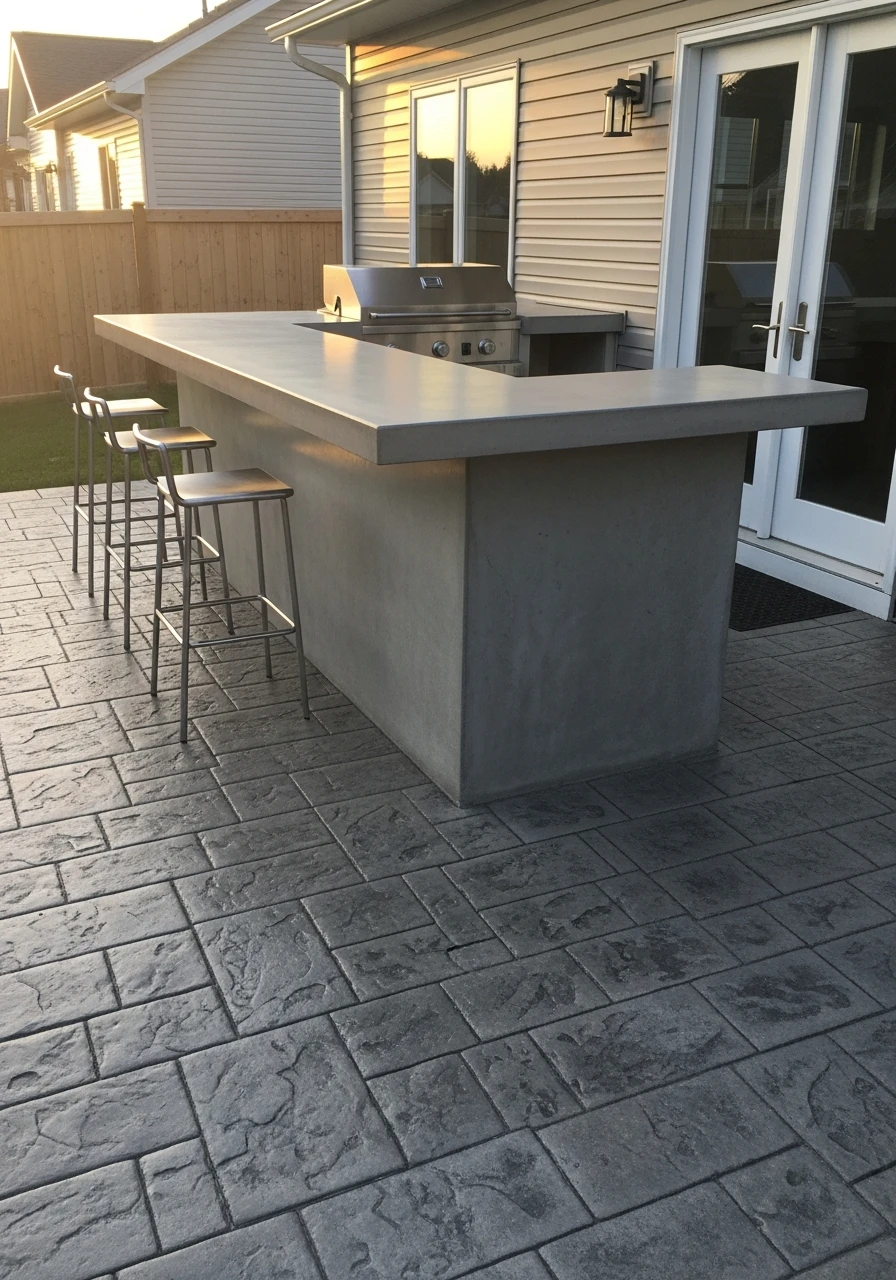
Add a raised concrete bar area for casual seating and entertaining. This is a low-maintenance way to create a dedicated happy hour spot right on your patio.
- The bar should be counter-height (about 42 inches).
- Pair it with sleek metal bar stools.
- Use a smooth, sealed concrete surface for the countertop.
Pro Tip: A built-in bar saves space and looks super sophisticated.
27. Water Feature Integration
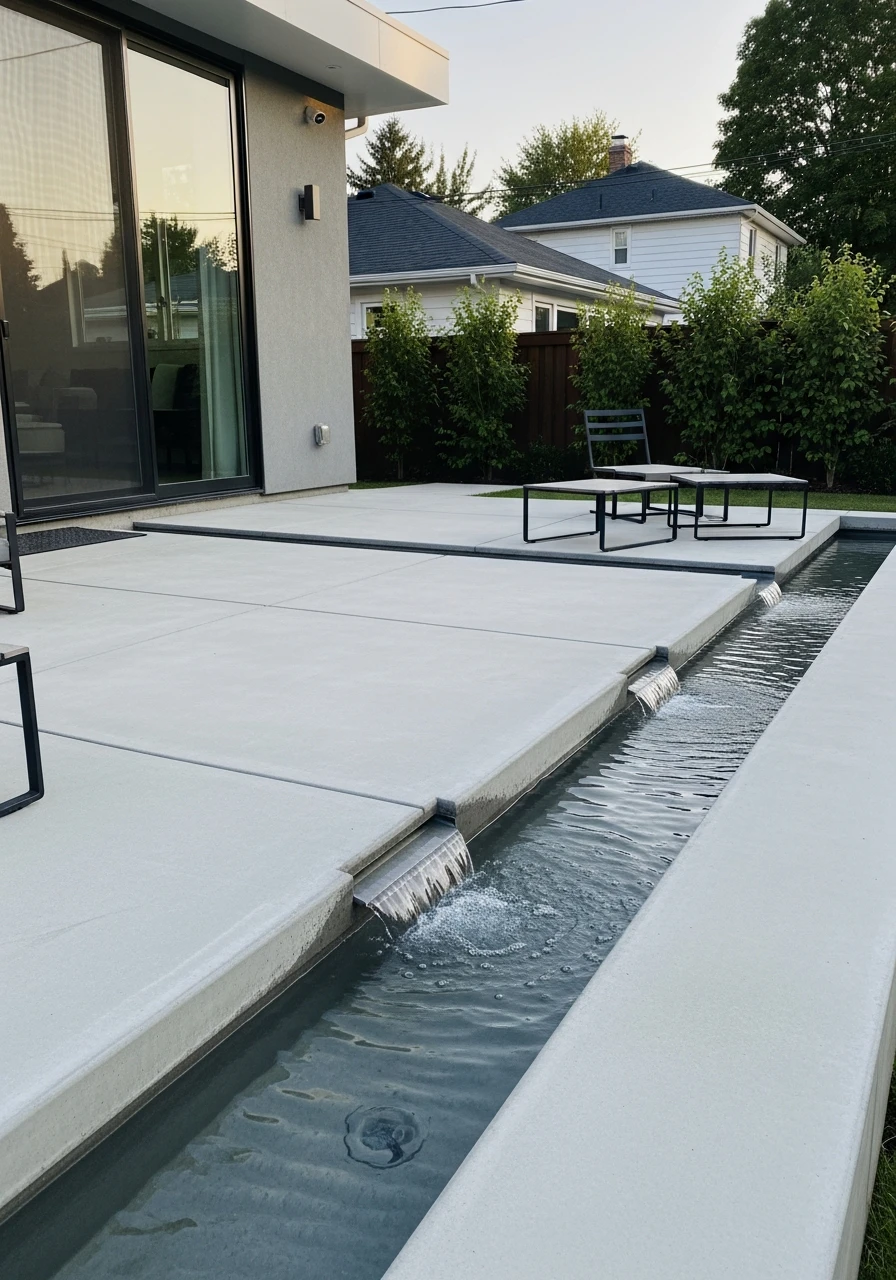
Incorporate fountains or small water channels directly into the concrete design. This adds a calming atmosphere and makes the patio feel like a peaceful retreat.
- Use a simple, linear concrete fountain design.
- Ensure all plumbing is easily accessible.
- The sound of running water masks traffic noise.
Pro Tip: A sleek, black-stained concrete water wall is instant luxury.
28. Elevated Dining Patio
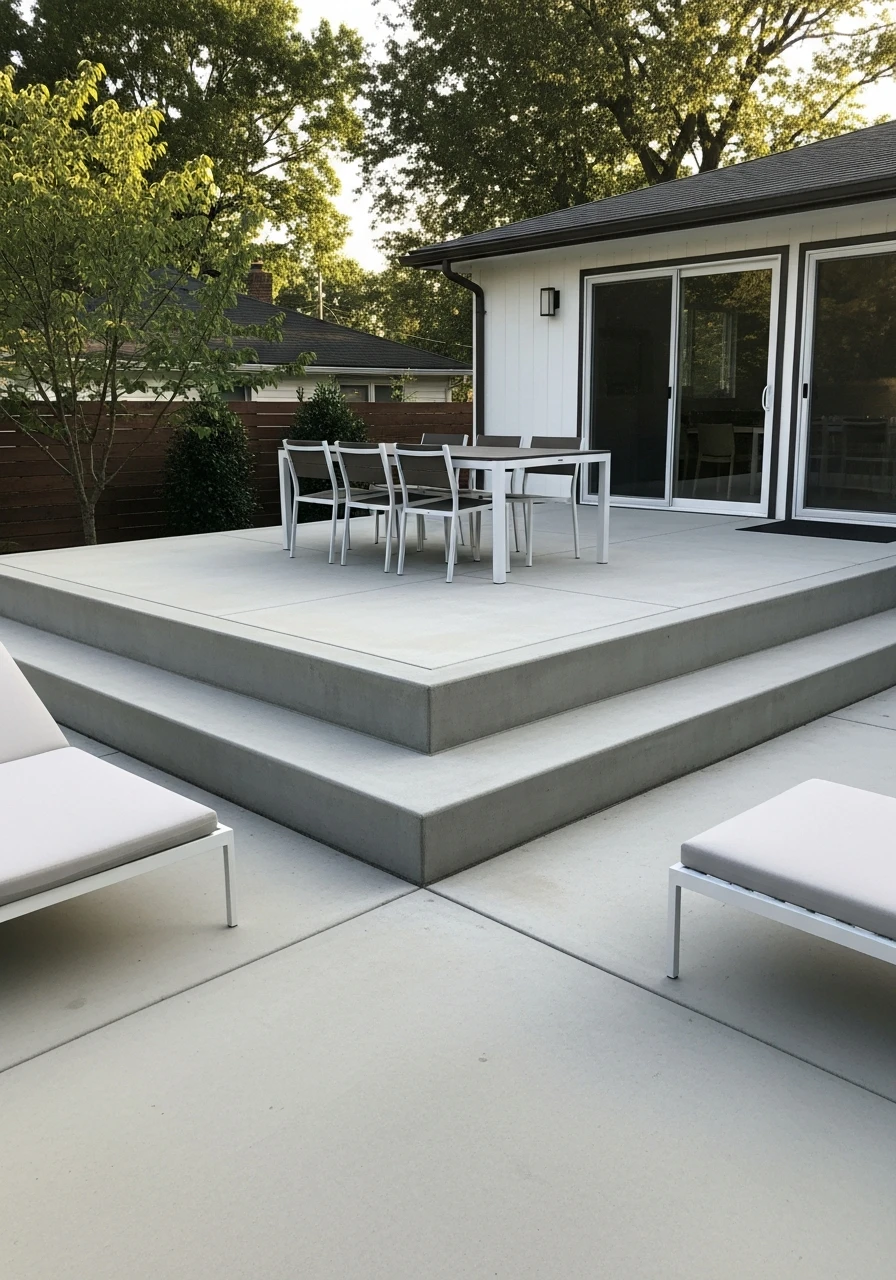
Slightly raise the dining area by pouring a concrete slab a few inches higher than the main lounge space. This visually separates the eating zone without needing walls or railings.
- Use different finishes to emphasize the separation.
- Ensure the elevation is clearly marked.
- This works well for smaller, defined areas.
Pro Tip: An elevated space makes any dinner feel more special.
29. Embedded Step Lighting
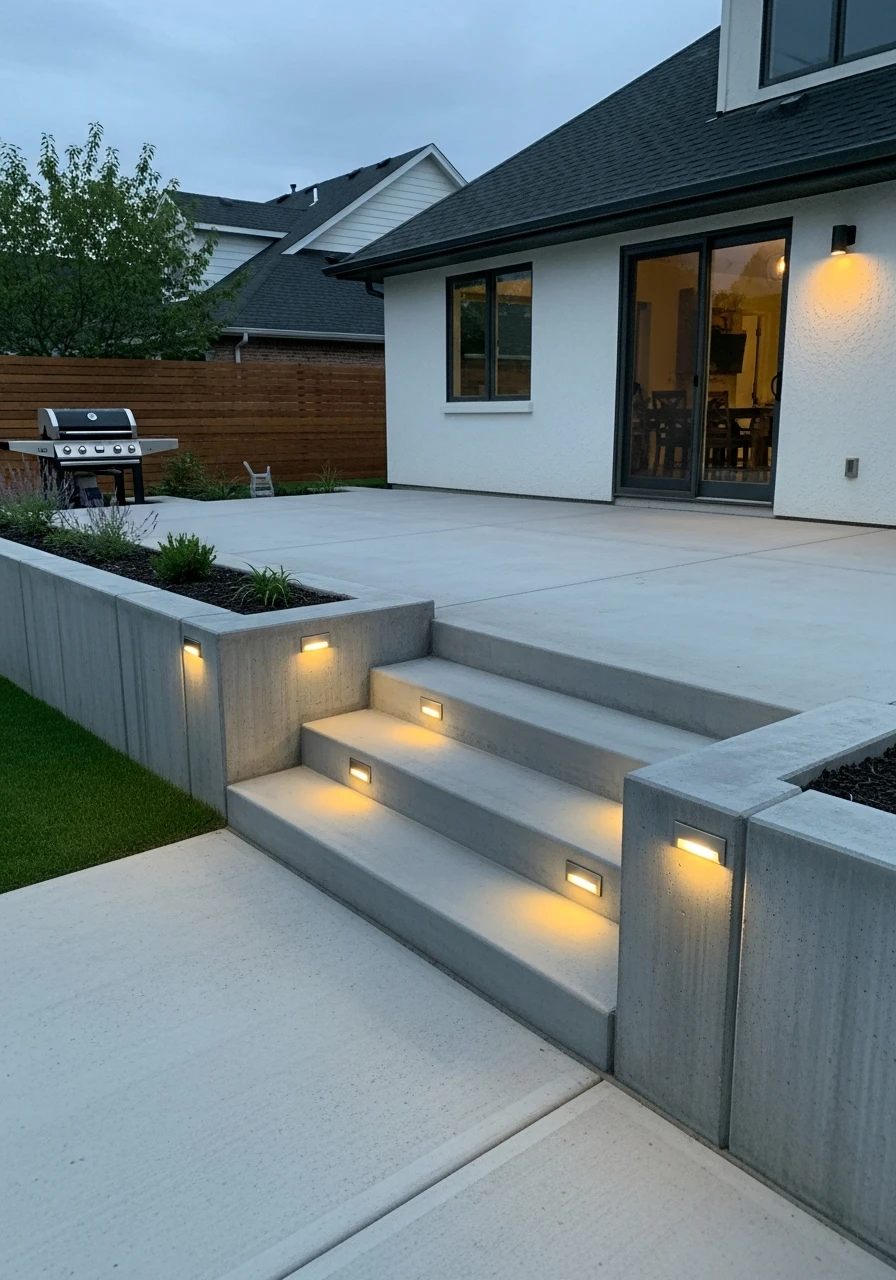
If your patio has steps, install small, low-voltage lighting directly into the risers or edges. This improves safety at night and highlights the architectural shape of the steps.
- Use flush-mounted lights for a clean look.
- Install lights on a timer for ease of use.
- Space the lights evenly for a cohesive glow.
Pro Tip: Embedded lighting adds professional polish to DIY steps.
30. Permeable Concrete Surface
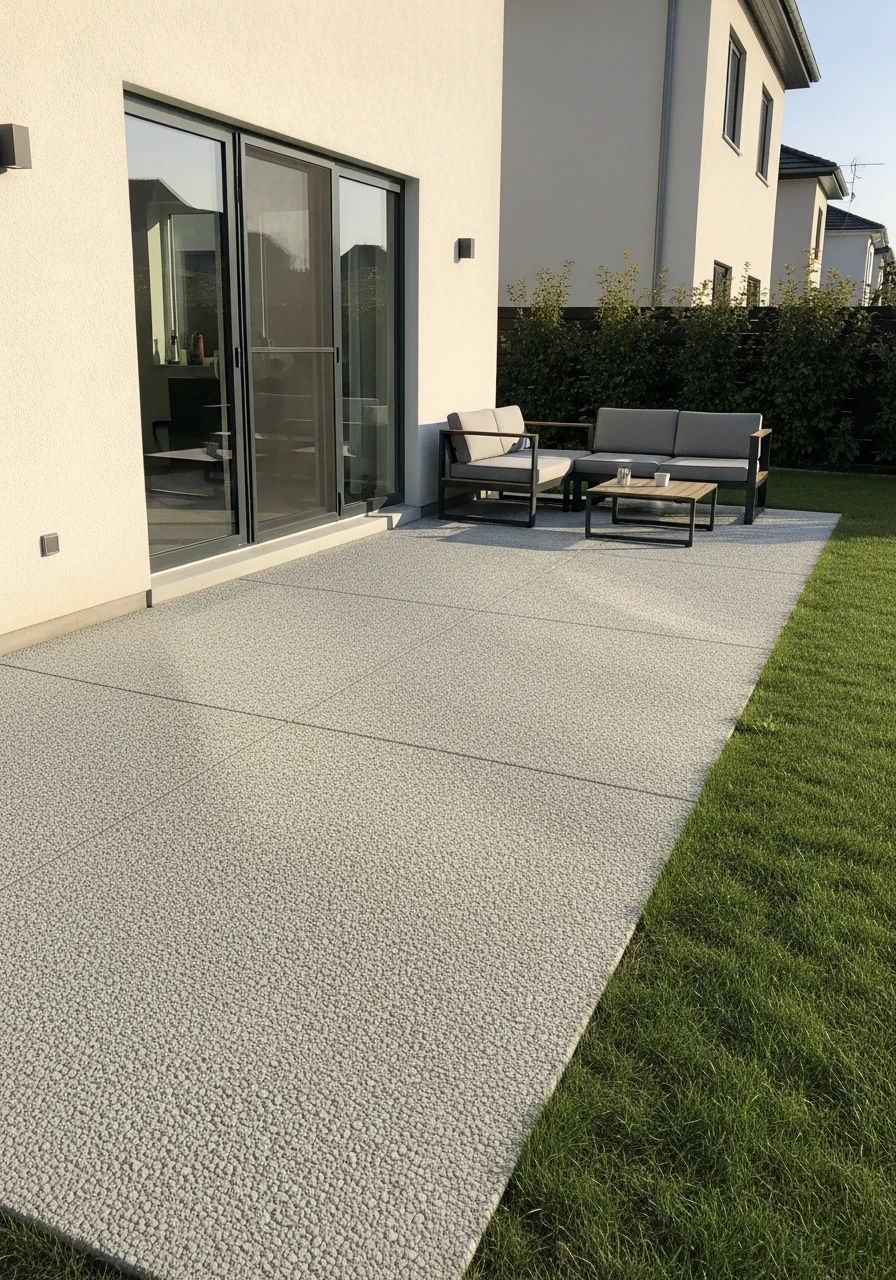
Use permeable concrete, which allows water to drain through the material itself. This prevents puddles and is a great eco-friendly choice while maintaining a solid patio structure.
- Permeable concrete feels more textured.
- This is ideal for areas with heavy rainfall.
- It helps recharge local groundwater.
Pro Tip: Check local building codes—permeable surfaces might qualify for rebates.
31. Fire Table Lounge Area
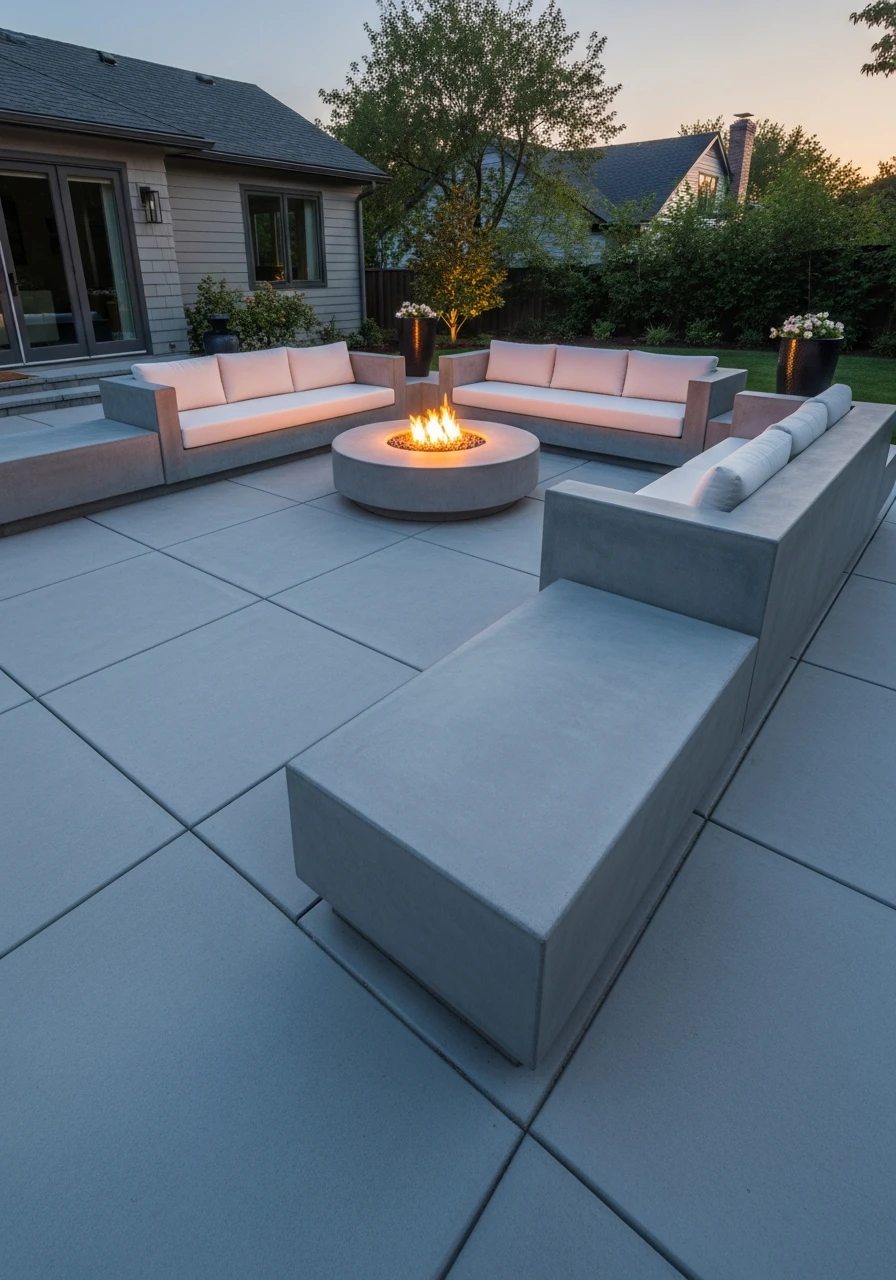
Design the concrete patio around a central fire table. This creates a cozy gathering spot and provides a focal point, especially when surrounded by deep, comfortable seating.
- Use a square or rectangular fire table for modern style.
- Ensure the concrete is flat for stable seating.
- Add plush outdoor pillows for maximum comfort.
Pro Tip: A fire table extends patio season well into the fall!
32. Slip-Resistant Poolside Finish
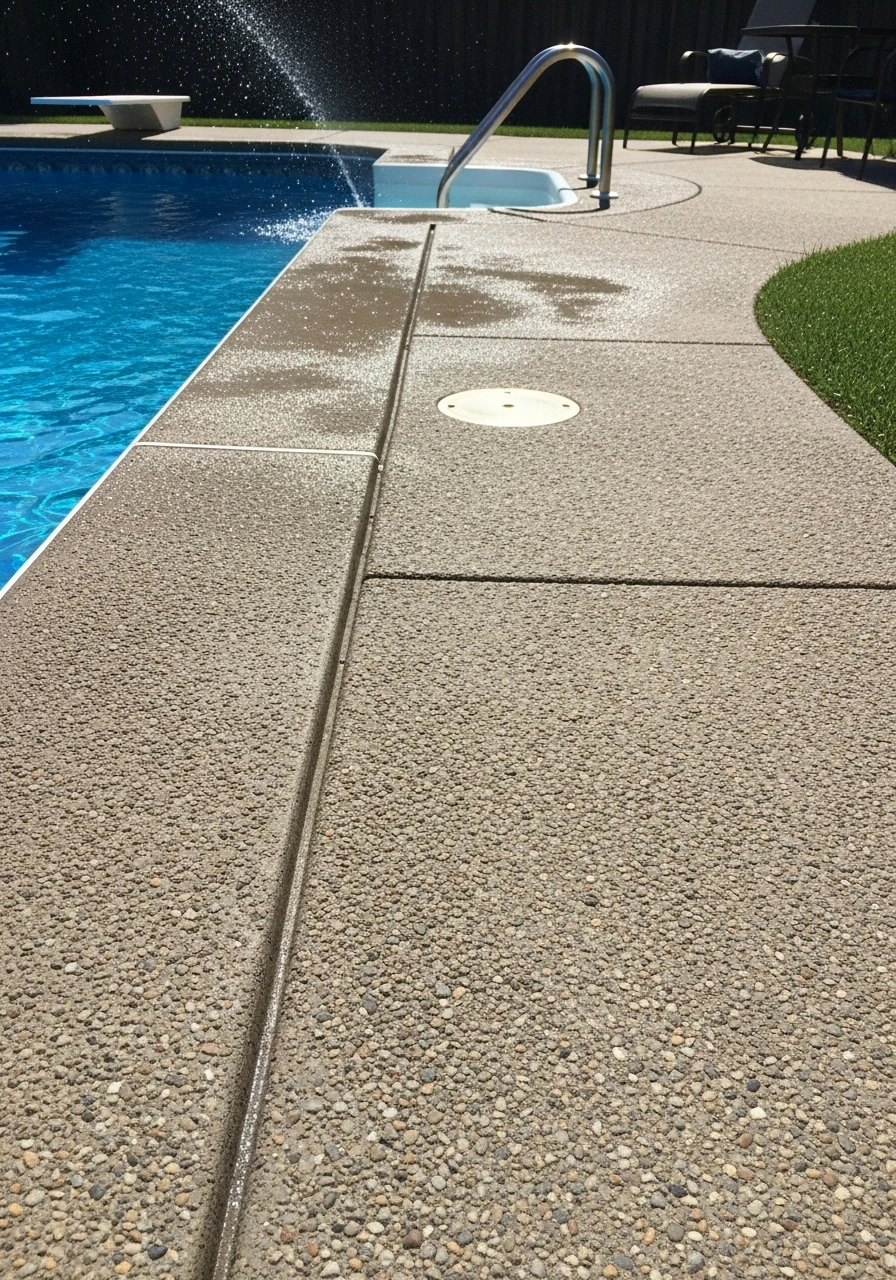
If your concrete patio is near a pool, choose textured finishes like a heavy broom finish or exposed aggregate. This improves safety by reducing the risk of slips on wet surfaces.
- Avoid highly polished finishes near water.
- Use a light color to keep the surface cooler.
- Seal the concrete regularly to resist pool chemicals.
Pro Tip: Safety is always the first priority around a pool, choose texture over sheen.
33. Designed for Sectionals
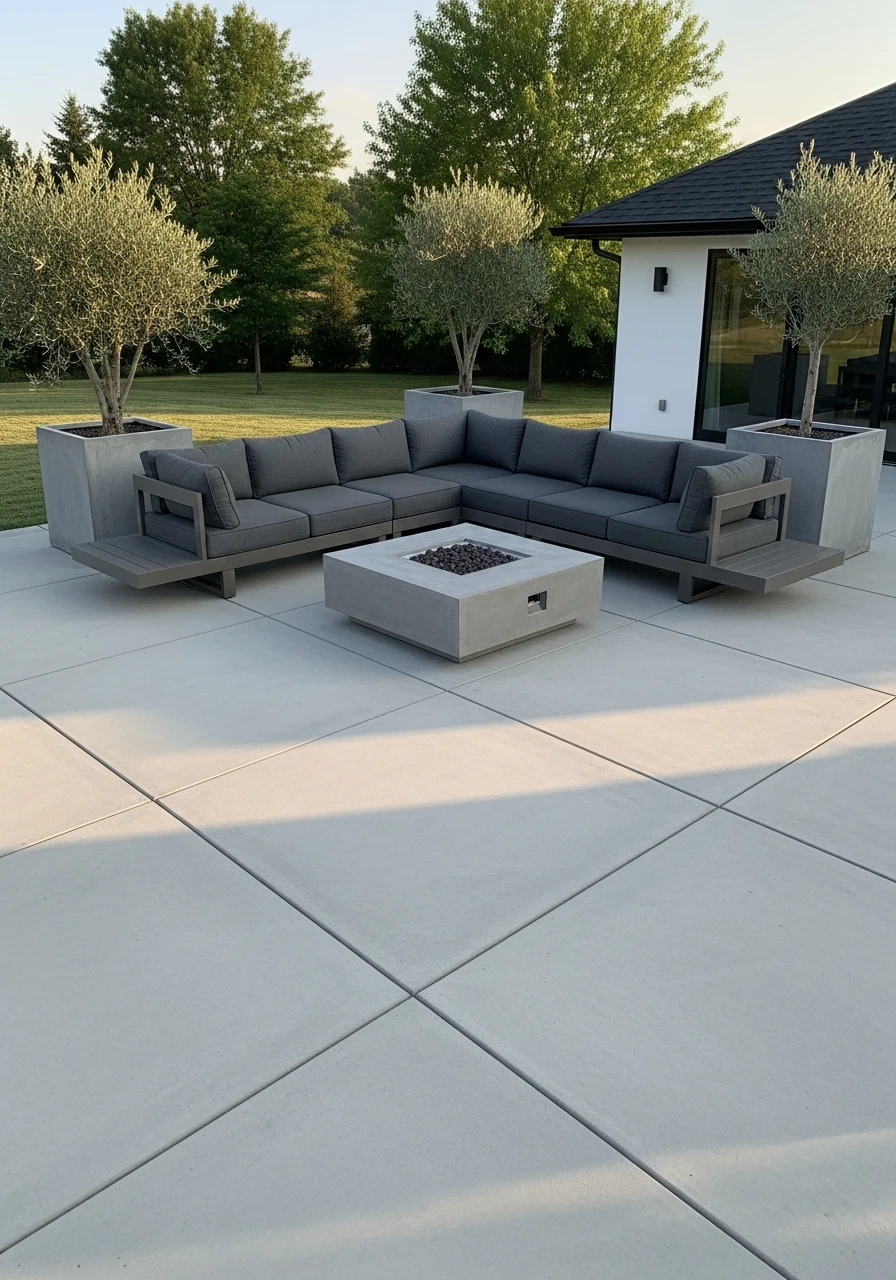
Create a flat, spacious patio layout specifically measured to accommodate large sectional seating. This ensures your outdoor living room feels balanced and comfortable.
- Allow at least three feet of walking space around the sectional.
- Use large, deep-seating furniture.
- Center the sectional on a major focal point, like the fire pit.
Pro Tip: Always measure your desired furniture before pouring the slab!
34. Covered Dining Patio
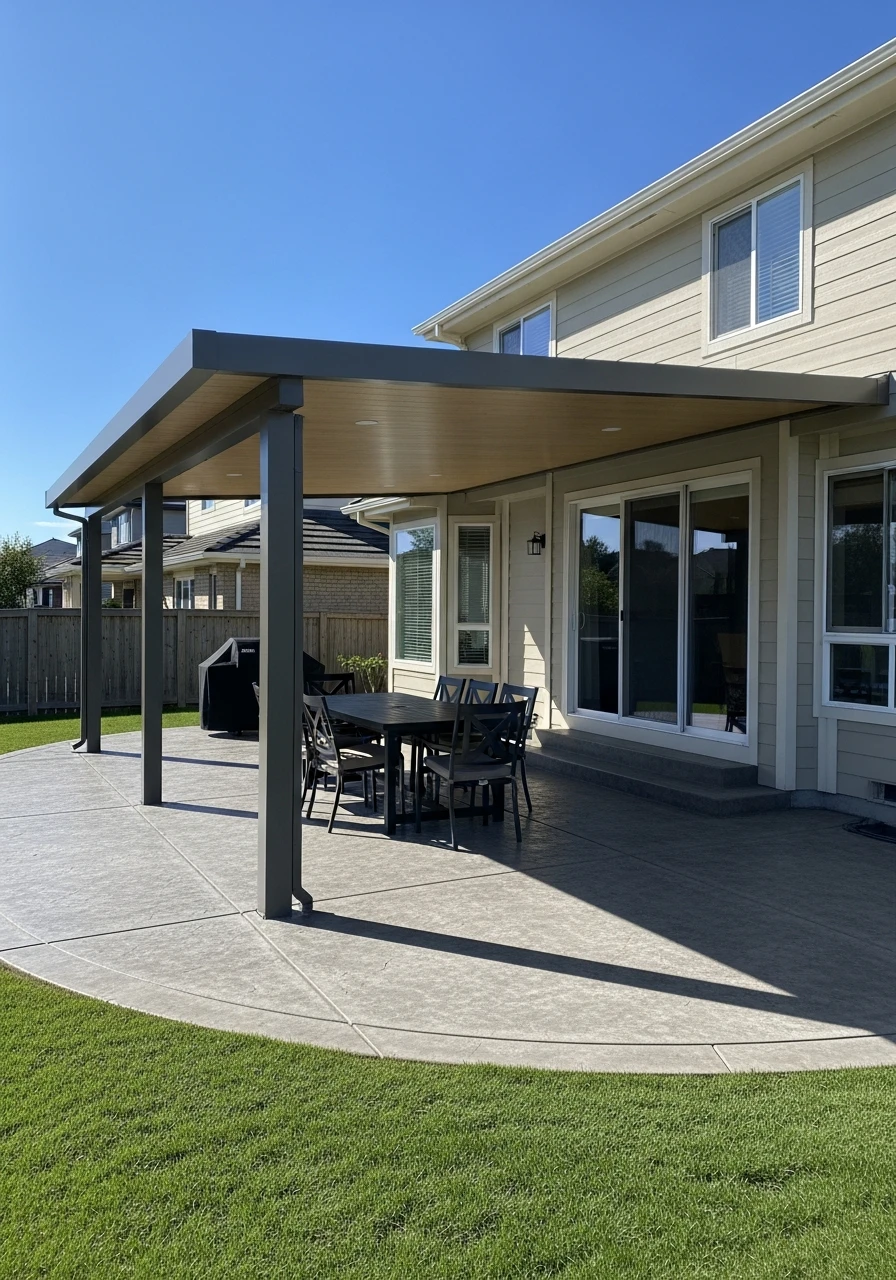
Add an overhead shade structure—like a solid roof or awning—to make the concrete dining patio usable in various weather conditions. This protects the area and adds utility.
- A solid roof feels like an extension of the house.
- Ensure the cover height is adequate (at least 8 feet).
- Add an outdoor fan for air circulation.
Pro Tip: Covered patios are the best investment for year-round use.
35. Outdoor Movie Wall
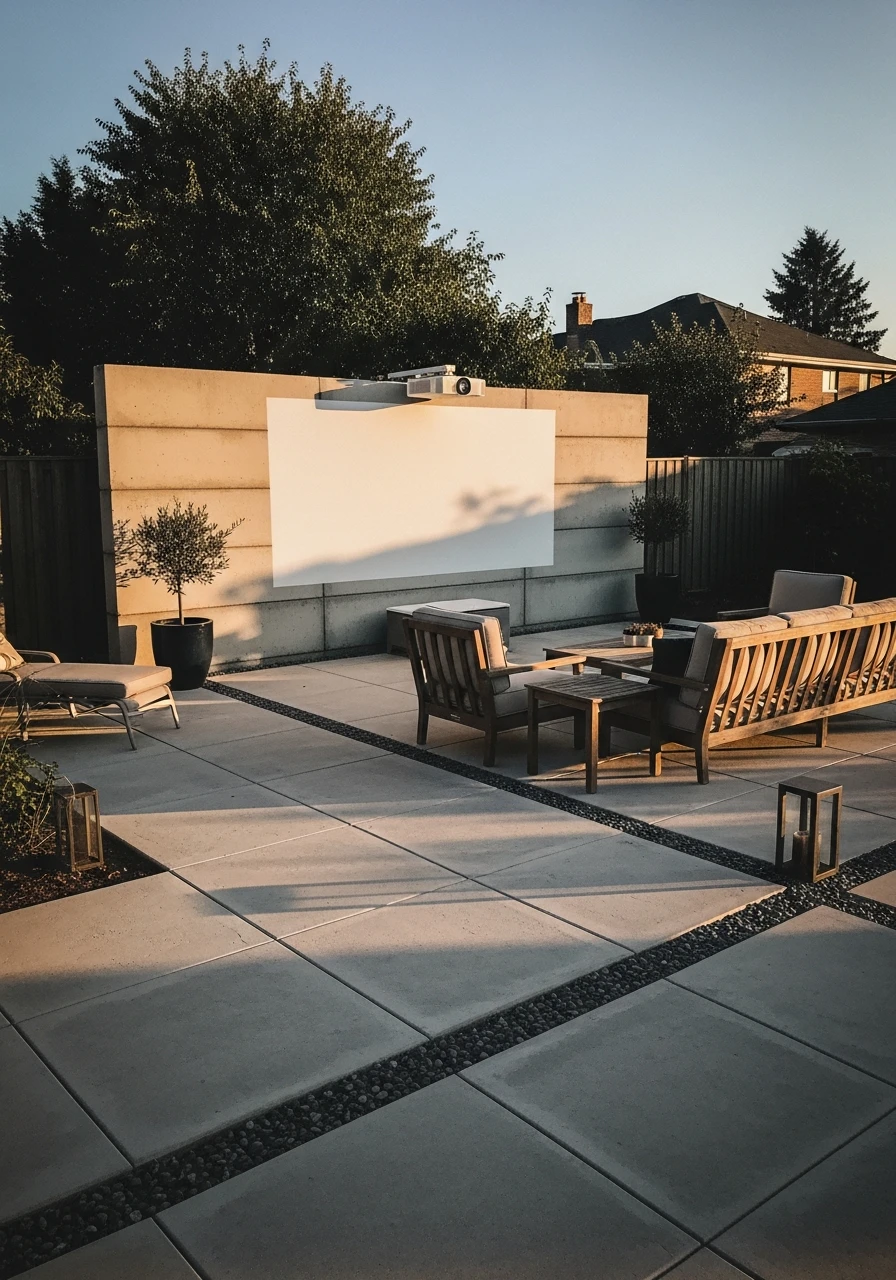
Use a smooth, light-colored concrete wall or fence as a stable backdrop for outdoor movie nights. This provides a perfect, durable surface for projecting films.
- Ensure the wall is painted a flat white or light gray.
- Build the wall tall enough for a large viewing area.
- Set up comfortable bean bag chairs for seating.
Pro Tip: This idea turns a boring backyard wall into an entertainment center.
36. U-Shaped Concrete Bench
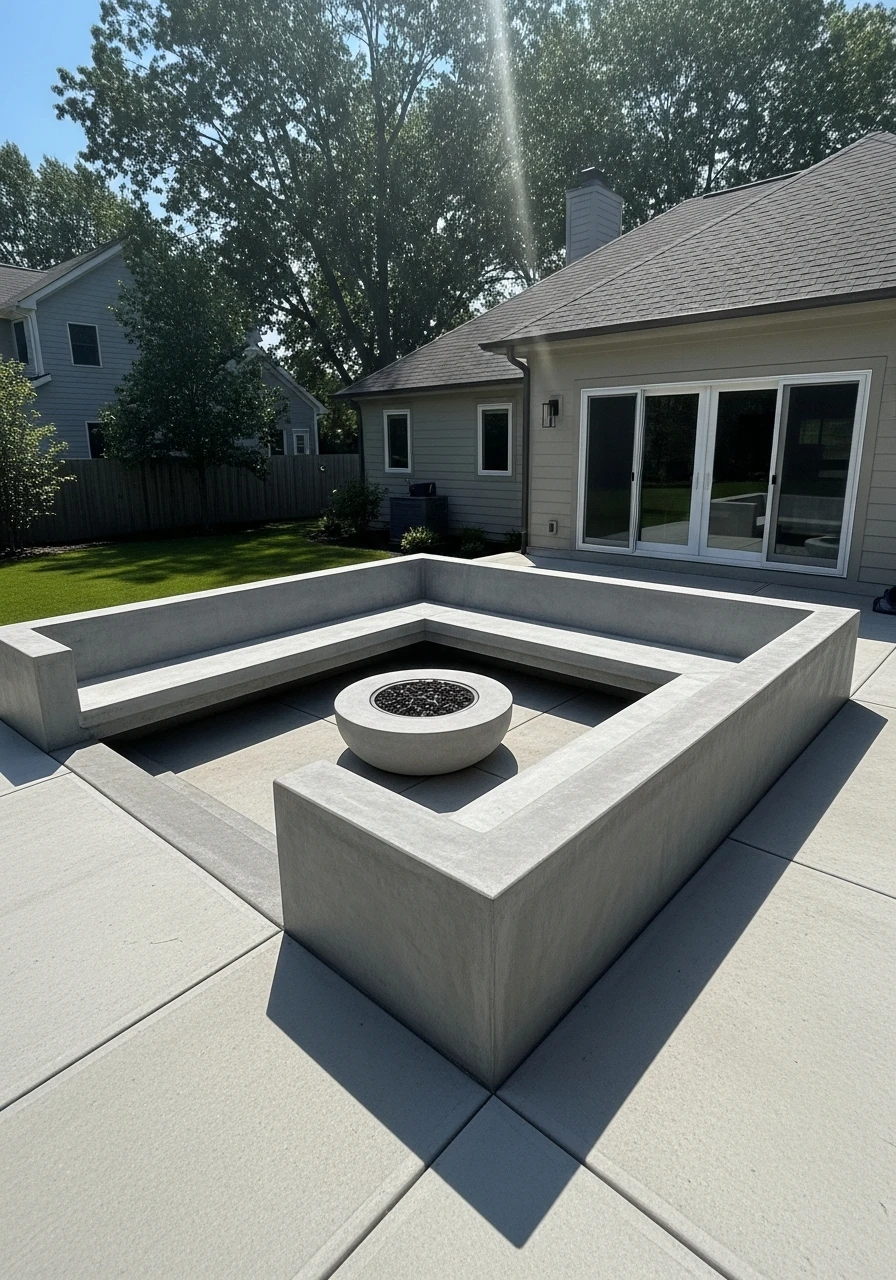
Form built-in U-shaped concrete benches around a central conversation area or fire feature. This maximizes seating capacity and gives the area a cohesive, sunken feel.
- Use weather-resistant fabric for custom seat cushions.
- The U-shape encourages conversation.
- Build small concrete side tables into the ends of the benches.
Pro Tip: Built-in U-seating is the ultimate custom look for less money.
37. BBQ and Prep Zone
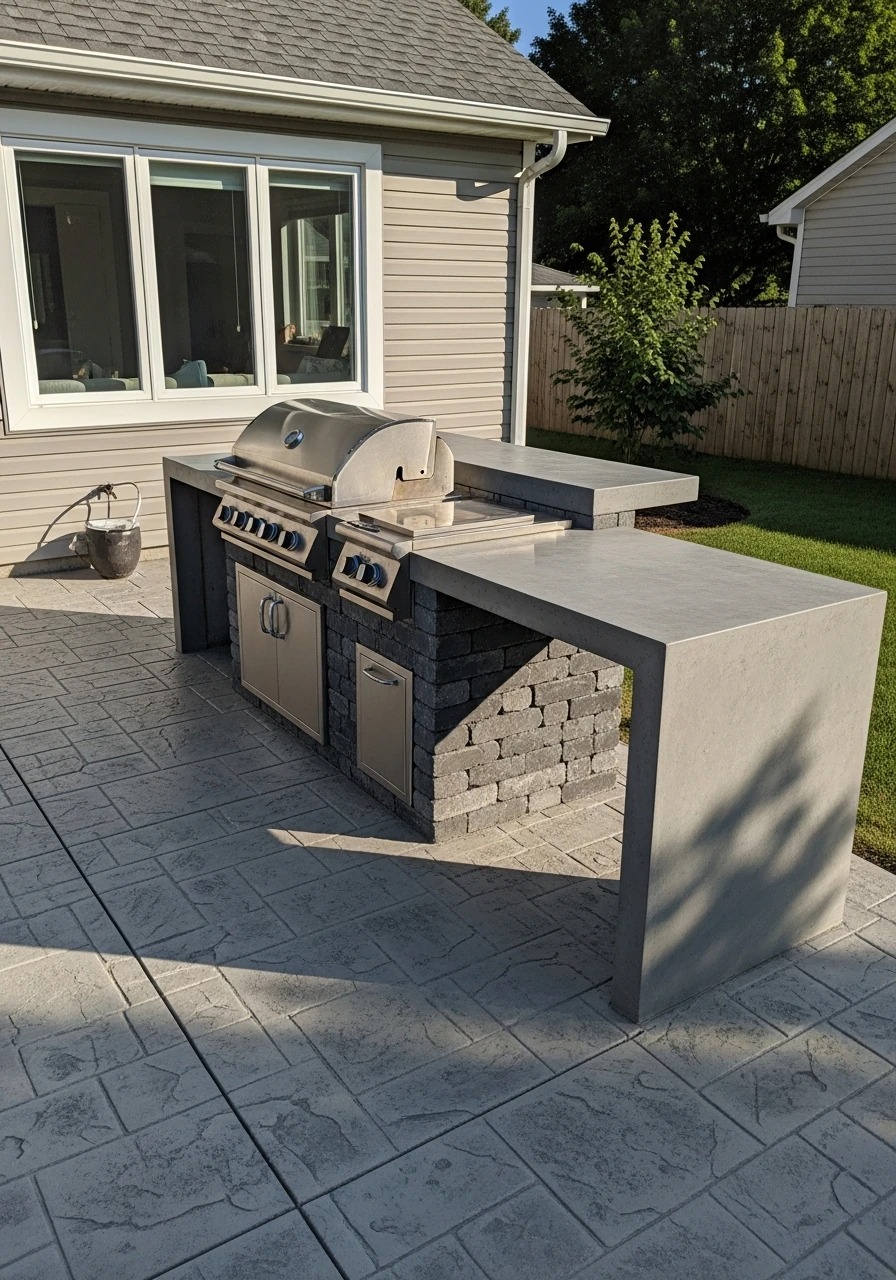
Designate cooking and prep areas directly within the concrete patio footprint. This ensures you have a clean, stable, and durable surface right where you need it for grilling.
- Use a darker concrete stain in the cooking zone to hide stains.
- Ensure the prep area is close to the kitchen door.
- Build in a simple concrete counter for food staging.
Pro Tip: Good prep space makes outdoor cooking much more fun.
38. Lounge Zone with Cushions
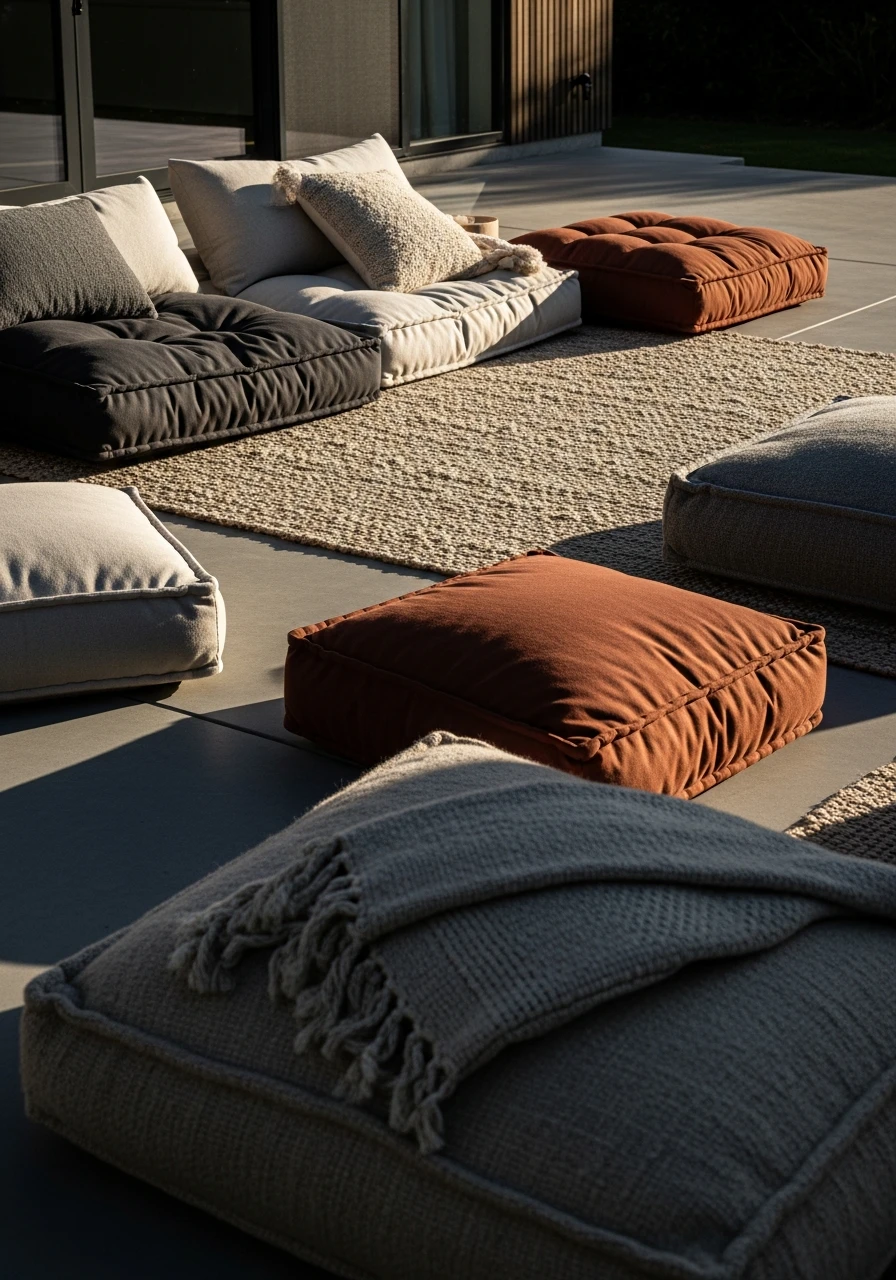
Soften the look and feel of the concrete surface visually by layering thick cushions and outdoor textiles. This makes the space feel instantly cozier and more inviting.
- Choose durable, fade-resistant fabrics.
- Use contrasting patterns between throw pillows and seat cushions.
- Store cushions when not in use to keep them fresh.
Pro Tip: Textiles are the easiest way to change your patio style seasonally.
39. Planter-Step Seating
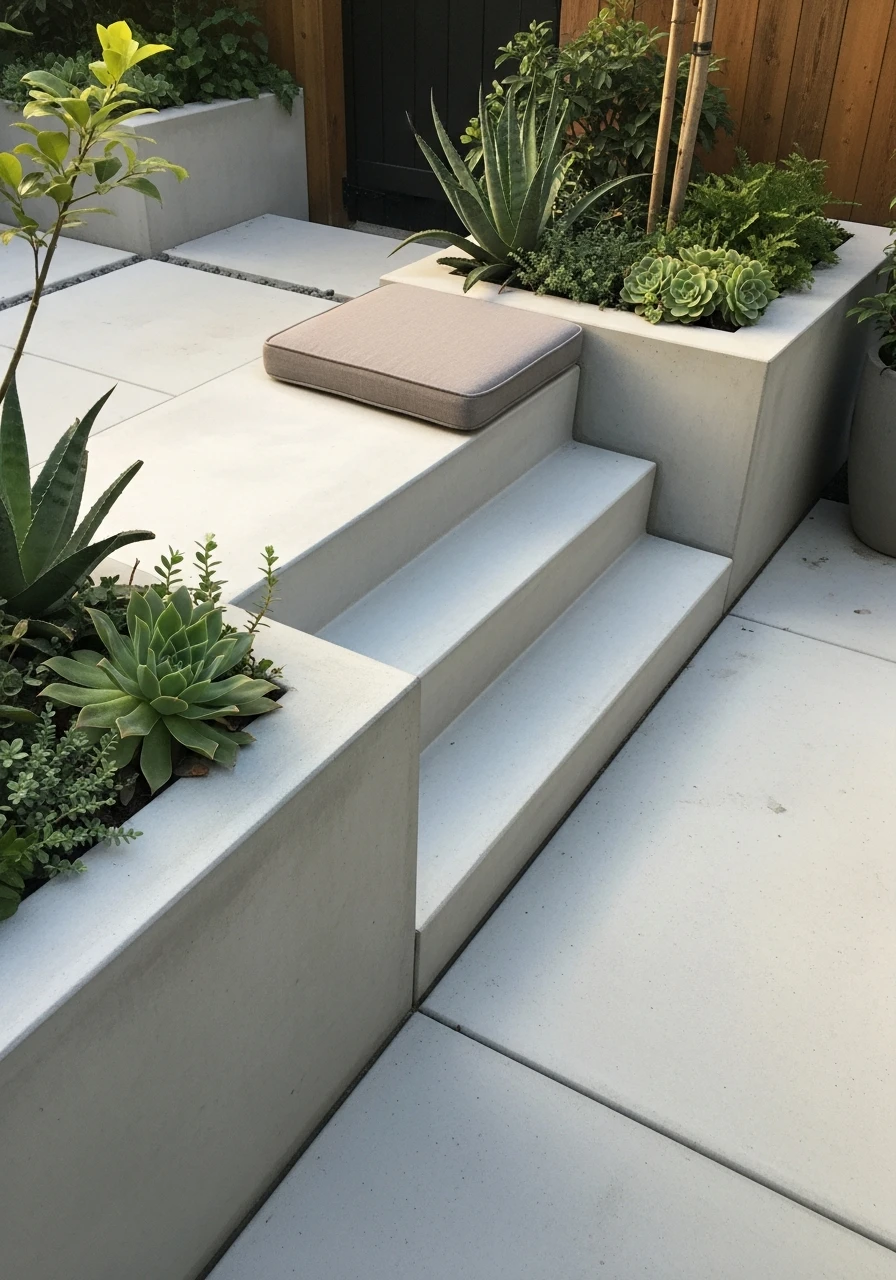
In compact spaces, combine steps and planters to maximize seating and greenery. A wide concrete step can double as a bench with the addition of a cushion.
- Make the step depth generous (at least 20 inches).
- Use low-maintenance succulents in the planters.
- Ensure the planter walls are slightly raised.
Pro Tip: This is a smart way to get three functions from one small area.
40. Define Zones With Rugs
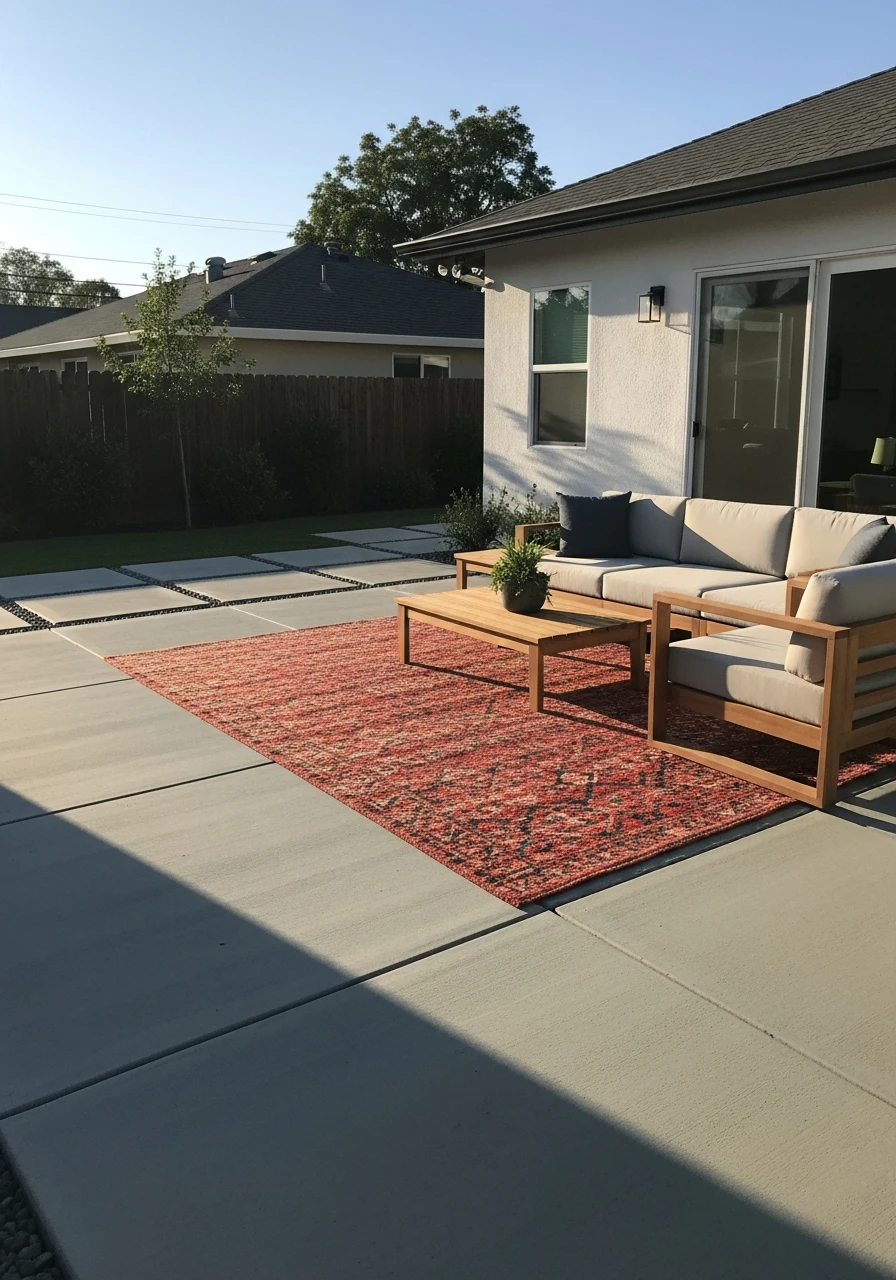
Concrete can feel a bit hard, so soften it up with a great outdoor rug. Rugs instantly define your seating zone and add necessary color and texture to the gray surface.
- Choose a size that fits under all front legs of the furniture.
- Pick weather-proof polypropylene rugs.
- Use a rug to anchor your fire pit area.
Pro Tip: A striped or geometric rug makes the area look bigger than it is.
41. Small Vertical Garden
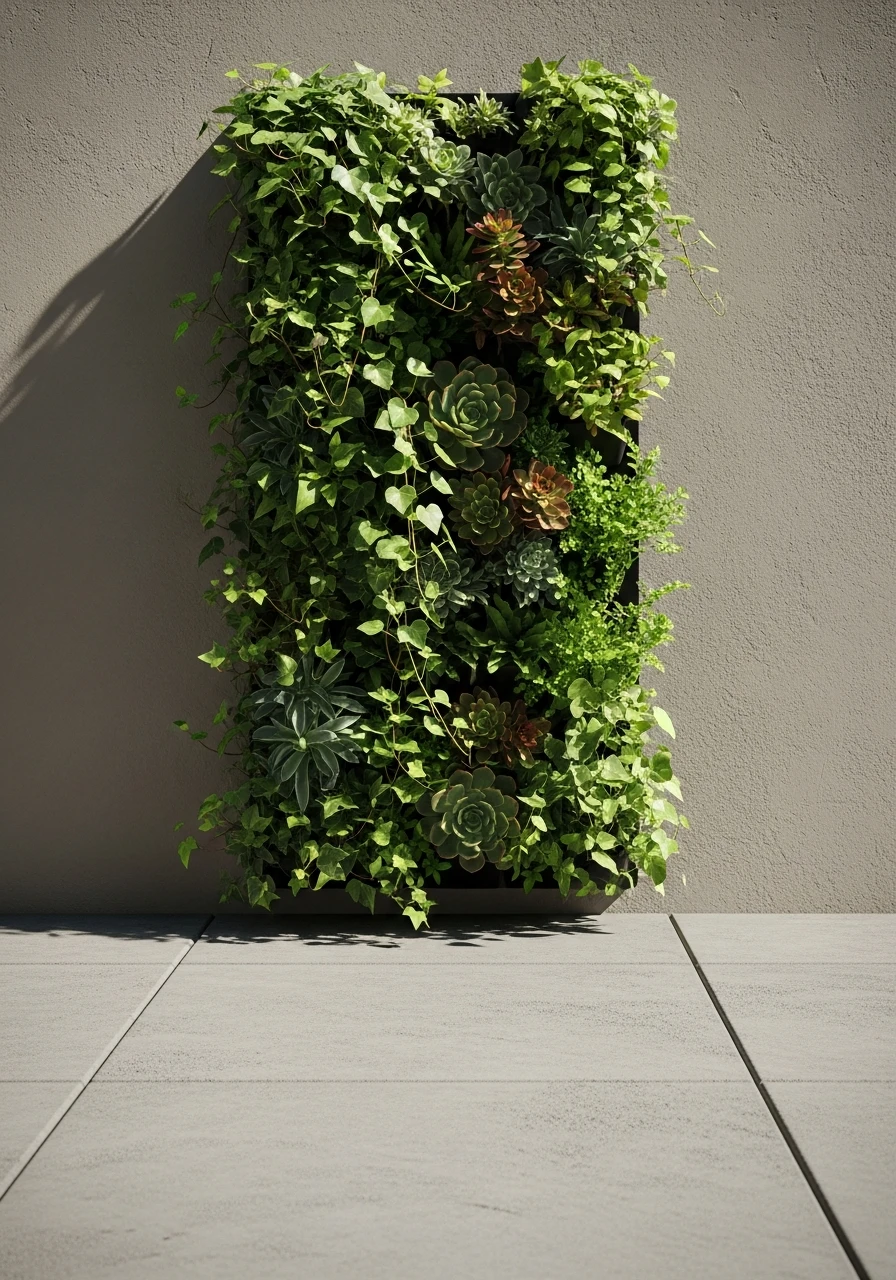
If you have a small concrete patio, save floor space by incorporating vertical planting solutions against a wall. This draws the eye upward and adds lush green texture.
- Use modular wall planters or trellis systems.
- Grow herbs or small flowers in the modules.
- Ensure the wall is protected from moisture.
Pro Tip: Vertical gardens make a small patio feel like a jungle oasis.
42. Storage Bench Seating
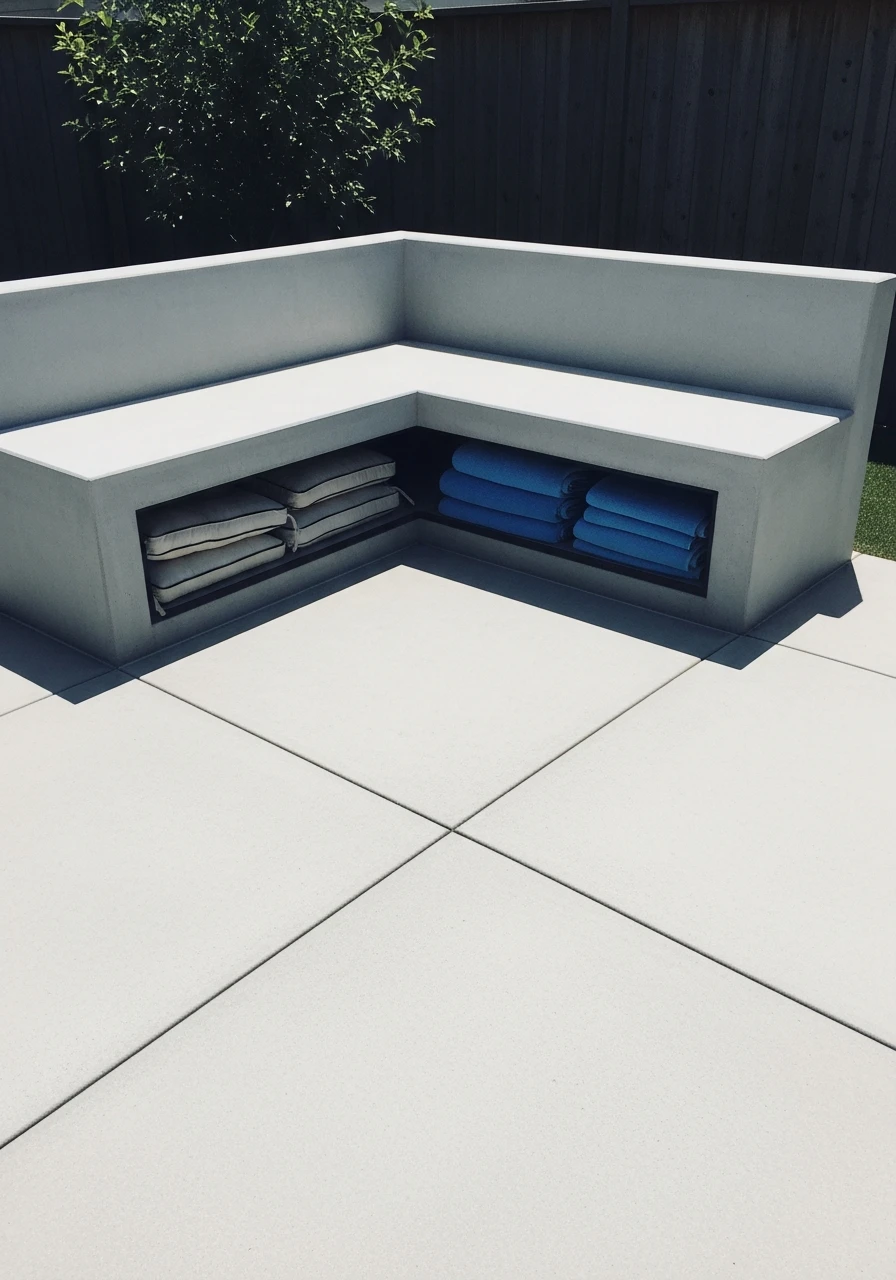
Design concrete benches with hidden compartments or storage built underneath the seating surface. This is perfect for stashing outdoor essentials, like cushions or pool toys.
- Ensure the storage area is completely waterproof.
- Use heavy-duty hinges for the lid.
- The bench lid can be made of wood for contrast.
Pro Tip: Hidden storage keeps the clutter off your beautiful concrete floor.
43. Shade Sail Anchors
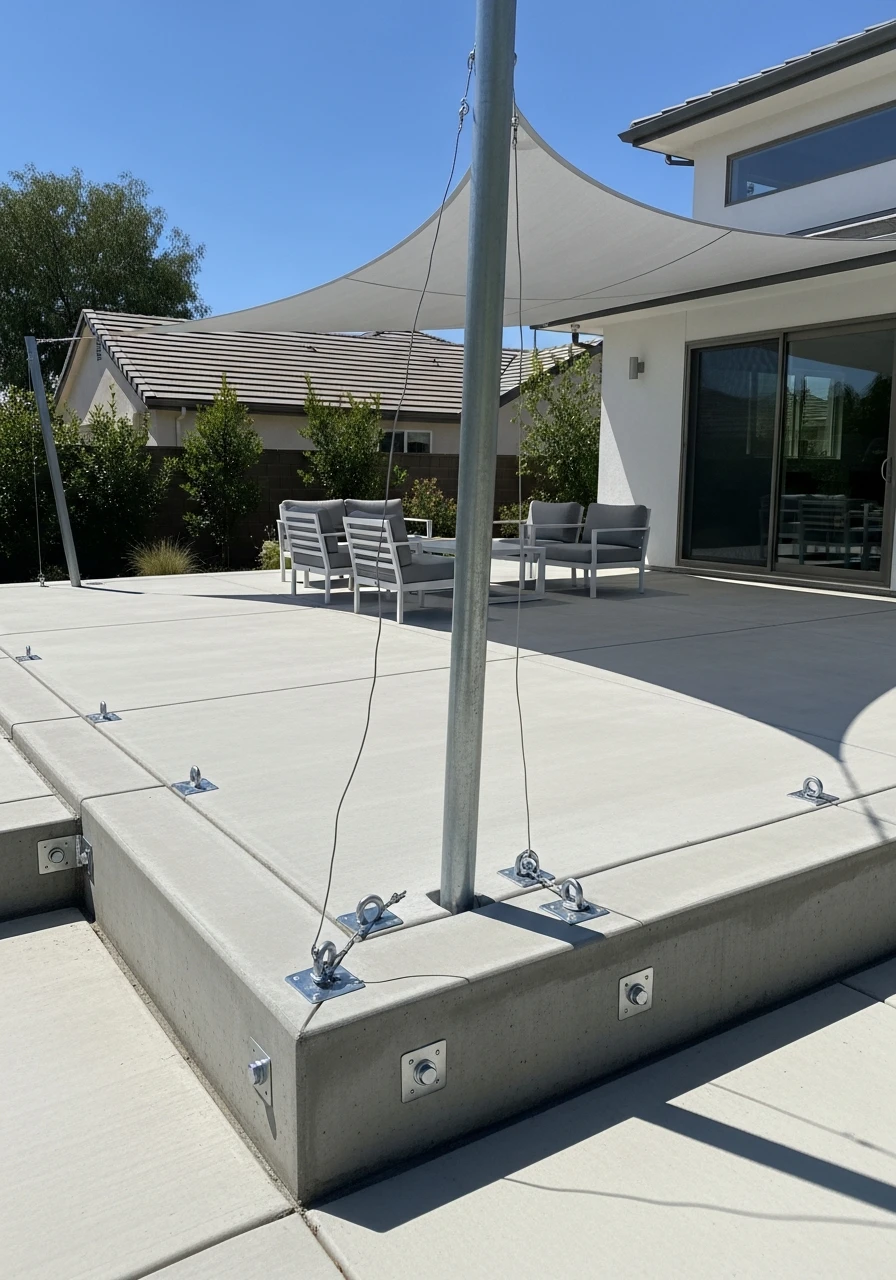
Install anchor points directly into the concrete slab or built-in concrete walls for flexible shade solutions. Shade sails are stylish and can be easily taken down when not needed.
- Use heavy-duty stainless steel hardware.
- Choose a neutral color for the sail (white or beige).
- Ensure the anchors are set deep into the concrete.
Pro Tip: Shade sails are an inexpensive way to get major sun protection.
44. Foldable Furniture Pairing
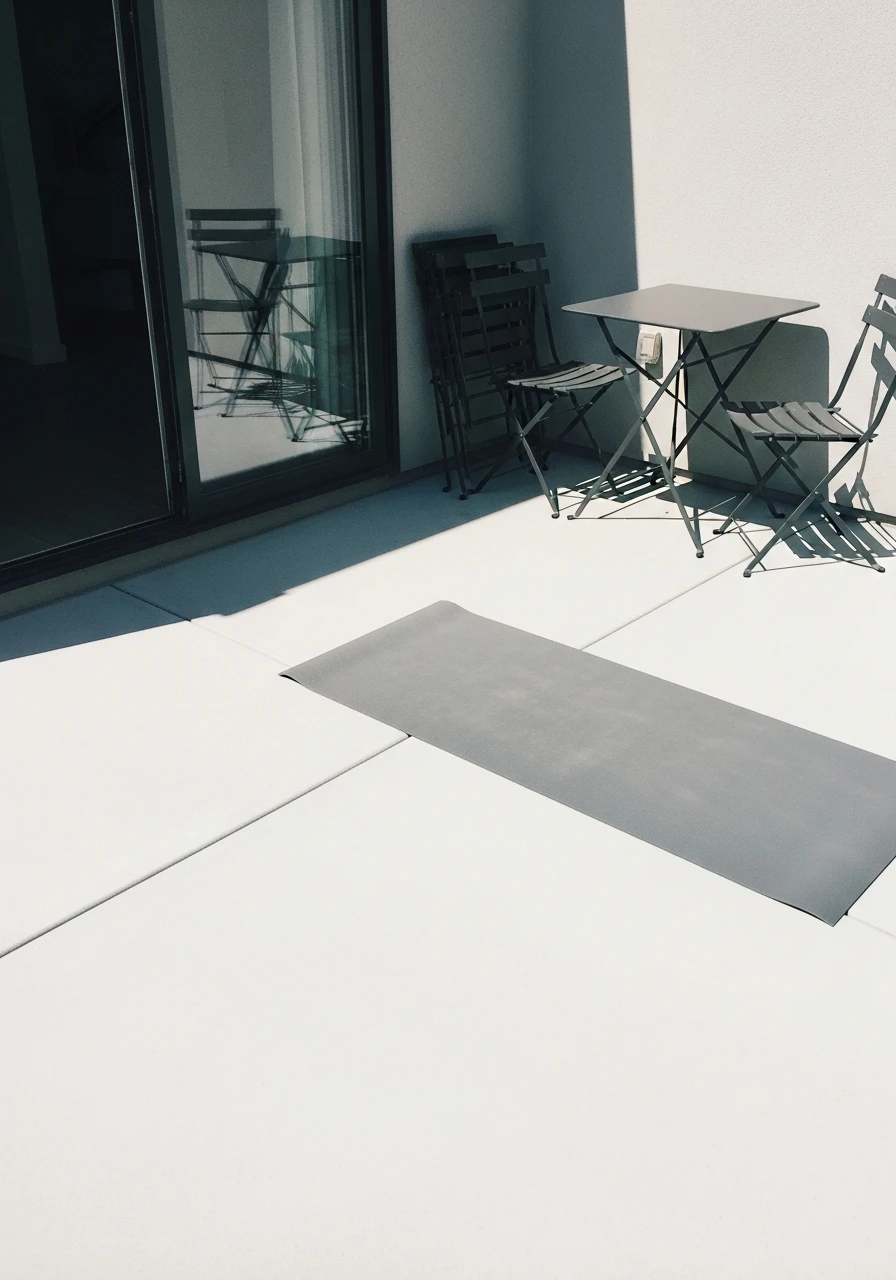
If space is limited, pair your concrete patio with sleek, foldable furniture. This allows you to easily tuck things away when you need the whole space for an activity like yoga or kids’ play.
- Choose lightweight aluminum or wood folding chairs.
- Keep the furniture color minimal (black or white).
- Use wall hooks for easy storage of the folded items.
Pro Tip: Foldable pieces make a small patio feel much more flexible and open.
45. Front Porch Concrete Slab
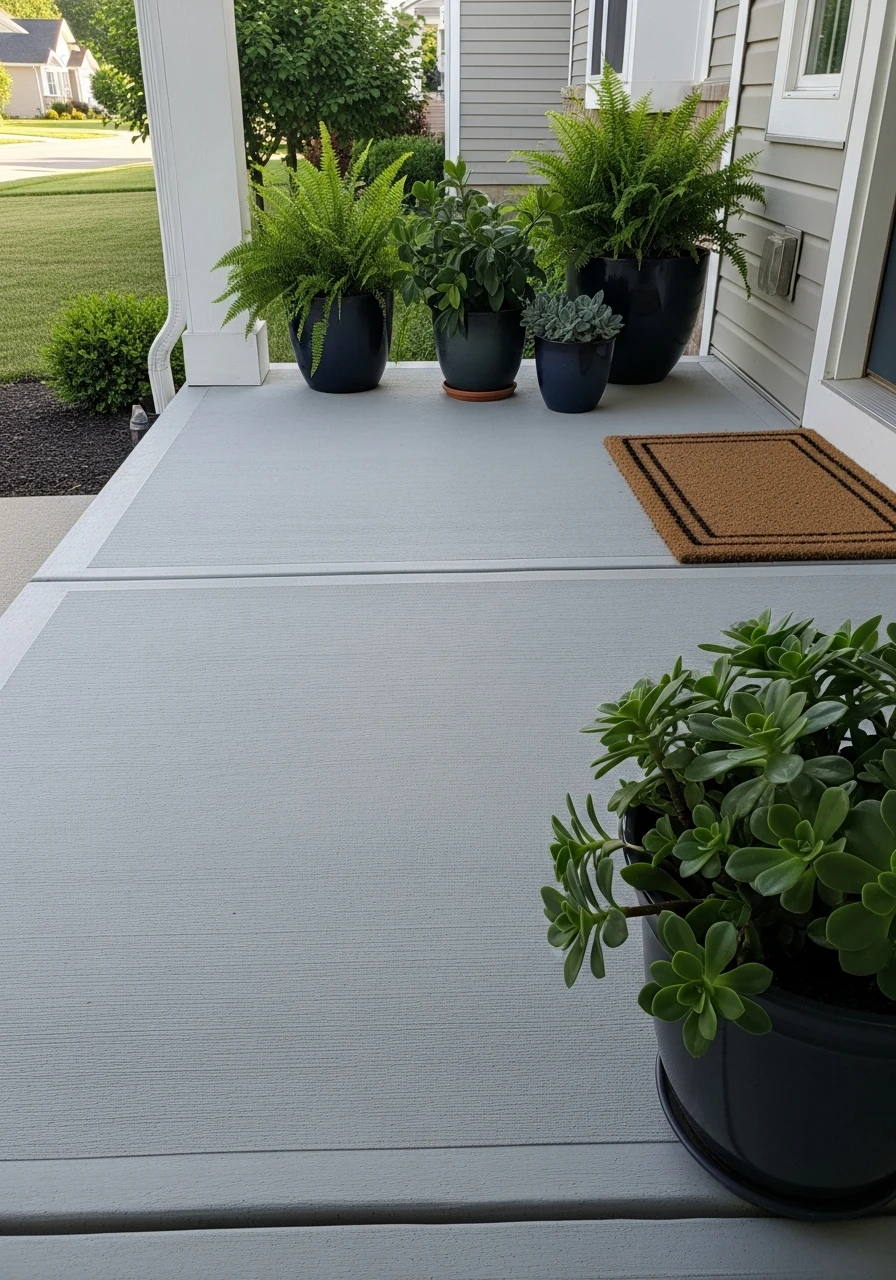
Use a simple, cleanly poured concrete slab to create a welcoming and durable front patio. This is a durable alternative to wood decking and provides a clean base for potted plants.
- Use a smooth or lightly broomed finish.
- Keep the area clutter-free.
- Add a beautiful outdoor welcome mat.
Pro Tip: A front concrete patio is a great spot for a rocking chair and a morning coffee.
46. Defined by Edge Planters
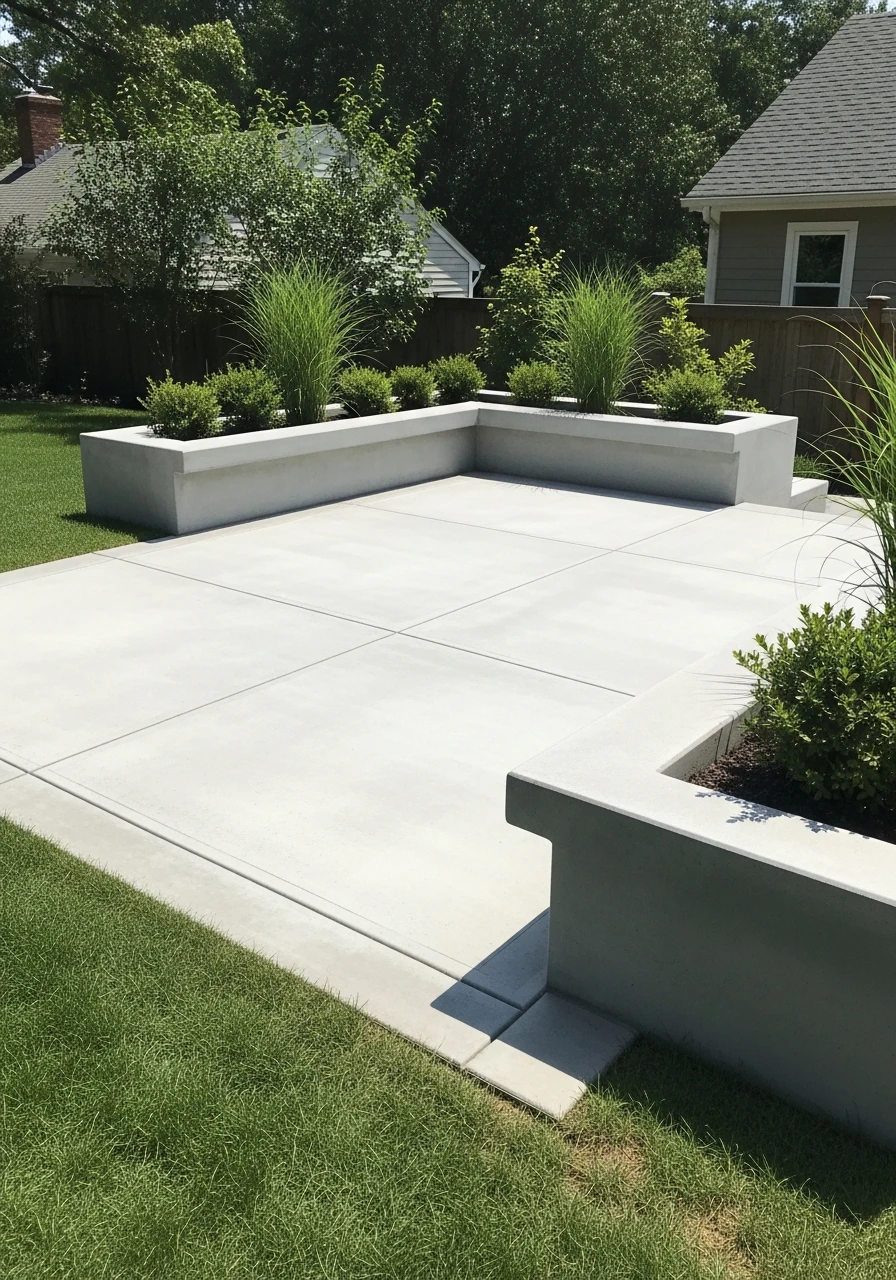
Use raised concrete edges or built-in planters to clearly define the patio’s boundaries. This looks intentional and separates the patio from the lawn or garden beds.
- The raised edge should be about 6–10 inches tall.
- Use the planters to introduce flowers or small bushes.
- This prevents soil or mulch from washing onto the patio.
Pro Tip: Defined edges give your patio a manicured, finished appearance.
47. Light Color for Small Yards
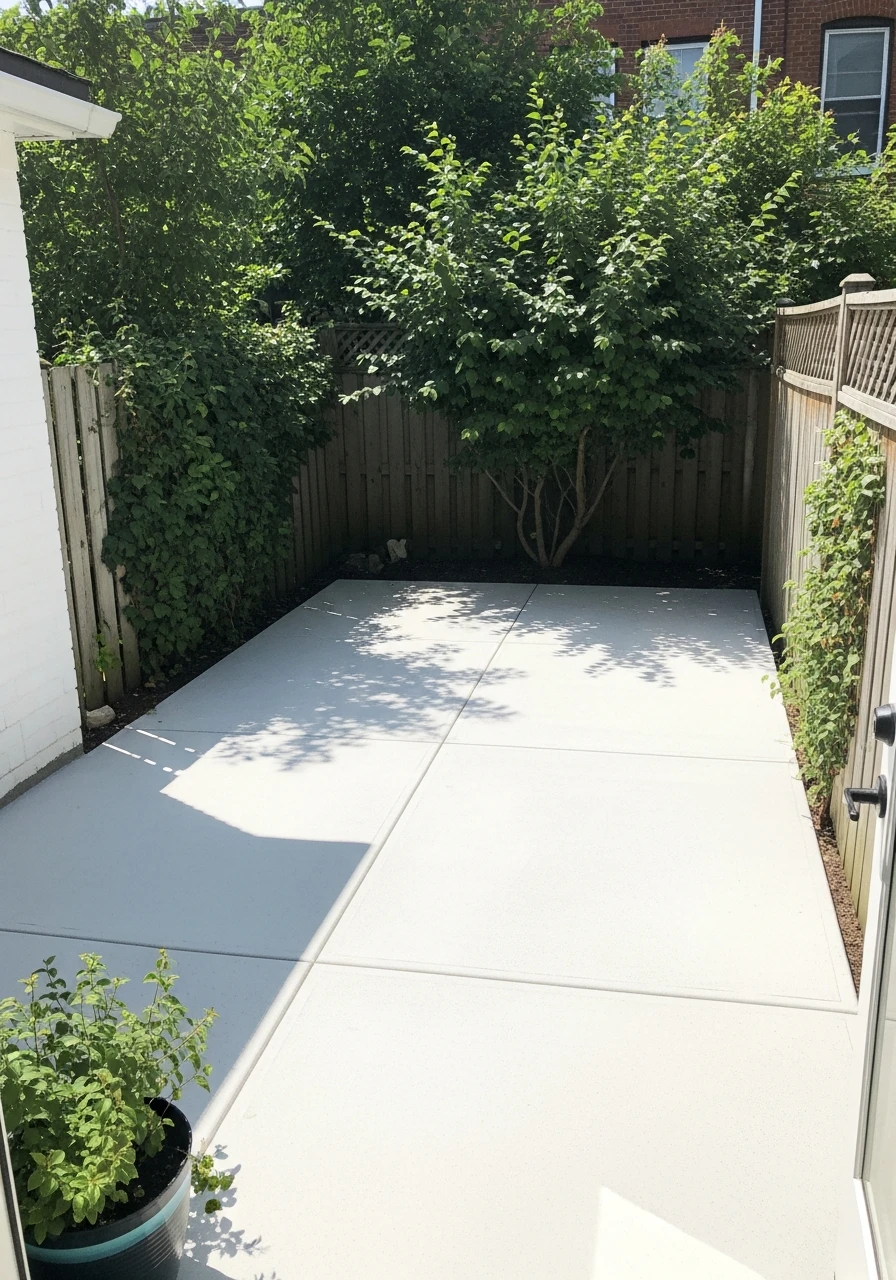
If you have a small backyard, choose the lightest possible concrete shades (almost white). Lighter colors reflect light and visually expand the space, making it feel less cramped.
- Pair the light floor with dark furniture for contrast.
- Ensure the light concrete is properly sealed to prevent stains.
- Avoid highly reflective finishes that cause glare.
Pro Tip: Light colors are the oldest trick in the book for making small spaces feel huge.
48. Stepping Pad Layout
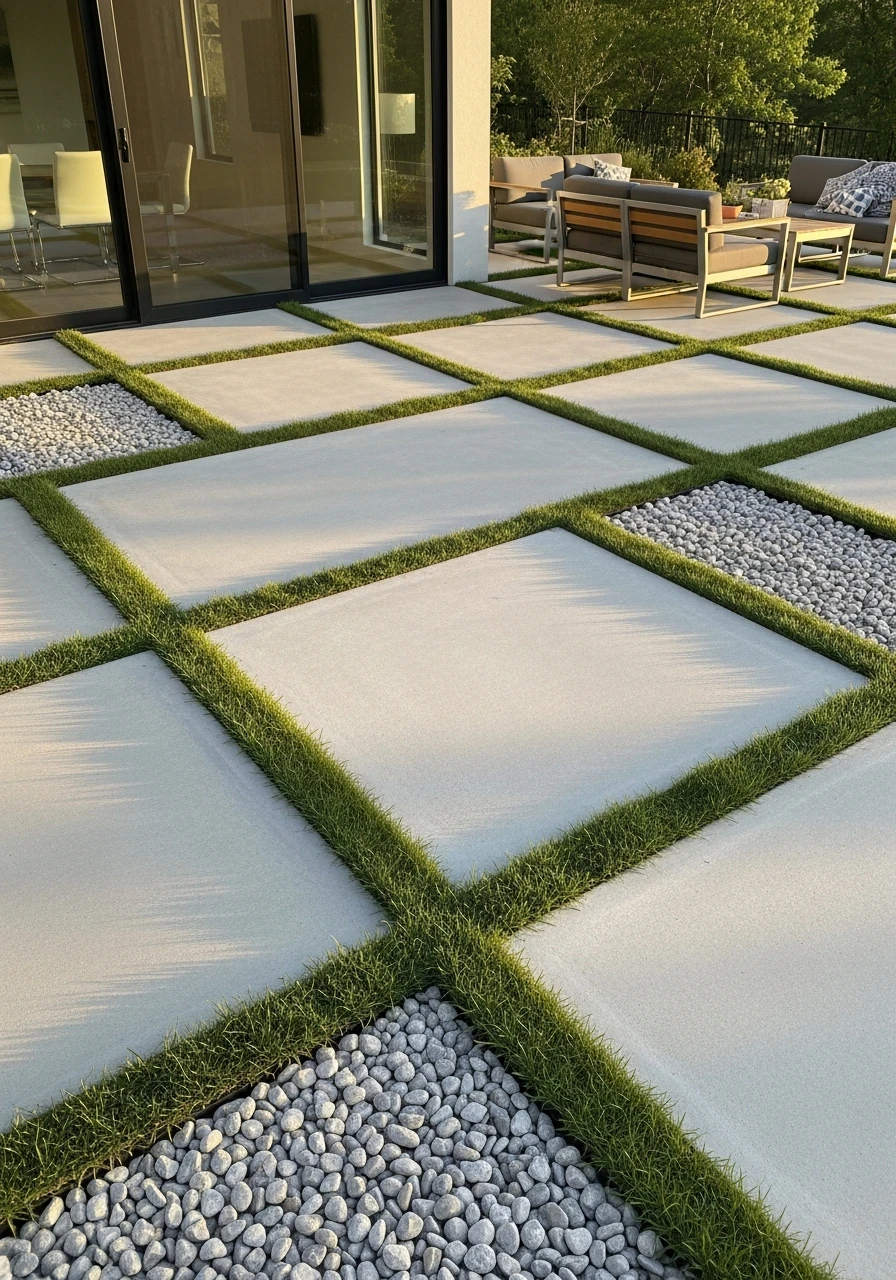
Instead of one large slab, arrange individual concrete pads with grass or decorative gravel between them. This creates a modern, airy walkway or lounge area with natural separation.
- Ensure the pads are thick and level.
- Use straight edges for a contemporary look.
- The pads should be wide enough for comfortable walking.
Pro Tip: Stepping pads are perfect for connecting different garden areas.
49. Reading Nook Design
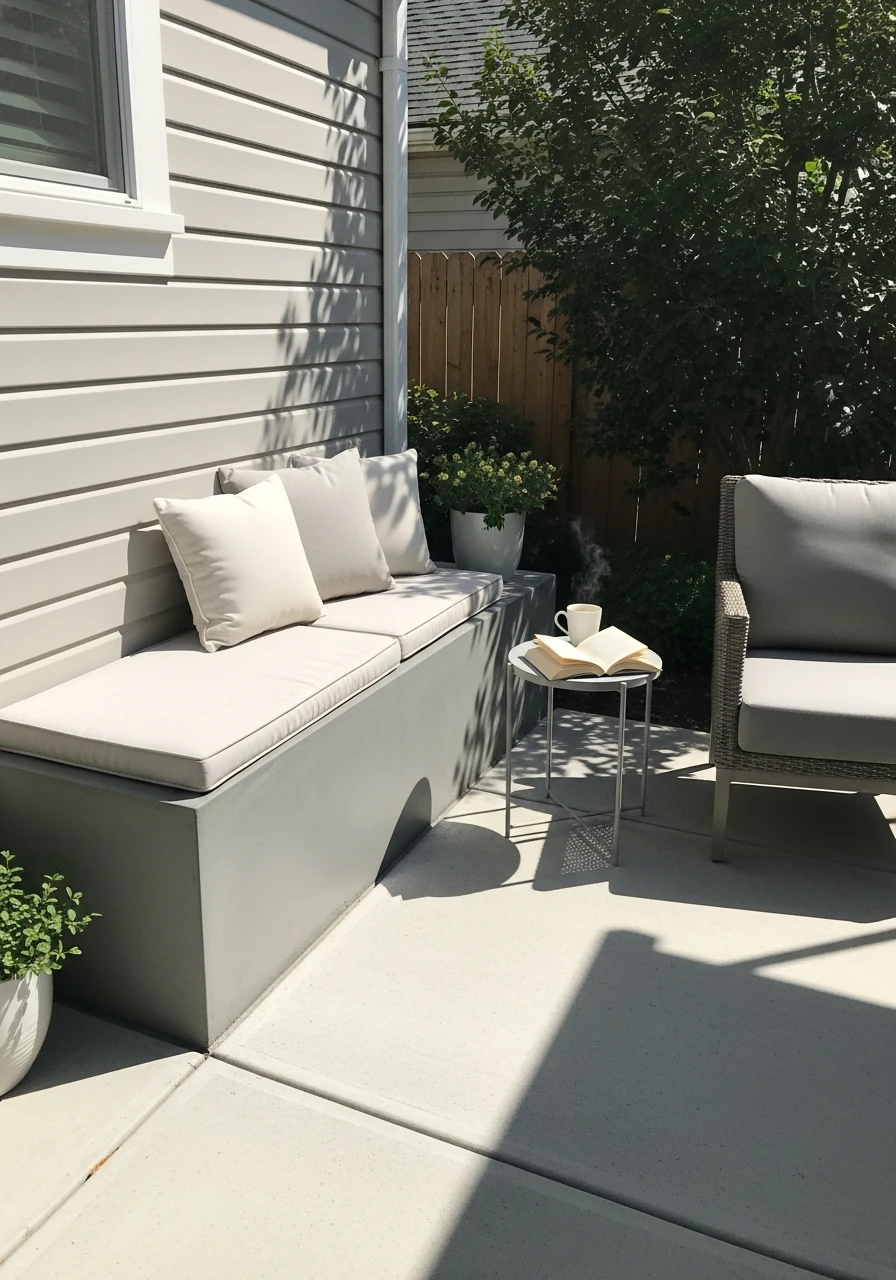
Create a quiet corner with a built-in concrete bench designed specifically for relaxation. Add a cozy outdoor chair and a small side table to make it a dedicated reading nook.
- Ensure the area is shaded or partially covered.
- Use large, fluffy pillows for the bench.
- Place the nook away from high-traffic zones.
Pro Tip: Every backyard needs a comfy spot dedicated just to relaxing.
50. Moss or Grass Joints
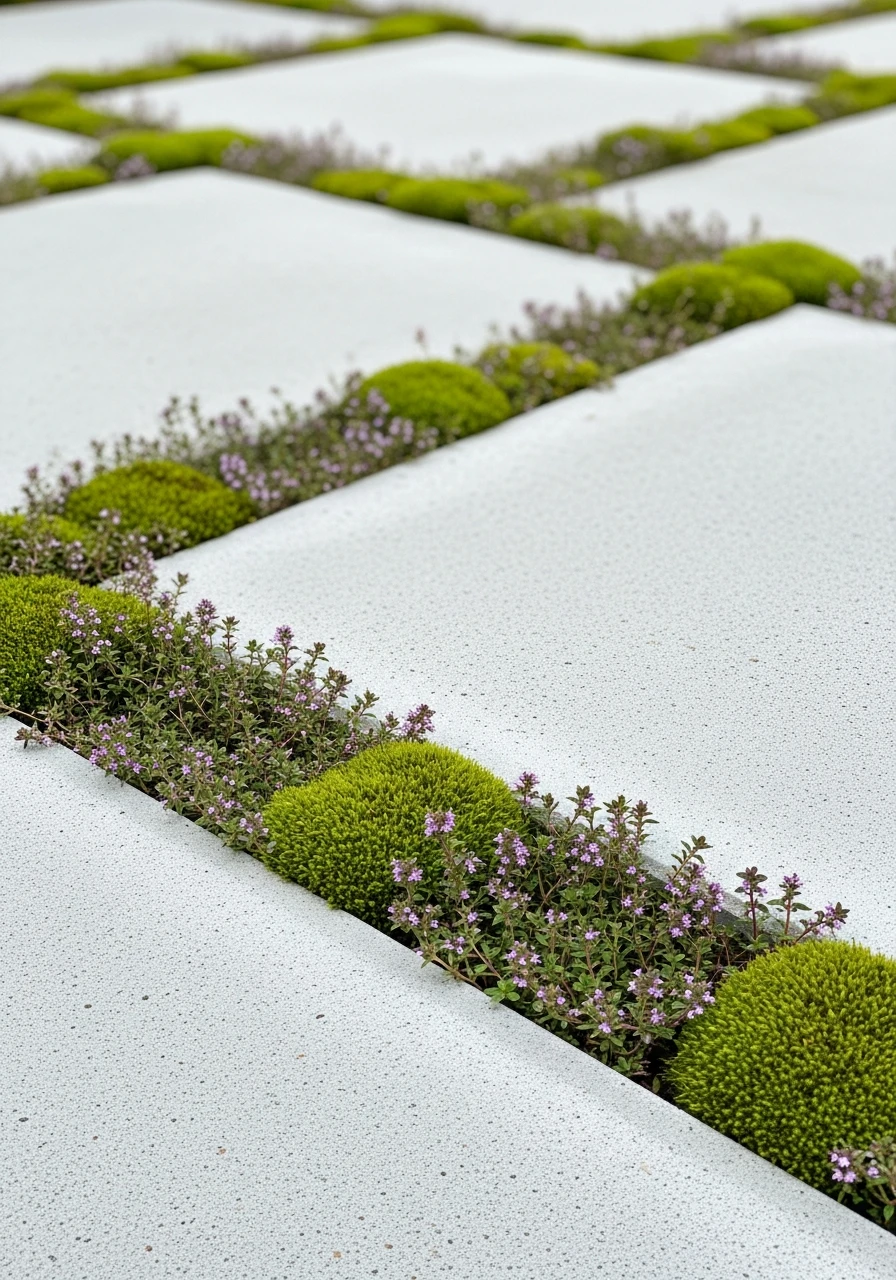
Allow low-growing greenery like moss or creeping thyme to grow between concrete stepping pads or saw-cut sections. This softens the hard edges and adds a beautiful, natural contrast.
- Choose plants that tolerate being walked on occasionally.
- Ensure joints are wide enough for plant growth.
- This adds a charming, rustic touch to modern concrete.
Pro Tip: The green joints smell amazing when you step on them!
See? Concrete doesn’t have to be boring or basic.
Whether you choose a simple stain, a clever saw-cut pattern, or full built-in seating, these ideas prove you can get a high-end, custom patio without draining your savings.
Time to get outside and start planning your perfect space!