50 Toy Storage Ideas

This post may contain affiliate links: full affiliate disclosure.
Are you constantly tripping over tiny plastic pieces?
It feels impossible to keep the house neat when kids are involved.
But great organization doesn’t need a massive budget!
These 50 simple toy storage ideas will help you reclaim your space and sanity today.
1. See-Through Toy Bins
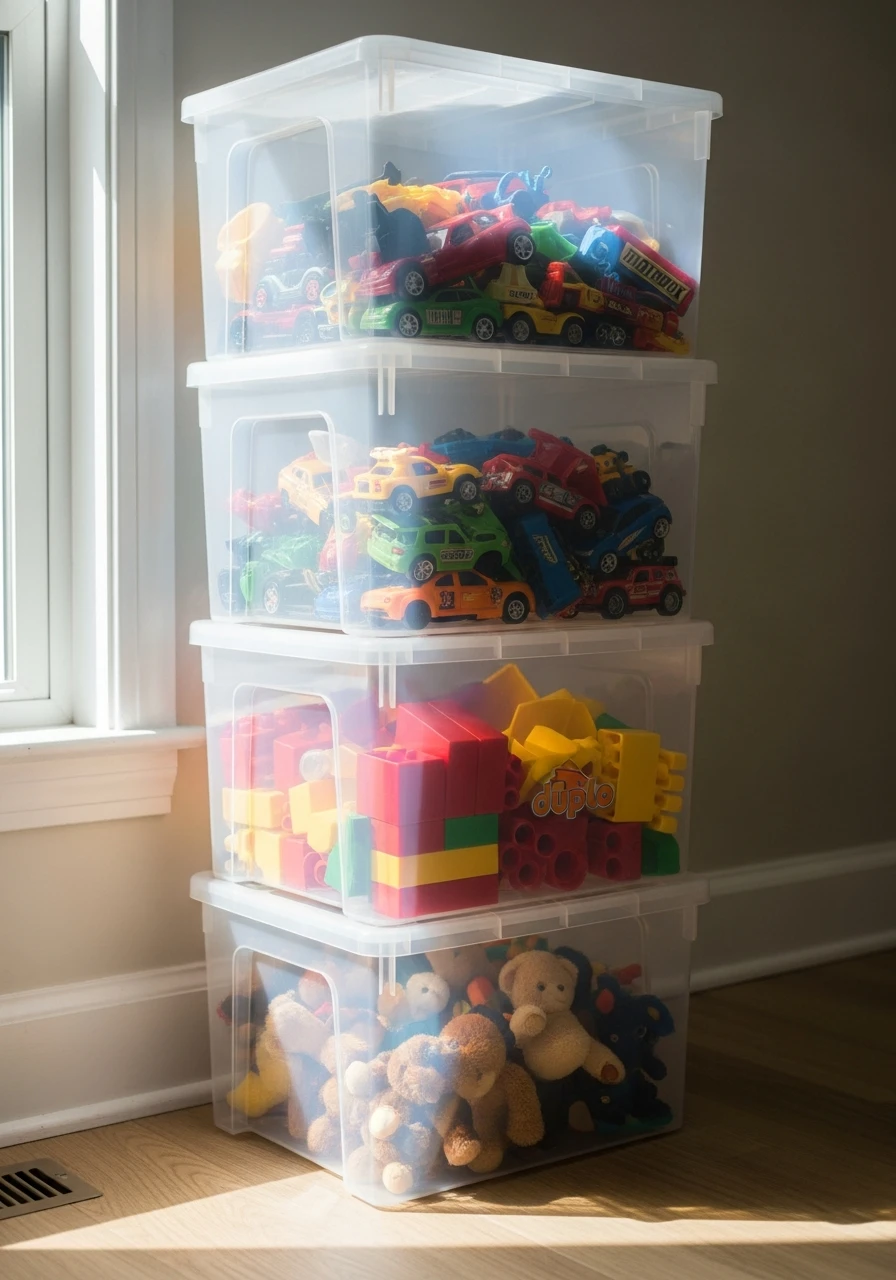
Use transparent plastic bins so kids can see what’s inside without opening them. This reduces the urge to dump out the entire contents just to find one car.
- Choose durable, food-grade clear plastic bins.
- Add picture labels on the front for non-readers.
- Stack bins safely to save floor space.
Pro Tip: Laminate the picture labels so they last longer against sticky fingers.
2. Giant Woven Stuffed Animal Baskets
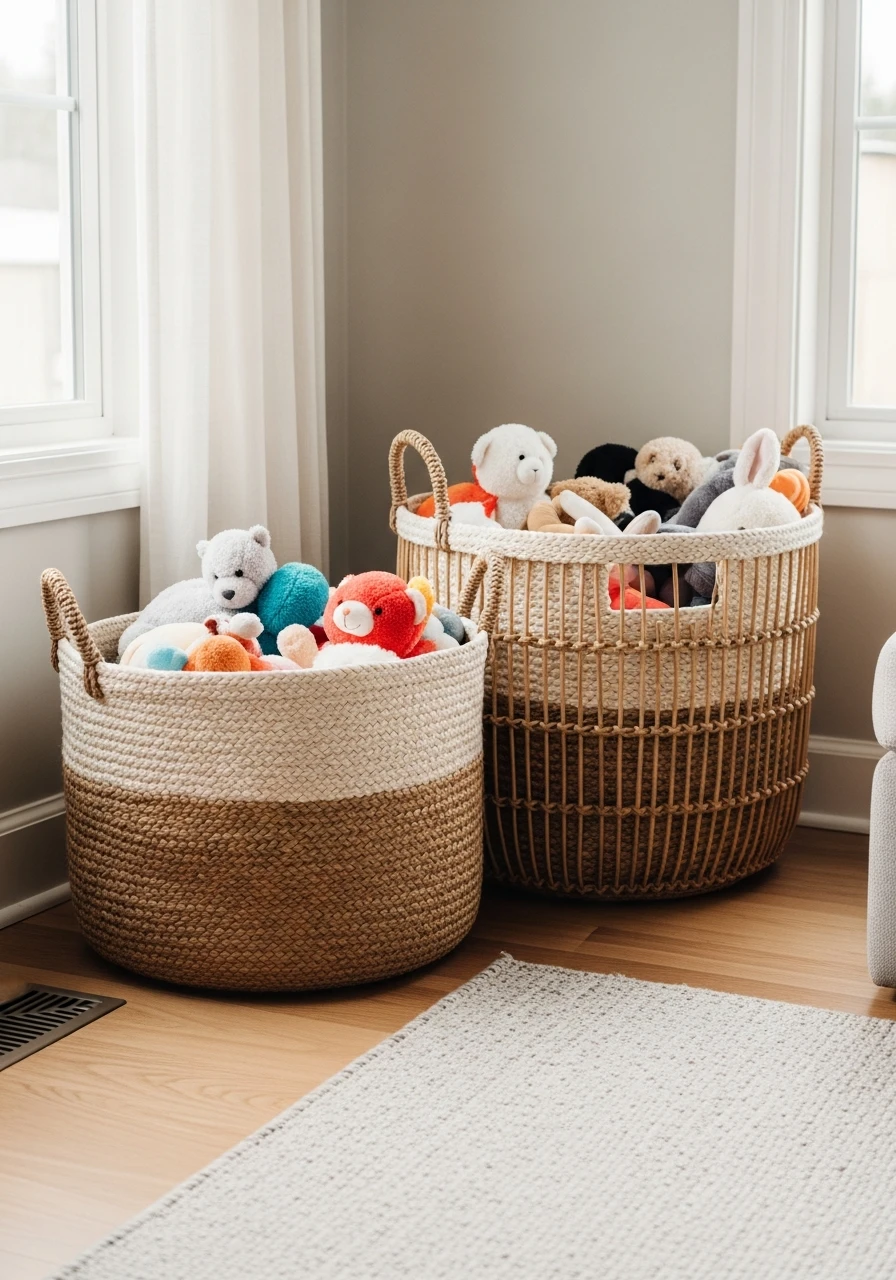
Oversized woven baskets are perfect for corralling plush toys. They keep soft toys contained while adding a decorative, cozy look that fits right in with your home style.
- Look for baskets with handles for easy moving.
- Choose a neutral tone like jute or rattan.
- They work best for soft, bulky items.
Pro Tip: Place one by the reading chair—it looks like decor, not storage.
3. Baskets That Match Your Decor
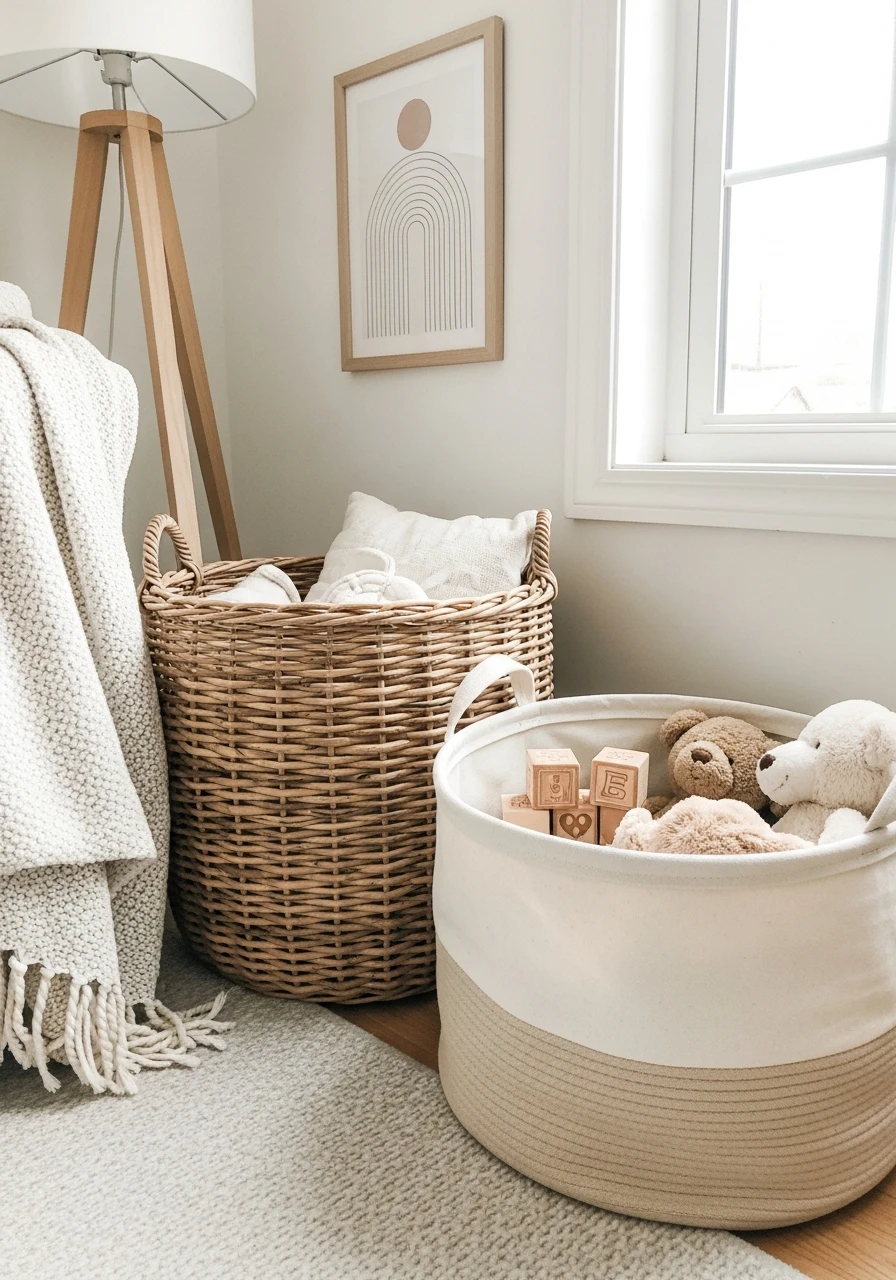
Choose fabric or wicker baskets that blend with the room’s color palette and textures. This makes toy storage feel intentional and stylish instead of just messy containment.
- Match the basket material to your existing furniture.
- Stick to three main colors for a cohesive look.
- Use these baskets in shared living spaces.
Pro Tip: Dark colors hide dirt better, which is a big win in a playroom.
4. Easy Pull-Out Storage Boxes
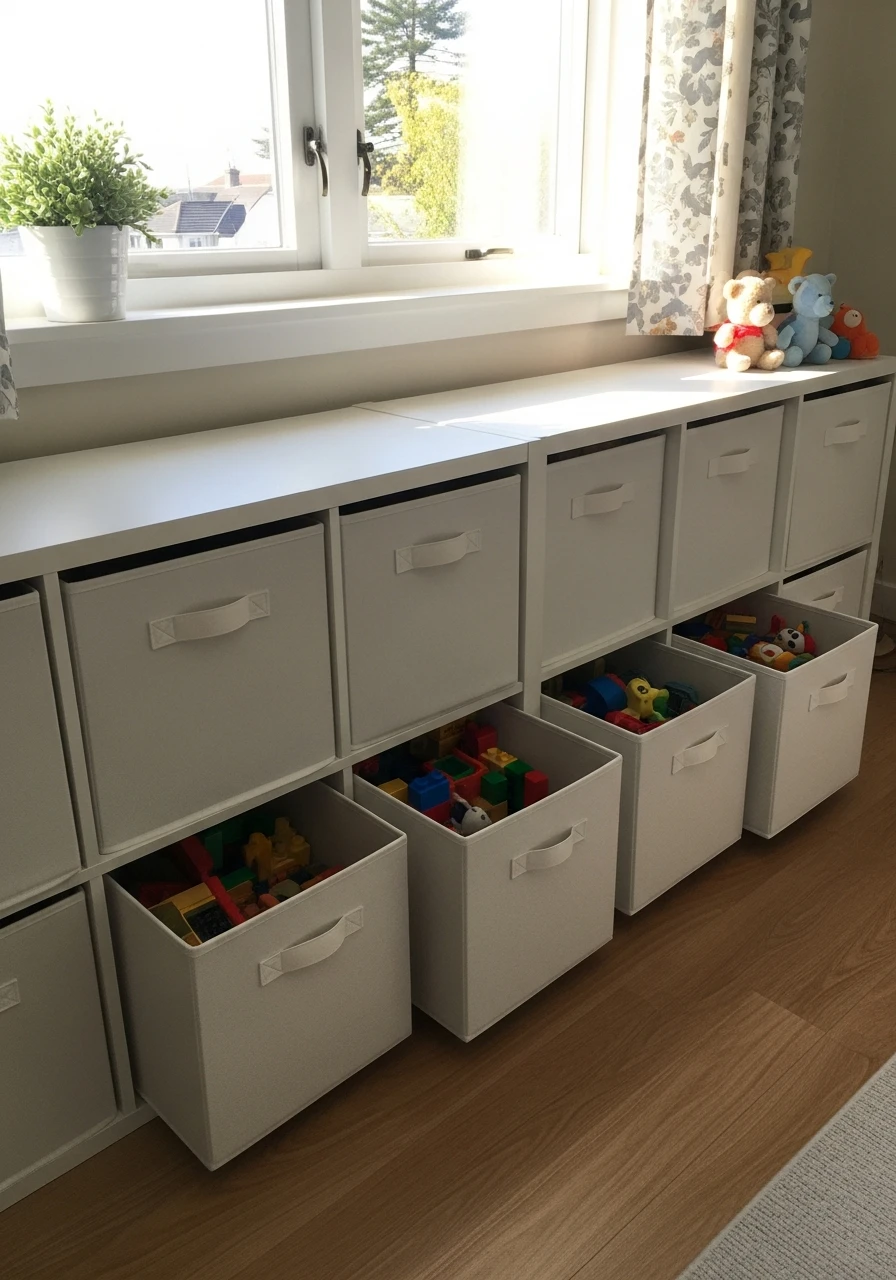
Pull-out boxes work well inside shelving units or under desks. They allow kids to easily access toys and slide everything back in when cleanup time comes.
- Ensure they have sturdy handles for small hands.
- Use felt pads underneath to protect floors or shelves.
- Assign one category per box (e.g., trains only).
Pro Tip: Measure your shelf depth exactly before buying pull-out boxes.
5. Roll Toys Under The Bed
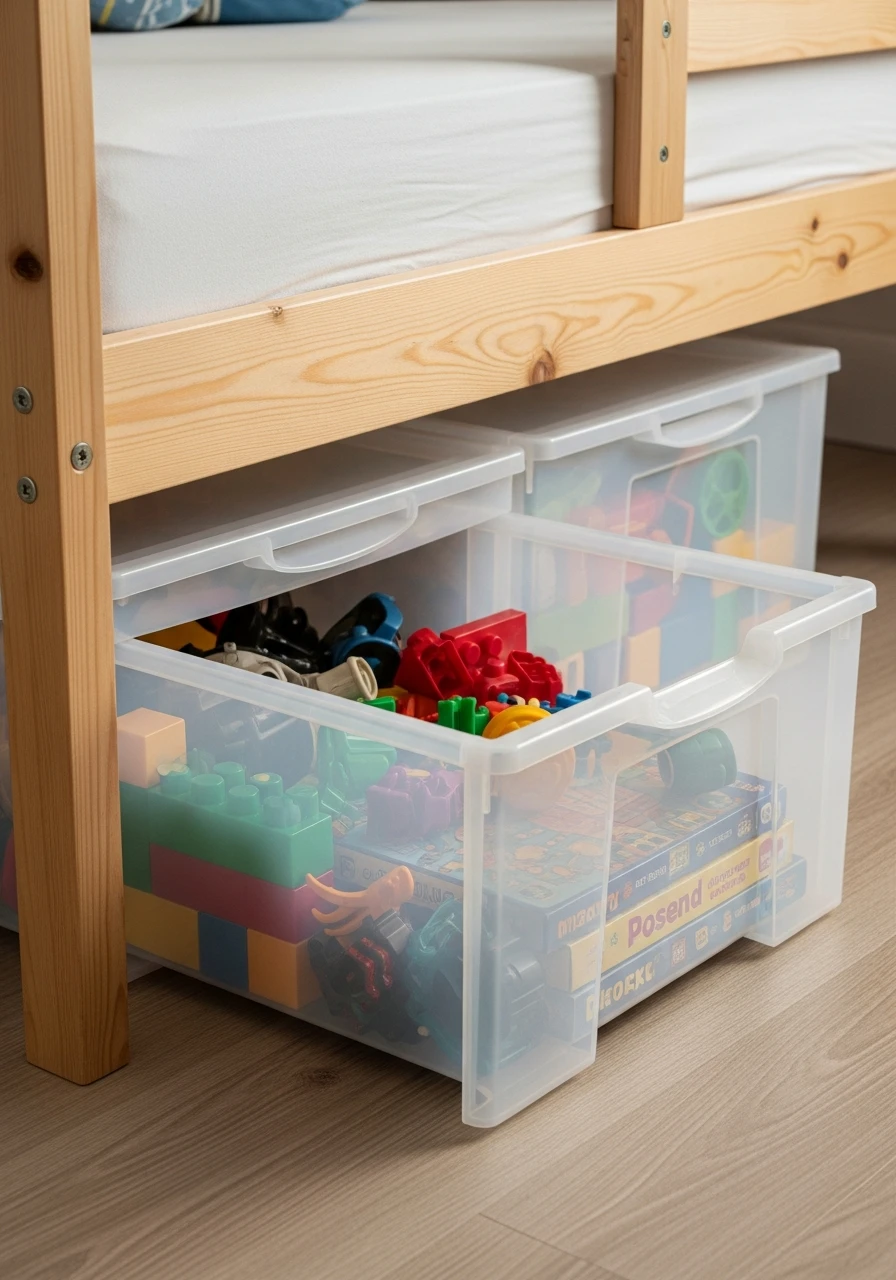
Rolling drawers under the bed maximize unused space and are ideal for toys not used every day. They keep floors clear and toys hidden but still easily accessible.
- Use low-profile containers with wheels.
- Store seasonal or less-used items here.
- Make sure the containers fit the bed frame height.
Pro Tip: These are perfect for storing large train tracks or building sets.
6. Foldable Fabric Toy Bins
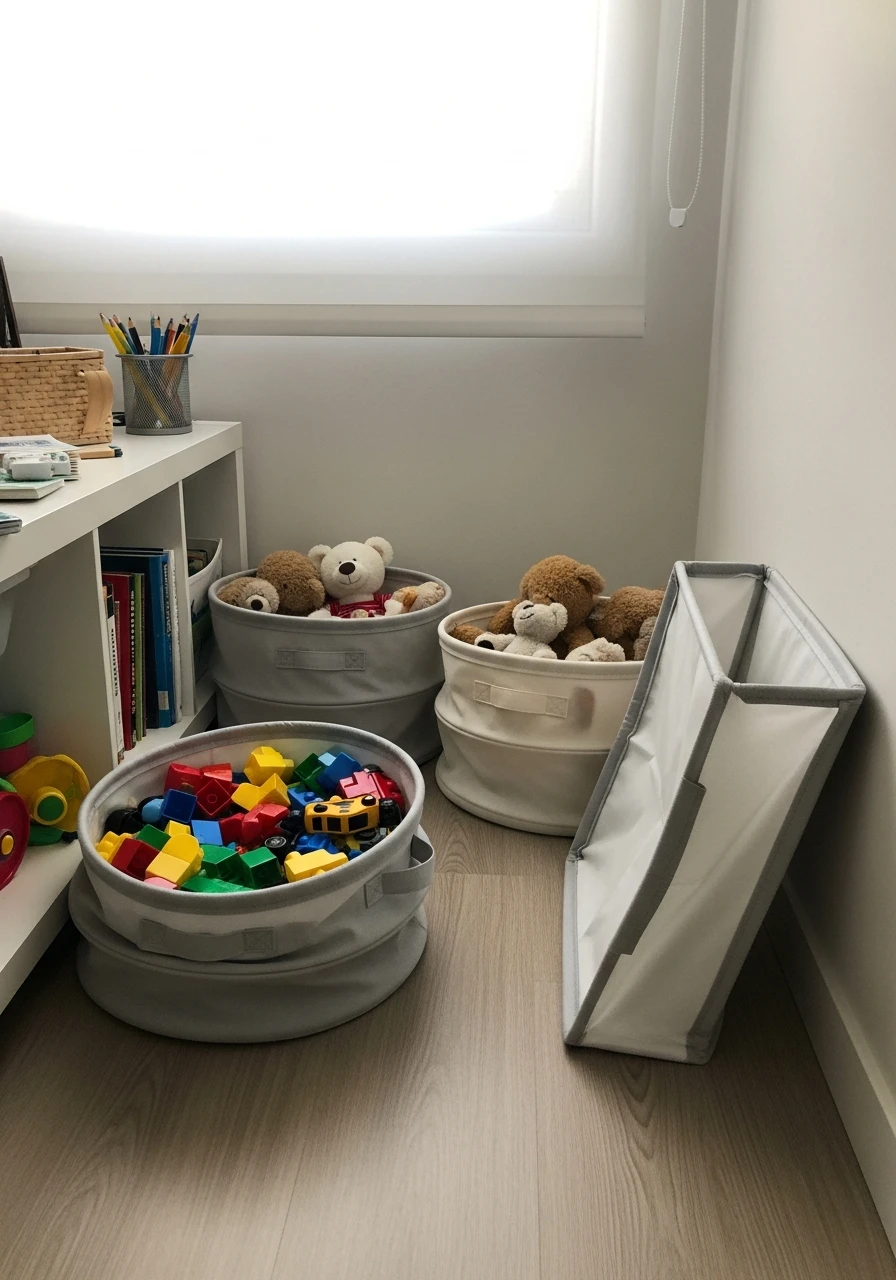
Fabric bins that fold flat are great for flexible storage options. They can be stored away when not in use, making them ideal for small homes or shared spaces that need quick decluttering.
- Use them for temporary storage, like sleepovers.
- Store them flat in a drawer when empty.
- Choose durable canvas material.
Pro Tip: These are perfect for storing blankets or pillows that get used during movie time.
7. Use Color-Coded Bins
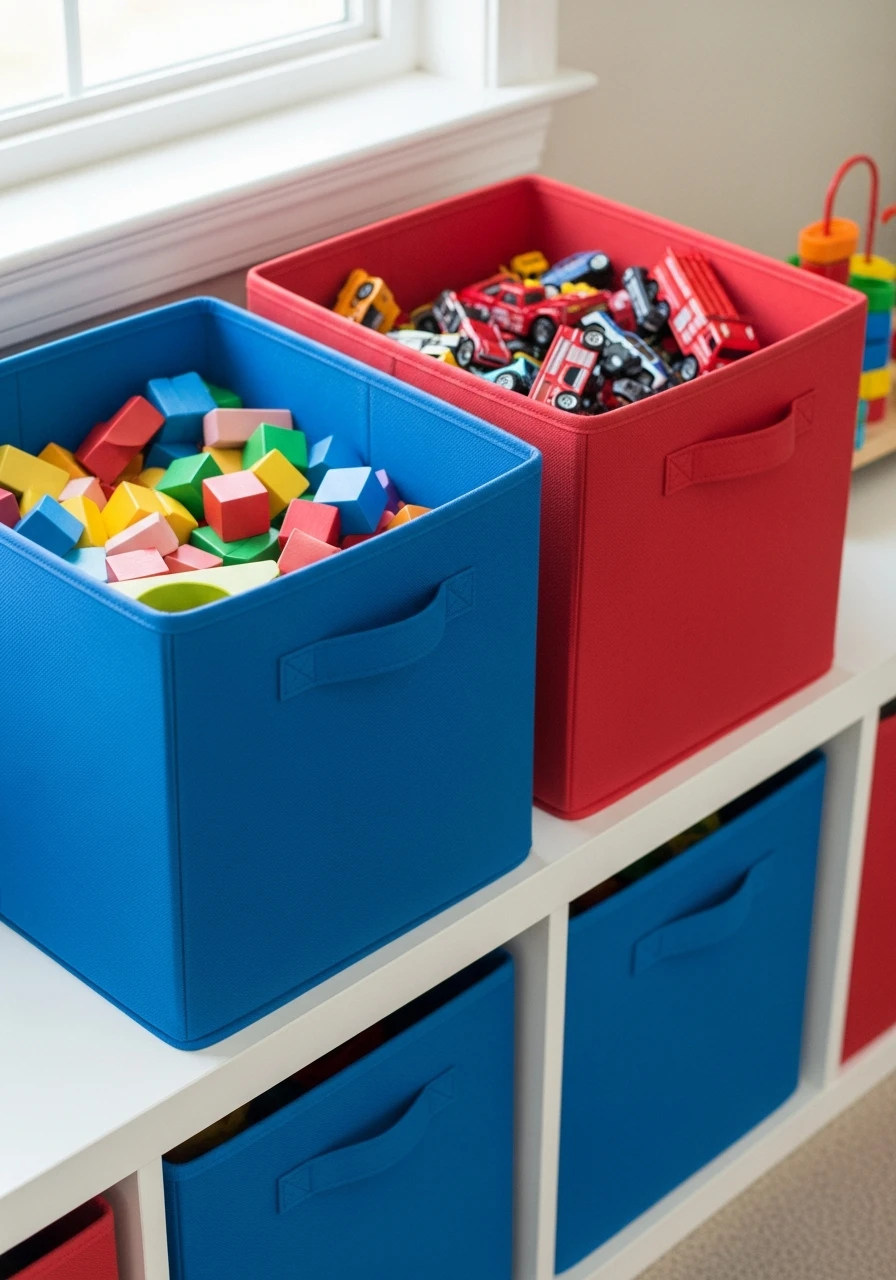
Assign a specific color to each toy category, such as blue for blocks or red for cars. This system makes sorting simple and teaches kids organization skills without needing to read labels.
- Keep the color system consistent across rooms.
- Use primary colors for easy recognition.
- This works especially well for toddlers.
Pro Tip: Take a photo of the color key and tape it to the wall for a quick cheat sheet.
8. Stack Blocks Up High
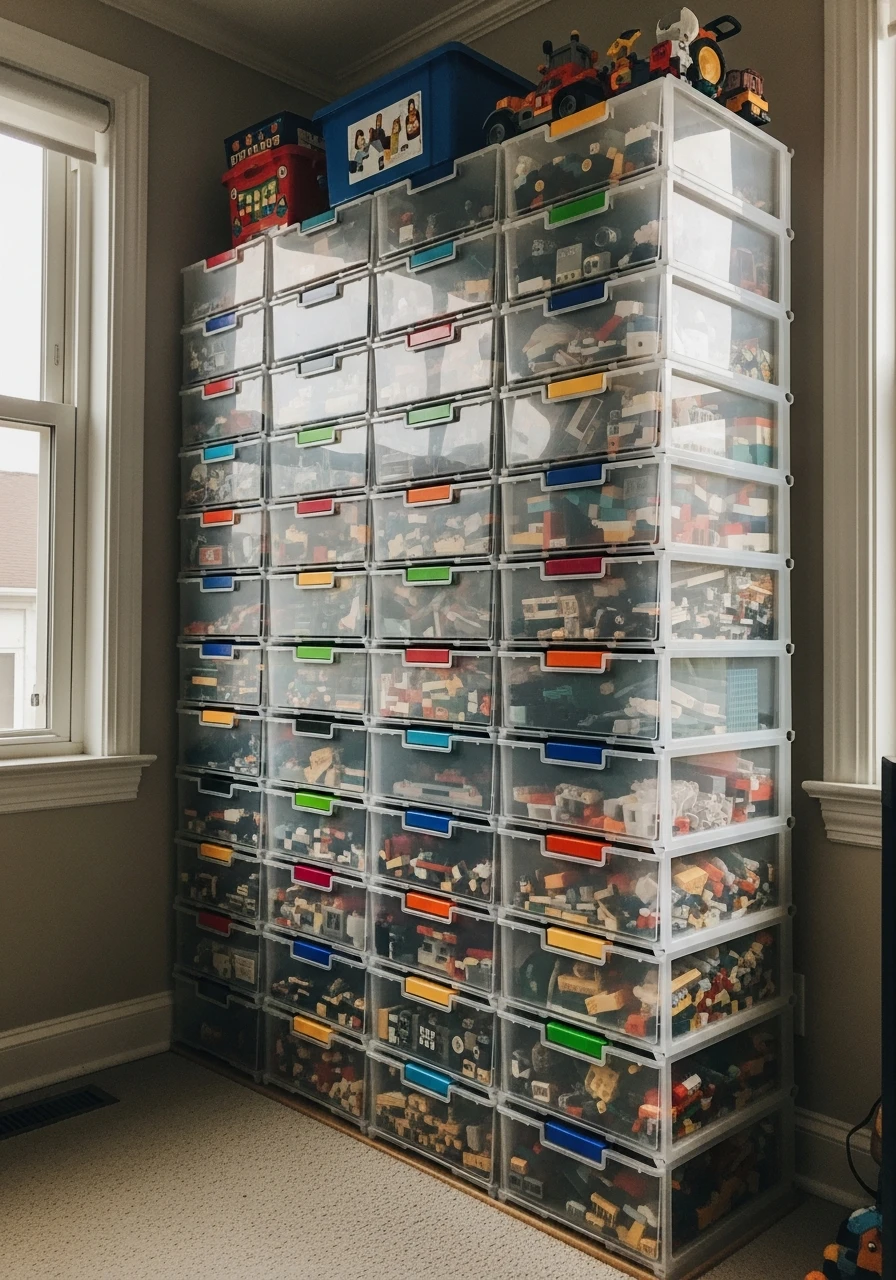
Stackable boxes are ideal for Lego, blocks, and construction toys. They save space vertically and keep small pieces contained so you aren’t finding tiny bricks everywhere.
- Look for boxes with secure, locking lids.
- Use separate boxes for different types of blocks.
- Keep the stacks low enough for kids to access.
Pro Tip: Label the side of the box, not just the lid, so you know what’s inside when they are stacked.
9. Clear Boxes For Visual Kids
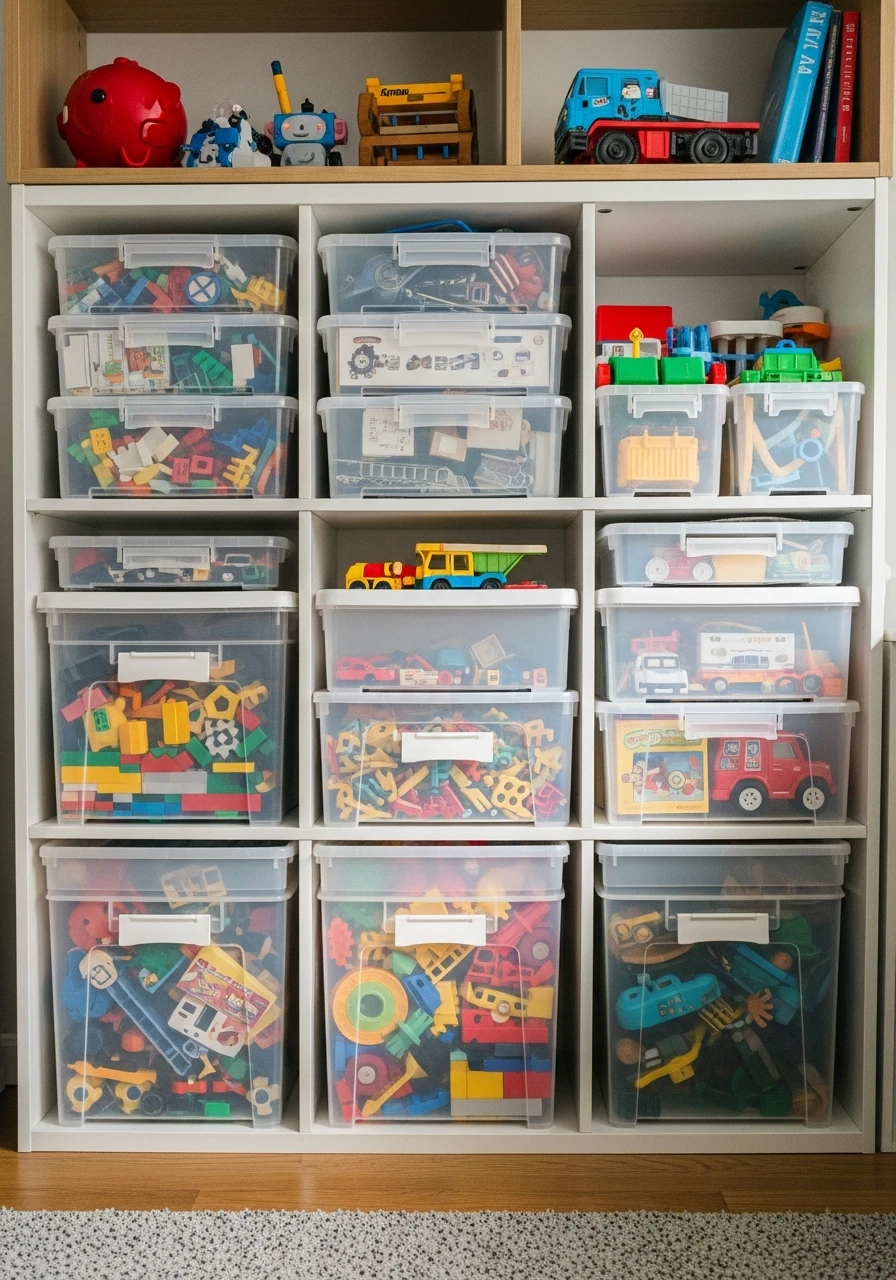
Clear storage boxes reduce mess by letting kids see everything at once. This minimizes the habit of dumping every box out and makes choosing toys faster and less chaotic.
- Use clear shoe box containers for small accessories.
- Group similar toys together in one clear box.
- Keep the boxes at eye level for kids.
Pro Tip: If the toys are colorful, clear boxes actually add a fun pop of color to the room.
10. Grab-and-Go Toy Caddies
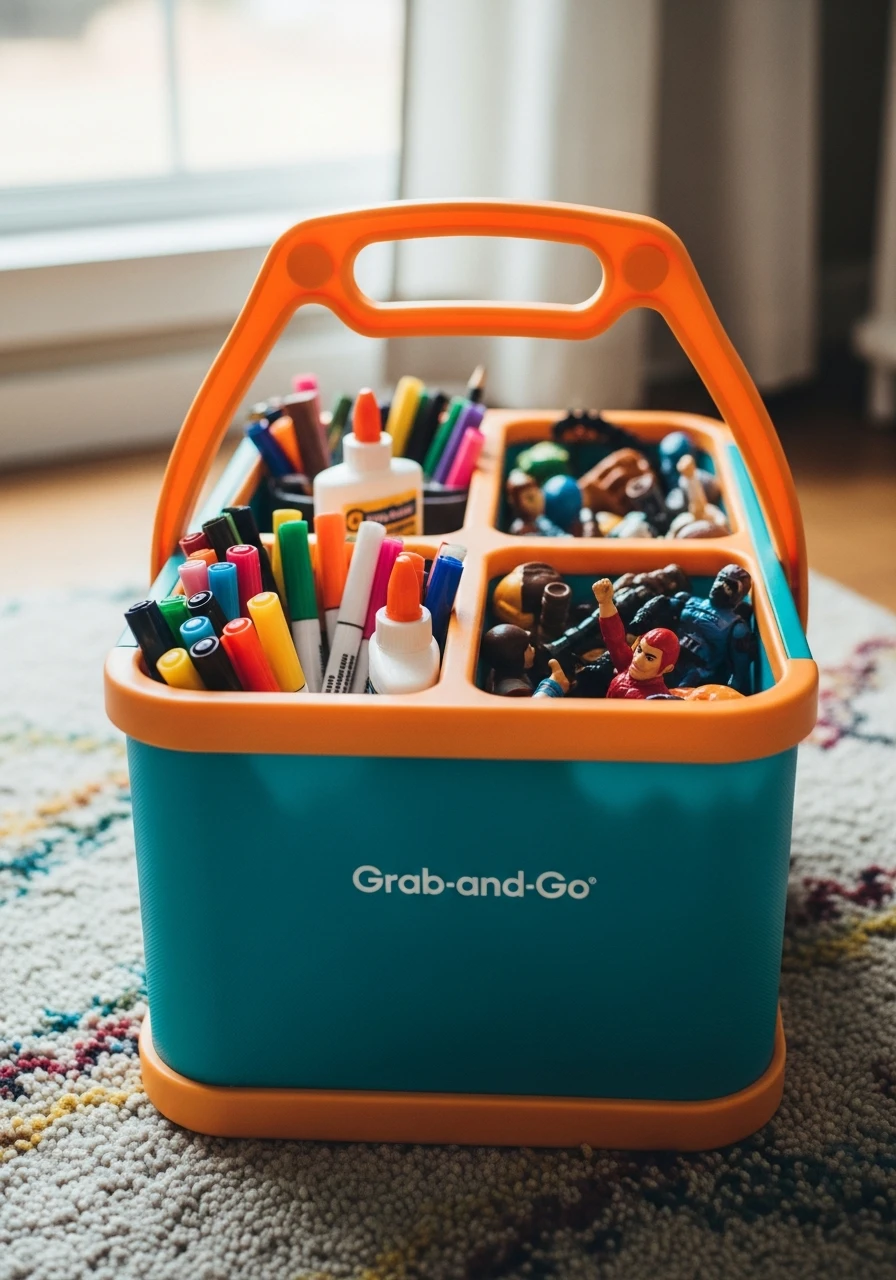
Toy caddies allow kids to carry toys from room to room easily. They work well for art supplies, dolls, or action figures and encourage independent cleanup since the toys stay together.
- Choose caddies with sturdy central handles.
- Use divided caddies for better organization.
- Limit one caddy per child for portable toys.
Pro Tip: Keep the caddy near the exit of the playroom to remind kids to take their toys with them.
11. Wall Shelves Off The Floor
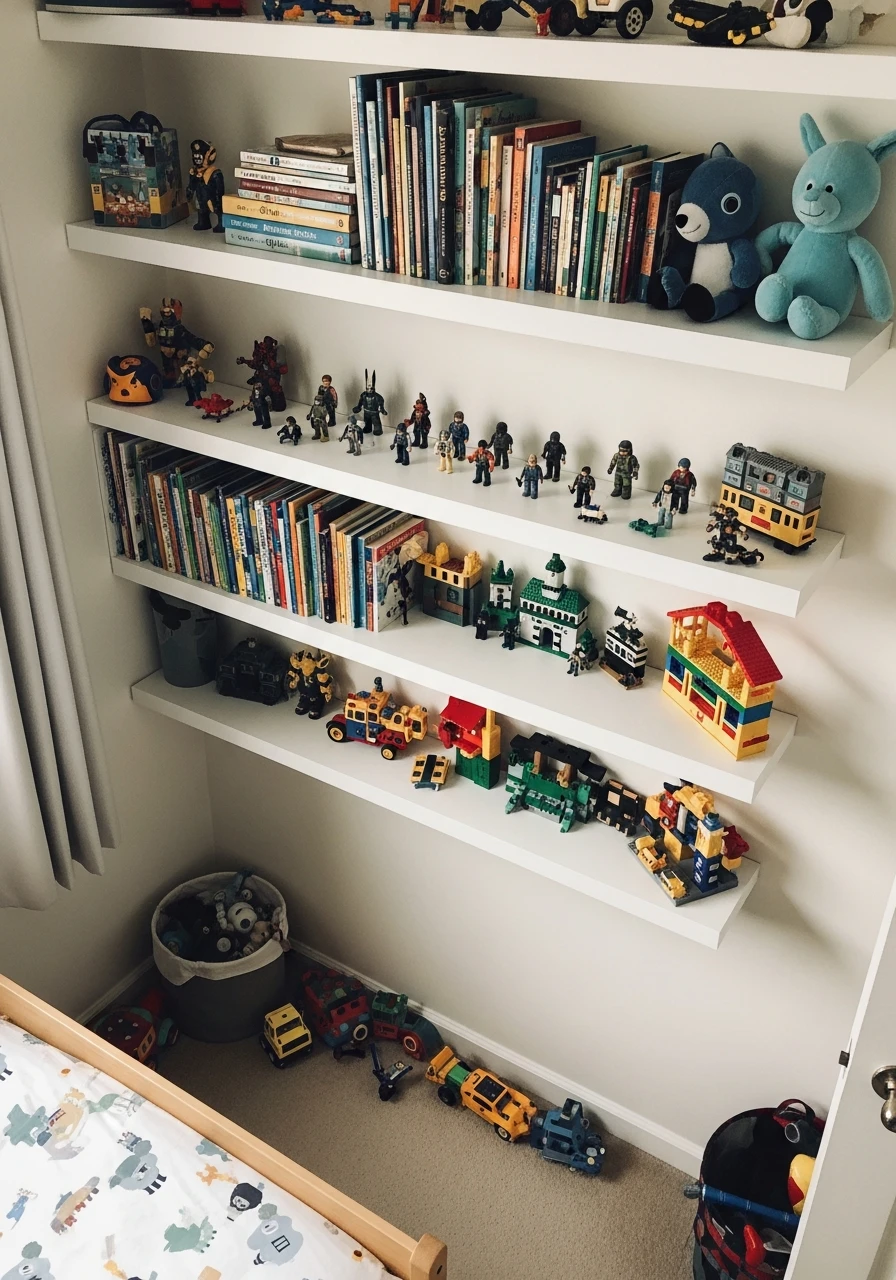
Wall shelves keep toys off the floor and free up play space. They are ideal for books, figurines, and small collections that you want to keep visible but out of the way.
- Install shelves at kid-friendly heights.
- Use small baskets on the shelves for tiny pieces.
- Choose floating shelves for a modern look.
Pro Tip: Use picture ledge shelves for books—the covers face out, making story time easier.
12. Cubby System With Labels
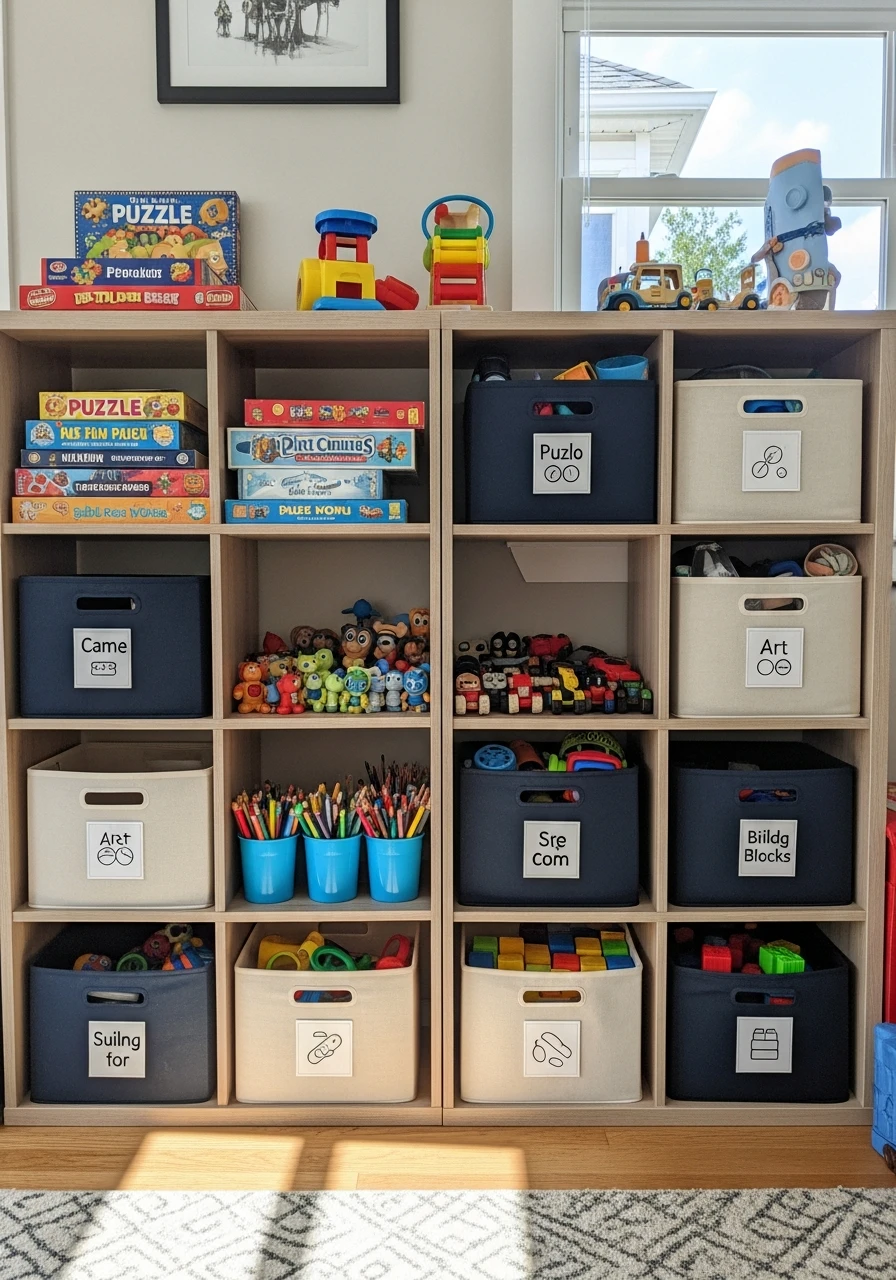
Cubby storage creates designated spots for each toy category. Adding clear labels helps kids return toys to the correct place every time, minimizing clutter and confusion.
- Invest in a durable cubby unit.
- Use matching fabric bins in the cubbies.
- Label both the bin and the shelf space.
Pro Tip: Cubby systems are great because they offer a clean, uniform look even if the contents are chaos.
13. Low Shelves For Toddlers
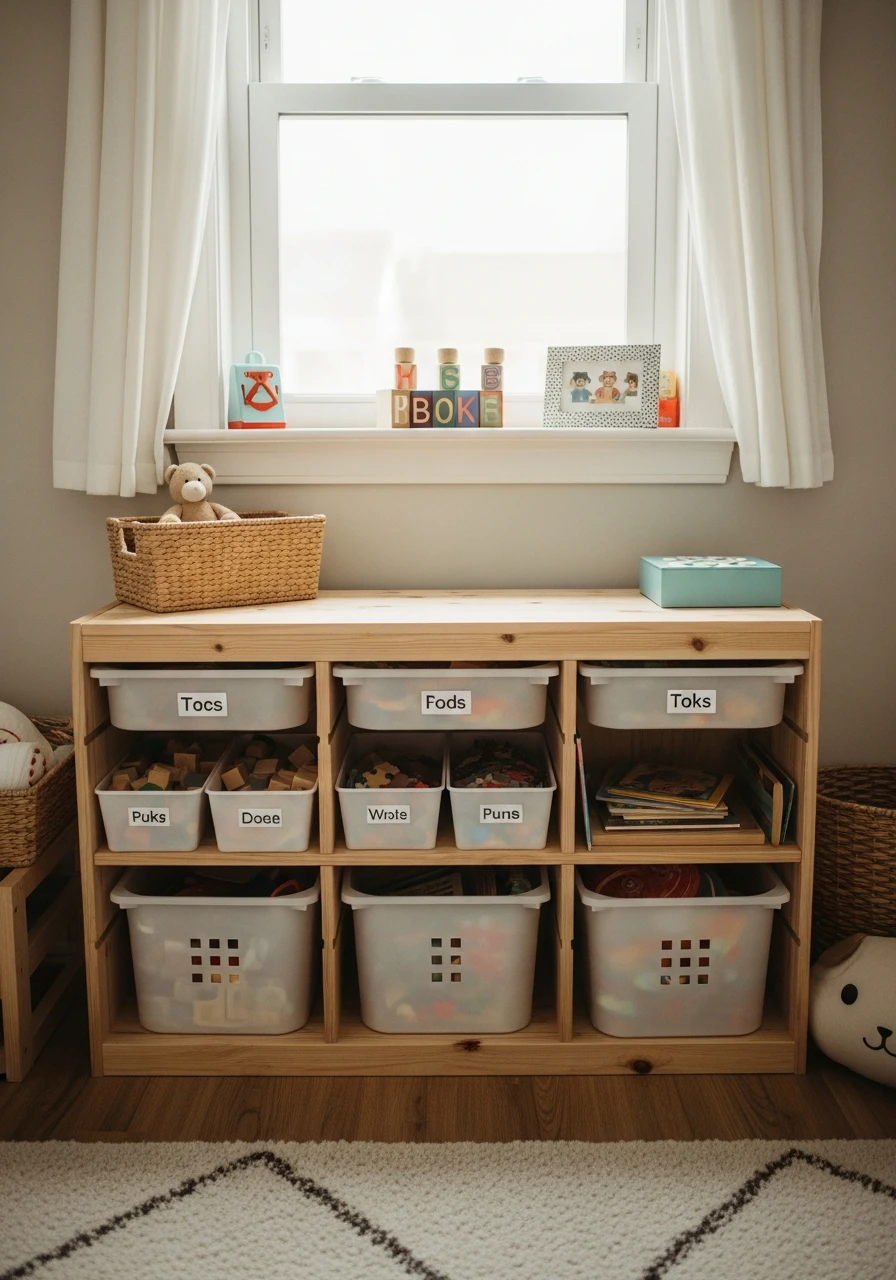
Low shelves allow young children to access toys independently and safely. This promotes autonomy and makes cleanup easier without needing constant adult help.
- Anchor all low shelves securely to the wall.
- Keep the most used toys on the bottom shelf.
- Use open baskets that are easy to grab.
Pro Tip: Only put a few toys out at a time to prevent decision fatigue for little ones.
14. Bookcase Hides Toy Clutter
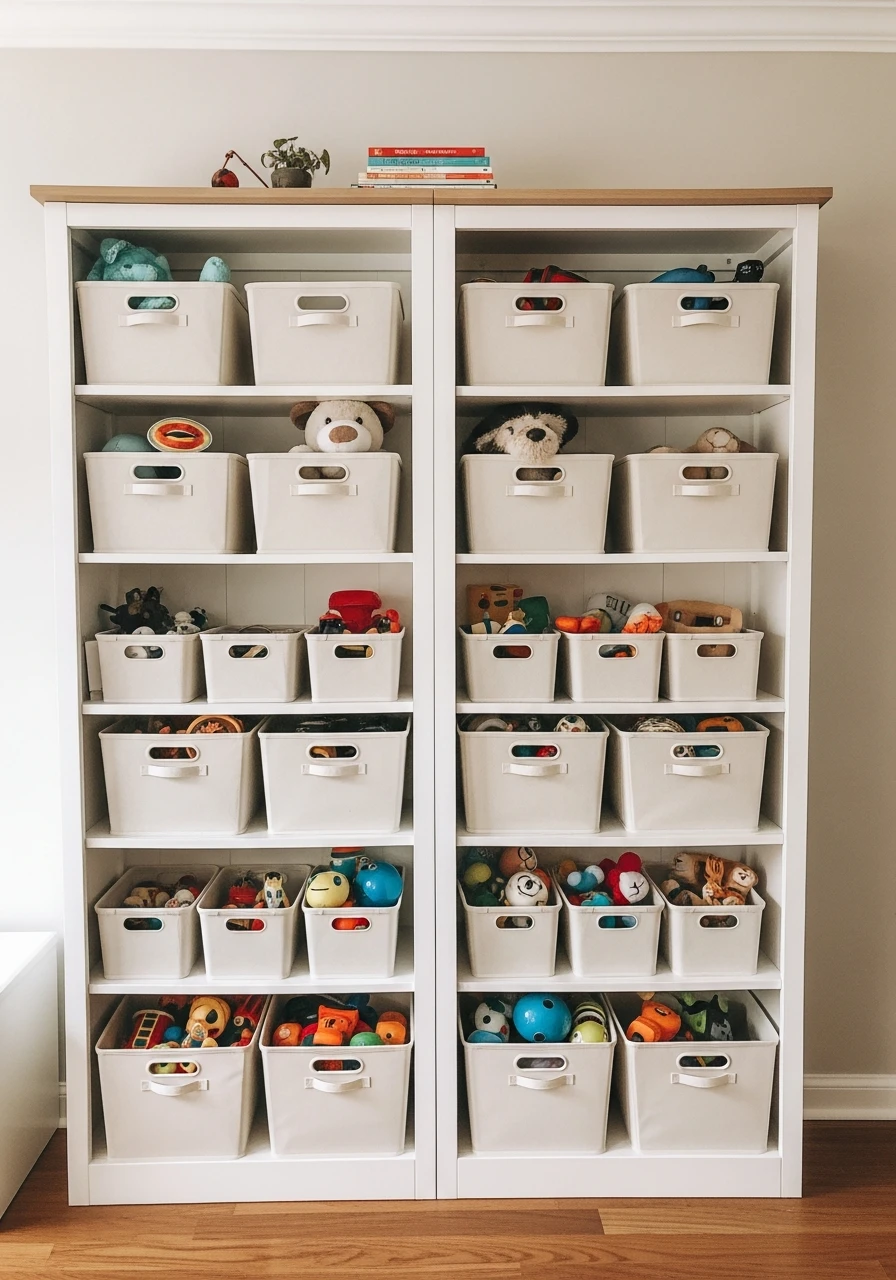
A tall bookshelf combined with baskets stores a variety of toy sizes efficiently. Baskets hide visual clutter while keeping toys organized and out of sight in a neat row.
- Use the top shelves for breakable items or toy rotation.
- Mix baskets with open shelves for visual interest.
- Choose a bookcase that is deep enough for large bins.
Pro Tip: Paint the back wall of the bookcase a fun accent color for a custom, high-end look.
15. Display Favorite Collectibles
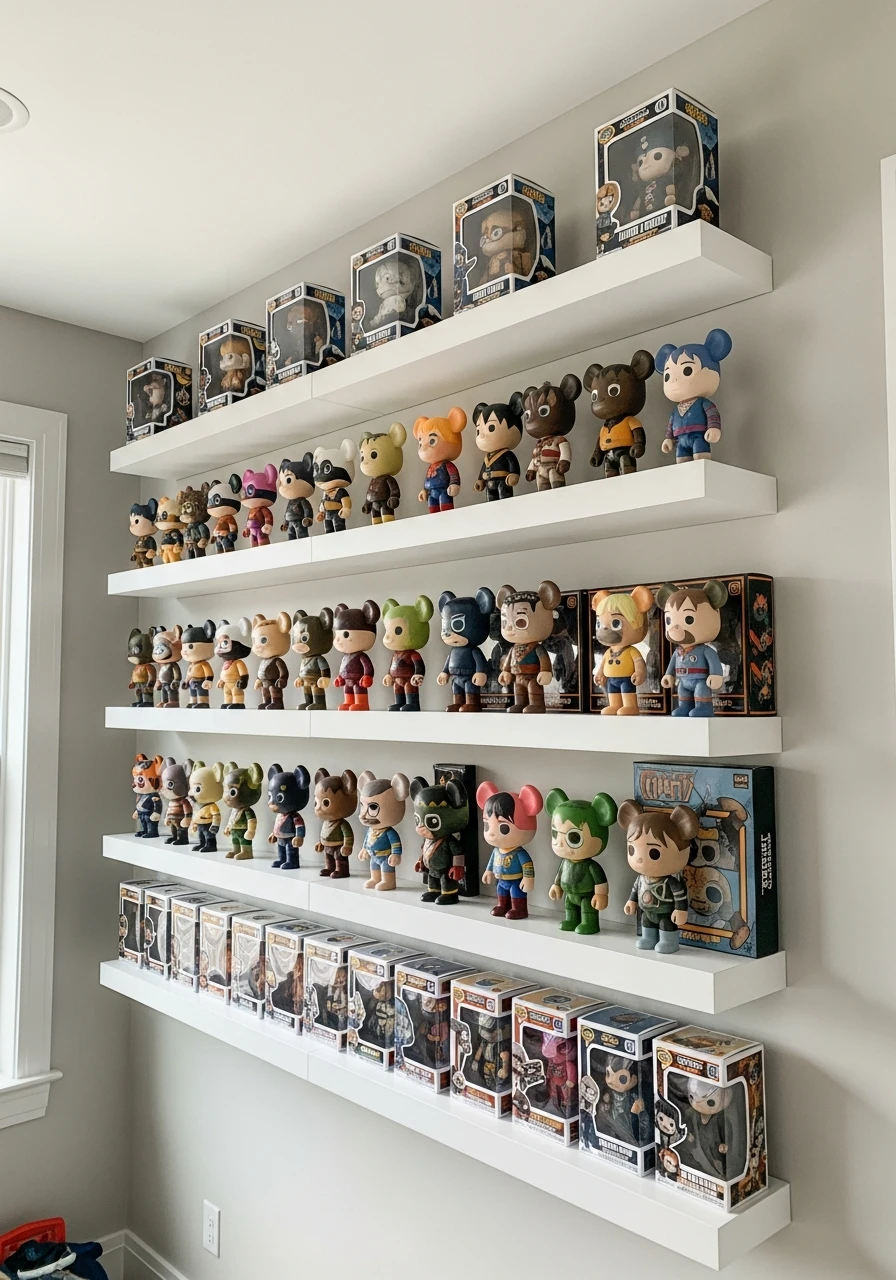
Floating shelves are perfect for special toys or collectibles you want to show off. They keep favorite items visible while protecting them from damage or younger siblings.
- Use small, clear acrylic risers for display.
- Group collections together logically.
- Install them high enough to prevent accidental knocks.
Pro Tip: Add a small LED strip light under the shelf to highlight the display items.
16. Modular Storage That Grows
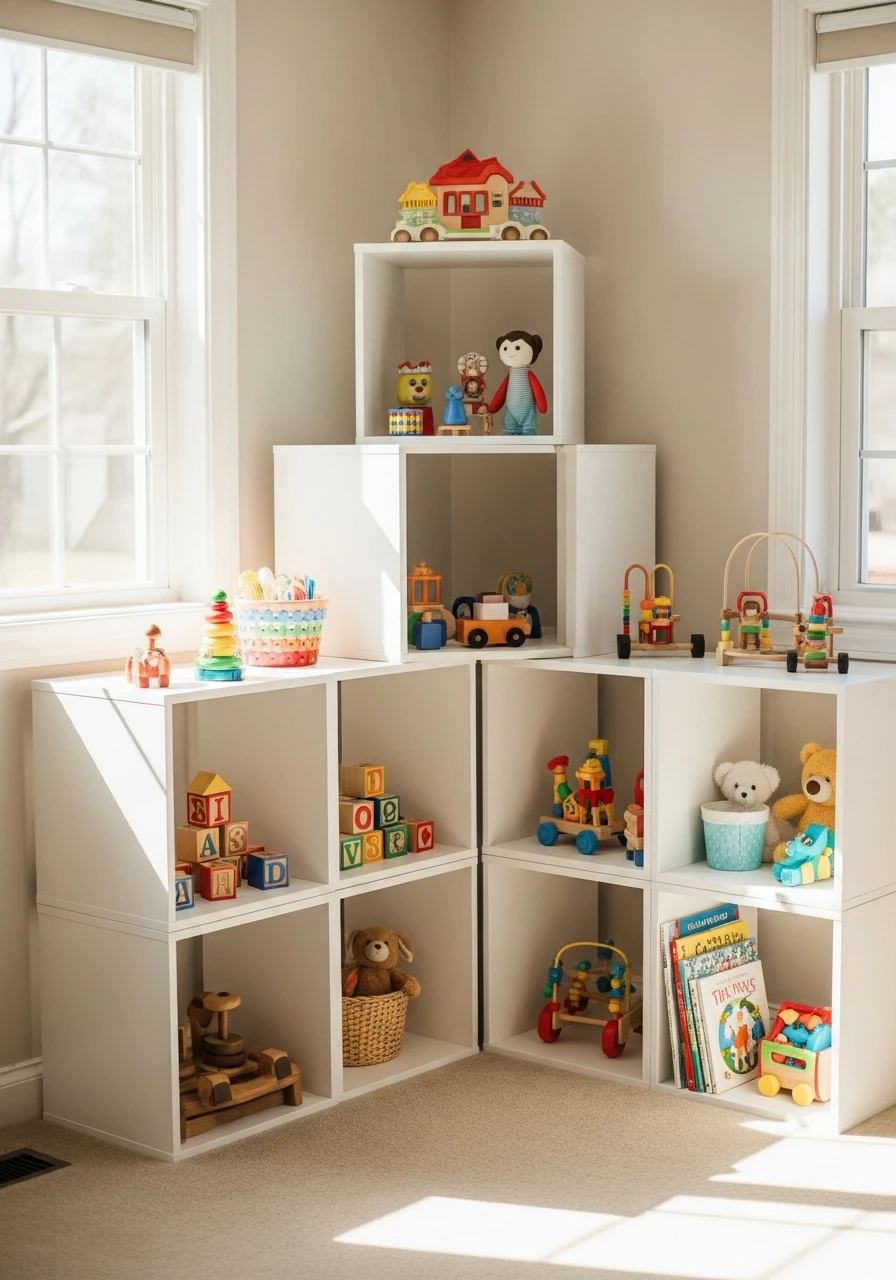
Modular cubes can be rearranged and added to as storage needs change over time. This makes them a smart, long-term solution that grows with the child and their toy collection.
- Start with a small set and expand later.
- Use connectors for stability.
- Mix and match open cubes with doors.
Pro Tip: This system is great for separating toys as children get older (e.g., separating blocks from electronics).
17. Fabric Drawers Hide Toys
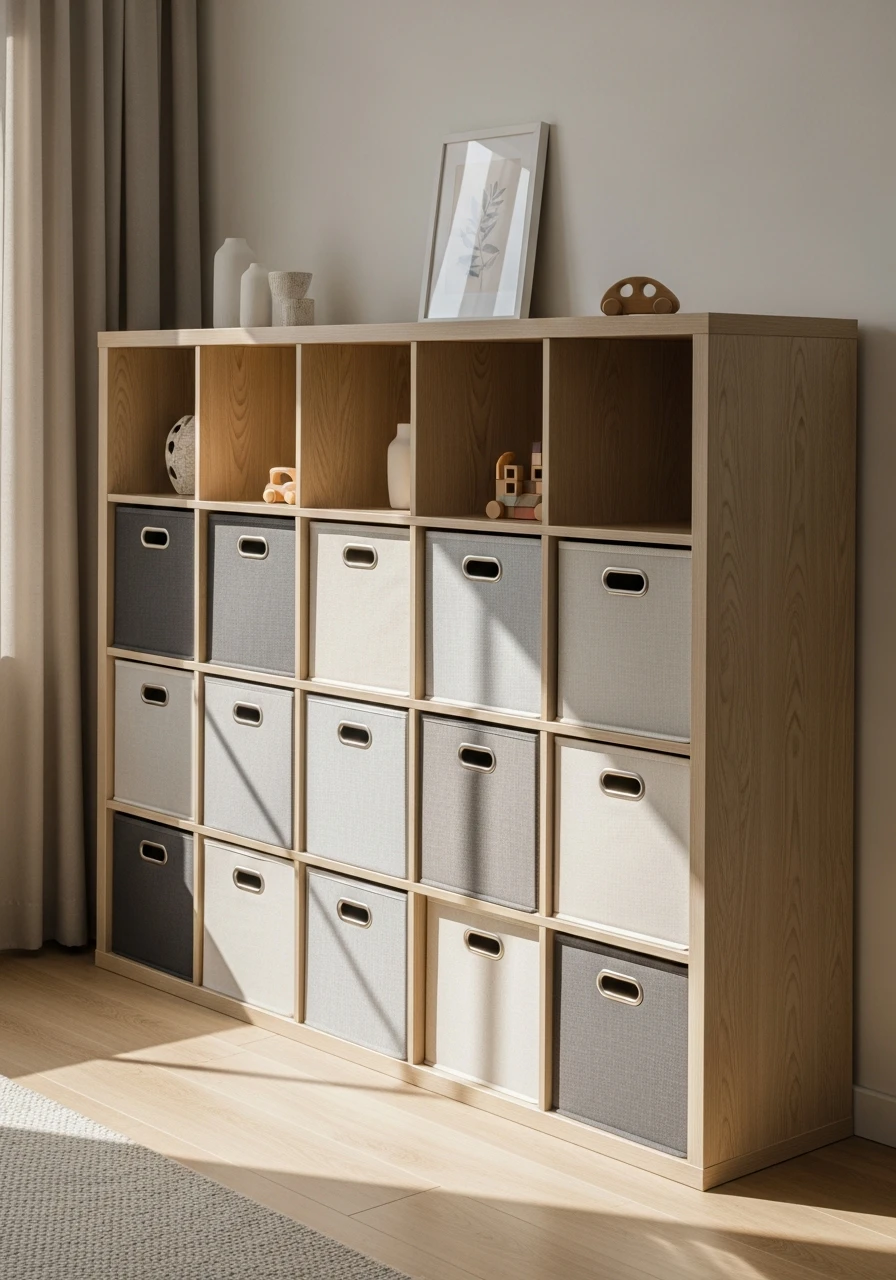
Fabric drawers soften the look of cube storage units while hiding toys completely. They are ideal for mixed-use rooms like living rooms where you want the toy storage to disappear.
- Choose drawers with grommet handles.
- Select colors that match your adult furniture.
- Use dark gray or navy for a sophisticated look.
Pro Tip: Make sure to measure your cube opening before buying fabric drawers, as sizes vary slightly.
18. Shelf Boxes for Tiny Toys
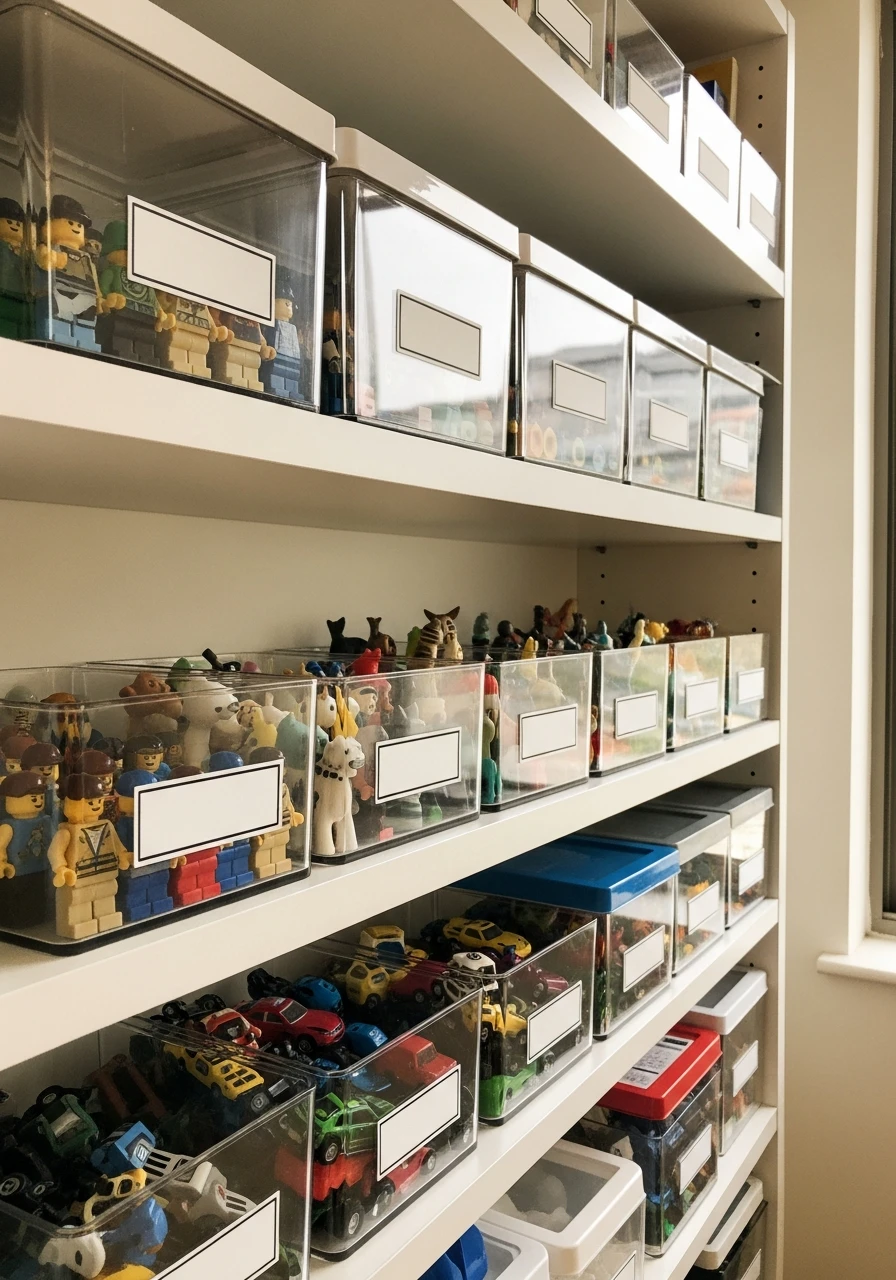
Shelf boxes placed on shelves help organize tiny toys like figurines or cars. They prevent small items from spreading everywhere and keep them grouped neatly.
- Use divided boxes for micro-collections.
- Choose boxes with secure, hinged lids.
- Stack these boxes inside a larger cubby.
Pro Tip: These are perfect for keeping all the tiny pieces that belong to one doll or action figure together.
19. Use Awkward Corner Space
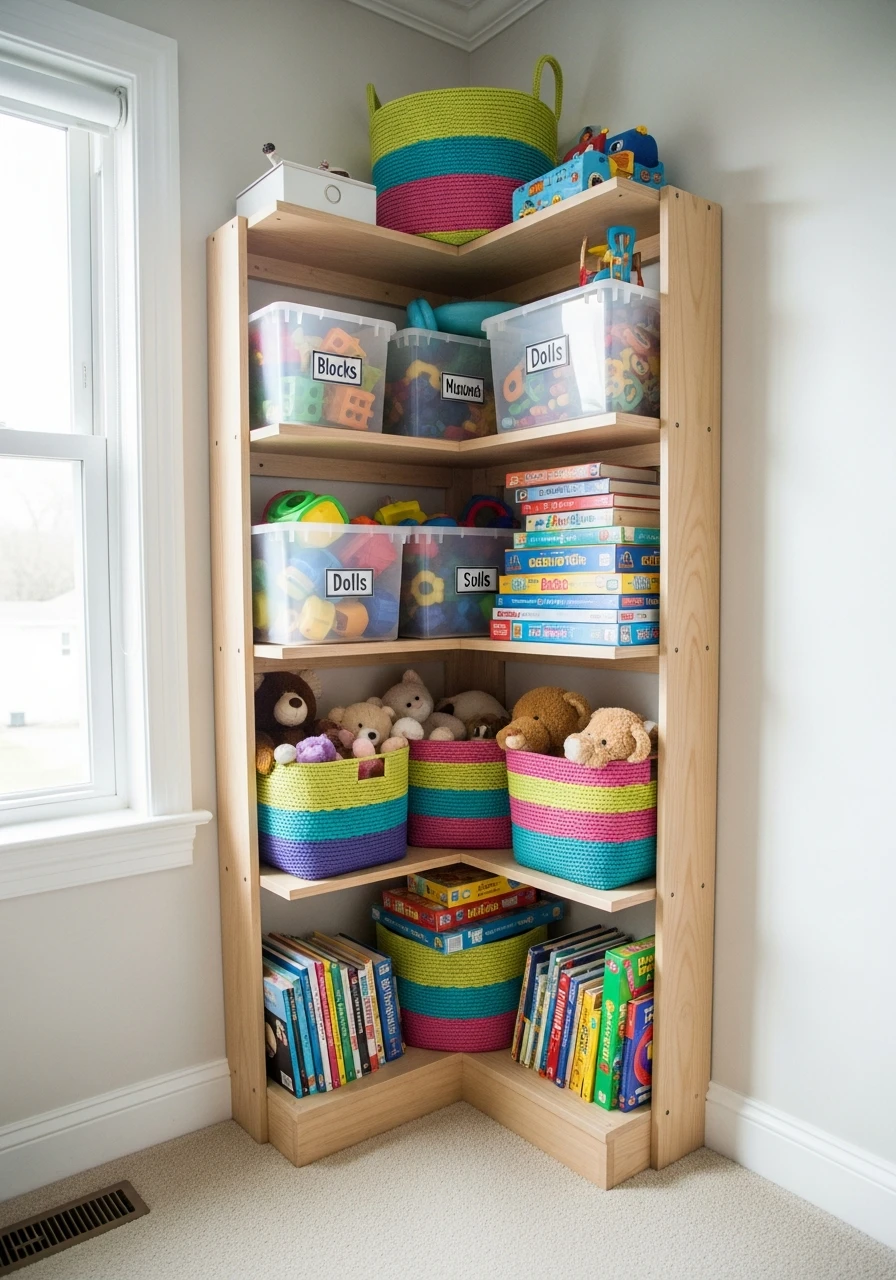
Corner shelving uses awkward spaces efficiently, turning unused corners into functional toy storage zones. This maximizes space in smaller rooms.
- Anchor the unit to both walls for safety.
- Use the top shelves for display or books.
- Corner units are great for shared bedrooms.
Pro Tip: A corner unit draws the eye up and makes the room feel taller.
20. Store Toys In The Closet
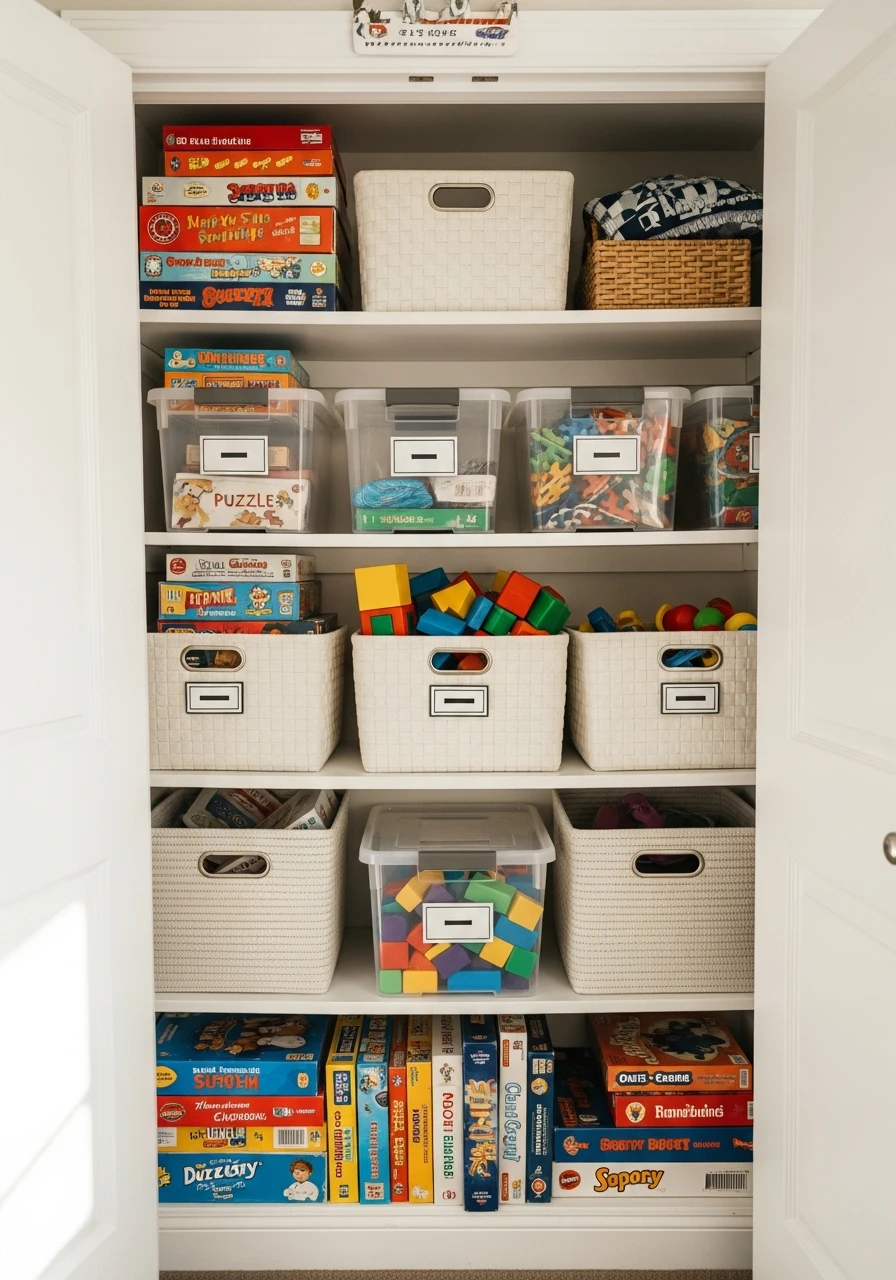
Closet shelves can store toys that are not currently in use or those used for rotation. This keeps playtime fresh and reduces clutter in the main living or playing areas.
- Install adjustable wire shelving in the closet.
- Use large, clear bins for easy identification.
- Keep the closet door closed for instant neatness.
Pro Tip: Designate the top shelf for ‘parent-only’ access to rotation toys.
21. Bench Seating Hides Toys
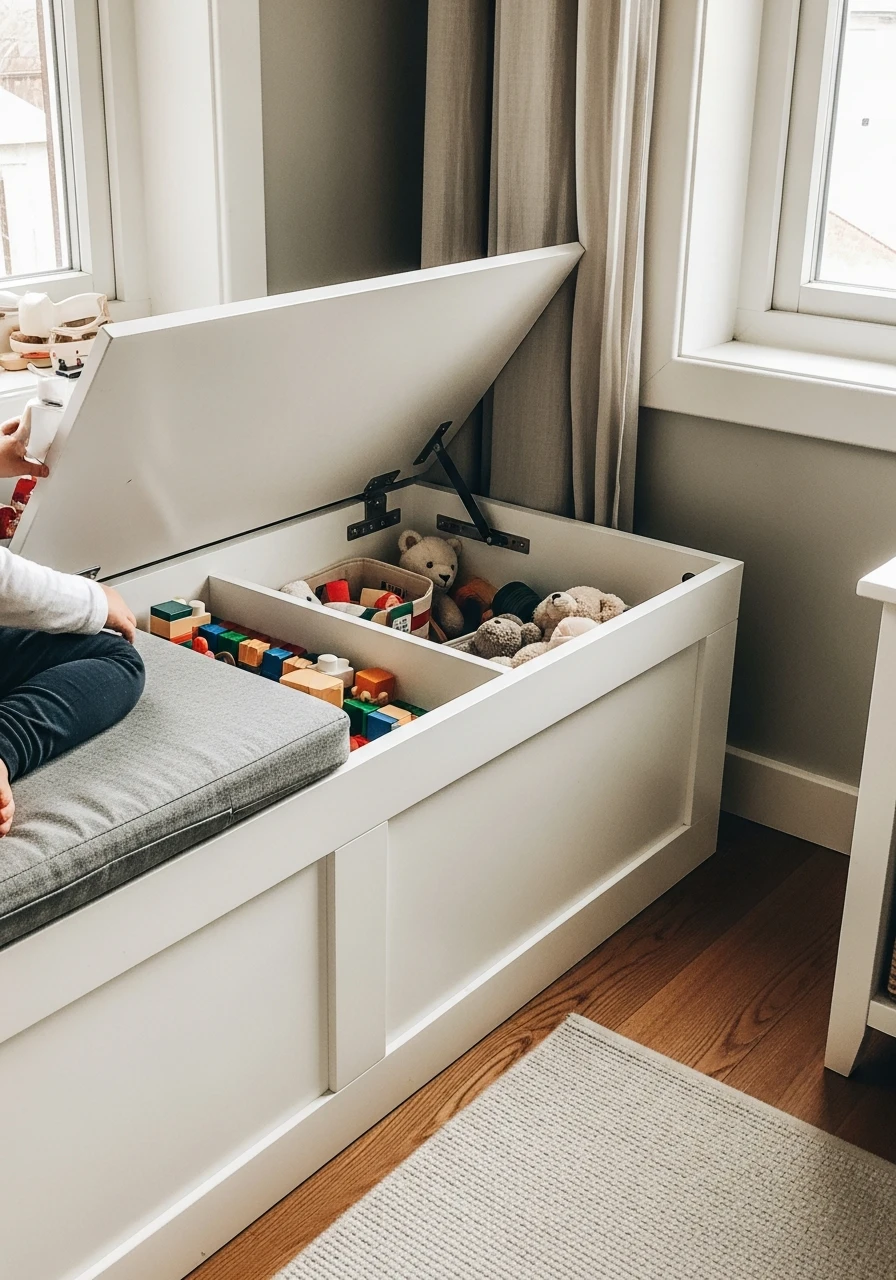
Storage benches provide comfortable seating while hiding toys inside their compartments. They work well in playrooms, bedrooms, and even entryways for quick grab-and-go access.
- Choose benches with soft, lift-off lids.
- Use them for large, bulky items like costumes.
- Add a cushion for extra comfort.
Pro Tip: A window seat with built-in storage is a beautiful way to hide maximum clutter.
22. Ottomans That Hold Toys
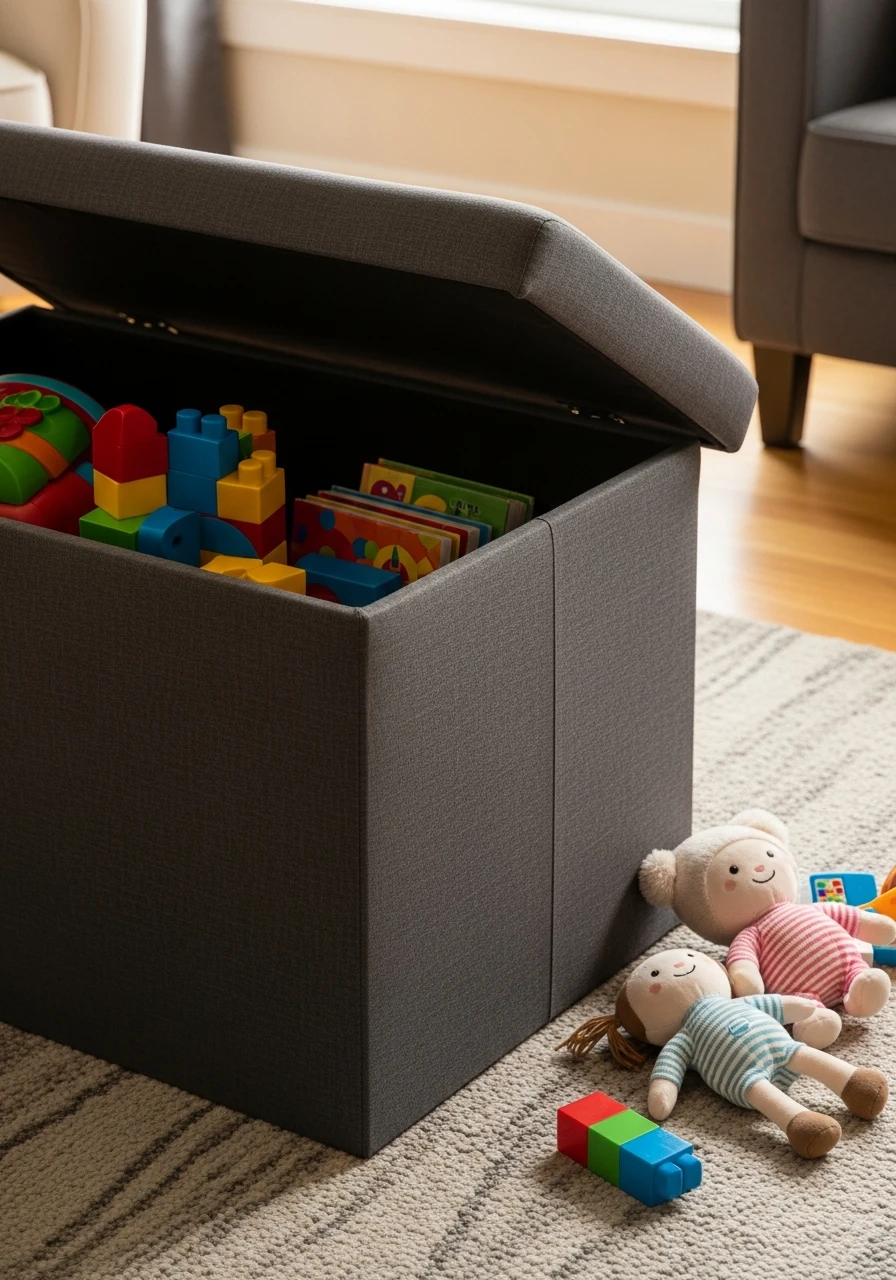
Ottomans with storage inside double as footrests or extra seating. They are ideal for living rooms where toys need to stay discreet and easily accessible for quick cleanup.
- Choose a durable fabric like faux leather or velvet.
- Keep small blankets or soft toys inside.
- They are perfect for remote controls and small toys.
Pro Tip: Place a tray on top of the ottoman to use it as a temporary coffee table.
23. Table Storage For Living Room
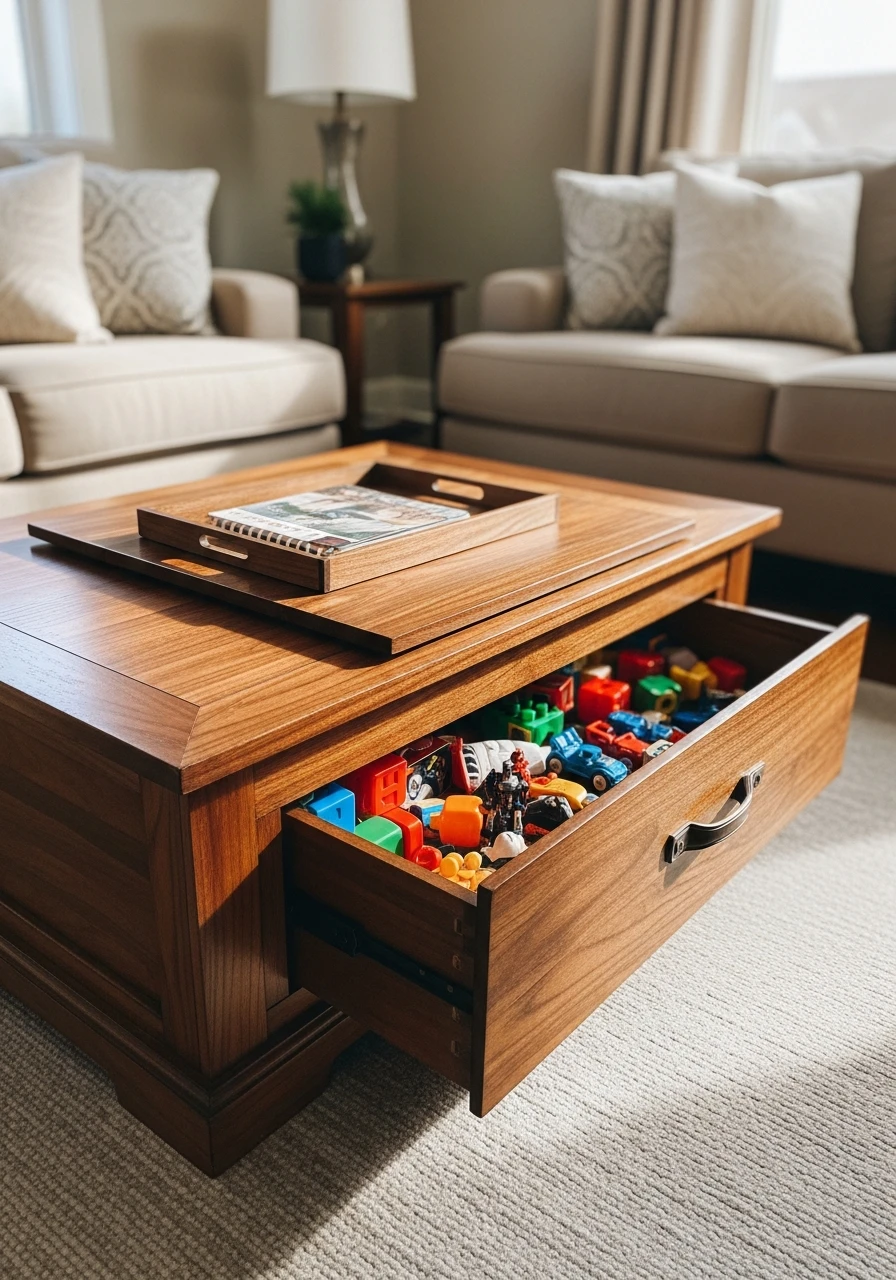
Storage coffee tables keep toys close but out of sight right in the middle of the room. They are perfect for family rooms where kids play daily but you still want an adult space.
- Look for tables with deep drawers or lift-up tops.
- Store art supplies or small Lego sets here.
- Use drawer dividers to keep items separate.
Pro Tip: A table with a sliding top allows toys to be accessed without clearing the surface.
24. Seating Plus Hidden Storage
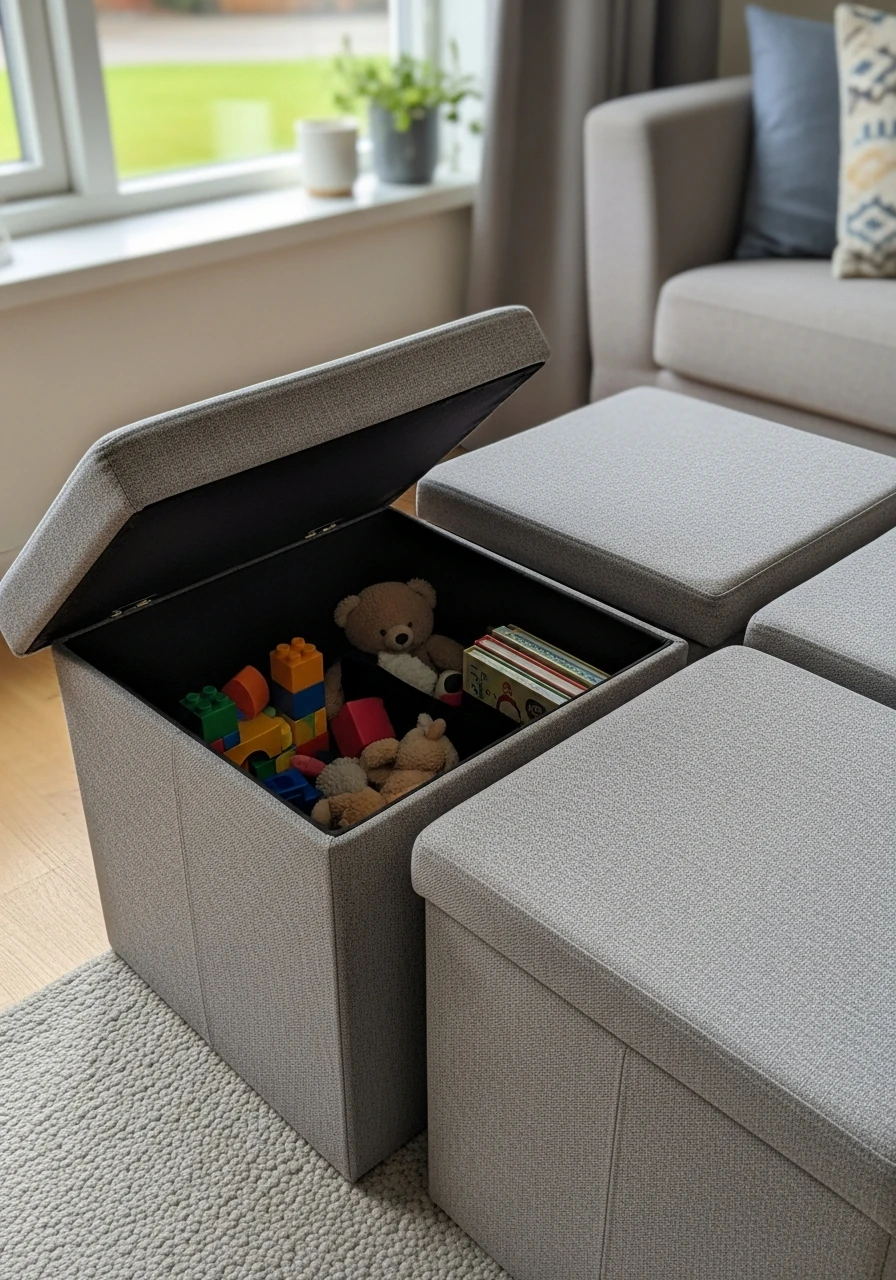
These multi-use pieces combine seating, storage, and sometimes trays or footrests. They help reduce furniture clutter while effectively organizing small toys or books.
- Choose a set of nesting storage ottomans.
- Use the smaller ones for quick, portable storage.
- They are great for apartment living.
Pro Tip: Nesting furniture is a secret weapon for small spaces because it can be completely tucked away.
25. Box That Doubles As Table
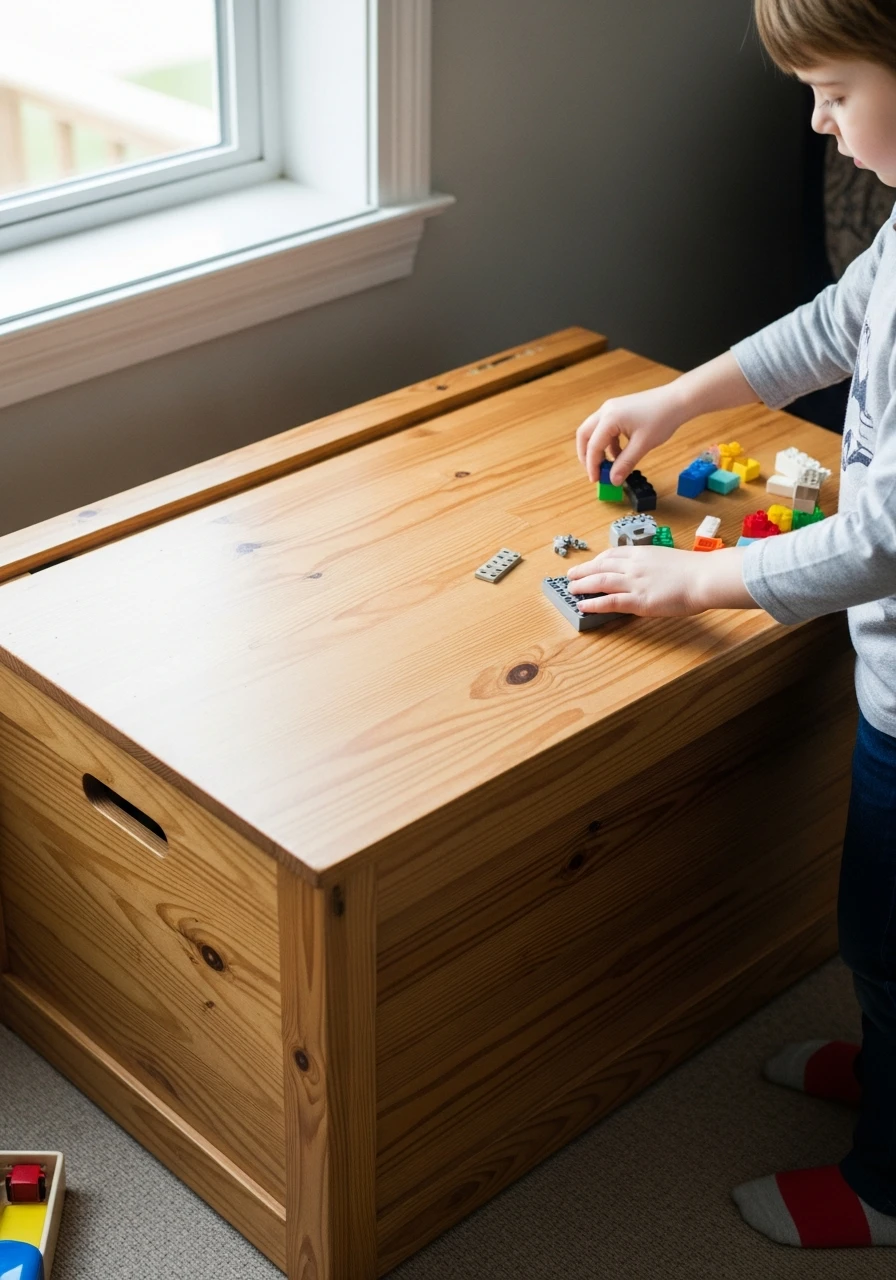
Toy boxes with flat lids can be used for play or crafts when closed. This makes them functional even when closed and provides a dedicated surface for building or drawing.
- Ensure the lid is sturdy and flat.
- Choose a box height that works for sitting on the floor.
- Use it to store larger, bulky items.
Pro Tip: Add a peel-and-stick chalkboard surface to the lid for instant drawing fun.
26. Storage Built Into The Bed
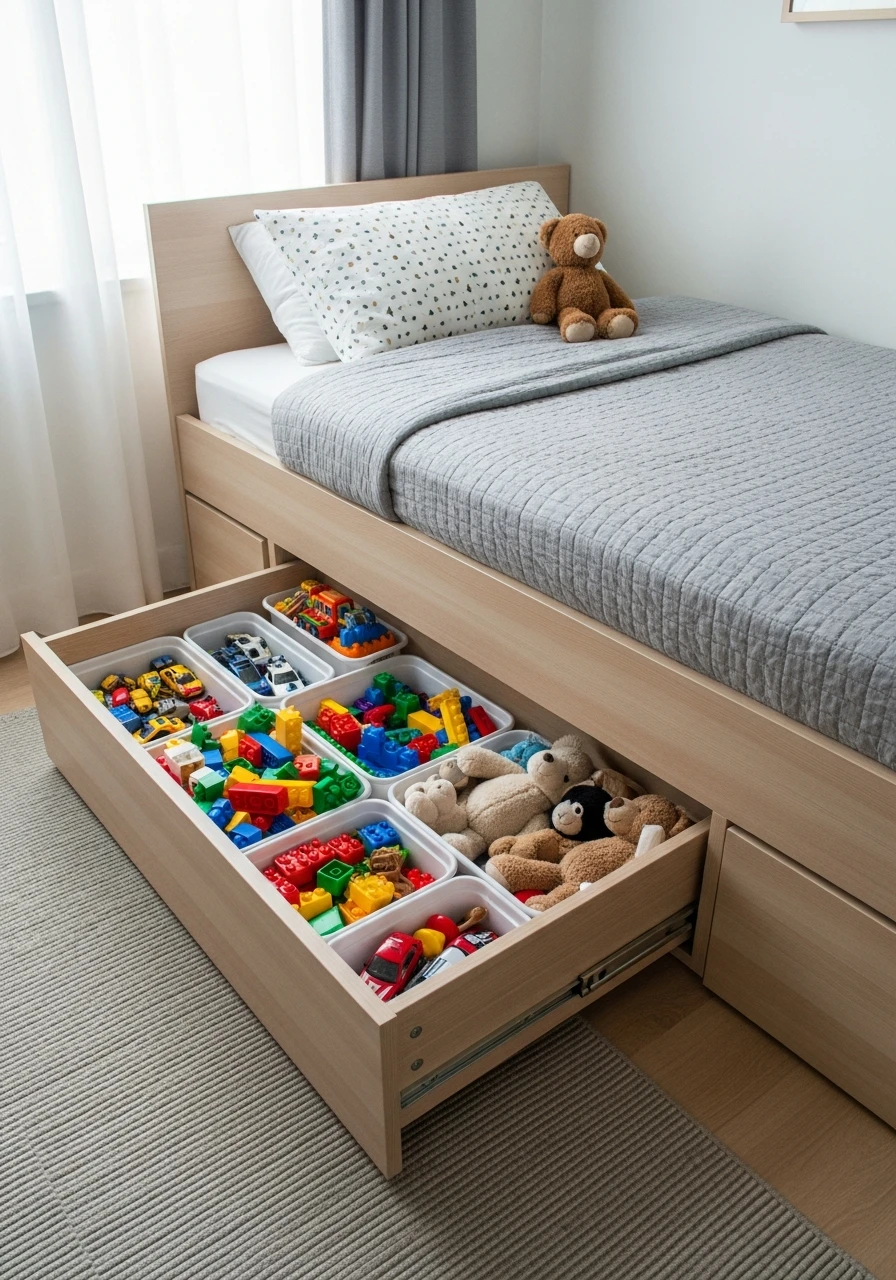
Beds with drawers underneath offer large storage space for toys, maximizing every inch of the bedroom. They are especially useful in small bedrooms where floor space is limited.
- Use the drawers for seasonal clothes or larger toys.
- Keep the drawers labeled clearly.
- Look for deep, full-extension drawers.
Pro Tip: If you don’t have built-in drawers, use rolling plastic bins under the bed skirt for the same effect.
27. Stairs With Storage Inside
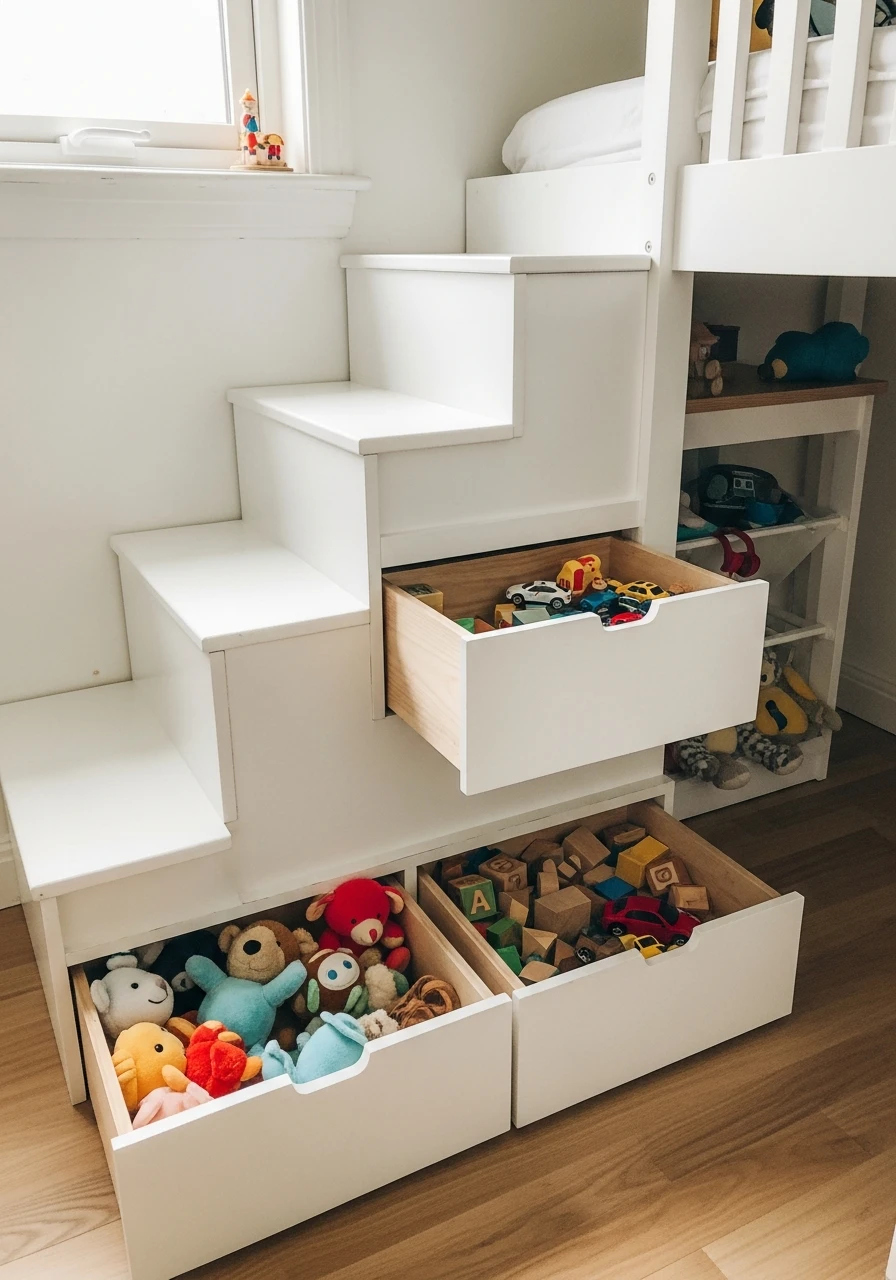
Storage stairs combine steps with pull-out compartments. They work well for bunk beds or elevated play areas, turning a necessity into a functional storage spot.
- Ensure safety rails are included.
- Use compartments for pajamas or small reading lamps.
- These are a great custom solution.
Pro Tip: Use the bottom step for shoes or slippers to keep the area tidy.
28. Hang Up Stuffed Animals
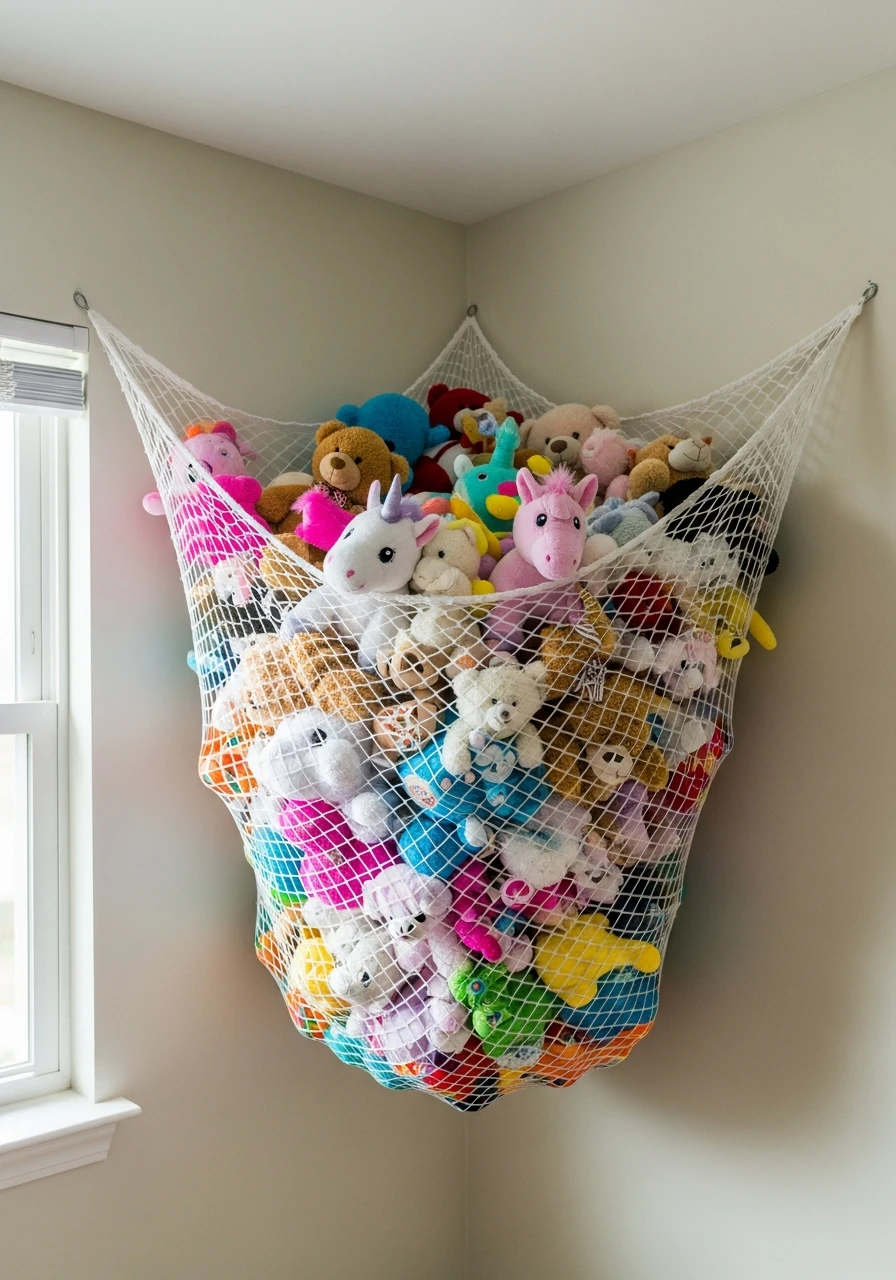
Hanging nets store plush toys off the floor while keeping them visible. They are easy to install in a corner and are a simple, kid-friendly way to contain a mountain of fluff.
- Install the net high in the corner.
- Use it only for light, soft items.
- This frees up shelf space immediately.
Pro Tip: Hanging nets work better than floor baskets because they use vertical space and keep toys clean.
29. Organizer On The Back Door
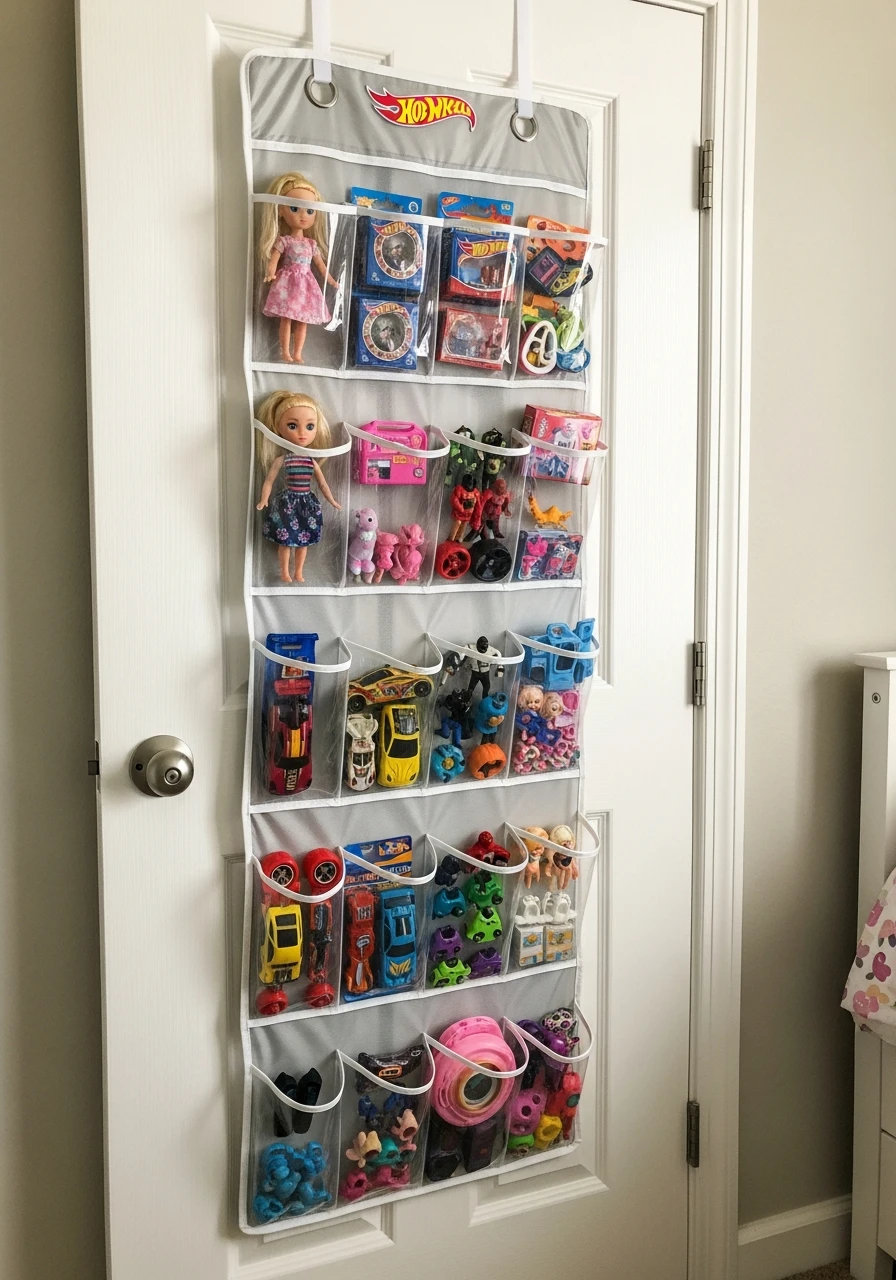
Shoe organizers hung on the back of a door are perfect for dolls, cars, and accessories. They use vertical space efficiently and keep tiny items separated and visible.
- Choose clear plastic pockets for visibility.
- Hang it on a closet or bedroom door.
- Assign one pocket per small item category.
Pro Tip: This is the best way to store Barbies and their accessories without losing anything.
30. Customize Storage With Pegboard
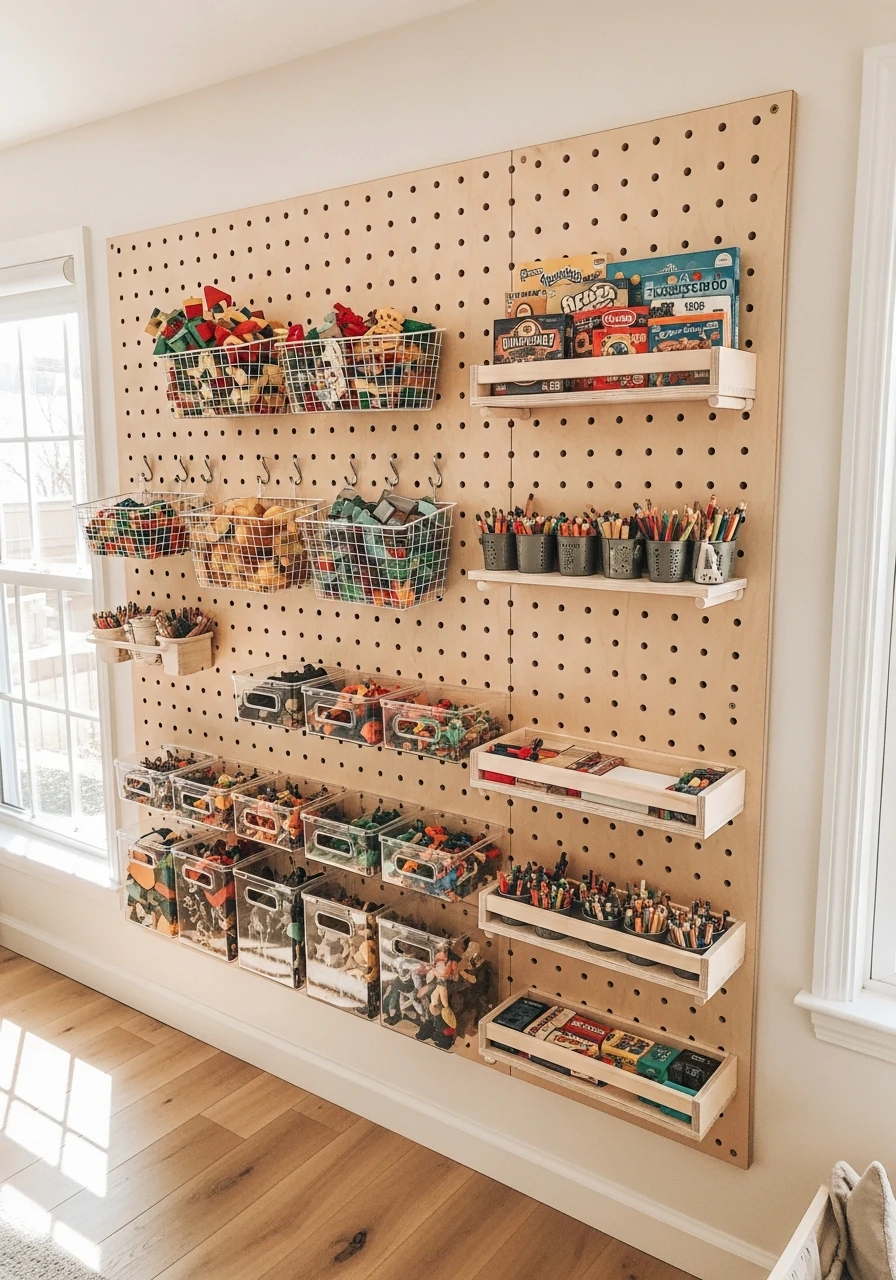
Pegboards allow customizable storage using hooks and bins on a wall. They are great for frequently used toys and craft supplies that need to be easily visible and accessible.
- Use colorful plastic bins on the pegboard.
- Hang small tools or costumes using hooks.
- Paint the pegboard a bright color.
Pro Tip: Pegboards are easy to change as your child’s interests shift—a true long-term solution.
31. PVC Pipe For Long Toys
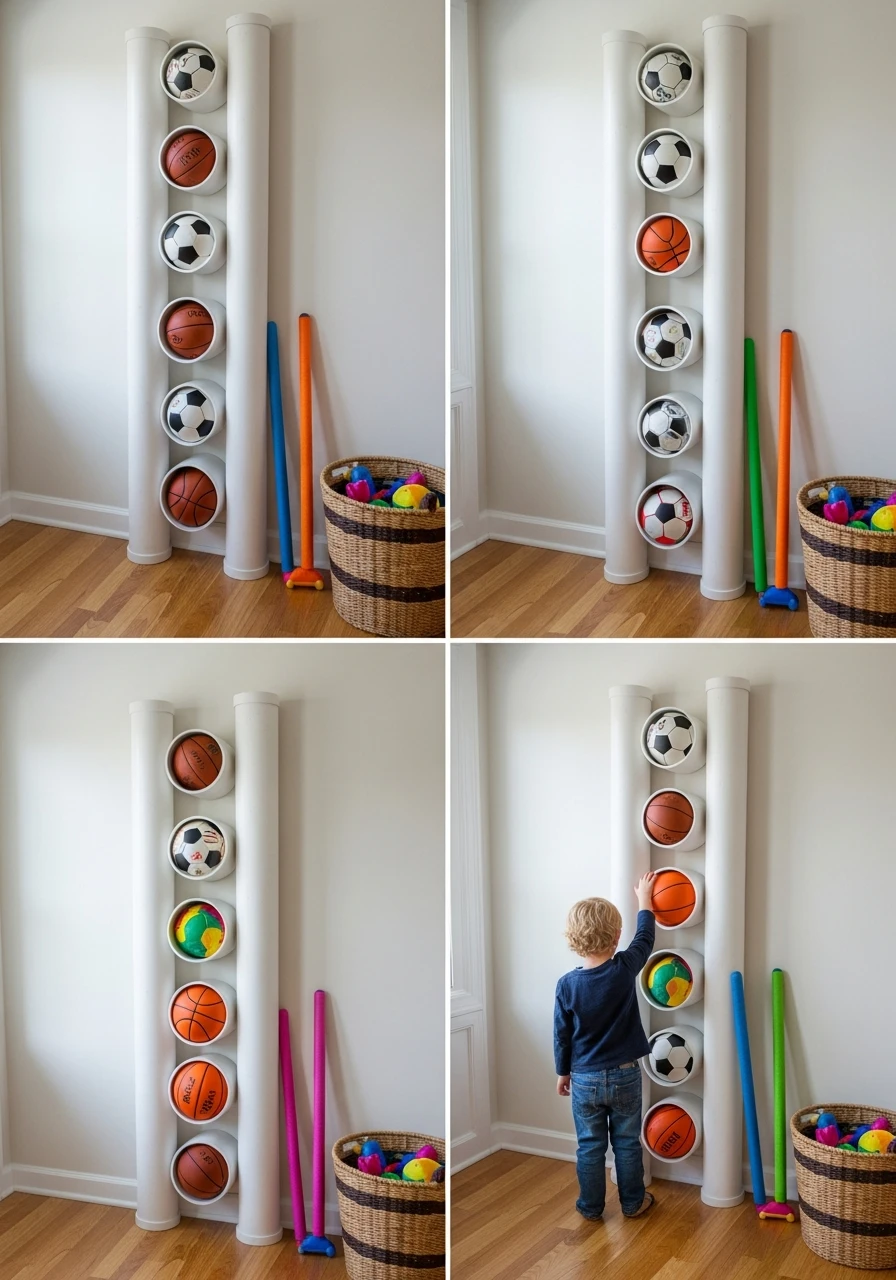
PVC pipes can be cut and mounted to store balls or long toys vertically. This keeps bulky items contained and easy to grab without rolling all over the floor.
- Use wide pipe sections for larger balls.
- Mount securely to a garage or playroom wall.
- Decorate the pipe with stickers or paint.
Pro Tip: This is a great, inexpensive solution for sports equipment like baseball bats or hockey sticks.
32. Stacked Wooden Crates
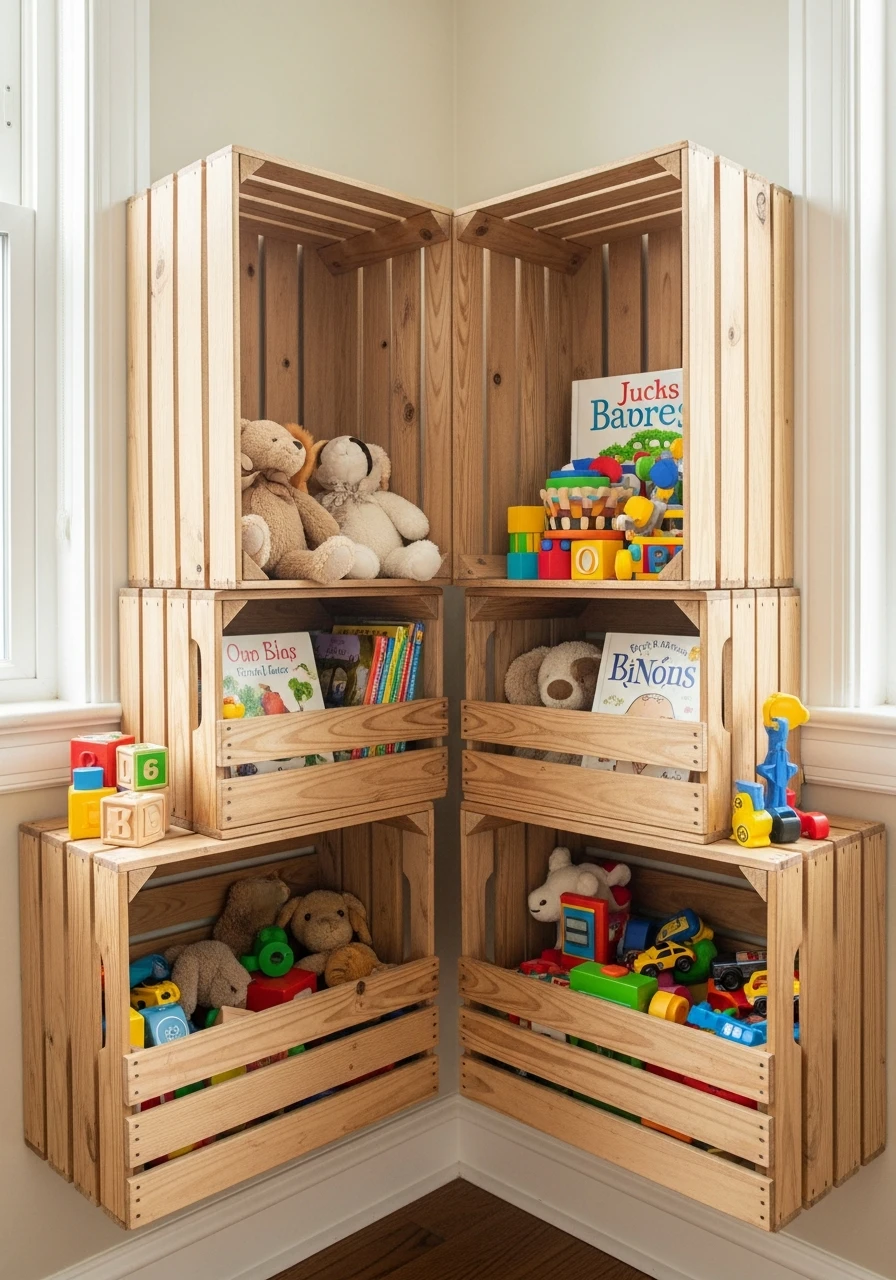
Wooden crates can be stacked or mounted to create rustic, affordable toy storage. They are customizable and add a charming, slightly farmhouse look to the room.
- Sand and paint the crates for a finished look.
- Stack two high for easy access.
- Use them for books or medium-sized toys.
Pro Tip: Add small caster wheels to the bottom crate so you can roll the stack around easily.
33. Use Small Lidded Containers
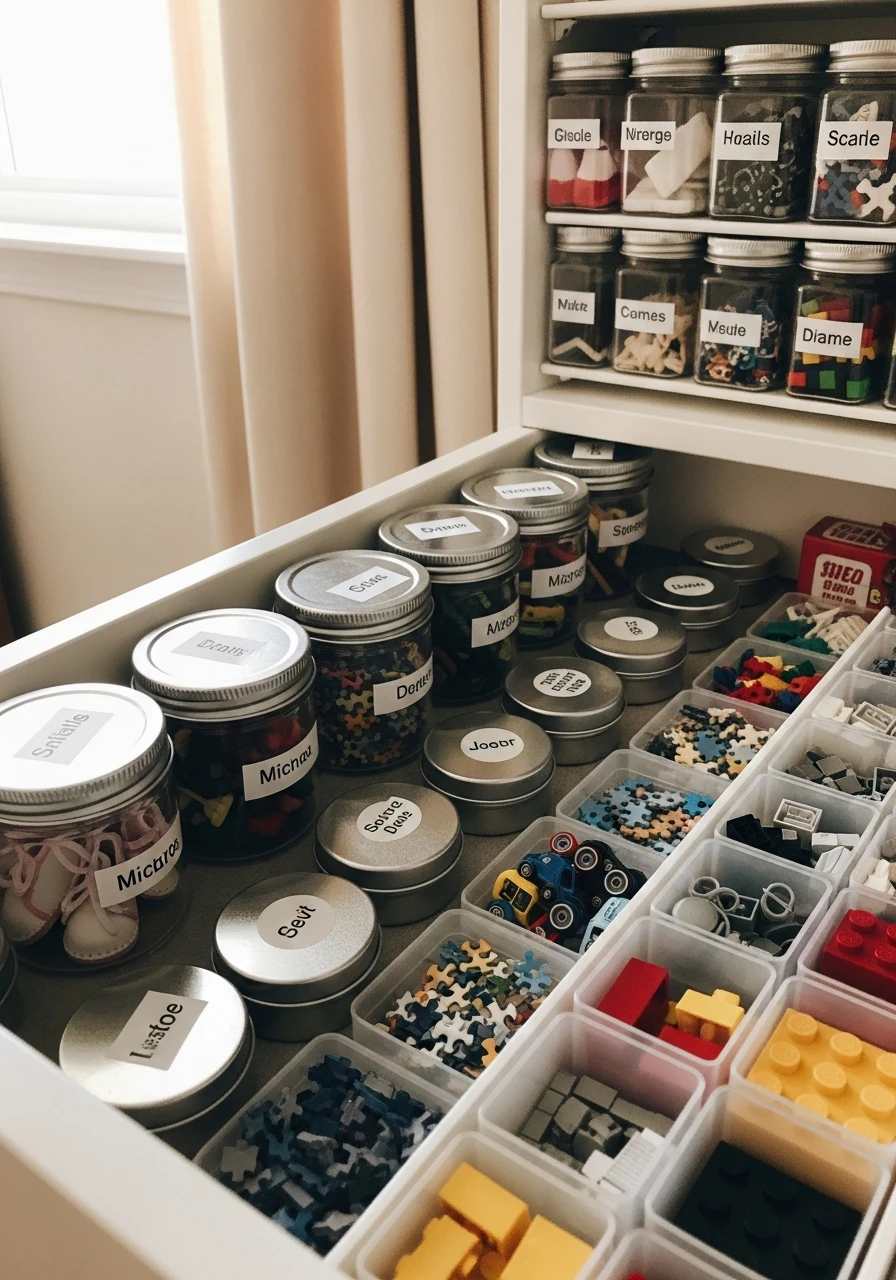
Small containers help organize mini toys and accessories, preventing loss and making sorting easier. Think of things like doll shoes, tiny cars, or puzzle pieces.
- Use bead storage organizers for super tiny pieces.
- Store these small containers inside a larger bin.
- Label the outside clearly.
Pro Tip: Keep one small ‘junk drawer’ container for all the tiny, miscellaneous pieces that don’t belong anywhere.
34. Boxes For Toy Rotation
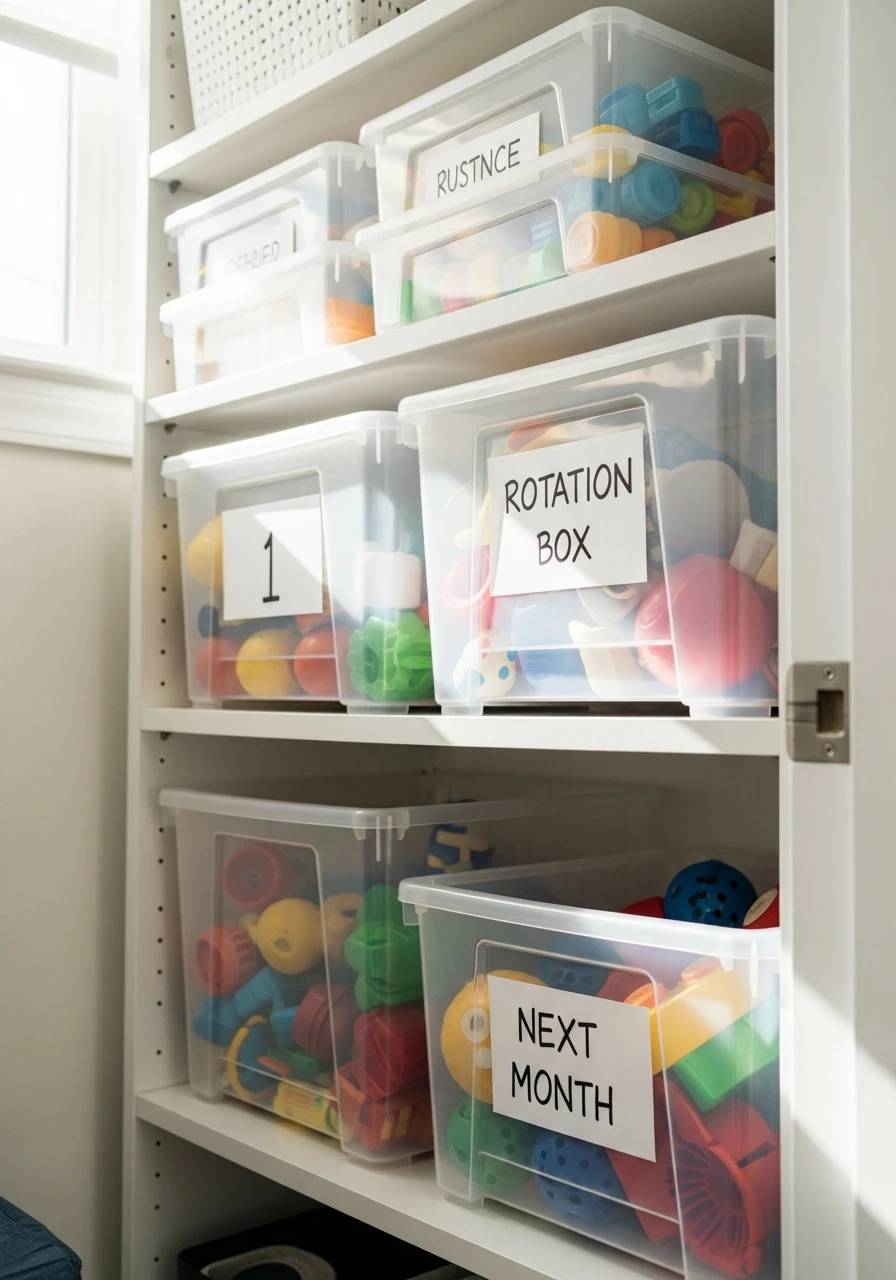
Designated boxes for toy rotation keep unused toys organized and out of sight. This system reduces overwhelm for kids and keeps playtime exciting when old toys reappear.
- Use large, opaque bins labeled by season or month.
- Store these rotation bins in a basement or attic.
- Rotate toys every 4-6 weeks.
Pro Tip: When you rotate toys, take the opportunity to quickly purge broken items.
35. Convert A Closet To Storage
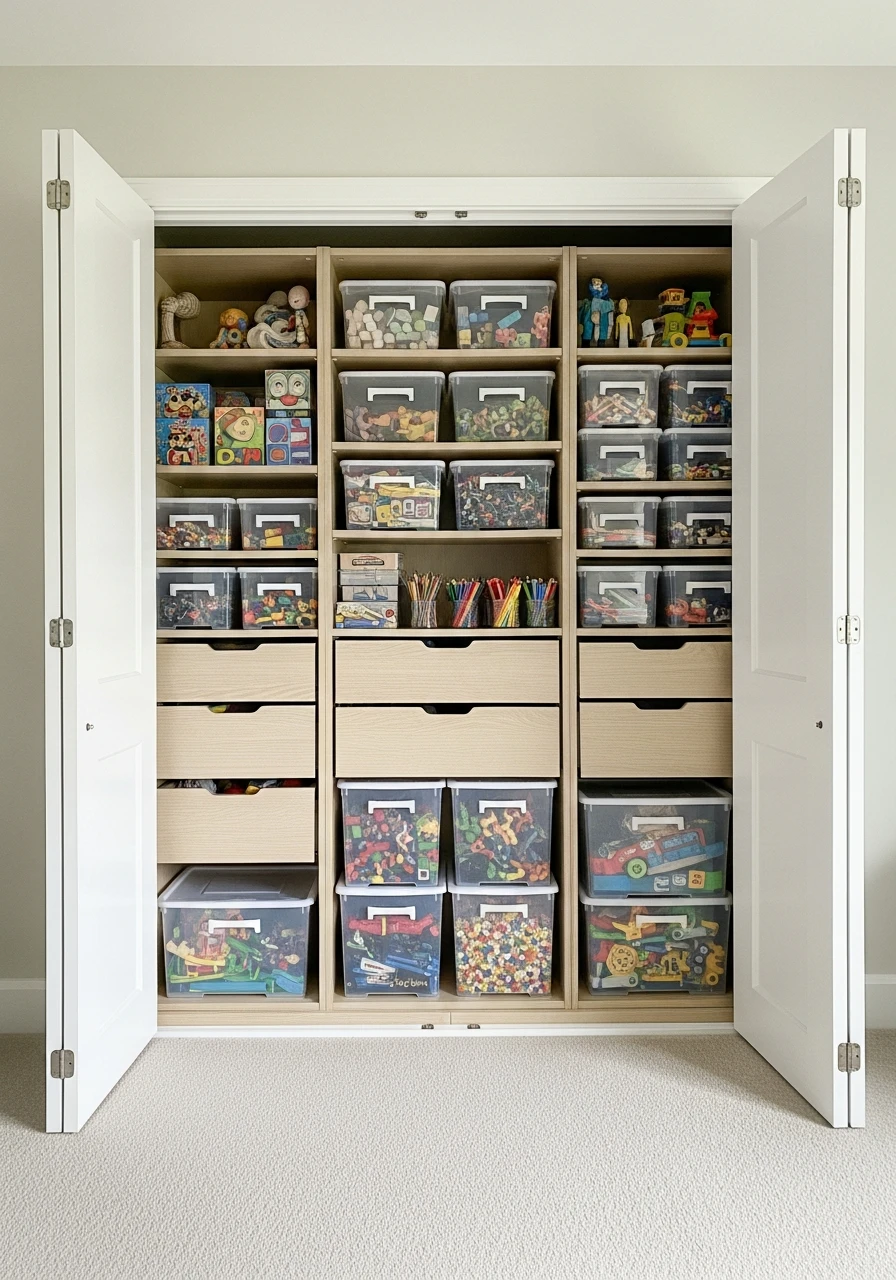
Closets can be transformed into toy storage hubs with specialized shelves and bins. This keeps toys completely hidden but easily accessible when the doors are open.
- Remove the hanging rod for more shelf space.
- Install vertical shelf dividers.
- Use the floor space for large toy chests.
Pro Tip: Consider adding a small curtain instead of a door for a softer look in the playroom.
36. Divide Your Playroom Zones
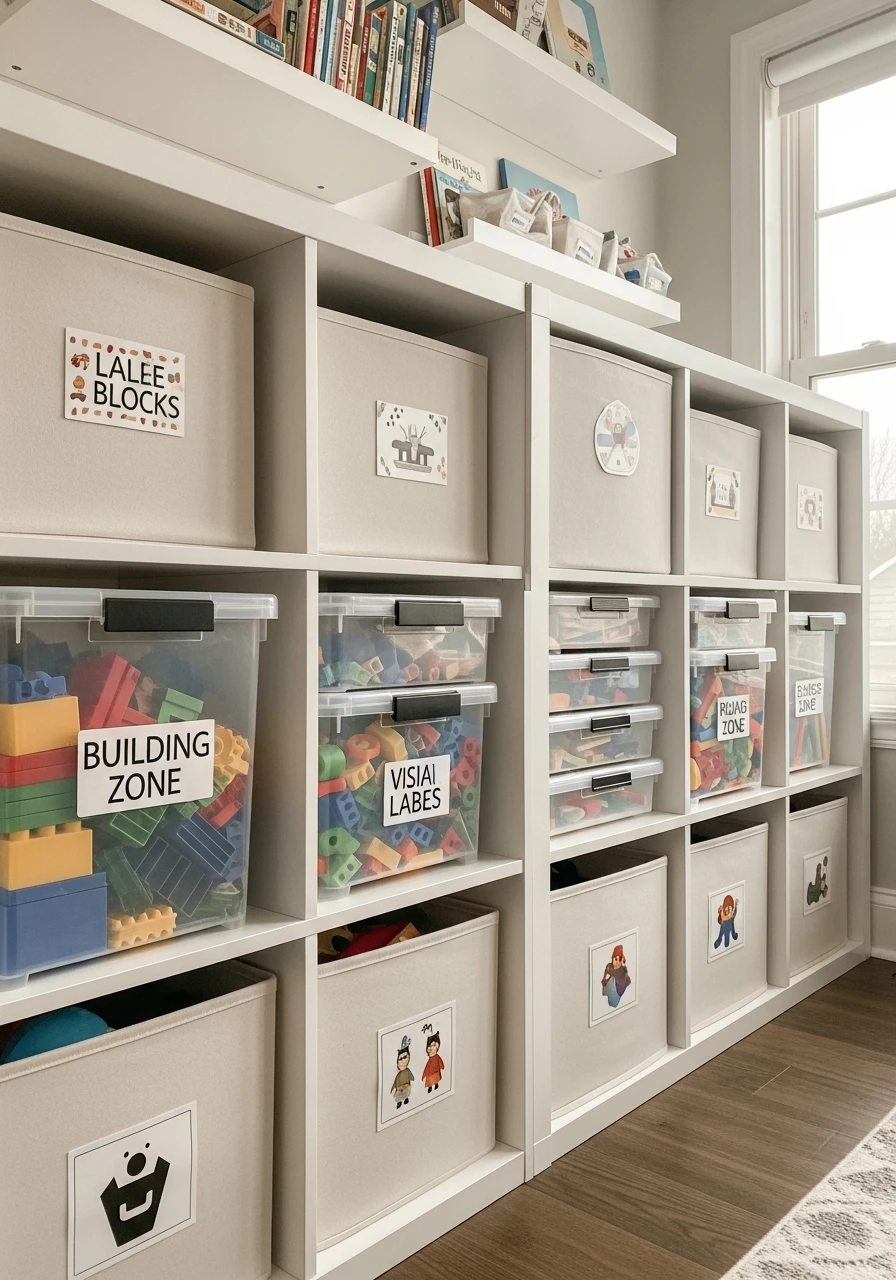
If your child’s playroom feels like one giant, overwhelming mess, it’s time to break it up. Assign specific areas for specific activities, like a ‘Building Zone’ or a ‘Craft Corner’. This simple trick makes cleanup much faster because kids know exactly where things belong.
- Use small, colorful rugs to visually separate different areas.
- Keep all building blocks and tracks stored together in one corner.
- Designate one shelf only for puzzles and board games.
- Create a cozy reading nook with bean bags and soft lighting.
Pro Tip: Labeling is the secret weapon here. Use pictures on bins for younger kids so they can easily match the toy to the correct storage spot.
37. Stylish Baskets For Shared Space
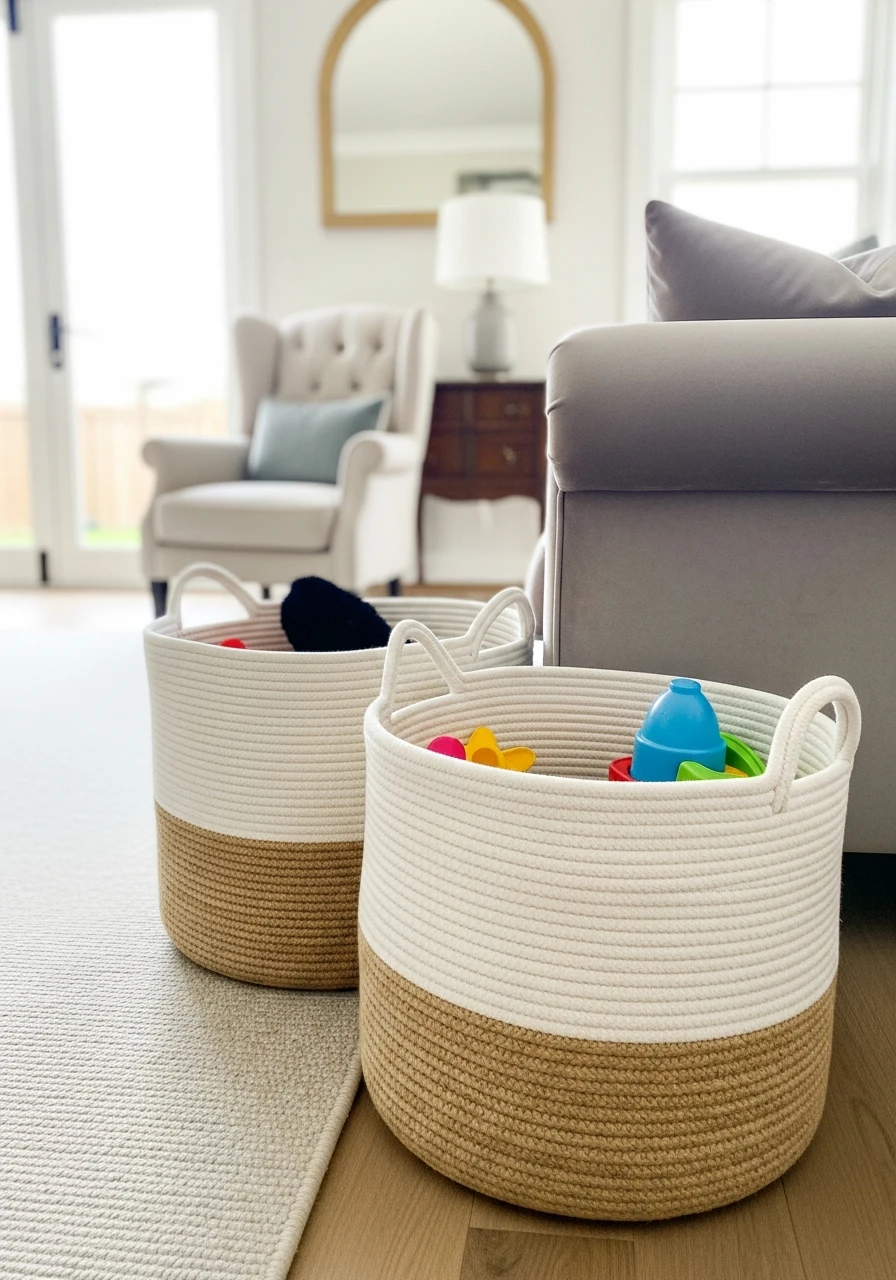
Stylish baskets allow for quick, easy toy cleanup in shared spaces like the living room. They keep toys accessible without creating visual clutter that ruins your decor.
- Choose baskets with tight lids for a neat look.
- Use one basket per child’s shared toys.
- Place them near the sofa or fireplace.
Pro Tip: When shopping for these, look in the home decor aisle, not the kids’ aisle, for better style.
38. Use Space Under Dressers
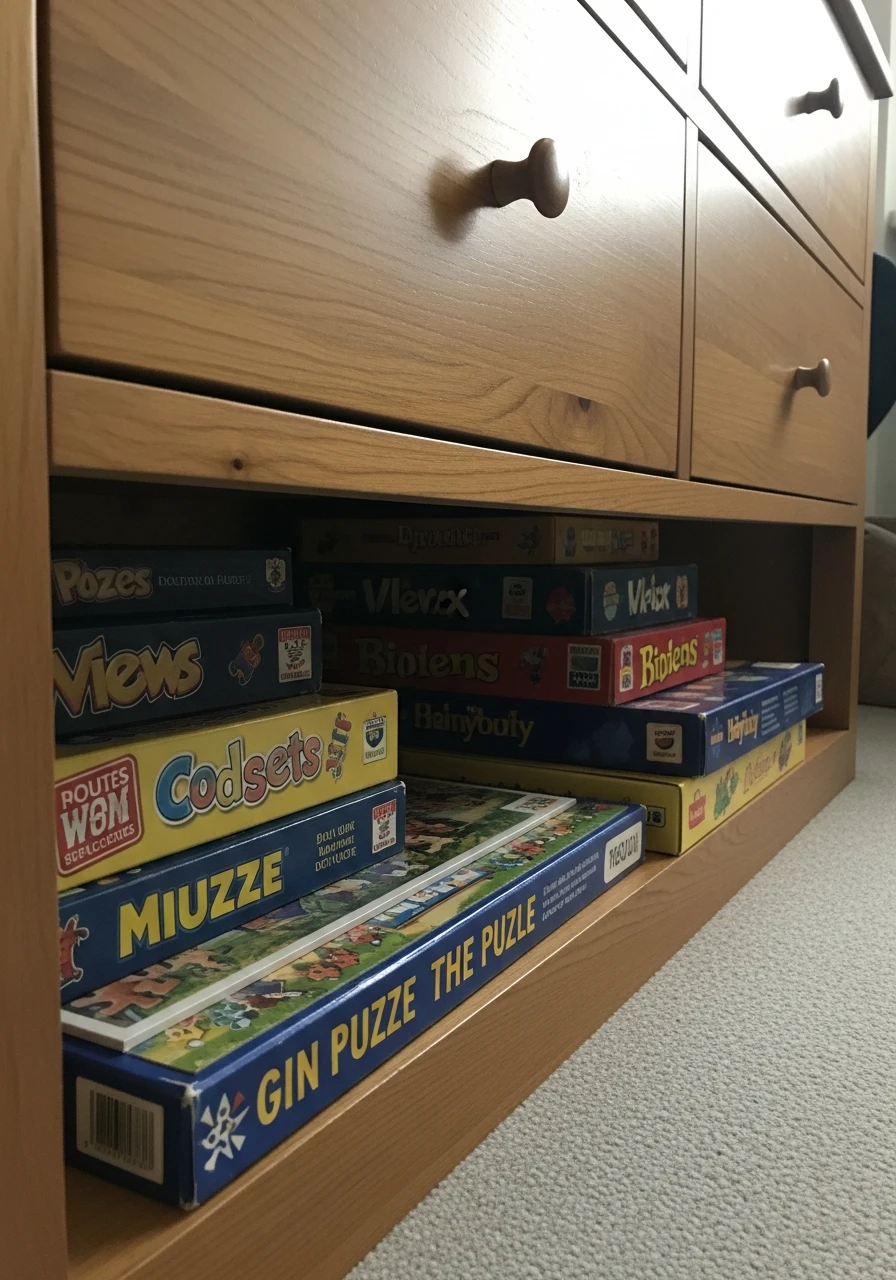
Using the space under dressers and chests of drawers adds extra storage without needing new furniture. It works well for flat or boxed toys like puzzles and board games.
- Use shallow bins that slide easily.
- Store seasonal items or costumes here.
- Make sure the area is dust-free.
Pro Tip: If your dresser is high enough, add a small fabric skirt to hide the under-storage completely.
39. Bench That Hides Everything
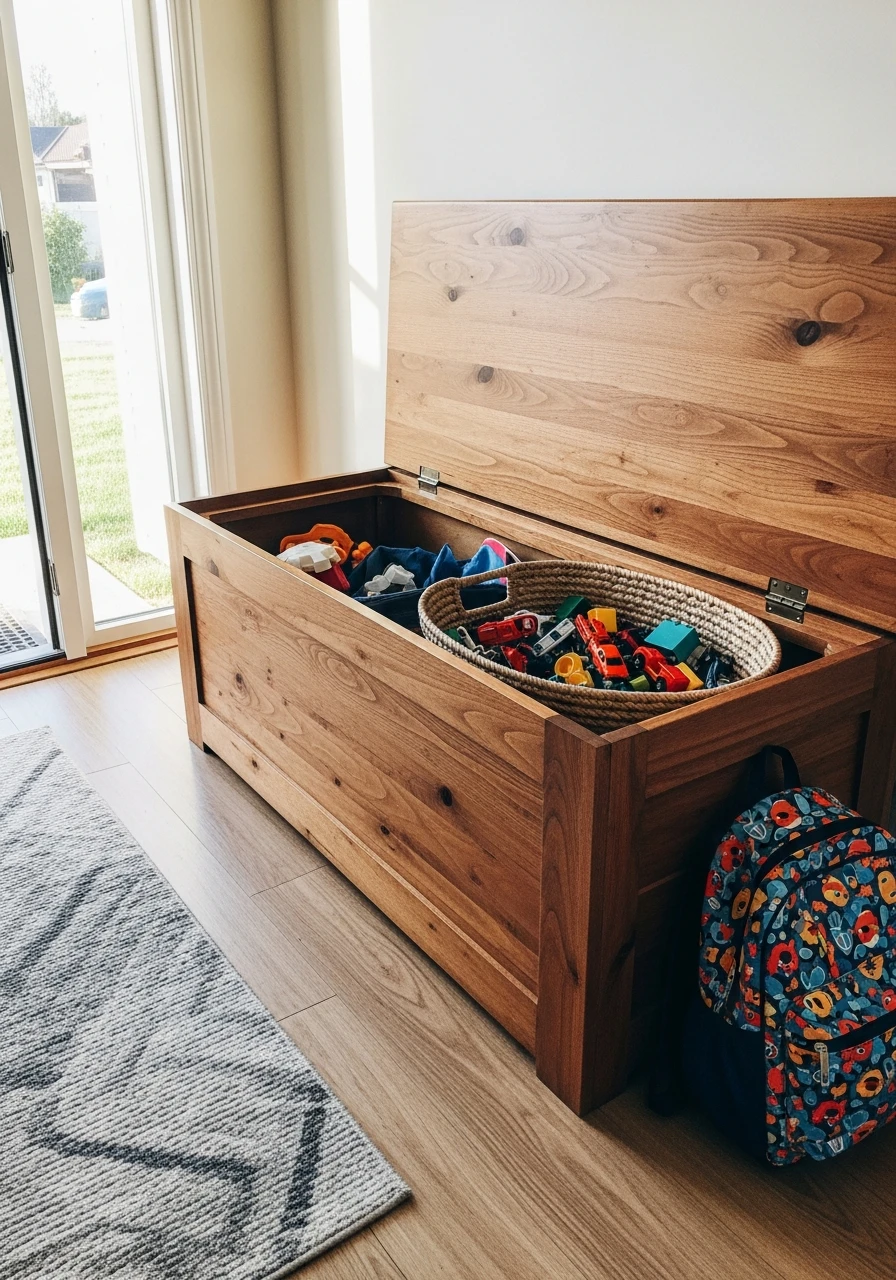
Your entryway is often the first place clutter lands. A solid storage bench looks great and is the perfect secret hiding spot for shoes, backpacks, or that basket of tiny cars. It keeps the mess contained until clean-up time.
- Keeps entryway clutter out of sight.
- Gives kids a spot to sit while putting on shoes.
- Perfect for storing larger items like LEGO containers or stuffed animals.
Pro Tip: If you don’t have a large hallway, look for benches designed to sit at the foot of a bed—they offer great storage without needing a deep footprint.
40. Designate A Toy Corner
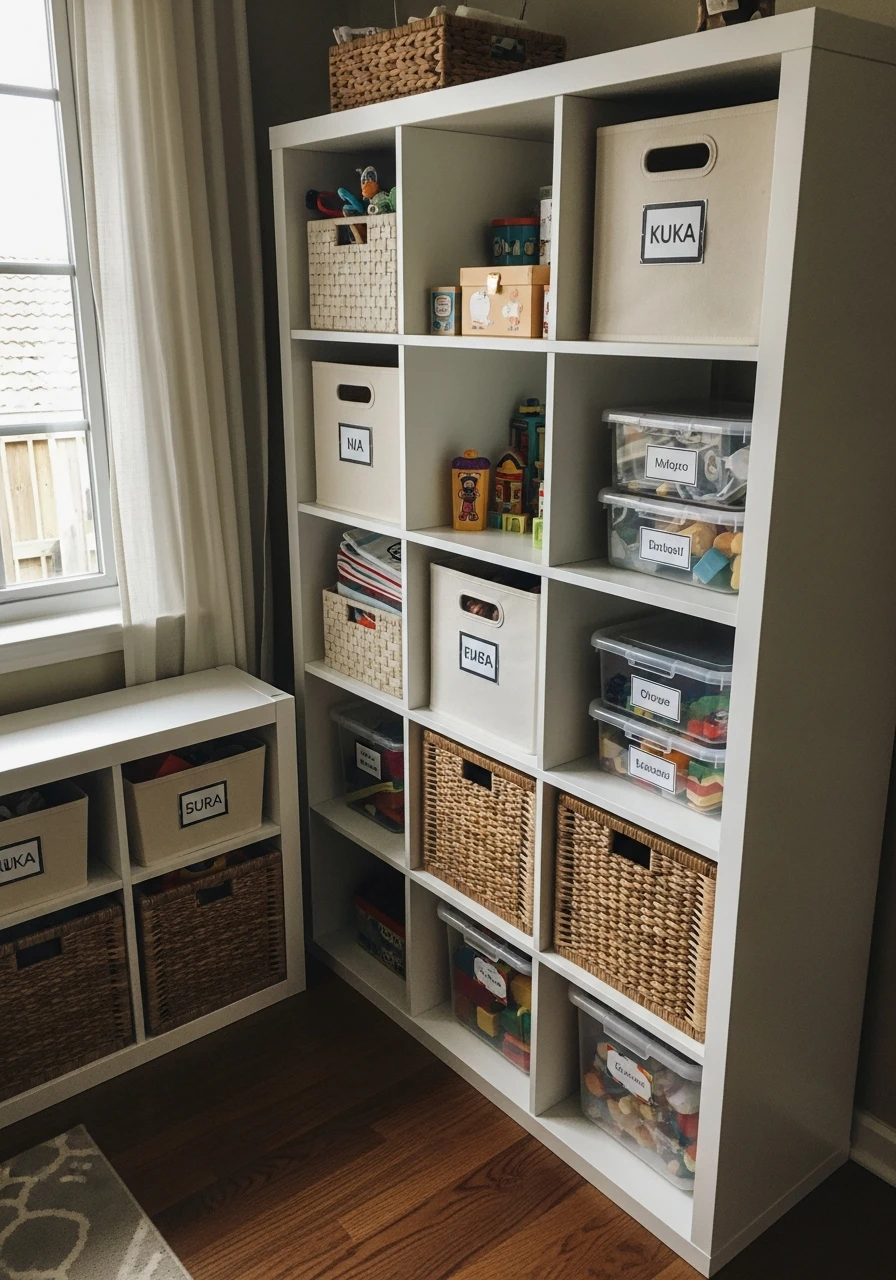
A single designated toy corner keeps toys contained and prevents them from spreading throughout the whole room. This helps maintain order in multipurpose rooms like dens or offices.
- Use a small area rug to define the corner.
- Keep all storage units within that rug space.
- Use vertical storage to maximize the corner.
Pro Tip: A room divider screen can hide the toy corner completely when guests arrive.
41. Start A Toy Rotation
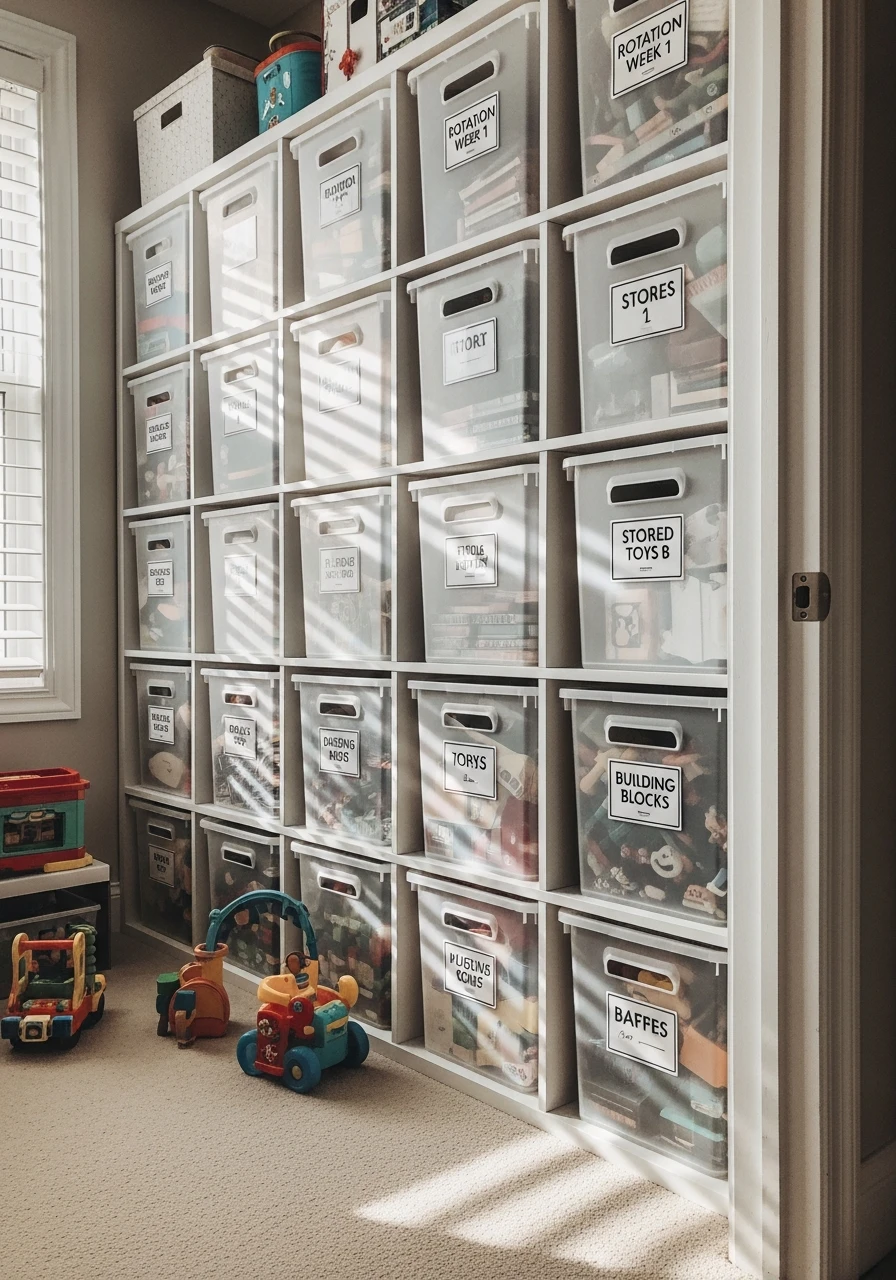
Rotate toys weekly or monthly to reduce clutter and keep things fresh. This system keeps kids engaged without needing more storage space or constantly buying new items.
- Keep 75% of toys stored away at any time.
- Only put out a few categories at once.
- Store the rotation bins out of sight.
Pro Tip: When you introduce the ‘new’ old toys, treat it like a fun surprise party.
42. Use Picture Labels Only
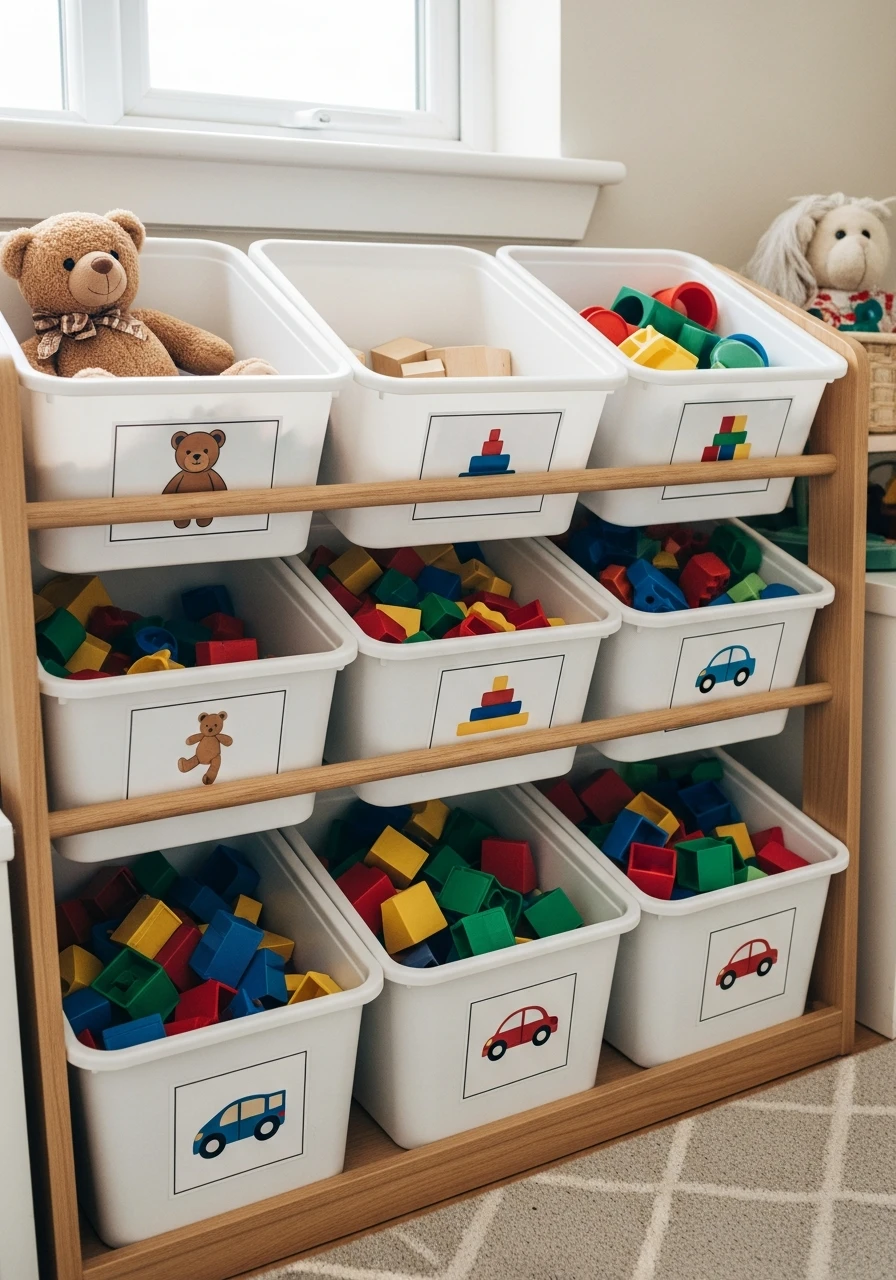
Using clear images instead of words helps younger kids clean up independently. It reinforces organization habits early, even before they learn to read.
- Take clear photos of the bin contents.
- Print and laminate the pictures.
- Attach the picture to the front of the bin.
Pro Tip: Use a simple clip to attach the label so you can swap it out easily when the contents change.
43. Organize By Color Zones
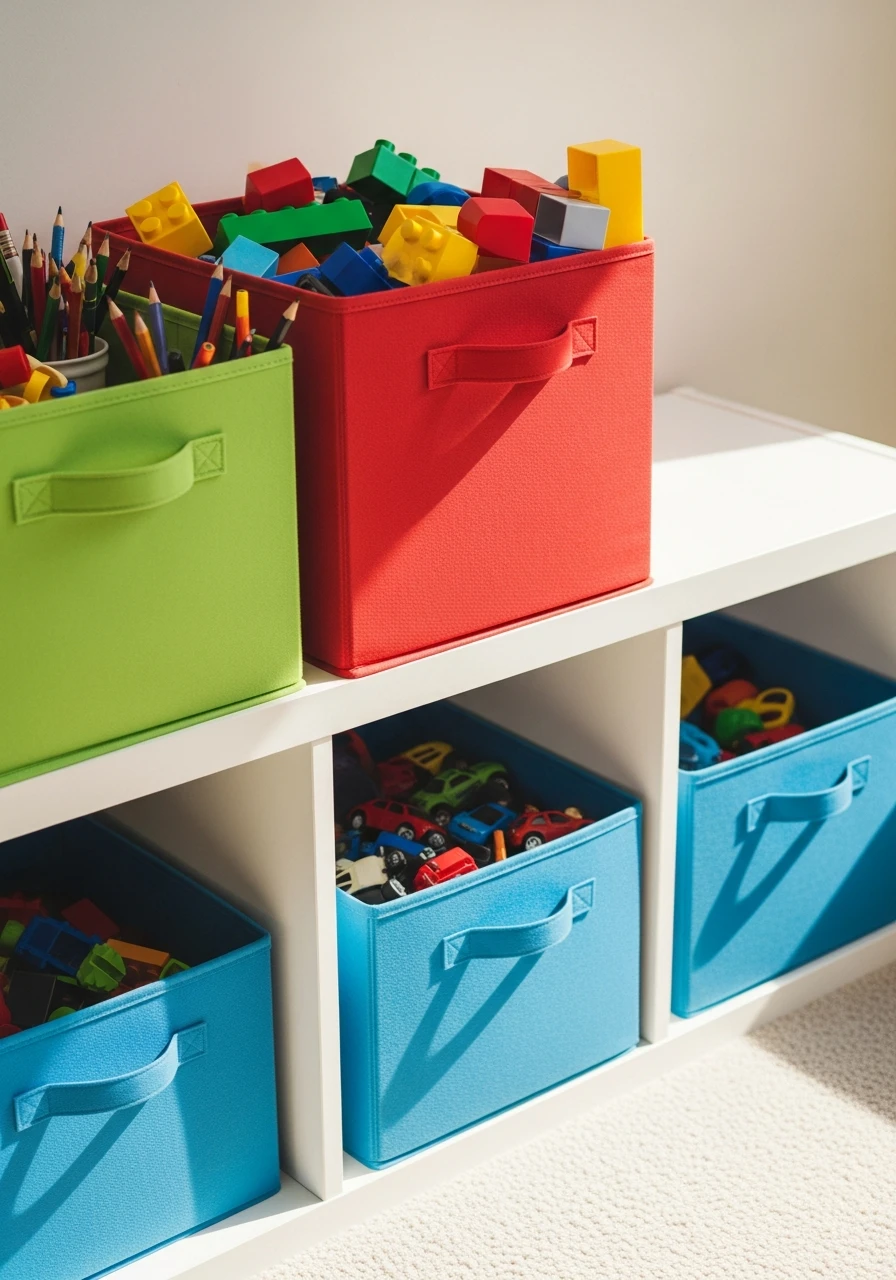
Assign colors to storage areas to simplify sorting and cleanup. For example, the green basket is for art, and the red basket is for building. It’s a great visual cue.
- Use brightly colored tape to mark shelves.
- Keep the colors consistent and distinct.
- This is highly effective for visual learners.
Pro Tip: If you don’t want bright colors, use different shades of a neutral color (light gray, medium gray, charcoal).
44. Stick To Daily Cleanup
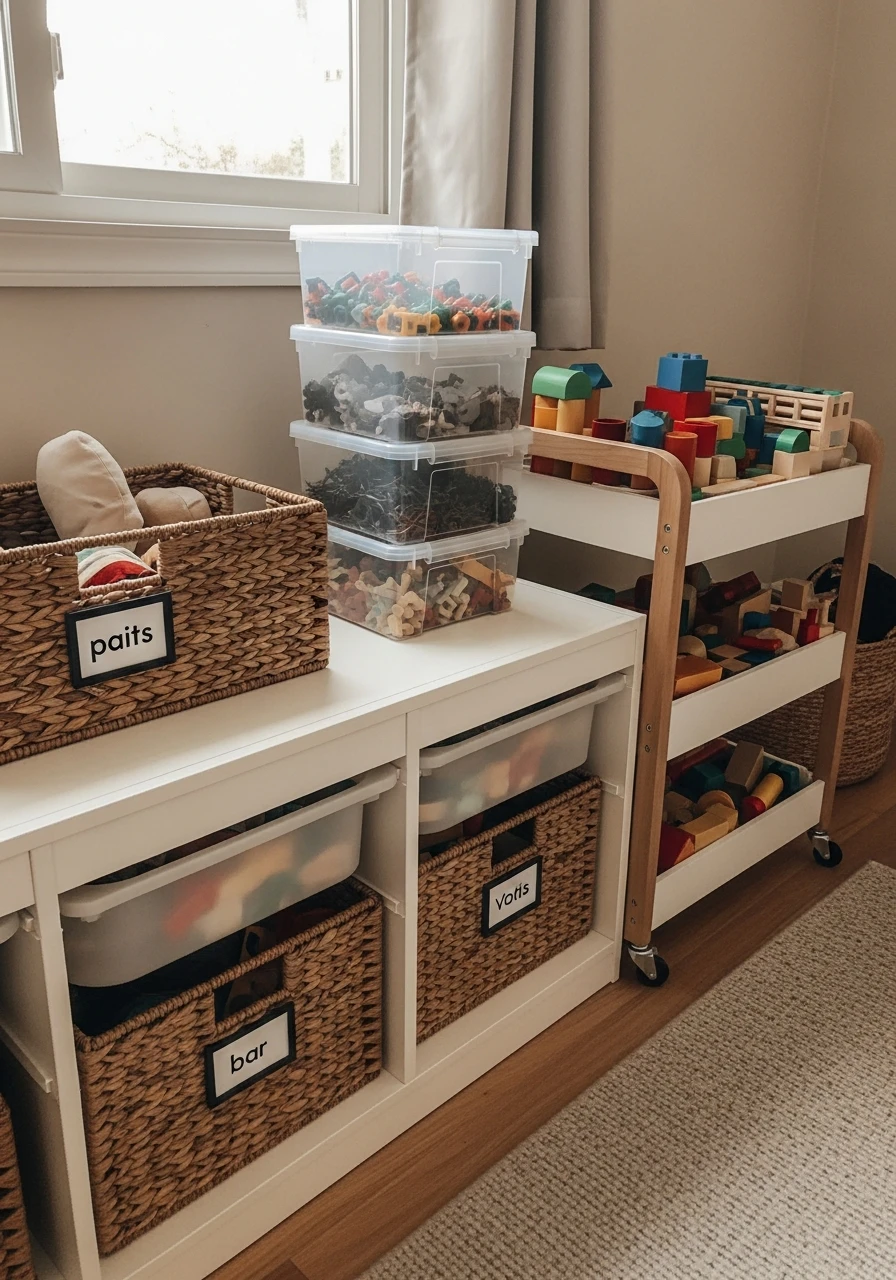
A short daily cleanup habit prevents mess buildup and keeps your storage systems working long-term. Spend just five minutes before dinner putting things away.
- Set a timer for quick, focused cleaning.
- Make cleanup a fun game (e.g., ‘who can put away five things’).
- Reward consistency, not perfection.
Pro Tip: Play a favorite song during cleanup time—when the song ends, cleanup ends.
45. Labels With Words And Pictures
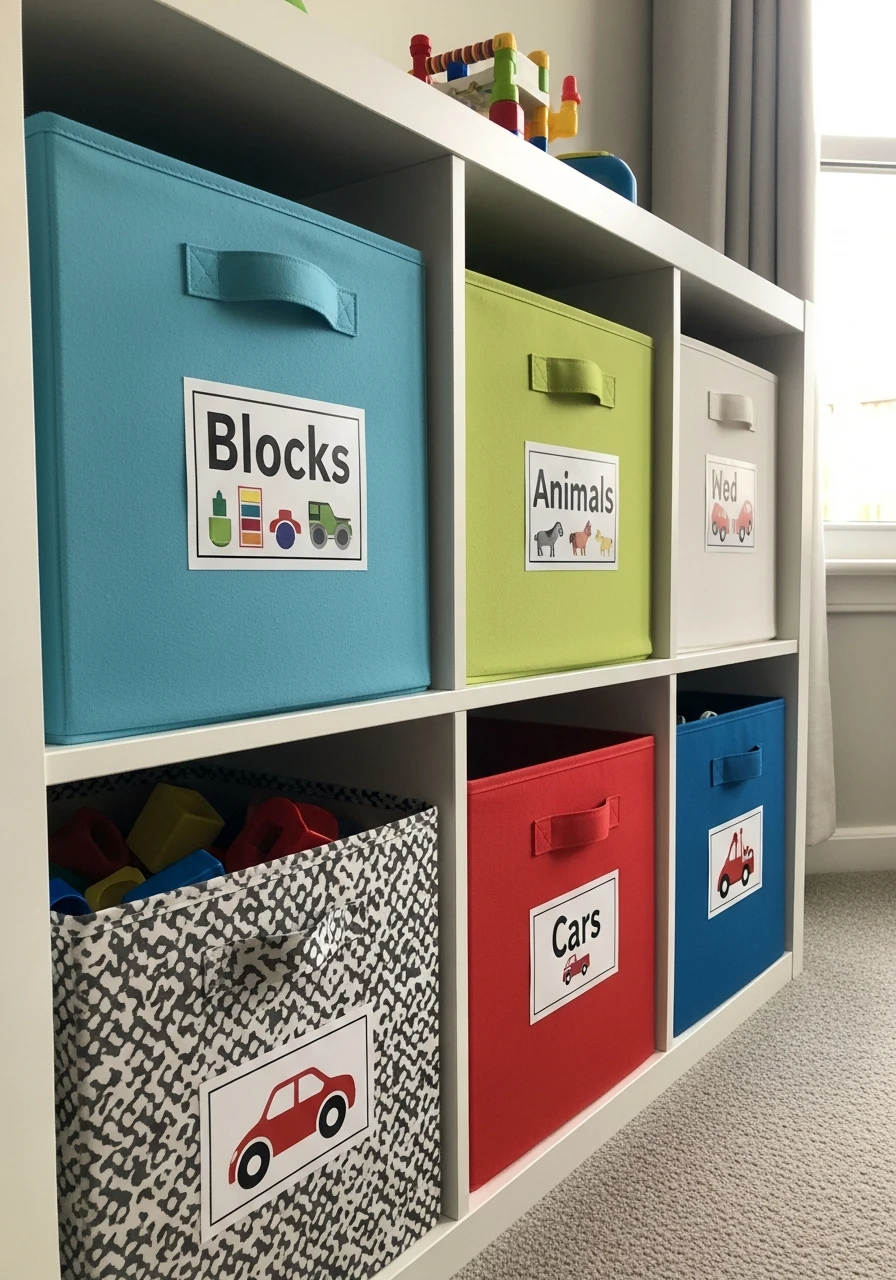
Combining text and images on labels improves clarity for all ages. It supports early reading skills and ensures everyone knows exactly where toys belong.
- Place the picture above the word.
- Use a simple, large font.
- Make sure the label is big enough to read easily.
Pro Tip: Use a label maker that prints both text and simple icons for a professional look.
46. Use Simple Category Signs
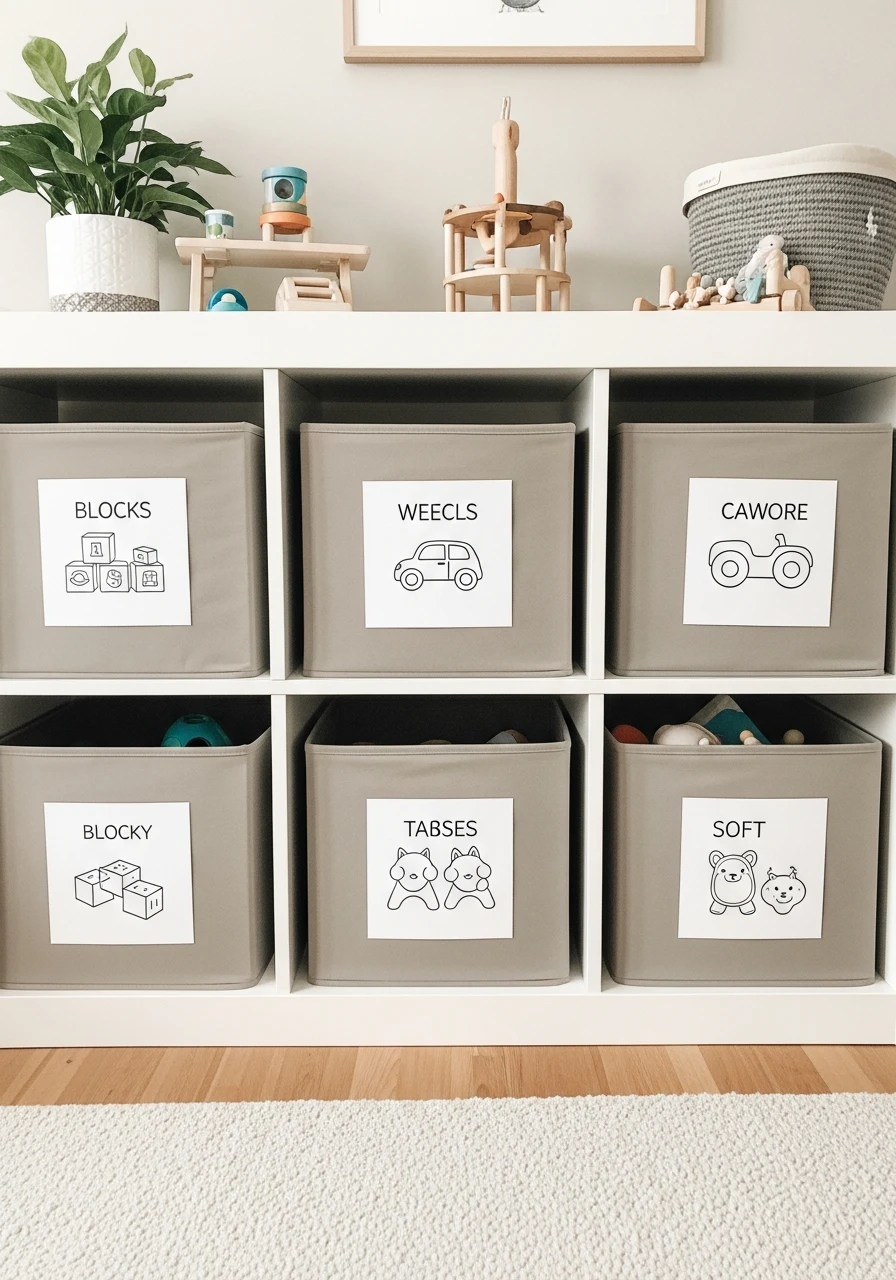
Simple category signs make toy storage intuitive, especially in open-shelf units. They help kids learn where everything belongs without needing to open every bin.
- Use signs like ‘Blocks,’ ‘Dolls,’ or ‘Art Supplies.’
- Mount the signs above the storage unit.
- Keep the language simple and direct.
Pro Tip: If you have a large collection (like Lego), break it down into smaller sub-categories for signs.
47. Flat Organizers For Games
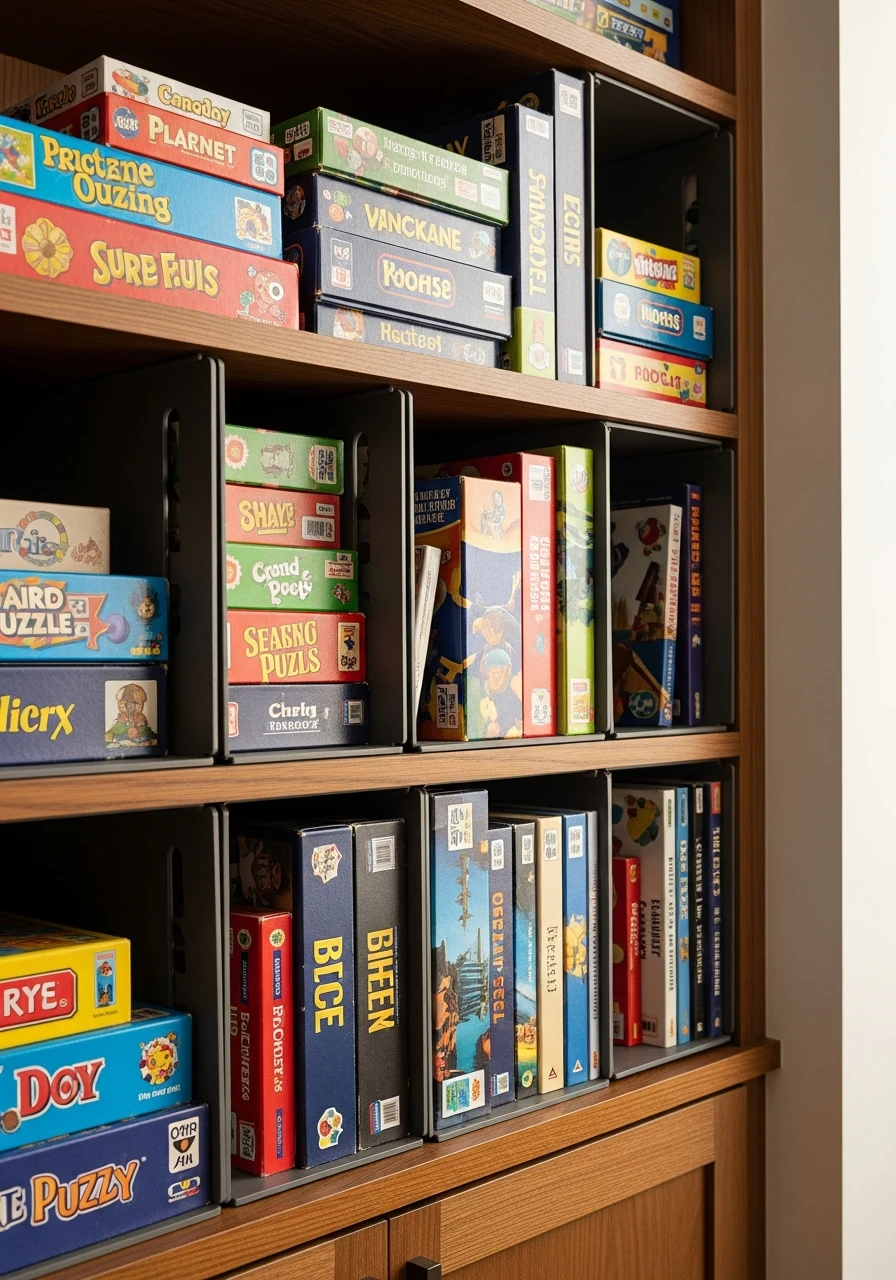
Flat organizers keep puzzles and board games stacked neatly, either in a drawer or on a shelf. This prevents boxes from falling and getting damaged, which is a common problem.
- Use vertical dividers on shelves.
- Store games horizontally in deep drawers.
- Use rubber bands to keep puzzle boxes closed.
Pro Tip: If the original box is too bulky, transfer the game pieces into a labeled zip-top bag and store the bag in a slim plastic container.
48. Mobile Art Supply Cart
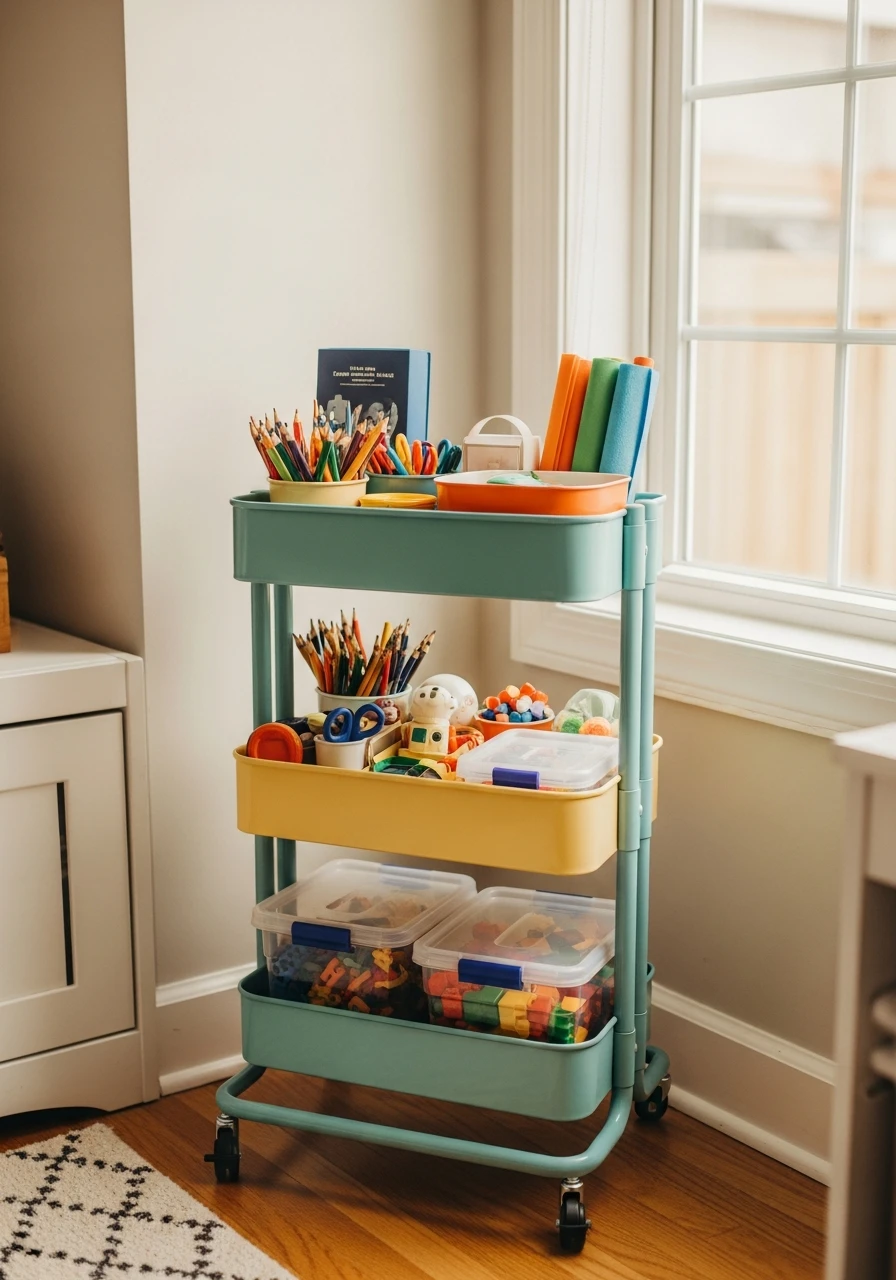
Rolling carts keep creative supplies organized and mobile, allowing kids to work anywhere in the house. They are ideal for craft-focused play areas and can be tucked away when not in use.
- Use small cups or jars in the cart for pencils.
- Look for carts with multiple tiers.
- Keep paint and markers on the top shelf.
Pro Tip: These carts are narrow and slide perfectly into the small gap between a wall and a dresser.
49. Toy Workbench Storage
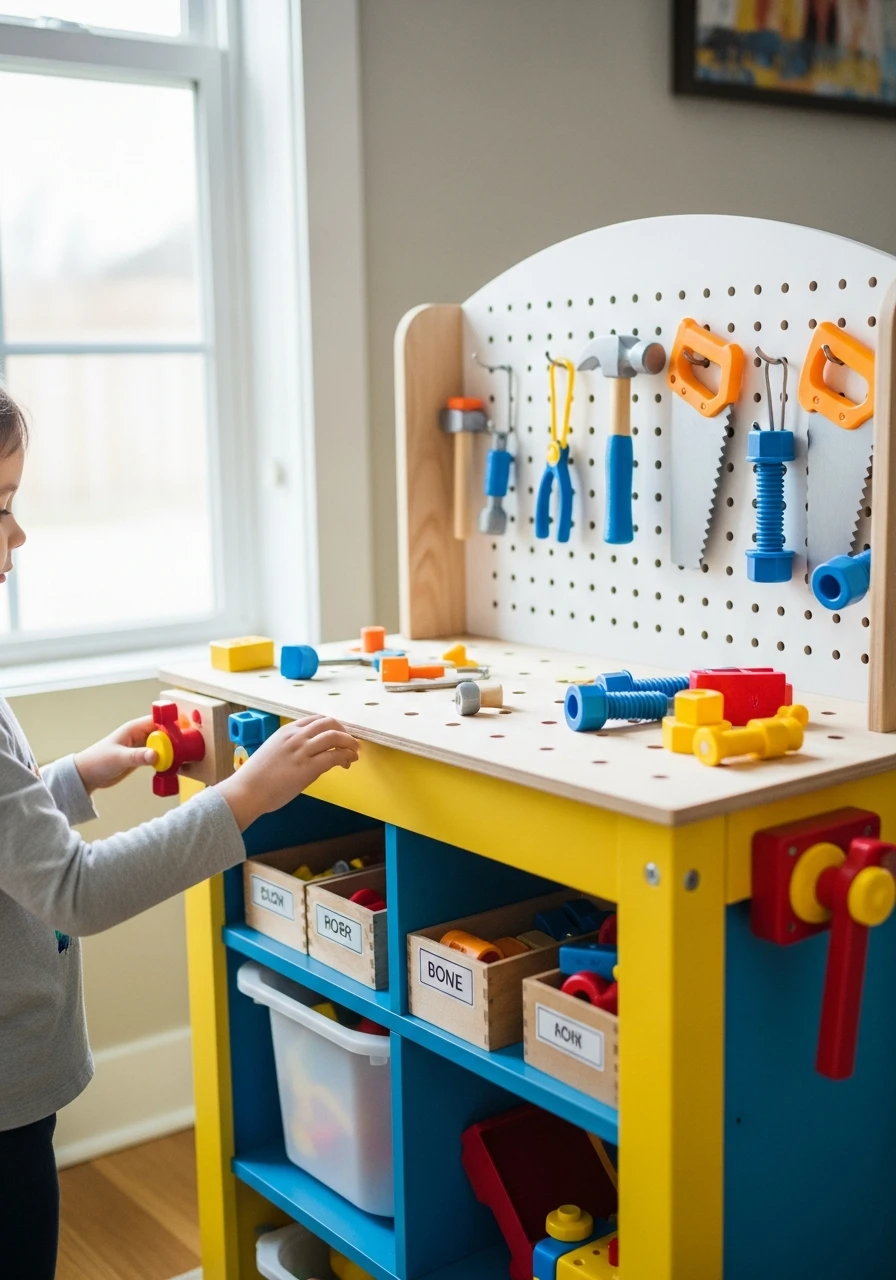
Toy workbenches and play kitchens often come with built-in compartments that organize play tools neatly. They encourage imaginative play while inherently reducing mess.
- Use the built-in hooks for play tools.
- Keep play food separated in the cubbies.
- Look for models with functional drawers.
Pro Tip: This piece of furniture counts as both a toy and a piece of storage—win-win!
50. Magnetic Bins For Metal Toys
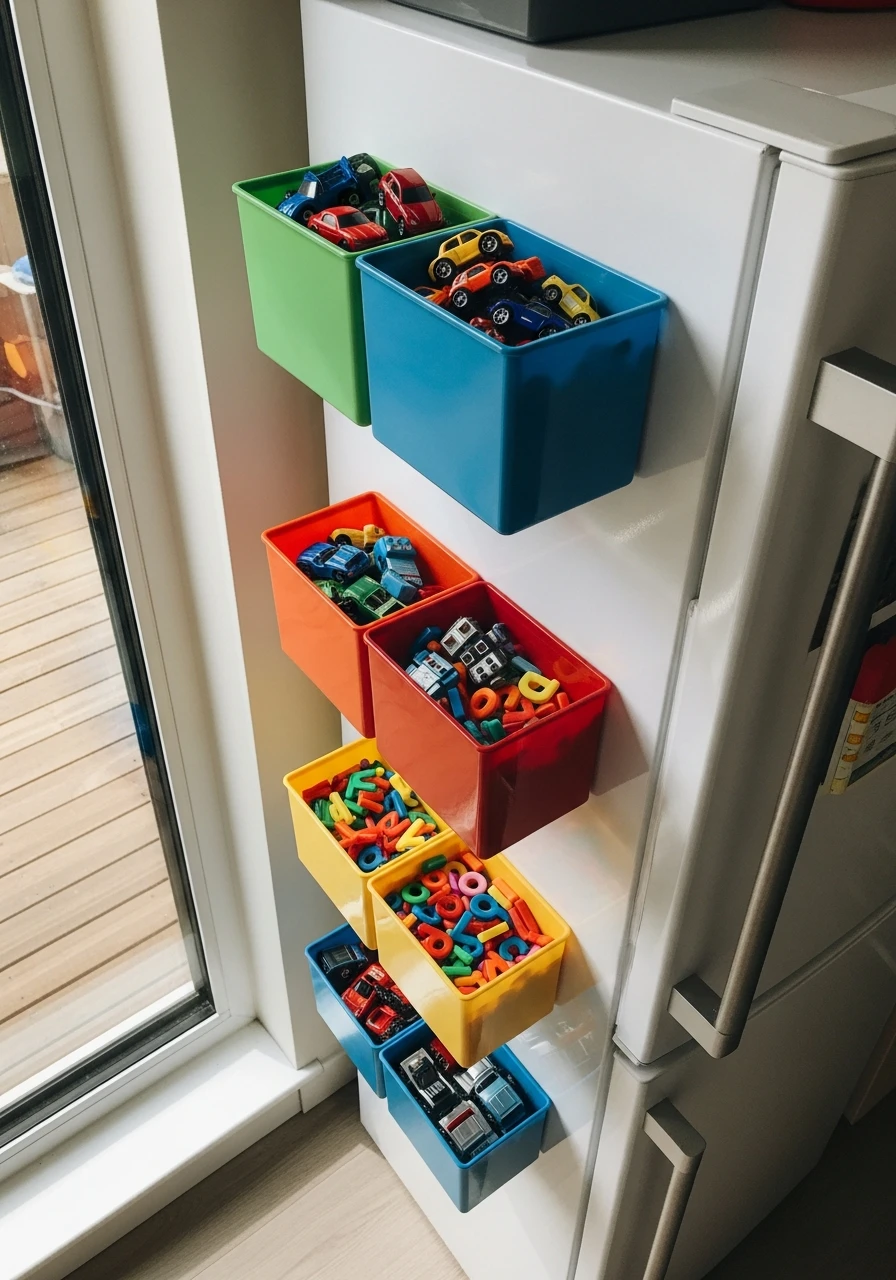
Magnetic bins store metal toys or accessories vertically on any metal surface (like a refrigerator or filing cabinet). They save surface space and add a fun visual element to the room.
- Use them for magnetic letters or small cars.
- Ensure the magnets are strong and secure.
- Place them at a height kids can reach.
Pro Tip: Install a metal sheet on the wall specifically to create a magnetic storage and play area.
See? Organizing toys doesn’t have to be a headache or a huge expense.
By using simple systems like labeling, rotation, and multi-functional furniture, you can keep the chaos contained and enjoy a tidier home.
Now go reclaim your living room!