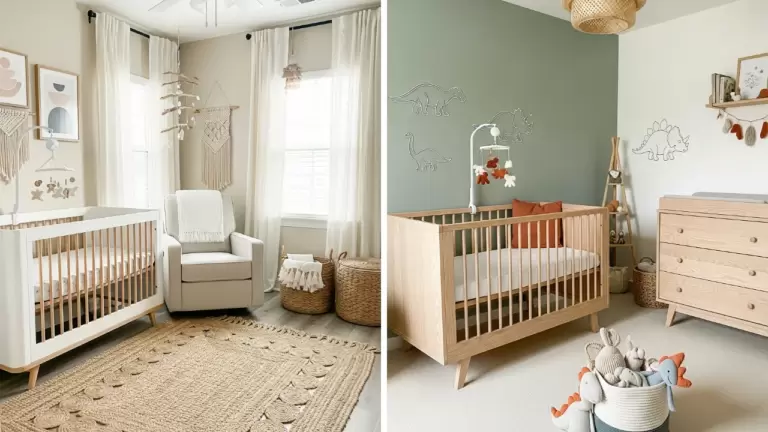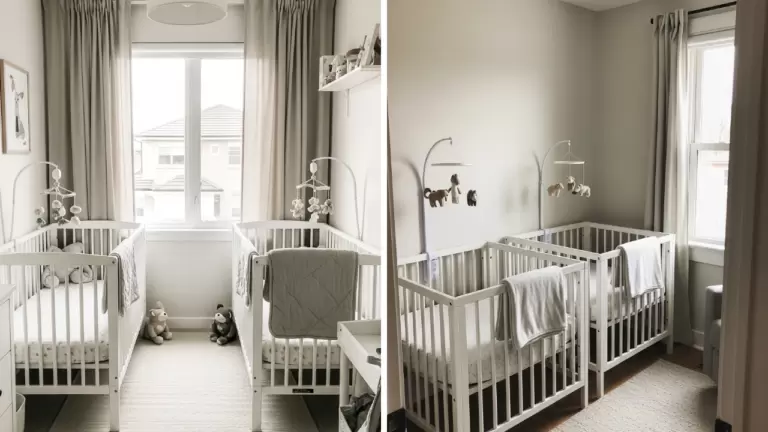
50 Genius Small Nursery Ideas

This post may contain affiliate links: full affiliate disclosure.
Trying to squeeze a whole nursery into a tiny room or corner? It feels impossible to fit a crib, glider, and storage without crowding the space.
Don’t worry, a small room doesn’t mean boring design!
We’ve gathered 50 genius ideas that maximize every inch and still look high-end without the huge price tag.
1. Crib That Grows With Baby
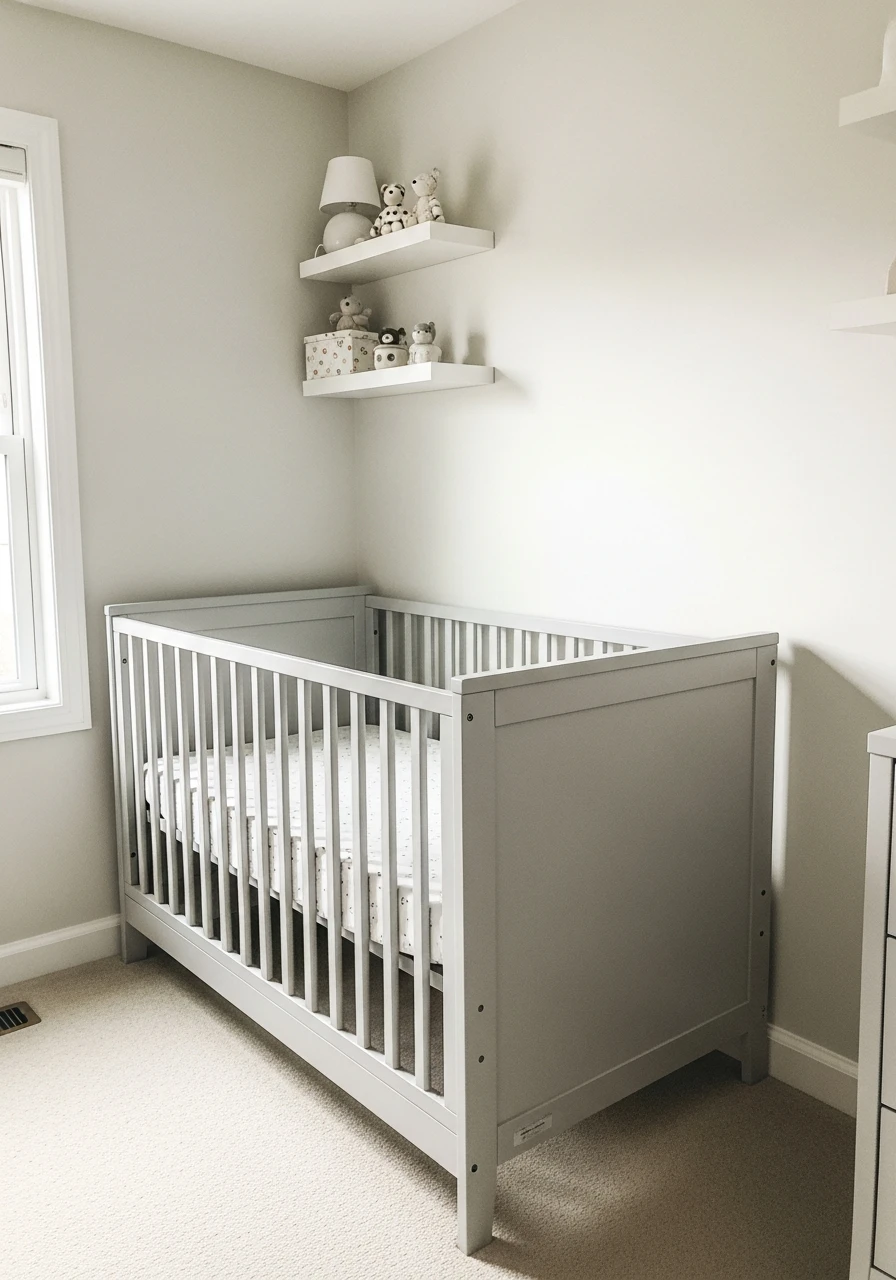
Choose a convertible crib that turns into a toddler or daybed later on. This smart purchase reduces your need to buy new large furniture in a couple of years, saving space and money.
- Invest in a 4-in-1 model.
- Keep the conversion hardware organized for later use.
- This frees up budget for high-end decor accents.
Pro Tip: Use the highest mattress setting initially to make the crib feel less bulky in the room.
2. Tucked Away Corner Crib
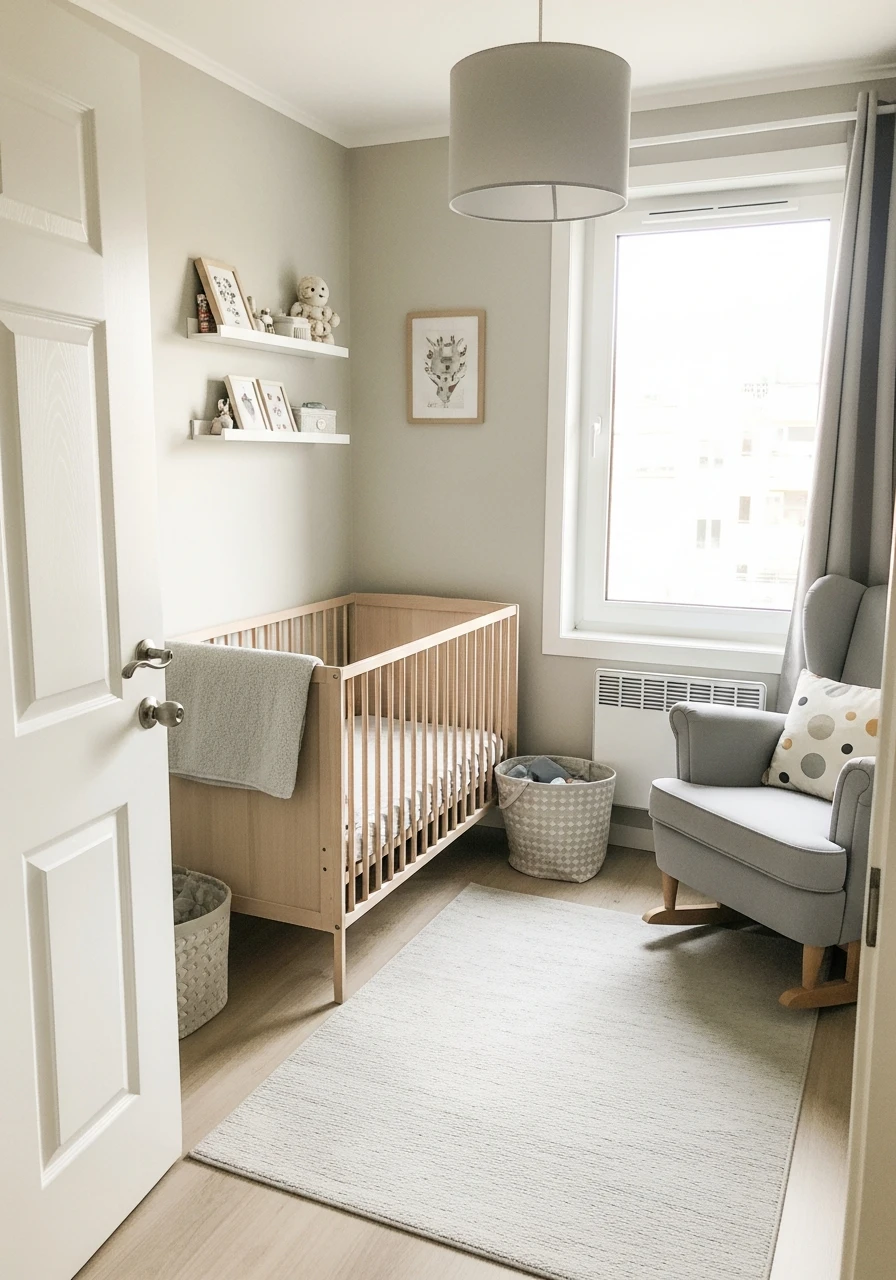
Placing the crib diagonally or flush into a corner instantly opens up the center of the room. This layout provides a clear visual path, making the whole space feel much bigger than it really is.
- Position the crib away from windows and cords.
- Use a simple wall decal above the corner.
- Ensure there is safe access on at least one side.
Pro Tip: This layout is perfect if you need extra floor space for a feeding chair or simple play mat.
3. Turn Closet Into Nursery Nook
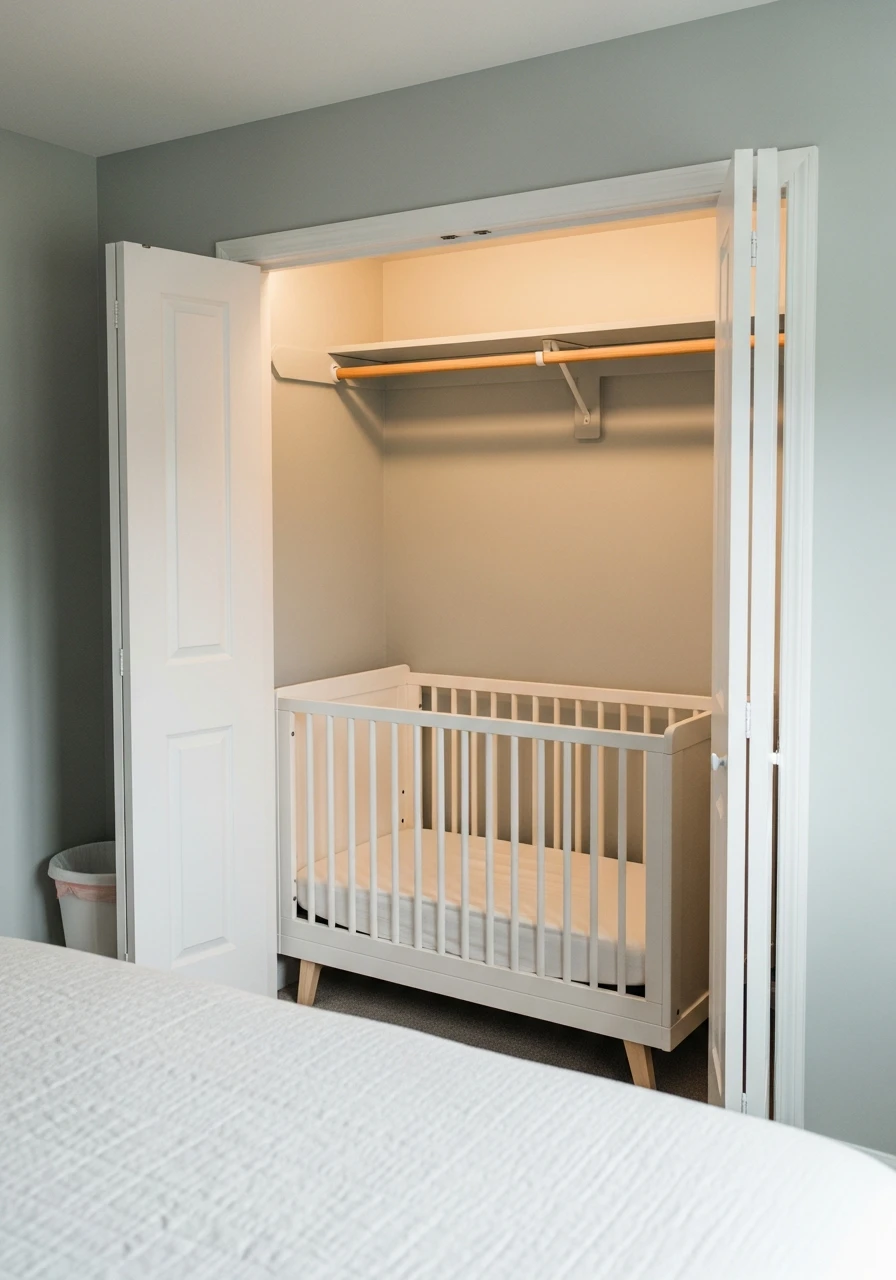
If you are short on space, converting a standard closet into a safe nursery nook is a game changer. Remove the doors, add soft lighting, and place the crib inside to create a defined sleeping area.
- Remove the closet doors completely.
- Use the upper shelf for extra storage.
- Paint the interior a contrasting color for a feature.
Pro Tip: Make sure to patch and paint the inside before you move the crib in to make the space look finished.
4. Wall-Mounted Changing Station
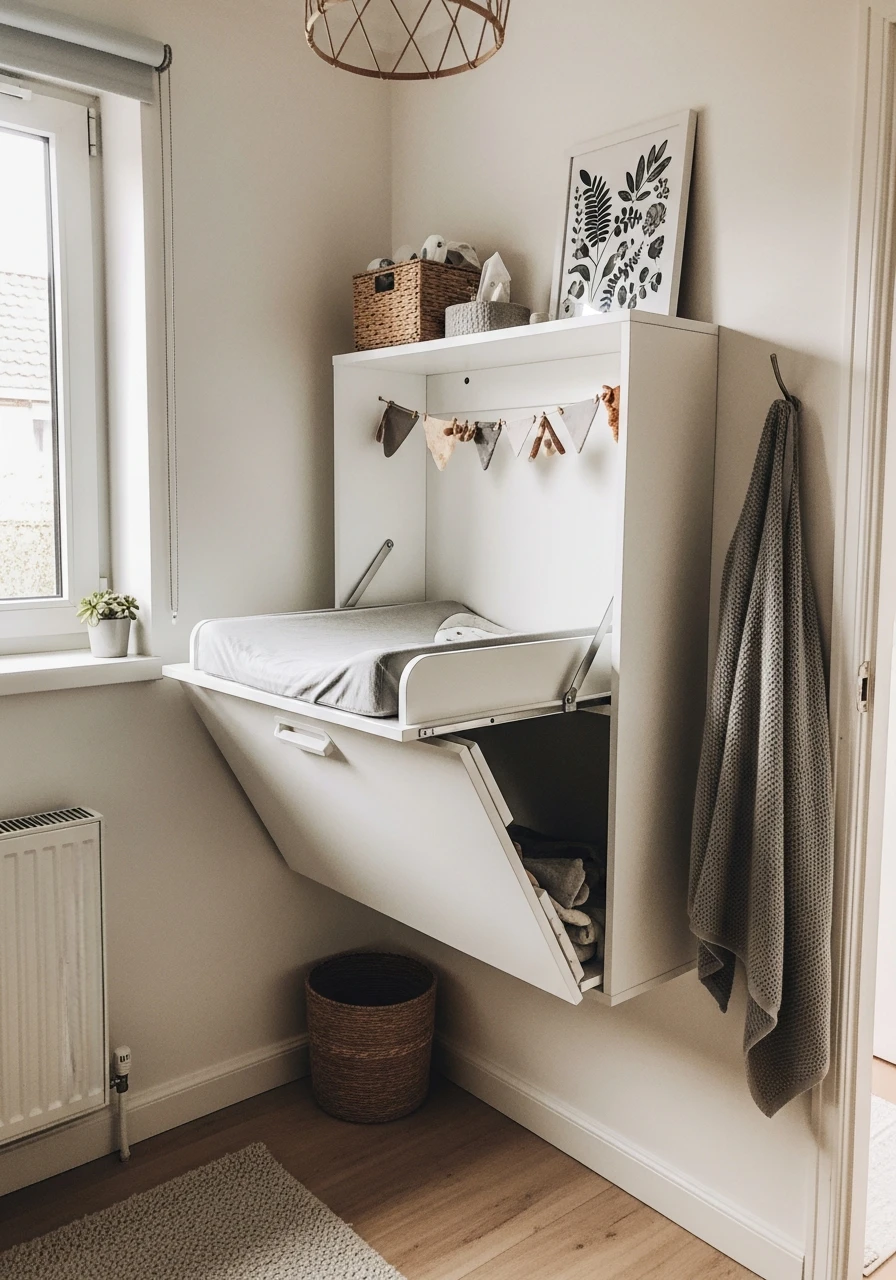
Install a changing table that folds flat against the wall when you are done using it. This is the ultimate space saver, giving you a safe station for diaper changes without taking up permanent floor space.
- Ensure it is securely mounted to wall studs.
- Keep a small basket nearby for immediate supplies.
- Look for models with built-in shelves.
Pro Tip: Mounting it near the door leaves the main wall space open for the crib or dresser.
5. Dresser Doubles as Changer
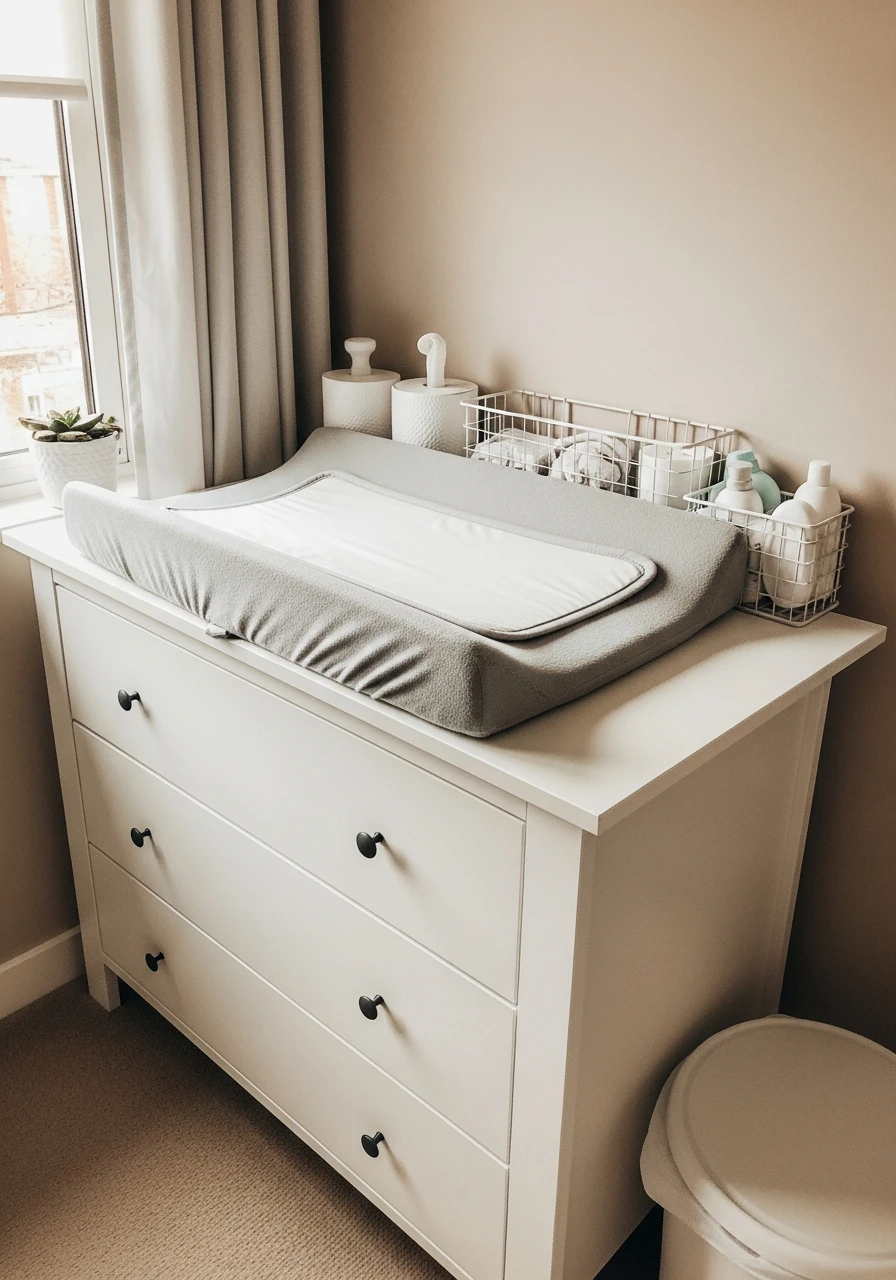
Skip the dedicated changing table and place a secure changing pad on top of a dresser instead. This dual-purpose setup reduces clutter and keeps all your clothes and supplies neatly contained below.
- Use a dresser that is at least 36 inches high.
- Secure the changing pad to the top for safety.
- Keep essentials in the top drawer for easy access.
Pro Tip: Use a wipeable foam changing pad for a cleaner, more modern look than fabric covers.
6. Go Vertical with Shelves
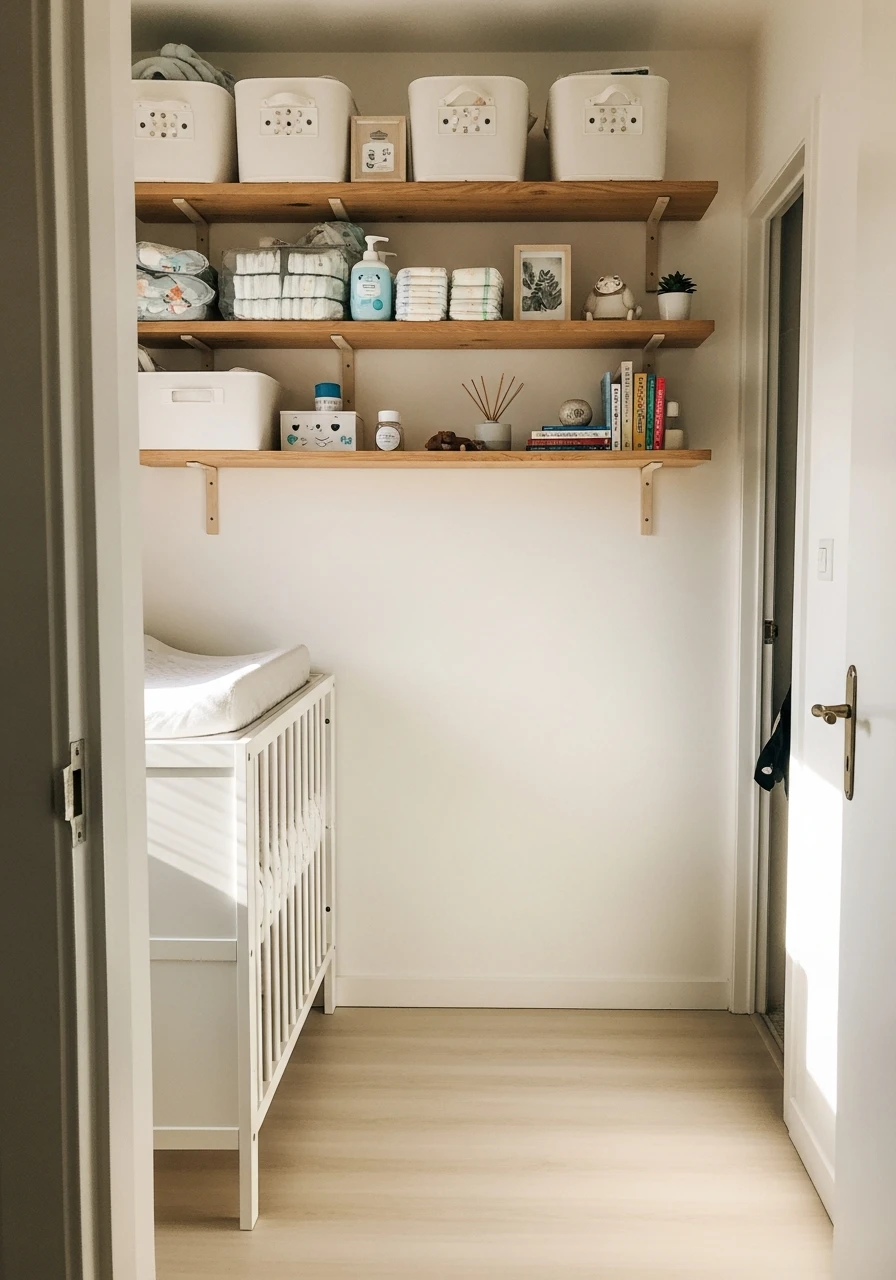
Floating shelves installed high above the crib or dresser are fantastic for storage and decorating. Vertical storage keeps essentials accessible while ensuring your floor space stays clear for walking around.
- Use shelves to display books and small toys.
- Install them far above the crib for safety.
- Stick to simple, narrow shelf designs.
Pro Tip: Choose white or clear shelves that blend into the wall so they don’t look too busy.
7. Use Space Under the Crib
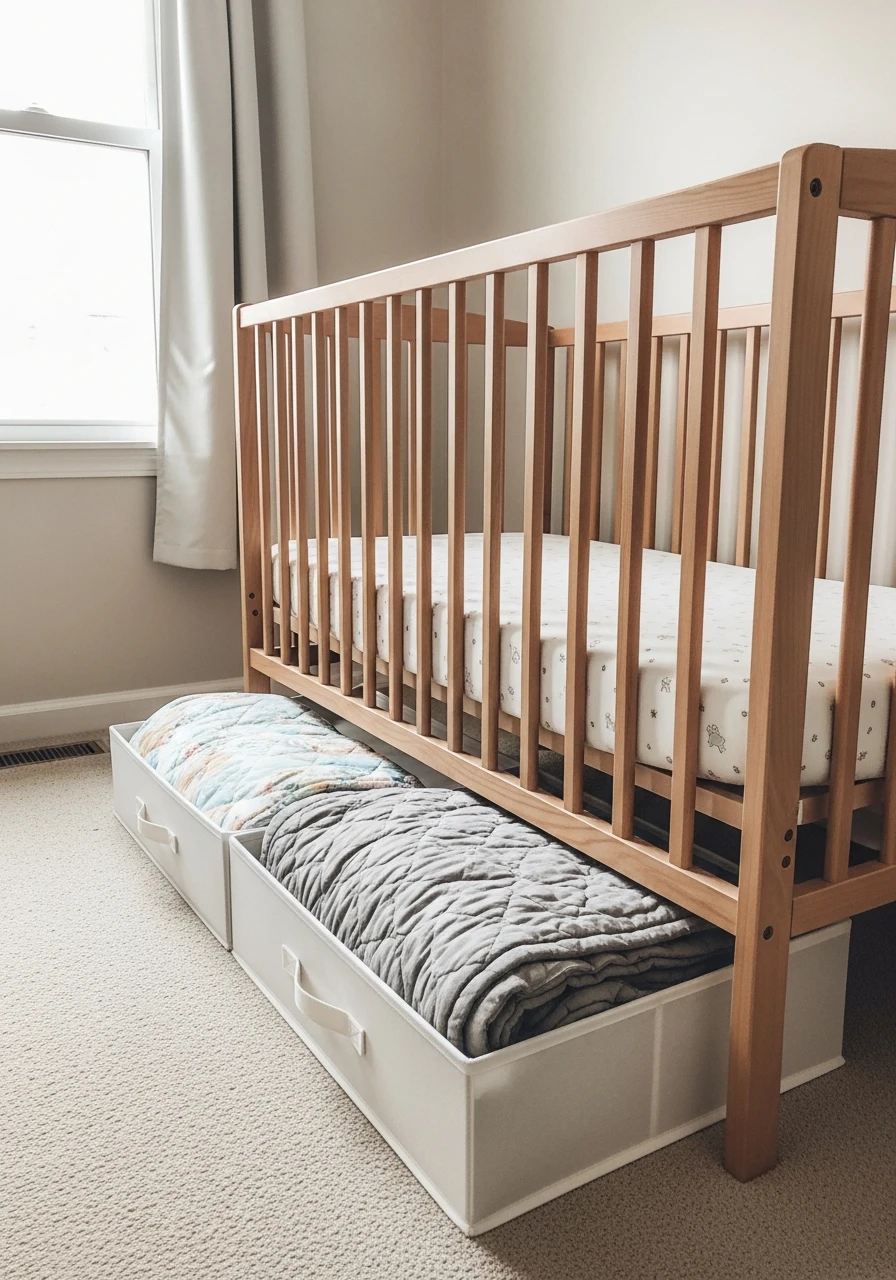
The space under the crib is often forgotten, but it is great for storing bulky items like extra bedding or seasonal clothes. Use slim, rolling bins or drawers that slide easily in and out.
- Measure the clearance height before buying bins.
- Use containers with lids to keep things dust-free.
- Store items you don’t need every day here.
Pro Tip: If your crib has open sides, use decorative woven bins instead of clear plastic ones.
8. Hidden Storage Bench Seating
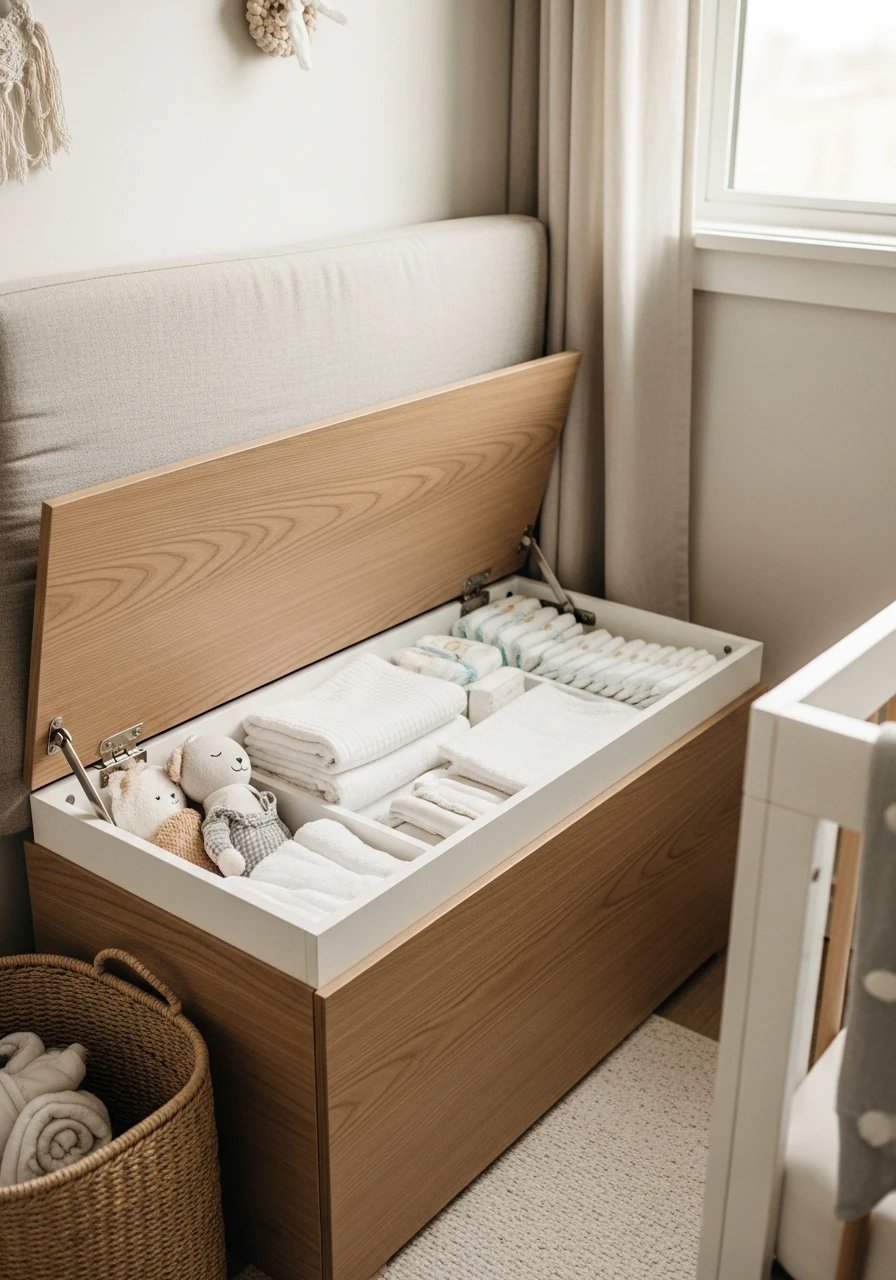
Add a small, functional bench that serves as both seating for you and hidden storage for baby gear. This is perfect for keeping blankets, extra diapers, or soft toys out of sight.
- Place the bench under a window.
- Look for a bench with a soft cushion top.
- Choose a neutral color that matches the room.
Pro Tip: A low-profile storage bench can also serve as a landing spot for clothes that need folding.
9. Choose a Mini Crib
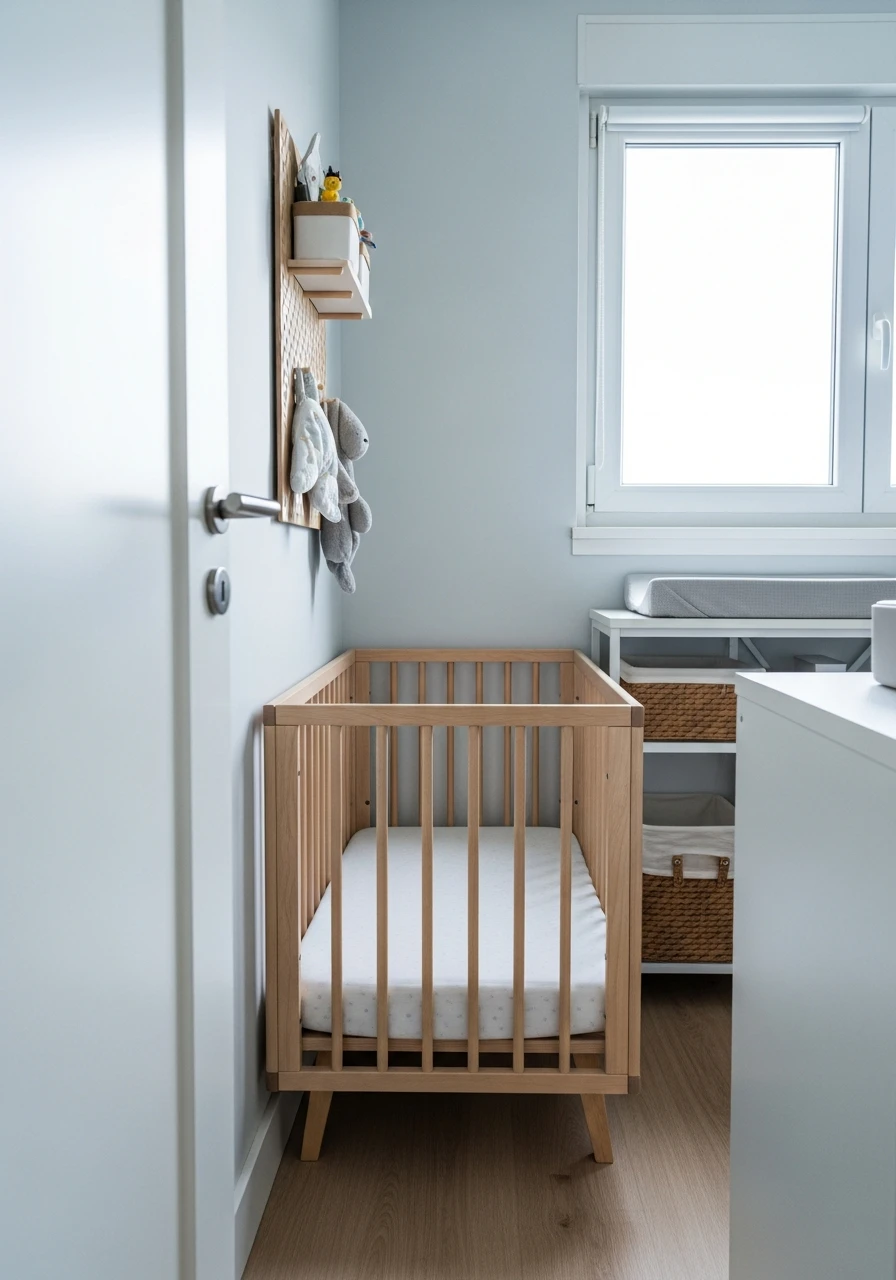
If your room is truly tiny, swap the standard crib for a mini crib. These are designed to meet safety standards while taking up significantly less floor area, fitting comfortably into tight spaces.
- Mini cribs use smaller mattresses, so plan ahead.
- Look for models on wheels for easy moving.
- They are perfect for bedside or bedroom sharing.
Pro Tip: Many mini cribs fold flat, which is great for storing them away later or moving them between rooms.
10. Stick to Slim Furniture
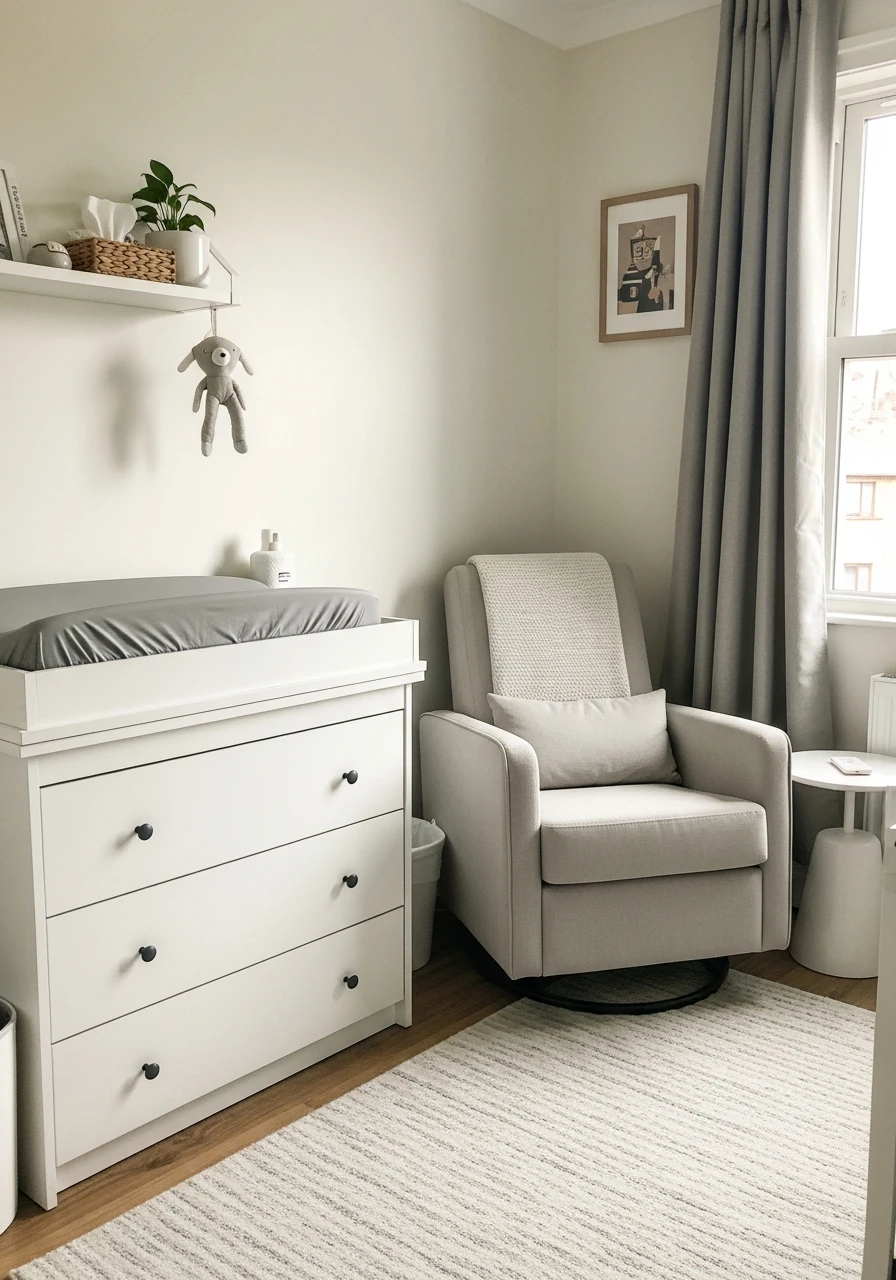
When shopping, select narrow dressers, compact gliders, and small side tables. Avoiding bulky pieces prevents the room from feeling overcrowded while still giving you the functionality you need.
- Measure twice, buy once!
- Look for gliders that swivel instead of recline.
- Choose side tables that are tall and slender.
Pro Tip: Wall-mount your dresser to the wall studs for safety and to make the floor space below feel cleaner.
11. Labeled Woven Baskets
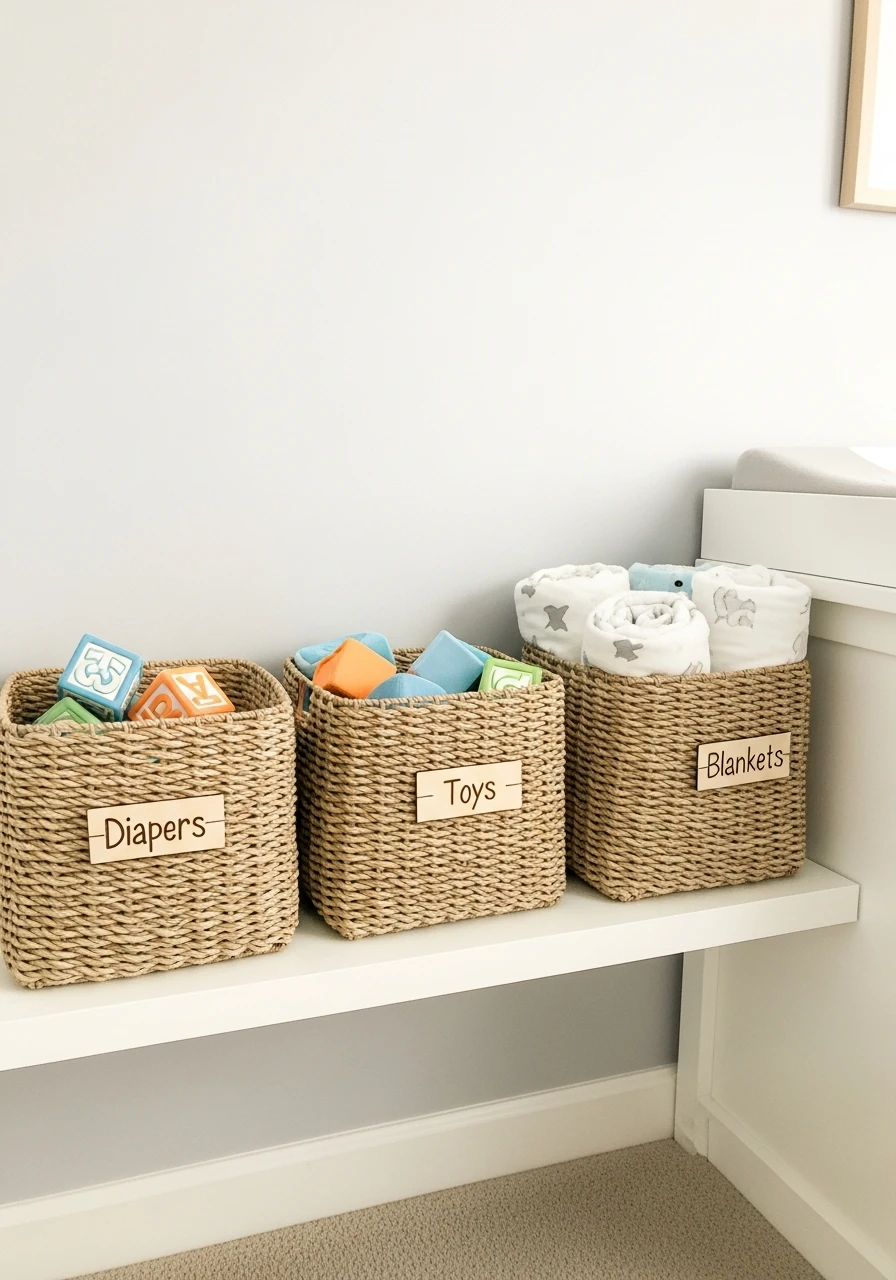
Using decorative, labeled baskets simplifies your daily routine and instantly tidies up small messes. Place them on shelves or the floor to store everything from diapers to small toys.
- Use cute wooden tags or chalk labels.
- Group similar items in the same basket.
- Woven textures add warmth and style.
Pro Tip: Baskets with handles are easier to pull down from high shelves when you need them.
12. Use Back of the Door
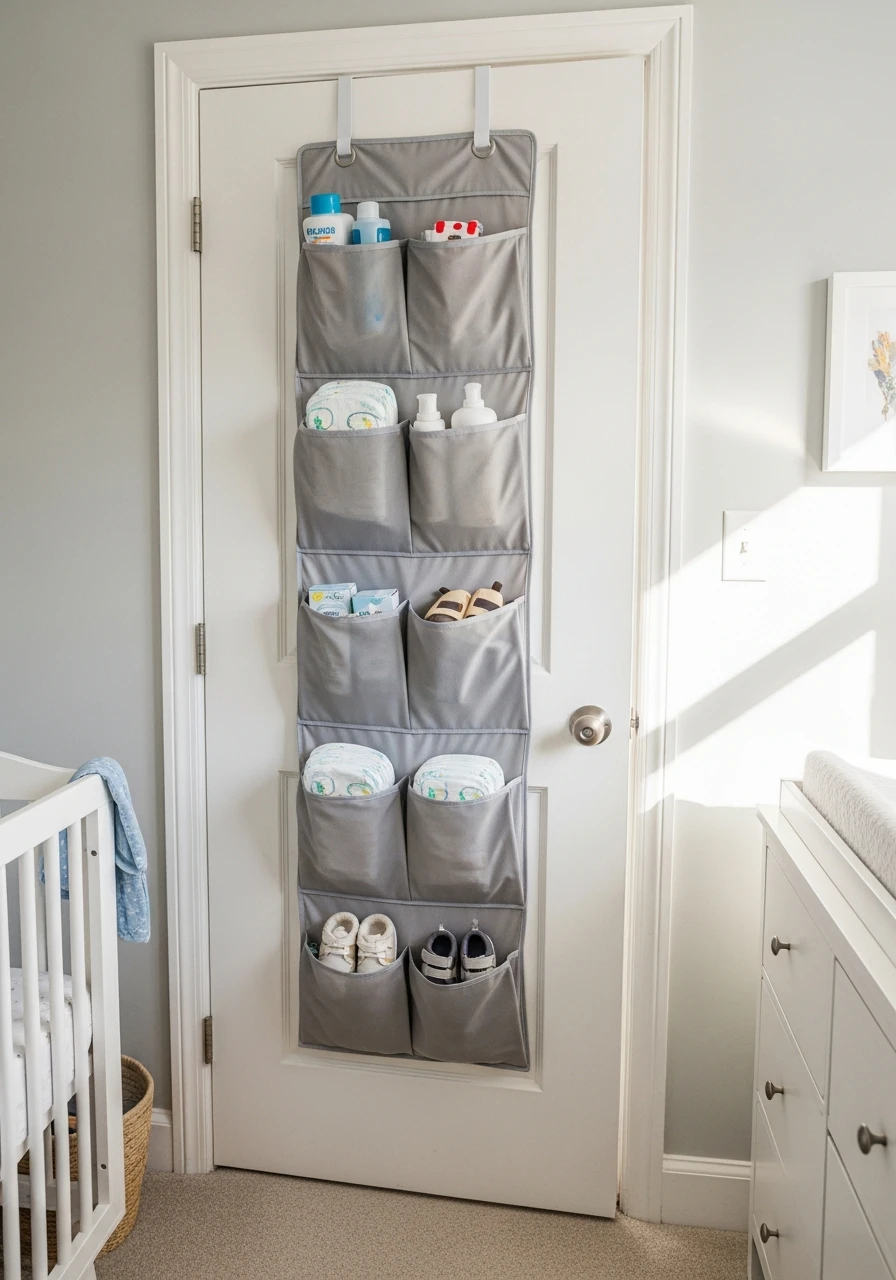
Install hanging organizers over the back of the nursery door to store accessories, shoes, or diaper supplies. This uses vertical space that would otherwise be wasted and is easy to access.
- Choose organizers with clear pockets.
- Keep the heaviest items near the bottom.
- Use this for items you need quickly.
Pro Tip: Hang your baby carrier or diaper bag from a sturdy hook on the back of the door to keep the floor clear.
13. Drawer Divider Magic
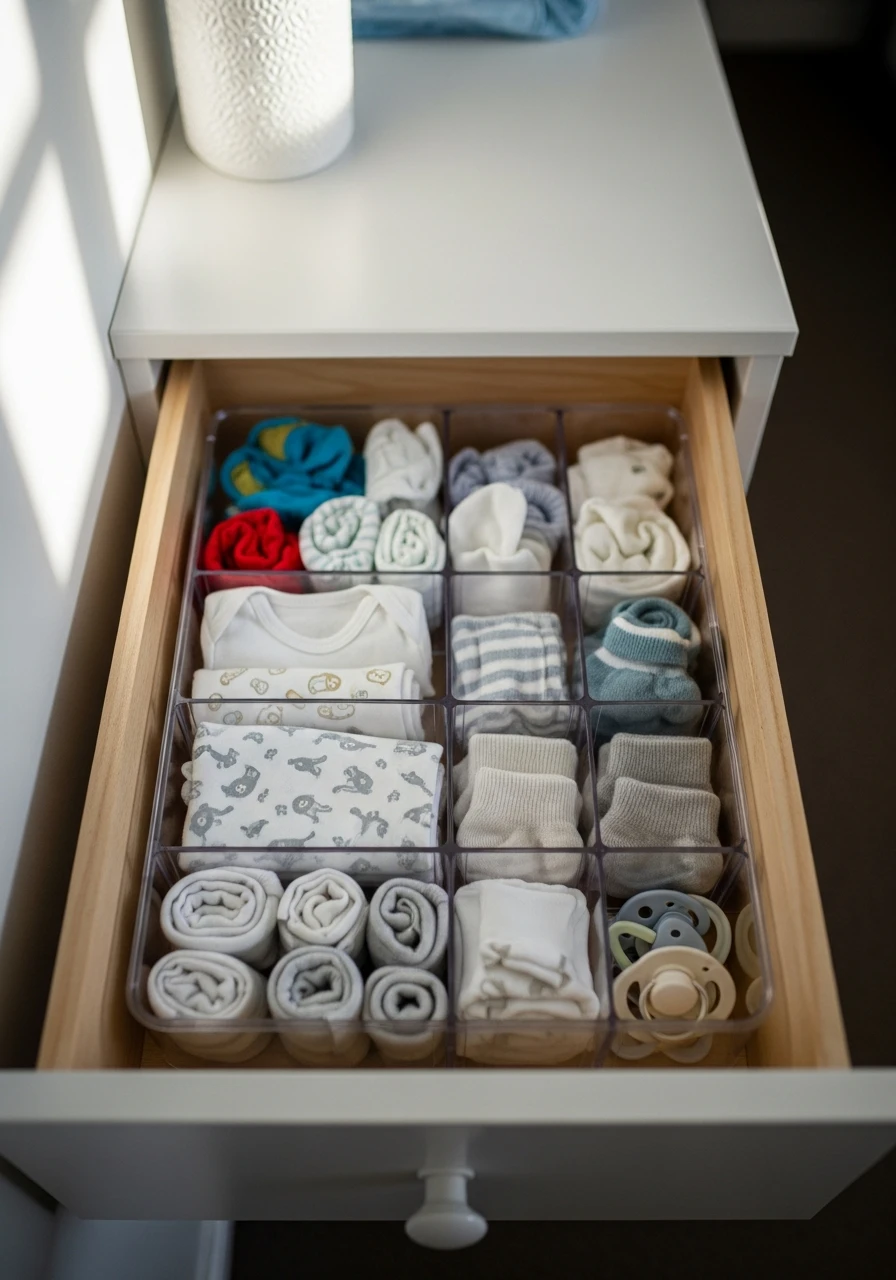
Use adjustable dividers inside your dresser drawers to separate tiny outfits, socks, and accessories. This keeps order in small storage spaces and makes it easy to find those tiny pieces quickly.
- Roll clothes instead of folding them.
- Group items by size or type.
- Use tension rod dividers for easy setup.
Pro Tip: Dividing the top drawer into very small squares is essential for organizing pacifiers and mittens.
14. Keep Toys on Rotation
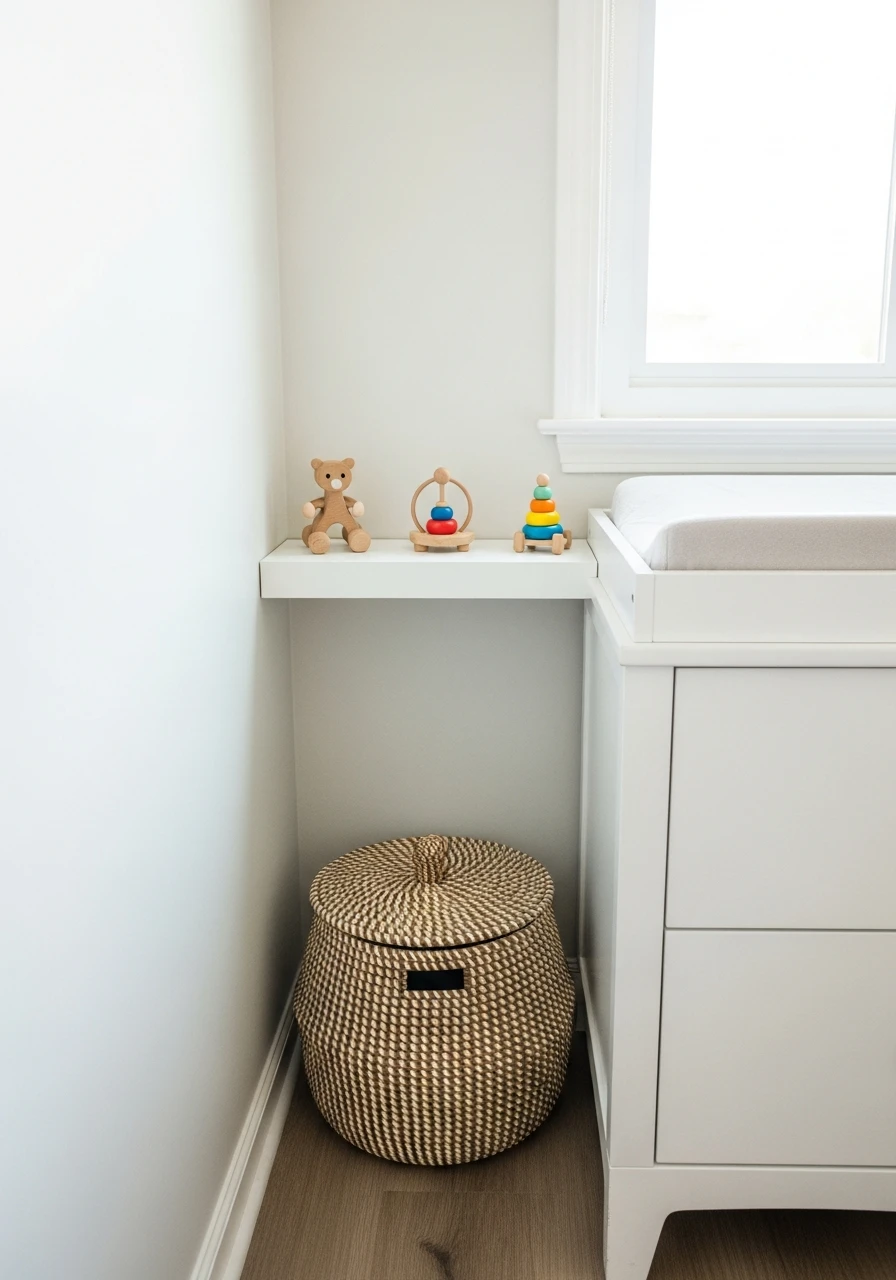
Instead of having all the toys out at once, store the extra items in a separate container and swap them out regularly. This simple method reduces clutter and keeps the nursery visually calm and tidy.
- Store the ‘out’ toys in a closet or basement.
- Rotate items every two weeks to keep things fresh.
- Only display a few items on the floor at a time.
Pro Tip: This trick also keeps your baby interested in the toys they already own, reducing the need to buy more.
15. Hooks for Vertical Storage
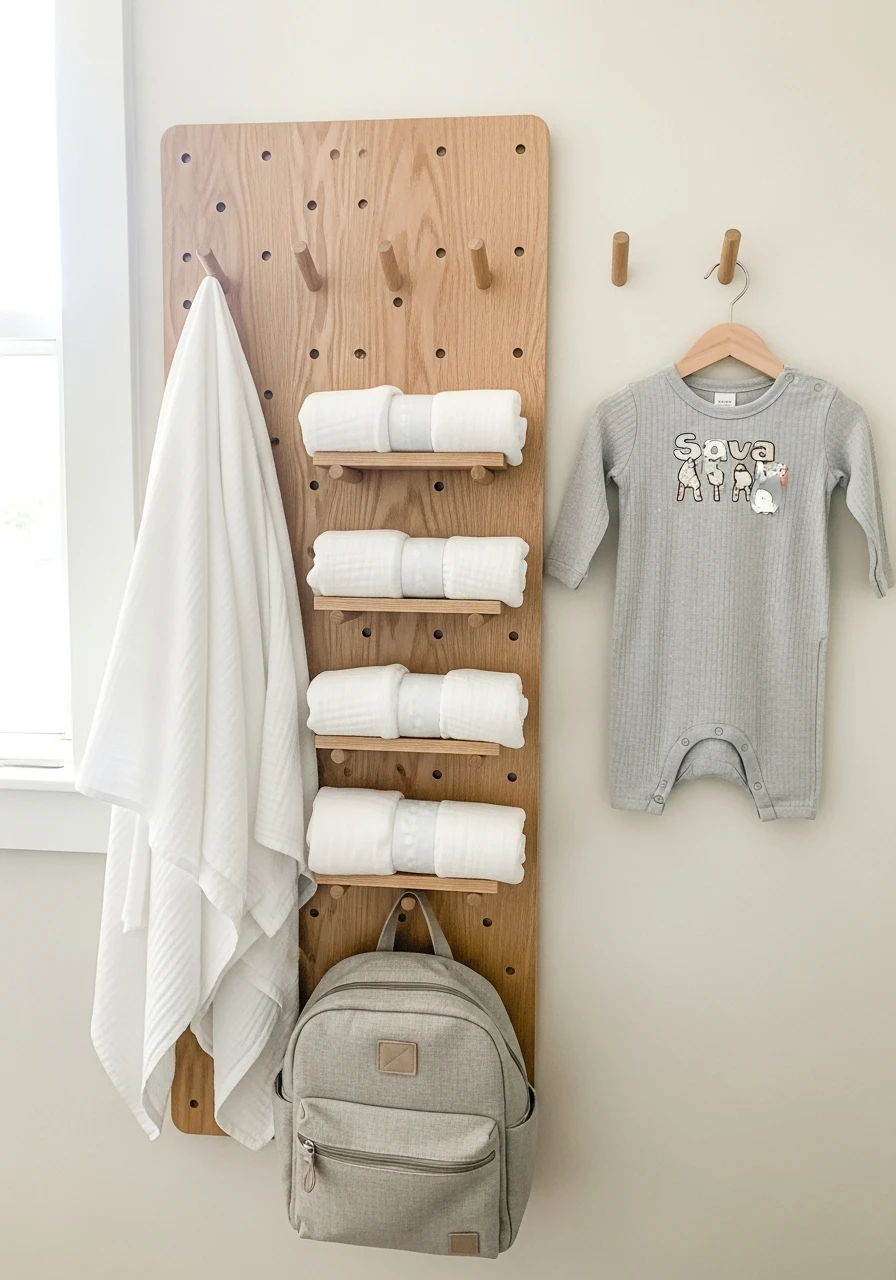
Install stylish wall hooks to hang swaddles, diaper bags, or even cute baby outfits as decor. This uses vertical wall space efficiently while keeping frequently used items right where you need them.
- Look for decorative wooden or metal hooks.
- Install them at different heights for visual interest.
- Use them for things you grab every day.
Pro Tip: Hanging a sweet outfit instead of storing it adds a personal touch to your wall art.
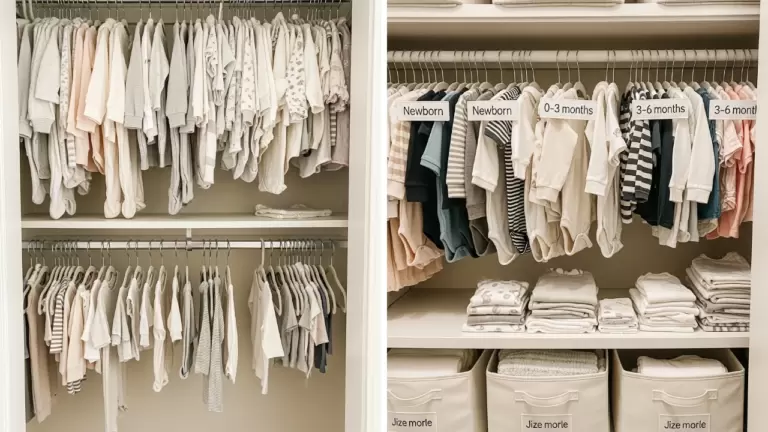
16. Maximize Closet Shelves
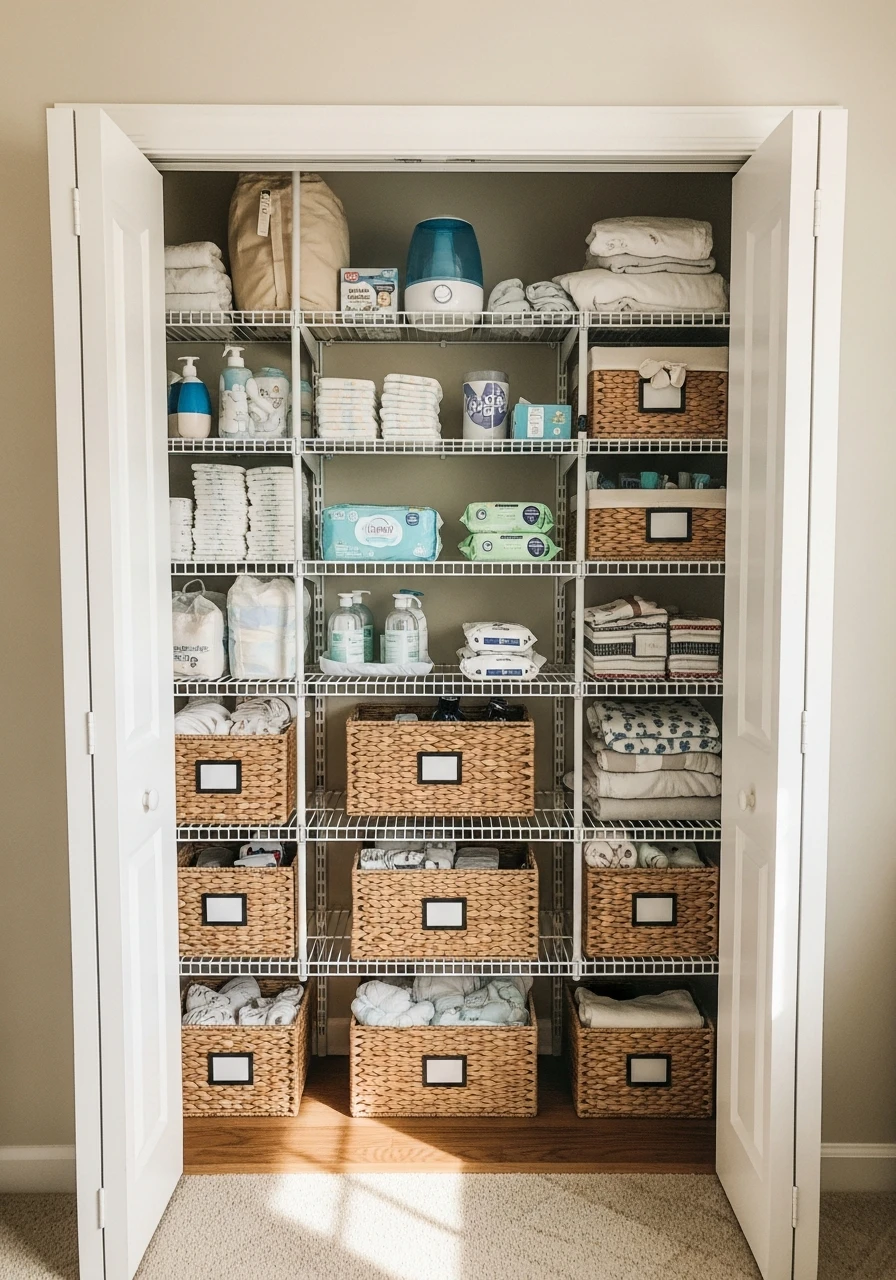
If your room has a closet, add extra shelving units inside to increase storage capacity right away. This allows for better organization of clothes, supplies, and bulkier items that you want hidden.
- Use wire shelving units for easy installation.
- Stack bins on the top shelves.
- Double-hang clothes using tiered rods.
Pro Tip: Move all the baby’s clothing storage into the closet to free up space where the dresser used to be.
17. Mobile Supply Cart
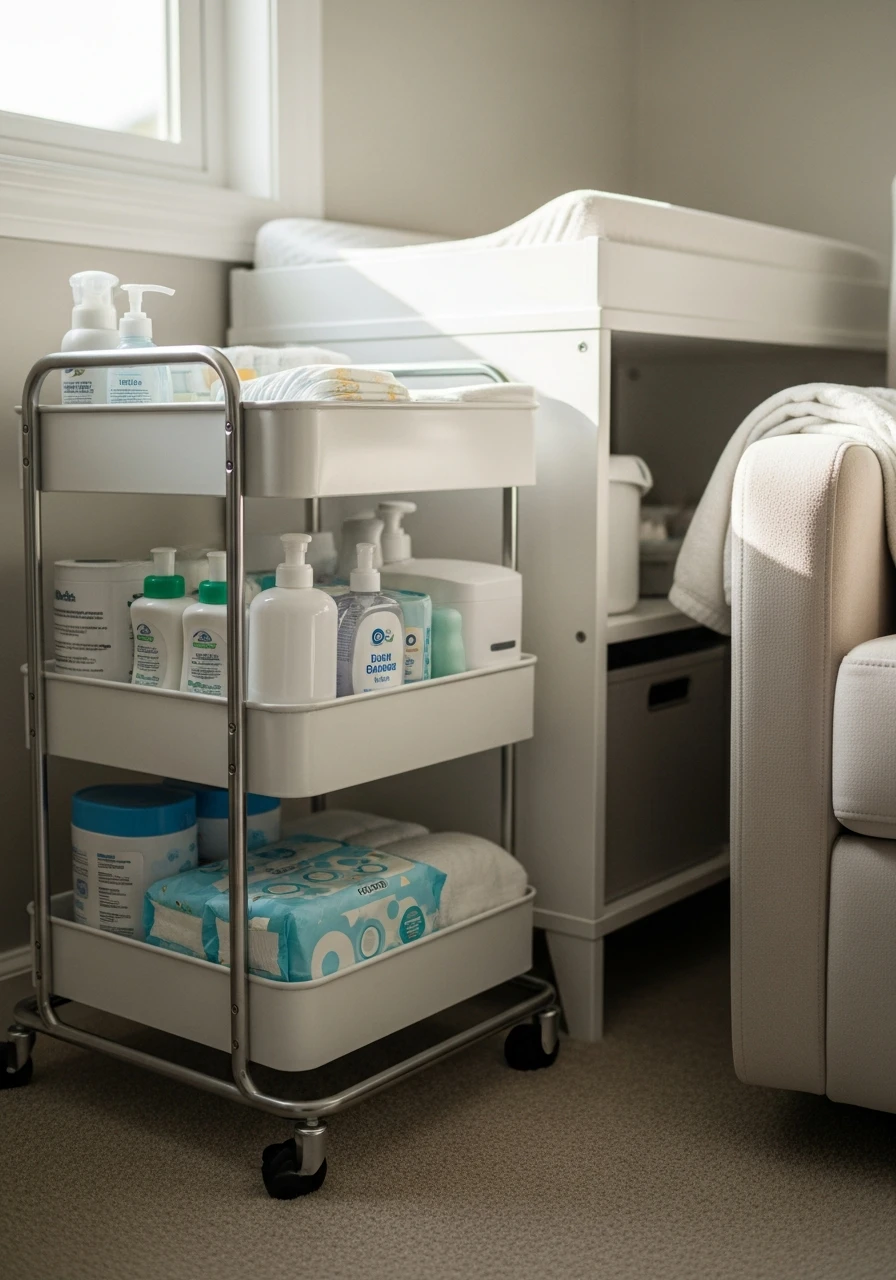
A small rolling cart is the perfect mobile station for diapers, wipes, and feeding supplies. You can easily move it next to the changing station or glider, allowing easy access anywhere in the room.
- Choose a cart with three or more tiers.
- Stock the top tier with changing supplies.
- Pick a color that matches your decor.
Pro Tip: The cart can easily roll into the closet when guests are coming over for instant tidiness.
18. Forward-Facing Bookshelves
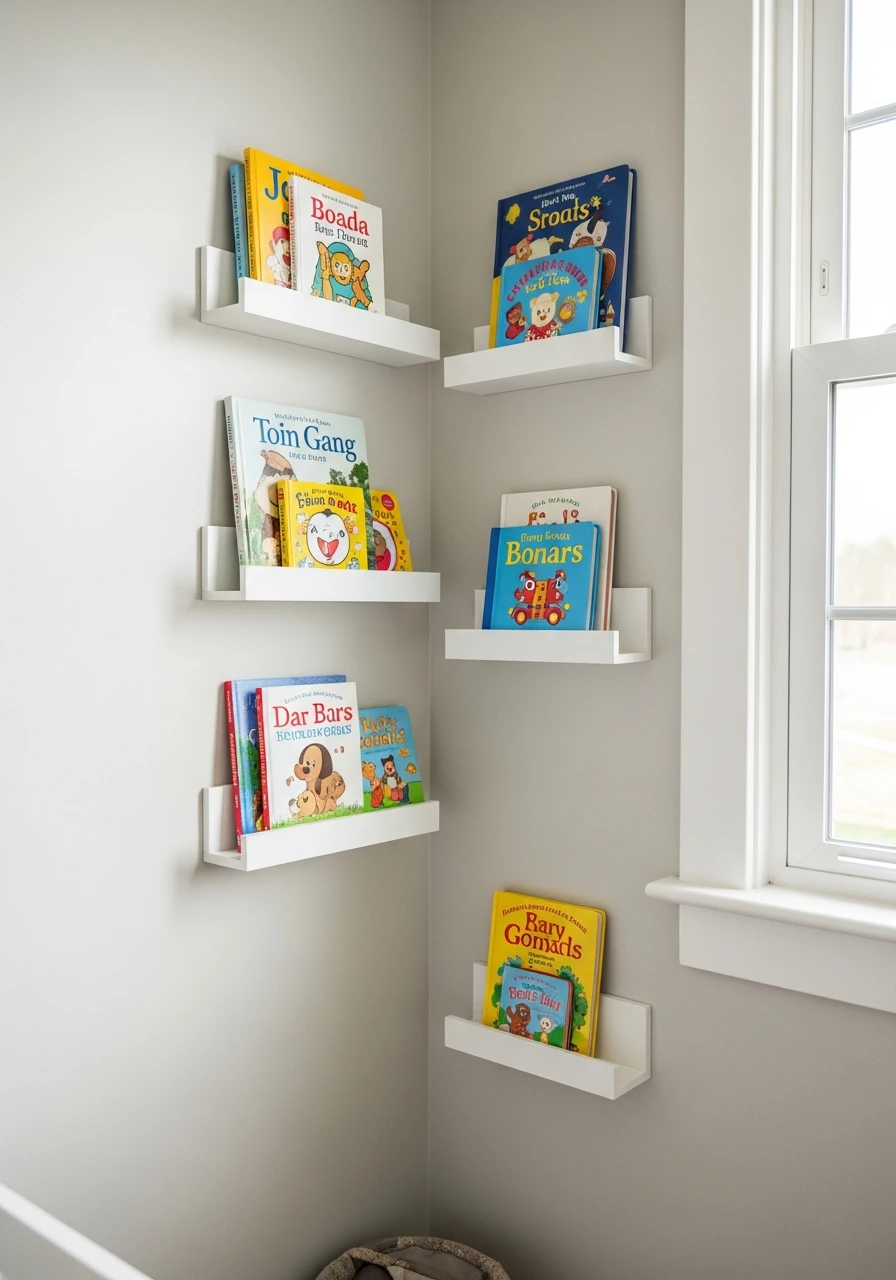
Install narrow wall shelves to display baby books with their covers facing forward, like in a library. This encourages reading and engagement while saving you the floor space a traditional bookshelf would take up.
- Install shelves at the child’s eye level.
- Keep the shelves short and multiple for safety.
- Choose slim, clear acrylic shelves.
Pro Tip: These shelves also work great for displaying small pieces of art or framed photos.
19. Storage Ottoman Footrest
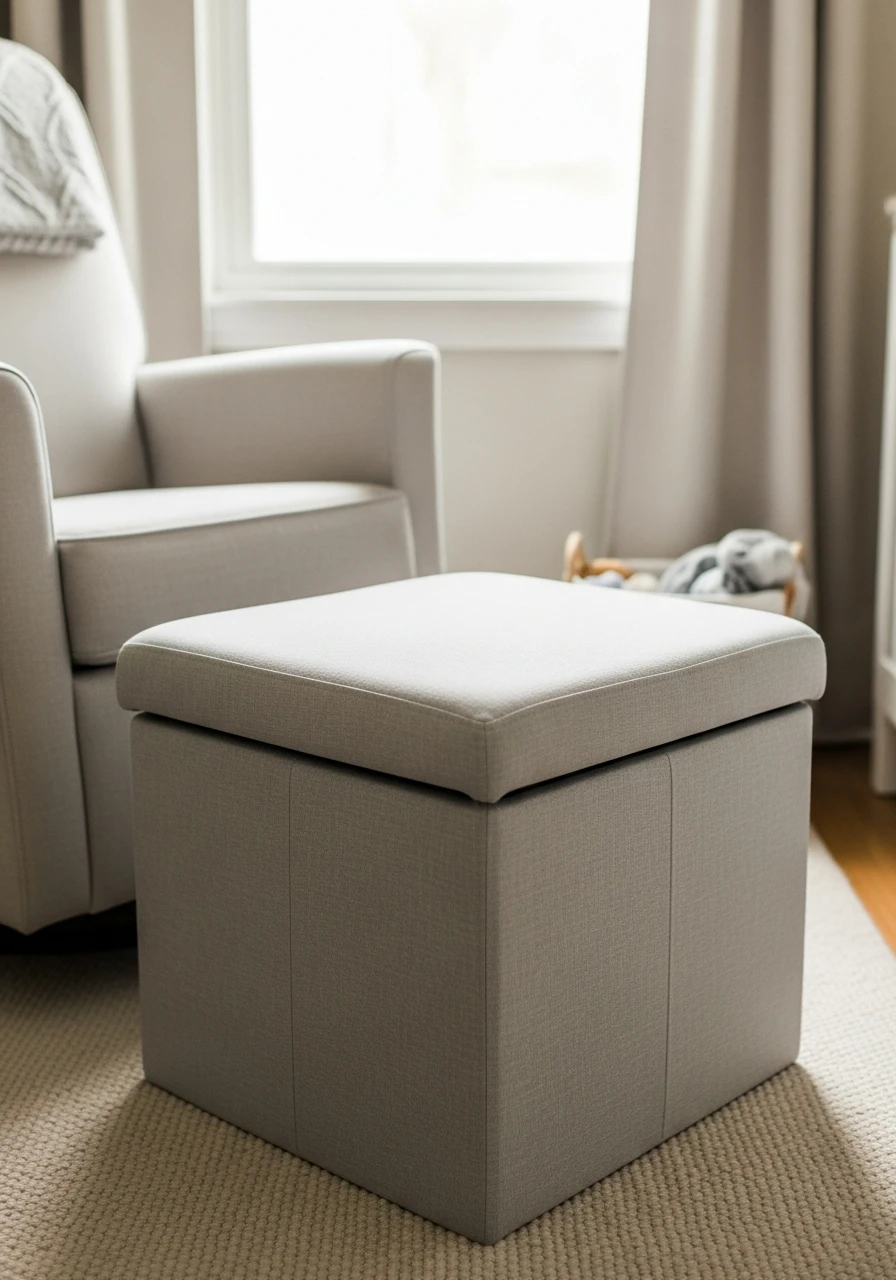
Choose an ottoman with built-in storage to serve two purposes: hiding toys and blankets, and providing a comfortable footrest next to the glider. This is essential for maximizing comfort in a small space.
- Look for velvet or textured fabric for luxury.
- Use it to store extra blankets for feeding time.
- Ensure the top is sturdy enough for sitting.
Pro Tip: Ottomans that are round tend to take up less visual space than square ones.
20. Furniture That Does Double Duty
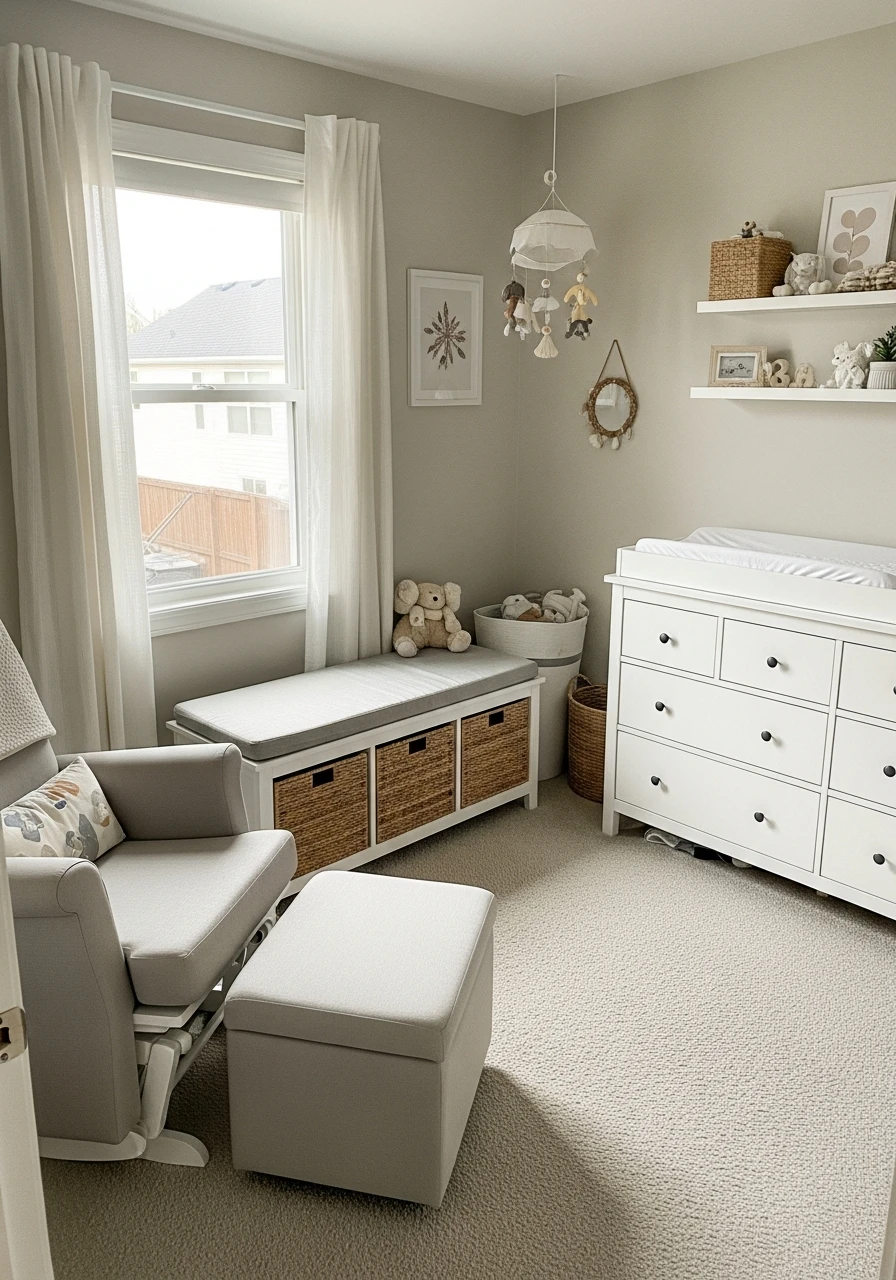
Look for storage cubes, benches, or shelving units that can also be used as seating or display areas. Every large piece of furniture should offer both function and storage to justify its space.
- Storage cubes can be stacked like a shelf.
- Use a low cube organizer as a side table.
- Add a cushion to the top of a low shelf for seating.
Pro Tip: Choosing furniture that is all one color helps the different pieces look like they belong together.
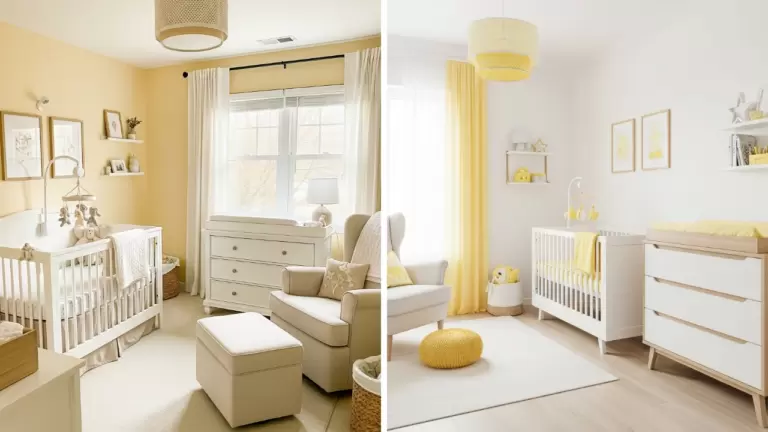
21. Light and Airy Palette
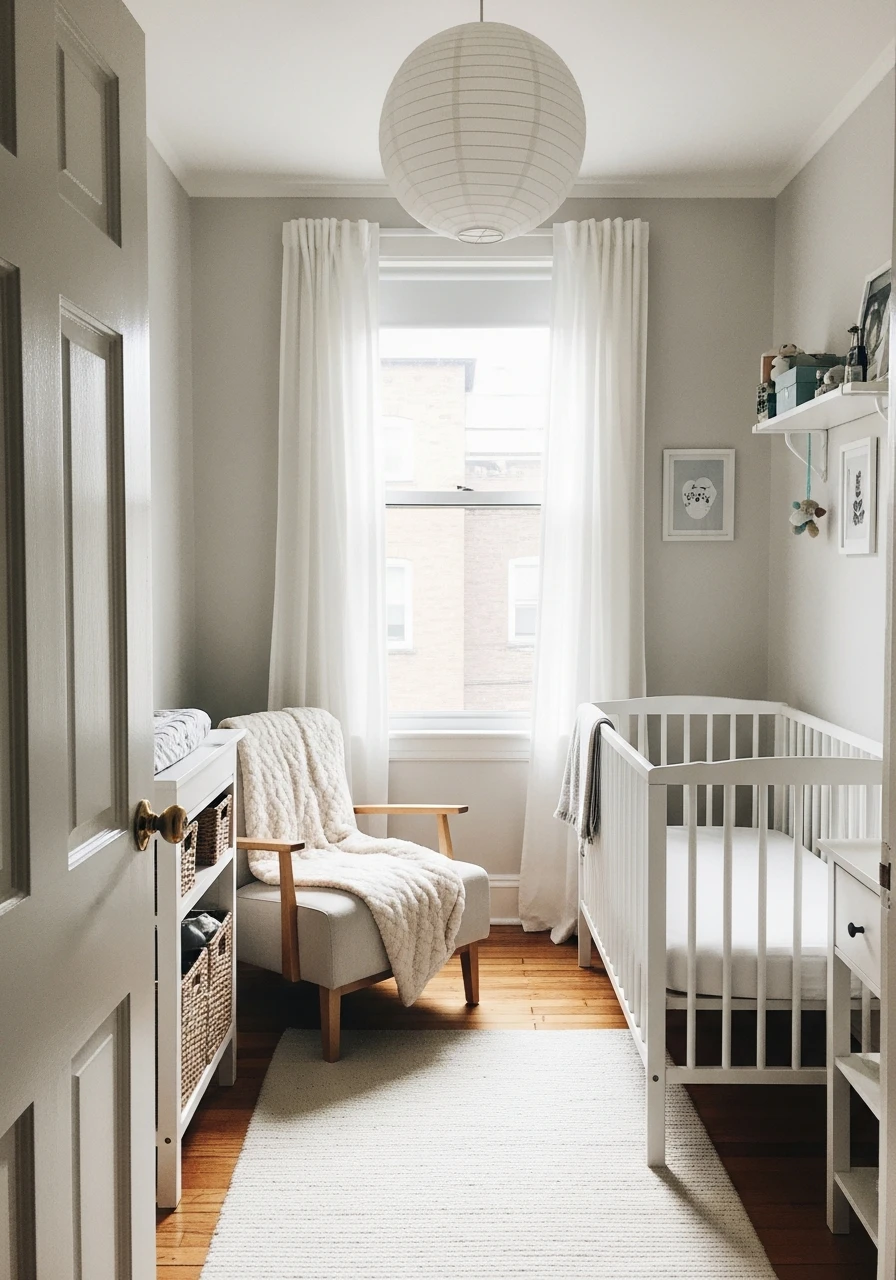
Painting the walls in soft whites, creams, or pale pastel tones is the easiest way to visually enlarge the room. Light colors reflect more light, creating a bright and calming environment for sleep.
- Use a high-quality matte finish paint.
- Pair light walls with white trim.
- Avoid dark colors that absorb light.
Pro Tip: A monochromatic light palette instantly makes a room look cleaner and more expensive.
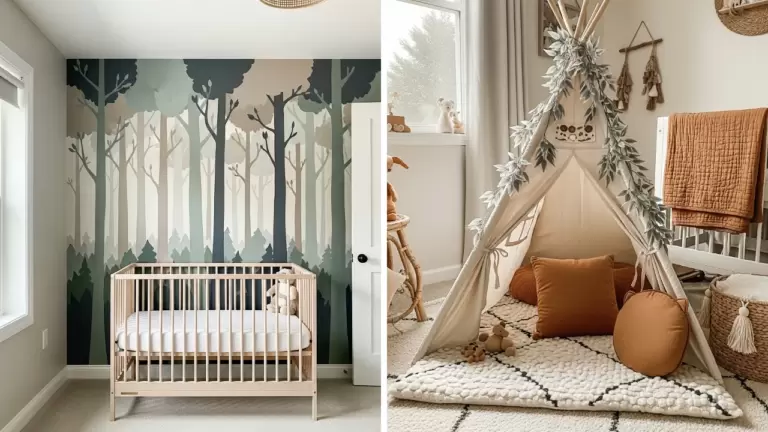
22. Cozy Earth Tone Walls
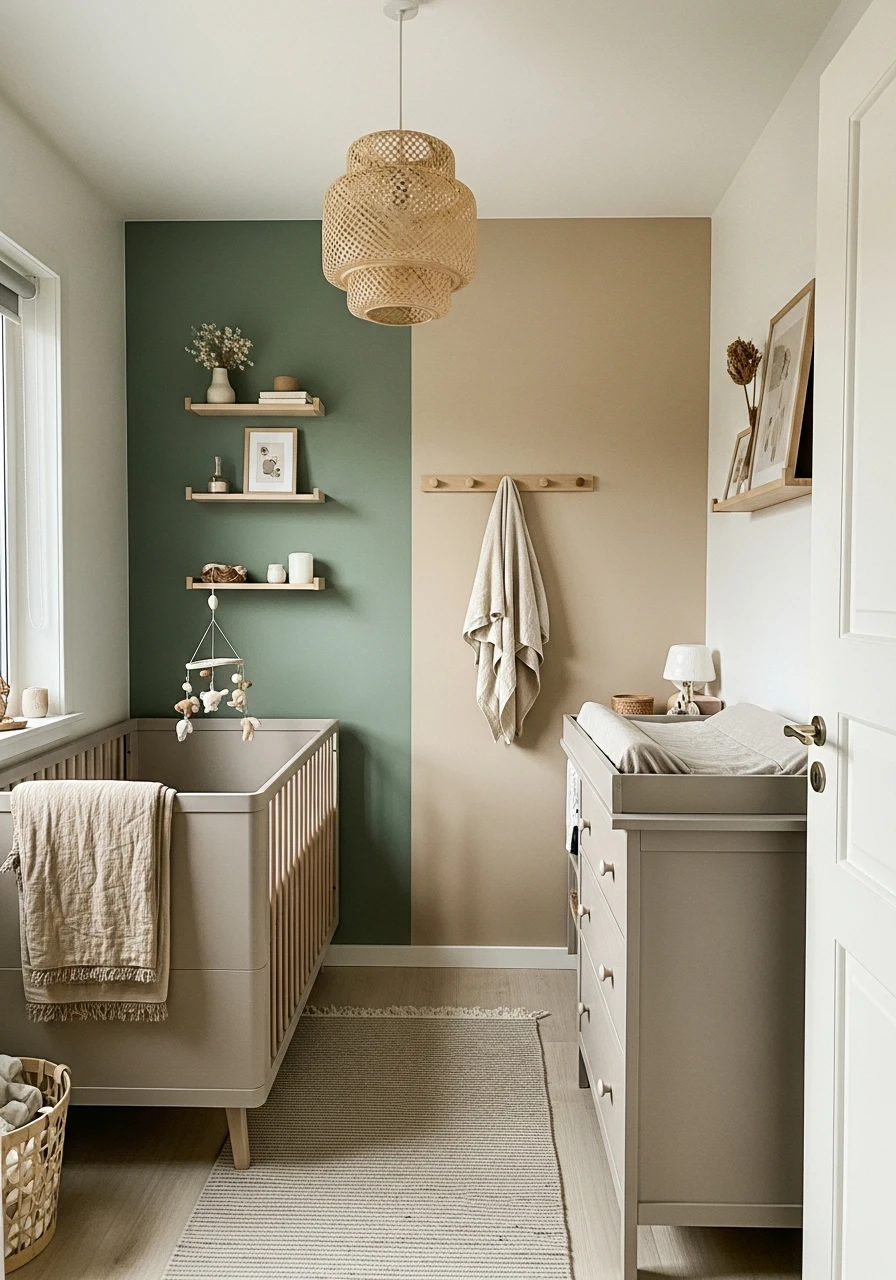
If you want color but need to keep it calm, use trending earthy colors like sage green, clay, or warm beige. These tones create a cozy, modern nursery atmosphere without feeling too dark or busy.
- Pair earthy walls with white furniture.
- Use natural wood accents for warmth.
- Keep textiles in cream or ivory tones.
Pro Tip: Sage green is super popular right now and looks stunning with brass hardware.
23. Vertical Stripes Lift Ceilings
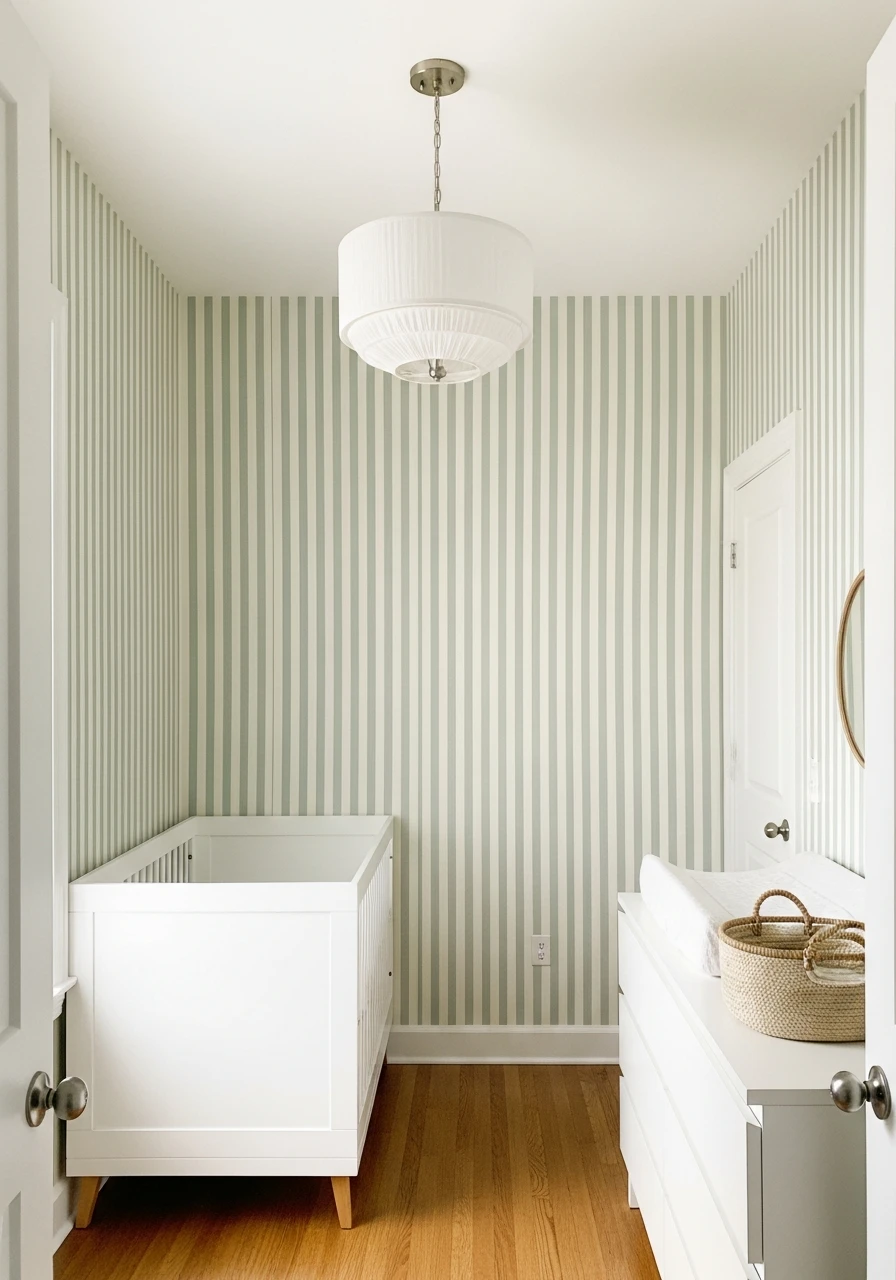
If you choose wallpaper, pick a pattern with vertical stripes or lines. This simple visual trick draws the eye upward, creating the illusion of higher ceilings and making the walls feel taller and grander.
- Use peel-and-stick wallpaper for easy removal.
- Choose a pattern with thin, subtle stripes.
- Apply wallpaper only to the top half of the wall.
Pro Tip: Vertical patterns are best used on the wall behind the crib or dresser for maximum impact.
24. Focus on One Accent Wall
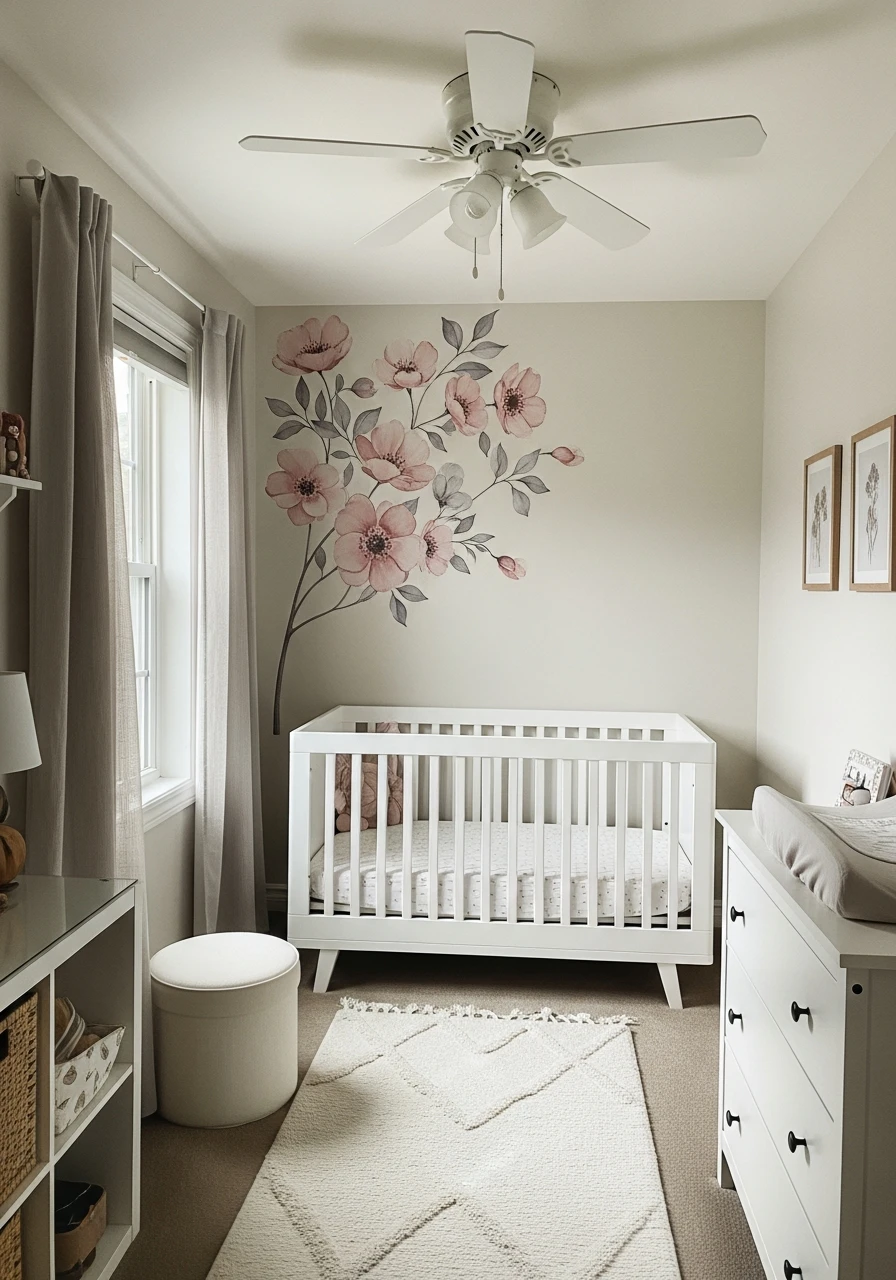
Designing a single feature wall with paint, wallpaper, or decals adds personality and depth without overwhelming a small room. This gives you a big style moment without making the space feel crowded.
- Use the wall behind the crib as the focus.
- Keep the other three walls simple and neutral.
- A simple half-painted wall works great.
Pro Tip: If you use a bold pattern, make sure the rest of the furniture is very simple and minimal.
25. Add a Brightening Mirror
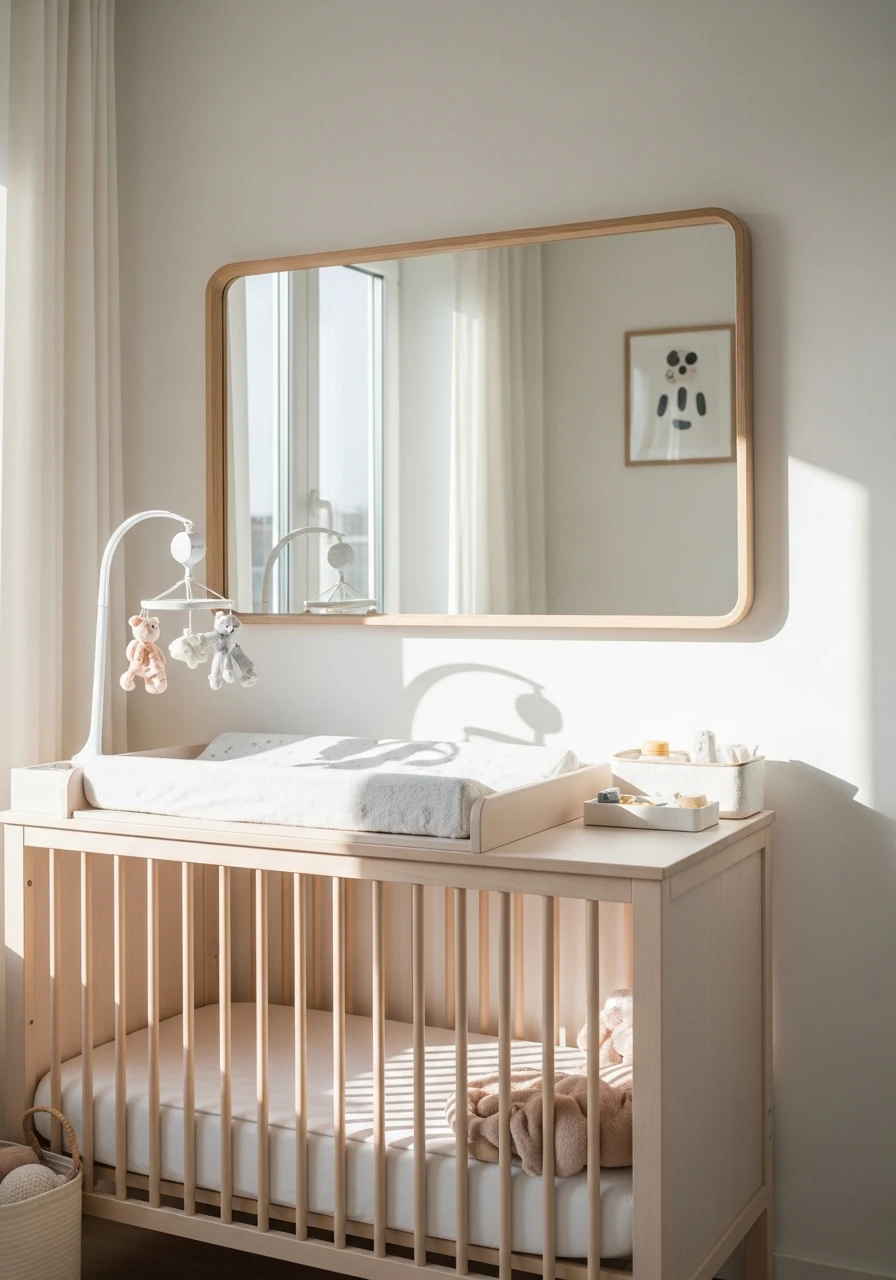
Adding a decorative mirror is a classic designer trick for making any room feel larger. Mirrors reflect natural light and the room itself, making the nursery feel more spacious and much brighter.
- Choose a round or arched mirror shape.
- Place it where it can reflect a window.
- Ensure it is securely mounted high up and away from the crib.
Pro Tip: A rattan or wooden-framed mirror adds texture and warmth to a neutral room.
26. Layered Soft Lighting
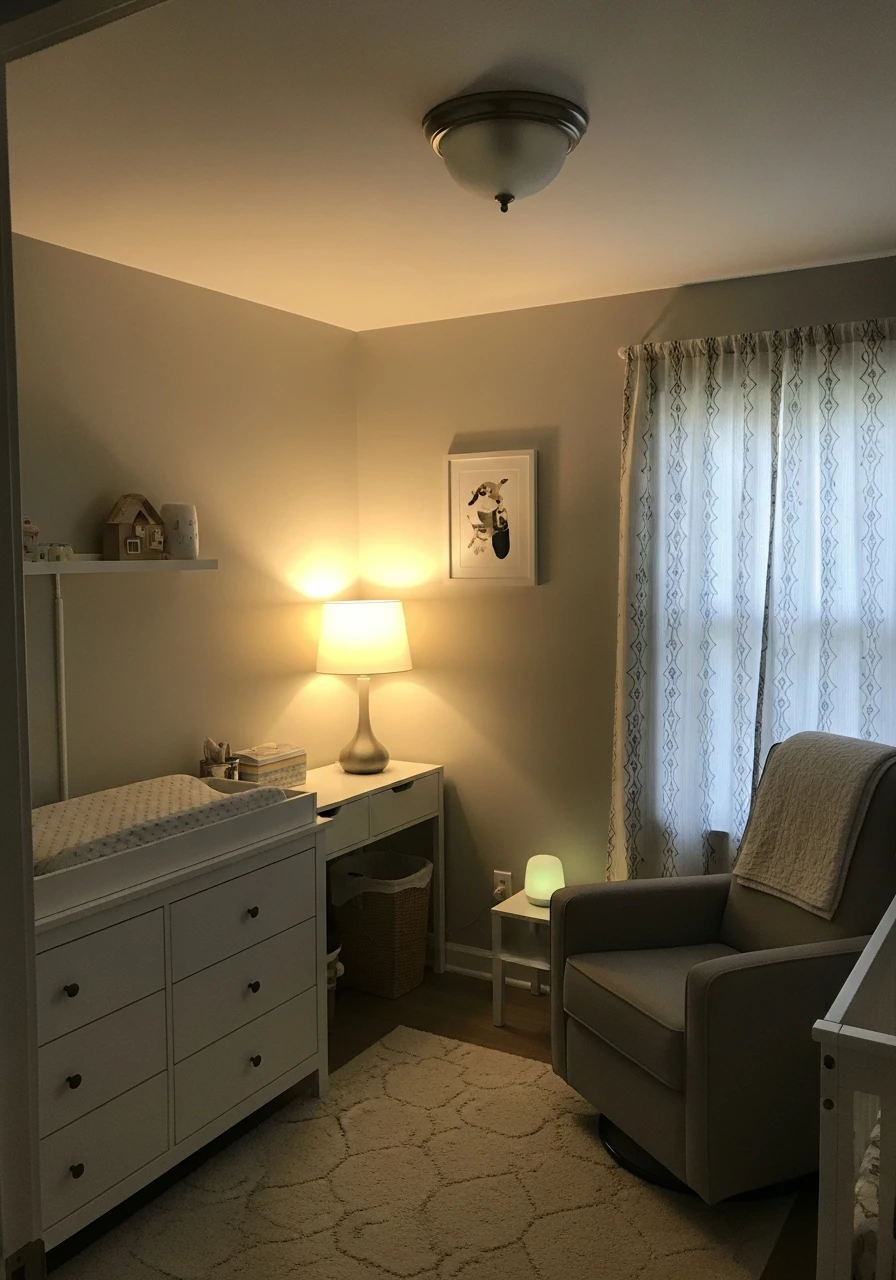
Use a combination of ceiling lights, table lamps, and night lights with dimmers. This flexible setup allows you to create the perfect lighting for late-night feeds, diaper changes, or quiet reading time.
- Install a ceiling light that casts light upward.
- Use a small lamp on the side table near the glider.
- Dimmers are essential for nighttime checks.
Pro Tip: Avoid harsh overhead lighting at night; use a small lamp instead to keep the baby calm.
27. Warm Natural Wood Textures
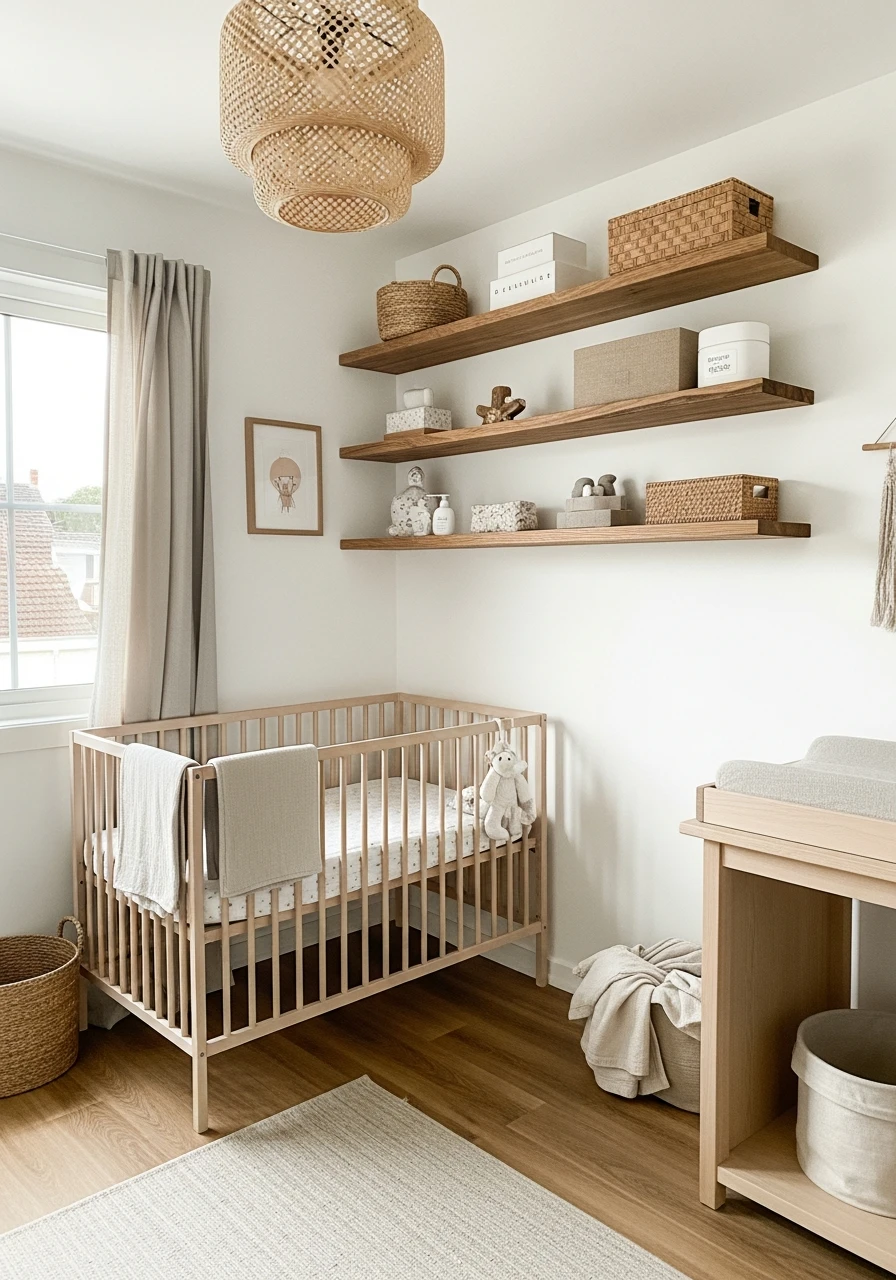
Incorporating natural wood furniture, shelving, or decor adds instant warmth and texture to the room. This helps maintain a minimal, clean look while avoiding a sterile or cold feeling.
- Mix light woods (like maple) with white furniture.
- Add a small wooden rocking horse.
- Use simple wooden picture frames.
Pro Tip: Try to keep all your wood tones the same shade—either light oak or dark walnut—for a cohesive look.
28. Texture Over Color
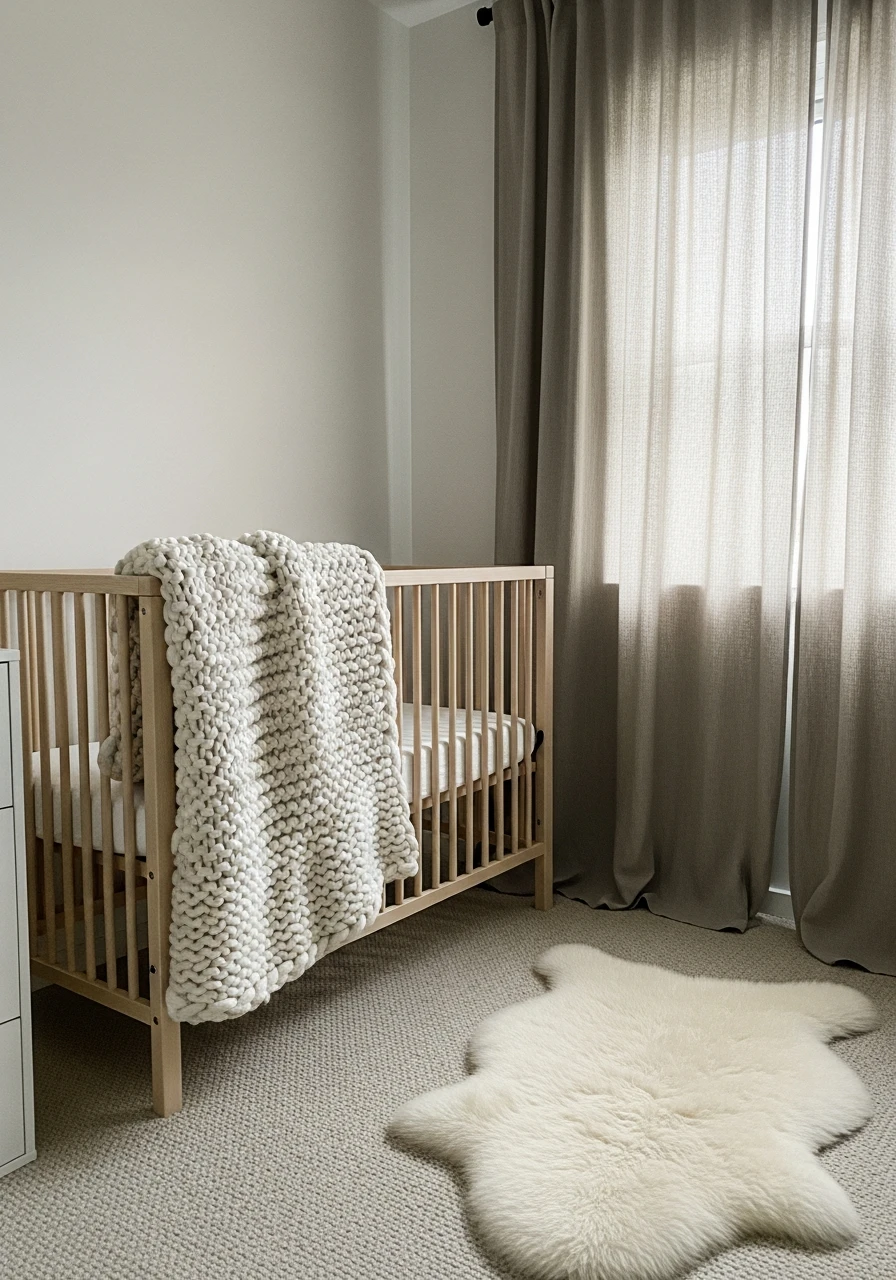
Keep your walls and large furniture simple and neutral, then add depth using layered textures. Think chunky knit blankets, a sheepskin rug, or thick linen curtains to create visual interest simply.
- Layer a small rug over a carpet or larger area rug.
- Mix smooth cotton with fuzzy wool materials.
- Use different textures in the same color family.
Pro Tip: A large, fluffy rug instantly softens a small room and makes it feel expensive.
29. Use Warm Glow Lighting
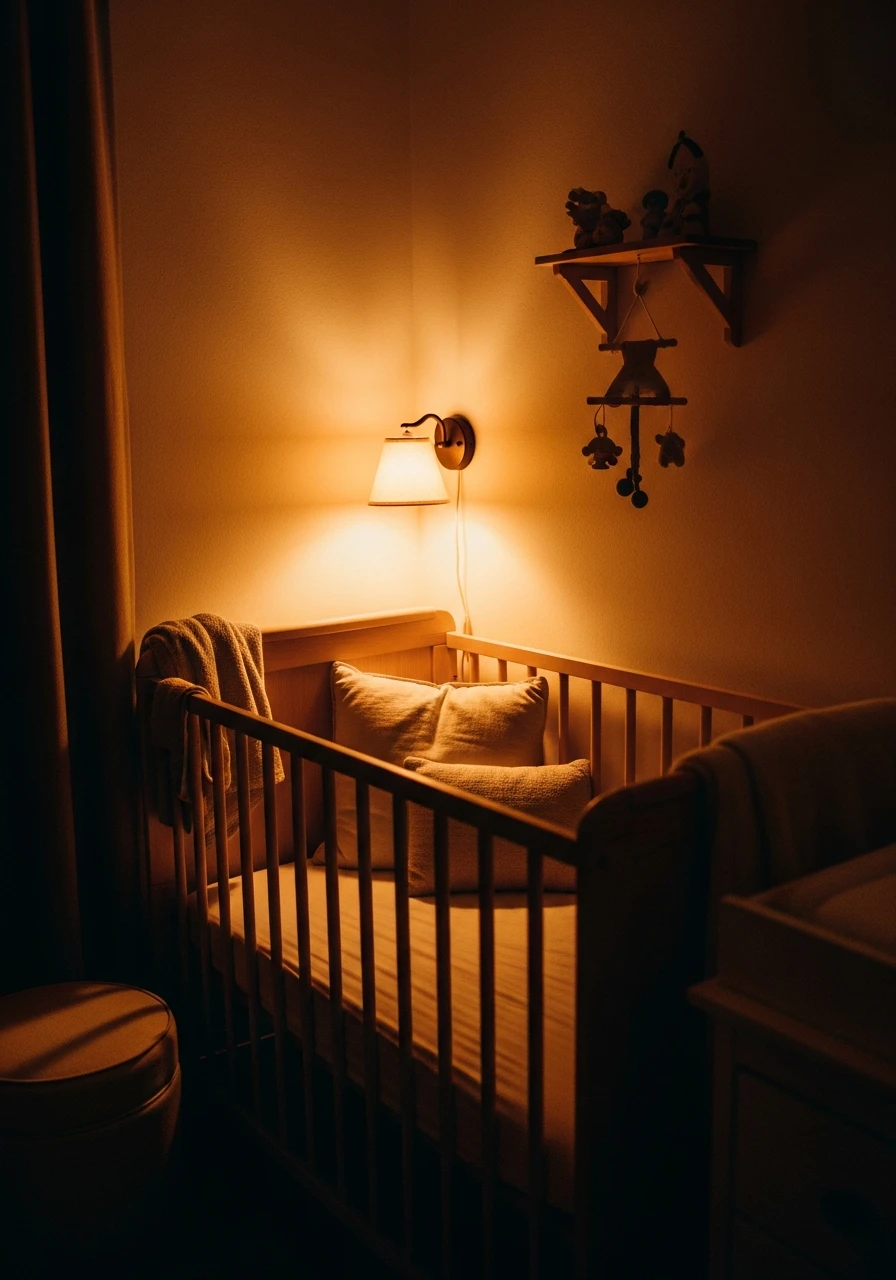
Switch out harsh white light bulbs for warm LED lighting or soft night lamps. A warm glow creates a soothing and comfortable nighttime environment that helps everyone relax and sleep better.
- Look for bulbs labeled ‘soft white’ or ‘warm white’.
- Use a low-wattage plug-in night light.
- Avoid blue or bright white light completely.
Pro Tip: If you have a mobile, shine a soft light on it to create gentle shadows on the ceiling.
30. Neutral Base, Pop of Color
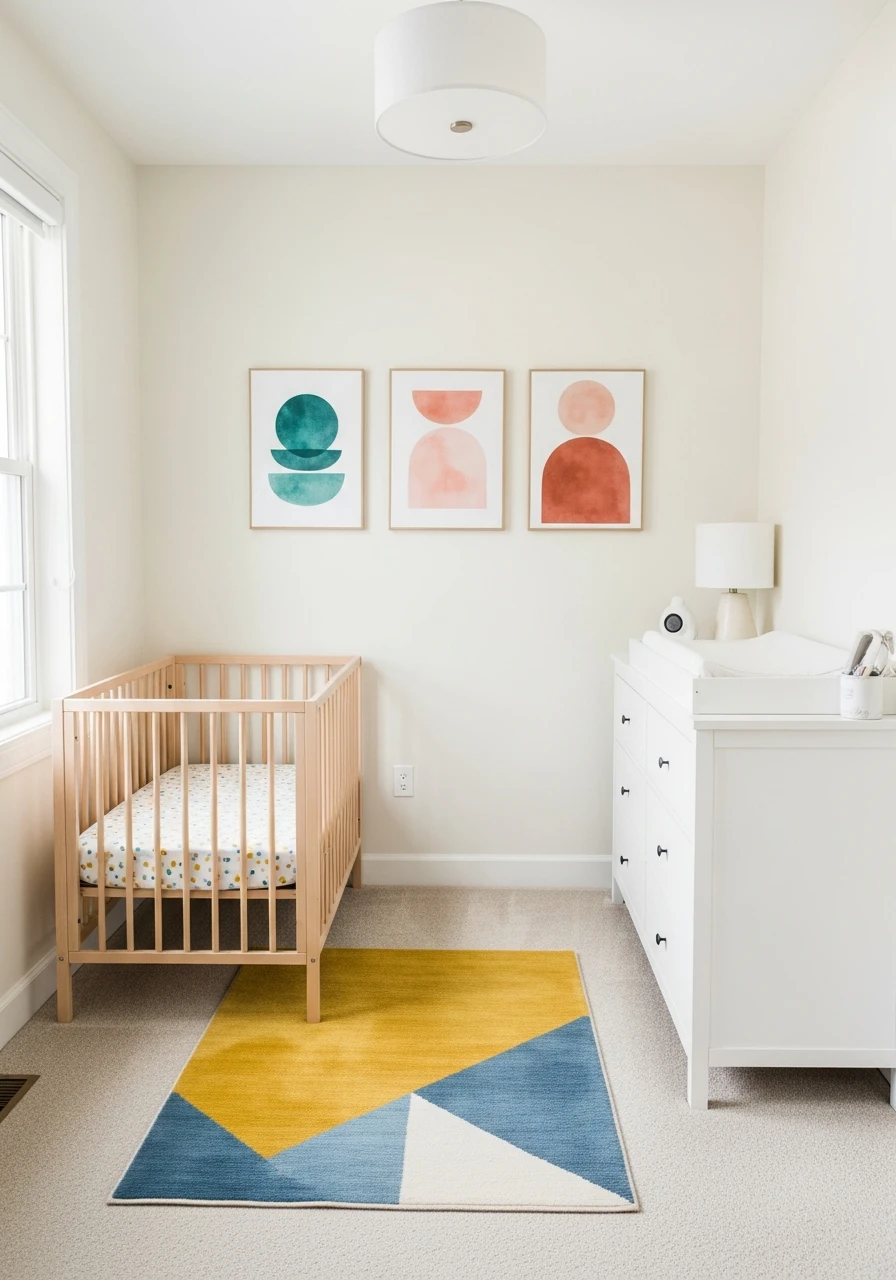
Design the nursery with neutral furniture and walls, then add color through easily replaceable accessories like pillows and art. As the child grows, you can easily update the look cheaply.
- Use colorful throws and pillows on the glider.
- Add bright picture frames to the wall.
- Swap out the rug for a vibrant pattern.
Pro Tip: This approach is great for small spaces because the neutral walls keep the room feeling large.
31. Cozy Low Bed Saves Space
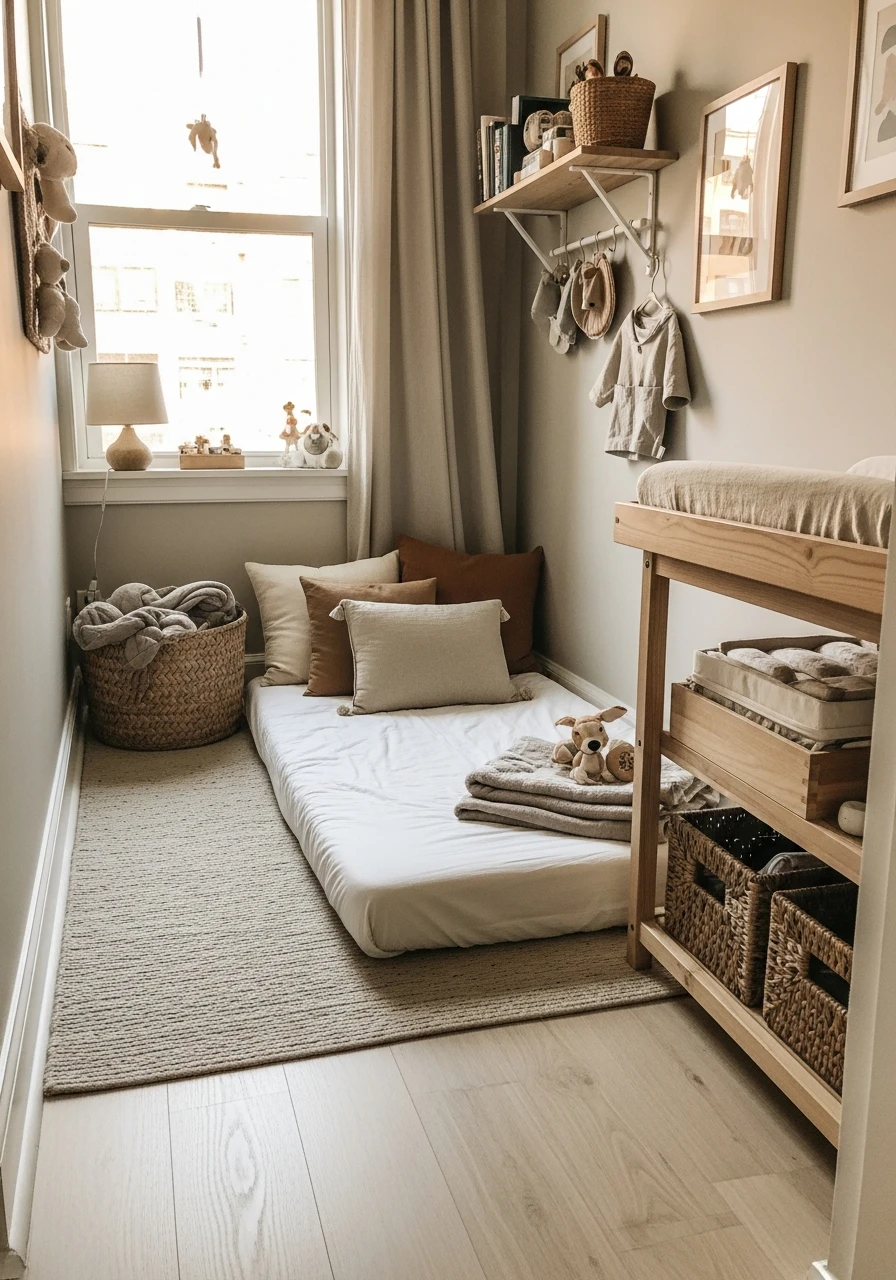
Skip the giant, expensive crib! A low floor bed keeps things super cozy and simple, especially once your little one is old enough for it. Since it’s so close to the ground, it’s a budget-friendly win that instantly makes the whole room feel bigger.
- Less visual bulk than a standard crib.
- Saves money on complex crib mattresses and frames.
- Low height keeps sightlines open, making the room look much bigger.
Pro Tip: Pair the floor bed with a cozy rug so the baby has a soft landing spot right next to them.
32. Low, Open Toy Storage
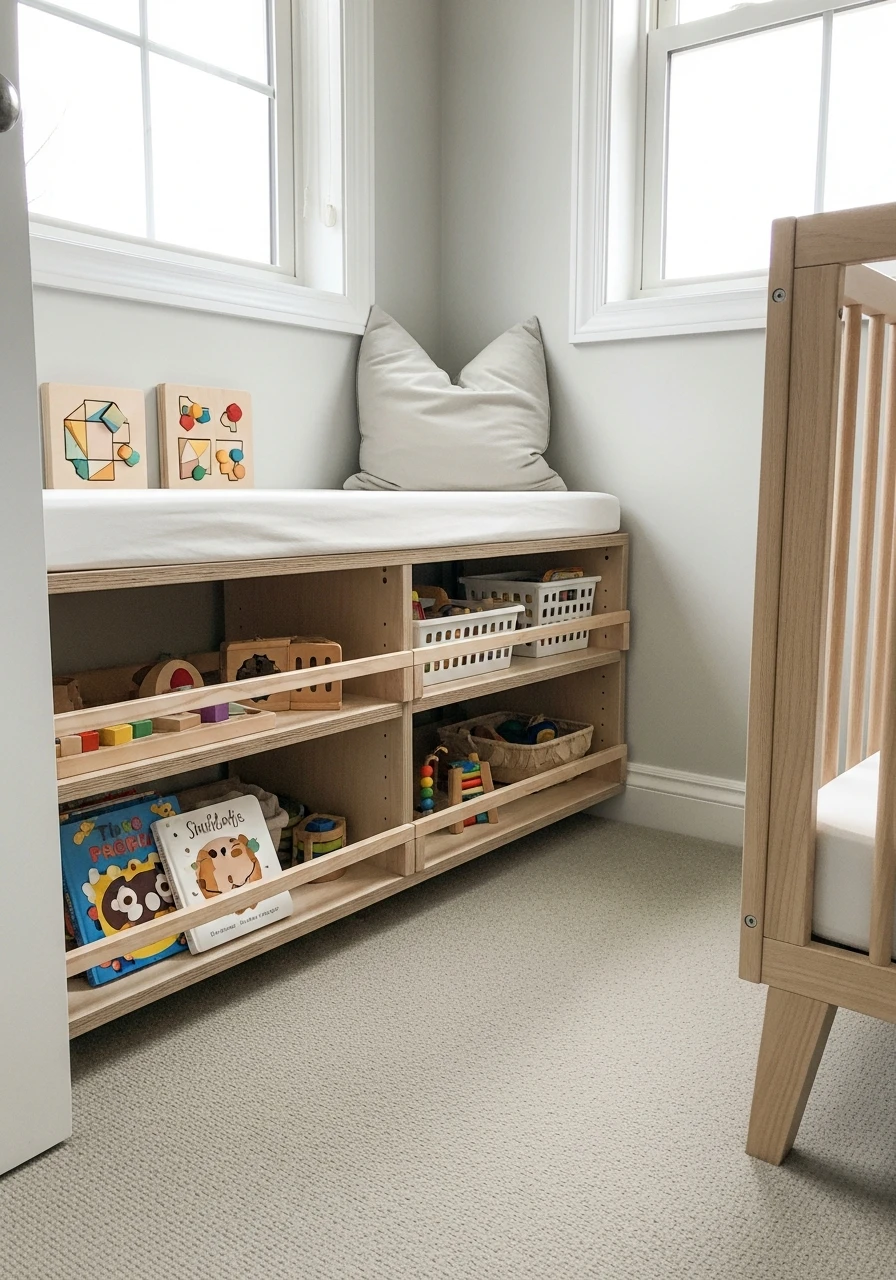
Install low open shelves that allow children to easily see and access their toys. This supports independent play and organization while keeping the visual clutter low to the ground.
- Anchor the shelves securely to the wall.
- Use matching bins on the lowest shelf.
- Display only a few toys on the shelf tops.
Pro Tip: Keep the height of these shelves below the window line to maintain an open view.
33. Furniture That Converts Later
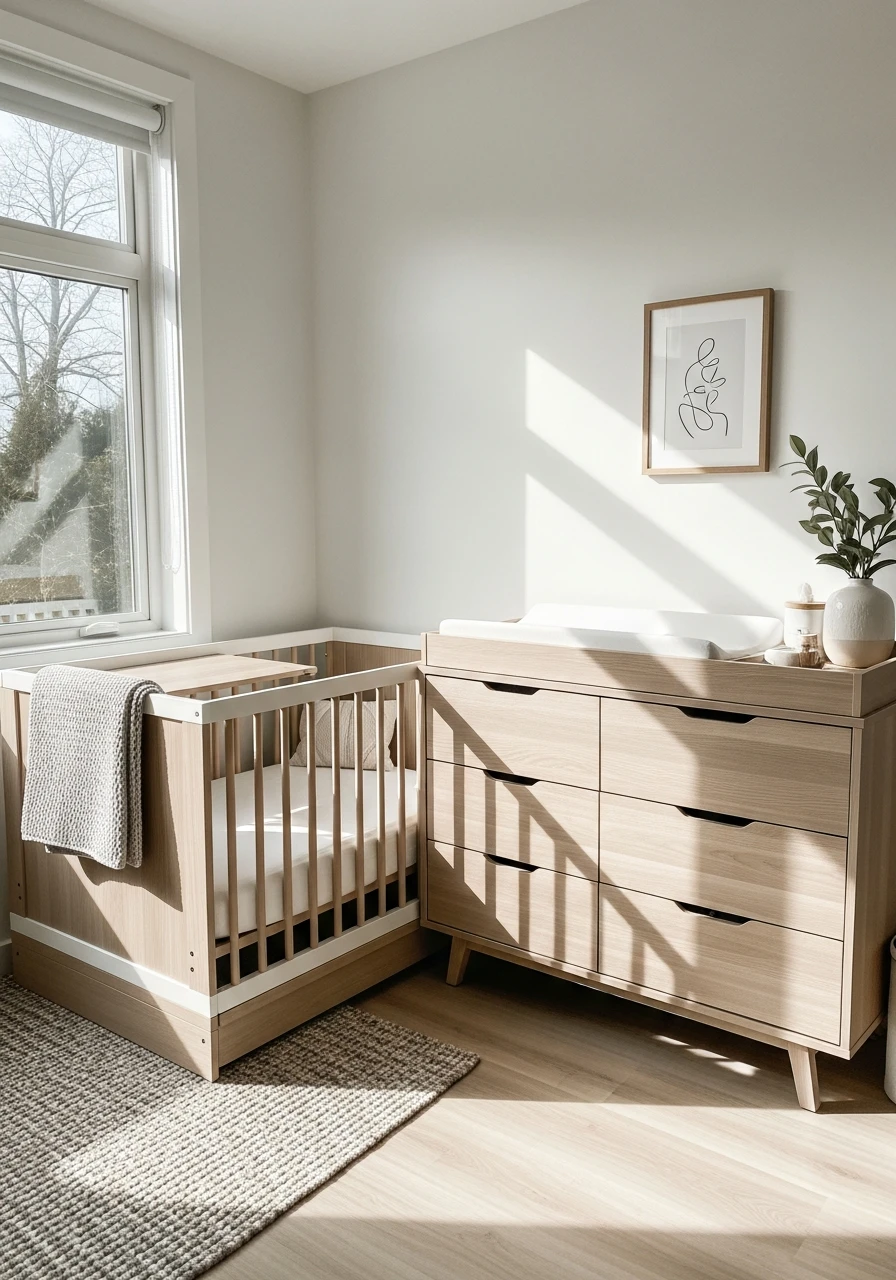
Choose furniture that can adapt over time, such as dressers that convert into storage units or cribs that become desks. Planning for conversion means you won’t need new furniture for years.
- Look for solid wood pieces that last.
- Check for long-term warranty options.
- Invest in quality hardware.
Pro Tip: Buying a high-quality dresser means you can use it in any room in the house later on.
34. Tiny Furniture for Toddlers
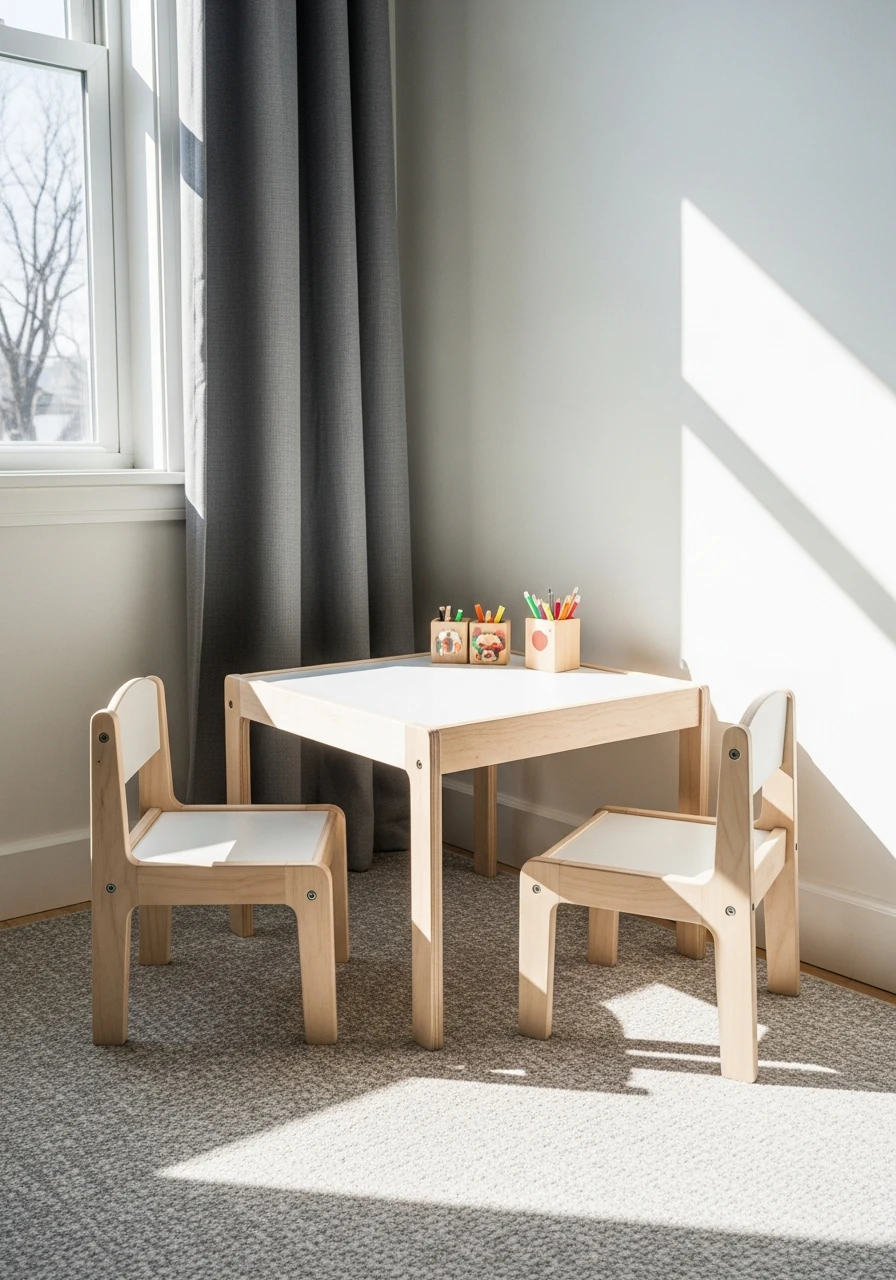
Include small chairs or tables sized just for toddlers to create functional play and sitting areas. Child-sized furniture doesn’t overwhelm the space and is easy for little ones to use.
- Choose lightweight, easy-to-move pieces.
- A small table can double as an art station.
- Avoid bulky plastic furniture.
Pro Tip: A small pouf or beanbag chair is a great piece of movable, soft furniture for a reading corner.
35. Keep Center Open for Play
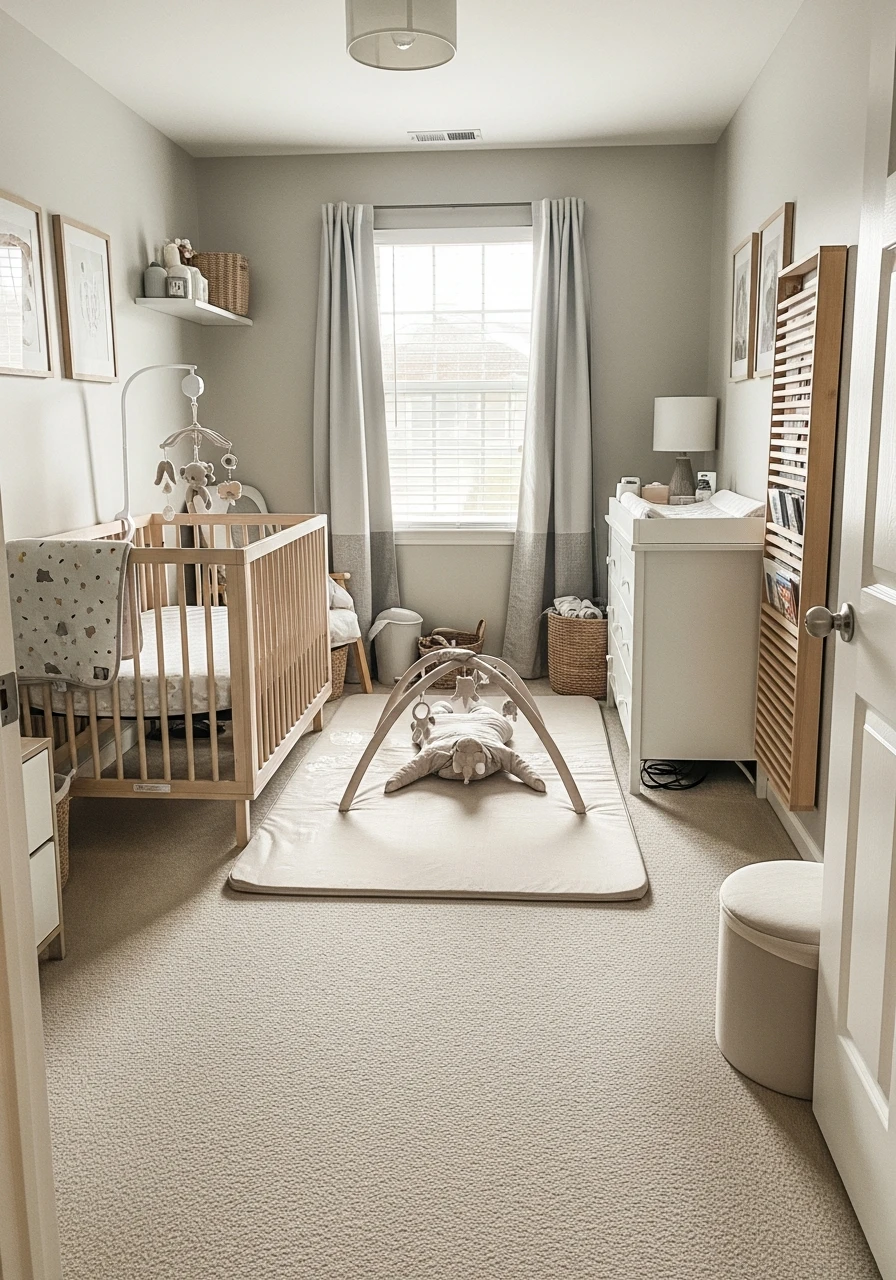
Arrange all your large furniture pieces along the walls, leaving the center of the room completely open. This clear space is perfect for movement, tummy time, and general play.
- Push the crib and glider against the walls.
- Use a large, soft rug in the middle.
- Ensure outlets and cords are safely tucked away.
Pro Tip: An open center space makes the room feel much less cramped and easier to clean.
36. One Perfect Glider Chair
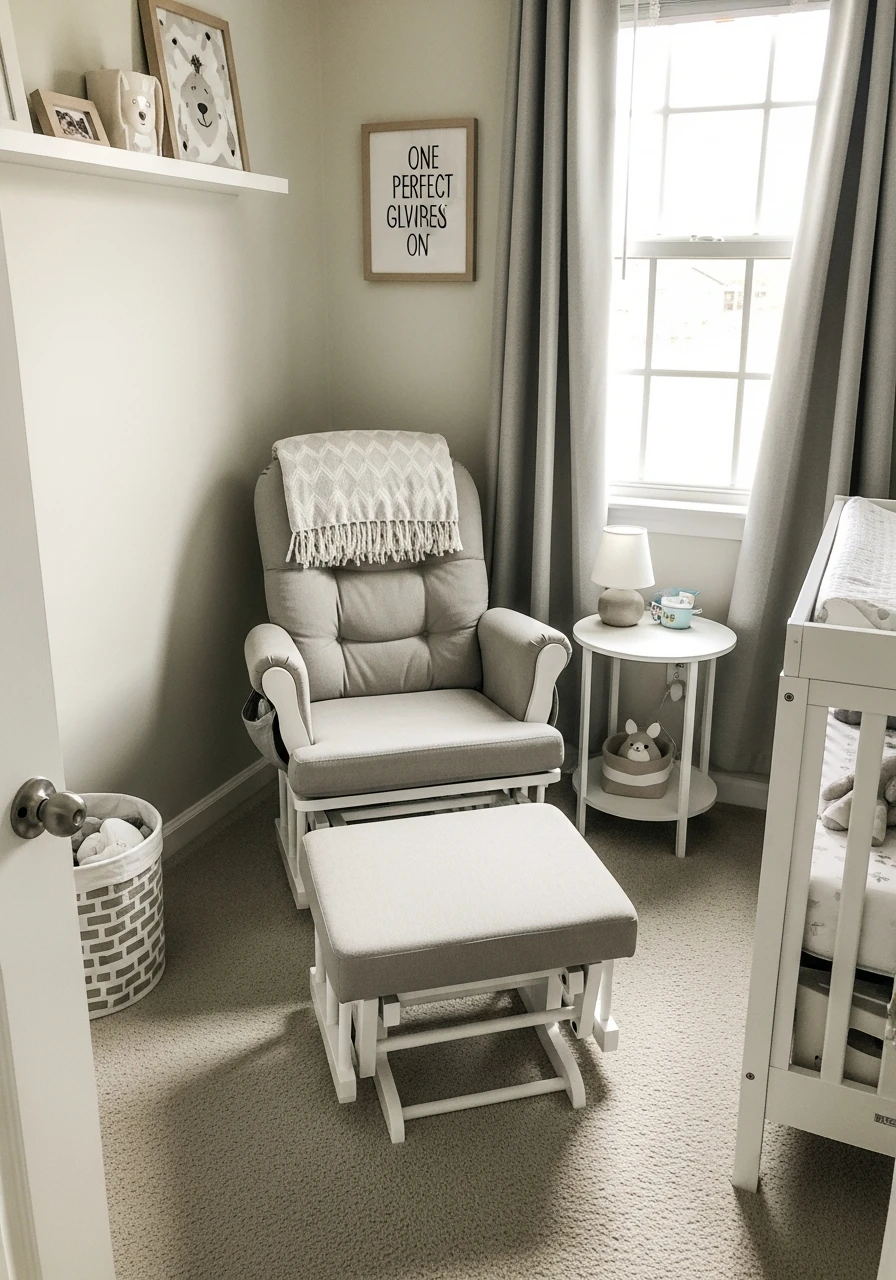
Select a single comfortable chair suitable for feeding, reading, and relaxing. Choosing one multi-purpose chair prevents the need to add multiple seating pieces that clutter a small nursery.
- Look for a compact swivel glider.
- Make sure the fabric is easy to clean.
- Pair it with a small, slim side table.
Pro Tip: A chair with thin metal legs looks lighter and takes up less visual space than a skirted glider.
37. Foldable Play Mat
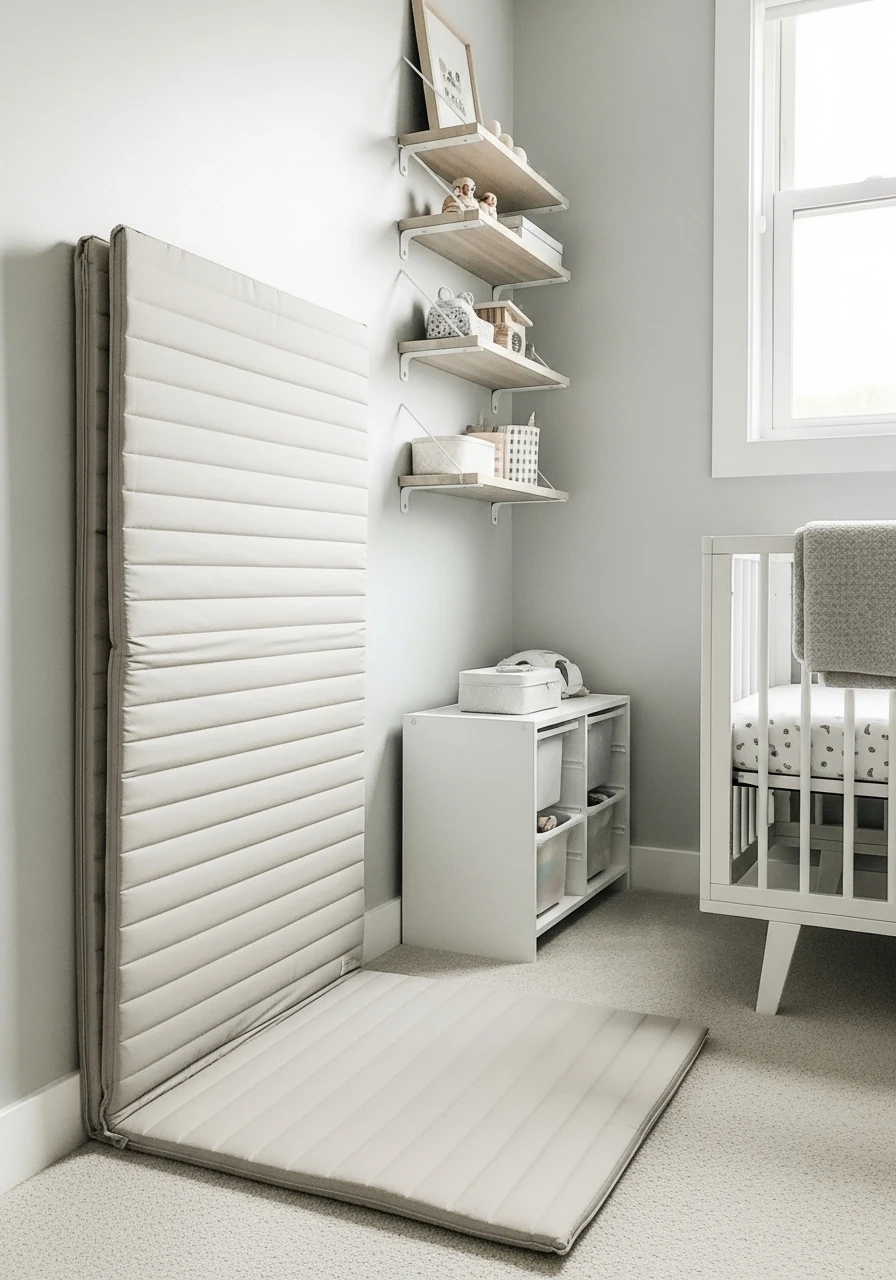
Use a soft, thick play mat that can be folded up or rolled away when not in use. This allows you to quickly reclaim open floor space when you need to use the room for other things.
- Choose a mat with a neutral or subtle pattern.
- Store the mat behind the dresser or in the closet.
- Ensure it is waterproof and non-toxic.
Pro Tip: A folding mat is easier to clean than a rug and great for when the baby starts crawling.
38. Shared Office and Nursery
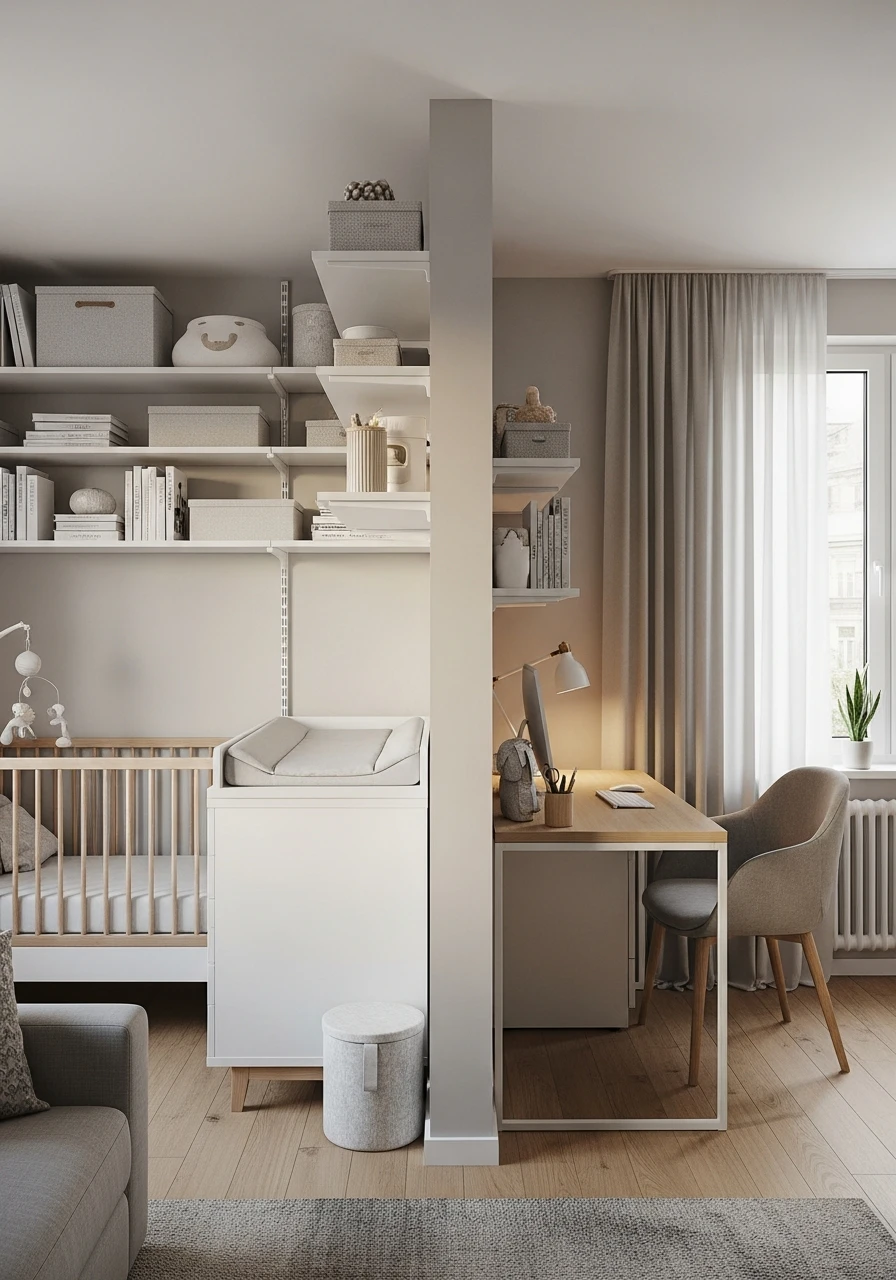
If you must share the room with a home office, use compact furniture and clearly defined zones. A simple screen or tall shelving unit can help separate the workspace from the baby’s area.
- Use a narrow desk that folds up.
- Keep the crib zone peaceful and separate.
- Choose neutral colors for both areas.
Pro Tip: Use a decorative curtain to hide the desk area when the baby is sleeping.
39. Streamlined Built-In Storage
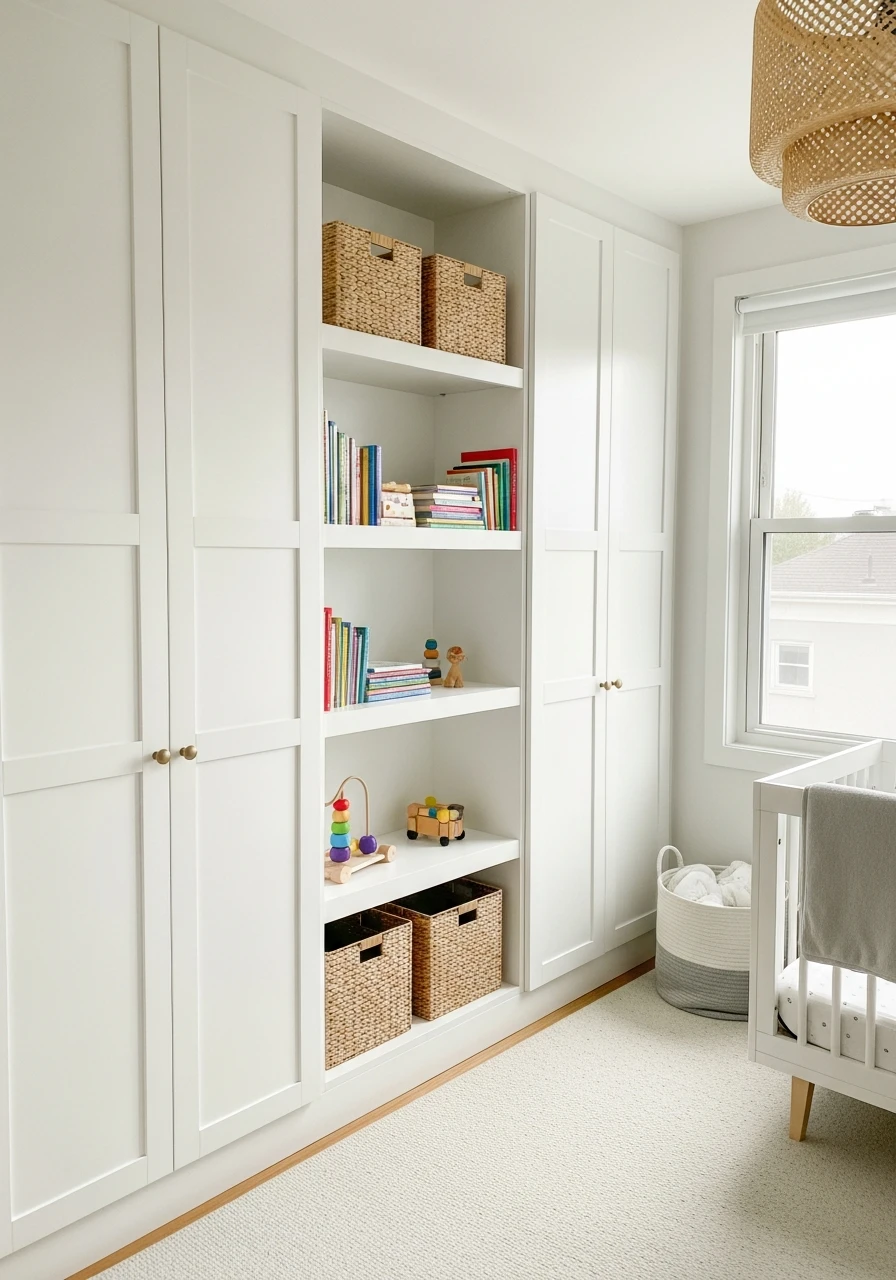
If you are handy or planning a renovation, built-in shelves or cabinets are the best way to save floor space. They reduce bulky furniture and create a seamless, customized storage system.
- Use the space around the window for shelves.
- Paint the built-ins the same color as the wall.
- Include closed cabinets for messy items.
Pro Tip: Built-in storage adds great value to your home and looks very custom and high-end.
40. Closet Reading Nook
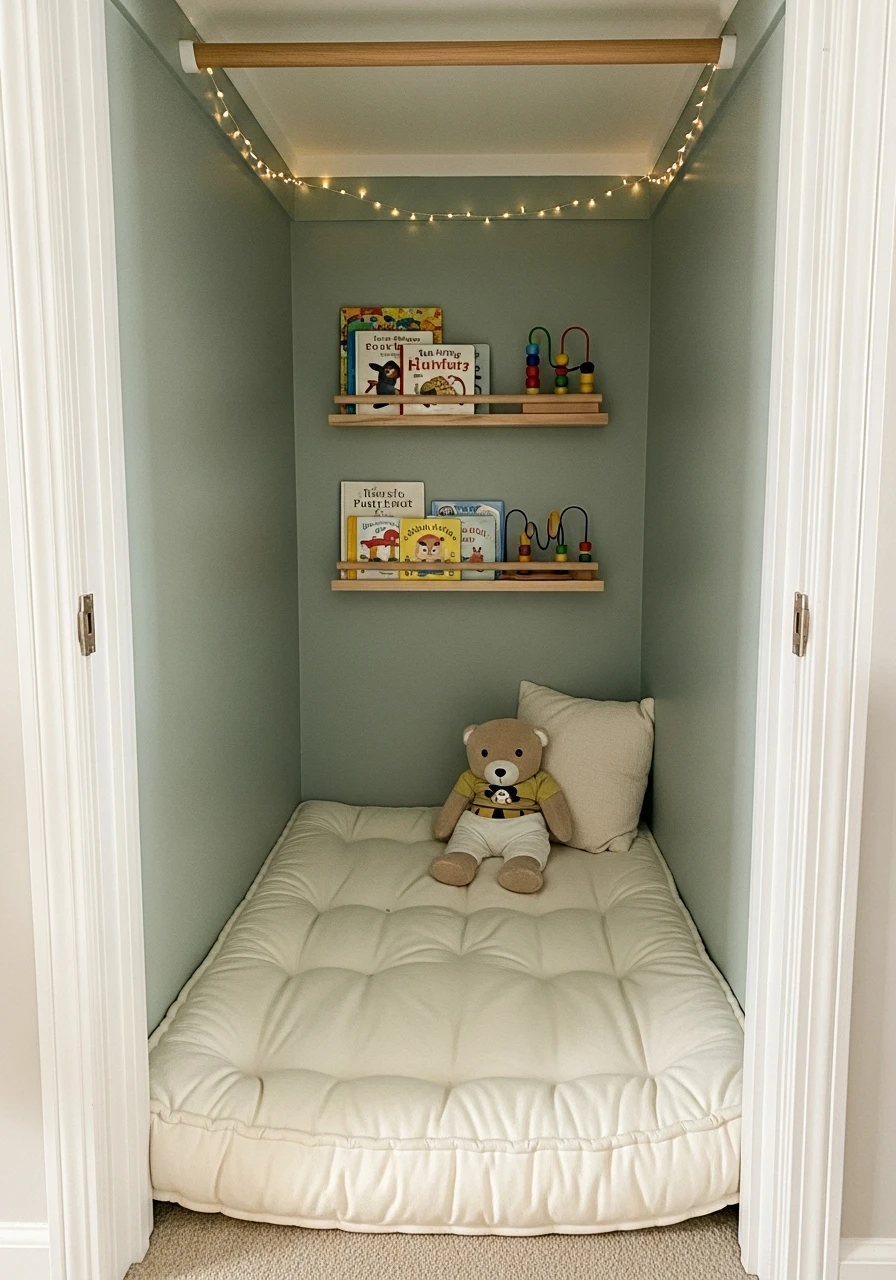
Transform an unused closet into a cozy reading corner or small play area. Add soft cushions, a few shelves for books, and a simple light source for a wonderful hidden space.
- Hang fairy lights inside for a soft glow.
- Use thick, comfortable floor pillows.
- Install a small, battery-operated light switch.
Pro Tip: This nook is a great way to use extra closet space while giving your toddler a special quiet spot.
41. Calming Woodland Theme
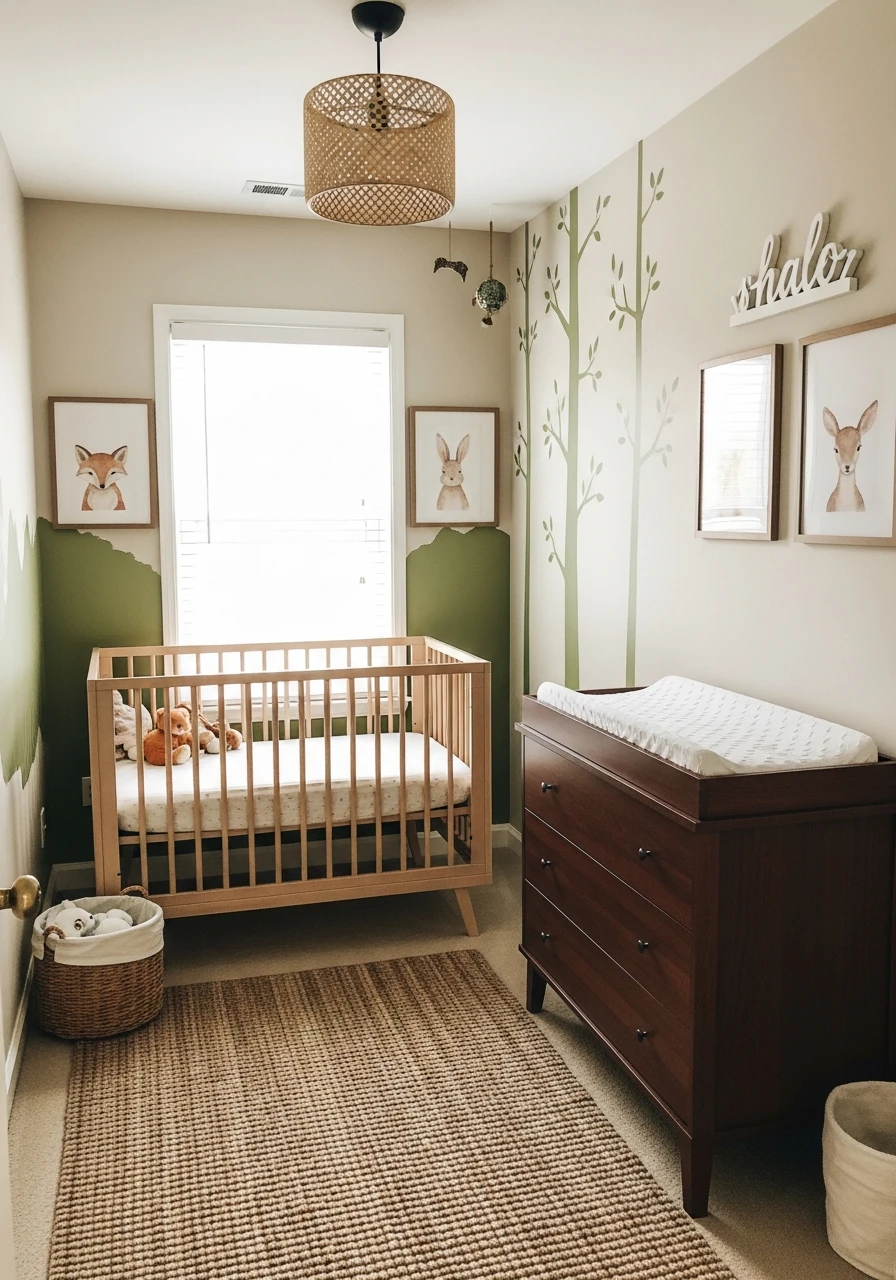
Decorate using forest animals, subtle tree motifs, and earthy tones like moss green and brown. This theme is calming, gender-neutral, and timeless, making it easy to update later on.
- Use simple framed animal prints.
- Choose a wooden mobile over a plastic one.
- Add a small faux fur rug.
Pro Tip: Keep the theme subtle by focusing on just one or two animal types, like bears or deer.
42. Playful Safari Animals
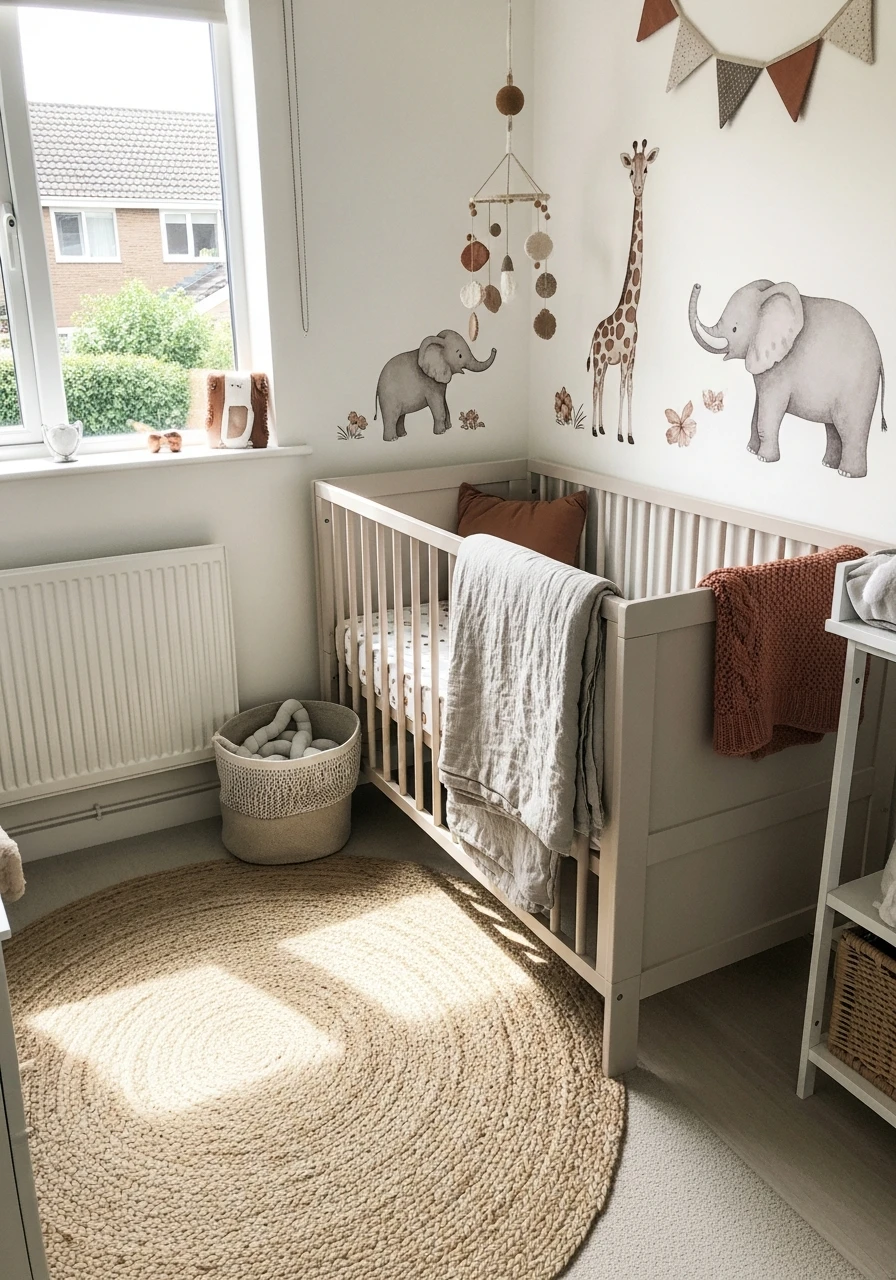
Use playful safari animals like giraffes and elephants combined with neutral colors and soft textures. This theme is fun yet remains space-friendly because the colors are grounded and warm.
- Use large stuffed animals as decor.
- Add a subtle animal print rug.
- Stick to black, white, and tan colors.
Pro Tip: A growth chart painted with animal heights is a fun, vertical piece of decor.
43. Dreamy Celestial Theme
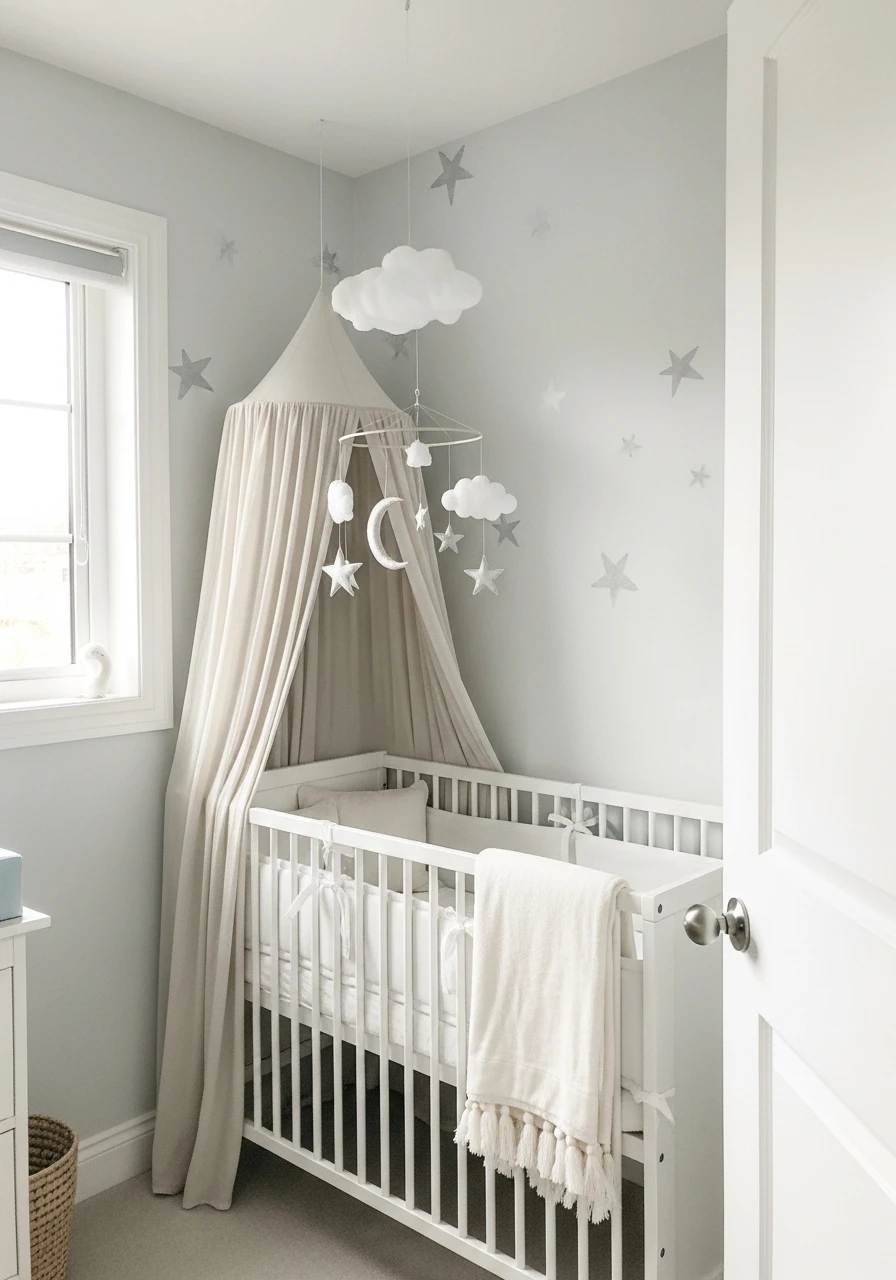
Incorporate moon, star, and sky decor elements to create a relaxing and dreamy sleep environment. This theme works well in small spaces because it uses light colors and delicate shapes.
- Use subtle gold star decals on the ceiling.
- Hang a cloud or moon mobile.
- Choose dark blue or gray textiles.
Pro Tip: A projector that casts stars on the ceiling is a cute and functional piece of decor.
44. Vintage Storybook Charm
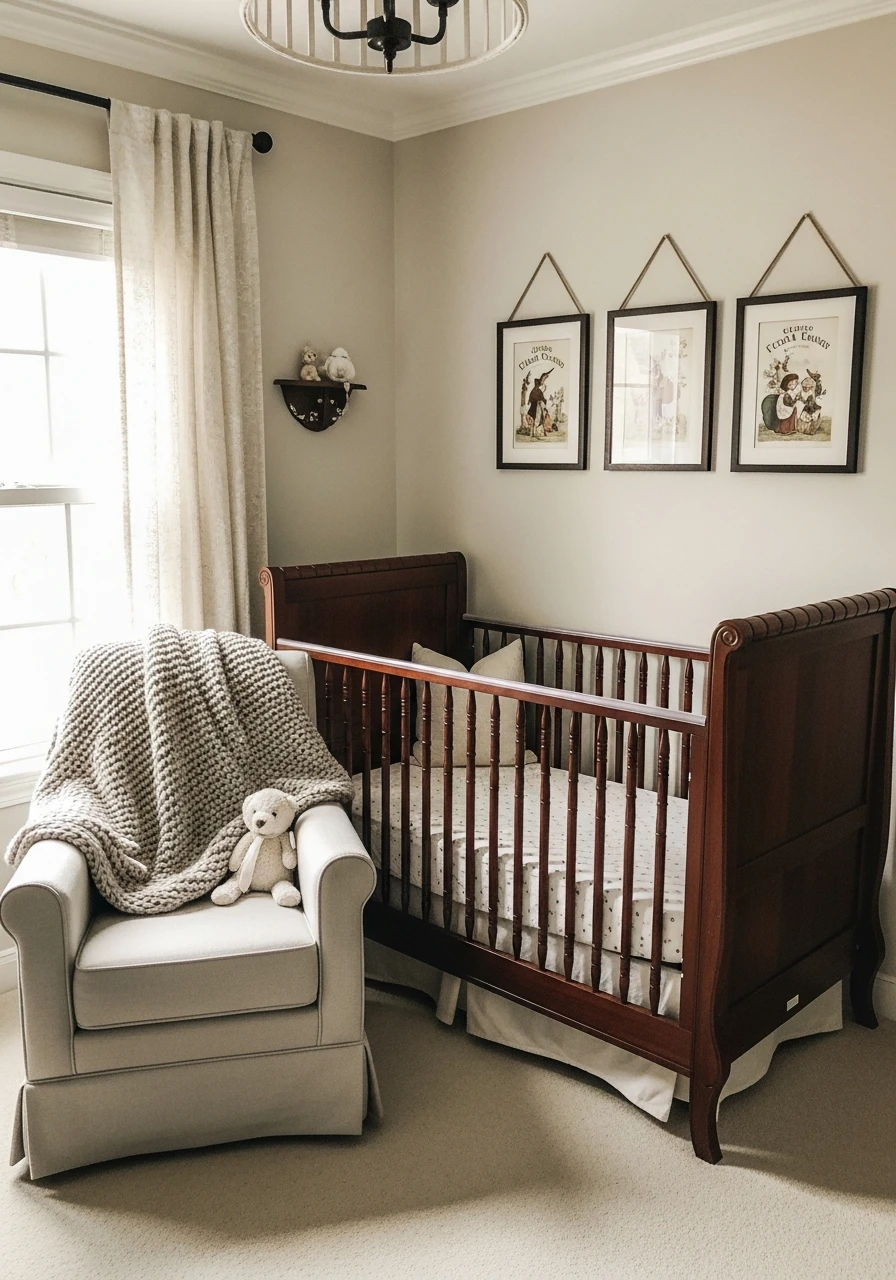
Decorate with classic book prints, antique-inspired furniture, and soft fabrics to create a charming, cozy atmosphere. This adds character without needing a lot of extra clutter or large items.
- Frame pages from favorite classic children’s books.
- Look for a distressed or slightly antique dresser.
- Use soft, floral or checkered fabrics.
Pro Tip: A vintage style is easy to achieve on a budget by finding old pieces at thrift stores.
45. Scandinavian Minimalist Vibe
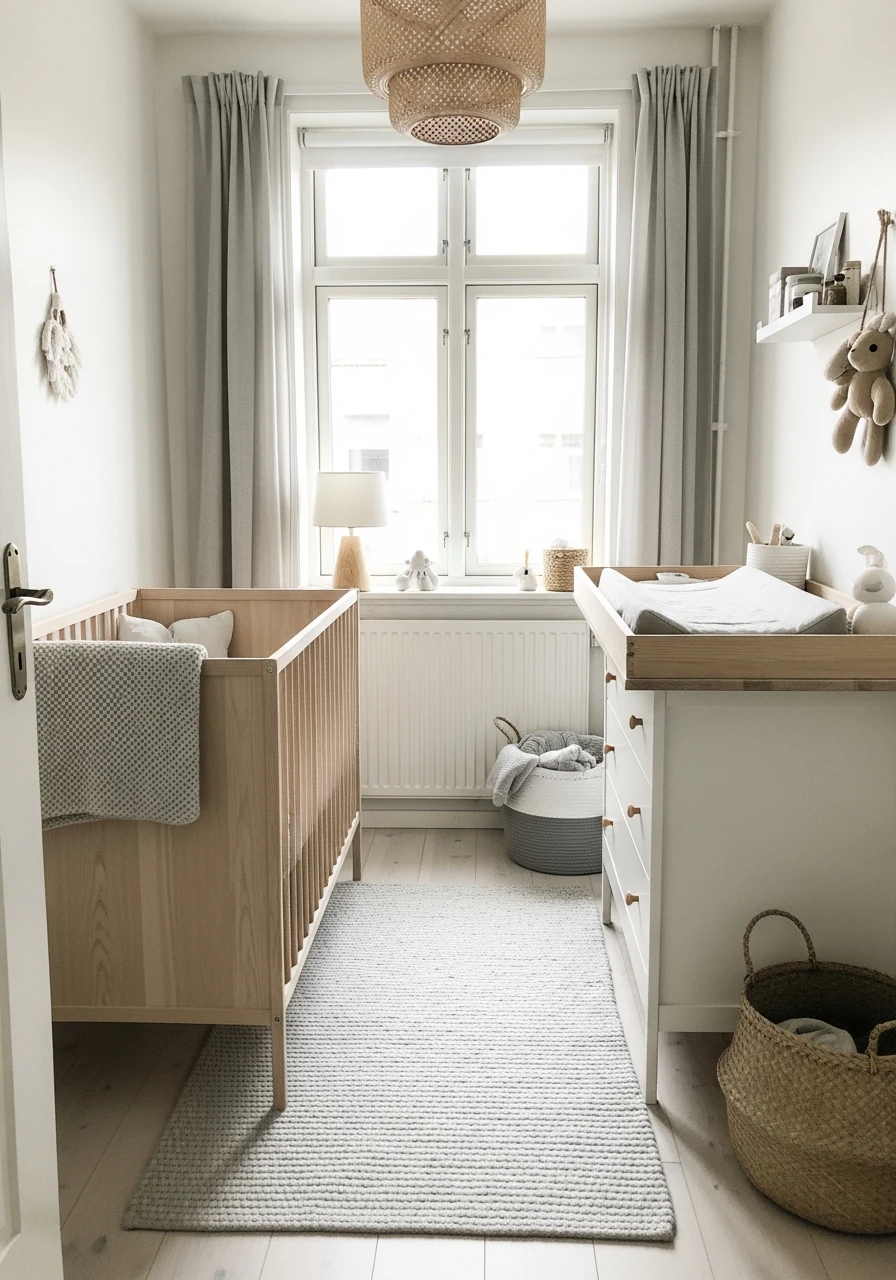
Focus on simplicity, natural materials, neutral colors, and functional furniture. This design style is perfect for small nurseries because it keeps everything clean, spacious, and clutter-free.
- Use light wood tones and white walls.
- Keep decor to a minimum.
- Choose simple lines for all furniture.
Pro Tip: When choosing art, stick to simple line drawings or abstract shapes for a true Scandi feel.
46. Cozy Boho Details
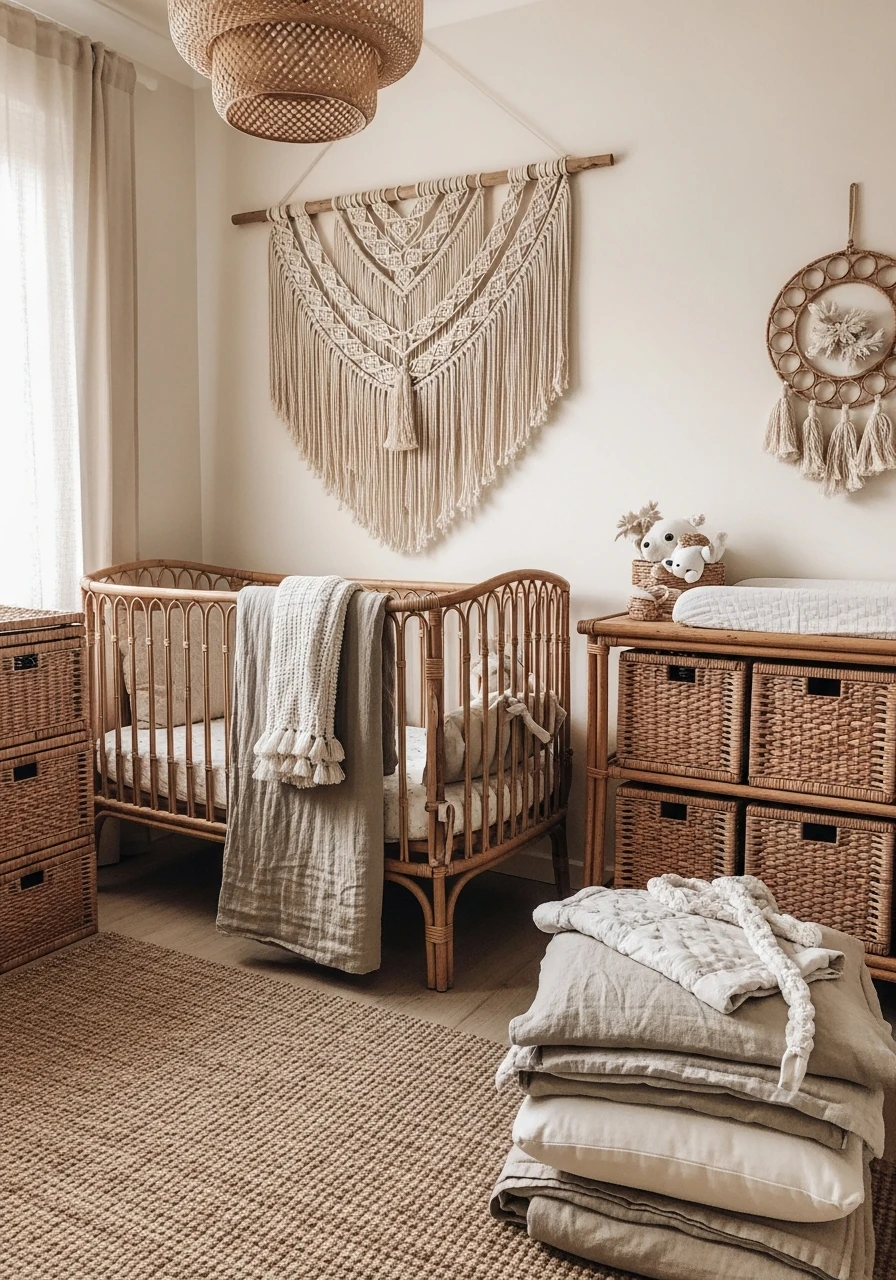
Use natural materials like rattan, wicker, and macrame decor combined with layered textiles. This style adds a lot of texture and warmth, making a small room feel instantly cozy and inviting.
- Add a macrame wall hanging.
- Use a rattan basket for toy storage.
- Layer soft, textured rugs.
Pro Tip: A small, low-profile jute rug is a great way to add a boho feel without overwhelming the floor.
47. Flexible Gender-Neutral
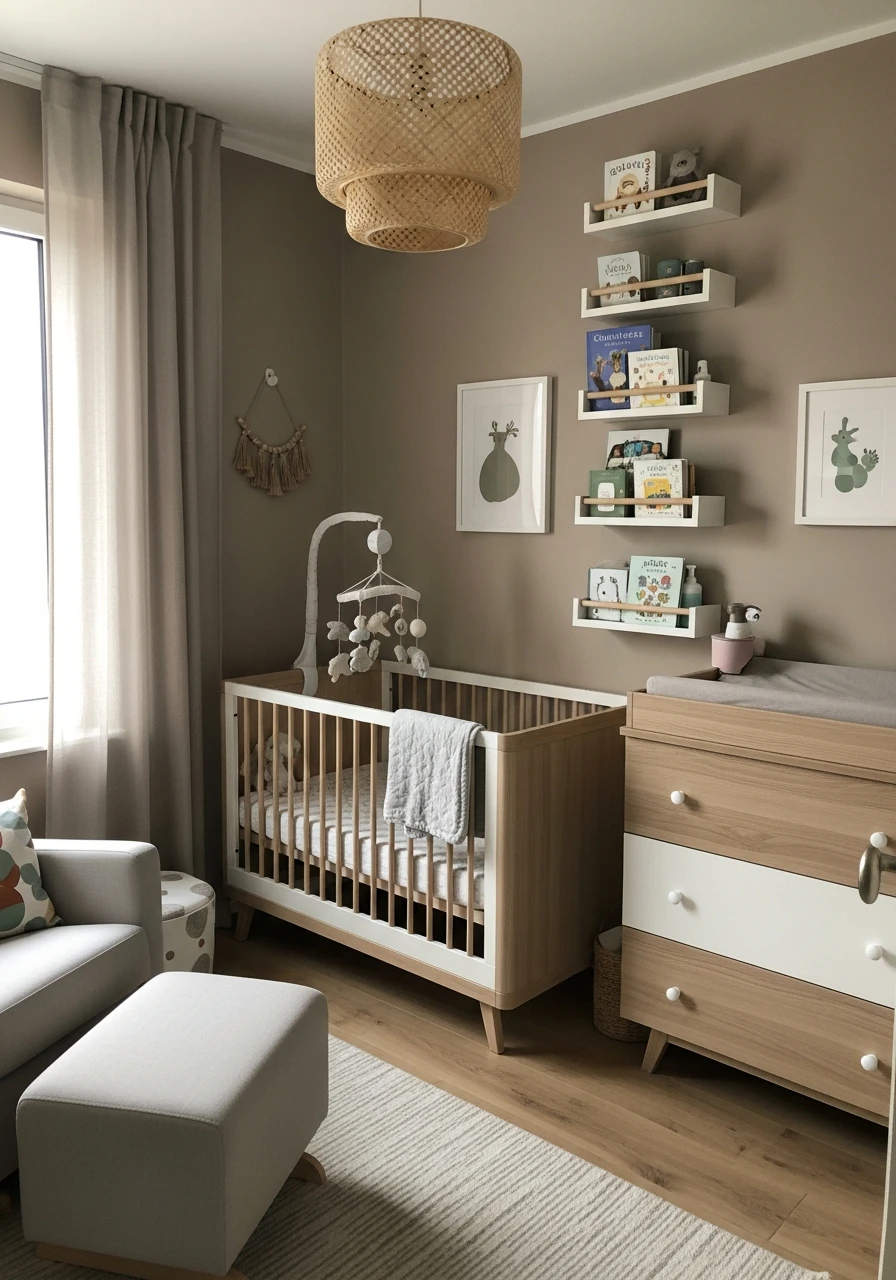
Choosing neutral colors and versatile decor that works for any child means you won’t need to redecorate later. This saves effort and money if you plan to have more children or want to use the room for guests.
- Focus on beige, gray, white, and sage green.
- Use abstract art or nature themes.
- Add color with easily swapped blankets.
Pro Tip: A beautiful wallpaper mural with soft landscapes is a great gender-neutral feature wall idea.
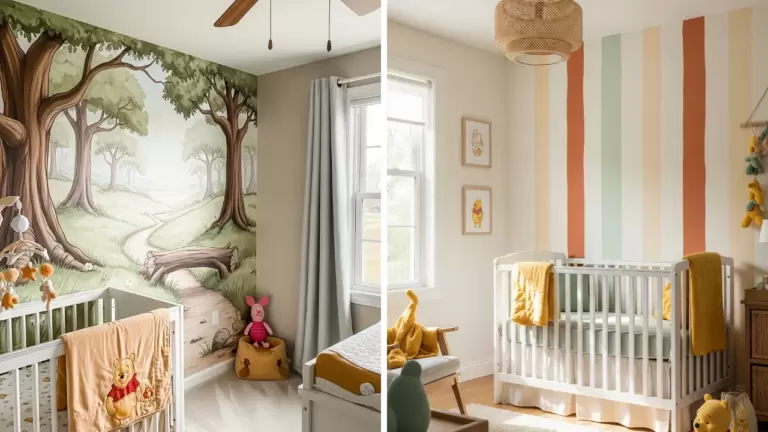
48. Whimsical Wallpaper Accent
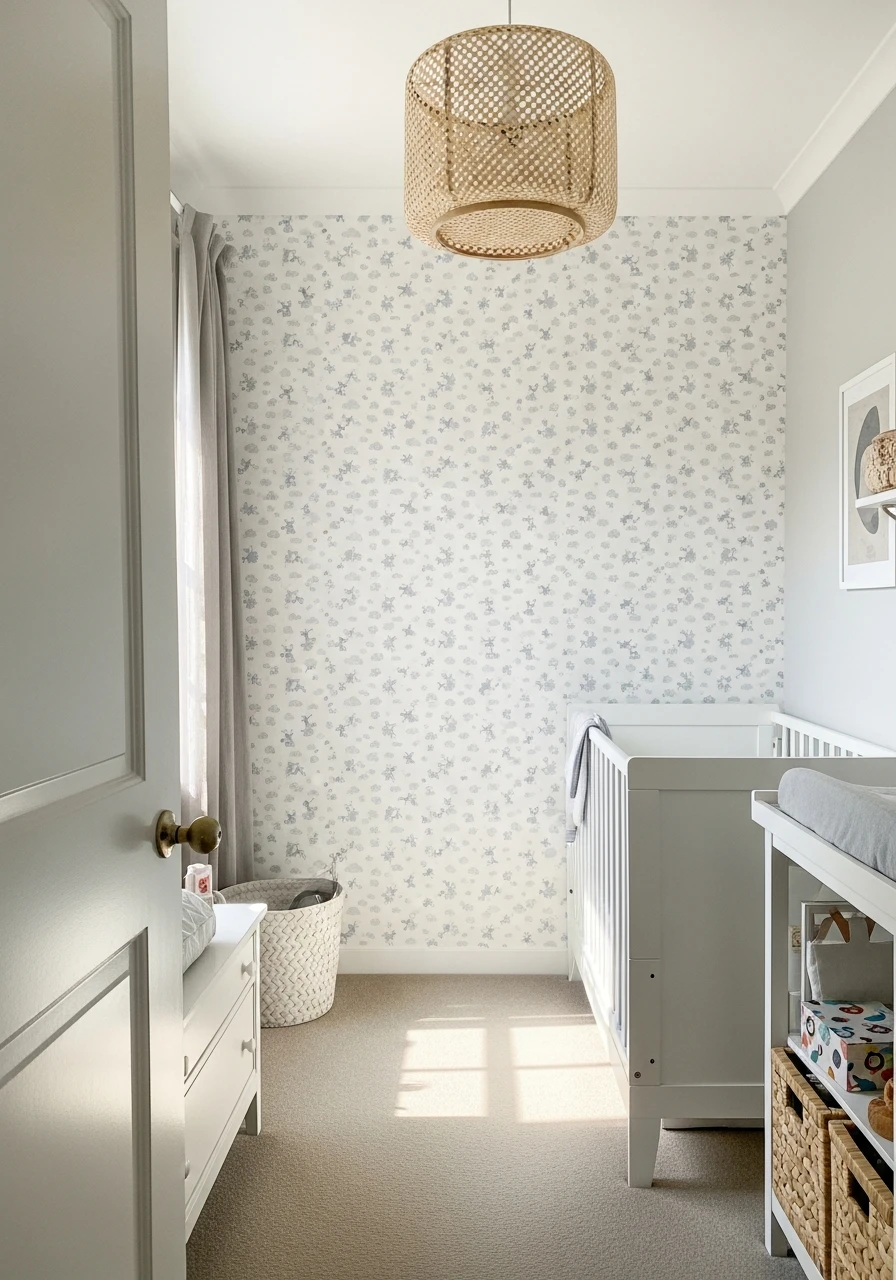
Install playful wallpaper with subtle, smaller patterns on one feature wall. This adds personality and depth without making the room feel busy or visually overcrowded by the design.
- Choose small, repeating patterns.
- Use peel-and-stick paper for easy changes.
- Pick a watercolor or hand-drawn style print.
Pro Tip: Don’t use a busy wallpaper pattern behind the crib, as it can be too distracting for the baby.
49. Personalized Gallery Wall
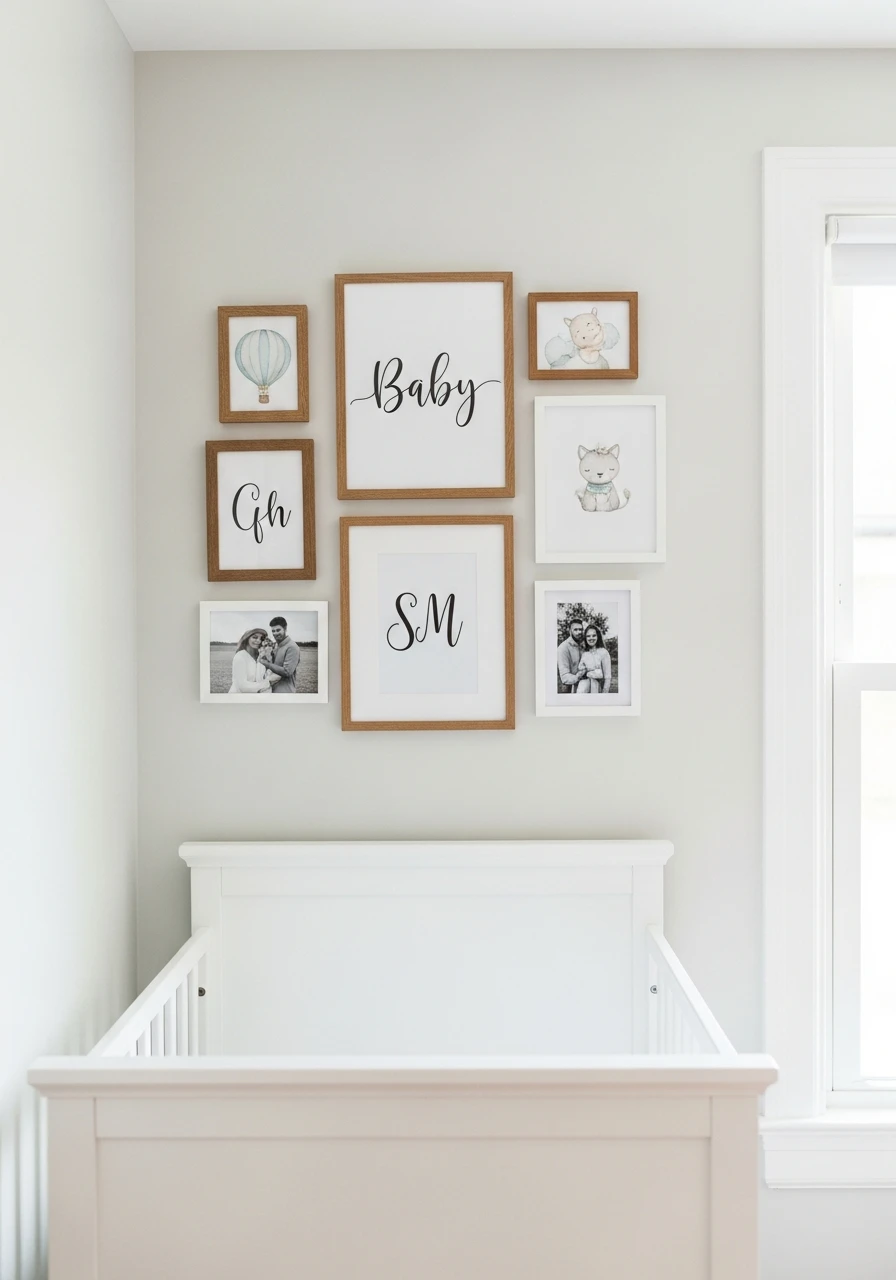
Create a gallery wall with the baby’s name, initials, cute prints, or family photos. This is a great way to add character and personalization without taking up any precious floor space.
- Use matching frames for a cohesive look.
- Hang the art above the dresser or glider.
- Include a wooden name sign.
Pro Tip: Measure your frames and map out the arrangement on the floor before hanging anything.
50. Tiny Reading Nook
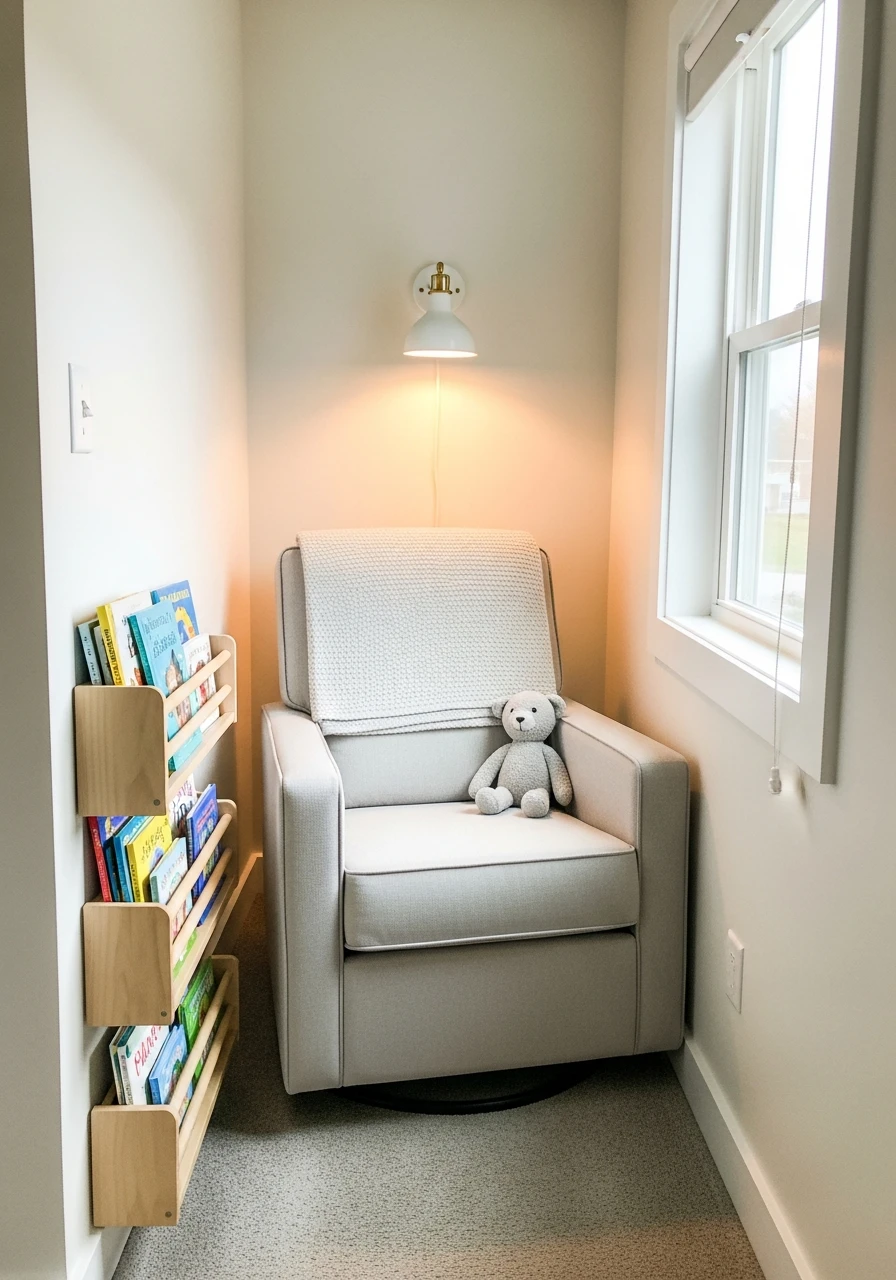
Design a small reading nook using a compact chair, soft lighting, and accessible book storage. This encourages bonding and quiet time without requiring a large dedicated space.
- Use a small, comfortable armchair.
- Keep a basket of books right next to the chair.
- Install a wall-mounted reading light.
Pro Tip: Add a fluffy sheepskin throw over the chair to make it look extra luxurious and inviting.
See? Having a small room doesn’t mean you have to skip on style or function.
By choosing smart, multi-purpose furniture and using your vertical space wisely, you can create a beautiful, restful nursery that feels much bigger than its square footage.
Go ahead and start planning your tiny, perfect space!