50 Pantry Organization Ideas

This post may contain affiliate links: full affiliate disclosure.
Does your pantry look like a disaster zone right before grocery day?
Don’t worry, mine used to, too! A messy pantry wastes food and time.
I promise you can get that high-end, organized look without spending a fortune. Let’s make finding dinner ingredients simple and fun.
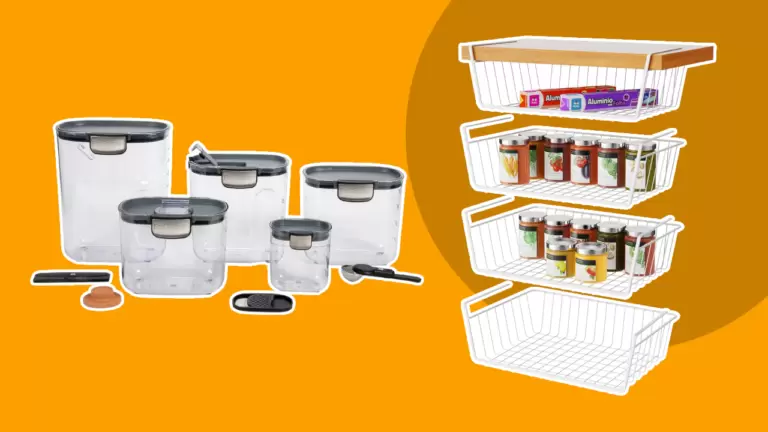
1. Clear Container Storage System
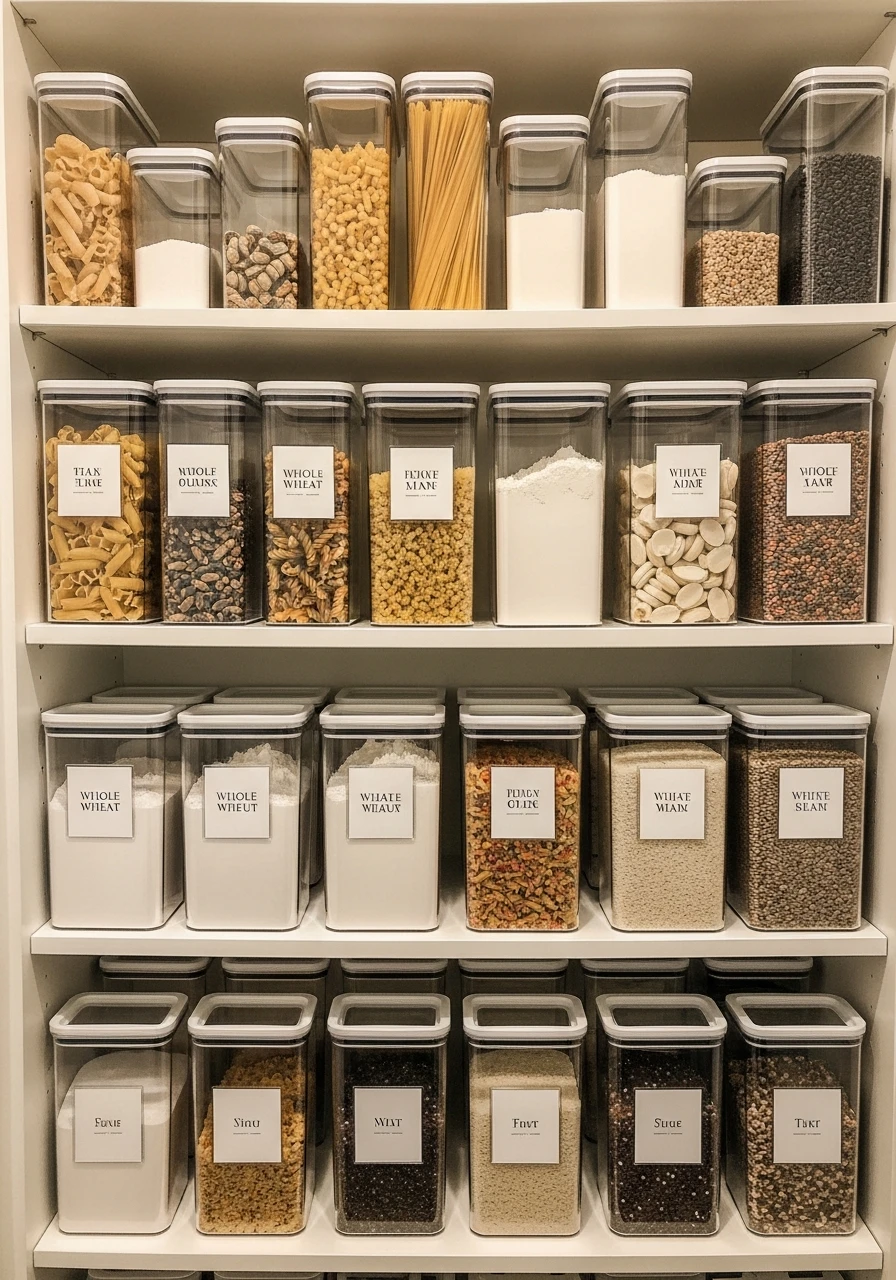
Switch all your dry goods into matching airtight containers. This instantly creates a uniform, clean look while keeping your flour and pasta fresh. You can see exactly what you have, which helps prevent double-buying at the store.
- Use square containers to save corner space.
- Choose stackable designs for vertical storage.
- Group all baking items together in their own containers.
Pro Tip: Decant bulk items right after grocery shopping so they never hit the shelf in messy bags.
2. Categorize Pantry Zones
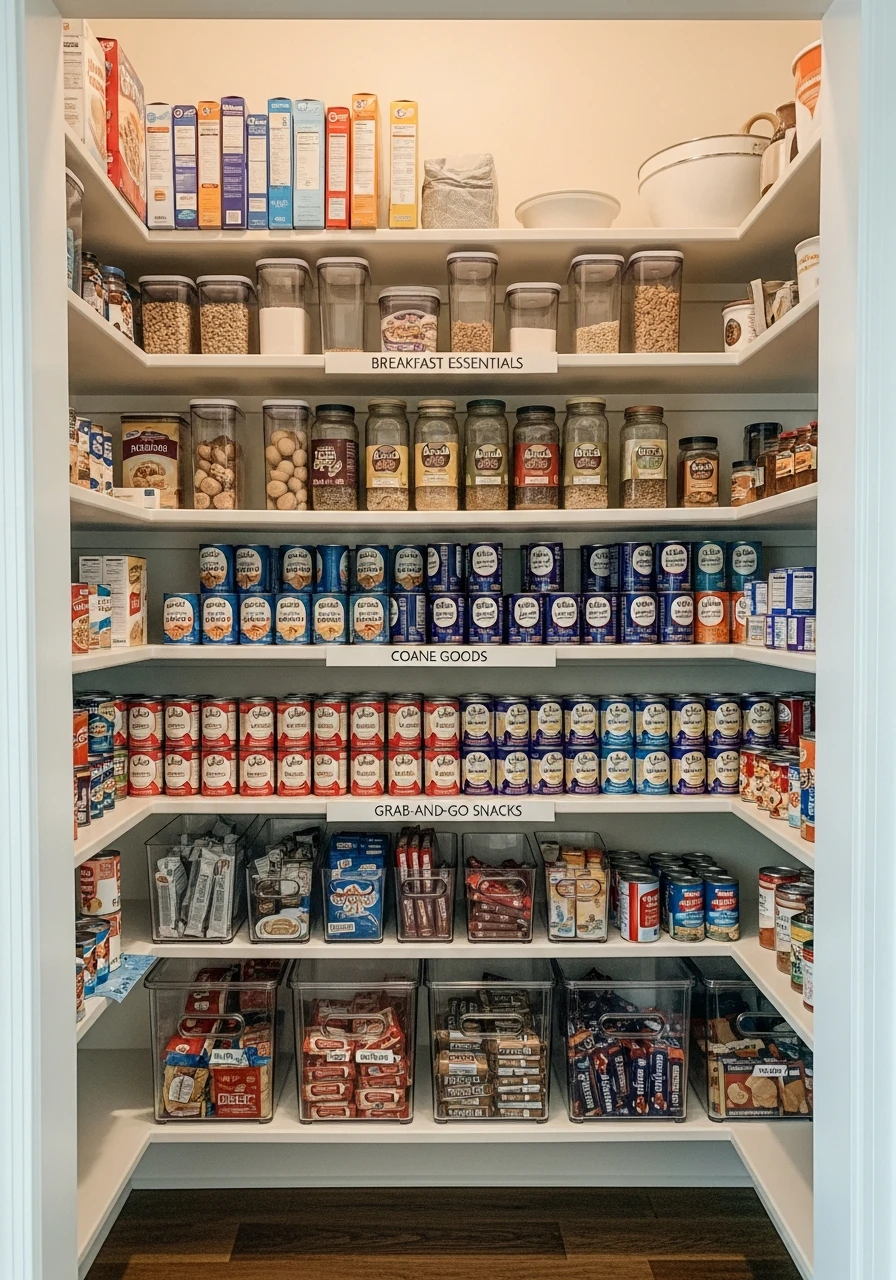
Treat your pantry like a grocery store aisle. Dedicate specific shelves for things like ‘Breakfast,’ ‘Canned Goods,’ or ‘Snacks.’ Zoning saves you time because you know exactly where to look for everything.
- Use large labels on the shelf edge for zone identification.
- Keep cooking staples (oils, spices) close to the counter.
- Store items you use daily at eye level.
Pro Tip: Place less-used holiday items or bulk stock on the highest shelf.
3. Install Pull-Out Shelves
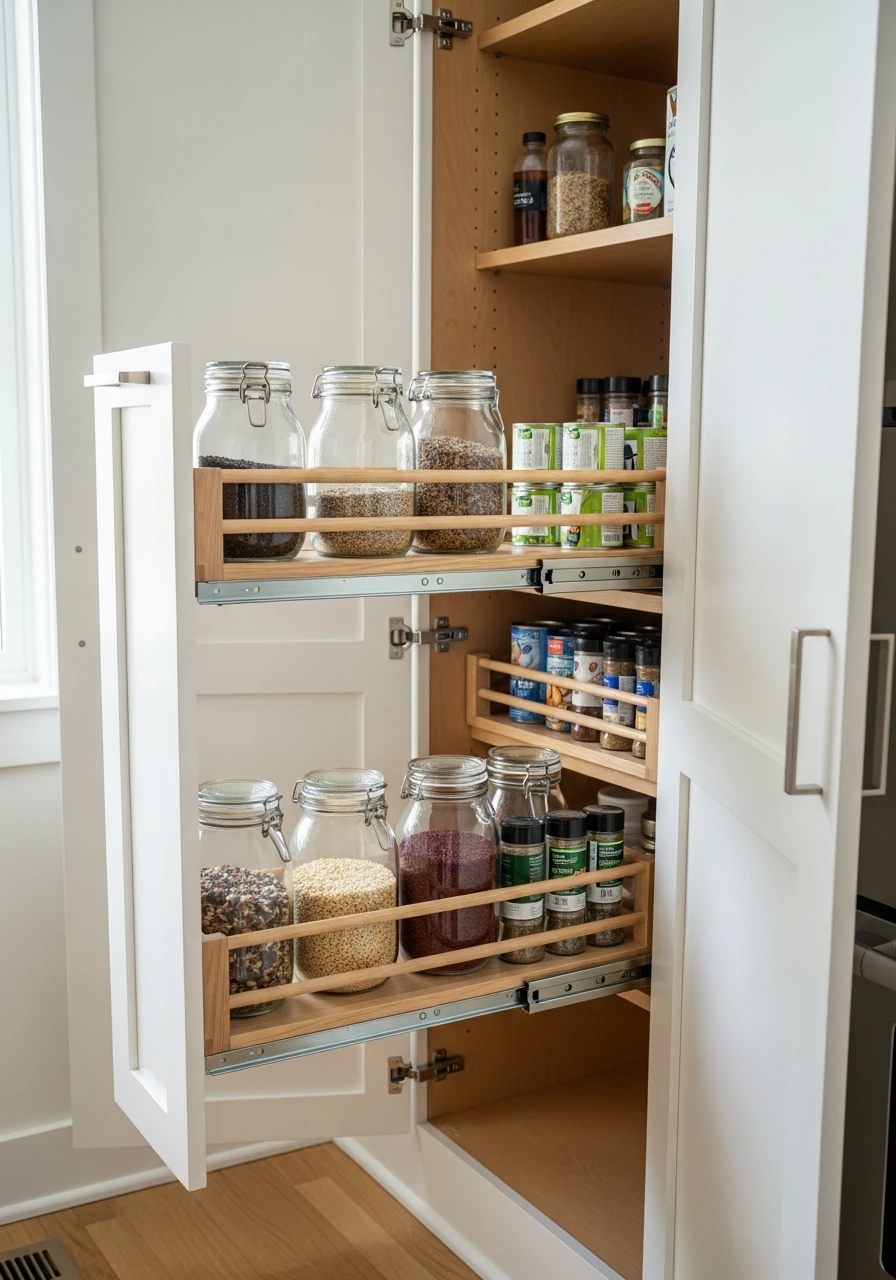
If you have deep cabinets, items get lost in the back. Install sliding shelves that pull out entirely. This prevents food from expiring unseen and makes it easy to grab heavy jars without reaching.
- Measure your cabinet depth carefully before buying.
- Use these for heavy items like soda or large spice containers.
- They reduce clutter caused by stacking.
Pro Tip: This is a great DIY project that feels like a major upgrade.
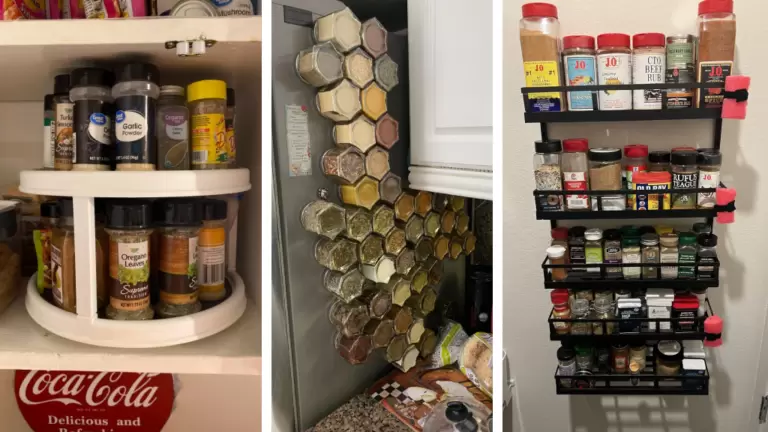
4. Over-the-Door Storage Racks
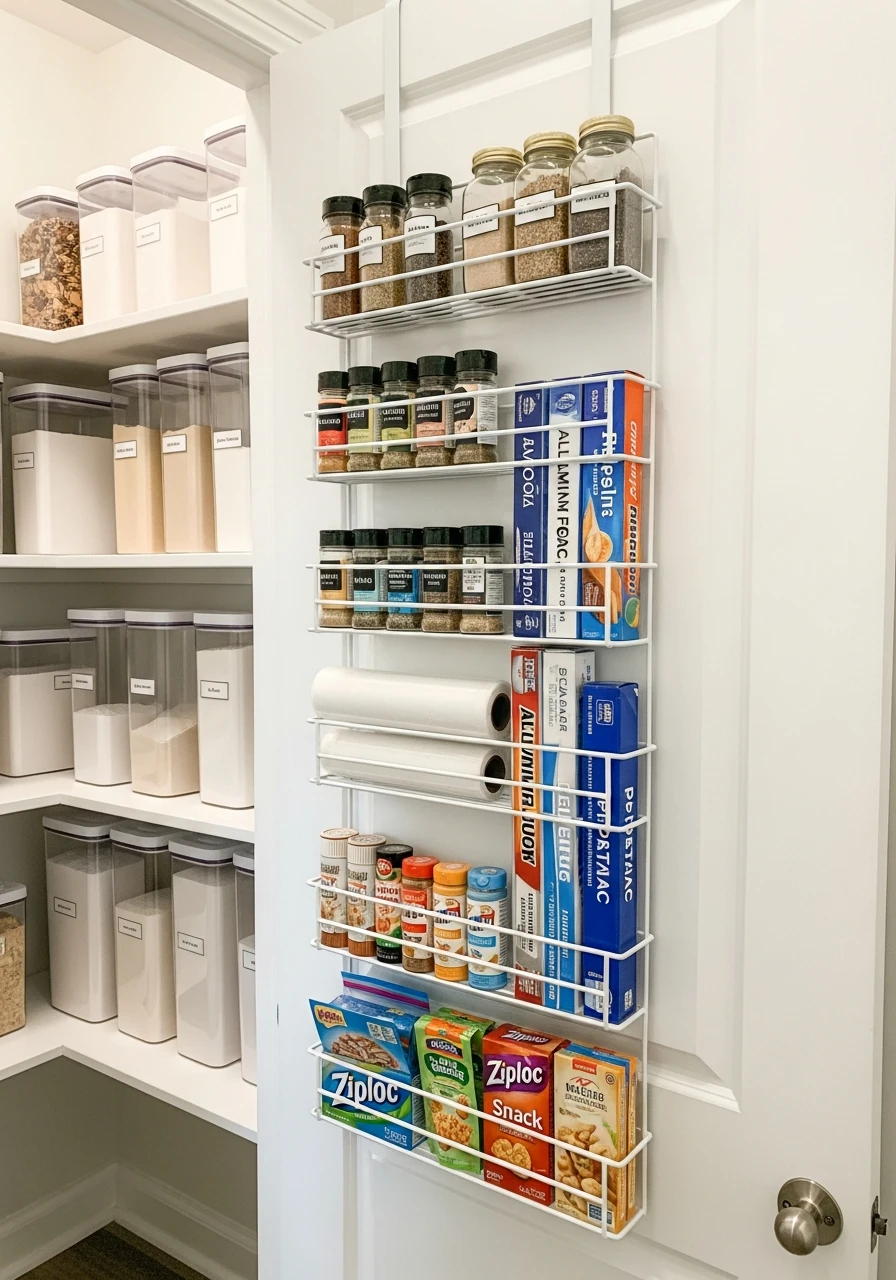
Don’t let your pantry door go to waste! Mount a slim rack here for small, awkward items like spices, foil, plastic wrap, or snack pouches. This frees up prime shelf space for bigger containers.
- Check that the door closes properly before drilling.
- Use this space for frequently used items.
- Adjustable racks can fit different sized bottles.
Pro Tip: Use matching spice jars on the rack for a cohesive, stylish look.
5. Stackable Shelf Risers
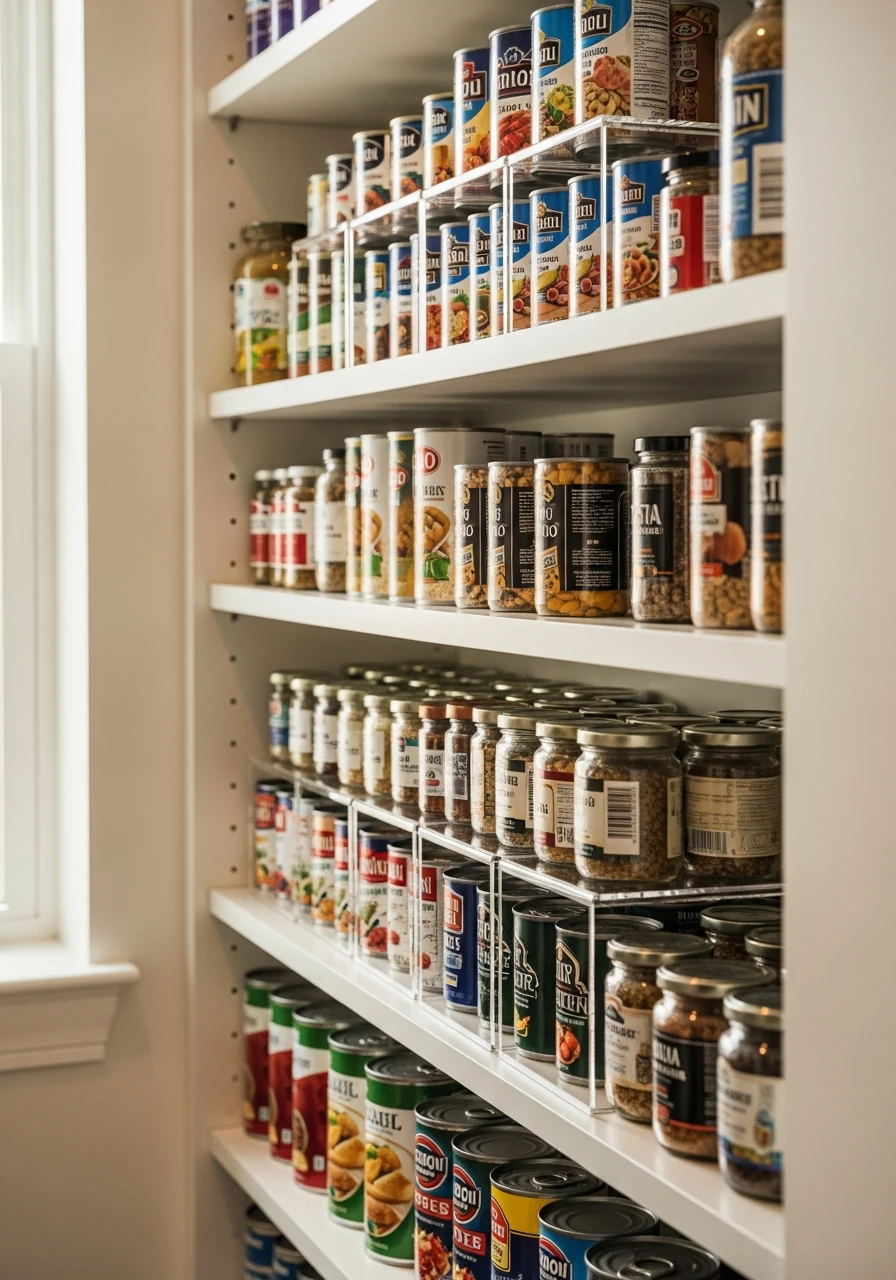
Shelf risers are perfect for canned goods and small jars. They create new levels inside a tall shelf space, so you can see the back row easily. No more knocking over cans while searching!
- Choose tiered steps for better visibility.
- Use them to display spices or seasonings.
- They install instantly without hardware.
Pro Tip: Use these risers to make your ‘dinner ingredients’ shelf look neat and tidy.
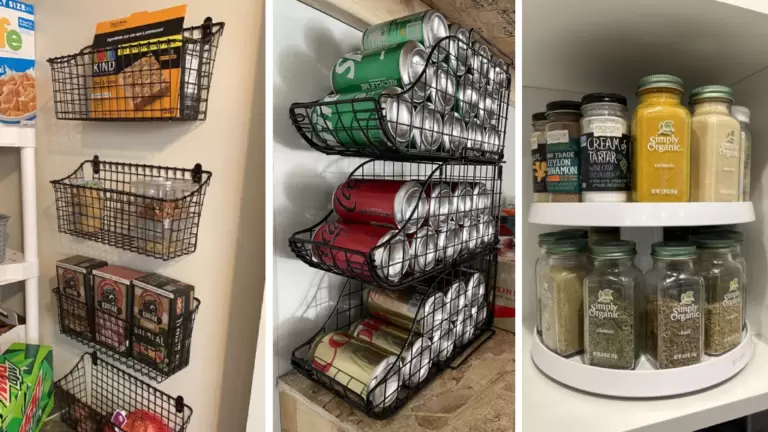
6. Lazy Susan Turntables
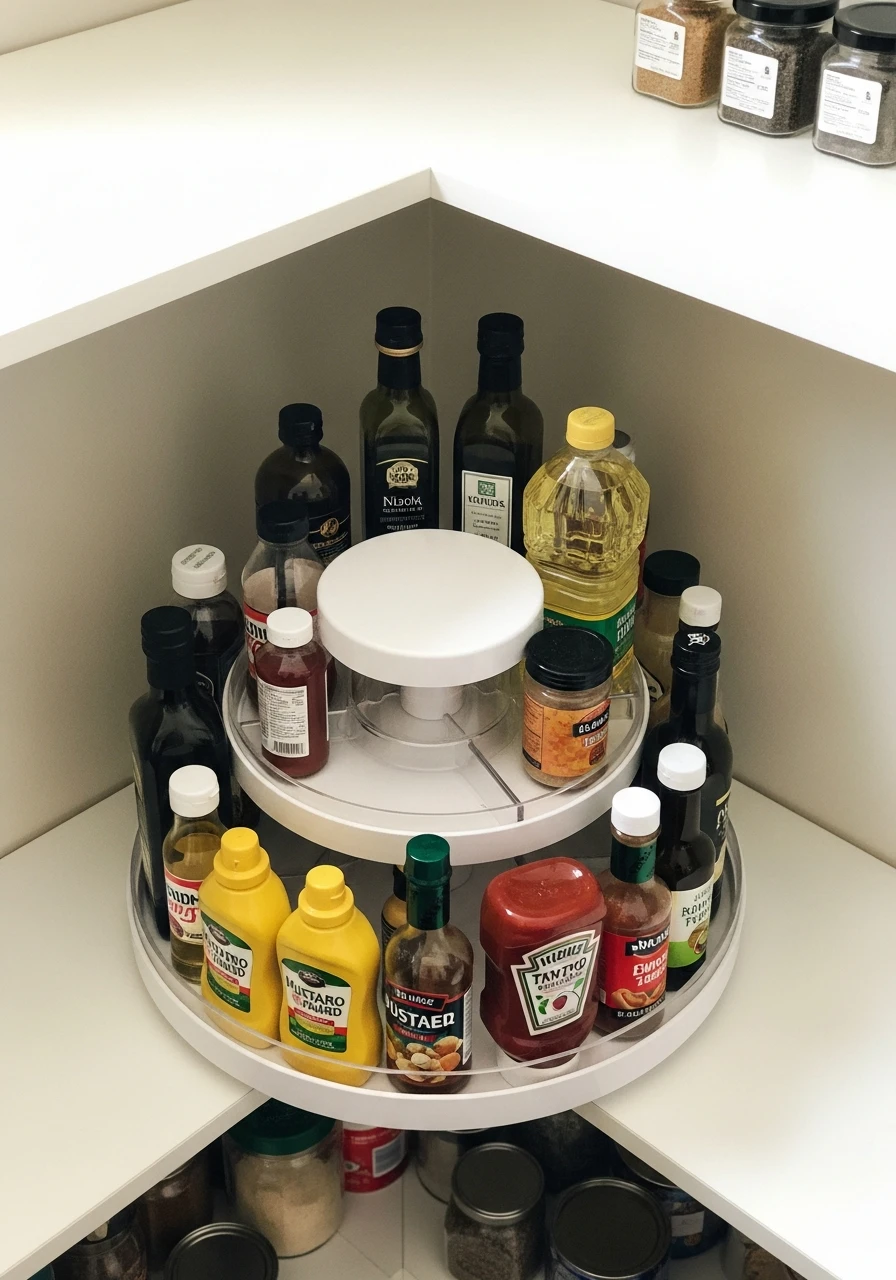
Lazy Susans are magic for deep corner cabinets or shelves where bottles tend to hide. Just spin the tray to bring the mustard or oil right to you. This prevents those messy spills from reaching and searching.
- Use them for oils, vinegar, and condiments.
- Great for storing vitamins or medicine bottles.
- Look for models with a lip to prevent items from falling off.
Pro Tip: Use a small Lazy Susan inside the fridge for sauces, too!
7. Basket and Bin Storage
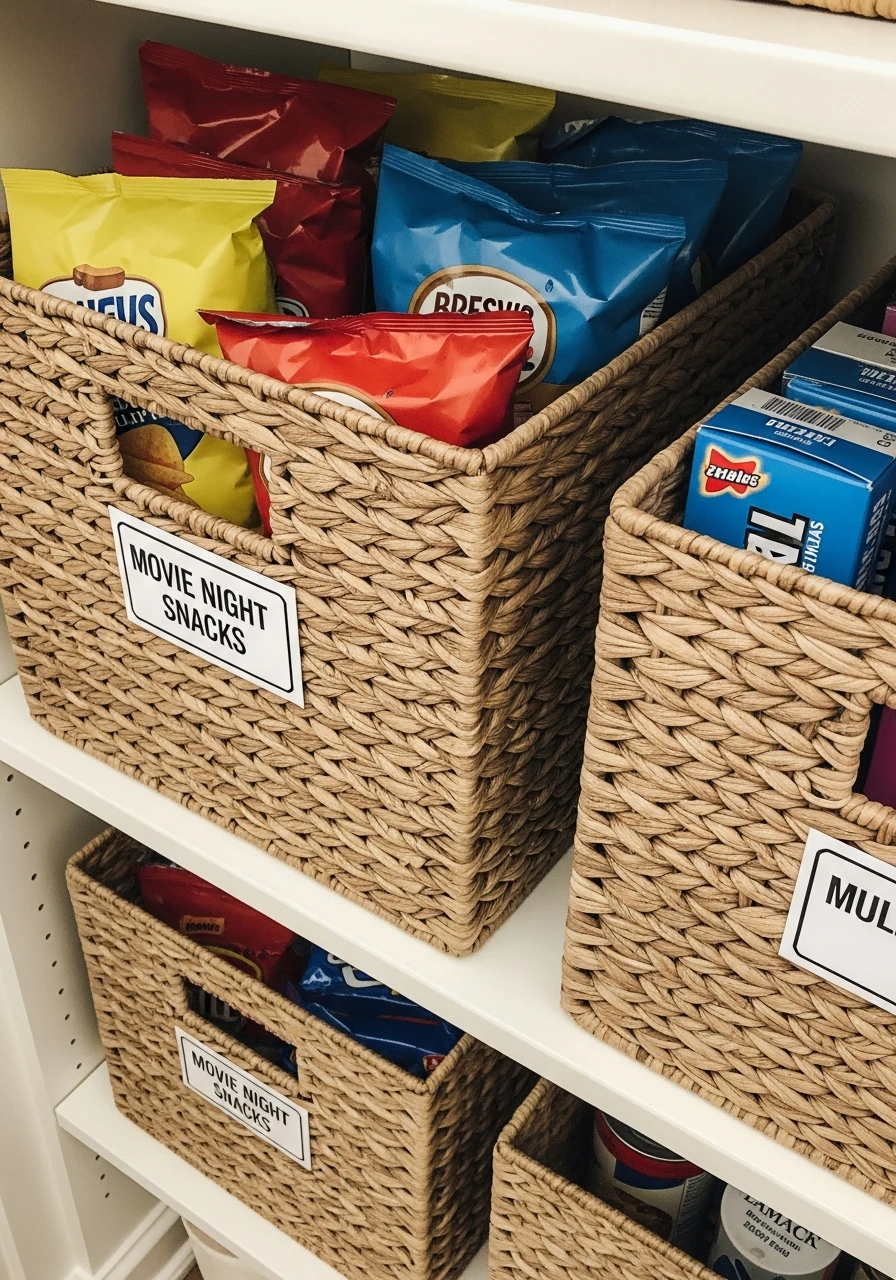
Baskets are your friend for grouping items that don’t look great on their own, like chip bags or cereal bars. They contain clutter and allow you to pull out an entire category when needed, like movie night snacks.
- Group similar packaged items together.
- Use matching bins for a custom look.
- Label the outside of the bin clearly.
Pro Tip: Use opaque bins to hide messy bags of chips and snacks.
8. Adjustable Shelving Systems
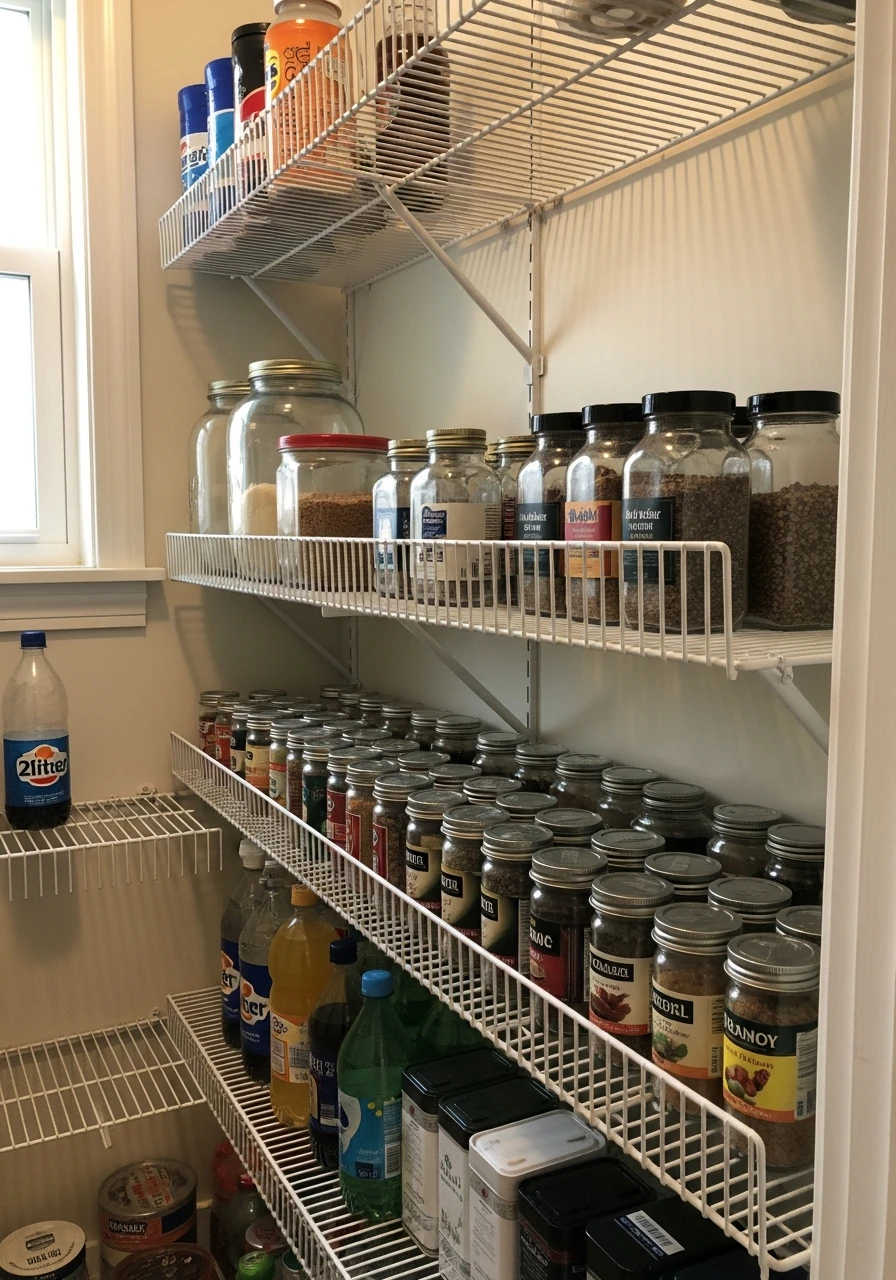
If you are renovating, install shelves you can move up and down. This flexibility lets you fit tall soda bottles one week and short spice jars the next. It maximizes every inch of vertical space.
- Measure the tallest item you need to store first.
- Use wire shelving for better airflow.
- Adjust shelf heights as your grocery habits change.
Pro Tip: You can often retrofit existing cabinets with adjustable pegs for a quick fix.
9. Label Everything Clearly
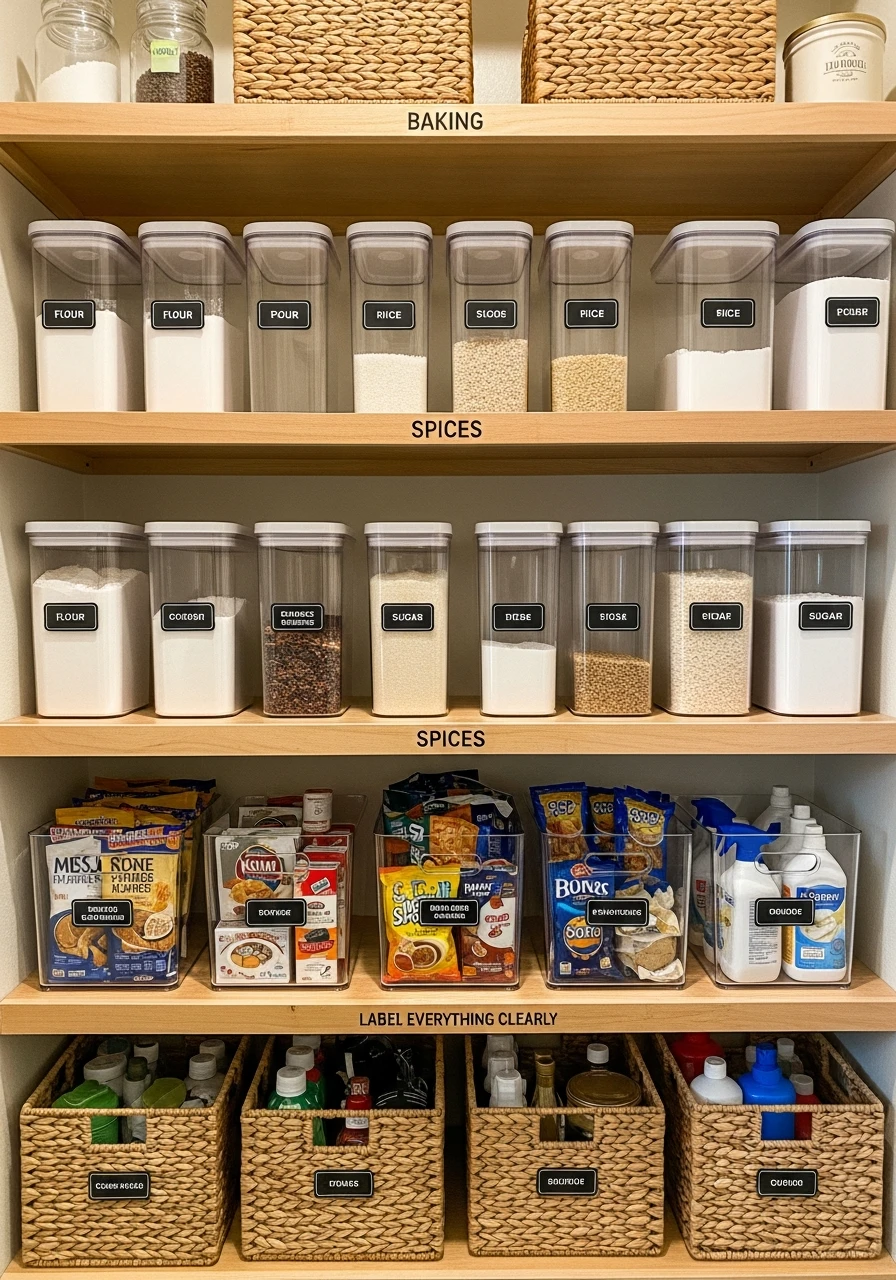
Labels are the key to long-term organization. Label your containers, your bins, and even the shelves themselves. This ensures everyone in the house knows where things go, making cleanup easy.
- Use a simple label maker or vinyl decals.
- Label the contents and the expiration date.
- Write the item name on the container lid and front.
Pro Tip: Use simple fonts for a high-end, clean aesthetic.
10. Glass Jar Bulk Storage
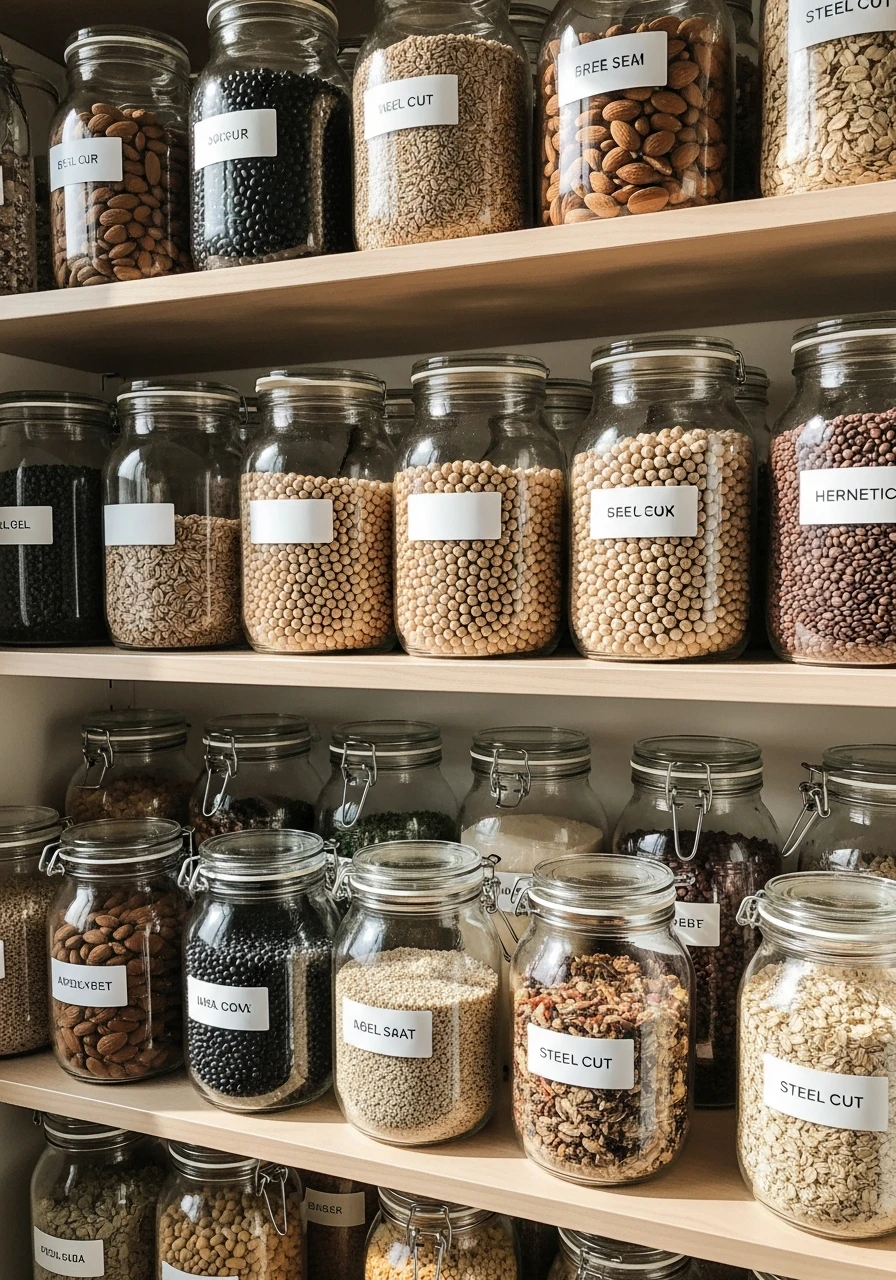
For items like nuts, grains, and beans, use beautiful glass jars. They look fantastic, preserve freshness, and create a classic, minimal pantry style. Plus, you immediately see when you are running low.
- Choose jars with airtight rubber seals.
- Use scooping utensils stored inside the jars.
- Group all baking ingredients in matching glass sets.
Pro Tip: Look for inexpensive mason jars or thrifted glass containers for a budget option.
11. Dedicated Snack Station
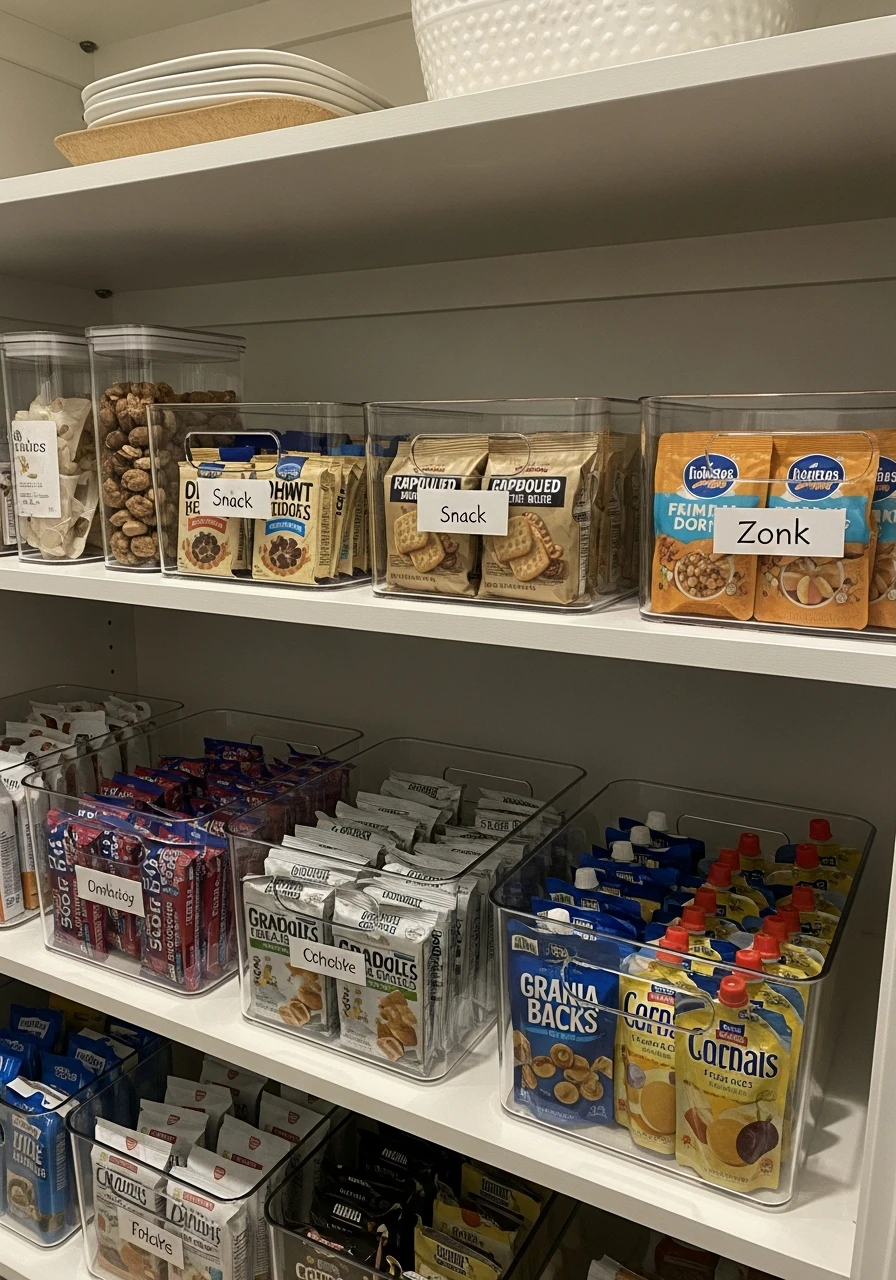
If you have kids, create a ‘Snack Zone’ at a height they can reach easily. Use open bins filled with approved treats. This prevents them from digging through your cooking supplies looking for a cookie.
- Place the snack zone on a lower shelf.
- Use clearly labeled ‘Mom Approved’ bins.
- Restock the zone once a week during meal prep.
Pro Tip: Keep the snack bins slightly under-filled to make them look tidy.
12. Vertical Divider Storage
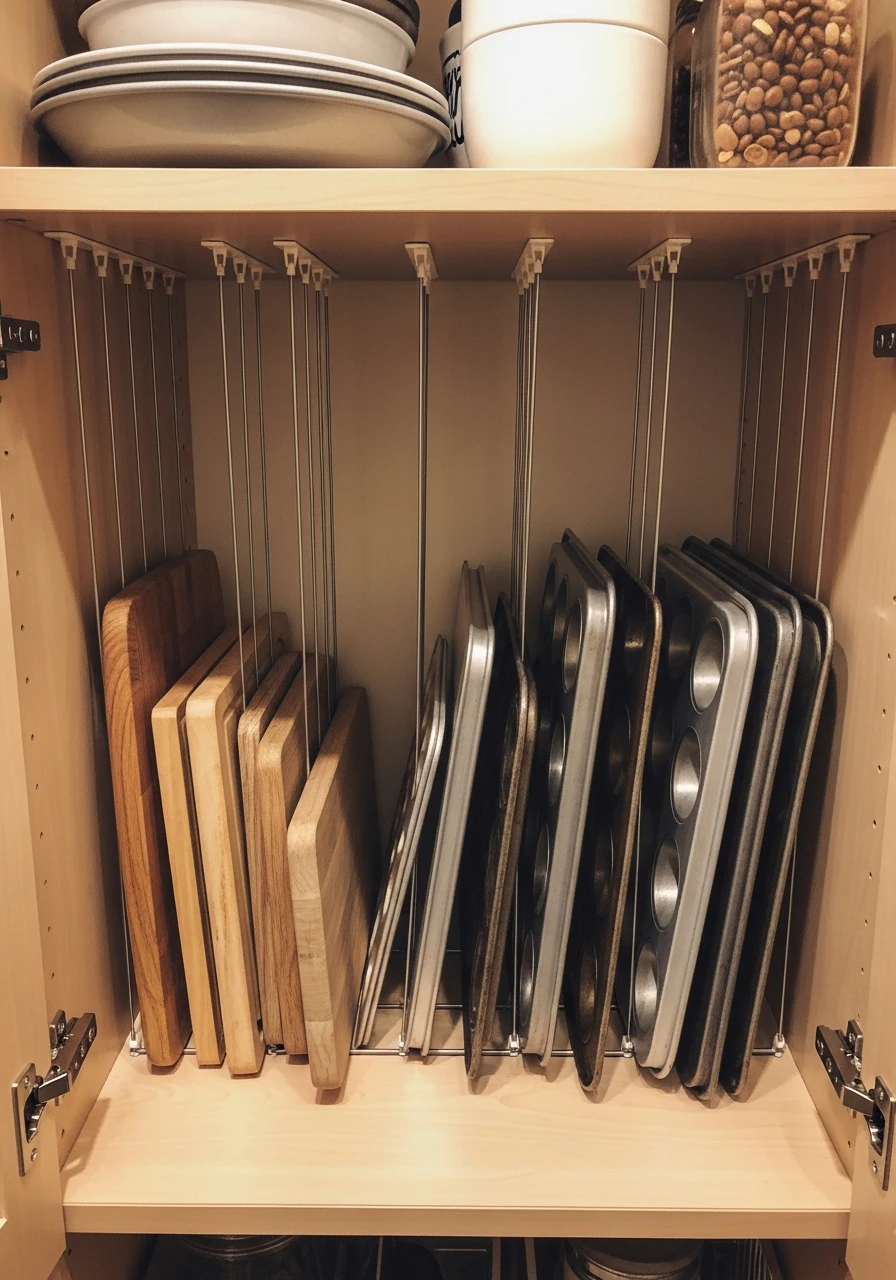
Tired of stacking baking sheets and cutting boards? Install vertical dividers. Storing these items upright saves a ton of space and makes it easy to pull out just one tray without causing an avalanche.
- Use for cooling racks, trays, and cutting boards.
- Look for metal or sturdy wood dividers.
- Place the dividers close to the kitchen counter.
Pro Tip: These dividers are also great for organizing large serving platters.
13. Shallow Pantry Drawers
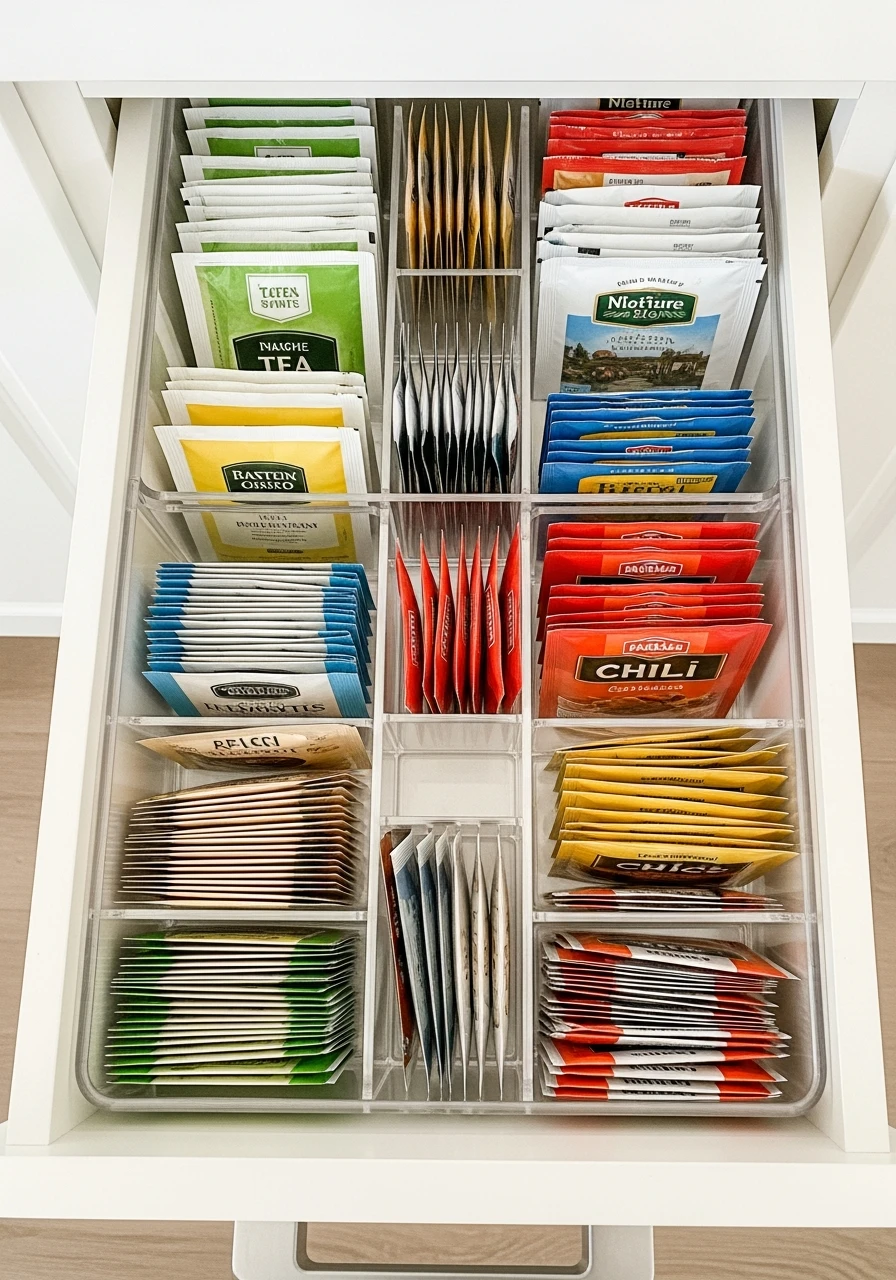
If you are storing small items like tea bags, spice packets, or seasoning mixes, shallow drawers are better than deep shelves. They prevent small packets from getting buried under bigger boxes.
- Use drawer inserts to keep packets upright.
- Label the front of the drawer clearly.
- Great for kid’s art supplies if your pantry has extra space.
Pro Tip: Look for wire mesh drawers for easy visibility and airflow.
14. Built-In Appliance Garage
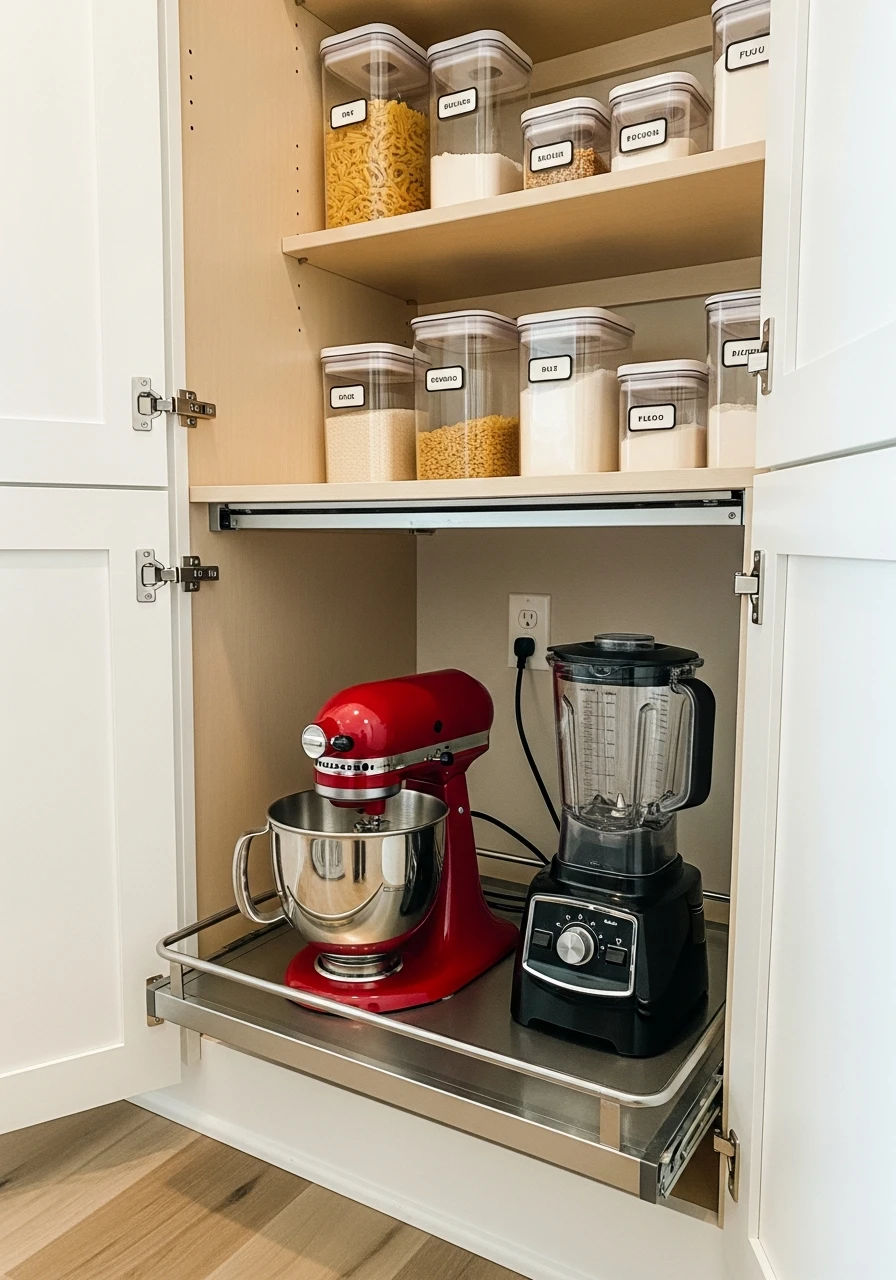
Keep your kitchen counters clear by giving small appliances a home inside the pantry. Dedicate a lower shelf or cabinet section for your stand mixer, blender, or food processor.
- Ensure the shelf is strong enough to handle weight.
- Keep cords neatly wrapped with Velcro strips.
- Store appliances near the pantry door for quick access.
Pro Tip: If possible, install an outlet here to use them without moving them.
15. Hidden Appliance Storage
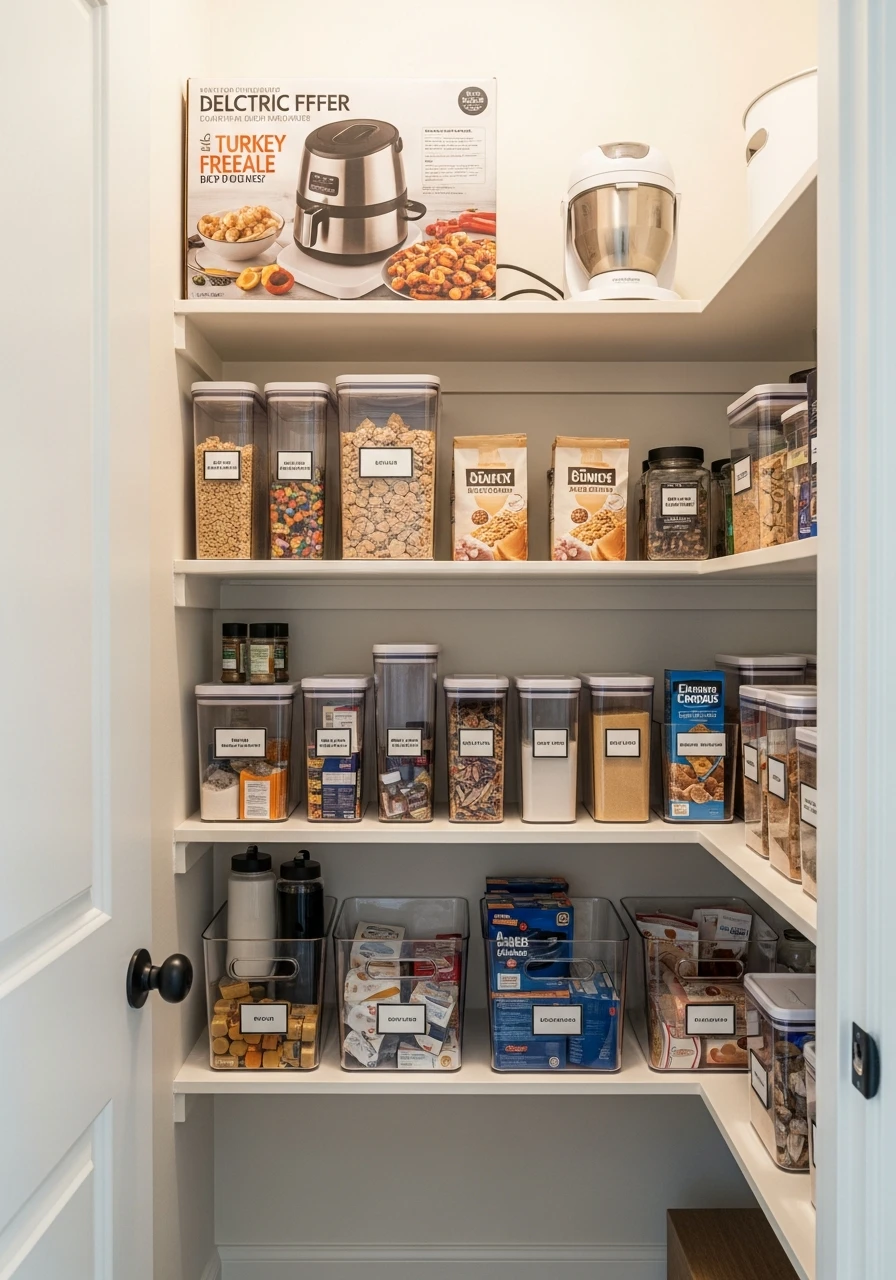
If you have appliances you only use once a year (like a turkey fryer or ice cream maker), store them high up or low down. Reserve eye-level shelves for the items you use daily.
- Use the highest shelves for seasonal storage.
- Keep a step stool nearby for safe access.
- Store appliance manuals in a single labeled binder.
Pro Tip: Use the original boxes for appliances you rarely use for easy stacking.
16. Wall Hook Organization
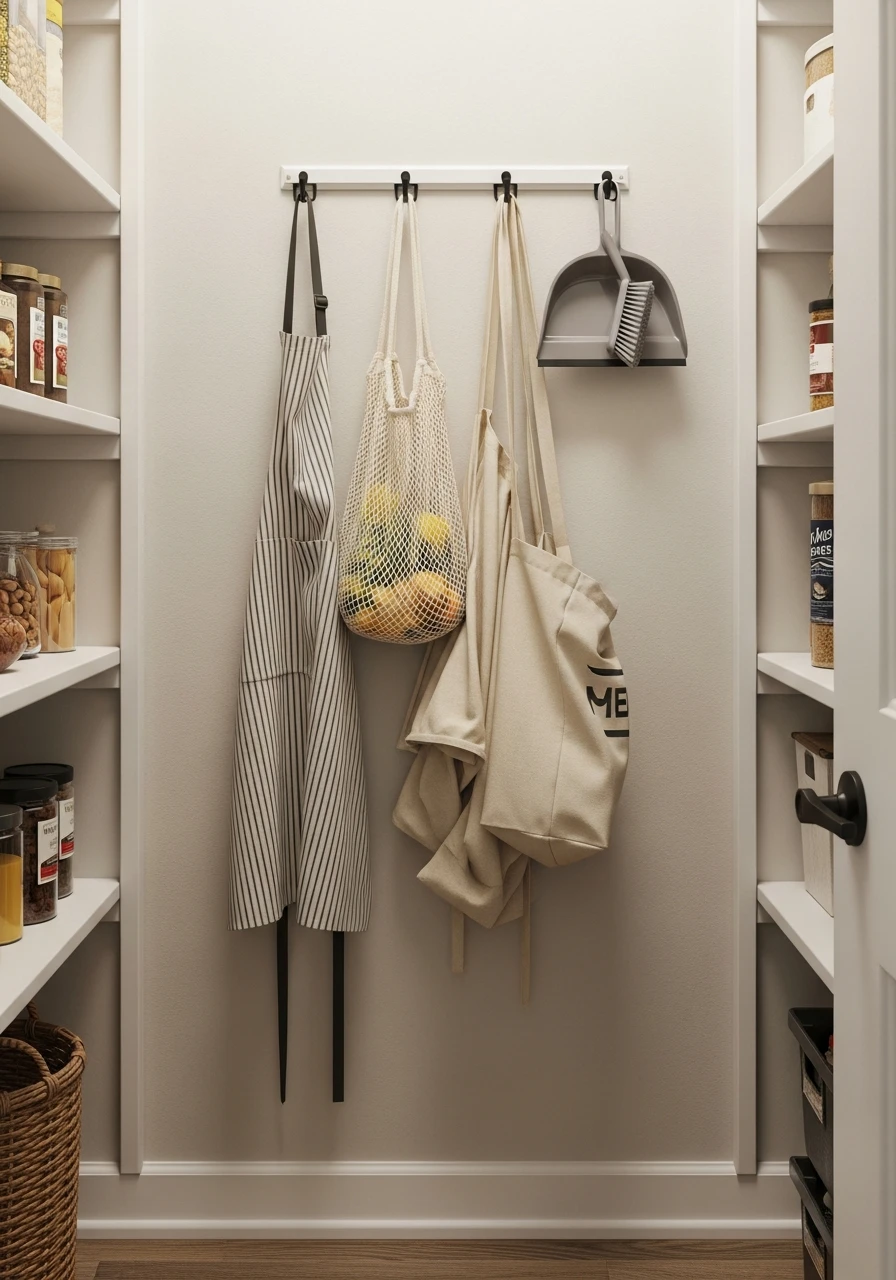
Don’t forget the walls inside your pantry! Install simple hooks to hang aprons, reusable grocery bags, or small dustpans. This maximizes vertical space and keeps these items off the floor.
- Use sturdy command hooks for easy installation.
- Hang measuring spoons or cups here.
- Great for holding cleaning rags or kitchen towels.
Pro Tip: Hang a calendar or family chore chart next to the hooks.
17. Under-Shelf Hanging Baskets
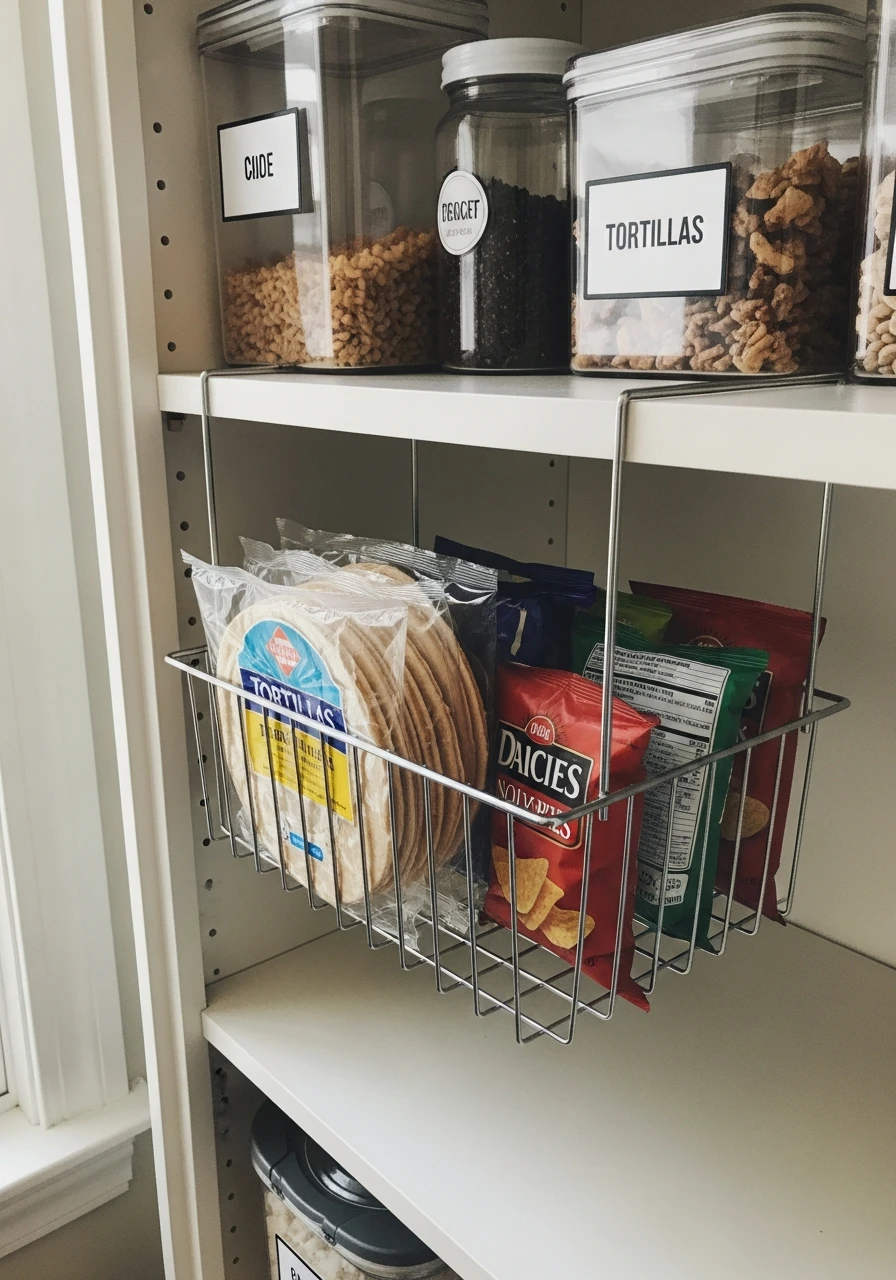
These simple wire baskets clip onto the bottom of a shelf, creating a whole new layer of storage underneath. They are perfect for light items like bread, tortillas, or small snack bags.
- Use them to store soft produce like tomatoes or avocados.
- Check that the basket doesn’t block items below it.
- Install them under the deepest shelves.
Pro Tip: They are fantastic for maximizing the height between widely spaced shelves.
18. Rolling Pantry Carts
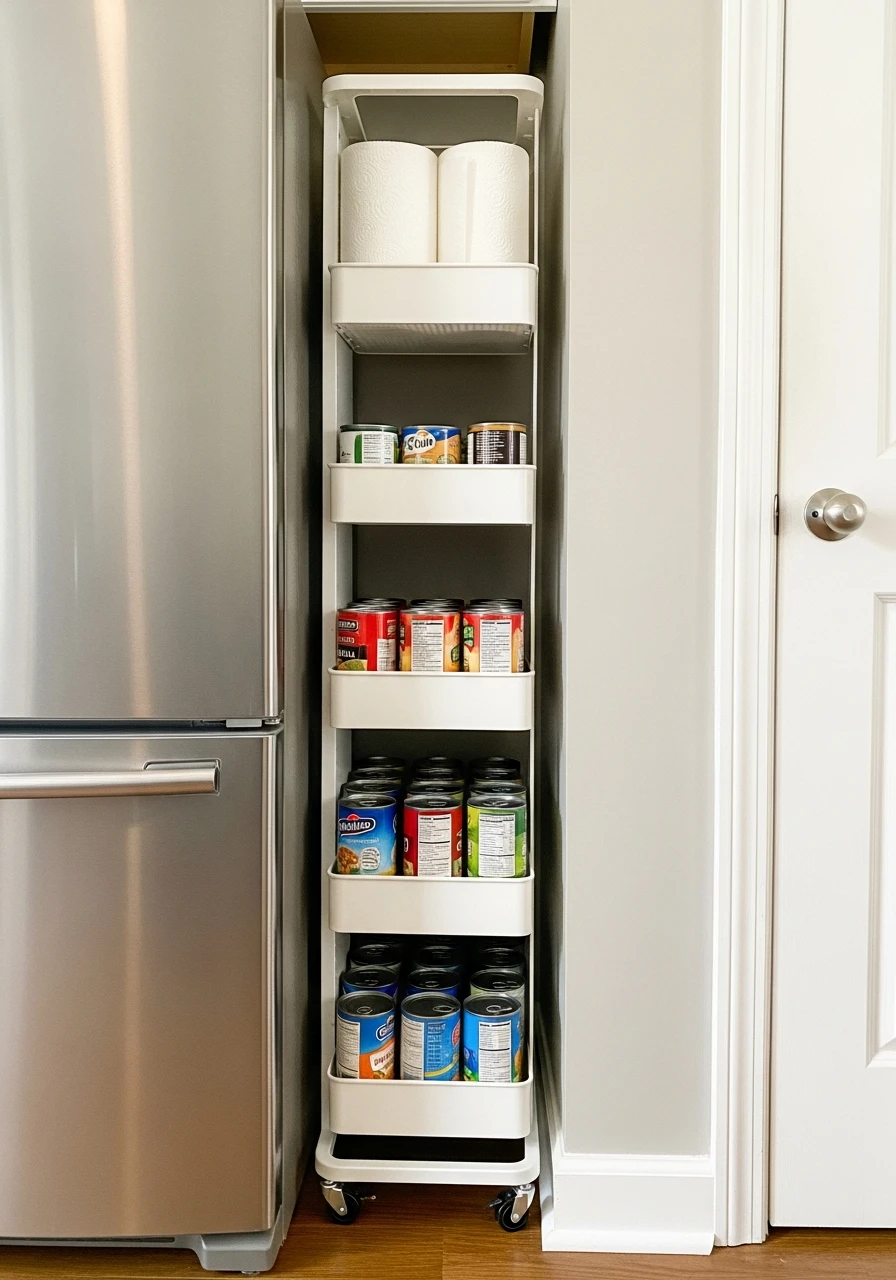
If your kitchen is small, a slim rolling cart can fit perfectly between the fridge and the wall. Use it to store canned goods or extra paper towels. You can roll it out when you need it and hide it away when you don’t.
- Look for narrow carts with high sides.
- Use for pet food or cleaning supplies.
- Ensure the wheels lock securely.
Pro Tip: Paint a simple metal cart black or white to give it a more modern feel.
19. Narrow Pantry Layouts
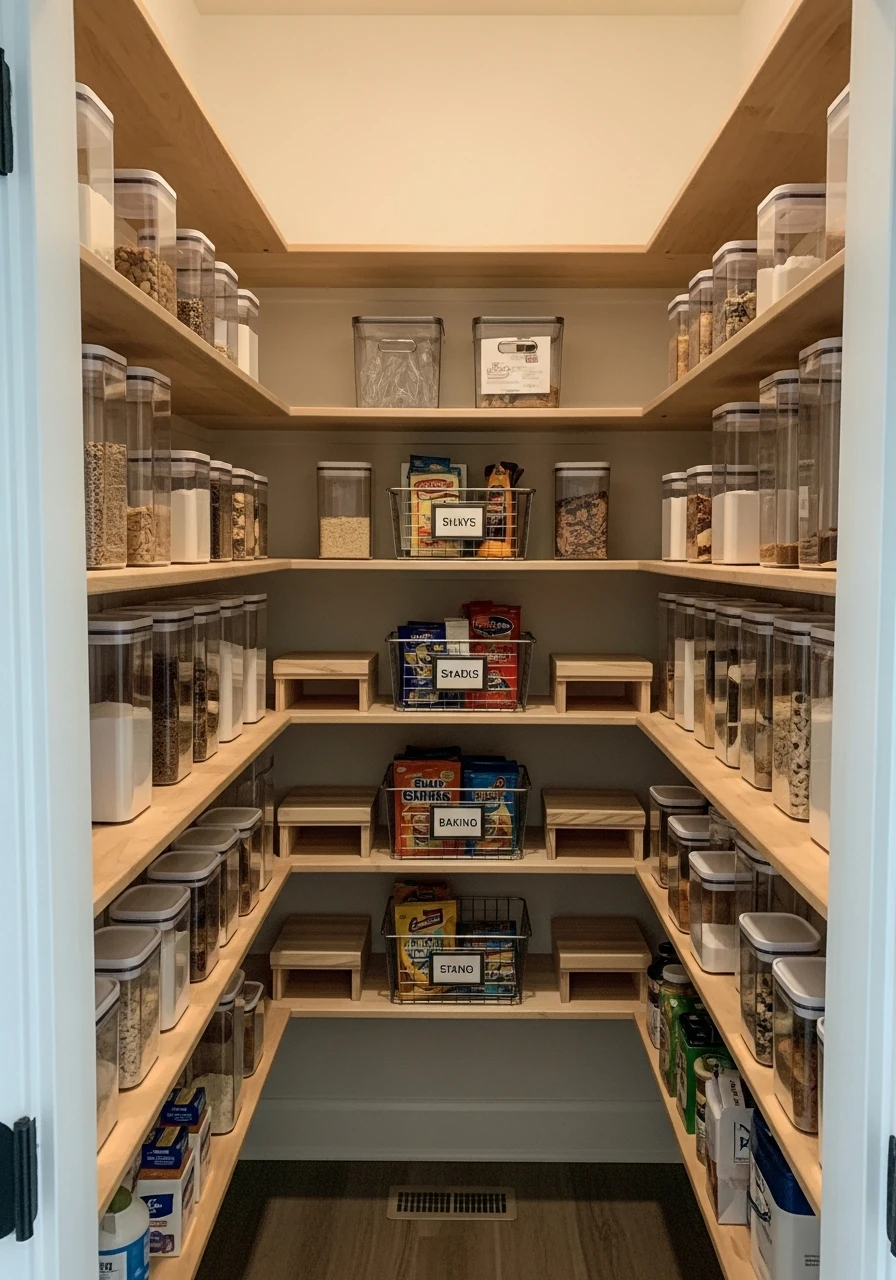
Even a small, shallow closet can become a great pantry if you utilize the space well. Use shelving on both sides of a narrow walk-in space. Keep the depth shallow to prevent items from getting lost.
- Shallow shelves force you to keep things tidy.
- Use the back wall for hanging storage.
- Install bright lighting to maximize visibility.
Pro Tip: For narrow spaces, stick to clear containers to reduce visual noise.
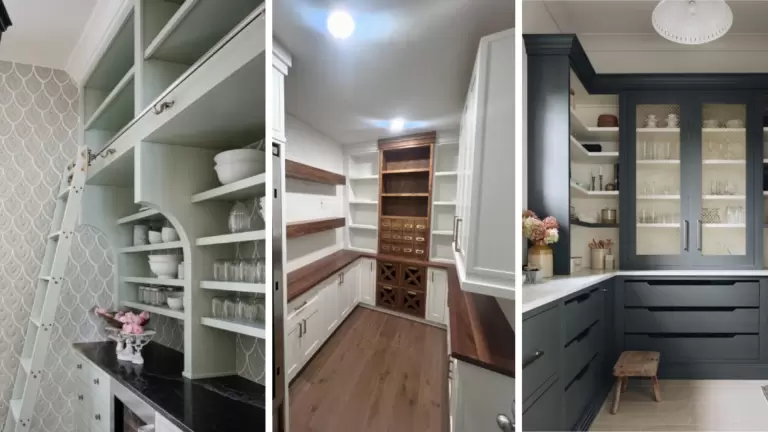
20. Built-In Walk-In Storage
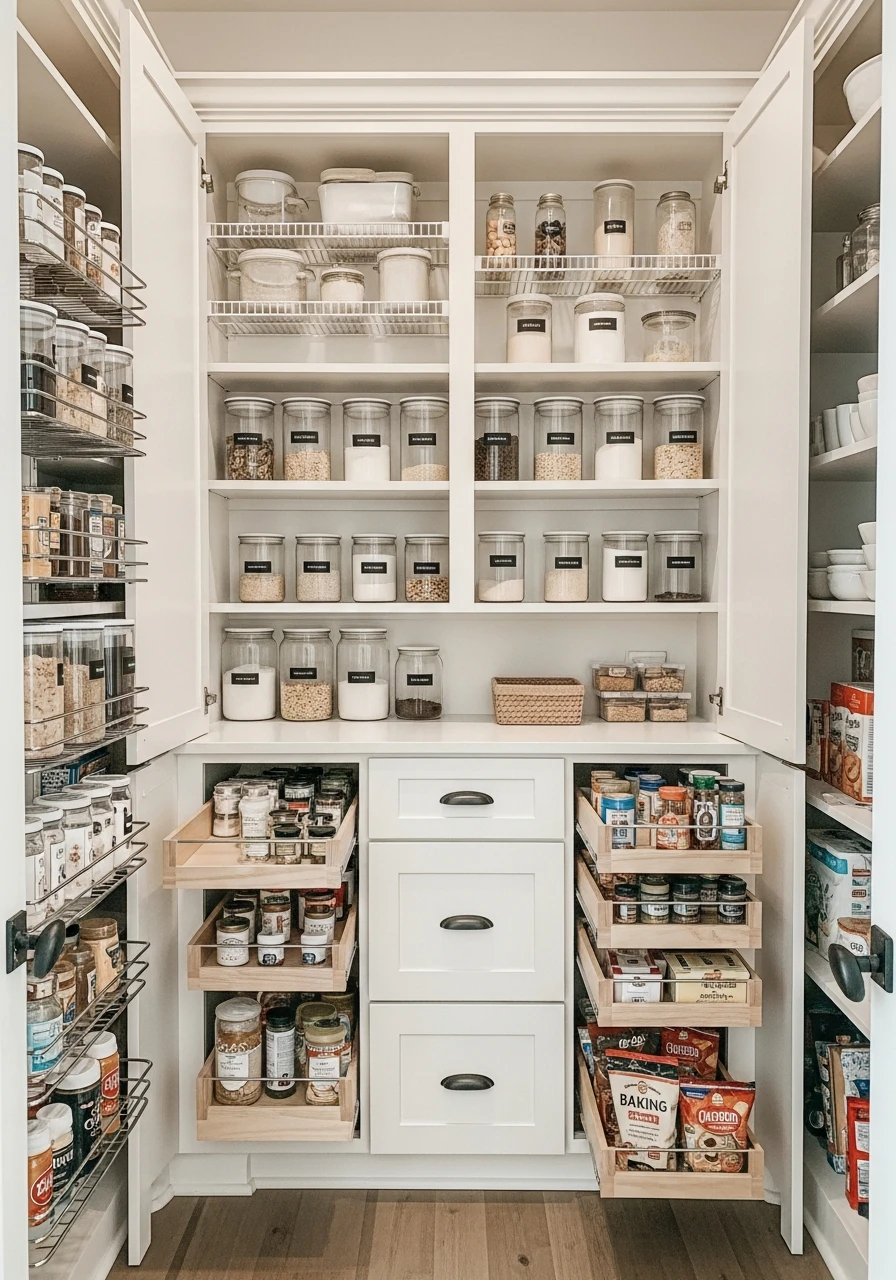
If you have a walk-in pantry, consider custom cabinetry instead of basic wire shelves. Built-in storage allows you to tailor drawers and compartments to fit your exact grocery list, maximizing efficiency.
- Include dedicated drawers for root vegetables.
- Install counters for grocery drop-off and staging.
- Use the top shelves for rarely used holiday dishes.
Pro Tip: A mix of open shelving and closed cabinets gives you flexibility.
21. Beverage Coffee Station
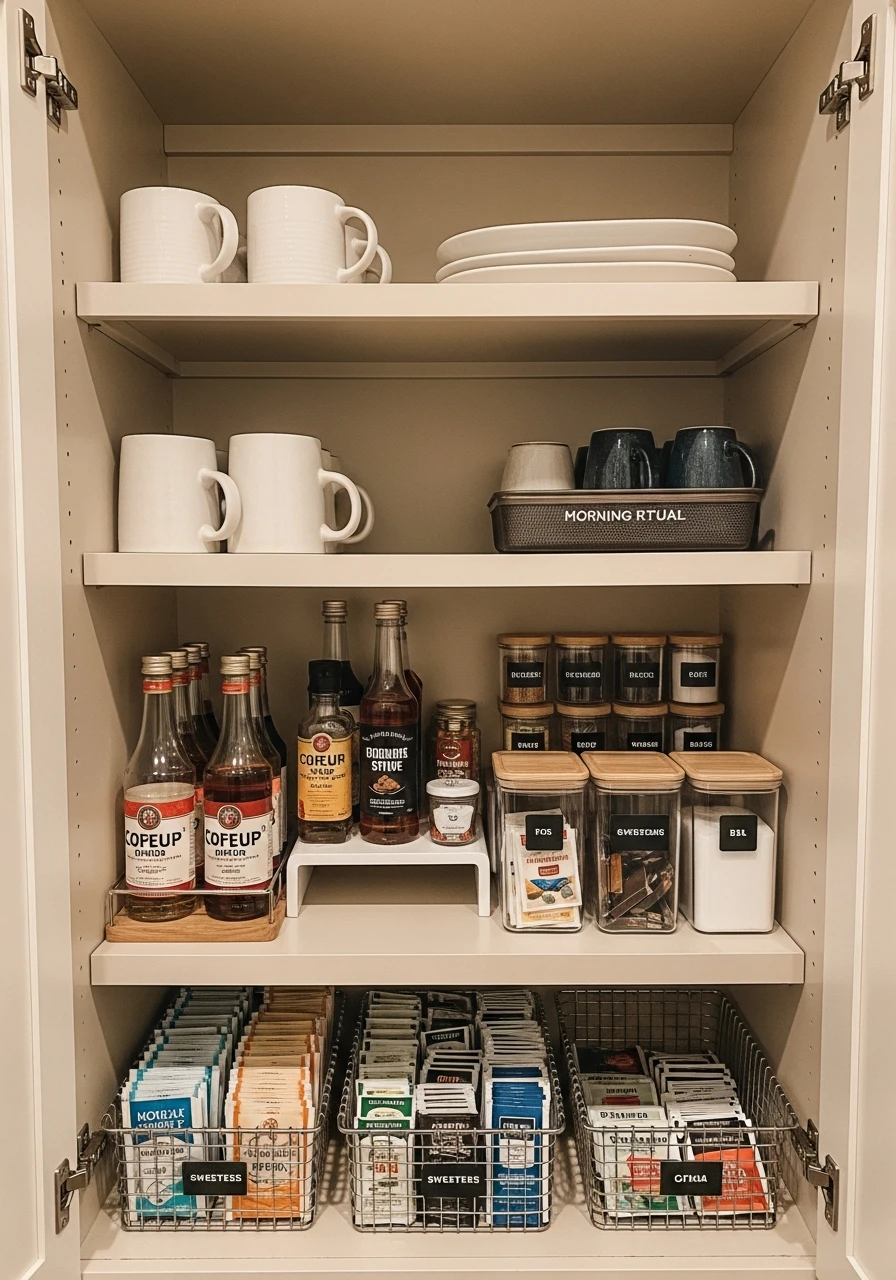
Designate one area of the pantry just for coffee, tea, and drinks. Store mugs, sweeteners, syrups, and tea bags here. This keeps all your morning ritual items together and off the main kitchen counter.
- Use tiered organizers for tea bags.
- Keep coffee filters in a dedicated container.
- Store water bottles neatly on a rack.
Pro Tip: If your pantry is large, add a small basket for reusable straws and lids.
22. First-In-First-Out Shelf
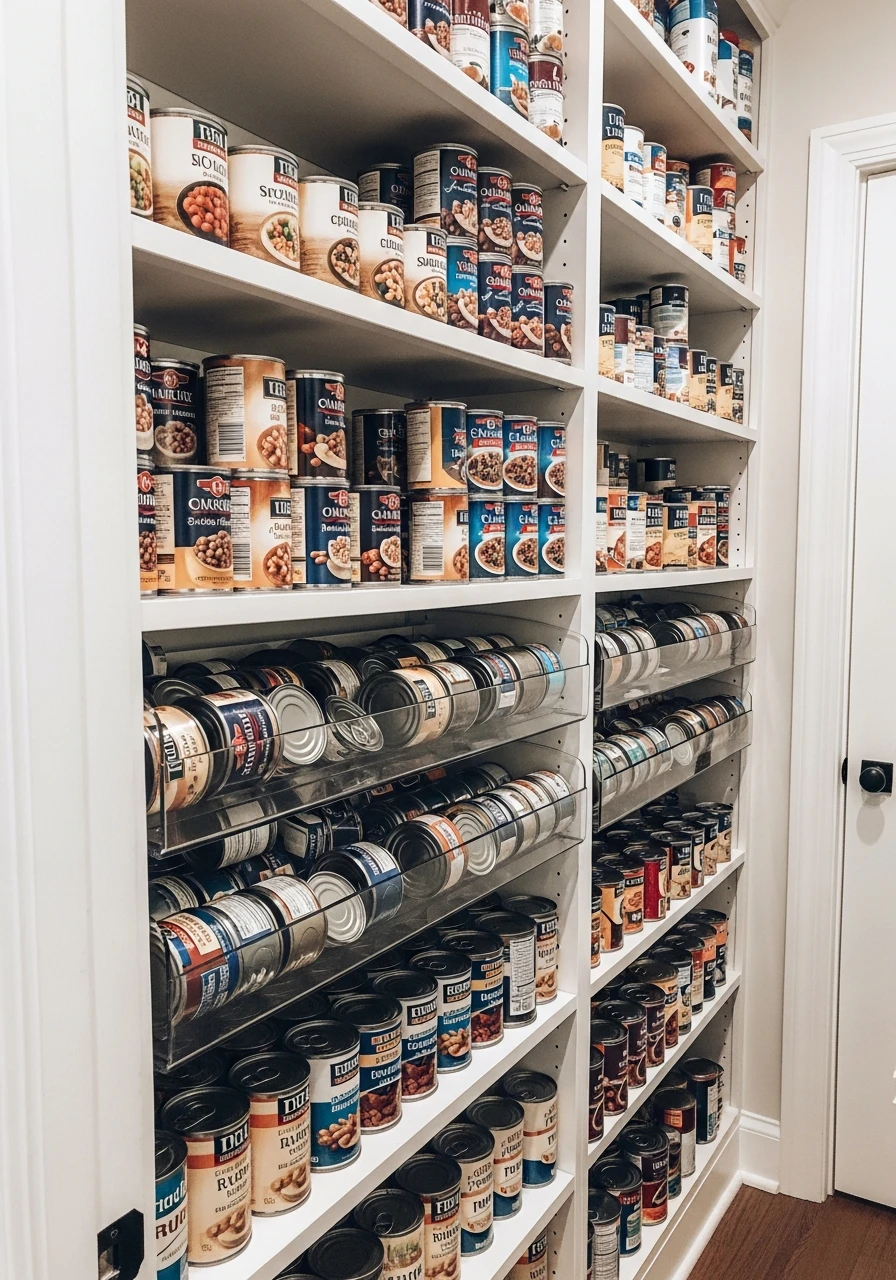
Reduce food waste by using the FIFO method. When you buy a new can of soup, place the older can in front. This system ensures you always use products before they reach their expiration date.
- Place a ‘Use First’ label on a dedicated bin.
- Rotate stock every time you put groceries away.
- Keep older items slightly lower for better visibility.
Pro Tip: This system works best for canned goods and boxed broths.
23. Pantry Message Board
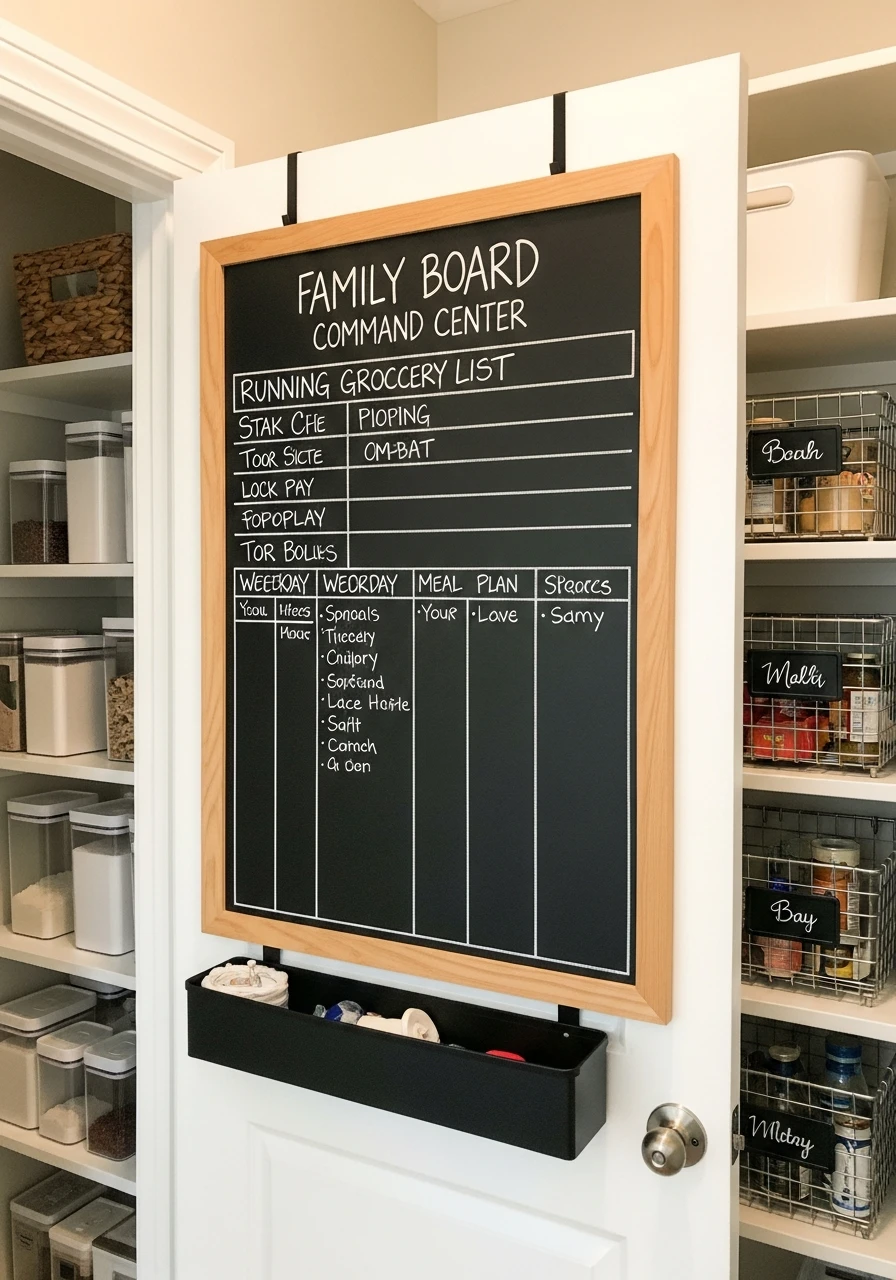
Install a chalkboard or whiteboard inside the pantry door. Use it to track items you run out of, keep a running grocery list, or write down meal plans for the week. It’s a functional family command center.
- Use magnetic boards if your door is metal.
- Keep colorful markers or chalk nearby.
- Assign one family member to update the list.
Pro Tip: Write down the temperature needed for your favorite recipes for quick reference.
24. Decorative Storage Containers
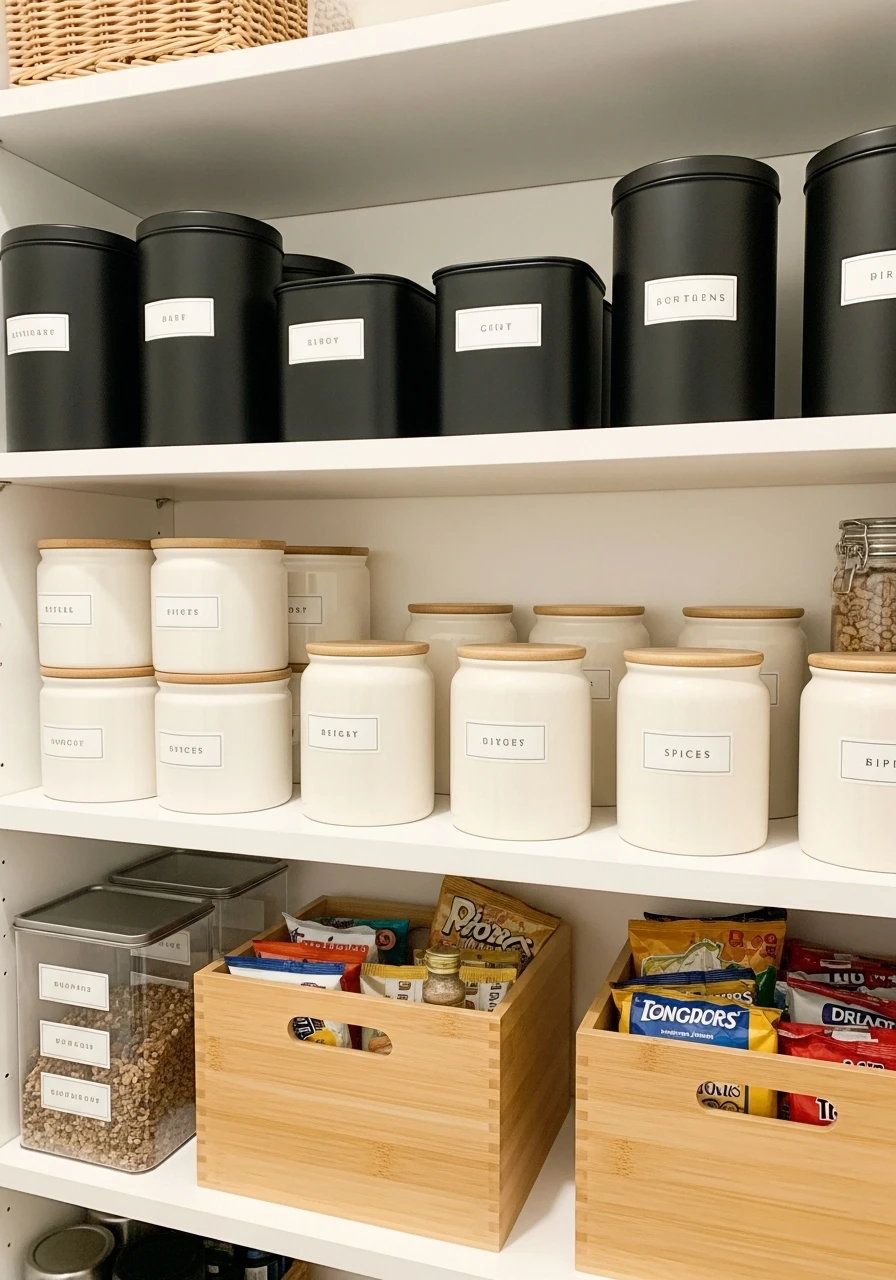
If your pantry is visible, use containers that match your kitchen style. Think ceramic canisters, matte metal tins, or wood boxes. Functional storage can also be beautiful décor.
- Mix wood tones with metal finishes for texture.
- Use uniform colors for a chic look.
- Store baking sprinkles and colorful items in clear jars.
Pro Tip: You can often find beautiful decorative containers at thrift stores for cheap.
25. Matching Aesthetic Styling
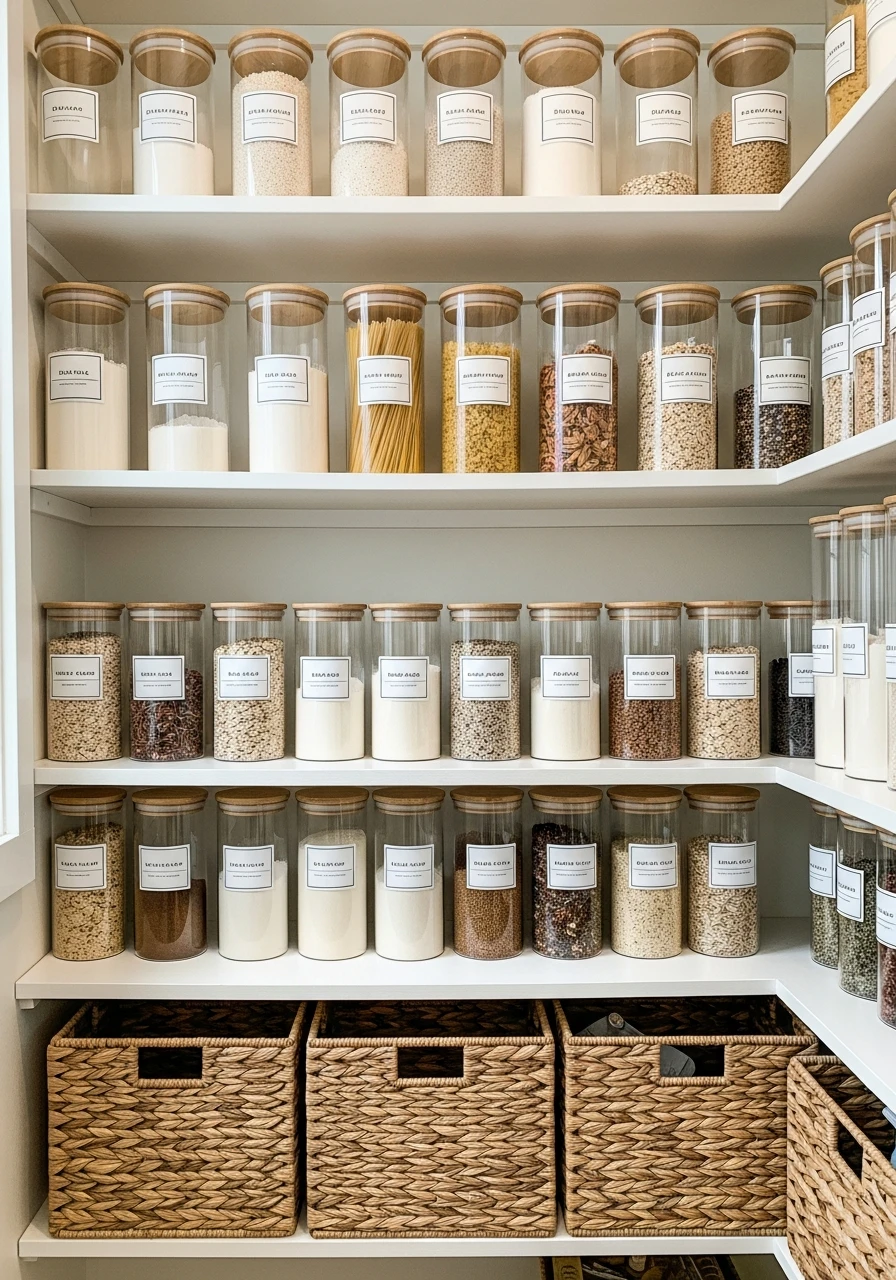
For a magazine-worthy pantry, aim for consistency. Use the same color labels, the same style of bins, and the same materials. This minimizes visual clutter and makes the whole space feel restful.
- Limit your color palette to two main colors (e.g., white and bamboo).
- Toss out any mismatched containers.
- Replace brightly colored packaging with neutral containers.
Pro Tip: Buying containers in bulk often saves money and guarantees a match.
26. Wicker Natural Basket Storage
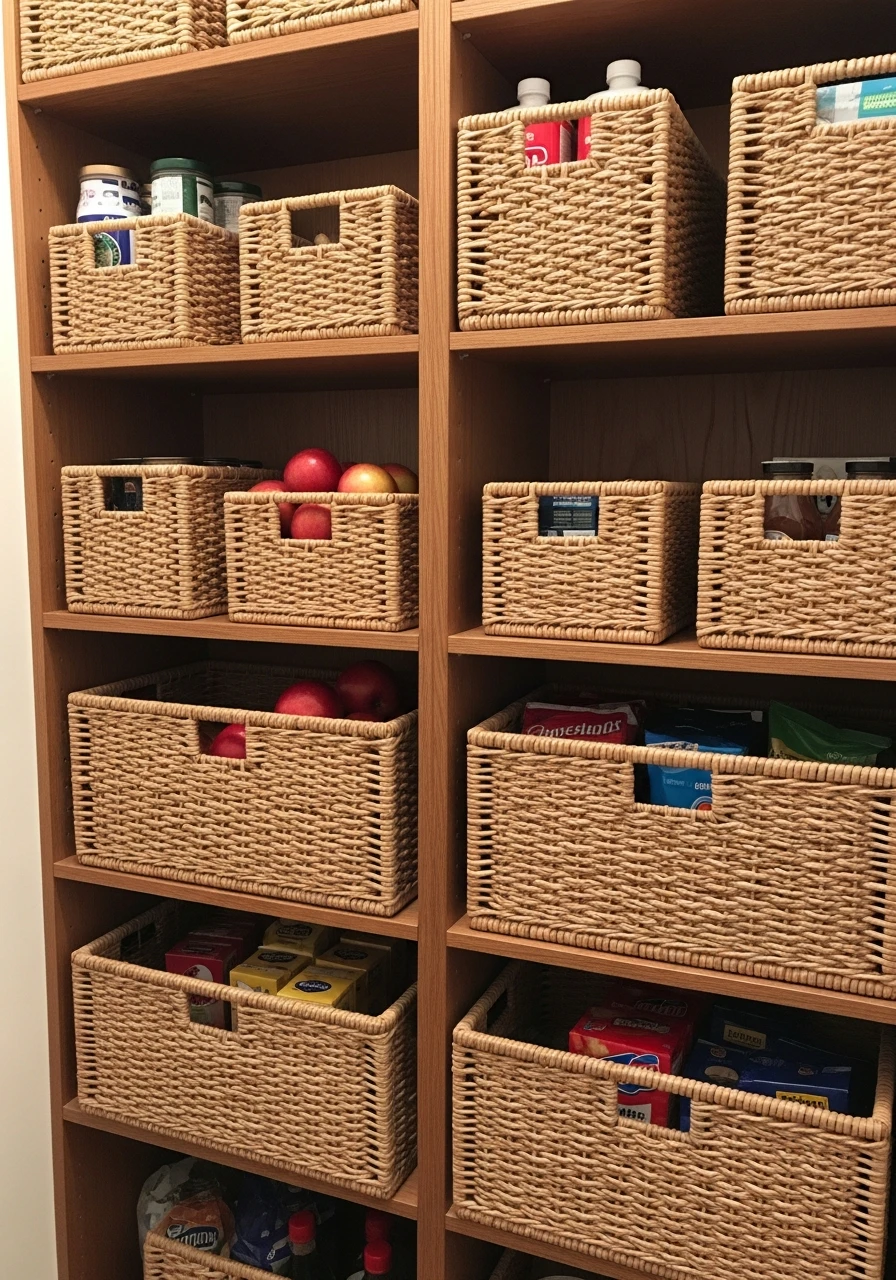
Woven baskets add texture and warmth to your pantry, giving it a cozy, high-end feel. They are perfect for storing produce that needs airflow or packaged snacks you want to hide.
- Use wicker for potatoes and onions.
- Line the bottom of the basket if storing loose items.
- Choose baskets with built-in handles for easy pulling.
Pro Tip: If you are on a budget, look for plastic bins that mimic the woven texture.
27. Pantry Door Glass Panels
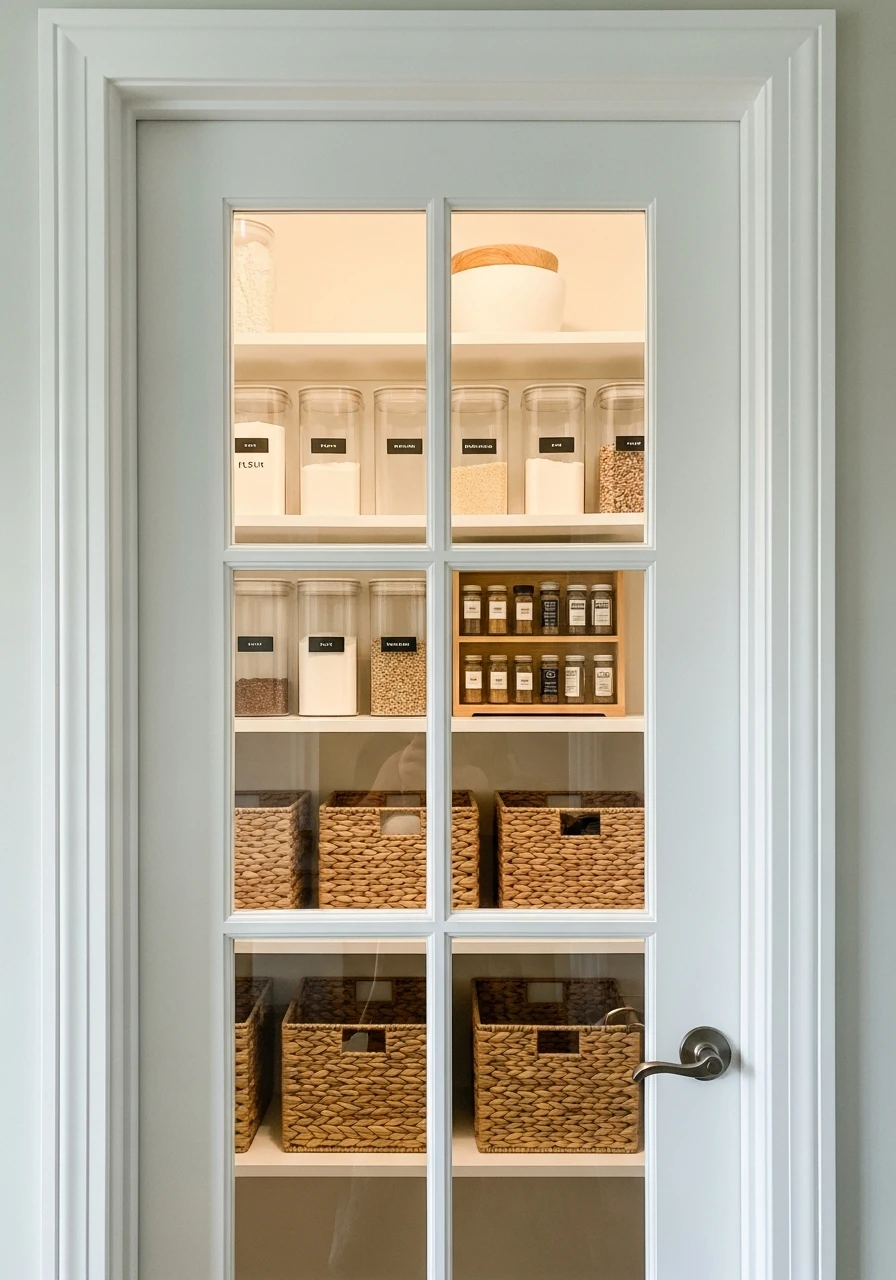
Install a door with glass panels—either clear or frosted. This forces you to keep the shelves tidy because they are always visible. It also lets light into the pantry, making it feel less like a closet.
- Frosted glass hides minor imperfections while letting light in.
- Glass doors look elegant and custom.
- Ensure all containers are matching if using clear glass.
Pro Tip: If you can’t replace the door, consider stick-on frosted window film.
28. Floor-to-Ceiling Shelving
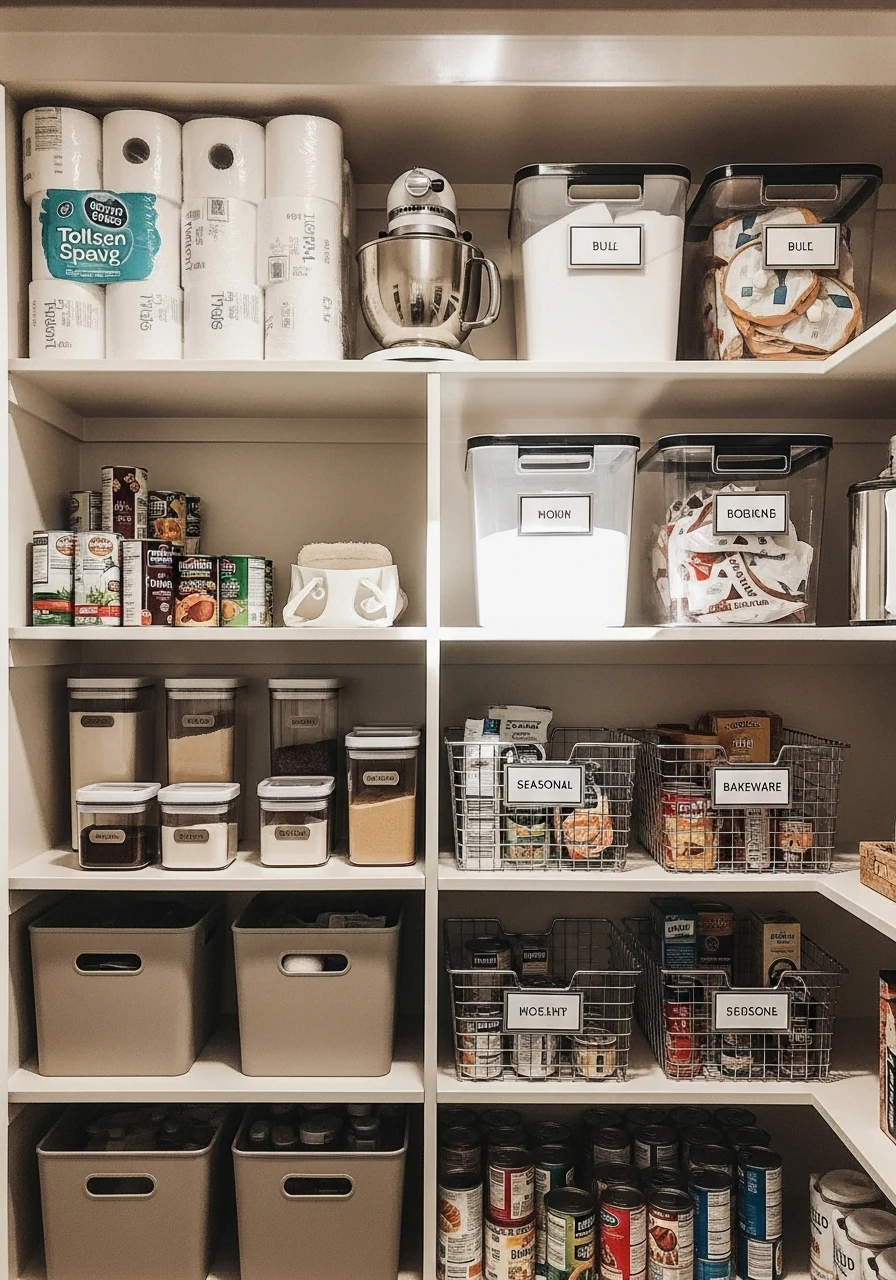
Take your shelves all the way up! Utilize the highest shelves for seasonal items, big appliances, or bulk toilet paper. This maximizes every bit of vertical space in your pantry.
- Store heavy items on middle or lower shelves.
- Keep a dedicated step stool tucked away.
- Use the lowest shelf for pet food or cleaning supplies.
Pro Tip: The highest shelves are perfect for storing party supplies you only use occasionally.
29. Pull-Out Basket Towers
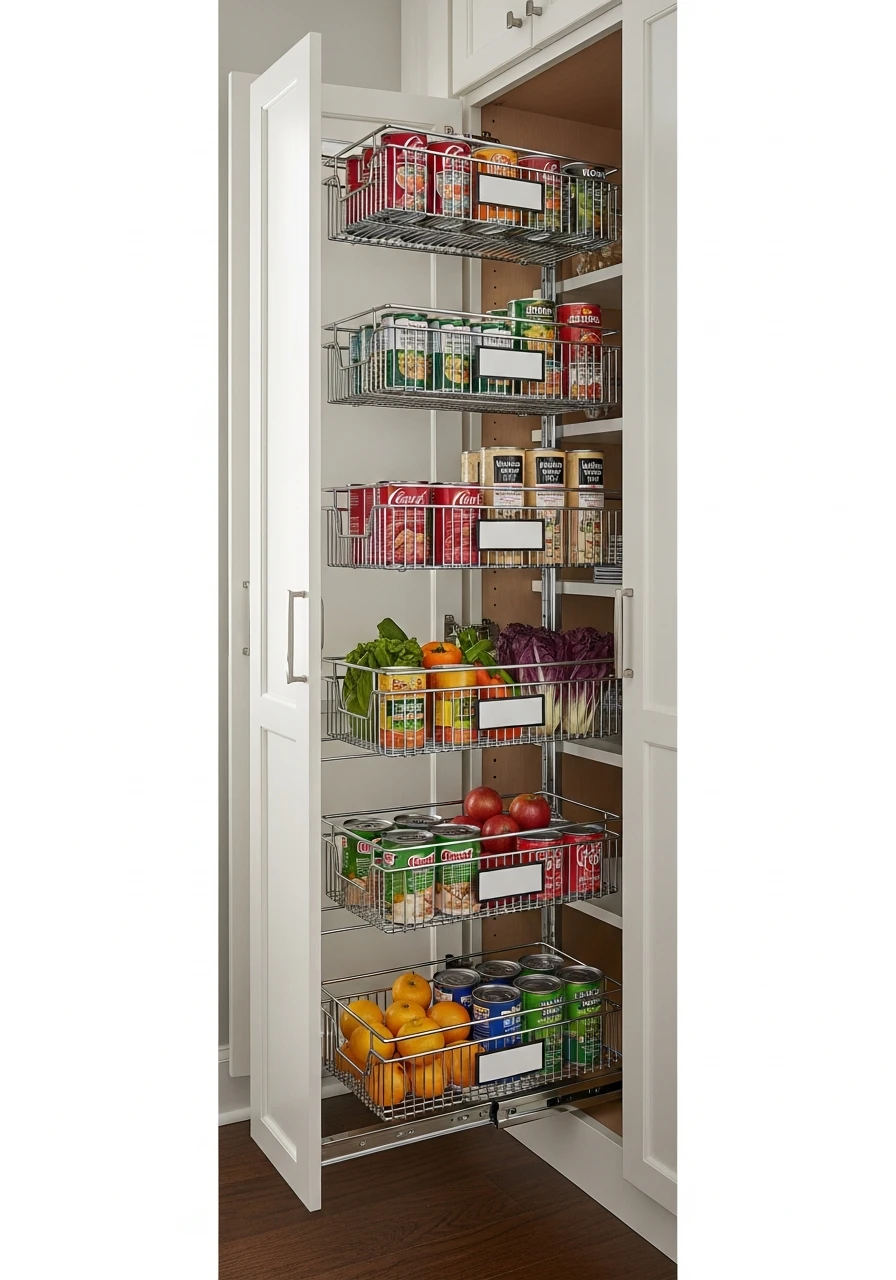
These vertical storage units have multiple sliding wire baskets, perfect for organizing canned goods or produce. They allow you to access items from the side, improving visibility in deep pantries.
- Great for organizing snacks in individual packets.
- Use one tower just for baking supplies.
- Install them near the pantry entrance.
Pro Tip: These are easier to install than full pull-out drawers and are very budget-friendly.
30. Sliding Pantry Doors
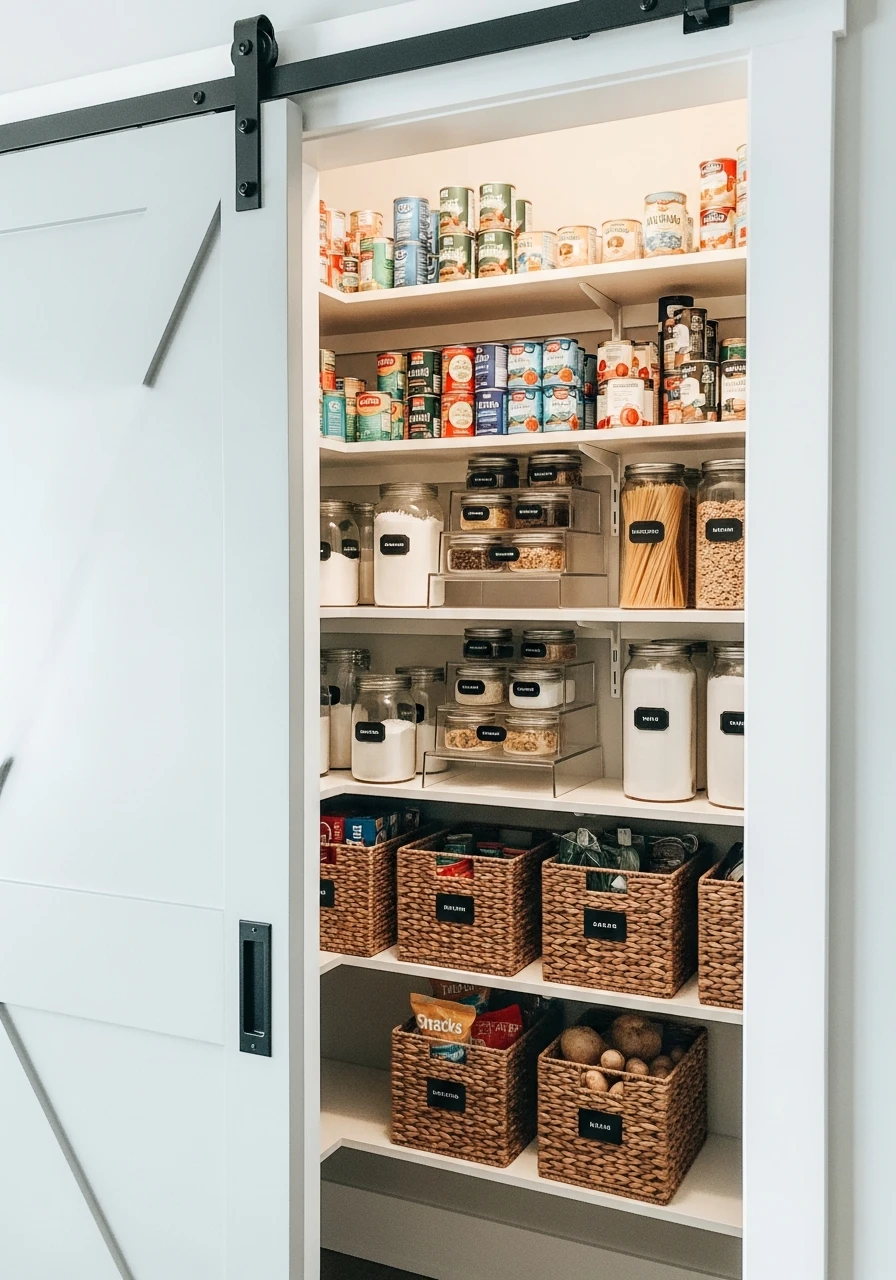
If your pantry opens into a hallway or narrow space, consider replacing the swing door with a pocket door or barn door. This saves floor space and improves traffic flow in a busy kitchen.
- Pocket doors disappear entirely into the wall.
- Barn doors add a rustic, decorative touch.
- Ensure the door hardware is smooth and quiet.
Pro Tip: A sliding door is a great option if you often leave the pantry open.
31. Pantry Lighting Installation
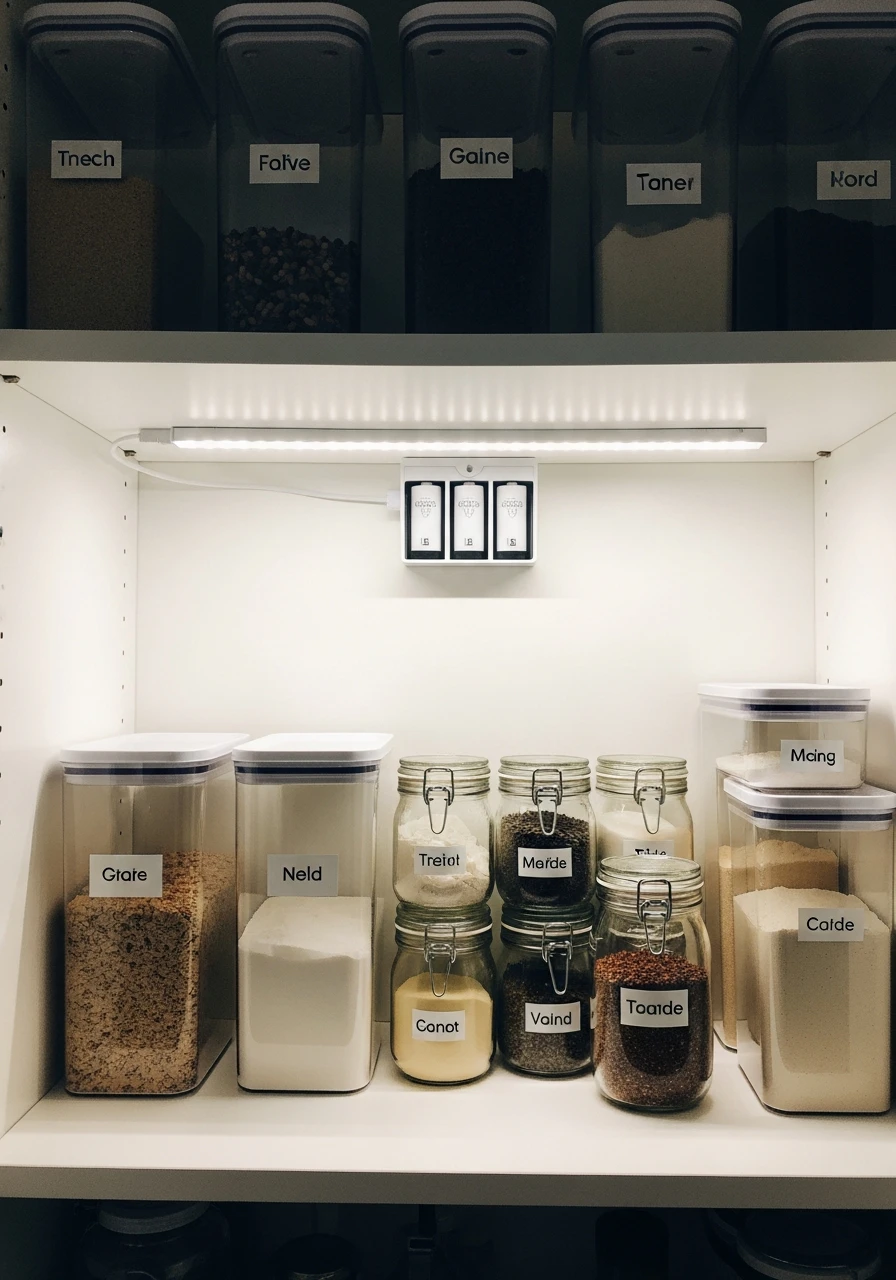
You can’t organize what you can’t see! Install battery-operated LED strip lighting under shelves or inside dark corners. Good lighting makes it easier to find ingredients and instantly improves the look.
- Use motion-sensor lights that turn on when the door opens.
- Place strip lights under the front lip of shelves.
- Choose warm-toned LEDs for a cozy feel.
Pro Tip: Bright lighting helps showcase your beautiful, organized containers.
32. Ventilated Pantry Shelving
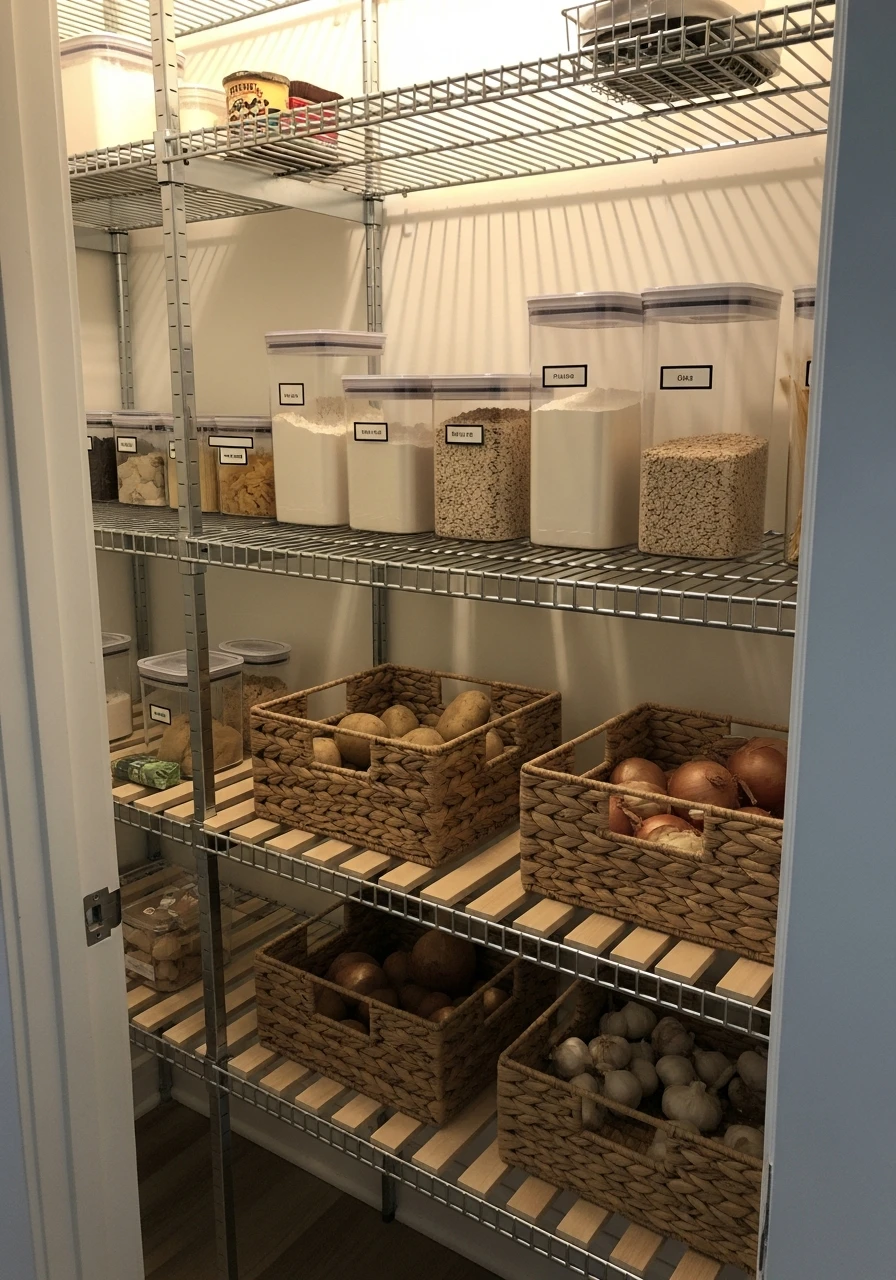
If you struggle with humidity or storing produce, choose wire or slatted shelving. This allows air to circulate freely, which helps keep certain dry goods and vegetables fresher longer.
- Wire shelving is easy to clean.
- Avoid using solid shelf liners if using wire shelves.
- Great for pantries without windows.
Pro Tip: Place a small box of baking soda in the corner to absorb odors.
33. Clear Produce Storage Bags
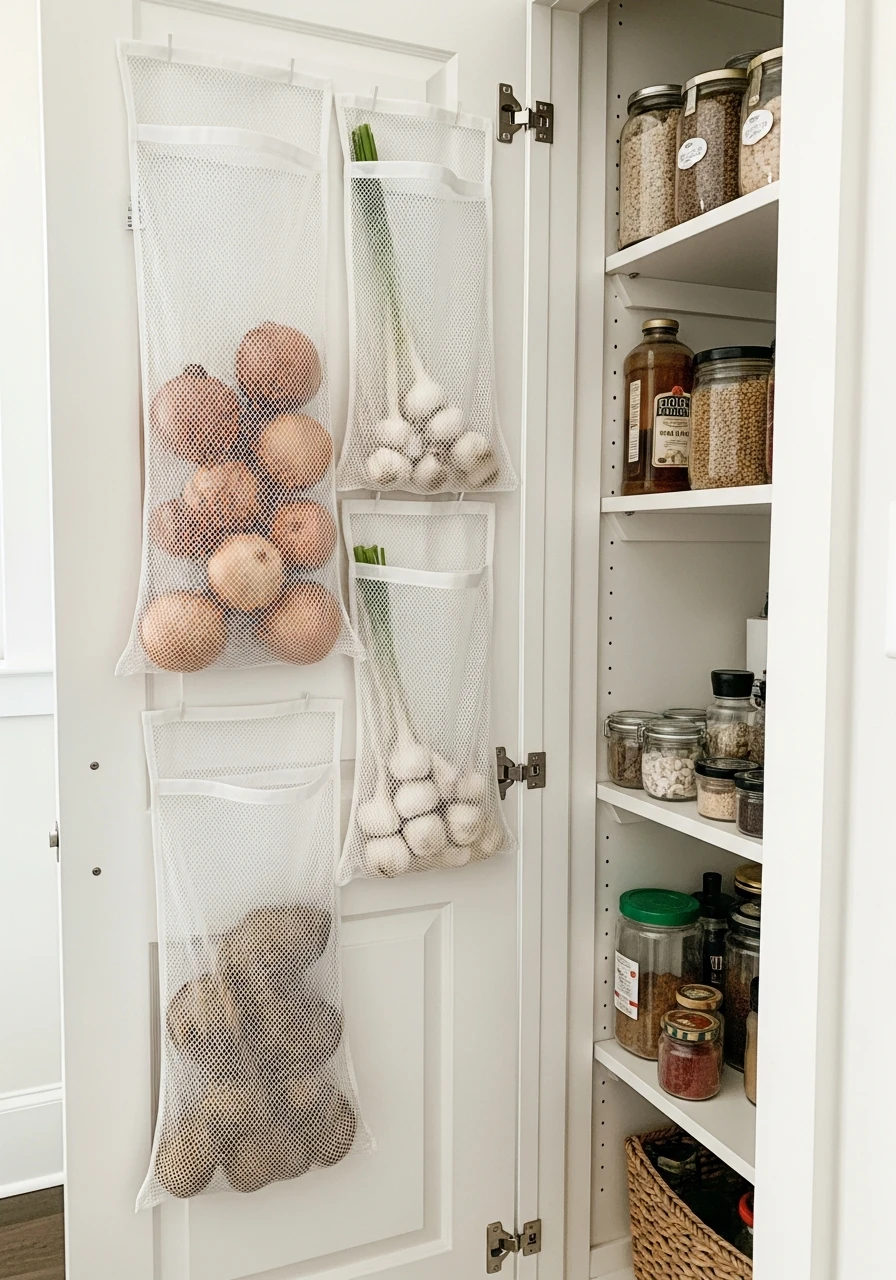
Hang breathable mesh bags on the wall or door for storing onions, garlic, and potatoes. This keeps them off the shelf, improves airflow, and prevents them from spoiling quickly.
- Label bags clearly for ‘Onions’ or ‘Potatoes.’
- Hang them away from sunlight.
- Ensure they are reusable and washable.
Pro Tip: Never store potatoes and onions together; they make each other spoil faster.
34. Magazine Holder Lid Storage
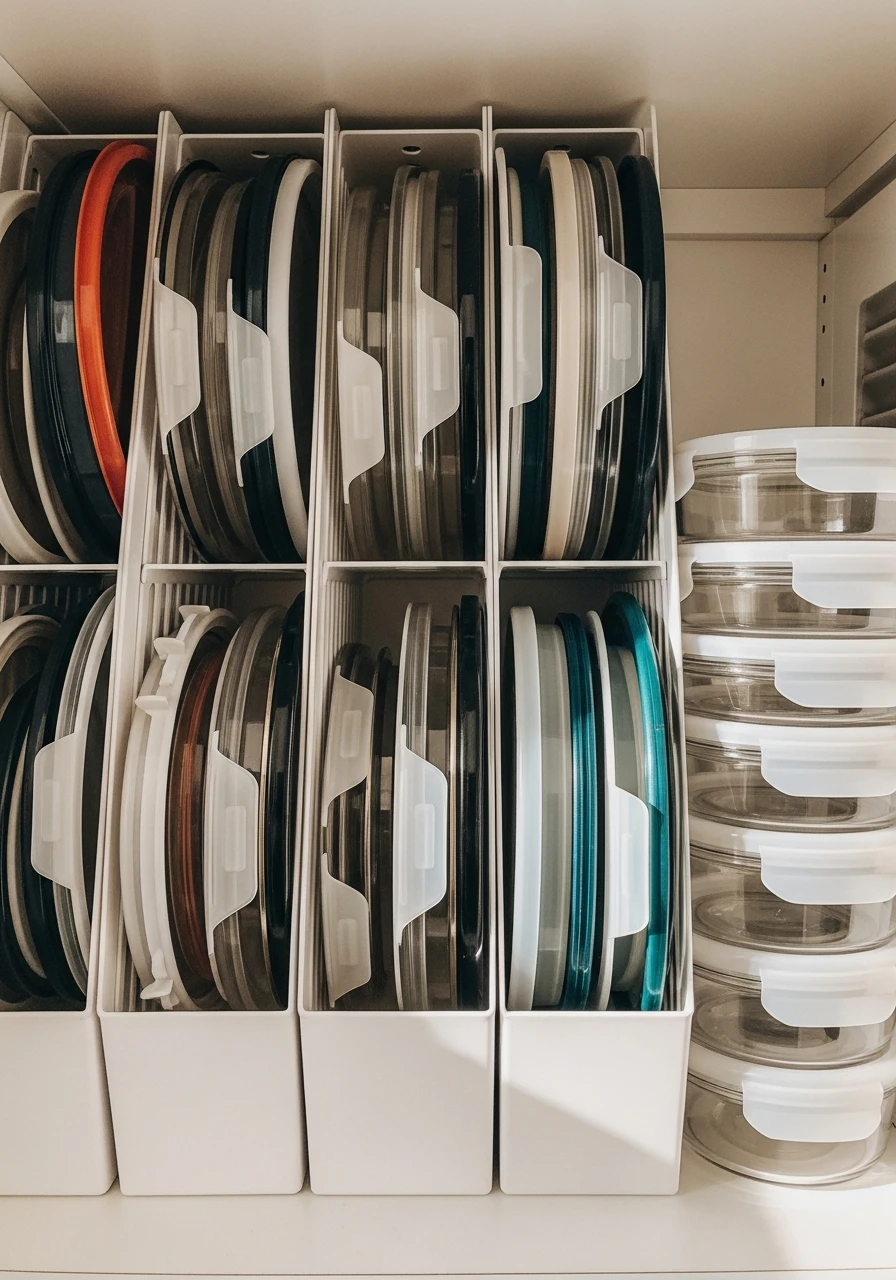
Use inexpensive magazine file holders to organize food container lids. Store them upright to prevent them from slipping and stacking messily. This keeps your containers and lids paired easily.
- Use metal or clear acrylic holders.
- Group lids by size or container type.
- Place the holder next to the matching container storage.
Pro Tip: This trick also works great for holding foil and plastic wrap boxes upright.
35. Multi-Level Can Dispensers
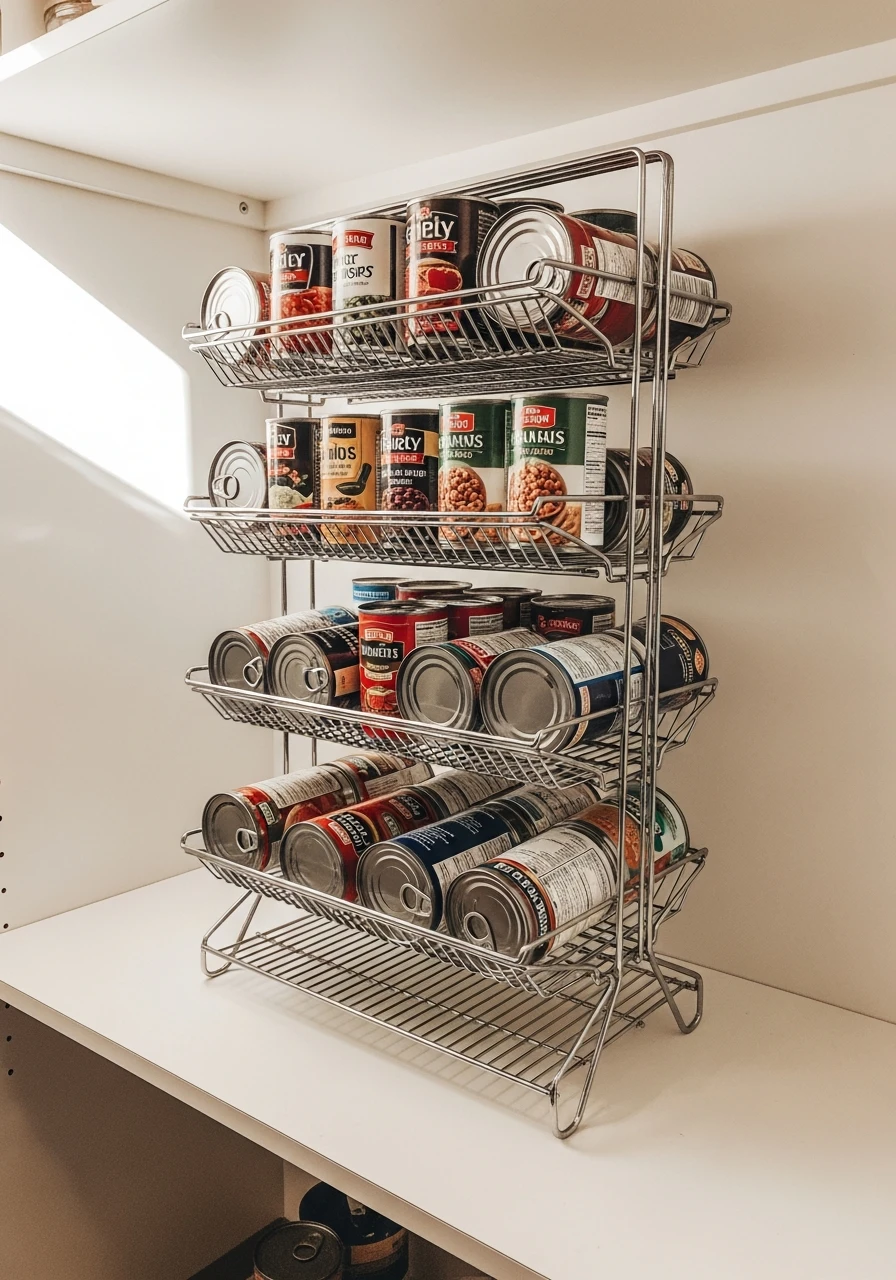
These tiered organizers hold canned goods and let them roll forward automatically when you take one out. This keeps your cans neat, organized, and guarantees you use the oldest items first.
- Look for stackable models to save vertical space.
- Great for soup, vegetables, and soda cans.
- Measure the shelf depth before buying.
Pro Tip: Dedicate one dispenser for ingredients you use for weekly dinner prep.
36. Modular Storage Systems
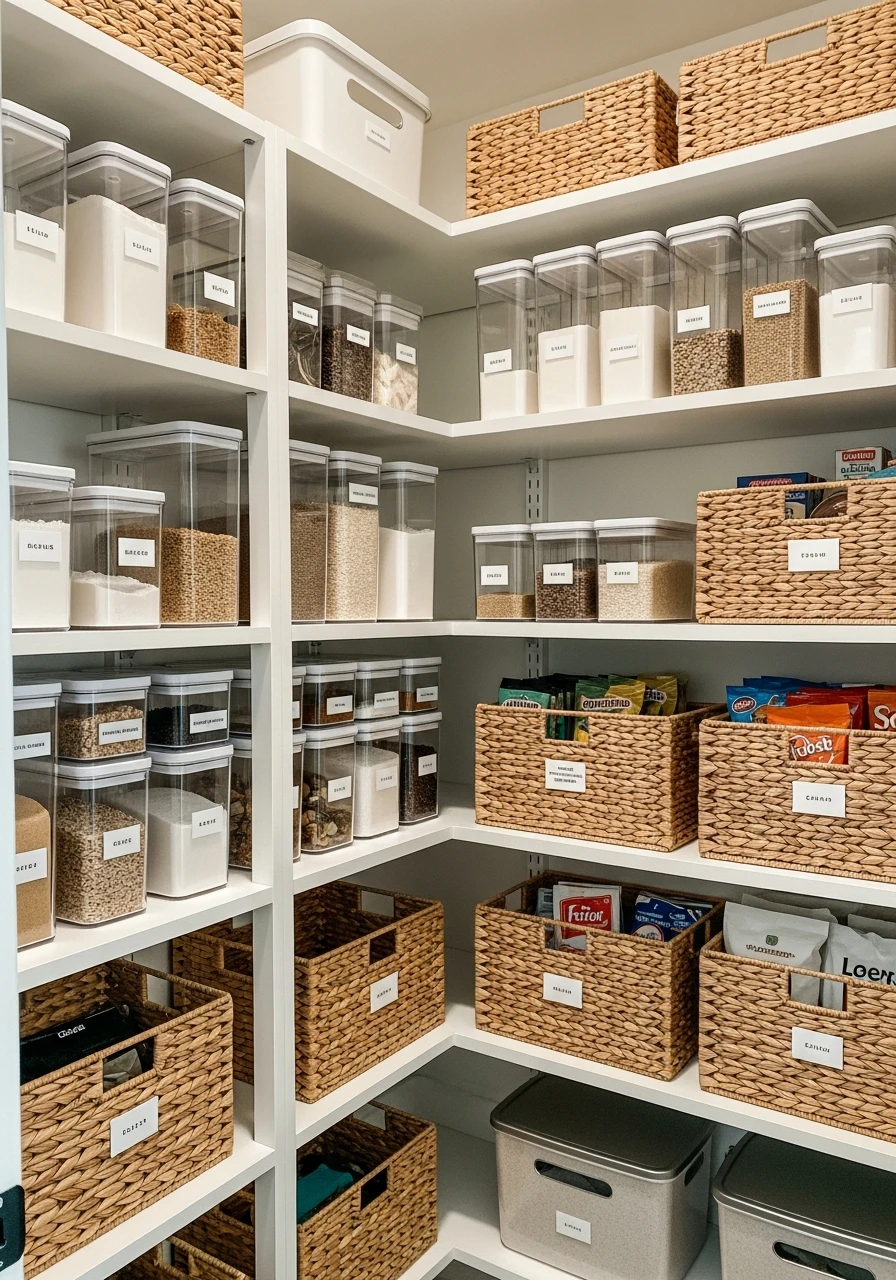
Invest in storage containers and shelves that can be easily rearranged. Modular systems adapt as your family’s needs change, meaning you won’t need a total overhaul every few years.
- Choose cube organizers that stack and lock together.
- Use interlocking clear container sets.
- Ensure pieces are easy to clean.
Pro Tip: Start small with a modular system and expand it over time.
37. Pantry Appliance Charging Station
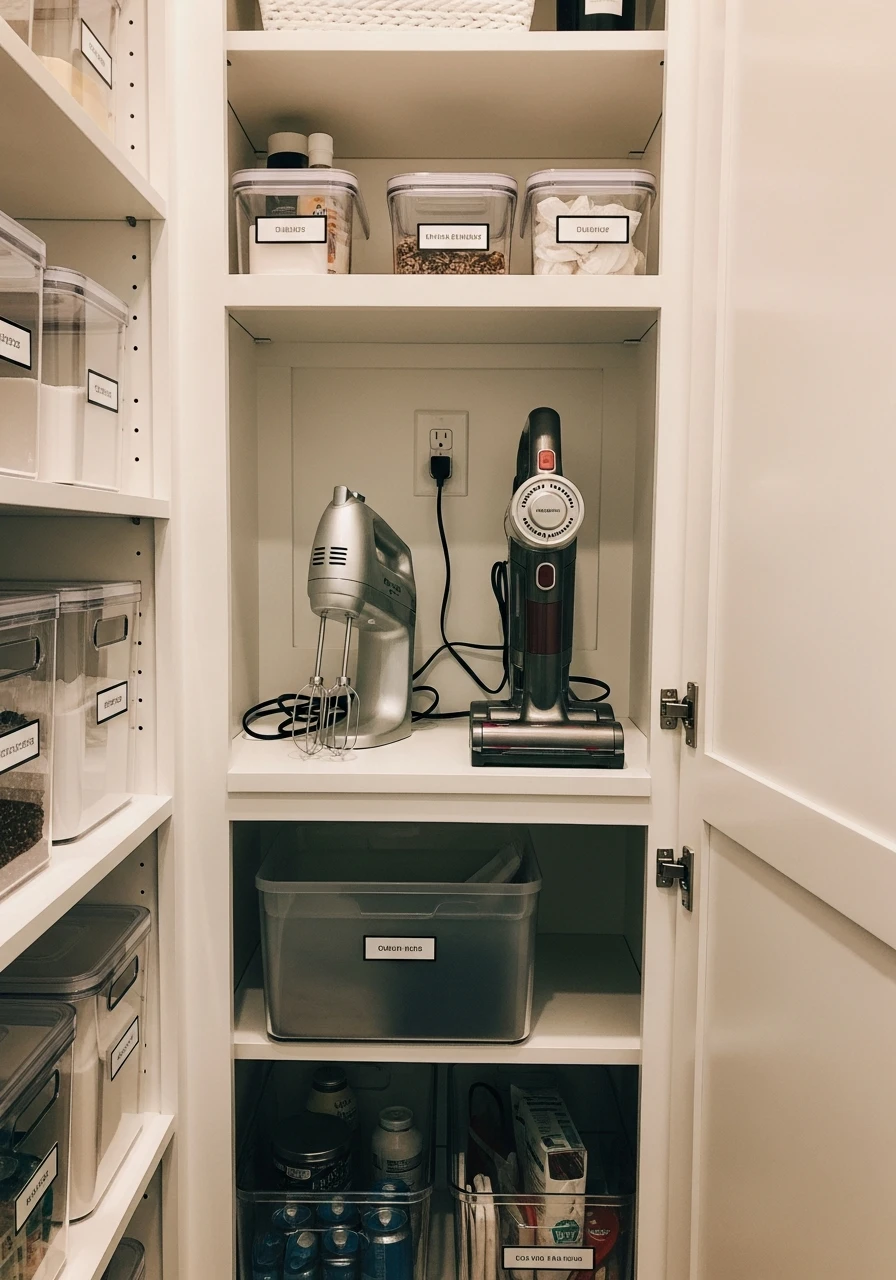
Keep rechargeable tools like hand mixers or cordless vacuums hidden in the pantry. Install an outlet inside the cabinet to create a clean charging station that keeps messy cords off your counter.
- Ensure the shelf is deep enough for the appliance.
- Use cord wraps to keep cables tidy.
- This requires professional electrical installation.
Pro Tip: Use a small basket to hold all the various charging cables and attachments.
38. Meal Prep Ingredient Bins
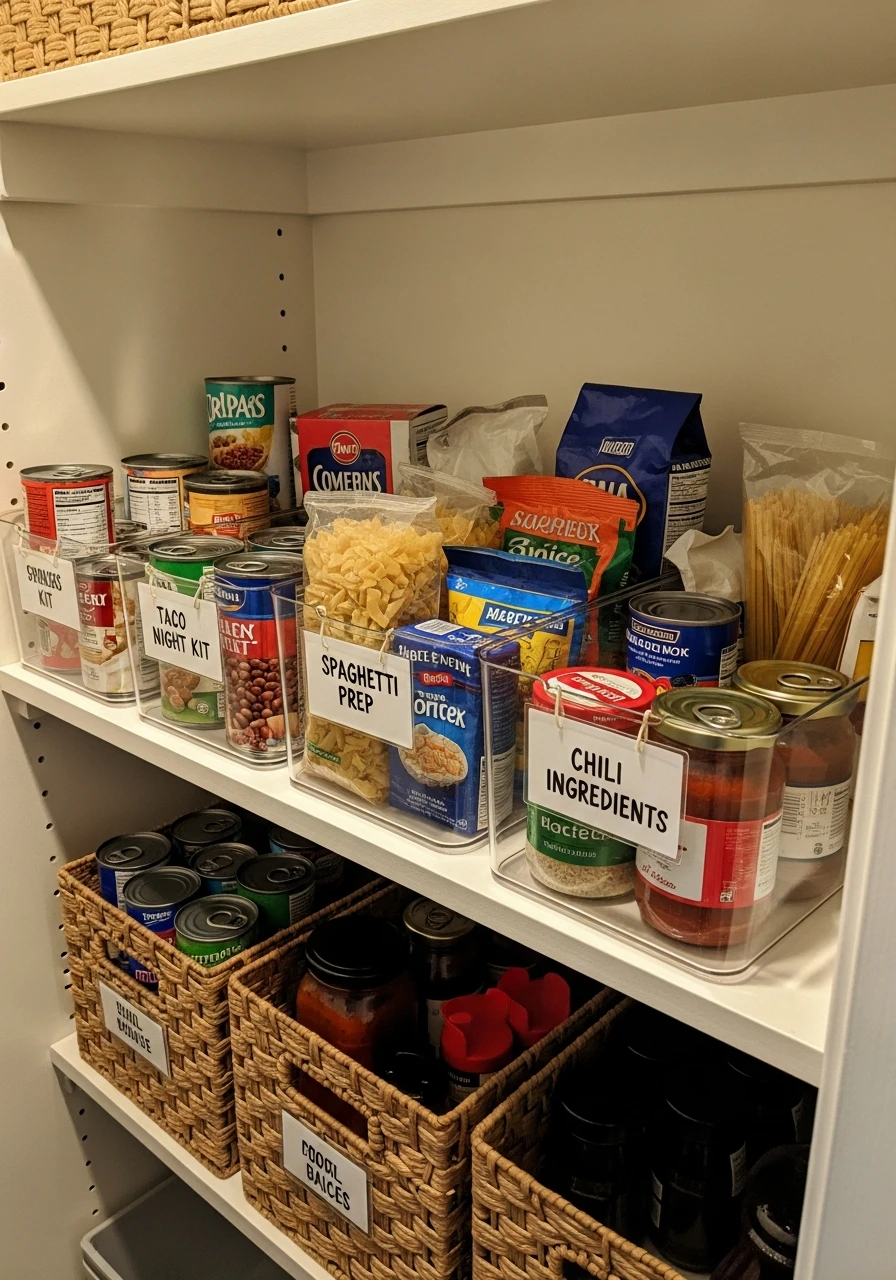
If you follow a meal plan, group all the ingredients needed for a specific recipe into one bin. This makes dinner prep quick and easy. Just grab the ‘Taco Night’ bin and go.
- Use clear, rectangular bins for easy visibility.
- Label bins with the meal name.
- Rotate the bins weekly based on your menu.
Pro Tip: This is especially helpful for busy weeknights when you need to cook fast.
39. Family-Friendly Layout
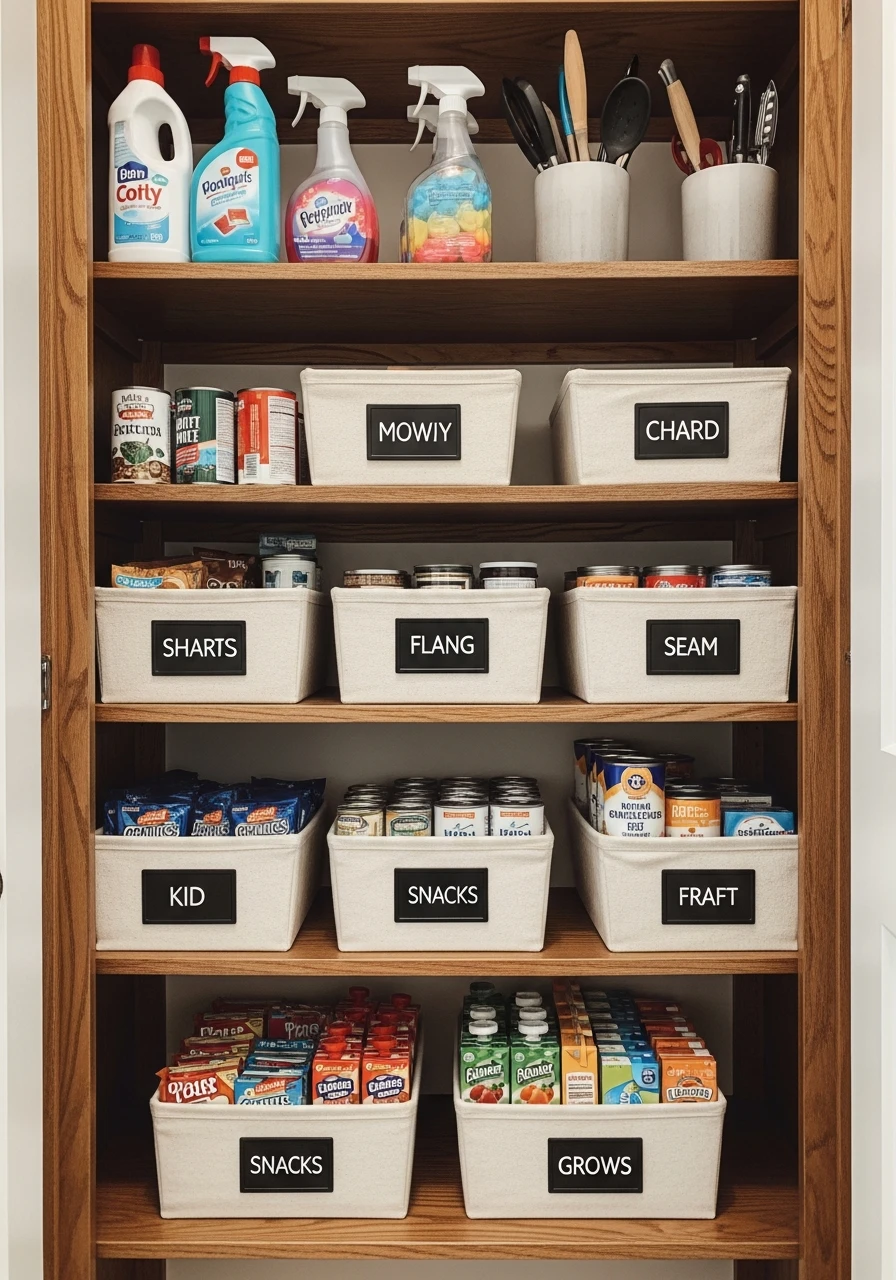
Design your pantry around who uses it. Put kids’ snacks on the lowest, easiest-to-reach shelf. Keep cleaning chemicals and sharp tools high up and out of reach of little hands.
- Place daily cooking staples at adult eye level.
- Use heavy, sturdy bins on the floor.
- Store baking supplies slightly higher than snacks.
Pro Tip: Assign each family member a small bin for their favorite special treats.
40. Hidden Pantry Behind Backsplash
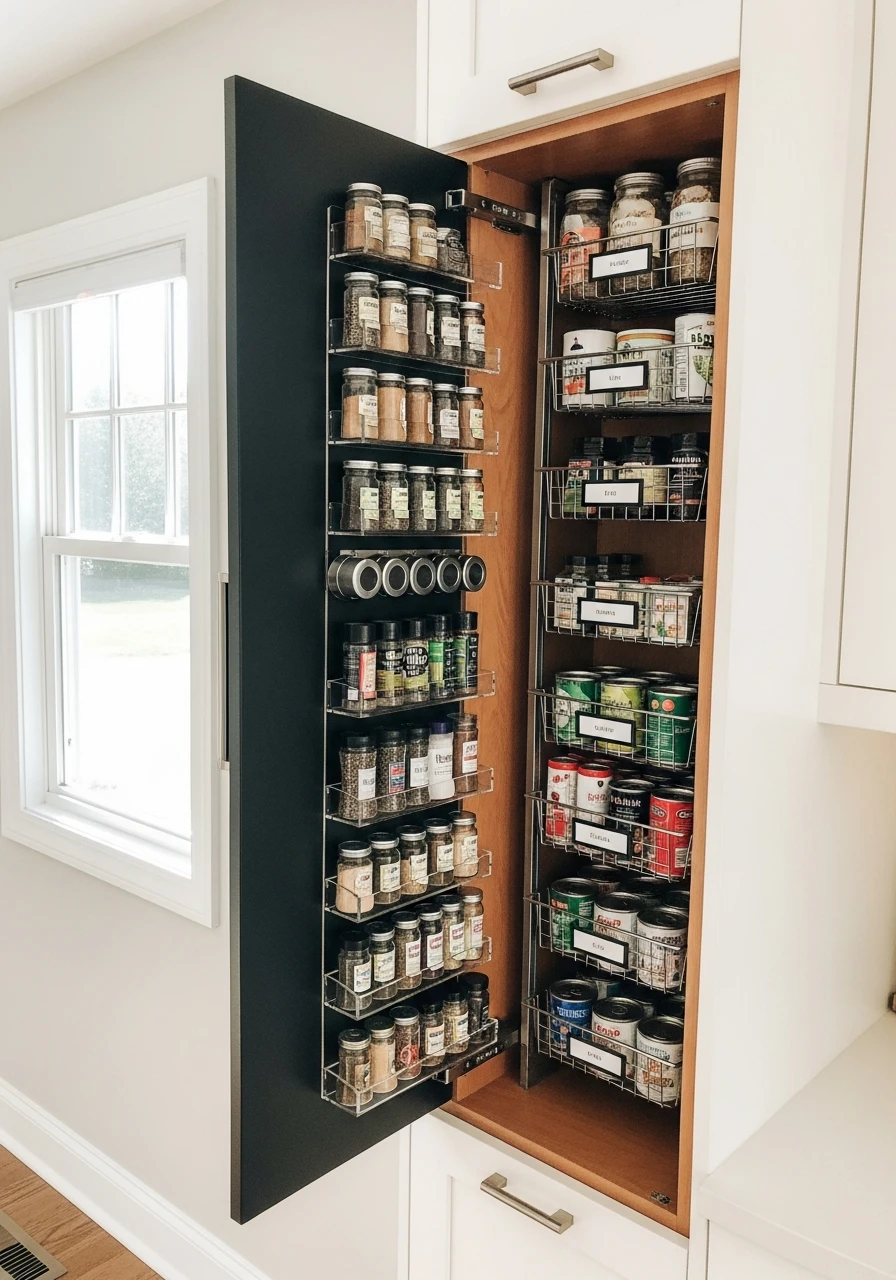
If you have a very small kitchen, get creative. Design a shallow pantry that hides behind a sliding backsplash or integrated cabinet panels. It maximizes wall space without sacrificing kitchen aesthetics.
- Keep the shelves very shallow for visibility.
- Use this space for spices and small jars.
- Ensure the sliding mechanism is smooth and quiet.
Pro Tip: This idea works best for spices and items you use in small quantities.
41. Pantry Cabinet Conversion
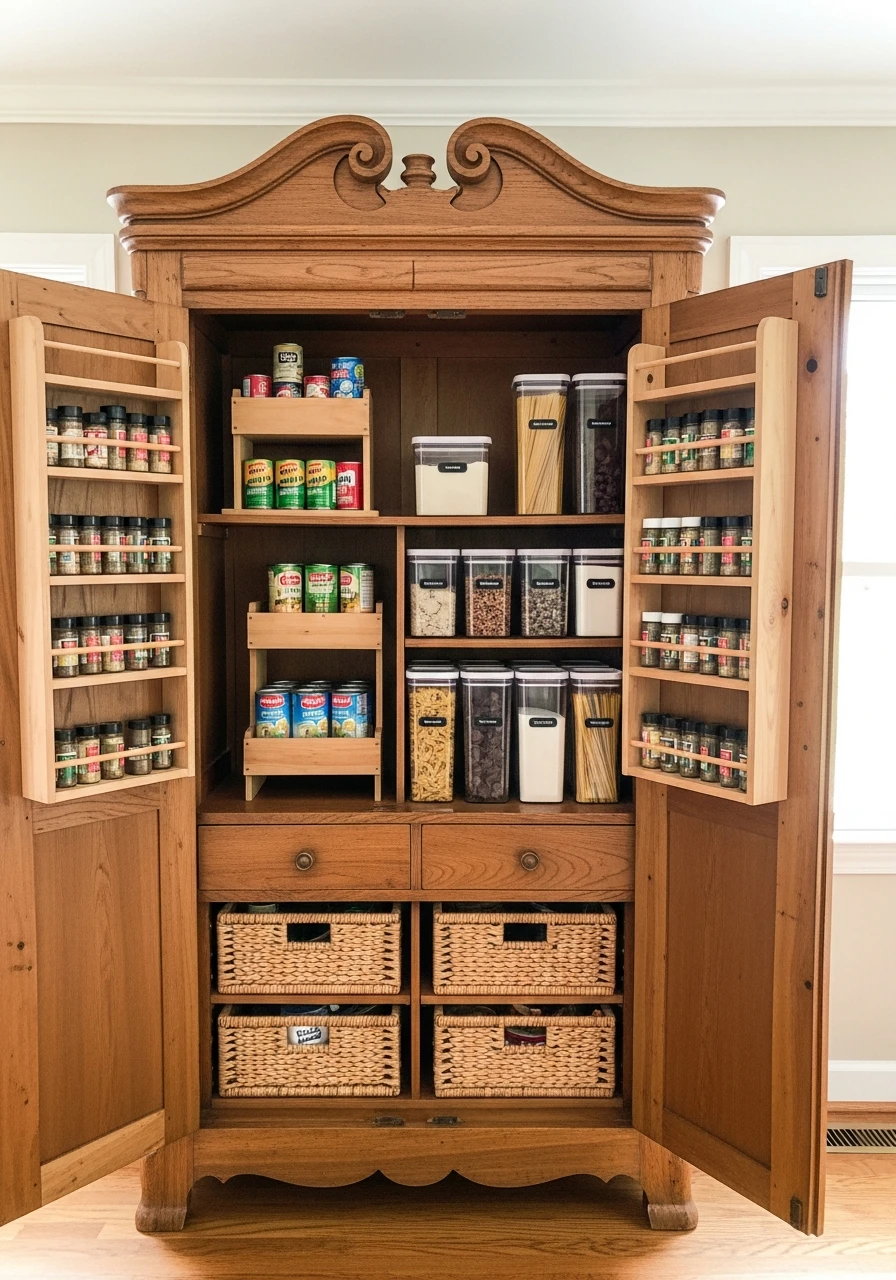
If you don’t have a dedicated pantry room, convert an unused armoire, hutch, or tall cabinet. Adding extra shelving and organizers inside turns furniture into functional food storage.
- Choose a piece that matches your dining room furniture.
- Paint the interior a bright, fresh color.
- Install a small LED light strip inside.
Pro Tip: Use a tall, narrow bookshelf and cover the front with curtains for a soft look.
42. Rolling Bins for Bulk Foods
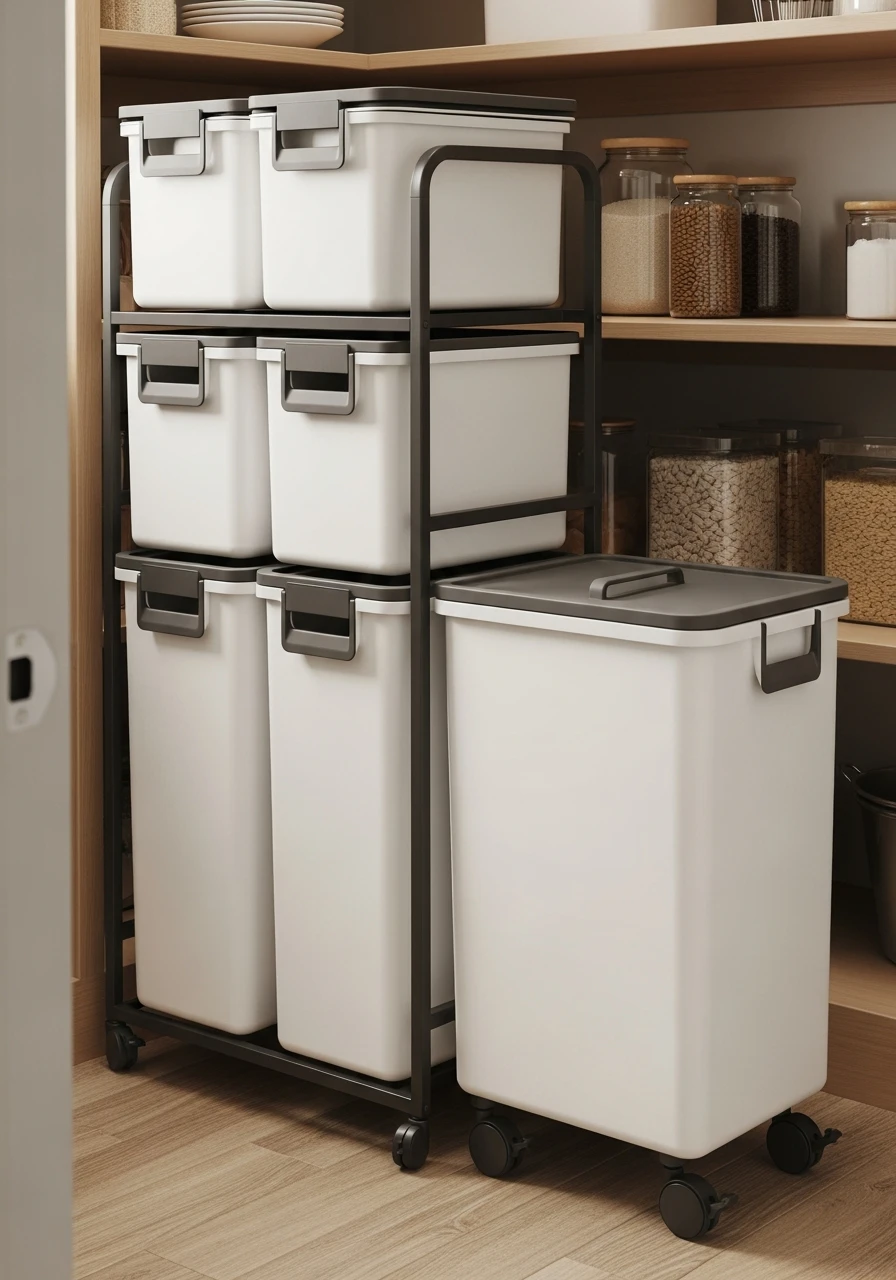
Store heavy items like large bags of flour, sugar, or pet food in rolling bins with tight lids. This makes it easy to move the heavy ingredients for scooping and cleaning the floor underneath.
- Choose food-grade plastic bins.
- Ensure the lid locks tightly to keep pests out.
- Store measuring cups inside the bins.
Pro Tip: Place these bins on the floor of the pantry for stability.
43. Transparent Snack Drawer Systems
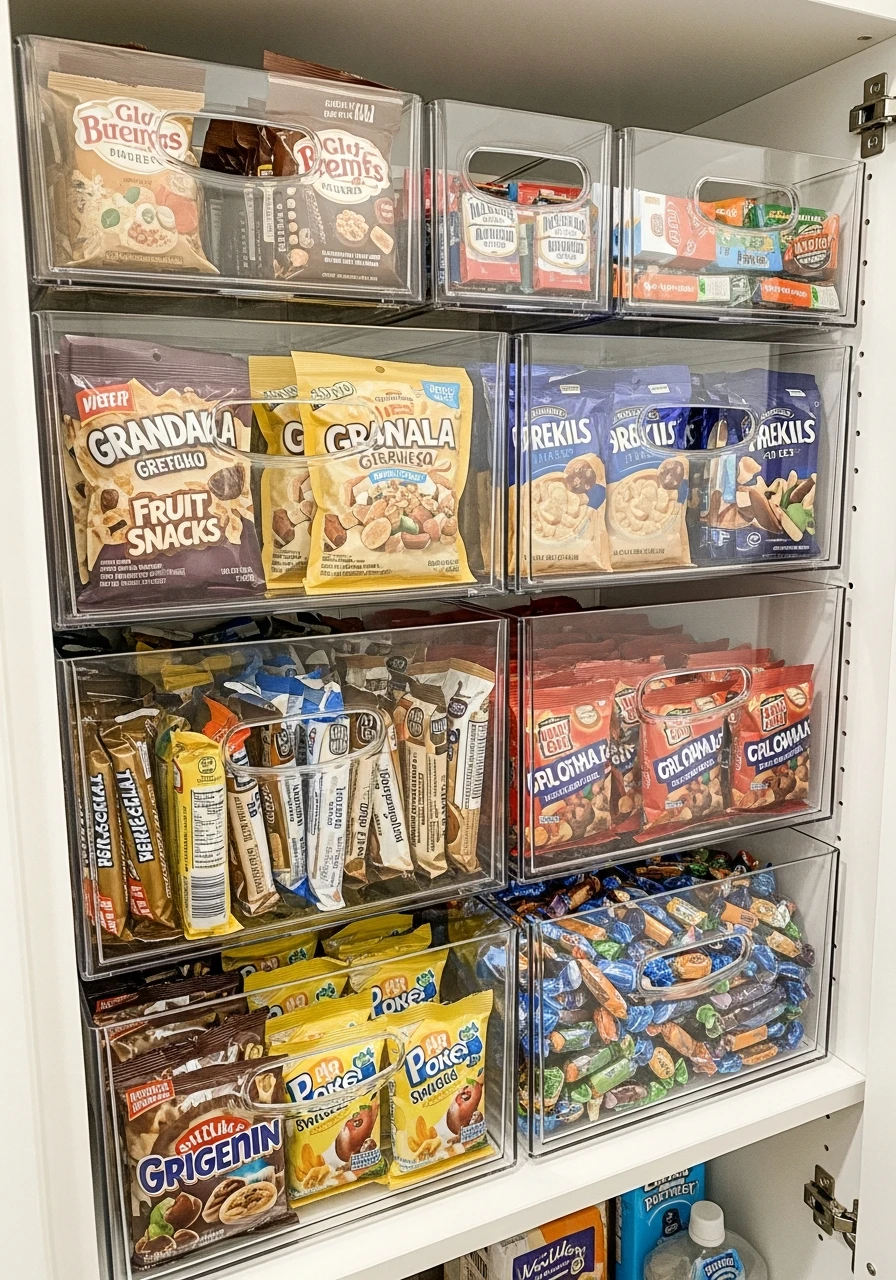
If you have a deep shelf, use clear, segmented drawers to store snack bars, packets, and loose candies. Drawers keep small items contained, and the clear material lets you see what’s inside immediately.
- Use drawers for lunch box items.
- Stack multiple drawers vertically.
- Label the outside of the drawer with its contents.
Pro Tip: Clear drawers are a great way to corral the chaos of individually wrapped snacks.
44. Dedicated Baking Ingredient Shelf
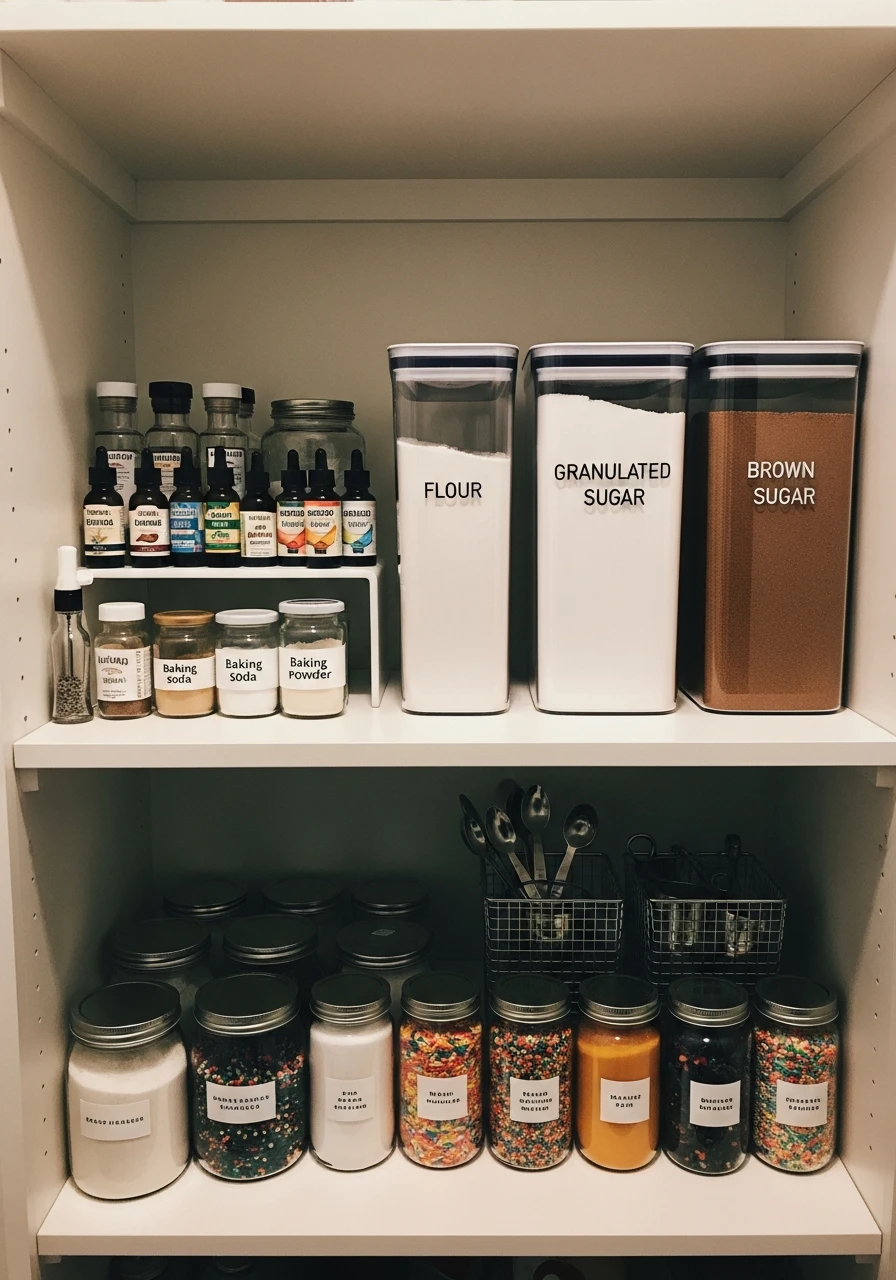
Keep all baking ingredients, measuring cups, sprinkles, and extracts together on one shelf. When you decide to bake, everything you need is in one spot, saving you time and frustration.
- Store flour and sugar in the biggest containers.
- Keep extracts in a small tiered riser.
- Use a small bin for cookie cutters.
Pro Tip: Store dry yeast in a small container in the refrigerator to keep it fresh.
45. Entertaining Hosting Section
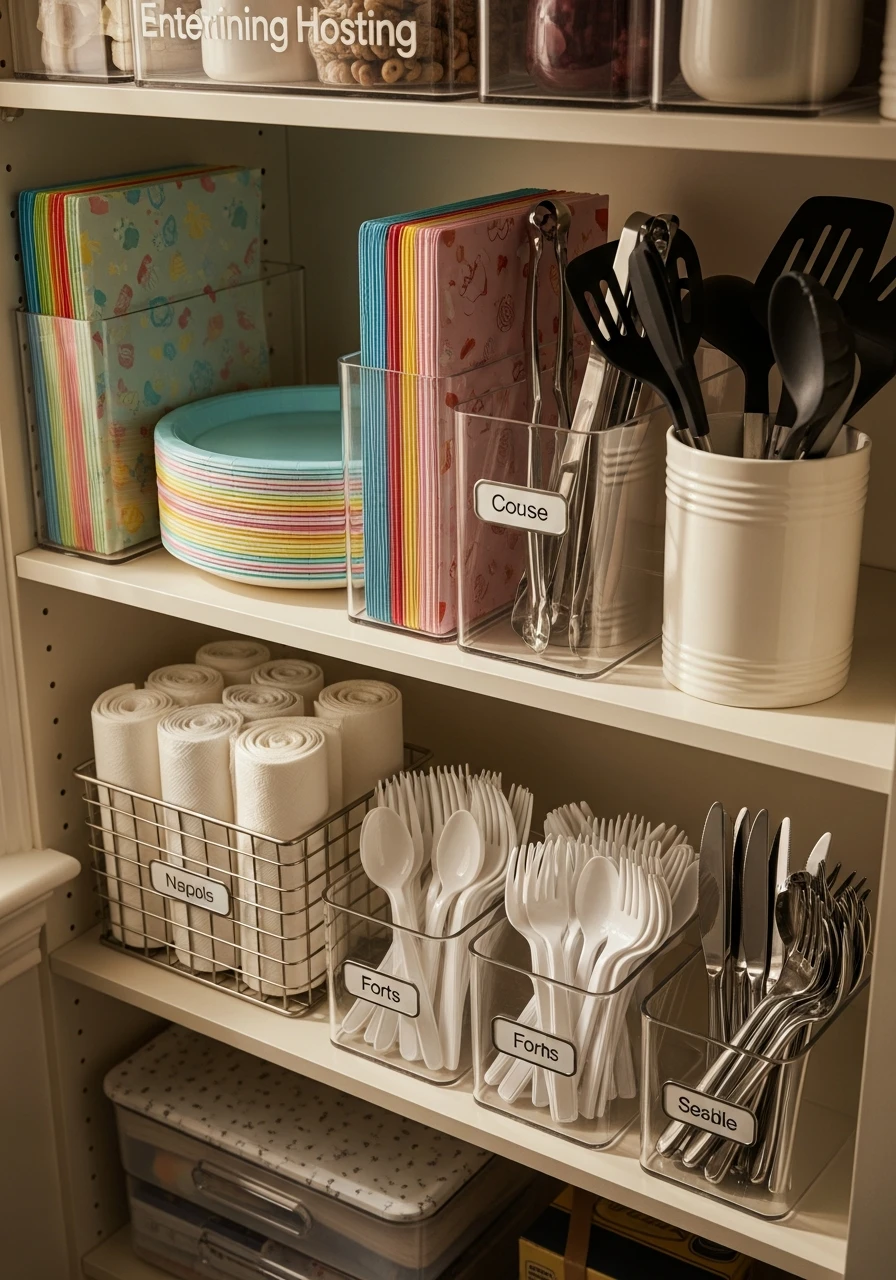
Create a designated zone for party supplies. Store paper plates, napkins, disposable cutlery, and extra serving utensils here. This makes prepping for guests quick and keeps these items organized.
- Use vertical dividers for paper plates.
- Store seasonal party supplies in clear bins.
- Keep this section on a higher shelf since it is not used daily.
Pro Tip: Use a small bin to hold candles and matches for birthday cakes.
46. Minimalist Pantry Design Layout
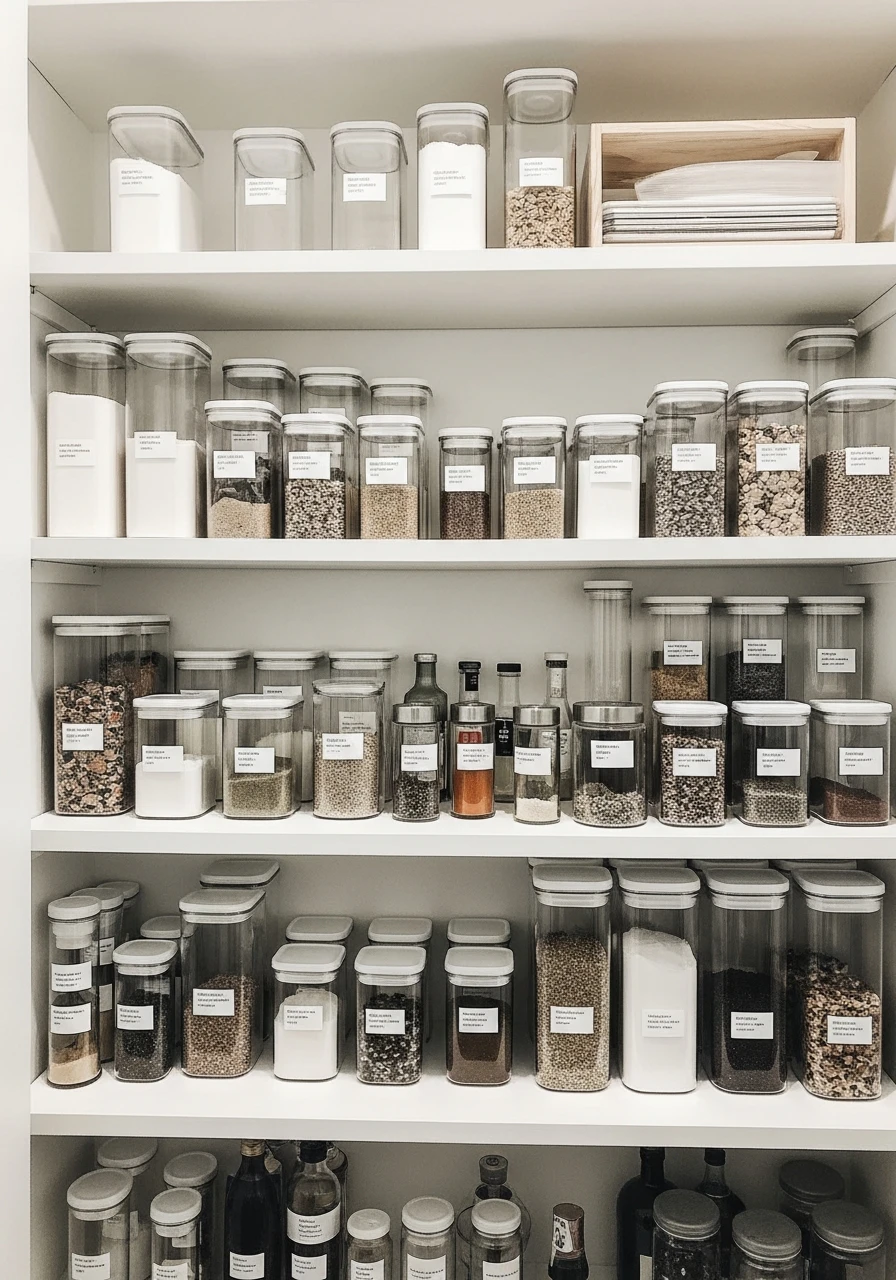
Focus on function over excess. Remove all excess packaging, limit the number of decorative items, and only store what you actually use. This creates a clean, calm, and highly efficient pantry space.
- Don’t buy in bulk unless you have storage space.
- Keep only half-full containers on display.
- Embrace empty space on shelves.
Pro Tip: A minimalist pantry is easier to maintain and clean.
47. Pantry Color Zoning
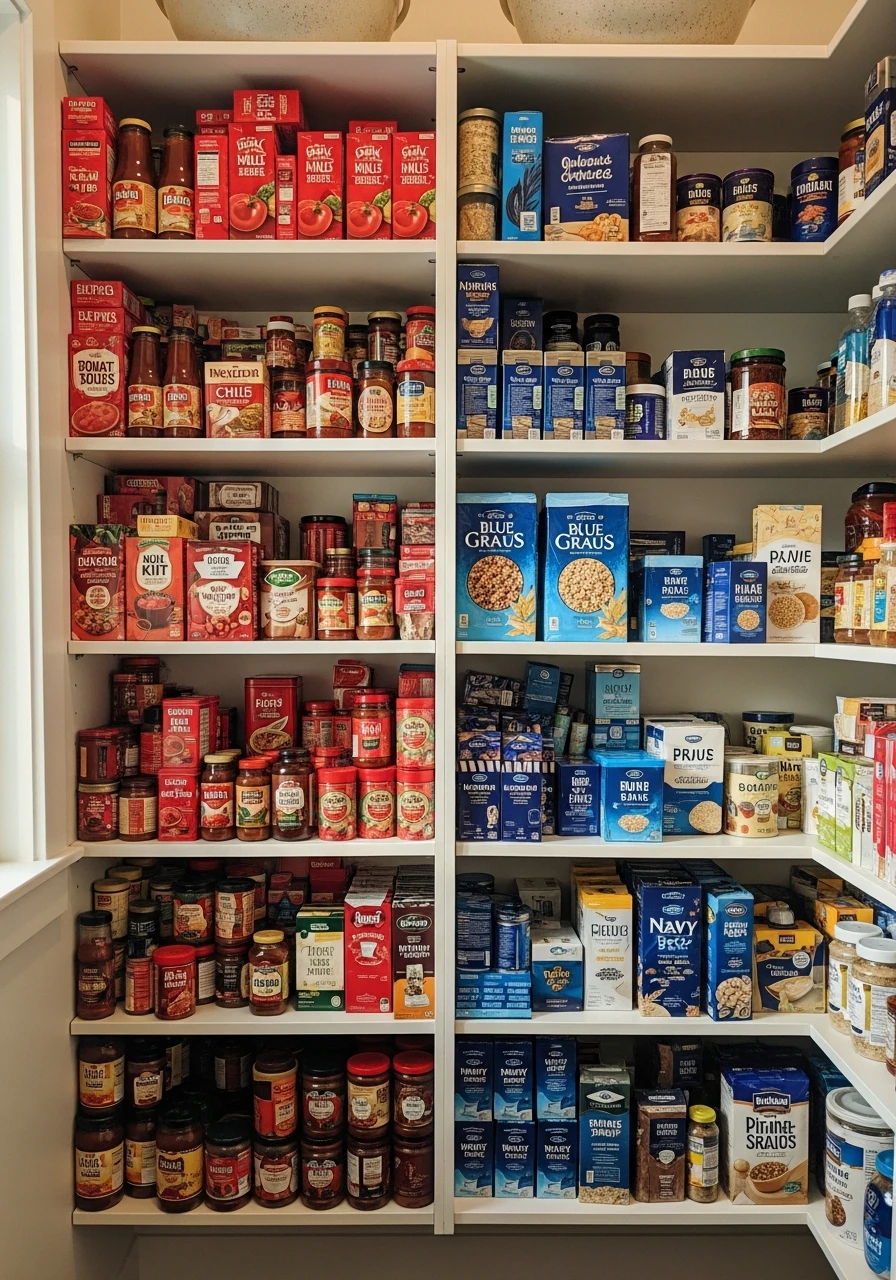
Use color as a visual organization tool. For instance, put all red-labeled containers in one area (like pasta sauces) and blue-labeled items in another (like breakfast cereals). This helps the eye quickly find categories.
- Use different colored lids for different food types.
- Group items by packaging color.
- This is an easy way to teach kids where things belong.
Pro Tip: Use a single color for all your labels to keep the overall look cohesive.
48. Deep Shelf Pull-Out Inserts
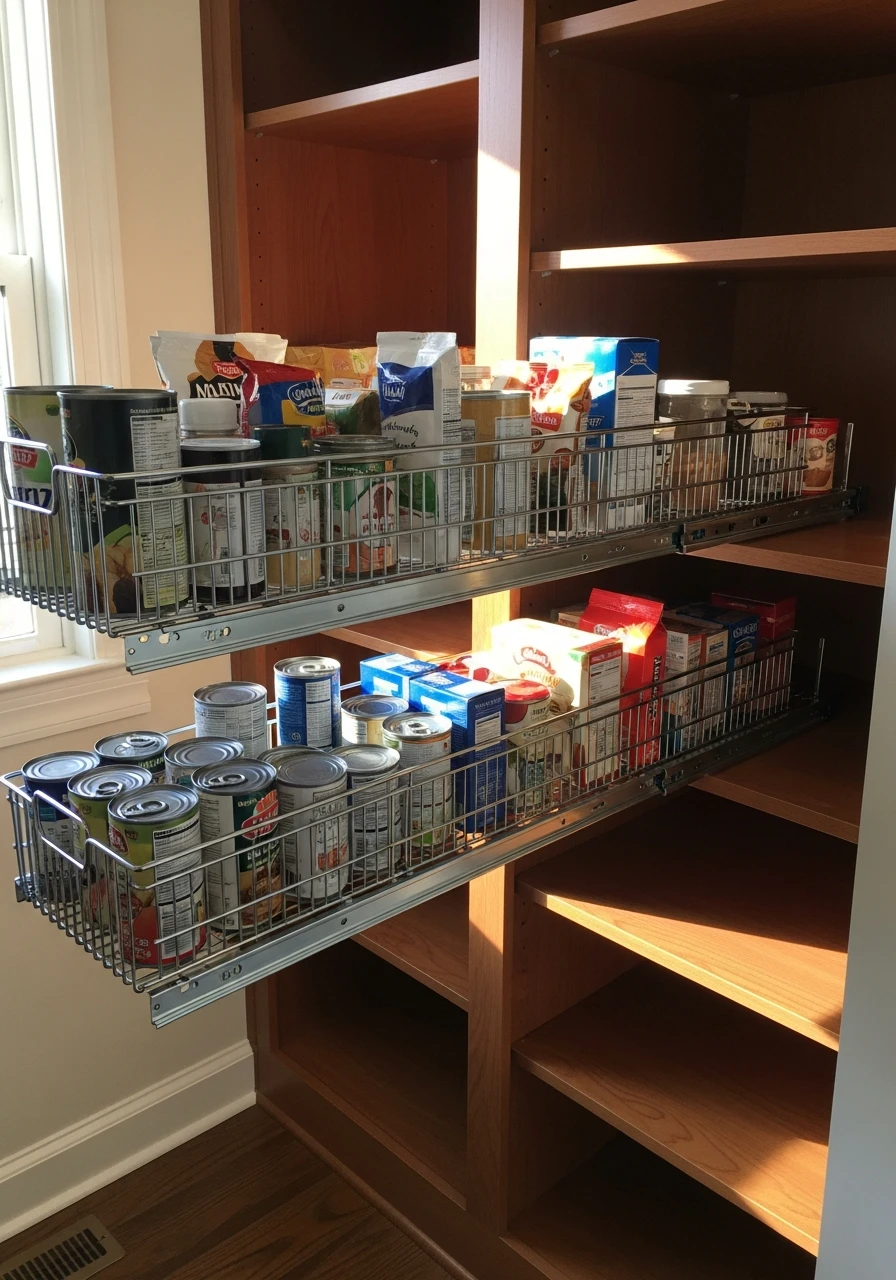
If you have very deep existing shelves, you can install sliding wire inserts. These turn the back half of the shelf into accessible storage. No more losing ingredients in the dark corners!
- Measure the width of your shelf accurately.
- Great for heavy items like canned goods or jars.
- Install two smaller inserts side-by-side for maximum coverage.
Pro Tip: Use these inserts for your cleaning supplies to keep them separate from food.
49. Smart Inventory Technology
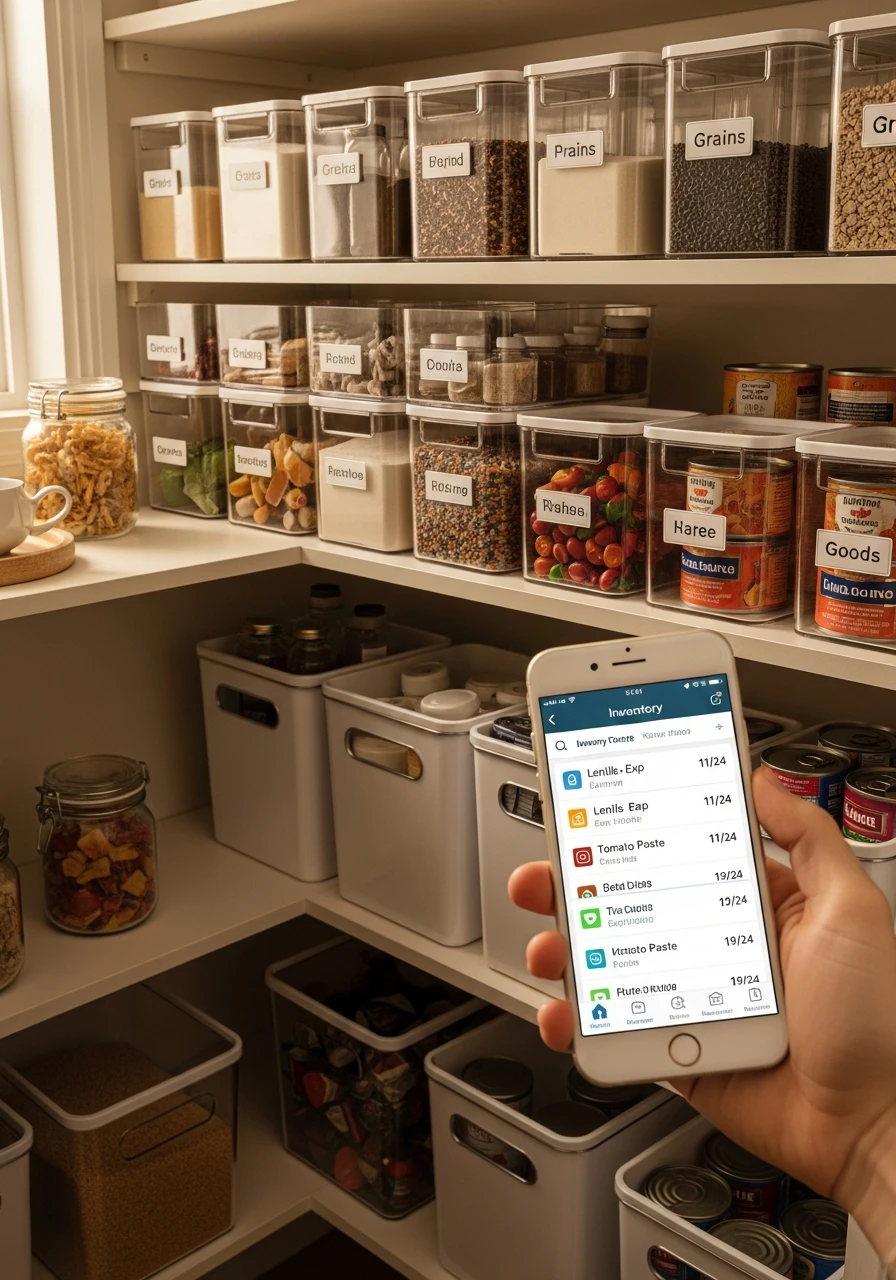
Use digital tracking apps or simple barcode scanners to monitor what you have and what is expiring. This takes the guesswork out of grocery shopping and helps reduce food waste by tracking dates.
- Use QR codes or simple labels to track expiration dates.
- Create digital shopping lists based on inventory.
- Check the app before heading to the store.
Pro Tip: Keep a small, simple notebook nearby for manual inventory tracking if technology isn’t your thing.
50. Blended Open Pantry Shelving
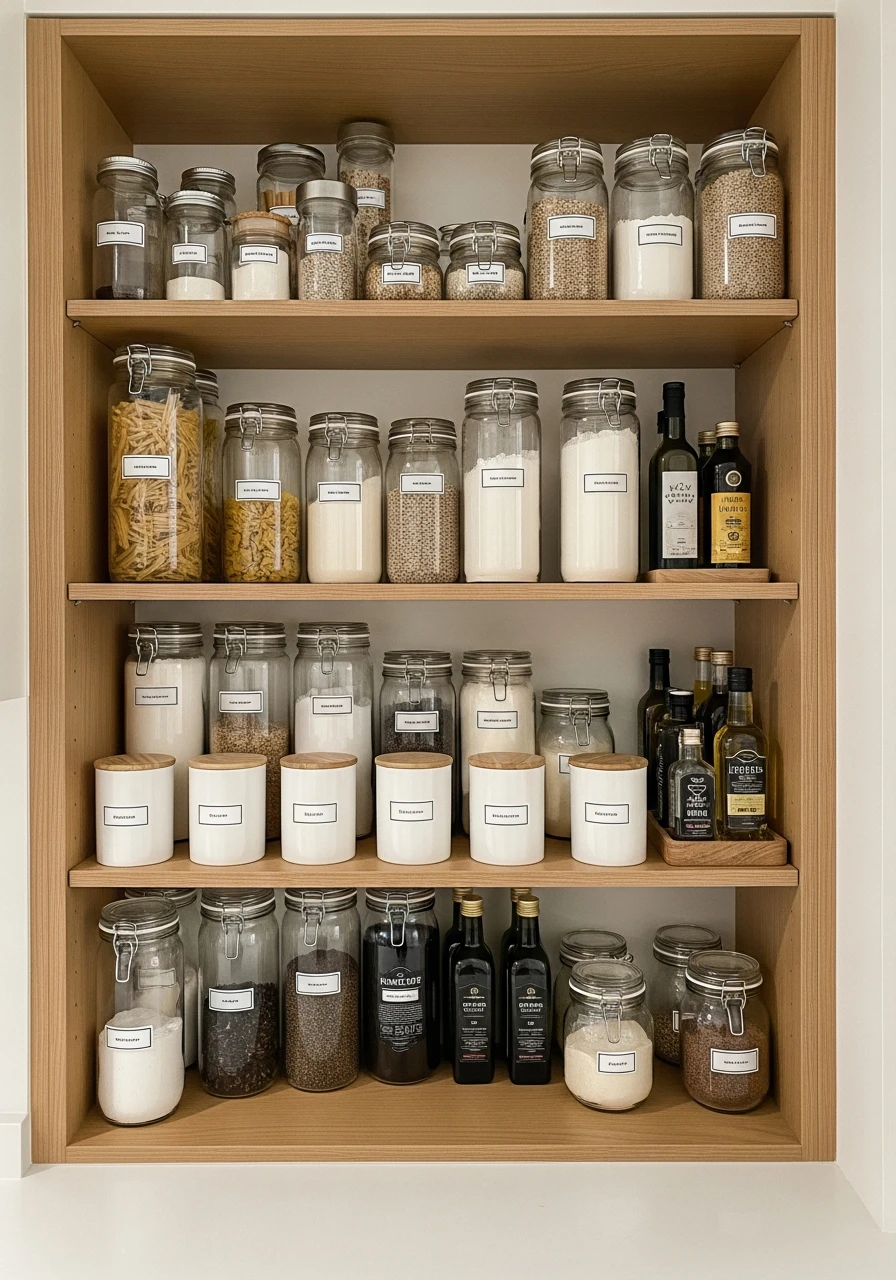
If your pantry is part of your kitchen, use open shelving to display your most beautiful containers and ingredients. This encourages you to keep it neat since everything is visible and accessible.
- Use clear, uniform jars for display items.
- Keep this area dust-free with regular wiping.
- Place your most colorful spices here.
Pro Tip: Only put the items you use daily on open shelves to reduce clutter.
A well-organized pantry is the secret weapon of a happy kitchen.
Start small—maybe just with clear containers—and build your system from there.
You deserve a beautiful, functional space that makes cooking less stressful.