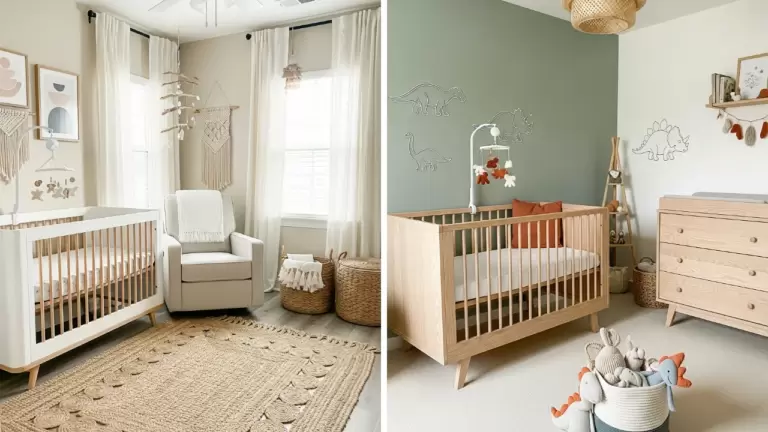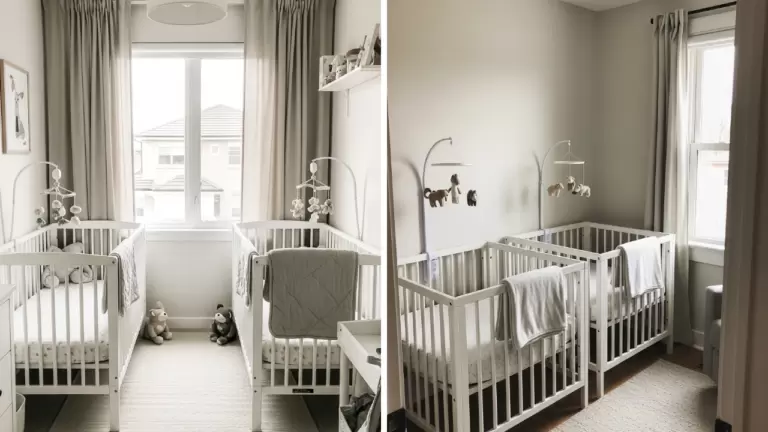
50 Nursery Closet Organization Ideas

This post may contain affiliate links: full affiliate disclosure.
Is your baby’s closet already a disaster zone of tiny socks and mismatched outfits?
It happens to everyone! Don’t worry, we can fix it.
These simple nursery closet organization tips will help you create a functional, stylish space that actually lasts past the first growth spurt.
1. Baby Hangers Save Space
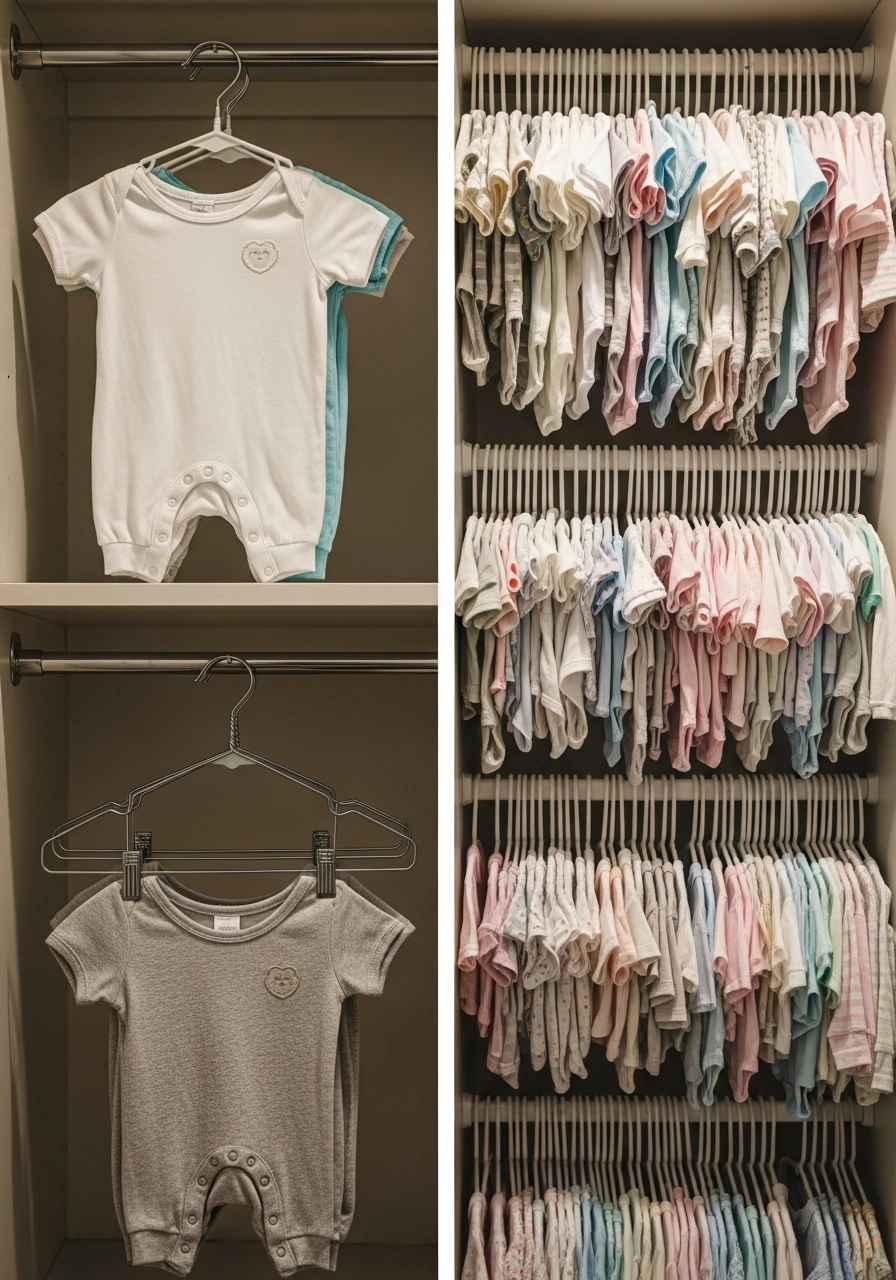
Standard adult hangers stretch tiny clothes and waste valuable rod space. Switching to baby-sized hangers keeps everything neat and maximizes your hanging area immediately.
- Use hangers designed specifically for baby and toddler clothes.
- Replace mismatched plastic hangers with slim velvet ones.
Pro Tip: Buy velvet baby hangers for a high-end, uniform look that prevents clothes from slipping off.
2. Double Your Hanging Capacity
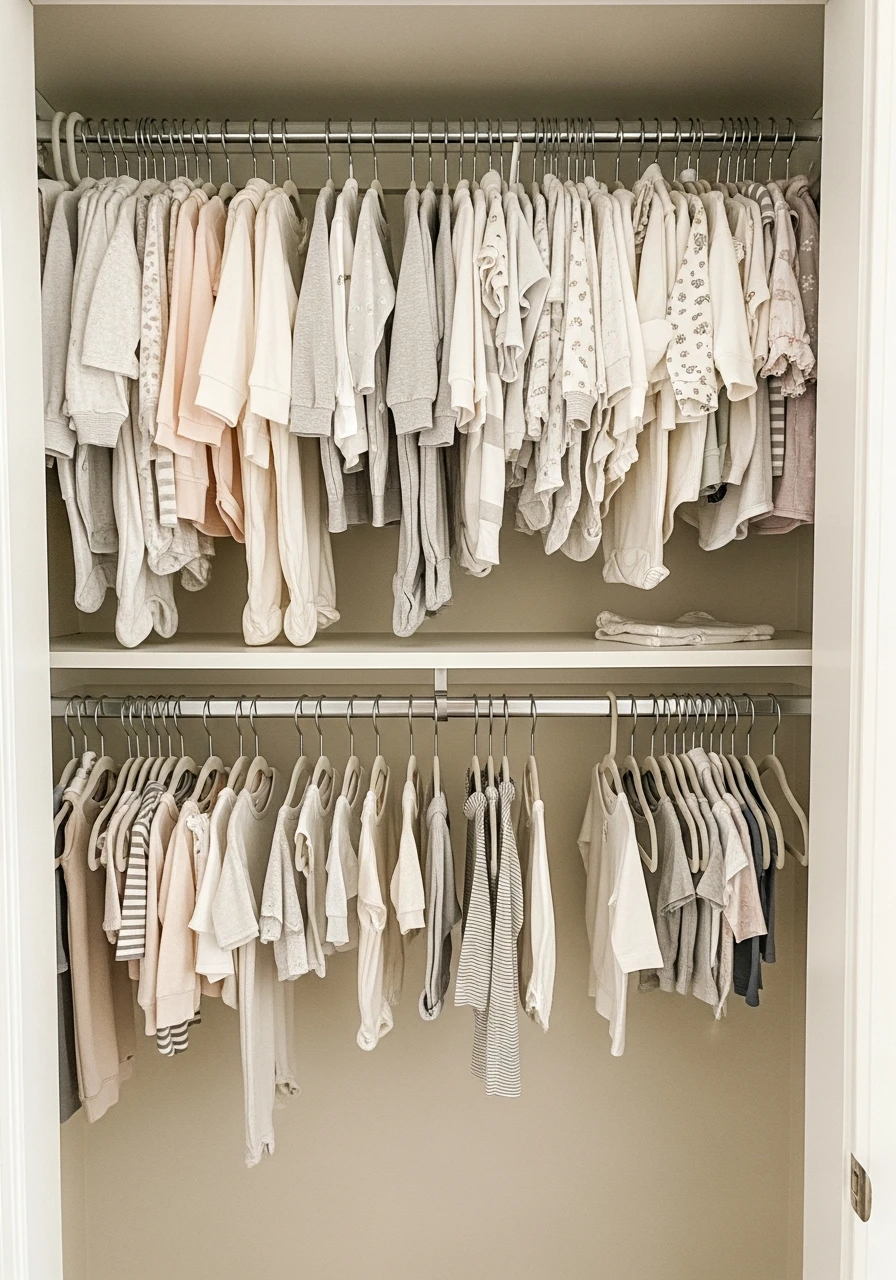
Install a second, lower rod to instantly double the number of items you can hang. This is perfect for separating clothes by size or type, like outfits and pants.
- Add a second lower rod using an adjustable system.
- Use the bottom rod for smaller items the baby is currently wearing.
Pro Tip: Make sure the lower rod is placed at a height that is easy for you to reach without bending over too much.
3. Divide Drawers for Tiny Things
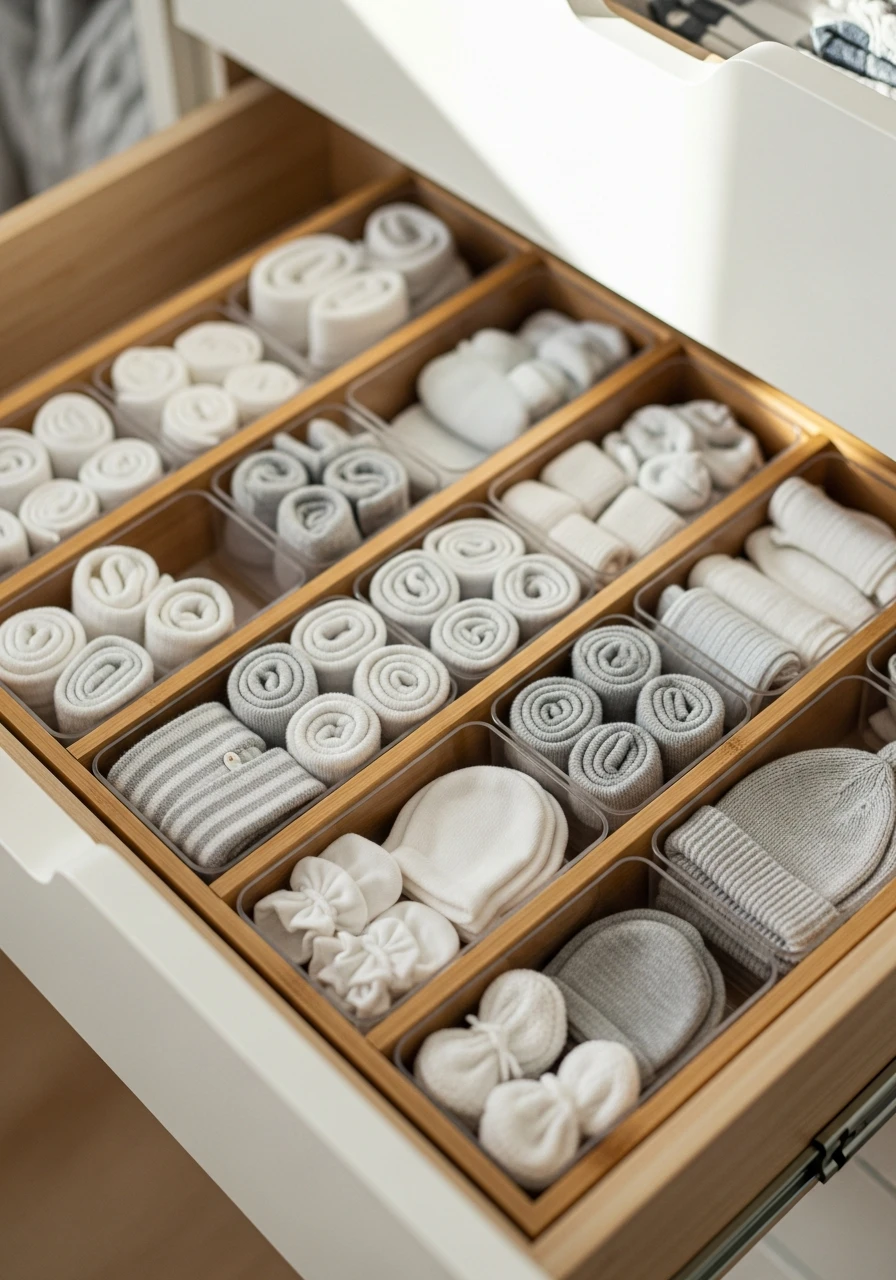
Socks, mittens, and hats disappear fast in deep drawers. Placing dividers inside drawers keeps these small accessories separated and easy to spot when you need them quickly.
- Use adjustable dividers to customize drawer sections.
- Assign a specific compartment for each item type (socks, bibs, etc.).
Pro Tip: Use spring-loaded dividers so you can easily change the size of the compartment as items change.
4. Use Clear Storage Bins
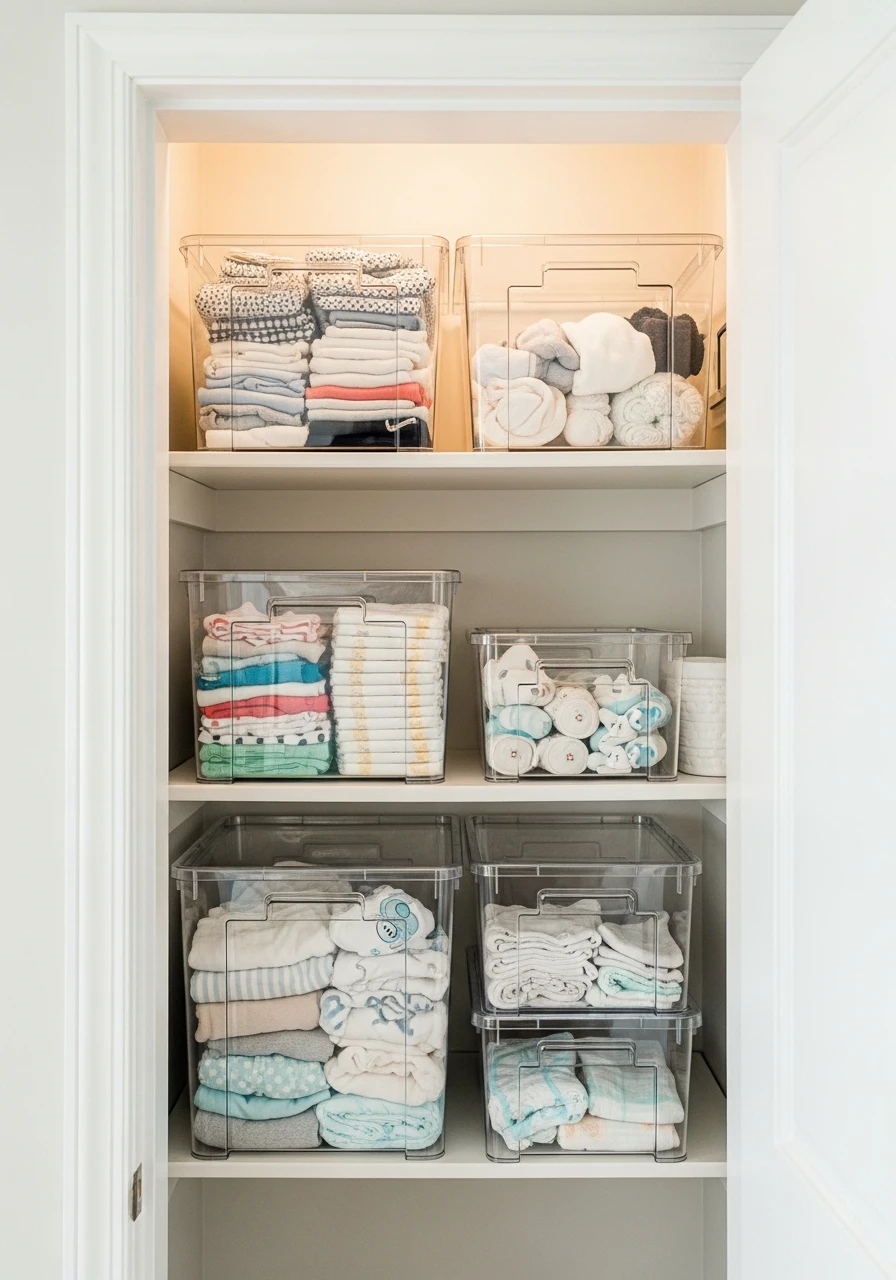
Clear bins are a busy parent’s best friend because you can see exactly what’s inside without having to pull the bin down. This makes rotating clothes and finding items fast.
- Use transparent bins for high-shelf storage.
- Store extra diapers or blankets in clear containers.
Pro Tip: Stack these bins high on the top shelves for items you don’t use often, like keepsakes or next-size-up clothing.
5. Label Everything Clearly
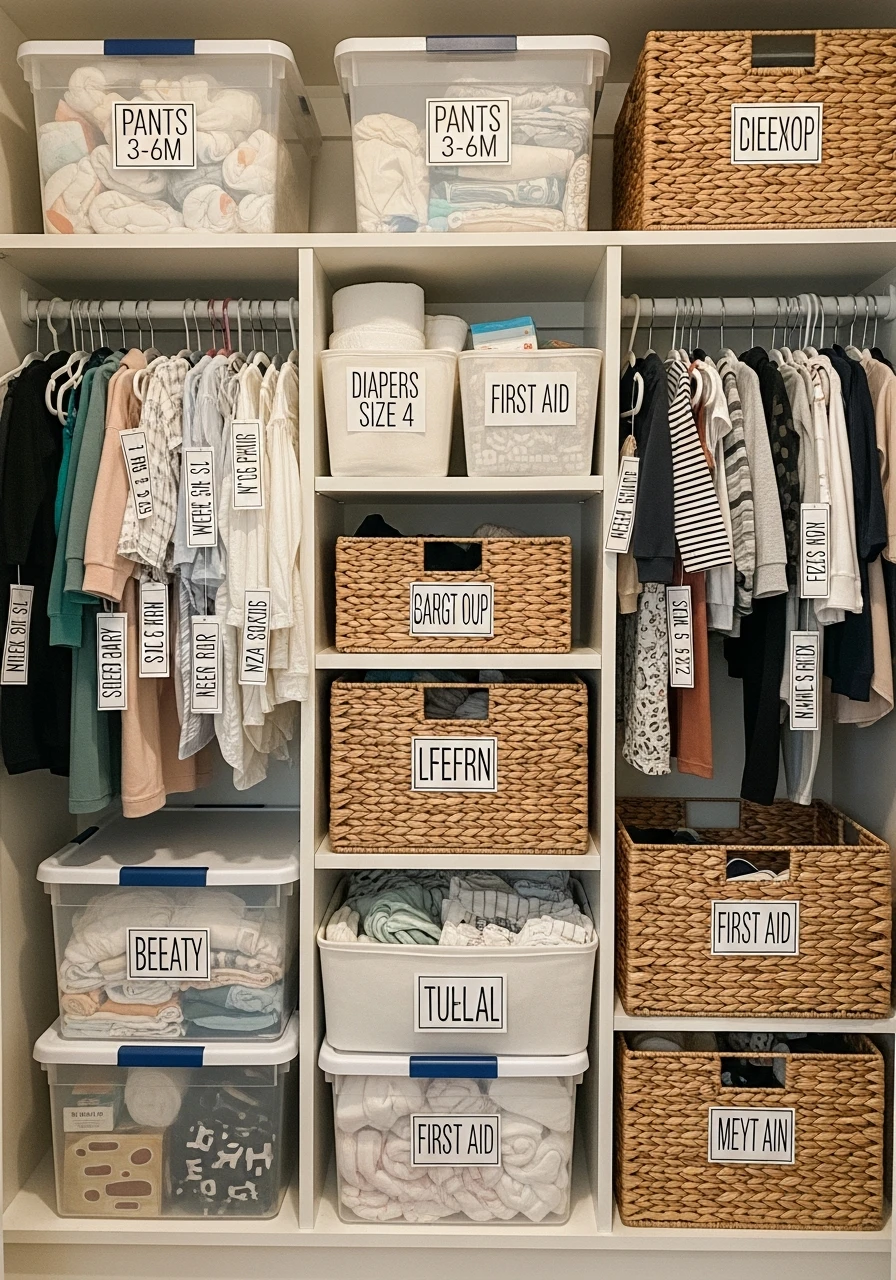
Adding clear labels showing sizes or item types is essential for fast organization. Even if you use clear bins, labels cut down on search time, especially for partners or sitters.
- Label bins by size, such as ‘6-9 Months’ or ‘Pajamas’.
- Use simple, easy-to-read fonts or pictures.
Pro Tip: Use simple, attractive labels, like chalkboard or matte vinyl, to keep the look clean and stylish.
6. Group Clothes By Size
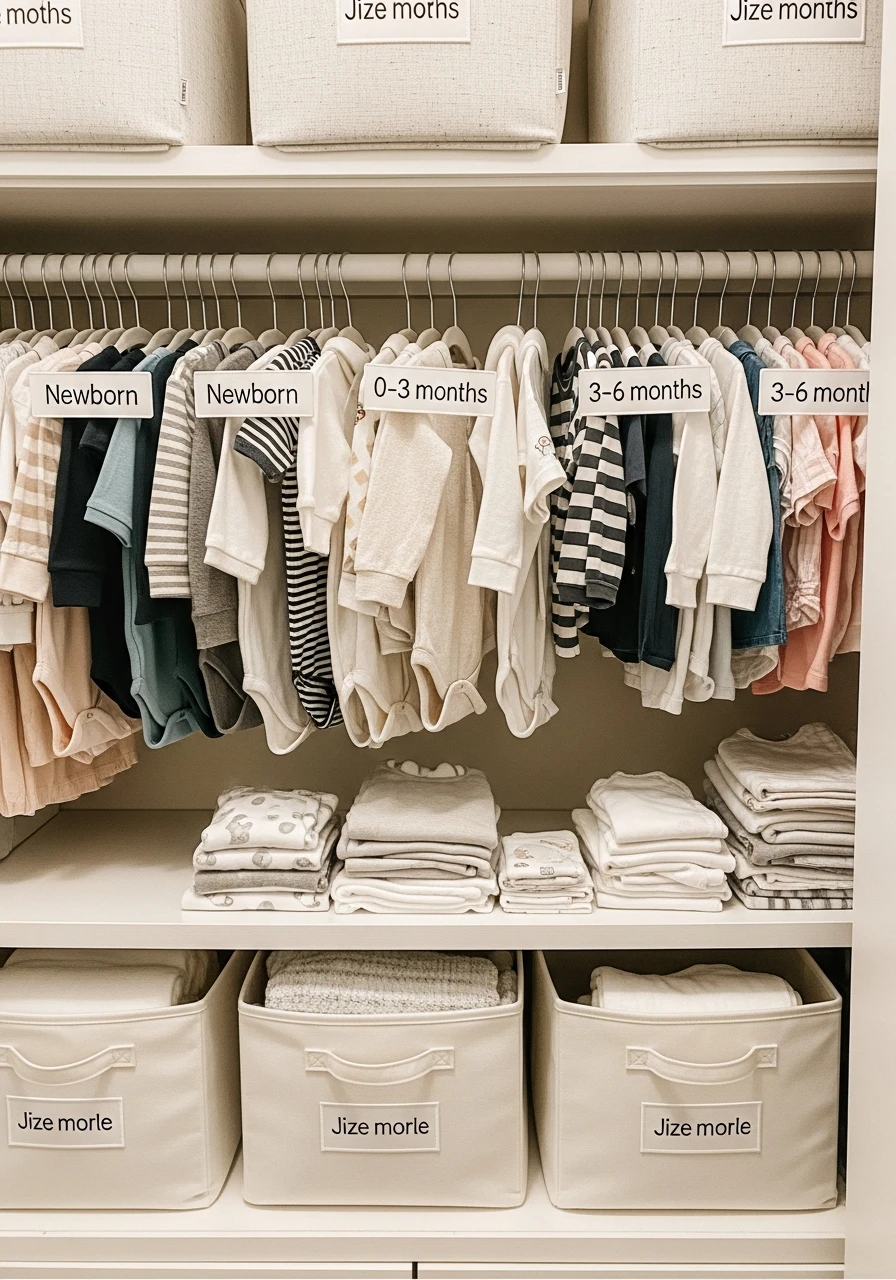
Babies grow incredibly fast, so sorting clothes by size is crucial. Grouping items makes it simple to rotate out smaller clothes and bring in the next size up when needed.
- Keep only the current size in the main hanging/shelf area.
- Store the next size up in labeled bins on a high shelf.
Pro Tip: Once an item is too small, put it straight into a donation or hand-me-down bin to keep the closet clutter-free.
7. Shallow Trays for Accessories
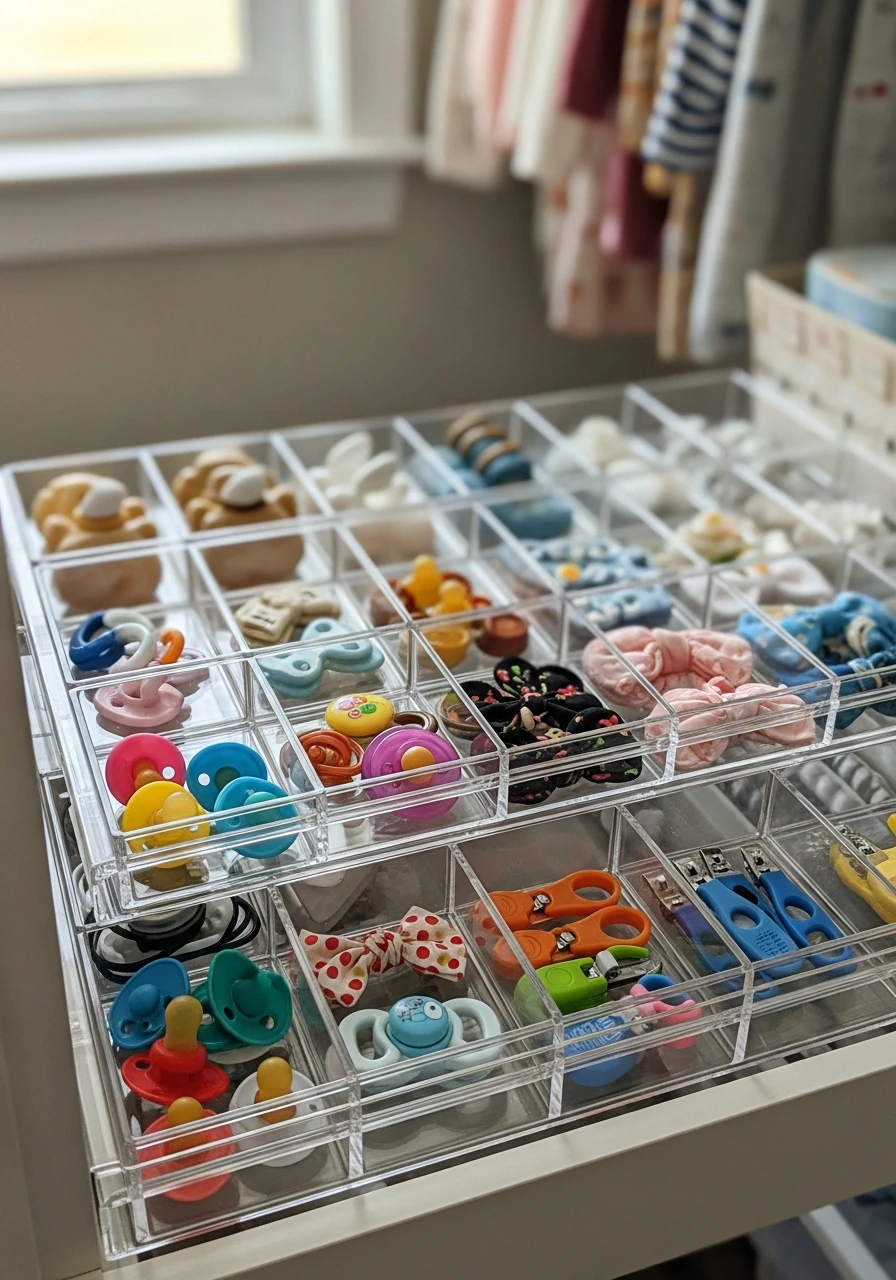
Tiny accessories like pacifiers, hair bows, and nail clippers can get lost in deep drawers. Shallow trays keep these small essentials contained and perfectly visible.
- Place small trays inside drawers or on shelves.
- Use acrylic or bamboo trays for a neat, custom look.
Pro Tip: Dedicate one tray near the changing station for items you grab multiple times a day.
8. Top Shelf for Bulky Items
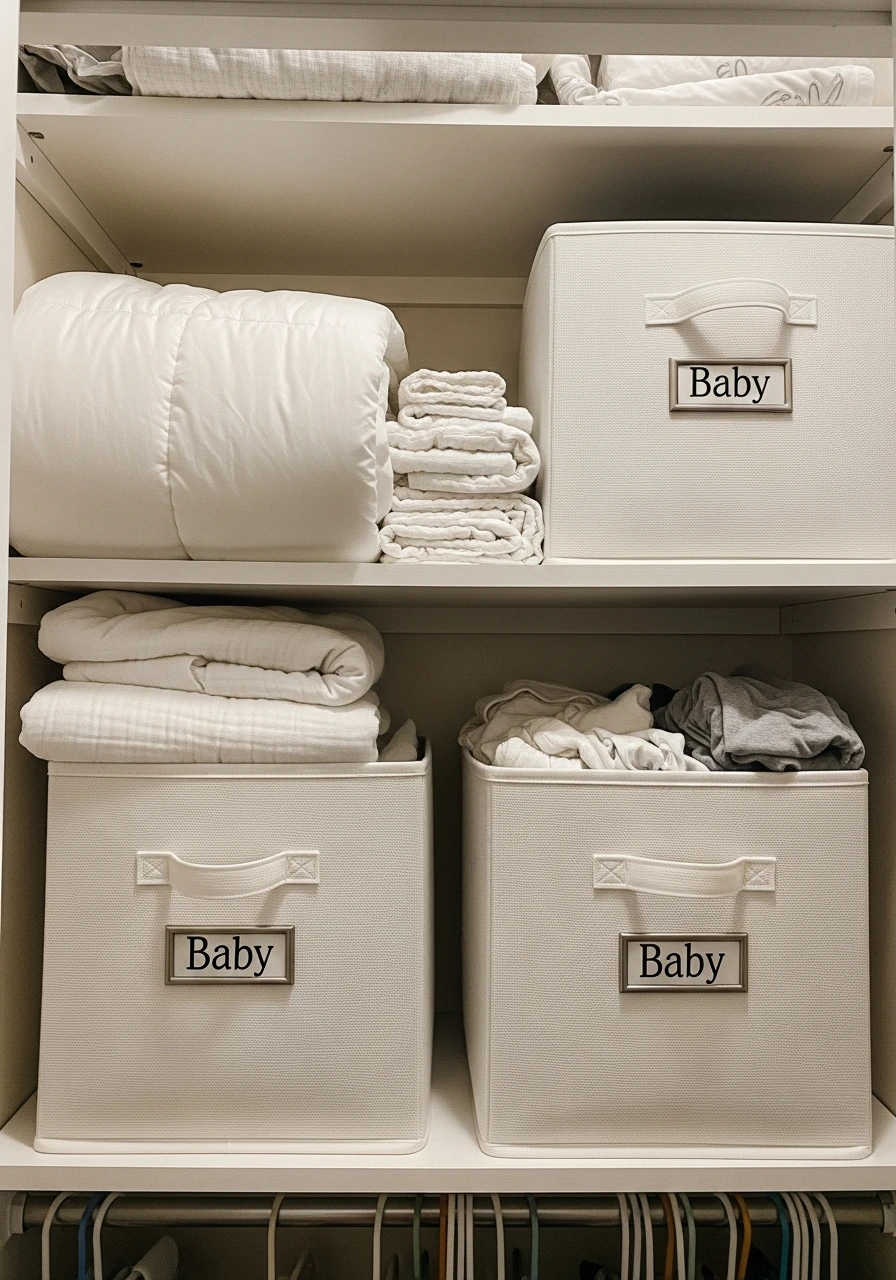
Reserve your highest shelves for bulky things like extra bedding, seasonal clothes, or extra blankets. They take up too much prime space lower down, and you don’t need them daily.
- Store heavy items like snowsuits up high.
- Keep spare crib sheets folded neatly on the top level.
Pro Tip: Fold blankets using a method that allows them to stand up neatly so they don’t slide or collapse into a messy pile.
9. Use Door Organizers
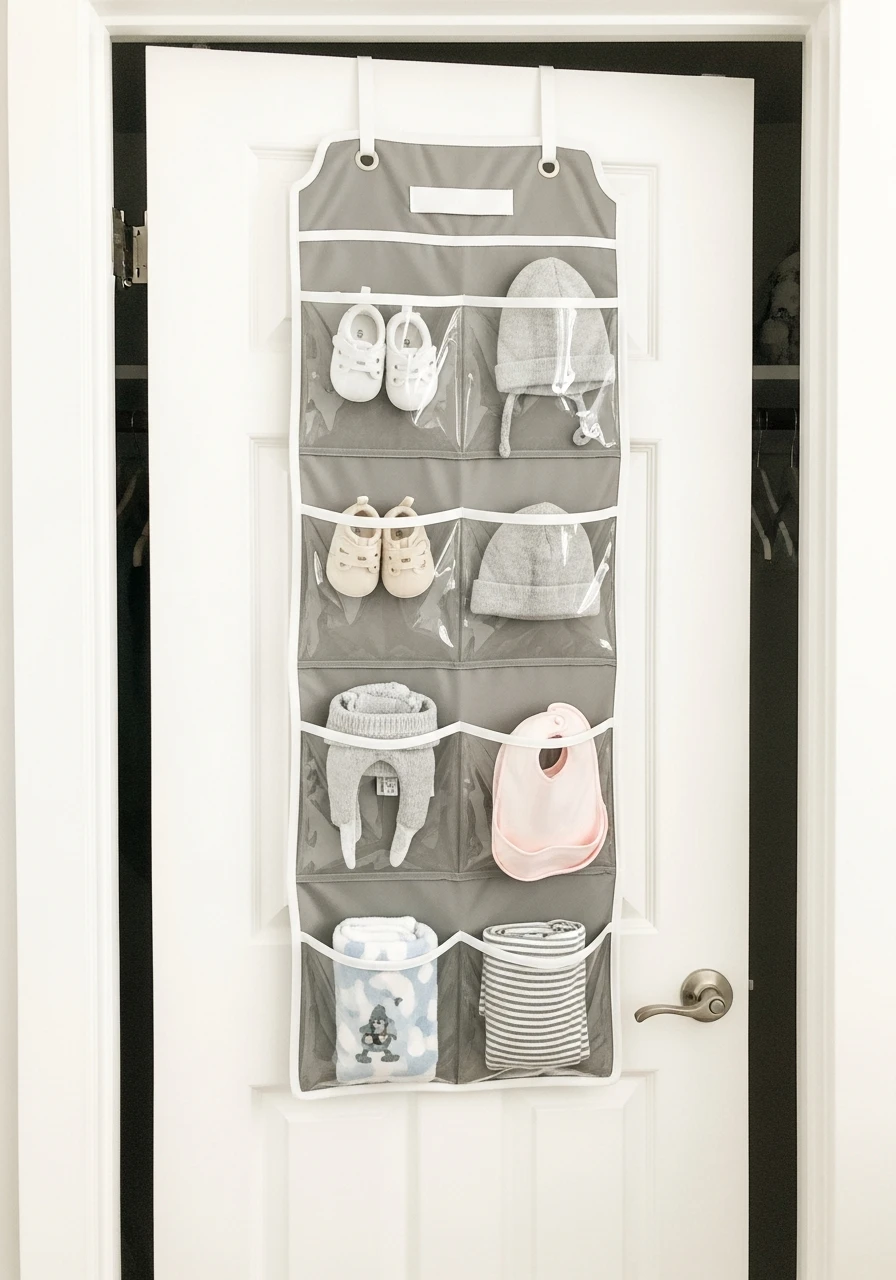
Don’t ignore the back of the closet door! Use hanging organizers for shoes, bibs, hats, or accessories to save precious shelf and drawer space inside the closet.
- Install a clear pocket organizer on the back of the door.
- Use this space for items that are used frequently.
Pro Tip: Choose fabric or mesh organizers that can be easily washed if they get dirty or sticky.
10. Seasonal Swap Storage
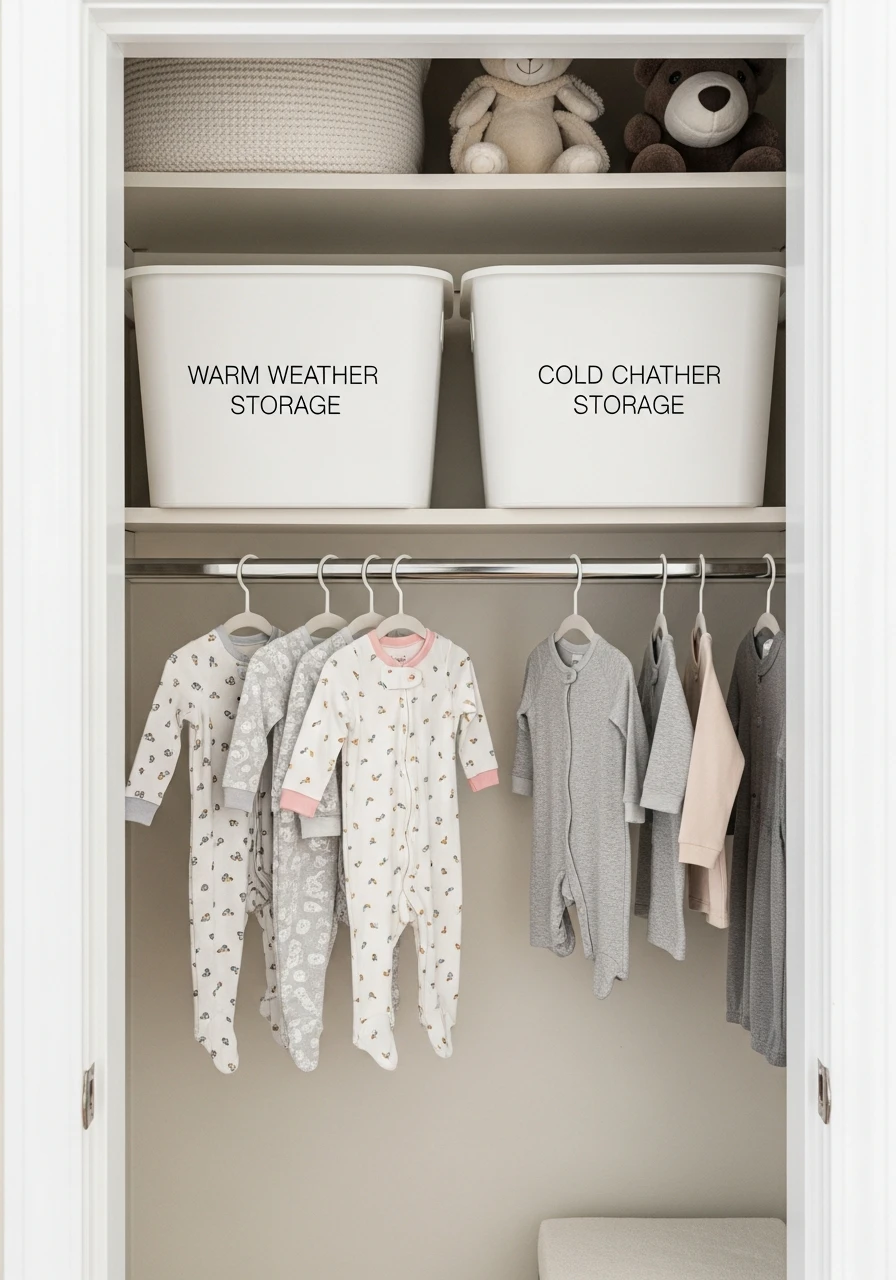
Separate warm-weather from cold-weather clothes. This keeps the closet from feeling crowded and makes it easy to swap items out when the seasons change.
- Store off-season clothes in opaque bins.
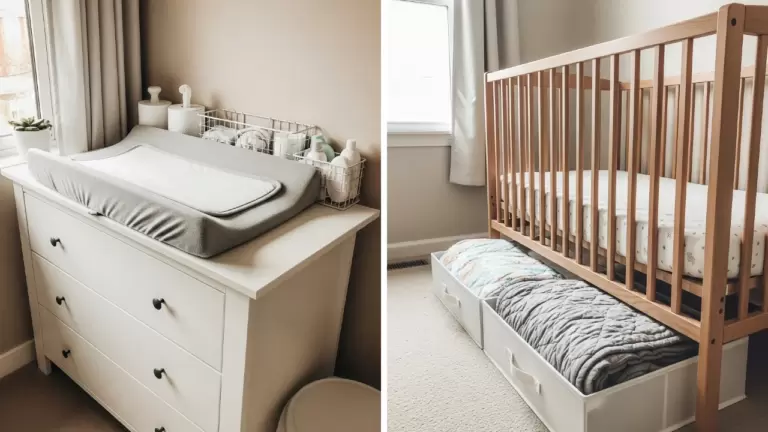
- Keep seasonal bins clearly labeled and stored elsewhere, like under the crib.
Pro Tip: Use vacuum seal bags for bulky seasonal items like heavy coats or large blankets to save significant space.
11. Size Dividers on Rods
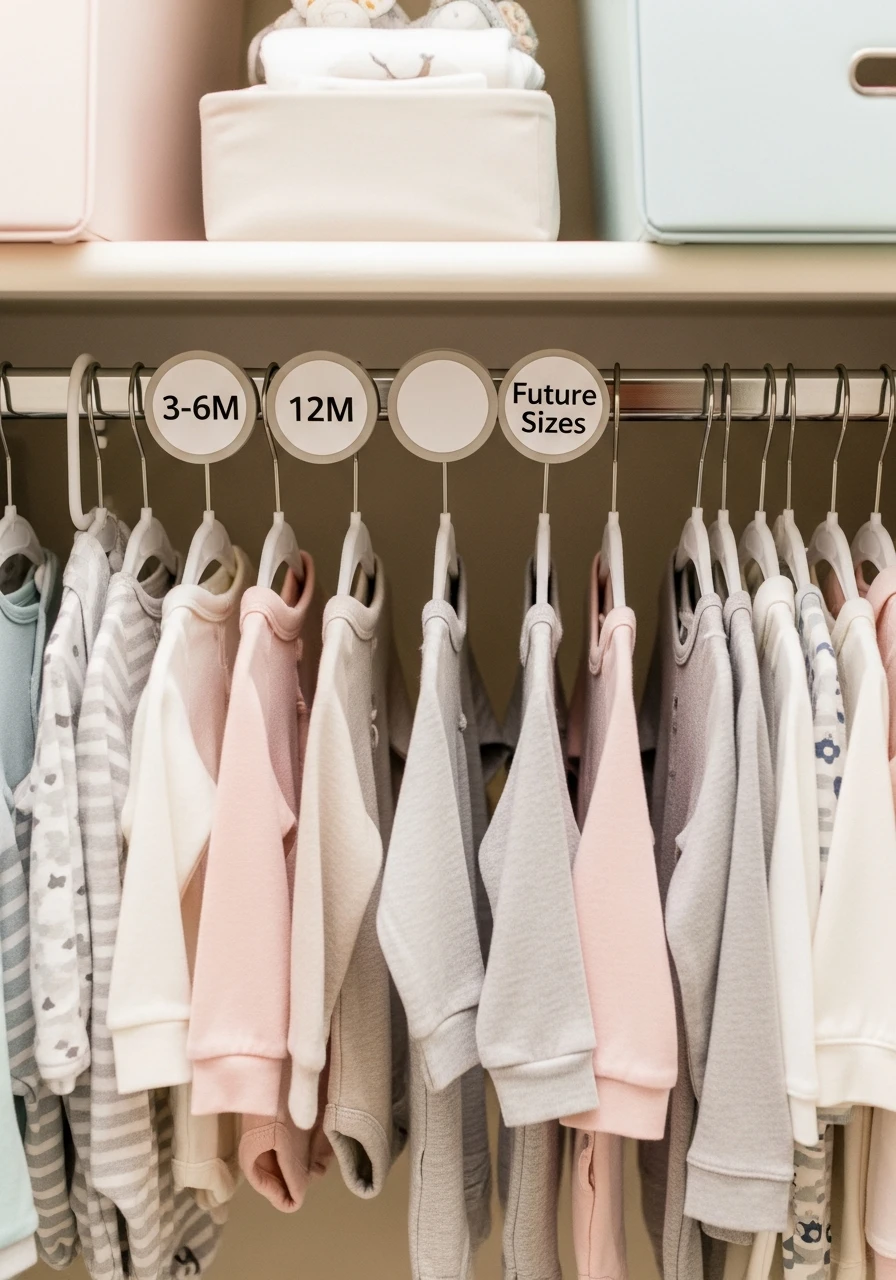
These small, round markers sit right on the hanging rod and clearly separate clothing sizes. They are a lifesaver for keeping hand-me-downs or future sizes organized.
- Install size markers on hanging rods (0-3m, 3-6m, etc.).
- Use them to mark the beginning of each size section.
Pro Tip: If you are organizing clothes for multiples, use different colors for the dividers to keep track of whose clothes are whose.
12. Install Open Closet Shelving
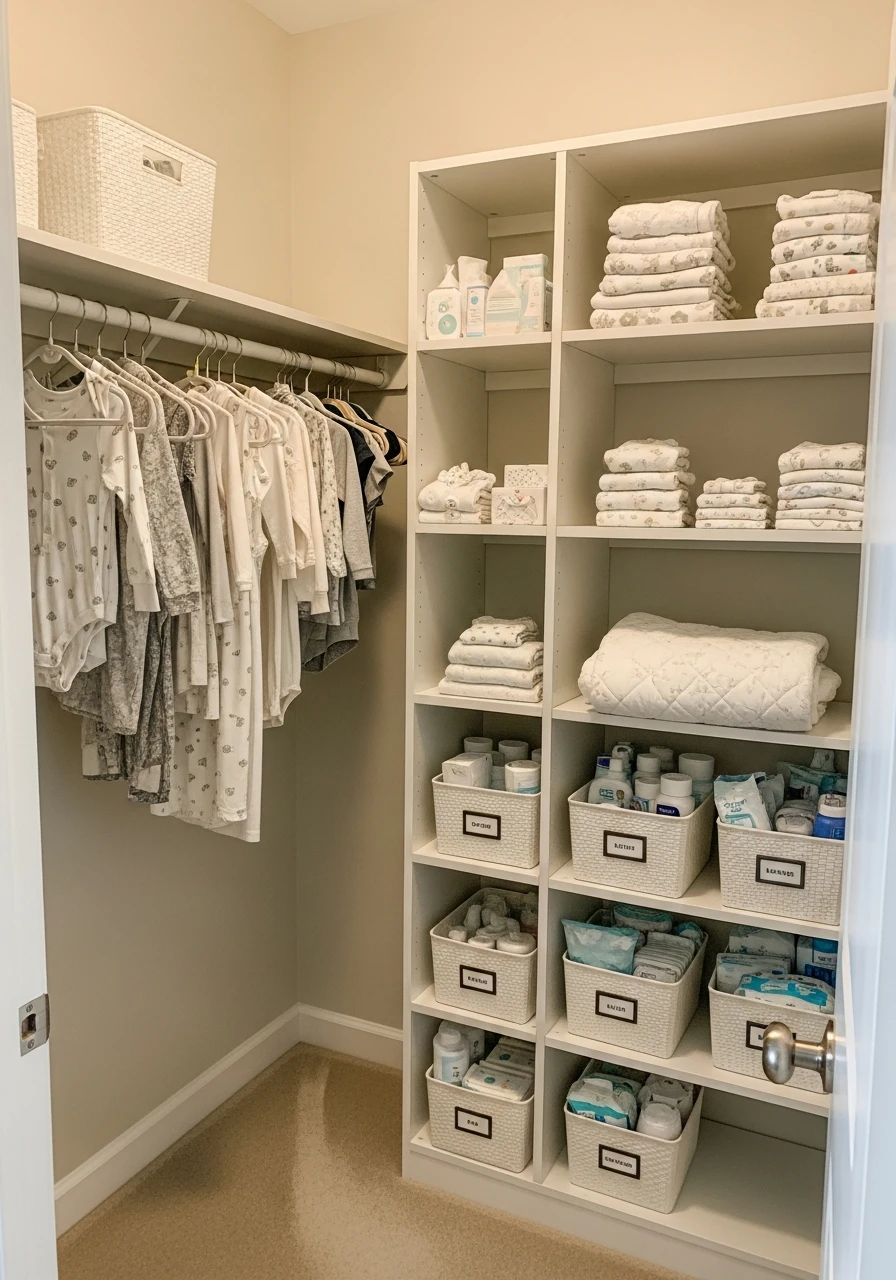
If your closet only has one rod, add open shelving units. This improves visibility and accessibility for folded clothes, blankets, or baskets.
- Use adjustable wire shelving or simple wood units.
- Ensure shelves are deep enough to hold folded stacks without items falling off.
Pro Tip: Adding shelves is a great way to break up the space visually and make the closet feel less cluttered.
13. Matching Hangers Look Best
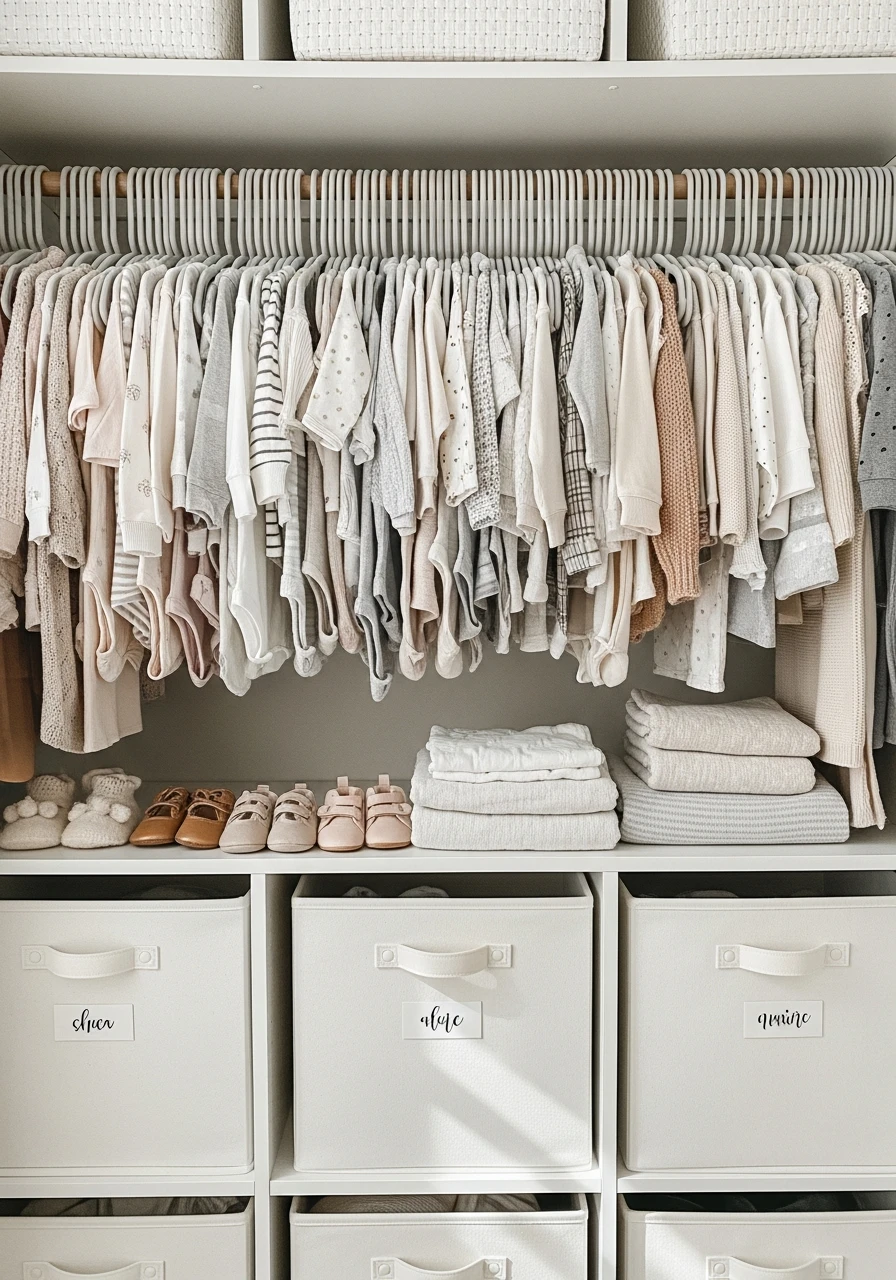
Mismatched hangers create visual chaos. Using one uniform type, especially slim velvet ones, makes the entire closet look instantly clean and high-end, even on a budget.
- Commit to one color and material for all hangers.
- Throw out bulky or wire hangers immediately.
Pro Tip: The consistency of matching hangers tricks your eye into seeing organization, even if the clothes aren’t perfectly sorted.
14. Fabric Cubes Hold Clothes
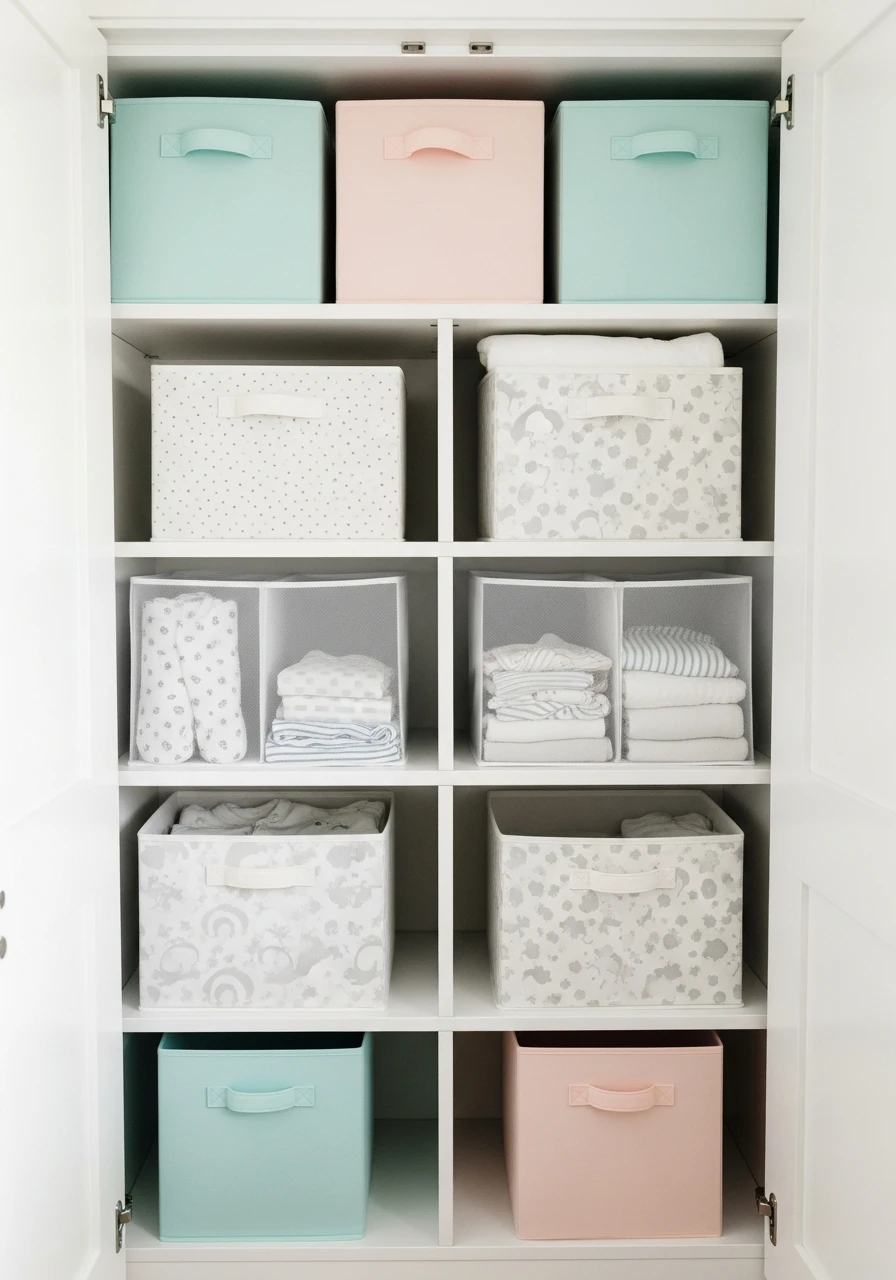
Fabric cube storage is perfect for folded items like onesies, pajamas, and extra linens. They hide the clutter inside while keeping things accessible and organized on shelves.
- Use cubes for folded laundry instead of stacked piles.
- Choose soft cubes that won’t scratch the shelving.
Pro Tip: Choose cubes with a stylish texture, like linen or canvas, for a customized, high-end look.
15. Basket for Swaddles
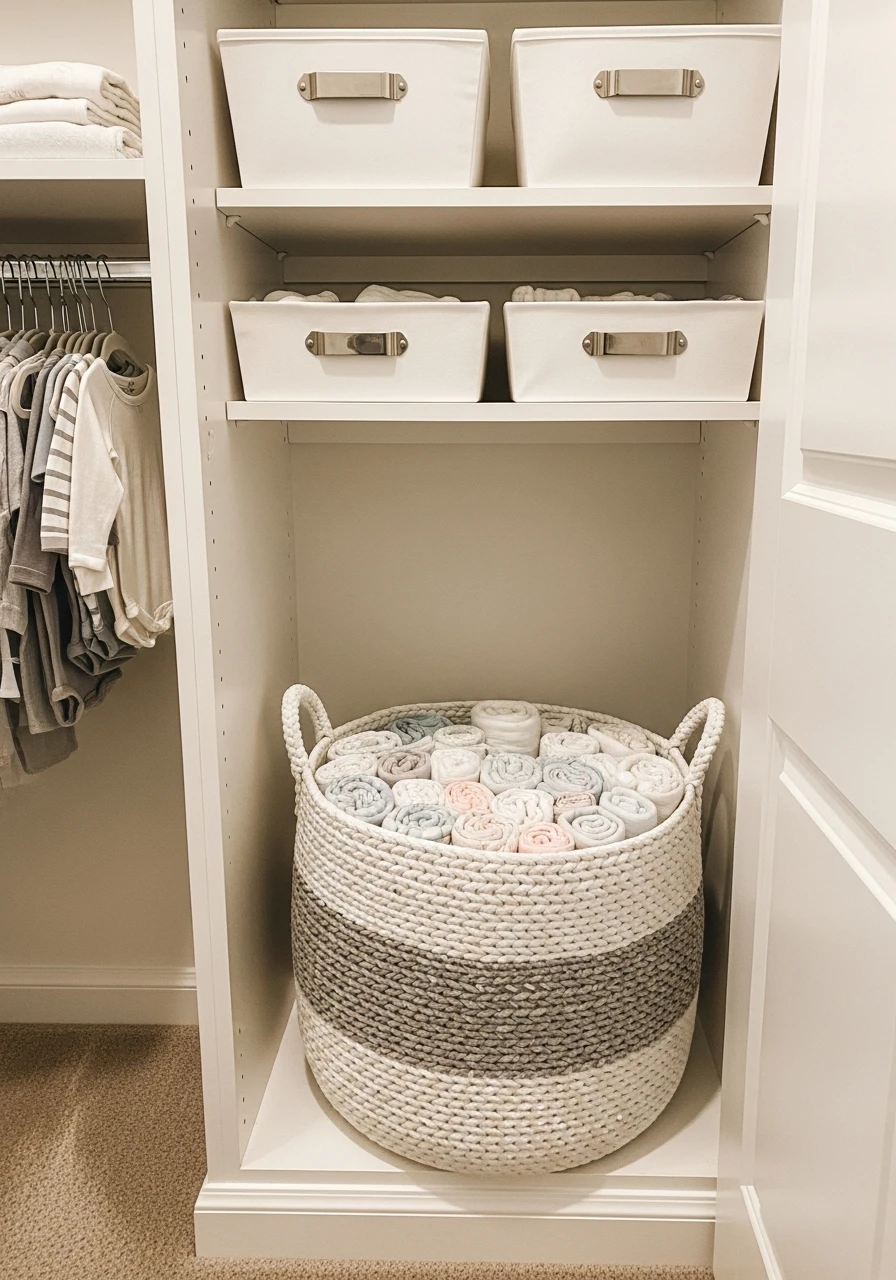
Designate one large, stylish basket solely for blankets and swaddles. This keeps them off the floor and makes them easy to grab quickly during changing or cuddle time.
- Use a woven seagrass or rope basket.
- Keep the basket on the closet floor or a low shelf.
Pro Tip: A woven basket adds texture and warmth to the space, making the closet feel like a decorated part of the room.
16. Organize Baby Shoes
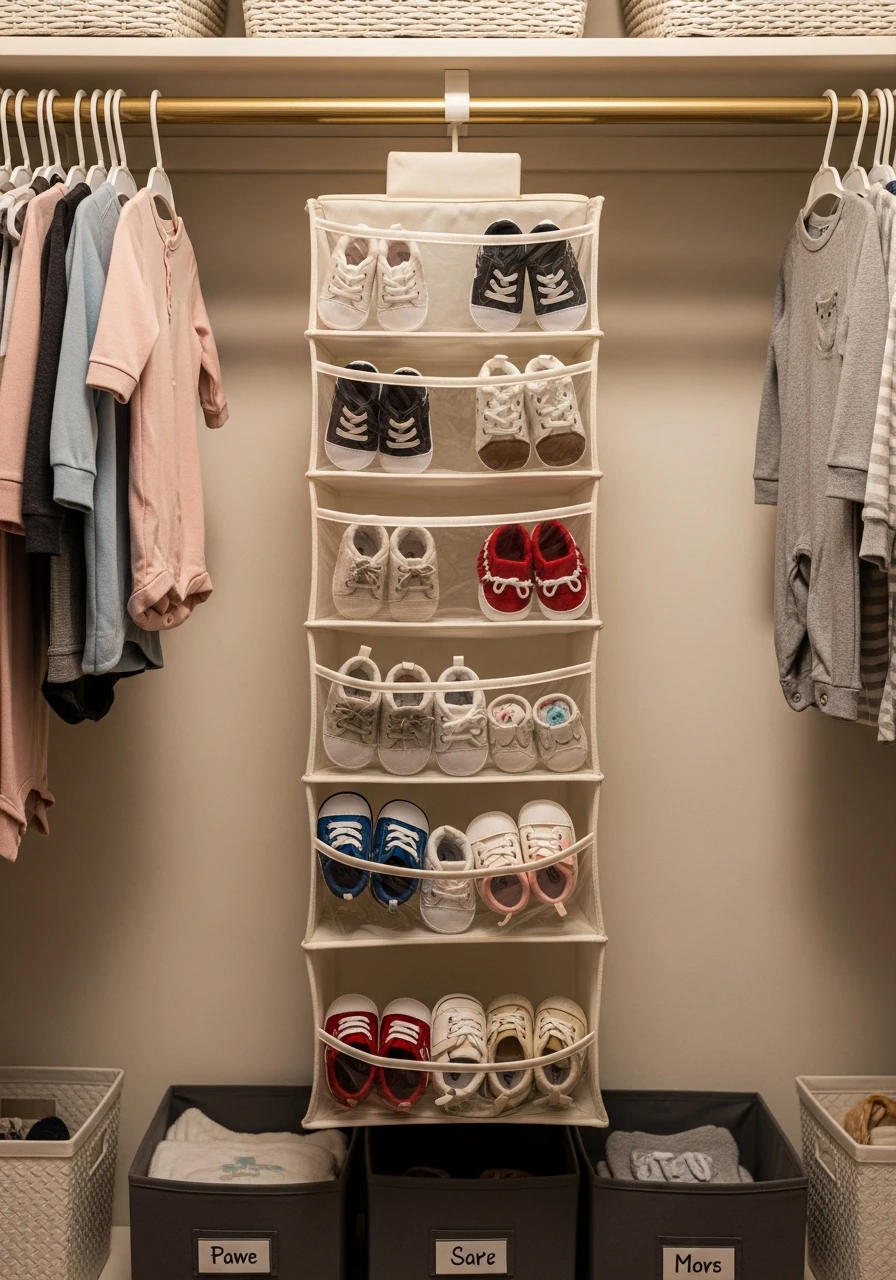
Tiny shoes are hard to store because they don’t sit neatly on standard shelves. Use a small tiered rack or a hanging pocket organizer to keep pairs together and visible.
- Use a small rack dedicated just to baby footwear.
- Only keep the shoes that currently fit in the main closet area.
Pro Tip: If you have a lot of shoes, store them in clear plastic boxes with a picture of the shoes taped to the outside.
17. Hooks for Carriers and Bags
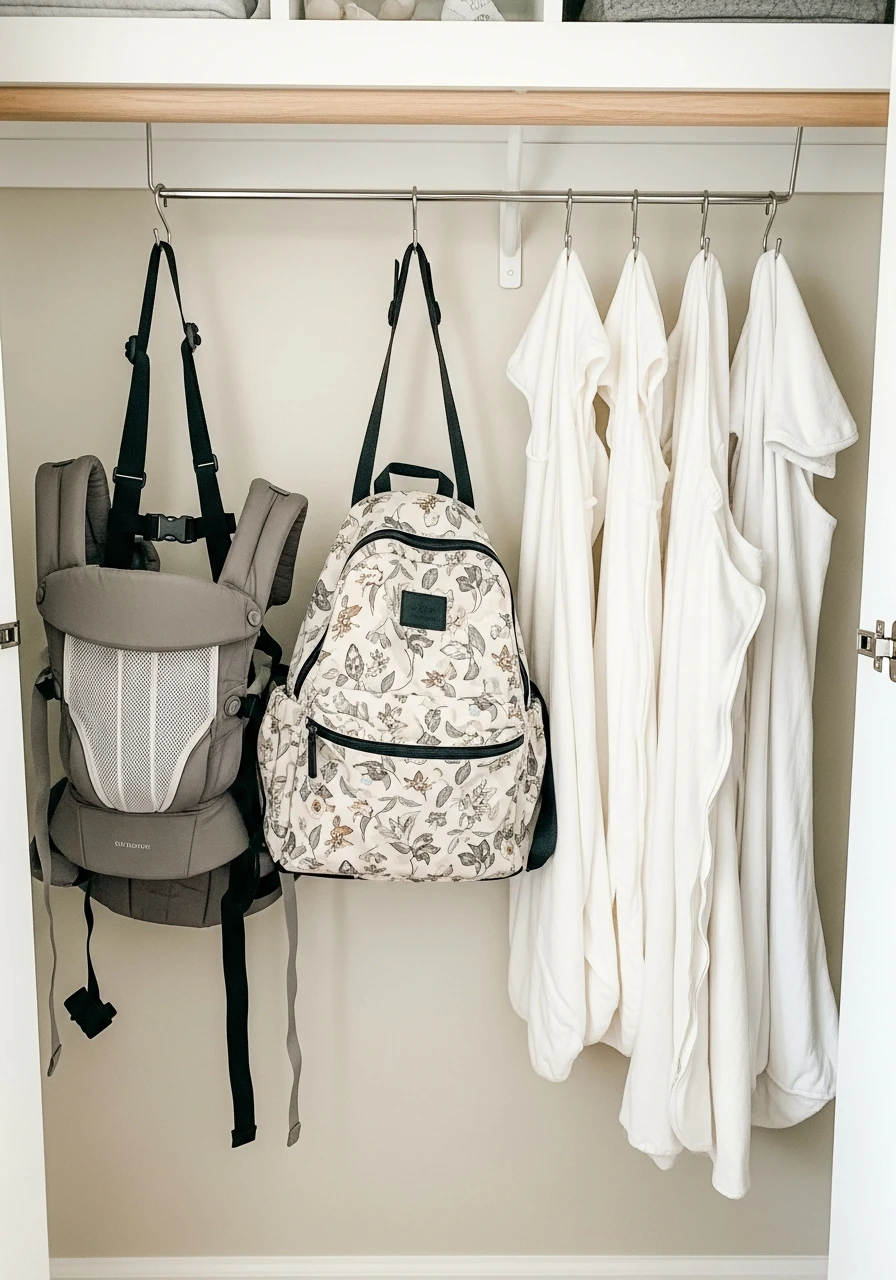
Install sturdy hooks on the back wall or side panels of the closet. Use them to hang bulky items like diaper bags, baby carriers, or sleep sacks to keep them off the floor.
- Install hooks at a height that is easy to reach.
- Use hooks for items that need to air out, like sleep sacks.
Pro Tip: Use decorative hooks in a fun metallic or matte finish to add a stylish accent to the inside of the closet.
18. Group Items by Type
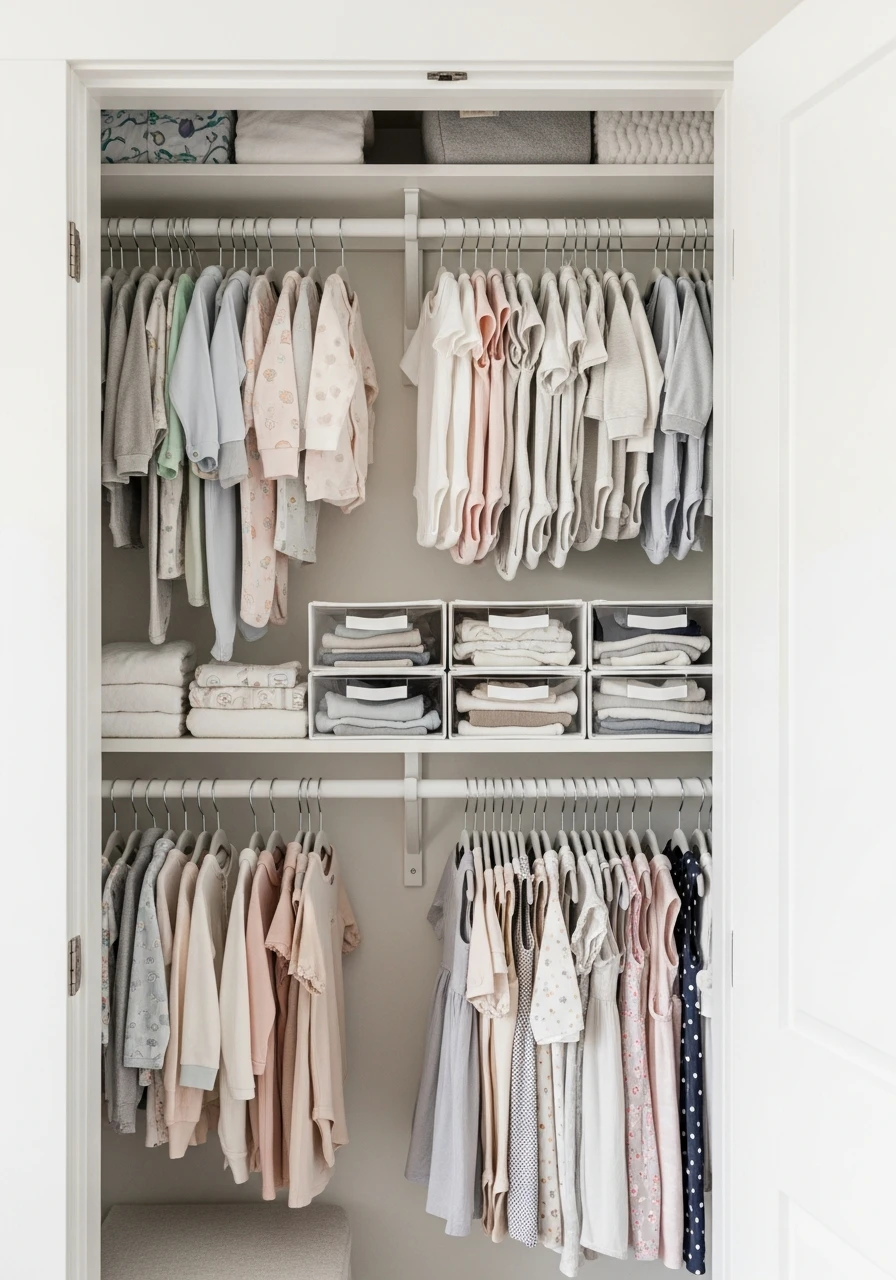
Organize clothes by category rather than mixing outfits. Group all pajamas together, all onesies together, and all dresses together. This streamlines the daily dressing routine.
- Keep frequently used categories (like onesies) at eye level.
- Use shelf dividers to keep folded stacks clearly separated.
Pro Tip: Once you have sorted by category, refine the organization by color within that category for a boutique look.
19. Add Closet Lighting
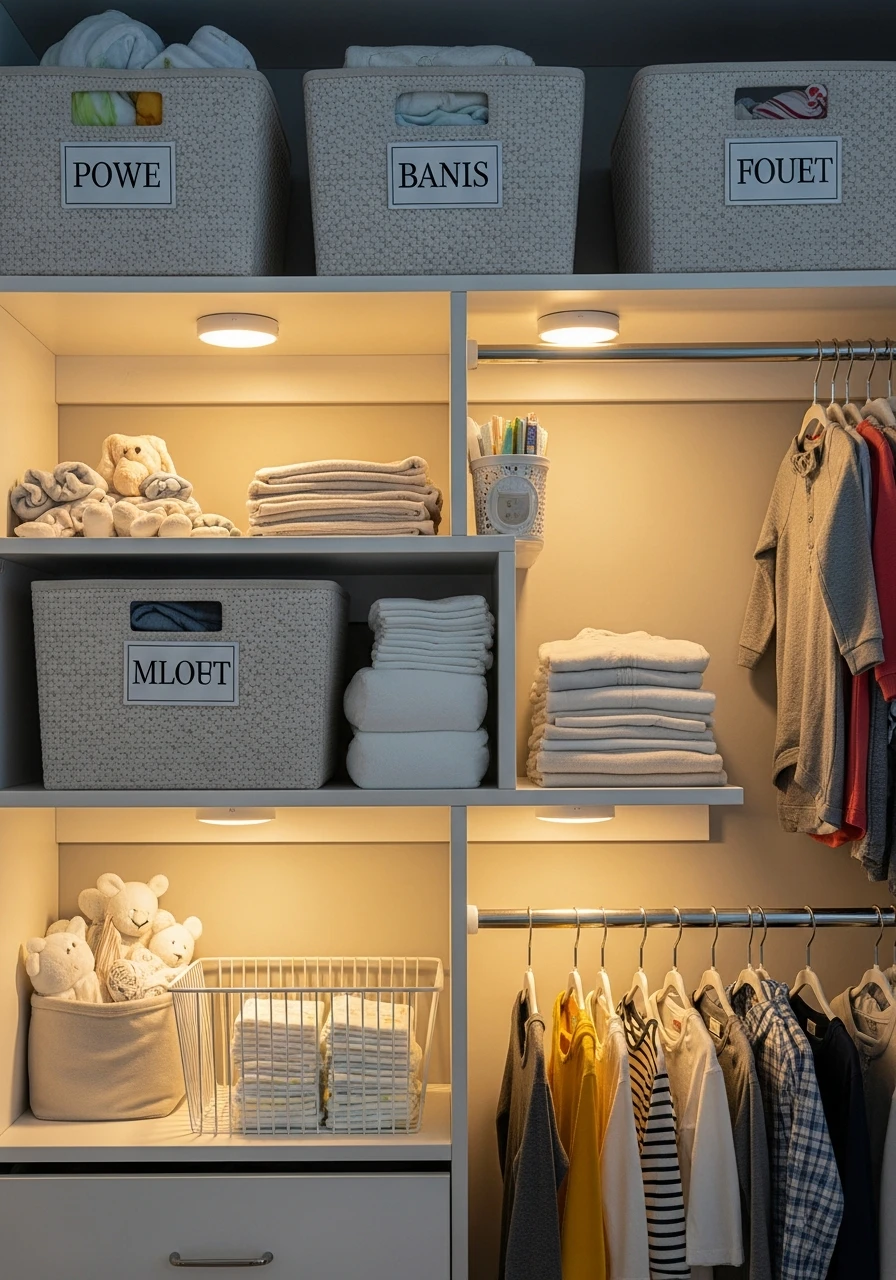
Good lighting is crucial, especially for middle-of-the-night changes or early mornings. Battery-powered LED puck lights are easy to install and make everything more visible.
- Install stick-on LED lights under shelves or above rods.
- Ensure the lighting is warm, not harsh white, for nighttime use.
Pro Tip: Use motion-sensor lights so you don’t have to fiddle with switches while holding the baby or a stack of clothes.
20. Hanger Tags for Sizes
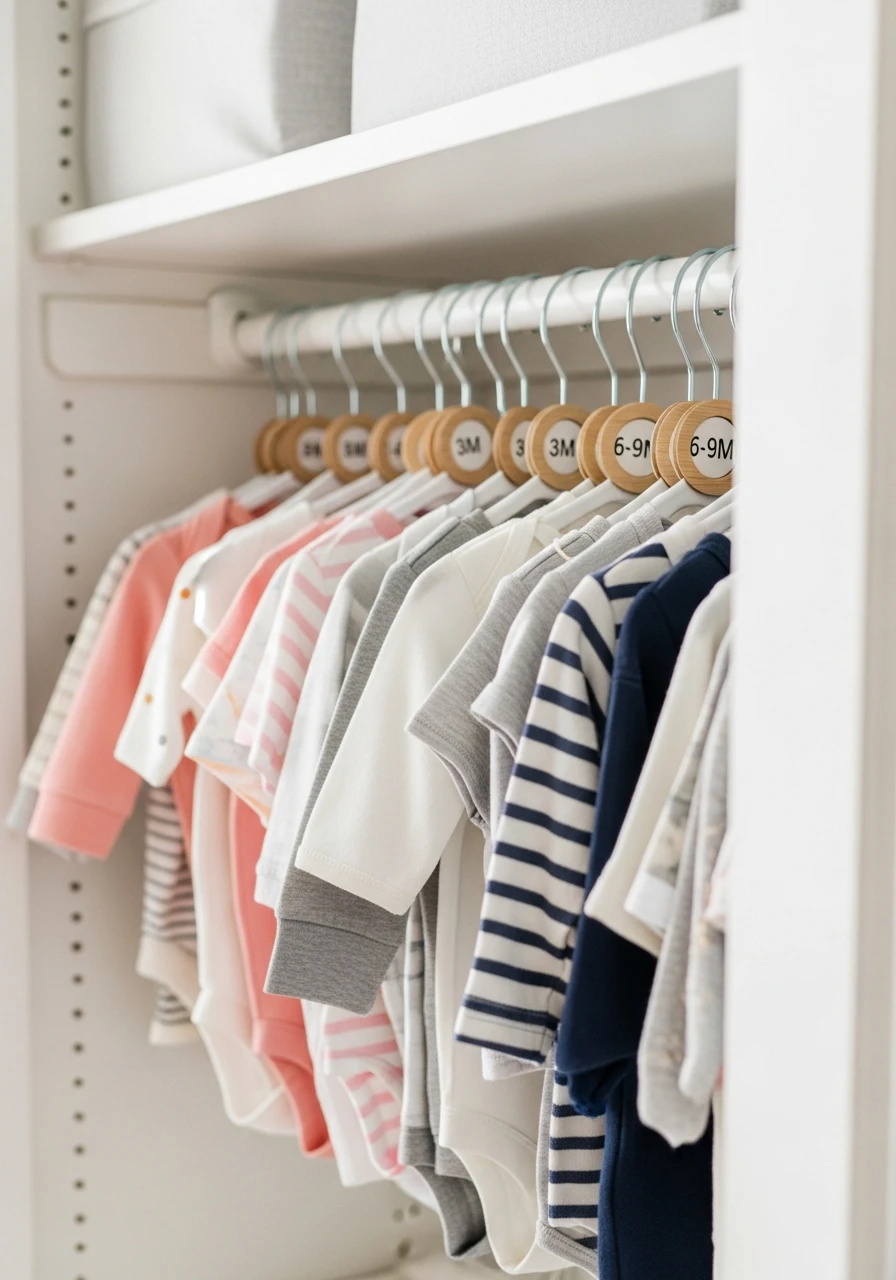
If you have multiple sizes hanging up, use small tags or clips on the hangers to label the size. This prevents confusion when grabbing an outfit quickly.
- Clip small, clear tags onto the neck of the hanger.
- Use this method for clothes that are currently too big but hanging in the closet.
Pro Tip: This is especially helpful if you are using hand-me-downs from older siblings or friends, ensuring nothing gets mixed up.
21. Store Clothes Upright
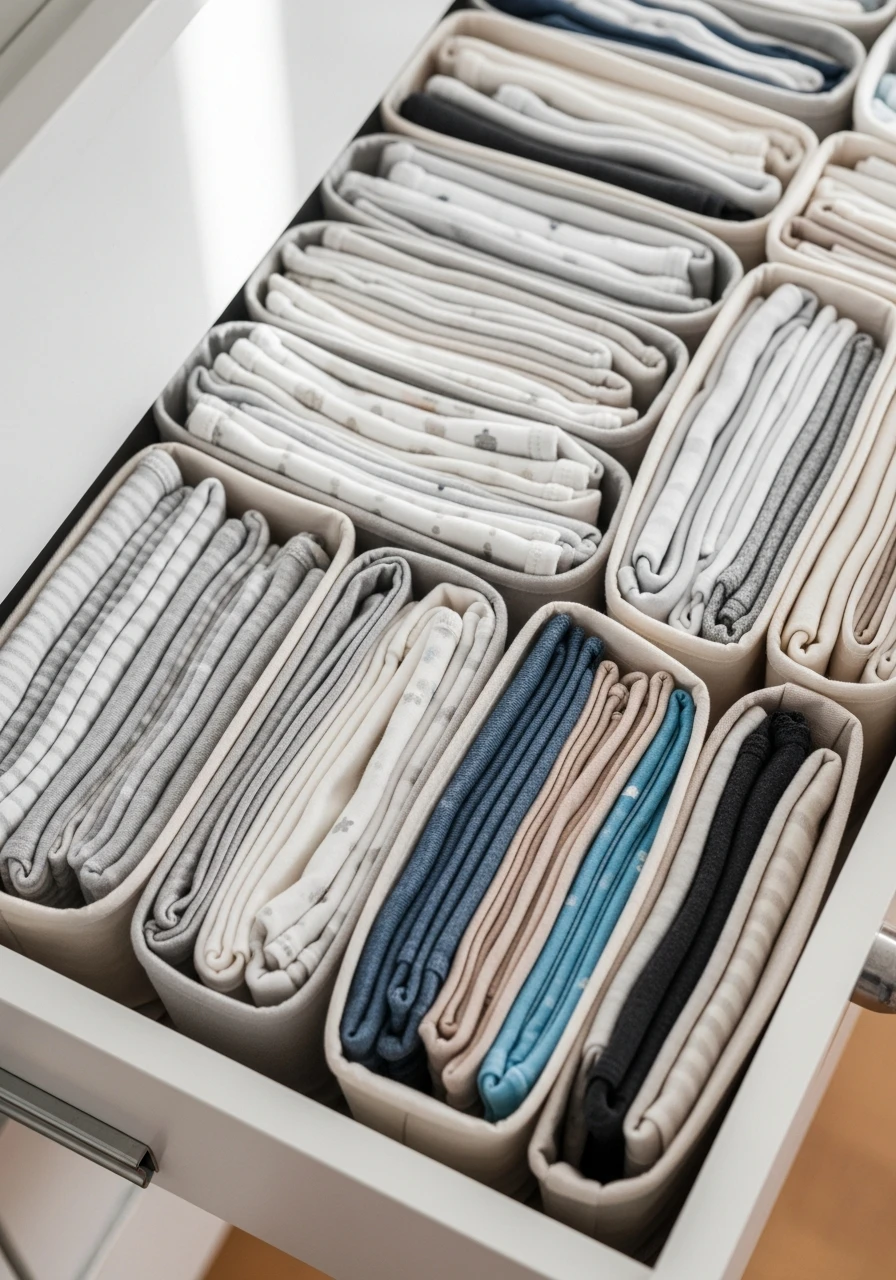
Folding clothes vertically, like filing them in a drawer, means you can see every single item. This stops you from forgetting about items that usually hide at the bottom of the stack.
- Use the vertical folding technique for onesies and pants.
- Store them in bins or drawers that are slightly taller than the folds.
Pro Tip: This technique works best when paired with drawer dividers or small bins to keep the clothes from flopping over.
22. Open Bins for Play Items
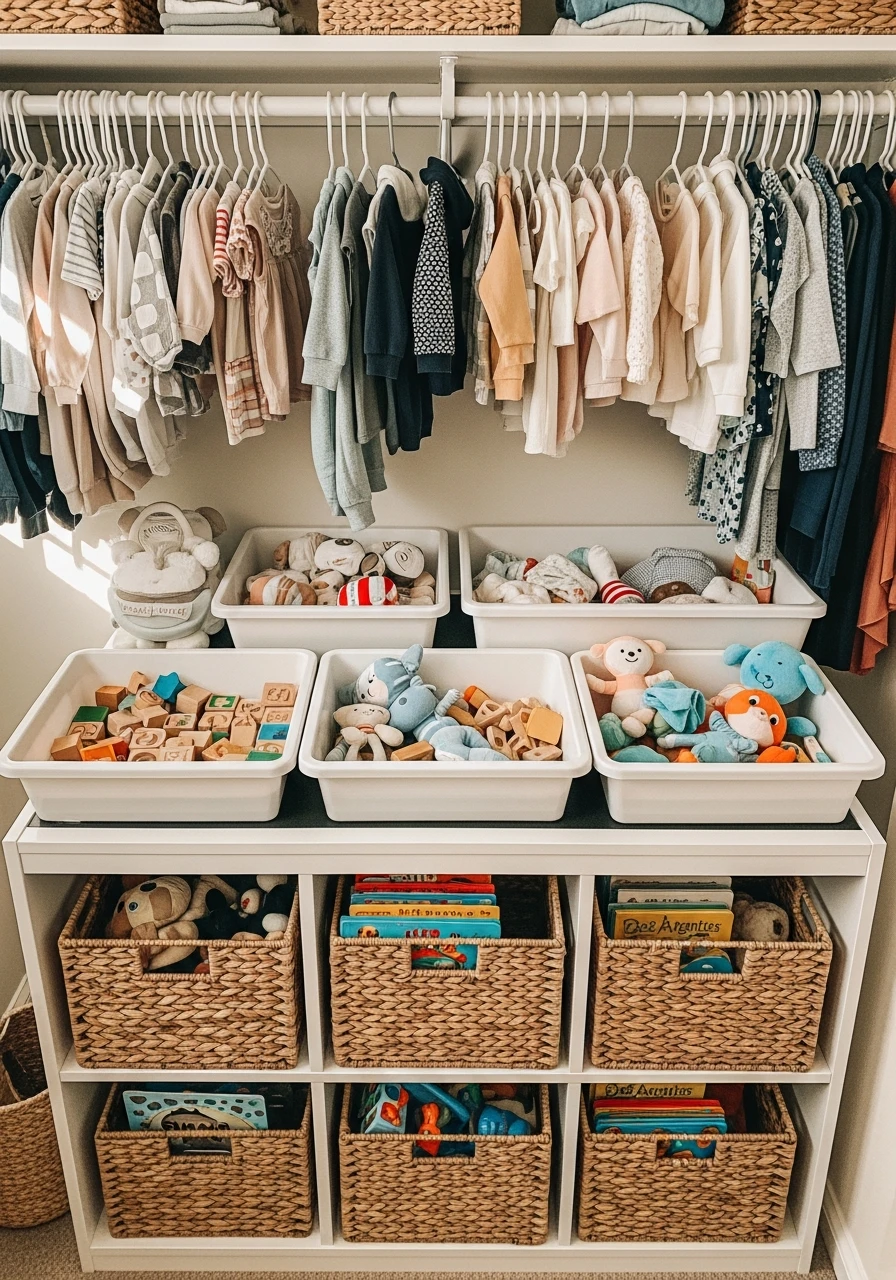
Keep small, frequently accessed toys and board books separate from clothing storage. Open bins are a great solution, making cleanup fast and easy for you and eventually the toddler.
- Use durable plastic or wooden bins for toys.
- Keep the bins on a low, accessible shelf.
Pro Tip: Don’t overfill the toy bins. If they look too full, it’s time to rotate some toys out into storage.
23. Shelf Risers Add Levels
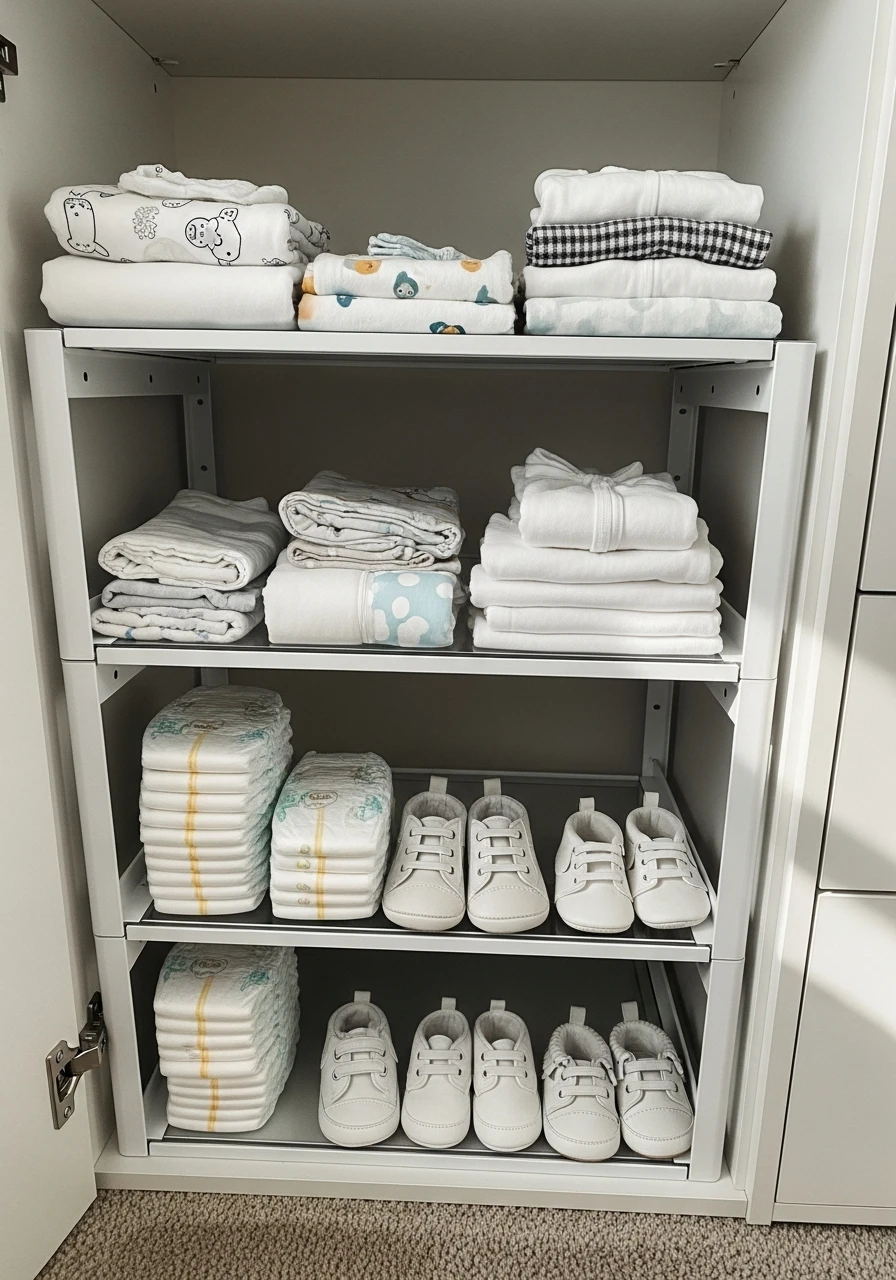
If your shelves are deep, risers create two layers of storage where you only had one before. They are great for creating extra levels for shoes, folded accessories, or small stacks of diapers.
- Use clear acrylic risers to keep the look light.
- Place risers on the shelf to lift one set of items above the other.
Pro Tip: Risers are perfect for keeping a stack of clean diapers elevated while storing extra wipes underneath.
24. Changing Station Basket
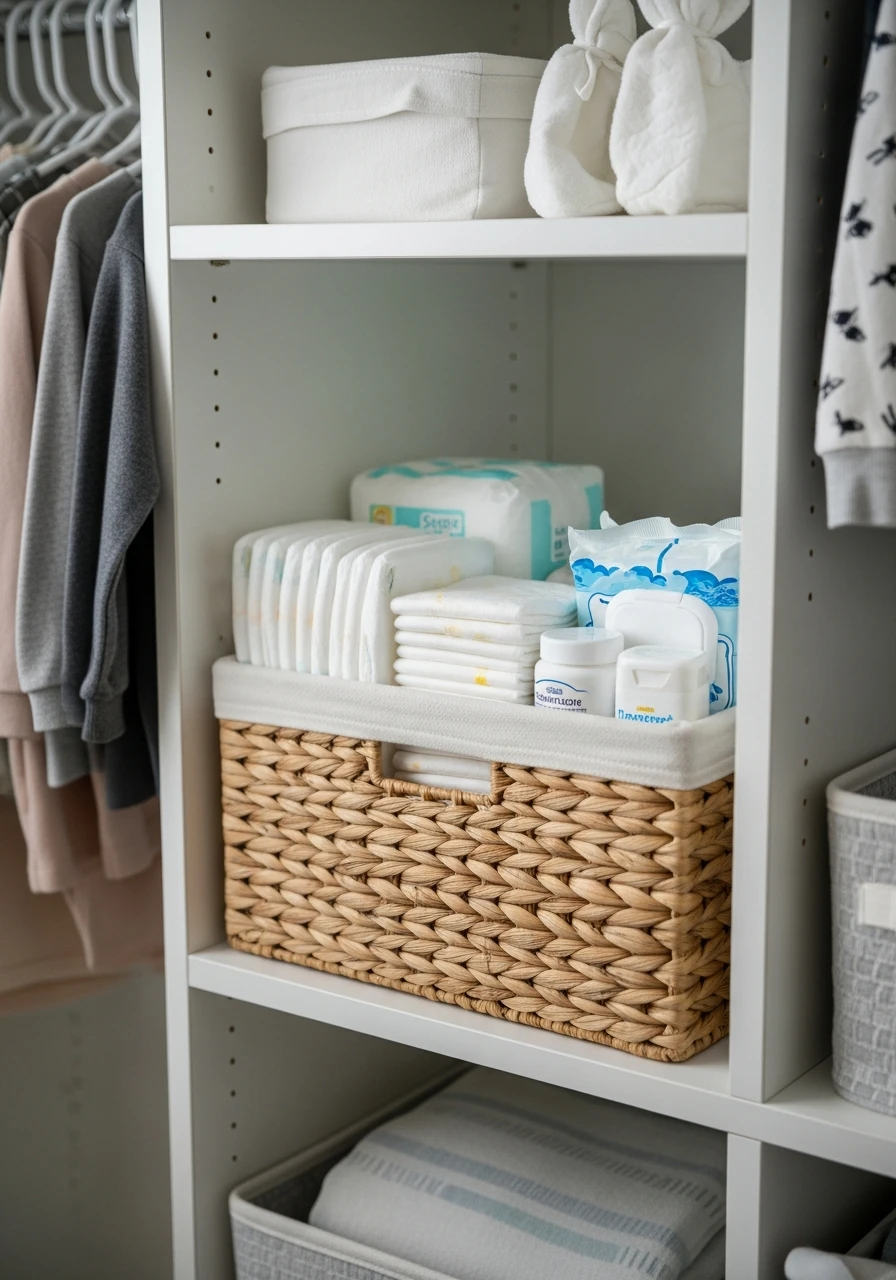
If space is tight, keep a basket with diapers, wipes, and cream right in the closet. This keeps all changing supplies contained and conveniently located near the changing area.
- Use a portable caddy or deep basket.
- Keep the basket stocked and ready to go.
Pro Tip: Choose a basket that is sturdy enough to move easily between the closet and the changing table.
25. Outgrown Clothes Storage
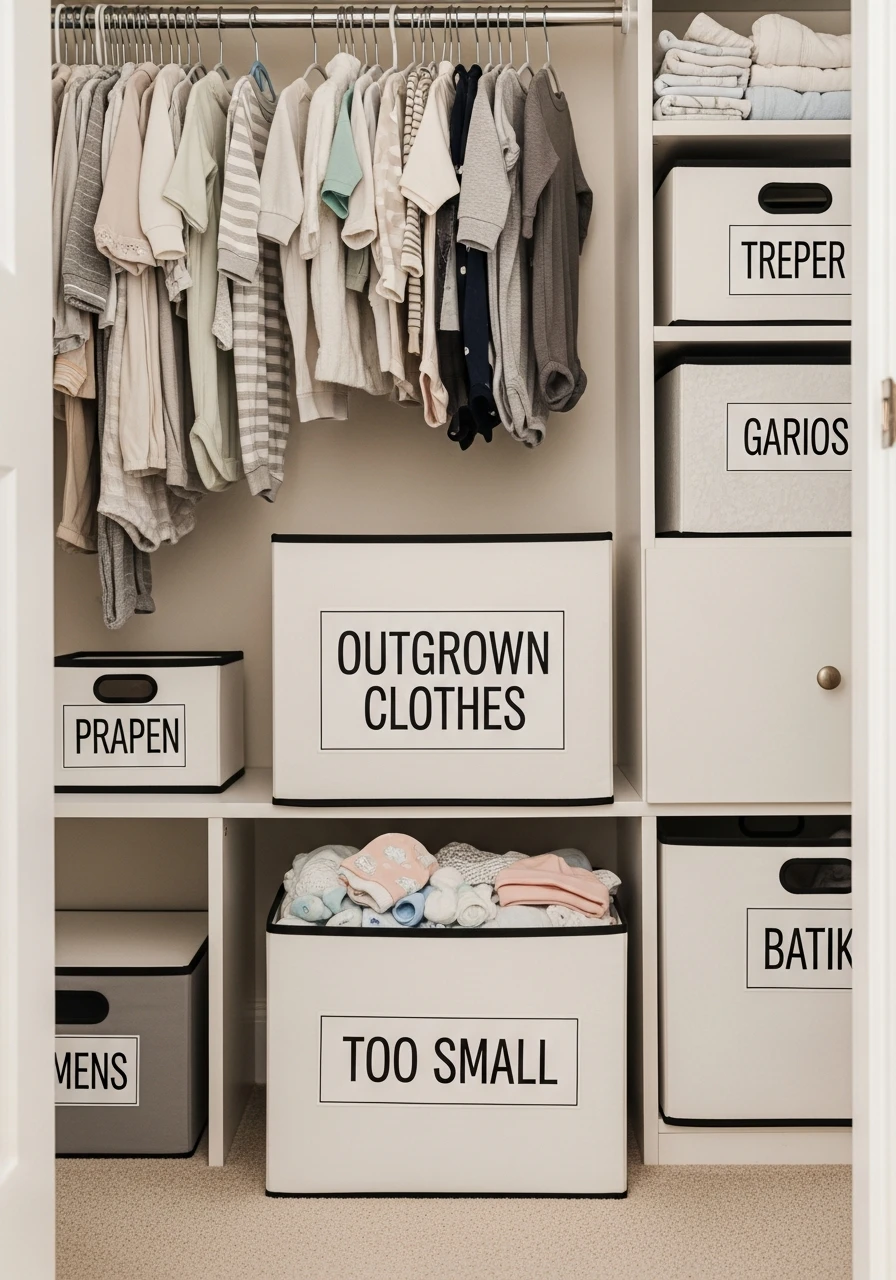
Keep a clearly marked bin ready for clothes that no longer fit. When you put away laundry, toss the small items right in there. This prevents small items from mixing with the current size.
- Use a labeled fabric cube or opaque bin.
- Keep the bin close by for easy access during laundry time.
Pro Tip: When the outgrown bin is full, seal it up and move it to long-term storage or donation immediately to keep things moving.
26. Display Keepsakes Up High
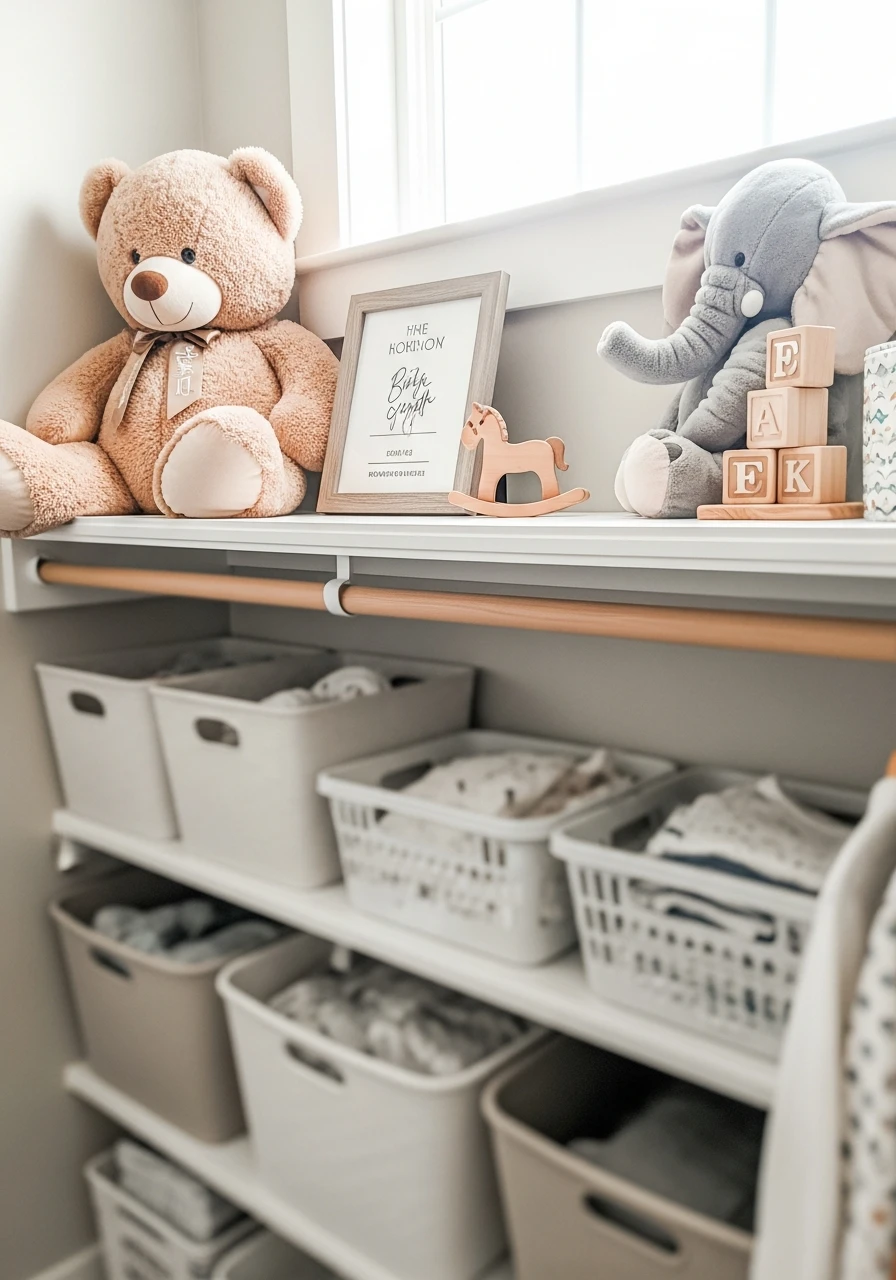
Use high shelves for special decorative items, like a favorite stuffed animal, a birth announcement, or a keepsake toy. It adds personality without cluttering the essential storage space below.
- Keep decorative items out of baby’s reach.
- Use the closet as an extension of the room’s decor.
Pro Tip: Group decorative items in odd numbers (like three or five) for a professional designer look on your shelving.
27. Adjustable Closet System
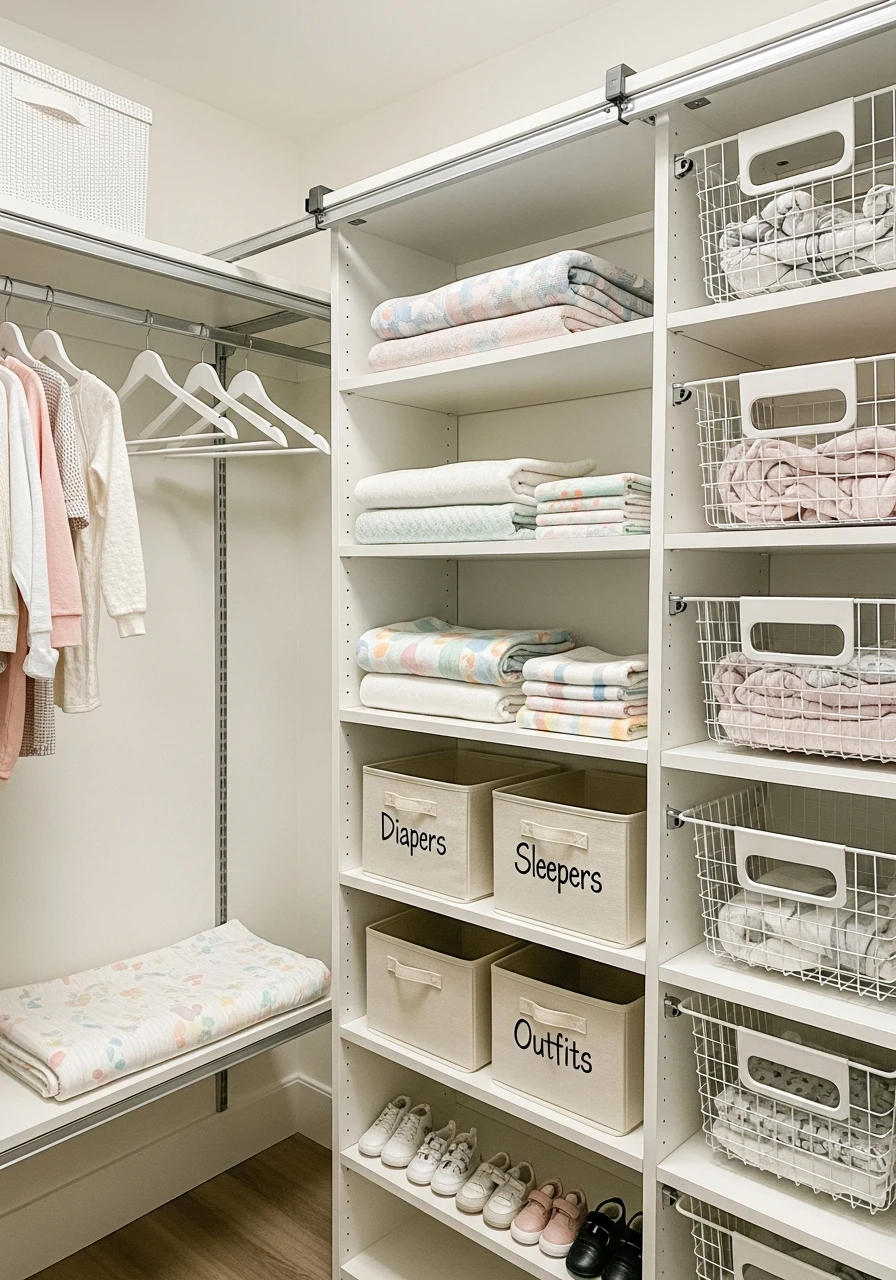
Choose a system that lets you move rods and shelves around easily. As your child grows from baby to toddler, their storage needs will change constantly, making adjustability key.
- Invest in a modular system that can be reconfigured.
- Adjust rod heights as baby clothes transition to toddler clothes.
Pro Tip: While custom systems are expensive, many big box stores offer affordable, quality adjustable wire systems.
28. Drawer for Grooming Items
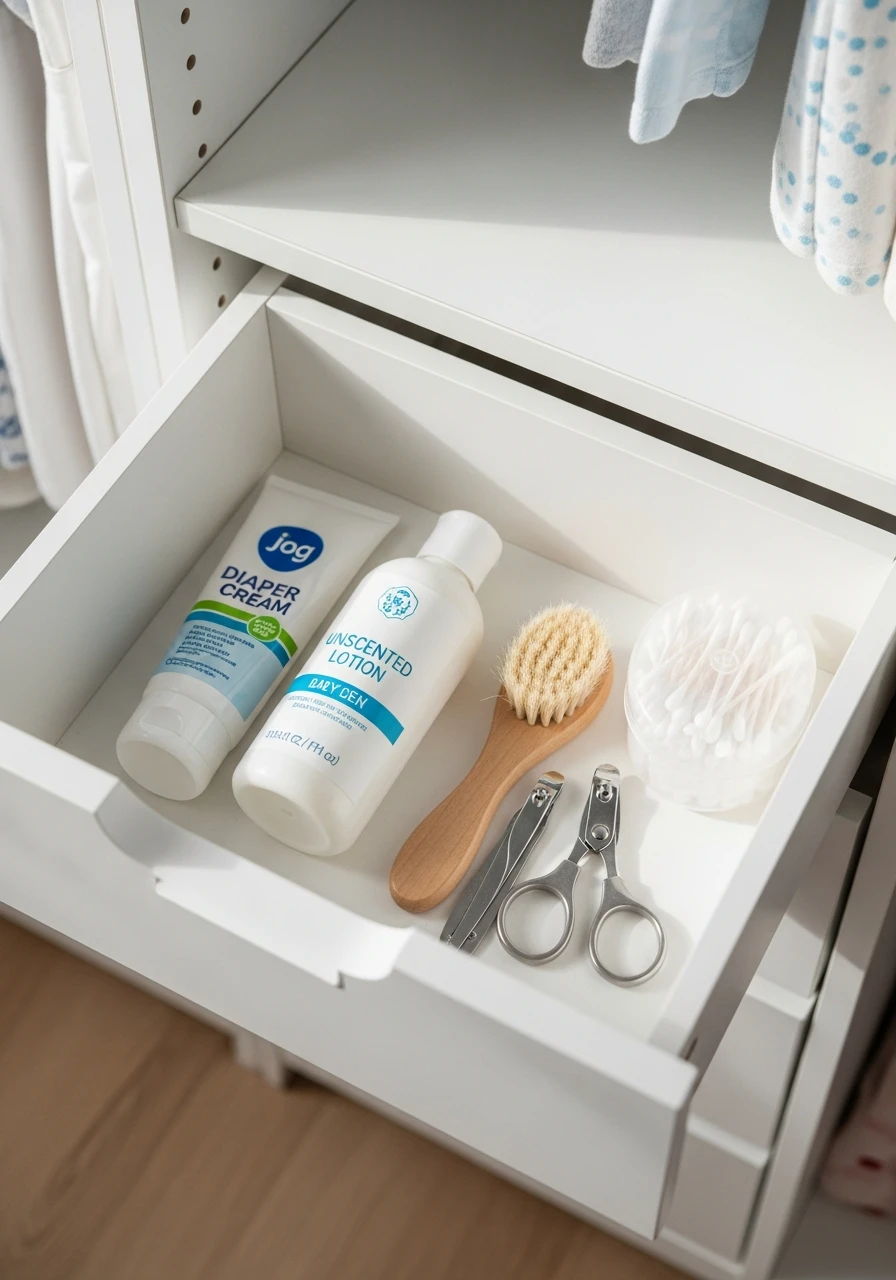
Designate one drawer or small bin entirely for care products. Store lotions, creams, baby brush, and grooming items together to keep them separate from clothing and easy to find.
- Keep all health and care products centralized.
- Use a small tray inside the drawer to stop bottles from tipping over.
Pro Tip: Store any medicine or potentially harmful items in a separate, latched container high out of reach.
29. Daily Essentials Basket
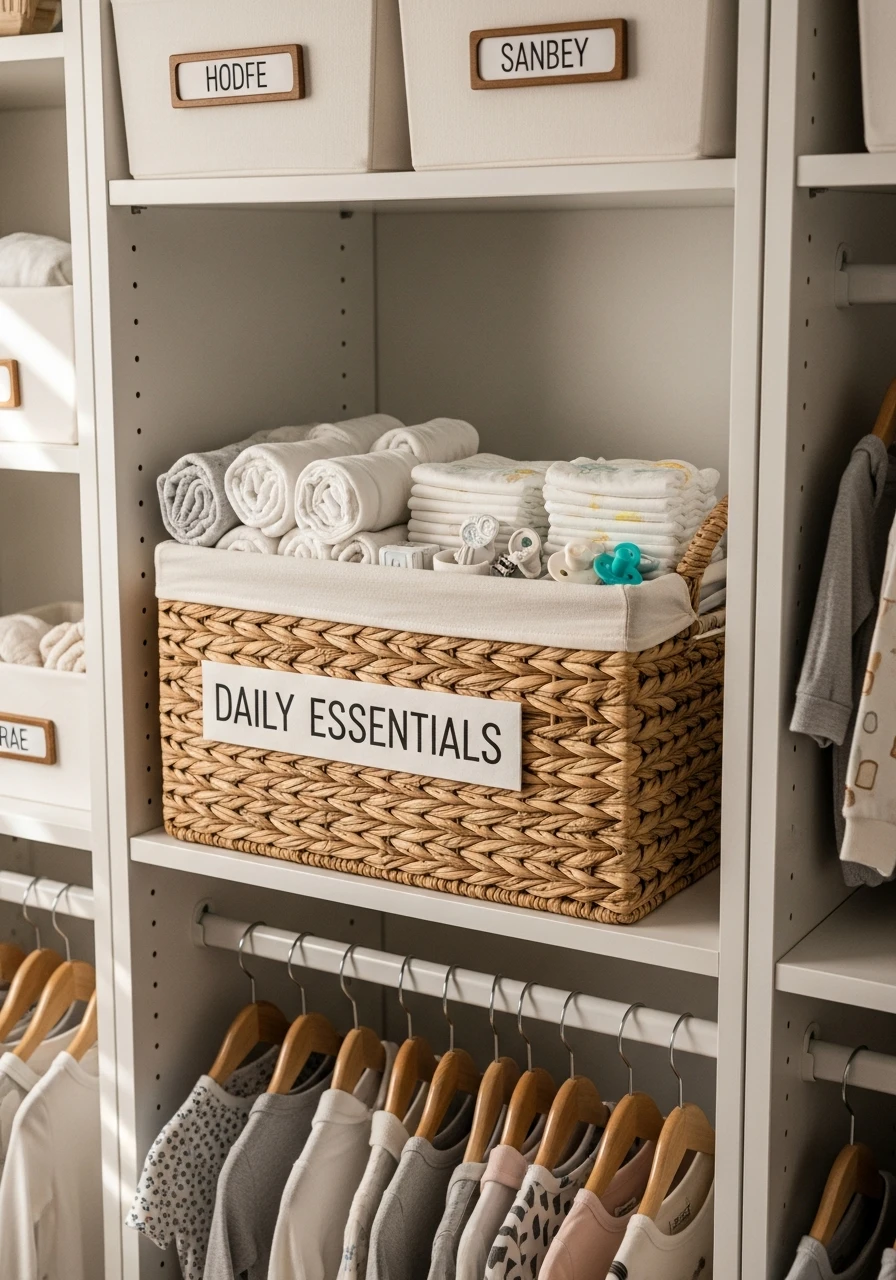
Keep the outfits, diapers, and accessories you use every single day in one front-and-center basket. This simplifies rushed mornings and ensures everything you need is right there.
- Use a low basket on the shelf closest to the floor.
- Keep 2-3 ready-to-go outfits in this basket.
Pro Tip: Restock the daily essentials basket every night as part of your bedtime routine to make the next morning chaos-free.
30. Clear Bins for Daily Use
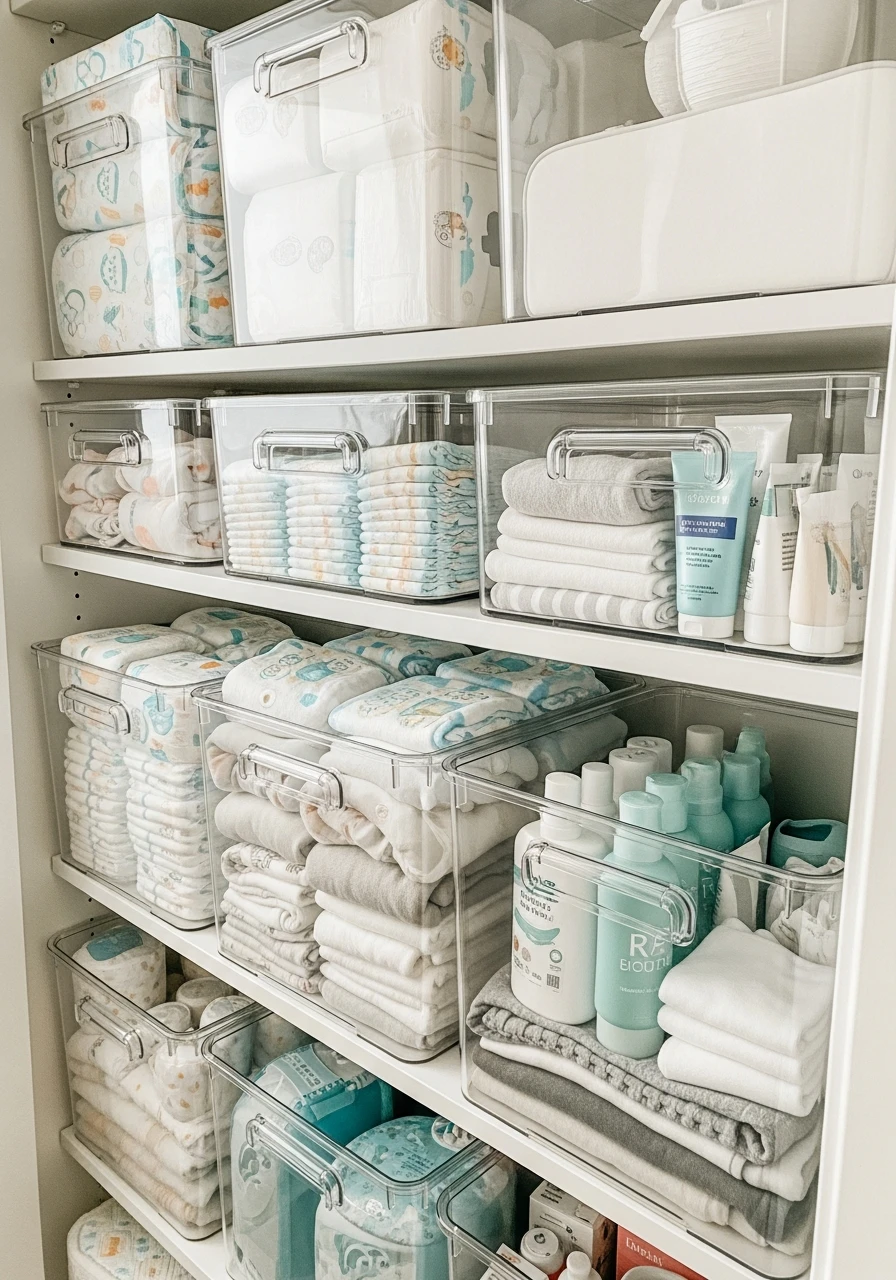
Choosing clear containers for everyday items ensures you always know what you have and what you are running low on. Nothing gets forgotten or lost in a hidden corner.
- Use low-profile, clear containers that slide easily in and out.
- Store burp cloths and reusable wipes in clear bins.
Pro Tip: If you don’t like the plastic look, use clear acrylic bins for a more polished and expensive appearance.
Organizing a nursery closet might seem like a huge job, but these simple steps make it totally manageable.
Remember, a tidy closet means less stress and more time for snuggles.
Tackle one area at a time, and you will have a perfectly organized space in no time. You got this!