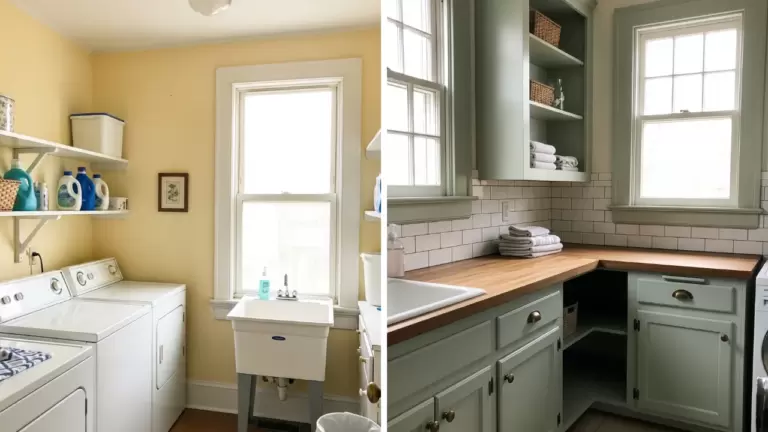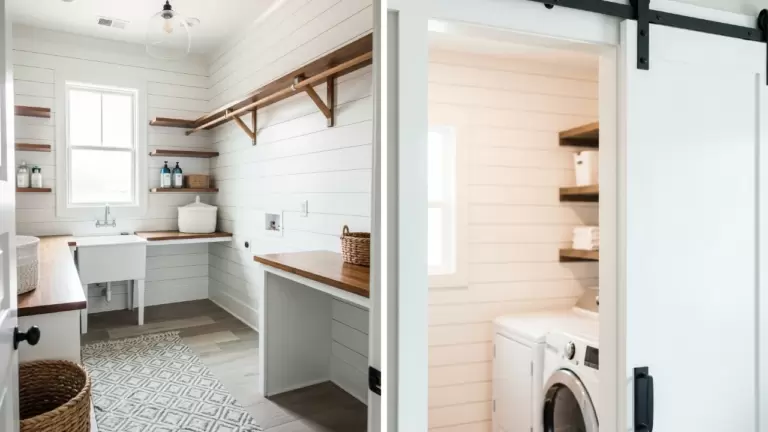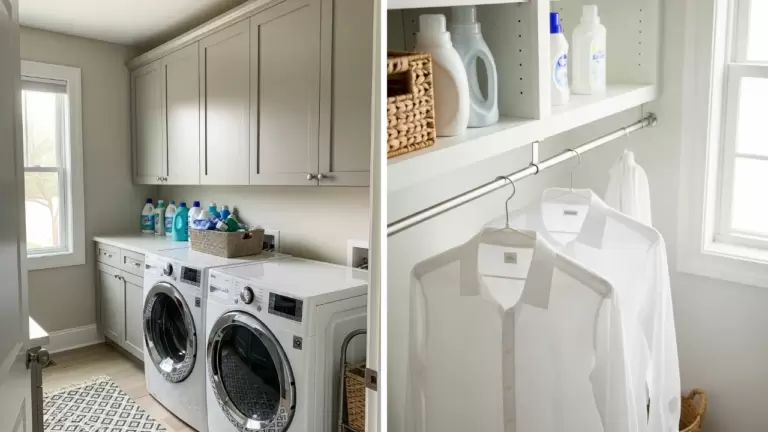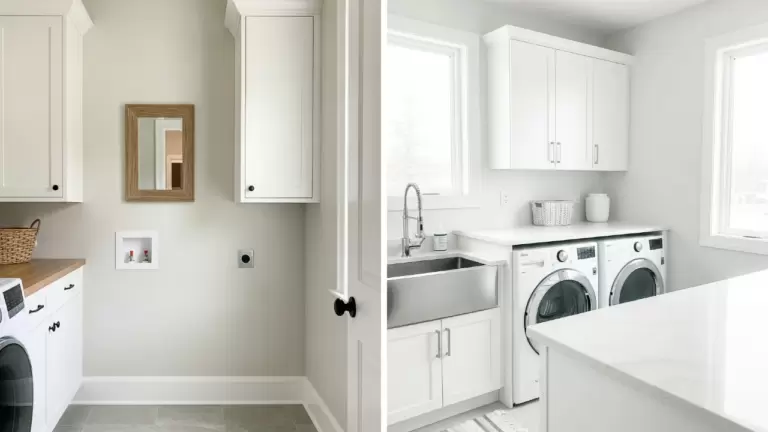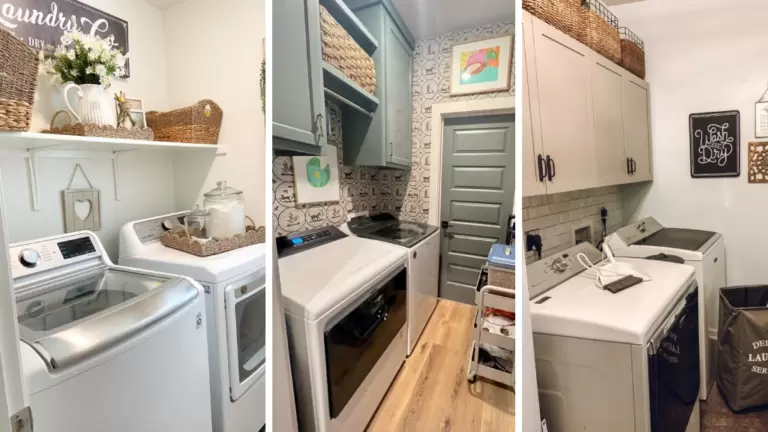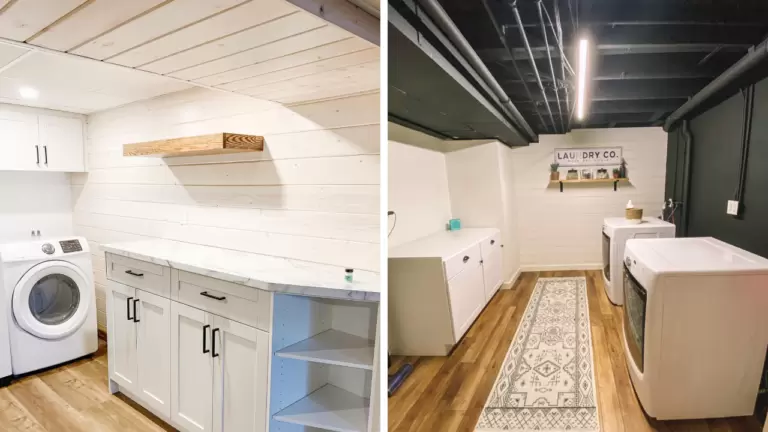
50 Narrow Laundry Room Ideas

This post may contain affiliate links: full affiliate disclosure.
Does your laundry room feel more like a closet than a workspace?
Dealing with a tight, narrow space doesn’t mean giving up on style or function.
We’re showing you 50 genius ways to maximize every inch, turning that cramped corridor into a storage powerhouse without any major renovations.
1. Stack Your Appliances
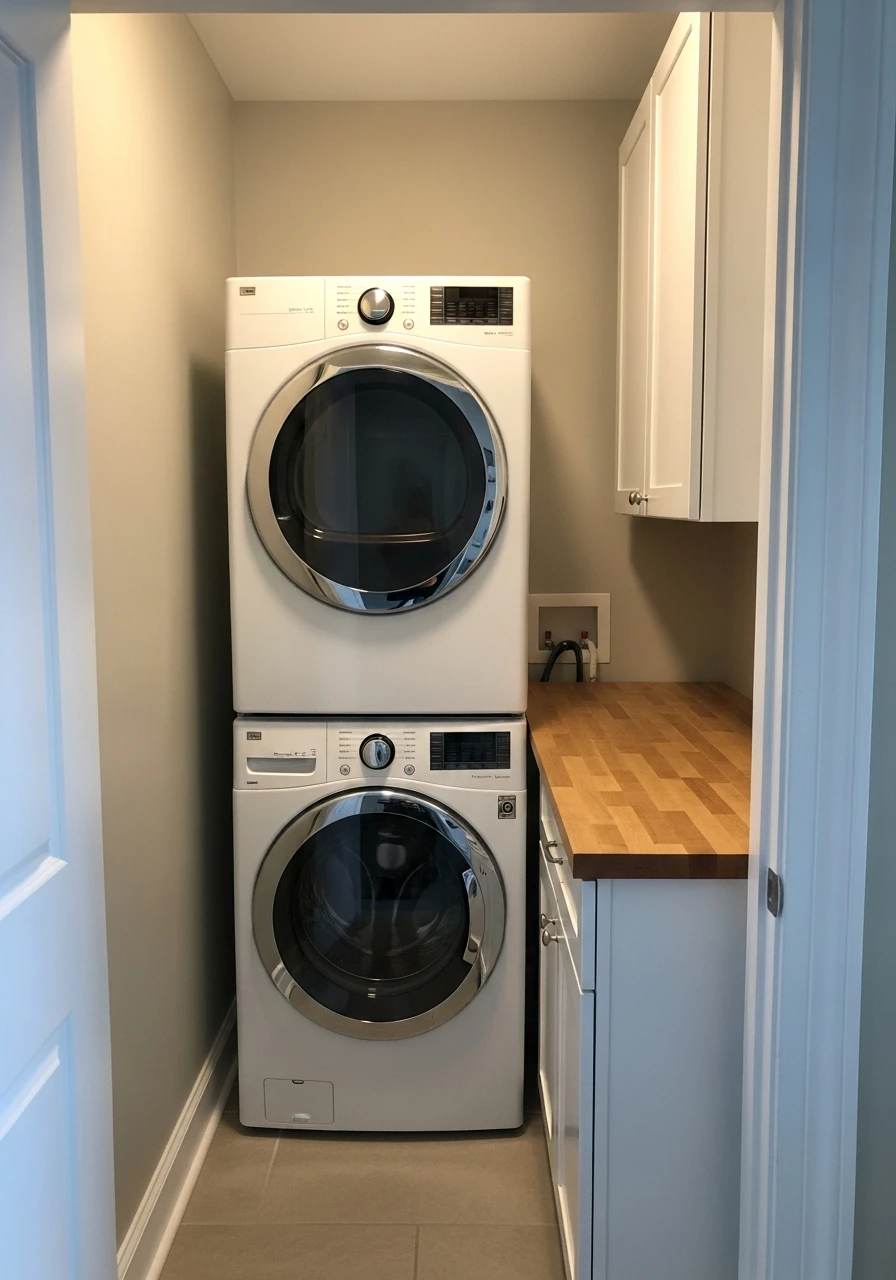
Use a stacked washer and dryer setup to instantly reduce the footprint. This layout frees up valuable floor space, allowing room for a small folding area or extra storage cabinets.
- Measure vertically to ensure ceiling clearance.
- Gain square footage without widening the room.
- Look for stackable models for safety.
Pro Tip: Place frequently used items on the top shelf so they are easy to reach when loading the dryer.
2. Keep Everything on One Wall
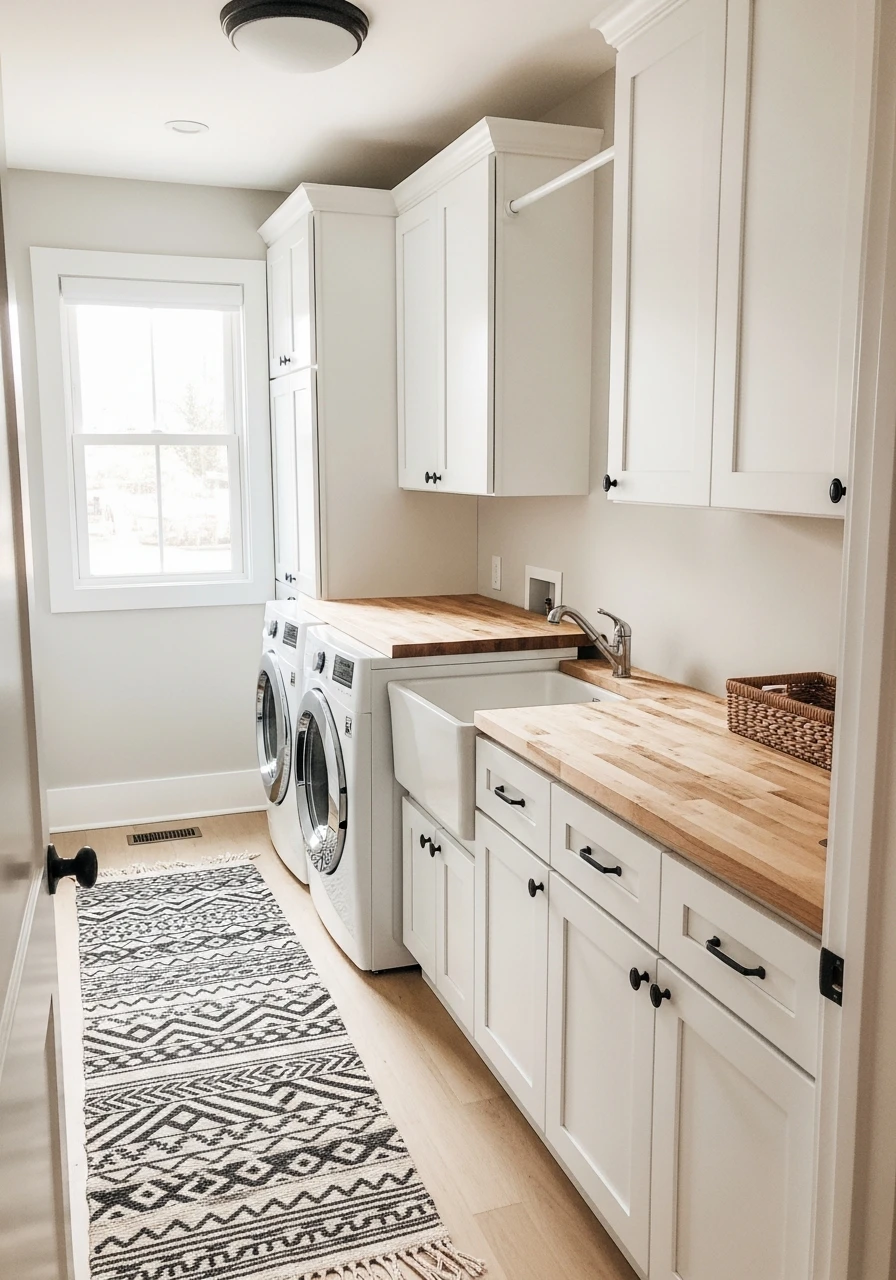
Design a single-wall galley layout to keep the walkway clear. Installing all elements—machines, sink, and storage—on one side creates a clean and efficient workflow.
- Ensure appliances are front-loading.
- Use shallow depth cabinets.
- Keep the opposite wall totally bare.
Pro Tip: This design works especially well in rooms less than five feet wide.
3. Counter Opposite Machines
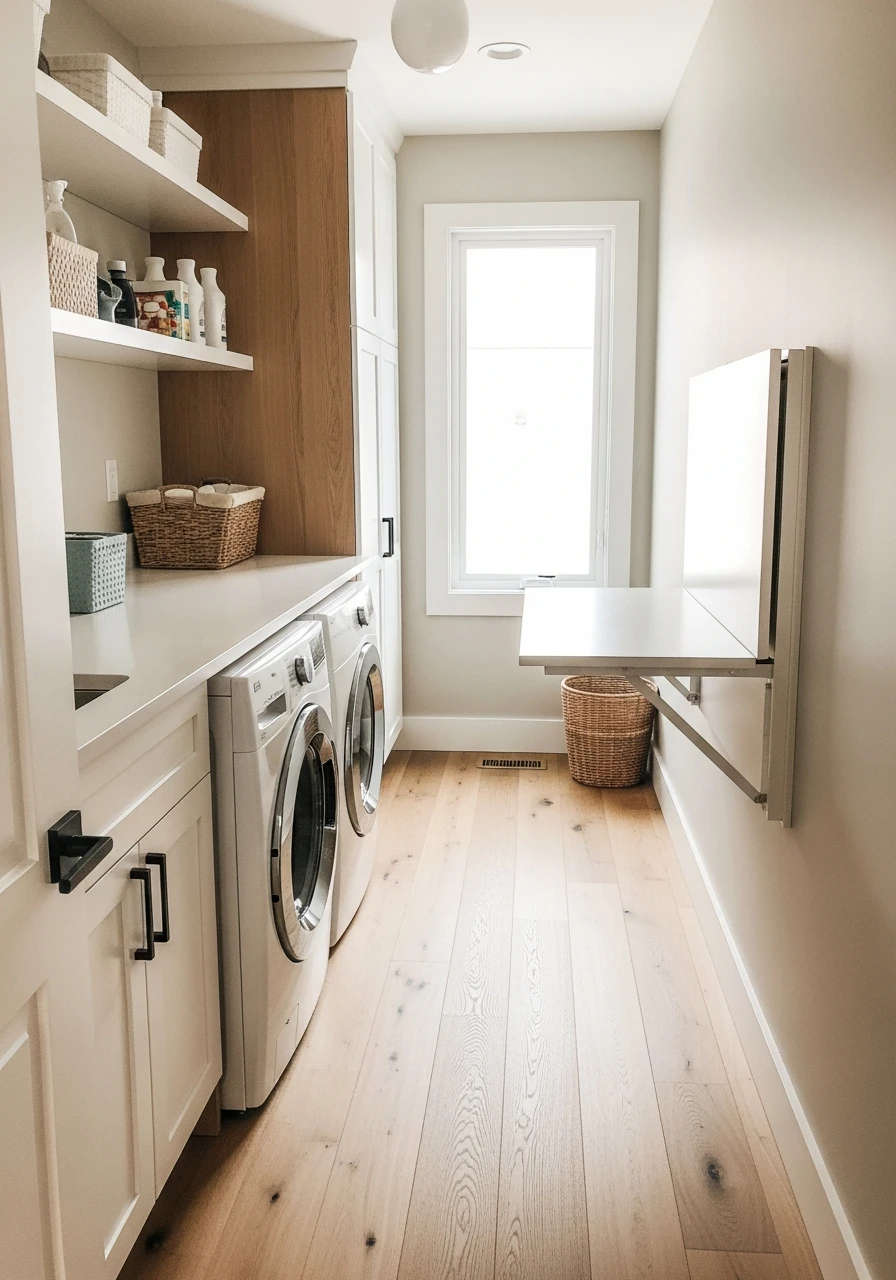
Place the washer and dryer on one wall and a very slim folding counter on the opposite wall. This balanced approach improves functionality while maintaining comfortable clearance down the middle.
- Keep the counter depth under 16 inches.
- Use the counter area for folding only.
- Ensure there is enough space to pass comfortably.
Pro Tip: A floating counter design maximizes floor visibility, making the room feel less crowded.
4. Hide It With Sliding Doors
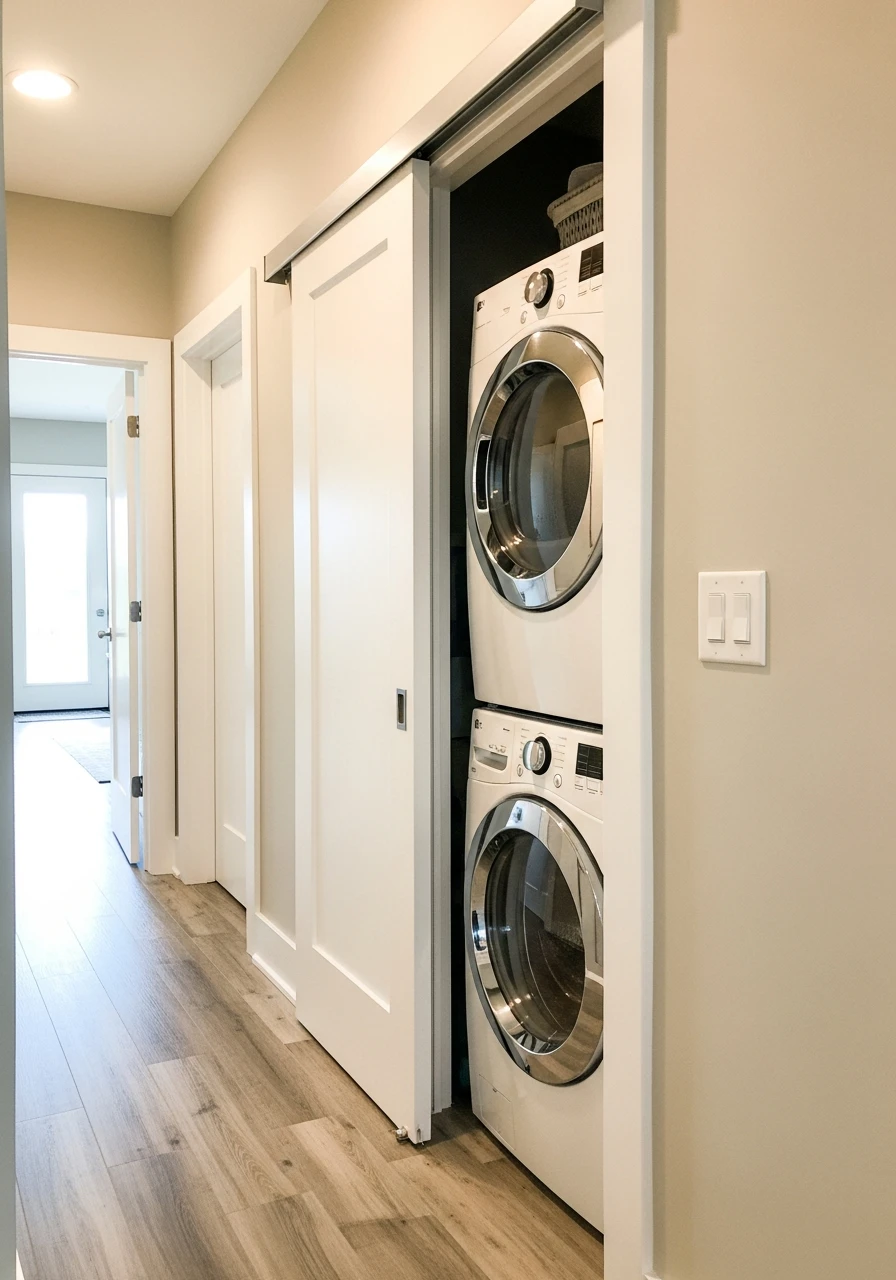
Convert your narrow space into a laundry closet using sliding or bypass doors. This keeps appliances hidden when not in use and eliminates door swings that block tight walkways.
- Choose lightweight, smooth-gliding doors.
- Use mirrored doors for extra light.
- Ensure easy access for machine maintenance.
Pro Tip: Sliding doors are much better than bi-fold doors, which can still jut out slightly when open.
5. Conceal Laundry Behind Doors
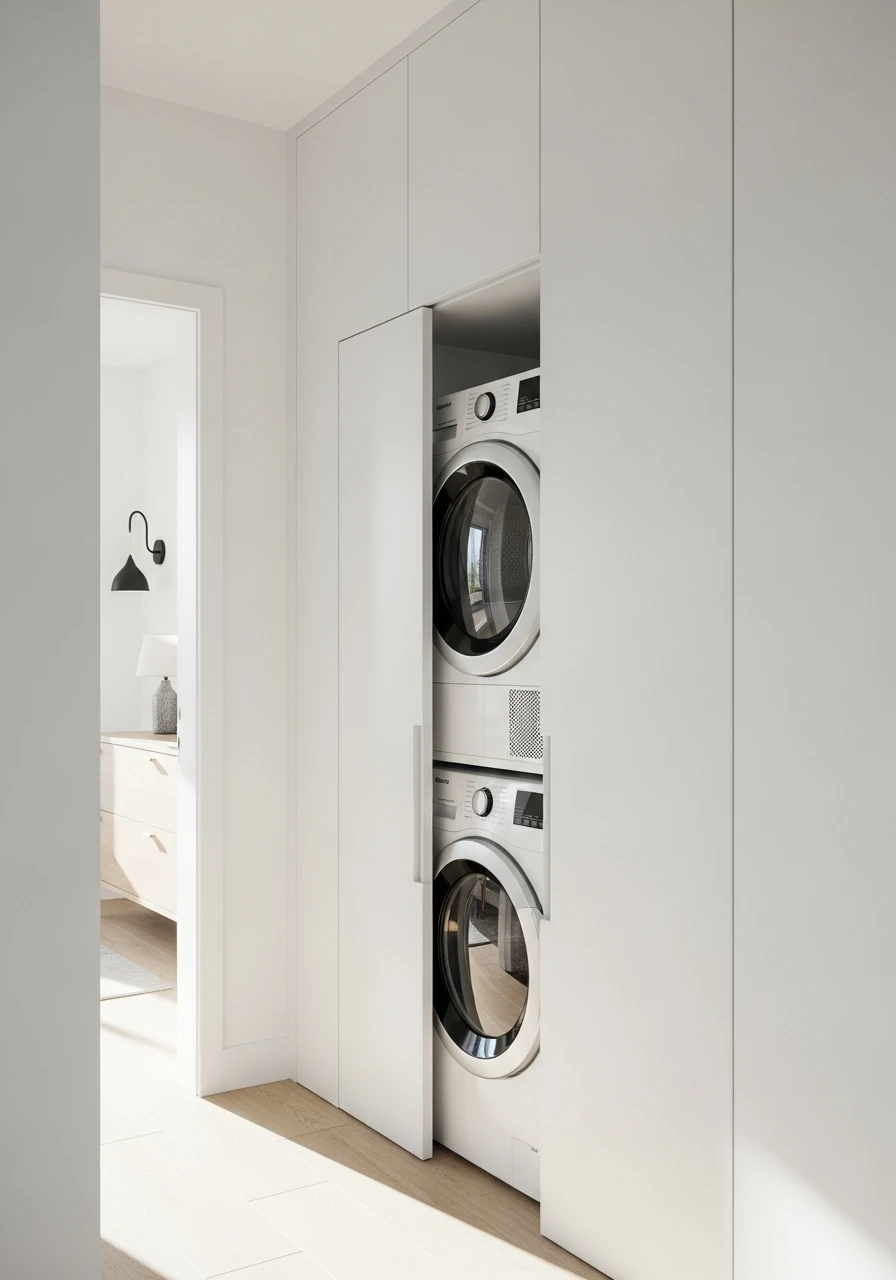
Use full-height pocket doors or concealed doors to hide the entire laundry area. This solution is great for narrow hallways or open-plan homes where visual clutter must be minimized.
- Install doors that disappear completely into the wall.
- Use simple push-latch hardware.
- Paint the doors the same color as the wall.
Pro Tip: A truly hidden laundry area helps maintain the high-end look of nearby living spaces.
6. Corner Storage, High Shelves
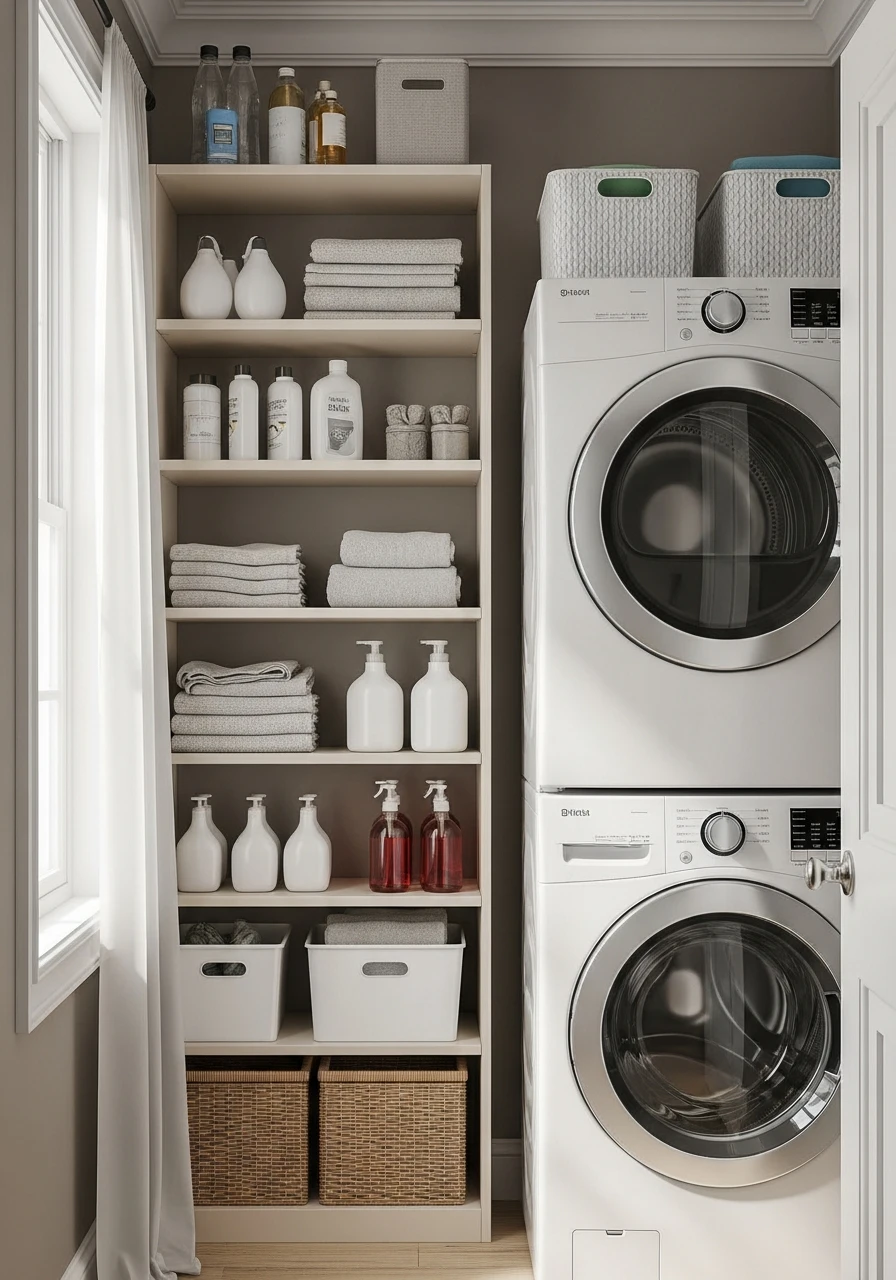
If your room is short but narrow, fit the appliances into a corner. Use vertical shelving above and beside them to maximize storage in the usable height.
- Utilize the space above the machines.
- Use wire shelving for an industrial look.
- Keep heavy items low for stability.
Pro Tip: Corner installations can sometimes make plumbing access easier in older homes.
7. Add a Folding Bench
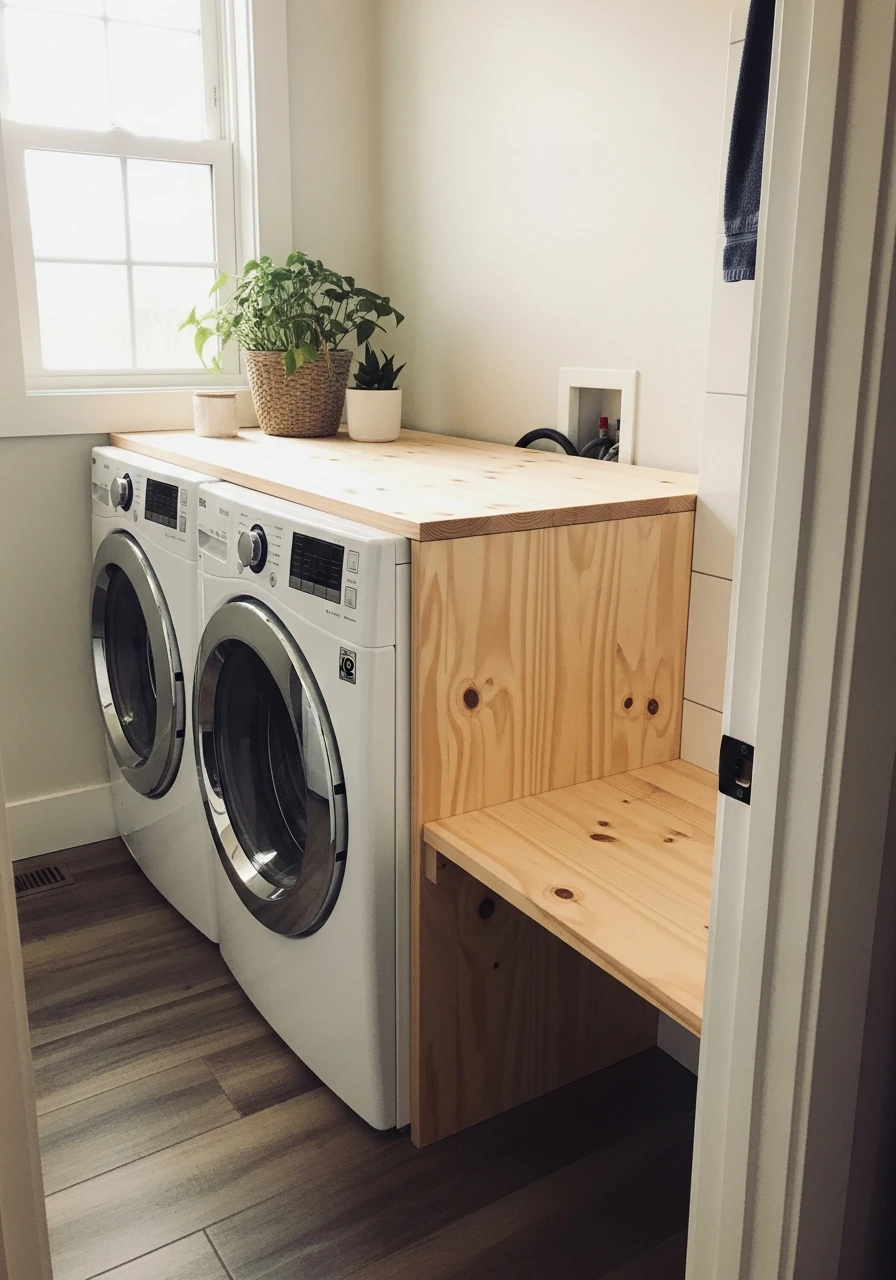
Install a narrow, built-in bench next to your machines for folding. Keeping the bench shallow ensures the room remains functional without feeling overly crowded.
- Add storage drawers under the bench.
- Ensure the bench surface is durable.
- Keep the bench height comfortable for folding.
Pro Tip: A bench can also serve as a temporary spot to rest heavy laundry baskets.
8. Combine Laundry and Mudroom
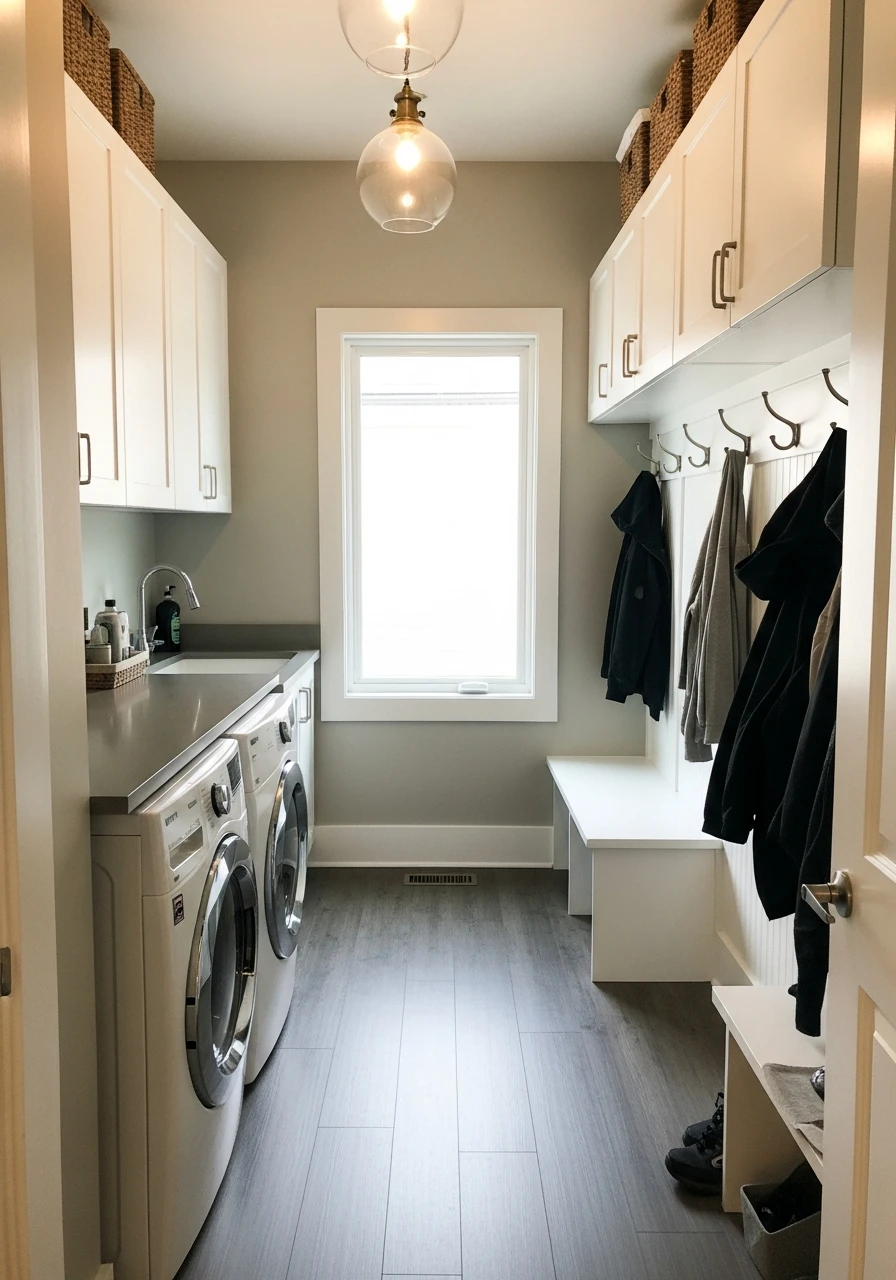
Merge a narrow laundry room with a mudroom area using slim cabinets, hooks, and benches. This dual-purpose design makes efficient use of tight utility corridors near an entrance.
- Use vertical lockers for coats.
- Install durable, easy-to-clean flooring.
- Designate separate zones clearly.
Pro Tip: A small entry rug helps define the mudroom area and catches dirt before it enters the main home.
9. Functional Corridor Design
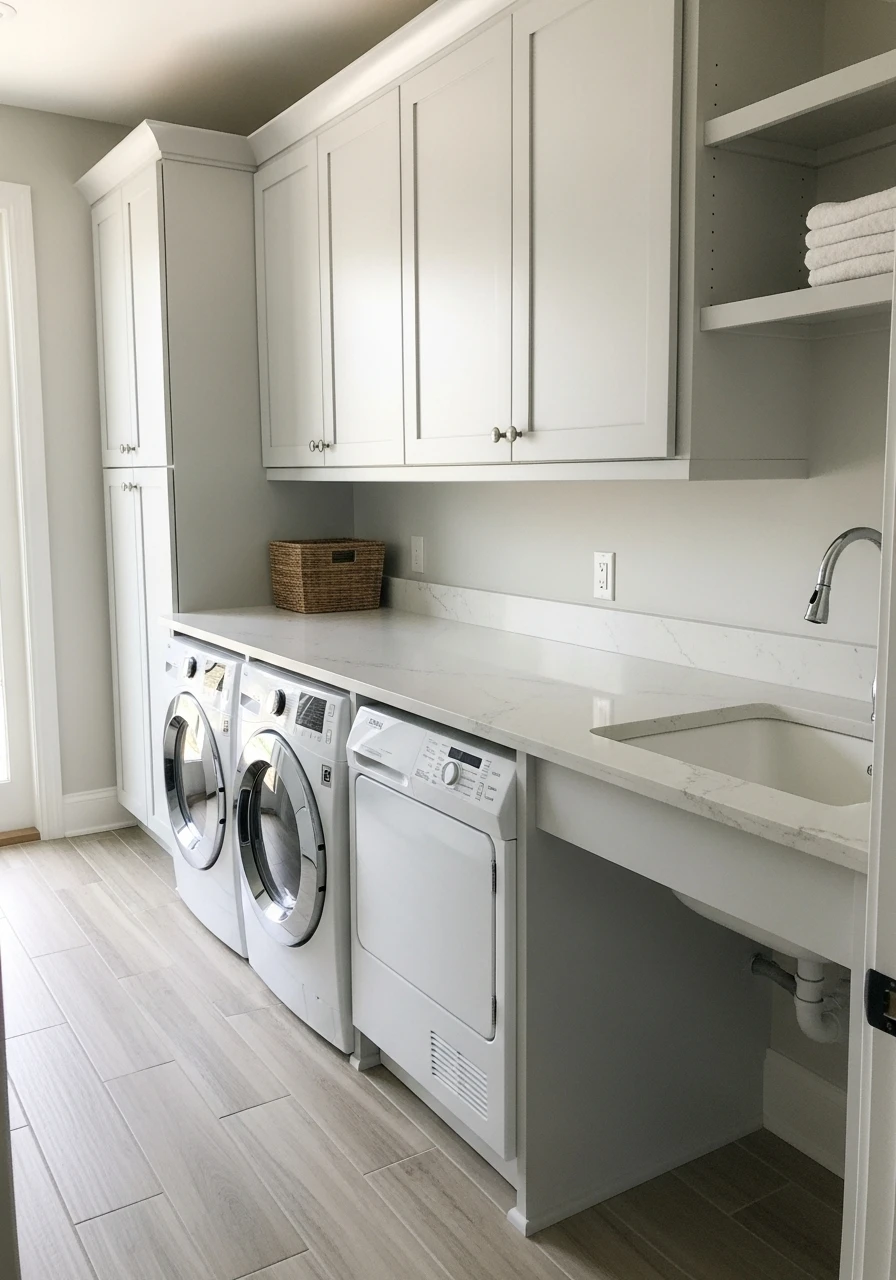
Design the laundry room as a functional corridor with built-ins along the length. Appliances, storage, and work zones are placed in sequence to suit long and narrow spaces.
- Maintain a consistent depth for all built-ins.
- Use lighter colors to prevent a cave feeling.
- Ensure the path remains straight and uncluttered.
Pro Tip: A well-designed corridor maximizes movement efficiency from start to finish of the laundry process.
10. Sink at the Far End
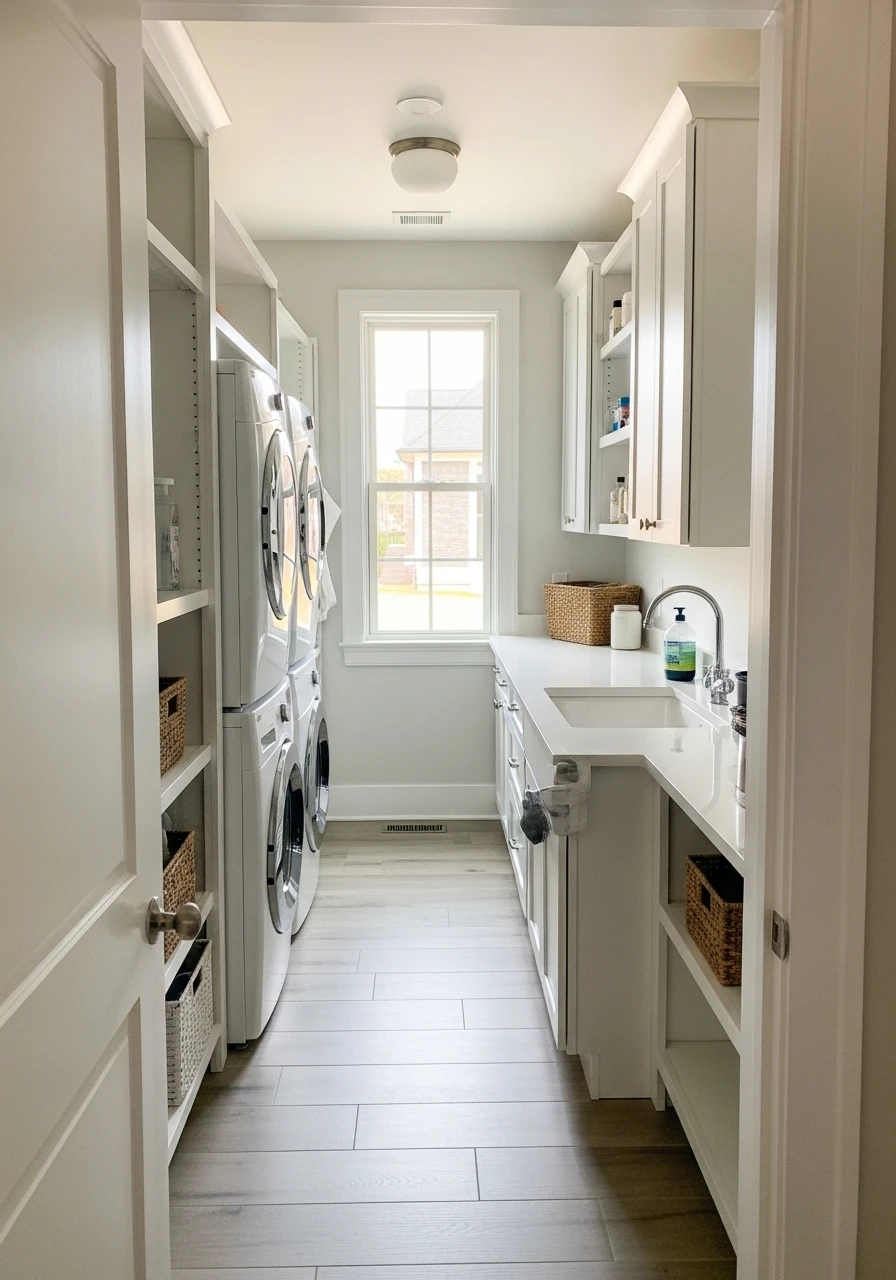
Install the sink at the far end of the narrow laundry room. This keeps the entry open and visually elongates the space while maintaining easy access for handwashing and stain treatment.
- Choose a slim utility sink model.
- Keep cleaning supplies stored nearby.
- Ensure plumbing lines are easy to access.
Pro Tip: Use a deep, narrow sink bowl to minimize splash while taking up less counter space.
11. Go Vertical with Cabinets
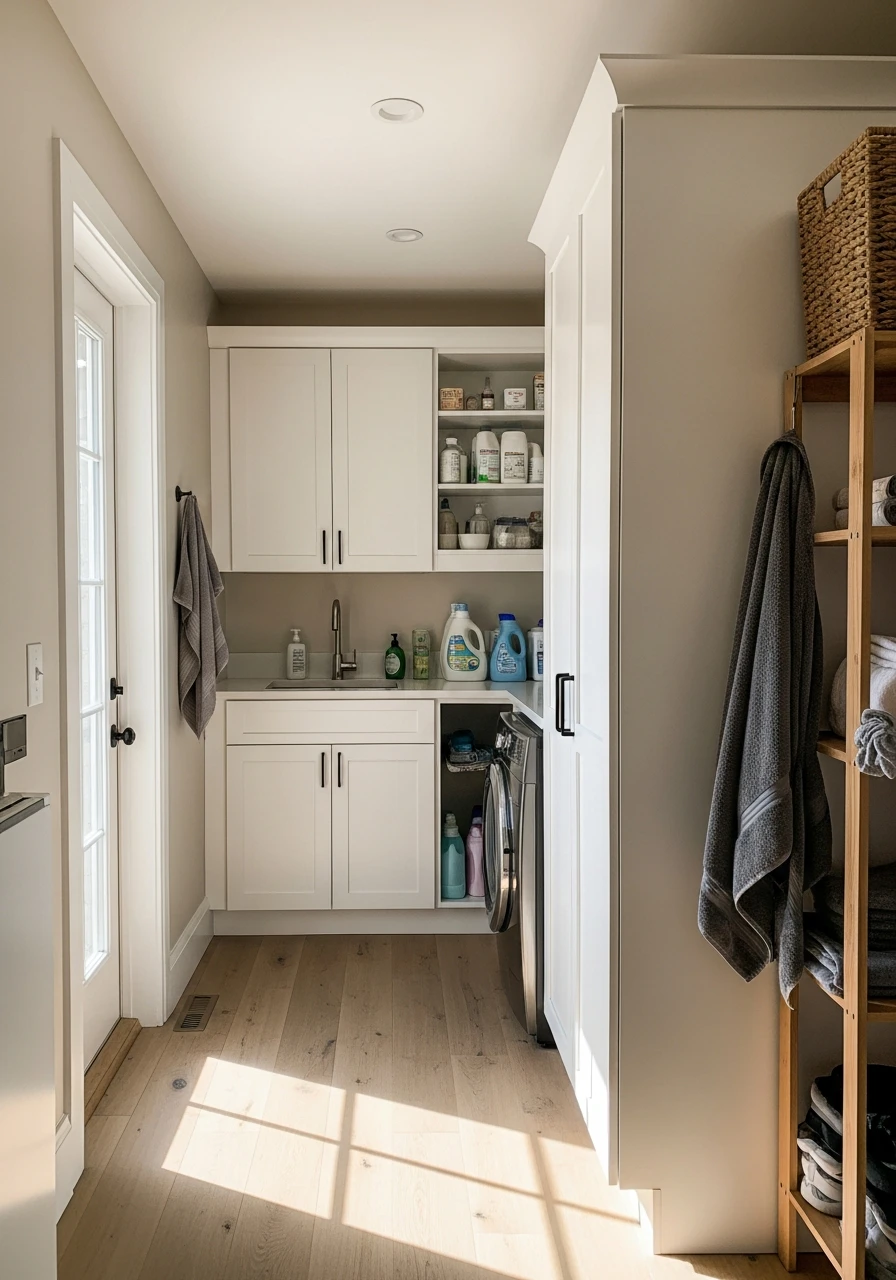
Use tall cabinets that reach floor-to-ceiling to maximize vertical storage. This reduces clutter and keeps cleaning supplies neatly organized where depth is limited.
- Store seasonal items on the highest shelves.
- Use internal pull-out drawers for accessibility.
- Ensure cabinet doors open fully.
Pro Tip: Adding crown molding above the cabinets gives a custom, built-in look.
12. Use Glass Cabinet Doors
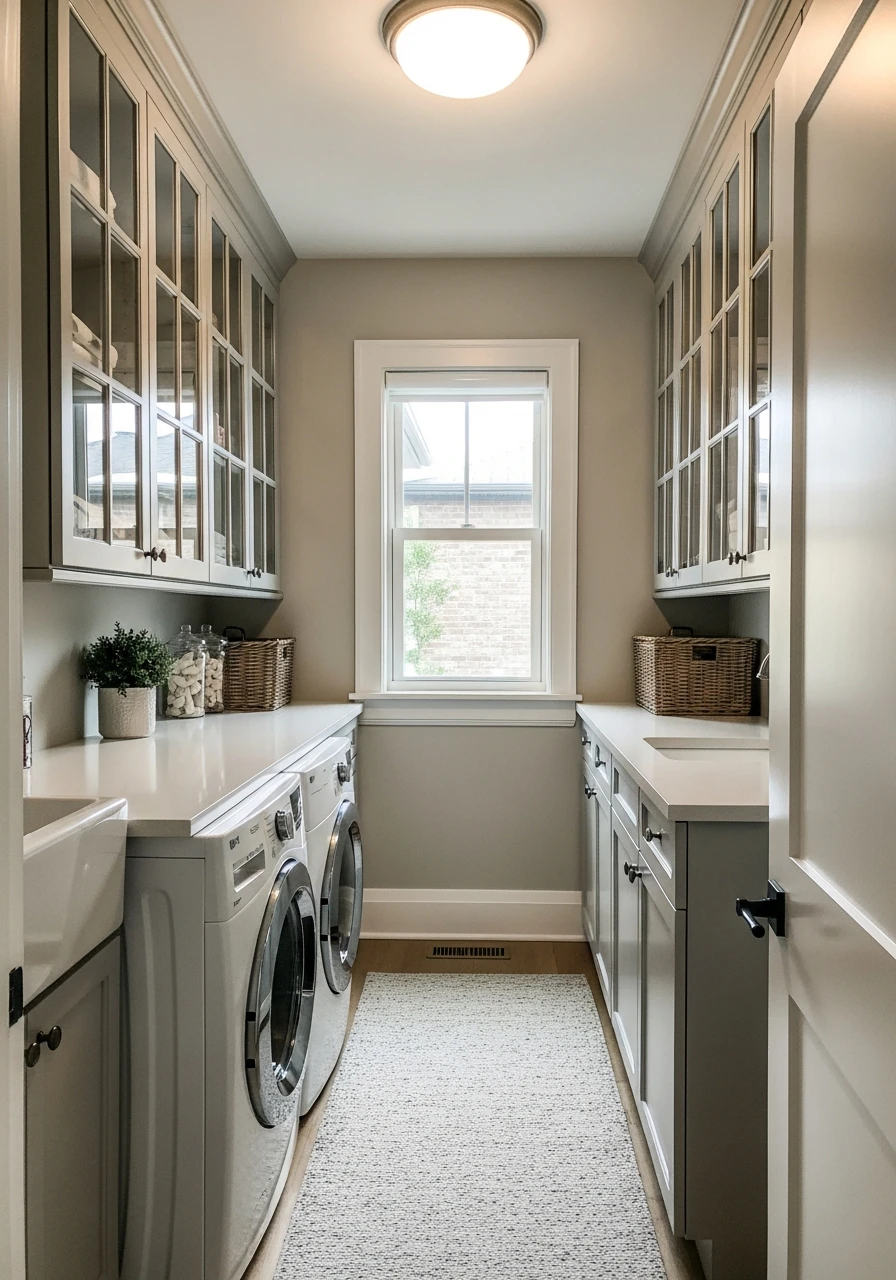
Choose glass-front cabinets for the uppers to make the room feel lighter and less enclosed. This is especially effective where solid cabinetry can make the narrow space feel heavy.
- Use frosted glass for subtle concealment.
- Keep the contents inside neatly organized.
- Add internal cabinet lighting.
Pro Tip: Glass doors offer that high-end look without the high-end cost of custom inserts.
13. Floating Shelves Above Machines
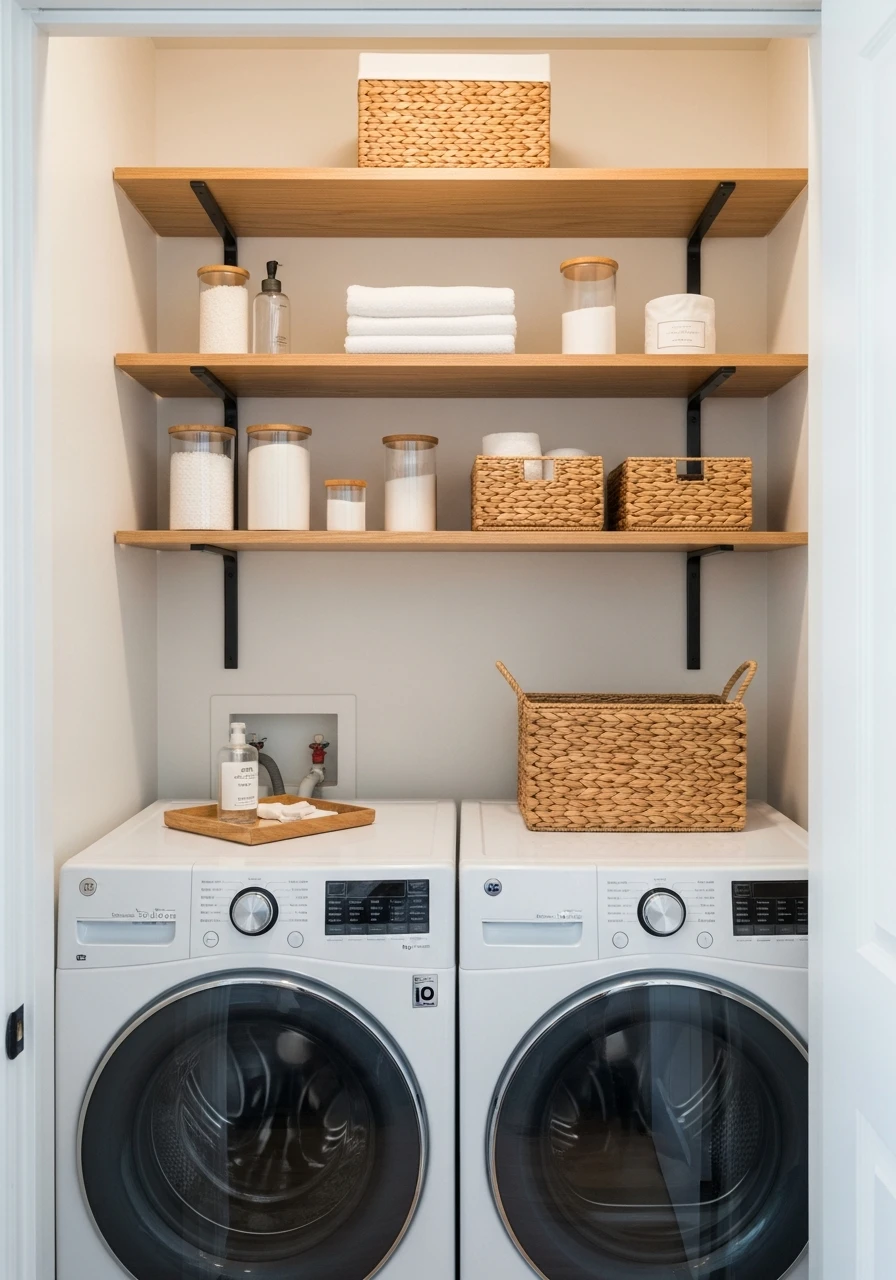
Install open shelves directly above the washer and dryer for detergents and baskets. Open storage keeps the space feeling airy while remaining practical and accessible.
- Use shelves with thick profiles for style.
- Only store essential items here.
- Ensure shelves are mounted securely.
Pro Tip: Keep the shelves shallow so you don’t hit your head while loading the machine.
14. Fold-Down Drying Rack
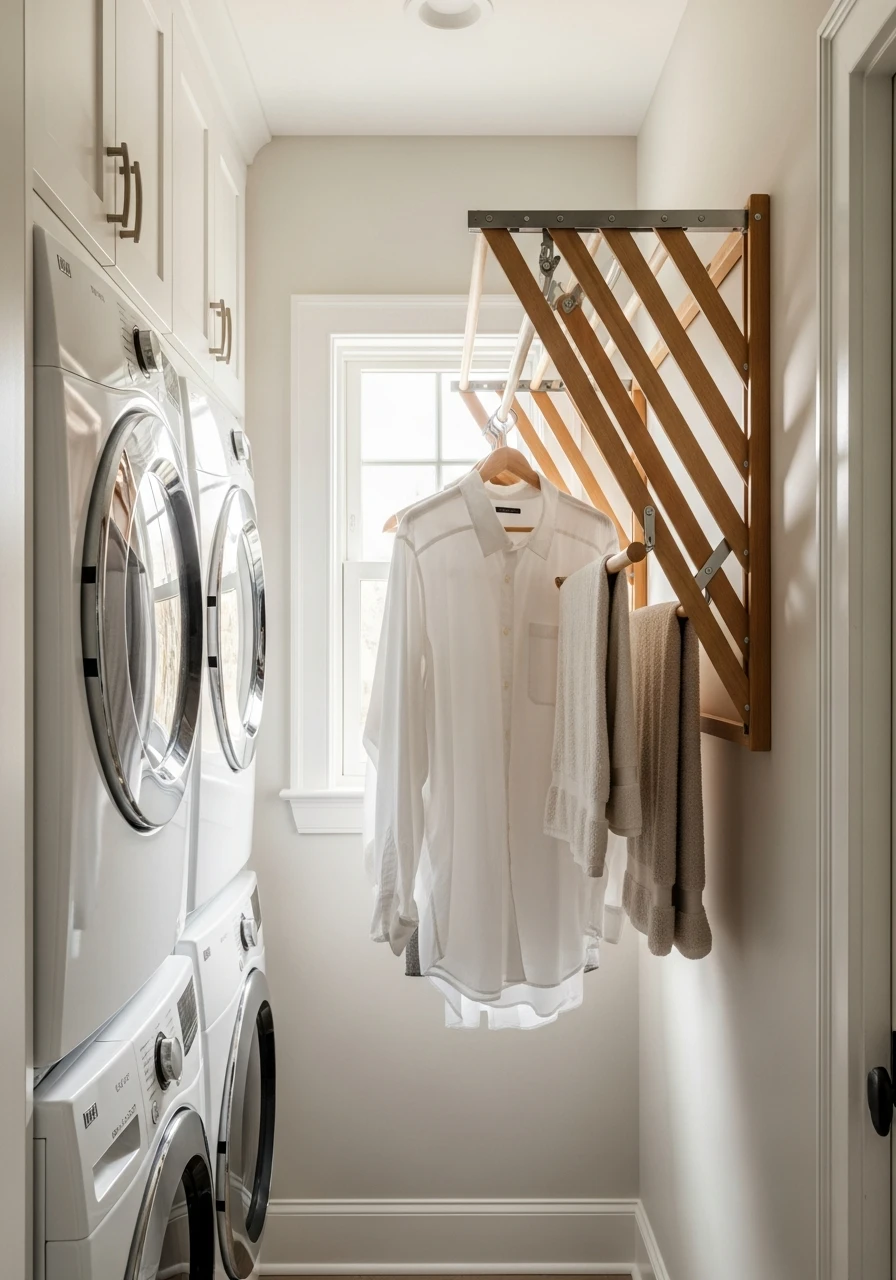
Add a fold-down drying rack to one wall for air-drying clothes. This feature saves floor space and folds away flat when not needed, ideal for narrow rooms.
- Mount the rack near the dryer.
- Choose a rack that supports heavy sweaters.
- Ensure the rack clears the walkway when open.
Pro Tip: Folding racks are much more stylish and functional than traditional clotheslines.
15. Use a Skinny Rolling Cart
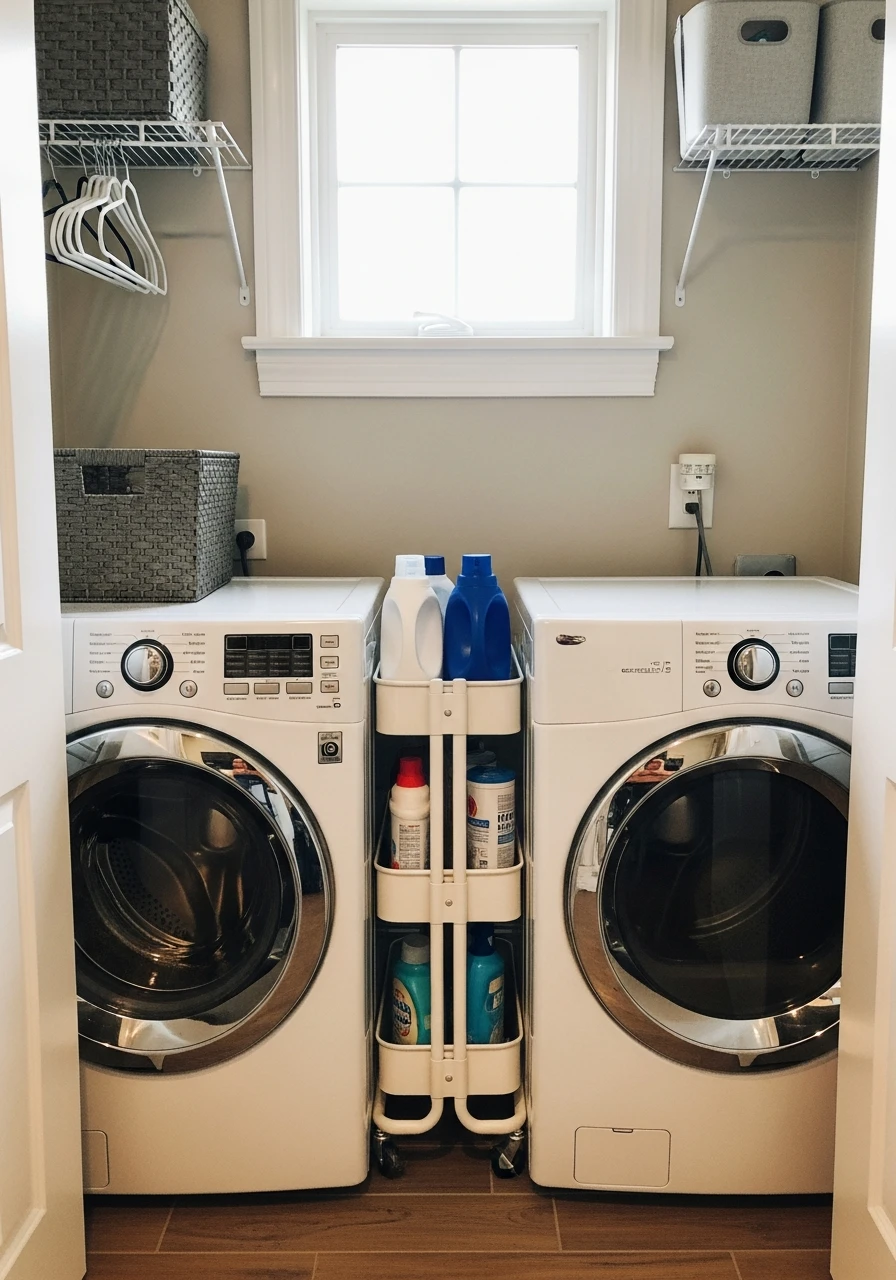
A narrow rolling cart fits perfectly between or beside appliances. This provides flexible storage for supplies and can be easily moved out of the way in tight layouts.
- Look for carts with deep drawers.
- Use it to store small cleaning chemicals.
- Choose one with locking wheels.
Pro Tip: This is a great budget solution for adding storage instantly without installing anything permanent.
16. Install a Pegboard Wall
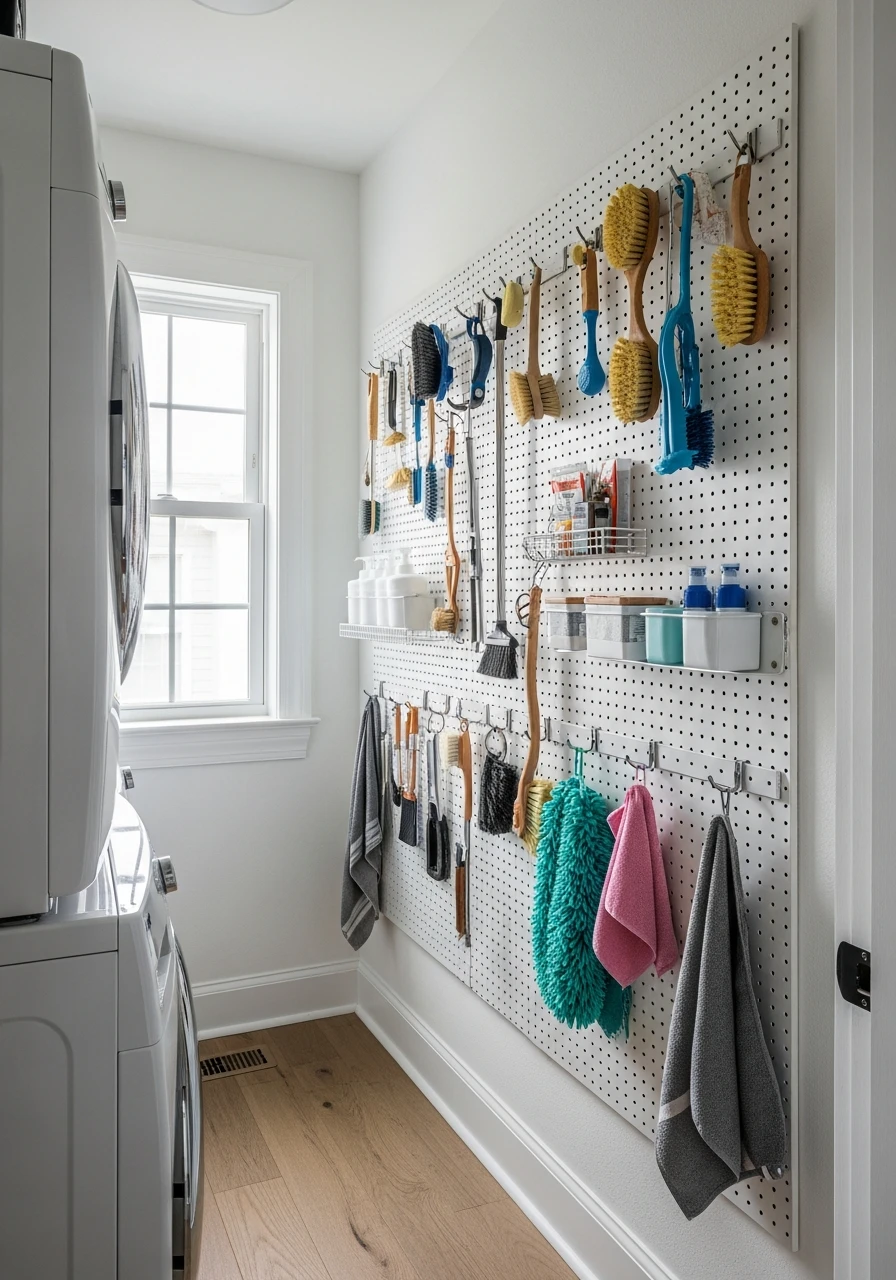
Use a pegboard to organize tools, brushes, and small accessories vertically. This organization method helps keep narrow laundry rooms tidy and highly functional.
- Paint the pegboard a fun accent color.
- Use hooks and small baskets.
- Hang measuring cups and stain brushes.
Pro Tip: A pegboard can change layouts whenever your needs change, making it super flexible.
17. Install a Hanging Rod
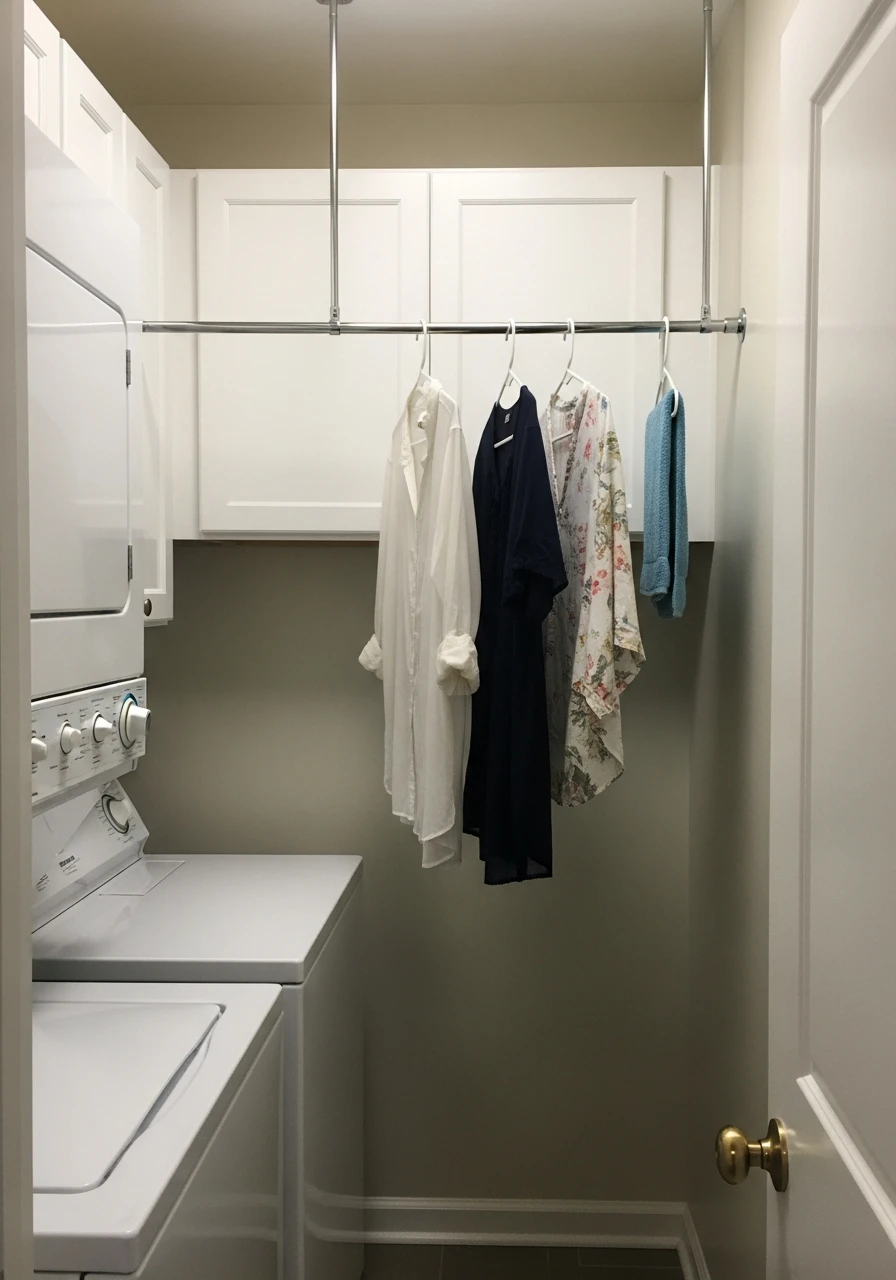
Mount a hanging rod above or between cabinets for air-drying clothes. This uses unused vertical space without interfering with floor movement or cabinet access.
- Choose a sturdy metal rod.
- Place it high enough to clear long garments.
- Use matching velvet hangers.
Pro Tip: A decorative curtain rod can be used here for a cheaper, stylish option.
18. Build Shelves Into Walls
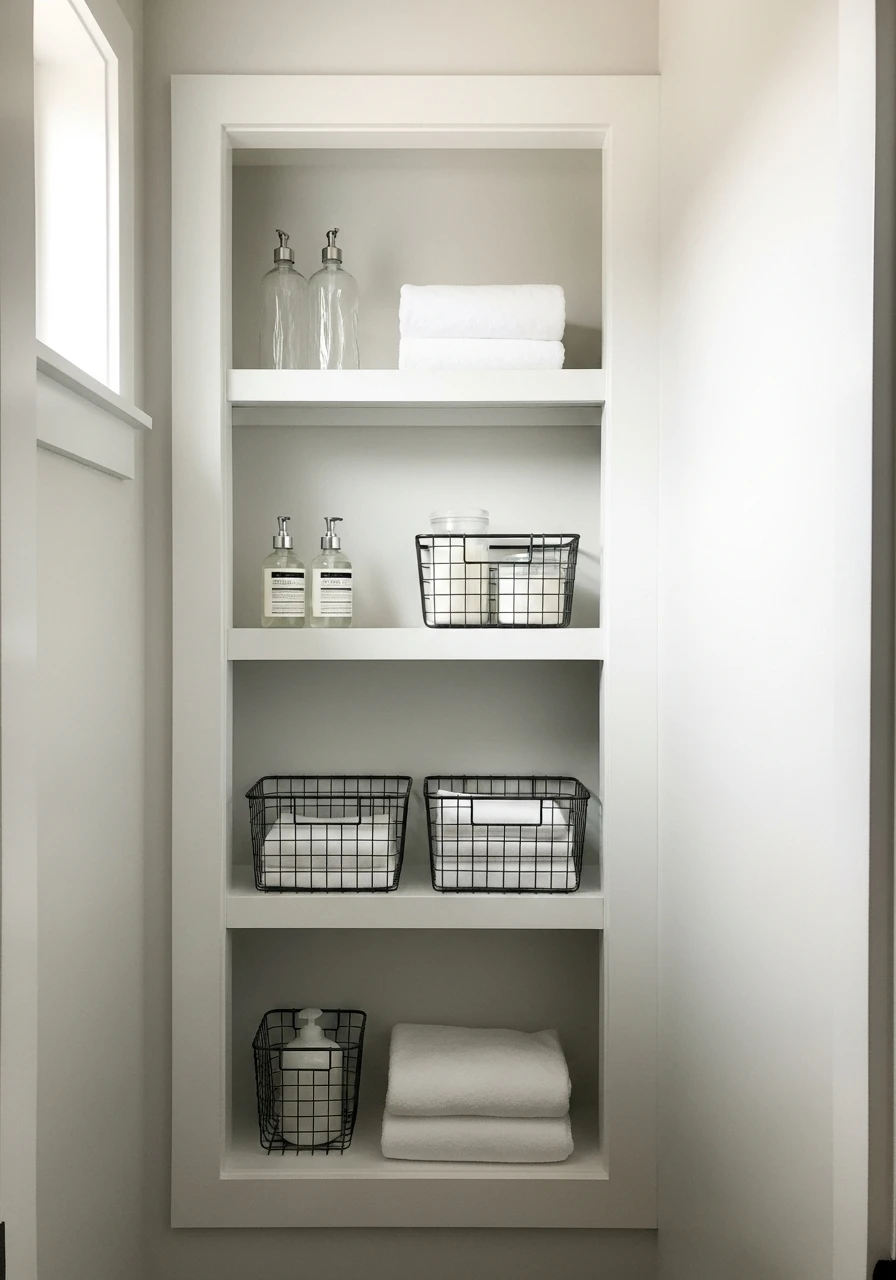
Build recessed shelving into wall cavities to avoid protruding storage. Recessed units are ideal for narrow laundry rooms where every inch of depth matters.
- Requires checking wall structure first.
- Frame the niche with trim for a finished look.
- Use these for lightweight display items.
Pro Tip: This technique gives you custom storage that looks professional and saves space.
19. Light Floating Shelves
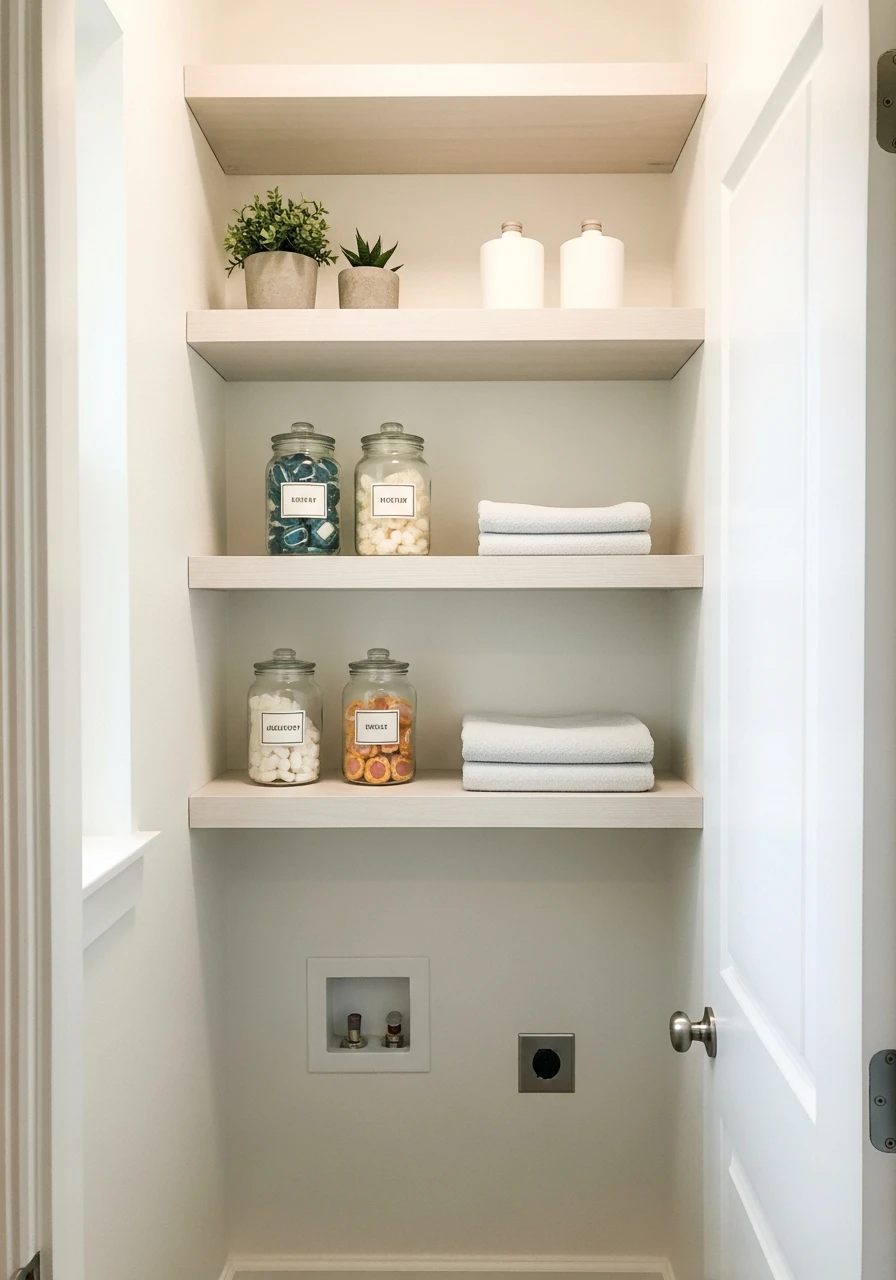
Use simple floating shelves to store lightweight items or decor. They provide necessary storage without visually closing in the narrow space or feeling too bulky.
- Keep the shelf depth under 10 inches.
- Display art or small plants.
- Use them for folded towels.
Pro Tip: Mounting shelves high draws the eye up, making the ceiling feel taller.
20. Add Pedestal Drawers
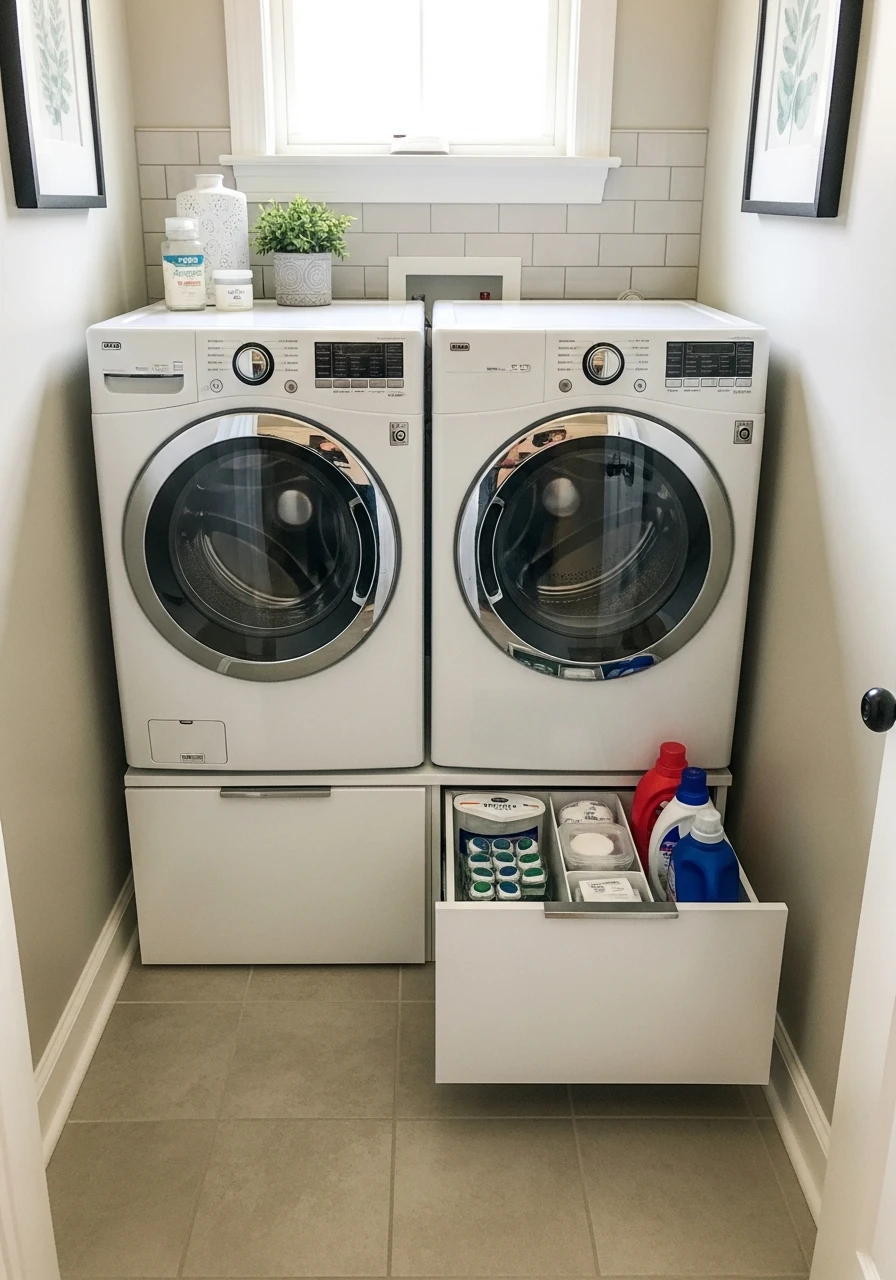
Install drawer pedestals under your front-loading washer and dryer for extra storage. This keeps laundry supplies close at hand without adding bulk to your walls.
- Great for storing detergent pods and dryer sheets.
- Raises machines to an easier loading height.
- Ensure they match your appliance brand.
Pro Tip: Pedestals often come with dividers, helping you keep items organized inside.
21. Counter Over Machines
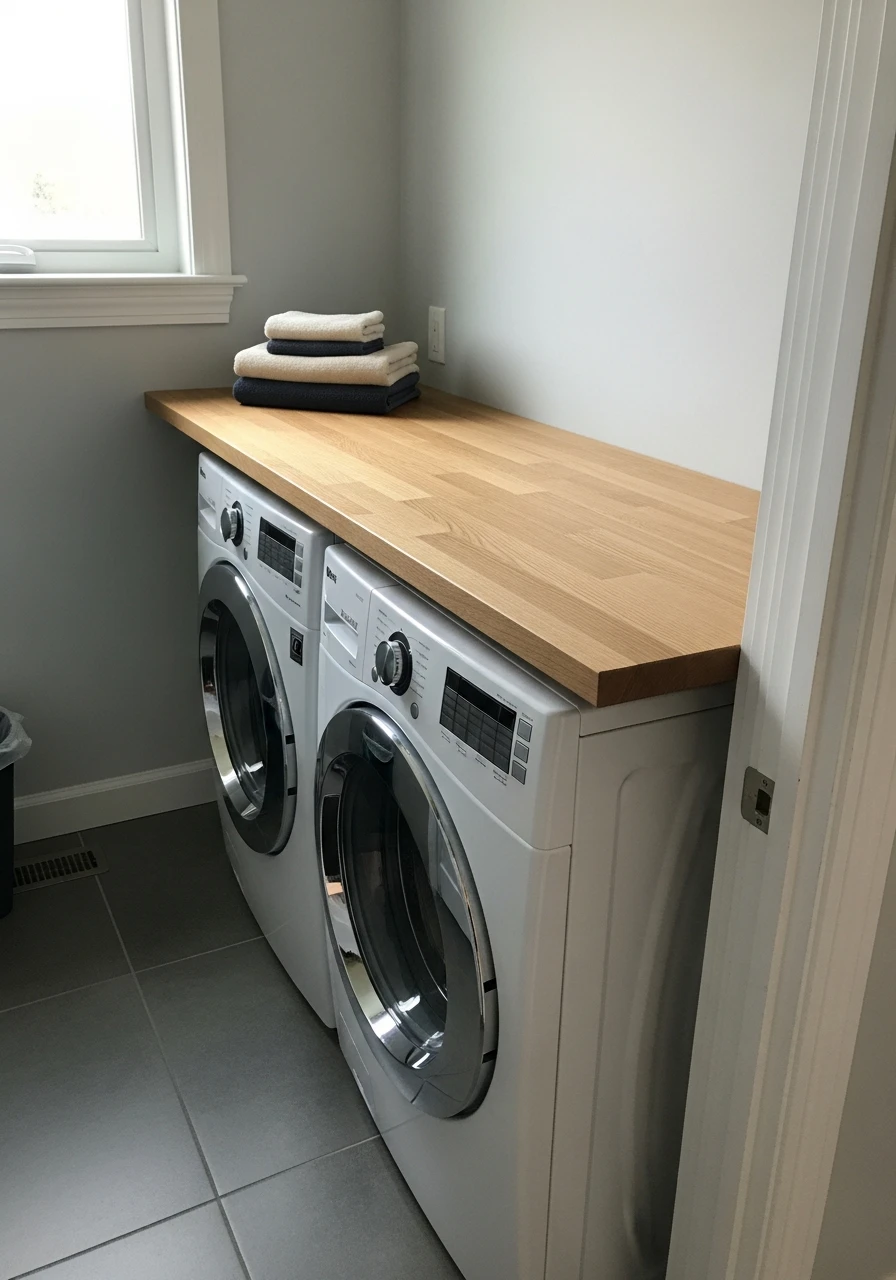
Add a single, continuous countertop above your front-loading machines. This creates a functional, seamless folding surface while maintaining a slim profile.
- Measure precisely for a snug fit.
- Use a durable, heat-resistant material.
- Keep the area underneath clean and accessible.
Pro Tip: This custom feature instantly makes the room look more expensive and organized.
22. Hidden Ironing Board
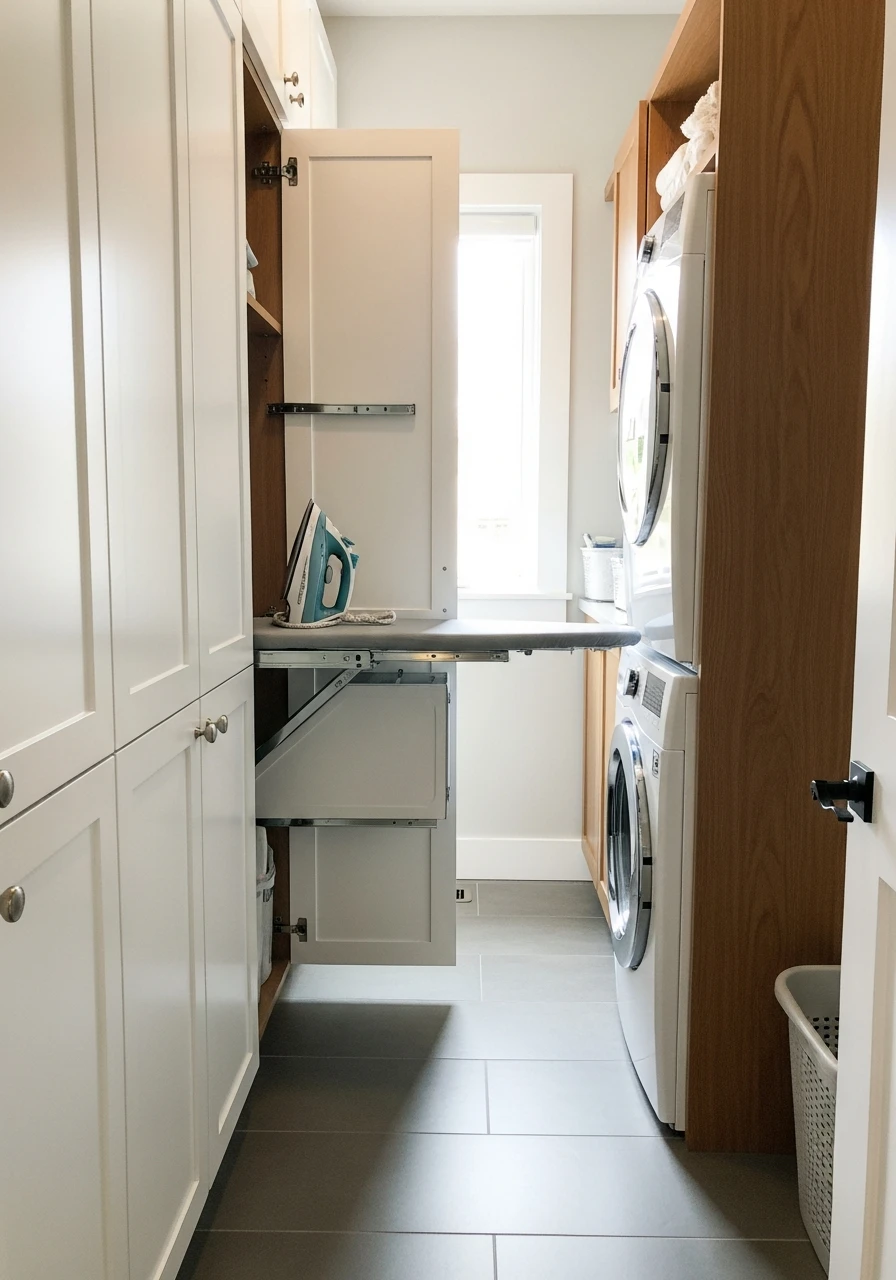
Incorporate a pull-out ironing board inside a cabinet or wall unit. This saves space and keeps bulky ironing equipment completely hidden when not in use.
- Ensure the cabinet is strong enough to support use.
- Install it near an electrical outlet.
- Choose a model that locks securely.
Pro Tip: If you iron often, this convenience is worth the small cabinet space it uses.
23. Use the Back of the Door
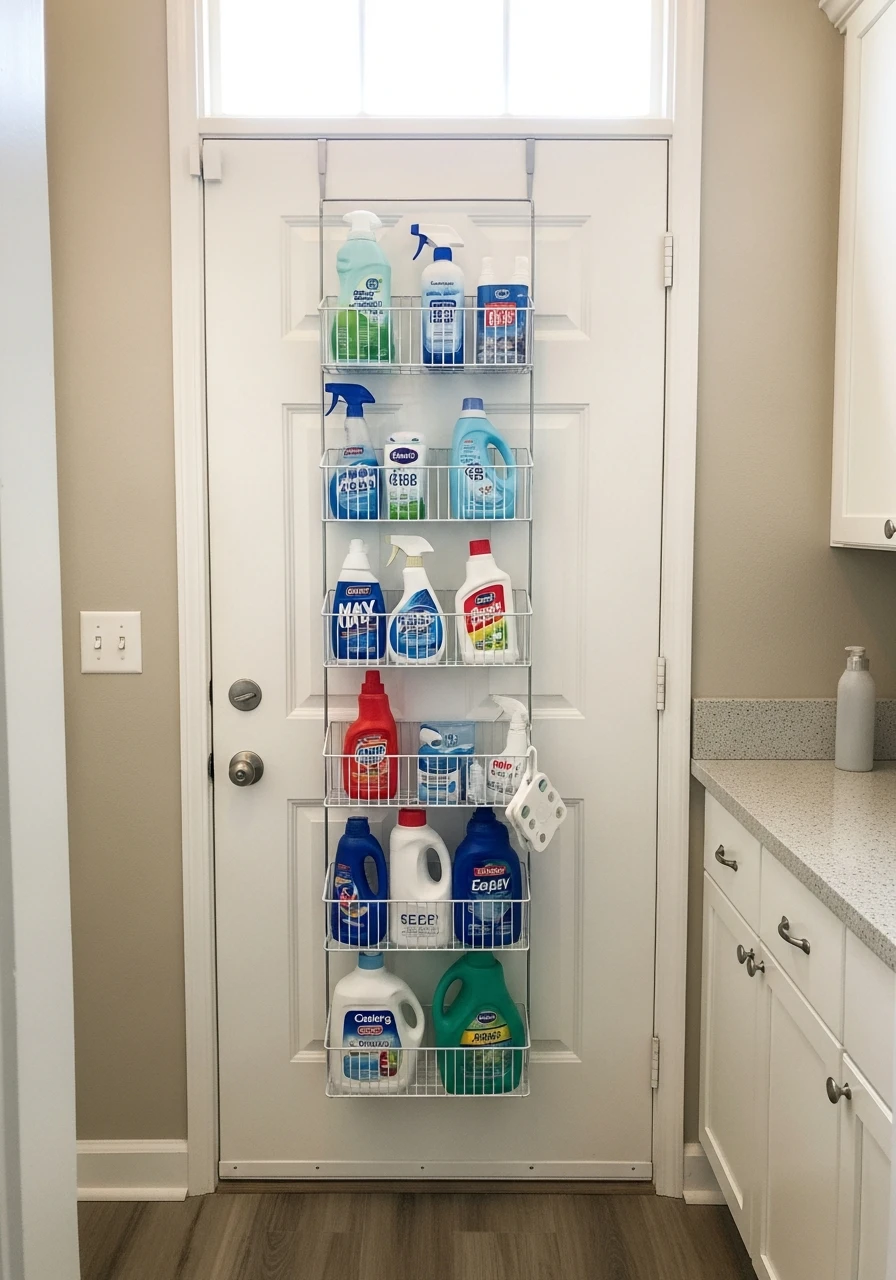
Use the back of the door for hanging organizers, cleaning caddies, or shoe storage. This maximizes storage without using valuable wall or floor space.
- Choose thin, flat organizers.
- Hang small items like dryer balls.
- Ensure the door still closes easily.
Pro Tip: Over-the-door storage is a renter-friendly way to add huge storage capacity.
24. Hang Baskets on Peg Rail
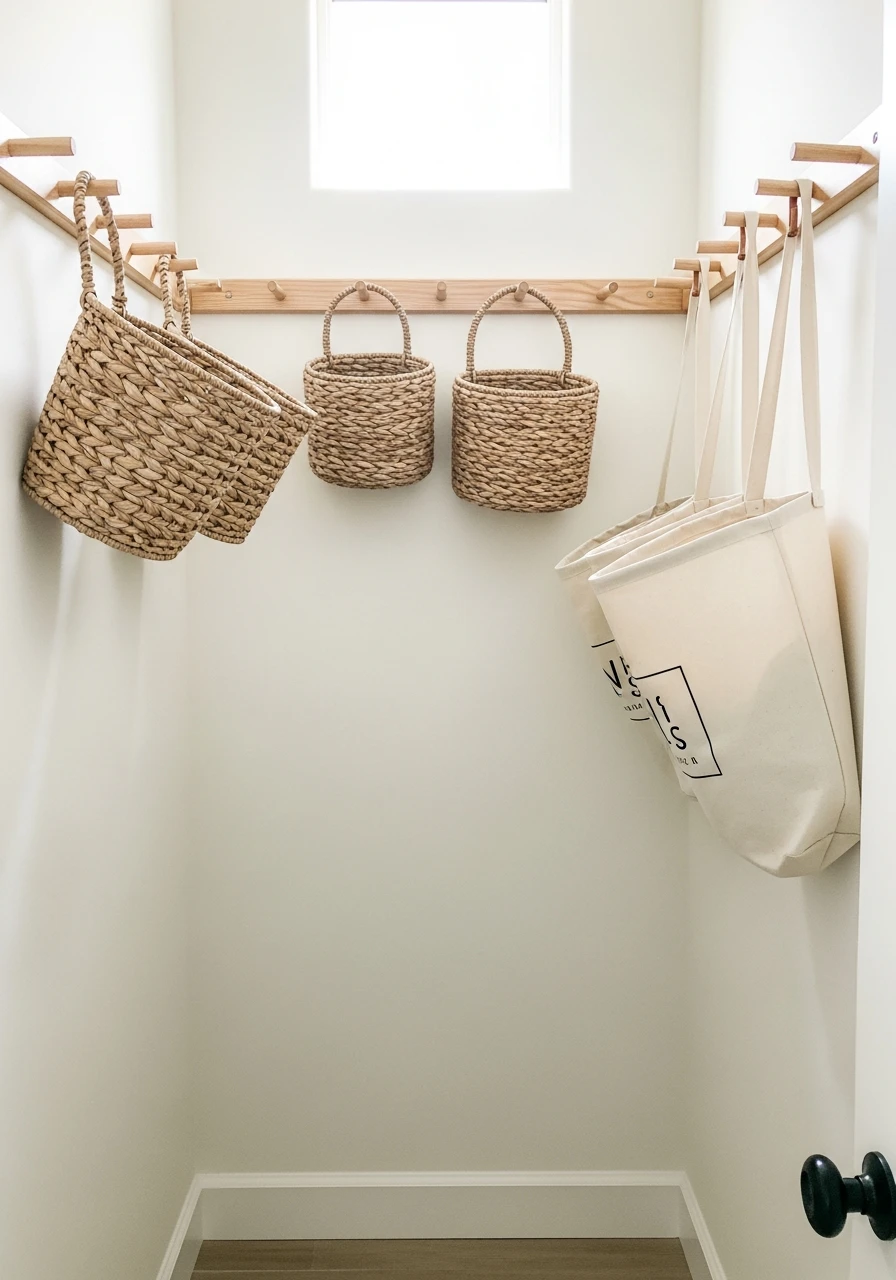
Install a simple peg rail along one wall for hanging baskets or laundry bags. This keeps items accessible while maintaining a clean and clear layout below.
- Use small woven baskets for visual appeal.
- Keep the rail at shoulder height.
- Hang bags for separating whites and colors.
Pro Tip: A wooden peg rail adds a cozy, cottage feel to a functional space.
25. Tilt-Out Laundry Hamper
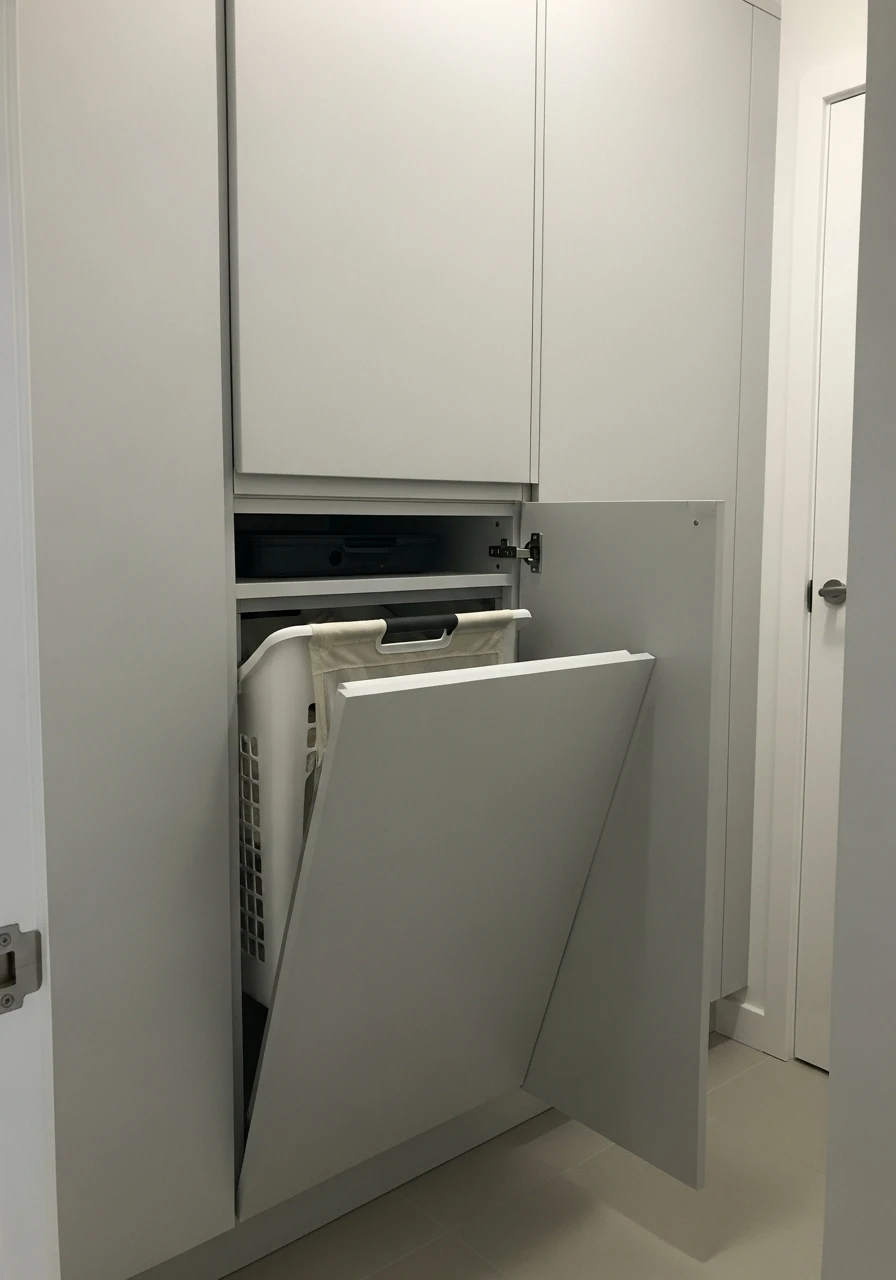
Use tilt-out hamper cabinets to manage dirty laundry efficiently. This solution keeps floors clear and maintains a streamlined, built-in look.
- Use separate bins for sorting.
- Choose a moisture-resistant liner.
- Build it into the base cabinetry.
Pro Tip: Tilt-out hampers prevent laundry piles from cluttering the narrow floor.
26. Hang Collapsible Carts
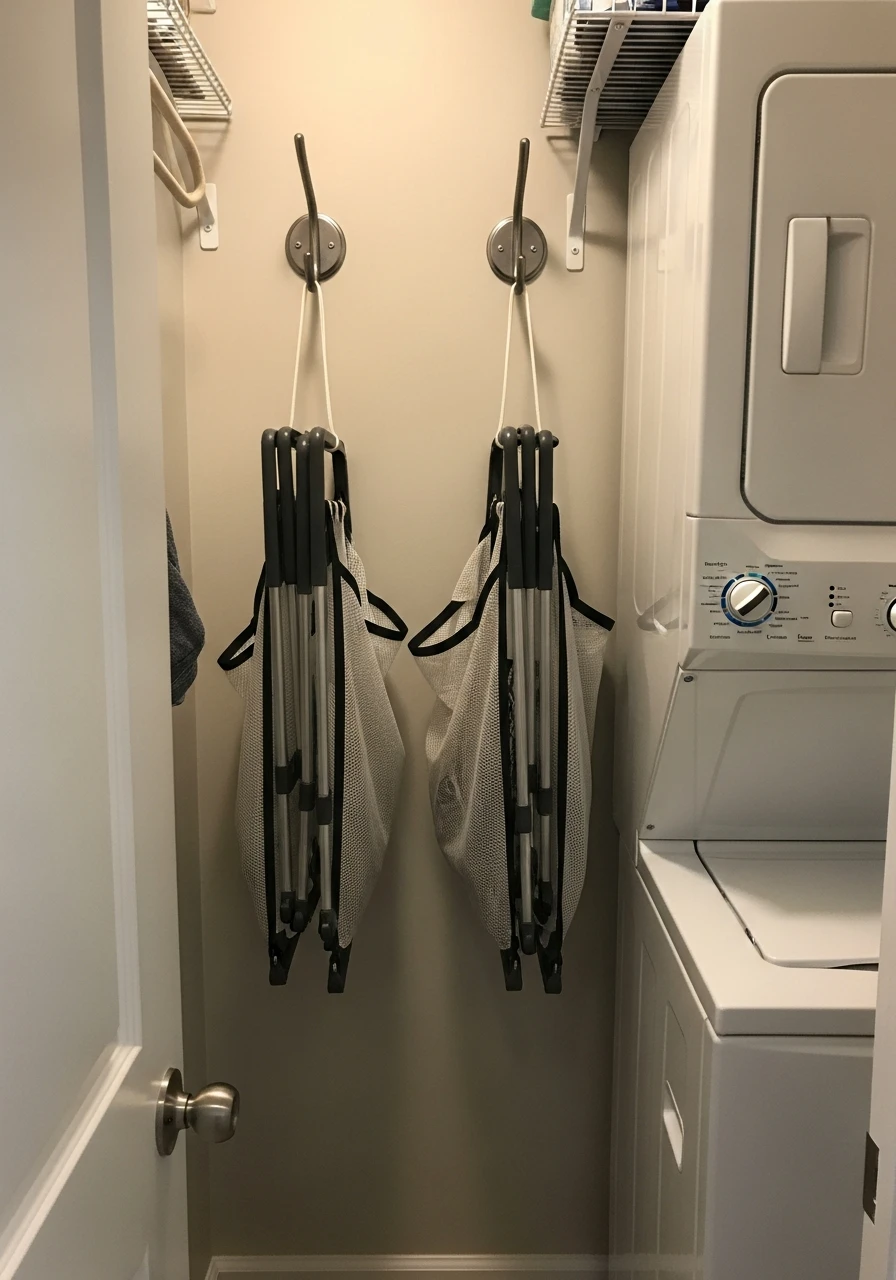
Mount strong hooks on the wall to hang collapsible laundry carts or bags. This is a practical solution for extremely narrow rooms where floor space is zero.
- Use heavy-duty utility hooks.
- Choose lightweight, foldable carts.
- Hang them behind the door if possible.
Pro Tip: Collapsible carts are a lifesaver when you need to transport clothes across the house.
27. Tall, Skinny Hampers
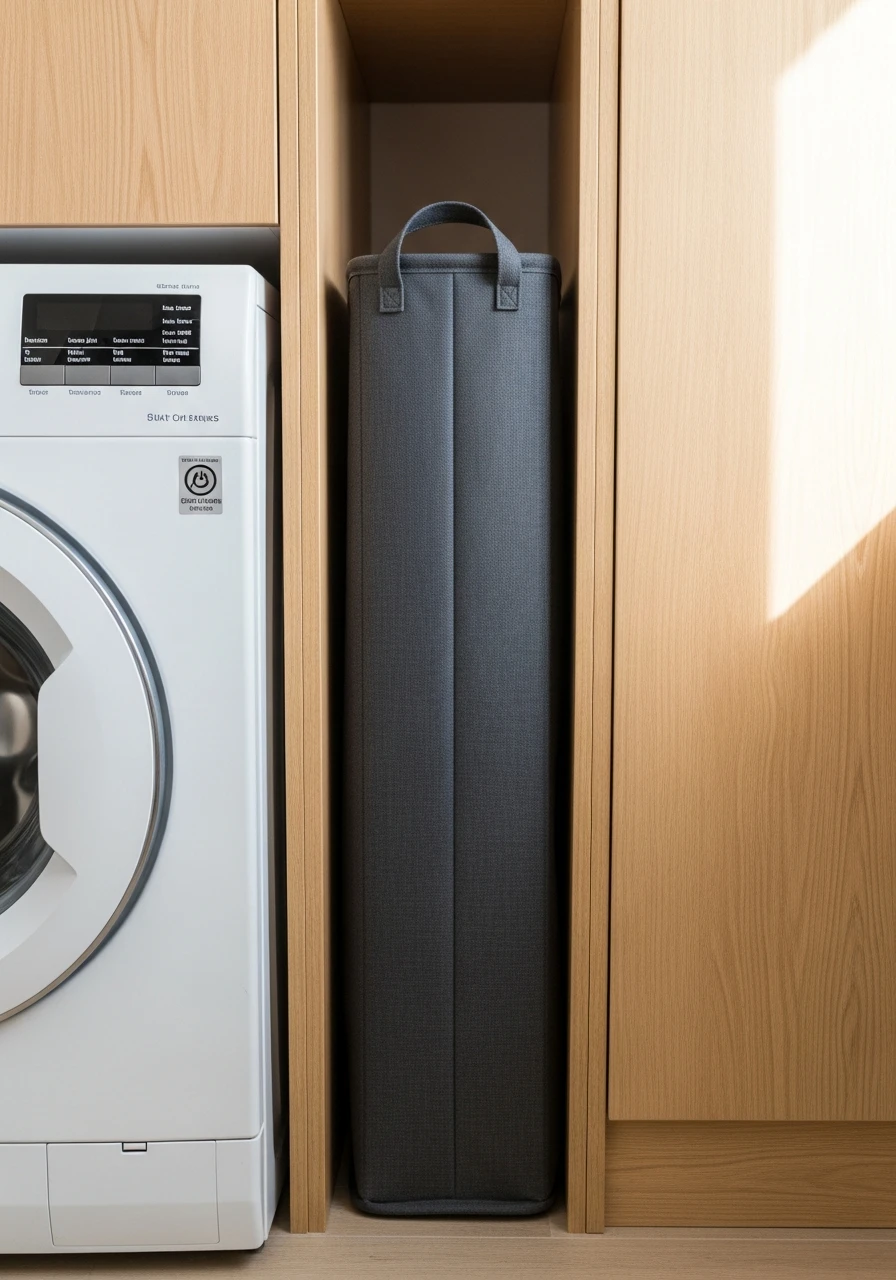
Choose tall, narrow hampers that fit into tight gaps between cabinets or machines. Vertical hampers use minimal floor space while offering sufficient capacity.
- Look for stackable narrow bins.
- Ensure the top opening is wide enough.
- Use a waterproof liner.
Pro Tip: A structured, vertical hamper looks much tidier than a soft laundry bag.
28. Hooks for Mops and Brooms
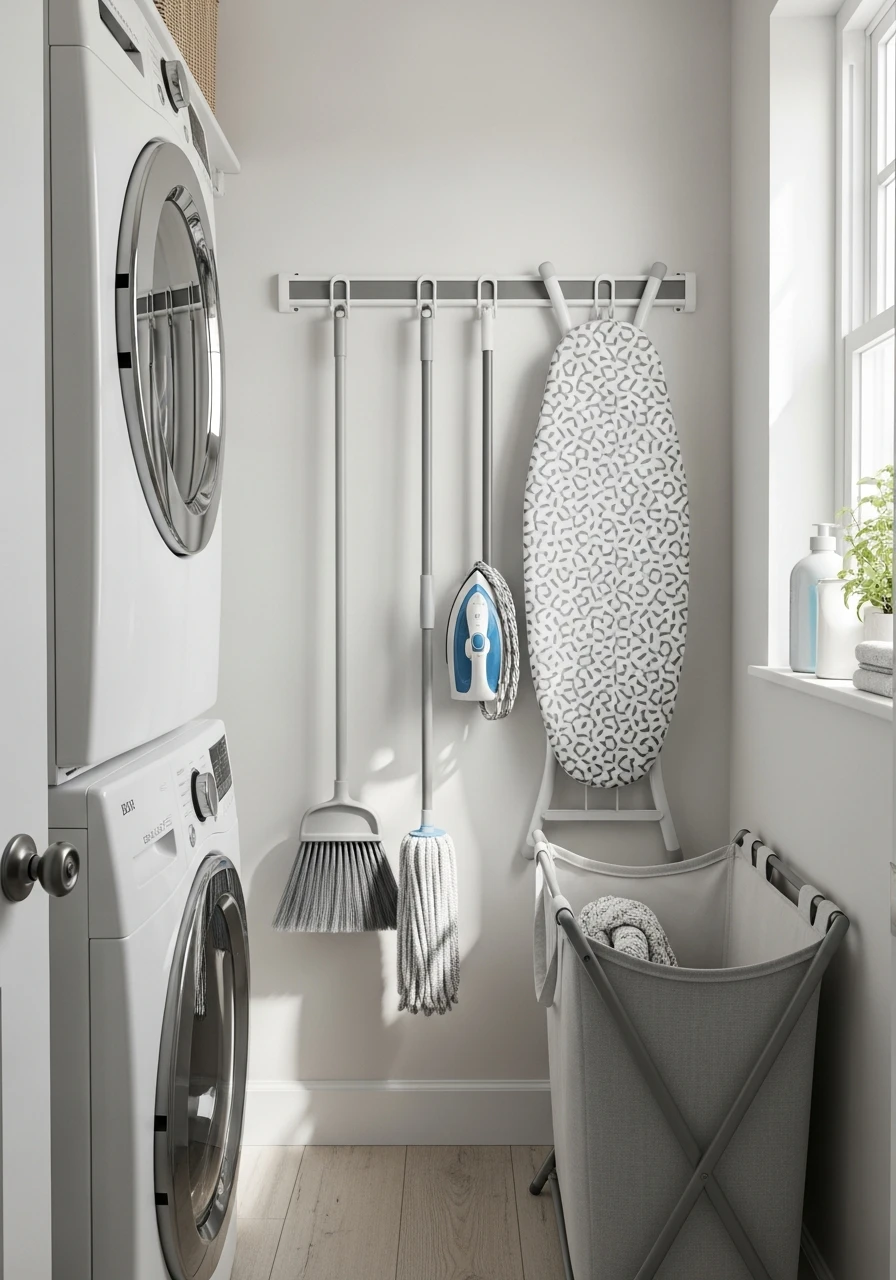
Hang brooms, mops, and ironing boards on wall hooks or a mounted rail system. This keeps bulky items safely off the floor in narrow spaces.
- Use a grip system for long handles.
- Mount them high enough to clear the floor.
- Keep them near the back door.
Pro Tip: Label the hooks so everyone knows where tools belong.
29. Magnetic Side Storage
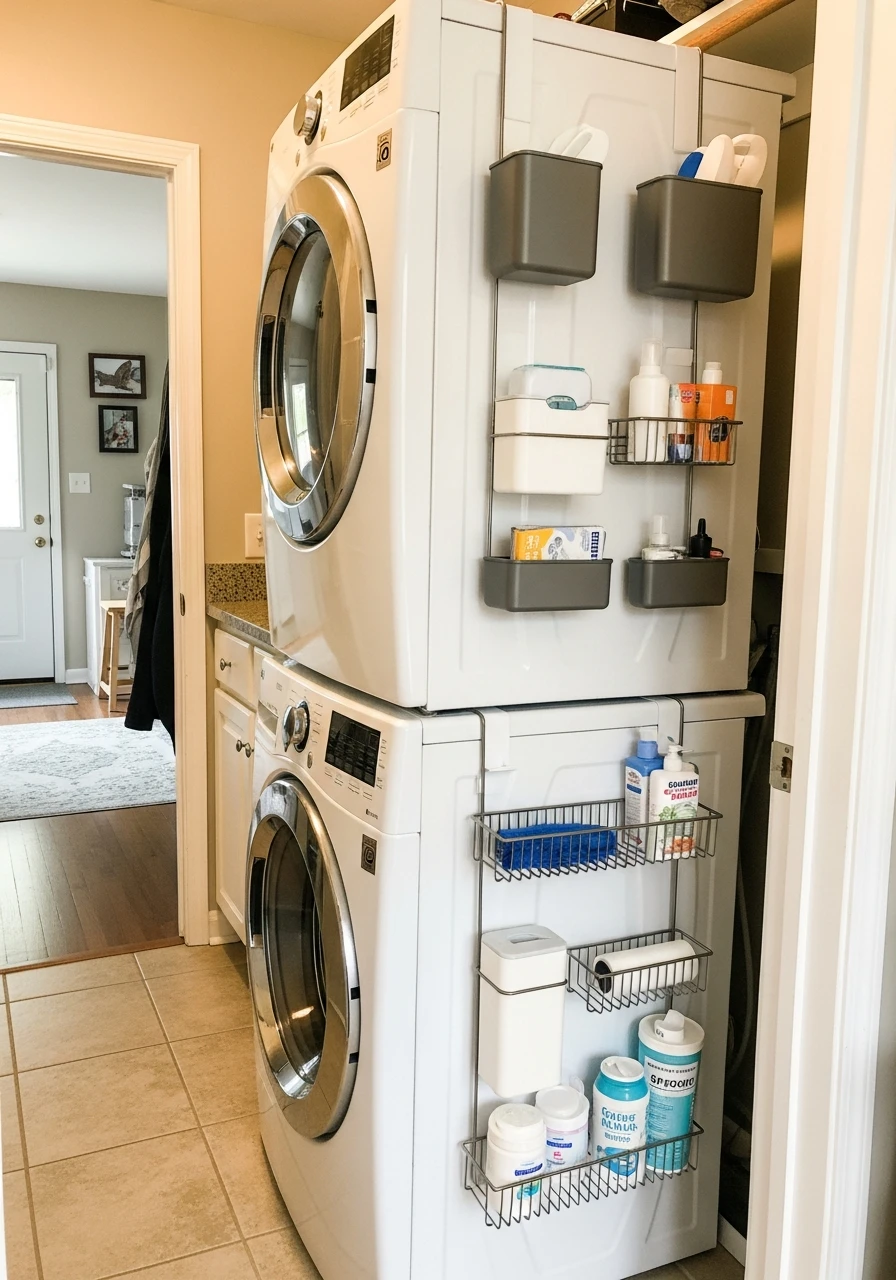
Use magnetic containers or racks on the sides of washers and dryers. This creates extra storage for small items without affecting the room width.
- Store lint rollers and scissors here.
- Ensure the magnets are very strong.
- Use small spice racks for pods.
Pro Tip: This idea works best on older, metal-sided machines.
30. Pull-Down Drying Rod
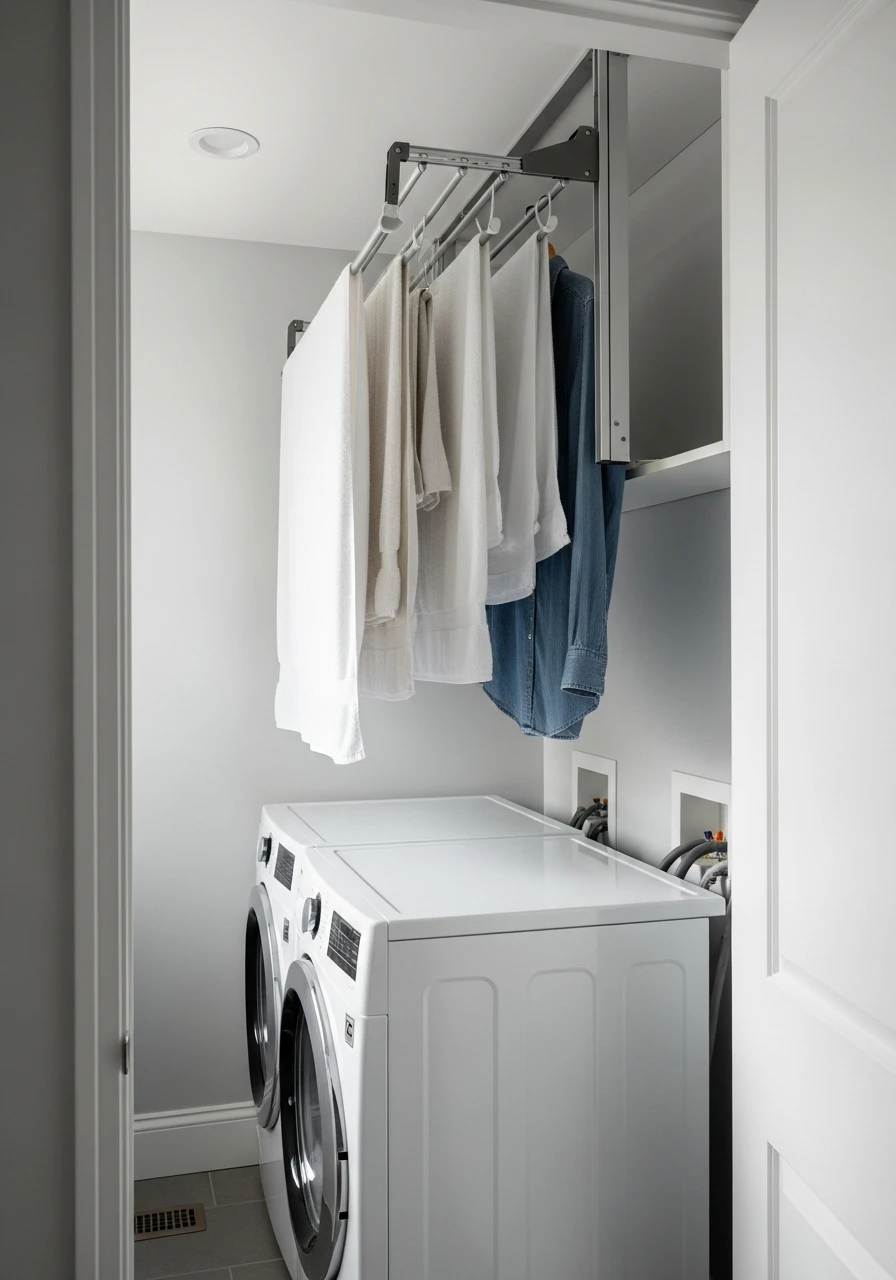
Install a pull-down rod system above the machines for hanging clothes. This feature uses overhead space efficiently and tucks away easily when not needed.
- Requires secure ceiling or cabinet mounting.
- Ideal for drying shirts and blouses.
- Ensure it is easy to lower and raise.
Pro Tip: Look for a decorative metal finish to make it look like a planned feature.
31. Light and Bright Colors
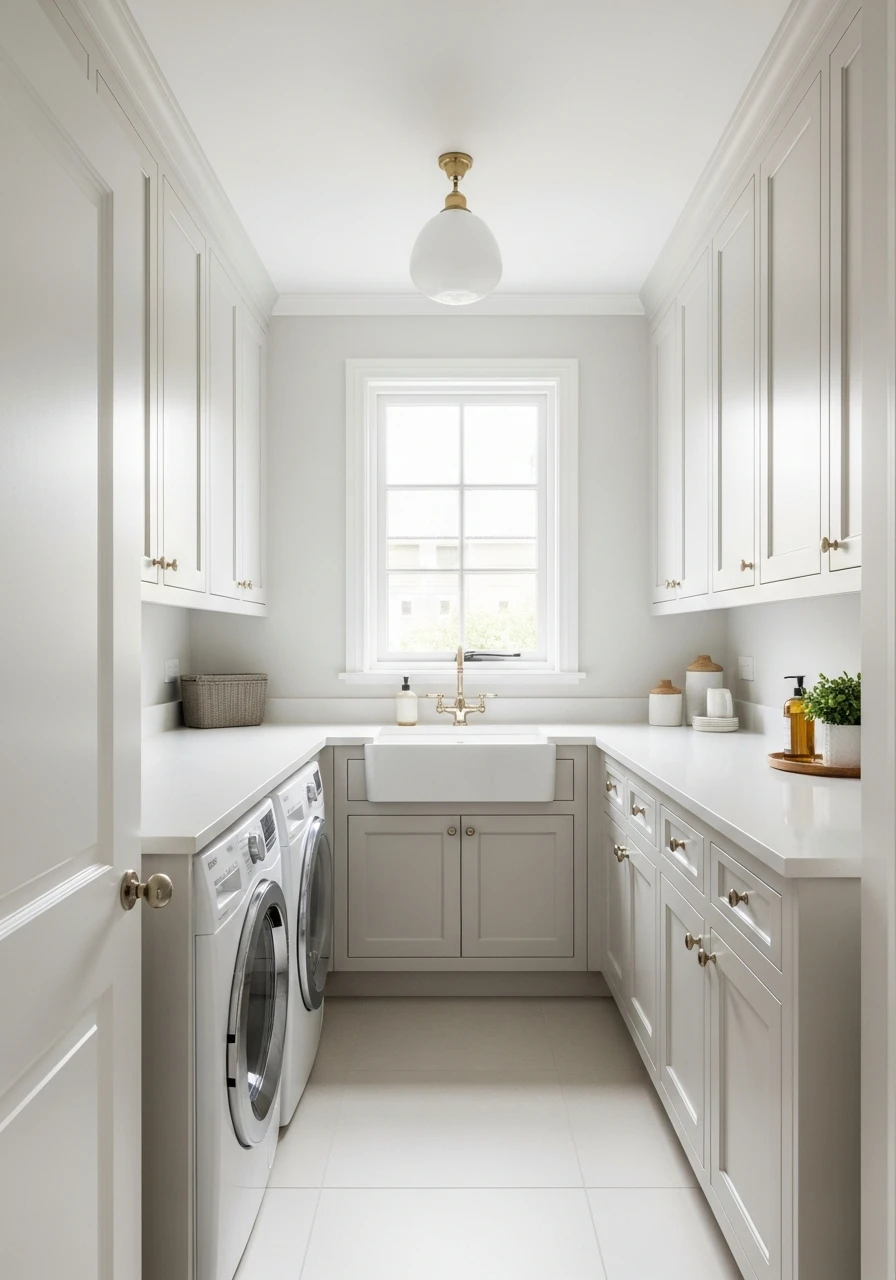
Use pale colors on walls and cabinetry to make the narrow laundry room feel wider and brighter. Neutral tones help reflect any available light.
- Choose whites, creams, or pale gray.
- Paint the ceiling a crisp white.
- Use the same color on cabinets and walls.
Pro Tip: Light colors make a huge difference in tricking the eye into perceiving more space.
32. Accent the Far Wall
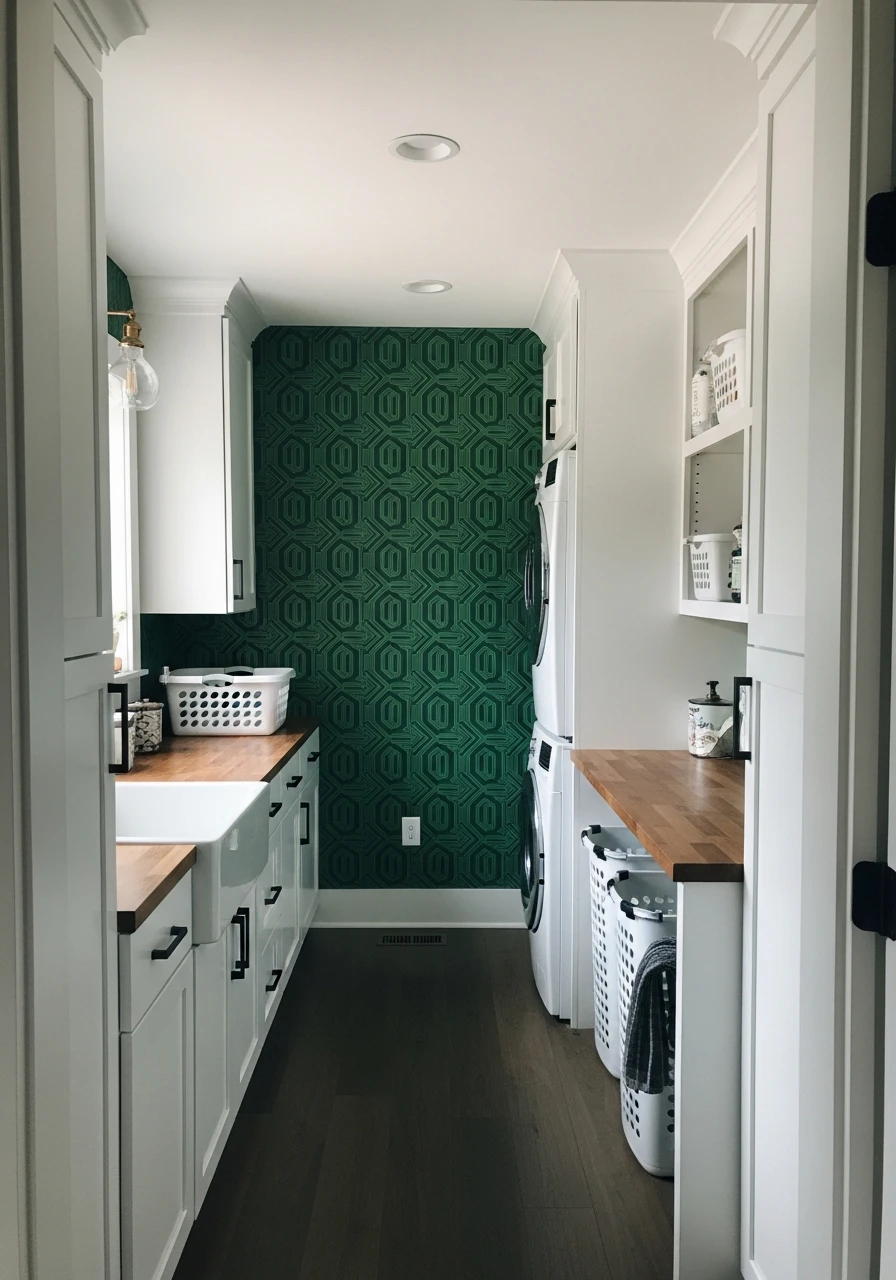
Add a bold color or patterned wall at the far end of the room. This draws the eye forward, which reduces the feeling of being in a long, boring tunnel.
- Use a rich jewel tone like deep blue.
- Ensure the accent color is balanced.
- Keep the side walls light.
Pro Tip: This trick works because your brain focuses on the depth, not the width.
33. Install Vertical Tiles
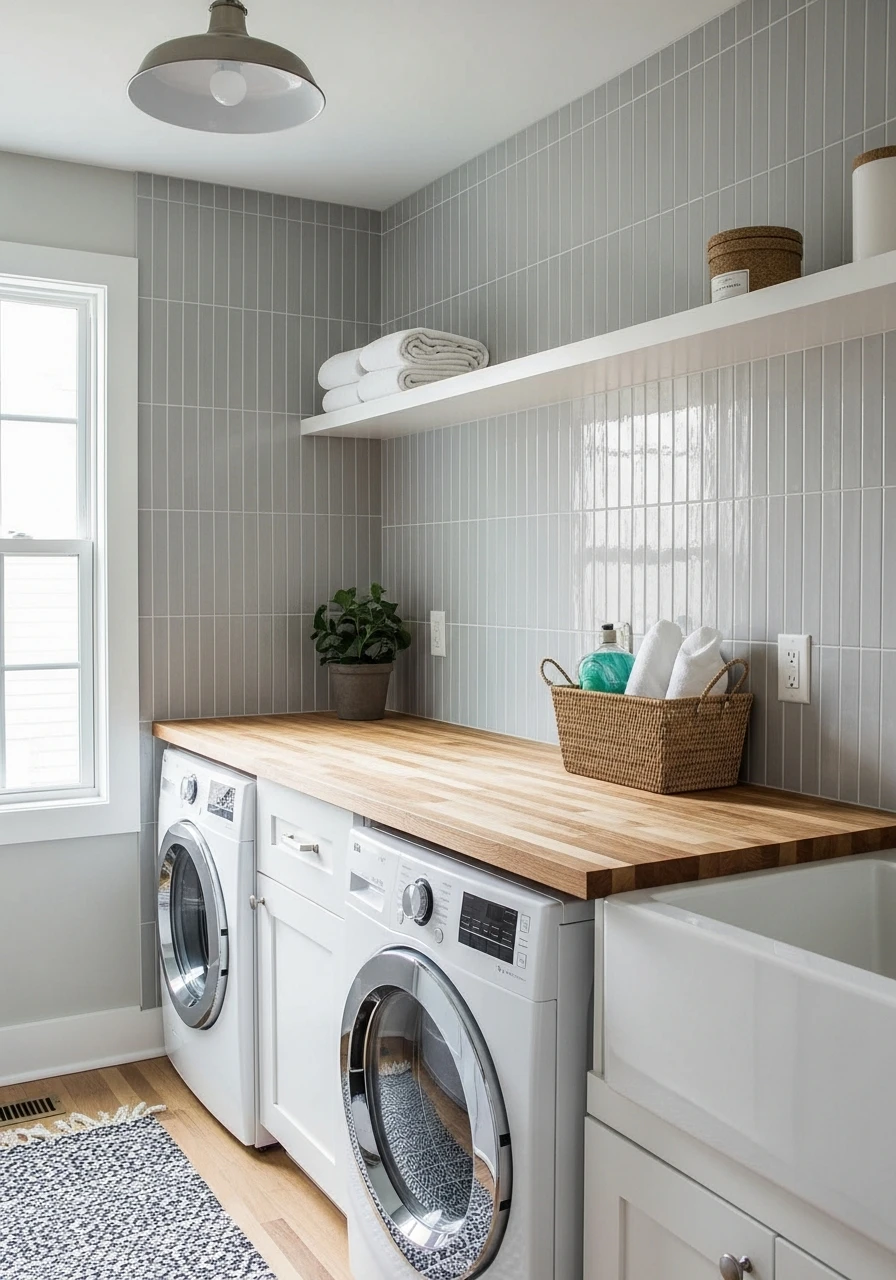
Install your backsplash or wall tiles vertically instead of horizontally. This simple technique visually increases the wall height, making the room feel taller and more spacious.
- Choose long, rectangular subway tiles.
- Use a light-colored grout.
- Run the tile from floor to ceiling for drama.
Pro Tip: Vertical lines are always your friend in a narrow space.
34. Use Glossy Cabinets
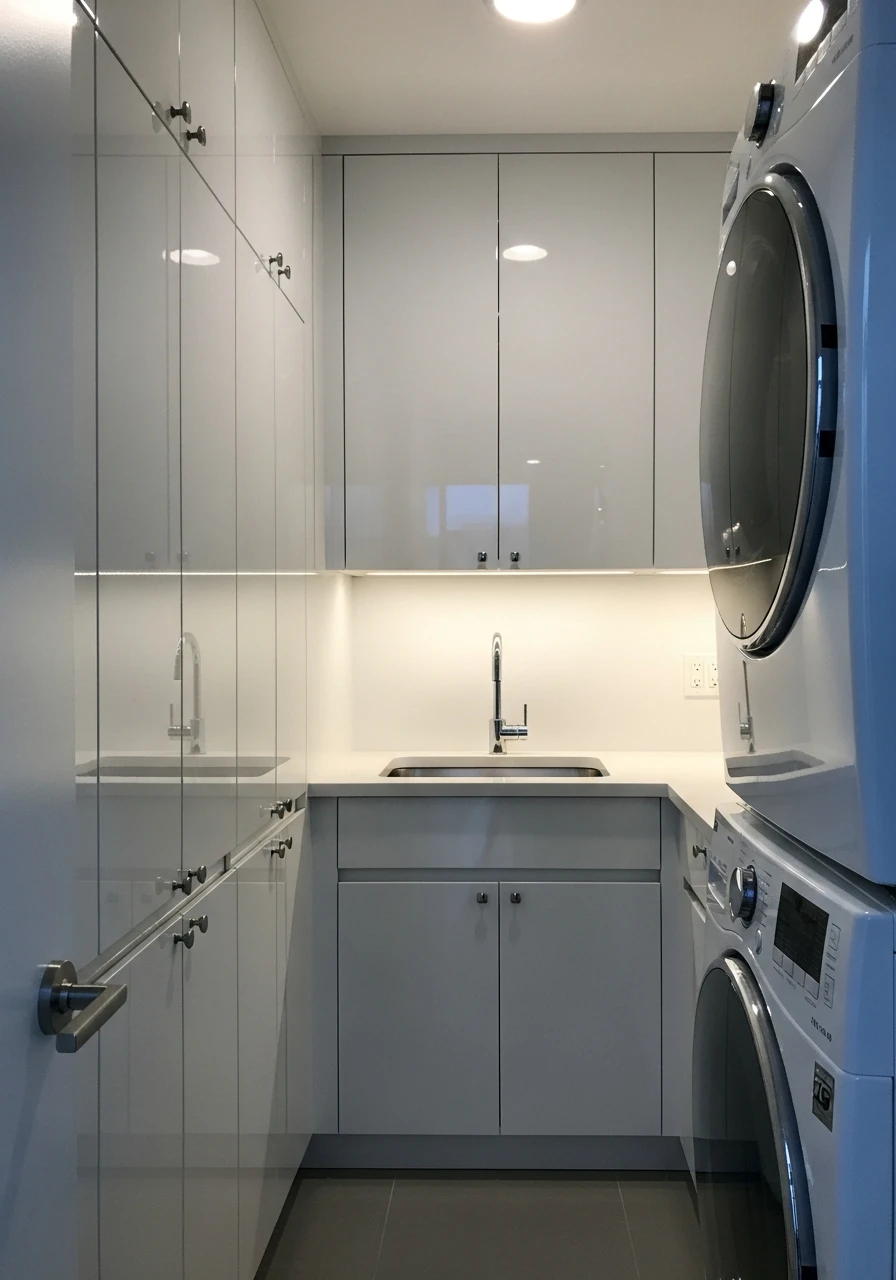
Choose glossy or semi-gloss finishes for your cabinets. These high-shine surfaces reflect light, enhancing brightness in narrow laundry rooms with limited natural light.
- Gloss is easier to wipe clean.
- Use white or light gray gloss.
- Avoid dark colors in high gloss.
Pro Tip: High-gloss finishes instantly give a modern, clean look.
35. Add a Large Mirror
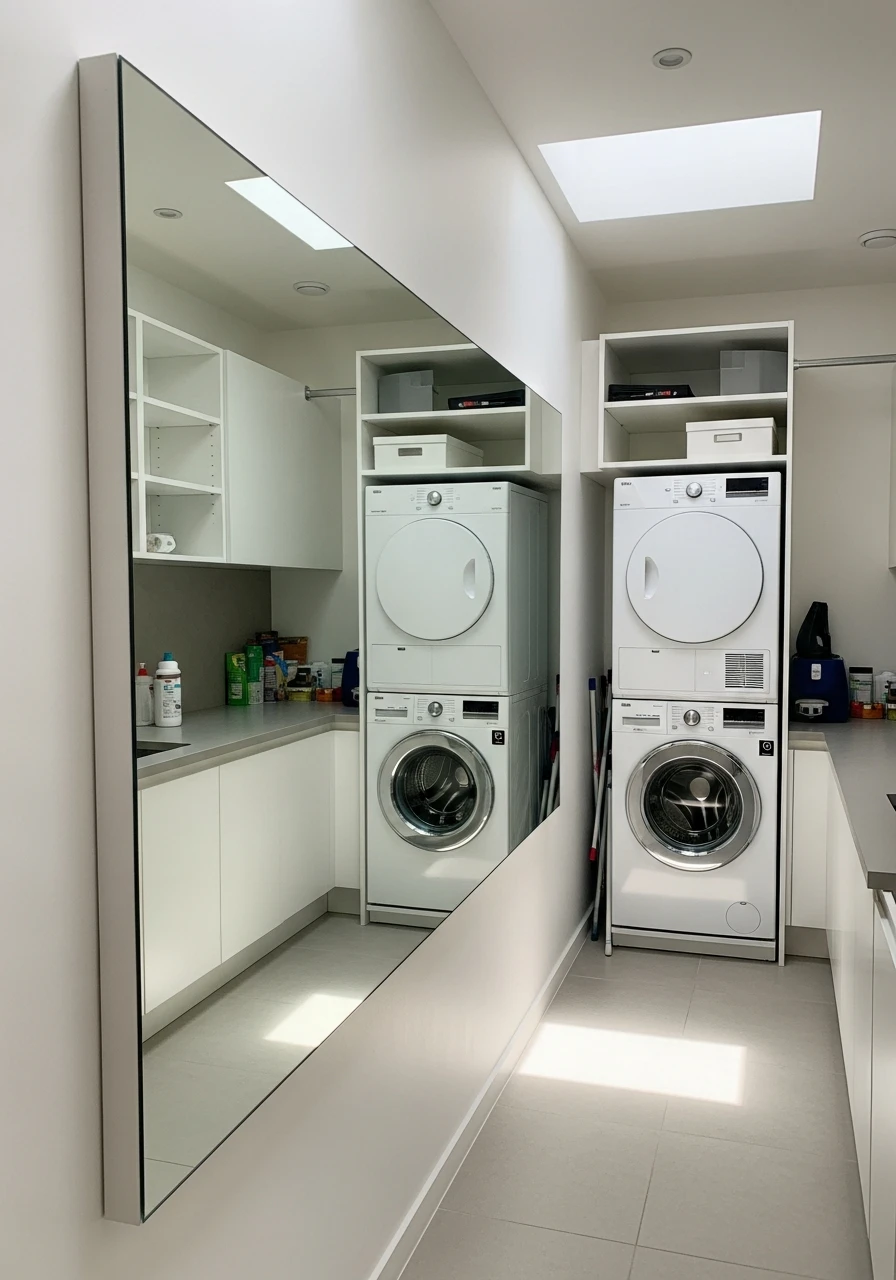
Place a mirror on one wall to create the illusion of depth and double the perceived space. Mirrors are incredibly effective in tight laundry spaces.
- Use a framed mirror for style.
- Ensure the mirror reflects light sources.
- Place it away from the sink area.
Pro Tip: A full-length mirror can make the room look twice as wide.
36. Wallpaper on Short Wall
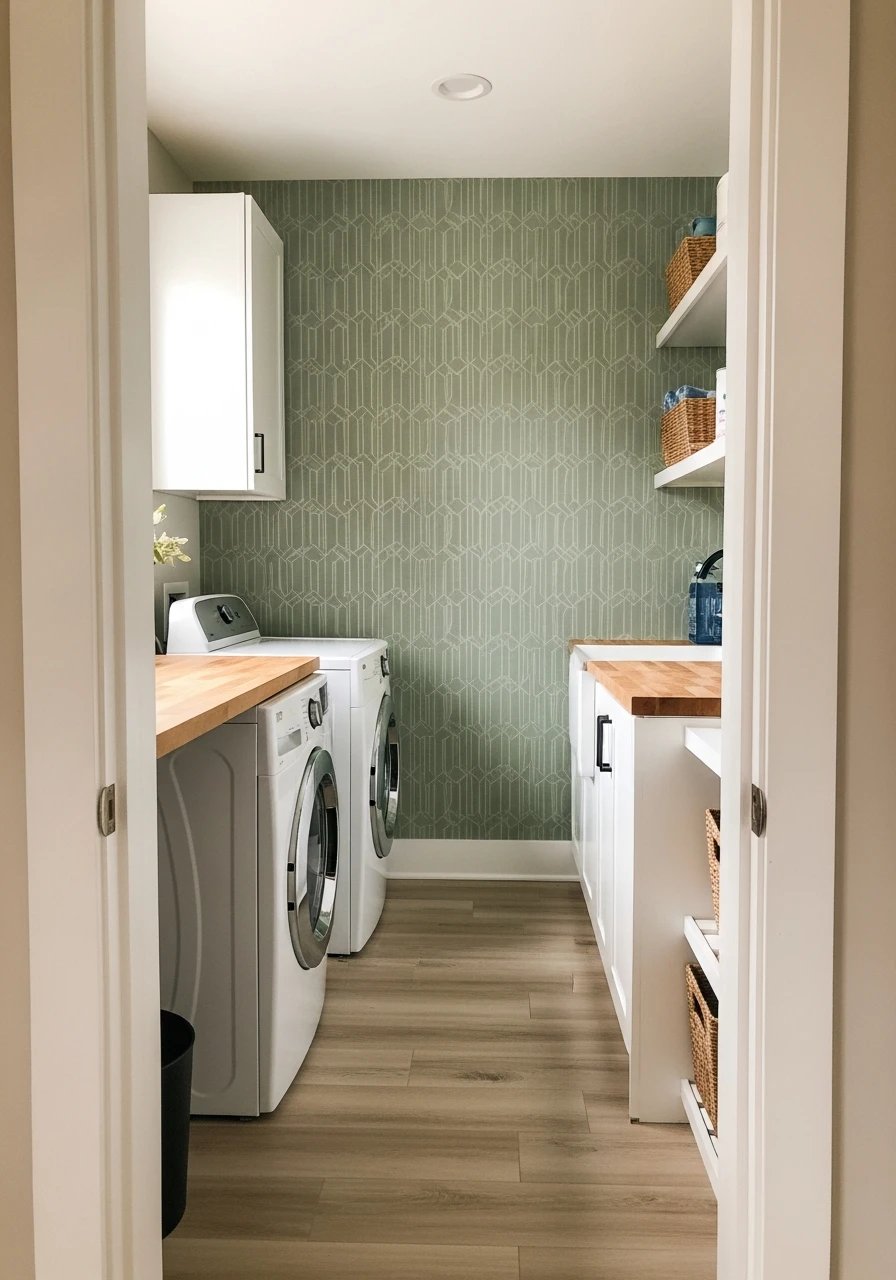
Apply a decorative wallpaper to the short end wall or a niche. This adds personality and interest without overwhelming the narrow layout with too much pattern.
- Choose a pattern with vertical stripes.
- Use peel-and-stick for easy changes.
- Keep the pattern scale small.
Pro Tip: A fun wallpaper pattern distracts from the room’s small size.
37. Two-Tone Cabinetry
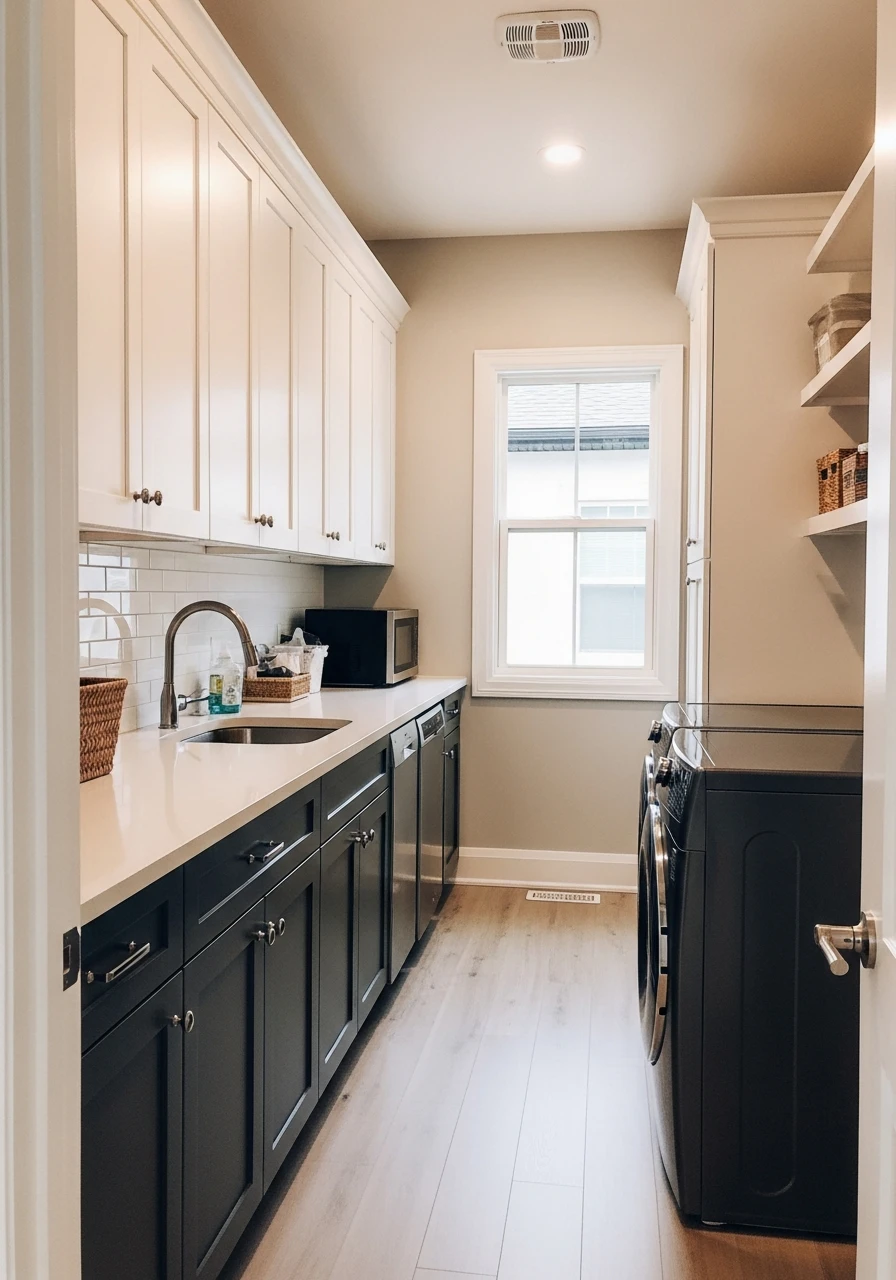
Use contrasting cabinet colors to break up long walls visually. This creates interest and reduces the boxed-in feeling that long, narrow spaces often have.
- Use a darker color on the bottom.
- Keep the upper cabinets light.
- Use different hardware on each level.
Pro Tip: This contrast helps the room feel less like a continuous block of color.
38. Install Task Lighting
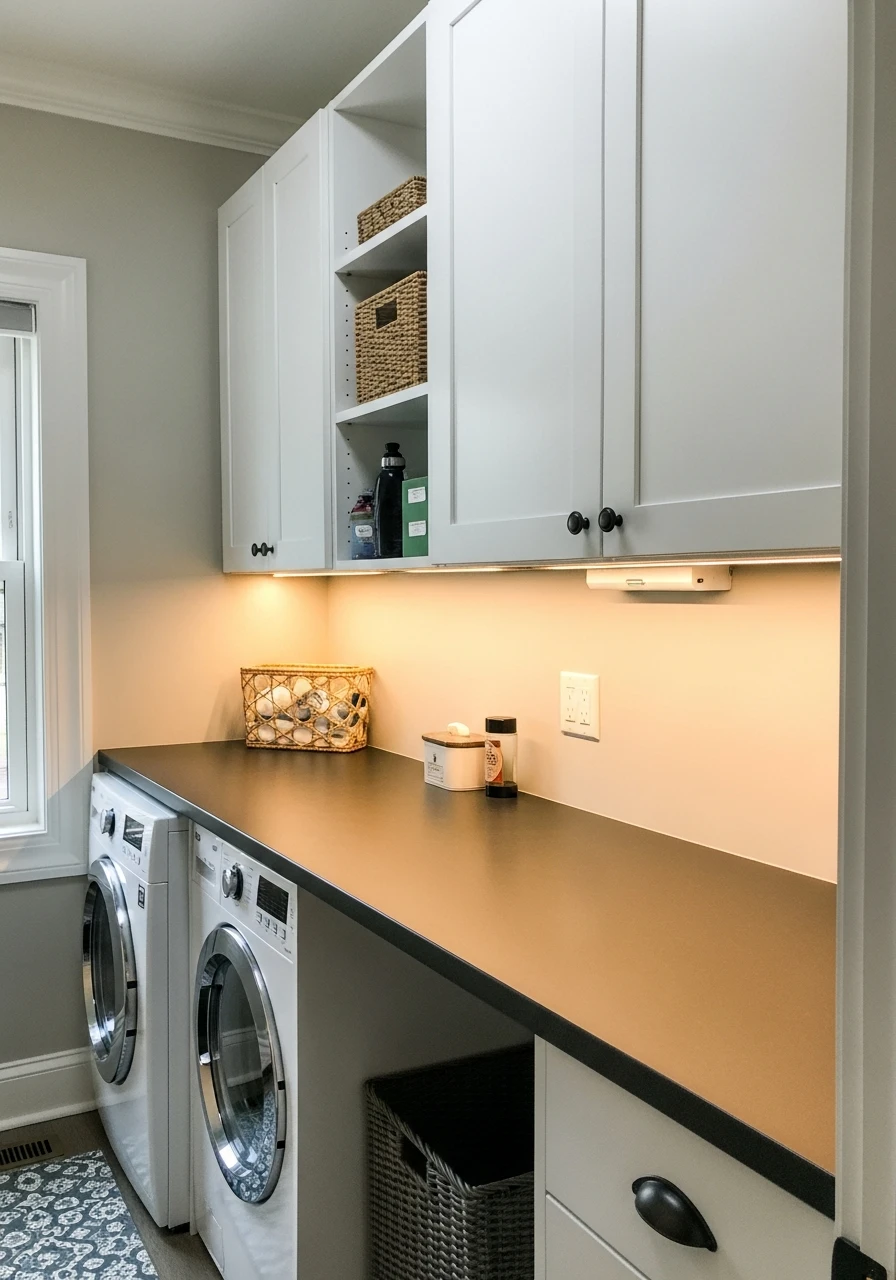
Add strip lighting underneath upper cabinets or shelves. Proper task lighting improves usability and brightens specific work areas in narrow laundry rooms.
- Choose warm, bright LED strips.
- Install a dimmer switch.
- Ensure the light covers the folding area.
Pro Tip: Good lighting is essential for spotting stains before washing.
39. Light Inside Shelves
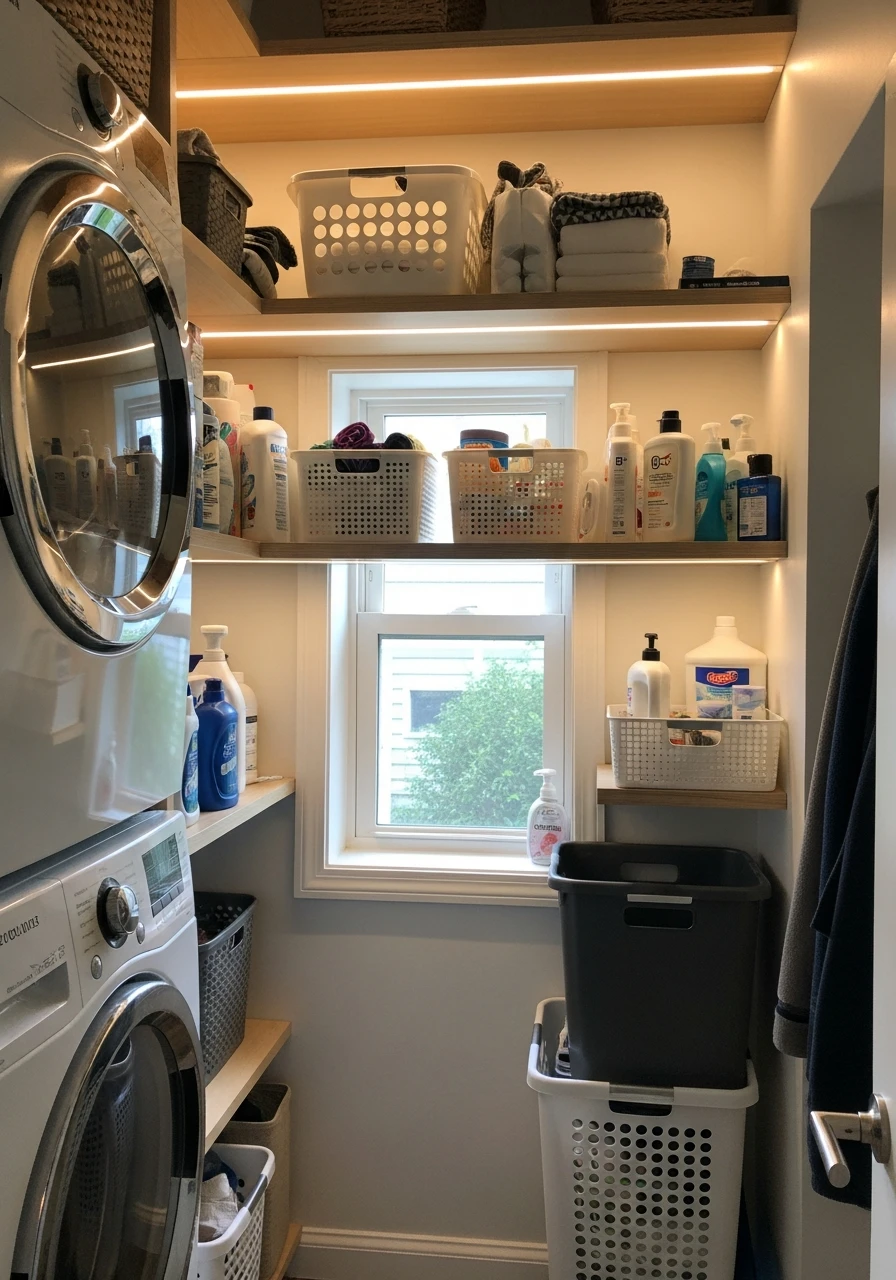
Add thin LED strips inside open shelves or glass-front cabinets. This enhances visibility and adds a modern, custom touch without adding any clutter.
- Use battery-operated lights for easy installation.
- Hide the strip behind the shelf trim.
- Great for displaying glass containers.
Pro Tip: Internal lighting creates depth, making the shelves appear further back than they are.
40. Warm Wood Details
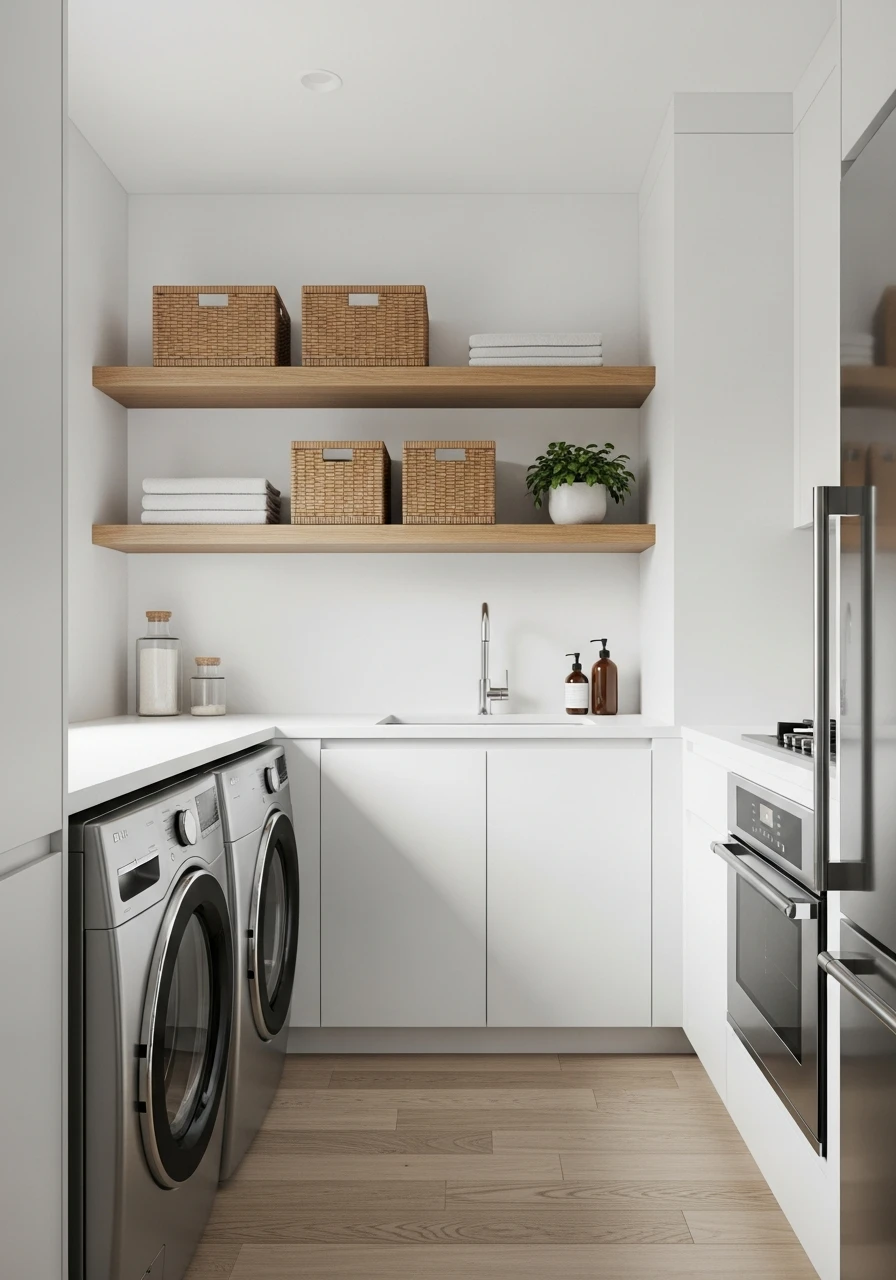
Introduce wood elements through shelves, baskets, or trim to soften the look. Wood tones add warmth and balance to otherwise sterile, slim layouts.
- Use warm oak or maple finishes.
- Incorporate wooden storage crates.
- Keep wood grain visible.
Pro Tip: A little bit of wood goes a long way in making a utility room feel homey.
41. Durable Flooring Needed
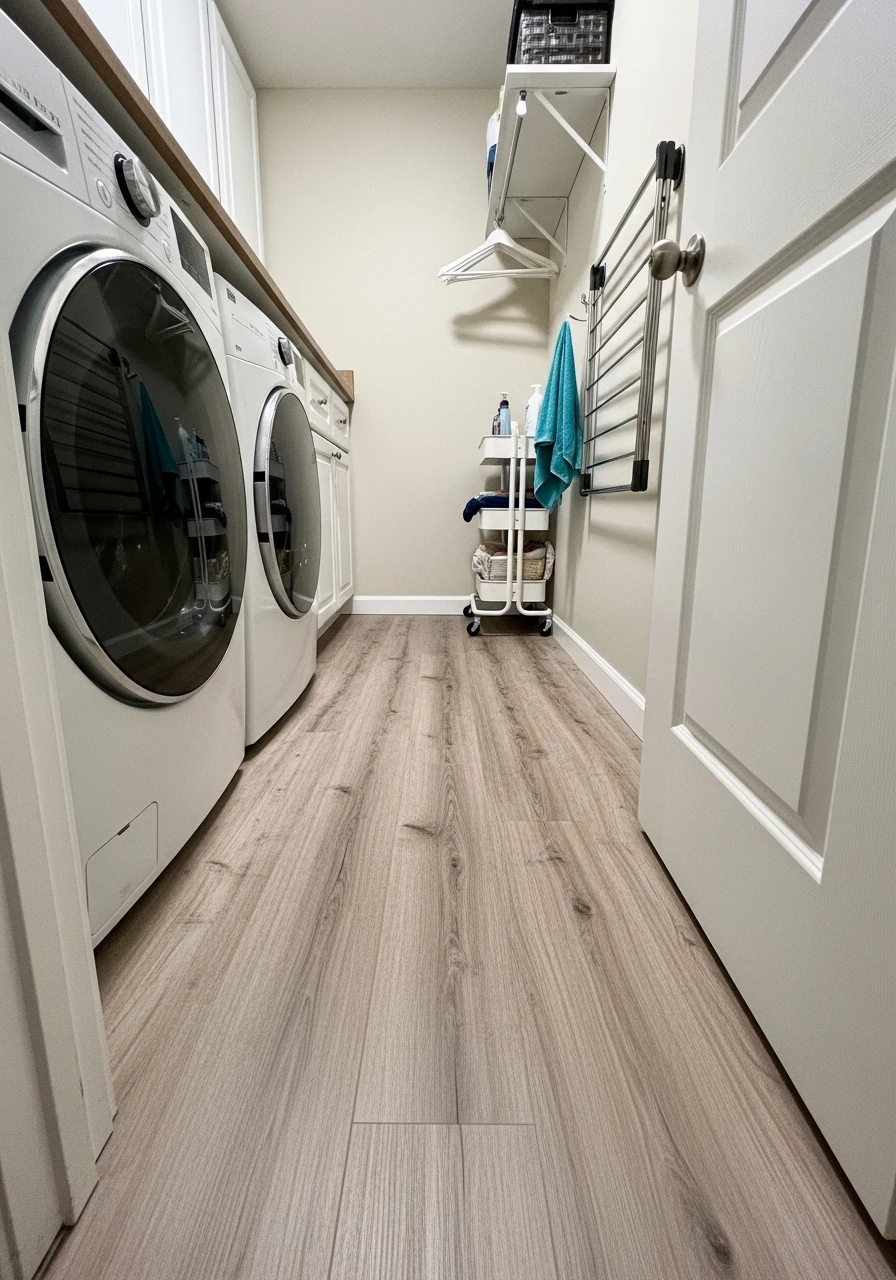
Use durable, water-resistant flooring such as luxury vinyl plank or tile. These materials withstand moisture and suit narrow laundry spaces that get heavy use.
- Choose large-format tiles to minimize grout lines.
- Install the flooring perpendicular to the long walls.
- Ensure the floor is easy to sweep.
Pro Tip: Lighter flooring colors also help the room feel larger.
42. Simple Backsplash Tile
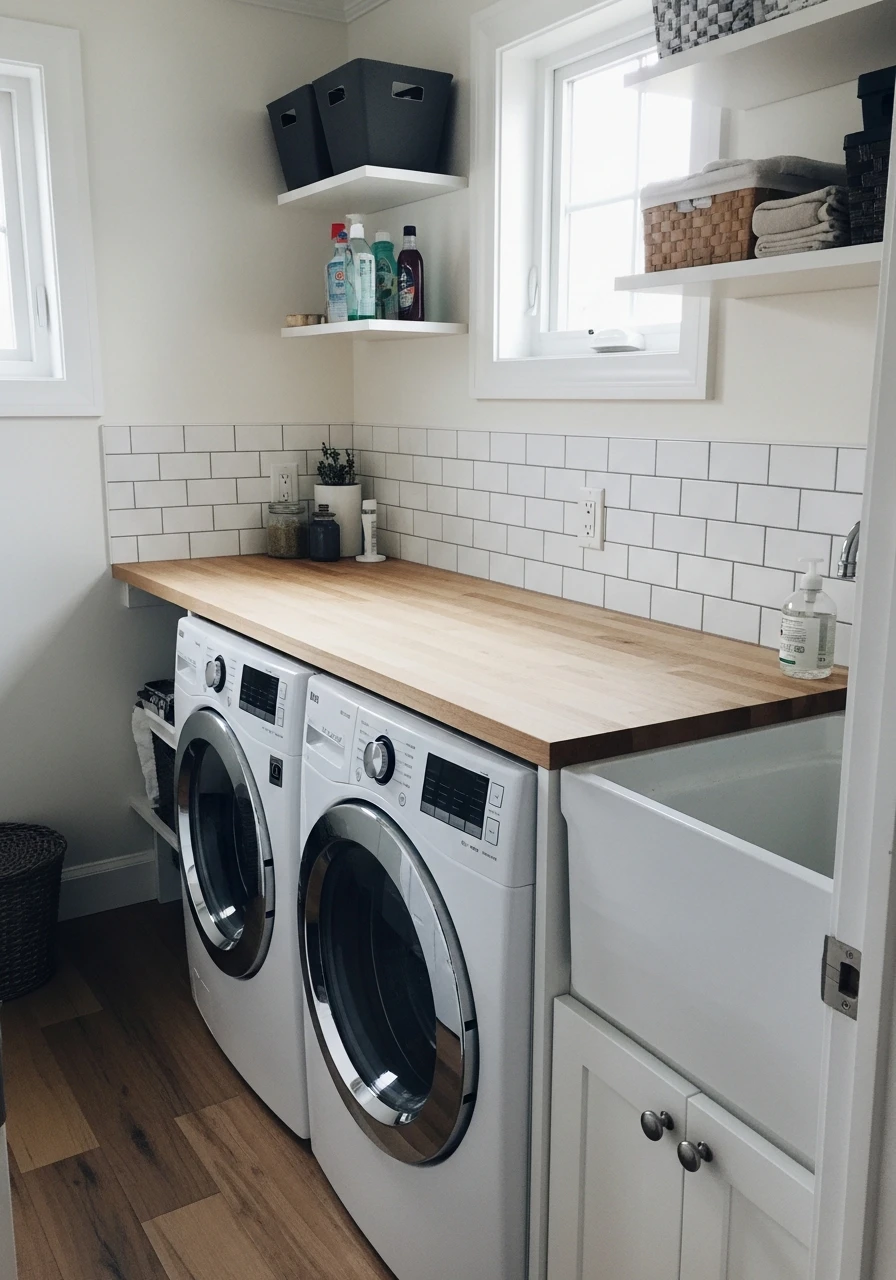
Install a simple tile backsplash behind appliances and sinks. This protects walls from moisture and simplifies maintenance in tight rooms where cleaning can be difficult.
- Use classic white subway tile.
- Run the backsplash up higher than usual.
- Choose a non-porous tile material.
Pro Tip: A reflective backsplash adds subtle light to the workspace.
43. Butcher Block Countertop
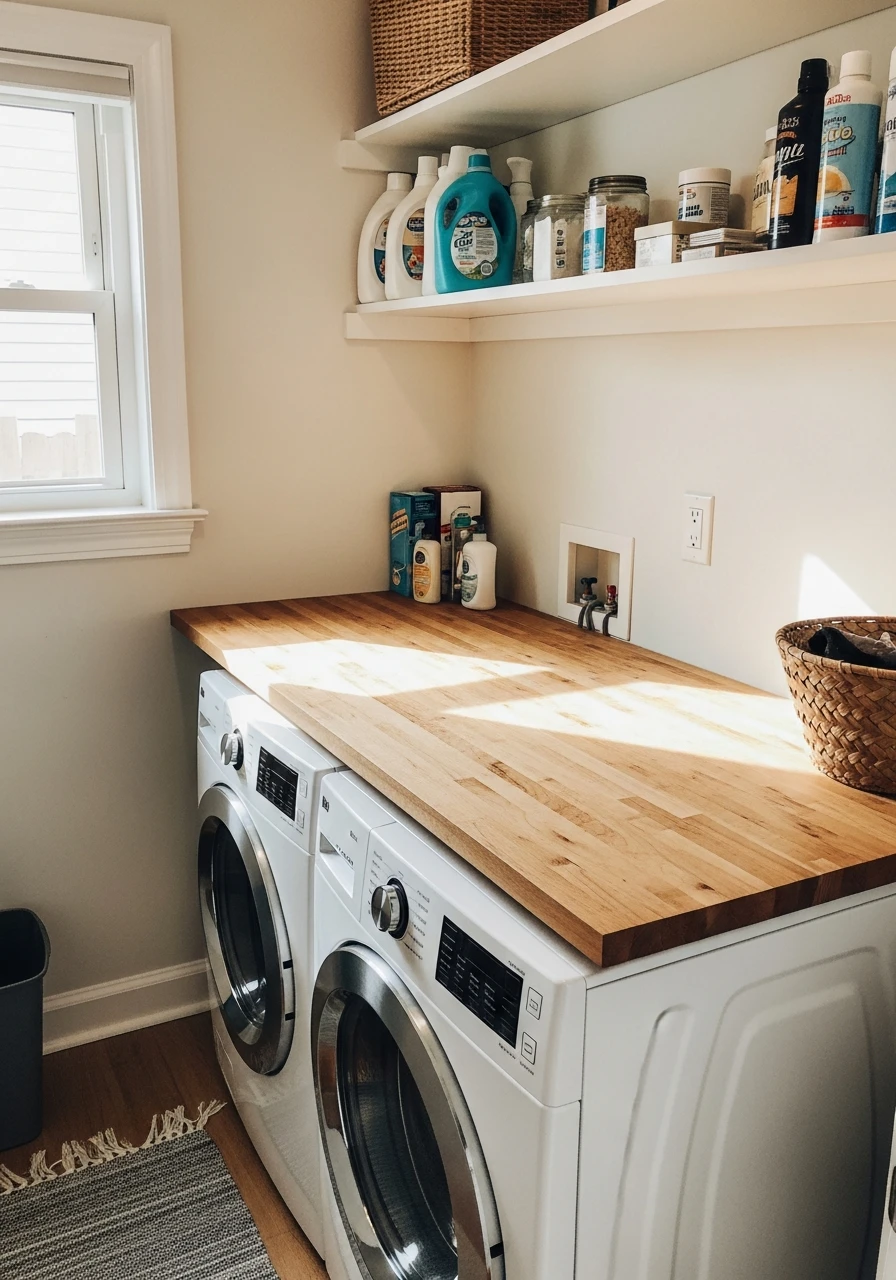
Choose a butcher block countertop for your folding area. It adds warmth and texture while remaining a highly functional surface in narrow laundry rooms.
- Seal the wood properly against moisture.
- Use it over front-loading machines.
- Choose a lighter wood tone like maple.
Pro Tip: Butcher block provides a high-end look on a much smaller budget than stone.
44. Sleek, Minimal Hardware
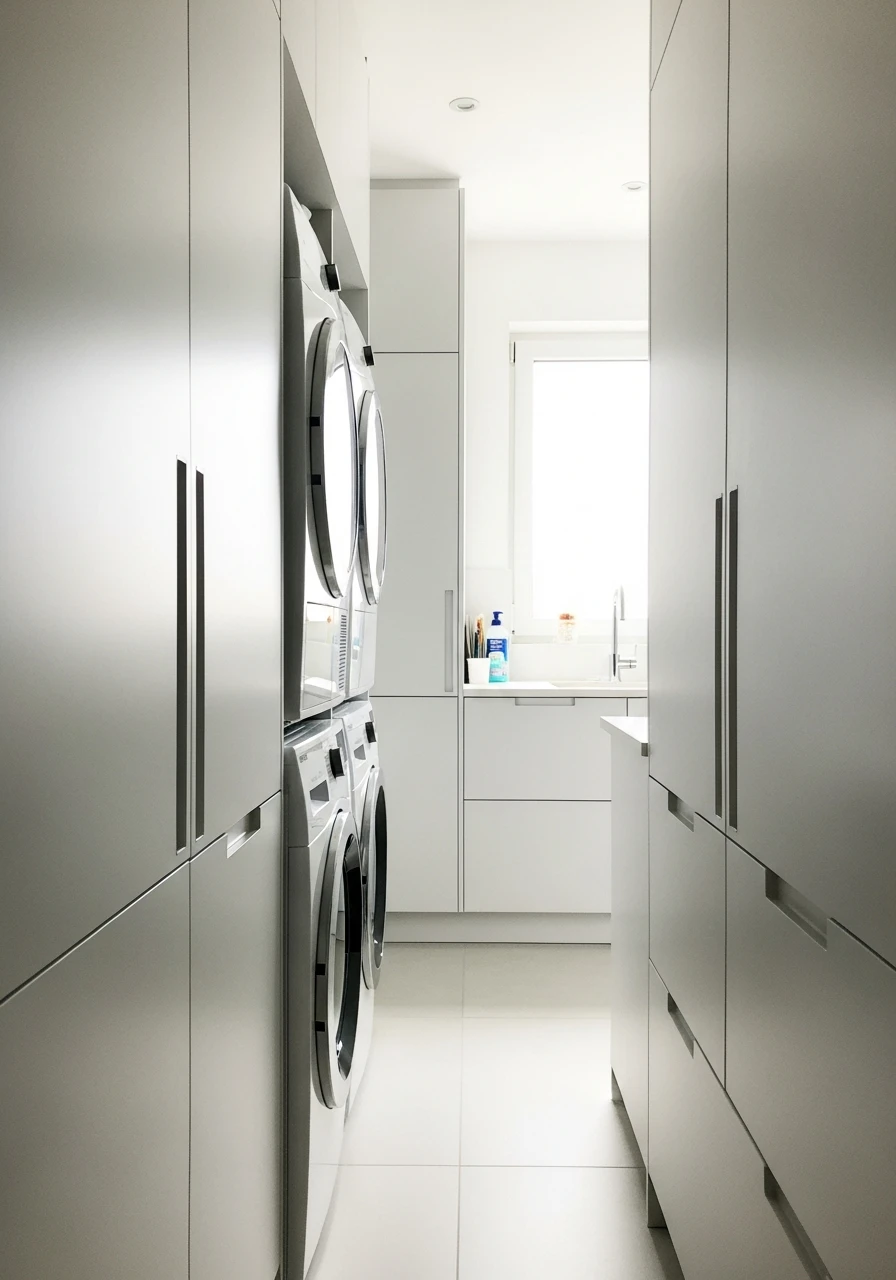
Use sleek, minimal hardware on cabinets and drawers to avoid visual clutter. Clean lines help narrow rooms feel more open and modern.
- Choose thin bar pulls or finger pulls.
- Use a matte black or brushed gold finish.
- Keep the hardware small in scale.
Pro Tip: Minimal hardware lets the cabinets themselves be the star of the show.
45. Hide Appliances Seamlessly
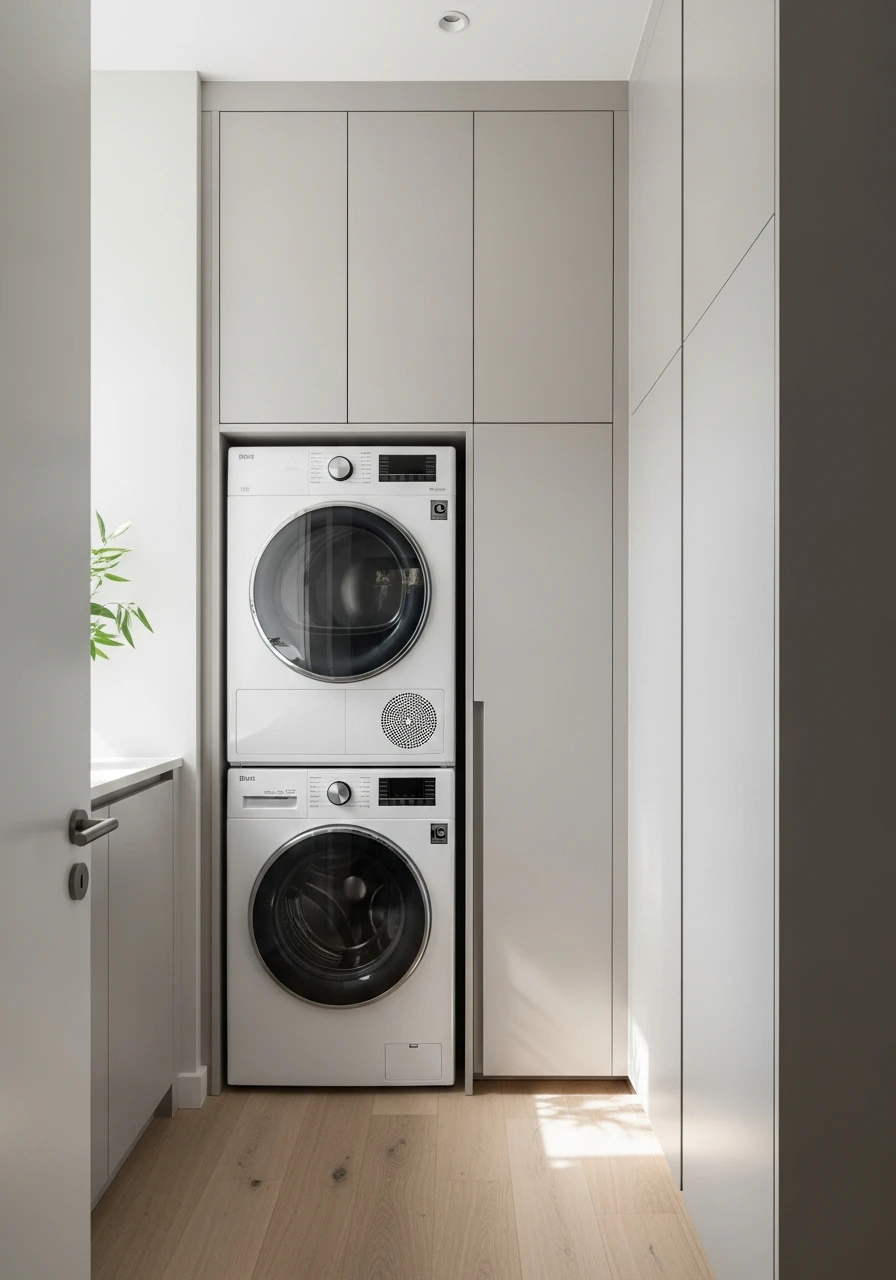
Use integrated, panel-ready appliances that blend into your cabinetry for a seamless look. This creates a streamlined appearance in narrow layouts by hiding the machine bulk.
- Requires choosing specialized appliances.
- Allows for a true custom kitchen feel.
- Keeps the focus on storage and decor.
Pro Tip: If panels are out of budget, paint regular machines the same color as the walls for a similar effect.
46. Use Slatted Shelves
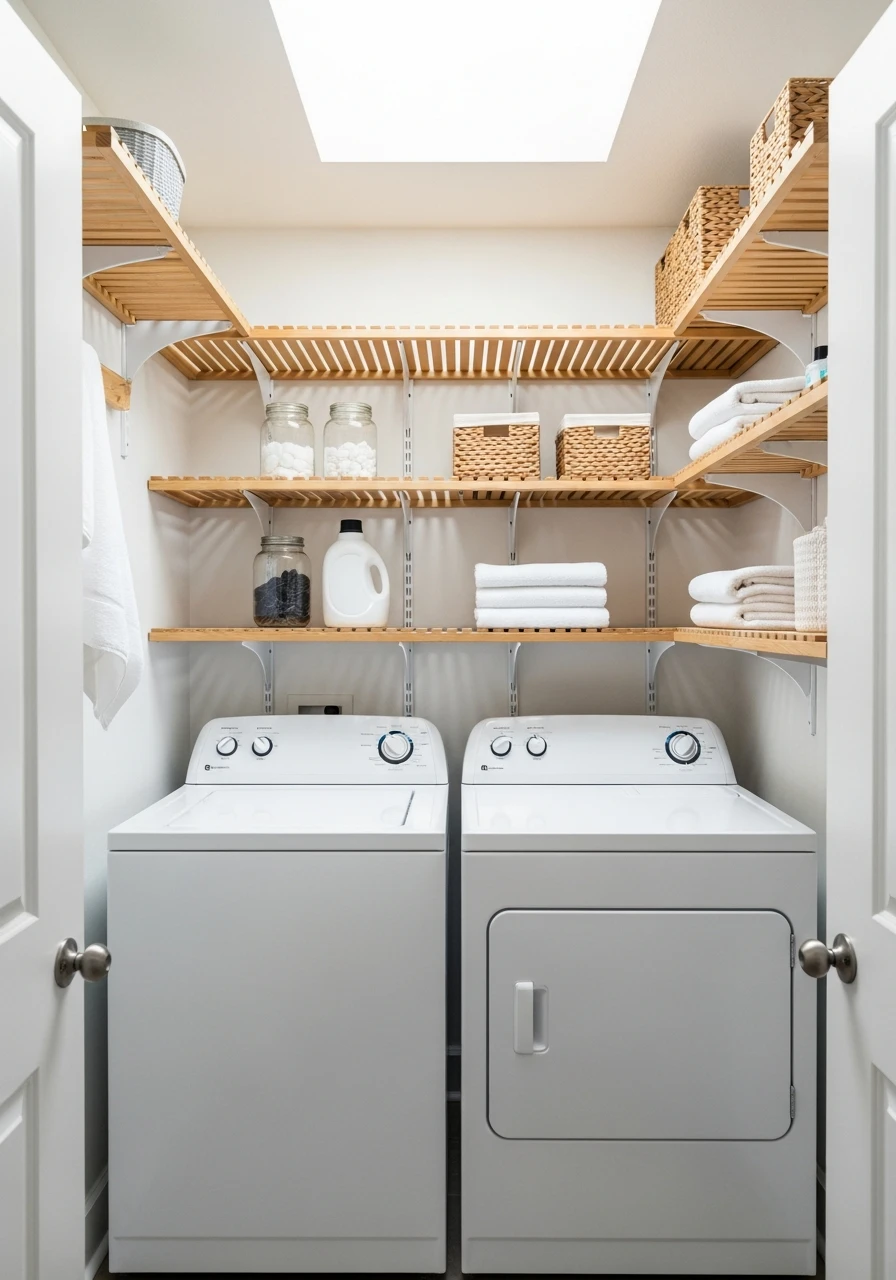
Opt for slatted or open wood shelves to reduce visual weight. This keeps storage functional without visually closing in the narrow space or feeling too heavy.
- Slats are great for air circulation.
- Use them for folded linens.
- Choose a natural wood finish.
Pro Tip: Slatted shelves work well with coastal or modern farmhouse decor styles.
47. Warm Neutral Cabinets
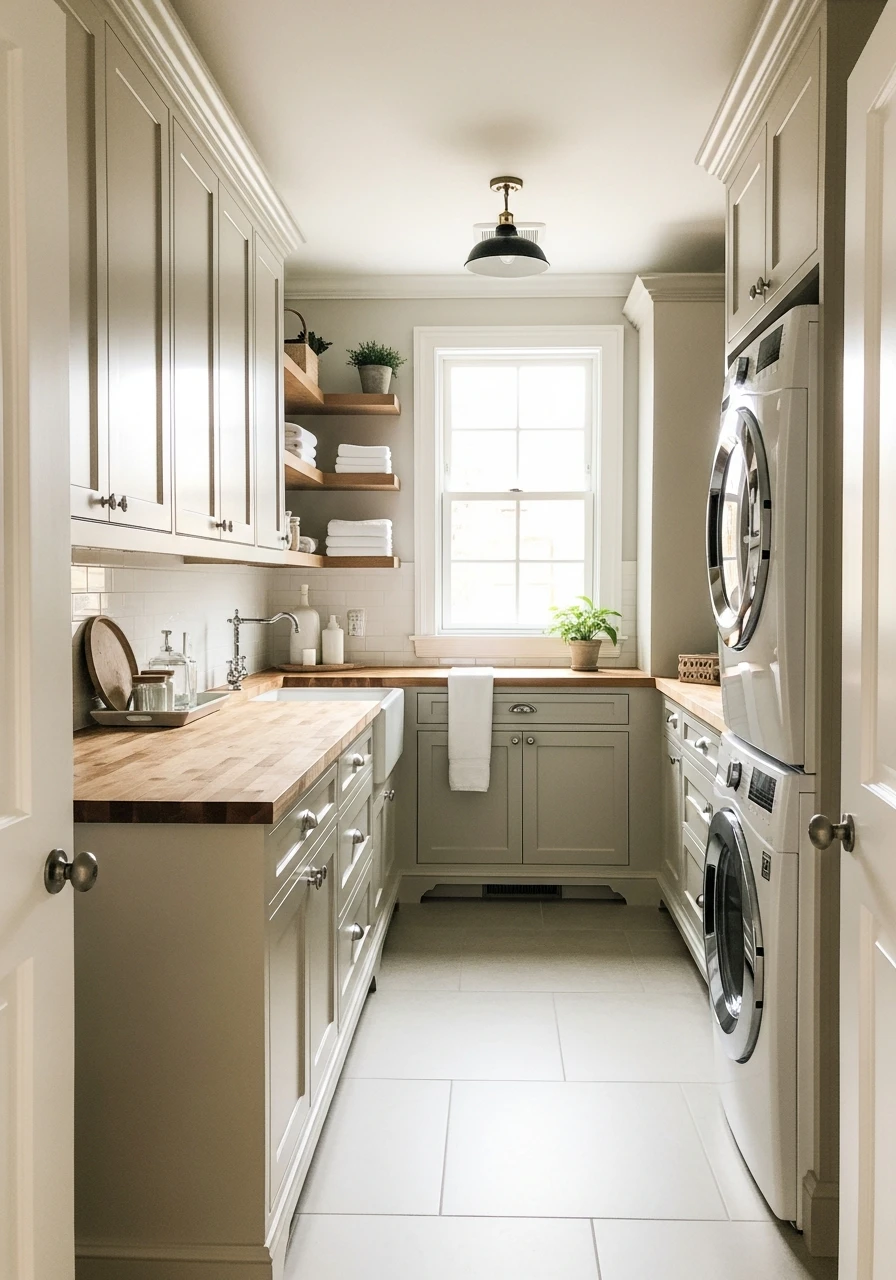
Choose warm neutral cabinet colors like beige or soft gray. These tones add depth without darkening the room, balancing style and brightness.
- Pair warm neutrals with brass hardware.
- Use a slightly darker neutral for lower cabinets.
- Ensure the lighting temperature is warm.
Pro Tip: Warm neutrals feel cozier and more inviting than stark white.
48. Mix Metal Finishes
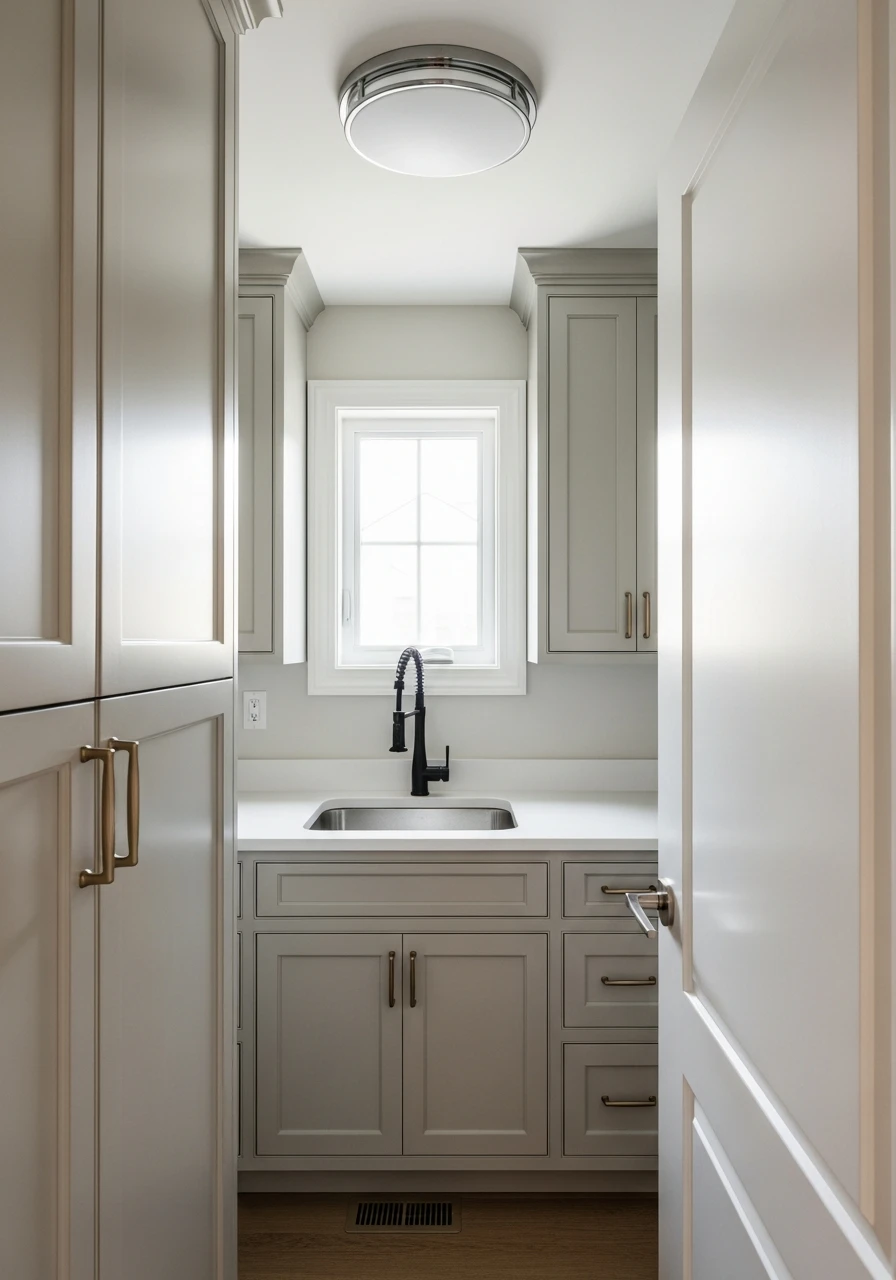
Combine subtle metal finishes on handles, fixtures, and lighting. This adds character and visual texture without overwhelming the narrow space with too many design elements.
- Pair brass with matte black.
- Keep the finishes consistent throughout the room.
- Use metal wire baskets.
Pro Tip: Mixing metals makes a room feel professionally designed and less matchy-matchy.
49. Safe Tile Flooring
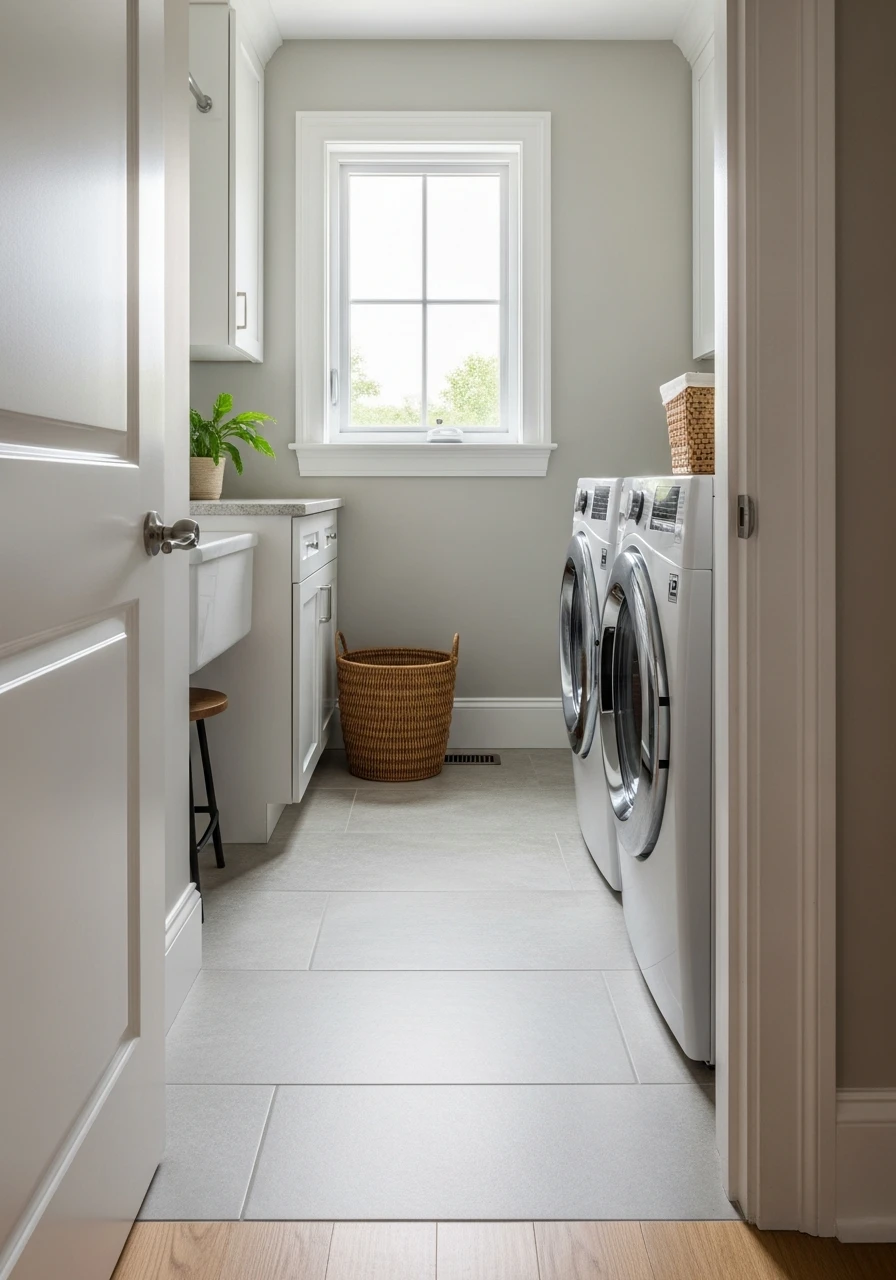
Choose slip-resistant tile for safety and durability in a potentially wet area. Narrow laundry rooms benefit from practical, low-maintenance floors that prevent falls.
- Look for a textured surface.
- Choose a darker grout for easy cleaning.
- Use a smaller tile size for better grip.
Pro Tip: Matte finishes are usually more slip-resistant than glossy ones.
50. Hide the Vents
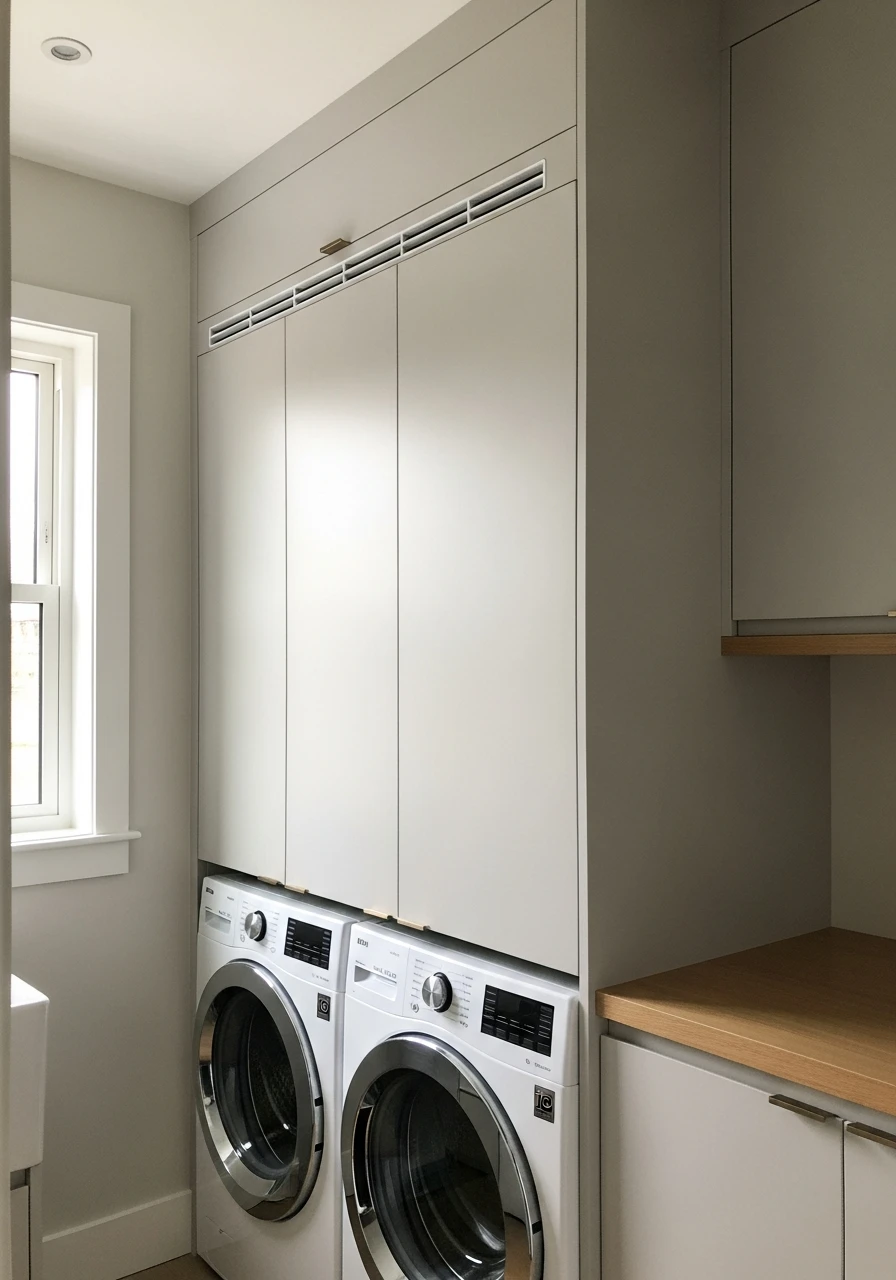
Conceal ventilation grilles within cabinetry or walls to maintain a clean, modern look. This is important for keeping a streamlined aesthetic in narrow laundry rooms.
- Use thin, paintable grilles.
- Integrate them into the toe kick of cabinets.
- Ensure airflow is not restricted.
Pro Tip: Hiding utility elements instantly makes the space look more finished and intentional.
See? Even the tightest spaces can look amazing and work hard for you.
Start small with a stacked layout or some vertical shelves, and watch your narrow laundry room stop feeling like a chore and start feeling like a cute, efficient zone!