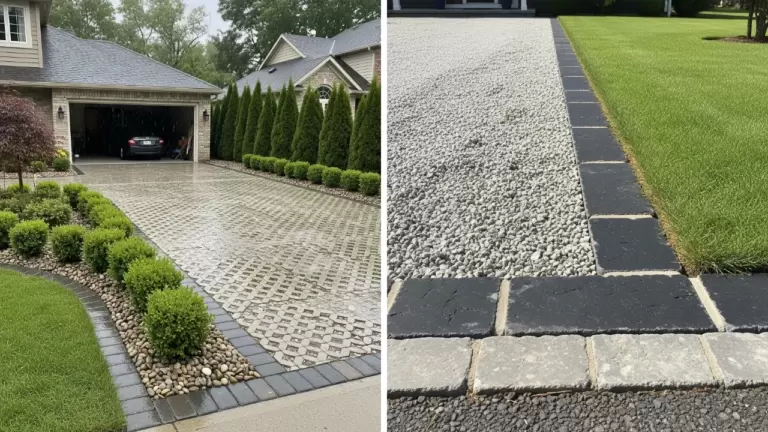
50 Front Yard Landscaping Ideas

This post may contain affiliate links: full affiliate disclosure.
Is your front yard feeling a little… sad?
It’s the first thing everyone sees, but big projects feel overwhelming. Don’t worry, friend!
We’ve gathered 50 simple, high-impact front yard landscaping ideas to help you get that high-end look without needing a massive budget or a professional crew.
1. Stone Front Walkway
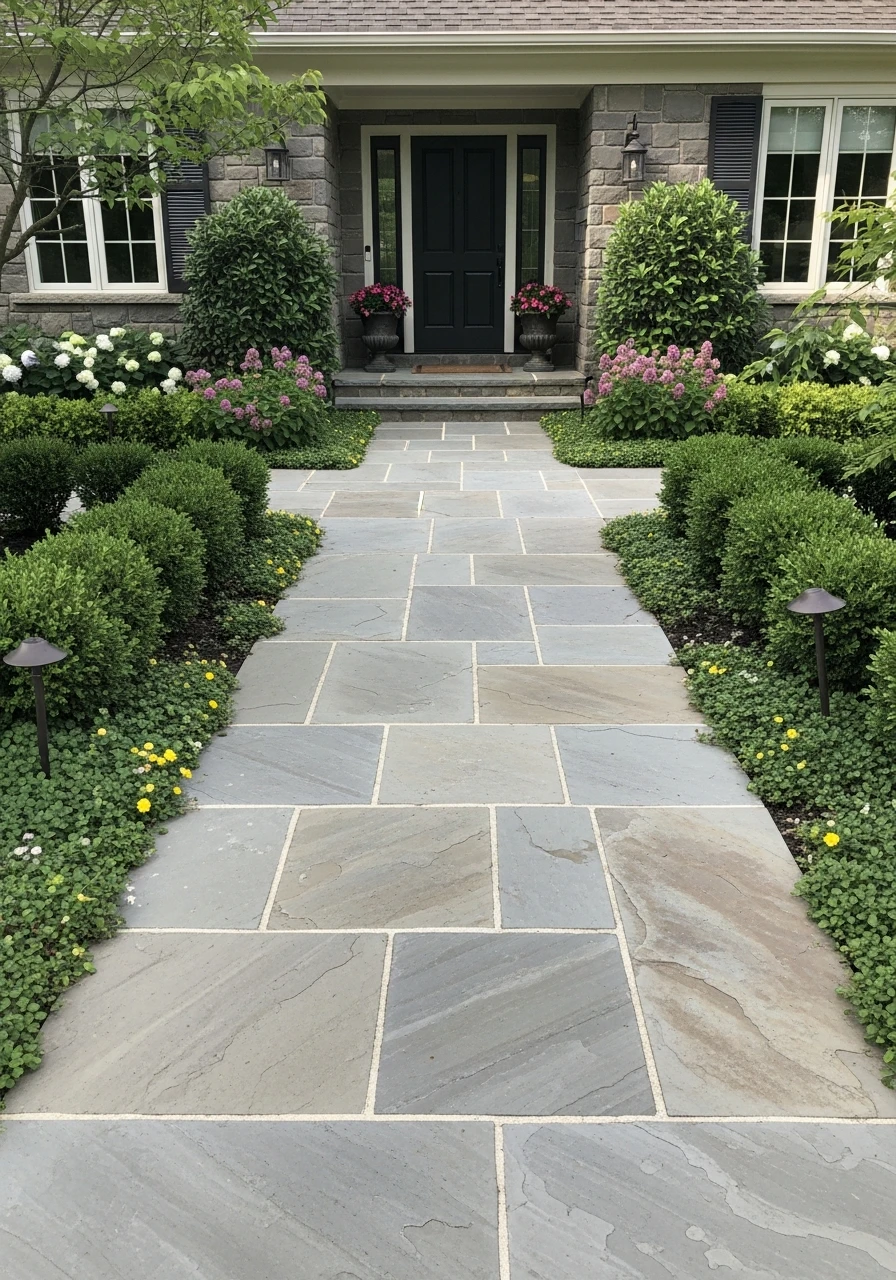
Using irregular or cut natural stone creates a beautiful, welcoming path to your door. This choice adds fantastic texture and durability, making your entry feel instantly more expensive and timeless.
- Use flat flagstone pieces for an easy DIY installation.
- Keep the path wide enough for two people to walk comfortably.
- Let low-growing moss fill the gaps between stones for a soft look.
Pro Tip: Buy stone from a local quarry instead of a big box store to save money on bulk materials.
2. Frame Your Front Door
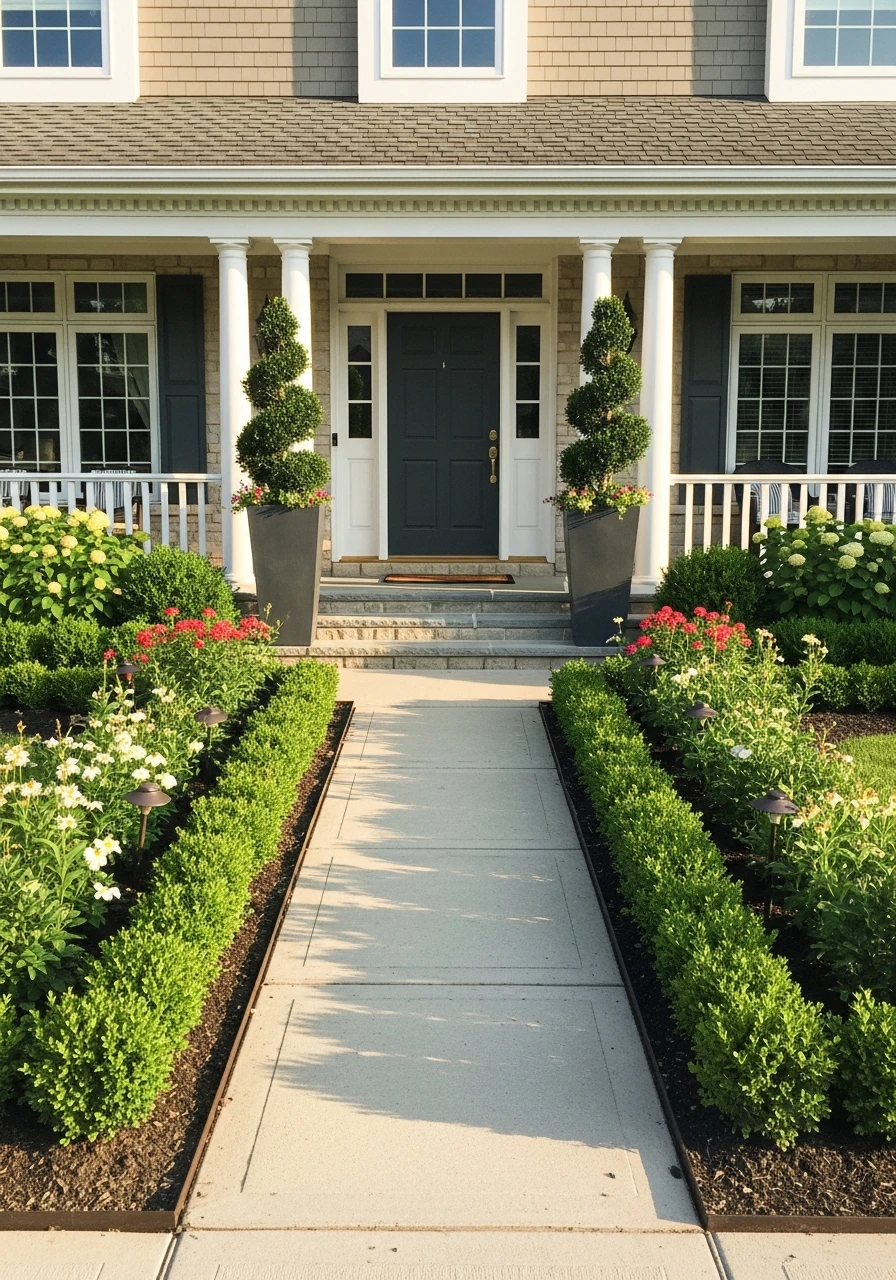
Design your planting beds to guide the eye straight to your front door. Use symmetrical plants, tall planters, or small accent trees placed equally on both sides to give the entrance authority.
- Use matching evergreen shrubs for year-round structure.
- Place two large, identical planters right next to the door.
- Trim hedges into clean geometric shapes.
Pro Tip: Symmetry is the fastest way to make any space look formal and professionally designed.
3. Modern Paver Driveway
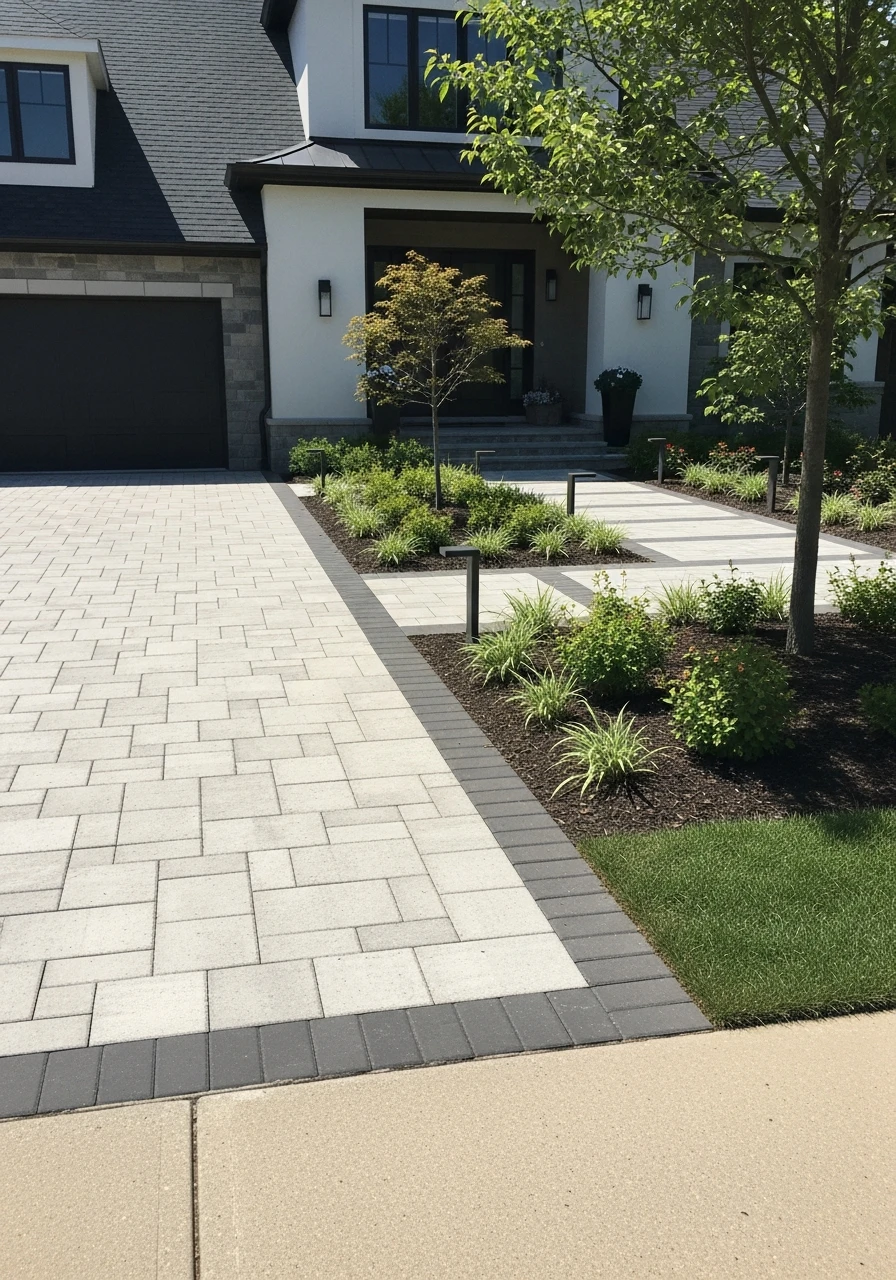
Permeable pavers look clean and structured, giving your driveway a modern edge. They also help rainwater drain naturally, which is great for the environment and reduces puddling.
- Choose light gray or charcoal pavers for a contemporary style.
- Install the pavers with small gaps filled with gravel or grass.
- Define the edge with a simple stone border.
Pro Tip: Check local codes; permeable surfaces can sometimes qualify for tax credits.
4. Extra Wide Walkway
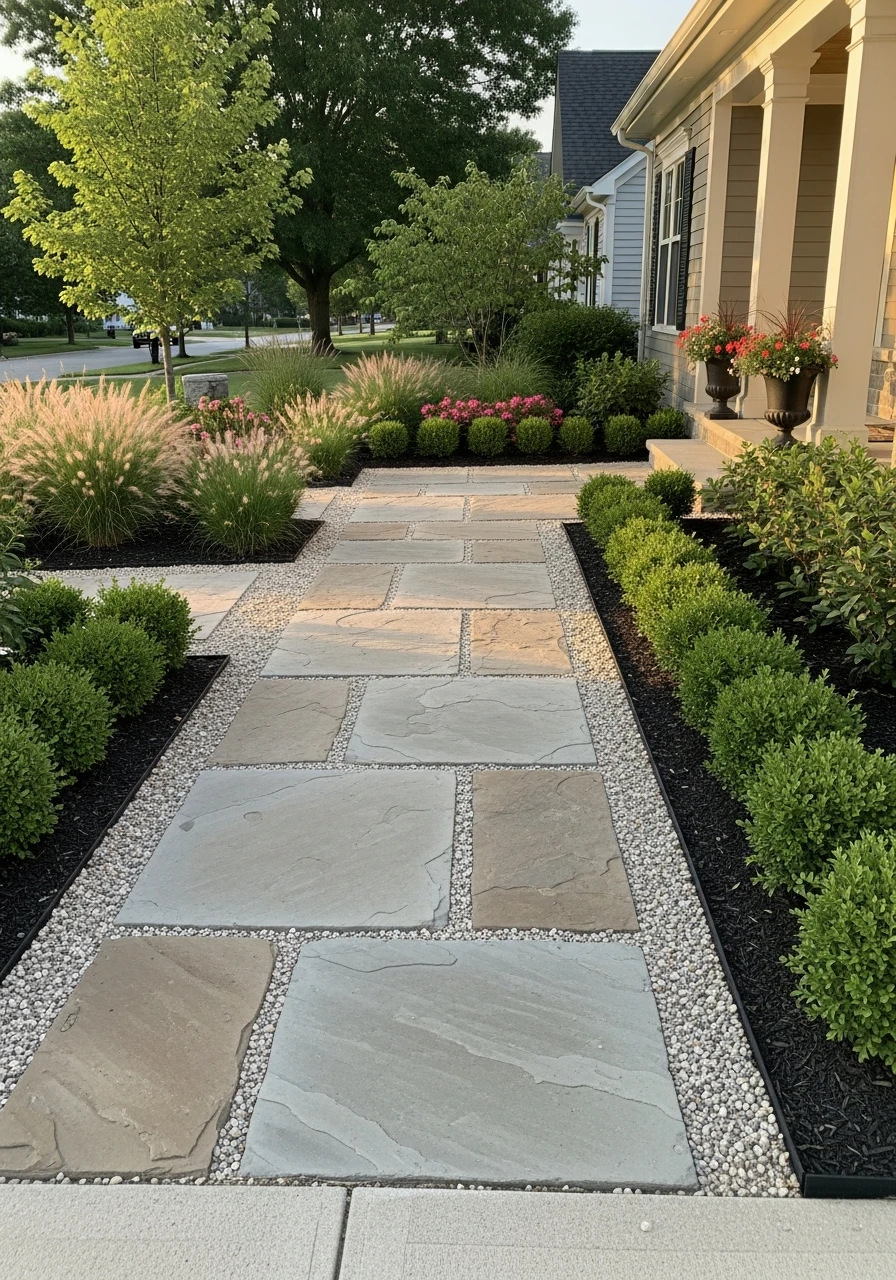
Ditch the narrow concrete strip! A wider front path (four feet or more) feels intentional, welcoming, and high-end. It also makes moving furniture or greeting guests much easier.
- Aim for a minimum width of 48 inches.
- Use the extra width to line the edges with low-voltage lighting.
- Choose materials like brick or large-format concrete slabs.
Pro Tip: Narrow paths scream ‘builder basic.’ Wide paths scream ‘custom home.’
5. Layered Planting Depth
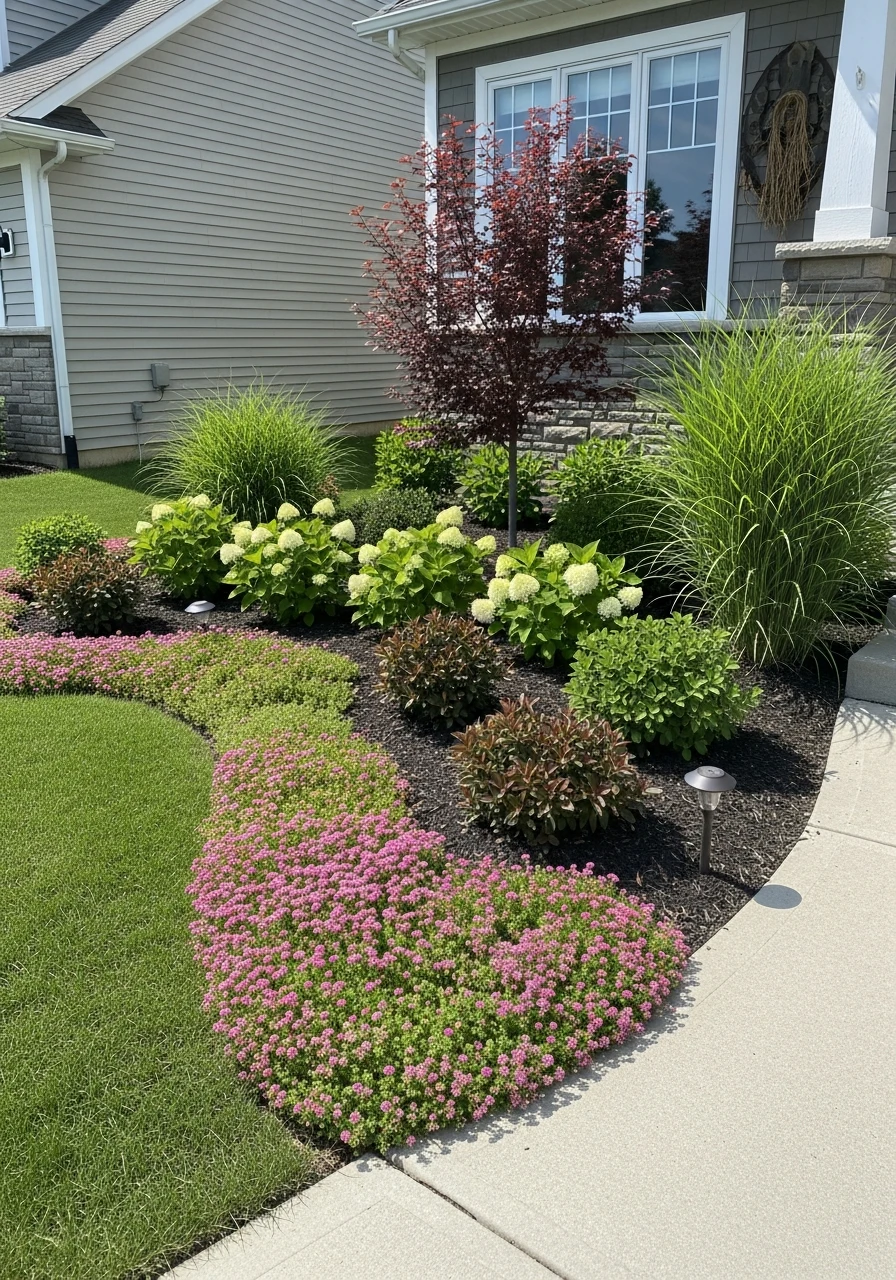
Avoid the flat look by arranging plants in three distinct layers. Start low near the front (ground cover), move to medium shrubs in the middle, and finish with tall grasses or small trees near the house. This creates depth and visual richness.
- Use different shades of green for contrast.
- Place taller plants where they won’t block windows.
- Define the bed edge clearly with stone or metal.
Pro Tip: Always plant the tallest items closest to the house foundation.
6. Use Geometric Shapes
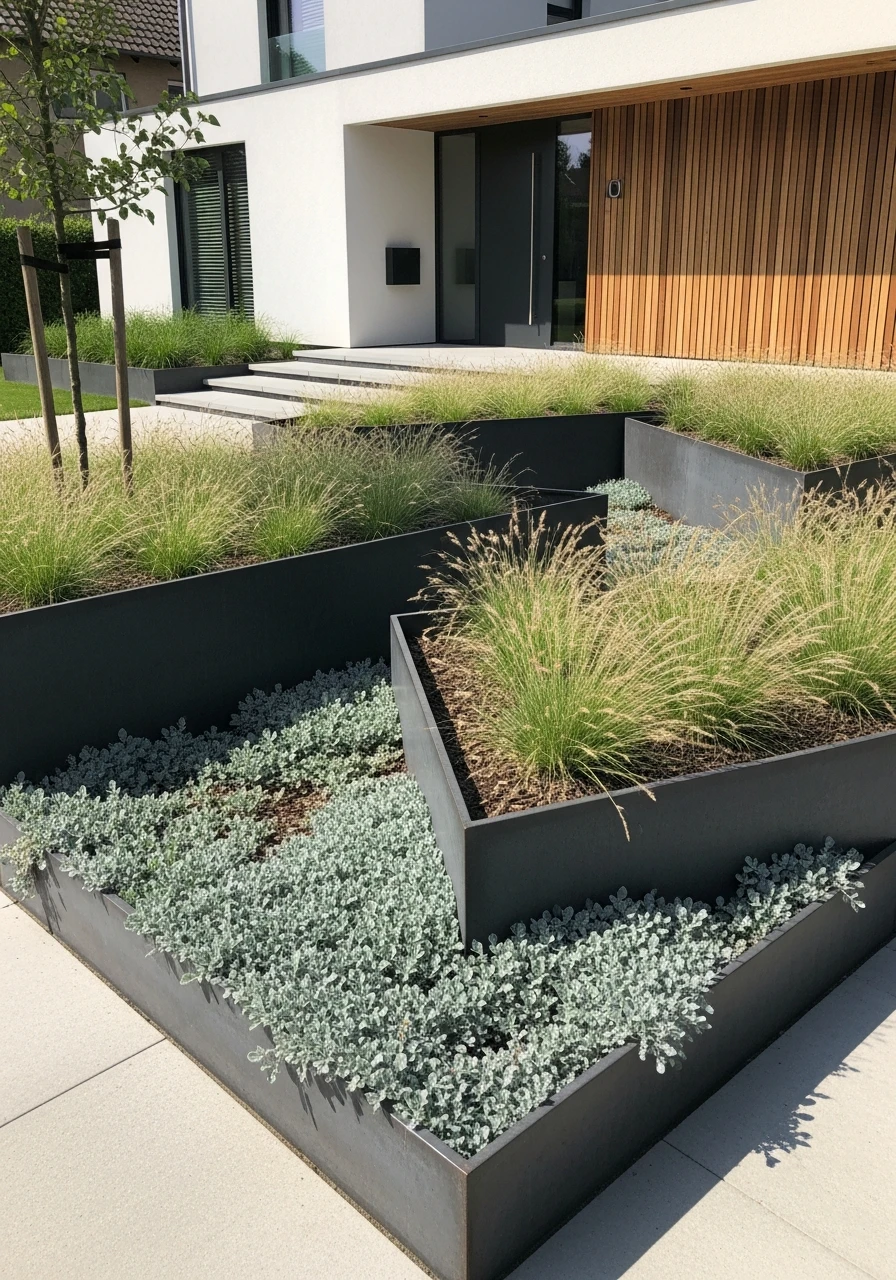
For a contemporary or minimalist vibe, use straight lines, sharp rectangles, or angular shapes for your planting beds. This structured look contrasts beautifully with soft foliage and works wonders on modern homes.
- Use straight metal edging to keep lines crisp.
- Fill beds with uniform materials like dark mulch or white gravel.
- Choose structured plants like boxwood or trimmed hedges.
Pro Tip: Geometric beds are much easier to maintain than curvy, winding ones.
7. Curved Gravel Path
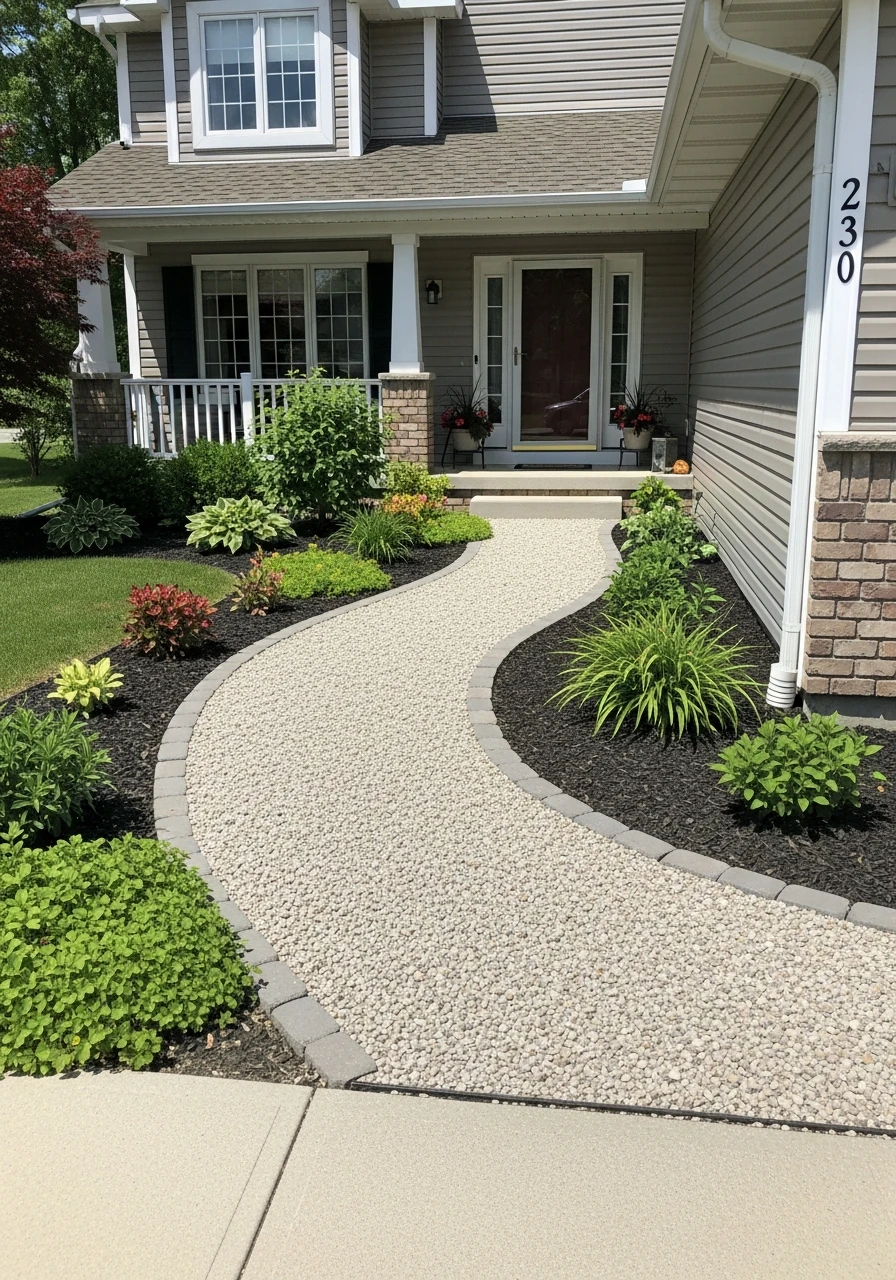
A gently curving path made of pea gravel softens the look of the yard and adds beautiful texture. Gravel is inexpensive, simple to install, and requires almost no maintenance.
- Use landscape fabric underneath to prevent weeds.
- Define the path with metal or plastic edging.
- Choose a fine gravel that is comfortable for walking.
Pro Tip: The curve should lead naturally to the entry, not look random or forced.
8. Raised Stone Planters
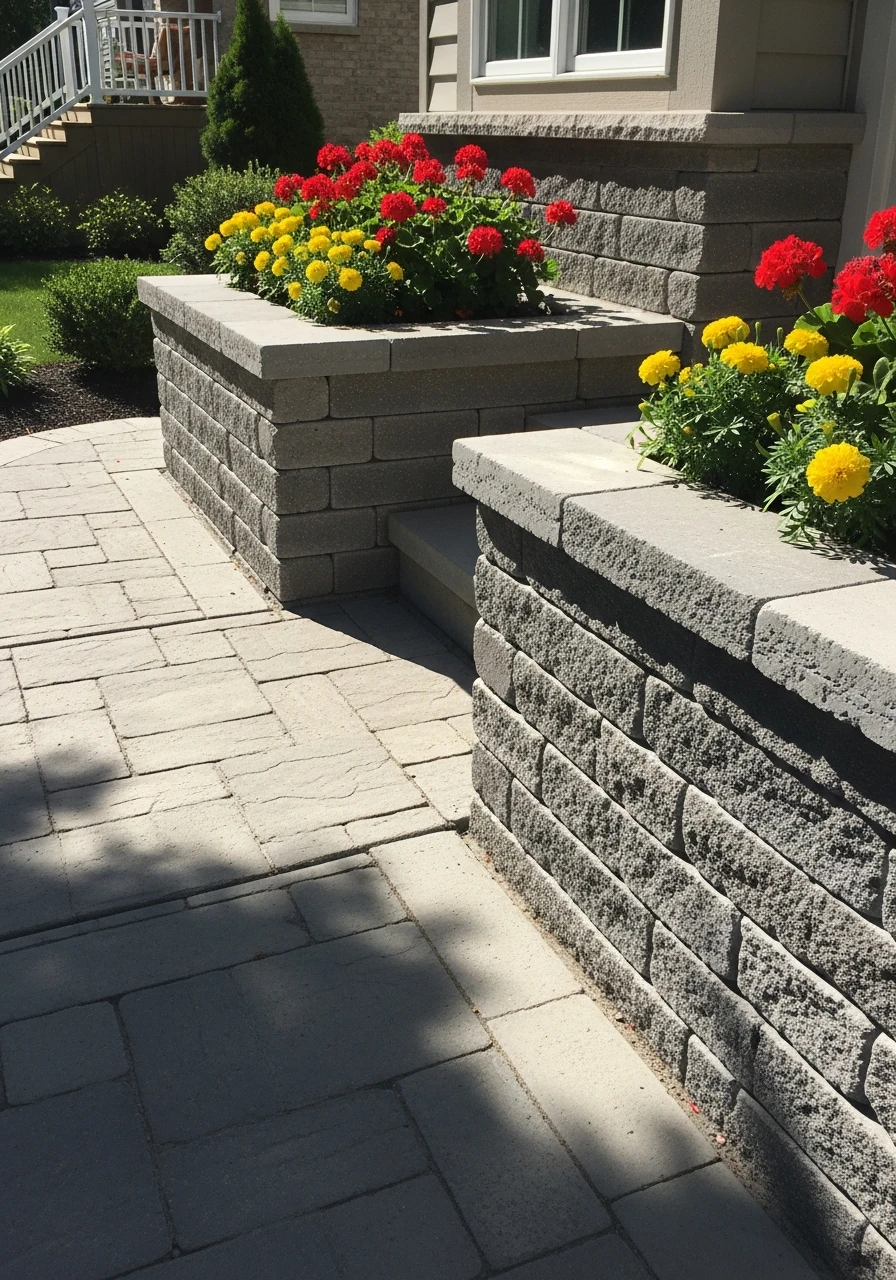
Elevated planters made of brick or stone add instant structure and formality to your yard. They are perfect for highlighting colorful seasonal flowers near the foundation or framing the garage.
- Use cinder blocks and veneer stone for a budget DIY build.
- Ensure drainage holes are installed at the bottom.
- Fill with high-quality potting soil for healthy growth.
Pro Tip: A mix of flowers and trailing vines looks especially charming cascading over the stone edge.
9. Mixed Landscape Edging
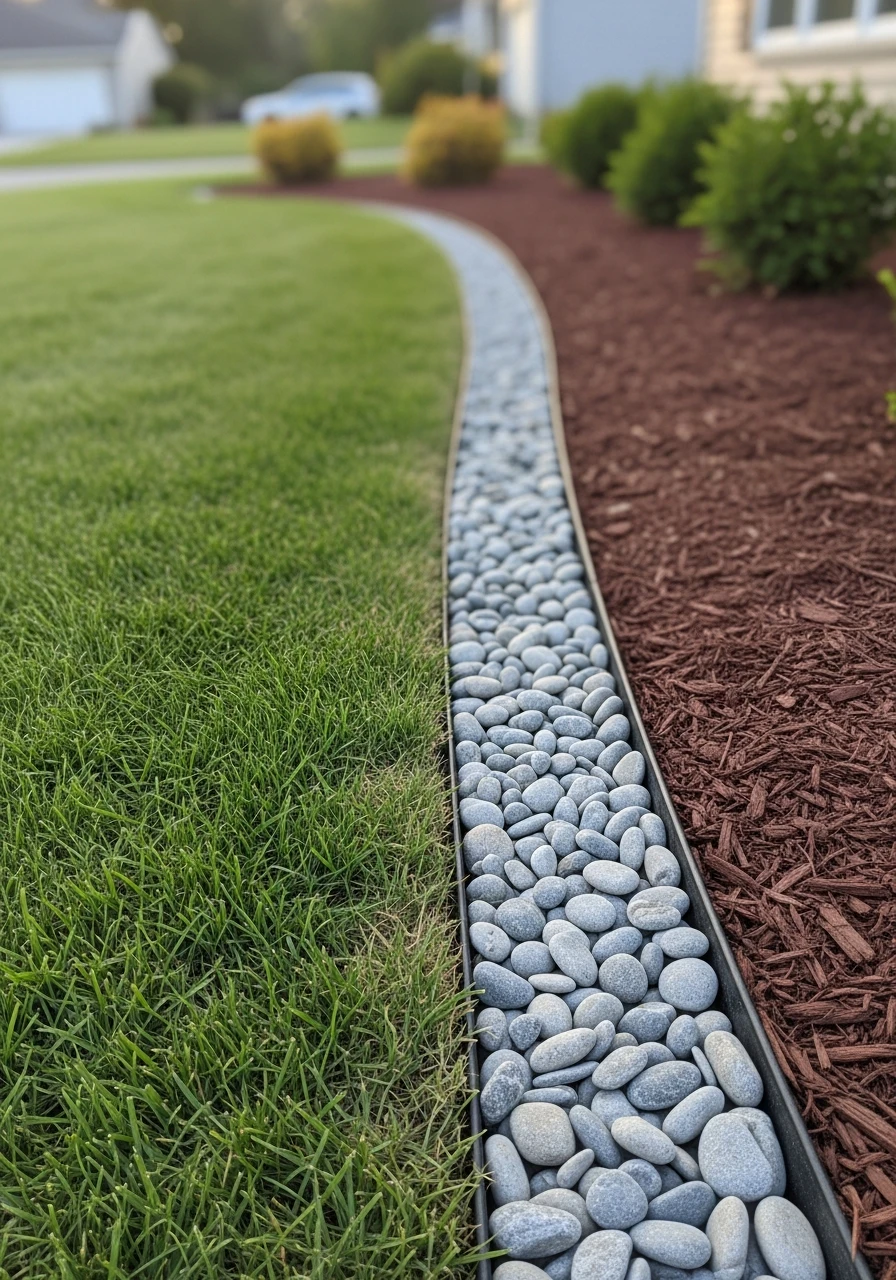
Give your lawn and garden beds a clean, defined separation using mixed materials. Combining metal edging with stone or wood ensures the design stays crisp and keeps mulch from spilling onto the grass.
- Use flexible metal edging for curved areas.
- Install brick or stone edging for straight, formal borders.
- Keep the edging slightly above ground level.
Pro Tip: A clean, sharp edge is the easiest way to make a basic lawn look manicured and expensive.
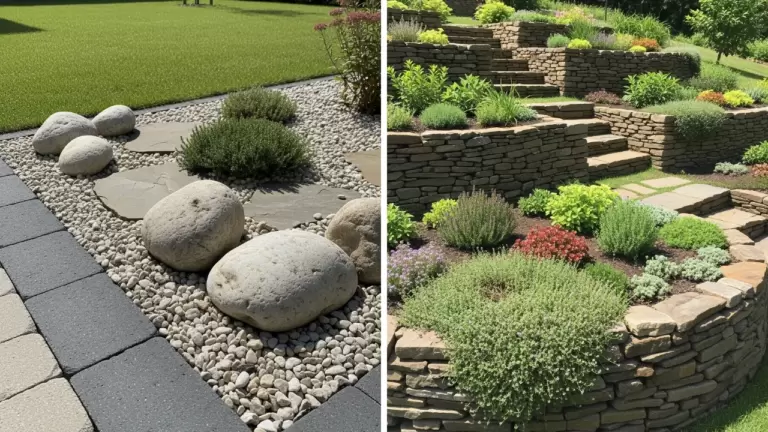
10. Make Hills Flat and Pretty
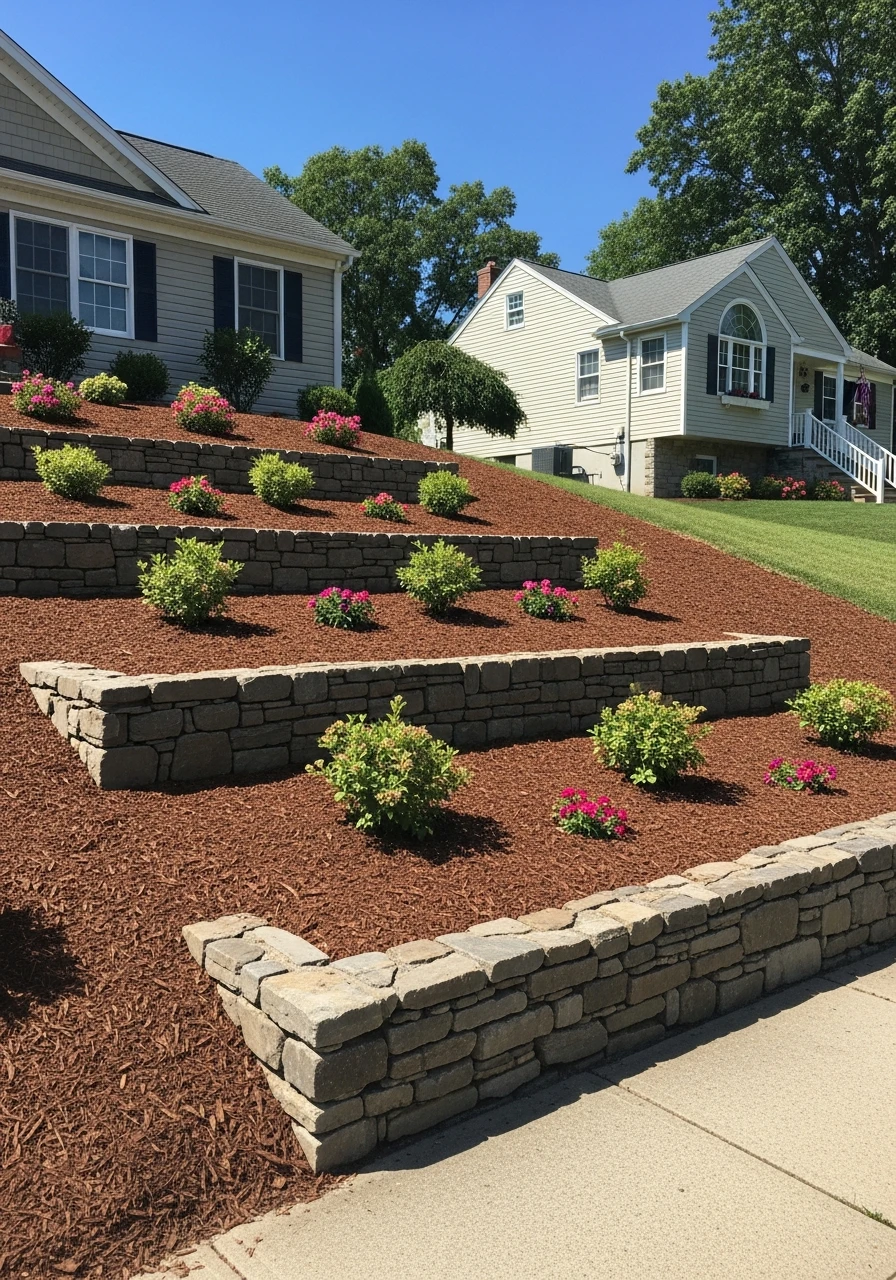
If your front yard looks like a ski slope, break it up into flat steps or ‘levels.’ This is the safest way to handle a steep hill and stops rain from washing all your mulch away. It also makes mowing easier and gives you defined spots for planting flowers.
- Stop water erosion from ruining your garden beds.
- Create level, defined planting areas for shrubs or annuals.
- Improve the usability and safety of a steep lot.
- Use materials like stone, brick, or pressure-treated wood.
Pro Tip: When stacking your levels, make sure the lowest wall is the sturdiest—it carries the weight of all the dirt above it!
11. Use Native Plants
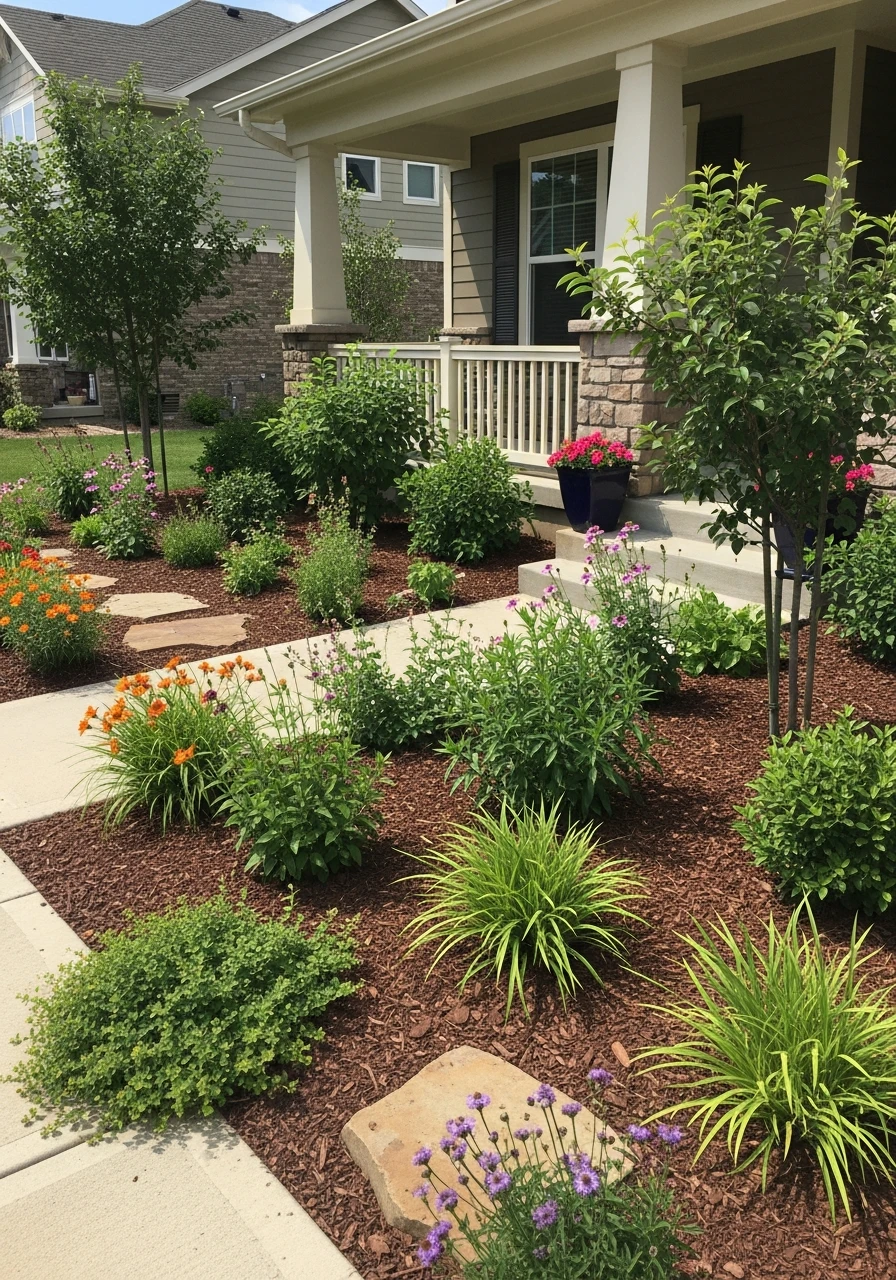
Filling your yard with plants native to your region is the ultimate low-maintenance trick. Native species thrive naturally, meaning less watering, less fuss, and no need for harsh fertilizers.
- Visit a local nursery specializing in native flora.
- Group plants with similar water needs together.
- Ask about species that attract local birds and butterflies.
Pro Tip: Native plants save you money in the long run because they rarely need to be replaced.
12. Pollinator Friendly Garden
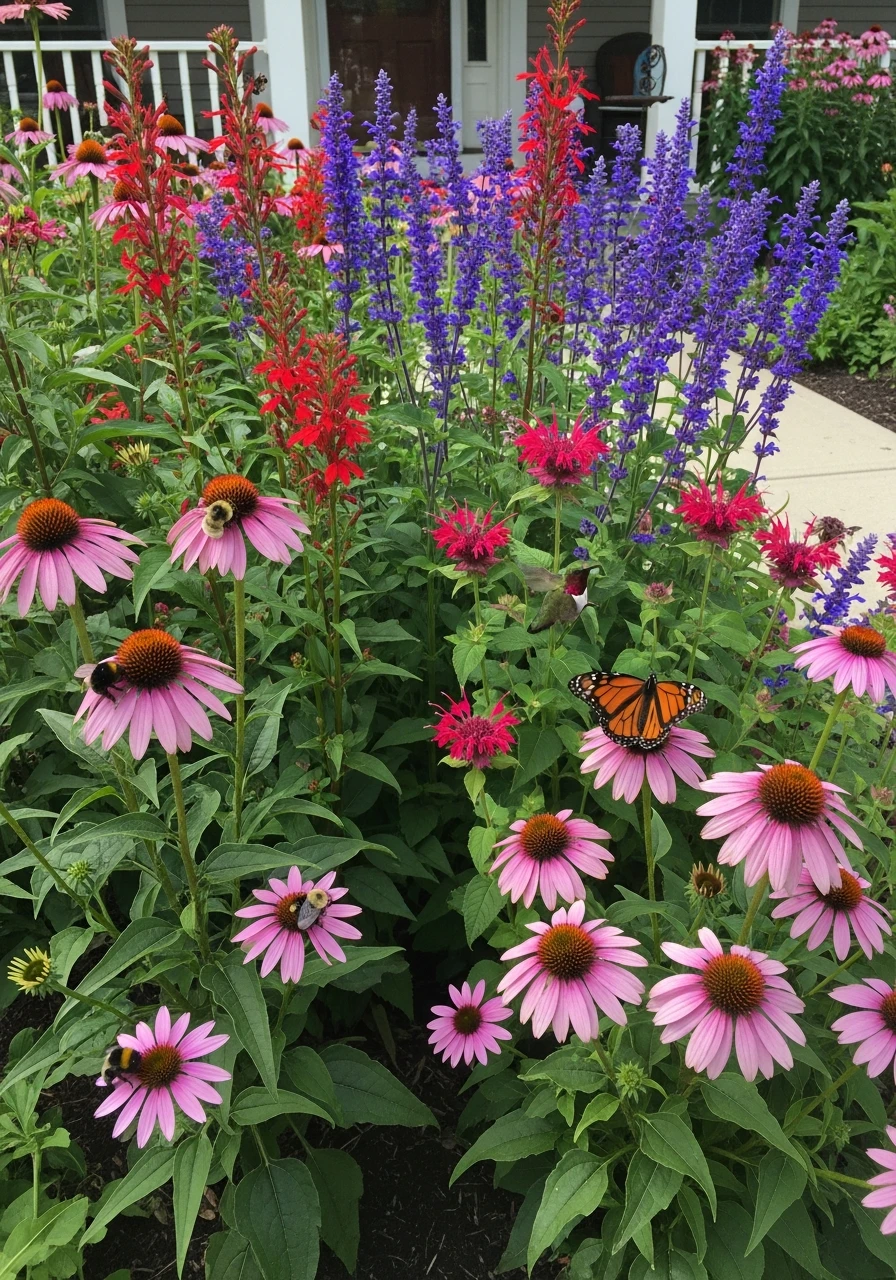
Create a buzzing, lively front yard by including flowering plants that attract bees, hummingbirds, and butterflies. This eco-conscious approach adds seasonal color and movement to your space.
- Plant bright, tubular flowers like salvia or bee balm.
- Avoid using pesticides near these beds.
- Include a small water source, like a bird bath.
Pro Tip: Choose varieties that bloom at different times to ensure continuous color from spring to fall.
13. Ornamental Grasses Accents
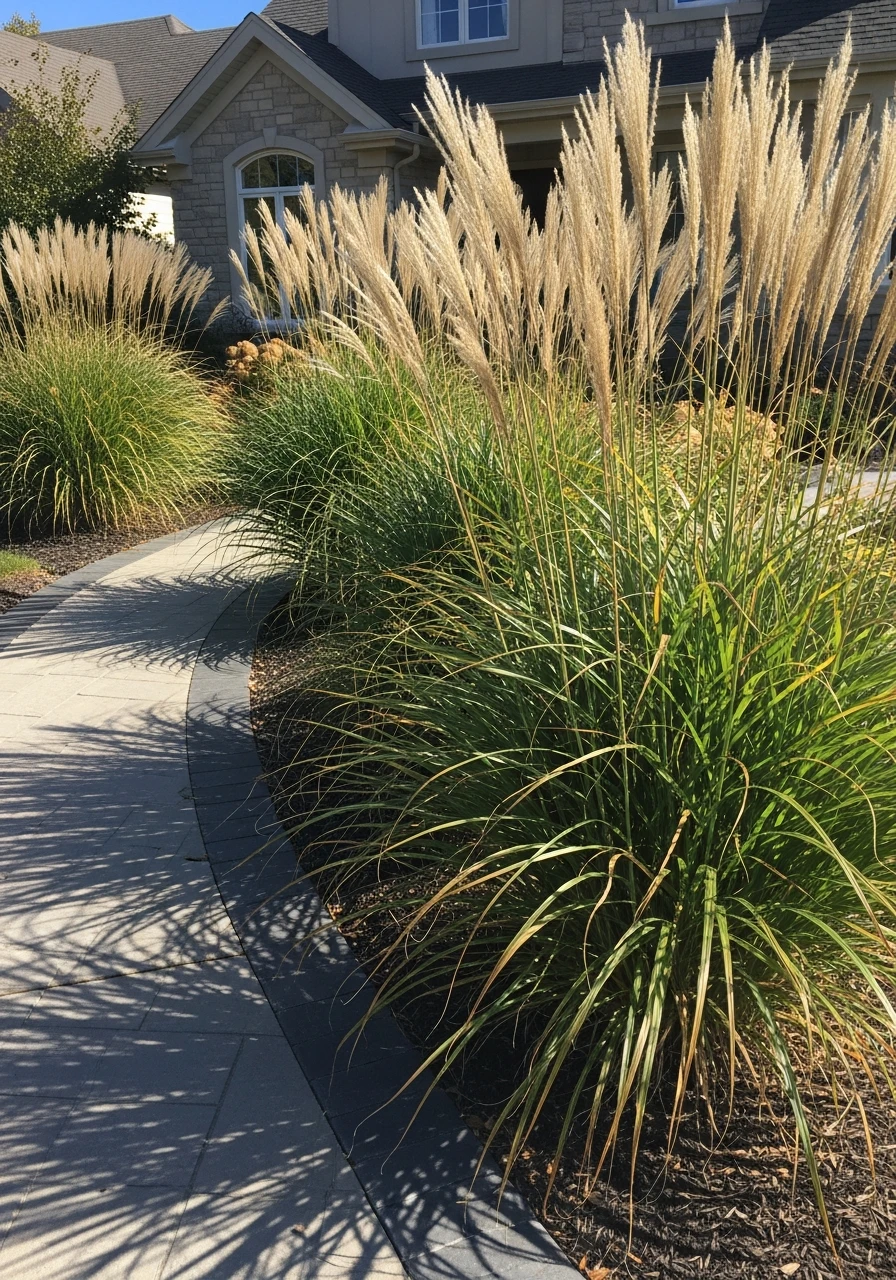
Ornamental grasses introduce beautiful texture and movement to your landscape. They soften the hard lines of walkways and look fantastic in the winter, providing multi-season interest.
- Use tall varieties like Pampas or Miscanthus for height.
- Plant shorter varieties like Blue Fescue along the edges.
- Group them in odd numbers (three or five) for a natural feel.
Pro Tip: Many ornamental grasses only need to be cut back once a year, making them super low effort.
14. Sculptural Succulent Design
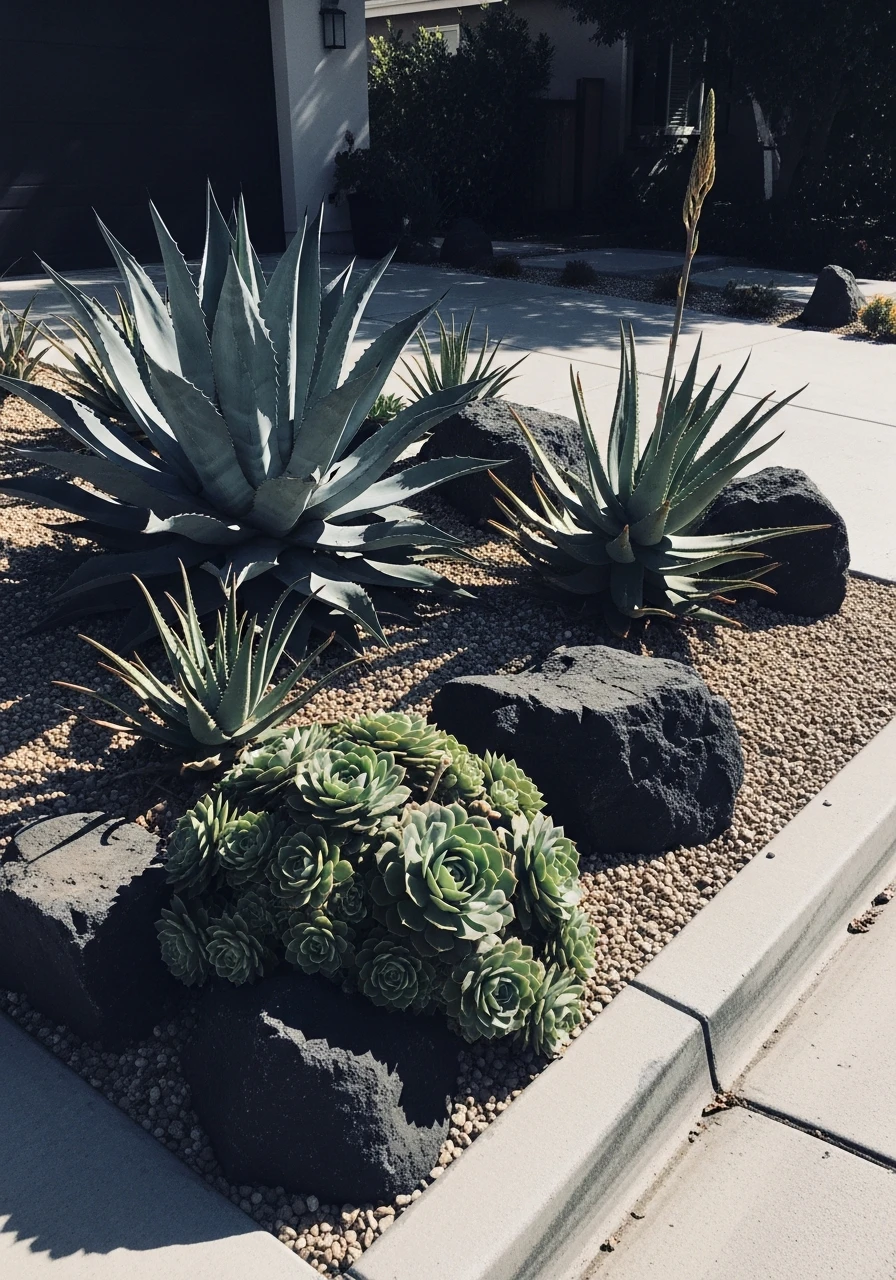
If you live in a dry climate, succulents are your best friend. They require almost no water and offer a modern, architectural look with their bold shapes and colors.
- Use gravel or crushed stone instead of mulch.
- Group different shapes and textures of succulents together.
- Plant them in old terracotta pots for a rustic touch.
Pro Tip: Succulents look best when contrasted against a clean, plain background, like a white wall or concrete.
15. Full Greenery Layout
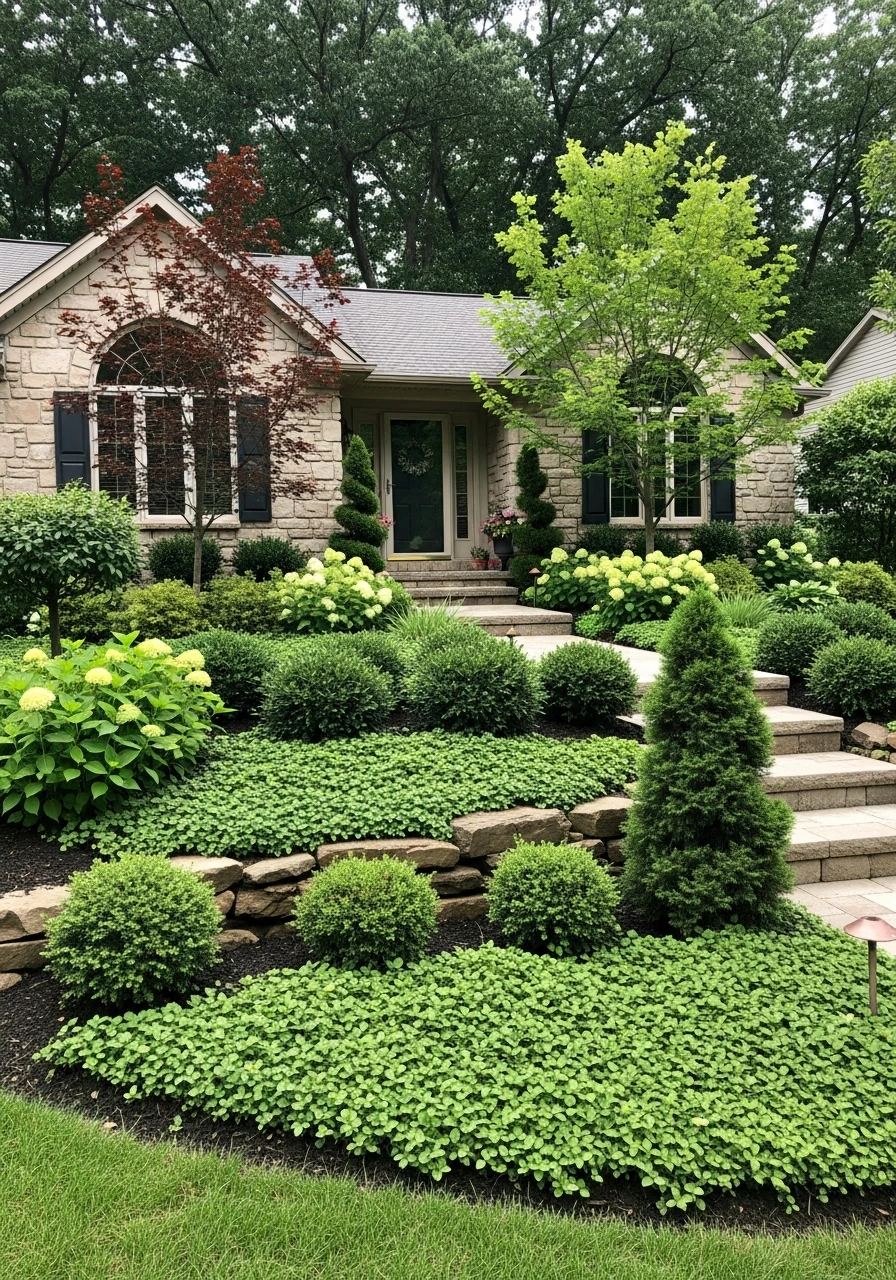
Make your yard feel rich and intentional by combining ground covers, shrubs, and trees. This multi-level approach ensures the space never looks flat or sparse, providing visual interest at every height.
- Use low junipers as a carpet layer.
- Place medium boxwoods for structure.
- Add a small Japanese maple for height and color.
Pro Tip: Aim to cover at least 70% of the soil surface to minimize weeding.
16. Architectural Plant Groups
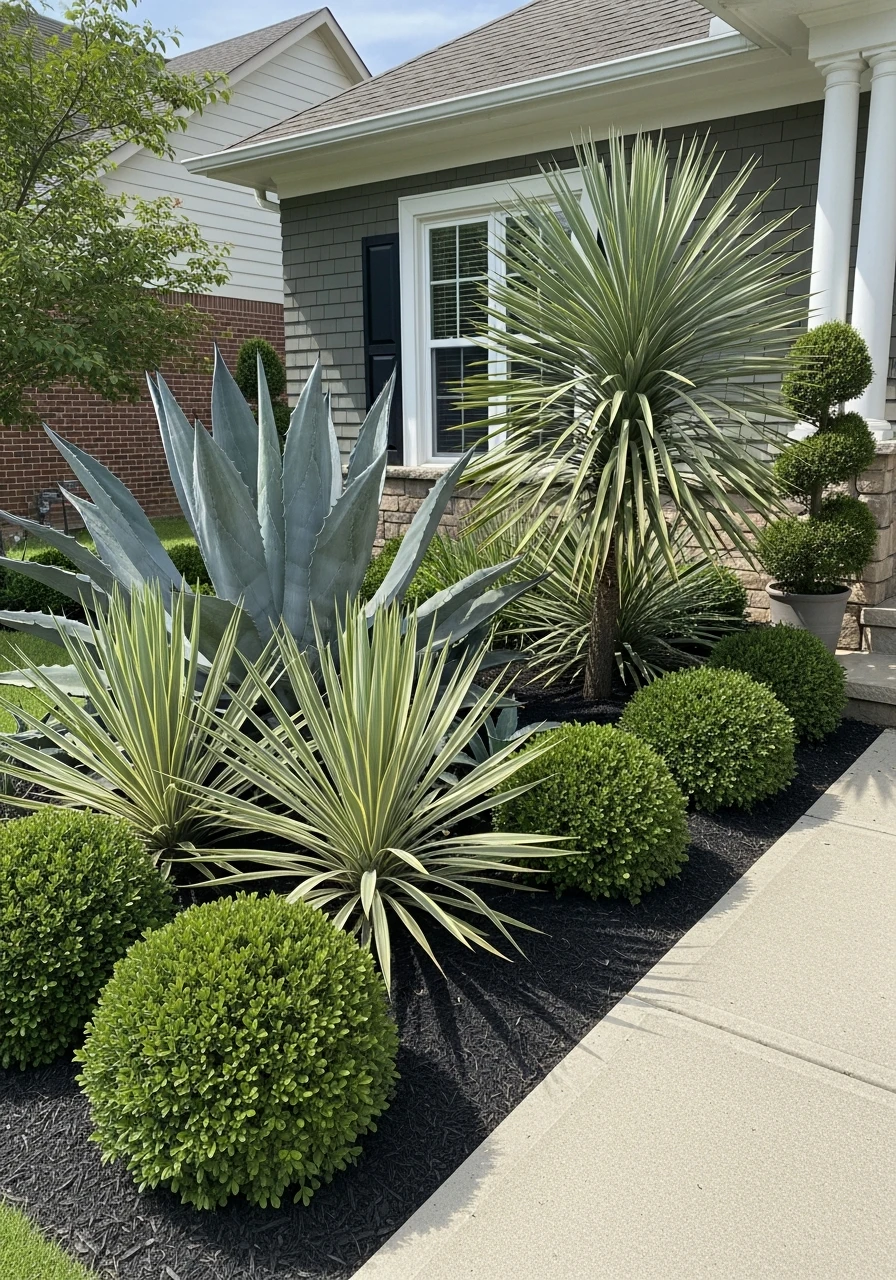
Use plants with bold, unusual shapes—like Yucca, Agave, or tightly trimmed boxwood balls—to create strong visual statements. Group them near the entryway or along the main path for maximum impact.
- Use large, modern planters to contain the plants.
- Ensure the plants are framed by simple, clean mulch or stone.
- Keep the surrounding area tidy so the plant itself is the star.
Pro Tip: One large, dramatic plant looks more expensive than many small, busy plants.
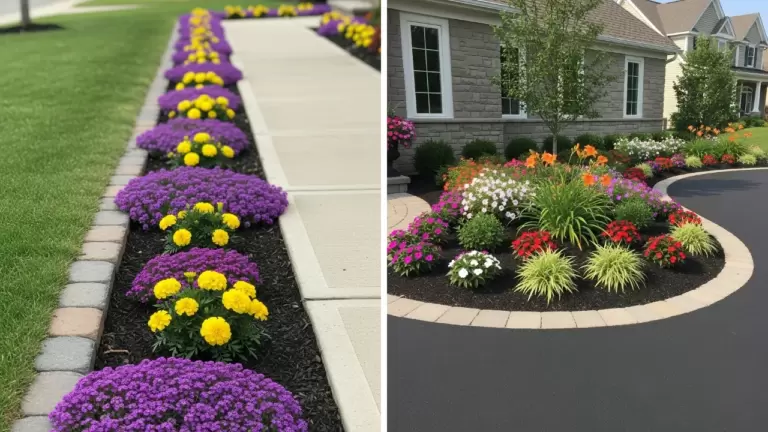
17. Seasonal Flower Beds
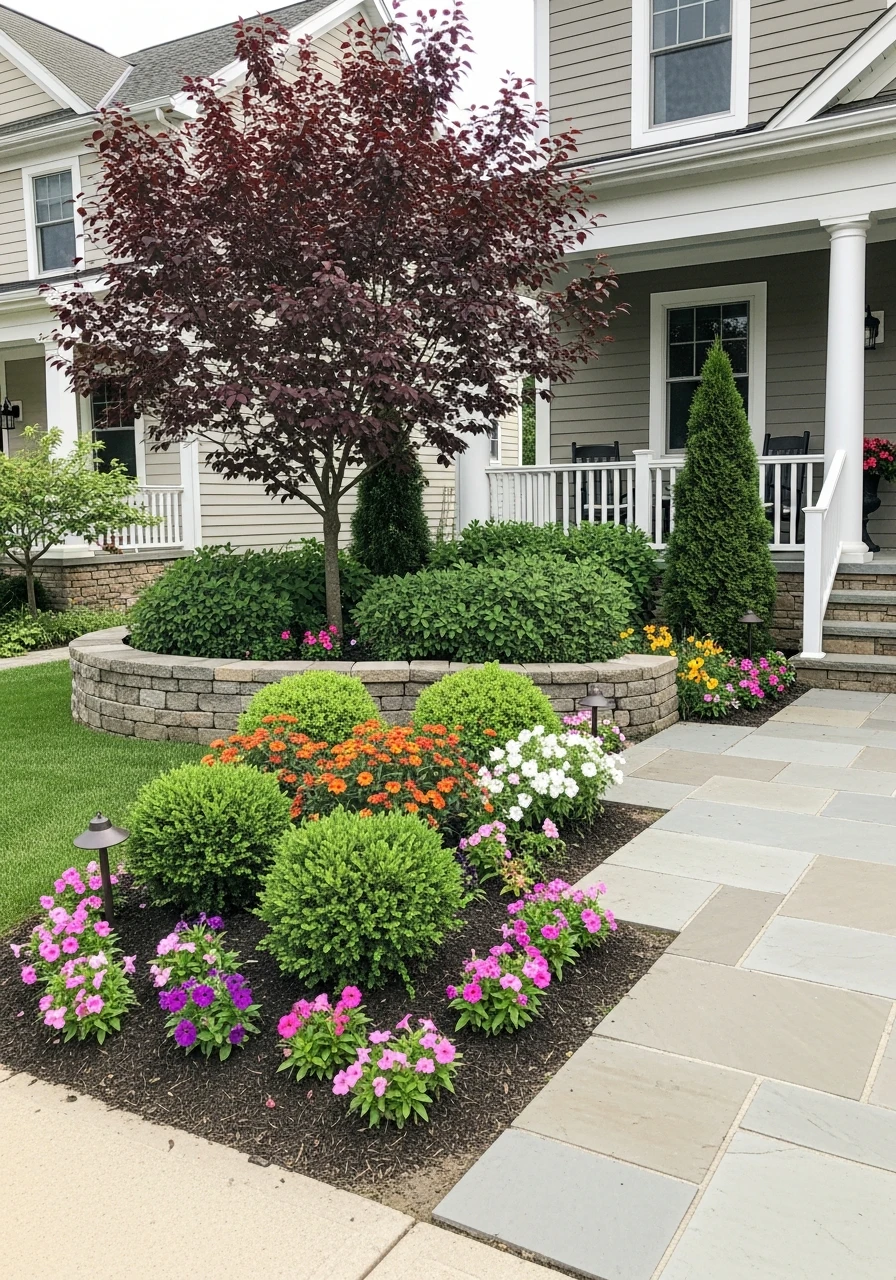
Plan your flower beds so that something is always blooming throughout the year. This keeps your front yard looking fresh and cared for, boosting curb appeal in every season.
- Plant spring bulbs (tulips) and summer annuals (petunias).
- Include fall interest plants like mums or asters.
- Use evergreen shrubs as the base structure.
Pro Tip: Mix perennials (come back yearly) with annuals (yearly color pop) for the best results.
18. Structured Shrub Borders
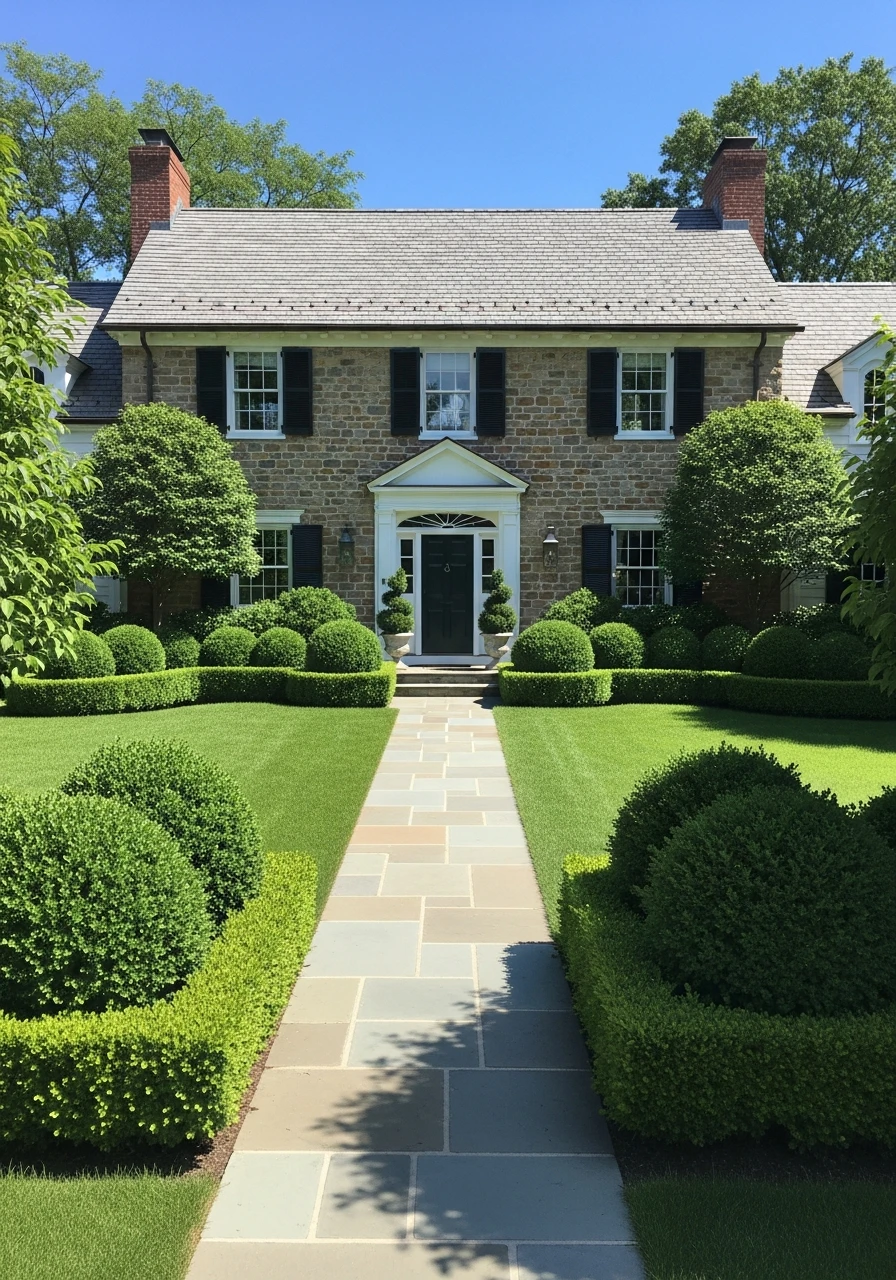
For a formal or traditional home, use neatly trimmed hedges or shrubs to frame your lawn and walkways. This simple technique adds order and a sense of classic elegance.
- Choose slow-growing varieties like Boxwood to reduce trimming.
- Keep the tops perfectly level and flat.
- Use them to line the property edge or the front walkway.
Pro Tip: Invest in a good pair of electric hedge trimmers—they save hours of work.
19. Small Accent Trees
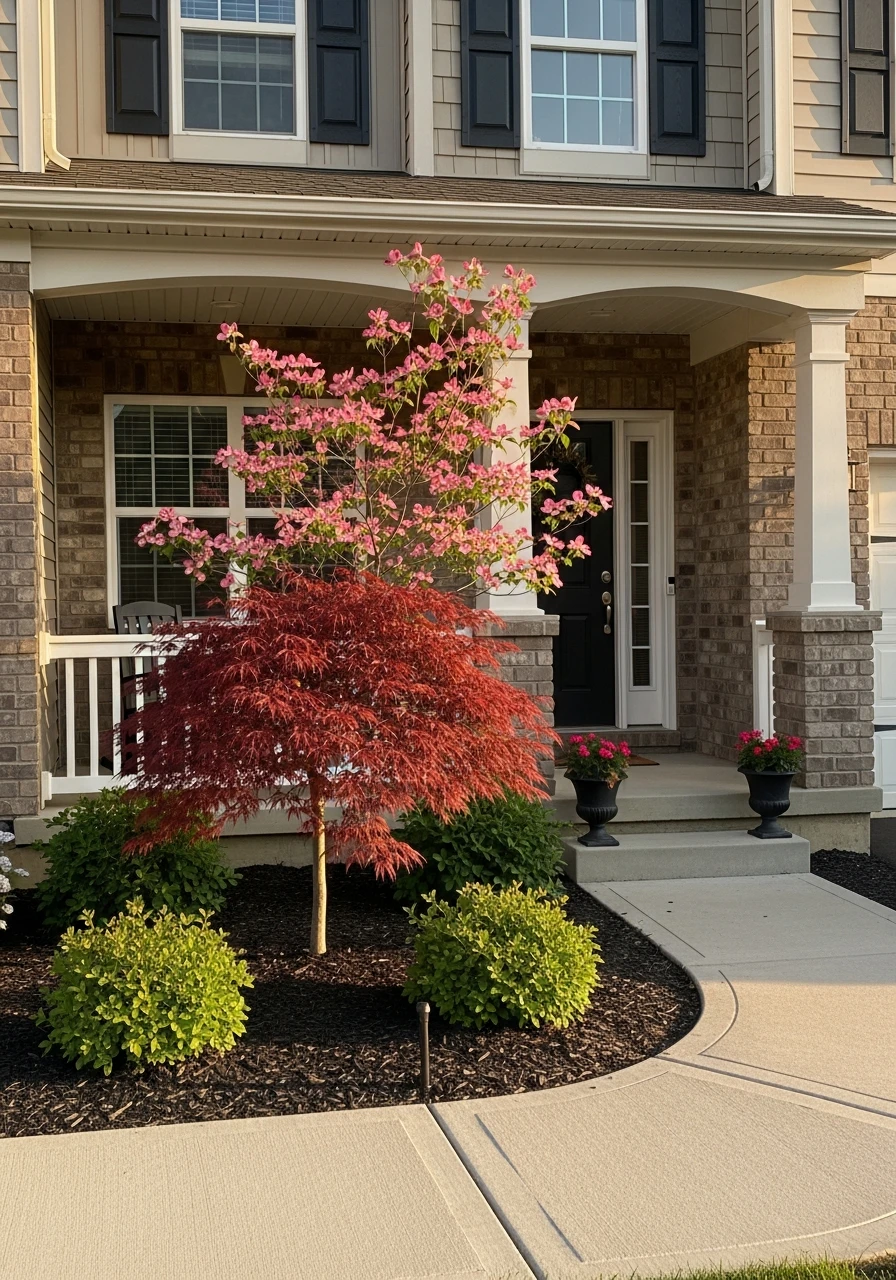
Planting a small ornamental tree (like a Japanese Maple, Dogwood, or Weeping Cherry) near your entry adds vertical interest and softness. It provides height without overwhelming the house.
- Choose a tree variety known for its interesting bark or colorful leaves.
- Ensure the tree won’t eventually block your front windows.
- Add a small uplight to showcase it at night.
Pro Tip: Planting a tree adds instant value to your property and provides natural shade.
20. Lawn Alternatives
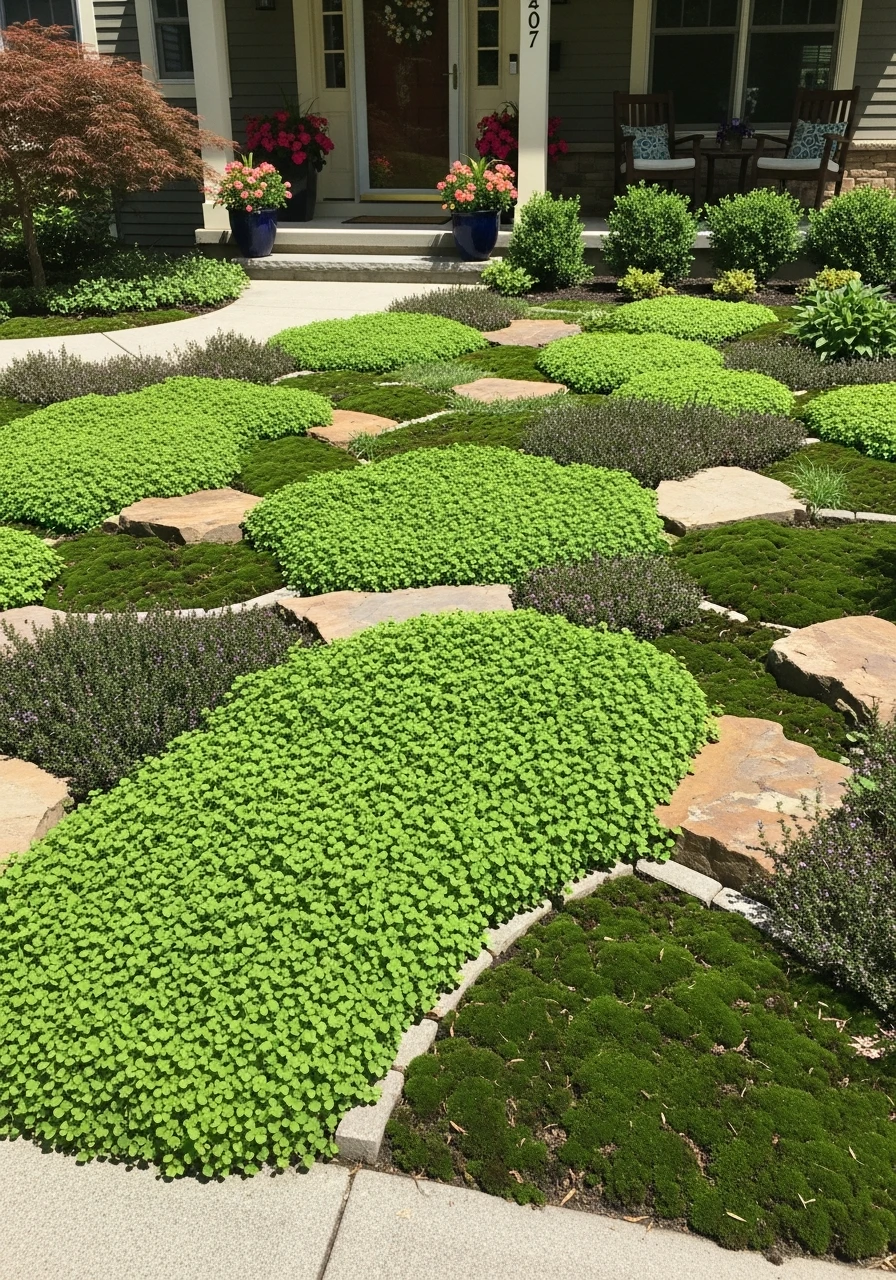
Tired of mowing? Replace traditional grass with low-maintenance alternatives like clover, moss, or ground cover plants. They require less water and less effort while still looking lush and green.
- Clover stays green during droughts better than turf.
- Use creeping thyme for a fragrant, walkable surface.
- Moss works well in shady, damp areas.
Pro Tip: Before planting, ensure your chosen alternative can handle the foot traffic your yard gets.
21. Entry Patio Space
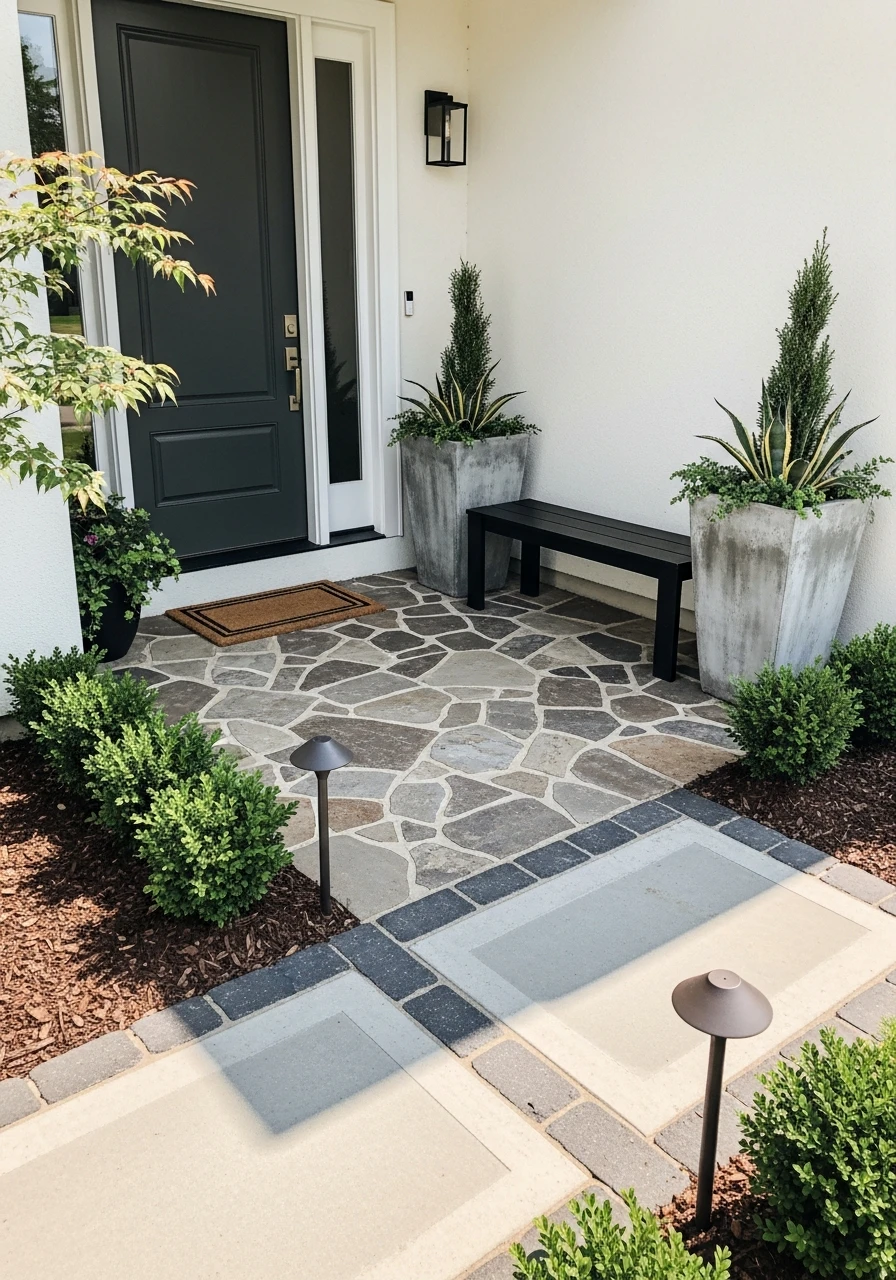
If space allows, create a small paved or stone patio right near your front door. This adds functionality—a spot for a bench or large pots—and makes the entrance feel more welcoming and expansive.
- Use simple concrete slabs or natural stone for the surface.
- Add an outdoor rug to define the seating zone.
- Keep décor minimal and focused.
Pro Tip: A small entry patio is a great spot to enjoy your morning coffee and wave to neighbors.
22. Landscape Boulders
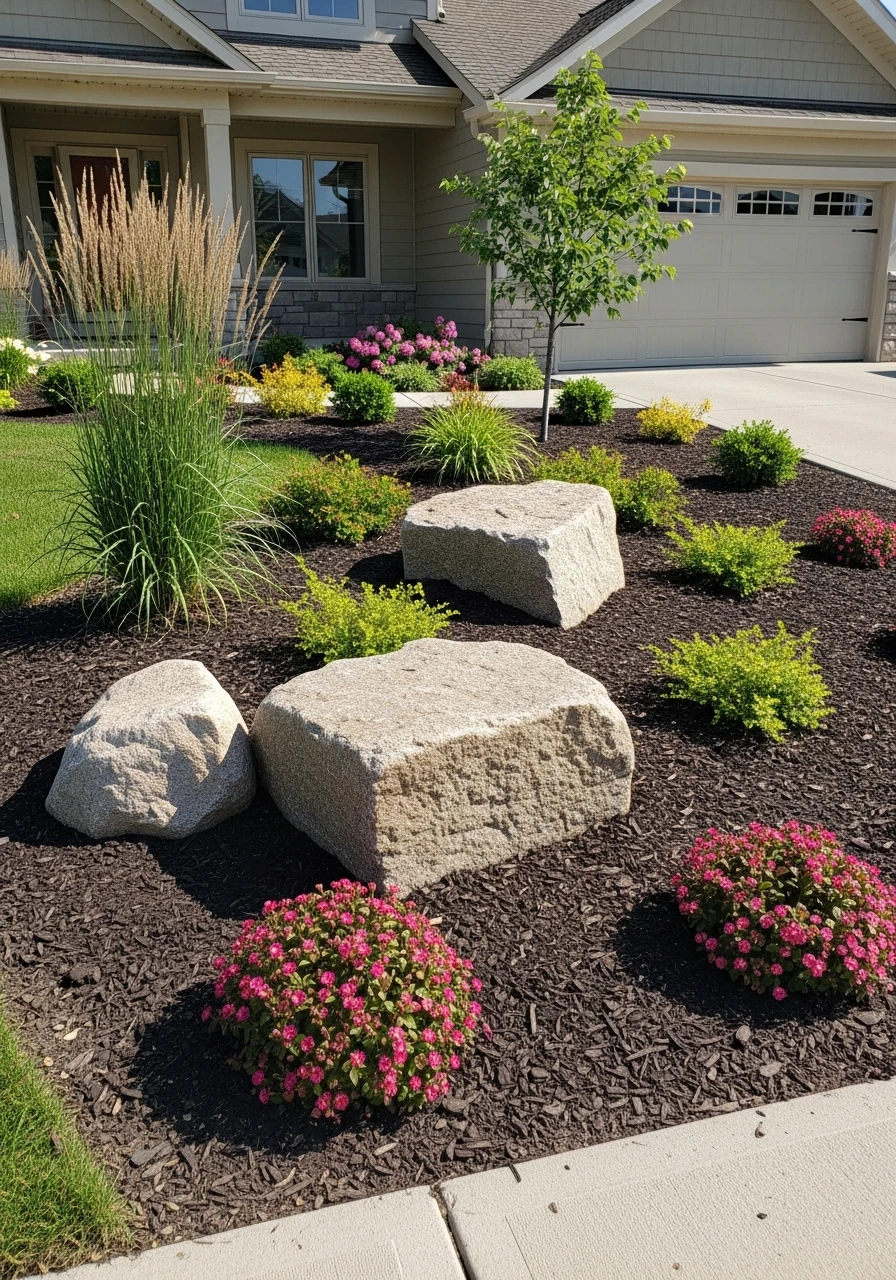
Adding a few well-placed natural boulders serves as a simple, permanent focal point in planting beds. They introduce contrast, texture, and a rugged, natural design element that needs no maintenance.
- Bury the bottom third of the boulder so it looks like it grew there.
- Group two or three different sized boulders together.
- Plant low-growing flowers or ferns around the base.
Pro Tip: If real boulders are too heavy or costly, look for lightweight, realistic faux ones.
23. Privacy Garden Screens
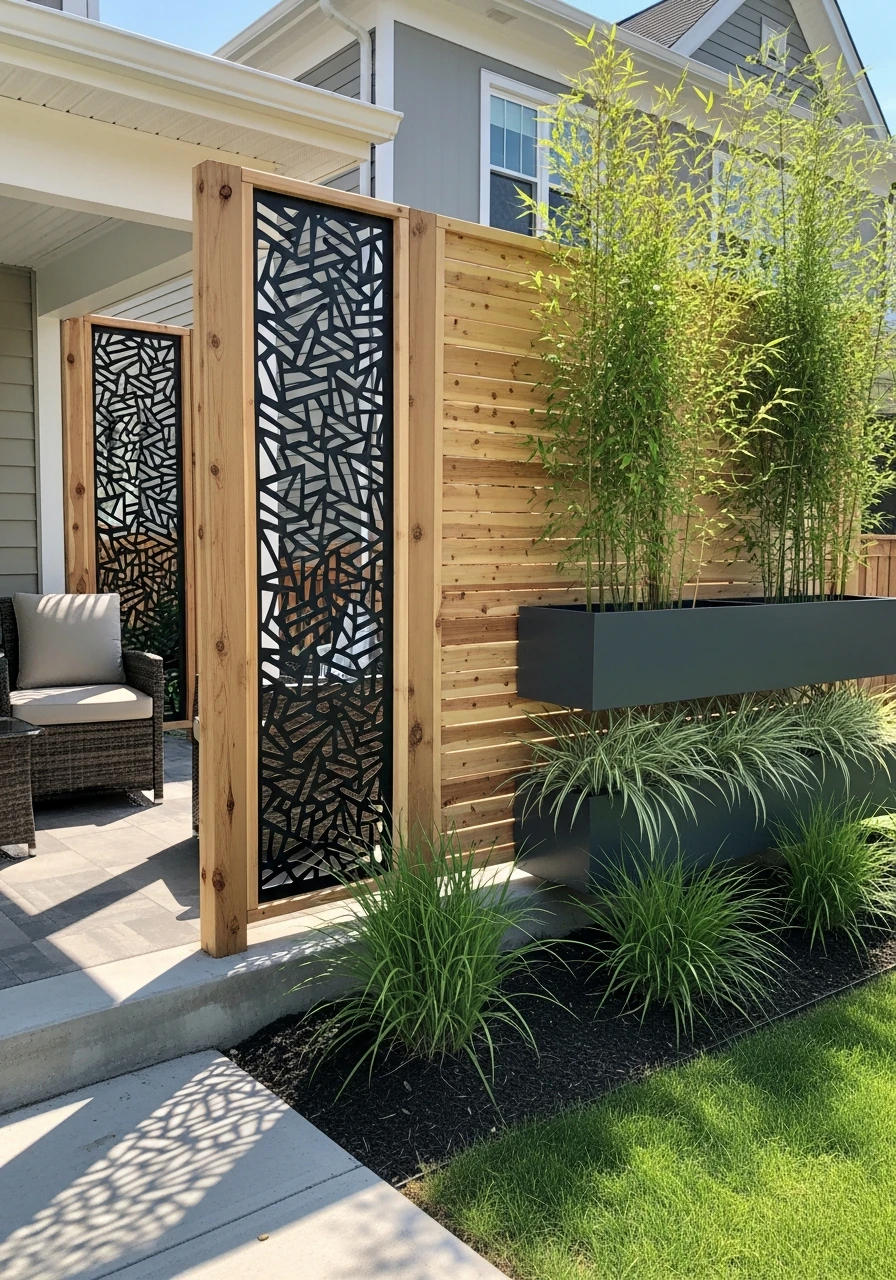
If your front yard is close to the sidewalk, use wood lattice, metal panels, or planted screens to create privacy. They shield your porch without blocking all the light or feeling like a heavy fence.
- Use slatted wood screens for a modern feel.
- Grow climbing vines like clematis or ivy on the screen.
- Place screens strategically to block views from neighbors.
Pro Tip: A screen doesn’t need to be tall; even a four-foot screen can create a sense of enclosure.
24. Zero-Water Xeriscape
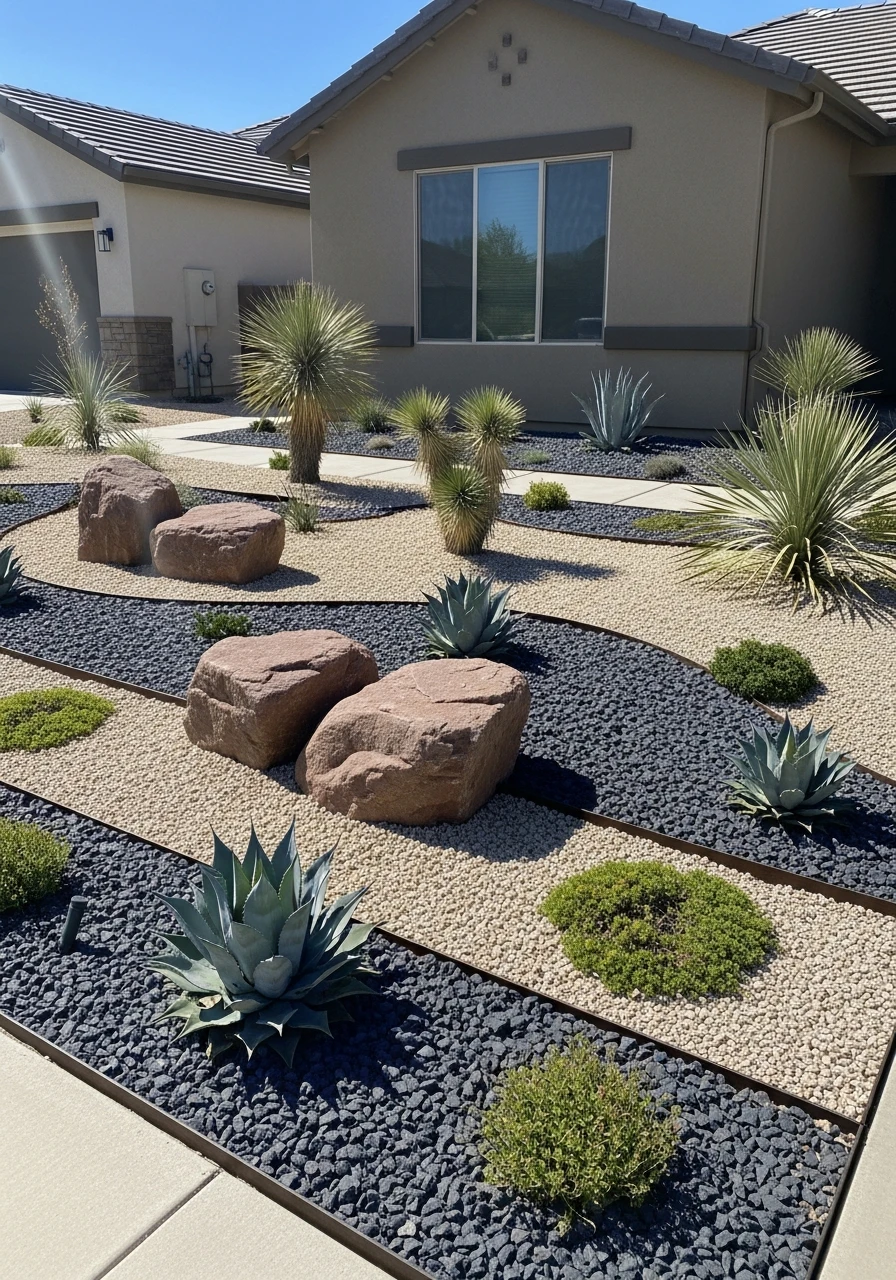
Design your front yard using mostly rocks, gravel, and drought-tolerant plants (xeriscape). This radically reduces water use while providing a clean, contemporary, and low-maintenance aesthetic.
- Use contrasting colors of gravel (light gray and dark brown).
- Place large stones or boulders as focal points.
- Focus on plants with interesting shapes, not just color.
Pro Tip: Xeriscaping is ideal for hot regions and eliminates the need for a lawnmower.
25. Modern Concrete Pavers
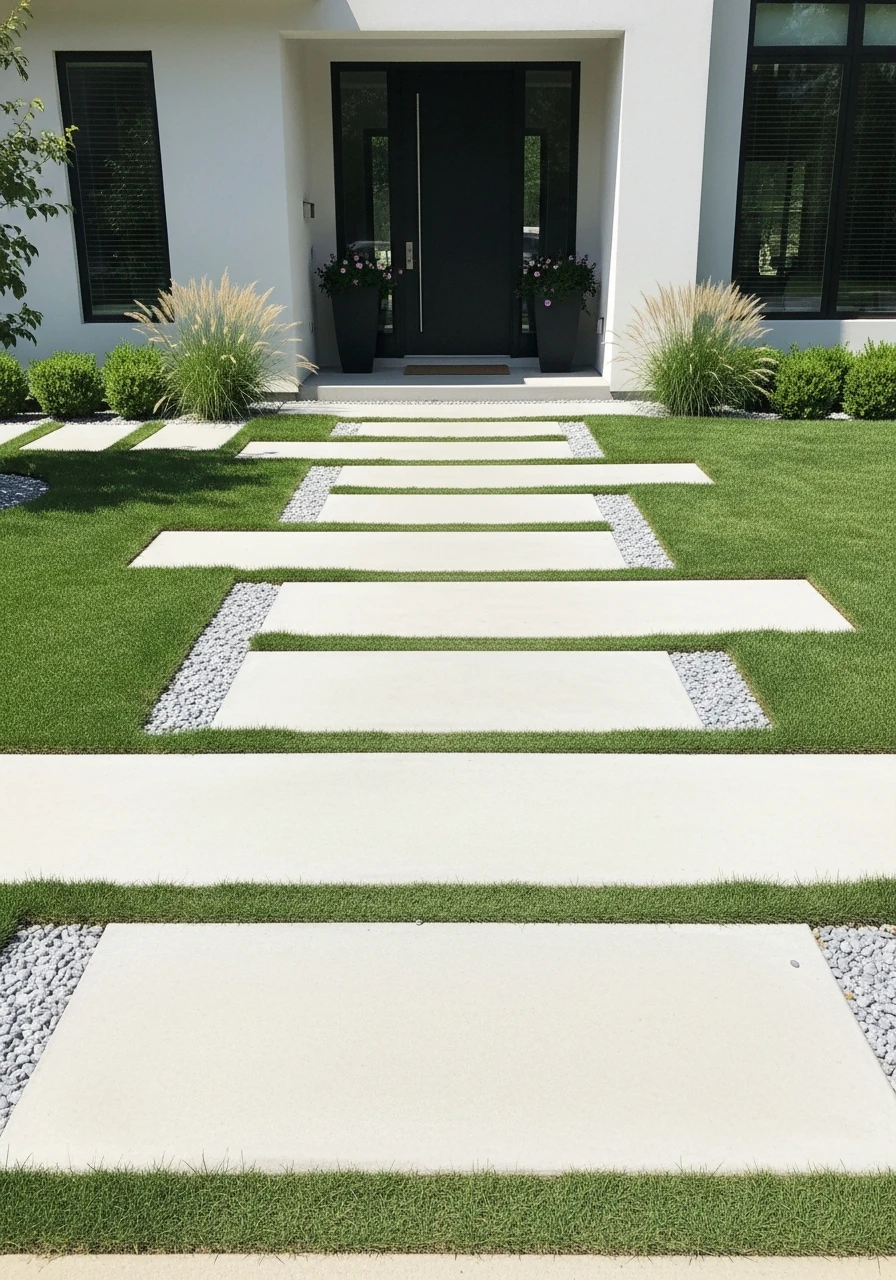
Install large, clean-lined concrete pavers with wide gaps filled with grass or fine gravel. This creates a striking, sleek aesthetic that is perfect for modern architecture and feels high-end.
- Choose square or rectangular pavers for the most modern look.
- Ensure the pavers are perfectly level.
- Use finely crushed stone in the gaps to prevent weeds.
Pro Tip: This look is very popular on Pinterest right now and is an easy way to update a dated walkway.
26. Curved Retaining Walls
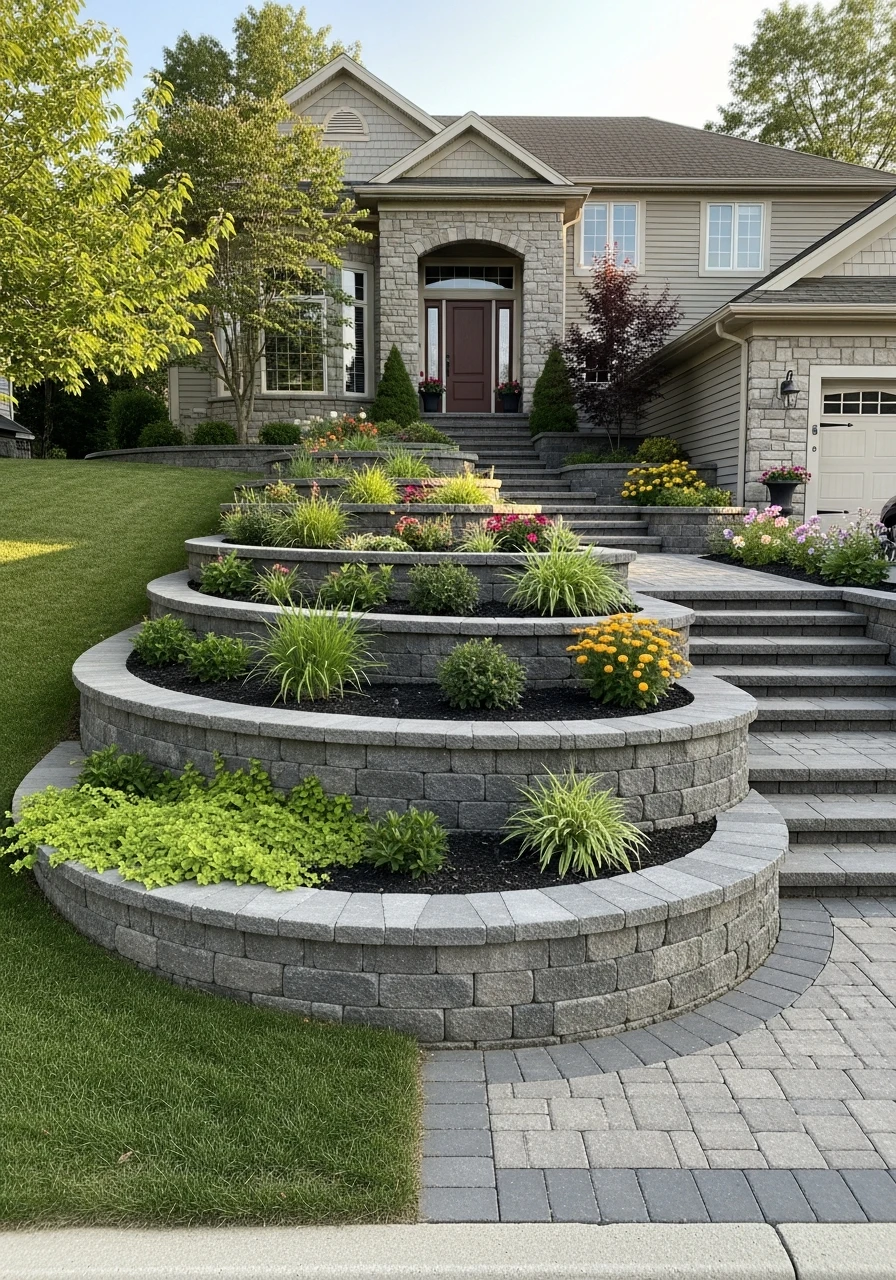
If you have a gentle slope, use curved retaining walls that also serve as planting beds. The curves soften the landscape and naturally guide the eye toward your front door.
- Use segmented concrete blocks for easy curving.
- Plant colorful flowers along the top edge.
- Ensure the walls are properly angled for drainage.
Pro Tip: Curved walls are visually softer than straight ones, adding warmth to the design.
27. Built-In Seating
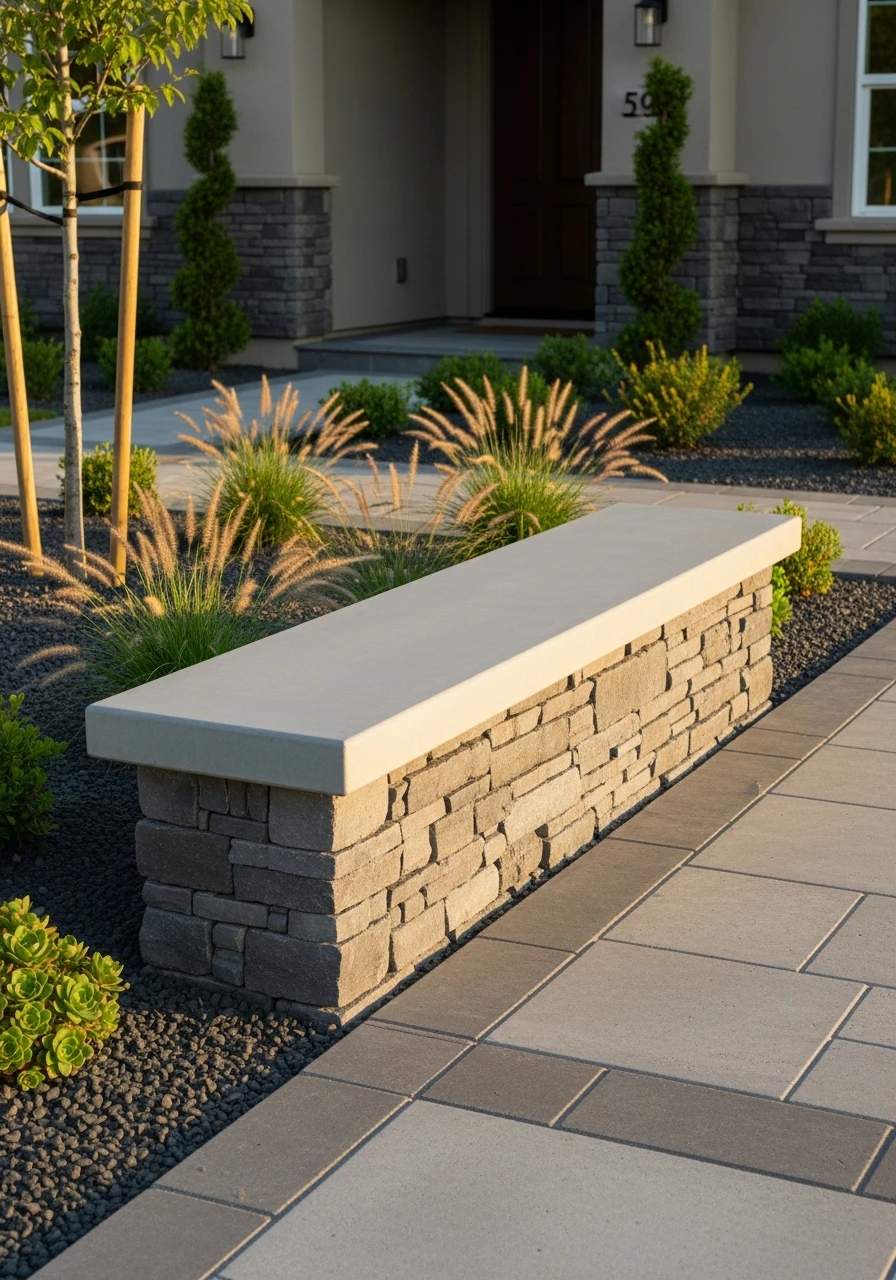
Integrate stone or concrete benches directly into your landscape design, perhaps along a retaining wall or near the entry patio. This adds both style and function, making the front yard feel more welcoming.
- Top the bench with comfortable outdoor cushions.
- Place it where guests can wait comfortably.
- Use the same material as your walkway or retaining walls.
Pro Tip: Built-in seating never blows away and looks permanent and custom.
28. Vertical Garden Walls
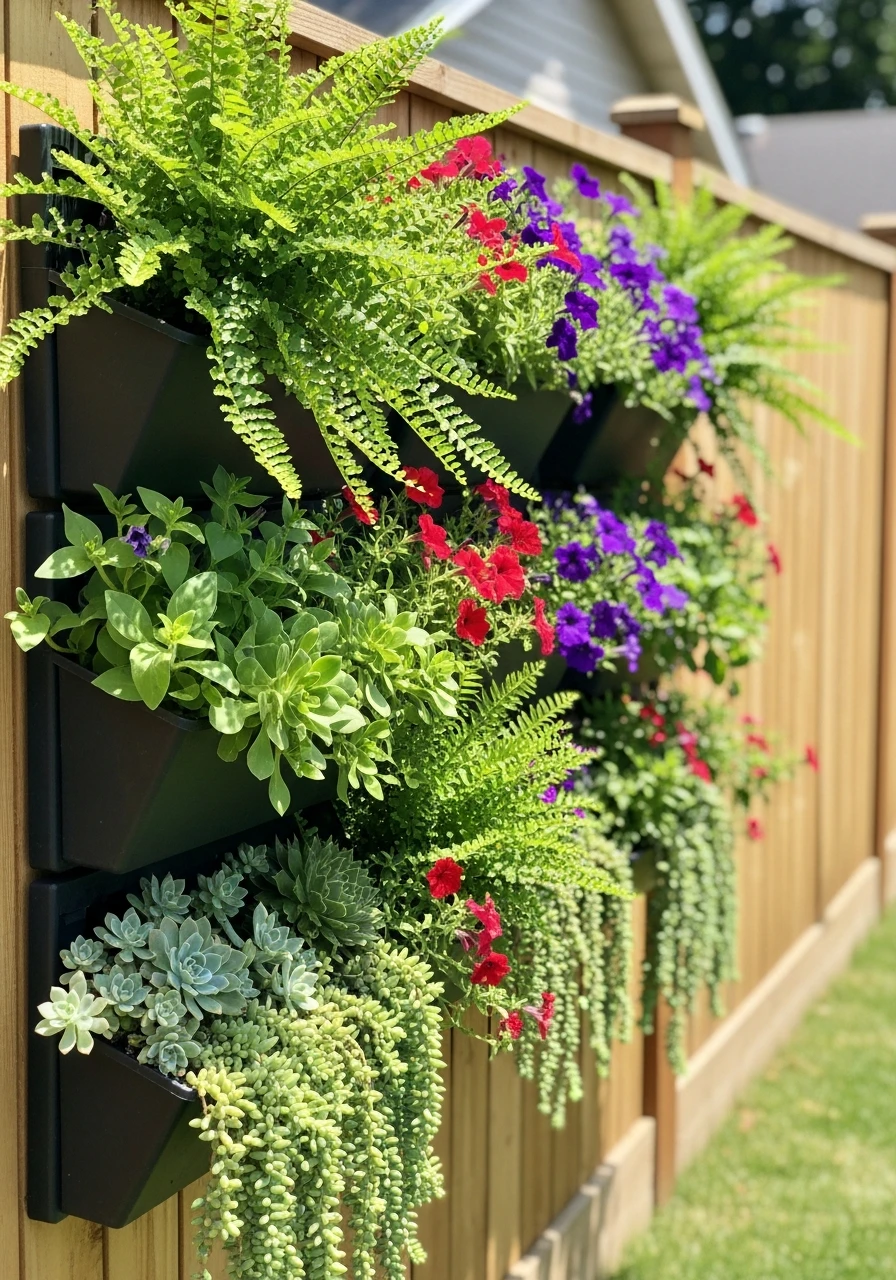
If you are short on space, use vertical planters or green walls on a fence or the house itself. This is a brilliant way to add lush greenery and color without losing any valuable ground area.
- Use modular pocket planters for easy setup.
- Plant herbs or succulents for a functional wall.
- Ensure the wall material can handle the weight and moisture.
Pro Tip: A vertical garden instantly creates a dramatic focal point where there was just a plain wall.
29. Reclaimed Wood Steps
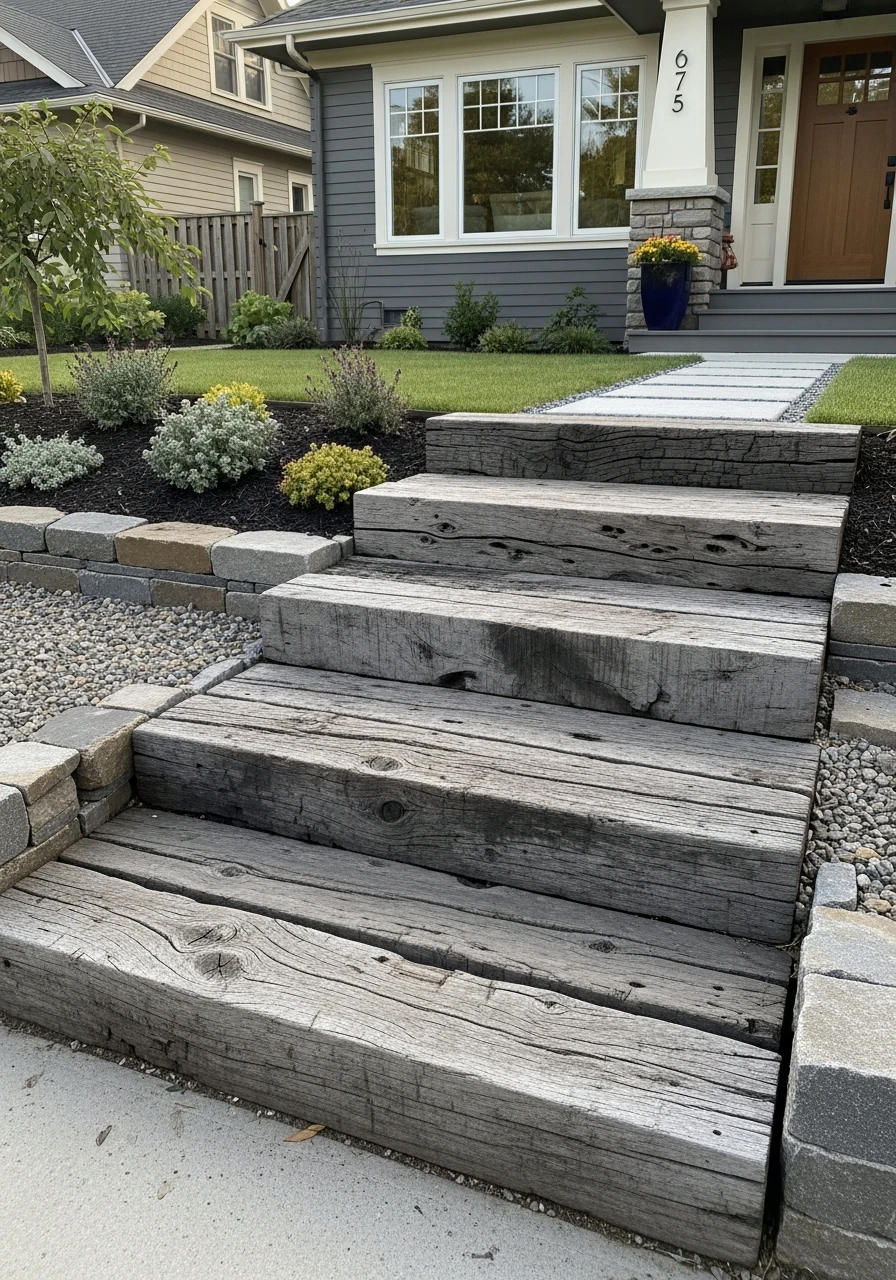
Use old, salvaged wood for steps or small walkways. This choice adds warmth, rustic charm, and a sense of history, perfect for farmhouse or craftsman-style homes.
- Treat the wood properly for outdoor use.
- Use thick railroad ties for durable steps on a slope.
- Fill the areas between the wood with gravel or mulch.
Pro Tip: Look for reclaimed wood at demolition sites or lumberyards to save money.
30. Mixed Walkway Materials
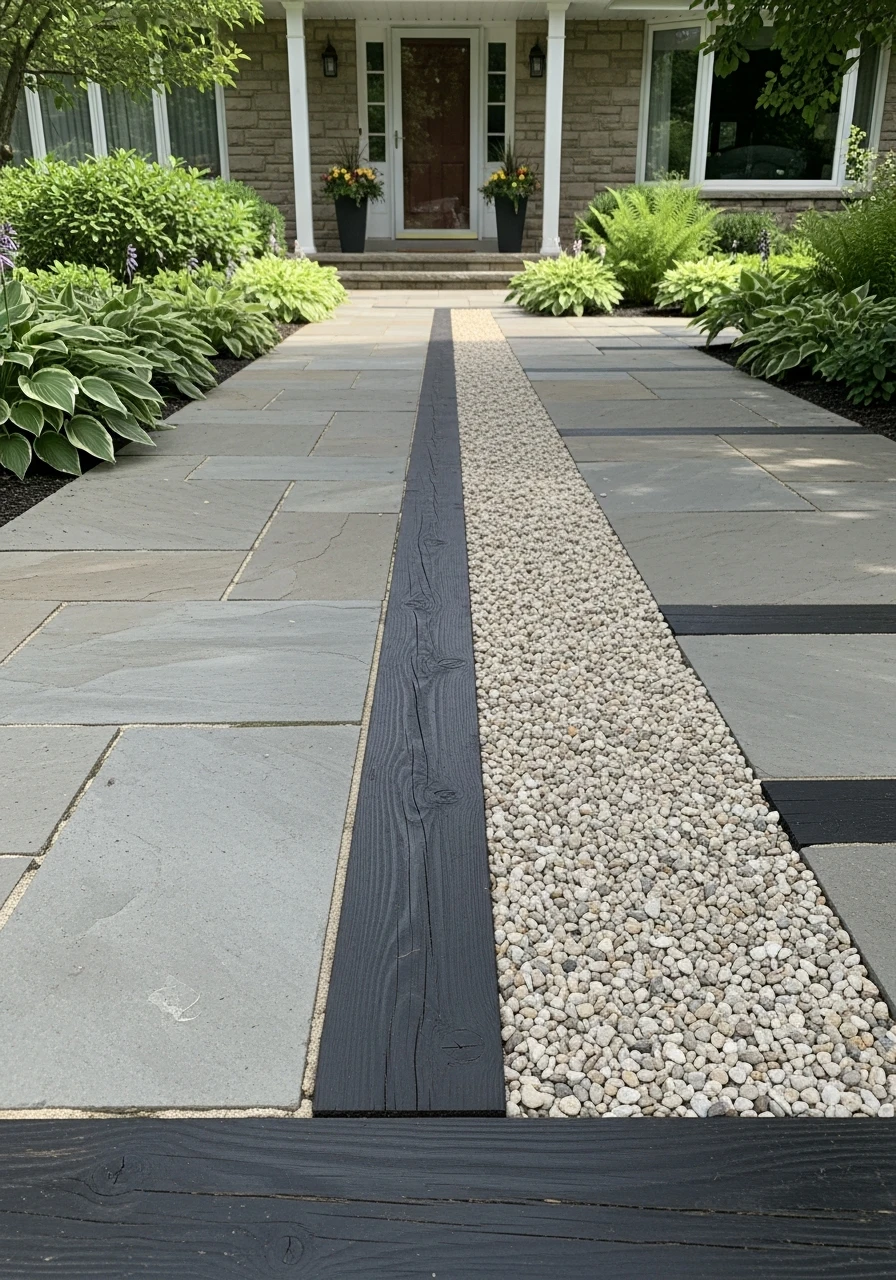
Combine different textures—like stone pavers, a strip of gravel, and wooden accents—in one path design. This visual variety makes the walkway more interesting and breaks up large expanses of material.
- Use metal edging to separate the materials neatly.
- Ensure all surfaces are level and safe to walk on.
- Keep the colors in a similar palette (e.g., all warm tones).
Pro Tip: Mixing materials is an easy way to add character and custom detail without major construction.
31. Small Water Feature
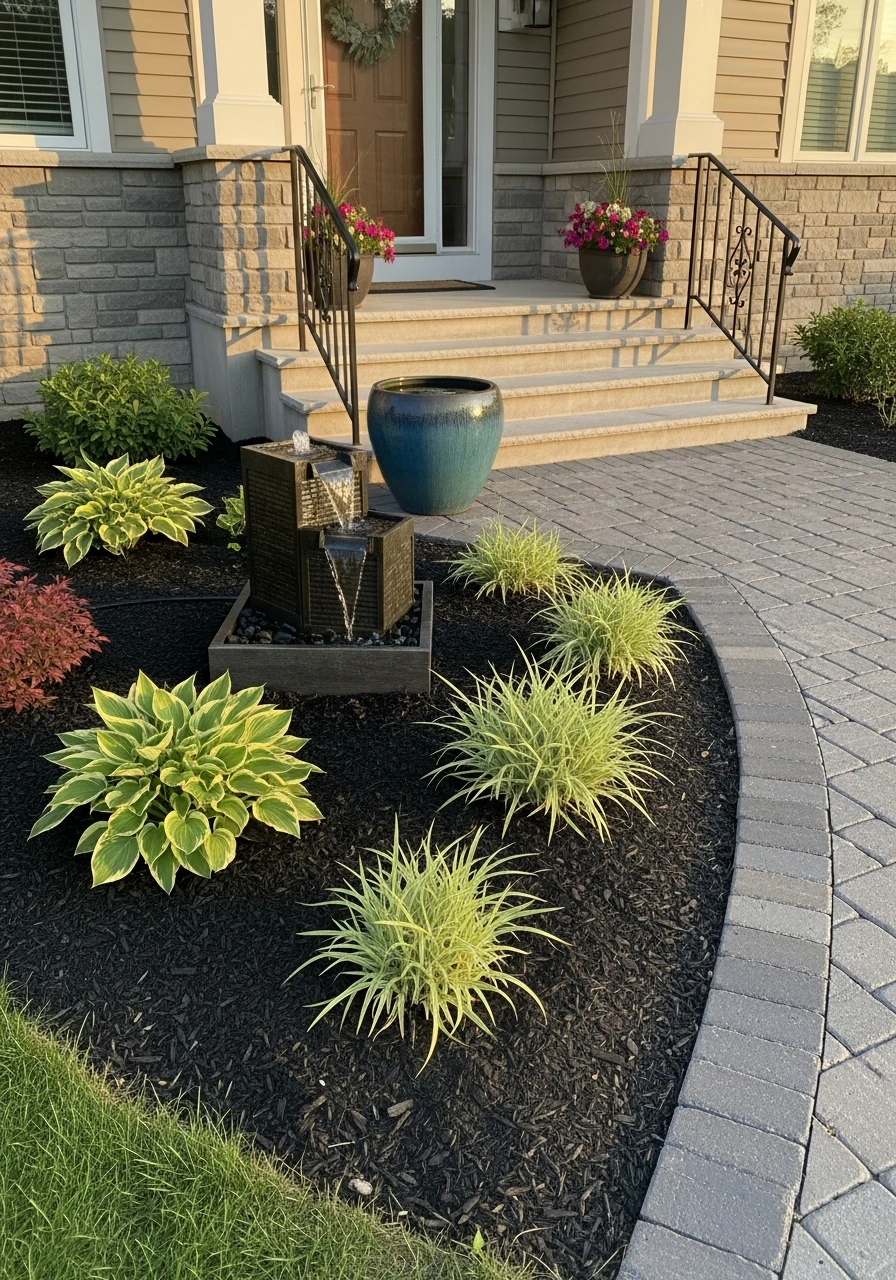
Install a compact fountain or a simple water bowl near the entry. The sound of running water is incredibly calming and adds movement without taking up a huge amount of space.
- Choose a self-contained fountain that recirculates water.
- Place it near seating so you can enjoy the sound.
- Ensure it is placed on a level, stable surface.
Pro Tip: Water features attract birds and mask traffic noise, making your front yard an oasis.
32. Smart Lighting System
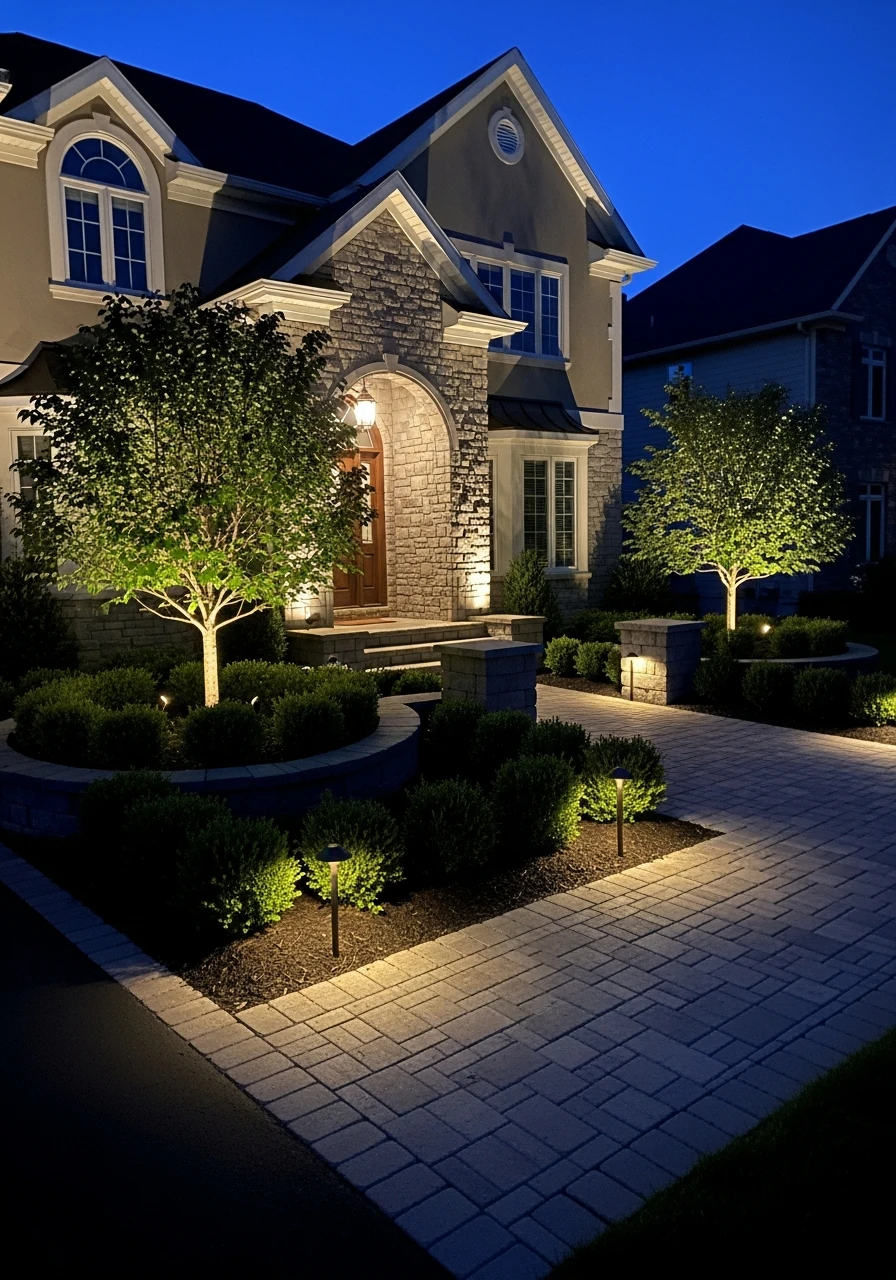
Upgrade to an automated lighting system that turns on and off based on time or motion. Good lighting enhances safety, security, and curb appeal after dark, making the house pop.
- Use warm white LED bulbs for a soft glow.
- Place fixtures to illuminate major pathways.
- Use a system controllable via a smartphone app.
Pro Tip: Smart lighting is energy efficient and makes it look like someone is always home.
33. Uplighting for Trees
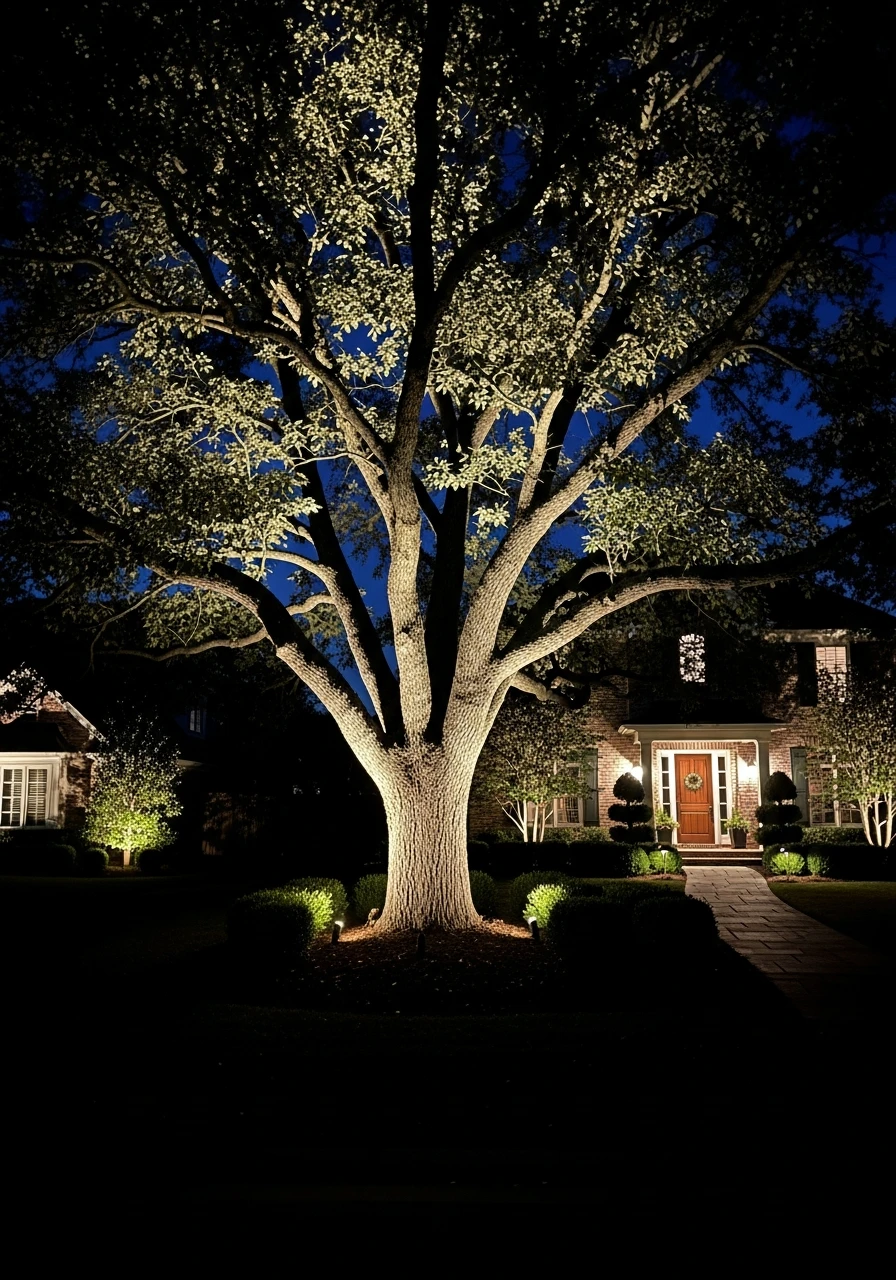
Install small ground lights that shine upward to highlight beautiful trees, shrubs, or unique architectural features of your home. This technique adds drama and depth to your nighttime view.
- Hide the lighting fixtures beneath foliage or mulch.
- Focus the light on the most attractive branches.
- Use low-voltage wiring for safety and easy installation.
Pro Tip: Uplighting is key to making your front yard look professional after sunset.
34. Solar Pathway Lights
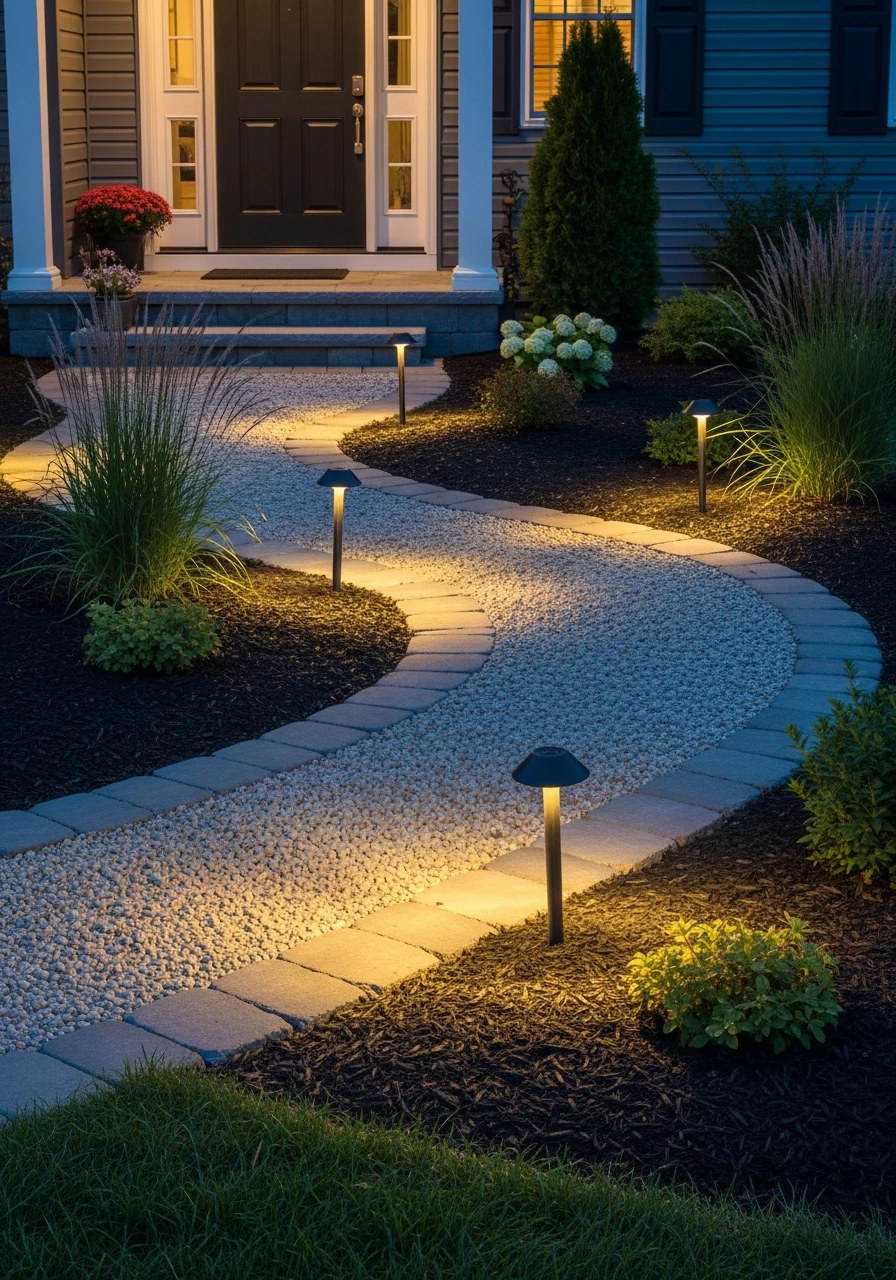
Solar-powered lights are the easiest and most budget-friendly way to illuminate walkways. They require zero wiring and provide eco-friendly, basic illumination exactly where you need it.
- Choose durable metal or glass fixtures over cheap plastic ones.
- Place them 6 to 8 feet apart along the path.
- Ensure they get direct sunlight during the day.
Pro Tip: Buy a few extra solar lights; they are inexpensive and great for defining garden bed corners.
35. Integrated Step Lighting
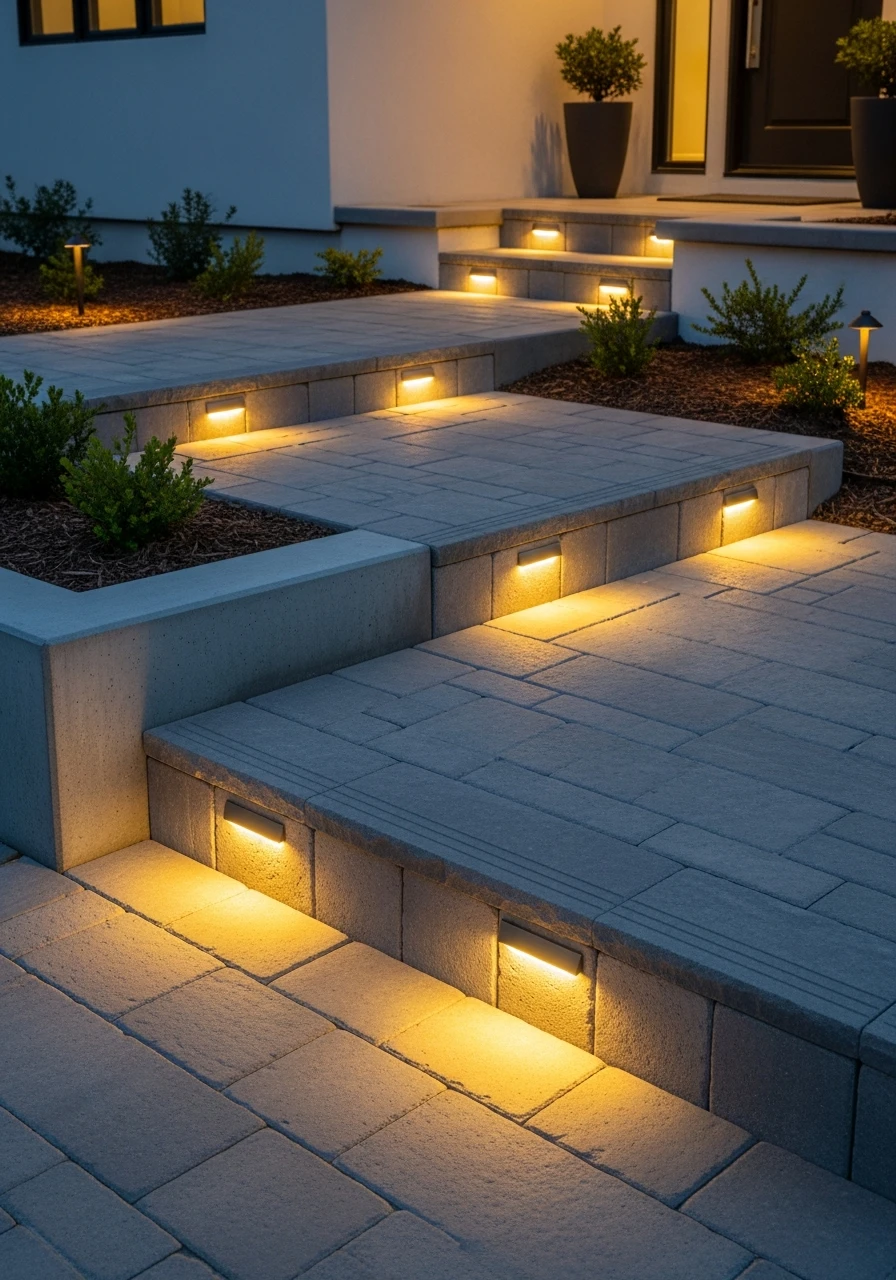
Add small LED lights directly into your steps, retaining walls, or built-in planters. This improves visibility, prevents trips, and instantly modernizes the design of your entry.
- Use recessed LED strip lights under the lip of the step.
- Hire an electrician if you are unsure about wiring.
- Choose waterproof fixtures rated for outdoor use.
Pro Tip: This type of hidden lighting provides a soft, sophisticated glow instead of harsh brightness.
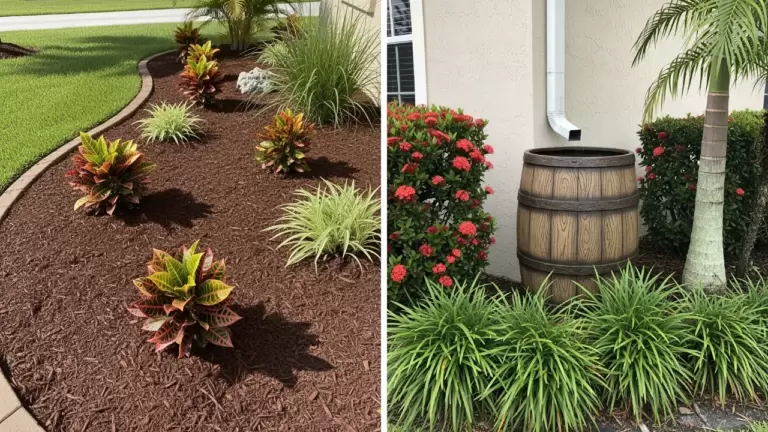
36. Rain Chain Feature
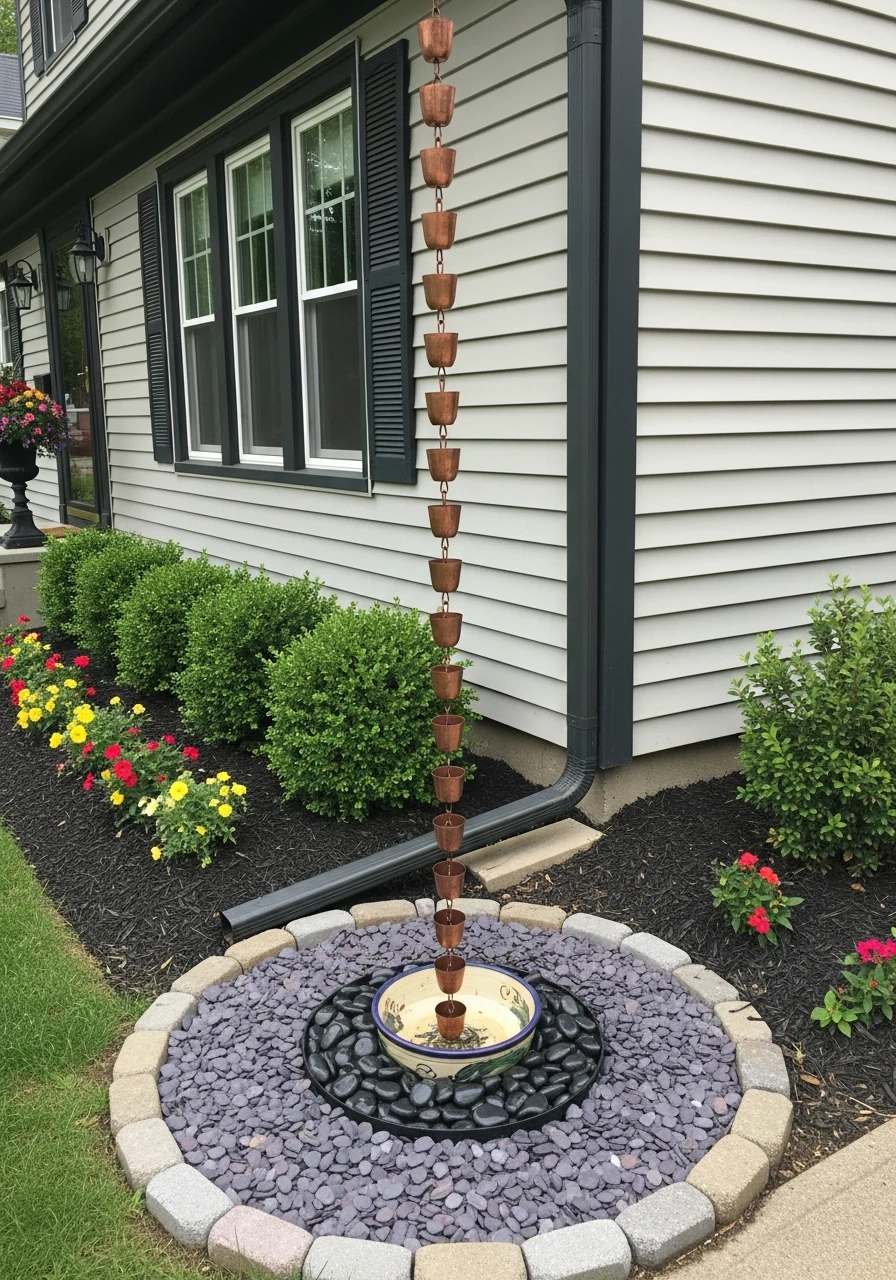
Replace ugly, traditional downspouts with decorative rain chains. These beautiful copper or metal chains guide rainwater into a collection basin or garden bed, adding a charming visual element.
- Choose a style that matches your home’s architecture.
- Place a decorative barrel or stone basin underneath.
- Ensure the chain hangs straight down and is anchored.
Pro Tip: The sound of water trickling down the chain is incredibly peaceful during a storm.
37. Motion-Activated Lighting
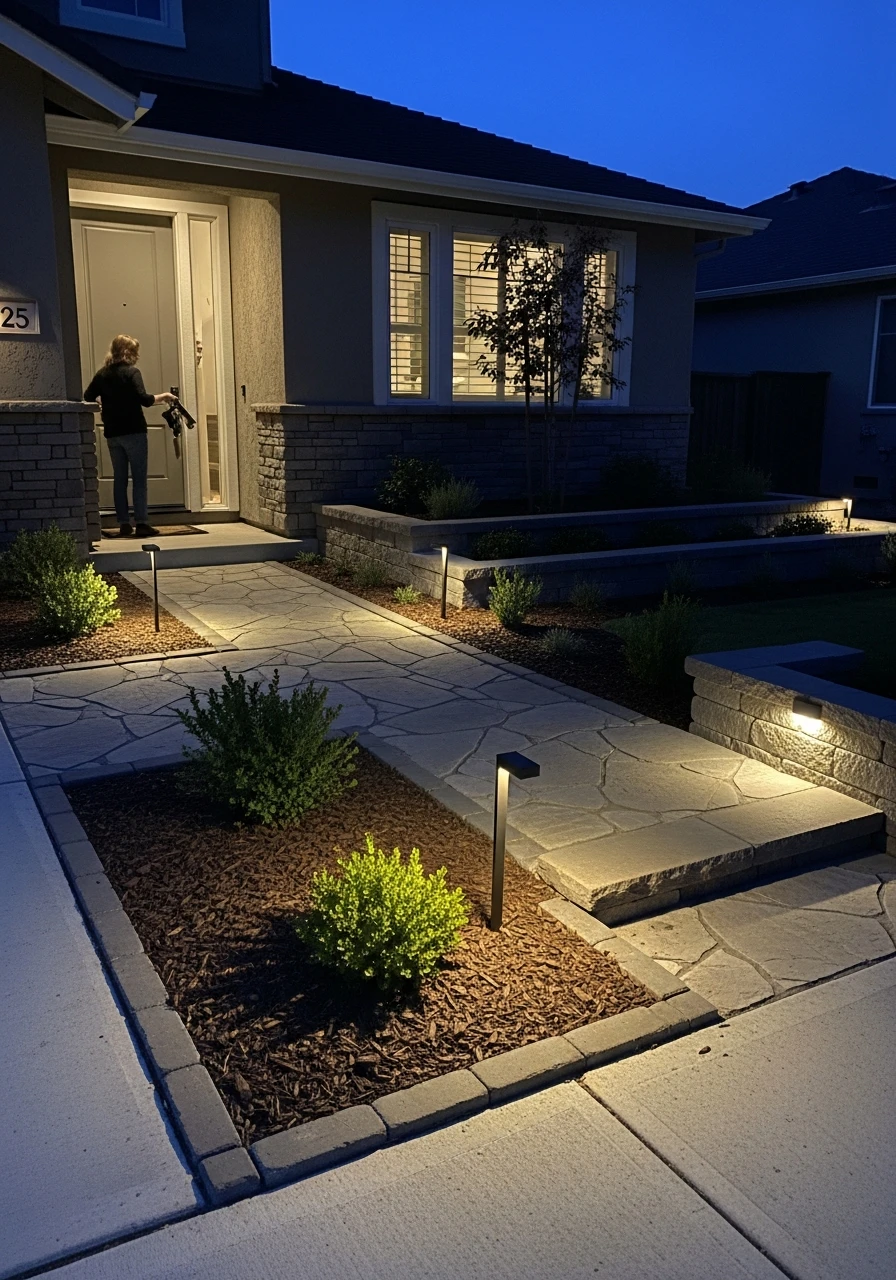
Install lights that turn on when movement is detected near your front door or driveway. This is a practical security measure and ensures you never fumble for keys in the dark.
- Set the sensitivity to avoid activating for small animals.
- Choose fixtures that match your home’s exterior style.
- Use bright LED bulbs for maximum safety.
Pro Tip: Place motion lights near the garage and the main entry point.
38. Reflective Water Bowl
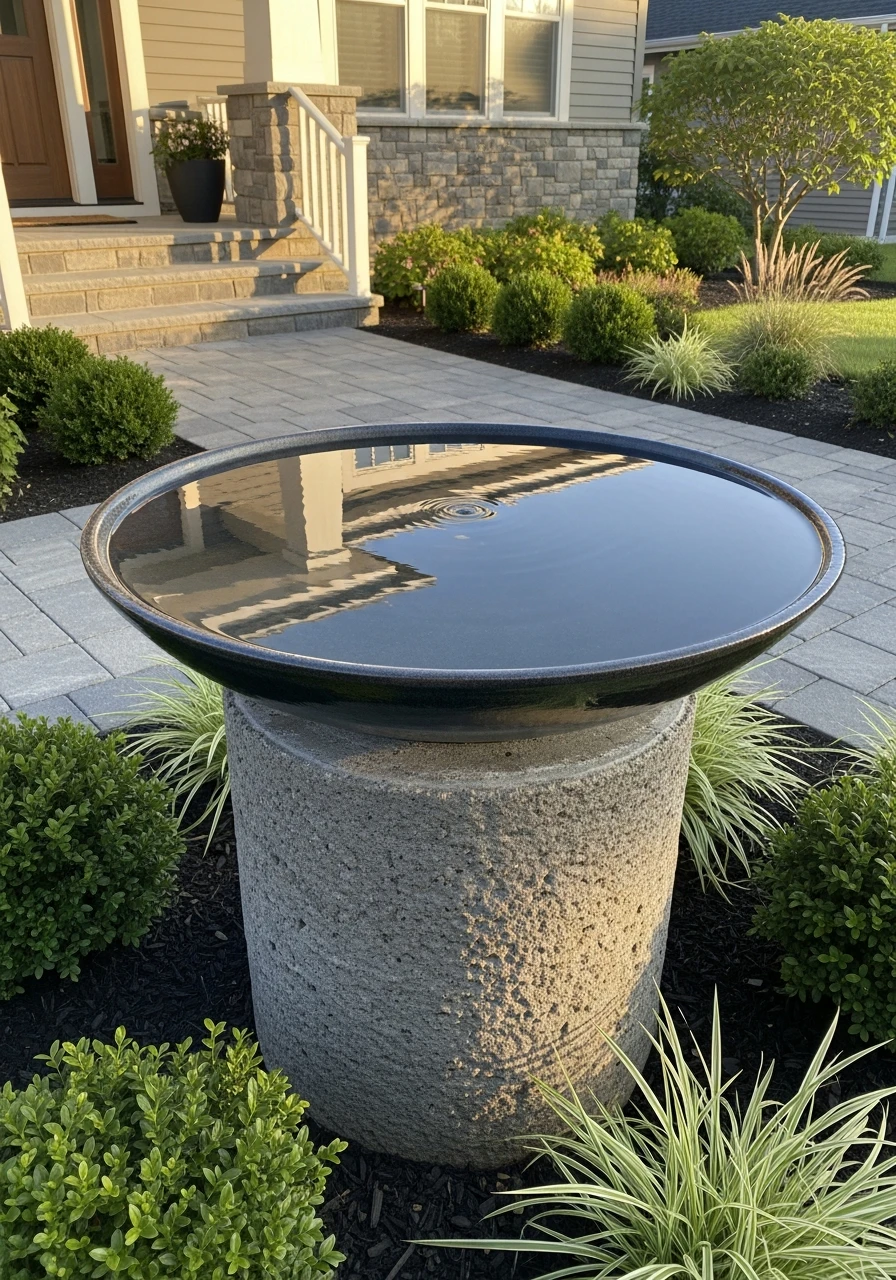
Use shallow, wide water bowls placed on a pedestal or stone base. The water reflects the sky, light, and surrounding plants, adding a subtle, elegant decorative element to the garden.
- Choose a ceramic or metal bowl with a wide surface area.
- Keep the water level high and clean.
- Place it away from trees to minimize leaf debris.
Pro Tip: This feature is an easy, budget-friendly way to mimic a pond effect.
39. Warm Ambient Lighting
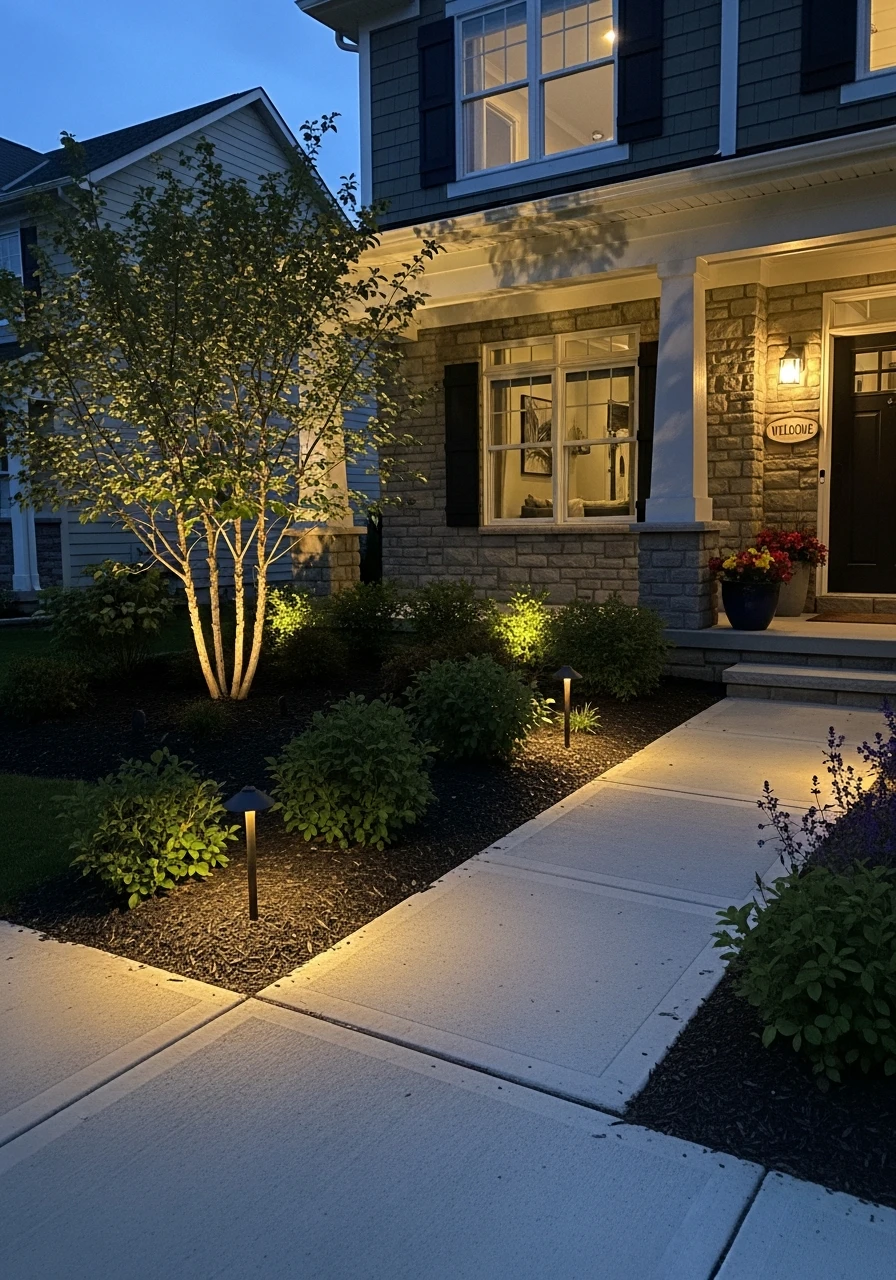
When choosing outdoor bulbs, opt for soft, warm lighting (around 2700K) instead of harsh, blue-white brightness. A warm glow makes your home look welcoming and cozy.
- Avoid floodlights that create sharp shadows.
- Use fixtures that direct light downward or at an angle.
- Layer different light sources (path, spot, porch) for depth.
Pro Tip: Warm light is much more flattering to paint colors and landscaping than cool light.
40. Illuminated House Numbers
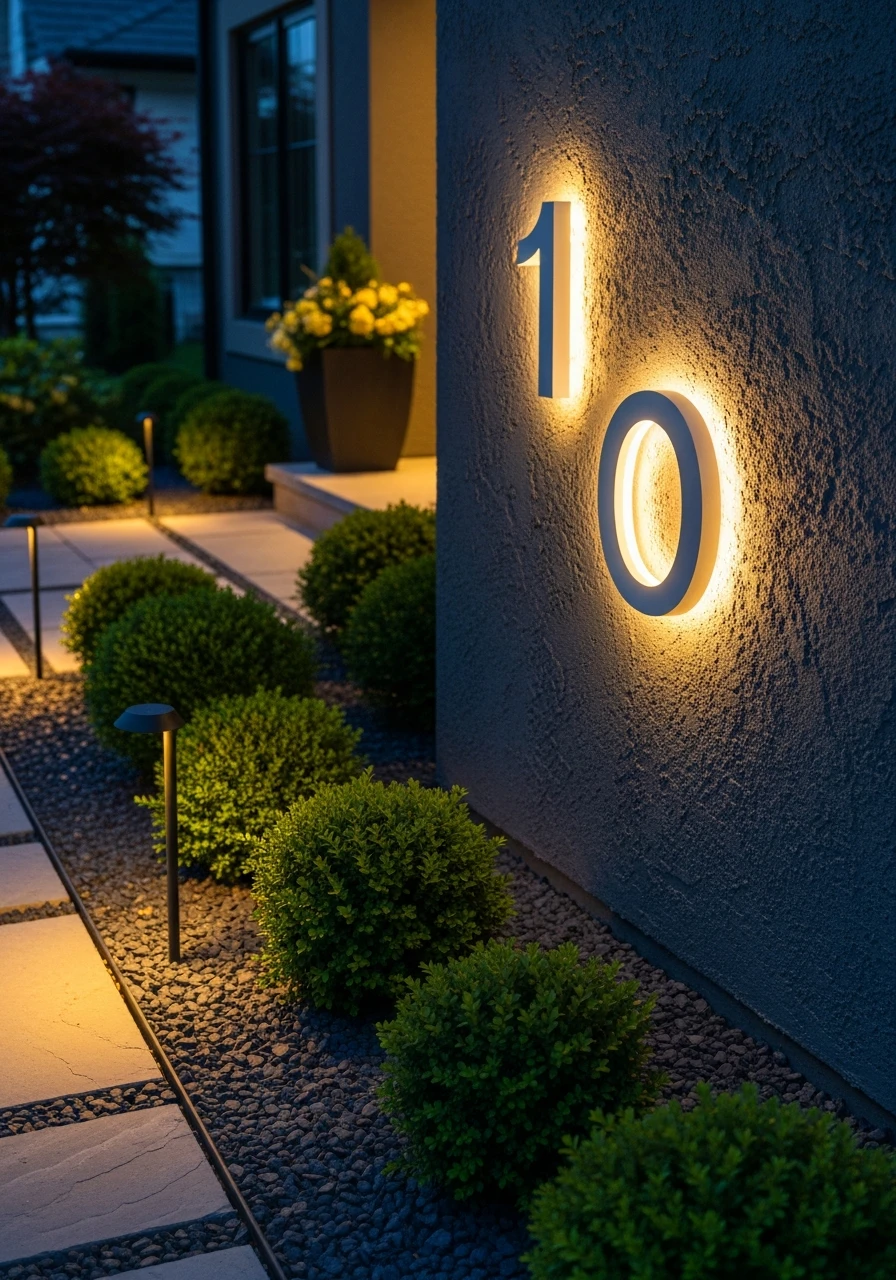
Make your house numbers visible and stylish by adding backlighting or spotlights. This simple update is functional for guests and emergency services, plus it looks very modern.
- Choose large, legible numbers.
- Install them vertically or horizontally near the door.
- Select solar-powered illuminated numbers for easy setup.
Pro Tip: This is one of the cheapest ways to boost curb appeal instantly.
41. Front Yard Seating
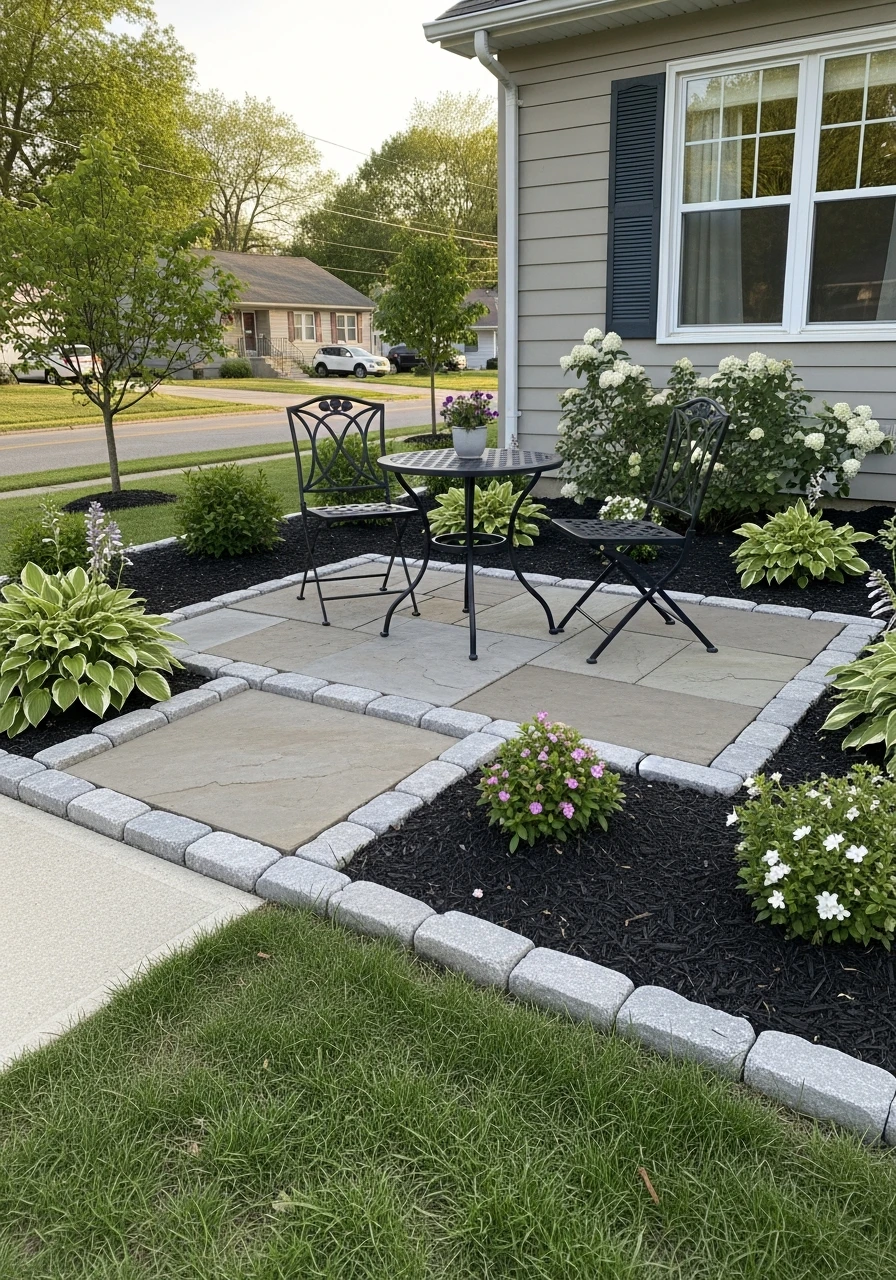
Make your front yard more than just a place to look at by designing a cozy seating zone. A small bistro set or a couple of comfortable chairs makes the space feel more inviting and usable.
- Use comfortable, weather-resistant furniture.
- Place the seating where you have a nice view.
- Define the area with an outdoor rug or paving stones.
Pro Tip: A functional front yard seating area encourages neighbor interaction.
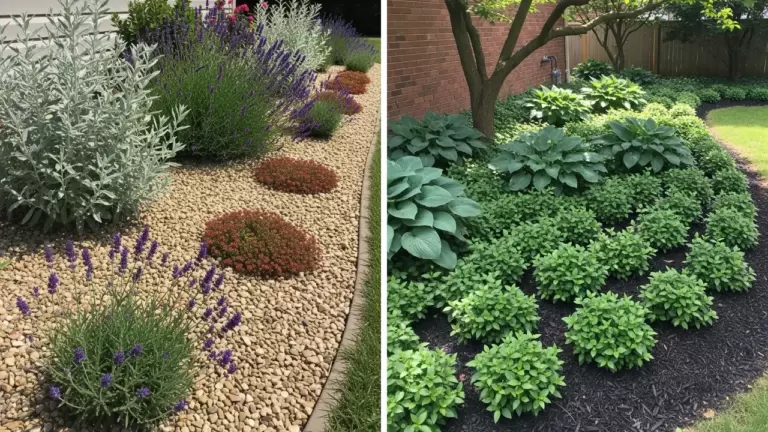
42. Edible Border Plants
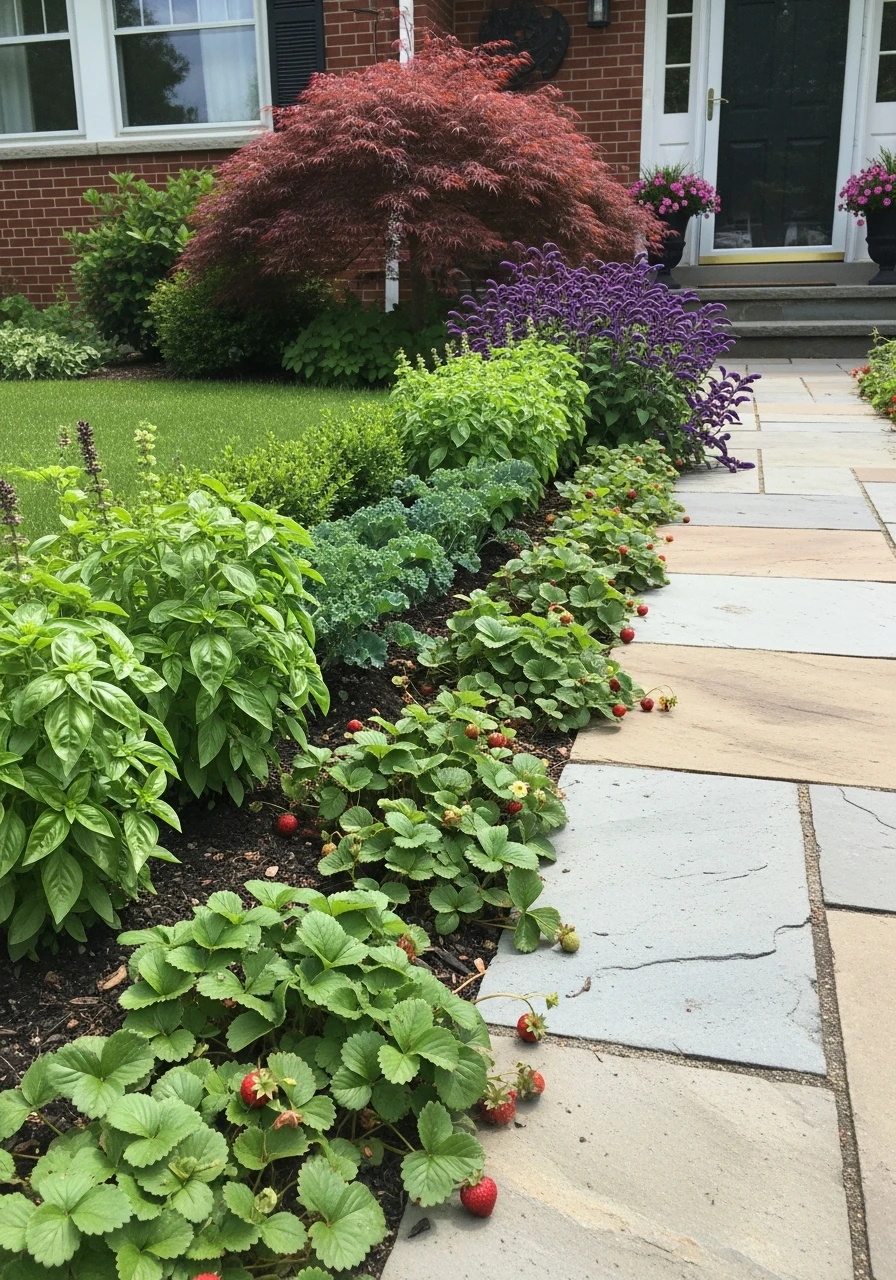
Integrate herbs, low-growing vegetables, or berry bushes along your pathways or borders. This makes your front yard functional, attractive, and provides fresh ingredients right outside your door.
- Plant rosemary or lavender near the walkway for fragrance.
- Use colorful leafy greens like Swiss chard or kale.
- Ensure the area gets enough sunlight for the plants you choose.
Pro Tip: Edible plants are a charming way to personalize a standard flower bed.
43. Rain Garden Design
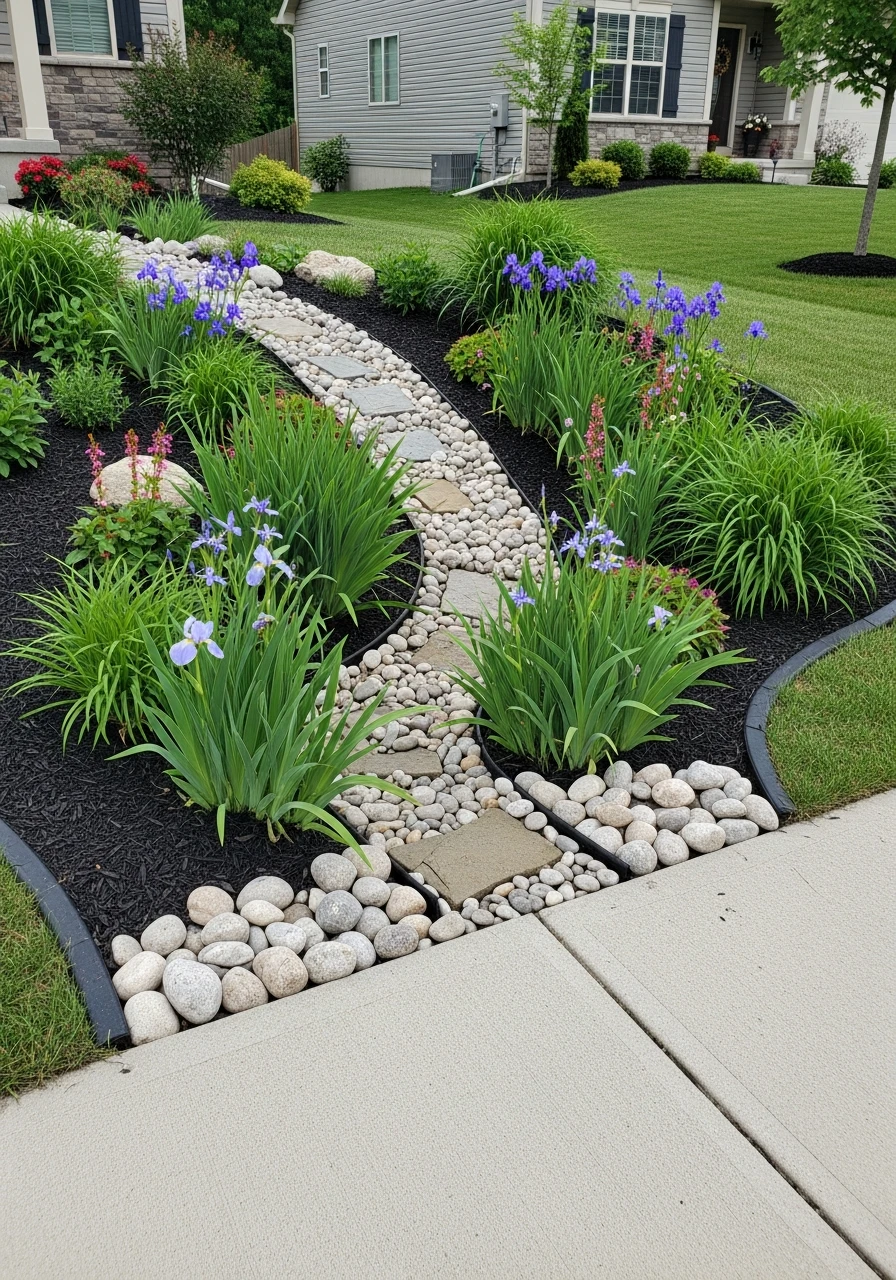
A rain garden is a planted area designed to capture and absorb rainwater runoff from your roof or driveway. It helps the environment and supports moisture-loving plants that thrive in damp conditions.
- Choose plants that can handle both wet and dry periods.
- Locate the garden at the lowest point of the yard.
- Use gravel or river stones as a decorative base layer.
Pro Tip: This is a great solution if you often see puddles forming in your yard after a storm.
44. Solar Water Feature
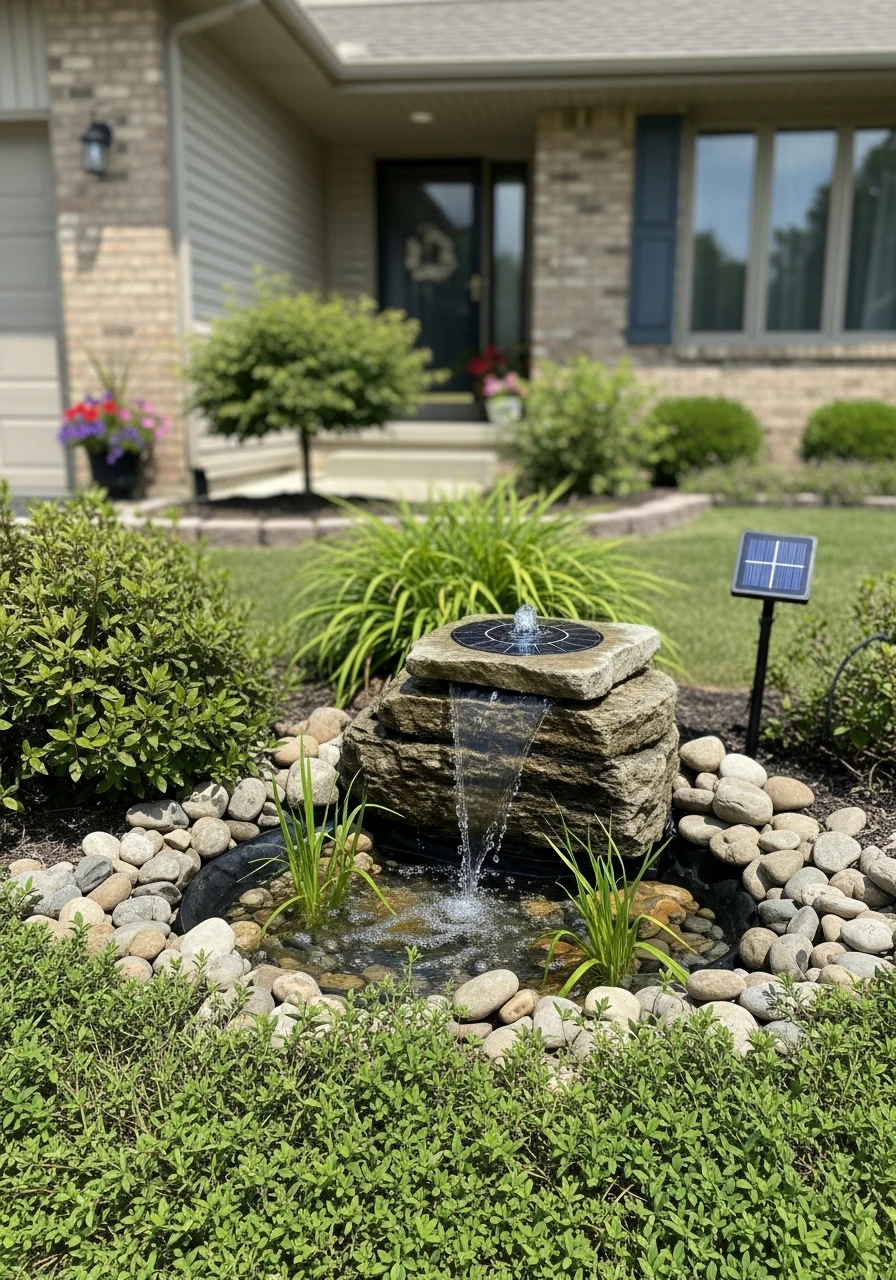
If you want the calming sound of a fountain without the hassle of running power lines, use a solar-powered water feature. Solar pumps are easy to install and require zero electricity costs.
- Look for a small pump kit that fits into an existing birdbath.
- Place the solar panel in a sunny spot.
- Ensure the water reservoir is deep enough for the pump.
Pro Tip: Solar pumps are perfect for renters or those who want a quick, easy DIY project.
45. Hidden Compost Area
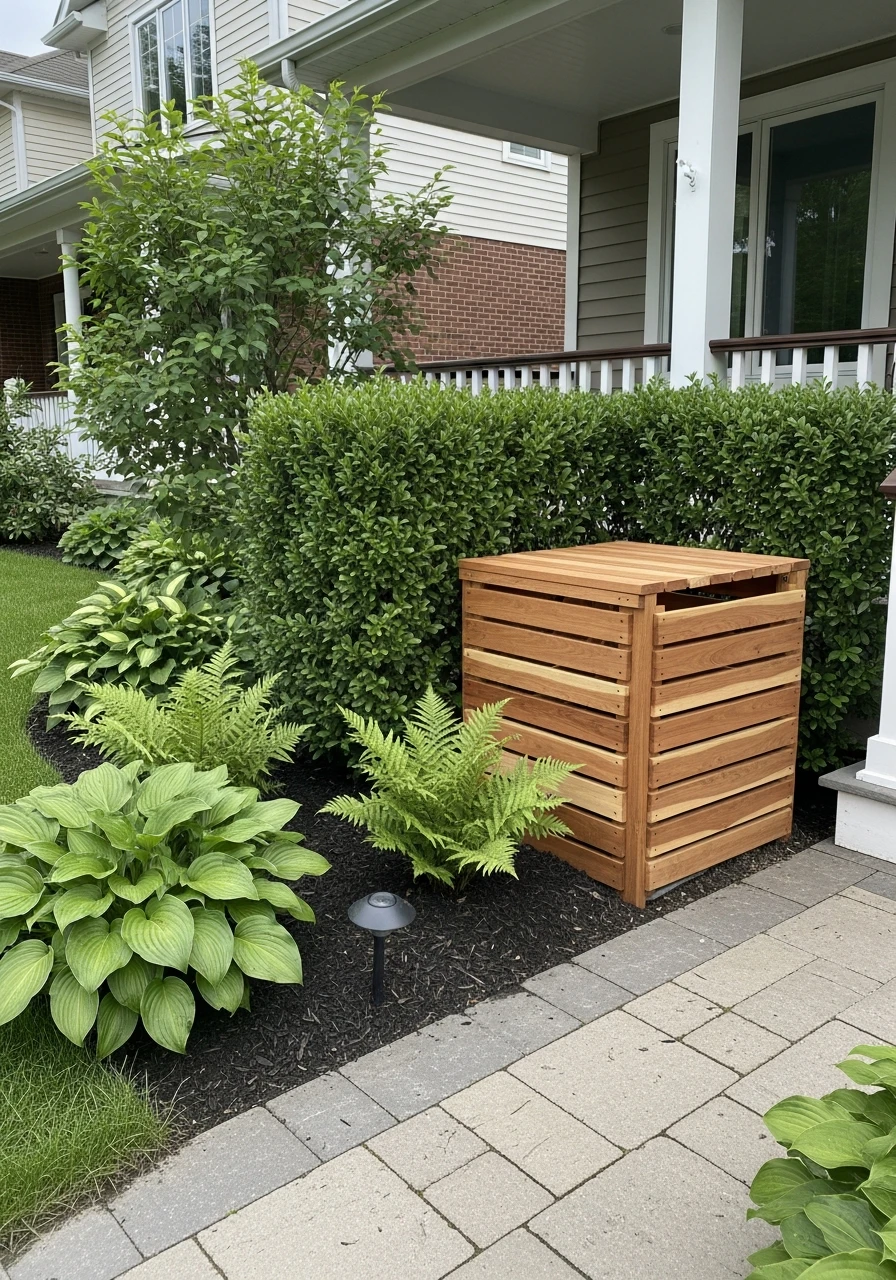
Integrate composting areas discreetly within your planting beds. Use an attractive wooden bin or hide the bin behind a small hedge or screen so you can garden sustainably without the mess showing.
- Keep the compost bin close to the garden beds for easy access.
- Use a tumbler style bin to keep pests out.
- Cover the area with lush, taller plants like ferns or hostas.
Pro Tip: Compost provides free, nutrient-rich soil for your front yard flowers.
46. Bird-Friendly Landscape
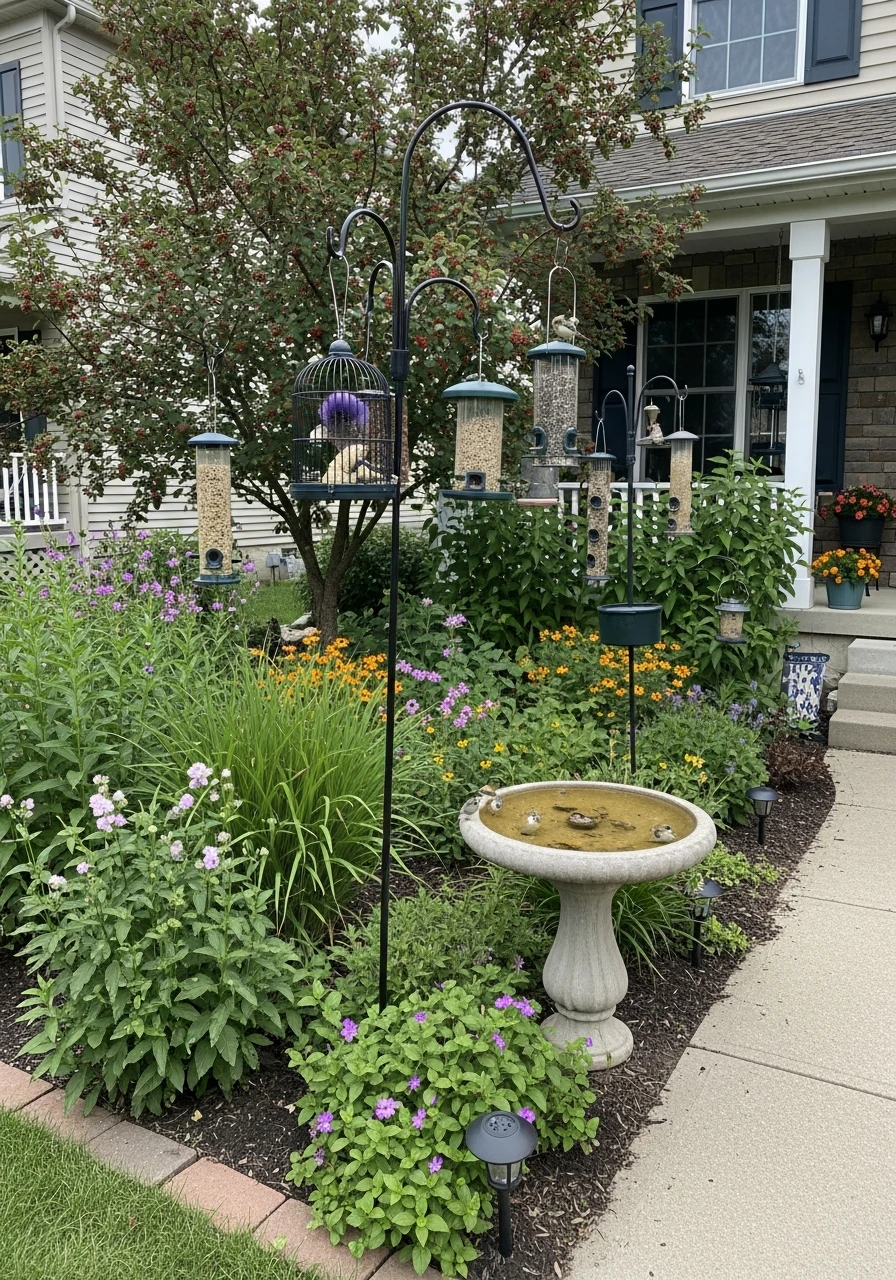
Attract natural activity by adding plants, feeders, and water sources that appeal to birds. This creates a lively, dynamic front yard that is fun to watch.
- Plant berry bushes like holly or dogwood.
- Place a decorative bird feeder or bird bath.
- Avoid placing feeders too close to the house or windows.
Pro Tip: Birds are natural pest controllers, helping keep your garden healthy.
47. Reclaimed Hardscape
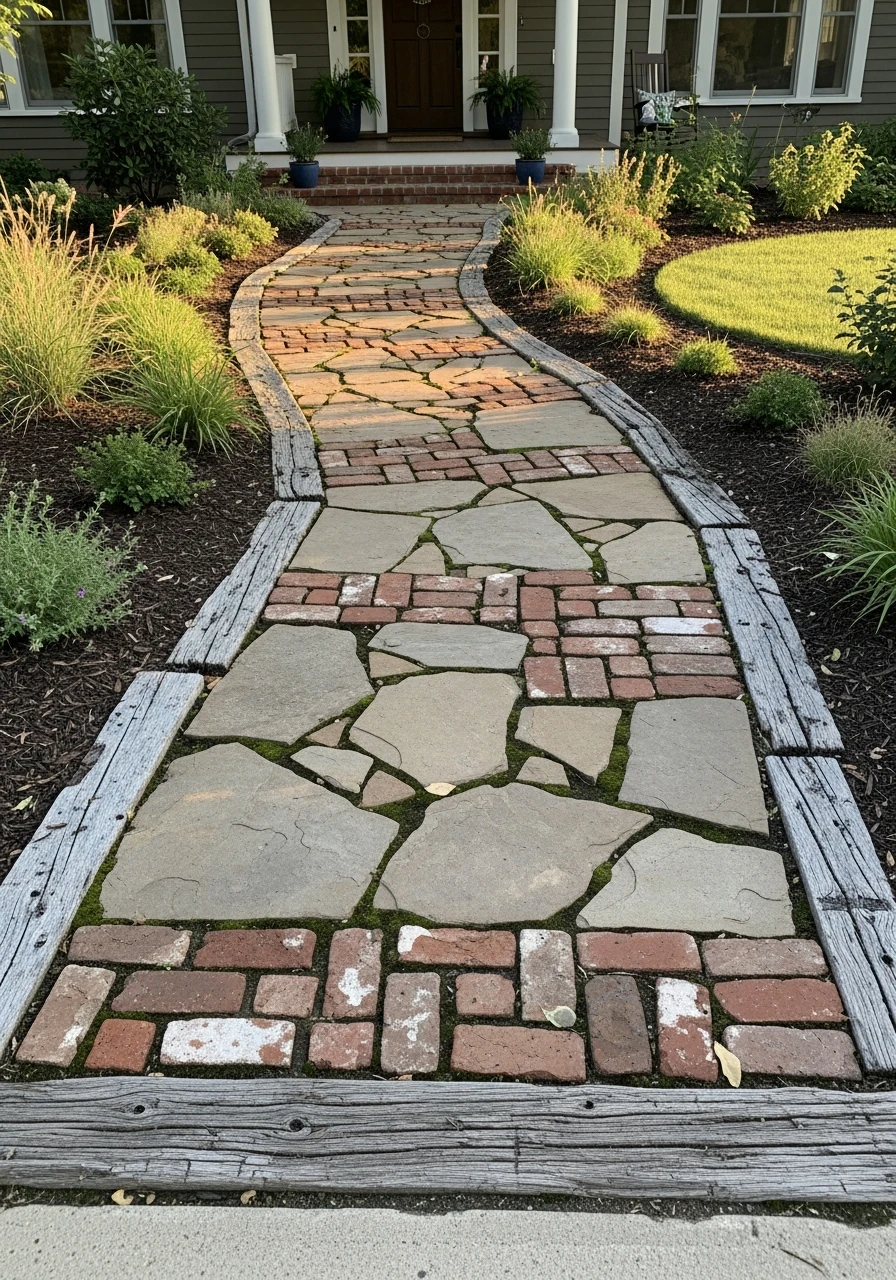
Use salvaged stone, brick, or wood from local reclamation yards to create paths and accents. This adds unique character, reduces waste, and often provides materials at a lower cost than new items.
- Look for old cobblestones or weathered bricks.
- Use the reclaimed materials for a border or patio area.
- Mix colors and sizes for an eclectic look.
Pro Tip: Reclaimed materials instantly give your yard a sense of age and history.
48. Xeriscape Zones
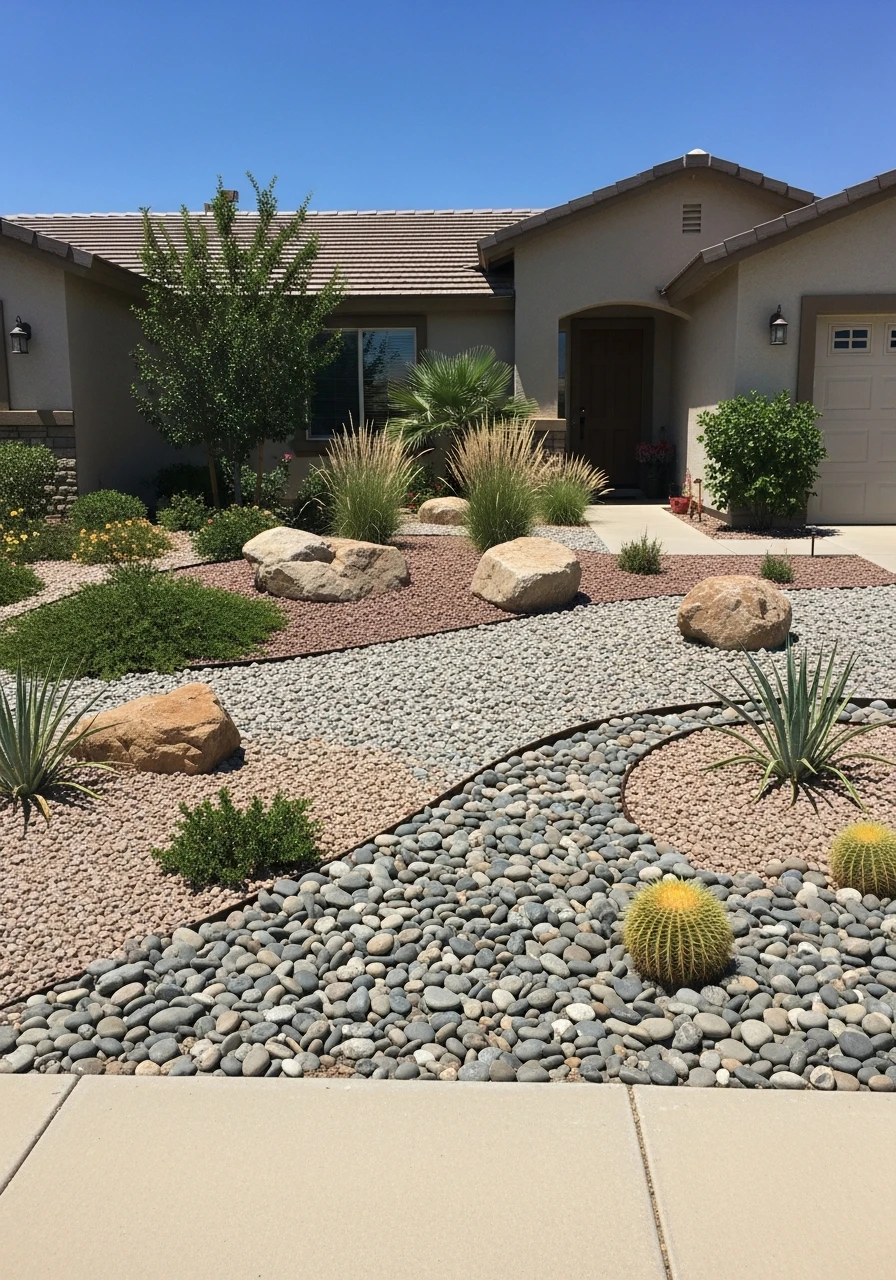
If you live in a climate with periods of dryness, divide your front yard into zones based on watering needs. Keep the area closest to the house slightly greener and the outer edges dry and rock-filled.
- Use drip irrigation only in the high-water zones.
- Plant succulents and cacti in the low-water zones.
- Mark the transitions clearly with different mulches or gravels.
Pro Tip: Zoning helps you use water efficiently and keeps plants healthy where they need it most.
49. Reduced Lawn Space
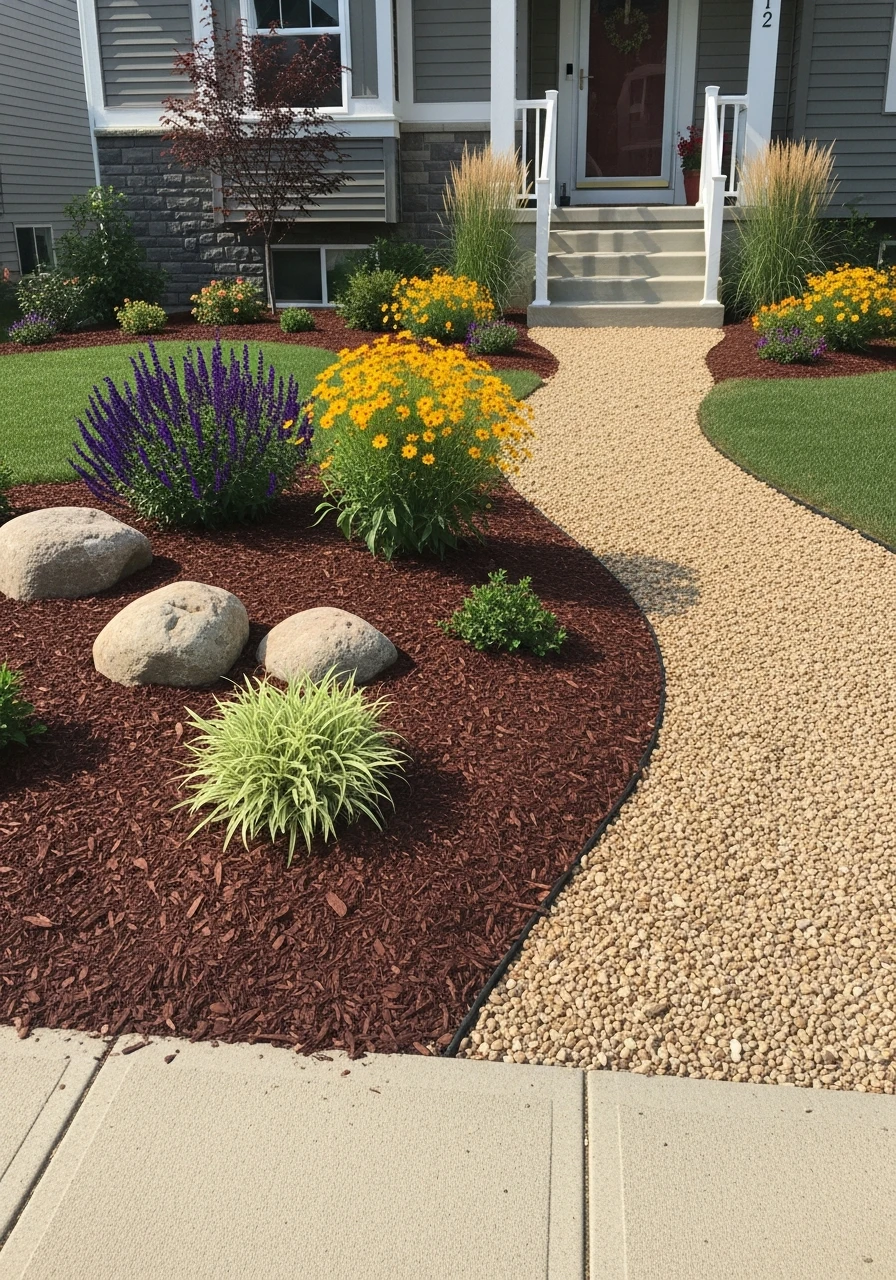
Swap out large areas of grass for planting beds, mulch, or gravel. This cuts down dramatically on mowing and water usage while giving you more space for decorative features and color.
- Expand your existing flower beds outwards.
- Replace hard-to-mow sloped areas with ground cover.
- Use thick layers of mulch to suppress weeds.
Pro Tip: A small, perfectly maintained lawn looks better than a large, struggling one.
50. Multi-Purpose Layout
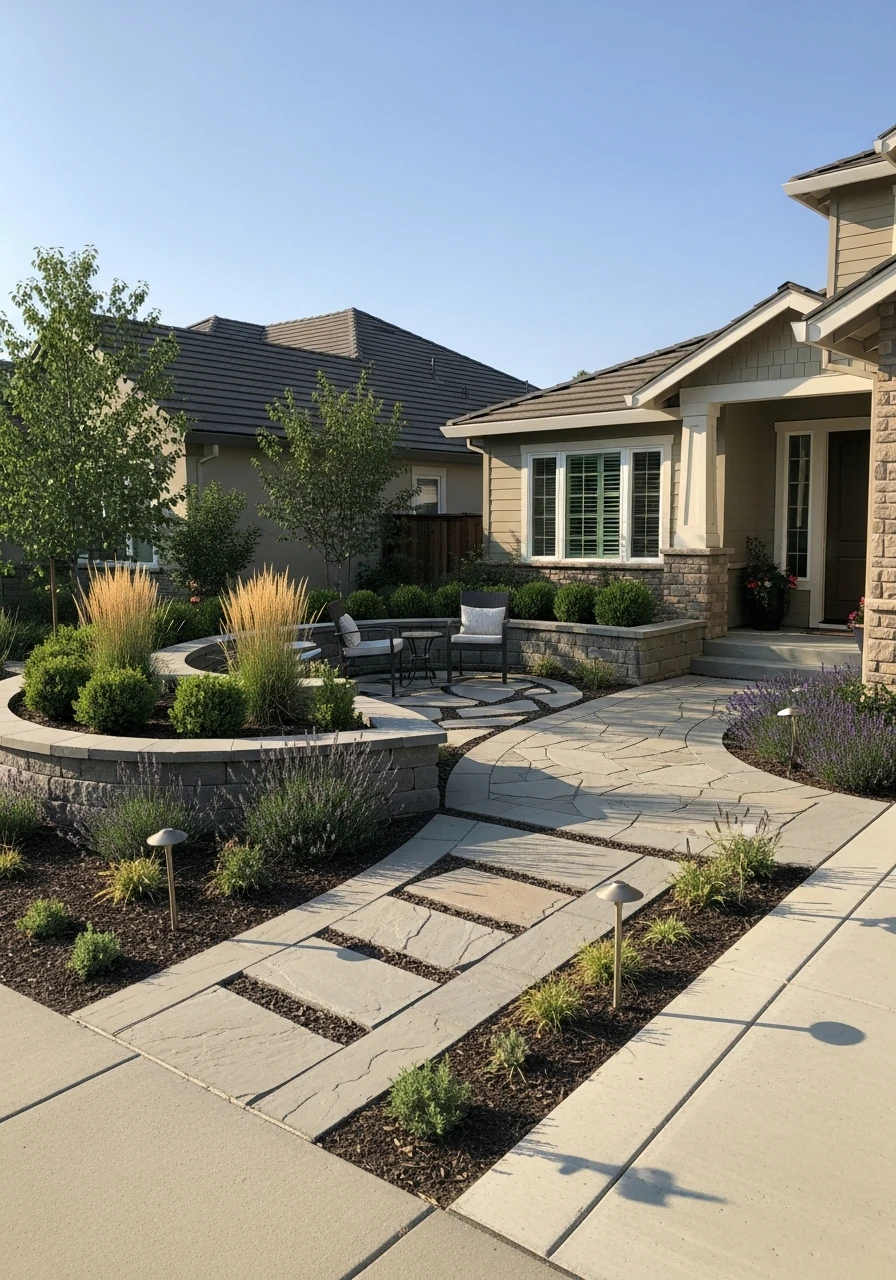
Design your front yard to combine visual beauty, function, and movement in a balanced layout. Ensure the space flows smoothly between seating areas, walkways, and planting zones.
- Draw a simple map of the area first.
- Ensure walkways don’t cut through major planting beds.
- Keep sightlines open from the street to the front door.
Pro Tip: A cohesive design plan saves time and money by preventing costly mistakes later.
You don’t need a massive budget to get a magazine-worthy front yard!
By focusing on structure, clean lines, and smart lighting, you can achieve that high-end look today.
Grab a couple of matching planters or some solar lights and see the difference a few simple changes can make. Happy planting!