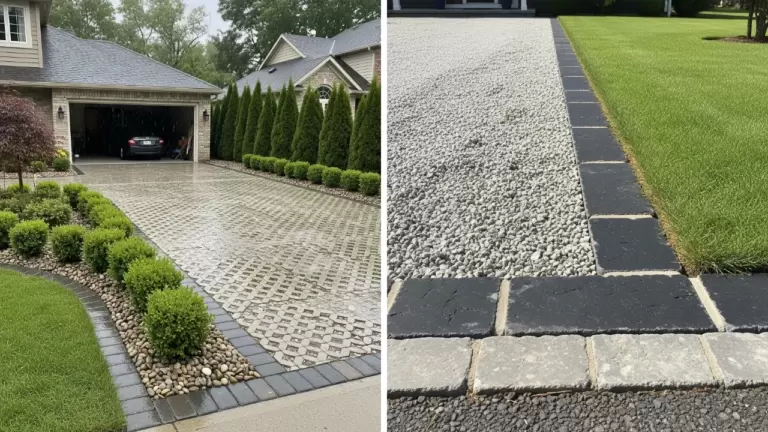
50 Flower Beds for Front of House

This post may contain affiliate links: full affiliate disclosure.
Does your front yard feel a little… blah?
Making your house look amazing from the street doesn’t need to cost a fortune or take all weekend.
We’re sharing 50 simple, budget-friendly ideas for gorgeous flower beds in front of house that create instant curb appeal. Get ready for compliments!
1. Matching Beds Frame Your Door
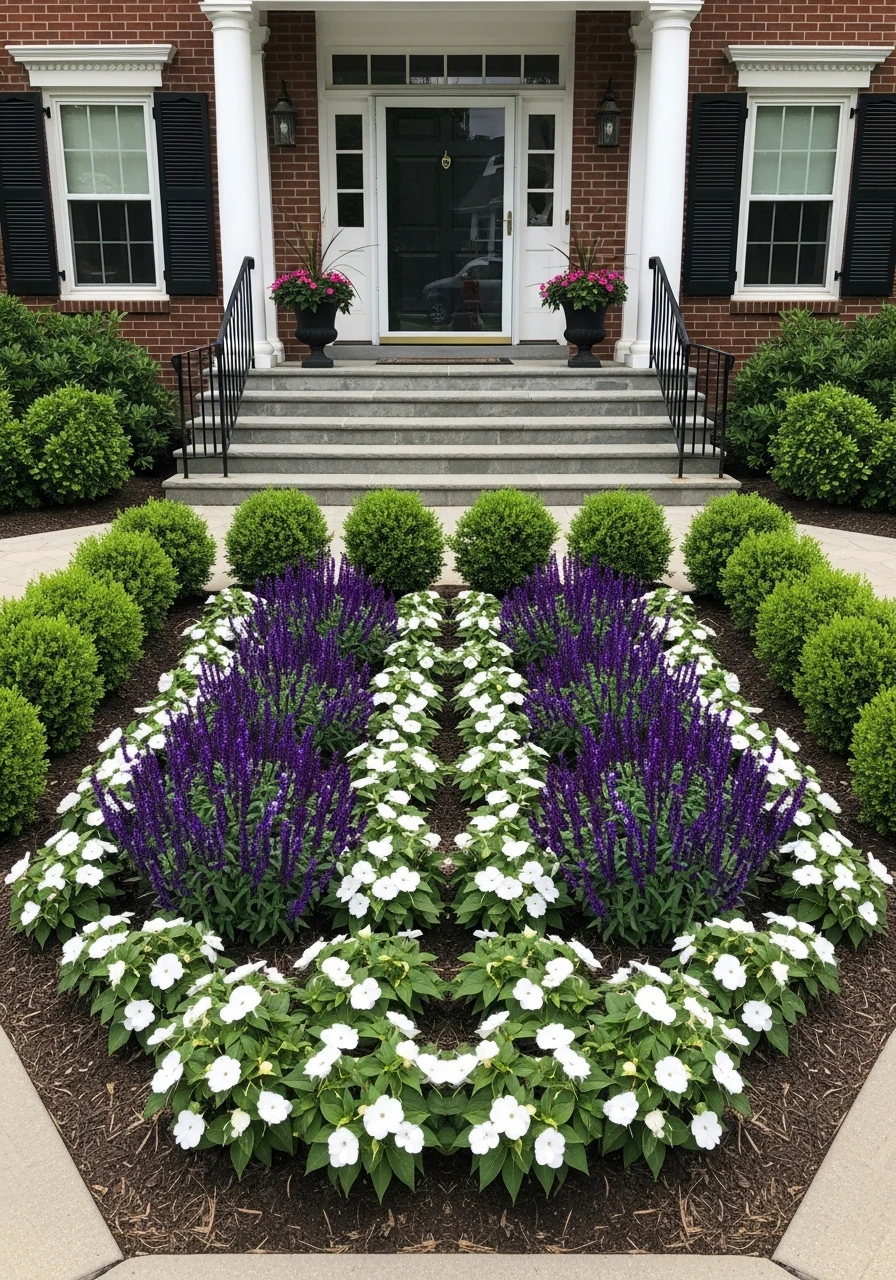
This gives your entrance a formal, balanced look. Plant the exact same things and use the same layout on both sides of the steps. It looks very neat and welcoming without being overly complicated.
- Keep plant heights uniform.
- Use clean, simple edging.
- Choose two main colors only.
Pro Tip: Symmetrical designs make your entire house feel more welcoming and structured.
2. Classic Roses by the Porch
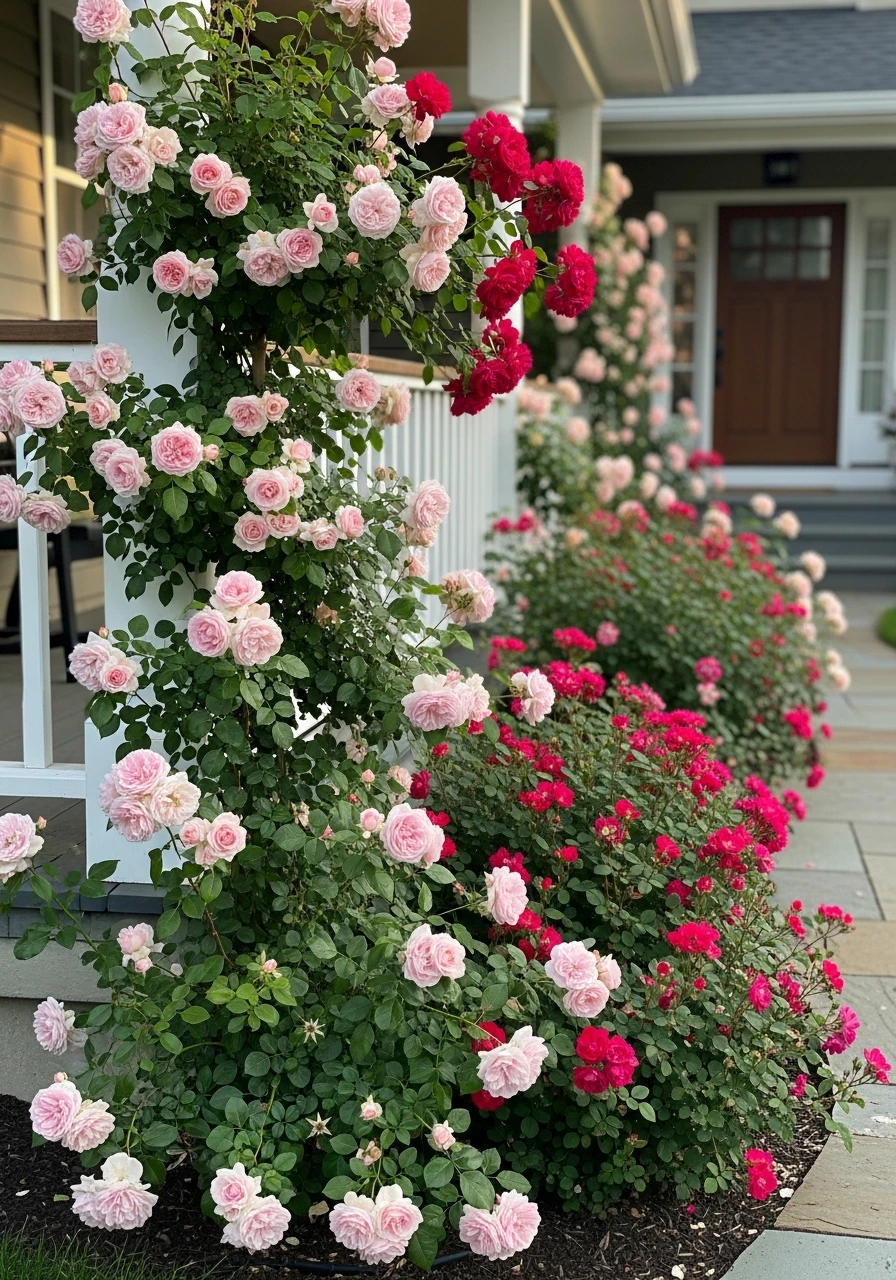
Nothing beats the elegance of roses right by the front door. Use climbing roses near a railing or shrub roses closer to the path. The strong fragrance welcomes visitors before they even knock.
- Use a trellis for climbing types.
- Choose disease-resistant varieties.
- Add slow-release rose food.
Pro Tip: Place roses where you sit so you can enjoy the lovely smell every day.
3. Boxwood and Seasonal Color
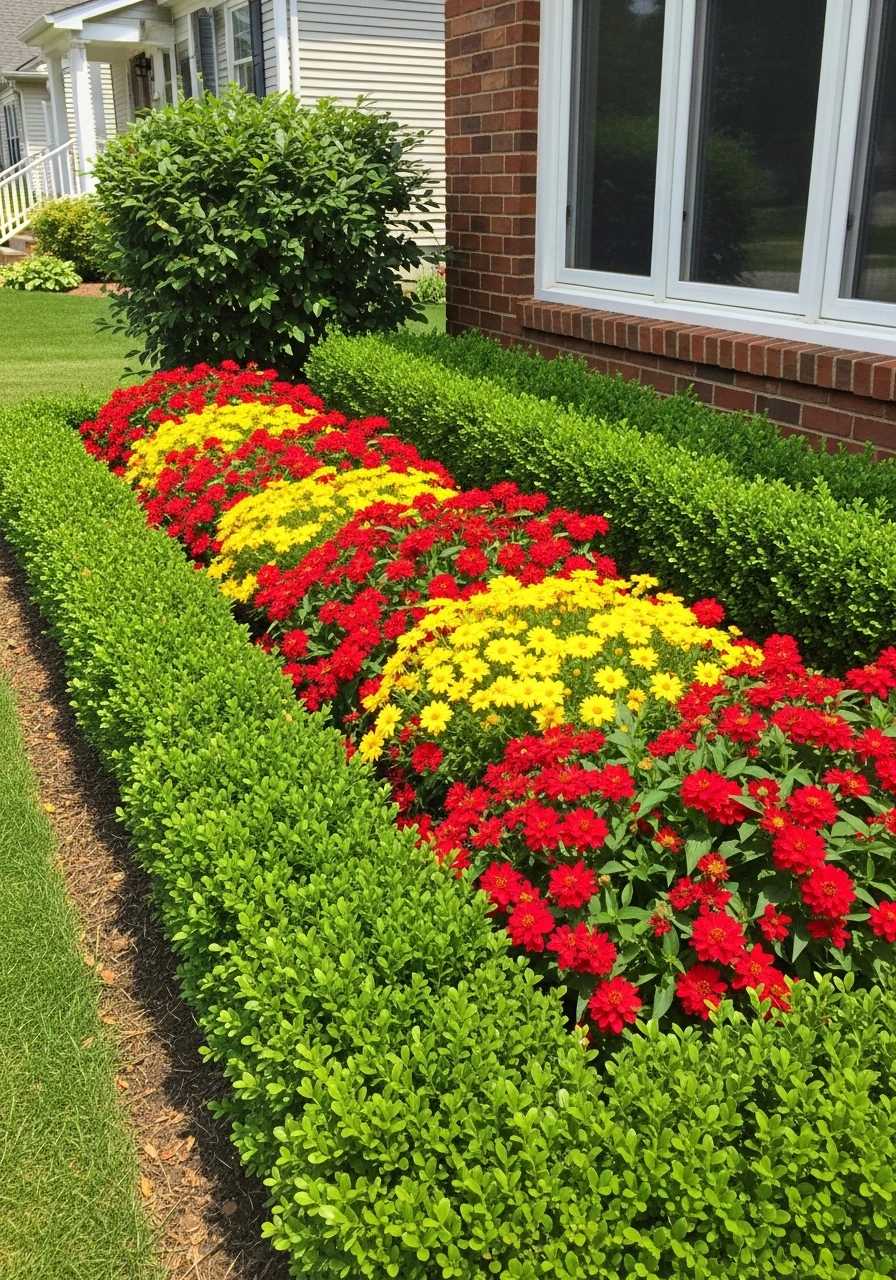
Combine low, structured boxwood hedges with seasonal flowers inside the border. The boxwood provides green structure all year long, and you can easily switch out the annuals for fresh color every few months.
- Use dwarf boxwood varieties.
- Plant bulbs (tulips) for spring color.
- Fill gaps with bright petunias in summer.
Pro Tip: Boxwood is very easy to trim and keeps the bed looking tidy even in winter.
4. Cottage-Style Mixed Bed
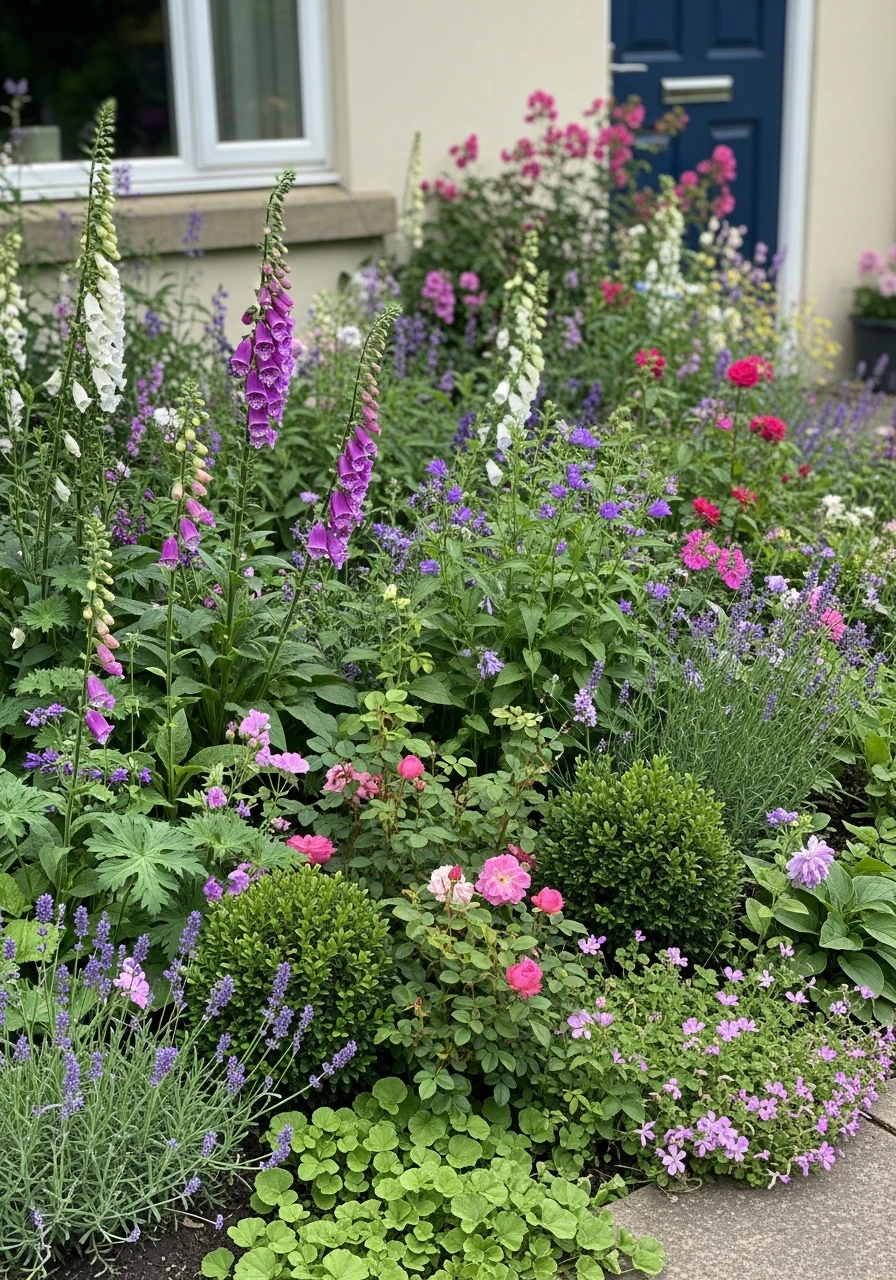
Use a loose, overflowing mix of different plants like perennials and small shrubs. This creates a relaxed, charming flower bed that feels informal and incredibly cozy. Let things overlap a little for that true cottage feel.
- Plant flowers close together.
- Mix heights and textures.
- Include old-fashioned favorites like hydrangeas.
Pro Tip: Cottage beds look best when they seem slightly wild, not perfectly manicured.
5. Bold Color-Blocked Design
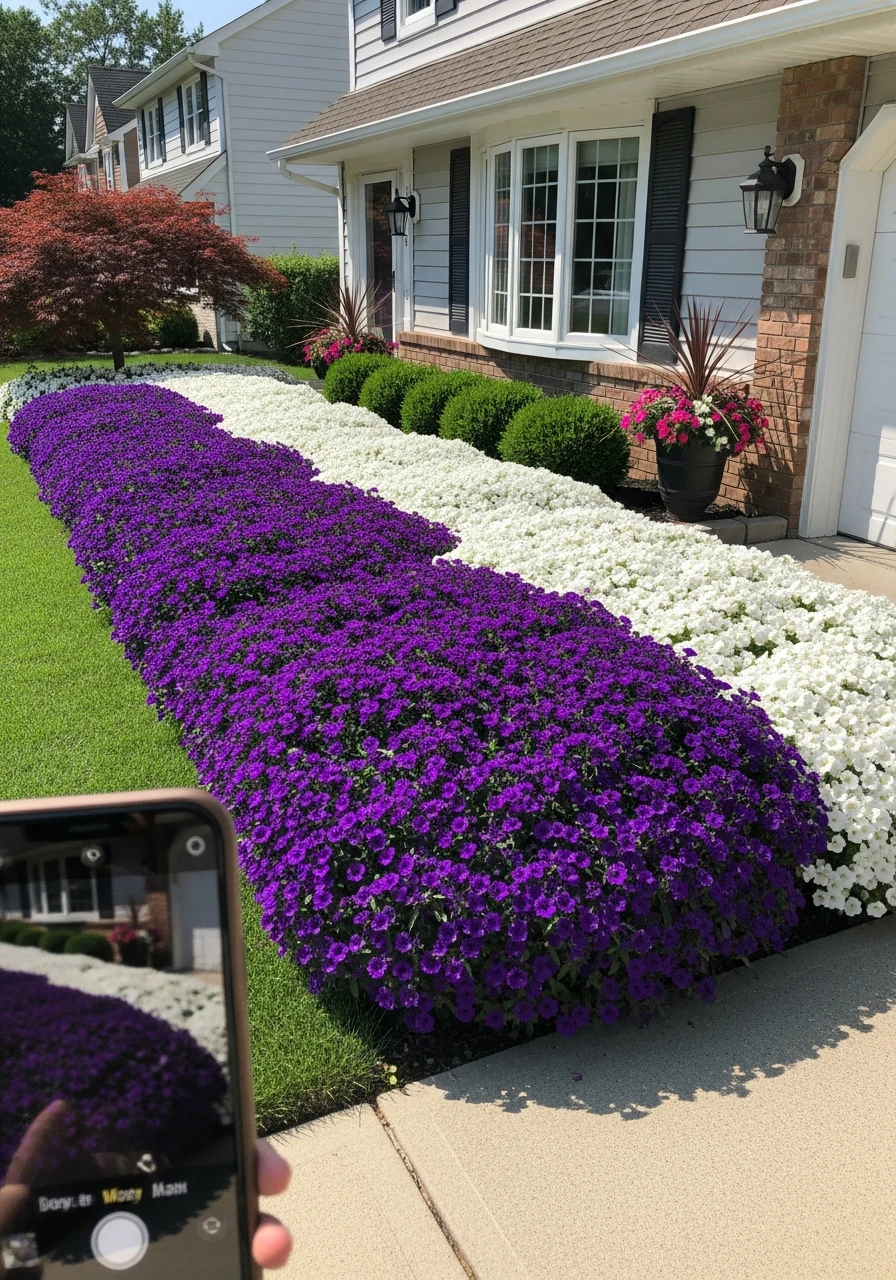
For high visual impact, plant flowers in large, organized groups of a single color. This creates a modern, organized look that reads clearly from the street. Think big blocks of purple next to big blocks of white.
- Stick to three colors maximum.
- Plant in mass, not individually.
- Use low edging to define the blocks.
Pro Tip: Grouping colors this way makes even inexpensive flowers look expensive and intentional.
6. Circle Bed Around a Tree
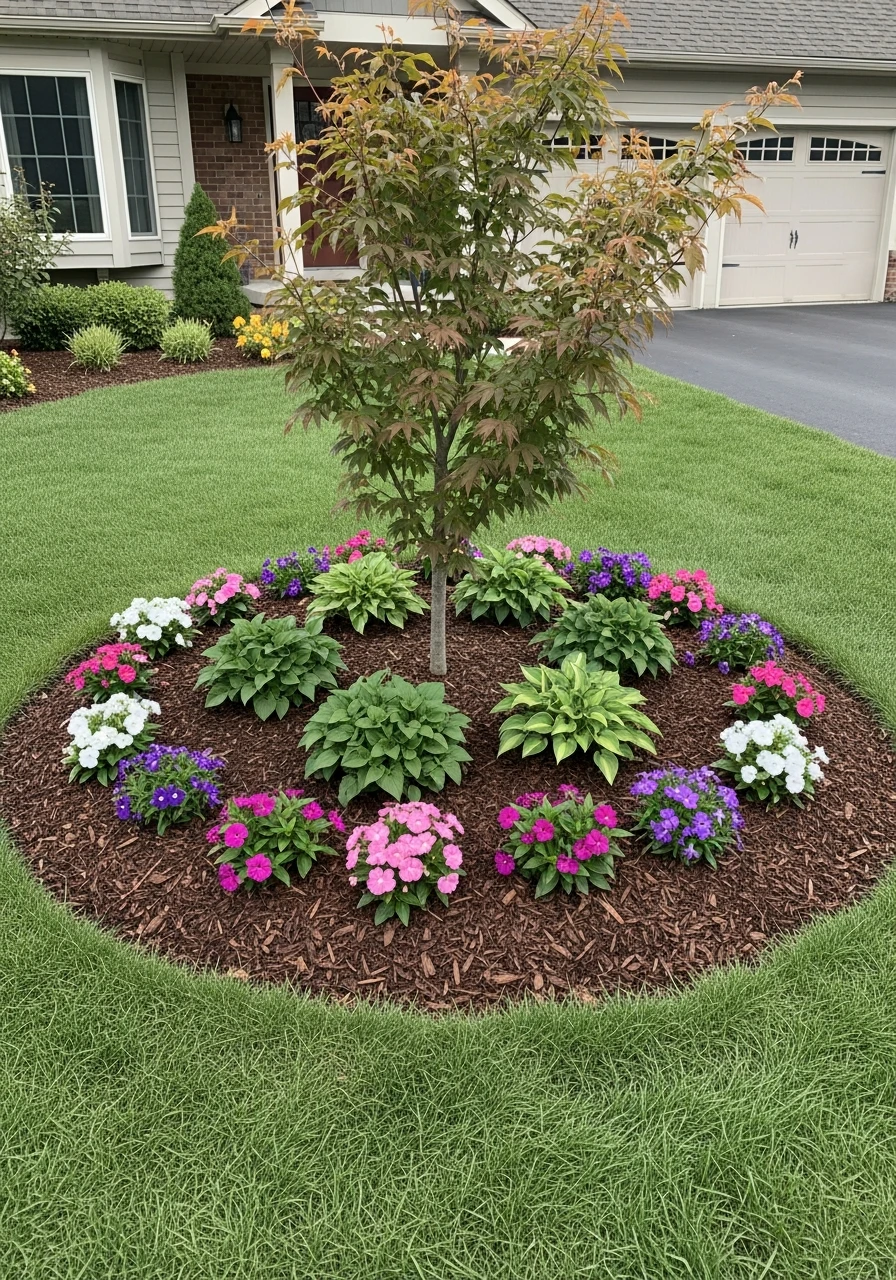
Build a circular flower bed around a small ornamental tree in your front yard. Use shade-tolerant flowers closer to the trunk to soften the ground. This adds dimension to the yard instantly.
- Keep the bed edge far from the trunk.
- Use hostas or impatiens for shade.
- Edge the circle with pavers.
Pro Tip: Add a small bench nearby to create a peaceful sitting spot in the yard.
7. Clean Stone Flower Edging
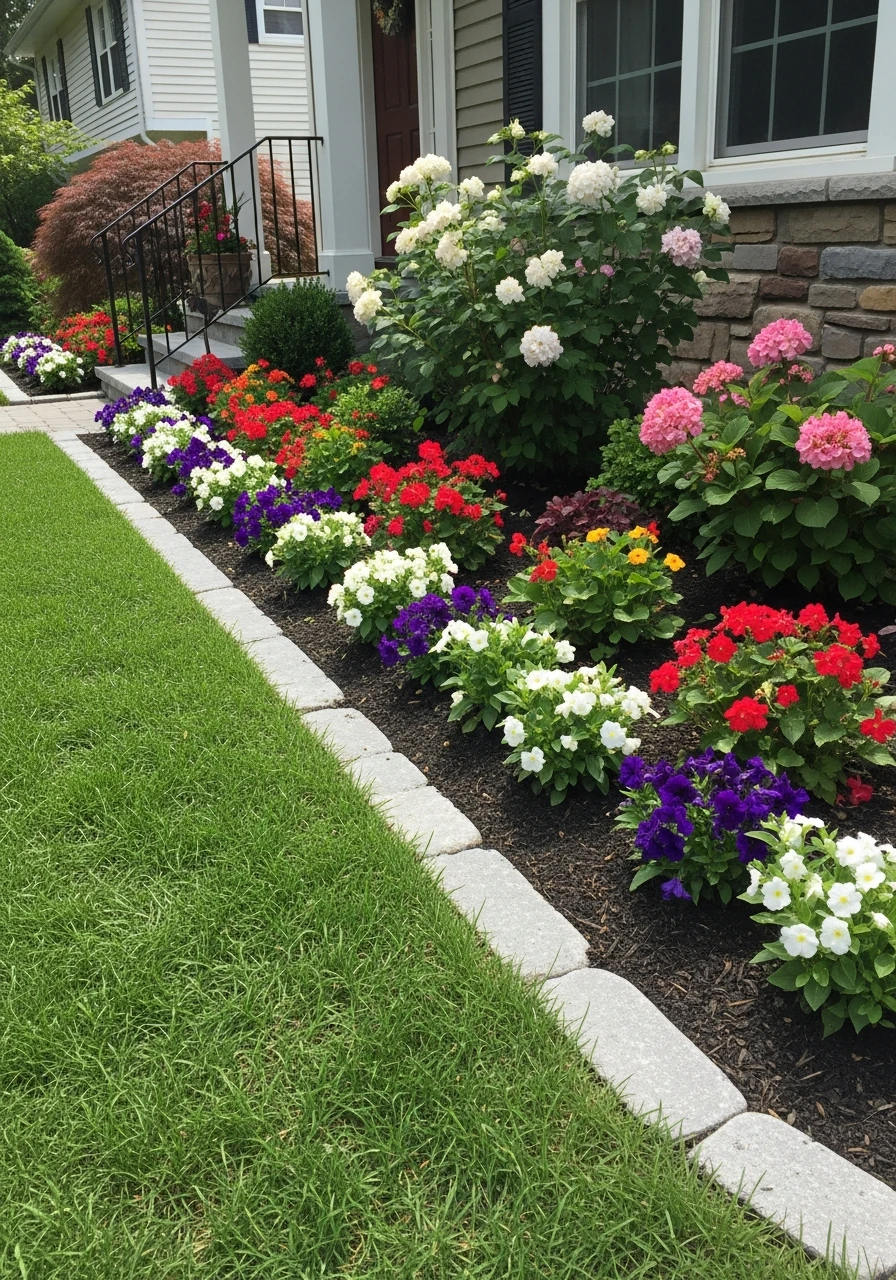
Defining your flower bed with a clean border stops the lawn from creeping in. Using stone or brick gives a polished look that separates your flowers beautifully. It instantly makes the whole yard look maintained.
- Dig a shallow trench first.
- Use pre-cut stone blocks.
- Backfill with soil and mulch.
Pro Tip: Use black metal edging hidden behind the stones for extra stability and a cleaner line.
8. Front Door Accent Bed
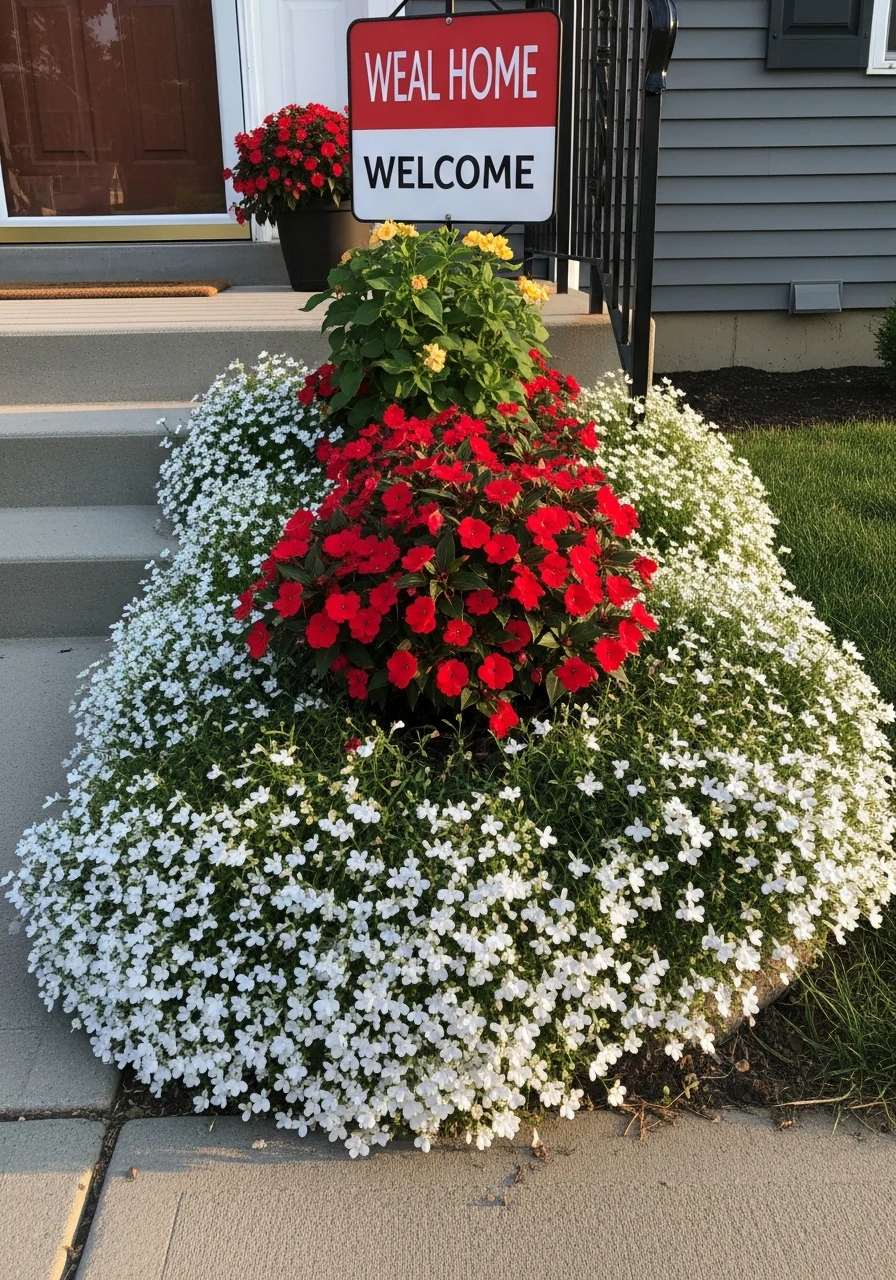
Install a compact flower bed directly in front of the entryway, focusing on low plants. This highlights your front door and adds color right where people arrive. Make sure the plants won’t block the path or steps.
- Use colorful ground cover.
- Incorporate a small decorative sign.
- Choose fragrant flowers like lavender.
Pro Tip: Keep this bed tidy since it’s the closest thing to your front door.
9. Window-Length Flower Beds
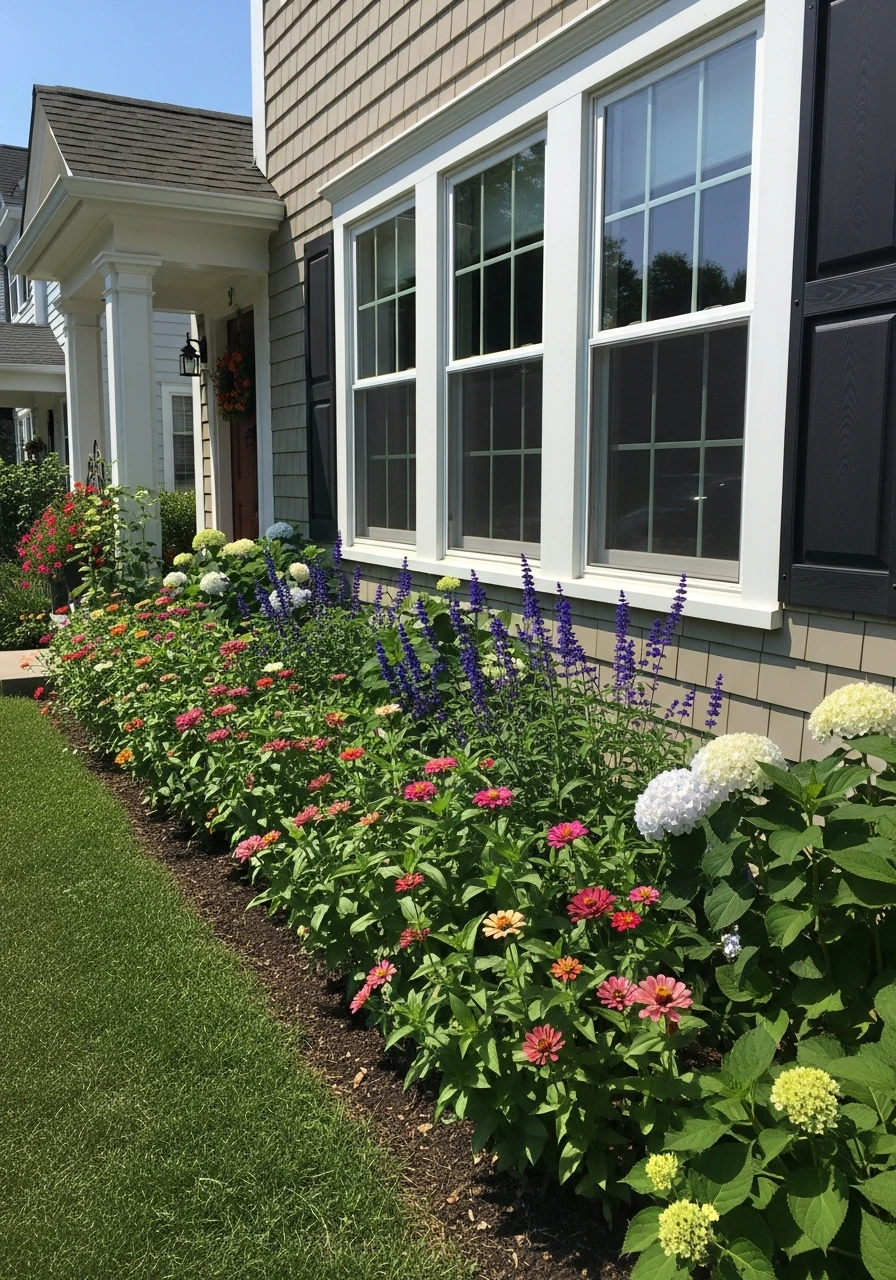
Place long flower beds directly under your front windows. Fill them with medium-height blooms to visually connect the house exterior with the yard. This draws the eye up to the architecture.
- Ensure plants don’t block window views.
- Use repeating colors for continuity.
- Add window boxes above the beds.
Pro Tip: Match the flower colors to a subtle accent color found on your house trim.
10. Curved Island Flower Bed
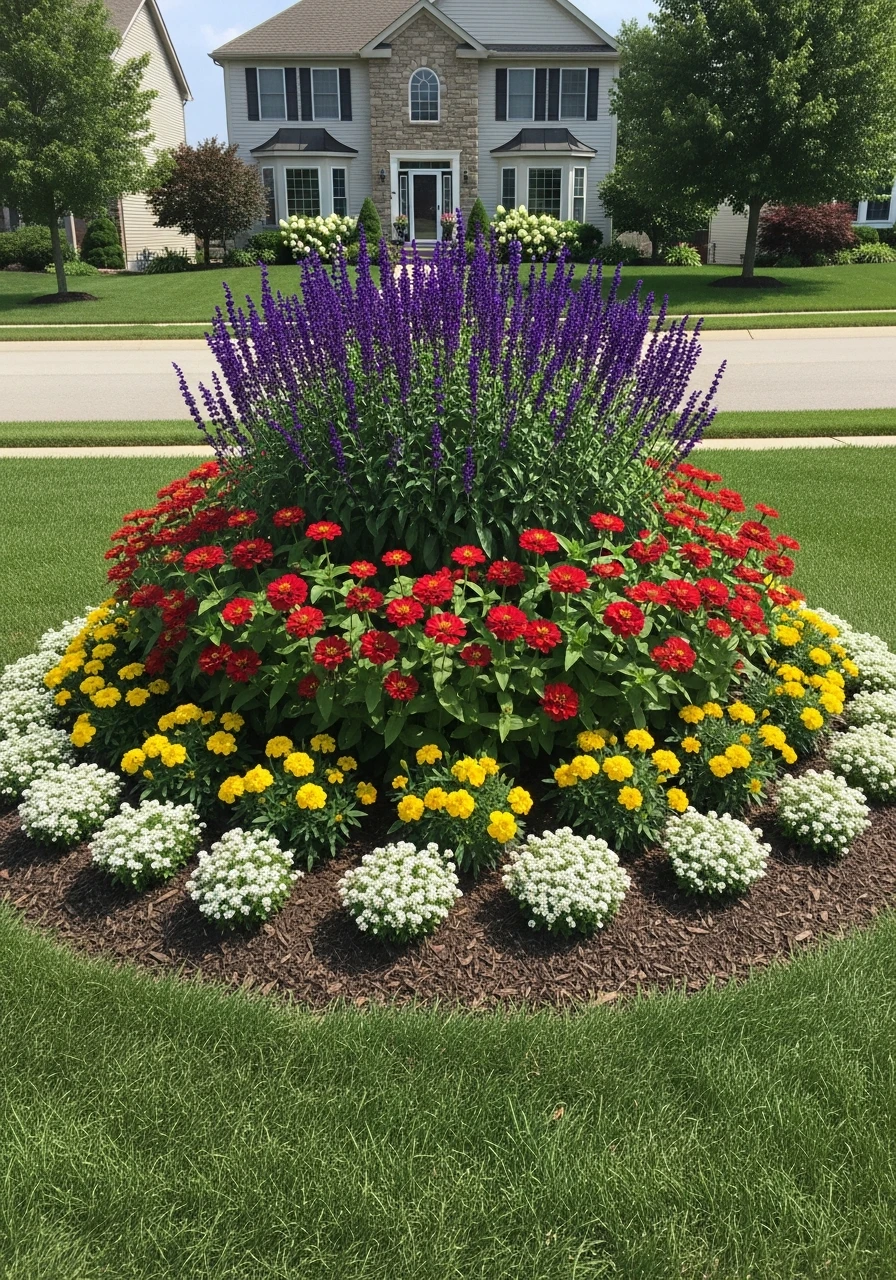
Design a standalone, curved flower bed in the center of your front lawn. This adds dimension and softens large open grass areas. Use taller plants in the center and shorter ones around the edges.
- Use a garden hose to plan the curve.
- Edge the bed sharply.
- Plant a small central shrub.
Pro Tip: Mow the lawn around this bed first to make the curve look crisp.
11. Layered Height Design
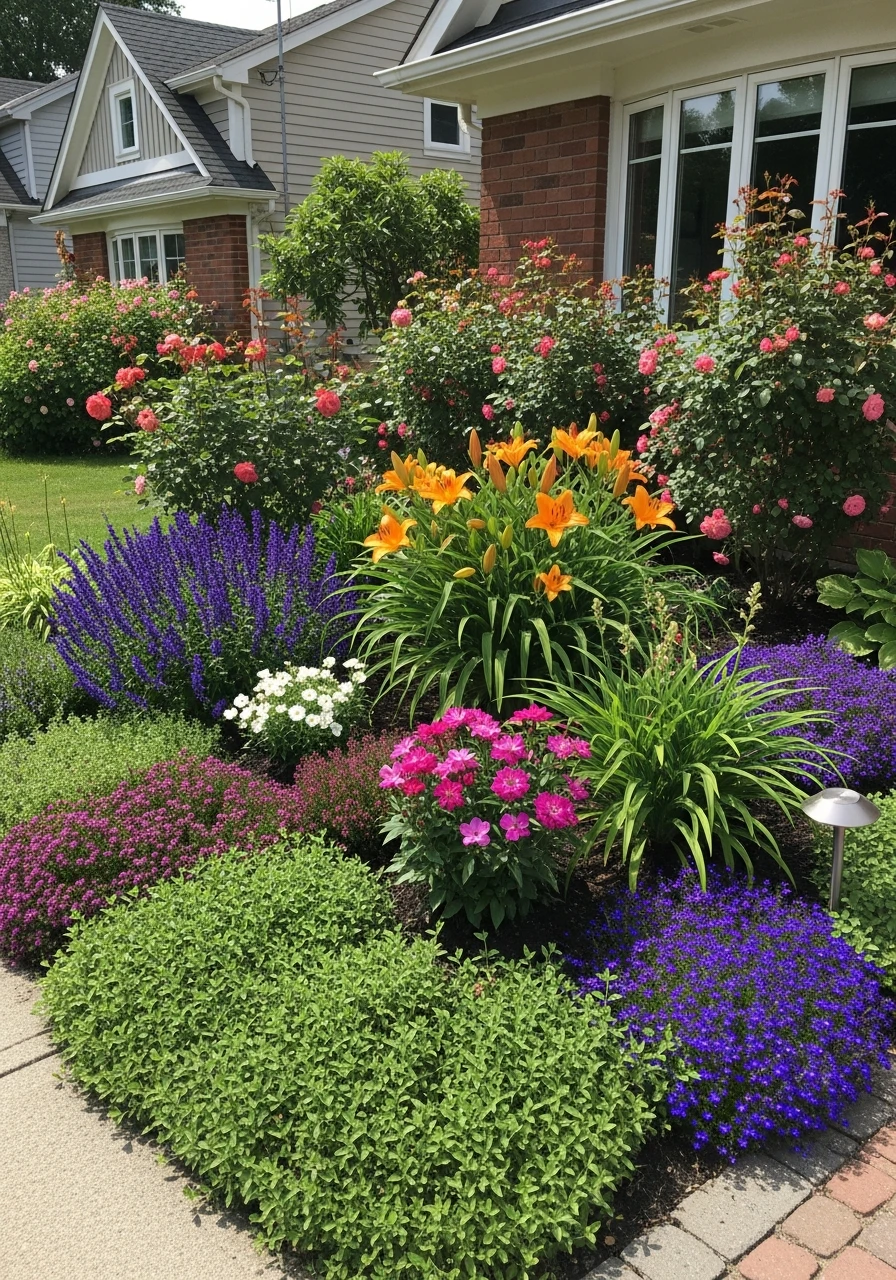
Arrange your plants so the tallest are in the back, medium plants are in the middle, and low ground cover is in front. This ensures visibility for every plant and creates wonderful depth when viewed from the street.
- Use the house wall as the backdrop.
- Place evergreens in the back row.
- Use short creeping plants in front.
Pro Tip: Measure the mature height of plants before you place them to avoid accidental blocking.
12. Grass and Flower Blend
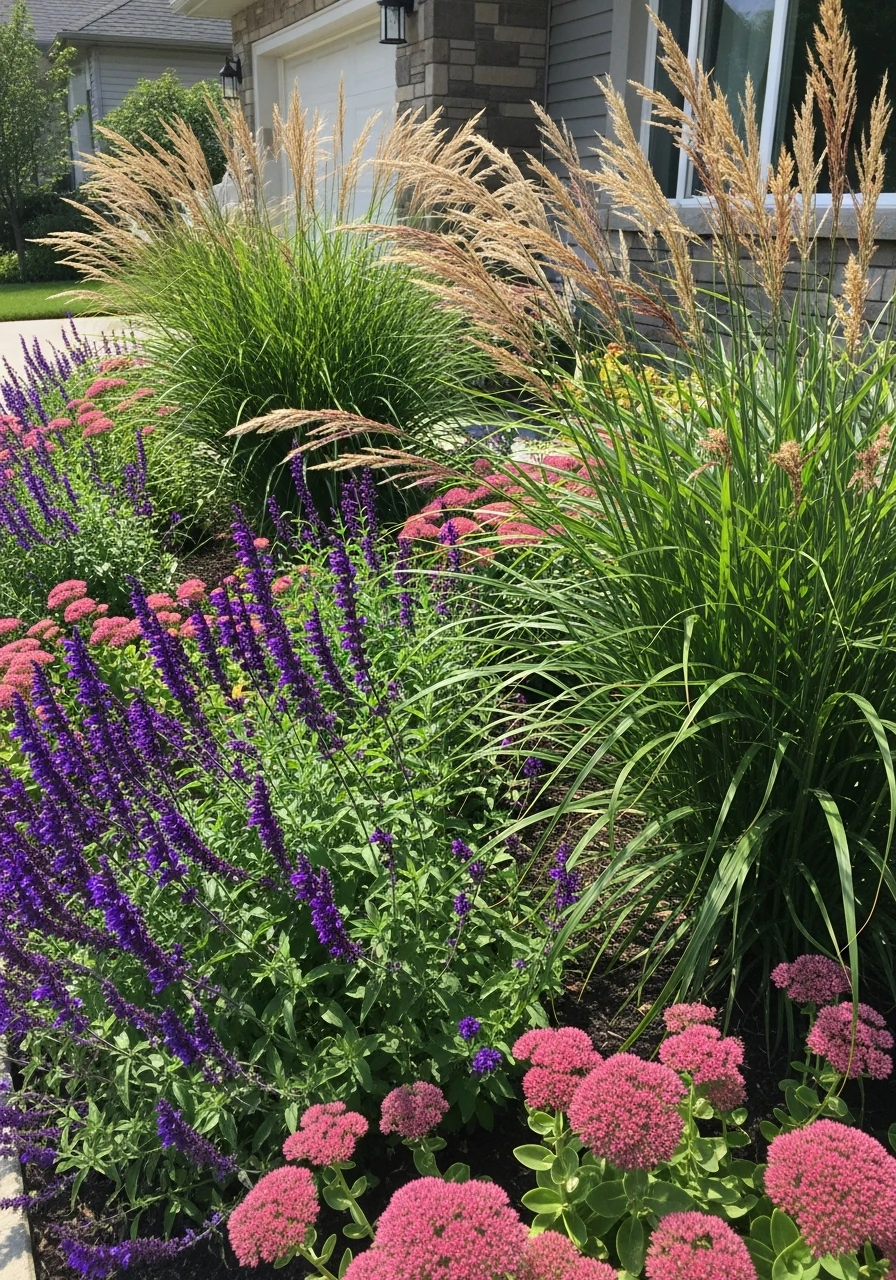
Mix flowering perennials with ornamental grasses. The grasses add movement, amazing texture, and a modern, natural look to the front of the house. This style is generally very low maintenance.
- Choose grasses that stay upright.
- Mix purple and yellow blooms.
- Add large river stones as accents.
Pro Tip: The rustling sound of the grass in the breeze adds an auditory element to your curb appeal.
13. Repeating Walkway Color
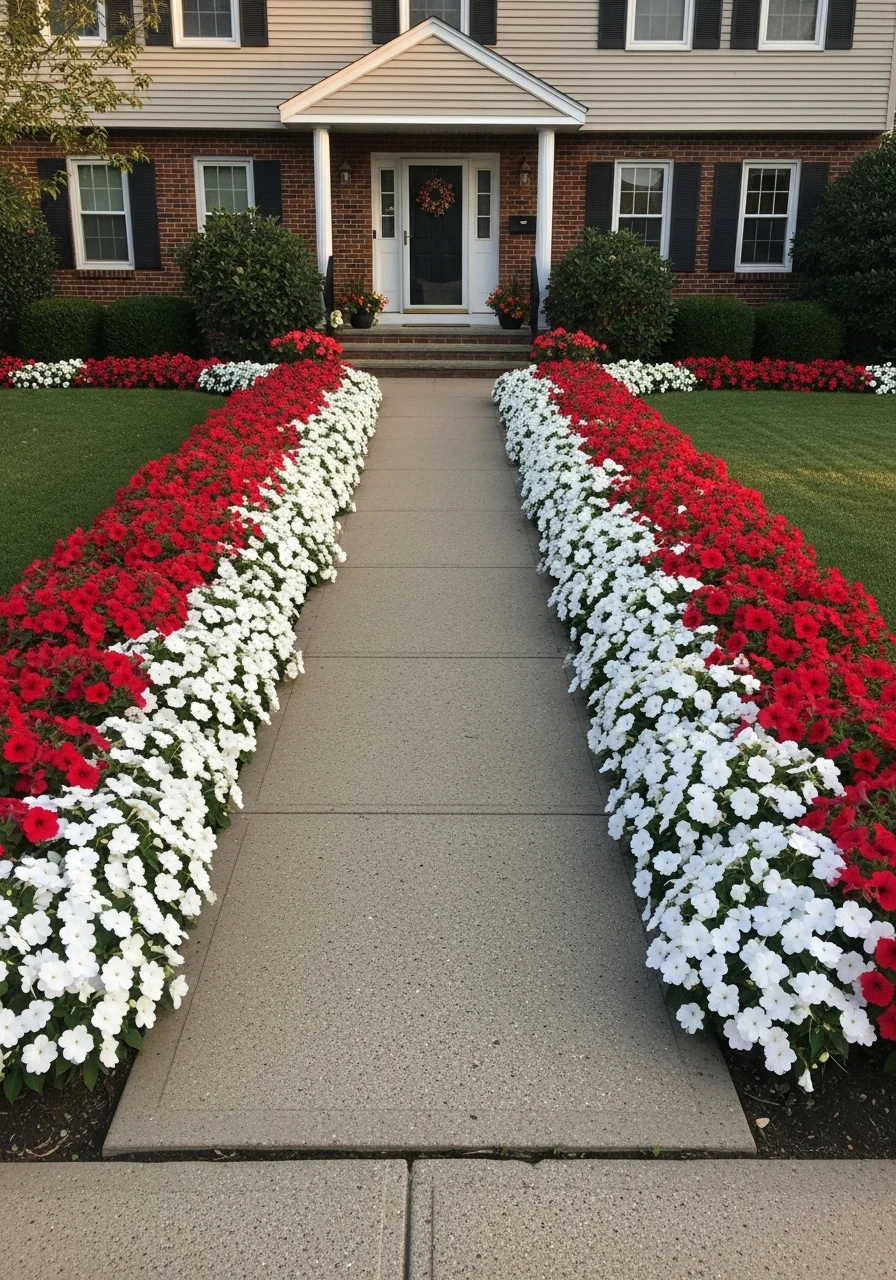
Line the front walkway with repeating flower colors or types. This guides the eye right toward the entrance and creates a visual rhythm. It’s a trick designers use to make a path feel more intentional.
- Use the same plant every three feet.
- Keep the walkway border narrow.
- Choose durable, sun-loving plants.
Pro Tip: Repeating just one color (like bright red) is incredibly impactful and easy to manage.
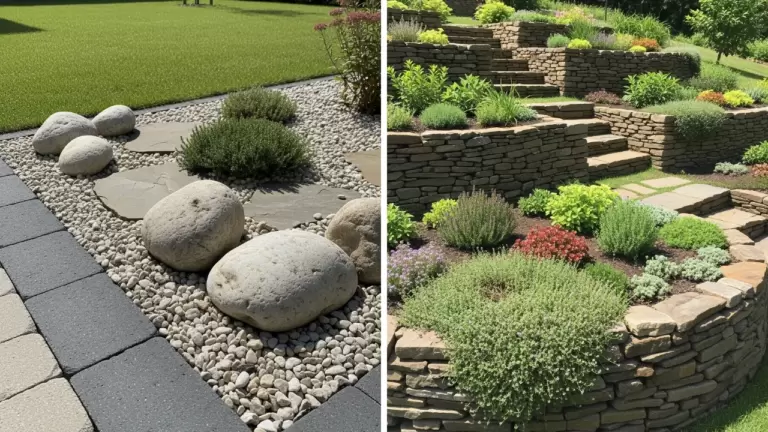
14. Terrace Beds for Slope
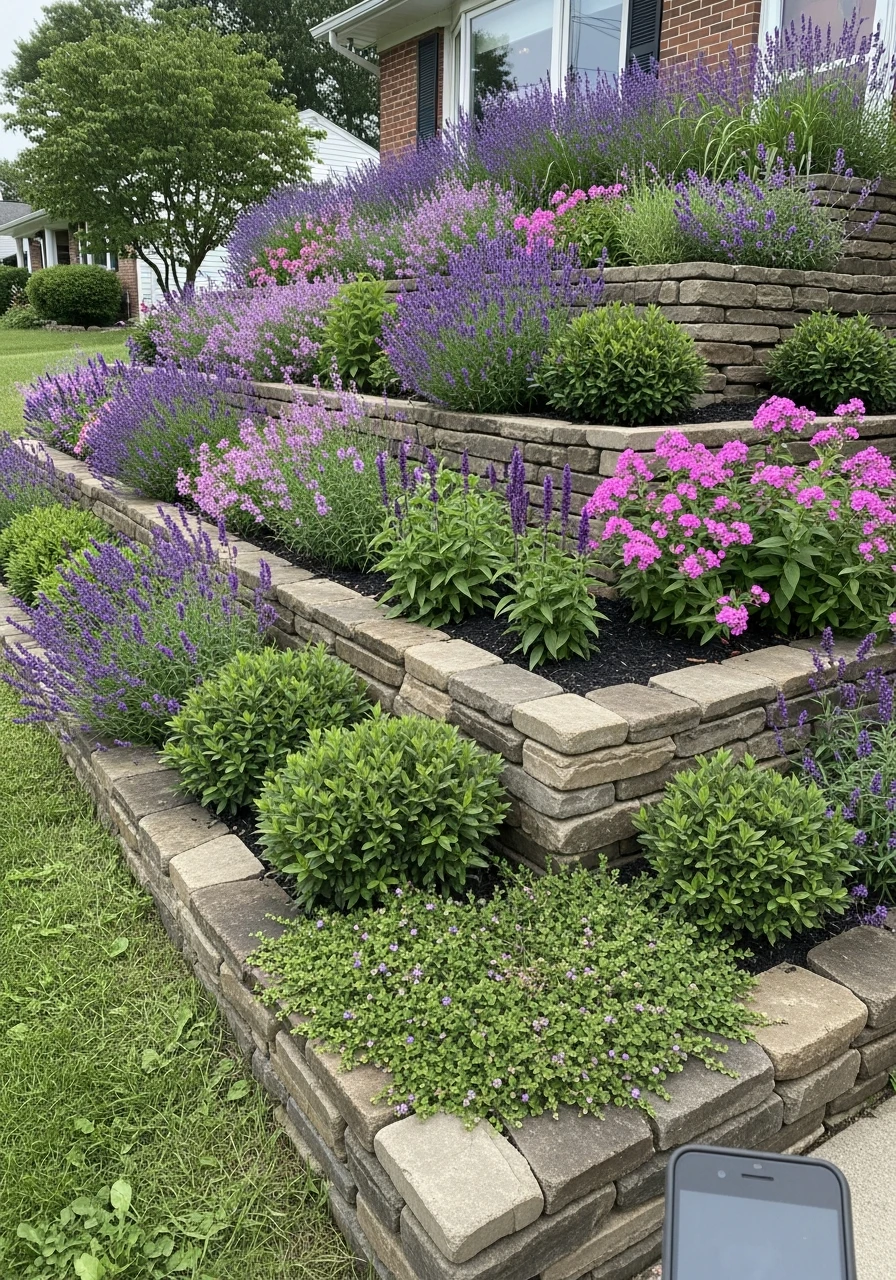
If you have a sloped front yard, build stepped flower beds using retaining walls. This is great for preventing soil erosion while creating a structured, layered planting design. It looks very impressive and manages water runoff well.
- Use treated lumber or stone blocks.
- Ensure each terrace is level.
- Plant trailing flowers over the edges.
Pro Tip: Stepped beds are easier to weed since you don’t have to bend over as much.
15. Shrub and Flower Combo
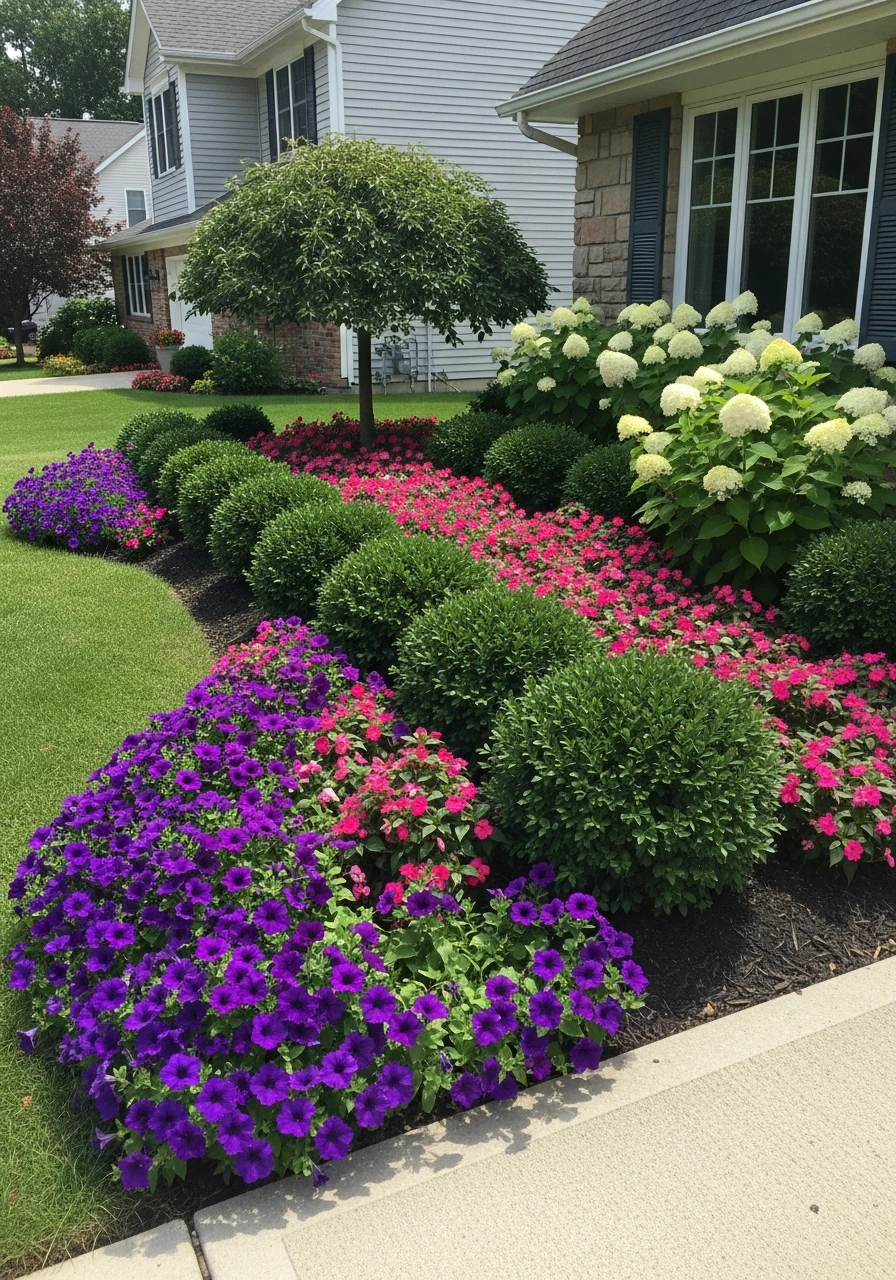
Combine flowering annuals and perennials with evergreen shrubs. The shrubs ensure the front yard looks attractive and green even when the seasonal flowers are not blooming. This is the secret to year-round curb appeal.
- Use dwarf conical evergreens.
- Plant spring bulbs near the shrubs.
- Mulch heavily around the bases.
Pro Tip: When flowers fade, the different textures of the evergreen leaves still look interesting.
16. Tall Accent Backdrop
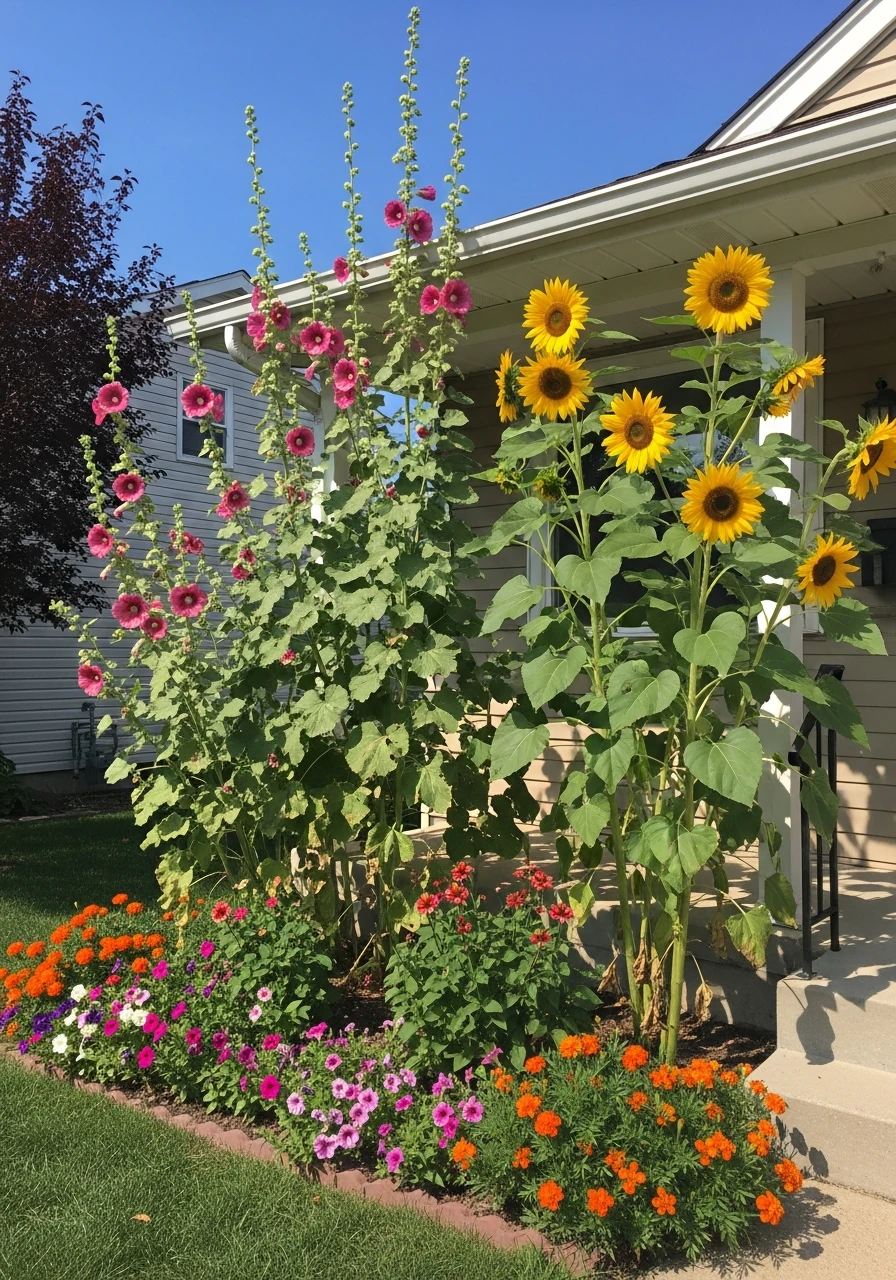
Use tall flowering plants, like hollyhocks or sunflowers, at the back of the bed. This creates a bold frame for the house and makes the shorter flowers in front stand out more clearly. It adds height where the house meets the ground.
- Stake tall plants carefully.
- Choose heat-tolerant tall varieties.
- Plant in groups of odd numbers.
Pro Tip: Make sure the tall plants don’t block important views from your windows.
17. Border Along Walkway
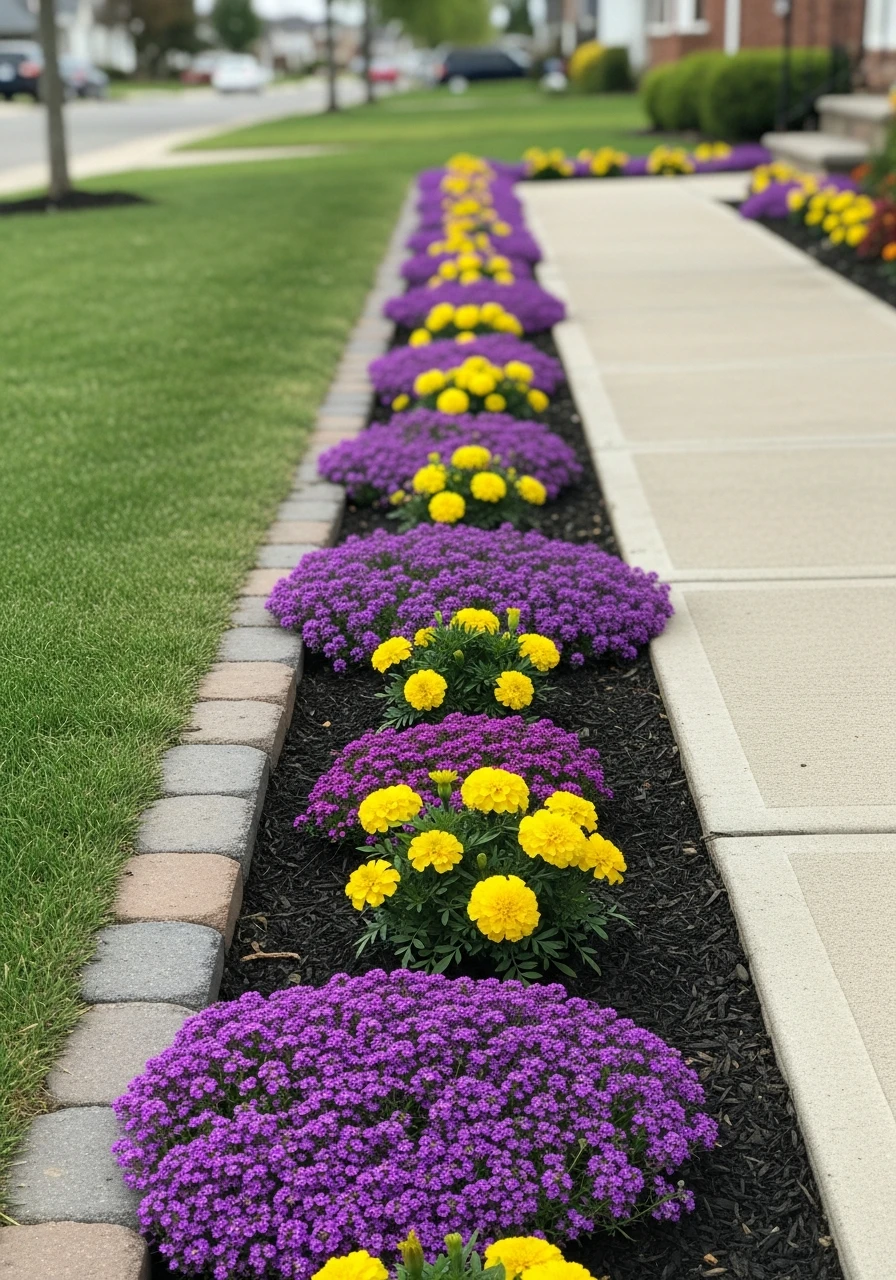
Install a narrow border flower bed right beside the front walkway. This softens the hard surface of the path and creates a welcoming, colorful entry to the door. Keep the plants low so they don’t flop onto the path.
- Use low, mounding plants.
- Keep the border about 12 inches wide.
- Edge with thin metal or plastic.
Pro Tip: Choose plants that release a nice scent when brushed, like creeping thyme.
18. Driveway-Following Curve
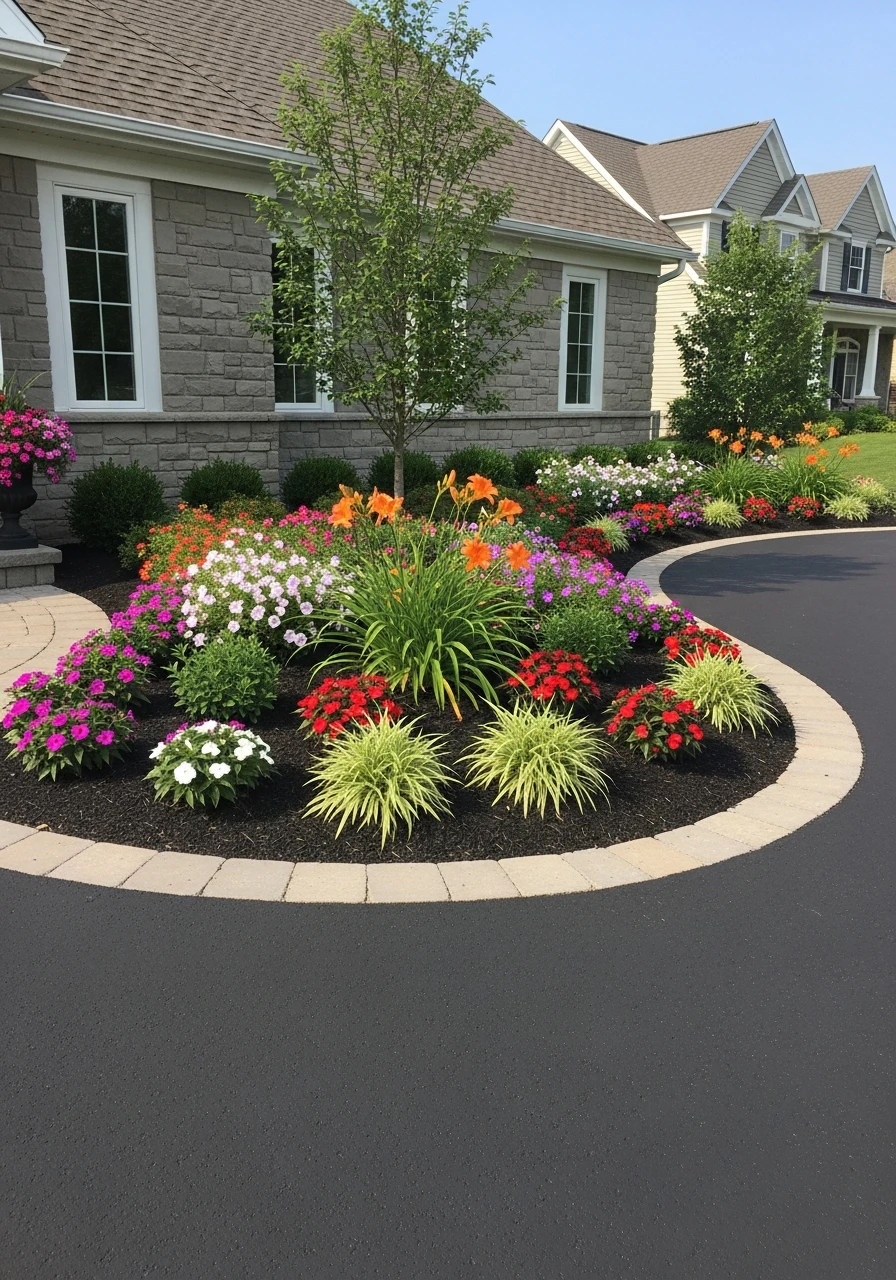
Shape the flower bed to smoothly follow the curve of your driveway. This blends the planting smoothly with the paved areas and adds softness to the hard edges. It looks intentional and well-designed.
- Use a flexible edging material.
- Plant low-maintenance shrubs.
- Add a layer of decorative gravel.
Pro Tip: Ensure the plants won’t grow large enough to scrape passing cars.
19. Raised Stone Flower Beds
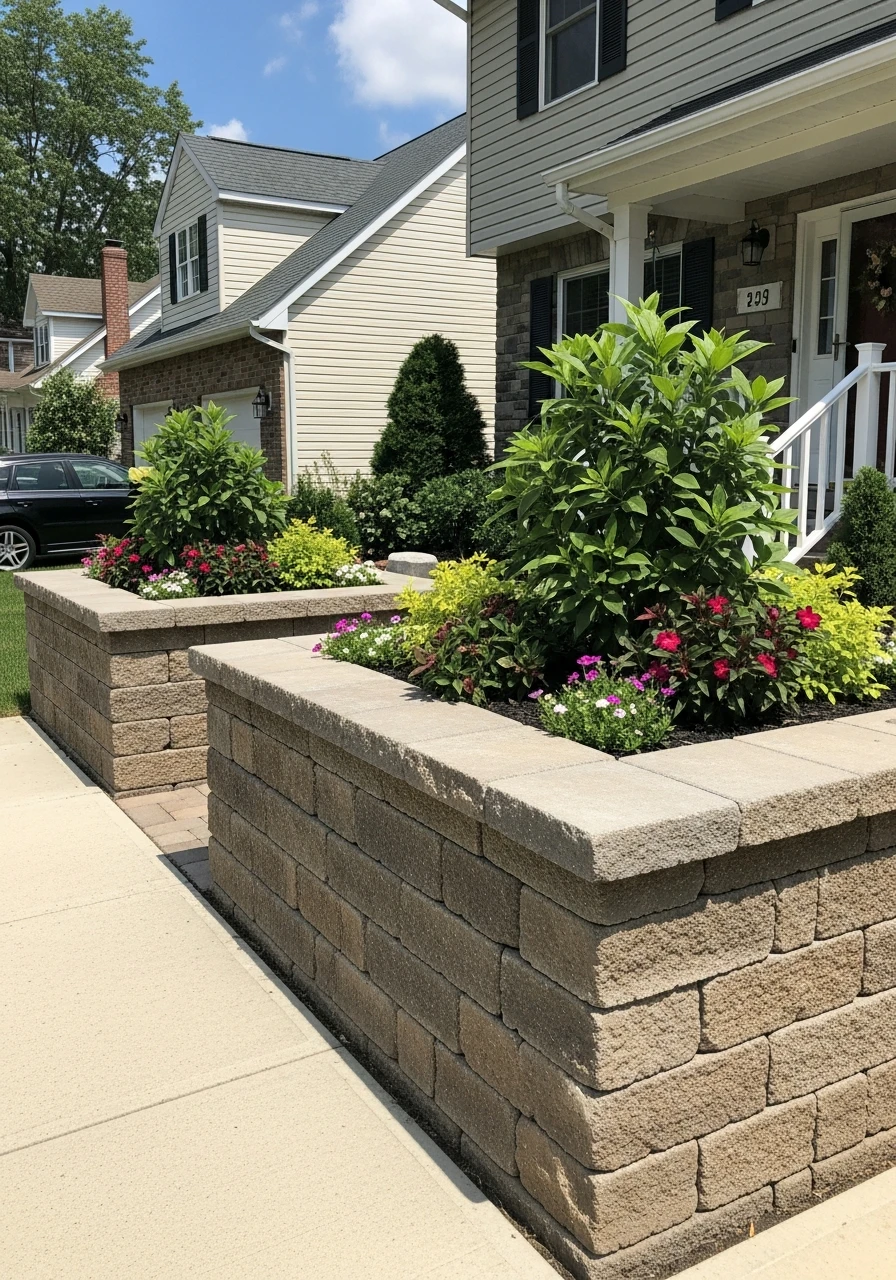
Build raised flower beds using stone or concrete blocks. This adds height, improves drainage, and creates a strong architectural feature that looks very permanent and classy. It’s also easier on your back when weeding!
- Ensure the base is level.
- Use masonry adhesive for stacking.
- Fill with fresh planting mix.
Pro Tip: Raised beds warm up faster in spring, letting you plant earlier than normal.
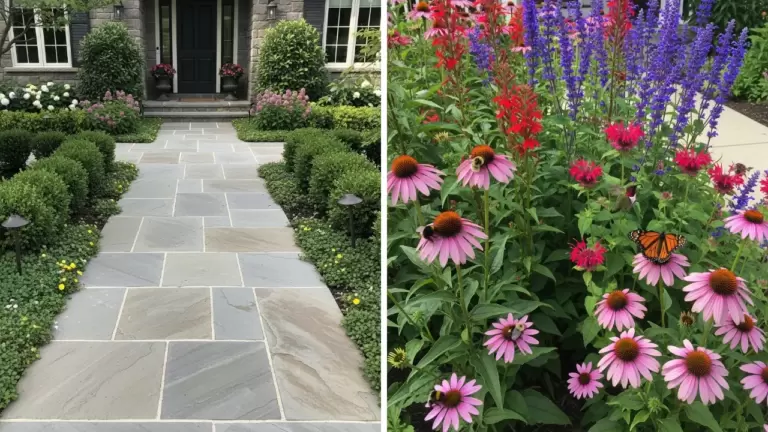
20. Very Neat, Structured Flower Beds
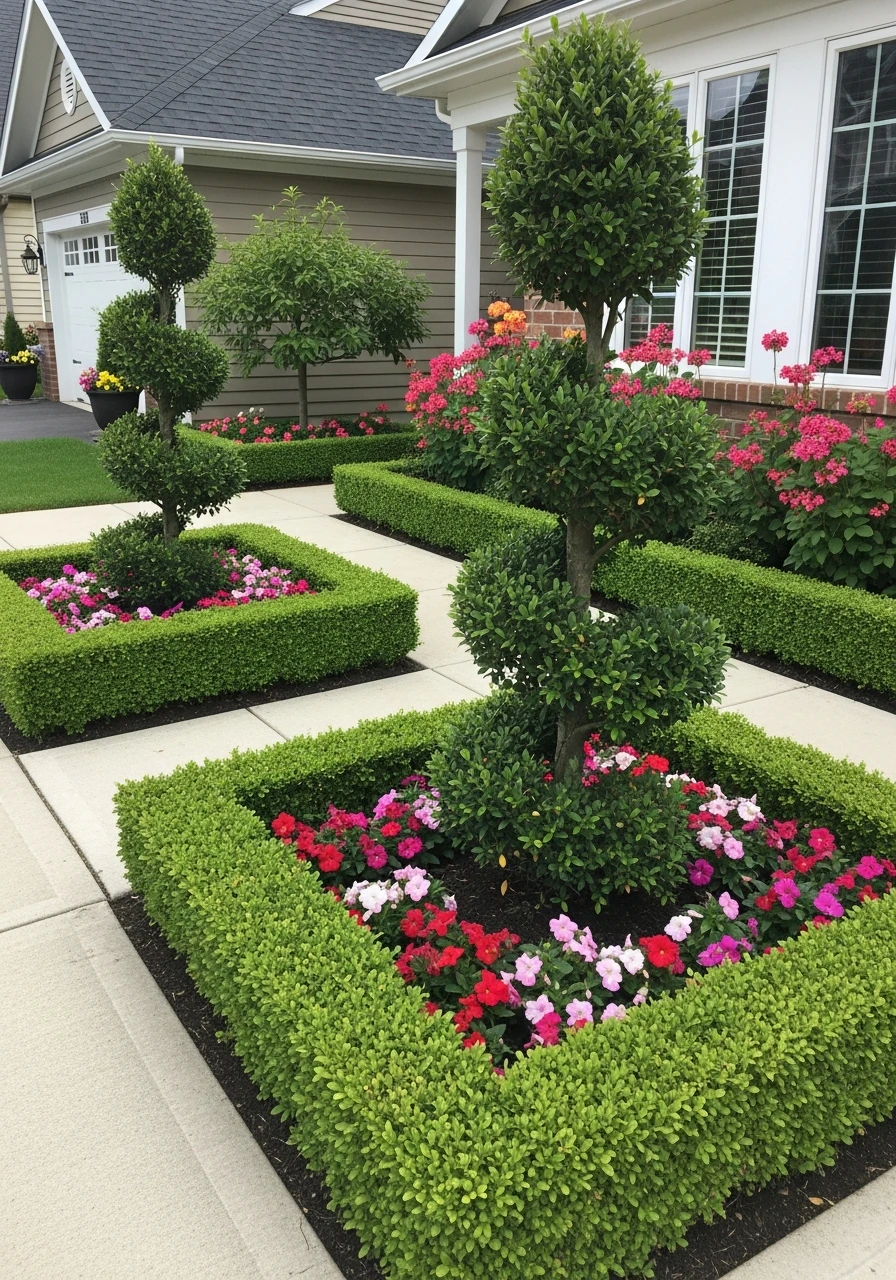
If you love things neat and tidy, try the formal look for your front yard. This style uses low, clipped green borders to create perfect geometric shapes, like little living fences. It looks fancy but mostly requires straight lines and keeping those borders perfectly trimmed.
- Use small, slow-growing shrubs (like boxwood) for the borders of your design.
- Choose just one or two flower colors for a high-impact, symmetrical appearance.
- Keep the planting shapes perfectly balanced and symmetrical on both sides of your walkway.
Pro Tip: For a shortcut, use straight edging stones or metal borders instead of waiting years for small shrubs to grow into hedges. You still get the crisp, structured look instantly.
21. All-White Flower Bed
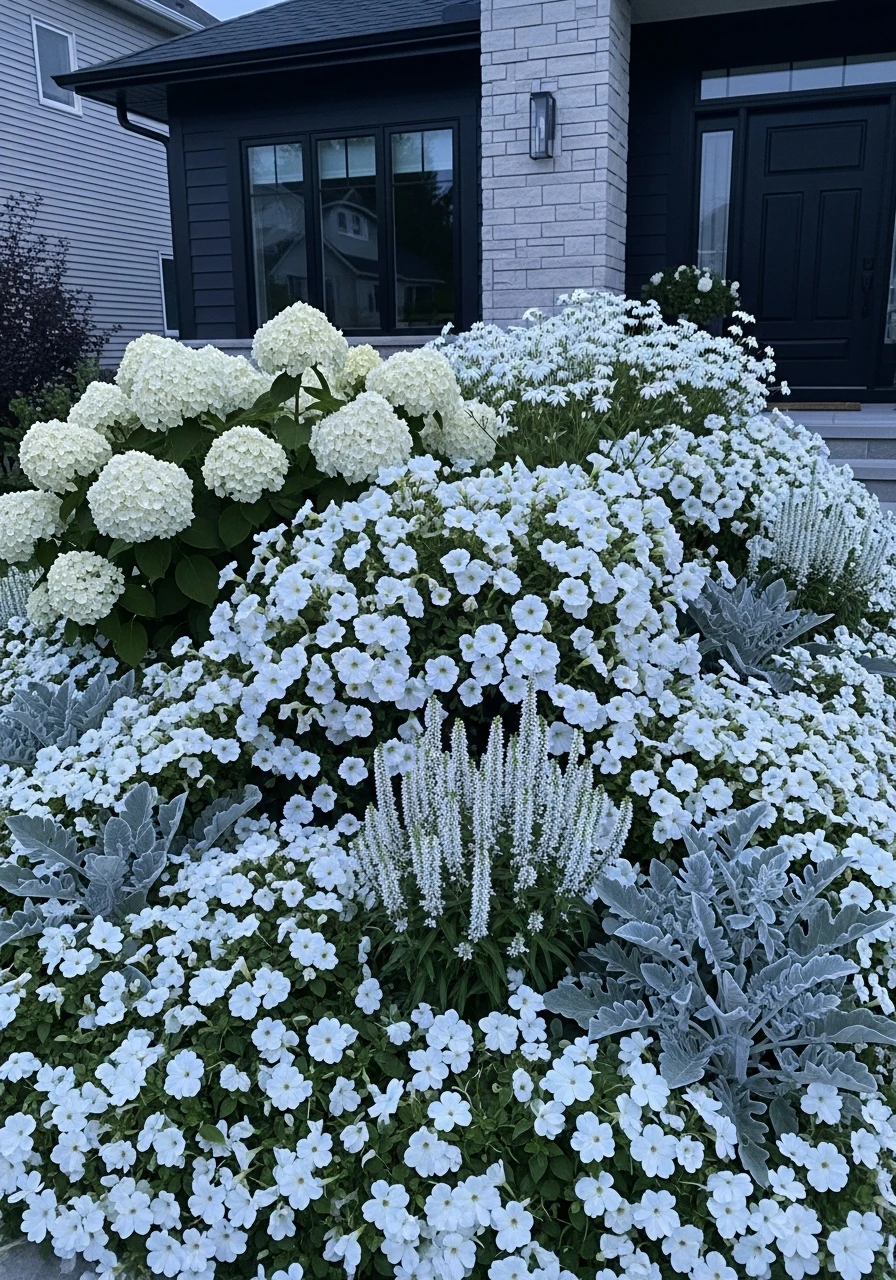
Use only white flowers and greenery to create a clean, elegant, and peaceful front yard look. This works especially well with dark or modern house exteriors. White flowers also look amazing at dusk.
- Mix white blooms with silver foliage.
- Use varying shades of white.
- Add white lights for evening glow.
Pro Tip: An all-white garden is often called a ‘moon garden’ because it shines under moonlight.
22. High-Contrast Color Pop
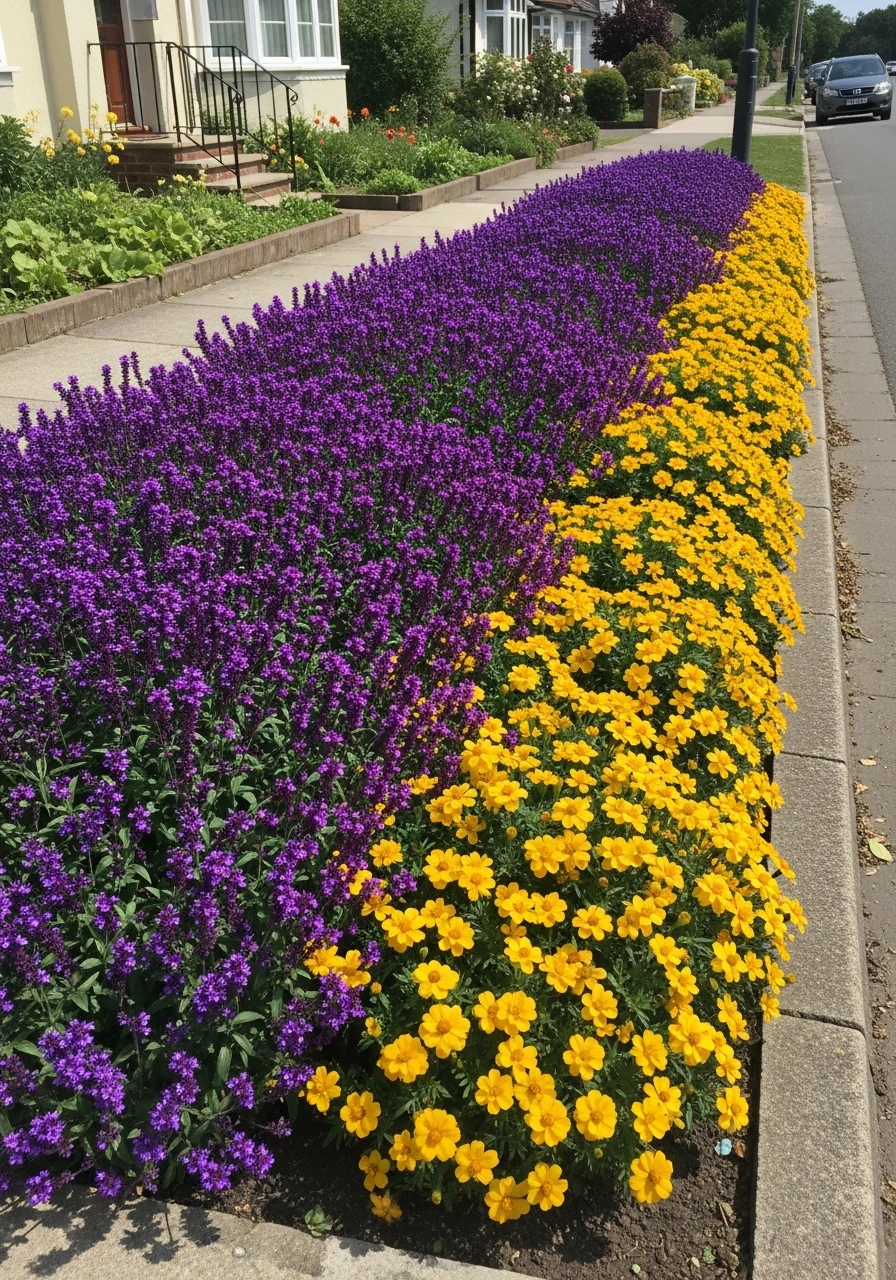
Combine opposite colors on the color wheel, like vibrant purple and sunny yellow. This creates immediate, high-contrast vibrancy that draws attention from the street. It’s a great way to make a bold statement.
- Use deep blue salvia and yellow marigolds.
- Plant colors in dense clusters.
- Keep the rest of the yard simple.
Pro Tip: A small amount of high contrast goes a long way, so don’t overdo the planting.
23. Soft Pastel Palette
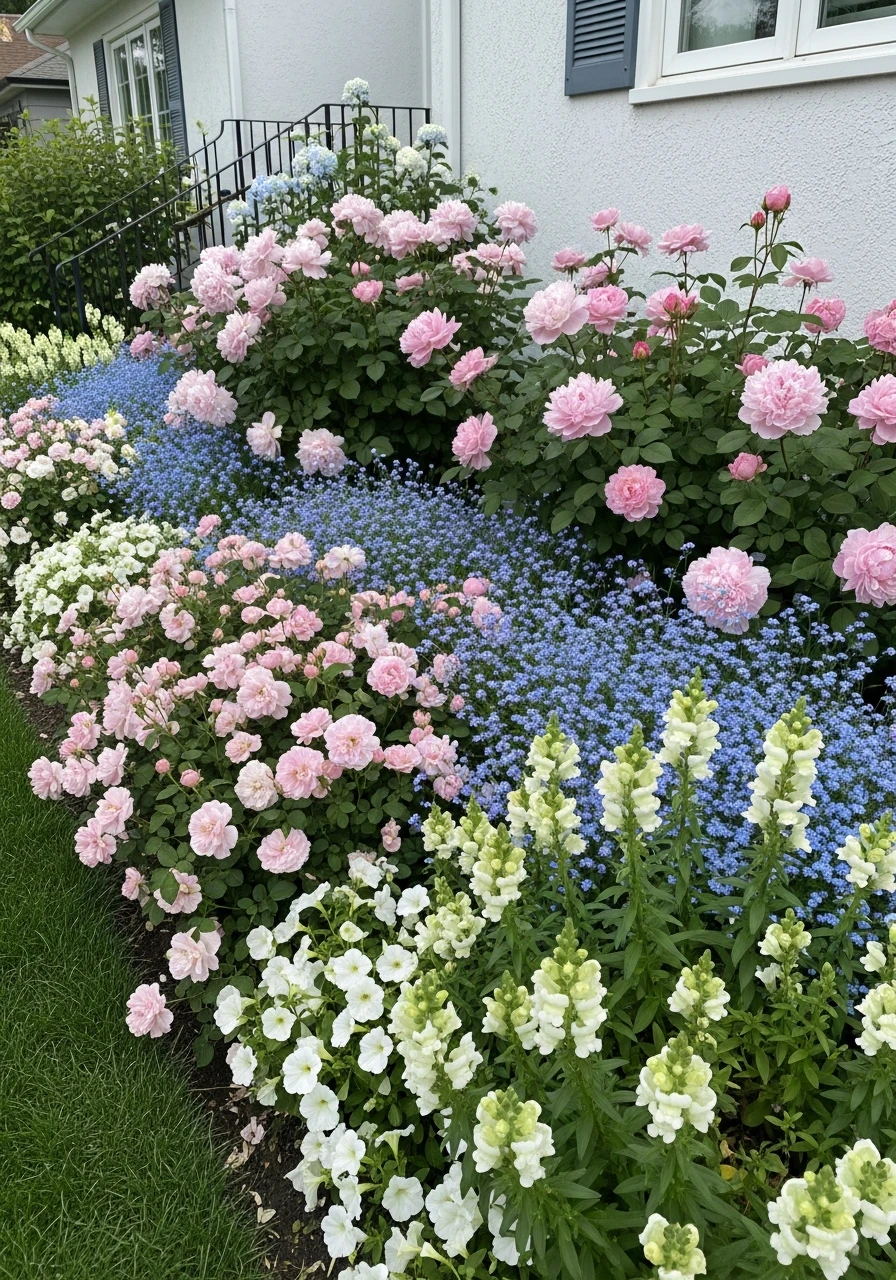
Plant soft pastel flowers like pale pinks, light blues, and creams. This creates a calm, romantic front yard that beautifully complements light-colored house exteriors. It feels gentle and inviting.
- Mix pastel roses and hydrangeas.
- Use gray-green foliage to separate colors.
- Choose white mulch for a lighter look.
Pro Tip: Pastel colors tend to recede, making small yards feel slightly larger.
24. Tropical-Inspired Bed
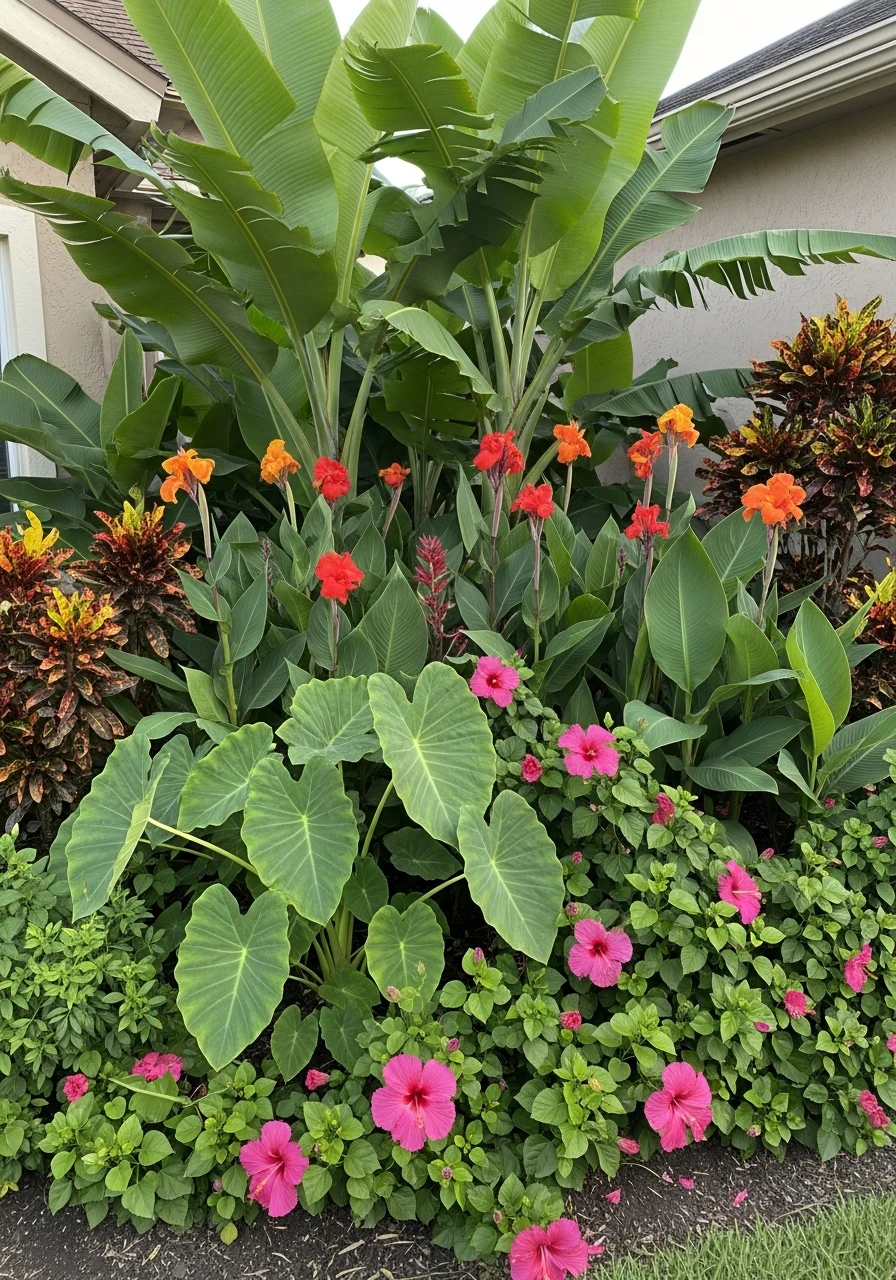
Use bold foliage, large leaves, and vibrant, tropical flowers like cannas or hibiscus. This creates a resort-style look, especially effective in warm climates. It feels exotic and fun.
- Focus on leaf texture and size.
- Use bright, saturated flower colors.
- Plant in large terracotta pots.
Pro Tip: If you live in a cold area, plant tropicals in pots and move them inside for winter.
25. Wildflower Front Yard Bed
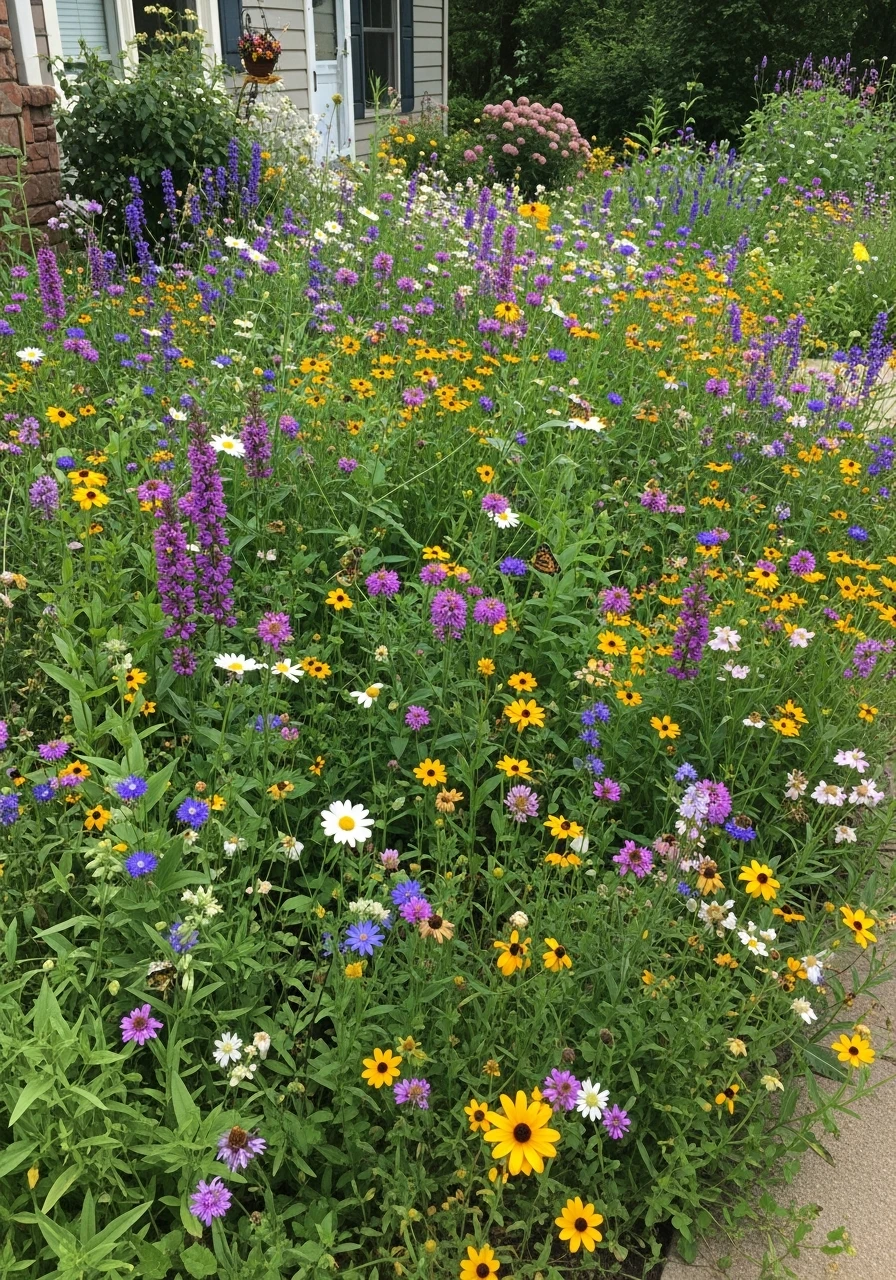
Plant native wildflowers for a natural, meadow-like flower bed. This requires less maintenance, as the plants are adapted to your climate, and it supports local wildlife. It looks relaxed and beautiful.
- Use native seed mixes.
- Mow the area once a year.
- Define the edge clearly so it looks intentional.
Pro Tip: Check local ordinances, as some areas restrict how tall ‘wild’ grasses can grow.
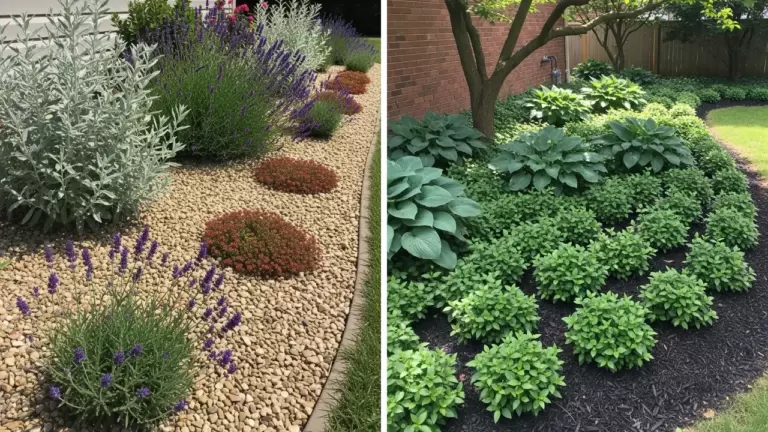
26. Drought-Tolerant Planting
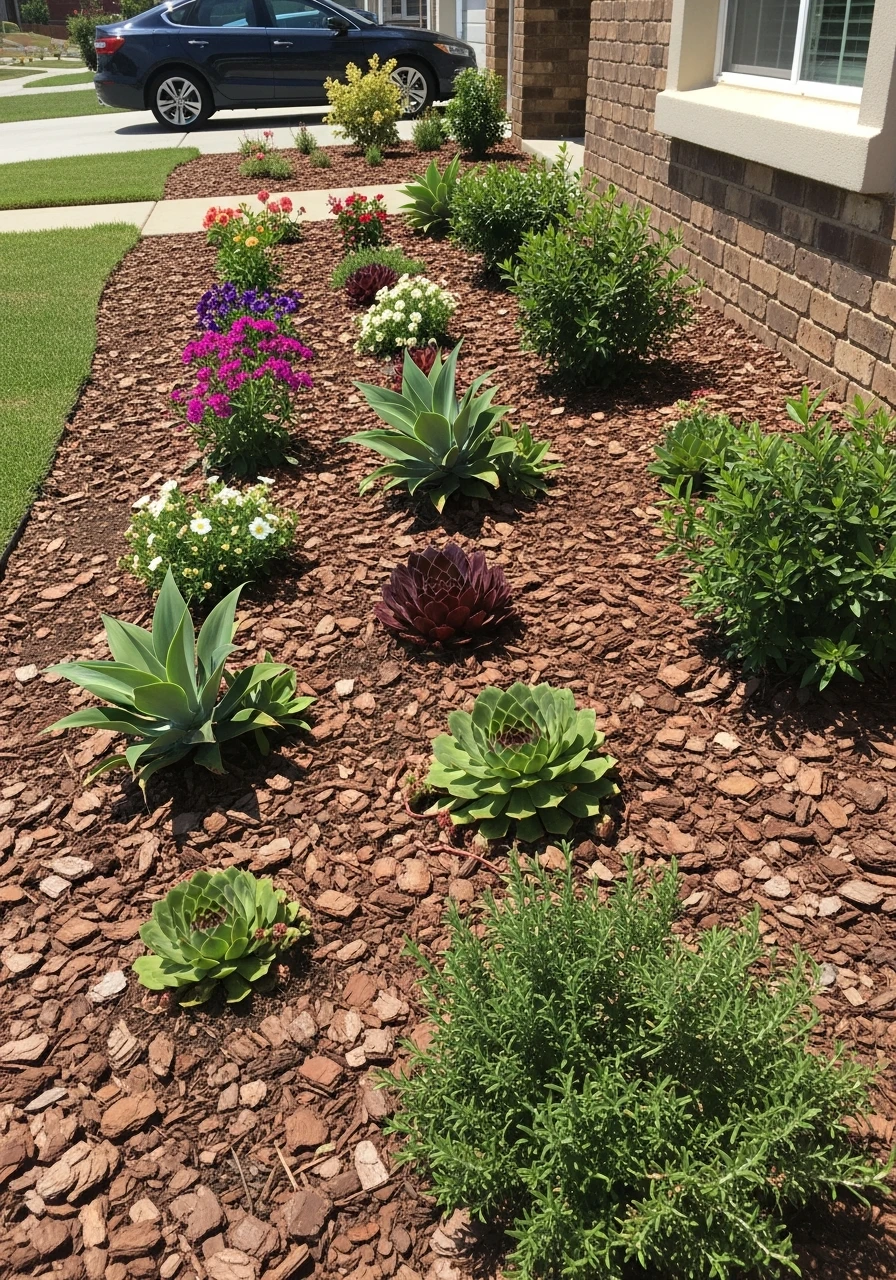
Choose drought-resistant flowers and mulch heavily to create a low-water front yard flower bed. This is perfect for hot climates or for homeowners who want to save on their water bill. Succulents and certain shrubs work well.
- Use sedums and cone flowers.
- Mix in decorative rocks.
- Apply thick layer of bark mulch.
Pro Tip: Water deeply and infrequently to encourage strong, deep root growth.
27. Pollinator-Friendly Bed
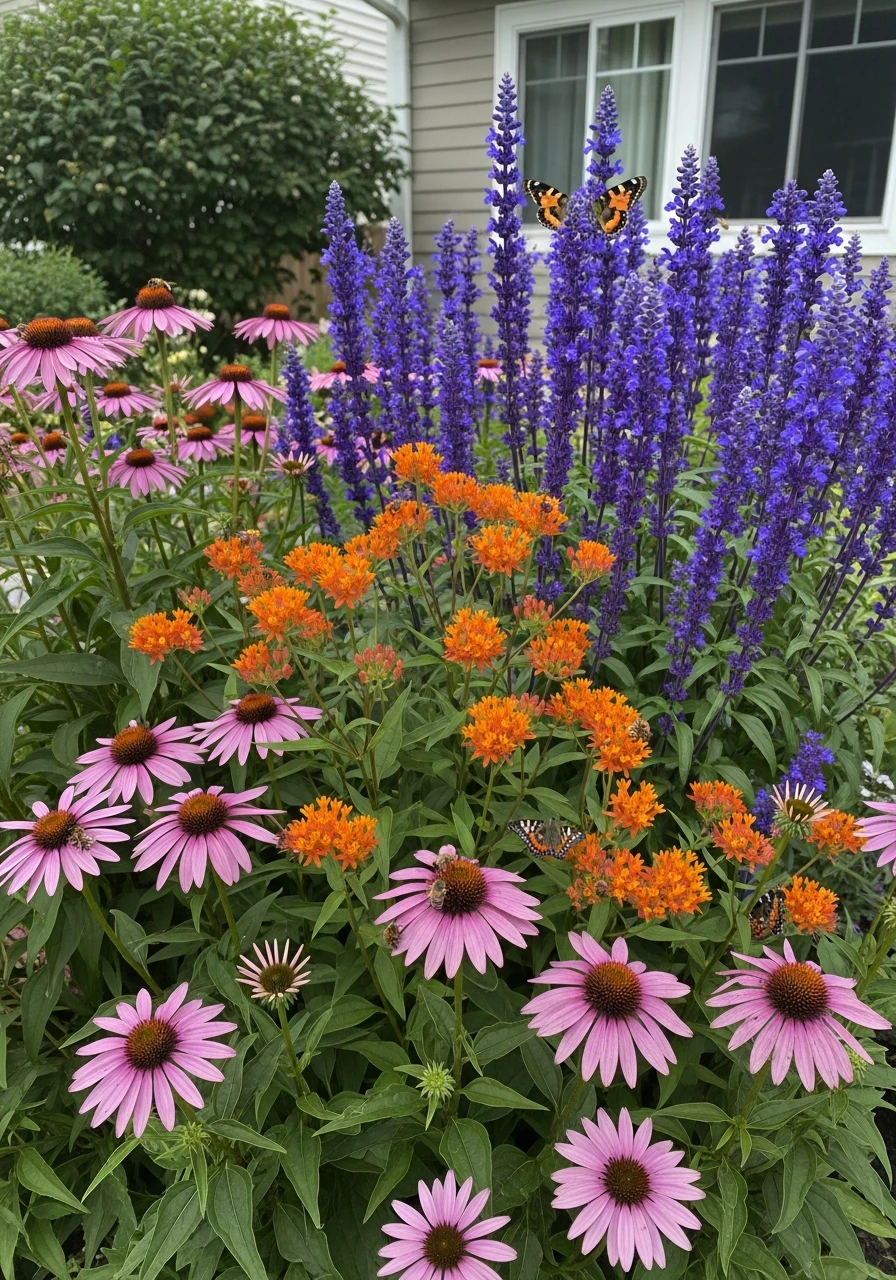
Select flowers that specifically attract bees and butterflies, creating an eco-friendly front yard. This supports local pollinators while adding fun movement and life to your garden. Kids love watching the butterflies flutter by.
- Plant single-petal flowers.
- Include butterfly bushes.
- Avoid using pesticides.
Pro Tip: Place a small, shallow bird bath nearby for the bees and butterflies to drink from.
28. Seasonal Rotation Color
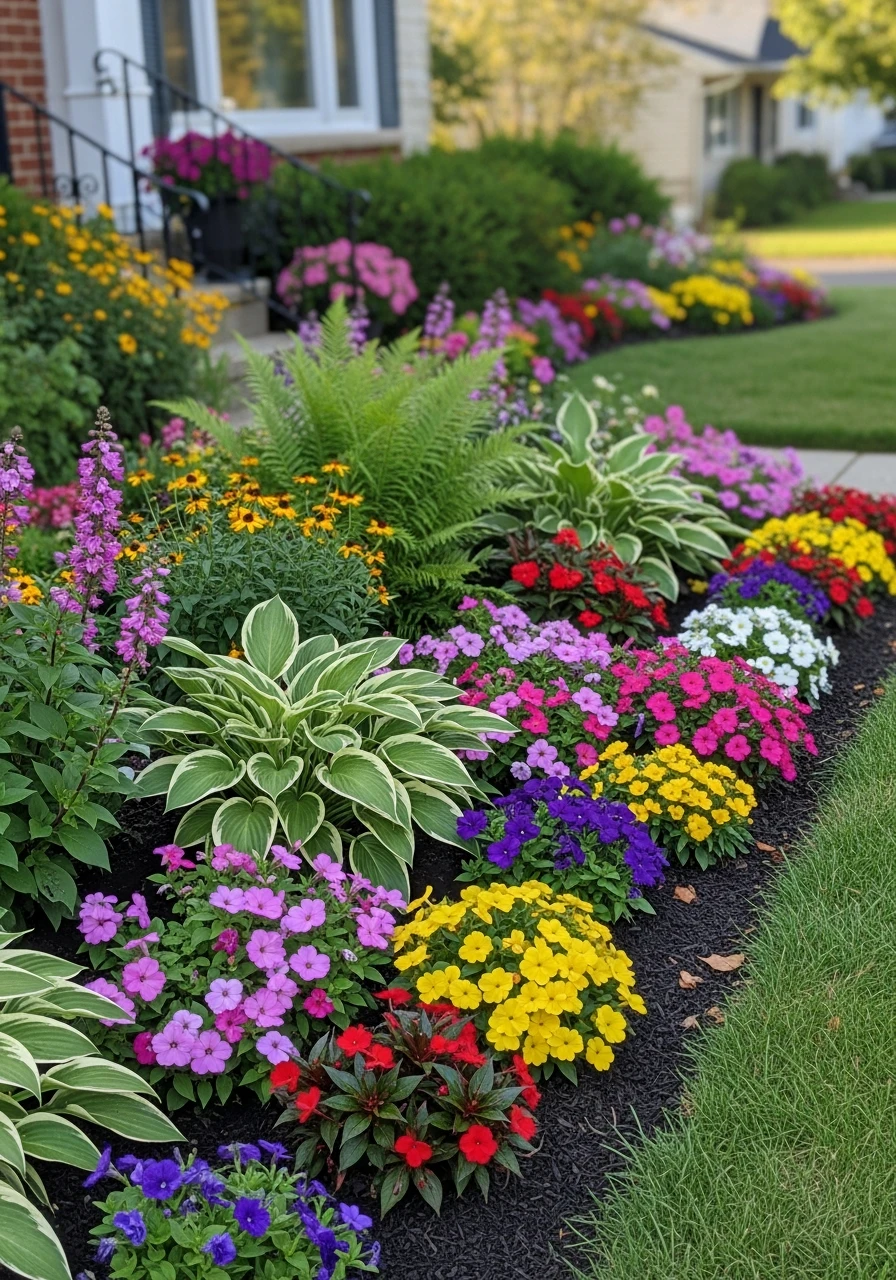
Plan your flower bed so different plants bloom each season. This ensures you have fresh color and interest throughout the entire year, from early spring to late fall. It requires a little planning upfront.
- Plant bulbs for spring.
- Use heat-loving annuals for summer.
- Add chrysanthemums for fall color.
Pro Tip: Keep a simple garden journal to track what bloomed when, so you can plan better next year.
29. Rainbow-Style Planting
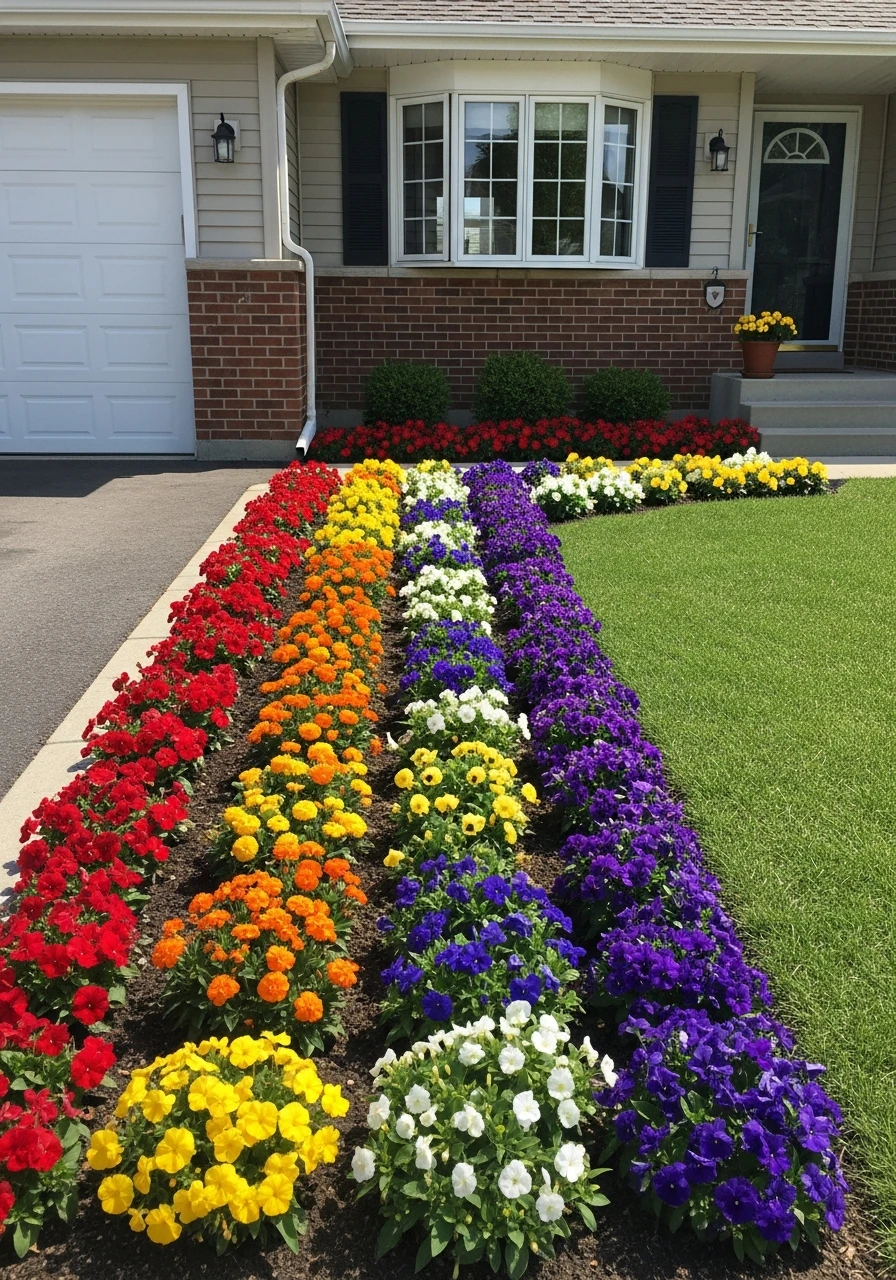
Arrange flowers in order of the color spectrum (red, orange, yellow, green, blue, purple). This creates a rainbow effect that adds playful personality to the front of the house. It’s organized and cheerful.
- Use low plants for the ‘stripes’.
- Keep the transition areas clean.
- Use edging to define the shape.
Pro Tip: This works best in a long, narrow flower bed rather than a round one.
30. Cottagecore Flower Bed
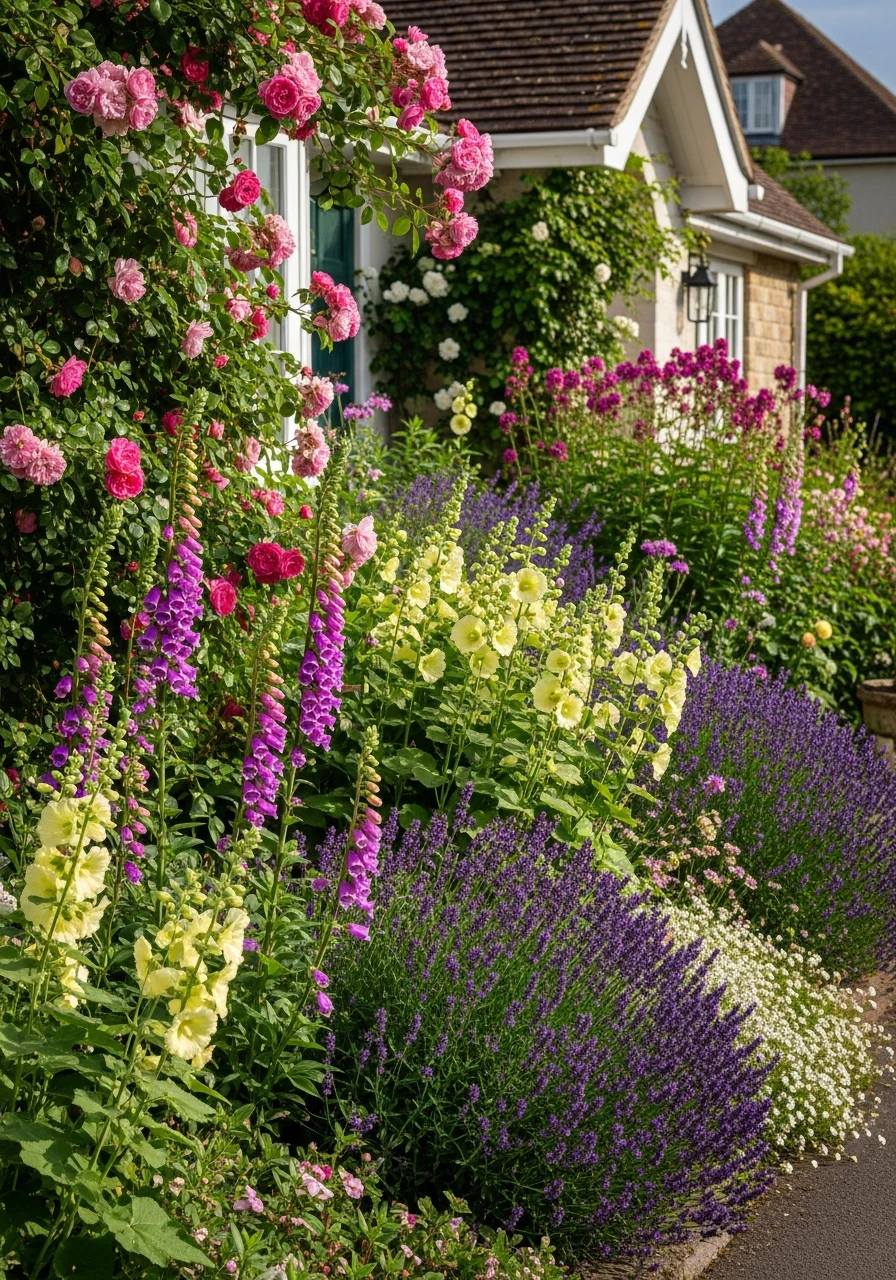
Use dense, overlapping flowers with varied textures to create a romantic, storybook-style front garden. This style embraces abundance and a slightly overgrown, dreamy look. It feels magical and welcoming.
- Include climbing vines.
- Mix herbs and flowers.
- Add a small birdhouse or trellis.
Pro Tip: Choose highly fragrant plants like lilac and sweet peas for an authentic feel.
31. Porch-Overhang Shade Bed
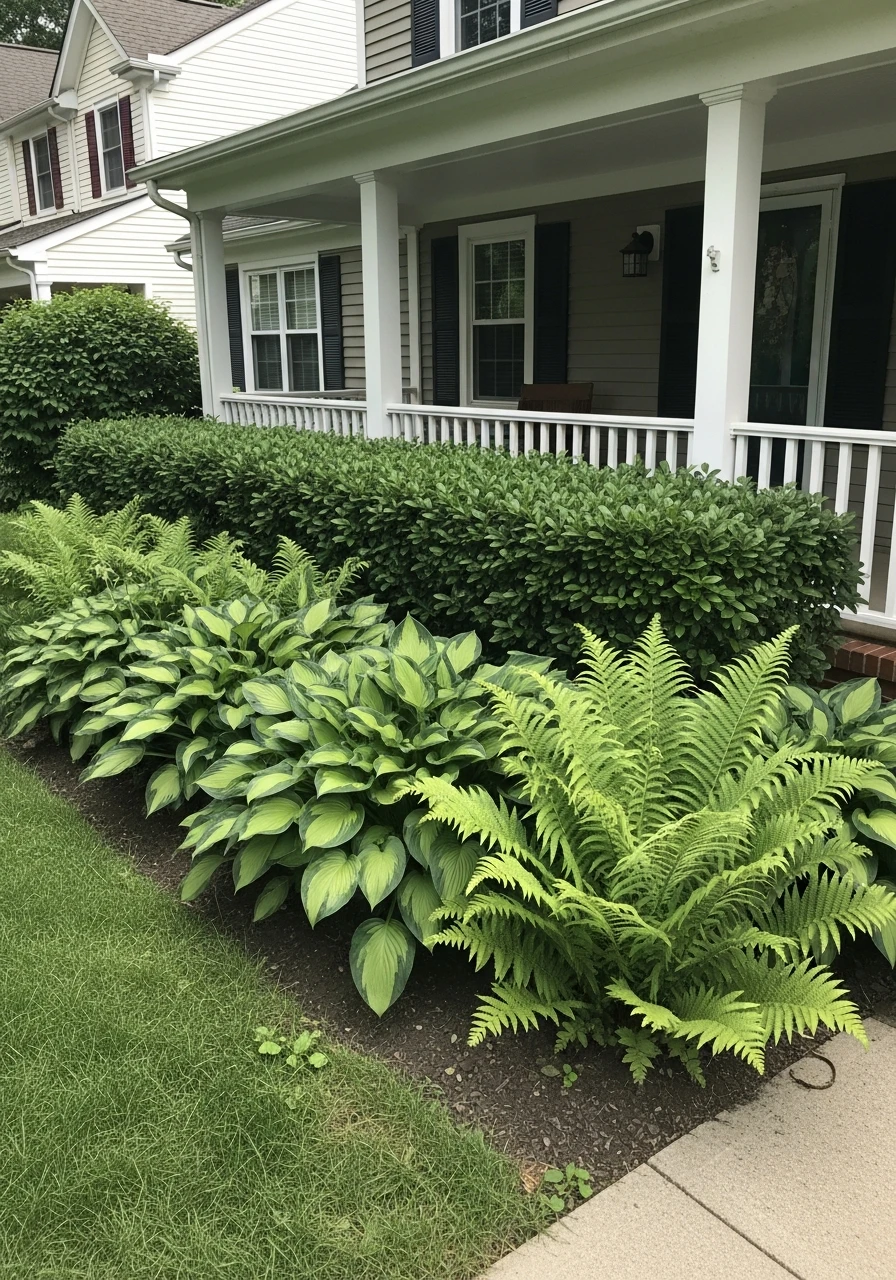
Install a flower bed directly under the porch roof using shade-tolerant plants. This softens the base of the house where direct sunlight is scarce. Hostas and ferns are perfect here.
- Choose plants with bright foliage.
- Add white stones for brightness.
- Water regularly since rain doesn’t reach it.
Pro Tip: Bright green or chartreuse foliage will make the shady spot feel lighter and brighter.
32. Small Circular Entry Bed
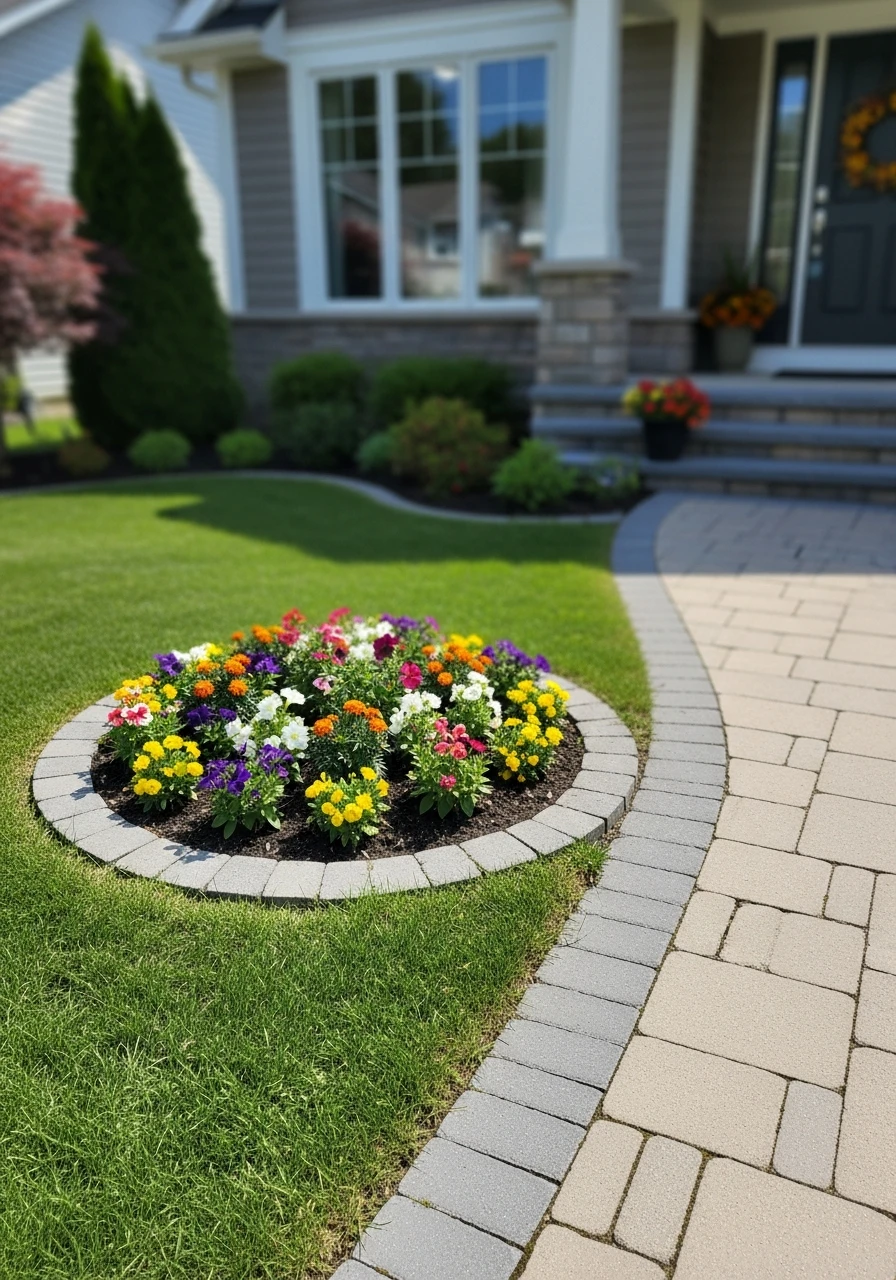
Create a compact round flower bed near the front path or driveway. This adds charm and a focal point without taking up much lawn space. It is easy to maintain and looks intentional.
- Plant one main central shrub.
- Edge it cleanly with brick.
- Use low annuals around the edge.
Pro Tip: If the circle is small, use just one type of flower for maximum visual punch.
33. Narrow Driveway Strip Bed
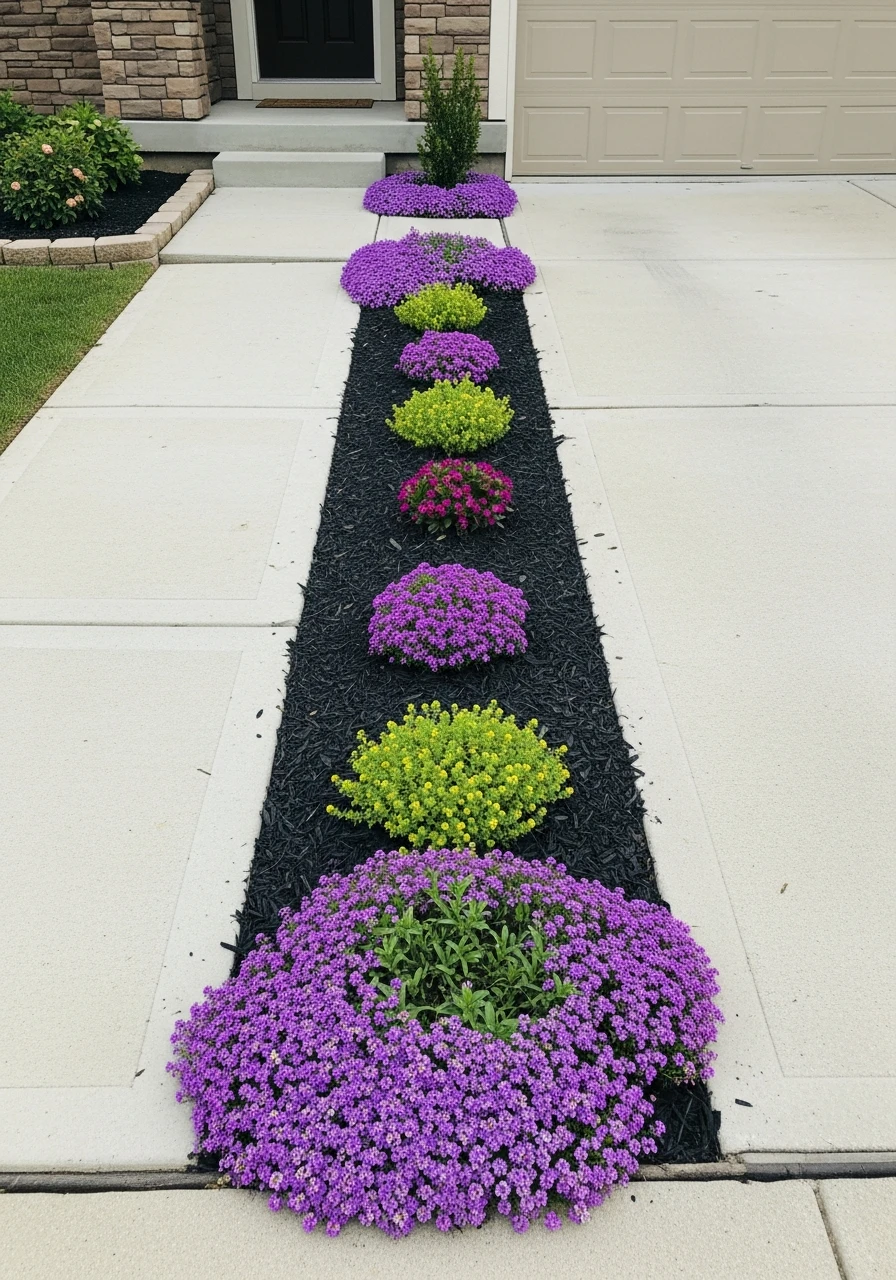
Use slim flower beds along the driveway to soften concrete edges and add color. Keep the bed narrow so it doesn’t block vehicle access or door openings. Low-growing ground covers are essential here.
- Use plants that tolerate road salt.
- Edge with durable metal.
- Choose plants that handle foot traffic.
Pro Tip: Install solar lights along the edge for nighttime visibility and safety.
34. Step-Side Flower Pockets
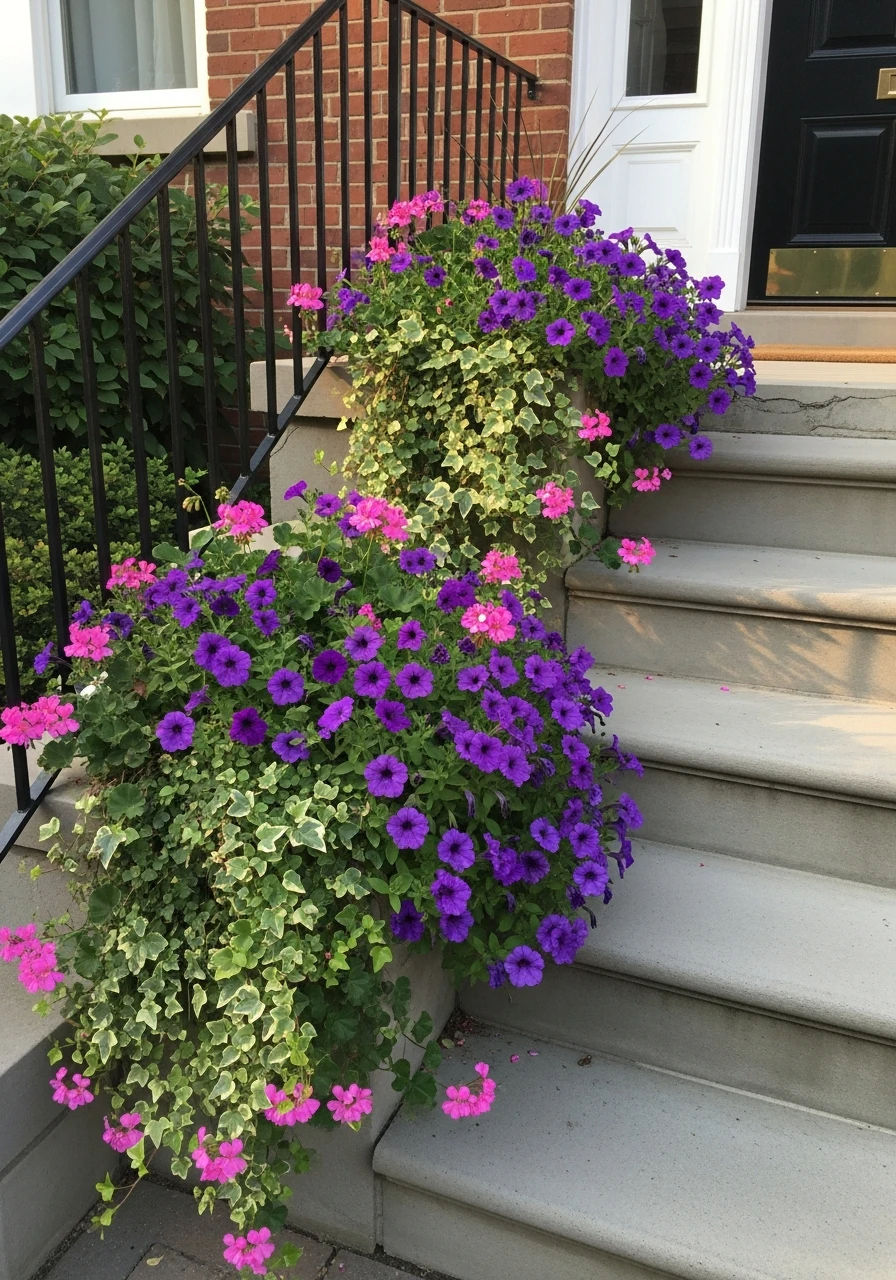
Add small flower beds or pockets beside your front steps. This visually connects different levels of the entryway and adds color right where you need it most. Use flowers that cascade slightly over the edges.
- Use retaining blocks to build pockets.
- Plant vibrant trailing ivy.
- Keep the area free of debris.
Pro Tip: If you have very wide steps, place a matching container on the top landing.
35. Mailbox Flower Bed
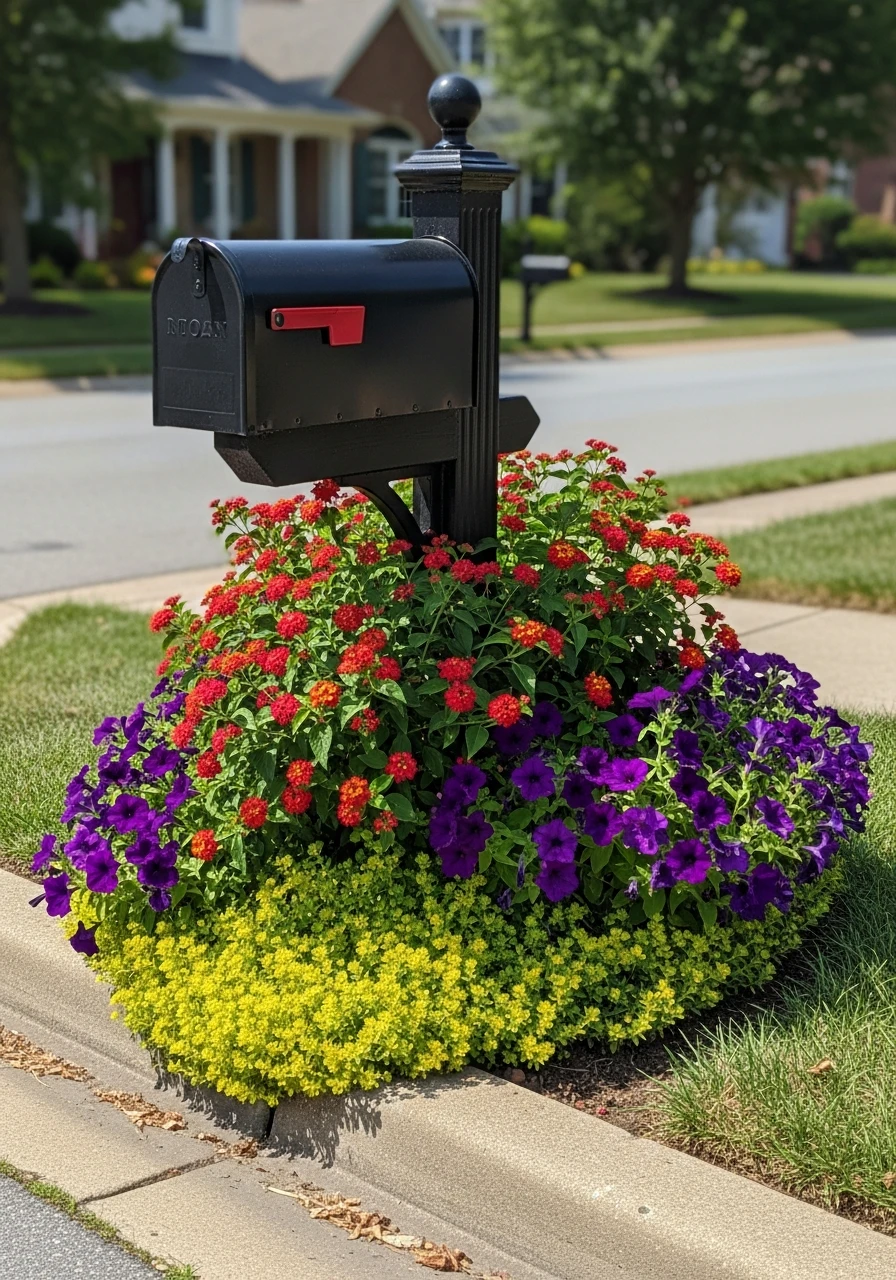
Surround the mailbox post with flowers to extend curb appeal all the way to the street. This small bed is often the first thing people see when they drive up. Use tough plants that can handle the sun and heat.
- Use a simple stone border.
- Plant perennial favorites like lilies.
- Add a climbing rose to the post.
Pro Tip: Ensure the flowers don’t block the mailbox door or the mail carrier’s access.
36. Porch Column Base Beds
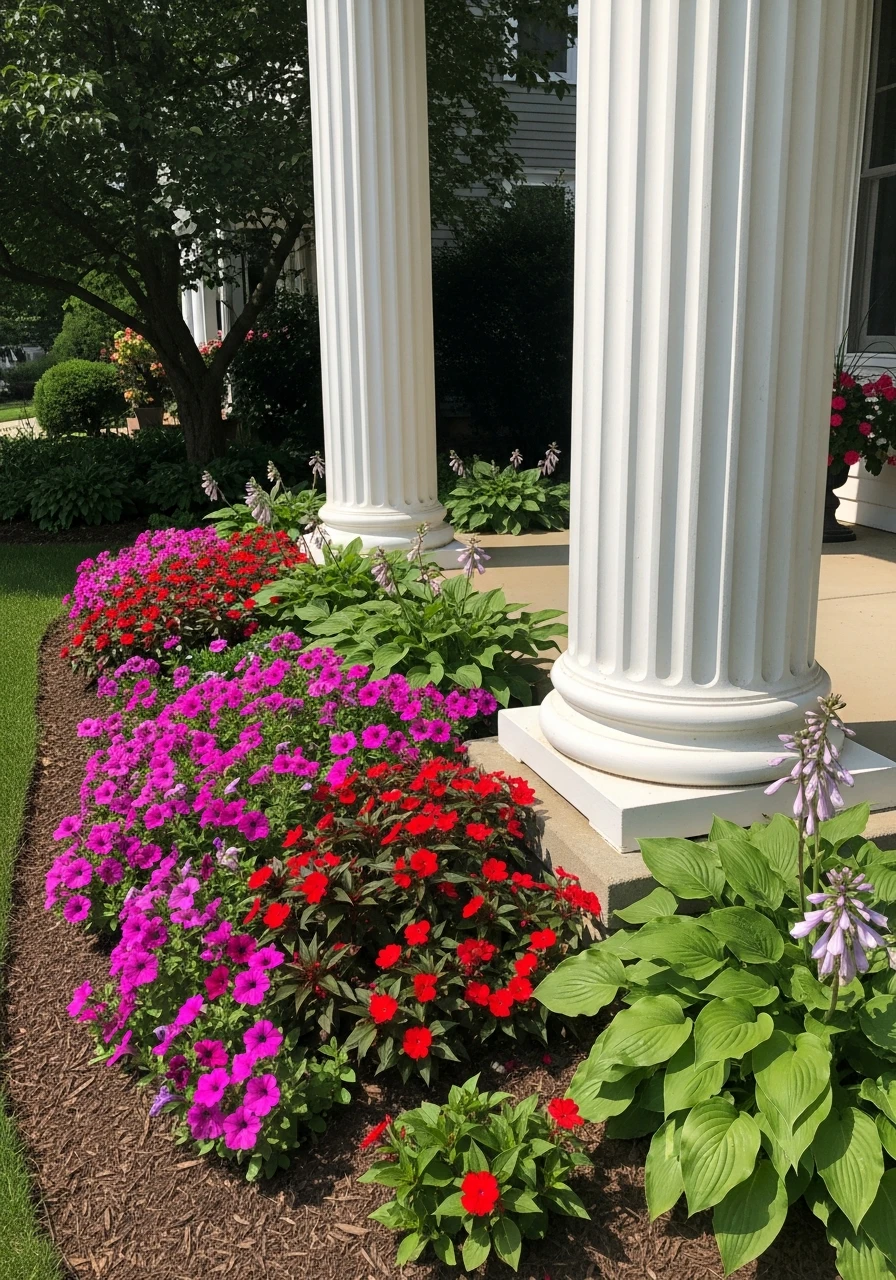
Plant flowers around the base of your porch columns. This visually anchors them to the ground and adds depth to the front façade. It makes the porch look substantial and decorated.
- Use short, mounding plants.
- Keep the beds small and circular.
- Match the flowers to your porch decor.
Pro Tip: Use plants with thick foliage to hide any concrete footing the column might have.
37. Herb and Flower Combo
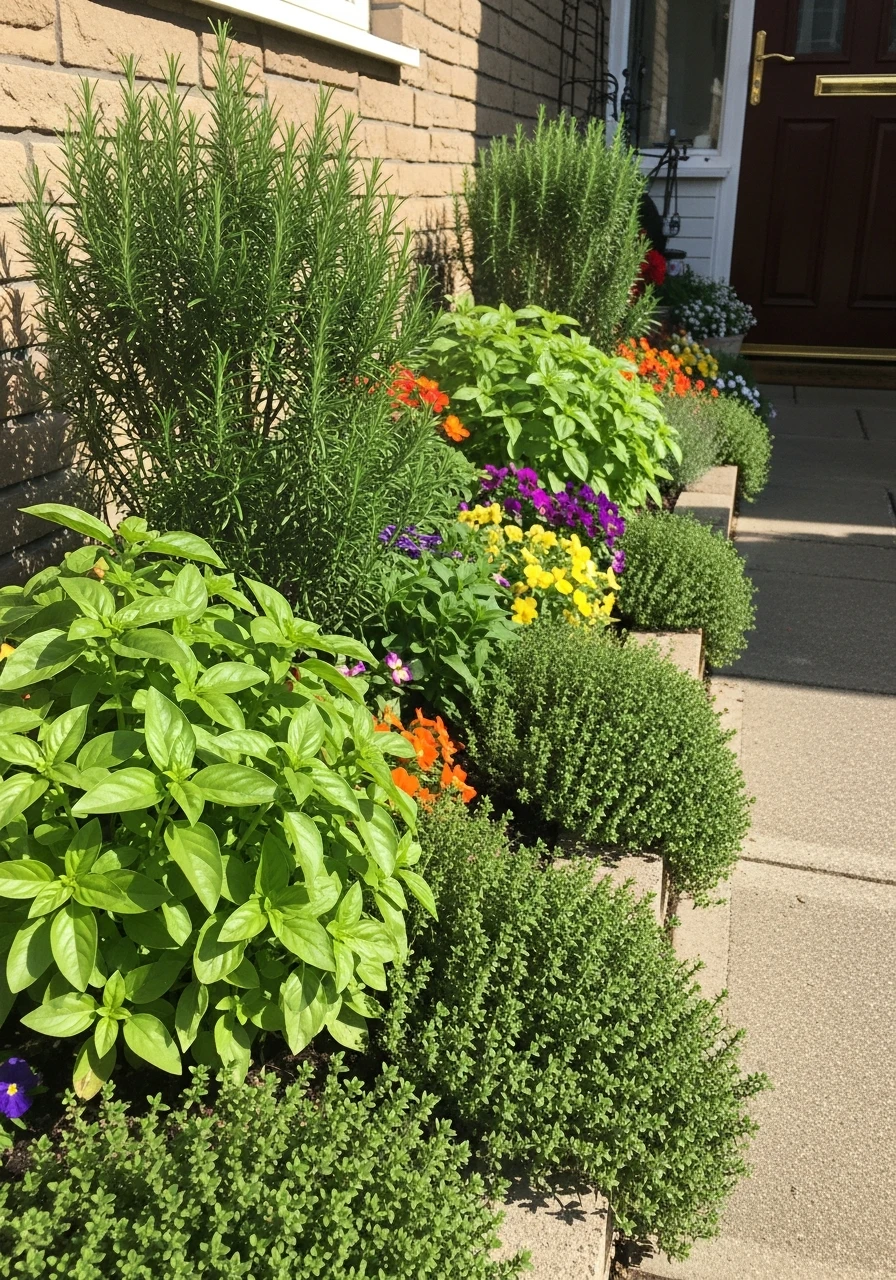
Mix delicious herbs like basil, thyme, and rosemary with your flowers near the front door. This gives you both beauty and light functionality. Plus, many herbs have a wonderful scent when you brush past them.
- Plant mint in a contained pot.
- Use lavender and bright petunias.
- Keep the bed easily accessible for harvesting.
Pro Tip: Rosemary holds its shape well and acts like a small, fragrant shrub.
38. Corner Stone Planter
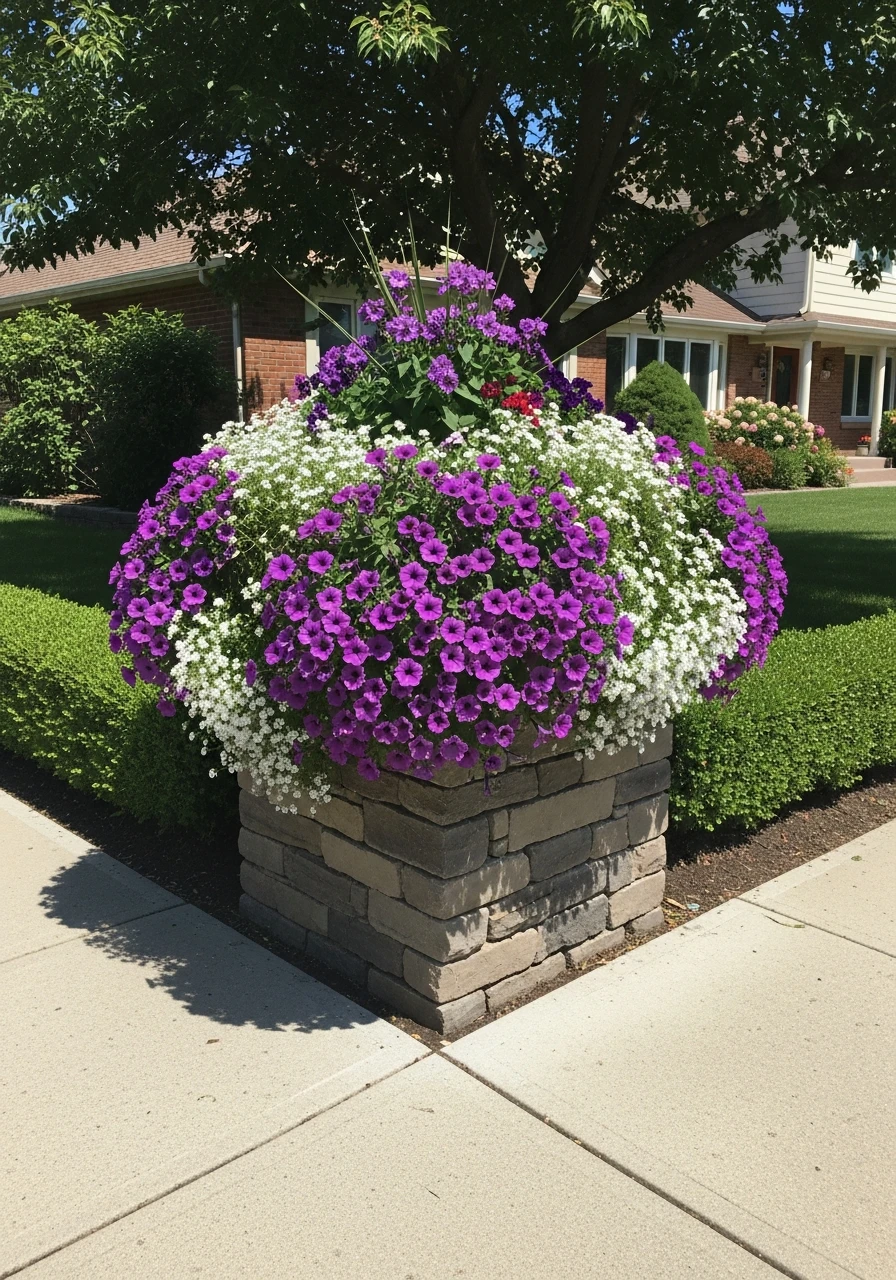
Use a large, decorative stone planter in a front yard corner. Fill it with cascading flowers to soften sharp angles where fences or sidewalks meet. A single, large planter makes a bigger statement than many small ones.
- Choose a planter that matches your house style.
- Use trailing vines like ivy.
- Fill with light potting mix.
Pro Tip: Use ‘pot feet’ under the planter to allow for better drainage.
39. Trailing Window Beds
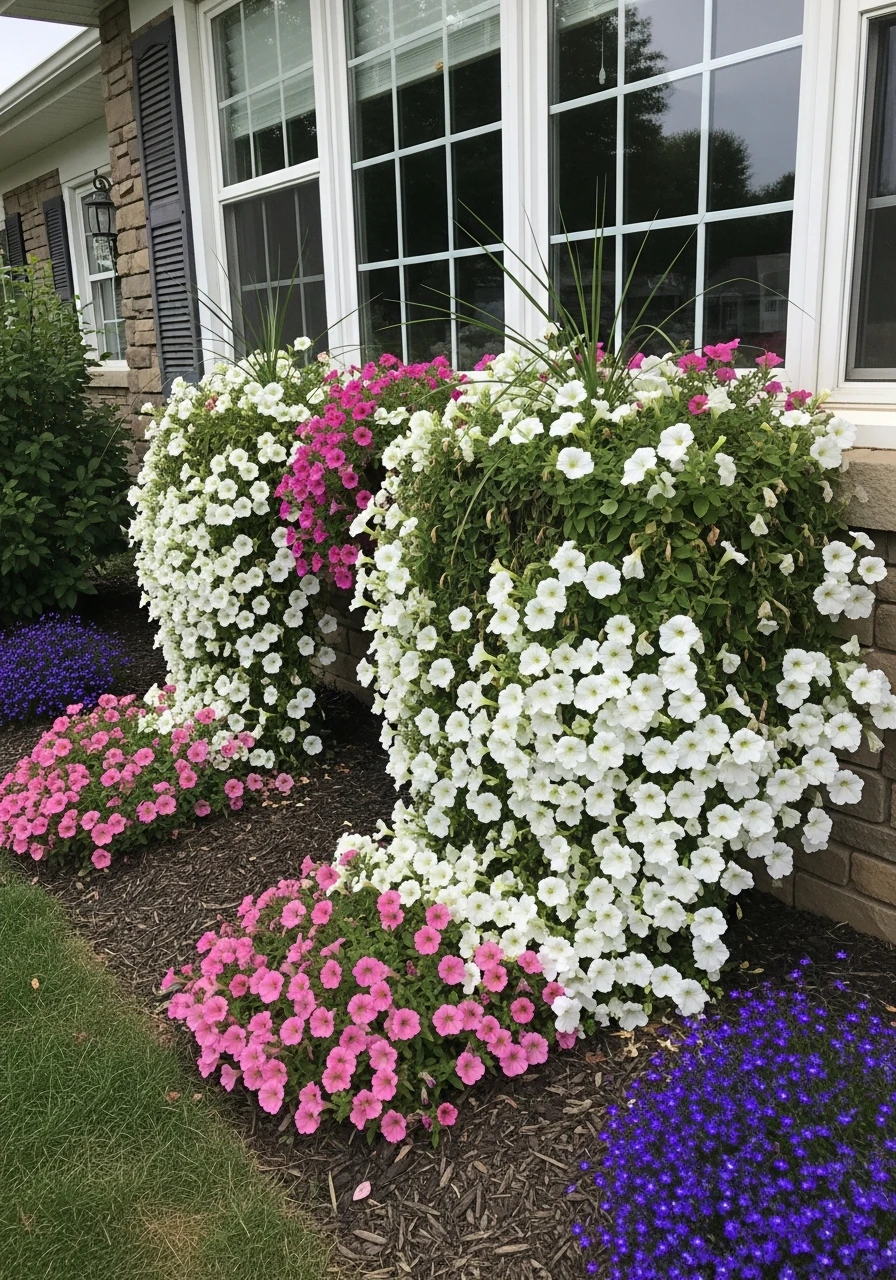
Plant trailing flowers directly under your front windows, allowing them to gently spill over the edge of the bed. This creates a soft, flowing look that frames the house exterior beautifully. It’s simple and romantic.
- Use sweet potato vine or calibrachoa.
- Ensure the soil level is slightly raised.
- Trim back regularly if they touch the ground.
Pro Tip: If your windows are high, build the bed up slightly so the flowers are closer to the sill.
40. Simple Planter Box Beds
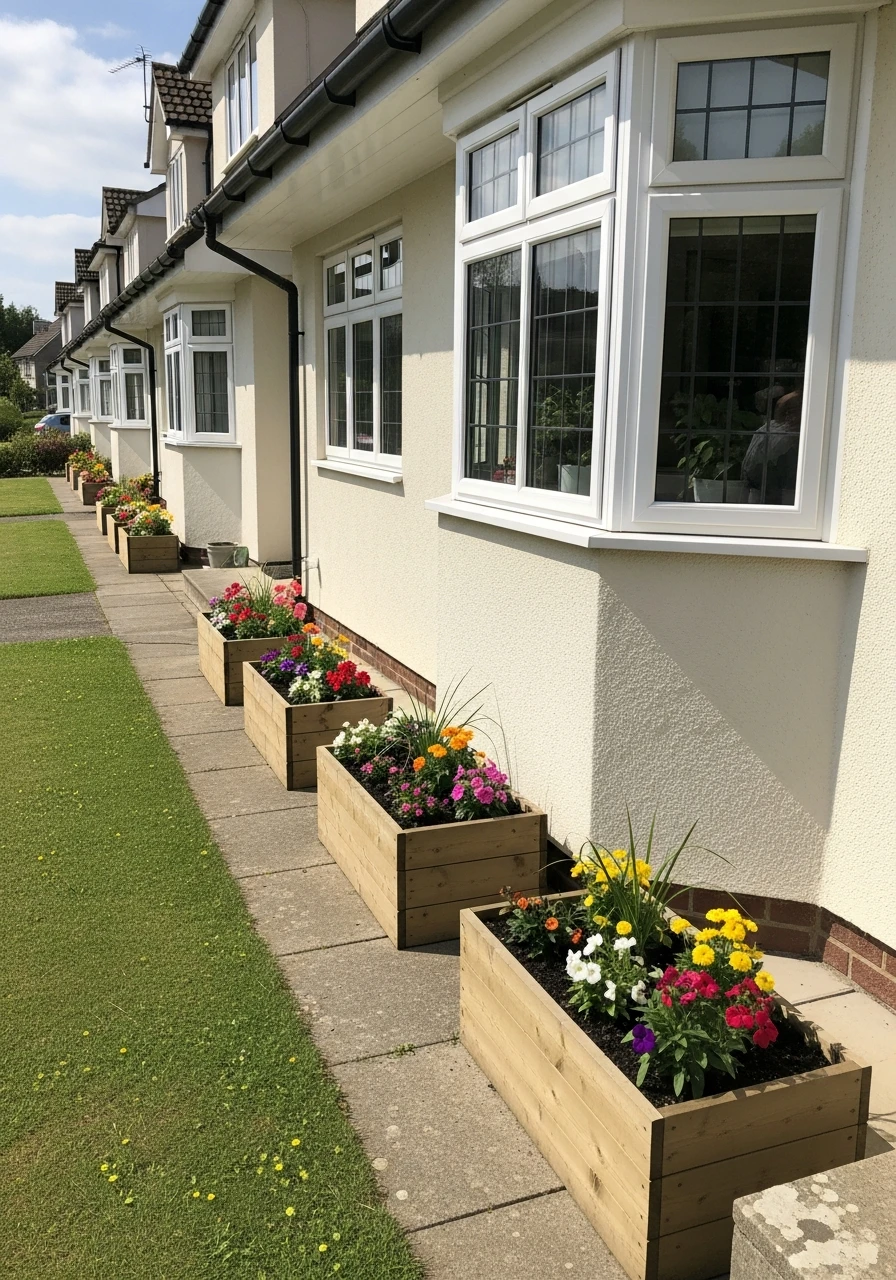
Use planter boxes in front of the house for easy maintenance and controlled plant growth. They are simple to build or buy and keep weeds away easily. You can change the entire look just by swapping the contents.
- Use cedar or treated wood.
- Line the inside with plastic sheeting.
- Change the flowers out seasonally.
Pro Tip: Paint the boxes a dark color, like charcoal gray, to make the flowers pop visually.
41. Native Plant Focus
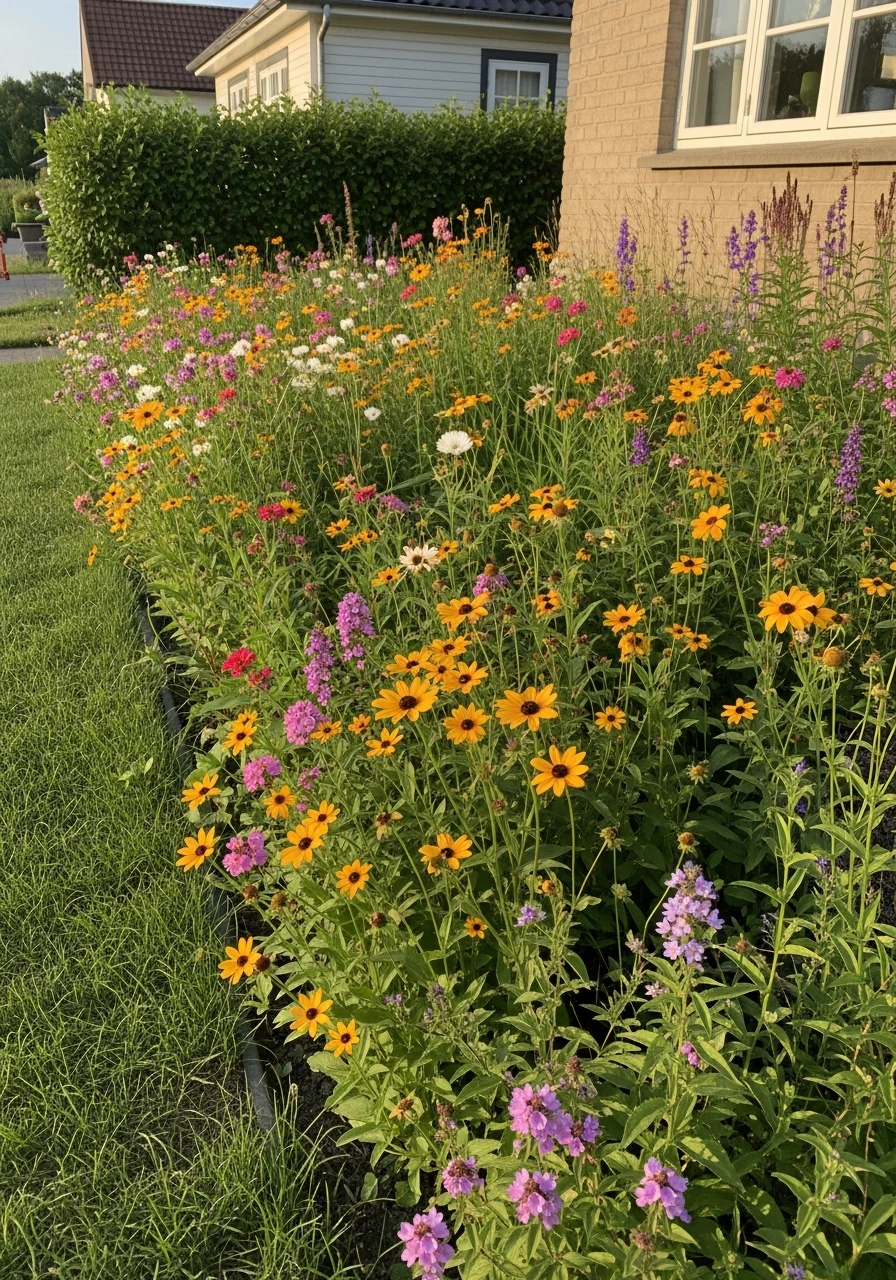
Choose native flowers that thrive naturally in your local climate. This reduces the need for constant care and watering, improving sustainability. Native plants also look appropriate for the region.
- Visit your local nursery for advice.
- Avoid adding unnecessary fertilizer.
- Allow plants to self-seed.
Pro Tip: Native plants often attract the most beautiful local birds and insects.
42. Deer-Resistant Plants
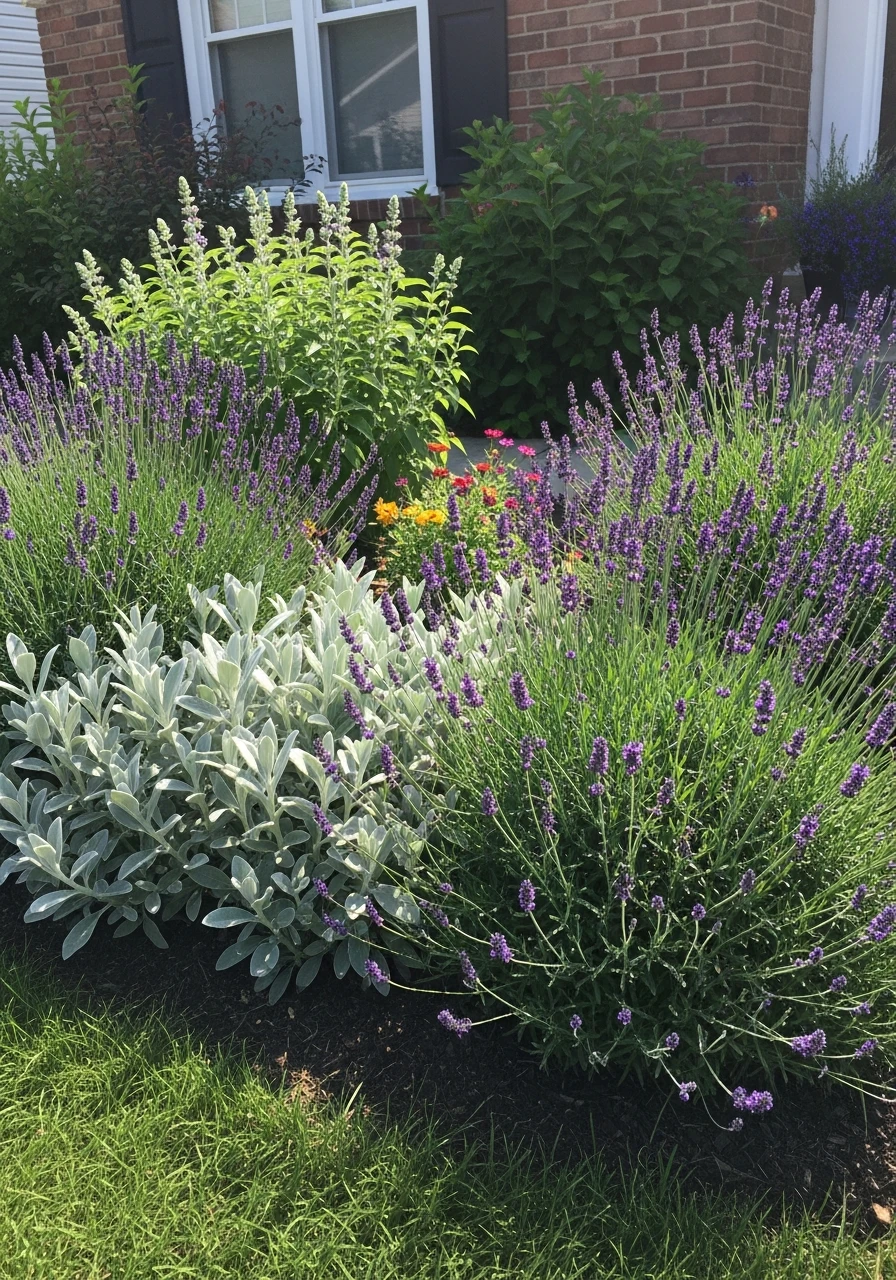
If you live where deer roam, use plants known to deter them to protect your front yard flowers. Deer usually avoid plants that are fuzzy, highly scented, or have bitter tastes. This saves you heartache and time.
- Plant lavender and sage.
- Use plants like peonies and poppies.
- Spray plants with a natural repellent occasionally.
Pro Tip: Avoid planting tulips; deer treat them like candy.
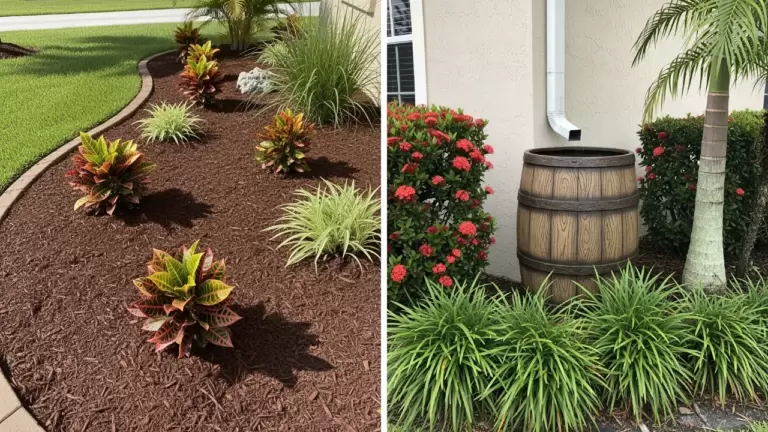
43. Rain Garden Flower Bed
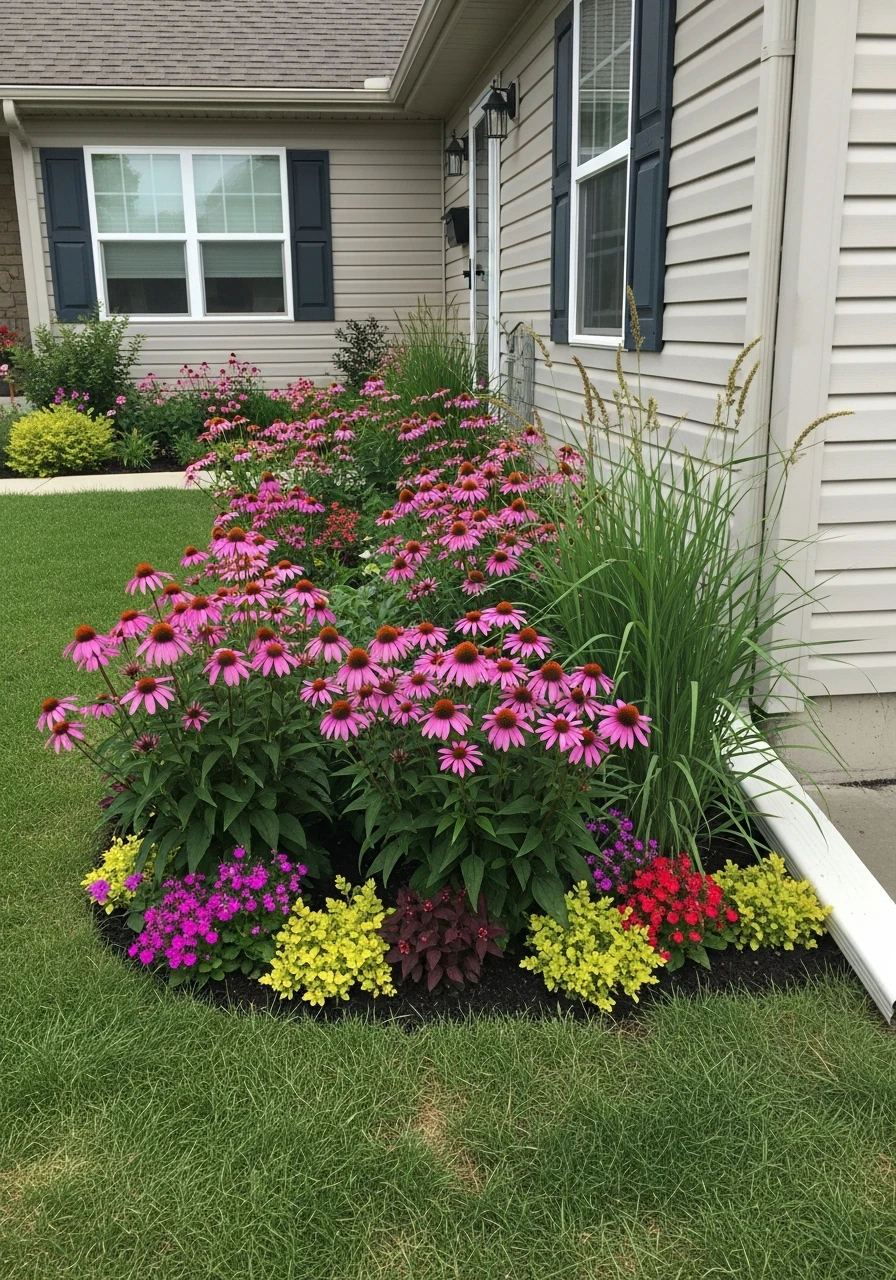
Design a flower bed that collects rainwater runoff from your roof or driveway. Use moisture-loving plants to manage drainage naturally. This helps prevent flooding and makes use of excess water.
- Dig the bed slightly lower than the surrounding area.
- Use plants like irises and swamp milkweed.
- Add gravel layers for filtration.
Pro Tip: This idea is functional and looks beautiful, especially after a storm.
44. Sidewalk Strip Planting
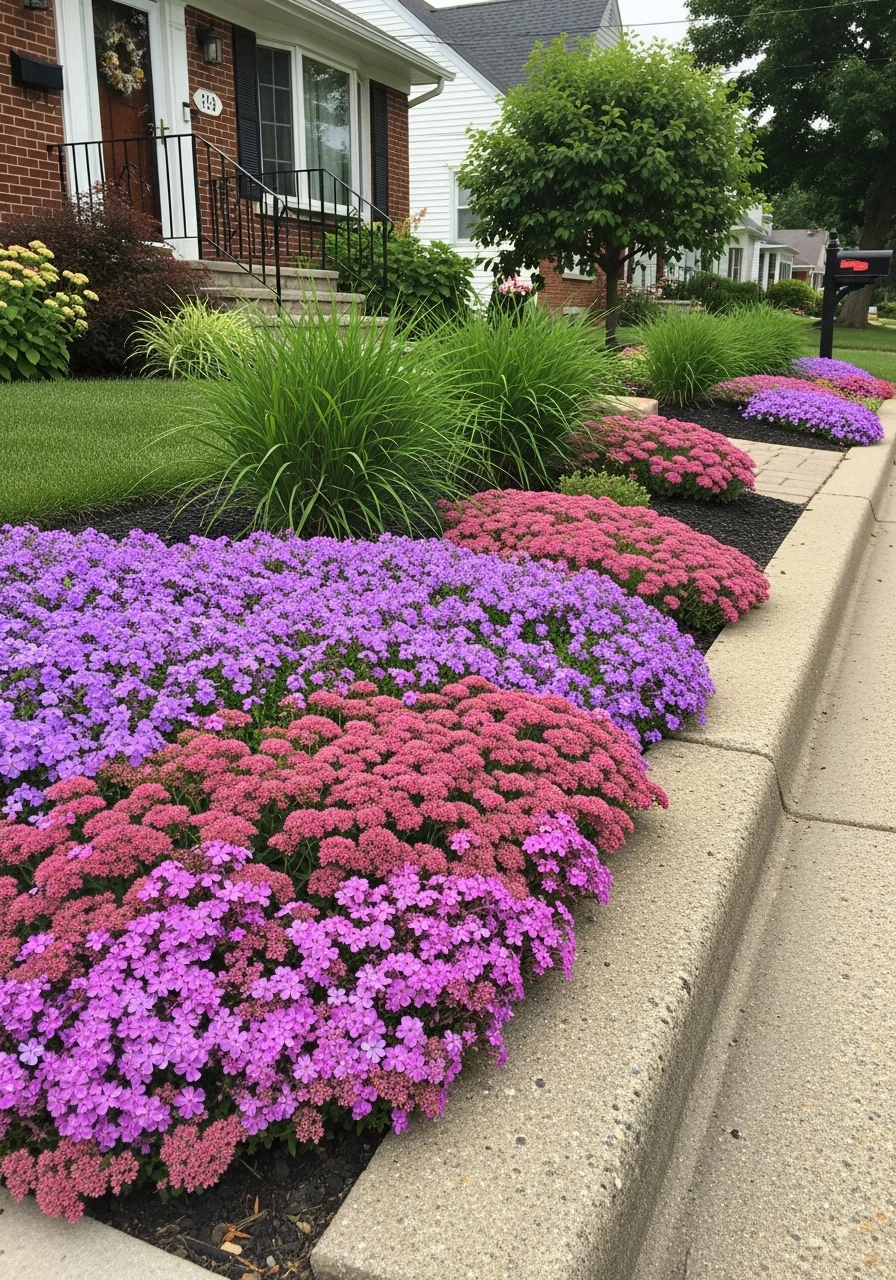
Transform the narrow space between the sidewalk and the street (the ‘hell strip’) into a vibrant flower bed. This boosts curb appeal for everyone walking by. Choose very tough, low-growing, salt-tolerant plants.
- Use durable ground cover.
- Edge the area clearly.
- Add a small stepping stone path.
Pro Tip: Check with your city first to ensure you are allowed to plant in this area.
45. Wildlife Shelter Bed
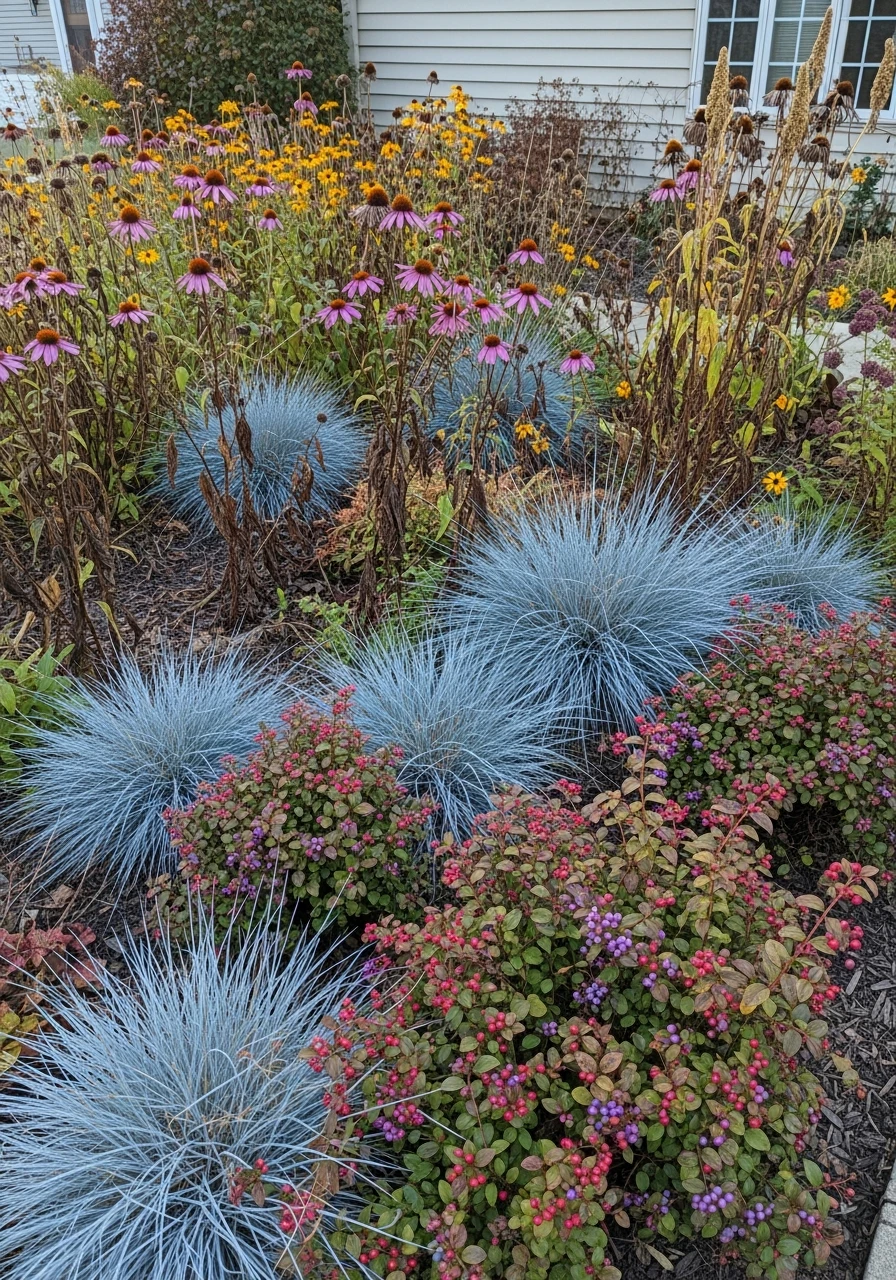
Combine flowers, grasses, and small shrubs that provide shelter and food for birds and beneficial insects. Think beyond just flowers and include berries or seed heads that last through winter. It creates a mini ecosystem.
- Leave seed heads on plants in fall.
- Include a small brush pile corner.
- Plant flowers that attract hummingbirds.
Pro Tip: Use thick, layered mulch to give ground-nesting bees a safe home.
46. Flower and Grass Blend
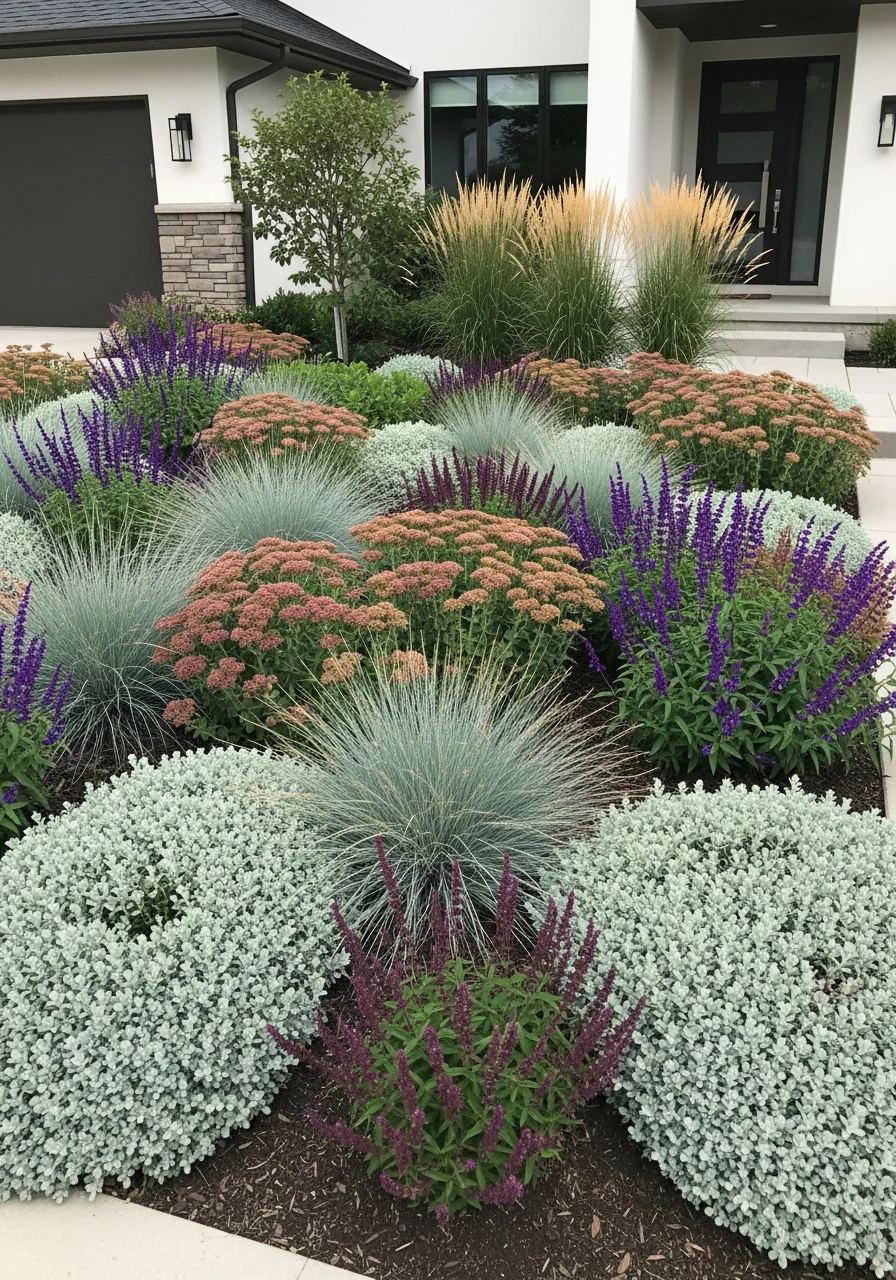
Mix flowering plants with different types of ornamental grasses. This is a modern, low-maintenance front yard look that emphasizes texture over bright color. It looks very natural and requires less dead-heading.
- Use fine-bladed grasses.
- Keep the color palette muted.
- Plant in sweeping drifts.
Pro Tip: This style looks best when the plants are allowed to sway freely in the wind.
47. Rock Mulch Flower Bed
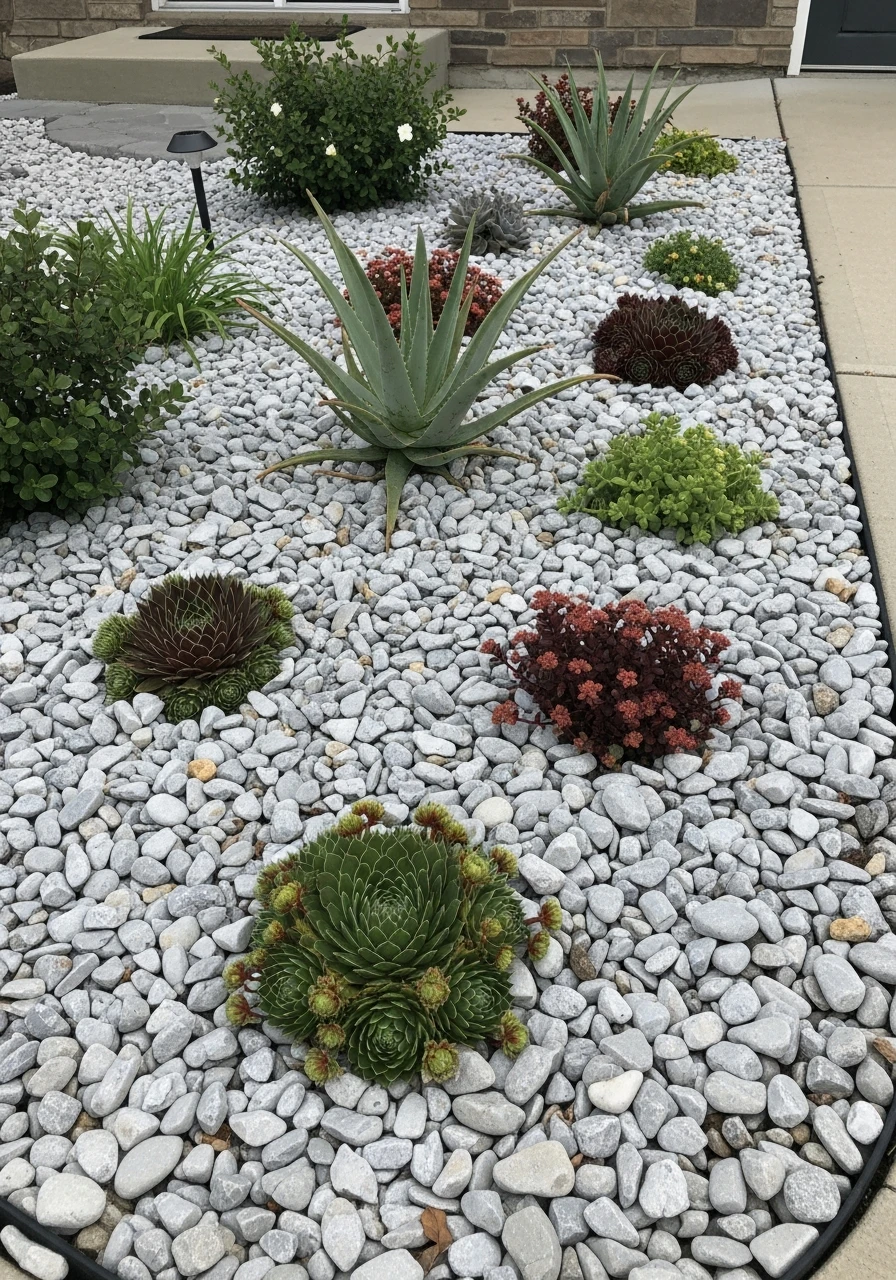
Replace traditional organic mulch with decorative stones or gravel. This reduces maintenance, prevents decomposition, and improves drainage instantly. It looks very tidy and modern, especially with succulents.
- Lay down weed barrier fabric first.
- Choose rocks that complement your house color.
- Use deep, durable edging.
Pro Tip: Rock mulch reflects heat, so make sure to use heat-loving plants.
48. Pollinator Corridor
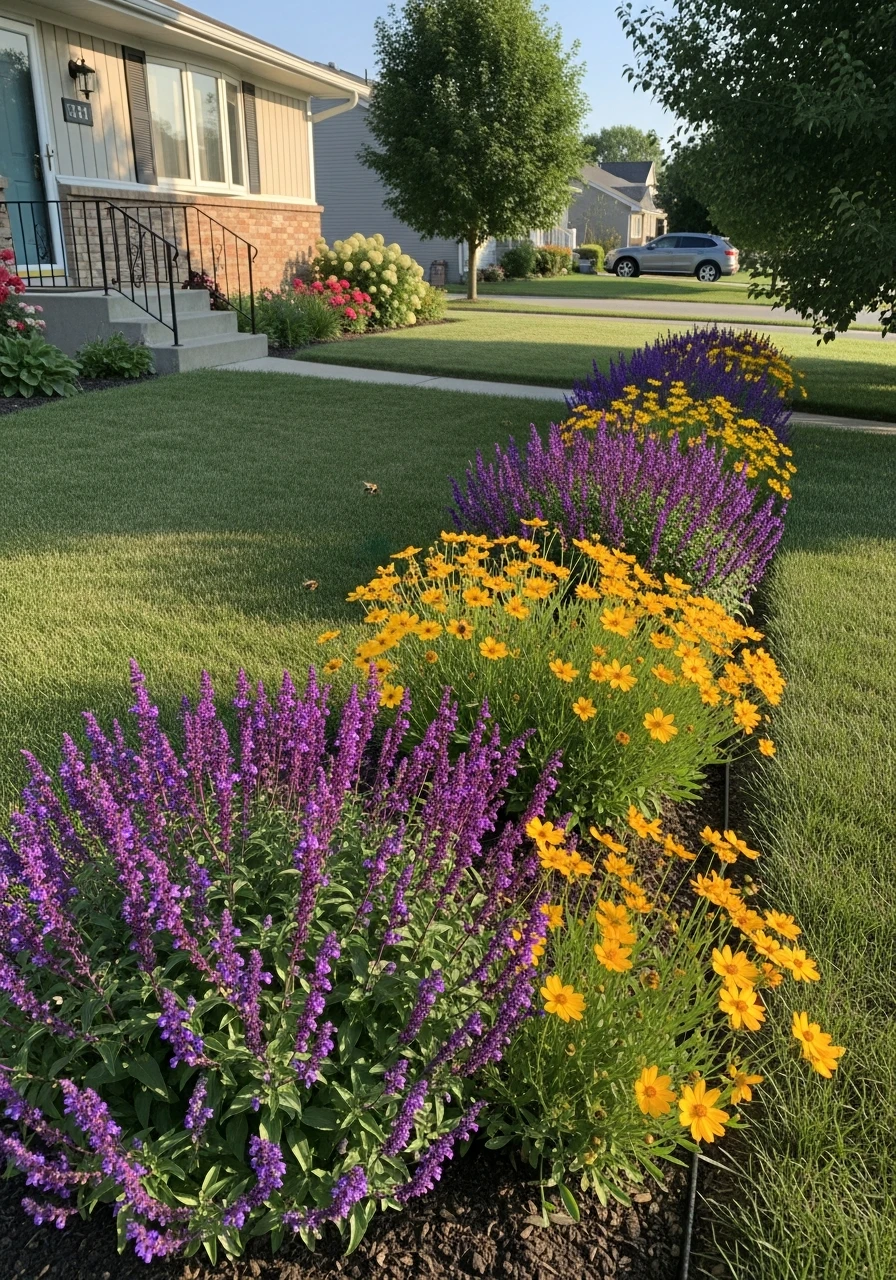
Create connected flower beds across the front yard, forming a continuous path for pollinators. Instead of one large bed, use three or four smaller beds linked by color or plant type. This helps bees travel safely.
- Use the same repeating flower in all beds.
- Keep the grass short between beds.
- Ensure the beds are easily visible from above.
Pro Tip: This is a great way to use up awkward small spaces in the lawn.
49. Container Cluster Entry
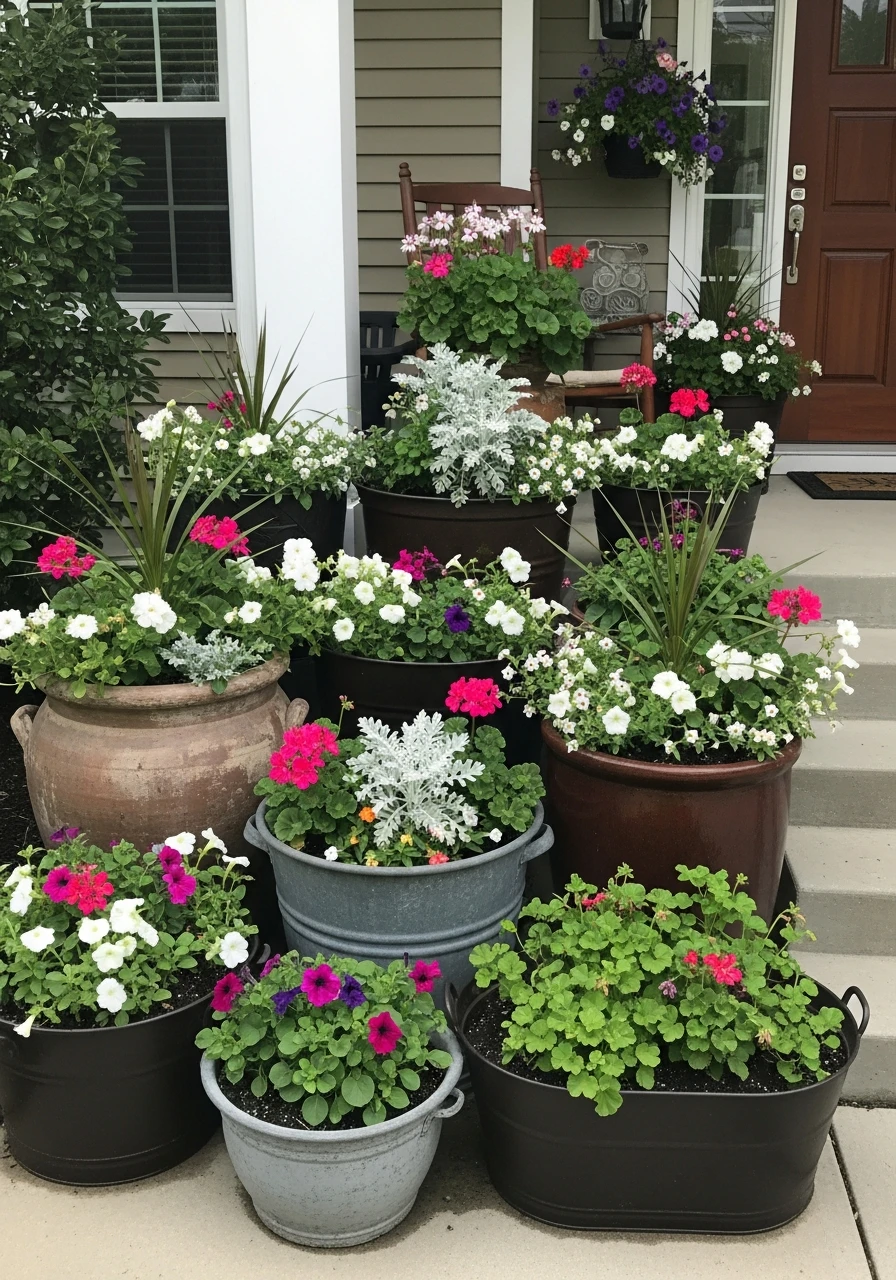
Group multiple large containers filled with flowers near the front porch instead of planting in the ground. This creates a flexible and stylish display that you can change out easily. It’s perfect for renters or those who move often.
- Use containers of varying heights.
- Follow the ‘thriller, filler, spiller’ rule.
- Match the pot material to your home style.
Pro Tip: Use plastic pots inside the decorative outer pots for easier moving.
50. Natural Meadow Style
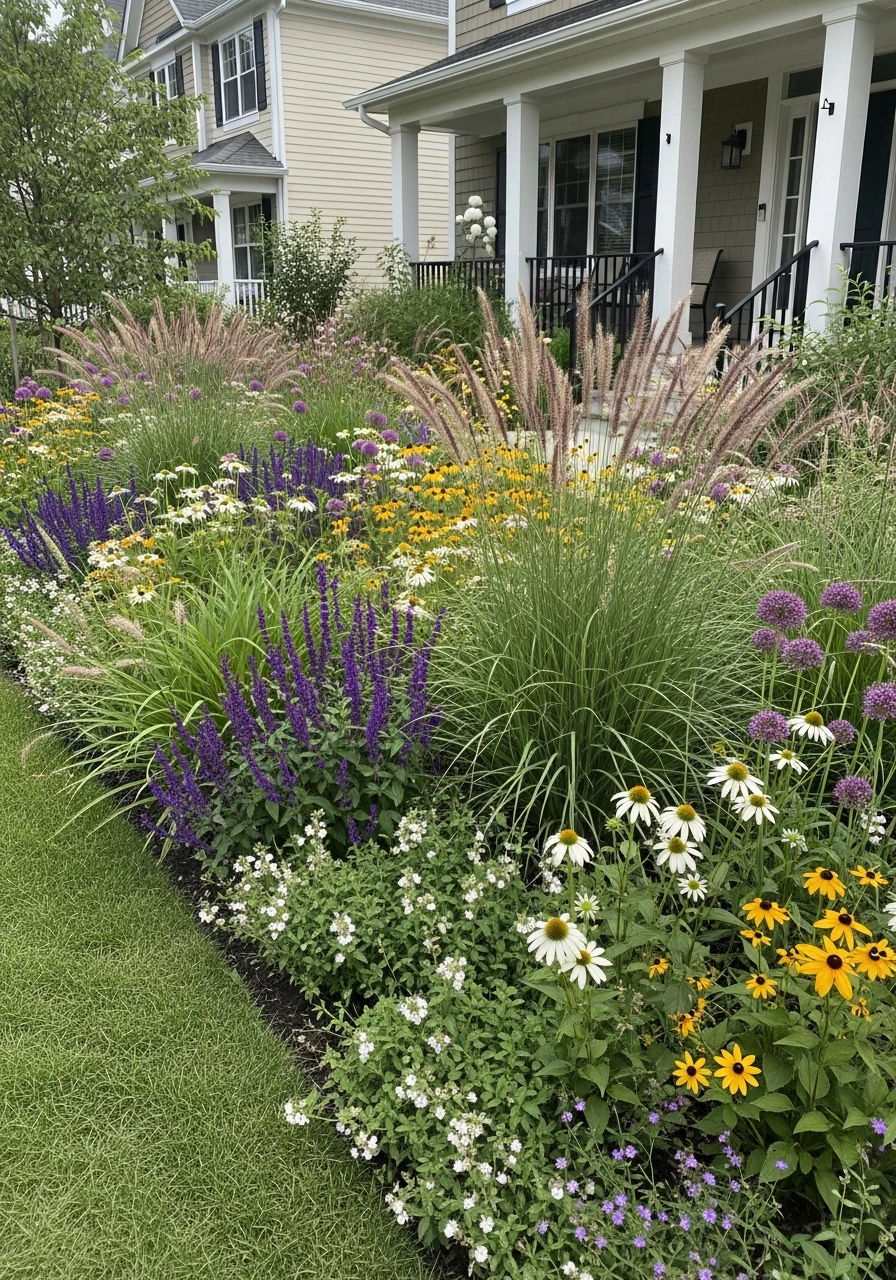
Design a relaxed, free-flowing flower bed that mimics nature while still complementing the home’s architecture. Use drifts of grasses and flowers that blend together softly. This requires minimal pruning and looks lovely.
- Choose plants that spread easily.
- Use subtle, neutral edging.
- Mix tall and medium heights randomly.
Pro Tip: This style is best for homes that have a slightly rustic or craftsman feel.
See? Making your front yard magazine-worthy is totally doable, no matter your budget or yard size.
Pick one or two ideas that speak to you and start digging.
Your flower beds in front of house are about to give your neighbors major garden envy. Happy planting!