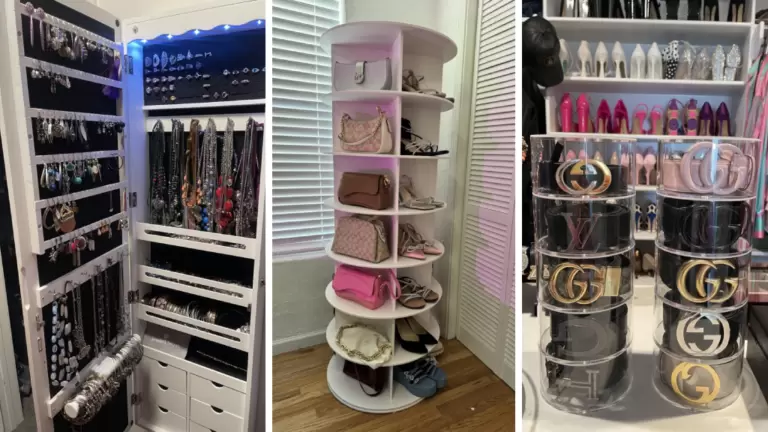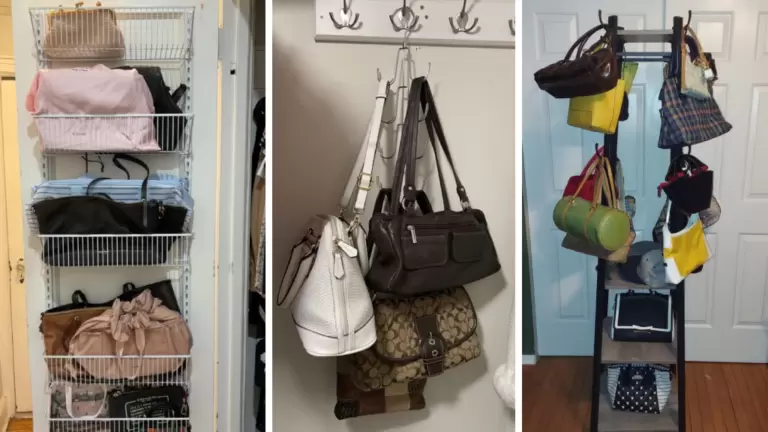
50 Closet Organization Ideas

This post may contain affiliate links: full affiliate disclosure.
Is your closet a mess? Do you waste time digging for clothes?
We all need smart closet organization ideas to save space and sanity.
These 50 simple tips will help you create a tidy, functional space you love, starting right now.
1. Declutter Before Organizing
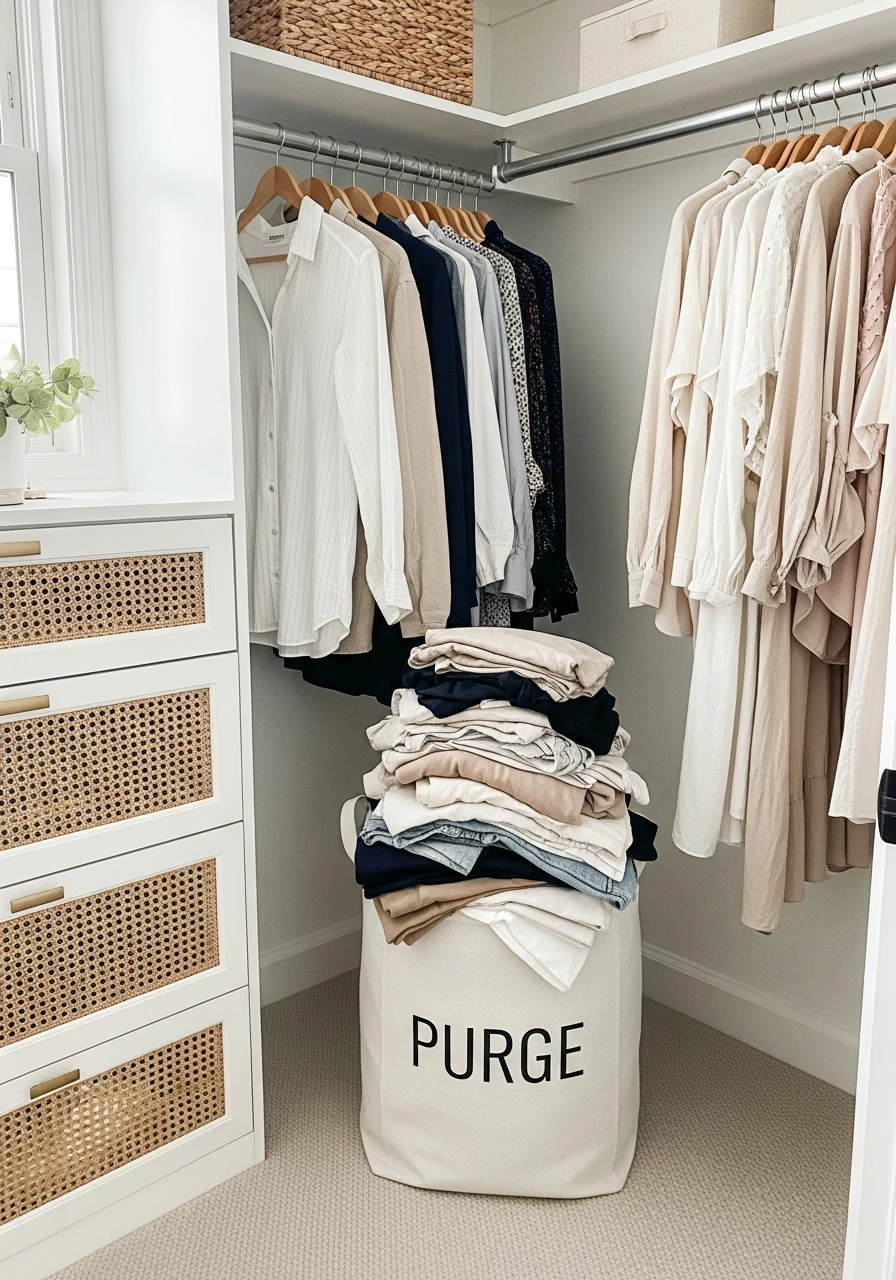
Start by removing items you don’t wear, don’t fit, or don’t like. Organization only works when you reduce the excess first. This step instantly creates space and makes all other systems better.
- Use the ‘one year rule’: If you haven’t worn it, toss it.
- Be strict about shoes and accessories.
- Try everything on before deciding to keep it.
Pro Tip: Remove all unwanted items from the room immediately so you aren’t tempted to put them back in the closet.
2. Sort Clothes By Category
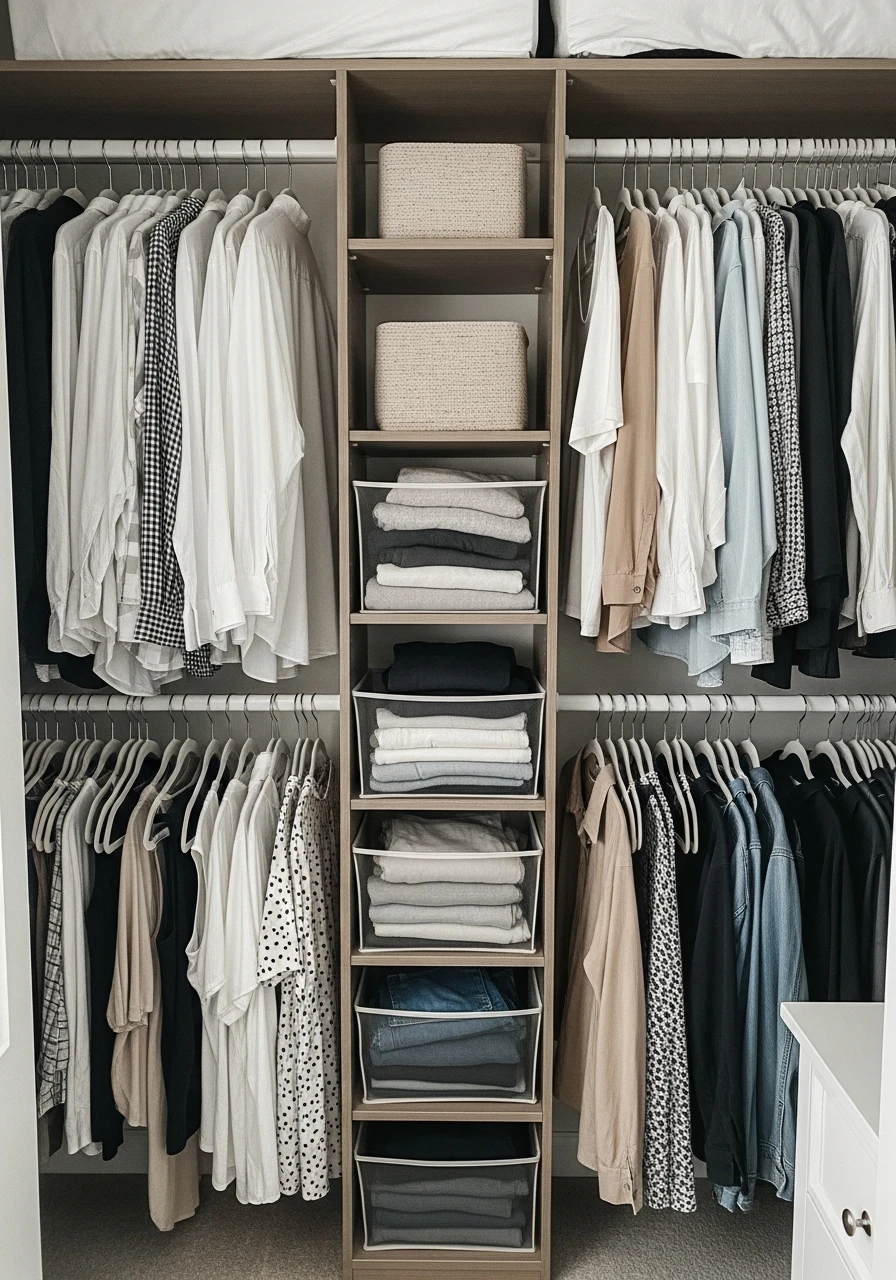
Group items into clear types: shirts, pants, dresses, and jackets. This makes your closet easier to navigate and helps you see exactly how much of each item you own.
- Keep work clothes separate from casual wear.
- Group activewear together on one shelf.
- All denim should hang or stack together.
Pro Tip: When shopping, check your categories first. If you have 15 white shirts, you don’t need another one.
3. Color-Code Your Clothes
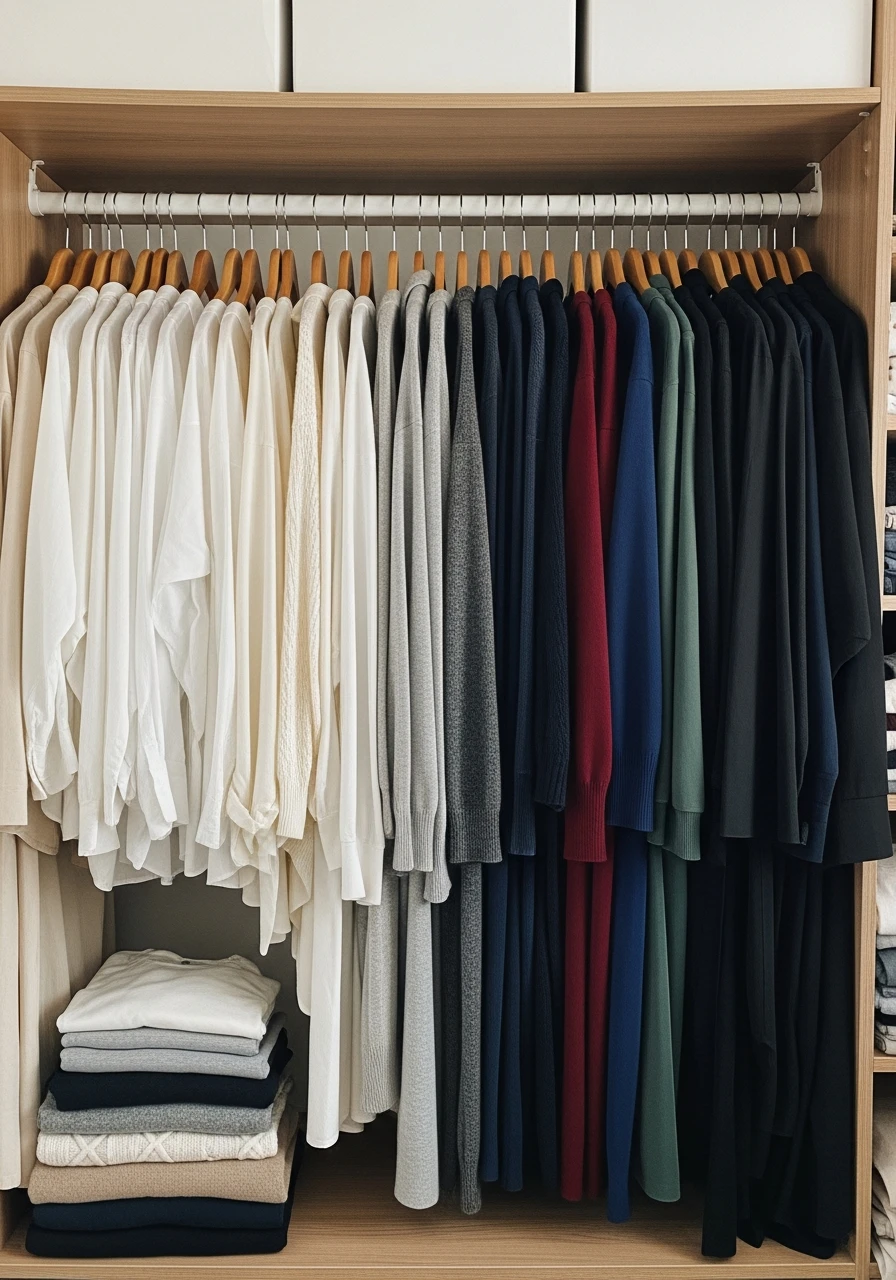
Once items are grouped by type, arrange them from light colors to dark colors. Color-ordering makes outfits easier to build and gives the closet a clean, boutique-style look.
- Use the rainbow order for a fun visual effect.
- White, cream, gray, black should be the main flow.
- Match the hanger color to the item for extra polish.
Pro Tip: This system helps you spot gaps in your wardrobe quickly, like realizing you own no blue shirts.
4. Eye-Level Daily Storage
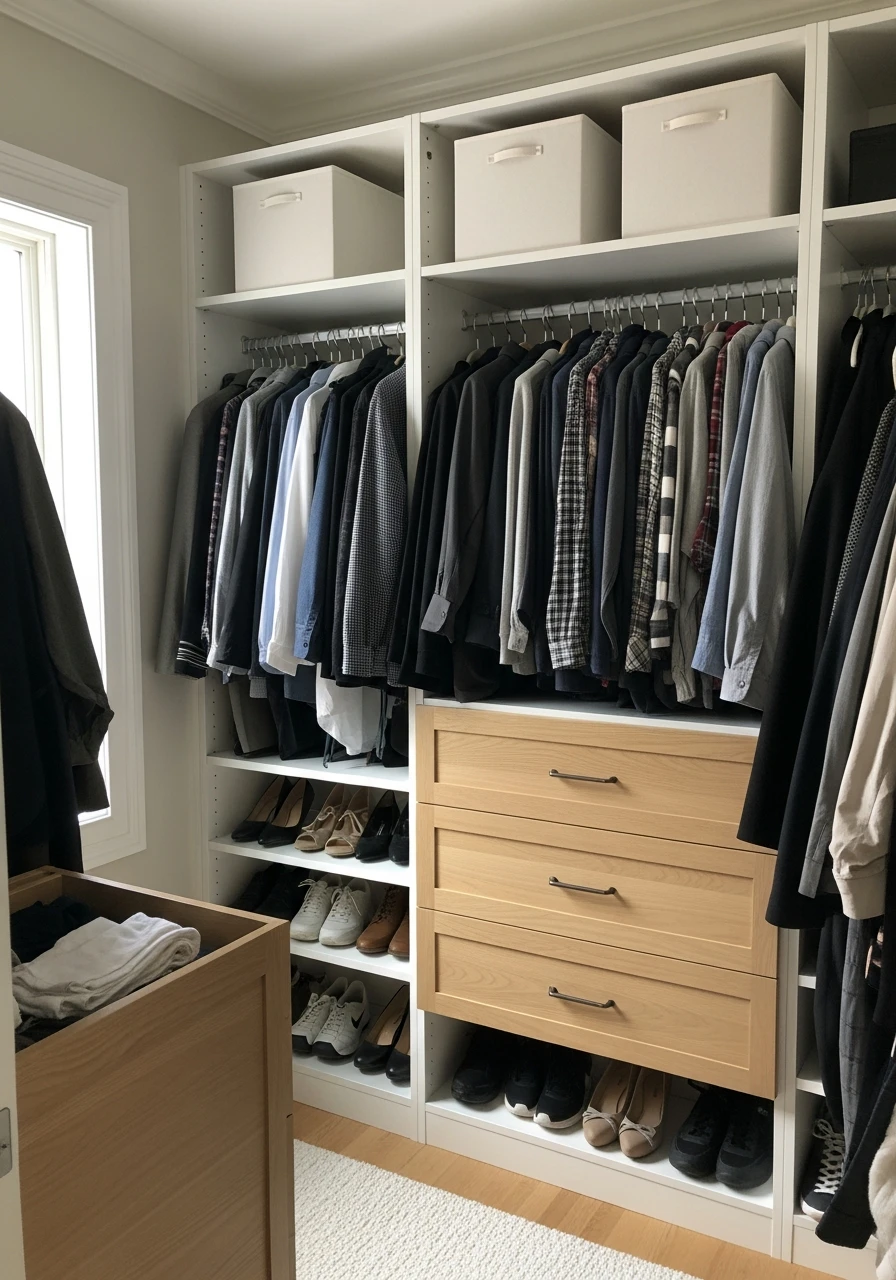
Place the clothes and shoes you wear most often in the most accessible spots, usually between your shoulders and waist. Eye-level storage reduces clutter and saves time during daily routines.
- Put daily work outfits here.
- Keep favorite jeans and t-shirts front and center.
- Use this zone for frequently grabbed accessories.
Pro Tip: Use the prime center space for items you grab at least three times a week.
5. Seasonal Clothing Rotation
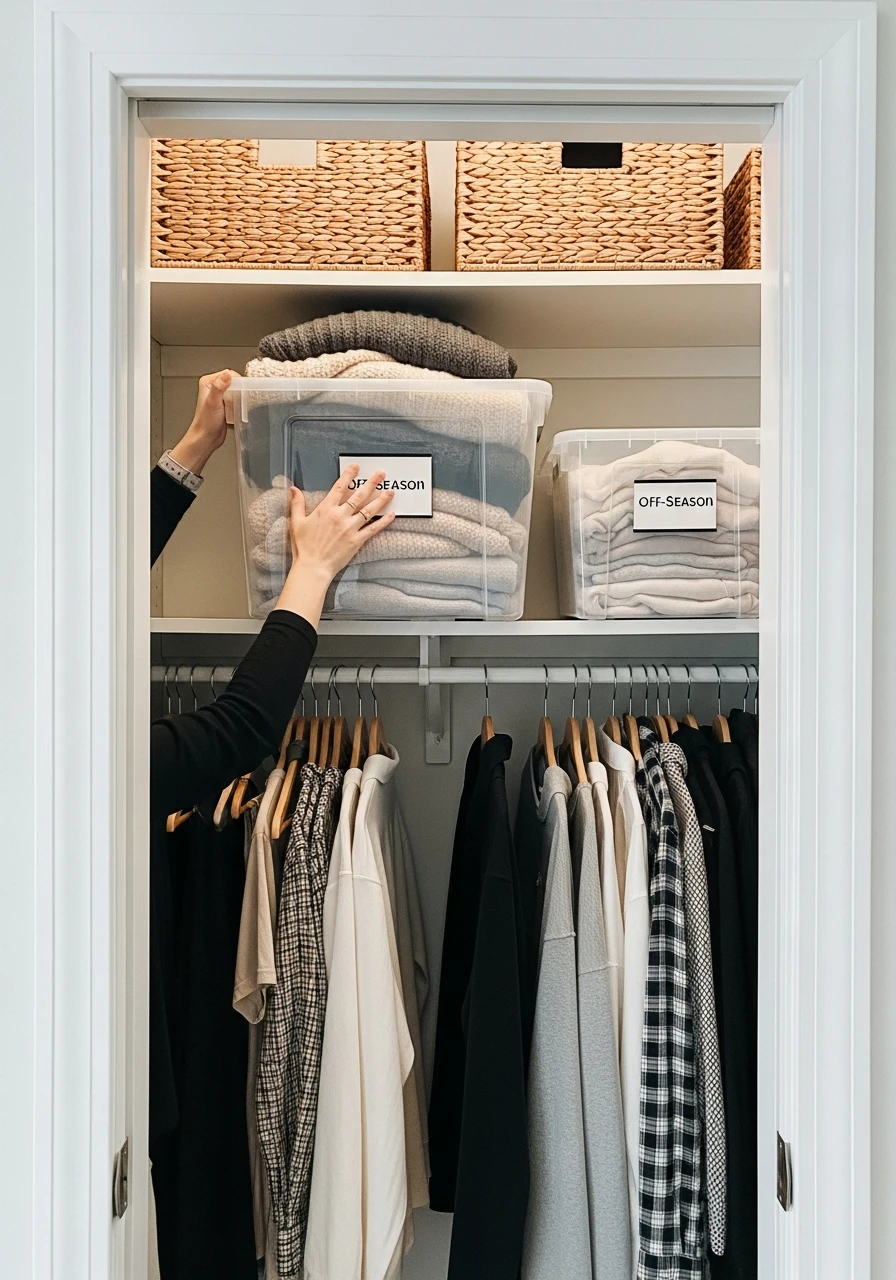
Store off-season clothing in bins or upper shelves and bring current-season items forward. Seasonal rotation keeps your closet less crowded and easier to maintain year-round.
- Use vacuum bags to shrink bulky winter coats.
- Store special occasion items high up.
- Label bins clearly with the season and contents.
Pro Tip: When you rotate items out, use that moment to clean them and check for needed repairs before storing them away.
6. Matching Slim Hangers
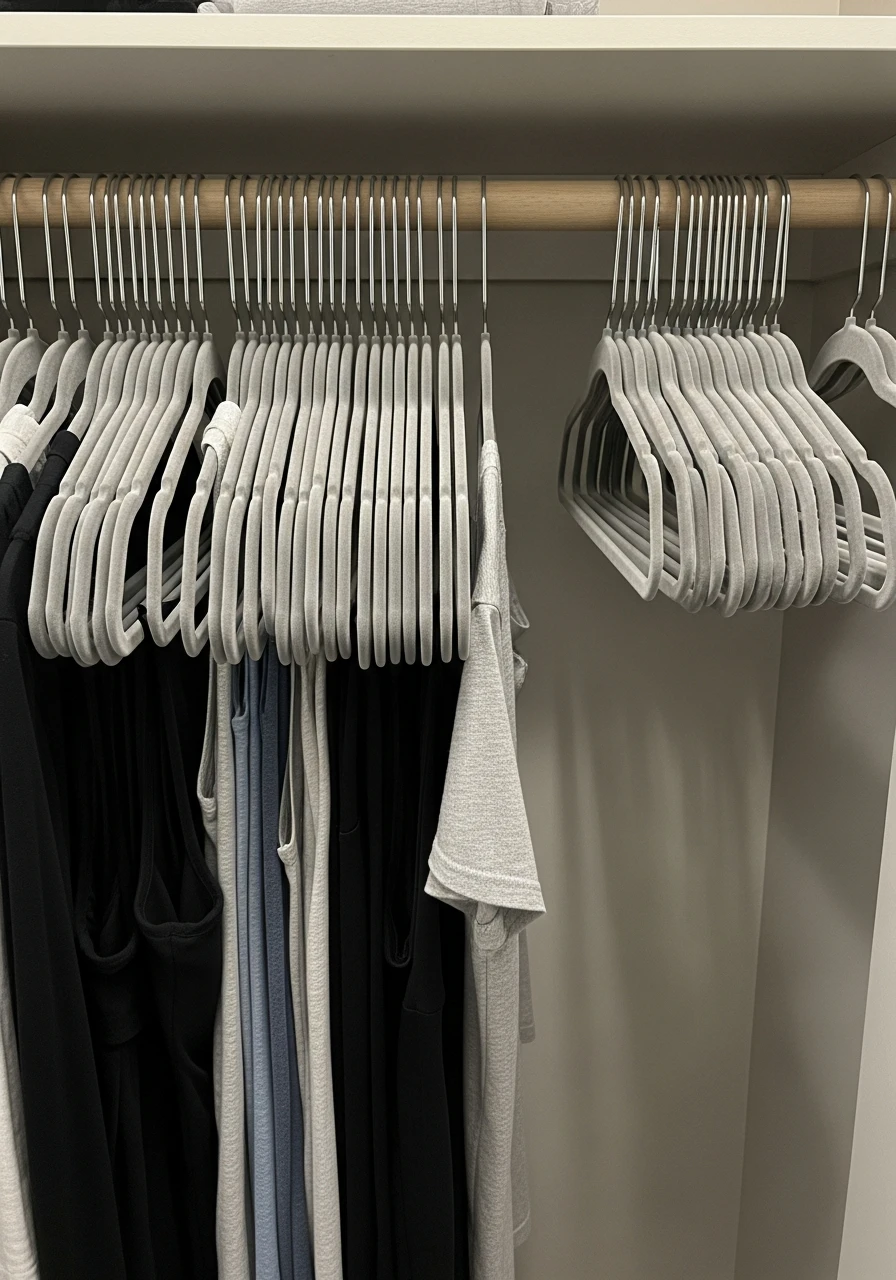
Replace bulky or mismatched hangers with slim, uniform ones. Velvet slim hangers save hanging space, prevent clothes from slipping, and instantly improve visual organization.
- Choose one color for all hangers.
- Use wooden hangers only for heavy coats.
- Toss wire hangers immediately; they damage clothes.
Pro Tip: Slim velvet hangers can save up to 50% of your hanging space compared to plastic or mixed hangers.
7. Flexible Adjustable Shelving
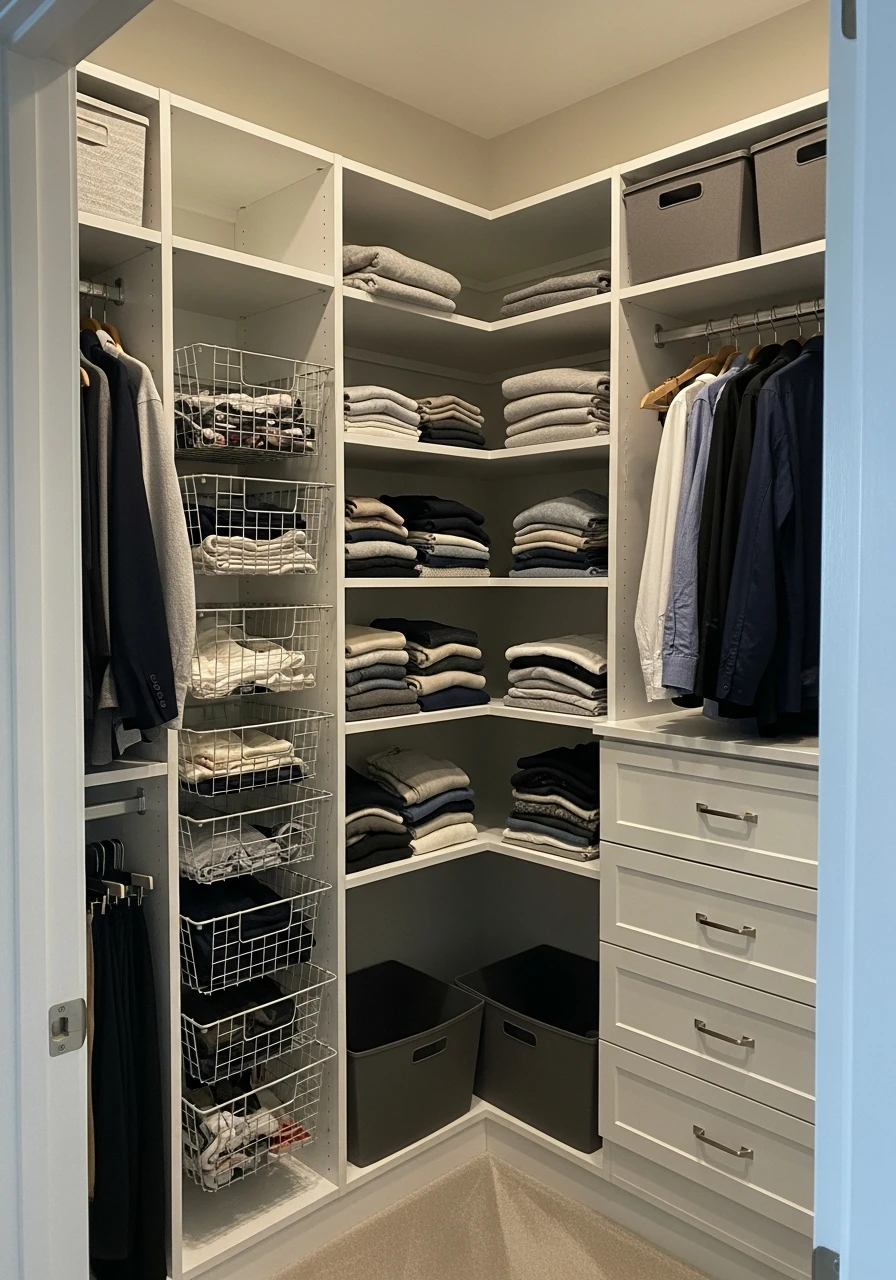
Adjustable shelves allow you to customize spacing for folded clothes, bags, or bins. This flexibility is ideal as your wardrobe changes over time and your needs shift.
- Make tall spaces for boots or large bins.
- Create short stacks for t-shirts and small items.
- Ensure shelves are easy to move without tools.
Pro Tip: Measure your tallest item (like a hatbox or boot) before setting the shelf height to ensure a perfect fit.
8. Double Hanging Rods
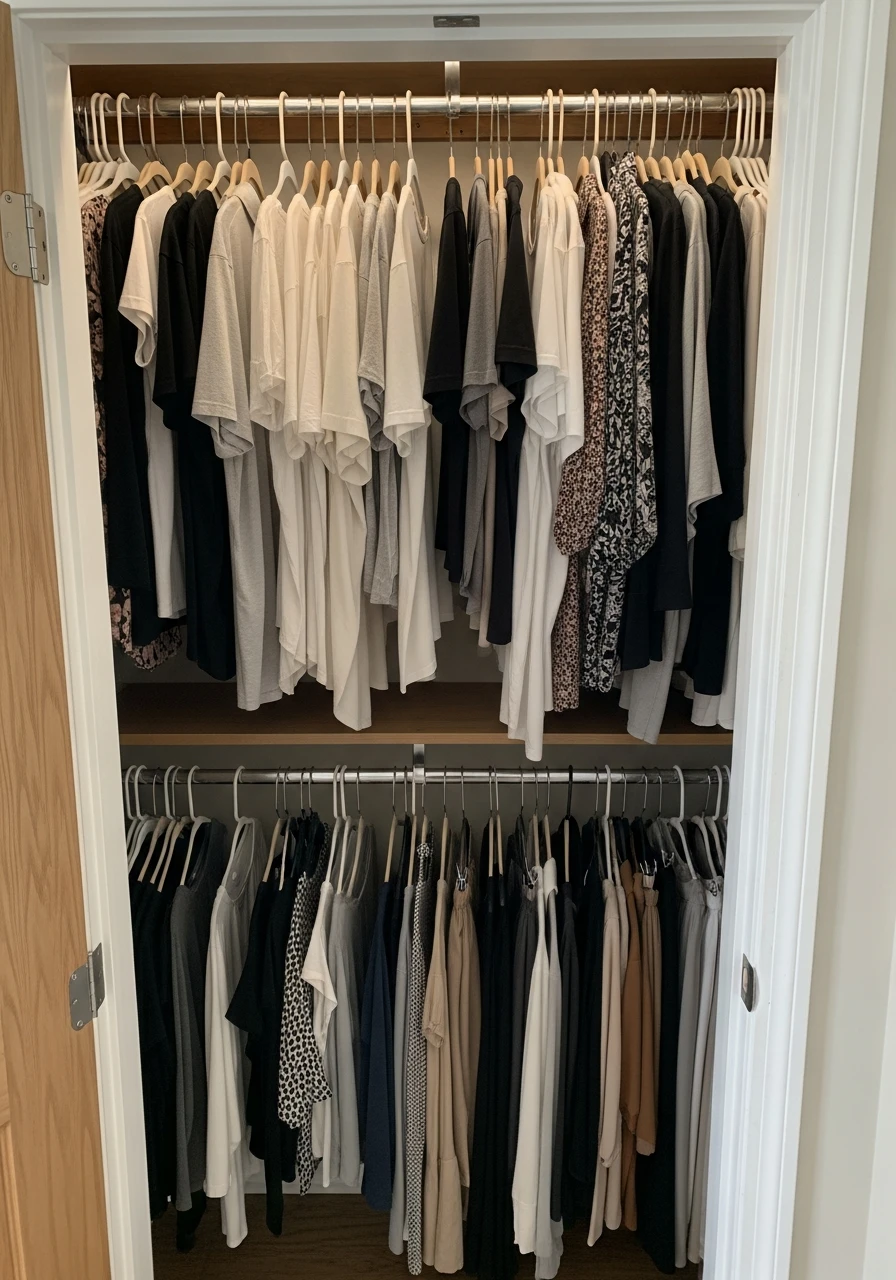
Install two hanging rods—one above the other—for shirts, pants, and skirts. This simple trick doubles the usable hanging space in standard closets for shorter garments.
- Use the top rod for shirts and blouses.
- Use the bottom rod for folded pants or skirts.
- Ensure there is enough space between rods for clothes to clear the floor.
Pro Tip: If you have many dresses or long coats, keep one side of the closet dedicated to a single, tall rod.
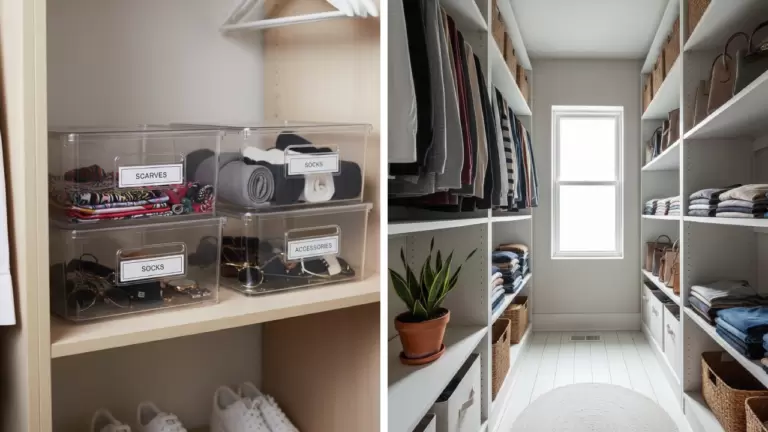
9. Label All Storage Bins
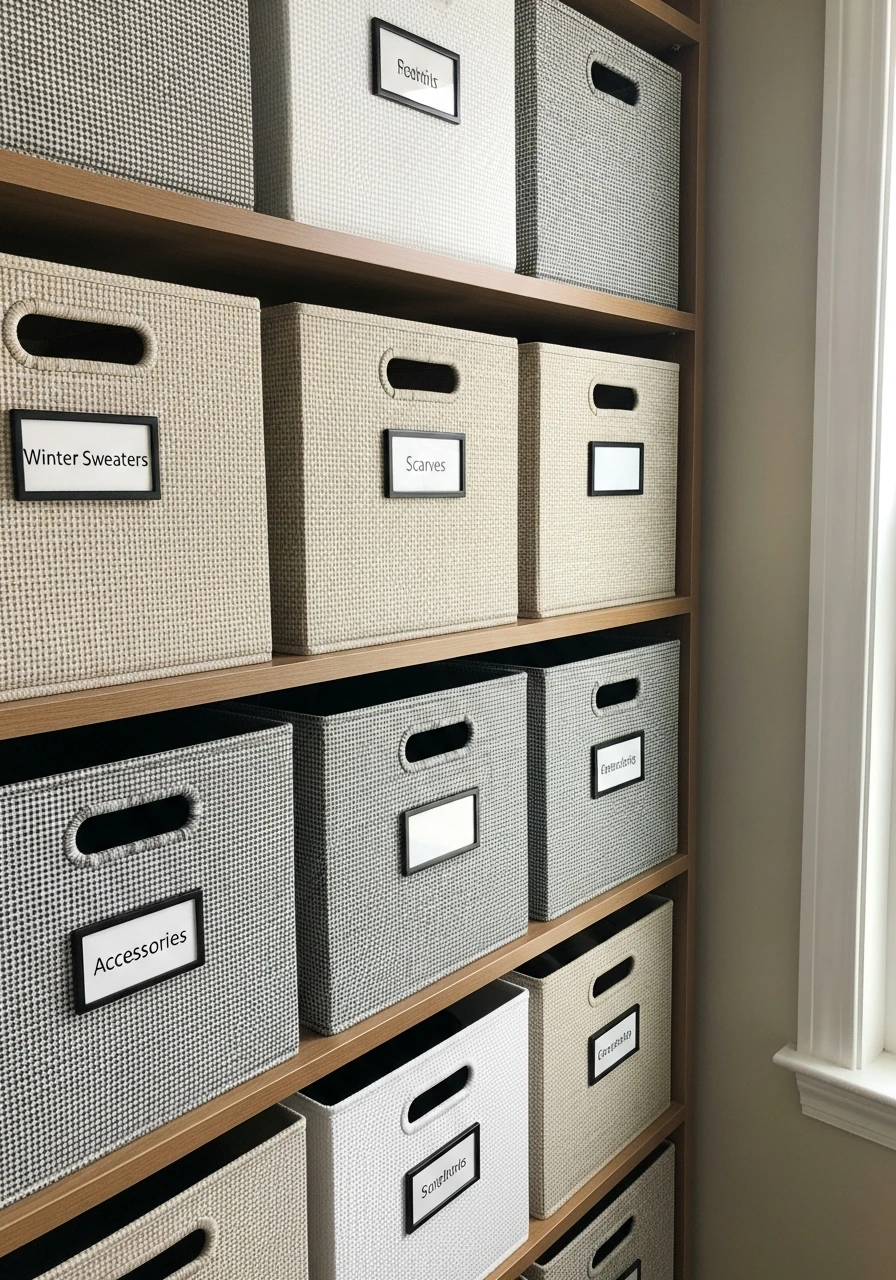
Label bins clearly by category such as “winter sweaters” or “accessories.” Clear labeling prevents mess and helps everyone in the house maintain the organization system easily.
- Use simple, bold fonts for quick reading.
- Try chalkboard labels for easy changes.
- Label the front and sides of bins if they stack high.
Pro Tip: Take a photo of the bin’s contents and print it on the label. This is helpful for visual learners.
10. Dedicated Donation Spot
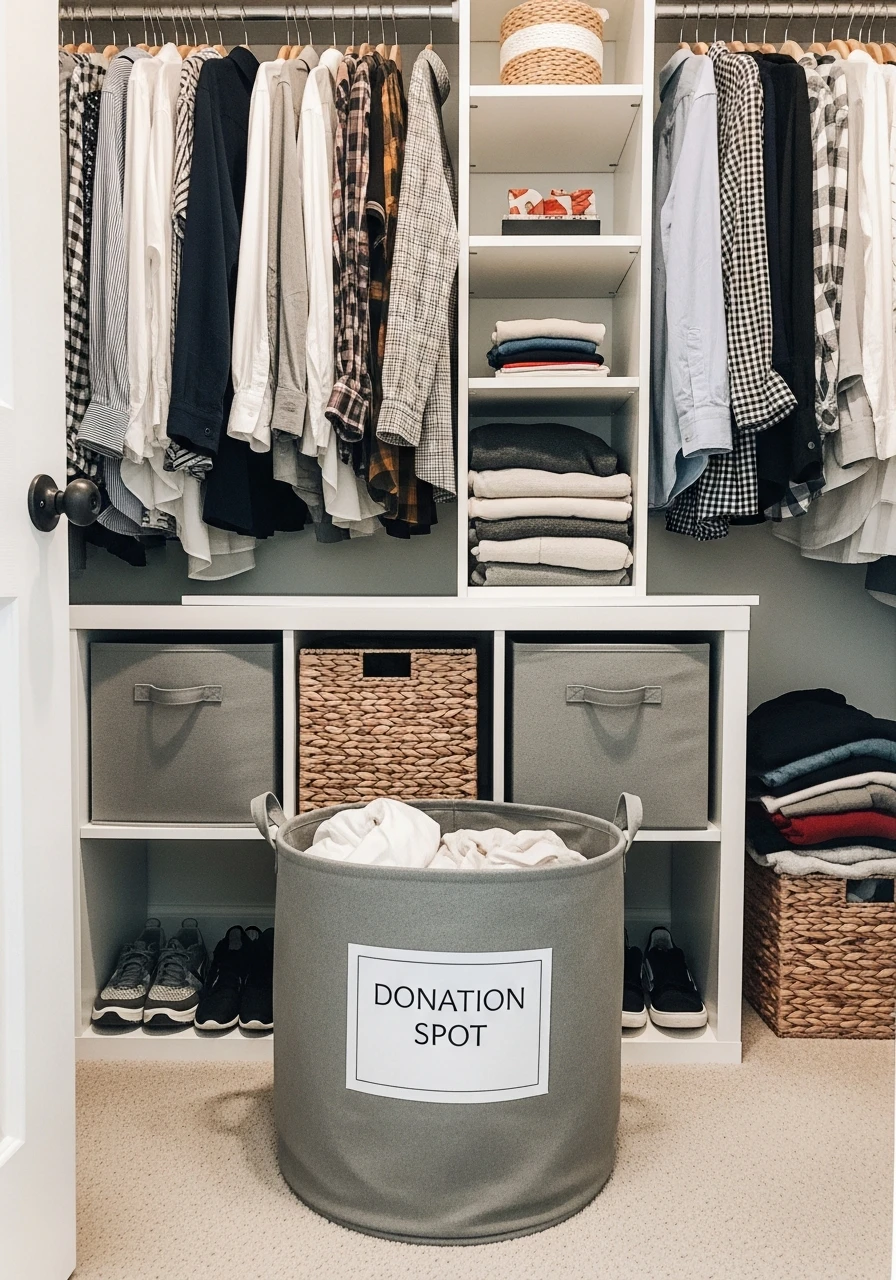
Place a designated donation bag or bin inside the closet so unwanted items are removed immediately. This habit prevents clutter from building up again in the future.
- Use a small, attractive hamper for this purpose.
- Empty the bag once it is full.
- Keep the spot near the door for easy access.
Pro Tip: As soon as you try on something you don’t like, drop it directly into the donation spot rather than putting it back.
11. Use High Vertical Space
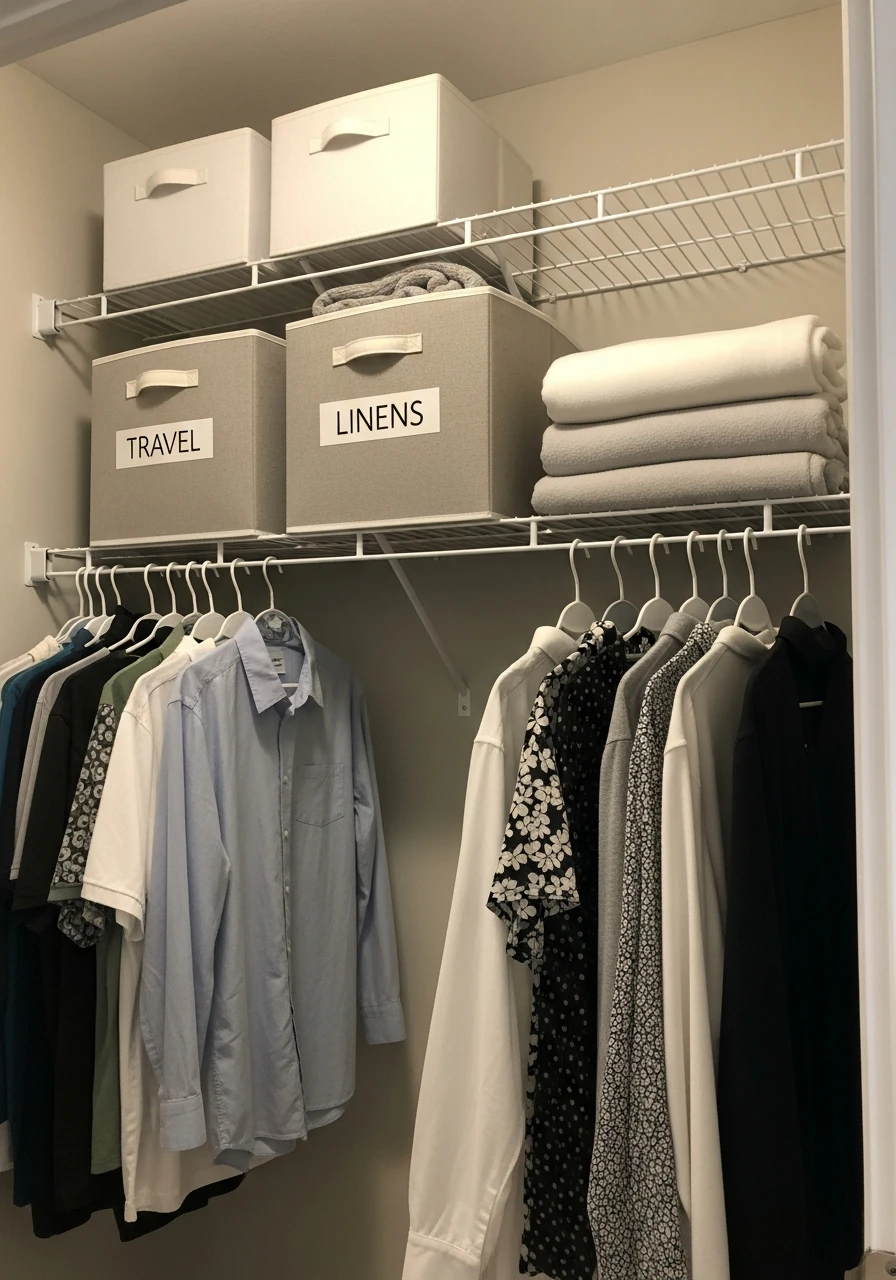
Install a shelf above the hanging rod for bins, bags, or folded items. This often-wasted vertical space is ideal for less-used belongings like travel gear or extra blankets.
- Store items in attractive, uniform bins.
- Use this space for seasonal shoe boxes.
- Keep a small step stool nearby for access.
Pro Tip: Only store items here that you need to access four times a year or less, as it requires extra effort to reach.
12. Under-Shelf Wire Baskets
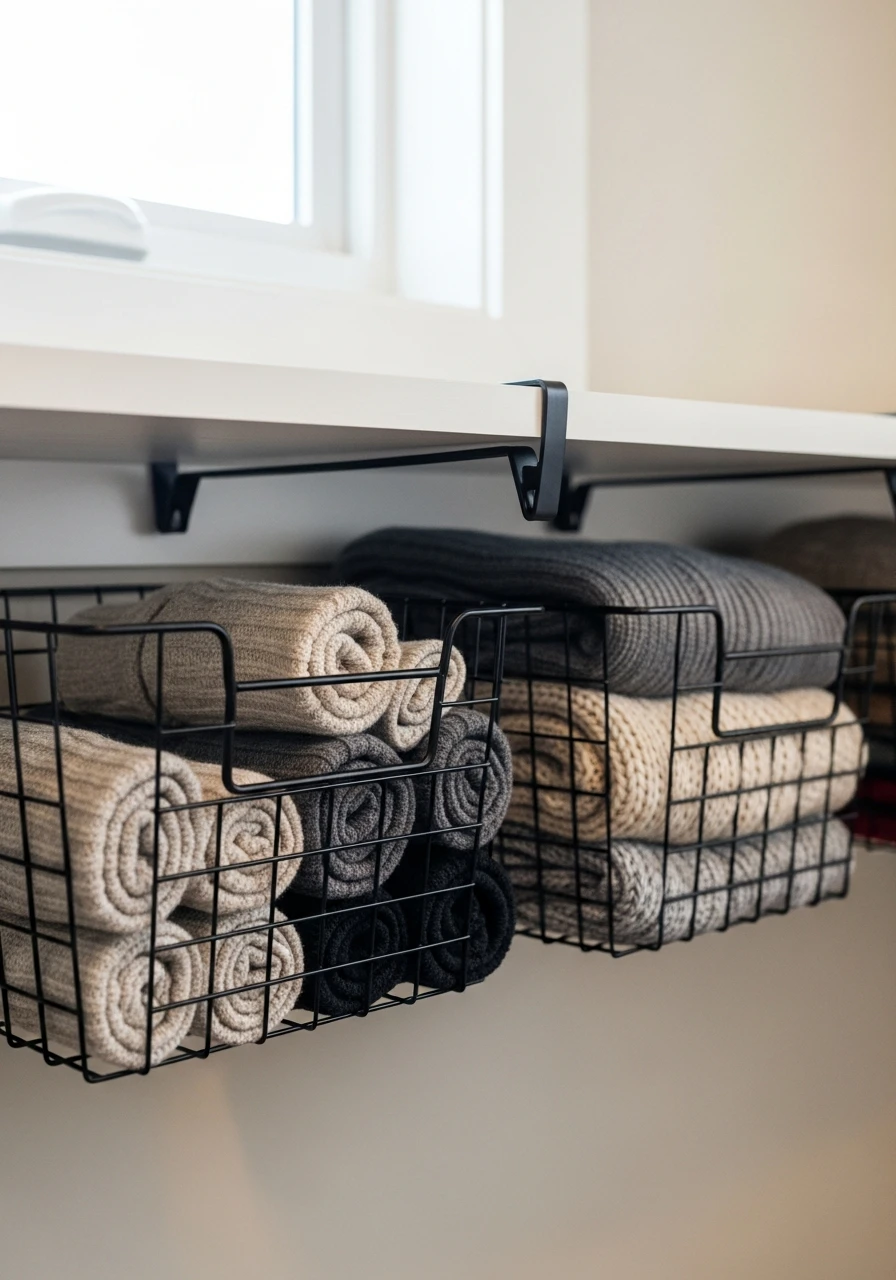
Attach wire baskets beneath shelves to store socks, scarves, or small items. These maximize shelf space without adding bulk and use the air space below the shelf.
- Use them for small, loose accessories.
- Perfect for storing extra shelf liners.
- Ensure the basket doesn’t block items below it.
Pro Tip: These baskets are great for holding items that tend to unravel or get lost when placed directly on a shelf.
13. Door Hanging Organizers
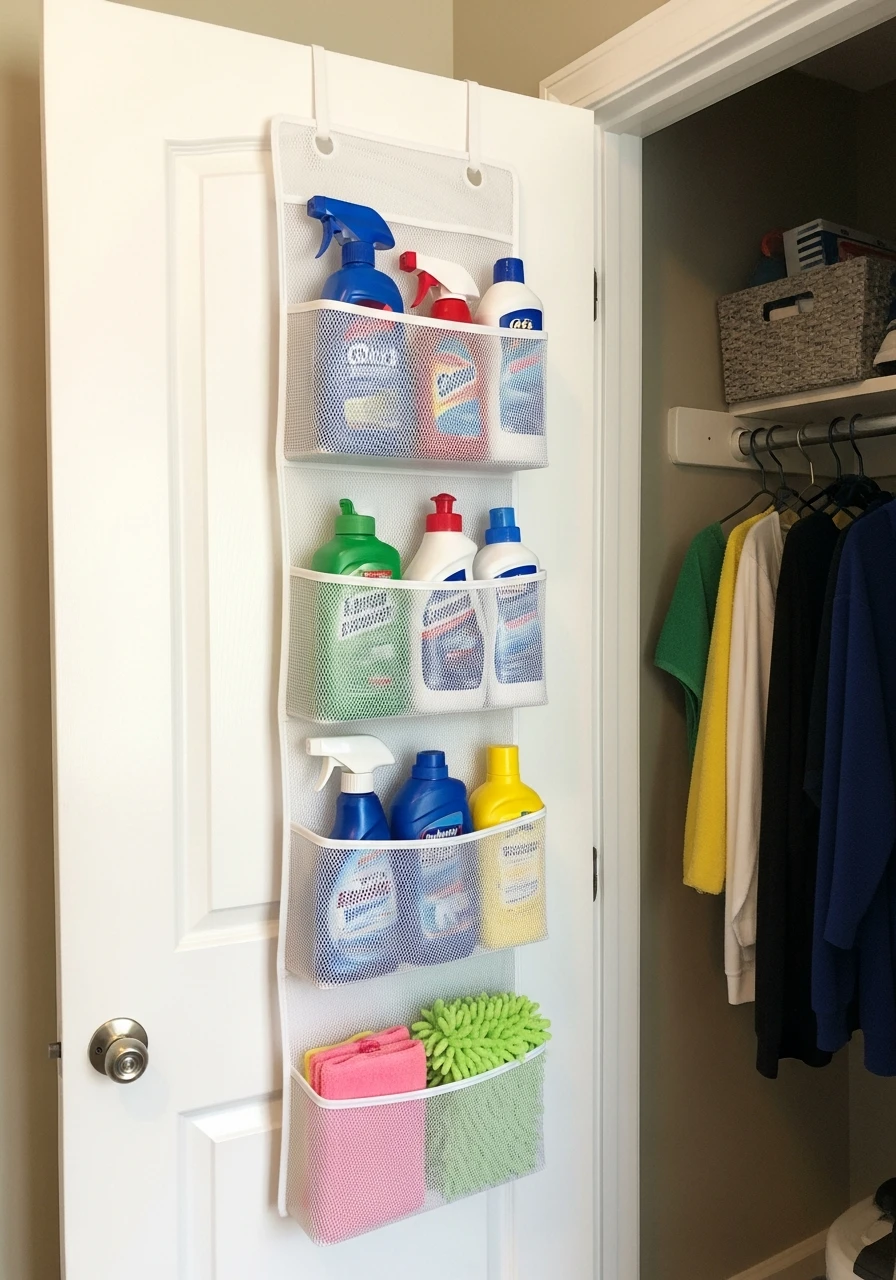
Hang organizers on the inside of closet doors for shoes, accessories, or cleaning items. This uses space that’s often ignored and keeps small items off the floor.
- Look for clear plastic pockets for visibility.
- Use them for belts or folded tights.
- Ensure the door still closes easily with the organizer attached.
Pro Tip: If you don’t need it for shoes, use the pockets to store cleaning supplies like dusters or lint rollers.
14. Floating Side Wall Shelves
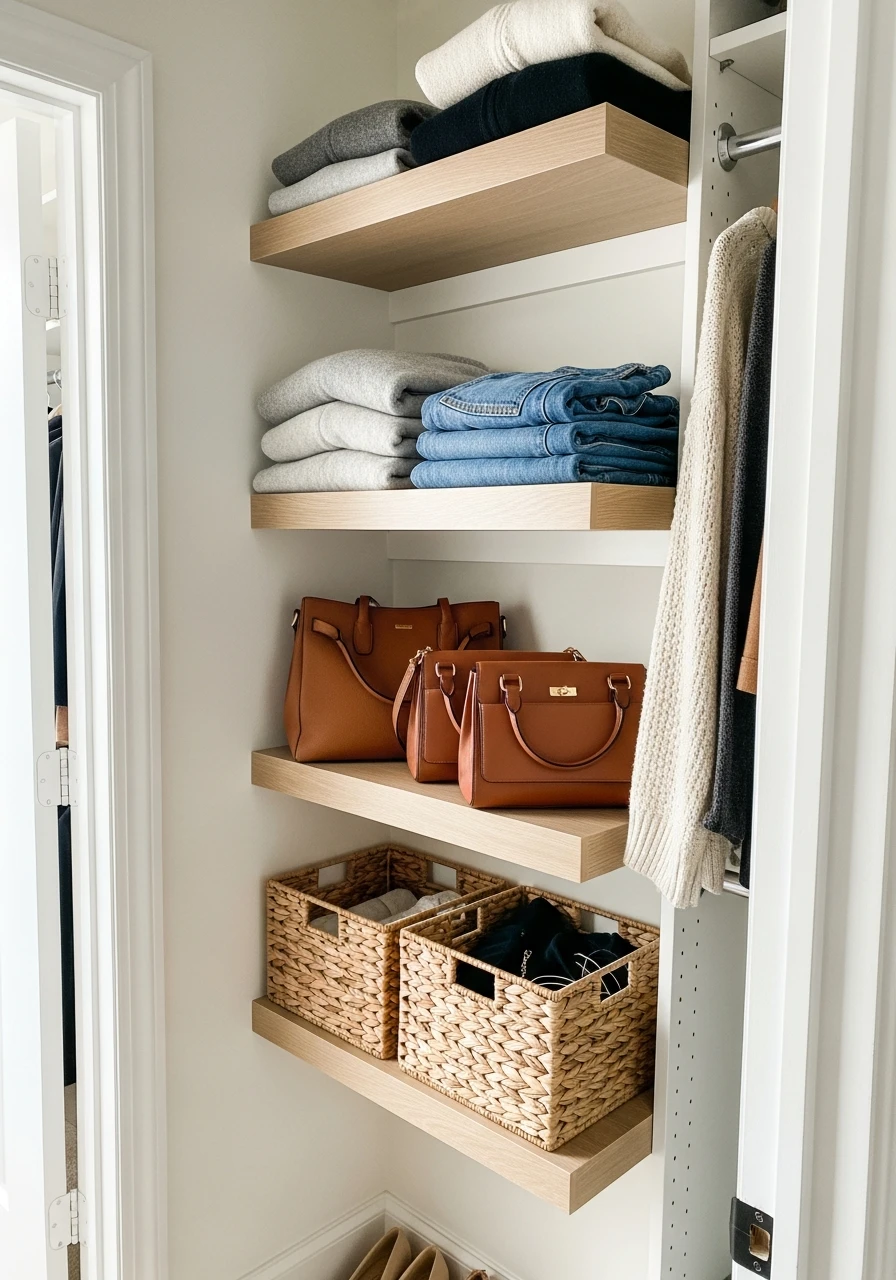
Side walls can hold floating shelves for handbags, folded clothes, or décor baskets. This expands storage beyond the main closet wall, especially in walk-in closets.
- Use shelves for displaying favorite bags.
- Keep these shelves shallow so they don’t block movement.
- Install them at different heights for visual interest.
Pro Tip: These shelves are perfect for creating a ‘display’ area for jewelry or perfume bottles if you have the space.
15. Hooks Behind Doors
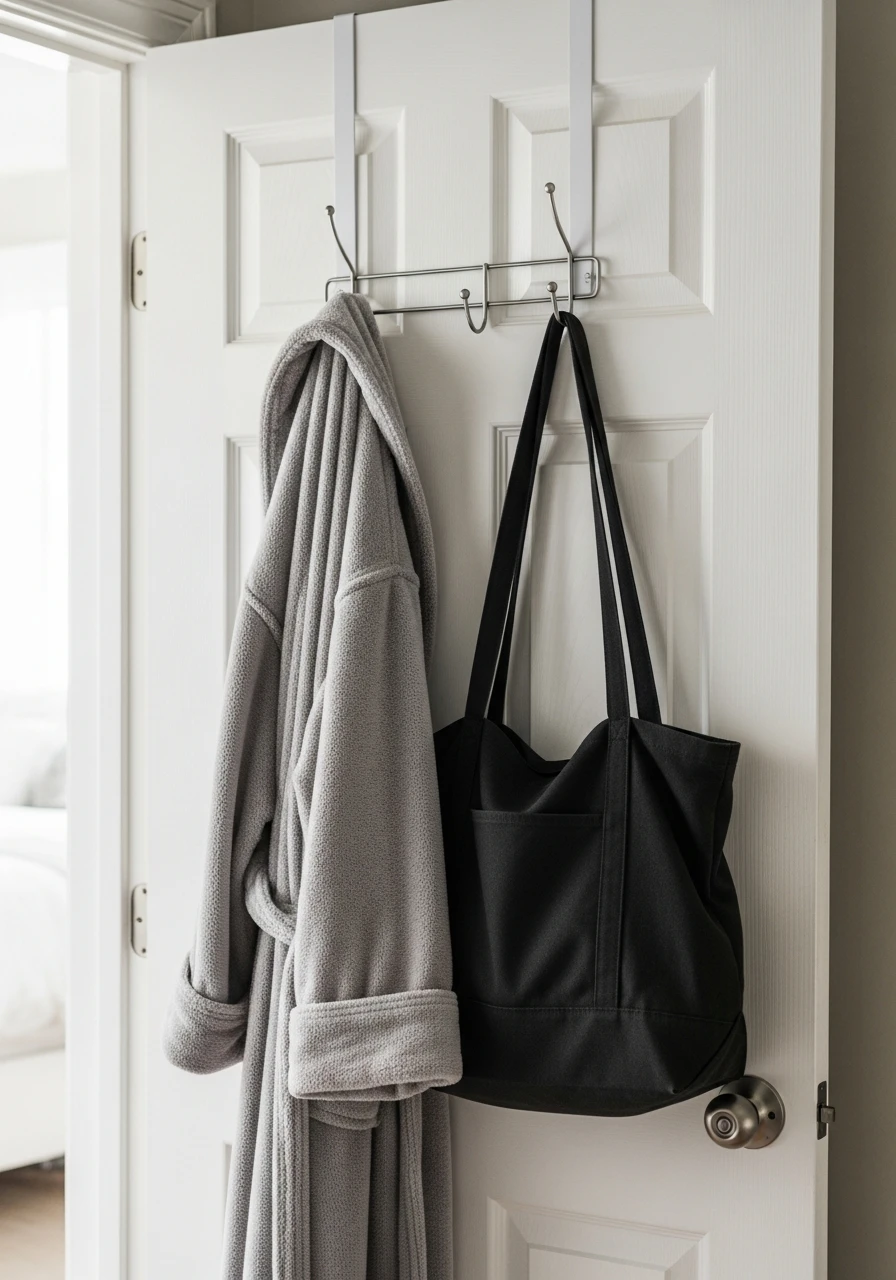
Hooks behind doors are perfect for robes, hats, or frequently used bags. They keep these items accessible but off shelves and hanging rods.
- Use sturdy metal hooks for heavy robes.
- Install them low enough for easy reach.
- Great for hanging outfits planned for the next day.
Pro Tip: Use adhesive hooks if you rent, but make sure they are strong enough to hold the weight you plan to hang.
16. Interior Wall Hooks
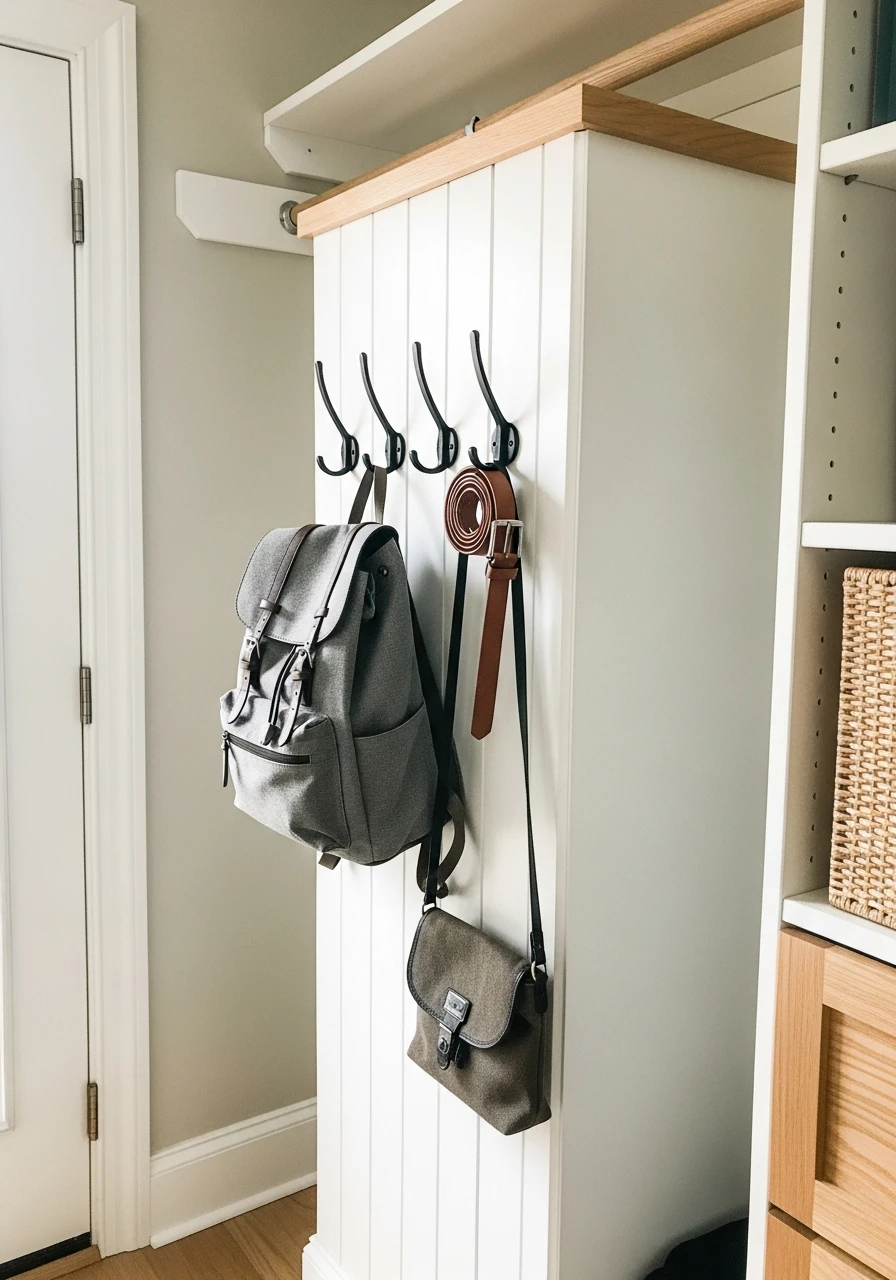
Mount hooks on empty wall sections inside the closet for purses, backpacks, or belts. This frees up shelf and rod space for clothing.
- Use small hooks for necklaces.
- Place hooks near the floor for shoe bags.
- Ensure the hook placement doesn’t interfere with hanging clothes.
Pro Tip: Use a row of small, uniform hooks to hang all your belts vertically by the buckle.
17. Floor Storage Baskets
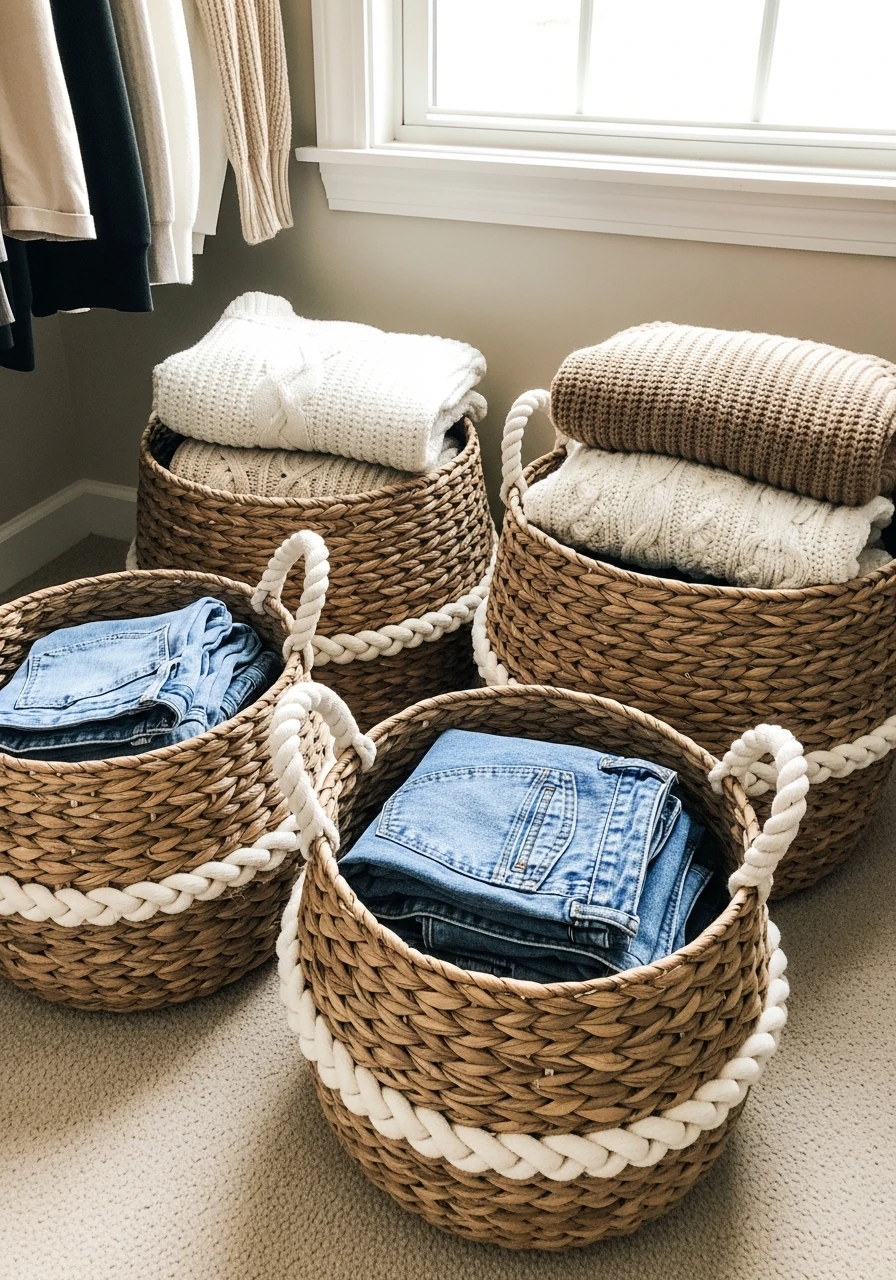
Use baskets on the closet floor for sweaters, jeans, or gym clothes. This keeps heavier items contained and easy to grab without having to fold them perfectly.
- Choose durable, woven or wire baskets.
- Keep one basket dedicated to laundry.
- Ensure baskets fit neatly under hanging clothes.
Pro Tip: If you use the floor for storage, make sure the baskets have lids to keep dust off the contents.
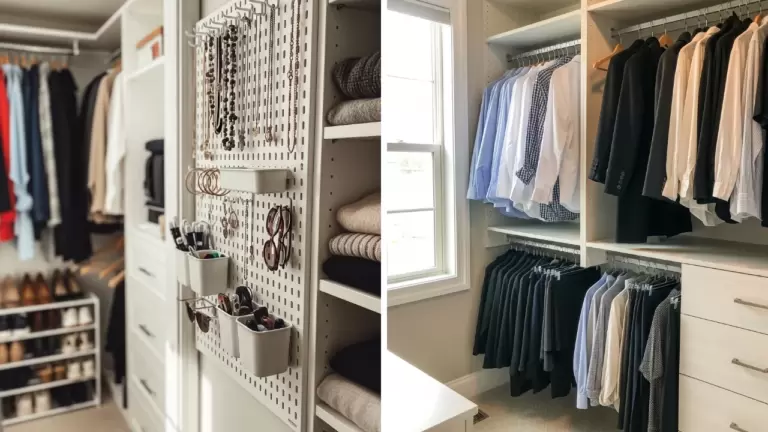
18. Flexible Pegboard System
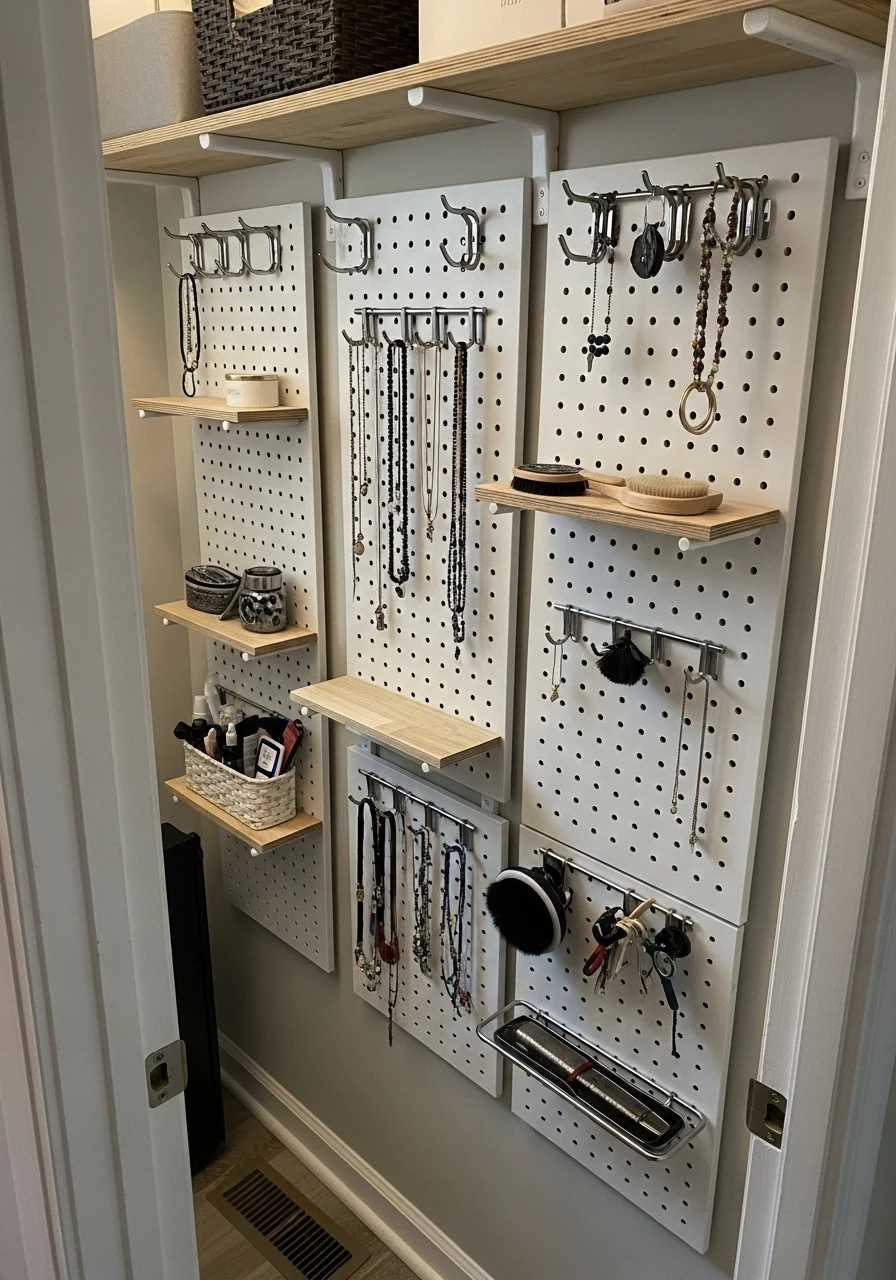
Pegboards allow flexible storage for accessories and can be rearranged as needs change. They are ideal for evolving closets and small items like tools or jewelry.
- Paint the pegboard to match your closet walls.
- Use small cups or bins attached to the board.
- Great for hanging sunglasses and keys.
Pro Tip: Use the pegboard to hold small hooks for displaying your favorite jewelry pieces like a store.
19. Uniform Storage Boxes

Use same-size storage boxes on top shelves for seasonal items. Uniform boxes stack neatly, prevent visual clutter, and give the closet a clean, organized look.
- Choose boxes with lids to keep out dust.
- Match the box color to the closet interior.
- Use sturdy boxes that won’t sag when stacked.
Pro Tip: If you buy boxes in bulk, you can often get a better price and ensure they all match perfectly.
20. Clear Shelf Dividers
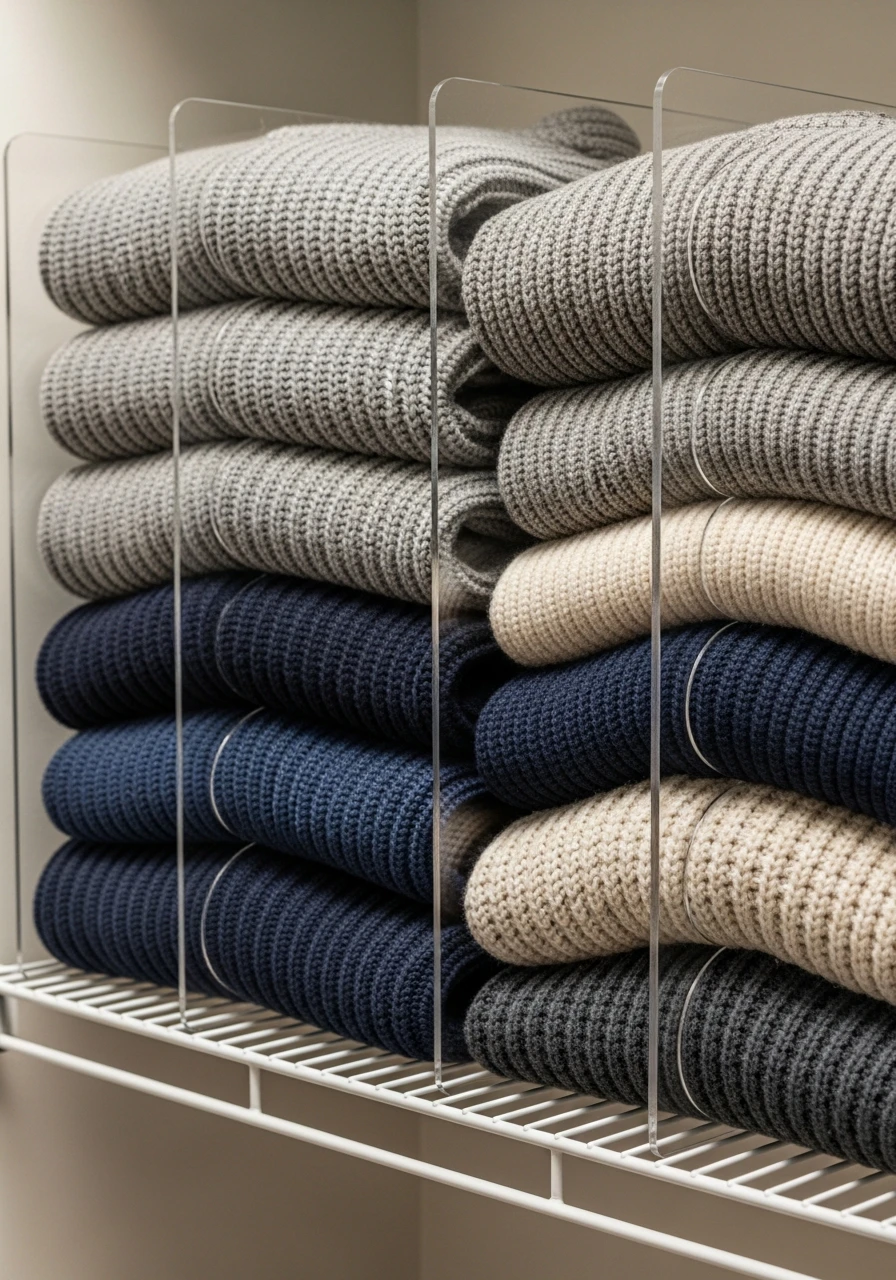
Shelf dividers keep folded clothing piles upright and organized, preventing stacks from falling over. They are essential for maintaining neat stacks of sweaters or heavy shirts.
- Use dividers that clip onto the shelf.
- Place dividers every 8 to 10 inches.
- Great for separating towels or linens too.
Pro Tip: Always fold items using a folding board or template to ensure every stack is the exact same size and height.
21. Towel Bars For Scarves
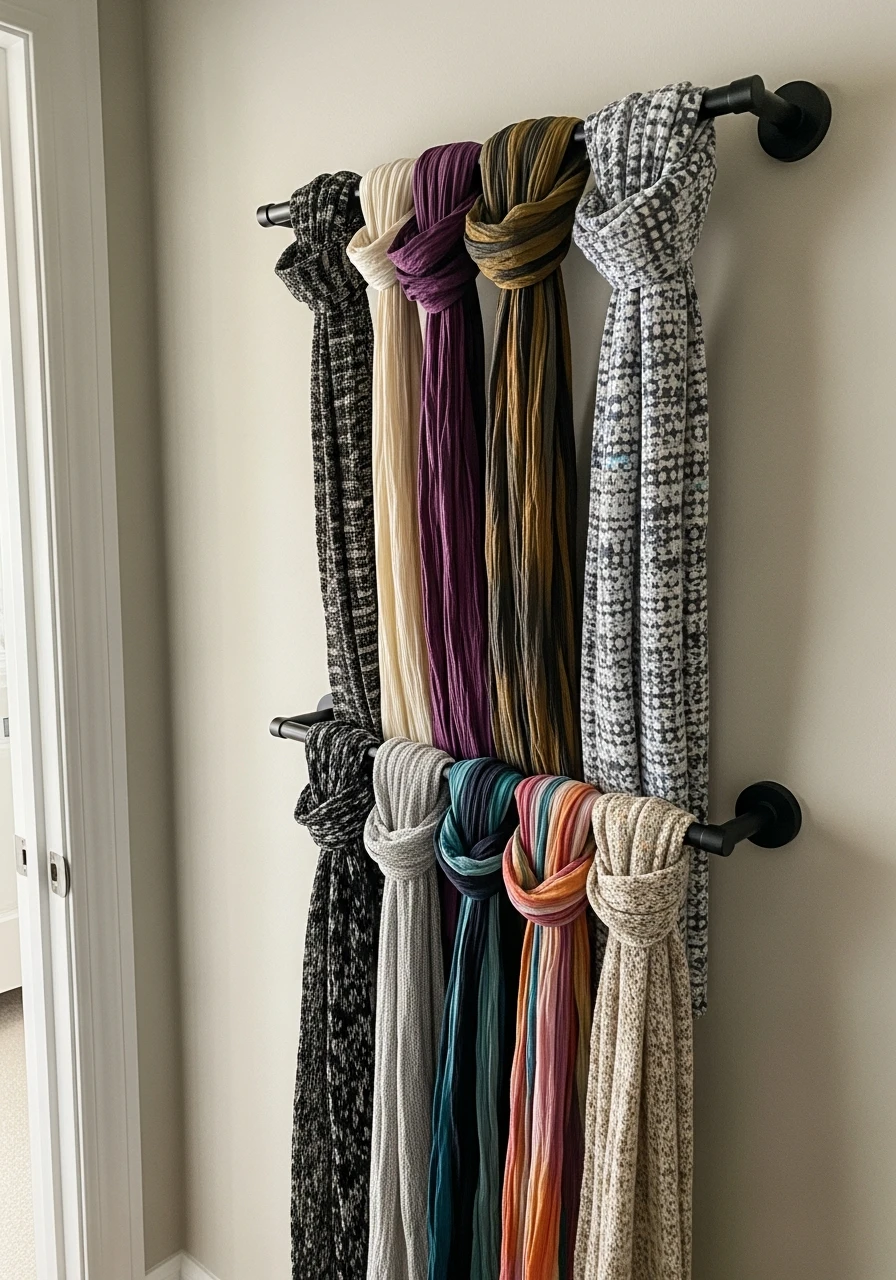
Mount towel bars horizontally to hang scarves neatly. This keeps them visible, wrinkle-free, and easy to choose when building an outfit.
- Install bars on the back of the closet door.
- Loop scarves through the bar.
- Use multiple bars for large collections.
Pro Tip: If you have delicate silk scarves, use padded clips instead of looping them over the bar to prevent creases.
22. Multi-Tier Hangers
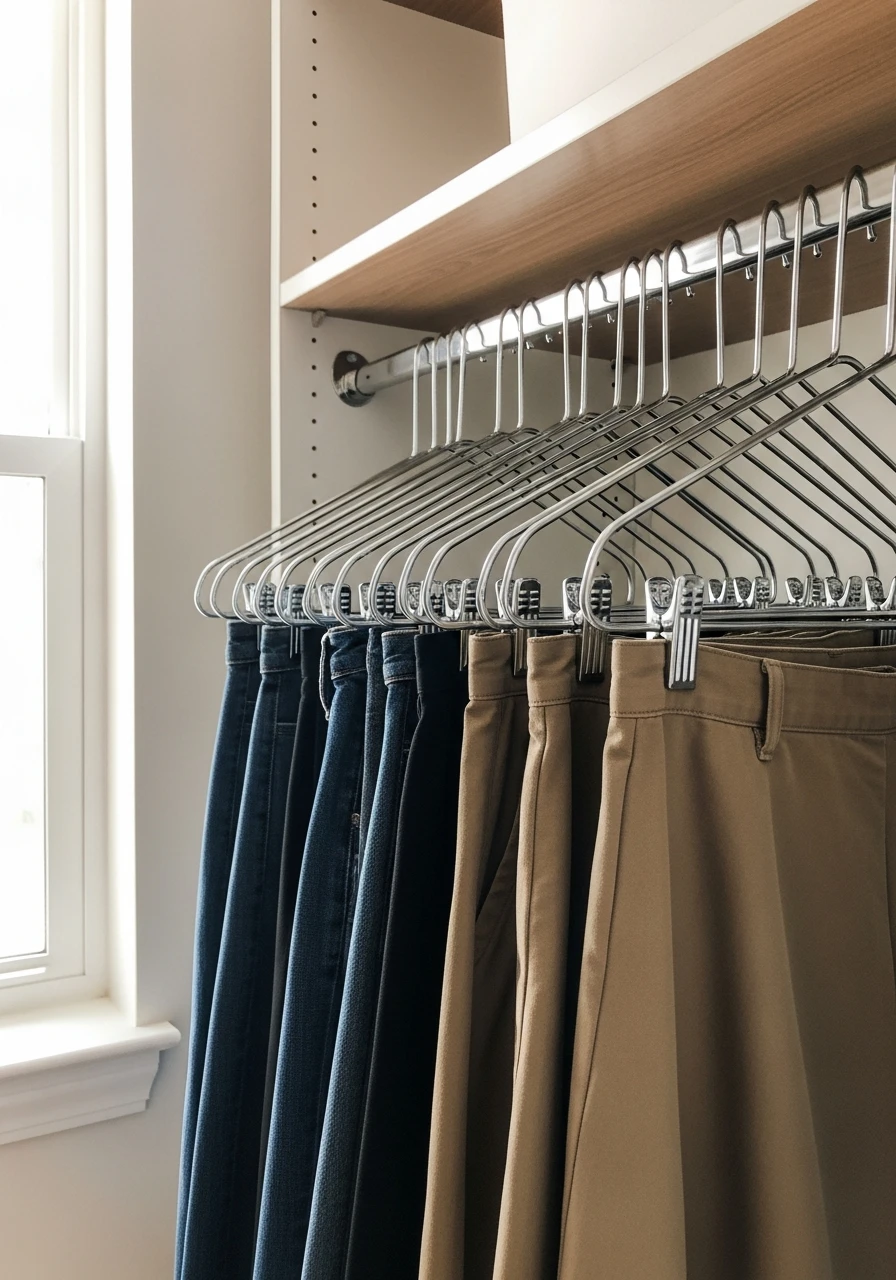
Multi-tier hangers store several pairs of pants or skirts on one hook. This saves rod space and keeps items wrinkle-free by hanging them flat.
- Look for sliding bars for easy access.
- Use them for work pants and slacks.
- Avoid overloading them to prevent rod strain.
Pro Tip: These are best for items you wear often, as retrieving the bottom item can sometimes be tricky.
23. Cascading Hanger Hooks
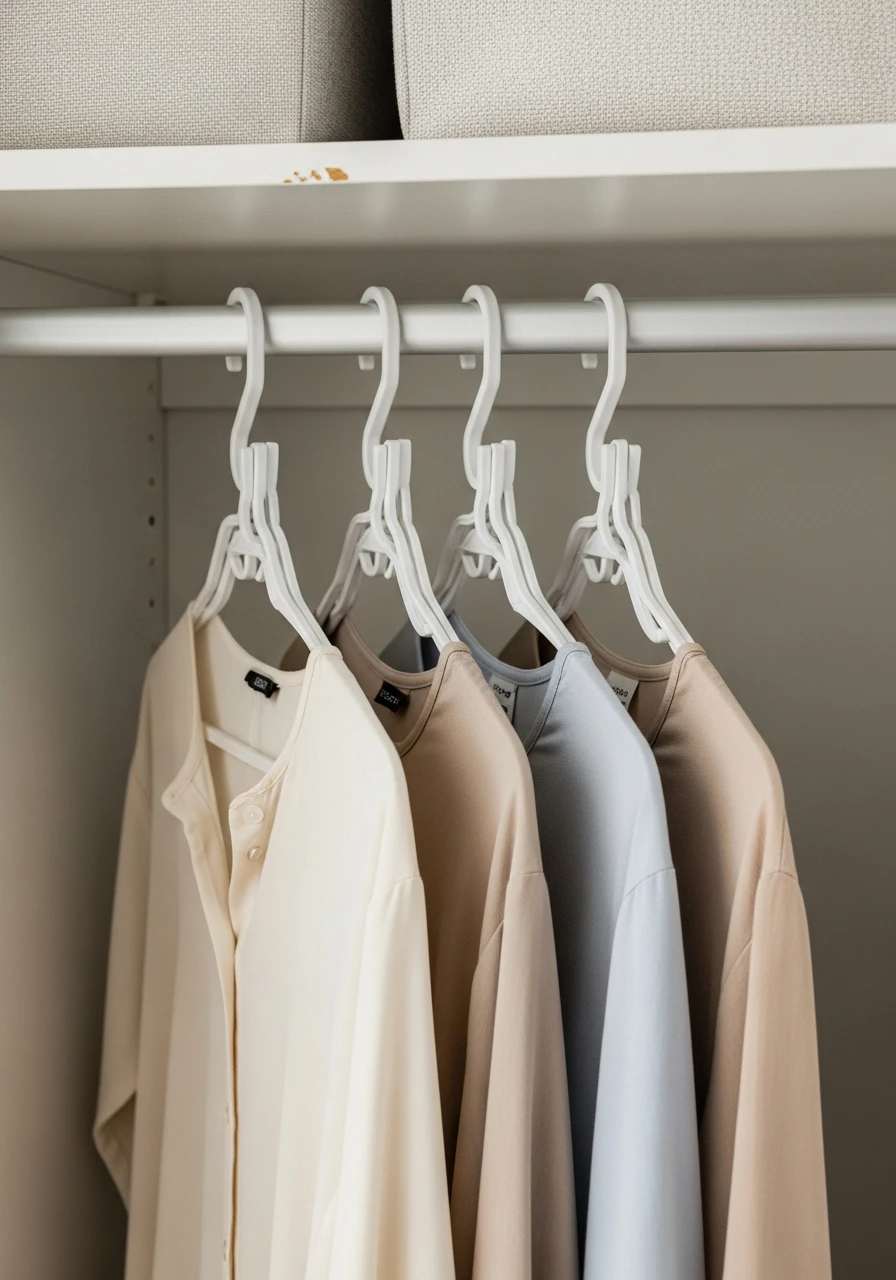
Cascading hooks let you hang multiple garments vertically down the rod. This is a great way to maximize height in tight closets for items that aren’t too bulky.
- Use them to group matching suits or outfits.
- Great for light blouses and tank tops.
- Ensure the hooks are strong enough for the weight.
Pro Tip: Use these hooks to hang a complete outfit together, including the jacket, shirt, and pants, for quick dressing.
24. Medium Hanging Zone
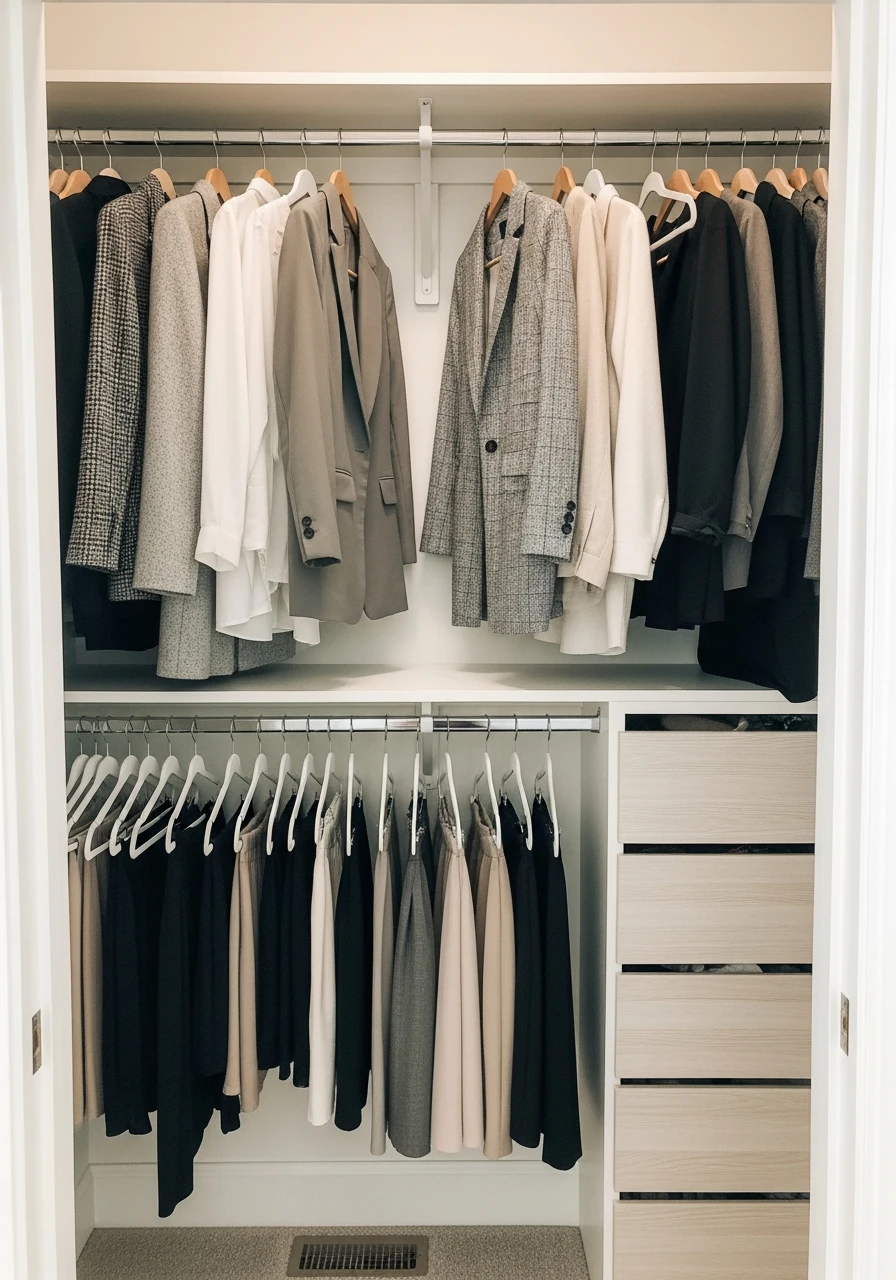
Designate space for mid-length items like skirts and blazers so they don’t interfere with longer clothing sections. This prevents items from dragging on the floor or bottom shelf.
- Measure the length of your shortest dress.
- Use this zone above a low dresser or shoe shelf.
- Keep the hemline consistent for a clean look.
Pro Tip: This area is perfect for storing a small rolling cart or laundry hamper underneath the hanging items.
25. Pull-Down Closet Rods
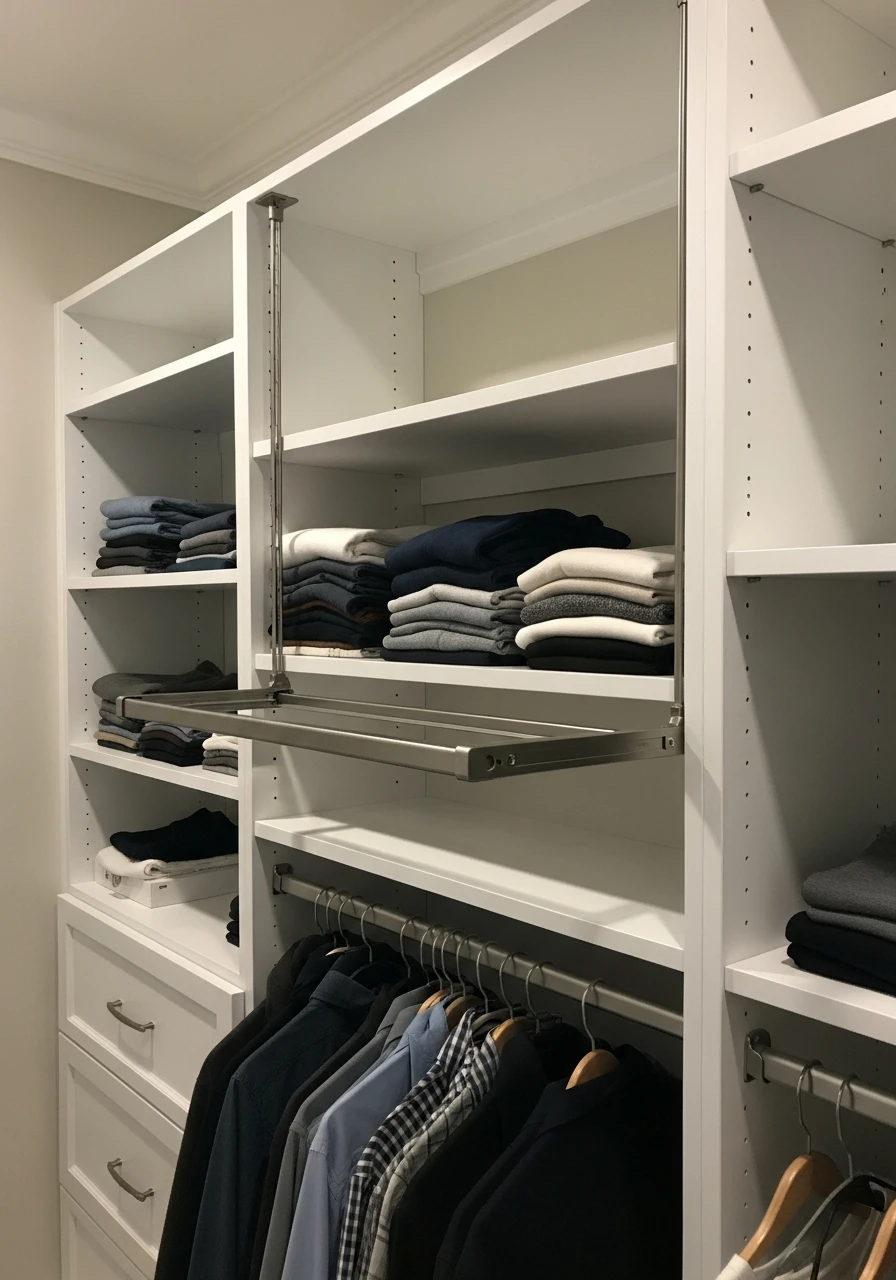
Pull-down rods make high closet space usable, especially for shorter users or closets with high ceilings. They bring the clothes down to your level with a simple pull.
- Ideal for storing formal wear or seasonal items.
- Requires professional installation.
- Check weight limits before loading the rod.
Pro Tip: Install this rod above a lower shelf or drawer unit to maximize the space below it.
26. Hooks Inside Shelves
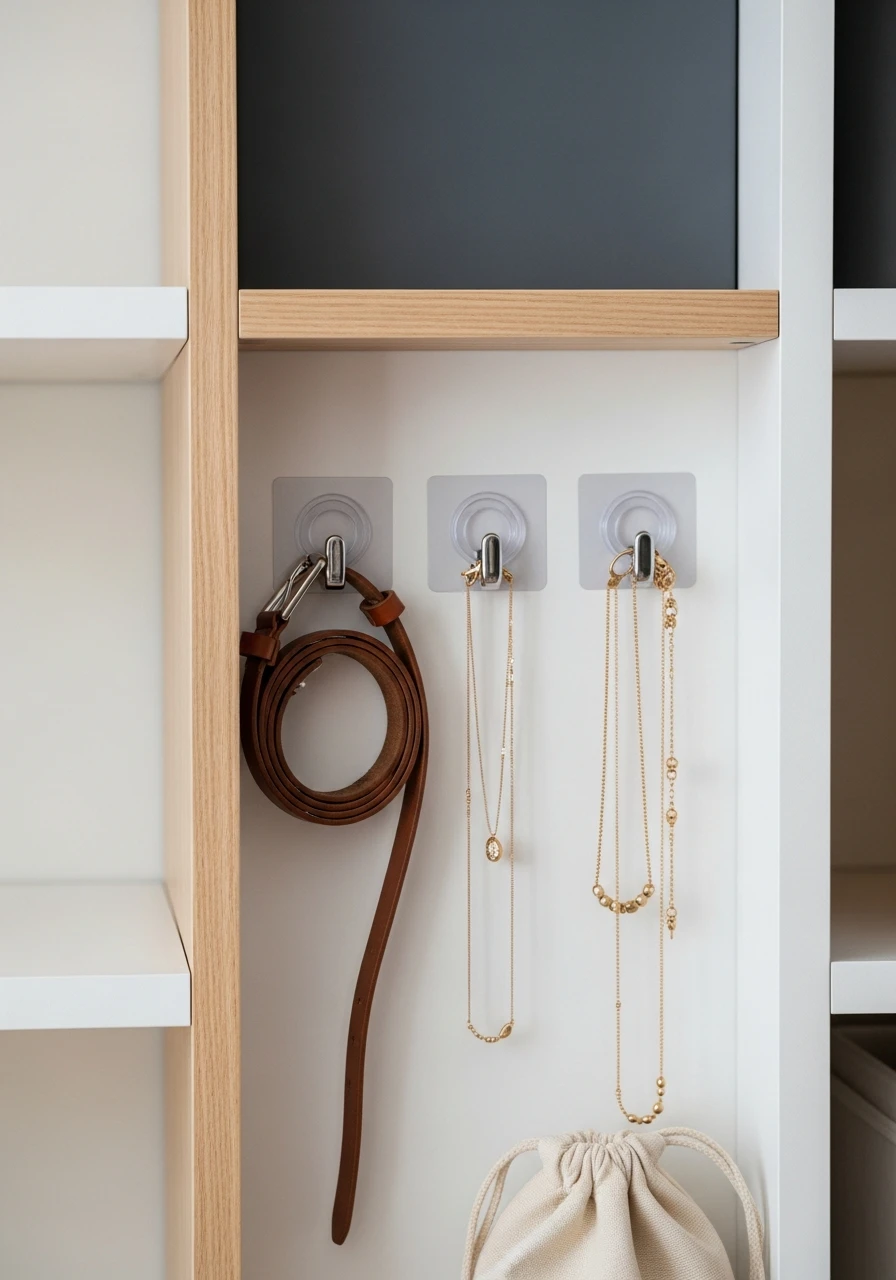
Small hooks placed inside shelves or cubbies are perfect for jewelry, belts, or small bags. They keep accessories organized and visible without taking up drawer space.
- Use small cup hooks for necklaces.
- Mount them on the underside of a shelf.
- Ensure they don’t scratch items stored below.
Pro Tip: This is a clever way to store sunglasses by hanging them by the arm on a small hook.
27. Clear Acrylic Dividers

Clear acrylic dividers separate folded clothes without blocking visibility. They make it easier to maintain neat stacks and find items quickly.
- Use them in drawers for separation.
- Great for separating different types of jeans.
- They give a high-end, custom look.
Pro Tip: Acrylic dividers are easier to clean than fabric ones and resist dust buildup.
28. Install Built-In Drawers
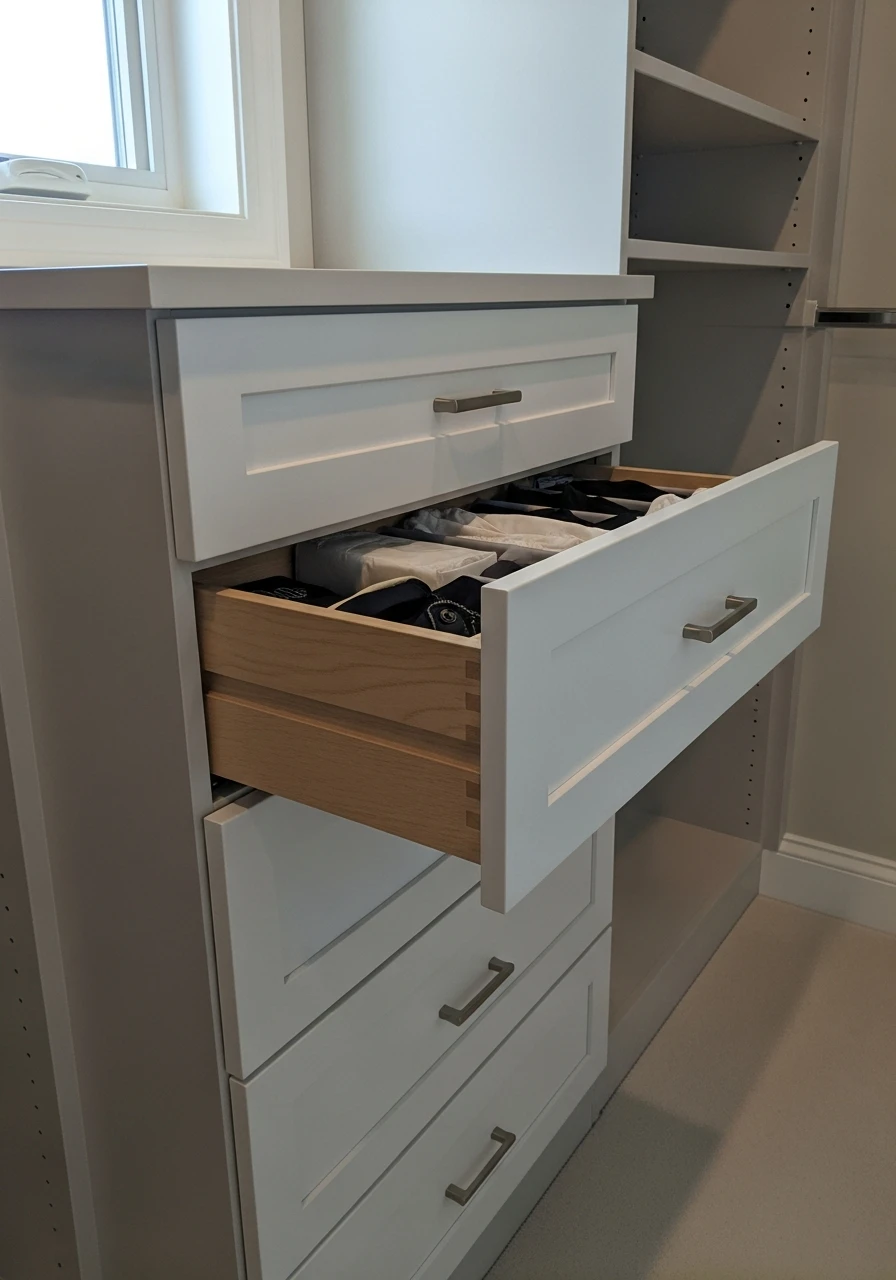
Built-in drawers provide hidden storage for undergarments, accessories, or folded items. They reduce visual clutter and keep delicate items protected.
- Use soft-close slides for a smooth feel.
- Install them in the lower half of the closet.
- Perfect for items you don’t want on display.
Pro Tip: If you can’t install built-in drawers, use a standalone dresser unit inside the closet instead.
29. Uniform Hanger Style
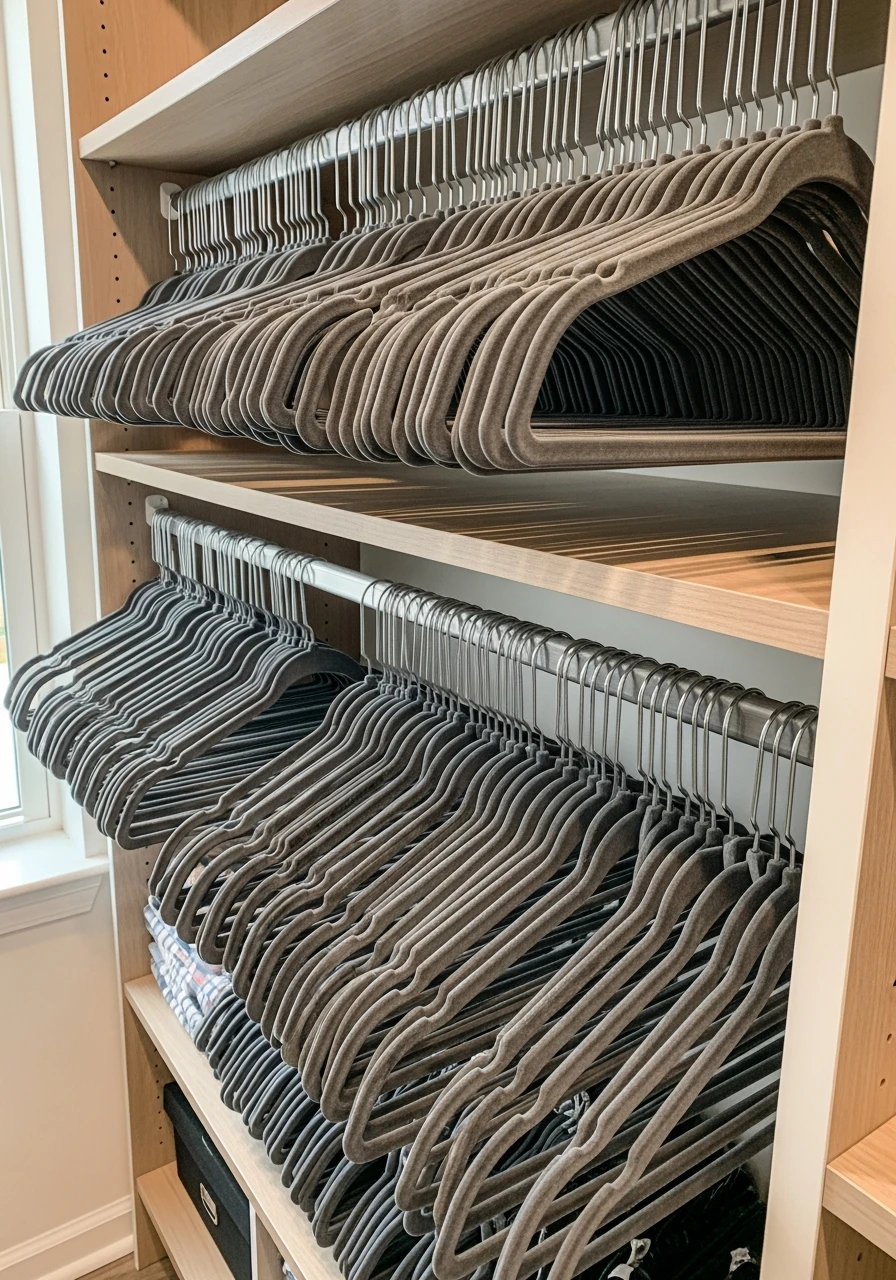
Using one hanger style throughout creates a consistent, polished look. This visual unity helps maximize rod space and makes the closet feel custom-designed.
- Stick to one material: velvet, wood, or plastic.
- Ensure all hangers face the same direction.
- Buy all hangers at the same time to guarantee a match.
Pro Tip: When you bring new clothes home, immediately switch them to your uniform hanger before putting them away.
30. Belt And Tie Hangers
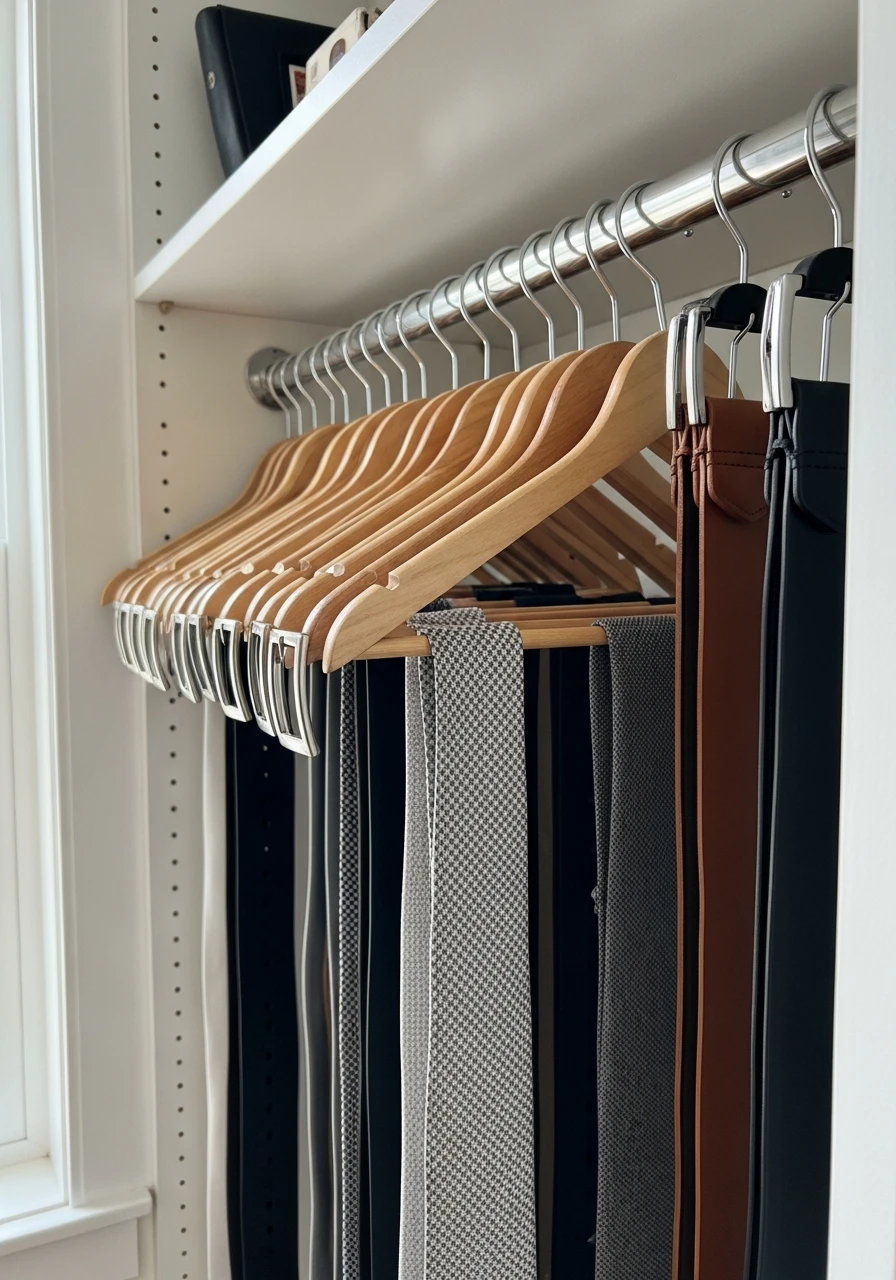
Special hangers prevent belts and ties from tangling and make selecting accessories faster. They hang neatly on the rod, using minimal space.
- Look for circular or multi-hook designs.
- Hang ties by color or pattern.
- Use one hanger for casual belts and one for dress belts.
Pro Tip: If you don’t have a dedicated hanger, use a simple shower curtain ring on a regular hanger to hold ties or scarves.
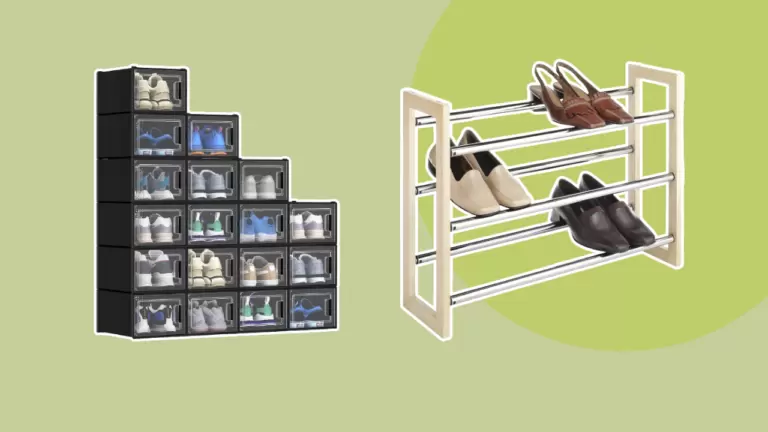
31. Clear Shoe Storage Boxes
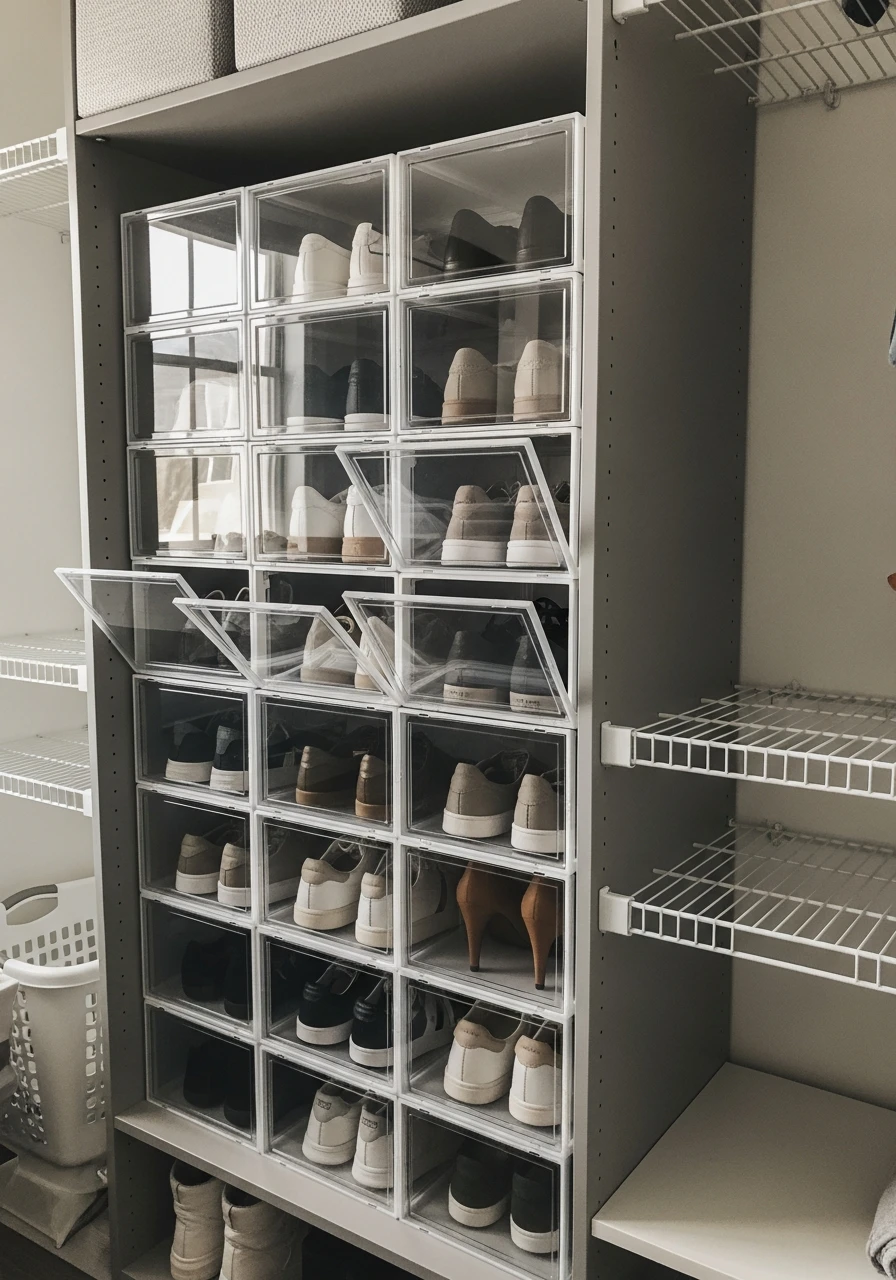
Clear shoe boxes protect shoes from dust while making each pair visible. This reduces time spent searching and keeps your shoes in great shape.
- Stack boxes neatly on shelves or the floor.
- Use boxes with ventilation holes.
- Turn one shoe around so you see both the heel and toe.
Pro Tip: For high-value shoes, place a small photo of the pair on the outside of the box for quick identification.
32. Vertical Shoe Risers
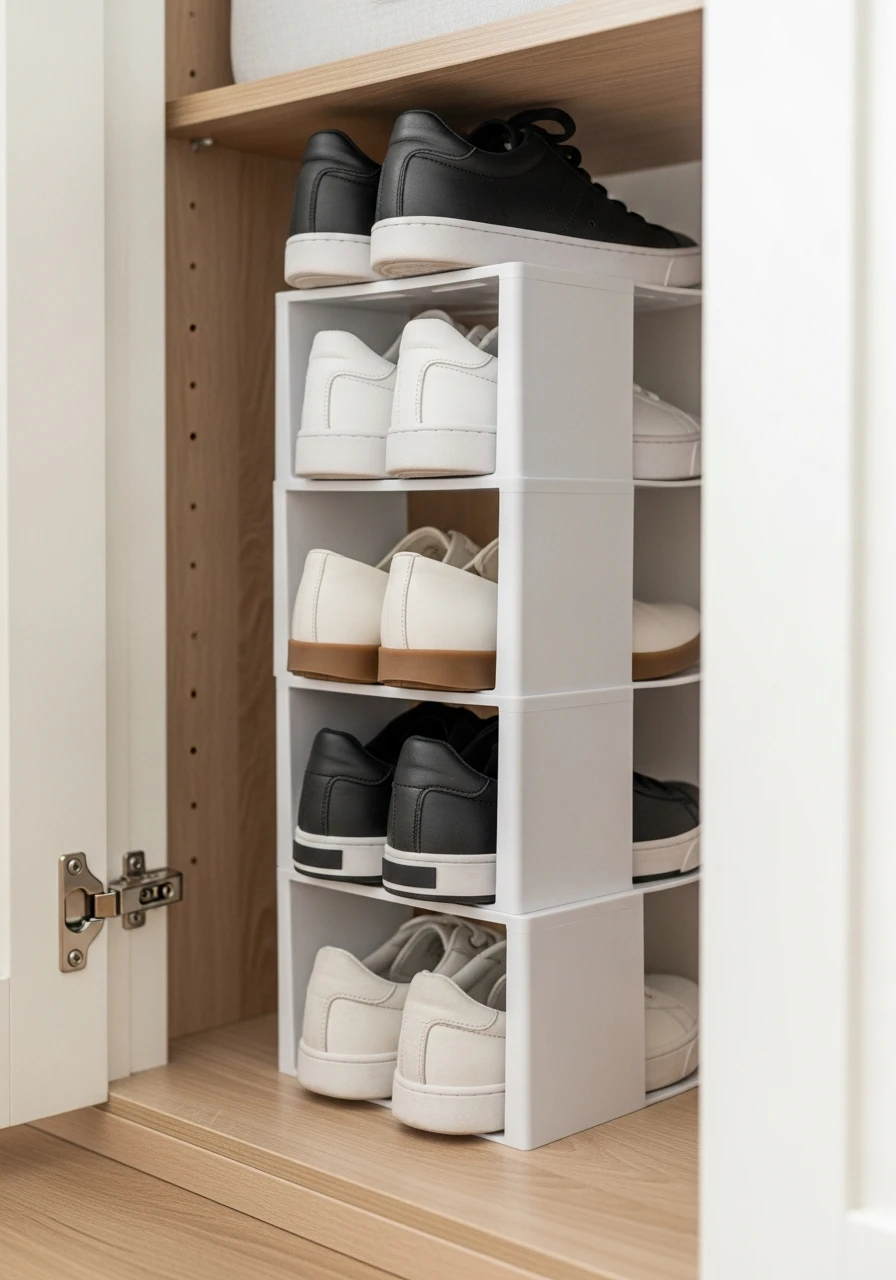
Shoe risers allow two pairs to fit in the space of one, ideal for shelves and small closets. They stack shoes neatly, maximizing vertical shelf space.
- Best used for flats, sneakers, and low heels.
- Not suitable for tall boots or wedges.
- Place risers on the floor or deep shelves.
Pro Tip: When using risers, ensure the shelf height above is tall enough to accommodate the stacked shoes.
33. Door Shoe Pockets
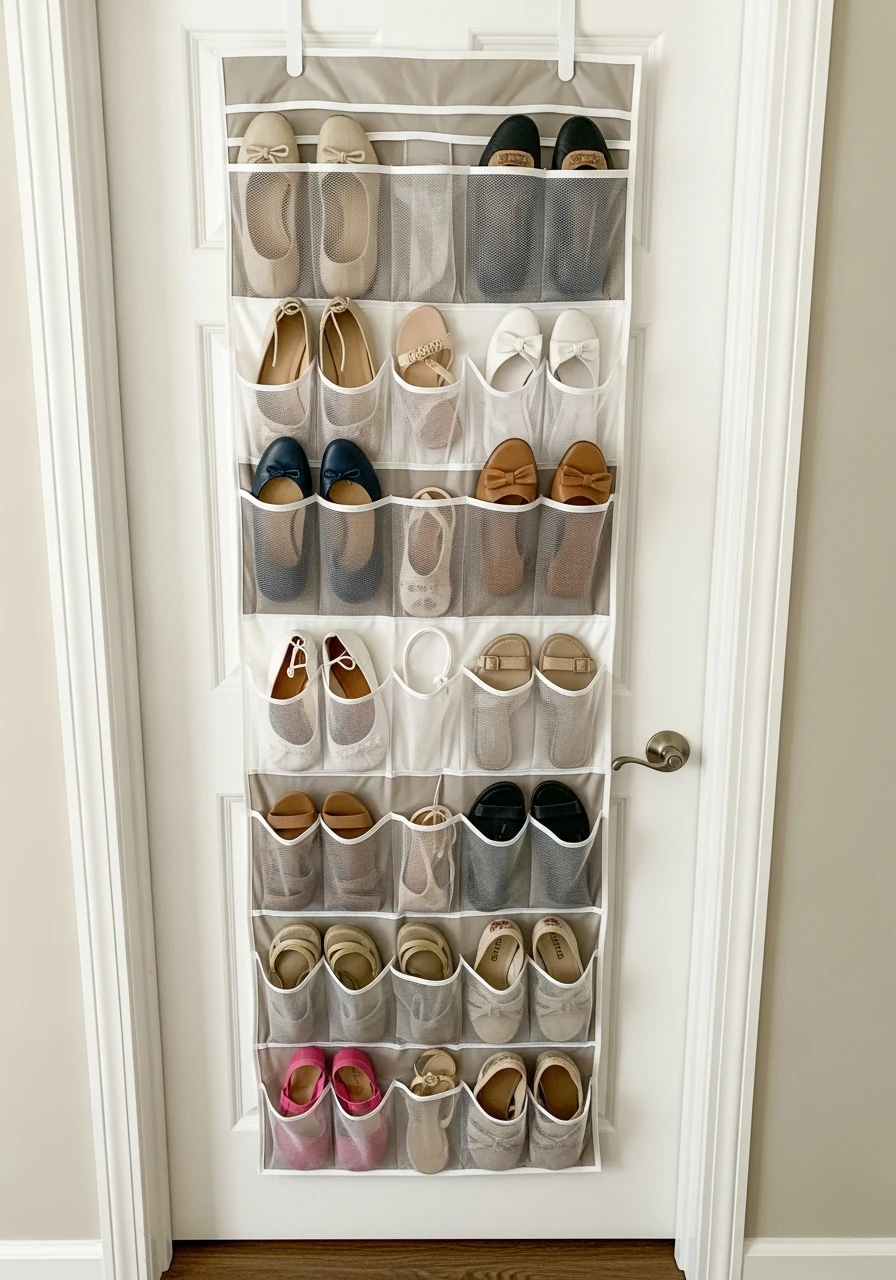
Over-the-door shoe organizers are perfect for flats, sandals, or kids’ shoes without taking floor space. They utilize the door’s vertical area efficiently.
- Use them for small accessories like gloves.
- Avoid placing heavy boots in the pockets.
- Check that the hook system doesn’t damage the door frame.
Pro Tip: Use one pocket to hold shoe care items like polish, brushes, and waterproofing spray.
34. Tall Boot Cubbies
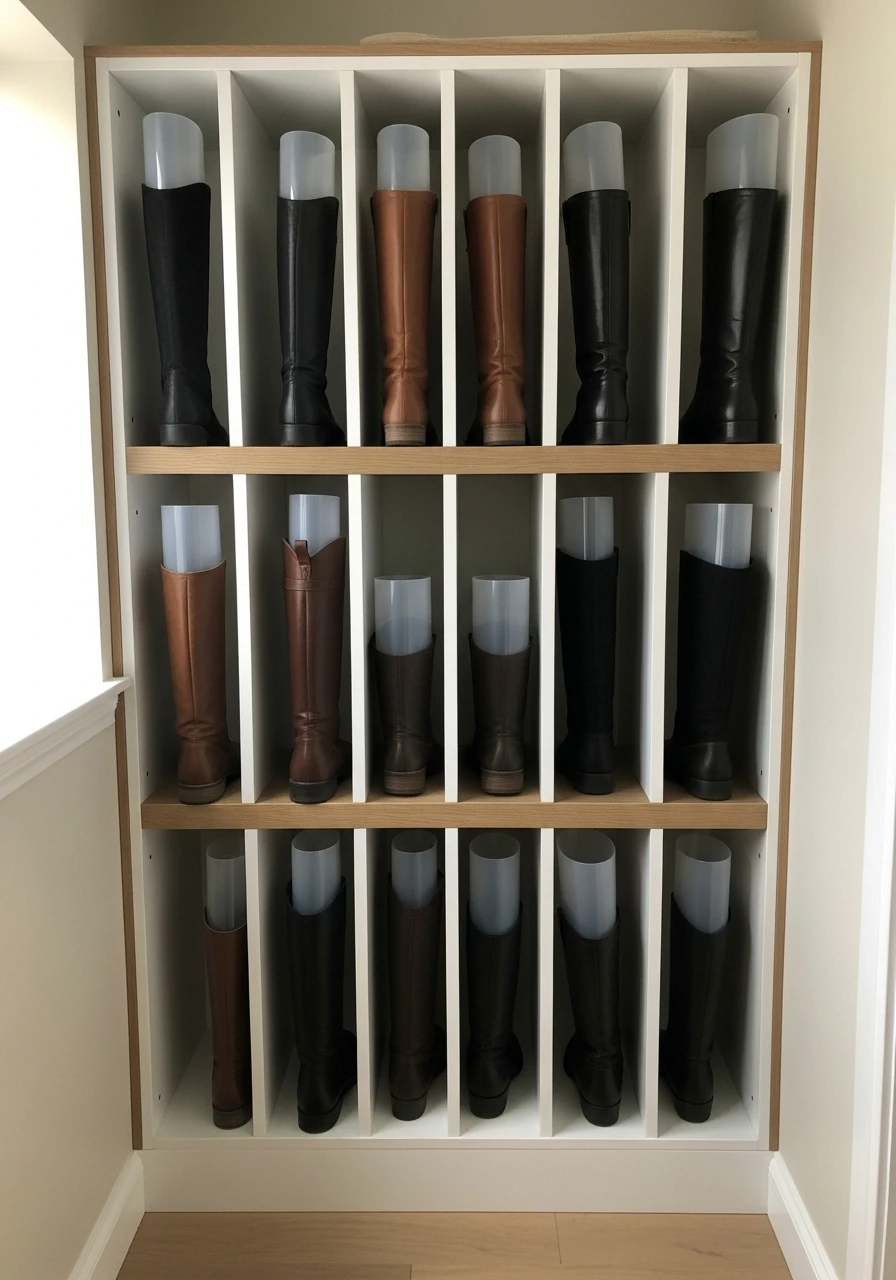
Store boots upright in tall cubbies or boot shapers to maintain their shape and keep floors tidy. This prevents the leather from creasing or collapsing.
- Use boot shapers to keep the shaft straight.
- Place cubbies on the floor or bottom shelf.
- Keep riding boots and ankle boots separate.
Pro Tip: If you don’t have cubbies, use pool noodles cut to size inside the boot shaft to keep them upright.
35. Display Handbags Upright
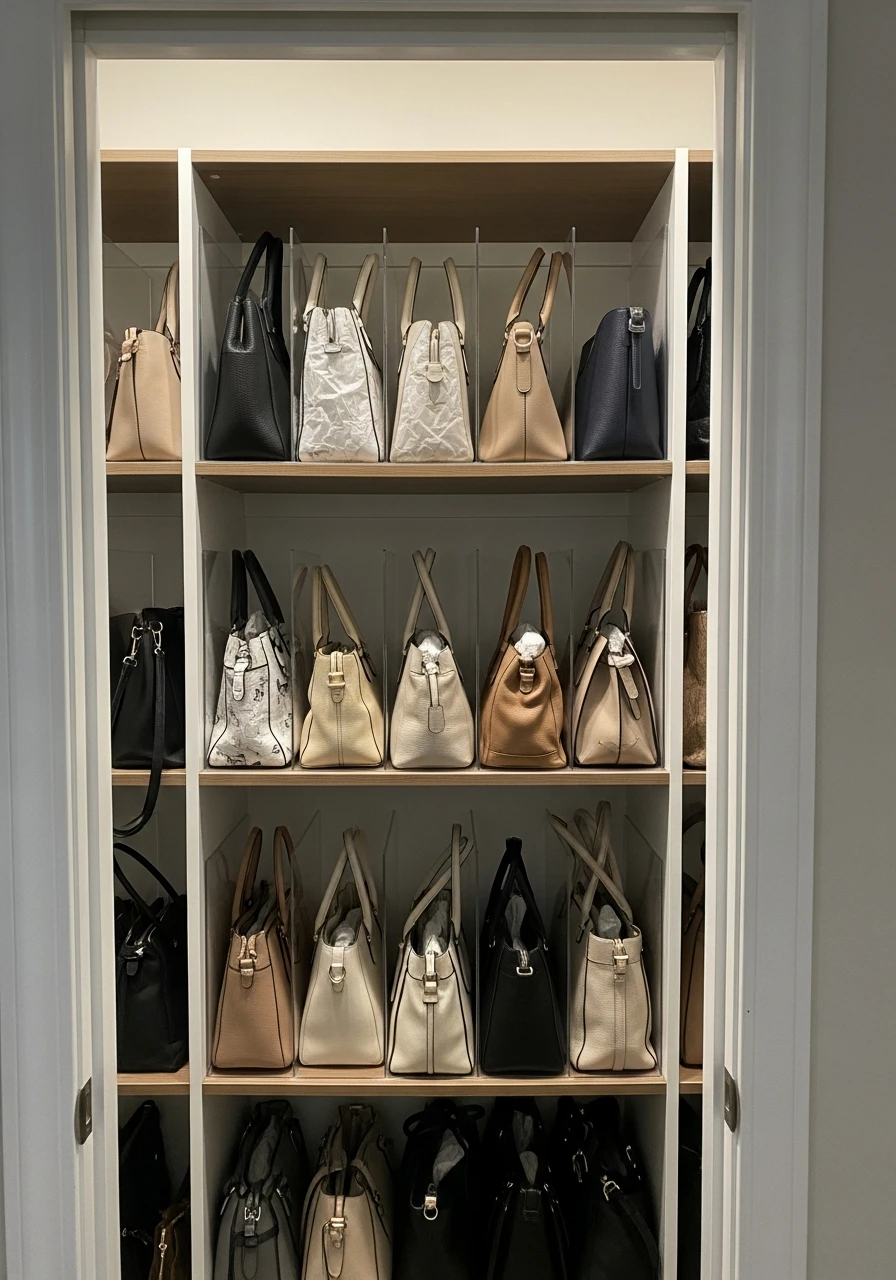
Open shelves allow handbags to be stored upright and visible. Use dividers or internal stuffing to prevent damage and clutter.
- Stuff bags with tissue paper to hold shape.
- Use acrylic dividers between each bag.
- Store dust bags nearby for protection.
Pro Tip: Never hang expensive leather bags by the straps for long periods; it can damage the material.
36. S-Hooks For Bags
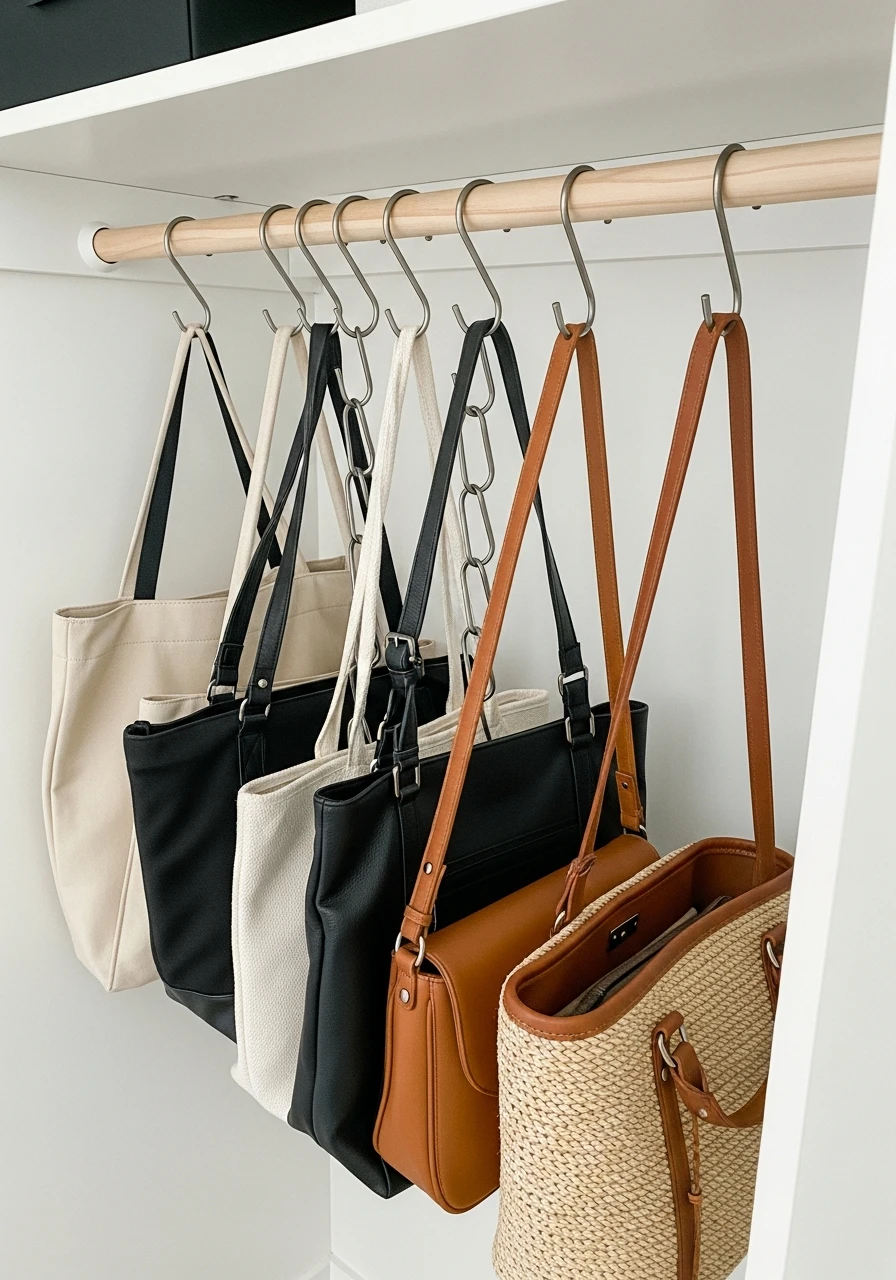
S-hooks placed on closet rods let you hang multiple bags vertically. This saves shelf space and keeps bags accessible.
- Use them for smaller crossbody bags.
- Hang bags by the handle, not the strap.
- Ensure the hook is smooth to avoid snags.
Pro Tip: Group bags by color or how often you use them on the rod for quick selection.
37. Drawer Accessory Trays
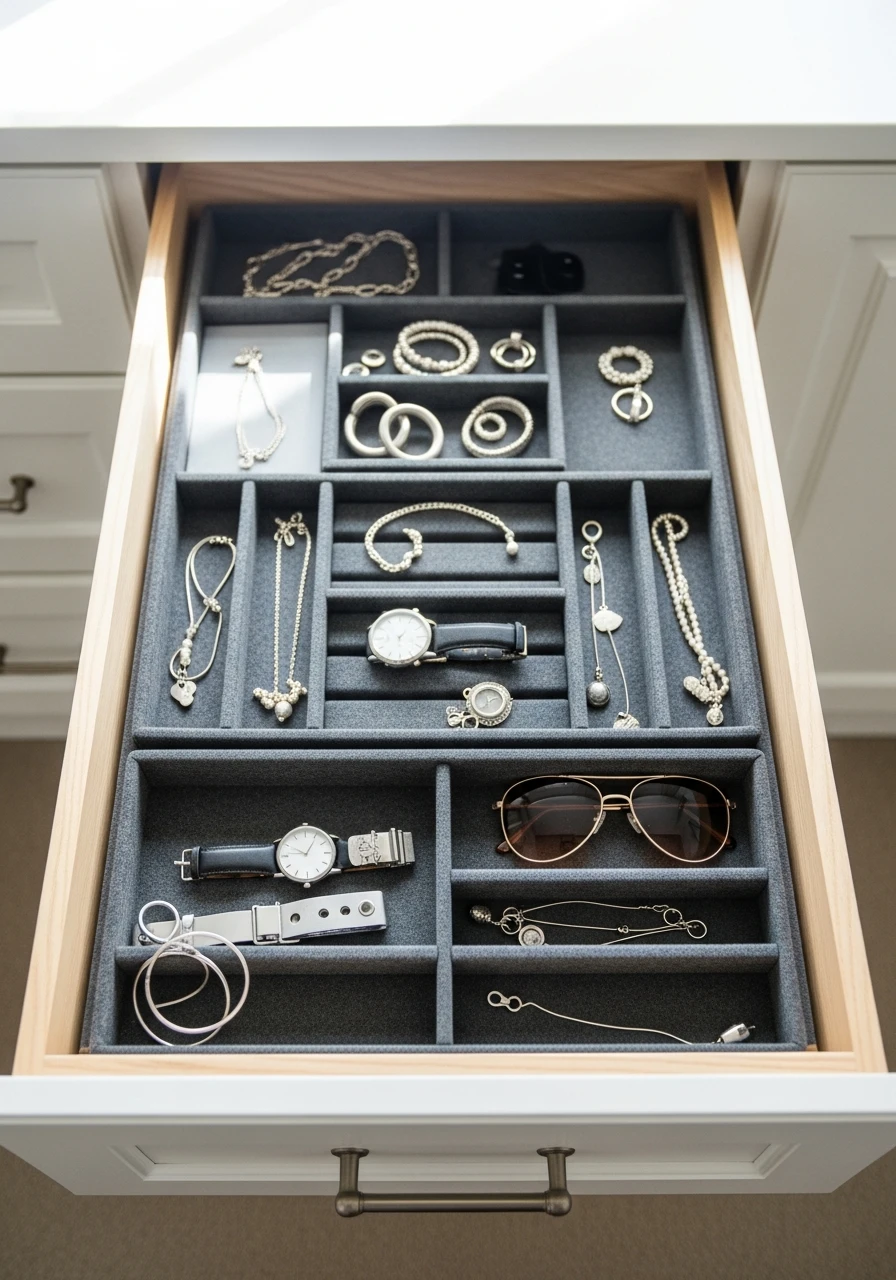
Drawer trays keep jewelry, watches, and sunglasses separated and easy to access. They fit inside existing drawers, turning them into custom storage.
- Use velvet-lined trays for delicate items.
- Measure the drawer before buying the trays.
- Group similar items together in one tray.
Pro Tip: If you have deep drawers, stack two shallow trays on top of each other for double the storage.
38. Vertical Shoe Racks
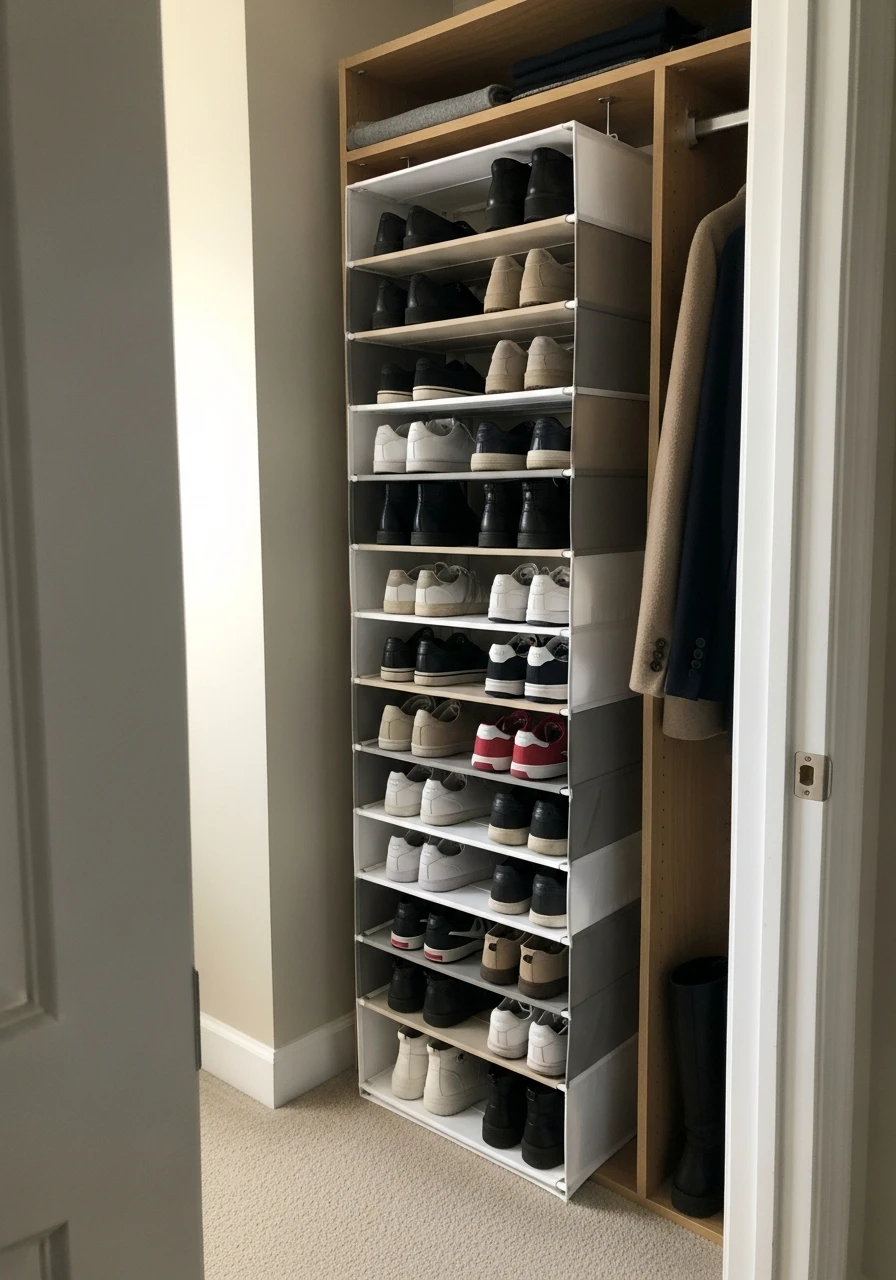
Vertical shoe organizers maximize height in closets with limited floor space. They are multi-level racks that keep shoes off the floor and contained.
- Look for narrow racks that fit small spaces.
- Place the rack near the closet entrance.
- Use the top shelf for socks or small items.
Pro Tip: If the rack is wobbly, anchor it to the wall for safety and stability.
39. Drawer Dividers For Small Items
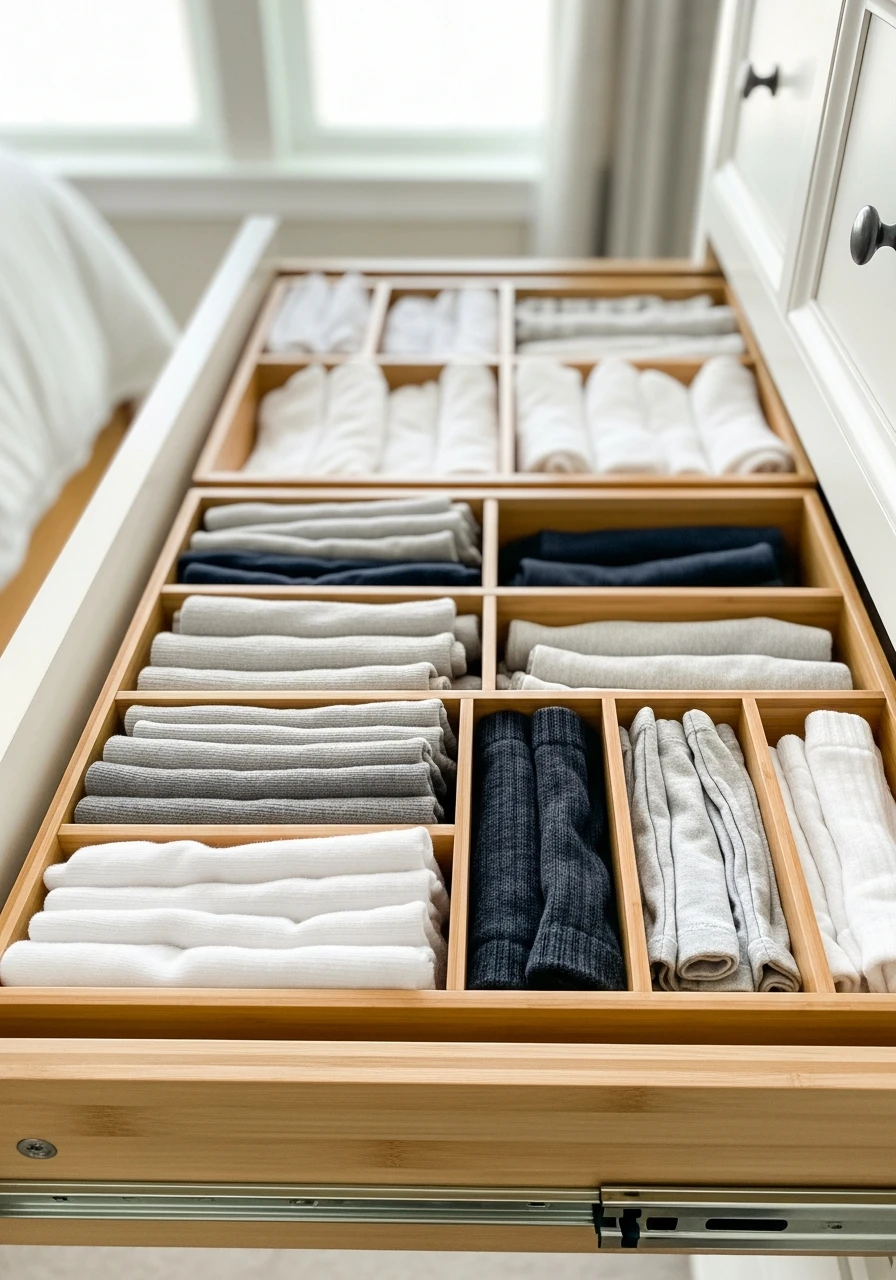
Adjustable drawer dividers prevent small items from mixing and make drawers easier to maintain. They are crucial for organizing underwear and socks.
- Use spring-loaded dividers for easy adjustment.
- Separate socks by style (dress, athletic).
- Use honeycomb dividers for bras and belts.
Pro Tip: When using dividers, always fold items vertically (KonMari style) so you can see every piece at once.
40. Wall-Mounted Hat Racks
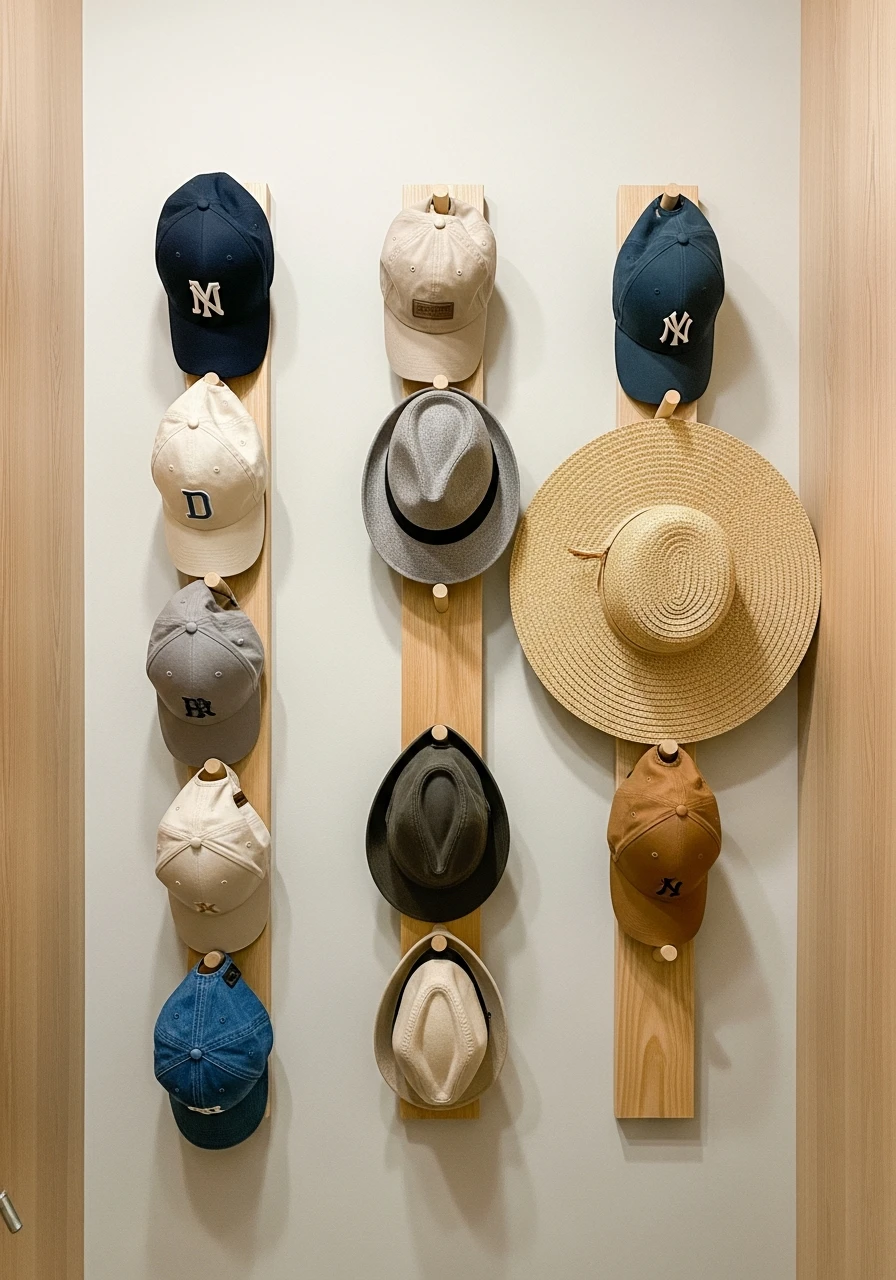
Hat racks keep hats visible and protected while freeing shelf space. They are great for baseball caps, fedoras, or wide-brimmed sun hats.
- Install racks on the side wall or door.
- Use clear plastic hooks for caps.
- Keep dress hats in hat boxes for protection.
Pro Tip: If you collect hats, use a rotating display rack to easily browse your collection.
41. Install Closet Lighting
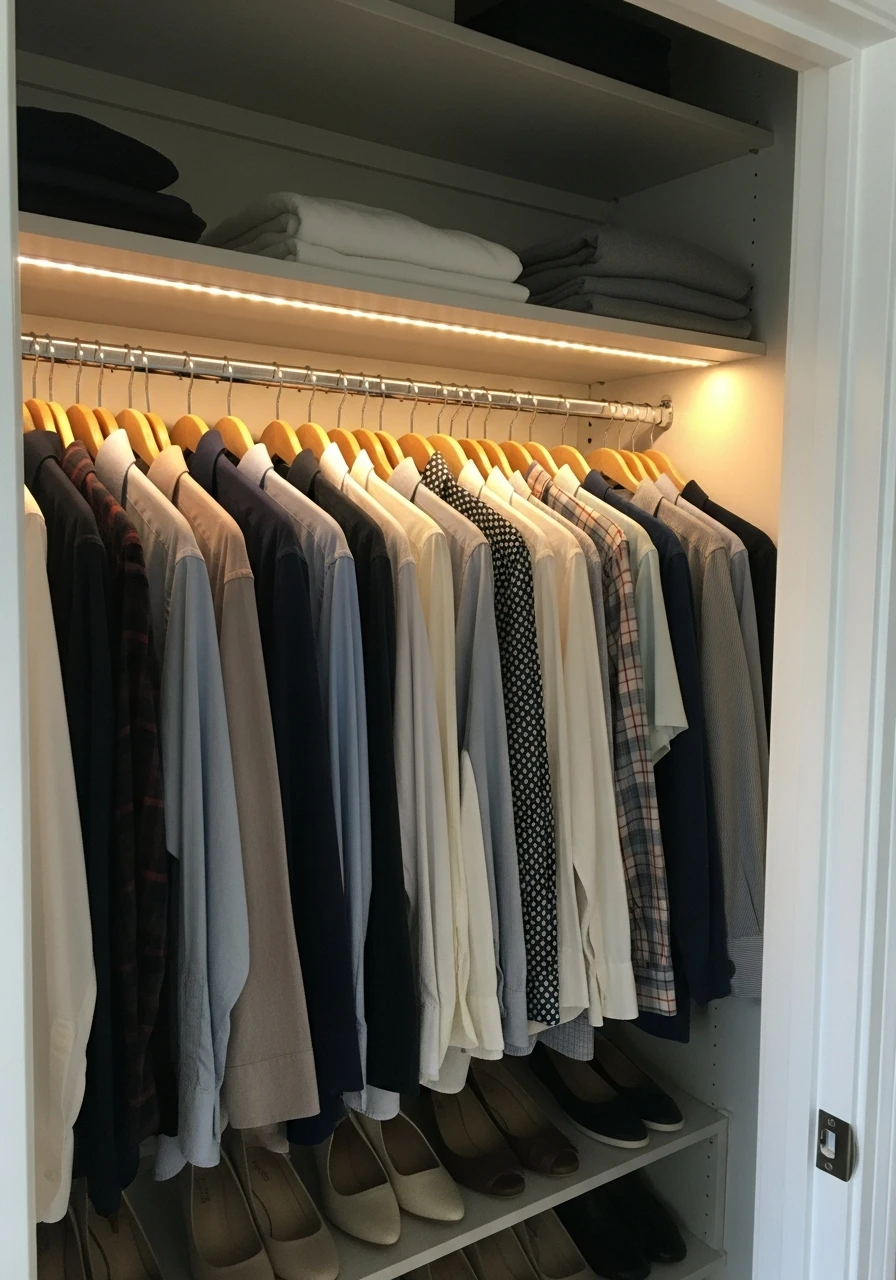
LED strip lights or puck lights improve visibility, making it easier to find items and match outfits. Good lighting is key to a functional closet.
- Use battery-operated lights for easy install.
- Place lights under shelves and above rods.
- Choose warm light for accurate color matching.
Pro Tip: Install motion-sensor lights so the closet turns on automatically when you open the door.
42. Interior Closet Mirror
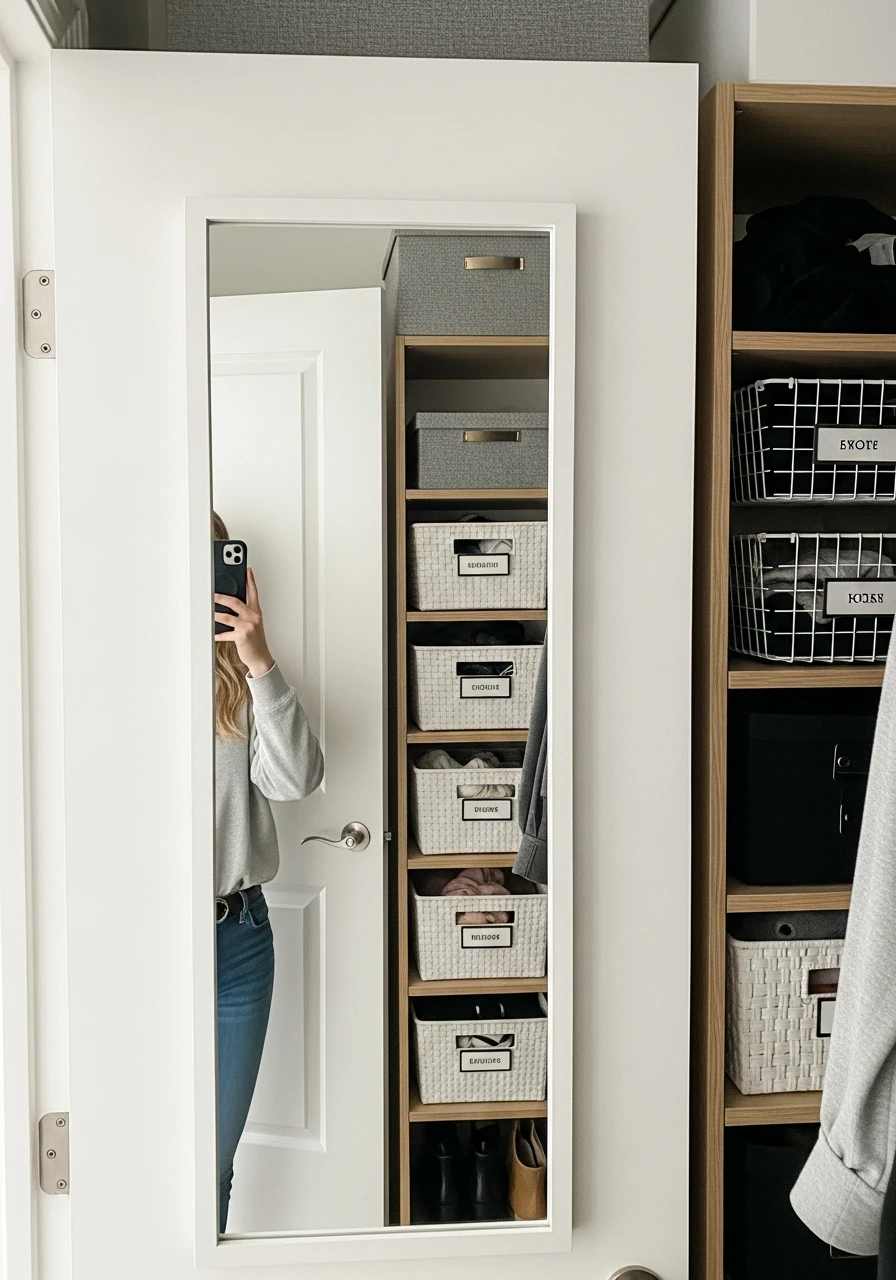
A small mirror inside the closet allows quick outfit checks without leaving the space. This saves time and keeps your dressing routine contained.
- Use a narrow, full-length mirror on the door.
- Ensure the mirror is securely mounted.
- Place it where the light hits it best.
Pro Tip: If you have a walk-in closet, lean a large, decorative mirror against a wall for a high-end look.
43. Dividers For Small Clothes
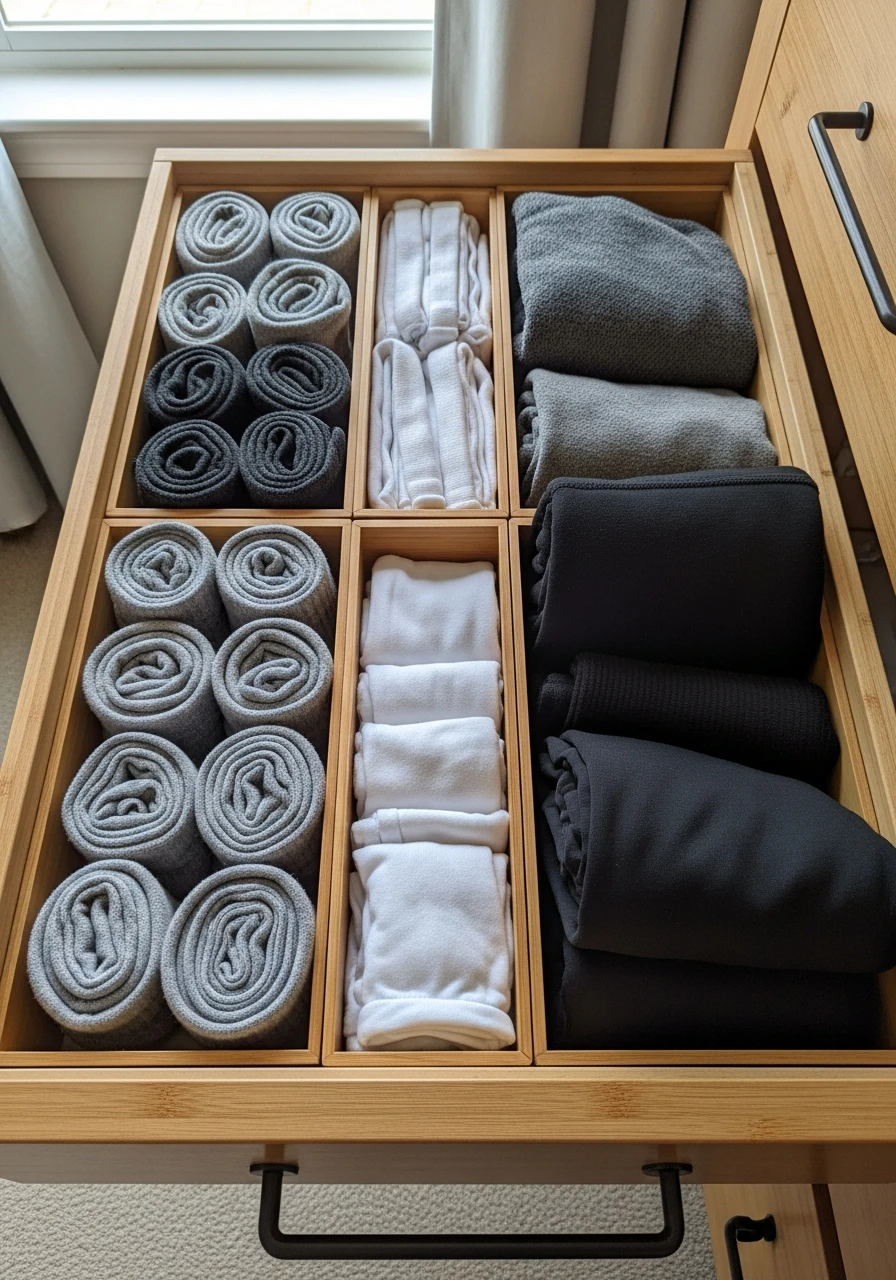
Drawer dividers keep socks, underwear, and workout gear neatly separated. This prevents the ‘junk drawer’ effect and makes mornings faster.
- Roll socks instead of folding them.
- Separate underwear by type or color.
- Use fabric dividers for a soft touch.
Pro Tip: The best way to store bras is by lining them up vertically, cup to cup, in a divided drawer.
44. Roll Clothes In Drawers
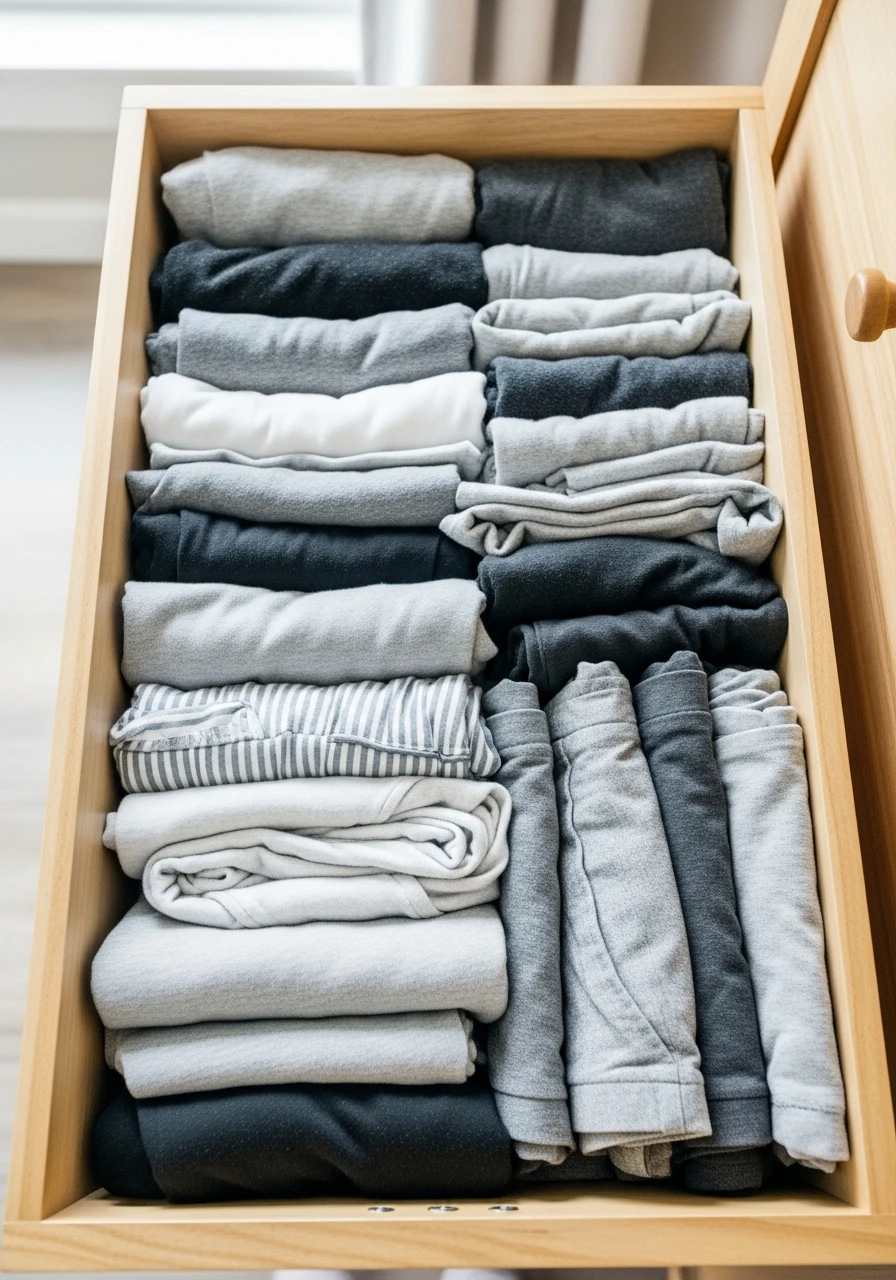
Rolling clothes saves space and allows you to see everything at once. This technique is perfect for t-shirts, pajamas, and casual pants.
- Roll items tightly to save space.
- Store them vertically in the drawer.
- Great for travel packing too.
Pro Tip: Rolling prevents the need to dig through stacks, which often messes up the entire drawer.
45. Consistent Clear Labeling
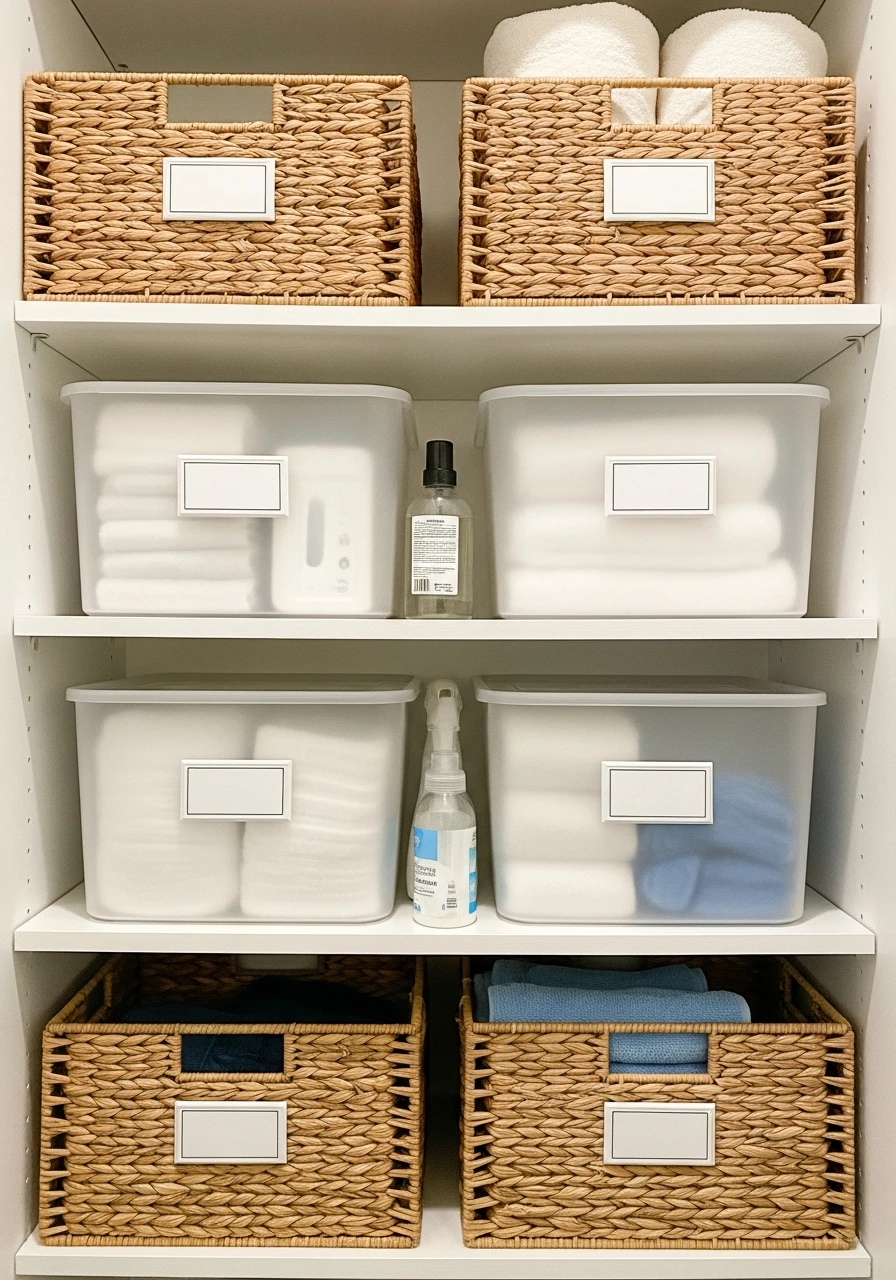
Consistent labeling helps maintain organization long-term, especially in shared closets. When everyone knows where things belong, cleanup is simple.
- Use the same label maker and font.
- Label shelves, bins, and drawers.
- Keep labels short and simple (e.g., ‘T-Shirts’).
Pro Tip: If you have kids, use picture labels alongside words to help them put their clothes away correctly.
46. Create Outfit Zones
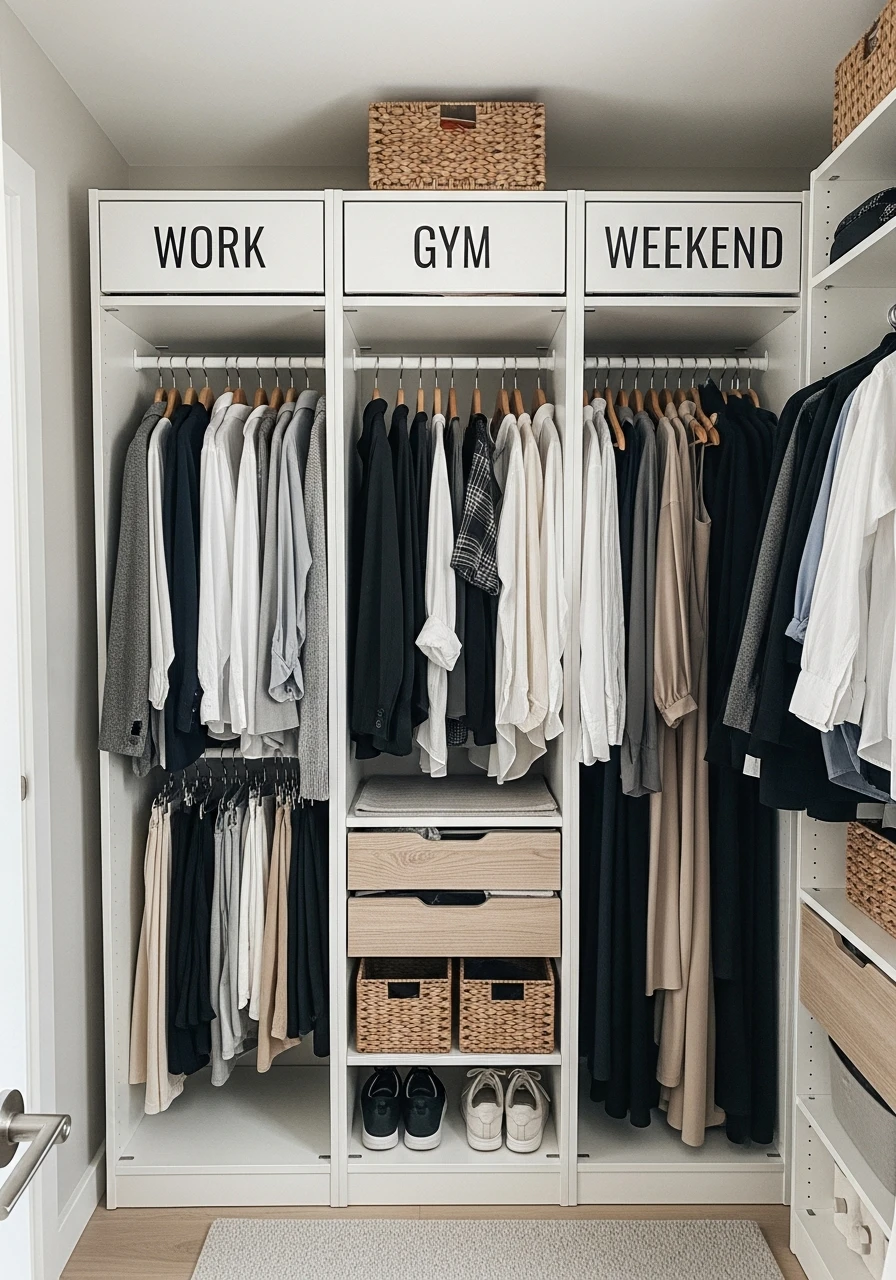
Group complete outfits together for work, gym, or weekends to simplify daily dressing. This saves mental energy in the morning.
- Use cascading hooks for full work outfits.
- Keep gym clothes in one dedicated basket.
- Separate formal wear entirely.
Pro Tip: Plan five outfits on Sunday night and hang them together in a special ‘Weekly Outfits’ section.
47. Baskets For Sweaters
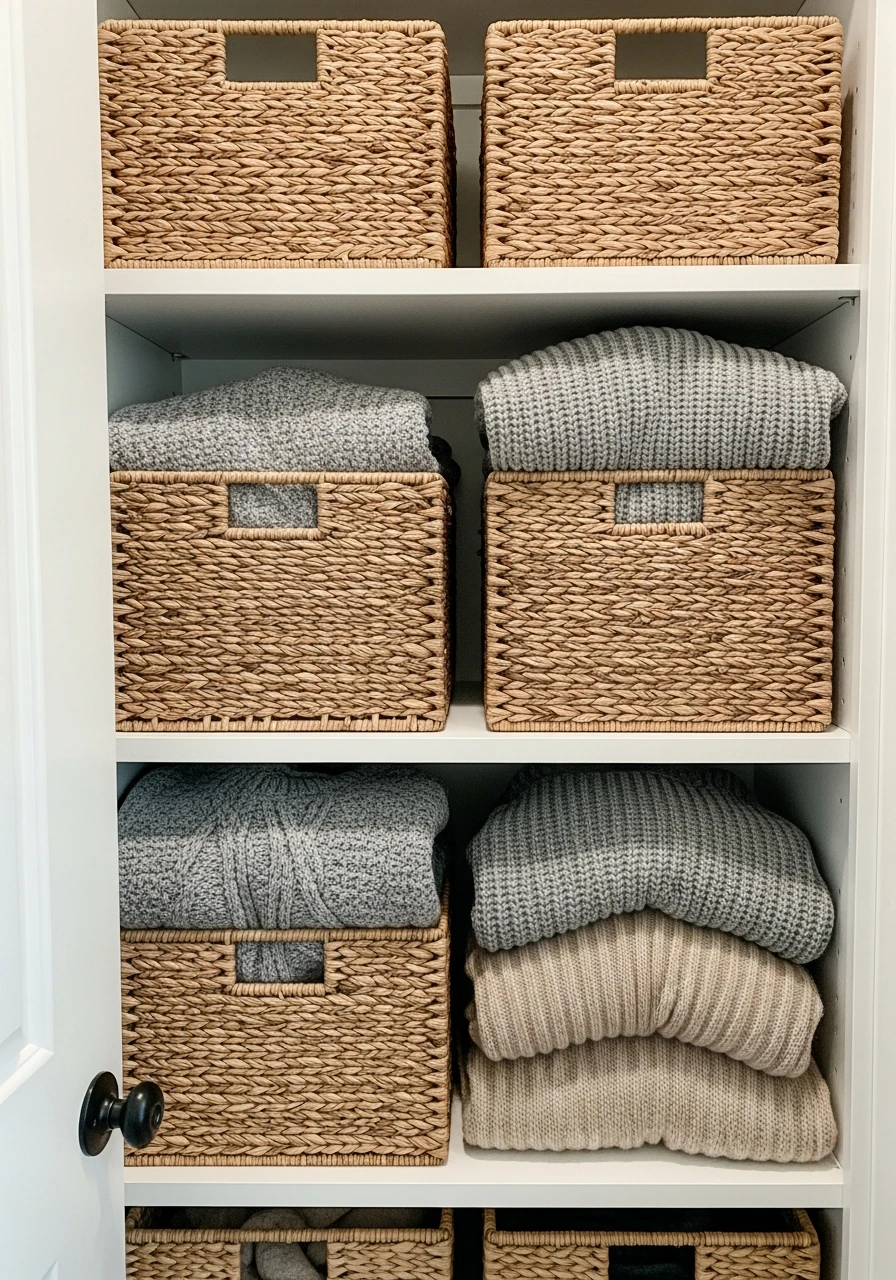
Baskets prevent sweaters from stretching when hung and keep shelves looking tidy. They contain bulky items neatly on open shelving.
- Fold sweaters using the retail method.
- Use breathable baskets (like wire or woven).
- Avoid stacking baskets too high.
Pro Tip: If you have cedar blocks, place them inside the sweater baskets to keep moths away.
48. Match Storage Style
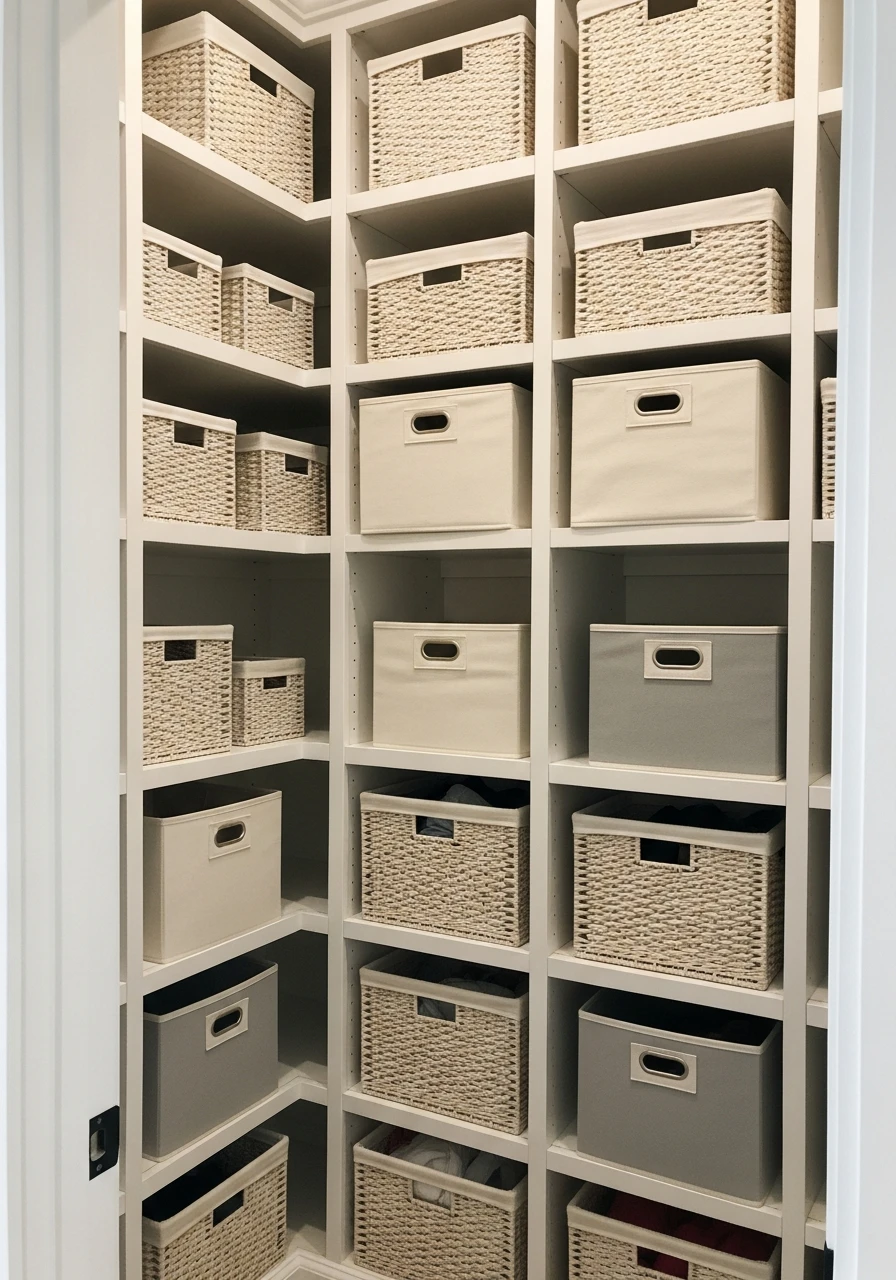
Choose bins and organizers that match the closet’s color and style for a cohesive look. Matching materials create a custom, high-end feel.
- Stick to a two-color palette (e.g., white and gray).
- Use wood or bamboo for a natural feel.
- Avoid too many different textures.
Pro Tip: If your closet is dark, choose light-colored storage to brighten the space instantly.
49. Full-Extension Drawers
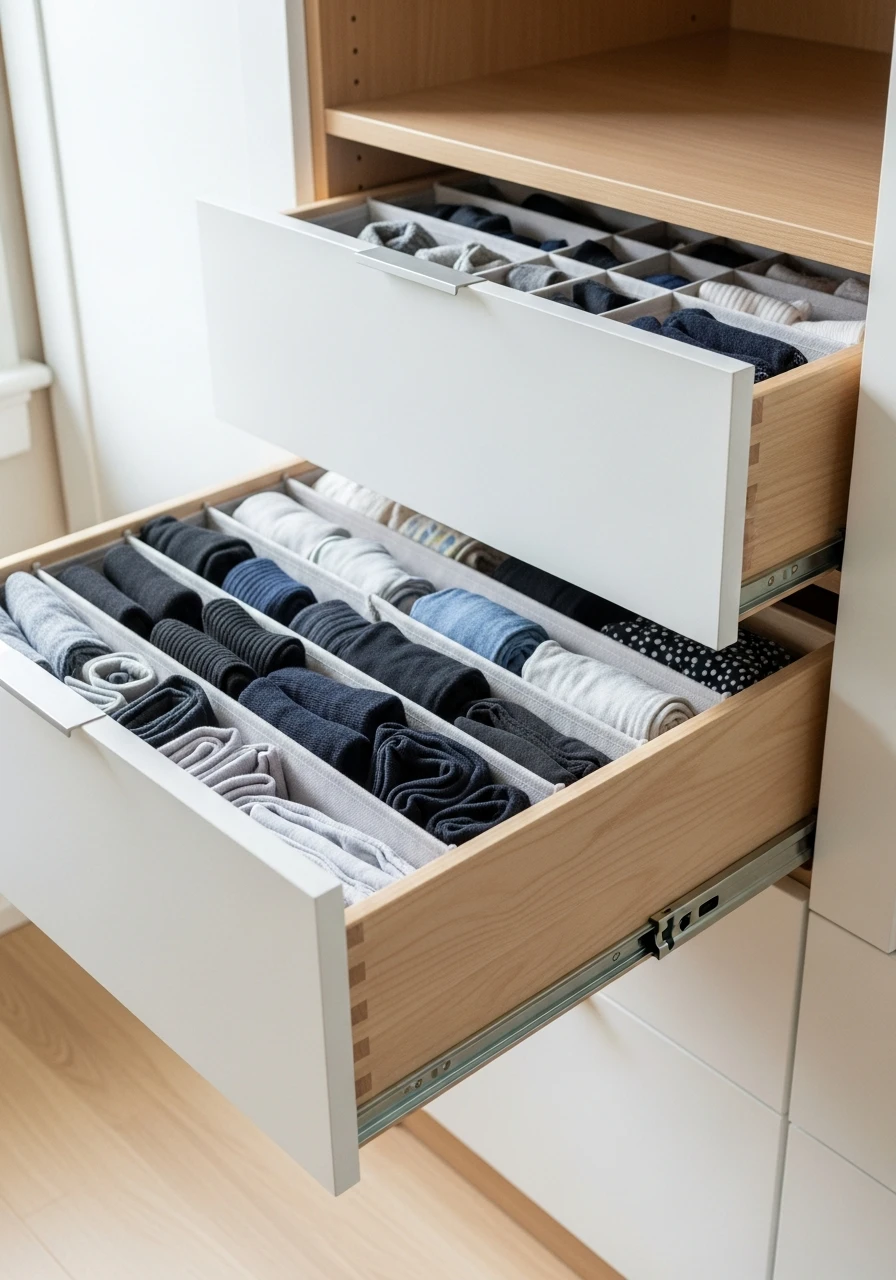
Full-extension drawers pull all the way out, allowing you to see everything inside. This reduces forgotten items stuck in the back corners.
- Ideal for deep closet systems.
- Use for folded pants or towels.
- Ensure the slides are good quality.
Pro Tip: Always place less-used items in the very back of the drawer, but only if they are seasonal or backup items.
50. Seasonal Closet Re-Edit
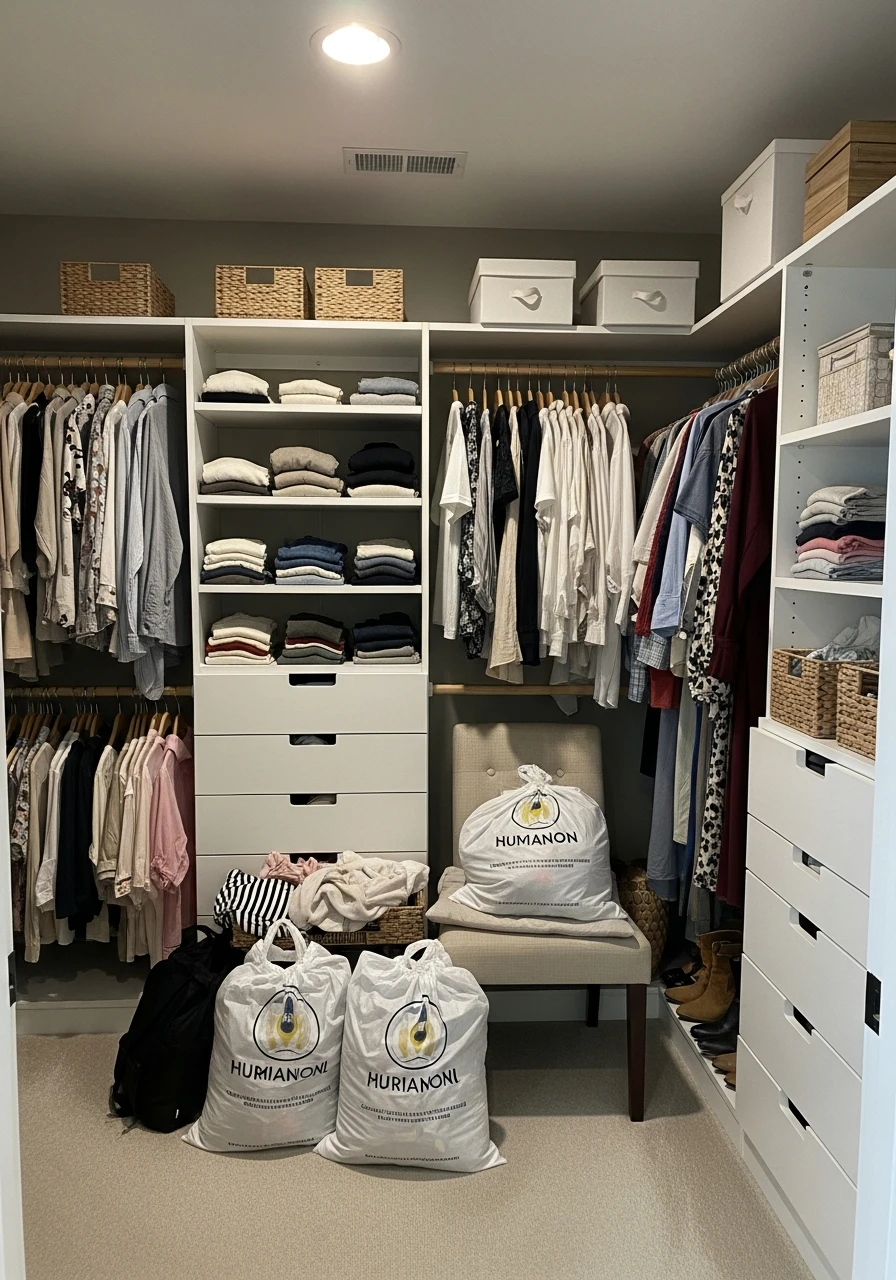
Review and reorganize your closet each season to keep it functional, clutter-free, and aligned with your lifestyle. Regular maintenance is key to long-term success.
- Take everything out and wipe down shelves.
- Check for items needing repair or cleaning.
- Adjust shelf heights if needed for new items.
Pro Tip: The re-edit is the perfect time to move items you haven’t worn in three months into the donation pile.
Ready to turn your messy closet into a tidy, time-saving sanctuary?
Use these closet organization ideas to get started.
Pick three tips today and watch the magic happen.
Comment below with your favorite tip, and don’t forget to Pin this post for later!