50 Attic Living Room Ideas

This post may contain affiliate links: full affiliate disclosure.
Is your attic just dusty storage? Turn that unused space into the best room in your house!
We promise simple, smart Attic Living Room Ideas that work with those tricky sloped ceilings and low walls. Get ready to design a cozy, bright escape.
1. Skylight Main Seating Area
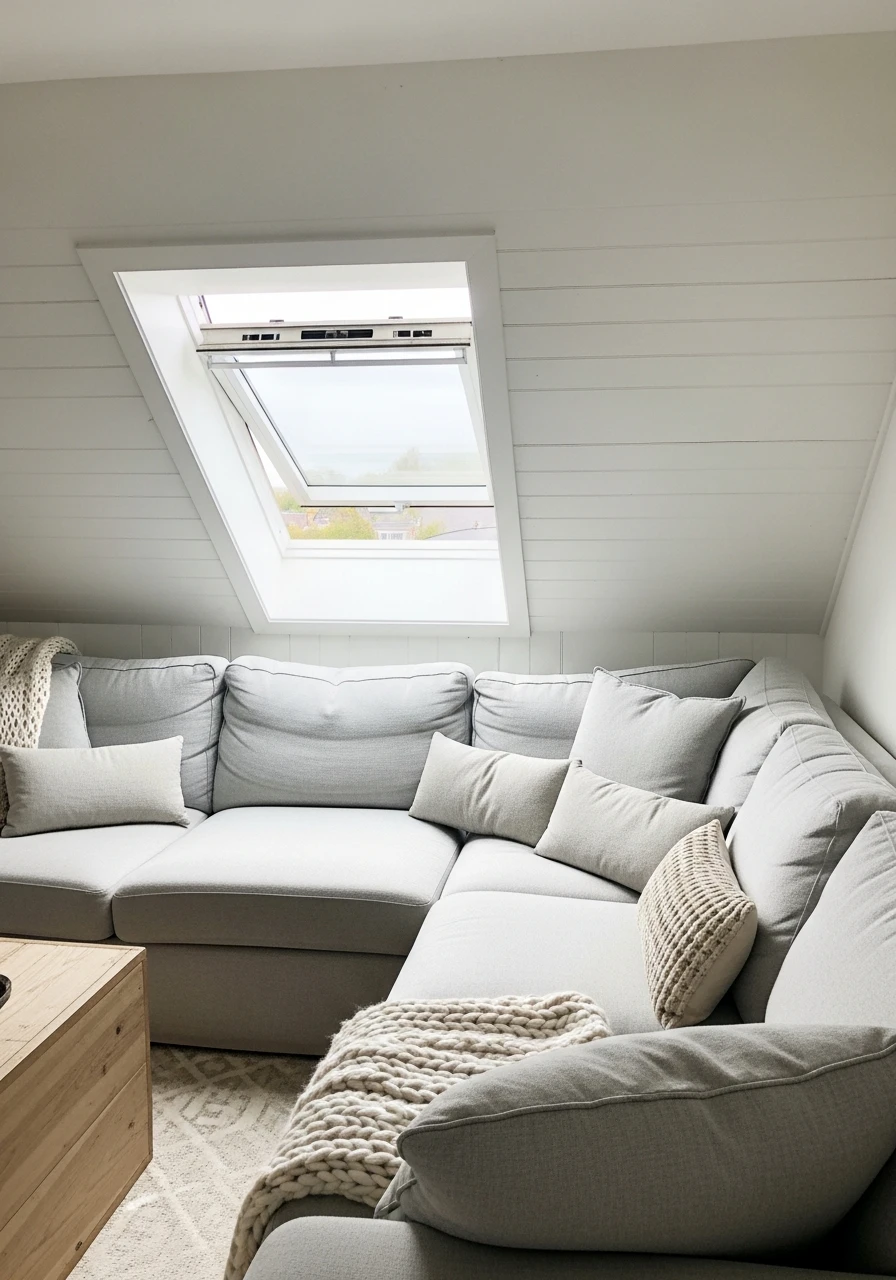
Design the main seating arrangement right under or near the skylight. This placement maximizes the natural light coming in, making the attic feel bigger and more open despite the sloped roof lines.
- Use sheer curtains or blinds to soften harsh midday light.
- Place the sofa facing the window or view, if possible.
- Keep the area clutter-free to enhance the bright feeling.
Pro Tip: Use reflective surfaces like a glass or mirrored coffee table to spread the natural light further across the attic floor.
2. Open Layout Living Space
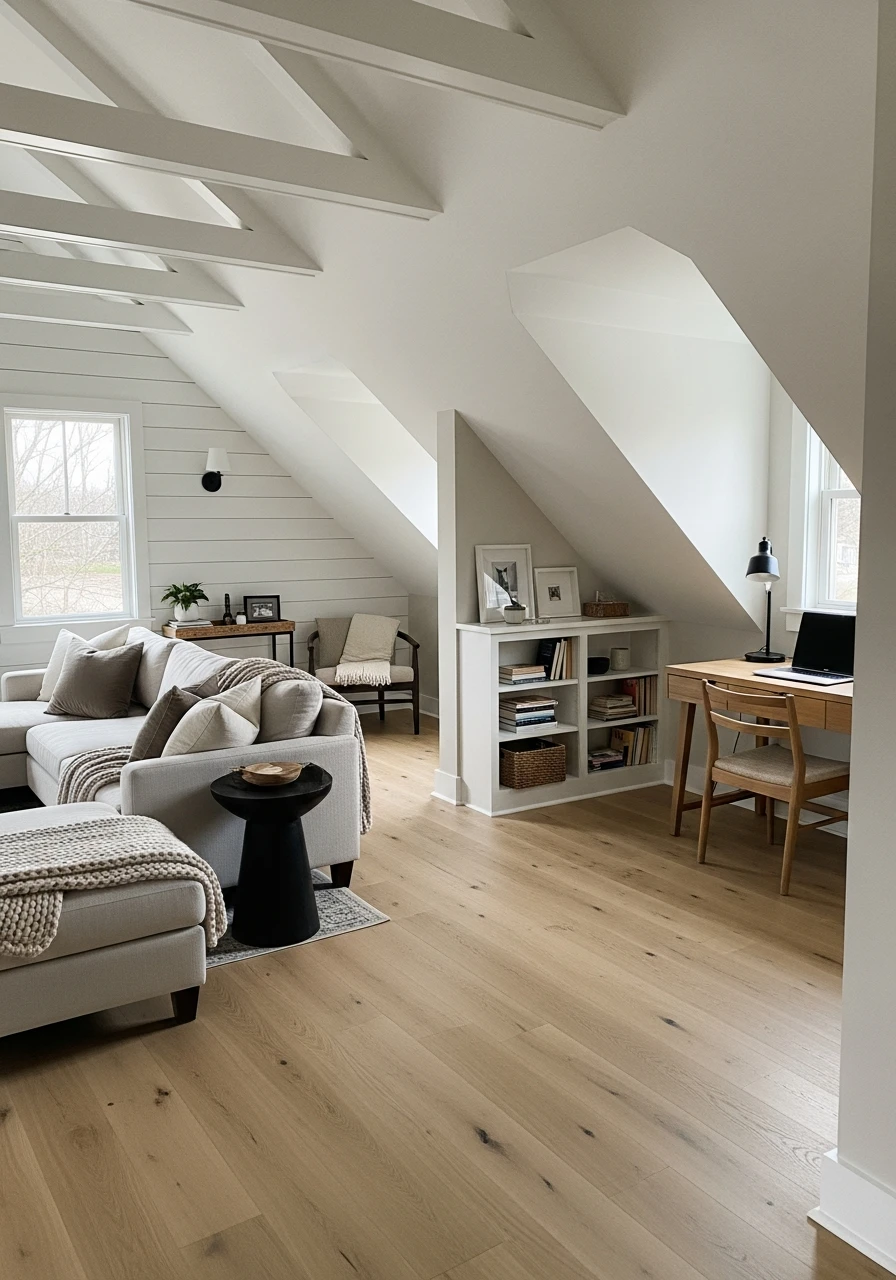
Create an open flow that combines the living room with nearby attic zones, like a reading nook or workspace. Avoid adding solid walls, which would make the attic feel cramped and closed off.
- Use large area rugs to clearly define the living room zone.
- Keep furniture low to maintain long sightlines across the room.
- Ensure paint colors match across all open zones for unity.
Pro Tip: If you need a slight separation, use a tall, open bookshelf instead of a solid wall to divide the space visually.
3. Dormer Window Reading Spot
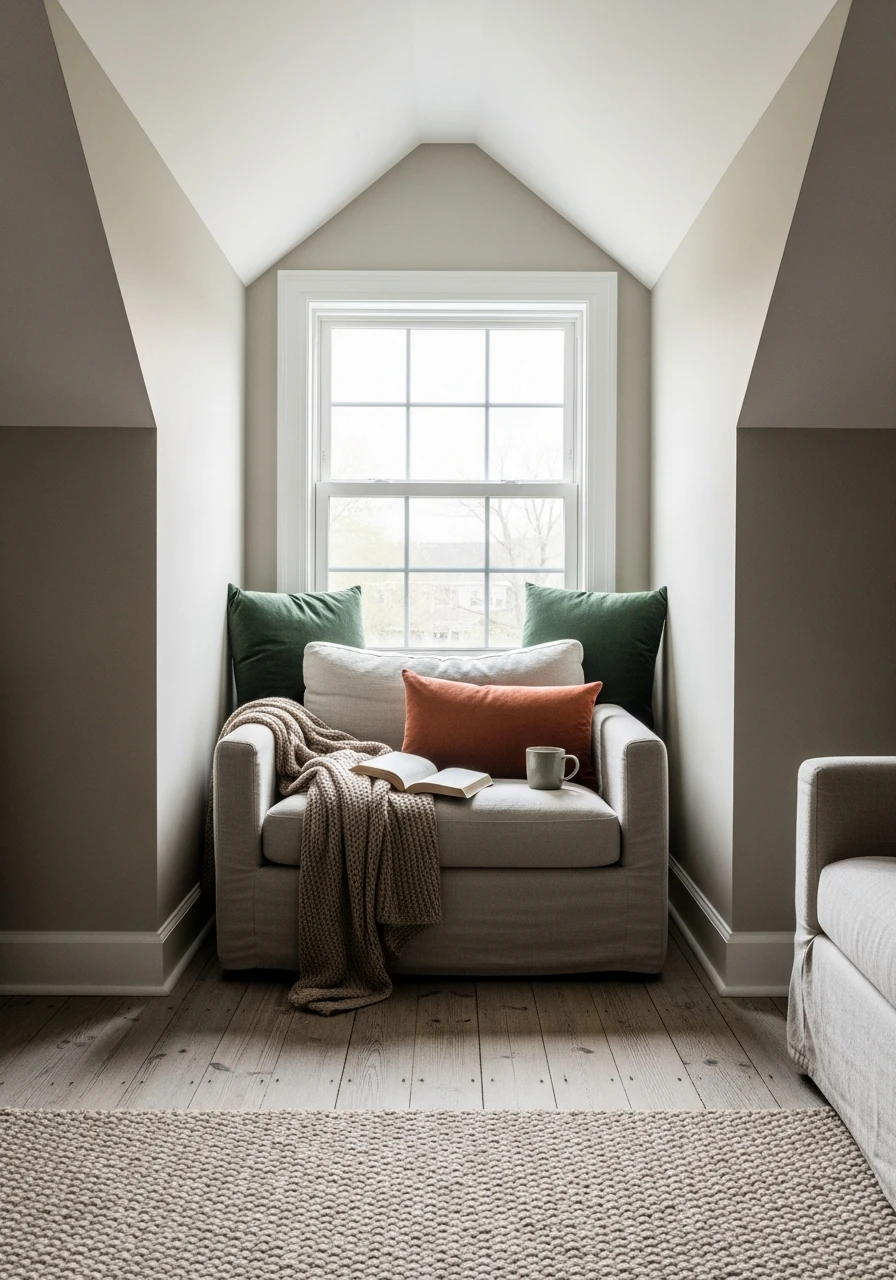
Turn the space around dormer windows into a cozy seating zone. This spot offers better headroom and outdoor views, making it perfect for placing armchairs or a small sofa.
- Install built-in storage drawers under the window ledge.
- Choose chairs with slim profiles to save space.
- Add a small, adjustable side table for drinks or books.
Pro Tip: Dormers are the best place for tall decor or lamps since they offer the only full vertical wall space in many attics.
4. Highlight Vaulted Ceilings
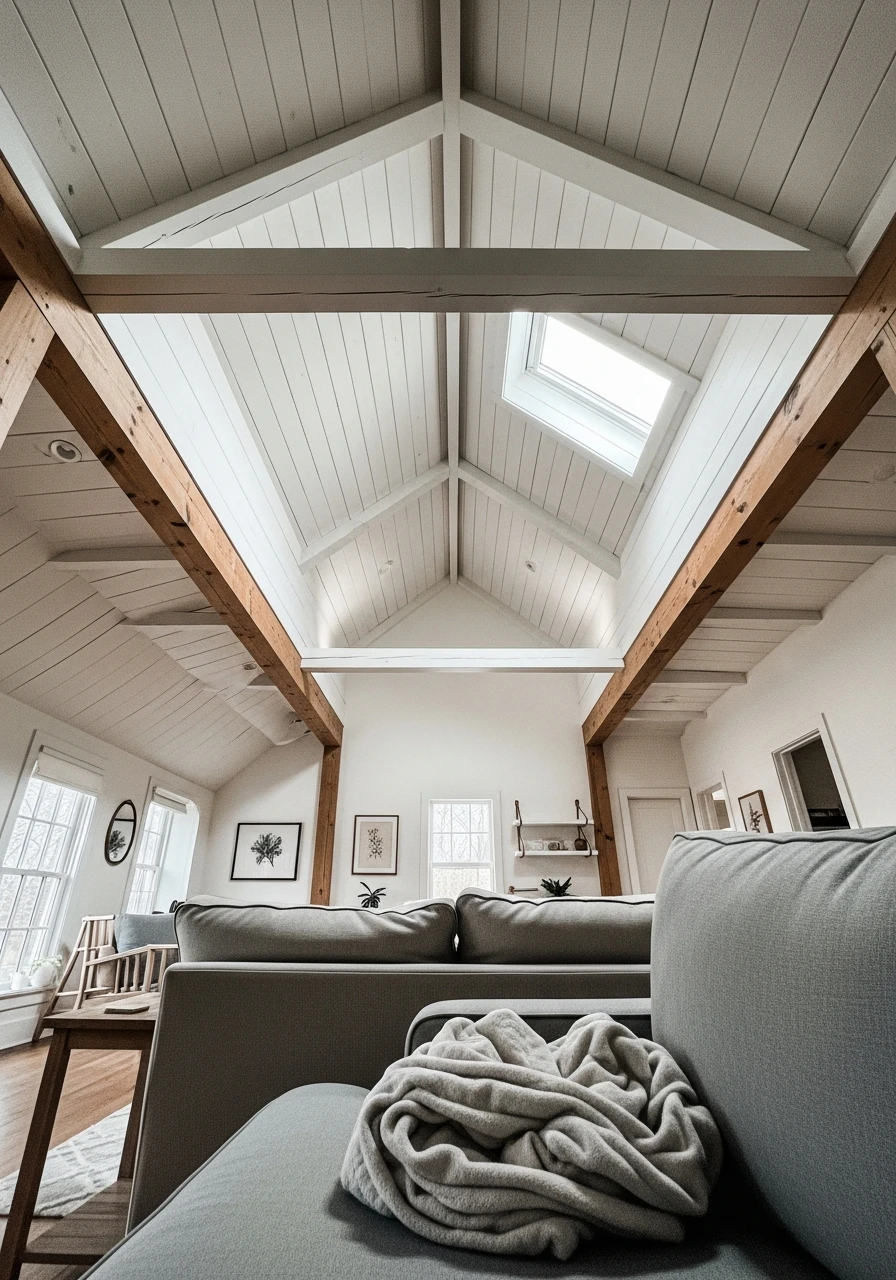
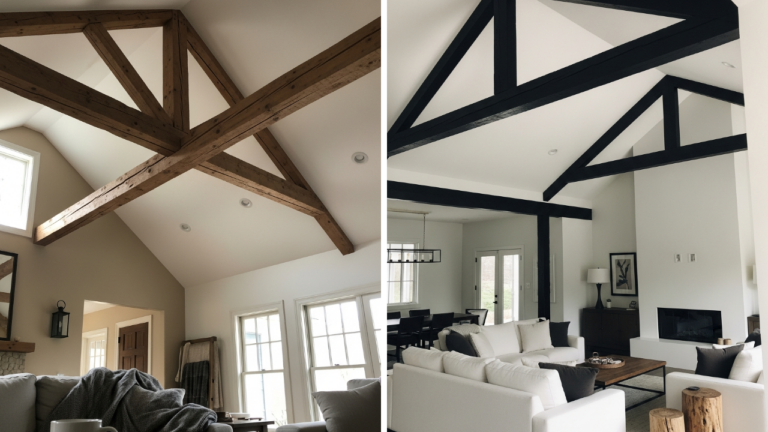
Show off the high, pointed ceiling structure instead of covering it up. Keep the ceiling exposed and paint it a light color to draw the eye up and emphasize the height of the room.
- Use tall, narrow shelving units to emphasize vertical lines.
- Install vertical shiplap or beadboard on the gable wall.
- Hang art high above the seating area.
Pro Tip: If the beams are nice wood, stain them dark and paint the ceiling white for a dramatic, high-contrast look that feels grand.
5. Eaves Reading Nook Combo
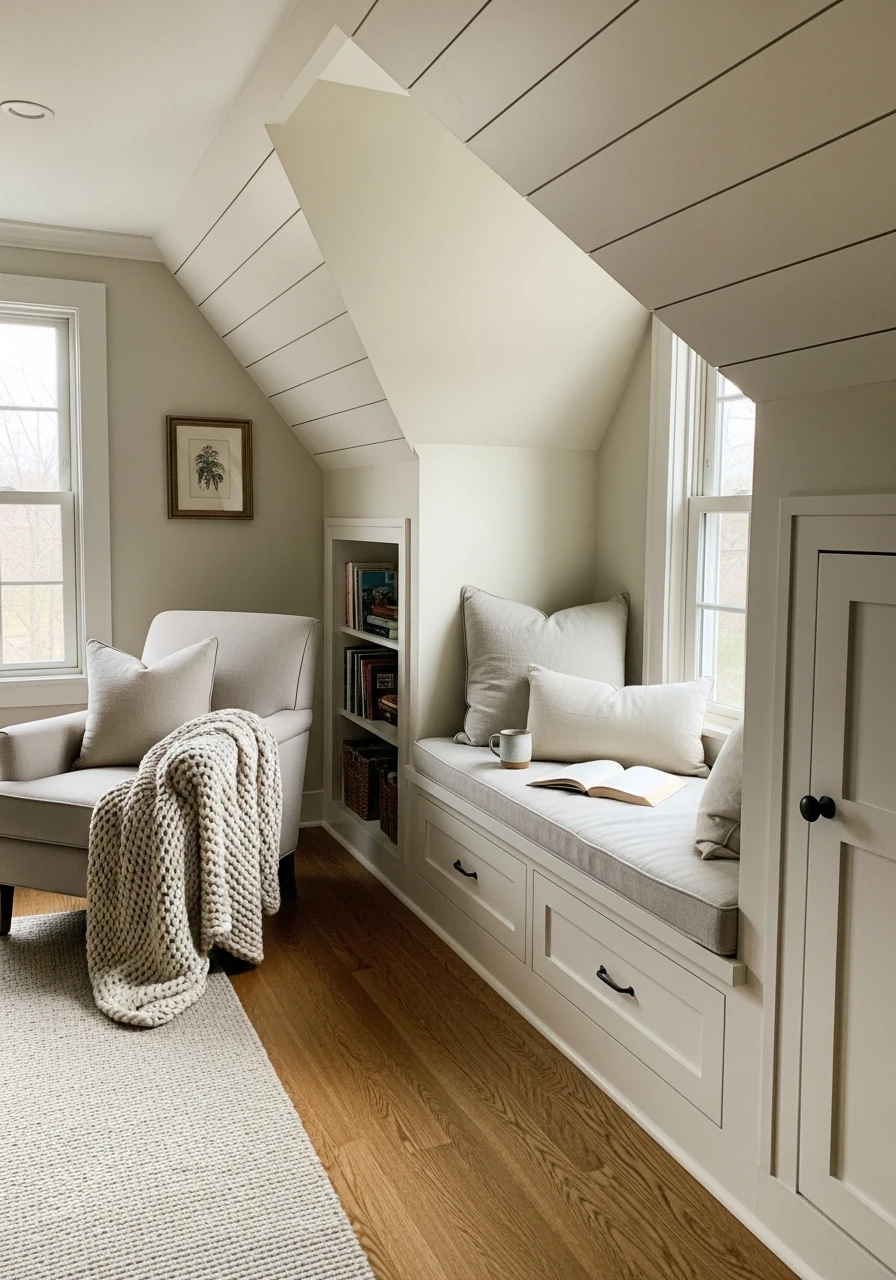
Combine the main living room with a built-in reading nook tucked into the low-ceiling area under the eaves. This uses the awkward low space efficiently for relaxation.
- Use soft cushions and blankets in the nook area.
- Install small, focused task lighting for reading.
- Keep the main living room furniture in the tallest section.
Pro Tip: A custom-made mattress pad, rather than standard cushions, makes the reading nook feel like a luxurious daybed.
6. Light Neutral Color Palette
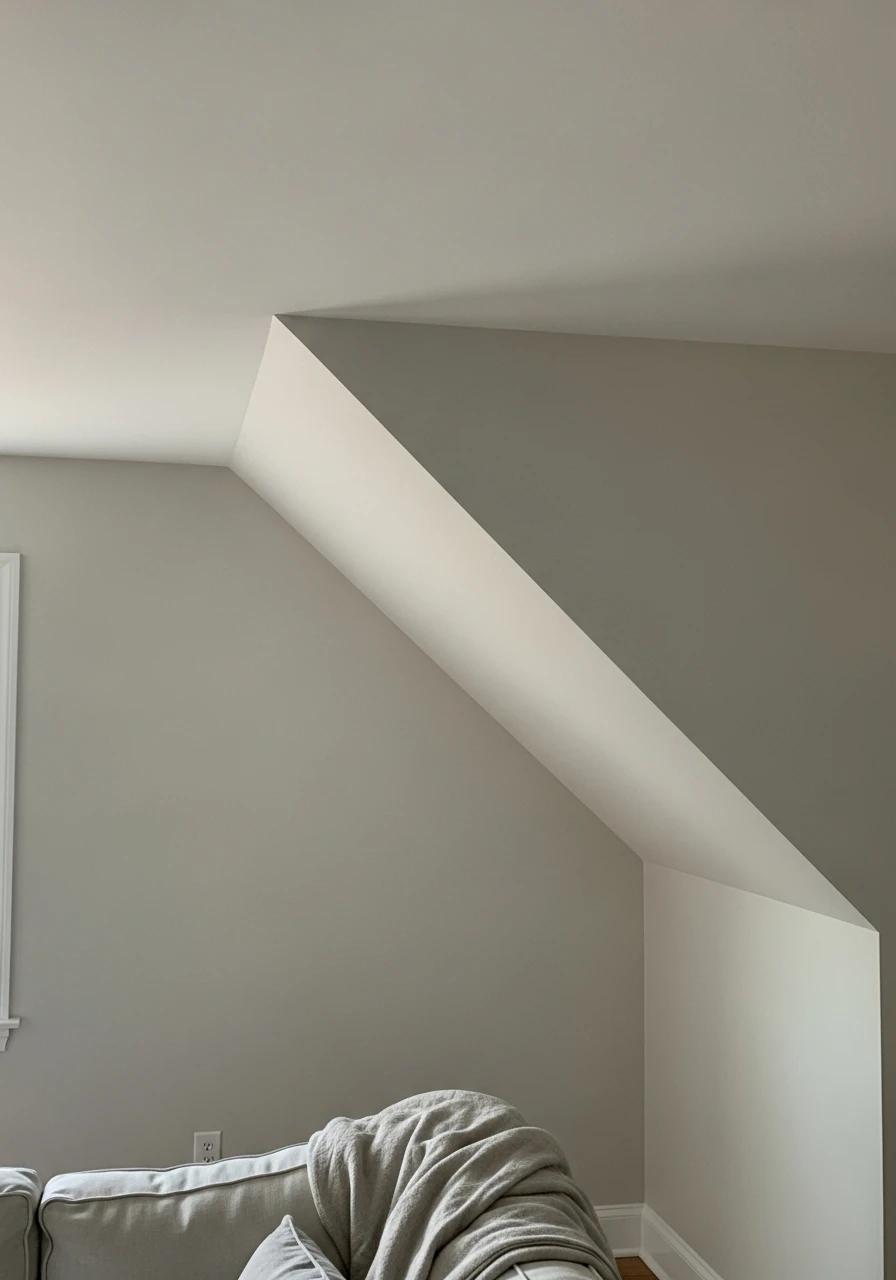
Use soft, light colors like cream, pale gray, or warm white on all walls and ceilings. Light shades reflect sunlight, helping the attic living room feel airy and spacious instead of boxed in.
- Use white paint with a slightly warm undertone.
- Keep trim the same color as the walls for unity.
- Add texture using natural fabrics like linen.
Pro Tip: Painting the sloped walls and the flat ceiling the exact same color helps hide where the wall ends and the ceiling starts, creating a smooth look.
7. Gable End Accent Wall
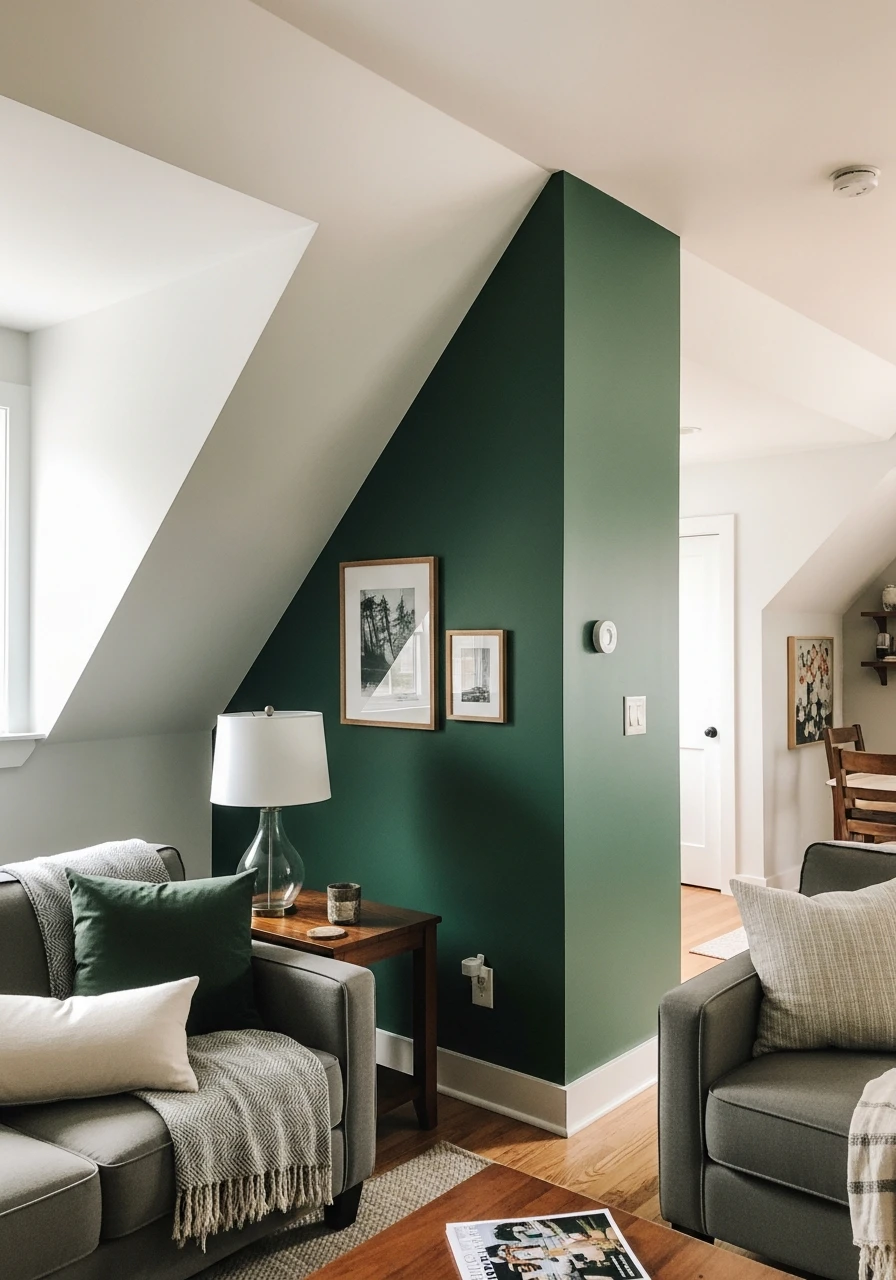
Add a bold accent color or textured wallpaper to the tallest, straight wall (the gable end). This gives the attic living room character without emphasizing the sloped walls.
- Choose a deep color like navy or forest green.
- Use textured finishes like shiplap or grasscloth.
- Keep the sloped walls a very light, neutral color.
Pro Tip: Never place the accent color on the sloped wall; it can visually make the ceiling feel like it is pressing down on the room.
8. Neutral Base, Bold Color
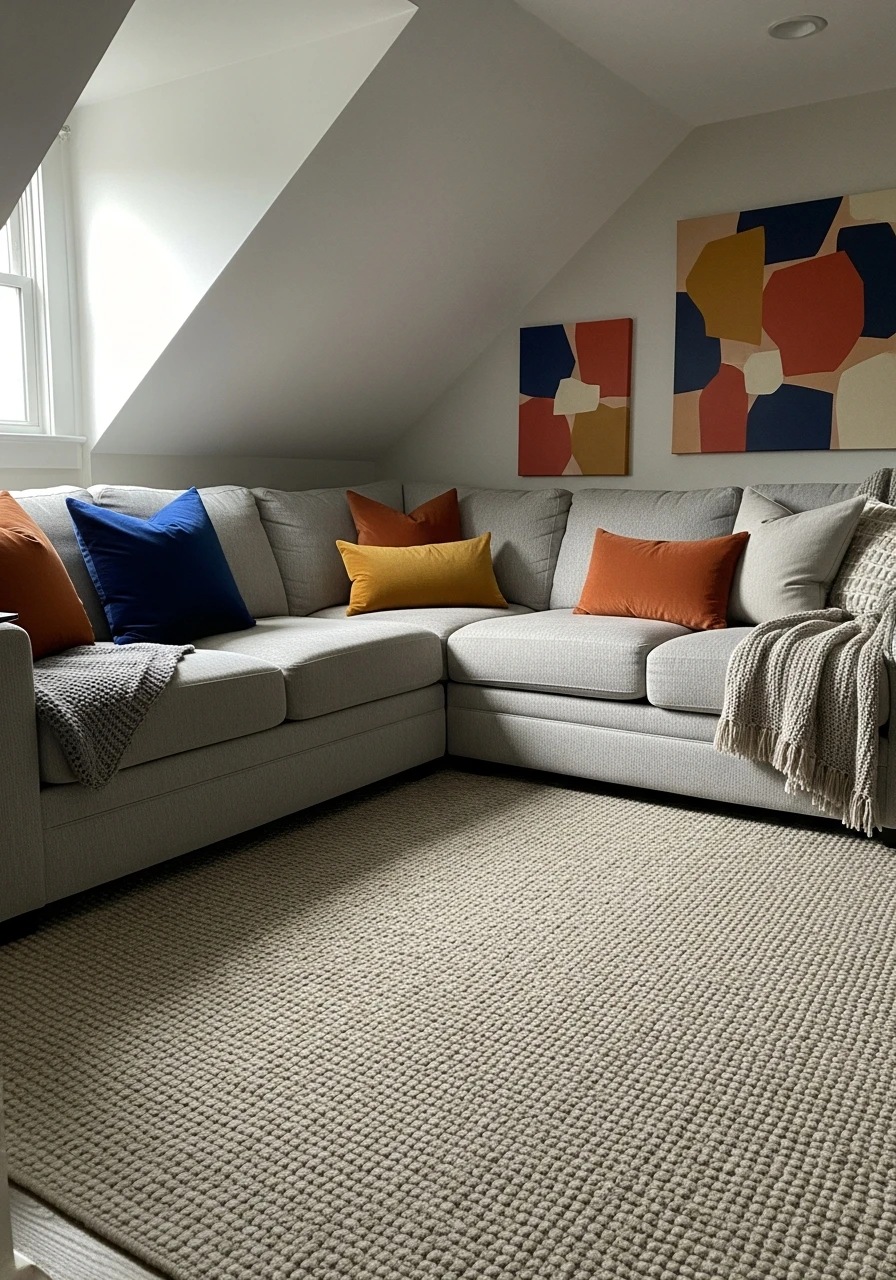
Keep the largest items—walls, sofa, and main rug—in neutral tones. Then, introduce color through smaller accessories like pillows, throws, and artwork for easy changes.
- Swap out bright pillows seasonally for a fresh look.
- Use a colorful piece of abstract art as a focal point.
- Choose a jewel-toned throw blanket for texture.
Pro Tip: This strategy is budget-friendly because you can change the entire mood of the attic living room without having to repaint.
9. Curved Furniture Shapes
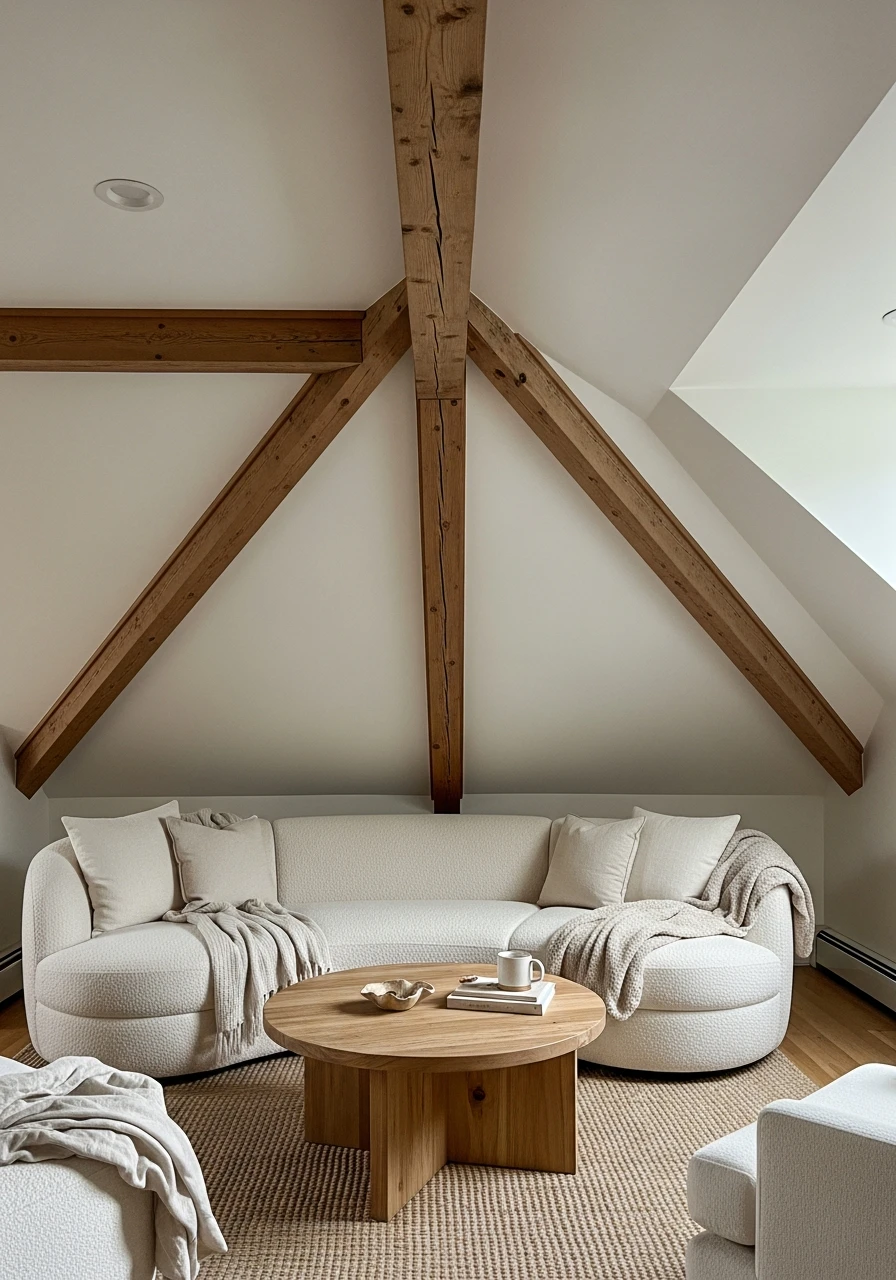
Use rounded sofas, circular coffee tables, or curved armchairs. This softens the sharp, angular look created by the attic’s sloped ceilings and corners.
- Choose a curved sectional sofa for maximum seating.
- Use a round ottoman instead of a square one.
- Ensure the area rug is also circular or oval.
Pro Tip: Curved pieces improve the flow of movement, which is helpful in attics where walkways might be narrow or irregular.
10. Color-Capped Upper Walls
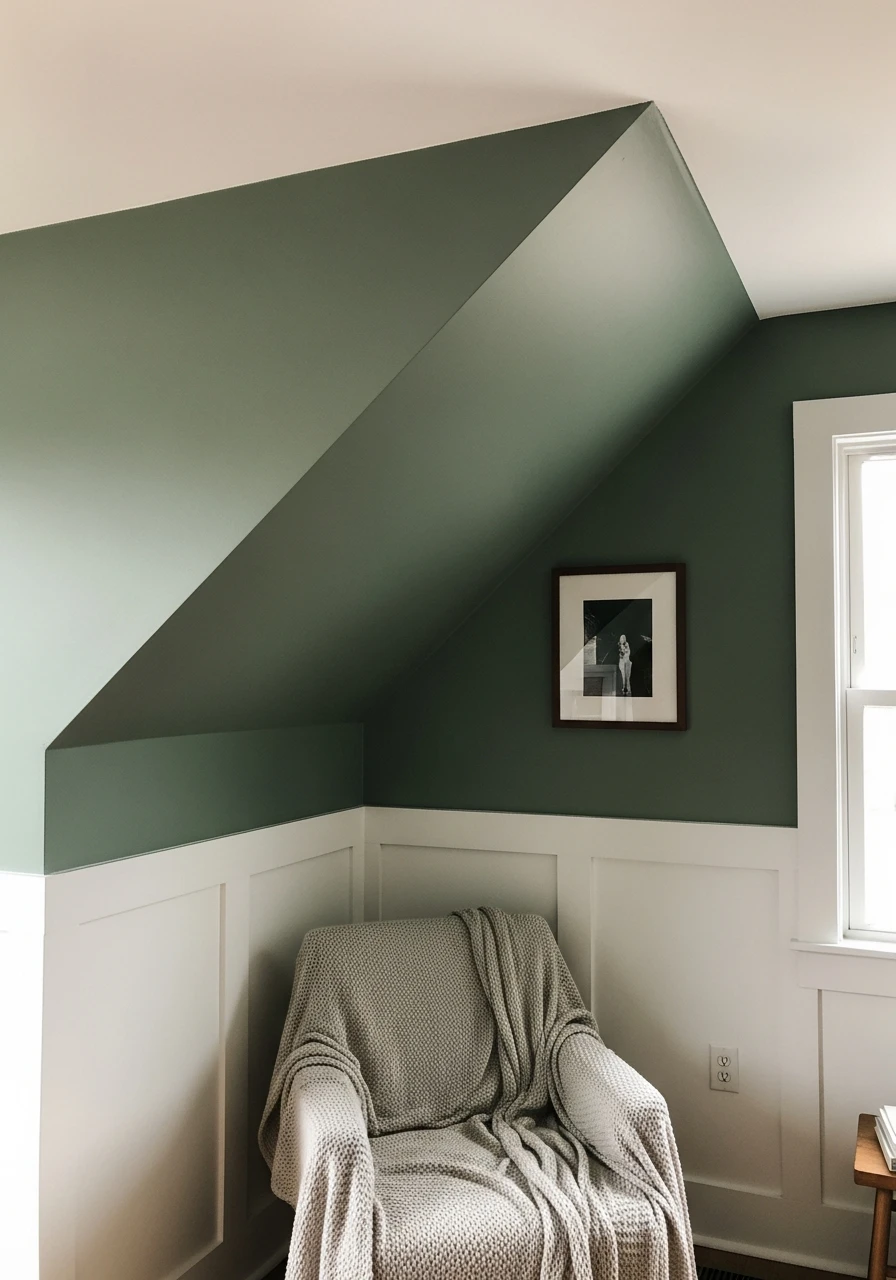
Paint the sloped ceiling and the upper part of the walls one unified color. This technique visually lowers the height slightly and makes the space feel cohesive and cozy.
- Use a pale blue or soft gray for the cap color.
- Keep the lower, vertical walls a crisp white.
- Use a picture rail to define the color break line.
Pro Tip: This technique works best if you have very high, vaulted ceilings and want to make the attic feel a little cozier and less vast.
11. L-Shaped Sectional Seating
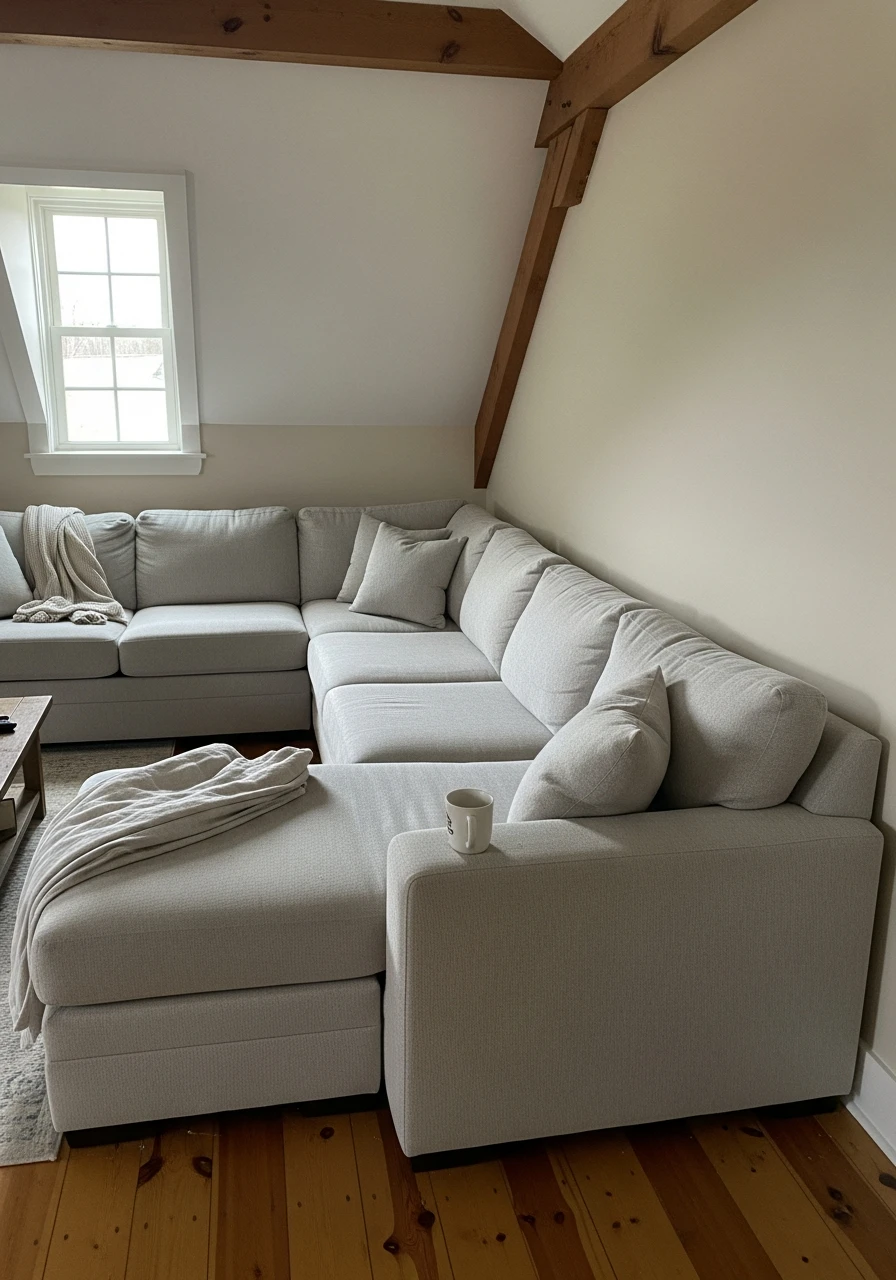
Place a large L-shaped sofa against the straightest, tallest walls of the attic. This maximizes seating for guests while anchoring the living room zone in the best spot.
- Ensure the back height is low enough for the slopes.
- Place the sectional corner away from main doorways.
- Use the sectional to face the media wall or view.
Pro Tip: Measure the depth carefully; a sectional that is too deep can eat up too much precious floor space in a smaller attic.
12. Low-Back Sofa Design
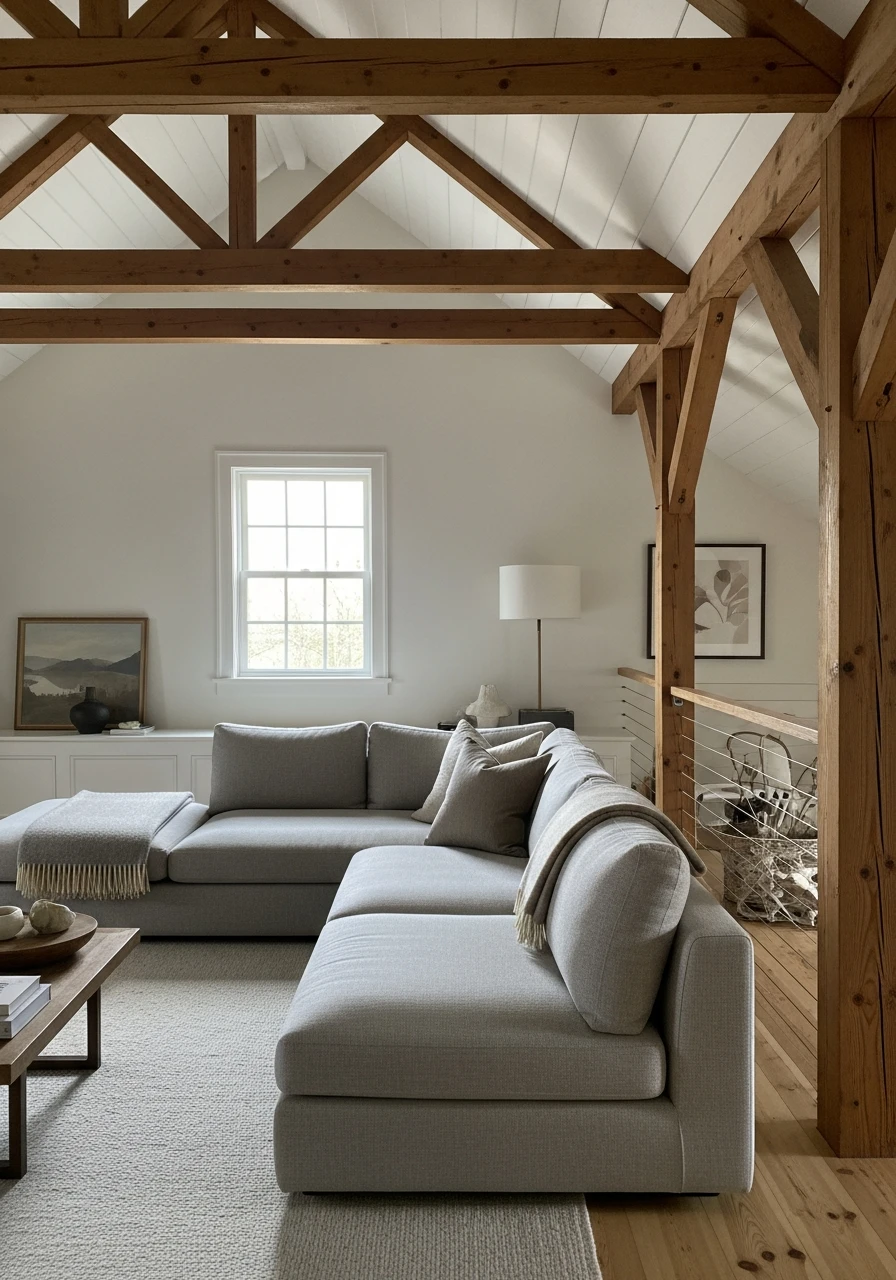
Select a sofa with a very low back and minimal height. Low seating prevents the attic living room from feeling crowded and keeps the sightlines open to the ceiling structure.
- Choose a sofa with thin, exposed legs.
- Look for deep seating for maximum comfort.
- Avoid tall, bulky armrests or cushion backs.
Pro Tip: When shopping, check the overall height measurement to ensure it fits comfortably under the lowest acceptable part of the slope.
13. Built-In Bench Under Eaves
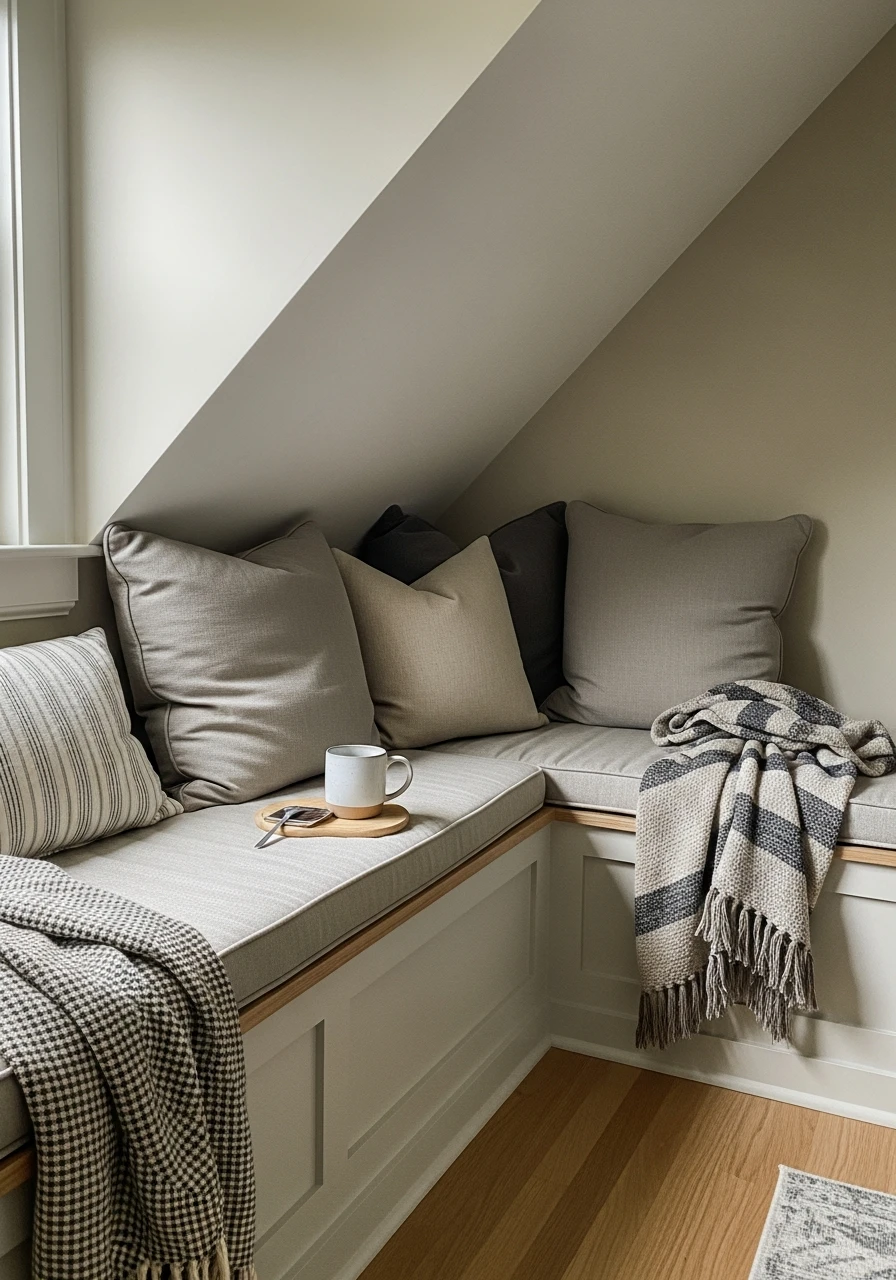
Install custom benches directly under the low eaves where standard furniture won’t fit. This turns awkward, unusable space into functional extra seating for the living room.
- Add thick, comfortable bench cushions and pillows.
- Use the bench top for displaying small items.
- Build storage drawers into the bench base.
Pro Tip: This bench works perfectly as overflow seating when you have many people over for a movie night or gathering.
14. Cozy Window Seat Feature
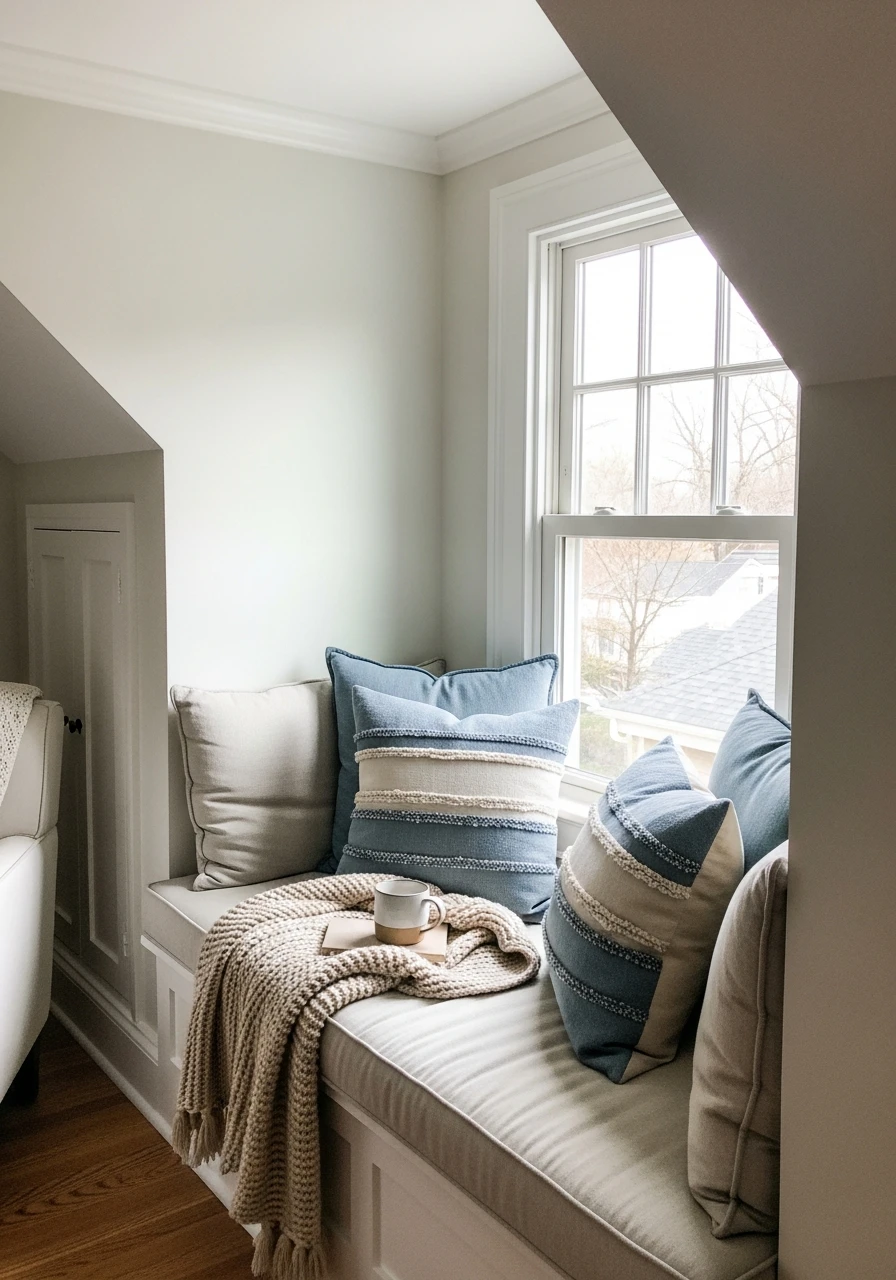
Build a charming window seat, complete with soft cushions and pillows, into a dormer or narrow wall. This adds character and provides a comfortable spot in a low space.
- Ensure the seat depth is comfortable (about 18 inches).
- Install drawers or cabinets underneath for storage.
- Use durable fabric for the main cushion.
Pro Tip: A window seat is a great place to put a small, adjustable reading lamp for focused task lighting.
15. Flexible Modular Seating
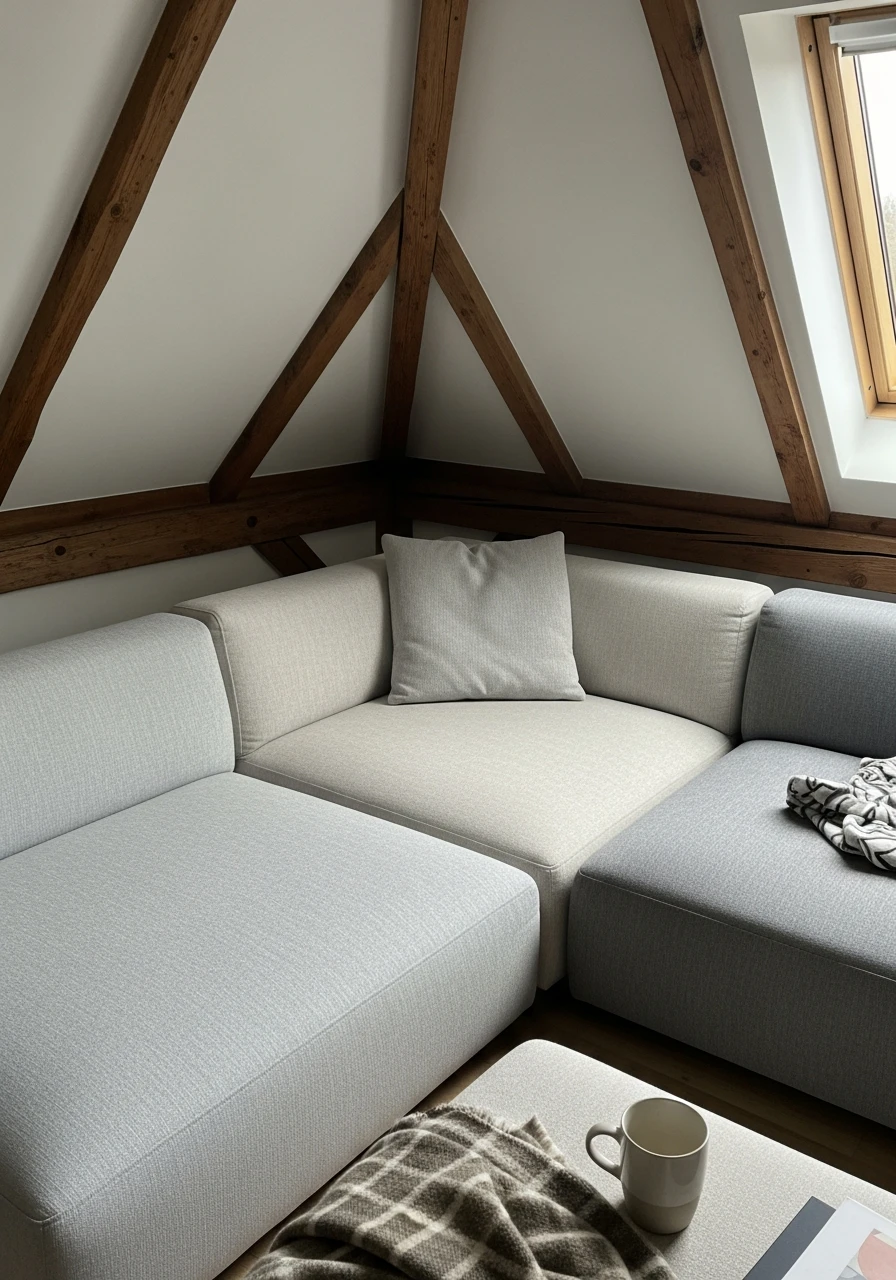
Use furniture pieces that can be moved and rearranged easily, like modular sofas or armless chairs. This flexibility is ideal for the irregular floor plans common in attics.
- Buy pieces that lock together easily for stability.
- Use lightweight materials like rattan or linen.
- Keep extra pieces stored neatly when not in use.
Pro Tip: Modular seating allows you to quickly change the layout for movie watching versus social gatherings or parties.
16. Layered Rugs Define Zone
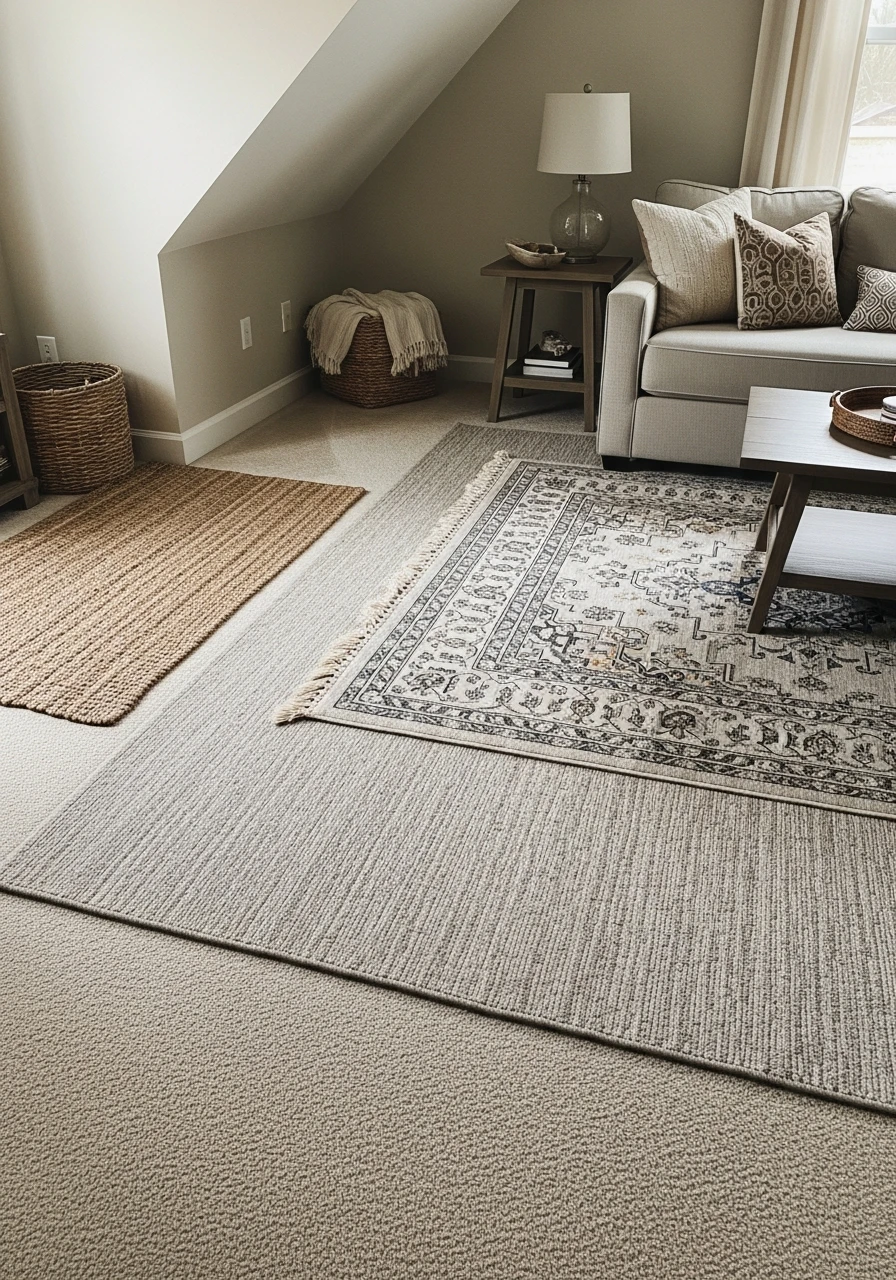
Use two or more rugs layered on top of each other to clearly mark the living room area. This helps visually separate the space without needing physical walls in an open attic.
- Use a large, neutral rug as the base layer.
- Place a smaller, patterned rug on top for interest.
- Ensure the base rug is soft underfoot for comfort.
Pro Tip: Layering rugs adds texture and warmth, which is important for making attic floors feel less cold and hard in winter.
17. Hidden Storage Coffee Table
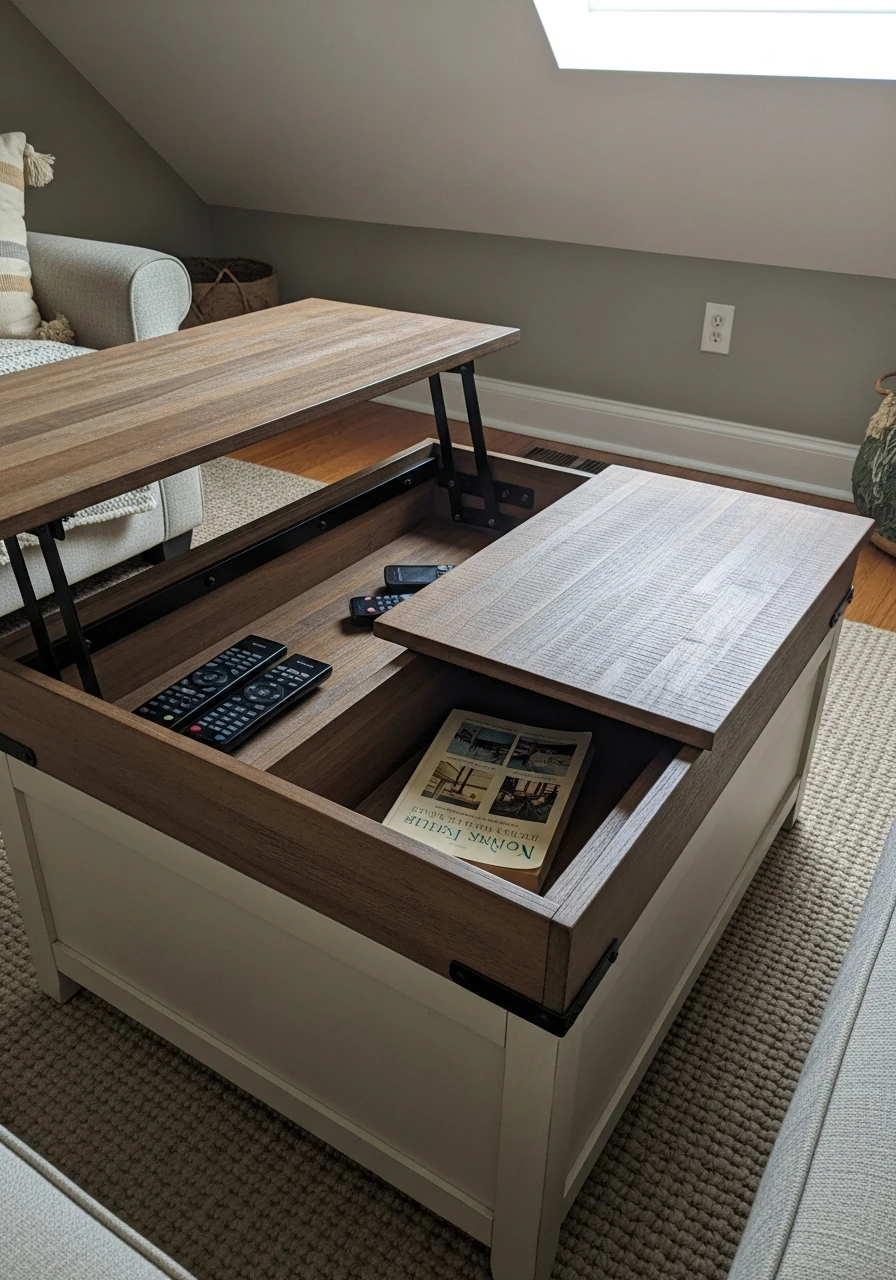
Select a coffee table that has drawers, lift-tops, or open shelving for storage. This helps reduce clutter, which is vital in tight attic living rooms where space is limited.
- Choose a table with a lift-top for easy access.
- Use baskets on lower shelves for magazines.
- Keep remotes and chargers hidden inside.
Pro Tip: A large ottoman with a removable top works well as a soft, dual-purpose coffee table and storage unit.
18. Streamlined Media Wall
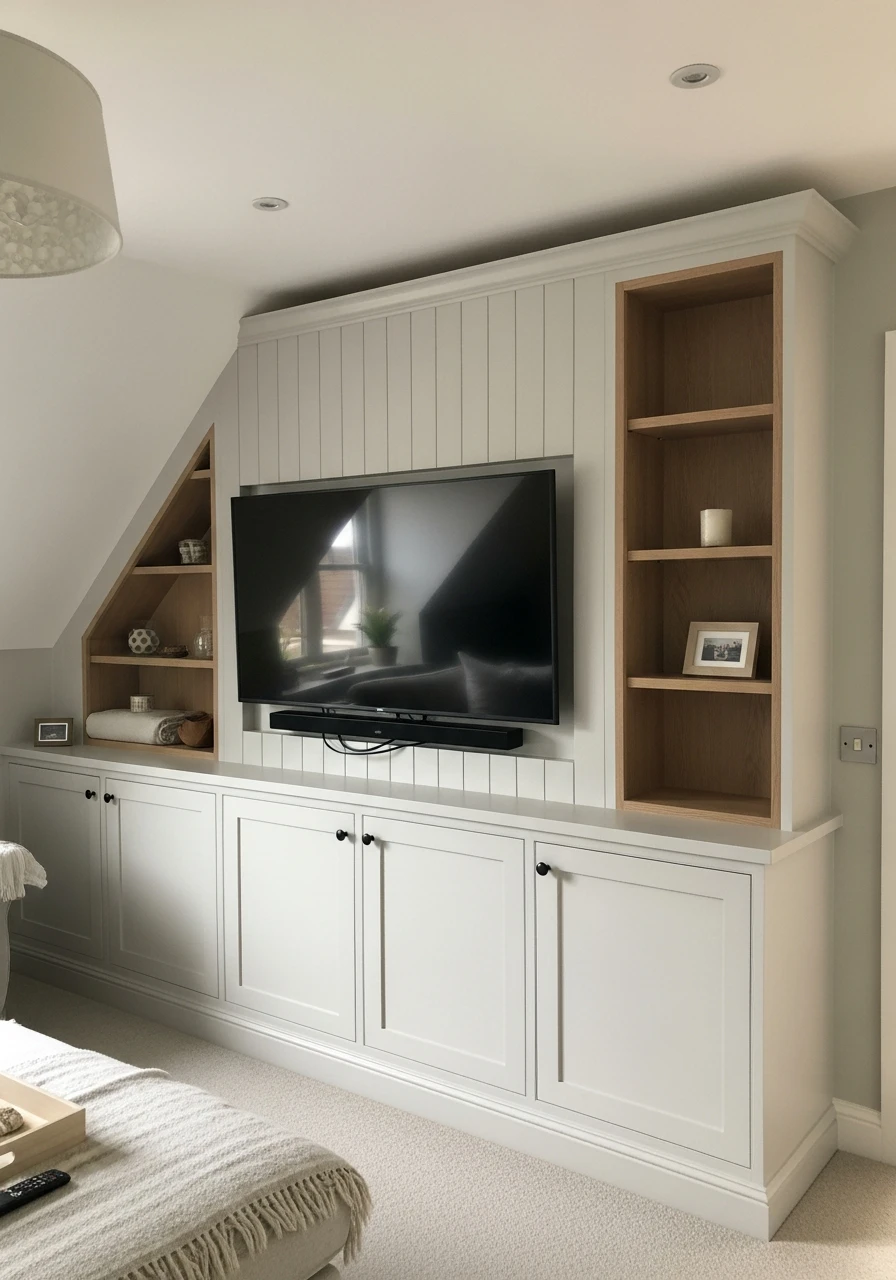
Create a dedicated media wall using built-in cabinets and hidden cable channels. Mount the TV on the straightest wall section to avoid awkward viewing angles.
- Use closed cabinets to hide gaming consoles and wires.
- Ensure the TV is mounted at eye level when seated.
- Paint the wall a darker color to hide the screen when off.
Pro Tip: Use a slim soundbar instead of large, bulky speakers to keep the footprint small and the look clean.
19. Simple Scandinavian Style
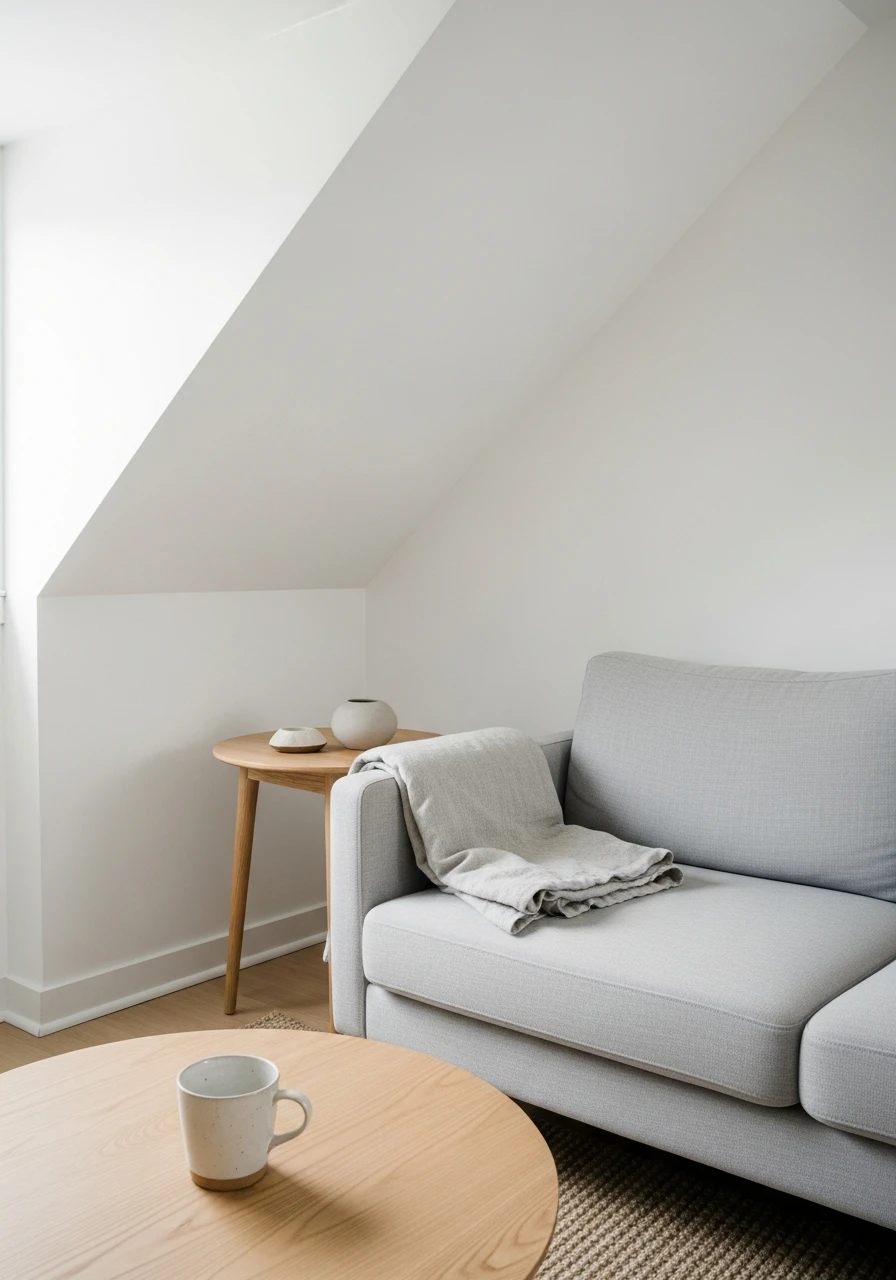
Adopt the Scandi look: clean lines, light wood, and simple, functional furniture. This style naturally emphasizes brightness and keeps the small attic space feeling open and airy.
- Use pale birch or ash wood furniture.
- Choose white or light gray textiles for the sofa.
- Focus on natural fibers like wool and cotton.
Pro Tip: Scandinavian design avoids heavy drapes, letting maximum natural light from attic windows flood the room.
20. Mix Vintage and Modern
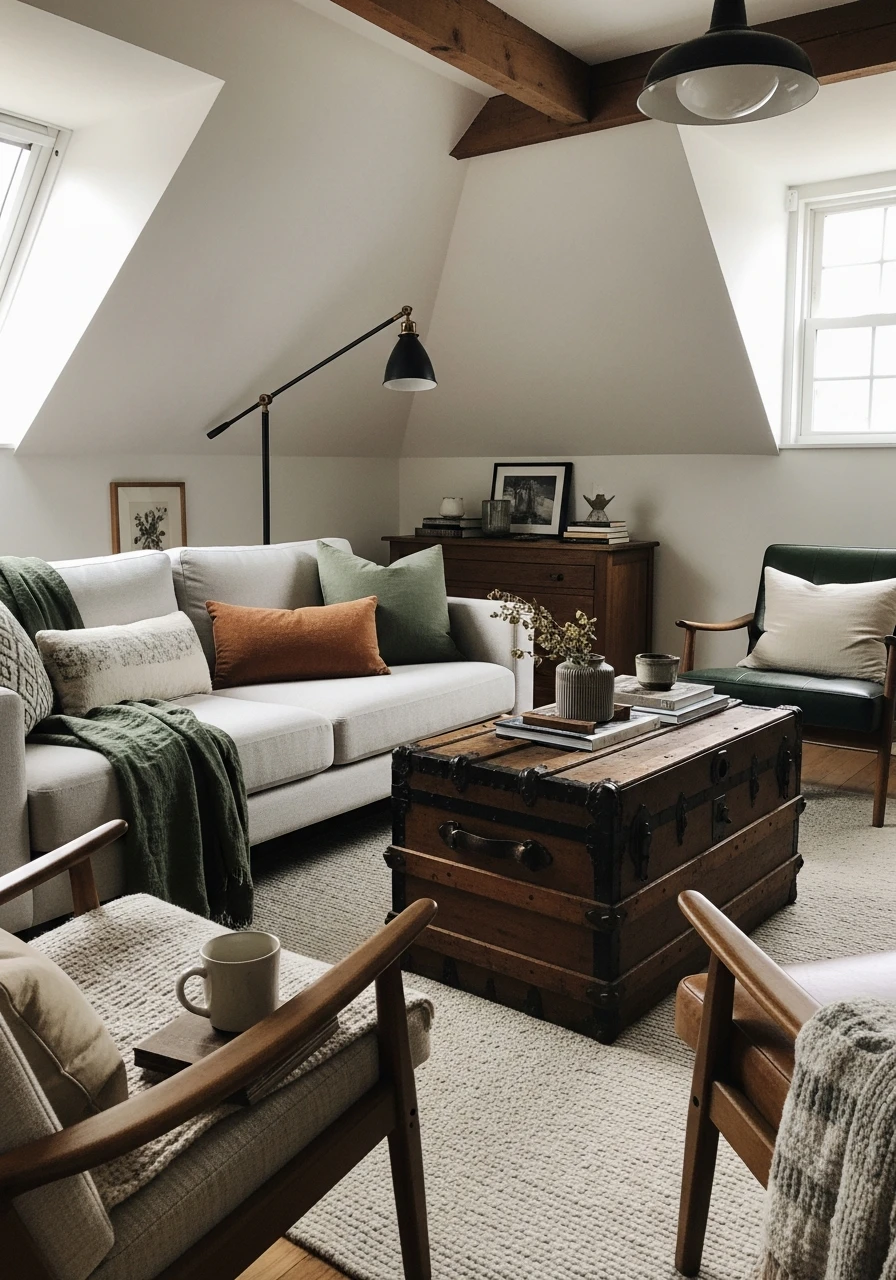
Combine older, unique finds with newer, streamlined furniture pieces. This contrast adds depth and makes the attic living room feel curated, stylish, and intentional.
- Pair a modern sofa with an antique side table.
- Use a vintage rug under a new glass coffee table.
- Limit the mix to two main styles for cohesion.
Pro Tip: Look for vintage lamps, as they often have unique shapes that add character without taking up too much floor space.
21. Shelving Under Slopes
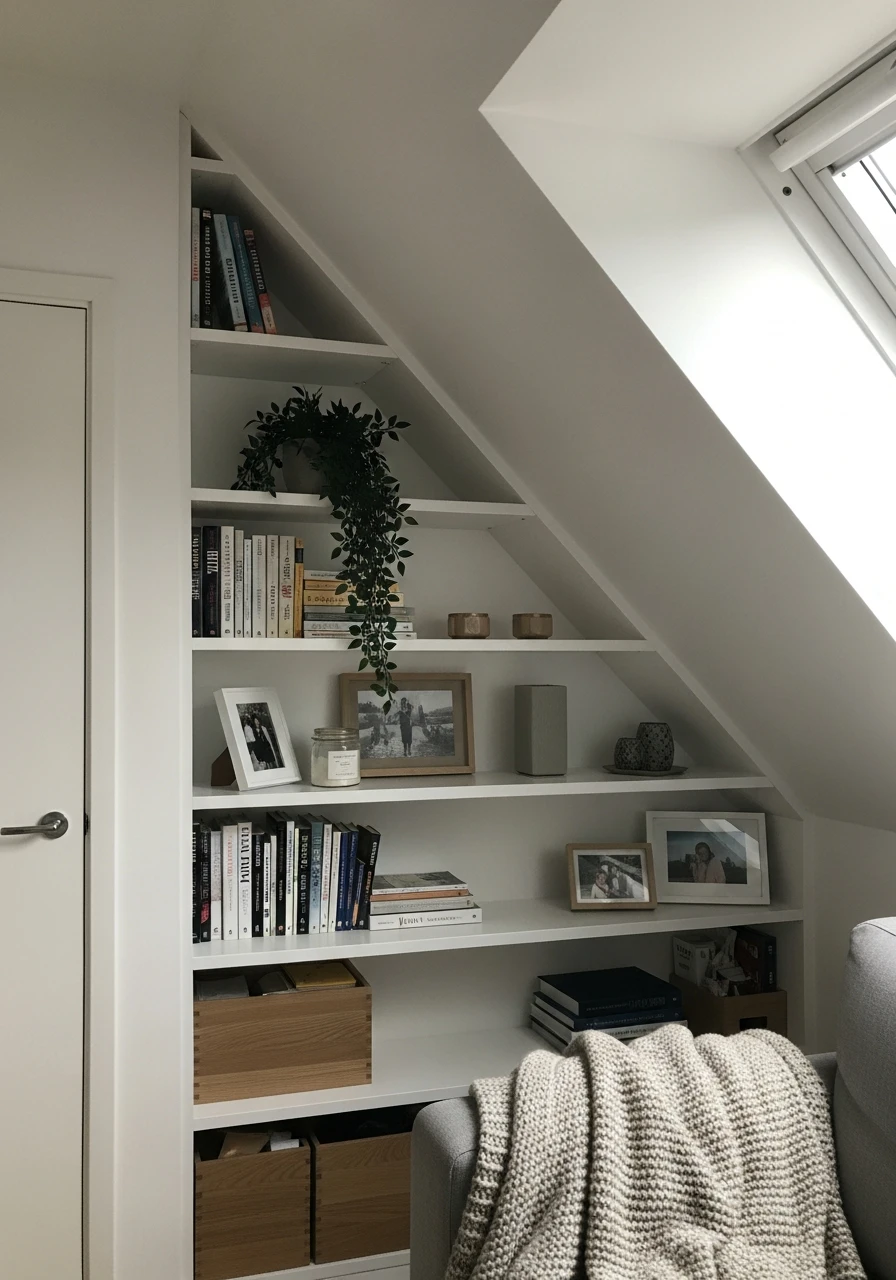
Install custom shelving units that are cut to follow the exact angle of the attic roof slope. This maximizes vertical storage space efficiently in awkward areas.
- Paint the shelves the same color as the wall to blend them in.
- Use the deepest part for books and the low parts for display.
- Ensure the shelves are securely anchored to the studs.
Pro Tip: Custom built-ins are worth the cost because they use every inch of the attic’s unique wall shape that standard furniture ignores.
22. Concealed Storage Seating
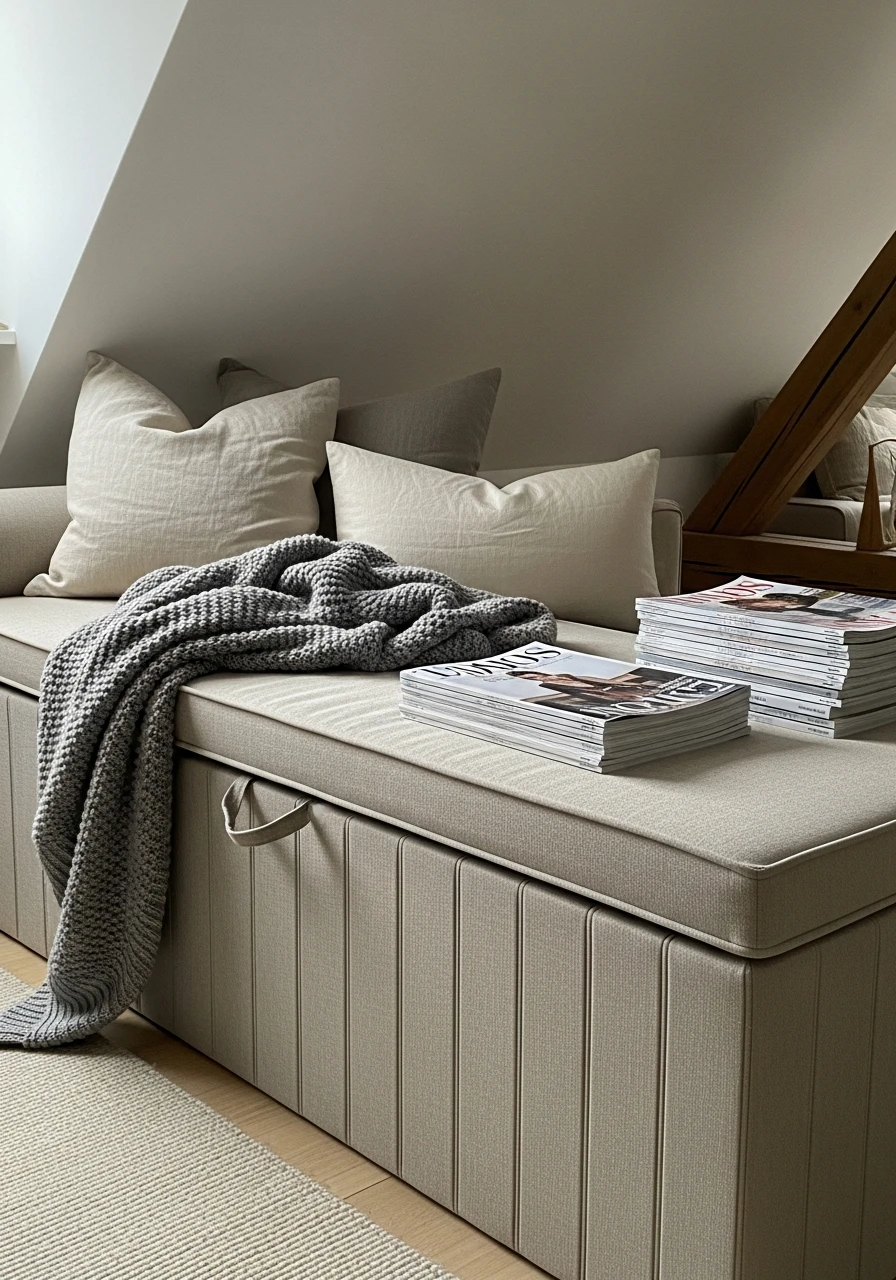
Use furniture that doubles as storage, such as ottomans, benches, or sofas with built-in compartments. This keeps the living room tidy without adding extra furniture pieces.
- Use storage ottomans near the sofa for blankets.
- Choose a bench with a hinged lid for easy access.
- Store extra pillows or games inside seating units.
Pro Tip: This is the best way to hide items like board games or seasonal decorations that you don’t use every day but want close by.
23. Floating Shelves for Height
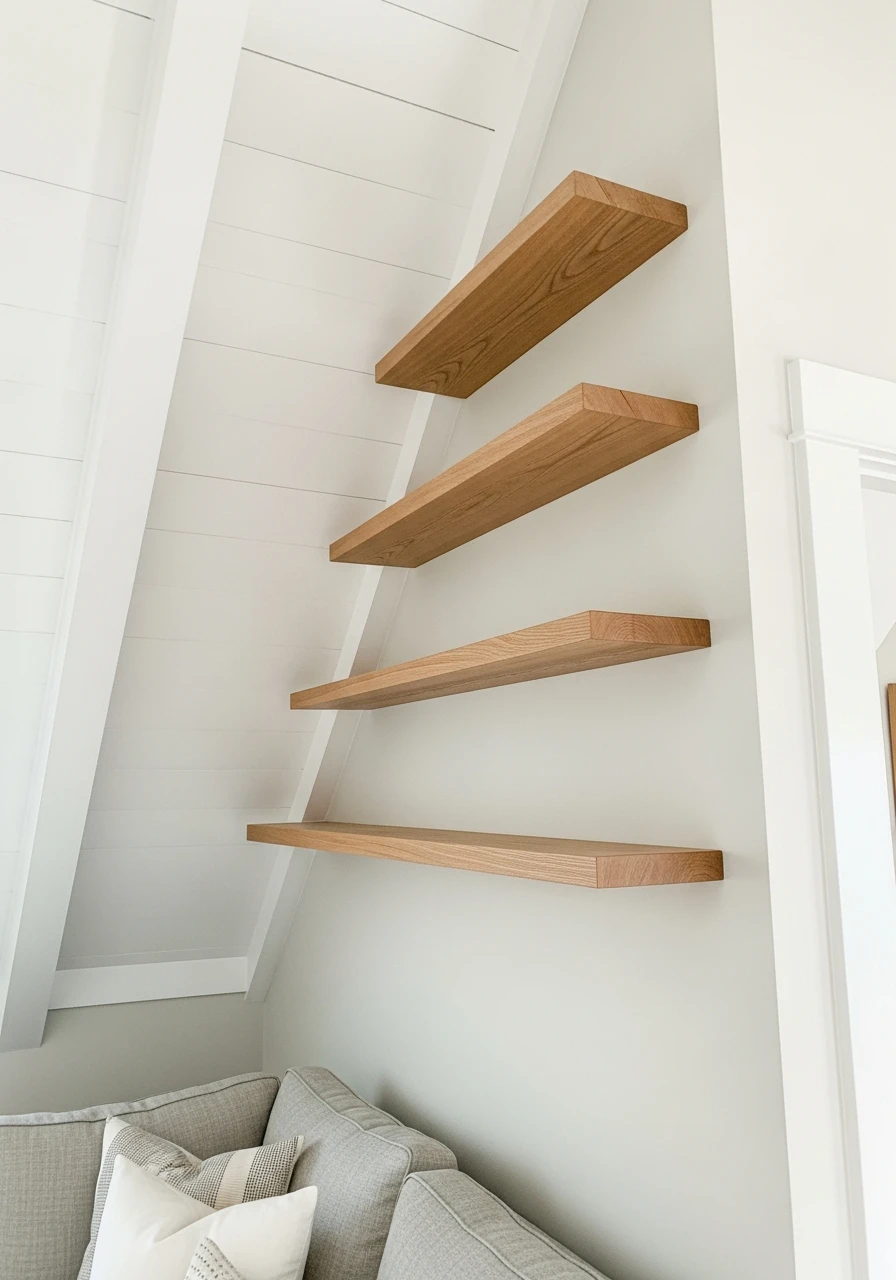
Mount simple floating shelves high up on the vertical walls. This draws the eye upward, visually increasing the perceived height of the attic living room.
- Keep the decor on the shelves minimal and light.
- Use light-colored wood or white shelves.
- Place them above the main seating area.
Pro Tip: Floating shelves are great because they don’t block light or feel heavy in a small space like a traditional, deep bookcase.
24. Closed Media Storage
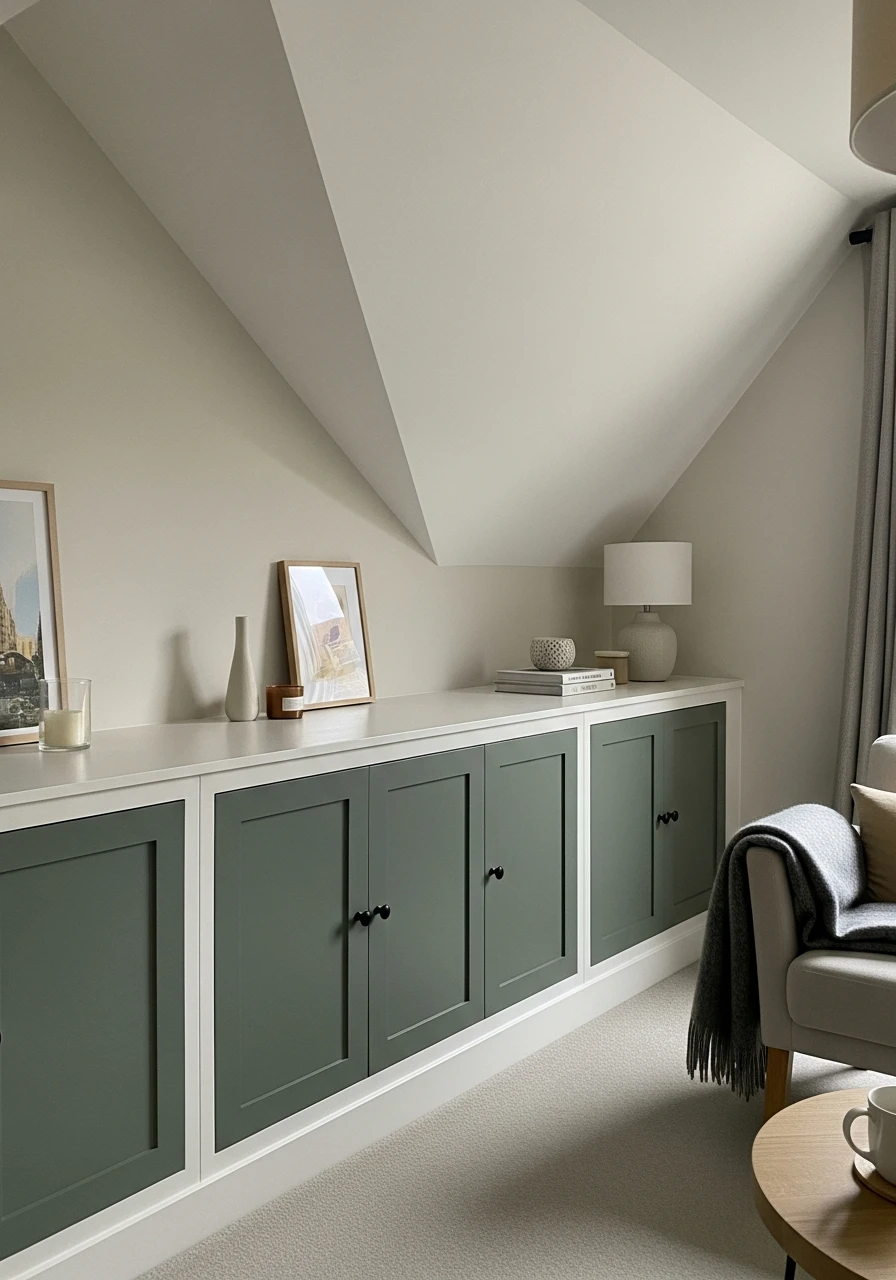
Design a media center using cabinets with solid doors. This hides electronics, cords, and clutter, keeping the living room clean and streamlined for a calmer feel.
- Choose push-to-open cabinet doors for a handle-free look.
- Ensure there is ventilation cutouts for electronics.
- Keep the unit low and wide to fit under slopes.
Pro Tip: Hiding the media components makes the attic feel more like a cozy retreat and less like a tech hub.
25. Under-Sofa Drawers
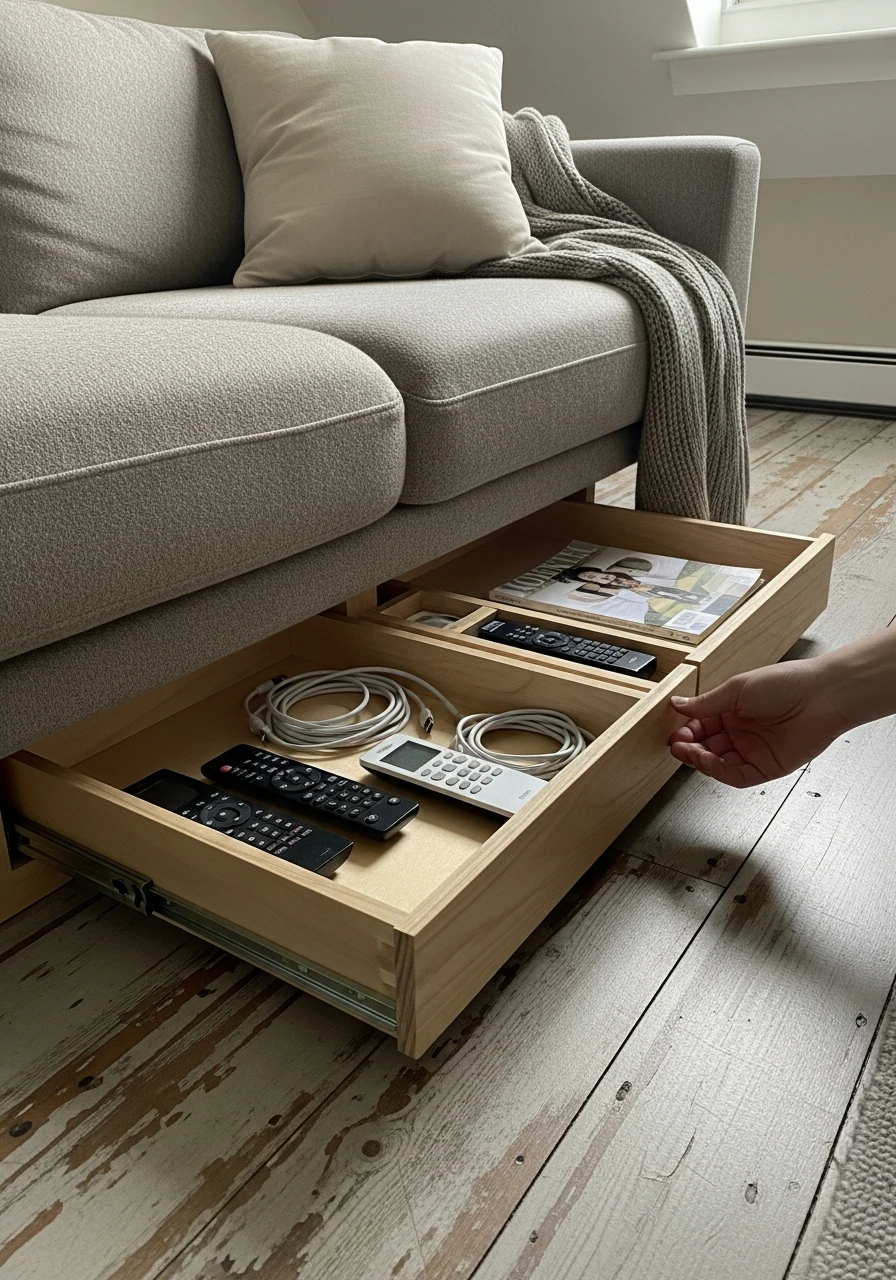
Utilize the space beneath the sofa by using low drawers or flat bins. This is perfect for storing small items like remote controls, magazines, or charging cables.
- Use rolling storage bins for easy access.
- Ensure the bins match the sofa color or are hidden.
- Measure the clearance height carefully before buying.
Pro Tip: If your sofa doesn’t have legs, consider adding small furniture risers to create space for storage underneath.
26. Alcove Built-In Shelves
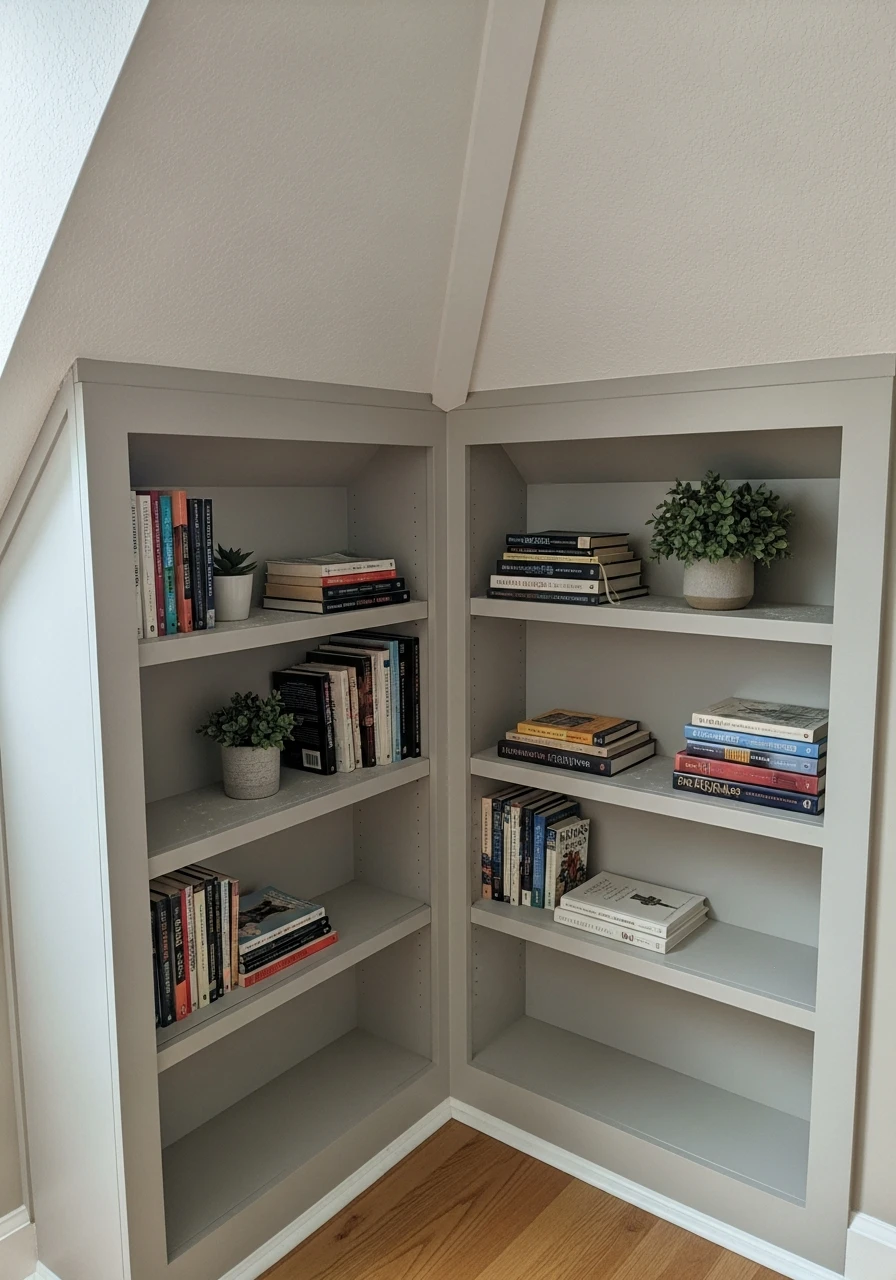
Convert existing attic alcoves or recessed areas into built-in shelving or display niches. This adds storage without taking up any precious floor space in the main room.
- Use the alcove for displaying collections or books.
- Add small spotlights inside the niche for drama.
- Paint the inside a slightly contrasting color.
Pro Tip: Alcoves are naturally cozy spots; use them to display items that reflect your personal style and hobbies.
27. Hidden Panel Storage
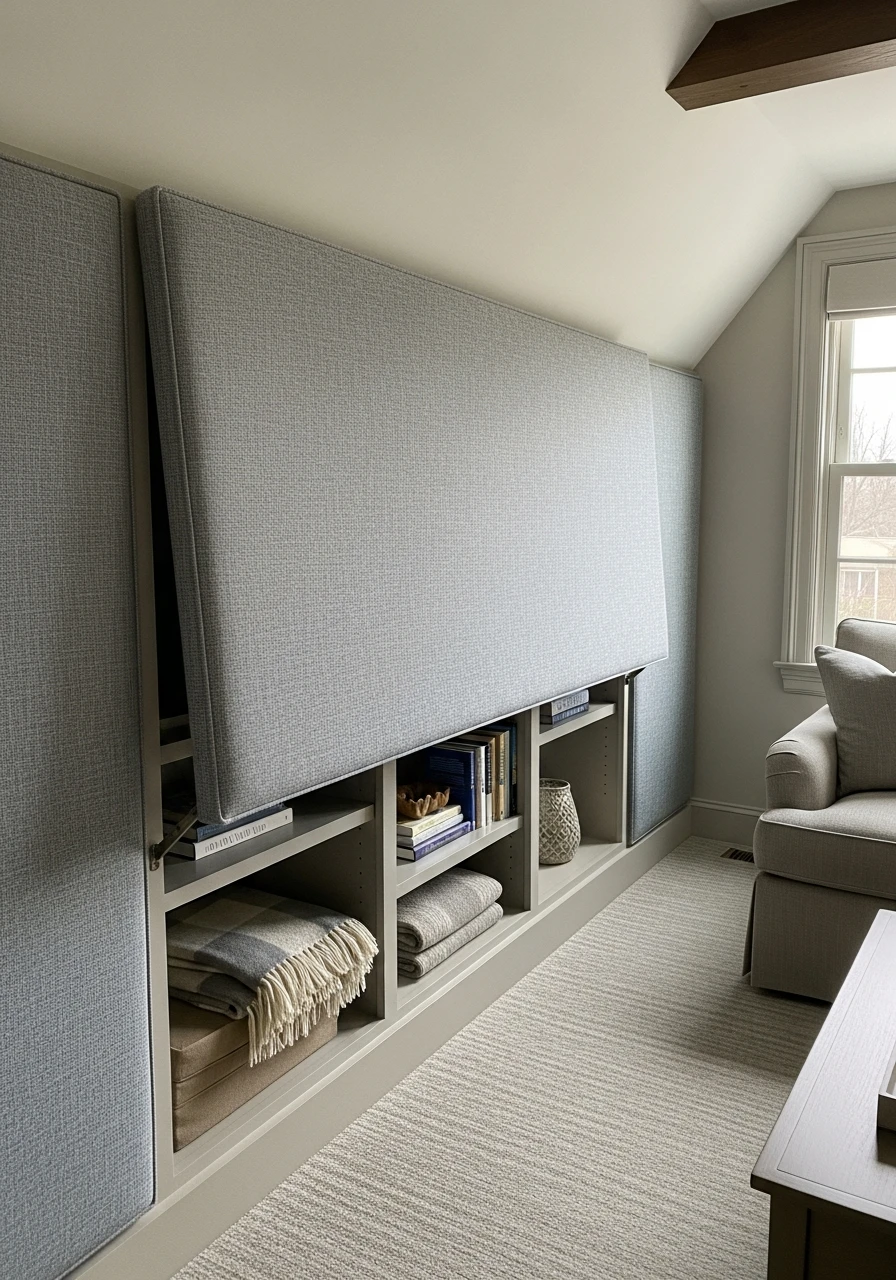
Install upholstered panels on the walls that swing open to reveal storage compartments behind them. This blends storage seamlessly into the living room design.
- Use the same fabric as the seating for a cohesive look.
- Ensure the panels have discrete, hidden handles.
- Store seasonal items or bulky items here.
Pro Tip: This high-end trick is perfect for hiding bulky items like vacuum cleaners or large winter coats you need access to.
28. Narrow Console Tables
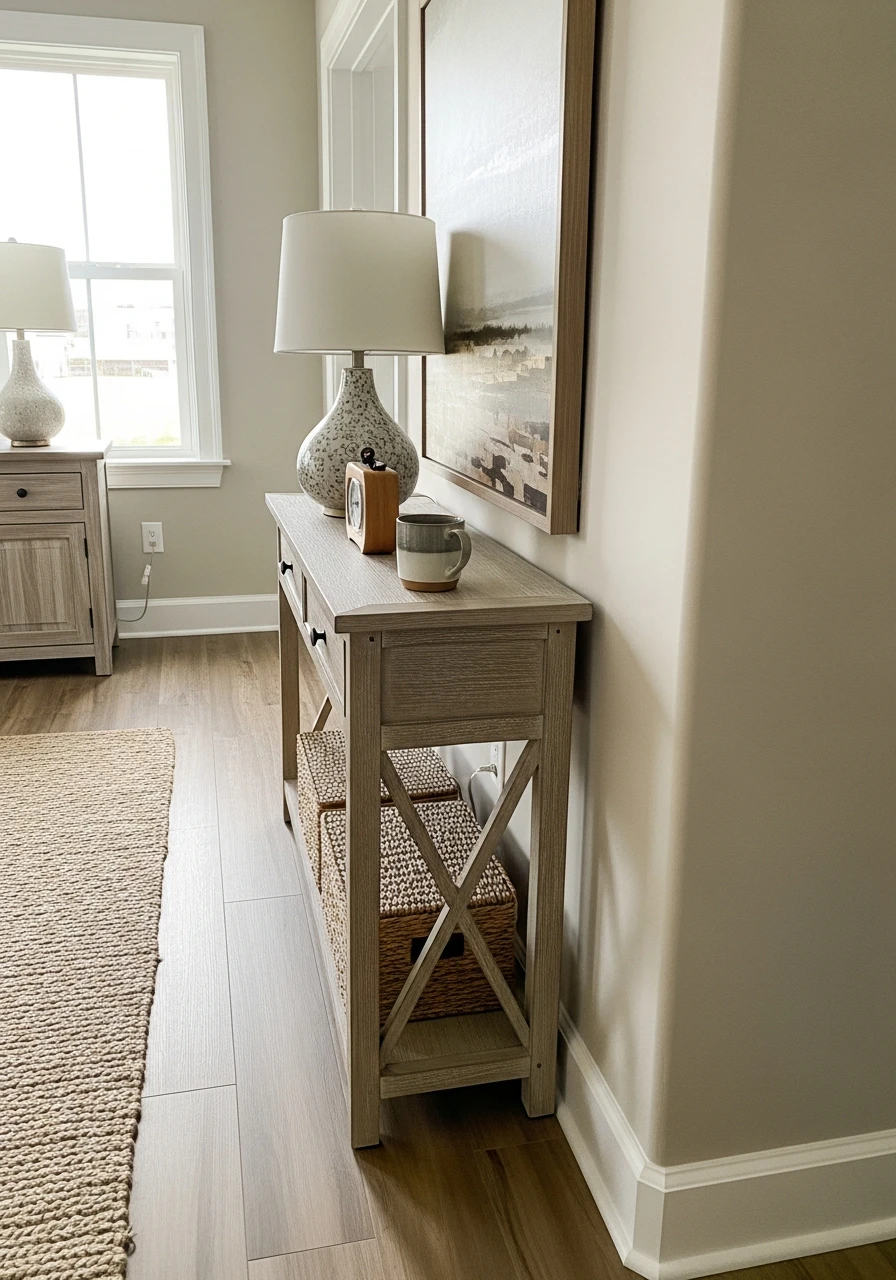
Place very narrow console tables along the lowest, straight wall sections. They offer surface space for lamps or drinks without blocking movement in the attic living room.
- Choose tables less than 10 inches deep.
- Use them to hold small table lamps or decor.
- Keep the surface clear of unnecessary clutter.
Pro Tip: If the wall is very low, use the console table to hold trailing plants that add life and color to the space.
29. Cabinets Inside Eaves
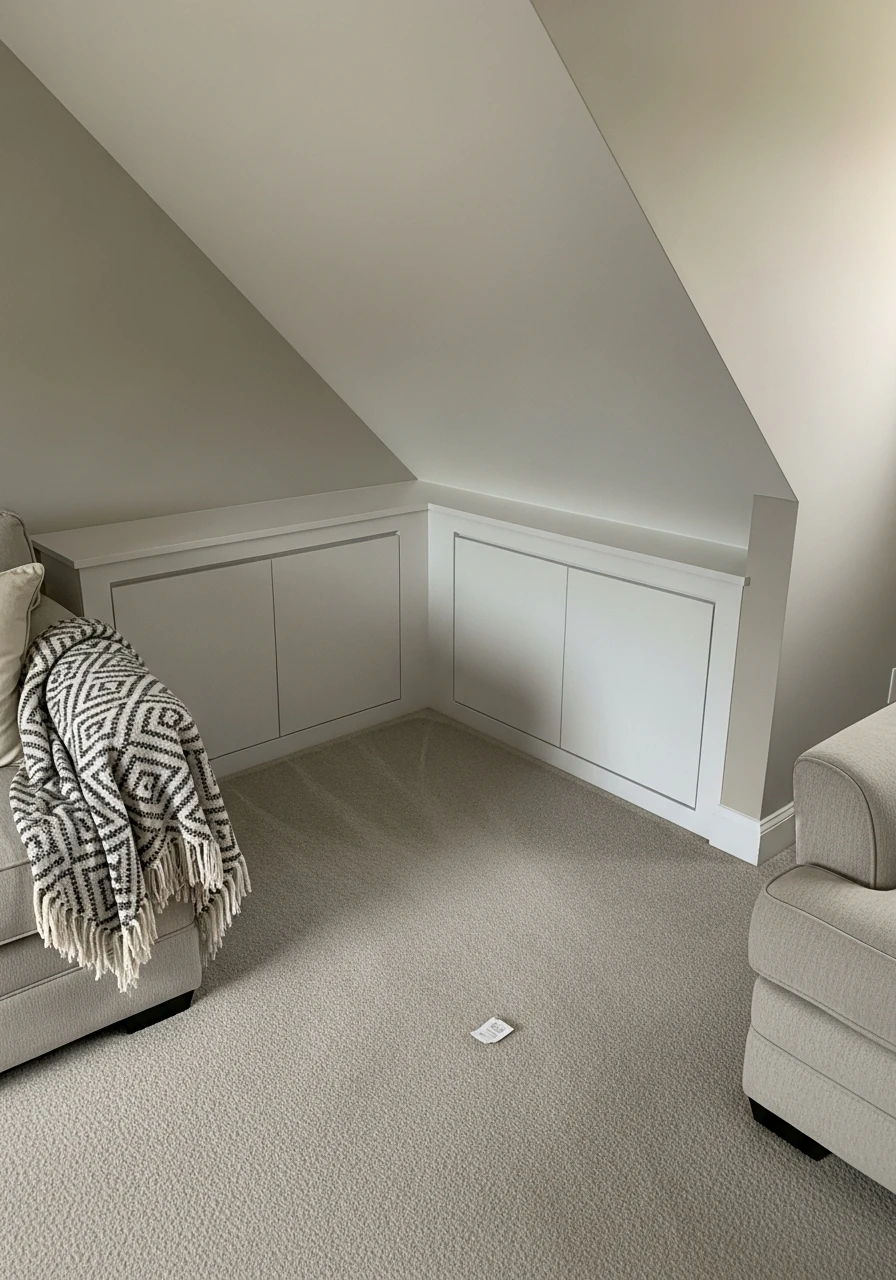
Install custom cabinets directly into the attic eaves, using the deepest part of the low-ceiling space. This keeps storage completely out of sight while maintaining a clean layout.
- Use shallow drawers for small items.
- Ensure the cabinet doors match the wall color.
- Label the contents clearly for easy finding.
Pro Tip: This is the most effective way to use the lowest, most difficult-to-reach parts of the attic floor plan without losing square footage.
30. Flexible Storage Ottomans
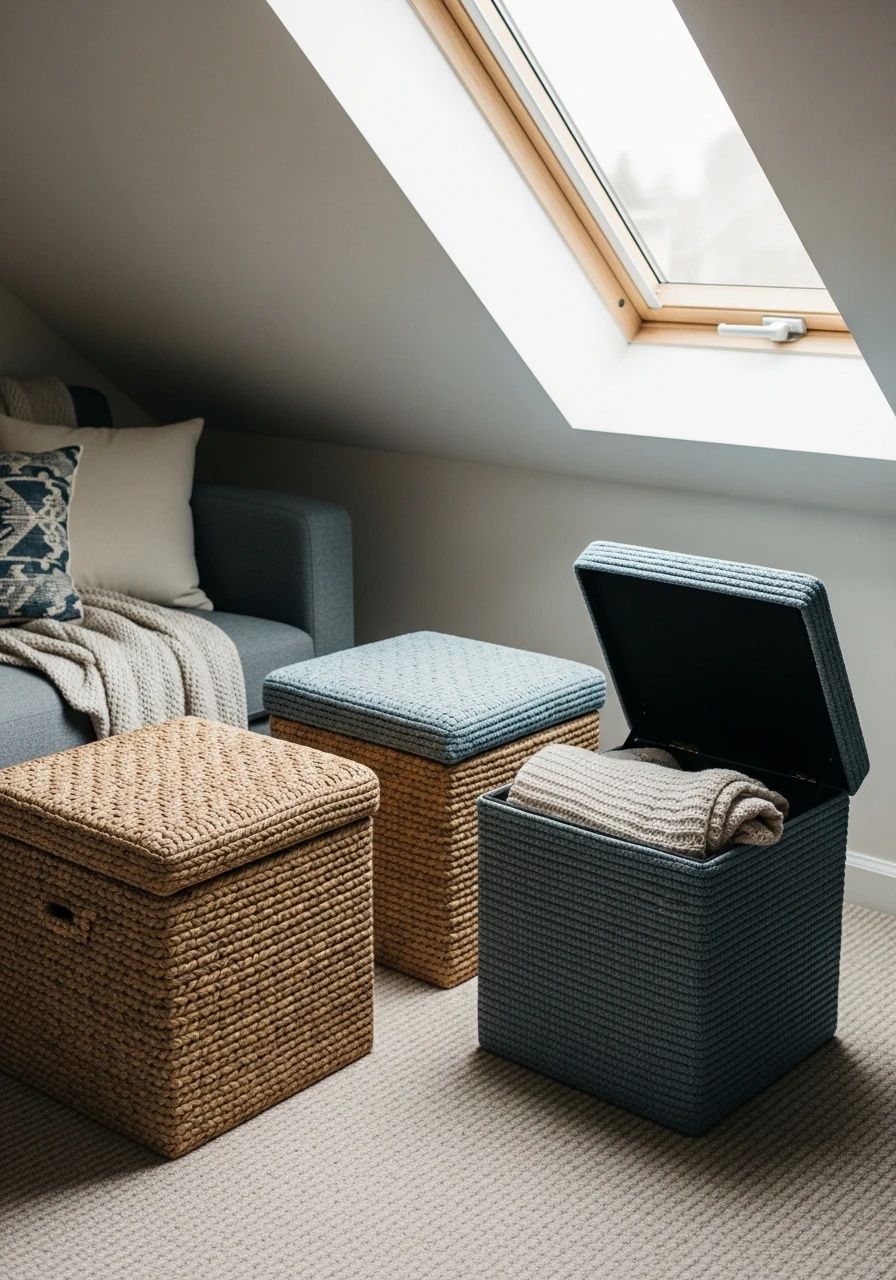
Use ottomans that serve three purposes: extra seating, a footrest, and storage. This flexibility is ideal for compact attic living rooms where every item must count.
- Choose a large, square ottoman for versatility.
- Select a durable fabric that can handle feet and sitting.
- Use it as a coffee table by adding a tray on top.
Pro Tip: If you need a firm surface, place a large wooden tray on top of the ottoman when using it for drinks or snacks.
31. Layered Lighting Plan
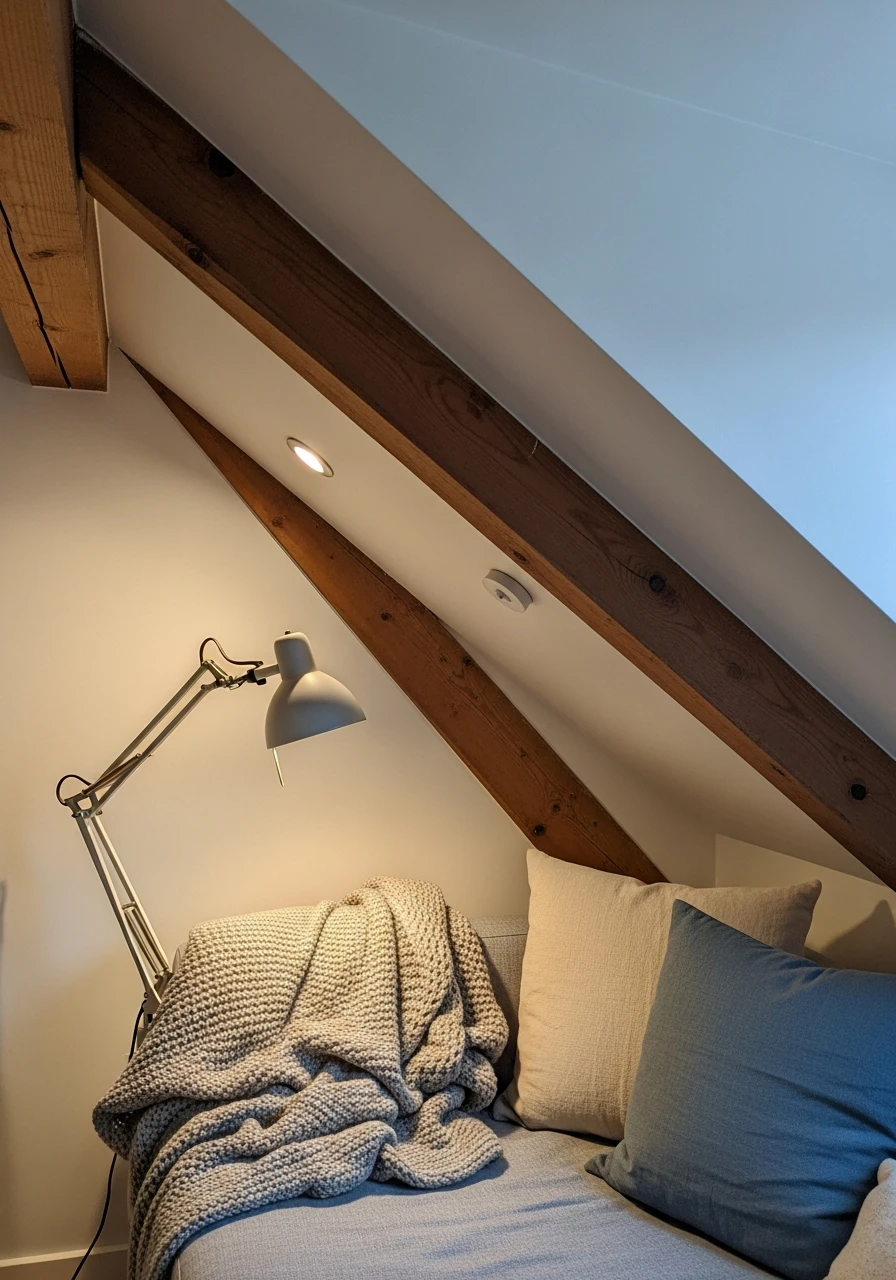
Use a mix of ambient (general), task (reading), and accent (spotlights) lighting. This prevents dark shadows caused by angled ceilings and ensures even brightness.
- Use recessed lights for ambient lighting.
- Place a floor lamp next to the sofa for task lighting.
- Add small spotlights to highlight art or architecture.
Pro Tip: Good lighting makes the attic feel less like a storage space and more like a real, comfortable room.
32. Floor Lamps for Low Spots
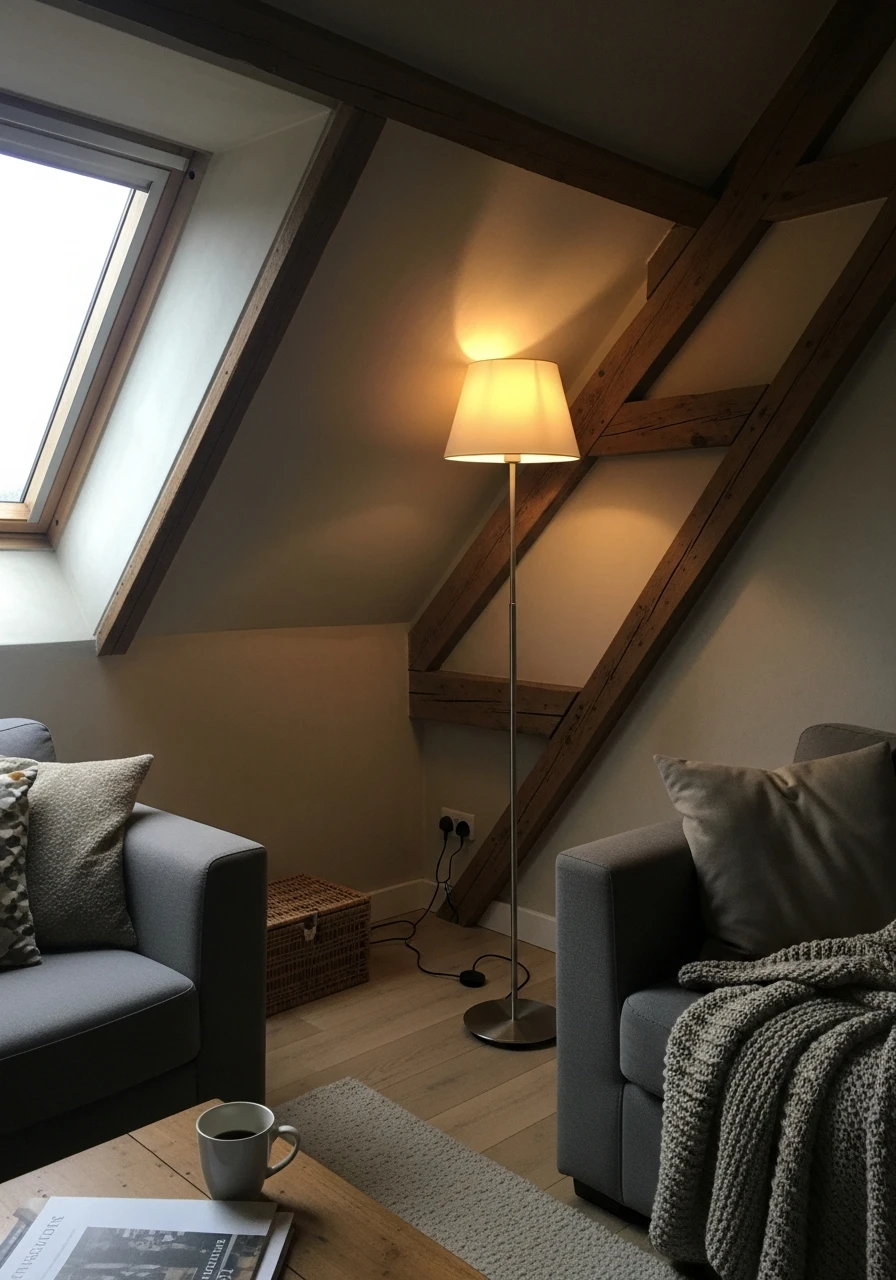
Use standing floor lamps instead of overhead lights in low-ceiling areas. This avoids crowding the ceiling while still providing functional lighting where needed.
- Choose lamps with adjustable arms for flexibility.
- Use a tripod base for stability on uneven floors.
- Ensure the light points downward for reading comfort.
Pro Tip: A tall, slim arc floor lamp can reach over a sofa placed in a low area without needing any ceiling installation.
33. Focal Pendant Light
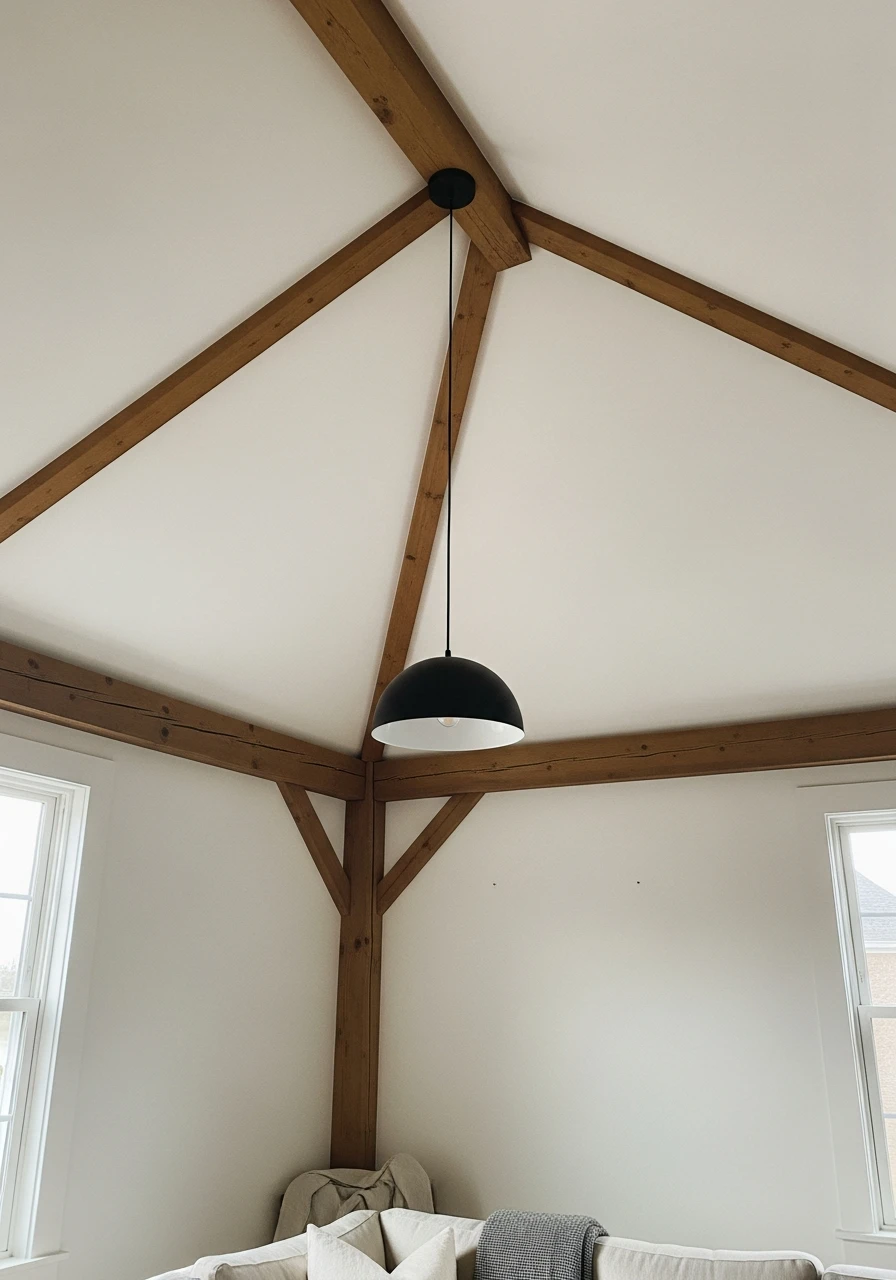
Hang a single, stylish pendant light fixture in the very highest point of the attic living room. This creates a clear focal point and draws the eye up to the ceiling height.
- Choose a fixture that suits the room style.
- Ensure the light is bright enough for the whole room.
- Keep the chain length appropriate for the height.
Pro Tip: If the ceiling is wood, use a simple metal or glass fixture for contrast and a modern touch.
34. Indirect LED Strip Lights
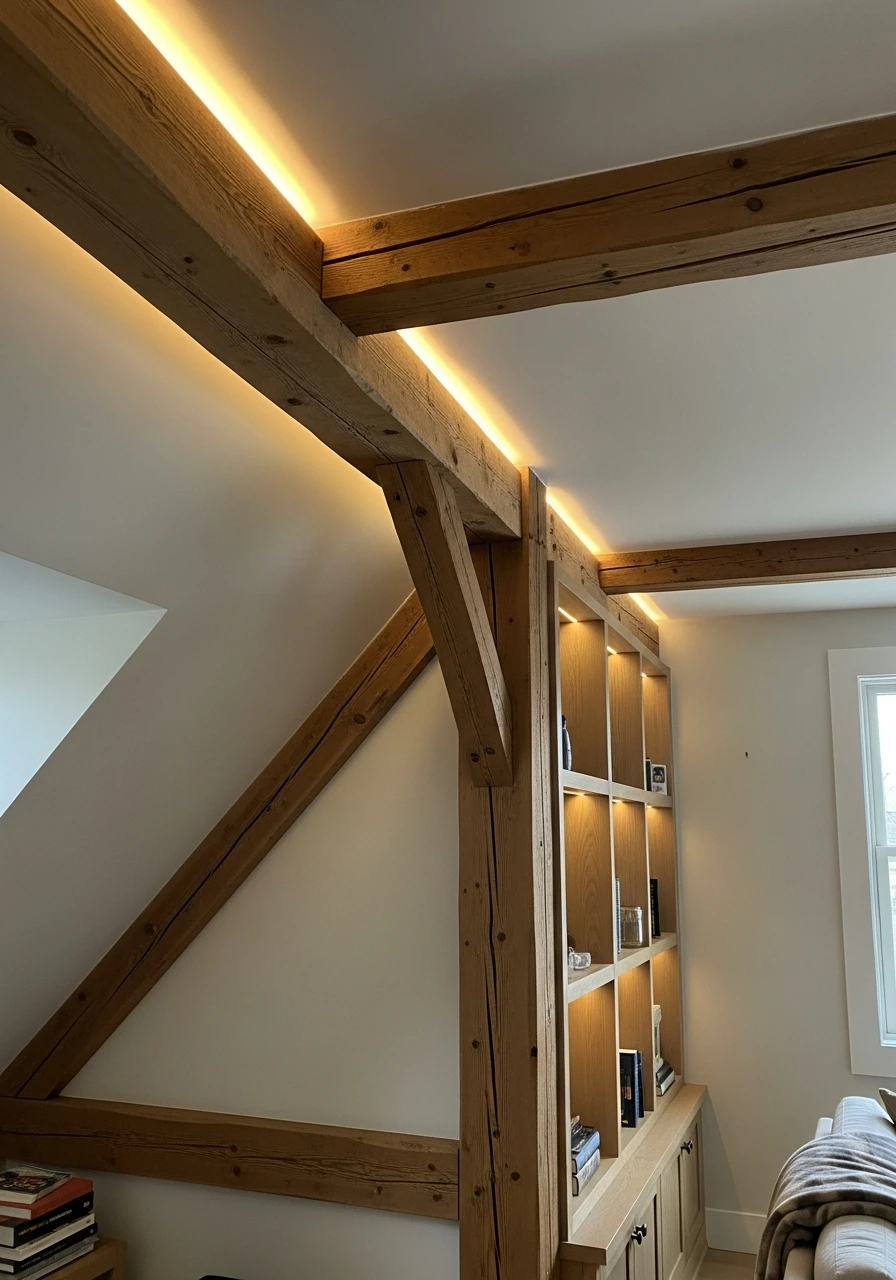
Install thin LED light strips along the top of exposed beams or inside shelving units. This adds soft, indirect light that highlights the attic’s unique architecture.
- Use warm white LED strips (3000K or lower).
- Hide the strips behind trim or molding.
- Use a dimmer switch for ambiance control.
Pro Tip: Indirect lighting is great for movie nights because it provides enough light without causing screen glare.
35. Right-Sized Chandelier
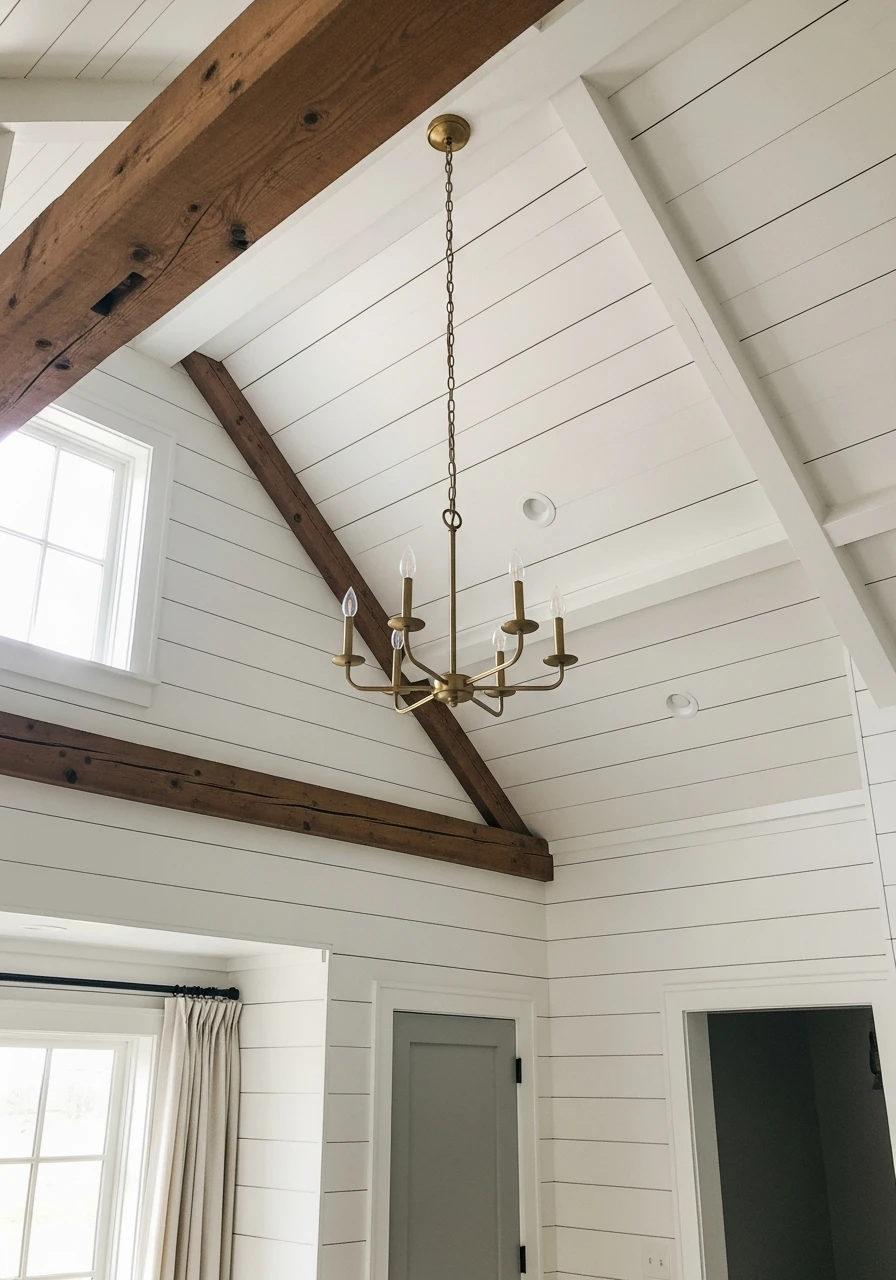
Select a chandelier that is small or medium in size, matching the attic’s proportions. It adds style and elegance without overwhelming the unique height of the space.
- Measure the width to ensure it doesn’t cross the ceiling line.
- Choose a simple design, not too ornate or heavy.
- Hang it centered over the main coffee table.
Pro Tip: A light fixture that is too big will make the entire attic feel smaller and heavier than it is.
36. Wall Sconces Lighting
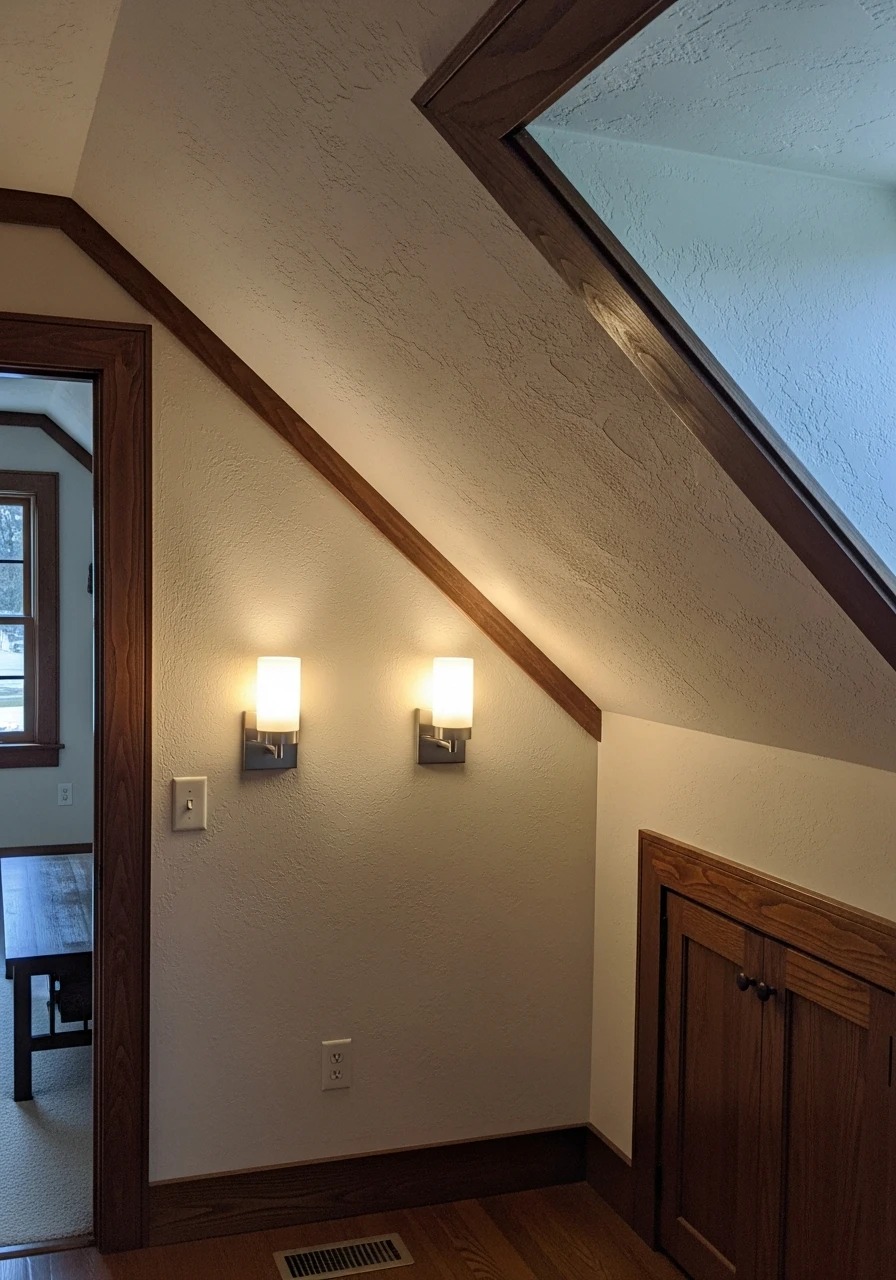
Use wall-mounted sconces for ambient lighting. They free up floor space and work perfectly on the straight sections of wall under the slopes.
- Choose sconces that point up and down (wash lighting).
- Install them at eye level when standing.
- Use soft, warm bulbs for a cozy glow.
Pro Tip: Sconces are ideal for creating a cozy mood and avoiding the harsh shadows often cast by overhead lighting.
37. Cozy String Lighting
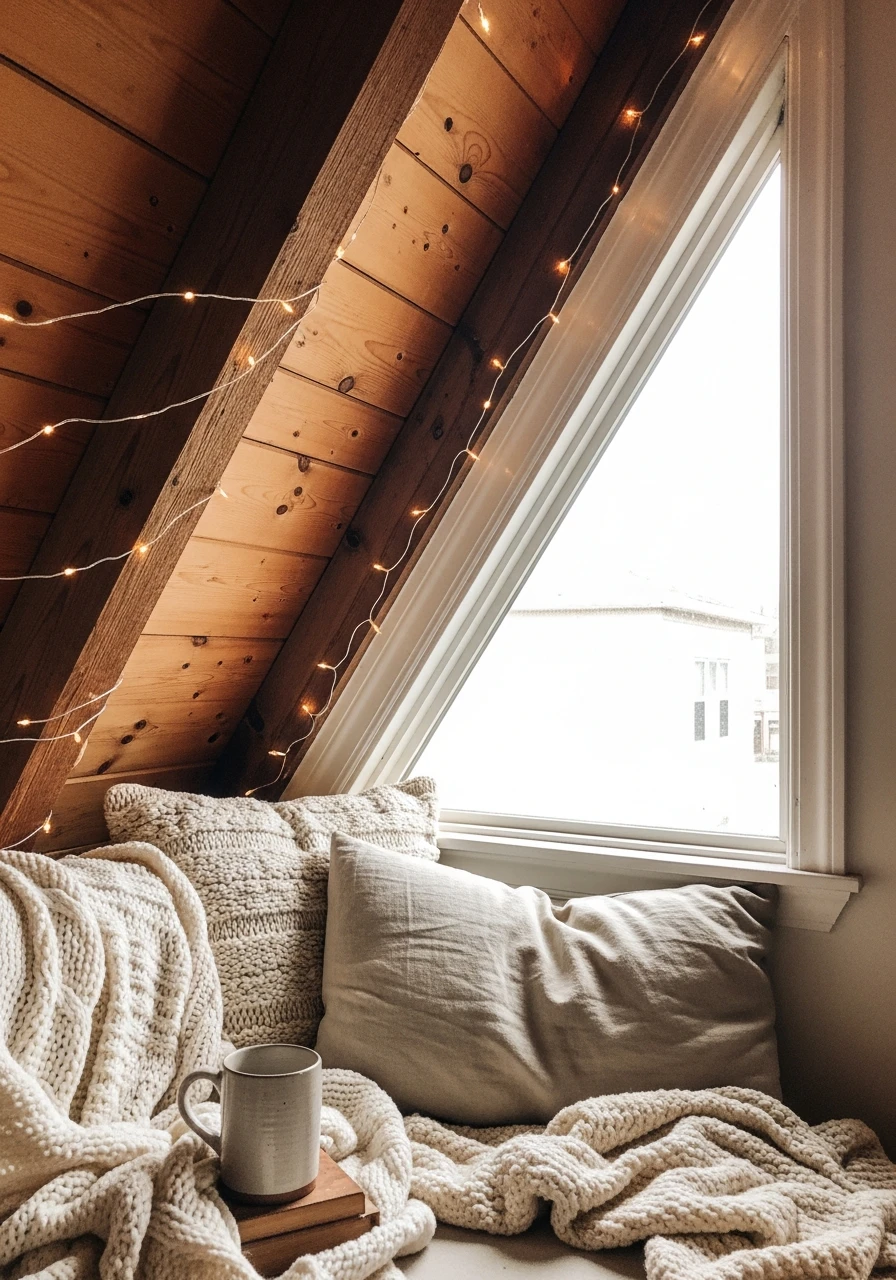
Add subtle string lights or fairy lights along beams or around window frames. This creates a relaxed, warm, and cozy atmosphere in the attic living room.
- Use battery-operated lights for easy placement.
- Choose warm, yellow-toned lights over bright white.
- Weave them through open shelving units.
Pro Tip: This touch adds a playful, youthful feel, perfect for a casual attic hangout space or guest room.
38. Art Spotlights
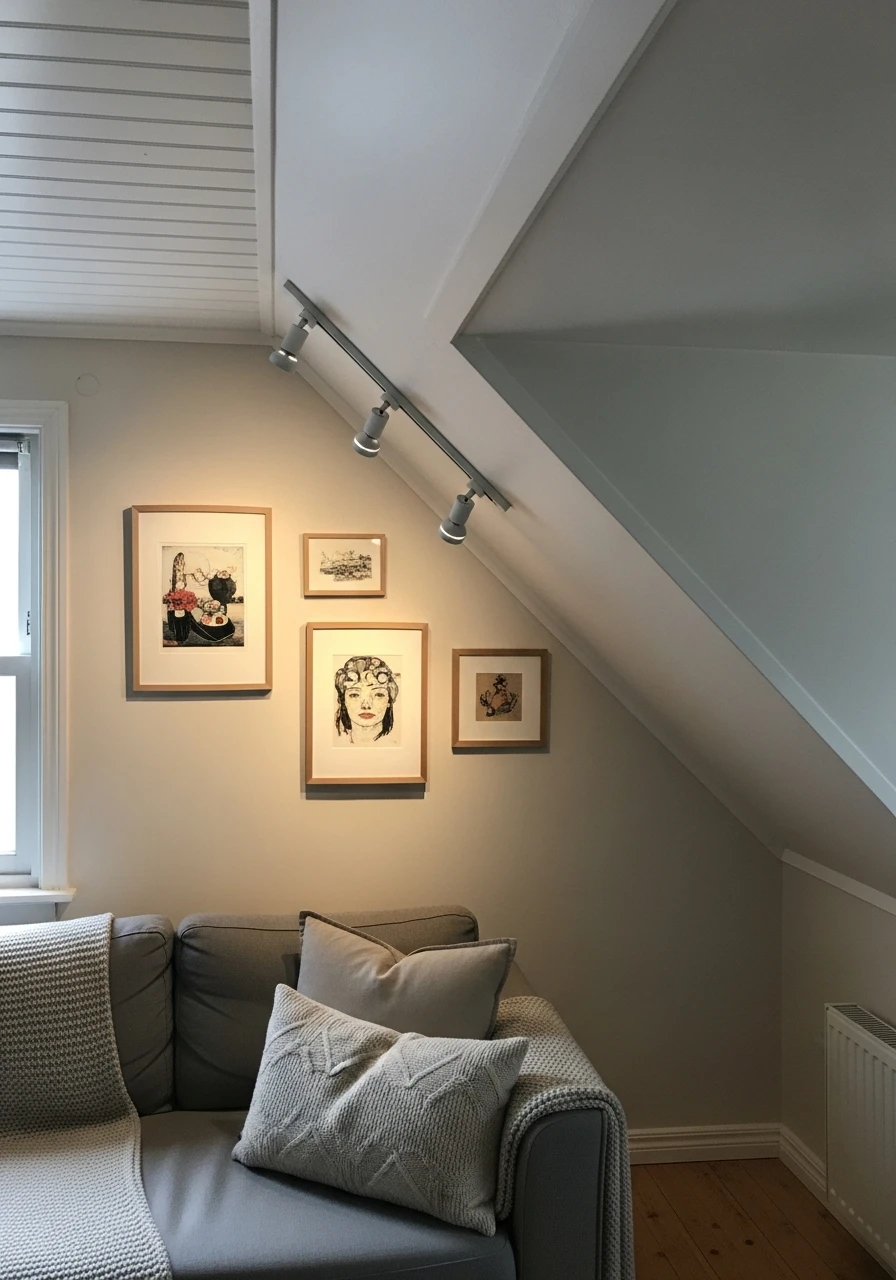
Install small, focused spotlights to highlight artwork or display pieces on the walls. This draws attention to decor and away from awkward ceiling angles.
- Use track lighting that can be adjusted easily.
- Ensure the light beam covers the entire piece of art.
- Place spotlights high up to wash the wall.
Pro Tip: Highlighting vertical elements helps emphasize the height you do have in the center of the room.
39. Balanced Table Lamps
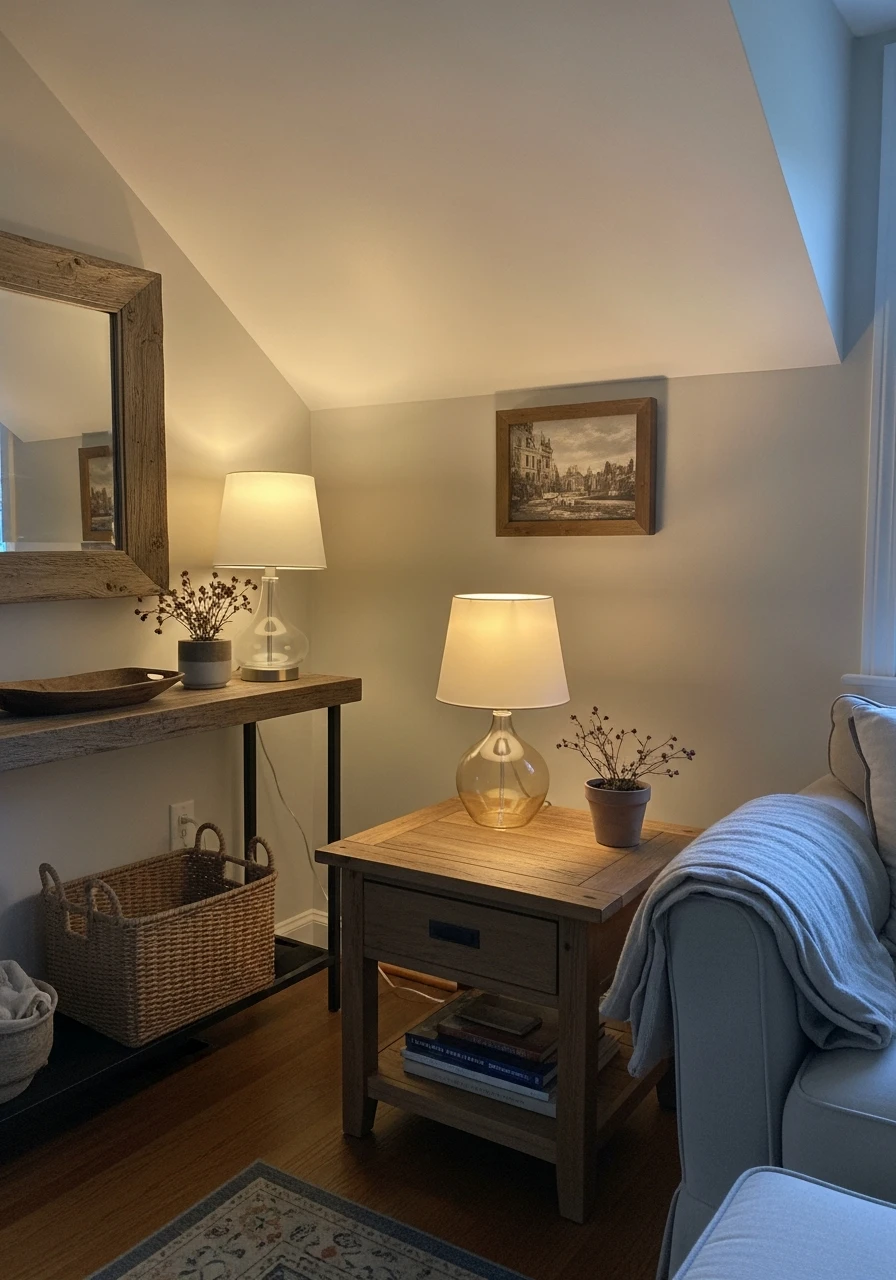
Place small table lamps on side tables and console tables. They add warmth and help balance the light levels across the entire living room area.
- Use lamps with opaque shades to diffuse light softly.
- Choose a lamp height that works well for reading.
- Use matching pairs for a symmetrical look.
Pro Tip: Table lamps add a layer of comfort that overhead lights often miss, making the attic feel more residential.
40. Concealed Uplighting
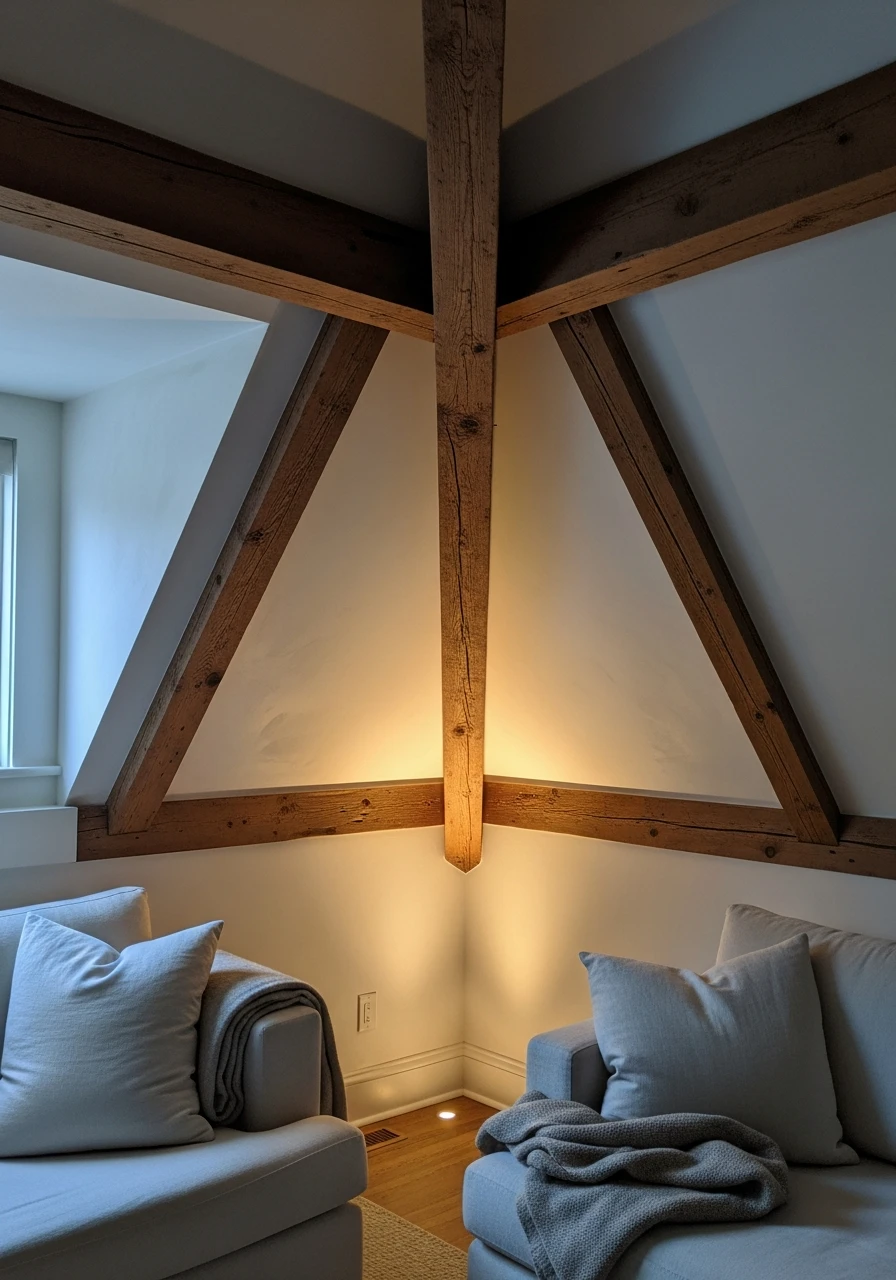
Use small, hidden lights placed on the floor or behind furniture to shine light upward onto the beams or ceiling. This adds depth and dimension to the architecture.
- Place lights behind large floor plants.
- Use LED puck lights hidden on the floor.
- Focus the light on textured surfaces like brick.
Pro Tip: Uplighting is a great way to make a low ceiling feel higher by washing the surface with light and drawing the eye up.
41. Exposed Wood Beams
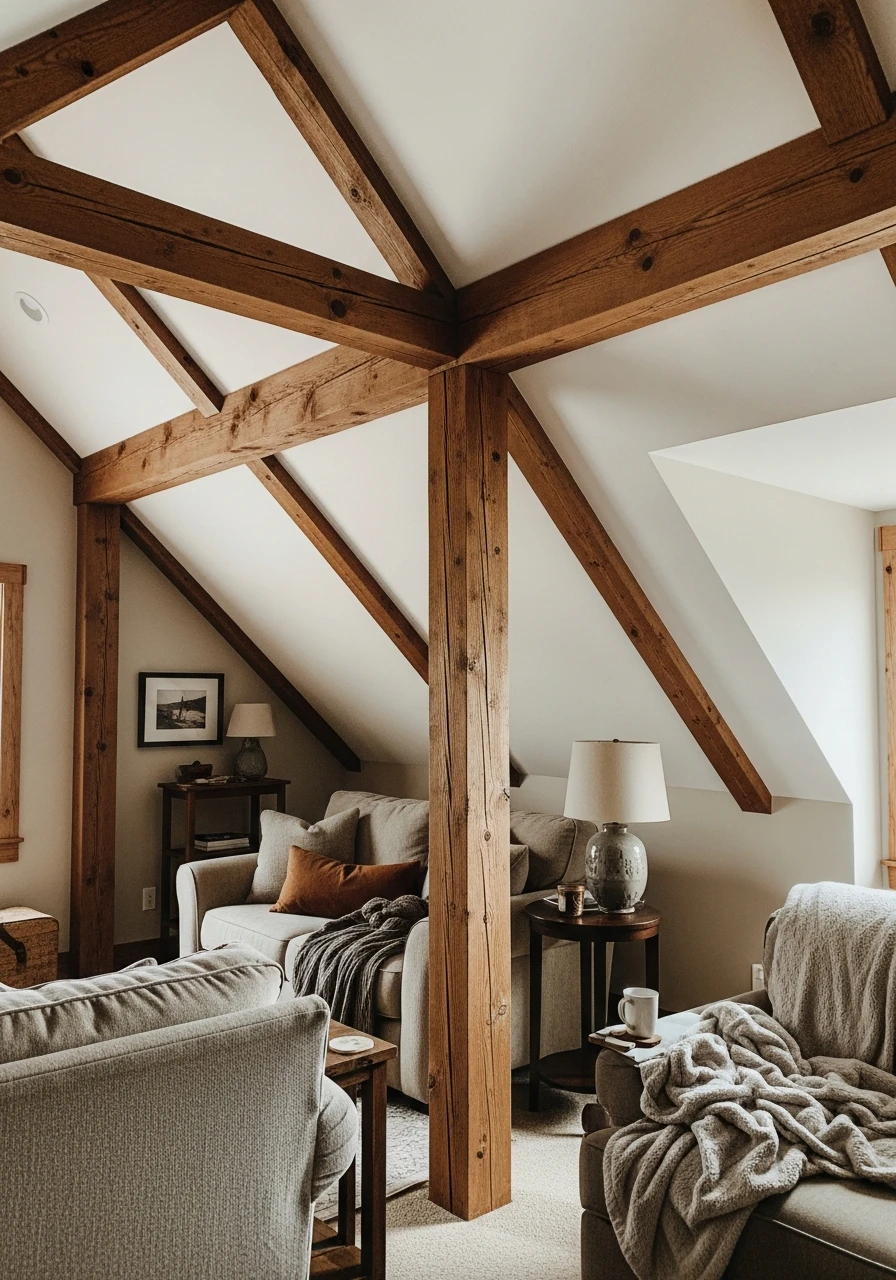
Leave the structural attic beams visible and treat them with a natural stain or paint them white. This adds character and emphasizes the unique, rustic architecture.
- Stain dark beams to contrast white walls.
- Use white paint on beams for a clean, modern look.
- Keep the ceiling between beams light and bright.
Pro Tip: Exposed beams make the attic feel rustic and grounded, adding instant charm to the living room without needing extra decor.
42. Earthy Warm Accents
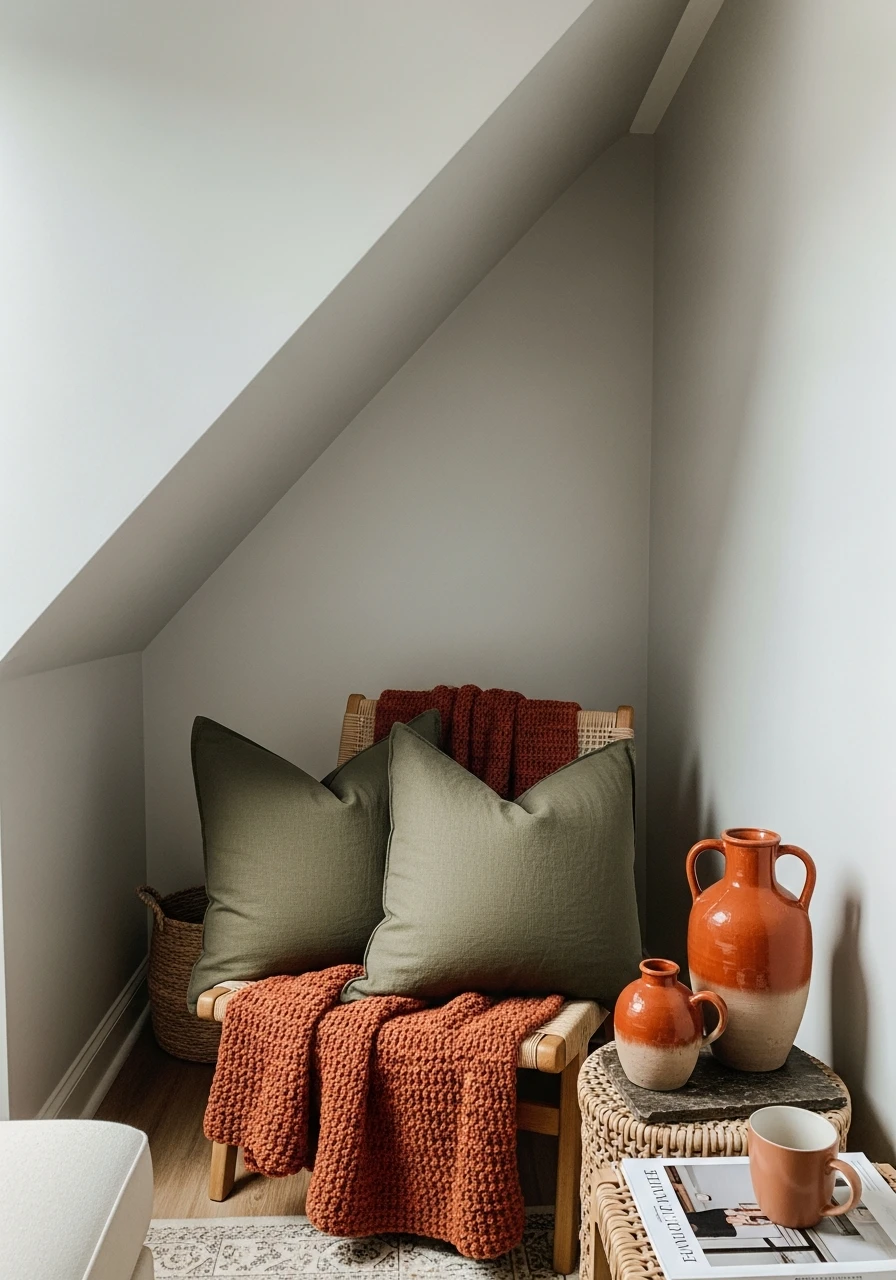
Introduce warm, nature-inspired colors like terracotta, deep olive green, or rusty orange in accessories. These colors warm up the attic without overpowering the light neutral walls.
- Use clay-colored throw pillows and vases.
- Choose a rug with rust and beige tones.
- Add wooden bowls or natural fiber baskets.
Pro Tip: Earthy tones pair beautifully with light neutral walls and natural wood found in attic structures, creating a calm vibe.
43. Woven Wall Hangings
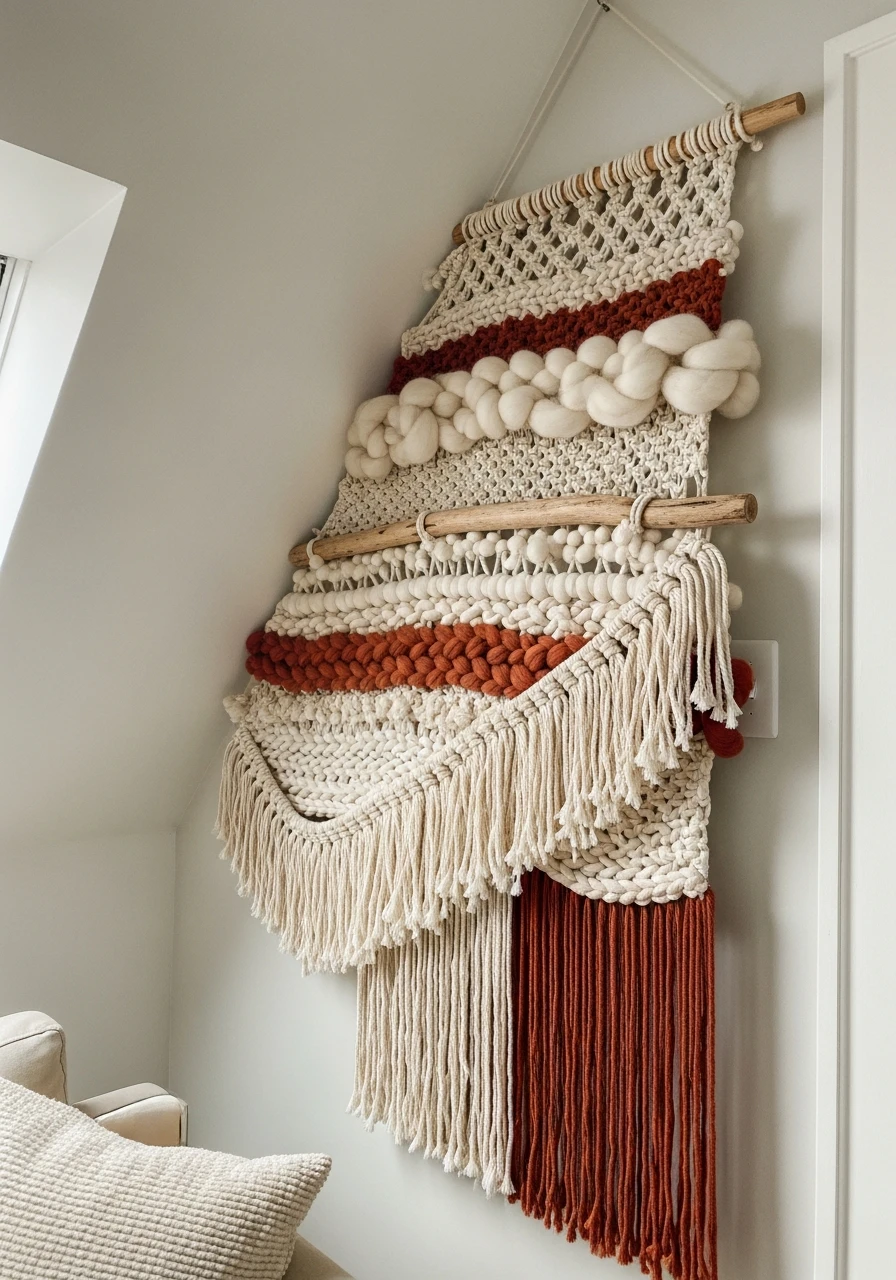
Add textured items like woven wall hangings, macrame, or soft panels to the walls. This softens the sharp angles and can help improve sound quality by absorbing echo.
- Hang large, soft textiles on the straight walls.
- Use framed cork boards for subtle texture.
- Choose materials like wool or jute for warmth.
Pro Tip: Texture is important in attics because hard, angled walls can often make sound bounce and echo loudly.
44. Patterned Throw Pillows
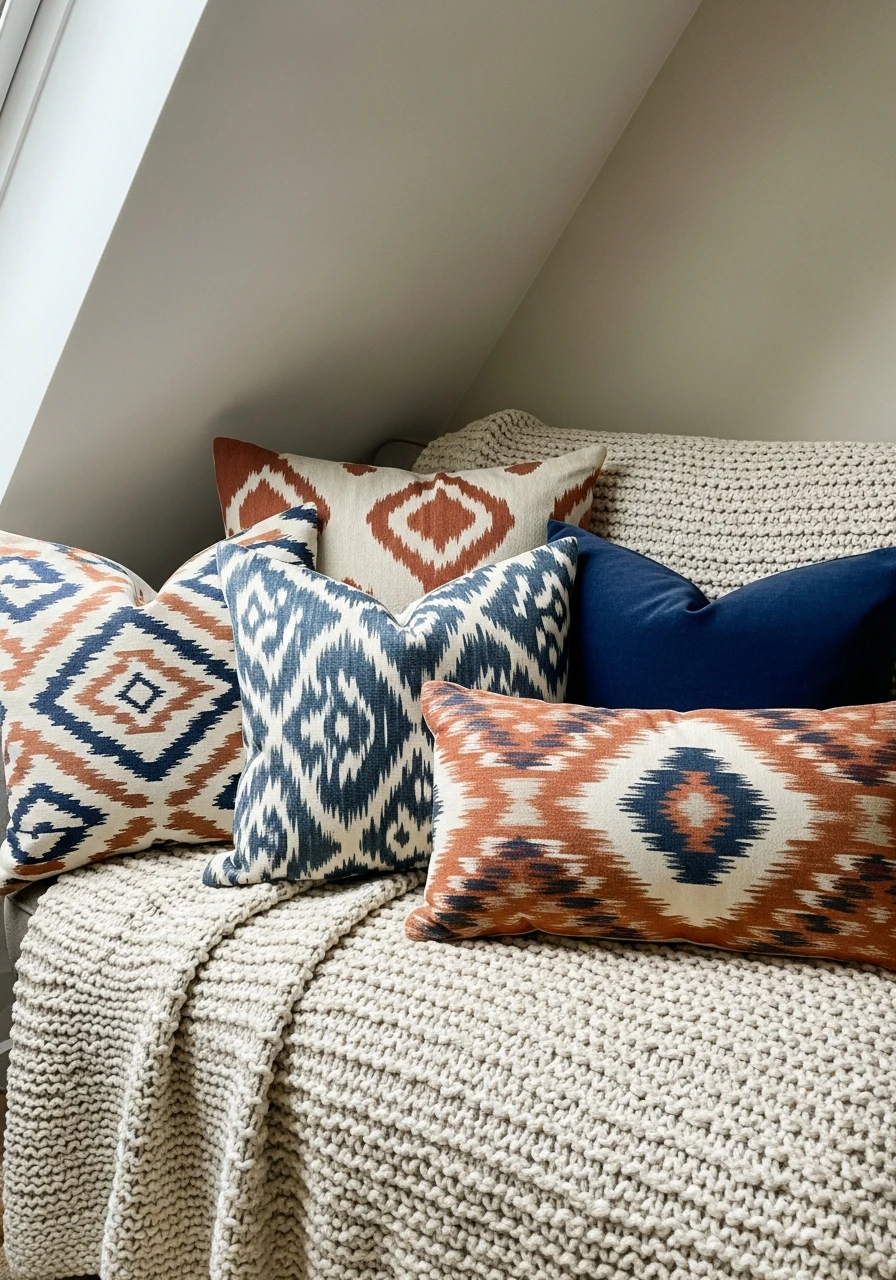
Introduce visual interest through patterned throw pillows and blankets. This adds personality and style without cluttering the limited floor space of the attic.
- Mix different sizes and shapes of pillows.
- Use patterns like stripes, checks, or subtle florals.
- Keep the main sofa fabric solid-colored.
Pro Tip: Patterns are a low-commitment way to add style; they are cheap and easy to swap out when you want a change.
45. Angled Gallery Wall
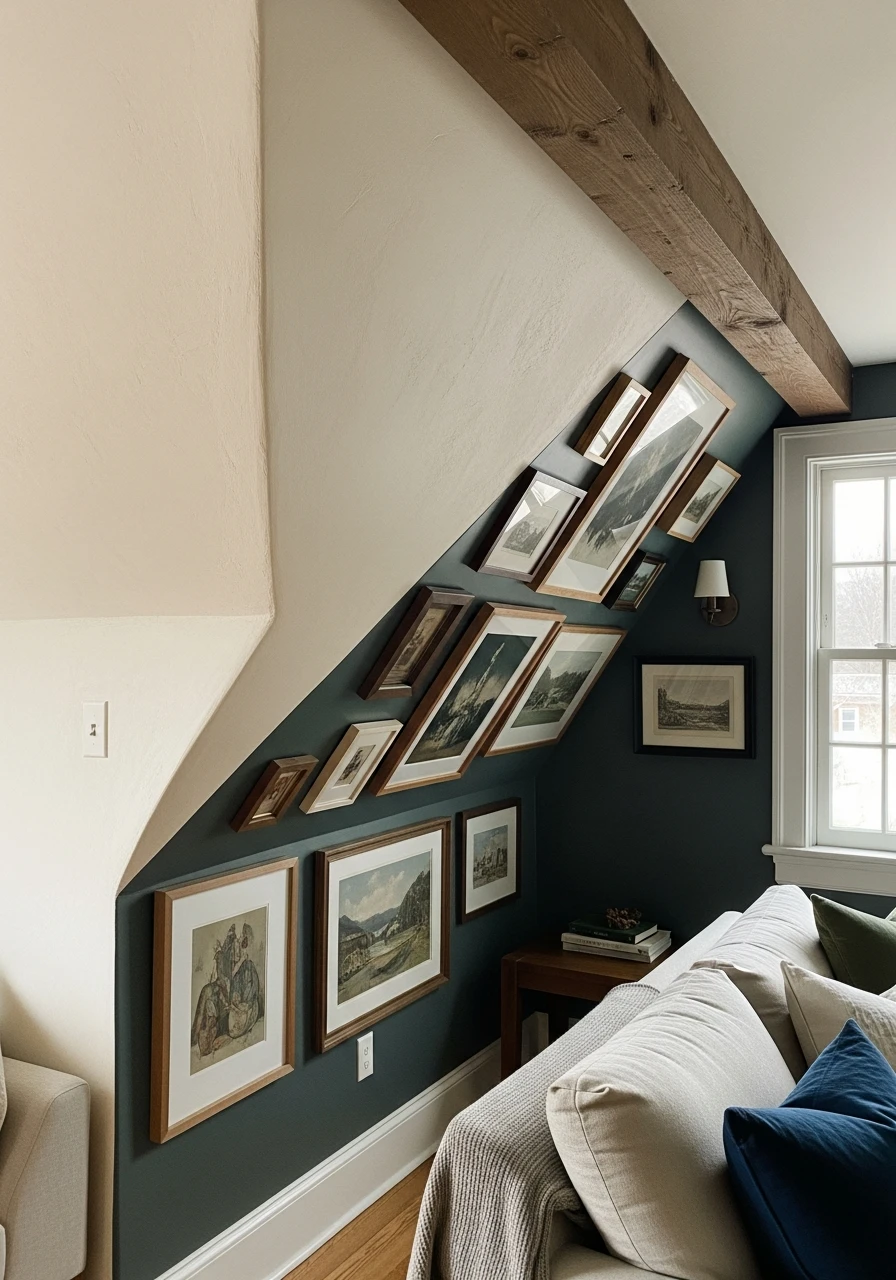
Create a gallery wall of framed art that follows the exact slope or angle of the roofline. This turns an awkward, sloped wall into a deliberate design feature.
- Use lightweight frames for safety.
- Start the arrangement from the center point.
- Use consistent spacing between all frames.
Pro Tip: Print black and white photos for a cohesive look, even if the frames are different sizes or colors.
46. Plants Near Skylights
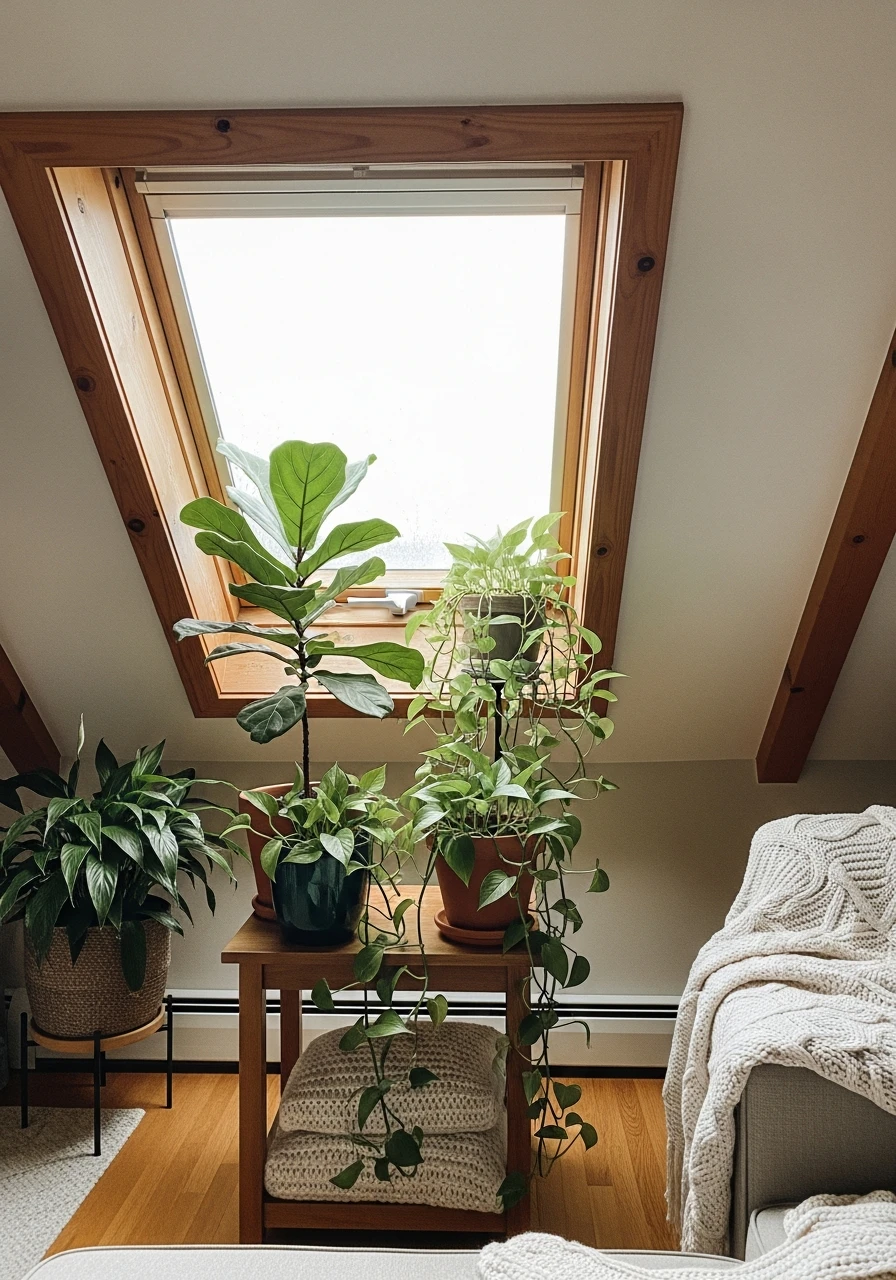
Place indoor plants, especially those that love bright light, near skylights or dormer windows. This brings life, color, and freshness into the attic living room.
- Choose tall, slender plants like snake plants.
- Use hanging planters near the window.
- Ensure pots match the room’s color scheme.
Pro Tip: Plants help purify the air, which is great for attics that might have less circulation than main floor rooms.
47. Dedicated Reading Corner
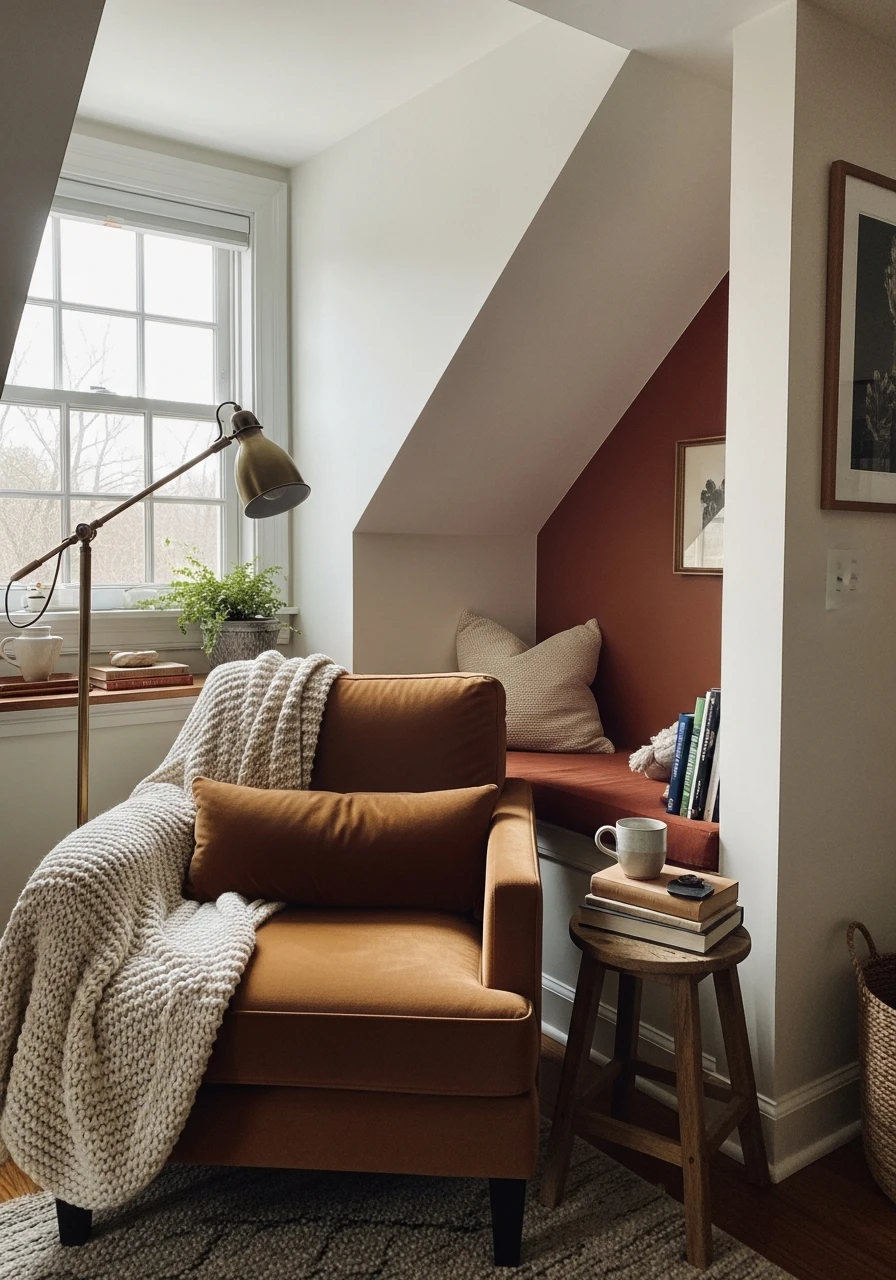
Design a small, separate area dedicated to reading, featuring a comfortable chair, good light, and soft textiles. This complements the main living room seating.
- Use a small, high-backed armchair for coziness.
- Place a dedicated task lamp nearby.
- Keep a small stack of books ready on a side table.
Pro Tip: This area should be tucked away slightly to feel private, perhaps near a window or in a quiet corner away from the TV.
48. Corner Wraparound Shelves
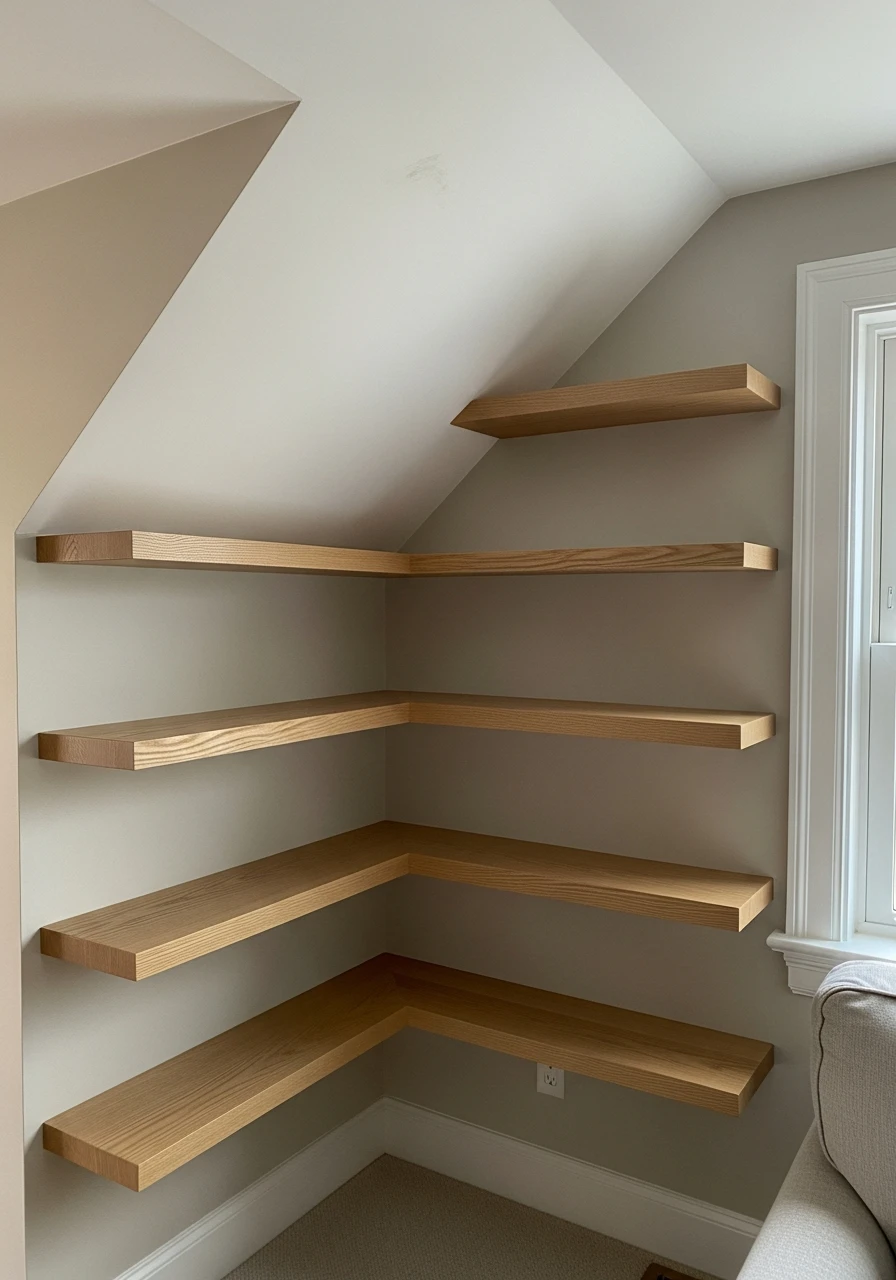
Install shelving units that seamlessly wrap around the corners of the attic walls. This maximizes storage and creates a smooth visual flow that makes the room feel larger.
- Use open shelving for a lighter look.
- Ensure the shelves are stable and secured well.
- Use the shelves for books and small decor items.
Pro Tip: Wrapping the shelves around the room tricks the eye into seeing more continuous space, making the attic feel larger than it is.
49. Mixed Material Textures
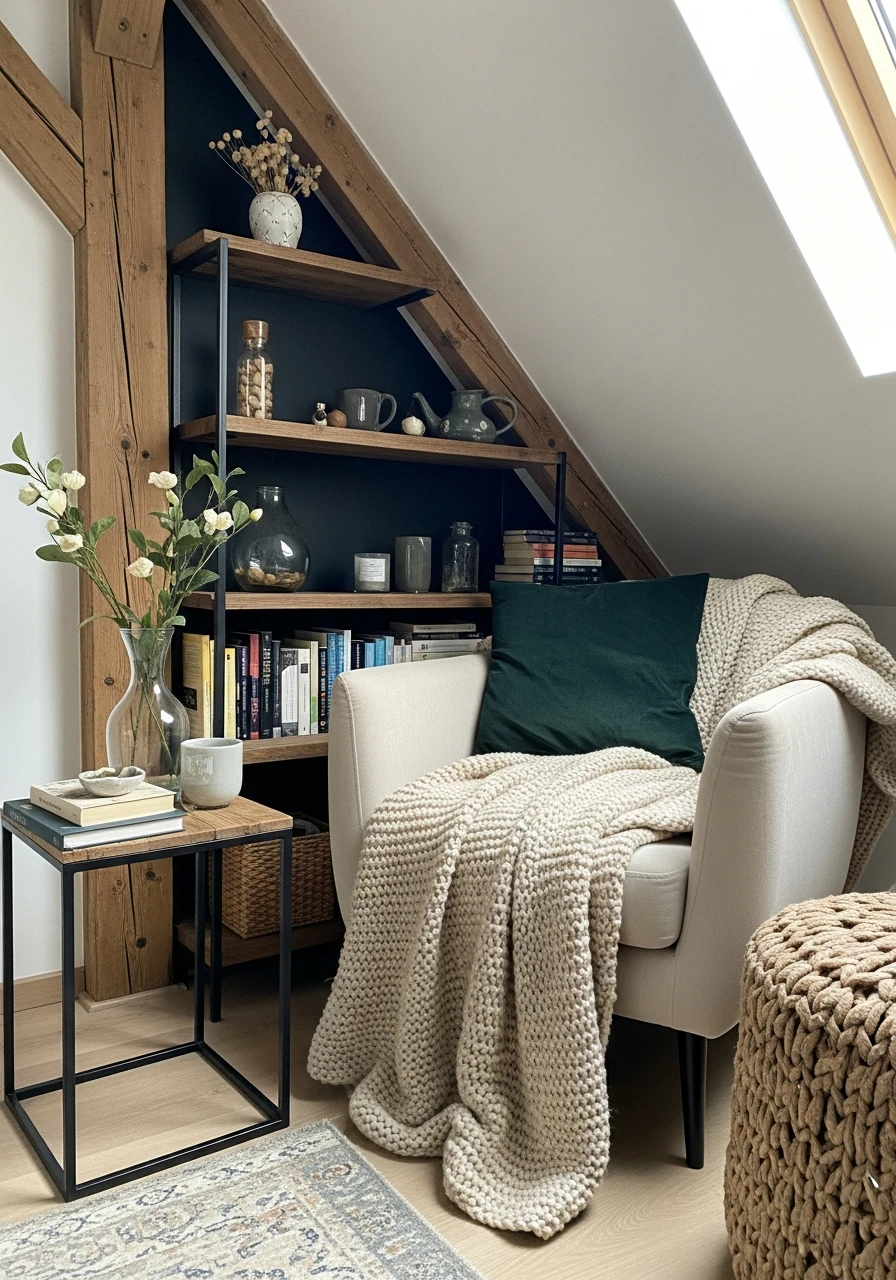
Combine different materials like wood, metal, glass, and various fabrics (wool, velvet) to create depth and contrast in the design. This prevents the room from looking flat.
- Use a metal coffee table with a wooden top.
- Place a plush velvet pillow on a linen sofa.
- Mix matte and glossy finishes in decor.
Pro Tip: Adding different textures is key to making a neutral attic living room feel rich and inviting.
50. Bold Area Rug Anchor
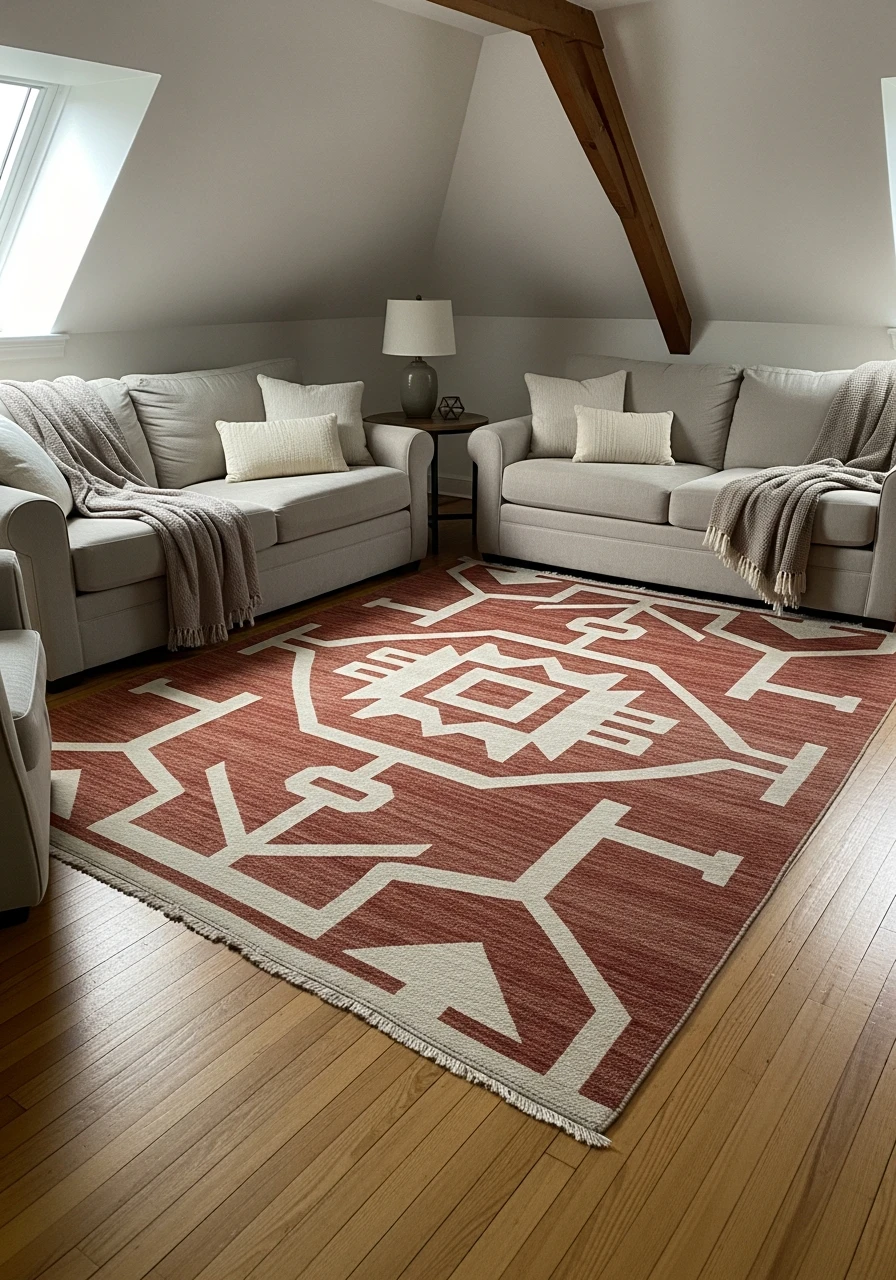
Use a large, visually striking area rug to anchor the main seating arrangement. This defines the living room space and adds comfort underfoot, especially on wood floors.
- Choose a rug large enough to fit the front legs of all seating.
- Use a bold pattern or color for maximum impact.
- Select a high-pile rug for extra softness.
Pro Tip: A statement rug is the single most important item for defining a zone in an open-concept attic space.
Ready to transform your attic? These Attic Living Room Ideas prove that tricky spaces can be the coziest spots in the house.
Try out a few tips, like adding hidden storage or playing with light.
Comment below which idea you’re trying first, and don’t forget to Pin and Share this list!