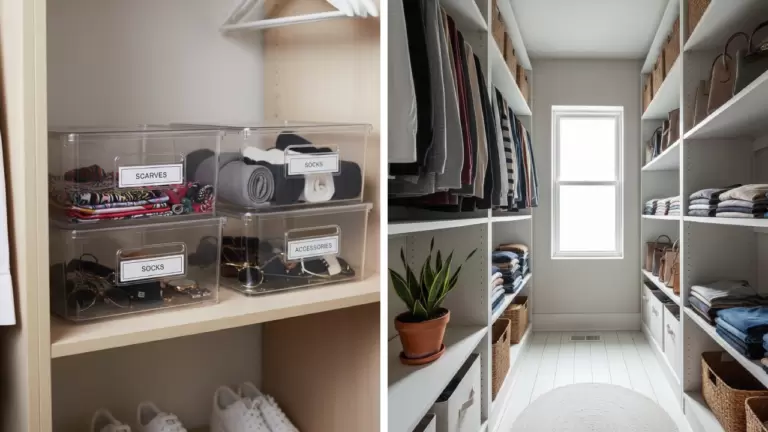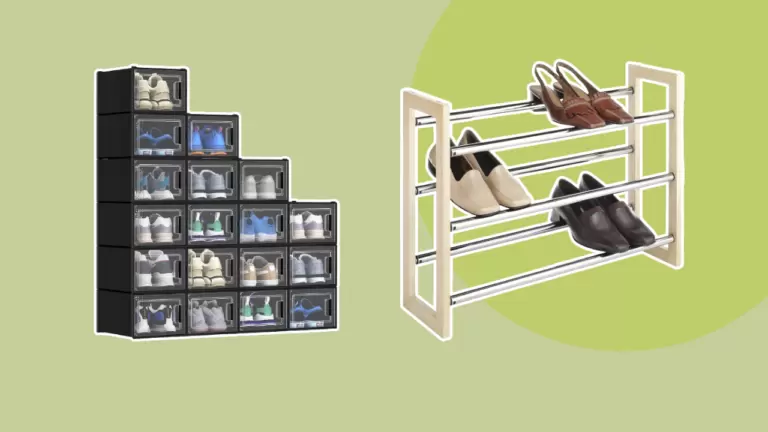
50 Tiny Walk-In Closet Ideas for Small Spaces

This post may contain affiliate links: full affiliate disclosure.
A tiny closet requires a strategy that uses every inch of vertical and horizontal space. Stop fighting against the walls and start making them work harder with the right layout and tools.
These methods turn a cramped corner into a functional wardrobe that keeps everything visible and reachable.
1. Install Double Hanging Rods
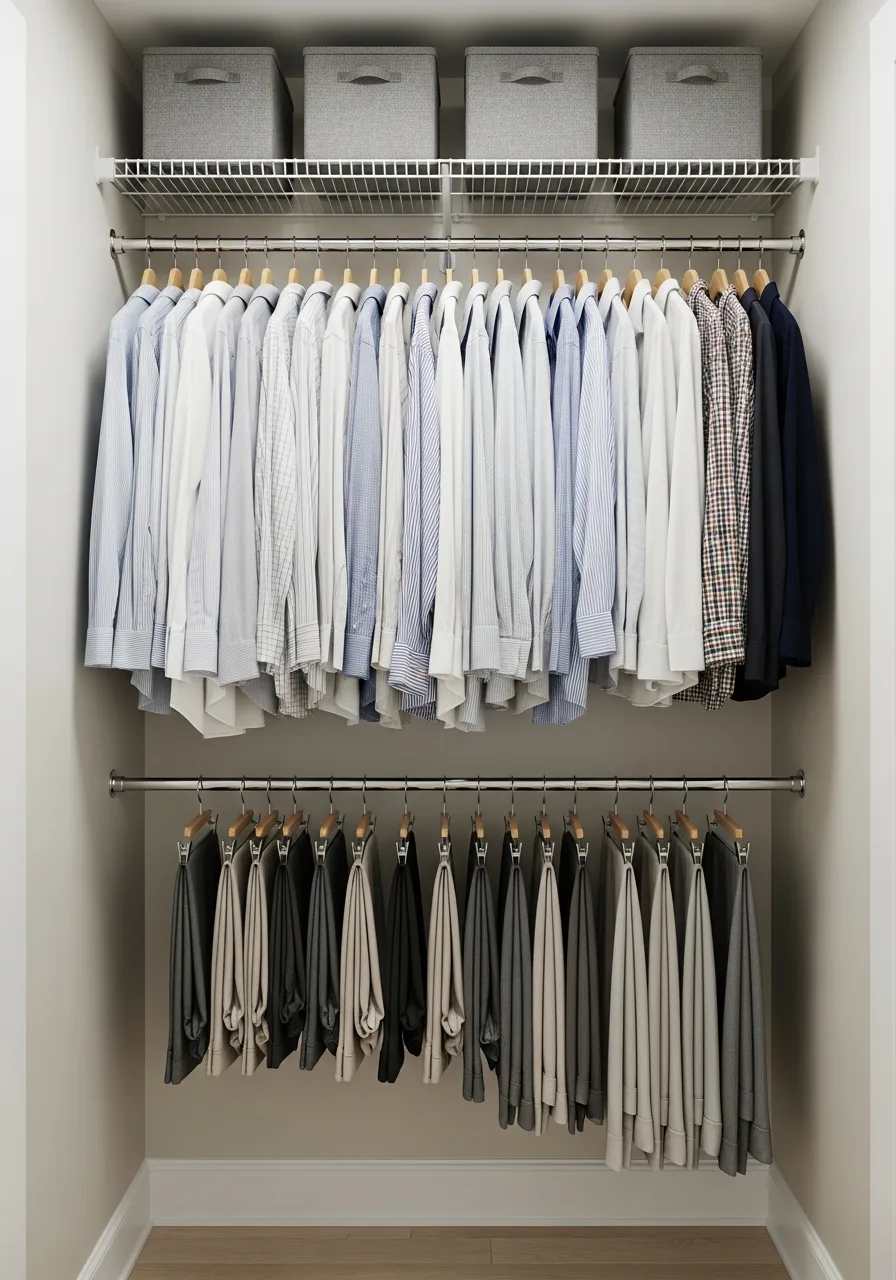
Two rods installed one above the other double the available hanging space for shirts and pants. This setup utilizes the dead space usually found beneath short hanging items.
Mount the top rod at eighty inches and the bottom at forty inches to fit standard garments perfectly.
- Keep a thirty-inch walkway between the rods and the opposite wall for comfortable movement.
- Use white rods to blend into the walls and reduce visual clutter in the narrow space.
- Install a small hook on the side of the rod for tomorrow's outfit planning.
Space-Saving Secret: Hang shorter items like skirts on the bottom rod to keep the floor clear for bins.
2. Use Acrylic Shelf Dividers
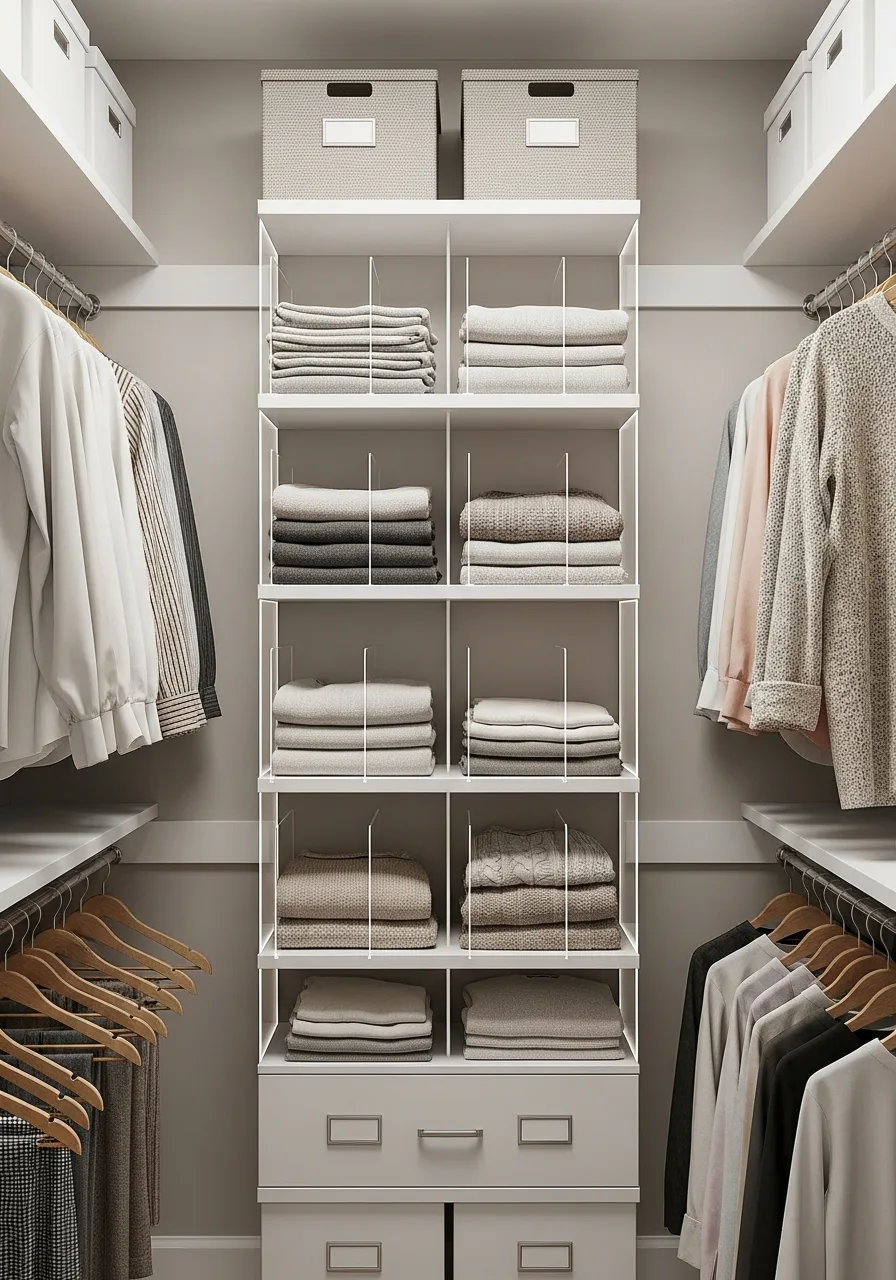
Clear dividers keep stacks of sweaters and linens from toppling over onto each other. They create a clean look that allows you to see every item without digging through messy piles.
Slide these onto existing solid shelves to create custom-width sections for different clothing types.
- Leave four inches between stacks to prevent clothes from getting crushed.
- Transparent materials make the shelves feel less crowded than solid wood dividers.
- Use them to prop up floppy handbags so they maintain their shape on the shelf.
Space-Saving Secret: Place a scent sachet behind the divider to keep folded clothes smelling fresh.
3. Add Pull Out Valet Rods
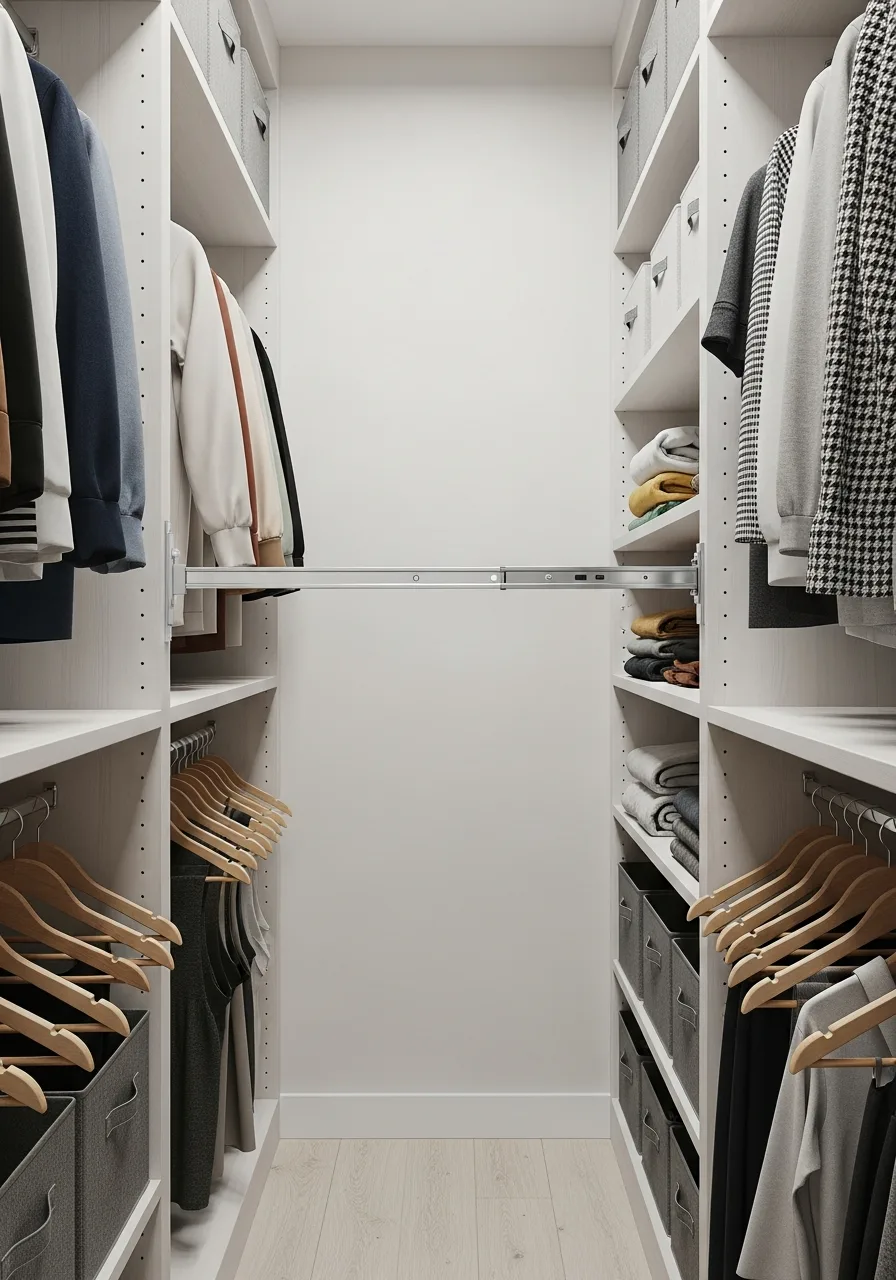
A valet rod extends outward to provide a temporary spot for dry cleaning or outfit coordination. It retracts when not in use to save precious aisle space in a narrow closet.
Install this on the side of a shelf unit at eye level for maximum convenience.
- Allow for six inches of clearance in front of the rod when it is fully extended.
- Metallic finishes reflect light and add a high-end feel to a small space.
- Use it to steam garments without having to move them to a different room.
Space-Saving Secret: Use the valet rod to air out clothes that have been worn once but aren't dirty yet.
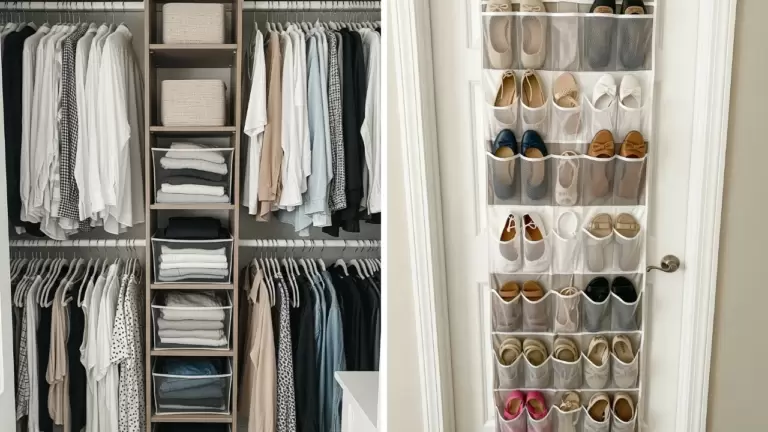
4. Hang Over The Door Organizers
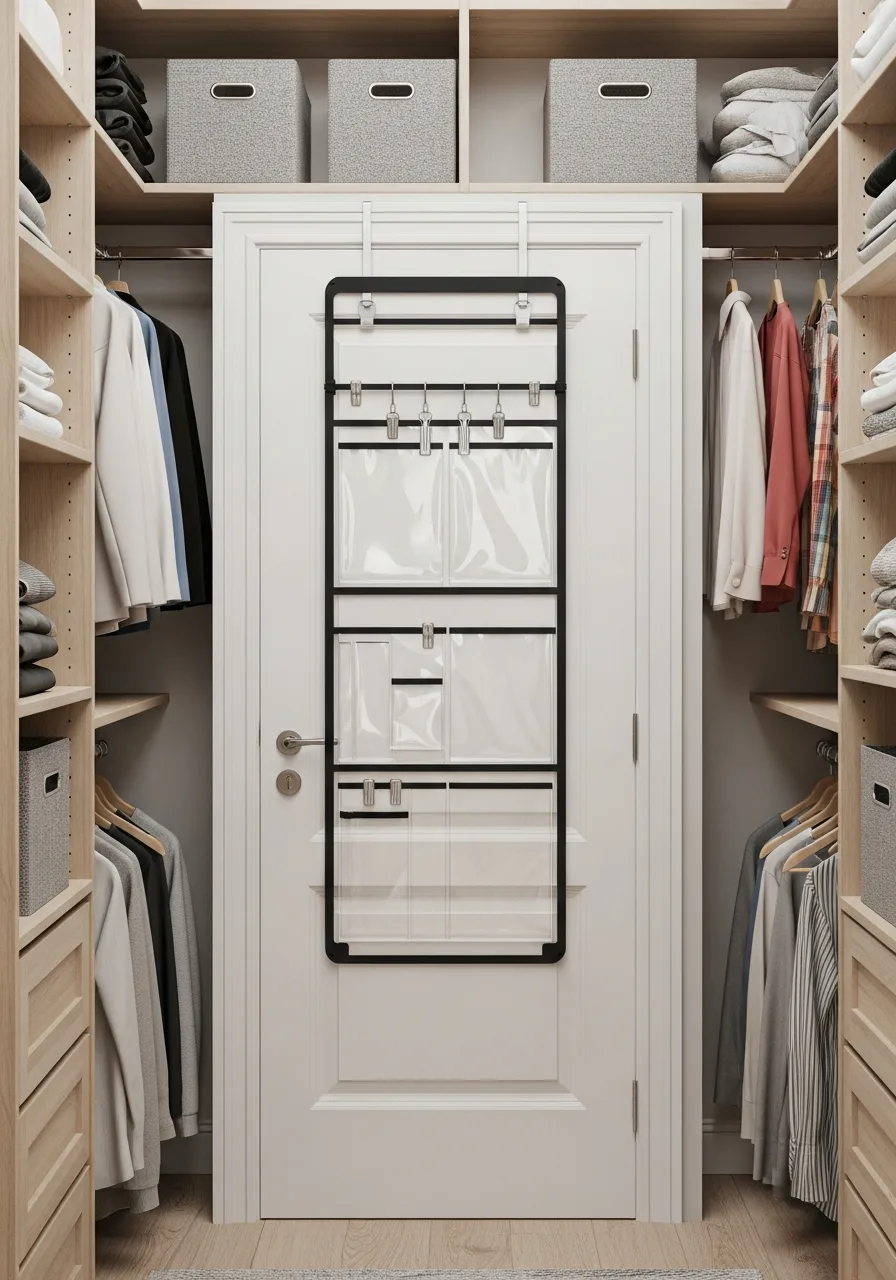
The back of the closet door is often overlooked real estate for accessories and shoes. Clear pockets or metal hooks turn this flat surface into a vertical storage hub.
Choose a heavy-duty metal rack that clips securely over the door to prevent shifting and noise.
- Ensure the door has at least three inches of clearance from the back wall to close fully.
- Match the organizer color to the door color to make it disappear visually.
- Store bulky winter accessories like gloves and scarves in the lower pockets for easy access.
Space-Saving Secret: Line the back of the hooks with felt pads to protect the door finish from scratches.
5. Switch To Slim Hangers
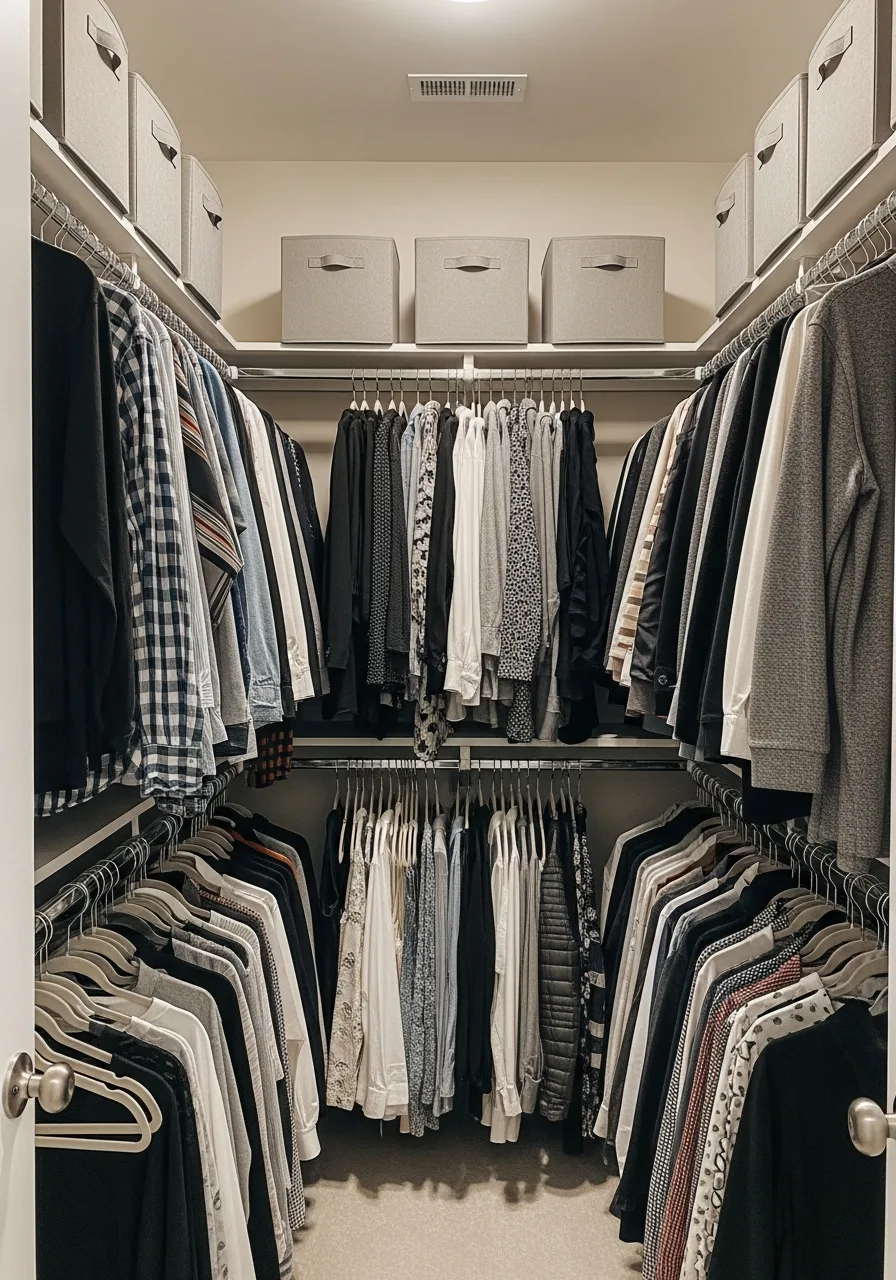
Non-slip velvet hangers take up half the space of bulky plastic or wood versions. They keep clothes from sliding off and ensure that all garments sit at the same height.
Replace every mismatched hanger in the closet with a single style to instantly reclaim inches of rod space.
- Maintain a two-finger gap between hangers to allow for easy browsing and airflow.
- Choose light-colored hangers like beige or grey to brighten up a dark closet interior.
- Use the built-in hooks on some slim models to cascade hangers vertically.
Space-Saving Secret: Face all hanger hooks in the same direction to make the rod look organized and intentional.
6. Stack Tiered Shoe Racks
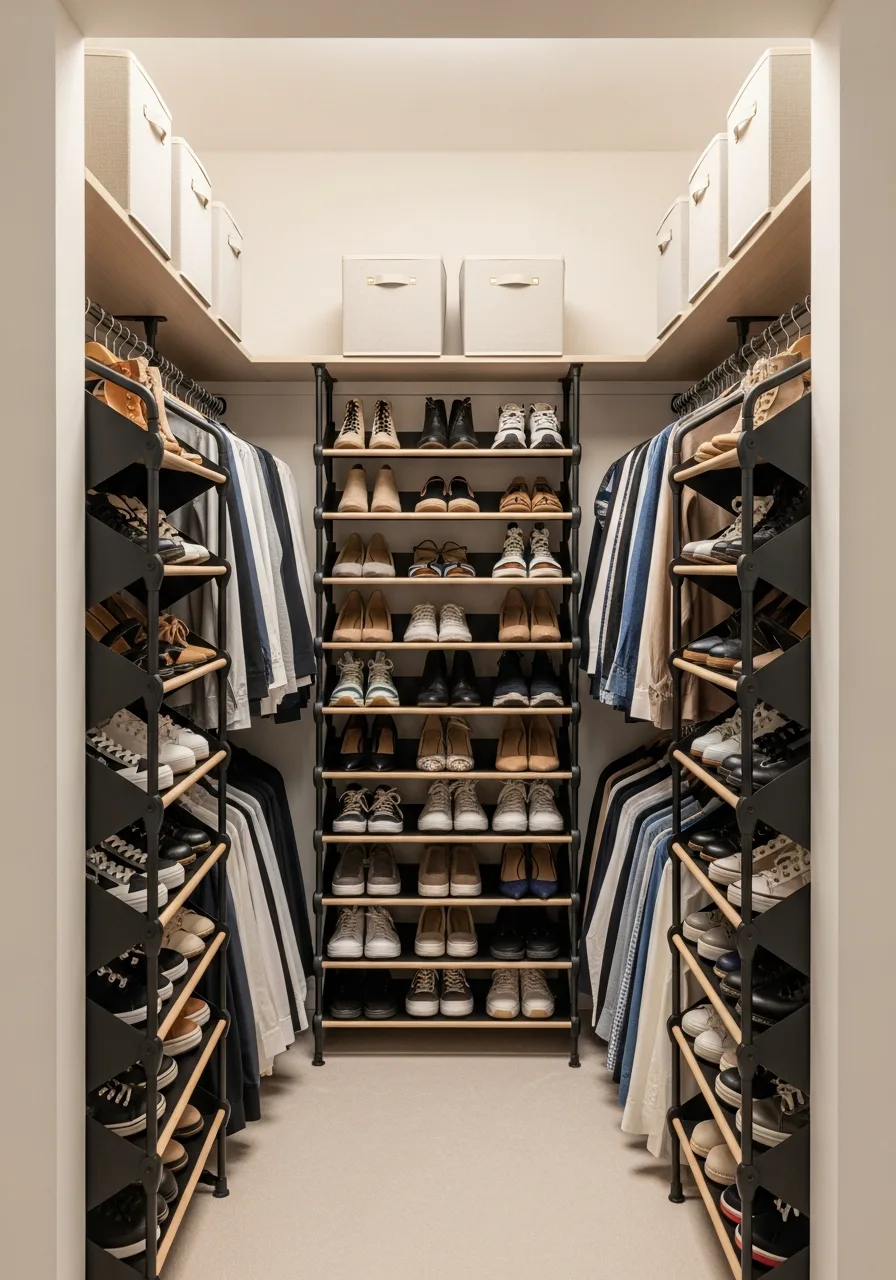
Stacking shoes vertically prevents a messy pile from forming on the closet floor. Narrow racks with multiple levels can fit into the tight space under hanging clothes.
Look for an expandable rack that can adjust its width to fit the exact dimensions of your floor space.
- Leave twelve inches of vertical space between the top rack and hanging hems.
- Use open-wire racks to allow dirt and dust to fall through for easier cleaning.
- Turn one shoe of each pair backward to fit more pairs on a single shelf.
Space-Saving Secret: Store out-of-season shoes in clear boxes on the highest shelf to free up floor space.
7. Build Ceiling High Shelving
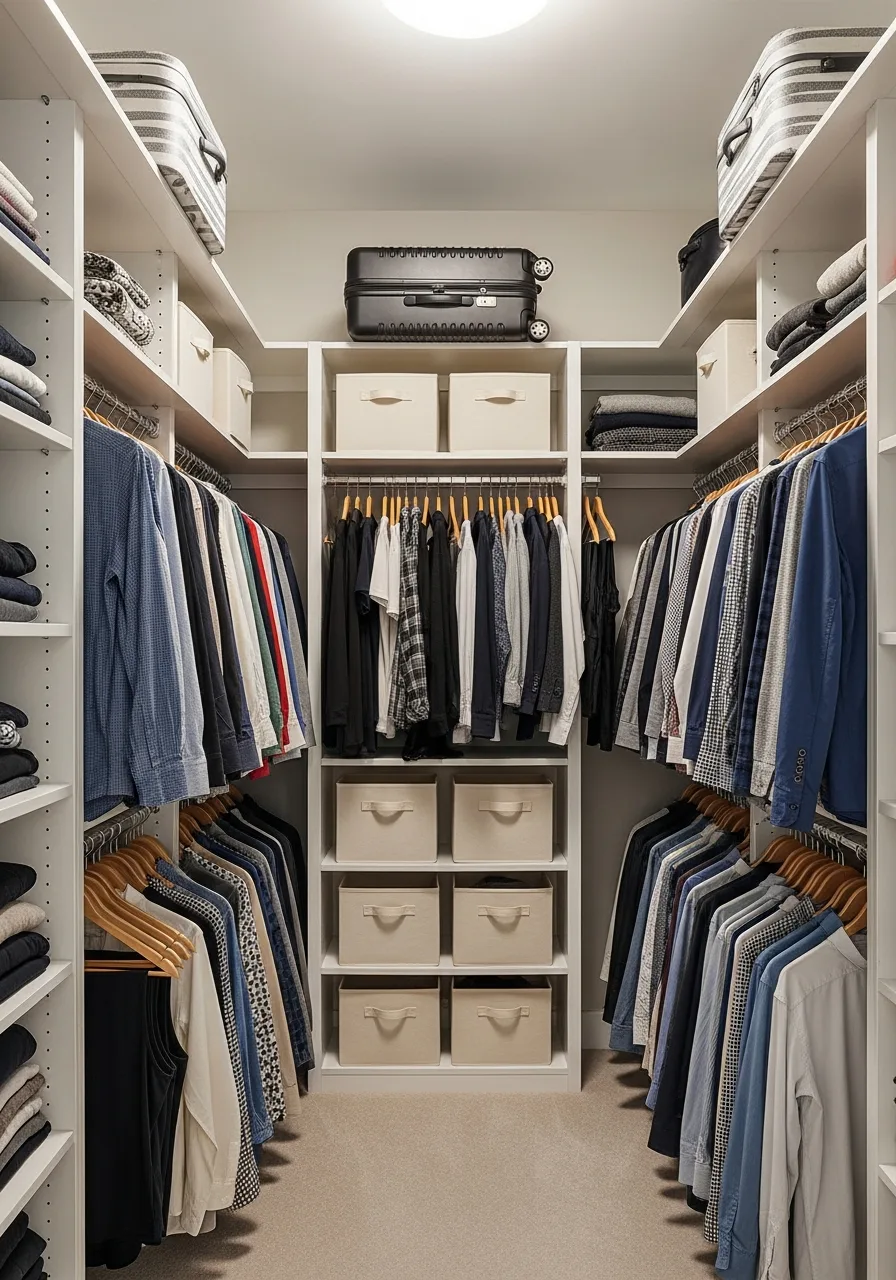
Extending shelves all the way to the ceiling captures space that normally goes to waste. This area is perfect for seasonal items, luggage, or keepsakes that are rarely used.
Install sturdy brackets every sixteen inches to support the weight of heavy bins on high shelves.
- Keep at least ten inches of clearance between the top shelf and the ceiling for bulky items.
- Paint the shelves the same color as the walls to make the ceiling feel higher.
- Place a foldable step stool in the closet corner to reach these high spots safely.
Space-Saving Secret: Use labeled bins on top shelves so you know exactly what is up there without a ladder.
8. Utilize Slide Out Bins
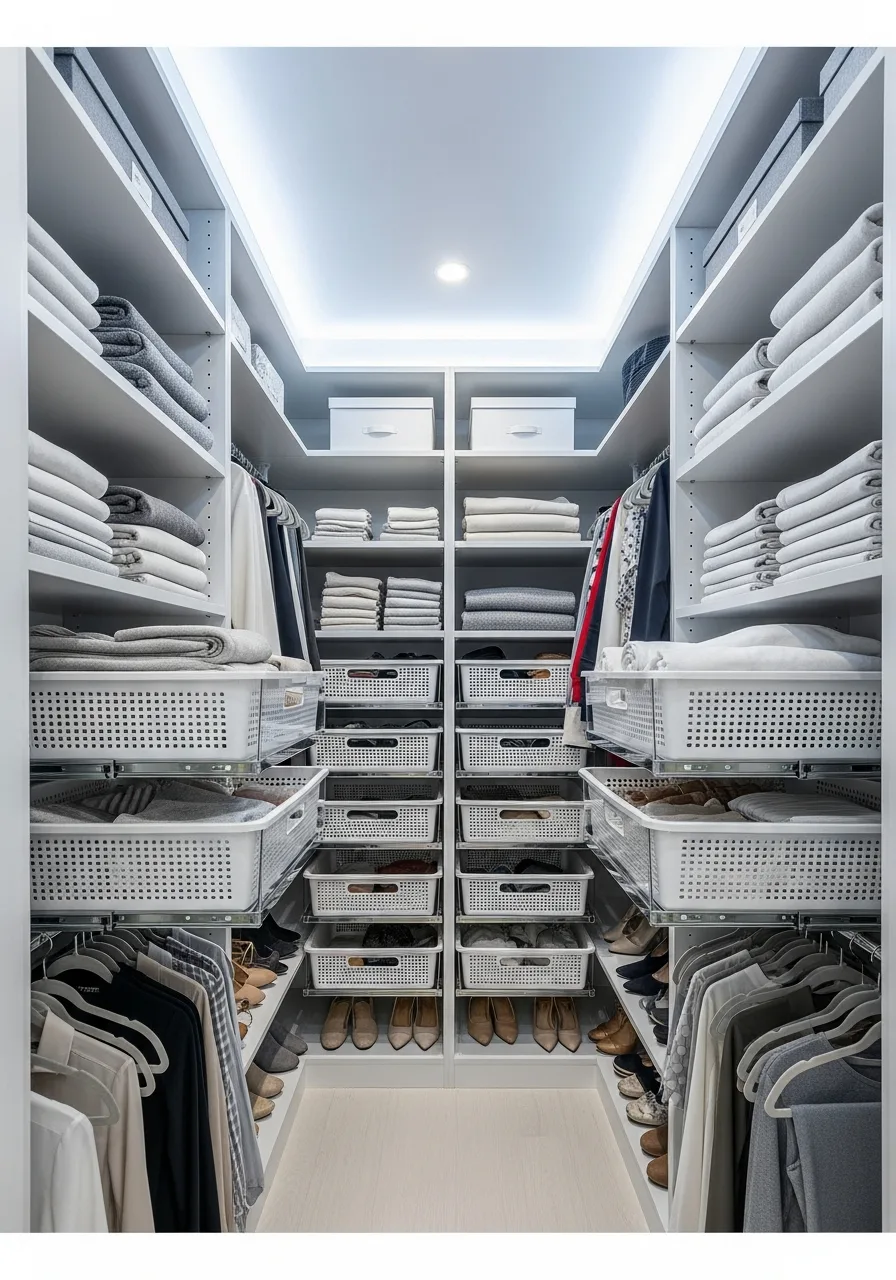
Bins that slide out like drawers provide easy access to items tucked deep in the back of a shelf. They prevent the "black hole" effect where items are forgotten because they are hidden.
Choose bins with integrated handles to make pulling and pushing them a smooth process.
- Allow for twenty inches of pull-out space in the center of the closet walkway.
- Use mesh or wire bins to keep the contents visible and the air circulating.
- Group similar items like socks or belts into individual bins to maintain order.
Space-Saving Secret: Add a small piece of tape to the front of each bin to label the contents clearly.
9. Max Out Corner Shelves
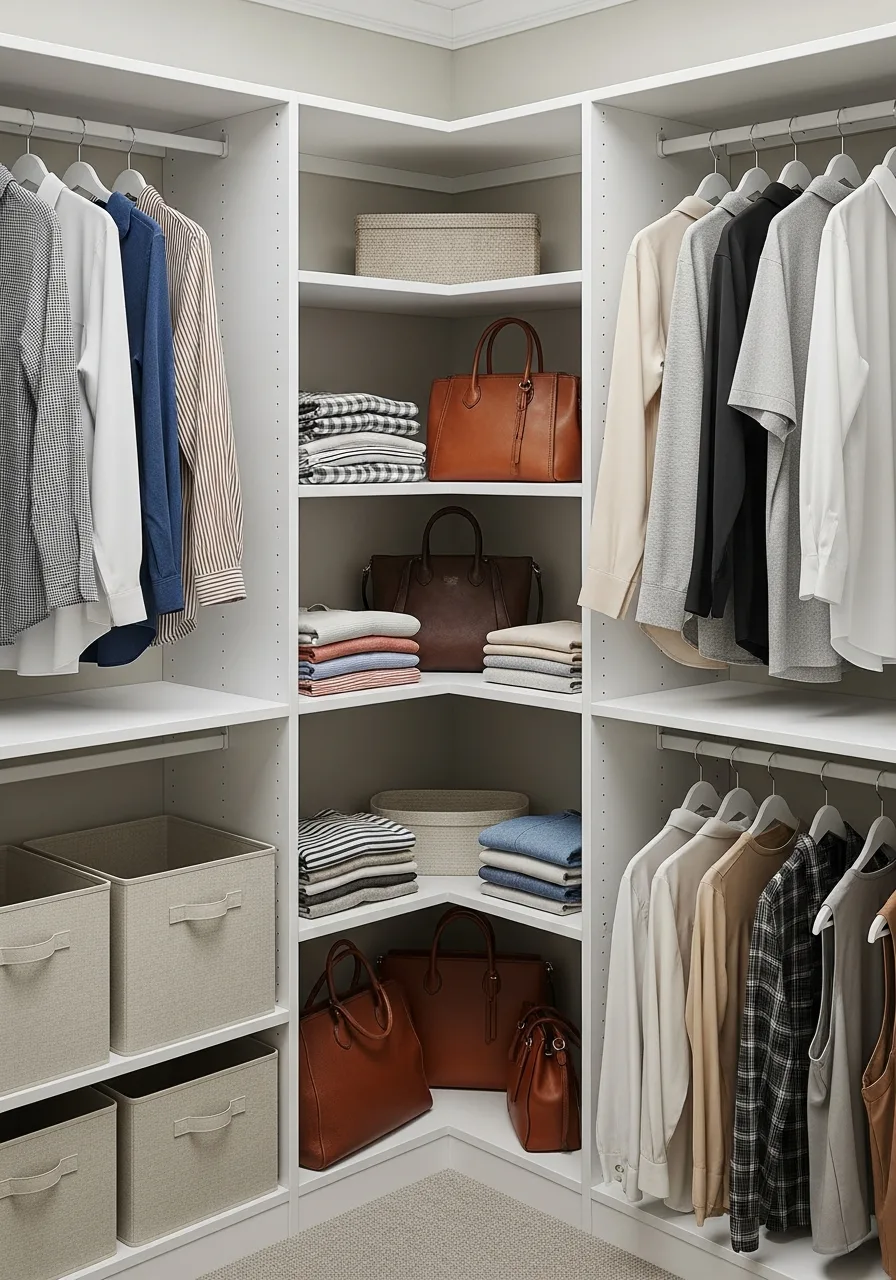
Corner units utilize the awkward angles where two walls meet in a walk-in closet. These curved or L-shaped shelves turn dead corners into prime storage for bags or folded shirts.
Mount these shelves at the same height as your straight shelves for a seamless look.
- Maintain a thirty-six-inch radius in the corner to ensure you can reach everything comfortably.
- Use light-colored wood or white laminate to bounce light into the dark corner.
- Place large items like handbags in the very back of the corner to maximize depth.
Space-Saving Secret: Install a small battery-powered light inside the corner to see items tucked in the back.
10. Brighten With LED Strips
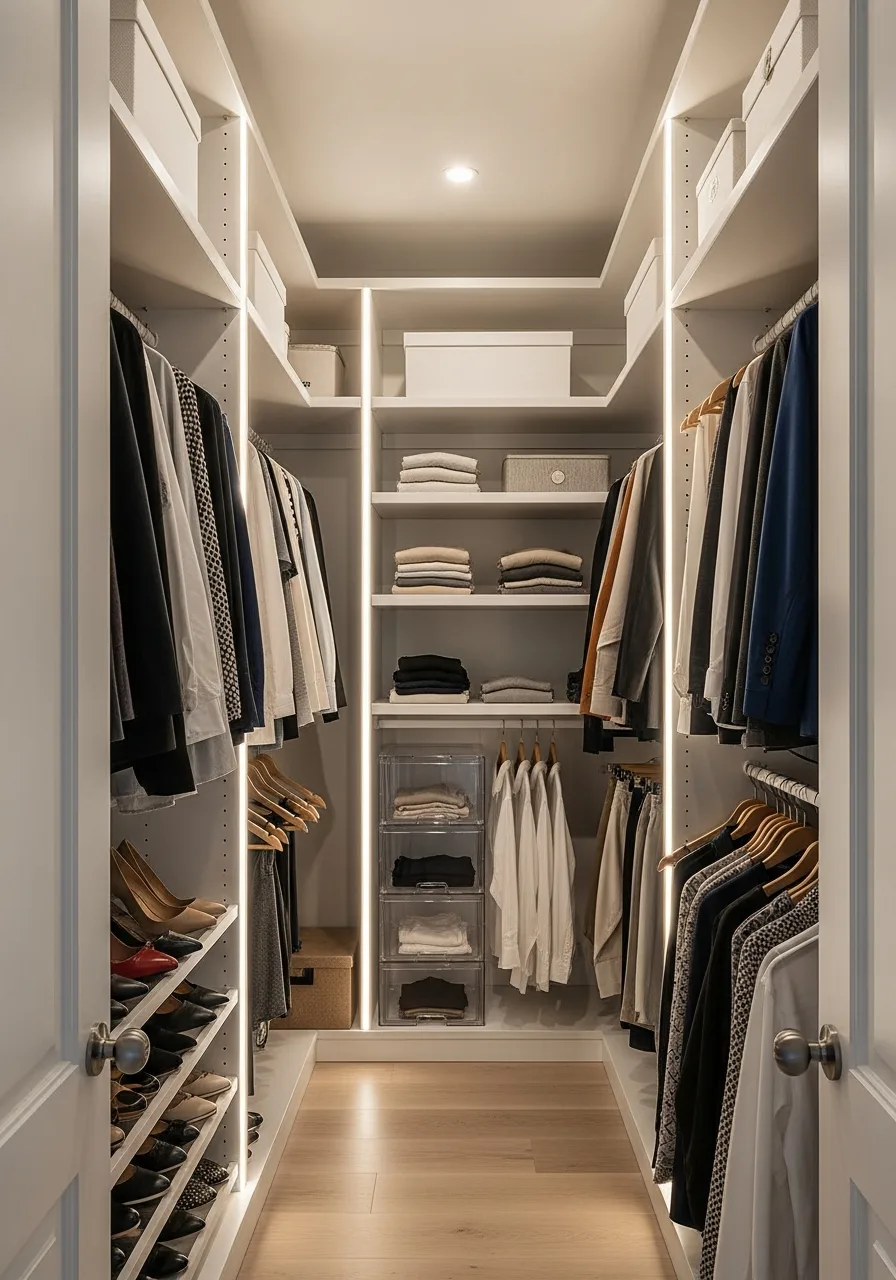
Proper lighting makes a small closet feel larger and helps you find items quickly. Motion-activated strips turn on automatically when you enter and require no complicated wiring.
Stick these battery-powered lights under shelves or along the door frame for instant visibility.
- Position lights so they point toward the clothes rather than directly into your eyes.
- Use cool-white bulbs to accurately see the colors of your clothing and accessories.
- Hide the battery packs behind a shelf edge for a clean and professional appearance.
Space-Saving Secret: Place a light strip near the floor to illuminate shoes and prevent tripping in the dark.
11. Apply Mirrored Door Panels
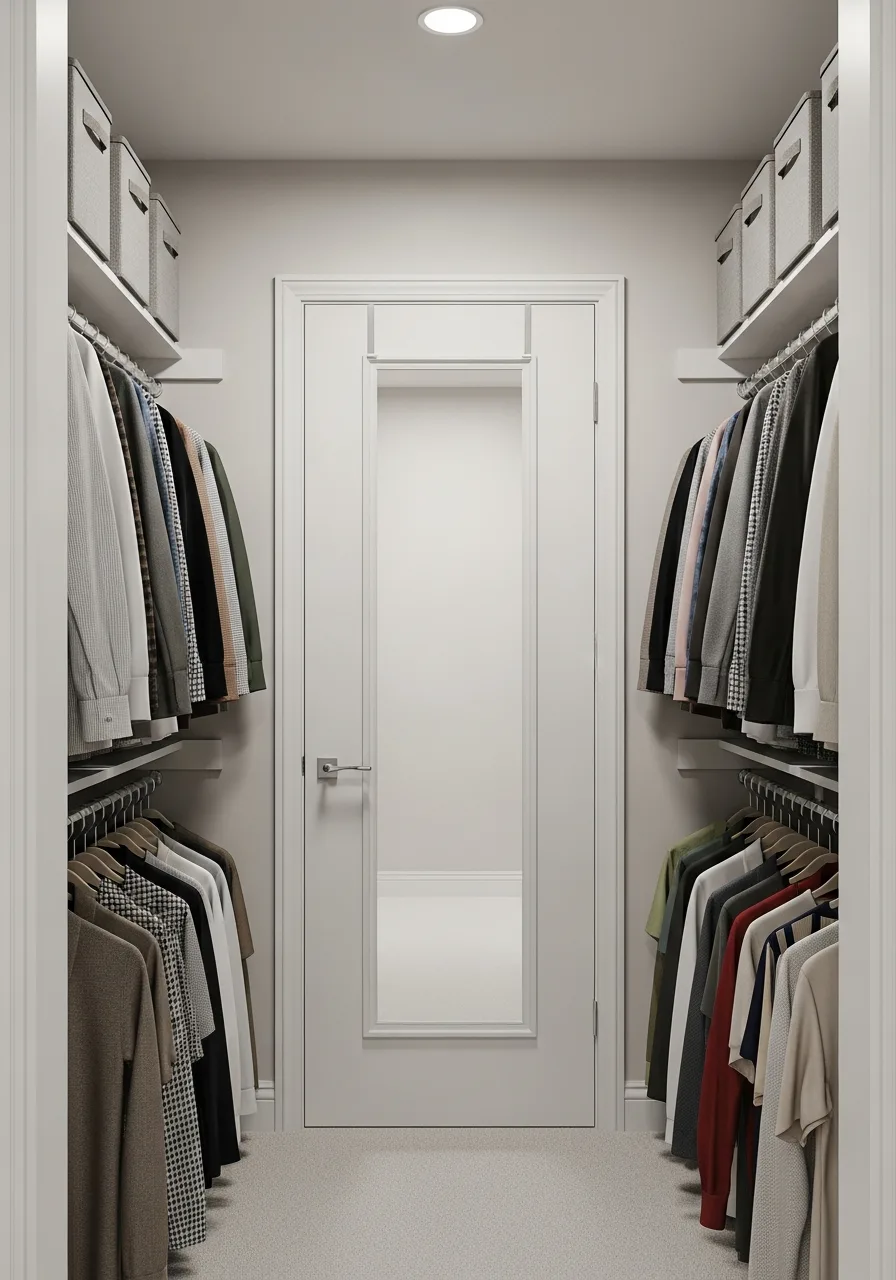
Adding mirrors to the back of the door or on an empty wall segment creates the illusion of more space. Mirrors reflect light and provide a functional spot to check your outfit before leaving.
Apply lightweight acrylic mirror sheets with adhesive strips for a quick and damage-free installation.
- Ensure the mirror is at least forty-eight inches tall to provide a full-length view.
- Place the mirror opposite a light source to brighten the entire walk-in area.
- Keep the mirror surface clean to maintain the crisp reflection that makes the room feel open.
Space-Saving Secret: Use a mirror with a small storage ledge at the bottom for jewelry or daily essentials.
12. Hang Jeans On Hooks
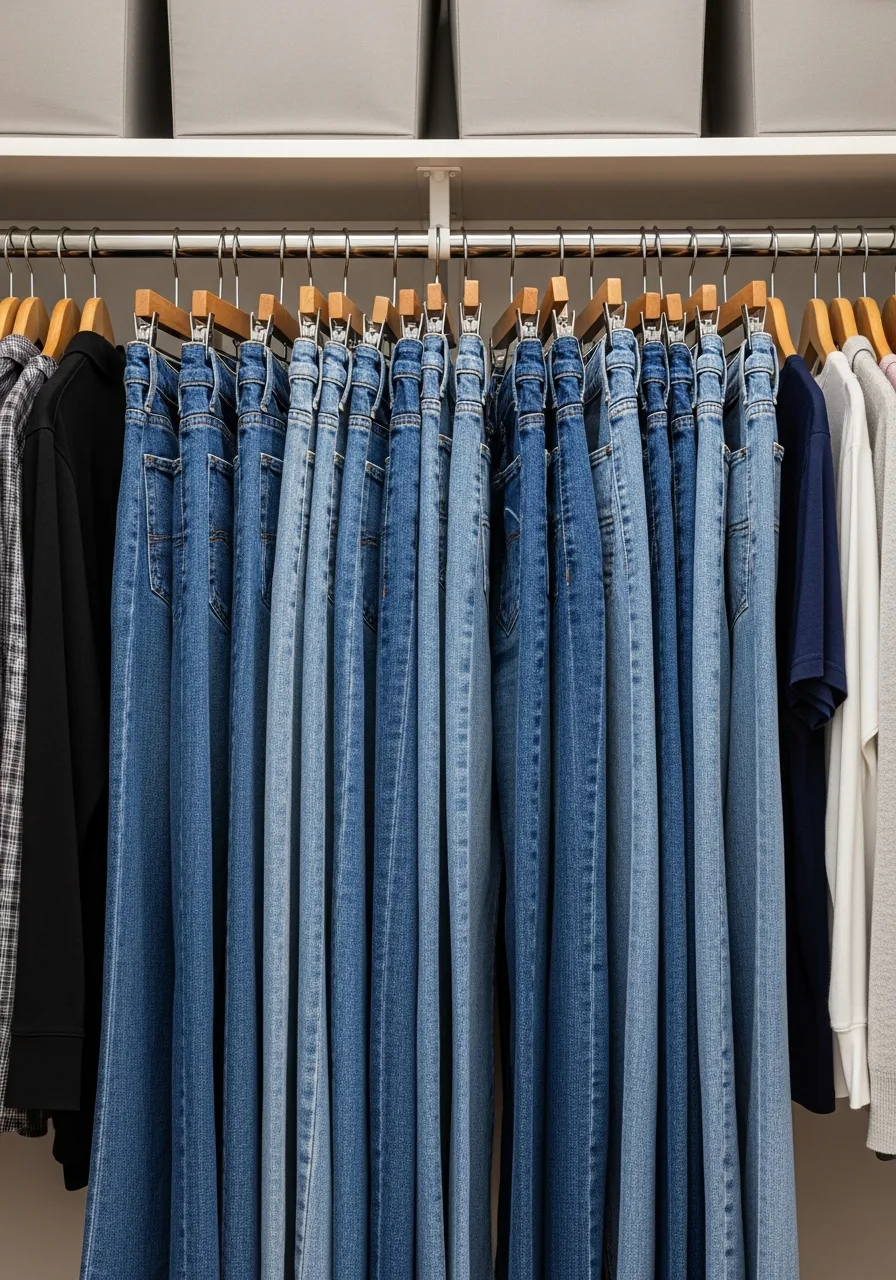
Hanging jeans by their belt loops on S-hooks saves shelf space and prevents wrinkles. This method keeps denim organized and easy to flip through like a filing cabinet.
Use heavy-duty metal hooks that won't bend under the weight of thick denim fabrics.
- Leave two inches of space between each hook to prevent the jeans from bunching up.
- Hang the hooks on a dedicated lower rod to keep the visual weight at the bottom of the closet.
- Arrange the jeans by wash color to create a tidy and professional appearance.
Space-Saving Secret: Use S-hooks to hang heavy tote bags or backpacks that are too bulky for shelves.
13. Install Retractable Belt Racks
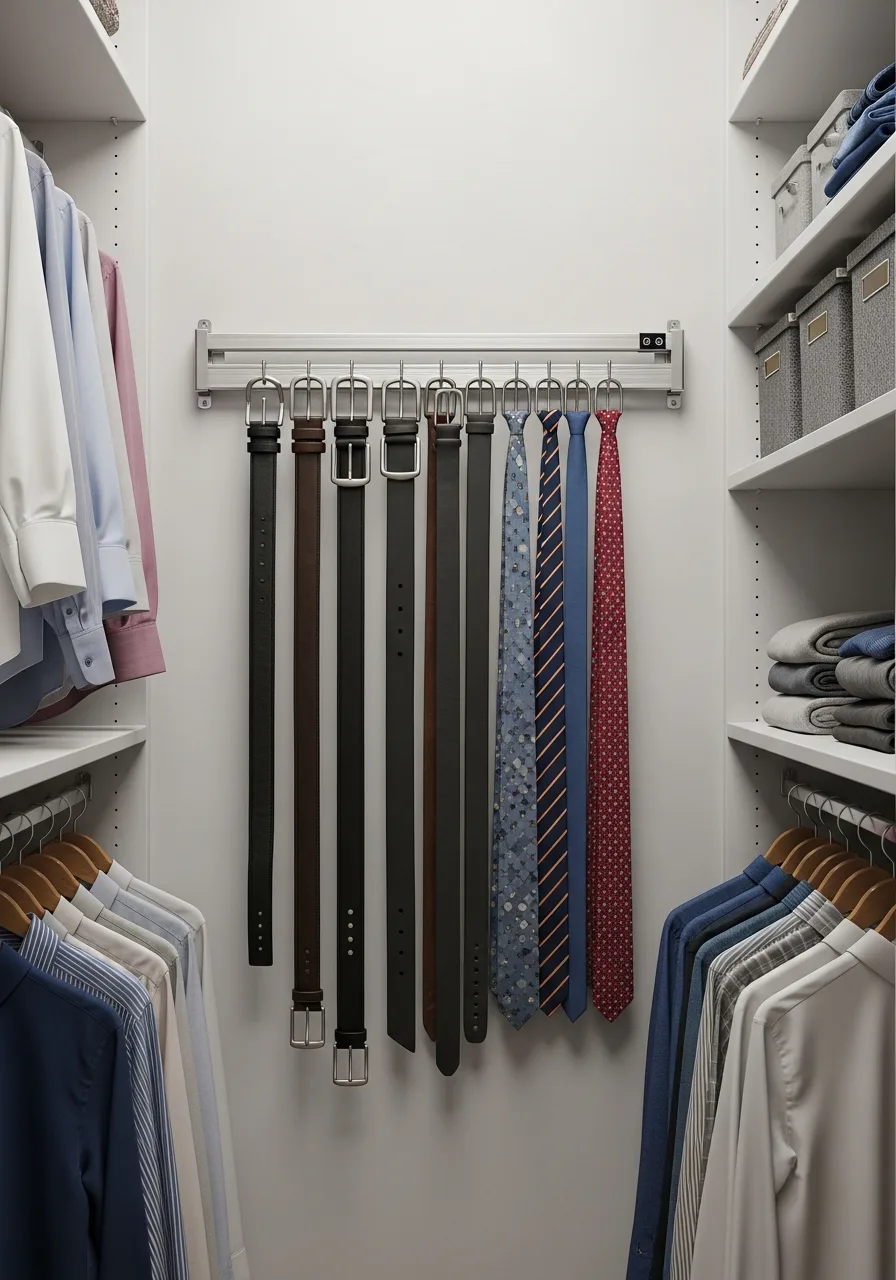
A dedicated rack for belts and ties keeps these small items from getting lost or tangled. These racks slide out when needed and tuck away against the wall when the job is done.
Mount the rack at waist height so you can easily see every buckle and color option.
- Ensure there is four inches of clearance on either side of the rack for the belts to hang freely.
- Choose a rack with non-slip coating on the hooks to keep silky ties from sliding off.
- Align the rack with the edge of a shelf unit to keep the walkway clear.
Space-Saving Secret: Use the extra hooks on a belt rack to hold thin scarves or lightweight necklaces.
14. Organize With Handbag Files
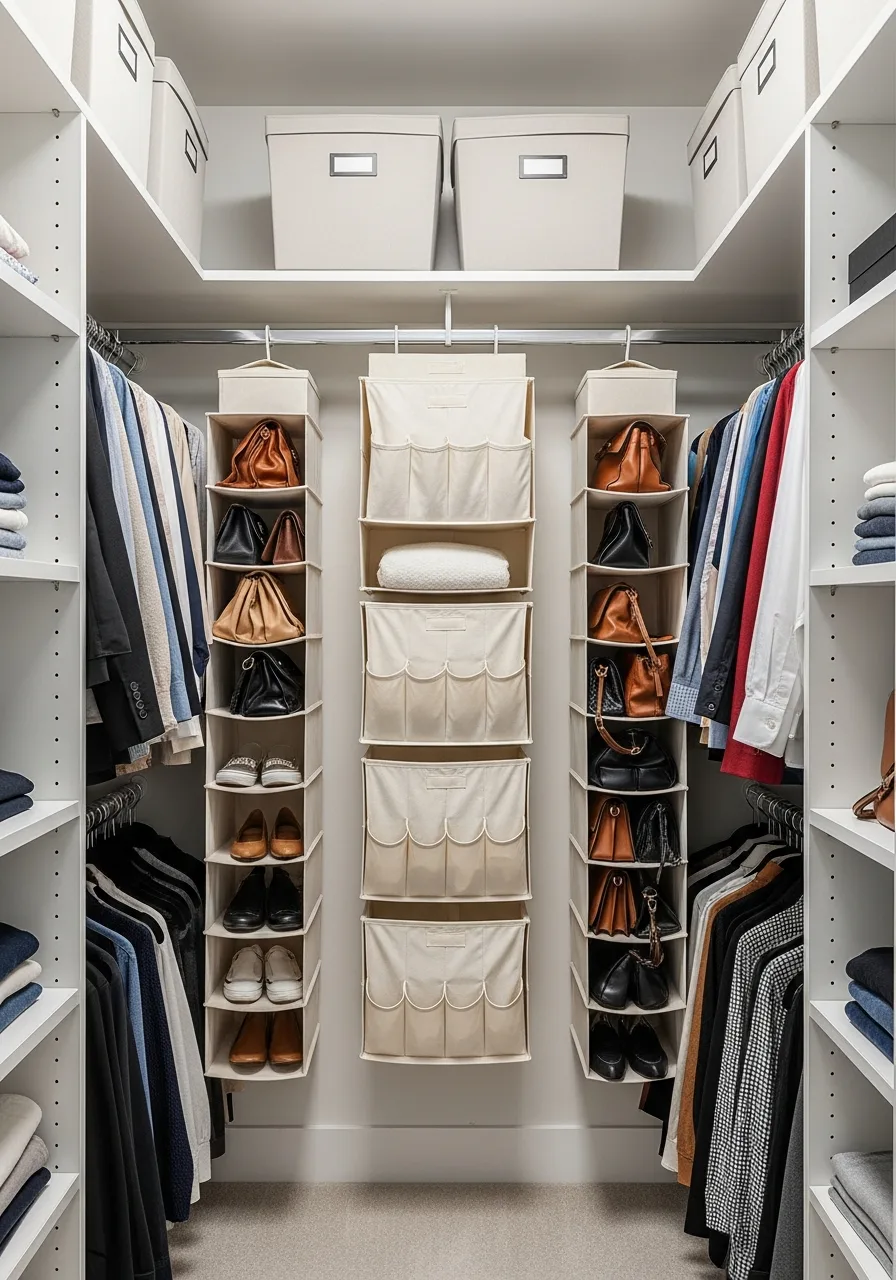
Vertical organizers keep handbags upright and prevent them from losing their shape. These hanging files hook onto the main rod and provide multiple cubbies for different bag sizes.
Select a breathable fabric version to protect leather bags from moisture and dust.
- Allow for ten inches of width on the rod for the organizer to hang without being squashed.
- Use clear front panels so you can identify the bag you want without pulling it out.
- Store smaller clutches inside larger totes to save even more space within the cubbies.
Space-Saving Secret: Stuff empty handbags with tissue paper to help them stand upright and look better in the organizer.
15. Assemble Modular Cubby Systems
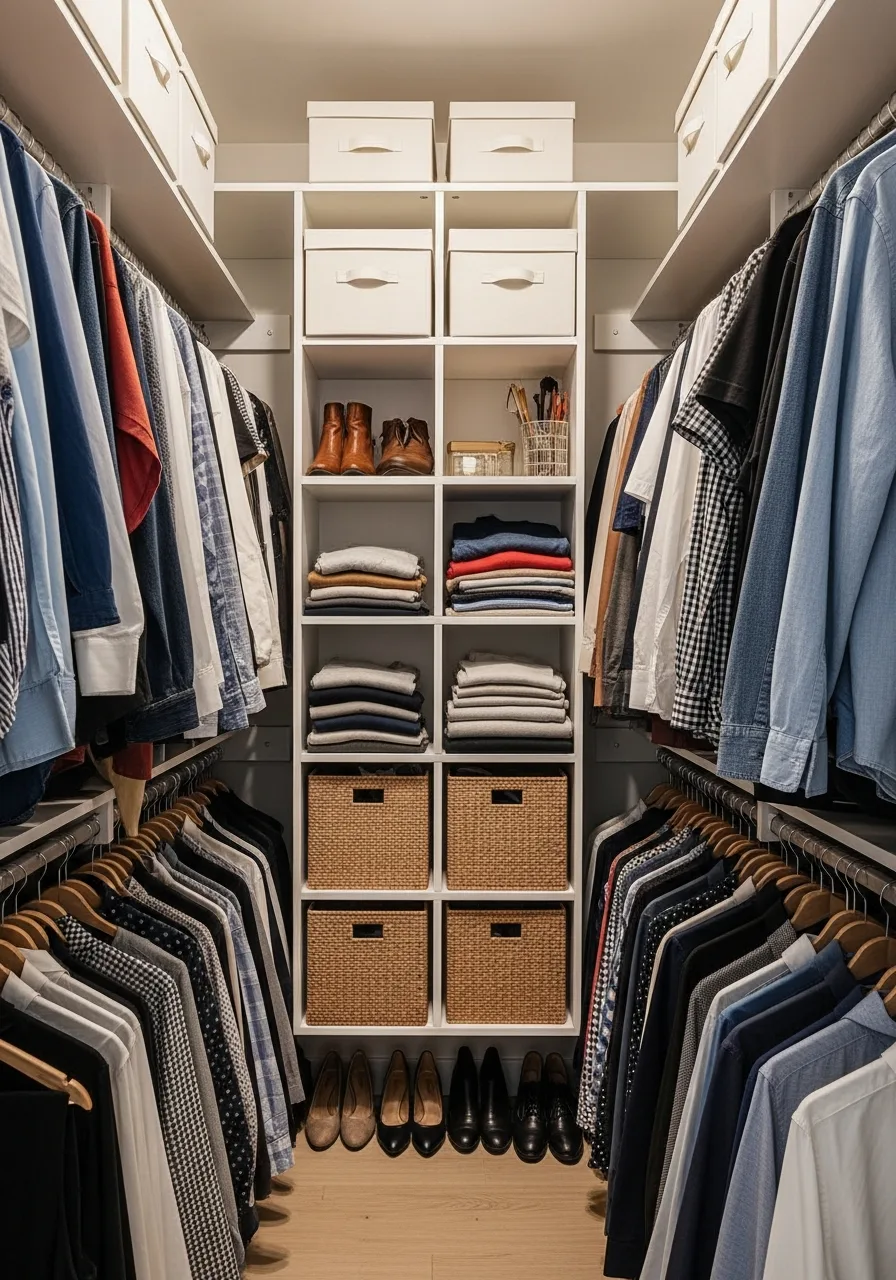
Cubbies provide a designated home for shoes, folded clothes, and bins. A modular system allows you to stack and rearrange the units to fit your specific closet layout.
Secure the units to the wall with small brackets to prevent them from tipping over in a narrow space.
- Leave at least twenty-four inches of floor space in front of the cubbies for standing room.
- Use light-toned wood or white finishes to keep the closet from feeling heavy or enclosed.
- Mix and match open cubbies with small drawers to hide cluttered items like socks.
Space-Saving Secret: Place the heaviest items in the bottom cubbies to lower the center of gravity and increase stability.
16. Mount Wall Hat Hooks
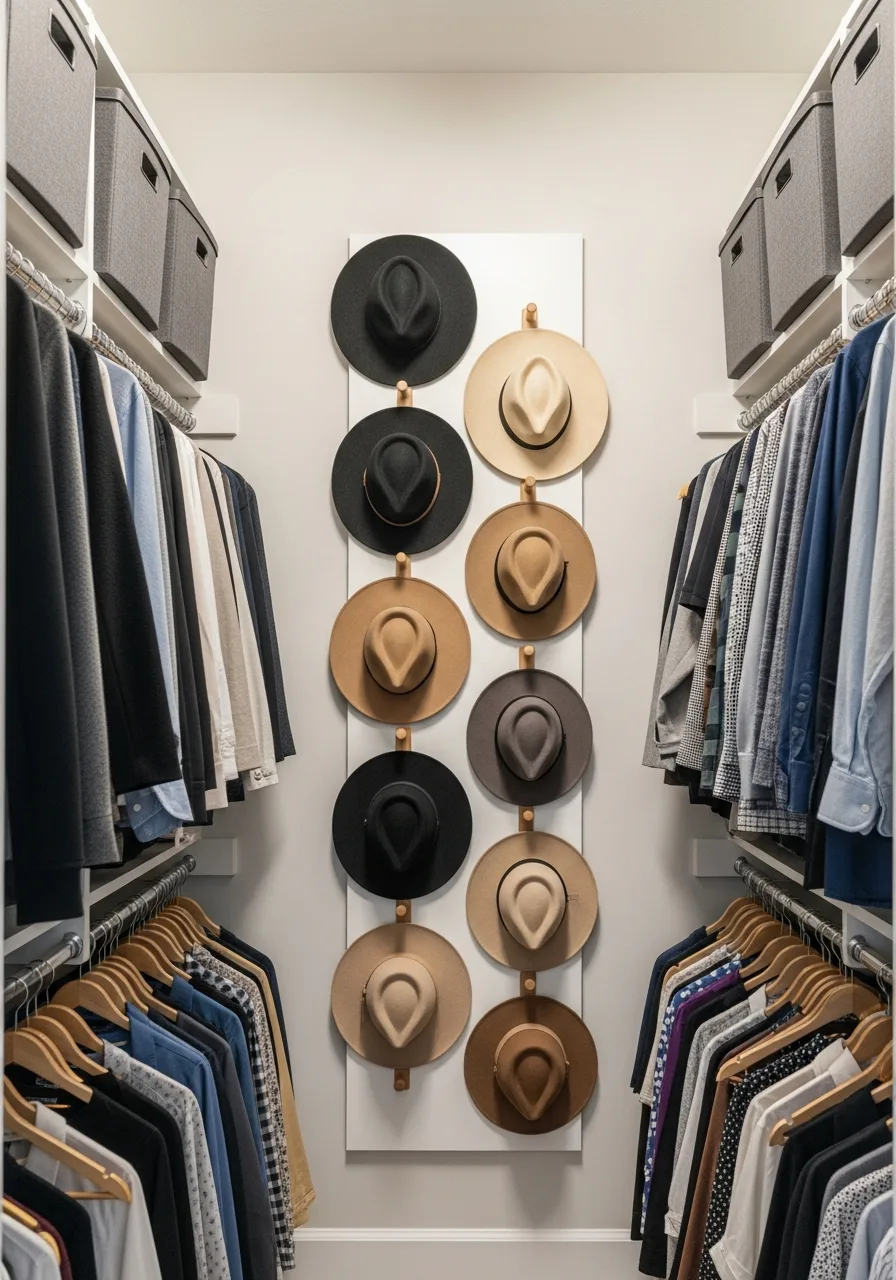
Wall-mounted hooks turn hats into decor while clearing valuable shelf space. This setup keeps brimmed hats from getting crushed in messy stacks.
Arrange hooks in a staggered diamond pattern to fit more items on a single narrow wall.
- Keep at least 24 inches of floor space clear to maintain easy walking paths.
- Match the hook color to the wall paint to reduce visual noise in a tight area.
- Use the lowest hooks for heavy bags to keep weight off the upper shelves.
Space-Saving Secret: Use adhesive hooks to test the layout before committing to permanent screws.
17. Install Tension Shoe Rods
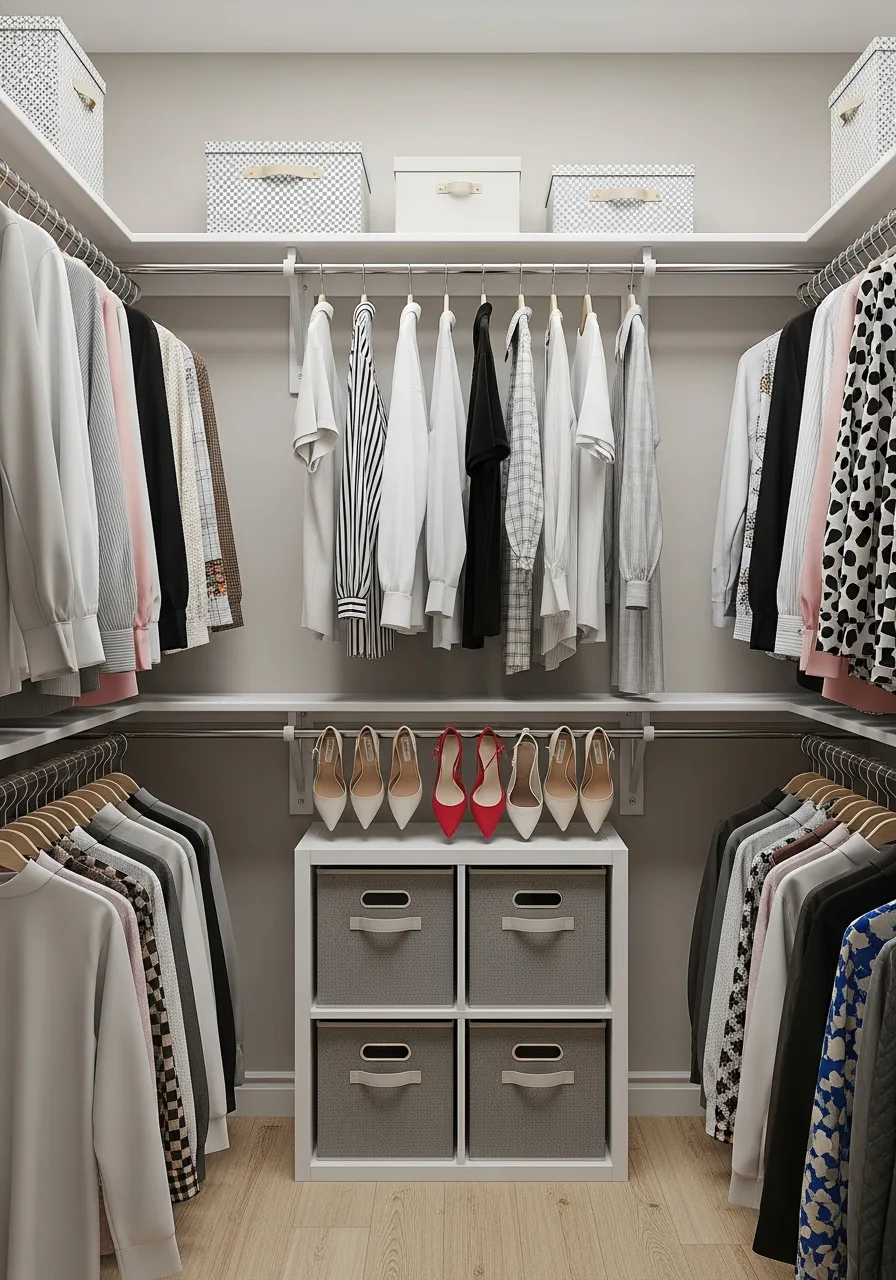
Tension rods placed near the floor create a custom shoe rack in seconds. They work perfectly for heels by hooking the heel over the back rod.
Angle the front rod slightly lower than the back rod to display shoes for easier selection.
- Leave 10 inches of height between rows to prevent shoes from overlapping.
- Choose white or metallic rods to reflect light in the dark bottom corners.
- Place these in the dead space under hanging shirts to use every inch.
Space-Saving Secret: Add a rubber strip to the rods to prevent slick soles from sliding off.
18. Add High Door Shelves
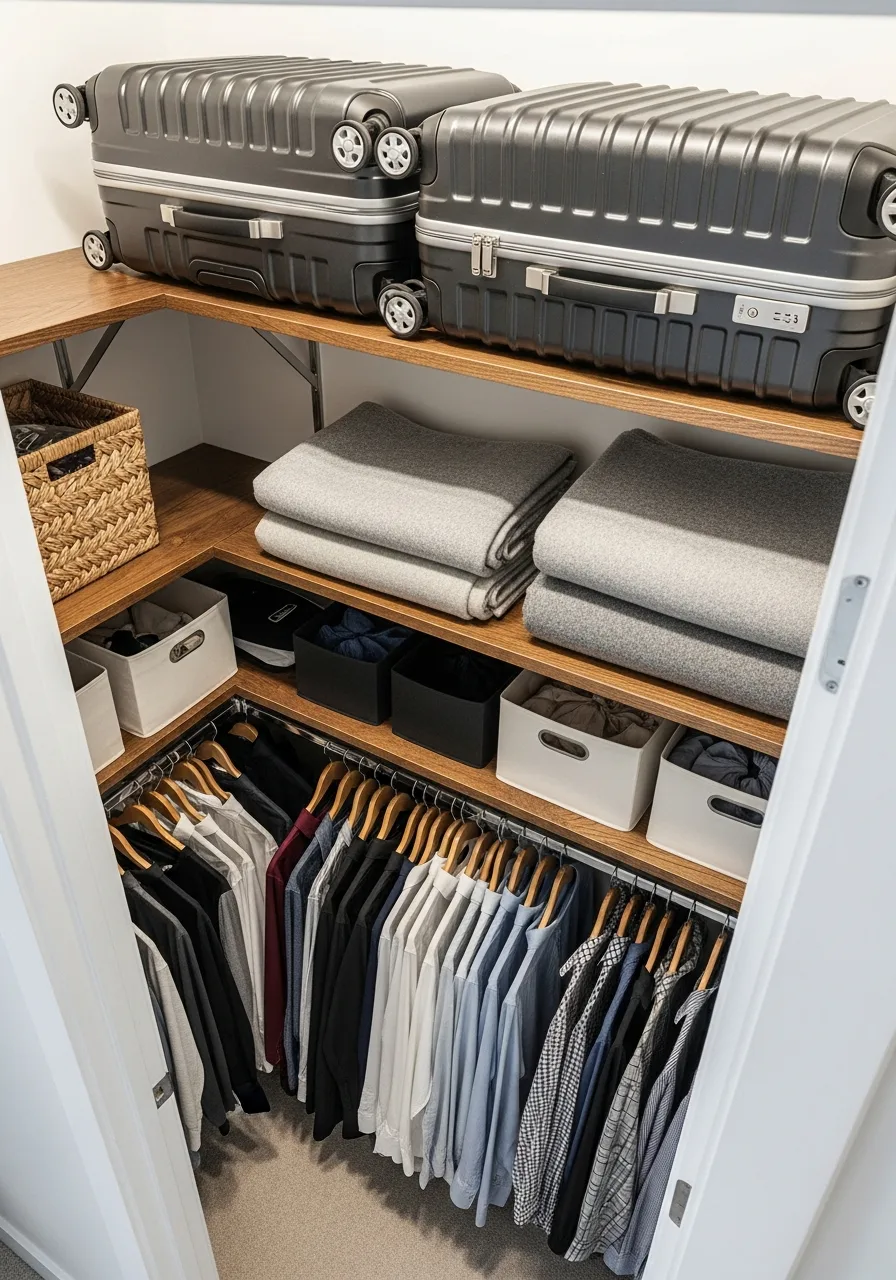
The space directly above the closet door is often completely wasted. Installing a single deep shelf here provides a home for bulky luggage or seasonal blankets.
Secure the shelf with heavy-duty brackets to handle the weight of packed suitcases.
- Ensure the shelf is at least 12 inches below the ceiling for easy loading.
- Paint the shelf the same color as the ceiling to make it disappear visually.
- Store items in soft-sided bags here to maximize the tight overhead clearance.
Space-Saving Secret: Keep a lightweight folding step stool inside the closet to reach this high zone.
19. Attach Side Rail Racks
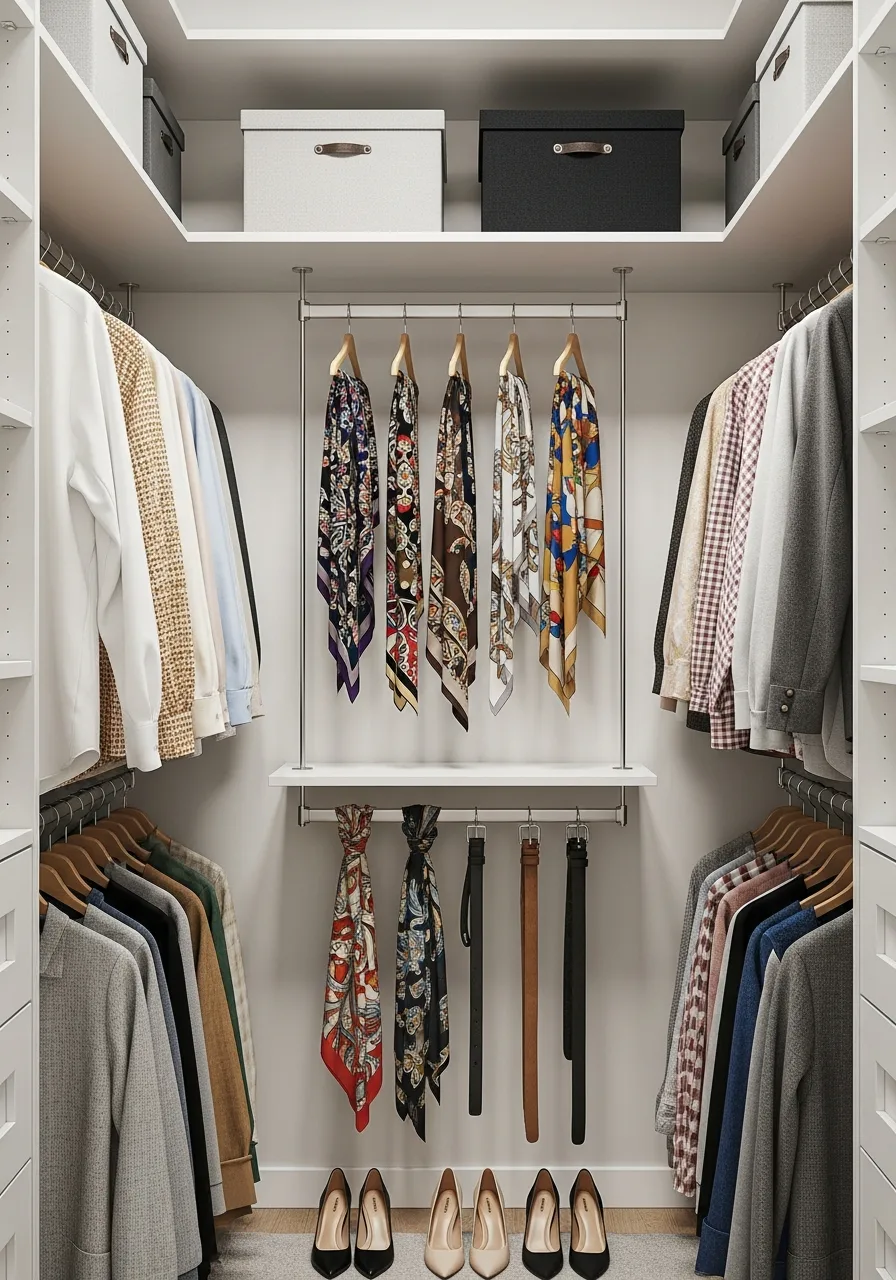
The flat ends of wardrobe cabinets are perfect spots for thin metal rails. These rails hold scarves, belts, or even daily outfits without taking up rod space.
Mount the rails at chest height to keep accessories visible and within reach.
- Allow for 2 inches of clearance between the rail and the cabinet side.
- Use sleek chrome rails to add a high-end look to basic wooden partitions.
- Hang small S-hooks on the rails to hold jewelry or lightweight tank tops.
Space-Saving Secret: Use a magnetic rail if your closet system has metal components for a drill-free setup.
20. Recess Slim Jewelry Cabinets
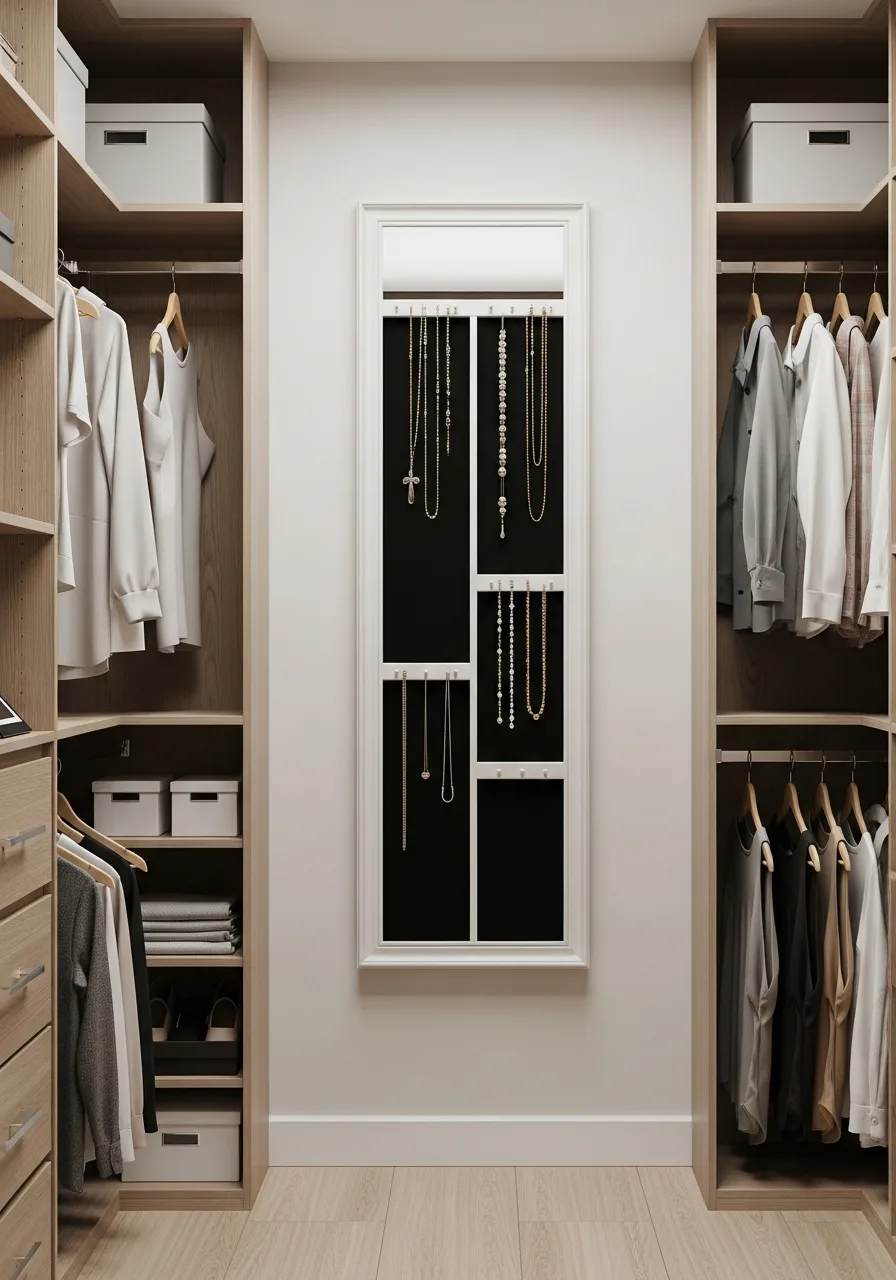
A wall-mounted jewelry cabinet provides massive storage with a very thin profile. These units keep necklaces from tangling and hide clutter behind a finished door.
Choose a model with a built-in mirror to add function without taking up extra wall real estate.
- Leave 36 inches of swing space so the cabinet door can open fully.
- Pick a white finish to help the unit blend into the closet walls.
- Store frequently used earrings at eye level to save time during your morning routine.
Space-Saving Secret: Look for a cabinet with an interior LED light to help find small items in the dark.
21. Mount Folding Ironing Boards
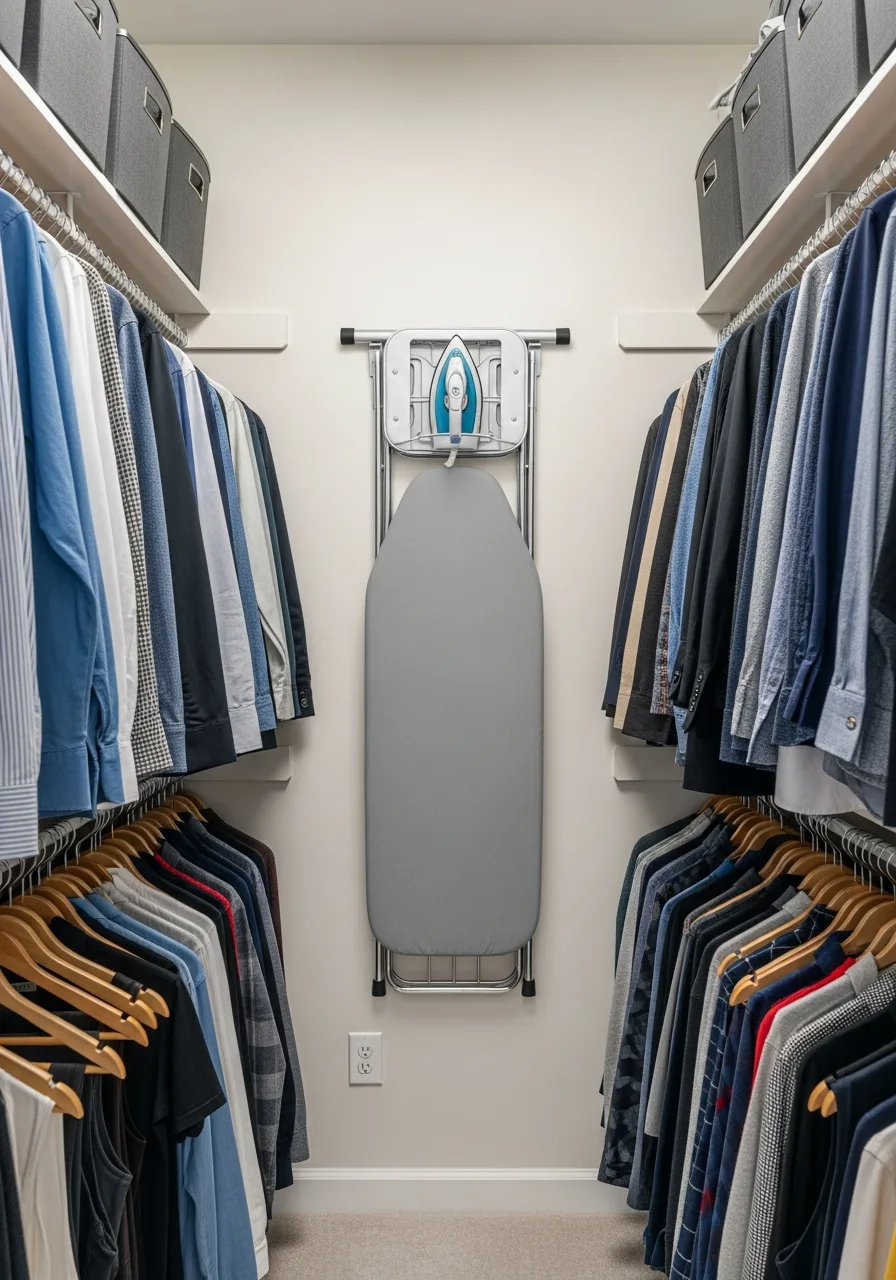
Standard ironing boards are bulky and difficult to store in small walk-ins. A wall-mounted version folds up flat against the wall when it is not in use.
Install the board near a power outlet to avoid dragging extension cords across the walkway.
- Confirm the board has 4 feet of clearance when fully extended for comfortable use.
- Select a board with a heat-resistant cover to allow for immediate folding after use.
- Use the underside of the folded board to hang a small mesh laundry bag.
Space-Saving Secret: Mount the board on the back of the closet door to save precious wall space.
22. Group Clothes By Color
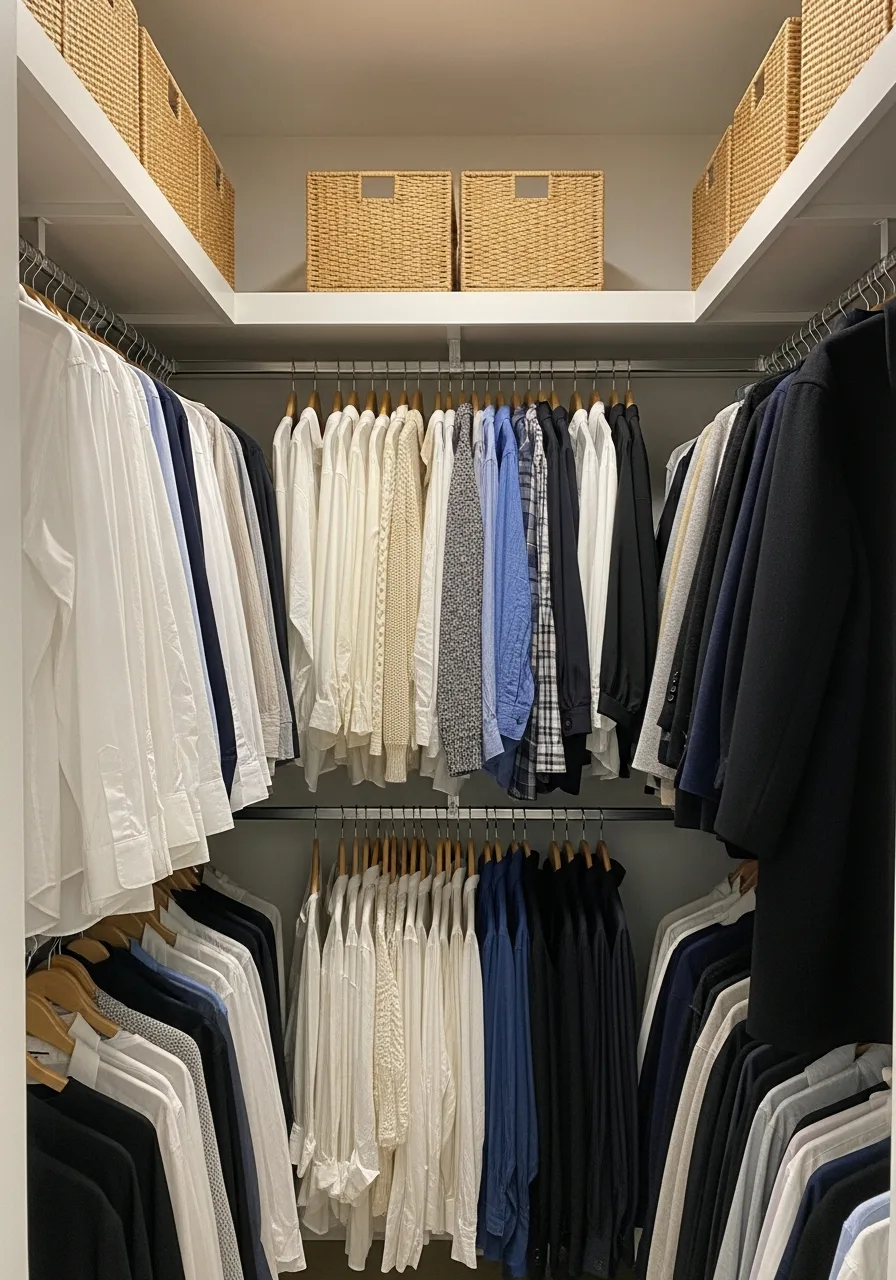
Sorting clothes by color makes a cramped inventory feel intentional and organized. It speeds up the morning routine because every item has a predictable home.
Group items from light to dark to create a cohesive flow that prevents a cluttered look.
- Leave three inches between different color sections for easy browsing.
- Place lighter colors at eye level to make the closet feel more open.
- Use color blocks to quickly identify when one category is getting too full.
Space-Saving Secret: Store white and cream items in the brightest part of the closet to boost light reflection.
23. Label Clear Plastic Totes
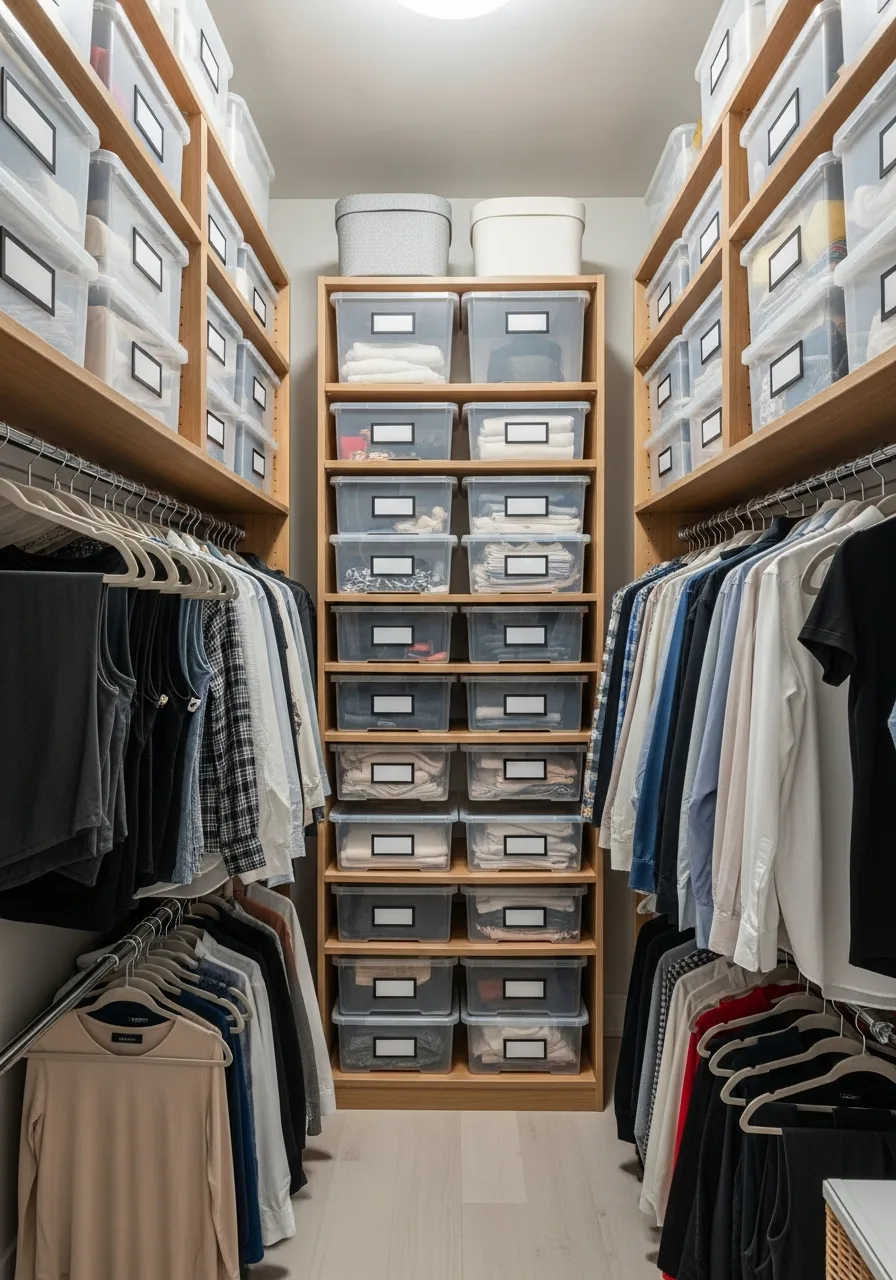
Clear bins allow you to see contents at a glance without pulling everything off the shelf. Adding large labels ensures that every family member puts items back in the right spot.
Use a consistent label style to create a clean and professional appearance on high shelves.
- Stack bins no more than three high to ensure the bottom one remains accessible.
- Use transparent bins to let light pass through to the items stored behind them.
- Store off-season shoes or swimsuits in these bins to keep them dust-free.
Space-Saving Secret: Place a photo of the contents inside the bin for even faster identification.
24. Use Heavy Duty S-Hooks
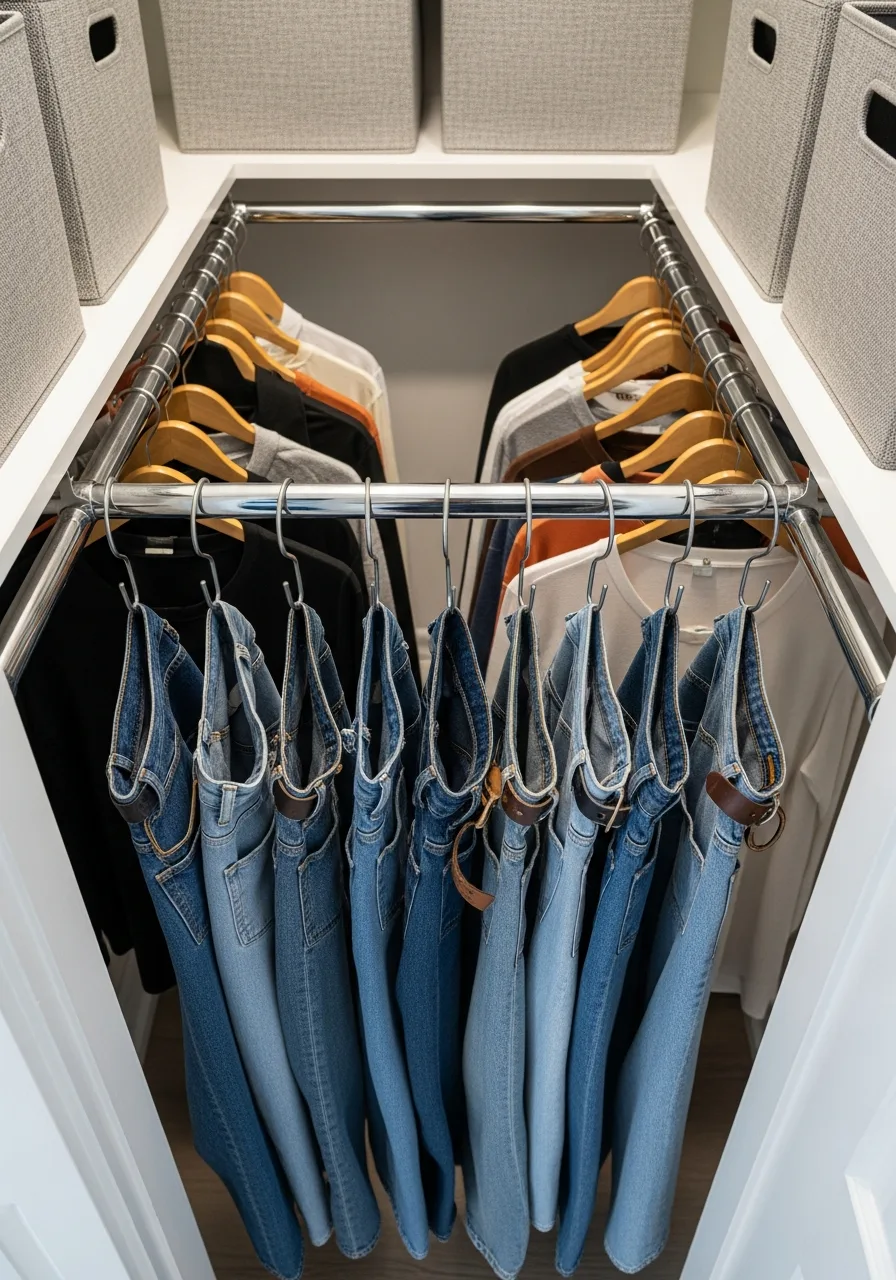
S-hooks are a versatile tool for hanging jeans by their belt loops. This method saves drawer space and prevents the bulk that comes from folding thick denim.
Slide the hooks onto a standard closet rod for a quick and inexpensive organization upgrade.
- Space hooks 3 inches apart to allow denim to breathe and prevent wrinkles.
- Use flat-style S-hooks to keep the jeans hanging straight and narrow.
- Hang handbags by their straps on these hooks to keep them off the floor.
Space-Saving Secret: Use oversized S-hooks to hang heavy winter coats by their collar loops.
25. Slide In Wire Baskets
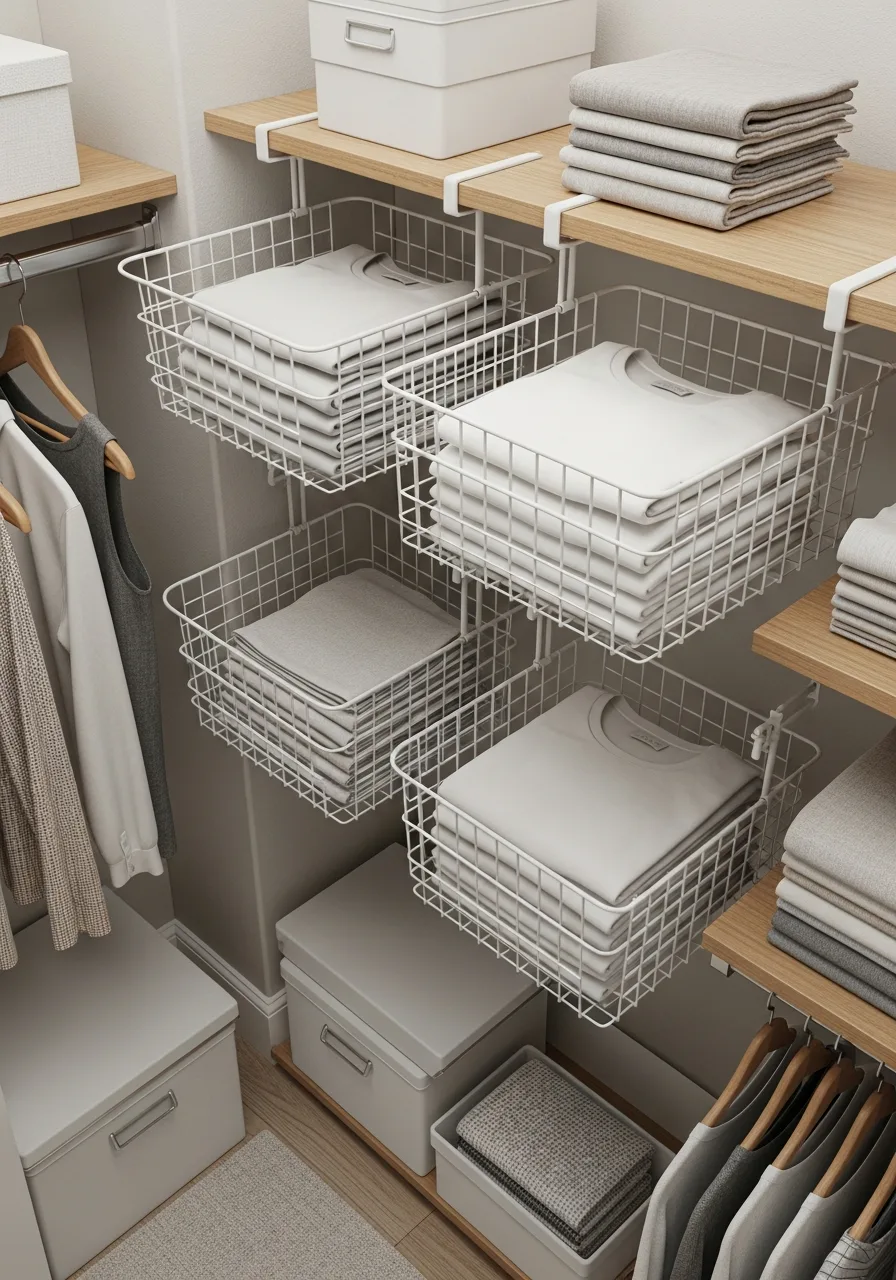
Under-shelf wire baskets utilize the empty air space beneath existing shelves. They are perfect for storing flat items like t-shirts, leggings, or pajamas.
Slide the arms over the shelf and tuck your items inside for instant extra layers of storage.
- Ensure there is at least 6 inches of clearance below the basket for other items.
- The open wire design keeps the closet looking light and prevents musty odors.
- Use these for small accessories like clutches that usually get lost on big shelves.
Space-Saving Secret: Line the bottom of the wire basket with cardstock to prevent thin fabrics from getting marks.
26. Lean Full Length Mirrors
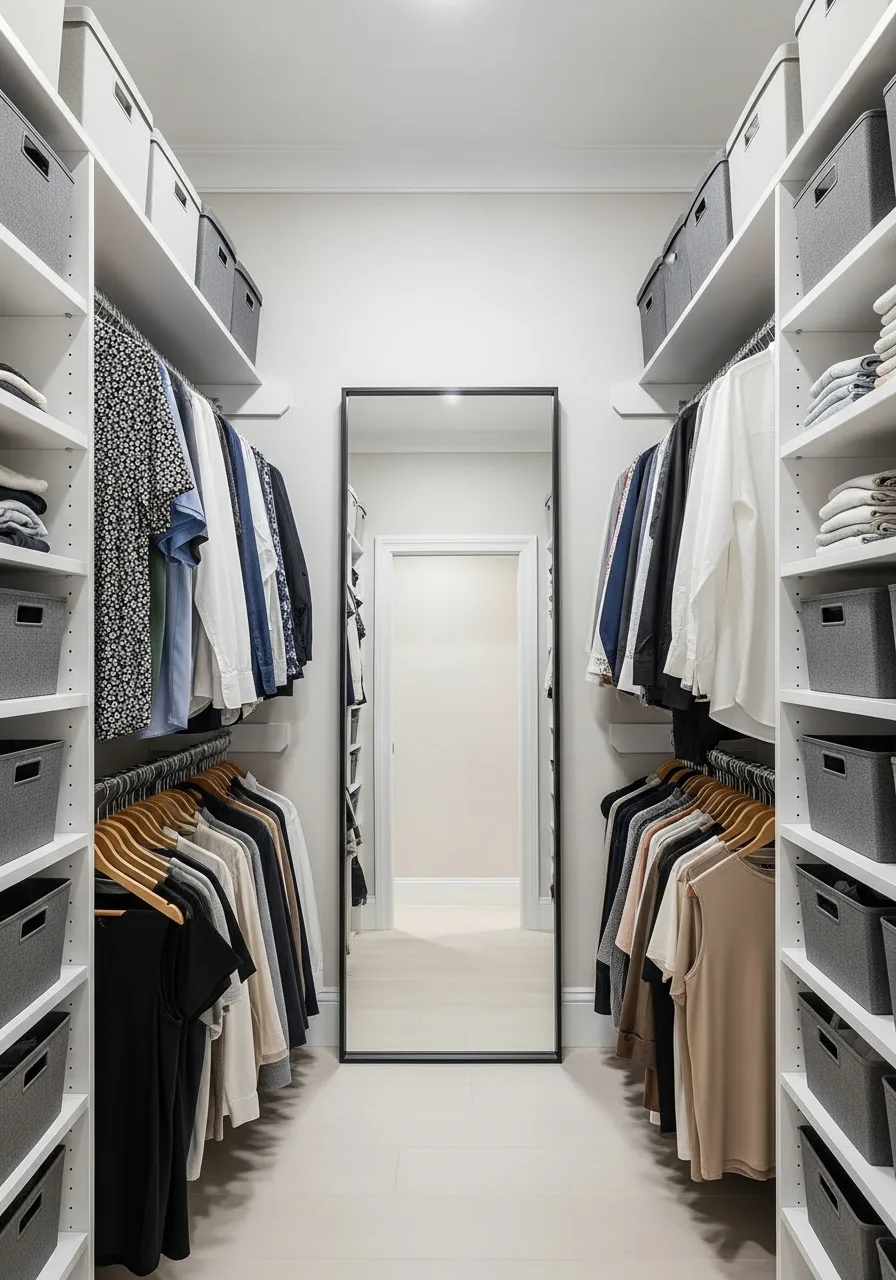
A tall mirror leaning against the back wall doubles the perceived depth of a narrow room. This trick works best in galley-style closets where the walls feel very close together.
Secure the top of the mirror to a wall stud to ensure safety in tight quarters.
- Maintain a 30-inch clearance in front of the mirror for dressing comfortably.
- Position the mirror opposite the door to bounce natural light into the space.
- Choose a mirror with a thin frame to maximize the reflective surface area.
Space-Saving Secret: Use a frameless mirror to make the edges disappear into the wall for a seamless look.
27. Stack Identical Fabric Bins
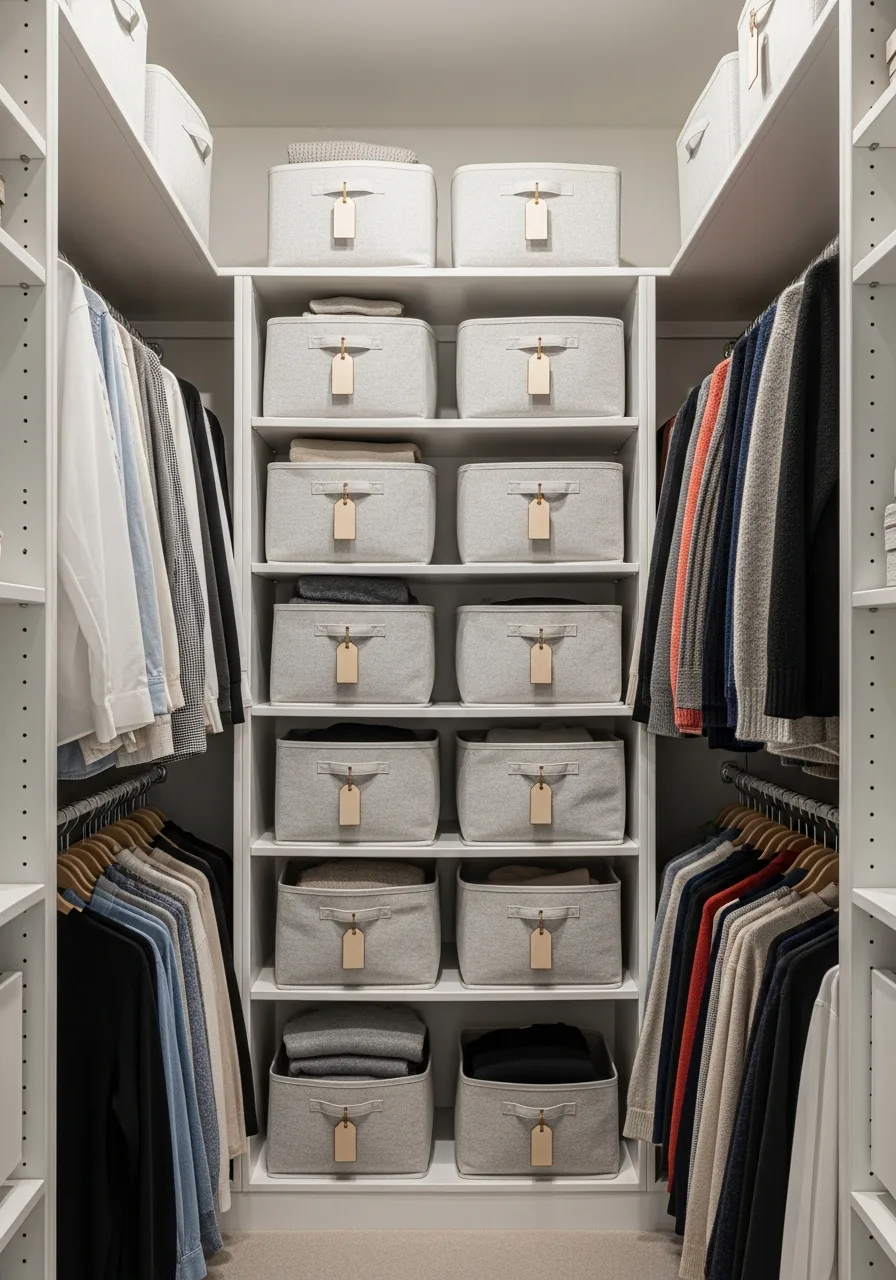
Using matching fabric bins hides visual clutter and makes the closet look professionally designed. These bins are ideal for soft items that do not stack well on their own, like sweaters.
Label each bin with a hanging tag so you never have to guess what is inside.
- Leave 2 inches of space between bins to make them easy to slide out.
- Pick light neutral colors like linen or grey to keep the space feeling bright.
- Use square bins on top shelves to maximize the rectangular volume of the space.
Space-Saving Secret: Store out-of-season items in the very back bins and daily items in the front.
28. Install Motorized Tie Racks
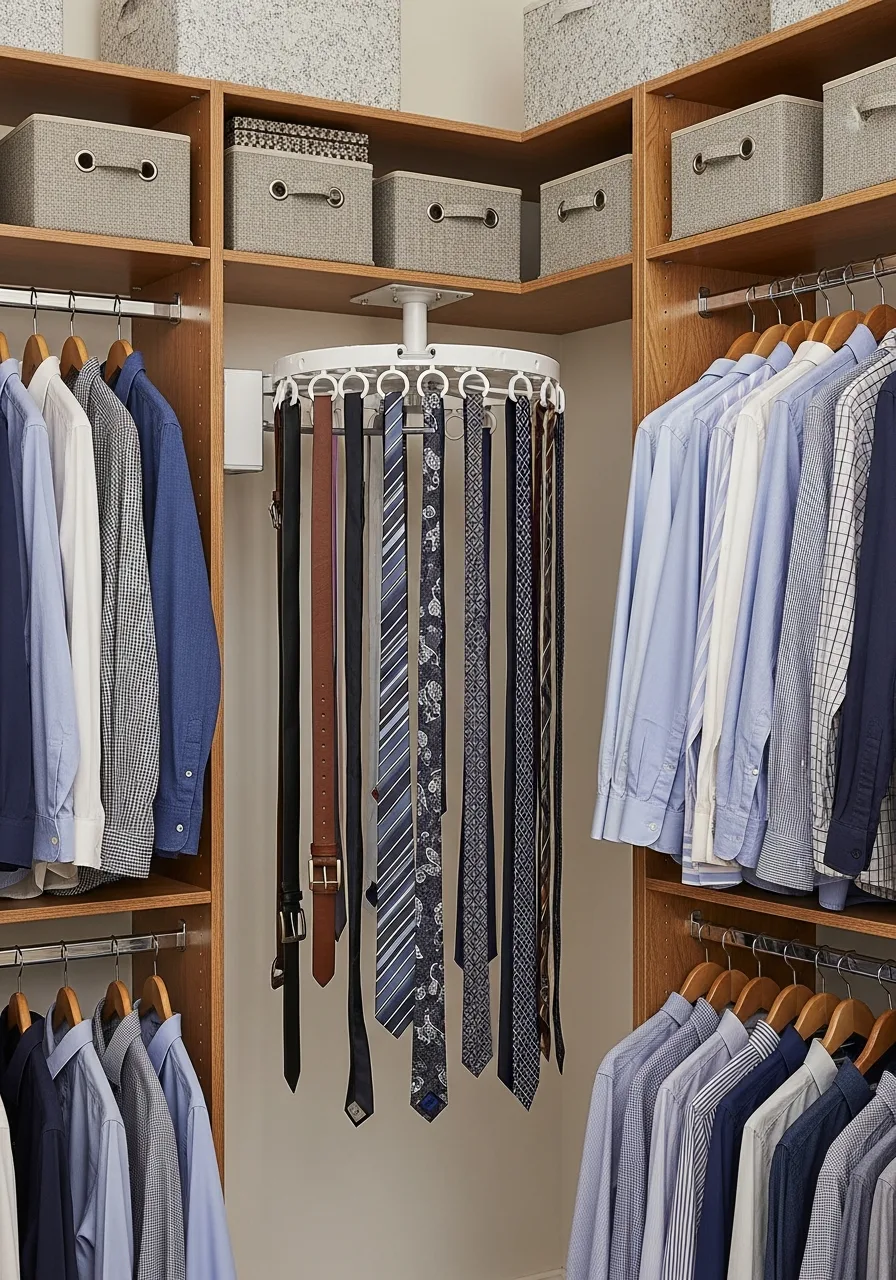
A motorized tie rack uses vertical space to store dozens of ties or belts in a small footprint. It rotates at the touch of a button, bringing every option directly to the front.
Mount the unit on the existing closet rod to save wall space for shelving.
- Ensure the rack has 5 inches of clearance on either side for the ties to rotate.
- Use the built-in light on the rack to distinguish between dark blue and black ties.
- Hang thin silk scarves on the extra hooks for a multi-purpose storage solution.
Space-Saving Secret: Choose a battery-operated model to avoid needing an outlet inside the closet.
29. Store Underbed Storage Bags
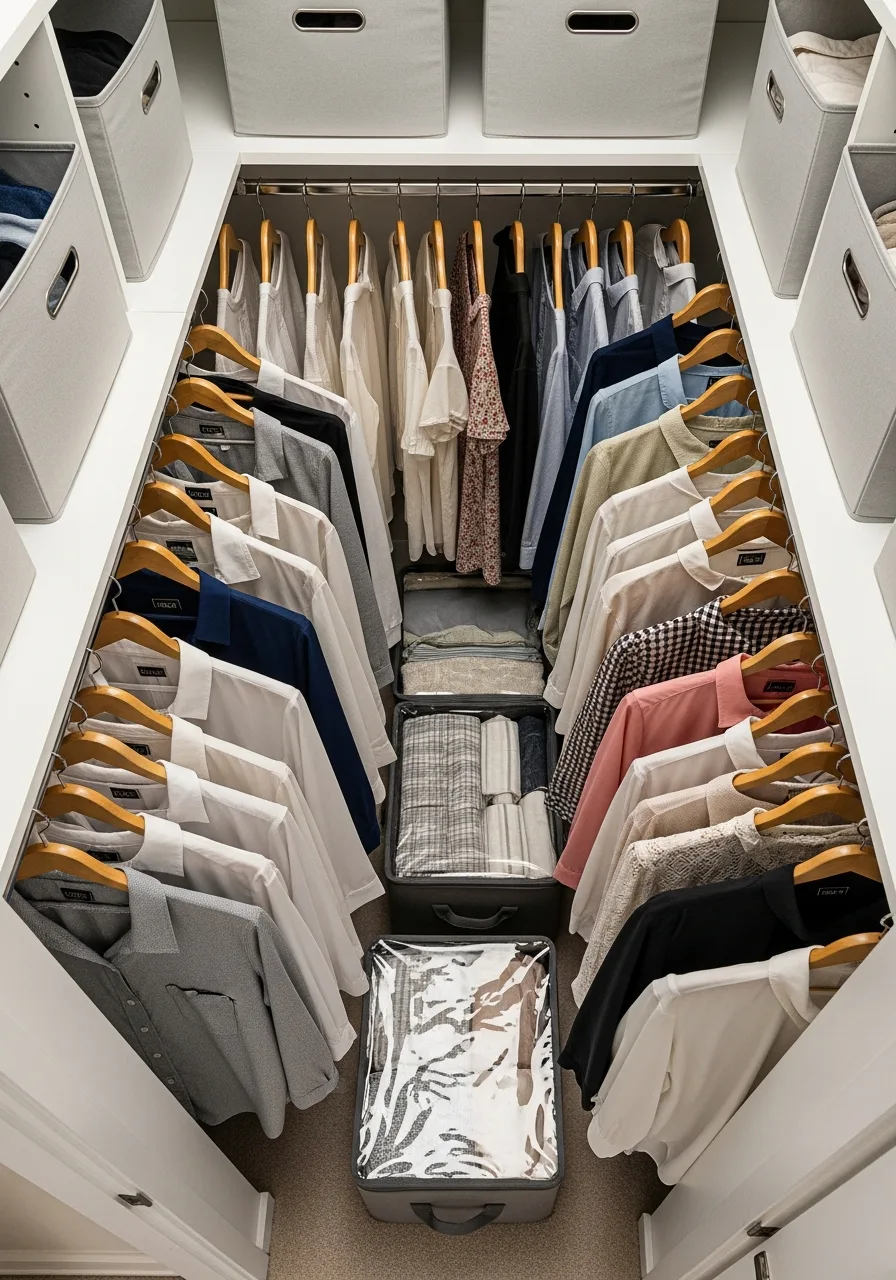
In a tiny walk-in, the floor is precious, so use low-profile bags for off-season items. These bags slide easily under the lowest hanging clothes or at the very bottom of the closet.
Select bags with clear tops so you can see the contents without unzipping them.
- Leave a 2-foot wide path clear on the floor for safe movement.
- Use fabric bags instead of plastic to allow natural fibers like wool to breathe.
- Vacuum-seal the items inside the bags to reduce their height by half.
Space-Saving Secret: Use bags with sturdy handles to make pulling them out from deep corners much easier.
30. Tuck Slim Corner Hampers
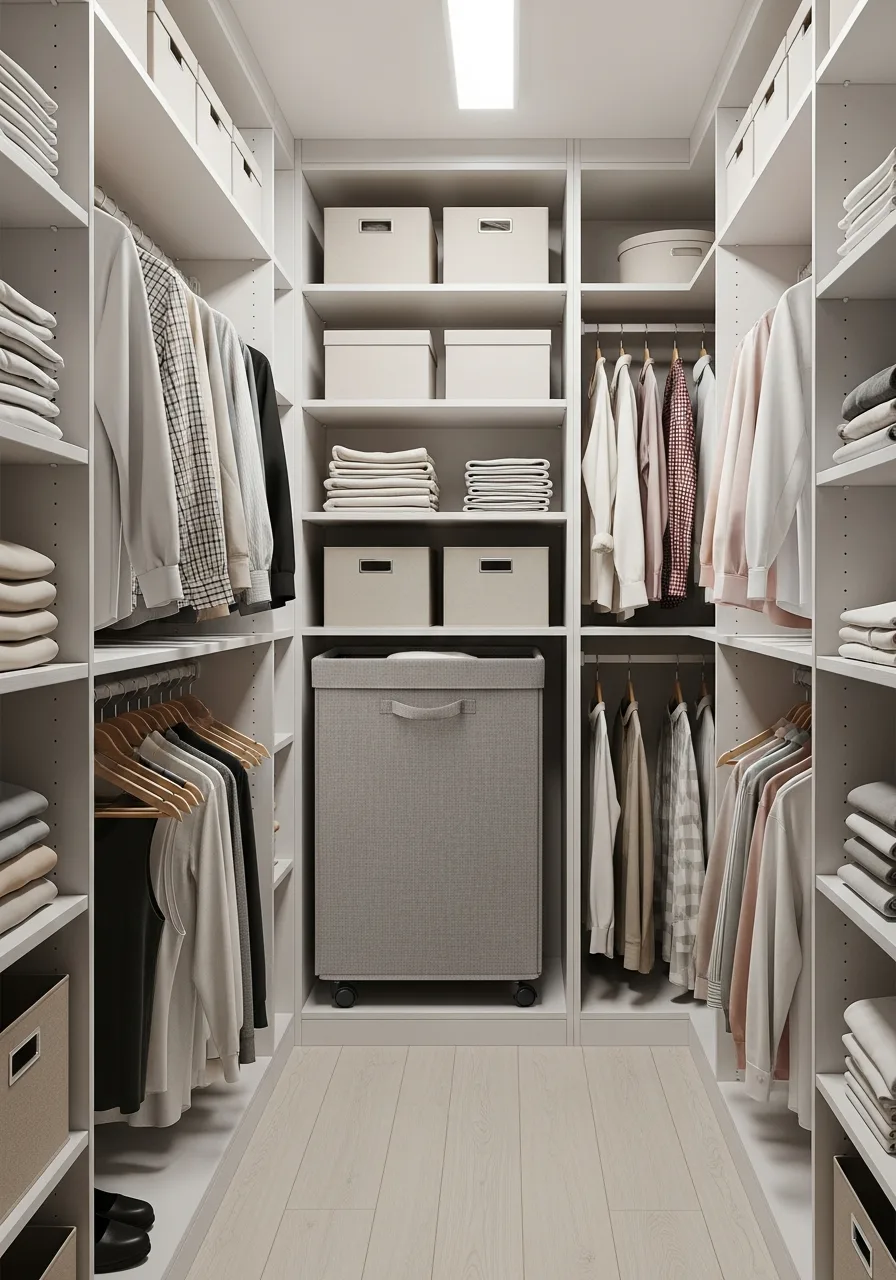
Standard laundry baskets are too wide for narrow walk-ins and block the walkway. A slim, tall hamper fits perfectly into the corner or the small gap between the wall and the shelving.
Choose a hamper with wheels to easily transport heavy loads to the laundry room.
- Allow for 12 inches of width for a slim hamper to fit most closet gaps.
- Select a mesh material to promote airflow and prevent odors in the small space.
- Use a hamper with a lid to keep the closet looking tidy and organized.
Space-Saving Secret: Use a collapsible hamper that can be tucked away when it is empty.
31. Floating Wall Mounted Drawers
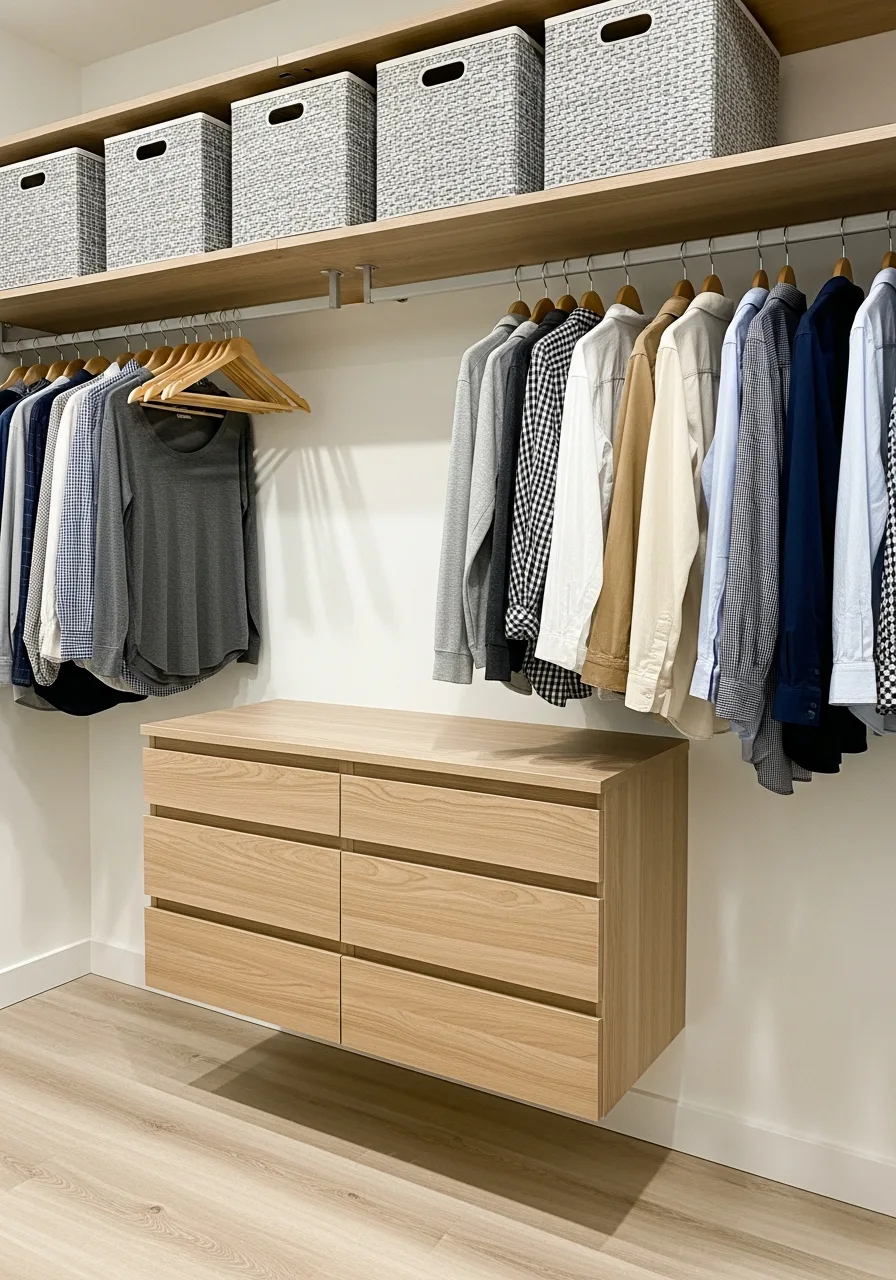
These units attach directly to the wall without bulky legs. They keep the floor clear while providing hidden storage for folded items.
Mount them at waist height to serve as a convenient folding station.
- Leave at least 24 inches of floor space in front of the unit for comfortable standing.
- Choose a unit that matches your wall color to make the room feel larger.
- Use the flat top surface as a staging area to layout tomorrow's outfit.
Space-Saving Secret: Install these drawers inside the space beneath short hanging clothes to use every inch of the wall.
32. Clear Acrylic Jewelry Chests
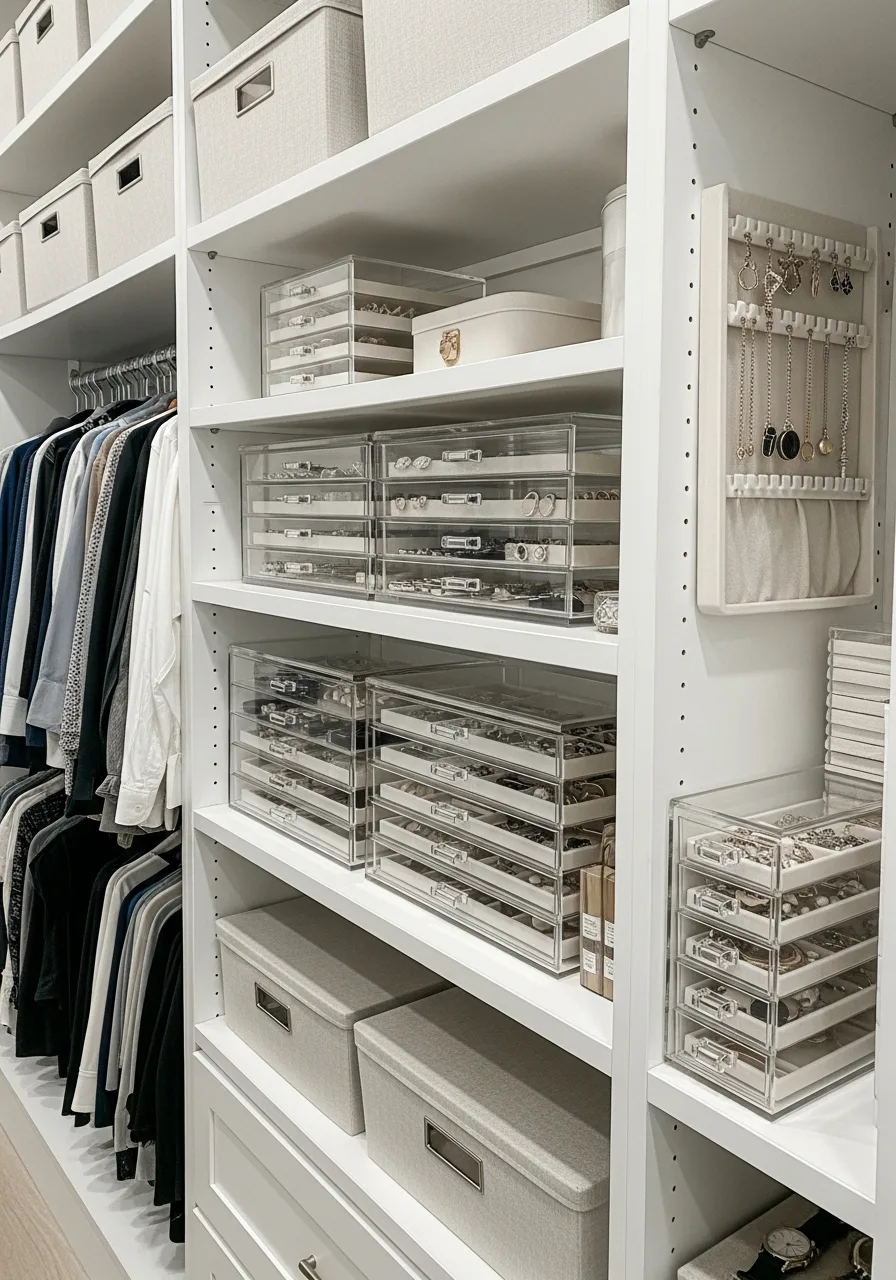
These transparent boxes hold small accessories like earrings and watches. Seeing everything at once prevents digging through messy drawers.
Place these on eye-level shelves to turn your accessories into a visual display.
- Keep at least 12 inches of vertical clearance so you can fully open the top lids.
- The clear material allows light to pass through, keeping the shelf from looking crowded.
- Use the small drawers to store spare buttons or garment care kits.
Space-Saving Secret: Stack these chests on top of each other to reclaim vertical space on narrow side shelves.
33. Open Front Stackable Bins
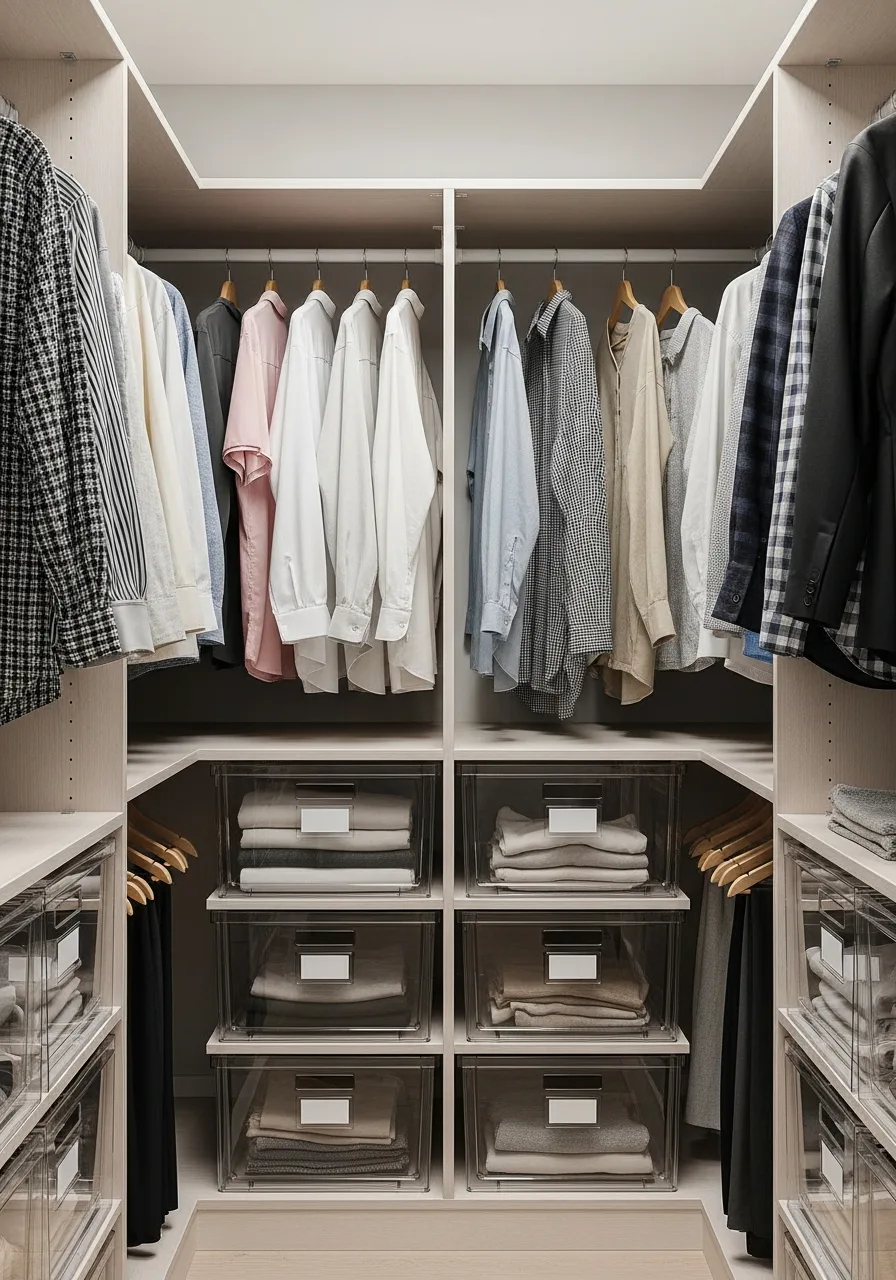
These containers feature a cutout front for easy access to contents. They allow for vertical storage without the need to unstack boxes.
Label the front of each bin to keep seasonal items separate and easy to find.
- Allow for a 30-inch walkway between bins and the opposite wall for easy reach.
- Use uniform colors for all bins to create a clean and organized look.
- Store a small step stool nearby to reach the highest bins in the stack.
Space-Saving Secret: Use these for gym clothes or pajamas to free up space in your primary dresser drawers.
34. Wall Mounted Towel Bars
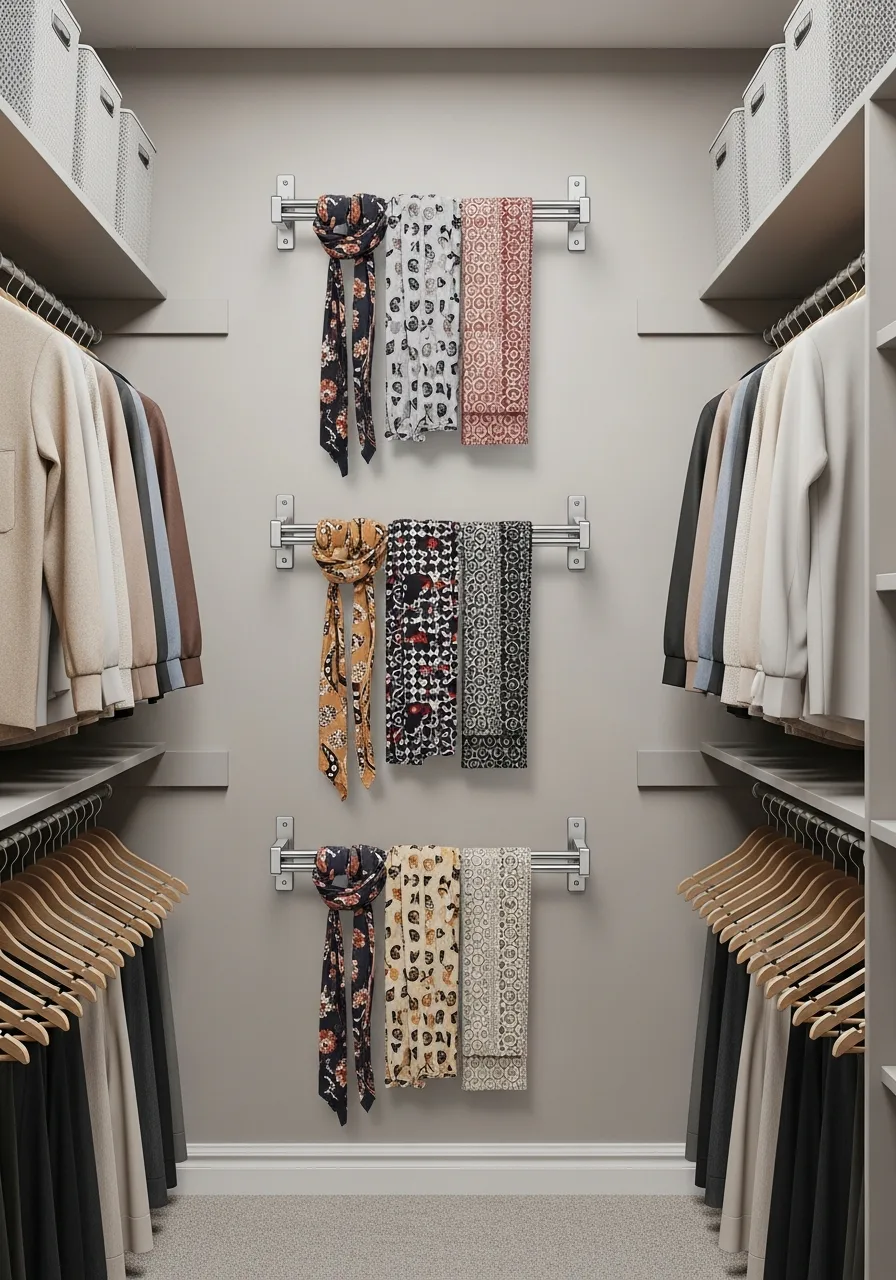
Sturdy metal bars can be repurposed to hold scarves or ties. This setup uses thin wall space that usually goes to waste.
Install three bars vertically with six inches of space between them for a streamlined look.
- Ensure the bars sit no more than two inches from the wall to keep the walkway clear.
- Pick a metallic finish that matches your door hardware for a cohesive style.
- Drape belts over the bars to keep them from getting tangled in a drawer.
Space-Saving Secret: Use S-hooks on the bars to hang small purses or umbrellas by their handles.
35. Pull Down Wardrobe Lifts
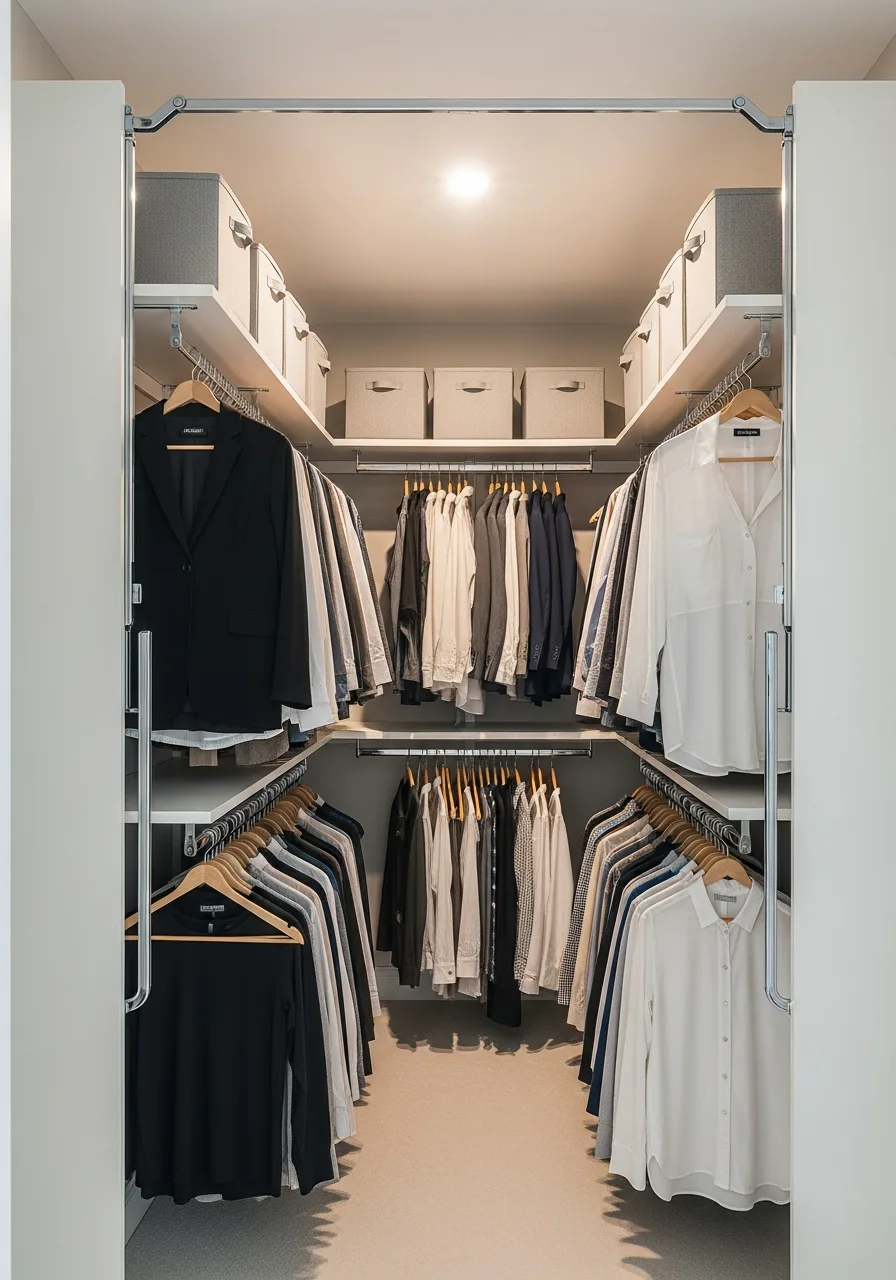
This hardware allows you to pull high-hanging rods down to your level. It makes the very top of the closet accessible for daily use.
Install the lift at least 12 inches from the back wall to ensure smooth operation.
- Leave 48 inches of vertical space below the rod so clothes do not hit the floor when lowered.
- A chrome or silver finish reflects light in the dark upper corners of the closet.
- Use the high rod for out-of-season coats that you only need to reach occasionally.
Space-Saving Secret: These lifts are perfect for keeping long dresses from dragging on the floor.
36. Door Mounted Full Mirror
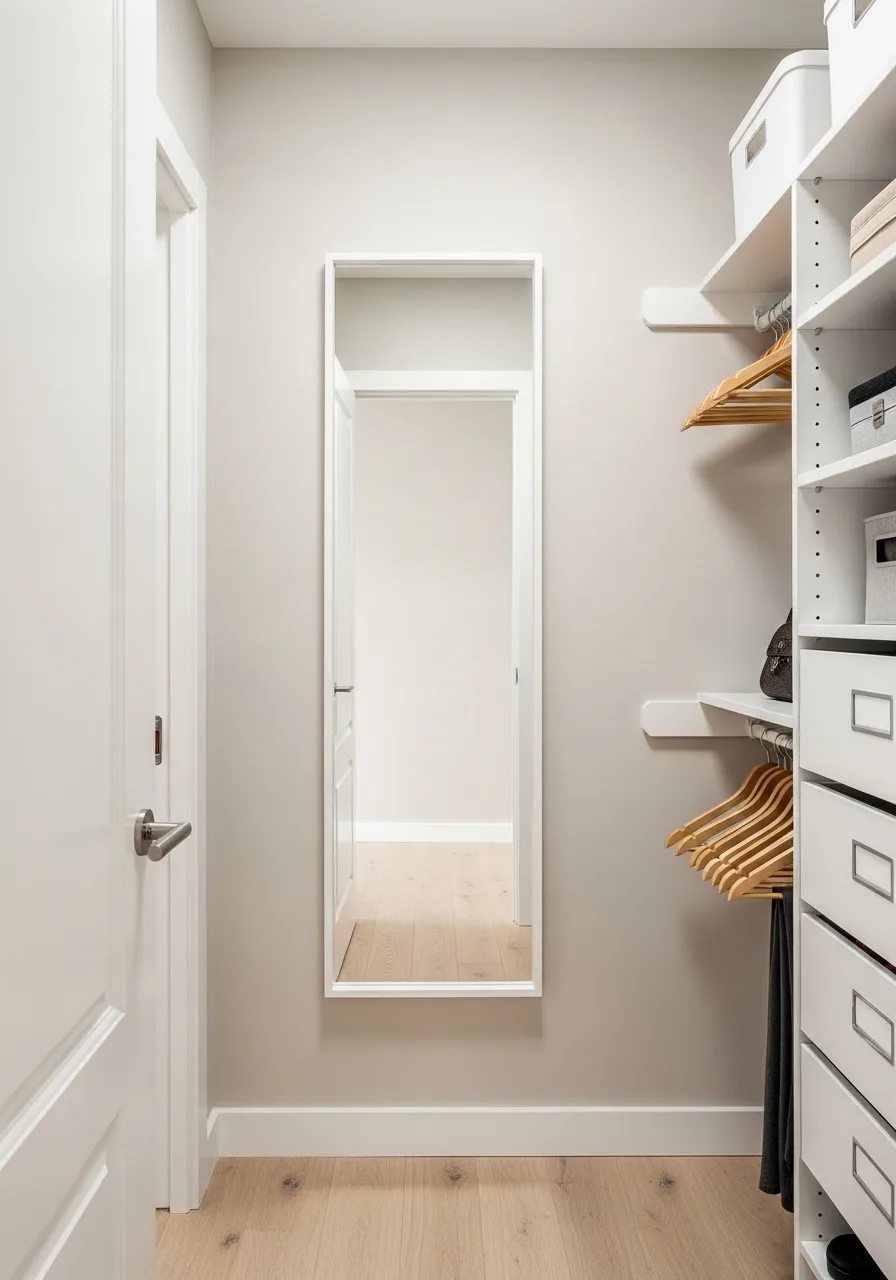
A mirror attached to the back of the door saves floor and wall space. It reflects light to make a narrow walkway feel much wider.
Use heavy-duty adhesive strips to ensure the mirror stays flush and silent when the door moves.
- Check that the mirror does not interfere with the door handle or hinges when opening.
- The reflection creates the illusion of a second room, doubling the perceived depth.
- Check your full outfit from head to toe without leaving the closet space.
Space-Saving Secret: Choose a mirror with a thin frame to keep the door weight light and easy to swing.
37. Clip On Shelf Drawers
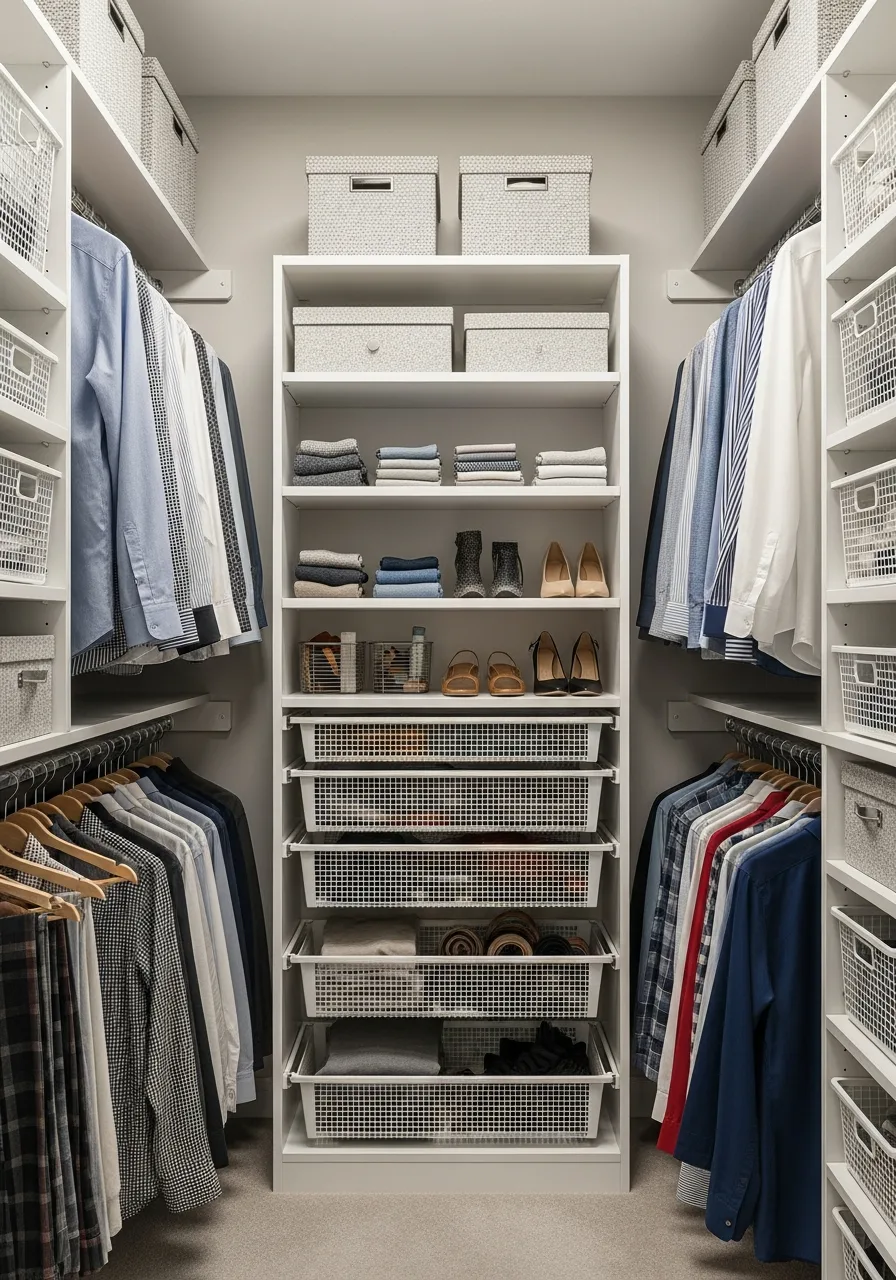
These small wire baskets slide onto existing solid shelves. They create a second layer of storage for flat items like socks or belts.
Use them specifically for thin items to prevent the drawers from becoming too heavy to slide.
- Ensure your shelves are at least 10 inches wide to accommodate the drawer clips.
- The open wire mesh allows you to see exactly what is inside from below.
- Keep charging cables or small electronics tucked away but within reach.
Space-Saving Secret: Slide these onto the very bottom shelf to store flat shoes like flip-flops or slippers.
Closet Organization
38. Vertical Boot Hanging Rods
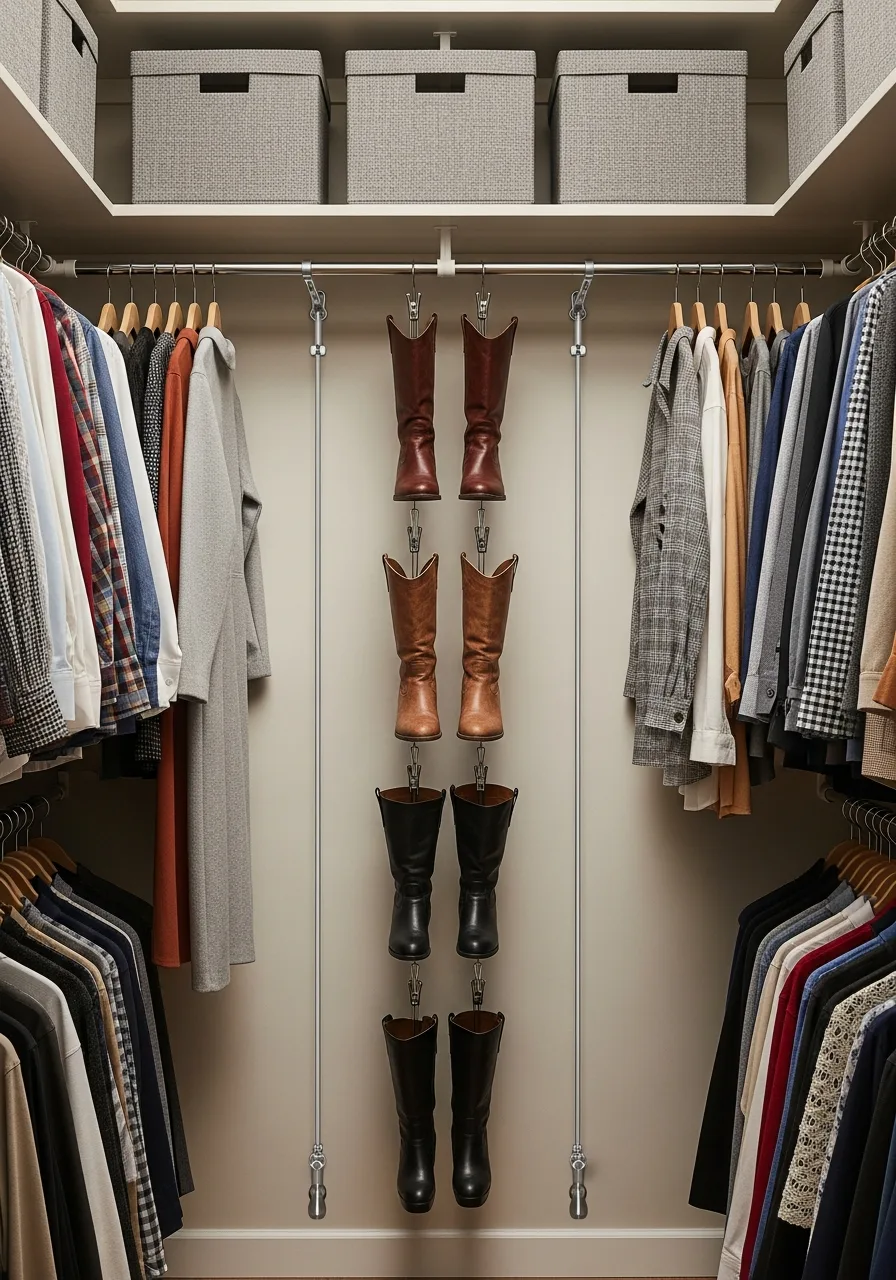
Slim vertical rods equipped with tension clips utilize the often-ignored air space beneath shorter hanging garments. Storing boots upright prevents shaft creasing and eliminates the cluttered pile that typically gathers on a small closet floor. Space these hangers four inches apart to ensure leather does not rub while maintaining maximum storage density.
- Quality metal boot clips are an inexpensive investment that significantly extends the lifespan of tall leather footwear.
- Slide these onto a secondary tension rod installed at mid-height to double the storage capacity of a single narrow wall.
- For shorter booties or sneakers, use the same clip system with small mesh bags to keep pairs organized and visible.
Organization Hack: Position the tallest or least-worn boots at the very back of the closet to keep daily footwear easily accessible near the front.
39. Track Based Shelving Systems
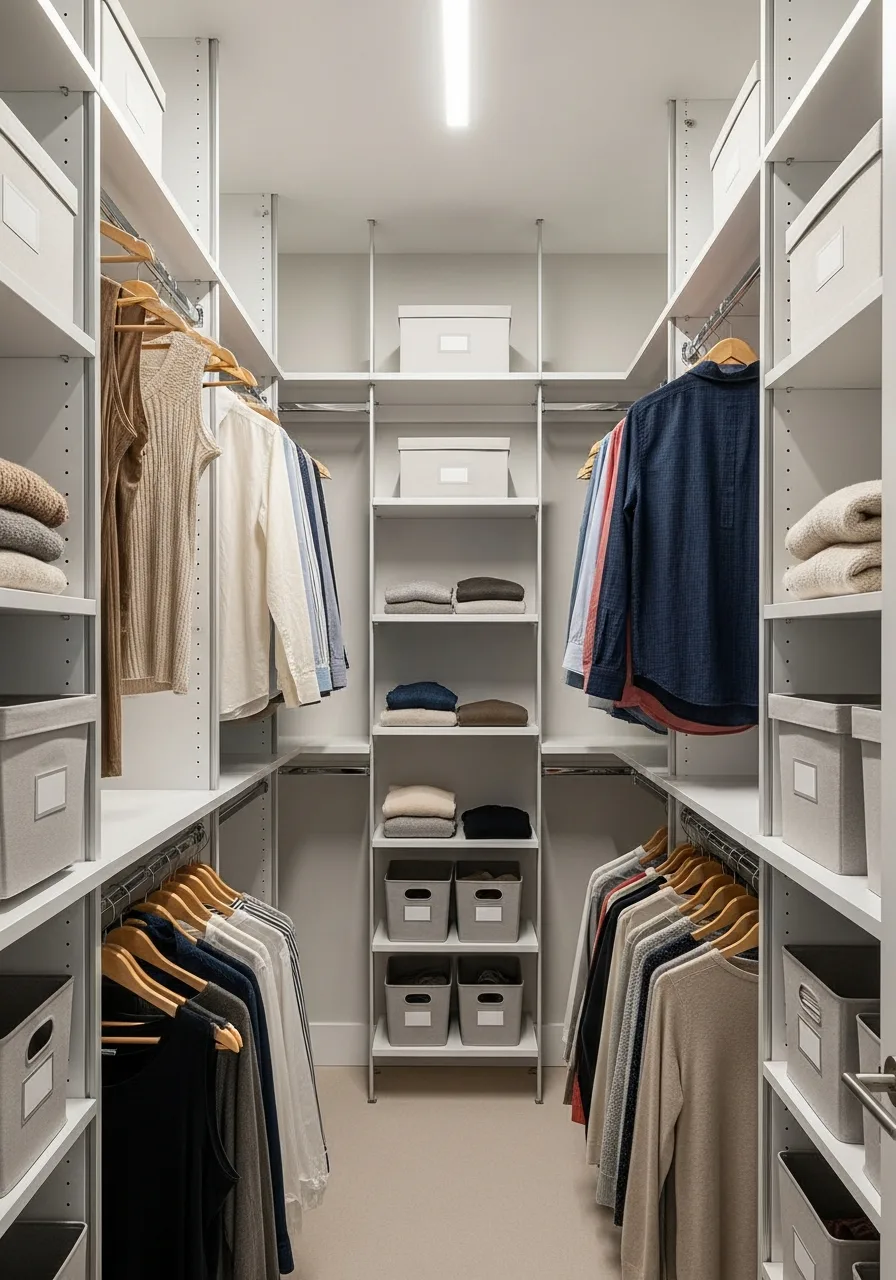
These systems use vertical tracks that allow for easy shelf height adjustments. They provide flexibility as your wardrobe needs change over time.
Position the tracks exactly 16 inches apart to align with standard wall studs for maximum weight support.
- Leave at least 2 inches of space between the top shelf and the ceiling for easy installation.
- The open tracks create vertical lines that make the ceiling appear higher.
- Swap out shelves for baskets or rods as your storage needs evolve.
Space-Saving Secret: Adjust the shelves to be closer together for shoes and further apart for bulky sweaters.
40. Wire Shelf Riser Inserts
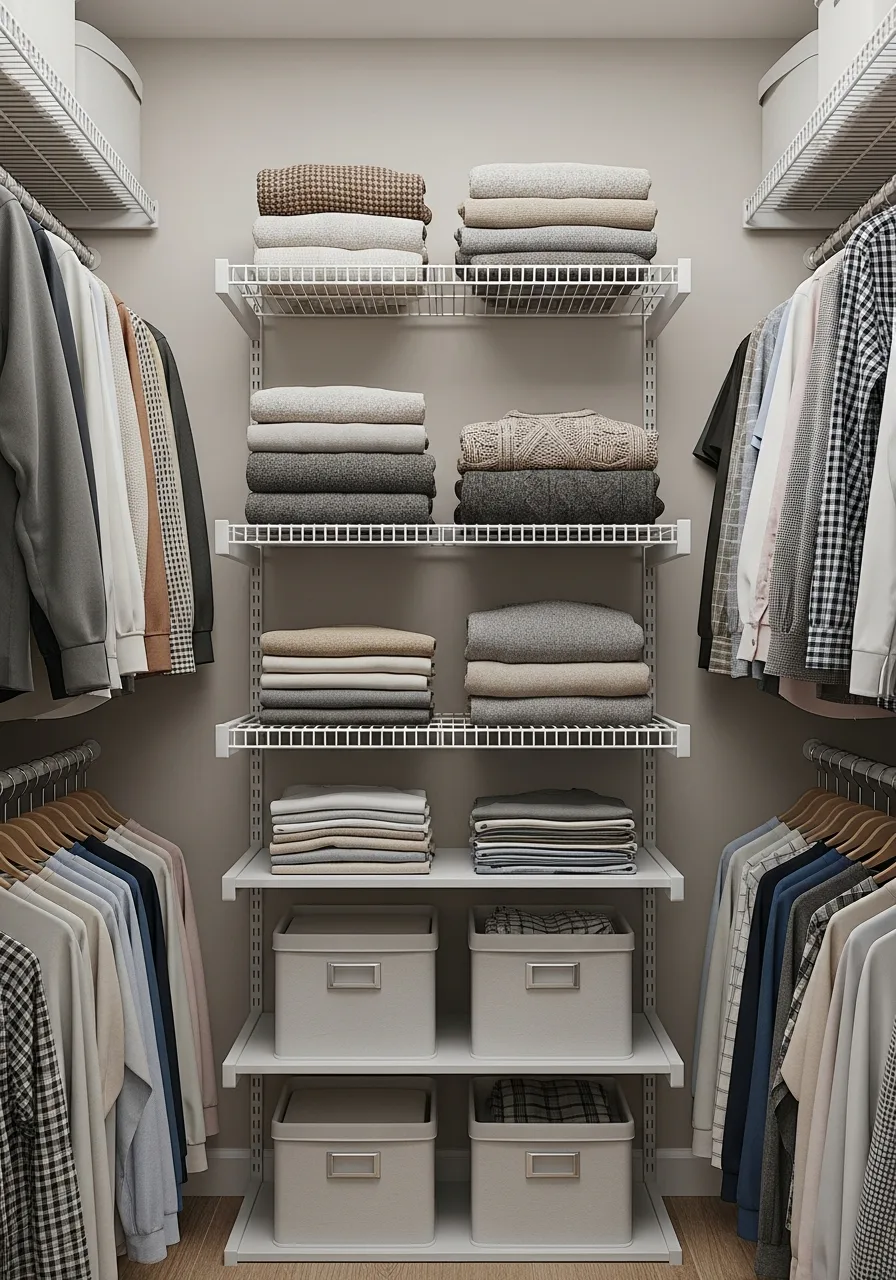
These metal platforms create an extra level of storage on top of flat shelves. They are perfect for separating stacks of sweaters or t-shirts.
Choose risers with at least four inches of clearance to fit thicker winter knits comfortably.
- Keep at least 5 inches of space between the top of the riser and the next shelf.
- The thin wire legs take up almost no visual space, keeping the shelf looking tidy.
- Use the space underneath the riser for small clutches or evening bags.
Space-Saving Secret: Place two risers side-by-side to create a dedicated 'grab and go' station for daily basics.
41. Ceiling Joist Hanging Rods
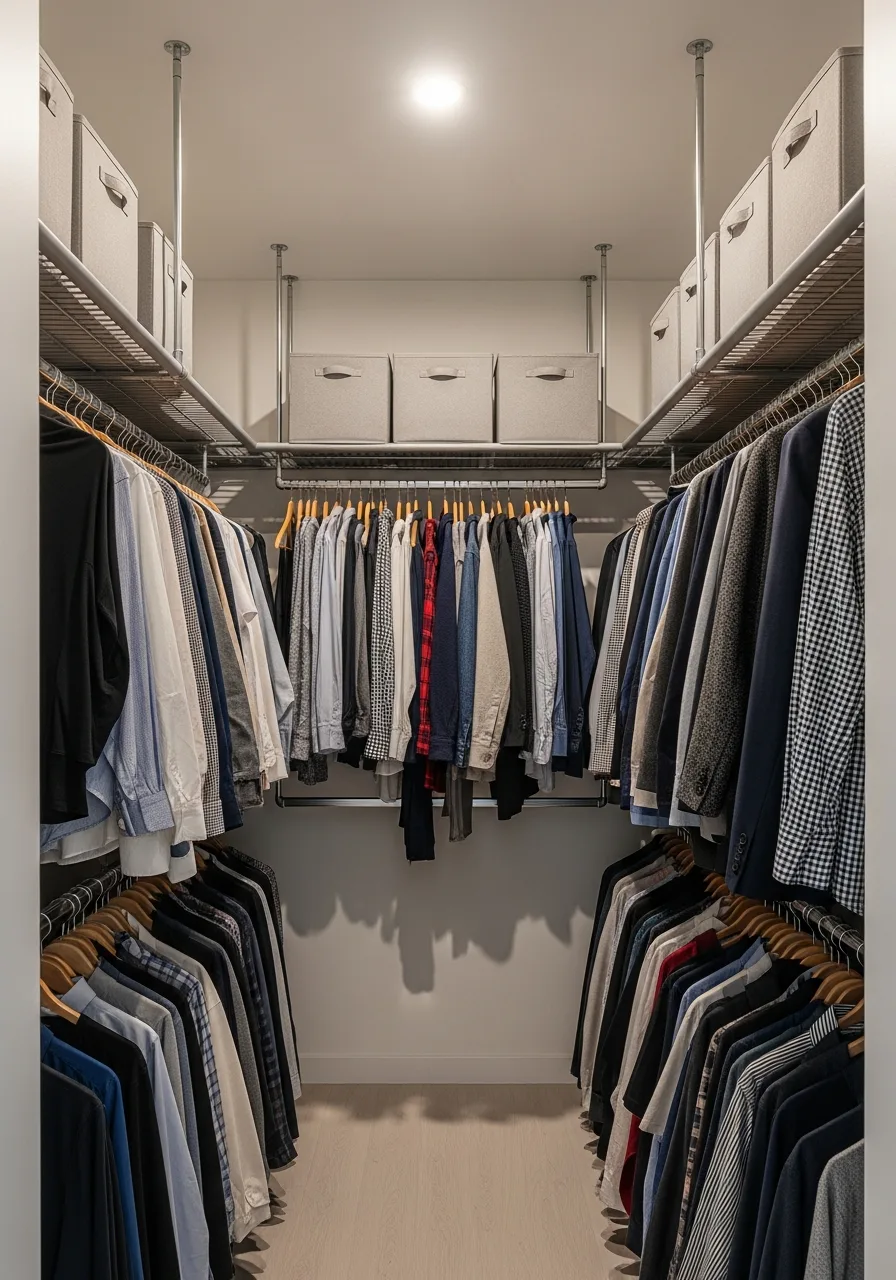
These rods hang from the ceiling instead of the walls.
They are ideal for deep closets where the side walls are hard to reach. Locate the ceiling joists with a stud finder before drilling to ensure the rod can hold heavy coats.
- Keep the rod at least 12 inches away from the back wall to allow hangers to turn.
- Hanging clothes from the ceiling draws the eye upward, highlighting the height of the room.
- Use this rod for long garments like coats or dresses that need extra vertical room.
Space-Saving Secret: Install the rod in the center of a walk-in to create a 'floating' wardrobe look.
42. Lazy Susan Corner Trays
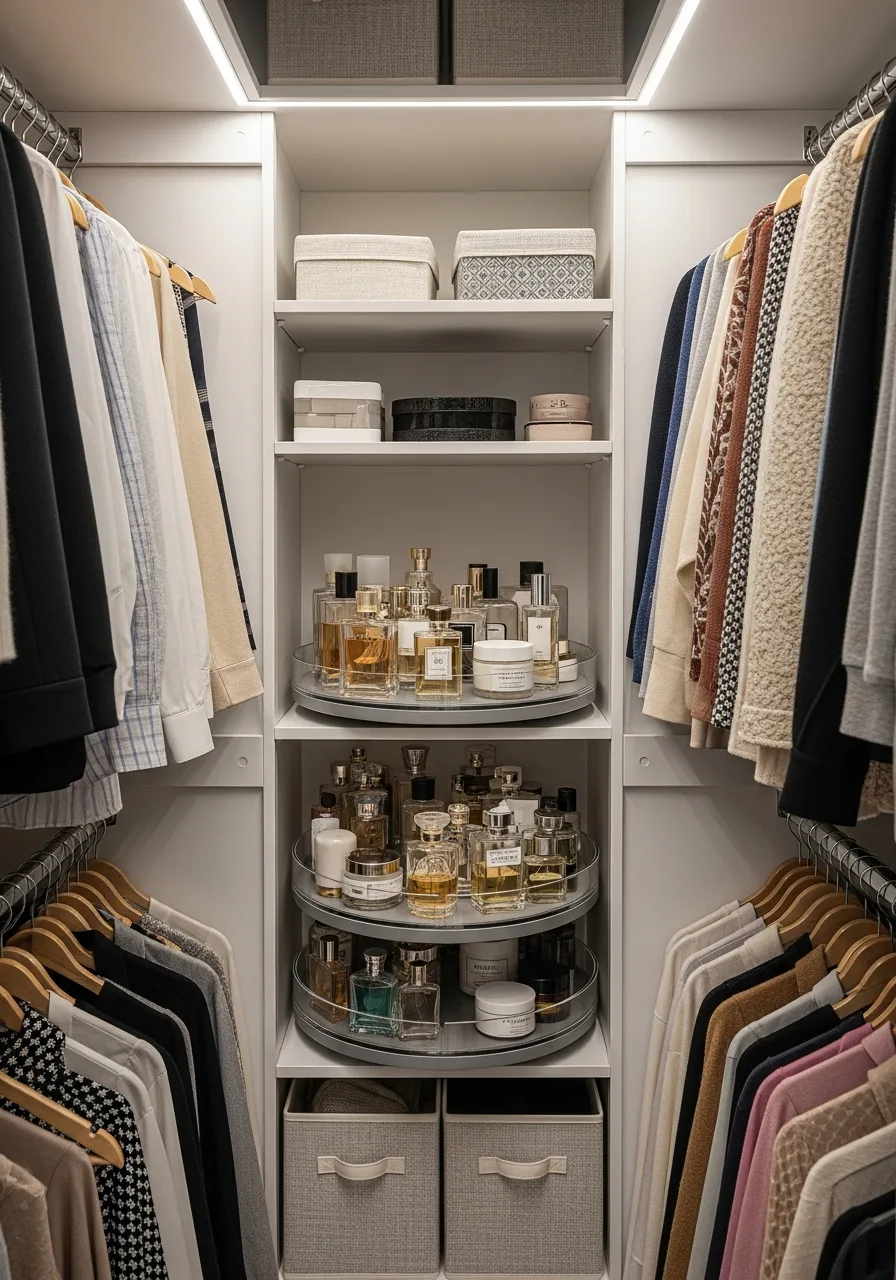
Rotating trays make items in the very back of a corner shelf accessible. They eliminate the 'dead zone' where small items often get lost.
Pick a tray with a non-slip surface to keep perfume bottles or lotions from sliding off.
- Choose a 12-inch diameter tray to ensure it fits on standard closet shelving.
- The circular motion prevents the need to reach deep into dark, cramped corners.
- Store lint rollers, fabric shavers, and small cleaning kits on the tray.
Space-Saving Secret: Use a multi-tiered lazy susan to store jewelry and small accessories in one square foot of space.
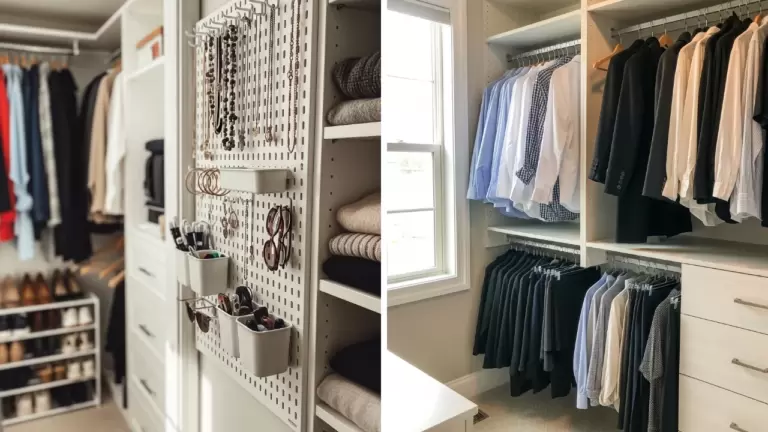
43. Closet Wall Pegboard Panels
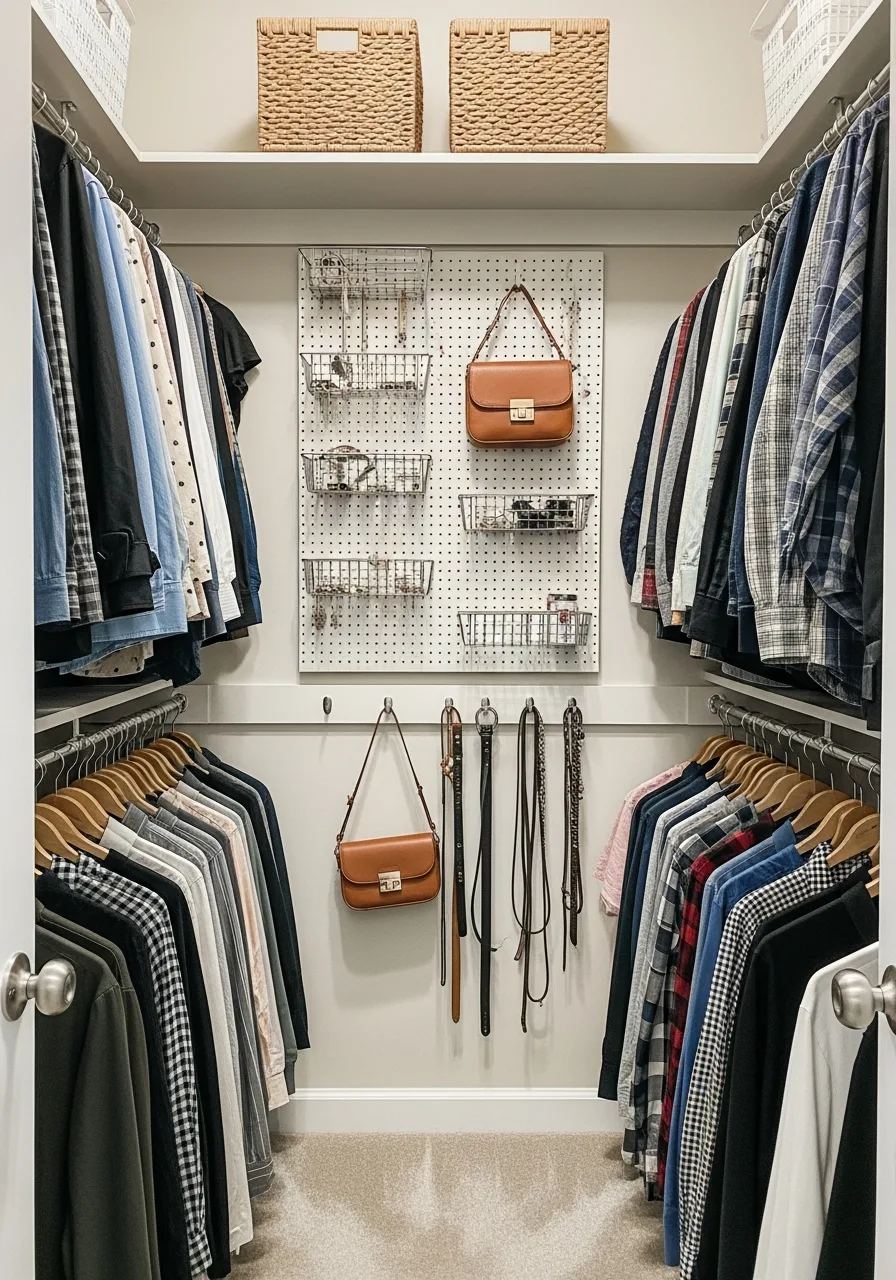
Pegboards allow for customizable hook and basket placement on any flat wall surface. This is a great way to store bulky jewelry, small bags, or belts.
Paint the pegboard the same color as the wall to help it blend into the background.
- Install with a 1-inch spacer behind the board so the hooks can sit securely.
- The grid pattern adds a clean, organized texture to an otherwise plain wall.
- Hang a small basket on the board to hold receipts or spare collar stays.
Space-Saving Secret: Mount a pegboard on the narrow wall behind the door to use space that is usually ignored.
44. Canvas Hanging Shelf Organizers
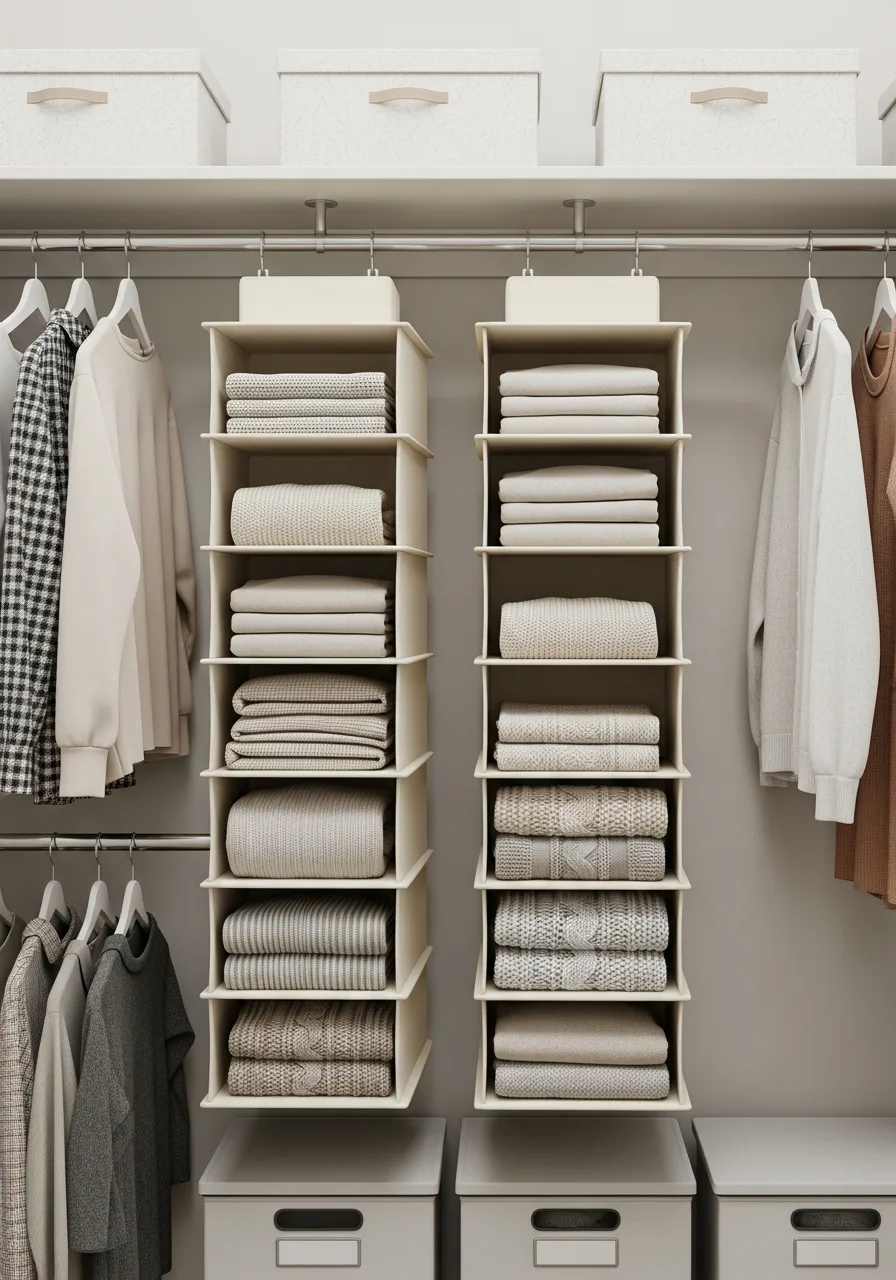
These fabric units hang from a standard rod to create instant cubbies. They add vertical storage for sweaters without the need for permanent carpentry.
Place a rigid piece of cardboard in the bottom of each cubby to prevent sagging over time.
- Budget for 12 inches of horizontal rod space for each hanging unit.
- Light-colored canvas reflects light better than dark plastic bins.
- Use the bottom cubbies for shoes and the top ones for lightweight hats.
Space-Saving Secret: Hang two units side-by-side to create a temporary dresser for guests or seasonal rotations.
45. Swing Arm Pant Racks
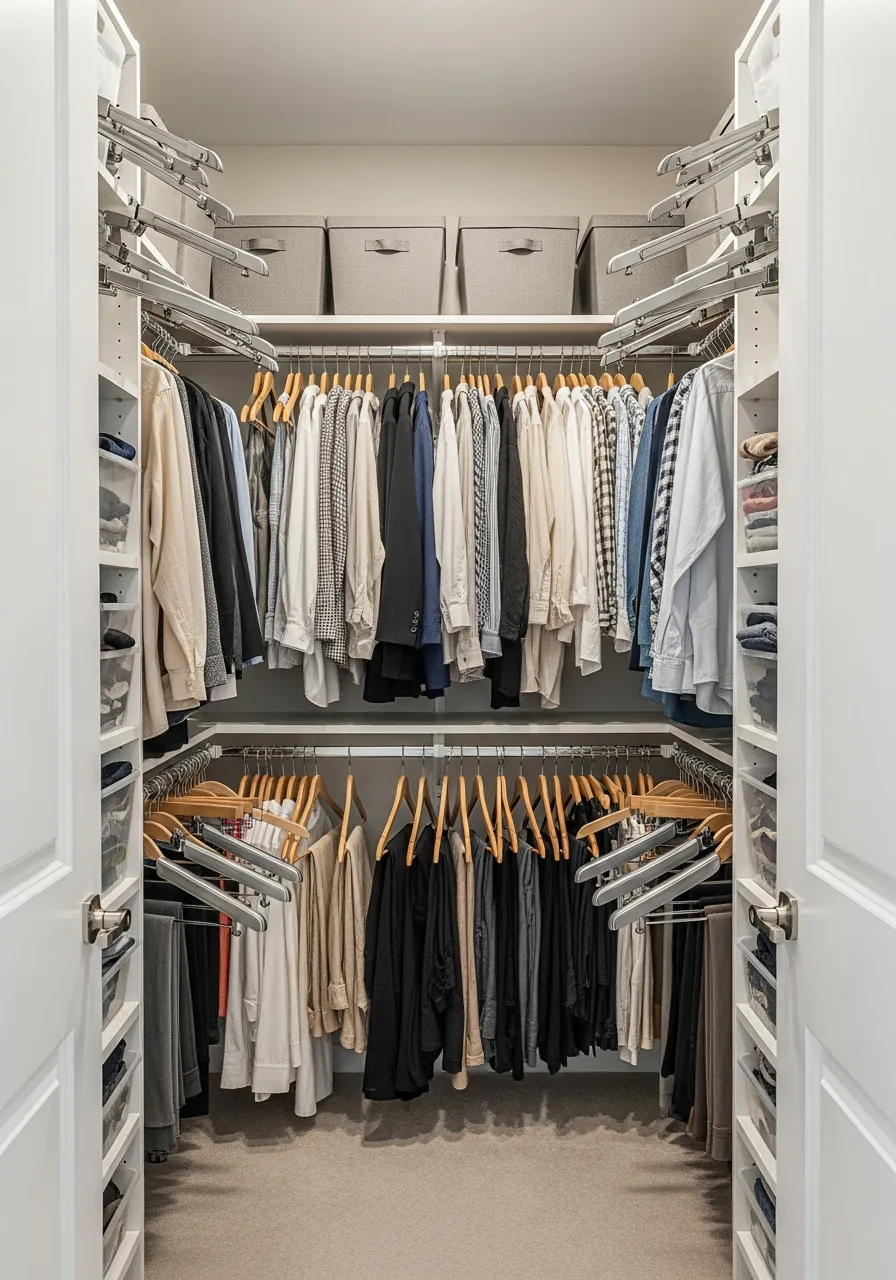
These racks feature multiple arms that pivot outward for easy access. They keep trousers wrinkle-free while using very little horizontal rod space.
Mount the rack at hip height to make sliding pants on and off effortless.
- Allow for an 18-inch swing radius so the arms can open fully without hitting walls.
- The layered arms keep the closet looking tidy by hiding the bulk of the fabric.
- These racks are also great for storing table linens or large scarves.
Space-Saving Secret: Use these racks for heavy jeans that usually take up too much room on standard hangers.
46. Multi Tier Blouse Hangers
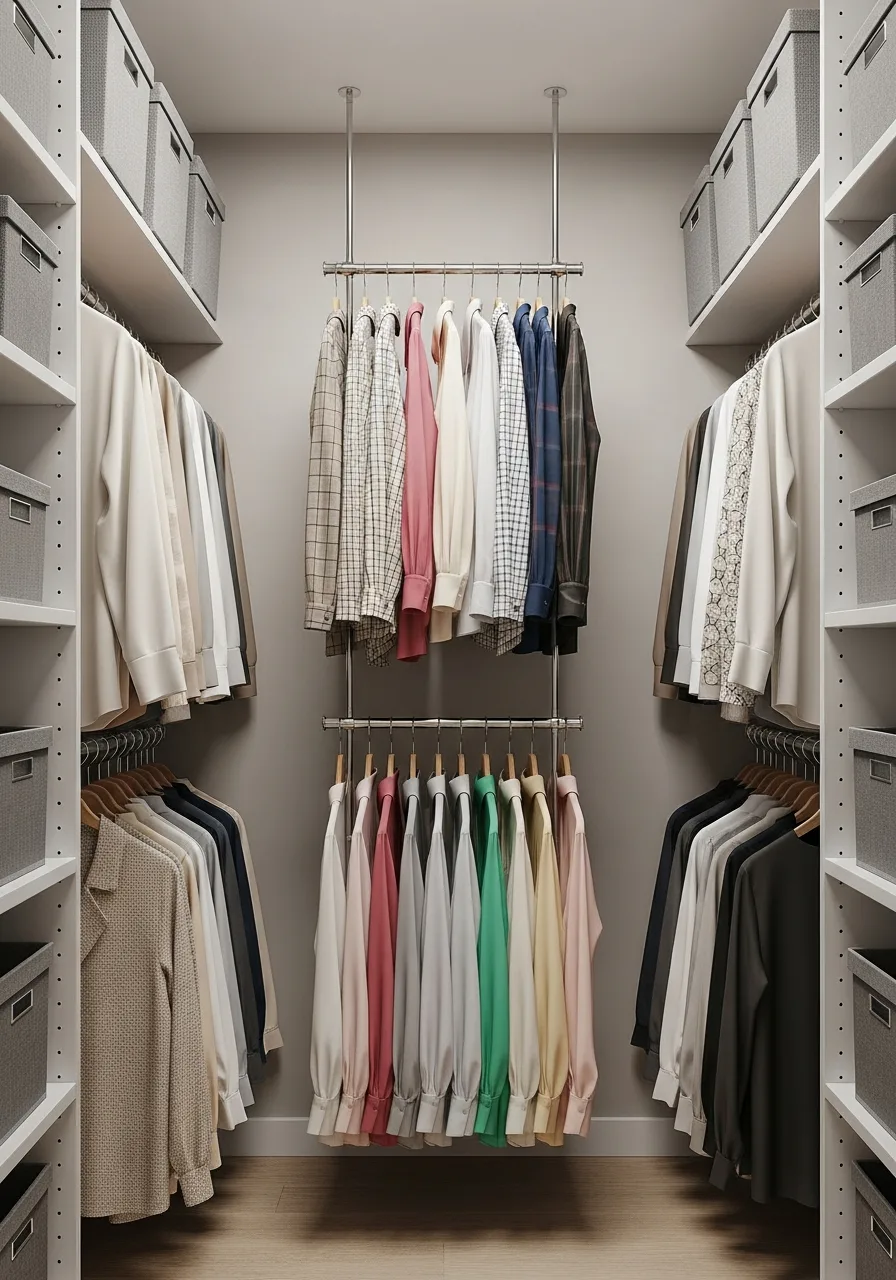
These hangers hold several tops on a single vertical frame to save horizontal space. They stop the closet rod from getting too crowded by stacking items downward.
Hang four or five shirts on one hook to reclaim inches of valuable rod space.
- Ensure there is at least 30 inches of clearance between the rod and the floor for these longer hangers.
- Using identical hangers in one uniform color makes the rod look less cluttered and more organized.
- These also work well for organizing summer scarves or thin pashminas when they are not in use.
Space-Saving Secret: Use soda tabs on hanger necks to daisy-chain even more items together safely.
47. Fabric Shelf Dividers
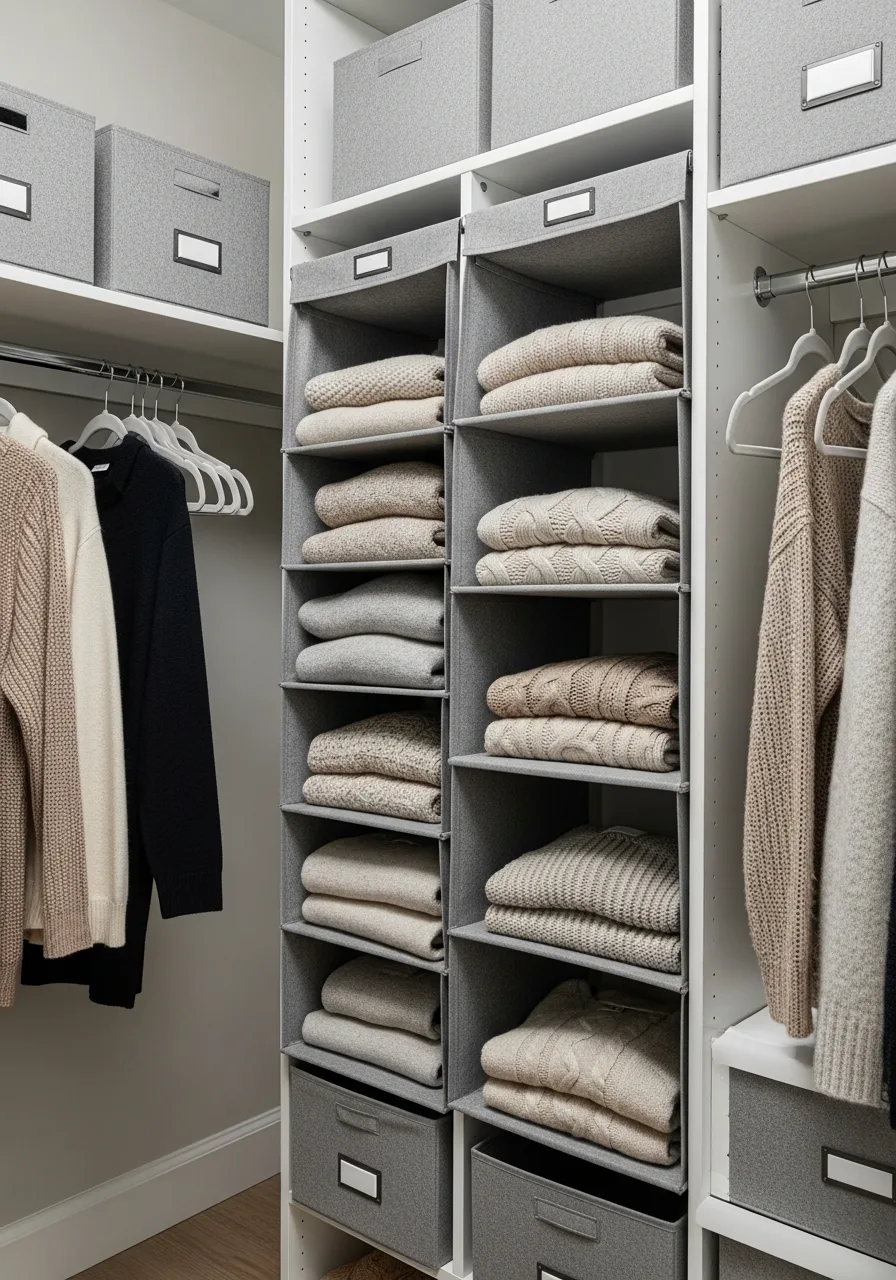
These soft barriers slide onto existing shelves to keep your folded items standing upright. They prevent messy piles of sweaters or sweatshirts from toppling over into each other.
Place one divider every twelve inches to create neat columns for your seasonal knitwear.
- Leave at least 10 inches of width between dividers so stacks are easy to pull out without snagging.
- Choosing light-colored fabric dividers helps reflect light into the dark corners of the upper shelves.
- Use them in a linen closet or laundry room later if you decide to upgrade to built-in shelving.
Space-Saving Secret: Spray the bottom of dividers with a bit of grip adhesive to keep them from sliding.
48. Velvet Drawer Organizer Trays
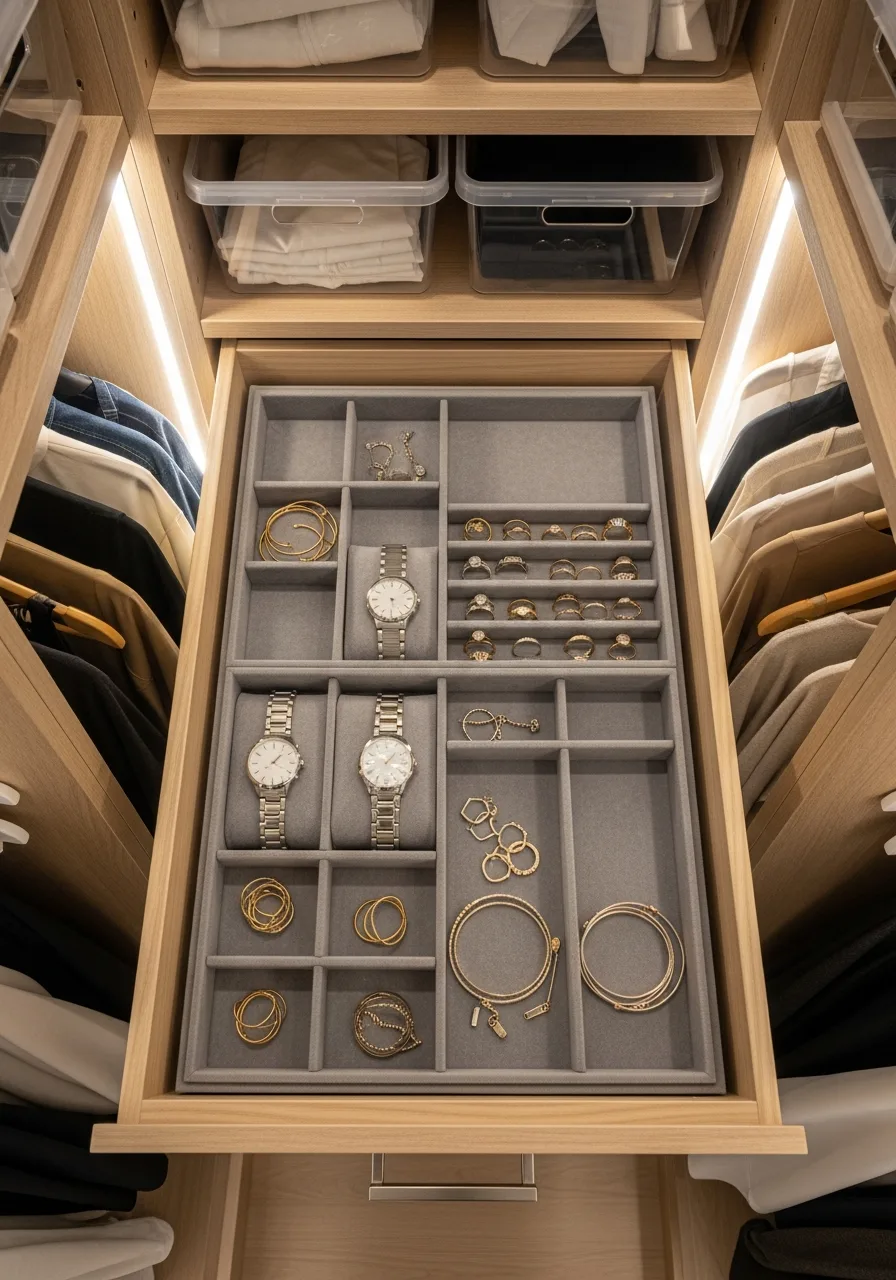
These soft inserts create small compartments for watches and jewelry inside a standard drawer. They keep tiny items from getting lost in the back of the closet or tangled together.
Group similar items like rings or bracelets into specific sections to find them instantly while getting ready.
- Measure your drawer depth to ensure at least two inches of clearance for the tray to slide easily.
- Velvet textures prevent jewelry from sliding around and create a high-end boutique look in the space.
- These trays can be moved to a vanity top or dresser if you run out of closet drawer space.
Space-Saving Secret: Line the bottom of the tray with a piece of double-sided tape to keep it from shifting.
49. Wall Mounted Belt Knobs
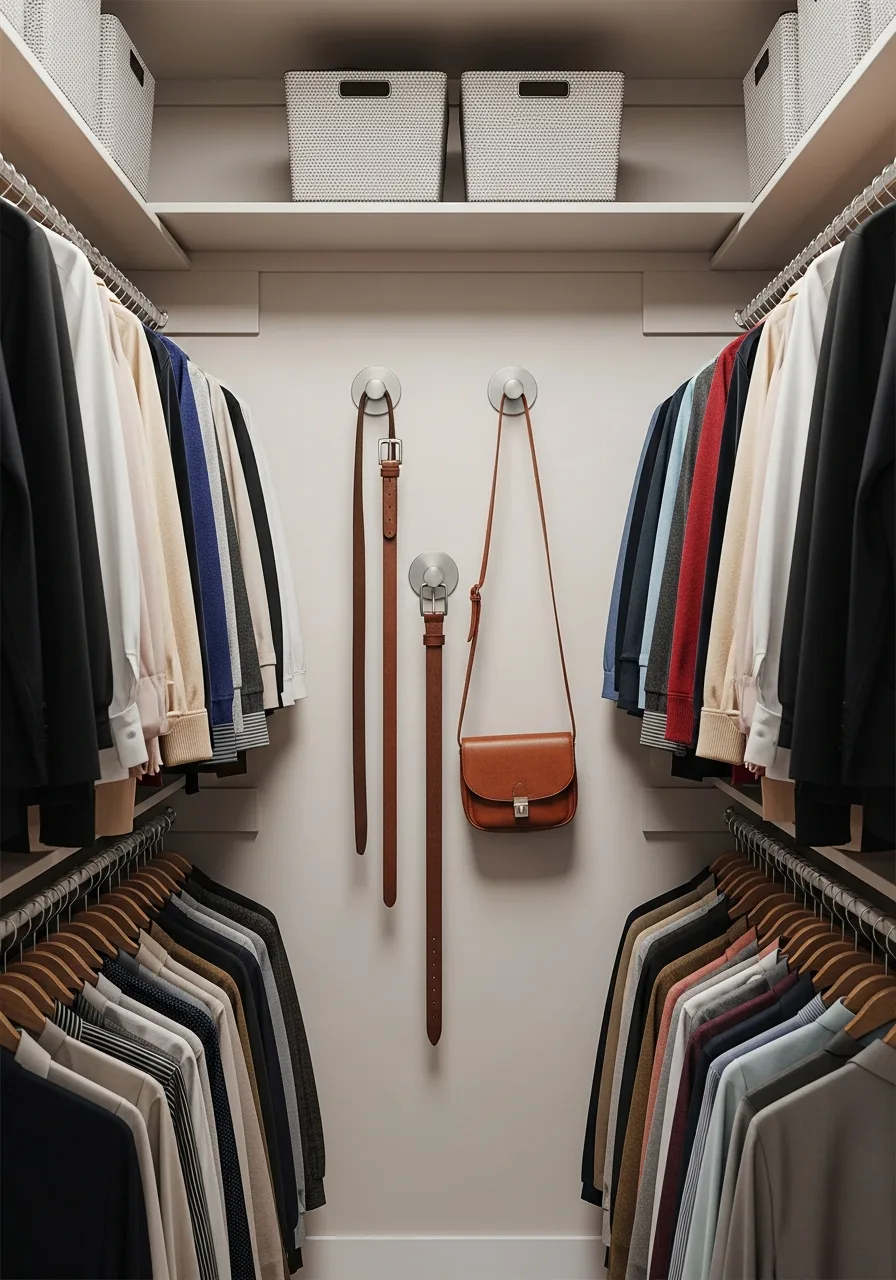
Single knobs fixed to the wall offer a dedicated home for belts or small crossbody bags. They utilize the narrow wall space that is normally left empty in a cramped closet.
Install three knobs in a vertical line to use the full height of the wall without taking up floor space.
- Space knobs at least four inches apart so hanging items do not overlap and look messy.
- Mounting knobs all the way to the ceiling draws the eye upward and makes the room feel taller.
- Use a sturdy metal knob to hold heavy robes or a laptop bag when you need a temporary hook.
Space-Saving Secret: Rub a bit of wax on the knob neck to help belts slide on and off without snagging.
50. Hanging Vacuum Storage Bags
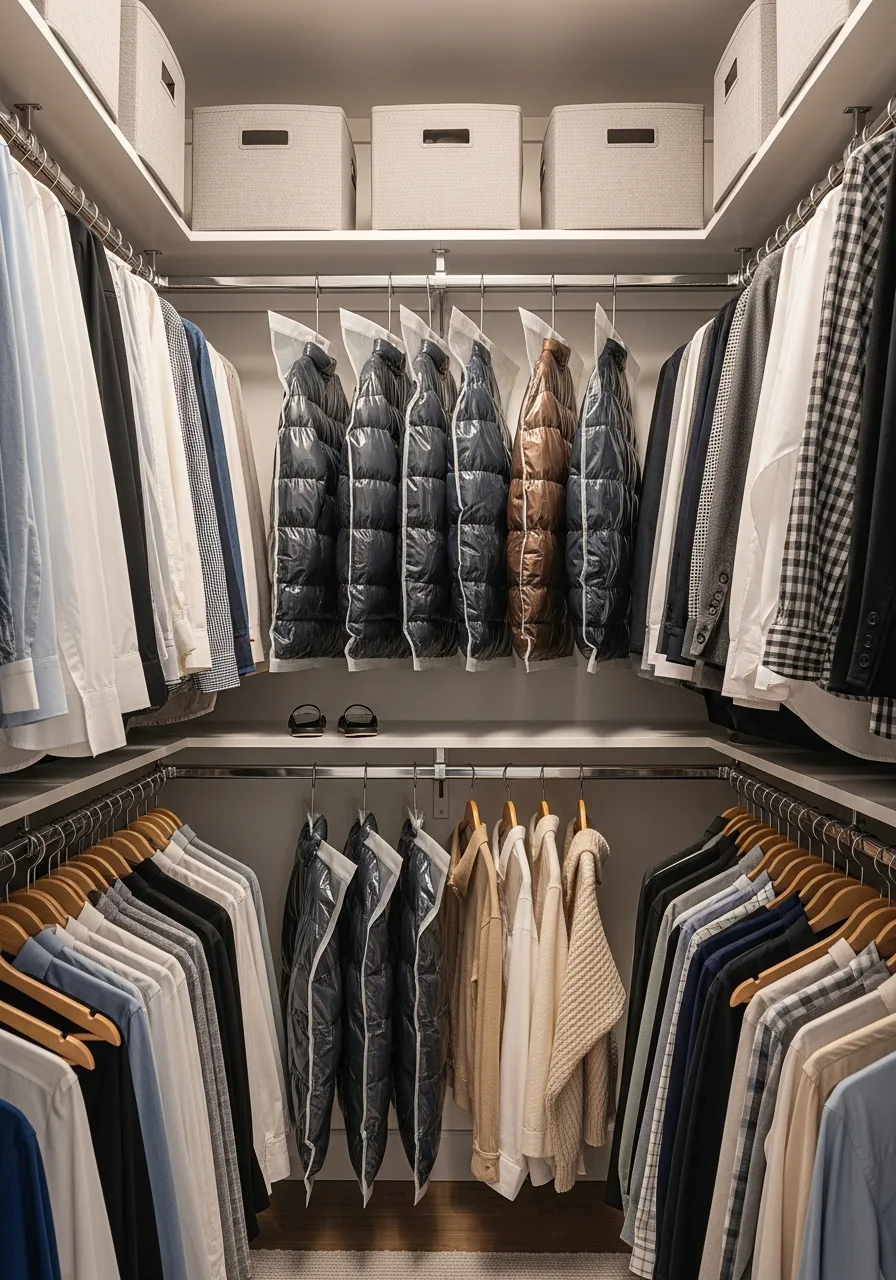
These bags shrink bulky items like winter coats using a vacuum seal and hang directly on the rod. They protect your clothes from dust and moisture while saving massive amounts of hanging room.
Use these for puffer jackets to reduce their size by seventy percent on the closet rack.
- Leave at least two inches of space between bags so the plastic does not stick together on the rod.
- Clear bags allow you to see exactly what is stored without having to open the seal.
- These are also perfect for storing spare guest pillows or heavy blankets during the off-season.
Space-Saving Secret: Leave the vacuum hose on the valve for five extra seconds to ensure a perfect seal.
Frequently Asked Questions
How do I double my hanging space in a tiny walk-in?
You can maximize your vertical height by installing a double-rod extender to create two levels of hanging space. Using tiered hangers is another practical way to stack multiple garments vertically without taking up extra horizontal room.
What is the best way to store shoes in a narrow closet?
Over-the-door organizers are a fantastic way to keep shoes accessible while keeping the floor clear. If you have a bit of wall space, vertical tension-rod shelving allows you to stack footwear upward in narrow gaps that would otherwise go to waste.
How can I make a windowless tiny closet feel bigger?
Brighten the space by installing high-CRI LED lighting and painting the walls a light, reflective color. Adding a mirror will also help bounce light around and create the illusion of a much deeper, more open area.
Should I remove the closet door in a small space?
Removing a standard door can save significant 'swing space,' making it easier to navigate a tight room. Replacing the door with a soft curtain or opting for an open-concept design allows for better flow and easier access to your belongings.
How do I reach the very top shelves in a high-ceiling tiny closet?
A slim-profile folding step stool is a great tool that can be tucked away easily when not in use. For hanging items, pull-down wardrobe rails are a smart investment that bring your clothing down to a reachable height with a simple pull.