50 Smart Ground Level Deck Ideas On A Budget

This post may contain affiliate links: full affiliate disclosure.
Building a deck doesn’t have to drain your bank account or require professional contractors. Most people think they need deep footings and expensive permits, but ground-level options change the game. I’ve found that keeping things simple and low to the earth is the smartest way to gain more living space without the stress.
1. Floating Ground Level Deck
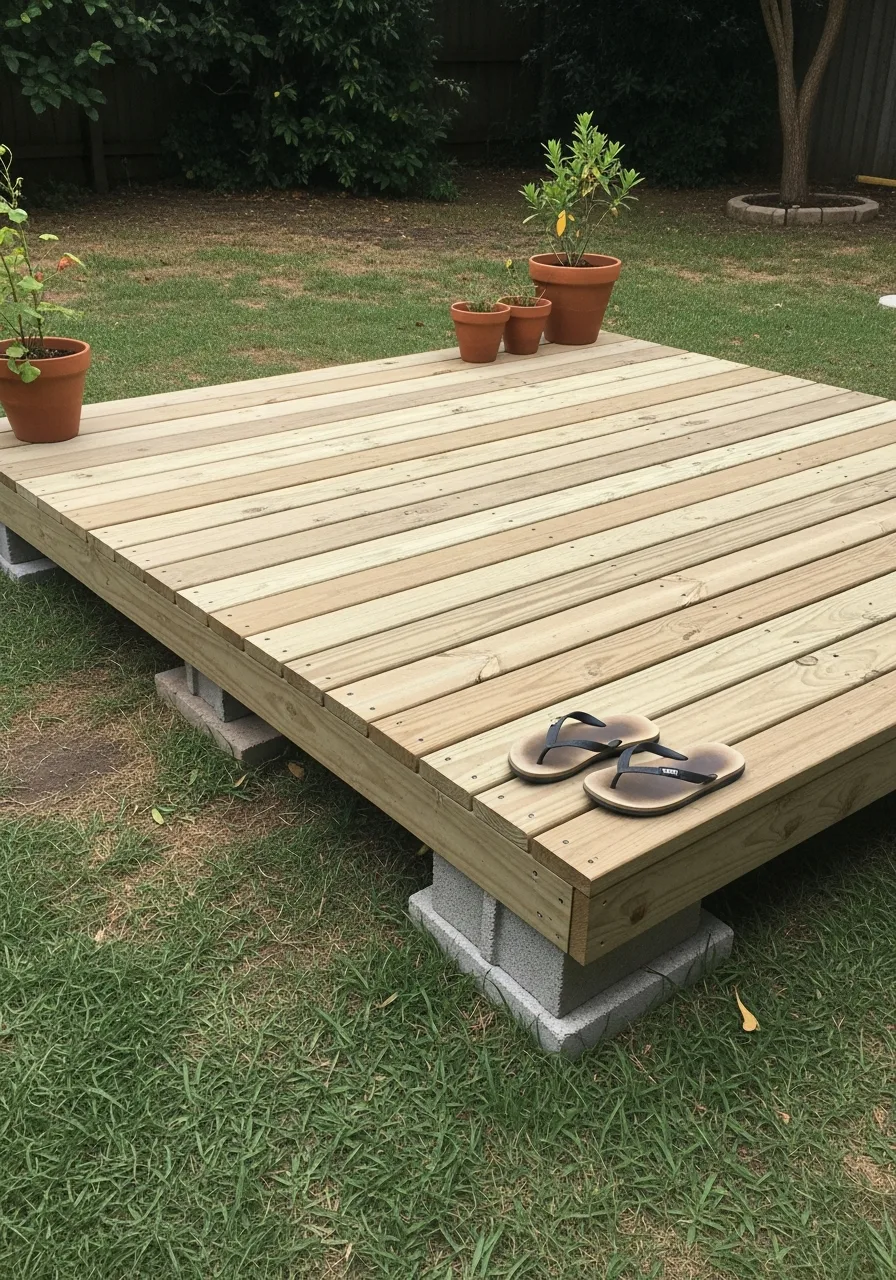
This is a freestanding deck that sits on blocks instead of deep posts. It saves a lot of money because you don’t have to dig or pour concrete. My take: This is the absolute best way for beginners to start.
- Buy concrete deck blocks
- Level the ground first
- Use pressure treated wood
Pro Tip: Quick win: Lay down landscape fabric first to stop weeds.
2. Concrete Block Base Deck
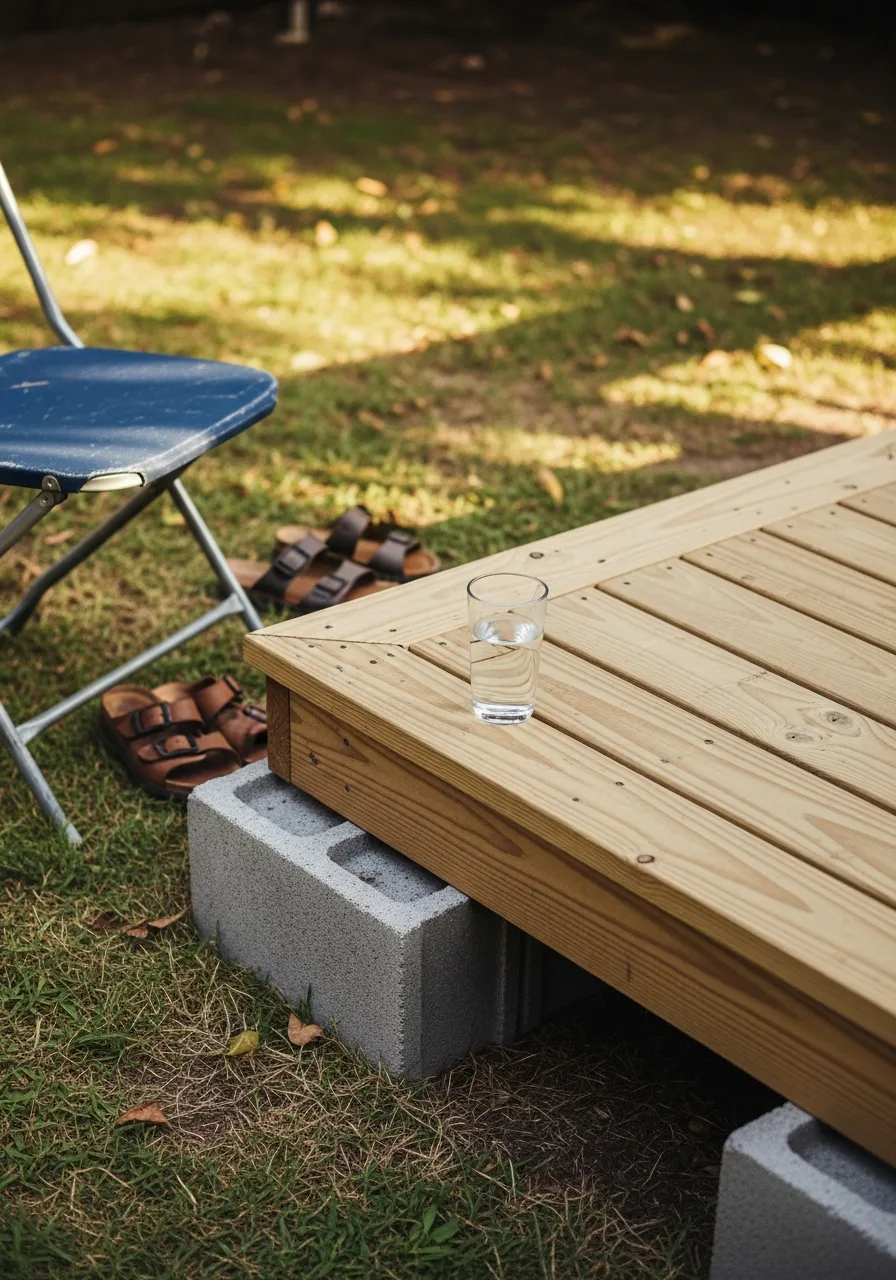
Pre-cast concrete blocks support the frame and keep wood off the dirt. These blocks have built-in slots that hold your lumber perfectly in place. Honestly, these are a lifesaver for keeping the wood dry and stable.
- Place blocks at corners
- Check level constantly
- Space them every few feet
Pro Tip: Most people skip this: Use a long level to bridge the blocks.
3. Gravel Base Deck
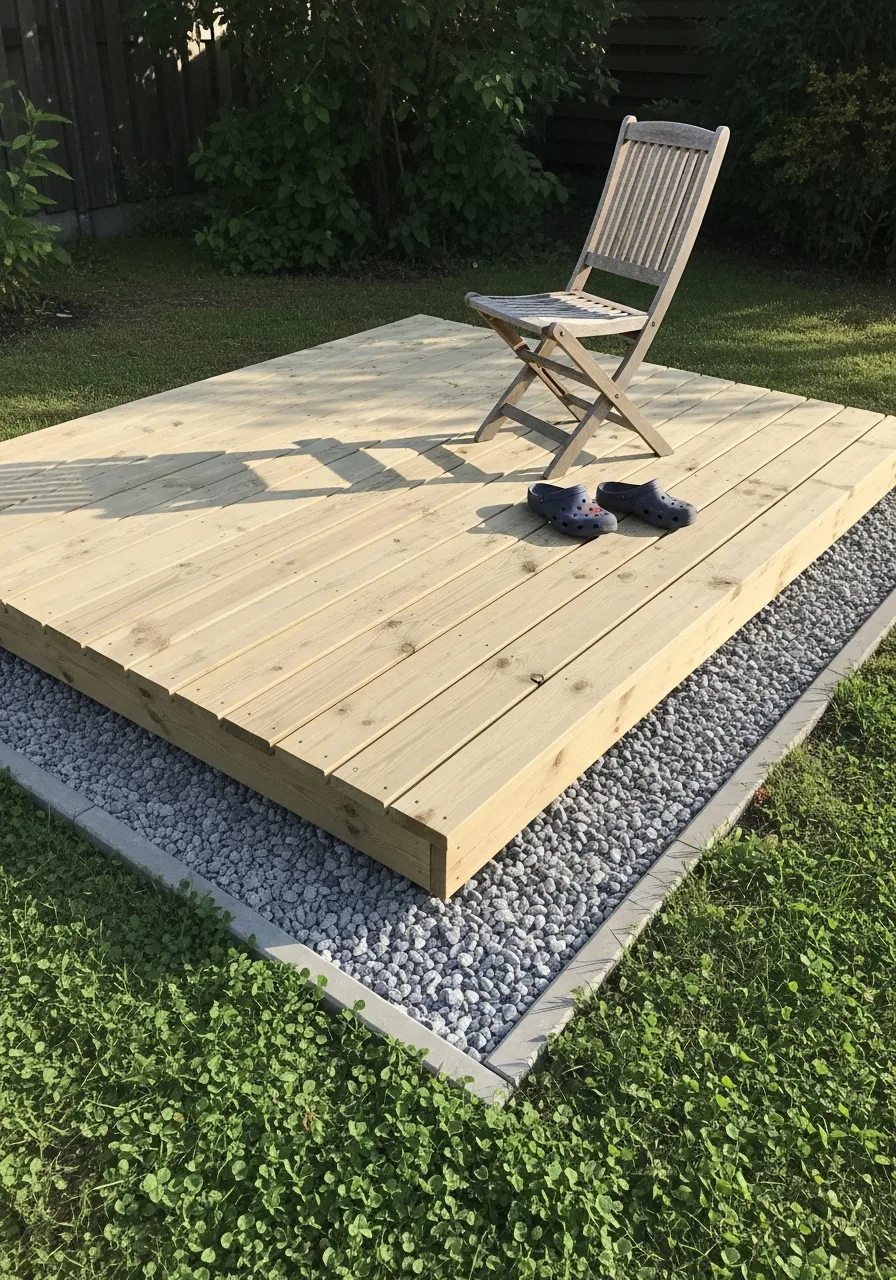
A thick layer of crushed stone provides a solid base for your wood frame. The gravel keeps water from pooling which prevents the wood from rotting early. I always tell people that good drainage is the key to longevity.
- Excavate two inches deep
- Use crushed pea gravel
- Tamp the stones down
Pro Tip: Here’s what I do: Use a plate compactor for a solid base.
4. Sand Level Deck Foundation
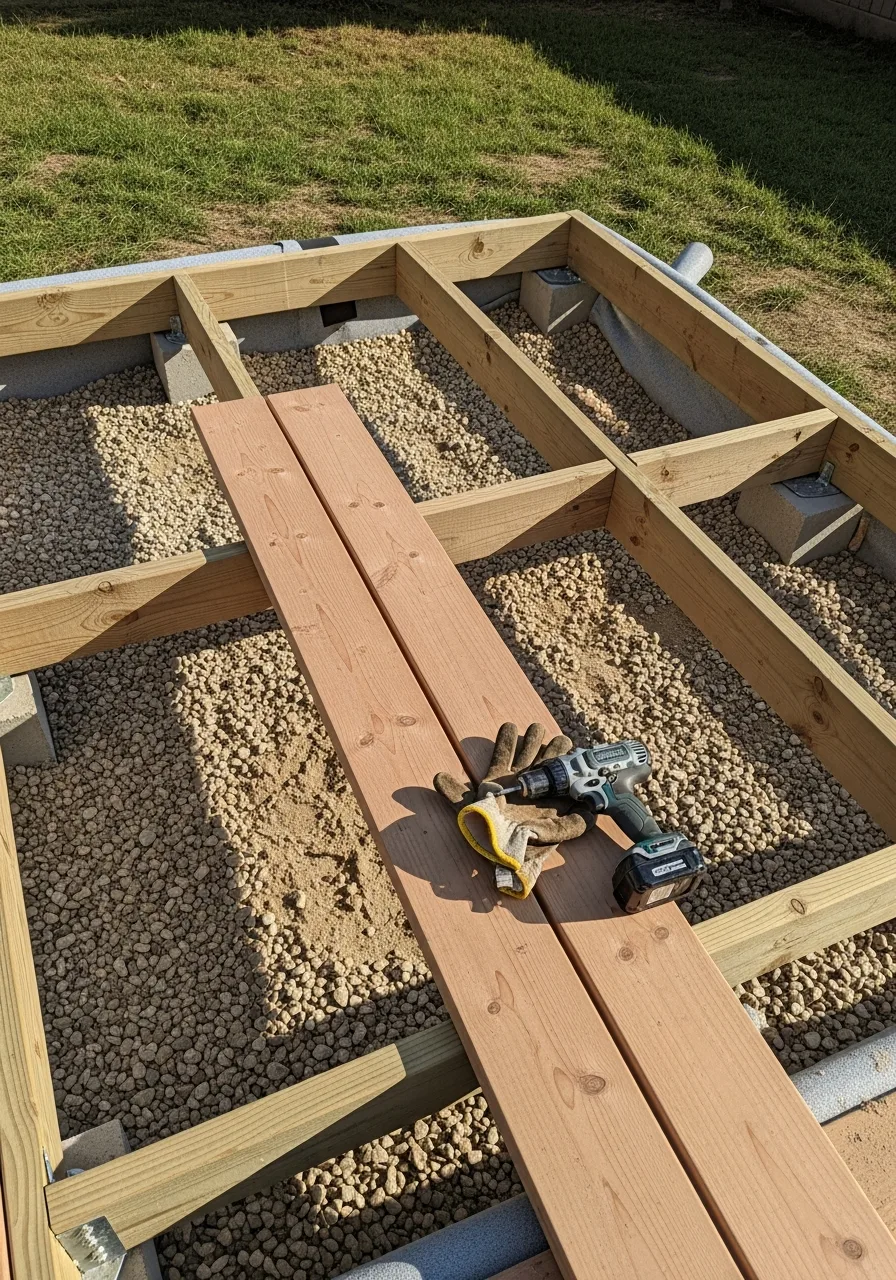
Compacted sand helps level out uneven ground before you lay your frame. This is a very cheap way to prep the site for a small project. My take: Sand is much easier to move than heavy gravel.
- Spread sand evenly
- Wet it down slightly
- Pack it tight
Pro Tip: Most people skip this: Frame the sand area with landscape timbers.
5. Direct to Ground Frame Deck
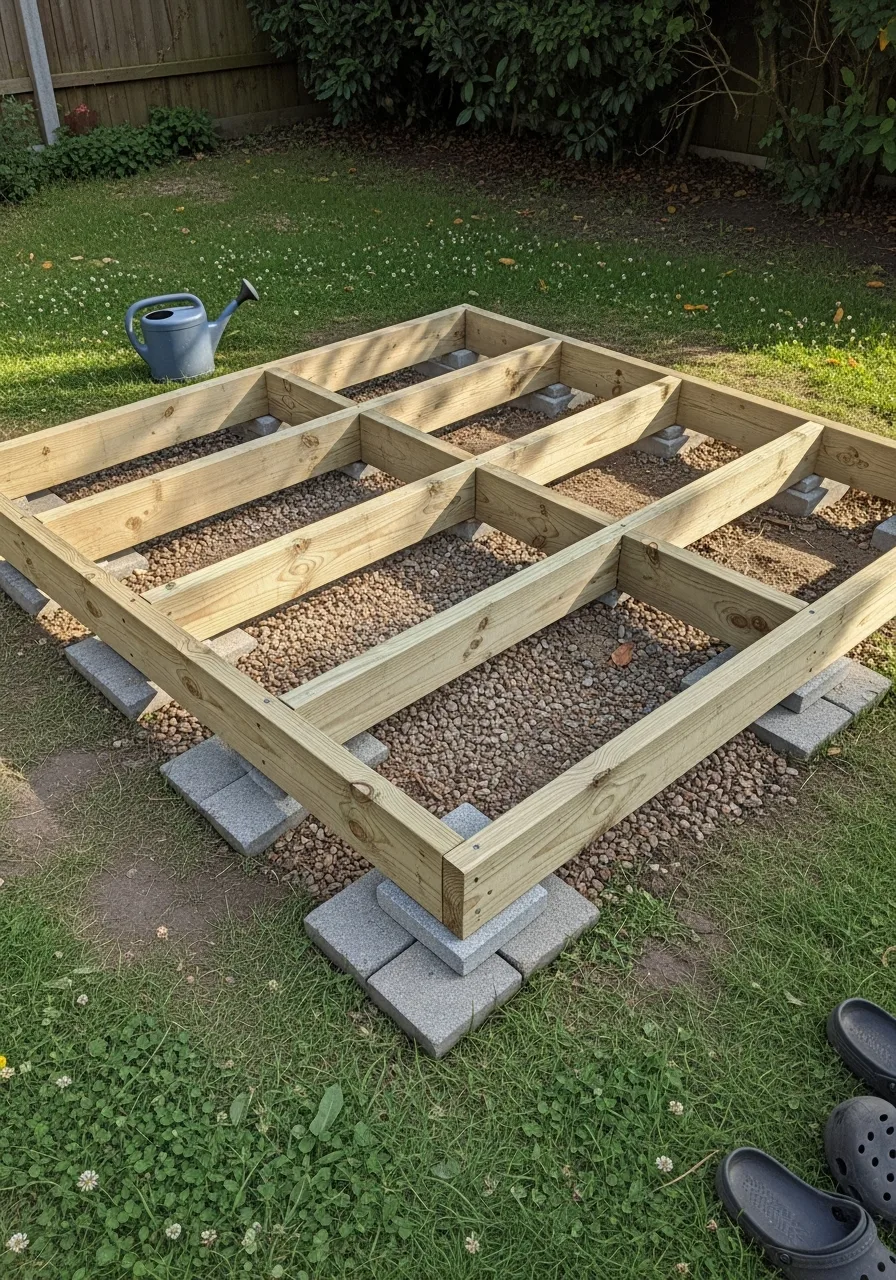
This low-profile design sits just above the soil to keep things simple. It uses fewer materials because you don’t need tall posts or long stairs. Honestly, it makes your yard feel much bigger and more open.
- Use ground contact lumber
- Keep the frame low
- Clear all grass first
Pro Tip: Quick win: Spray the ground with weed killer before building.
6. Pressure Treated Wood Deck
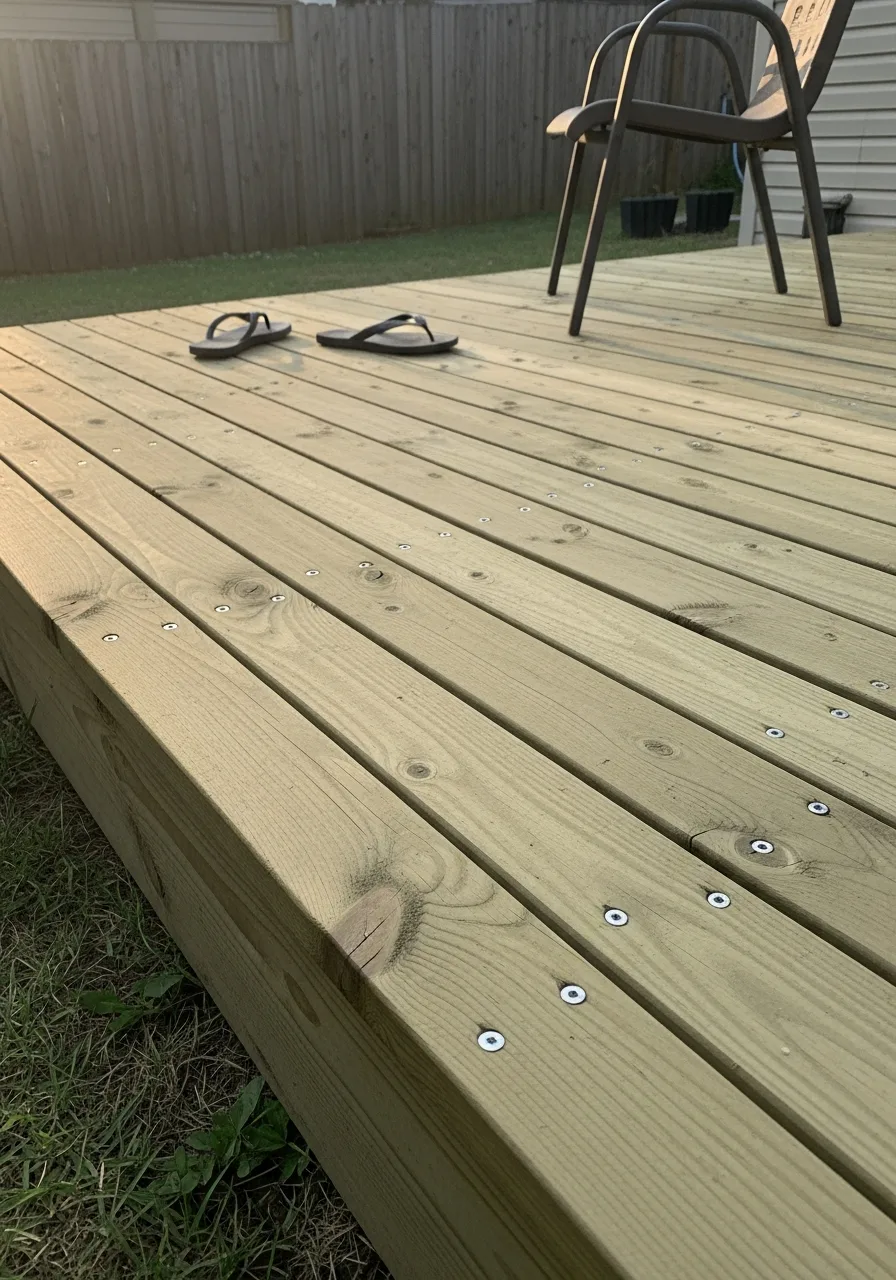
This lumber is chemically treated to resist rot and bugs in outdoor settings. It is the most affordable wood option you can find at any store. I always recommend this for anyone on a tight budget.
- Buy green treated wood
- Seal it after building
- Use galvanized screws
Pro Tip: Most people skip this: Let the wood dry before painting it.
7. Mixed Material Deck Design
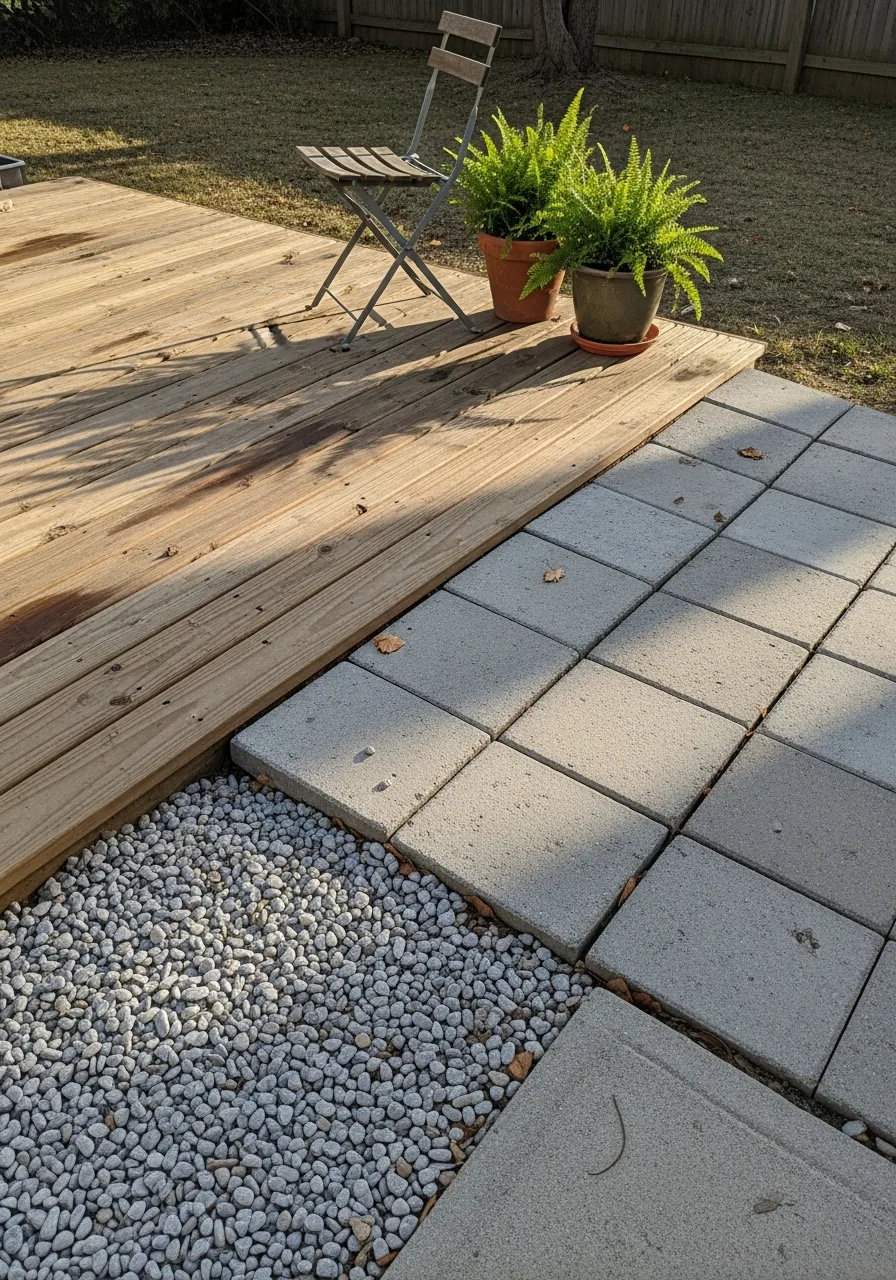
You can use cheap wood for the frame and better boards for the top. This trick gives you a high-end look without the high-end price tag. My take: Focus your money where you will actually walk.
- Buy budget frame wood
- Pick nice surface boards
- Match the colors well
Pro Tip: Here’s what I do: Use composite only for the top rail.
8. Pallet Wood Deck
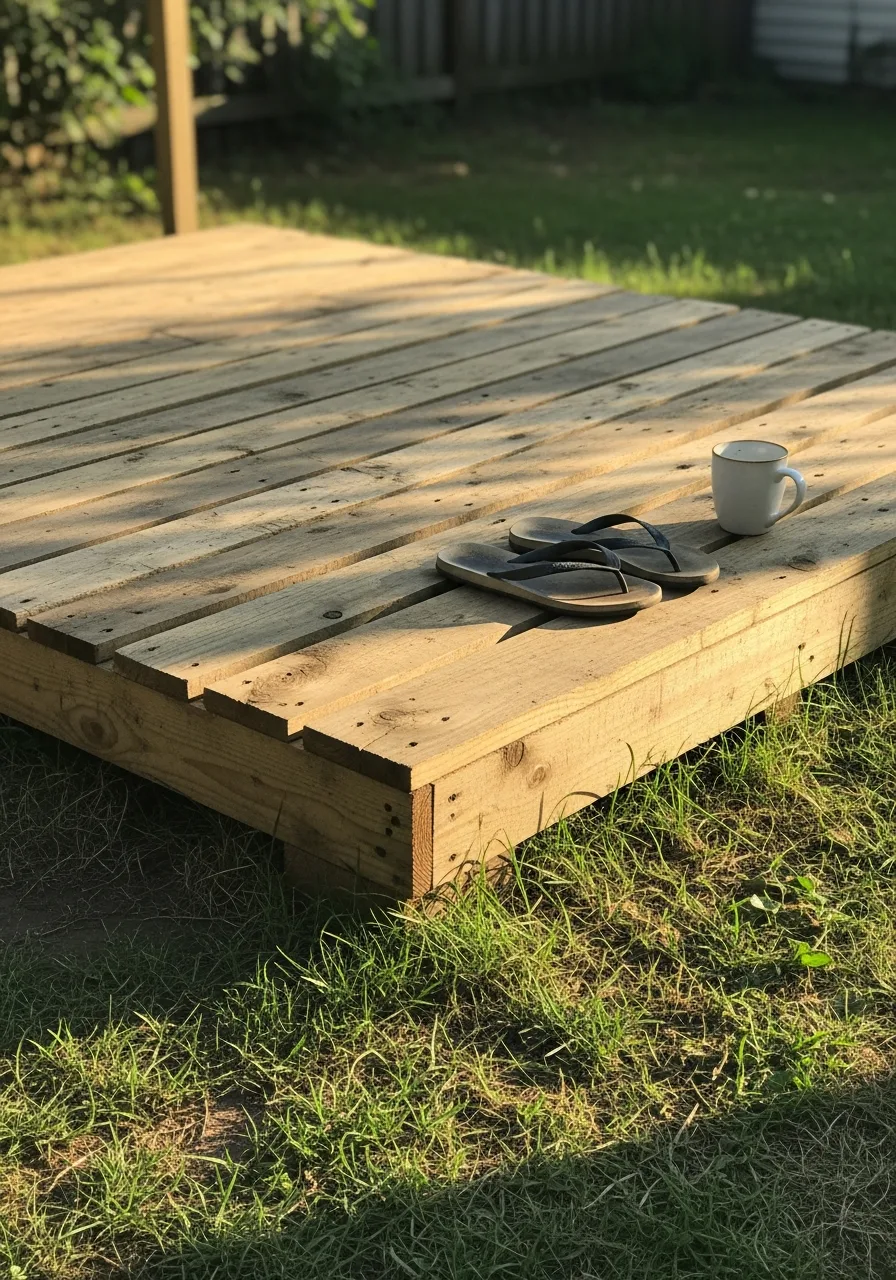
You can take apart old shipping pallets to create a free wood surface. This gives the deck a rustic and unique look that costs almost nothing. Honestly, it takes work but the savings are worth it.
- Find heat treated pallets
- Remove all old nails
- Sand the boards smooth
Pro Tip: Quick win: Use a pallet buster tool to save time.
9. Reclaimed Wood Deck
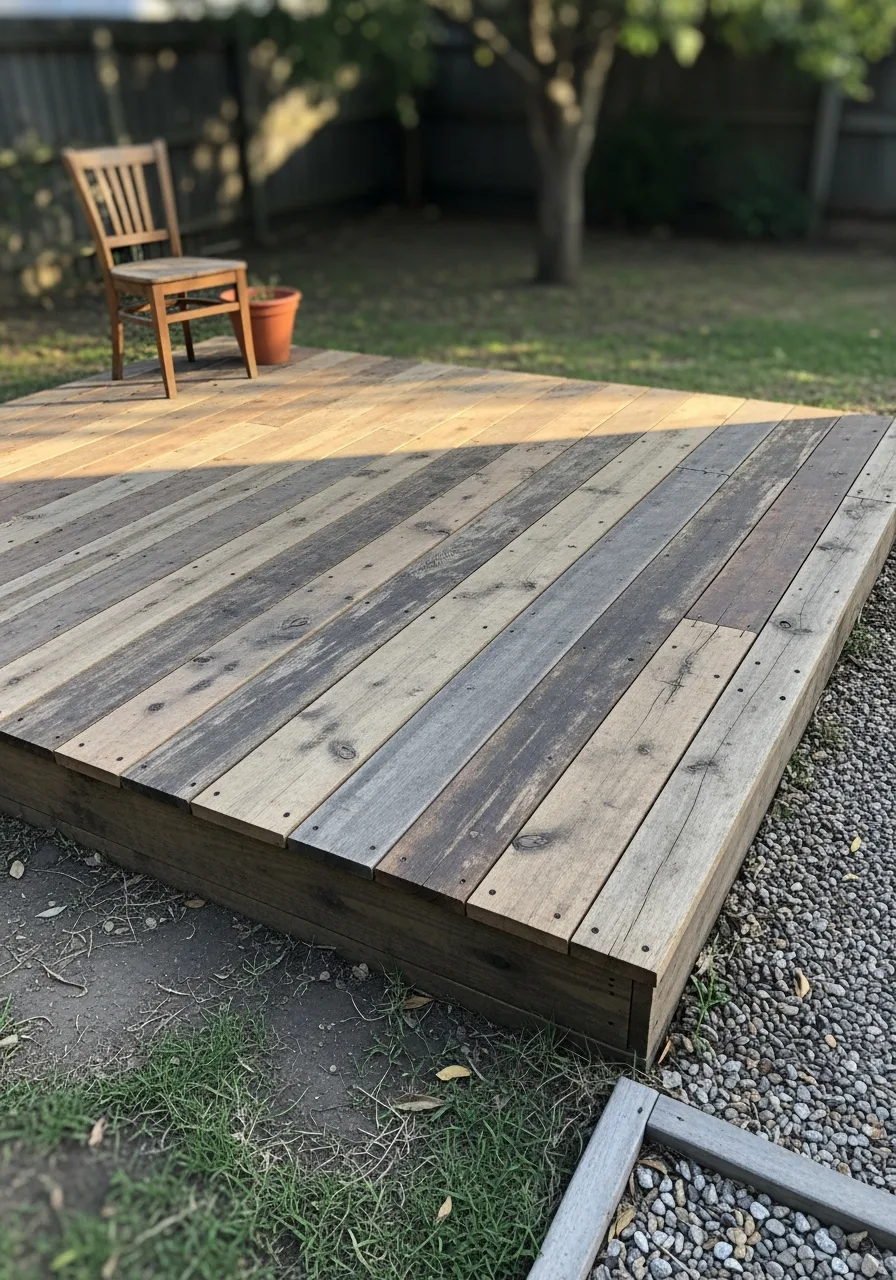
Salvaged wood from old fences or buildings adds a lot of character. It is an eco-friendly choice that helps keep your material costs very low. My take: The weathered look is very trendy right now.
- Check for wood rot
- Clean boards with soap
- Seal the old wood
Pro Tip: Most people skip this: Inspect every board for hidden metal.
10. Basic Pine Wood Deck
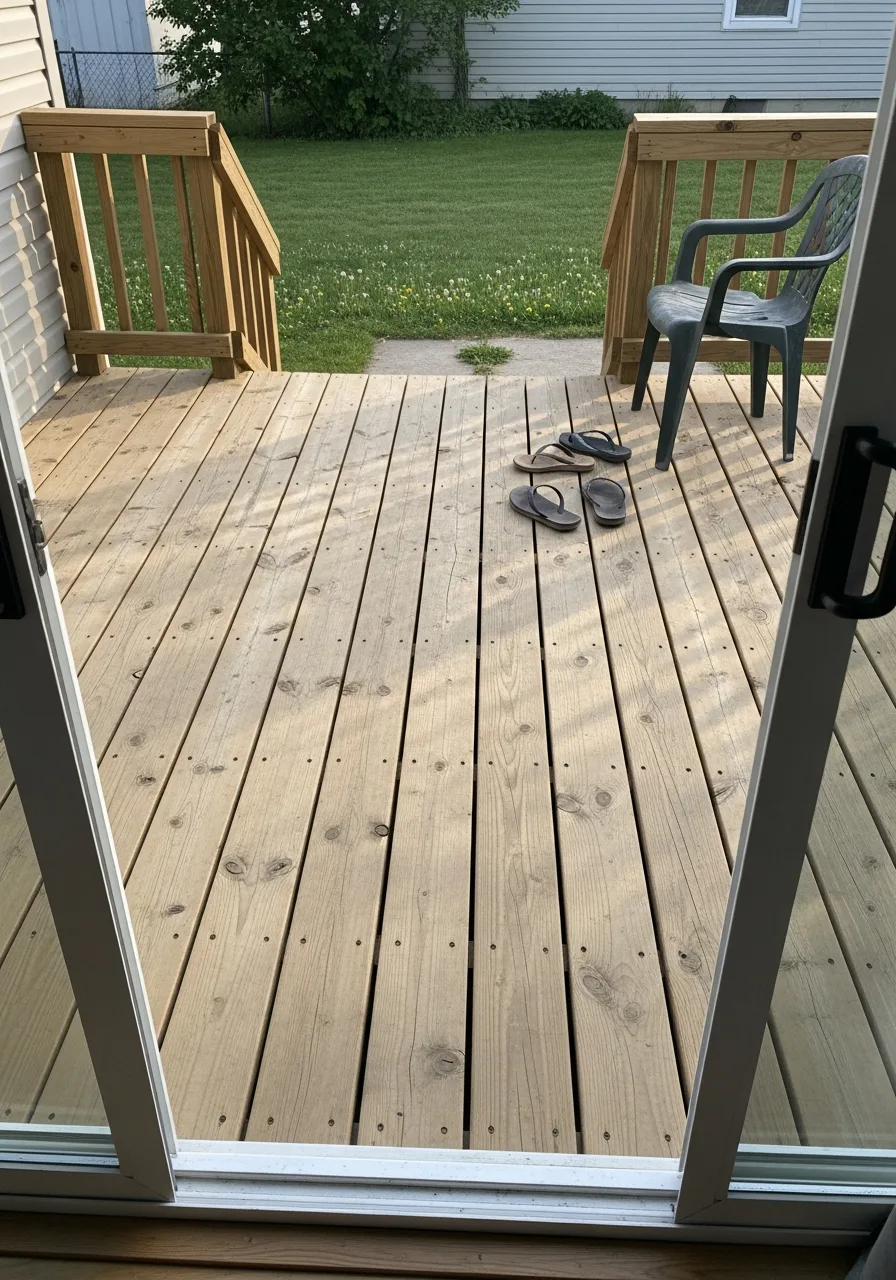
Standard pine is a soft wood that is very easy to cut and install. It looks clean and natural when it is first installed in your yard. I always suggest sealing pine immediately to prevent it from warping.
- Select straightest boards
- Apply a clear coat
- Pre-drill your holes
Pro Tip: Quick win: Use a water-repellent stain for better protection.
11. 10×10 Simple Square Deck
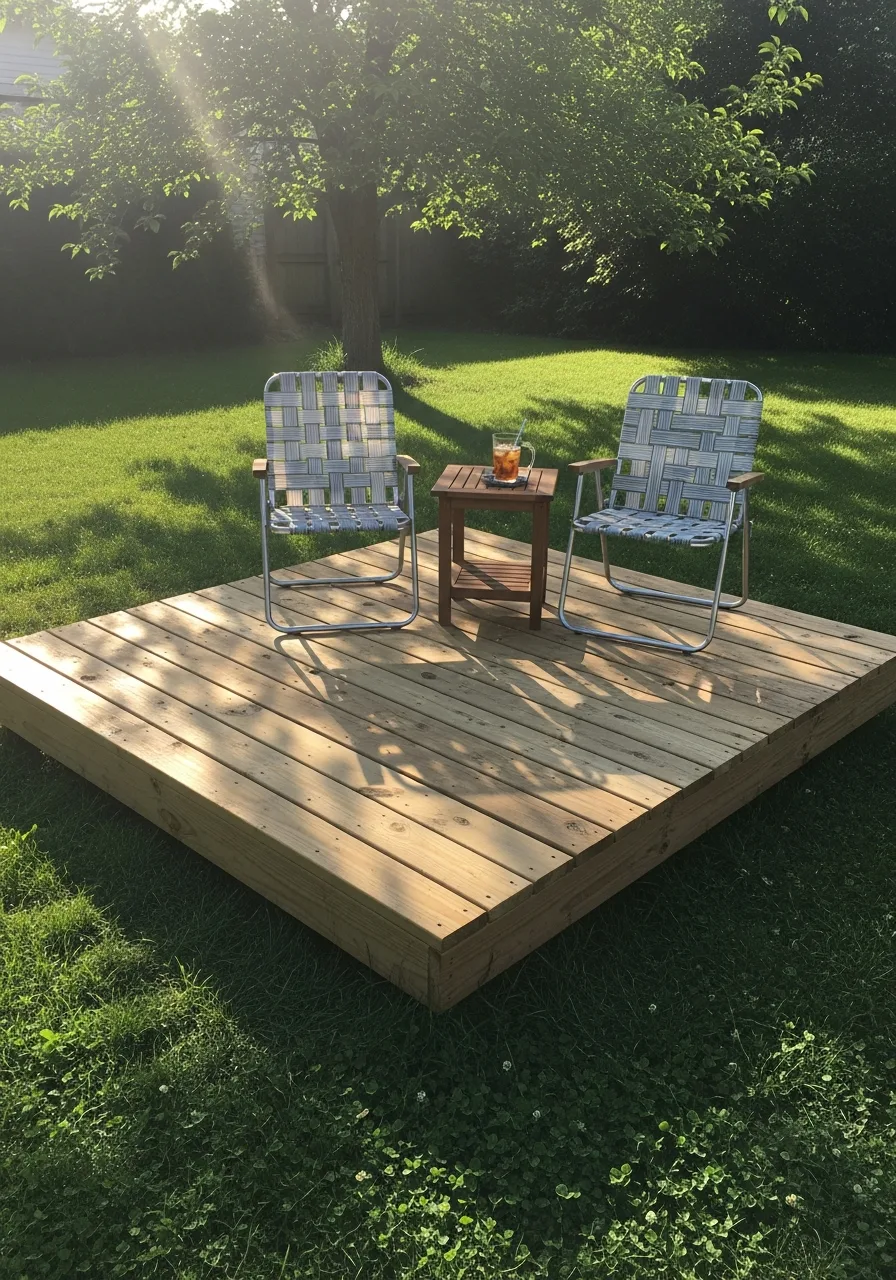
A square layout is the easiest shape for any homeowner to build. It minimizes the amount of wood you waste because cuts are very simple. My take: This is the perfect size for a small bistro set.
- Mark the corners clearly
- Buy ten foot boards
- Keep the corners square
Pro Tip: Here’s what I do: Use the 3-4-5 method for perfect corners.
12. 12×12 Budget Deck Layout
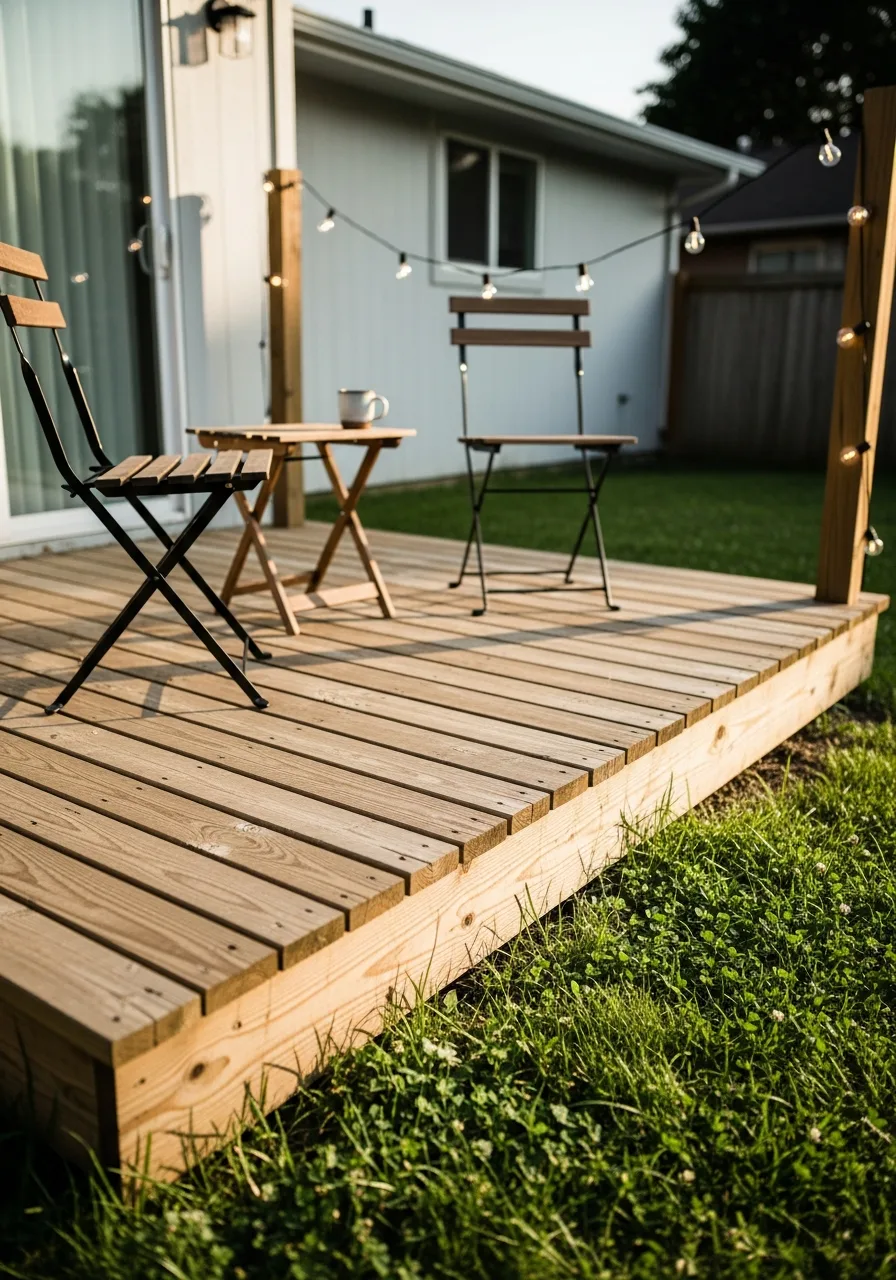
This size matches standard lumber lengths perfectly to reduce your work time. You won’t have to trim much off the ends of your expensive boards. Honestly, this is the best value for your square footage.
- Plan for minimal waste
- Use twelve foot joists
- Check local permit rules
Pro Tip: Most people skip this: Buy boards in bulk to save money.
13. Corner Ground Level Deck
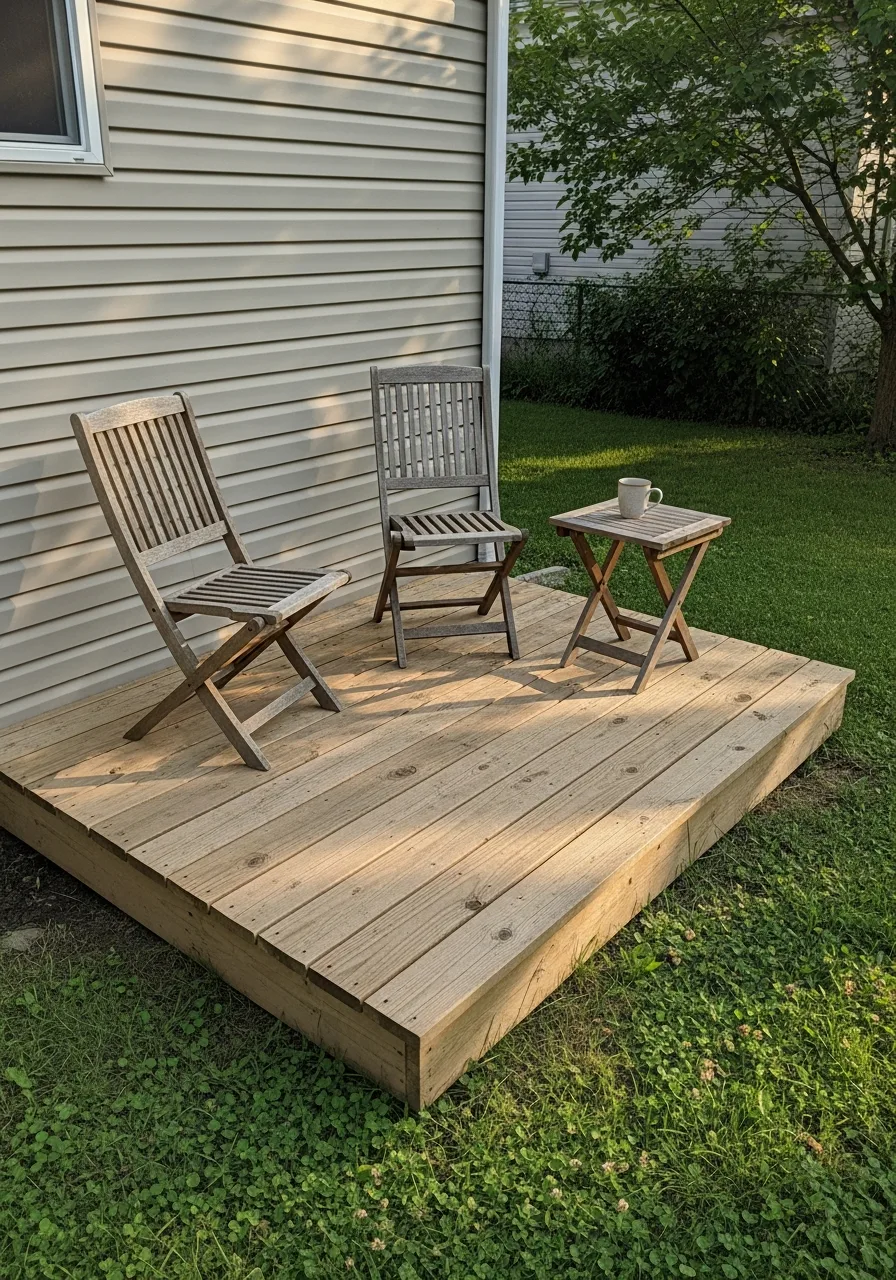
Tucking a deck into a corner uses space that often goes to waste. It creates a cozy nook that feels private without needing tall fences. My take: Corner decks are great for small city backyards.
- Use the house walls
- Add a small bench
- Keep the profile low
Pro Tip: Quick win: Leave a gap between the house and deck.
14. Narrow Side Yard Deck
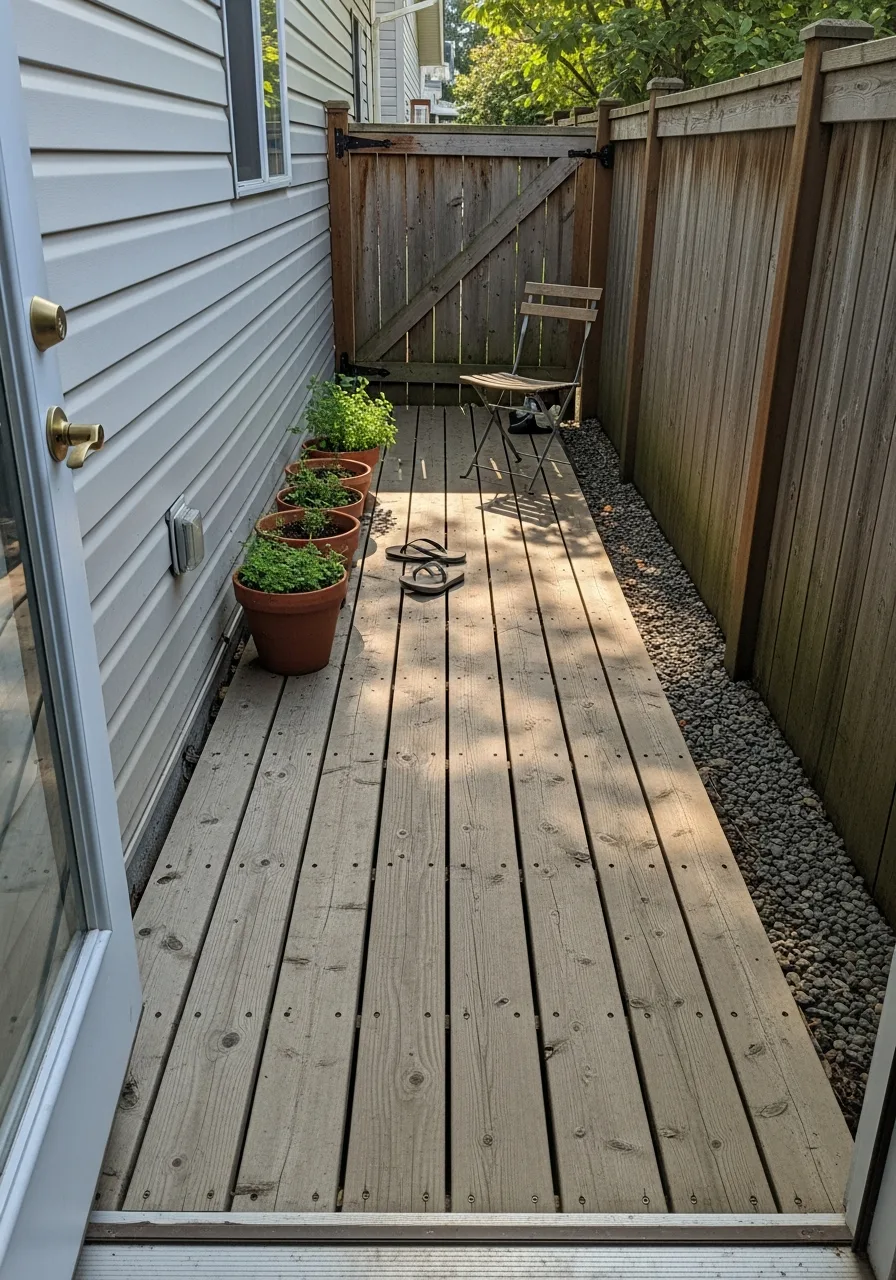
A slim deck can turn a narrow walkway into a functional outdoor path. It helps keep your shoes clean and defines the side of your home. Honestly, it makes a boring side yard look very intentional.
- Measure the width carefully
- Keep boards running longwise
- Ensure good water drainage
Pro Tip: Most people skip this: Install solar path lights along the edge.
15. Mini Patio Style Deck
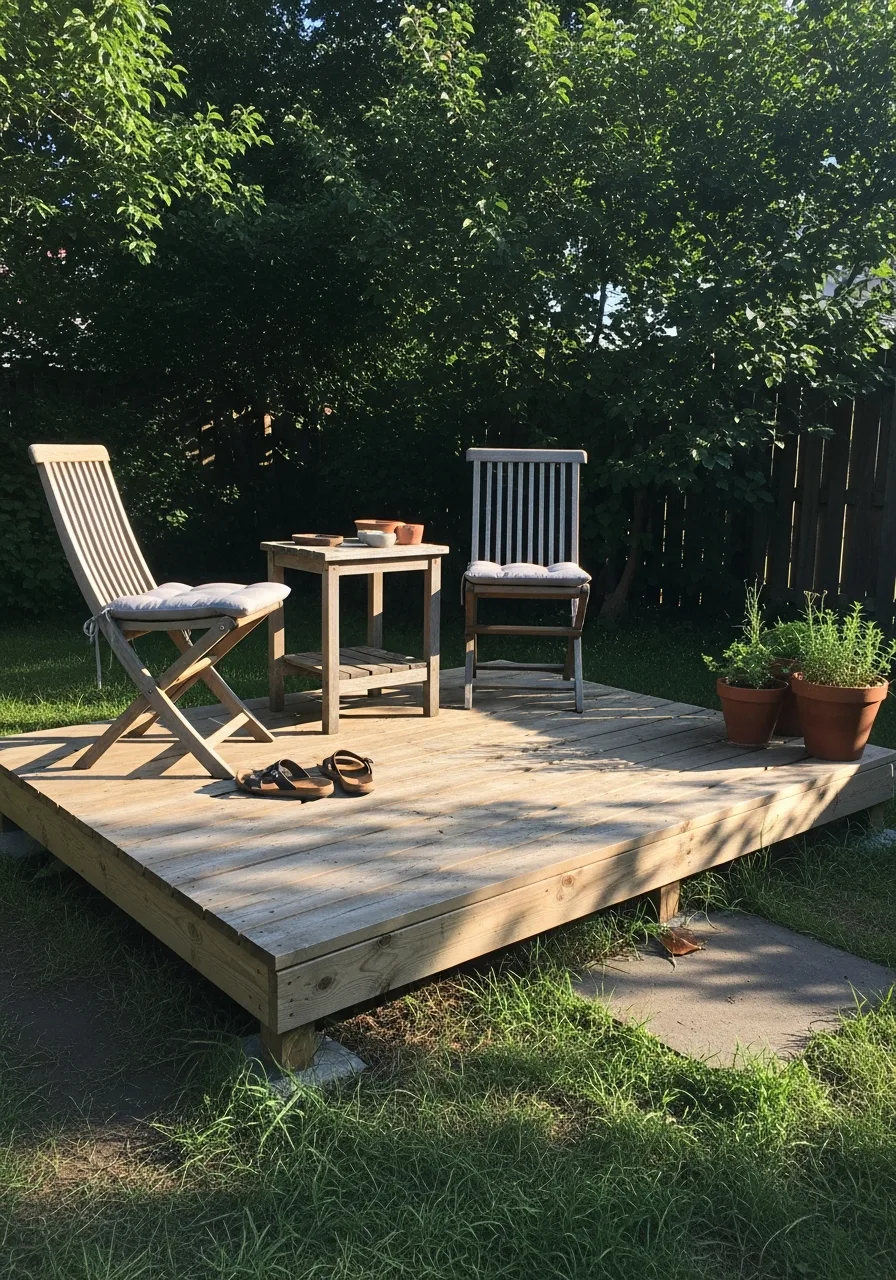
This is a small platform that acts as a base for one or two chairs. It provides a dry spot to sit without the cost of a full deck. I always love how these look near a garden bed.
- Build a 4×4 frame
- Set it on blocks
- Add two lounge chairs
Pro Tip: Quick win: Surround the base with mulch for style.
16. Built In Bench Deck
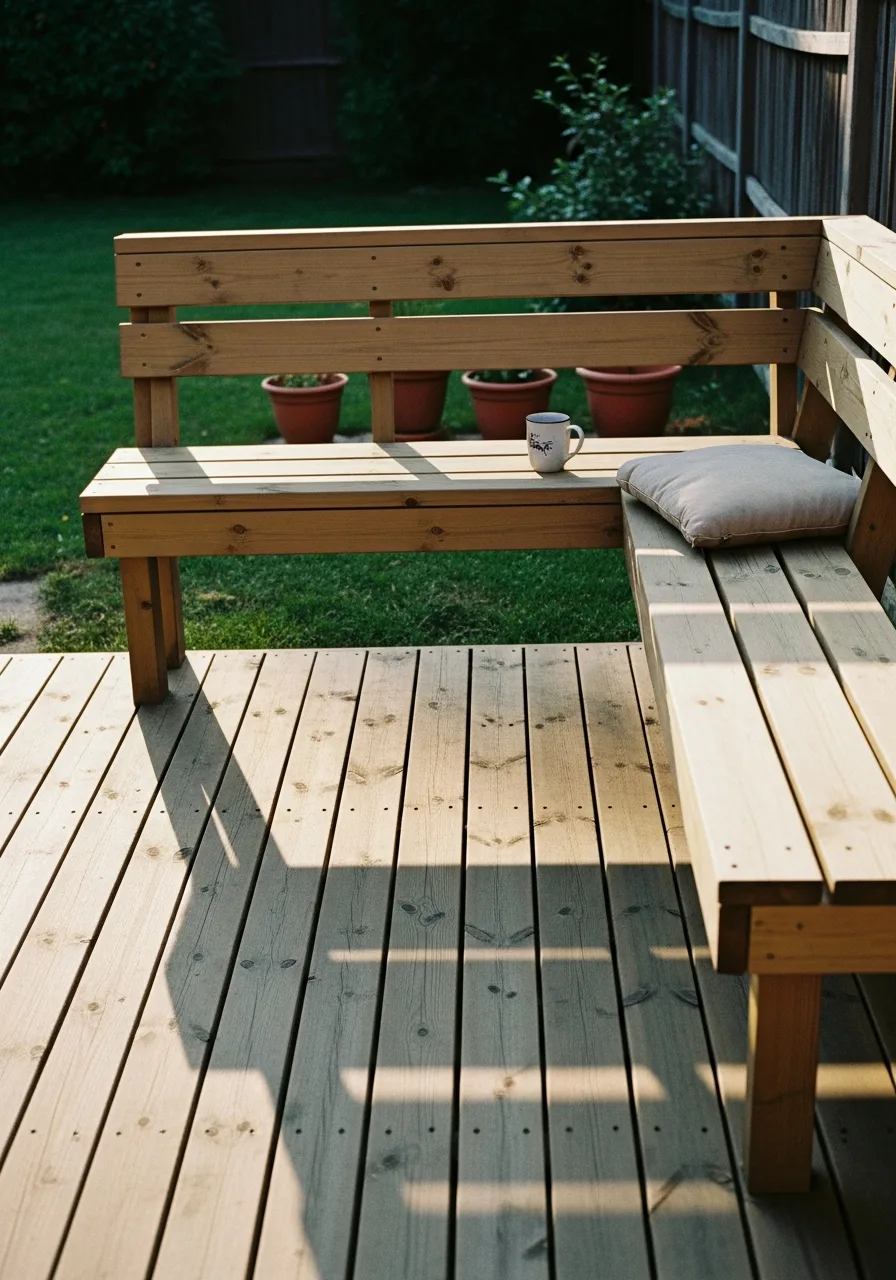
You can build seating directly into the frame to save on furniture costs. It makes the deck feel like a complete room instead of just a platform. My take: Built-in benches are the best way to maximize space.
- Use sturdy vertical supports
- Angled backs are comfortable
- Sand all seating surfaces
Pro Tip: Here’s what I do: Make the seat tops removable for storage.
17. Planter Box Deck Edges
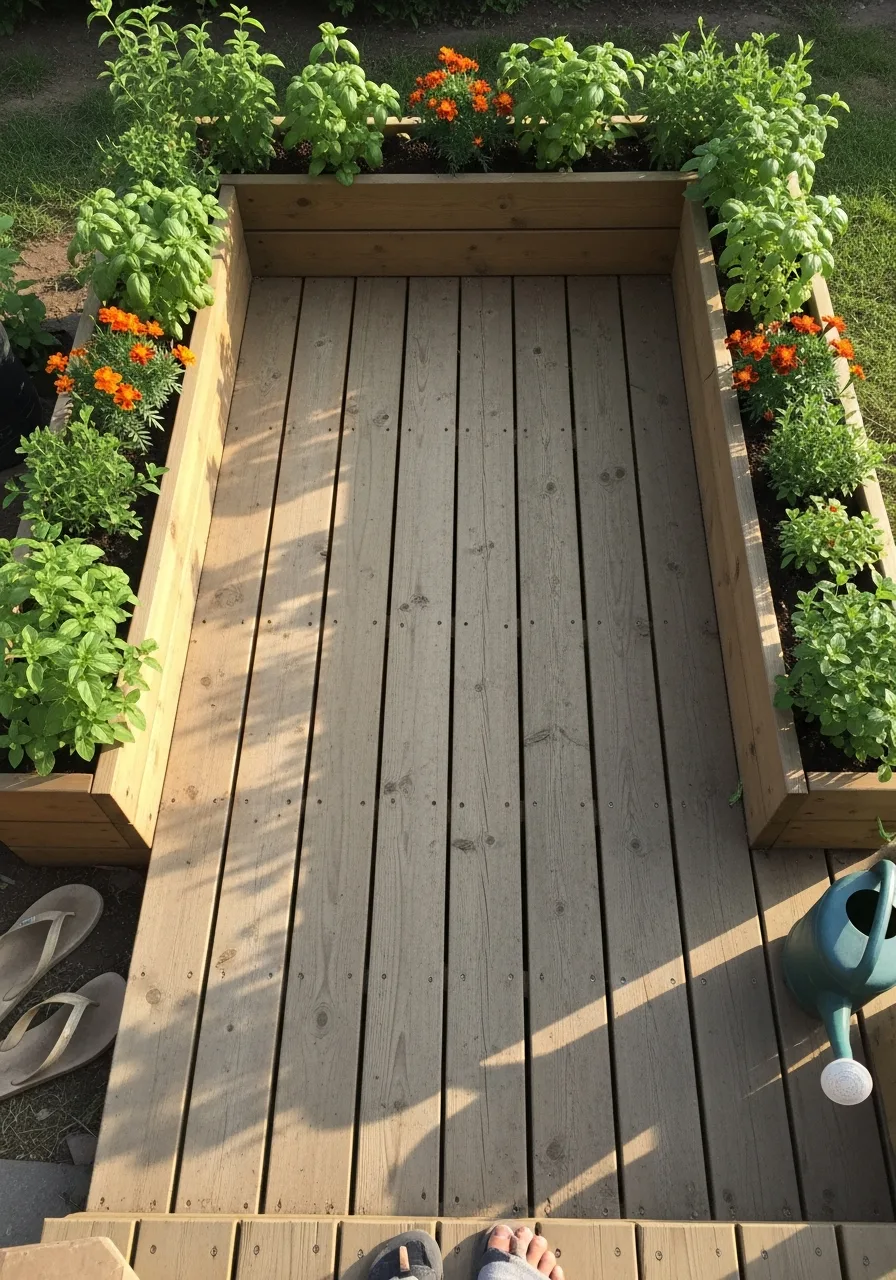
Adding boxes for flowers around the edge serves as a natural border. This removes the need for expensive railings while adding beautiful color to the space. Honestly, it is much prettier than a wooden rail.
- Line boxes with plastic
- Ensure there are drains
- Plant easy care flowers
Pro Tip: Quick win: Use cedar for boxes to prevent rot.
18. Outdoor Rug Styled Deck
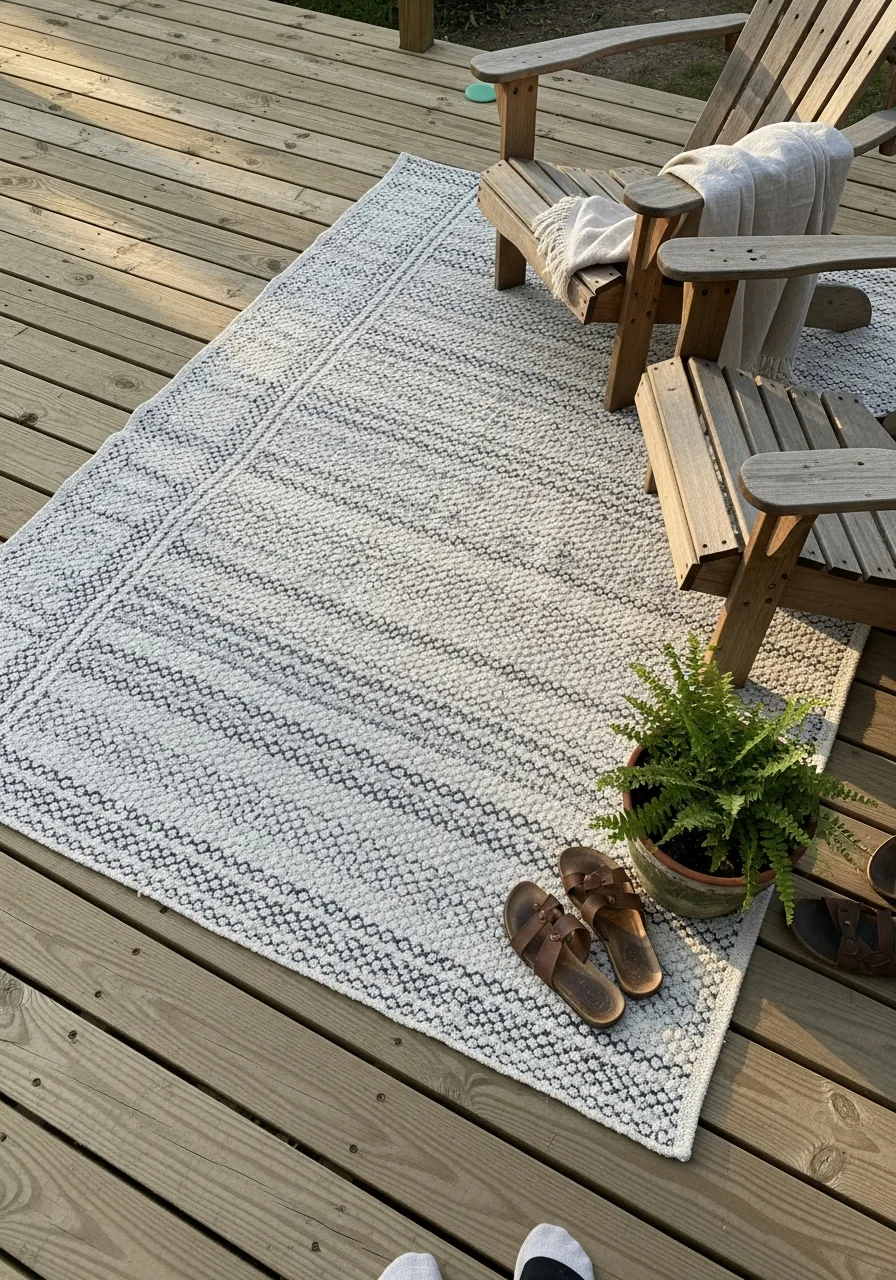
A weather-proof rug covers the center of your wood platform to add comfort. It hides any small gaps in the wood and adds a pop of color. My take: Rugs are the fastest way to hide cheap lumber.
- Measure your space first
- Choose a plastic weave
- Pick a bold pattern
Pro Tip: Most people skip this: Use rug grippers to prevent sliding.
19. Simple Step Up Deck
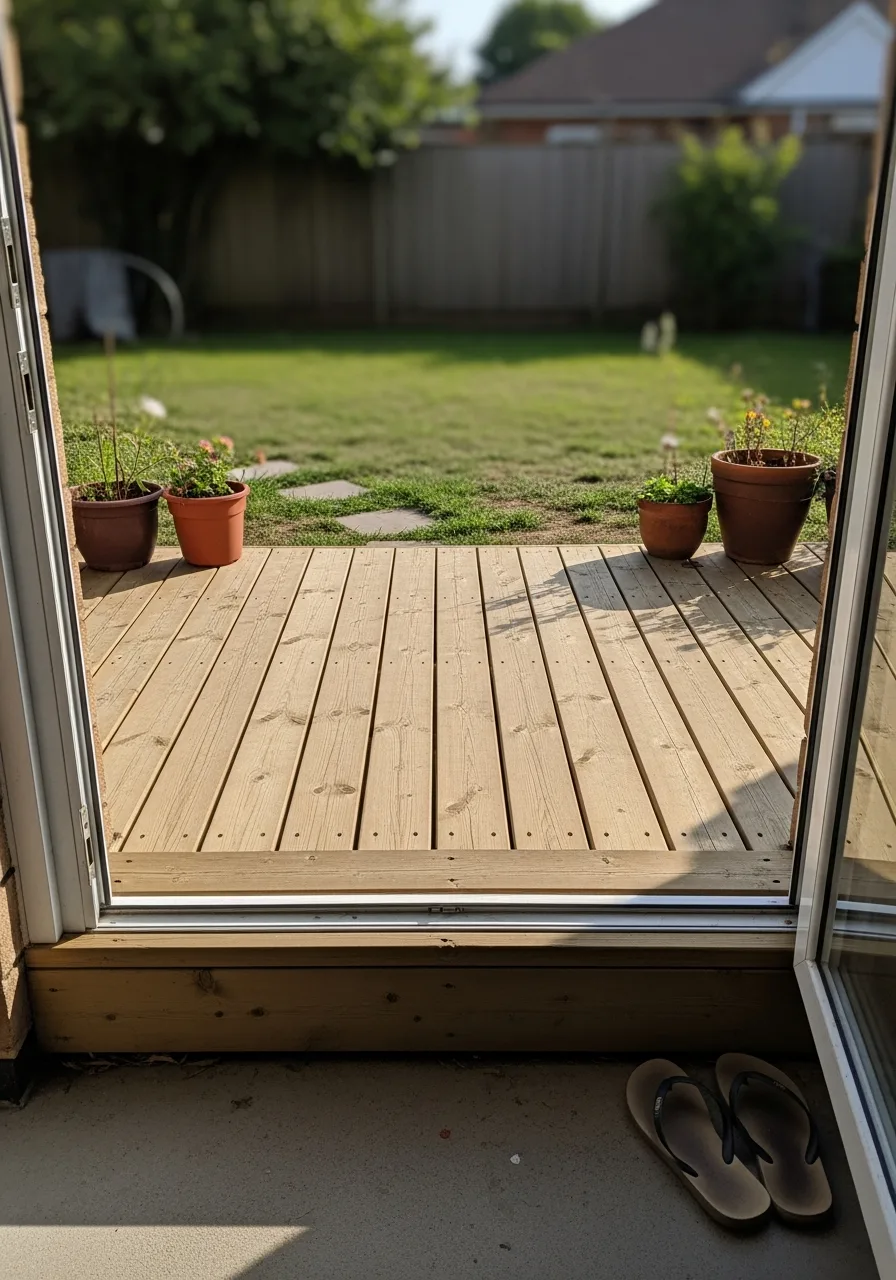
A single step makes the transition from the grass to the deck much safer. It adds a bit of architectural interest to an otherwise flat design. I always recommend a wide step for a modern look.
- Build a separate box
- Level the step base
- Secure it to frame
Pro Tip: Quick win: Add grip tape to the step edge.
20. Open Edge Deck Design
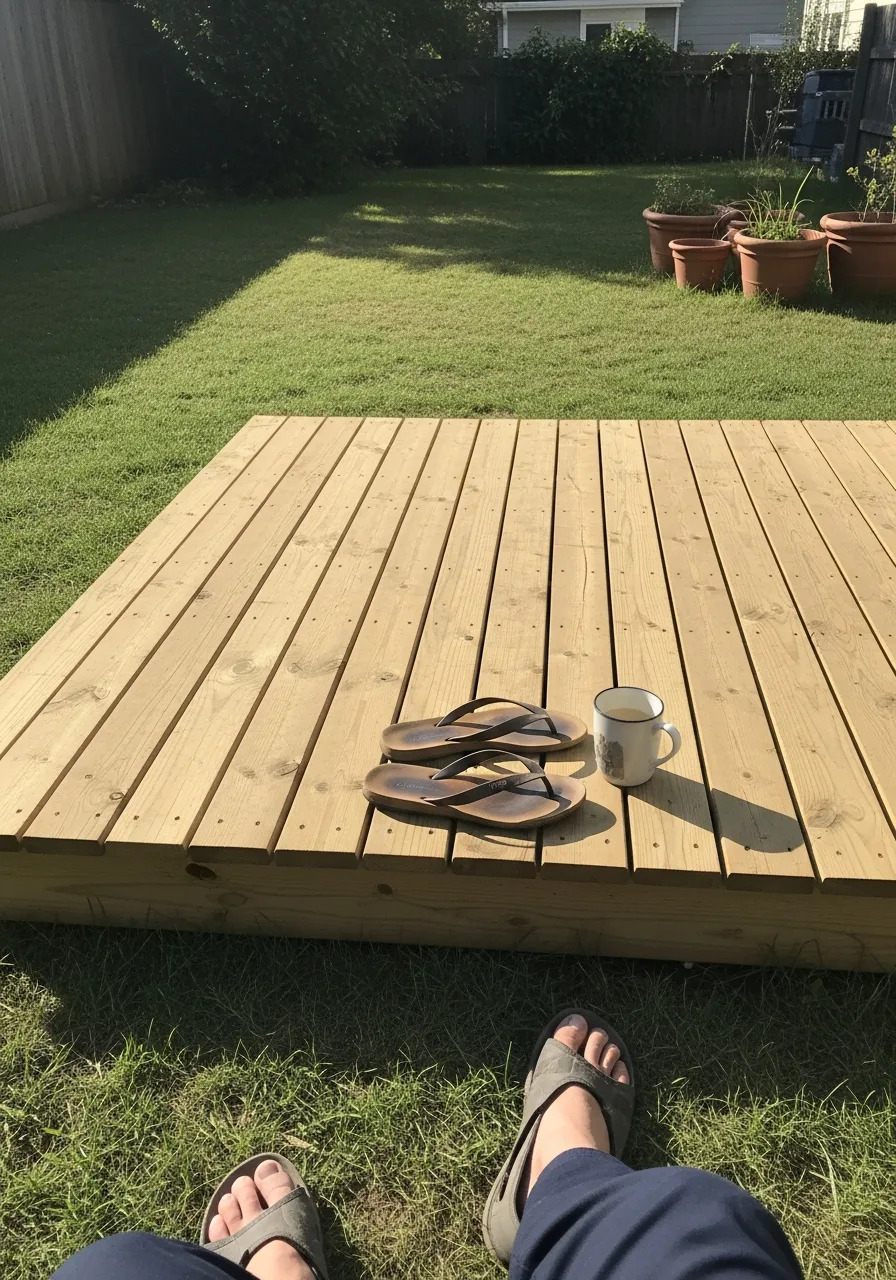
Keeping the deck very low means you do not need to build any railings. This saves a massive amount of money on both wood and hardware. Honestly, an open deck feels much more connected to the yard.
- Keep height under 30 inches
- Finish edges with trim
- Stain the visible ends
Pro Tip: Most people skip this: Check local codes for railing heights.
21. Weekend DIY Deck Project
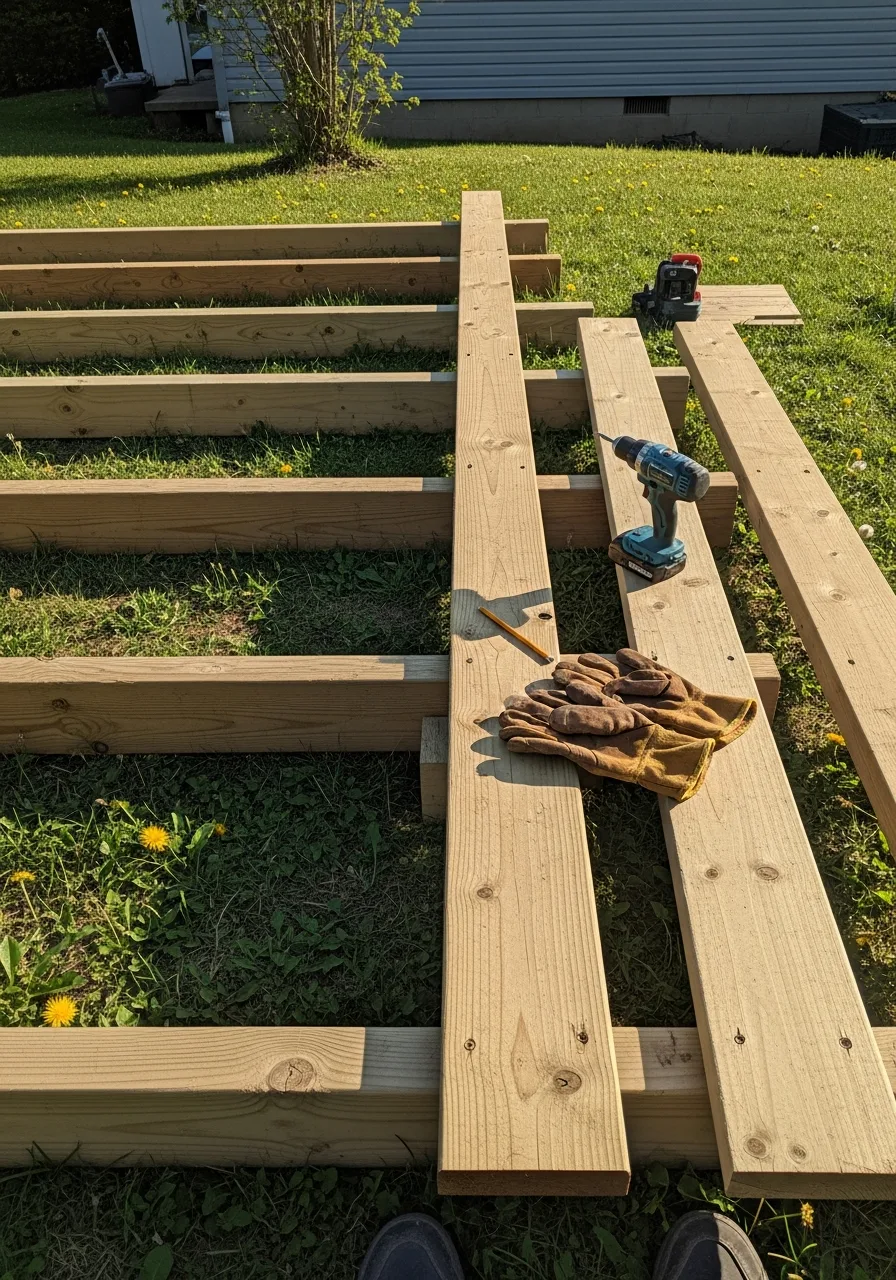
This is a simple rectangular design that you can finish in just two days. It focuses on using basic tools like a drill and a circular saw. My take: Don’t overcomplicate things if you want it done fast.
- Buy all wood Friday
- Level the ground Saturday
- Screw boards on Sunday
Pro Tip: Here’s what I do: Invite a friend to help lift.
22. No Railing Platform Deck
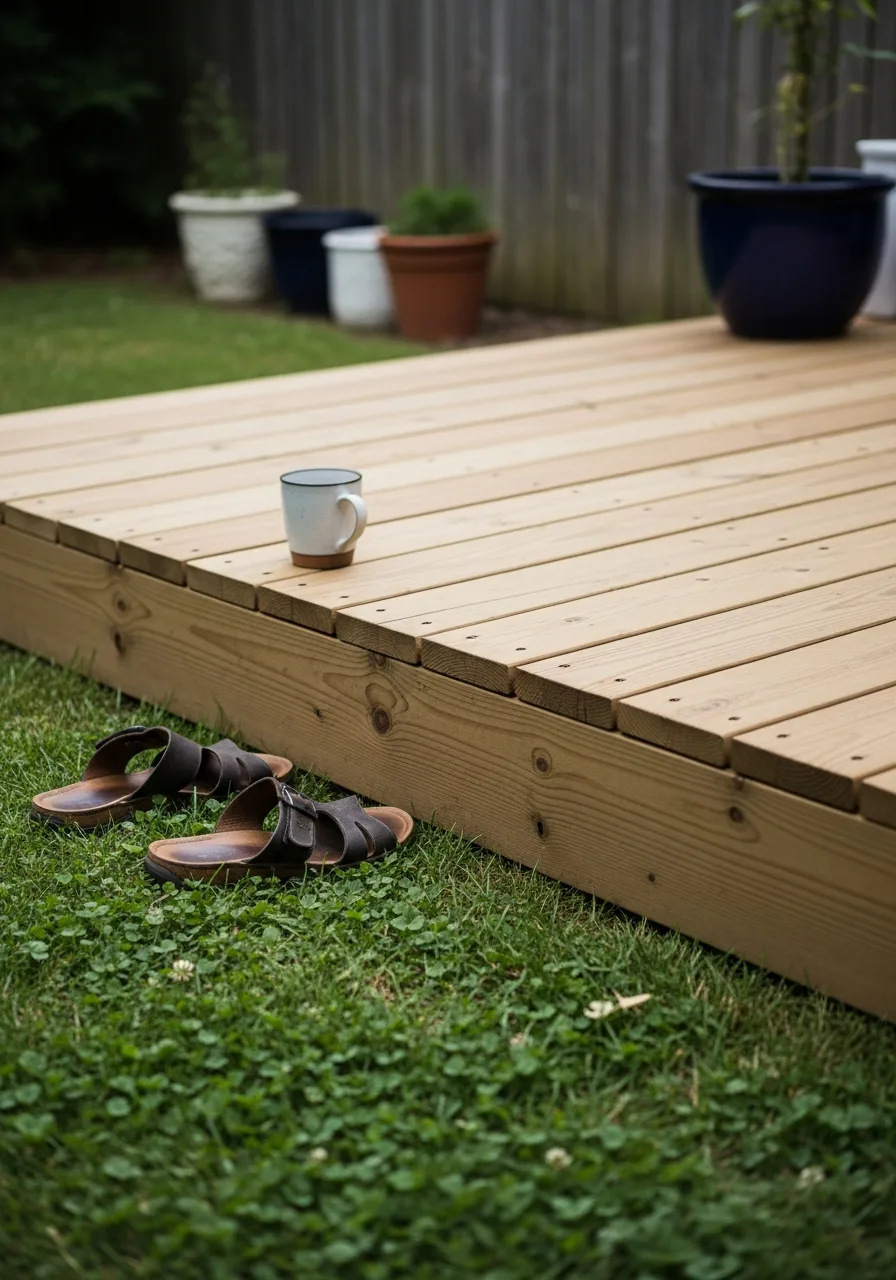
A simple flat platform is the cheapest structural deck you can build. It acts as a clean stage for your outdoor activities and furniture. Honestly, simple is almost always better for your wallet.
- Keep the shape simple
- Use thick deck boards
- Seal it every year
Pro Tip: Quick win: Use a hidden fastener system for beauty.
23. Pre Cut Lumber Deck
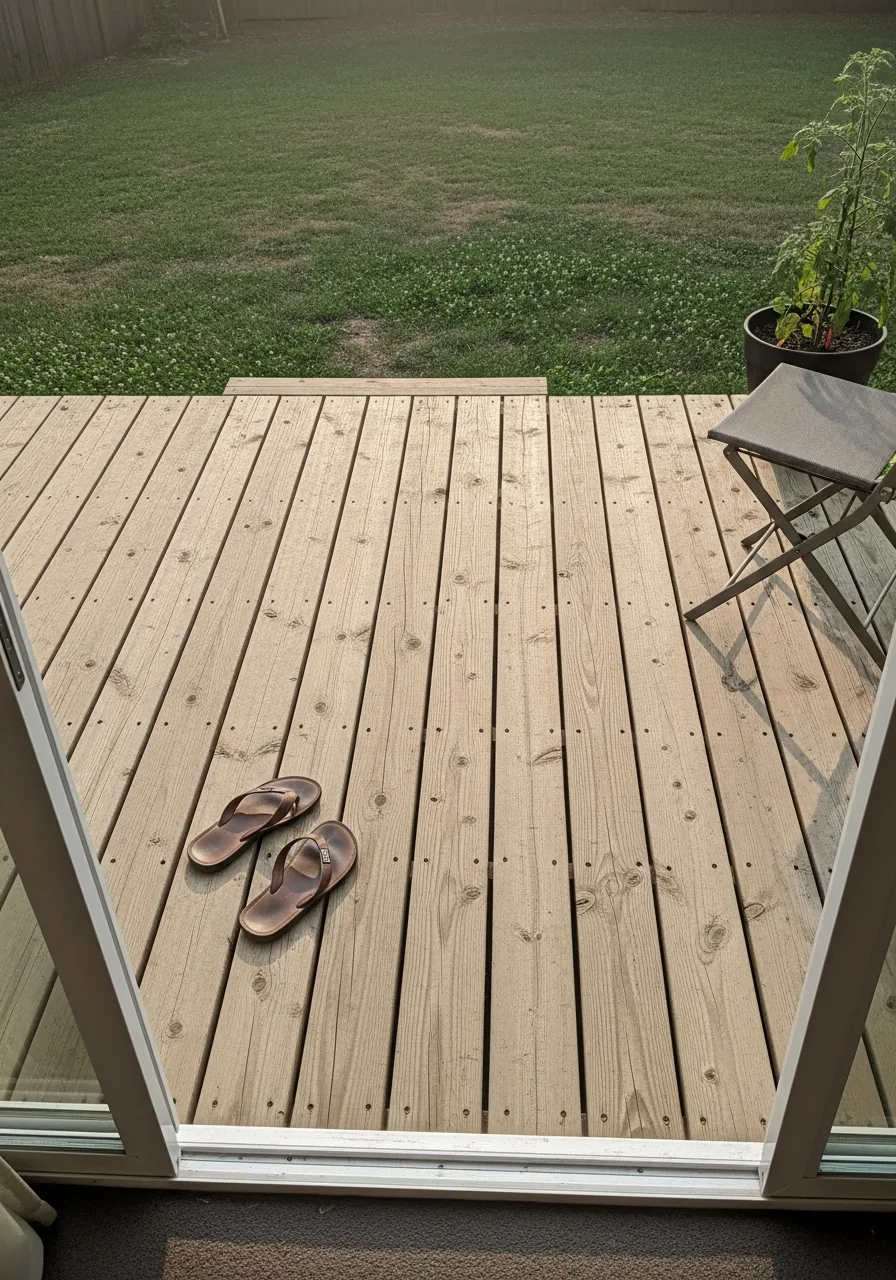
Buying wood that is already cut to size saves you hours of labor. It also means you won’t have a pile of scrap wood taking up space. I always suggest this for people who don’t own many tools.
- Order standard lengths
- Check boards for bows
- Plan your layout first
Pro Tip: Most people skip this: Confirm the actual wood dimensions first.
24. Modular Deck Sections
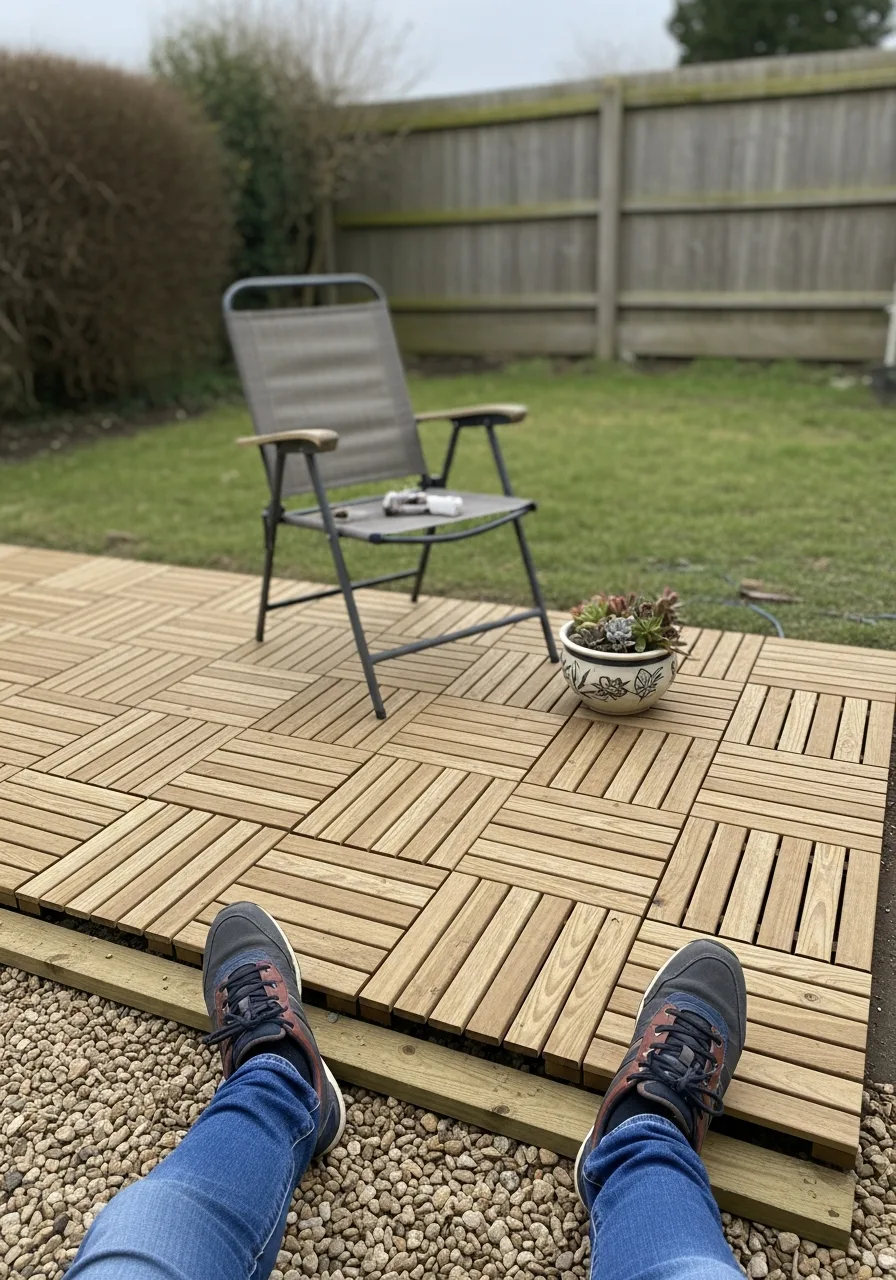
You can build the deck in small squares and bolt them together later. This allows you to pay for the project in small pieces over several months. My take: This is the best way to avoid debt.
- Build 4×4 sections
- Use heavy duty bolts
- Add more next year
Pro Tip: Here’s what I do: Keep all sections the same size.
25. Budget Friendly Kit Deck
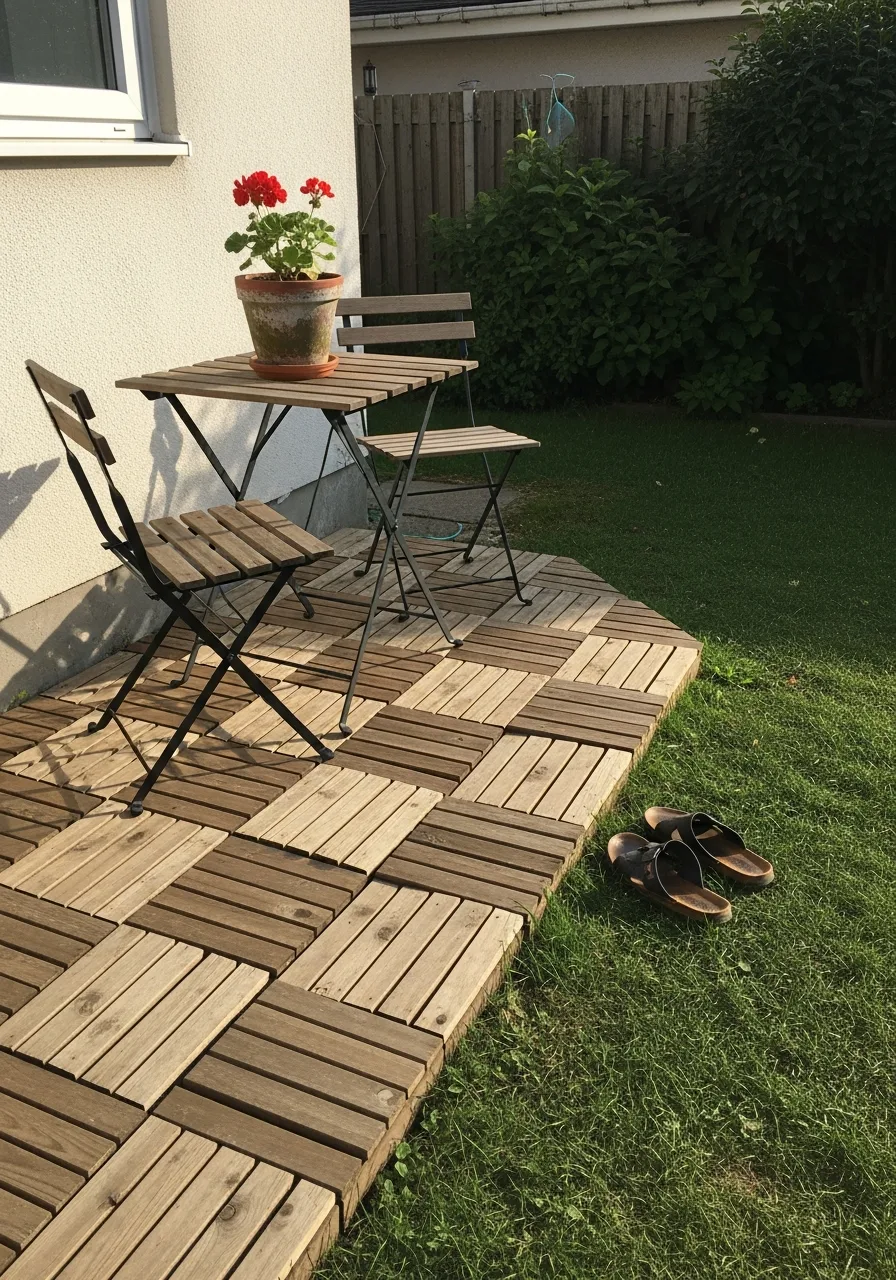
A pre-designed kit comes with all the parts you need in one package. This takes the guesswork out of shopping and ensures you have the right screws. Honestly, kits are great if you are nervous about planning.
- Follow instructions exactly
- Inventory parts first
- Lay everything out
Pro Tip: Quick win: Read the manual twice before starting.
26. Minimalist Ground Level Deck
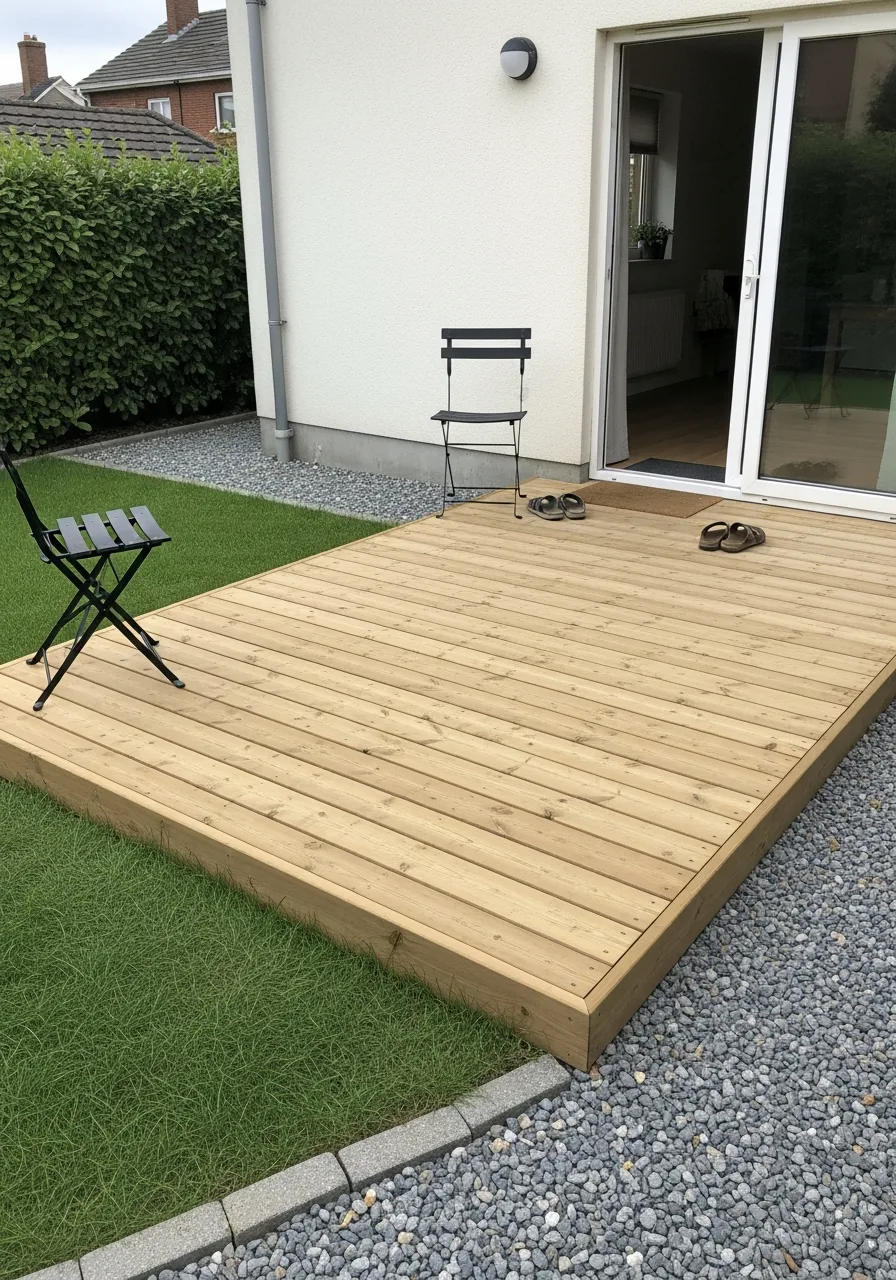
This style uses straight lines and no extra decorations to keep costs down. It looks very modern and clean in a backyard setting. I always find that less is more when it comes to deck design.
- Use dark gray stain
- Hide all the screws
- Keep the furniture simple
Pro Tip: Most people skip this: Use a spacer for even gaps.
27. Natural Wood Finish Deck
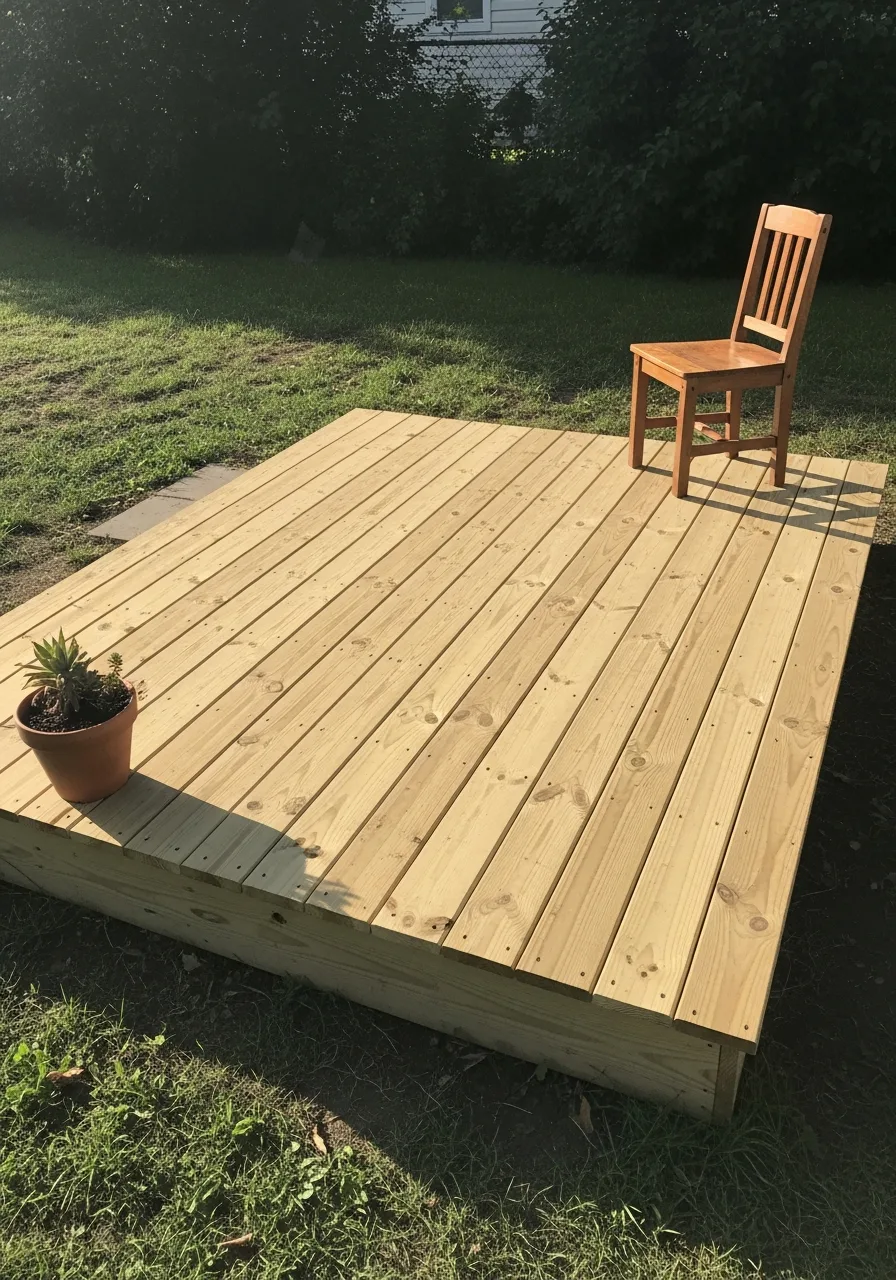
Leaving the wood its natural color saves you the cost of expensive paints. You only need a clear sealer to protect it from the rain and sun. My take: Natural wood looks the most high-end.
- Apply clear water sealer
- Sand before sealing
- Re-apply every two years
Pro Tip: Quick win: Use a garden sprayer to apply sealer.
28. Painted Deck Boards
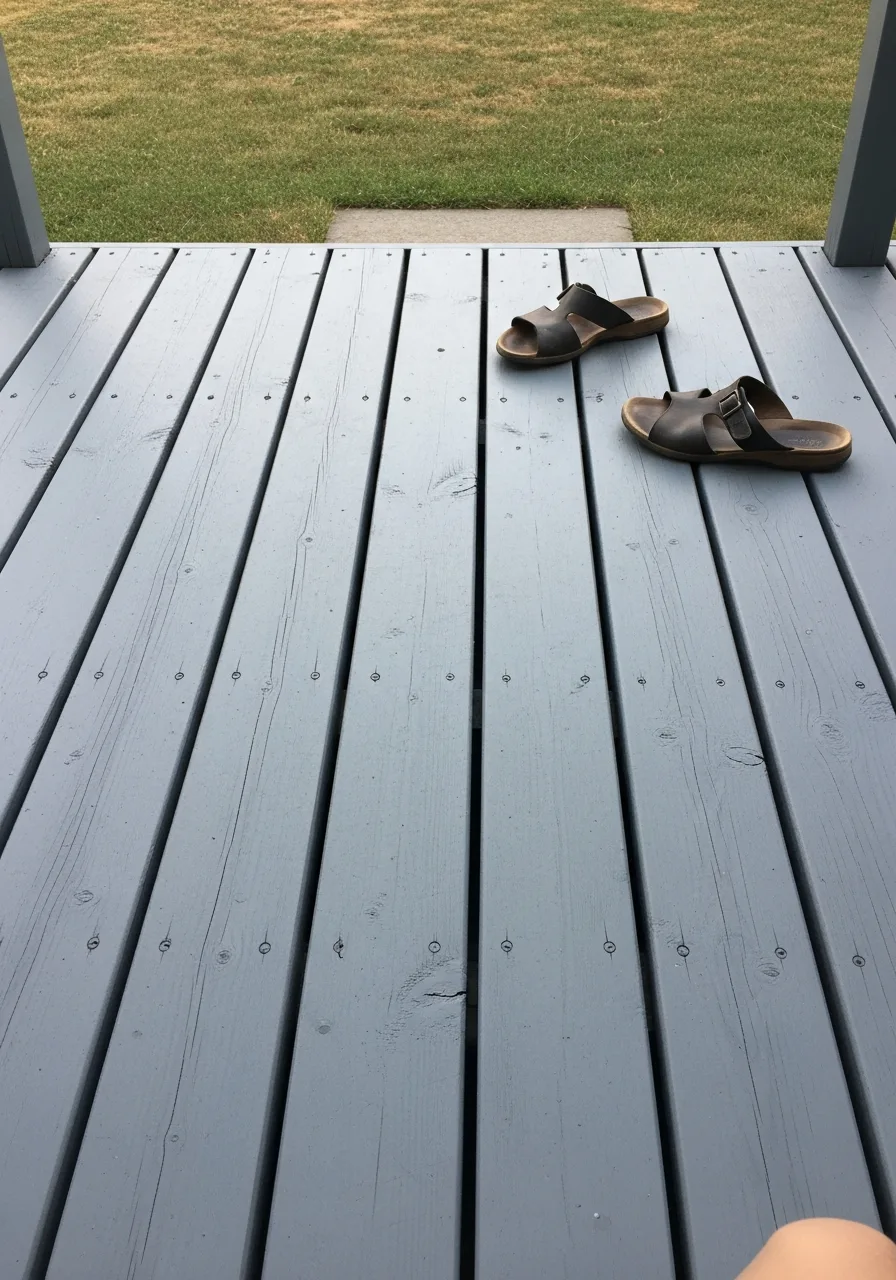
Outdoor floor paint can make cheap wood look brand new and modern. It covers up knots and imperfections that might bother you on cheaper lumber. Honestly, paint is much better than stain for hiding ugly wood.
- Clean the wood first
- Use a thick roller
- Apply two full coats
Pro Tip: Quick win: Add sand to the paint for extra grip.
29. Two Tone Deck Design
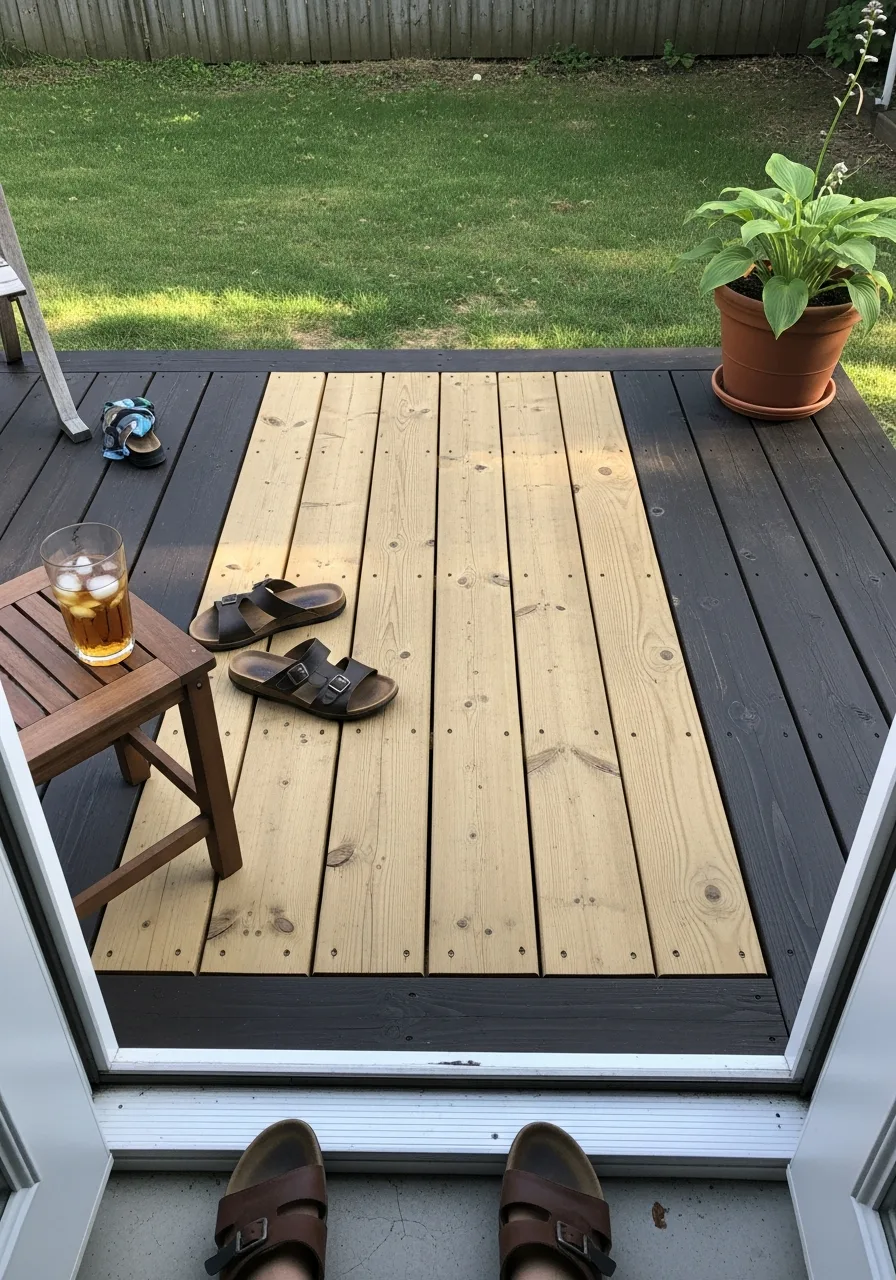
Using two different colors of stain creates a very custom look. You can make the border dark and the center light for a high-end feel. I always love how this defines the walking area.
- Pick contrasting colors
- Tape off the edges
- Stain the border first
Pro Tip: Here’s what I do: Use the darker color on the edges.
30. Diagonal Board Pattern Deck
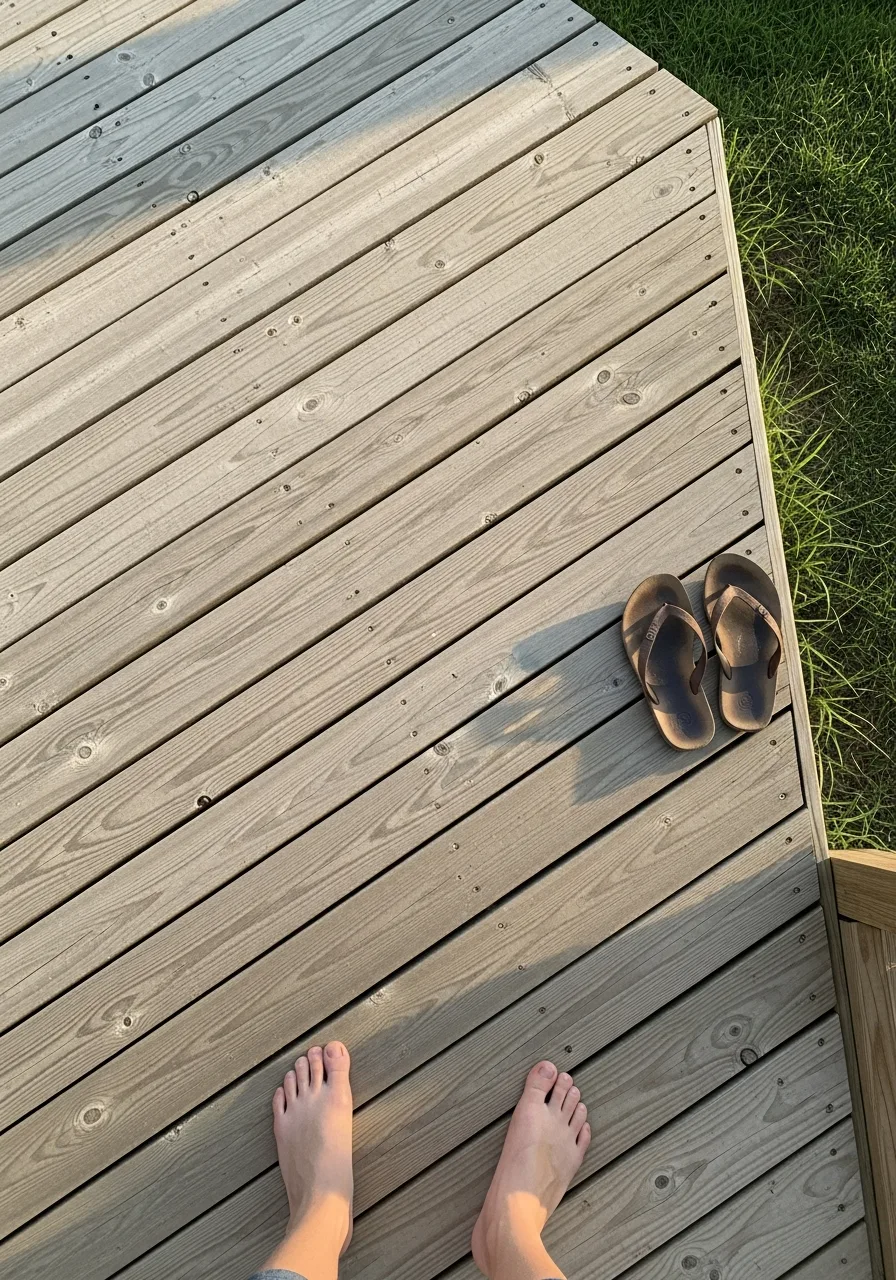
Laying the boards at an angle makes a basic deck look professionally designed. It uses the same wood as a standard deck but looks much more expensive. My take: It is worth the extra few cuts.
- Cut boards at 45 degrees
- Start in the center
- Use a miter saw
Pro Tip: Most people skip this: Add extra joists for support.
31. Deck with Gravel Surround
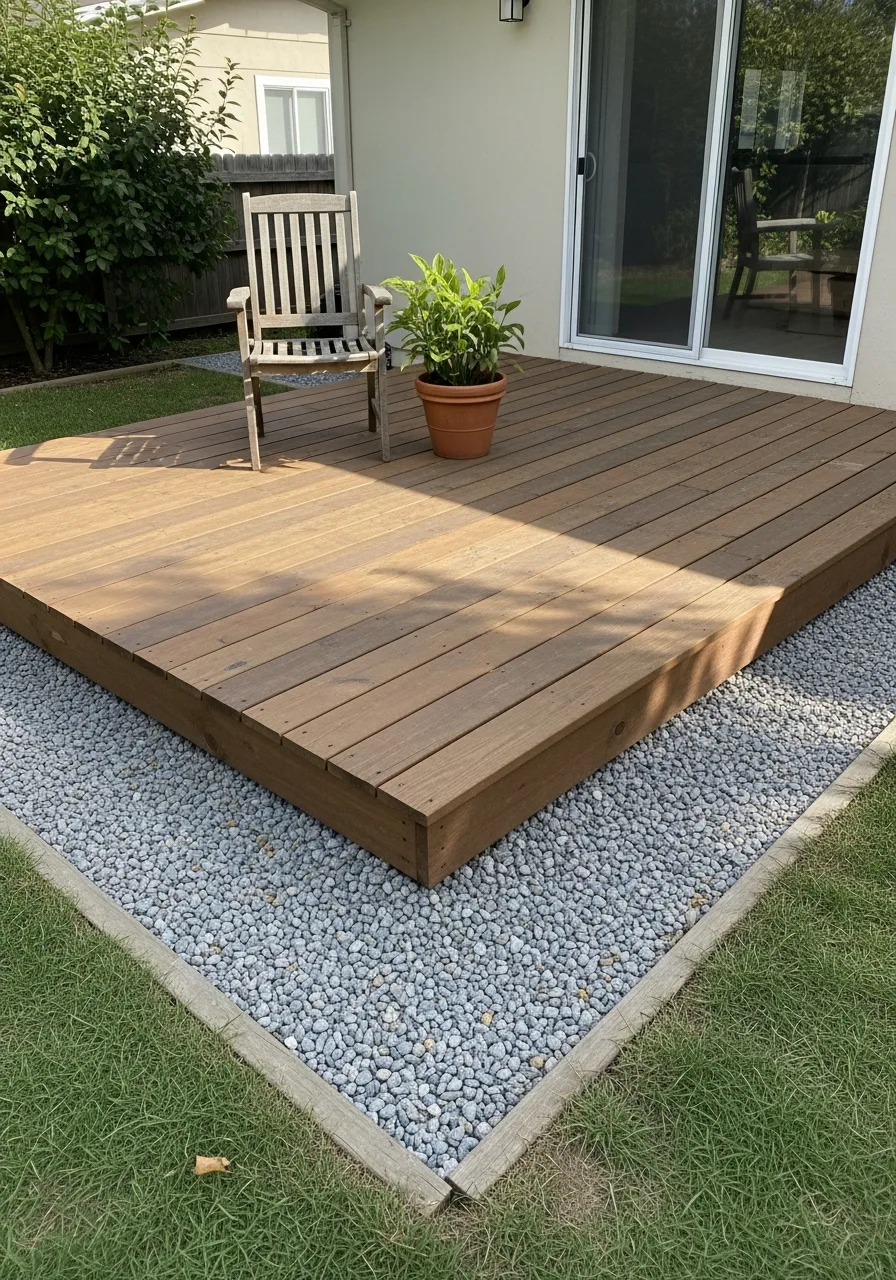
You can build a smaller wood deck and surround it with a gravel border. This saves on lumber costs while still giving you a large usable area. Honestly, the mix of wood and stone looks very professional.
- Border the deck first
- Fill with river rocks
- Use landscape edging
Pro Tip: Quick win: Use white rocks for a modern look.
32. Deck and Grass Combo
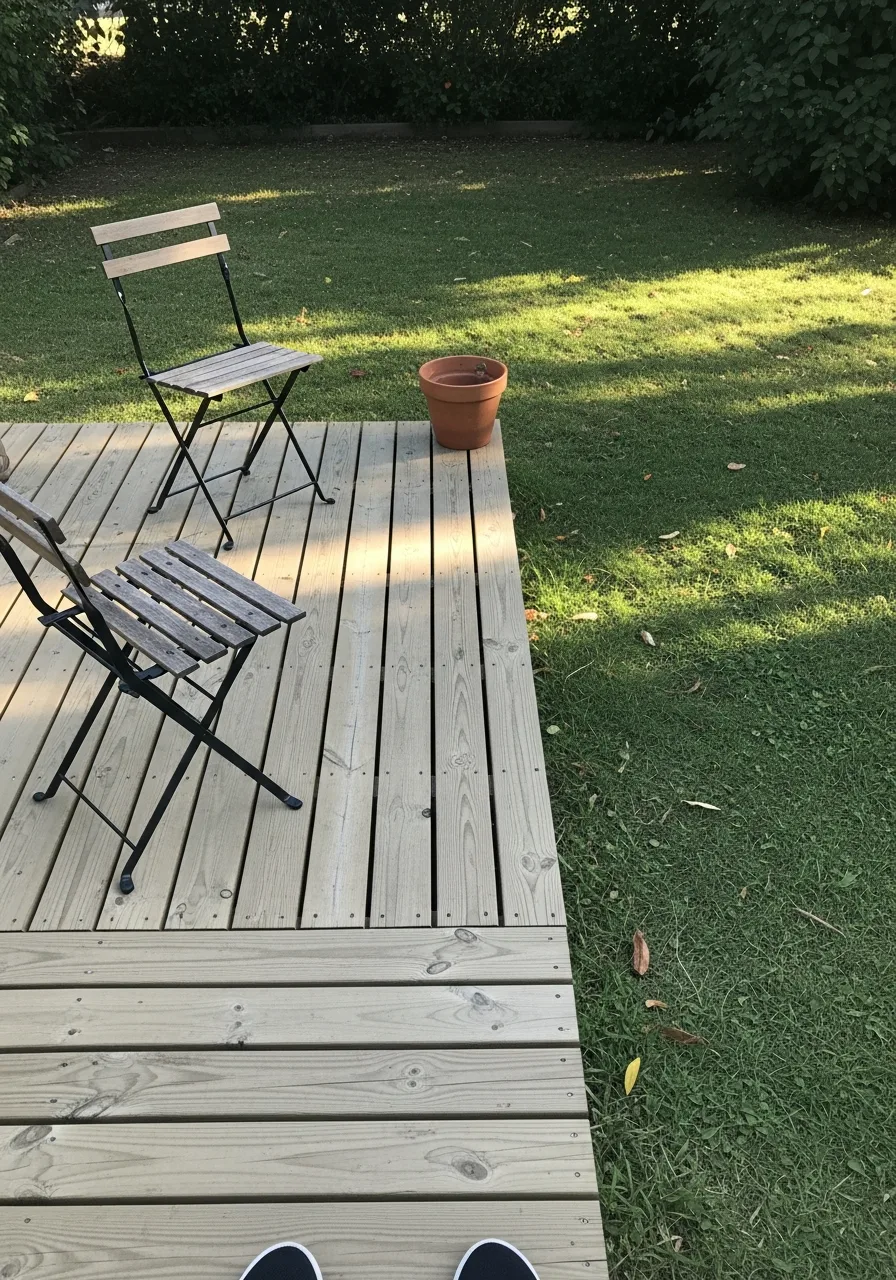
Mixing a small wooden platform with your existing lawn saves a lot of money. You get the benefit of a dry seating area without building over the whole yard. I always recommend this for families with dogs.
- Keep the deck small
- Mow around the edges
- Maintain the lawn health
Pro Tip: Most people skip this: Leave space for a mower path.
33. Tree Centered Deck
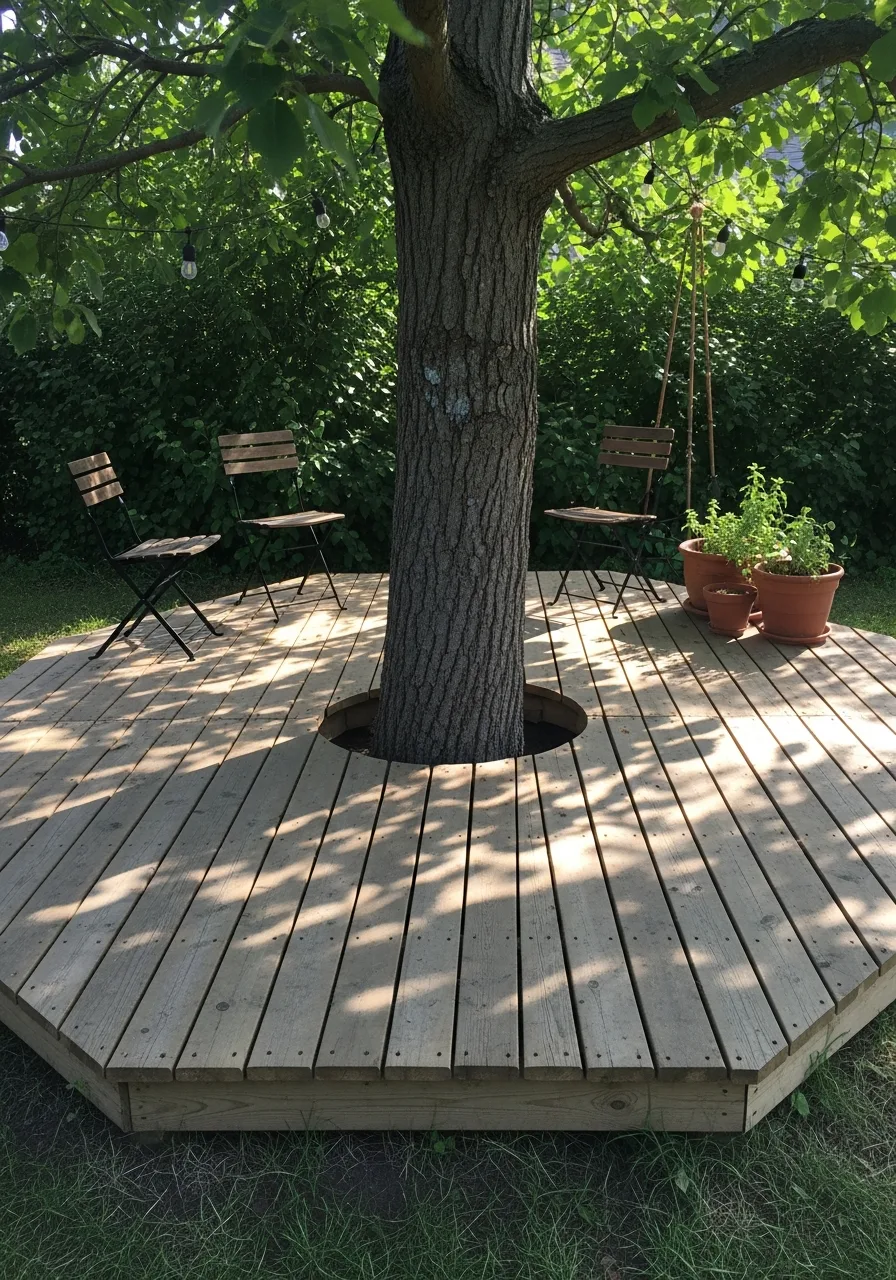
Building your deck around a tree creates a built-in shade canopy. It makes the tree look like a deliberate part of your home design. My take: This is the coolest way to use your natural landscape.
- Leave room for growth
- Frame around the trunk
- Add a bench nearby
Pro Tip: Here’s what I do: Leave a 4-inch gap for the tree.
34. Garden Edge Deck
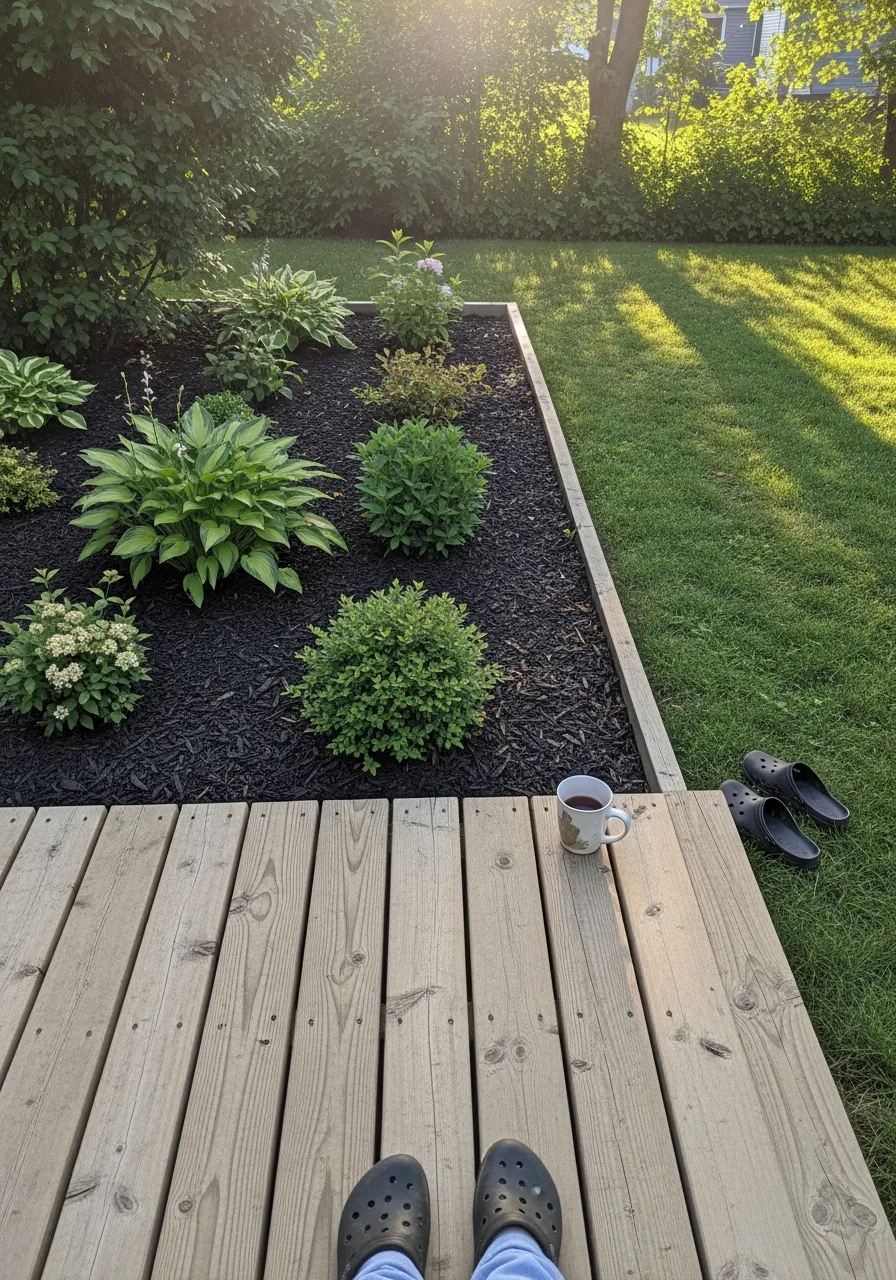
Positioning the deck right next to your garden makes it feel like an outdoor oasis. You can sit on the edge and tend to your plants easily. Honestly, this is the best spot for a morning coffee.
- Line it with flowers
- Keep the height low
- Use treated base wood
Pro Tip: Quick win: Plant lavender nearby to repel bugs.
35. Pathway Connected Deck
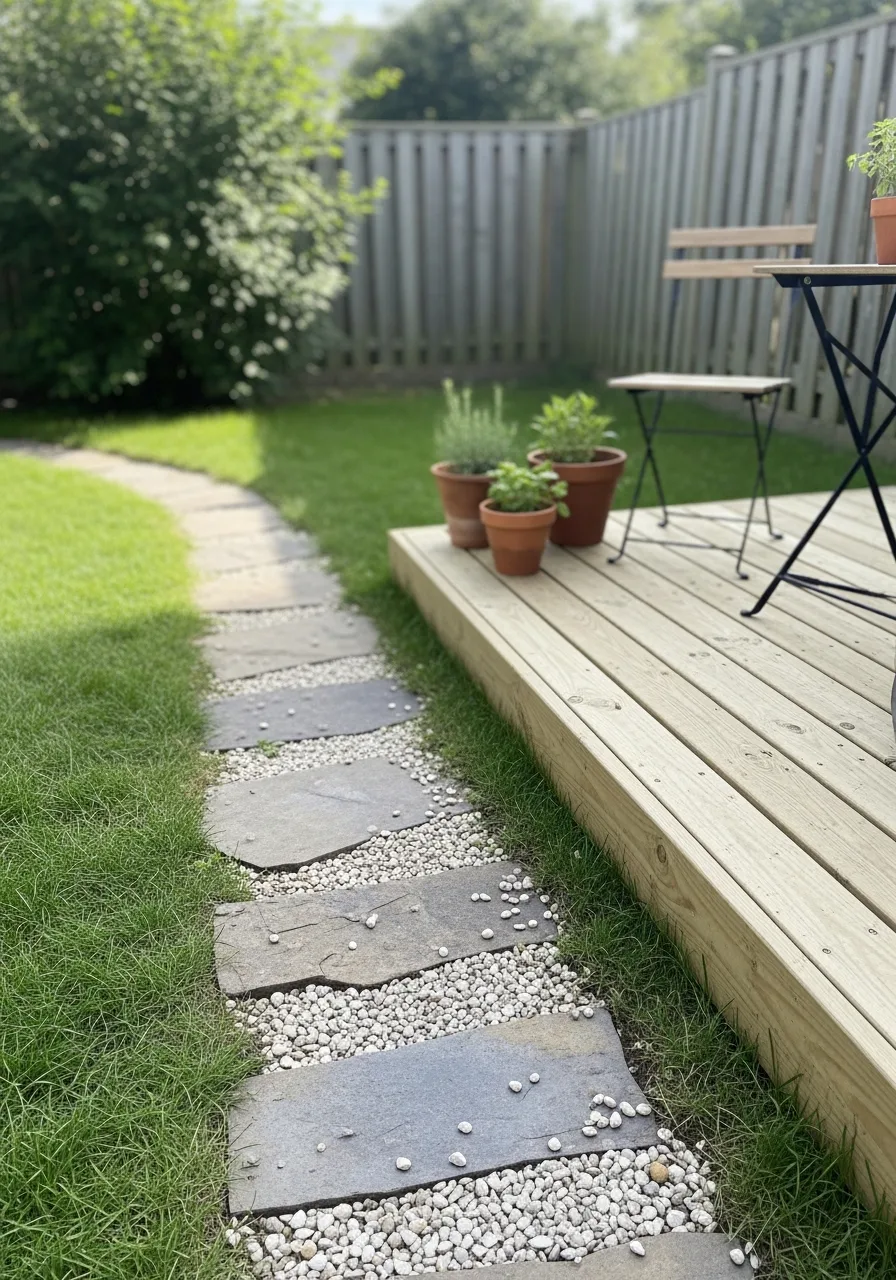
Using stepping stones to reach your deck is cheaper than building a wooden walkway. It breaks up the look of the yard and saves you on lumber. My take: Stones are much easier to maintain than wood.
- Space stones for walking
- Level each stone well
- Fill gaps with sand
Pro Tip: Most people skip this: Sink stones flush with the grass.
36. Dining Area Deck
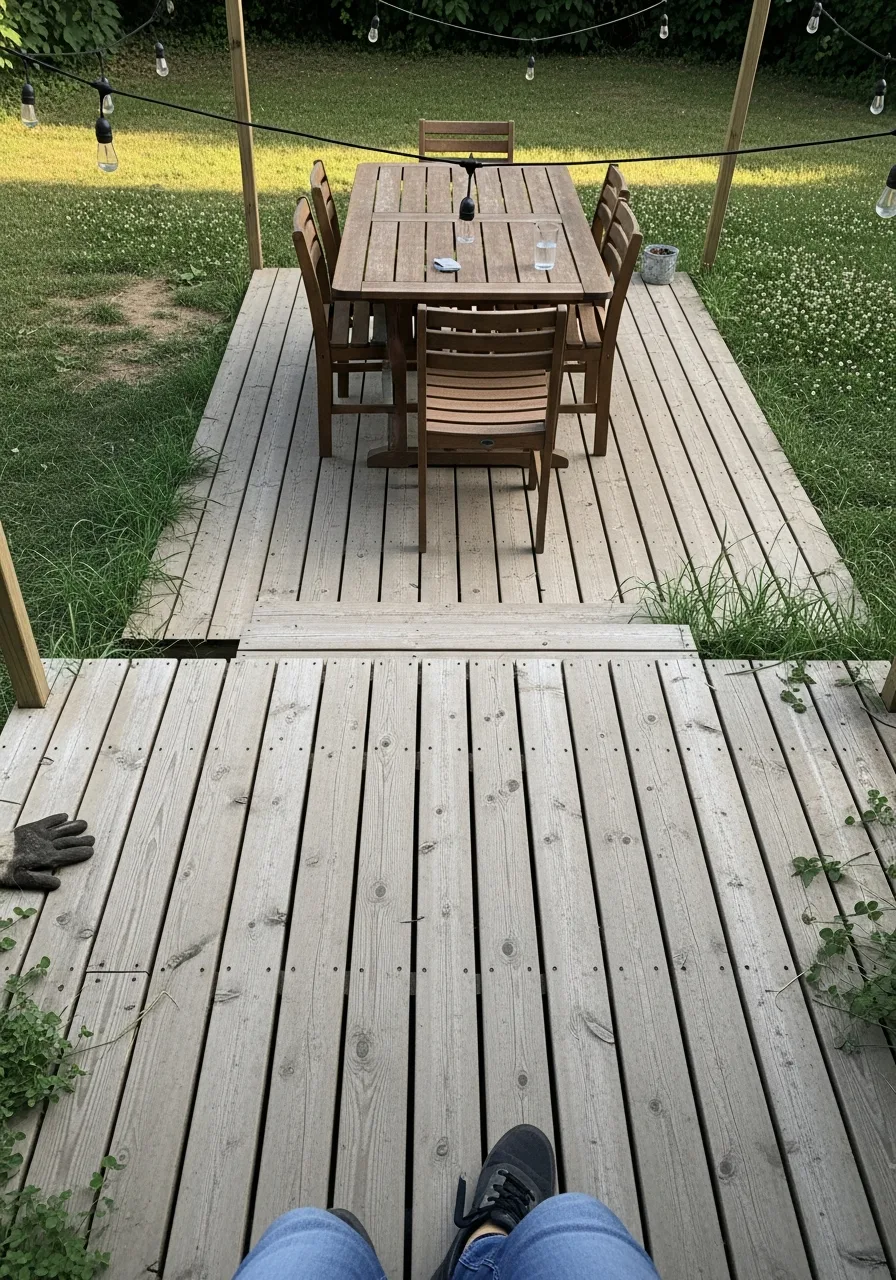
Size your deck specifically to fit a standard outdoor dining table and chairs. This prevents you from building extra space that you will never actually use. I always suggest measuring your table before you buy wood.
- Measure the table set
- Allow for pulled chairs
- Keep the surface flat
Pro Tip: Quick win: Leave 3 feet of space around the table.
37. Lounge Platform Deck
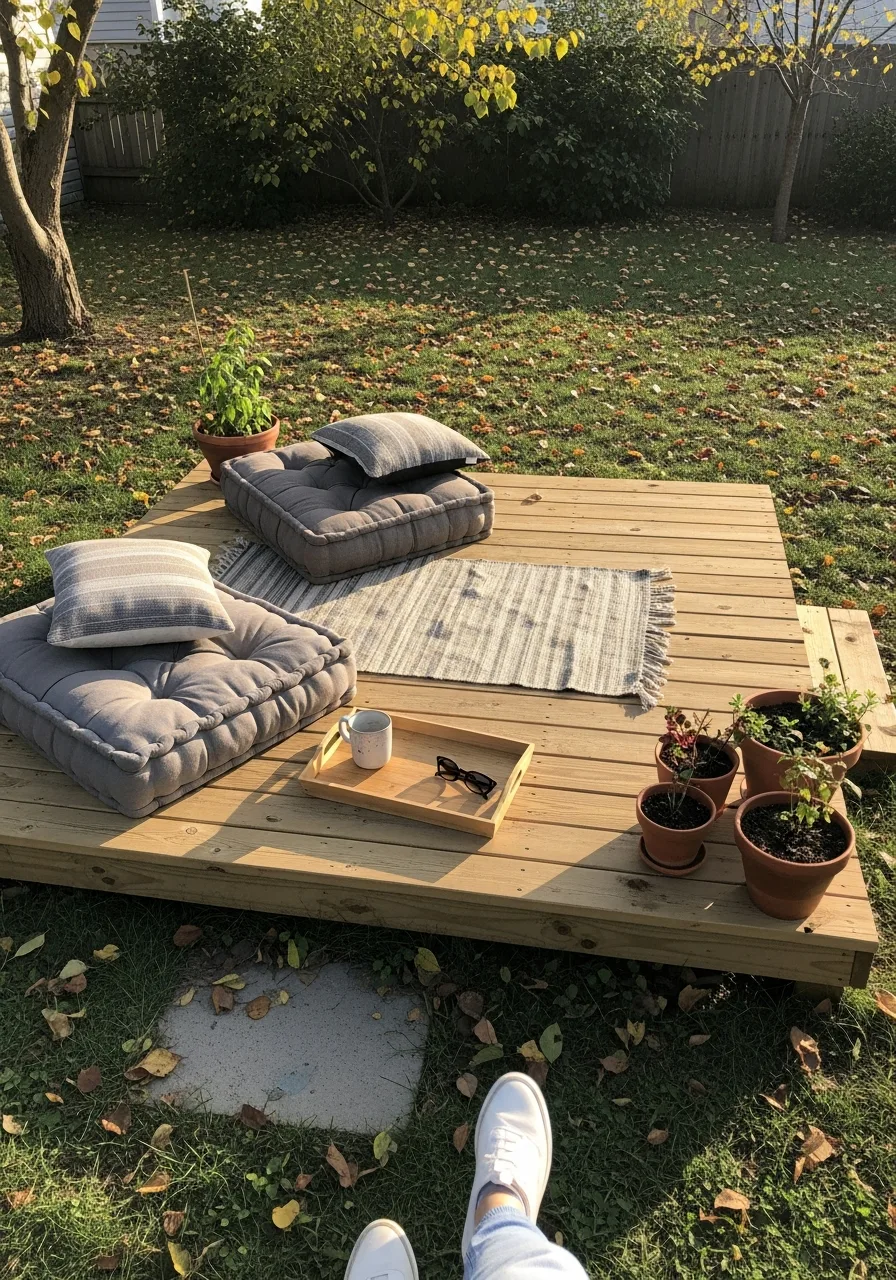
This is a low deck designed specifically for outdoor sofas and relaxation. It focuses on comfort and simple construction rather than complex features. Honestly, a simple platform is all you need for a lounge.
- Use wide deck boards
- Add comfortable pillows
- Keep the colors neutral
Pro Tip: Here’s what I do: Use a rug to define the sofa area.
38. Fire Pit Deck Zone
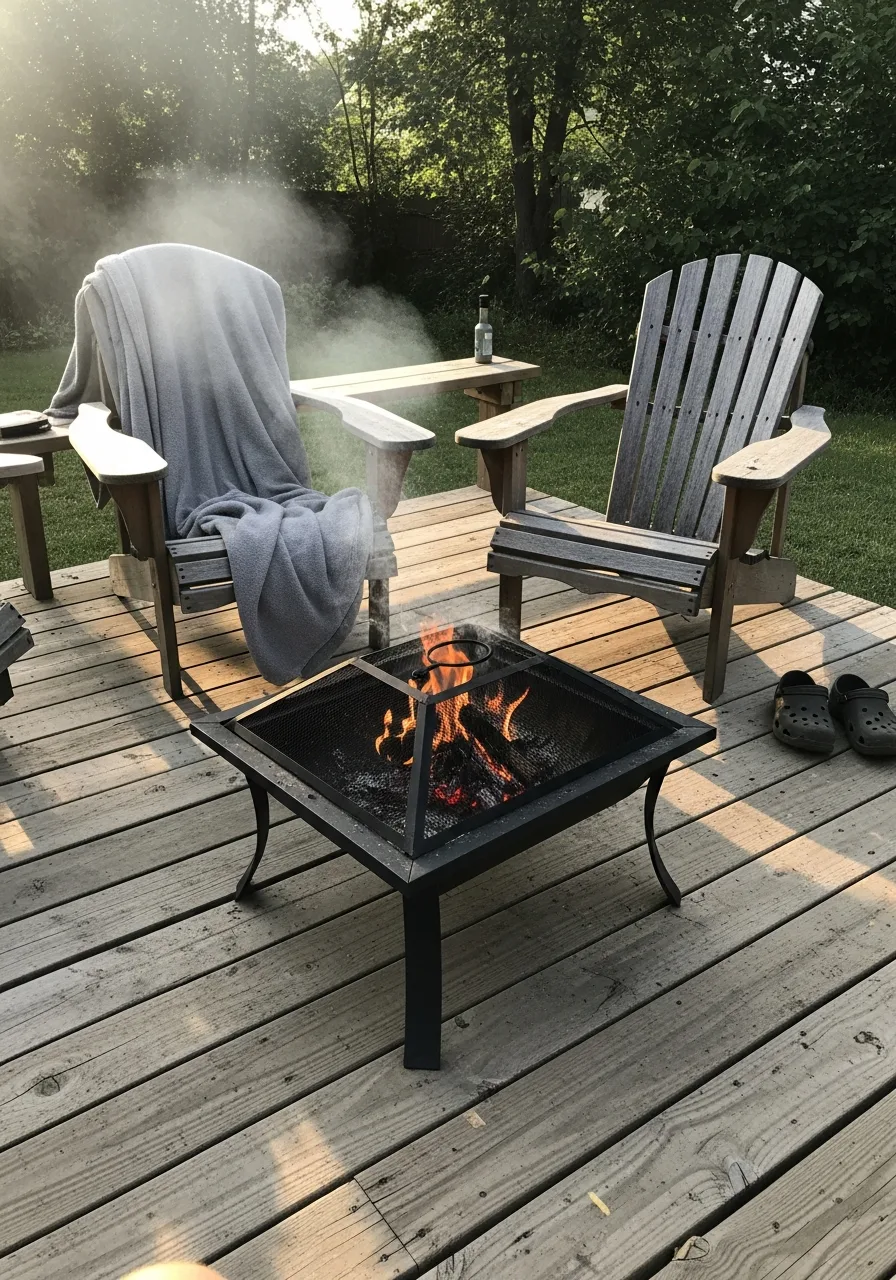
You can build a wood deck next to a safe gravel area for a fire pit. This keeps the heat away from the wood while giving you a dry place to sit. My take: This is the safest way to have a fire.
- Use gravel for fire
- Keep wood far away
- Add heavy chairs
Pro Tip: Quick win: Use a smokeless fire pit for comfort.
39. Grill Station Deck
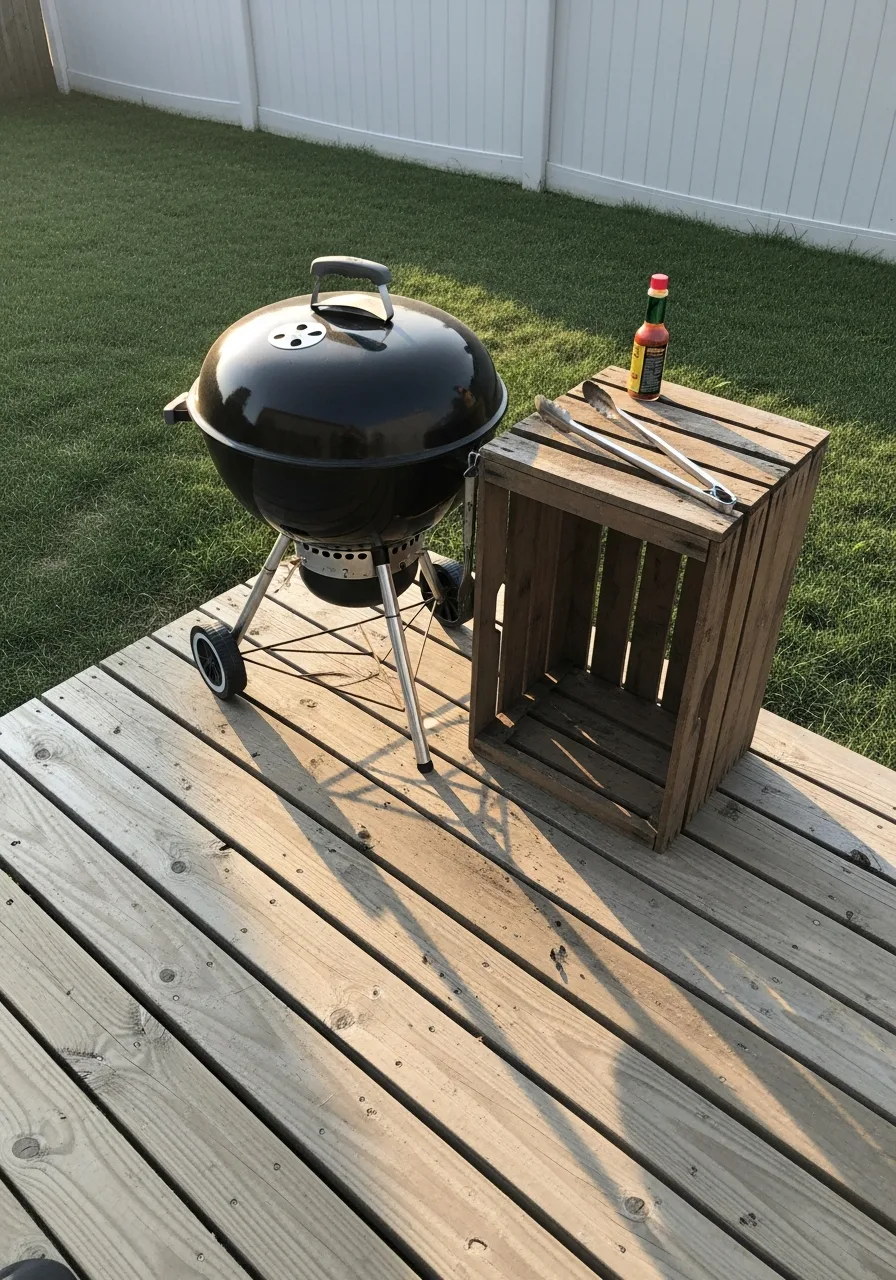
A small, dedicated deck for your barbecue keeps the mess off your main patio. It is easy to build and very functional for anyone who loves cooking outside. Honestly, it keeps your cooking area much more organized.
- Use a grill mat
- Add a side shelf
- Ensure it is level
Pro Tip: Most people skip this: Leave space for the grill lid.
40. Kids Play Deck
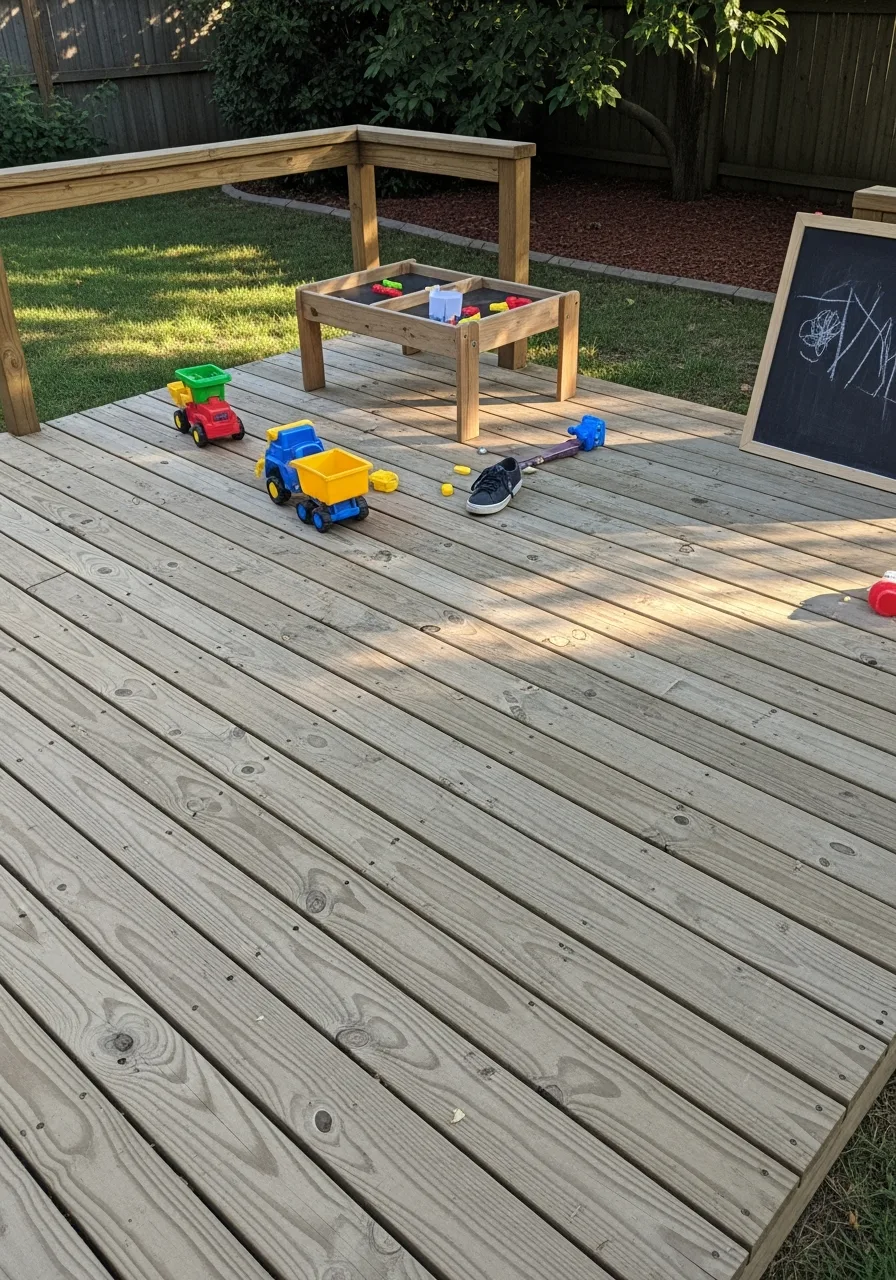
A very low platform provides a clean and safe place for kids to play outside. It keeps them off the wet grass and provides a flat surface for toys. I always recommend sanding every inch to avoid splinters.
- Sand the wood twice
- Use rounded edges
- Keep it very low
Pro Tip: Quick win: Paint a chalkboard onto one section.
41. Solar Light Deck Accents
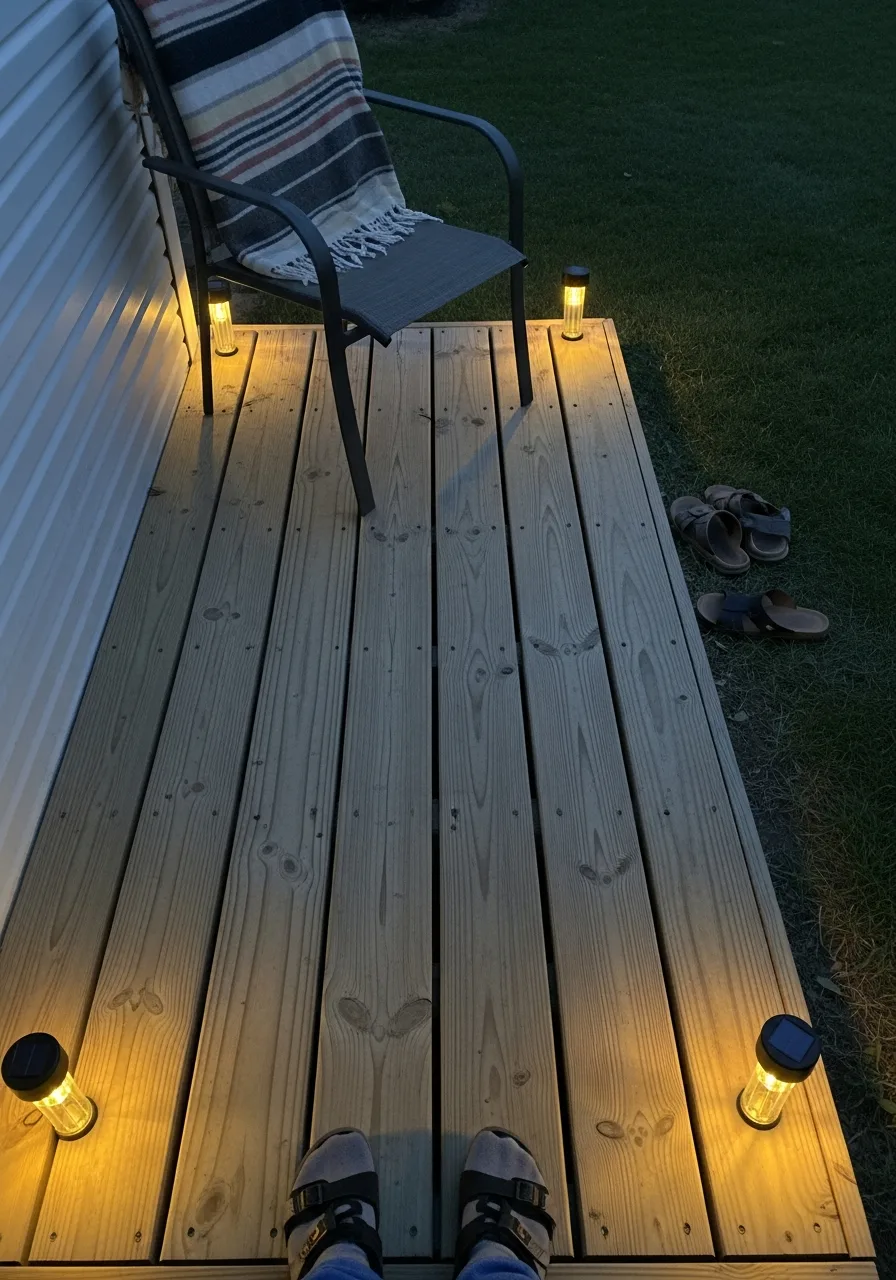
Inexpensive solar lights can be screwed onto the edges of your new deck. They charge during the day and glow at night without any electrical work. Honestly, lighting is the easiest way to make a cheap deck look fancy.
- Mount them on edges
- Choose warm white bulbs
- Clean the panels regularly
Pro Tip: Quick win: Use double-sided tape for no-drill installation.
42. DIY Pergola Addition
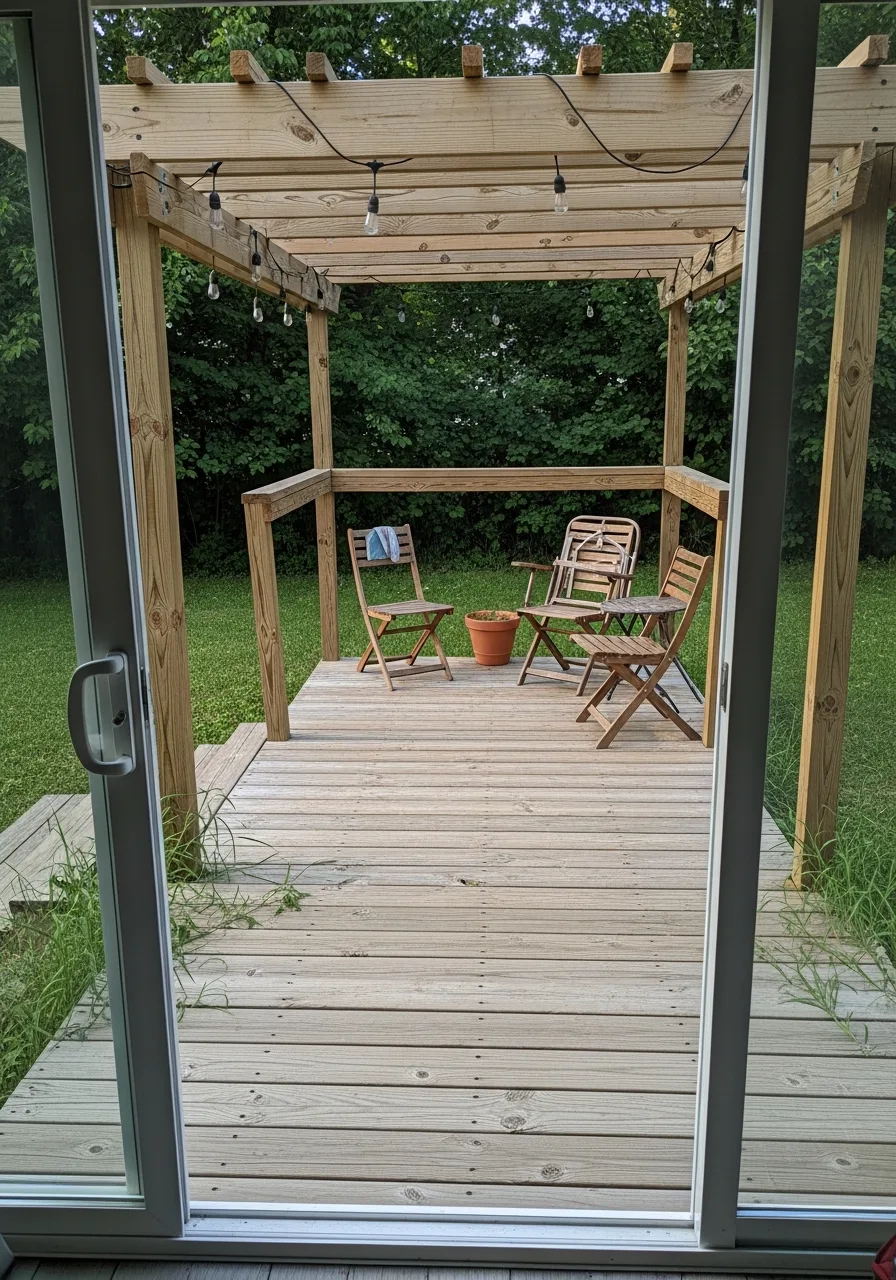
Adding a simple wood frame over your deck provides shade and style. You can build it with just a few extra posts and some cross-beams. My take: A pergola makes a cheap deck look like a million bucks.
- Use 4×4 posts
- Check for overhead wires
- Secure it to the deck
Pro Tip: Here’s what I do: Hang plants from the rafters.
43. Shade Sail Over Deck
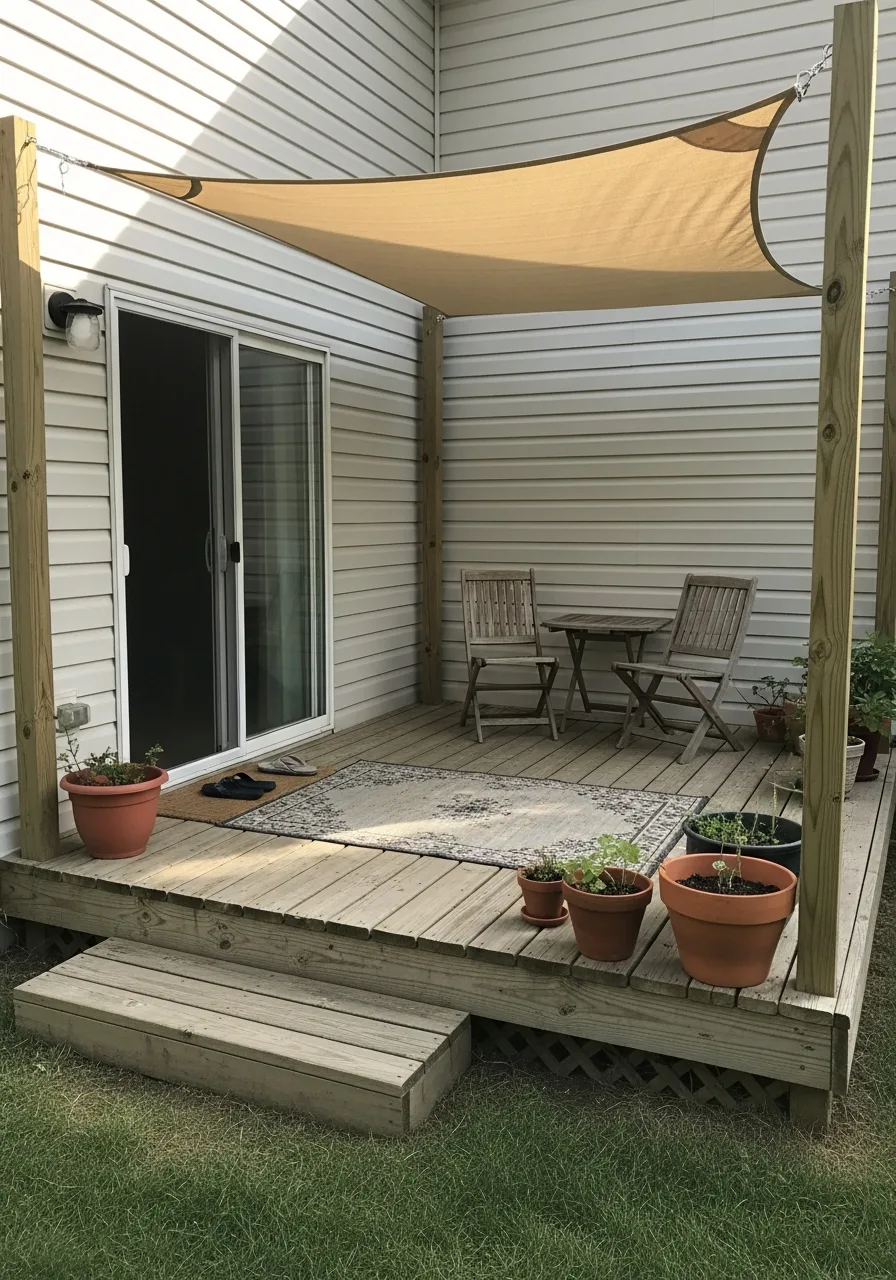
A fabric sail is a much cheaper alternative to building a permanent roof. It protects you from the sun and can be taken down in the winter. Honestly, the colors can really brighten up a boring yard.
- Mount to the house
- Use sturdy poles
- Angle it for rain
Pro Tip: Most people skip this: Use heavy-duty spring hooks.
44. Deck Skirting with Lattice
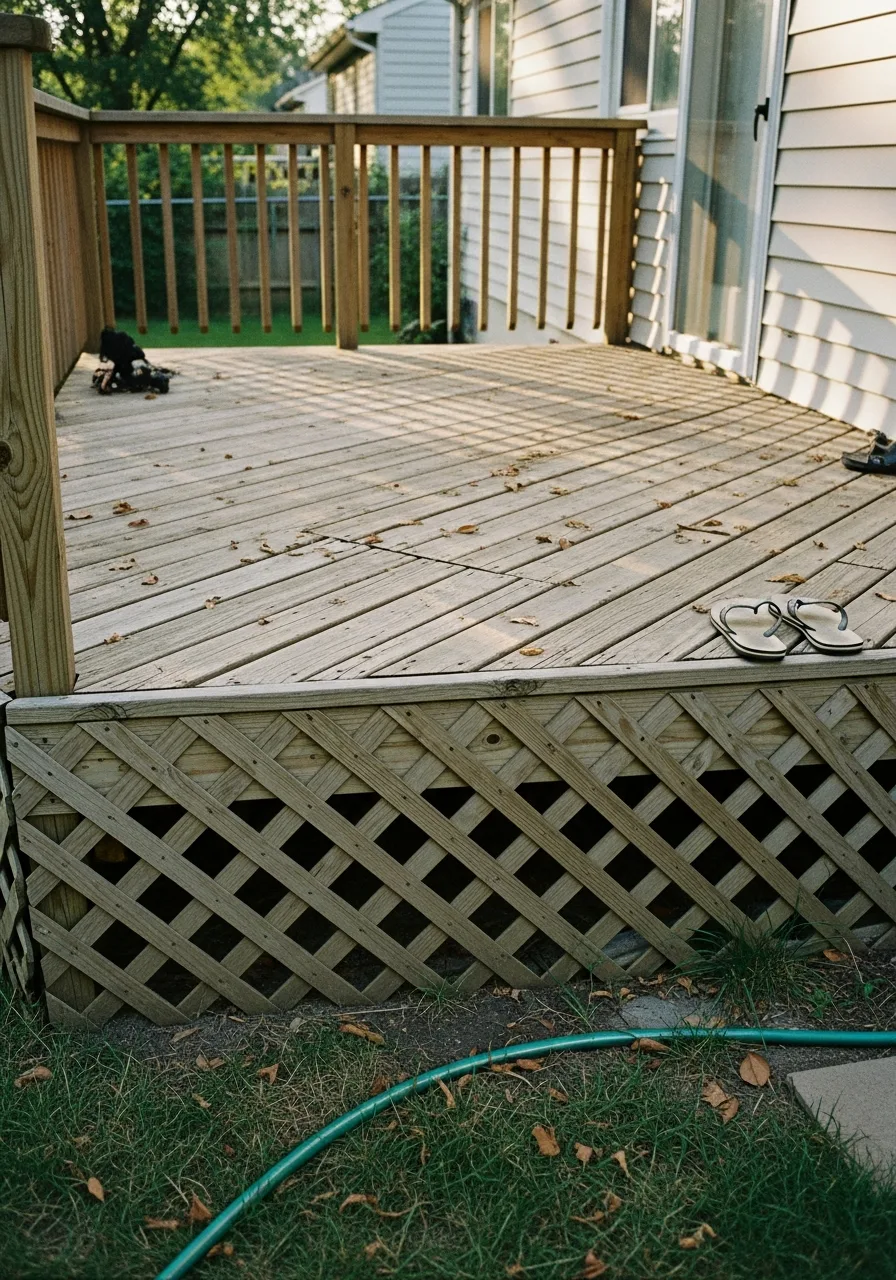
Lattice panels hide the ugly structural wood underneath your deck. This gives the whole project a finished and professional appearance for very little money. I always use this to hide storage bins under the deck.
- Buy vinyl lattice
- Use small wood screws
- Paint it to match
Pro Tip: Quick win: Install a small door for access.
45. Painted Cinder Block Edges
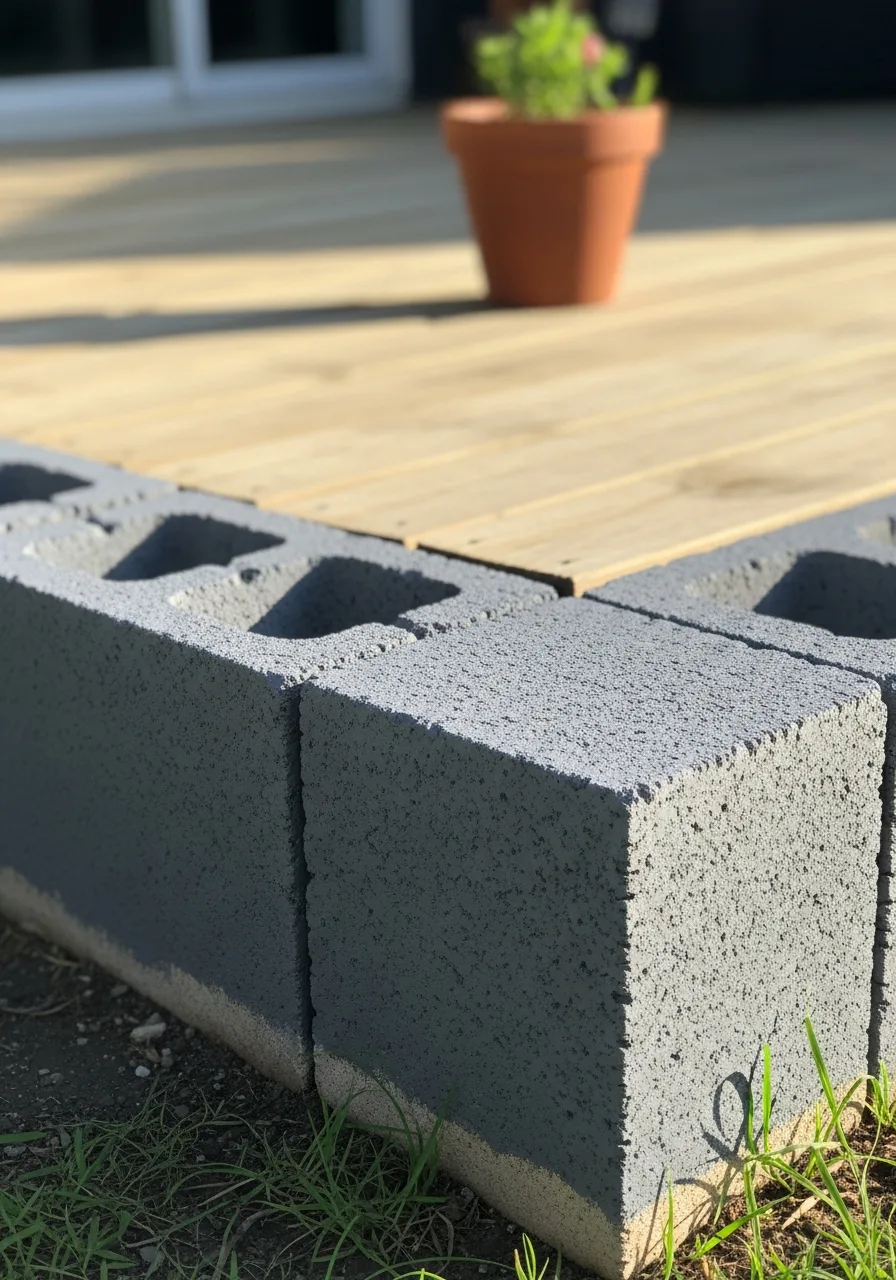
You can use cinder blocks as a sturdy and cheap border for your deck. Painting them makes them look like custom stone instead of industrial building materials. My take: It is a very clever way to save on trim.
- Use masonry paint
- Stack them evenly
- Plant herbs inside them
Pro Tip: Most people skip this: Use a concrete adhesive between blocks.
46. Multi Zone Ground Deck
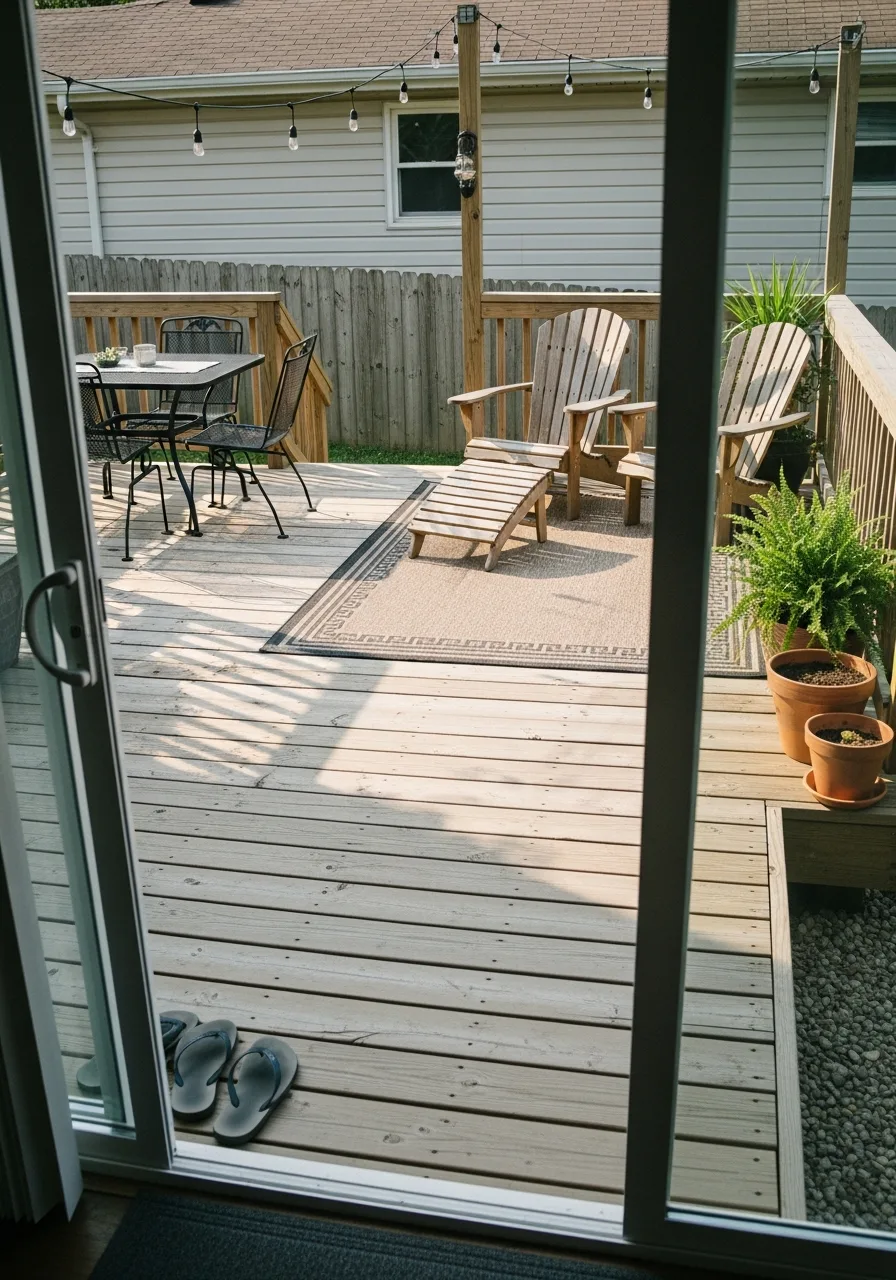
Dividing a large deck into smaller areas for eating and sitting makes it more useful. You don’t need walls to do this, just clever furniture placement. Honestly, zones make a small space feel much bigger.
- Use rugs to define
- Keep walkways clear
- Group your furniture
Pro Tip: Here’s what I do: Use different stains for each zone.
47. Eco Friendly Recycled Deck
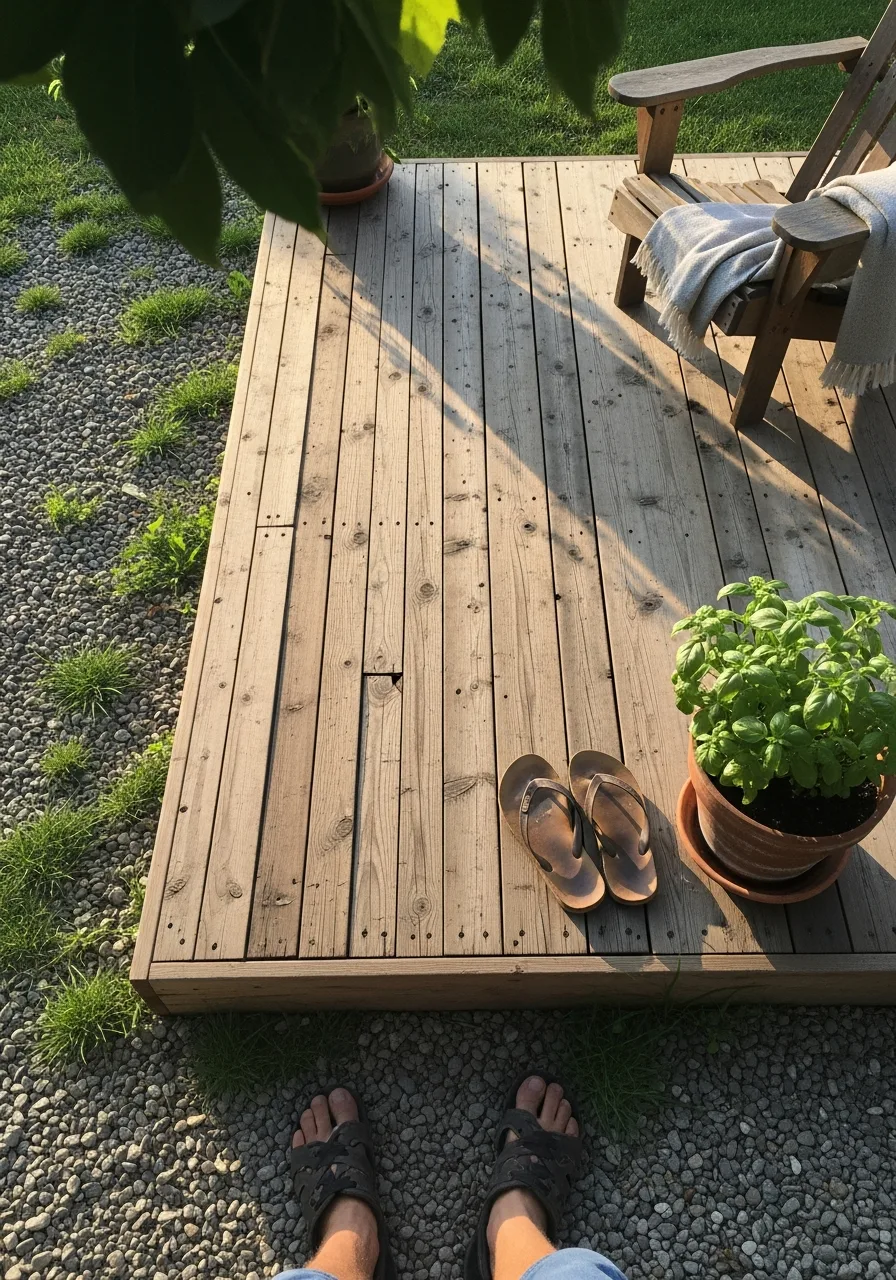
Using recycled plastic or wood materials is great for the environment and your wallet. These materials often last much longer than standard wood without any rot. My take: It is worth looking for local recycled options.
- Search for local reuse
- Mix and match colors
- Clean all materials well
Pro Tip: Quick win: Check online marketplaces for free wood.
48. Low Profile Modern Deck
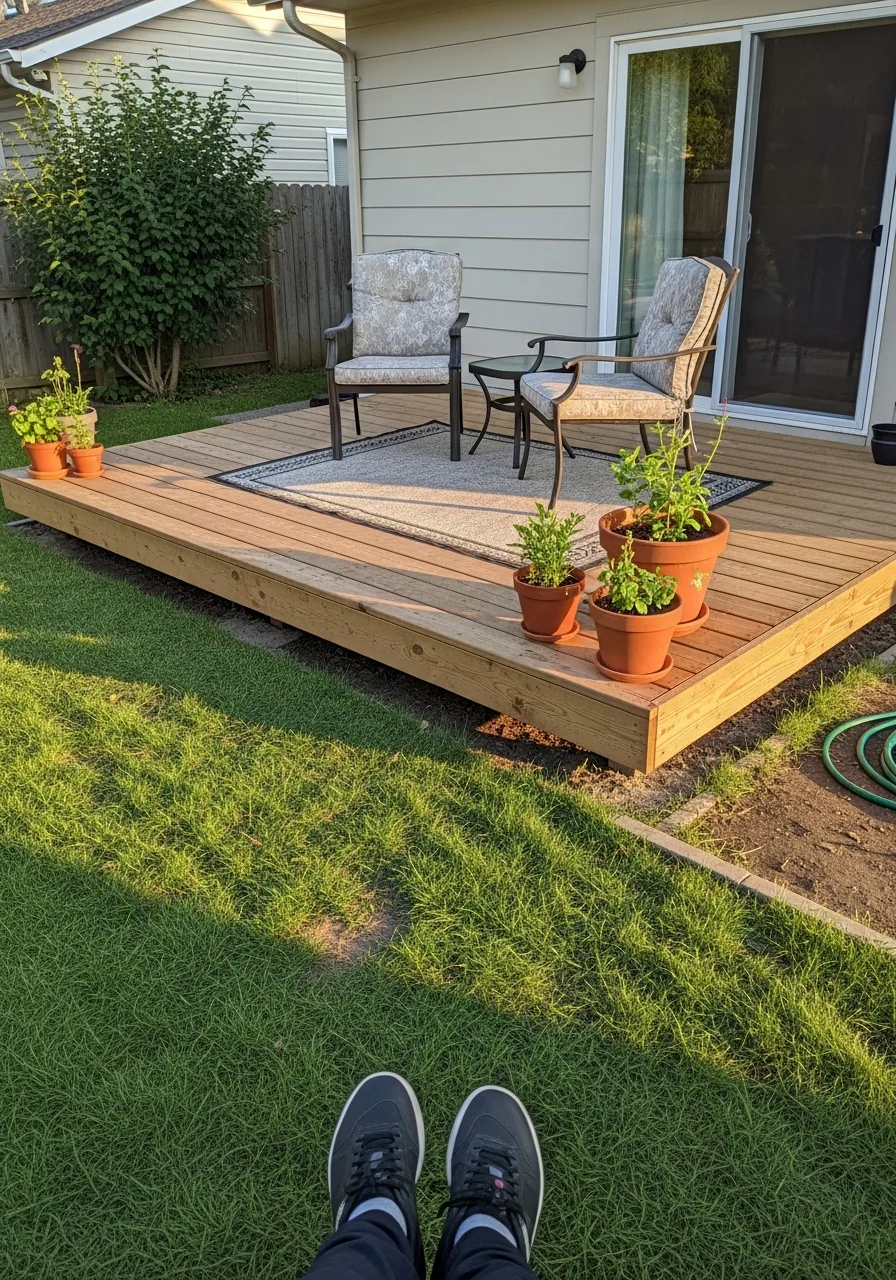
This deck sits as close to the ground as possible for a sleek look. It requires almost no steps and integrates perfectly with a flat lawn. Honestly, it is the easiest style to build by yourself.
- Dig a shallow trench
- Use flat deck blocks
- Pick dark wood stains
Pro Tip: Most people skip this: Ensure the ground is perfectly flat.
49. Mixed Surface Deck Design
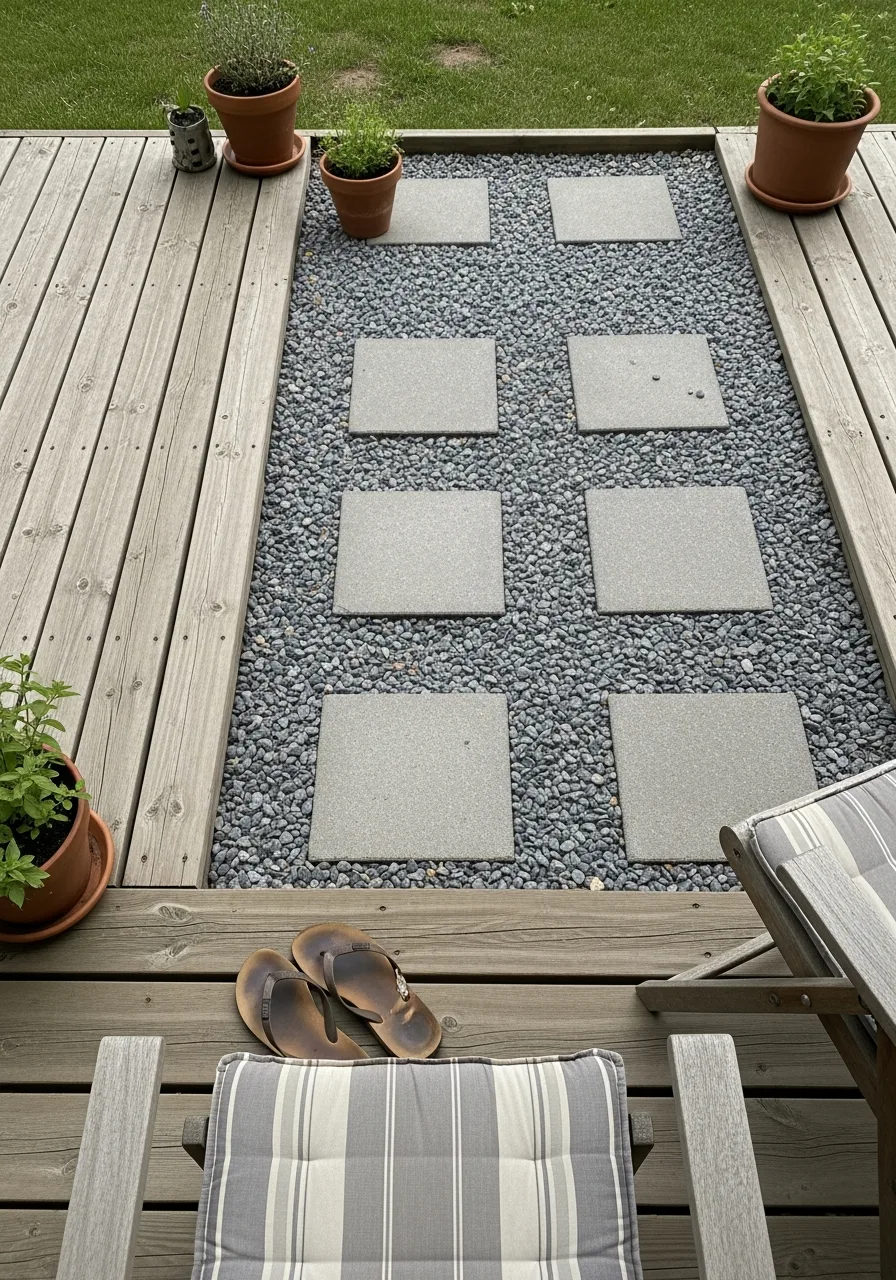
Combining wood boards with stone pavers creates a high-end custom look. It allows you to use wood in seating areas and stone in high-traffic spots. My take: This is the best way to prevent wood wear.
- Level the stone first
- Match the heights well
- Fill gaps with sand
Pro Tip: Quick win: Use large pavers for a modern feel.
50. Expandable Starter Deck
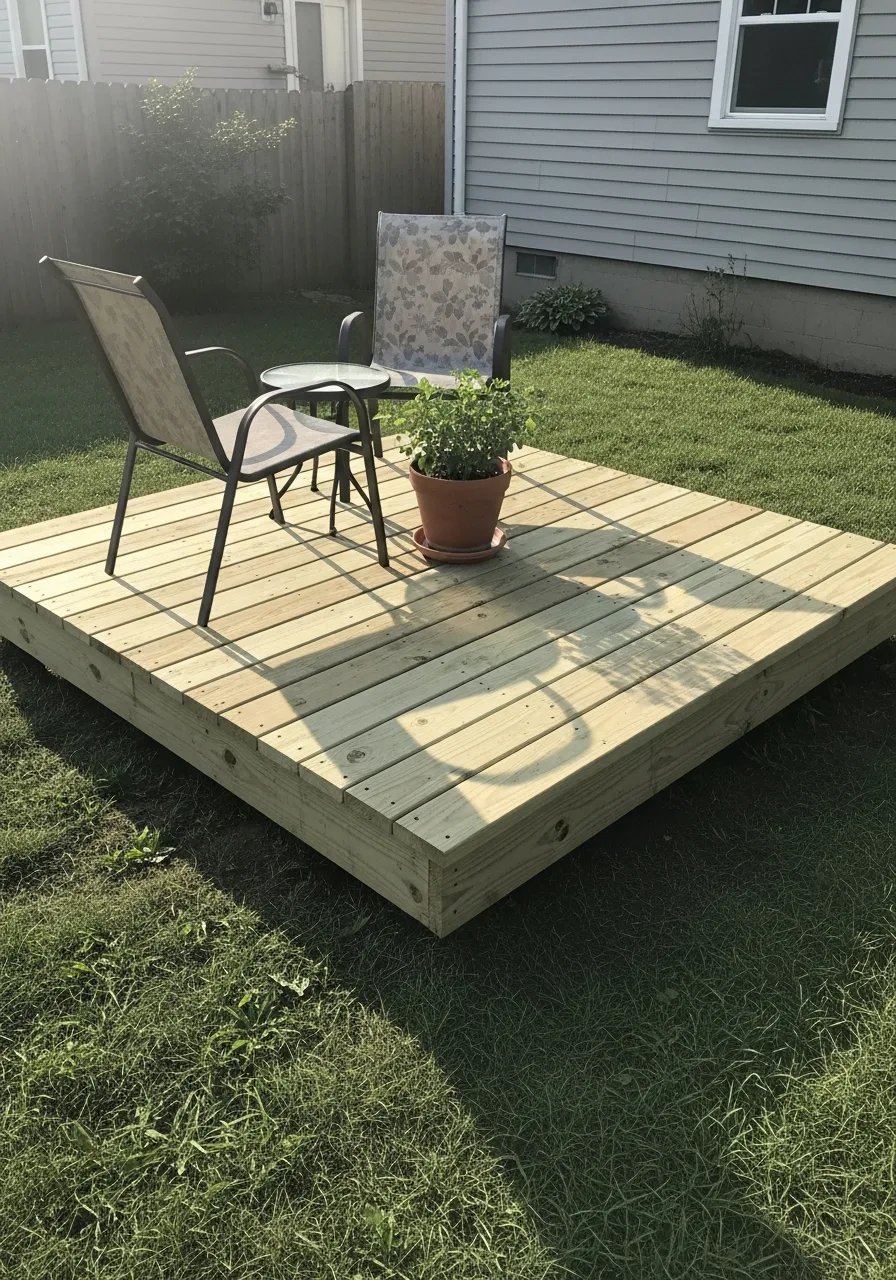
Build a small deck now and add more sections when you have more money. This prevents you from overspending before you are ready. I always tell people to start small and grow later.
- Plan for future growth
- Keep the frame open
- Save your stain color
Pro Tip: Here’s what I do: Take photos of the frame now.
Getting your backyard organized doesn’t require a massive budget or years of experience. These ground-level ideas prove that a little planning and the right materials go a long way in creating a space you love. Stick to the basics, focus on a solid base, and you will have a perfect outdoor retreat.